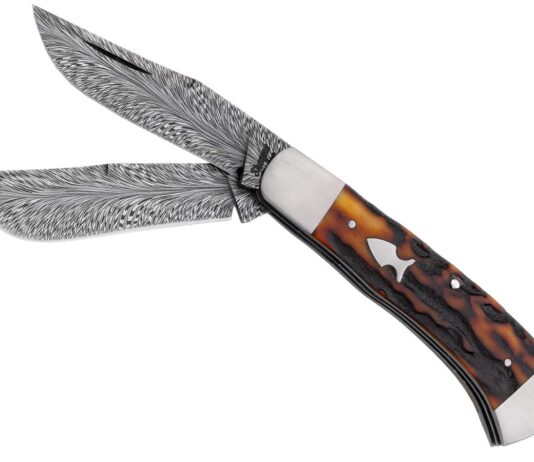
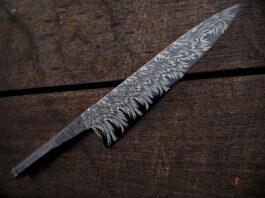
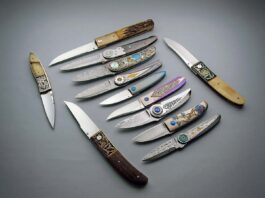
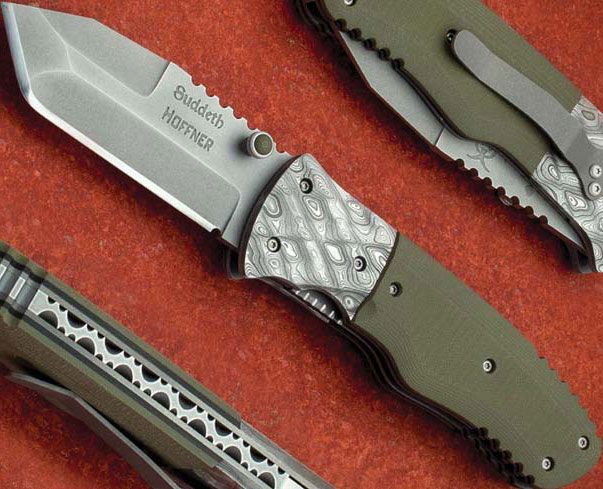
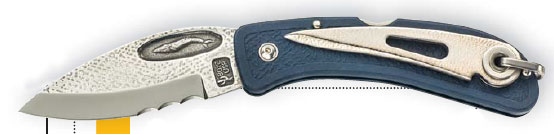
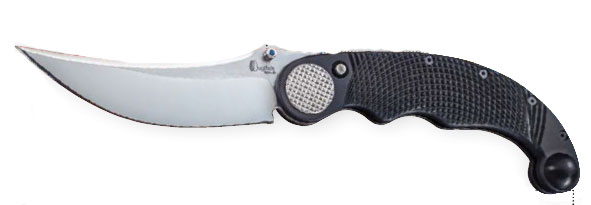
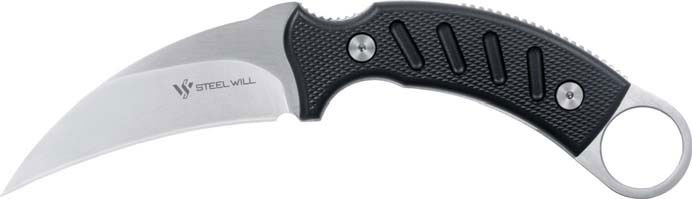
Knife collecting is an extremely rewarding experience for knife enthusiasts. There truly is a knife for everyone. Many increase or hold their value throughout the years, making collecting knives something to pass on to the next generation of knife collectors.
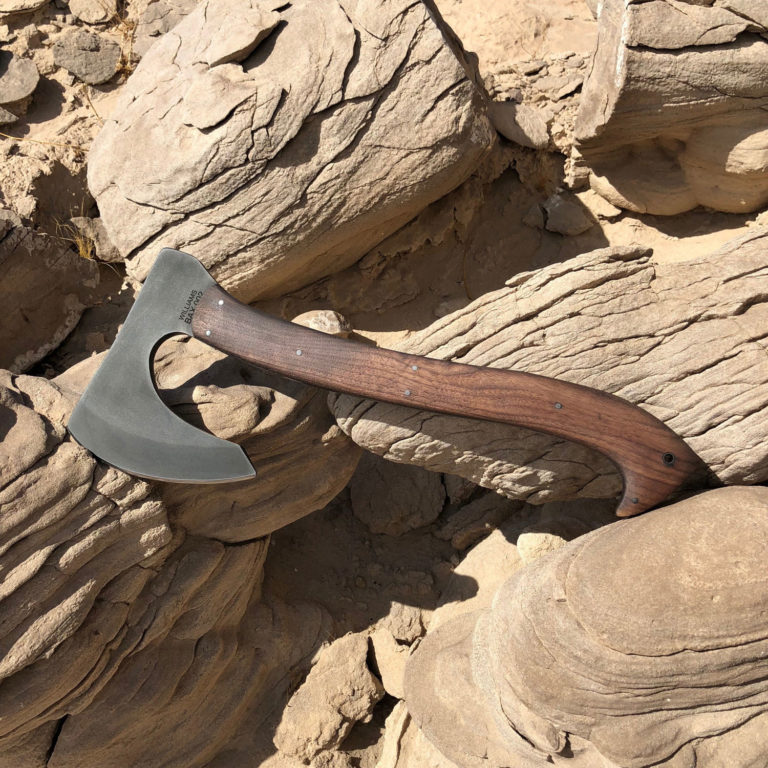
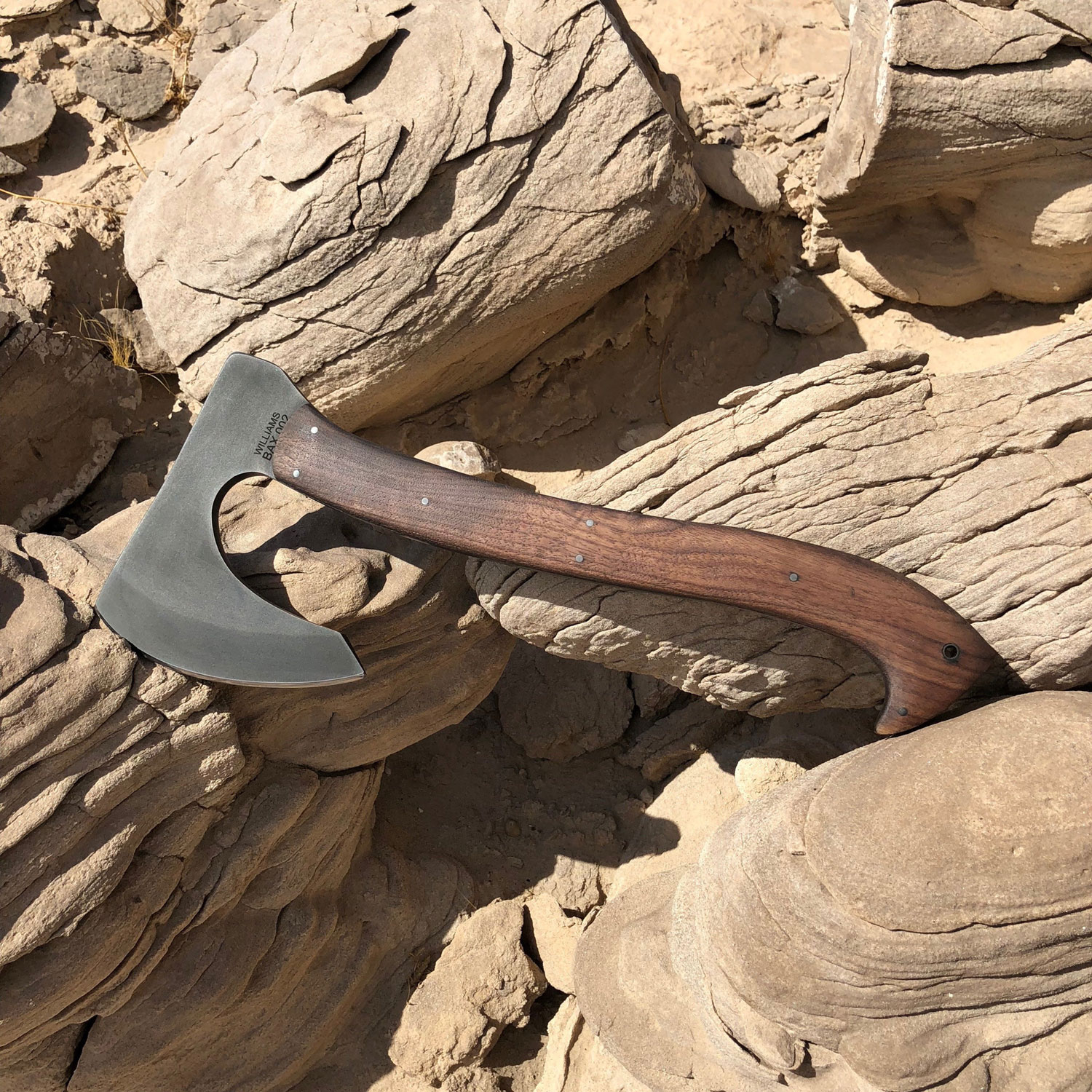
Beards and blades never went out of style, so it’s only appropriate that an axe continue the tradition with a “beard” of its own. The BAX 002 Bearded Axe, offered via Williams Blade Design, draws from Viking lore with a formidable design hatched by ABS master smith Daniel Winkler, someone with plenty of beardly street cred himself.
While the follicles on the BAX 002 are noticeably absent, it should be noted that the “beard” refers to the shape of the axe head. The extra gap this allows between the head and the handle allows the user to “choke up behind the edge for detailed work,” according to a media release. The result offers enough heft to satisfy raiding parties of yesteryear or today.
From Williams Blade Design:
Inspired by the axes of the Vikings, this bearded axe is equally at home in the wild or on the battlefield. The full tang 80CrV2 steel construction makes for an impressively tough tool that excels in the roughest environments. The walnut handle scales provide excellent feel for delicate tasks, and solid grip when the need arises.
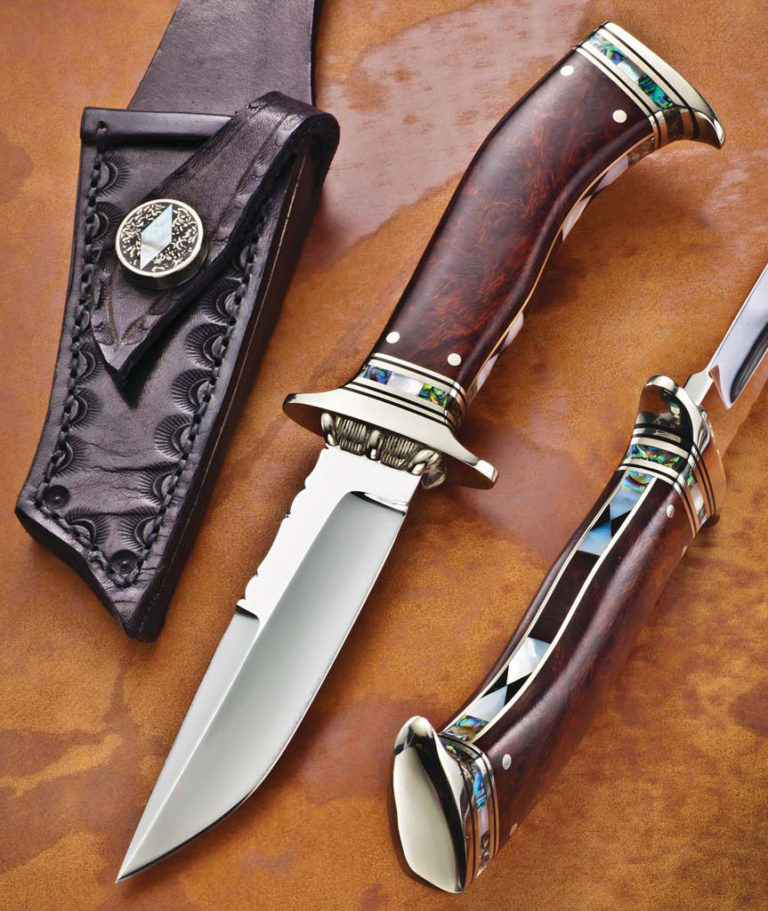
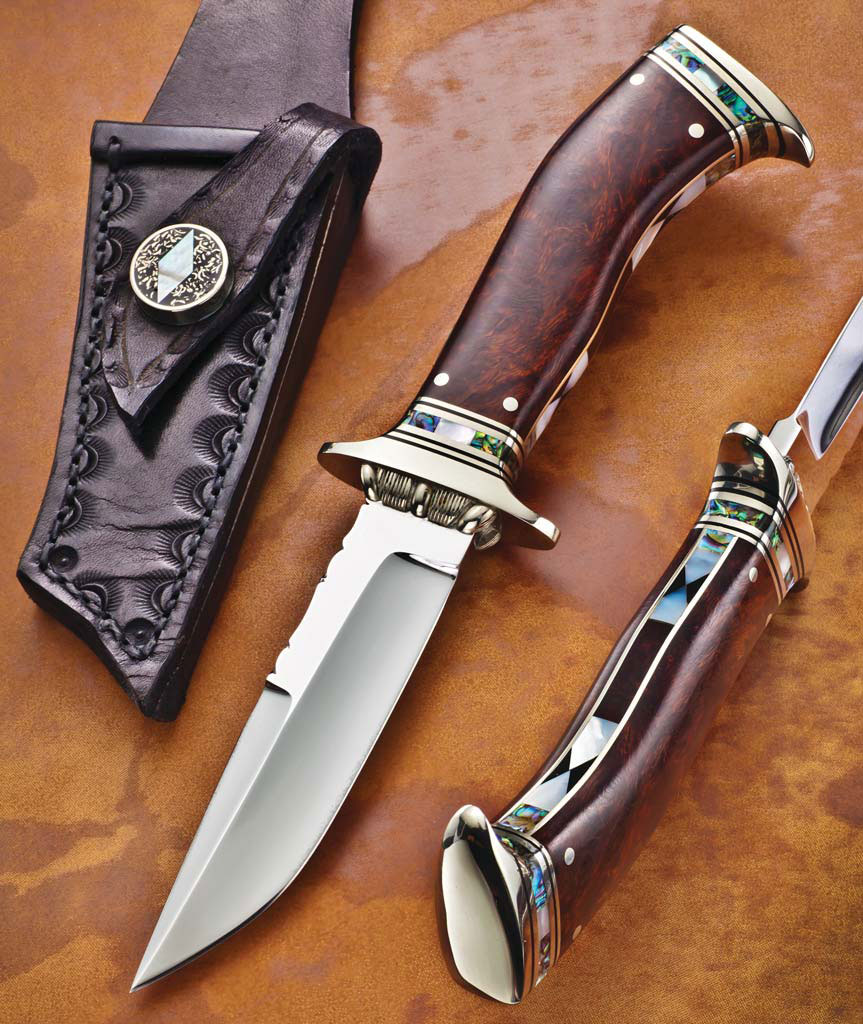
Well-made vintage knives by legendary makers can be very attractive to collect. Lloyd Hale does the honors here in a chute knife sporting an ironwood handle with pearl and abalone inlay. (SharpByCoop.com photo)
Eventually, All Knife Collectors Hit Crossroads
You may face a crossroads, a time of decision involving the realization that interests, tastes and possibly buying power change. In such situations, you may decide to begin collecting a different genre of knives, departing from what you have collected. If and when that time comes, evaluating your situation and making informed decisions is crucial.
Some basic questions loom large, from deciding what to collect to getting the best education on what is available, selling or retaining an existing collection, and, if the choice is to sell, then maximizing the revenue generated.
Should You Reboot? Ask Yourself These Questions
Do you have a very good reason for starting over?
Do you sell or keep your existing collection?
If you sell it, how do you get the most out of it?
Are you trying to recover your initial investment or trying to make as much money as possible to assemble your new collection?
Are you comfortable with the effort and costs it will take to build a new collection?
Do you want to make money or collect, carry or use the knives?
What knives should you collect, and how do you best research them?
How available are they and are they of recent vintage?
Are they still in production or limited in distribution, both of which influence collectibility?
If antiques, where can they be found and can they be found without undue cost?
What are the prices typically asked for the knives in collectible condition?
Are you going to collect only mint or near-mint examples, and can you afford to pay premium prices for them?
Guidelines for Going Forward with a New Collection
If, after answering those questions, you decide to liquidate and start over, keep these guidelines in mind.
Collect what you like or even use.
Chasing trends is a fool’s errand. Collecting knives that are hot now means paying top dollar now as well.
Know which knives are collectible in specific geographic locations of the country.
Inexpensive, low-end knives will never appreciate to any degree.
Well-made, fine-condition knives should not lose you any money.
Don’t buy damaged/poor condition knives unless they are very old and collectible, such as antique bowies and rare military knives.
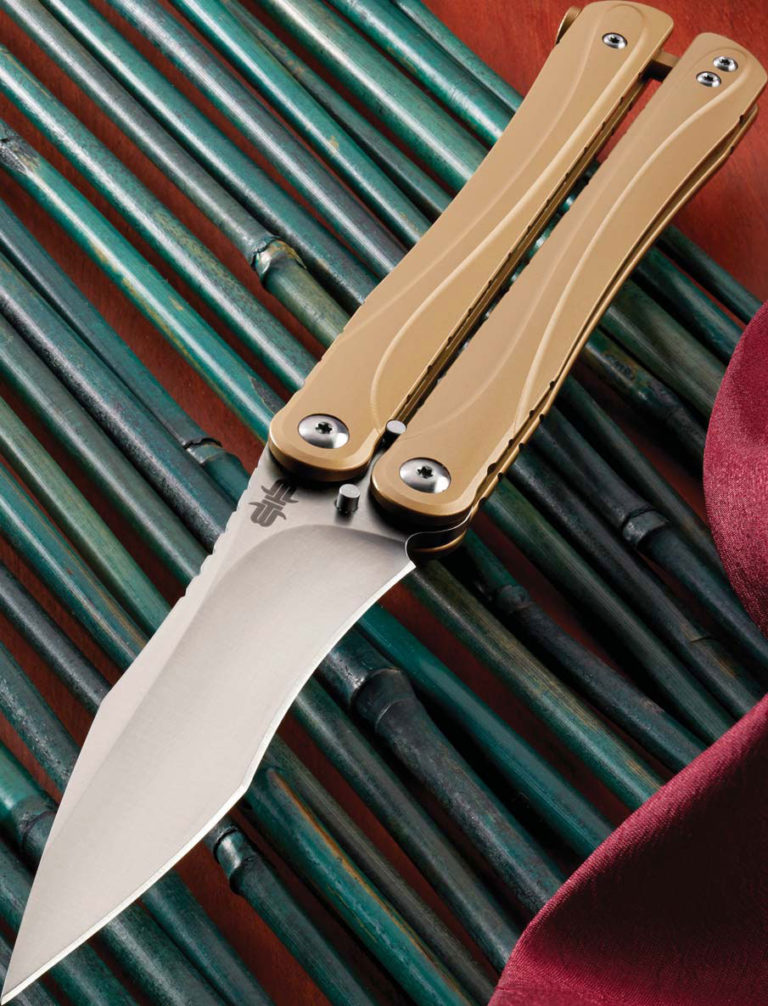
Butterfly knives (aka “balisongs”) have evolved into meticulously crafted pieces of cutlery. Many of the best capitalize on state-of-the-art blade and handle materials coupled with progressive and modern designs that advance the genre toward the close of the century’s second decade.
Brous Blades B3
(All images by David Stanfield unless otherwise noted)
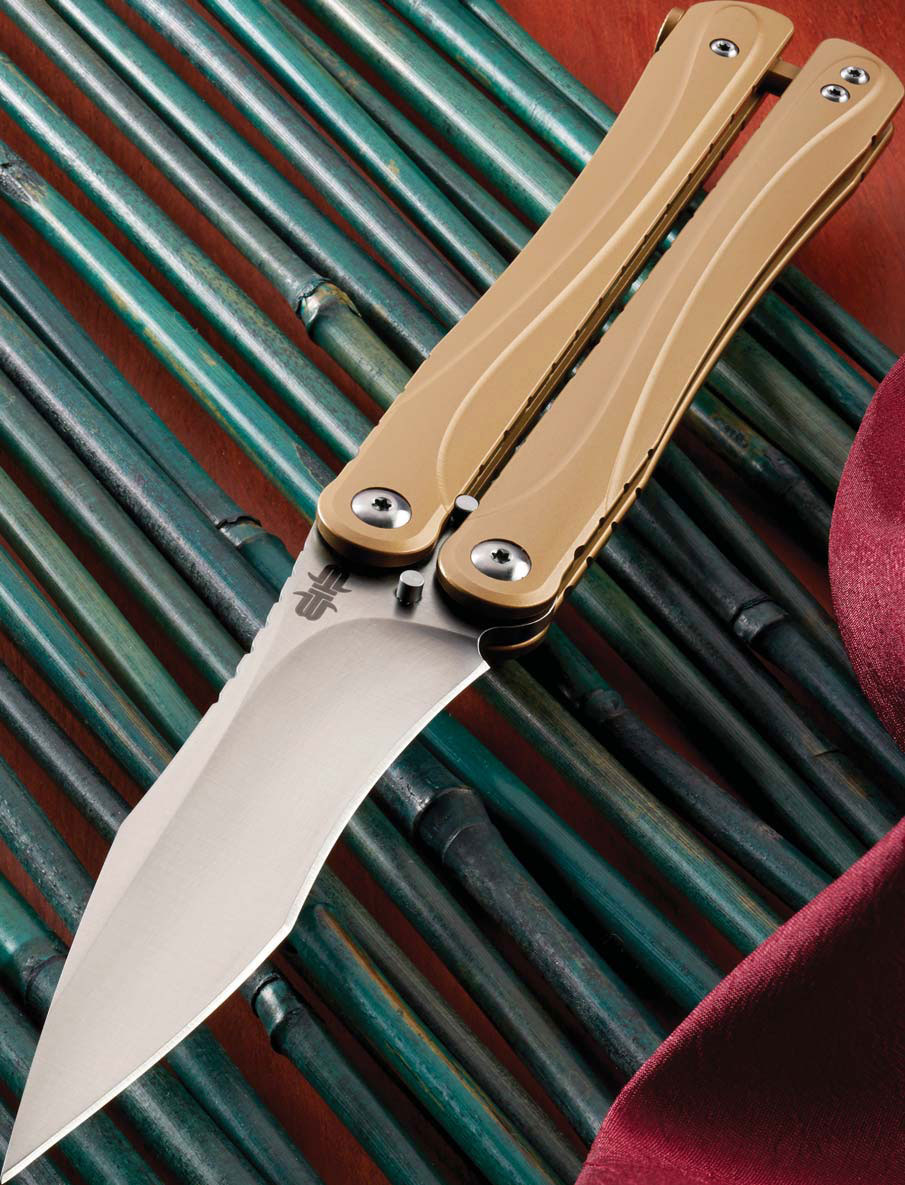
The B3 from Brous Blades is a modern butterfly knife with its stainless steel handles and D2 recurve tanto blade style. The handle interiors have cavities milled out to reduce weight. The knife has great action as a result, without the need to use bearings in the pivots. MSRP will vary depending on the finish, though this one is $320.
Bear Ops Bear Song VI
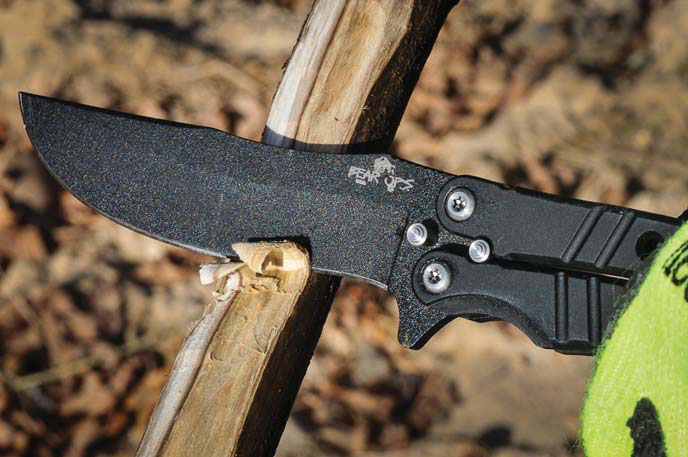
The hollow-ground 1095 carbon steel blade of the Bear Ops Bear Song VI has great edge geometry for all your cutting chores. A textured black epoxy coating guards against corrosion. MSRP: $174.99.
Mantis Knives Vuja De
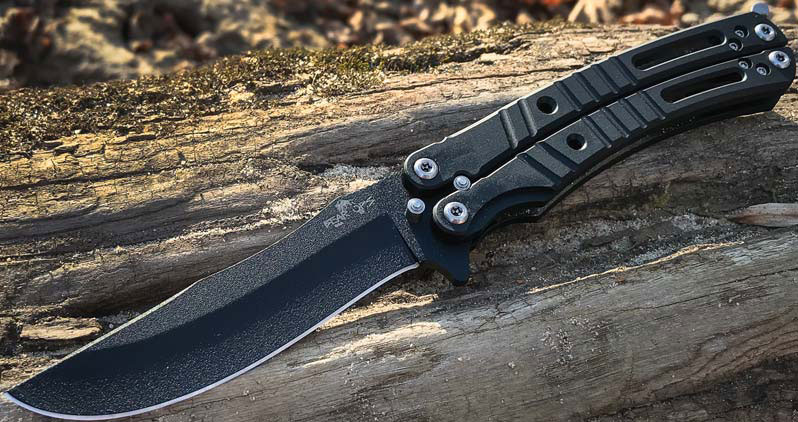
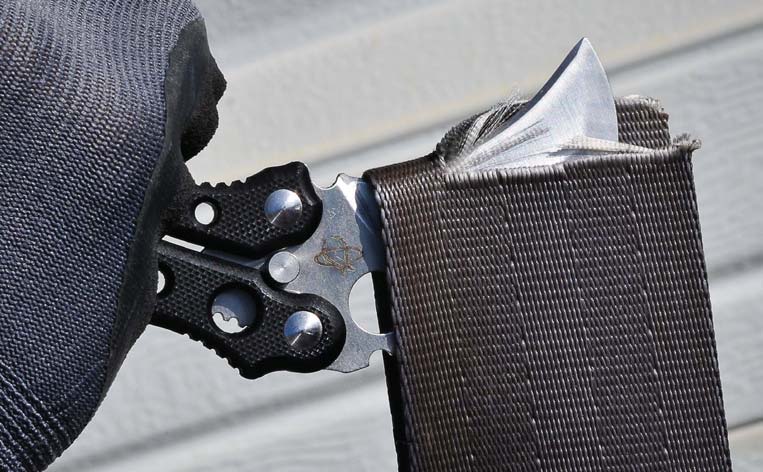
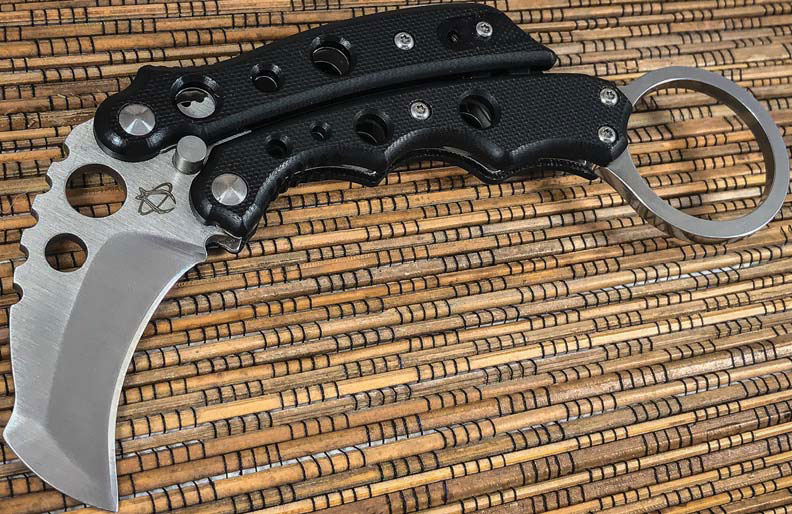
The Vuja De from Mantis Knives marries the karambit’s large finger ring and hook-shaped blade with the free-swinging individual handles of a butterfly knife. The scales are textured black G-10 for both durability and grip quality. The blade is Mantis’ proprietary MV-1 stainless steel.
Emerson Knives Bali Commander & CQC7
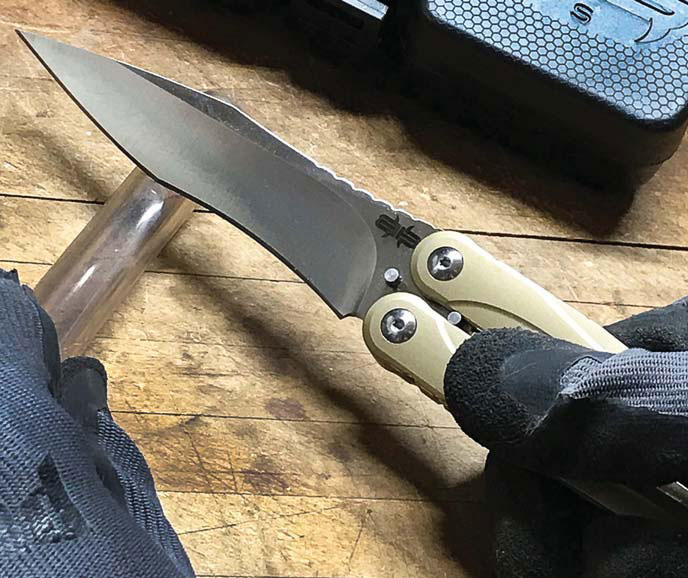
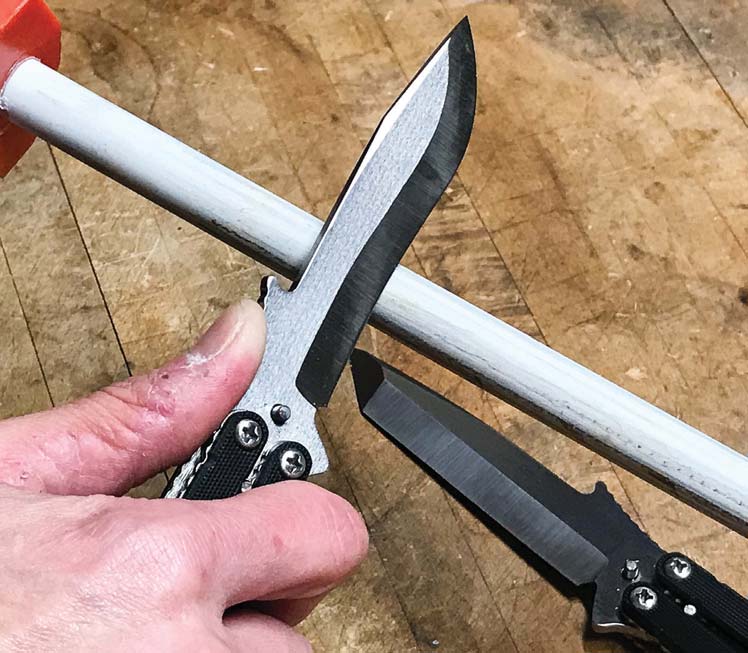
The recurve clip-point blade of the Bali Commander (left) from Emerson Knives, Inc., is easily sharpened using a round profile sharpener to effectively capture the blade’s gentle sweeping curve.
The Emerson Bali CQC7 (right) in the background sports the chisel-ground blade like that of the iconic Emerson CQC7 tactical folder.
Attend a Flipping Competition at BLADE Show
Butterfly knives were a-fluttering during the balisong competition conducted by Blade HQ at last year’s BLADE Show.

BLADE Magazine Cutlery Hall-Of-Fame® member Pete Gerber knew he was onto something with the FS1, a knife he remembers as “dandy” and one of three in the Folding Sportsman line that debuted with Gerber Legendary Blades beginning sometime around 1980.
“It was just a little heavy,” Pete recalled. “Blackie Collins was working with us on some projects then, and I asked him for help with it. I said, ‘Blackie, this is a nice knife. How can we take some weight out of it and put some pizzazz into it?’”
The knife engineers at Gerber Legendary Blades had been working with Micarta handle slabs, rather labor intensive at the time since the plastic laminate had to be machined to the appropriate shape.
The Bolt Action folders were among the Blackie Collins designs for Gerber that predated the LST. The original Bolt Action is at bottom and the newer Bolt Action hunter is at top.
“We had to mill it out and used brass washers with rivets to attach the slabs,” Pete said. “The original LST was the FS1 in-house design, and Blackie was first given the assignment to put moxie into it using the existing parts. He worked on the design and then put an injection-molded handle on it with nice checkering. Those were his contributions.”
As fine as it was, as long as the slab handles were involved the LST had trouble fully living up to the attributes that provided its name, “Light, Smooth, and Tough.” Collins already had contributed some well-known designs to Gerber, including the Bolt Action folder and the Touché belt buckle knife, and the wheels began to turn in his head.
The LST, as offered today on Gerber’s website. (Gerber image)
Blackie had a friend in Gastonia, North Carolina, just outside Charlotte, and that friend ran an injection-molding business. Instead of using riveted slabs as handle material, why not try a one-piece injection-molded handle to reduce both the weight and production cost of a knife design that was already selling pretty well? Just to add to the incentive, injection molding would open up the spectrum of handle colors as well.
After some experimentation, the production LST was manufactured with the glass-filled, nylon-reinforced Zytel as the handle material.
“It was the first time a folding knife was made with a one-piece handle, and it worked,” Pete remembered. “The action was so smooth because we went through an operation called ‘match catch,’ where the blade and the catch were kept together until they were assembled and until they were just perfect. When the knife closed, the blade referenced the catch, and it was as smooth as it could be.”
A New Car for a New Knife
Blackie Collins loved fast cars and motorcycles. When it came time for Pete Gerber to compensate him for his input on the LST, Blackie decided he wanted a Corvette—and Pete made it happen. (Meyerco image)
Almost as sweet as the story behind the LST, which has sold in the millions since the early 1980s, is the back-story of Blackie’s compensation for his input that led to the dynamic little knife’s eventual success. Pete asked Blackie what he wanted in the way of payment for services rendered.
“I didn’t think it could be a royalty knife since it was a modified in-house design,” Gerber explained. “I asked what he wanted for payment, and I suggested that maybe a new car would be something he would like.”
The story goes that the new car turned out to be a Corvette and that Pete’s check for $29,000 made it happen.
Blackie, a Cutlery Hall Of Famer who tragically lost his life in a motorcycle accident in 2011, loved cars and motorcycles and just about anything mechanical, and the idea of new wheels appealed to him. His wife, Jane, remembers well the search for just the right vehicle.
“We went from South Carolina to Jacksonville, Florida, to look at Avanti cars,” she recalled. “He didn’t like the way the new ones handled, so we looked at Corvettes, bought one that was two-tone gold, and drove it home. He owned that car for a few years and then traded it in.”
Pete remembers Collins driving around his hometown in South Carolina in that Corvette with a license plate that simply read, “Blackie.”
Offering items other than money for consulting seemed to work well for Pete, who also once paid Cutlery Hall-Of-Famer Bob Loveless with an airplane.
While Blackie burned up the roads in the Corvette, the Gerber-Collins partnership took the knife market by storm with the LST.
“Blackie used to say that the LST revolutionized the knife industry,” Jane recalled. “He did a lot of work for Gerber, and he really reduced the number of parts on that knife and put the plastic handle on it to make it lighter.”
Taking the World By Storm
A box of lockback folders in the Gerber factory in the early 1980s shows the thick nature of the handles. The LST not only was lightweight, it was thin, too, adding even more to its ease of carry.
The new lightweight knife was a sensation, and soon other knife companies were taking notice, working on something similar. It was pure gold in itself—with a grand total of six parts to the whole enterprise. Buyers wanted the light, smooth-action, durable and reasonably priced LST, and competitors scrambled to keep pace with Gerber’s trendsetter.
Soon enough, there were similar offerings rolling off assembly lines and onto store shelves. The introduction of LST energized knife manufacturers in a manner seldom seen.
The LST developed its own legacy among the knives that changed knife history, and it is still being manufactured in Portland, Oregon, and sold under the Gerber banner today.
“It was the first true ultralight knife,” explained Dan Delavan of Plaza Cutlery in Costa Mesa, California, “and Gerber had a high-quality blade in that light handle at a good price. You could throw it in the pocket of your swim trunks and go! Lightweight became attractive, and the LST was thin, too. It didn’t bulge in a suit pocket and the checkering gave it a nice grip, just like an extension of the finger. It was the knife that introduced the ultralight, and we sold a lot of them back in the day.”
Lightweight vs. Airweight
Contemporary to the introduction of the LST, Cutlery Hall-Of-Famer A.G. Russell was producing ultralight knives of his own in the Airweight series. Like other knife manufacturers and designers, Russell also worked with Blackie.
He remembers the concept of the ultralight as the shape of things to come in the 1970s.
“I wanted strength but little weight in a knife, too,” Russell noted, “and my Airweight was using a Micarta handle. Blackie had that great idea of molding the handle instead of shaping it, which would have suited an operation like Gerber perfectly. The LST was extremely lightweight and it sold in the millions.”
LST Materials
Pete Gerber recalls using 440A stainless blade steel in the early LST, and says the knife had a good, husky blade that he never saw break—and it was complemented with a nicely polished tang.
“Many other companies were copying it, trying to figure out what we did and how the LST worked so well,” Pete said. “Many of those companies made knives that were quite similar to the LST long after ours was successful. I don’t believe we had a patent on it at all; I don’t think we could get one. The patent area was out of my expertise, but I told our folks to get one whenever we could.”
An Enduring Legacy
Peter Gerber was the headman at Gerber when the LST debuted in 1981. “It was the first time a folding knife was made with a one-piece handle,” he said, “and it worked.”
After almost 40 years, the staying power of the LST is undisputed, and its place as a milestone in the progressive development of knife design is secure. Along with other innovations attributed to Blackie, it stands out among its peers with a timeless depiction of design sense and simple user friendliness.
During the past four decades, the LST has been manufactured in several variants.
DuPont recently celebrated the 50th anniversary of its nylon plastic with a commemorative run of LSTs handled in the company’s Delrin material.
Not long ago, Pete was in a company store in Lincoln City, Oregon, and one of the clerks showed him a Mini LST with a bright green handle.
“I had never seen that bright green before,” Gerber laughed. “It just goes to show you that things can develop that you don’t even know about.”
When the LST hit the market in 1981, the time was right. Since then, it has given Gerber and the knife industry a continuing boost.
“It has sold in the seven figures,” Pete reflected, “and I think it gave us a hell of a shot in the arm.”
Gerber LST Specs
The standard LST sells today on the Gerber company website for a modest $23. The knife weighs a remarkable 1.2 ounces with a drop-point 420HC stainless steel blade of 2.63 inches and a closed length of 3.61 inches. The handle is described as tactile, textured and made of lightweight, synthetic glass-filled nylon.
Light, smooth, and tough, Gerber’s LST has earned its place among the elite products of the modern knife industry.
What Other Knives Changed the World? Find Out With This Download
The Quick Edge works like most other pull-through-type sharpeners. It consists of a sturdy plastic handle with a D-guard, and there is a pair of tungsten-carbide cutters in the sharpener’s head set at a pre-set angle of 20 degrees.
How It Works
(Lansky image)
The pull-through sharpener works on the principle of scraping a tiny amount of steel from the edge to reconfigure it to a crisp “V” shape. Pull-through sharpeners require very little skill to master—just pull the sharpener head over the entire cutting edge a few times and you’ve got a sharp knife. The Quick Edge is fast, convenient and safe, too, thanks to the D-guard that prevents accidental cuts during sharpening.
The handle’s understated, user-friendly finger grooves enhance grip, and the D-guard is large enough to accommodate a gloved hand comfortably and securely.
A thumb rest on the handle enables you to use your thumb to aid in providing downward pressure during sharpening.
Using the Quick Edge
Place the V-shaped carbide sharpening element over the cutting edge at the tang and pull toward the blade tip. Repeat until you obtain a sharp edge. The knife is the Kershaw Groove. (Dexter Ewing photo)
Place the knife you want to sharpen edge up on a sturdy work surface. Firmly grip the knife’s handle with one hand and, with the other hand, place the Quick Edge cutting head down on the cutting edge at the area closest to the tang.
With light to moderate pressure, drag the sharpener over the edge in one motion, going toward the blade tip. Once you reach the tip, replace the sharpener where you started and repeat the process several times until you have a sharp edge.
Due to how pull-through sharpeners work—not just the Quick Edge but most pull-through models—I caution against using them with high-quality using knives, including customs. However, if you need a good, serviceable edge for inexpensive working or hunting knives, the Quick Edge is for you.
For instance, if you do a lot of machete work, the Quick Edge should be your cup of tea. When the edge gets dull, sharpen it with a series of pulls and you can go right back to work. The edge the Quick Edge creates will not be as sharp or uniform as one provided by any of Lansky’s clamp-style sharpening kits—hence my recommendation against using the Quick Edge on high-quality cutlery.
Nonetheless, the pull-through model provides a nice, serviceable edge for cutting/chopping outdoor knives that see a lot of use and, perhaps, abuse.
Stored in a tackle box or toolbox, the Quick Edge is ideal for fast stock removal in the field and works best with low- to mid-grade blade steels.
In honor of National Learn About Butterflies Day (you are celebrating, right?), BLADE presents these three balisongs for your consideration. Get ready, nation, to learn about butterfly knives!
Why Do Knife Enthusiasts Enjoy Balisongs/Butterfly Knives?
What is it exactly about the butterfly knife that is so captivating? It is a distinctive breed of folder with handles that freely rotate, allowing experienced butterfly users to deftly manipulate the handles in a fancy manner to expose the blade. There is more than a little bit of flash and rock ’n roll to these knives.
As folders have progressed through the years with the use of high-end materials, ball bearings in the pivots and more, so have butterfly knives. Many premium models feature the same blade and handle materials found in high-end tactical folders, and some butterflies have pivot bearings for glassy-smooth handle rotation that you must experience to believe.
Microtech Tachyon III
Microtech’s Tachyon III is the third iteration of the company’s Tachyon butterfly, done up in true Microtech fashion through quality materials coupled with top-notch machining and overall craftsmanship.
“It mimics the design and engineering of the ever-popular Marfione Custom Tachyon III, other than the hidden pocket clip,” says Jason McCoy, Microtech’s government and military sales manager. “The handle materials are T6 aircraft-grade aluminum, and we decided to go with Bohler ELMAX blade steel to make it a very durable, affordable cutting tool.”
About 10 inches long overall, the Tachyon III is impressive. The slight recurve of the edge gives the blade enhanced slicing abilities. The milled-in fuller lends a bit of an aggressive appearance, along with the unsharpened swedge. As with some upper-end butterfly knives on the market, the Tachyon III employs pivot bearings for that addicting, glassy smooth action. The handles have machined-in decorative recesses that aid in knife manipulation, giving you a tactile reference point as to blade orientation during flipping maneuvers.
Another noteworthy feature of the Tachyon III is the spring-loaded handle latch, an uncommon feature on butterflies. From the closed/secured or open handle positions, squeeze the handles and the latch pops loose. Moreover, the spring-loaded latch does not bang on the other handle as more conventional, non-spring loaded latches do during flipping exercises.
A steel clip carries the Tachyon III in the pocket very comfortably—a nice feature many butterflies do not have.
Bear Song IV
Bear & Son Cutlery offers the Bear Song IV butterfly knife in two sizes and several blade styles. The Bear Song IV Model B-450-ALCF-B is a nice, compact knife. It offers the only non-stainless-steel blade among our featured butterflies—2 7/8 inches of 1095 high carbon steel in a stain-resistant, no-glare black powder coat.
Approximate closed length: 4.25 inches. Weight: 3.5 ounces. Skeleton holes in the blade match those in the handles, which are T6 aircraft-grade aluminum with a nice carbon-fiber graphic finish.
Also the smallest featured butterfly, do not discount the Bear Song IV’s compact size in terms of its quick manipulation.
“It has ideal weight and balance for flipping with its stainless steel handle spacers to provide continued momentum for performing tricks,” says Matt Griffey, Bear & Son vice president. Phosphor bronze washers facilitate smooth handle rotation. “It has been the number-one-selling butterfly in the Bear OPS line,” Griffey states. “It’s a nice complement to add the next step up for a higher-end butterfly to our entry-level butterflies.”
The Bear Song IV line offers clip-point, tanto and single-edge dagger blades along with Sandvik 14C28N stainless in addition to the 1095 for blade material choices. There is also a high-definition damascus option for some models.
Marty McFly
The aptly named Marty McFly butterfly knife from Quartermaster Knives is a nod to the year of the knife’s release, 2015. Twenty-fifteen is the year when the main character of the movie Back to the Future, Marty McFly, sets the DeLorean time machine to travel forward in time. When the movie was released in 1985, 2015 did indeed seem a long way off.
The Marty McFly resembles many other butterfly knives, but it is what you cannot see initially that is special. Incorporating Quartermaster’s BladeExchange feature, the blade can be swapped out of the handles and replaced with one of three other blade styles to tailor the knife to the task at hand.
“The knife is able to quickly and easily exchange its blade shape, color or sharpness level without any tools whatsoever,” says Lee Price, Quartermaster Knives co-founder. With a simple press of a button at each handle’s pivot, you can slide the handle away from the blade and replace it. “This is useful when training, as users can easily switch to a dull trainer blade so as to not cut themselves while attempting new manipulations,” he notes.
Quartermaster uses D2 tool steel for the blades and CNC-machined titanium for the handles, catapulting the McFly into high-end butterfly territory. “The QBS-1 and QBS-2 Marty McFly knives are among the all-time best-selling models for us,” Price states. “We plan to introduce new blade styles and updated handles, which will of course be compatible with all prior blades and handles.”
Price adds that the QBS-1 Marty McFly is the company’s initial foray into the butterfly market, and is something consumers have embraced enthusiastically.
Lockbacks have never been so diverse. From left, with manufacturer’s suggested retail prices in parentheses: Spyderco Manbug Lightweight ($79.95), Cold Steel Grik ($59.99), KA-BAR Folding Hunter ($24.21) and Bear & Son Cowhand ($70.95).
Locking folders have been part of the cutlery scene for centuries. As for the lockback, some form of it has been around since the mid-1800s, when it started out as a tabbed lock and progressed over time as the more user-friendly detent style most of us know today.
The simple yet effective lockback mechanism got a massive shot in the arm in 1964 when Buck Knives introduced the now legendary Model 110 Folding Hunter.
These back-locking stalwarts have never left the folding knife scene, they have just been overshadowed by newer locking mechanisms. Lately they’ve been making a nice resurgence and are more diverse than ever.
Lock positions vary on the four lockbacks. The Cold Steel Grik and Spyderco Manbug Salt (from left) have mid-locks or front locks, while the Bear & Son Cowhand and KA-BAR Folding Hunter (from right) have theirs located near the base, which is more common among the breed.Three of the test lockbacks have pocket clips for everyday carry. From left: Bear & Son Cowhand, KA-BAR Folding Hunter and Cold Steel Grik. The Cowhand’s clip can be removed for loose pocket carry as you would a traditional pocketknife.
Spyderco Manbug Salt Lightweight
The Spyderco Manbug Salt Lightweight is a small, pocket carry model bent on defying its weight class. The smallest of the test knives, the Manbug Salt is a scant 4.4 inches extended with 1.9 inches of the total focused on a wicked, fully serrated sheepfoot blade. Spyderco knives come extremely sharp out of the box and this small lockback was no exception.
The bright yellow handle is the company’s classic, molded FRN synthetic, accoutered with the same, bumpy pattern found on its popular Delica and Endura models. The Manbug Salt’s rustfree blade of “corrosion-proof” H-1 work-hardened steel makes for pocket carry worry-free from sweat and moisture. Its midlock positioning is located halfway up the rear handle spine, and there is a lanyard/neck cord hole in the base. MSRP: $79.95.
The Spyderco Manbug is small enough to carry loose in the pocket, or you can use a cord for neck carry if so inclined. Excellent for daily chores such as opening packages, the small folder also makes for a wicked little hideaway knife.
The Manbug Salt Lightweight is not designed to be a serious knife user’s primary blade, but it is a great secondary carry loose in the pocket. I tested it for a week around the office opening boxes, ripping through corrugated board and other daily functions. The blade is extremely sharp, as Spydercos typically are, and slices through packing tape with ease. I stacked up three layers of heavy-duty reinforced packing tape and it sliced through it like butter—and after a week the edge was as effective as ever. In the pocket you hardly know its scant .8 ounce is there. I also like it as a last ditch hideaway knife should I ever need one. That little 1.9-inch blade is bigger and badder than it looks.
Bear & Son Cowhand Lockback
With its sleek California clip point blade, the Bear & Son Cowhand is a great slicer for medium size cutting chores such as rope. If you like a blend of traditional styling brought up to modern standards, the Cowhand will fill the bill.
The Bear & Son Cowhand Lockback has the look and feel of a modernized version of the traditional copperhead pattern. The 3.75-inch handle sports rosewood scales sandwiched between nickel silver bolsters, with the lock located at the lower rear base.
The slender 1095 carbon steel blade, a California clip point, is 2.875 inches long and accessed via an ovate thumb hole. On the back side is an ample 2.5-inch stainless steel pocket clip positioned for tip-down carry, or if you like you can remove the clip and carry the Cowhand loose in the pocket. At about 3 inches closed and tipping the scales at 2.3 ounces, the Cowhand is a medium-size folder that won’t bog you down. MSRP: $70.95.
I gave the Cowhand an initial run on some 550 paracord. The blade sliced through one, two and three lengths of cord with ease on both flat surfaces and pull-through strokes. I moved up to some much tougher waxed quarter-inch lasso rope on a flat surface. Applying pressure, I had no trouble slicing the rope in single strokes. Pull-throughs required multiple strokes but this extremely dense material gives most knives fits. Of the three folders in our lineup with pocket clips, the Cowhand’s is the deepest fitting. If you’re an aficionado of traditional folders, you’ll enjoy the feel of Rosewood in your hand as opposed to a synthetic.
Cold Steel Grik
The Cold Steel Grik is nothing short of cool and every bit as handy. The deep-bellied grind worked well for slicing sausage for a meal of red beans and rice, and can handle similar chores around the home.When it comes to pocket clips, the Cold Steel Grik gets the award for thinking outside the box. The company provides a mirror-image clip for left-hand pocket carry with an additional base plate to complete the package.
As cool looking lockbacks go, the Cold Steel Grik rates an 11 out of 10. Cold Steel has been a longtime proponent of the lockback and uses the trademarked name Tri-Ad Lock™ for its mechanism. The aggressively styled Grik is a mid-sized midlock folder—6.875 inches overall, 3.875 inches closed, 3.3 ounces—with a tactical-looking handle profile and a 3-inch spear-point blade of AUS-8 stainless steel.
Adding to its attitude is a heavy, ramped and checkered lug-shaped thumb stud on each side for ambidextrous access. Another cool feature is a tip-up pocket clip that spans the width of the GFN injection molded handle. Left -hand conversion is available for southpaws. MSRP: $59.99.
I liked the Grik’s wide, deep-bellied blade and put it to the test on slicing up sausage for a pot of red beans and rice. The links were approximately 1 inch in diameter and, while the Grik doesn’t have a long blade like a chef ’s knife, it had no trouble whatsoever taking off clean, consistent slices. Similar edibles such as carrots and shallots would be no problem.
As an EDC the Grik would be useful performing other daily chores around the office, and its wicked, double-ground blade can offer up a sweet bit of protection should the occasion arise. If you desire a thoroughly modern mid-sized lockback with a wide range of capabilities, the Grik will serve you well.
KA-BAR Folding Hunter
The KA-BAR Folding Hunter’s 3.87-inch clip point blade has ambidextrous thumb studs with an optional long-pull nail nick for blade deployment options. The blade was equally at home slicing leather strips and taking off portions of 3/8-inch rappelling rope.
The KA-BAR Folding Hunter is, simply stated, a modern tactical take on the legendary Buck 110 and KA-BAR’S subsequent Model 1189. The overall design and dimensions are very close, but the new KA-BAR version takes off from there in a hurry. About 5 inches closed, the KA-BAR Folding Hunter has a gray, nonreflective 3.87-inch clip point blade of 420 stainless steel with matching bolsters and black G-10 scales—which combined give it a very stealthy look.
The blade has ambidextrous thumb studs along with an optional long-pull nail nick on the front side for opening. On the backside is a 2.25-inch tip-down reversible stainless steel pocket clip. The cross-section of the handle is a trim .5 inch across, cutting down on weight and signature. The KABAR Folding Hunter is affordably priced at an MSRP of $24.21.
KA-BAR’s Folding Hunter was the only large-sized lockback in the pack and, like its predecessors, has the ability to perform tough tasks. I tested the blade on some 1/16-inch suede leather to see how well it could take off nice, clean strips. Laying the suede down on a flat wooden surface, I used the knife to slice through the material in easy, even strokes. The blade sliced equally well through 3/8-inch rappelling rope. Skinning, meal prep and shaving wood would be no problem with the KA-BAR Folding Hunter.
Lockback Knives are Back
Very much alive, the lockback folder is more diverse than ever, and choices abound. The Spyderco Manbug Salt Lightweight can fulfill many daily chores and also prevent wear and tear on your larger EDC, if so desired. The Bear & Son Cowhand and Cold Steel Grik give you a choice between a lockback with traditional styling versus a modern tactical one. If you want a full-size carry capable of more heavy-duty chores, the KA-BAR Folding Hunter will do the trick.