Knife Collecting

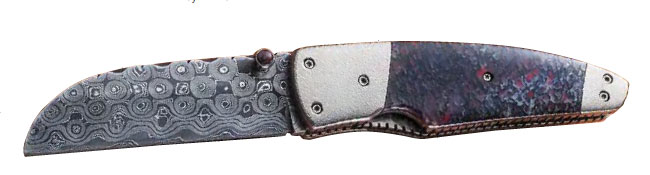
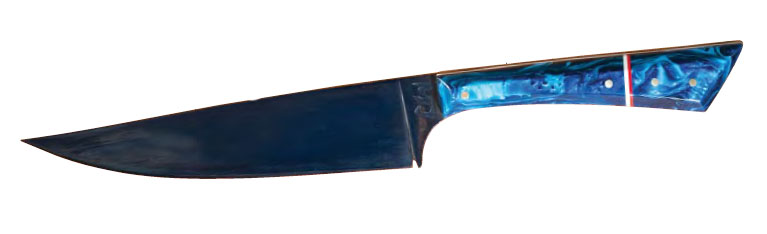
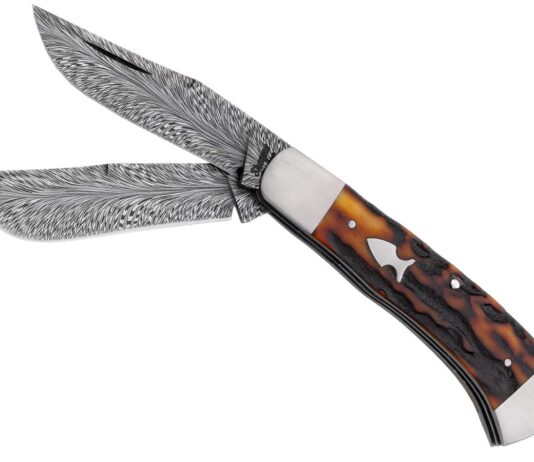
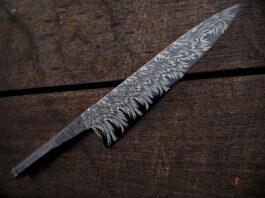
Knife collecting is an extremely rewarding experience for knife enthusiasts. There truly is a knife for everyone. Many increase or hold their value throughout the years, making collecting knives something to pass on to the next generation of knife collectors.

Photos: 7 Custom Knives with Handmade Bolsters

Some people are bolstered by success, and others create bolsters to help them succeed. In the latter category would be knifemakers fashioning folders with bolsters, whether for utilitarian or aesthetic purposes, or both.

Gawie Herbst

Gawie Herbst folding knife

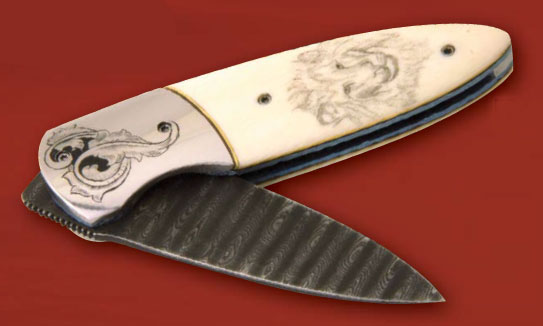
South African knifemaker Gawie Herbst knew just the person to engrave the bolsters of his art folder, his son Thinus, yet it was Gawie who scrimshawed the elephant ivory handle, and complemented it with a damascus blade and blued-titanium liners.


Scot Matsuoka

Scot Matsuoka folding knives

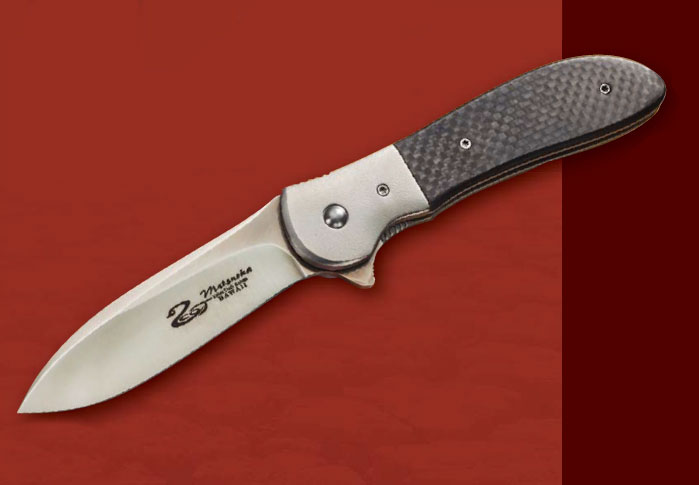
There are no straight lines on Scot Matsuoka’s titanium frame-lock folder, not on the titanium bolsters, the carbon fiber handle scales, nor the 3.75-inch, hollow-ground CPM 154 blade. The folder also features the IKBS (Ikoma Korth Bearing System) and Rick Hinderer Lockbar Stabilizer. (SharpByCoop image)


Jeremy Marsh

jeremy marsh custom knife

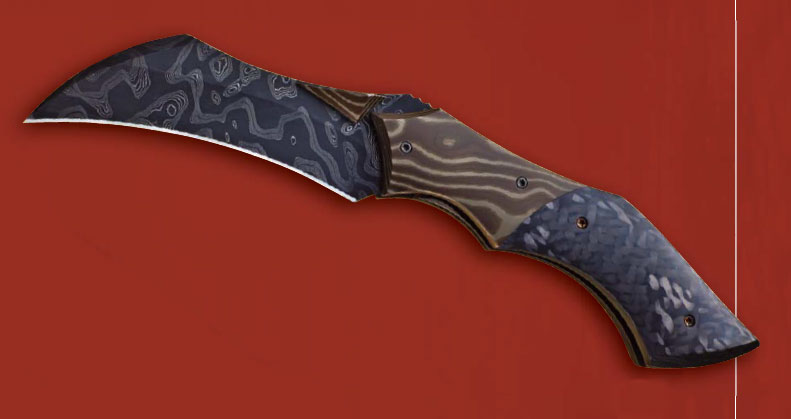
Mokumé bolsters provide a nice respite between the claw-like damascus blade and carbon fiber handle scales of Jeremy Marsh’s compound-ground folder. (SharpByCoop image)


Bill Duff

bill duff folding knife

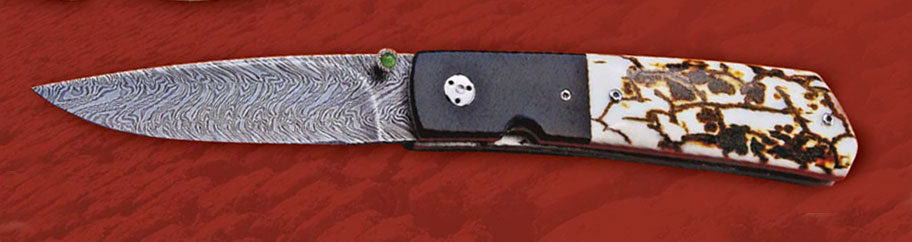
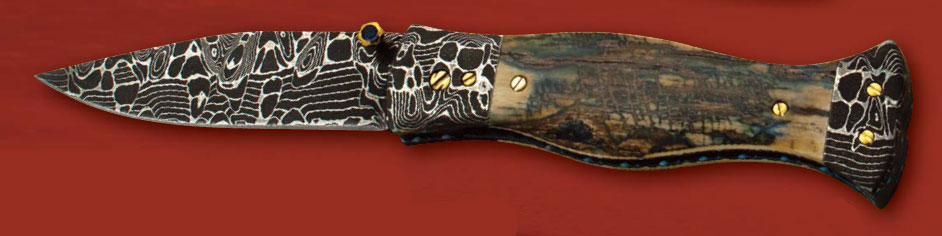
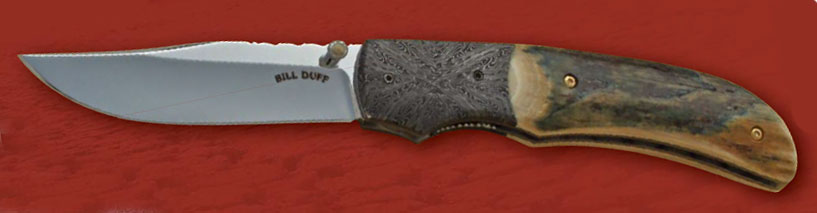
Bill Duff chose mosaic damascus bolsters for his locking-liner folder in a 3-inch, fileworked 440C blade and mammoth ivory handle scales. (Chuck Ward image)


Norman Sandow

Norman Sandow folding knife

Knifemaker Norman Sandow blackened the titanium bolsters of a locking-liner folder showcasing a damascus blade, a jade-inlaid damascus thumb stud and mammoth ivory handle scales.


Fellhoelter/Horton

Brian Fellhoelter and Jeremy Horton collaboration folding knife

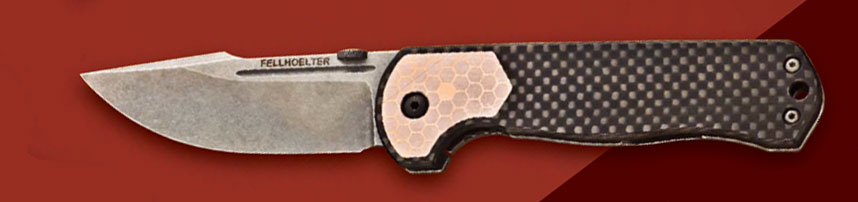
A collaboration between Brian Fellhoelter and Jeremy Horton, the “FTR” features a 3.5-inch fullered blade. Niobium bolsters help set off the piece, as do carbon fiber handle scales and a one-side-only titanium frame that doubles as the frame lock. (SharpByCoop image)


Dan Chinnock

Dan Chinnock folding knife

Appropriately named the “Fish Tail” for its handle and pommel shape, Dan Chinnock’s locking-liner folder parades a 2.75-inch Chad Nichols damascus blade and bolsters, blue mammoth-ivory handle scales, a sapphire-inlaid 24k-gold thumb stud, gold screws and anodized titanium liners. (Chuck Ward image)

See More High-Quality Photos of Custom Knives

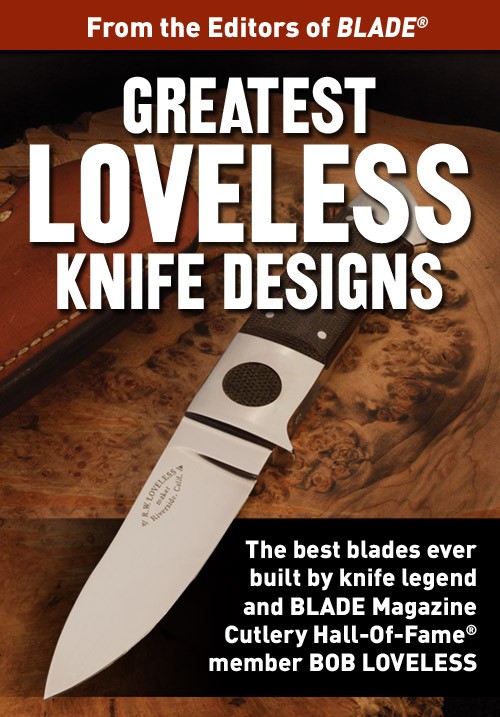
best knife book

The Legacy of Bob Loveless’s Dropped Hunter

robert loveless knifemaker

bob loveless knives
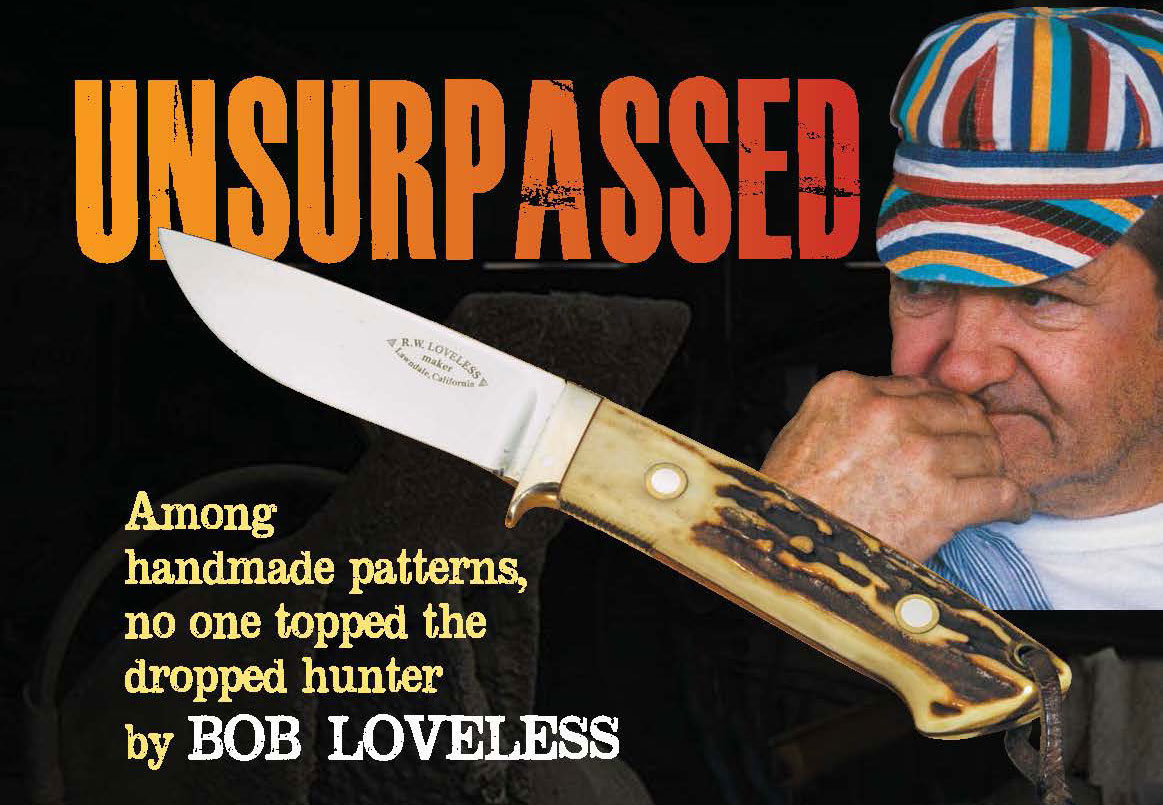
Bob Loveless, pictured here, left a knifemaking legacy that continues to influence generations.
“Bob is most likely the best designer to ever produce a knife, as design after design was just right,” John Denton observed.

Too often, it seems, the mediocre is celebrated. Descriptive terms like “legendary” and “timeless” are handed out with reckless abandon. But few would argue that the terms are fitting when applied to BLADE Magazine Cutlery Hall-Of-Fame© member R.W. “Bob” Loveless and the dropped hunter.

Also known as the drop-point hunter or simply the drop point, the knife grabbed the attention of the world of knives more than half-a-century ago and has remained in the limelight ever since.

“Bob Loveless didn’t invent the drop point but he sure made it popular,” remembered longtime merchant, knife advocate and Cutlery Hall-Of-Famer A.G. Russell. “Loveless was different. Loveless was magic. When his knives sold for $650 and other makers’ knives sold for $200, he said his knife was worth $200 but the mark was worth $450.”

Russell points to an article that appeared in Guns & Ammo magazine in the 1960s. It thrust Loveless and his custom knives, along with those of Harry Morseth and Merle Seguine, to the forefront.

“It made Loveless the most renowned knifemaker in America,” A.G. recalled. “In handmade patterns nobody surpassed Loveless’s drop point. Not just because it was copied, but everybody was copying it—kind of like the Randall Model 1 was copied.

“It wasn’t his best or most useful model. It was simply the most popular. His best was the semi-skinner, with a better point and belly,” Russell opined.

Global Impact of Loveless Knives

bob loveless custom knife sheath
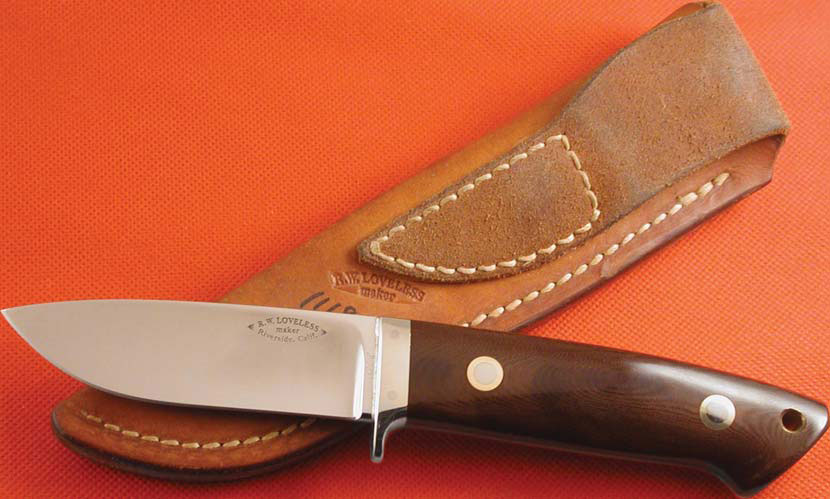
Adding to the desirability of any Loveless dropped hunter—and any Loveless knife, for that matter—is an original Loveless sheath. Loveless prided himself on the quality of his sheaths almost as much as the quality of his knives. (image courtesy of John Denton)

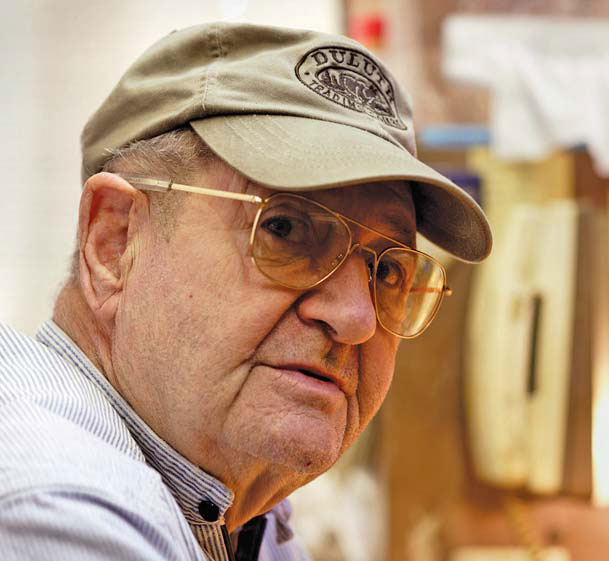
John Denton is one of the world’s foremost authorities on Loveless knives.

He has been an avid collector for decades and a purveyor of Loveless knives for many years, following in the footsteps of his late father and purveying legend J.W. Denton.

“The first time I saw a drop-point hunter was in BLADE® Magazine in the ’80s,” he recalled. “If you didn’t get BLADE Magazine, you did not know about anything in the knife world. Also, it seems that every time I liked a knife I saw in a photo I would read below it, and it would say, ‘made by R.W. Loveless.’ So there must have been something special if a photo catches you over and over in books and magazines.”

bob loveless knife shop
Loveless and his knives were immensely popular in Japan, and John Denton surmises that the drop point was the catalyst for the Loveless explosion in the Asian market. From left: Loveless, Denton and knifemaker/Loveless’s long-time assistant Jim Merritt in the Loveless shop in Riverside, California. (image courtesy of John Denton)

Loveless and his knives were immensely popular in Japan, and Denton surmises that the drop point was the catalyst for the Loveless explosion in the Asian market.

“The fact is that the drop point was meant to be a using tool, just like Hamada Pottery. It was utilitarian and useful. That’s the reason he was so huge in Japan, his simple design, and nothing was wasted, and the fact that it was so well balanced in the hand—never square—so that you did not feel any [unnecessary] sharp surface when working with it. Pure brilliance!”

Cutlery Hall-Of-Famer B.R. Hughes met Loveless through A.G. Russell, who had met Bob a year earlier while on a tour in 1967 that included stops at the shops of several custom knifemakers, including Loveless’s in California.

“I first saw a Loveless drop-point hunter in the dead of winter in 1968,” Hughes smiled, “when my good friend A.G. Russell called and told me that he was hosting a California maker named R.W. Loveless, who was doing some pretty special stuff with his knives, and invited me to come up for a visit.”

The roads between Hughes’ home in Texarkana, Texas, and Russell’s business in Arkansas were covered with snow at the time, but Hughes prevailed on a friend, Bill Murdock, who owned a plane and flew him over to the airport in Fayetteville.

“A.G. and Bob picked us up at the airport, and we drove to a small diner, where we had coffee and ate,” Hughes recalled. “Bob laid out several of his knives on the table and he talked. I was most impressed with the workmanship and the design of the knives, notably the extremely thinly ground blades, the full tangs, the handle design, and the tapered tangs. The overall workmanship was some of the best I had seen up to that point. Indeed, the only knifemaker of that period I would say was comparable in terms of workmanship would have been D.E. Henry.”

bob loveless drop point hunter
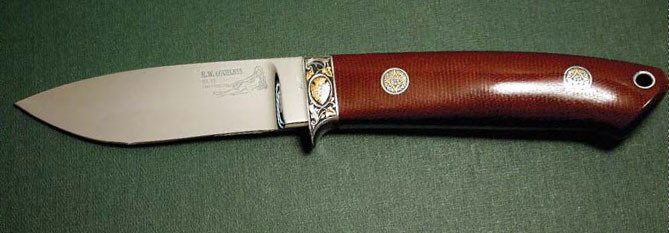
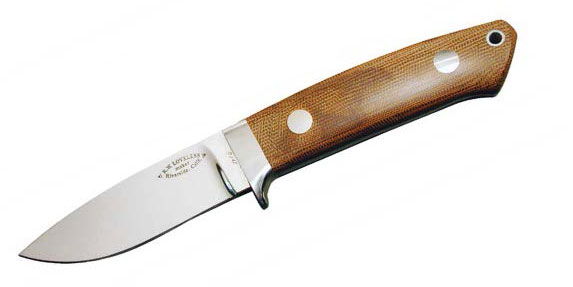
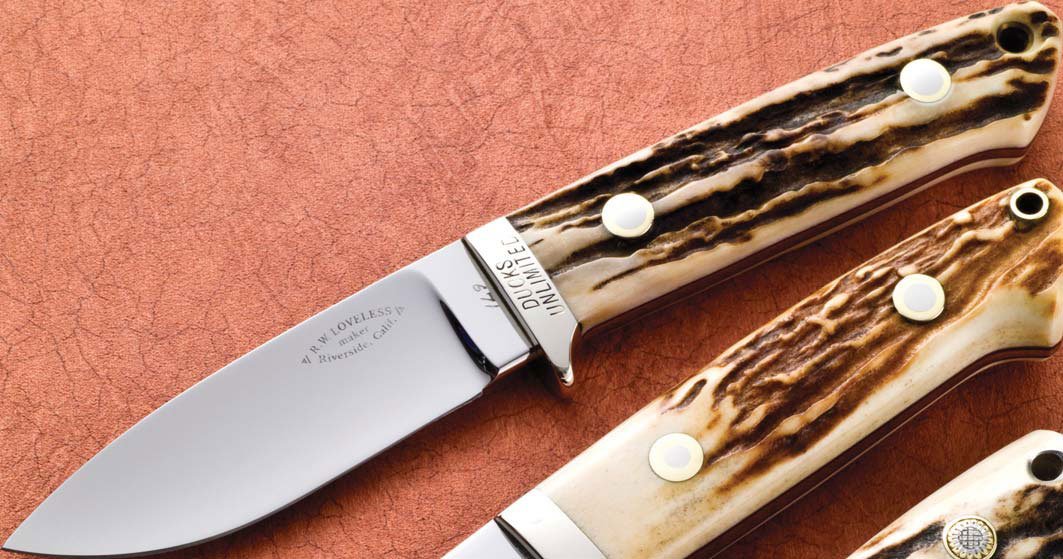
Denton calls this the “essential Loveless drop-point hunter” with a Micarta handle and engraving by Dan Wilkerson, whom Denton indicated engraved more Loveless knives than anyone. The gold in the engraving, including the arrowhead, is 18k. (image courtesy of John Denton)

Loveless evidently struck a chord when he revived an old design and added his personal touch. The result was an utter phenomenon. His authorship was unmistakable and his mark became prized the world over.

“The drop point is not hard to make,” Denton noted. “Loveless told me that he did not like making sub-hilts because by the time he made one sub-hilt he could have made 10 or more drops. But that’s what makes his double grinds so nice. They are rare and took time to make. But Bob said 90-percent plus of his production was some sort of hunter, and of those, [mostly] the drop. He went years sometimes never making a Big Bear [sub-hilt].

“Bob is most likely the best designer to ever produce a knife, as design after design was just right,” Denton continued, “the Big Bear, the boot, New York Special, Hideouts, Chute knives. All amazing. He is much like the Ferrari of the knife world. He did it so well that everyone copies it and wants to make a drop-point hunter when they start out making knives, or they want to certainly own one if they collect knives. I just recently sold a Loveless knife to rock legend Eric Clapton. So, Loveless designs are known all over the globe.”

Schrade Bob Loveless knives
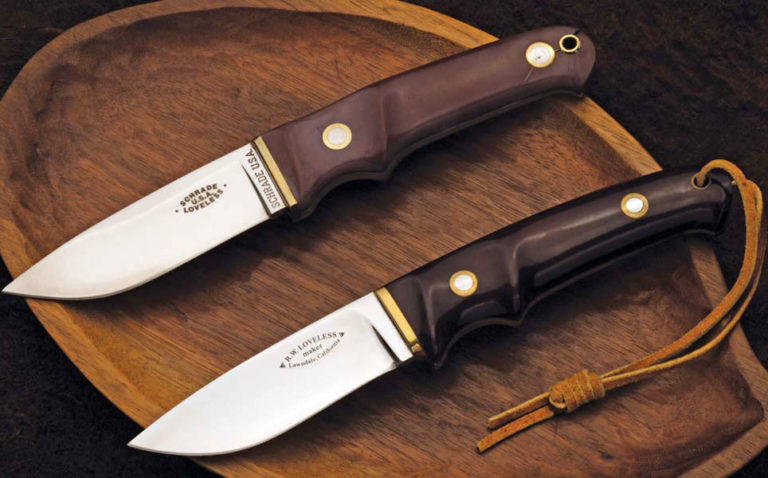
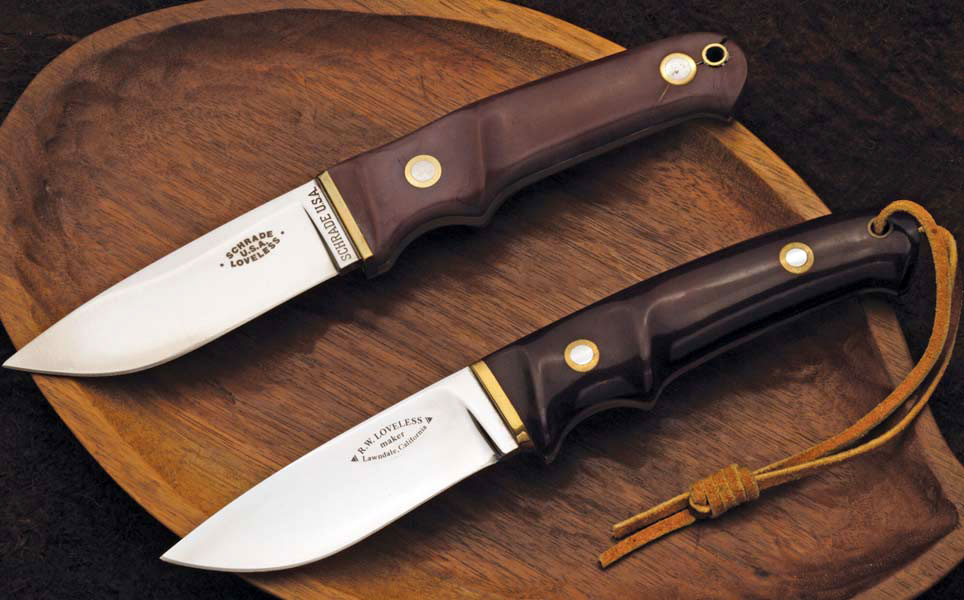
An actual 1970s Schrade reproduction of the Loveless drop point (above) and the original Loveless Lawndale model on which it was based (right) appear here. “A.G. Russell put Loveless in touch with Uncle Henry Baer of Schrade and the rest is history,” John Denton stated. (image courtesy of John Denton)

According to Denton, Loveless started making hunting knives in the 1950s and conceived his additions to the genre.

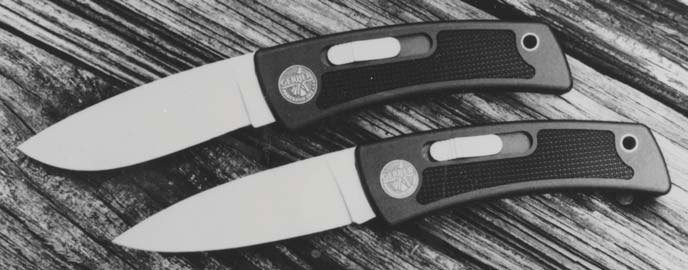
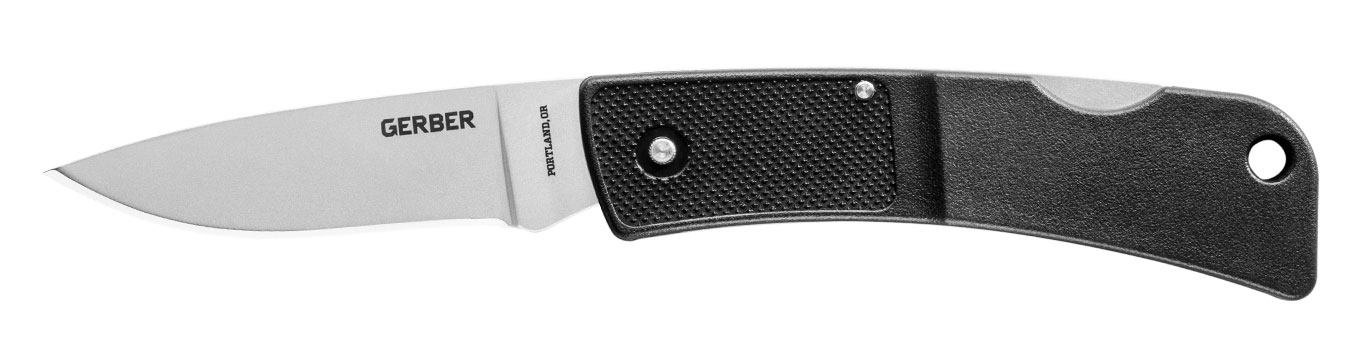
From there, John says, the rest is history. By the 1970s and ’80s, Schrade, Gerber and Beretta were among the companies offering reproductions of the drop-point hunter, so the knife’s influence captured the mass-production market as well.

Bob Loveless: Larger than Life

bob loveless hunting knife
Denton said Loveless once told him 90-percent plus of his production was some sort of hunter, and of those most were drop points.

Cutlery Hall-Of-Famer D’ Holder treasures his personal relationship with the late Loveless.

“I had seen Loveless drop points in several magazines in the late ’60s,” Holder said, “but saw my first up close and real in 1973. Dan Dennehy was raising money for his move to Del Norte, Colorado, and had a Loveless drop point on his gun show table for sale. It was at the Yuma, Arizona, gun show and he was asking $125. It had stag handles and a gold escutcheon on top of the blade with [Loveless’s] name engraved in it. On the side of it was engraved, ‘To my good friend Dan, from Bob.’”

D’ bought the knife that day and owned it for 15 years before selling it to Al Williams, a renowned Loveless collector, for $1,800. Holder says he should have kept it and that it would bring at least $10,000 today.

“I would sit in my easy chair and fondle that knife for hours trying to figure out what was so special,” D’ mused. “I never came up with a clear answer other than it was a Loveless.”

For years, D’ stopped by Bob’s Riverside, California, shop while on his way to one of the West Coast knife shows.

They exchanged varying opinions of topics of the day, and even when those opinions diverged they shook hands and looked forward to the next visit.

collecting bob loveless knives
According to A.G. Russell, the drop point was not Loveless’s best or most useful model. It was simply the most
popular. “His best was the semi-skinner, with a better point and belly,” Russell opined. (PointSeven image)

“The last time we had our usual discussion and it came time to leave, I extended my hand as always,” Holder said, “and he brushed it aside and gave me a big hug, and told me how much he appreciated the visits. Several years later he came to Phoenix and spent the day with me in my shop. It was one of the highlights of my career. He was a perfect gentleman. I miss the opportunity to visit with him. I miss his personality, his gruff exterior and his friendship.”

Hughes agrees that the drop point was not the most difficult knife to make, but its impact has been enormous. He recalls Loveless taking a moment during that first meeting at the diner in Arkansas, running the edge of one of his knives against pressure. As he moved it, the edge actually rippled, something B.R. had never seen before.

american bladesmith society
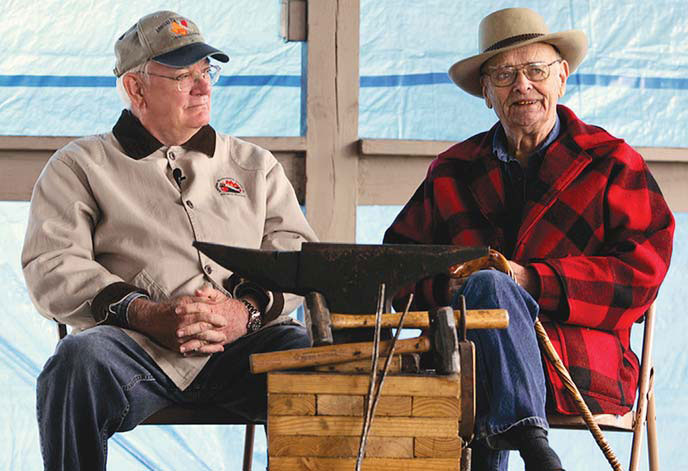
B.R. Hughes—at left here with Bill Moran—agrees with John Denton that though the drop point is not the most diffi cult to make, its impact has been vast. (Buddy Thomason image)

“Subsequent events indicated that it was not too difficult to turn out knives of this style and quality,” Hughes remarked, “because in a relatively short span of time at least half the stock-removal knifemakers in America were turning out pretty close copies of Loveless knives. He had an instant impact on knifemaking, almost overnight. My article on Loveless and his knives appeared sometime later in the long defunct GUNsport Magazine, of which I was shotgun editor at the time. Other articles appeared in other gun magazines. Remember, there was no BLADE, no Knives Illustrated in those days.”

In the pantheon of great custom knifemakers, Hughes says the knives of Cutlery Hall-Of-Famer Bo Randall were the most copied until Loveless came along. Then Loveless and Cutlery Hall-Of-Famer Bill Moran became the most influential cutlers in America and perhaps the world.

“Moran virtually singlehandedly saved bladesmithing from extinction, and Loveless transformed stock-removal knifemaking,” he concluded. “Anyway, that is my take.”

The drop-point hunter stands out among the rest because of the times, the look, the feel, the mark, and of course, the source of it all—larger than life—Bob Loveless himself.

Discover the Secrets to Bob Loveless’s Knives

collecting bob loveless knives

Knife Collecting Alert: 6 Knifemakers to Watch

Dominick Gold

dominick gold custom knives
(SharpByCoop photo)

After going to knife shows for a few years, Dominick Gold of Manchester, New Jersey, had to try making a knife himself. He started reading and learning.

“I couldn`t believe how all the makers I met were willing to help the new guy,” Dominick noted.

He met Joe Szilaski at a New York knife show and took classes with him on stock removal and forging.

“I worked in the wholesale seafood industry out of the Fulton Fish Market in New York [City] and really learned how to use a knife,” he stated.

  • Best-selling knife patterns: skinners, hunters, bird-and-trout and mini tactical tomahawks
  • Preferred blade steels: 1095 for hamon, CPM 154 for hard or outdoor use, and AEB-L for fine edge holding in a slicer
  • Blade grinds: flat w/convex edge and hollow
  • How he tests his knives: paper slice, cardboard cut, 4×4 wooden post chop and user feedback
  • Favorite handle materials: koa, redwood, maple, also Micarta®, G-10 and the occasional resin pinecone
  • Price range: $200-$400
  • Knife shows he attends: Northeast Cutlery Collectors Association, Mystic, Connecticut; Lehigh Valley Knife Show, Easton, Pennsylvania; Great Middletown Firearm and Knife Show, Middletown, New York
  • Online purveyor selling his knives: artknives.com
  • Forums he participates in: Northeast Cutlery Collectors Association and the knife gods Group on Facebook.
  • Dominick does everything in house except heat treating stainless steel, which he leaves to Paul Bos. He hand-stitches his sheaths.

The Knife

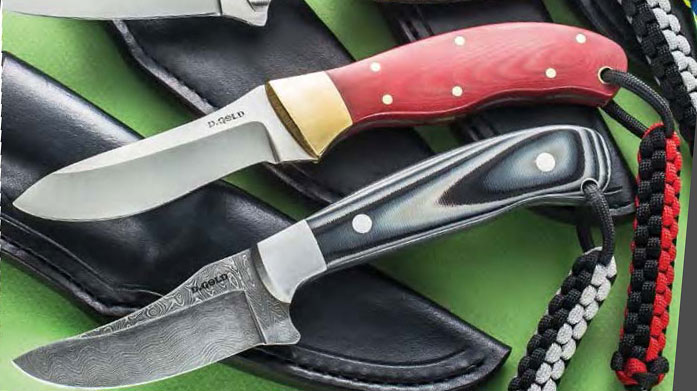
His skinner has a 3.5-inch hollow-ground blade of AEB-L stainless steel. The knife has dovetailed brass bolsters with a satin finish, red linen Micarta scales and is finished with a 550 paracord fob.

“There isn’t a straight line on the knife,” Dominick added. Maker’s list price: $250.
Contact Dominick Gold, 908-309-7541, [email protected] and on Facebook at Dominick Gold.


Wayne Meligan

new custom knifemakers

Wayne Meligan didn’t know why knifemaking came so easily to him, he just knew it did.
When Wayne was a boy, his father would pick him up after school with a change of clothes and they’d go fishing. He’s been carrying a knife ever since, fishing from the backwoods swamps to the Gulf of Mexico. After high school Wayne earned his bachelor of science degree in nursing, and today works full time as an assistant managing nurse in a critical care open-heart unit. He’s married with a 3-year-old at home, so his time for knifemaking is limited.

And yet, he spends every minute he can in his shop. Then his grandmother mentioned that his great-granddad used to make knives, and so did his grandfather.

Yet, nobody else in the extended family had picked up the craft, just Wayne. It all made sense—the compulsion to make knives was in his blood and had just skipped a generation.

  • Best-selling knife patterns: drop-point hunter, ringtail cleaver
  • Favorite blade steels: 5160 for its workhorse qualities, 1095, 80CrV2
  • Blade grind: flat
  • How he tests his knives: push-cut newspapers for chef’s knives; sportfish, hunt and camp for camp knives; cut a nail for heat-treat check on all models, or run through sheet metal
  • Favorite handle materials: local hardwoods like snakewood and walnut
  • Price range: $200 and up
  • Forums he participates in: Bladesmithing for Beginners Groups on Facebook

The Knife

This hidden tang all-around knife has a 7-inch blade of ladder-patterned steel from Alabama Damascus Steel. The angled integral guard is brass. The walnut handle looks wet because once the rough sanding is completed, the finish sanding goes from 220- to 2,000-grit. Finally a coating of Danish wood oil is applied.

Maker’s list price: $350.

Contact Wayne Meligan, 850-503-3335, [email protected] and Pirate Forge on Facebook.


Rob Ratliff

new custom knife
(SharpByCoop knife image)

Knifemaker Rob Ratliff specializes in fashioning gemstone handle knives, specifically using stone, minerals and fossils.

“My inventory consists of material from nearly every place on earth,” he claims. “I especially enjoy embellishments, such as filework and a variety of knife finishes. All of my work is in house with the exception of engraving.”

  • Best-selling knife patterns: semi-skinner neck knives, drop-point hunters, gentleman’s folders and flipper folders
  • Preferred blade steels: D2 for edge retention, CPM steels for corrosion resistance and performance, and stainless damascus because of its beauty and overall performance
  • Blade grinds: hollow, flat and convex, depending on the knife’s intended use
  • How he tests his knives: rope and paper cutting, feedback from customers, and edge flexes
  • Favorite handle materials: gemstones for their unique, colorful, durable finishes, as well as Micarta®, wood and other materials upon request
  • Price range: $100 and up for neck knives, and $400 and up for folders
  • Knife shows he attends: BLADE Show, Gateway Area Knife Club Cutlery Fair and the Mt. Vernon Knife Show
  • Member of: Gateway Area Knife Club
  • Forums he participates in: bladeforums.com and jerzeedevil.com

The Knife

“My background in woodworking and a career as a welder and in ornamental iron fabrication made my transition into knifemaking feel natural,” says Ratliff, who started making knives in 2007.

The wharncliffe-style, locking-liner folder sports a 3.25-inch Mike Norris damascus blade, dinosaur bone scales, fileworked titanium liners, “orange-peel-finished” titanium bolsters, and a dinosaur-bone inlaid titanium thumb stud. Ratliff’s list price: $1,050.

Contact Rob Ratliff , Dept. BL2, 4318 Martyridge Ct., St. Louis, MO 63129 314-581-1691 [email protected], facebook.com/rob.ratliff.


Marty Jelinek

Collecting custom knives

Knifemaking is a new pursuit for Marty Jelinek. His 14-year-old son asked if he could help make a hunting knife for him, and the passion grew from there. Marty has no formal knife training but a background in fabrication helps.

“For heat treating and tempering I have taught myself using TTT [time-temperature transformation] charts and gleaning information from steel makers’ guidelines,” Marty explained.

He lives in the outback where Internet access is spotty, TV reception is poor, and there is nobody nearby to lean on or compare and contrast with.

“My day job is as a farm hand on a crop farm, and this leaves little spare time, but it does allow me the opportunity to field test my blades in the tough Australian outback conditions.”

  • Best-selling knife patterns: 3-inch everyday carry drop-point, 4-inch drop-point hunter and the occasional kitchen knife
  • Preferred blade steels: SUP9/5160 in the form of recycled planting discs; also 12C27, 1095, 15N20, 1075 and D2
  • Blade grinds: full flat with a 25-degree secondary and the occasional zero-degree
  • How he tests his knives: field testing around the farm, hunting, cooking
  • Preferred handle materials: stabilized burl, G-10, horn and, by customer request, inlace acrylic. “The harsh Australian conditions call for tough hard-wearing handles, especially on working knives.”
  • Price range: $250-$300 with hand-tooled sheath
  • Forums he participates in: Assorted ones on Facebook, and Australian Blacksmith and Knifemaker

The Knife

“I am just a bloke in the bush having a red-hot go, making a few knives to pay for equipment to make a few more knives, Marty added.

His kitchen carving knife has a 7-inch blade with blued 5160/SUP9 steel. The inlace acrylic handle includes G-10 liners and spacers. Overall length is 12 inches. Maker’s list price: $300.

Contact Marty Jelinek, +61 4 28 299 690, [email protected], on Facebook at Handmade Knives by Marty Jelinek.


Rudy Dean

custom knife collecting
(Caleb Royer image)

Edmund Davidson, friend and mentor for over 25 years, sparked Rudy Dean’s interest in knifemaking.

Rudy was taught the art of pattern-welding steel by Herb Derr, who also encouraged him to make knives. American Bladesmith Society master smith Jim Crowell was Rudy’s instructor in the ABS Intro to Bladesmithing class, continues to guide his forging techniques and supervised Rudy’s journeyman smith performance test.

After 27 years as a retail store owner, Rudy retired in January and has become a full-time bladesmith. He also enjoys farming, beekeeping and sharpening his bushcraft skills in the mountains of the Shenandoah Valley.

  • Best-selling knife patterns: hunters and tomahawks made with patternwelded steel, and forged bowies
  • Preferred blade steels: his own forge-welded steel using 1084 and 15N20, 1075 for hamon, D2 for stock removal and CPM S30V for kitchen knives
  • Blade grinds: flat and the occasional hollow
  • How he tests his knives: wood and rope cutting, occasional destructive tests
  • Favorite handle materials: burls and spalted woods for natural beauty, vintage Micarta® for ruggedness and cast materials by J. Hue Customs
  • Price range: $250-$900
  • Knife shows he attends: BLADE Show, International Custom Cutlery Exposition, the Moran Association All Forged Show and the Shenandoah Valley Knife Collectors Show
  • Member of: ABS, The Knifemakers’ Guild, William F. Moran, Jr. Museum and Foundation, Shenandoah Valley Knife Collectors Club and the North Carolina Custom Knifemakers Guild
  • Forums he participates in: ABS and BladeForums.com.

The Knife

Rudy runs a “sole authorship” shop, performing all aspects of his builds in house.
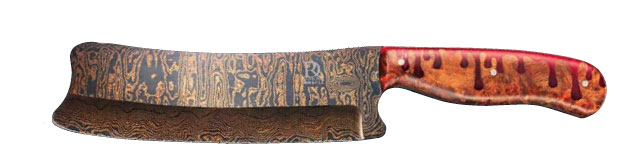
In his Urban Cleaver Rudy incorporates 261 layers of pattern-welded 1084 and 15N20 steels in a 5½-inch, partial-hollow-ground blade. The knife is 10 1/4 inches overall with amboyna burl Blood Drip scales from J. Hue Customs. Maker’s list price: $500.

Contact Rudy Dean, 540-487-8777, at [email protected], at www.rudydeancustomknives.com, @rudydeancustomknives on Facebook and @rudydeanknives on Instagram.


Tim Flack

collecting custom knife

Tim Flack’s bladesmithing journey began when he saw the Western approach to traditional Japanese fine metalwork in pieces made by South Africans such as Ford Hallam and Tiaan Burger.

“I loved the traditional approach they took using hand chisels—called tagane—to carve metal,” Tim noted.

He lost his job a few months later and Pokémon GO was out, so he made a few sterling silver pendants of Pokémon and realized it paid the bills.

A friend asked him to make a knife and he called the local knife club for help. Rick Afonso introduced him to his mentor and friend, Stan Hohowsky.

“I forged my first knife, a kozuka, and that had me hooked,” Tim said.

Stan and friend Brad Woollon have mentored him ever since. Both studied under South Africa’s only American Bladesmith Society master smiths, Kevin and Heather Harvey.

  • Best-selling knife patterns: ultra-thin kitchen knife co-designed and manufactured with Woollon, his yanagiba, drop-point hunter and bowie
  • Preferred blade steels: O1 and 5160 for ready availability in South Africa. “I’d love 52100 for my kitchen blades, but it’s hard to get in flat bar and we forge it out of bearings here,” Tim explained.
  • Blade grinds: flat on kitchen blades for push cutting
  • How he tests his knives: wood chopping, push cutting ropes, bottle chops
  • Favorite handle materials: local woods like camphor bush burl, stink ebony and wenge
  • Price range: $60-$300
  • Knife shows he attends: local shows in Cape Town
  • Member of: The Cape Town Knife Club
  • Forums he participates in: Facebook Groups

The Knife

His kitchen knife has a 7.38-inch flatground, convex-edged blade of Bohler K460 steel. Overall length is 11.81 inches. The handle is made of treated zebrano wood and fastened with mosaic pins.

Contact Tim Flack at +27 60 6054562, [email protected], on Facebook at Tim Flack; on Instagram @journey_of_a_metalsmith and on Twitter @tim_meh87.

Find More Custom Knifemakers with BLADE‘s Directory

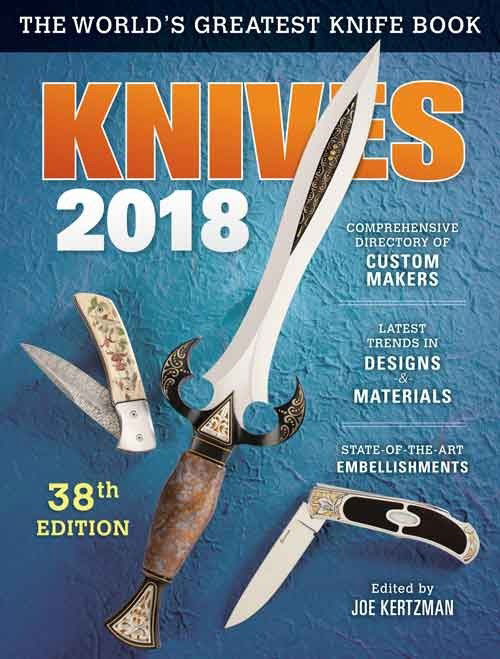
A full directory of custom knifemakers around the world can be found in the Knives 2018 book.

best knife book

Photos: What Steels Do Custom Knifemakers Use?

0

What Steels Do Custom Knifemakers Use?

Custom knifemakers can use any steels they like. However, some steels continue to see use year after year. Here are a few great examples.

CPM 154

custom knife steel

CPM 154 stainless is the blade steel Kurt Swearingen selected for his deep-bellied semi-skinner with a tapered tang and single guard. The handle is amber elk. Overall length: 8.25 inches.


1084 & 15n20

steels used in custom knives

A pattern weld of 1084 and 15n20 comprises the 6 7/8-inch clip-point blade of the 385 Damascus Bowie by Larry Cox. The handle is giraffe bone and the guard is 416 stainless steel.


5160

custom bowie knife

Tried-and-true 5160 carbon steel is the blade material for Bill Kirkes’ small bowie with a long swedge and oval double guard. The handle is ironwood. Overall length: 12 inches.


W2

custom hunting knife

W2 tool steel comprises the clip-point blade of Chris Montgomery’s tapered-tang utility hunter. The handle is the Bob Loveless favorite—green Micarta®. Overall length: 8.25 inches.


154CM

custom art knife

A 3.25-inch blade of 154CM stainless—another Bob Loveless staple—anchors James Glisson’s drop-point skinner in mammoth ivory. The scrim is by Kurtz Miller and the engraving by Pierre Le Blanc.


D2

custom bowie knife steels

D2 tool steel is the material for the 7-inch hollow-ground blade of Harvey King’s fighter. The handle is stag with a brass double guard and buttcap. The spacer is amber.


440C

custom dagger steel

Bill Duff no doubt has used 440C stainless scores of times in his many years of knifemaking—and he does so here again on his large dagger with a black and maroon Micarta® handle. Overall length: 12.75 inches.


See More Photos of Custom Knives

best knife book

Photos: New Custom Knives to Knock Your Socks Off

New Custom Knives

Near-flawless grinds, captivating materials, curvaceous lines, snug fit and finish, and slick mechanisms help ensure today’s hottest makers’ hottest custom knives are cool cutters to covet.

While determining such knives is almost impossible to do without at least a smidgeon of subjectivity, those who sell knives professionally have their finger on the pulse of who some of the makers are and which of their knives is hottest. If the sellers don’t, they won’t be in business for long.

We tapped four of today’s successful knife sales operations—purveyor Daniel O’Malley of Bladegallery.com, purveyor Les Robertson of Robertson’s Custom Cutlery, and Sako Rouchanian, owner of Recon 1, a retailer of knives and gear—for their opinions on the matter.

Meanwhile, don’t be surprised if one or more of the mesmerizing cutters they identify activate your salivary glands. Covet away!

Poison

custom knives
(Claudio Sobral image)

Poison by Claudio and Ariel Sobral of CAS Knives offers up what purveyor Les Robertson calls the Sobrals’ signature style: big, bold and striking! The carved integral guard and sub-hilt are blued carbon steel.

  • Handle: Amber stag
  • Blade and overall lengths: 10 and 15.5 inches
  • Blade steel: Ladder pattern damascus
  • Maker’s price: $3,000

111

Sergey Shirogorov
(Recon 1 image)

The Double Row Roller Bearing System used exclusively on such custom knives as Sergey Shirogorov’s full custom 111 flipper makes the knife’s action incredibly smooth.

“It flips open like a rocket,” stated Sako Rouchanian of Recon 1.

  • Blade and closed lengths: 4.37 and 5.25 inches.
  • Blade steel: Chad Nichols boomerang damascus
  • Handle: stonewashed titanium
  • Maker’s price: Auction only
  • Recon 1’s price: $12,000

Ronin

jim burke ronin custom knife
(Steel Addiction Custom Knives image)

Jim Burke’s Ronin is a compact tactical flipper folder with a unique pocket-friendly footprint. The modified tanto blade is Stellite® and pivots on ceramic bearings. The frame is milled Zircuti—zirconium and Mokuti—with blue anodized hardware. The clip is Zircuti, too.

  • Weight: 5.5 ounces
  • Blade and closed lengths: 3.25 and 4.25 inches
  • Maker’s price: $1,800

L51 Compact

new custom knives
(BladeGallery.com image)

As purveyor Daniel O’Malley observed, over the past couple of years tactical folder collectors who had gone by the creed of “bigger is better” have been opting for sleeker, lighter, thinner and more pocket-friendly versions for their EDCs. The L51 Compact by Andre Van Thorburn is such a knife.

  • Blade and closed lengths: 3 3/8 and 4.5 inches
  • Blade steel: N690 stainless Handle: Marbled carbon fiber
  • Weight: 3.8 ounces
  • Maker’s price: $750
  • BladeGallery.com’s price: $750

EZC

best custom knives
(Recon 1 image)

The carbon fiber handle of Ray Laconico’s EZC flipper features a milled “speed hole” pattern.

“When it comes to building a handmade tactical flipper knife for everyday carry, Ray Laconico gets it,” noted Sako Rouchanian of Recon 1.

  • Blade and closed lengths: 3 and 3.87 inches
  • Maker’s price: $750
  • Recon 1’s price: $1,100

A2/A6

best new custom knives
(Steel Addiction Custom Knives image)

The A2 framelock folder by South Africans Andre Van Heerden and Andre Thorburn has been hot for well over a year now and shows no signs of cooling off. The A2/A6 is their collaboration with Tashi Bharucha in a blade of polished Damasteel damascus, and hand-rubbed titanium frames in the Omega sign with silver lightning-strike carbon fiber inlays.

  • Weight: 4.9 ounces. Blade and closed lengths: 3 5/8 and 8 3/8 inches
  • Makers’ price: $1,500

Model 450 Ultra-Light

des horn model 450 ultra light
(BladeGallery.com image)

South African Des Horn’s Model 450 Ultra-Light gent’s flipper features a 2.75-inch blade of Damasteel stainless pattern-welded steel and a blue/silver carbon handle.

“It’s so slim and light [1.2 ounces] you won’t even know you’ve got it with you,” noted purveyor Daniel O’Malley. “With over 30 years making knives, Des Horn is one of the fathers of the South African knife industry, and his influence can be seen in many other makers’ work.”

  • Horn’s price: $600
  • BladeGallery.com’s price: $600

Hokkaido

new custom knife
(Recon 1 image)

“Arguably [featuring] the best grinds in the tactical market, John Barker’s Hokkaido is the hottest tanto design in the tactical world,” noted Sako Rouchanian of Recon 1.

The Small Hokkaido flipper features a contoured rosebud pattern Timascus handle.

  • Blade and closed lengths: 2.75 and 4 inches
  • Blade material: handrubbed CTS-XHP stainless Maker’s price: $3,500
  • Recon 1’s price: $7,500

Sault Daug

best custom knife
(Steel Addiction Custom Knives image)

Sault Daug is the latest folder from Lee Williams. Equipped with a linerlock, it comes in both the maker’s Kick Stop and stud opener (pictured) versions. Blade and closed lengths: 3.5 and 4.75 inches.

  • Blade steel: handrubbed CPM 154
  • Handle: Carbon fiber scales and titanium standoffs
  • Weight: 4.7 ounces
  • Maker’s price: $2,250
  • Open-bid show price: $7,500

Piuma

best custom knifemakers
(BladeGallery.com image)

The brother of custom knifemaker Willem Steenkamp, Kosie Steenkamp offers up the Piuma flipper in red lightning-strike carbon fiber.

“The blade is perfectly centered with silky smooth action,” noted purveyor Daniel O’Malley, “and easily opened with one hand using the ambidextrous flipper toggle.”

  • Blade and closed lengths: 3.4 and 5 inches
  • Liners: Jeweled and anodized titanium
  • Pocket clip: textured and anodized titanium
  • Maker’s price: $575
  • BladeGallery.com’s price: $575

Doctor Death Junior Flipper

flipper knives
(Steel Addiction Custom Knives)

Tom Mayo has been making knives 35 years and all of his anniversary knives have his XXXV anniversary logo.


The Doctor Death Junior Flipper has a 3 5/8-inch blade of handrubbed CPM 154 stainless steel and operates on the Ikoma Korth Bearing System. The framelock folder weighs 4.6 ounces and is 5 inches closed.

  • Maker’s price: $1,600

See More Photos of Custom Knives

best knife book

See beautiful, full-color photos of custom knives in Knives 2018.

How Much is a U.S. President’s Sword Worth?

antique sword values
The Grant presentation sword sold of $330,000 at auction. It was originally presented to the Union general when he took command of the Federal Army in 1864. (Butterfield image)

Editor’s note: The following appeared in the July/August 1990 edition of BLADE magazine. Note that the record-setting price is now outdated. Read more from the archives with this collection.

The value of a sword owned by a United States president depends first on whether the item’s provenance can be confirmed. Popularity of the president can also play a role. The more popular, or at least well known, the president, the higher the price. The significance of the sword in history matters as well. The materials used in the sword can be important, but context matters most.

Here’s one example.

Ulysses S. Grant’s Sword Sells for $330,000

A jeweled sword originally presented to Gen. Ulysses S. Grant recently set a world record for auctioned American swords when it sold for $330,000 at the San Francisco gallery of Butterfield & Butterfield Auctioneers and Appraisers.

As much as the sword fetched, however, the dollar amount does not approach the world auction record for all swords of $51.2 million for a sword that belonged to the Duke of Windsor, according to Greg Martin, one of the organizers of the San Francisco event.

Part of a Larger Antique Sword Auction

civil war sword values
Ulysses S. Grant served as the 18th president of the United States. (public domain image)

The Grant piece was but one of 210 swords – which Martin said may be a record for the number of swords bought at one auction – sold in San Francisco. All told the sale brought about $900,000 in bids and included pieces from the Revolutionary War period up to the turn of the century.

“It was a historic sale because it involved three sword collections in one,” Martin explained. Those collections included 30 pieces that one belonged to Jay Altmayer of Mobile, Alabama, presentation pieces every one, including the Grant sword; 70 eagle head swords from the collection of E. Andrew Mowbray, who has written a book on eagle head swords; and 110 swords – including a sword presented to Col. Charles C. De Rudio of Gen. George Armstrong Custer’s 7th Cavalry that sold for $42,500 (plus 10 percent) at auction – from the collection of Peter Buxtun, a sword-collecting veteran of 30 years.

Origins of Grant Sword

But it is the Grant sword that grabbed the headlines. The sword’s ornate silver handle is fashioned in the shape of the winged Goddess of Victory, a laurel chaplet held in place by her left hand, over her head a spread American eagle. Medallion-like counter guards form at the goddess’ feet, where a gold-mounted amethyst sets atop a gold plaque that reads: “Presented to Lieut. General Ulysses S. Grant by his Friends in Kentucky in Recognition of their great Faith in Leadership and Appointment as General in Chief of the Armies of the United States.”

Made by Canfield & Co. of Baltimore, the piece’s hilt and scabbard are in excellent condition, while the blade has some small pitted areas and overall light rust. According to the auction program, the inscription on the presentation plaque was possible freshened at one time.

The Civil War and Grant’s Sword

download knife magazines
Learn more about knife history in this collection of BLADE back issues, dating back to 1973.

Grant’s Kentucky connection is significant. Educated in Maysville and having relatives that settled in the Bluegrass State, Grant was determined to keep Kentucky in the Union. On Sept. 5, 1861, he learned of a Confederate plan to invade Paducah, Kentucky, located at the juncture of the Tennessee and Ohio rivers near the mouth of the Cumberland River.

That evening, he assembled an expedition that landed federal troops the next day at Paducah before the Rebel invasion. On Sept. 7, the Kentucky Legislature voted to keep the state in the Union. Grant had prevented the South from claiming Kentucky and establishing the Confederate northern border on the Ohio River. It was his first major victory.

Knife Collecting: The Allure of Bowie Knives

1
why do people collect knives
Chris Nolen’s collection of custom repros of antique bowies tops 200. Here are some of them
in his 7×14-foot display vault made of alderwood, including 18 drawers full of bowies at the
bottom. (All images by Chris Nolen unless otherwise noted)

Editor’s note: This article originally appeared in the February 2018 edition of BLADE. Download the issue here.
A Bowie Knife Collecting Obsession

The trail of the fabled bowie knife is long and winding. From the Sandbar Fight to the Alamo and beyond, its fact, mystery and myth have become the stuff of legend. The trail extends nearly 200 years, and for half his life Chris Nolen of West Monroe, Louisiana, has traveled down it.
For sure, he’s gone further than most.

At 65, Chris remains heavily engaged in a custom embroidery and screen print business called Reflections with his daughter, Lori Rockett, while another daughter, Lindsey Sanders, lives in Chattanooga, Tennessee. A retired telecommunications worker, he has sought and bought knives since his days mowing lawns for money so that he could run to the local hardware store and buy the knives that caught his eye.

“My mother still kids me about not having any money in those days because I was always buying knives,” he smiled.

Chris married his wife, Linda, 40 years ago, and shortly afterward his knife interest literally got bigger. He collected several large hunting knives by BLADE Magazine Cutlery Hall-Of-Fame© member Bo Randall and still owns a dozen of them, but he isn’t alone in the lure of the brawny bowie.

collection of bowie knives
A close-up of Nolen’s display is a bowie buff’s delight.

Cutlery Hall-Of-Famer Jim Bowie’s legendary encounter at the sandbar, his final hours at the Alamo, the association of numerous knives that bear his name with the history of Texas, its link to the Civil War, and its stretch across the Atlantic to beginnings in the cradle of quality knifemaking—Sheffield, England—made the bowie irresistible.

“It seems like every time I went to a show I was attracted to the big bowie knives,” he recalled. “Sometimes, you might say, ‘What are these good for?’ but I saw them as art in steel.”

Today, the Nolen collection of bowies tops 200, and a fortress-like display room keeps them safe and allows their owner to show them to visitors. One of Chris’s primary pursuits has been the history of the bowie along with a desire to own reproductions of some of the most significant bowies in history. He has worked with several top-notch custom knifemakers, pored over documents and traveled to various locations, the results of which are nothing short of spectacular.

famous bowie knives
A look at a different angle down into “The Bowie Knife: Fact-Myth-Legend” display reveals custom repros of classic antique bowies. From lower left to right: Jesse Clift Knife; Bart Moore Bowie; Noah Smithwick Bowie; Huber Steel Bowie; Searles-Fowler Bowie; Musso Bowie; Bowie No. 1; Berrera-Campbell Bowie; Schively-Perkins Bowie; Juan Seguin Bowie; and Edwin Forrest Bowie. Across the top, from left: Caiaphas Ham Knife, Madame Candelaria Knife and James Black Knife. At top: the Iron Mistress.

Among his bowies are repros of the Searles-Fowler bowie (the original of which is on display in the Alamo), the Joe Musso brass-back bowie, the Iron Mistress, the Jesse Clift bowie, the Juan Seguin Bowie and Bowie No. 1, to name a few.

“No Turning Back”

In 1986, Chris contacted knifemaker Jerry Berry of Natchitoches, Louisiana, after sketching a bowie. He asked if Berry could actually make the knife from the drawings. Of course, the answer was yes.

“That knife has a 9.5-inch blade with a slight recurve,” Nolen said, “with brass and nickel-silver trim and a solid stag handle with a hidden tang. The blade is ATS-34 stainless steel. That is one of my favorites because it was one of the first. Once I got it there was no turning back, and for the last 30 years I have pretty much stuck with the big bowies. Robert Blasingame of Kilgore, Texas, helped me get started on the making of copies of antique knives before he passed away in 2010. He was quite a historian.

Bringing Bowie Knife History to Life

“It was about 10 years ago that I got this wild idea to track back the bowie and its origin,” Chris continued, “and Linda and I visited 12 museums and met curators, who were all such nice people who even let us hold some of the original knives that were associated with the Bowie family.

“For example, we went to the Alamo and actually got the dimensions of the original Searles-Fowler knife. Now, we’ve researched and had reproductions made of pretty much every knife associated with the Bowie family.”

history of bowie knives
Nolen’s “The Bowie Knife: Fact-Myth-Legend” glass display with a statue of Jim Bowie atop it at left. The framed magazine pages on the wall are from a story that included Nolen as a source in a past issue of BLADE®.

Through the years Chris has developed a reputation as something of an expert on bowie knives, resulting in his traveling exhibit aptly named, “Bowie Knife: Fact, Myth, and Legend.” In 2014, he traveled to the Historic Arkansas Museum in Little Rock, where more than 200 genuine bowies were on display.

“They had my reproductions at the entrance there in a big black case,” he remembered. “There is probably more legend than anything surrounding these knives. Jim Bowie didn’t leave us much to go on, and I have studied him for years now. His brother, Rezin, was a big promoter of the bowie knife and gave a lot of them away as gifts. These reproduction knives have been everywhere, and I get a kick out of it.”

Along with the history lesson that the bowie repros convey, visitors can begin to grasp the tremendous skill that is required to produce a high quality bowie.

“It’s hard for a maker in today’s time to get into the head of a maker from 180 or 200 years ago,” Chris offered, “and most of them want to put their own artistic spin on a knife. But along with Jerry Berry, I narrowed it down to Rich McDonald and Mark Banfield who do a lot of work for me, and Cowboy Bob Giles of Whitefish, Montana, who has probably made 15 of them for me. These men are unbelievable artists.”

Musso and Musician Phil Collins

joe musso bowie knife reproduction
The Joe Musso Bowie repro by Mark Banfield with the brass back and “S” guard on the stand serves as a centerpiece for one section of Nolen’s display.

Mention of the Musso Bowie conjures some of the theory and conjecture surrounding its authenticity.

According to Chris, Joe Musso sold the original knife to Phil Collins of the rock music group, Genesis, who in turn donated the original to the Alamo, where some metallurgical testing has been done and some believe the “JB” mark on the guard ties the knife to Jim Bowie.

“That is one of my favorite reproductions because Mark [Banfield] went the extra mile and even copied the stains on the blade,” Chris commented, “and it is the only authorized true copy of the Musso knife. I have some Samuel Bell copies and one of my favorites was just done by Giles. It is an exact copy of the Charles Congreve knife done in Sheffield around 1835, a big swayback bowie trimmed in silver.”

samuel bell bowie knife
Among others, Nolen is a big fan of 19th-century bowie maker Samuel Bell. Mark Banfield reproduced this Bell bowie.

A “Dazzling Display” of Bowie Knives

A couple of years ago Chris and Linda decided to build their dream house on a tract of land they had owned for a while. The move brought to light several knives that had been packed away for 20 years or so. Thinking about the future of his collection, Chris decided to make space available to display it properly.

“I always wanted to have a secured room to display the knives in,” he remarked, “so we designed this room 20 by 18 with no windows, solid brick, and with concrete next to the brick. It would take a tank to get into this thing. There is also a solid steel security door, so it is pretty much a vault. Lori’s husband, Marc, owns a custom cabinet shop. He cuts wood with a laser, and he cut out an entire wall and put in a cabinet for guns to go on each end and 18 drawers at the bottom. You can pull out the knife displays. There are two center panels, and the display is 14 feet wide and 7 feet tall. The center panels have 32 pewter hangers in a fleur-de-lis design that hold 32 bowie knives. At the bottom is a 3-foot shelf that holds about 40 bowies.

“It isn’t everywhere that you can see 70 or 80 bowie knives in the open,” Chris added. “People come in and they have to catch their breath. I also have a coffee table with a glass-top display that holds about 20 knives and is kind of my dedication to Davy Crockett. The other side of the room is a glass display of the ‘Fact, Myth, and Legend.’ The cabinetry is all of alderwood.”

collecting knives
Chris Nolen holds the first bowie for which he drew the pattern. Knifemaker Jerry Berry reproduced the knife for him in 1986. In the background are the paintings by Mark Lemon of the deaths of Davy Crockett (left) and BLADE Magazine Cutlery Hall-Of-Fame© member Jim Bowie (right).

To complete the dazzling display, Nolen commissioned three paintings depicting the epic of the bowie knife during the desperate, heroic stand at the Alamo. The first painting depicts the death of Jim Bowie, slashing defiantly at Mexican soldiers from his cot.

The second depicts the death of Crockett, a death which is surrounded in controversy. The artist allows the viewer to decide Crockett’s fate, depicting the legendary Tennessee long hunter and adventurer standing but exhausted.

The third depicts the death of Col. William Travis, commander of the doomed Alamo garrison.
Although it might seem to the casual observer that the Nolen journey down the bowie trail is complete, such is not the case.

Chris continues to add to his collection. Mark Zalesky, editor of KNIFE magazine, recently pitched in to assist with the recreation of a Samuel Bell knife located in Knoxville, Tennessee, and Mark Banfield completed the addition.

The road goes on forever.
Make Your Own Knives

make a knife
Learn how to make a knife.

Bowie knives are one of the first projects new knifemakers undertake. Get started with this collection of hand-picked books from BLADE.


Advertisement

Must Read Articles
Read this before you make a knife
Knifemaking 101 – Read This Before You Make a Knife

  by Wayne Goddard My experience has taught me that there's nothing like digging in and getting started. I've often said the hardest part of the...
how to forge damascus steel

How to Forge Damascus

Advertisement
Advertisement