
Knife Collecting

Knife collecting is an extremely rewarding experience for knife enthusiasts. There truly is a knife for everyone. Many increase or hold their value throughout the years, making collecting knives something to pass on to the next generation of knife collectors.

SGT. DAKOTA MEYER’S KNIFE

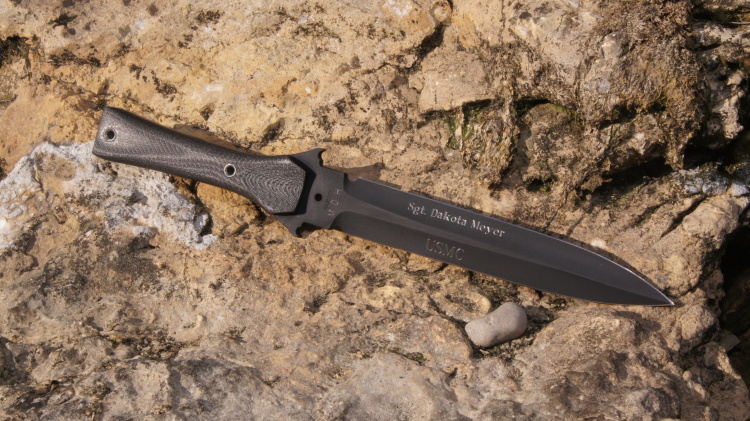
In recognition of his military actions in Afghanistan on behalf of his fellow servicemen and his country that resulted in his receiving the Congressional Medal of Honor, U.S. Army Sgt. Dakota Meyer was presented with a custom knife made by Gene Baskett, a custom AR-15 rifle, and honorary membership in the Knifemakers’ Guild.

    During a special ceremony this past December in Elizabethtown, Kentucky, Baskett, formerly of Elizabethtown and now of Eastview, Kentucky, presented Sgt. Meyer with a Baskett handmade knife, a custom fighter with a black Moly-Coated CPM-154 stainless blade and a black linen Micarta® handle. The knife is engraved “MOH, Sgt. Dakota Meyer, USMC” on the mark side and “8 September 2009, Kunar Province Afghanistan” on the flip side. The engraving is by Patrick Clark of Clark Jewelers, also of Elizabethtown. Richardson Gunsmithing did the Moly Coating.

    In all, Baskett said he got to spend about three hours with Sgt. Meyer the day of the presentations. “He really loved the knife,” Baskett observed. “He was really appreciative and seemed very humbled by it all.”

    J.J. Akins and Steve Sprowls of Elizabethtown’s Sporter Express gun shop presented Sgt. Meyer with the custom-engraved rifle. The gun is engraved “Rifle presented by the citizens of Hardin County, KY. Sergeant Dakota Meyer, USMC. 8 September 2009. Kunar Province Afghanistan. Congressional Medal of Honor,” and was donated by Sporter Express.

    A member of the Guild’s board of directors, Baskett also presented Sgt. Meyer with a custom Guild honorary membership badge that includes the worlds “Medal of Honor Recipient” and the Marine Corps emblem.

ACTS OF HEROISM

Sgt. Meyer was born and raised in Columbia, Kentucky. He entered the Marine Corps after high school in 2006. On Sept. 8, 2009, Sgt. Meyer, then a corporal, was credited with numerous acts of heroism and saving the lives of several Marines in a battle near the village of Ganjgal in Afghanistan (see sidebar, page ???). As a result, Meyer was awarded the Medal of Honor in a ceremony at the White House on Sept. 15, 2011.

    Sgt. Meyer spoke to a small crowd and the media during the ceremony in Elizabethtown, saying he does not consider himself a hero and that the Medal of Honor and what it represents is much bigger than him. His actions on “the worst day of my life” may have saved several fellow Marines, though he said he could not save four of his close friends in his unit. He wears a bracelet bearing their names.

    The Americans who died in the ambush were: 1st Lt. Michael Johnson, 25, Virginia Beach, Virginia; Staff Sgt. Aaron Kenefick, 30, Roswell, Georgia; Hospital Corpsman Third Class James R. Layton, 22, Riverbank, California; and Gunnery Sergeant Edwin Wayne Johnson Jr., 31, Columbus, Georgia. A fifth soldier, Army Sgt. 1st Class Kenneth W. Westbrook, 41, Shiprock, New Mexico, later died from his wounds.

    Sgt. Meyer received the Medal of Honor in a ceremony at the White House on Sept. 15, 2011. When a White House staffer contacted him to arrange the ceremony, Sgt. Meyer famously asked to “have a beer with the President.” Sgt. Meyer received an invitation to the White House the afternoon before the ceremony (see sidebar, page ???). He also requested that when he was honored, simultaneous services should be held at other applicable locations to honor the memory of his fellow service members who died or were mortally wounded during the ambush and his rescue attempts.

    Sgt. Meyer is the third living recipient of the Medal of Honor since the Vietnam War, and the first living Marine in 38 years to be so honored. In addition to the Medal of Honor, he also received the Purple Heart, Navy Commendation Medal w/Combat V, the Navy Achievement Medal and the Combat Action Ribbon during his years of service from 2006-2010.

MILLION DOLLAR CHALLENGE

Sgt. Meyer uses his fame to raise money to provide college scholarships to the childen of those soldiers who did not survive the war. His goal is to raise $1 million for his “Million Dollar Challenge” (see sidebar, page ???). During the presentation ceremony, Sporter Express presented a check for $750 toward that goal.—BY MIKE CARTER

For more information on the Million Dollar Challenge, visit www.dakotameyer.com. For more on Gene Baskett knives, contact Gene Baskett, Dept. BL12, 427 Sutzer Ck. Rd., Eastview, KY 42732 270-862-5019 www.baskettknives.com.

To stay abreast of the latest in knives and knife information, subscribe to BLADE® at http://www.shopblade.com/blade-magazine-one-year-subscription-us?lid=SSfbbl101212

Keeping Up With Dakota Meyer

It is not often a living U.S. Marine receives the Congressional Medal of Honor, and Sgt. Dakota Meyer is the first one to do so in 38 years. Neither is he one to rest on his laurels.

    For instance, he has partnered with the Marine Corps Scholarship Foundation (MCSF) to raise money so the children of Marines can attend college. Sgt. Meyer said he realizes the importance of education and believes in the MCSF motto, “Honoring Marines by Educating Their Children.” The Dakota Meyer Scholarship Initiative was established and Sgt. Meyer committed to personally raising a million dollars to fund the effort. In fact, during the MCSF’s 50th anniversary celebration this past spring, it was announced that he had successfully reached his goal of raising a million dollars. The Challenge to America to match the million dollars Sgt. Meyer raised is ongoing. To learn more about it and to make a donation visit www.dakotameyer.com

    He indicated he was honored President Obama accepted his invitation to have a beer the afternoon before the Medal of Honor ceremony. (As a side note, Sgt. Meyer said the White House brews its own beer, a honey ale, which he said both he and the president enjoyed.) He added he appreciated the opportunity to speak with and ask advice from the president. The president emphasized the importance of education, a priority Sgt. Meyer shares. In fact, Sgt. Meyer said he hopes to continue his education when his travel schedule slows down.

    Meanwhile, he spends much of his time on the road, traveling all over America to share the story of his fallen brothers. He also advocates for veterans and has recently partnered with the U.S. Chamber of Commerce and Toyota on the Hiring Our Heroes campaign, which provides jobs fairs for veterans nationwide, as well as training veterans to successfully make the transition from military to civilian employment. At press time, Sgt. Meyer’s book Into the Fire was slated to be published this September.

Above and Beyond The Call

 According to Dakota Meyer’s citation for the Medal of Honor, he was recognized, “For conspicuous gallantry and intrepidity at the repeated risk of his life above and beyond the call of duty as a member of Marine Embedded Training Team 2-8, Regional Corps Advisory Command 3-7, in Kunar Province, Afghanistan, on 8 September 2009.

    “When the forward element of his combat team began to be hit by intense fire from roughly 50 Taliban insurgents dug in and concealed on the slopes above Ganjgal village, [then] Corporal Meyer mounted a gun-truck, enlisted a fellow Marine to drive, and raced to attack the ambushers and aid the trapped Marines and Afghan soldiers. During a six-hour firefight, Corporal Meyer single-handedly turned the tide of the battle, saved 36 Marines and soldiers and recovered the bodies of his fallen brothers.

    “Four separate times he fought the kilometer up into the heart of a deadly U-shaped ambush. During the fight he killed at least eight Taliban, personally evacuated 12 friendly wounded, and provided cover for another 24 Marines and soldiers to escape likely death at the hands of a numerically superior and determined foe.

    “On his first foray his lone vehicle drew machine gun, mortar, rocket grenade and small arms fire while he rescued five wounded soldiers. His second attack disrupted the enemy’s ambush and he evacuated four more wounded Marines. Switching to another gun-truck because his was too damaged, they again sped in for a third time, and as turret gunner he killed several Taliban attackers at point blank range and suppressed enemy fire so 24 Marines and soldiers could break out.

    “Despite being wounded, he made a fourth attack with three others to search for missing team members. Nearly surrounded and under heavy fire, he dismounted the vehicle and searched house-to-house to recover the bodies of his fallen team members. By his extraordinary heroism, presence of mind amidst chaos and death, and unselfish devotion to his comrades in the face of great danger, Corporal Meyer reflected great credit upon himself and upheld the highest traditions of the Marine Corps and the United States Naval Service.”


TOP PHOTO AND SECOND PHOTO FROM TOP

Congressional Medal-of-Honor recipient Sgt. Dakota L. Meyer recently was presented with a Gene Baskett handmade knife. The custom fighter has a black Moly-Coated CPM-154 stainless blade and a black linen Micarta® handle. The knife is engraved “MOH, Sgt. Dakota Meyer, USMC” on the mark side. The engraving is by Patrick Clark. Richardson Gunsmithing did the Moly Coat. (photo of Sgt. Meyer courtesy of the United States Marine Corps; knife photo by Mike Carter)
 

Knife For Veteran’s Day

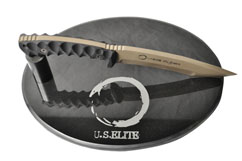
On Veteran’s Day (11/11/13), U.S. Elite Gear, in collaboration with Rustick Knives, plans to introduce a limited-edition (you guessed it, only 11 knives will be released initially) fixed-blade “Kraken” model for sale through U.S. Elite’s website, www.US-EliteGear.com. The Kraken features a 6-inch, recurved, tan-Cerakote™-treated blade of 1/4-inch-thick 80CrV2 tool steel, black G-10 handle scales and a “coyote”-brown Kydex® sheath with a Blade-Tech clip for attachment to gear.Kraken-Knife-main

Designed by SGM Jack Stottlemire (retired), founder of Rustick Knives, and U.S. Elite’s Jim Erwin, former Army Ranger and 1st SFOD-D operator, who the knife is inspired after, the knife is manufactured in the Rustick Knives production facility in Ft. Bragg, North Carolina.

“Having served for 26 years as a Marine, paratrooper and Special Operations soldier, with 12 combat tours, I know firsthand that a soldier needs a good strong knife that is not going to fail,” stated Stottlemire. “Just about every soldier on the battlefield carries a fixed-blade knife on his kit, it just feels right, and is one of those essential items that we all must have.

The 11 limited-edition Kraken knives will be available for purchase for $350 each through www.US-EliteGear.com on November 11th, Veterans Day.  After those are exhausted, un-serialized knives will be available for $299 each.

For other tactical fixed blades, click here.


A Few Great Everyday Carry Knives

Best everyday carry knives

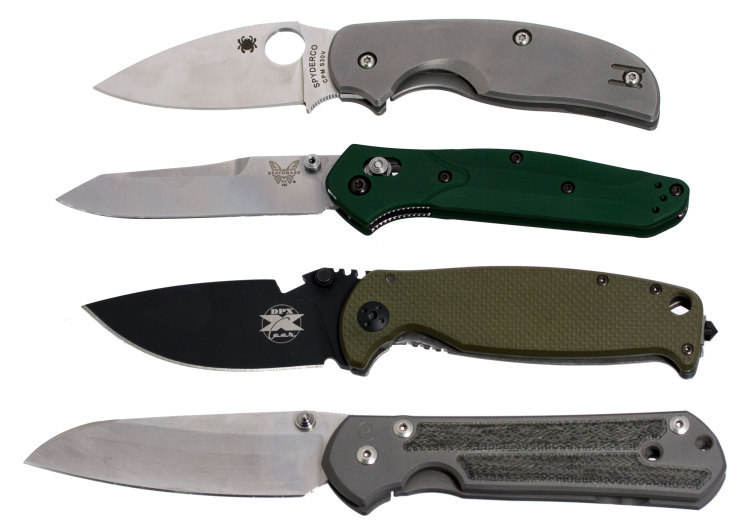
No. 1 for knife enthusiast Nick Morgan is the Chris Reeve Sebenza. “The tolerances are so much better on Chris Reeve knives than any other production knives, and you’ll find just about perfect fit and finish on every model. I love the blade and handle shapes, and the plain, simple looks are beautiful,” he said.

The Spyderco Sage2 is second on Morgan’s list. “I love the deep-carry wire clip—for my money the best clip in the industry,” he stated. “The profile of the titanium Sage2 is thinner than the carbon fiber Sage1, so using and carrying it is noticeably nicer.”

Morgan said the Benchmade 940 is a blast to play with due to the AXIS lock. “It’s super easy to open and close, and it’s fast!” he emphasized. “The reverse tanto blade shape is my favorite. For cutting, whittling and stabbing, it’s strong, sharp and great looking. It’s the best knife to sit in front of the TV and flip open/closed hundreds of times.”

Next on Morgan’s list is the DPx HEST 2.0, “a knife that can survive heavy-duty use day after day. I love the functional blade shape and, at 3.25 inches, it’s big enough for 99 percent of my cutting tasks while not being too big that it scares people when I use it in public. It locks up solidly like the Sebenza and I love the extra features—bottle opener, wire stripper and glass breaker/skull crusher, the latter which is really nicely executed. My favorite feature is the bayonet clip—it buries so deep in the pocket that nobody suspects I’ve got a knife on me.”

Last on Morgan’s list is what he terms the “best-bang-for-the-buck” knife: the Large Buck Vantage Pro. “It has a great blade and handle shape, I love the flipper, it has top quality blade steel [CPM S30V] and handle material, an excellent deep-carry bayonet clip, it’s USA made and has a nice, slim profile. Best of all,” he added, “it’s less than half the cost of every other knife on my list.”

For more EDC knives, check out this selection at ShopBlade.com.

Knife Test: Tom Ploppert Slip Joint

I was waiting for Tom Ploppert’s custom slip joint like a kid on Christmas morning. To my surprise, there were two knives in the package when it arrived. Tom had sent me a new knife for evaluation and another that had been used hard for a few years. Both still walk and talk like they are supposed to, but the older knife has a smoother action. Yes, the handle is beat up a little and the blade has been resharpened a few times, but I could tell it is a high-quality knife. This is a good sign of excellent workmanship—I have had slip joints get sloppy after a few uses. Tom used premium stag pinned on to make the knife scream, “Use me!”

EDGE TESTS

I started off with a sheet of copy paper. I held the slip joint between my thumb and index finger and let the weight of the folder do the cutting. I just kept turning the paper around to a fresh side and sliced along its entire length until I had cut all four sides. The knife has a very good feel to it and fits my hand very well.

    Next up: cardboard boxes. After 30 minutes of cutting I had slivers of cardboard all over the garage floor.

    I had to change out my Kydex® foam for some new stuff as I had run a large batch of sheaths and the old foam was getting too compressed. After gluing on the newly cut foam, I sliced up the older pieces by simply resting the blade edge on the foam and making a pulling cut. The slip joint sliced as fast as I could maneuver my fingers out of the way.

WOOD/ROPE/LEATHER CUTS

I had some pine 1x1s cut—they make perfect whittling sticks. Tom’s “slippy” is excellent at control and the big stag handle is very comfortable. It did not take long to produce a pile of curly-cues.

    Half-inch sisal rope was next on the agenda. The knife still felt sharp but I gave it a few strops on my leather pad for good luck. It crunched through the rope like a champ until I hit 60 cuts. My index finger rode up on the blade and I found the spine to be very sharp, and the inside of the liners also were sharp. A few strokes with a fine emery board dulled the sharpness and I settled back into cutting. I noticed the edge starting to slide at 120 cuts. Not bad at all and no more hot spots. I grabbed some leather and skived around the edges. The slip joint worked great and would still shave hair.

TIP TEST

I used the tip of the blade to cut and pry the dried skin from an old deer rack that needed cleaning. I was careful of the fine tip as I did not want to pop it off if it got stuck in the rack.

    I gave the tip another workout, stabbing it into a 2×4 and twisting the tip out. The tip handled a dozen stabs and twists without breaking or any loosening of the folder’s action. As long as I had the 2×4 handy, I gave it a few chops. The blade bit deeper than I thought it would and the knife was comfortable while doing it.

IF IT WERE MY KNIFE …

… I would soften every place that is sharp except the edge of the blade. I use knives hard and sharp edges where they should not be might result in a hot spot. Just a few minutes with fine sandpaper and it’s all good.

FINAL GRADE

Tom’s slip joint performed excellently. His fit and finish are very clean. This is one very well made, good-looking work knife. Great job!—By MSG Kim Breed, BLADE® field editor

For more information contact Tom Ploppert, Dept. BLADEMAG, 1407 2nd Ave. S.W., Cullman, AL 35055 256-962-4251 tomploppert3bellsouth.net.

PLOPPERT SLIPPY SPECS

Knife: One-blade slip joint

Maker: Tom Ploppert

Blade Steel: CPM-154 stainless

Blade Length: 3”

Handle: Sambar stag

Pins: Stainless steel

Liners: 416 stainless

Backspring: CPM-154

Closed Length: 4 1/16”

Maker’s List Price: $750

For info on how to subscribe to BLADE®, click on http://www.shopblade.com/blade-magazine-one-year-subscription-us/?lid=blss090712


4 Paring Knives for Mom

Editor’s note: All images courtesy of the participating companies.

Go-To Knives

Look up paring—as in paring knife—in the Merriam-Webster dictionary and ol’ Mr. Webster says it’s “the act of cutting away an edge or surface.”

This raises a question.

If the paring knife was originally designed as a peeling knife, does it still matter? Or is it relegated to the back of the flatware drawer, consigned to a future of rust and dust?

Chef Timothy Hollingsworth, who wears the double hat of chef and owner at the California restaurants with the respective names of Otium and Barrel and Ashes, said the scrappy paring knife—with a blade less than 4 inches designed for food prep—still holds its own against $5 peelers and glinting chef’s knives. Not only is a paring knife designed to peel, it can be called on to prepare pearl onions, scrape mushrooms and cut intricate designs to give food extra pizzazz.

“For the home cook,” Hollingsworth said, “paring knives are great because you’re able to hold the vegetables or fruit in your hand while cutting, whether that’s cutting potatoes into smaller chunks, or peeling an apple and cutting it into bite-sized pieces.”

Mother’s Day is around the corner, a time that seeks to honor the women whose varied accomplishment include making many a home-cooked meal, often with paring knife in hand. From contemporary to traditional, here are four designs that represent the latest in one of Mom’s go-to tools.

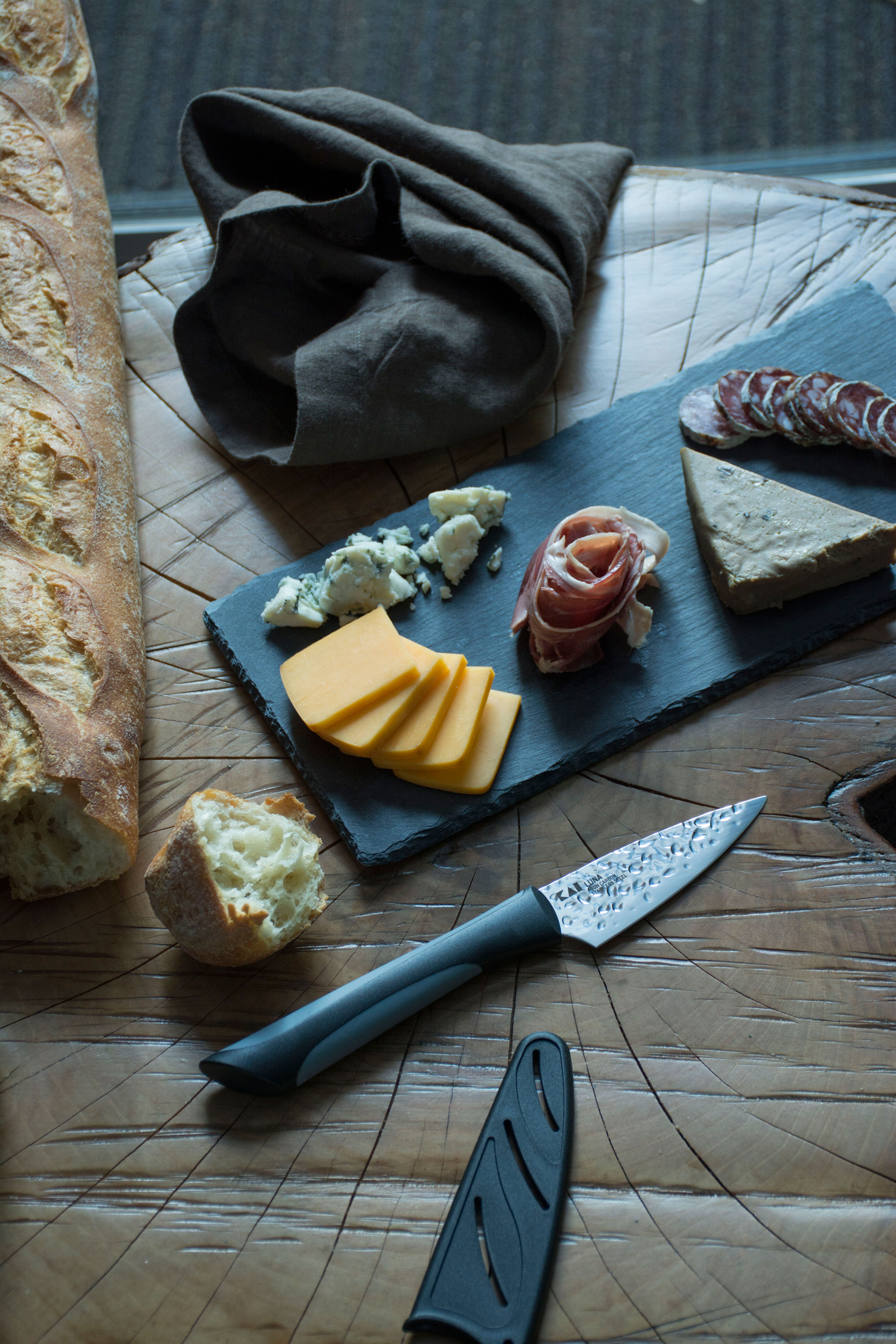
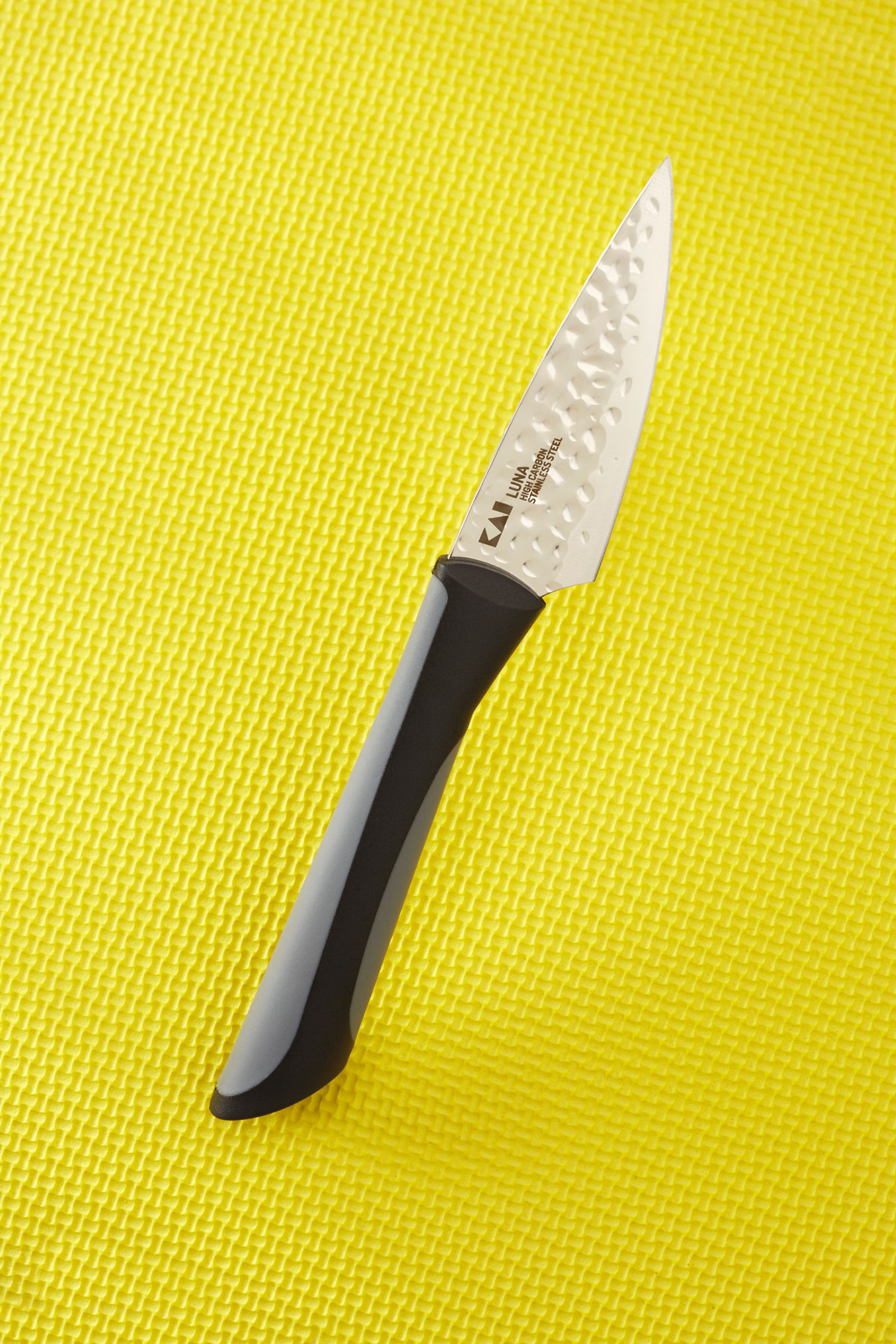
Kai Luna Paring Knife

Kai Luna paring knife

Kai Luna paring knife

It was about 10 years ago that Scott Zahm, director of sales for the housewares division of Kai USA Ltd., and other of his compatriots at Kai noticed people used paring knives as small utility blades, chopping a handful of parsley on a cutting board, for example.

“Many home cooks prefer a smaller knife that’s less intimidating and easier to control,” he said. Kai took to the drawing board with its Pure Komachi 2 and the resulting blade shape was wider than a traditional paring knife, with a deeper belly. The shape helped users navigate a cutting board with more agility.

This issue’s cover knife (page 7), the newer Luna Paring Knife, features the same profile. “We made the Kai Luna series for the adventurous cook on a budget,” Zahm said. The knife features a tsuchime, or hammered finish, and the edge is honed to a 16-degree angle on each side.

“All of the knives in the Luna series offer the performance good cooks demand at a price that even aspiring cooks can afford,” Zahm said. “With Luna’s tsuchime finish and contemporary styling, it’s an exciting and eye-catching addition to any kitchen.”

With a modified blade shape, does the paring knife usurp a chef’s knife in utility? Not really, Zahm said. Chef’s and paring knives work with each other, handling different-sized cutting jobs. Both are essential in the cook’s workspace.

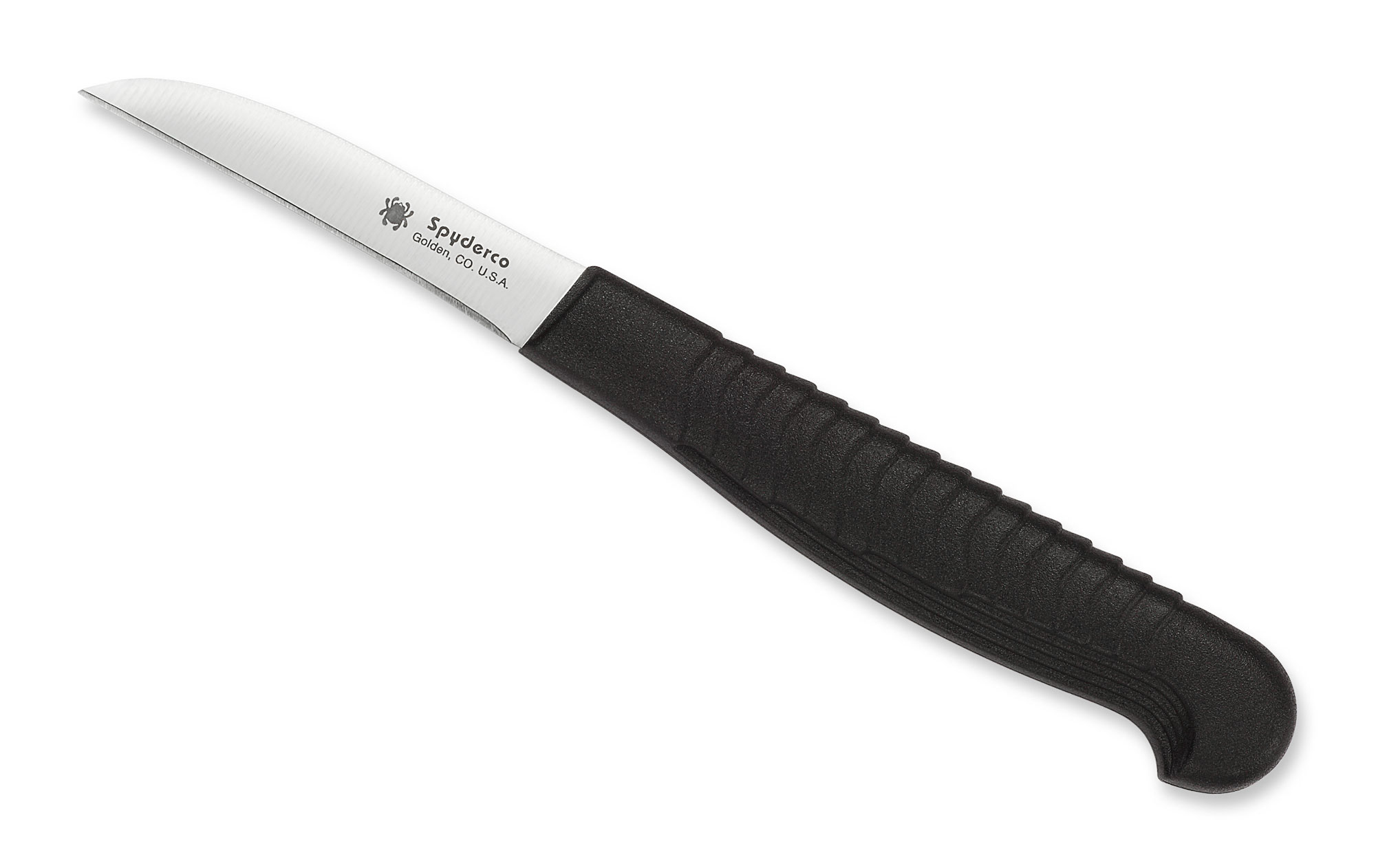
Spyderco K09 Mini Paring Knife

Spyderco paring knife

Spyderco “thought small” when it redesigned the K09 Mini Paring Knife. The company still offers utility knives 4 and 6 inches long. However, Spyderco’s Joyce Laituri compared the K09 to a scalpel, giving users options from peeling fruit to removing small bones from meat.

“I use mine every year at Halloween to start the pumpkin carving process,” Laituri said. “We draw the face on a pumpkin and the K09 goes through gourd like a laser. It is easily controlled letting you create intricate and even lacy designs.”

Three years ago, Spyderco reintroduced the K09 with a new handle material. The Japanese-made knife features a polypropylene grip with ridges to enhance purchase with wet hands.

The K09’s 2.25-inch blade of MBS-26 stainless steel is thinly ground. The result is a blade that keeps its edge and has a slight spring to it, Laituri observed. When it comes to how often people should reach for a paring knife, Laituri said it depends on the cook. She often uses Spyderco’s 6-inch serrated utility knife. Her husband, on the other hand, barbecues and rarely uses a paring knife.

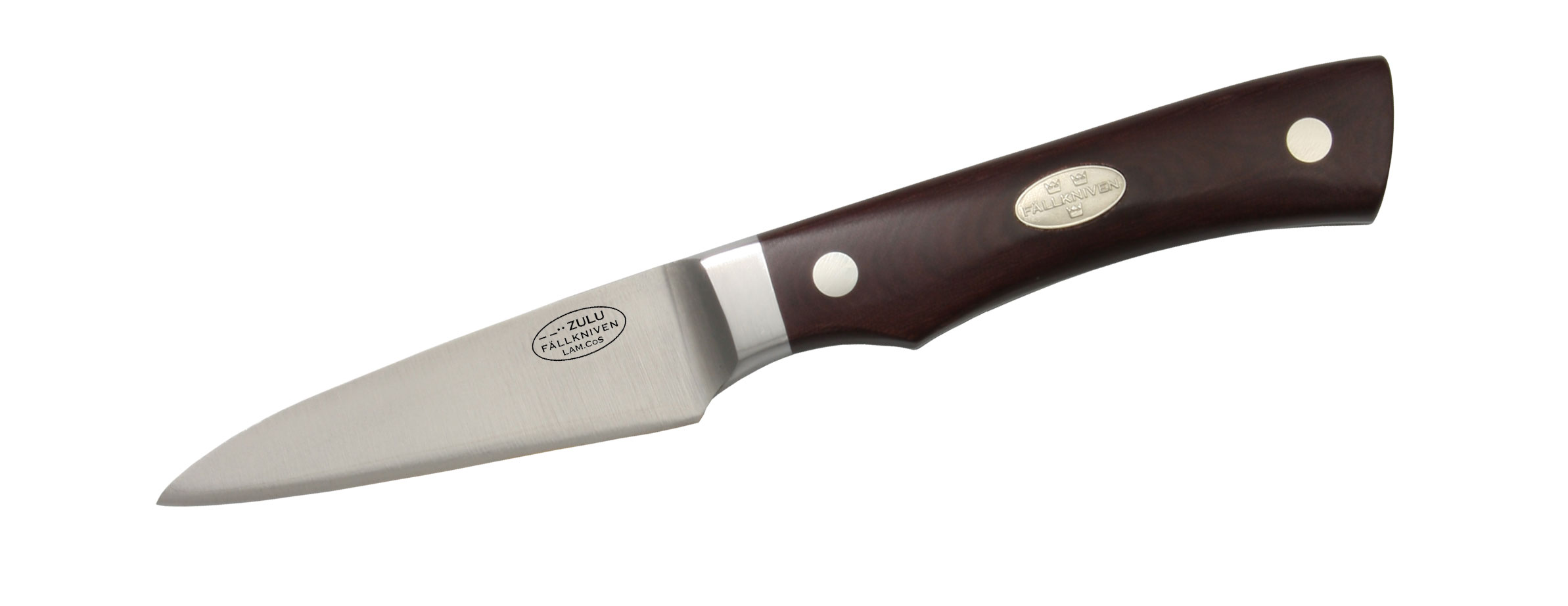
Fällkniven CMT Zulu

Fällkniven paring knife

“I believe the paring knife is one of the most used knives in the kitchen and also the knife with the lowest reputation,” said Peter Hjortberger, founder of Fällkniven AB. “Usually a paring knife is made for being cheap, a knife you don’t need to care much about, just a [semi] sharp edge for daily tasks.”

Fällkniven went in the opposite direction, making the 3-inch blade of the CMT Zulu of laminated COS steel, the core consisting of a stainless steel that contains a high percentage of cobalt. Hjortberger called it “technically, a very advanced steel.”

“So, instead of searching for the cheapest steel, we go for the best steel, understanding that this knife will last a hundred years or more,” Hjortberger said. “To me, this is climate smart to make high-quality knives which will last during several generations instead of uttering out crap.”

The knife is full tang and handled with Micarta. The CMT Zulu features an old-world design ground with a convex edge common on knives before the Industrial Revolution. It is made in Japan with Swedish materials and quality control.

Often, the paring knife is the most-reached-for kitchen tool, not just for cooking but also for common household chores. Paring knives are non-frightening, Hjortberger said, and women might like the more manageable design.

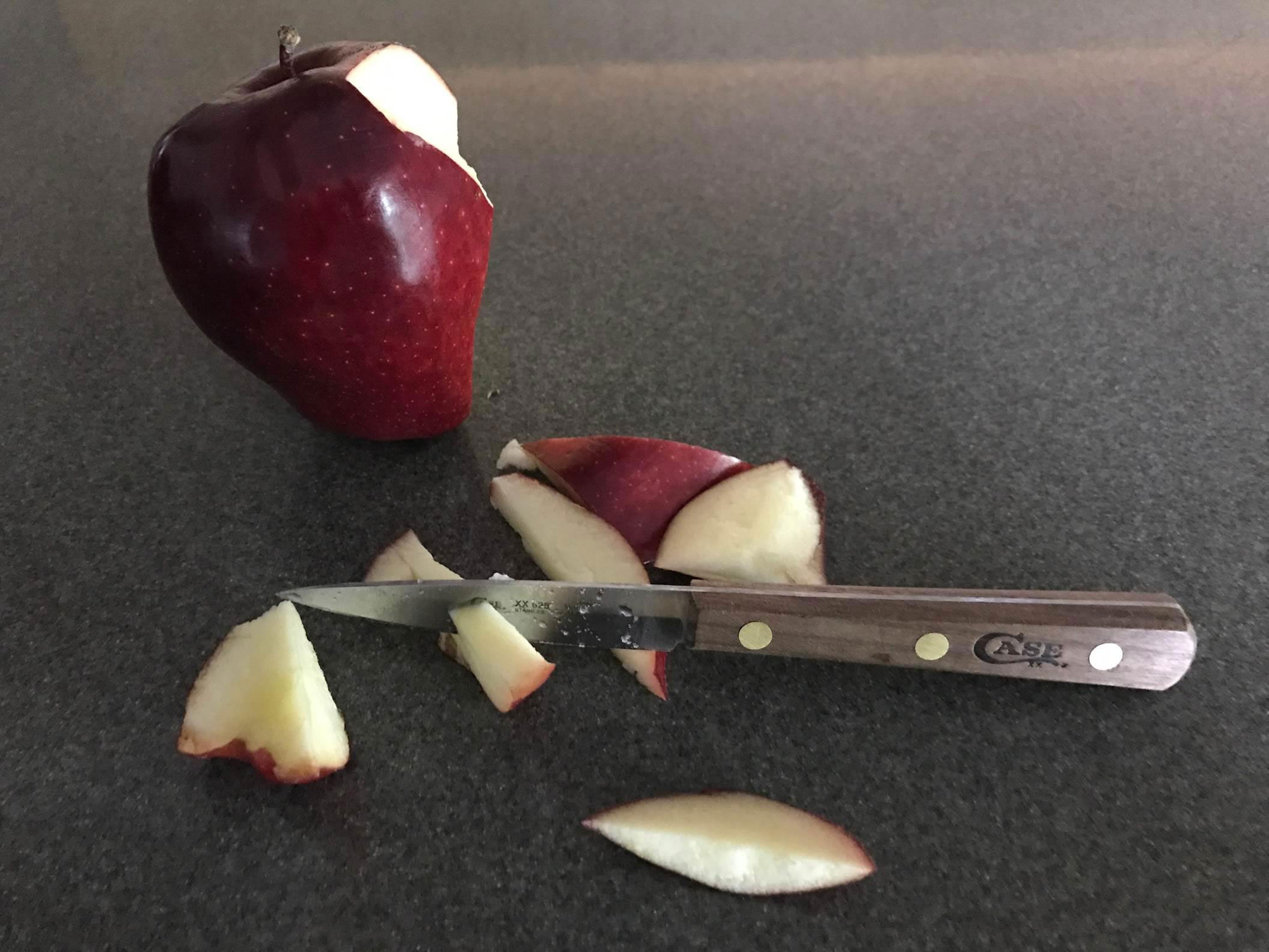
Case Paring Knife

Case paring knife

According to Case’s Fred Feightner, paring knives have homes in restaurants offering nearly every type of cuisine. In 2012, Case resurrected its paring knife offering, giving home cooks the option of a handle of black synthetic or walnut. With the walnut handles, brass rivets gleam from the wood. Case offers four paring knives in its Household Cutlery collection.

“We knew people would want their household set to be complemented by a paring knife or two,” Feightner opined. “Case paring knives have been a part of the American kitchen’s tool set for many years.”

Case manufactures paring knives with either a clip-point blade, where the clip drops to the gently curving edge, and the spear-point, where the spine and edge meet in an acute tip. Both are made from Case Tru-Sharp™ surgical steel, the company’s equivalent of 420HC stainless.

Paring Knife Maintenance Tips

After use, a few moments of care can extend the life of a paring knife. While convenient for pots and pans, etc., the dishwasher is notorious for destroying knives.

“Dishwashers are never kind to household knives,” Feightner said, “because the blade edges can be dulled by the movement of the knives during cleaning, and the detergents made for automatic dishwashers will tend to stain and pit the blades. Our wooden-handled knives have natural oils and pigments within them that can be compromised by the high temperatures employed by the dishwasher. As a result, fading and splitting of the wooden handles can occur.

“We recommend hand washing, using a mild-strength detergent, followed by a prompt water rinsing and hand drying with a clean towel. Cleaning products that include chlorine and/or bleach in them can cause the stainless-steel blades to discolor and pit.”

Knives stored loosely in a drawer can rattle against each other, chipping edges and posing cutting hazards to anyone rummaging for a blade. Once their knives are clean, professional chefs store them in a knife bag, roll or case. At home, a knife block, a magnetic strip or in a drawer as long as they are in sheaths, work equally as well to preserve the life of kitchen knives. After all, from feats of culinary artistry to cutting string, the paring knife will rest in kitchens for decades to come.

Mom, or Anyone, Will Like This, too

The official knife of BLADE Show 2018 is this special edition CRKT Caligo.

  • Only 150 made
  • Serialized number
  • BLADE Show logo on blade
  • Designer TJ Schwarz’s signature on the blade

Get this instant collectible now for only $49.99 at ShopBlade.com.

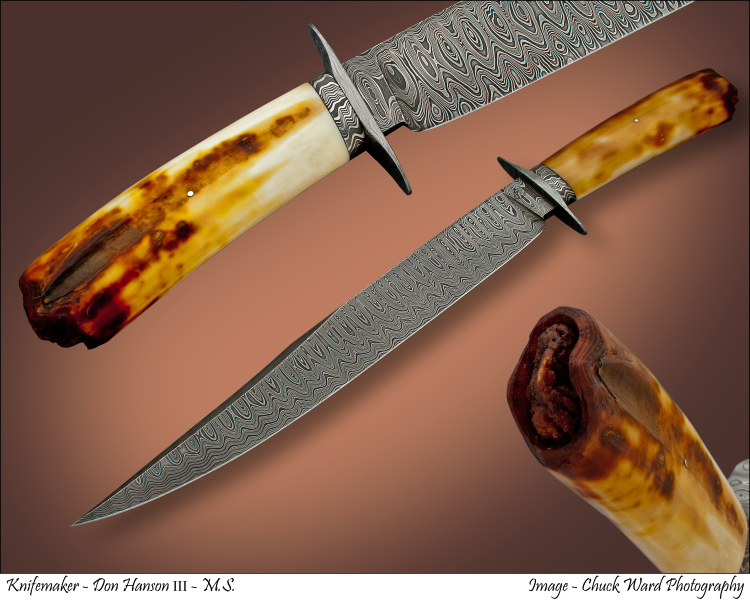
Knife Of The Day XXII: Don Hanson Damascus Bowie


    Our Knife Of The Day for April 18 is ABS master smith Don Hanson III’s bowie in a 12.75-inch damascus blade with a long clip and a most distinctive handle of ancient walrus ivory. Overall length: 17.75 inches. In addition to the blade, the fittings (the guard and ferrule) are damascus, too.

    For more information click on www.donhansonknives.com or visit Don’s table at the 31st Annual BLADE Show (www.bladeshow.com) June 8-10 at the Cobb Galleria Centre in Atlanta, Georgia.

    For more on the latest knives, knife legislation, knifemaking instruction, knife trends, knifemakers, what knives to buy and where and much more, subscribe to BLADE Magazine, the World’s No. 1 Knife Publication. For subscription information click on http://www.shopblade.com/product/blade-magazine-one-year-subscripti…?r+ssfb041812#BL1SU.

A Great Multi-Use Big Knife

Spartan Blades’ Horkos takes everything the author dishes out—and then some.

By MSG Kim Breed, 5th Special Forces (retired)


It is always a good sign when you enjoy the feel of a knife, and that is the way it is with the Horkos from Spartan Blades. Featuring a slim handle and nothing sharp except for the edge, it was very lively in my hand. The edge was extremely sharp out of the box.


Like Peelin’ Taters

The Horkos has a finger-notch choil so you can choke up on the blade for more control. This worked perfect for slicing through plastic board. I had to move my holding hand quickly so I did not shave off part of my knuckle! It was like using a potato peeler—real smooth and fast. I went to regular cardboard and the material did not last very long under the blade’s still razor-sharp edge.

My arm wore out before the edge did on the 3/8-inch sisal rope—160 crunching cuts. Next up: the ¾-inch manila rope. I hit 50 cuts before I started to feel the edge slacken somewhat.

The finger-notch choil came in handy once again as it made whittling pine very controllable and comfortable. After I built a nice pile of curly-cues on the garage floor, I locked a piece of pine in my vise and started whacking. The Horkos chopped very well even though the balance is in mid-knife. I like a bit of blade-heavy balance for chopping. The Micarta® slabs were grippy but did not wear my hand out. There were no hot spots as all the exposed steel is softened/rounded. I like this knife.

I cut some old river cane I picked up during high water this past spring. The cane was covered with silt and sand—just what I needed to challenge the Horkos. It cut the cane with no problem and I finally managed to put a few blemishes in the very tough SpartaCoat finish.


To The Point

The edge was still holding up and it was time to work the point a little. I proceeded to stab the Horkos into and through the Yellow Pages—746 pages plus another 3/8 inch into the underlying plywood bench top. It did not damage the tip and the knife held tight in my hand.

It was time to chop the nasty ol’ seasoned oak chunk. I used the Horkos to beat and whack on the log for 15 minutes without hurting my hand, flinging wood chips all over the driveway. Using my no-mar hammer, I beat the blade into the oak. It was a bad move. The oak grabbed the blade and I had a fit trying to remove the knife from it. I marred up the hammer but not the Horkos. This is a very tough knife.

To gauge the heat treatment, I did the brass rod test. The edge flexed in both directions without chipping or deforming, a sign of excellent heat treatment.

The last step was an old edge test used mainly on forged blades—chopping into a deer antler. After a dozen or so chops, there was a small flaw in the edge. I stropped it a few times and it straightened out. The knife would still shave hair. The knife passed every test, and then some.


I Would Like To See …

… a tad more weight in the front of the knife to make it just a bit blade heavy.


Final Report

The Horkos is a great multi-use knife. Big enough for camping and handy for smaller jobs, it is an exceptional all-around knife.


SPEC CHART


Knife: Horkos

Pattern: Combat/utility fixed blade

Company: Spartan Blades

Blade Steel: CPM-S30V stainless

Blade Pattern: Drop point

Blade Finish: SpartaCoat (DLC black or ZrN flat dark earth)

Overall Length: 10 7/8”

Blade Length: 5 11/16”

Handle: Textured canvas Micarta® (green, black or tan)

Sheath: Ballistic nylon w/protective insert, MOLLE compatible

MSRP: $335 ($365 w/sheath)


    For more information contact Spartan Blades, attn: Curtis Iovito, Dept. BL4, POB 620, Aberdeen, NC 28315 910-757-0035 www.spartanbladesusa.com.


For more on the latest knives, knife legislation, knifemaking instruction, knife trends, knifemakers, what knives to buy and where and much more, subscribe to BLADE Magazine, the World’s No. 1 Knife Publication.


Click here to browse the BLADE-approved knives and tools at ShopBlade.com.

Advertisement

Must Read Articles

Read this before you make a knife

Knifemaking 101 – Read This Before You Make a Knife

  by Wayne Goddard My experience has taught me that there's nothing like digging in and getting started. I've often said the hardest part of the...
how to forge damascus steel

How to Forge Damascus

Advertisement
Advertisement