Knife Collecting

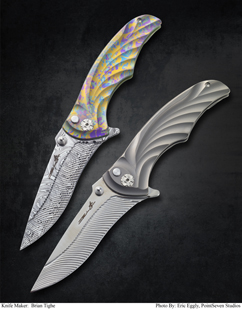
Knife collecting is an extremely rewarding experience for knife enthusiasts. There truly is a knife for everyone. Many increase or hold their value throughout the years, making collecting knives something to pass on to the next generation of knife collectors.

A Knife Completes A Circle of Grieving

Stefan Neil Palmer made this knife to raise funds in memory of Dustin Chamberlain.
Knifemaker Stefan Neil Palmer made a knife in memory of Dustin Chamberlain to be auctioned off. He never knew it would change his life.

While at his parents’ Siloam Springs, Arkansas, home for Christmas break 2011, 20-year-old Dustin Chamberlain was shot dead by an intruder. Nearly five years later, knifemaker and racecar driver Stefan Neil Palmer was asked by his racing mentor if he would make a knife to auction off to raise money for Dustin’s Dream, the charity foundation organized in Dustin’s memory. Stefan agreed, but when he laser-engraved Dustin’s favorite saying on the handle, everyone agreed that the knife could never be auctioned off.

On Dec. 15, 2011 Dustin, a biology-pre-med sophomore at Baylor University in Waco, Texas, was resting at home after a minor outpatient procedure. Both his parents left for work with Dustin’s reassurance that he didn’t need anyone to stay with him. His father, Don, had planned to have lunch with him. At approximately 10:45 a.m. Dustin’s mother, Deondra, called the house and Dustin’s cell phone repeatedly but got no answer. She called Don and asked him to check on their son.

Don walked into the Chamberlain home to find his son lying dead just inside the door with four gunshot wounds. In the family room, he found a stranger with what police subsequently said appeared to be a self-inflicted gunshot wound that later proved fatal. The investigation revealed that the stranger was a local man who had been reported missing, depressed and possibly suicidal. He had wandered onto the Chamberlain property, and evidence showed he’d been on the premises for two hours before the Chamberlains left for work.

It’s an understatement to say that the Chamberlain’s lives were changed forever, but as day followed day, God showed them how they could carry on Dustin’s name and spirit, Don explained. “It’s been therapeutic,” he said, referring to the charity they set up in remembrance of their son. In honor of Dustin’s dream to one-day become a doctor, Dustin’s Dream sets up medical clinics in third-world countries and funds teams to conduct medical mission trips to those countries. They also offer scholarships for aspiring medical students.

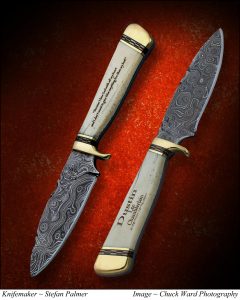
Dustin's Dream Racing member Stefan Neil Palmer made a knife to benefit the charity.
Knifemaker Stefan Neil Palmer made a knife to auction off in benefit of Dustin’s Dream.

In 2013, two years after Dustin’s murder, Chamberlain family friend Steve Butler decided to use his racing hobby to support Dustin’s Dream. Steve introduced Stefan to Dustin’s Dream Racing, which raises money for the foundation “while being a positive, Godly influence” in the sport of racing, according to their web page. In the summer of 2016 it was suggested that Stefan make a knife to auction off to benefit Dustin’s Dream.

So Stefan set out to make the best knife he could to honor Dustin. The 3.112-inch hollow-ground drop-point hunter was constructed using buckshot-pattern steel forged by Brad Vice’s Alabama Damascus. “It’s my favorite pattern,” Stefan said. And buckshot- or raindrop-pattern damascus is his favorite steel. The handle was made from camel bone and brass with—fittingly—a checkerboard inlay front and rear of the handle. The shinbone of the camel is an economical choice, but it’s the ideal medium for laser engraving, explained Stefan. The rubbing compound left in the pores of the bone lend it that gray undertone. Signature filework runs from the tip to the butt of the spine. “It turned out great,” stated Stefan.
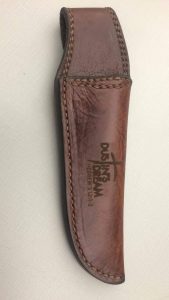
Knifemaker Stefan Neil Palmer made a sheath to accompany the knife he made to benefit Dustin's Destiny.
Stefan Neil Palmer’s accompanying sheath notes Hebrews 12:1-2, which includes in part “let us run with perseverance the race marked out for us.”

He went to Steve to see if there was anything that Dustin was known for saying. Steve showed Stefan what the Chamberlains had written about Dustin. “Whenever anyone asked Dustin how he could consistently make wise choices and live his faith, Dustin would say, ‘Because I love God with all my heart and I don’t want to give Him anything less than my best.’” Stefan explained, “I put that on the knife. When I looked at the finished product, I knew the knife was not for someone to buy. It was priceless and needed to go to Don.”

Stefan took his dilemma to Steve and it was agreed that a second knife would be made for the auction. The trick was to keep Don’s knife a secret, made harder by the fact that Don expressed great interest in the knife. Steve suggested to Don that he not bid on it because people would then back off their own bidding in an attempt to make sure that Dustin’s father ended up with Dustin’s knife. The racing team wanted the knife to bring in as much money for the foundation as possible.

In the end, at Dustin’s 5th Heavenly Birthday Chili Supper and Baked Goods Auction on Dec. 10, 2016, Stefan presented the original knife to Don, with both giver and receiver ending up in tears. “It changed my life,” Stefan said. “I’m not so likely to cut someone off on the race track with the Dustin’s Dream sticker on my car,” he added with easy laugh. (The T in the Dustin’s Dream logo is in the shape of a cross.) He relates how so many people have been affected for the better through Dustin’s example and the strength of the Chamberlains. “So much beauty has come out of it,” Stefan said.
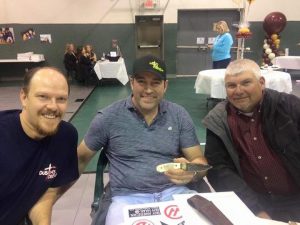
Stefan Neil Palmer holds one of two knives he ended up making in honor of Dustin Chamberlain.
Dr. Carl Duncan, left, ended up with the knife Stefan Neil Palmer, center, made in honor of Dustin, the son of Don Chamberlain, right.

The Chamberlains never returned to their home. Don manages a beef cattle ranch and other properties for his boss, and the couple and their daughter stayed at the ranch the night of the murder. They found a place to rent, but the two payments nearly put them under financially. All the while, Don said he was thinking, “I wish I could afford to just give it away to a couple who could help foster children.” Two years later, a doctor—surprise, surprise—Carl Duncan and his wife, Carol, purchased the home, and—you guessed it—they had foster children.

It was Carol who ended up with the winning bid of $3000 on the second knife, and she presented it to her husband. According to the Dustin’s Dream website, the racing team has raised $45,000 for the foundation.

Stefan’s wife, Raquel, bringing the story full circle, is returning to school to become a doctor—in the same specialty as the doctor who purchased the house and the knife. She and Stefan hope one day to accompany a medical mission team through Dustin’s Dream. Don and Deondra, a nurse, are returning to Guatemala through Dustin’s Dream for his second trip and her third. If you want to know what you can do to get involved, visit www.DustinsDream.net/give.

When Don returned to the house that fateful day, he thought it was odd that the family’s Jack Russell-rat terrier cross was out in the yard. Cricket was trembling in fear, and, uncharacteristically, she would not come to Don. It is believed that she raised a ruckus when the intruder broke into the house near her bed. Dustin came to see what the fuss was about. In yet another connection, I breed Jack Russells.

According to what police revealed to Don, the shooter asked his wife what it meant if someone was very depressed. She answered that it meant the person needed professional help. The husband and father of four reportedly said that he felt he was too much of a coward to do that. He took a gun and left the home.

I asked Don if he knew how the family was doing now. He said he didn’t, but that it had been on his heart to find out, and that my asking had solidified that course of action for him. And “no,” he said quietly, “I could never use that knife.” He has it on a dresser, along with the sheath and some photos. He wants to put it in a shadow box. “I could never use that knife,” he repeated.

‘Art of the Knife’ Is A Showcase of Beauty
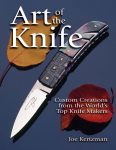
"Art of the Knife" is on sale for $21, a 40-percent savings.
“Art of the Knife” doesn’t require anything more than being appreciated for its beauty.

If you want inspiration for your own knifemaking, here’s your eye candy. Over 500 knives are pictured, and they run the gamut from highly polished and bejeweled to hunters with artistic flair. Author and former BLADE managing editor Joe Kertzman covers scrimshaw and engraving, as well as the art of each style of knife. Normally, $35, this beautiful book is now on sale for $21, a 40-percent savings.
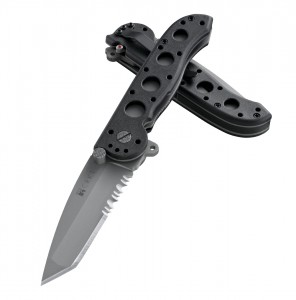
M16 & the K.I.S.S.: 2 Knives For The Ages

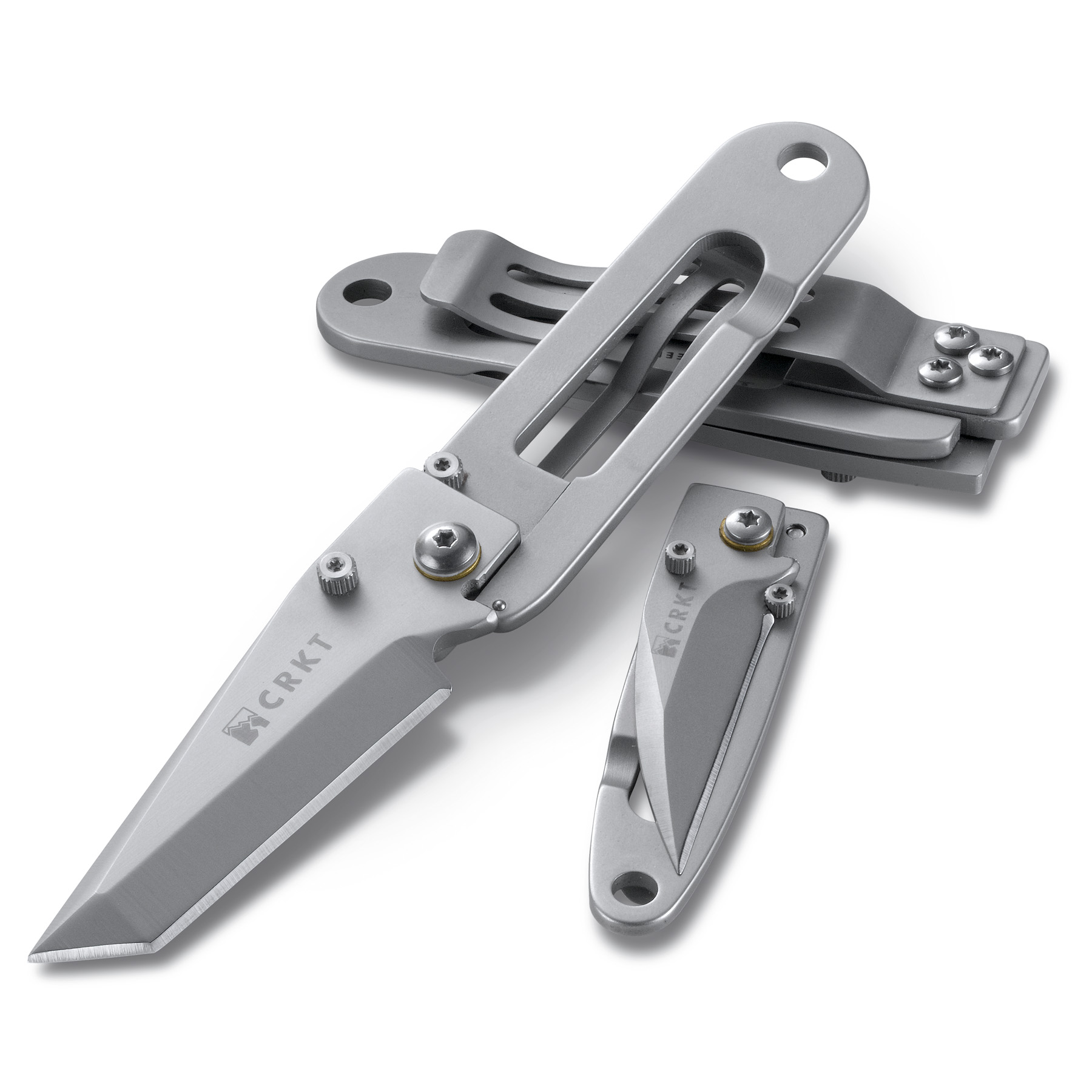
The K.I.S.S. and the Delilah's P.E.C.K.
Ed Halligan’s K.I.S.S. design (left) revolutionized factory folding knives. At right is his Delilah’s P.E.C.K. design. Both knives are reproduced by CRKT. (CRKT image)

An unusually high number of knifemakers have died recently, all of whom left more than their fair share of lifelong marks on family, friends and the knife industry. In terms of influence on knife design, though, the two that probably had the largest impact were Ed Halligan and Kit Carson.

Ironically, both men designed wildly popular folding knives for CRKT, and it is those folders that have been so influential on the knife industry.

A member of the BLADE Magazine Cutlery Hall Of Fame©, Carson passed away Sept. 5. Halligan passed away Nov. 8. Though both made many great knives, each will be remembered most for their industry standards: Carson for the M16 and Halligan for the K.I.S.S.

The K.I.S.S. is a simple yet ingenious folding knife. In the closed position, its two-piece frame-lock construction and safe, user-friendly design “seals” the cutting edge of the chisel-ground blade against the handle. As Halligan once explained, “With the K.I.S.S., the frame and the lock are all one piece … I made the original knife with the blade chisel ground on one side only so it would slide against the frame when folded and make a seal so you wouldn’t cut yourself.”

Kit Carson's knife for the ages.
Kit Carson’s M16 design remains one for the ages. This is the M16-12Z CRKT repro. The flipper is the extension with the hole in it seen here acting as a guard just below the handle pivot. (CRKT image)

In fact, when it first came out, I recall talking to one long-time industry observer who thought the K.I.S.S. was a lawsuit waiting to happen because he thought consumers would cut themselves on the blade edge despite the blade’s seal against the handle in the closed position. However, Halligan’s version of the design works so well that such accidental cuts never happen. One of the main reasons the design is safe is that Halligan tested it in real-life conditions to be sure that such accidents never occur. “Safety is a big reason why I carried the knife around so much to make sure it worked properly,” Halligan said.

In 1997, Halligan signed a deal with CRKT for the company to reproduce the K.I.S.S., and CRKT launched the repro of the knife at the 1998 SHOT Show. Only four years old at the time, CRKT was struggling to find a knife that would help “drag the rest of the product lines along,” as CRKT’s Rod Bremer put it. The K.I.S.S. was that knife. Unfortunately, a number of unscrupulous companies blatantly knocked the K.I.S.S. off so much that it eventually became one of the most copied sporting knives worldwide. CRKT and Halligan weathered that storm, though, and Ed designed a series of K.I.S.S. iterations and spinoffs for CRKT that included the Delilah’s P.E.C.K. (for Precision Engineered Compact Knife), Samson’s K.I.S.S., the H.U.G. (Halligan’s Ultimate Gadget), the Slip K.I.S.S., the Neck P.E.C.K., the blackened K.I.S.S. In The Dark, even a fixed-blade version called the Stiff K.I.S.S. and others.

Just as they were linked in their passing, Halligan and Carson were also linked in their CRKT collaboration deals. CRKT must have been living right back in those days because it was just a year after signing the deal with Halligan to reproduce the K.I.S.S. that it signed the deal with Carson to reproduce Carson’s M16 folder. Even though Carson did not invent the flipper, his M16 is universally credited as the model that popularized flipper folders—folding knives with one-hand-opening “flippers” that double as guards when the blade is opened. “The M16 with the Carson Flipper was a huge improvement on non-assisted blade opening, making a manual knife open almost as fast as an auto without a secondary thumb stud or hole mechanism,” observed long-time knife writer Mac Overton. “Because it had less moving parts and its opening relied on inertia rather than a spring or torsion bar, the mechanism was inherently stable and reliable.”

The M16 and its military look—Carson was a U.S. Army career man—soon became not only immensely popular with consumers but with service personnel as well. In fact, by many accounts, the M16 was the most popular knife among active duty service personnel in the wars in both Iraq and Afghanistan.

Meanwhile, as with the Halligan/CRKT K.I.S.S., Carson’s M16 begat a number of CRKT iterations and spinoffs, including the M16-10KZ, M16-13Z, M16-12Z, M16-14ZSF, M16-13ZM, M16-14SFG, M21-14SFG, M21-02G, M16-13FSG and others. And, most fittingly, the K.I.S.S. and M16 were ranked third and fourth, respectively, in a BLADE® Magazine poll of veteran industry observers of the top factory knives from 1989-2000.


T7354Recommended for You:

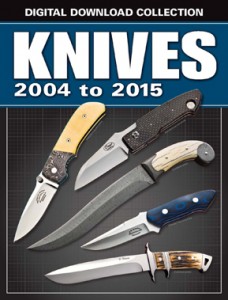
Turn back the clock with BLADE‘s digital collection of annual KNIVES books. Get every KNIVES book from 2004 to 2015 in one PDF download for just $79.99.

Click here to get the best knife books in one spot.

Tracking Knife Trends

dark earthThere aren’t many dull, boring or mundane trends, and for good reason.

Knifemakers embrace the old saying, “change is constant.” The “same old, same old” never catches on with a new generation. Knife craftsmen strive for fascinating and innovative ways of blade building, and collectors seek out the rare and unusual.

Eventually knifemakers find something modern that is not only aesthetic and utilitarian, but it also catches on with other artists. That’s the start of a trendBPK

You get the idea—trends are born out of creative thinking and design capabilities, and not from copying old patterns without any tweaking, improving or thinking outside of the box.

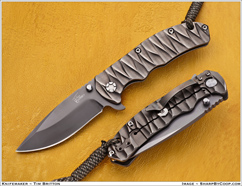
Sure, some trends have staying power. There are many new trends to take in, like dimpled, sculpted, grooved and glass-beaded knives, for example. Britton_121118

It is a trend in knives that presented itself to me while I poured over 1,000s of images from knife photographers for possible inclusion in the Knives 2014 book, now available and a gorgeous book, if I may say so myself, but not because of anything I did. It’s the knives and images thereof that make it a handsome title, and the Trends, State Of The Art, Factory Trends and Feature articles therein.

Enjoy, and keep your eyes peeled for new knife trends in the industry, particularly if you’re a collector, investor or general enthusiast with a habit of accumulating custom or production pieces.

How Do You Open Your Knife?

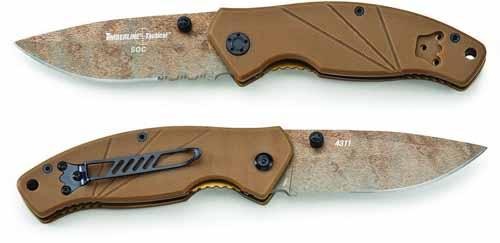
Thumb studs are the mode of opening for the Timberline SOC folding knife.
The Timberline SOC folding knife uses thumb studs to open the blade.

So which do you like best to open the blade on your folding knife? Are you a fan of the “Spyderco hole” or do you prefer the thumb studs of such knives as the Timberline SOC Folder? How about a disc atop the blade? Or do you simply grasp the blade between thumb and index finger and snap the knife open? Do flippers do it for you or are you one of those rugged individualists from the 1960s who can open your Buck 110 folding hunter one-handed by the nail nick? Or do you go back even further and prefer opening your traditional slip joint with two hands? Or do you shun all folders and use fixed blades only?

Opening folding knives is one of those things that seem to galvanize Americans everywhere. From the anti-switchblade hysteria of the 1950s caused by Hollywood’s sensationalizing the knife through such film fantasies as The Blackboard Jungle, Rebel Without a Cause and West Side Story to today’s assisted openers, methods for opening folding knives have been miscast as the root of all evil, the means of corrupting our nation’s youth and other social pariahs. Meanwhile, those who use knives for 99.9 percent of what most are used for—cutting—have hailed them for their convenience, utility and, at times, ability to save lives in situations where the user had only one hand to open his blade and cut his way out of danger.

Yes, the one-hand folder is one of the most sensible tools on the planet, and we want to know what your favorite version is. Tell us in words, pictures or however you want to do it. Here’s your chance to set the record straight and maybe even convert some poor miscreant who really thinks one-hand knives are the modern equivalent of the apple in the Garden Of Evil.

Click here for more on the Timberline SOC Folder in coyote tan in our store.

EX-03: More Than Just Another Black Handle Tactical

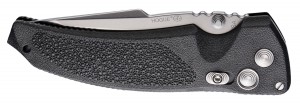
Sometimes it’s easy to denigrate the many black-handle tactical folders on the market, but Hogue Knives’ approach to the grip material for its EX-03 sheds new light on black.

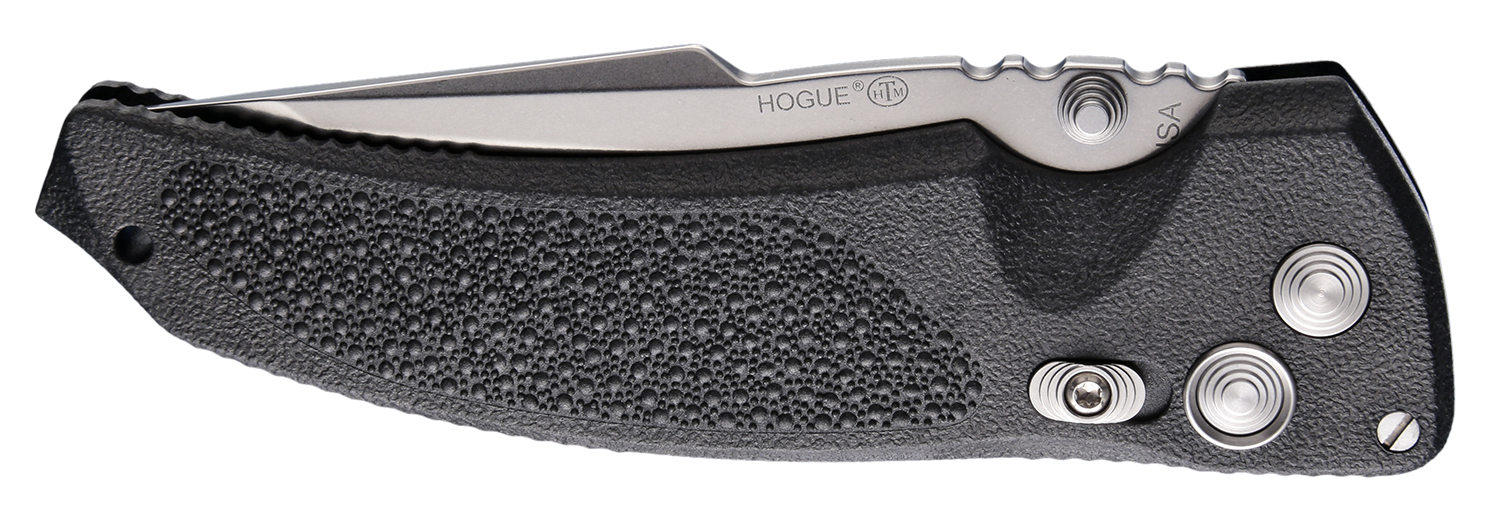
The handle material for the EX-03 is a polymer known as Polyphenylene Sulfide. The trade name is PPS.

A polymer known as PPS is the handle material for the Hogue4 EX-03. (Hogue photo)
Hogue uses a polymer known as PPS for its EX-03 folder. (Hogue photo)

“This material was selected for its high-tensile strength—29,000 psi—along with many other strength categories which are superior to a more commonly used reinforced nylon such as Zytel®,” noted Jim Bruhns, president of Hogue. “PPS is also much more thermally resistant than nylon, which is more of a big deal that you would expect.

“In most applications reinforced nylon, also known as glass-filled nylon, works very well through a wide range of temperature. We have seen occasion where polymer products fail as a result of extreme temperature in some obvious places, such as the trunk of a car where extreme highs and lows can occur. Again, PPS wins in this category with a much higher deflection temperature than nylon.”

The internal components that make the EX-03’s mechanism are 17-4 stainless steel. The real trick, Bruhns stressed, was getting such a robust assembly staged into an injection-mold tool in a way that the blade could be added and adjusted as part of a final assembly after molding.

“This was something that was met with quite a bit of skepticism, as the problem is quite challenging,” Bruhns continued. “This really goes to the root competency of what we do here at Hogue.”

Bruhns was able to develop the needed tooling for the task and the results speak for themselves.

“We now have a single-piece polymer frame folder with all of the best-known materials available in a rock-solid assembly,” he stated. “This knife is the best bang for your buck available today.”

For more on the Hogue EX-03, see the May BLADE®, on newsstands Feb. 25.

Featured Knife: CRKT Homefront – 2016 Most Innovative Imported Design Award Winner

The CRKT Homefront: A Hit Before It’s Even Out the Door

What I enjoy the most about knife shows is the hidden gems I’ll find among the blades. Whether it’s a unique spin on a classic design, a different type of steel or handle material, a peanut-butter-meets-chocolate pairing of knifemaking pros or a radical new approach, nothing beats finding that diamond in the rough. The 2016 BLADE Show was no exception, and that’s where I first encountered this:

This, ladies and gentlemen, is the new Homefront from Columbia River Knife & Tool (CRKT), and it went down as one of my top finds at the world’s foremost knife event. Straight from the brain of Ken Onion and sporting patent pending features, I could tell this was a game changer right from the beginning. The awards ceremony at the BLADE Show proved me right. The Homefront took home the award for 2016’s Most Innovative Imported Design, and it’s not even on shelves yet.

What Makes the CRKT Homefront Special? Field Strip Technology

CRKT Ken Onion Homefront Best Knife Award Winning
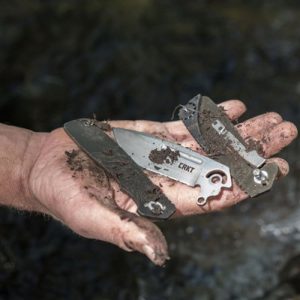
“The new Field Strip Technology is great and all, but have you tried NOT burying your knife in mud?” (CRKT photo)

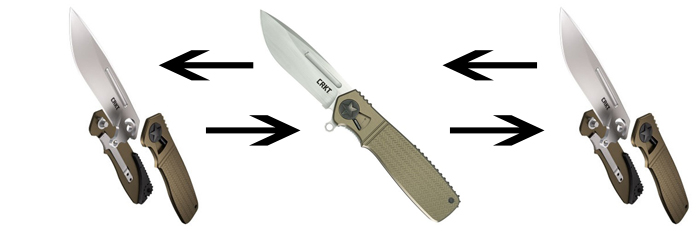
The Homefront is to knives what takedown rifles are to firearms. The Homefront’s wickedly simple Field Strip Technology allows the user to disassemble and reassemble the knife in mere seconds. Just flip a switch and turn a screw as shown in the video above. It’s as simple as that.

That same video shows the knife being cleared of dirt and debris in a stream after use outdoors, which is a great application of the Field Strip Technology. But you know what I’m most excited about? Pocket lint.

“The Easier a Knife is to Clean, the More Likely it is to be Cleaned”

Pocket lint is the bane of my everyday carry folders. The sorcery of fuzz, residual heat and repetitive motion that comes with slipping an EDC into the pocket can form a gooey mess we knife scientists like to call, “gunk.” (I’m sure there’s a Greek root word in there somewhere.) This gunk builds up in hard-to-reach places and eventually requires disassembly, because there’s a limit to what all those gallons of knife oil can do.

With Field Strip Technology, cleaning up no longer requires a set of tools and a magnet to find those tiny screws when they inevitably roll onto the floor. The Homefront comes apart in seconds, then reassembles just as quickly. The result is an simple-to-maintain folding knife that will last. The easier a knife is to clean, the more likely it is to be cleaned.

I fully expect CRKT to use Field Strip Technology on other models in the future. I wouldn’t put it past CRKT to come out with add-ons to the Homefront to take full advantage of this tech, such as alternative blade and handle designs. To that end, the Homefront would be more like the AR-15 of knives, where the appeal is in a platform that allows customization specific to the end user. That level of personalization is obvious in trends outside of knives, too, and the Homefront could mark the beginning of a wider evolution of the consumer knife market. If this is the bandwagon, I’m hopping on.

Where to Get the CRKT Homefront: ShopBlade.com

Ken Onion award winning knife 2016 blade show
The CRKT Homefront before and after, and before and after again, and again, and again and again. Click to order yours today from ShopBlade.com.

ShopBlade.com is one of the first outlets anywhere to carry the CRKT Homefront, and it does so with pride. Here are the specs:

  • Overall Length: 8.313 inches
  • Closed Length: 4.728 inches
  • Weight: 4.8 ounces
  • Blade Length: 3.502 inches
  • Blade Thickness: 0.133 inches
  • Blade Steel: AUS 8
  • Blade HRC: 57-58
  • Blade Finish: Brushed Steel
  • Edge: Plain
  • Handle Material: 6061 Aluminum
  • Lock: Locking Liner

Click here to order your CRKT Homefront today!

KA-BAR Gunny Knife: An Oversized Blade Commemorates a Larger-Than-Life Personality

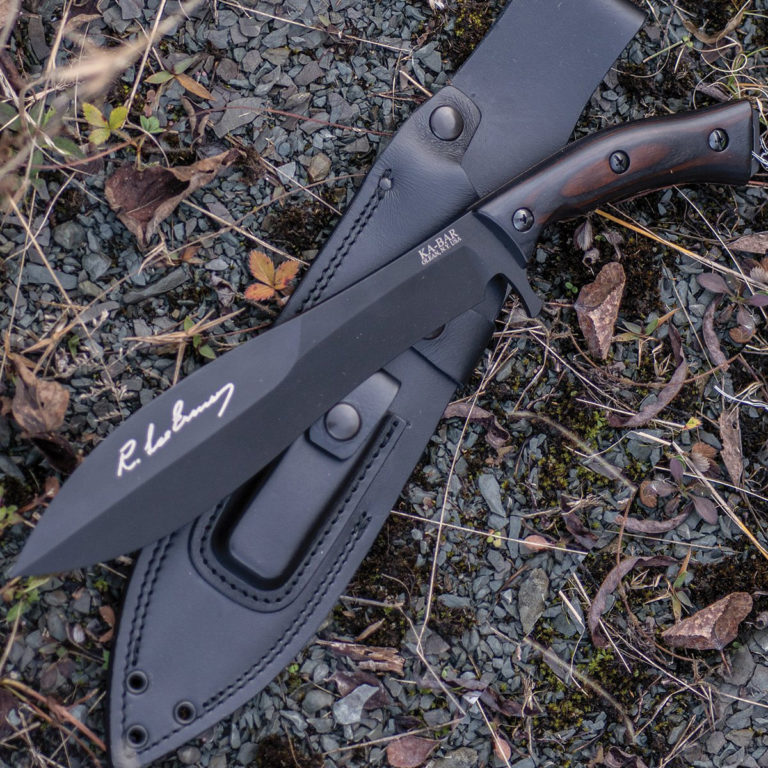
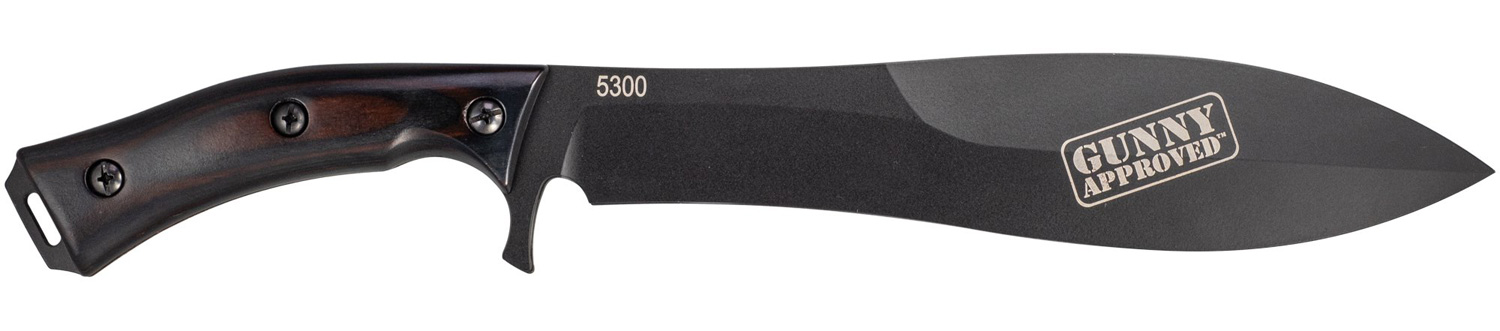
R Lee Ermey Gunny Knife KA-BAR
(KA-BAR photo)

The late Gunny’s final knife collaboration was certainly not his least.

KA-BAR Gunny Review

The KA-BAR Gunny is a hybrid design that resembles a bolo. I suspect R. Lee Ermey, the unforgettable Gunny who serves as the knife’s namesake, spent some time in jungles because this combination chopper/slicer’s performance is on par with village-forged bolos I’ve used in Southeast Asia, and that’s a high compliment.

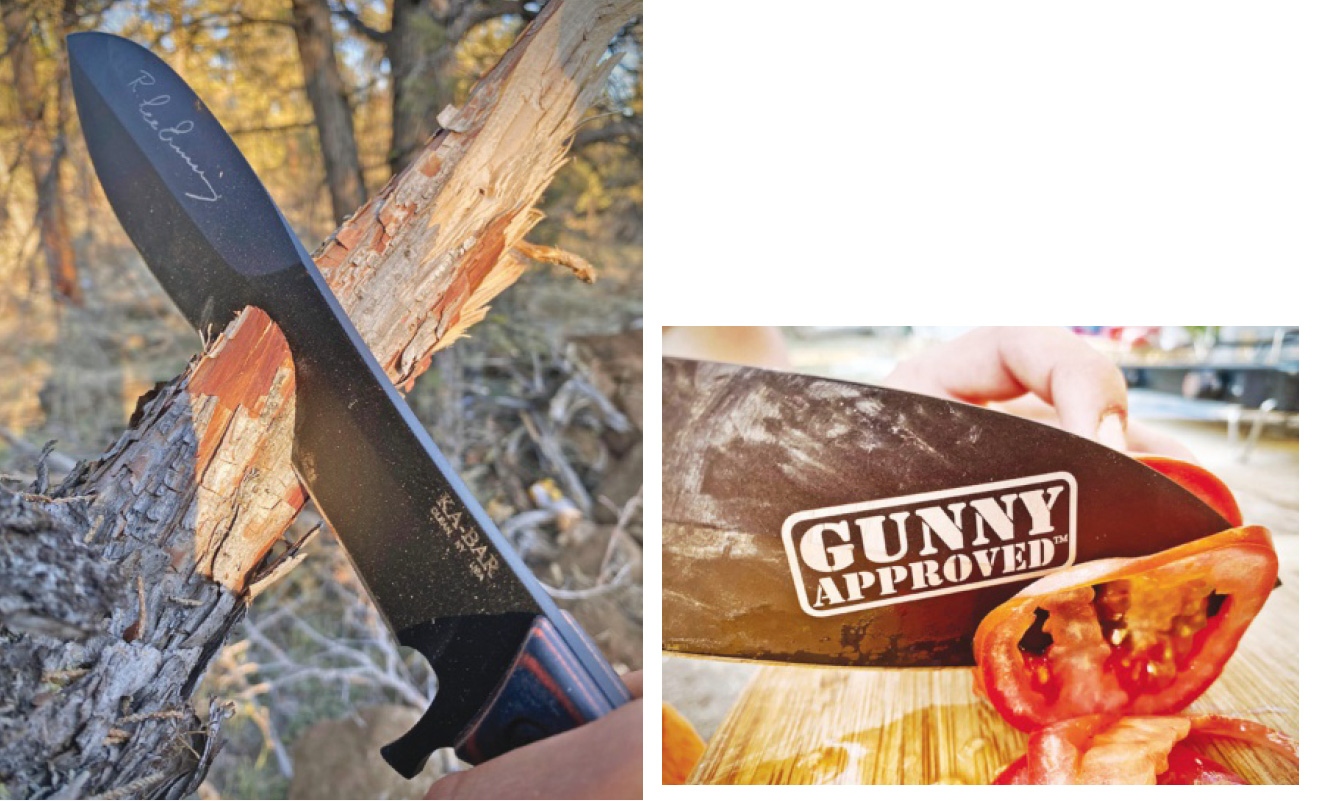
Its forward weight and terrific blade design promote efficient chopping. We cut through 3-to-4-inch-thick saplings with two strokes. We took down a tree with a 6-inch-thick truck just because we could.

After the chopping the blade was still sharp enough for camp kitchen work. The belly, good balance and fine edge combined to make slicing meat and vegetables a pleasure. Slashing hanging rubber hose and the water bottle were a piece of cake.

The comfortable handle lends itself both to heavy chopping and fine meat cutting, which is unusual.

Bottom line: The Gunny is an excellent all-around bush knife. The sheath has a pocket for a sharpening stone, which was not included with the review model.

KABAR Gunny Knives
After chopping wood, the Gunny sliced tomatoes like a chef’s knife.

Specs

  • DESIGNER: R. Lee “Gunny” Ermey
  • BLADE LENGTH: 9.75”
  • BLADE MATERIAL: 1095 Cro-Van carbon steel
  • BLADE WIDTH: 2”
  • BLADE THICKNESS: .2”
  • BLADE GRIND: Flat
  • HANDLE WIDTH: 1.5”
  • HANDLE THICKNESS: .94”
  • HANDLE MATERIAL: Wood
  • WEIGHT: 15.29 ozs.
  • OVERALL LENGTH: 15.5”
  • SHEATH: Leather
  • COUNTRY OF ORIGIN: USA
  • MSRP: $292
Advertisement

Must Read Articles

Read this before you make a knife

Knifemaking 101 – Read This Before You Make a Knife

  by Wayne Goddard My experience has taught me that there's nothing like digging in and getting started. I've often said the hardest part of the...
how to forge damascus steel

How to Forge Damascus

Advertisement
Advertisement