Knife collecting is an extremely rewarding experience for knife enthusiasts. There truly is a knife for everyone. Many increase or hold their value throughout the years, making collecting knives something to pass on to the next generation of knife collectors.
Custom knifemakers can use any steels they like. However, some steels continue to see use year after year. Here are a few great examples.
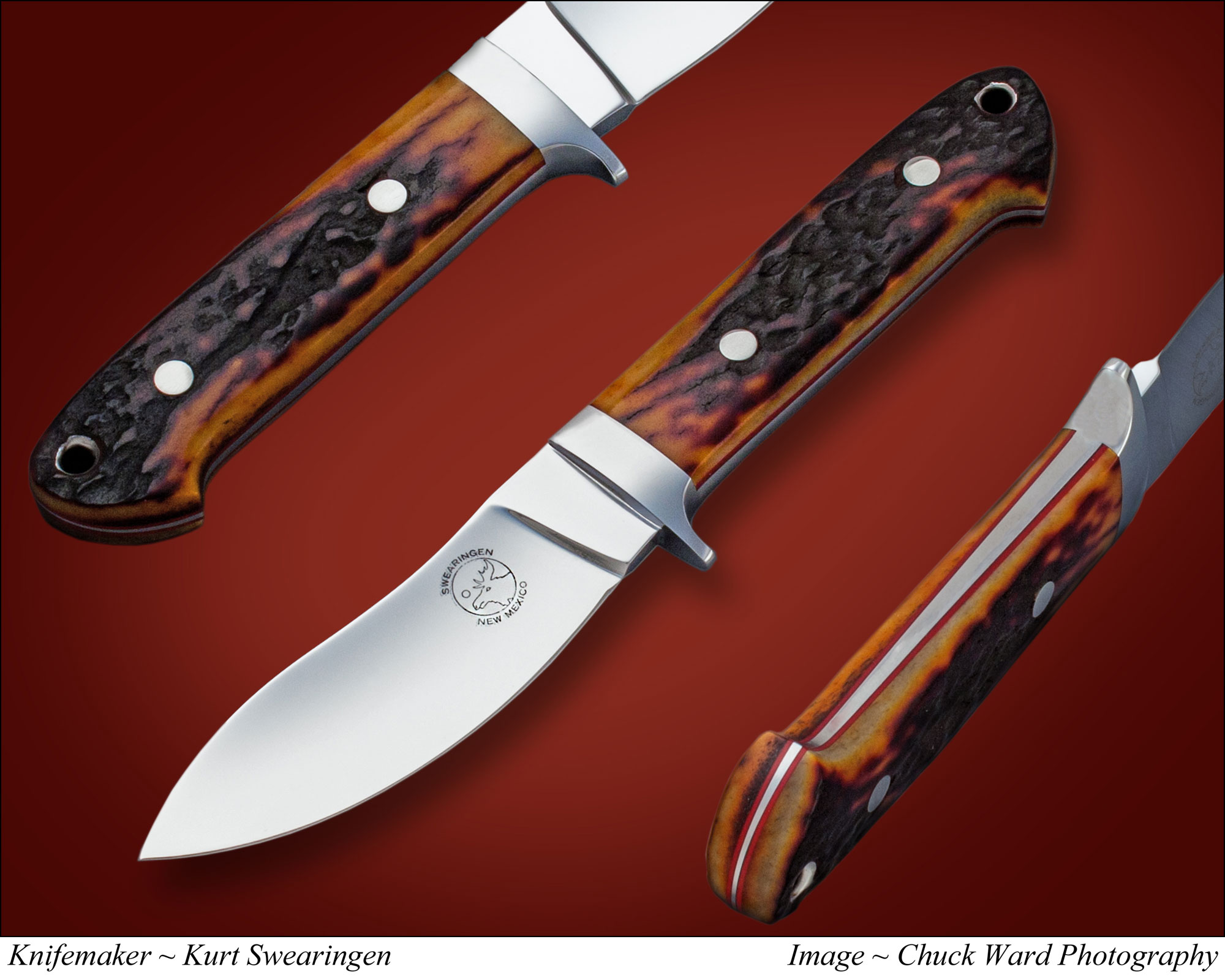
CPM 154
CPM 154 stainless is the blade steel Kurt Swearingen selected for his deep-bellied semi-skinner with a tapered tang and single guard. The handle is amber elk. Overall length: 8.25 inches.
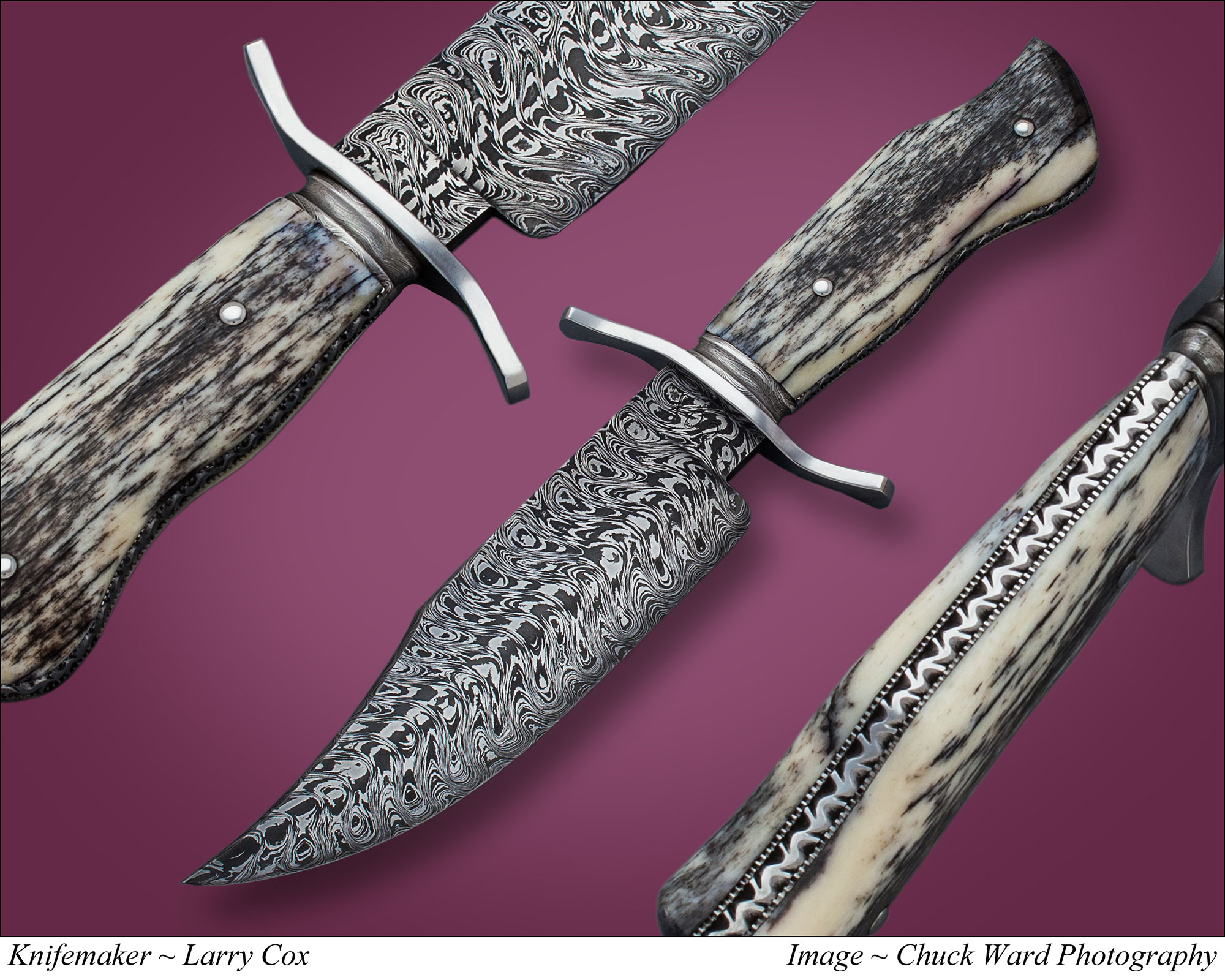
1084 & 15n20
A pattern weld of 1084 and 15n20 comprises the 6 7/8-inch clip-point blade of the 385 Damascus Bowie by Larry Cox. The handle is giraffe bone and the guard is 416 stainless steel.
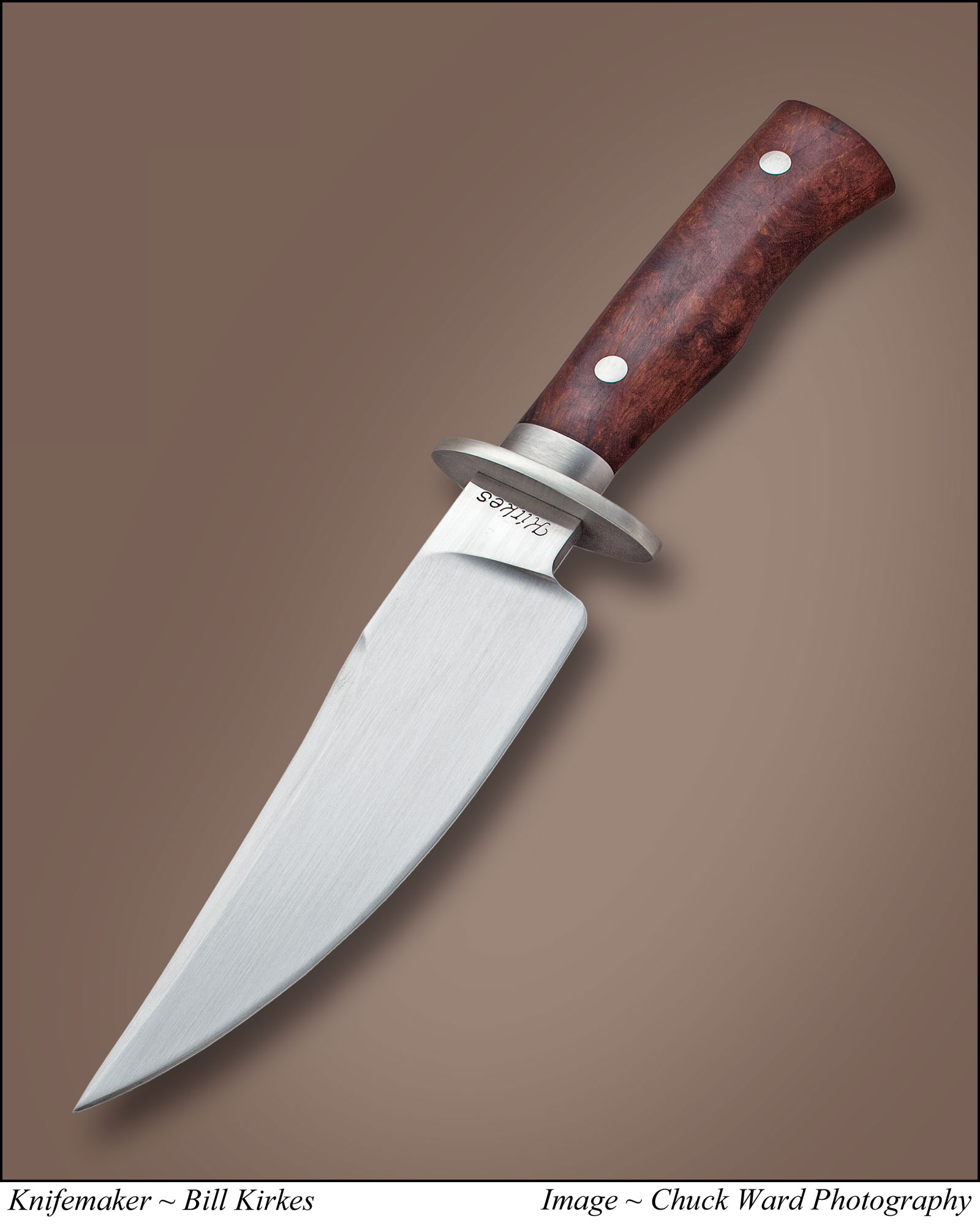
5160
Tried-and-true 5160 carbon steel is the blade material for Bill Kirkes’ small bowie with a long swedge and oval double guard. The handle is ironwood. Overall length: 12 inches.
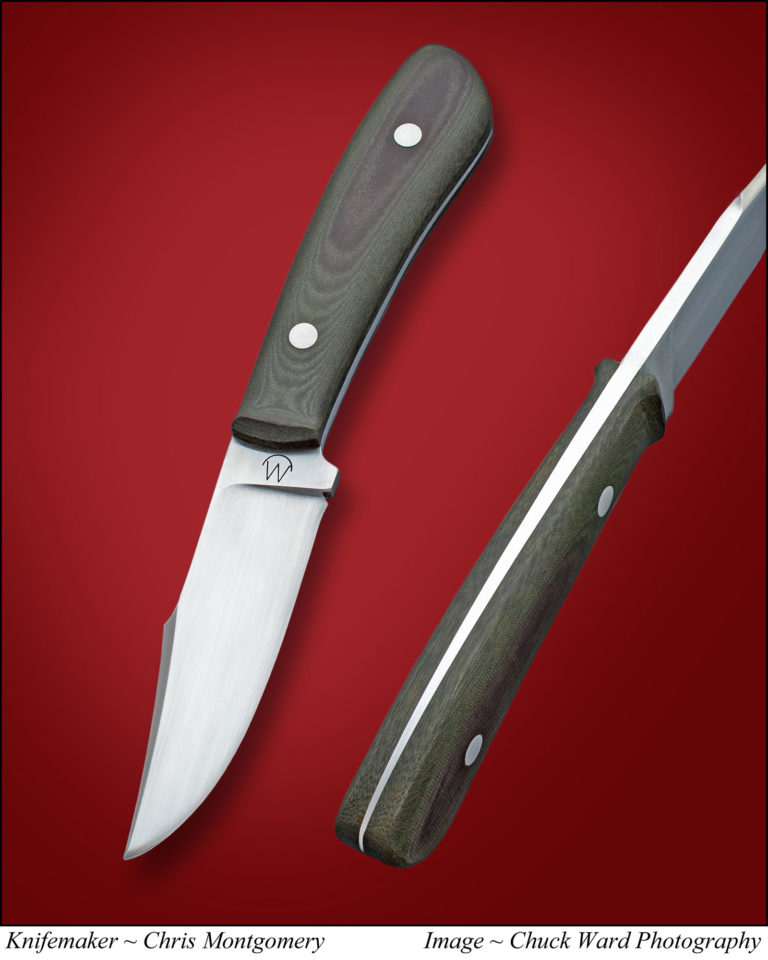
W2
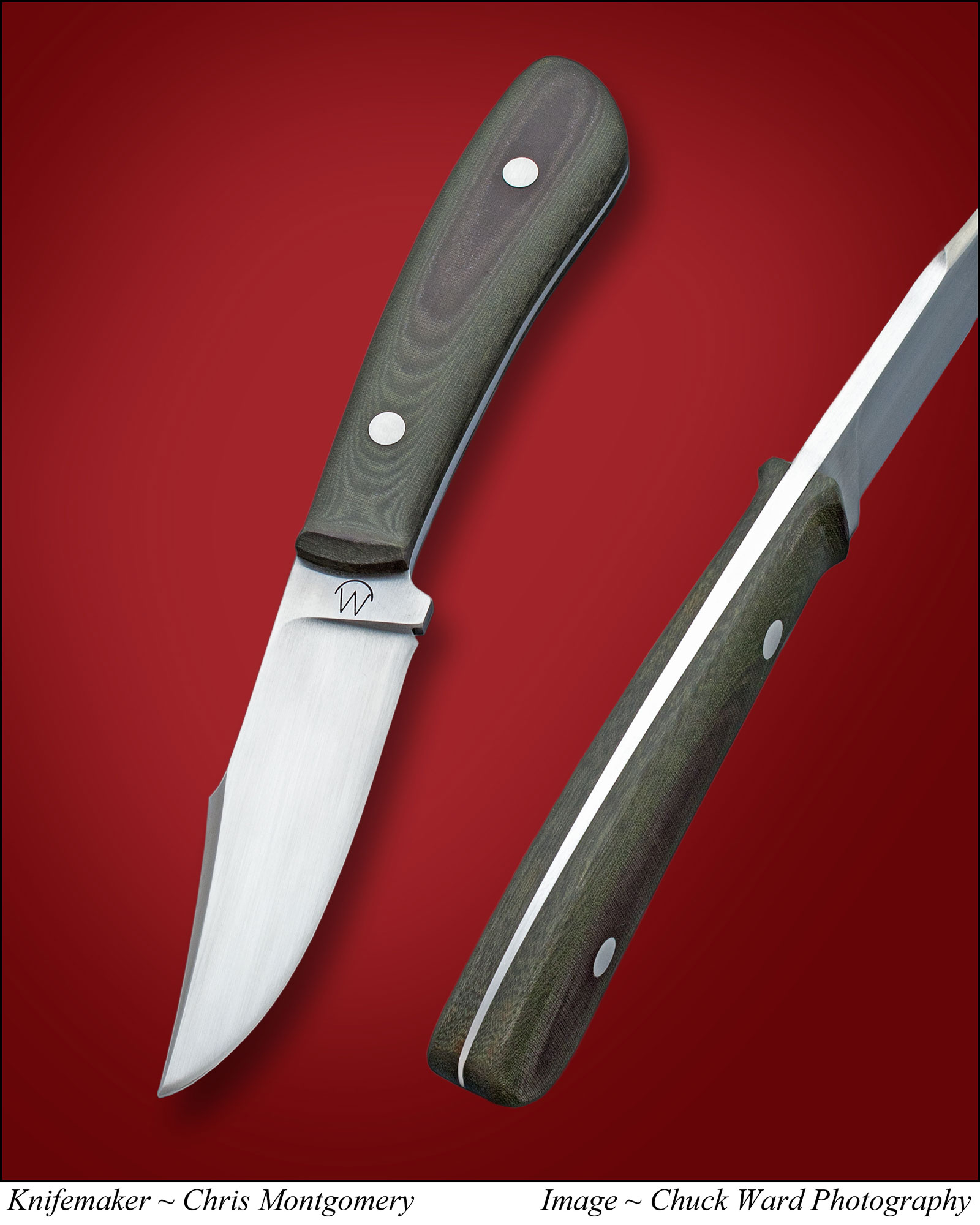
W2 tool steel comprises the clip-point blade of Chris Montgomery’s tapered-tang utility hunter. The handle is the Bob Loveless favorite—green Micarta®. Overall length: 8.25 inches.
154CM
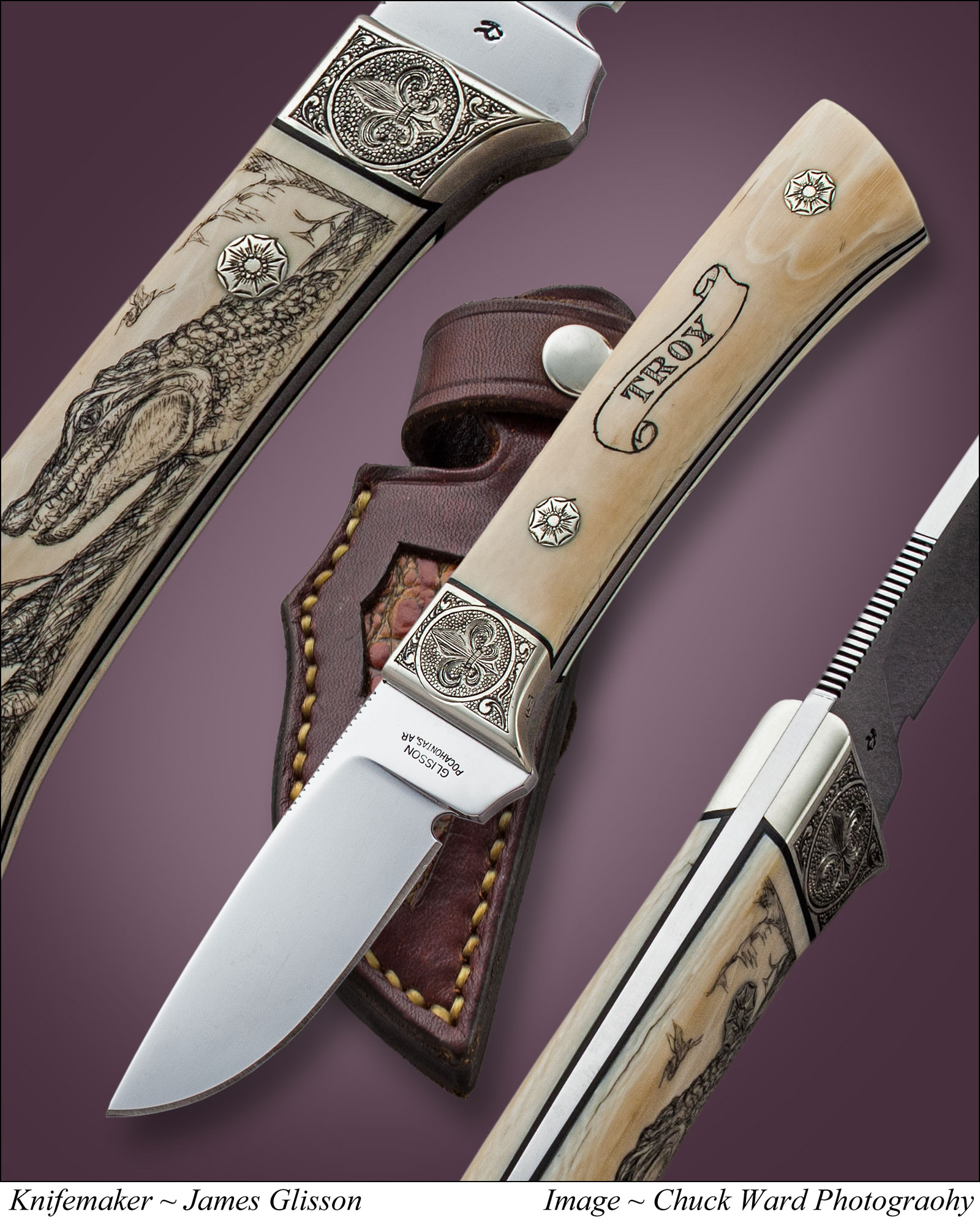
A 3.25-inch blade of 154CM stainless—another Bob Loveless staple—anchors James Glisson’s drop-point skinner in mammoth ivory. The scrim is by Kurtz Miller and the engraving by Pierre Le Blanc.
D2
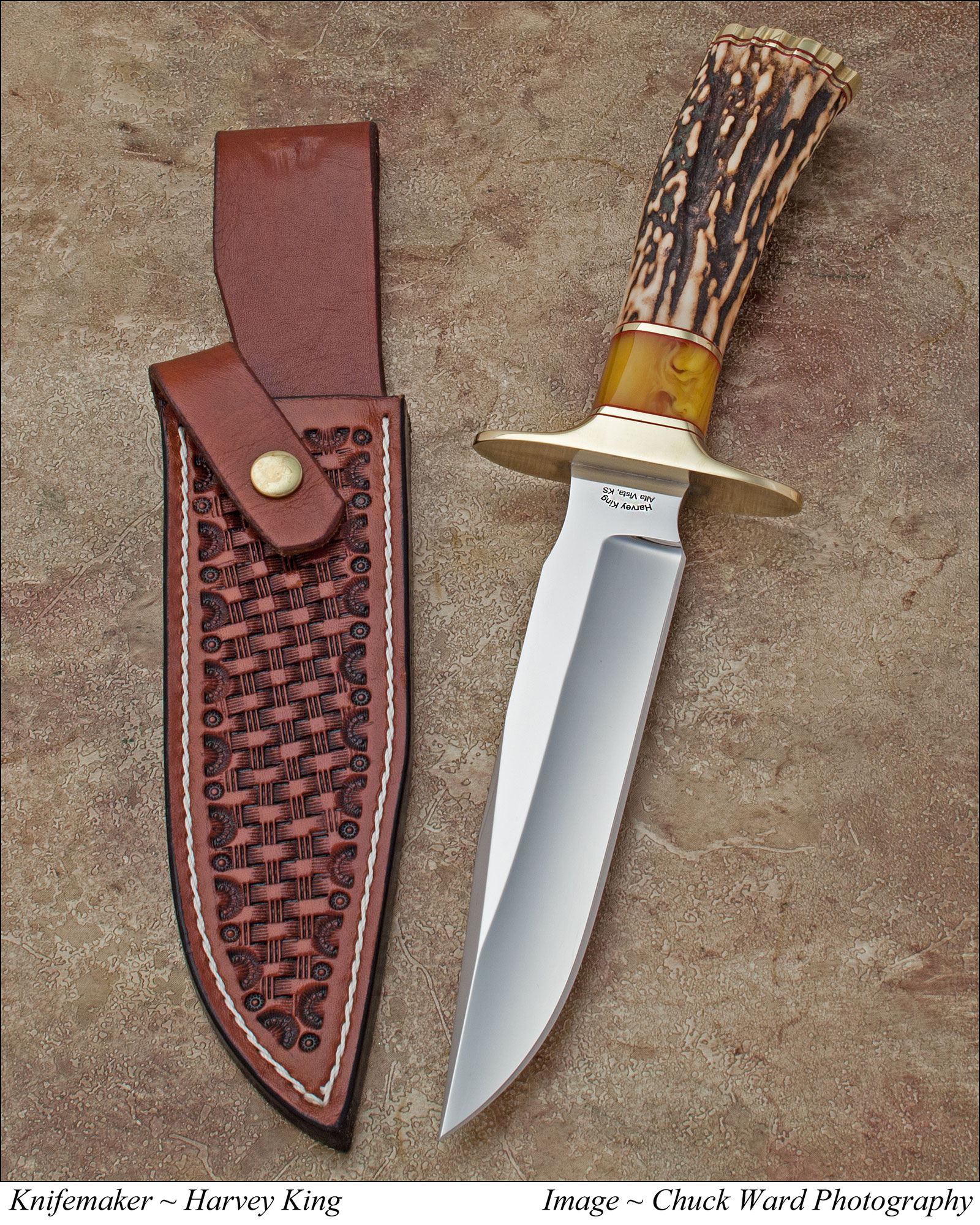
D2 tool steel is the material for the 7-inch hollow-ground blade of Harvey King’s fighter. The handle is stag with a brass double guard and buttcap. The spacer is amber.
440C
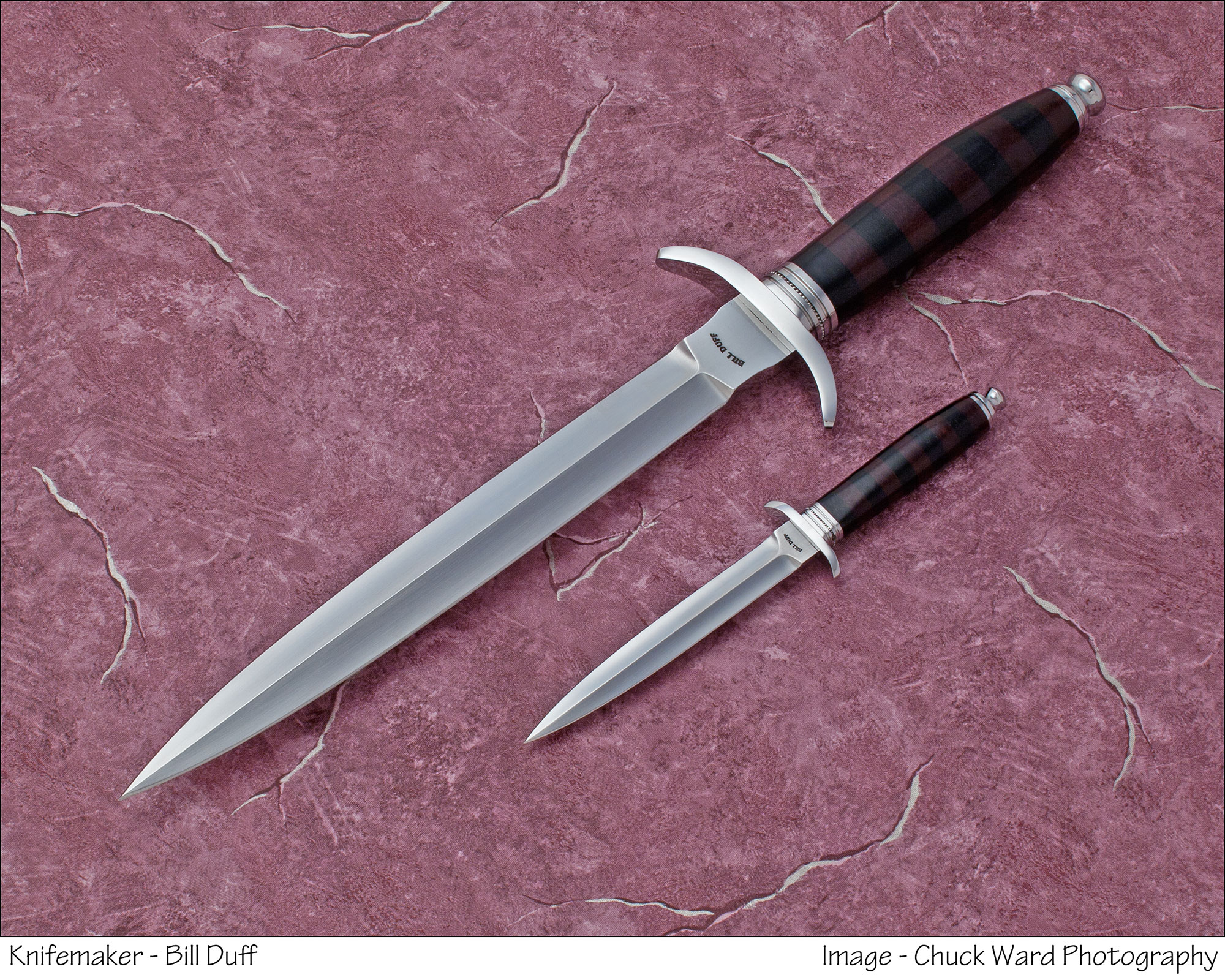
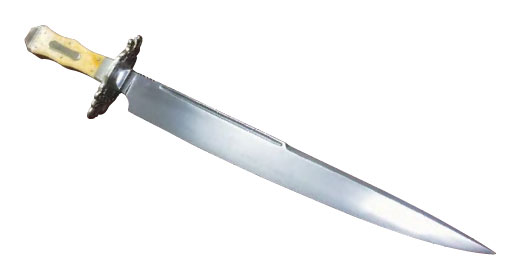
Bill Duff no doubt has used 440C stainless scores of times in his many years of knifemaking—and he does so here again on his large dagger with a black and maroon Micarta® handle. Overall length: 12.75 inches.
Near-flawless grinds, captivating materials, curvaceous lines, snug fit and finish, and slick mechanisms help ensure today’s hottest makers’ hottest custom knives are cool cutters to covet.
While determining such knives is almost impossible to do without at least a smidgeon of subjectivity, those who sell knives professionally have their finger on the pulse of who some of the makers are and which of their knives is hottest. If the sellers don’t, they won’t be in business for long.
We tapped four of today’s successful knife sales operations—purveyor Daniel O’Malley of Bladegallery.com, purveyor Les Robertson of Robertson’s Custom Cutlery, and Sako Rouchanian, owner of Recon 1, a retailer of knives and gear—for their opinions on the matter.
Meanwhile, don’t be surprised if one or more of the mesmerizing cutters they identify activate your salivary glands. Covet away!
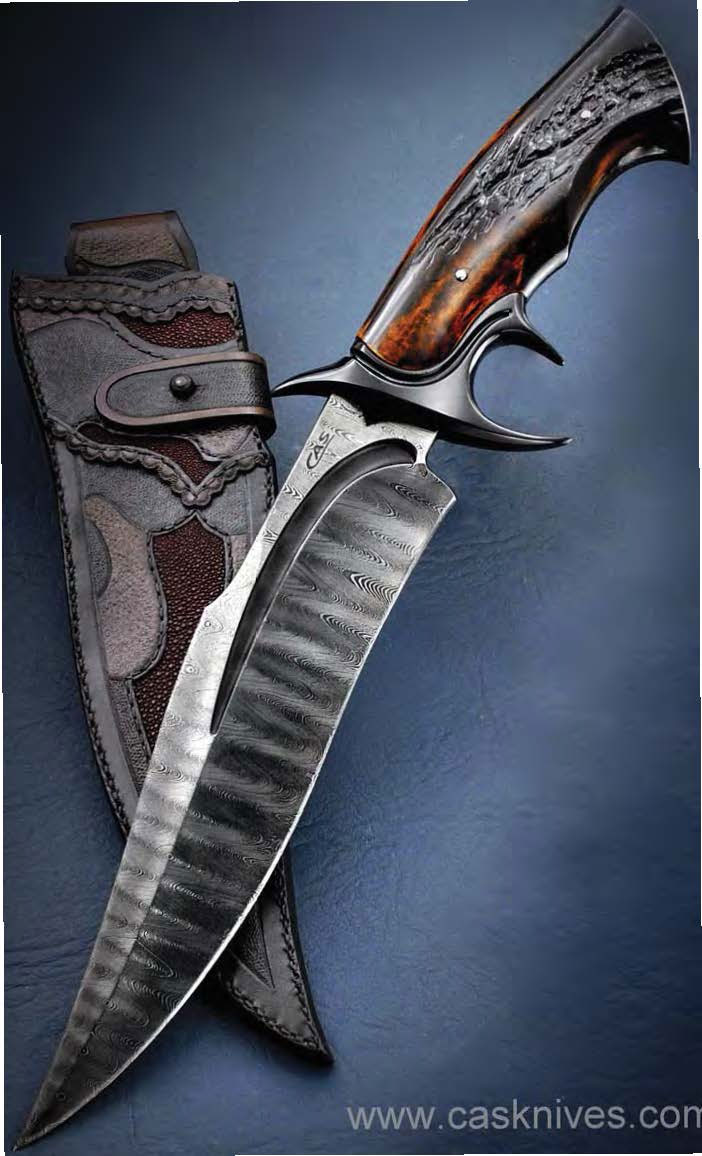
Poison
(Claudio Sobral image)
Poison by Claudio and Ariel Sobral of CAS Knives offers up what purveyor Les Robertson calls the Sobrals’ signature style: big, bold and striking! The carved integral guard and sub-hilt are blued carbon steel.
Handle: Amber stag
Blade and overall lengths: 10 and 15.5 inches
Blade steel: Ladder pattern damascus
Maker’s price: $3,000
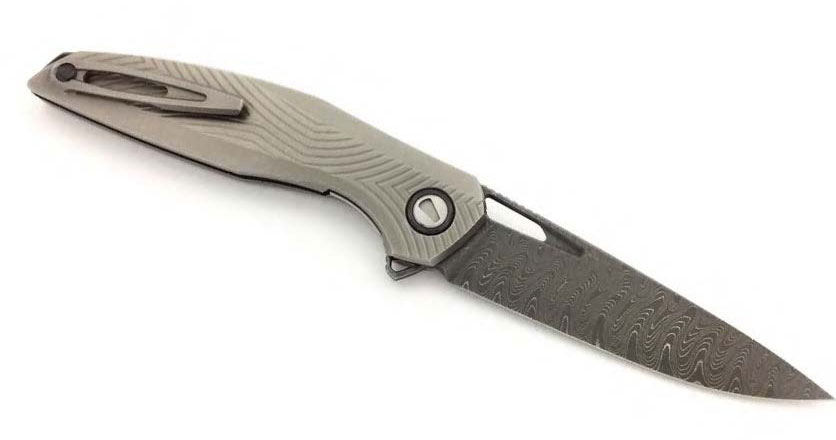
111
(Recon 1 image)
The Double Row Roller Bearing System used exclusively on such custom knives as Sergey Shirogorov’s full custom 111 flipper makes the knife’s action incredibly smooth.
“It flips open like a rocket,” stated Sako Rouchanian of Recon 1.
Blade and closed lengths: 4.37 and 5.25 inches.
Blade steel: Chad Nichols boomerang damascus
Handle: stonewashed titanium
Maker’s price: Auction only
Recon 1’s price: $12,000
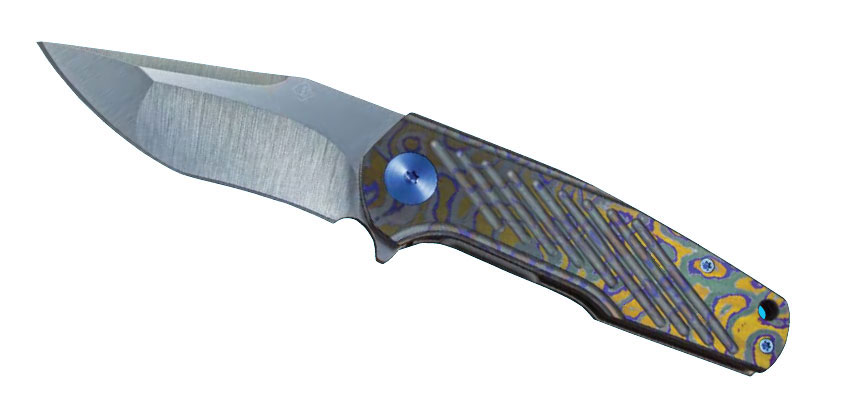
Ronin
(Steel Addiction Custom Knives image)
Jim Burke’s Ronin is a compact tactical flipper folder with a unique pocket-friendly footprint. The modified tanto blade is Stellite® and pivots on ceramic bearings. The frame is milled Zircuti—zirconium and Mokuti—with blue anodized hardware. The clip is Zircuti, too.
Weight: 5.5 ounces
Blade and closed lengths: 3.25 and 4.25 inches
Maker’s price: $1,800
L51 Compact
(BladeGallery.com image)
As purveyor Daniel O’Malley observed, over the past couple of years tactical folder collectors who had gone by the creed of “bigger is better” have been opting for sleeker, lighter, thinner and more pocket-friendly versions for their EDCs. The L51 Compact by Andre Van Thorburn is such a knife.
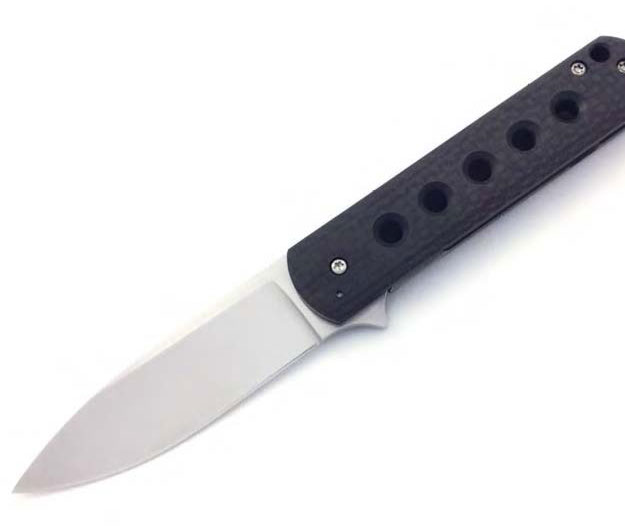
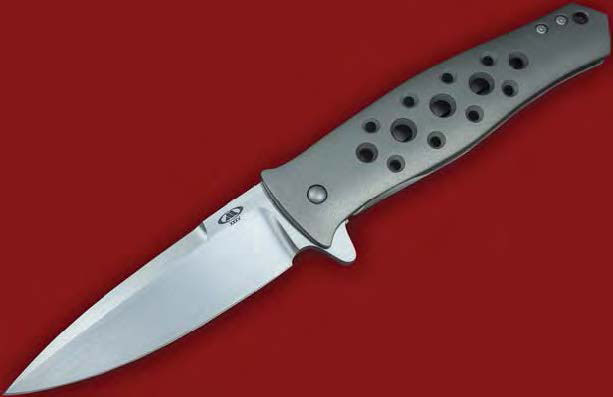
The carbon fiber handle of Ray Laconico’s EZC flipper features a milled “speed hole” pattern.
“When it comes to building a handmade tactical flipper knife for everyday carry, Ray Laconico gets it,” noted Sako Rouchanian of Recon 1.
Blade and closed lengths: 3 and 3.87 inches
Maker’s price: $750
Recon 1’s price: $1,100
A2/A6
(Steel Addiction Custom Knives image)
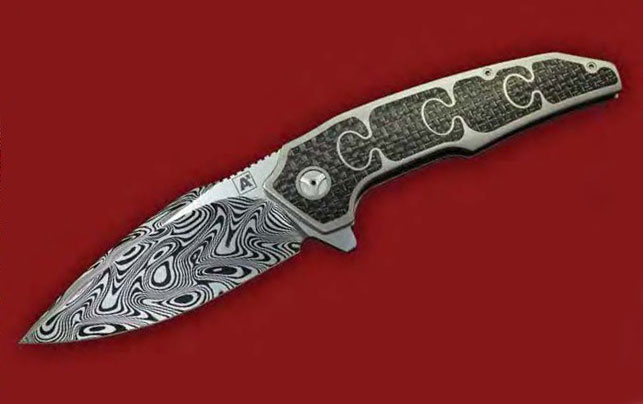
The A2 framelock folder by South Africans Andre Van Heerden and Andre Thorburn has been hot for well over a year now and shows no signs of cooling off. The A2/A6 is their collaboration with Tashi Bharucha in a blade of polished Damasteel damascus, and hand-rubbed titanium frames in the Omega sign with silver lightning-strike carbon fiber inlays.
Weight: 4.9 ounces. Blade and closed lengths: 3 5/8 and 8 3/8 inches
Makers’ price: $1,500
Model 450 Ultra-Light
(BladeGallery.com image)
South African Des Horn’s Model 450 Ultra-Light gent’s flipper features a 2.75-inch blade of Damasteel stainless pattern-welded steel and a blue/silver carbon handle.
“It’s so slim and light [1.2 ounces] you won’t even know you’ve got it with you,” noted purveyor Daniel O’Malley. “With over 30 years making knives, Des Horn is one of the fathers of the South African knife industry, and his influence can be seen in many other makers’ work.”
Horn’s price: $600
BladeGallery.com’s price: $600
Hokkaido
(Recon 1 image)
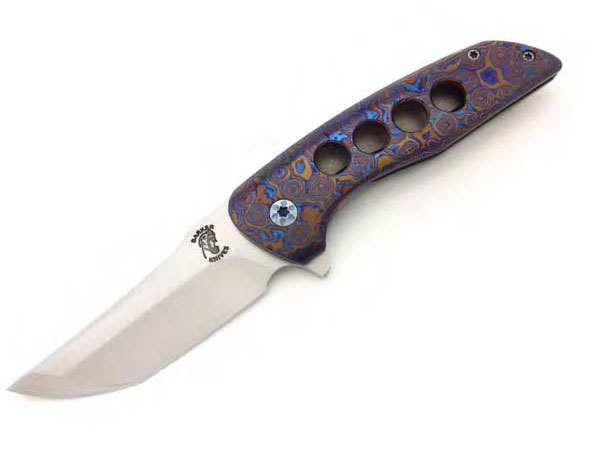
“Arguably [featuring] the best grinds in the tactical market, John Barker’s Hokkaido is the hottest tanto design in the tactical world,” noted Sako Rouchanian of Recon 1.
The Small Hokkaido flipper features a contoured rosebud pattern Timascus handle.
Sault Daug is the latest folder from Lee Williams. Equipped with a linerlock, it comes in both the maker’s Kick Stop and stud opener (pictured) versions. Blade and closed lengths: 3.5 and 4.75 inches.
Blade steel: handrubbed CPM 154
Handle: Carbon fiber scales and titanium standoffs
Weight: 4.7 ounces
Maker’s price: $2,250
Open-bid show price: $7,500
Piuma
(BladeGallery.com image)
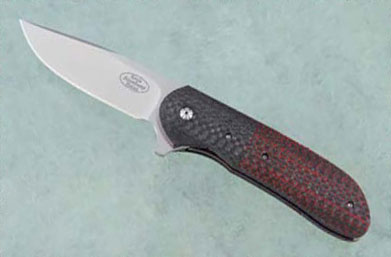
The brother of custom knifemaker Willem Steenkamp, Kosie Steenkamp offers up the Piuma flipper in red lightning-strike carbon fiber.
“The blade is perfectly centered with silky smooth action,” noted purveyor Daniel O’Malley, “and easily opened with one hand using the ambidextrous flipper toggle.”
Blade and closed lengths: 3.4 and 5 inches
Liners: Jeweled and anodized titanium
Pocket clip: textured and anodized titanium
Maker’s price: $575
BladeGallery.com’s price: $575
Doctor Death Junior Flipper
(Steel Addiction Custom Knives)
Tom Mayo has been making knives 35 years and all of his anniversary knives have his XXXV anniversary logo.
The Doctor Death Junior Flipper has a 3 5/8-inch blade of handrubbed CPM 154 stainless steel and operates on the Ikoma Korth Bearing System. The framelock folder weighs 4.6 ounces and is 5 inches closed.
Maker’s price: $1,600
See More Photos of Custom Knives
See beautiful, full-color photos of custom knives in Knives 2018.
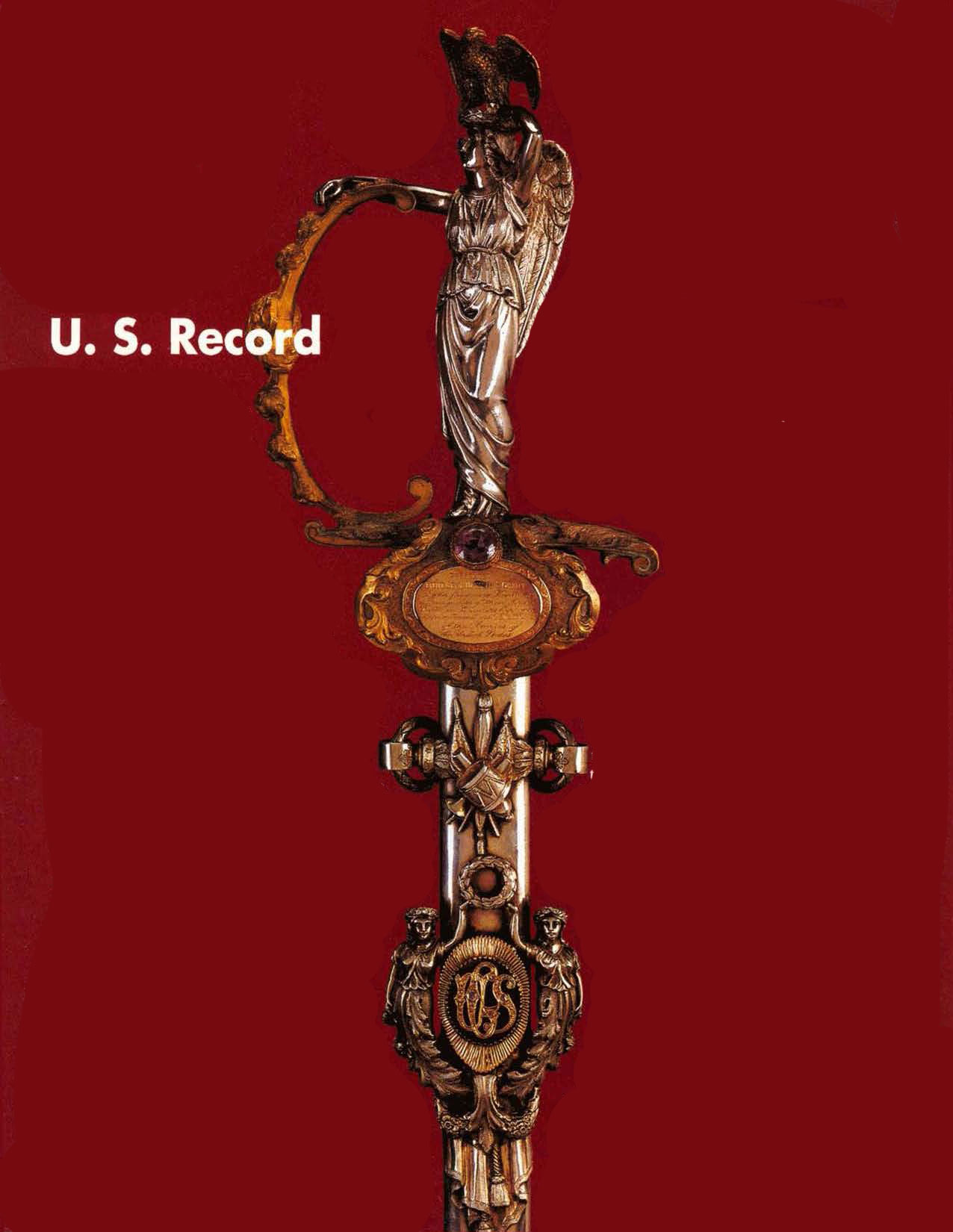
The Grant presentation sword sold of $330,000 at auction. It was originally presented to the Union general when he took command of the Federal Army in 1864. (Butterfield image)
Editor’s note: The following appeared in the July/August 1990 edition of BLADE magazine. Note that the record-setting price is now outdated. Read more from the archives with this collection.
The value of a sword owned by a United States president depends first on whether the item’s provenance can be confirmed. Popularity of the president can also play a role. The more popular, or at least well known, the president, the higher the price. The significance of the sword in history matters as well. The materials used in the sword can be important, but context matters most.
Here’s one example.
Ulysses S. Grant’s Sword Sells for $330,000
A jeweled sword originally presented to Gen. Ulysses S. Grant recently set a world record for auctioned American swords when it sold for $330,000 at the San Francisco gallery of Butterfield & Butterfield Auctioneers and Appraisers.
As much as the sword fetched, however, the dollar amount does not approach the world auction record for all swords of $51.2 million for a sword that belonged to the Duke of Windsor, according to Greg Martin, one of the organizers of the San Francisco event.
Part of a Larger Antique Sword Auction
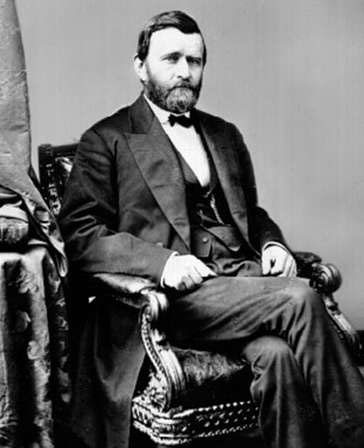
Ulysses S. Grant served as the 18th president of the United States. (public domain image)
The Grant piece was but one of 210 swords – which Martin said may be a record for the number of swords bought at one auction – sold in San Francisco. All told the sale brought about $900,000 in bids and included pieces from the Revolutionary War period up to the turn of the century.
“It was a historic sale because it involved three sword collections in one,” Martin explained. Those collections included 30 pieces that one belonged to Jay Altmayer of Mobile, Alabama, presentation pieces every one, including the Grant sword; 70 eagle head swords from the collection of E. Andrew Mowbray, who has written a book on eagle head swords; and 110 swords – including a sword presented to Col. Charles C. De Rudio of Gen. George Armstrong Custer’s 7th Cavalry that sold for $42,500 (plus 10 percent) at auction – from the collection of Peter Buxtun, a sword-collecting veteran of 30 years.
Origins of Grant Sword
But it is the Grant sword that grabbed the headlines. The sword’s ornate silver handle is fashioned in the shape of the winged Goddess of Victory, a laurel chaplet held in place by her left hand, over her head a spread American eagle. Medallion-like counter guards form at the goddess’ feet, where a gold-mounted amethyst sets atop a gold plaque that reads: “Presented to Lieut. General Ulysses S. Grant by his Friends in Kentucky in Recognition of their great Faith in Leadership and Appointment as General in Chief of the Armies of the United States.”
Made by Canfield & Co. of Baltimore, the piece’s hilt and scabbard are in excellent condition, while the blade has some small pitted areas and overall light rust. According to the auction program, the inscription on the presentation plaque was possible freshened at one time.
The Civil War and Grant’s Sword
Learn more about knife history in this collection of BLADE back issues, dating back to 1973.
Grant’s Kentucky connection is significant. Educated in Maysville and having relatives that settled in the Bluegrass State, Grant was determined to keep Kentucky in the Union. On Sept. 5, 1861, he learned of a Confederate plan to invade Paducah, Kentucky, located at the juncture of the Tennessee and Ohio rivers near the mouth of the Cumberland River.
That evening, he assembled an expedition that landed federal troops the next day at Paducah before the Rebel invasion. On Sept. 7, the Kentucky Legislature voted to keep the state in the Union. Grant had prevented the South from claiming Kentucky and establishing the Confederate northern border on the Ohio River. It was his first major victory.
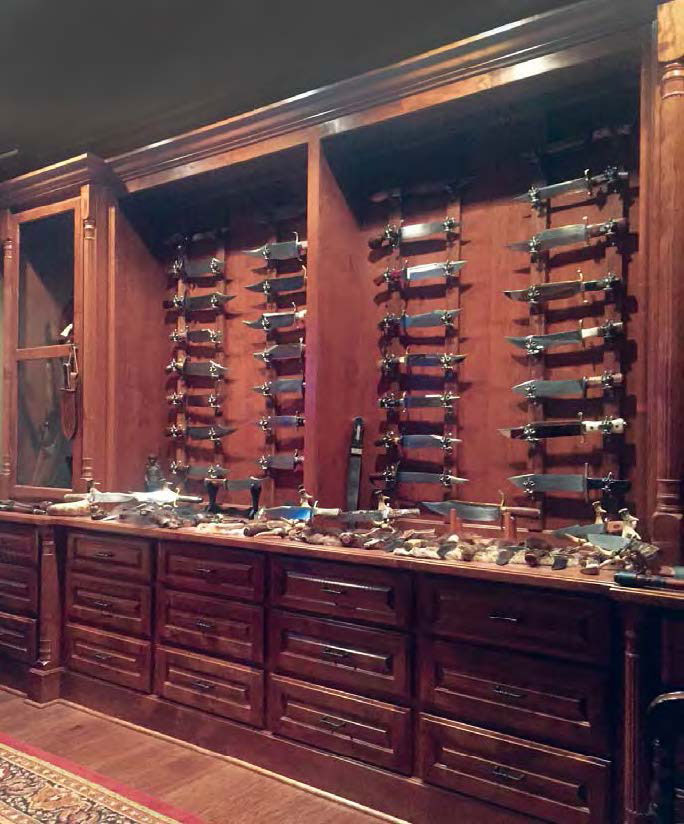
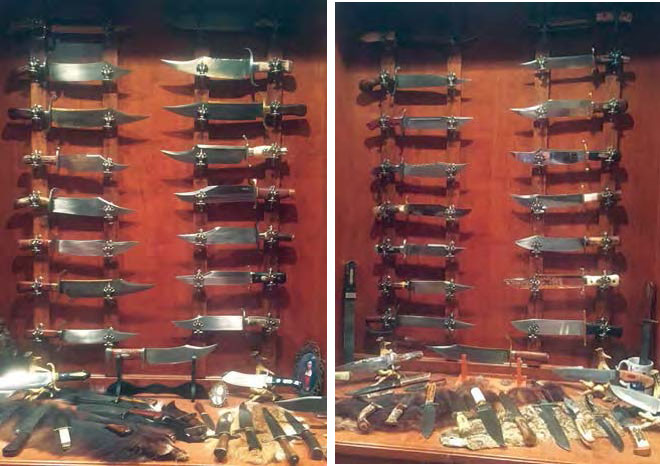
Chris Nolen’s collection of custom repros of antique bowies tops 200. Here are some of them in his 7×14-foot display vault made of alderwood, including 18 drawers full of bowies at the bottom. (All images by Chris Nolen unless otherwise noted)
Editor’s note: This article originally appeared in the February 2018 edition of BLADE.Download the issue here.
A Bowie Knife Collecting Obsession
The trail of the fabled bowie knife is long and winding. From the Sandbar Fight to the Alamo and beyond, its fact, mystery and myth have become the stuff of legend. The trail extends nearly 200 years, and for half his life Chris Nolen of West Monroe, Louisiana, has traveled down it.
For sure, he’s gone further than most.
At 65, Chris remains heavily engaged in a custom embroidery and screen print business called Reflections with his daughter, Lori Rockett, while another daughter, Lindsey Sanders, lives in Chattanooga, Tennessee. A retired telecommunications worker, he has sought and bought knives since his days mowing lawns for money so that he could run to the local hardware store and buy the knives that caught his eye.
“My mother still kids me about not having any money in those days because I was always buying knives,” he smiled.
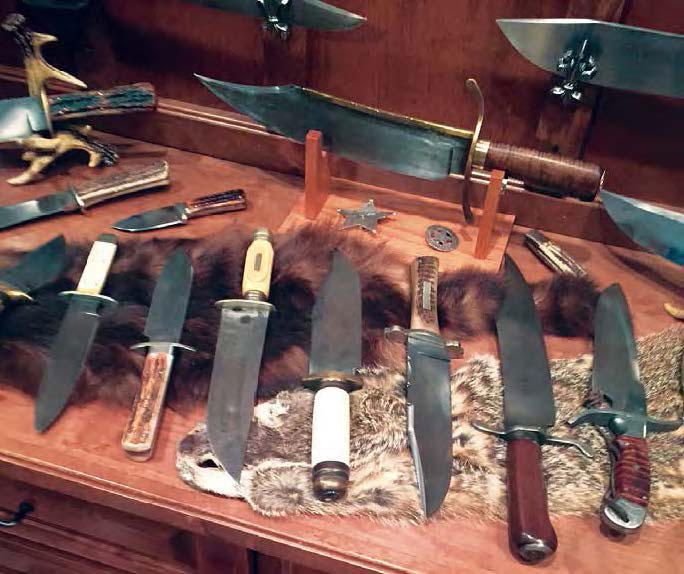
A close-up of Nolen’s display is a bowie buff’s delight.
Cutlery Hall-Of-Famer Jim Bowie’s legendary encounter at the sandbar, his final hours at the Alamo, the association of numerous knives that bear his name with the history of Texas, its link to the Civil War, and its stretch across the Atlantic to beginnings in the cradle of quality knifemaking—Sheffield, England—made the bowie irresistible.
“It seems like every time I went to a show I was attracted to the big bowie knives,” he recalled. “Sometimes, you might say, ‘What are these good for?’ but I saw them as art in steel.”
Today, the Nolen collection of bowies tops 200, and a fortress-like display room keeps them safe and allows their owner to show them to visitors. One of Chris’s primary pursuits has been the history of the bowie along with a desire to own reproductions of some of the most significant bowies in history. He has worked with several top-notch custom knifemakers, pored over documents and traveled to various locations, the results of which are nothing short of spectacular.
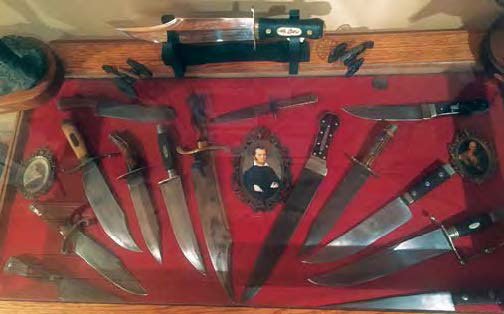
A look at a different angle down into “The Bowie Knife: Fact-Myth-Legend” display reveals custom repros of classic antique bowies. From lower left to right: Jesse Clift Knife; Bart Moore Bowie; Noah Smithwick Bowie; Huber Steel Bowie; Searles-Fowler Bowie; Musso Bowie; Bowie No. 1; Berrera-Campbell Bowie; Schively-Perkins Bowie; Juan Seguin Bowie; and Edwin Forrest Bowie. Across the top, from left: Caiaphas Ham Knife, Madame Candelaria Knife and James Black Knife. At top: the Iron Mistress.
Among his bowies are repros of the Searles-Fowler bowie (the original of which is on display in the Alamo), the Joe Musso brass-back bowie, the Iron Mistress, the Jesse Clift bowie, the Juan Seguin Bowie and Bowie No. 1, to name a few.
“No Turning Back”
In 1986, Chris contacted knifemaker Jerry Berry of Natchitoches, Louisiana, after sketching a bowie. He asked if Berry could actually make the knife from the drawings. Of course, the answer was yes.
“That knife has a 9.5-inch blade with a slight recurve,” Nolen said, “with brass and nickel-silver trim and a solid stag handle with a hidden tang. The blade is ATS-34 stainless steel. That is one of my favorites because it was one of the first. Once I got it there was no turning back, and for the last 30 years I have pretty much stuck with the big bowies. Robert Blasingame of Kilgore, Texas, helped me get started on the making of copies of antique knives before he passed away in 2010. He was quite a historian.
Bringing Bowie Knife History to Life
“It was about 10 years ago that I got this wild idea to track back the bowie and its origin,” Chris continued, “and Linda and I visited 12 museums and met curators, who were all such nice people who even let us hold some of the original knives that were associated with the Bowie family.
“For example, we went to the Alamo and actually got the dimensions of the original Searles-Fowler knife. Now, we’ve researched and had reproductions made of pretty much every knife associated with the Bowie family.”
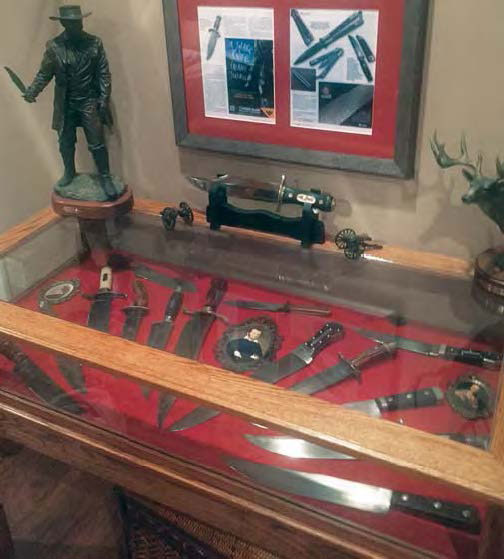
Nolen’s “The Bowie Knife: Fact-Myth-Legend” glass display with a statue of Jim Bowie atop it at left. The framed magazine pages on the wall are from a story that included Nolen as a source in a past issue of BLADE®.
Through the years Chris has developed a reputation as something of an expert on bowie knives, resulting in his traveling exhibit aptly named, “Bowie Knife: Fact, Myth, and Legend.” In 2014, he traveled to the Historic Arkansas Museum in Little Rock, where more than 200 genuine bowies were on display.
“They had my reproductions at the entrance there in a big black case,” he remembered. “There is probably more legend than anything surrounding these knives. Jim Bowie didn’t leave us much to go on, and I have studied him for years now. His brother, Rezin, was a big promoter of the bowie knife and gave a lot of them away as gifts. These reproduction knives have been everywhere, and I get a kick out of it.”
Along with the history lesson that the bowie repros convey, visitors can begin to grasp the tremendous skill that is required to produce a high quality bowie.
“It’s hard for a maker in today’s time to get into the head of a maker from 180 or 200 years ago,” Chris offered, “and most of them want to put their own artistic spin on a knife. But along with Jerry Berry, I narrowed it down to Rich McDonald and Mark Banfield who do a lot of work for me, and Cowboy Bob Giles of Whitefish, Montana, who has probably made 15 of them for me. These men are unbelievable artists.”
Musso and Musician Phil Collins
The Joe Musso Bowie repro by Mark Banfield with the brass back and “S” guard on the stand serves as a centerpiece for one section of Nolen’s display.
Mention of the Musso Bowie conjures some of the theory and conjecture surrounding its authenticity.
According to Chris, Joe Musso sold the original knife to Phil Collins of the rock music group, Genesis, who in turn donated the original to the Alamo, where some metallurgical testing has been done and some believe the “JB” mark on the guard ties the knife to Jim Bowie.
“That is one of my favorite reproductions because Mark [Banfield] went the extra mile and even copied the stains on the blade,” Chris commented, “and it is the only authorized true copy of the Musso knife. I have some Samuel Bell copies and one of my favorites was just done by Giles. It is an exact copy of the Charles Congreve knife done in Sheffield around 1835, a big swayback bowie trimmed in silver.”
Among others, Nolen is a big fan of 19th-century bowie maker Samuel Bell. Mark Banfield reproduced this Bell bowie.
A “Dazzling Display” of Bowie Knives
A couple of years ago Chris and Linda decided to build their dream house on a tract of land they had owned for a while. The move brought to light several knives that had been packed away for 20 years or so. Thinking about the future of his collection, Chris decided to make space available to display it properly.
“I always wanted to have a secured room to display the knives in,” he remarked, “so we designed this room 20 by 18 with no windows, solid brick, and with concrete next to the brick. It would take a tank to get into this thing. There is also a solid steel security door, so it is pretty much a vault. Lori’s husband, Marc, owns a custom cabinet shop. He cuts wood with a laser, and he cut out an entire wall and put in a cabinet for guns to go on each end and 18 drawers at the bottom. You can pull out the knife displays. There are two center panels, and the display is 14 feet wide and 7 feet tall. The center panels have 32 pewter hangers in a fleur-de-lis design that hold 32 bowie knives. At the bottom is a 3-foot shelf that holds about 40 bowies.
“It isn’t everywhere that you can see 70 or 80 bowie knives in the open,” Chris added. “People come in and they have to catch their breath. I also have a coffee table with a glass-top display that holds about 20 knives and is kind of my dedication to Davy Crockett. The other side of the room is a glass display of the ‘Fact, Myth, and Legend.’ The cabinetry is all of alderwood.”
To complete the dazzling display, Nolen commissioned three paintings depicting the epic of the bowie knife during the desperate, heroic stand at the Alamo. The first painting depicts the death of Jim Bowie, slashing defiantly at Mexican soldiers from his cot.
The second depicts the death of Crockett, a death which is surrounded in controversy. The artist allows the viewer to decide Crockett’s fate, depicting the legendary Tennessee long hunter and adventurer standing but exhausted.
The third depicts the death of Col. William Travis, commander of the doomed Alamo garrison.
Although it might seem to the casual observer that the Nolen journey down the bowie trail is complete, such is not the case.
Chris continues to add to his collection. Mark Zalesky, editor of KNIFE magazine, recently pitched in to assist with the recreation of a Samuel Bell knife located in Knoxville, Tennessee, and Mark Banfield completed the addition.
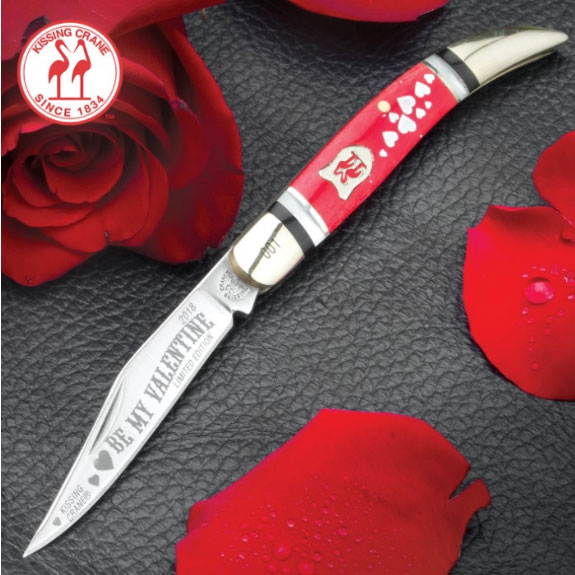
Kissing Crane 2018 Valentine’s Day Toothpick Pocket Knife (image via BudK)
Help celebrate Valentine’s Day by telling BLADE about the knife you love the most. Which knife do you love best? It can be one you carry, one from your past, one you wish you had, one someone used to save a life or otherwise do something significant, etc.
Use the form below to explain why the knife is so special to you. Include a picture if you have one.
BLADE will choose the best stories for a feature here on blademag.com.
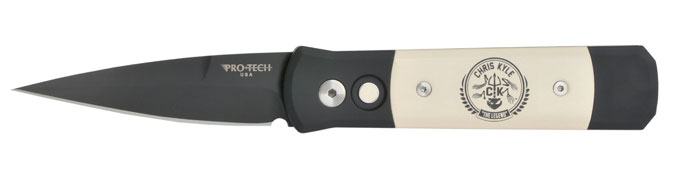
Pro-Tech’s new Chris Kyle Frog Collection is anchored by the Model 752, a spin on the Godson Tuxedo. The Chris Kyle “Legend” logo is lasered into the ivory Micarta inlays. Proceeds benefit the Chris Kyle Frog Foundation.
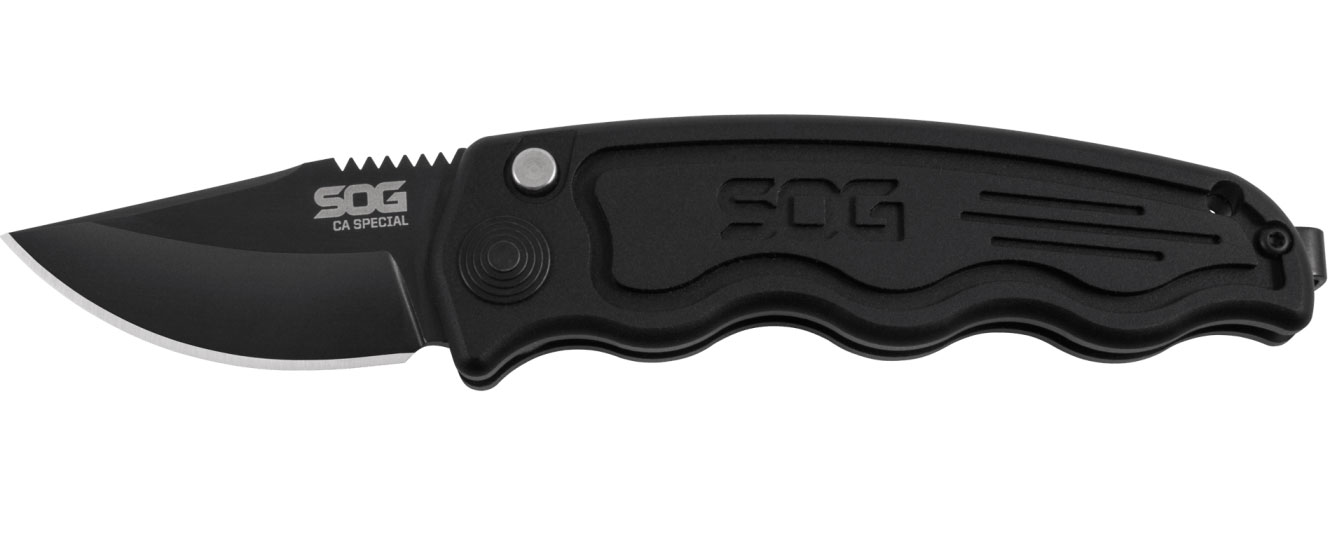
Stubby blades designed for the Golden State may also hold appeal for those elsewhere. That seems to be the thinking behind SOG’s discreet California Special, which could be described as an entry model for new collectors.
This series won’t hit shelves until May 1, but it’s worth keeping an eye out. This USA-made auto is slated to retail for $125.
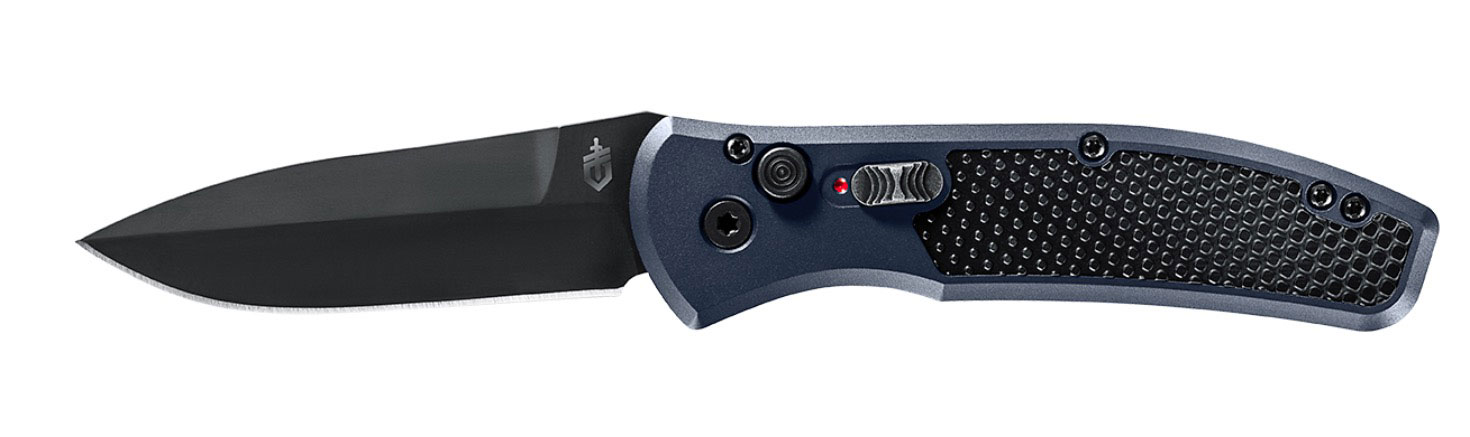
Final specs aren’t available yet, but the series will offer S30V blades and four style options.
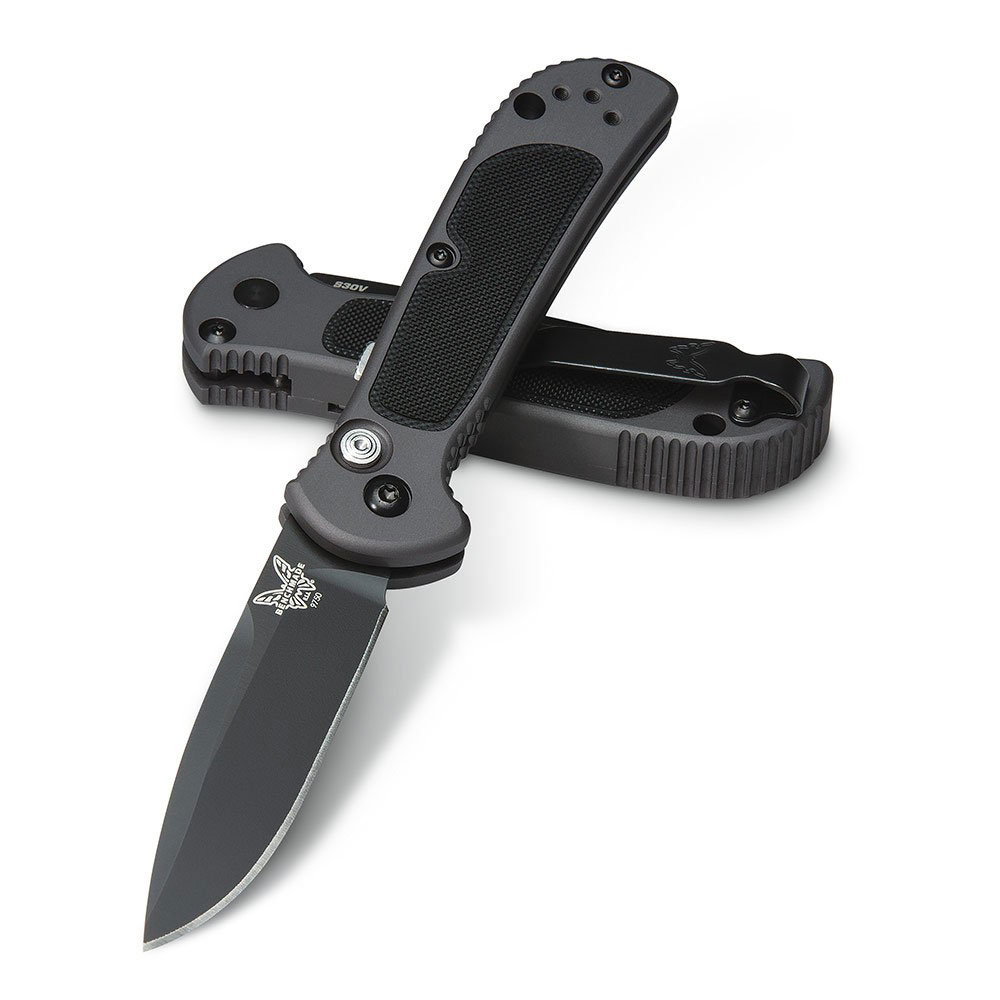
Benchmade Coalition® Family
The models in this series (or family) aren’t necessarily distinct variants. Instead, buyers can choose from plain or serrated edges, and satin or coated finishes. That makes for four possible combinations for this EDC auto.
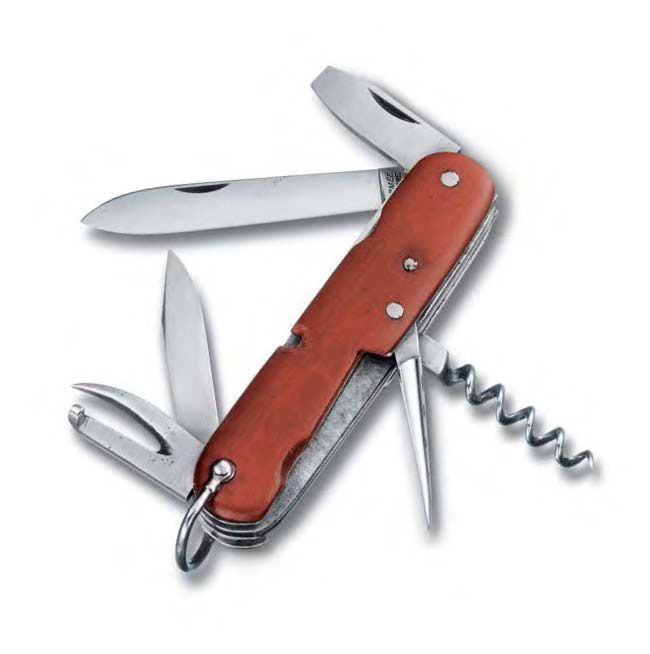
In 1897, Victorinox founder Karl Elsener created the Officer’s and Sports Knife (above). It evolved into the model known today as the Spartan, the most popular Swiss Army knife.
Rarely does a single brand, style or look set the standard for an entire genre in the knife industry, let alone hold its place for decades with no sign of a loosening grip. Just say the words “Swiss Army knife” and the image is clear and constant.
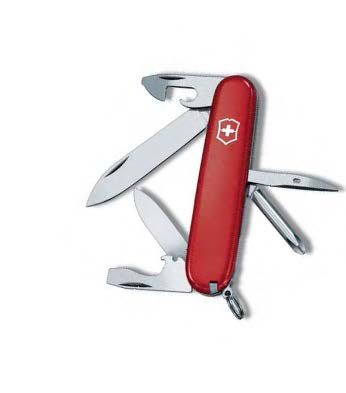
The classic red handle emblazoned with the shield and cross of its land of origin render the Swiss Army knife (SAK) instantly recognizable, while its multifunction versatility makes it indispensable for those who carry it and rely on it in a variety of situations.
Cut, slice, tighten/loosen a flat- or Phillips-head screw, punch, file, open a can or bottle and even sign your name, the pride of Victorinox and the trademark of the Swiss Army is the versatility that is found nowhere else.
Origins in the American Market
The consensus is that the Swiss Army knife gained widespread appeal during and after World War II as Allied soldiers brought them home, and those who saw them clamored for one of their own.
Like every icon in any field, the SAK is surrounded in legend and lore. The consensus is that the knife gained widespread appeal during and after World War II as Allied soldiers brought them home, and those who saw the knives clamored for one of their own.
American military personnel came to further love the SAK when it became available at the nearest base PX (post exchange), and sales are said to have exploded.
The History of Swiss Army Knives
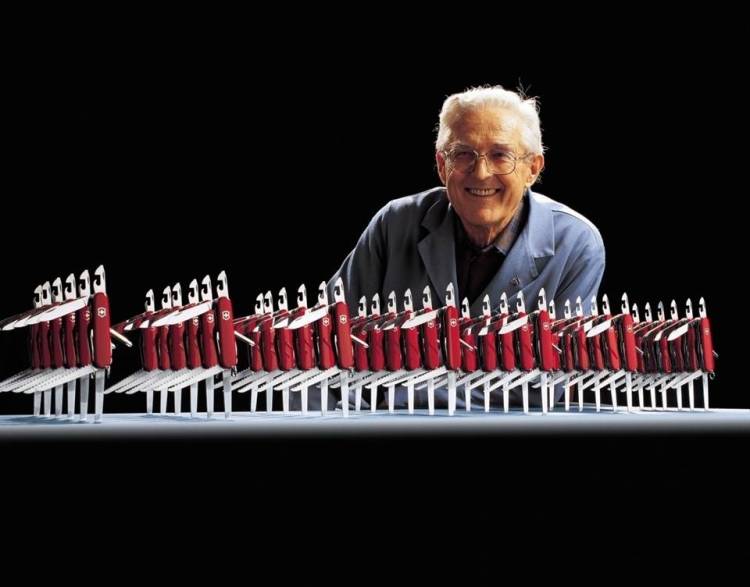
Carl Elsener III
Of course, there was a tinge of controversy related to the “first” Swiss Army knives. In 2005, Victorinox went a long way in closing the book on that discussion with the acquisition of rival Wenger, followed by the consolidation of the two brands into the single Victorinox label in 2013.
Victorinox Global Chief Executive Officer Charles Elsener likes to tell the story of his family’s development of the early SAK.
“In 1897, founder Karl Elsener created his ‘Officer’s and Sports Knife,’” Charles explained, “and registered it legally June 12 of that year. He also was responsible for the iconic design, which has not changed to this day. From 1897 to 1937, the handles were made of red fiber. Functions of the knife included big blade, small blade, can opener, corkscrew and reamer. The name of this model today is the ‘Spartan.’”
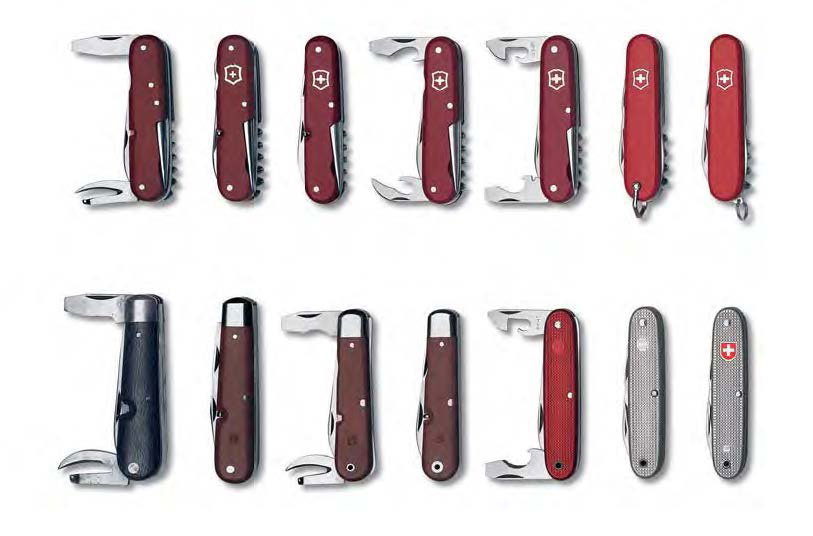
An evolution of the Officer’s and Sports Knife by year and feature, top row from left: 1897 (fiber grip); 1909 (fiber grip/cross and shield); 1937 (celluloid grip); 1946 (new can opener); 1951 (new can opener and Alox dividing layer); 1961 (new awl and invisible rivet); and 1968 (ring instead of bow bail). The same for the Soldier’s knife, bottom row from left: 1891 (wood grip); 1908 (fiber grip); 1951 (fiber grip, stainless steel); 1954 (fiber w/rosettes); 1961 (red Alox); 1965 (silver Alox); and 1980 (silver Alox w/Swiss flag).
In 1937 the knife handles changed to celluloid, and since 1971 the material used is Cellidor. The red color was probably chosen for the red in the Swiss flag and also for the Swiss canton [district] of Schwyz—and probably to help the owner find his treasured possession when it falls on the ground!
Popular Swiss Army Knife Models
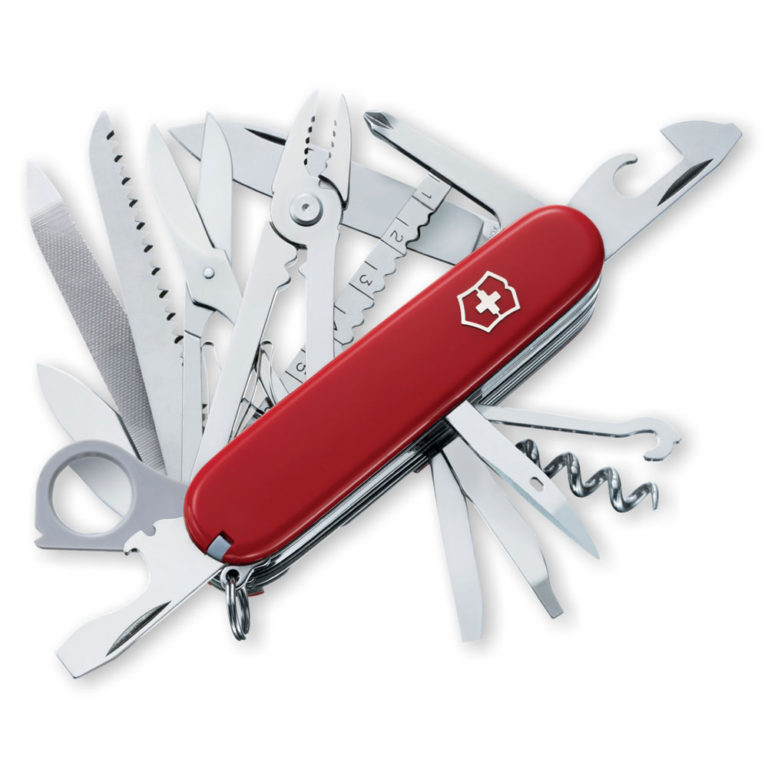
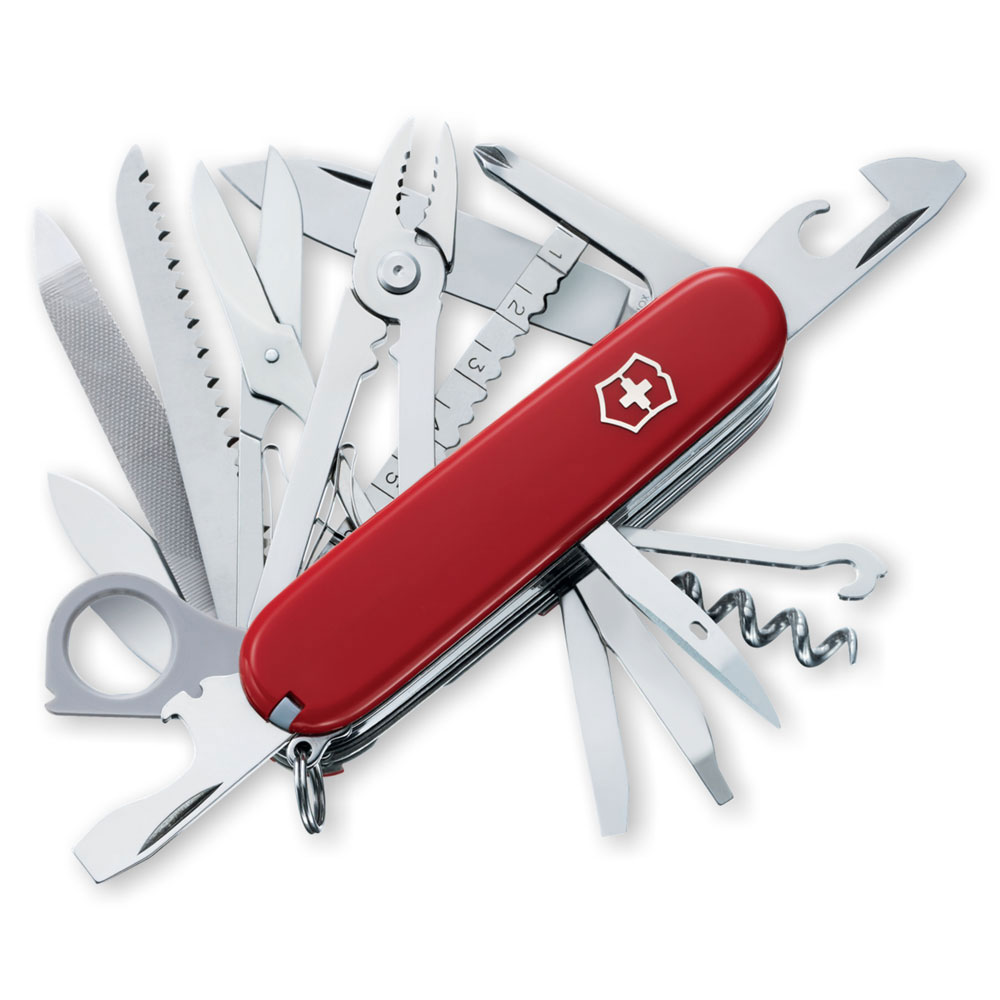
The flagship SAK is the SwissChamp, introduced in 1986 with a grand total of 33 functions.Today, Victorinox produces 60,000 SAKs per day and a staggering 13 million pieces annually.
According to Elsener, the most popular SAK in the company’s early days was the Spartan. In 1902, a wood saw and scissors were added. The new model with scissors was christened the Climber, and the Huntsman included both the wood saw and scissors.
As more and more tools were added, the flagship knife became the SwissChamp, introduced in 1986 with a grand total of 33 functions.
“The fourth bestseller is our smaller Classic keyring model,” Elsener added, “and these five bestsellers have been the same since their introduction.”
Charles confirms that American soldiers popularized the SAK during World War II and are responsible for its name today since they had difficulty pronouncing it in German as the “Schweizer Offiziers-und Sportsmesser.”
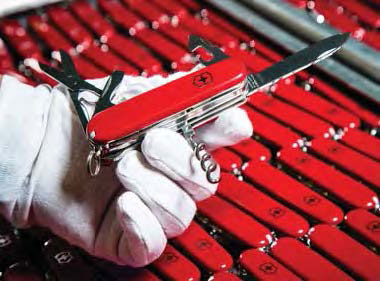
Today, Victorinox produces 60,000 SAKs per day and a staggering 13 million pieces annually, achieving these numbers consistently.
Charles told of a modest, unassuming man who wore a workman’s smock while at the company.
“One day Carl happened to be at the loading dock when a truck pulled in and everyone else was at lunch,” Tim smiled. “The driver saw Carl and said, ‘Hey you! Help me unload this truck.’ Without saying a word, Carl did. Only when another worker returned from lunch and saw what was happening did the mortified driver realize what he had done. But Carl took no offense at all. He was still his humble self.”
An Unassailable Knife
The humble knife the Elsener family put together also has risen without unnecessary fanfare to the height of fame and cutlery glory. Leatherman sees an unassailable place in knife history for the SAK.
“Victorinox with the Swiss Army knife anchors the knife industry,” he asserted. “One category of products within the cutlery industry is ‘pocket-carried knives,’ which has three subcategories—common pocketknives, tactical knives and multipurpose pocketknives. And deservedly so. The design deserves every bit of recognition it has received. I know firsthand how hard it is to make a knife or tool without a cosmetic defect. And I have never seen a cosmetic defect in a Swiss Army knife. The Swiss Army knife is recognized and coveted worldwide.
“I was very much aware of the Swiss Army knife as I was designing the Leatherman Tool,” Tim continued. “So much so that in one of my prototypes I cannibalized a pair of scissors from a Swiss Army knife to put in my tool. However, my design diverged away from the Swiss Army knife because in a Swiss Army knife the blade is the central feature, and I wanted a pair of pliers to be the central feature of my Leatherman Tool.”
The Swiss Army Knife Collectors Society
While satisfying the needs of the businessman, blue-collar worker and outdoorsman, the SAK also has cultivated a devoted group of collectors. Doug Dillman, owner of Freeport Knife Co. in Freeport, Maine, leads the Swiss Army Knife Collectors Society, which was founded in 2000 by avid collector Dan Jacquart.
“The club currently has about 150 members,” Dillman commented. “Our objective since the beginning has been to encourage and support collectors who share a passion for both collecting Swiss Army knives and educating members about the many changes to the product and the factory’s history since its creation in 1884. We largely accomplish this through the publication of a biannual newsletter. We try to offer articles about changes to the many models over the years, new product introductions, and special-edition models. Our last issue included a tang stamp chart to help members determine the age of a knife.”
Insights for Swiss Army Knife Collectors
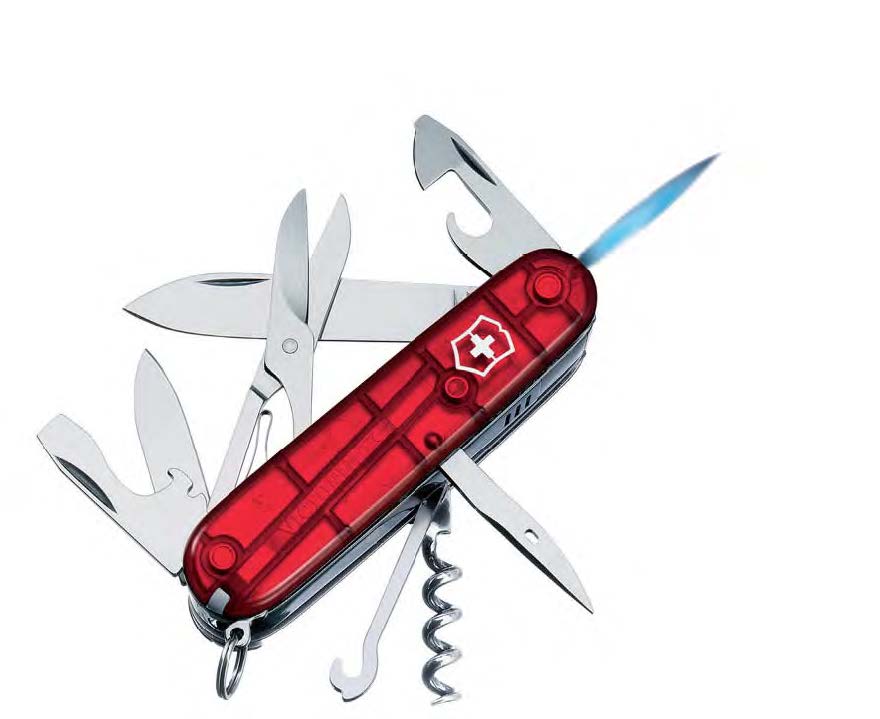
SAKs highly desirable for collectors are often models made for only a short time, such as the Swissflame series from the late 1990s and early 2000s. The model included a butane lighter.
A collector for 30 years, Dillman has seen a number of SAKs appreciate in value.
“Old-style Soldier’s knives prior to 1954 can be found anywhere from $100 to more than $1,000, depending of course on condition,” he commented. “Very early ones from the 1890s with black-stained oak handles are certainly the most valuable. Many people also try to collect specific Soldier’s knives with specific-year date stamps. Knives that are highly desirable for collectors are often models made for only a short time, such as the Swissflame series from the late 1990s and early 2000s. These were unique in that they included a butane lighter.”
Other highly prized collectibles include the Scientist, produced in the 1980s and ’90s, and the Motorist with its metal inlay of St. Christopher. Knives made first as presentation gifts for four American presidents sell for $50 to more than $100.
Chris Lubkemann wrote The Victorinox Swiss Army Whittling Book, published in 2015, which already has been translated into Swiss, German, Dutch and Spanish. His use of the Swiss Army Tinker for carving led to the research and the publication of the book.
Actually Lubkemann carved for many years with an assortment of other knives.
The Tinker SAK led Chris Lubkemann to write “The Victorinox Swiss Army Whittling Book,” published in 2015, which already has been translated into Swiss, German, Dutch and Spanish.
The Tinker had been given to him as a gift and stayed put on a shelf. As he recalled, “My [previous knife] developed a lot of play between the handle and the blade, to the point where it was no longer a viable carving tool. I’m sure I could have gone out and bought another, but conservative spender that I am, I decided to pull out my Swiss Army Tinker and see how it worked.
“The rest is history. Not having any personal previous experience with Swiss Army knives, I was immediately impressed with the tool. While the blades were stainless they took an edge well, and for my special purposes maintained the edge well.”
Chris met Brian Huegel of Country Knives in Lancaster, Pennsylvania, and Brian in turn knew Carl Elsener. At Brian’s suggestion, Chris contacted Carl, who demonstrated an interest in the whittling book, which became a reality with the support of both Victorinox and Fox Chapel Publishing.
“I was a fan of the knife long before I had any contact with Victorinox,” Chris concluded. “The more I used my Swiss Army knife the more I liked it and recommended it, especially the Tinker model, which is widely available, reasonably priced and incredibly useful—for much more than carving!”
“The Value Given is Much, Much Higher than the Price Charged”
Tim Leatherman remembers a trip to Europe that he made about 30 years ago.
“I had occasion to be near Ibach, Switzerland, so, uninvited, I parked well away and walked up to the entrance of Victorinox’s headquarters and factory. I was totally in awe,” he said. “I felt like I had found the Holy Grail. I remember they had a display on the outside wall of a Swiss Army knife broken down into its components. I must have studied it for an hour. I was too awestruck to knock on their door. The key to the success of any knife is that the value given be more than the price charged. With the Swiss Army knife the value given is much, much higher than the price charged, and the price is very reasonable.”
All images courtesy of Victorinox.
Find Swiss Army Knives at BLADE Show 2018
The world’s largest and foremost knife show, BLADE Show, is taking place June 1-3 in Atlanta. You’ll find the planet’s most innovative knifemakers in one spot. Learn more about how to attend BLADE Show 2018 here.