Knife collecting is an extremely rewarding experience for knife enthusiasts. There truly is a knife for everyone. Many increase or hold their value throughout the years, making collecting knives something to pass on to the next generation of knife collectors.
Knife sheaths usually don’t get a lot of press. However, occasionally some particularly interesting developments in the area necessitate attention. While it may seem a rather mundane topic to expound on how to get your knife from here to there in a manner other than carrying it in your pocket or hand, there are some vehicles of transport that require notice.
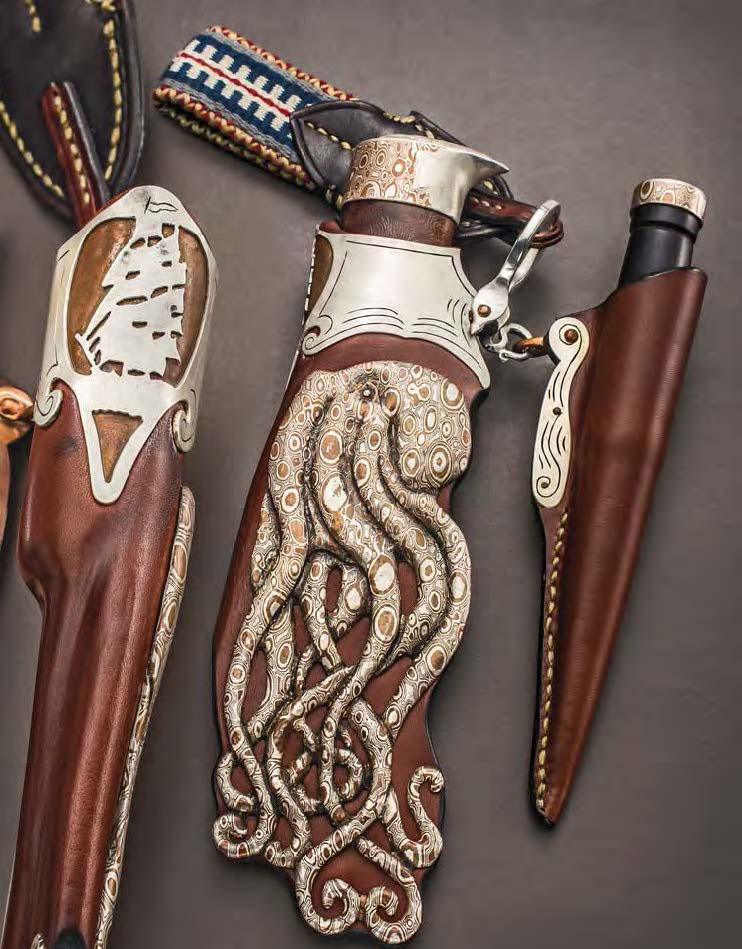
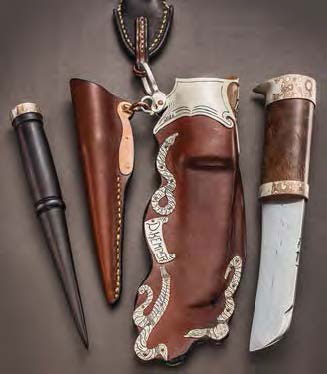
Derick Kemper’s Sailor’s Delight
Derick Kemper’s Sailor’s Delight rigging set incorporates 30 individual pieces into a sheath outfit that makes mobile a rigging knife, including a marlinspike with individual sheaths for each, all harnessed together on a free-swinging swivel system.
(SharpByCoop images)
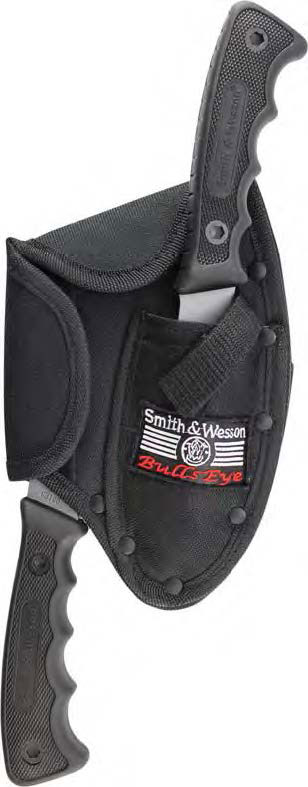
Smith & Wesson Bullseye Combo Sheath
The Smith & Wesson Bullseye Combo sheath holds two tools as one unit and orients them in opposite directions. This offers full purchase of each handle without interference of the other, and doesn’t take up as much space by having the axe handle hang down on your leg. Blade steel: 420 stainless. MSRP: $54.96
The sheath, knife and axe come as a set.
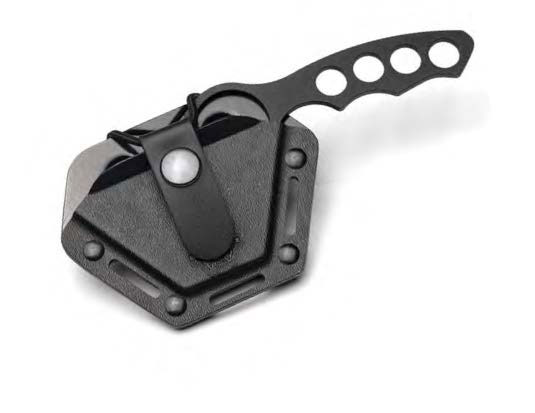
Benchmade 10 Rescue Hook Boltaron Sheath
The shape of the Benchmade 10 Rescue Hook’s Boltaron sheath is a symmetrical polygon, allowing it to cradle and engage the detent from either a left- or right-side mounting. By designing the sheath to allow multiple mounting positions, it increases the versatility of how the tool can be accessed. MSRP for the knife and sheath: $75.
Brian Tighe Fighters Sheaths
Brian Tighe matches the carbon fiber handles of his Tighe Fighters with a carbon-fiber pattern with the accompanying sheaths.
Like Creativity in Knives? You’ll Love BLADE Show 2018
The world’s largest and foremost knife show, BLADE Show, is taking place June 1-3 in Atlanta. You’ll find the planet’s most innovative knifemakers in one spot. Learn more about how to attend BLADE Show 2018 here.
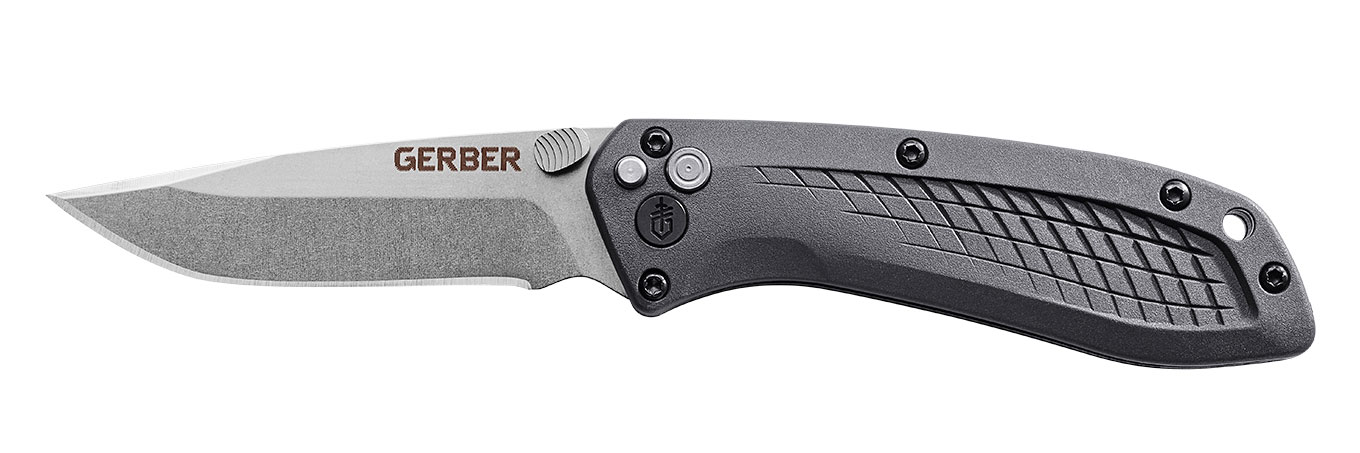
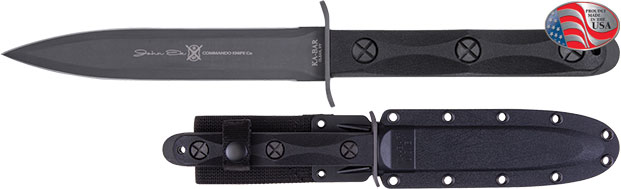
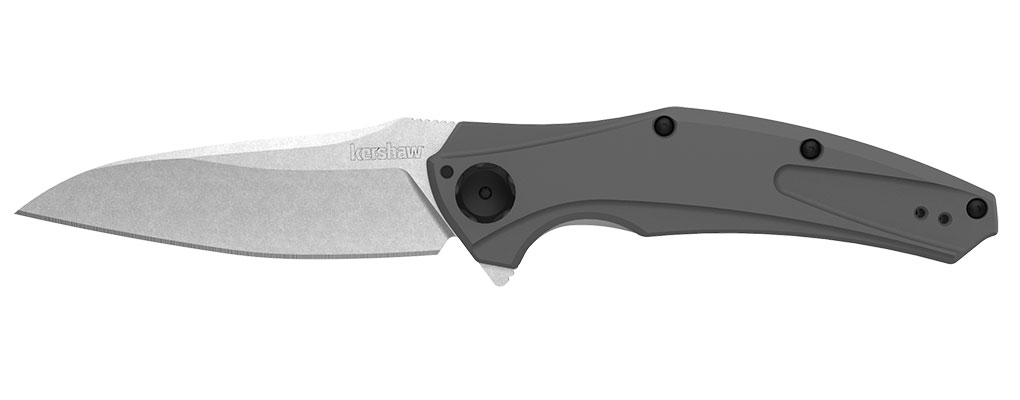
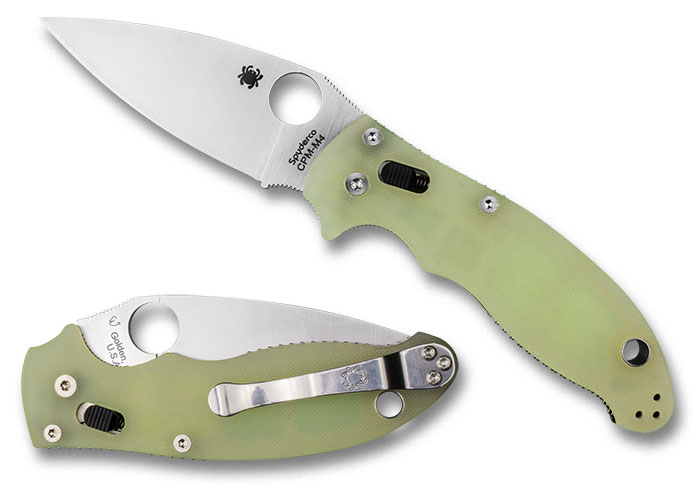
It’s becoming easier and easier to add quality knives to your collection without breaking the bank. Here are new knives with price tags of $200 or less.
Editor’s note: With news of Canada ending imports of folding knives rocking the knife world, here is another important issue taking place at international borders.
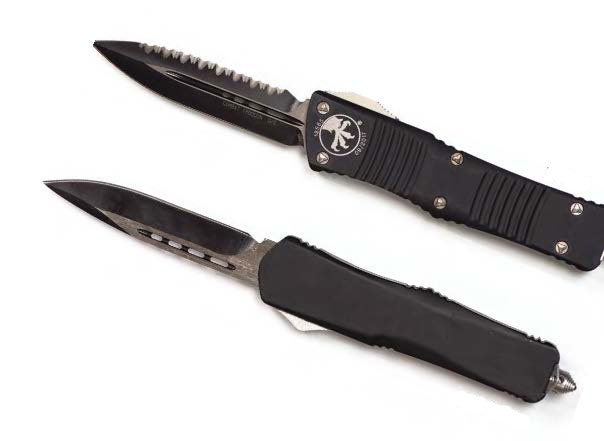
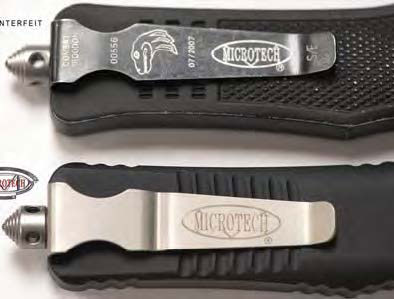
U.S. Customs and Border Protection recently seized a dozen counterfeit Microtech knives attempting to enter via Alaska. Note the difference between an authentic Microtech Trodoon (above, top) and a counterfeit of it (bottom). (Microtech image)
Knife Companies Get Proactive
As part of his duties at Buck Knives, Joe Houser clicks through e-commerce websites like eBay, searching for fake Buck knives. When he finds a listing where someone is pedaling a counterfeit Buck, Houser works with the website to take the listing down and perhaps banish the seller from the site.
A few years ago, Buck didn’t have someone doing this job. But more and more fans of Buck Knives were sending their blades to the company’s warranty department only to learn their cherished knives really weren’t Bucks at all. Someone had ripped off the designs, piggybacking off Buck’s name and reputation to sell a shell of a knife to a swindled customer.
Counterfeiting may be the most recent challenge to adversely affect the knife industry. Over the past year or two, counterfeiters have gotten smarter, mimicking knife designs better. And thanks to the rise of international e-commerce websites, it’s harder to stop shipments of illegal knives entering the country because many come through in onesies and twosies, sent direct to the buyer through FedEx, UPS and other shipping outfits.
Bad for Collectors, Bad for Business
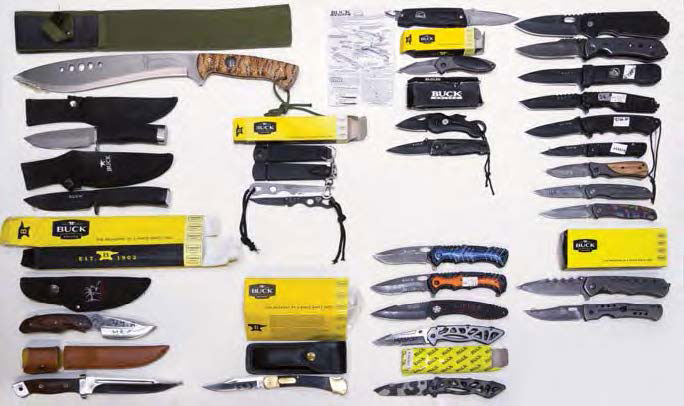
Buck Knives took a dozen Buck knife counterfeits and gave them a Rockwell hardness test. “None of the blades, not one, were made of hardened steel,” noted Buck’s Joe Houser. “They are very cheaply made and fall apart quite easily.” A display of Buck counterfeits (above) reflects the scope of the problem. (Buck image)
Buck took a dozen of the counterfeits and gave them a Rockwell hardness test.
“None of the blades, not one, are made of hardened steel. They are very cheaply made and fall apart quite easily,” Hauser wrote by e-mail. “I know of one model of Buck’s that I see counterfeited where the producers of the knife did not even install the linerlock. The blade had nothing at all to hold it open or closed.”
Research by the American Knife & Tool Institute (AKTI), a leading organization fighting for common-sense knife laws, indicates U.S. manufacturers lose 10 percent in sales annually to counterfeiting.
As a result, AKTI officials estimate counterfeit blades siphon about $95 million from the knife industry every year. It’s enough to erode the bottom line of knife manufacturers providing American jobs. And if the problem is to be solved, it will take the whole of the knife industry, AKTI officials say.
U.S. Government Struggles to Keep Up
U.S. Customs and Border Protection made 31,500 seizures in 2016 of products it found to have violated intellectual property rights—52 percent more in fiscal year 2016 than in 2014. (U.S. Customs and Border Protection image)
Gregory Moore, public affairs specialist with U.S. Customs and Border Protection (CBP), said Customs made 31,500 seizures in 2016 of products it found to have 77 violated intellectual property rights—52 percent more products in fiscal year 2016 than in 2014. The increase presents a challenge for the agency.
“With the global rise of e-commerce and online shipping, the number of small packages containing counterfeit goods continues to rise,” Moore wrote. “Ninety percent of the seizures in fiscal year 2016 were small packages shipped through express carriers or international mail. The increase of [goods infringing on intellectual property rights] in the small-package environment creates both a logistical and enforcement challenge for CBP.”
The best way to make sure the knife you order online is legitimate is to buy from retailers that specialize exclusively in knives. ShopBlade.com is one of them. Click to browse a selection of genuine knives.
Counterfeit knives make up less than 1 percent of the products Customs seizes that it considers a threat to health and safety, a category that also includes counterfeit pharmaceuticals and sporting goods. After all, poor steel can cause a blade to snap, a pivot to fail, etc., increasing the chances of injury or even death.
Besides, seeing a knife being ripped off and made with poor materials stinks.
“Well, it’s frustrating,” said Doug Ritter, executive director of the other leading organization dedicated to common-sense knife laws, Knife Rights. Ritter also has designed knives for CRKT and Benchmade.
Most honest knives are derivatives of older knives, Ritter said, where knifemakers seek to improve the designs and make a better knife.
“That’s the way stuff develops,” Ritter said.
Meanwhile, the organization spearheading the effort against counterfeit knives is AKTI.
“We encourage them in their efforts and hope they are successful because these counterfeits hurt everyone in the knife community,” Ritter wrote.
Counterfeiters Get Smaller, More Numerous
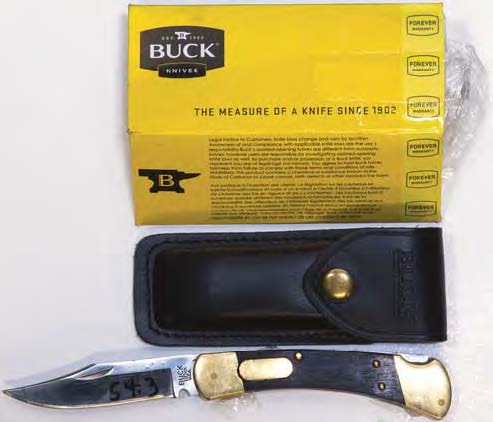
Some of the counterfeits go so far as to copy the knife right down to the blade mark and product box with literature, as here with a fake Buck 110. (Buck image)
CRKT President Rod Bremer’s interest in counterfeit knives began to grow about five years ago when he started noticing more and more counterfeits from Southeast Asia. Today, he noted, most counterfeit knives originate from China.
Bremer, who chairs AKTI’s anti-counterfeiting committee, said most counterfeiters have small operations—simply working out of a garage—making them hard to track down. Sometimes they copy manufacturers’ knives right down to the packaging and warranties that are honored for genuine models only. Often, the counterfeiters try to catch the eye of buyers looking for a deal.
Compared to legitimate knives, Bremer said, counterfeits are usually priced at 50 to 70 percent of the MSRP of the genuine article. For example, one American knife company manufactures a fixed blade for $425 of which a Chinese e-commerce site recently listed a counterfeit—complete with the company’s logos on the packaging—for about $41.
Some counterfeiters have become so sophisticated that knife companies must look at machining marks and other small details to identify the real thing, similar to identifying counterfeit currency.
These details are kept secret by the companies lest the knowledge falls into the hands of counterfeiters.
What Can be Done?
A close-up of the pocket clips of the genuine Microtech Trodoon (bottom) and a counterfeit (top) reinforces just how far counterfeiters will go to copy the genuine article. (Microtech image)
Bremer said the knife industry’s most comprehensive strategy is to play a full-court press, including being vigilant in asking e-commerce sites to remove listings of counterfeit models. If the knife industry as a whole makes it a “pain in the butt” to sell bogus knives, he said, then the bad actors may move to more lucrative products.
“Counterfeiters are not particularly selective,” Bremer observed. “They just want to knock somebody’s brand off, sell it and make a lot of money.”
Can the federal government build a virtual wall of blue-gloved U.S. Customs officers opening boxes and targeting shipments coming in from outside nations? Unfortunately, as Bremer noted, “I don’t think they have the manpower to catch all the shipments.”
Stop by any major port, such as San Francisco or Savannah, and you’ll see container yards of goods miles and miles long. But not all is doom and gloom.
“China has gotten more aggressive on intellectual property,” Bremer said. “The new president of China has gotten pretty harsh on people that are knowingly ripping off patents, but the effort is clearly not as aggressive as most of us would like. And it’s going to take time.”
Buy low while you still can, Canadian knife collectors.
New CBSA Rule to Drive Prices Up
If you live in Canada, expect the price of most folding knives to go up, especially in secondary markets. Collectors may want to start stock up while prices are still at par.
The culprit is a new rule by the Canada Border Services Agency (CBSA), in effect now, that prohibits the import of assisted openers and any manual folder that opens with centrifugal force. (Automatics were already restricted, but the rule covers them, too.) This only applies to imports, not knives already legal to own in Canada. Both businesses and individuals are impacted.
As BLADE reported here and here, it’s that centrifugal force qualifier that will especially limit Canadian knife enthusiasts’ choices. An inspecting CBSA official may open a blade halfway, give a flick of the wrist and determine the knife is prohibited.
If a knife can open with one hand, it’s not going to make it into Canada.
Existing Stock Will Dry Up
This wide leeway effectively ends the flow of fresh folders imported into Canada. That includes popular brands from the United States.
Imported folders already in Canada will remain on shelves and are not banned from purchase or possession. However, retailers won’t be able to reorder them.
More Investment Options than Ever Before
If anyone will benefit from this new CBSA rule, it’s enthusiasts with assisted openers and manual folders already in their collections. Mundane assisted openers and folders not originally thought of as collectibles are now investment pieces.
Collectors have more, safer bets in categories never considered before. That $50 flipper doesn’t look so insignificant anymore.
How High Could Prices Go?
It’s hard to say, but prices will only go in one direction in 2018. Beyond that is less certain. Rising prices reflect a market adjustment. Expect that prices will find a ceiling, then drop to a new normal. The trick will be to catch prices in secondary markets on the upswing before the fall happens.
Caution
The CBSA, a federal agency in Canada, cannot make laws. However, it can issue rules based on interpretations of existing law.
The rise in prices may press some Canadian collectors to try their luck with the CBSA and order folders/assisteds from outside the country. However, authorities are already working to stay one step ahead.
“The way the Canadian government figured out all the tricks on how to get knives into Canada was reading blade forums and watching YouTube where all these people were bragging and giving instructions on how to get knives into Canada,” Neil Ostroff, owner of True North Knives, told BLADE in an e-mail. Ostroff is originally from Canada, but now resides in the U.S.
The Bottom Line: Buy Low Now, Sell High Later
If you’re a knife collector in Canada, it’s time to start buying new assisted openers and folders while you still can. Hold on to them and wait to see where prices go in secondary markets.
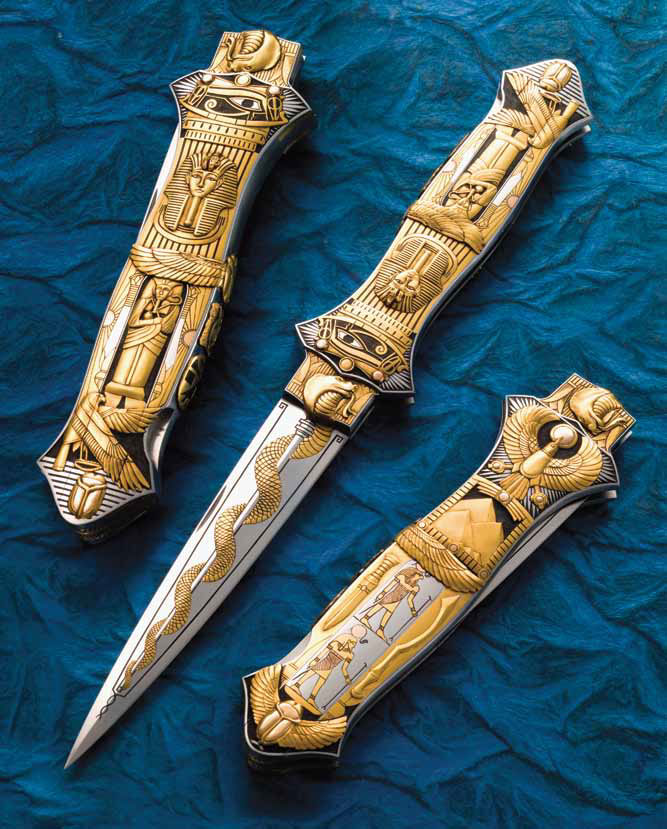
The Pocket Locket is considered one of the most flexible engraving platforms of all time. This is just one example of the versatility of Joe Kious’s design, and it’s a stunner.
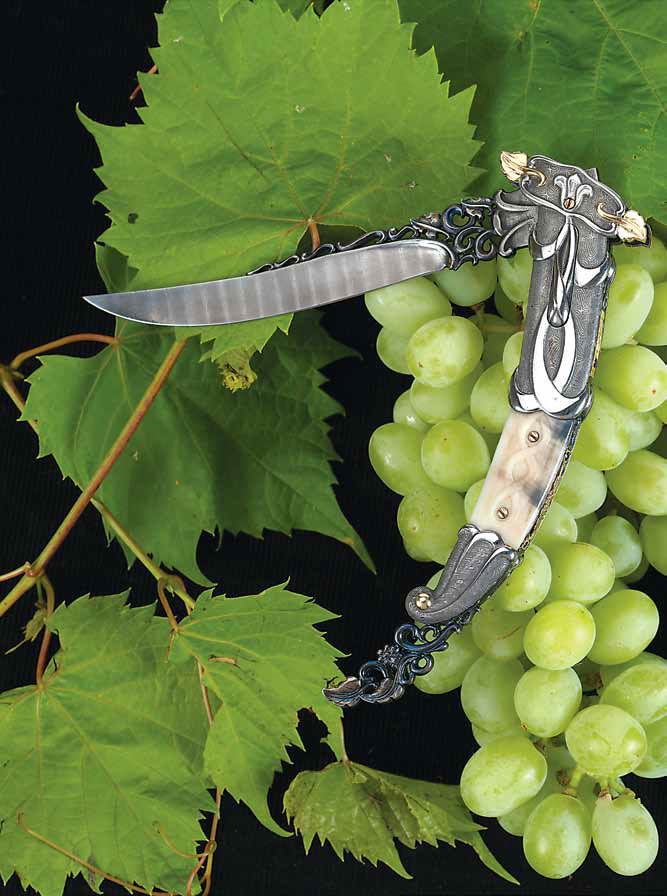
Grapes of Wrath – Stephen Olszewski
Art knives don’t get much more complex yet graceful as Stephen Olszewski’s Grapes of Wrath.
“To this day, I have not seen another art knife with as many flowing lines, curves, carving and piercing of the steel in such a masterful way,” Michael Donato, of KnifePurveyor.com, told BLADE.
Time Machine – Van Barnett
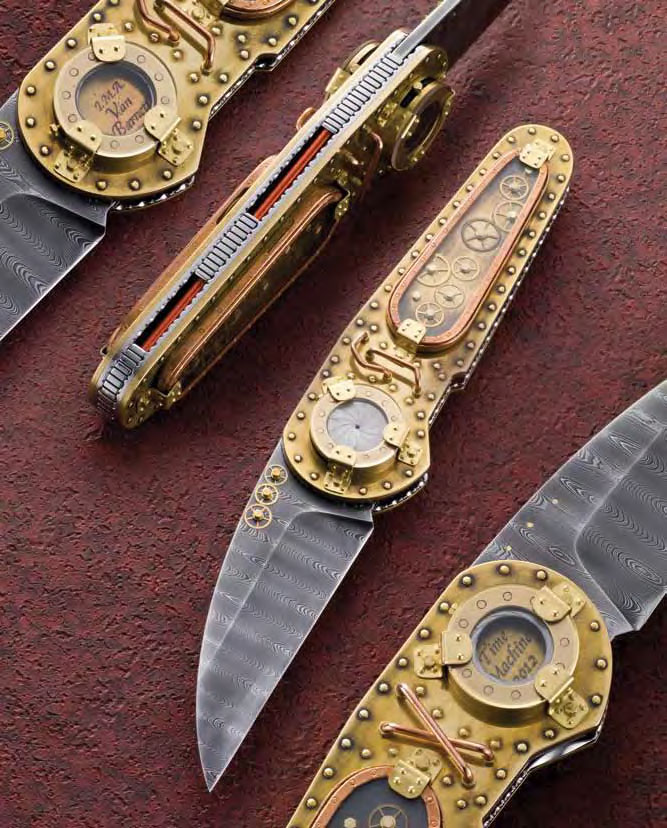
This steampunk-inspired piece sits at the intersection of knives and luxury watches. As a result, the Time Machine caught the attention of those outside of the usual crowd.
“It also brought much-needed new collectors to the custom knife world,” Donato said.
Luna – Arpad Bojtos
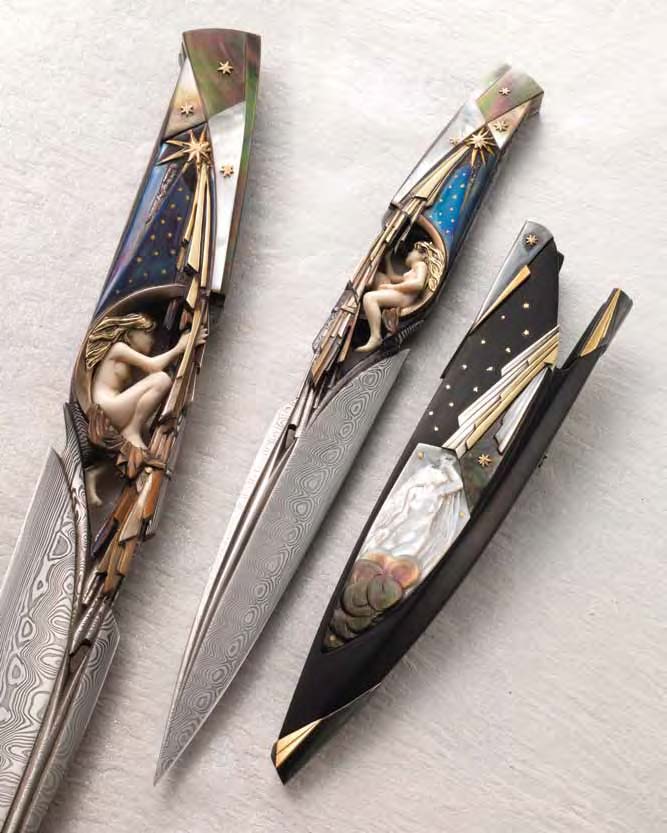
Words won’t do justice to the interplay between the handle, blade and sheath in this mixed media masterpiece. This is the art knife’s art knife.
Goblin Folder – Jim Schmidt
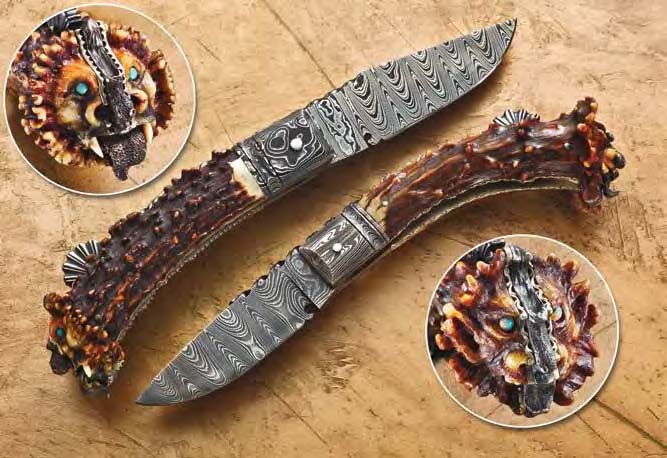
Many imitators followed Jim Schmidt’s lead after the Goblin Folder hit the scene, shaping faces into pommels. It’s proof that imitation is the sincerest form of flattery.
See More Art Knives
Art knives litter the pages of Knives 2018, and they’re all in full color. Get a terrific price on the world’s greatest knife book at ShopBlade.com.
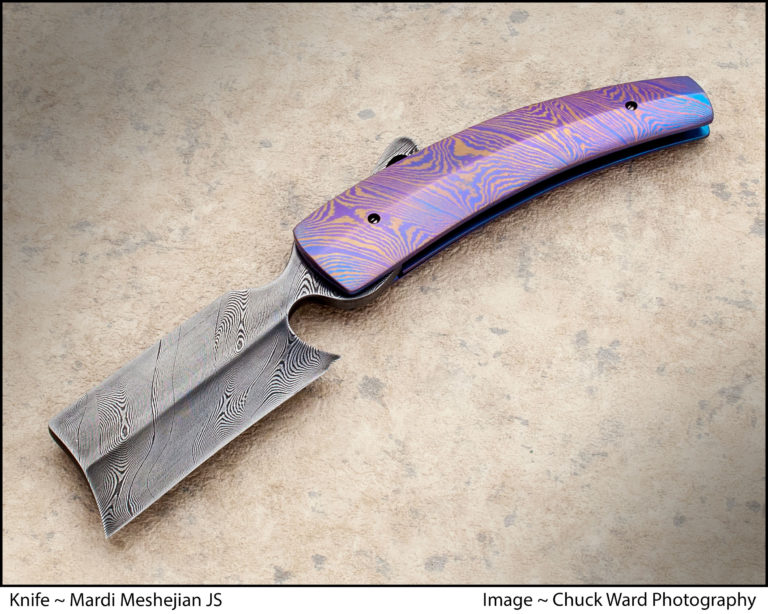
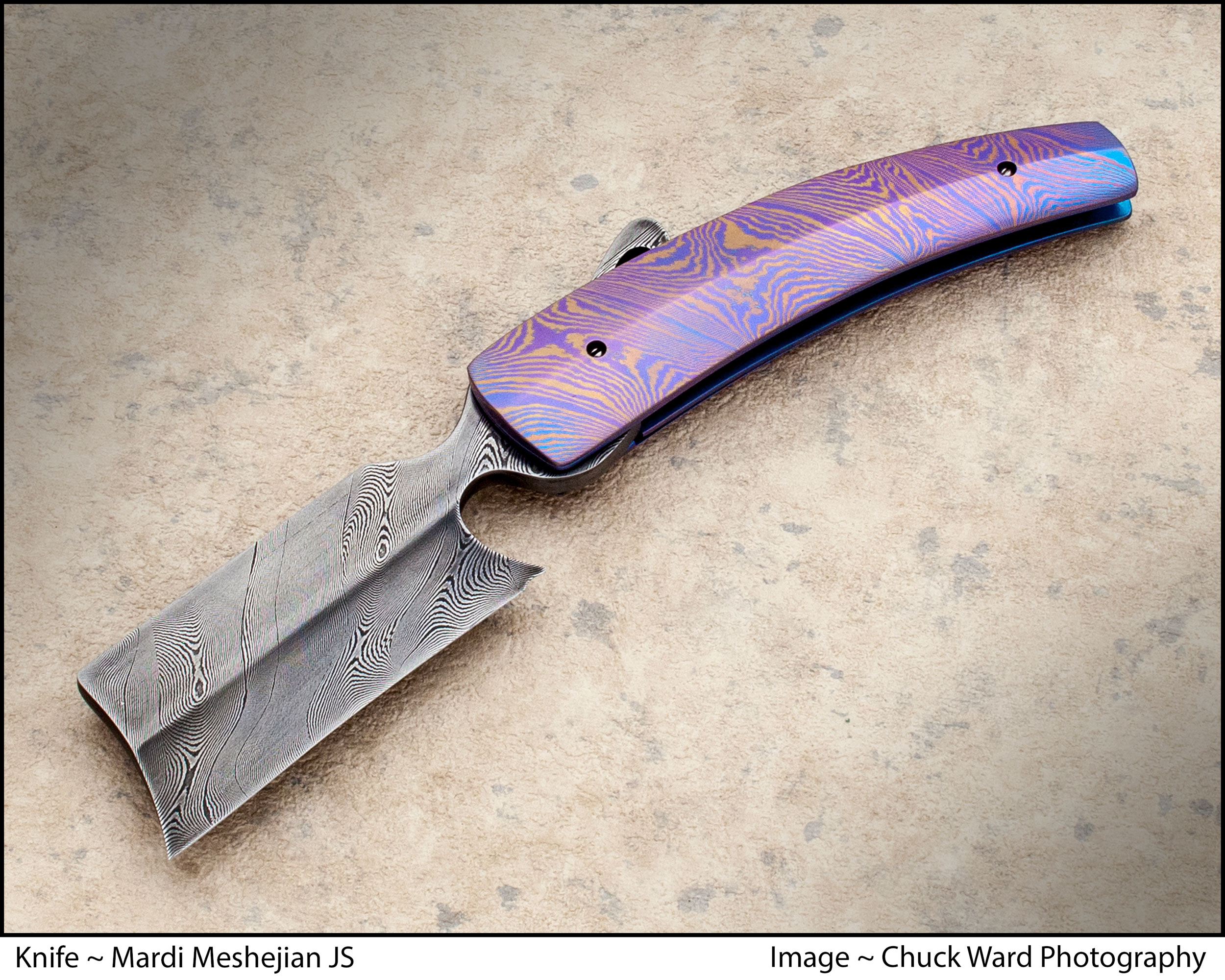
Mardi Meshejian forged the 4-inch blade of his Tactical Razor in a Gordian’s Knot damascus of 1095 and 15N20 carbon steels. The choil has a deep cutout not only as a design element but also to lock onto the detent when the knife is closed. The folder has no clip but Mardi said he can include one on a custom order. (Chuck Ward knife image)
ABS journeyman smith Mardi Meshejian has always been known for pushing the envelope, and he has done it again with his Tactical Razor.
Drawing on the worlds of both fantasy and utility, Mardi arrived at his razor-style linerlock. “I wanted to do it a little bit on the crazy side, so I went with a tactical razor and amped it up some,” he explained.
Mardi said he’s been making quite a few razors of late—not your standard shaving model but a little beefier for EDC use. “I make them thicker for everyday cutting chores,” though at a list price of $1,600, this one is on the showpiece side of the equation.
He fashioned the damascus for the blade in a “Gordian’s Knot” pattern. He forged four bars of twist—two to the left and two to the right—put in a square forge weld and twisted it again. That’s why there are so many layers of twist in it. The handle is a twist pattern of titanium damascus.
Mardi employed a very steep hollow blade grind for both looks and utility. As he noted, “The grind gives a keen edge and digs deep into the damascus and reveals the twist pattern.”
See More Incredible Knife Photos
Gorgeous, full-color photos line the pages of Knives 2018, the world’s greatest knife book. Get a hot deal at ShopBlade.com.
When the calendar flips over to a new year, the steel is sure to follow. Here are six factory folders debuting this year.
Spyderco Hanan
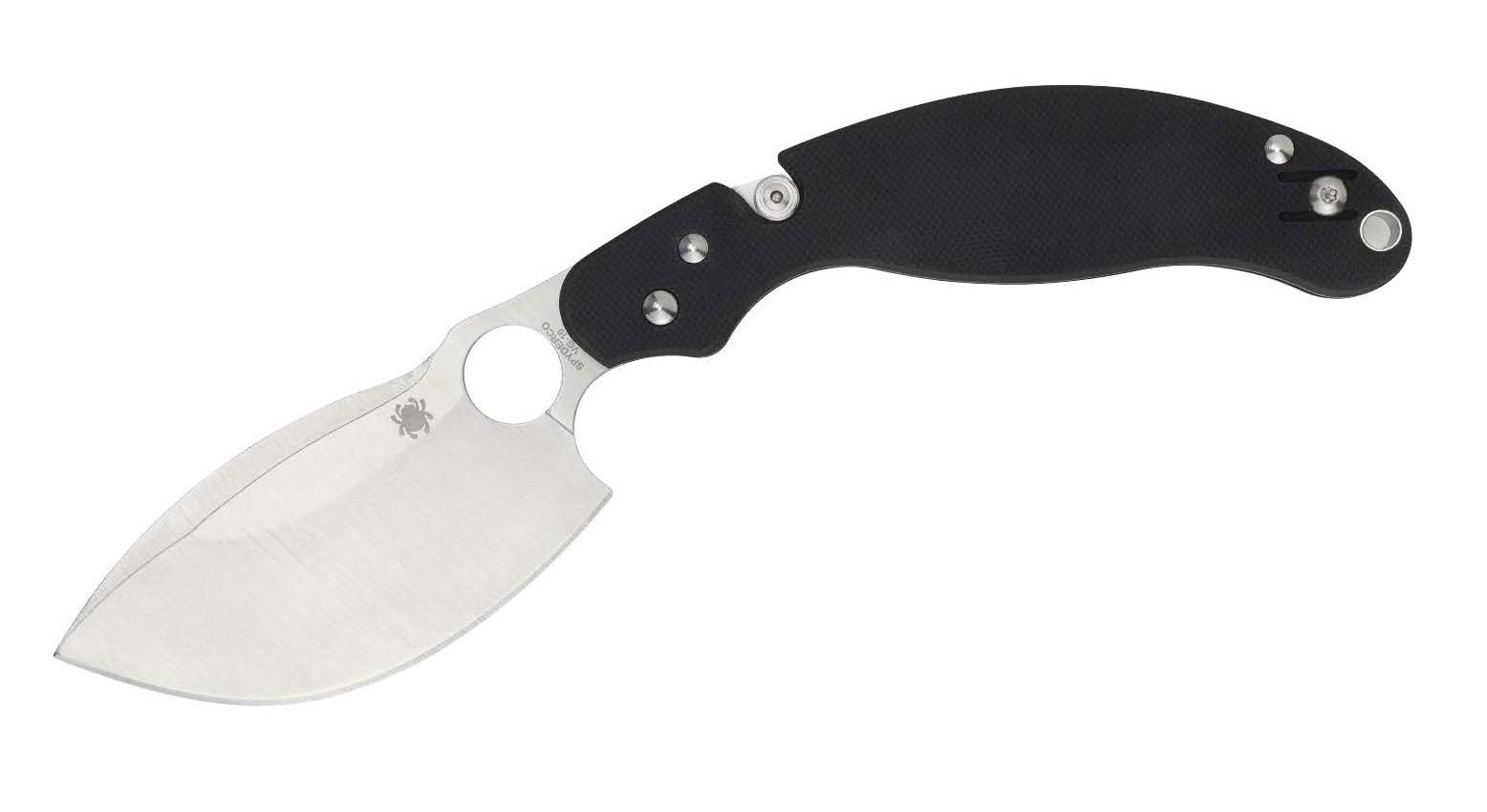
Brad Southard designed this 2.9-ounce folder named after the Hebrew word for “gracious gift.”
Here’s a spec illustration from Spyderco:
Spyderco Parata
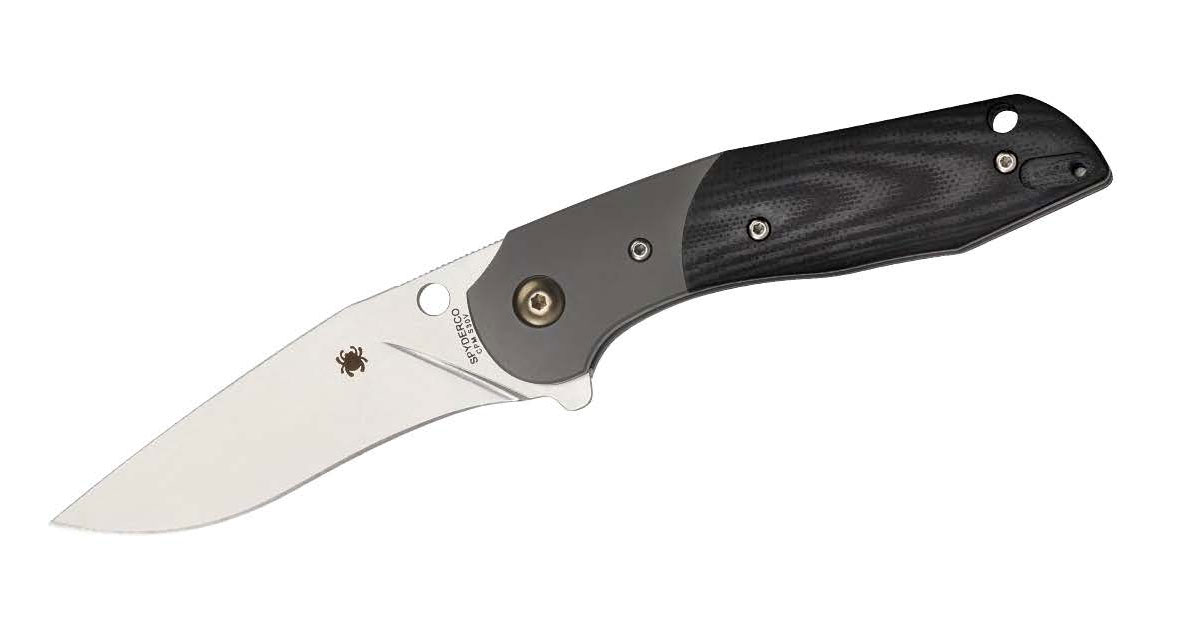
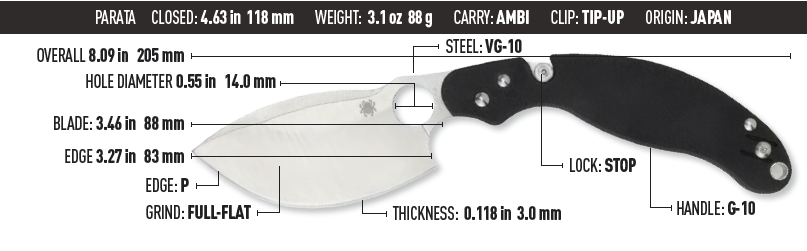
Automotive engineer Paul Alexander designed this folder with a big-bellied, VG-10 blade.
The specs:
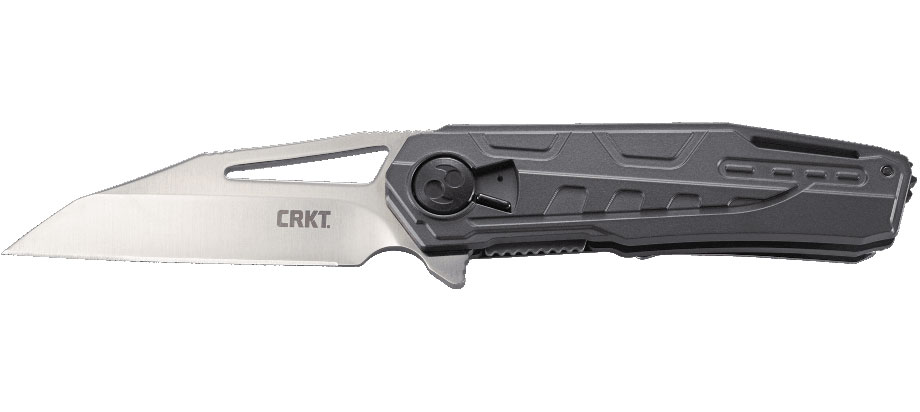
CRKT Raikiri
“When you want a sword, but need an EDC,” is how CRKT describes this latest addition to sport Field Strip tech.
Blade Length: 3.759″ (95.48 mm)
Blade Length: 3.759″ (95.48 mm)
Blade Edge: Plain Edge
Blade Steel: 1.4116 SS
Blade Finish: Satin Finish
Blade Thickness: 0.134″ (3.4 mm)
Closed Length: 5.112″ (129.84 mm)
Weight: 5.0 oz
Handle: ADC12 Aluminium; Casting
Style: Folding Knife w/Locking Liner
Overall Length: 8.938″ (227.03 mm)
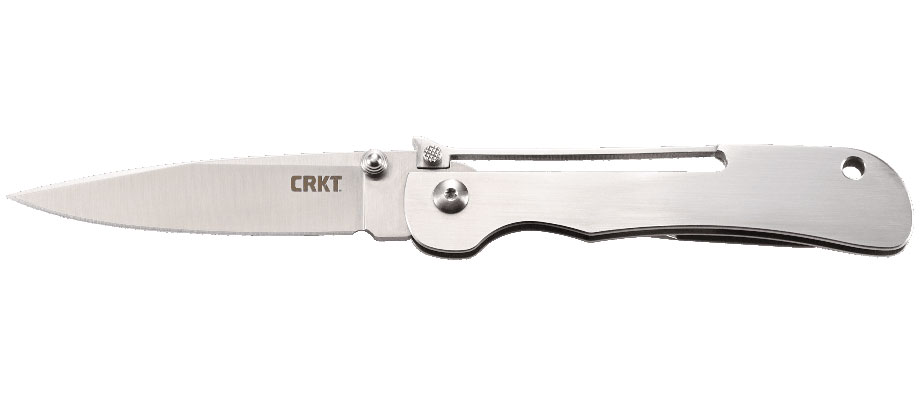
CRKT Offbeat
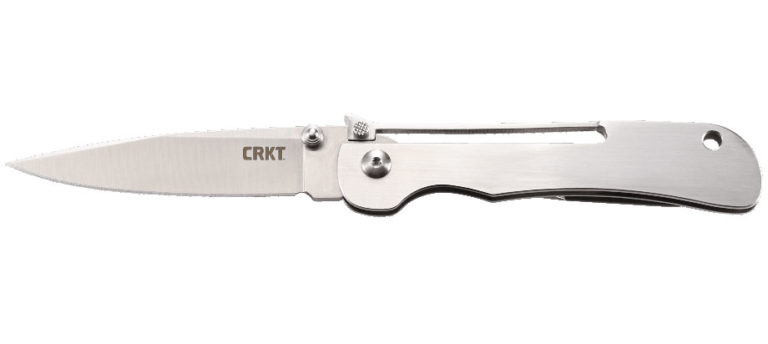
Originally designed in the 1970s by Pat and Wes Crawford, this creation makes its factory debut in 2018. True to its name, it sports the Crawford Lockback.
Blade Length: 3.522″ (89.46 mm)
Blade Edge: Plain Edge
Blade Steel: 8Cr13MoV
Blade Finish: Satin Finish
Blade Thickness: 0.109″ (2.77 mm)
Closed Length: 4.483″ (113.87 mm)
Weight: 2.9 oz
Handle: 2Cr13; Brush Finish
Style: Folding Knife w/Lockback
Overall Length: 8.0” (203.2 mm)
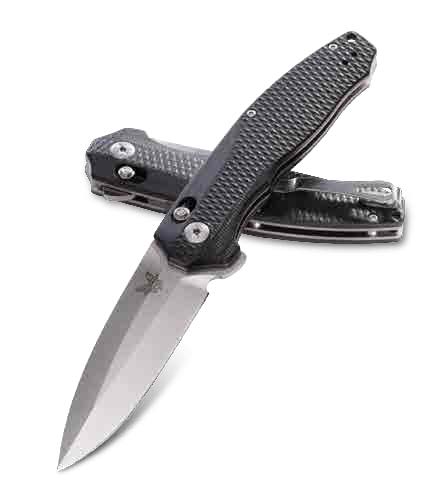
Benchmade Vector
The blue-class Vector offers something for flipper fans, but with the twist of Benchmade’s AXIS® Assist tech.
Designer: Benchmade
Mechanism: AXIS® Assist flipper
Action: Assisted-opening
Blade Length: 3.60″ (9.14cm)
Blade Thickness: 0.100″ (2.540mm)
Open Length: 8.42″ (21.39cm)
Closed Length: 4.82″ (12.24cm)
Blade Steel: CPM-S30V (58-60 HRC)
Handle Thickness: 0.60″ (15.240mm)
Weight: 4.11oz. (116.52g)
Blade Edge: Plain
Blade Finish/Color: Satin
Blade Style/Shape: Spear-point
Clip Type: Standard
Clip Position: Tip-Up
Glass Breaker: No
Handle Material: Black Contoured G10
Lanyard Hole: Yes
MOLLE Compatible: No
Sheath Type: No
Benchmade Foray
On the other end of the Benchmade spectrum, the gold-class Foray uses Damasteel and a mother of pearl inlay for an art knife feel with the heart of an EDC.





 The world’s largest and foremost knife show, BLADE Show, is taking place June 1-3 in Atlanta. You’ll find the planet’s most innovative knifemakers in one spot. Learn more about how to attend BLADE Show 2018 here.