Knife collecting is an extremely rewarding experience for knife enthusiasts. There truly is a knife for everyone. Many increase or hold their value throughout the years, making collecting knives something to pass on to the next generation of knife collectors.
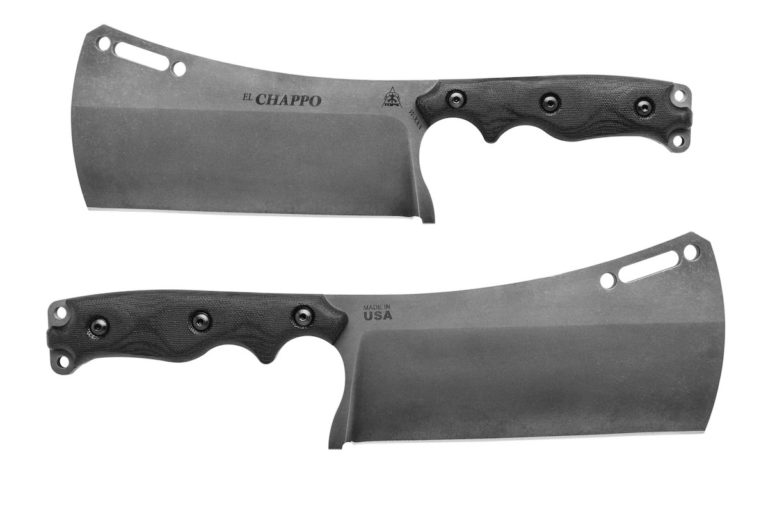
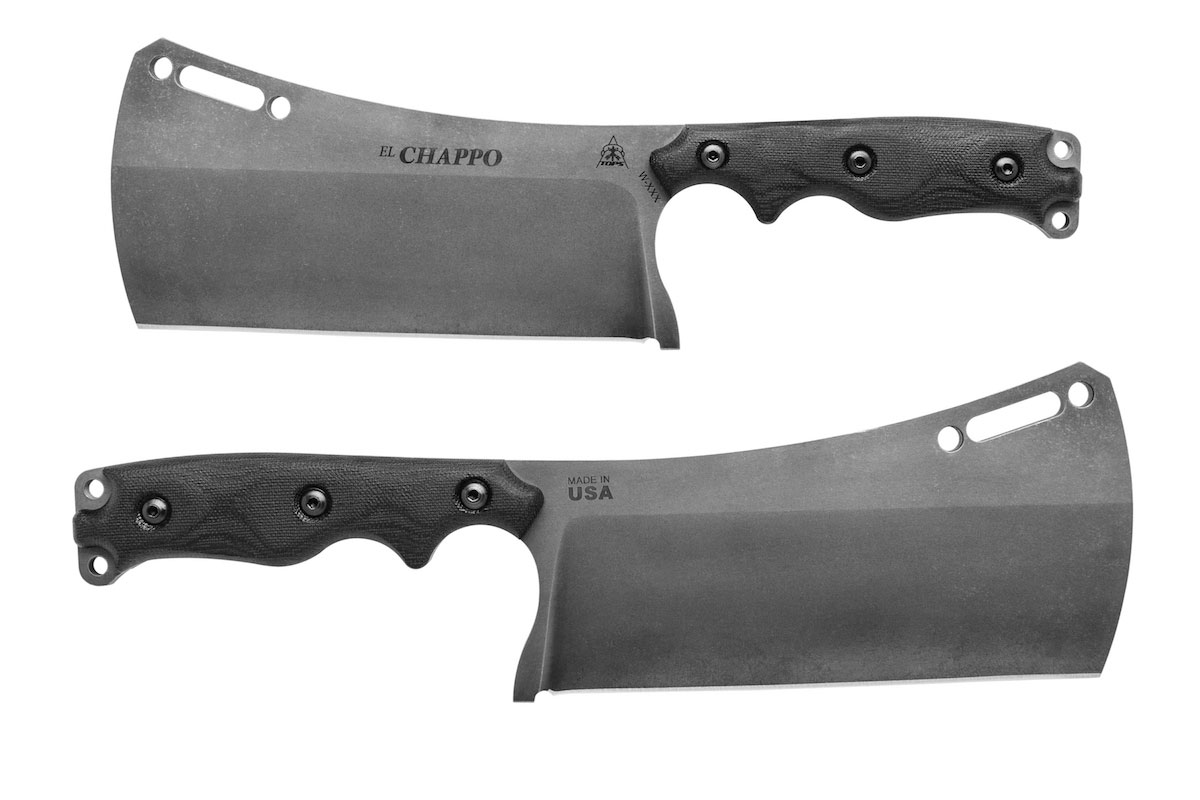
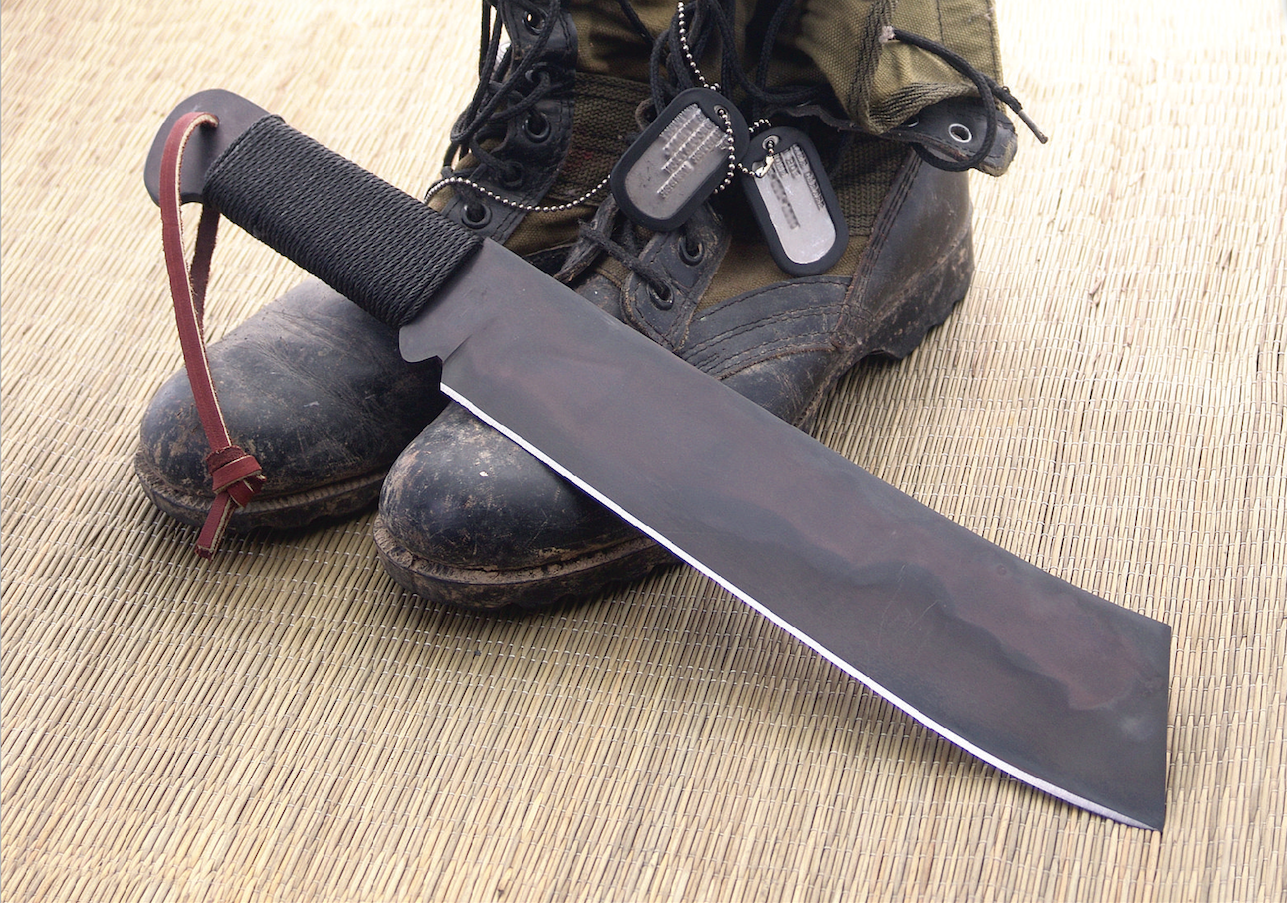
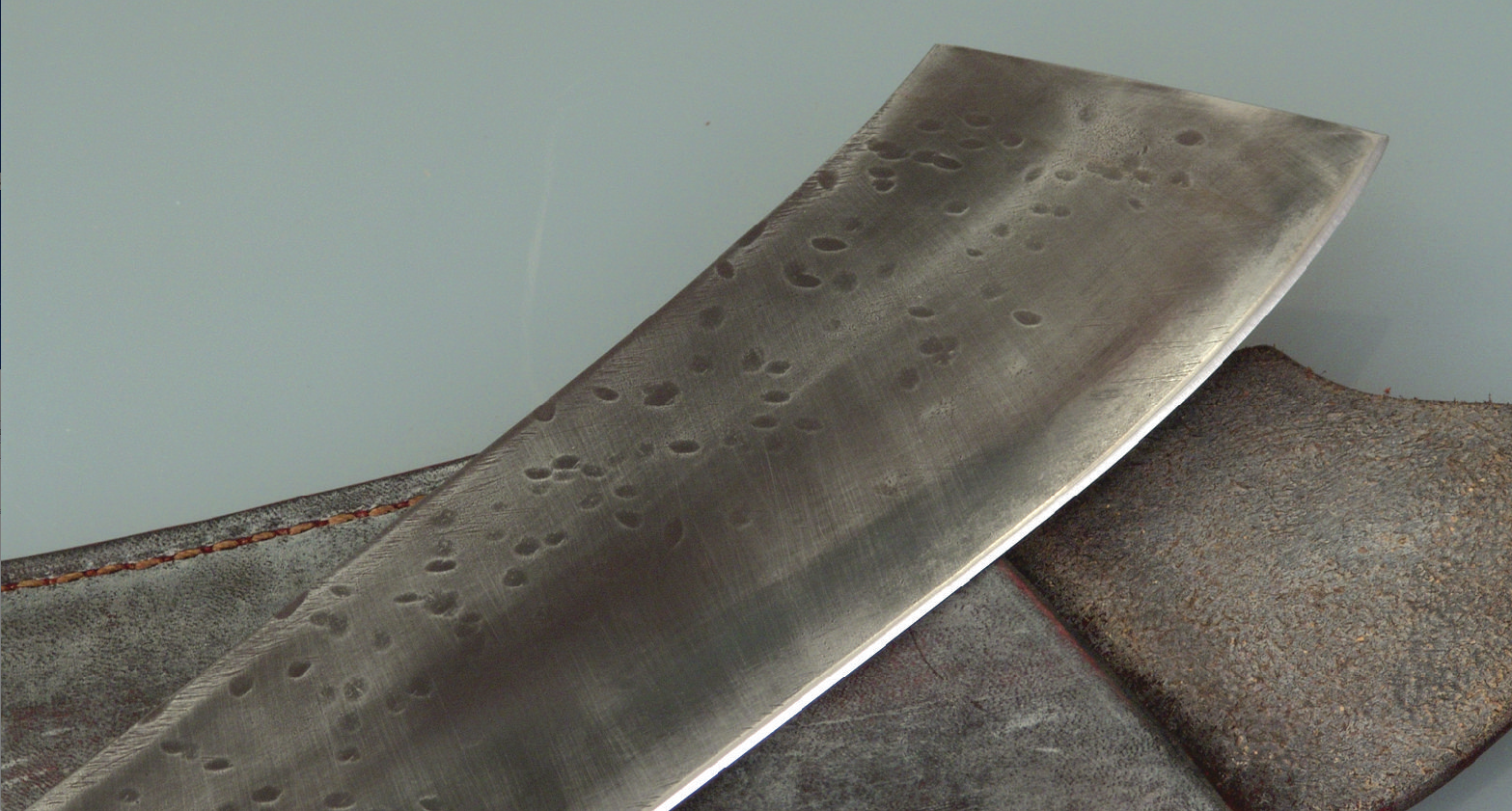
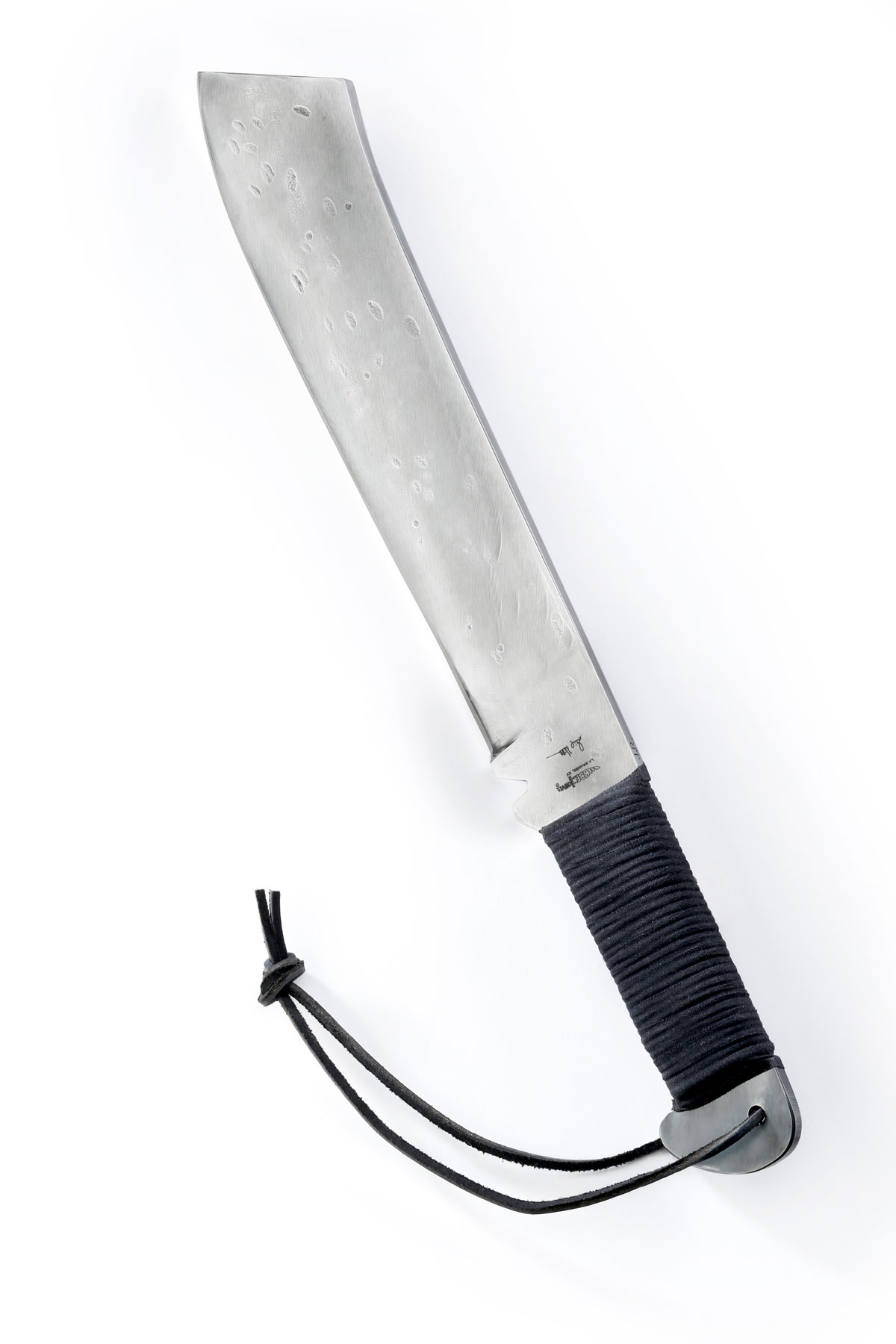
Designed by Leo Espinoza, the El Chappo cleaver from TOPS Knives features a 6-inch blade of 1095 carbon steel in an acid-rain finish.
If you want a handy outdoor blade for camp chores, skinning or a compact tool with enhanced chopping power, check out today’s ever-growing cache of cleavers.
Designed by Leo Espinoza, the El Chappo cleaver from TOPS Knives (above) features a 6-inch blade of 1095 carbon steel in an acid-rain finish. Rockwell hardness: 56-58 HRC. Handle: black canvas Micarta. Weight: 16 ounces. Overall length: 10.9 inches. Sheath: black Kydex.
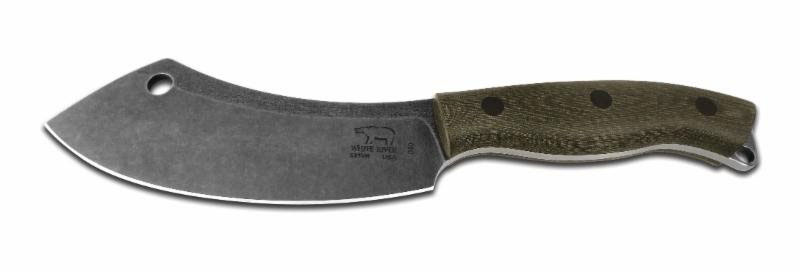
White River Knife & Tool is the latest outfit to join the chop party with its new Clever Camp Cleaver.
White River Knife & Tool is the latest cutlery company to join the party with its new Clever Camp Cleaver. Featuring a 5.5-inch blade of premium CPM S35VN stainless steel, the camp tool comes with a Micarta handle and a heavy-duty leather sheath. Weight: 9.2 ounces. Overall length: 10.25 inches. MSRP: $230.
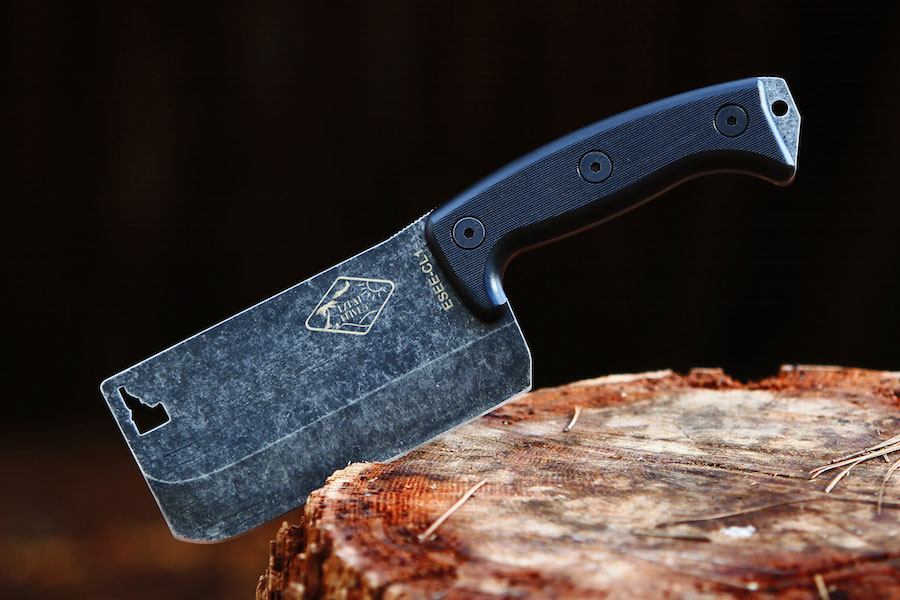
The CL1-Cleaver is one of the latest models in ESEE’s Expat Knives line. The 1095 carbon steel blade is 3.25 inches at its widest and 3/16 inch at its thickest.
The CL1-Cleaver is one of the latest models in ESEE’s Expat Knives line. The 1095 carbon steel blade is 3.25 inches at its widest and 3/16 inch at its thickest. Haft: black G-10. Finish: black oxide, tumbled. Weight: 25.5 ounces. Overall length: 11.5 inches. MSRP: $276.50 (includes a leather sheath).
The Reaver Cleaver from Zombie Tools is a full-tang chopping machine with an 18-inch blade of 5160 carbon steel in a Rockwell hardness of 55 HRC.
The Reaver Cleaver from Zombie Tools is a full-tang chopping machine with an 18-inch blade of 5160 carbon steel in a Rockwell hardness of 55 HRC. Weight: 3 pounds, 10 ounces. Overall length: 31 inches. MSRP: $374.95.
The Quest Custom Knives Custom Kutzu 2.2 Flipper is a micro-cleaver flipper folder with a 2-inch blade of CPM 154 stainless steel.
The Quest Custom Knives Custom Kutzu 2.2 Flipper is a micro-cleaver flipper folder with a 2-inch blade of CPM 154 stainless steel and a sculpted titanium 6Al-4V frame and pocket clip. Closed length: 3 inches.
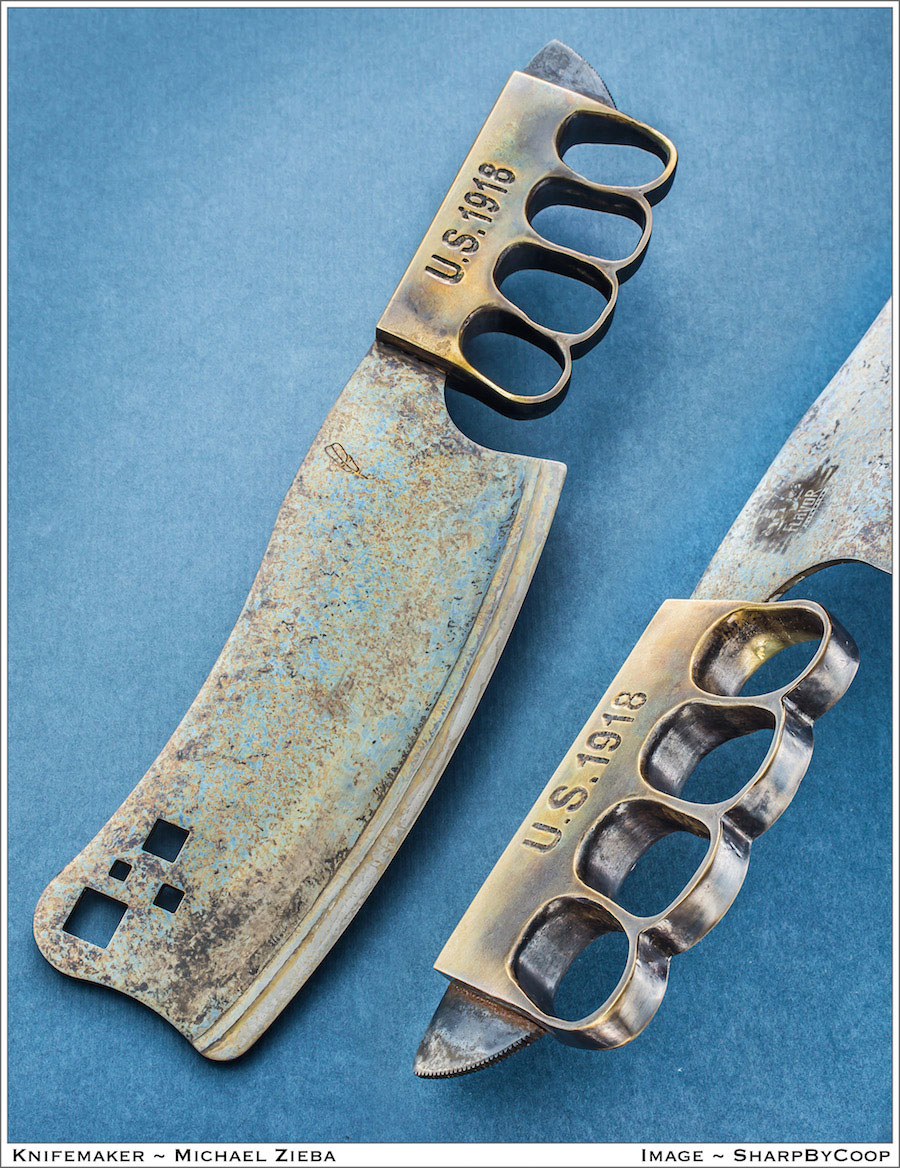
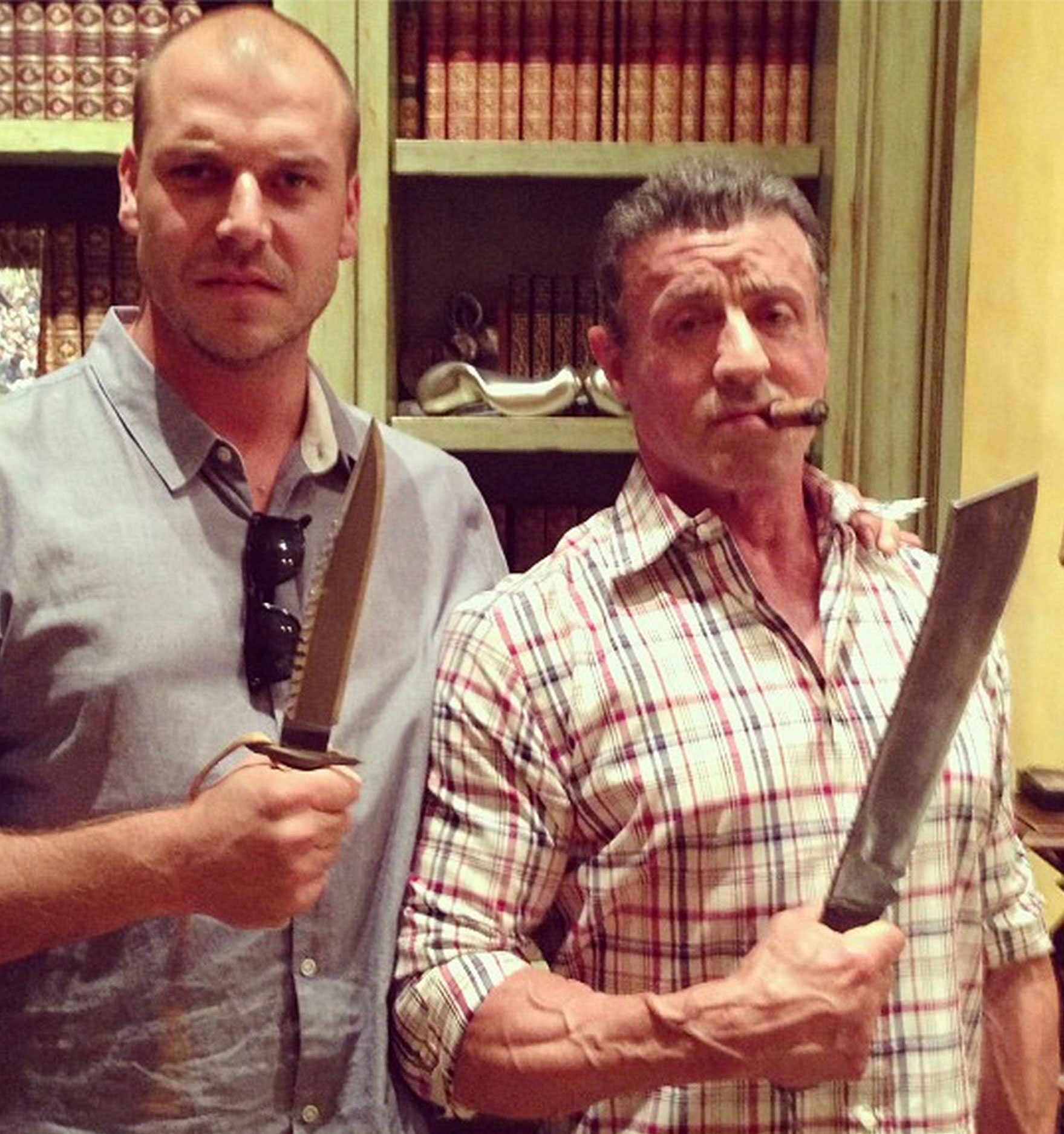
Michael Zieba’s cleaver sports the iconic brass-knuckle-guard handle taken from an original example of one of the most famous blades of World War I—the Trench Knife. (SharpByCoop image)Learn how to make knives with Murray Carter with this terrific knifemaking book. Only $7!
Michael Zieba’s cleaver sports the iconic brass-knuckle-guard handle taken from an original example one of the most famous blades of World War I—the Trench Knife. Zieba custom made the cleaver for Chris Wallace, aka “Flavor God,” a maker of seasonings who is big on the Internet. Zieba met Wallace on Instagram. Wallace supplied him with the original U.S. Mark 1 Trench Knife from his knife collection.
Zieba modified the knife’s iconic handle and integrated it into the cleaver blade, which is 52100 ball-bearing steel forged in a san-mai construction. He achieved the blue and gold patina with water and vinegar. “Sometimes you get blue or you may get another color. It depends,” he said. “You never know how it will come out. It’s just a reaction to the metal.”
The cleaver is one solid piece with a skull-crusher pommel. The square holes in the blade are for aesthetics. Zieba has done the blades with egg-shaped and round holes as well.
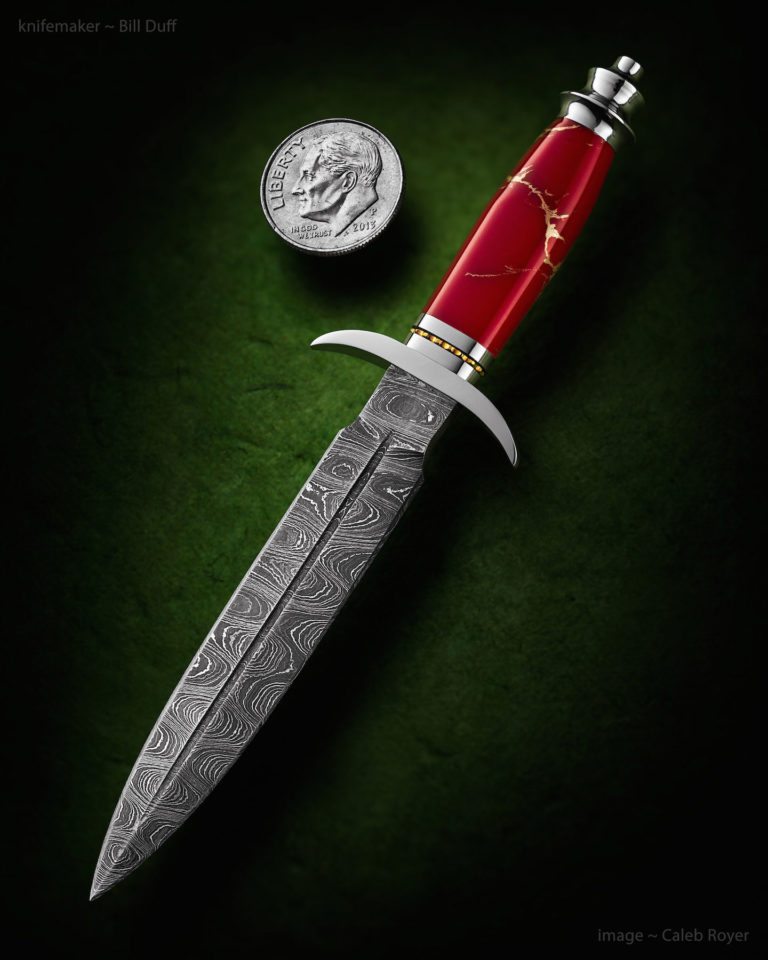
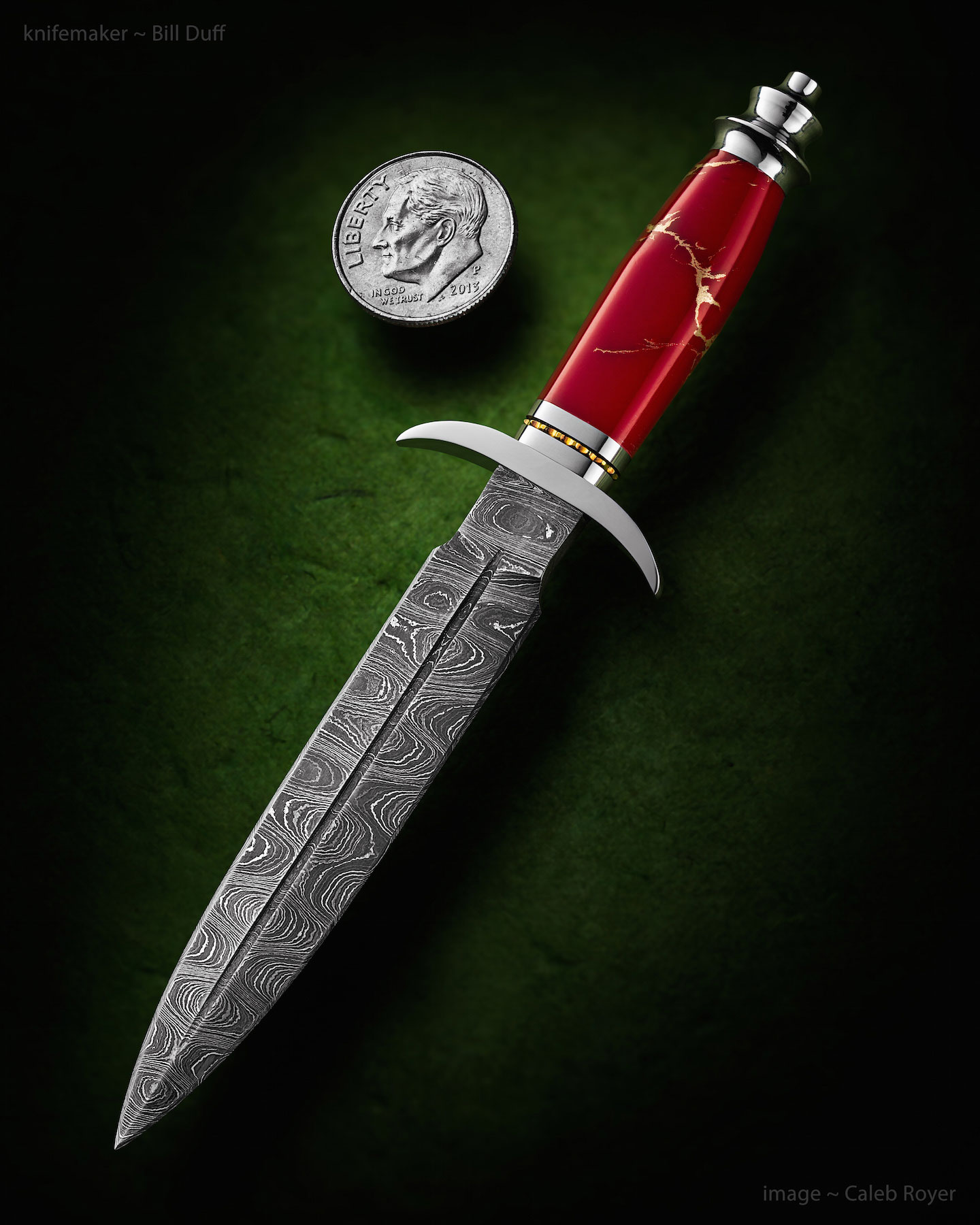
Brilliant red jasper caps off the grip of Bill Duff’s miniature dagger. (Caleb Royer image)
One of the better ways to celebrate Old Rock Day (you do celebrate, don’t you?) is with a custom knife sporting a handle of anything stony or fossilized.
What is Old Rock Day?
Celebrated on Jan. 7, Old Rock Day salutes rocks of all kinds. In some locales, children are encouraged to discover their first “pet rock,” and festivities may include painting and decorating the “faces” of rocks. Some gather attractive pebbles and stones to make original pieces of jewelry. Some build rock gardens, and some towns and villages hold competitions for the best-looking rock garden.
BLADE has You Covered on Old Rock Day
To avoid getting your Old Rock Day off to a rocky start, we recommend you check out some stone-cool knife handles made of rocks and fossilized materials. You may not get your rocks off, but, if you love knives like we do, you will most definitely rock on.
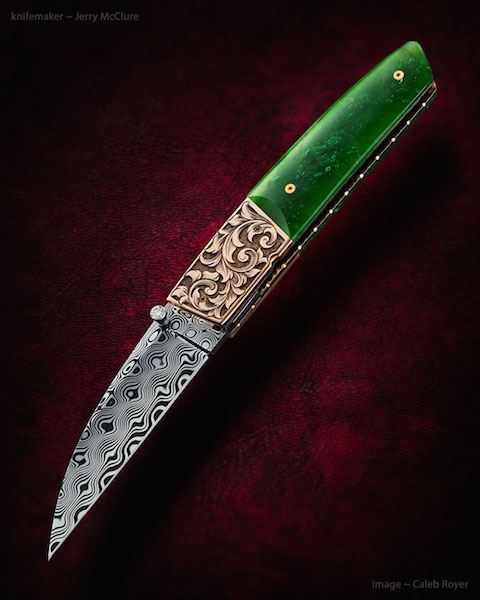
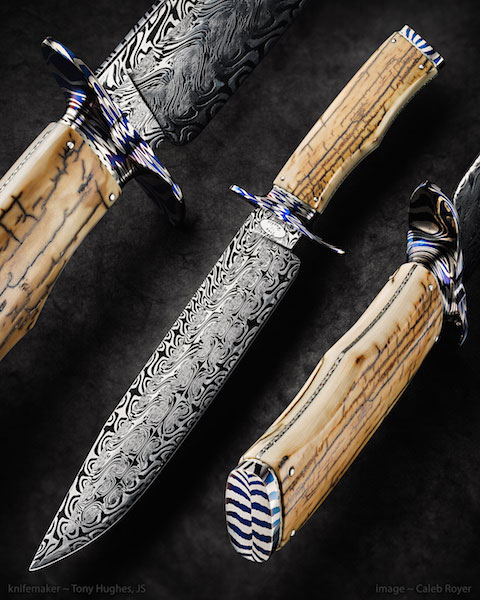
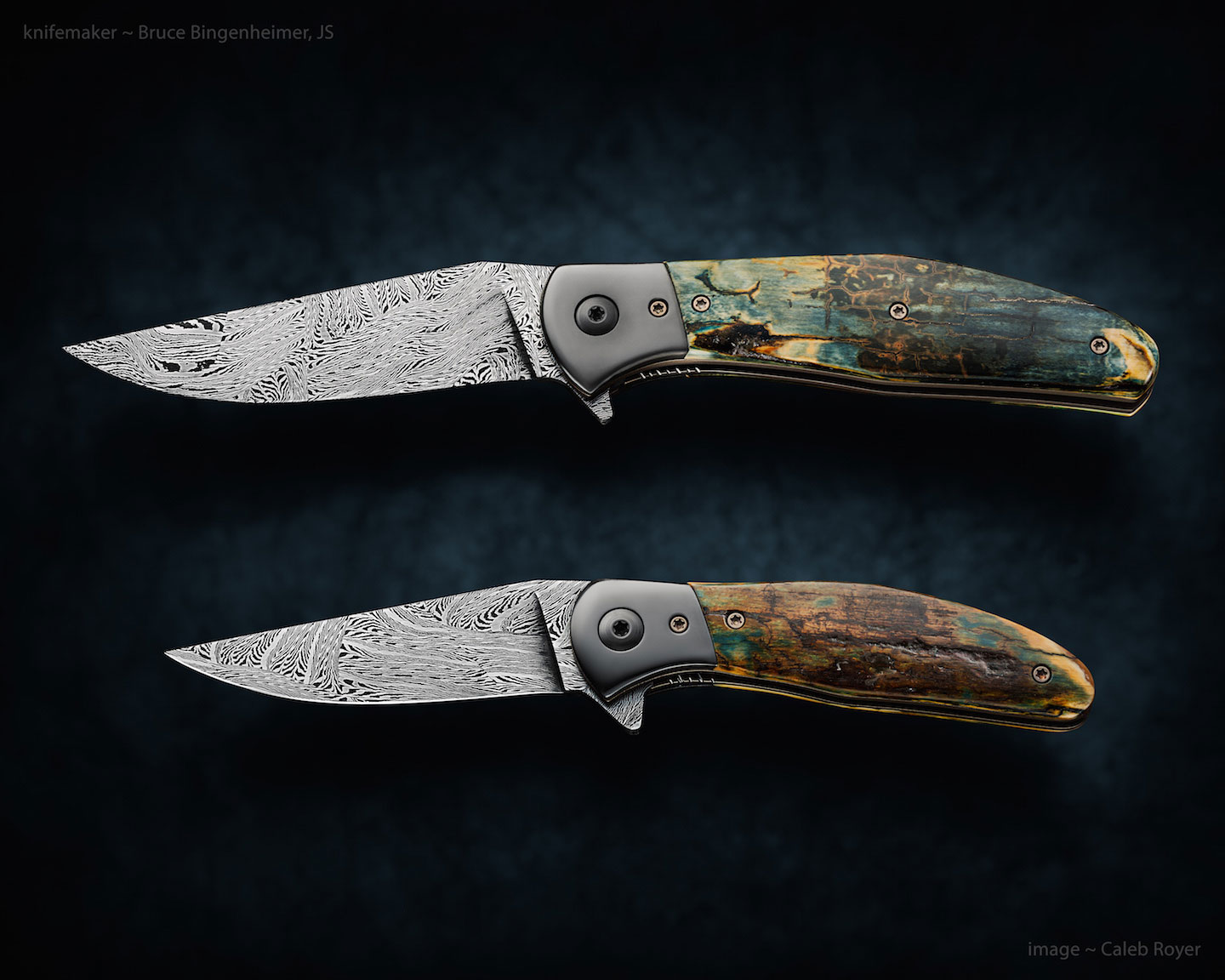
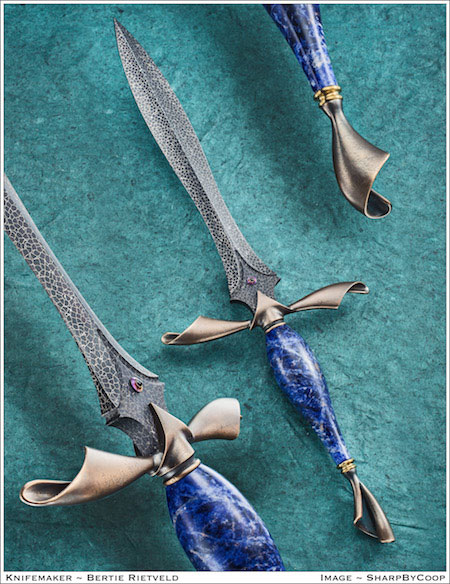
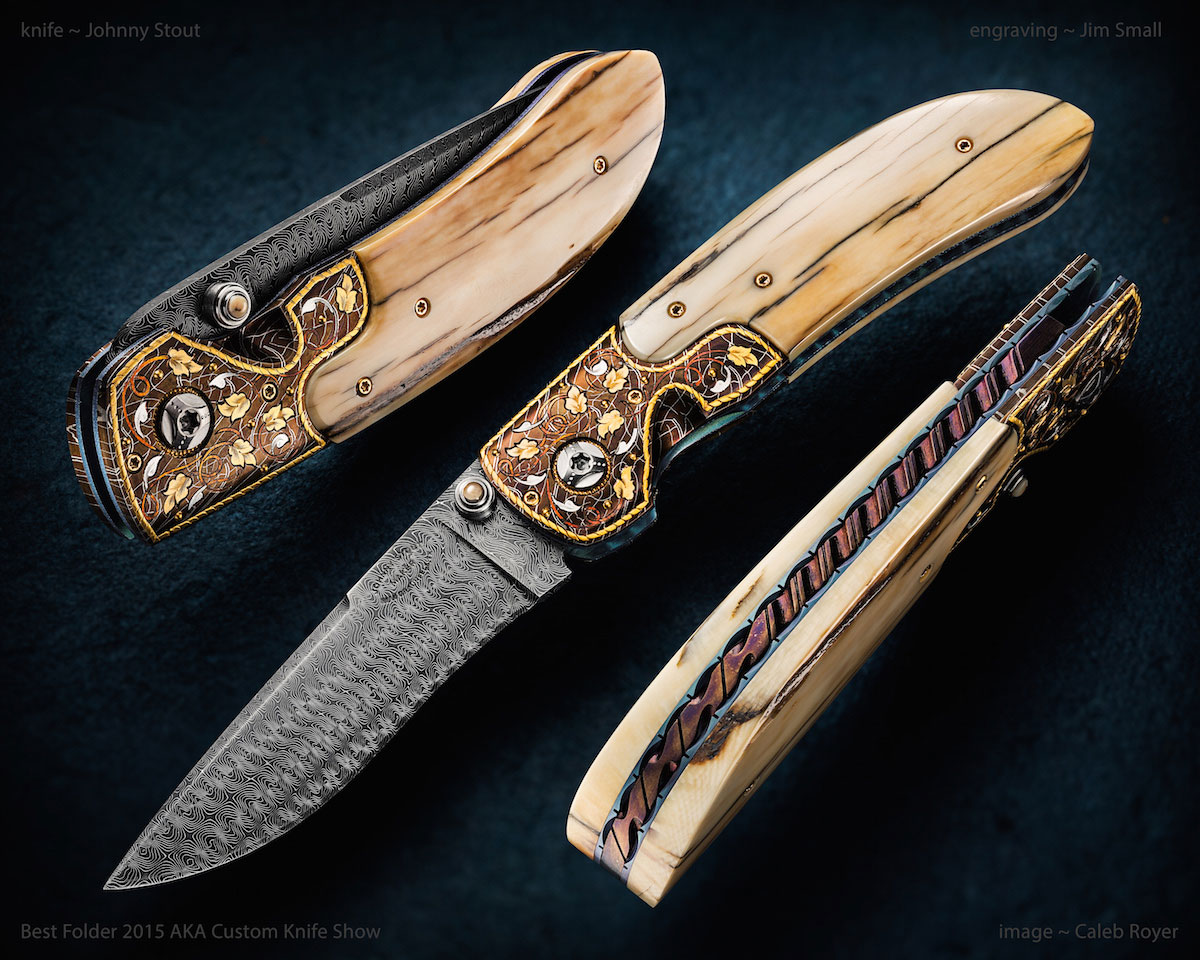
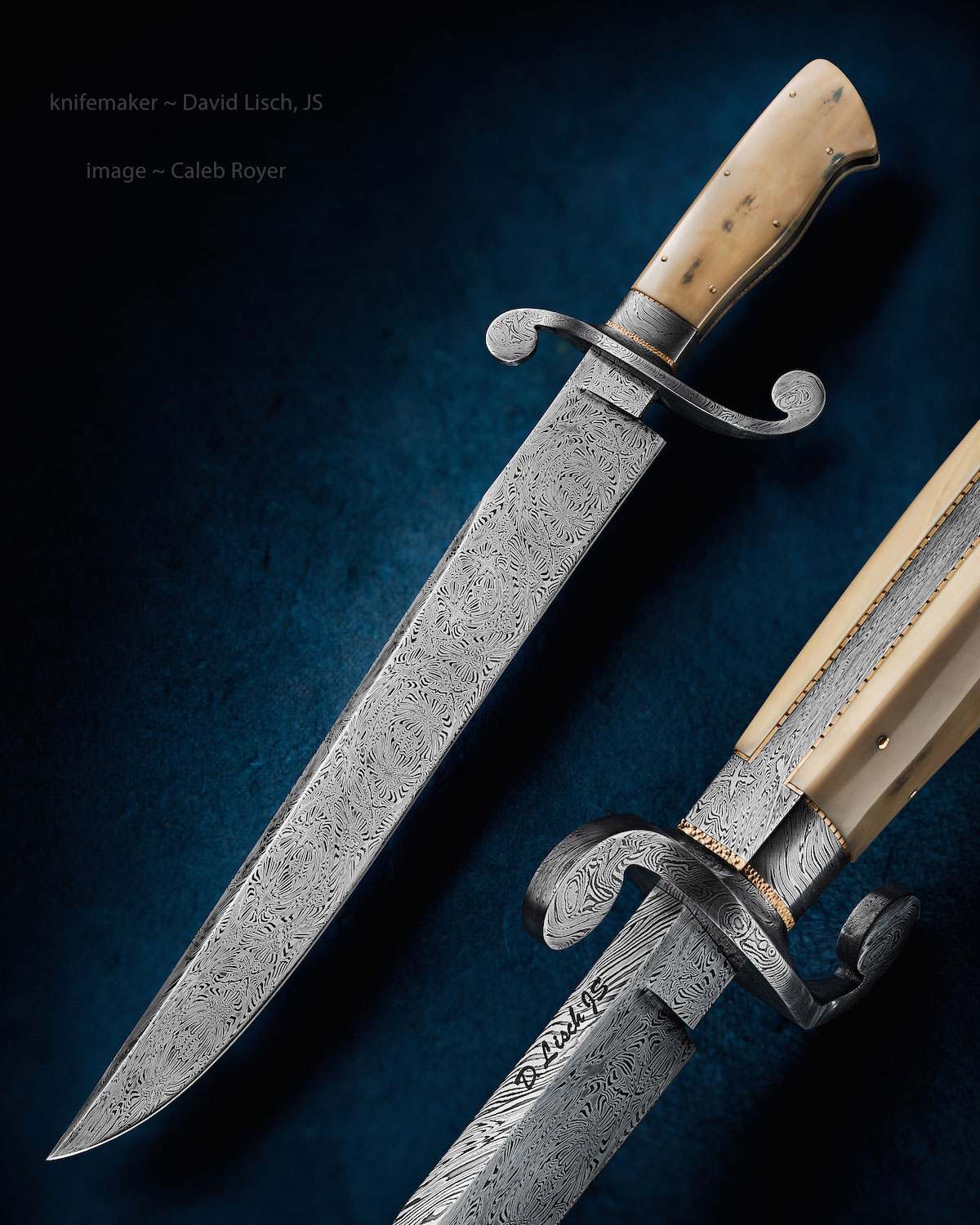
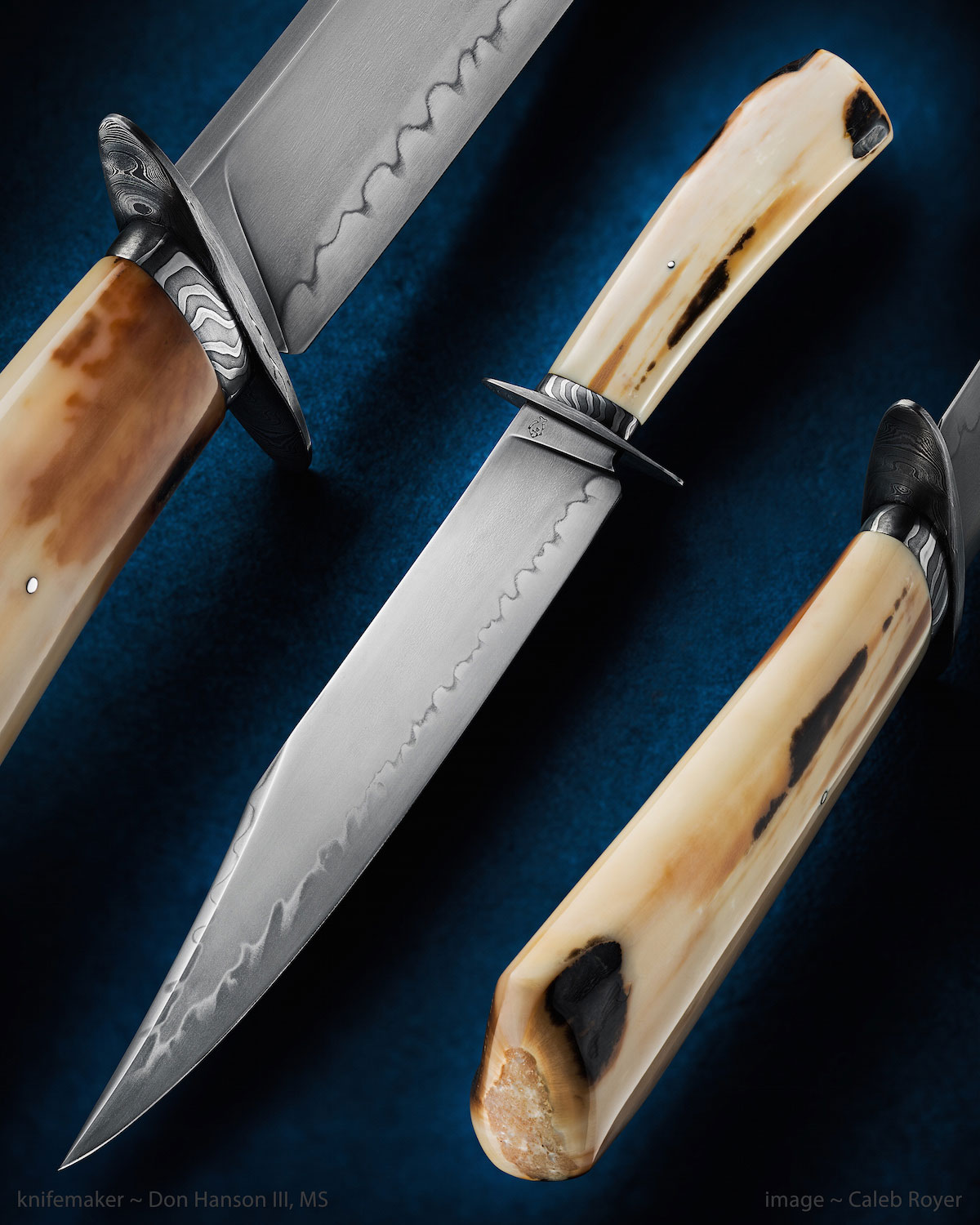
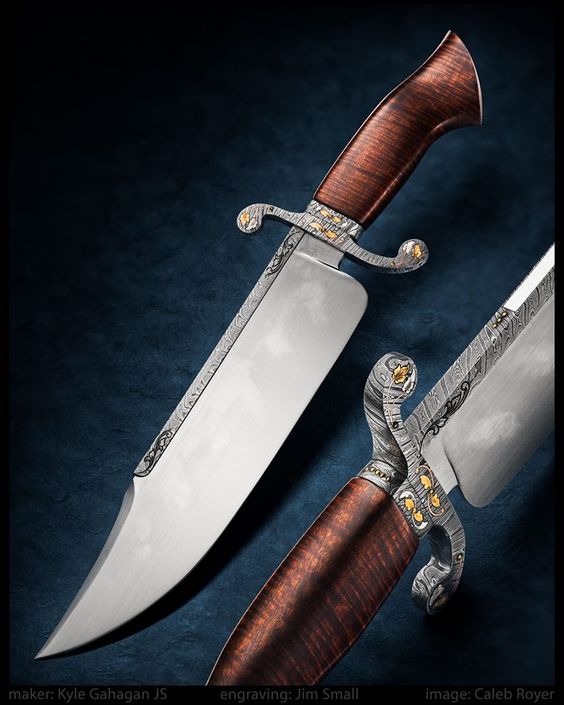
Jerry McClure outfits his Little Mama Folder with a handle of green nephrite jade. (Caleb Royer image)Mastodon ivory comprises the grip of a Tony Hughes bowie in a 9.5-inch blade of Turkish twist damascus. (Caleb Royer image)Bruce Bingenheimer’s BingaLor folders have handles of mammoth ivory. (Caleb Royer image)Sodalite stone caps off Bertie Rietveld’s Pinnacle dagger in nebula damascus. (SharpByCoop image)The Protégé by Johnny Stout boasts mammoth ivory scales and fileworked titanium liners. (Caleb Royer image)Ancient walrus ivory in a forged integral frame rocks the Slim Bad Fighter by David Lisch. (Caleb Royer image)Don Hanson opts for fossil ivory on his clip-point bowie with handsome hamon. (Caleb Royer image)
See More Beautiful Knife Photos
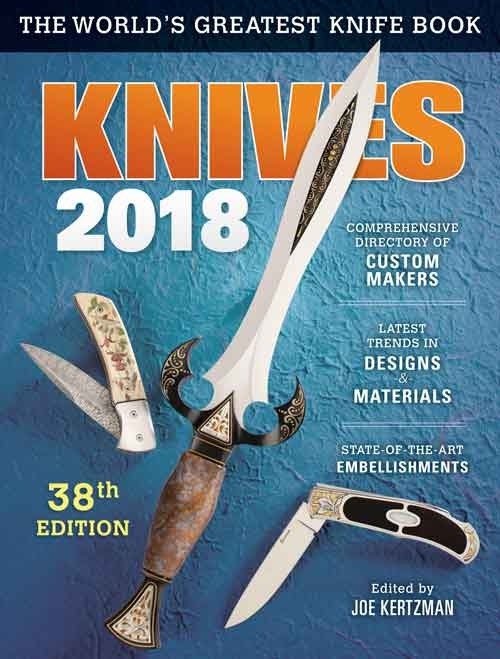
Knives 2018 features full-color photos of the world’s best custom knives. It’s THE book for knife collectors, knifemakers and anyone interested in functional art.
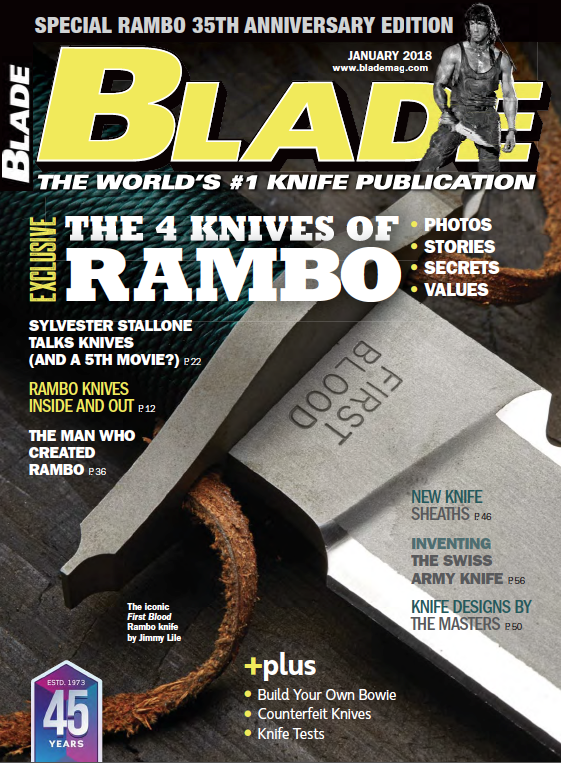
Follow the Rambo knives through the first four movies with these photos. If you want to step back in time even further, download the June 1983 issue of BLADE.
One (the Bowie knife) is primarily for combat, while the other (the Rambo knife) a survival knife. One was carried by a real person, the other by a fictional character. Both sparked explosive marketing in their respective heydays and were often emulated. Both were carried by men who were larger than life. Perhaps most telling, they continue to spark in-depth conversation long after their debuts.
The Rambo Knife: Built for Survival, then Combat
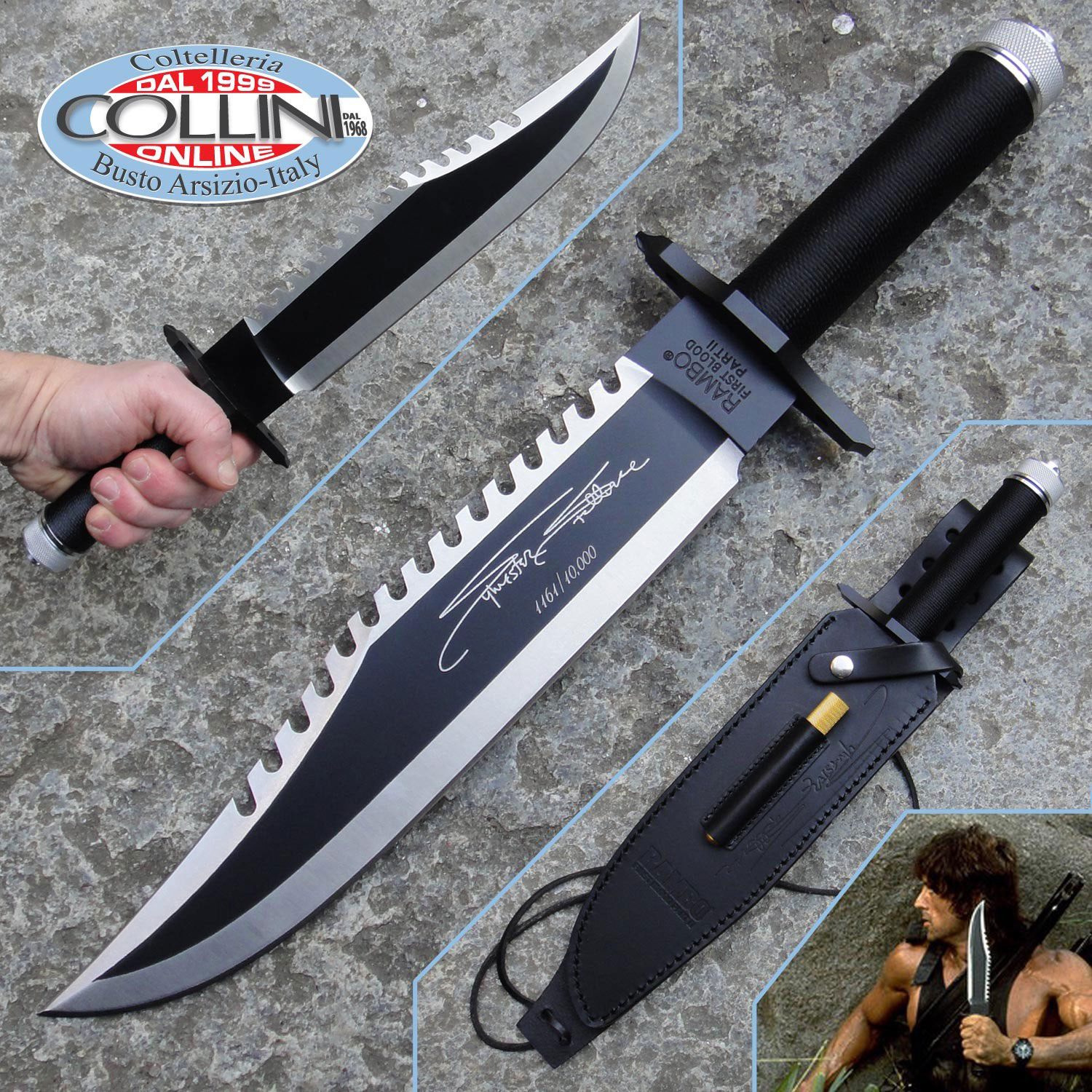
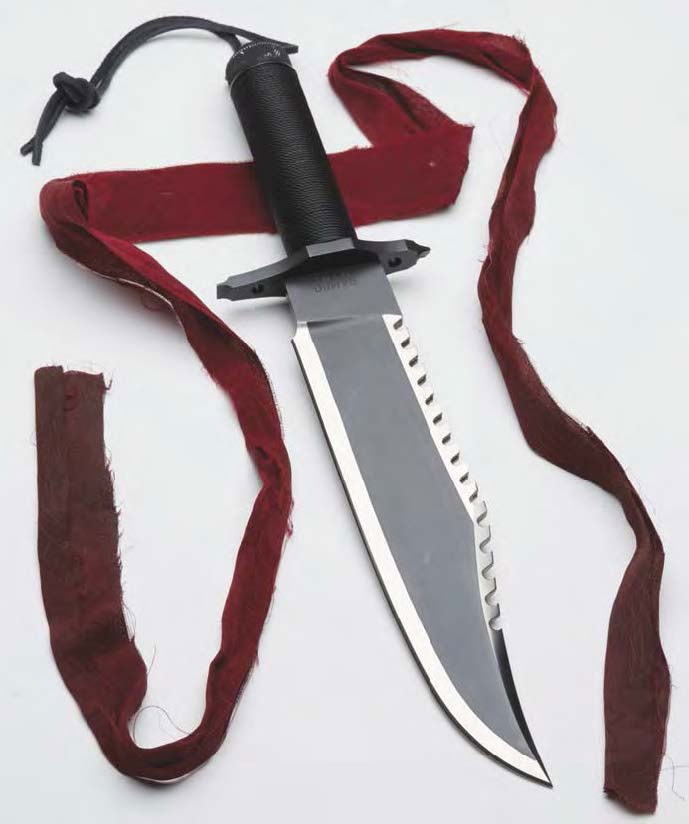
The second Rambo movie also features a survival knife, known as The Mission, designed and made once again by Jimmy Lile, but the viewer sees less survival use of the tool and more killing. Abe Elias comments on how Rambo’s female guide shows fear when she sees Rambo’s knife. Intuitively she senses that the knife isn’t a tool but a weapon. This reproduction is from Italy.
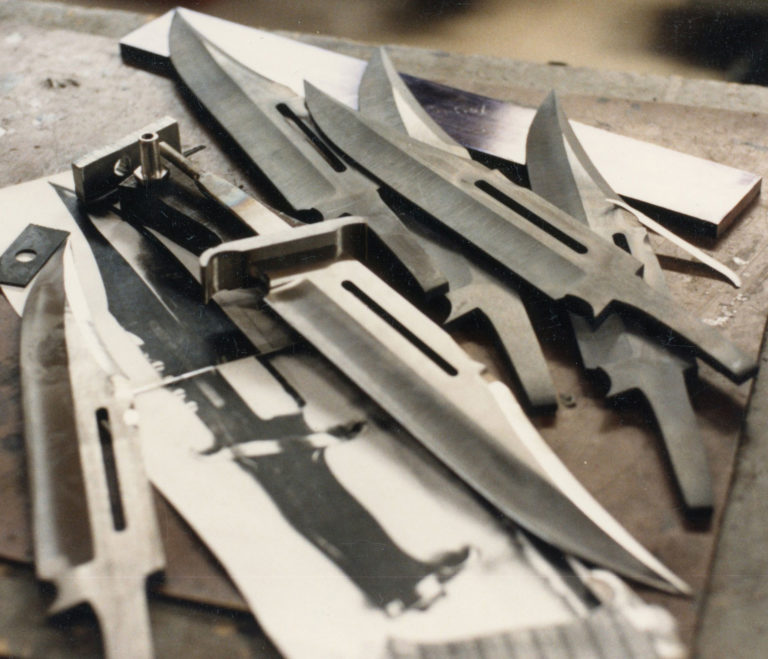
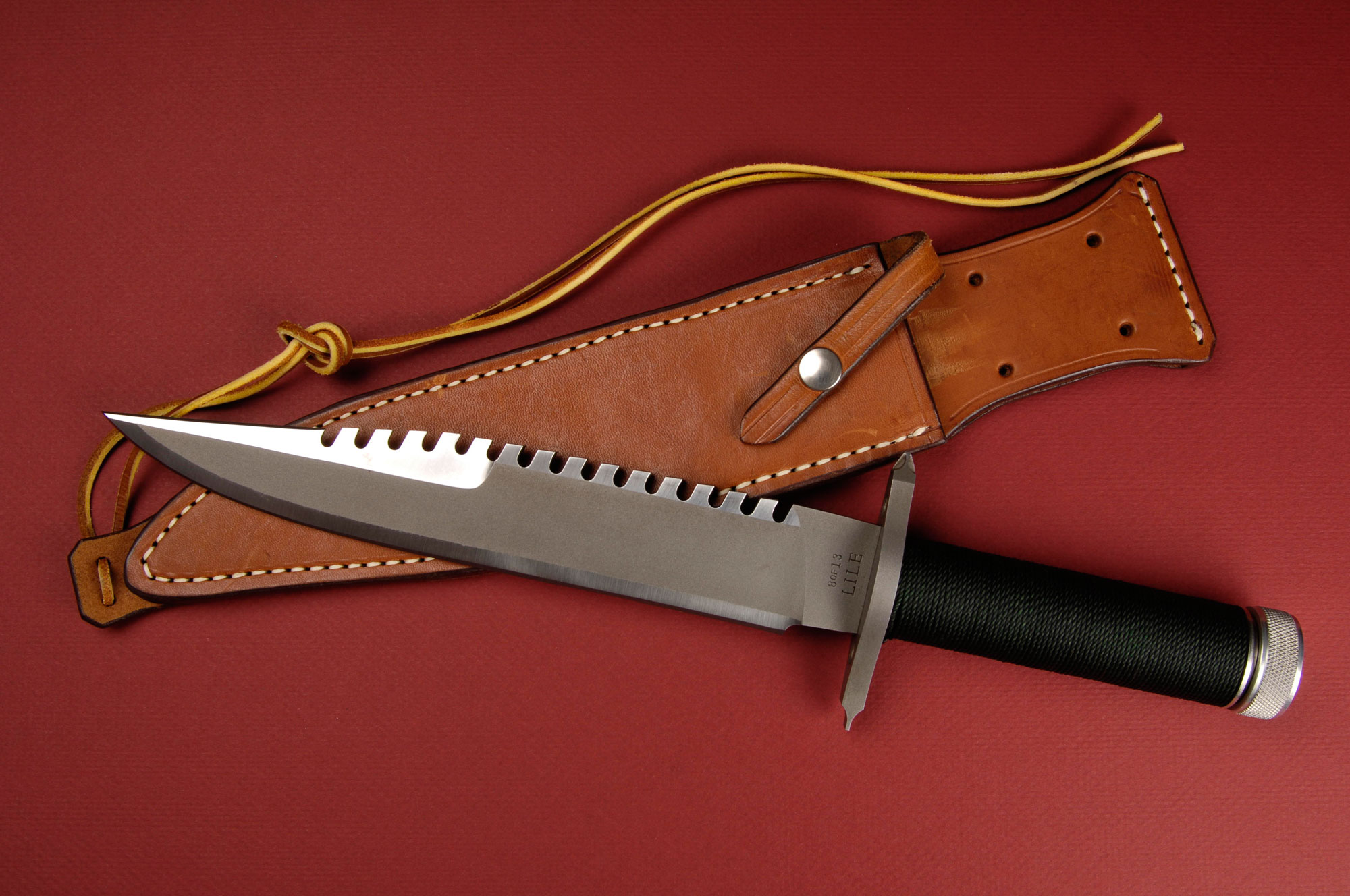
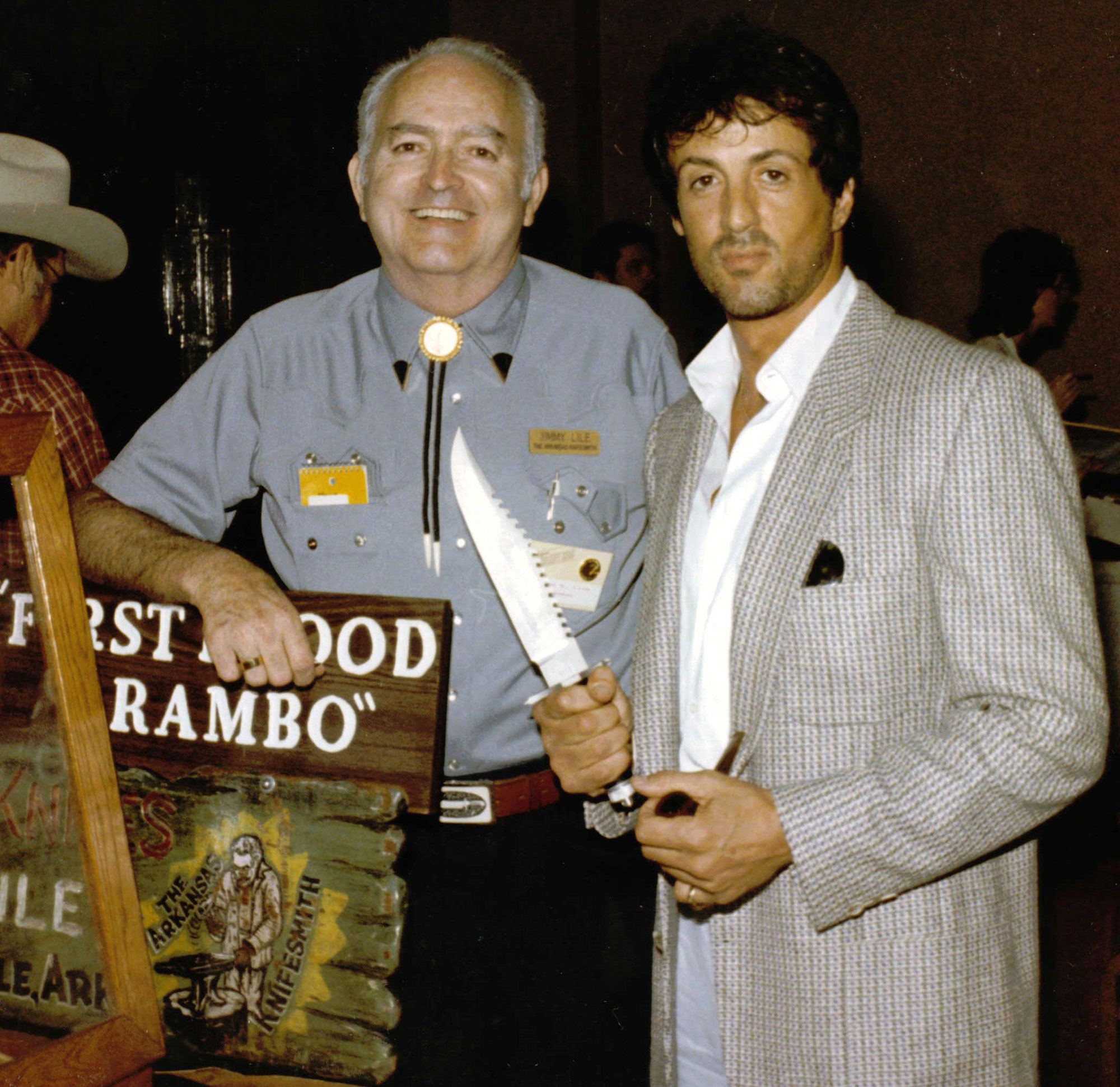
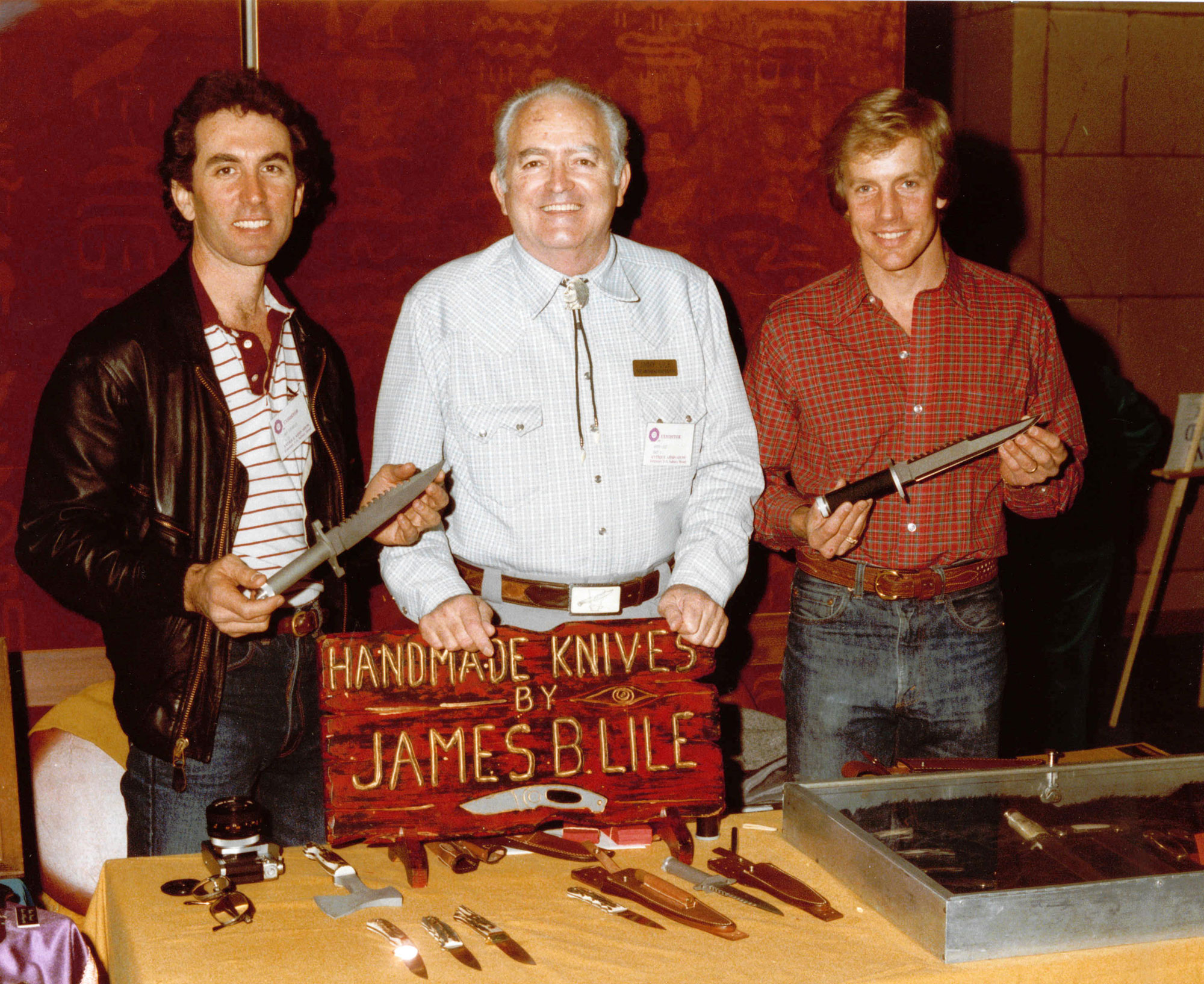
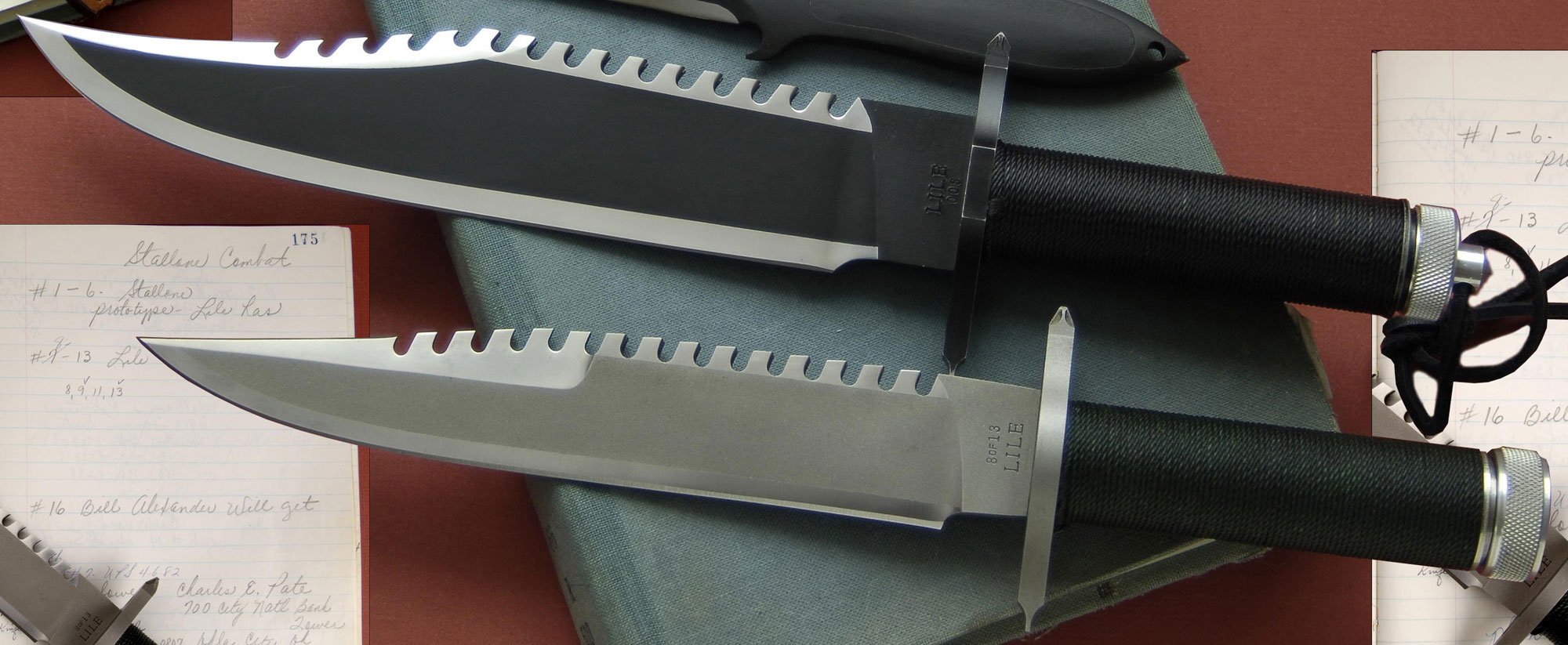
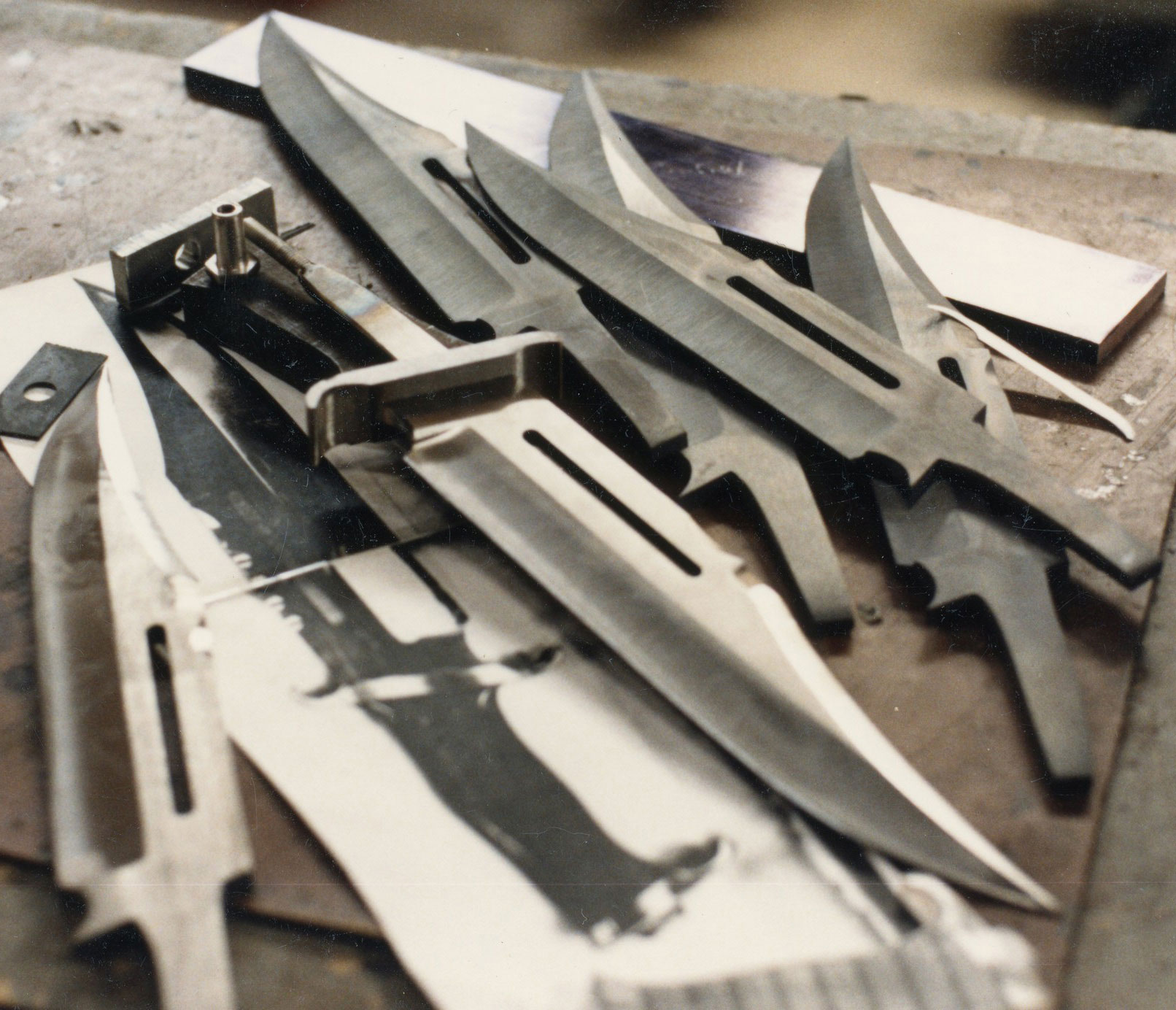
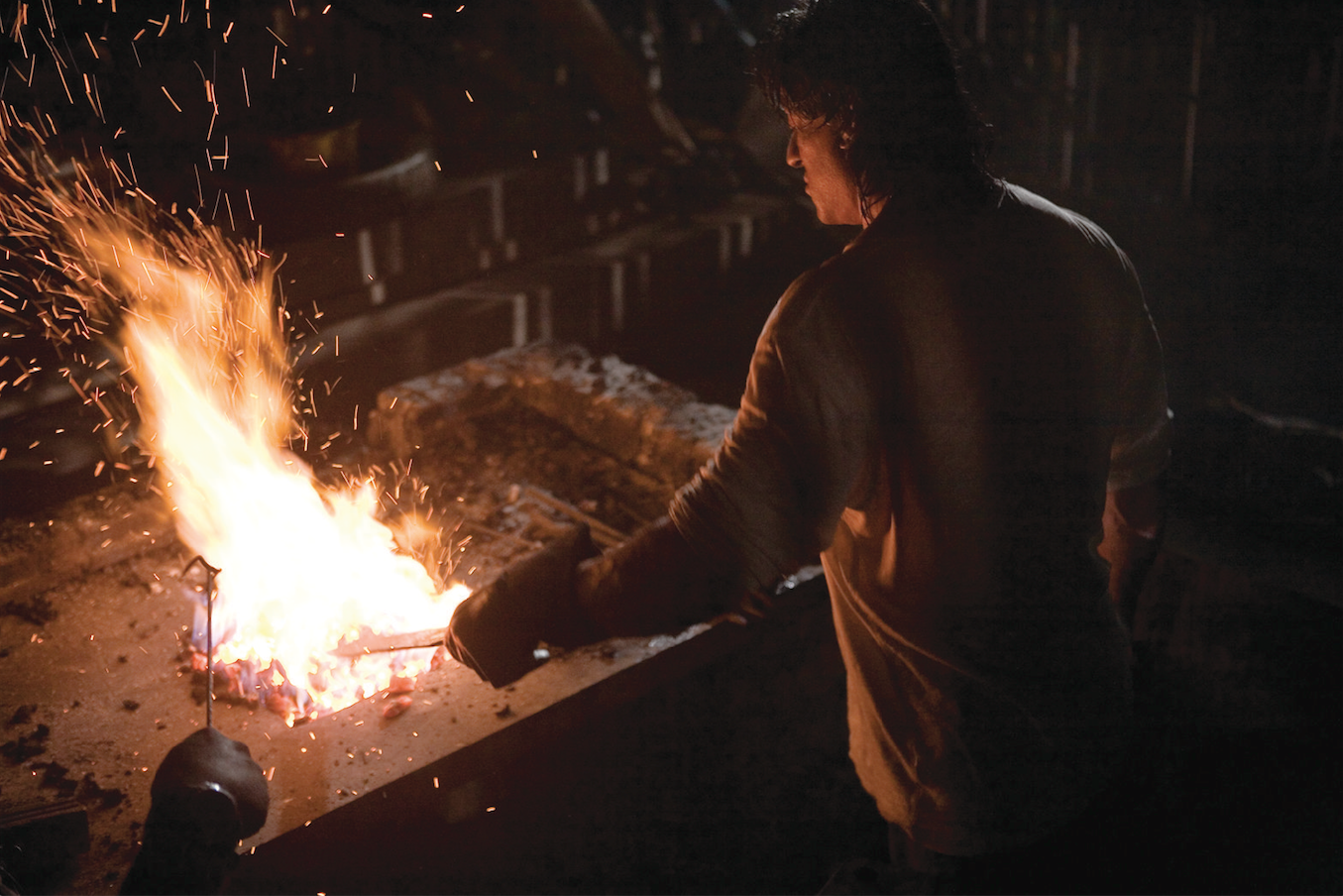
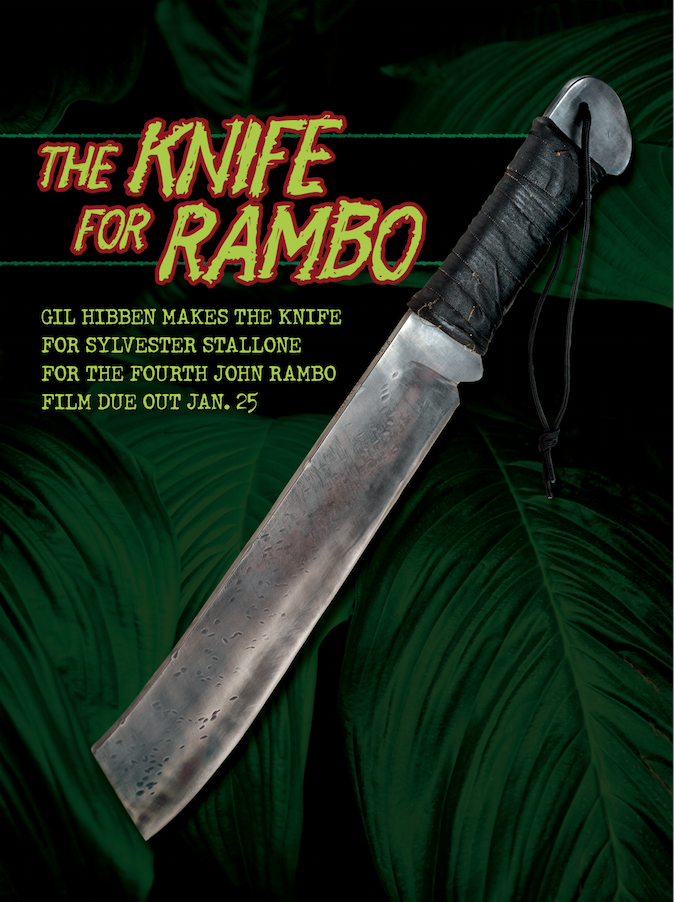
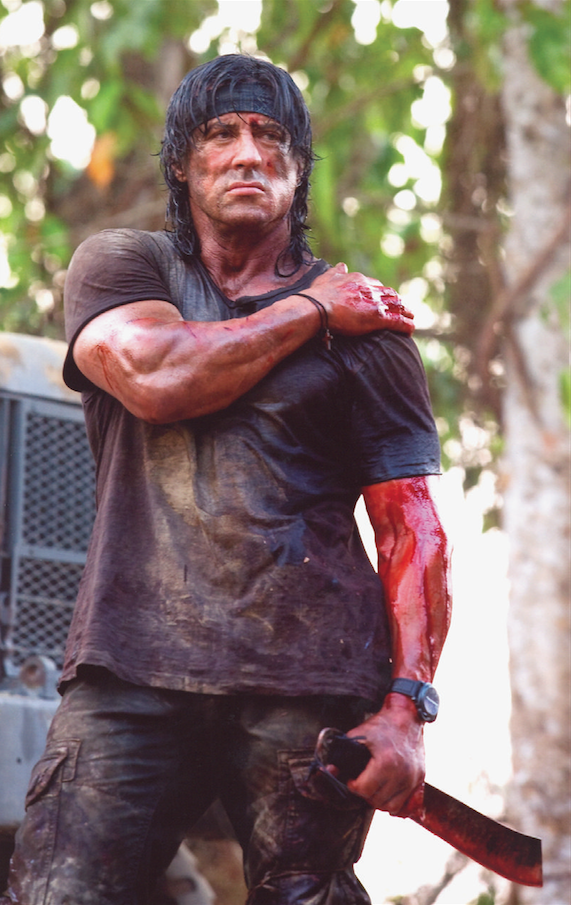
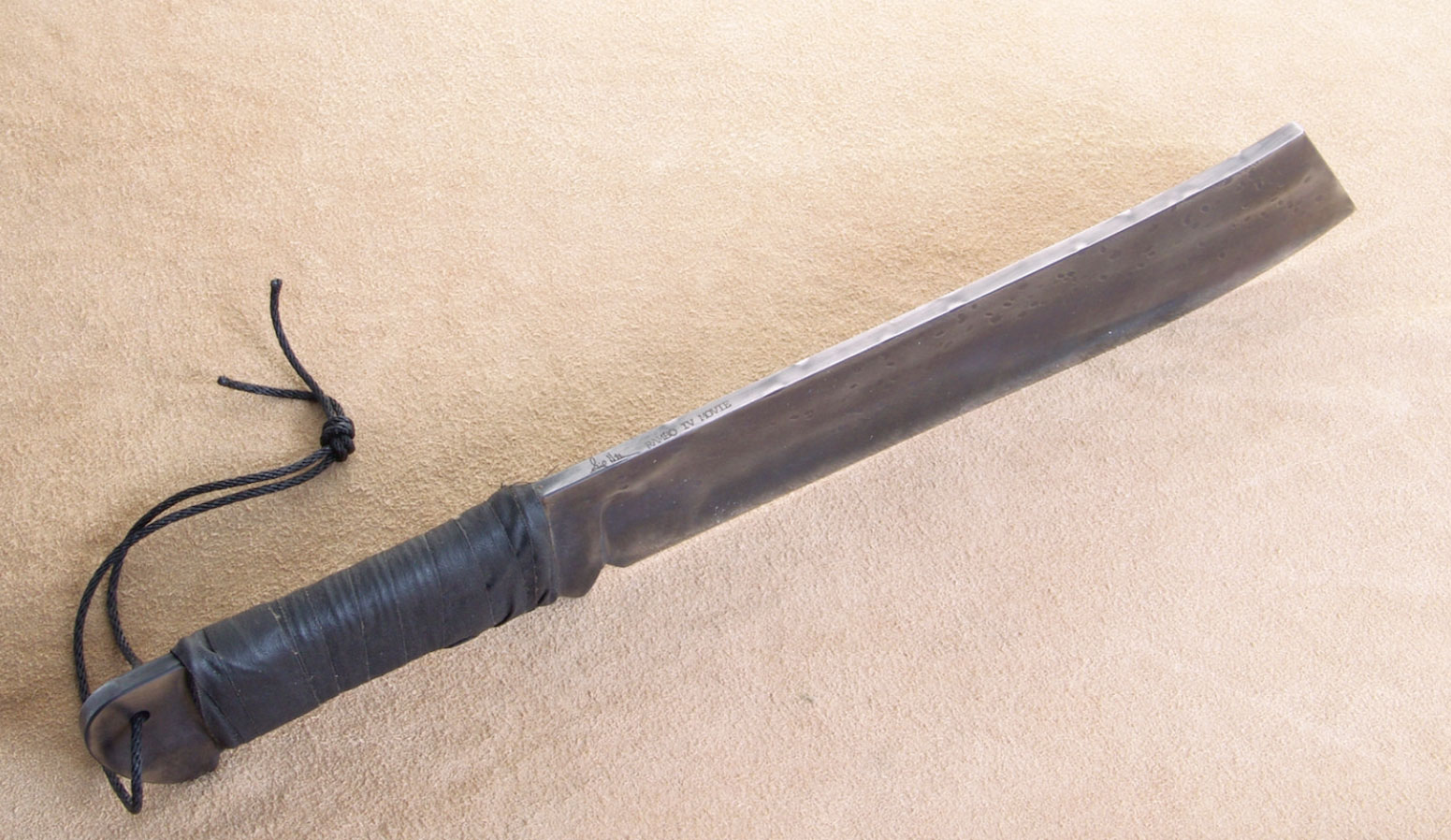
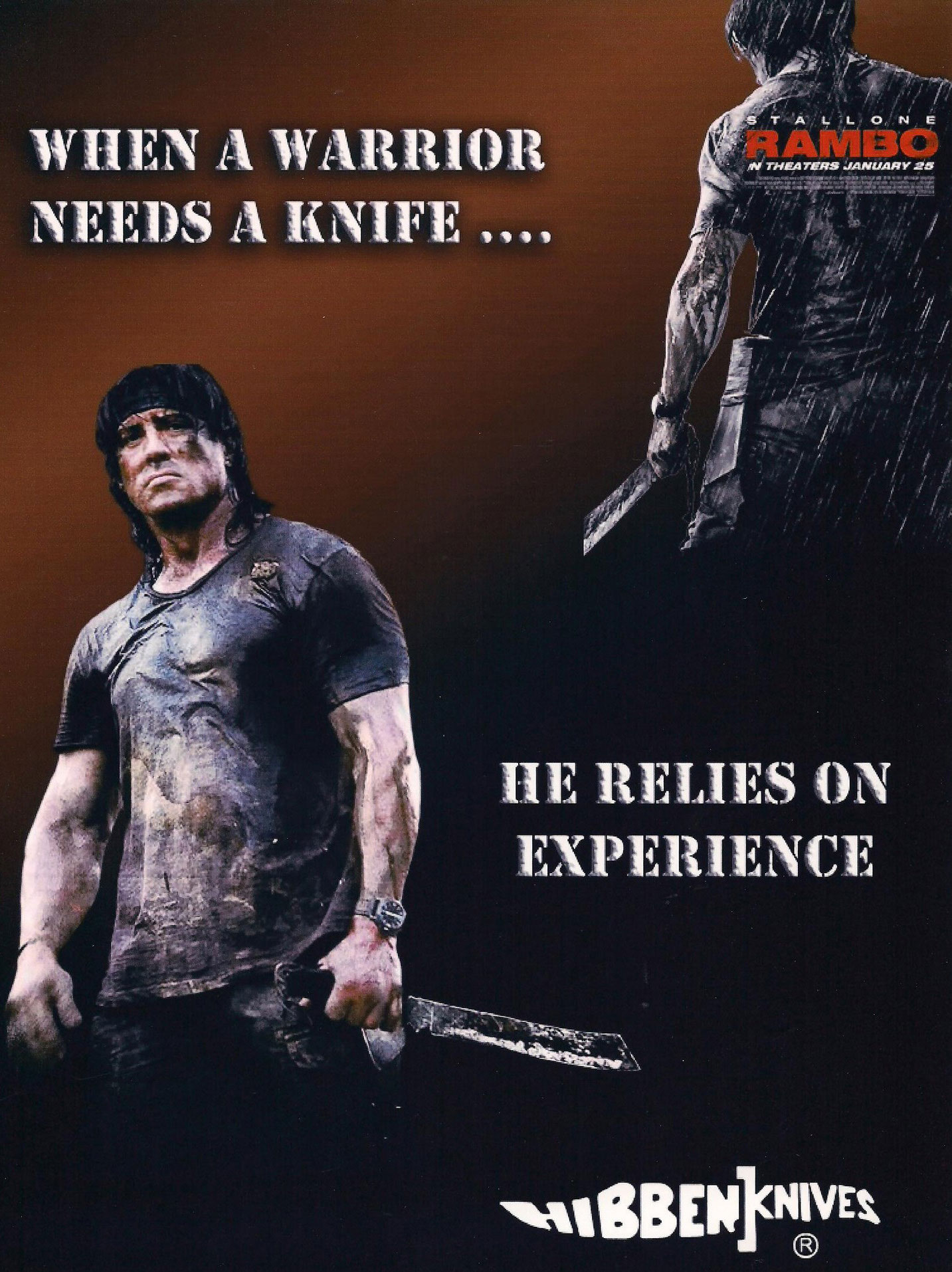
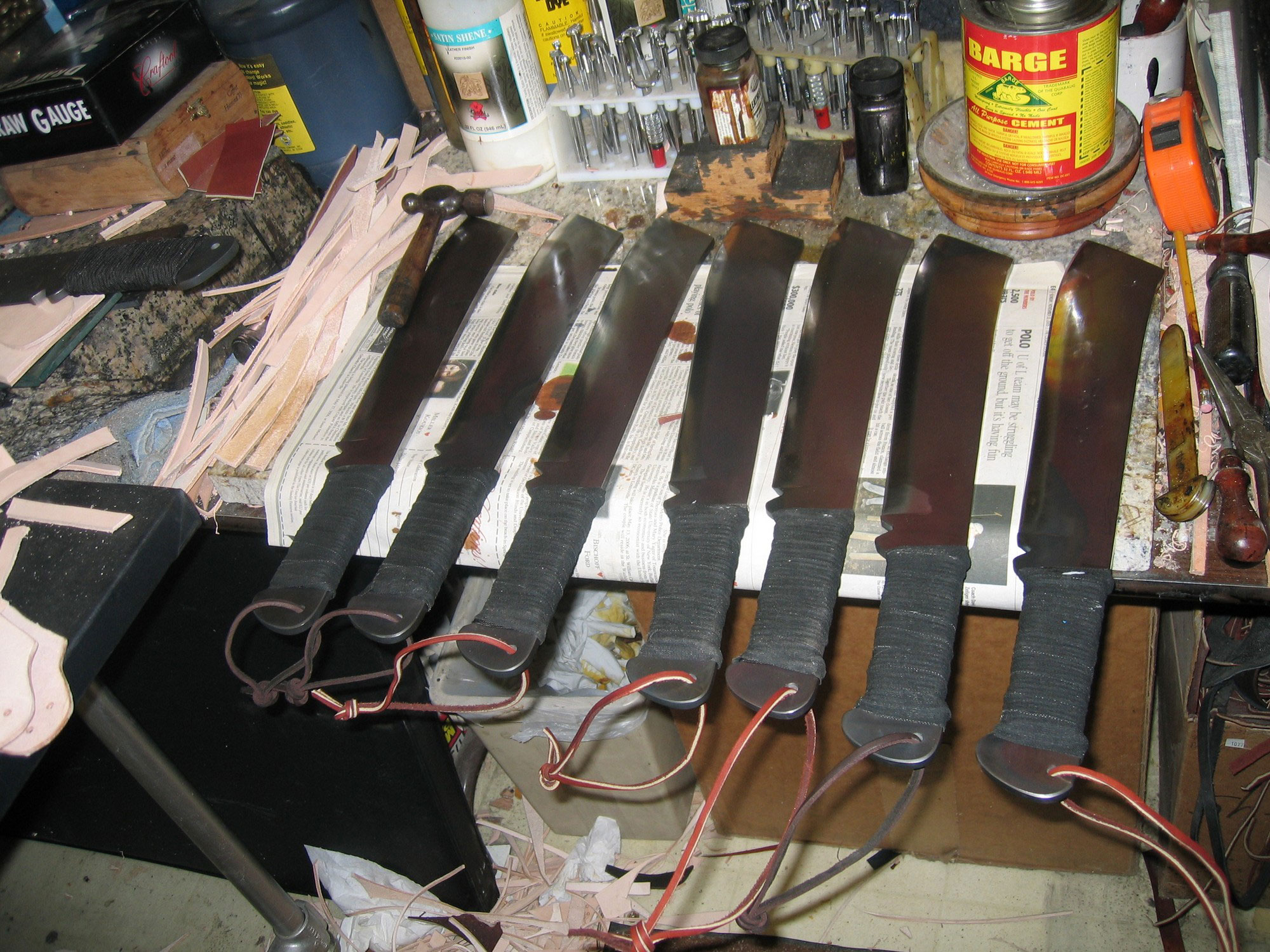
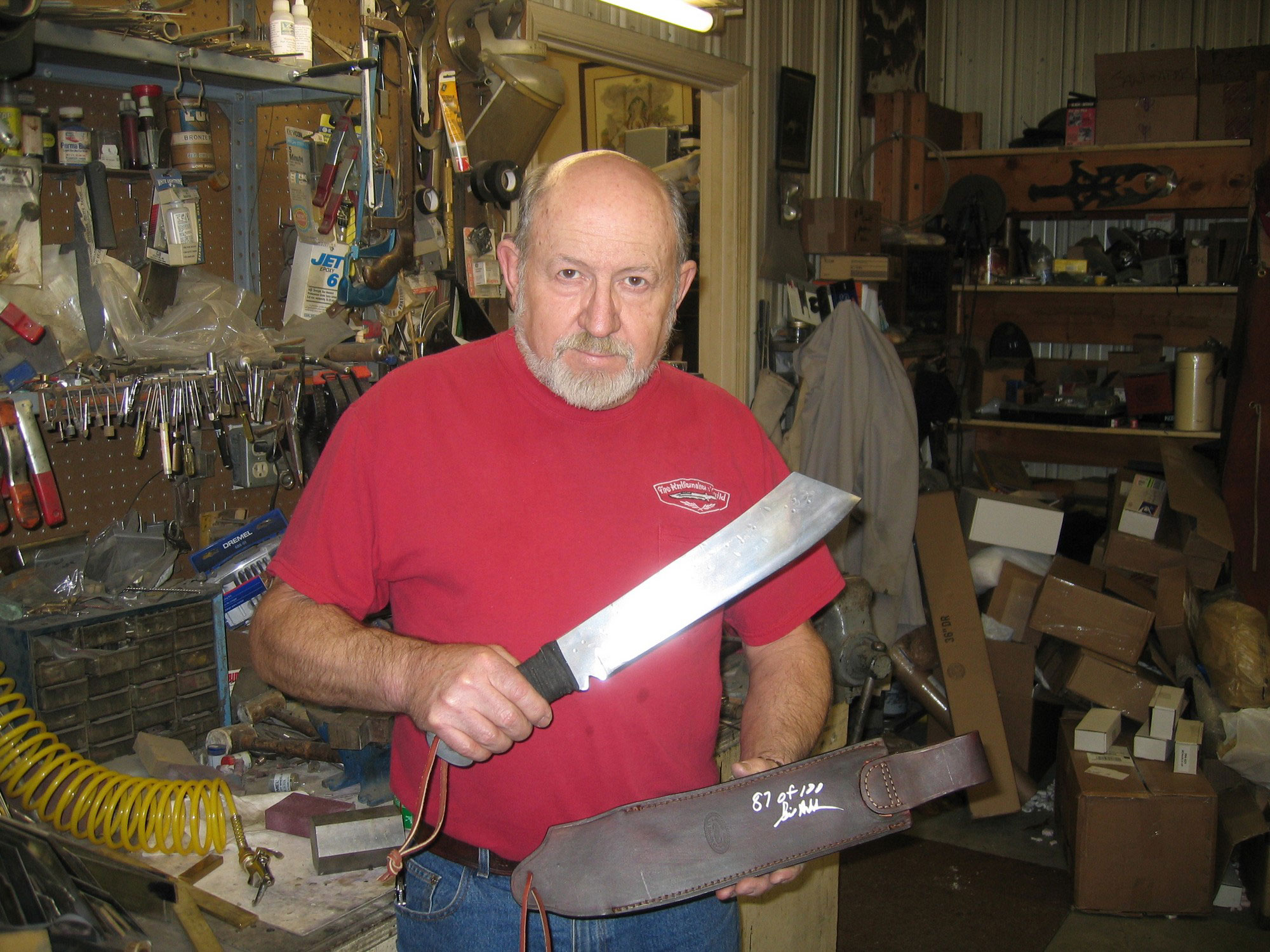
When we say “Rambo knife,” we first think of the Jimmy Lile-designed survival knives that were used in First Blood (1982) and Rambo: First Blood Part II (1985). But there were four movies in the series, and in Rambo III (1988) John Rambo actually carried a bowie designed by Gil Hibben. In Rambo (2008), the fourth and final movie, a chopper-machete made by Hibben was Rambo’s blade of choice.
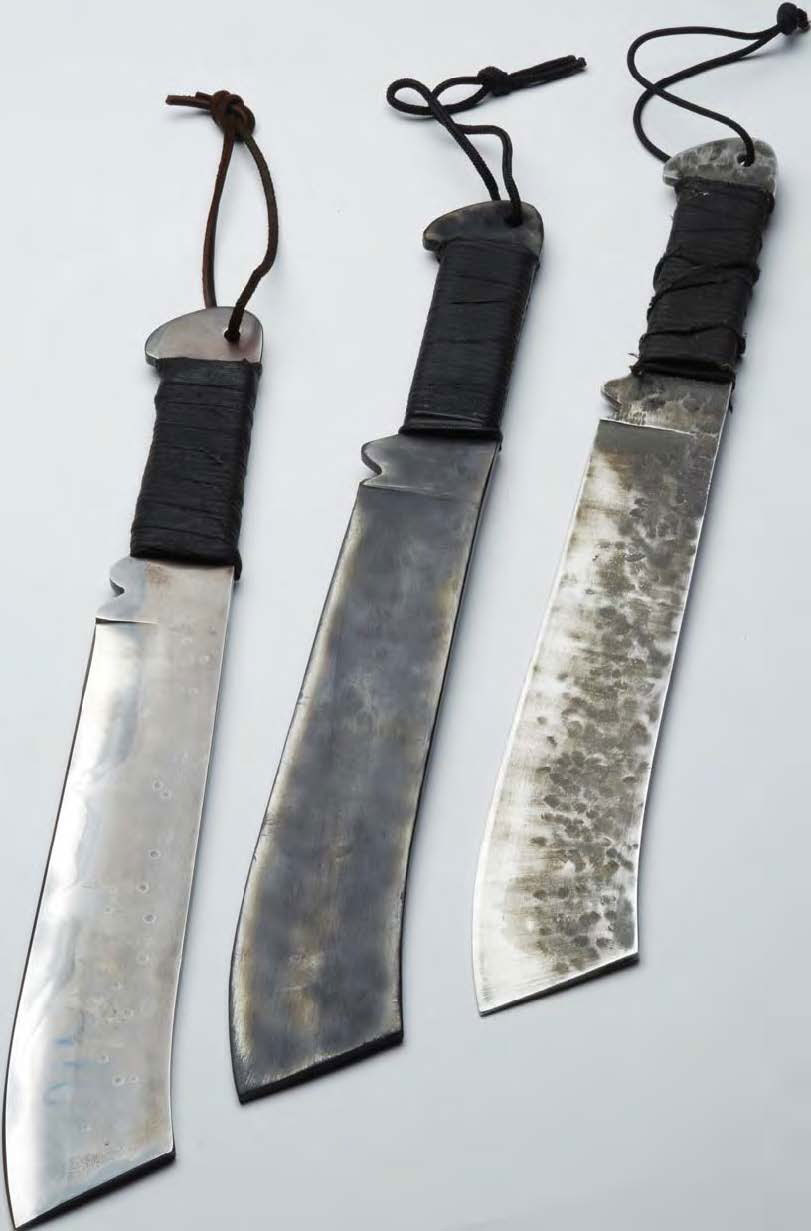
The fourth Rambo movie is the most like “First Blood” in tone. The violence is harder to watch, the remote, distant explosions giving way to up-close-and-personal eviscerations and decapitations, all done with a chopper-machete made by Gil Hibben. (Cory Sorensen image; knife from the Randy Rousseau collection)
Survival authority, knife and tool designer, and writer Abe Elias mentioned that in the first movie we actually see Rambo open up the hollow-handled knife and use the items inside. He sews up his own wounds with the fishing line and uses the knife to make traps and kill a boar. He has a compass on the inner side of the butt cap, and can break glass with the outer side. The sawteeth on the spine can be used in woodcraft. The ends of the crossguard are Phillips and flat-head screwdrivers.
The entire concept was based on a pilot survival knife for Air Force pilots and Army helicopter pilots, the intent being that if they were shot down, they would have what they needed to survive in one tool. The sawtooth spines, for example, were for cutting through the acrylic canopies on the downed aircraft.
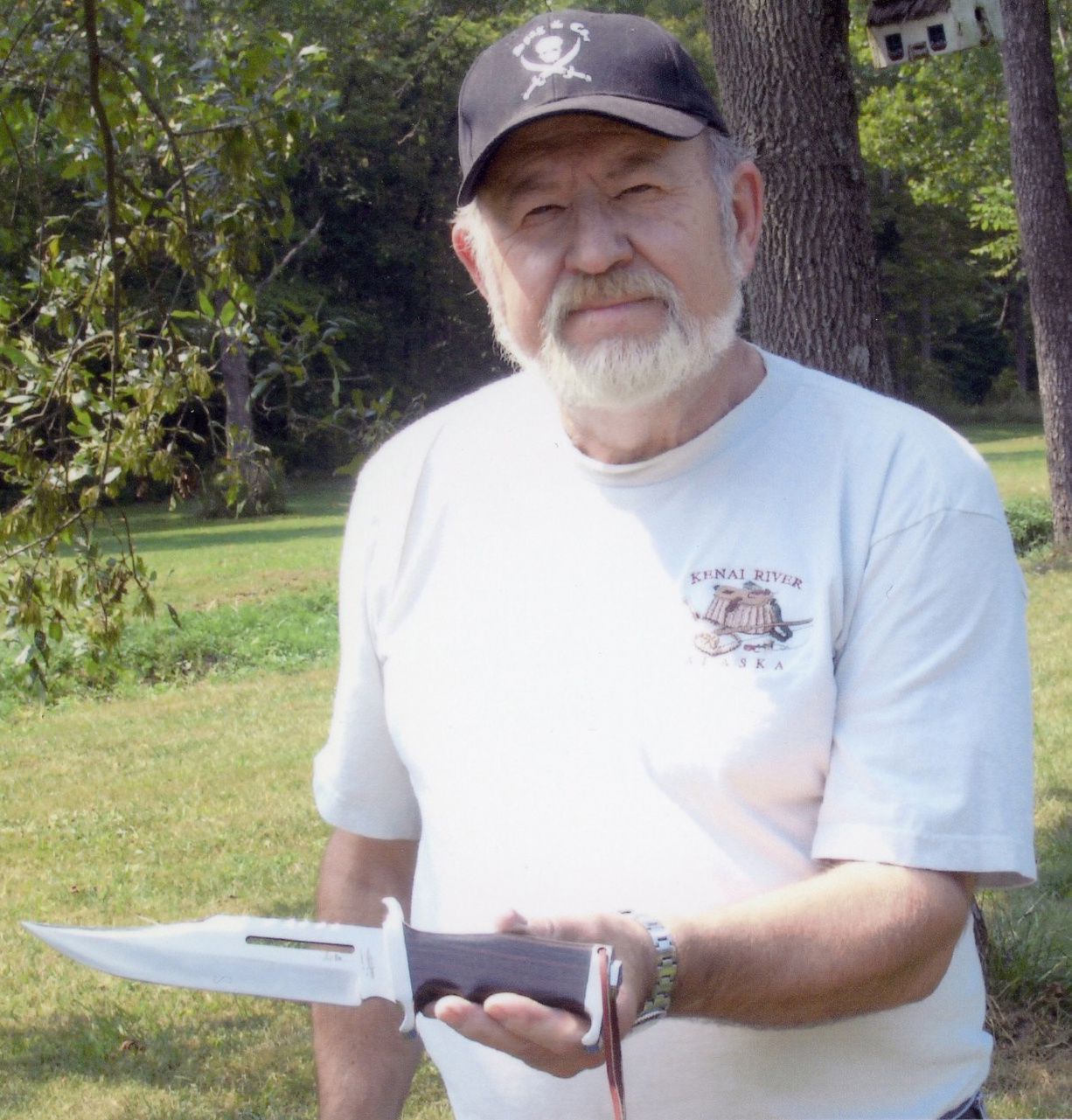
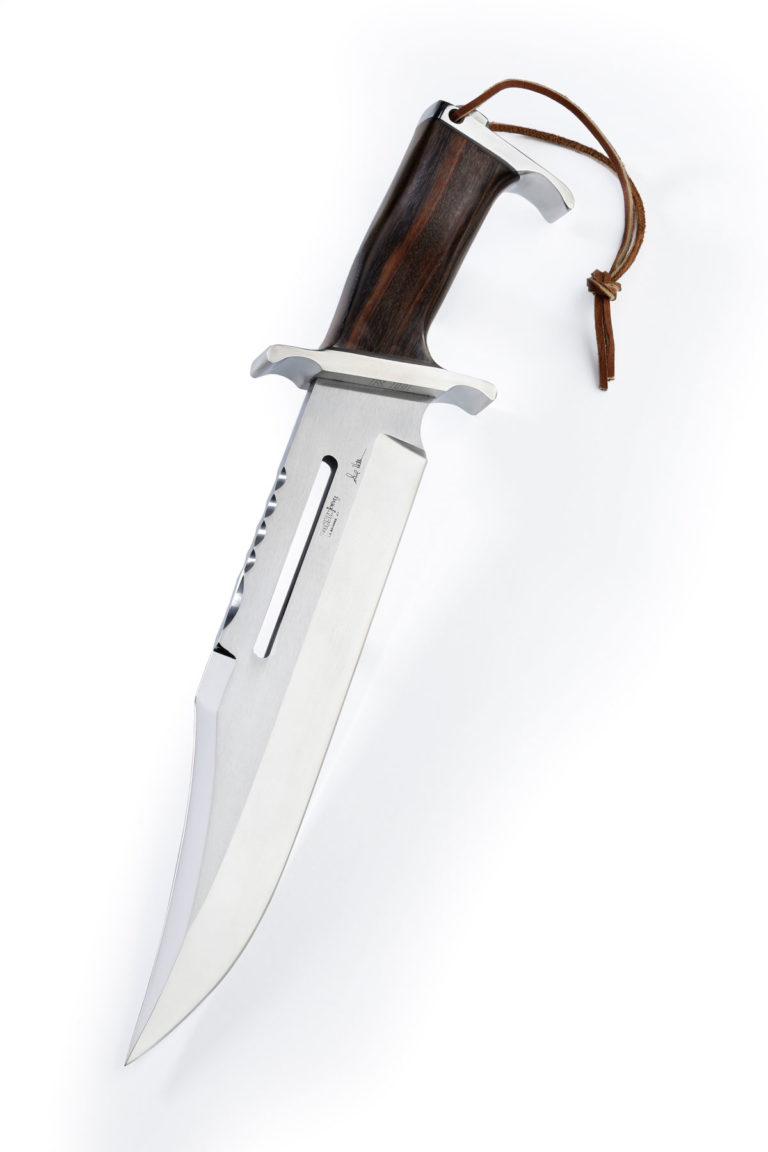
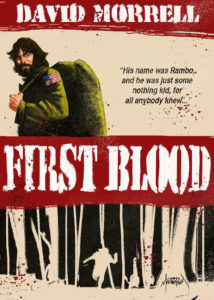
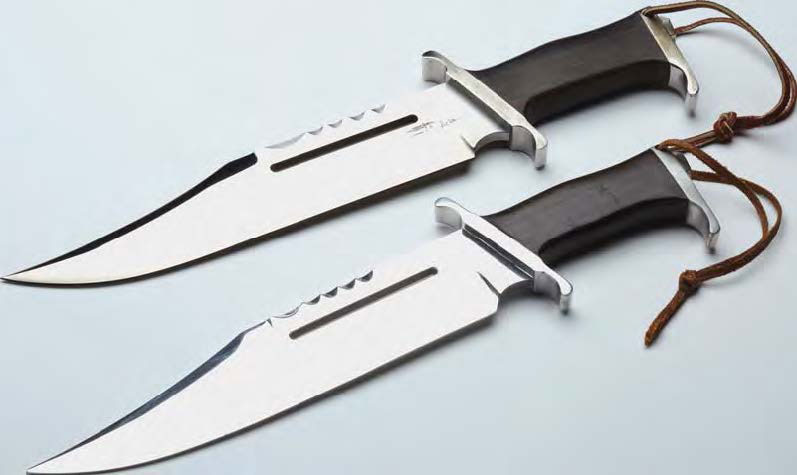
Cutlery Hall-Of-Famer Gil Hibben designed the knife for “Rambo III” with input from Sylvester Stallone. While Rambo’s knives in the first two movies were survival knives, this was definitely a bowie—a massive one, with an 11 7/8-inch blade. (Cory Sorensen image; knife from the Randy Rousseau collection)The main character of Rambo does not have a first name in the book “First Blood” by David Morrell. The movie gives Rambo the first name of John.
By Rambo III, Gil Hibben had designed an actual bowie for Sylvester Stallone to use in his penultimate appearance as John Rambo. In actuality, the pilot survival knife is said to be based on the Bowie, so there always was a strong connection between the knives. The Hibben version has a 3¾-inch cutout running parallel to the spine, which mainly serves to lighten the 11 7/8-inch blade. Rambo loses the knife but keeps the sheath that he’ll later convert to fit his machete in Rambo, the final in the series.
Elias reminds us that Rambo didn’t kill with the knife in First Blood. He did some serious damage, but not with the knife.
After First Blood, the other three movies seem more caricatures, building a legacy around a fictional character who already was larger than life, symbolized by the knives getting less survival-centric and increasingly combat focused.
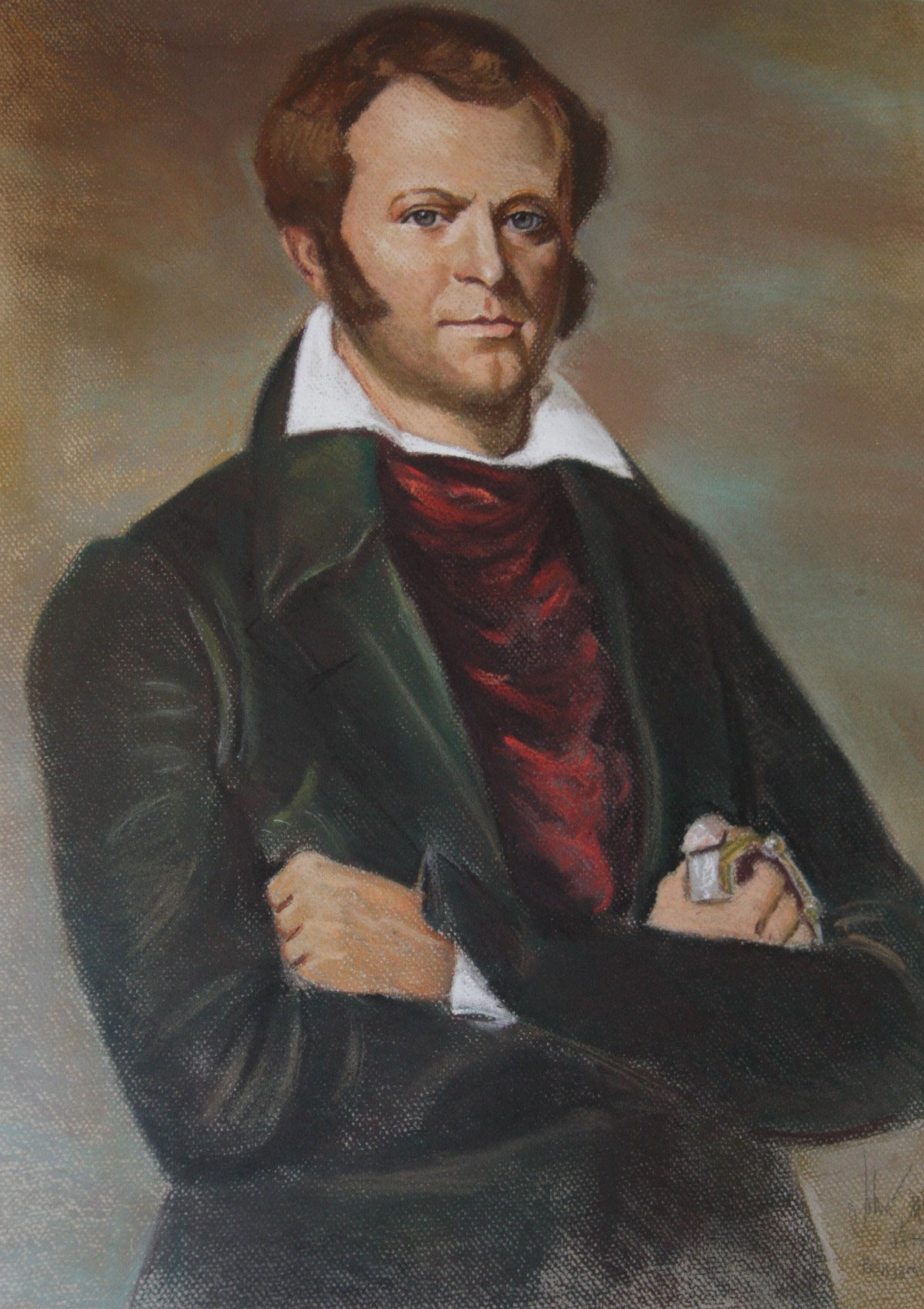
Similarly, historians often surmise that James Bowie may have only participated in one knife fight, a duel-turned-melee that left him with multiple gunshot wounds and stabbings.
He is believed thereafter to have worn a large sheathed knife, bolstering his reputation as a fighter and frontiersman. He held a leading role in the Texas Revolution, and stories built him into a folk hero.
Rambo Knife: Marketing Drove Design Changes
Hollow-handled survival knives were already in existence prior to Jimmy Lile’s Rambo knife, but it wasn’t until First Blood that their popularity took off.
Elias remembers the mid-to-late `80s as a time when the survival industry as we know it was just coming into its own, but it still wasn’t commercialized. There were military surplus stores, but there weren’t countless companies selling survival foods and gear. There were very few items that had been capitalized on as “survival” and specialized for that intent. Knives were one of those items, and so the Rambo knife was a hit with both adults and kids.
But then a funny thing happened. Manufacturers began producing hefty bushcraft knives that could stand up to any type of abuse, but often couldn’t cut. So, it became necessary for a survival knife to be “indestructible.”
Well, if you repeatedly baton a hollow-handled knife into a 16-inch log of seasoned hardwood, it won’t hold up. But that was never the intent, and Elias reiterated that it’s rare that you’d baton logs of seasoned wood in a survival situation. It’s far more likely that you’d be making feather sticks, cutting twigs off bigger downed branches and otherwise working with smaller wood for deadfall traps, spears for fishing and roasting small game, and the like.
Bowie Knife: Marketing Drove Manufacturing
The history of the Bowie design is murky, but by the 1830s a longer, thinner Bowie with a longer false edge but less pronounced clip was being shipped from Sheffield, England. They were often etched or stamped with slogans such as “Americans Never Surrender.” The English were able to hide the originating location of the knives by operating works named after American cities, and thus stamping their blades with NY or other U.S. designations.
For the Bowie, it was the increased reliability of larger-caliber revolvers that killed the craze. Knife fights became a less likely proposition.
Larger than Life
If the knives aren’t fantasy enough, the stories around them fill in any gaps.
For instance, in Rambo III, Rambo partners with the mujahideen to defeat the Russian Army in Afghanistan in order to free his captured commander.
Meanwhile, we have stories of James Bowie wiping out Indian raiding parties during an expedition to find the San Saba silver mine, joining the Texas militia, and furthering his fighting prowess in at least two battles of the Texas Revolution.
Legends Die Hard
The most enduring story of James Bowie’s demise is that he fell ill at the Alamo and could no longer lead his volunteers. He is said to have died in his bed after unloading his pistols into the advancing Mexicans.
The cinematic John Rambo lives on. The literary Rambo—well, you’ll just have to immerse yourself in the book to find out.
Keep Learning About Knife Designs
The history of knife design is the history of the knives themselves. Learn more about enduring knife designs in 101 Knife Designs, by renowned knifemaker Murray Carter. It’s available here at ShopBlade.com.
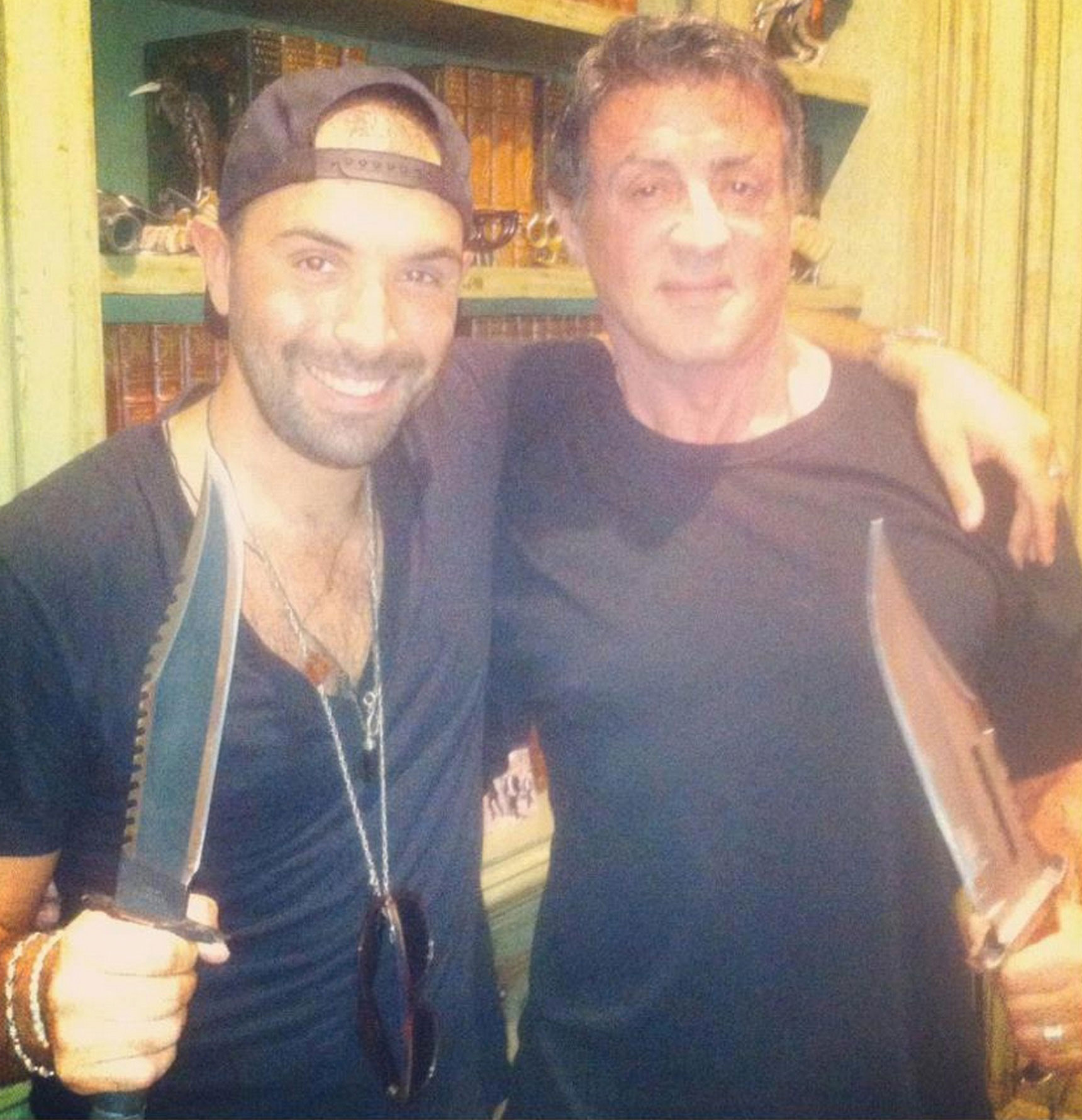
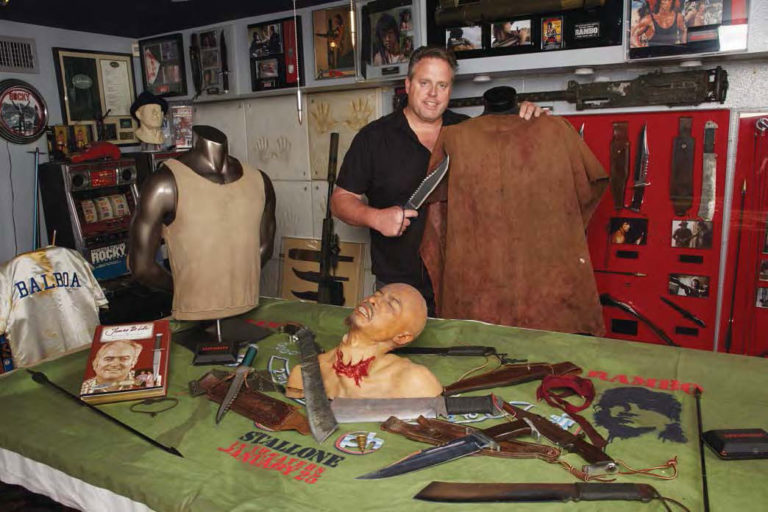
When it comes to collecting Rambo movie knives and movie props, Randy Rousseau takes a back seat to no one. A personal acquaintance of Sylvester Stallone’s, Mr. Rousseau has a collection of all things Rambo unlike any other anywhere.
On the 35th anniversary of First Blood, Rambo and Rambo knives in general, he was gracious enough to grant a special BLADE® interview about his collection, Rambo movie knife values, some little known facts about Rambo knives and much more.
BLADE: What are the values of the original versions of each Rambo knife?
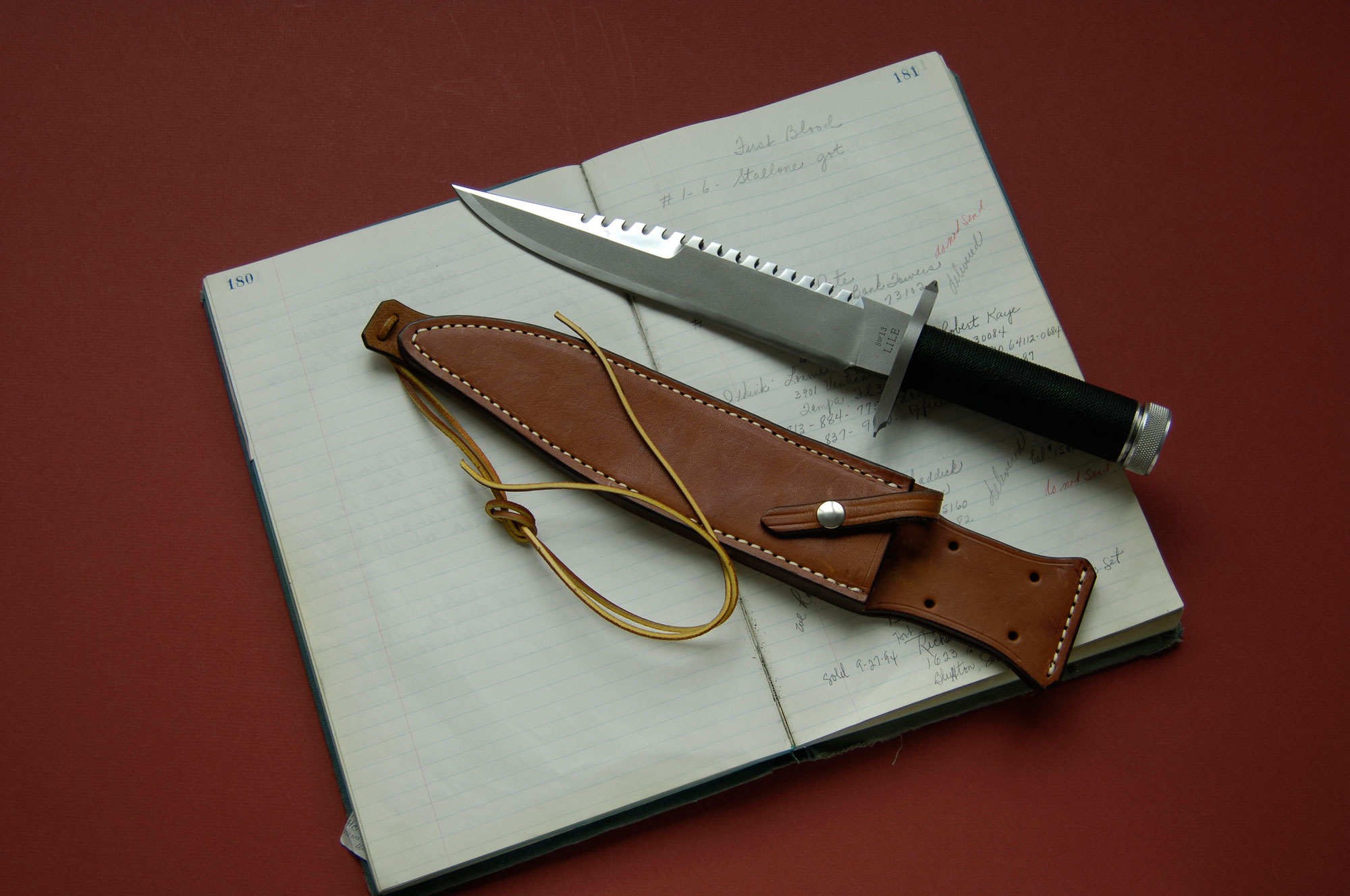
RANDY ROUSSEAU: The original First Blood knives serial numbered one through six are “priceless.” They are screen used and iconic, are owned by Stallone and are in his personal collection.
Numbers seven through 13 are worth anywhere from $50,000 to $75,000 each, and numbers 14 to 100 are worth anywhere from $15,000 to $25,000 each, depending on the number.
Give values for each knife in mint condition.
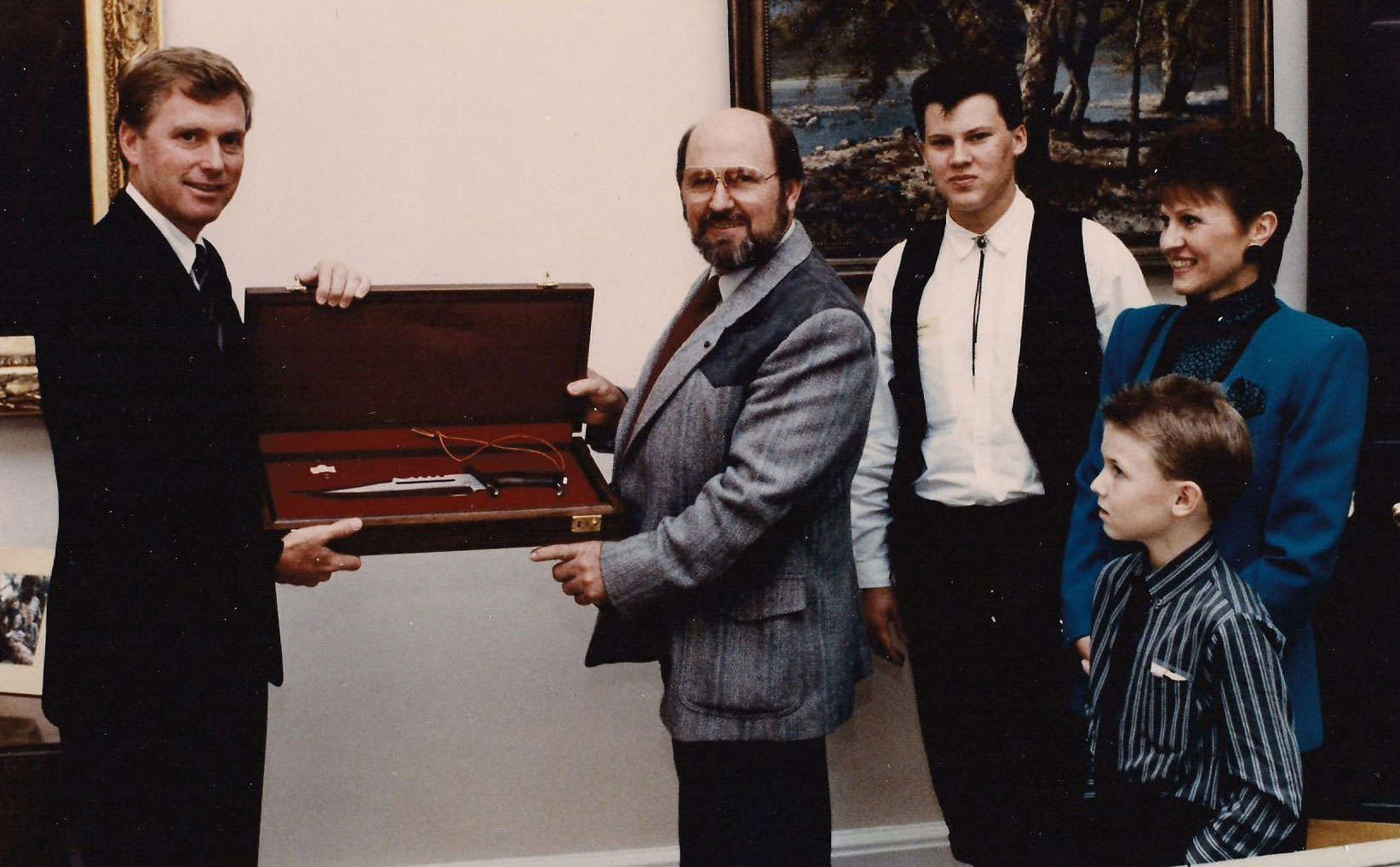
The first numbers from the Rambo II: The Mission knife sent to Stallone are iconic and from his personal collection. They are also screen used and are “priceless.” Rambo: First Blood, Part 2 was the highest grossing film in the series, which adds to the value from a film-prop collector’s point of view. The rest of the numbers up to 100 sold to collectors for between $25,000 to $50,000 each, depending on the serial number.
How many of each original version of each custom Rambo knife were made?
The Jimmy Lile Raven 1 of 1 Mission knife and the headband Stallone wore in the second Rambo movie. In the fi lm, Rambo removes a piece of the dress of the female character of Kos to make the headband. (from the Randy Rousseau collection)
How many of the original First Blood knives were damaged during the making of the movie?
Only one was damaged in filming and the others did survive. For more information see the video below. The knife in that video sold for $90,000.
How much is one of the first seven First Blood knives worth if in mint condition?
$75,000.
Do all of the original First Blood knives still exist or do you know?
Yes. They are in private collections.
Are the First Blood knives with the Jim Buff aloe sheaths more valuable and if so, how much more?
Yes. Five thousand dollars more each.
How much are the unnumbered First Blood custom knives worth in mint condition?
Five thousand to $7,000 each.
What is one of the first 100 Rambo II: The Mission custom knives worth in mint condition?
$25,000 to $50,000, depending on the serial number.
How much is one of the 25 Mission custom knives with black blades worth, in mint condition?
Anywhere from $7,500 to $10,000.
How much are each of the unnumbered Mission custom knives worth in mint condition?
Three thousand to $5,000 each.
How many of the custom Gil Hibben knives actually used in Rambo III were made, and how much is each worth in mint condition?
Six. All are “priceless,” screen used and owned by Stallone, and iconic.
The Gil Hibben Rambo III Raven 1 of 1 (top) with Stallone’s prop custom-made-for-production, screen-used aluminum prop knife (bottom) from Rambo III. (from the Randy Rousseau collection)
You mentioned something about there being two serial number 19 Rambo knives. Were those Liles and if so, please explain why there are two.
Yes, the Mission knife. The original serial number 19 had some issues and was sent back to Jimmy. Rather than repairing it right away, he made another serial number 19 and sent it to the collector. Years later after Jimmy passed away the original 19 had been repaired and sold. The 19 is rare because it’s the only duplicate number in all of the Rambo saga of knives.
Who has them and what are they worth?
I own one of them. The second/replacement number 19 is the rarest of the set of 100 because it’s the only duplicate of the series. It’s worth $50,000. The other number 19 sold on the Internet a few years back for $38,000.
The knife used by Jim Bowie in the Sandbar Fight inspired scores of emulators in both Sheffield, England, and the USA in the 19th century, and the Rambo knife did the same by knifemakers and knife companies worldwide. Is the Rambo knife the modern-day equivalent of Jim Bowie’s knife in terms of popularity?
Yes, 100 percent, due in large part to its being used as a reference in popular culture.
The dog tags worn by Stallone in First Blood next to the Jimmy Lile First Blood 1 of 1 Raven. (from the Randy Rousseau collection)
In your opinion, is the Rambo knife less popular than Bowie’s knife, about the same or more so, and why?
More so. The Rambo knife has worldwide appeal. Nothing will ever come close. It was a moment in time, like lightning in a bottle. It made such an impression on the generation and inspired so many to go into the prop business for films and/or the knife-collecting world. I know folks who have a likeness of the Mission knife tattooed on their body.
It really inspired a generation that put serious interest into the knife industry. Never had we seen a character on film use such an elegant knife in this manner. And after all these years, nothing on film comes close to the Rambo knives seen in the four movies.
What do Jim Bowie’s knife and the Rambo knife have in common?
Their impact on culture. Each is famous for its influence on the knife industry and the public.
How are they different?
They are from different times but defined a generation, like Elvis and Michael Jackson did their generations.
How did the Rambo knife change the custom and factory knife industries?
It brought major interest back to the knife-collector side and created an entire industry of replicas for the common fan. I have been told that the Rambo movies saved the knife business, and with the movies still getting major viewers on cable and downloadable services, the interest is still very strong.
Are there any issues or stories concerning the Rambo knives that you know of that have never been addressed or that are rarely addressed that you think need addressing?
Yes, the Rambo III “Rescue” knife that was used on screen in the minefield. It’s a beautiful version that really doesn’t get a lot of interest but is a very cool Rambo knife. It sort of ties the gap between the first two films to the Rambo III main version from a design point of view.
Also, Jimmy Lile made a 1 of 1 for Stallone with his code name RAVEN on a First Blood version and a Rambo II Mission version. Extremely rare, they are the only 1 of 1 Lile Ravens in existence. In keeping with the Raven theme, Gil Hibben was asked to produce the same for the Rambo III knife. It is marked Raven 1 of 1.
And again for the fourth film, the Rambo IV knife was made and marked Raven 1 of 1, making this the only complete 1-of-1 set in the world from all four films.
Rambo IV Gil Hibben movie knife (left) with Stallone’s custom-made rubber prop knife (center) and custom-made aluminum prop knife (right)—the latter two both screen used in the fourth movie. (from the Randy Rousseau collection)
Knives are a dominant force in many of our lives. There are the classic designs, the valued collectibles and, perhaps most of all, the users. Of the latter the ones I remember in a special way are those with which I accidentally cut myself. Of those cuts, three stand out.
Cut Number 1
I was 11 or so and rode a Western Auto Wildcat bicycle—the kind with the Hollywood handlebars and banana seat with sissy bar—most everywhere. At the time the oil company then known as Esso, today’s Exxon, had the promotion “put a tiger in your tank” with Esso gasoline.
To help sell it they gave away furry toy tiger tails with elastic looped straps people attached to their car gas caps so the tails would fl op in the breeze as the cars motored along.
I had the bright idea that I would cut the looped strap of one of the tails in two and tie the resulting straps around my banana seat sissy bar so the tail would fl op in the wind as I rode my bike. (To my later chagrin, I didn’t know how to do the old loop-tie trick back then.)
I pulled a large serrated knife from the kitchen drawer and proceeded to cut the strap—and also the base of my left index finger. It was one of those ragged-jagged cuts, and, when Dad walked in and saw it, I thought he was going to come un-gas-capped, so to- speak. Oddly enough, I don’t remember the cut hurting that much.
Anyhow, five stitches later I had learned just how fragile human flesh is.
Cut Number 2
Years later while fishing I caught a bream and was in the process of filleting it with a Marttiini classic fillet knife when zip, zap! the blade went right through the bream and across, over and through the tip of that same left index finger. The cut did not require stitches but the Marttiini blade was sharp as the dickens, and my finger burned like fire to the bone almost immediately after I cut it.
To this day I can recall how it felt and shudder at the memory.
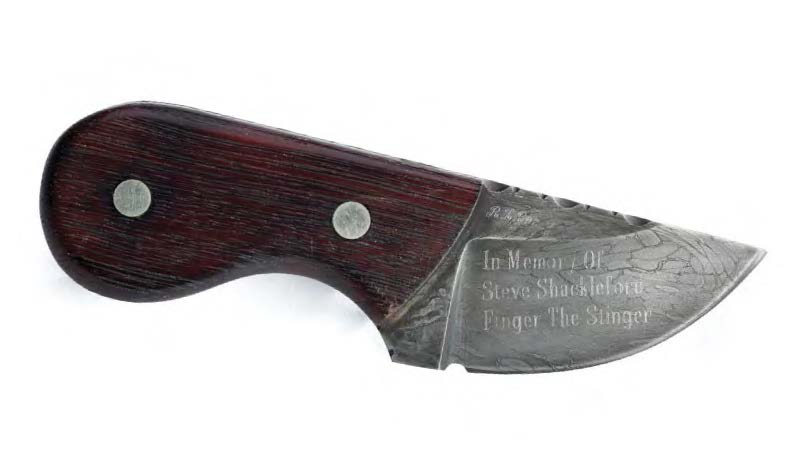
I propped up a small damascus fixed blade built by since-retired custom knifemaker Robert Brothers, along with its sheath, on a shelf. As the cameras photographed away, being the colossal klutz I am I bumped the shelf. The knife came tumbling down point-first into the webbed skin between my ring finger and pinky. You guessed it—I let out with the “sh__!” word in full earshot of the show’s television viewing audience.
Bruce took my on-air epithet better than I thought he would. (Unlike today, profanity was forbidden on television back then.) Maybe the best part was the knife did not sell and Brothers, being the good Samaritan, gave it to me—but not before having it etched, “In Memory of Steve Shackleford: Finger The Stinger.”
I don’t have the old serrated knife or the Marttiini fillet but I still have The Stinger—and, somehow, all my fingers, too.
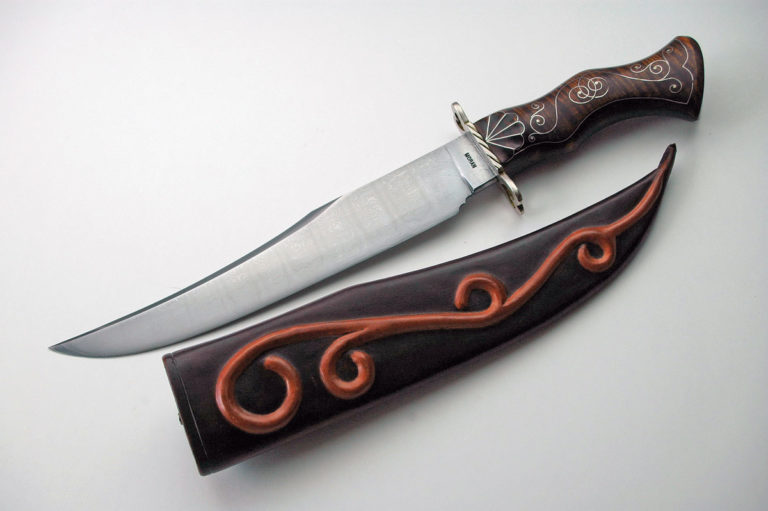
Bill Moran is one of the godfathers of modern knifemaking. Above are four knives that demonstrate his iconic style and show why he continues to inspire generations of knifemakers.
Here is the master at work:
Learn Knifemaking from a True Legend
Bob Loveless is another legendary knifemaker. He wrote a guide to turning out knives like a pro, and BLADE‘s online store is one of the few places carrying it. Get your copy of How to Make Knives here from ShopBlade.com.