Knife collecting is an extremely rewarding experience for knife enthusiasts. There truly is a knife for everyone. Many increase or hold their value throughout the years, making collecting knives something to pass on to the next generation of knife collectors.
America. Apple pie. More America. More apple pie. (Hey, it’s the holidays, and pie is mandatory, right?)
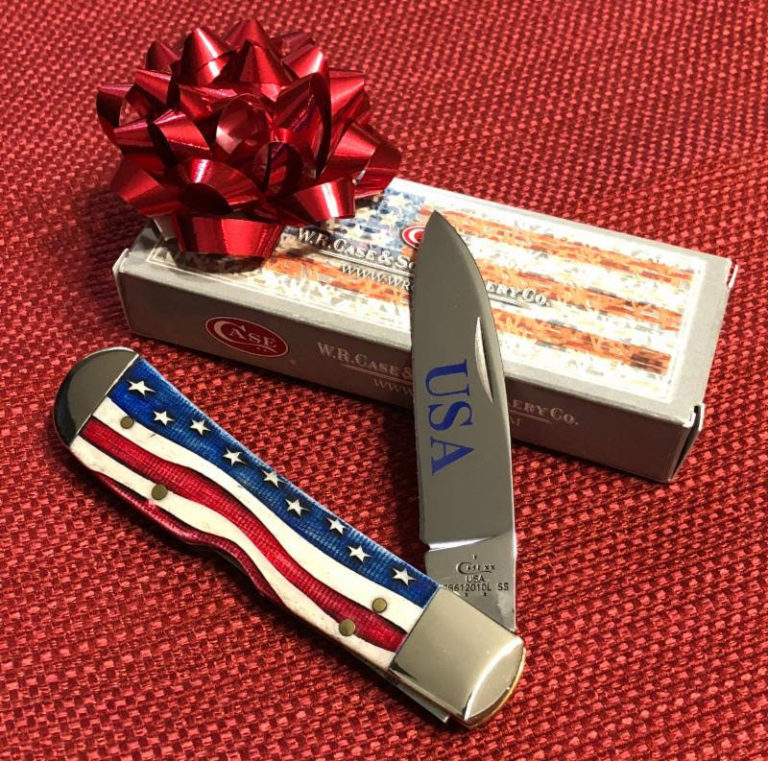
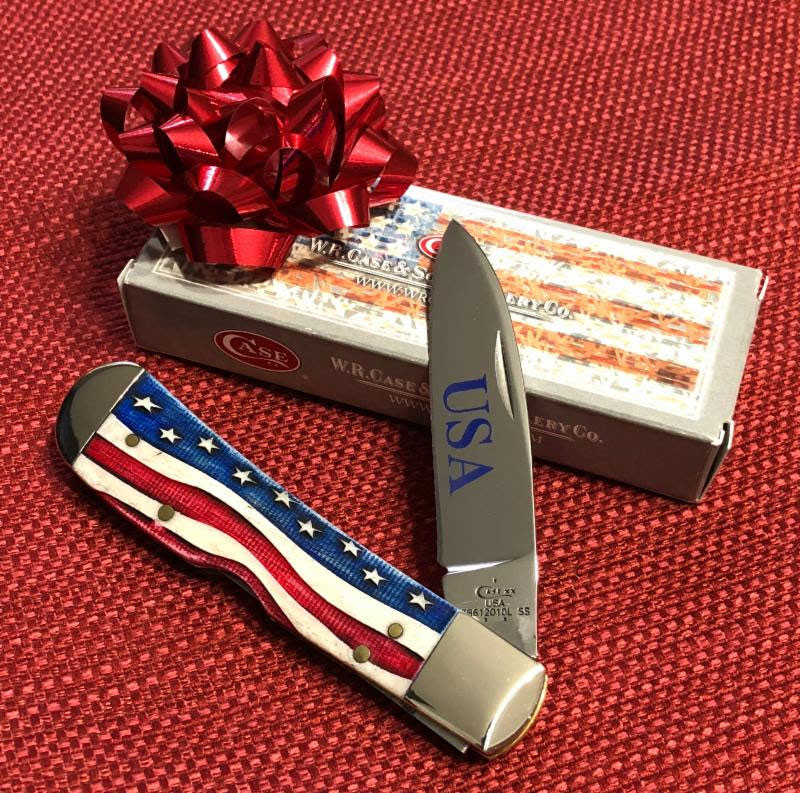
Wrap it all up with the new Case Star Spangled Tribal Lock in a patriotic-themed “natural bone” handle, and a Tru-Sharp surgical steel spear blade embellished with the iconic “USA.” The Star-Spangled Tribal Lock is the latest in the Case/Bose Tribal Lock family of knives designed by world-renowned knifemaker Tony Bose and is made in Bradford, Pennsylvania.
With a manufacturer’s suggested retail price of $148.70, the one-blade folder weighs 3.3 ounces and is 4 1/8 inches closed—a good, solid weight and size for pocket carry. Oh, and in case any of you are wondering, Case’s Tru-Sharp surgical steel is the company’s version of 420HC stainless.
Here’s an interview with Bose:
Crazy About Case Knives?
As the only full-color price guide devoted solely to Case pocket knives, Collecting Case Knives, 2nd. Ed. features nearly 1,000 photos, current values for hundreds of pocket knives from 1920 to today, and detailed information about methods for creating knives, quirks of the pattern numbering systems, tang stamps, types of blade steels, and knife shields.
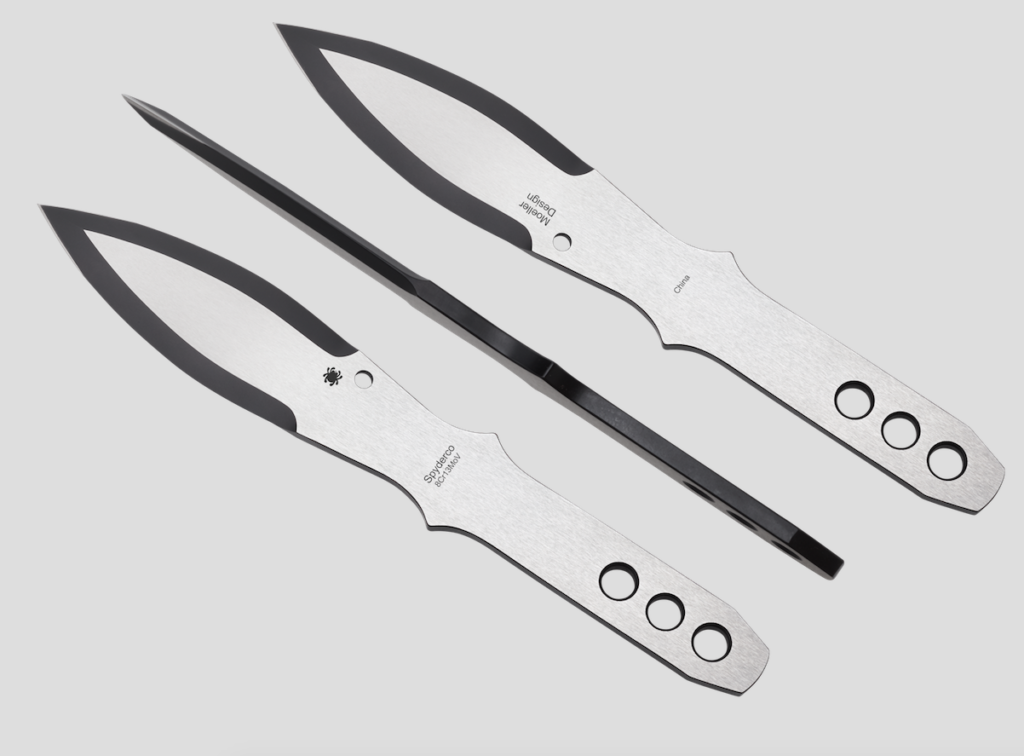
Designed by Harold Moeller, the SpyderThrowers from Spyderco feature 8Cr13MoV stainless steel and carry in a three-tiered sheath.
Whether it’s blood relatives or your inner circle of friends, all of them need family gift knives. Here are 10 examples of some really sharp gifts you can give to those closest to you this holiday season.
Kitchen knives make good family gift knives for just about any adult who likes to work with food. The three-piece Kershaw-Emerson set includes a chef’s knife, paring knife and bread knife—three of the most used cutting tools in the eating area. Check this great gift out for an MRSP of only $44.99.
Tactical guru Ernest Emerson designed a new set of kitchen knives—outstanding family gift knives—for Kershaw.
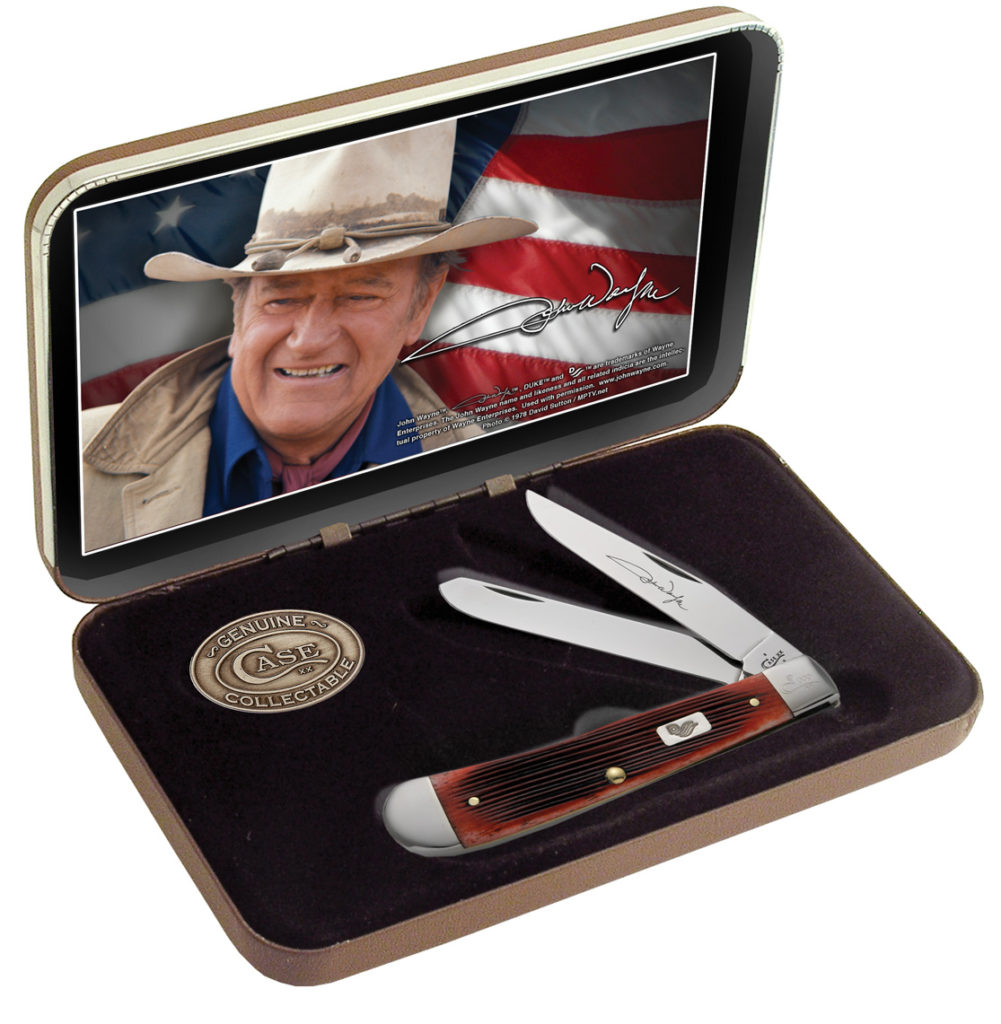
Grandpa loves traditional pocketknives and the Case dark redbone trapper commemorative tin in the motif of
Grandpa will love the Case Duke knife that includes John Wayne’s signature on the blade and the Red River D shield.
the premier pilgrim of them all, John Wayne, will be sure to fit gramps’ pistol. The shield is the “Red River D,” the ranch brand used by Duke’s character of Tom Dunson in the western movie classic Red River.
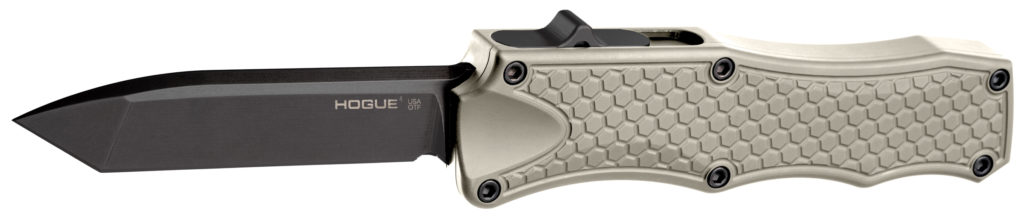
With bans against switchblades being overturned nationwide, it might just be that your state has overturned its ban as well. Check with the American Knife & Tool Institute or Knife Rights to find out. If it has, just about anyone of a proper age in your family will love the out-the-front auto from Hogue.
Hogue’s out-the-front auto sports a tanto blade of CPM 154 stainless steel in a black PVD finish. MSRP: $369.95.
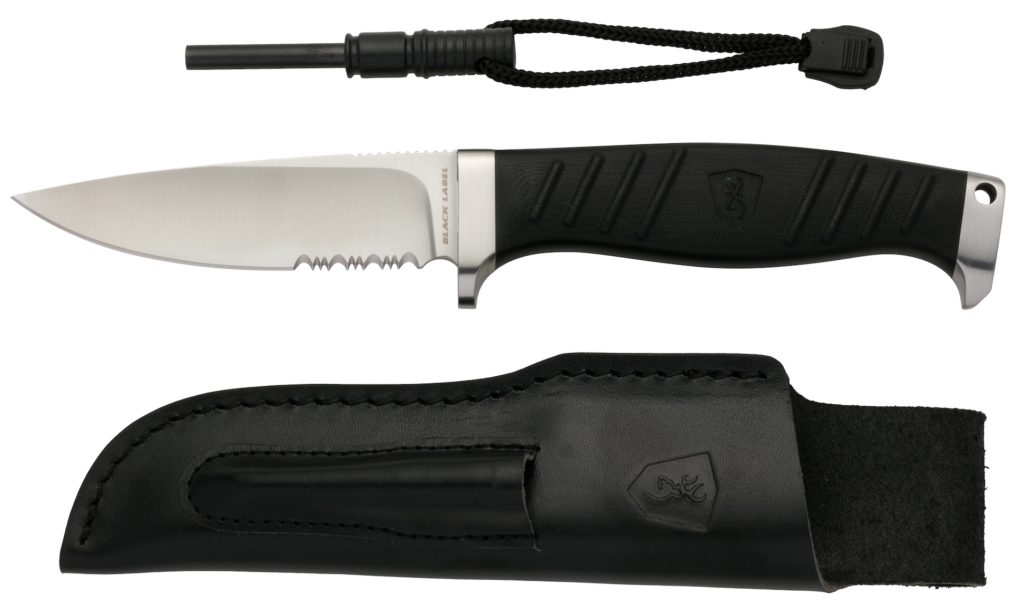
For the bush crafter in your family, check out the Bush Craft Ignite G-10 from Browning. It features a hollow-ground blade of 7Cr17MoV stainless steel and a carbide fire starter with a nylon lanyard that fits in a sheath pocket.
The Bush Craft Ignite G-10 from Browning includes a ribbed black G-10 handle, a partially serrated edge and a fire starter that fits in a sheath pocket. MSRP: $59.99.
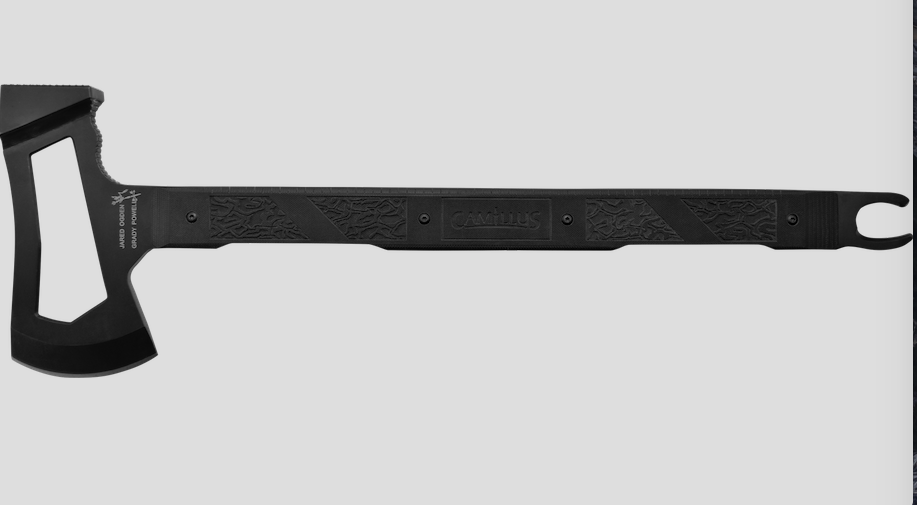
Every family has one–the type who, in an emergency situation where extreme measures must be taken to save someone from a burning building or other disaster, is more than ready to do what needs doing. Such situations can call for breaching tools, and Camillus has such a model with its Crash Breaching Tool. The CBT features titanium stainless steel, full-tang construction, a pry bar and hammer head.
The Camillus Crash Breaching Tool is for the door knocker downer in your family. MSRP: $119.99.
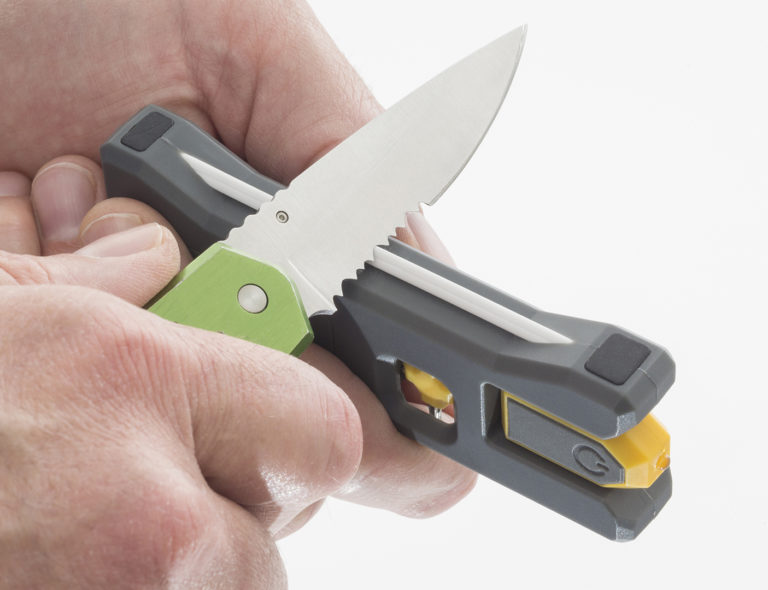
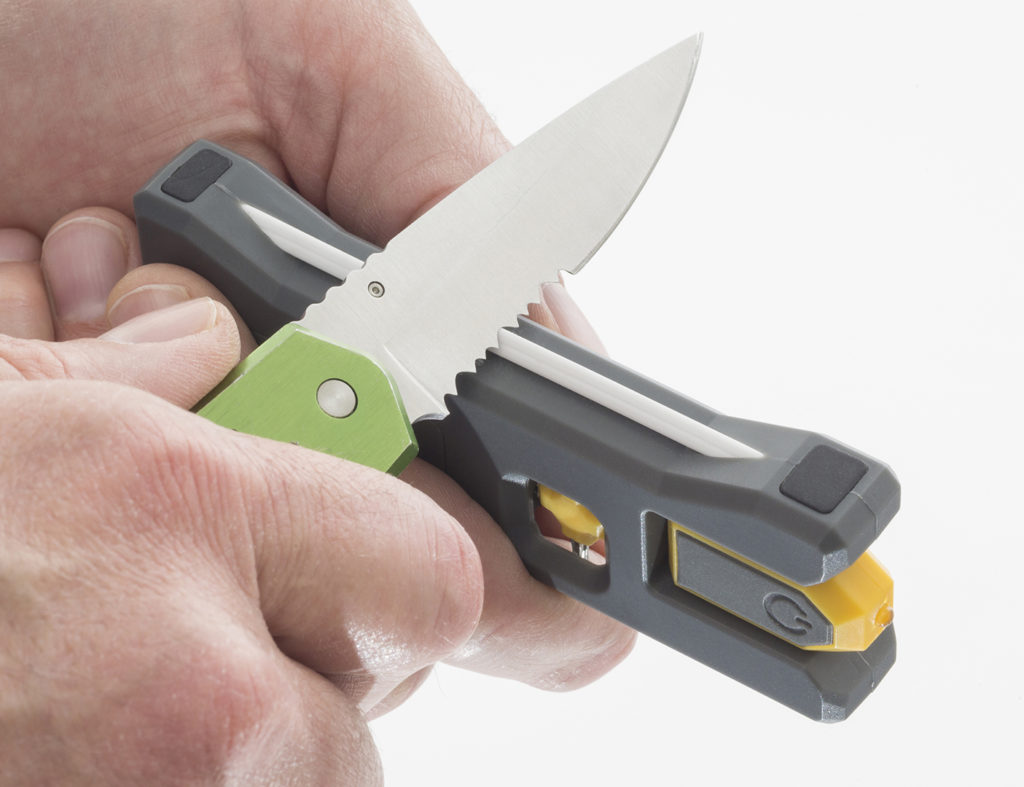
Your family member who likes to sharpen his/her family gift knives or wants to be better at it will love Smith’s Sharpener and Knife Tool. It sharpens both plain and serrated edges and comes in a cool compact carry unit.
Who’s the Zombie fan or fans in your family? KA-BAR‘s Zombie Knives line has just the folder for him, her or them with the Kharon Tanto Folder in the company’s familiar Zombie green handle.
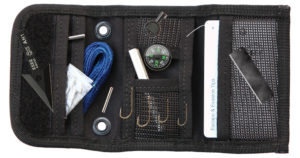
ESEE‘s Izula Gear Wallet Kit has a mini razor blade, kevlar cordage, signal mirror, non-metallic handcuff key, E&E plastic instruction cards, clear plastic survival nav card, fire starter, arrowhead, fish hooks, button compass and more.Knife, wrench, pliers, flashlight, screwdriver, comb, pen and more, the Stowaway Tool from Klecker enables you to load as many or as few of the items on one platform as you like.
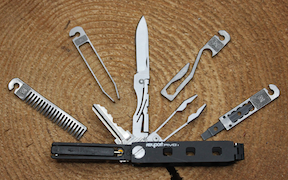
No matter your family member’s need, the Klecker Stowaway Tool most likely has a tool for it. Knife, flashlight, screwdriver, pliers, scissors, tweezers, bottle opener, pen, fire starter, comb, wrench, seat belt cutter and straight razor, you have your choice of any of them–and you can install as many or few of them on the Stowaway Tool as you like.
Every family has someone who likes to throw stuff, so why not with family gift knives? Spyderco has a set designed especially for the purpose with its SpyderThrowers. They are designed by Canadian knifemaker/knife-throwing authority Harald Moeller.
Everyone needs a survival kit, and one in wallet form is especially handy. ESEE‘s Izula Gear Wallet Kit has everything a dyed-in-the-wool survivalist needs in a handy carry package 4.25×2.75 inches in size and weighing in at only 4 ounces.
The Kharon Tanto Folder in KA-BAR‘s Zombie Knives line has a 3.375-inch blade of AUS 8A stainless and a Zombie green synthetic handle. MSRP: $21.05.Sharpen those pesky serrated edges and more with Smith’s Sharpener and Knife Tool.
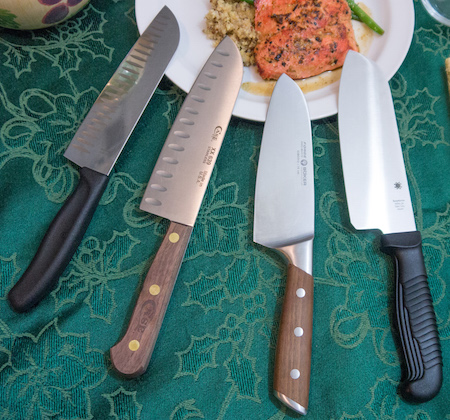
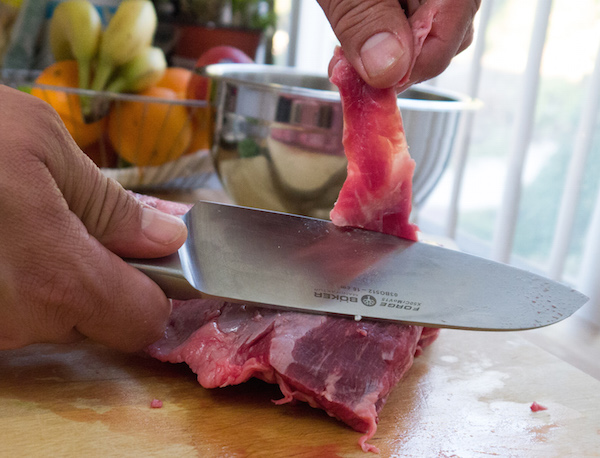
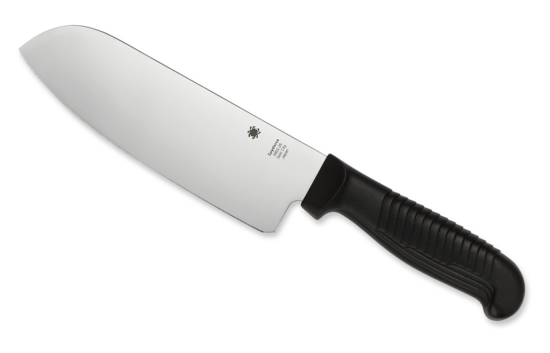
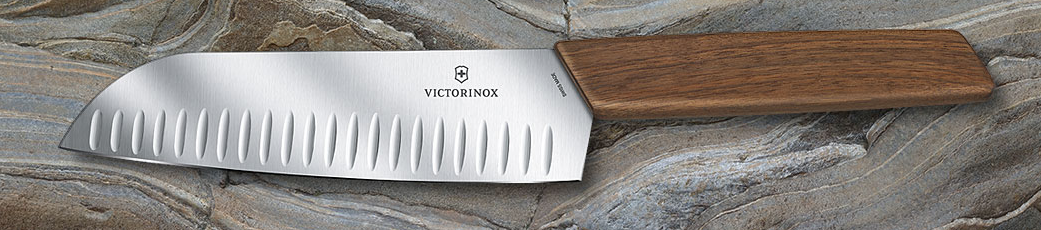
Thanksgiving cutters, Japanese style, from left: Victorinox SwissClassic Santoku, Case Santoku, Boker Forge Santoku Maple and Spyderco K08 Santoku.
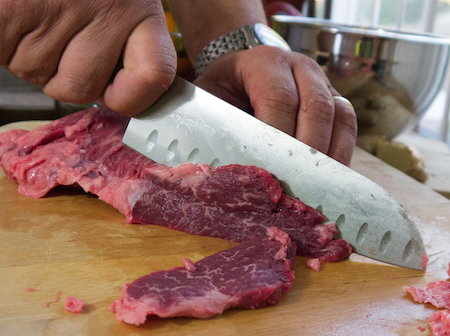
Santokus are Thanksgiving cutters, Japanese style. A design that originated in the Land of the Rising Sun, the santoku is a specialized tool well suited to preparing holiday meals. From cutting meat to dicing veggies and cutting fruit for creative holiday salads and such, santokus are perfect for Gobbler Day.
Santokus have a wide blade sometimes with scallops, which are supposed to create less friction than a solid blade, a sheepfoot tip, and are lighter and thinner than a French or German chef’s knife. Their length runs between 5 and 8 inches. The Thanksgiving cutters do not have a bolster. They have a straight edge with no curve.
San-to-ku is Japanese for the three cutting tasks for which the knife is designed: slicing, dicing and mincing. It is a specialized knife that, in the Japanese view, is optimized for the three aforementioned tasks. The straight edge of a santoku does not allow for the rocking motion commonly used with a French or German chef’s knife.
Cuts are made straight down with little or no forward movement, almost a guillotine action, which, again in the Japanese view, allows slicing very thin pieces of whatever’s being cut with precision. The Thanksgiving cutters are not meant to be all-around kitchen knives. An all-around knife used to cut many things is not a Japanese concept. The Japanese chef will typically have a vast array of knives, each one designed for a specific function.
Japanese kitchen knives typically have a chisel grind, which also contributes to cutting very thin slices with precision, as you may have seen sushi chefs do. The chisel grind is optimal for slicing, say, very thin slices of turkey, with the caveat that there are left and right grinds. If you are right handed you’ll need a blade ground on the right side. The chisel grind doesn’t work well for cutting through thick media, such as roasts and ribs because the chisel grind—since the edge is off center—will cause the blade to cut off center, and to wander. Also, the thin edge of a Santoku should not be used to cut through joints or bones, or to disjoint, say, a chicken.
HAPPY MARRIAGE
One reason santokus make such good Thanksgiving cutters is their ability to cut small meat slivers. The Boker Forge Santoku Maple is a classic example.
With its hefty blade, full tang, nicely sculpted bolsters and maple scales, the Boker Forge Santoku Maple is a happy marriage of a classic santoku and a German or French chef’s knife. While it lacks the acute point of a chef’s knife, the slight point is usable. The edge does have somewhat of a curve, which allows the rocking motion Western-trained chefs, and many domestic home cooks, are accustomed to using. It is the only one of the four knives reviewed that I would use to cut through pork rib joints, chicken backs, etc. The Boker is almost a mini cleaver as well as being an excellent slicer. It is a handsome knife and comfortable for long periods of work.
Thanksgiving cutters must be adept at slicing veggies, and the Boker Forge Santoku Maple is that and more.
STURDY STUDY
With its walnut scales and full tang, the Case model is also a sturdy example of a Santoku. It has a barely perceptible curve to the edge and a scalloped blade. The Case looks more like a classic santoku than the Boker, but like the Boker has a thicker blade than a standard Japanese santoku. It felt solid in hand and while not as sculpted as the Boker, the traditional American handle was comfortable during extended use. The Case sliced, diced and minced as well as thin-bladed Santokus while giving the impression that it would be up for harder work if need be.
Thanksgiving cutters must be able to tackle meat slicing and the Case Santoku is a prime-cut cutter.
21st-CENTURY SHARP
Spyderco image
With its wide blade, classic Santoku profile, comfortable, molded grip and graceful overall appearance, the Spyderco K08 looks like a 21st-century interpretation of a classic—which is pretty much what it is. It is a very lightweight knife with an extremely thin blade, which is optimal for doing what a santoku is supposed to do. The Spyderco does have a slight curve toward the tip, which I think adds to its smooth lines. Since I am accustomed to using a French or German chef’s knife, the curve also made it easier for me to work my way through piles of squash and mushrooms, especially mushrooms, which I find hard to slice. The blade also made it easy to slice salmon smoothly and evenly.
ENTRY-LEVEL PRO
Victorinox image
Victorinox makes the knives The American Culinary Institute gives to its students: chef’s knives, paring knives, bread knives and, yes, santokus. Pro chef Shawn Carlson’s first professional knife roll contained only Victorinox knives. So, he was familiar with the Victorinox characteristics: thin profile, very sharp, fairly soft steel that requires frequent steeling but which comes back to a fine edge quickly, and which does not chip if dropped on a kitchen floor. It has the standard santoku shape: flat edge and sheepfoot tip rather than a curved profile and pointy tip. I missed a curved edge and had trouble adjusting to the flat straight edge. Shawn did not—again, a pro is a pro. It is an entry-level professional knife.
FLAIR GAME
If you enjoy cooking and take pleasure in using specialized tools, you’ll find a santoku a welcome addition to your quiver of Thanksgiving cutters—keeping in mind that a santoku is a specialized tool. If you like to keep things simple, an 8-inch chef’s knife and a 4-inch paring knife will do most any kitchen job—if not with the flair of a santoku.
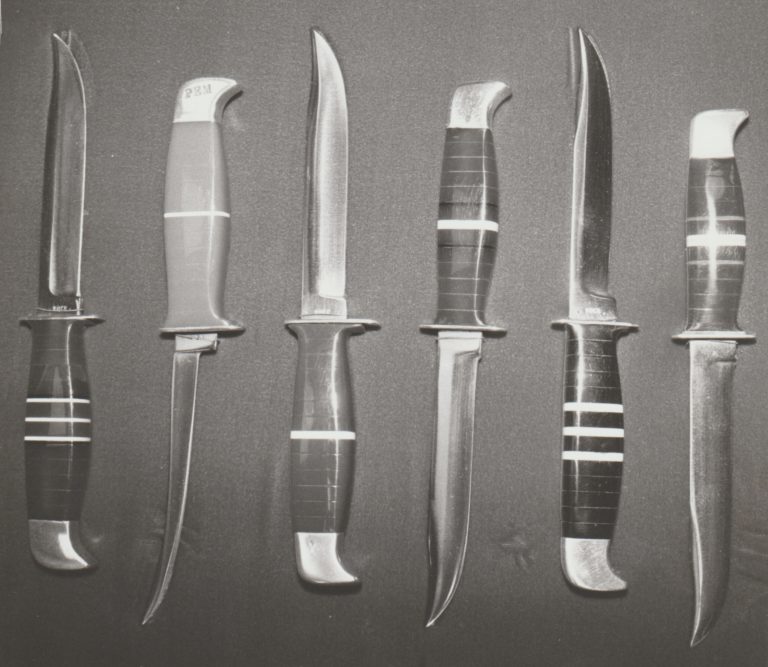
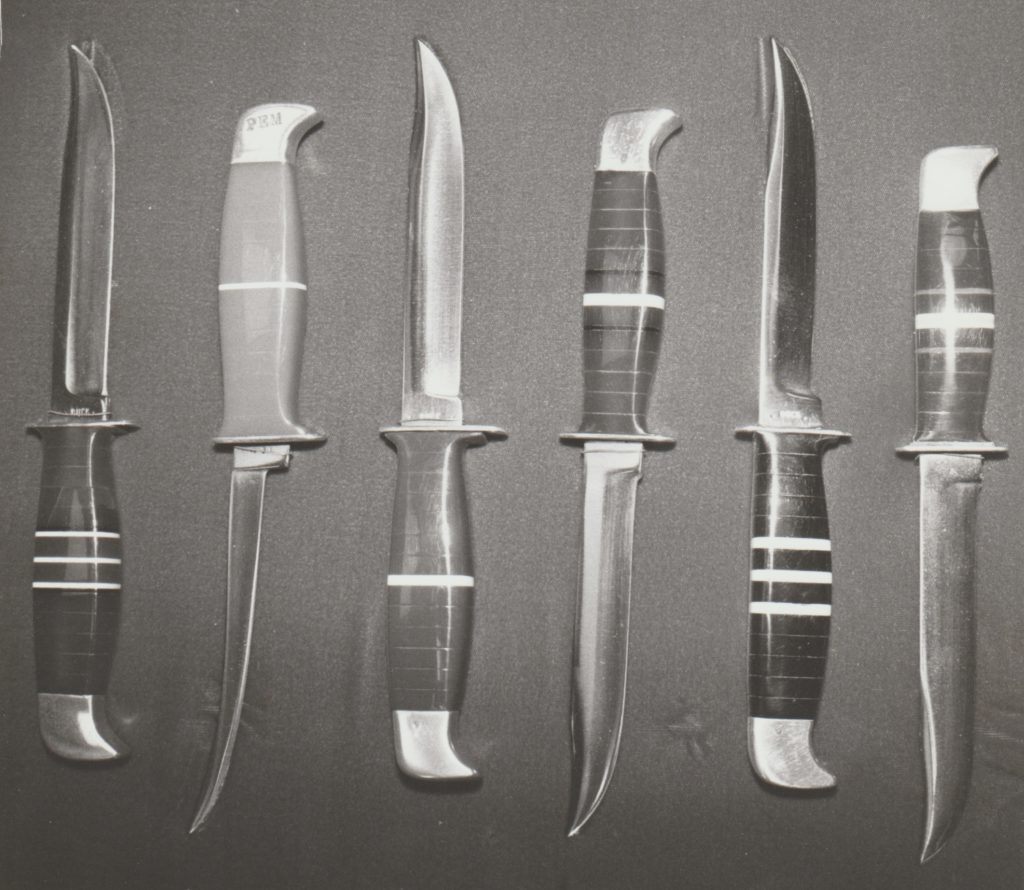
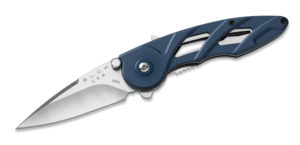
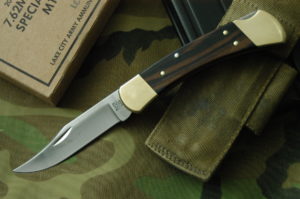
These pre-1950 Buck knives handmade by Buck patriarch Hoyt Buck are classic examples of the Buck legacy.CJ Buck was the most recent member of the First Family of Knives to be inducted into the BLADE Magazine Cutlery Hall Of Fame, entering the hall in 2016.One of several of Buck’s assisted-opening folding knives is the Rush.First produced in 1964, the Buck 110 remains one of the most famous modern production knives ever.
If there’s such a thing as the First Family of Knives, the Buck family is it.
Buck Knives has been run by a member of the Buck family—Hoyt, Al, Chuck or CJ—since “H.H. Buck and Son” set up shop in 1945. Since that time, the name Buck has become synonymous with fine hunting, sporting and other knives, and Al, Chuck and CJ help comprise the only family with three members to be inducted into the BLADE Magazine Cutlery Hall Of Fame*.
According to The Story of Buck Knives … A Family Business by Tom Ables, in 1946 “Buck’s knives were all created from used metal files that had been discarded by Consolidated Vultee, the huge aircraft manufacturing plant that later became Convair. These worn-out files, with their heavy carbon content, were perfect for the toughness and edge-holding qualities that Hoyt Buck required in his knives.”
Al joined his father full time in 1947. “[Al] learned how to laminate the thin strips of Lucite plastic used on the handles,” The Story of Buck Knives noted. “He learned how to separate and drill the handles themselves. Later, he learned how to temper the blades so painstakingly sharpened by his dad.”
Sadly, Hoyt learned he had cancer in 1948 and the dreaded disease claimed his life a short year later. He was only 59. Al assumed the company reins and guided it successfully through the 1950s and into the “modern age” of the 1960s. Buck incorporated in 1961, with a young Chuck Buck on the board of directors. The company began making the iconic Buck 110 Folding Hunter on a full production basis in September 1964. The knife’s sales jumped in 1965, increased 63 percent in 1966 and vaulted another 60 percent in 1967.
The knife industry would never be the same again.
Buck flourished under the direction of Al in the 1970s and ’80s, offering the latest in knife designs, materials and more. Along with the legendary Jimmy Lile, Howard Cole and William R. Williamson, Al was inducted into the Cutlery Hall Of Fame at the 1984 BLADE Show.
In 1984, Al Buck became the initial member of the First Family of Knives to join the Cutlery Hall Of Fame.
As the September/October 1984 issue of BLADE® noted in reference to Al and the 110. “Buck didn’t invent the lockback, but he certainly popularized it, and despite a flood of other lockbacks, the Buck knife still leads the way. If you are carrying a lockback today, you can thank Al Buck for his enduring promotional efforts. You have a safer knife for it.”
Chuck was next in line to be inducted into the Cutlery Hall Of Fame, being inducted along with Blackie Collins in 1996. Chuck was a part of the Buck family business from childhood. By 1970 he was corporate vice president for manufacturing, involved in all aspects of the process, from purchasing to personnel to packaging. In 1979 he became company president. Through Chuck’s leadership, the company completed a modern new plant and corporate headquarters in 1980 with 4.5 acres under one roof.
Under his direction the company grew and prospered, winning several BLADE Magazine Knife-Of-The-Year® Awards. By 2004 he was Buck Knives chairman and helped oversee the company’s historic move to Post Falls, Idaho, from El Cajon, California, in 2005.
Chuck Buck was the second Cutlery Hall Of Fame inductee from the First Family of Knives in 1996.
CJ was inducted into the Hall in 2016 following a career that saw him begin by working on the Buck production line in 1978. For 21 years he handled numerous company promotions and responsibilities. In 1999 he was named president of Buck Knives and, in 2001, CEO. In 2015 he was named Buck chairman of the board. He is a co-founder of the American Knife & Tool Institute (AKTI), serving multiple terms as AKTI president, and is the AKTI’s current CEO. He played a pivotal role in the AKTI’s historic defeat of an attempt by U.S. Customs to classify all one-hand-opening knives as switchblades in 2009. Ironically, today, thanks to the efforts of such organizations as AKTI and Knife Rights, switchblades—better known now as automatics—are being legalized in more and more states, and there’s even an effort under way to repeal the archaic Federal Switchblade Act of 1958. In addition, under CJ’s leadership, Buck has an entire line of automatics, including one of its latest—a version of the iconic 110 in full auto mode, no less.
The only family with three members in the Cutlery Hall Of Fame, the Bucks can legitimately lay claim to being the First Family of Knives. Their contributions speak for themselves.
•Uncle Henry and Al Baer of the original Imperial Schrade and A.G. and Goldie Russell are the only brothers and husband and wife, respectively, to be inducted into the Cutlery Hall Of Fame.
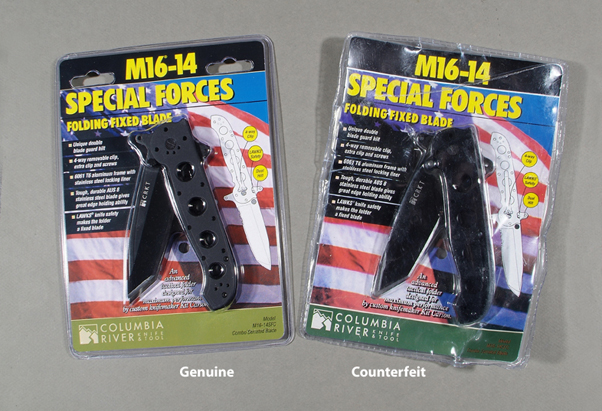
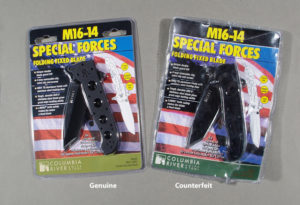
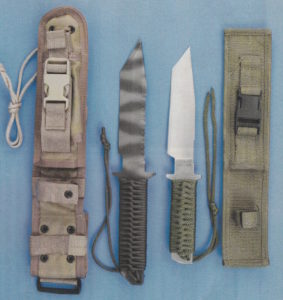
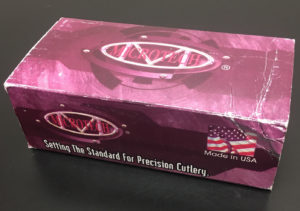
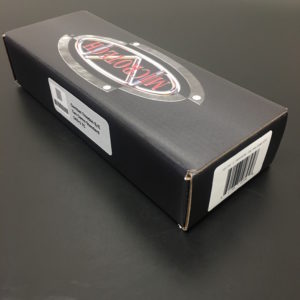
True counterfeit knives are those that not only copy the original in terms of every one of the knife’s features and markings, but also in every detail of the knife’s packaging as well, such as here on the CRKT M16-14. The authentic one is at left, the counterfeit at right.Counterfeiters marked their counterfeit (right) of an authentic Strider fixed blade (left) “Strider,” but from there it becomes obvious the counterfeit is not legitimate. Note the counterfeit’s incorrect dimensions, inaccurate blade grind, finish and length of clip, miniscule sawteeth and sharp corners where they should not be, as well as the shoddy workmanship of the green sheath.The Microtech knife box above with a pinkish hue is a counterfeit. The authentic box at left is outfitted with a unique serialized barcode and also a “claw” watermark to help identify the authentic packaging.The authentic Microtech packaging is black and has the unique serialized bar code.Another indication of authenticity on the Microtech product box is the special Stars ‘n Stripes “claw” watermark.
Fake knives—better known as counterfeit knives—are a worldwide problem that needs everyone concerned to pay attention, and National Fraud Awareness Week Nov. 12-18 is a good time to sit up and take notice.
Factory knife companies are especially prone to having their knives counterfeited by nefarious operations, the latter usually based overseas. The American Knife & Tool Institute has a dedicated program tailored to fight the plague of fake knives, and other cutlery companies such as Browning, CRKT, Cold Steel, Chris Reeve Knives, Knifeart and others have websites that address the scourge.
What can you do? Visit the above sites and others and familiarize yourself with the situation concerning counterfeits of those companies’ knives. While some custom knives are victims of counterfeits as well, it’s largely the factory guys that are targeted simply because their knives are recognized by many and sold on a much larger scale than custom knives, and can earn the counterfeiters much more illicit money as a result.
One thing to keep in mind is exactly what is meant here by counterfeit knife. We are not talking about design features, designs, etc., that are “knocked off” without the original maker/designer’s OK or approval. That is another matter entirely. There are some instances of where knockoffs are done and the parties involved eventually wind up in court to settle the issue. If the matter cannot be resolved otherwise, the original designer ultimately may have to prove that the design feature, design, etc., is his or hers exclusively, it has not appeared on another knife before, etc. As you can imagine, since knives have been around since the dawn of humanity, such a thing many times can be very difficult to prove. However, again, knockoffs are not the issue here.
The issue here is a counterfeit knife in which the counterfeiter has copied everything in question about the knife, from the knife’s exact features, blade stamp and even the product box in which the knife is packaged. The product box even will illegally sport the knife and company’s name, the company’s address, etc. Then, when the unsuspecting buyer purchases the fake knives and sends them to the company about a warranty issue, the company in question has the unsavory duty of telling the buyer that he or she has been duped by counterfeits, and the company cannot honor the warranty. The buyer is then stuck with worthless fake knives.
Some of the counterfeits are easy to identify because they are shoddily done. Others, however, are not as easy to spot. It’s a growing problem, one that knife companies and knife enthusiasts everywhere—including you—must continue to deal with and be vigilant about. For more information look for Daniel Jackson’s story on counterfeit knives in the January 2018 BLADE®, on newsstands Dec. 26.
There are four categories of “glow.” Bioluminescence is, say, a firefly. There’s chemiluminescence, caused by a chemical reaction—think glow stick. Radioluminescence is most frequently used in clock or watch paints and on instrument panels. Then there’s phosphorescence, frequently used in toys, or toys for grown-ups: knives, or more specifically knife handles. The old-school invisible type of glow-in-the-dark scales show white-ish in daylight. The handle might have tinges of color, but it’s essentially white. If it has been exposed to enough sunlight, it will glow in blues, purples or greens in the dark. New-school daylight glow is visible day or night and comes in variety of colors. Here are six knife handles that glow in the dark, three of each variety, perfect options for Halloween or the everyday kid in all of us.
1. A son makes glow-in-the-dark-handled knife for his dad
Randy Madan of Patriot Horde Knives made this Pig Poker for his dad, Randy, who uses it on his farm in Kentucky. This type of old-school glow will appear creamy or pasty by day and either blue-violet or green by night, provided it has absorbed some UV light, explained scalemaker, Rob Carper of Rob Carper Innovations (RCI).
Randy Madan of Patriot Horde Knives made this 4.5-inch flat-ground blade out of 1095 steel from Aldo Bruno at New Jersey Steel Baron. The Pig Poker has an acid-washed finish and a hybrid glow-in-the-dark handle by Rob Carper of RC Innovations. The knife is 9 inches overall. Maker’s list price: $200. Contact Patriot Horde Knives, 760-885-9370, [email protected], on Facebook at Patriot Horde Knives or Jr Madan and on Instagram @the_patriot_horde.In low light this Pig Poker from The Patriot Horde Knives glows blue, provided it has absorbed enough light.
2. This GITD friction folder is pinned by a grenade pull
A rescue knife has a blunt point for two reasons, explained Denny Furey of Furey’s Urban Combat Knives – Unlimited. One, it can be used to pry with, and two, if you needed to cut someone’s seatbelt, for example, you don’t want to run the risk of sticking them with a sharp point.
The grenade pull locks the blade in the open position for secure cutting. The pin can then be stored in the attached slot on the sheath, similar to how a ferro rod might be stowed.
The “Resukyū” (Rescue) Friction Folder is a one-off by Denny Furey of Furey’s Urban Combat Knives – Unlimited. The 3-inch blunt-tip rescue blade is made out of O1 tool steel, as are the breacher/bottle opener and spacers. The blade and back spacer have an acid stonewashed finish. The knife measures 6.75 inches closed and 8 inches overall. The handle scales are Glow In The Dark by Voodoo Resins. The hardware, including the grenade pin lock, is stainless steel. Maker’s list price: $300 with Kydex/Holstex sheath. Contact Denny Furey, Furey’s Urban Combat Knives – Unlimited, 405-642-2198, [email protected], on Facebook at Furey’s Urban Combat Knives – Unlimited.This Denny Furey friction folder handle was made by Voodoo Resins and appears green in the dark.
3. New-school daytime glow is visible day or night
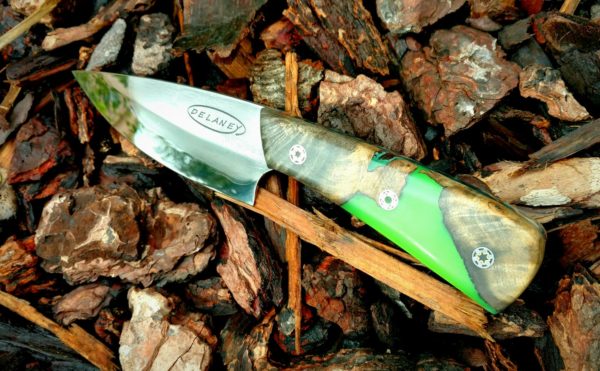
Jason Batdorf of Delaney Knives makes his own glow mix, using raw materials, but one would need to be a chemist with a laboratory to actually make the glow powder.
Jason Batdorf made this 4-inch flat-ground Delaney drop-point blade out of 1095 steel with hamon. The handle is a buckeye burl and glow hybrid made by the maker with his own glow mix. Overall length is 8 inches. Maker’s list price: $250. Contact Jason Batdorf, at Delaney Knives on Facebook or call 419-583-8238.
4. Knife named for a customer’s departed sister
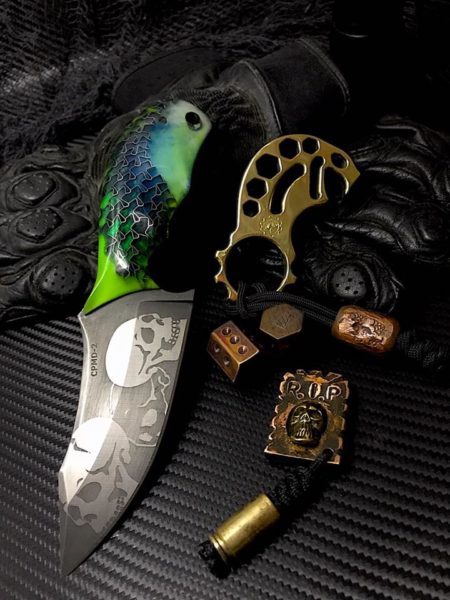
Brent Vacarro of Black Widow Knifeworks & Tactical Gear designed this blade for a customer as a custom order. When Brent began receiving interest in the knife, he wanted to introduce it into his lineup. But there were two problems. “First, I had to get permission from the customer, and second, I needed a name for it,” Brent explained. He contacted the customer and asked if it would be OK if he made more of this knife model. The customer was fine with that. “Then I asked him to name the blade,” Brent continued. “This is where it becomes very special very fast. He had told me about his sister passing away when they were younger, so he had asked if we can name the blade after her. My immediate response was ‘Of course!’ So that’s where H.E.R.L comes from, her initials.”
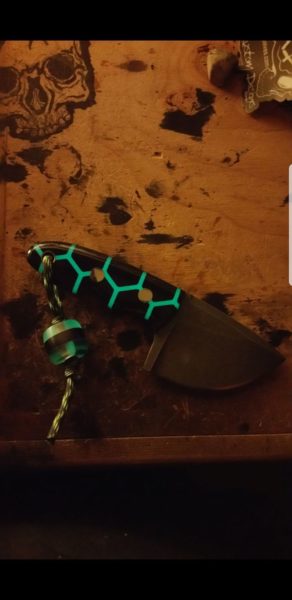
Brent Vaccaro’s H.E.R.L has a 4.5-inch flat-ground blade of CPM D2, acid-washed with etched skulls. The handle is Voodoo Resins’ Dr. Strangelove (green/blue glow) with green G-10 liners. Overall length is 7 inches. Maker’s list price: $280-$350. Contact Brent Vacarro at [email protected], 908-328-2049, on Facebook at Black Widow Knifeworks & Tactical Gear and on Instagram @blackwidowknifeworks.Dr. Strangelove scales are made by Matt Peterson at Voodoo Resins. Dimensions are 5.9 inches long by 1.85 inches wide by .300-inch thick. Makers list price: $40/set.
5. Glow-in-the-dark honeycomb pattern is echoed in leather sheath
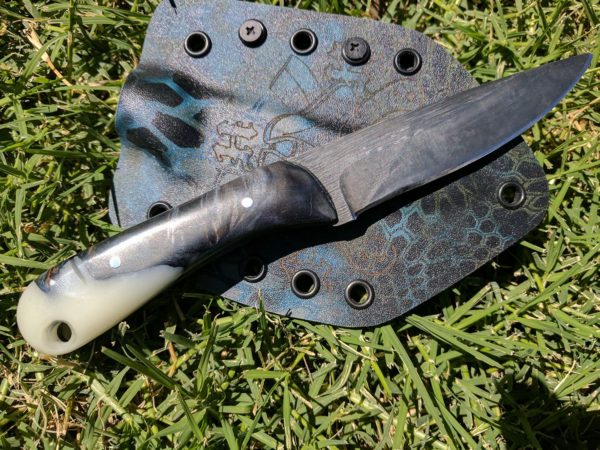
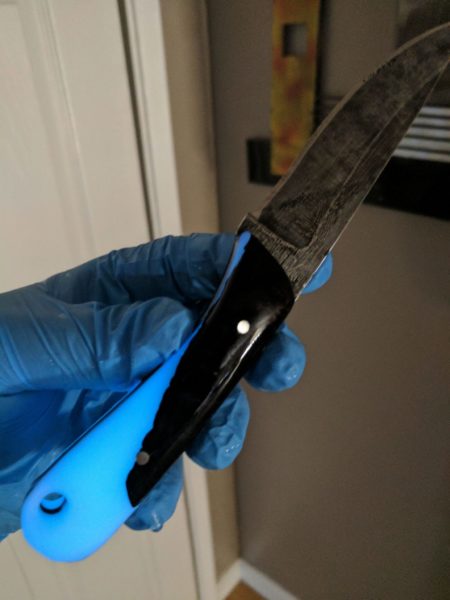
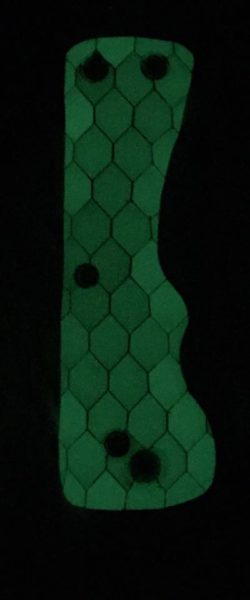
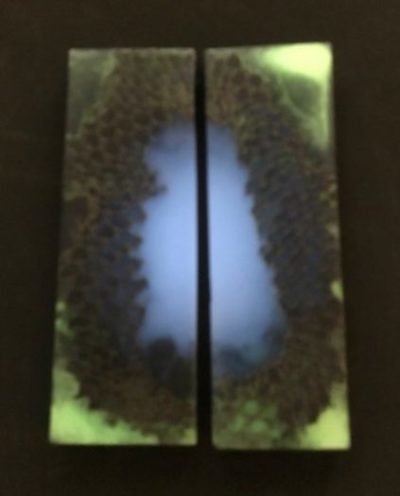
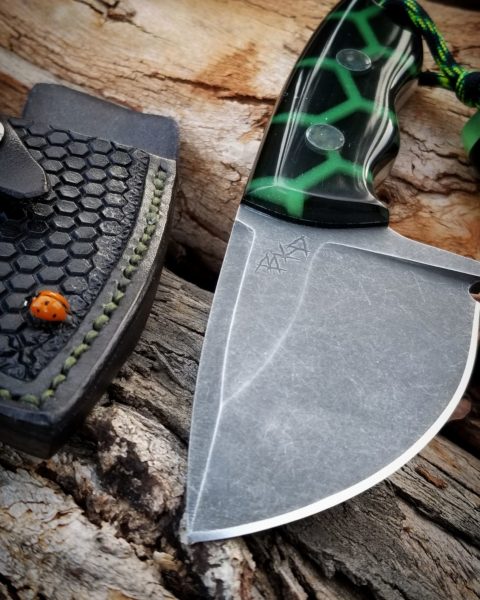
Namen Borras’ BKD Skinner has a flat-ground 2.5-inch blade with swedge made out of CPM S35VN with acid and stonewashed finish. The knife is 6 inches overall. The handle scales are glow-in-the-dark honeycomb with clear resin by DerangedDonkey with black G10 liners. Maker’s list price: $350 with black leather sheath with matching honeycomb pattern. Contact Namen Borras on Instagram @borraskustomdesigns, www.bkdknives.com or at [email protected].This is how the honeycomb pattern on the above knife appears in the dark.
6. Old-school Glow Hex emits violet shade in the dark
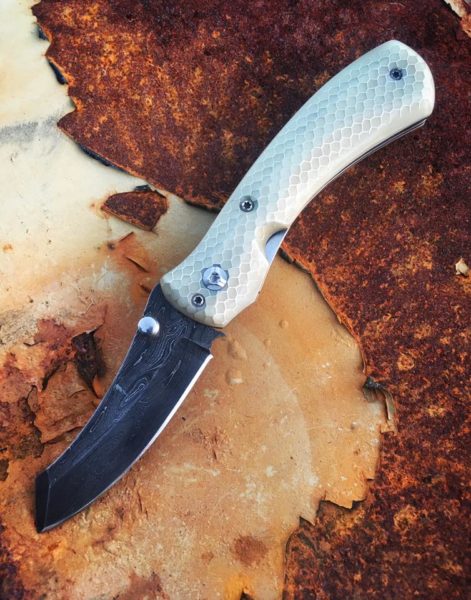
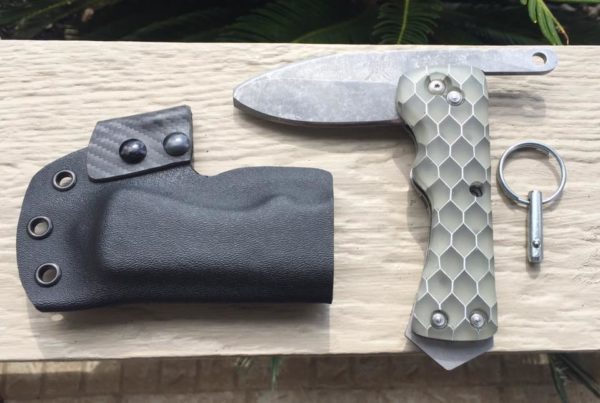
Tyler Freund made this one-off custom folder with a 1.3-inch flat-ground blade of pattern-welded steel from Alabama Damascus Steel. The Glow Hex scales are by Beyond Wood Products, and are paired with titanium liners. Screws, pivot pin, pivot screw, backspacers and clip are also titanium. Overall length is 9.7 inches. Maker’s list price: $400. Contact Tyler Freund, Freund Custom Knives, 1755 Madison 541, Ironton, MO 63650; 573-366-3906, [email protected] and on Instagram @freunds_customs.Tyler Freund’s one-off custom folder glows a blue-purple in the dark when it has absorbed sufficient UV light.
A Digital Subscription to BLADE Is The Answer
You can read your digital issues of BLADE Magazine anywhere you have your phone, tablet or computer, and there’s no need to find storage for all your old issues.
If piling-up issues of magazines seems like a waste to you… If you feel like you don’t have time to read a magazine… If you like the stories we offer in BLADE, but want a more economical option, then a digital subscription is the answer. An annual subscription to BLADE is $17.98, $4 off the print price.
Great knives have face. I’m not talking about a face like on a Halloween mask, but a knife with a design or style that’s recognizable by a large number of knife enthusiasts as having been made first by one knifemaker and one knifemaker only.
The face, in this instance, is the unmistakable knife design or style of the maker in question.
There are at least two provisos: 1. To fully qualify as a knife with face the knife must be recognizable by a large number of knife enthusiasts. Now, there no doubt are great knives made by makers that one or a few enthusiasts may recognize as being the knives of specific makers, but the ones that really fill the bill are the ones many enthusiasts can look at and say, “Yep, that’s so-and-so’s knife.” It’s effective in terms of a conversation starter among knife enthusiasts who are friends, or as a conversation icebreaker among those who have just met. They don’t know each other but they do know great knives with face.
2. Some of the makers of knives with face have had their designs with face emulated by many others. Even so, if the knife has face those who recognize it will say that it’s in the style of the maker who originated it.
Following is a selection of great knives with face and why they qualify. Enjoy!
The Bob Loveless dropped or drop-point hunter. The Loveless drop-point hunter is one of the great knives with face on this list that meets Proviso 2 above. While it may not appear to be all that unusual, the drop-point style of the blade—where the blade tip falls below the plane of the spine—is something Loveless popularized in the 1970s and ’80s, and it remains his signature style to this day.
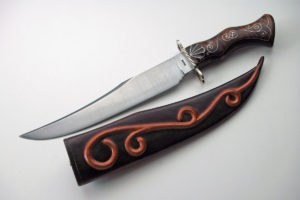
The Bill Moran style. Actually, as with Loveless, any number of Moran knives have face, though I’ve chosen one of my favorites: the ST-24. The flowing blade with a long clip point and ergonomically contoured dropped handle with silver wire inlay is unmistakably a Moran.
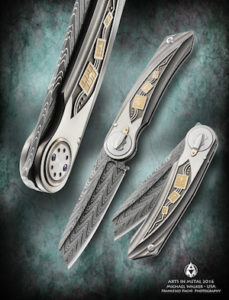
The Michael Walker style. Walker’s linerlock folder changed knives forever but he also makes models unlike anyone else. Outfitted with any number of his clever and innovative locks, each of which gives the handle a notably different look at the pivot, Walker’s knives use the latest and most exotic materials, are embellished in any number of creative and ornate ways, and usually have some of the most interesting blade shapes you’ll ever see.
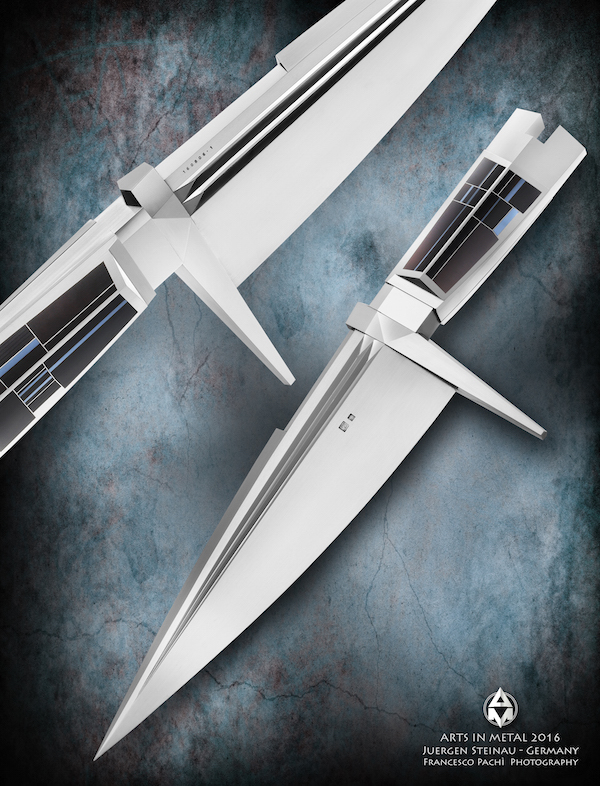
The Jurgen Steinau style. When I first saw one of Jurgen Steinau’s knives, at first I wasn’t even sure I was looking at a knife. The designs, angles and materials of his knives are like something from a book on intergalactic architecture. Suffice it to say, Steinau’s great knives have face—and then some!
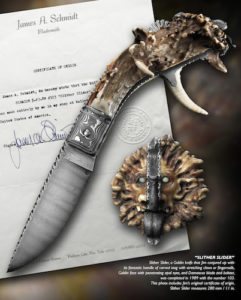
Jim Schmidt’s Goblin Folder. Schmidt’s Goblin Folders have face in more ways than one. Not only do they have the face of a goblin on the handle’s stag butt, but that face makes the knife unmistakable as the style originally made by Mr. Schmidt. A number of his other models have face as well.
There are others who make great knives with face. Which ones make your list?
1 The Loveless dropped or drop-point hunter has face in large part because of the drop-point blade with the tip that drops below the plane of the spine. An original is shown at bottom here, with a Schrade repro at top.4 Jurgen Steinau’s great knives have face for their design, angles and materials that look like something straight out of a book on intergalactic architecture.3 Michael Walker’s spectacular folders have face for any number of reasons, from their distinctive pivots to their exotic materials, creative embellishments and standout blade shapes.2 Bill Moran’s ST-24 has face thanks to the long, flowing blade and ergonomic dropped handle with silver wire inlay—not to mention his distinctive sheaths. Those who know great knives recognize the Moran style immediately.
5 Jim Schmidt’s Goblin Folder has face in more ways than one—it actually has the face of a goblin on the handle butt!



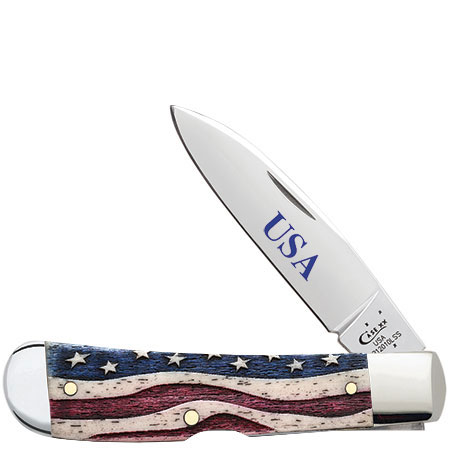 America. Apple pie. More America. More apple pie. (Hey, it’s the holidays, and pie is mandatory, right?)
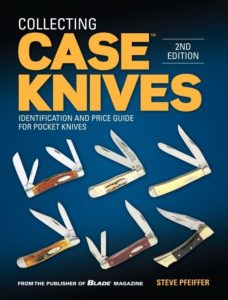 As the only full-color price guide devoted solely to Case pocket knives, Collecting Case Knives, 2nd. Ed. features nearly 1,000 photos, current values for hundreds of pocket knives from 1920 to today, and detailed information about methods for creating knives, quirks of the pattern numbering systems, tang stamps, types of blade steels, and knife shields.