
Knife Collecting

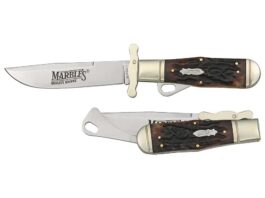
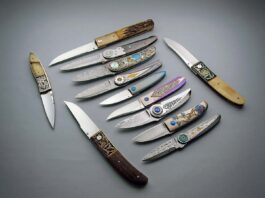
Knife collecting is an extremely rewarding experience for knife enthusiasts. There truly is a knife for everyone. Many increase or hold their value throughout the years, making collecting knives something to pass on to the next generation of knife collectors.

Blade Junkee supplies fix for knife addicts

0
Scott Wolfrom knows how to keep knife addicts happy because he used to be one himself.
Robert Scott Wolfrom sold his personal knife collection to start Blade Junkee, which sells custom and tactical knives to blade junkies worldwide.

Addicts: It takes one to know one, as the saying goes. It’s no different with knife junkies. Robert Scott Wolfrom, who goes by Scott, is the driving force behind Blade Junkee, a California-based custom and midtech knife purveyor. He’s a blade junkie himself, so he knows exactly how to feed the addiction in others. Knife junkies are always on to the latest thing, so Scott tries to be one step ahead of the next trend. One way he’s done that is to create a retail app, not just a mobile-responsive website, but a true app that you download to your phone from Google Play or Apple iTunes. Since its launch in 2015, approximately 4000 people have done just that, according to Scott. Websites will be a thing of the past, Scott predicts. “Phones are getting bigger. Younger people are doing everything on their phones. Most of them don’t even own a computer.”

In the 1990s Scott owned a custom flooring and milling business. That industry was decimated when exotic woods began flooding the market and China began producing cheap composites, Scott explained. Homeowners are currently suing Chinese manufacturers because they are getting sick from the formaldehyde used in lumber products coming from that country. Nobody understood the dangers of not using formaldehyde-free American-made flooring and molding at the time, Scott said. The end result was his company went out of business.

Blade Junkee also offers Bladeaway, a knife lover's layaway.
Blade Junkee is based in California but supplies knife junkies all over the world with custom and midtech knives.

He tried his hand at air conditioning manufacturing and construction, and he became a general manager in retail. Finally, in 2008 he thought about what he was passionate about: knives. He’d always been a collector, so he took a huge step. He sold his knife collection. He reaped $40,000 from the sale and sunk it all into his new business: Blade Junkee. The name came from his user name on knife forums.

“I am blessed,” he said about what he’s doing now through Blade Junkee. His wife, Jennifer, a school psychologist, helped him recognize his own knife addiction, and now he gets to collect all kinds of custom knives…and then sell them. “They come in and they go out,” he said with a laugh.

The Blade Junkee app offers a running list of custom knives that Scott has in stock. He is on knife forums daily, social media daily, he talks with makers and others in the industry daily. He explains that he must be following the trends in order to capitalize on what’s hot. A certain maker might be in demand for a while, or a certain construction method. Then it changes. Hand-rubbed could be in, or acid treated or the current psychedelic-looking craze. Then the trends circle back around.

Scott recognizes those cycles, because…well, he was a junkie. While some dealers can only take one or two knives at a time from a maker, Scott offers to buy eight or 10 knives at a time. The maker might say, That’s going to be $30,000; and Scott’s right there to say, Yeah, here’s $15,000 now. “It’s hard for a maker to turn that down,” he said. In this way, he never worries about whether he sells all the knives or not; if he doesn’t, he’ll have some set aside for when everyone’s scrambling to get one of that maker’s knives again.

The strategy appears to be working. In 2016, according to Scott, Blade Junkee did $1.3 million in sales. (In addition to selling custom knives, Scott also manufactures fittings, such as screws, that he sells to knifemakers.) Scott sees a lot of business from Russians, Thais and Europeans. He has customers who will spend $10,000 a month on knives. A customer may tell him, “The wife’s buying purses and shoes,” so he wants a knife that matches a particular watch.

But it isn’t just wealthy customers who fall in love with a well-crafted custom or tactical knife. Customers will tell Scott simply that he made them happy when he posted a certain picture of a knife. They might be having a bad day and seeing a picture of a well-made piece of art that Scott posted lifted their spirits. “There’s plenty more where that came from,” Scott says with a laugh. Not only does he understand buyers from both ends of the spectrum and their motivations, but it brings him joy to make them happy and feeds his own blade addiction.

If you think you can’t afford a knife you see on Blade Junkee (while you’re rocking out to, say, Rage Against the Machine or Bob Marley’s youngest son Damien), you’d be wrong. Scott offers Bladeaway, layaway for knives in four payments over a 45-day period with a 5 percent fee. This is a certain way to lock in the purchase of a knife at the current price. Some knives go so fast that Scott can’t keep them in stock because the makers aren’t mass-producing their work. “They’re artists, and I treat them like artists,” Scott said. Because of his willingness to purchase higher quantities of a maker’s work up front, a maker might pick up a call from Scott where he might avoid a call from a dealer who can only take one or two knives. This also gives Scott the ability to pick and chose which knifemakers he pursues, based on what trends he sees developing and what his junkies are clamoring for.

Although never a hunter, Scott used to fish, and like many of us, his first knife was a Buck. “I don’t drink. I don’t have kids. But I have a lot of energy. I know how to run a business. I have connections. I know how to make calls and make things happen.” And he is passionate about knives. Although Scott currently sees most of his business coming through the Blade Junkee website and social media, he can see every company having a mobile app in the future. He’s already one step ahead on that trend.

Know what your collection is worth
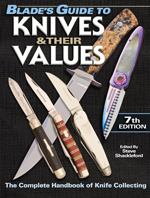
"Knives and Their Values" will help you understand the history and value of your knife collection.
This book, edited by BLADE editor Steve Shackleford, will help you price and care for your knife collection.

This volume will help you understand the history of the knives you collect, how much they are worth, and how to spot a fake. You will learn how to grade knives for buying and selling, and how to take care of the ones you keep. Best of all, you don’t have to wait for mail delivery. You can begin reading your e-book version right away for $24.13, a 20-percent savings.
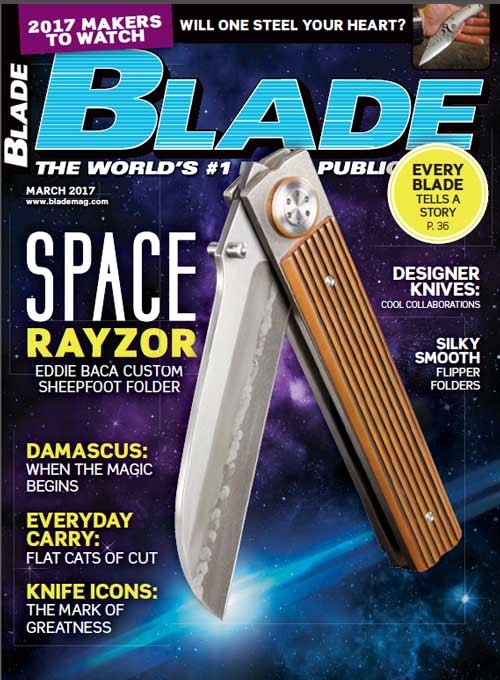
 

Which Knifemakers Will Excel in 2017?

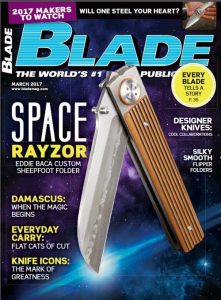
Which knifemakers will excel in 2017? What is the mark of knife greatness? When does the magic begin in the making of mosaic damascus, aka canned steel? What were the knife industry’s top stories of 2016? What will not happen in the knife industry in 2017? These and other edge-pressing questions are answered in the latest issue of BLADE®, on newsstands now!

Custom knifemaking is a whirlwind of talented individuals worldwide. Picking the ones on the verge of breakout years is no easy task, but BLADE feature writer Pat Covert tackles the assignment with gusto, interviewing some of the custom industry’s top authorities for their opinions on the subject. Find out which makers will take their work to the edge and beyond in “Will One Steel Your Heart?”

What is the mark of knife greatness? One leading indicator is a knife that, after its debut, serves as a yardstick against which all subsequent knives of a similar type are measured. BLADE field editor Mike Haskew examines these “yardstick knives” in “The Mark of Greatness.”

Mosaic damascus, aka canned steel, provides some of the most beautiful and intricate of blade materials. BLADE feature writer Daniel Jackson visits with some of today’s forgers of the scintillating steel to find out not only why they do it but how in “When The Magic Begins.”

The year past had more than its share of cool happenings in the knife industry, including the first-ever

Mosaic damascus
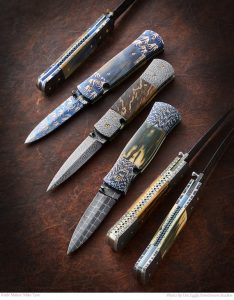
Read how mosaic damascus is forged, such as on these folders by Mike Tyre, in “When The Magic Begins.” (PointSeven image)
Borka Blades
Which knifemakers will excel in 2017? One Neil Ostroff highly recommends is Sebastijan Berenji of Borka Blades. (True North Knives image)
BLADE on newsstands
Find out which knifemakers will excel in 2017 in the latest issue of BLADE®, on newsstands now!

BLADE Show Women’s World Championship Cutting Competition, burgeoning knifemaking stars on social media, pro-knife legislative gains, a world record price for an American knife at auction and much more. Read all about it in “Sharp and Sweet ’16.”

Predicting what will happen in the coming year is a skill far beyond that of yours truly. However, one thing I can do is predict what will not happen in the coming year. Of course, one question remains: Can I even do that? It will take one year to find out. Check out my predictions in “What Will Not Happen in 2017.”

There’s much more in the latest BLADE, including an educational examination of knives and the Second Amendment by Knife Rights’ Doug Ritter (page 6), tests of the latest tantos, flipper folders and factory/custom collaborations, the hottest convenient carry knives and much more, all in the March 2017 BLADE, on newsstands now! For subscription info, click here.

Save

Save

Save

Save

Save

‘Alone’ survivalist Larry Roberts praises LTWK’s Genesis

Larry Roberts appeared on the second season of "Alone" and held out 64 days in the Vancouver Island wilderness.
Larry Roberts used the L.T. Wright Knives’ Genesis to survive as a participant on the History channel’s “Alone.”

Larry Roberts, runner-up in the second season of the History channel’s wilderness survival show “Alone,” lasted 64 days in the harsh environs of Vancouver Island with one knife: the Genesis made by L.T. Wright Knives. L.T. Wright knew Roberts as a customer and because he wrote articles for the company’s Self Reliance Illustrated magazine. What he didn’t know, because “Alone” participants are not allowed to discuss the show, was which knife Roberts used on the show. When Roberts was allowed to talk about his experiences, he raved to Wright about how much he appreciated the Genesis. Wright suggested they team up, and a winning partnership was born.

On Dec. 16, LTWK introduced its Larry Roberts Signature Edition Genesis to the public. Fans of the “Alone” star and members of the LTWK Pout House club were eligible for pre-release access for 24 hours prior to the general release.

The premise of the reality show is that a group of outdoorsmen and women are deposited in a remote locale—alone—and whoever can survive the longest, wins—$500,000 to be exact. They are positioned so that natural obstacles prevent them from encountering each other. There is no crew; the participants film themselves and are resupplied with batteries and camera chips. They must build shelters, find enough to eat without expending too many calories, stave off hypothermia and marauding animals, and maintain their sanity.

So, how exactly did Roberts use his knife? The list is extensive. He built small game traps and a fish trap. He used it batonning, feather-sticking, harvesting spruce sap and cedar bark, gutting and filleting fish, processing mice and prying shellfish off of rocks. He used it to make a spoon, a spatula and a fork. He harvested mushrooms with his Genesis, cut cordage and used the sharp 90-degree spine of the knife to strike his ferrocerium rod to start fires. He used the knife to make a spear and tent stakes, and even for first-aid and hygiene tasks, such as removing a splinter or cleaning his fingernails.

The LTWK Larry Roberts Signature Genesis comes with a true 8-oz. leather sheath with dangle and farro rod loop.
The Larry Roberts version of the LTWK Genesis has a broomstick handle and sharpened spine to assist in firebuilding.

The knife measures 9 inches overall. The 4.25-inch blade has a Scandinavian grind, and the chiseled edge is ideal for bushcrafting skills like making kindling, tent stakes and stripping bark, L.T. Wright explained. It used to be, he continued, that outdoor knives were overbuilt to account for hard use in the field, but now that the education and skill level of outdoorsmen has advanced, often through watching and practicing skills learned just on YouTube, thinner-edged knives are sought after by outdoorsmen and survivalists. Roberts, too, praised the knife’s ability to bite deeply into wood.

The Genesis offers a 1/8-inch-thick spear-point blade made of A2 tool steel, following a Kephart design overall. The knives are tested to 57 to 59 HRC on the Rockwell hardness scale, so they are tough but hold an edge, Wright said. The A2 steel, in the opinion of both Wright and Roberts, outperforms O1 and 1095 for edge retention, and corrosion and stain resistance. For his time on the island, Roberts only stropped his knife on his leather belt to remove micro-oxidation from humidity and moisture. He never had to resharpen it at all.

The Roberts version of the Genesis has a broomstick handle because Roberts found the thicker handle easier to hold and control. It also has thumb scallops and a sharpened spine for striking a fire steel against. LTWK made the black Micarta handle with white liners because Roberts likes the black-and-white contrast. The blade is stamped with Roberts’ rendition of his Vancouver Island nemesis: a mouse. “It became an obstacle for me to overcome,” he said of the creature he battled during the show.

The MSRP of the Larry Roberts Signature Edition Genesis is $225 and includes a true 8-ounce black leather sheath with a dangler and 3/8-inch ferro rod loop. Wright prefers to purchase 10-ounce double-died leather from Spen Stelzer, the owner of JRE Industries in Illinois, and have it split to 8 ounces so there are no discrepancies. “We can control consistency better that way,” he explained.

Roberts wanted the largest ferrocerium rod he was allowed to have during the show, so he went with a ½-inch rod and wasn’t able to use the loop that comes with the Genesis sheath. Roberts did use the dangler, however. He explained that it allowed the knife to hang where his hand fell naturally for easy access—just like a gunslinger in a western—and yet carry out of the way of a backpack or any other gear.

Wright grew up playing Tarzan and Rambo in the woods as a boy, and, of course, the tactical use of knives and their implementation in hunting and bushcraft interested him all along. But he wanted to make a living making knives, so he listened to what people told him they wanted. “If you go to a show and come home with all the knives you brought, you’re not going to be in business long,” he said. Like the survivalist industry itself, as the education and skill levels of users advance, so too must the sophistication of the knives. Wright listened.

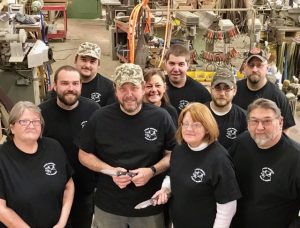
The crew at L.T.Wright Knives specialize in knives that are favored in bushcrafting.
L.T. Wright (front row, second from left) was surprised and happy to find out his Genesis was the knife Larry Roberts used on the “Alone” series.

At first he made knives as L.T. Wright then as Blind Horse Knives and he’s back as L.T. Wright Knives. Wright learned to make knives from R.W. Wilson, who made the tomahawks for the 1972 movie “Jeremiah Johnson,” a cult favorite among outdoorsmen. “He’s probably sold off all of those,” Wright said, “but I do have a prototype of a tomahawk he made for the Texas Rangers.”

So, it is fitting that Wright should partner up with a man who carried his knife in a reality-based outdoorsman show for the small screen. Roberts grew up in Oregon, spending as much time outside as he could, bait-fishing for steelheads in the Rogue River and bow hunting. His first knife was probably a 3-inch lockback Buck pocketknife, he said. He married his high-school sweetheart, and they had a son and a daughter, now grown and on their own.

Roberts attended the Pathfinder School, LLC Survival Classes offered in Jackson, Ohio, through Self Reliance Outfitters. An instructor at the top-rated school, Dave Canterbury, had been on Discovery Chanel’s “Dual Survival” show, and Roberts had heard about “Alone” from a season one participant named Josh Chavez. Roberts had been looking for a challenge, a real-world way to apply the skills he’d learned. “This was it,” he said, and applied online.

You can be a superb outdoorsman, Roberts pointed out, but if you can’t express yourself in front of a camera, you won’t be selected for the show. Although more shy in real life, Roberts is a natural in front of the camera. He sent along hours of footage of himself conducting survival skills. He made the cut, and a total of 20 finalists attended a boot camp in New York. They were tested on their comfort level in the outdoors in a city park. They underwent both medical and psychological testing, and were trained extensively on how to operate the cameras they would be using to film themselves for the show.

Even though Roberts eventually had to “tap out” because he could not get enough food to compensate for the calories he expended, his life has changed from being on “Alone.” He teaches now for Pathfinder and privately on his own farm. He attended the Primitive Living Skills Conference, Rabbitstick, in September in Idaho and will be attending Winter Count, Feb. 12-18 in Maricopa, Arizona.

Roberts can’t say enough good things about the LTWK Genesis. It’s everything he ever wanted in a knife, in every way. Similarly, he can’t say enough good things about L.T. and his crew at LTWK. It was on the island, at night, when Roberts began designing a tattoo he wanted to get. It incorporated everything that was important to him during the “Alone” challenge. You can read about his experiences on the show and how the tattoo both gave him something to think about and something to look forward to getting in “Star of History Channel’s ‘Alone’ Talks Survival and Tattoos,” an interview by Kirstie Kovats in Inked magazine.

Of course, the mouse figures prominently in the design, as does the knife.

‘Bushcraft 101’ teaches the fundamentals of survivability

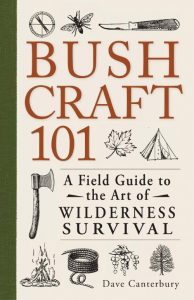
"Bushcraft 101" is a solid place to start your wilderness survival education, and can be a continued resources as you advance in your skill level.
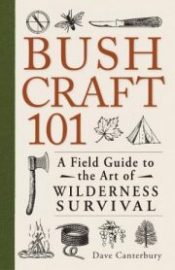
Dave Canterbury, instructor at top-rated wilderness survival Pathfinder School in Ohio, explains the 5 Cs of survivability in his “Bushcraft 101.”

Not sure where to start with your quest to master wilderness survival skills? Dave Canterbury, the primitive arts instructor at Pathfinder School in Ohio mentioned above, has written a book that’ll help you get back to basics, enjoy the outdoors and understand the essentials of wilderness survival.

Save

Knife Ed 101: From the Periodic Table to the Rockwell Hardness Scale

Jim Bowie scowls as I absorb the minutia of properly conveying knife specs.
Jim Bowie is not amused with my lack of knowledge about steel mixes.

Knowing what you don’t know sometimes means knowing when to stop researching and just play with your knife. In the course of more fully educating myself about knives, I find that everything, and I mean every little thing, involves further study. It can be paralyzing. And sometimes it needs to just get silly so I can stop worrying about it.

I’m in charge of maintaining the style sheet at BLADE, which is an alphabetical list of knife industry-specific terms and instructions—or exceptions to instructions—regarding how we present certain things in BLADE. We want to be consistent.

The other day my boss and BLADE editor, Steve Shackleford, sent me something like, “Just so you know… the V in MoV is always capitalized. For example, 8Cr13MoV: Cr refers to chromium, Mo refers to molybdenum and V refers to vanadium—all elements in the steel mix.”

Cool, I thought.

And then I thought: The periodic table of elements? Seriously?

For an English major with a history minor—even one into guns and knives—this concerned me. Oh sure, there’s science in the acids and bases of a batch of cookies in the oven, but I honestly never imagined printing out that chart after I left high school. But there it lies, adding color to the growing pile, its information so obvious in hindsight. Jim Bowie perpetually scowls with what I imagine can only be his disappointment in my slow pickup.

So, when Steve explained how BLADE presents Rockwell hardness: “the Rockwell hardness is 58-59 HRC,” I figured I should try to fit more about that topic into my rock hard head.

After work I called a friend.

His response: “What is the Rockwell hardness scale and what does it mean to me?”

Exactly, I replied.

And while we’re at it, I thought, aren’t “hard” and “tough” synonyms for the same thing, like soldiers or overcooked steak? (That’s a joke. You can read about the difference between hardness and toughness in Bernard Levine’s article, “Rockwell Hardness, What It Is And What It Means To Your Blades,” BLADE Magazine, Sept. 1997, Pages 74-76.)

And why can’t I close my Twitch II? Am I not pressing hard enough? Am I afraid of the release? (That’s not a joke, and no, the lock is not engaged.)

“I can envision both scenarios,” my friend said.

That’s how he talks.

We joke about cut-resistant gloves, only he’s not joking. I’m a klutz.

He explained something about measuring divots and my ears stopped up and my eyes glazed over. I have a hard time thinking in 3D.

But I had the power all along. In the archives of BLADE itself I found this helpful article: Bernard Levine’s article, “Rockwell Hardness, What It Is And What It Means To Your Blades,” BLADE Magazine, Sept. 1997, Pages 74-76

It all makes perfect sense. I think I can now move on to worrying about whether there’s a good mix of ATS-34, 440C, CPM S30V, CTS steels and 5160, O1, D2, 1095, L6 steels represented in our Knifemaker Showcase pieces.

Your Knifemaking Questions, Answered

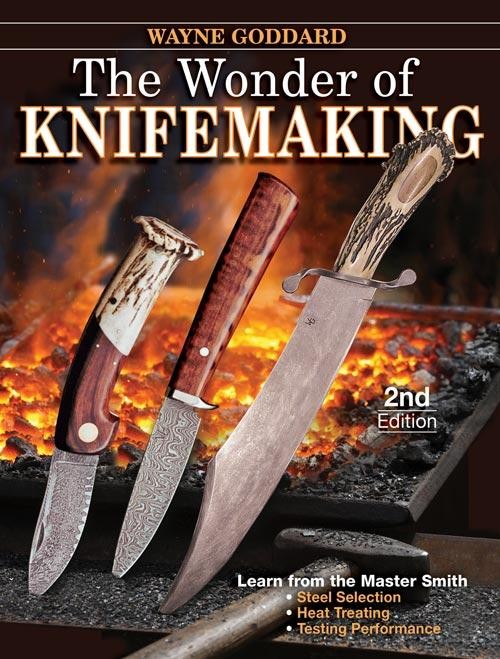
Knifemaking bookGet all your knifemaking questions answered in this collection of expert advise from former BLADE columnist Wayne Goddard. The Wonder of Knifemaking makes a thoughtful gift for someone interested in starting or perfecting their knifemaking skills


Holiday Gift Guide for Knife Collectors, Enthusiasts and Makers

0

The best gift ideas for knife collectors, enthusiasts and makers can be found at ShopBlade.com. If you’re not familiar with the world of knives and aren’t sure where to start, this is the guide for you. And if you are, we at BLADE won’t cut you short with these suggestions for your own gift list.

For New and Established Knifemakers

Christmas ideas make knives
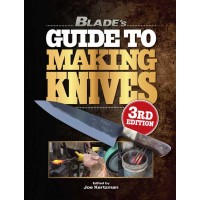
Want to learn how to make knives, or how to make them even better? This book is a great place to start.

Many books claim to show readers how to make knives, but only one is trusted enough to have three editions with full-color photos. BLADE’s Guide to Making Knives, 3rd Edition is new for 2016, and it’ll be a sure hit with any knifemaker, from the garage tinkerer to the knife show pro.

Get BLADE’s Guide to Making Knives, 3rd Edition from ShopBlade.com at a terrific price.

* Also recommended: 101 Knife Designs.


For Casual or Experienced Knife Collectors

Best price best knife book about knives
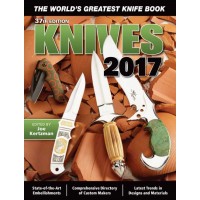
Knives 2017 is a great gift idea for someone who collects knives.

For 37 years, knife collectors have looked forward to the latest editions of Knives, the annual book published by BLADE. Knives 2017 is the newest in this long tradition, and it’s can’t-miss material for the knife collector on your list.

While the in-depth features are interesting to read, and the custom knifemaker directory is second to none, it’s the beautiful photography that makes this book stand out year after year. Vibrant, full-color photos of the hottest custom knives on the planet receive the white glove treatment in this handsome tome. It’s as at home in the shop as it is on the coffee table.

Get Knives 2017 from ShopBlade.com here. 

* Also recommended: Collecting Case Knives, 2nd. Ed. Identification and Price Guide for Pocket Knives.


For the Armed and Prepared Person

Knives can mean many things to many people, but their use as self-defense tools is undisputed. If the knife enthusiast on your list takes being prepared for the unthinkable seriously, there’s only one DVD you need to consider.

Make Ready with James Williams: Continuing Solutions to Edged Weapons is simply one of the best guides on self-defense with a knife available. Williams is a regular presenter at the BLADE Show, and his insights are second to none.

Get Make Ready with James Williams: Continuing Solutions to Edged Weapons here for 56% off the regular price.

* Also recommended: Build the Perfect Bug Out Bag: Your 72-Hour Disaster Survival Kit.


For Someone You’re Unsure About

Book about whittling with knives
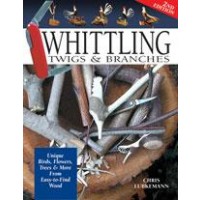
Learn how to whittle.

It happens. The knife nut on your list either has everything already or doesn’t seem to need to anything in the first place. Fortunately, there’s a book that fits the bill.

Whittling Twigs & Branches is an unexpected find that cracks open the world of whittling with knives. There’s a surprising amount of information to learn about this topic. This includes how to carve roosters, herons, pheasants, roadrunners, flowers, trees and letter openers from ordinary twigs and branches.

Get Whittling Twigs & Branches here from ShopBlade.com for less than $10.

* Also recommended: Knife Laws of the U.S.: Loopholes, Pitfalls & Secrets.


For the Person with Too Many Knives

Best gifts for knife collectors
Here’s how to store your knives.

After conducting extensive and highly scientific research, 10 out of 10 knife experts agree: there’s no such thing as too many knives. However, there is such a thing as not having enough storage.

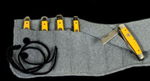
That’s why BLADE‘s exclusive 18-pocket knife roll is the perfect gift. Not only does it keep folding knives secure, it rolls up for efficient storage. Its strong yet flexible material keeps out dirt, moisture, light, pollutants and more.

The only place to get BLADE‘s 18-pocket knife roll is at ShopBlade.com.

Also recommended: Quick Release oil and applicator.


For Someone Just Starting Out in Knives

Christmas Holiday Gift Guide Knives
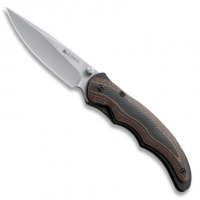
The CRKT Endorser is a great gift for someone new to knife collecting.

That knife collection isn’t going to build itself. Help a new collector along with this terrific CRKT Endorser folding knife. It’s the right mix between price (it’s a bargain for you) and features (it’s a respectable knife for them).

Dimensions

  • Open Overall Length: 7.31 inches
  • Closed Length: 4.17 inches
  • Weight: 3.2 ounces

Blade

  • Length: 3.18 inches
  • Thickness: 0.1 inches
  • Material: 8Cr14MoV
  • Blade-HRC: 58-59
  • Finish: Satin
  • Grind: Hollow
  • Style: Drop Point
  • Edge: Plain

Handle

  • Material: G10

Lock

  • Type: Locking Liner

Get the CRKT Endorser from ShopBlade.com for just $24.99.

* Also recommended: CRKT Swindle, designed by Ken Onion.


For the Ultimate Knife Collector

Best knife gifts
A top-of-the-line gift for a top-of-the-line knife collector.

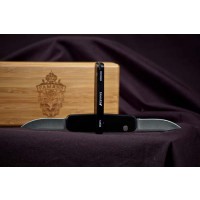
If the collector on your list is serious about knives, make a big impression with the Famars Piccolo Aluminum Black Model A with Damascus Blades knife. From the description:

The world’s first pinless sidelock knife. Anodized aluminum body. Standard blade and tanto blade in 416 layered damascus steel.

This is one knife that your lucky recipient won’t soon forget. Get it here from ShopBlade.com.

* Also recommended: Klecker Knives Titanium KLAX Lumberjack.

Prime Cutters Are Good To Go

Small-to-medium-sized fixed blades make excellent cutting tools, and today’s prime cutters are good to go. Here are five of the hottest in this sharp-looking category.

The P.U.K. (Personal Utility Knife)

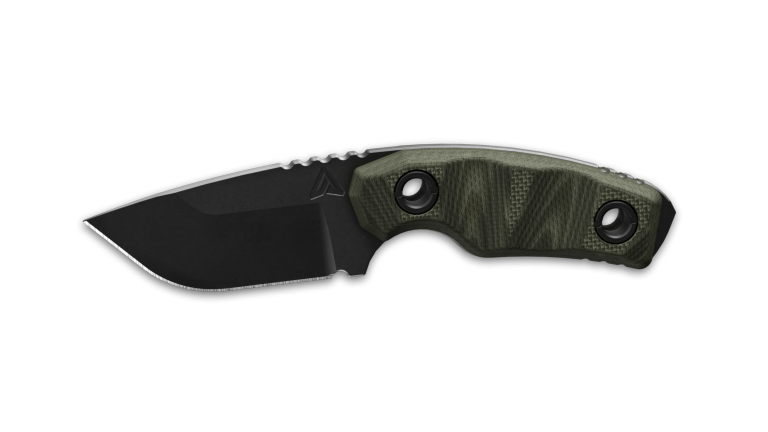
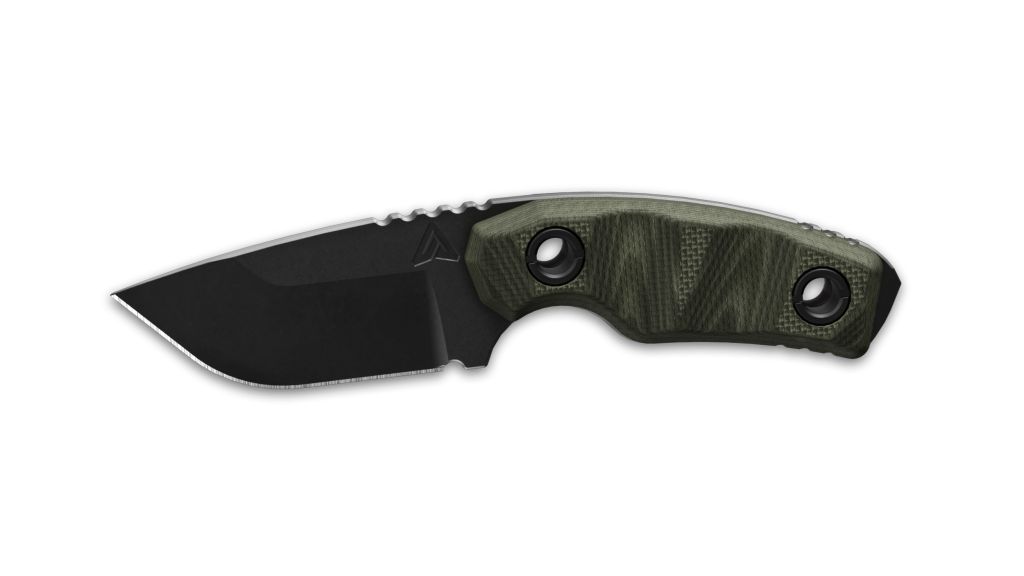
Atlas Dynamic Defense P.U.K.
The P.U.K. from Atlas Dynamic Defense is a hungry little cutter in CPM S30V stainless.

The P.U.K. (Personal Utility Knife) from Atlas Dynamic Defense has a 2.52-inch blade of CPM S30V stainless steel heat treated to a Rockwell hardness of 57-58 HRC in a controlled vacuum with an additional -300°F cryo bath. Top that with a DLC blade coat and you’ve got one hungry little cutter. The scales are removable with a coin or rifle cartridge. MSRP: $225.


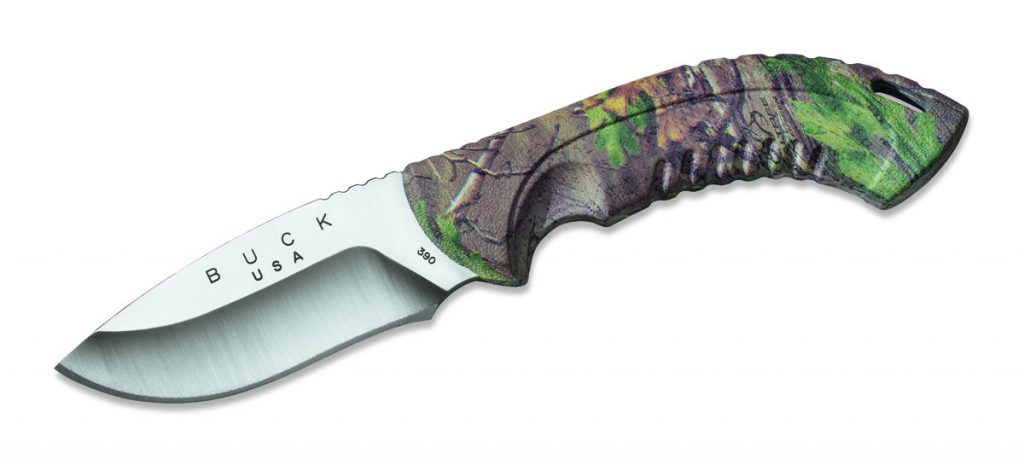
Buck Omni RT

Buck Omni RT Extra.
The Buck Omni RT Extra makes the list of prime cutters and boasts a stocky, 3.25-inch blade of 420HC stainless steel.

Among other prime cutters is the Buck Omni RT with a stout 3.25-inch blade of 420HC stainless steel and an ergonomic handle of Dynaflex rubber in Realtree Xtra Green Camo. Weight: 4.6 ounces. Overall length: 7.75 inches. A nylon sheath that matches the look of the handle completes the ensemble.


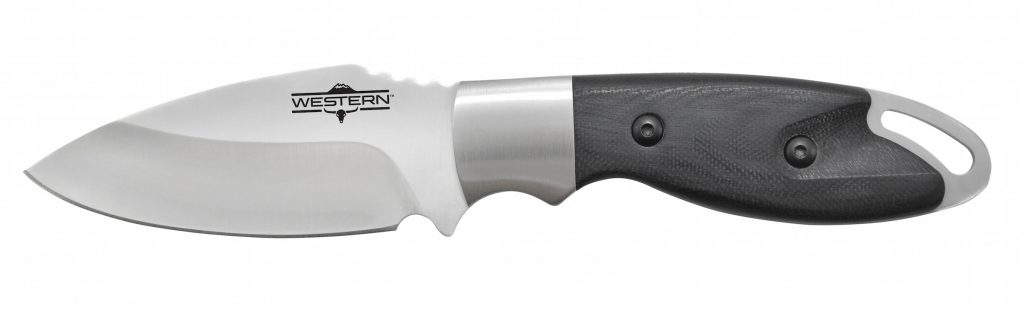
Western Knives Kota

Kota from Western
The Western Kota features a blade of titanium-bonded 420 stainless and a G-10 handle. MSRP: $29.99.

The Kota from Western Knives includes a 3.25-inch blade of titanium-bonded 420 stainless and an ergonomic handle of G-10 with an elongated hole for a lanyard. Overall length: 7 inches. It’s kind of a cool design, really. A nylon sheath is included. MSRP: $29.99.


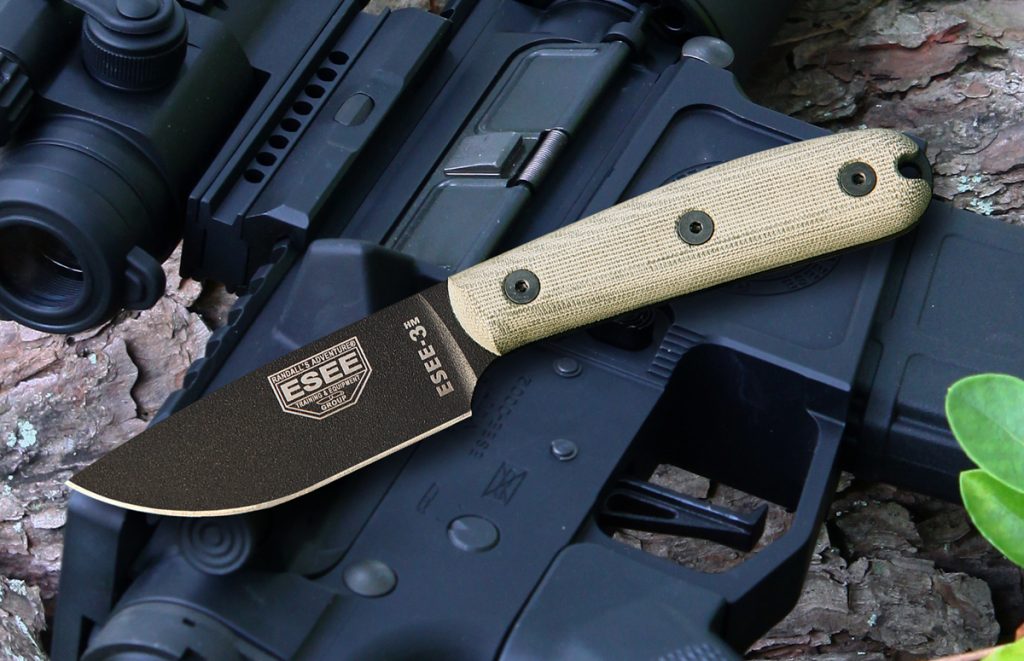
ESEE 3HM

ESEE 3HM
If you’re looking for a carbon-steel cutter, the ESEE 3HM has a blade of powder-coated 1095.

If you’re looking for a carbon-steel cutter, the ESEE 3HM offers a 3.63-inch blade of 1095 carbon steel in a low-glare, stain-resistant powder coat and a canvas Micarta® handle. The contrast of the light-colored Micarta and the dark blade is choice. Weight: 7.7 ounces. Overall length: 8.88 inches. A black leather pouch comes standard.


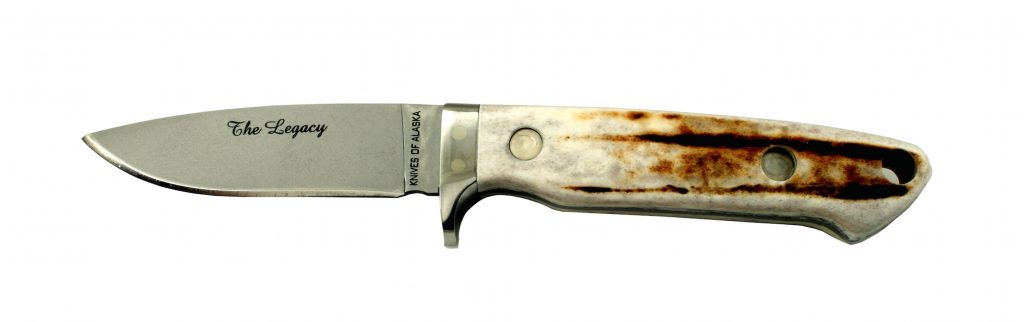
Knives of Alaska Legacy

Knives of Alaska Legacy
Based on a design by BLADE Magazine Cutlery Hall-Of-Fame© member Bob Loveless, the Legacy from Knives Of Alaska sports a blade of D2 tool steel and a stag handle. D2 is not a steel Loveless used much if any but we think he would have approved.

The Legacy from Knives Of Alaska has a blade of D2 tool steel to go along with a stag handle—all in the style of the late BLADE Magazine Cutlery Hall-Of-Fame© member Bob Loveless. It includes a leather sheath. D2 is a favorite of Cutlery Hall-Of-Famer Wayne Goddard and “Dr. D2” himself, Bob Dozier. Somewhere, Loveless is probably nodding in approval.

Looking for More Edgy Ideas?

Check out BLADE‘s holiday gift guide for knife nuts.

Distinguishing Elephant from Ancient Ivory

Elephant vs. ancient ivories
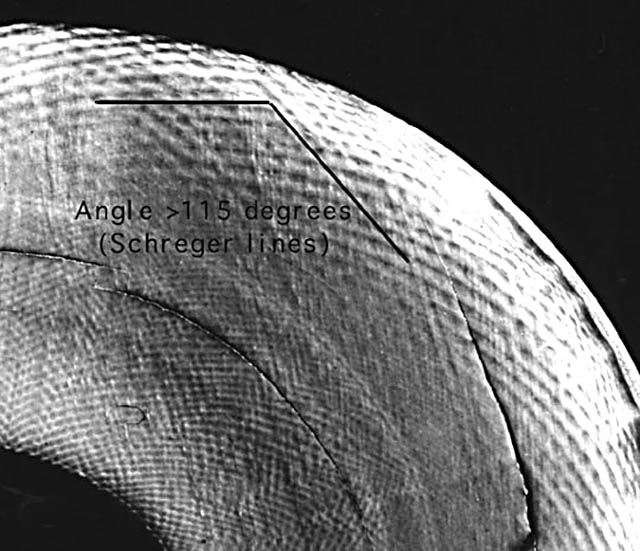
Distinguishing elephant from ancient ivory can be done by the correct reading of the Schreger lines on the surface of the ivory.

Distinguishing elephant from ancient ivory is challenging and becoming more and more important for the owners of knives with handles of ancient ivory. However, there are two reliable keys to make the determination easier.

Polished cross sections of elephant and mastodon/mammoth ivories display stacked chevrons of cross-hatched lines called Schreger lines or Lines of Retzius—incremental lines of rhythmic deposition of successive layers of enamel/dentine matrix during development. The Schreger lines closest to the outer bark of the tusks are the most visible—and the ones to measure—though there are also inner Schreger lines that are less discernible around the nerve cavity. The intersection of Schreger lines form angles, and this is the key—if the average angle is greater than 115 degrees, then it’s elephant ivory; if the average angle is less than 90 degrees, it’s mastodon or mammoth. Variations in the angles can occur in individual tusks, particularly as the patterns tighten more toward the center. Plus, the visible cross section must be cut square to the axis of the tusk—otherwise the chevrons’ angles will be distorted.

Specimens from both extinct and existing animals can show angles between 90 and 115 degrees in the outer Schreger lines, so the differentiation should never be based solely on a single angle measurement when the angles fall in this range. When averages are used, a clear separation between the ivory of existing elephants and extinct mammoths/mastodons exists. Elephant ivory averages above 100 degrees and mammoth/mastodon ivory averages below 100 degrees.

Another I.D. key, though more involved, can also distinguish mammoth or mastodon ivory from elephant. These ancient ivories can often have blue-green or brownish blemishes on the surface produced by an oxidized iron phosphate called vivianite. Even if the discoloration is barely visible, ultra-violet light will make it stand out with a dramatic velvety-purple appearance. Even if elephant ivory were similarly discolored—though in its natural state, elephant ivory will not display the same discoloration—it would not exhibit the characteristic fluoresence of vivianite.

With recent ivory laws handed down by Fish and Wildlife greying the lines between elephant and ancient ivories, it is possible the laws may give federal agents the right to seize knives and materials that cannot be proven as outright ivory but simply have the ivory look. As a result, if you own knives with ancient ivory handles, having an at least a general knowledge of how to differentiate elephant from ancient ivory could save you from having your knives confiscated, from being fined or both.

Hot Knife Deals at ShopBlade.com

Black Friday knife deals

Advertisement

Must Read Articles

Read this before you make a knife

Knifemaking 101 – Read This Before You Make a Knife

  by Wayne Goddard My experience has taught me that there's nothing like digging in and getting started. I've often said the hardest part of the...
how to forge damascus steel

How to Forge Damascus

Advertisement
Advertisement