Knife collecting is an extremely rewarding experience for knife enthusiasts. There truly is a knife for everyone. Many increase or hold their value throughout the years, making collecting knives something to pass on to the next generation of knife collectors.
Our Knife Of The Day XII is Joel Worley’s tapered-tang straight knife with a 5.5-inch fileworked blade of a raindrop-pattern damascus forged from 1080 and 15n20 carbon steels. A flared finger groove doubles as a guard. The handle is sheep horn and the belt sheath features pit viper inlay.
For more information contact Joel Worley at [email protected] or visit jaworleyknives.webs.com.
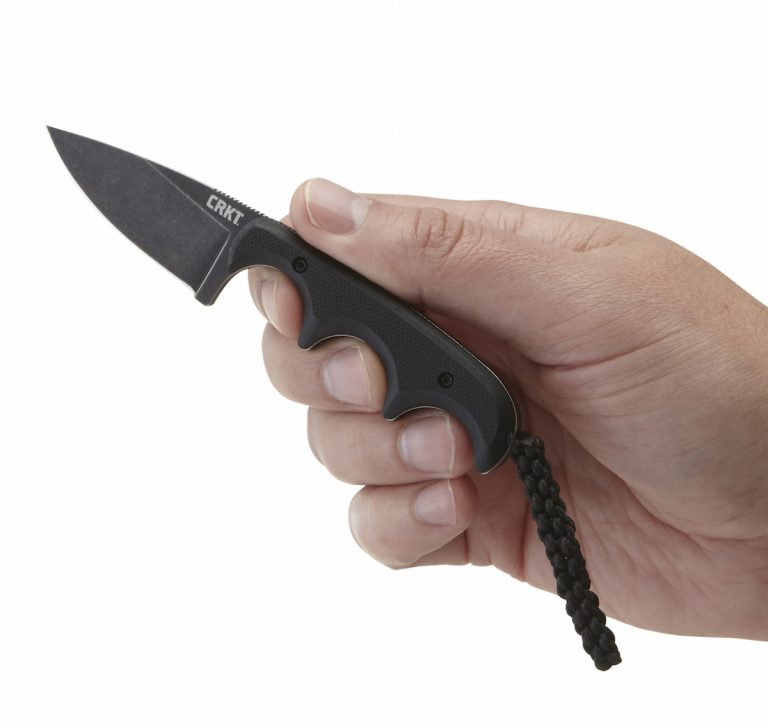
Your right to own and carry knives such as the CRKT Minimalist is at stake in the Nov. 8 presidential election.
How Hillary Clinton and Donald Trump stack up in terms of your right to own and carry your knives is an issue you should weigh carefully before voting Nov. 8.
According to Knife Rights Chairman Doug Ritter, Clinton’s anti-gun and anti-Second Amendment agenda is a major plank of her campaign. She advocates undermining the Second Amendment through legislation, executive actions and, more importantly, her appointment of justices to the Supreme Court. Over the years she has endorsed most proposals to limit gun ownership and destroy the Second Amendment through extreme taxes, regulations and executive orders.
“The loss of Second Amendment rights by way of her anti-gun agenda would be certain to disadvantage knife owners as we fight to oppose irrational restrictions on our knives,” Ritter noted. “As we have seen elsewhere, once firearms are outlawed, knife restrictions follow.”
Trump, meanwhile, is pro-Second Amendment and has been endorsed by the National Rifle Association and other Second Amendment organizations. His proposed nominees for the Supreme Court have a record of opposing efforts to weaken the Second Amendment.
As for the ivory issue, Ritter noted that the campaign against ivory owners in the USA, including owners of ivory-handle knives and raw ivory used by knifemakers and scrimshanders, was launched by the Clinton Foundation as part of its Clinton Global Initiative. “The Clinton Foundation and non-governmental organizations affiliated with it continue to advocate for the complete and total ban on all trade in ivory in any form,” Ritter wrote. “They are being assisted by the Fish and Wildlife Service. They are even pushing to ban sustainable use of wildlife in Africa, the core science behind the world’s most successful wildlife conservation efforts that have brought many species back from the brink of extinction.”
Clinton also likely would oppose the African Elephant Conservation and Legal Ivory Possession Act (AECLIPA), an act that would repeal the recent federal ivory ban, resetting the rules back to where they had been for decades, and would enhance elephant conservation efforts in Africa.
Conversely, Trump has never supported ivory bans or the end of sustainable use as a science-based conservation model. Trump would be far more likely to make executive appointments that would signal significant changes at the Interior Department and FIsh and Wildlife. If Congress passed the AECLIPA, he would likely sign it.
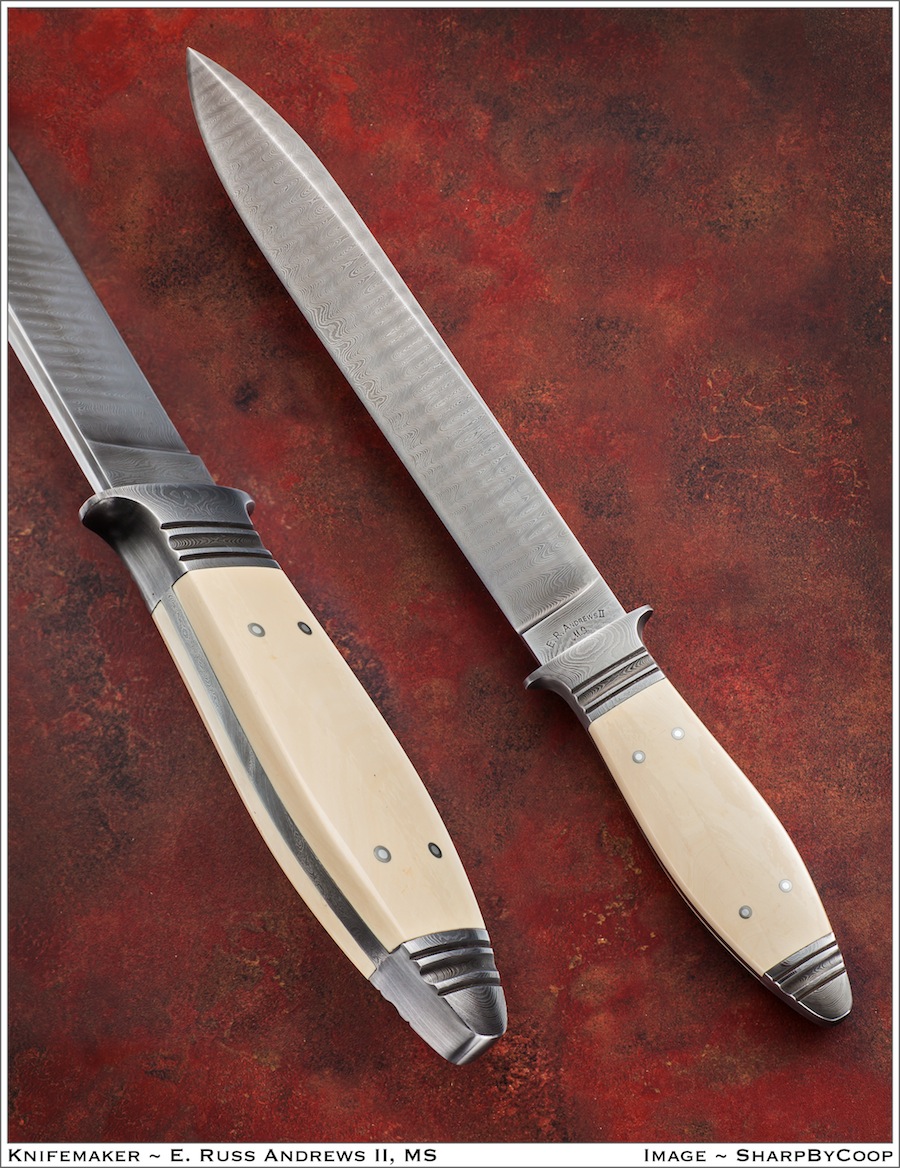
One potential problem with the ban is that some fossil ivories resemble elephant ivory, such as the mammoth ivory on the handle of this dagger by Russ Andrews. (SharpByCoop photo)
The recently announced federal ban on ivory not only seems to outlaw all import, export, interstate and intrastate sales of elephant ivory, it also appears to make all potential exceptions to the rule such as antiques virtually impossible to meet.
Initially announced on Feb. 11, the ban received more coverage Feb. 26 when the federal website http://www.fws.gov posted a story outlining the ban in more detail, including Director’s Order No. 210 from the U.S. Department of the Interior, Fish and Wildlife Service.
The story indicated that while virtually all elephant ivory is now illegal, a few exceptions exist, such as antique elephant ivory. However, to qualify as antique, elephant ivory must adhere to a hodge-podge of requirements that not only are virtually impossible to meet but present prohibitive costs in the process.
For instance, to qualify as an antique, the ivory must be 100 years old or older. However, the person claiming the ivory is that old must “definitively prove” the identity of the species. Such proof “can be in the form of bonafide DNA analysis,” a qualified appraisal or “other documentation,” such as “family photos, ethnographic fieldwork or other information.” If such analysis is required on each and every piece of elephant ivory, it would be cost-prohibitive for individual knifemakers. What’s more, the appraiser and the appraisal must meet strict guidelines in terms of the appraiser’s credentials, the scientific method used to determine the age or species must be described in detail, a detailed history of the article including proof of authenticity must be presented, etc.
Not only are the requirements draconian in nature, they don’t even take into account the fact that no one kept such records of their ivory when they bought it months or years ago, and to obtain such information now is virtually impossible.
Further, there must be proof that the ivory was imported through one of 13 specific ports of entry—12 in the USA and the other in San Juan, Puerto Rico. Notarized statements or affidavits by the exporter or seller are not adequate proof.
The maximum penalty for violations—which would qualify as violations of the Endangered Species Act—is one year in prison and a $100,000 fine for the individual, and $200,000 for an organization. Those who submit false records or identification of ivory face a maximum penalty of five years in prison and a $250,000 fine.
For the latest knives, knife news, trends and more, stay tuned to www.blademag.com.
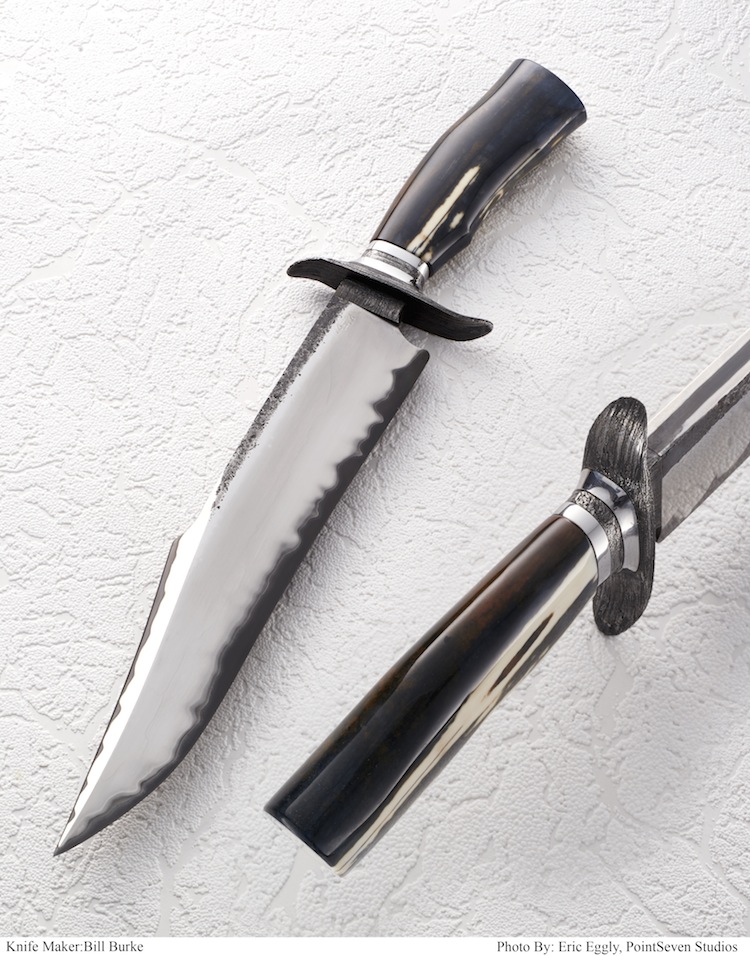
ABS master smith Bill Burke won the ICCE Award for Best Fixed Blade at the inaugural ICCE Show this past September.
Due to unforeseen circumstances, the 2nd Annual International Custom Cutlery Exposition (ICCE) has had to change the dates for its 2016 knife show from early to late September, show officials announced.
Originally slated for Sept. 9-11, the new dates are Sept. 23-25.
The show will be held in the same venue—the Downtown Marriott in Kansas City, Missouri.
According to ICCE officials, the event-hosting hotel, the Downtown Marriott, notified the ICCE’s organizers, the Knifemakers’ Guild and the American Bladesmith Society (ABS), that there would be several events scheduled for the original show dates. Due to the events scheduled in downtown Kansas City, some streets will be blocked, parking will be a hassle, and the downtown will be overcrowded the weekend of Sept. 9-11. The hotel management had other available dates that would make the show far more enjoyable for those who will attend, thus the change to Sept. 23-25.
Except in “a very limited number of circumstances,” the federal government has announced a ban on the commercial trade of elephant ivory, according to a report from the office of the secretary of The White House.
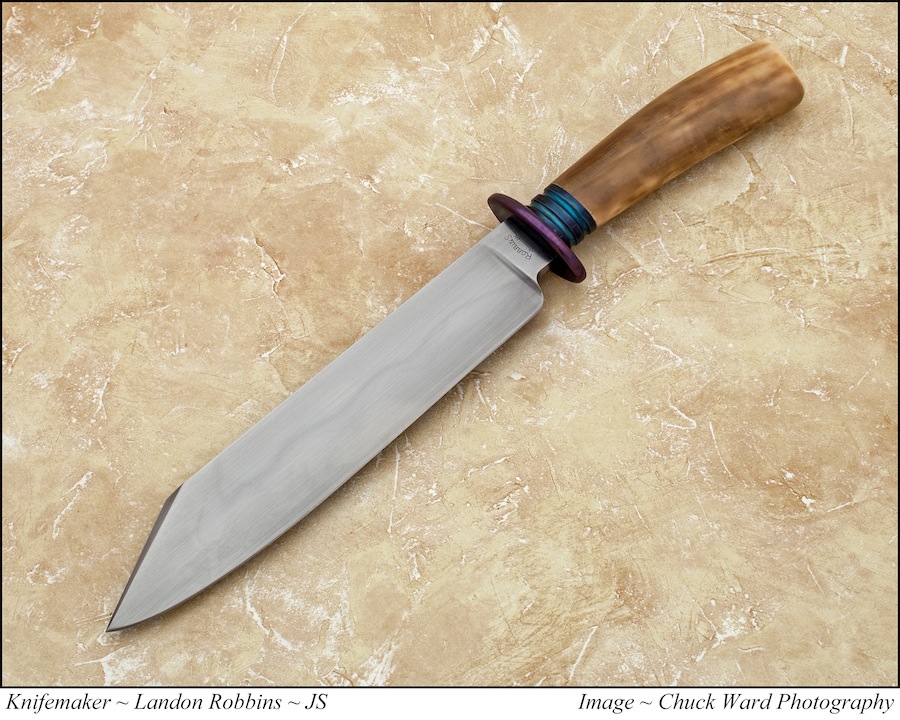
A new federal ban will require documentation proving antique ivory is over 100 years old. Landon Robbins used fossil ivory on his fixed blade here. (Ward photo)
How the ban will affect existing knives with handles of elephant and fossil ivory and existing supplies of elephant and fossil ivory held by knifemaking suppliers, knifemakers and others is not exactly clear at this time. However, if past experience is any barometer, knife professionals and enthusiasts should expect the worst.
Announced yesterday, Feb. 11, the ban prohibits, except under the aforementioned very limited number of circumstances, the import, export or resale of elephant ivory within the United States.
To implement the new controls, federal departments and agencies will immediately act to:
•Prohibit the commercial import of African elephant ivory, including antiques;
•Prohibit the commercial export of elephant ivory, except for bona fide antiques, certain noncommercial items and in “exceptional circumstances permitted under the Endangered Species Act”;
•Clarify the definition of “antique” so that the ivory must be more than 100 years old and meet other requirements under the Endangered Species Act. It will be up to the importer, exporter or seller to prove the item passes muster;
•Limit the number of African elephant sport-hunted trophies an individual can import to two per hunter per year; and, lastly;
•Finalize a proposed rule that would “reaffirm and clarify that sales across state lines are prohibited, except for bona fide antiques, and will prohibit sales within a state unless the seller can demonstrate an item was lawfully imported prior to 1990 for African elephants and 1975 for Asian elephants, or under an exemption document.”
In the coming months, the report noted, the federal government will take further steps to implement the “National Strategy,” and will work with Congress to strengthen existing laws and adopt new ones to enhance its “ability to address this global challenge.”
In other words, the federal government has declared war on all things ivory.
Stay tuned to www.blademag.com for further developments.
“I heard that I’m only allowed to carry knives with 3 1/2-inch blades or shorter in my state, is that true?”
“I carry a 4-inch drop-point fixed blade when hunting, but I’m traveling to Minnesota this season, can I carry it there?”
“Someone told me I can carry an auto in Michigan now, can that be right?”
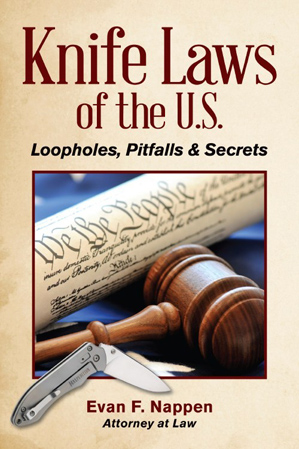
Good questions, all of them, and as silly as it might be that we have to ask such questions when it comes to carrying tools as utilitarian and downright useful as knives, that’s the world we live in. There are very few “firsts” in the knife industry, but one of them is the first and most comprehensive book ever published on federal and state knife laws. Knife Laws Of The U.S. By Evan F. Nappen answers questions about what knives are legal to own and carry in each state, and which aren’t. It delves into switchblades, ballistic and gravity knives and others, and even explains what to do and what not to do if you are arrested with a knife.
A nationally-known knife and gun rights attorney, Nappen has dedicated his life to fighting for gun and knife rights. Having practiced law since 1988, he was one of the first attorneys to ever get a federal injunction against a state gun law. He has written and produced DVDs, and authored a number of gun rights books, as well as numerous articles that have appeared in national magazines. Now he’s written THE book on knife rights. Knife Laws Of The U.S. is a good one to have, and with you, at all times, no mater where you go while carrying a knife!
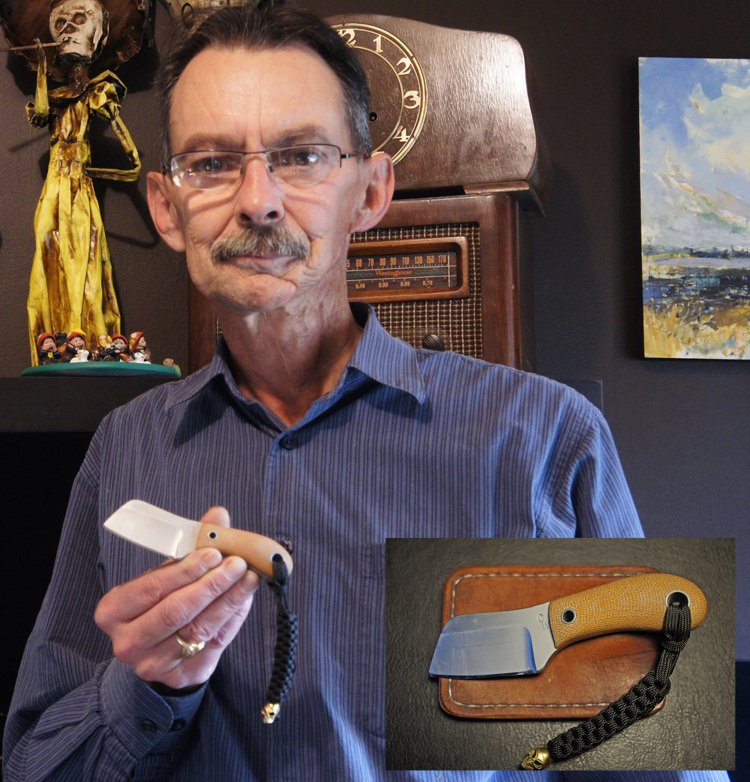
“For me, folders have always been a compromise. I’d find a blade I’d like but the grip wasn’t right, I’d find the perfect grip but hated the blade. A fixed-blade knife has always been my preference, but a belt sheath often isn’t acceptable, and because of a few major surgeries on my face and neck, a little necker wouldn’t work either. So, the search for a fixed-blade, pocketable knife started, without much more success.
I finally started to sketch out what would work best for me. The blade needed to be stout—I’m not gentle with my knives. I wanted a handle I could grip well, one that would still pivot in my hand easily for slicing an apple. Stout, sturdy, a small knife that cut ‘big’—everything I need in a knife, and nothing I don’t.
I finally settled on a design. Then, I found a very talented young knifemaker in Ontario, Canada, Craig Wheatley, who made my ‘grail knife’ a reality. The Dragan, which is also my screen name on several Internet knife discussion forums, is a little beast—5 inches overall with a 2-inch, 1.25-inch deep, .25-thick, bead-blasted 440C stainless blade, textured Micarta® scales, and a custom leather pocket sheath. The Dragan has replaced six other knives that used to make up my EDC rotation. Even though it’s a small knife, it’s done everything I’ve ever asked of it. I don’t know that I’d ever cut down a tree with it, but it’s tough enough that I wouldn’t be afraid to try.
Even though my original vision was to carry this knife in a pocket sheath, it would also make a great little necker. I’m very pleased to say Craig will be adding the Dragan to his line of beautiful fixed-blade knives in the very near future!”
Wayne Reimer, Regina, Saskatchewan, Canada
For more on the latest knives, knife legislation, knifemaking instruction, knife trends, knifemakers, what knives to buy and where and much more, subscribe to BLADE Magazine, the World’s No. 1 Knife Publication. For subscription information click on http://www.shopblade.com/product/blade-magazine-one-year-subscripti…?r+ssfb042312#BL1SU.