Knife Collecting

Knife collecting is an extremely rewarding experience for knife enthusiasts. There truly is a knife for everyone. Many increase or hold their value throughout the years, making collecting knives something to pass on to the next generation of knife collectors.

Majority Opposes Ivory Ban At Meeting

Anywhere from 50-to-60 people attended the March 20 public meeting held by the Advisory Council to the Presidential Task Force on combatting wildlife trafficking, with more than twice as many voicing opposition to the ivory ban as those supporting it.

Questions remain on feds ability to tell fossil from elephant ivory and vice versa. (Ward photo)
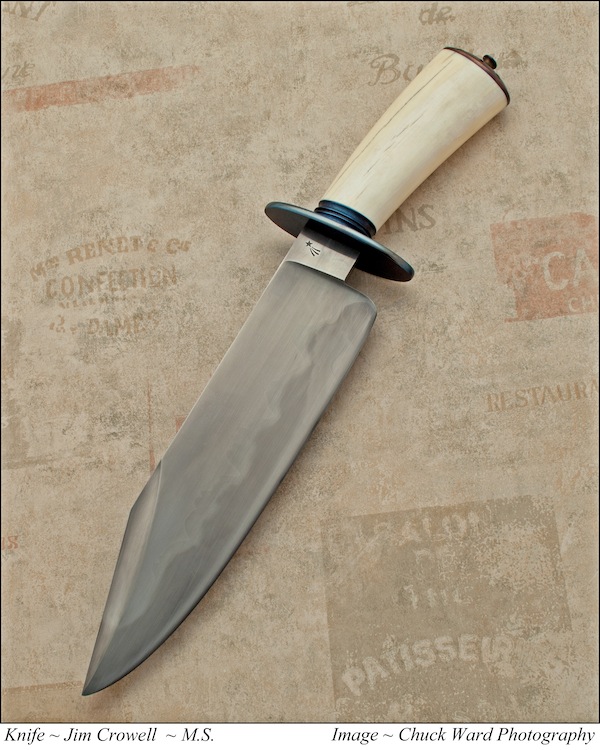
Over twice as many against the ivory ban as for it voiced concerns at the March 20 meeting. Jim Crowell’s fixed blade sports a fossil ivory handle.  (Ward photo)

Among those representing the knife industry at the meeting held in Washington, D.C., were scrimshander Sandra Brady, knifemaker Edmund Davidson and others.

“There were about 27 people who stood up to make statements and only about eight were in favor of the ban,” Brady noted. “Even though the words ‘ivory ban’ were not used at all by the committee, that is the ONLY thing that was talked about.

“We had statements from three antiques people, cane collectors, scrimshanders, musical instruments, a knifemaker and knife rights people, among others. So what I came away with is that the committee didn’t expect such a [pro-ivory] turnout. I can only imagine how many more statements were submitted via e-mail. We may have turned the tide at least a bit.”

On the other hand, the pro-ivory ban forces continued their full-court press, and there is much to be done to fight a number of punitive measures federal officials are considering, including making all illegal ivory sales felony violations. Committee members also talked about requiring violators to pay restitution and basically treat selling ivory as selling illegal drugs. “It was three hours of the ‘for-the-greater-good’ stuff, so that was the bad news,” one observer stated.

Several initiatives were mentioned by the knife industry group against the ivory ban, including finding a congress person to champion the anti-ivory ban cause and also the possibility of setting up an official fight-the-ban organization.

Craig Hoover of U.S. Fish & Wildlife said he expected someone on the advisory council to post more information, perhaps a summary video of the meeting, on its web page at some point. The link to the page is

http://www.fws.gov/international/advisory-council-wildlife-trafficking/

For further developments stay tuned to www.blademag.com.

Act Now To Fight Ivory Ban

If you think it’s too late for you to do anything about the oppressive ivory ban being implemented by federal officials, think again.

Ivory ban is unjust.
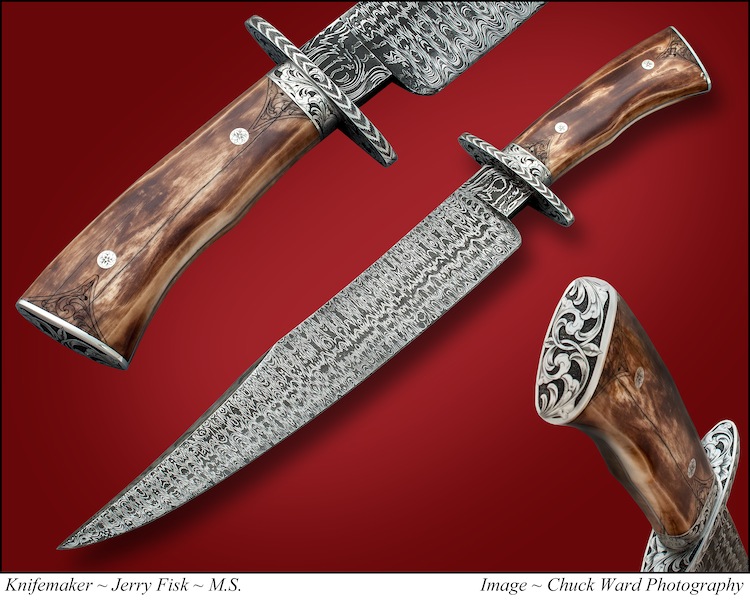
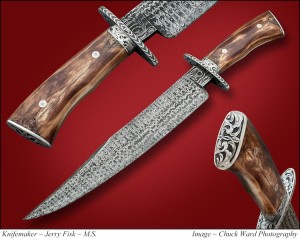
With federal officials saying elephant ivory is being disguised to resemble fossil ivory in some cases, authentic fossil ivory pieces such as Jerry Fisk’s majestic bowie could attract undeserved scrutiny from law enforcement. (Chuck Ward photo)

You can act now to have your voice heard by congressional and federal officials to stop more language adverse to those who buy, sell and collect ivory knives being added to the federal government’s “use after import” regulations.

One of the issues that apparently remains unsettled in the official language of the new ban is the exact wording concerning the legality of the sale of ivory, including ivory knives, across state lines. The updated regulations are due to be completed and released sometime in April, sources said.

As a result, you have time to contact your representative and other federal officials now before it’s too late. For more on the specifics of the ban, frequently asked questions and more, visit http://www.fws.gov/

To determine the name and contact information for your Congressional representative, visit http://www.house.gov/representatives/find/

In addition, make your views known to Sally Jewell, Secretary of the Interior, and Daniel M. Ashe, director of U.S. Fish and Wildlife. The mailing address for the Department of the Interior is 1849 C St., NW, Washington, DC 20240. It can be reached by phone at 202-208-3100 or e-mail at [email protected]. The mailing address for U.S. Fish and Wildlife is 4401 N. Fairfax Dr., Arlington, VA 22203.

We recommend hitting all of them on all fronts—by phone, e-mail and snail mail. They say a written letter carries more weight, so it may be time to break out the pen and paper and attack this issue old-school style.

For the latest knives, knife news, trends and more, stay tuned to www.blademag.com.

7 Keys To Top Knife Handles

Know the keys to the best handle design to enhance your knife’s performance and safe use. Following are seven:

1) According to ABS journeyman smith Dan Farr, the size of your hand is a key to arriving at the best handle for you. Longer hands require a larger handle diameter and thicker hands a smaller diameter. Wearing gloves works best with a longer and thinner handle. Remember that an eighth-inch difference in handle diameter means approximately a 3/8-inch difference in circumference.

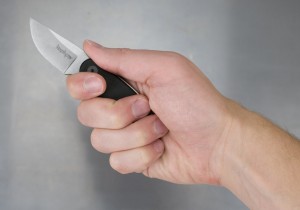
Do you know the keys to top handle design? The knife is the Kershaw Mini Skinner. (Kershaw photo)
Know seven keys to top handle design. The knife is the Kershaw Mini Skinner. (Kershaw photo)

2) As for handle material, most synthetics tend to be stable, durable and often require no protective finish. Wood is strong for its weight, finishes well and adds beauty. Stag is somewhat limited in shape and size, but has good texture and adds traditional looks.

3) Contoured and formed grips are great if they fit your hand, but the more form fit the handle, the fewer people it fits. Finger grooves are an example. They are nice if they fit your fingers, horrible if they do not. Handles with a single finger groove for the index finger will generally be versatile enough to fit many hand sizes.

4) Round handles have no natural indexing for the blade edge (natural indexing refers to the ability to know where the edge is by how the handle feels in your hand rather than having to look at the edge to know where it is). Oval handles are much more useful. They index the edge to the handle and add the ability to use twisting force.

5) Curving the butt of the handle down—also known as the dropped handle—will improve purchase.

6) A palm swell allows a relaxed, comfortable handhold. It keeps your hand in the same place on the handle, provides a natural pivot point and helps with retention.

7) Guards are important safety features. A guard should blend with the contours of the grip and be strong, though in proportion to the rest of the knife.


A Knife Handle That Really Sticks With You

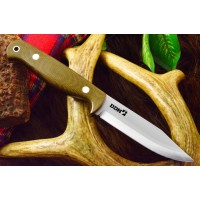
best drop point deer hunting knifeThis Deer & Deer Hunting Drop Point Knife is a great example of a knife that gets its handle right. This hard-working hunting knife was made exclusively by the American Knife Company for BLADE‘s sister brand, Deer & Deer Hunting, and is a great pick for hunters and collectors alike.

Order the Deer & Deer Hunting Drop Point Knife only at ShopBlade.com.

Antique Ivory Exceptions Rule Too Stringent

Russ Andrews uses fossil ivory on his dagger. (SharpByCoop photo)
One potential problem with the ban is that some fossil ivories resemble elephant ivory, such as the mammoth ivory on the handle of this dagger by Russ Andrews. (SharpByCoop photo)

The recently announced federal ban on ivory not only seems to outlaw all import, export, interstate and intrastate sales of elephant ivory, it also appears to make all potential exceptions to the rule such as antiques virtually impossible to meet.

Initially announced on Feb. 11, the ban received more coverage Feb. 26 when the federal website http://www.fws.gov posted a story outlining the ban in more detail, including Director’s Order No. 210 from the U.S. Department of the Interior, Fish and Wildlife Service.

The story indicated that while virtually all elephant ivory is now illegal, a few exceptions exist, such as antique elephant ivory. However, to qualify as antique, elephant ivory must adhere to a hodge-podge of requirements that not only are virtually impossible to meet but present prohibitive costs in the process.

For instance, to qualify as an antique, the ivory must be 100 years old or older. However, the person claiming the ivory is that old must “definitively prove” the identity of the species. Such proof “can be in the form of bonafide DNA analysis,” a qualified appraisal or “other documentation,” such as “family photos, ethnographic fieldwork or other information.” If such analysis is required on each and every piece of elephant ivory, it would be cost-prohibitive for individual knifemakers. What’s more, the appraiser and the appraisal must meet strict guidelines in terms of the appraiser’s credentials, the scientific method used to determine the age or species must be described in detail, a detailed history of the article including proof of authenticity must be presented, etc.

Not only are the requirements draconian in nature, they don’t even take into account the fact that no one kept such records of their ivory when they bought it months or years ago, and to obtain such information now is virtually impossible.

Further, there must be proof that the ivory was imported through one of 13 specific ports of entry—12 in the USA and the other in San Juan, Puerto Rico. Notarized statements or affidavits by the exporter or seller are not adequate proof.

The maximum penalty for violations—which would qualify as violations of the Endangered Species Act—is one year in prison and a $100,000 fine for the individual, and $200,000 for an organization. Those who submit false records or identification of ivory face a maximum penalty of five years in prison and a $250,000 fine.

For the latest knives, knife news, trends and more, stay tuned to www.blademag.com.


Feds Ban Trade of Elephant Ivory

Except in “a very limited number of circumstances,” the federal government has announced a ban on the commercial trade of elephant ivory, according to a report from the office of the secretary of The White House.

Documentation proving ancient ivory is over 100 years accompanies new federal ivory ban. (Ward photo)
A new federal ban will require documentation proving antique ivory is over 100 years old. Landon Robbins used fossil ivory on his fixed blade here. (Ward photo)

How the ban will affect existing knives with handles of elephant and fossil ivory and existing supplies of elephant and fossil ivory held by knifemaking suppliers, knifemakers and others is not exactly clear at this time. However, if past experience is any barometer, knife professionals and enthusiasts should expect the worst.

Announced yesterday, Feb. 11, the ban prohibits, except under the aforementioned very limited number of circumstances, the import, export or resale of elephant ivory within the United States.

To implement the new controls, federal departments and agencies will immediately act to:

•Prohibit the commercial import of African elephant ivory, including antiques;

•Prohibit the commercial export of elephant ivory, except for bona fide antiques, certain noncommercial items and in “exceptional circumstances permitted under the Endangered Species Act”;

•Clarify the definition of “antique” so that the ivory must be more than 100 years old and meet other requirements under the Endangered Species Act. It will be up to the importer, exporter or seller to prove the item passes muster;

•Limit the number of African elephant sport-hunted trophies an individual can import to two per hunter per year; and, lastly;

•Finalize a proposed rule that would “reaffirm and clarify that sales across state lines are prohibited, except for bona fide antiques, and will prohibit sales within a state unless the seller can demonstrate an item was lawfully imported prior to 1990 for African elephants and 1975 for Asian elephants, or under an exemption document.”

In the coming months, the report noted, the federal government will take further steps to implement the “National Strategy,” and will work with Congress to strengthen existing laws and adopt new ones to enhance its “ability to address this global challenge.”

In other words, the federal government has declared war on all things ivory.

Stay tuned to www.blademag.com for further developments.


EX-03: More Than Just Another Black Handle Tactical

Sometimes it’s easy to denigrate the many black-handle tactical folders on the market, but Hogue Knives’ approach to the grip material for its EX-03 sheds new light on black.

The handle material for the EX-03 is a polymer known as Polyphenylene Sulfide. The trade name is PPS.

A polymer known as PPS is the handle material for the Hogue4 EX-03. (Hogue photo)
Hogue uses a polymer known as PPS for its EX-03 folder. (Hogue photo)

“This material was selected for its high-tensile strength—29,000 psi—along with many other strength categories which are superior to a more commonly used reinforced nylon such as Zytel®,” noted Jim Bruhns, president of Hogue. “PPS is also much more thermally resistant than nylon, which is more of a big deal that you would expect.

“In most applications reinforced nylon, also known as glass-filled nylon, works very well through a wide range of temperature. We have seen occasion where polymer products fail as a result of extreme temperature in some obvious places, such as the trunk of a car where extreme highs and lows can occur. Again, PPS wins in this category with a much higher deflection temperature than nylon.”

The internal components that make the EX-03’s mechanism are 17-4 stainless steel. The real trick, Bruhns stressed, was getting such a robust assembly staged into an injection-mold tool in a way that the blade could be added and adjusted as part of a final assembly after molding.

“This was something that was met with quite a bit of skepticism, as the problem is quite challenging,” Bruhns continued. “This really goes to the root competency of what we do here at Hogue.”

Bruhns was able to develop the needed tooling for the task and the results speak for themselves.

“We now have a single-piece polymer frame folder with all of the best-known materials available in a rock-solid assembly,” he stated. “This knife is the best bang for your buck available today.”

For more on the Hogue EX-03, see the May BLADE®, on newsstands Feb. 25.

Elvis and the Gil Hibben Knife

The Hibben Karate Master shown at bottom here is the updated version of the knife Gil Hibben made for Elvis Presley in 1974. (United photo)
The knife Gil Hibben made for Elvis Presley in 1974 lives on today in the “Hibben Karate Master” reproduction (shown at bottom above) from United Cutlery. (United photo)

What better day to celebrate the custom knife BLADE Magazine Cutlery Hall-Of-Fame© member Gil Hibben presented to Elvis Presley than on The King’s birthday?

Today is Presley’s birthday and a reminder of when Hibben and Phil Lobred, coordinator of the Art Knife Invitational, visited Presley 40 years ago.

It was also when Hibben presented Presley with a handmade Hibben knife.

Both Hibben and Presley were practitioners of Kenpo karate. In 1974, Gil and Phil attended a Kenpo tournament in Los Angeles. While there, they stayed with Ed Parker, founder of the Kenpo system. Parker had one of the early custom Hibben Kenpo knives which, at the time, Gil called the Ed Parker Knife. It occurred to Parker that Elvis, who had a second home in L.A. and was a karate student of Parker’s, might be interested in the Hibben knife. Plus, presenting the knife to Elvis could be a way to get Gil and Phil in to see the King.

Parker made the arrangements and Gil and Phil were at Presley’s L.A. home. When the knife was presented to Elvis, the King was extremely pleased. “He was like a kid with a new toy,” Lobred recalled. Presley went upstairs and returned with a gold Omega watch and presented it to Hibben in return. In all, Gil and Phil got to hang out with the King and Co. for about six hours.

As for whatever happened to the knife presented to Presley, Hibben said no one knows for sure. “It’s not at Graceland,” Gil noted. Maybe one day it will turn up. If it does, Hibben said he will know it on sight.

For the latest knives, knife news, trends, tips and more, stay honed at www.blademag.com.

Advertisement

Must Read Articles

Read this before you make a knife

Knifemaking 101 – Read This Before You Make a Knife

  by Wayne Goddard My experience has taught me that there's nothing like digging in and getting started. I've often said the hardest part of the...
how to forge damascus steel

How to Forge Damascus

Advertisement
Advertisement