Knife Collecting

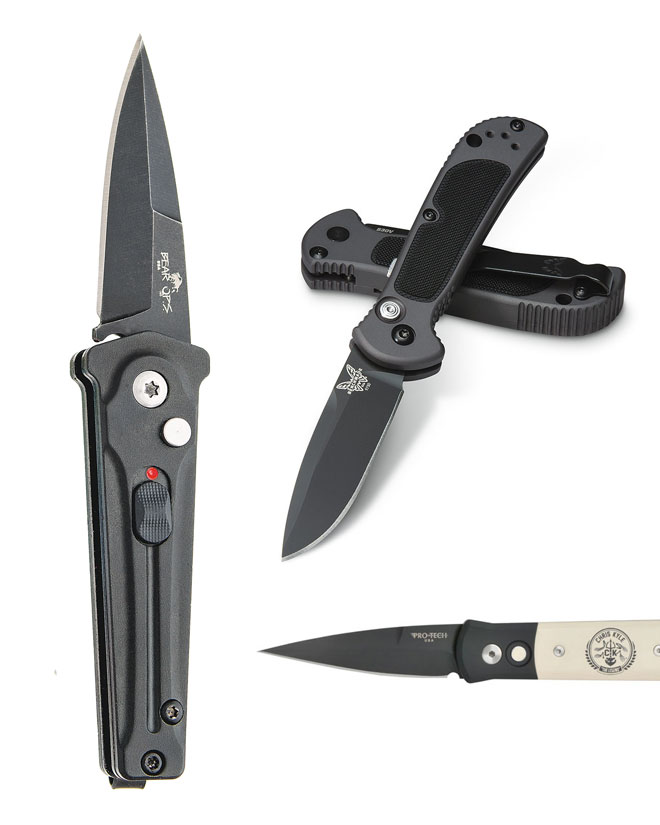
Knife collecting is an extremely rewarding experience for knife enthusiasts. There truly is a knife for everyone. Many increase or hold their value throughout the years, making collecting knives something to pass on to the next generation of knife collectors.

Photos: New Custom Knives to Knock Your Socks Off

New Custom Knives

Near-flawless grinds, captivating materials, curvaceous lines, snug fit and finish, and slick mechanisms help ensure today’s hottest makers’ hottest custom knives are cool cutters to covet.

While determining such knives is almost impossible to do without at least a smidgeon of subjectivity, those who sell knives professionally have their finger on the pulse of who some of the makers are and which of their knives is hottest. If the sellers don’t, they won’t be in business for long.

We tapped four of today’s successful knife sales operations—purveyor Daniel O’Malley of Bladegallery.com, purveyor Les Robertson of Robertson’s Custom Cutlery, and Sako Rouchanian, owner of Recon 1, a retailer of knives and gear—for their opinions on the matter.

Meanwhile, don’t be surprised if one or more of the mesmerizing cutters they identify activate your salivary glands. Covet away!

Poison
custom knives
(Claudio Sobral image)

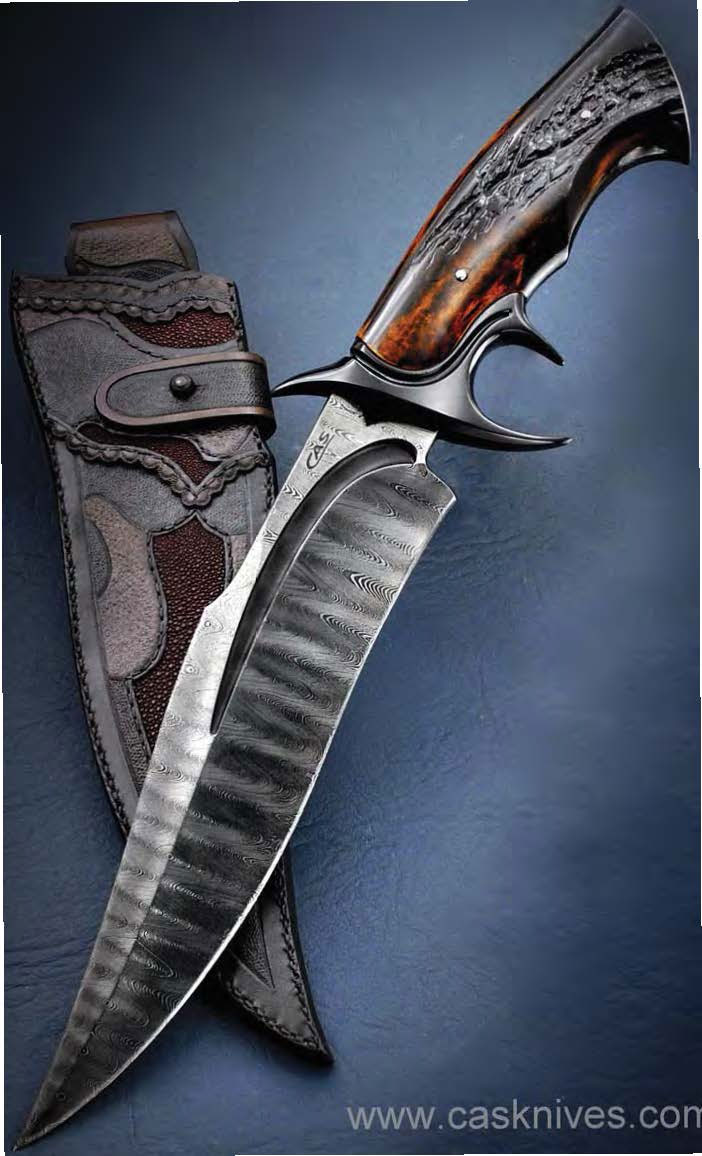
Poison by Claudio and Ariel Sobral of CAS Knives offers up what purveyor Les Robertson calls the Sobrals’ signature style: big, bold and striking! The carved integral guard and sub-hilt are blued carbon steel.

  • Handle: Amber stag
  • Blade and overall lengths: 10 and 15.5 inches
  • Blade steel: Ladder pattern damascus
  • Maker’s price: $3,000

111

Sergey Shirogorov
(Recon 1 image)

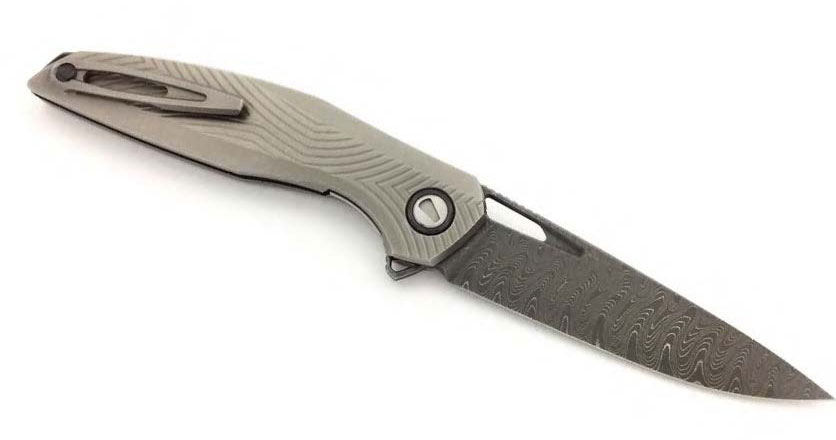
The Double Row Roller Bearing System used exclusively on such custom knives as Sergey Shirogorov’s full custom 111 flipper makes the knife’s action incredibly smooth.

“It flips open like a rocket,” stated Sako Rouchanian of Recon 1.

  • Blade and closed lengths: 4.37 and 5.25 inches.
  • Blade steel: Chad Nichols boomerang damascus
  • Handle: stonewashed titanium
  • Maker’s price: Auction only
  • Recon 1’s price: $12,000

Ronin

jim burke ronin custom knife
(Steel Addiction Custom Knives image)

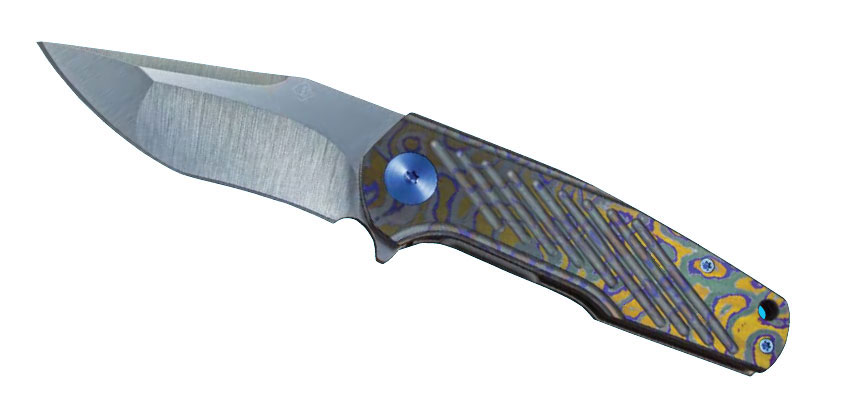
Jim Burke’s Ronin is a compact tactical flipper folder with a unique pocket-friendly footprint. The modified tanto blade is Stellite® and pivots on ceramic bearings. The frame is milled Zircuti—zirconium and Mokuti—with blue anodized hardware. The clip is Zircuti, too.

  • Weight: 5.5 ounces
  • Blade and closed lengths: 3.25 and 4.25 inches
  • Maker’s price: $1,800

L51 Compact

new custom knives
(BladeGallery.com image)

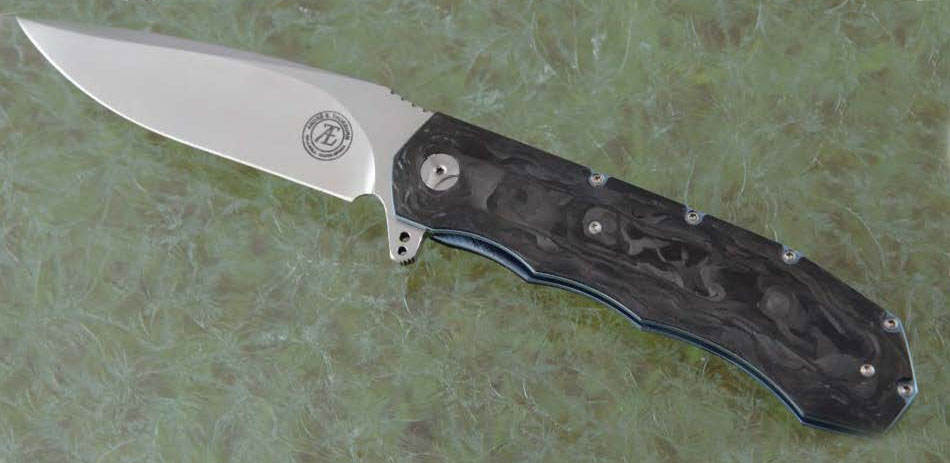
As purveyor Daniel O’Malley observed, over the past couple of years tactical folder collectors who had gone by the creed of “bigger is better” have been opting for sleeker, lighter, thinner and more pocket-friendly versions for their EDCs. The L51 Compact by Andre Van Thorburn is such a knife.

  • Blade and closed lengths: 3 3/8 and 4.5 inches
  • Blade steel: N690 stainless Handle: Marbled carbon fiber
  • Weight: 3.8 ounces
  • Maker’s price: $750
  • BladeGallery.com’s price: $750

EZC

best custom knives
(Recon 1 image)

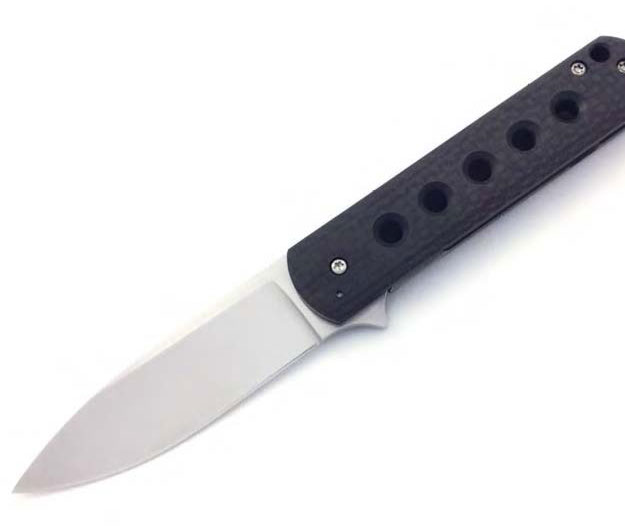
The carbon fiber handle of Ray Laconico’s EZC flipper features a milled “speed hole” pattern.

“When it comes to building a handmade tactical flipper knife for everyday carry, Ray Laconico gets it,” noted Sako Rouchanian of Recon 1.

  • Blade and closed lengths: 3 and 3.87 inches
  • Maker’s price: $750
  • Recon 1’s price: $1,100

A2/A6

best new custom knives
(Steel Addiction Custom Knives image)

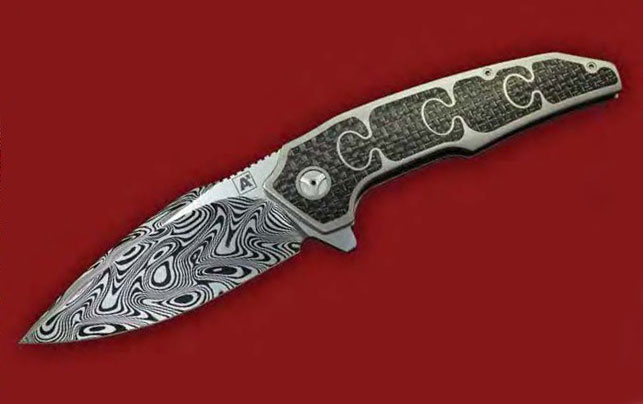
The A2 framelock folder by South Africans Andre Van Heerden and Andre Thorburn has been hot for well over a year now and shows no signs of cooling off. The A2/A6 is their collaboration with Tashi Bharucha in a blade of polished Damasteel damascus, and hand-rubbed titanium frames in the Omega sign with silver lightning-strike carbon fiber inlays.

  • Weight: 4.9 ounces. Blade and closed lengths: 3 5/8 and 8 3/8 inches
  • Makers’ price: $1,500

Model 450 Ultra-Light
des horn model 450 ultra light
(BladeGallery.com image)

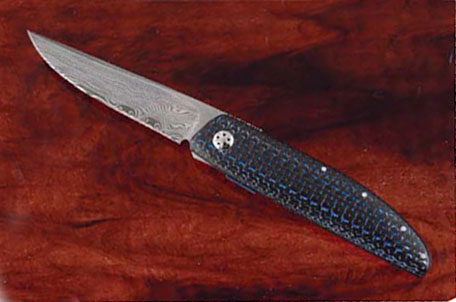
South African Des Horn’s Model 450 Ultra-Light gent’s flipper features a 2.75-inch blade of Damasteel stainless pattern-welded steel and a blue/silver carbon handle.

“It’s so slim and light [1.2 ounces] you won’t even know you’ve got it with you,” noted purveyor Daniel O’Malley. “With over 30 years making knives, Des Horn is one of the fathers of the South African knife industry, and his influence can be seen in many other makers’ work.”

  • Horn’s price: $600
  • BladeGallery.com’s price: $600

Hokkaido
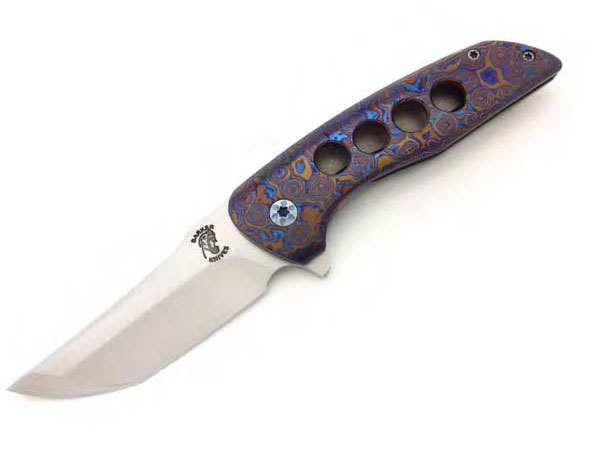
new custom knife
(Recon 1 image)

“Arguably [featuring] the best grinds in the tactical market, John Barker’s Hokkaido is the hottest tanto design in the tactical world,” noted Sako Rouchanian of Recon 1.

The Small Hokkaido flipper features a contoured rosebud pattern Timascus handle.

  • Blade and closed lengths: 2.75 and 4 inches
  • Blade material: handrubbed CTS-XHP stainless Maker’s price: $3,500
  • Recon 1’s price: $7,500

Sault Daug

best custom knife
(Steel Addiction Custom Knives image)

Sault Daug is the latest folder from Lee Williams. Equipped with a linerlock, it comes in both the maker’s Kick Stop and stud opener (pictured) versions. Blade and closed lengths: 3.5 and 4.75 inches.

  • Blade steel: handrubbed CPM 154
  • Handle: Carbon fiber scales and titanium standoffs
  • Weight: 4.7 ounces
  • Maker’s price: $2,250
  • Open-bid show price: $7,500

Piuma

best custom knifemakers
(BladeGallery.com image)

The brother of custom knifemaker Willem Steenkamp, Kosie Steenkamp offers up the Piuma flipper in red lightning-strike carbon fiber.

“The blade is perfectly centered with silky smooth action,” noted purveyor Daniel O’Malley, “and easily opened with one hand using the ambidextrous flipper toggle.”

  • Blade and closed lengths: 3.4 and 5 inches
  • Liners: Jeweled and anodized titanium
  • Pocket clip: textured and anodized titanium
  • Maker’s price: $575
  • BladeGallery.com’s price: $575

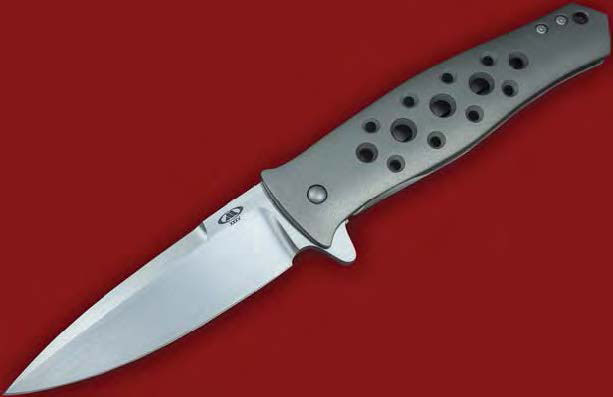
Doctor Death Junior Flipper
flipper knives
(Steel Addiction Custom Knives)

Tom Mayo has been making knives 35 years and all of his anniversary knives have his XXXV anniversary logo.


The Doctor Death Junior Flipper has a 3 5/8-inch blade of handrubbed CPM 154 stainless steel and operates on the Ikoma Korth Bearing System. The framelock folder weighs 4.6 ounces and is 5 inches closed.

  • Maker’s price: $1,600

See More Photos of Custom Knives
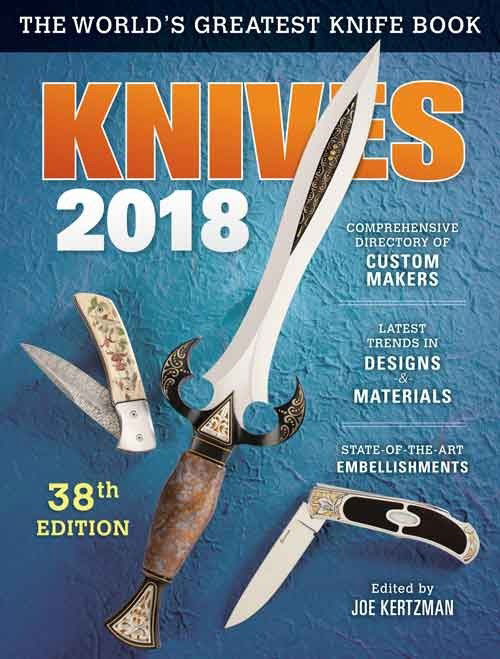
best knife book

See beautiful, full-color photos of custom knives in Knives 2018.
New Knives from SHOT Show 2019

0

SHOT Show knives 2019

BLADE was on the ground for the 2019 SHOT Show. Here’s a look at what’s new.

Be sure to follow BLADE on Instagram for the most up-to-date coverage and more content from the event. More videos will be posted here as they become available.

SOG

CRKT

Spyderco


KA-BAR


Boker

Buck

Al Mar


View this post on Instagram


A nifty knife from @almarknives I discovered at #ShotShow. $35 and an ultralight carry. It seems that mini knives are making quite the appearance in 2019.

A post shared by BLADE Magazine (@blade_magazine) on

Turner Knife & Tool

Benchmade

Just For Fun

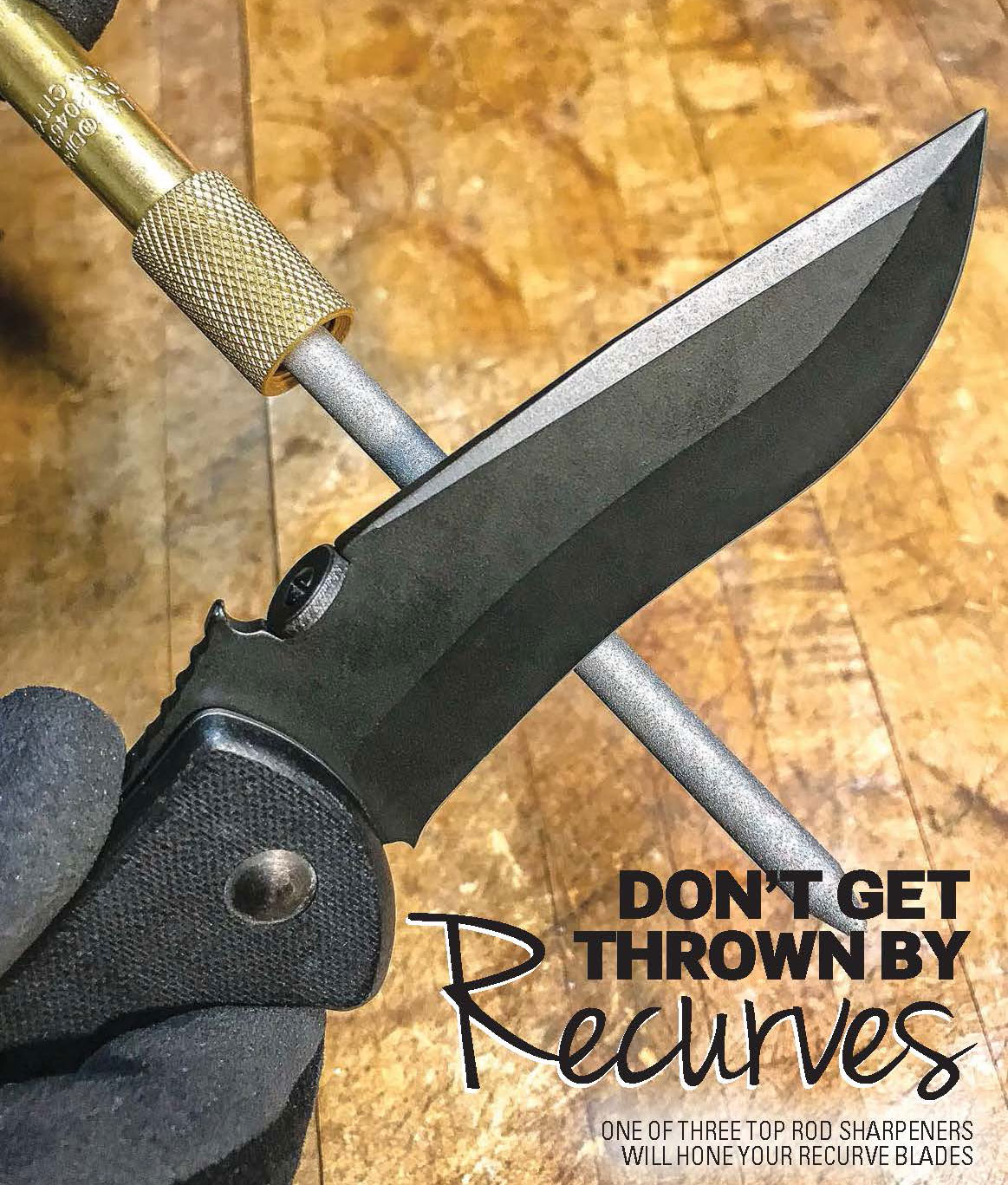
3 Top Knife Sharpening Rods for Recurve Blades

knife sharpening rods for recurve blade knives

All images by David M. Standfield, DMS Captures

Knife Sharpening Tips for Recurve Knives

Recurve blades throw some folks off when it comes to edge maintenance because the lines of the curving edges do not fit those of more common blade patterns. Truth is, with the proper sharpener, re-sharpening recurve blades is just as easy as any more common blade pattern—and here are some sharpening rods well suited for the job.

Lansky LCD02 Diamond Carbide Sharpening Rod

Lanskey knife sharpening rod
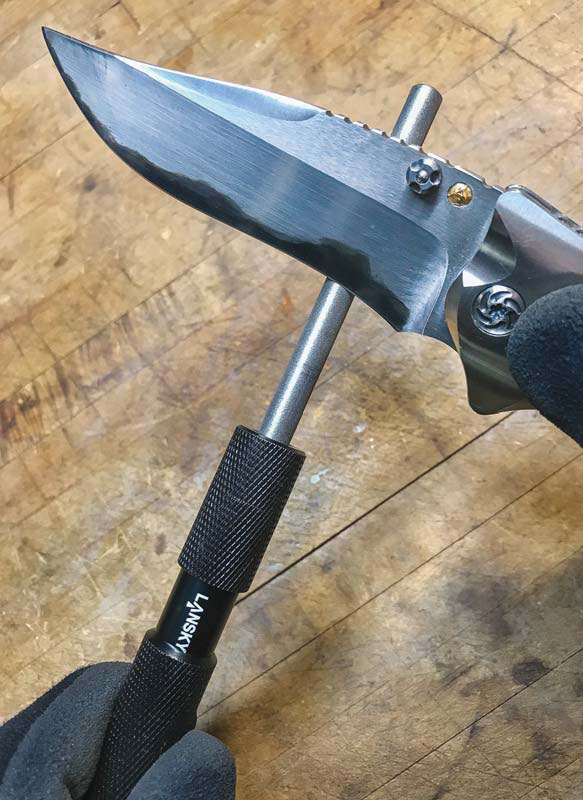
The diamond rod of the Lansky LDC02 easily handles recurve blades.
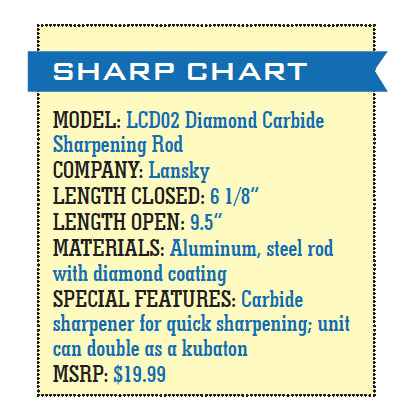
  • At a manufacturer’s suggested retail price (MSRP) of $19.99, the sharpener represents a good value in the genre.

The LCD02 Diamond Carbide Sharpening Rod from Lansky marries the effectiveness of a diamond abrasive with the convenience of a retractable sharpening rod and the expediency of a pull-through carbide sharpener all in one package.

“The Lansky tactical sharpening rod is a must-have tool for any trip into the field,” says Barbara Worden, Lansky national sales manager. “It makes short work of dressing and honing knives, machetes, hatchets and axes.”

The LCD02 is designed to quickly and easily handle any type of knife—large or small, fixed blade or folder—and most common steels found on today’s production knives. The coarse-grit diamond rod also can be used with recurve blades, as the rounded profile—and this is a key to handling any sort of recurve edge—allows you to effectively sharpen the recurve’s flowing curves. When not in use, simply retract the rod into the handle to protect it from damage during transport. The whole package is compact and stows easily in a tacklebox, toolbox, glove box, or any sort of backpack or storage container.

Knife Sharpening Rod

With recurve blades the carbide portion of the sharpener is pretty much impossible to use, so you will need to use the retractable diamond rod only. Employ light pressure as you work the blade down the rod. A nice feature is the carbide draw-through sharpener’s flat base. It stabilizes the unit, preventing it from rolling during use. Handle knurling adds a nice, non-slip grip.

According to Worden, the pull-through/diamond rod combo unit can serve as a kubaton/striking instrument, too. The LCD02 is the longest of the three sharpeners tested, which translates well as an impromptu kubaton, but the added length makes it less compact. If the carbide portion would be omitted, that would shorten the length to where the LCD02 would be more compact and travel friendly.

AccuSharp Diamond Sharpening Rod

Diamond knife sharpening rod
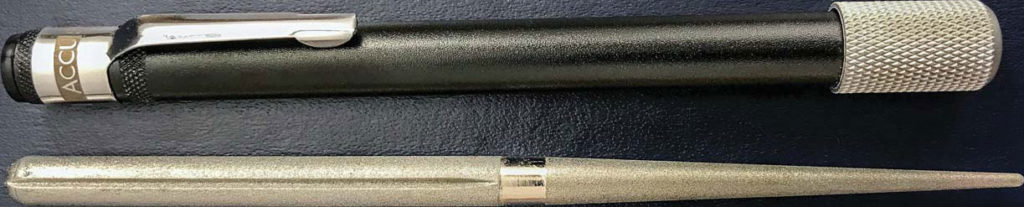
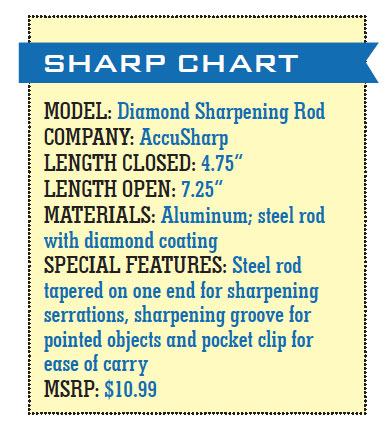
The AccuSharp Diamond Sharpening Rod can easily sharpen plain edge recurve blades as well as serrations, the latter by using the tapered end. The anodized aluminum handle has a pocket clip for ease of carry.

  • The sharpener’s compact size makes it easy to carry.

The AccuSharp Diamond Sharpening Rod has an anodized aluminum body and a diamond-coated steel sharpening rod.

“The retractable rod is engineered with a cone-shaped end for use on serrations and tight spaces,” says Kelly Clark, sales manager of Fortune Products, Accusharp’s parent company.
In the fully retracted position, the rod extends by unscrewing the knurled nut and pulling the rod out of the handle some, then re-tightening the nut to secure the rod in the extended position.

Knife Sharpening Rod Reviews

The rounded profile allows it to follow the edge of a recurve blade. The overall diameter is similar to that of a pen, and it includes a steel pocket clip. The rod also has sharpening grooves for hooks, darts and other pointed objects.

It is a pretty simple model construction wise but works well. The only thing I saw that could be improved is the overall diameter of the handle/body. Adding a bit of thickness would make it much easier to hold but also would increase weight and bulk. As is, it carries very well in multiple ways.

EZE-Lap Retractable Diamond Sharpening Rod

EZE knife sharpening rod
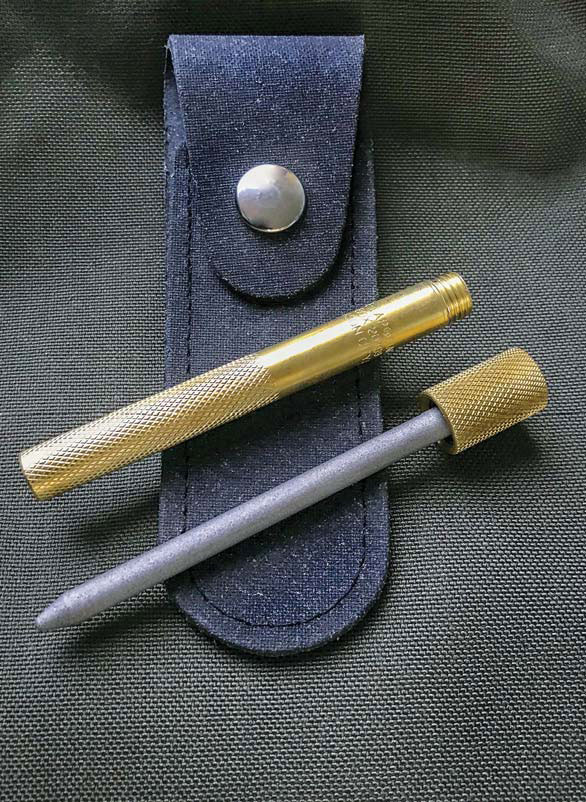
The EZE-Lap Diamond Sharpener has a knurled brass handle and screws onto the rod to form a non-slip handle design.
  • The EZE-Lap exhibits very good quality manufacturing.

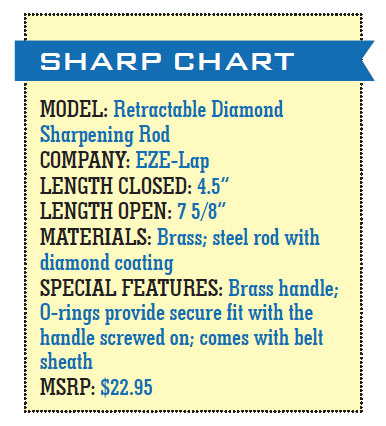
Similar in nature to the AccuSharp, the EZE-Lap Retractable Diamond Sharpening Rod is another compact, rod-based sharpener that stores easily. Unlike the AccuSharp, the EZE-Lap has a brass handle, which looks nice compared to the anodized aluminum of the other review models.

Measuring 3.25 inches long, the sharpening rod does not retract into the handle.

Instead, it unscrews from and inserts into the handle, and then screws back down. In other words, it stows similarly to a capped fountain pen. A nice touch not found on many sharpeners of this type is the full knurled handle. The knurling aids in achieving a non-slip grip and works well wet or dry. The knurling adds confidence by not allowing the handle to rotate inadvertently in your hand.

how to sharpen a knife with a rod

Unlike other knife sharpeners of the type, the diamond coated steel rod does not have a tapered end for serrations. However, the EZE-Lap will handle any size of plain edge blade, including recurves, and does so quite well. The quarter-inch-diameter rod is coated with a diamond substrate that allows the sharpener to easily remove metal and restore dull edges quickly. It comes with a belt sheath for an alternative carry option. It is the only sharpener herein that comes with a belt sheath—a nice touch and added value.

The EZE-Lap exhibits very good quality manufacturing. Part of this is from the brass handle, so its appearance alone makes it stand out. The only thing I would change, like with the AccuSharp, is the handle diameter. I would make it slightly bigger for ease of holding onto in use.


See You At BLADE Show West

Portland knife show

The biggest and best knife show in the world, BLADE Show, is coming to Portland, Oregon, Oct. 5 to 7, 2018. Expect factory knives, custom knives, accessories and everyday carry gear.

FIND SHOW INFORMATION HERE >>

4 New Karambits That Are Very Different

WELCOME TO THE BRAVE NEW WORLD OF THE KARAMBIT.

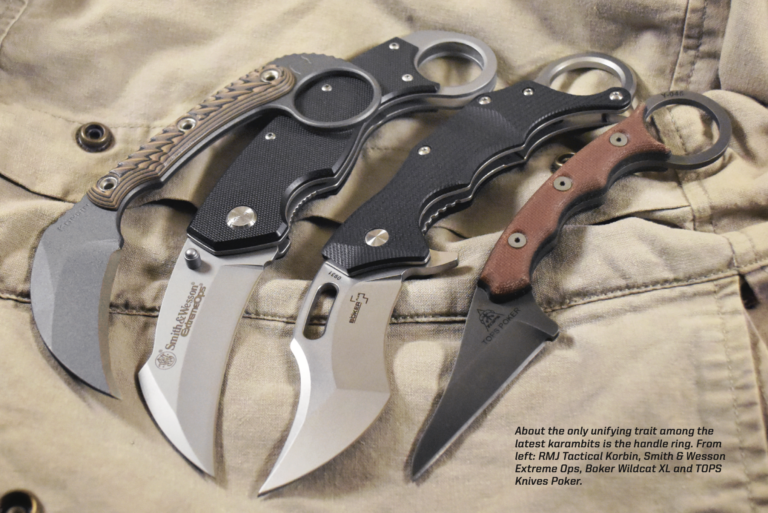
The latest karambits come in an assortment of sizes, shapes, blade patterns, materials, fixed blades and folders, and price ranges. Whether for utility, self-defense or what have you, today’s karambits are ahead of the curve. In fact, some have even eschewed the traditional curved blade cent of that of a Japanese kiridashi, and is for a variety of patterns.

In other words, today’s versions of the knives with the ring in the handle butt have that unfamiliar ring to them.

The karambit traces its roots to Indonesia, where it was first used in agricultural chores such as cutting rice. The original was much larger, but it began to be scaled down as its prowess in self-defense became more prominent. Most, though not all, karambits have the familiar safety ring at the base. They come in both fixed-blade and folder options and, to many users, are just as much for EDC as self-defense.

Karambits typically have a hawkbill blade, but you can’t tell by looking at our featured foursome. Manufacturers have diversified the knives’ blade shapes recently, thus offering something different in order to gain an edge over the competition. My team tested the four blades for cutting performance and tactile characteristics using the two main karambit grips: reverse, which is the main one for combat, and forward, which is more utilitarian.

It should be noted that karambits can be hazardous if you try spinning them as is often portrayed in YouTube videos. I spoke with two prominent edged-weapons combat trainers about spinning the knife. They both affirmed that the practice is useless in combat and is primarily used to perform tricks. Whatever the case, if you use a karambit for self-defense, it’s highly recommended that you seek professional instruction and start off with plastic or rubber training iterations of the knife.

NO LIGHTWEIGHT: The Smith & Wesson Extreme Ops

Image from KnifeCenter.com

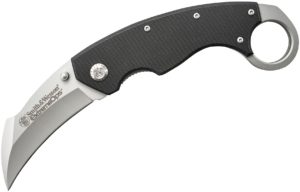
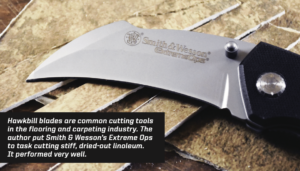
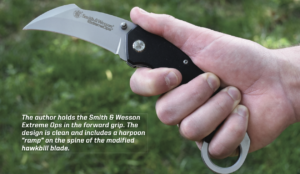
At $24.99, the Smith & Wesson Extreme Ops is by far the most affordable knife of the group. The design is clean and includes a harpoon modification on the spine of the hawkbill blade. At 7.875 inches overall it’s a large folder and also the heaviest (6.1 ounces) of the quartet. The liners are stainless steel. The safety ring is centered at the base. The blade angle is moderately aggressive, allowing the tip to lead when making cuts in the reverse grip. There’s a lot of handle to hold.

Uses for hawkbill blades include cutting carpet and linoleum, and pruning. I took the Extreme Ops to task on straight slices through some stiff, dried-out linoleum and it did an admirable job. Though it took three or four slices using a triangle as a guide, none of the test models made it through the material any quicker.

Due to its size, the Extreme Ops isnot for those with small hands, and it’s a heavy carry in the pocket. The only design flaw I found was in the safety ring, which is actually two thin rings that come off the steel liners. These can cut into the fingers with extended use. I’d like to see a solid spacer fill the gap between the rings. Manufacturer’s suggested retail price (MSRP): $24.99.

Smith & Wesson Extreme Ops Specs
KNIFE TYPE: Folder
BLADE LENGTH: 3 inches
BLADE STEEL: 400 stainless
BLADE PATTERN: Modified hawkbill
HANDLE MATERIAL: Black G-10
LOCK: Linerlock
KNIFE TO KNOW: Offset safety ring
CARRY: Pocket clip, tip up
WEIGHT: 6.1 ounces
OPEN LENGTH: 7.875 inches
CLOSED LENGTH: 4.875 inches
COUNTRY OF ORIGIN: China
MSRP: $24.99

MIXED BREED: The TOPS Knives Poker

Image from TOPS Knives

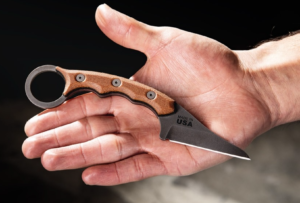
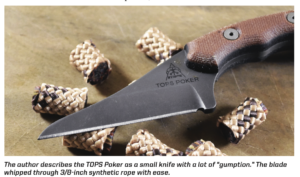
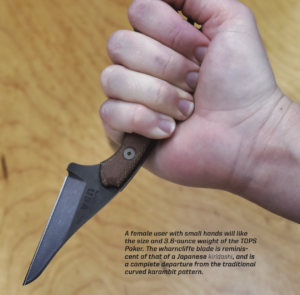
The Poker from TOPS Knives is a mixed-breed karambit. Designed by the company’s marketing director, Craig Powell, the Poker combines a karambit handle with a straight-edge, double- ground-blade hybrid. Reminiscent of that of a Japanese kiridashi, the blade sports TOPS’ Acid Rain finish. The sculpted handle scales terminate at a centered safety ring and the sheath is multi-positional.

A small fixed blade, the Poker is ideal for everyday carry as a neck or belt knife. There’s no angle to the wharncliffe blade—it comes straight off the handle— so, for self-defense using the knife, you’d want to train specifically with a wharncliffe pattern. Wharncliffes are great, all-around workhorse blades that excel at stripping wire, carving wood and making straight cuts.

The Poker is small, easy to conceal* and ideal for those with smaller hands. It did a good job removing strips of corrugated board, and even surprised me a bit because of its ability to cut easily through 3/8-inch synthetic rope. The blade has a lot of gumption! MSRP: $95.

TOPS Knives Poker Specs
KNIFE TYPE: Fixed blade
BLADE LENGTH: 2.5 inches
BLADE STEEL: 1095 carbon
BLADE PATTERN: Wharncliffe
HANDLE MATERIAL: Tan or black canvas Micarta®
WEIGHT: 3.6 ounces
OVERALL LENGTH: 6.88 inches
KNIFE TO KNOW: The blade is somewhat reminiscent of that of a Japanese kiridashi
CARRY: Black Kydex w/belt loop
COUNTRY OF ORIGIN: USA
MSRP: $120

LEAN & UPSCALE: The RMJ Tactical Korbin

Image from RMJ Tactical

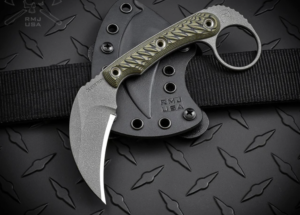
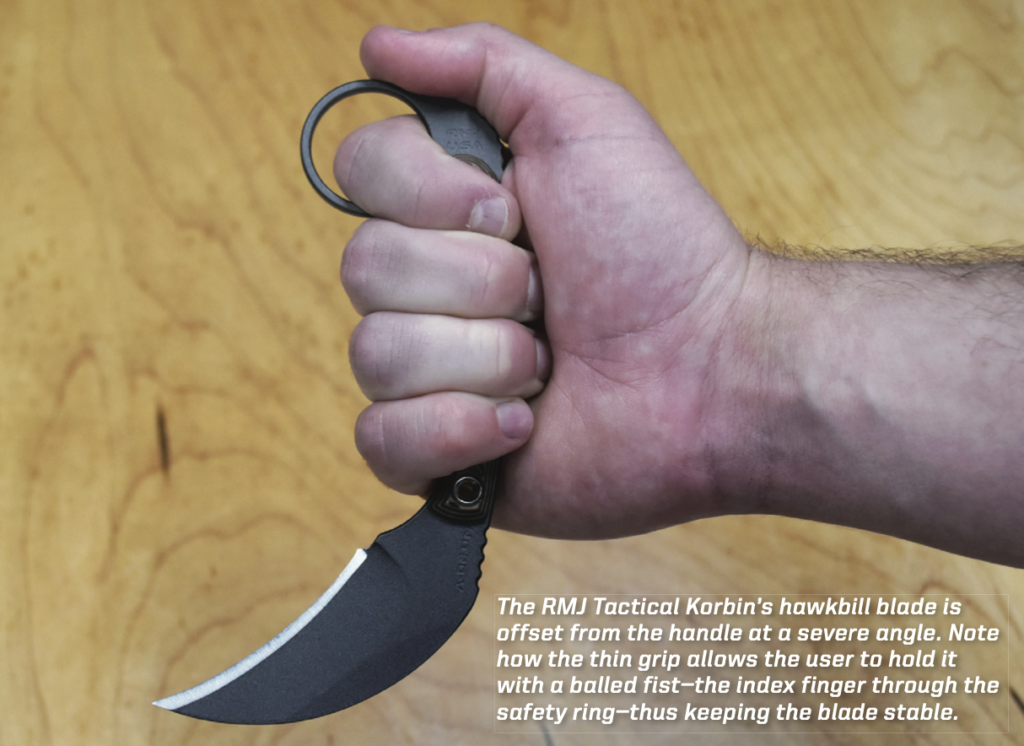
The Korbin fixed blade from RMJ Tactical is easily the most upscale of the test group. The knife has an imposing look thanks to its deep, forward-canted hawkbill blade. Gimping at the blade’s base enhances purchase. The scales have an attractive grooved pattern, and the safety ring is radically offset toward the front of the handle. The sheath includes soft loops.

The knife is a medium-sized karambit with a thin handle. Some prefer a slim profile because gripping it is more like balling a fist, with the index finger keeping the blade stable. I have medium- sized hands, so I found it comfortable and to my liking.

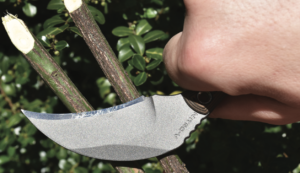
I cut linoleum with the tip and 3-inch rope with the curved edge. I found the Nitro-V stainless blade steel exceptional. I even did a little pruning—a hawkbill favorite. All in all, the knife lived up to its higher price tag. MSRP: $190.

The RMJ Tactical Korbin performs all the functions you’d expect from a hawkbill blade, including pruning shrubs. “If you don’t mind spending a bit more,” the author wrote, “it is well worth the price.”

RMJ Tactical Korbin Specs
KNIFE TYPE: Fixed blade
BLADE LENGTH: 2.875 inches
BLADE STEEL: Nitro-V stainless
BLADE FINISH: Cerakote®
BLADE PATTERN: Hawkbill
HANDLE MATERIAL: G-10
HANDLE LENGTH: 4.25 inches
KNIFE TO KNOW: Offset safety ring
WEIGHT: 2.9 ounces
OVERALL LENGTH: 6.125 inches
CARRY: Kydex 2-way belt sheath
COUNTRY OF ORIGIN: USA
MSRP: $190

CORVETTE OF CUT? The Boker Wildcat XL

Image from Boker USA

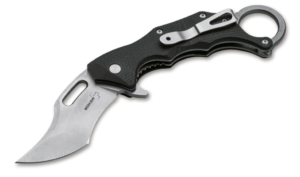
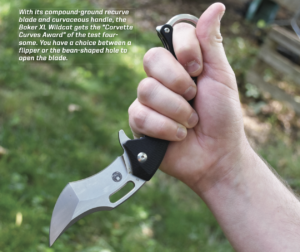
The Boker Wildcat XL Karambit Flipper is the longest (8.5 inches open) in the review stable and has a flipper opener. A Boris Manasherov design, the knife has curves all over—from the handle to the recurve blade—that would make a Corvette blush!

Stainless liners contain a linerlock and the scales flow into a centered safety ring. You can deploy the blade via an elongated, bean-shaped slot on the ricasso. The handle curves make for a very comfortable grip. Since the XL is huge, some might prefer the standard, 7.4-inch Wildcat model. The blade is atypical, though again, it’s not uncommon to find a wide range of blades among the latest karambits.

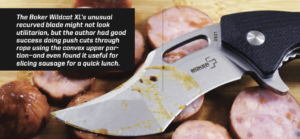
The Wildcat did a great job cutting rope—surprisingly so in push cuts using the blade’s curved front section. I also found it great at slicing grilled sausage Use your imagination with this blade— it’s definitely different. MSRP: $149.95.

Boker Wildcat XL
KNIFE TYPE: Flipper folder
BLADE LENGTH: 3.375 inches
BLADE MATERIAL: D2 tool steel
BLADE PATTERN: Recurve
HANDLE MATERIAL: Black G-10
LOCK: Linerlock
CARRY: Pocket clip, tip down
WEIGHT: 5 ounces
OPEN LENGTH: 8.5 inches
CLOSED LENGTH: 5.125 inches
COUNTRY OF ORIGIN: China
MSRP: $149.95

WIDE SELECTION

There are a couple of prime factors to consider when buying a karambit. First, get one compatible with your hand size. If it’s too large or too small, it won’t serve you well. Second, choose a blade that suits your purposes in both style and angle. Some are better at EDC, while others are meant for self-defense. Whichever your choice, given the competitiveness in the market, you’ll encounter no trouble with selection.

*Be sure to check and conform to laws concerning concealed carry that apply to the areas in which you carry your knife.

Tips for Liquidating a Knife Collection After the Collector Dies

0

Selling a knife collection takes more thought than handing a box over to the first person who shows up with an offer.

Editor’s note: An expanded version of this article appears in the book, KNIVES 2020.

  1. Hopefully, the collector left behind documentation about what’s in the collection
  2. Get a sense for how much the knives are worth by researching what’s selling online
  3. Avoid relying on potential buyers to tell you how much the knives are worth (they may be dishonest)
  4. Find a reputable knife dealer or auctioneer for assistance
  5. Sell the collection through the dealer or auctioneer
  6. If the knives have historical value, consider donating them to a museum

Knife Collectors, Do This Now: Document Everything

Bereaved family members looking to liquidate a knife collection is a possibility for many reasons, not all of them bad, so it is important not to wait until the last minute to get knives in order. Document everything. Knowing how much is invested, where and when the knives came into possession, and the current value can help immensely.

Knife Collectors: It’s Time for a Difficult Talk

Some knife enthusiasts pass their collections on to their families and kids. If that is an appealing option, make sure you define this in your will. Talk to the family members first. It isn’t a fun conversation, but it is critical that it occurs. If you have grandkids or close relatives, a special knife gift can start the collecting cycle over again.

The First Step in Liquidation: Get Help

Often, relatives don’t share your interest in knives. Selling the collection as a group or putting it on consignment can work, but you are depending on the honesty of others. Get recommendations for reputable knife dealers or knife auctioneers first.

An honest seller will review the collection with you, account for each item and justify the asking prices. Documentation will help. While it is possible for knives to go down in price over time, it is usually easy to find their current values by comparing them to knives sold online and at auction.

You do need to accept that a reseller will want to make some money for his or her time, but once again, your documentation and knowledge are key.

Beware the “Helpful” Friend

Sometimes friends can help, though beware of the “friend” that swoops in and offers $500 to take the $10,000 collection off of your spouse’s hands “so you don’t have to worry about it.” It is sad that this occurs, but it happens a lot. 

Donating to Museums

If you have a significant knife with rare historical value, you might consider donating it to a museum. Frontier knives, military models and other antique or collectible pieces can find new homes and audiences. Discuss this with museum staff before any donation.

Occasionally, a museum will purchase a knife, but it would have to be very special, and there can be tax ramifications, so it is important to determine this first.

What is a Bird’s-Beak Handle?

The short answer: A handle design favored by custom knifemakers that resembles a bird’s head with a short beak at the butt of the handle.

Given the practicality and curves of the bird’s-beak handle, it is small wonder that it is quite the popular grip among today’s knifemakers. In fact, the design resembling a bird’s head with a short beak at the butt of the handle has appeared in many cultures over many centuries.

Birds Beak knifemaking
Tad Lynch indicated that crafting a good bird’s-beak design requires practice and the courage to push things. His Irish Traveler Fighter features a handle of koa, a 9-inch blade of W2 tool steel with hamon and is 14 inches overall. His list price for a similar knife starts at $1,100. (SharpByCoop knife image)

“You see it in different variations on Persian daggers and swords,” said North Carolina knifemaker Ken Hall. “Also, some kukris have the ‘hook’ in the handle. In American knives you see it in some of the Buck knife designs.”

When the ABS journeyman smith with 11 years of experience is not forging in the Smoky Mountains, he raises honeybees, hikes and teaches others the craft. He made a bowie in January in preparation for an ABS master smith test that had to be pushed back because of a bicycle accident.

What is a birds beak handle on a knife
While many makers make a bird’s-beak handle with a dense hardwood, Paul DiStefano took a risk on a material that has a reputation of being temperamental: ancient walrus ivory. Blade length and material: 12 inches and 500 layers of 1095 carbon and 15N20 nickel alloy steels. His list price for a similar knife: $1,800.
(SharpByCoop knife image)

He picked the bird’s-beak handle design because it pairs well with large knives, especially those with recurve or clip-point blades. A big block of wood large enough to develop the butt’s shape is one of the best material sizes for the design, Hall explained.

“The bird’s beak provides a more controlled grip for the hand,” he noted. “The contour snugs around the little finger, keeping the knife from slipping forward while in use.”

The result, combined with a balanced knife, is a tool that feels like an extension of the hand.

Choosing Automatic Knives: OTS Or OTF?

What’s the right style of automatic knife for you: OTS or OTF? There are several important considerations when it comes to choosing.

Definitions: What Is An OTS Knife? What Is An OTF Knife?

First, for the newcomers, here are some quick definitions.

OTF Knife: A type of automatic knife where the blade deploys “out the front” of the handle.

OTS Knife: A type of automatic knife where the blade deploys “out the side” of the handle.

While this may seem like a small difference, it’s not to be overlooked. The right knife is the one that fits best with your tasks and preferences, and all knife features are worth considering, no matter how insignificant they may appear at first glance.

1) Ignore The Price Tag

Interestingly, budget is not one of them, because there is a range of $50 on up to hundreds of dollars for each. There are more OTS models available on the market now simply because manufacturers choose to produce more, so selection is greater. This may also be because they are much more familiar with side-opening designs.

2) Consider Use: OTS Is Better For Utility & OTF Is Better For Defense

What is an OTF knife
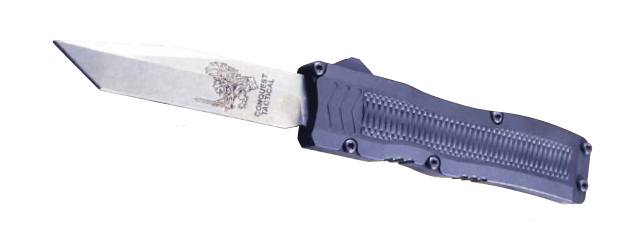
At 8.75 inches fully extended, the Conquest Tactical Fury OTF is a juggernaut. The Fury’s stonewashed 3.75-inch 154CM stainless steel blade is of a hybrid tanto/clip-point design, and its 5.25-inch black anodized machined aluminum handle can accommodate the largest of mitts. (Conquest Tactical photo)

Most important is how you plan to use your automatic. If you need utility, an OTS is the way to go. For pure self-defense, an OTF can engage the blade quicker, because there is no maneuvering required to clear the fingers from the blade opening and readjust your grip as required by an OTS.

3) Does It Have A Safety?

Some automatics have safeties to prevent the blade from opening in the pocket or while drawing from the carry position to engaging the blade. Ouch! Yes, a safety takes a second or two more to switch an auto blade into the live position, but many feel it’s worth it.

4) How Does It Feel?

Last but not least, the tactile feel you look for in any knife, regardless whether it’s a fixed blade or folder, is always a prime factor in your selection. You won’t get this over the internet. Rather, check out auto models at your local retail store or at gun and knife shows.

There Is No Right Answer

Despite what some may tell you, there is right answer. OTF and OTS aren’t inherently good or bad choices. The right answer is, as with all things knives, the knife that does what you need it to do and that you enjoy using.


Learn More About Automatic Knives And The Law

What knives are illegal

Advertisement

Must Read Articles

Read this before you make a knife

Knifemaking 101 – Read This Before You Make a Knife

  by Wayne Goddard My experience has taught me that there's nothing like digging in and getting started. I've often said the hardest part of the...
how to forge damascus steel

How to Forge Damascus

Advertisement
Advertisement