Knife collecting is an extremely rewarding experience for knife enthusiasts. There truly is a knife for everyone. Many increase or hold their value throughout the years, making collecting knives something to pass on to the next generation of knife collectors.
BLADE Magazine Cutlery Hall-Of-Fame® member Pete Gerber knew he was onto something with the FS1, a knife he remembers as “dandy” and one of three in the Folding Sportsman line that debuted with Gerber Legendary Blades beginning sometime around 1980.
“It was just a little heavy,” Pete recalled. “Blackie Collins was working with us on some projects then, and I asked him for help with it. I said, ‘Blackie, this is a nice knife. How can we take some weight out of it and put some pizzazz into it?’”
The knife engineers at Gerber Legendary Blades had been working with Micarta handle slabs, rather labor intensive at the time since the plastic laminate had to be machined to the appropriate shape.
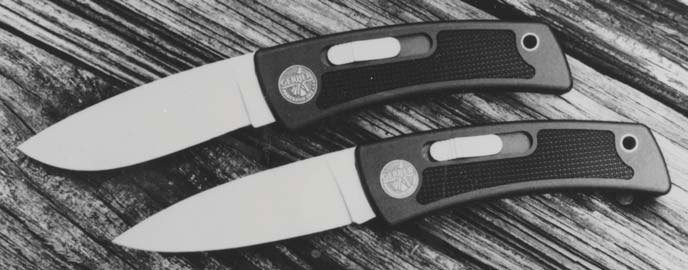
The Bolt Action folders were among the Blackie Collins designs for Gerber that predated the LST. The original Bolt Action is at bottom and the newer Bolt Action hunter is at top.
“We had to mill it out and used brass washers with rivets to attach the slabs,” Pete said. “The original LST was the FS1 in-house design, and Blackie was first given the assignment to put moxie into it using the existing parts. He worked on the design and then put an injection-molded handle on it with nice checkering. Those were his contributions.”
As fine as it was, as long as the slab handles were involved the LST had trouble fully living up to the attributes that provided its name, “Light, Smooth, and Tough.” Collins already had contributed some well-known designs to Gerber, including the Bolt Action folder and the Touché belt buckle knife, and the wheels began to turn in his head.
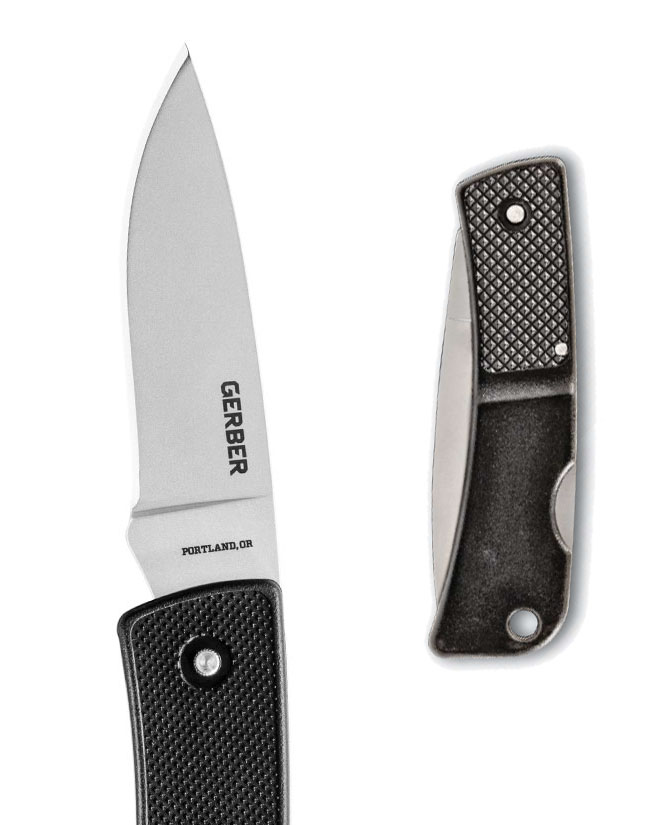
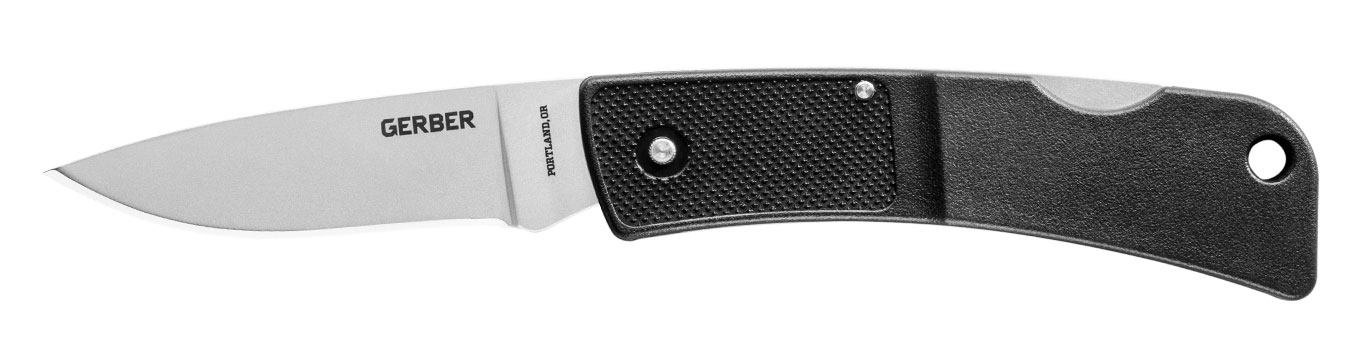
The LST, as offered today on Gerber’s website. (Gerber image)
Blackie had a friend in Gastonia, North Carolina, just outside Charlotte, and that friend ran an injection-molding business. Instead of using riveted slabs as handle material, why not try a one-piece injection-molded handle to reduce both the weight and production cost of a knife design that was already selling pretty well? Just to add to the incentive, injection molding would open up the spectrum of handle colors as well.
After some experimentation, the production LST was manufactured with the glass-filled, nylon-reinforced Zytel as the handle material.
“It was the first time a folding knife was made with a one-piece handle, and it worked,” Pete remembered. “The action was so smooth because we went through an operation called ‘match catch,’ where the blade and the catch were kept together until they were assembled and until they were just perfect. When the knife closed, the blade referenced the catch, and it was as smooth as it could be.”
A New Car for a New Knife
Blackie Collins loved fast cars and motorcycles. When it came time for Pete Gerber to compensate him for his input on the LST, Blackie decided he wanted a Corvette—and Pete made it happen. (Meyerco image)
Almost as sweet as the story behind the LST, which has sold in the millions since the early 1980s, is the back-story of Blackie’s compensation for his input that led to the dynamic little knife’s eventual success. Pete asked Blackie what he wanted in the way of payment for services rendered.
“I didn’t think it could be a royalty knife since it was a modified in-house design,” Gerber explained. “I asked what he wanted for payment, and I suggested that maybe a new car would be something he would like.”
The story goes that the new car turned out to be a Corvette and that Pete’s check for $29,000 made it happen.
Blackie, a Cutlery Hall Of Famer who tragically lost his life in a motorcycle accident in 2011, loved cars and motorcycles and just about anything mechanical, and the idea of new wheels appealed to him. His wife, Jane, remembers well the search for just the right vehicle.
“We went from South Carolina to Jacksonville, Florida, to look at Avanti cars,” she recalled. “He didn’t like the way the new ones handled, so we looked at Corvettes, bought one that was two-tone gold, and drove it home. He owned that car for a few years and then traded it in.”
Pete remembers Collins driving around his hometown in South Carolina in that Corvette with a license plate that simply read, “Blackie.”
Offering items other than money for consulting seemed to work well for Pete, who also once paid Cutlery Hall-Of-Famer Bob Loveless with an airplane.
While Blackie burned up the roads in the Corvette, the Gerber-Collins partnership took the knife market by storm with the LST.
“Blackie used to say that the LST revolutionized the knife industry,” Jane recalled. “He did a lot of work for Gerber, and he really reduced the number of parts on that knife and put the plastic handle on it to make it lighter.”
Taking the World By Storm
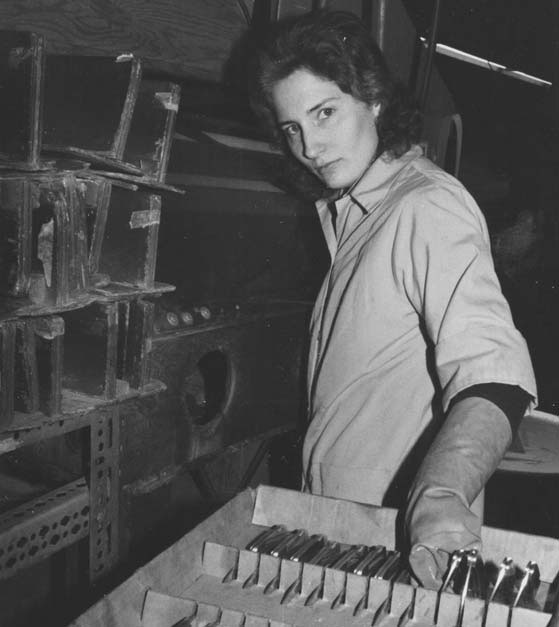
A box of lockback folders in the Gerber factory in the early 1980s shows the thick nature of the handles. The LST not only was lightweight, it was thin, too, adding even more to its ease of carry.
The new lightweight knife was a sensation, and soon other knife companies were taking notice, working on something similar. It was pure gold in itself—with a grand total of six parts to the whole enterprise. Buyers wanted the light, smooth-action, durable and reasonably priced LST, and competitors scrambled to keep pace with Gerber’s trendsetter.
Soon enough, there were similar offerings rolling off assembly lines and onto store shelves. The introduction of LST energized knife manufacturers in a manner seldom seen.
The LST developed its own legacy among the knives that changed knife history, and it is still being manufactured in Portland, Oregon, and sold under the Gerber banner today.
“It was the first true ultralight knife,” explained Dan Delavan of Plaza Cutlery in Costa Mesa, California, “and Gerber had a high-quality blade in that light handle at a good price. You could throw it in the pocket of your swim trunks and go! Lightweight became attractive, and the LST was thin, too. It didn’t bulge in a suit pocket and the checkering gave it a nice grip, just like an extension of the finger. It was the knife that introduced the ultralight, and we sold a lot of them back in the day.”
Lightweight vs. Airweight
Contemporary to the introduction of the LST, Cutlery Hall-Of-Famer A.G. Russell was producing ultralight knives of his own in the Airweight series. Like other knife manufacturers and designers, Russell also worked with Blackie.
He remembers the concept of the ultralight as the shape of things to come in the 1970s.
“I wanted strength but little weight in a knife, too,” Russell noted, “and my Airweight was using a Micarta handle. Blackie had that great idea of molding the handle instead of shaping it, which would have suited an operation like Gerber perfectly. The LST was extremely lightweight and it sold in the millions.”
LST Materials
Pete Gerber recalls using 440A stainless blade steel in the early LST, and says the knife had a good, husky blade that he never saw break—and it was complemented with a nicely polished tang.
“Many other companies were copying it, trying to figure out what we did and how the LST worked so well,” Pete said. “Many of those companies made knives that were quite similar to the LST long after ours was successful. I don’t believe we had a patent on it at all; I don’t think we could get one. The patent area was out of my expertise, but I told our folks to get one whenever we could.”
An Enduring Legacy
Peter Gerber was the headman at Gerber when the LST debuted in 1981. “It was the first time a folding knife was made with a one-piece handle,” he said, “and it worked.”
After almost 40 years, the staying power of the LST is undisputed, and its place as a milestone in the progressive development of knife design is secure. Along with other innovations attributed to Blackie, it stands out among its peers with a timeless depiction of design sense and simple user friendliness.
During the past four decades, the LST has been manufactured in several variants.
DuPont recently celebrated the 50th anniversary of its nylon plastic with a commemorative run of LSTs handled in the company’s Delrin material.
Not long ago, Pete was in a company store in Lincoln City, Oregon, and one of the clerks showed him a Mini LST with a bright green handle.
“I had never seen that bright green before,” Gerber laughed. “It just goes to show you that things can develop that you don’t even know about.”
When the LST hit the market in 1981, the time was right. Since then, it has given Gerber and the knife industry a continuing boost.
“It has sold in the seven figures,” Pete reflected, “and I think it gave us a hell of a shot in the arm.”
Gerber LST Specs
The standard LST sells today on the Gerber company website for a modest $23. The knife weighs a remarkable 1.2 ounces with a drop-point 420HC stainless steel blade of 2.63 inches and a closed length of 3.61 inches. The handle is described as tactile, textured and made of lightweight, synthetic glass-filled nylon.
Light, smooth, and tough, Gerber’s LST has earned its place among the elite products of the modern knife industry.
What Other Knives Changed the World? Find Out With This Download
One (the Bowie knife) is primarily for combat, while the other (the Rambo knife) a survival knife. One was carried by a real person, the other by a fictional character. Both sparked explosive marketing in their respective heydays and were often emulated. Both were carried by men who were larger than life. Perhaps most telling, they continue to spark in-depth conversation long after their debuts.
The Rambo Knife: Built for Survival, then Combat
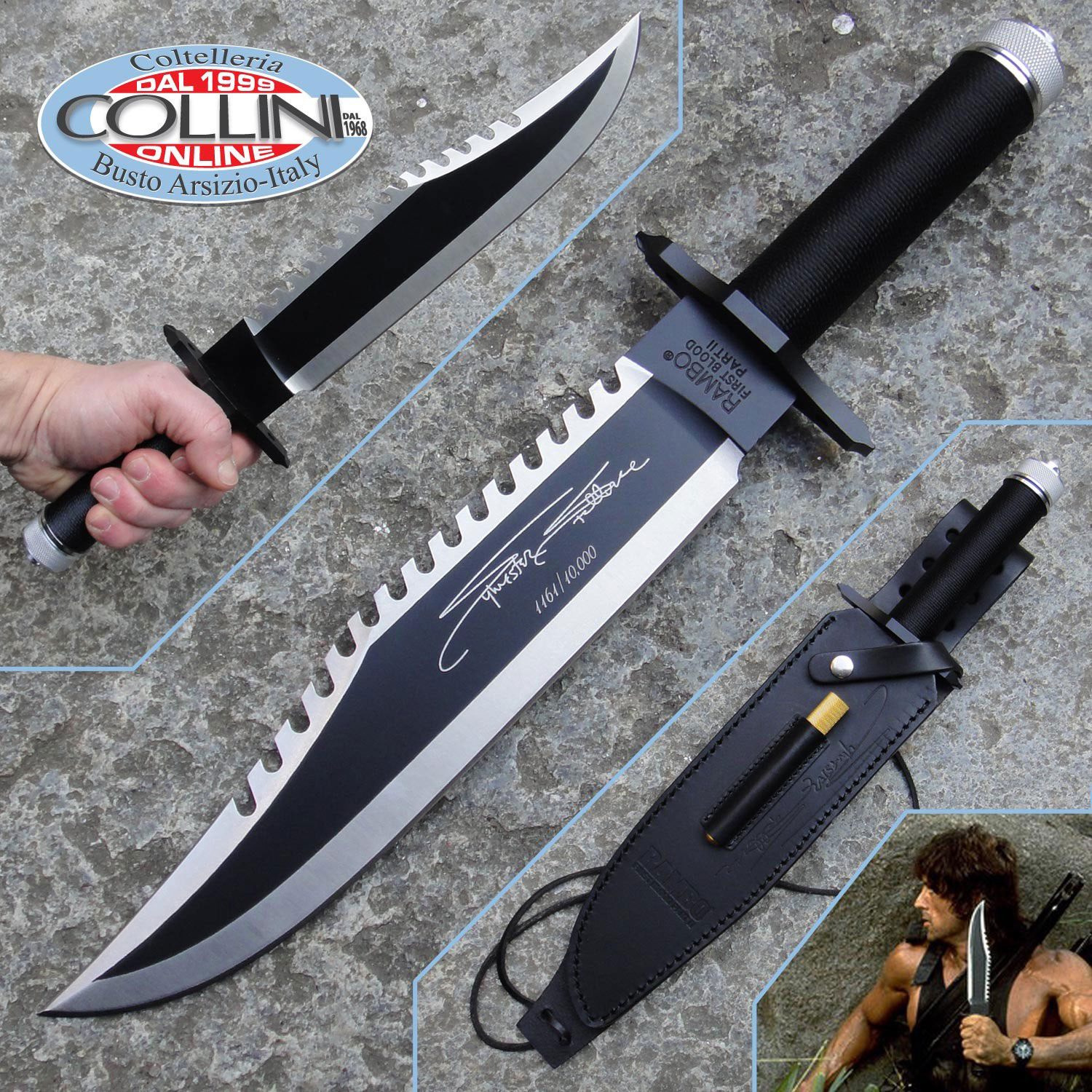
The second Rambo movie also features a survival knife, known as The Mission, designed and made once again by Jimmy Lile, but the viewer sees less survival use of the tool and more killing. Abe Elias comments on how Rambo’s female guide shows fear when she sees Rambo’s knife. Intuitively she senses that the knife isn’t a tool but a weapon. This reproduction is from Italy.
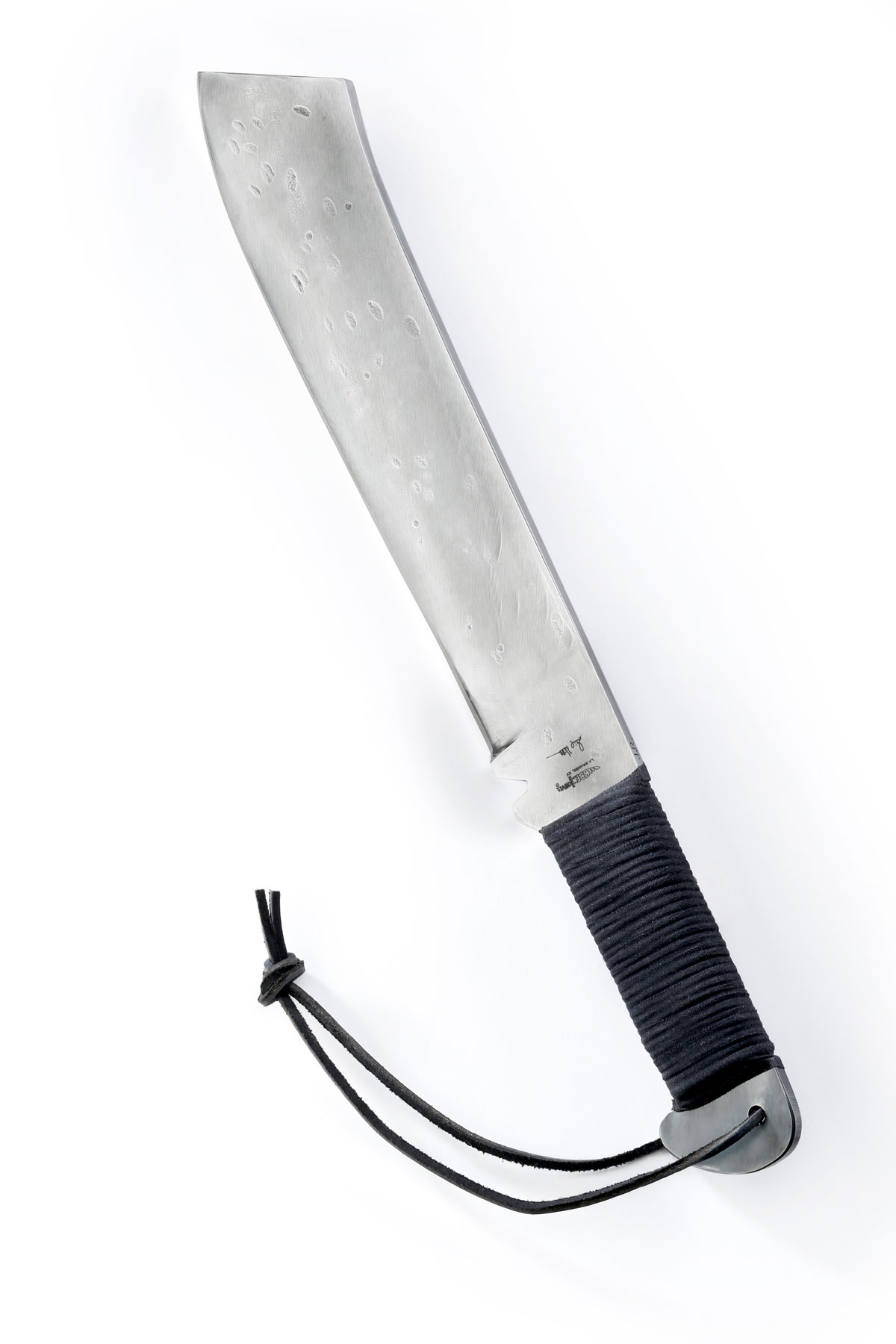
When we say “Rambo knife,” we first think of the Jimmy Lile-designed survival knives that were used in First Blood (1982) and Rambo: First Blood Part II (1985). But there were four movies in the series, and in Rambo III (1988) John Rambo actually carried a bowie designed by Gil Hibben. In Rambo (2008), the fourth and final movie, a chopper-machete made by Hibben was Rambo’s blade of choice.
The fourth Rambo movie is the most like “First Blood” in tone. The violence is harder to watch, the remote, distant explosions giving way to up-close-and-personal eviscerations and decapitations, all done with a chopper-machete made by Gil Hibben. (Cory Sorensen image; knife from the Randy Rousseau collection)
Survival authority, knife and tool designer, and writer Abe Elias mentioned that in the first movie we actually see Rambo open up the hollow-handled knife and use the items inside. He sews up his own wounds with the fishing line and uses the knife to make traps and kill a boar. He has a compass on the inner side of the butt cap, and can break glass with the outer side. The sawteeth on the spine can be used in woodcraft. The ends of the crossguard are Phillips and flat-head screwdrivers.
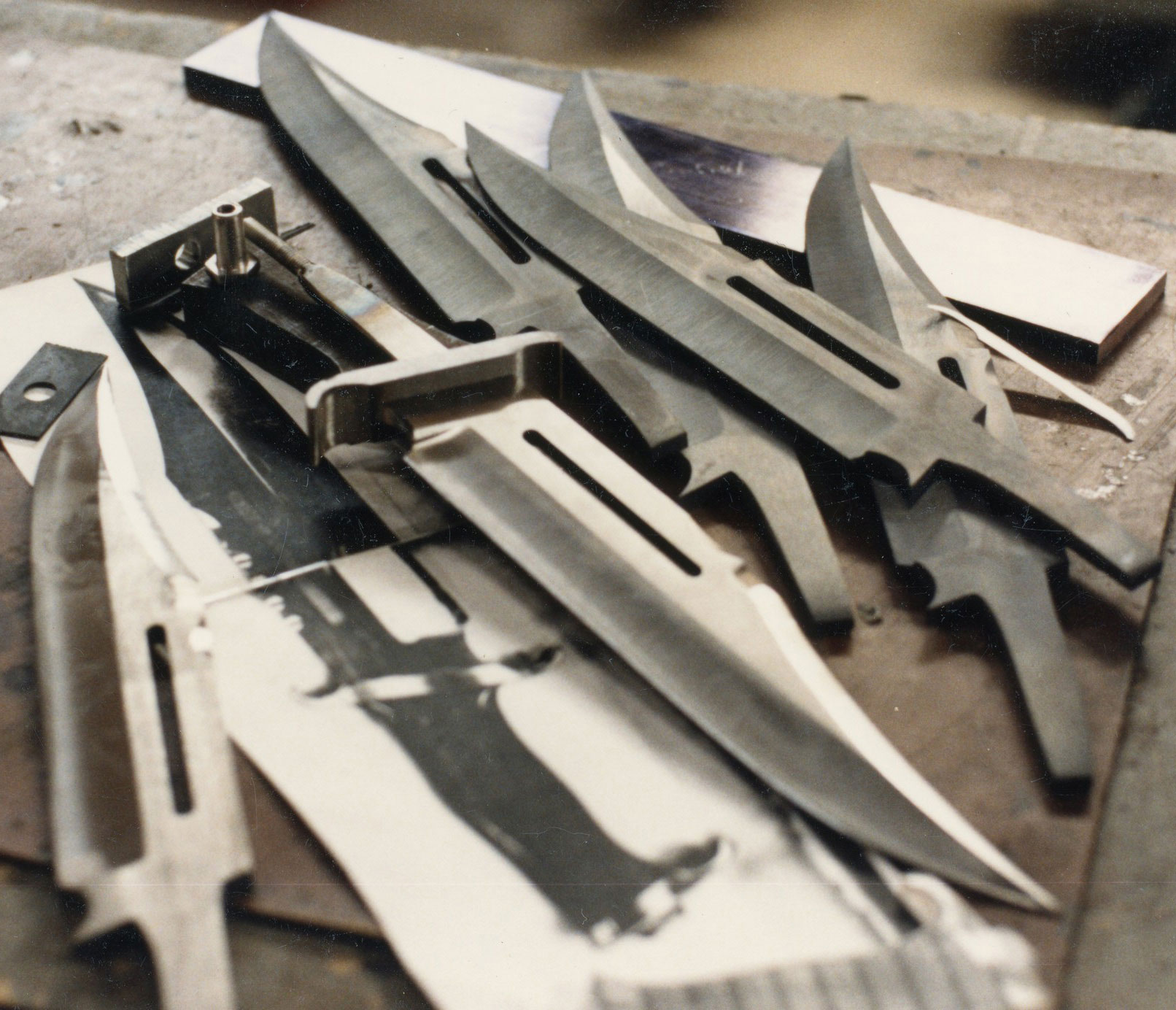
The entire concept was based on a pilot survival knife for Air Force pilots and Army helicopter pilots, the intent being that if they were shot down, they would have what they needed to survive in one tool. The sawtooth spines, for example, were for cutting through the acrylic canopies on the downed aircraft.
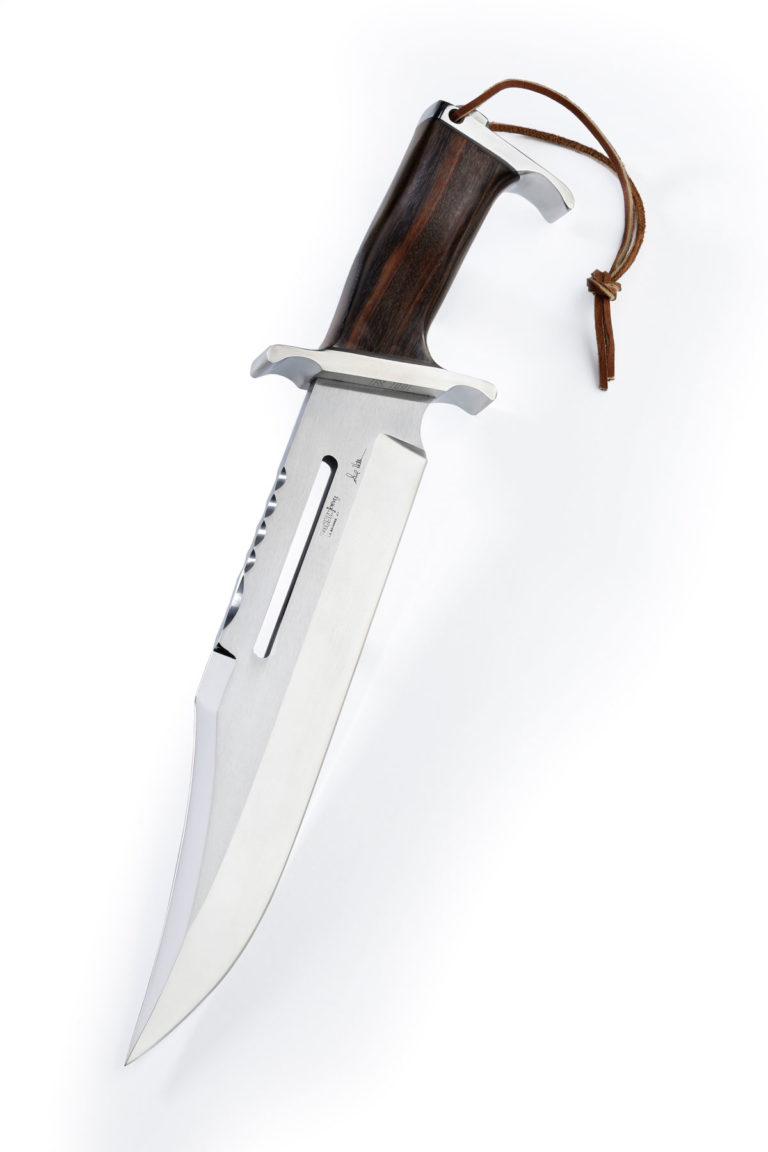
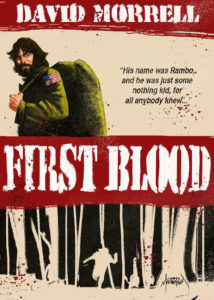
Cutlery Hall-Of-Famer Gil Hibben designed the knife for “Rambo III” with input from Sylvester Stallone. While Rambo’s knives in the first two movies were survival knives, this was definitely a bowie—a massive one, with an 11 7/8-inch blade. (Cory Sorensen image; knife from the Randy Rousseau collection)The main character of Rambo does not have a first name in the book “First Blood” by David Morrell. The movie gives Rambo the first name of John.
By Rambo III, Gil Hibben had designed an actual bowie for Sylvester Stallone to use in his penultimate appearance as John Rambo. In actuality, the pilot survival knife is said to be based on the Bowie, so there always was a strong connection between the knives. The Hibben version has a 3¾-inch cutout running parallel to the spine, which mainly serves to lighten the 11 7/8-inch blade. Rambo loses the knife but keeps the sheath that he’ll later convert to fit his machete in Rambo, the final in the series.
Elias reminds us that Rambo didn’t kill with the knife in First Blood. He did some serious damage, but not with the knife.
After First Blood, the other three movies seem more caricatures, building a legacy around a fictional character who already was larger than life, symbolized by the knives getting less survival-centric and increasingly combat focused.
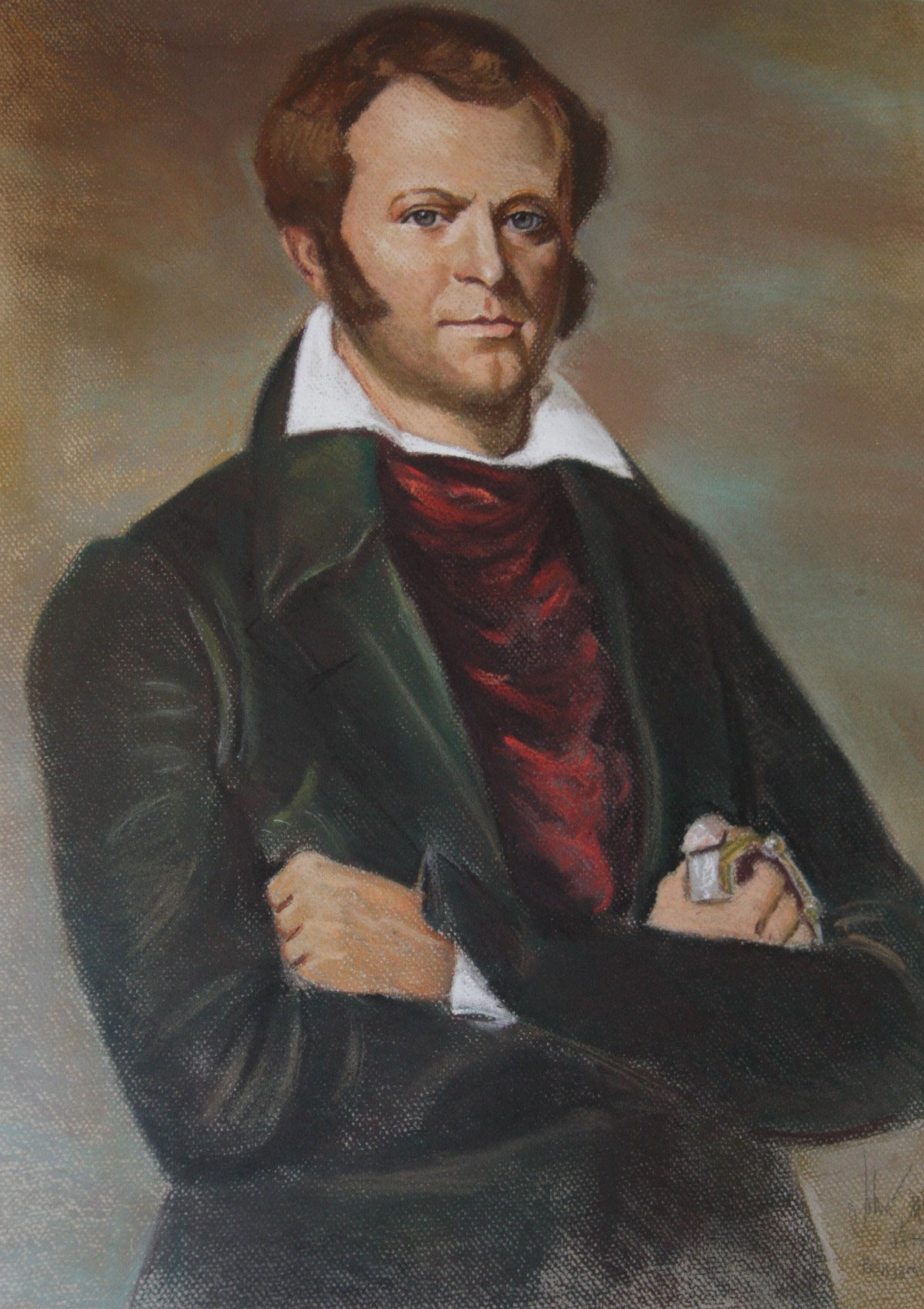
Similarly, historians often surmise that James Bowie may have only participated in one knife fight, a duel-turned-melee that left him with multiple gunshot wounds and stabbings.
He is believed thereafter to have worn a large sheathed knife, bolstering his reputation as a fighter and frontiersman. He held a leading role in the Texas Revolution, and stories built him into a folk hero.
Rambo Knife: Marketing Drove Design Changes
Hollow-handled survival knives were already in existence prior to Jimmy Lile’s Rambo knife, but it wasn’t until First Blood that their popularity took off.
Elias remembers the mid-to-late `80s as a time when the survival industry as we know it was just coming into its own, but it still wasn’t commercialized. There were military surplus stores, but there weren’t countless companies selling survival foods and gear. There were very few items that had been capitalized on as “survival” and specialized for that intent. Knives were one of those items, and so the Rambo knife was a hit with both adults and kids.
But then a funny thing happened. Manufacturers began producing hefty bushcraft knives that could stand up to any type of abuse, but often couldn’t cut. So, it became necessary for a survival knife to be “indestructible.”
Well, if you repeatedly baton a hollow-handled knife into a 16-inch log of seasoned hardwood, it won’t hold up. But that was never the intent, and Elias reiterated that it’s rare that you’d baton logs of seasoned wood in a survival situation. It’s far more likely that you’d be making feather sticks, cutting twigs off bigger downed branches and otherwise working with smaller wood for deadfall traps, spears for fishing and roasting small game, and the like.
Bowie Knife: Marketing Drove Manufacturing
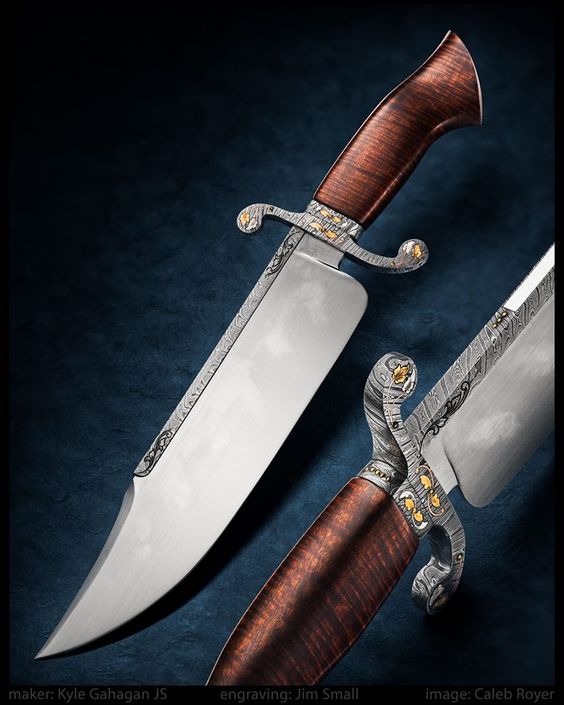
The history of the Bowie design is murky, but by the 1830s a longer, thinner Bowie with a longer false edge but less pronounced clip was being shipped from Sheffield, England. They were often etched or stamped with slogans such as “Americans Never Surrender.” The English were able to hide the originating location of the knives by operating works named after American cities, and thus stamping their blades with NY or other U.S. designations.
For the Bowie, it was the increased reliability of larger-caliber revolvers that killed the craze. Knife fights became a less likely proposition.
Larger than Life
If the knives aren’t fantasy enough, the stories around them fill in any gaps.
For instance, in Rambo III, Rambo partners with the mujahideen to defeat the Russian Army in Afghanistan in order to free his captured commander.
Meanwhile, we have stories of James Bowie wiping out Indian raiding parties during an expedition to find the San Saba silver mine, joining the Texas militia, and furthering his fighting prowess in at least two battles of the Texas Revolution.
Legends Die Hard
The most enduring story of James Bowie’s demise is that he fell ill at the Alamo and could no longer lead his volunteers. He is said to have died in his bed after unloading his pistols into the advancing Mexicans.
The cinematic John Rambo lives on. The literary Rambo—well, you’ll just have to immerse yourself in the book to find out.
Keep Learning About Knife Designs
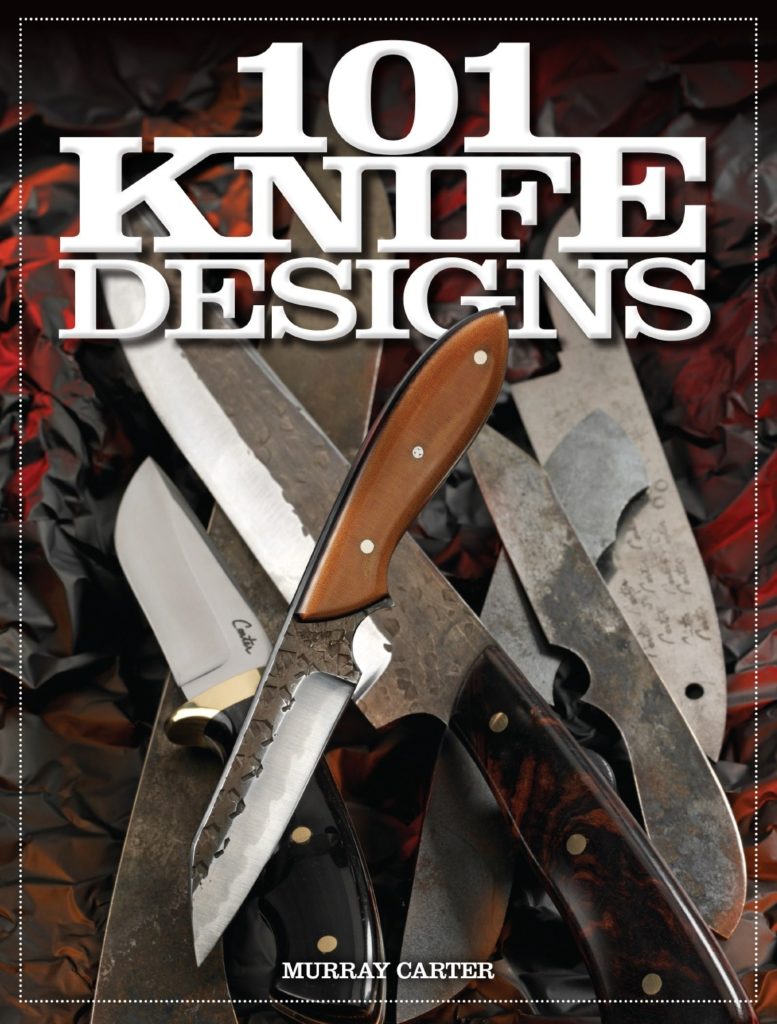
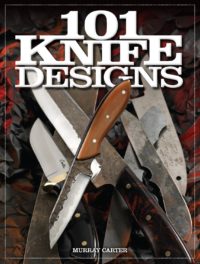
The history of knife design is the history of the knives themselves. Learn more about enduring knife designs in 101 Knife Designs, by renowned knifemaker Murray Carter. It’s available here at ShopBlade.com.
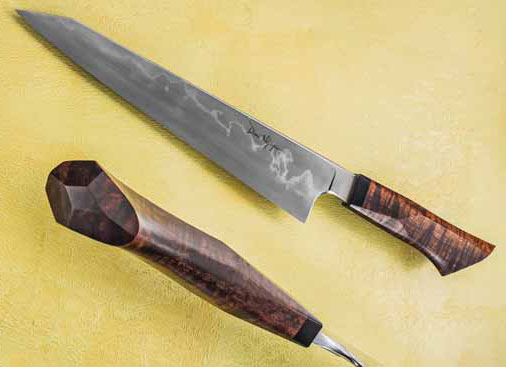
What do professional chefs look for in a chef’s knife? We asked two pro chefs, both fans of knifemaker Don Nguyen. Their answers are instructive not only on Nguyen’s work but chef’s knives in general.
“Thin Behind the Edge to Win”
Kolter Livengood is a chef at Brightwok Kitchen, “a veggie-focused, Asian inspired restaurant” in Chicago. Detail and aesthetics, with an equal emphasis on testing, are some of Livengood’s requirements in a chef ’s knife.
“A great deal of consideration is given to the ‘knife life’ or how the blade will be sharpened away over time,” he observed. “How the knife tapers both from handle to tip and spine to edge give the ability to maintain that geometry for 20 to 30 years depending on use and original blade size, making the appropriately high-priced tool seem very affordable over time.
“Don’s knives tend to be thicker at the spine, yet taper to being extremely thin behind the edge. This seems simple but it’s the subtle convexity from spine to edge that gives the knife its incredible feel when cutting. The thick spine gives the knife weight, a weight that by no means makes the knife heavy, and assists with downward momentum, which makes a huge impact on how the knife feels when cutting. The spine is also perfectly rounded, which, when combined with its thickness, makes it extremely comfortable and less damaging to the hand. The convexity aids in separating the food that’s being cut from the bulk, and since the blade is not flat, foods like potatoes and cucumbers don’t annoyingly suction or stick to the side of the knife when chopping.
“‘Thin to win’ should be amended to ‘thin behind the edge to win,’ as I much prefer a knife with heft and zero spine flex to the chef’s knives with 1-to-2-millimeter spine thicknesses popular from 2009 to 2012.”
Single-Beveled Knives for the Win
Taro Kobayashi, a chef at Mame, a sushi restaurant in Eugene, Oregon, uses Nguyen chef’s knives.
“The short gyuto I have at home for everyday tasks from poultry and fish butchering to dicing vegetables,” Kobayashi noted. “It is just a good, all-around bruiser. It is a bit thicker for a Don knife but I really enjoy it since I can just ‘go ham’ with it. Ha-ha! That almost sounded like a kitchen pun. Sorry.”
Kitchen standup comedy notwithstanding, Kobayashi’s favorite Nguyen chef’s knife is a 240-millimeter model of W2 tool steel and a lightning-strike carbon fiber handle.
“I use it to slice fish and other proteins while making sushi,” the chef noted. “Even though I am a bit old school when it comes to knife use and love single-beveled knives for fish slicing and sushi preparation, I can’t help but use this one sometimes. It’s easy on the hands, easy to sharpen and takes a keen edge. I was a bit worried about the handle shape until I used it. It’s one of the best designs aesthetically, but you would not know how good it feels until you get it in hand and abuse it.”
Taking great photographs of knives is no easy task—unless you’re a professional, in which case you can stop reading. Essentially, you’re taking a highly detailed shot of something that fills the entire frame, not something small like a bee in the center of a background of blurred petals, but a long, thin item that needs to be in focus from point to butt. But there’s so much more. Every line must be fully revealed and a depth established to convey thickness or thinness. I know close to zero about the mechanics of the art. There are plenty of videos and online courses out there that’ll give you the science of the “study of light.” They can speak to you of aperture, ISO and shutter speed in infinite combinations. All I know is a good photo when I see one, and how I have tried to improve my own photography. Here are the 6 things BLADE looks for in a knife photo. It’ll be up to you to make it happen. Why? Because there are “5 Ways To Get Your Knives Featured In BLADE” and you want to be ready.
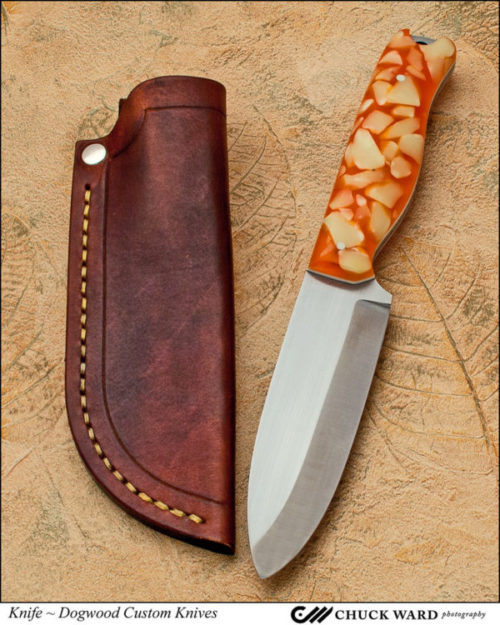
Dan Eastland of Dogwood Custom Knives used professional photographer Chuck Ward to take this exquisite image of his Hawkins knife. Chuck will be the official photographer at the 2017 BLADE Show. Contact www.dogwoodcustomknives.com for more about this outdoorsman’s knife.
Hire A Professional
Knife manufacturers, like good real estate agents, know that great photos will close a sale. They understand that the investment in a professional photographer pays off. When BLADE asks for a photo of their latest release, for example, some even allow high-resolution downloads right from the consumer website without having to go through a media relations person. That can be a time-saver at deadline. I’ve even experienced a large company resubmitting photos with even better ones. There’s nothing that says a one-man-show can’t learn from that level of perfectionism. It’s the same effort you put into crafting your knives.
Hiring a professional photographer will cost you some money, and it’s worth every penny. But like all professionals, some are more versed in what we’re trying to accomplish than others. A portraitist, wedding photographer or photojournalist may or may not be able to give you the results you’re looking for. You want to make sure you chose someone who can show you a portfolio of knives, guns, tools or similar items that looks…well…perfect.
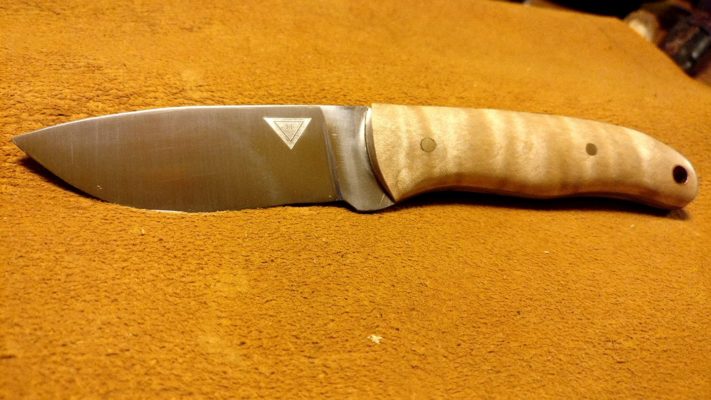
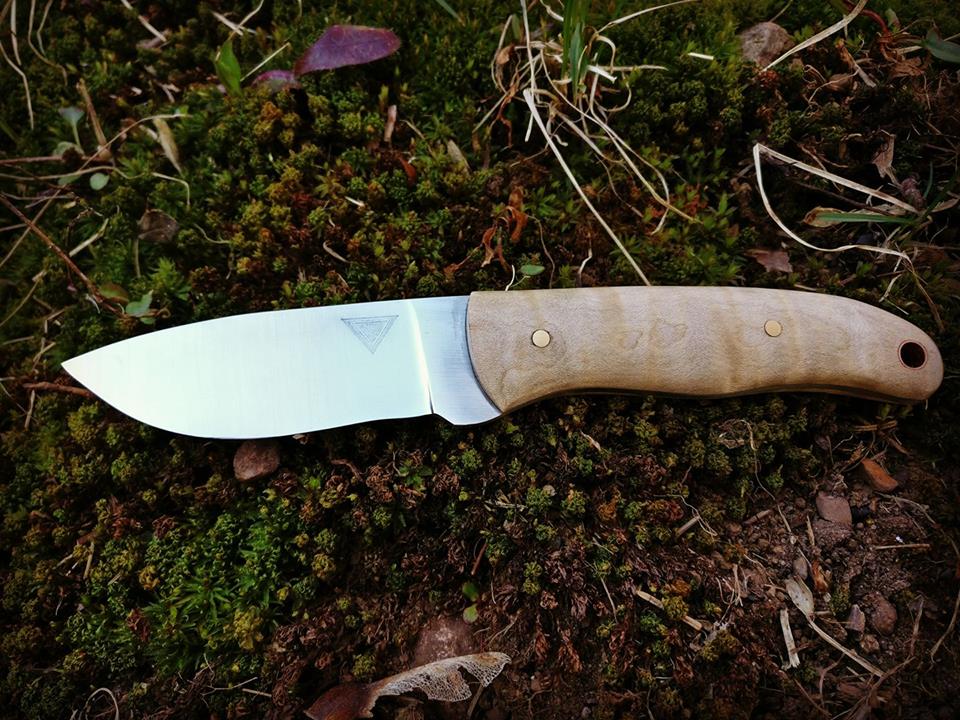
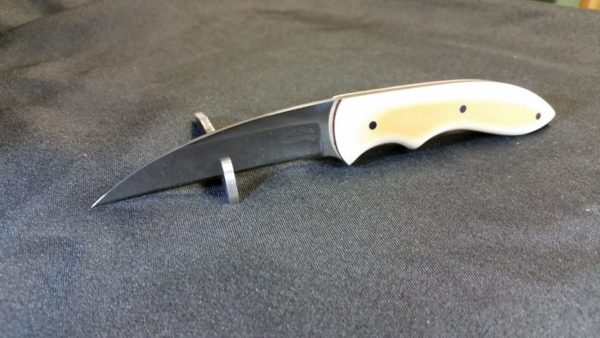
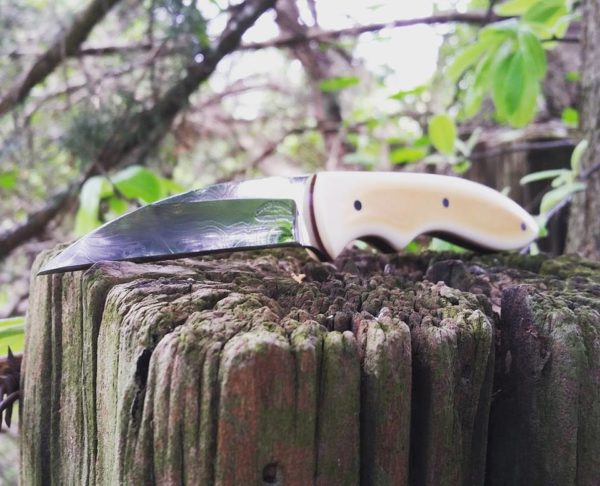
The handle on Tim Tracey’s everyday performer doesn’t stand out as much as it could against the similarly colored background. The caramel color ends up saturating everything in the photo. Also, although the focus on the blade is crisp, the topline on the handle is a touch soft.Tim Tracey took his knife outside and got not only a good image of the blade and handle, but good contrast and a better depiction of the piece’s fullness. The recurved blade is made of 1095 steel and sports exhibition grade curly maple scales. Makers list price: $220. Contact [email protected], Timtraceyknives.com on Facebook or @TimmTracey on Instagram.
You will want two kinds of photos. Photos for your website and social media will create an emotion, an atmosphere. Instagram is full of examples of survival, bushcrafting and hunting knives being photographed outdoors and tactical knives being shot in gritty workshops or light-painted in darkness. Makers create everyday carry still lifes with folders, wallets and watches. Typical? Sure, but each one tells a story that has been told a thousand times before in a slightly different way. Nobody reads just one novel, and nobody looks at just one knife photo. They are all beautiful in their own way. The other kind of photos you will need are those of just the knife itself on a simple background, what is often referred to as glamour or beauty shot.
The question you have to ask yourself is: Are you willing to put as much study and effort into your photography as you are your knifemaking? Answer honestly. There’s no shame in shelling out cash for stunning work. Fill your website with those choice images and have them on hand for BLADE, and then you can practice your own photography skills for social media. Even on social media, though, take the time to post only your best images. Plenty of knife-related Facebook Groups out there are looking for banner photography and have to reject knifes they’d like to showcase because the image is, say, out of focus.
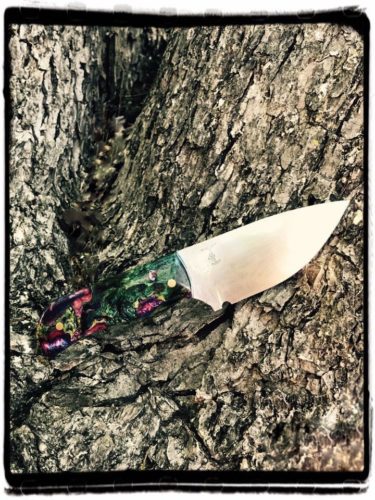
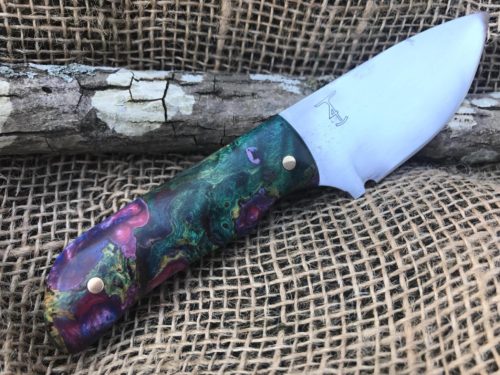
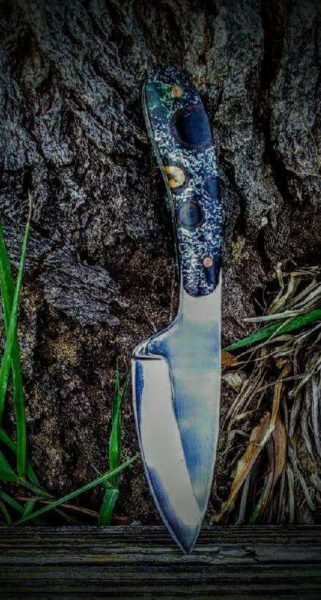
Although this image clearly shows the blade on this skinner by Bobby Toerck, the multicolored handle gets lost in the textured bark.In this image, the handle on Bobby Toerck’s drop-point skinner is nicely contrasted against the still-textured, but now single-colored burlap. And the 80CrV2 blade still looks terrific. The handle is triple-dyed box elder burl by Terry Dunn. Maker’s list price: $175 with Kydex sheath. Contact T4 Custom Knives on Facebook or call 903-812-1173.
Do-It-Yourself
Let’s say you can’t justify the expenditure at this point in your knifemaking journey. Or, more likely, by the very nature of your interest in crafting, you’re determined to take quality photos of your knives yourself. You think, How hard can it be? Very. It can be very challenging to produce the kind of photos needed for a glossy magazine.
“Real” Camera Vs. Camera Phone
You can take the cost of a few sessions with a photographer and buy yourself a decent camera, for starters. Keep in mind, however, that lenses that come with a camera are usually not very good. Be prepared to buy a decent mid-range lens at a minimum.
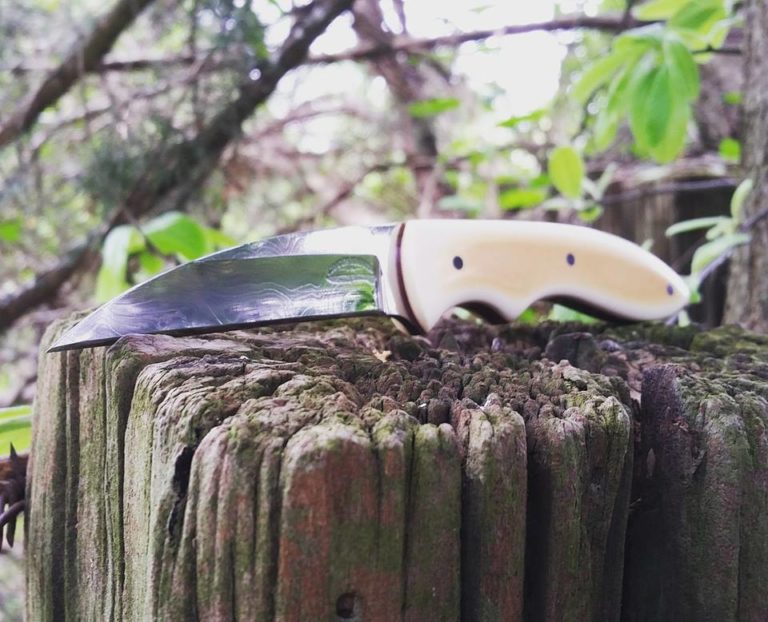
In this vertical image of a horizontal knife, the butt is cut off. There is also glare on the handle and the blade looks dull. Will Thompson decided to get some help for the reshoot.Even though Will Thompson’s handle has to work to stand out against the tree bark, it succeeds. The pattern is now discernible and the blade looks great. This drop-point finger skinner is made of 1095 steel and the Plantstone (stabilized pine branches with aluminum flakes) scales are from Robert Belcher. Maker’s list price: $75. Contact [email protected] or on Facebook at Dusty’s Cutlery.
Then again, there are some excellent photos being taken with newer camera phones. Do NOT attempt this with an older model. You will only frustrate us both because they do not allow for high enough resolution of the images. Be sure if you submit a photo from your phone that you email it at its largest size. If there are settings on your phone that need to be changed to allow for taking photos at higher resolution, then you’ll need to set those accordingly. Those settings will apply only to photos you take going forward; you cannot retroactively apply them to photos already taken. Whether you use your phone or a “real” camera, the same fundamentals of photography apply.
Tip: If you smoke or if you have your phone in your shop, there could be resin or dust on your lens. You’ll want to clean that—gently—before you begin.
Be sure to take great photos of all your work before they are sold, and to back them up, either in the cloud, through an online backup service or on a thumb-drive.
6 Things BLADE Looks For In A Knife Photo
Focus
The entire knife must be in focus, from point to butt. Are there some artsy shots of crystal clear blades and blurred handles or vice versa? Sure, but that’s not what we’re looking for in print. Online, we’re more open to considering some of those shots, provided we have some conventional full-focus shots to accompany the story as well.
If you are taking what we call a “using” shot where you’re photographing the knife in use for an online story or if we are working on a story together for print, be aware of where your camera is focusing. I have seen crystal clear shots of a leaves on the ground while the knife and the hand it’s in are both blurry. Focus is probably the single most important aspect of a good photo.
Contrast
Be aware of the color of your background. A grey knife on gray pavement, a black knife on a blackened tree stump, camouflage your knife. It’s like a silver or gray car against gray pavement on a gray winter day—you can’t see it. No contrast. This applies to multicolored handles against multicolored backgrounds as well.
In this image of Andrew Griggs’ knife, the blade looks dull and the focus on the handle is somewhat soft. Also, if this image were being used for a BLADE Magazine section that required a cutaway, the prop would be in the way of the blade.Andrew Griggs got outside to reshoot his knife. Now you can see the pattern-welded steel! The Southern Comfort gentleman’s fixed blade has a Vintage Paper Micarta handle. Maker’s list price: $300 with leather sheath. Contact Griggs Knives on Facebook.
Composition
For two of BLADE’s sections, “What’s New” and “Knifemaker Showcase,” only cutaway images of the knife are used. (See the “5 Ways To Get Your Knives Featured In BLADE.”) This means that you don’t need to worry about the background at all. In fact, white paper is fine, but watch for any shadows. It’s fine to have a slight shadow, provided the lines of the knife are clearly visible. If the edge or spine of your knife bleeds into the shadow to the point where you can’t tell where the knife starts and the shadow ends, that’ll need to be reshot. Our designers need to able to see those lines.
Mood images are fine for both a feature in print and for online stories. Feel free to get as creative as you want, but ensure that the knife is the main attraction. Photographing knives is one of those times when the rule of thirds really isn’t applicable. The knife is the main attraction and we’re not going for proportional sharing with a background. If the image you’re submitting for consideration is for a section of the magazine that uses cutaways and there’s moss or grass, fabric or fur encroaching on the blade itself, that’ll impede the designers in their work.
Make sure no part of the knife is cut off, and don’t crowd the point or butt. If you place the knife in a stand and that stand encroaches on the knife, it can’t be used for a cutaway, but it could possibly still be used for an online story or in print.
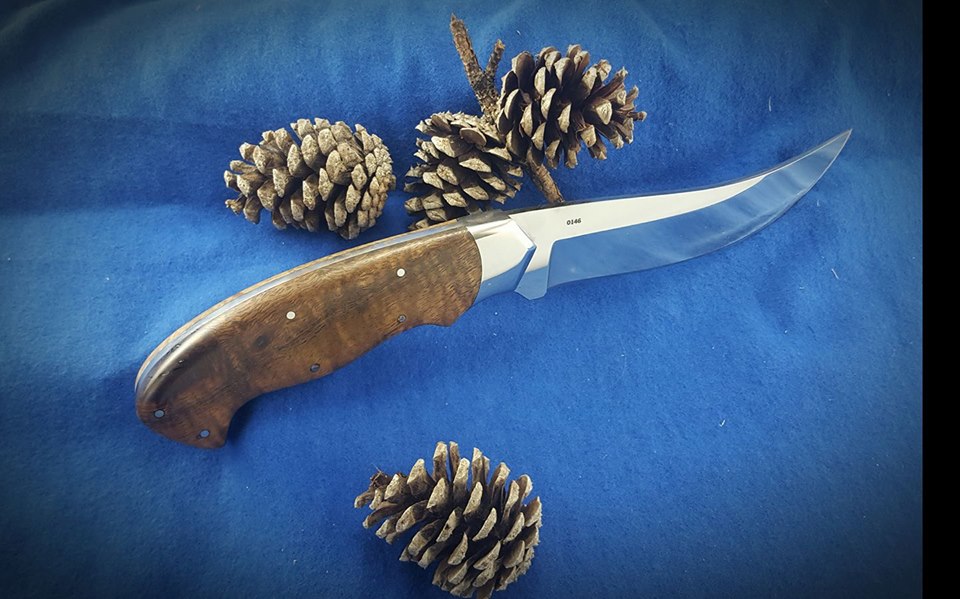
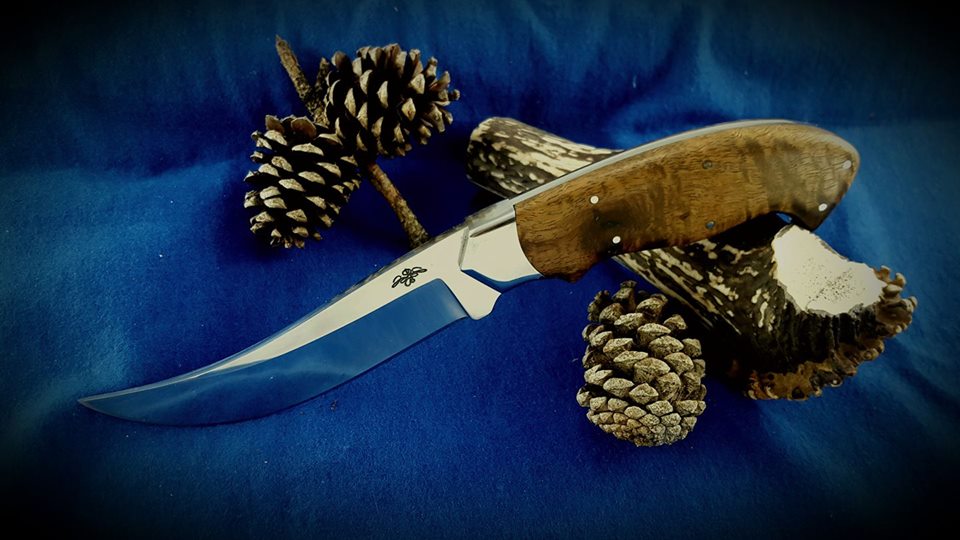
Devin Bliss has taken a very good photograph here. However, there is shadow at the handle, which would make it challenging for the designers to see where to make the cutaway image for inclusion in say, BLADE’s “What’s New” or “Knifemaker Showcase” sections.In Devin Bliss’s second attempt, the handle is more visible, but looks less rich in the harsher lighting. The inclusion of the pinecones makes a nice vignette without encroaching on any line of the knife, so it could still be used for a cutaway or as is. As a side note: Artists will tell you that the eye finds odd numbers more pleasing. I did not tell Devin that. I simply told him the truth: He had surpassed my level of being able to offer suggestions for improvement. He contacted another knifemaker for guidance.At this point, knifemaker Devin Bliss has reached a level of photography that serves his knives well. What did he do? “I changed the direction, propped up the handle onto the antler, moved the lighting around and used a foil reflector to get…a bit more light on the handle and a white reflector to mask off some glare on the blade and bolster.” This modified pronghorn is made of CTS-XHP steel with a curly koa handle. Maker’s list price $300 with stamped leather sheath. Contact [email protected], 903-736-3052 or on Facebook at DB Custom Knives.
Depth and Angles
In layman’s terms, you need to ensure your knives don’t look flat. You’re trying to capture something that’s three-dimensional in a two-dimensional medium. This is where some knives can look disproportionate because you’re focusing on the handle and the blade is in the fuzzy background, so to speak. A shallow depth of field is fine as long as your knife is standing out crisply from point to butt.
Finding the right angle will also help prevent your knife from looking flat. Prop up your knife somehow. Even just leaning it against a pebble allows you to move and capture the thickness or thinness of the piece. Laying it on your hand can work as long as your flesh doesn’t obstruct any of the knife’s lines.
Tip: Take dozens of photos from many different angles and distances and pick the best one of the bunch. If you don’t nail it, don’t compromise, don’t settle, get back there and take dozens more. Pros will take hundreds of impressions to deliver 30. Seriously. Take more shots. No, more. Get a ladder and shoot down, circle your quarry and shoot multiple shots from each hour of the clock, and get down and shoot at eye level. Shoot at morning, noon and night, but mostly late afternoon, to see how different types of sunlight affect your knife images. It’s what the pros did when they were starting out. Now, after years of experience, they can judge the sun’s angle and know how to get what they need.
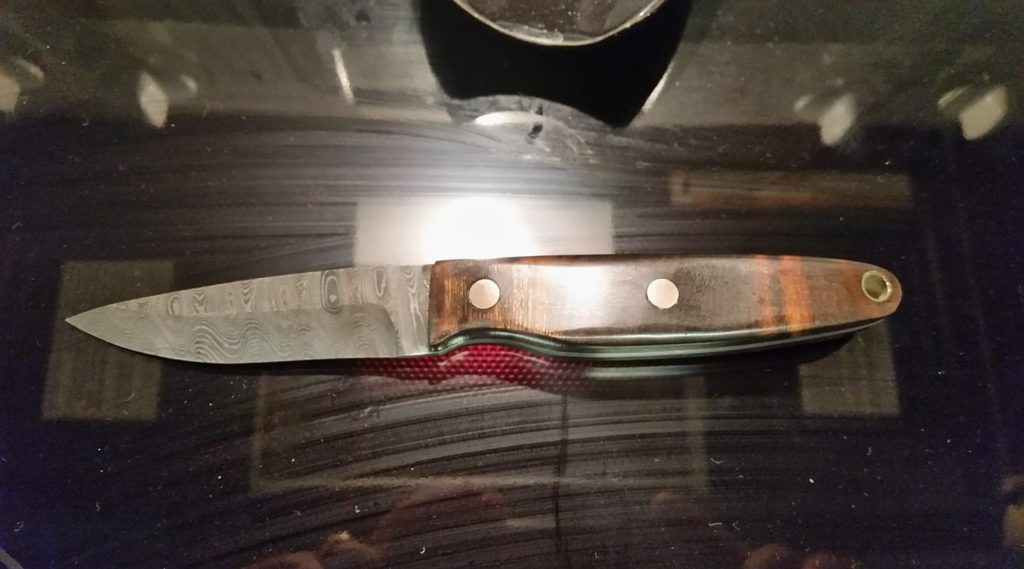
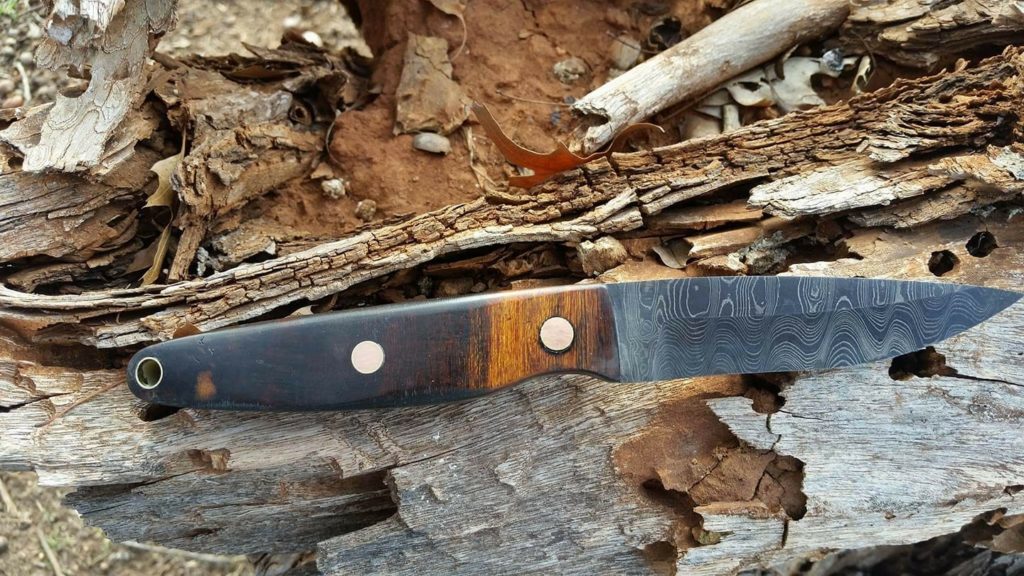
Charles Hawkins has a hard time taking a bad photo, but he pulled out all the stops on this one. That is a stovetop background, complete with streaks and a red glow. The glare on the handle deadens the handle and the pattern in the steel also appears dull. Note the photographer’s hands reflected on the cooktop. Analyze the entire photograph closely.Charles Hawkins took his knife outdoors, and now the focus is as sharp as can be. The background adds interest while still allowing for plenty of contrast. The 3.5-inch blade is made of pattern-welded steel from Alabama Damascus Steel. The handle is ironwood. Maker’s list price: $300. Contact www.hawkcustomknives.com.
Lighting
Natural light is easiest for the amateur to master. A cloudy day is good to reduce blade glare but sometimes it will dull colors. Try a sunny day, but shoot in the shade. Avoid glare on either the handle or the blade whether you’re shooting indoors or out. You also don’t want dappled light coming through the leaves of a tree to interfere with the hamon, for example, so try to find a solid overhang. You also don’t want reflection to make your blade look different than it is in reality.
Indoor lighting is infinitely more challenging. Low light, fluorescent light, light-painting in a dark room—they all have the potential to become “noisy,” grainy, soft. I will leave it to the articles and videos you’re going to pour over to explain why, but trust me, it’s not easy. Sometimes, in light-painting for example, the pins might absorb all the light and they take over the picture. Or the handle’s too dark, or the handle’s visible, but the blade looks dull. Changing the countless variables on this project will help you get the right shot out of your many attempts. It can help to take notes so you know what you’ve tried and whether or not it worked.
Avoid using the flash inside your camera. It will only give you an overlit image that makes your work look flat. An external flash, shot off a wall or ceiling or even a white T-shirt, or an extra light diffused with a white paper bag, may help, but now your knifemaking shop has turned into a spaceship and you’re behind in your orders.
Specs
Images need to be 300 dpi for print with the photo at least 8 inches on the longest side, preferably 10. The image size should be at the very least 600 KB. It’s not that we’ll run it that large, but we need to have the option to do so, especially if we’re doing a cutaway and the knife doesn’t fill the frame.
We prefer .jpg format, and that you attach the image file rather than dragging it into the email. Sometimes that can make a difference in resolution quality, though it admittedly shouldn’t. Also, for similar reasons, submit originals and not versions scraped from Facebook or other social media platform, even for online stories.
Remember, it’s all about the knife here at BLADE. Oh, and makers and manufacturers, too. But without a fantastic photo of a knife as a starting point, how are we ever going to get to know you better?
“101 Knife Designs” is not only filled with great comparisons of blade designs and design theory, but offers terrific examples of exceptional knife photography by Hiro Soga.
Knifemakers of all skill levels will enjoy comparing knife designs in this book by Murray Carter. The photographs by Hiro Soga are exquisite! There is even a discussion on the theory of knife design to help you better understand your craft. Save 35 percent off the cover cost of $29.99 for a total of $19.99.
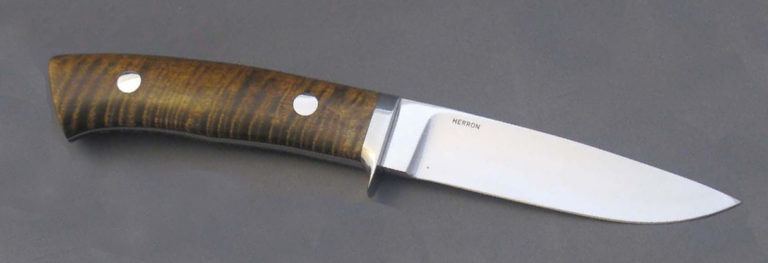
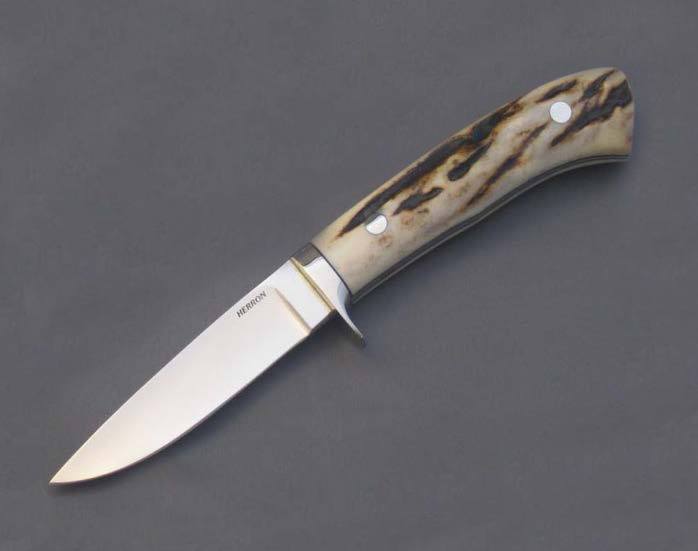
The tapered-tang Model 6 was one of George Herron’s best-known knives and was named in a poll as one of the 20 best knives ever made. The 4-inch blade is ATS-34 stainless steel and the handle is curly maple. Overall length: 9 inches. Herron made this one in his Aiken, South Carolina, shop. (Jay Mealing image)
Without a doubt, he was one of the best custom knifemakers to ever pursue the art. He gave information, expertise and precious time freely to those who wanted to learn. He was a crack shot, spitting in death’s eye during the Korean War and walking out of literal hell to fight another day.
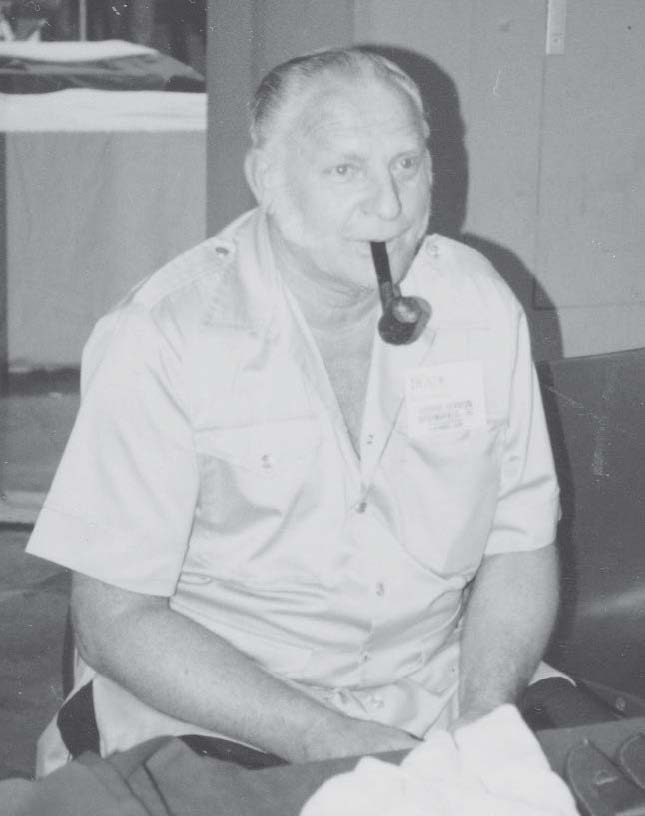
Mr. Herron hardly went anywhere without his trusty pipe.
“George Herron wasn’t just a great custom knifemaker,” began Bobby Branton, a custom maker who knew Herron and collected his knives for many years, “he was a great human being and a great person. You didn’t have to make knives for him to have an interest in you.”
Branton met George and his wonderful wife, affectionately known by the many who know her as “Miss Barbara,” when he was “bitten by the knife bug” and wanted to buy a few of the great maker’s knives.
“I started out as a collector and wanted to buy some John Nelson Cooper knives from a lady in a shop and found out from her that there were a number of South Carolina makers out there,” he recalled.
In his early days as a knifemaker, Branton bought the leading books on the topic by Sid Latham and David Boye. He noticed photos of some of Herron’s knives in Latham’s book and traveled to Herron’s home in Aiken and later Springfield, South Carolina.
“I called ahead of time and asked if I could stop by,” Bobby said. “I bought two knives with all the money I had. We looked around the shop and he was getting ready to go to a show. We went inside and he pulled a big deerskin off the table like a matador, and his inventory was sitting there.”
After Bobby made his first knife, he returned to Herron’s home to get a review of the effort.
“He said, ‘That’s nice, but if you’re going to make a knife, make a knife,’” Branton smiled. “He gave me tips and mentored me.”
A Custom Knifemaker Who Gave Back
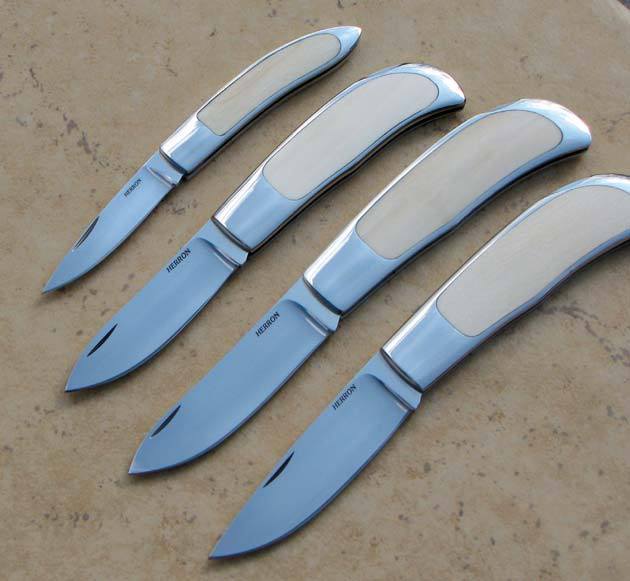
George Herron made many folders and varied his styles quite a bit over the years, including bolstered lockbacks, interframe lockbacks, slip-joint gent’s knives and others. The top knife is a slip-joint gent’s knife and the bottom three are interframe lockbacks. The scales are ivory. (Jay Mealing image)
George did the same for many would be custom makers who came calling. Custom maker Wayne Hendrix worked for him in the 1980s and learned to make custom knives from the master.
“He was a heck of a teacher,” Wayne said. “I tell you right now, if I went out there and picked a maker to work for, I couldn’t have picked a better one in terms of making working knives. His designs were simple and his knives were functional. He was a very intelligent man and he had common sense to go along with it. You don’t necessarily see someone with both that often.”
At the time he started working in the shop, Wayne indicated George was considered one of the world’s top five custom makers. Herron built a reputation of outstanding quality for a fair price, and part of his legacy is that his knives were affordably priced. He sold them by the thousands.
Wayne grew close to George, not just in the knife shop but in other aspects of life as well.
“I hunted with him and painted the inside of his house after they moved to Springfield,” he smiled. “It was super cold that winter, and he had an enclosed two-car garage where we set up his shop. We were a lot alike but he was a lot smarter than I am, and I consider him to be my second daddy. I couldn’t have picked a better maker to apprentice under, and I’m still riding George Herron’s coattails.”
The Secret To The Legacy
Named after Col. John Bigbie, the Bigbie skinner was another George Herron favorite. The 3.5-inch blade of ATS-34 stainless had a tapered tang and a stag handle. Overall length: 8 inches. This one was made in Herron’s Springfield, South Carolina, shop. (Jay Mealing image)
In an era when knifemakers looked to pricing of individual units as a barometer of their profitability, George was different. He never forgot that working people needed affordable knives.
“One time a committee of Guild members came to his table,” Cutlery Hall-Of-Famer and past BLADE publisher and editor Bruce Voyles remembered, “and they told him that he was selling his knives too cheap. He said, with a few words that I can’t repeat, that he would make and sell knives the way he wanted and they could do the same. Now, George sold most of his knives for $150 to $300, and most of those have doubled or tripled in value. None of the guys on that committee could say that their knives have done that.”
Voyles lighted up describing Herron as “a man’s man, gracious, courteous, or mean as he needed to be in a given situation.”
Perhaps the best tribute anyone could provide to the life and legacy of the great George Herron was Voyles’ effort to be at the only place on Earth he wanted to be when his friend passed away.
“We were in New Orleans at Mardi Gras,” Bruce commented. “On Fat Tuesday morning the telephone rang, and it was Bobby Branton telling me that Mr. George was gone. We loaded up and went home right then so we could attend the funeral in South Carolina. There are very few people I would have done that for.”
Such an effort proves one thing for sure. George Herron, larger than life, remains with those who knew him in undiminished spirit.
Meet Your Knifemaking Heroes At BLADE Show 2019
The world’s largest knife show takes place this June in Atlanta. Learn more here.
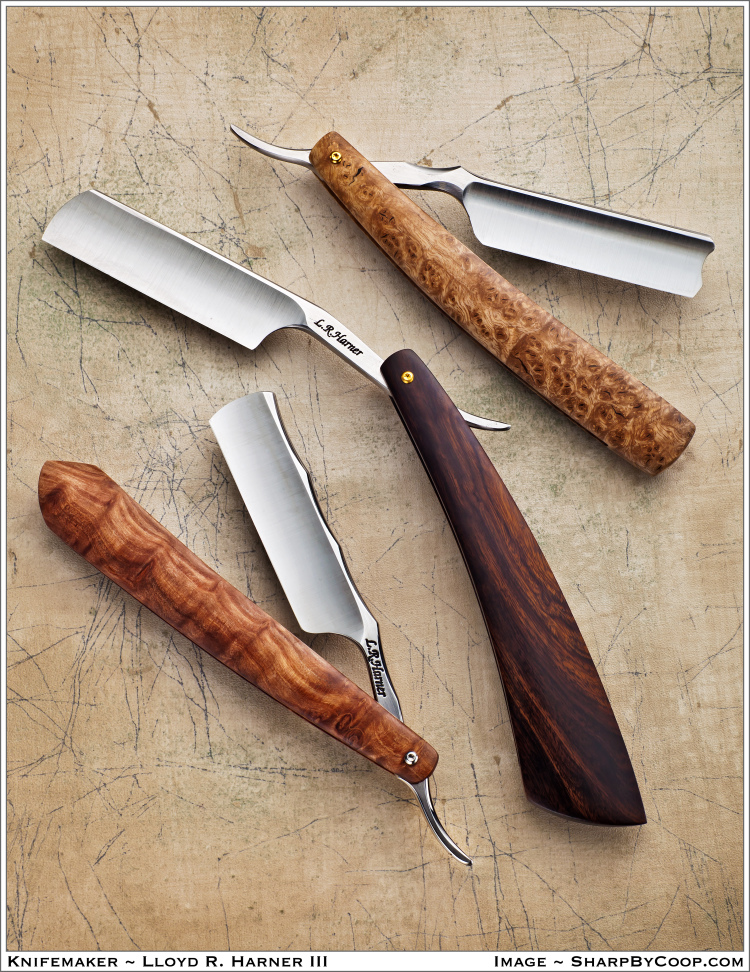
ThereIn the burl category, redwood (left) and black ash (right) are among the more popular woods. Lloyd Harner uses each for the handles of his razors, as well as the most popular of all woods, ironwood (center). The hollow-ground blades are 52100 carbon steel. (SharpByCoop.com photo)
There’s no time like the present to be a stickler for wood knife handles
Curiosity about the wood of choice among makers, users and collectors in terms of utility, user friendliness and good looks gives rise to the obvious question, “Which natural wood handle material is most popular, especially for custom knives?” American Bladesmith Society journeyman smith Peter Bromley and I were discussing the subject over coffee.
“There are so many types of woods and so many variations within each type that the possibilities are nearly endless,” Bromley said. “You also have to find a piece of wood with a busy grain structure, so when you cut a handle-size piece, then the pattern carries over into the smaller portion.”
Problem is, sometimes what looks good on a large piece of wood gets lost when you scale it down to handle size.
“It’s why makers tend to like burl,” Bromley reasoned. “It’s always busy no matter how small the handle is.”
Shannon McFall of Knife & Gun Finishing Supplies, Chris Hartman of Masecraft Supply, and Chuck Bybee and his daughter Jessica Bybee Walker of Alpha Knife Supply each responded with two words: desert ironwood.
“When it’s the highest quality, the most beautiful patterns are ironwood,” McFall said. “It’s still in relatively low supply, but we haven’t had a problem with replacement yet.” The shortage problems result from government regulations regarding the material. “It has become a lot harder to get the nicely figured desert ironwood,” as a result, Walker noted. “If we can’t get it, we switch to walnut. Turkish walnut is extremely dense with high contrast and performs similar to ironwood.” Bybee said he favors the look of highly figured curly koa. For high-end stuff, koa’s deep curls are rich in chatoyance, he opined. Chatoyance is the luster a material—in this case, wood—exhibits when you move it back and forth under a source of light, Bybee explained
Hartman said ironwood is a favorite in terms of utility, looks and the best combination of both features. However, he questions whether there is a low supply of the material. “Have you ever been to a knife show that didn’t have tables full of ironwood?” he asked. With quality comes price and all those interviewed indicated ironwood is the most expensive of the woods. On the other hand, Walker said maple is probably the least expensive.
WHERE THE BURLS ARE
“Amboyna burl machines well and is a nice wood,” Walker began. She added redwood burl is always very popular—though not with production knife companies because it is more difficult to machine—along with box elder. Hartman agreed. “Amboyna burl has nice, tight patterns and it wears well, plus there seems to be a good, consistent selection available,” he said. “It looks good, feels good and sells well.” McFall cited the popularity of California buckeye, box elder, maple and amboyna burls, all of which are softer woods that must be stabilized to make them suitable for handle use.
“Maple burl probably was the first wood stabilized successfully, it’s the most readily available and the cheapest, but we don’t sell a lot anymore and it’s not in the top five,” said Mike Ludeman of Wood Stabilizing Specialists International (WSSI). “Box elder burl is the most versatile wood and we double-dye it. Black ash burl and California buckeye burl are popular, and with buckeye each piece has to be graded individually because it can look nice, but have a huge void on the inside, so each piece has to be graded individually and priced accordingly.”
McFall, whose Knife & Gun Finishing Supplies also provides a stabilization service, echoed Ludeman about the box elder and California burls. “They have the best patterns and finest colors,” she said. “Box elder takes a dye the best in single/double dyed, and you can get the effects of a lot of natural wood with more control over the colors.”
Along with advances in the stabilization process comes more options. “Something normally bland with a figure can now be dyed to a natural look, rather than staining it as in the past,” McFall noted. “You have more control over the colors.”
“BETTER” OR “JUST NEW”?
Ludeman said stabilization methods are “highly regarded secrets” in a field that is growing.
“Stabilized is not a word I like to use because it’s thrown around loosely anymore,” he noted. “I achieve 100 percent penetration of an acrylic impregnated wood.” Hartman embellished the point. “I have seen a lot of new ‘stabilizers’ advertised out there, which doesn’t make them ‘better,’ just new,” he offered. “As far as I know, the important part is proper selection and preparation of the wood, and fully understanding the entire stabilization process.” Bybee warned that amidst the growth in companies and individuals offering stabilization services, you should research the subject and exercise caution.
Factory knives with stabilized wood handles are rare. “Generally, a factory uses stabilized wood, typically U.S. maple or box elder, for a special/limited edition” because of the cost factor, Ludeman said. “It’s not something they make tens of thousands of.” Hartman concurred. “Who can supply 500 pieces of high-quality stabilized woods on a consistent basis for two years?” he asked. “You can do limited-edition runs but it’s very hard to supply quality consistently over long periods of time in that quantity.” Bybee agreed, adding, “Factories have moved almost exclusively to man-made materials, with G-10 and Micarta® dominating now, because they can count on availability and consistency.”
FUTURE WOODS
What woods will be popular in the future? “It varies because a lot of popular woods are harder to get so they don’t actually show up more,” Walker said. “Turkish walnut has a really rich color, nice dark browns with lighter streaks running through it, and I think it shows promise in gaining popularity.”
“I would love to see somebody come up with something new made from bamboo,” Hartman stated. “This could be the perfect material, it’s sustainable, has a lot of good qualities, but just not enough character or pattern to become a hot-selling knife material.” He also identified the need for a “passionate supplier” of exotic woods.
“There are a lot of ‘suppliers’ of woods, myself included, but no ‘master wood supplier’ that does only exotic woods, stabilizes and does nothing else,” he mused, “a ‘wood crazy’ company that lives and breathes wood dust for knife folks.”
The complexities involved in natural and stabilized woods make the possibilities, as Bromley noted, “nearly endless.” There is an attraction that cannot be denied. “Wood is naturally, beautifully created,” Hartman said, “and it’s a silly man who thinks he can improve on that kind of art.”—by Stephen Garger
Wood: It’s Not a Wash!
The No. 1 maintenance tip Jessica Bybee Walker offers is to not wash the knife in a dishwasher.
“A lot of knifemakers use vulcanized fiber liners, which are very susceptible to moisture and can shrink and pull back or swell up in the dishwasher and crack,” she warned. Chuck Bybee recommended putting mineral oil on your hand and rolling the handle around in it. “I also put Renaissance Wax on all my ironwood knives as one of my yearly rituals,” he said.
“Wood is a natural product so I don’t use a petroleum-based blend. I use a thin coat of olive oil on wood handles. Besides,” Peter Bromley smiled, “I like the smell.”
Stabilized woods do not require the same amount of care as untreated woods, but that does not translate as “no” care. “Basically, stabilized wood is an enhanced wood—not the cure-all for swelling, shrinking, etc.,” Ludeman noted. “The real purpose stabilization serves is to expand the availability of woods that are otherwise too soft for knife handles.” In other words, stabilized or not, use common sense and do not leave your knife sitting on the dashboard in 90-degree heat.—by Stephen Garger
Woods: Most, Good and Least
MOST POPULAR: Desert Ironwood
MOST EXPENSIVE: Desert Ironwood
GOOD IRONWOOD SUBSTITUTE: Turkish walnut
MOST PLENTIFUL: Maple
LEAST EXPENSIVE: Maple
MOST POPULAR BURLS: Amboyna, redwood, box elder, California buckeye, maple and black ash
For more on the latest knives, knife legislation, knifemaking instruction, knife trends, knifemakers, what knives to buy and where and much more, subscribe to BLADE® Magazine, the World’s No. 1 Knife Publication. Click on http://www.shopblade.com/blade-magazine-one-year-subscription-us/?r+ssfb071212 for more information.
Here are four folding knives that employ unusual opening mechanisms.
“Cool Factor”
Some knives have a “cool factor” that makes your eyes pop out. Whether sporting creative designs, spine-tingling handles and blade shapes or—in this case—ingenious mechanisms, such knives always have that special something which sets them apart.
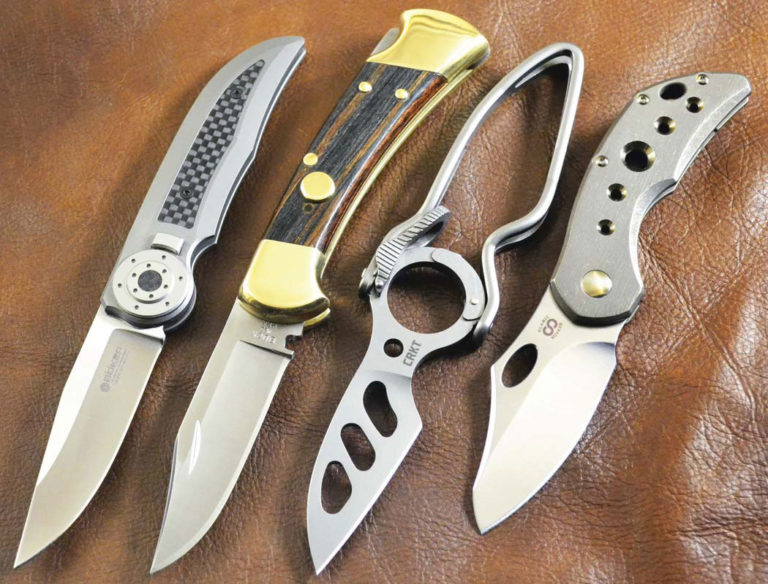
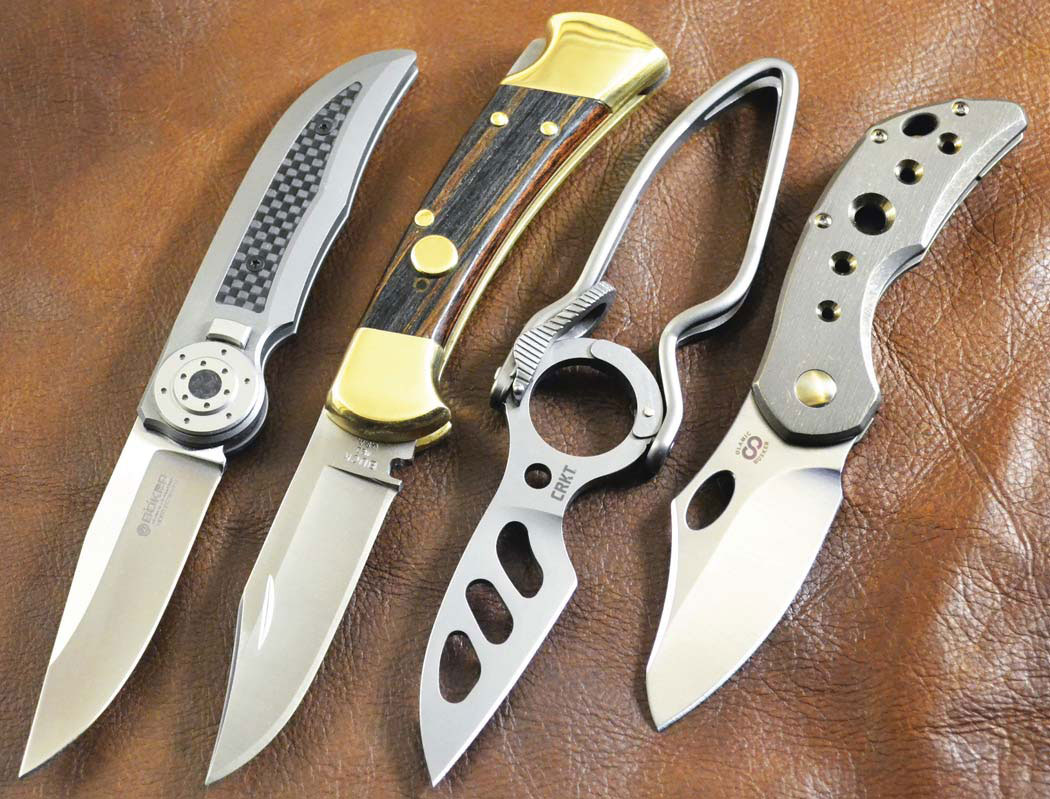
Cool can be anything from a notable mechanism to a standout design. From left: Boker Tucan, AIK Buck 112 Ranger Double-Action Auto, CRKT Daktyl and Olamic Busker Semper.
Boker Tucan
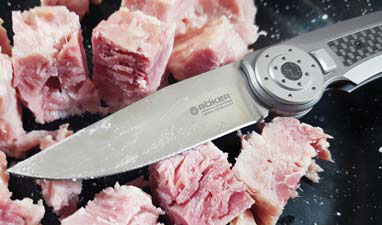
The Boker Tucan is a stately looking folder, but its 3-inch blade of Bohler N690 stainless steel is all business.
Boker’s sleek Tucan would be cool on its design alone, but designer Wilfried Gorski’s innovative blade-release mechanism puts the folder over the edge. A slide release just below the oversized pivot pops the blade out of the frame so it can be opened manually, and the release also serves to deploy the blade. Simply thumb it down and the blade is ready to fold into the frame.
Everything about the Tucan is upscale, from its stealthy 3-inch Bohler N690 stainless steel clip-point blade to its beautifully sculpted 3.875-inch titanium frame with carbon-fiber inlays.
There is no pocket clip but no matter—the Tucan is meant for loose pocket carry. At a weight of 2.82 ounces that is not a problem.
MSRP: $339.
CRKT Daktyl
(CRKT image)
The CRKT Daktyl is a revised version of the Tom Hitchcock “Hole In One” design.
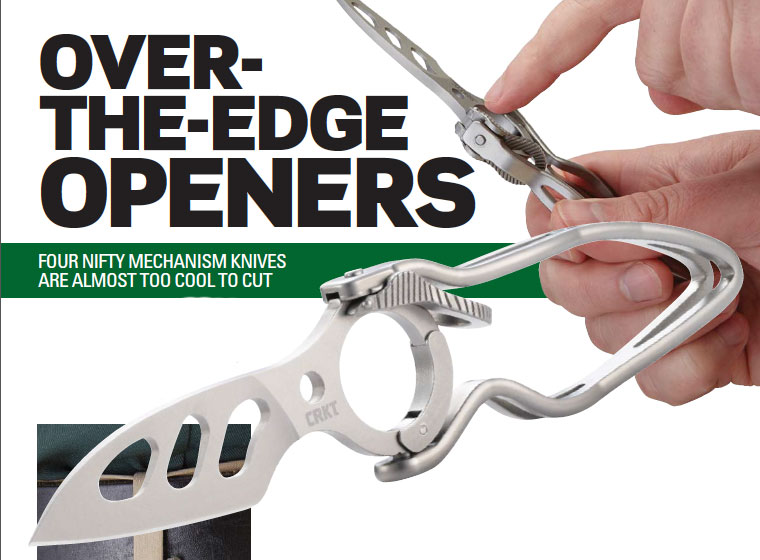
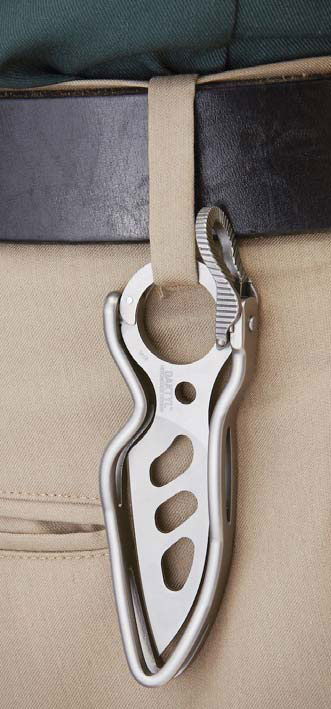
Every bit as enigmatic as the original, if not more, the Daktyl has a 3.05-inch 420J2 stainless steel blade that rotates out of a 4.42-inch wire-frame handle.
The fun begins trying to figure out how to release the blade via Hitchcock’s Slide Lock mechanism, which requires sliding and tipping back the thumb lever.
Once you get the hang of it the Daktyl is pure fun and will amaze your friends. The modified wharncliffe blade has cutouts for lightening and a round carabiner at the base allows you to clip it to a belt loop, keychain or pack and—get this—pop a beer cap.
The Daktyl has a pleasant beadblast finish overall and weighs in at 2.4 ounces.
MSRP: $59.99.
Buck 112 Ranger DA Auto (Adams International Knifeworks conversion)
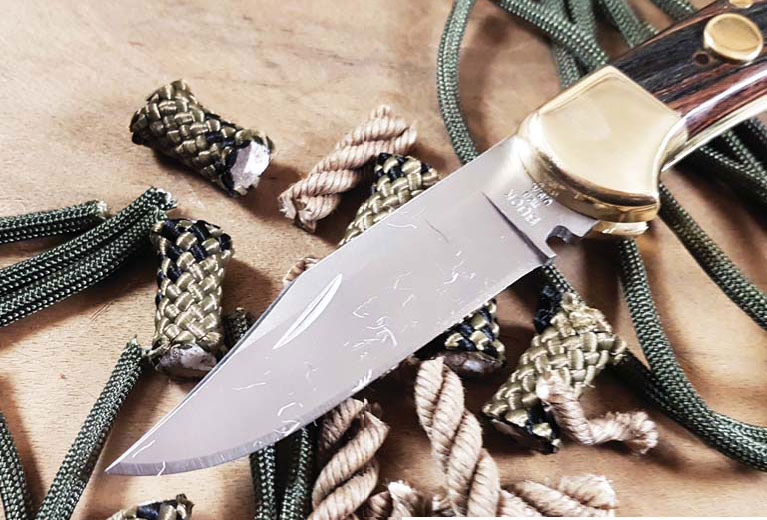
Adams International Knifeworks Buck Ranger 112 DA Auto has all the traits of the original. The 3-inch 420HC stainless steel blade whipped and sliced through paracord, 3/8-inch rappelling rope and tough waxed lasso rope with ease.
Unlike the new Buck 110 Auto, the AIK version of the smaller 112 Ranger differs in that it is a double action—opens both manually and automatically—and uses a leaf spring on the spine as opposed to a coil. The blade is employed via a flush brass button on the front, which matches the bolsters nicely.
Blade deployment is via the standard lockback on the rear base.
Everything else is Buck 112 Ranger, from the Dymondwood lockback grip to the 3-inch 420HC stainless steel clip-point blade and black leather belt sheath.
MSRP: $160.
Olamic Cutlery Busker Semper
Olamic Cutlery is known for making fashionable knives and the Busker Semper model, designed in-house, exudes coolness on every level. The folder sports curvaceous lines from stem to stern, including its ability to open 10 different ways (see above video), including a top-mounted flipper.
It is a small knife—6 inches open—featuring a 2.375-inch Bohler M390 modified wharncliffe blade and a 6Al4V titanium framelock handle. Other features include a machined pocket clip, caged bearing pivot system, stainless steel lockbar insert with an over-travel stop, ceramic detent ball, and ceramic pocket clip retention ball. In a nutshell, this is the good stuff!
The test model was delivered with a deep-brushed surface texture and gold anodized accents.