Knife collecting is an extremely rewarding experience for knife enthusiasts. There truly is a knife for everyone. Many increase or hold their value throughout the years, making collecting knives something to pass on to the next generation of knife collectors.
Know the keys to the best handle design to enhance your knife’s performance and safe use. Following are seven:
1) According to ABS journeyman smith Dan Farr, the size of your hand is a key to arriving at the best handle for you. Longer hands require a larger handle diameter and thicker hands a smaller diameter. Wearing gloves works best with a longer and thinner handle. Remember that an eighth-inch difference in handle diameter means approximately a 3/8-inch difference in circumference.
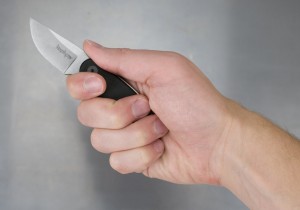
Know seven keys to top handle design. The knife is the Kershaw Mini Skinner. (Kershaw photo)
2) As for handle material, most synthetics tend to be stable, durable and often require no protective finish. Wood is strong for its weight, finishes well and adds beauty. Stag is somewhat limited in shape and size, but has good texture and adds traditional looks.
3) Contoured and formed grips are great if they fit your hand, but the more form fit the handle, the fewer people it fits. Finger grooves are an example. They are nice if they fit your fingers, horrible if they do not. Handles with a single finger groove for the index finger will generally be versatile enough to fit many hand sizes.
4) Round handles have no natural indexing for the blade edge (natural indexing refers to the ability to know where the edge is by how the handle feels in your hand rather than having to look at the edge to know where it is). Oval handles are much more useful. They index the edge to the handle and add the ability to use twisting force.
5) Curving the butt of the handle down—also known as the dropped handle—will improve purchase.
6) A palm swell allows a relaxed, comfortable handhold. It keeps your hand in the same place on the handle, provides a natural pivot point and helps with retention.
7) Guards are important safety features. A guard should blend with the contours of the grip and be strong, though in proportion to the rest of the knife.
A Knife Handle That Really Sticks With You
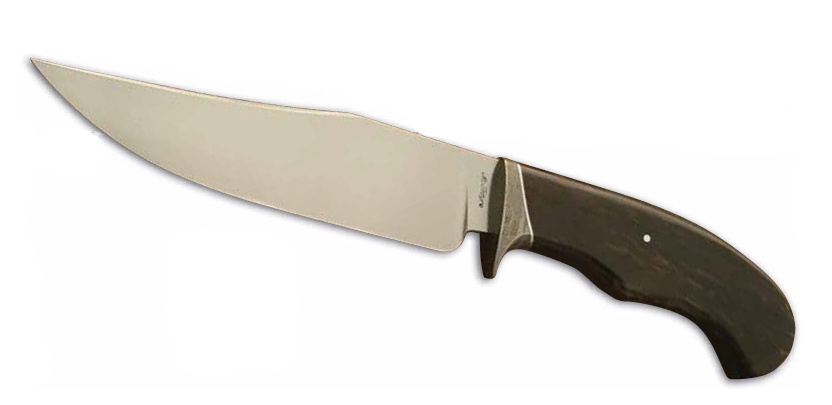
This Deer & Deer Hunting Drop Point Knife is a great example of a knife that gets its handle right. This hard-working hunting knife was made exclusively by the American Knife Company for BLADE‘s sister brand, Deer & Deer Hunting, and is a great pick for hunters and collectors alike.
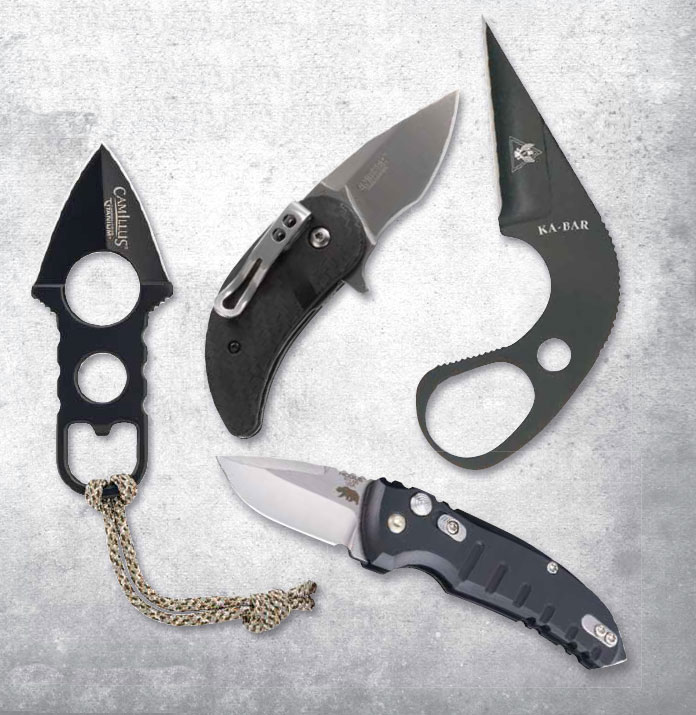
Whether it’s because of knife restrictions, portability or preference, these little blades aren’t too cute to cut.
CRKT Snicker
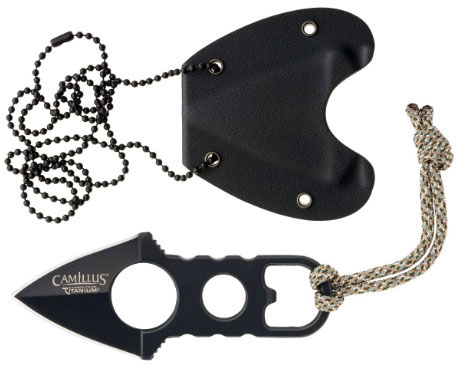
Camillus Heater
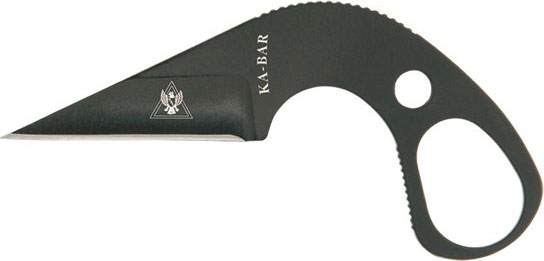
KA-BAR Last Ditch
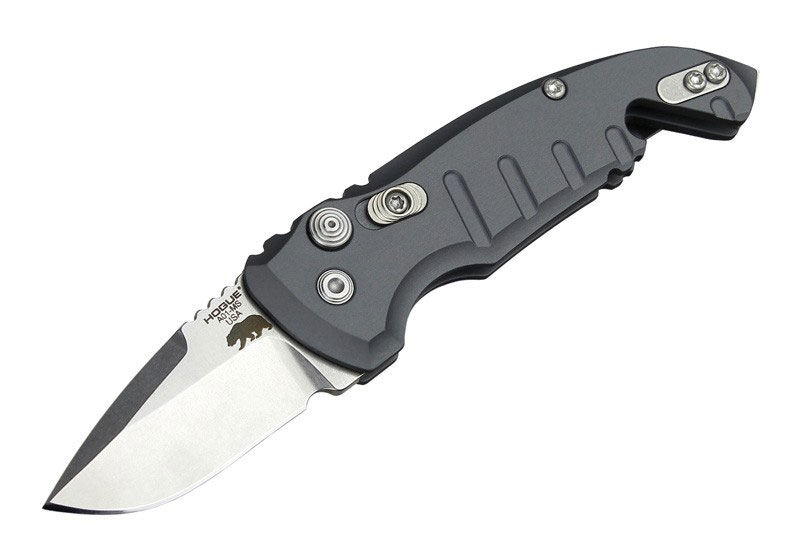
Hogue A01 MicroSwitch
CRKT Snicker
(CRKT image)
The CRKT Snicker debuted at BLADE Show 2017 and exemplifies the growing trend of blades measuring less than 2 inches.
“It serves a niche for those looking for a small blade that will tackle a variety of tasks and is a solid performer for CRKT,” explained company spokesperson Mike May. “Ease of use and ‘approachability’ are two key factors that make blades of this size popular. In areas with strict knife laws, the sub-2-inch blade can also help alleviate any concerns. In the case of the Snicker, its style and ergonomics make it an attractive small knife for consumer pockets as well.”
Blade Length: 1.846″ (46.89 mm)
Blade Edge: Plain
Blade Steel: 420J2, HRC 50-52
Blade Finish: Stonewash
Blade Thickness: 0.106″ (2.69 mm)
Closed Length: 2.938″ (74.63 mm)
Weight: 2.3 oz
Handle: Injection Molded Glass Reinforced Nylon
Style: Folding Knife w/Locking Liner
Overall Length: 4.688″ (119.08 mm)
Camillus Heater
(Camillus image)
When Camillus launched the Heater in 2015, the idea was much the same.
“It has and continues to be an extremely popular model since it debuted,” noted Sam Dodge, Camillus senior brand manager. “We can attribute this to two factors: function and convenience. We find that people are purchasing a knife for different jobs or tasks. The fact that the knife comes in a slightly smaller package makes it more convenient to [store].
“There are still purists that will have ‘one knife to rule them all,’ but more and more we see that people want a knife for each activity.”
Blade Treatment: Carbonitride Titanium
Blade Color: Black
Blade Edge: Smooth
Blade Grind: Hollow
Blade Style: Spear
Fixed Blade
Handle Color: Black
Hand Orientation: Left and Right
Includes: Chain, Molded Sheath, Clip
Handle material: Stainless Steel + Paracord
Main Blade Material: 440
Rockwell Hardness: HRC54
Lifetime Warranty
KA-BAR Last Ditch
(KA-BAR image)
The KA-BAR Last Ditch, commonly worn as a neck knife or laced into a boot, hit the shelves in 2008 and has been a top seller ever since.
“I think two of the biggest reasons why knives with blades under 2 inches are popular is due to concealability and ease of carry,” said Joe Bradley, KA-BAR sales and digital content manager. “Many folks don’t like to draw attention, and sometimes even an exposed pocket clips will do that. Small blades offer a tremendous blend of being lightweight with a small footprint.”
Overall Length: 3.625″
Blade Length: 1.625″
Blade Material: 9Cr18MoV
Hardness: 58-59 RC
Blade Style: Wharncliffe
Blade Grind: Flat
Finish: Black
Edge Type: Plain
Handle Length: 2.00″
Handle Material: Stainless Steel
Color: Black
Weight: 2.40 oz.
Sheath: Molded Polymer
Knife Type: Fixed Blade
Hogue A01 MicroSwitch
(Hogue Knives image)
The A01 MicroSwitch has been a hit since it was widely distributed in autumn 2017.
“It has been difficult to keep it in stock since its release,” he said. “It is the smallest knife in the Hogue Knives line, and there has been tremendous interest in it. It moves briskly at trade shows, through dealers and over our retail website.”
Crook considers many factors that weigh in on the wave of popularity in small knives. Among these is the company’s location in California, where he says anything larger in an automatic is illegal.
Blade Length: 1.95″
Overall Length: 5.8”
Closed Length: 3.85”
Weight: 2.7oz
Mechanism: Automatic Button Deployment with Manual Safety
Handle Material (Frame): 6061-T6 Anodized Aluminum
Pocket Clip: Stainless Steel Ambidextrous Tip Up Carry
Blade Style: Drop Point
Blade Thickness: 0.12”
Blade Material: CPM154 Stainless Steel
Blade Hardness: RC 57-59
Blade Treatment: Cryogenically Treated
Blade Finish: Tumbled Finish
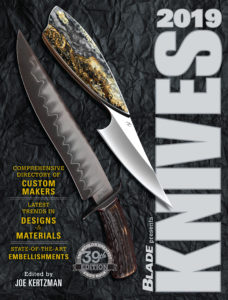
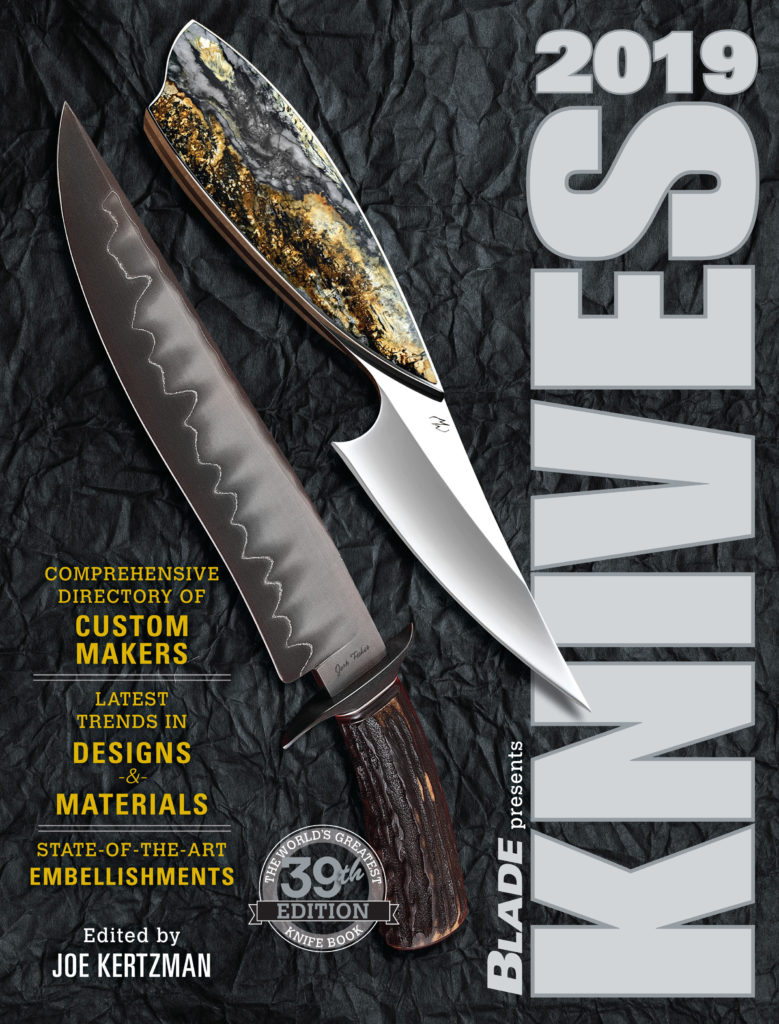
The World’s Greatest Knife Book
The KNIVES annual book is back and better than ever. Here’s what you can expect:
320 pages
Beautiful, full-color photos of knives and accessories
Comprehensive directory of custom knifemakers
In-depth features about knife collecting and making knives
Examples of the latest trends in knife designs and knifemaking materials
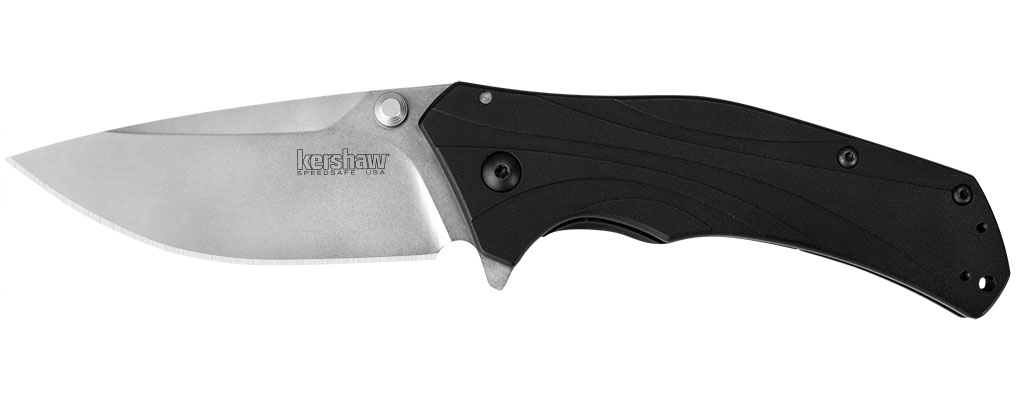
The Kershaw Knockout offers a bigger design than most EDC, but it’s still lightweight enough to stick in a pocket. (Kershaw photo)
Quick Tips
Choose a knife that isn’t too small for anticipated tasks, but not too large to carry comfortably
Buy inexpensive ($25 or less) knives if you don’t care that they get lost or broken
Pay at least $75 for an average quality EDC
Better performing knives start at $100
Handle the knife before buying if possible
Avoid gimmicks
If you can’t figure out how to open it by looking at it, it’s not the right fit
Top 10 Things to Consider in Buying an EDC Knife
Quality materials
Top blade steel
Maker/manufacturer and customer service
Application or cutting tasks it will perform
Price point
Type of lock or mechanism
Design
Ergonomics
Size and weight
Ease of carry
The Best Everyday Carry Knives for the Money
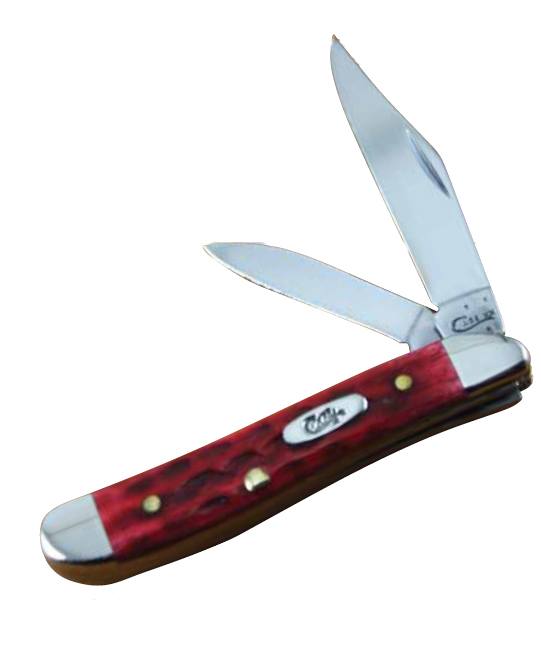
With Old Red Bone handle scales, the W.R. Case & Sons “Peanut” is a handsome EDC knife, a two-blade folder weighing in at a light, easy-to- carry 1.2 ounces.
How do you get the best everyday carry (EDC) knife for your money? Will a $25 knife from a big-box store suffice? Is there such a thing as a quality $25 knife, or will it be necessary to spend $100, $500 or $1,000 for a blade? BLADE went looking for answers.
Buying EDC Knives Is Like Buying Cars
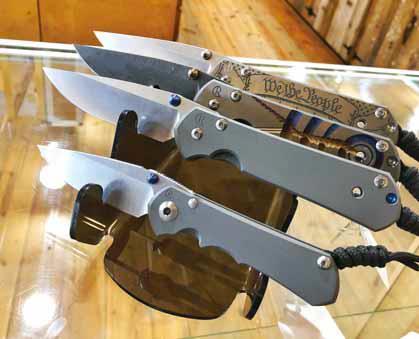
Chris Reeve folders are considered quality knives, with ergonomic designs, thick frames, solid locks and easy-opening, high-end steel blades.
“Directing a customer to an EDC knife is somewhat like pointing them toward an everyday car. Some think a base economy model suits them well, whereas others want a high-end luxury model,” says Mike Dye of New Graham Knives in Bluefield, Virginia.
“Obviously, a good mid- or high-end blade steel is paramount. And the feel of the knife in the hand—it must ‘fit’ the user,” Dye explains. “Different handle materials can make a world of difference in the feel of the knife. Micarta, G-10, smooth or worked titanium, stainless steel, bone and stag—these choices are of a personal nature.”
Not Too Small, Not Too Large
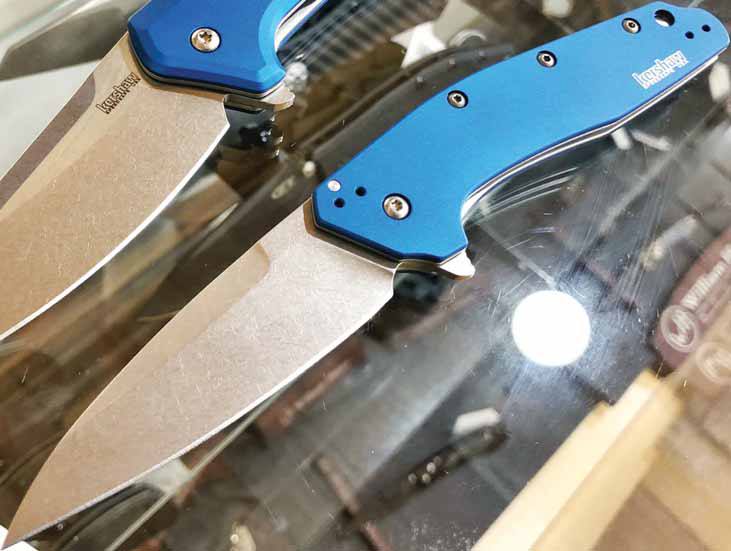
Mike Dye of New Graham Knives says Kershaw makes great knives in every price point. The full lengths of the flipper folders are ergonomic and flowing, including the blue anodized handles.
Though Dye says everyone likes something different, there are keys to finding the right everyday carry knife. One tip, he notes, is to choose a knife that is neither too small for the tasks it might encounter on an average day, nor one too large to carry daily.
Matt Salazar, store manager for House of Blades, agrees and even has a suggestion as to blade length, saying a 3- to 3¾-inch blade is ideal for an EDC knife. He mentions modern blade steels such as CPM S35VN or M390, as those that are more than adequate for everyday cutting tasks.
“Stick with a good, quality brand that has a track record of great customer service,” Salazar recommends. “G-10 and aluminum are great options, as far as handle material goes, although titanium and carbon fiber are widely available if you want something a little more high-end.”
When Does $25 Cut It?
Dye says a $25 knife might be the perfect choice for a farmer, miner or auto mechanic who uses the knife for any task that comes up.
“If broken or lost,” he states, “it’s easier to repurchase a $25 knife than it is a more expensive piece. For others who are less likely to overwork or ask a knife to do chores it’s not designed to do, a higher-end model with ‘prestige’ might be in order.
“As for a quality $25 knife,” Dye continues, “yeah, they’re out there. Over 40 years ago, when I started selling pocketknives, the China-made knives were a joke. That is not the case today. Some factories in China are producing amazingly high-quality knives at popular prices.”
Dye says such companies as Kershaw and Spyderco (the latter specifically in its byrd line) market knives manufactured in China with great success.
“Ontario and ESEE have great EDCs at a reasonable price,” he notes, “and they offer support for warranty issues.”
Disadvantages of Budget Knives
Salazar poses the question, “How long do you want the knife to last?”
“In my opinion,” he says, “you are going to be really hard-pressed to find a quality knife for $25. I will say that Kershaw makes great knives in every price point, but I’d also say that $75 to $100 would get you an excellent EDC knife that should last you many years with proper use. You can certainly spend more, if your budget will allow.”
Many steels in lower-end knives will not retain a sharpened edge for as long as high-quality blade steels, which means more frequent sharpening and a shorter life expectancy for a knife.
“Steel quality, in general, would be the biggest drop-off in opting for a lower-end knife,” Salazar explains. “Inferior edge retention is likely the most significant downfall, when purchasing a budget knife. After all, it’s a cutting tool.”
Higher Quality Equals Better Performance
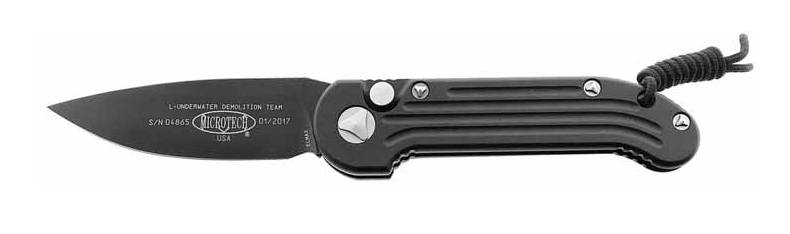
The Microtech LUDT Auto 135-1 has a premium ELMAX or M390 stainless steel blade (depending on the date of manufacture) with a 6061-T6 aircraft aluminum handle. Featuring top-notch automatic action, it measures 4 5/8 inches closed and weighs 3.5 ounces. Its size, blade geometry and design lend themselves well to a comfortable and capable EDC knife for $235.
High-dollar production knives, such as those available from Chris Reeve Knives, Hinderer Knives and Zero Tolerance, exhibit quality craftsmanship, better steel options and stricter quality control.
“Look for solid lockup, if it’s a locking folder, smooth action and overall quality construction,” Salazar remarks.
“Generally, when the customer has tired of the off brands and low-end offerings at the big-box stores, they come to me asking for a quality knife,” Dye relates. “That said, most of our walk-in folks have a ceiling of around $50 to $100, and there are dozens of excellent choices in that range.”
Tangible advantages to higher-end knives include titanium versus pot-metal knife frames, and handle materials such as Micarta, carbon fiber and natural bone versus plastic grips.
“Fit and finish on higher-end knives are rightly expected to be superior,” Dye states. “A customer will have a good experience with a knife that sharpens easily, cuts well and retains an edge. With high-end EDCs, you start to get into quality frame materials, better steels with superior heat treating and locking mechanisms that hold greater tolerances.”
Handle the Knife Before You Purchase It
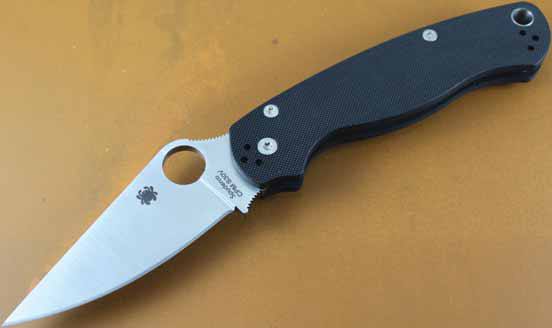
The Spyderco Para Military 2 folder has G-10 handle scales and a 3.43-inch CPM S30V blade. It weighs 3.9 ounces.
“If possible, handle the knife before purchasing it,” he suggests. “Look for lack of blade play on folders, both horizontally and vertically, and examine lockup. Look at fit and finish. Well-made knives at any price will show well in those areas.”
Dye says, “I tend to steer customers away from fancy opening mechanisms, unorthodox locking mechanisms and knives that have obvious marketing gimmicks associated with them.”
Materials to Consider
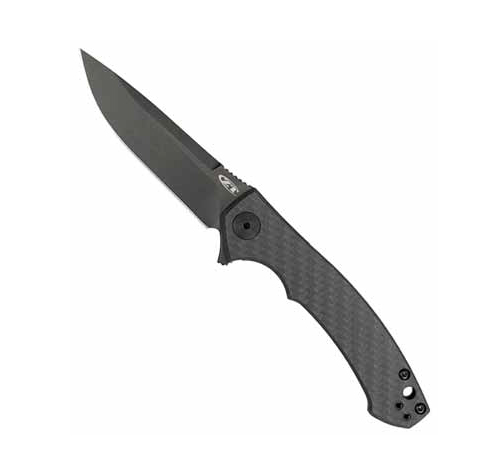
The Zero Tolerance 0450CF Sinkevich Frame Lock Flipper boasts a carbon-fiber front handle scale with a titanium rear scale and a 3¼-inch CPM S35-VN blade that opens smoothly on a KVT ballbearing system. The knife weighs 2.7 ounces.
Stainless as opposed to high-carbon blade steel is a consideration for Julie Maguire and Ryan Thompson of Arizona Custom Knives.
“In order to be an EDC candidate, a knife should have a high-quality stainless blade. There are more stainless steels to choose from today than ever before. Do your research and choose the one that fits your cutting needs,” Maguire says.
“Finding a knife with durable handle materials is also important,” Thompson imparts. “Titanium, G-10, Micarta and carbon fiber are all great options that hold up well in various conditions.”
Conclusion
One thing is for certain. As knife designs, blade steels, materials and mechanisms improve, the perfect EDC will always be a moving target.
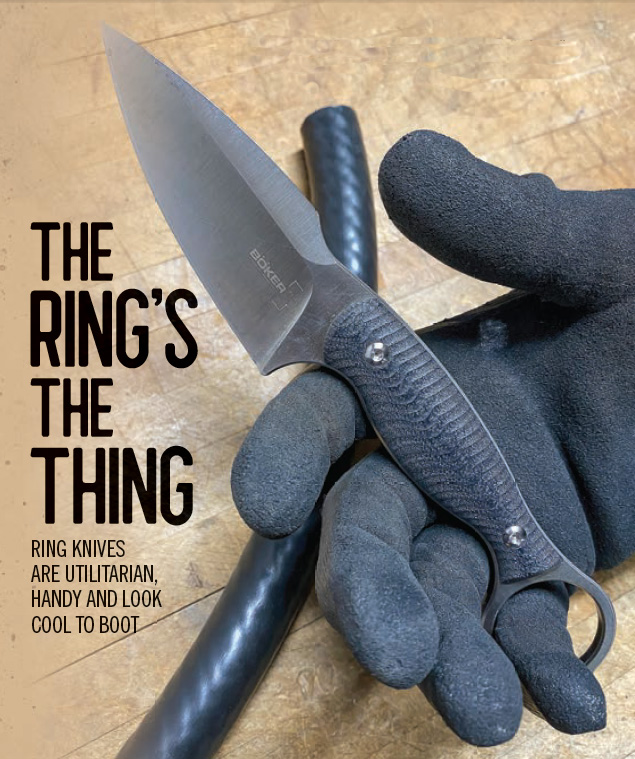
When you think of a knife with a ring in the handle butt, a karambit probably comes to mind. Fact is, there are other knives with such a feature. In fact, some have rings at the middle and also even at the front of the handle.
Unlike karambits, in which the ring is used for quickly spinning the knife in between different grips as well as affecting the grips themselves, non-karambit versions of such knives employ the ring in utilitarian ways that are less flashy.
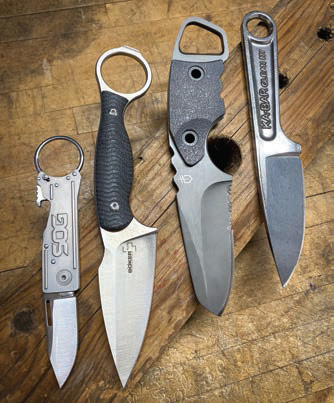
The latest ring knives from left, with manufacturer’s suggested retail prices in parentheses: SOG Keytron ($23.95), Boker Plus Accomplice ($119.95), Gerber Epic ($42) and KA-BAR Wrench Knife ($54.74). (Marty Stanfield Photography)
Examples include assisting in providing a more secure purchase on the handle, dangling the knife from a pinky to allow for full use of the hand while keeping the knife handy, attaching the knife to a keyring, or simply hanging the knife on a tool rack or elsewhere.
If your approach involves frequent intermittent knife use, interspersing it with employing your hand to grip, hold or pull the material you’re cutting or some other method all your own, then adding a ring knife to your collection might be beneficial.
Design suitable to clearing vegetation, preparing meals and handling general camp chores
Fixed blade
Blade length: 6 to 10 inches
Full tang
Guard
Jimping
Pommel
Camp knife: the name conjures images of unlimited locations and scenarios. Most would agree that a camp knife would be some type of fixed blade suitable for odd jobs while camping and meal preparation. Here are some specifics to round out that general definition.
Most would agree that a camp knife would be some type of fixed blade. This one by Shawn McIntyre sports a clip point, damascus single guard and a bird’s-beak pommel.
Blade Length
Camp knives can start at a 5-inch blade but usually range between 6 to 10 inches. How much blade length you need often will depend on your campsite. If in an established hunting or fishing camp, a 6-to-8- inch blade probably will be all you need.
Longer blades would be necessary if you were making a campsite that was a short-term proposition. Areas may need to be cleared of thin vegetation for sleep areas or your tent. You may need to widen the trail or even break trail to get to your preferred hunting or fishing location.
Tang Size
Camp knives should feature full tangs—that is, the tang goes all the way to the end of the handle. Tangs can be hidden or exposed. Tim Steingass features an exposed full tapered tang on his Big Ol’ Camp Bowie.
The tang’s size often is used to off set the blade’s size, giving the knife better balance. Construction should feature a full tang—that is, the tang goes all the way to the end of the handle. Tangs can be hidden or exposed.
Guards
The author said most camp knives should have at least a single guard like this one by Josh Fisher.
While there are many camp knives without guards, I prefer one with a guard, and I like it to be of stainless steel. Whether it’s a single or double guard depends on the knife and its intended purpose. Most camp knives should have at least a single guard.
Jimping
Thumb serrations (jimping) on top and in front of the guard should be considered as they give you better knife control.
Pommel
Some prefer some type of pommel on the end of the handle for hammering. While in the Army I found using an “infantry hammer”—a rock—allows you to hit harder and what you aim at. It also accomplishes the task quicker and eliminates the potential for knife damage.
Handles
Handles are often overlooked on knives. If you have ever used a knife for an extended period of time and the handle was too thin or too wet environment, I recommend a material to allow your hand to mesh with the handle.
Natural materials are often used for handles. With its hills and valleys, stag is an excellent choice. The problem with natural materials is they can shrink and/or crack over time, giving your knife an uneven grip, limiting its utility.
Synthetic materials such as rubber, G-10 or Micarta® can be excellent choices. Rubber will deteriorate over time unless properly maintained. This is especially true in a saltwater environment. When choosing a synthetic handle material, it is best to pick one with some kind of grip to it. Rag Micarta can be an excellent choice.
Incorporating some kind of stippling of the Micarta or G-10 enhances grip. One last thing: Give some thought to using orange G-10. If you drop your knife in the woods, the color gives you a fighting chance to actually find it.
A blade’s profile geometry has a considerable effect on how well the knife works for an intended use. A blade with a substantial curve facilitates slicing cuts along the length of the edge, as on skinners and some butcher knives, such as steak scimitars. Straighter blades work well for tip control and power cutting.
A recurve combines features of a couple of blade styles. Depending on the size of the knife and its intended use, the recurve provides certain benefits. The edge line is “S”-like in shape. The overall form leaves the front part of the blade with a sweeping curve. Such a curve provides the edge with belly for slicing and plow/furrow-like cuts, along with the ability to do detailed cuts using a reverse pinch grip.
Are Recurve Blades Better?
You can see how material being cut can get locked in the pocket of a recurve blade, here with the Ronin Shinto.
As to which cuts work best with which knife, it depends on the other characteristics mentioned in the story. On large knives such as choppers, the use of a recurve gives the blade a weight-forward advantage.
Simply adding length to a blade does make it heavier by default, but, to actually have a weight-forward design, the front half of the blade needs to have more weight than the back. The idea is to look at the weight of the blade and not the whole knife to classify it as “weight-forward.”
Near the handle the recurve forms a pocket, which tends to lock material in. The subsequent curve formed by the pocket provides a leading edge to a cut, depending on the curve’s circumference. A leading edge is an edge angle that leads into the work, as opposed to approaching the cut at 90 degrees to the material. You can also generate a leading edge by angling a straight blade while cutting. On a recurve, the arch formed by the pocket provides a leading edge.
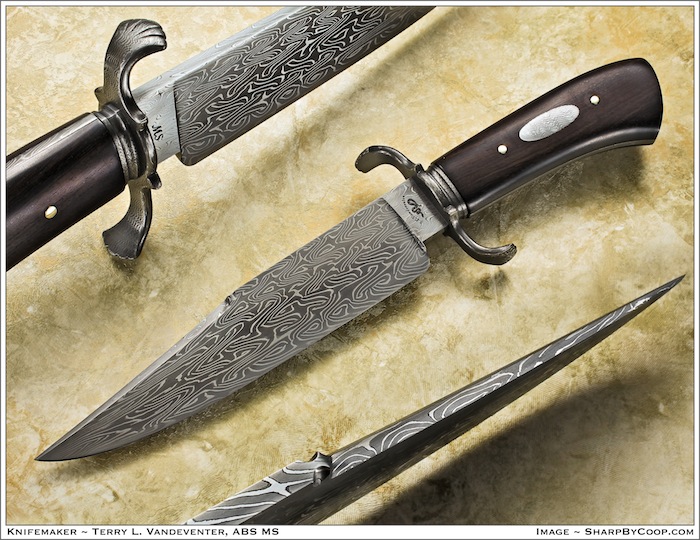
Terry Vandeventer’s blade exhibits the reduction in thickness known as distal taper. (SharpByCoop photo)
Distal taper is a concept long used by knifemakers in different parts of the world. Characterized by a reduction in thickness of the blade from guard to tip and spine to edge, distal taper results in a knife that is both lightweight and exhibits excellent edge geometry. The concept is also employed on knife tangs, whereby the tang is tapered in thickness from the guard to the butt.
Since knives with distal taper are both lighter in weight and have super edge geometry, they are easier to handle and cut better—all other things being equal. Who can argue with those kinds of results?
What about you? Do you own any knives with distal taper? If so, tell us about them—what styles they are, who made them, etc. Or do you use the concept on the knives you make? Tell us about it/them. Why do you like knives with distal taper? Why, in your opinion, is the concept important? If you apply the concept to your knives, how do you go about doing it?
By the same token, if you don’t think distal taper is all that important, tell us why. Is it overrated as a concept or what exactly? Don’t hold back. And don’t worry, you won’t hurt our feelings.
For the latest knives, knife news and more, stay tuned to www.blademag.com.


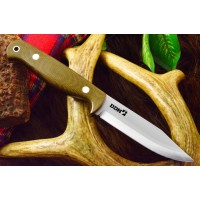 This Deer & Deer Hunting Drop Point Knife is a great example of a knife that gets its handle right. This hard-working hunting knife was made exclusively by the American Knife Company for BLADE‘s sister brand, Deer & Deer Hunting, and is a great pick for hunters and collectors alike.