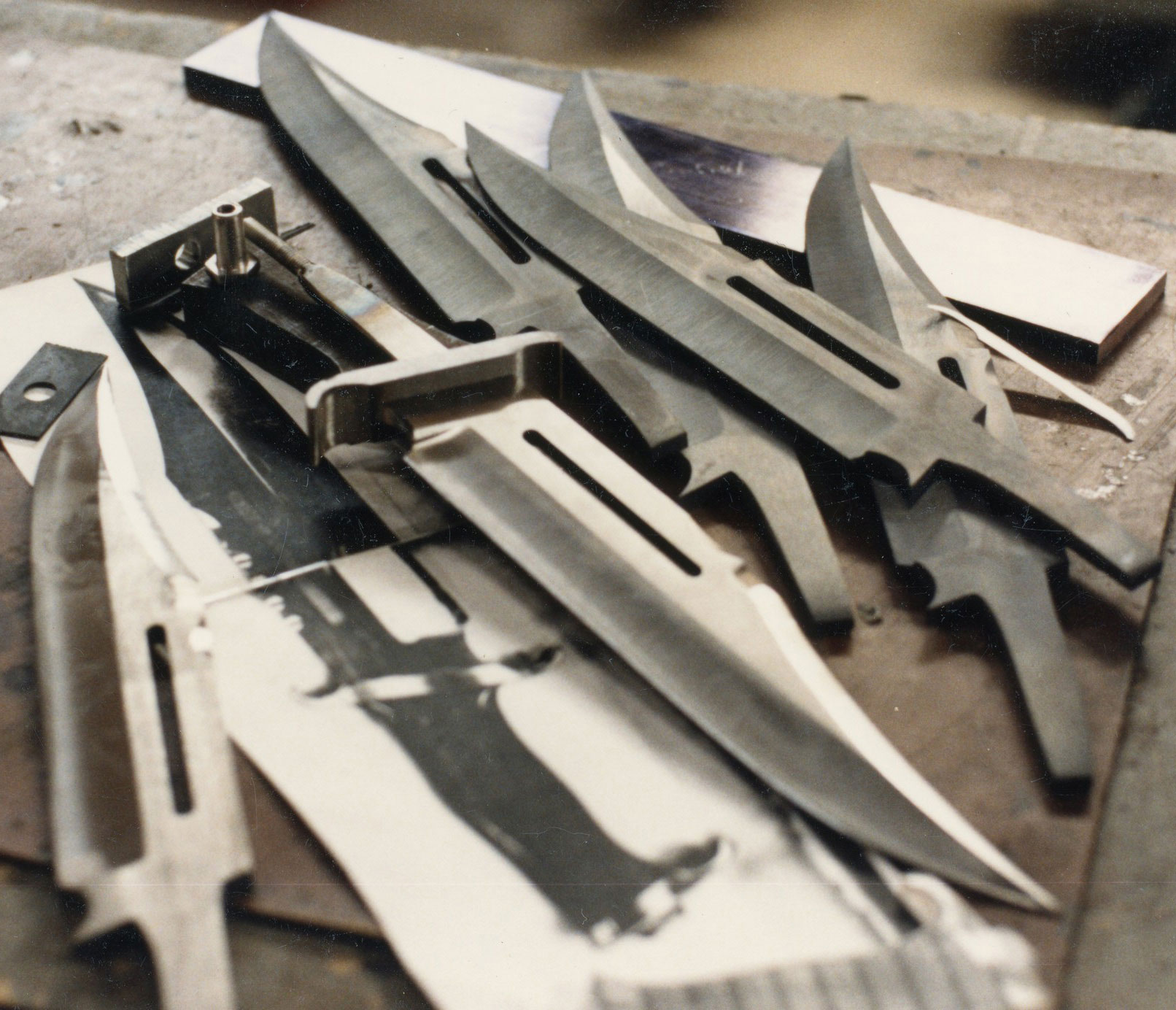
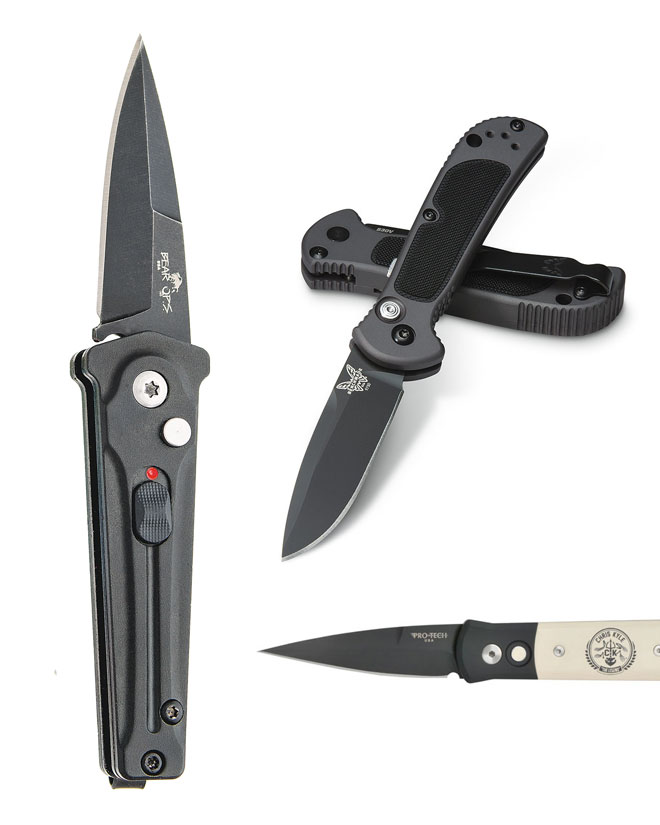
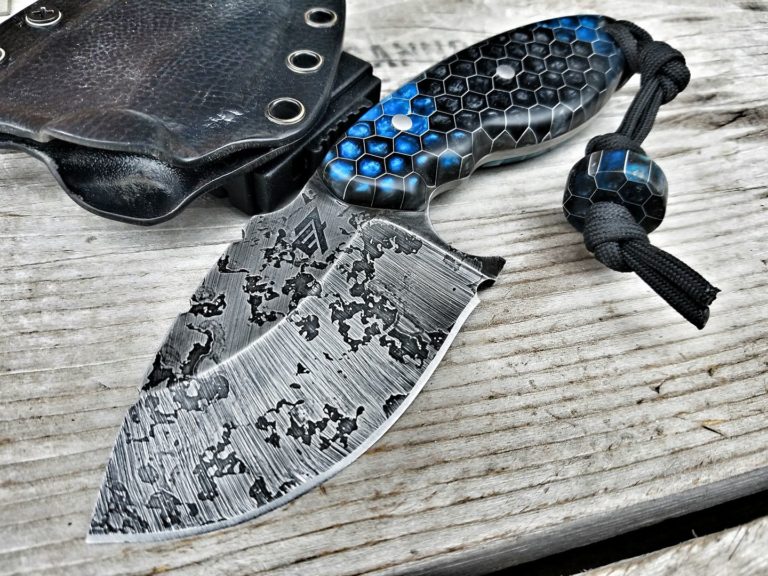
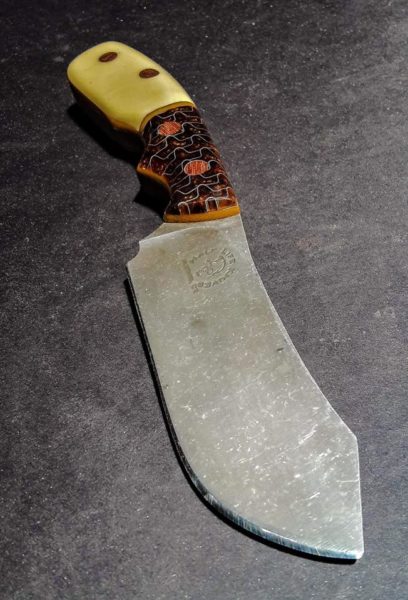
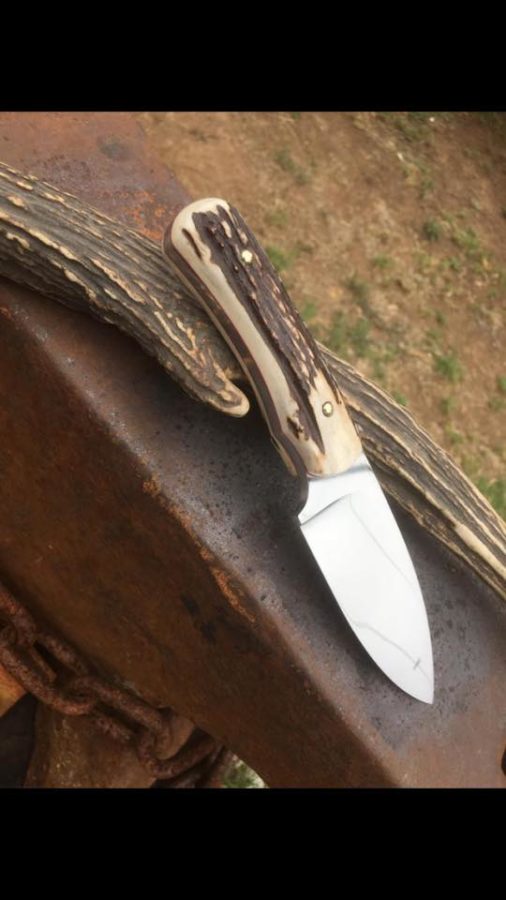
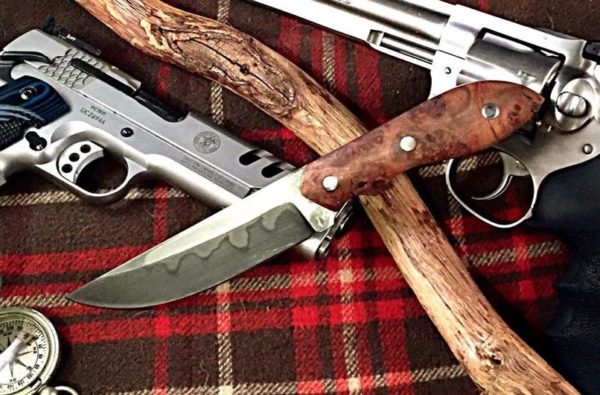
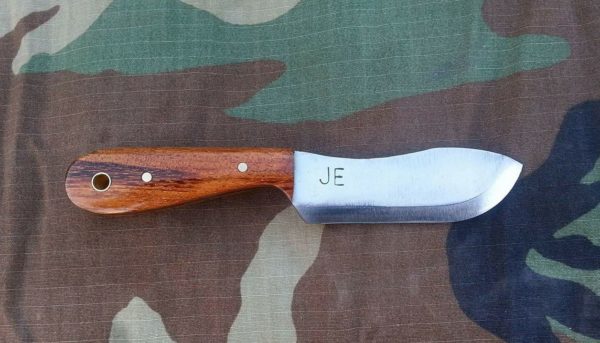
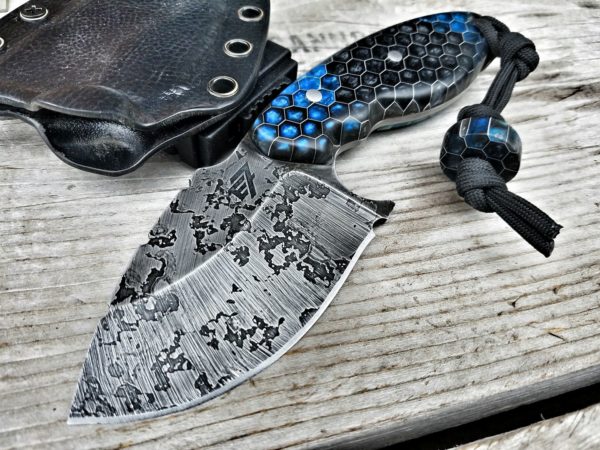
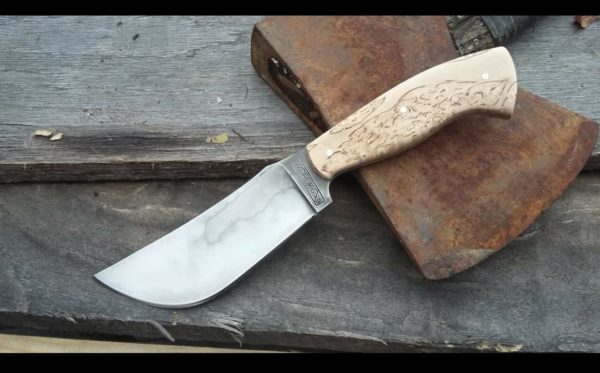
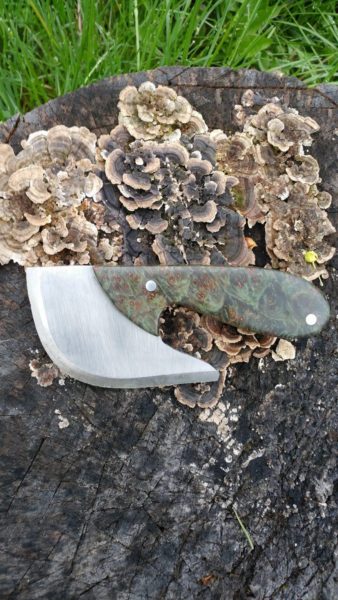
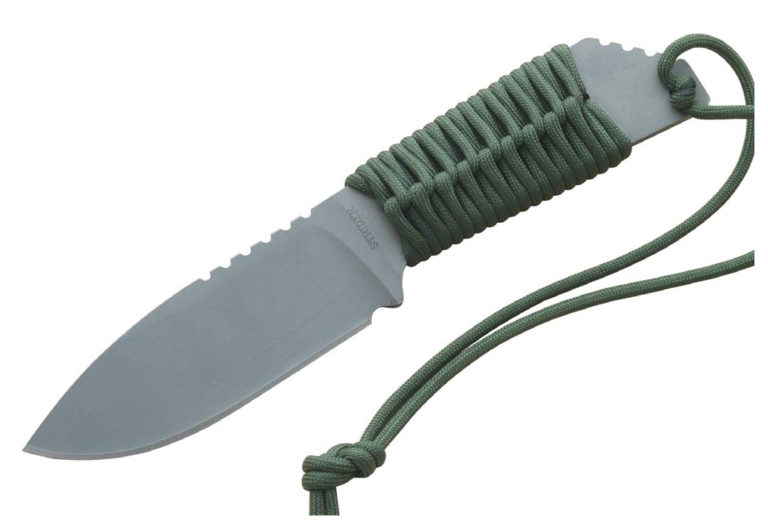
Knife collecting is an extremely rewarding experience for knife enthusiasts. There truly is a knife for everyone. Many increase or hold their value throughout the years, making collecting knives something to pass on to the next generation of knife collectors.
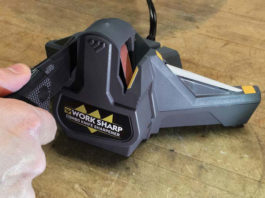
Invest in a good bench stone. You have the natural ones like the Arkansas stones and the manmade ones such as the Norton India stone. There are also the diamond-bonded stones that many companies produce.
2) Color the Edge
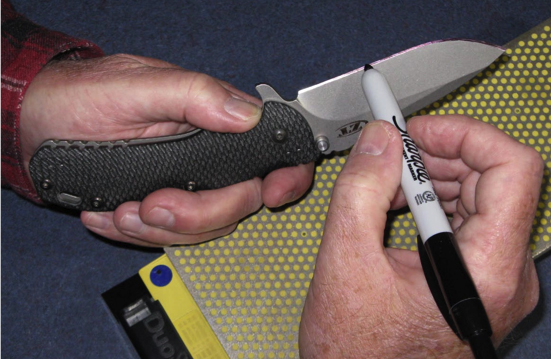
With a black ink permanent marker, color the entire cutting edge or primary bevel on both sides of the blade. The objective is to sharpen off the black ink. After you remove the ink from both sides of the blade, it will be sharp.
3) Adjust Accordingly
Take a few strokes on the stone and then examine the edge bevel. If you see ink toward the top of the bevel, decrease the angle of the blade to the stone. Conversely, if you see ink toward the bottom of the bevel, increase the angle to capture that part.
4) Remove the Ink
After you sharpen the ink from the cutting edge, you will have to remove any stray marker ink. A liquid-based adhesive and paint remover is ideal for the job. Place a few drops on a paper towel and very carefully wipe the cutting edge.
Going Forward
After you get the hang of it, skip the permanent marker step. Congratulations, you’re now a freehand sharpening pro!
Mail-In Knife Sharpening Services: Is There Anything New Under the Sun?
In absence of innovation, execution is everything.
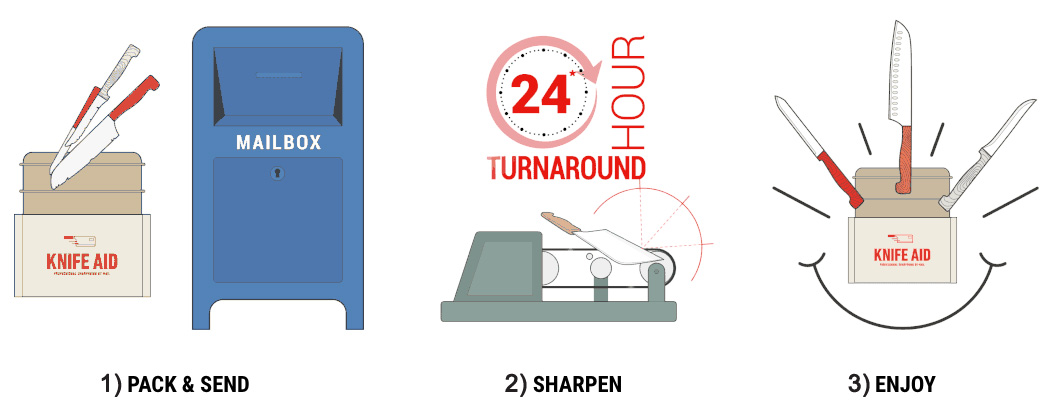
Knife Aid, as seen on ABC’s Shark Tank TV show, caught the attention of the wider viewing audience as a new way to sharpen knives. The pitch centered on consumers mailing knives to Knife Aid for sharpening. The knives returned later in the mail.
This excited the “sharks” of Shark Tank (including the surprisingly blade-savvy Mr. Wonderful), and a deal hatched to bring Knife Aid to the masses.
Billionaire investors aside, those in the world of knives likely yawned at this novelty. Mailing in knives for sharpening is Pony Express territory.
In Search Of The Better Mousetrap
Still, I wanted to try Knife Aid for myself for two reasons.
First, Knife Aid‘s execution seemed interesting. This operation looked as polished as a fresh blade, incorporating email updates about order status, slick packaging and the ability to scale. That last part is tough.
I’m a sucker for better mousetraps. I’m interested in how people stay on the cutting edge of what they do, especially in knives. (I’m also obligated by BLADE to use one knife pun per day. Hope you’re reading this, Steve.)
Second, I’m crunched for time like never before. I used to treat knife sharpening as a sort of meditation to unwind. Those days are gone, and my knives in regular rotation show it.
How Knife Aid Works
I contacted Knife Aid directly to try its service, but the process works the same for anyone.
After placing your order, Knife Aid mails you an envelope with everything you need to send knives or scissors in for sharpening.
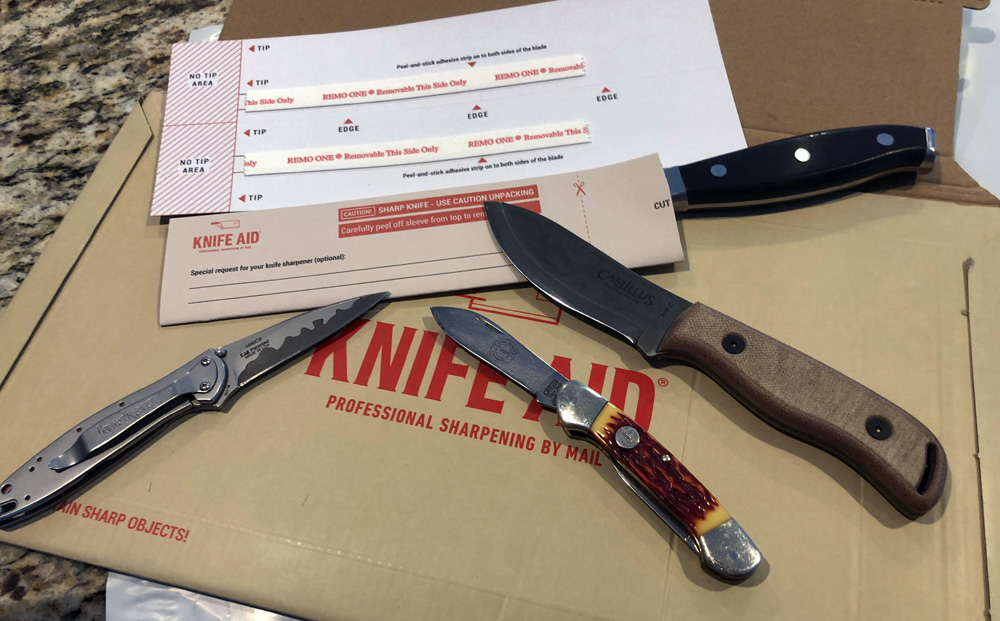
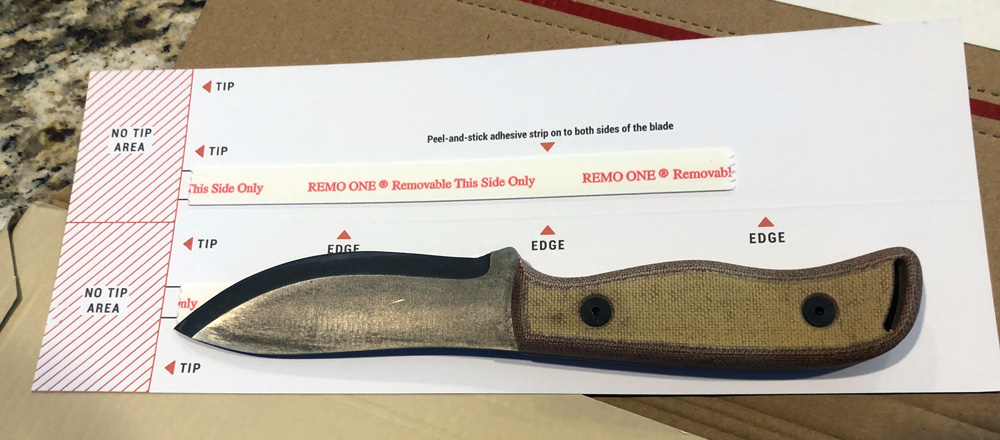
And I do mean everything: a sturdy envelope, pre-paid postage, adhesive blade guards, you name it. All you need to do is pack your knives according to the instructions. That’s it. You could be all set in three minutes.
From left are a Kershaw Leek, a Camillus canoe, a Camillus Bushcrafter and a J.A. Henckels chef’s knife too embarrassed to be photographed. Not pictured are the Oxo scissors, but they also went out for sharpening.
Knife Aid takes almost any blade you can throw (figuratively) at them, but there are some restrictions to keep in mind. Daggers, autos, single bevels, straight razors and anything longer than 16 inches are out of bounds.
I selected a couple pocketknives, some go-to scissors that border on shears and a bushcraft fixed. However, the real test would be a chef’s knife. That poor thing endured a lot of kitchen abuse. It would be my benchmark.
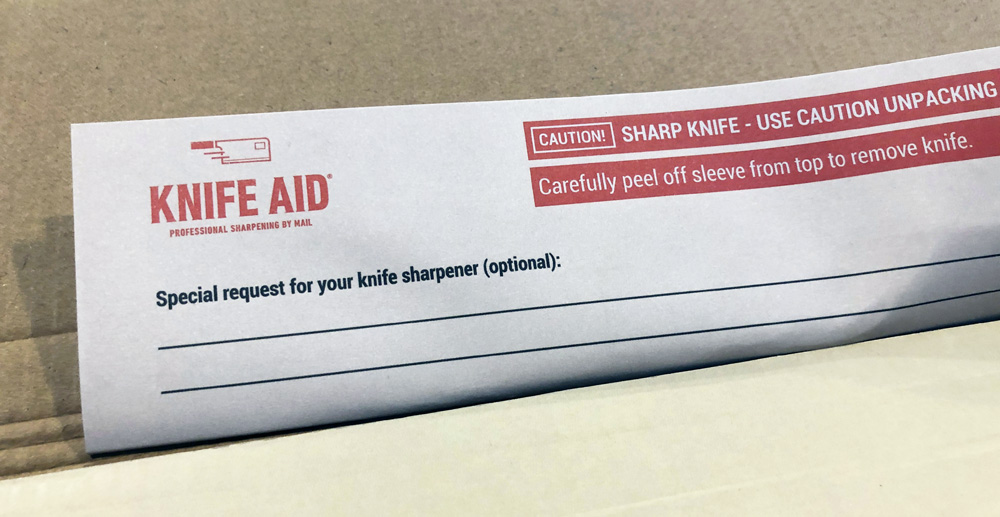
I liked that Knife Aid left room for custom instructions for the sharpener. This is great if you have a specific angle or grind in mind. You could also draw attention to a repair.
A spot for special instructions was a nice touch.A closer look at how those adhesive blade guards work.
I dropped the stuffed envelope off at the Post Office. Again, the pre-paid postage kept everything simple. I didn’t need to worry about weights or sizes. All I had to do is wait.
The Wait
Waiting didn’t feel like waiting, because Knife Aid kept me updated throughout the whole process with emails. At no point did it seem as though my knives fell into an abyss.
Testing The Sharpened Knives
It doesn’t get more straightforward than this.
I received the sharpened knives back about a week after I mailed them in. The 24-hour turnaround Knife Aid talks about on its website refers to the time from the start of the sharpening.
The scissors cut better than new. No joke. I use those scissors a dozen times a day around the house, especially the kitchen. Any resistance to the cut collapsed. I can’t quantify how much sharper they became, but I can say the fun factor went to 11. Yes, sharp scissors can be fun.
The pocketknives, more for tooling around outdoors, cut paper strips like champs, slicing with the weight of the blade and a feather grip. Had COVID-19 not welded the doors shut, a proper in-field exercise would be in order, but the paper told the story well enough.
However, that’s not what pushed me over the line on Knife Aid.
The Chef’s Knife: From Dull to Lightsaber Sharp
The chef’s knife. Oh, the chef’s knife.
Let me put this into context.
This degraded J. A. Henckels went into service in 2009 as the kitchen beater blade. It’s fought food and fixtures alike, pausing only to take a bath in the dishwasher.
Yes, I know what a sin that is, but you’ve got to understand something. Those clothes you wear while painting? Those shoes you mow the grass in? That truck you never buy tabs for? This is the knife equivalent of those. It doesn’t cut like butter. It cuts like butter. Hence the beating of the blade through the latest victim of food prep.
Things turned around big time after the sharpening. This chef’s knife zoomed past scary sharp to full-blown lightsaber. We’re talking near-zero resistance along the cut, greased only with gravity. Food prep for meals went from count-my-fingers-when-I’m-done bad to I-wonder-would-happen-if-I-tried-to-cut-XYZ great.
Excellent.
Knives to Avoid Sending to Knife Aid
Any time you stick knives through the mail, you risk losing them. Just ask any knifemaker at BLADE Show. Everyone has a story. You can’t count on postal insurance, either. Make that two stories.
For that reason, I’d only send knives to Knife Aid that you can afford to lose. As far as values, I’d peg a well-worn Sebenza as the top class of blade to trust.
The same goes for chef’s knives, which I imagine make up the bulk of Knife Aid’s business. Losing a $200 knife stings, but a $2,000 knife stings 10 times more.
Suggestions
In a perfect world, I’d like to know more about who did the sharpening. Maybe I’d even request the same person again and throw in a tip. Good work should be rewarded.
I also wish they offered to disassemble and clean pocketknives. Why stop at sharpening? Give that gummy knife a spa day.
Worth The Money: A Sharp Knife is Like Getting a New Knife
Here’s the deal. Most of the time, a sharp knife is as good as a new knife. As of this writing, Knife Aid charges as low as $10.64 a knife for its service (check the prices here). Would I re-buy each of my knives for about 10 bucks? You bet.
Raising that chef’s knife from the dead sealed the deal. Knife Aid is a winner. I’d recommend it to anyone.
Knife Aid is going to bring knife sharpening to a lot of people who don’t think about knives as much as the staff at BLADE does. That’s a big positive, because with it comes the appreciation of the craft inside each knife, and that’s pretty sharp.
(That’s two puns, Steve.)
Try Knife Aid For Yourself
If you’d like to try Knife Aid, click here and get started. It’s easy.
Full disclosure: BLADE receives a commission on orders it refers to Knife Aid, because we have to keep the lights on. That shouldn’t stain the service Knife Aid provides. Give it a shot. You’ll like it.
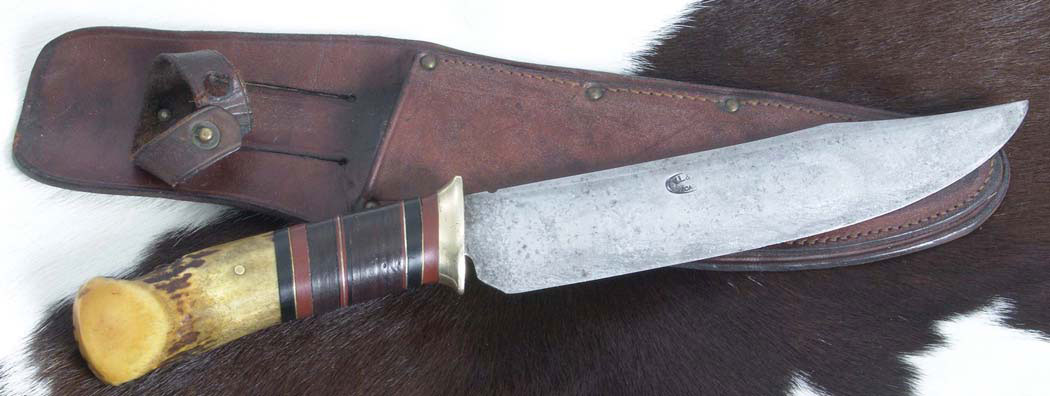
According to Dr. Jim Lucie, Scagel made sheaths for most of his knives and axes, though there were exceptions, such as when he supplied knives to some retailers. His sheaths ranged from simple but functional to ornately embossed. (Mike Carter image)
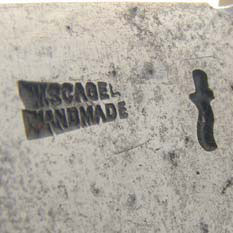
Scagel stamped many of his blades “W. SCAGEL” over “HANDMADE” and with the image of a kris knife. (Mike Carter image)
Scagel’s influence resonates across the decades as knives and knifemakers have taken their cue from his mastery of the curve and the spacer, his interpretation of the lines, fit and finish of a knife that stands the test of time, setting a standard for others to follow. Born in 1873, Scagel lived to the age of 90, and during his lifetime proved himself a master metalworker. His wrought iron adorned the windows of banks and other buildings in the city of Grand Rapids, and he participated in bridge building as well. His first knives were made in lumber camps in the Great Lakes area of the USA and Canada, with the earliest examples dating to around 1910.
Th rough the years Scagel made his imprint as a custom knifemaker, selling his wares through Abercrombie & Fitch during the 1920s, raising the profile of the custom knife with his recognizable style of stag and spacer handles. His friends at Brunswick Corp. kept him supplied with scrap pieces of Bakelite (the first manmade plastic and first true synthetic), wood, ivory and fiber from the manufacture of pool tables and bowling balls for use as spacers. He made bowies, hunters, fighters, folders and hatchets that have become coveted collectibles fetching high prices at auctions and private sales. His kitchen knives were second to none, and his paired carving sets were expensive masterpieces.
Meanwhile, those who appreciated a tough working knife that had a distinctive look gravitated toward custom knifemaking. Among them was legendary Cutlery Hall-Of-Famer Bo Randall, who became a protégé of Scagel. In turn, Randall influenced the likes of Cutlery Hall-Of-Famer Bob Loveless and so many others—and the legacy continues to grow.
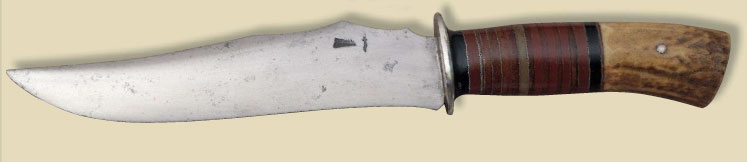
William Wales Scagel’s personal hunting knife features a silver-mounted guard and a silver cap at the end of the stag. His signature is on the obverse side of the blade. (image from the 1996 Pictorial Calendar of William W. Scagel Knives; knife from the Dr. James Lucie Collection)
Scagel, the Man
Dr. Jim Lucie, Scagel’s longtime friend and personal physician, remembers a matter-of-fact kind of guy.
“He was sometimes quite opinionated,” recalled Dr. Lucie, who achieved status as an ABS journeyman smith in his own right. “He shunned publicity and did not like the public eye, and he was critical of some types of people. He was an atheist by choice and didn’t mind stirring the pot about something. If he liked you, and I spent many delightful hours with him, he would go to hell and back for you. If he didn’t, you only got one chance to take advantage of him.”
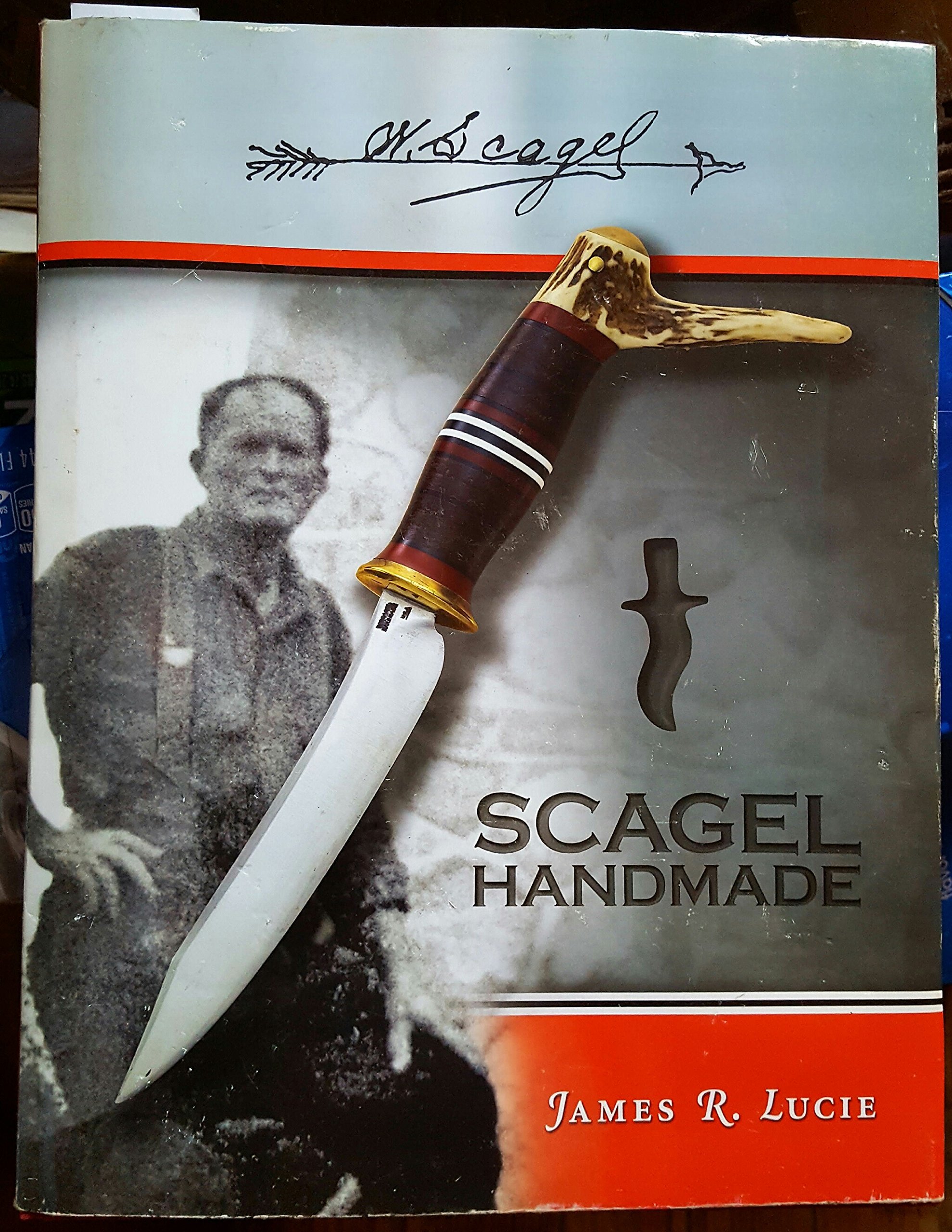
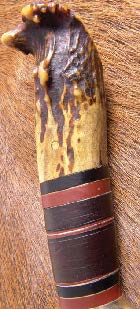
Published in 2010, Scagel Handmade by James R. Lucie is the quintessential book on Scagel. Famous for being reclusive, Scagel had few pictures taken of himself. The fuzzy one on the cover of Lucie’s book is one of the only known pictures of the famous knifemaker.As Lora Schwarzer noted, alternating brass and leather spacers with deer antler at the other end comprised Scagel’s signature stacked handle. (Mike Carter image)
The author of the quintessential book on the subject, Scagel Handmade, published in 2010, Dr. Lucie calls Scagel a “genius with metal work. He was a pioneer. He got Bo Randall started, and the first knives Bo made were around 1937-38, I believe. Scagel’s knives have been copied more than anybody else, more than even the Bob Loveless drop point.”
Scagel’s work has often been imitated, sometimes with dubious results. At other times, however, the style has been replicated with precision. ABS journeyman smith Lora Schwarzer worked in a hospital with Dr. Lucie, who introduced her to Scagel knives.
“Dr. Lucie helped me get started, and I wanted to do Scagel-style knives,” Lora remarked. “They are pretty and easy to hold. They feel good in your hand, and none of them are the same, basically. He might have done a few sets that match, but that was not the norm. The spacers are different and the antlers are different, and they are pretty with their curves and colors.”
Schwarzer started forging in 1996 and has made many Scagel repros since then. Her current work includes a couple with 1084 tool steel blades, brass guards, and leather, fiber, brass, copper and bronze spacers. Her favorite Scagel knife is an unmarked piece.
“If someone brought him a piece of steel,” she explained, “and asked him to make a knife for them, he would do it but not mark it because he didn’t know what kind of steel it was or where it came from. I got this one from Dr. Lucie, who got it from the person Bill originally made it for. Its handle is alternating brass and leather spacers with deer antler at the other end. That was his signature stacked handle.”
One of the great stories Lora likes to tell about Scagel involves a lady who regularly visited the local grocery store. In those days it was common to wrap purchases in brown paper and tie them with string. The lady struggled to break the string, so Scagel made her a miniature knife, which Lora has seen and is pictured in Dr. Lucie’s book, to cut the strings.
“Another thing I know is that Bill Scagel had a kind heart,” she added. “During the polio epidemic in the 1950s, he built braces for people without charging them.”
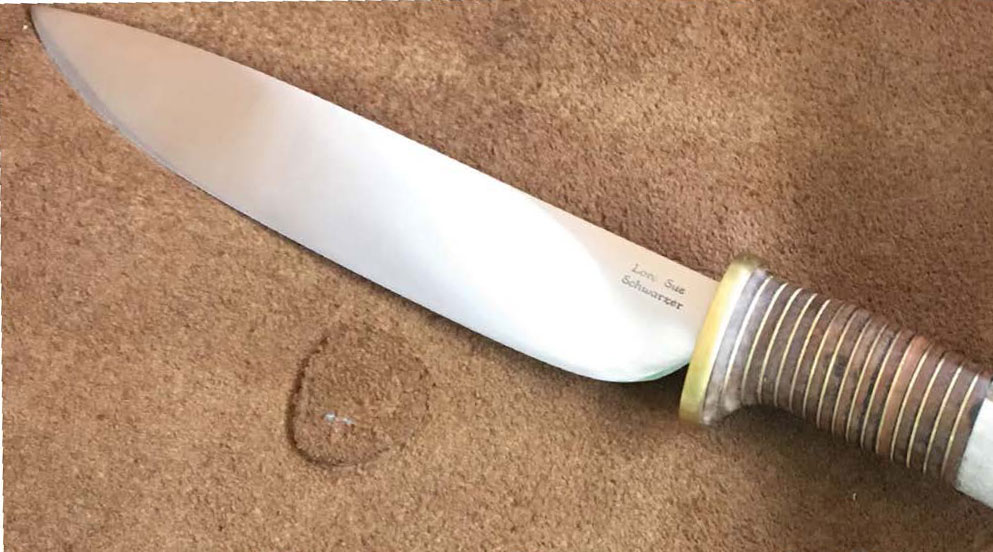
ABS journeyman smith Lora Schwarzer’s Scagel repro is a work in progress and includes a blade of 1084 carbon steel, brass guard, and brass and leather spacers. She stated she needs to “drill and put in the pin and final finish the handle.” Overall length: 12 inches. (Schwarzer image)
Scagel Knives
Gordon White of Cuthbert, Georgia, has been collecting Scagel knives for about 30 years. Gordon sees the historic significance of Scagel’s body of work as a big reason for his lasting interest.
“Well, the knives are just so unusual and different,” he said, “and he is the father of handmade knives and the first person in the 20th century to start making a custom handmade knife. He forged everything he made, and the unique fact that he made his own machinery and equipment and did everything by hand tells me that there has really been nothing like Scagel before or since.”
According to White, one of Scagel’s most innovative tools was used to place the spacers on the knife handle and then press them together, followed by the stag or brass butt that was then pinned in place. Scagel hatchets in mint condition are difficult to find because they were meant for use, and those who bought them put them to work steadily.
Louis Chow owns three World War II Scagel daggers. Two are forged carbon steel with full-tang handles slabbed in wood. The construction of the guards is unusual with a wrap-around opening to fit onto the tang. “It’s just another aspect of Scagel’s work,” Chow said, “something different.” (Louis Chow image)
Unlike other custom makers who can point to a mentor or individual who helped launch their careers, collector Louis Chow says Scagel stands alone.
“He was unique, you could say, because in my opinion I don’t think Scagel was too much influenced by anyone else in the beginning. Still, there were great knives being made before Scagel. For some reason, he was somewhat of a hermit and didn’t research what other guys were starting to do. Of course, those famous makers had the power tools necessary to make precision knives. Scagel used whatever he had on hand, a small generator and grinder. He didn’t have anything to go by as a sample, no publications to refer to. So, he basically did what he thought a hunter or bowie knife would look like.”
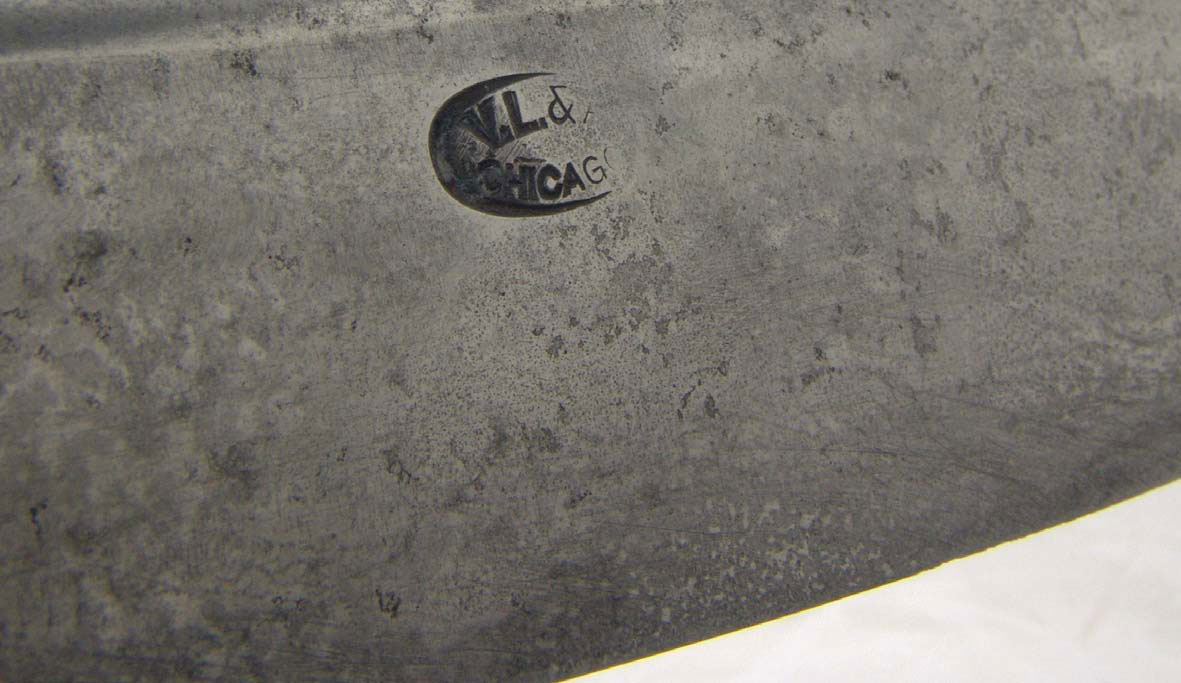
In addition to making knives beginning circa 1920 for retail giant Abercrombie & Fitch of New York, Scagel also made knives for retailers Von Lengerke & Detmold of New York and Von Lengerke & Antoine of Chicago. The blade stamp above is on a knife he made for the latter. (Mike Carter image)
Chow is primarily a Loveless collector, and he acknowledges that the reasons for collecting a particular custom maker are varied. He agrees with White that the history of Scagel is a big factor.
“If I look back at how Loveless got started, as far back as you can go, Scagel is the granddaddy of the industry and influenced everyone else,” Chow explained. “For me, he is the source of what influenced Loveless. My preference is Scagel’s simple daggers that he made during World War II, his contribution to the war effort and the foundation of the current custom knife industry.”
Chow owns three Scagel daggers from the World War II era and a small pocket hatchet that was popularized in the 1950s. The daggers are forged carbon steel with full tang handles slabbed in wood. The construction of the guards is unusual with a wrap-around opening to fit onto the tang.
“Two of the three daggers are made like that,” Chow said. “It’s just another aspect of Scagel’s work, something different.”
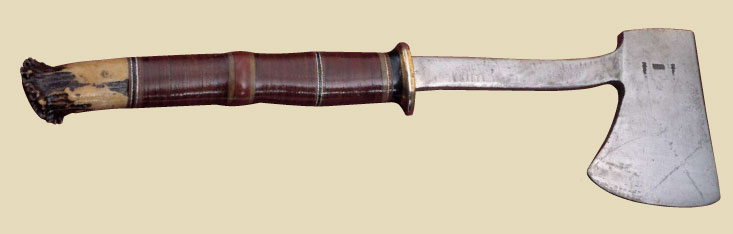
As Dr. Lucie notes in his book, Scagel’s axes are interesting and considered rare. There are two varieties: 1) general camp axes medium to large in size and quite hefty and 2) the hiking or military backpack axe, which is smaller and more petite. The one above is an example of the former. (image from the 1996 Pictorial Calendar of William W. Scagel Knives; axe from the Dr. James Lucie Collection)
Values of Scagel Knives
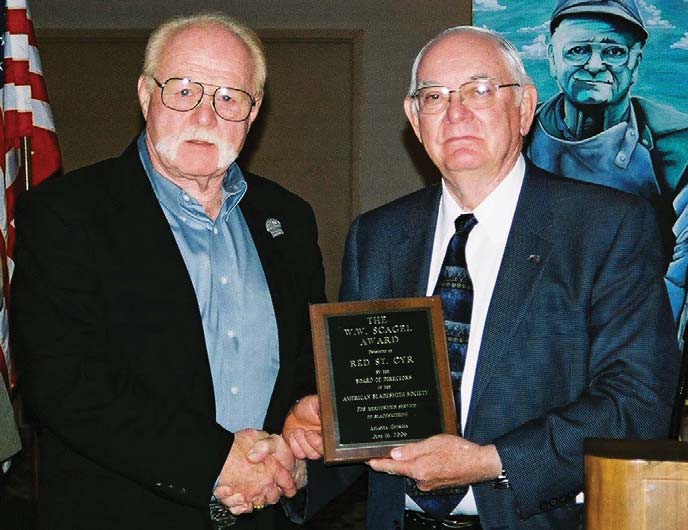
The American Bladesmith Society presents the annual William Wales Scagel Award to an ABS smith for longtime service in promotion of the forged blade. ABS master smith Red St. Cyr (left) received the award from BLADE Magazine Cutlery Hall-Of-Fame member B.R. Hughes (right) in 2006. The portrait in the background is of Cutlery Hall-Of-Famer Bill Moran.
Scagel knives remain popular among collectors, and White considers the prices paid at the 2011 auction of Dr. Lucie’s collection as evidence of the demand.
“That auction is a good meter to go by,” he remarked. “The hunters were averaging from $12,000 to the mid-$20,000 range depending on appearance, and condition has a lot to do with it. Some of them look better than others, and a high-quality sheath with good looks adds to the value. Dr. Lucie had some fighters in his collection, and they probably averaged $28,000 apiece. One fighter brought $41,400.”
Schwarzer sees continuing appeal in Scagel knives simply because there is nothing else quite like them.
“They are different, and I have been at shows and seen people really get excited about them,” she commented. “Some people like them and some don’t, maybe like pizza with thick crust or thin. It is a matter of personal preference, but Scagel knives certainly have staying power.”
Staying power, pioneer power, legendary power: They are each part of the Scagel legacy, one that is like no other in the history of custom knives.
Next year’s crop of new knives will be here soon, but BLADE is offering you a sneak peek before anyone else.
Bear OPS AC-500ROB4-B Automatic
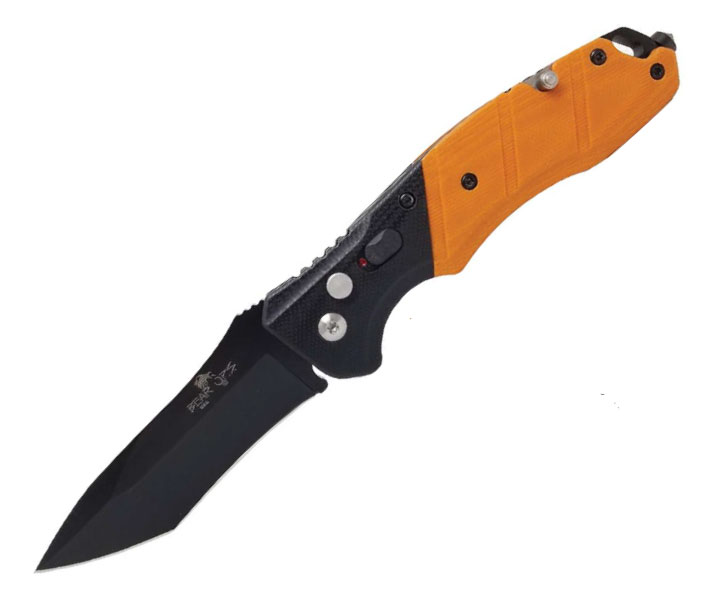
Orange stands out on the Bear OPS AC-500ROB4-B automatic from Bear & Son Cutlery. The 3-inch modified tanto blade is Sandvik 14C28N stainless steel and operates via a button-lock system. The handle is orange and black G-10 and comes equipped with a window breaker, seatbelt cutter and reversible pocket clip. Weight: 4.4 ounces. Closed length: 4 7/8 inches. MSRP: $175.
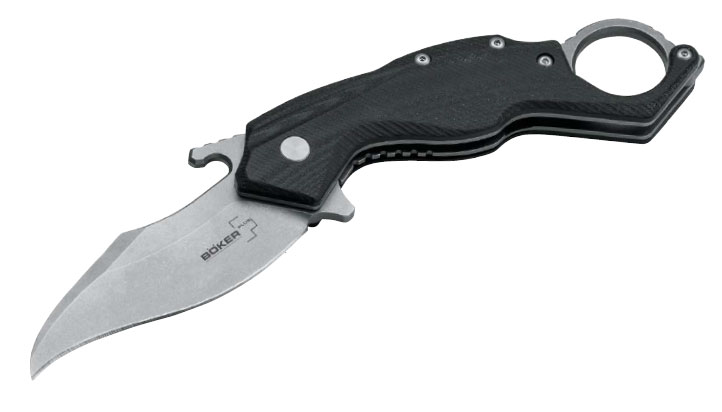
Boker Plus Toro
A plethora of lines and curves engulf the Boker Plus Toro linerlock folder. The 3.38-inch blade is D2 tool steel and the handle is G-10 with a reversible pocket clip. Closed length: 4.5 inches. MSRP: $119.95. Available: Now.
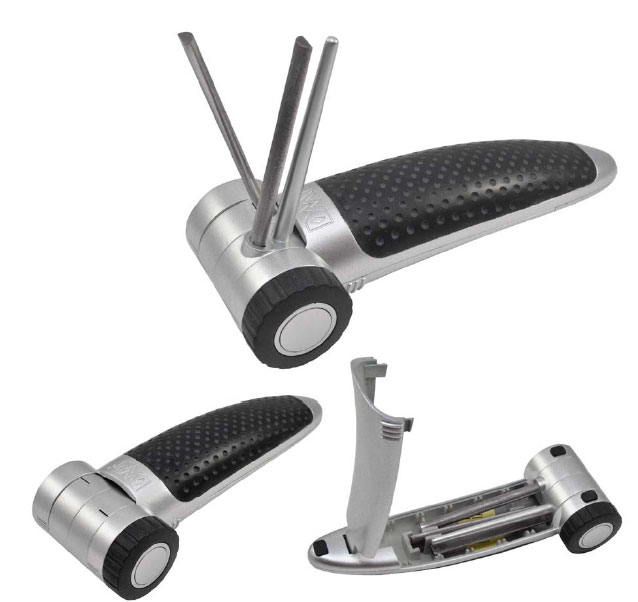
DMT Diamond-Vee
The DMT Diamond-Vee sharpens knives with serrated, plain and curved edges, and does so at angles of 10, 15 and 20 degrees. To store the sharpening rods, open the handle and fold them inside it. Abrasive: Diamond coated. Width: 2.34 inches. Length: 6.25 inches. MSRP: $32.99. Available: Now.
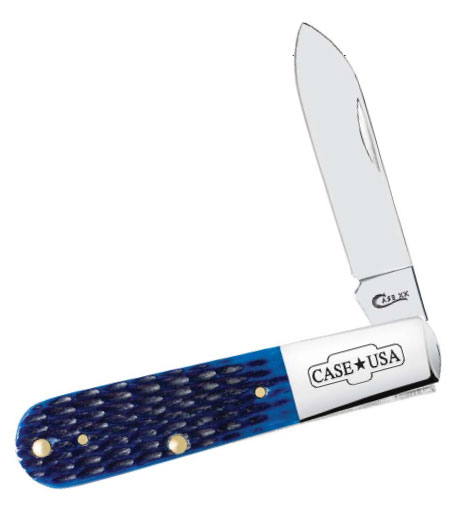
Case Blue Bone Barlow
Rogers corn cob jigged blue bone highlights the Case Blue Bone Barlow. The 2.2-inch blade is Tru-Sharp Surgical Stainless—Case’s version of 420HC—and the shield design is laser engraved into the pocket-end bolster. Closed length: 3.375 inches. MSRP: $74.99. Available: January 2019.
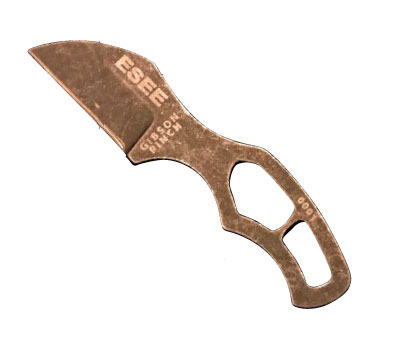
ESEE Gibson Pinch
Designed by knifemaker James Gibson, the ESEE Gibson Pinch has a 1.3-inch blade of 1095 carbon steel in a stonewashed black oxide finish. Rockwell hardness: 55-57 HRC. The knife carries in an injection-molded sheath with an earth magnet and fits inside a survival tin. Maximum thickness: .13 inch. Weight: 1 ounce. Overall length: 3.4 inches. MSRP: $49.99. Available: Now.
Grand Prairie HME (Hunting Made Easy)
The HME (Hunting Made Easy) Razor Blade Folding Knife includes a clip-point and five replaceable gut-hook blades, all 3.5 inches long and of 420HC stainless in a black oxide coat. The linerlock folder has a Micarta® handle. Weight: 6.88 ounces. Closed length: 4.5 inches. MSRP: $29.99. Available: Now.
Emerson Wave Renegade
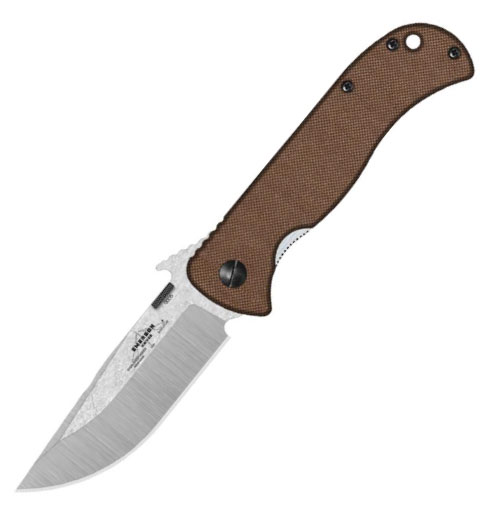
Part of the Overlander Series from Emerson Knives, Inc., the Renegade boasts a 3.6-inch blade of 154CM stainless with the Emerson Wave Shaped Feature and secures open via a titanium linerlock. Handle material: G-10. Closed length: 4.8 inches. MSRP: $254.95. Available: First quarter of 2019.
Kershaw Bareknuckle
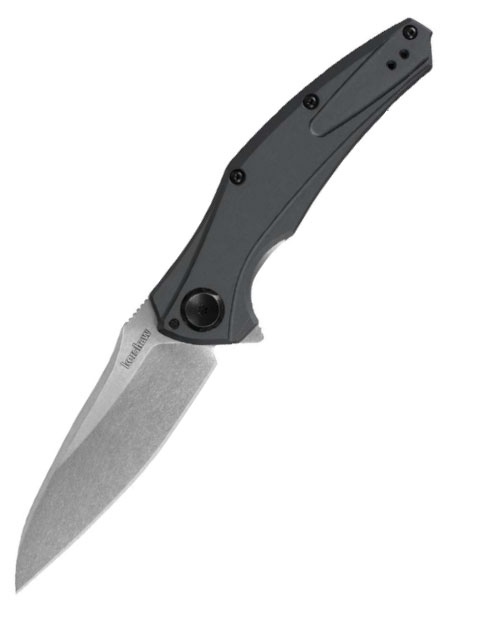
The Bareknuckle offers a slimmed-down profile and upgraded material of an original Kershaw award-winning design. The 3.5-inch blade is Sandvik 14C28N stainless steel in a stonewashed finish, and the 6061-T6 aluminum handle is anodized and has an oversized pivot and reversible pocket clip. Closed length: 4.7 inches. MSRP: $109.99. Available: Now.
Hogue/Ritter RSK Mk1-G2 (Generation 2)
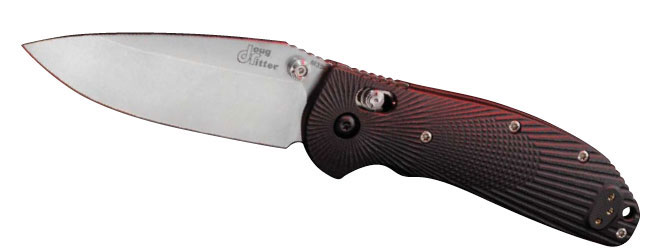
The RSK Mk1-G2 (Generation 2) is an upgraded version of the original RKS Mk1 introduced by Doug Ritter in 2004. Manufactured by Hogue Knives, it features a 3.4-inch flat-ground blade of M390 stainless steel that operates on an ambidextrous ABLE™ Lock, an “improved version of the patent-expired AXIS Lock.” The handle is a black G-10 composite.
Puma SGV Coyote
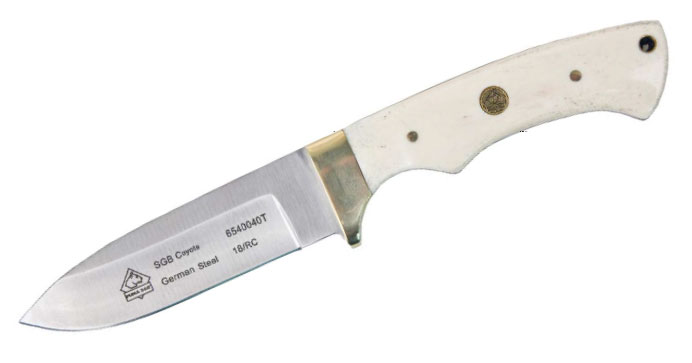
A 3.8-inch blade of 1.4116 German stainless steel in a Rockwell hardness of 55-57 HRC and a white smooth bone handle featuring a G-10 liner complete the Puma SGB Coyote. Weight: 4.5 ounces. Overall length: 8 inches. MSRP: $89.99. Available: Mid-December 2018.
Smith’s Campaign Tactical Knife
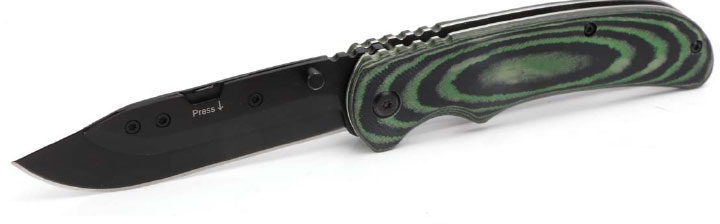
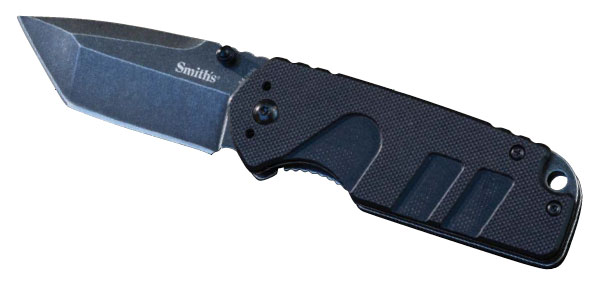
Known for its sharpeners, Smith’s joins the tactical folder parade with the Campaign Tactical Knife. The 2.78-inch modified tanto blade with ambidextrous thumb studs is 420 stainless in a black coat, and secures open via a linerlock. The G-10 handle comes in black, desert tan or OD green, and has a reversible pocket clip and a hole for a lanyard. Approximate closed length: 3.8 inches. MSRP: $24.99. Available: Now.
Smith’s PP1 Tactical Sharpener
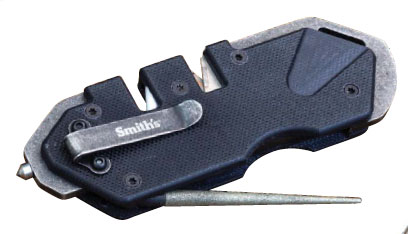
The PP1 Tactical sharpener from Smith’s sports ceramic (fine) and carbide (coarse) sharpening slots, and a 320-grit diamond-coated sharpening rod for serrated blades. Available in black, desert tan and OD green, the G-10 handle covers a 420 stainless steel frame and includes a pocket clip, tungsten carbide glass breaker and lanyard hole. Weight: 3.7 ounces. Length: 4.15 inches. MSRP: $24.99. Available: now.
Krudo Karsino10 BA
A 3.4-inch blade of CPM S35VN stainless steel and a handle of titanium and carbon fiber distinguish the Karsino10 BA flipper from Krudo Knives. The framelock folder includes a thumb wedge on the blade spine for pocket deployment and a closed length of 4.75 inches. MSRP: $297. Available: January 2019.
WE Knife Arrakis
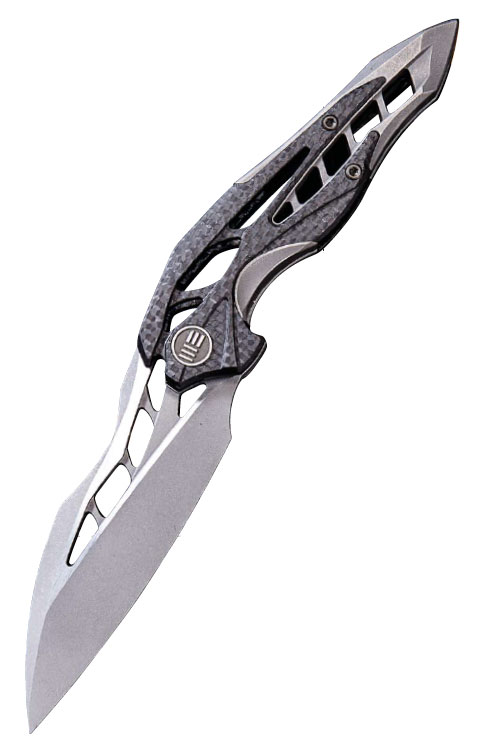
Designed by Elijah Isham, the Arrakis from WE Knife has a 3.45-inch blade of Bohler M390 stainless steel in a fl at grind and a Rockwell hardness of 59-61 HRC. Sporting skeletal construction throughout for lightweight (3 ounces), the framelock folder includes a 6Al4V titanium frame with carbon fiber inlay. Closed length: 4.55 inches. Available: January 2019.
TOPS Camp Creek
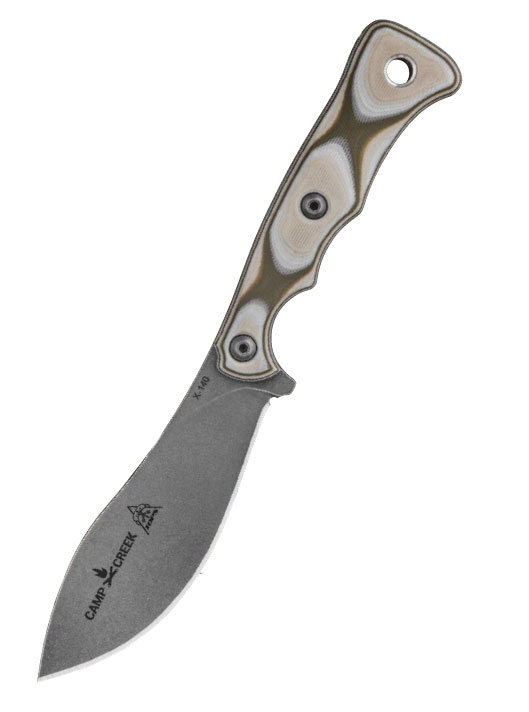
Each year TOPS President Leo Espinoza makes a knife for himself for hunting season, and the Camp Creek is it this time—and it’s TOPS’ first knife in CPM S35VN stainless blade steel to boot. Handle material: Camo G-10. Weight: 6.2 ounces. Blade and overall lengths: 4.38 and 9 inches. Sheath: Tan Kydex. MSRP: $220. Available: Now.
Zero Tolerance Model 0470
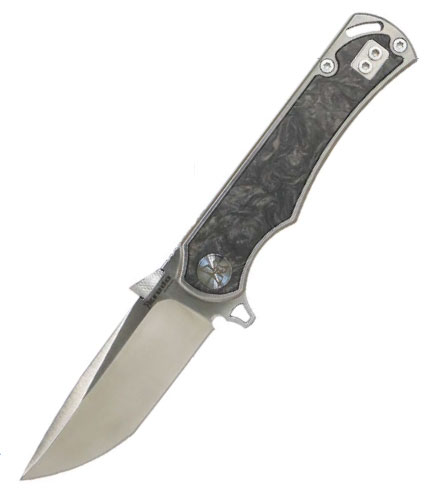
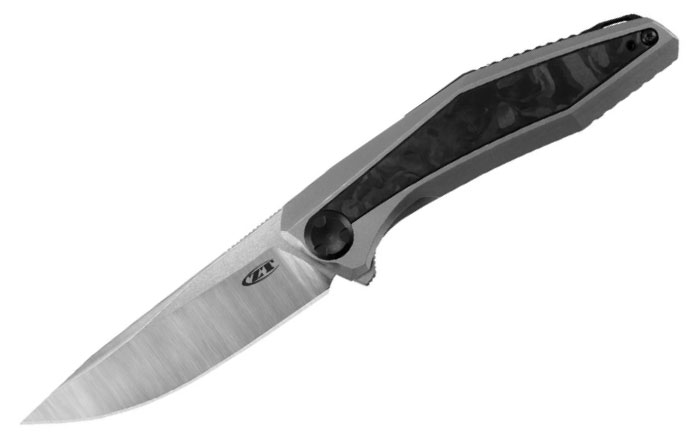
A marbled carbon fiber insert and a 3.4-inch blade of CPM 20CV stainless steel in a stonewashed and machine satin finish highlight the Zero Tolerance Model 0470. The titanium framelock includes a hardened steel lockbar insert and the company’s KVT opening system. Closed length: 4.4 inches. MSRP: $300. Available: Now.
The Gut Hook Is One Of The Most Important Hunting Knives. Finding One That Works For You Can Save Hours On A Hunt
What Is a Gut Hook?
A gut hook on a knife blade is a highly specialized feature designed to open the belly of a downed deer, elk, or other critters; the notion being the gut hook will make the single purpose easier. After opening the belly the hunter would then use the primary edge to dress out the animal.
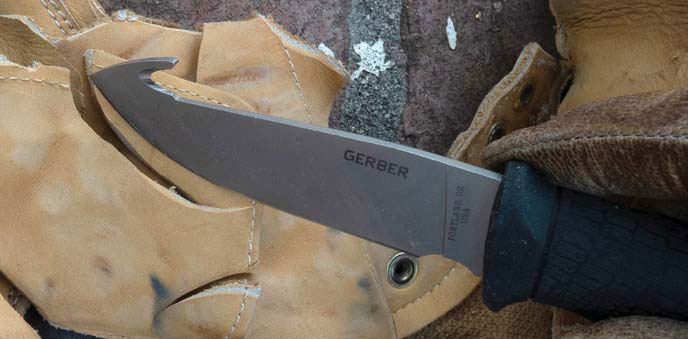
The Gerber Myth’s 3.75-inch flat-ground blade of 7Cr17MoV stainless zips through a plastic sheet.
During more than a half-century of hunting on three continents, I have taken more deer, elk, and other large game than I can count—often with a bow or other primitive weapon. I have dressed my game with whatever knife I had at the time, folder or fixed blade, and sometimes with flint or obsidian blades. I have never used a gut hook. When I was assigned to review four knives with gut hooks I thought of it as a learning experience.
4 Best Gut Hook Knives
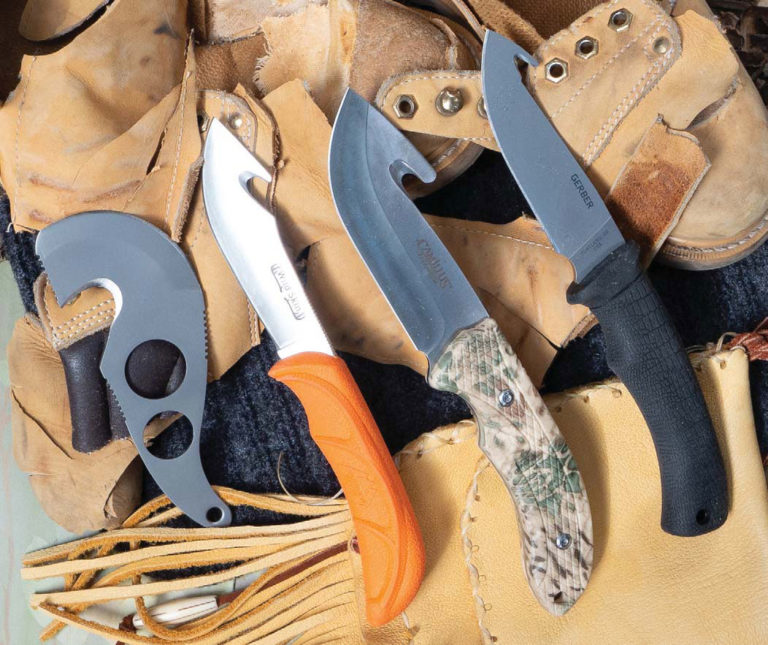
The four knives are the Camillus Prym1 Veil, Gerber Myth Fixed Blade Pro Gut Hook, the Fremont Knives Hide Glider, and the Outdoor Edge Wild Skin.
The Camillus, Gerber and Outdoor Edge are familiar hunting knives with the gut hook on the spine. The Fremont is a wild card, the blade having no point and a semicircular edge similar to the ulu, an all-purpose knife traditionally used by Inuit and Aleut women to skin and clean animals, cut food, and trim blocks of snow and ice to build an igloo.
The primary edge of the Gerber Myth slices boot leather with aplomb. Handle: textured rubber. Overall length: 8.5 inches.
Nothing was in season at the time of the assignment. Taking suggestions from my editor and others I assembled a group of materials that would more or less replicate the hide of a freshly killed deer: an old pair of boots with leather about as thick as elk hide, floor mats, plastic sheeting (a bit of a stretch), and scraps of tanned deerskin I obtained from my brother-in-law who uses two or three deerskins a month to make bags and pouches in the Native American style. As an aside, one of his pouches can be seen in the accompanying photos.
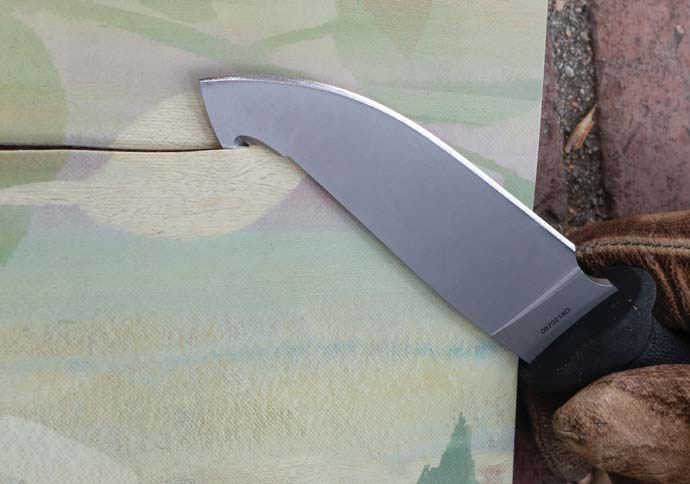
None of the gut hooks made the slightest cut into the boot leather. All of the primary edges easily cut into the boot. After having a slit to start with, I inserted each of the gut hooks in turn and attempted to cut the leather—without much success.
Only by exerting considerable effort was I able to get any of the gut hooks to cut the boot leather. I reverted to the primary edges of the four knives to do most of the cutting and found that they sliced boot leather like it was sushi.
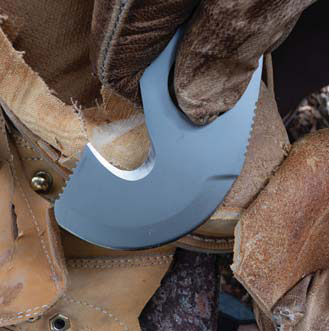
The Fremont Knives Hide Glider primary edge slices boot leather. Blade length and steel: 3.375 inches and 4Cr15 stainless.
Next, I tried cutting the floor mats with each gut hook in turn. None would cut the floor mat. All the primary edges cut the floor mats with ease. Then I went at the plastic sheeting, which I had included because it was quite thin but resistant. All four gut hooks sliced the plastic with little effort.
Thinking about the geometry of the gut hooks and wondering if they would perform better on actual deerskin, which is thinner than elk hide or boot leather, I attempted to cut the deerskin scraps my brother-in-law had given me. With much difficulty, I was able to cut deerskin with each of the gut hooks. Again, the primary edges easily cut the material.
History of Gut Hooks
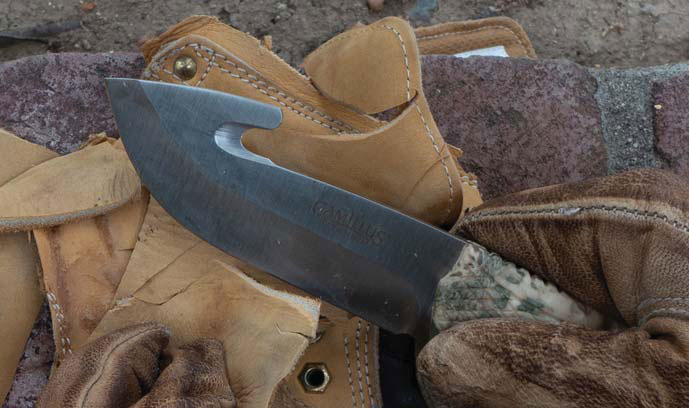
The boot leather succumbs to the primary edge of the Camillus Prym1 Veil. Blade length and steel: 4 inches and 420 stainless. Blade finish: Titanium Bonded.
Many hunters use gut hooks. They must be efficient at their designated job or no one would buy them. What was I doing wrong?
Merle Seguine, a custom knifemaker who popularized the gut hook back in the 1960s, reportedly designed it to pick up a coffee pot or small pot by the ladle from the cook fire, and in fact designed some blades for that exact purpose. He later refined the hook and sharpened it for removing animal hides.
I didn’t have a campfire handy or a pot with a bail, but it’s easy to see the Outdoor Edge, Gerber, or Camillus would serve that function. As for the Fremont Knives Hide Glider, being all one piece of steel with no handle, not so much.
And here’s the MSRP for all the blades that were reviewed from least expensive to most:
Outdoor Edge Wild Skin – $18.95
Camillus Prym1 Veil – $30.64
Fremont Knives Hide Glider – $34.99
Gerber Myth Fixed Blade Pro Gut Hook – $54
Hunting Knife Review: The Gut Hook Results, Ranked
The flat-ground Gerber was the best all-around cutter, the flat-ground Outdoor Edge a close second and the hollow-ground Camillus third. The edge of the Fremont was quite sharp and though it placed last in all-around cutting, I suspect that with more experience on my part it would make a good slicer. The Fremont is also an intriguing design and being flat should easily fit into any kit bag.
Sharpening the gut hook would be an exercise in patience. A small, round sharpening tool should serve to get into the tight space.
Are Gut Hooks Necessary?
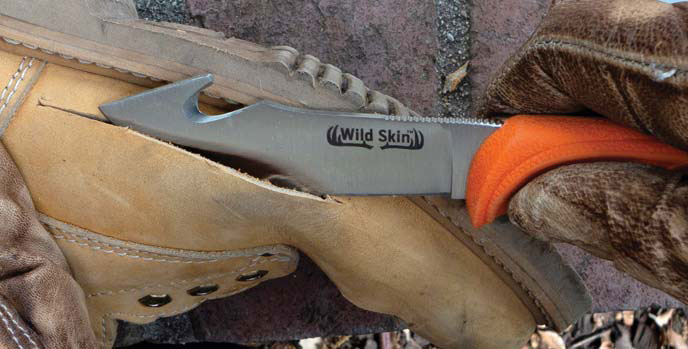
The Outdoor Edge Wild Skin deconstructs leather boot with the primary edge. Handle material: Rubber TPR. Overall length: 8.5 inches.
I have never found opening the belly of a critter to be especially difficult, though there is some technique required.
The hardest part of opening an elk’s belly is getting the huge critter—elk often weigh 500 to 600 pounds—on its back. Deer, of course, even “mulies,” which can reach 300 pounds, are much easier to manage.
I’m very much old school, as my sons remind me, and have a great deal of experience, so I’ll continue to dress game with whatever knife I have at hand. But if you’re new to dressing game the gut hook can likely do a better job for you.
If you dress out a great deal of game, say as a hunting guide, the gut hook will make your job easier and faster.
Three More Gut Hook Knives Worth A Look
This trio of gut hooks may not have gotten a hands-on review, but they are more than capable of serving you well when dressing a deer.
SharpWorld Beautiful Damascus Gut Hook
SharpWorld Beautiful Damascus Gut Hook
This knife lives up to the name and then some. The full-tang blade is made from a spectacular damascus alloy that looks even better with the ram horn handle. At eight inches in length it’s long enough to get under the hide without being too big to become cumbersome.
MSRP: $49.99
Buck Zipper
Buck Zipper
When it comes to outdoors knives there are few companies better than Buck. And their gut hook, the Zipper, is named based on what it’s designed to do: open animals like a zipper. The drop point is made from 420HC stainless with a Heritage Walnut DymaLux handle and comes with an included leather sheath.
The current CEO and President, CJ Buck, personally helped design the knife after seeing a glut of subpar gut hooks on the market in the early 1990s.
MSRP: $122.99
Case Lightweight Hunter Gut Hook
Case Lightweight Hunter Gut Hook
Case has made an incredibly light and strong gut hook that’s just over four ounces in weight as part of the brand’s Lightweight Hunter line of knives.
The gut hook has a sabre concave grind on the Tru-Sharp surgical stainless steel blade. The steel itself is a high-carbon variety designed to hold an edge longer than more conventional steels. The handle is a ballistic nylon material that increases strength without adding unnecessary weight.
MSRP: $78.99
Editor’s Note: Michael Abelson contributed to this piece.
Depending on where you live and by what method you hunt, deer season is underway. There are any number of blade patterns you could select for a skinning knife, but why are they shaped the way they are? What is the maker considering when he crafts a knife he calls a skinner? Let’s look at 20 examples of 5 types of skinners, plus an extra.
1. Bull-Nose Skinners
“The blunt tip in conjunction with the trailing point helps from punching through the hide,” noted Travis Fleming of Fleming Fabrications in North Texas about bull-nose skinners.
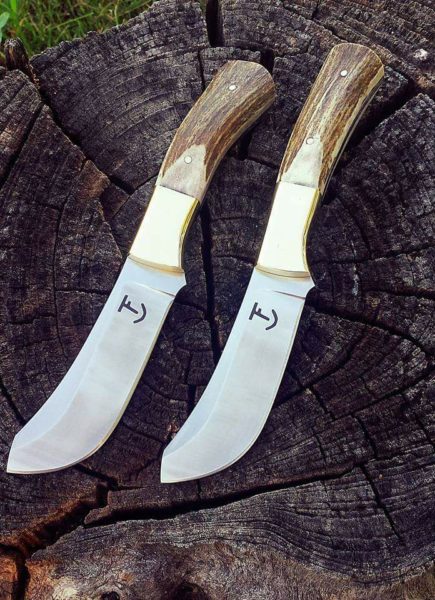
This set of bull-nose skinners were made for a father and son by Travis Fleming. The 4 1/2-inch blade is made out of CPM 154 stainless steel. The bolster is brass, and the antler handles were supplied by the son from the first buck he got with his dad. Overall length: 9 inches. Maker’s list price: $500/set. Contact Travis Flemming at [email protected] or on Facebook at Fleming’s Fabrications.
Josh Bryant of JB Custom Knives put it this way: “The bump and large drop at the tip are intended to go over guts without popping them.”
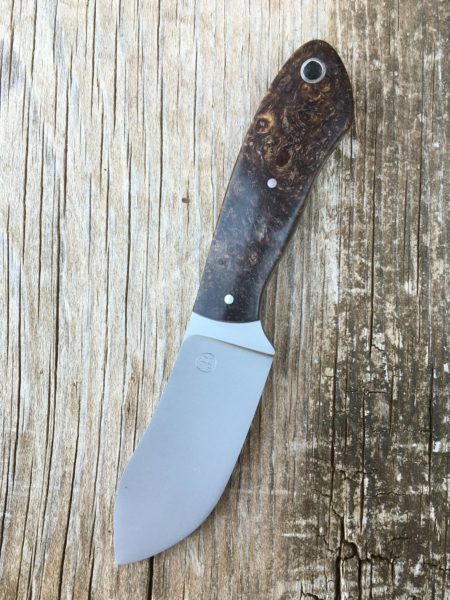
Josh Bryant’s Mini Green River Skinner is made with a 2 3/4-inch blade out of CPM 154 steel. The handle is made of dyed stabilized maple burl. Overall length is 6 inches. Maker’s list price: $180 with leather sheath made by the maker. Contact Josh Bryant at [email protected], on Facebook at JB Custom Knives and on Instagram @jb_custom_knives.
“I like a skinner made with a CPM steel,” Mike Cleveland of Half Life Knives commented. “(It) keeps its edge longer and that means more game prepared before sharpening.” Mike added: “I prefer the fuller belly for its ability to cape around tight areas. I value that over the ability to stab in a skinner. With this style of blade you’ll finish ahead of those with a sharper point.”
Michael J. Cleveland of Half Life Knives uses CPM S90V to make the 3.85-inch blade on this skinner. The overall length is 8.5 inches. The handle is made of mammoth bone with Voodoo Resin bolsters. Maker’s list price: $650 with leather sheath. Contact Mike Cleveland at Half Life Knives on Facebook or at 405-627-6097.
2. Drop-Point Skinners
The drop-point skinner is one of the most, if not the most, popular skinning knife blade design. Within the drop-point category, however, there is plenty of individual styling.
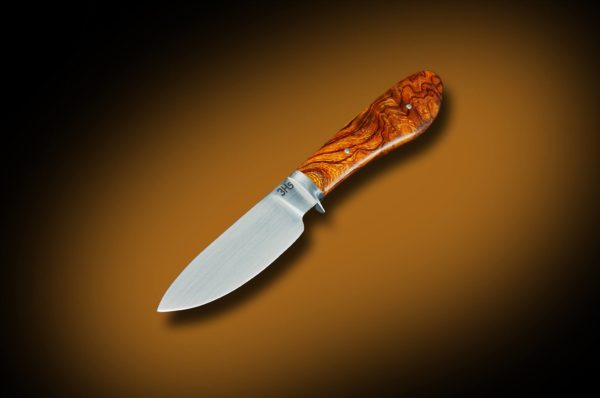
When Raymon Hunt of 3H’s Knives LLC makes a skinner, he strives for “enough belly for caping, but with enough point to make opening the cavity easy without piercing the organs.” A skinner should be balanced and lightweight, he notes. “It is amazing how carrying a heavy knife along with a rifle on a six-hour stalk through the bush can wear you out.” Raymon added that comfort is important. There should be no areas on the handle that could produce hot spots.
Raymon Earl Hunt’s Nessmuk-style drop-point hunter has a forged 4-inch flat-ground blade made out of 1075 steel. The convex cutting edge is 3 1/2 inches, and the knife is 8 1/2 inches overall. The mortised handle is made with exhibition-grade desert ironwood with sterling silver pins and 416 stainless steel guard. Maker’s list price: $600 (includes sheath). Contact Info: Ramon Hunt at www.3hsknives.com, raymon.hunt@3hsknives and on Facebook at 3H’s Knives, LLC.
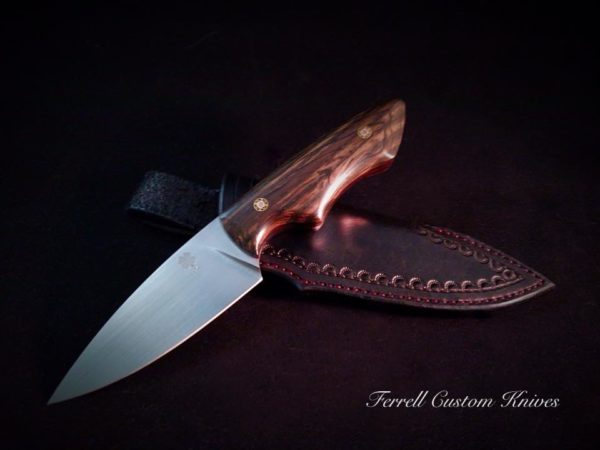
“I feel the most important parts of a good skinner are on edge-holding and the ability to be sharpened easily in the field,” Lane Ferrell of Farrell Custom Knives commented. He pointed out that comfort, not being too heavy and being balanced well, is essential “since some skinning jobs can take a while to finish.” He noted that a skinner “should also be small enough to be carried on a belt or in a pack, but large enough to get the job done effectively.”
Lane Ferrell’s Razorback model skinner has a 4.25-inch blade made with 1084 steel. The handle is Russian bog oak with red G10 liners and mosaic pins. Overall length is 8.75 inches. Price $275 with vegetable-tanned leather sheath with red stitching. Contact Lane Ferrell at [email protected] or Facebook at Ferrell Custom Knives.
“I do such a wide variety of skinners that it all depends on what the customer wants,” Spencer Aplin of STA Custom Knives noted. “Most people want a 3- to 4-inch drop-point. Then the second most requested is a trailing-point 4- to 5-inch blade.” And in Spencer’s experience, a whopping 99 percent want finger grooves.
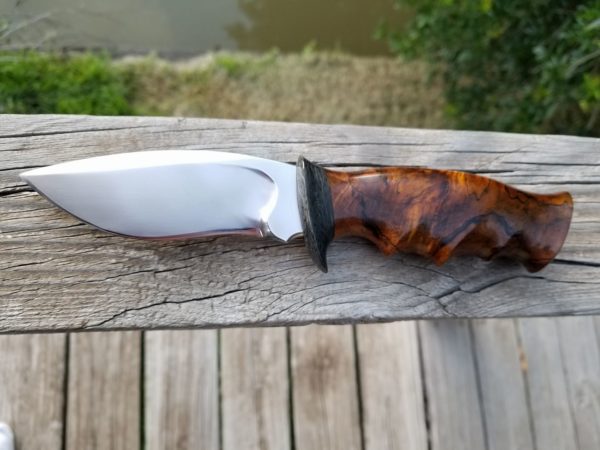
This Spencer Aplin skinner has a 4-inch blade made of ELMAX Steel. The handle is made with stabilized myrtle burl. Maker’s list price $550 with padded zippered pouch. Hand-tooled and carved sheathes are available upon request at an additional cost. Contact Spencer Aplin at [email protected], www.stacustomknives.com or on Facebook at STA Custom Knives.
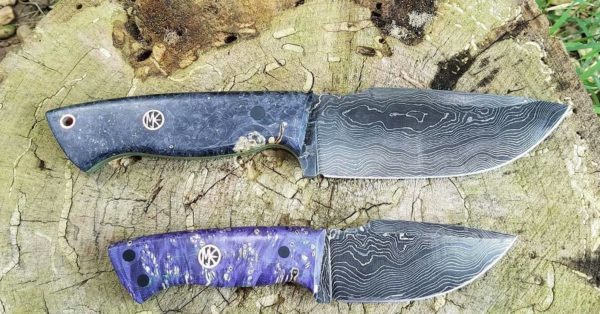
Chris Rowley made this 3.25-inch blade from pattern-welded 1084 and 15N20 steels. The overall length is 7.5 inches. Scales are by Voodoo Resins. Maker’s list price: $350 with Kydex sheath. Contact Chris Rowley at [email protected] and at Nomad Custom Knives and Tools group on Facebook.
Mike Jeffries of 2 Birds Metalworks made the smaller skinner in this set as a companion to the camp knife. “The slight fighter profile and small size make it excellent for thumb, as well as index, purchase for those internal and fine skinning tasks,” Mike noted.
This drop-point set was made with pattern-welded steel from Alabama Damascus Steel. The scales are made from dyed box-elder burl. The blade on the bottom knife is 3 inches, contributing to an overall length of just over 7 inches. Maker’s list price: $320 with leather sheath. Contact Mike Jefferies at [email protected], on Facebook at 2Birds Metalworks and on Instagram @2birdsmetalworks.
The carbon content in the steel James McClendon used to make this skinner is approximately 1.27 percent. “Makes a most excellent knife,” James declared. “Those old files are getting harder to find.” James likes the “second-to-none on edge-holding–at least as simple-carbon steels go.” He added that the addition of a soft backdraw gives the blade toughness. “I just prefer a guard on a blade so sharp it could take a finger off with one slip. LOL. I also leave just a hint of the file teeth but not enough to hold contaminants.”
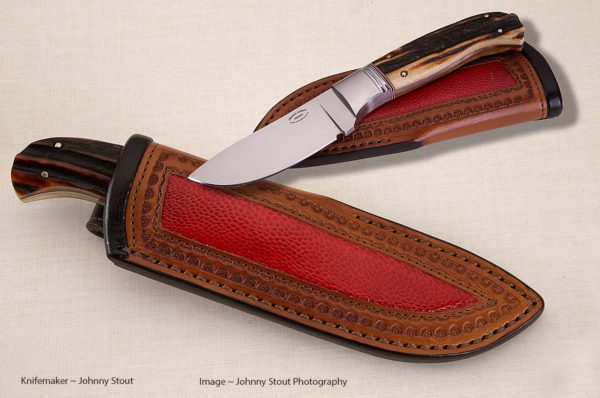
James McClendon made this 4-inch drop-point hunter/skinner out of a Black Diamond file. The bolt-through handle is made of stabilized stag. Overall length is 8 1/2 inches. Maker’s list price: $180 with sheath. Contact James McClendon at [email protected].Johnny Stout’s Rio Grande Skinner has a 3 3/4-inch blade made out of 154 CPM steel. Overall length is 8 inches. Handle is made from amber stag antler. Fluted bolsters are 416 stainless steel. Maker’s list price: $925 with custom Paul Long sheath with red full-quill ostrich inlay. Contact Johnny Stout at 830-606-4067 or [email protected].
Will Thompson put it this way: “The 3 1/4-inch blade is perfect to get around those places that you just can’t get to with a bigger blade. It’s ready to help you get those hams and backstraps to the ice.”
Will Thompson made this 3 1/4-inch drop-point blade out of 1095 carbon steel. The Plantstone handles are by Robert Belcher. Overall length is 6 7/8 inches. Maker’s list price: $120 with leather sheath. Contact Will Thompson at [email protected] or 910-385-6021.Phill Bilkey’s Sambar Skinner has a 3.5-inch blade made of 1085 carbon steel. The handle material is Australian sambar antler with red G10 liners. $200 AUD with leather sheath. Contact: Southern Cross Custom Knives on Facebook.Eric Pearson of Lake Effect Knifeworks made this 4.25-inch hollow-ground drop-point blade out of 1095 steel with hamon. Overall length 9 3/4 inches. The scales are big-leaf maple burl. Maker’s list price: $200-plus. Contact Eric Pearson at Lake Effect Knifeworks on Facebook.
3. Nessmuk-Style Skinners
Joe Elinburg in northeast Florida likes the Nessmuk pattern for a skinner. “The rounded point makes skinning easier with less chance of putting a hole in the hide if you’re going to save it for tanning,” he commented. “Also the swoop in the back of the blade makes a great finger rest for more control of the blade.”
This Mini Nessmuk Skinner is made by Joe Elinburg in northeast Florida out of 1095 high carbon steel. The 3-inch blade is convex ground. Overall length is 6 inches. Handle material is camaru. Maker’s list price: $90 with Kydex sheath with mounted metal belt clip. Contact Joe Elinburg at [email protected], @jecustomknives on Instagram or call 904-962-0341.
4. Spear-Point Skinners
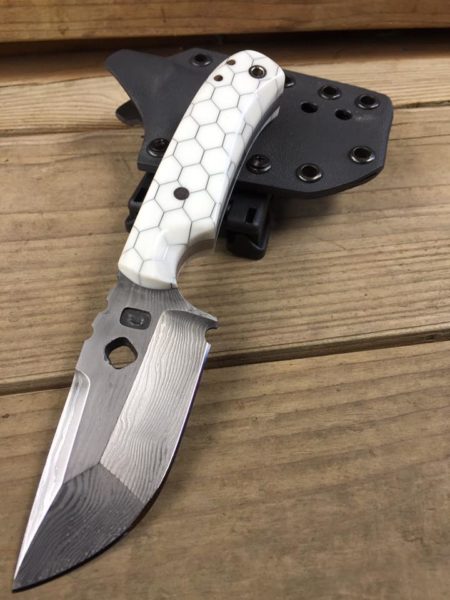
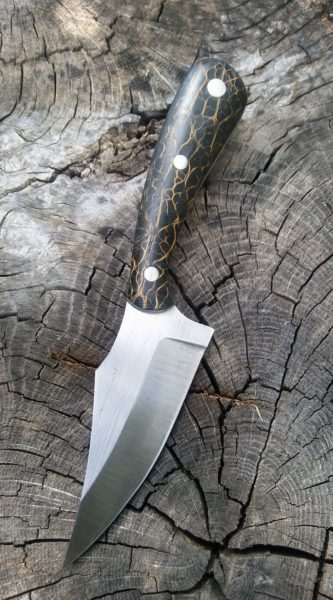
“I have always been a fan of spear-point skinners,” Jon Waltz commented. His son designed this model, and Jon made a few changes by adding the thumb ramp and expanding the belly. The deep finger guard and thumb ramp allow for full control of the blade. “The hollow grind makes for a extremely sharp cutting edge, and the large belly is great for slicing through flesh with precision,” Jon added.
Jon Waltz of Edge7 Custom Knives calls this model the 24/7 Skinner. The Hex resin scales are custom-made. Overall length is 7 inches. The 3-inch hollow-ground blade on this particular one is made of CPM D2 steel, but they are now made in PSF27 steel. Available finishes include acid etched, sandblasted and stonewashed. Makers list price: $275 and up with leather or Kydex sheath with combat loop. Contact Jon Waltz through www.edge7customknives.com.
Denny Furey of Furey’s Urban Combat Knives Unlimited uses NJ Steel Baron 1095 steel to make his Sukina, which is Japanese for skinner. Overall length is 7.75 inches with a 3.25-inch blade with a dark blued polished finish. The handle scales are Rob Carper Innovations (RCI) stabilized, dyed spalted maple. Maker’s list price: $175 with Kydex sheath with belt attachments. Contact Denny Furey at Furey’s Urban Combat Knives Unlimited on Facebook.
5. Trailing-Point Skinners
Trailing-point skinners excel for skinning small game, and are probably the second most popular skinning knife blade design behind drop-points.
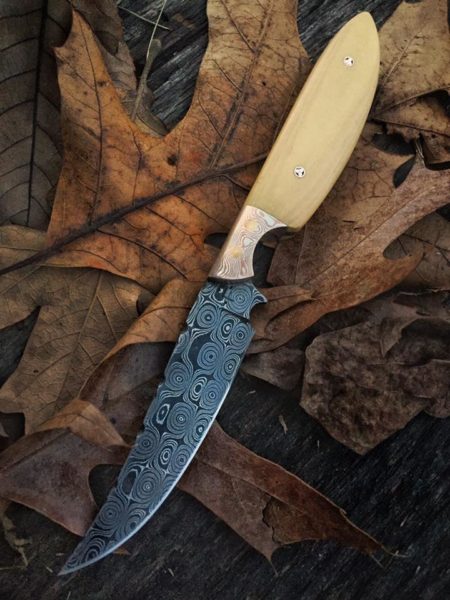
“I believe that the finger groove and the thinned spot between it and the spine allows for easier indexing when trying to be precise while skinning raccoons or fox,” commented Tyler Freund of Freund’s Custom Knives. “One can simply pinch the knife between their thumb and finger. Much like you would a scalpel.” In addition, “the thin tip and thin steel lets the user make less intrusive cuts and more precise cuts around the wrists and ankles of the coon,” Tyler explained. He feels this would be more challenging with a bigger-bellied or thicker-bladed knife. “The knife has just enough belly in it that you can draw the knife and skin efficiently once you’ve gotten around the ribs,” he concluded.
Tyler Freund made this small-game skinner for a local trapper. The 3-inch trailing-point blade is made out of Vegas Forge’s raindrop-patterned steel, and the maker added file work along the spine. The handle is bone Micarta paired with Mike Sakmar mokume-gane. The knife is 7 1/4 inches overall. Maker’s list price: $350. Contact Tyler Freund at Freund’s Custom Knives on Facebook or on Instagram @tylerfreund08.Bryce Love’s trailing-point skinner has a 5-inch acid-etched stonewashed blade made out of 1095 steel. Overall length is 9 inches. The handle is made from curled cherry. Maker’s list price: $140. Contact Bryce Love on Facebook at 50Cal Forge or [email protected].
“This skinner has a short blade with pointed tip to reach into tight areas when skinning and caping,” Scooter Davis of Rough Run Forge explained about his Shrade-Sharpfinger-like knife. “The recess on the spine serves as a finger rest, allowing you to choke up forward on the knife for more control.”
Scooter Davis made this Shrade-Sharpfinger-style skinner with a 2 1/2-inch hollow-ground blade forged from 52100 steel. The scales are prickly pear cactus fastened with stainless steel corby pins. Maker’s list price: $175 with leather sheath. Contact Scooter Davis at Rough Run Forge on Facebook or call 540-560-1672.
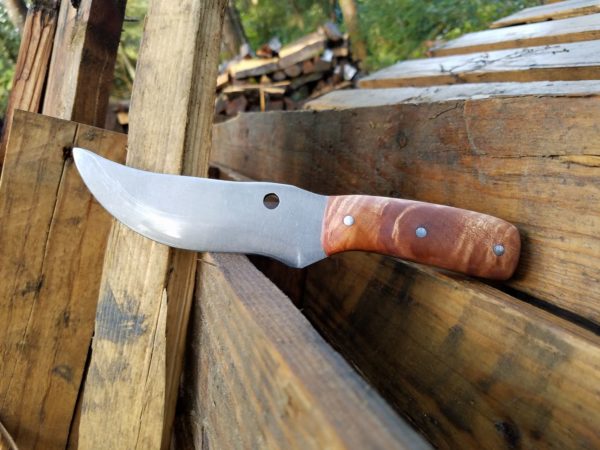
Although not a traditional trailing-point blade shape, an upswept point is still evident. Richard Darby’s customer said you can make long sweeping cuts with this big-bellied blade design, as well as flesh with it. “Plus it gives a longer cutting edge for the length of the blade,” Richard noted.
Richard Darby’s big belly skinner has a 4.5-inch blade of 1095 steel with hamon. Overall length is 9 inches. The handle is made with flame masur birch from JHue Custom Sales. Maker’s list price: $150. Contact Richard Darby at [email protected].
Miscellaneous Skinners
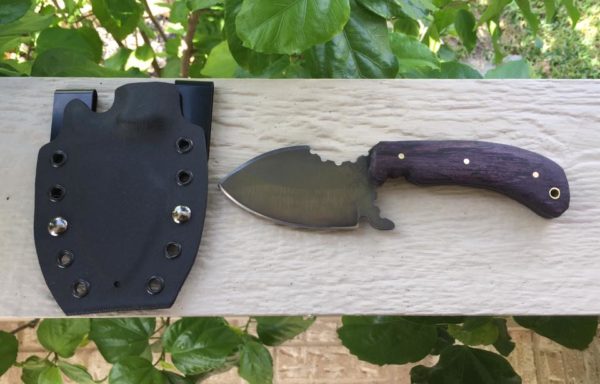
When you skin, the idea is to pull the skin back and make sweeping slices like you would when using an ulu, but it’s not an ulu, Matthew Nolan from Angry Beaver Knives explained. “The whole handle fits in your hand while grasping the blade with thumb and pointer finger…more blade…angles…equals more slicing…and it fits nice in the hand for sweeping strokes.”
Matthew Nolan’s Dear Beaver deer skinner is made out of 15N20 or 1095 steels. The overall length is 5 to 6 inches, depending on the hand size of the customer. The scales are Dustin Smith lace maple burl at Simply Scales. Maker’s list price: $225 with Kydex only sheath. Contact Matthew Nolan at Angry Beaver Knives at [email protected] or at 518-791-2551.
Learn Which Knife Designs Stand The Test Of Time
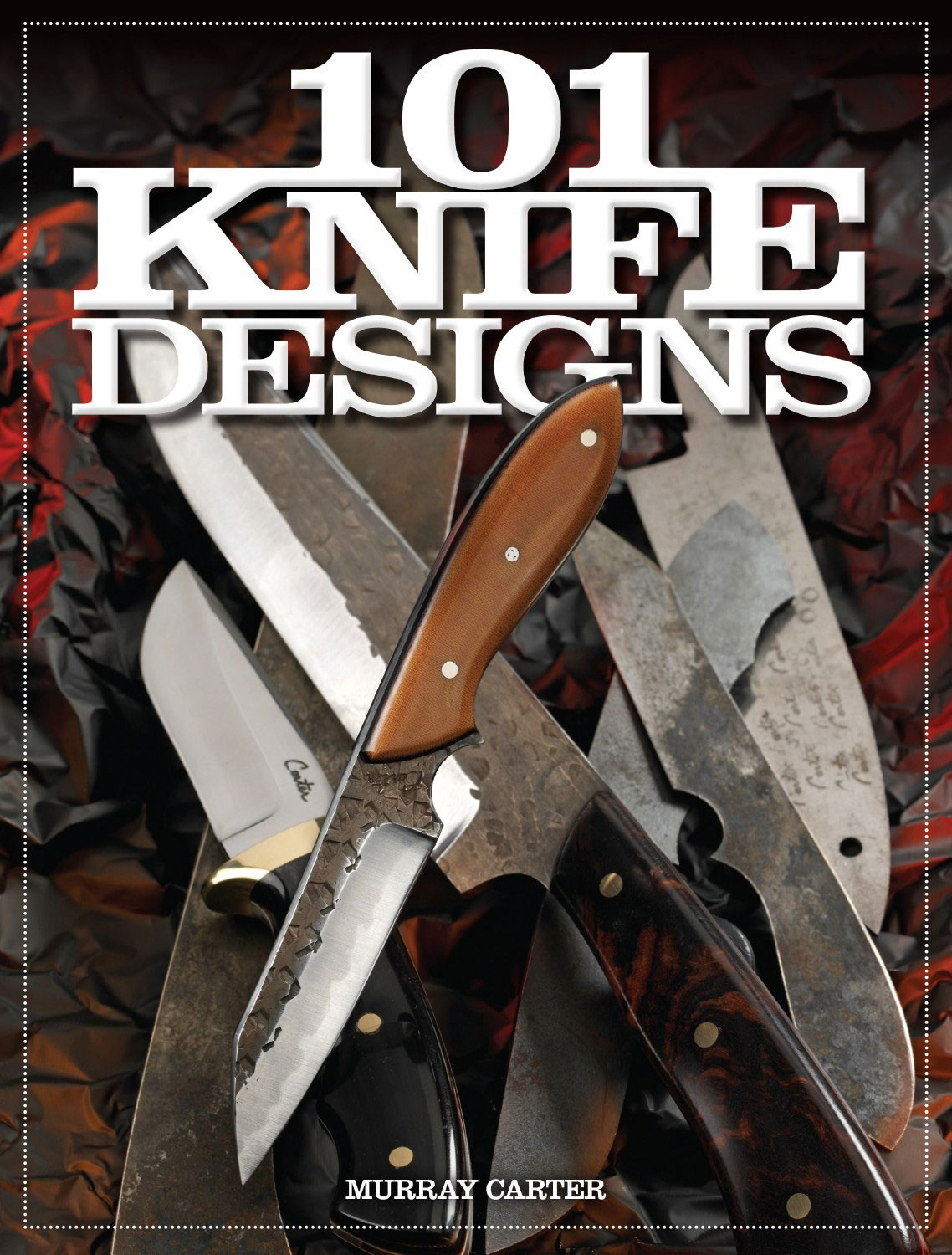
“101 Knife Designs” provides actual scaled patterns that you can use to spark your own designs. At $19.53, you’ll be saving 35 percent on a classic.
Compare and contrast different skinner designs as well as knife patterns of all types. Hiro Soga’s images will satisfy your knife eye-candy jones, you’ll be able to delve into the theory of blade design and you’ll get 101 scaled patterns that you can use to initiate you’re own design. “101 Knife Designs” by Murray Carter is a must-have in hard copy so you can work with the designs, mark with notes and refer to again and again.
Editor’s note: This article originally appeared in the January 2010 issue of BLADE. However, the information presented is still relevant and useful to anyone interested in paracord-wrapped knife handles.
Advantages of Paracord-Wrapped Knife Handles
Affordable: Much less expensive than many natural and synthetic handle materials
Customizable: Available in a variety of colors
Convenient: Cordage is as near as your knife
Versatile: Paracord can be used in countless everyday and survival situations
Disadvantages of Paracord-Wrapped Knife Handles
Fixed blades only: Folders aren’t an option
Absorbent: Will soak up moisture (water, mud, blood), and may give off unpleasant odor as a result
Needs replacing: Wear and tear mean the wrap won’t last forever
Ergonomics: Some say gloved hands often find a better grip than bare hands
The Infinite Uses of Paracord
While for some it may be considered just a quick wraparound, for others it has proven to be a lifesaver. The simple paracord handle does more than meets the eye.
Functioning as a handle material that allows for the best fit for the size of the user’s hand, and one that can be added or removed in a matter of minutes, paracord is durable and relatively inexpensive. It also adds a dimension of survivability for those in the field.
Paracord pulls double duty as a bootlace, securing line, snare or even in a first-aid situation.
What’s the Best Kind of Paracord?
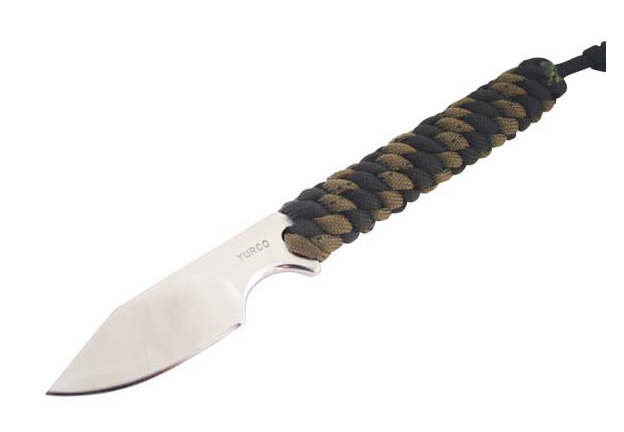
This Yurco model is available from Arizona Custom Knives. (photo courtesy of Arizona Custom Knives)
“The best paracord to use is military 550 cord,” explained custom knifemaker Mickey Yurco, who has employed paracord wrap for handles on as much as 40 percent of his knives. “It has seven inner strands of nylon cord, and the outer shell is tightly braided nylon. If you pull out the separate strands in a survival situation, you can make a bowstring, use it to catch a rabbit with a snare, use it for fishing line, and you can break down the inner core into three separate smaller strands for sewing a rip in a tent or as suture if you cut yourself.
“You can use the outer shell to lash branches together to build a lean-to or tie logs together for a raft. You can even use it to keep a fire lit because [paracord] will melt.”
Yurco also points out that when a paracord handle is unwrapped for another use, the gripping end of the knife is still intact. The entire piece is lightweight and, on the sheath or in a belt clip, as much as eight to 12 feet of additional paracord can be tightly wrapped as backup.
Two Schools of Thought
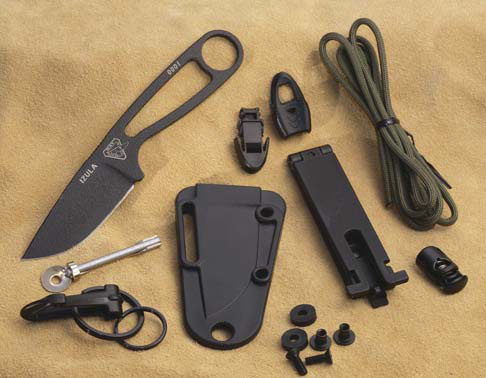
Interested in doing a wrap yourself? You certainly can. The Izula-B Kit includes the paracord wrap (upper right) and cod lock, and also the black molded sheath, large and small split rings, ferro fi re-starting rod, emergency whistle, plastic snap hook and MOLLE lock kit. (RAT photo)
Mike Fuller of TOPS Knives noticed its reputation rising around 2000.
“I first saw it during the Vietnam era, as some guys wrapped paracord around their sheaths just to have some extra cord if needed,” he commented at the time this article was published. “I did see a few homemade jeepspring knives with paracord wrapping.
“There are two schools of thought on the paracord,” Fuller continued. “In an emergency situation, you might have about 10 feet of cord to use for survival applications. In a wet situation, you might have a better grip, and some people feel that it assists when wearing gloves in the field.
“Paracord can in fact tear or become frayed and, if it gets soaking wet in really cold weather, some have said that their handles freeze and coat with ice. Several professional hunters have said that if you are field dressing an animal the blood may get into the cord and it’s difficult to clean and may carry a distinct odor.”
The Secret is the Simplicity
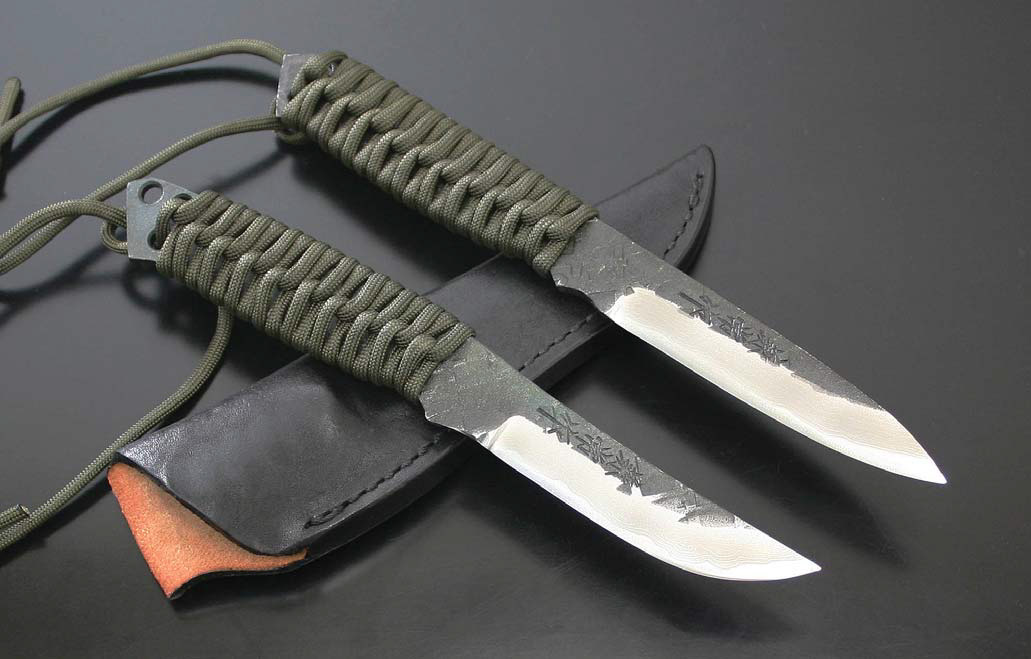
The Yumi (top) and Ya (bottom) from Kanetsune/Kitasho offer paracord-wrapped handles and blades of 15-layer White steel damascus. Each piece comes with a cowhide sheath. Overall lengths: 7.68 and 8.07 inches. (Kanetsune/Kitasho photo)
“People like paracord because it is so simple,” said Justin Gingrich, a consultant with Ontario Knife Co. “It allows them to customize a handle and still have a knife they can carry close to the body. You can wrap, rewrap and even change the cord to match the outfit you’re wearing.
“Paracord allows users to tailor the knife to themselves, beefing the handle up or thinning it out, and, if it gets dirty or frayed or messed up in any way, it’s easy to replace. It will absorb water and hold it, so you don’t want it on an unprotected high-carbon steel knife. You could get rusting issues with water or any other fluids. It will absorb blood if you are hunting, but then again, it’s a give and take since you can change it out pretty quickly.”
Conclusion
As with any knife feature, whether to go with a paracord-wrapped knife handle or not is up to the user. However, many knife collectors enjoy the versatility and customization that paracord offers. Far from a trend, paracord is here to stay as a handle option.