Knife Collecting

Knife collecting is an extremely rewarding experience for knife enthusiasts. There truly is a knife for everyone. Many increase or hold their value throughout the years, making collecting knives something to pass on to the next generation of knife collectors.

CKCA Club Knife Orders Are Sold Out

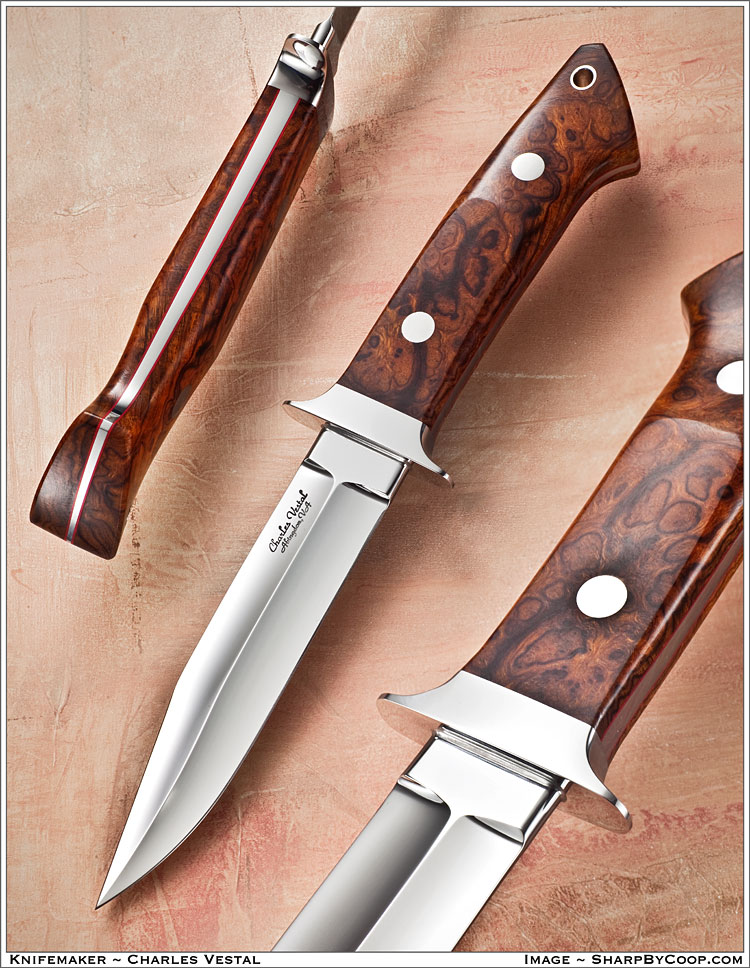
All 13 pre-orders for the 2012 Custom Knife Collectors Association (CKCA) Club Knife, a Loveless-style boot knife by CKCA knifemaker/member Charles Vestal, have been sold. The picture above is an example of one of the boot knives Vestal has done in the past. The pattern for the club knife will be somewhat different but close. 

     The CPM-154 stainless steel blades will be 4 3/4 inches long. The price of $500 for each order will include a Vestal-made leather sheath.

 
      Handle material will be black, green or burgundy Micarta®, with wood handle options as provided by the collector, and approved for use by Vestal, with no guarantees as to suitability (i.e., shrinkage, etc.).

     The guard and furniture will be stainless steel. Thad Buchanan provided Vestal with a pattern from the Loveless Shop from which the club knife will be modeled.

     First deliveries should be at the CKCA Banquet on Thursday, June 7, the night before the beginning of the 2012 BLADE Show (www.bladeshow.com).

    For more information regarding the knives click on www.customknifecollectorsassociation.com/

For more on the latest knives, knife legislation, knifemaking instruction, knife trends, knifemakers, what knives to buy and where and much more, subscribe to BLADE® Magazine, the World’s No. 1 Knife Publication. For subscription information click on http://www.shopblade.com/product/blade-magazine-one-year-subscripti…?r+ssfb020712#BL1SU

What’s Hot In Knife Mechanisms

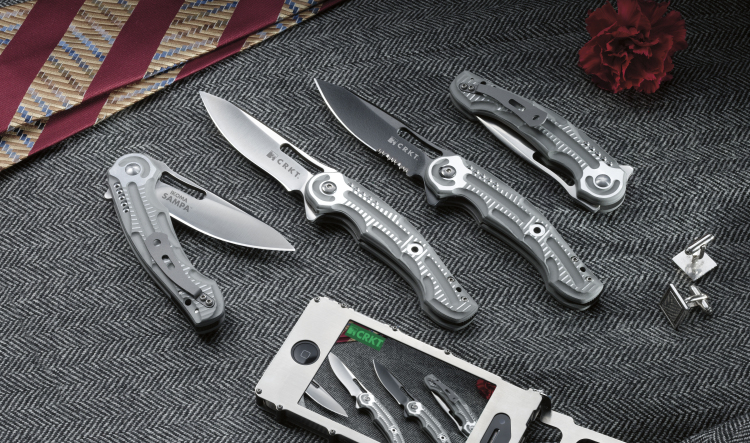
Designed by Flavio Ikoma and using the IKBS (Ikoma Korth Bearing System) Flavio helped create, Columbia River Knife & Tool’s Sampa line is an example of the non-assisted-opening flipper folder purveyor Duane Weikum said seems very popular at the moment. (CRKT photo)

User needs and refined design/construction rule the hottest knife mechanisms

By Dave Rhea


Mechanisms are everywhere on the knife market. There are so many different ways to open, shut and lock a knife it seems there could never be anything new under the sun. Invariably, though, advanced, creative minds push the boundaries of what is out there. Sure enough, along comes something that revolutionizes the cutlery culture.

     So what is going on in the sphere of knife mechanisms? Owner of New Graham Knives retail knife store, Michael Dye said it is difficult to have a really fresh, new idea, and pointed to a visit he had with Blade Magazine Cutlery Hall-Of-Fame© member Ken Warner a few years ago.

     “He showed me drawings in a bound notebook that were dated back to the ’70s,” Dye recalled. “Ken said, ‘Recognize these?’ and they looked the same as the handles that are on [a line of leading field knives now].” Dye was not alluding to any sort of theft or malicious intent, but to the fact so many people have so many ideas, and over the years the ideas start to overlap.

     Which is a roundabout way of saying what is hot today in knife mechanisms is not necessarily new but a combination of consumer preference and a refinement of existing mechanisms.


Get Your Tweak On

“I think you’re seeing a lot of refining, where the changes are in movement improvements and [modifying] existing mechanisms,” he said. “The devil is often in the details. Also, like putting mechanisms such as the IKBS [Ikoma Korth Bearing System] in affordable production knives.”

     He used the Taylor Cutlery/Smith & Wesson knives as an example of the benefits of tweaking a design. “Their third-generation flippers really hit the mark,” Dye explained. “When people put that little knife in their hand, they really are impressed with how the assisted opening works. Refining and tweaking of the geometry to make flippers open more easily—that’s what I have been seeing more than anything in the last year.”

     Owner of EDC Knives, purveyor Duane Weikum cited the venerable non-assisted-opening flipper folder popularized by Kit Carson as probably the most-sought-after mechanism this year. “A flipper tab on the knife, along with a strong detent and a smooth pivot, makes for an impressive-opening knife,” he said. “I prefer a straight flipper to an assisted knife myself—fewer chances of it opening in my pocket.”

     Weikum is also a big fan of Flavio Ikoma and the IKBS bearing pivot system (page 50, June BLADE®). “There are other bearing systems coming online, people tweaking things so they can call it something other than IKBS,” he opined, “but Ikoma and Korth were putting it into practice long before these other systems came along. Some guys were even using IKBS before they knocked it off—sad but true.”

     He added that Columbia River Knife & Tool (CRKT) has licensed the IKBS for Ikoma’s and Cutlery Hall-Of-Famer Ken Onion’s CRKT designs (the Sampa and Ripple, respectively), which he said speaks well for the mechanism’s performance.

     Another hot existing mechanism Dye singled out is the one on the Blade Magazine 2010 Overall Knife Of The Year®, the Chris Reeve Knives Ti-Lock. “You definitely have some people who are pushing the envelope, like Gavin and Grant Hawk with the Ti-Lock,” Dye pointed out. “That is, without a doubt, a very unusual locking mechanism.”

     The Ti-Lock lock bar is mounted along the back of the blade toward the pivot. When the blade is opened, the handle edge of the lock bar, which has a cross bar with thumb-stud-like grips, is forced down into a slot through spring pressure, locking the knife securely open.

     The Ti-Lock folder by Chris Reeve Knives is a collaboration between the father-and-son Hawk team and Chris Reeve. According to Dye, it is a design that, initially, was almost complete but shy of actual fruition. “I think Gavin and Grant got it about 90 percent figured out,” Dye noted. From there, he said Reeve took the lock and made it economically feasible to build on the larger manufacturing scale of Chris Reeve Knives. “It works very well and it adds a different look to the knife, to say the least, with the [lock’s] anodized titanium bars,” Dye observed.

     Another hot mechanism is Benchmade’s Paul Axial system, according to Trevor Darby, owner of BladeOps LLC. “I think the [Benchmade version of the] Paul Axial system that has just been hitting the market is very interesting,” he said. “It’s a smooth-opening one-handed mechanism that seems to be generating quite a bit of buzz, as well as demand.”

     Developed by Paul Poehlmann in the 1970s (page 50, November BLADE), the Paul Lock has a spring-loaded interlock key that can be depressed and rotated. It is simple and strong. “Along the same lines,” Darby added, “even though it is a mechanism that has been around for a while, the Tri-Ad lock that Cold Steel makes is always in huge demand.” Darby also points to the Spyderco Ball Bearing Lock (page 24, February BLADE) as something that has been gaining interest with his customers.


Hard To Put Down

Sometimes it is the mechanism itself that pushes a buyer into purchasing a knife. The “gadget factor” has a strong allure, and, when someone puts a knife in his hand and starts toying with it and it is hard to put it down, that is an almost certain sale. For many of BladeOps’ clientele, Darby said there is often a specific mechanism that drives them to buy.

     “We have a lot of customers who have seen something somewhere and want that particular mechanism,” he related. “I would say there’s about a 50/50 split between buyers looking for a specific mechanism and those looking more along a size, brand and price range.”

     A great example of a company that excels in the marketing of interesting mechanisms is CRKT. It has led the way by offering an incredible array of opening and locking mechanisms to the point that, each year, this writer cannot wait to see what is in its new catalog.

     “Things like what Ed Van Hoy did with the Snap Fire with the anodized wheels and stuff,” Dye pointed out. “We have a lot of people who come in and really get mesmerized by the glitzy opening systems that you see in some designs.” (Editor’s note: Though CRKT offers at least one other Van Hoy design, the Snap Fire has been discontinued.)

     Dye mused that sometimes the mechanism itself outweighs the knife’s actual usefulness. “In such cases, the knife is not utilitarian by any means,” he said. “But what sells the knife to every customer that puts it in his hand is the way it opens and closes. It becomes a gizmo at that point—it just happens to have a sharp blade on it.”

For more on the latest knives, knife legislation, knifemaking instruction, knife trends, knifemakers, what knives to buy and where and much more, subscribe to BLADE® Magazine, the World’s No. 1 Knife Publication. For subscription information click on http://www.shopblade.com/product/blade-magazine-one-year-subscripti…?r+ssfb020512#BL1SU

Slip Joints Are Sizzlin’!

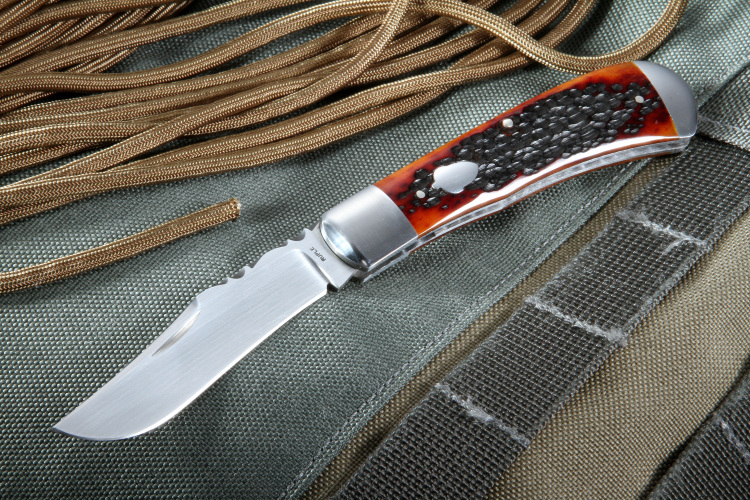
According to KnifeArt.com’s Larry Connelley, Bill Ruple ([email protected]) is one of the leading names in custom slip joints. Ruple’s “Acorn” single-blade trapper features a CPM-154 stainless blade and an amber-bone handle. Closed length: 4.25 inches. KnifeArt.com’s (www.knifeart.com) list price: $1,100. (KnifeArt.com photo)

One of cutlery’s oldest designs, the slip joint is also one of its hottest


By Pat Covert


    Long ago, someone added a spring to the back of a pocketknife to prop the blade open and enable it to shut with a snap—and what is known by many knife enthusiasts today as the slip joint was born. While locking-liner tacticals dominate much of the folder arena, the relatively new genre has a lot of catching up to do if it plans on eclipsing slip-joint sales.

    Like many sectors of the cutlery market, there are two basic customers for slip joints—users and collectors—with some overlap to be expected. So what would cause a knife user to carry a slip joint over the more modern fare? “Tradition,” KnifeArt.com’s Larry Connelley states simply. “Slip joints are built with traditional patterns or modifications of a traditional pattern from the early 1900s. Slip joints are easily carried and perceived as an American tradition. Many knife owners first owned a traditional slip joint.”

    From a practical standpoint, slip joints make excellent pocketknives, playing the same role they have for generations. “Slip-joint folders are used for cutting almost everything imaginable, such as peeling apples, skinning game, opening boxes, opening letters, and a myriad of other uses,” observes Kenny Wilson of Sooner State Knives.

    Josh Terryah of Knife Country USA says both tradition and everyday service play a role in the slip joint’s popularity. “Slip joints are great utility knives, and who doesn’t like to carry something around that reminds them of their granddaddy or father?” he opines. “Who would ever think a knife could bring back memories of being a kid on the family farm?”

    Though hard to quantify, another likely reason for the slip joint’s surge in attractiveness and popularity among users is the oppressive anti-knife laws and/or improper labeling of legal one-hand-opening and other knives as illegal by law enforcement, district attorney’s offices and local governments in some areas. In other words, the DA’s success rate in prosecuting someone for carrying a traditional peanut or stockman pattern is lower than for a one-hand opener.


Selection Never Better

Selection has never been better for factory slip-joint fans. Companies such as Buck, Boker, Case, KA-BAR, Queen and others long have produced and/or offered traditional slip joints. Outfits like Canal Street Cutlery, Columbia River Knife & Tool, Fallkniven, Great Eastern, Spyderco and more have joined/rejoined the slip-joint sweepstakes, and brands such as Schatt & Morgan (Queen), Tidioute and such (Great Eastern) and others have been revived. Better yet, a plethora of classic patterns is available in the midst of such healthy competition. These range from common patterns such as trappers, barlows and sunfish to more specialized ones like the melon tester and cotton sampler.

    On the other hand, some things never seem to change.

    “Case remains the most collected knife in the world. One reason for this is the detailed dating system Case uses,” Wilson notes. “But, I believe Canal Street is currently building the highest-quality traditional slip-joint folders. They simply spend more time to get the details right during production and assembly to ensure that everything fits as it should.”

    Terryah says not only has he seen an uptick in sales of traditional slip joints, but some of the more modern styles are selling as well. “I would have to say the Spyderco and Fallkniven slip joints are the hottest new models [for us] right now,” he offers. Wilson says Case’s traditional two-blade trapper (4 1/8 inches closed) is the best seller at Sooner State Knives. “Next would probably be the [Case] 3-inch tiny toothpick,” he advises.


Maker Explosion

The custom market long has had a clique of makers who keep the traditional patterns alive—Tony Bose, who also has designed some knives for Case, and Bill Ruple among them. In the past few years there has been an increase in custom makers joining the fray, adding even more fans to the slip-joint market.

    “Slip-joint collectors tend to be men in the 40-to-60-year-old range. They’re the classic baby boomer demographic. These customers appreciate the high level of fit and finish,” he says. “There are many sub-groups of slip-joint collectors, from the patterns to the number of blades on a folder.”

    According to Connelley, the best-selling slip-joint pattern at Knifeart is, once again, the trapper. He says some of the hot knifemakers (and their knives with Knifeart’s list prices in parentheses) are Don Morrow (two-blade stag trapper, $750), Bill Ruple (stag or bone two blade, $1,100), and Hiroaki Ohta (single-blade stag folders, $500). “Tony Bose is hands down the most popular,” Connelley opines. “His knives command a premium on the secondary market which, unless you are really lucky at his BLADE Show lottery, is the only place to buy one.”


Choice Materials

The materials offered in a knife are always a key consideration. “Most collectors seem to prefer stainless steel blades over carbon steel,” Wilson notes. “That said, many older buyers still prefer carbon steel in the knives they carry, and a few younger buyers prefer it because of their fathers and grandfathers.

    “The misconception seems to be that if a blade doesn’t rust, it won’t hold an edge. They don’t realize cutlery companies have kept up with the times and that new blade steels are constantly being introduced.”

    Among handle materials, Wilson indicates due to the variety of colors, jigged bone is his most popular but stag, mother-of-pearl and wood still move as well.

    On the custom side, Connelly says stag is the most popular, followed by traditional jigged bone. “For blade materials they prefer high-quality stainless steels such as CPM-154, ATS-34 and CPM-S30V. We occasionally see high-quality damascus on an upscale slip joint,” he adds. It is interesting to note that damascus is wildly popular in other genres such as fixed blades and locking folders, but it does not seem to translate well into traditional fare.

    Given the increase in custom makers joining the party and the extremely large number of factory pocketknives on the market, traditional slip-joint lovers will have fat pickings for a while. Whether you prefer production or custom knives, there are affordable options for everyone. Custom slip joints typically range from $250 up and factory pocketknives can be had for as little as $25 for models produced offshore—with stag handles, no less!—to $150-$200 for top-shelf limited editions.

    In essence, with the exception of some of the more rarified custom artisans who can name their price, it is a buyers’ market that shows no sign of slipping.

For more on the latest knives, knife legislation, knifemaking instruction, knife trends, knifemakers, what knives to buy and where and much more, subscribe to BLADE® Magazine, the World’s No. 1 Knife Publication. For subscription information click on http://www.shopblade.com/product/blade-magazine-one-year-subscripti…?r+ssfb020212#BL1SU

Knife Of The Day XV: O’Hare Tanto

     Our Knife Of The Day is Sean O’Hare’s tanto. It sports a flat-ground, 3.75-inch blade of CPM-154 stainless steel, a stabilized buckeye burl handle with a bird’s-beak butt, and a 416 stainless steel guard. Sean also made the leather pouch sheath. His price for a similar piece: $395.

     “This one is a bit of a departure from my norm as it is a tanto style,” Sean noted. “I was very pleased with the way it turned out. So far this is the only [tanto] I have made. It sold right away at the New York Custom Knife Show.”

     For more information contact Sean at [email protected].

     For more on the latest knives, knife legislation, knifemaking instruction, knife trends, knifemakers, what knives to buy and where and much more, subscribe to BLADE® Magazine, the World’s No. 1 Knife Publication. For subscription information click on http://www.shopblade.com/product/blade-magazine-one-year-subscripti…?r+ssfb013012#BL1SU

Hottest EDC Knives

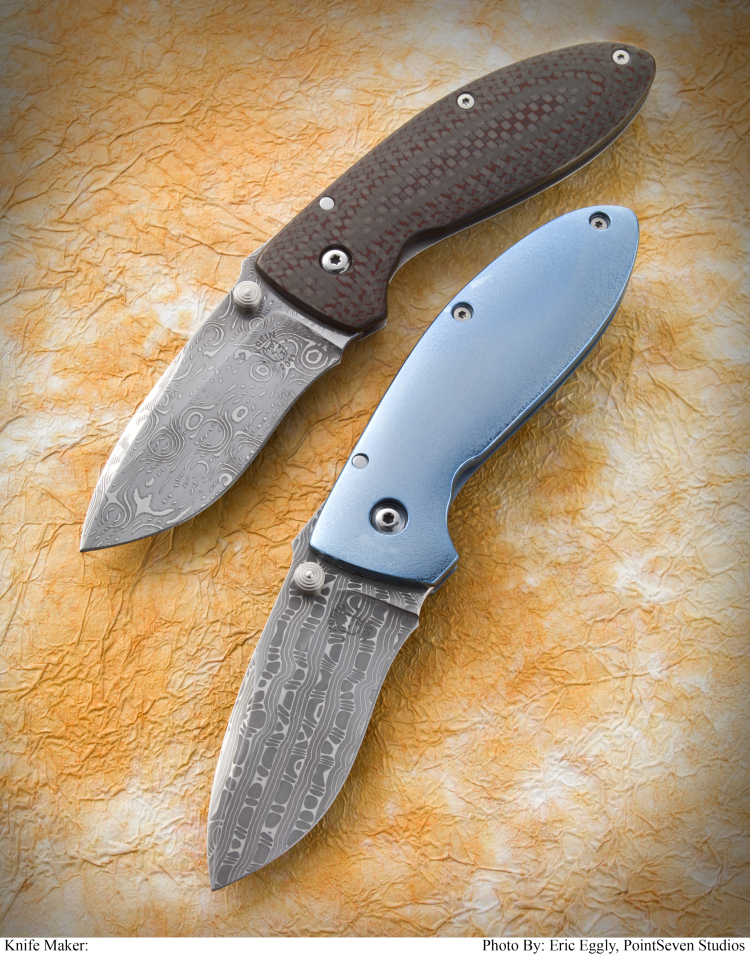
Dave Stark of Steel Addiction Knives said Tom Krein’s Alpha folders are among the hottest of custom EDC knives. These two Alphas are both frame locks, and Krein said the one with the blue handle is the first knife he built with the Ikoma Korth Bearing System (I.K.B.S.). (Point Seven photo)


Keep your pockets warm with the hottest in everyday carry knives

By Mike Searson


Everyday carry knives—a.k.a. EDC knives—are models most of us carry every day in our pockets, on our belts or even around our necks. An EDC knife is suited to such mundane tasks as opening a piece of mail or cutting an apple or, in a pinch, to cutting a seatbelt in an emergency situation.

    To determine the hottest EDC knives, BLADE® went straight to some of the top custom and production knife dealers in North America. On the production front, which seems to be where the majority of EDC knives come into play, Mark Christensen at BladeHQ and Jason Kunkler of Knifecenter.com held court.

    “The majority just seem to be based on personal preference,” Christensen began. “We don’t sell many ‘traditional pocketknives’—tactical knives are popular—and right now those seem to be butterfly knives and automatic knives, especially out-the-front automatics, MicroTech in particular. Anything made by MicroTech sells very fast, and Spyderco is very popular right now. As far as model numbers go, I would say for MicroTech it would be the Ultratech [Model 122-1] at a price point of $255, and for Spyderco it would be any of the Para Military 2 models [C81] that sell in the $115-$170 price range.

    “I think the Para Military is popular because of the Compression locking mechanism, combined with Spyderco’s round hole design. This makes the knife very easy to use with one hand and with gloves, so ease of use and convenience make it a great EDC knife. The MicroTech models are popular because they make the best OTF knives on the market, and have gained a reputation for excellence.”

    While agreeing with Christensen on the popularity of Spyderco, Kunkler said most of his customers are leery of newer locks and favor traditional locking liners, lockbacks, Benchmade’s Axis lock and even contemporary slip joints. He indicated his biggest sellers among EDC knives are the Benchmade Griptilian (based on options, $80-$100 MSRP), Spyderco Delica ($69.95 MSRP), various fixed blades by ESEE, and Boker’s International Collection offerings based on classic Fred Perrin designs. “The ESEE models are so popular they sell out on arrival,” he noted. “At a retail price of $85-$125 they are a lot of knife for the money and feel great in the hand.”

    Kunkler seemed to speak for Christensen as well when he said, “If there’s one thing people are looking for in a knife, I think it’s just convenience or ease of use. The hottest EDC knives are those that are just ‘user-friendly.’”

    “Price does not seem to matter as much as you might think,” Christensen added. “People are always looking for a good deal, but are willing to pay more for quality.” Kunkler said $100 is the upper end of the price limit for most people looking for an EDC knife, whereas most knife enthusiasts are willing to spend two to three times that amount.

    As for handle materials, both retailers said titanium for locking-liner and frame-lock folders is very popular, with G-10, Zytel® or anodized aluminum also found on the top sellers. Blade finish is even more of a personal preference. Christensen said his customers have a slight inclination for black coated blades over other finishes, while Kunkler indicated his clients prefer satin finishes to everything else. “Mirror-polished blades went out in the 1980s with parachute pants,” he quipped.

    As far as blade length, Christensen said “somewhere around 3 to 3.5 inches” is most popular. “Some people are looking for California-legal automatics with a blade under 2 inches, but, aside from those, most people don’t seem to be worried about blade length for legal reasons,” he qualified.


Custom Iterations

On the custom side, Neil Ostroff of True North Knives and Dave Stark of Steel Addiction Knives shared their knowledge. “Without question, the most desired knives are tactical flipper folders made with some kind of bearing pivot system, like I.K.B.S. [the Ikoma Korth Bearing System],” Ostroff observed. “Close behind those are the non-flipping tactical folders.

    “In the non-flipping arena, Bob Terzuola just blazes along with refreshing variations of older stable models like the venerable ATCF [TNK’s list price: $750] and new designs all the time. His special USN Gathering knives are always snapped up quickly, and he takes many orders for more while selling out early on at show after show.”

    Stark agreed, adding the hottest EDC knives among his customers are made by Rick Hinderer (the XM series), Tom Mayo (TNT), Tom Krein (Alpha K-1 Folder), Greg Lightfoot (Ground Fighter), Mick Strider (SnG and SMF) and Ernest Emerson (CQC6). “Price doesn’t even seem to be a factor, despite the economy,” he said. “Most Mayos and Emersons I receive on customer trade-ins have to go back to those makers, as there are scuffs in the bead blast from being carried—and these are $1,200-$2,000 knives.”

    Ostroff differed on the price point, saying most of his customers look for a knife that is $500 or less from such makers as Brian Fellhoelter (Kink, at $450) or Kirby Lambert (Inferno, $500). Ostroff and Stark agreed that fit-and-finish, performance, comfort in the hand and “buying the maker” had more influence than blade steel or price point.

    Of pocket clips and blade finish, Ostroff opined, “Pocket clips are vital on a folder, and tip-up is the only way to go as long as the knifemaker ensures that the detent is strong.” Stark said “deep-carry pocket clips” that hold the knife significantly lower in the pocket are a strong selling point. Both agreed that stonewashed, satin or bead-blasted finishes are more desirable than polished or coated ones.

    As with their production counterparts, both custom purveyors said 3 inches and under is the desired length for those living in cities with blade-length restrictions. However, the optimal blade length for a tactical or utility EDC folder is just under 4 inches. 

    Stark indicated some customers buy small EDC fixed blades such as the TK-1 (his list price: $225) or Pocket Bowie (his list price: $265), both by Tom Krein, or a number of pieces from Bob Dozier. He said both makers have been backordered for a long time. 

    All four sources are unanimous on one thing: blade shape. While past trends have pointed to leaf-shaped, recurved and tanto blades, today’s hottest EDC knives tend to have more traditional blade profiles. As to a plain or serrated blade, it is a matter of personal preference, though plain edges seem the most popular for all concerned. Perhaps it can best be said that the hottest EDC knives combine classic designs and profiles with modern materials.


For more on the latest knives, knife legislation, knifemaking instruction, knife trends, knifemakers, what knives to buy and where and much more, subscribe to BLADE® Magazine, the World’s No. 1 Knife Publication. For subscription information click on http://www.shopblade.com/product/blade-magazine-one-year-subscripti…?r+ssfb260112#BL1SU


Hammer Knives Are What’s Cookin’!

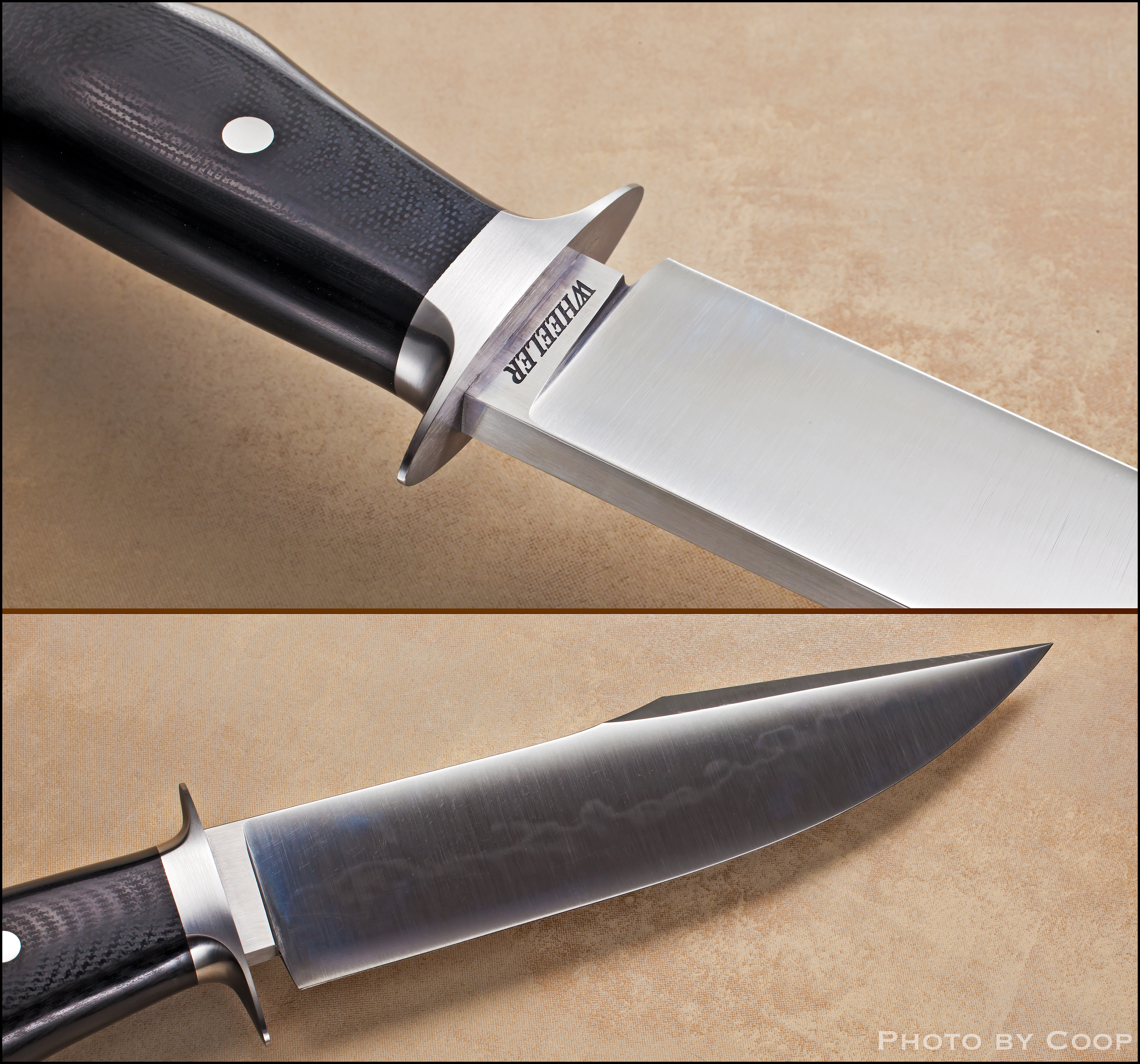
The Paranee/Wheeler fighter combines Nick Wheeler’s impeccable fit and finish and a Joe Paranee design, and is high on the list of collector Peter Gill. (SharpByCoop.com knife photos; photo of drawings courtesy of Nick Wheeler)

If you’re hungry for top handforged blades, prepare to cleanse your palate

By Mike Haskew


The selection of and appetite for handforged knives is as healthy as ever, and those who combine aesthetics with the hammer on hot steel occupy a noteworthy place among the pantheon of knifemakers. Both well-established artisans and up-and-comers are gaining attention, incorporating daring damascus and eye-popping ivory, tantalizing carbon steel and wondrous woods.

A collector for 15 years, Peter Gill said he is excited about the Founder’s Bowie series from Jason Knight, who devised the idea of selling a limited run of handforged knives to raise money to build his shop. The Founder’s Bowies include upscale handles of materials such as mammoth ivory and 10-inch blades of 1080 and 15N20 random-pattern damascus, and overall lengths of about 15 inches. Gill said each knife has sold in the $1,200 range. The Paranee/Wheeler Fighter, another limited run and a collaboration between Joe Paranee and Nick Wheeler, is a favorite of Gill and sells for around $850.

“They each make simply beautiful knives that approach perfection and are very hard to obtain,” Gill noted. “A plaque with the names of the 10 original owners of the Founders Bowies will be in Jason’s shop, and the fighter combines Nick’s impeccable fit and finish with a specific design concept from Joe.”

Collecting knives for nearly 40 years, Paul Kessler has seen his share of handforged standouts, and said the work of husband-and-wife team Adam and Haley DesRosiers is “wildly popular.” The pair is becoming known for damascus blades and high-end wood handles in a variety of knife styles. In addition, the damascus blades and fighters in the 7-to-10-inch range from Mike Ruth and the fighters and gun knives of Bruce Bump are gaining in popularity, Kessler observed.

“Tom Ferry is hot right now,” Kessler added. “He can do everything and do it well. He makes both folders and fixed blades, and his sole-authorship knives are in great demand. Cliff Parker is making a damascus gent’s folder in tortoise, stag and pearl, along with locking-liner folders, and he sells out at shows.”

According to Kessler, Wheeler has become a favorite on Internet knife discussion forums, while John White is known for his large choppers with lengths of 10 to 11 inches in premium carved stag handles and upscale damascus.

“John made a stunning dagger for me,” Kessler remarked. “It has a blade of about 9.5 inches and a beautiful reddish mammoth ivory handle. He built it with a clamshell guard that can be taken off to convert the knife to a simple dagger. He built a bowie that won Best Fighter at the BLADE Show, and my John White knife won Best Damascus at the show. I think he makes the best pattern-welded damascus, bar none. The choppers sell for $1,000 and up, and the high-end knives are $2,500 and up.”

Kessler said the Pirate folder by Don Hanson is another favorite of handforged purchasers and features a variety of handle materials with a wharncliffe or santoku-style damascus blade. Ranging from $1,700 to $1,800 depending on materials, the slip-joint Pirate folder comes with mammoth or walrus ivory and even antique ivory Micarta® scales. Hanson’s double-edged fighters with the damascus combination of 1084, 15N20, W2 and 203E steels are in demand as well.

Larry Marton and his wife, Marlene, have collected knives for more than a quarter century. They particularly prize the work of Robbin Hudson and his multi-bar damascus blades with a flame pattern etched into the edge. “We had talked with Rob about making a knife for us,” Larry said, “and he eventually sent us one with a blade twice the size of the one we had talked about. It is truly a spectacular blade.”

Also among their favorite makers and handforged knives are those by the husband-and-wife team of Van Barnett and Dellana. Marlene collects folders of about 3.5 inches in open length, and both Van and Dellana have made folders for her, while an oversized Owen Wood dagger is a prized piece in the Martons’ collection, too. With an 11.5-inch blade and mammoth tooth handle, the dagger is priced from $7,000 to $8,000, and its overall length is 16.5 inches.

Another of the Martons’ selection as a hot maker of handforged knives is Kaj Embretson. “We have two Viking daggers that he made, both with multi-bar damascus,” Larry commented. “We found the first one at the Solvang Show. That dagger has a wood handle, and the second one we got has a mammoth ivory handle. They run in the $5,000 range.”


In Big Demand

Purveyor Les Robertson said Hanson, White, Ruth and Knight are four of the handforged makers high on many buyers’ lists. Robertson singles out White’s Take Down Bowie, Ruth’s Seashell Bowie, Knight’s JK Classic and Hanson’s Mammoth Fighter as a coveted foursome. The Take Down Bowie sports a damascus blade of 15N20 and 1084 steels, along with a premium stag or ivory handle. The stag version sells for $2,250 and the ivory for $3,000 and up, Robertson notes. The Mammoth Fighter includes a frame mammoth ivory handle and DH3 damascus blade. Robertson’s price: $3,800.

For Robertson, the complexity of the Take Down Bowie is its big draw. “These knives are supplied with a matching ‘take-down tool’ with removable a damascus cap that holds spare assembly pins,” he said. “On the Mammoth Fighter, the DH3 damascus and the frame handle are in big demand, and the ivory is the icing on the cake. As [one of my] top 10 ABS master smiths, Don is an exceptional craftsman.”

Ruth’s Seashell Bowie includes a blade of Texas Wind damascus and an ancient walrus ivory handle with price points from $2,000 to $2,600 depending on such options as blade length and the ivory’s color. Robertson adds that big damascus blades are gaining favor now, and Ruth builds some of the best at value prices.

Knight’s JK Classic Bowie includes 5160, W2 or damascus blades, a handle of desert ironwood or ivory, and a stainless or blued carbon steel guard. Robertson said the knife sells for $1,200 to $2,000, depending on options, and he places Knight among his top 10 ABS master smiths. “This knife is the quintessential Jason Knight Bowie,” he related. “It has clean, crisp lines and that trademark ‘fits-like-a-glove’ handle. The knife is immediately recognizable as a Jason Knight.”

Among other handforged makers Robertson praised are Russ Andrews and Daniel Winkler. Robertson said Andrews’ Hawthorne Bowie sells for $1,100 in W2 blade steel and $1,500 in damascus. Its high-grade walnut handle and stainless steel furniture add luster to Russ’s signature bowie, and Robertson asserts collectors are always on the lookout for this “bowie that borders on being a fighter.” Winkler’s Razor Ridge hunter is complemented by a Karen Shook sheath and sells for $850, Robertson said. It has a blade of 1084 carbon steel, a stainless guard and bolster, and an elk-antler handle.

“Dan can never fill the demand for this knife,” Robertson opined. “It’s his hottest knife, made by one of [my] top 10 ABS master smiths, and is perfect for what it’s designed to do. It feels great in the hand.”

Lin Rhea, Shawn McIntyre, Scott McGhee, Tad Lynch and Phillip Patton are other makers with work to watch—and buy quickly if possible, Robertson advised. The purveyor indicated Rhea’s Sub-Hilt fighter sells for about $1,950, with a blade of W2 or damascus steel and a handle of presentation wood or ancient ivory.  McIntyre’s Black Tie hunter is fashioned with a blade of 1080 and 15N20 damascus and a black palm wood handle. Depending on materials, it sells for $550 to $750, Robertson said.

The purveyor indicated the Bushman utility knife from McGhee sells for $260 and includes a blade of Cruforge V steel with a hammer-marked finish and a paracord-wrap handle. Lynch’s Model 1 fighter comes in 5160 or W2 blade steel with a walnut handle and stainless fittings. Clean, functional and balanced, it sells for $600, Robertson said. The Drop Point camp knife from Patton is handled in Micarta or G-10 and comes with a choice of W2 or O1 blade steel. Robertson said the base knife goes for $250, and its combination of utilitarian design and handle ergonomics makes for a great field knife.


For more on the latest knives, knife legislation, knifemaking instruction, knife trends, knifemakers, what knives to buy and where and much more, subscribe to BLADE® Magazine, the World’s No. 1 Knife Publication. For subscription information click on http://www.shopblade.com/product/blade-magazine-one-year-subscripti…?r+ssfb250112#BL1SU

Prices* For Hottest Hammer Knives

Russ Andrews Hawthorne bowie $1,100-$1,500

Kaj Embretsen Viking dagger $5,000

Don Hanson Pirate folder $1,700-$1,800

Jason Knight Founder’s Bowie $1,200

Tad Lynch Model 1 fighter $600

Scott McGhee Bushman utility knife $260

Shawn McIntyre Black Tie Hunter $550-$750

Phillip Patton Drop-point camp knife $250

Lin Rhea Sub-hilt fighter $1,950

Mike Ruth Seashell bowie $2,000-$2,600

Nick Wheeler Paranee collaboration $850

John White High-end knives $2,500 and up

Daniel Winkler ` Razor Ridge hunter $850

Owen Wood Oversized dagger $7,000-$8,000


*According to the sources in the story.



White-Hot Knife Websites

Some websites offer exclusives on custom knives. True North Knives (TNK) has the exclusive on Kirby Lambert’s “Scorpios” (above). Blade steel: CPM-S35VN stainless. Blade length: 3 1/8 inches. Handle: Ironwood burl. Bolster/guard: Lightning strike carbon fiber. TNK’s list price: $675. (TNK photo) For more information about this knife and/or more like it, click on http://www.truenorthknives.com/vcom/index.php

WHITE-HOT KNIFE WEBSITES

The hottest cutlery websites offer the best in knives, selection and service

By Mike Haskew


The Internet crackles with items to buy, sell and trade, and the number of websites serving the knife community has steadily grown in recent years. Browsing online does have its advantages with a broad selection just a click away.

Knife specs and prices can be easily compared, while information on custom makers and manufacturers is readily available. However, before buying online, it pays to be informed as to service, responsiveness, quality of the items once received, and the degree to which an Internet source is prepared to stand behind the knife it sells and ships.

“It’s important to remember,” advised BLADE® field editor Dexter Ewing, “that the Internet in general is very dynamic, and folks that sell knives on [it] have the advantage of harnessing the power of cyberspace and using it to their advantage. If they get a new knife in from, say, Benchmade or Spyderco, they can almost immediately have the picture of the knife up as well as the specs, pricing and a ‘virtual shopping cart’ feature.”

Those considering the online purchase of a custom or factory knife may want to visit some of the best sites around to find out for themselves just what may be in store.

From the custom angle, three story sources said Neil Ostroff and his truenorthknives.com is a winner. “This Canadian purveyor is a real success story and an inspiration for me,” commented collector Lorien Arnold. “There is a constant movement of knives through the store, and there are quality photos accompanying each knife. Pricing is very consistent, and although my interest isn’t primarily in folding knives, visiting this site regularly keeps me informed on what is hot. True North Knives really has its finger on the pulse of what is hot in cutlery.”

True North Knives is also high on the list of collector Mike Searson. Others topping his list are Bladeart.com, EDCknives.com, nordicknives.com, bluelinegear.com and schmuckatellico.com. “I primarily collect custom knives, and these sites often have photos and stats of the latest knives more up to date than even the makers’ own sites,” he commented. “Pricing is pretty reasonable, and all of these dealers have gotten back to me usually within the same day.

“For production knives,” Searson continued, “I usually go to the factory websites as they tend to keep those more up to date than the custom makers do [their sites], and these include emersonknives.com, spyderco.com, chrisreeve.com, microtech.com and others. They all offer an equal level of customer service and response time.

“In today’s market, everyone has to be competitive. The bigger production houses can take a day or two to get back in touch with you, but that’s understandable with their volume or if you are looking for a discontinued item that may be in stock. Usually, I will buy any needed supplies from these folks when placing a knife order.”

A collector of high-end custom tactical knives, Tarek Mirshak likes arizonacustomknives.com, steeladdictionknives.com and ebosshoss.com. “They have a great variety of custom tactical knives, updates on a regular basis, great communication,” he said. Of arizonacustomknives.com he added, “It’s a ‘real-time site,’ so once an item is sold, it’s automatically marked as sold. Pricing is reasonable and shipping is prompt.

“If I’m looking for a very special piece, the place to look is ebosshoss.com. Jon Ukman has a knack of having hard-to-find pieces and most people’s ‘holy grails.’ His prices are sometimes on the high side, but considering the rarity of the pieces he has, the prices are not unreasonable. His communication is great and shipping is always prompt.” At steeladdictionknives.com, Mirshak says to expect more of the same, a real-time site with regular updates and outstanding customer satisfaction.

Ewing is a fan of truenorthknives.com, knifeart.com and knifecenter.com. In addition to knives, the sites offer sharpeners from angle-guide kits to bench stones, files, storage cases, storage bags, zippered pouches, lubes and sheaths. All three keep their content updated with timely postings of new images and information.

“Their site is their storefront, and they have to keep posting new knives on a timely basis because that’s what helps generate sales,” Dexter related. “To some degree these sites offer exclusives with custom knifemakers of a special design that the site and the maker agree on. They usually are models that are not offered in the maker’s regular lineup and offer a point of attraction for these websites to be the only source for a knife that only can be purchased from that one website.

“The selection of these sites is enormous,” Ewing added. “They all cover the range from custom and production slip joints, fixed-blade hunters, gent’s knives, full-blown tacticals, and some investment-grade collector pieces. They also stock a good variety of knife care supplies and equipment. All three sell flashlights, too, something that apparently a lot of knife guys are also into, including me! So, it’s great to see a wide variety of cutlery and related products for sale on just one website.”

Arnold said he credits his online experience with his “discovering” custom knives on Bladeforums.com. “It’s a place which provides social interaction with people whom I’ve befriended there over the years. I also frequent a number of custom knife purveyors’ websites, and I am always looking for new work by my favorite makers or newly available work from makers who unfortunately may no longer be in this world.”

Arnold indicated he enjoys browsing robertsoncustomcutlery.com. “There are rarely any exceptional deals to be found, but if you are looking for a knife which will either maintain its value or go up in value, this is a good place to look, and a great place for solid, informed advice. The store’s owner [Les Robertson] is very communicative,” he added.


Materials, Sheaths and More

Arnold said he has made a few knives himself and purchased most of the materials needed from alphaknifesupply.com. He indicated he appreciates the site’s wide selection, and researching its materials costs has provided insights on how finished knives are priced. Among his other favorite sites are beautifulblades.com and nordicknives.com.

“This purveyor always has very interesting knives of all varieties available and somehow seems to get high-end knives of a level rarely seen elsewhere,” he said of the Solvang, California-based Nordic Knives owned by Dave and Grace Harvey. “The photos are consistent and easy on the eyes and is a very simple site to navigate as well.”

At beautifulblades.com, a specialty is custom sheaths, and the site features custom fixed blades and art knives, some of which are the work of Magnus Axelson. Arnold said he recently bought an Axelson knife from beautifulblades.com and was pleased with the packaging and turnaround time.

While the Internet presents challenges all its own, and nothing quite takes the place of holding a knife and getting a feel for its balance and a solid look at the craftsmanship, online shopping opens a whole new arena for knife buyers. As always, doing the necessary homework and understanding pricing, terms of delivery and return policies help make the most of an online purchase from a reputable and responsible source.


For more on the latest knives, knife websites, knife legislation, knifemaking instruction, knife trends, knifemakers, what knives to buy and where and much more, subscribe to BLADE® Magazine, the World’s No. 1 Knife Publication. For subscription information click on http://www.shopblade.com/product/blade-magazine-one-year-subscripti…?r+ssfb160112#BL1SU


Advertisement

Must Read Articles

Read this before you make a knife

Knifemaking 101 – Read This Before You Make a Knife

  by Wayne Goddard My experience has taught me that there's nothing like digging in and getting started. I've often said the hardest part of the...
how to forge damascus steel

How to Forge Damascus

Advertisement
Advertisement