Knifemaking

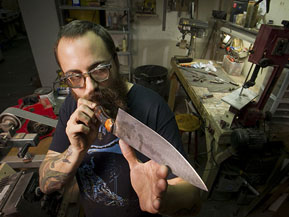
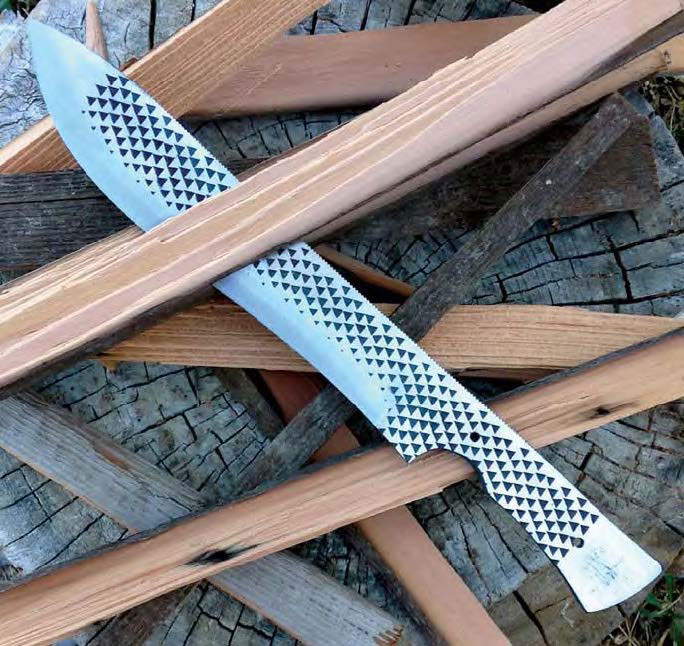
Knifemaking is the building of a knife, which includes the blade, handle and other accouterments. Blades are made by either removing metal from a steel blank via a grinder – known as stock removal – and the forging to shape of hot steel into a blade in the process known as bladesmithing. Other parts, including bolsters, guards, pommels, etc., are needed to complete the finished knife.

Featured Knives – – Knife Collecting – – Tactical Knives – – Survival Knives

Sharp Knowledge: 3 Knife Steel Basics

How the knife will be used, edge geometry and heat treating are all key to deciding which knife steel to choose.
The knife steel you choose depends a lot on what jobs the knife will perform.

One of the questions knife enthusiasts ask most is What is the best steel for a knife? Before you can answer such a question, you must first know exactly what it is you need in a knife.

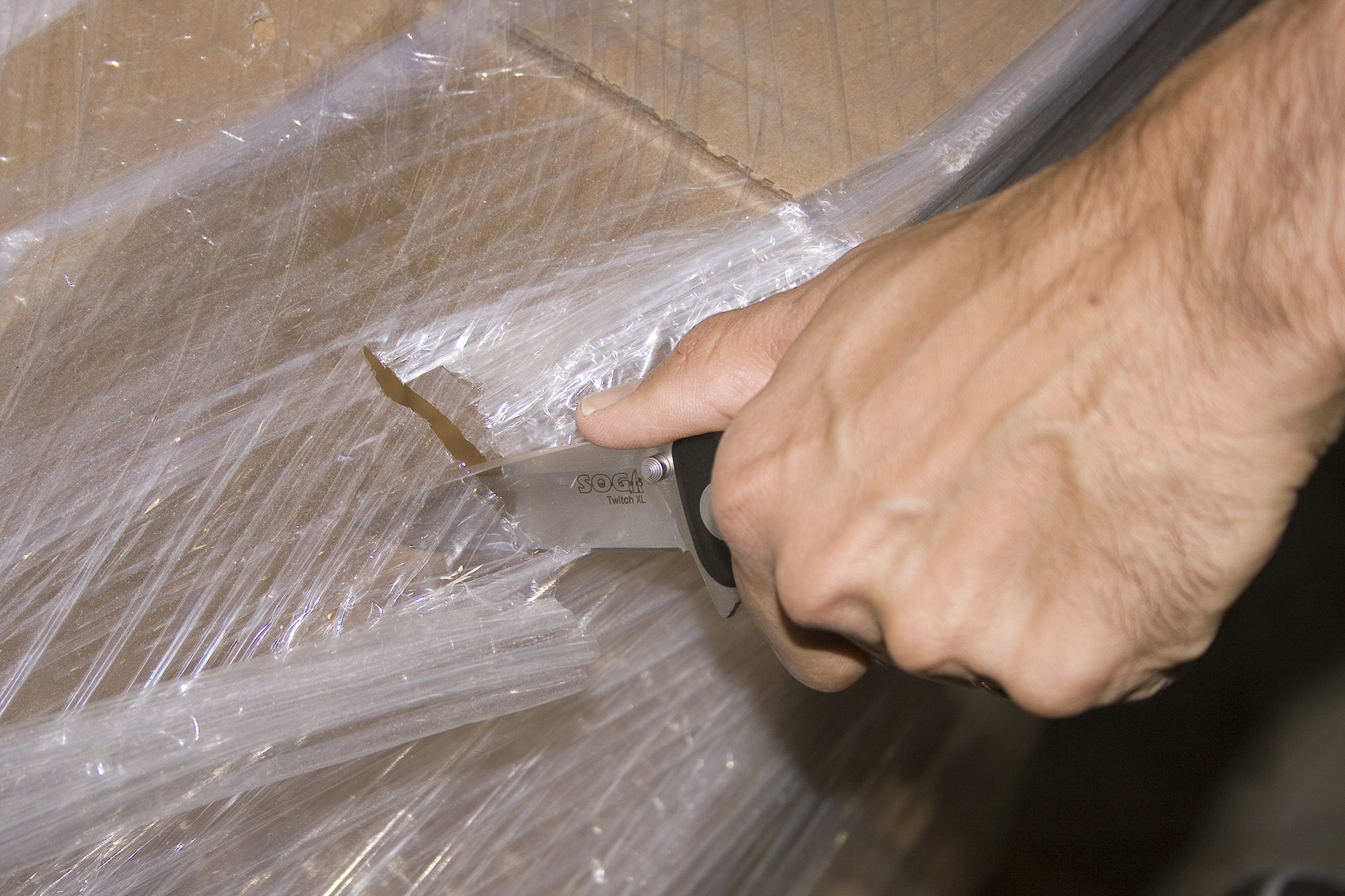
1) Will you use the knife to cut meat, or paper, or rope, or plastic, or a little bit of everything? Much depends on what you will be using the knife for, and just about any knifemaker or knife manufacturer who knows his stuff will know which steel he has on hand will be best for your purposes.
how-to-make-knives-knifemaking-book
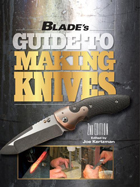
Learn more about selecting steel types and how to make knives in the third edition of “BLADE’s Guide to Making Knives.” The classic is back and better than ever!

2) The steel is just part of the equation. The blade’s geometry is also important. By blade geometry is meant how the blade is ground and tapered from the back (spine) to the edge. If too thick, it won’t slice or cut properly; if too thin, it may chip.

3) How is the steel heat treated? As BLADE Magazine Cutlery Hall-Of-Fame© member Wayne Goddard has written, “A knife of the very best steel may not perform any better than one made of an inferior type steel unless it is heat treated to bring out the full potential of the alloy content.” He also writes, “The reasons for a maker to turn out incorrectly heat-treated blades are too many to list. However, the most common is not having the correct heat-treating specifications from the steel maker.” If you find the maker does his own heat treating and does not go by the heat-treating specs provided by the steel maker, that’s an immediate red flag. In fact, many makers simply have professional heat treaters do their heat treating. Goddard is among them.

These are just three basic things to know about knife steels. There are many others.


Art Knife vs. Cutting Tool Debate

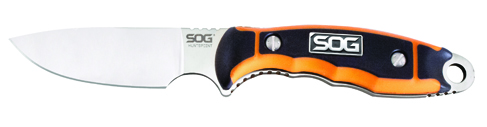
SOG_HT011L

The art knife versus cutting tool debate of whether knives are, or should be, works of art or cutting tools has always intrigued me. There are those who are a bit “put off” by art knives because they prefer utilitarian knives made to be used and employed when needed. That is certainly understandable, and thank goodness there are companies and makers out there fashioning good, sturdy, sharp serviceable fixed blades and folders.

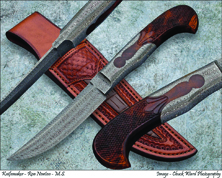
But the notion that art knives are a modern phenomenon ignores the countless officers of world armies who historically carried dress daggers, kings and queens of countries gifted with jewel-encrusted, gold-inlaid, sculpted and carved swords and other edged weaponry, and the “average joe” who saved his pennies in the 1960s and ’70s to buy a Buster Warenski, Bill Moran, Jim Schmidt or even Bob Loveless (many considered him a maker of art knives on occasion) art knife. newton knife

And one other argument I’d make is this—the debate doesn’t need to be debated at all. There is plenty of room in the knife industry for both art knives and more utilitarian hunters, soldiers’ knives, blue-collar fixed blades and folders, and many more. Look at it this way, just because one guy prefers his three-blade stockman for ranch work doesn’t mean he shouldn’t welcome the collector of high-end art knives into the industry and market with open arms. Collectors who appreciate that artistic nature and handcraft of knives help drive the industry forward and ultimately expand its offerings. And that’s just good for knives and knife enthusiasts in general!

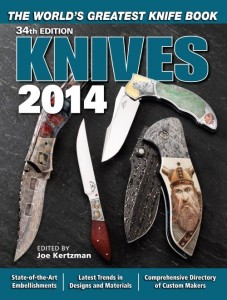
To see and read about as many well-crafted custom knives, both utilitarian and artistic, as humanly possible, the Knives 2014 book is a must-have for your library. To keep updated on factory, custom and semi-production knives 13 times a year, subscribe to BLADE now!

Knives Don’t Make the Man

0
DREW24F620
Photo by Alejandro A. Alvarez.

It’s always nice when mainstream media, in this case the Philadelphia Daily News, covers a local knifemaker and the knives he creates. Such was the case recently, July 24, 2014, when philly.com ran a story titled “Brewerytown Knifemaker’s On Point With His BiltSharp Products,” about knifemaker Adam Balkovic of BiltSharp Manufacturing Co.

Drew Lazor, writer for the Philadelphia Daily News, starts out:

KNIVES don’t make the man. But in the case of Adam Balkovic, founder of BiltSharp, a man definitely makes the knives. Emphasis on the singular. In addition to being the creator of the Philly-based bespoke forgery, founded in 2012, Balkovic also serves as its CEO, creative director, marketer, chief fabricator and sales coordinator. He is the steadily growing company’s only employee – and he’s happy to report that he’s got an excellent relationship with his supervisor.

“When I come to work now, I do whatever the hell I want,” he said. “It’s very fulfilling.”

Look at the pieces Balkovic, a native of the small York County town of Dillsburg, produces with his bare hands, and it’s easy to assume he’s been at the craft for years, apprenticing under an experienced blacksmith, or maybe an elderly Japanese blademaker.

But while the work screams veteran craftsman, Balkovic has been at this for only a few years and is entirely self-taught. Right now, in his inventory there’s a nearly foot-long chef’s knife, made from raw, military-grade 52100 carbon steel and mounted on a gorgeous polished handle of rare Southeast Asian amboyna burl. There’s a one-of-a-kind hunter’s blade … Click here to read the rest of the story.            Click here to see more quality cutlery.


Recommended

Blade 2014Knives 2014, 34th Edition
By Joe Kertzman, Editor

Knives 2014 provides the types of knives they make, technical information, and embellishments like engraving, scrimshaw, jewel inlay, wire inlay, carving, sculpting and etching.

Learn more
Buy now

Midweek Maker Military-Style: Scooter Davis

When Jerry Davis was a baby he was scooting across the floor and his grandmother dubbed him Scooter. He is a third-generation welder and fabricator. His dad made knives as a hobby, and by the time Scooter was a teenager, he, too, was making knives.

Scooter Davis is a welder and fabricator whose dad made knives, and now he does too.
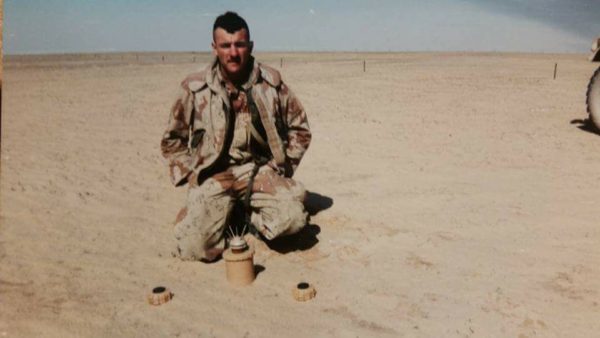
Schooter Davis, a Desert Storm US Marine Corps veteran, specializes in small everyday carry knives, skinners and survival knives.

At 19 he entered the U.S. Marine Corps and served as a heavy equipment engineer during Desert Storm. The Gulf War veteran served four years then returned to West Virginia.

Knifemaker Scooter Davis is a Marine who served in the Gulf War.
Scooter Davis served in the U.S. Marine Corps during Desert Storm. The Gulf War vet then returned to his native West Virginia.

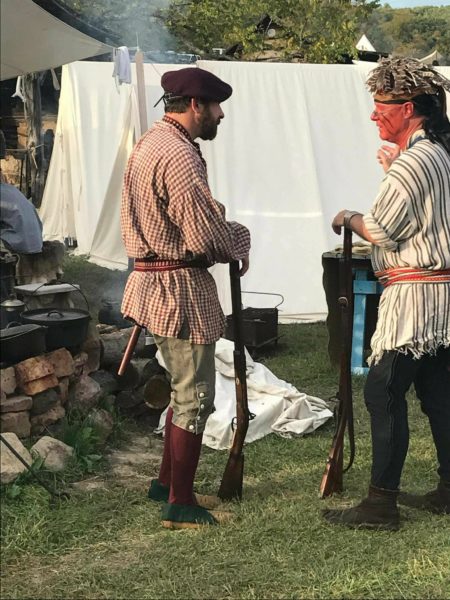
When he isn’t making knives, he’s attending rendezvous, living history gatherings that bring early American frontier days to life. He makes many items in his kit and, of course, period-appropriate knives.

Scooter Davis has been attending rendezvous living history events since he was a child and is enamored with the early American frontier period.
“A primitive rendezvous is a living history event,” Scooter Davis explained. “I have enjoyed them since I was a child. It’s like taking several steps back in time and I enjoy crafting knives and other items that represent that time period [early American frontier].”
He’s also a singer and musician, playing weddings, parties and other events, equally comfortable with Sinatra or Stevie Ray Vaughan.

Scooter Davis makes knives and plays music, too.
The quintessential Renaissance man, Scooter Davis of Rough Run Forge, can also perform anything from smooth jazz to country.

“I’ve always been an artistic feller, always making things. I can make just about anything,” Scooter said. But what really inspired him was the quality of the work he saw coming out of other knifemakers. John Savage has been a good friend along the way. “My goal is to create blades worthy of being used in the outdoors.”

  • Best-selling knife patterns: small everyday carry, skinning, survival
  • Favorite blade steels: 1095 for ease of forging, toughness; 52100 for toughness, edge retention
  • Blade grinds: flat for deep cutting and skinning, convex Scandi for durability in hard use
  • How he tests his knives: field use, chopping mountain laurel, slicing paper, cutting small bolts, shaving  
  • Favorite handle materials: Micarta for toughness and durability; wood and bone for beauty and value. “I am partial to rare and hard-to-find materials,” Scooter noted.
  • Price range: $150 and up
  • Online purveyors: Pendleton County Outdoors, www.pendletoncountyoutdoors.com
  • Knife shows he attends: Greater Shenandoah Valley Knife Show, Harrisonburg, Virginia
  • Member of: American Bladesmith Society
  • Forums he participate in: Facebook Groups, Knife Dogs, BladeForums.com
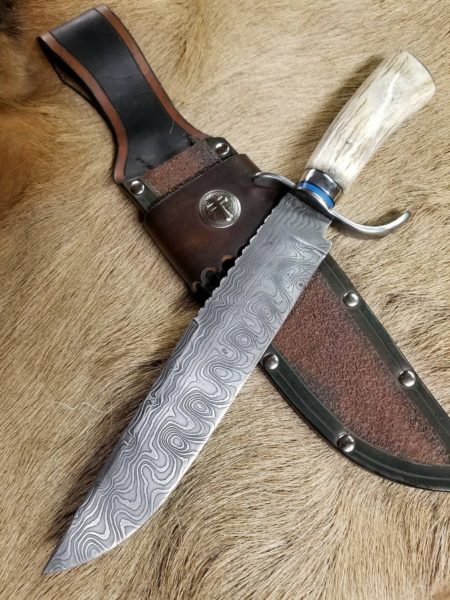
Scooter Davis' bowie is 17 inches overall.
This bowie has a 13 1/2-inch blade made of pattern-welded steel by Zoe Crist Knives. The handle is comprised of elk antler, stainless steel and G-10 spacers. The maker’s own pattern-welded steel was used on the guard. Maker’s list price: $800. Contacts listed at the bottom of this article.
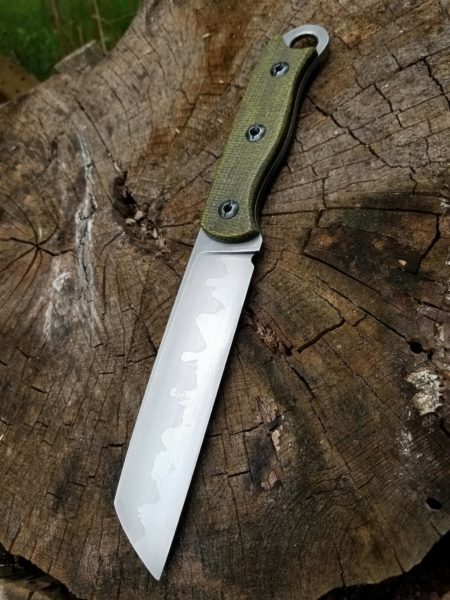
Scooter Davis of West Virginia makes a seax with Mircata handle for $250.
Scooter Davis’ seax is 10 1/2 inches long with a 5 1/2-inch blade made from W2 steel with hamon. Avocado Micarta scales were used for the handle. Maker’s list price: $250. Contacts listed at the bottom of this article.
The W.A.C.K. is just one of many knives offered by Desert Storm Marine Corp vet, Scooter Davis.
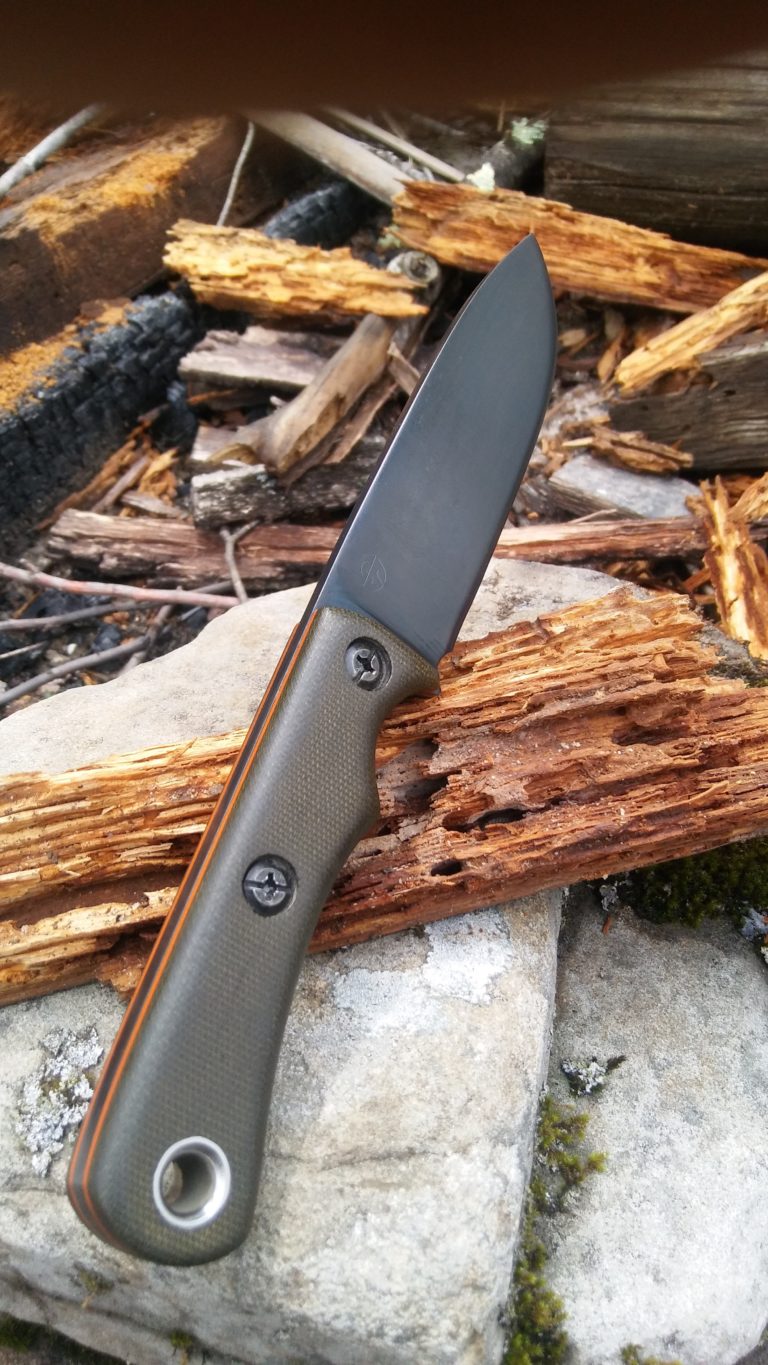
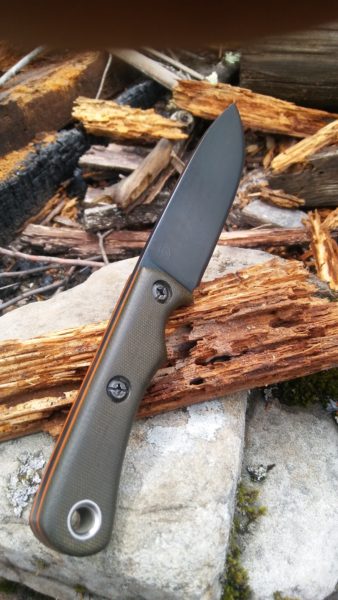
The W.A.C.K.-1 (Wilderness Area Camp Knife) has a 5-inch blade forced from 1095 high-carbon steel. The scales are fashioned from OD green canvas Micarta with hunter orange G10 liners and a ½-inch stainless steel lanyard tube. Contacts listed at the bottom of this article.

Contact Scooter Davis at 540-560-1672, [email protected], on Facebook at Rough Run Forge and Instagram @roughrunforge.

A Digital Subscription To BLADE is the Answer

Save $4 off the print price of a annual subscription to BLADE Magazine with a digital subscription.
You can read your digital issues of BLADE Magazine anywhere you have your phone, tablet or computer, and there’s no need to find storage for all your old issues.

If piling-up issues of magazines seems like a waste to you… If you feel like you don’t have time to read a magazine… If you like the stories we offer in BLADE, but want a more economical option, then a digital subscription is the answer. An annual subscription to BLADE is $17.98, $4 off the print price.

Video: Jigging and Shaping Knife Handle Scales

0

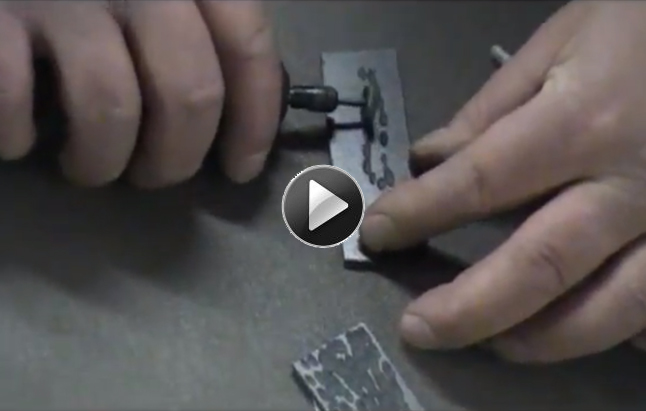
American Bladesmith Society master smith Steve Dunn demonstrates how to jig and shape knife handle scales in this video.

The tutorial was shot during the Slip Joint Folding Knife class at Haywood Community College in Clyde, North Carolina, on Dec. 3-7, 2012.

Learn more about knife designs, including handles, in 101 Knife Designs.

Jon P. Moore shows how to stain curly maple wood knife handle

0

This is a “how to stain curly maple wood” tutorial, Jon P. Moore shows what stain to use, how to prepare the wood and what to use for a gloss finish on one of his custom knives. The finished knife is shown at the end of the video.

BLADE did a quick interview with Jon about hand cleanup after rubbing the oil into the wood handles.

Editor Steve Shackleford: “Good video, Jon. Short and to the point. Those are the best kind. Question for you. When you rub the oil into the handle so aggressively with your bare hands, are there any dangers of harmful effects to you from absorbing the oil into your skin? Do you wash your hands with some kind of solvent or some such afterward?”

Jon: “Steve, the ‘Tru-Oil’ is weird stuff, I ran out of time on the video. It dries so fast, I don’t believe much, if any, is absorbed into the skin. I spray WD-40 on my hands, then wipe them with a paper towel, and my hands are completely clean, dry and not tacky. I had to edit that part out for time. I was told, this is a ‘hand rub finish’ done by custom gun builders. As for long term effects, I don’t know.”

8 Amazing Additions To Any Knife Book Library

One thing that humble knifemakers find difficult to do at times is to express pride in their work. It’s the same thing with we knife editors and publishers. But when you look at these eight knife books that F&W Media has put out over the past few years, they’re not only impressive as a whole, but each individual title is clearly an example of quality work.

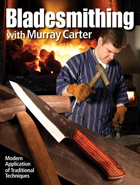
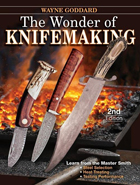
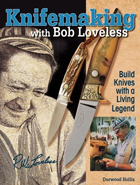
If you were interested in knifemaking and started with the two books Bladesmithing With Murray Carter and Knifemaking With Bob Loveless, you’d be well ahead of the game and your peers. Add in BLADE’s Guide To Making Knives, 2nd Edition, and suddenly you’re learning the craft from such knifemakers as Don Fogg, John Lewis Jensen, Tim Zowada, Allen Elishewitz, Vince Evans, Rick Dunkerley and Kevin Hoffman. Are you kidding me?! And how many of you have NOT heard of Wayne Goddard? His book The Wonder Of Knifemaking, 2nd Edition is a must-have for any knife book library.u1059_500px_72dpi_1 v0802 W1852 W5865 X3269 Z4387 Z7240 Z7241


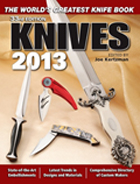
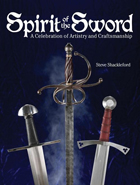
If custom or handmade knives are your thing, the 33rd Edition of the Knives annual book, Knives 2013, will blow you away with full-color photography, feature articles written by the world’s best knife writers and a complete directory of custom knifemakers. Another sweet, full-color, gorgeous coffee-table book is Spirit Of The Sword by Steve Shackleford. It takes you on a trip from historic to modern swords and back again.

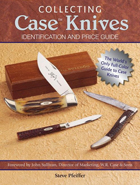
For knife collectors, you can’t go wrong with a book devoted entirely to Case Knives, the most collected brand in the world. Check out Collecting Case Knives by long-time collector, expert, accumulator and investor in everything Case, Steve Pfeiffer. And if after all that, you’re ready to design your own knives, or just need inspiration from over 100 classic knife designs, be sure to put in your pre-order for the brand-new, soon to hit bookshelves and stores everywhere 101 Knife Designs by none other than Murray Carter.

Admittedly, that’s one impressive knife book lineup, and would make any knife enthusiast’s library complete!

Advertisement

Must Read Articles

Read this before you make a knife

Knifemaking 101 – Read This Before You Make a Knife

  by Wayne Goddard My experience has taught me that there's nothing like digging in and getting started. I've often said the hardest part of the...
how to forge damascus steel

How to Forge Damascus

Advertisement
Advertisement