Knifemaking is the building of a knife, which includes the blade, handle and other accouterments. Blades are made by either removing metal from a steel blank via a grinder – known as stock removal – and the forging to shape of hot steel into a blade in the process known as bladesmithing. Other parts, including bolsters, guards, pommels, etc., are needed to complete the finished knife.
Ernest Emerson Is One Of The Leading Designer Of Tactical Knives, And We Get To See His Shop And How He Works
Ernest Emerson is entering his 44th year of knifemaking and his manufacturing company, Emerson Knives, Inc., is celebrating its 25th anniversary. Many knife nuts who have been around awhile remember Ernest when he was purely a custom knifemaker who was making exquisite folders exclusively. Then things changed.
When the first Gulf War came along, Emerson—who has an extensive background in martial arts—had already been working on tactical knife designs and, being the patriot he is, was ideally positioned to do his part in the war effort. Along with a handful of other talented custom makers, it wasn’t long before Ernest was instrumental in helping kick off the modern tactical knife movement that is still a huge part of the cutlery market today.
He never looked back and 25 years ago took his designs to the masses, switching his focus to becoming a cutlery manufacturer of tactical knives, primarily of the folding kind. He continues to make a limited number of custom knives and also uses his skills designing new knives for his factory line. We asked Ernie to give us the lowdown on the tools and equipment he relies on most to do his custom work and prototypes for Emerson knives.
Ernest Emerson’s Tools And Machines
Emerson employs a number of light, low-cost bench-top drill presses. He leaves them set up for various drilling and reaming operations, which saves him a lot of time as he moves down the row drilling liners and handles.
He opened by praising his vintage mill.
“The old Bridgeport has been fixed and rebuilt more than once but it is solid old-school quality and can still easily hold +/- .001-inch tolerances,” he observes. “I use it for all of my milling, tool, jig and fixture building, as well as all operations on bolsters and handles that require precise tolerances and hole depths such as bolsters, counterbores and handle countersinks.”
For grinding, he calls out one grinder maker in particular as his favorite.
“I use a variety of grinders but my go-to machines are those by Travis Wuertz. They are solid, sturdy, virtually silent, and extremely well thought out—and engineered by Travis,” Ernest says. “Their real value to me is that I can build a wide variety of specialized fixtures and tools that allow me to do very precise grinding operations on both blades and handles.”
Emerson uses a number of low-cost bench-top drill presses.
“At $125-$150 each I can afford to own several of them and leave them set up for various drilling and reaming operations,” he notes. “This saves me a lot of time as I can just move down the row as I drill liners and handles. The light drill presses work perfectly for me because all the holes I drill, tap or ream are small diameters and don’t need heavy drill presses to perform the operations. Plus, I get a better, lighter feel when I’m drilling delicate and expensive materials like pearl without damaging them.”
Keeping Things In Order
Hammered-6 in Moku-Ti bolsters with distressed solid copper scales and a hammered blade. Emerson’s list price: $10,000.
Ernest is a firm believer in being organized.
“Although my work area may look a little cluttered or messy [he was preparing for a show when the accompanying photos were taken], I am extremely organized and orderly,” he emphasizes. “Having come up through an apprenticeship program to become a tool-and-die maker, I had it drummed into me the importance of cleanliness and organization in producing precise results.”
He also relies on the smaller things that make up the whole of knifemaking.
“Although machines seem to play the biggest role in most shops, in my endeavors it is the jigs and fixtures that are my most valuable tools,” he states. “Coming up through the apprenticeship program early in my career and eventually earning the title of tool-and-die maker, it was hammered into me that the best machinists are the ones that can conceptualize and invent the most efficient and precise tools, jigs and fixtures to help them do their job. There is a lot of truth in that statement. I also have a full machine shop and woodworking shop with all the jointers, planers, sanders, table saws, routers, lathes and woodworking tools that I use.”
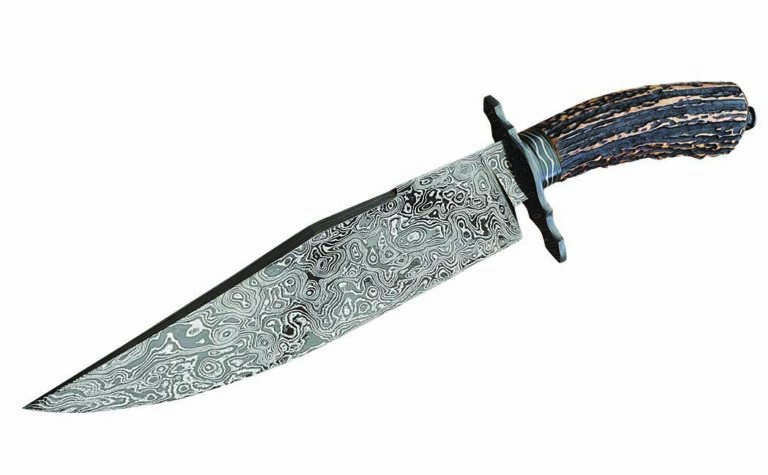
Forget the traditional 10-inch blade, the new sweet spot for a custom bowie knife is now a 9- to 9.5-inch blade!
In July 1990 I was in the Army, home on leave from South Korea and attending The Knifemakers’ Guild Show in Orlando, Florida. While there, I was introduced to the forged blade.
I stopped by the table of ABS Master Smith Jim Crowell. He explained to me what it took to gain the prestigious rating of ABS master smith. It wasn’t just the quality of the knife that impressed me. I was amazed at how a 15-inch knife with a 10-inch blade could be so lightweight. While I was not new to fixed blades, my experience to that point had been with stock-removal knives.
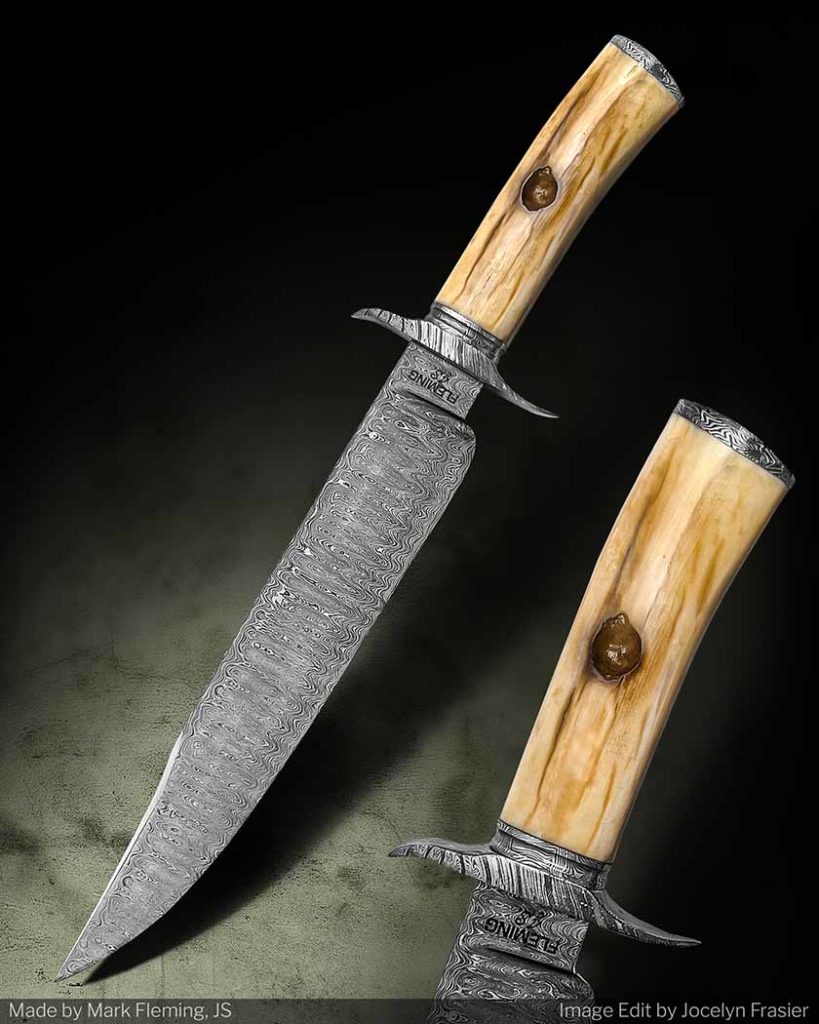
Bad to the bone, Mark Fleming’s forged Southwest Trail Bowie has a 9.5-inch blade made of 1084 carbon and 15N20 nickel-alloy steels in a ladder pattern. The handle is ancient walrus tusk, capped with a damascus pommel, ferrule and guard. Almost a steal, with Fleming marking the price at $1,900 for a similar knife.
Jim explained that distal tapering is a procedure to thin the blade from guard to tip and spine to edge. The amount of tapering depends on the purpose of the knife. As I moved through the show, I started paying more attention to the forged blades on the exhibitors’ tables. What I discovered was what was called the ABS Bowie. The dimensions of the knife were a blade of 10 inches in length, 1.5 inches wide and a quarter inch thick, generally with a 5-inch handle.
Development Of The Shorter Custom Bowie Knife
Those who have been involved with custom knives for some years know that the knives tend to move in cycles. Innovation leads to demand from collectors. There’s a lot of “following the leader” in the custom knife business. This could have helped explain why so many knives were dimensionally identical at the ’90 Guild Show. While some had damascus blades and hardware, most were carbon steel.
In 1992 the custom knife market cycled to a new entry into the custom knife world: the tactical folder. Toward the end of the decade, tactical folders started to wane, and forged blades once again established their prominence in the custom knife world. This time around the cycle began with hunters—basically, those with forged carbon steel blades, stainless guards, and wood or stag handles. The price point was predominantly in the $150-to-$210 range. By 2002, collectors buying hunters were ready to move to the hunter’s “big brother.” Meanwhile, the decade was populated with damascus patterns such as ladder, raindrop and twist, all of which began to show up more regularly.
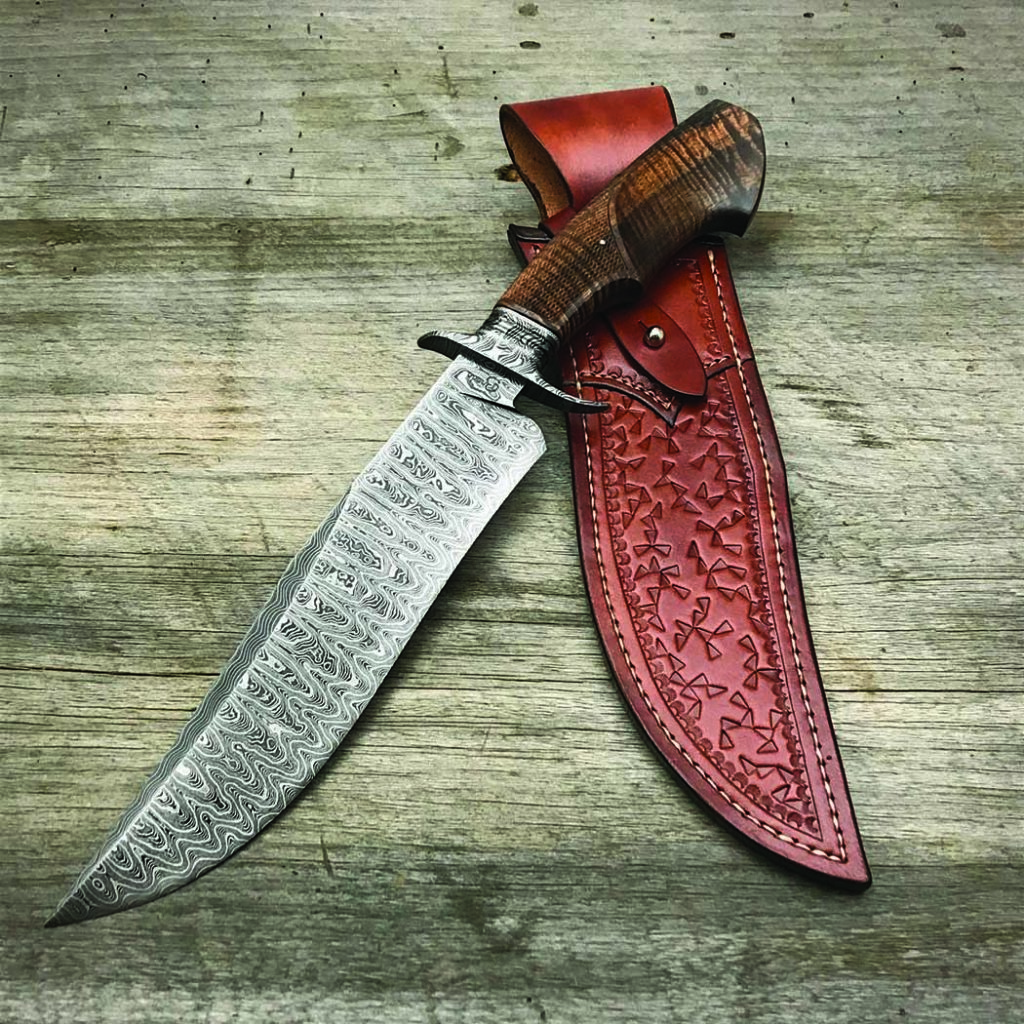
Another nine-and-a-halfer, Ben Brea’s Forged Stag Bowie has a ladder-pattern damascus blade and a checkered koa handle. The superlatively executed custom bowie knife comes with a custom leather sheath. Breda set the price of a similar knife at $2,000.
While damascus was in demand by the higher-end collectors, it was W2 tool steel blades with hamons that took center stage for about five years. No two hamons were exactly alike. They looked cool and, for most collectors, were affordable. While antique designs from the mid-1800s were showing up more regularly, the one thing that hadn’t changed was the ABS Bowie, the majority of which continued to have 10-inch blades or longer.
BLADE Magazine Cutlery Hall-Of-Fame® member Jim Bowie was at least 6 feet tall. Depending on your source, the knife he carried had a blade with a length anywhere from 9.25 inches (on the one his brother Rezin stated was made for Jim), to 121/8 inches (the knife known as the Edwin Forrest Bowie), and a handle length of up to 6 inches. For size comparison, the Japanese ko-wakizashi, a short sword that was carried by samurai, started with a 12-inch blade. The ko-wakizashi was worn outside the clothes in a belt at the waist. Current knife laws aside, a knife that long would be difficult to carry and use openly. After all, have you ever tried carrying around a knife with a 12-inch blade? My only experience was a two-week field exercise while I was in the Army. The knife I took with me had only a 10-inch blade. Granted, I am at least 1 inch shorter than Jim Bowie was. But the 10-inch blade was cumbersome to carry and, quite frankly, just too long for what a soldier needed. Also, it would be challenging to deploy the knife without having it in a cross-draw setup similar to what the samurai employed.
Dimensional Changes To Cutom Bowie Knives
While it isn’t much different from the ABS Bowie, the current hot custom bowie features a 9-to-9.5-inch blade. The other difference on many of the blades is that the width has expanded from 1.5 to 1.75 inches. The additional blade width allows makers who so desire to use some curves along the primary edge.
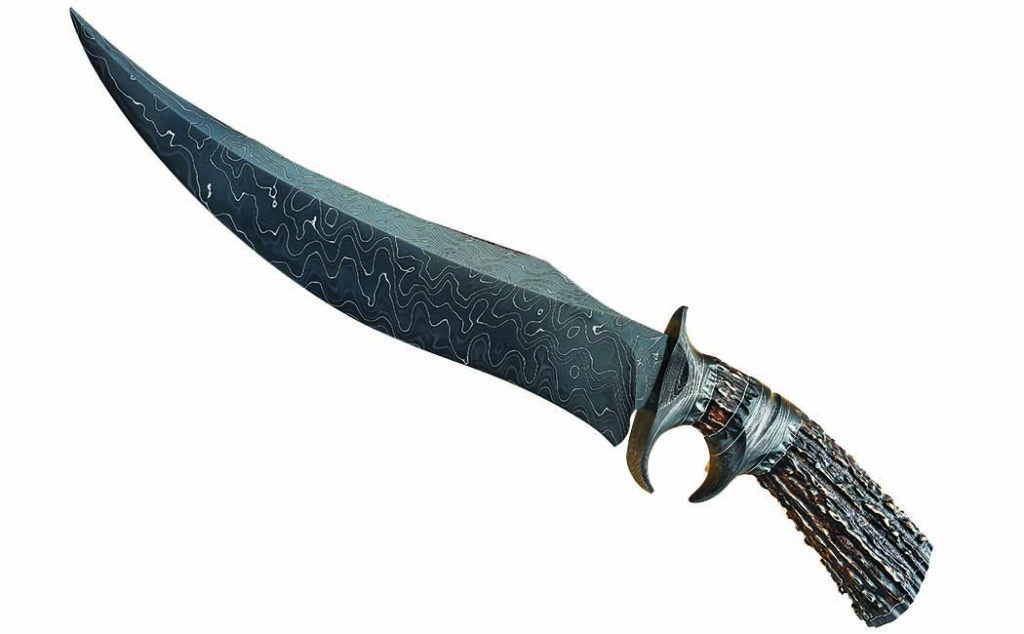
A big boy of the bunch, Brian Sellers’ 9.5-inch custom bowie knife boast a twist-pattern damascus blade (double-edged) with stainless steel liners. The handle is ironwood and features a sub-hilt design, which Sellers would ask $2,400 for a similar creation.
I think that the shorter, wider blade is more aesthetically appealing. It no longer looks long and thin like its lengthier, narrower cousin. Moreover, the additional width results in a more substantial blade. Finally, extending the blade width allows bladesmiths to tweak the accompanying damascus patterns. Mosaic damascus patterns have gained favor among makers and collectors over the past two years. The extended blade width may give rise to new mosaic patterns. At the same time, the extra width may add a fresh take on standard damascus patterns such as ladder and twist.
The Constant Change Of The Bowie Knife
Today, most of us don’t use large bowies to defend our honor or protect our loved ones. Whether antiques or current models, many bowies have been relegated to collections. Given the amount of 10-inch custom bowies made over the past 30+ years, hundreds of them are for sale in the primary market and thousands are available in the aftermarket. Should you want a 10-inch bowie, your choices of materials and combinations are almost limitless. Given the number of 10-inch bowies available in both the primary market and aftermarket, it should be no wonder collectors are looking for something different.
As many of you may know, as a purveyor I keep pretty close tabs on several custom knife market sectors. Damascus bowies is one such sector. Over the past 18 months, I’ve seen both collectors and makers move away from the standard 10-inch bowie. This is not to say such bowies are not being made but that the demand has slowed. Makers are creating new types and patterns of damascus. Is it any wonder then that what were considered standard dimensions over the past 30 years are being revisited? The new sweet spot of the 9-to-9.5-inch blade is appearing more on today’s custom bowies. Eventually, bowie collectors will once again look for something new and different for their collections. As the Greek philosopher Heraclitus said, “The only constant in life is change.” The same is true in custom knives.
Dedicated in honor of the “Father of Modern” damascus—William F. Moran—the Moran Bladesmith and Artisan Academy is now a reality.
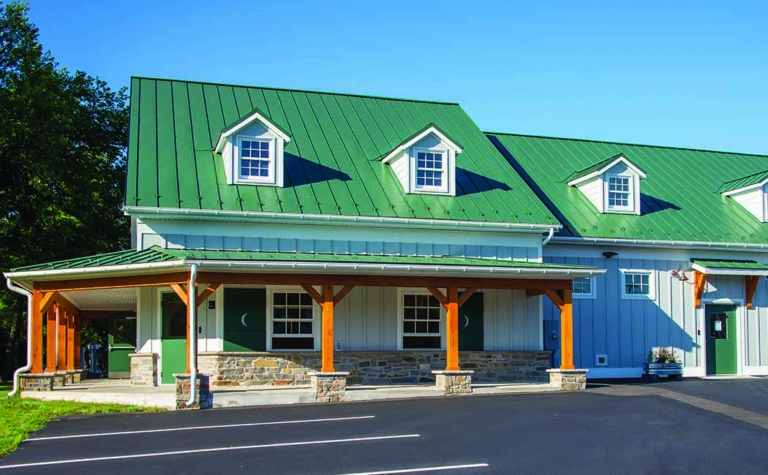
William F. “Bill” Moran, Jr., the first American bladesmith to successfully forge damascus steel blades and a founder of the American Bladesmith Society (ABS), was honored on October 16 in Middletown, Maryland, with the dedication of the Moran Bladesmith and Artisan Academy. Under the auspices of the Moran Museum & Foundation, the Academy is an impressive structure that stands less than 100 yards from Moran’s now idle knife shop.
The weather was virtually ideal as a large crowd assembled in front of the building. Director Nancy Hendrickson, mistress of ceremonies, welcomed the audience and introduced Robert Wilson, president of the Moran Foundation, who opened the proceedings with a prayer and gave an overview of the activities leading up to the dedication.
Mrs. Hendrickson next introduced the speakers for the afternoon: John Miller, burgess of Middletown; Jerry Donald, district commissioner; Jay Hendrickson, founder of the Moran Foundation and past ABS president; Joe Keeslar, past ABS president; Johnny Perry, past vice president and director of the Moran Foundation; and yours truly, a founder of the ABS and author of Master of the Forge, a Moran biography.
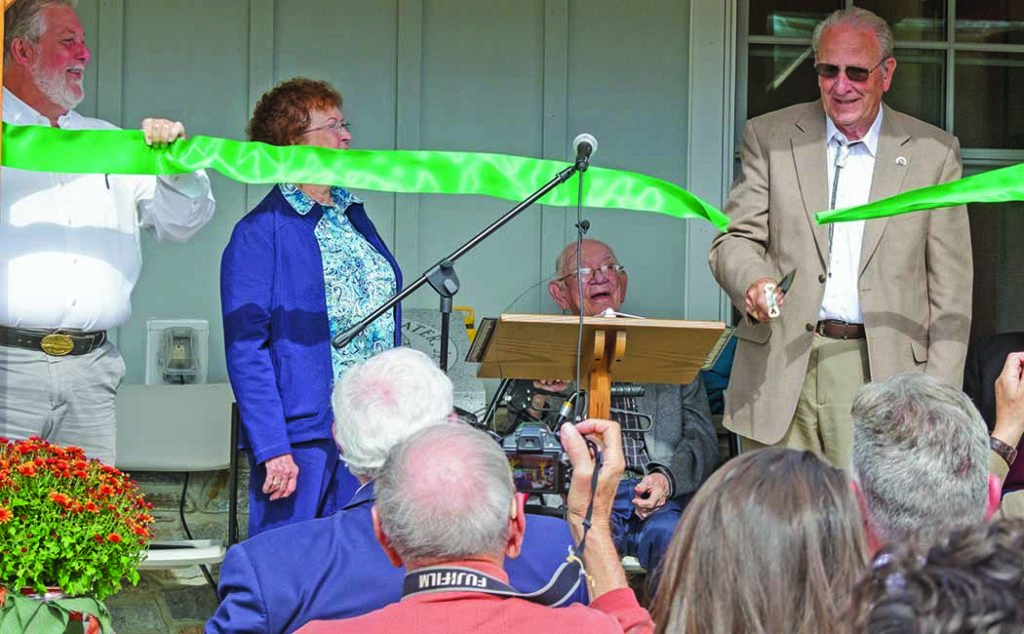
Jay Hendrickson uses one of Bill Moran’s favorite knives to cut the ribbon officially dedicating the Moran Academy. Looking on from left are Robert Wilson, Nancy Hendrickson and the author.
Following the oral presentations, a ribbon cutting done with a Moran knife was conducted by Jay Hendrickson, Robert Wilson and Gordon Conner, Foundation vice-president.
Mrs. Hendrickson closed the ceremony and the group enjoyed a round of refreshments that featured a cake cutting. The assemblage then toured the new building, which contains an office, classroom, museum and gift shop, and a large room where forging, grinding and related skills will be taught. The Moran shop, which is in excellent condition, will be a museum and a working smithy. A knife show was held October 15 in the space between the Moran Academy and the Moran shop, followed by an auction conducted by Robert Wilson.
FATHER of MODERN DAMASCUS Moran unveiled his eight damascus knives a half century ago at the 1973 Knifemakers’ Guild Show in Kansas City, Missouri. The knives were the hit of the show and rekindled interest in bladesmithing, which was a dying art form in America at the time. There were only about a dozen practicing smiths back then, including such notables as Bo Randall, Rudy Ruana and, of course, Moran. Under Moran’s leadership, the ABS was formed in 1976, with Moran elected president, Don Hastings, treasurer, Bill Bagwell, secretary, and yours truly, director. Moran, Bagwell and Hastings were the first three American smiths to successfully forge damascus knife blades.
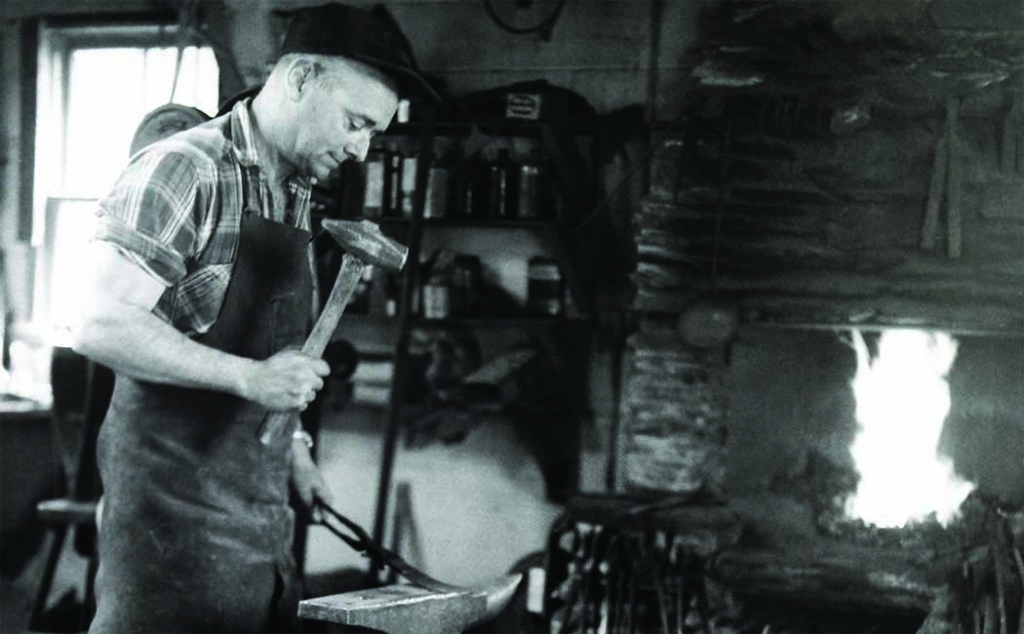
Bill Moran hammers away in his knife shop in this vintage photograph. The shop stands about 100 yards from the new Academy. The knife is the ST-24, considered one of the finest Moran knives ever. (Images from William F. Moran, Jr.: “Forever A Legend”)
As the meeting broke up, Moran turned to me and said, “If we play our cards right, Bill, one of these days we could have 25 members.” Today, of course, the ABS membership is many times that number and has gone global. The Moran Academy stands as mute testimony to the fact that Bill played his cards very well indeed. Almost single-handedly, he preserved the art of bladesmithing not only in America, but around the world.
Author’s note: Jay Hendrickson, Hughes, Keeslar, Moran, Randall and Ruana all are members of the BLADE Magazine Cutlery Hall of Fame® and the ABS Hall Of Fame as well.
A knifemaker and other knife pros take different approaches to the Ukraine-Russia conflict.
The ravages of war often have global impact—even when the fighting is half a world away and the devastation is seen through pictures and words rather than bullets and bombs. War, anywhere, tends to touch the lives and livelihoods of many.
The knife industry, both factory and custom, is no different. The war in Ukraine has brought devastation to the country, and its end was nowhere in sight as BLADE® was going to press. Ukrainian resistance is robust, probably in sharp contrast to the results anticipated when Russian President Vladimir Putin decided to invade his sovereign neighbor. While the resilient Ukrainians defend against such aggression, where and how does the knife industry feel the long reach of war?
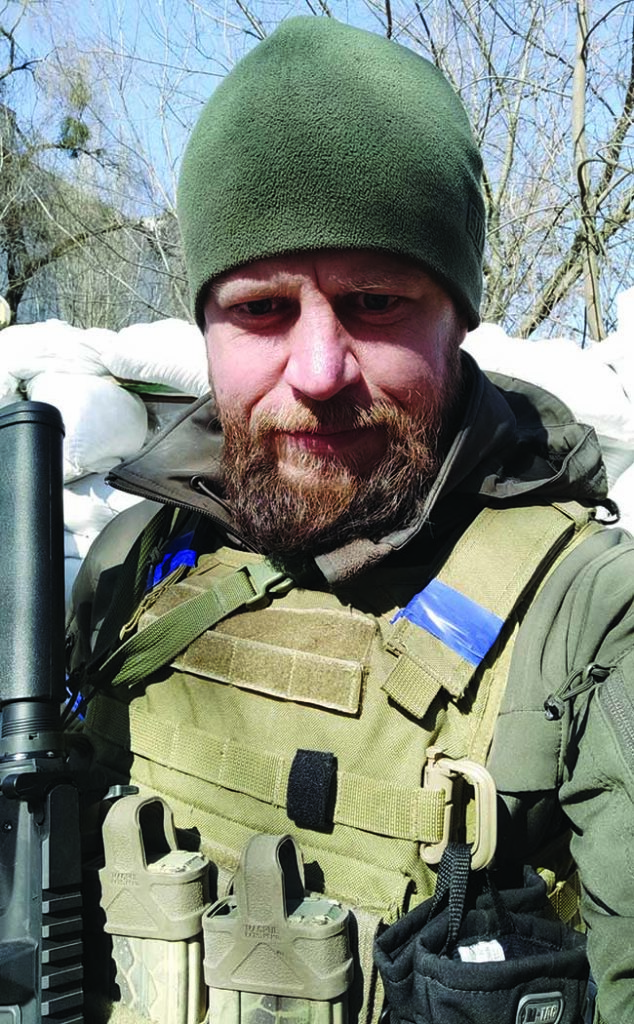
Oleksii Nesterenko is a custom knifemaker. He is also Ukrainian.
“On February 24,” he commented, “Russia, with the support of Belarus, launched an open military attack on Ukraine. My city, Kyiv, was one of the main goals. After systematic rocket attacks on the city, my wife and children were forced to evacuate to Germany.”
At press time, Ukrainian knifemaker Oleksii Nesterenko had signed a contract as a territorial defense volunteer for Ukraine and had stopped making knives.
The war came home to Oleksii, and his life may very likely never be the same. He has responded to the call to defend his country. “I signed a contract for a territorial defense volunteer and stopped making knives,” he said. “As far as I know, the work of some knifemakers who work in the cities where there are no active hostilities has changed too. Many have abandoned the making of collectible knives and make simple, utilitarian knives and other devices for the military.”
Purveyor Dave Stark of Steel Addiction Custom Knives sells Oleksii’s work, and despite the fact there is a temporary suspension of custom pieces from the Ukrainian maker, Dave praises the quality of his knives.
“Oleksii’s fit and finish and his attention to detail are what set him apart from his peers,” Stark noted. “His choice of materials and the manner in which they are finished really make his work stand out. His hand-rubbed satin finish on his blades is some of the best I’ve seen. The knives feel great in the hand and mechanically are spot on. I would say his style is ‘dress tactical.’ He uses Damasteel’s pattern-welded steel, damascus, mother-of-pearl, mokuti, zircuti and zirconium.”
Perhaps current events will make Nesterenko’s knives even more highly sought after in the future. Meanwhile, he is consumed with the dirty business at hand.
“Now in the Kyiv region where I live, Russian troops are defeated and active hostilities have ceased,” Oleksii reported. “But I am still on duty at checkpoints and volunteer. We help the civilian population in the villages near the front. I think that in a few weeks I will have time to partially return to knifemaking.” While he is hopeful and actively involved in the defense of his country, Nesterenko has kept an eye on the conditions of the knife industry in Ukraine and anticipates some adaptations.
“Currently, there are no problems with the supply of materials for the production and shipment of knives abroad,” he advised, “so I look forward to returning to work. I am sure that a knifemaker can make a quality knife only if he uses it for its intended purpose. That’s why I used to make only EDC knives. Thanks to the war, I understand what requirements a tactical folding knife must meet. I have already drawn several designs and am waiting for the opportunity to get started.”
Changes in demand are not noticeable at this time, according to Oleksii, and orders are in the queue for delivery around the world into 2023. Still, he warned, “I think that the consequences of the war in Ukraine will affect the economies of many countries. And over time, that will affect collectors.”
Little Change
In much of the domestic knife industry, little in the way of change has occurred due to the war thus far. Custom knife purveyor Les Robertson said that by mid-April FedEx service to Ukraine had been suspended. Therefore, the volume of knives conventionally being sent to Ukraine has probably been curtailed, at least somewhat. Neighboring European Union countries are still moving mail into Ukraine.
Les Robertson
“No one is sending knives directly to anyone in Ukraine,” Les noted. He went on to comment that factory sales to “armchair warriors” may in fact tick upward as the war persists.
Purveyor Neil Ostroff of True North Knives agrees that the current custom knife market is maintaining its status quo. “In my opinion, as a dealer,” he commented, “we have no change from the customers concerning knives from either Ukraine—now on hold—or Russia. Several Ukrainian knifemakers have set up in Poland, and they do not want to be named.”
Still, Ostroff is somewhat insulated businesswise from the turmoil in Eastern Europe. “Going forward, I see no issues coming through, as there have been none so far,” he observed. “And most if not all of my clientele prefer to buy only USA-made items, which is what I prefer to supply as well.”
From the factory perspective, Joe Bradley, director of sales and marketing for KA-BAR, has noticed virtually no changes in activity. “The war in Ukraine hasn’t had any impact on us at all,” he remarked. “As far as production, and even consumption, the impact has been zero.”
Bradley added that supply and demand are in line. “We have not seen an increase. Currently, we are seeing the market being more impacted by inflation than anything else. I think most of the people, at least Westerners, in the Ukraine already had their supplies and as a result didn’t have a need to buy anything new. Production and logistics have been a problem since the start of COVID,” he observed, “and are just now starting to get back on track and return to a semblance of normalcy.”
KA-BAR has experienced no changes in product offerings or knife styles as a result of the war in Ukraine. However, Bradley offers one interesting point of view. “If anything, this war has shown the merits of what some might consider antiquated weaponry like the AK-47,” he pointed out. The AK-47 is perhaps the world’s most famous assault rifle, arising in the Soviet Union during the Cold War, experiencing authentic production models and knockoffs made in the millions, and arming military organizations around the world for well over half a century.
“Free The Oppressed”
Spartan Blades is located in Fayetteville, North Carolina, near the gates of Fort Bragg, home of the U.S. Army’s XVIII Airborne Corps and Special Operations Command. Spartan owners Curtis Iovito and Mark Carey, both Special Forces veterans, have seen a groundswell of support for Ukraine. Knife sales bear the unmistakable mark of the conflict.
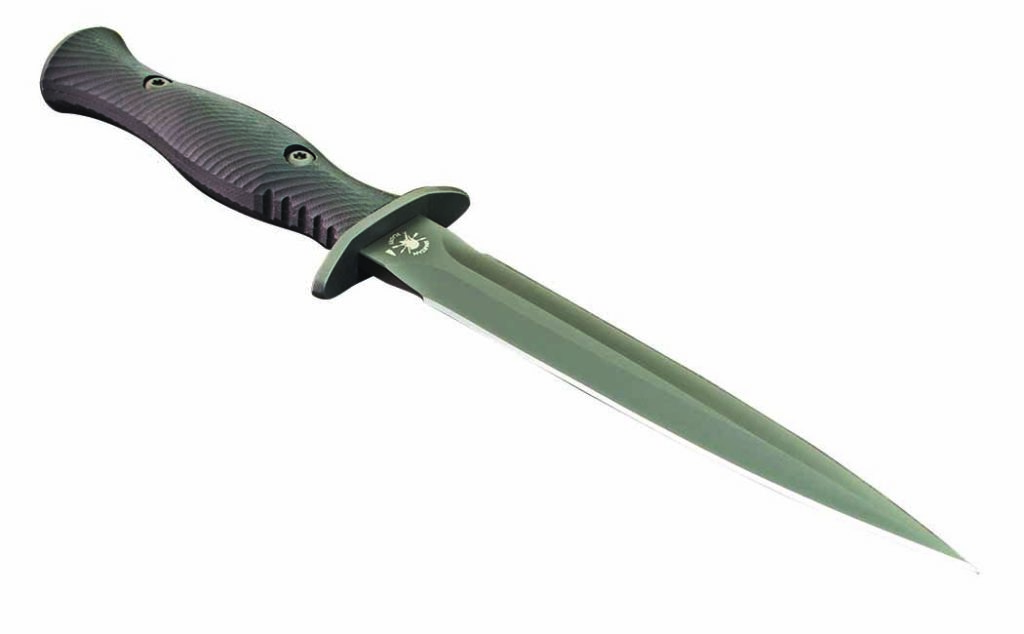
According to Curtis Iovito of Spartan Blades, more military professionals and contractors buy the company’s Gold Line knives. An example is the Spartan-Harsey Dagger in a 6-inch blade of CPM S35VN stainless steel with a hollow grind. MSRP starts at $390. Bill Harsey is the designer.
“Most of the sales are to people here in the U.S. with notes that they are purchasing for folks in the Ukraine,” explained Curtis in acknowledging the market uptick. “Several orders have had short tags like ‘Free the Oppressed in the Ukraine’ or ‘Support the War against Russian Aggression.’ Because we are at Fort Bragg, we have several Special Mission units from friendly foreign countries drop by the shop to pick up knives for their use. While that isn’t uncommon, it’s happening more than usual. We’ve noticed during our discussions with them that things have a more serious tone.”
Others buying more knives from Spartan Blades include people from all walks of life and military involvement. Curtis said, “Our Gold Line knives are going to more of the military professionals and contractors, and our Silver- and Bronze-grade knives are selling to folks across the spectrum. Many of the knives bought are by civilians that later donate the knives to NGOs [non-governmental organizations] that ship in bulk to Ukraine.”
As far as production, it’s business as usual at Spartan Blades, a longtime producer of knives that go to war. There are a few new items on the horizon, and the owners expect business to be brisk in the days ahead.
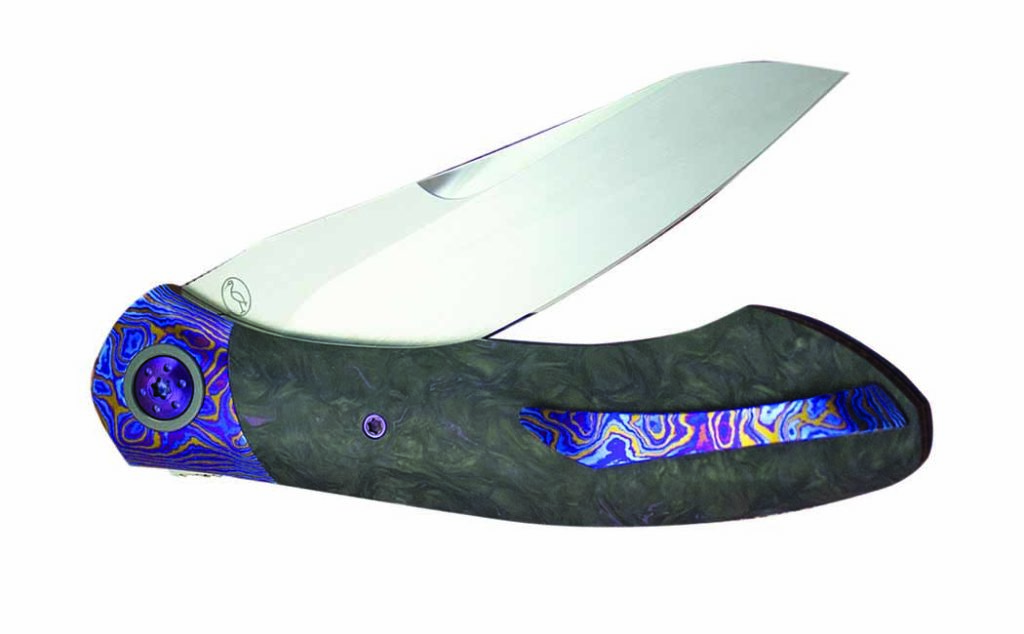
Oleksii employs M390 stainless steel for the 3.75-inch blade and a handle of black and purple Fat carbon fiber for his Morph flipper folder. The bolster is Timascus™ and the pivot rings and back spacer are zirconium. Closed length: 8 5/8 inches. Retail price: $2,800. (Steel Addiction Custom Knives image)
“Honestly, the war in Ukraine hasn’t affected how we do things here at Spartan Blades,” Iovito asserted. “We’ve made knives through the last two decades for troops in both Afghanistan and Iraq, so things are kind of par for the course. “We have several new knives coming out around the end of this year,” he continued. “We had planned on releasing these later but have sped up because the price point and style match some of the requirements we have seen lately. They are being designed by William W. Harsey, Jr.—a fighter, a Nessmuk and a kukri blade. They will be in 1095 Cro-Van blade steel and made in conjunction with KA-BAR Knives. Pricing has not been determined yet, but we are shooting for a sub-$200 retail price. The first one produced will be a fighter later this year.”
Surveying the knife landscape today begs a few questions as Iovito and Carey plan for the future, uncertain as it may be.
“We have seen a slight increase in steel prices, but we haven’t raised our prices in over a decade,” Curtis stated. “We assume we will continue to see price increases soon in commercial, off-the–shelf parts but are keeping our fingers crossed. We believe we will see an increase in knife demand as it appears the conflict in Ukraine [will not end as soon as many thought it would].”
The war has had other effects, including dampening attendance at European trade shows.
“We were very surprised that most of the U.S. knife companies did not attend the IWA show* in Nuremberg, Germany, this year,” Curtis noted. “We even had people thanking us for attending, as you could tell they are counting on U.S. support even if it is just showing up to support them in spirit. There was definitely a new and urgent concern about military spending. The German government approached two companies that I know of and bought their whole inventory—cutting checks the same day!”
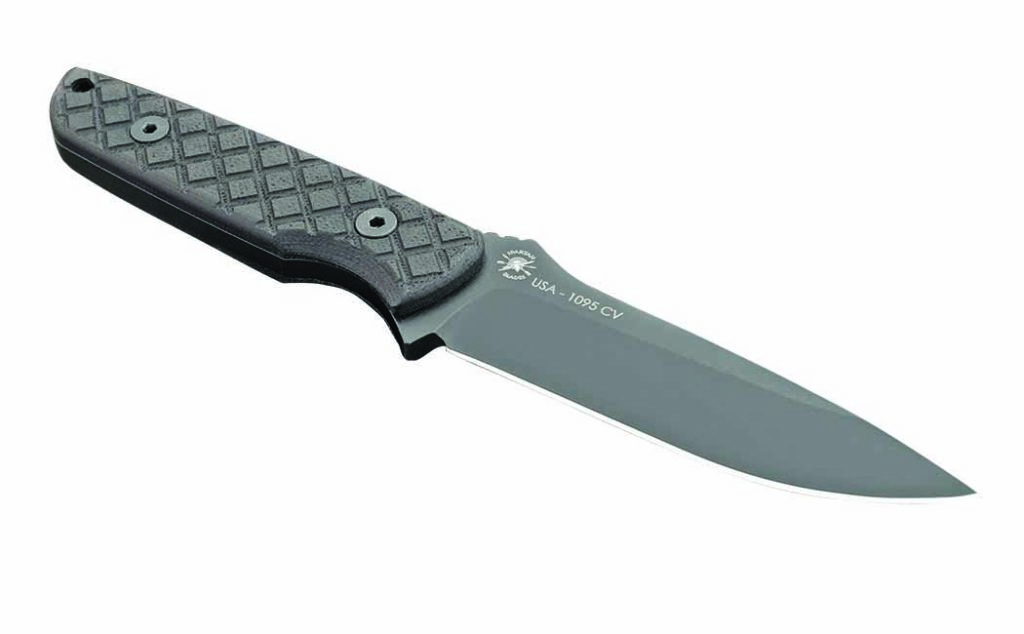
Curtis Iovito indicated Spartan’s affordable Silver- and Bronze-grade knives are selling well to people across the spectrum. One of the latest examples of a Silver-grade knife is the Alala in a 3.75-inch blade of Cro-Van carbon steel with a saber grind. MSRP: $159.
In wartime, uncertainty often reigns. However, awareness, preparation, and the desire to return to the shop are evidence that the ongoing conflict in Ukraine will influence the future of the entire knife industry for the foreseeable future.
*Held each spring, the IWA OutdoorClassics (iwa.info) is the European equivalent of the Shooting, Hunting, Outdoor, Trade (SHOT) Show stateside, and is a place where many new factory knives are debuted.
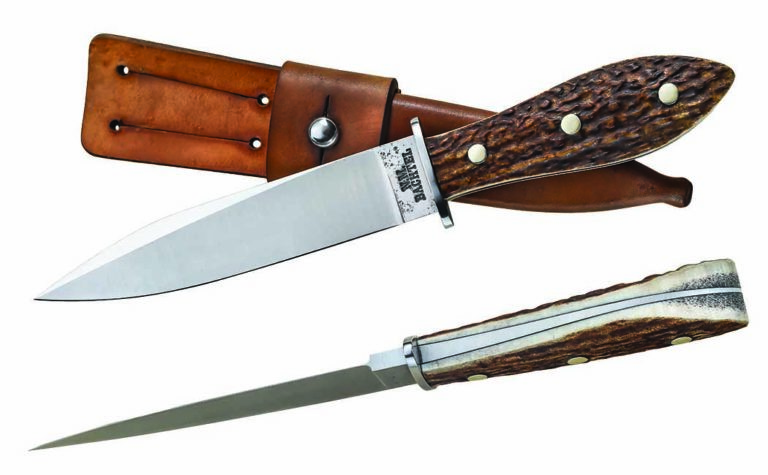
A study of Michael Price’s work, Nick Bachtel’s reproduction gentleman bowie has the looks to wow.
Bladesmith Nick Bachtel has parlayed his fascination with the knives of 19th-century great Michael Price into a faithful reproduction of a Price-style gentleman’s bowie.
Nick studied every Price knife and other like ones of the genre he could find online and elsewhere to help arrive at the way the 19th-century cutler constructed the gentleman’s bowie. However, it was when he saw a picture of a Price knife in BLADE Magazine Cutlery Hall-Of-Fame® member Bernard Levine’s book, Knifemakers Of Old San Francisco, that “a light went off.”
Nick noticed that the handle had three pins so the knife had to have a full tang, not a hidden tang as he had previously thought, so he forged the knife, heat treated it, fit up the guard and forged the tang wider.
“I call it a captured-guard full tang,” the 24-year-old said of the method that apparently originated among bladesmiths in Ireland, Price’s native country. “It’s such a weird, unique, almost comical way of making a knife—and difficult to do as well,” Nick observed, “but boy, did Price make it!”
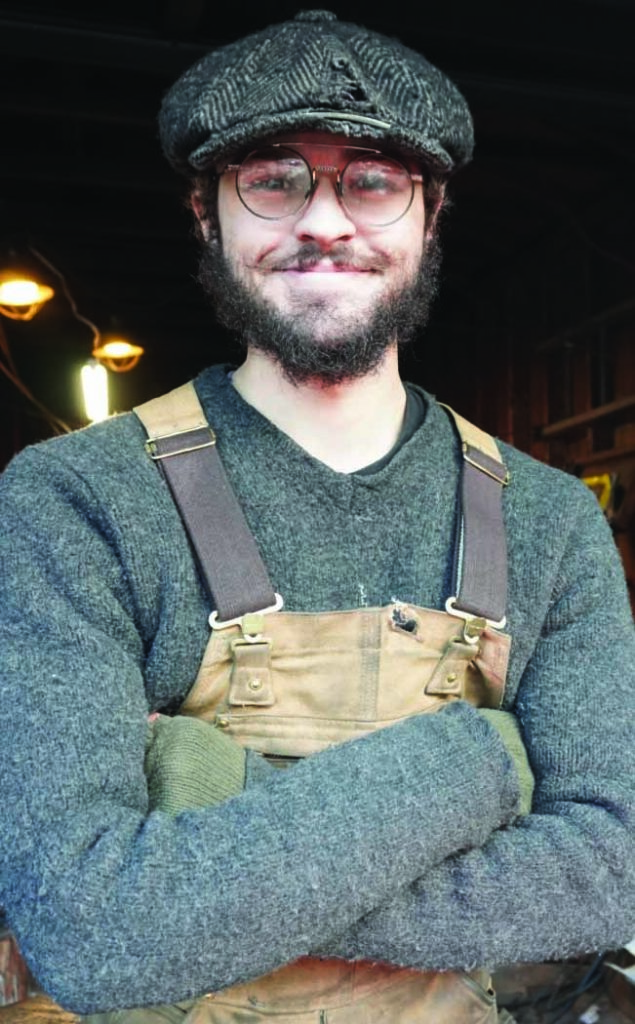
Nick Bachtel (inset) calls the construction he used to make his reproduction of a Michael Price Gentleman’s Bowie “captured-guard full tang.” For the style to work, it must be forged, Nick stressed. He said another way to do it would be in a frame handle construction and a tapered tang, though a Price aficionado would be able to tell the difference. (SharpByCoop knife images)
The icing on the cake for Nick was ABS journeyman smith Jordan LaMothe’s story, “How to Make the Price Guard” in the December 2019 BLADE®. As Nick noted, “The Price style is the pinnacle of the traditional forged blade.” What better style is there for a young, up-and-coming bladesmith to explore?
Gentleman Bowie Spec Check Knife name: Michael Price Style: Gentleman’s Bowie Maker: Nick Bachtel Blade length: 5 7/8 inch Blade material: 52100 carbon steel Handle: Elk antler and nickel silver Overall length: 10¾ inch Sheath: Traditional center-seam vegetable-tanned cowhide w/frog stud Maker’s List Price For A Similar Knife: $1,100(includes sheath)
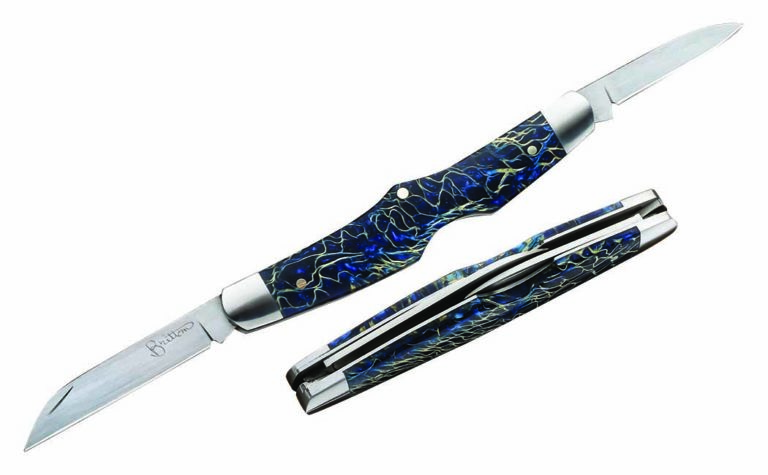
A sensational slip joint, Tim Britton’s Badger revives the Keen Kutter pattern with a ton of flare.
When ABS master smith Bruce Bump showed an old Keen Kutter penknife pattern to veteran knifemaker Tim Britton, Tim fell in love with it and immediately set to making his own iteration.
The blades are BG-42 stainless steel that, as Tim noted, has high ductility and holds an edge forever. He flat ground them on his “ancient” 18-inch, 200-pound Porter Cable disc sander. However, it’s the handle that really stands out. Consisting of stabilized diseased ash burl from Whistle in the Woods, the material looks synthetic but isn’t.
Tim Britton , 80, has been making knives since 1971 and has focused a lot in recent years on slip joints, with the Badger being the latest. He’s got about six antique pocketknife designs on his to-do list for this year, including a peanut and a copperhead. (knife image courtesy of Tim Britton)
“The light stuff in it looks like explosions,” Tim said. “I’ve never seen anything like it.” The projection on the spine fits right in between the user’s index and middle fingers and the groove on the underside cradles the latter for a comfortable, secure grip.
Calling it the Badger, Tim said he made 10 of them and had four or five at BLADE Show 2022.
Badger Spec Check Knife Name: Badger Maker: Tim Britton Blade Steel: BG-42 stainless Blade Grinds: Flat Handle Material: Stabilized diseased ash burl from Whistle in the Woods Closed Length: 3.5 inches Maker’s Price For A Similar Knife: $375
Acclaimed, Talented Knifemaker Henning Wilkinson Is Making Beautiful Knives And Living A Life Worth Emulating.
I’ve been in the blade-making business right at 50 years. I’ve met and befriended hundreds of bladesmiths and knifemakers. I have a long history of designing and making knives and other edged tools in carbon steel and mosaic damascus. I have pioneered many of the modern techniques used in the production of these blades. The techniques are now in their third generation.
The newer smiths and makers — especially in the damascus end of the business — do things with steel and design that border on magical. Some of these modern magicians have been in the business only a few years. I feel very privileged to have met some of them and spent shop time with a few more. One is Henning Wilkinson.
I started following his social media posts a few years ago. Even then, the level of his work was nothing short of astounding. His blade designs and mosaic patterning are all well thought out and extraordinary. He and I began corresponding on social media and developed a friendship through our mutual interest in damascus blades.
His blade designs and fitting of all the design parts is in my opinion some of the best on the planet. As a result, I wanted to see his methods firsthand. Meanwhile, Henning also had great interest in my methods of forging and pattern development. So began the plan to spend time in the shop.
We agreed I should go to South Africa and teach a couple of classes. The trip coincided with the Knifemakers Guild of Southern Africa Show. It was great fun meeting new friends and visiting with many old ones half a world away. The classes were a great success and I learned much, including that braai* has no equal and biltong+ is better than jerky. (I had to throw that in for my South African friends).
Henning is a deeply religious man who lives his faith as best he can in all he does. His knifemaking skills are a showcase of that dedication. He is an advanced martial artist and very skilled with firearms. Some of his techniques and skills come from a trained gunsmith background, and are a lot of what drove me to fly halfway around the world to see those handwork skills with my own eyes. I was not disappointed. I asked Henning to send me his biography to help with this story.
Henning Wilkinson: In His Own Words
Damascus, ivory and gold engraving help highlight Henning’s dagger with a Renaissance flavor.
I was born Jan. 13, 1978, in the little town of Brakpan, South Africa. My dad was a blue-collar worker who started his working life at 16 doing an apprenticeship as a tool-and-die maker. He was always busy on weekends doing all sorts of jobs, from building concrete mixers to doing electrical work — pretty much anything you could think of. He now owns his own wood furnisher business.
Growing up, using machines and tools for whatever reason was never a problem for me. My father believed that to work with your hands from an early age would give you a head start and an advantage in life.
My mother was always busy with something to generate extra cash. I remember from a very early age her making clothing as a seamstress, from wedding dresses to underwear. Even my wife had the privilege of having her wedding dress made by her mother-in-law. My mom was always carting all the kids around from one sports event to another. Both my parents supported us however they could, and still do.
My first recollection of Christ was growing up in a home where He was loved and honored. I can remember as a young child walking into my parents’ room in the early hours of the morning and finding them both on their knees praying. This has remained my foundation for every decision and my way of living.
I joined the family business in woodworking where I learned a great deal in all different fields, from electrical to mechanical, as we did all our own repairs and maintenance on the machines in the factory. I started my apprenticeship as a gunsmith in 1998. I learned a lot about the fine finishing and fittings of different materials to one another.
I started making knives in 2000 while doing my gunsmithing apprenticeship. I fell in love with a knife called the Commander made by Ernest Emerson, which at that stage I couldn’t afford (it would have been three months’ salary for me back then). Having a father who taught me whatever you cannot afford you can make yourself, I jumped to the task not knowing what I was getting myself into.
During the process I met a good friend, Carel Smith, who guided and still guides me in everything knifemaking related. Carel invited me to the Knifemakers Guild of Southern Africa Show and my eyes were opened to the possibility of real knifemaking.
After I built a folder, Carel invited me to forge a blade and make some damascus. I was immediately hooked, captivated by the process of forging damascus, spending the first couple of years building and perfecting machines to make my own. In 2006 I was admitted into the Knifemakers Guild of Southern Africa, being only the second person to forge blades to be so honored.
Right from the start I attempted to make a better knife than the one before. I would not settle for anything other than my absolute best effort on every piece, from fit and finish to heat treatment and into the smallest detail, always trying to push my limit.
Then everything changed.
In 2012 I walked away from knifemaking as I believed I could not provide for my family the way the world told me to. I took on a job in the oil and petroleum trade as an underground utility surveyor. I thought I had it made. However, after a couple of years I was in a deeper hole than when I started—physically, emotionally and pretty much every way thinkable.
God slowly decided to drag me back into what I was made to do.
In late 2018 I decided to carry on as a full-time knifemaker. It was a leap of faith and the most rewarding decision of my life. Being able to do what you love can only be described as a massive blessing.
I am a Christian and I believe that God forms every piece through my hands, which is why I have a 9k-gold cross as a maker’s mark. My aim is to craft each piece in praise to God, and to make it so it will set itself apart and stand out as the best knife in any collection.
Picture In Steel
Henning (left) and Schwarzer (second from left) hammer hot steel while interested observers observe in the two friends’ forging class in South Africa.
On June 15, 2018, I did a Facebook video on how to grind a false edge. I received a comment from a gentleman whose work changed the way I looked at knifemaking. I used to think that because I could make damascus and drill a couple of holes, my knives were good. However, a “picture painted in steel” of a bird hunter with his rifle and his dog# made me realize that this could be far more—it could be an art that would leave people in awe of what can be done. The gentleman is Steve Schwarzer, whom I am now lucky enough to have as a close friend.
In 2019 I was able to exhibit at the BLADE Show, and was immediately accepted into the family of worldwide knifemakers. This has left me inspired to inspire those whom I see as my peers.
Shortly after BLADE Show 2019, Steve visited me in South Africa. We had the privilege of spending time together and learning from each other. It was a massive honor to stand shoulder-to-shoulder with him during a damascus course we hosted together.
During the visit I learned the definition of what a true master is. It is not a stamp on a knife or an award certificate. It is someone who never stops in striving to learn every intricacy of his or her art, perfecting every part no matter how big or small it might be, staying humble in the process and never assuming his or her own greatness.
Among a thousand lessons learned during Steve’s visit, for me this was the most important. The second lesson is that we will only have this journey called life once, and the decisions we make will be the determining outcome of that journey. I have never laughed as hard in my life during Steve’s two-week visit. His friendship and guidance are an invaluable blessing to me. It is an honor to call him my friend.
To me, knifemaking is a way of life, constantly trying to perfect and add new aspects to the knives I make. Through the fashioning of these pieces I continue to learn more about myself as God wants me to be. Knifemaking has given me the freedom to be a father to my two children and a husband to my four wives (my loving wife and the best three dogs ever).
One of the memories I will always cherish is one of my son as a small child standing on a tin in front of a lathe machining some steel. He has recently started making knives and this next journey together as father and son working in the shop together is another great blessing for me.
I specialize in art knives and high-end exclusive pieces, from folding knives to swords, using only the best end materials. Bringing 20 years of knifemaking experience and a lot of passion to each piece, I am proud to be a 100 % sole authorship maker. I am a member of the Knifemakers Guild of Southern Africa and the American Bladesmith Society. I hope you can see the passion in my work and will enjoy every moment you spend with it.
*Braai is South African barbecue
+Biltong is a form of dried, cured meat that originated in Southern African countries.
#The “picture painted in steel” was Steve Schwarzer’s groundbreaking scene of hunter with rifle and dog done in mosaic damascus in the early 1990s that set the world of knives on its ear.