Knifemaking

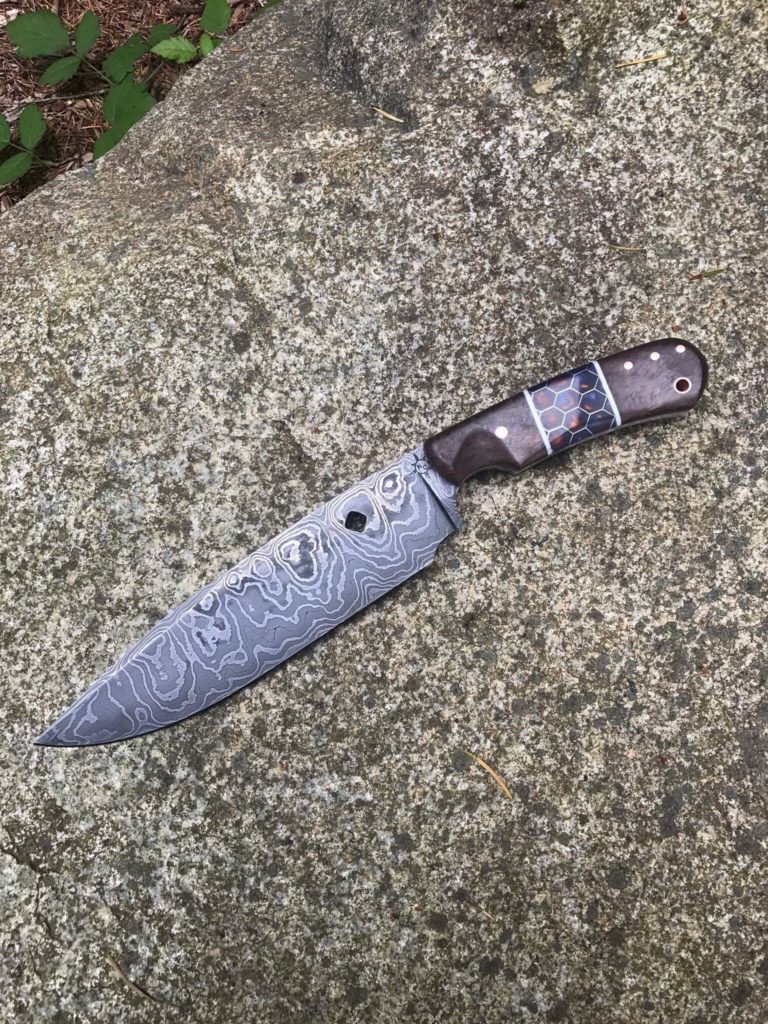
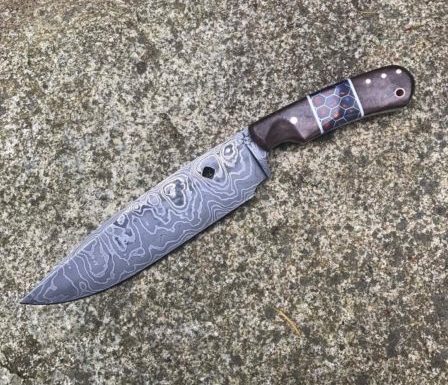
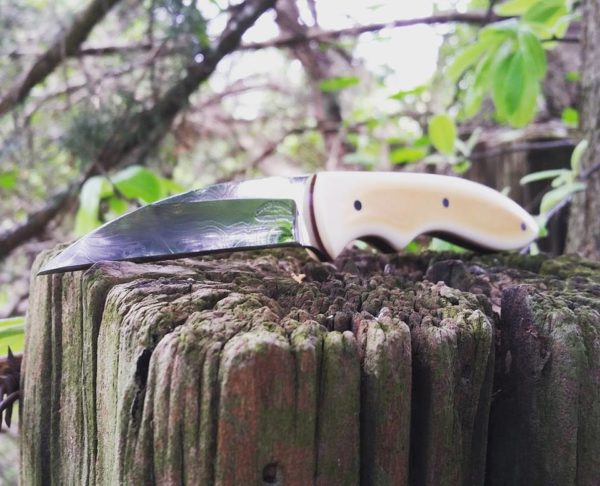
Knifemaking is the building of a knife, which includes the blade, handle and other accouterments. Blades are made by either removing metal from a steel blank via a grinder – known as stock removal – and the forging to shape of hot steel into a blade in the process known as bladesmithing. Other parts, including bolsters, guards, pommels, etc., are needed to complete the finished knife.

Featured Knives – – Knife Collecting – – Tactical Knives – – Survival Knives

Damascus: What Are The Hot Patterns And Steels In 2026

Jesse Harber and Coy Baker forecast the hottest damascus steel for ’26.

There’s something about predicting the future that has intrigued humanity for ages. If you could just somehow know which stocks would turn a profit, which crypto would “go to the moon,” or which numbers were coming in the PowerBall, you like to imagine that you could really take advantage. Thus far the ability to accurately predict the future has been a challenge, which begs the question—what damascus steels and patterns will be hot for 2026?

Jesse Harber of Vegas Forge doesn’t hesitate to jump right in.

“Our Reptilian pattern stayed hot in 2025,” he observes, “and it should continue to do well.” Vegas most often uses a combination of AEB-L, 440C and 302 stainless steels for contrast in its stainless billets. It prefers the combination of O1 tool, 1075 carbon and nickel-alloy steels for its carbon varieties.
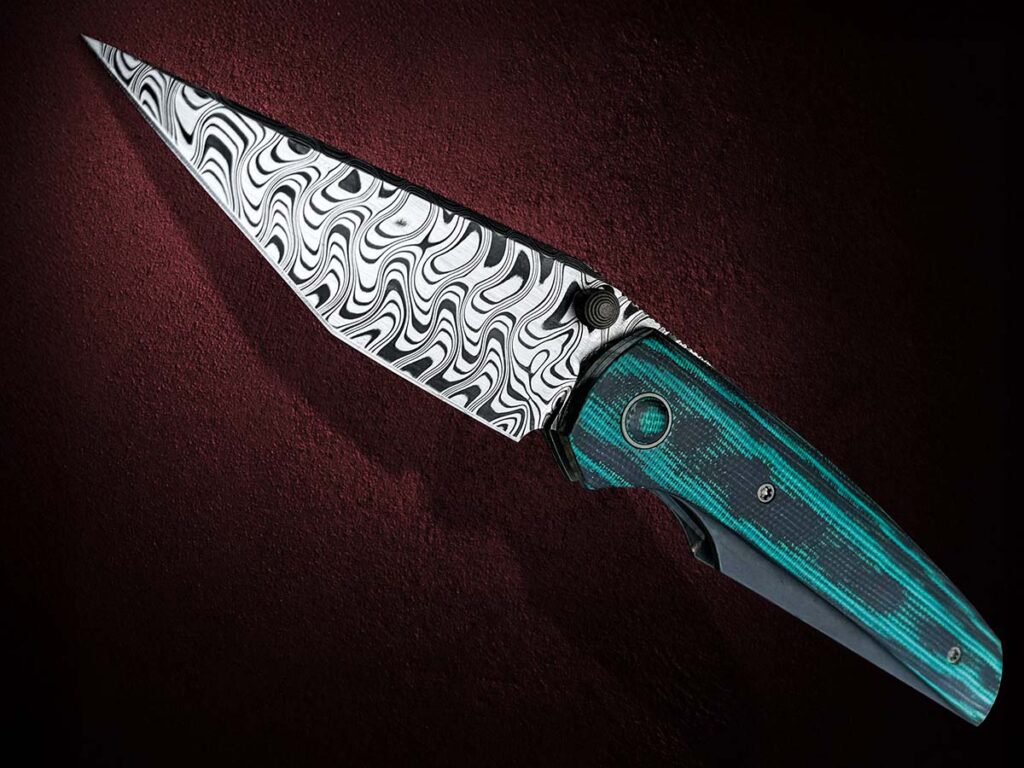
Jake McCoy used Baker’s Zeus stainless damascus for the blade of his folder.

Twenty-twenty-five was a fun year for Vegas Forge. It was able to continue making the steel it loves, the steel most knife enthusiasts all love to use—and it still managed to find time to innovate.

Makers have been using EDM cutouts in canisters to make unique figures and shapes for some time now. Over the past few years, a few have experimented with 3D-printed shapes inside canisters for truly limitless possibilities. Vegas has taken a different approach of using smaller cutouts within canisters that are then layered into “regular” damascus. There are obviously other critical details of the process not mentioned here, but the end result is small shapes or logos within the layers of the steel, not just as a shape like the other canister types you usually see.

Hammering Away At Baker Forge & Tool

Coy Baker said Baker Forge & Tool is “really moving and shaking” for 2026, partly because of a new Chambersburg steam hammer converted to air. With a die surface of 6-by-14 inches and a 750-pound ram, the whole shop shakes when the hammer pounds on a giant billet. The hammer originally was used to make jib cranes for the Charlotte Railroad and runs on a 50-horsepower compressor with multiple 750-gallon air tanks. Coy stated he hasn’t pushed the hammer to its max, but said he thinks it can handle billets up to 35 pounds.
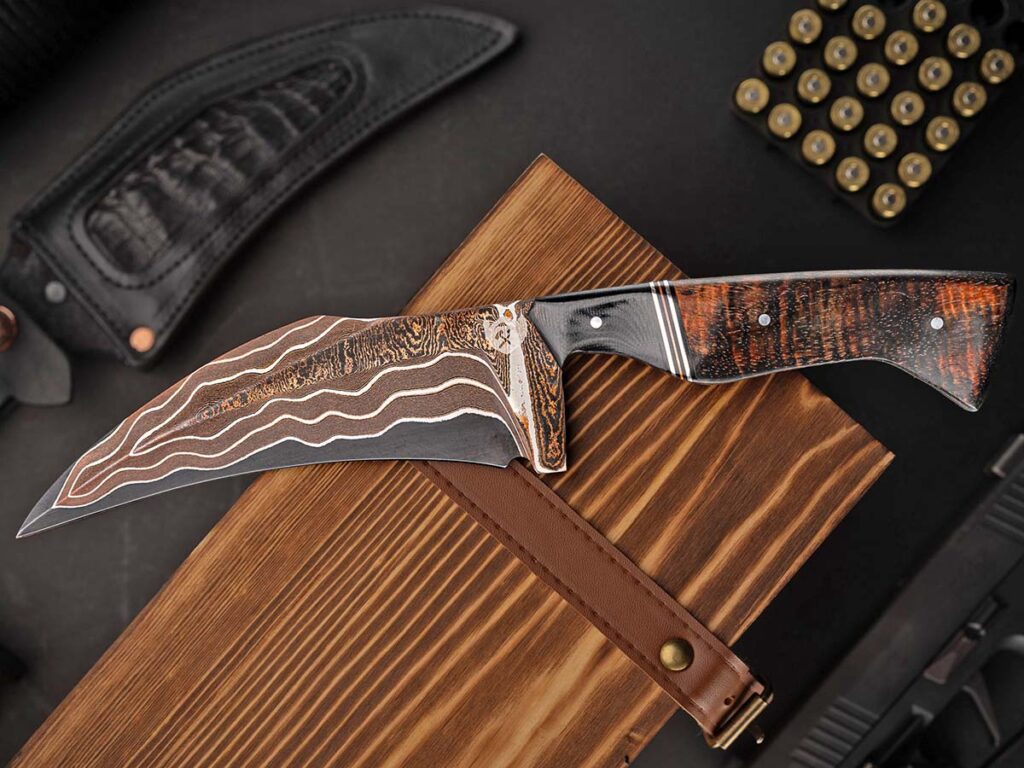
Baker’s Tsunami copper-mai steel is the material for the blade of a piece by Hans Molenkamp of Crimson Knife Co. (crimsonknives.com).

Why in the world would Baker Forge need such a giant hammer? Because the company, too, has been innovating and expanding into the production of stainless damascus. After two years of research and development and fine-tuning Baker’s processes for production, the prodigious pounder is finally up to speed. Baker prefers a combination of AEB-L and 154CM for its stainless damascus.

“The steel is really hard even when it’s hot,” Coy said. “Even with our 350-pound hammer it was like pounding on a rock.” The giant Chambersburg, on the other hand, moves a giant stainless billet with ease.

For those of you who don’t know, forging stainless damascus is quite a challenge, beyond the capability of many backyard smiths. Stainless steels contain high chromium, sometimes 12-to-15 percent, and chromium oxide doesn’t forge weld. Any oxygen at all in the forging environment and the welds simply will not stick. There are multiple ways to get around that, including inert gas purges and welding inside canisters. Add that to the fact that the stainless doesn’t like to move under the hammer and has only about a 100-degree-temperature window when you can safely work it, and you get a very difficult process.
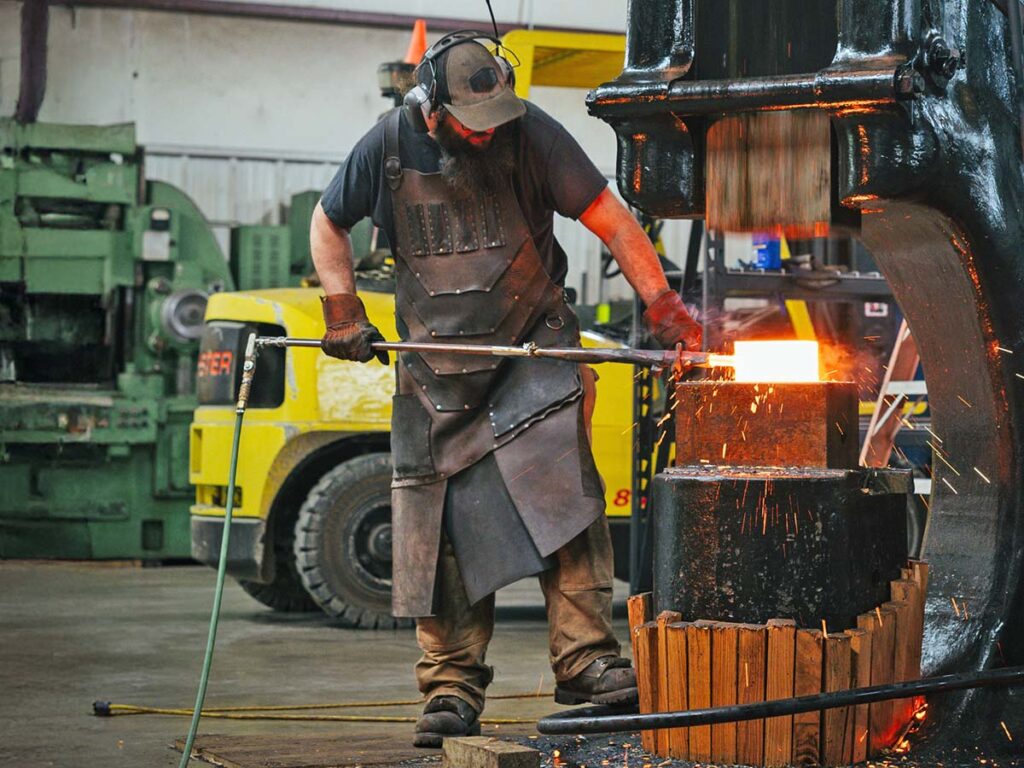
Baker Forge & Tool’s Will Spears forges a billet of stainless damascus on the Chambersburg high-frame power hammer at Baker. Built in 1946, the power hammer has a 750-pound ram and weighs just shy of 11 tons. “It took us 14 months to install,” Coy Baker laughed. “The foundation for it is over 12 feet deep.”

Baker isn’t just producing stainless damascus in run-of-the-mill patterns, it is innovating. It has developed patterns it will use in its stainless steel exclusively, particularly one called Zeus.

Copper damascus has long been Baker’s hottest commodity, and it’s still producing it at high volume and quantity. The company is pushing the limits there as well and has developed a method to weld and manipulate copper on the end grain. While the technique is under wraps, the results will be broadcast far and wide: copper damascus in formerly unobtainable mosaic patterns. When clad over a monosteel or carbon damascus core, the patterns stretch the imagination of what’s possible.

Steel Industry Challenges

Both Baker and Harber mentioned challenges and areas for growth in the steel industry. Baker was the first to put BLADE® on the story about Buderus apparently closing its primary mill for 10xx series steels. Coupled with the recent closing of Crucible on the stainless side (see our article on Crucible Industries closing), both Baker and Harber have been exploring new steel options in case their mainstays become unavailable. Vegas in particular is moving toward more cores of Nitro-V and Elmax and moving away from MagnaCut and XHP.
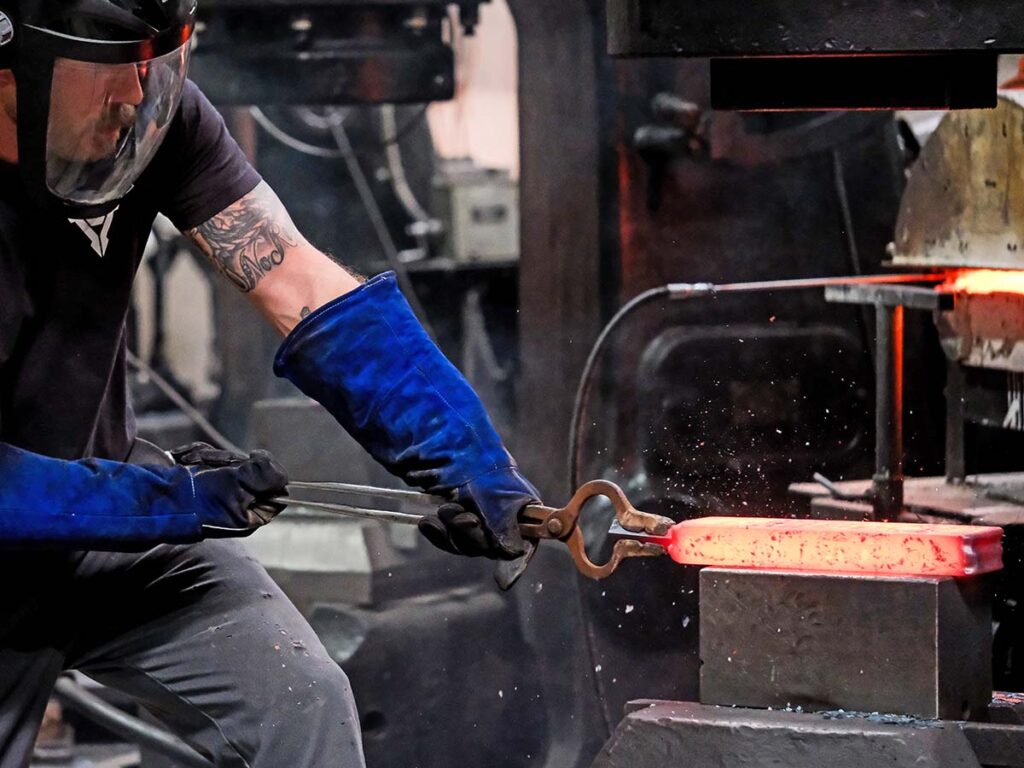
Vegas Forge team member Franklin draws out a 40-pound canister of stainless Raindrop-pattern damascus on the company’s 5B Nazel hammer.

The hot new kid on the block is ProCut, the brainchild of a partnership between Larrin Thomas and Pop’s Knife Supply. Both Vegas and Baker are looking forward to pushing the limits of ProCut. As a high-alloy steel, when combined with Apex Ultra, the maker achieves high performance out of what looks like “ordinary” 1084/15N20 damascus. If you think of the difference in performance between 1084 and 52100 carbon steels, you’re on the right track. Baker Forge is currently in the lead on the ProCut “arms race” but Vegas Forge has steel in hand and is ready to go.

What fun new things can we expect in the world of damascus in 2026? Vegas Forge is entertaining a few recent orders that sound interesting. There’s a maker in Alaska using Vegas material to make high-end custom ice skates, and another customer using the company’s material to make stainless damascus computer keyboards. Who’d a thunk it? For those who enjoy a good picture show, Vegas has another top-secret project in the works. Think aliens with amazing damascus weapons and tools and you’re on the right track.

Take two leaders in the field like Baker and Vegas, factor in the demand for their top steels and add lots of innovation, and you get the makings of a really great year to come in the world of damascus.

More On Damascus:

Video: How to Make Mosaic Damascus Steel with Ed Caffrey

0

In this video from the American Bladesmith Society, master smith Ed Caffrey details how to make mosaic damascus. This technique yields stunning steel for beautiful blades.

How to Make Mosaic Damascus: The Billet

From the video:

First, I built a 4″x4″x6″ “can” and plugged one end with piece of 3/8″ place, then laid out a stack of 1080 & 15N20 diagonally. I filled the remaining space in with 1/4″ W1 rods, then took up all the air space with 1095 powder, to which I added 10% nickel powder.

Caffrey wound up cutting the billet in half after forging for a bit. This made the halves easier to work.

How to Make Mosaic Damascus: Two Becomes Four

From the video:

Next, I forged the two halves down to about 1 1/2″ square, anneal, and mill off the can, then cut each in half again.

That will give me four pieces to decide how to orient and 4-way. Depending on what I come out with, it go to an 8- or even 16-way.

I then performed a quick clean-up of the ends with a 220 belt and an etch so I could orient everything.

How to Make Mosaic Damascus: The Trick

The “trick” to getting what you want is being able to visualize in your mind how the pattern will look after welding and accordion cutting/folding. You might be surprised at just how different a pattern will look from where it is now.

How to Make Mosaic Damascus: Welding

Finally, I face mill off the mating faces of each piece. Then it’s just a matter of placing them together and forge welding. It can be wet welded, dry welded or whatever you’d like. Each method will have an effect on the finished product.

Watch the video for full instructions on how to make mosaic damascus.

Keep Learning with This Great Download from BLADE

How to make mosiac damascusThis video was only a taste of the richly rewarding craft of making mosiac damascus. Once you get going, you won’t want to stop creating these incredible designs.

For only $4.99, you can learn much more in this excellent download from BLADE on how to make mosiac damascus.


Educating the Future Of Knives

The American Knife & Tool Institute (AKTI) recently announced it will present a series of informative articles on its website, www.akti.org, that address various aspects of the knife owner’s experience. The first of the series will relate tips and advice on introducing young people to knives.

2-Customer-son

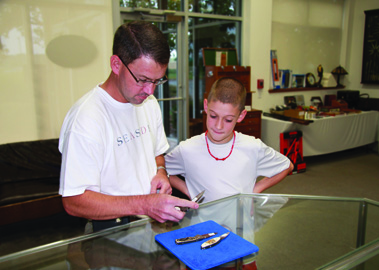
Among those giving insights in the new AKTI youth knife series will be A.G. Russell. Here a father demonstrates a knife for his son at A.G. Russell Knives retail store in Rogers, Arkansas. (A.G. Russell Knives photo)

“I was always taught that the age of reason was 7, which is also Cub Scout age when I got my first knife,” commented Dan Piergallini, president of the Gator Cutlery Club. “Safety was always stressed, and supervised use of a knife is a must. Also, one must insist that the knife never be taken to school no matter how much you want to show it off.”

Billeb-Jan-2012Along with Piergallini, AKTI Executive Director Jan Billeb, Becky Reid of Shepherd Hills Cutlery, and Blade Magazine Cutlery Hall-Of-Fame© member A.G. Russell will provide insights on their experiences in promoting safety, awareness, respect and proper knife use among young people.

AKTI Executive Director Jan Billeb (left).

Look for the story on kids and knives and subsequent offerings from AKTI to provide timely and relevant perspective on topics of interest to the cutlery community.

“We are excited to bring these informative articles to AKTI members and knife enthusiasts everywhere through our website,” Billeb said. “Introducing knives to the next generation is a key element in promoting their safe use and increasing the understanding of knives as valuable tools that are important in our everyday lives.”

To read the article on kids and knives visit www.akti.org/education/kids-and-knives.

For more information, call 307-587-8296 or visit www.AKTI.org. Follow AKTI at http://www.Facebook.com/SaveOurKnives and http://twitter.com/SaveOurKnives.

8 Tips for Successful Home-Based Knife Shops

0

How to keep your shop in operating order and maintain a safe and happy family life in the process

By Joe Calton

There have been tons of stories on how to be a knifemaker. Most are great and deal with subjects like taxes, suppliers, marketing, sales, bookkeeping and safety. Other great articles cover the technical side of how to make the knives you wish to sell, including stories on forging, grinding, heat treating, handles, sheaths and more.

My story will outline some things I have learned over the years as a full-time knifemaker in a home-shop setting that I think will benefit you, your knives and, most importantly, your family.

The author’s home-based shop is a two-car garage attached to the house by a single door. Sure it’s cluttered—but how much do you want to bet he knows where every tool, piece of equipment, grinding belt, spec book, etc., is?

The GREAT 8

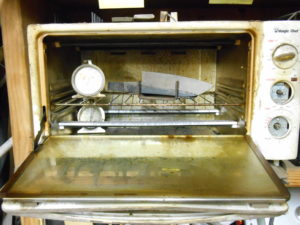
1) Buy a toaster! Your wife’s kitchen oven is not the place to be tempering knives, warming up knife sheaths for waxing them, heating Kydex® for the molding, or burning out axe heads. A $5 toaster at the flea market will do all that in your shop and is a bargain at twice the price.


Buy a toaster! Your wife’s kitchen oven is not the place to be tempering knives, warming up knife sheaths for waxing them, heating Kydex® for the molding or burning out axe heads.

2) Along with the toaster, while at the thrift shop get a selection of pots and pans, cutting boards and a small scale. Trust me, the lure of using one of your wife’s pots or pans for “just this one little project” will be too great—and that is not a road you want to travel! Forget this one and dinner may taste a little “off”—even if you were able to sneak the pan out of the kitchen and into the shop and back again.

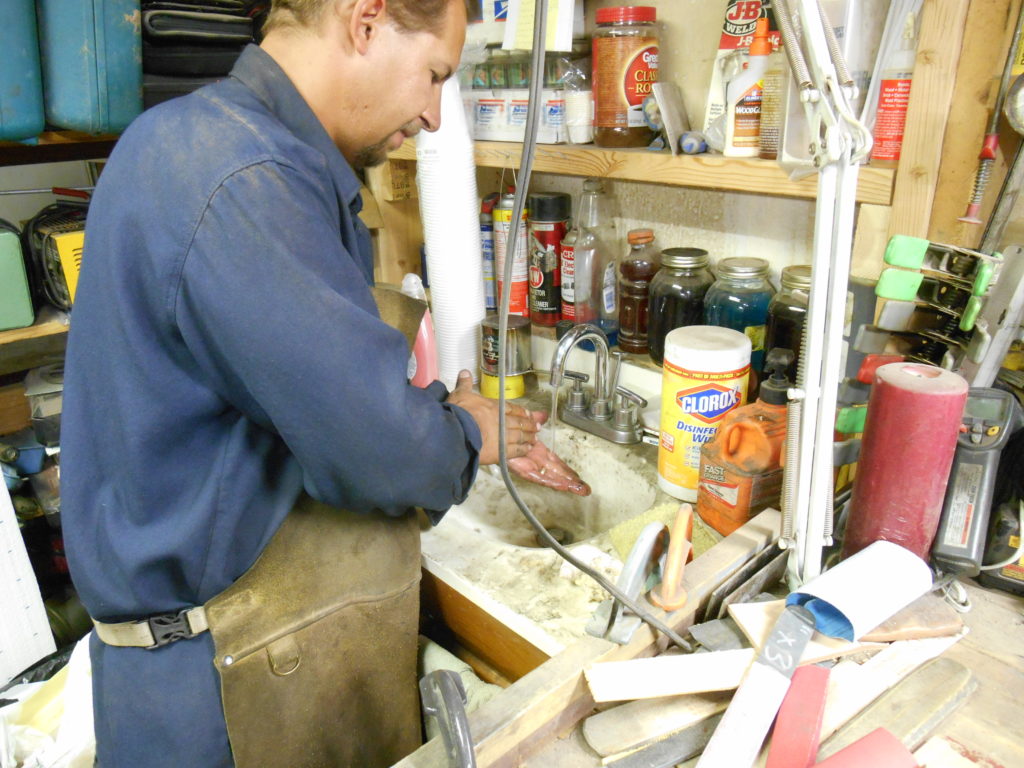
3) Install a sink in the shop. At the very least, put a five-gallon bucket of water on a stand for washing your hands before you head into the house. You may not mind grease, oil and dust prints on your clothes, but one time of leaving a smear of quenching oil on your wife’s nice clothes and your knifemaking will take a big hit. Spilling acid on a concrete floor also has far fewer ramifications than spilling it on the countertop in the kitchen. Oh—and don’t forget to wipe your feet on the way into the house.

Installing a sink will help keep things clean.

4) If who like your coffee as much as I do, get a big thermos, fill it in the morning, and take it to the shop with you. This cuts down on the trips away from the shop, as a trip inside the house to grab another cup can turn into an hour away by the time you get the cup, peek in the fridge, check for phone messages, etc.


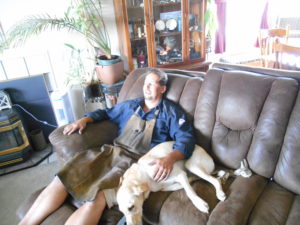
5) Know when to quit for the day. This is one lesson I’m still learning. You get wrapped up in your work and the next thing you know it’s 2 in the morning. Not only will you spend that night on the couch, but you may spend the next one there too if, as a result, you also forgot the plans you made, dinner, one or more of the kids’ school activities, etc. It’s tough to make good knives after a rough night on the couch.

When working in the shop, don’t lose track of time and work too late or else you could forget to do important family jobs—and wind up being relegated to sleeping one or more nights on the couch with Fido as a result.

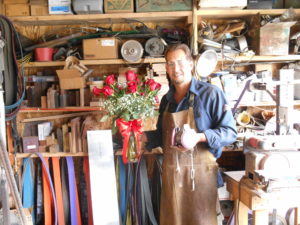
6) Use some of your knife money to buy your wife flowers. Buy them on a regular basis. Put it on the calendar if you must so you will remember. Think of the flowers as supplies, like grinding belts. This is very important! Not if but when you forget one of the preceding tips, hopefully you will have gotten her flowers recently—and it just may save your bacon. For the home-based knifemaker, buying flowers for the wife is at least as important as safety glasses. You can continue to make knives with only one eye but you cannot make knives if you have been dispatched with a heavy frying pan.

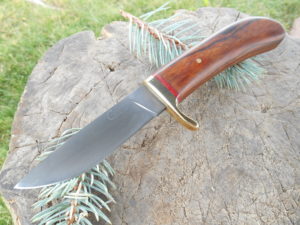
In order to have the wherewithal to make such knives as his drop-point hunter, the author keeps peace with his wife by buying bunches of roses on a regular basis.

7) Know that what happens in your shop does not stay in your shop, and act accordingly. Dust from exotic woods will make it into your home. You may not be allergic to them but your wife, kids or family pets may be. Keep an eye peeled for anything out of the ordinary when introducing new woods or materials into your shop. This also goes for smoke from quenching. Use “green” quenchants when you can, including vegetable-based oils and water. And keep the door to the rest of the house closed until you clear the air.

8) If you’re considering moving your shop away from your house, think long and hard about it. Yes, a home-based shop offers some challenges. However, it offers quite a few benefits, too. Among them: the morning commute is a thing of the past so you save fuel and time, you have a good place to fix toys and household appliances, and everyone always knows where to find you. If you are a workaholic like me, the home-based shop keeps you at home instead of at the office. Move the shop as some friends of mine have done and you may end up moving it right back.

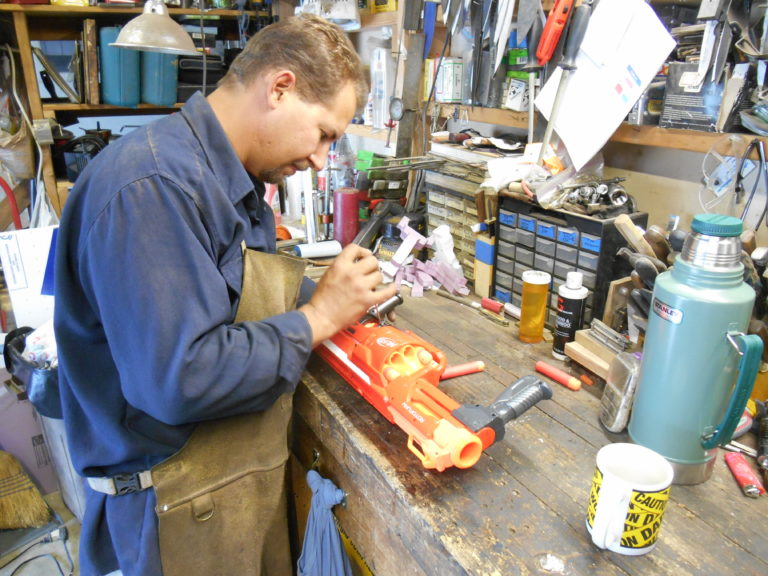
A benefit of a home-based knife shop is that you can also repair appliances, junior’s toys, etc. And don’t forget to buy a big thermos for plenty of coffee so you don’t have to make return trips to the house for that extra cup.

Also, when you take a break, throw a load of clothes in the washer and they will be ready for the dryer by your next break. Or, you can start a crock-pot meal for that evening’s dinner. By the way, there is no better test of the kitchen knives you make than to use them in making dinner a couple nights a week. This is a twofer in that not only do you get the immediate feedback from hands-on testing, but also the household benefits of cooking a couple meals a week will go far toward keeping your knifemaking in the good graces of “The Boss.”

2 BIGGEST CHALLENGES

My list of tips is not complete. It is based on my experiences in working from a home-based shop, which is a two-car garage attached to the house by a single door. You may be in a detached shop or a basement. Whatever your setup, I hope I have helped with two of the biggest challenges faced by a knifemaker in a home-based shop: keeping the shop in operating order and maintaining a happy home life in the process.

For more information e-mail Joe Calton at [email protected].

Install a sink in the shop. You may not mind grease, oil and dust prints on your clothes, but one time of leaving a smear of quenching oil on your wife’s nice clothes and your knifemaking will take a big hit. The sheath knife with blade hamon and wood handle and brass rivets is by the author.

Cool Customs: Kurt Swearingen’s Buffalo Hunter Set

From One-Day Course To One-Of-A-Kind Knives, Kurt Swearingen’s Buffalo Hunter Set Shows How Quickly The Knifemaker Has Honed His Craft

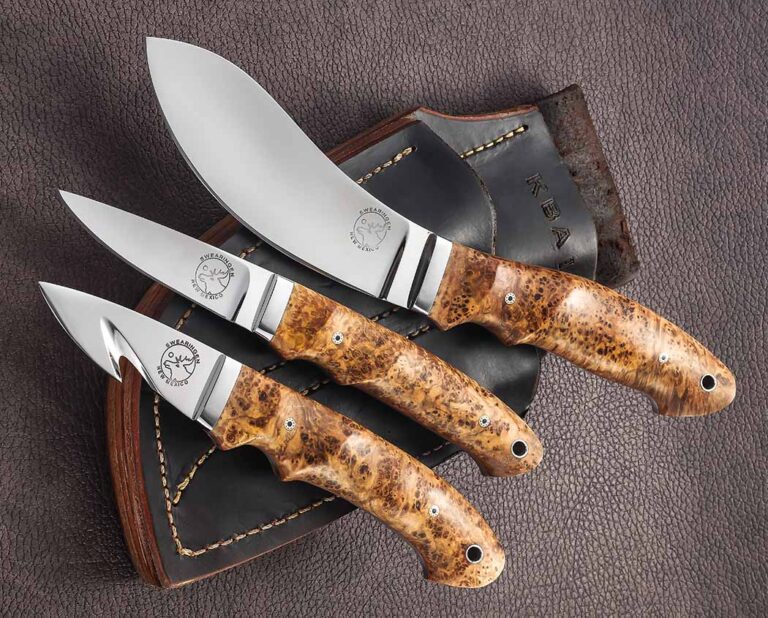
ABS Journeyman Smith/Knifemakers’ Guild member Kurt Swearingen went with tradition and what works in his three-piece buffalo hunter set.

Made for North American big game, the set includes a Green River-type skinner, caper, and gut hook in CPM 154 stainless steel blades and black ash burl grips. Kurt based the design on a similar set he’d seen from the 1800s. He chose CPM 154 because that’s what he uses on his fixed-blade hunting knives and the ash because it’s a wood native to the Great Plains, home of the American bison. 

He made the sheath from three layers of stacked 9-ounce leather with two layers of welts. The sheathed set weighs 2-3 pounds so he hollow ground the blades and outfitted them with bolsters instead of guards to save on weight and size. The set wears on a belt, though Kurt modified it so you can string it on a pack or a saddle.

Who Is Kurt Swearingen?

Kurt Swearingen

Swearingen’s knifemaking journey began back in 2007 after taking a one-day class. From there he learned from one of the all-time greats, Lin Rhea, who helped him to perfect forging and heat treating techniques that have helped make his knives stand out from the pack.

Just seven years after that course that started it all, Swearingen earned the rank of journeyman smith. Today he specializes in hunting and camp knives of all types.

Buffalo Hunter Set Specs

Model: Buffalo Hunter Set
Maker: Kurt Swearingen
Patterns: Green River skinner, caper and gut hook
Blade lengths: 4.75 inches, 3 inches, and 2.75 inches
Blade steel: CPM 154 stainless
Handle material: Black ash burl
Sheath: Three layers of 9-ounce stacked leather
Maker’s price for a similar set: $1,850

Read More

Bowie Knives: Lingering Legacy Of The All-American Design

Truly an American design, the bowie continues to inspire today’s makers.

While its roots may be from across the sea, ties to the makers of old Sheffield and elsewhere, the bowie is today distinctly American. And it has been for more than two centuries.

Made famous by BLADE Magazine Cutlery Hall-of-Fame® member Jim Bowie and the fabled Sandbar Fight, no doubt present at the Alamo where Americans fought and died for freedom, and seen in countless photos of soldiers going to war—posing with the burly bowie in a proud moment—the iconic knife was also immortalized on the silver screen with the classic The Iron Mistress and other films. There is no other style of knife that more clearly defines the American spirit.

“Bowies are the quintessential American knife, deeply steeped in the mythos of our collective history,” observed ABS journeyman smith Matt Parkinson of Dragon’s Breath Forge. Shawn Shropshire of SDS Knifeworks agrees. “The bowie is the most iconic or at least the most recognized of American knife designs,” he said. “At the time of the Sandbar Fight, there was no single pattern that was called a ‘bowie knife.’ It varied in size, blade shape and even materials. Cinema later created what most people now recognize as the bowie knife, something with a large blade, clip point usually, with a double guard.”

ABS master smith Lin Rhea commented, “I do indeed believe the bowie knife is America’s knife design. It was created to fill a need. The country was expanding and was very wild and without law and order. The average traveler in the lawless wilderness needed a reliable defense weapon that could be carried on their person, that never misfired and was less conspicuous than a sword. The fact that a large knife was used in self-defense by Jim Bowie in the infamous Sandbar Fight just boosted the design into the realm of legend.”

Wrapped up in fact, fiction, myth, legend and lore, the bowie is a constant in the theme of adventure and survival. Although it does exhibit common attributes—among them impressive size—across the design, there are variations on the theme. To this day, the bowie remains a favorite form of expression for custom knifemakers who tip their creative cap to the history of the design and imprint their own skill, expertise and perspective on this truly American blade.

Barbary Coast Bowie

Matt Parkinson’s California-style bowie is deadly dapper. He describes it as “graceful and sleek,” featuring his own wootz steel and sterling silver bolster, pommel and guard. (SharpByCoop image)

Parkinson chose the San Francisco theme to highlight his take on the classic bowie. Representative of the days of the Barbary Coast and the rough-and-ready youth of a nation stretching from sea to shining sea, the idea captivated him.

“I have long been intrigued with the California- or San Francisco-style bowie,” he remarked. “They are graceful and sleek in a way that many bowies are not. In designing this particular piece, I looked at as many examples of this style as I could, both originals and contemporary. I didn’t copy anything but tried to match the design cues I saw in the originals that made them so iconic.”

Matt’s San Francisco Bowie features a 6.25-inch blade, an overall length of 11.75 inches, a bone handle and generous applications of stylized silver in shell and pin. “The blade is forged from my own wootz steel,” he noted, “and the bolster in front of the guard was cast, as was the shell pommel, and the guard and frame are all fabricated from sterling silver.

“One of the things I most admire about the California style bowies is the uniquely American lineage. Much of the bowie styles we think of are influenced by the Sheffield and London makers …This isn’t the case with the California makers. The knife they made for the 49ers used local materials and was a show of wealth, as much jewelry as a weapon. I kept these ideas in mind in making this one. The cow bone was a logical choice and a nod to local materials, as was the choice of sterling silver over nickel.”

Antiques Actualized

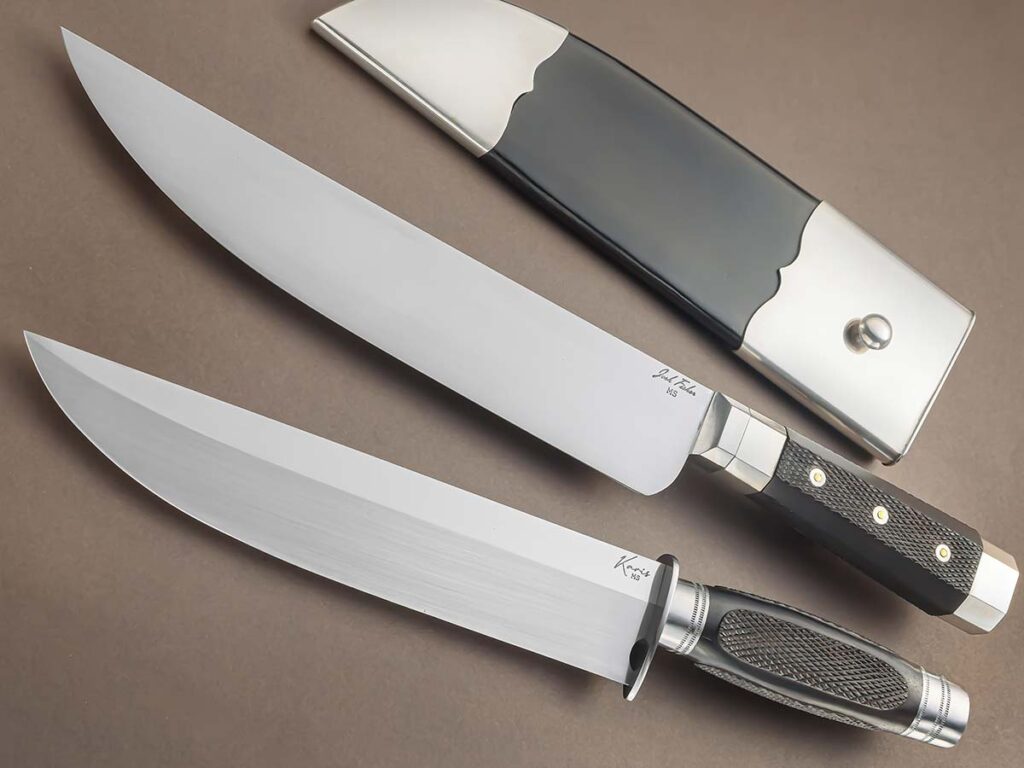
Aiming for historical accuracy circa-1830 style, father-daughter makers Josh and Karis Fisher pull off this dynamic duo. Josh’s bowie (left) was inspired by an original Schively-Perkins piece, while Karis (right) crafted a rendition of the Daniel Searles bowie. (SharpByCoop image)

The father-daughter ABS master smith duo of Josh and Karis Fisher share their own interpretations of the bowie with a pair of stunning knives touching the past. Each took inspiration from circa 1830 bowie designs: Josh the Schively-Perkins and Karis a Daniel Searles.

“I kept my reproduction similar to the original and as close in size as I could, so it would look and feel like the real knife,” Karis said. “I was mostly working from photographs, which made studying overall design really important. I also made a few changes to incorporate my own style. I left off the original silver pins and did hand checkering instead. I also changed the ferrule and butt cap. I didn’t use silver wraps. Instead, I used a combination of liners and spacers to match the original while adding my own style.”

“A few techniques that I used on my bowie were hand-checkered African blackwood on the handle and the silver ferrule and butt cap that I had to silver solder together, which was a challenge. It’s definitely a functional knife,” Josh reported. “While it’s on the larger side, it’s very well balanced due to the silver wraps on the ferrule and pommel.”

Capturing the notion of the bowie’s place in Americana, Josh related that his work in 80CrV2 carbon steel and sterling silver is true to such spirit. “It is a reproduction of an actual antique bowie knife,” he stated. “In my opinion, a bowie is a large fixed-blade knife, at least 10 inches in blade length, that is on the thicker side. I think typically they should have a clip point, but there are some exceptions as you can see in mine and Karis’s bowies.”

Small & Spruce

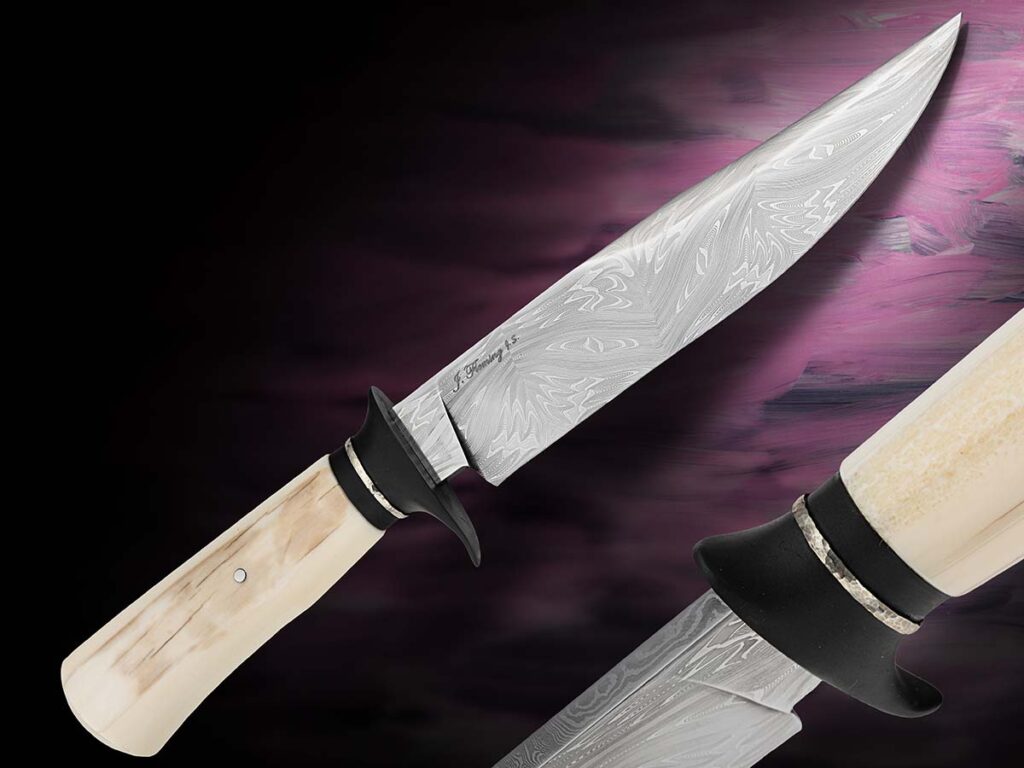
James Fleming’s gentleman’s bowie is diminutive in comparison to others but no less representative of the style. The damascus blade is complemented by an ancient walrus ivory handle with a nickel silver spacer and Parkerized steel bolster. Overall length: 11.5 inches. (Jocelyn Frasier image)

Working at Wasteland Forge, ABS journeyman smith James Fleming has produced a gentleman’s bowie, diminutive in comparison to others but no less representative of the style. The 6.5-inch damascus blade is complemented by an ancient walrus ivory handle with a nickel silver spacer and Parkerized steel bolster for an overall length of 11.5 inches.

“I wanted to make a knife that capitalized on the mosaic damascus pattern,” James explained. “I think the gentleman’s vest bowie complements the pattern. The knife is pretty recognizable as a bowie. It’s not as large as a regular bowie but has the same look and purpose. It fits the term ‘vest bowie’ perfectly. It is small enough to be concealed but large enough for defense in any western saloon. This is the kind of knife you’d see stabbed into a poker table after accusing someone of cheating at cards!”

The damascus pattern came from Fleming’s experimentation with Mareko Maumasi’s pattern-making process. He named it “Nazar,” which translates from the original Turkish as “evil eye.” He added, “I was also inspired by Lin Rhea in the way he makes his fittings. The nickel spacer is domed around the guard and bottom spacer, and it’s hammer textured to give it a nice look and feel in the hand.”

Mammoth Achievement

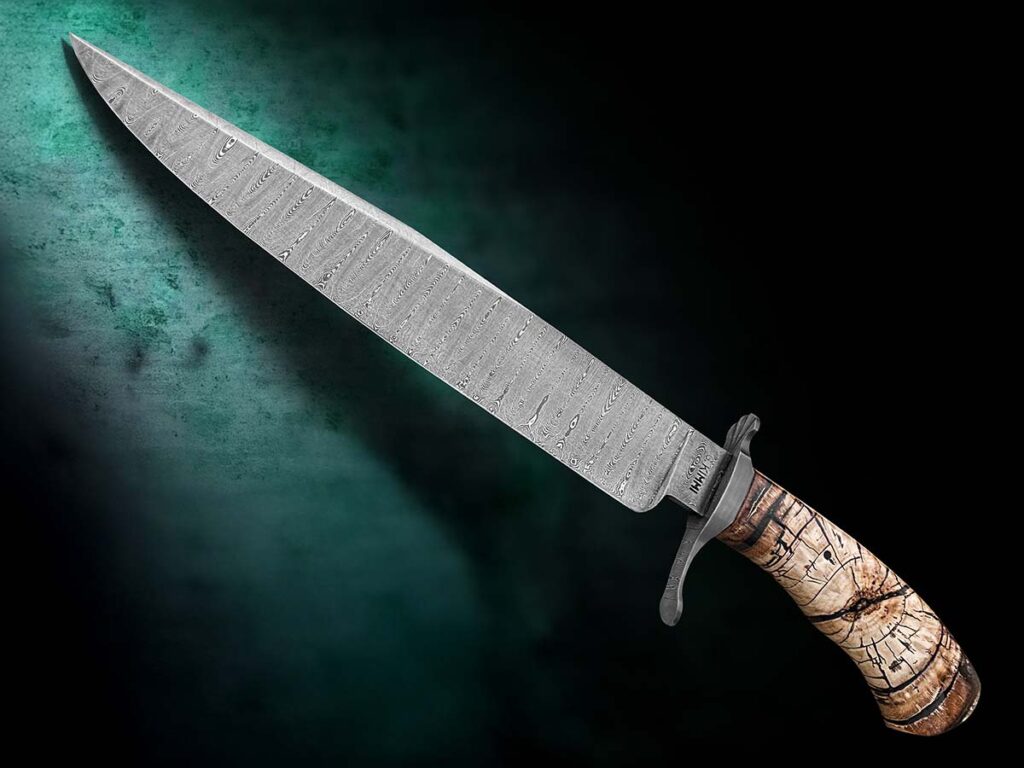
Attracted to larger bowie designs, Gene Kimmi pulls it off with a giant gem. Featuring ladder-pattern damascus—fashioned from dies he made himself—the 15.25-inch behemoth is further bespoke with a crosscut mammoth tusk handle. (Jocelyn Frasier image)

Gene Kimmi was intentional with his contribution to the bowie’s visual discourse. “I have always had a liking for the larger bowie knives,” he remarked. “When I made some laddering dies for my press, I knew one of the first knives I would make out of ladder-pattern damascus would be a large bowie. This one has some clam-shell type filing on the guard that I haven’t done before. The handle is heirloom/museum fit to the guard also.”

Gene’s bowie features the ladder damascus in a 9 7/8-inch blade and crosscut mammoth tusk handle with G-10 black pinning for an overall length of 15.25 inches. “The design is easily recognizable,” he asserted. “Anyone who sees it instantly thinks bowie. The lightness and the fit to the hand are attributes that everyone who handles it comments on. The uniqueness of the mammoth tusk handle adds to the beauty of the damascus. When I think of a bowie knife, I see a straight-backed blade of at least 6 inches. Limits can be pushed on the style and attributes of a bowie, maybe because of the mystery of the bowie knife’s beginning.”

User-Friendly Fighter

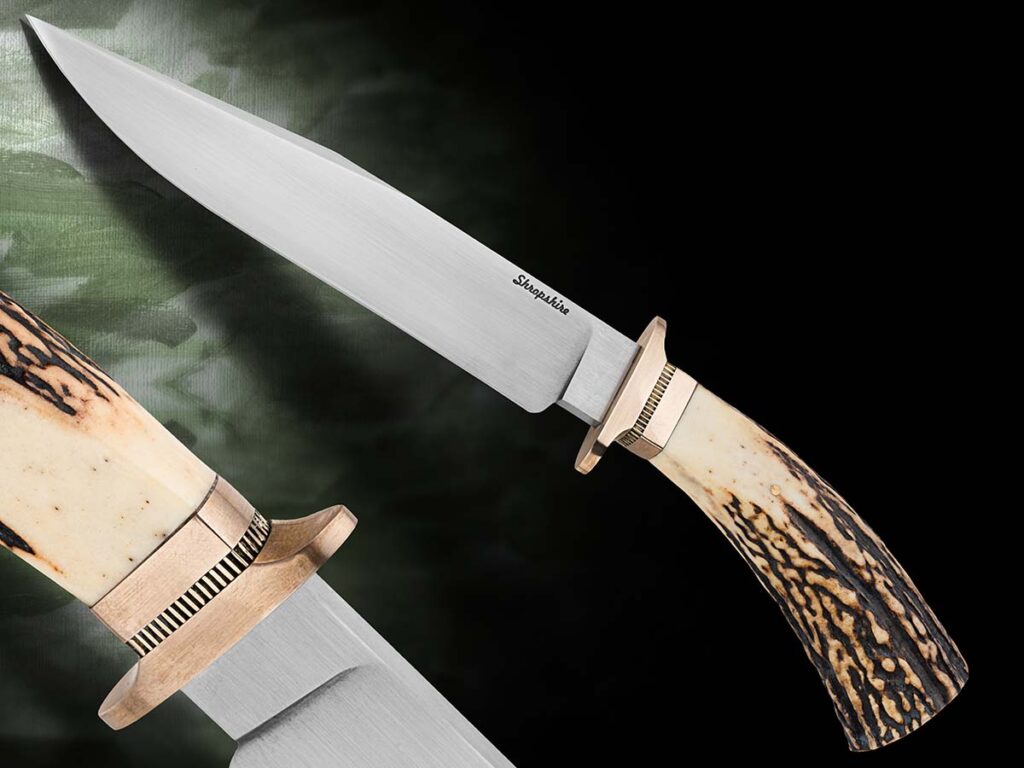
Shawn Shropshire wanted a bowie that not only looked sharp but also worked with the user. What he cooked up was this stag-handled beauty. With a 7.5-inch blade of 1084 carbon steel and a user-friendly bronze guard, the knife is easy to carry and manipulate. (Jocelyn Frasier image)

The famed Randall Model 1 provided some context for Shropshire to fashion his bowie of a 7.5-inch, 1084 carbon steel blade and stag handle with bronze bolster and an overall length of 12 inches. The proprietor of SDS Knifeworks blended the pattern with a desired functionality.

“I love making the larger versions of the bowie knife that many people think of, but as much as I enjoy them, they just aren’t very practical,” he reasoned. “This size and style is much more useful and easier to carry. It’s still a classic-looking pattern and functional without being so large that it is cumbersome and difficult to carry. I love the classic-looking lines paired with the look and feel of natural stag.”

After perusing photos of historical blades and the work of other makers, along with hours using a sketch pad, Shawn was pleased with the result. “In my opinion, this particular blade would have been right at home during the mid-to-late 1800s and at any time considered a bowie knife,” he advised. “I think most people today might refer to it more as a fighter because our notions of what a bowie knife is have been heavily influenced by cinema. The movies usually represent bowie knives as larger than life. Some were but many were not. I do think this blade hints at the history of what an American bowie is with the overall shape and the stag grip without instantly screaming ‘bowie knife.’”

Throughout the creation of his bowie, Shropshire kept user friendliness front and center. Aside from visual appeal, he designed it for easy carry with shorter “legs” on the guard and a coined spacer to help break up the smooth lines it exhibited.

The Legend Continues

The bowie theme lives—in thought, folklore and tangible craftsmanship. Staying true to its American heritage, the style has gained lasting fame and a following the world over.

Read More:

Midweek Maker Military-Style: Chris Rowley

Chris Rowley owns Nomad Customs in Rainier, Washington.
In the second of BLADE’s Midweek Makers series we continue with our armed forces active-duty members and veterans. This week: Midweek Makers Military-Style: Chris Rowley of Nomad Customs.

Chris Rowley was a farrier for 12 years or more before he joined the Army at age 34. During his seven years of service he deployed six times to Afghanistan with 2nd Battalion, 75 Ranger Regiment, winding up his service this year as a weapons squad leader with the rank of staff sergeant.

He always loved blacksmithing and found time after work and on weekends to keep his hand in it by making knives. “Pretty soon half of 2nd battalion had one of my knives,” he said.

When Chris entered blacksmithing competitions, his horseshoes were hammer-finished, essentially going from the forge to horse. He tries to carry those shaping skills over to his knives, completing as much work in the forge as possible. Although not applicable with all steels or designs, many of his knives maintain a richly textured hammered finish.

Chris lives with his wife in Rainier, Washington.

  • Best-selling knife patterns: small everyday carry knives and 4- to 10-inch bowie-fighters
  • Favorite blade steels: 1084, 1075 and 15N20 for ease in forge-welding and the contrast with 1084 and 15N20; also W2
  • Blade grinds: hollow and flat
  • How he tests his knives: cardboard and random materials for everyday carry knives; chopping kindling and prepping game for camp-oriented knives
  • Favorite handle materials: resin-and-burl-wood combinations by Voodoo Resins and J Hue Customs. “Both finish really well,” he added.
  • Price range: $275 and up
  • Forums he participate in: BladeForums.com

Chris Rowley of Nomad Customs was a farrier for 12 years before joining the U.S. Army.
The diamond hole you see in Nomad Custom knives is representative of the U.S. Army unit in which knifemaker Chris Rowley served, 2nd Battalion, 75th Ranger Regiment.

This knife has a 9-inch flat-ground forge-welded blade of 1084 and 15N20 steels. The handle is made of redwood burl with Voodoo Resins spacers and G10 liners. His maker’s mark is a diamond cutout to represent the Ranger Battalion emblem. Maker’s list price: $500 with sheath.

Watch Chris Rowley Cut Out His Maker’s Mark

The diamond-shaped insignia is used to represent the battalion within the Ranger Regiment. Often in comments, you will see it typed as < 2 > for 2nd Battalion, for example.

The Scroll Factory sells all kinds of U.S. Army Ranger apparel and accessories.
This sticker, offered by Scroll Factory, shows what the 2nd Battalion, 75th Ranger Regiment diamond looks like that bladesmith Chris Rowley of Nomad Custom Knives & Tools cuts out of his blades as his maker’s mark.


Contact Chris Rowley, [email protected], on Facebook at Nomad Customs and Nomad Custom Knives & Tools and on Instagram @nomadcustoms03.

Subscribe To BLADE For More Stories Like This

A U.S. subscription to BLADE magazine, 13 issues, is $21.98.
An annual U.S. subscription to BLADE is $21.98. You can get your 13 issues sent to Canada for $39.98 and internationally for $49.98. Or go green and get your issues sent digitally for $17.98.

A one year’s subscription to BLADE will ensure you’re the first to read all six Knifemaker Showcase stories. You’ll also get the latest knife news, knifemaking how-tos, knife reviews, plus knife history and articles that tap into the knowledge of both the legends and the up-and-comers. Don’t miss out. Subscribe.

Advertisement

Must Read Articles

Read this before you make a knife

Knifemaking 101 – Read This Before You Make a Knife

  by Wayne Goddard My experience has taught me that there's nothing like digging in and getting started. I've often said the hardest part of the...
how to forge damascus steel

How to Forge Damascus

Advertisement
Advertisement