Knifemaking

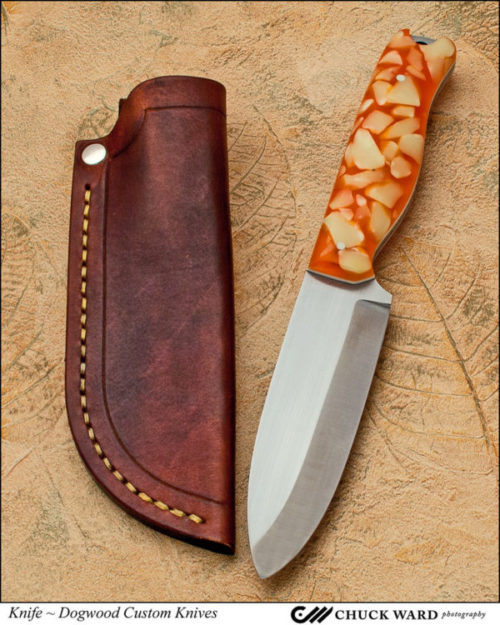
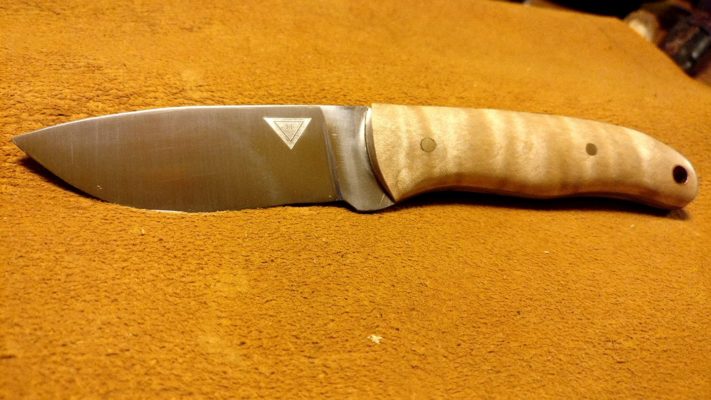
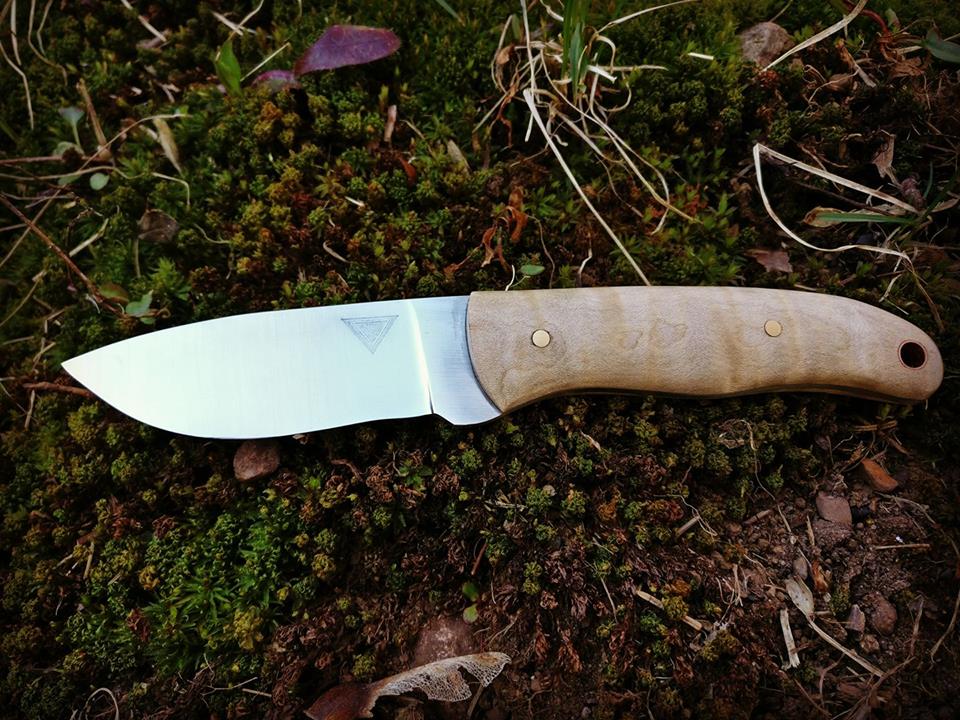
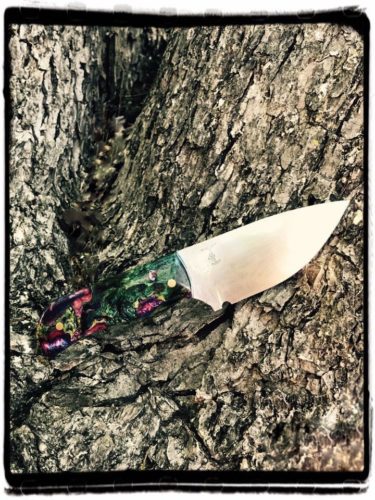
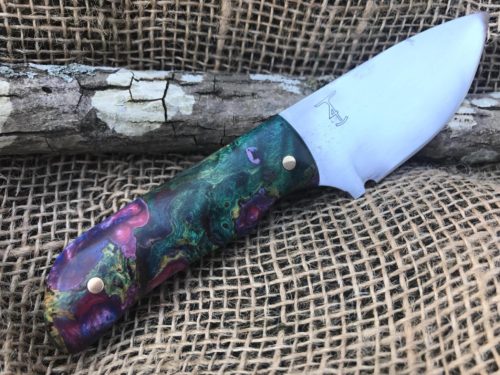
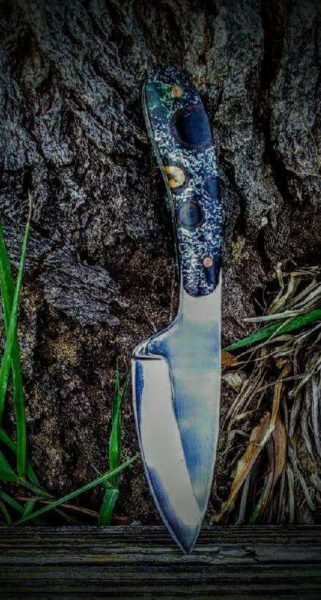
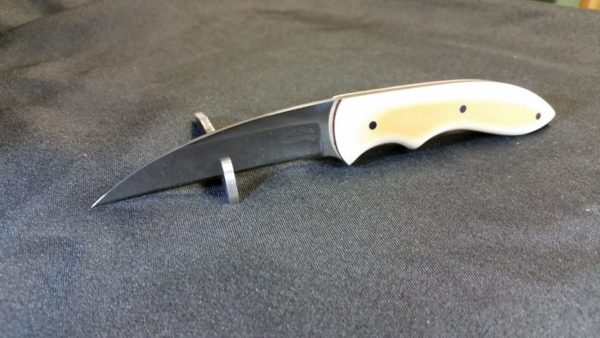
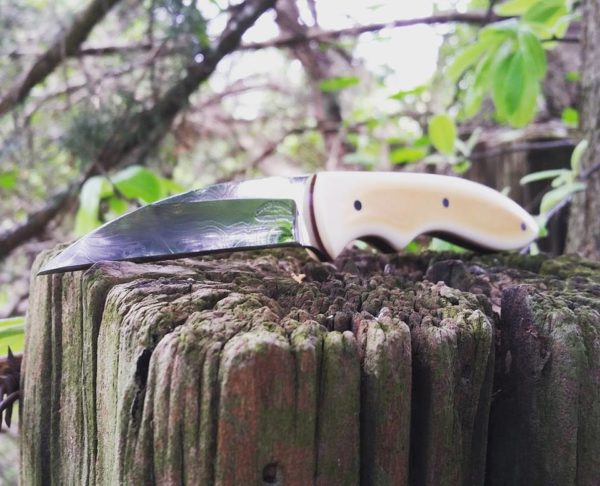
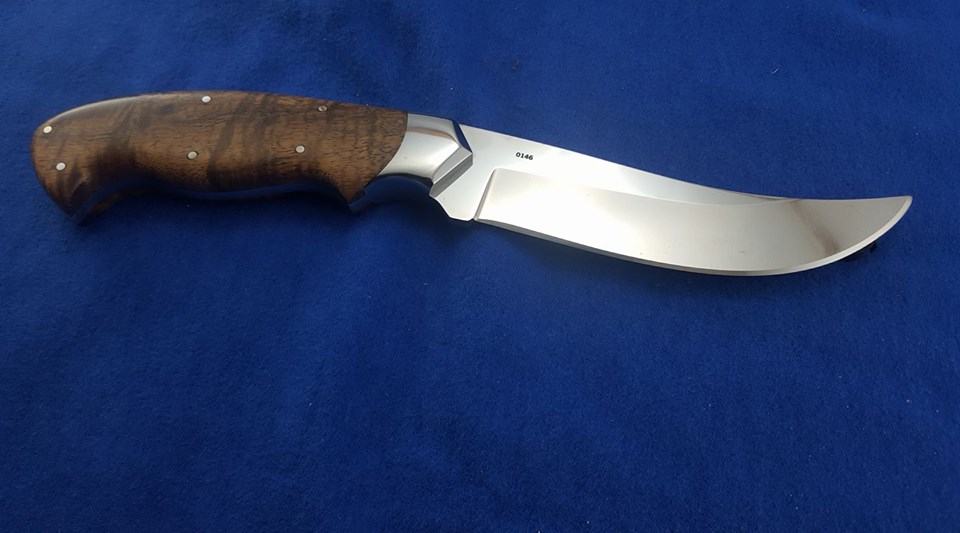
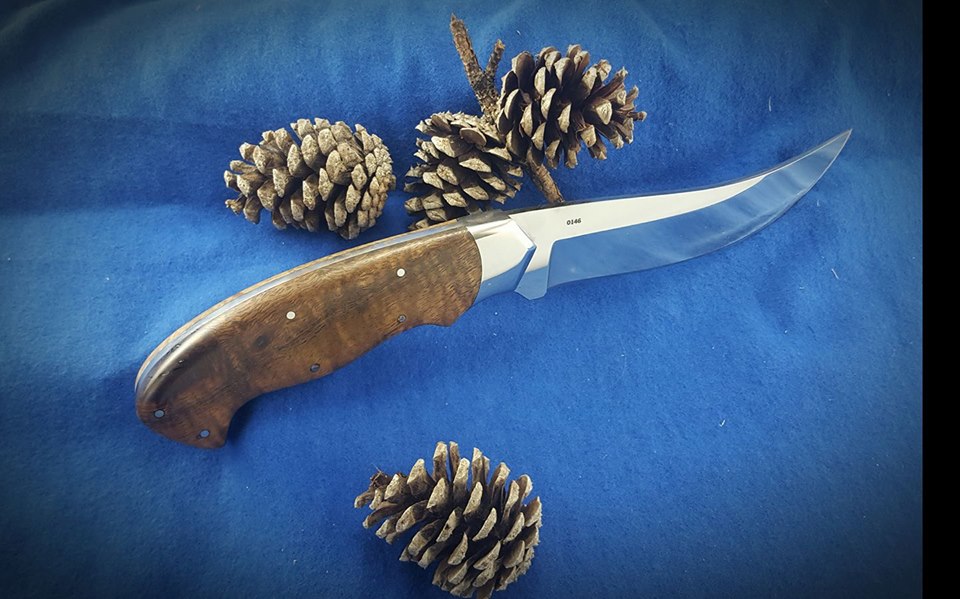
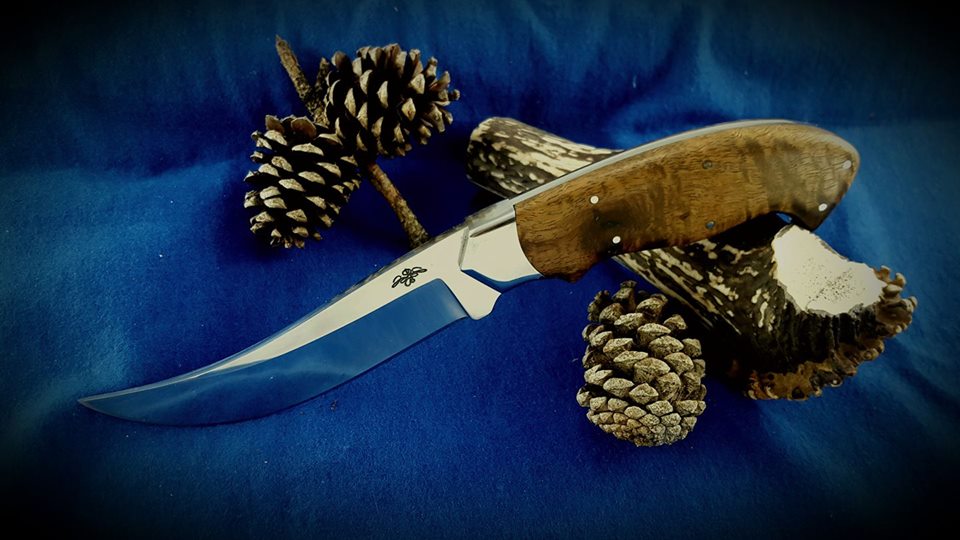
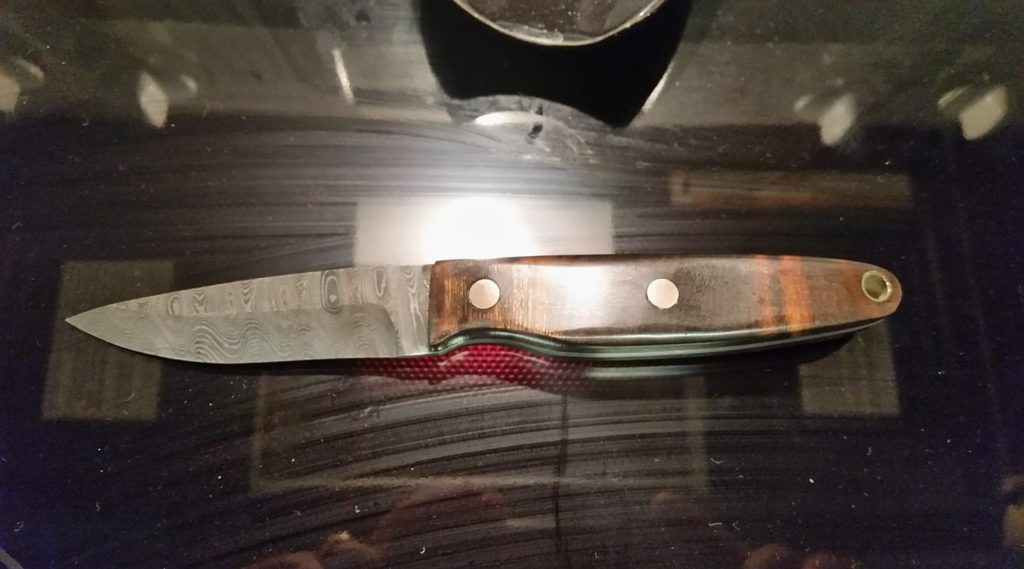
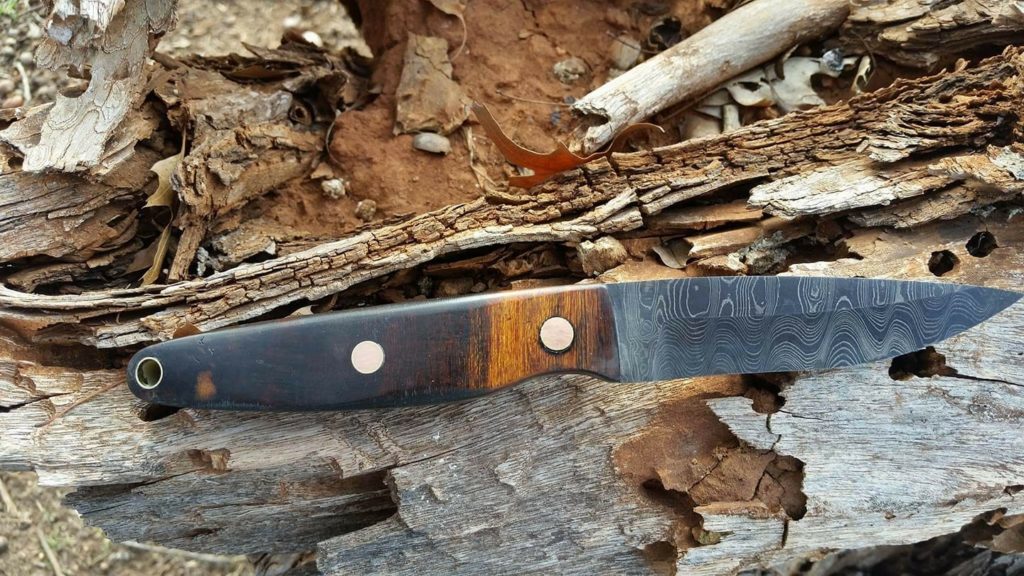
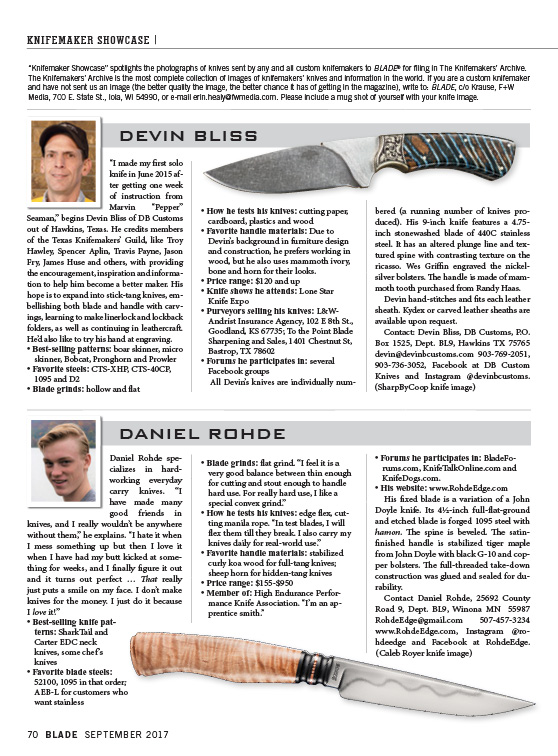
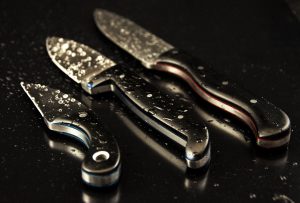
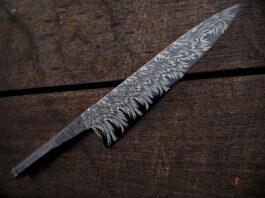
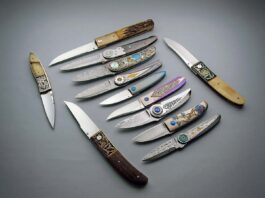
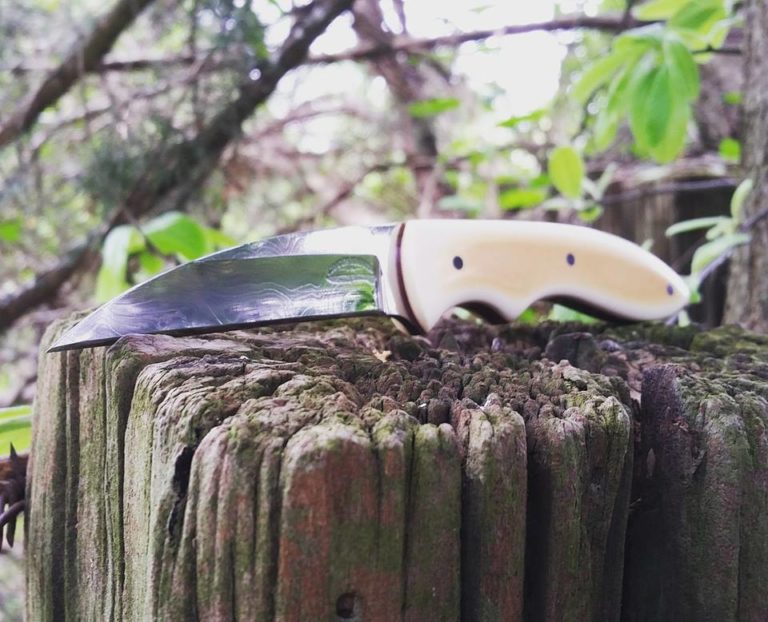
Knifemaking is the building of a knife, which includes the blade, handle and other accouterments. Blades are made by either removing metal from a steel blank via a grinder – known as stock removal – and the forging to shape of hot steel into a blade in the process known as bladesmithing. Other parts, including bolsters, guards, pommels, etc., are needed to complete the finished knife.

Featured Knives – – Knife Collecting – – Tactical Knives – – Survival Knives

Southern Grind Marine Pens Poem Of Combat

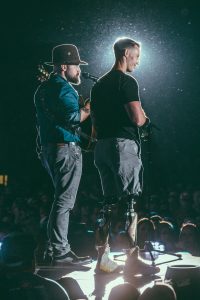
Zac Brown shares the stage with Southern Grind spokesman, Johnny Joey Jones.
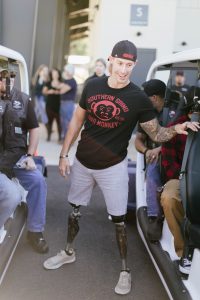
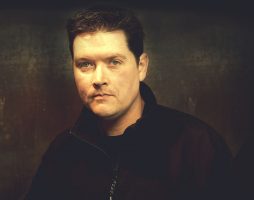
Zac Brown’s Southern Grind deploys formidable spokesman, Johnny Joey Jones, a double amputee Marine staff sergeant.

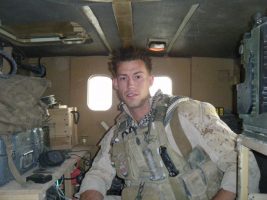
Johnny Joey Jones, Triple J to his friends and Explosive Ordnance Disposal technician to his Marine Corps brethren, wrote a poem about a particular day, a particular explosion, a particular knife, while on patrol in Afghanistan.

Jones, a double amputee and motivational speaker, is the spokesman and more for Zac Brown’s Southern Ground, which is an umbrella company that represents numerous 100-percent American-made and -sourced products, including the knife company, Southern Grind. Proceeds from the sale of these patriotic items benefit Camp Southern Ground, which strives to give kids of all races and religions, and especially those with neuro-developmental challenges, the positive influence of a camp experience. The camp also helps military families by offering the same experience to children who are dealing with a deployed, injured or deceased parent.

In May 2010, about three months before Staff Sergeant Jones would step on an IED and lose both legs above the knee, he was on patrol with a group of Marines. (In the Corps, EOD units go where they are needed, with whom they are needed.) They came to a small canal. “There is always lots of learning,” Jones said, and in this case, it was that you don’t want to use foot bridges to cross waterways. Such crossings would create bottlenecks, ideal spots for the enemy to booby-trap.

Double amputee Johnny Joey Jones is a motivational speaker and Zac Brown Southern Grind spokesman.
Prior to losing both legs above the knee Johnny Joey Jones was an Explosive Ordnance Disposal technician in Afghanistan.

To get across, first the sweeper, the Marine with the metal detector, went and then the mine-detecting dog and his handler went. “We think the dog stepped on the mine,” Jones said. “The Water So Cold” tells the story.


The Water So Cold

By Johnny Joey Jones

They say it passes

The pain so cold

Even atlas shrugged

Or so I’m told


He was out of sight

Walking on water

A fallen tree bridge

A bomb rang louder


His steps stopped so abrupt

Smoke and dirt were to breath

Gone in an instant

His bloody face screamed


I still see his face

Bloody and scared

The water so deep

Wet blood in his hair


He was screaming so loud

When I jumped in

I grabbed his body

I reached for his hand


The water a mess

Water touching my chin

I opened my mouth

The water rushed in


He yelled and screamed

I panicked and pulled

This boy would not die

In water so cold


I knew I had to do it

I was so frightened beneath

I had to reach down through it

The water so deep


I stalled for a moment

Whispered,” it’s gonna be ok”

“I’ve got you, they’ve got you”

He quieted his bloody face


They came to the bank

Reached down and pulled

This time I didn’t think

Lifting him high once more


In water so cold

I grabbed at his knees

Scared and surprised

I felt legs beneath


My mind rejoiced

His bloody face still screamed

Yet, his hand, his face

Torn open and bled


In the mix of it all

His knife in my hand

I meant to cut off his gear

He was missing only a hand


The bird came loud

So fast and fluttered

The shots rang out

From afar, from cover


I couldn’t shoot back

The bird flew, scattered


Frantically I scratched


To climb out of the water


His gear still a drift

His knife in my hand

Miles still to sift

Of this mine filled land


Days later, I stalled

Reached down, nervous sweat

My legs were still their

His knife, still wet


I gave his knife to the man

“Tell me he lived” I begged

“He lost a hand and an eye-

But he’s still got his legs”


Joey Jones mentored other recovering veterans and went on to become a motivational speaker.
Joey Jones not only took the lead in combat, he became a mentor to recovering wounded veterans like himself.

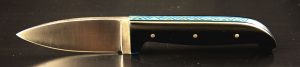
The knife was a folder issued to Marines. “I was going to cut off his gear, but guys reached down to pull him out. Days later I realized I still had his knife in my cargo pocket,” Jones said. “I gave it to his first sergeant to give it back to him,” Jones said. That first sergeant is the man in the poem of whom the speaker asks about the Marine’s condition.

Jones has had a poetic streak most of his adult life. Since separating from the service, he has earned his Bachelor’s degree from Georgetown University in public policy. “I don’t go back and edit,” Jones said. He wants the poems to represent him authentically, as he was at the time.

Check back to read more about this inspirational wounded warrior.

To learn more about how Jones and Brown met and the knives made by Southern Grind, be sure to subscribe to BLADE® Magazine.


‘Fighting Folders’ Offers Class Instruction At Home

'Fighting Folders' is cheaper than a class and can be watched repeatedly from the comfort of your living room.
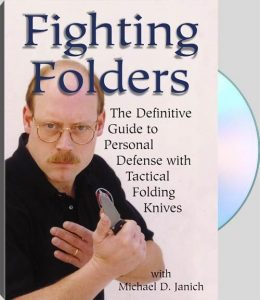
In “Fighting Folders” Michael D. Janich instructs viewers on the myths surrounding folding knives and how to employ them in a self-defense situation.

You don’t have to have been in combat to know that sometimes Plan B—the knife—can quickly become Plan A when it comes to self-defense. Often our everyday carry is a folder. This DVD can get you started on proper grip, one-handed openings and other tactics using folding knives. The $39.95 price is less expensive that a class and can be watched repeatedly in the comfort of your home.


Irishman uses fossilized bog oak for knife handles

Paddy Smyth of Symth Knives uses a flat grind on this utility knife.
Smyth Knives’ Flat-Grind Utility Knife is made using O1 tool steel, black G10 scales, and blue liners. The blade is 3 inches, and the knife is 7.5 inches overall.

Irishman Paddy Smyth of Smyth Knives in County Roscommon, Ireland, sells 90 percent of his knives through his website to customers in the USA. The other 10 percent are purchased through The Quiet Cailin Studios in Cong, County Mayo, where “The Quiet Man,” starring John Wayne and Maureen O’Hara, was filmed. Some even incorporate ancient bog oak.

Irish Eyes Will Smile Over Smyth Knives

But it was another movie that sparked a love of knives in Paddy growing up. He watched wide-eyed as the work of Gil Hibben’s was deftly wielded in “Rambo III.” It is “my favorite knife of all time, so I have huge respect for [Hibben’s] work,” Paddy commented. He had a week-long visit last year from Jeff Knox,  who trained with Hibben in the US. “He has been a great help to me also with advice and sourcing materials as its hugely difficult to get materials in Ireland,” Paddy added.

Paddy Smyth of Smyth Knives feels at peace when working in his knifemaking workshop.
Paddy Smyth lives in County Roscommon in Ireland and undoubtedly with a name like Smyth has knifemaking in his blood.

He also mentioned that Walter Sorrells’ YouTube channel has been helpful and inspirational.

However, Paddy is a self-taught knifemaker and much of his learning has been by trial and error over the years. “I continue to learn,” he noted. He was trained as a chef and butcher and always had a keen interest in hunting, so he was intrigued by what made a high-quality knife. “So, I basically decided to have a go at knifemaking and caught the knifemaking bug,” he said.

Paddy concentrates on compact pocket and neck knives, bushcrafting and hunting/skinning knives. He makes specialty chef knives to order to client specifications. His favorite steels are O1 an Niolox stainless. He appreciates the consistent finish and heat treat he gets using these steels.

He likes three grinds: Scandi for his bushcrafting blades because it’s easy to maintain an edge; and flat and hollow, according to customer preference, because they both work well for his hunting and skinning blades. For bushcrafters, he chops and batons wood to test for toughness, and then fine-carves paper to verify sharpness. Cutting heavy cardboard with its abrasive quality helps him get a feel for how long his blades will stay sharp. He does ensure his flat- and hollow-ground blades can handle the detailed work of skinning and boning.

Everyone's Irish on St. Patrick's Day, so feast your eyes on these blades from Paddy Smyth on the Emerald Isle.
The Claw by Smyth Knives, left, is 5.25 inches long, with a 2.2-inch cutting blade. It’s perfect for close skinning/boning/gutting with complete one-finger control.

“My favorite handle material is ancient Irish bog oak, which can be up to 10,000 years old. It finishes really well and has beautiful character and history,” Paddy explained. “It’s very difficult to work with as it’s so hard it’s almost fossilized. And it’s becoming harder to find good pieces. It’s very hard on machinery and tools, but the work is worth the finished product.”

There are no knife shows currently in Ireland, so Paddy sells his work online at www.smythknives.com. Prices range from 90 to 500 Euros plus shipping with discounts for repeat customers. Also, check out the boutique artisan gallery in County Mayo where Smyth Knives are also sold on Facebook. Smyth Knives on Facebook and @smythknives on Instagram are chock full of additional photos and videos. You can call Paddy at 00353 87 6281252.

All Smyth Knives are completely handmade and heat-treated in house. Leatherwork is specific to each knife, so no two creations are the same. Paddy is a retail manager for an oil company based in the west of Ireland. He lives in Roscommontown with his wife, Edel, and their three boys, Shane, Darragh and Cian.

Patty Smyth uses detailed file work on the spine of some of his knives.
The ornate file work on the spine of this knife by Paddy Smyth in County Roscommon, Ireland, is reminiscent of a Celtic pattern.

“When I started making knives, I realized I had found something incredibly natural to me, as if I was meant to do this or was maybe in my blood, as my family name is Smyth,” Paddy noted. “I’m completely at peace when I’m in the workshop.”


Get Your 2017 BLADE® Show Knife Now!

Ken Onion and CRKT collaborated on the innovative Homefront knife.
The CRKT Homefront is the 2017 BLADE Show knife. Be sure to get yours now.

CRKT and Ken Onion took home the Most Innovative Imported Design award at the 2016 BLADE Show for the groundbreaking Homefront. Now the Homefront is the official knife of the 2017 BLADE Show. This is a limited run of 300, so hurry! And at $70 you’ll be saving almost 30 percent.

Bent, Shot Whiskey Knives Keep Chopping

The June issue of BLADE® magazine features a story about wilderness survivalist Creek Stewart and his line of Whiskey Knives, made by Hank Gevedon and crew at Reptile Toolworks in Mt. Vernon, Kentucky. Whiskey Knives are carefully tested, but Hank likes to destroy a few from time to time to spot-check their quality. He starts by bending a Whiskey Corvid model to show that the hard outer layer of the A36 carbon steel will crack when bent in half, but that the knife will stay intact because of the tough inner core. Then he gets to shooting them. Besides, Hank’s just entertaining to listen to.

A Bent Whiskey Corvid Knife Still Chops and Slices

Hank Shoots A Whiskey Corvid  with an 8mm Mauser FMJ

So what does all that mean to the knife owner? Well, you won’t want to bend your knife in a vise or shoot it at the range, but the following review of the destructive testing explains how the makuri method of construction can produce a sharp, yet tough knife, ideal for hard-use bushcrafting needs.

What Does Destructive Testing Reveal About Whiskey Knives?

Sure They’re Sharp, But How Sharp?

Know How to Sharpen Your Knives

Knife sharpening is a lost art; learn how to keep your knives and tools sharp.
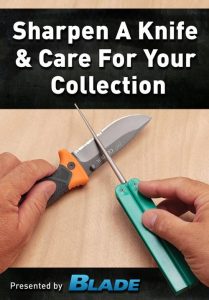
A collection of knives is only as good as it is sharp. Understand how to sharpen all styles of grinds, along with other tips on caring for your collection.

The blades on Whiskey Knives are asymmetrical hollow-ground, meaning that you only need to sharpen one side, the one with the Creek logo on it. The other side just requires a touch-up. Reptile Toolworks puts instructions in the crate with each Whiskey Knife it sends out, but what about your other knives? “Sharpen A Knife, And Care For Your Collection” by BLADE editors covers all aspects of sharpening, demystifying the process and ensuring you have the knowledge to keep your knives sharp at home and in the field.

A Knife Completes A Circle of Grieving

Stefan Neil Palmer made this knife to raise funds in memory of Dustin Chamberlain.
Knifemaker Stefan Neil Palmer made a knife in memory of Dustin Chamberlain to be auctioned off. He never knew it would change his life.

While at his parents’ Siloam Springs, Arkansas, home for Christmas break 2011, 20-year-old Dustin Chamberlain was shot dead by an intruder. Nearly five years later, knifemaker and racecar driver Stefan Neil Palmer was asked by his racing mentor if he would make a knife to auction off to raise money for Dustin’s Dream, the charity foundation organized in Dustin’s memory. Stefan agreed, but when he laser-engraved Dustin’s favorite saying on the handle, everyone agreed that the knife could never be auctioned off.

On Dec. 15, 2011 Dustin, a biology-pre-med sophomore at Baylor University in Waco, Texas, was resting at home after a minor outpatient procedure. Both his parents left for work with Dustin’s reassurance that he didn’t need anyone to stay with him. His father, Don, had planned to have lunch with him. At approximately 10:45 a.m. Dustin’s mother, Deondra, called the house and Dustin’s cell phone repeatedly but got no answer. She called Don and asked him to check on their son.

Don walked into the Chamberlain home to find his son lying dead just inside the door with four gunshot wounds. In the family room, he found a stranger with what police subsequently said appeared to be a self-inflicted gunshot wound that later proved fatal. The investigation revealed that the stranger was a local man who had been reported missing, depressed and possibly suicidal. He had wandered onto the Chamberlain property, and evidence showed he’d been on the premises for two hours before the Chamberlains left for work.

It’s an understatement to say that the Chamberlain’s lives were changed forever, but as day followed day, God showed them how they could carry on Dustin’s name and spirit, Don explained. “It’s been therapeutic,” he said, referring to the charity they set up in remembrance of their son. In honor of Dustin’s dream to one-day become a doctor, Dustin’s Dream sets up medical clinics in third-world countries and funds teams to conduct medical mission trips to those countries. They also offer scholarships for aspiring medical students.

Dustin's Dream Racing member Stefan Neil Palmer made a knife to benefit the charity.
Knifemaker Stefan Neil Palmer made a knife to auction off in benefit of Dustin’s Dream.

In 2013, two years after Dustin’s murder, Chamberlain family friend Steve Butler decided to use his racing hobby to support Dustin’s Dream. Steve introduced Stefan to Dustin’s Dream Racing, which raises money for the foundation “while being a positive, Godly influence” in the sport of racing, according to their web page. In the summer of 2016 it was suggested that Stefan make a knife to auction off to benefit Dustin’s Dream.

So Stefan set out to make the best knife he could to honor Dustin. The 3.112-inch hollow-ground drop-point hunter was constructed using buckshot-pattern steel forged by Brad Vice’s Alabama Damascus. “It’s my favorite pattern,” Stefan said. And buckshot- or raindrop-pattern damascus is his favorite steel. The handle was made from camel bone and brass with—fittingly—a checkerboard inlay front and rear of the handle. The shinbone of the camel is an economical choice, but it’s the ideal medium for laser engraving, explained Stefan. The rubbing compound left in the pores of the bone lend it that gray undertone. Signature filework runs from the tip to the butt of the spine. “It turned out great,” stated Stefan.

Knifemaker Stefan Neil Palmer made a sheath to accompany the knife he made to benefit Dustin's Destiny.
Stefan Neil Palmer’s accompanying sheath notes Hebrews 12:1-2, which includes in part “let us run with perseverance the race marked out for us.”

He went to Steve to see if there was anything that Dustin was known for saying. Steve showed Stefan what the Chamberlains had written about Dustin. “Whenever anyone asked Dustin how he could consistently make wise choices and live his faith, Dustin would say, ‘Because I love God with all my heart and I don’t want to give Him anything less than my best.’” Stefan explained, “I put that on the knife. When I looked at the finished product, I knew the knife was not for someone to buy. It was priceless and needed to go to Don.”

Stefan took his dilemma to Steve and it was agreed that a second knife would be made for the auction. The trick was to keep Don’s knife a secret, made harder by the fact that Don expressed great interest in the knife. Steve suggested to Don that he not bid on it because people would then back off their own bidding in an attempt to make sure that Dustin’s father ended up with Dustin’s knife. The racing team wanted the knife to bring in as much money for the foundation as possible.

In the end, at Dustin’s 5th Heavenly Birthday Chili Supper and Baked Goods Auction on Dec. 10, 2016, Stefan presented the original knife to Don, with both giver and receiver ending up in tears. “It changed my life,” Stefan said. “I’m not so likely to cut someone off on the race track with the Dustin’s Dream sticker on my car,” he added with easy laugh. (The T in the Dustin’s Dream logo is in the shape of a cross.) He relates how so many people have been affected for the better through Dustin’s example and the strength of the Chamberlains. “So much beauty has come out of it,” Stefan said.

Stefan Neil Palmer holds one of two knives he ended up making in honor of Dustin Chamberlain.
Dr. Carl Duncan, left, ended up with the knife Stefan Neil Palmer, center, made in honor of Dustin, the son of Don Chamberlain, right.

The Chamberlains never returned to their home. Don manages a beef cattle ranch and other properties for his boss, and the couple and their daughter stayed at the ranch the night of the murder. They found a place to rent, but the two payments nearly put them under financially. All the while, Don said he was thinking, “I wish I could afford to just give it away to a couple who could help foster children.” Two years later, a doctor—surprise, surprise—Carl Duncan and his wife, Carol, purchased the home, and—you guessed it—they had foster children.

It was Carol who ended up with the winning bid of $3000 on the second knife, and she presented it to her husband. According to the Dustin’s Dream website, the racing team has raised $45,000 for the foundation.

Stefan’s wife, Raquel, bringing the story full circle, is returning to school to become a doctor—in the same specialty as the doctor who purchased the house and the knife. She and Stefan hope one day to accompany a medical mission team through Dustin’s Dream. Don and Deondra, a nurse, are returning to Guatemala through Dustin’s Dream for his second trip and her third. If you want to know what you can do to get involved, visit www.DustinsDream.net/give.

When Don returned to the house that fateful day, he thought it was odd that the family’s Jack Russell-rat terrier cross was out in the yard. Cricket was trembling in fear, and, uncharacteristically, she would not come to Don. It is believed that she raised a ruckus when the intruder broke into the house near her bed. Dustin came to see what the fuss was about. In yet another connection, I breed Jack Russells.

According to what police revealed to Don, the shooter asked his wife what it meant if someone was very depressed. She answered that it meant the person needed professional help. The husband and father of four reportedly said that he felt he was too much of a coward to do that. He took a gun and left the home.

I asked Don if he knew how the family was doing now. He said he didn’t, but that it had been on his heart to find out, and that my asking had solidified that course of action for him. And “no,” he said quietly, “I could never use that knife.” He has it on a dresser, along with the sheath and some photos. He wants to put it in a shadow box. “I could never use that knife,” he repeated.

‘Art of the Knife’ Is A Showcase of Beauty

"Art of the Knife" is on sale for $21, a 40-percent savings.
“Art of the Knife” doesn’t require anything more than being appreciated for its beauty.

If you want inspiration for your own knifemaking, here’s your eye candy. Over 500 knives are pictured, and they run the gamut from highly polished and bejeweled to hunters with artistic flair. Author and former BLADE managing editor Joe Kertzman covers scrimshaw and engraving, as well as the art of each style of knife. Normally, $35, this beautiful book is now on sale for $21, a 40-percent savings.

GiantMouse Builds A Better Collaboration Model

The GM2 has the GiantMouse logo on the blue anodized titanium clip.
GiantMouse is pushing the boundaries of two renowned Danish designers, but together with an American businessman are building a better collaboration model.

By now knife industry followers know that renowned Danish knife designers Jesper Voxnaes and Jens Anso teamed up to create GiantMouse LLC. What you might not know is that a California businessman with a love of knives became the organizational drive behind the endeavor. Jim Wirth asked a simple question over beers with Voxnaes and Anso that solidified the venture, and bettered the collaboration model creatively and financially.

When Wirth turned 14, his older brother Chris gave him a small Gerber pocketknife with mother-of-pearl scales as a birthday present. He loved looking at that work of art, and yet, the knife got plenty of use too. From then on, Wirth began attending knife shows, like the former Bay Area Knife Collectors Association show in Santa Clara. He joined that organization so he could attend the meetings and learn more about the knife industry.

His love of knives—and watches—grew and he continued to attend shows, adding the New York Custom Knife Show and BLADE Show. Meanwhile, he developed a data warehouse-business intelligence firm that became an Inc. 500 Fastest-Growing Company. After a merger, Hewlett-Packard bought the company, and Wirth was set as far as his family and living expenses were concerned. He began consulting, advising owners of young businesses and angel-investing, or backing business that show promise.

The American businessman and Danish designers behind the success of GiantMouse Knives.
Jim Wirth, left, a businessman and angel investor, suggested that Danish designers Jesper Voxnaes, middle, and Jens Anso, right, start a new company to produce knives they collaborate on, sharing in profits rather than receiving a royalty percentage.

Wirth had always been a fan of the work of Voxnaes and Anso, so at a BLADE Show, although he’d met them before as a customer, he was more formally introduced to the men through a common friend. Over drinks, Wirth inquired about the royalties each knifemaker was making in their partnerships with well-known manufacturers. Although mum on details, designer royalties on any manufacturing collaboration range from 3 to 7 percent, sometimes as high as 10, of net sales. There are countless variables that determine the final cut, however, according to numerous sources in the knife and product development industries, 5 percent is thought to be fair for both the designer and the factory that takes the risk on whether the product will be a success or not.

Voxnaes and Anso revealed that they had indeed co-designed some knives together. They had even come up with a potential company name, GiantMouse, because Denmark is a tiny country in a giant world and they wanted GiantMouse to be a small knife brand in a giant knife industry. Wirth asked why they hadn’t produced these knives they’d worked on. And with that question, GiantMouse came into being.

GMP2 is released with a upscaled finish, also in limited quantity, but still at a collectable cost.
The P in the GMP2 version stands for pirate and if you look closely, the mouse logo is wearing an eyepatch.

The three men determined that they would only do limited runs of folders four times a year, 300 in a standard finish and 100 in a special finish. These 100 “pirate” versions would include the GiantMouse logo with a patch over its eye. The GM2—GM for GiantMouse and 2 for sequential order—for example, is a full-size everyday carry folding bowie with carbon fiber handle scales. The backspacer, clip and pivot ring are a rich blue anodized titanium. The nested lockbar is also titanium. The 3.3-inch blade is made of Bohler M390 Microclean powder corrosion-resistant martensitic stainless steel with a satin finish and is ground to a 0.157-inch thickness. The handle length is 4.62 inches, and the knife weighs 4 ounces.

The GMF2 is based on a Nordic work knife, but can be used for bushcrafting or everyday chores.
The GiantMouse team knew they always wanted to have some knives available for sale, so they do not limit sales of their fixed knives like the GMF2.

Although the folders are discontinued as soon as the 400 pieces sell out, the GiantMouse fixed-blade runs are unlimited. The GMF2—F for fixed—for example, with leather sheath, is a throwback to a Nordic work blade that can be used for everything from bushcrafting to everyday tasks. The 3.62-inch blade is made of Bohler N690 cobalt high-performance powder steel, ground to a 0.157-inch thickness and finished in a fine stonewash. The 4.43-inch Micarta handle brings the overall length to 8.12 inches. The knife weighs 4.1 ounces.

The way the designers look at it, according to Anso, is that by working very closely and combining their skills, each designer is forced out of his individual comfort zone. Integrating each maker’s ideas and style without compromising on design quality is “a difficult task but makes for a very strong design if done right.” It’s important to each man that the other is able to vouch for everything involved in the design. Both must be happy with the final result of each knife.

Anso and Voxnaes both started making knives in 1989, and they both lived in rural northern Jutland, only about 30 miles apart. They didn’t actually meet until 2005 at a small knife show. They instantly hit it off and have been close friends and colleagues ever since, explained Anso.

The two friends met Wirth at a BLADE Show when Wirth was collecting knives. “With Jim’s well-known talent for business, high ethics and passion for quality, combined with our skills and experience in the knife business, the idea of GiantMouse Knives started to take form,” Anso stated.

As chief executive officer, Wirth drew up the articles of incorporation and launched the website. He also set up the fulfillment center in Southern California. The knives are manufactured in Maniago, Italy, and Voxnaes and Anso handle all interactions with the manufacturer from approving prototypes, through test runs, to quality control of the finished knives. A final inspection is performed when the knives arrive in California. Out of a run of 400, perhaps a half-dozen will be returned because the blade is slightly off center or a flipper action isn’t as smooth as it should be. The knives are then sent to the fulfillment center where they are put in branded packaging and sent to customers.

One might figure that short runs of well-designed knives would be unaffordable because you don’t have a high number of pieces over which to spread the start-up costs. There can also be fees if runs don’t meet a minimum quantity. But the founding trio at GiantMouse committed themselves to this route because it incentivized the designers. “They’re challenged to create more designs. It’s exciting,” Wirth said. And as partners in the company, the designers share in the profits with Wirth. This both pushes the designers and rewards them for their efforts perhaps more than a percent-of-net-sales royalty would.

All along the goal has been to create exceptional knife designs, produce them at the highest quality possible and keep them affordable. For example, the maker’s list price for the GM2, in standard finish, is $325; the GMP2—the P standing for pirate—in special finish, is $375. Ten dollars from the sale of every folder, and currently $20 from every fixed blade, is donated to Save The Children. (The organization helps ensure children at home and abroad receive the heath care, nutrition, education and protection they need to grow up happy and secure.)

Wirth said that he got to go to Demark and see the operations of both designers. Then the trio drove to a knife show. “I sat in the back and listened to Jens and Jesper talking in Danish. Every once in a while, I’d hear ‘Jim,’ and I’d be like, ‘heeey.’ The only Danish I learned was something written on the radio, something like ‘the radio isn’t on.’ Now that’s what I say to them when I see them.” Wirth laughed telling the story. He seemed happy, like you might imagine a 14-year-old boy would be over receiving a beautifully designed knife.

Know What Great Knife Design Is

"101 Knife Designs"will give you both theory and beauty behind the great knife designs.
“101 Knife Designs”will give you both theory and beauty behind the great knife designs.

Understanding what makes a great design makes you a better collector and a better maker. “101 Knife Designs” by Murray Carter will not only inspire your work with detailed discussion of blade design, but will give you full-color images of exquisitely designed knives to ogle. At $19.53 you save $10.43 off the cover price.

Survivalist Creek throws his knife into romance writing

You can buy the paperback version of "Rugosa" for $14.95 and the Kindle edition for $3.99 through Amazon.
Creek Stewart uses his survival knowledge, and a few good knifes, to tell a rockling adventure story, with a good romance interwoven throughout.

Valentine’s Day saw the release of survivalist and Whiskey Knives co-collaborator Creek Stewart’s young-adult romance novel, “Rugosa.” What knife enthusiasts will appreciate about this adventure is that by page 4 a machete crafted from a lawn-mower blade has made an appearance, and many others follow.

In the dystopian world of post-globalization America, 17-year-old Omaha Hoyt must leave the farm and woods were he is most at ease and travel to the city to rescue his love. The plan is to stay on back roads and subsist off his trapping and foraging skills. Very quickly plans change and the lifelong Boy Scout is forced to help someone he meets along the way.

Omaha’s pocketknife gets lots of use, and his sister makes a survival girl’s dream barrette that is shaped like a butterfly with cutting edges, a fishing line wrap with hooks for antennae, and is apparently weighted for easy throwing as a weapon. In what one might consider the equivalent of a gun getting reloaded in a movie, in the book there is actually a knife-sharpening scene.

This is not to say that “Rugosa” is knife heavy. It’s first and foremost a survival story about a 17-year-old who uses his scout training to survive physical and emotional challenges. But knives are more than an essential tool in this book. They each have a story behind them. Even the knife used against the protagonist is rich in lore.

“Rugosa” is also equal part love story. An author must possess the emotional intelligence to remember what it was like to be 17 and be able to convey what’s going on in the heart of a young man before that youth necessarily understands his own emotions, never mind knows how to convey them. It’s hard not to come across as a mature adult when writing from the perspective of a teen, but Creek creates a believable character. You can read more about the wilderness survival instructor and knife co-collaborator at “Survivalist Creek’s Life Led Naturally to Whiskey Knives.”

The book’s opening is slightly choppy, but only because editors now demand action begin in the fist paragraph. The beginning describes the farm and woods where Omaha lives with his mother and sister and the secret storage bunker he keeps hidden by “Rugosa.” It’s relaxed reading and idyllic, but once Omaha departs on his mission, the excitement is ramped up and the pace is non-stop. It’s easily read in a day or two.

You can get the paperback edition of “Rugosa” for $14.99 and the Kindle version for $3.99 through Amazon. Young-adult novels are one of the healthiest segments of publishing, probably because they’re fun for adults to read as well.

If you’d like to learn more about how Creek collaborated with Hank Gevedon of Reptile Toolworks to create Whiskey Knives, the bushcrafters that look like they stepped out of a 1700s mountain man’s kit, be sure to pick up the June 2017 edition of BLADE Magazine.

And yes, Creek is working on a follow-up novel to “Rugosa.” It takes place during the same timeframe but is told from the perspective of Omaha’s love interest, London, while she struggles to survive during the hostile takeover of Philadelphia.

Build a bug-out bag for your next adventure

Creeks top-selling book instructs you how to put together your 72-hour emergency bug-out bag.
Follow Creek’s instructions for putting together your emergency kit and you’ll have least a fighting chance of surviving.

Creek Stewart’s top-selling non-fiction book is “Build the Perfect Bug Out Bag: Your 72-Hour Disaster Survival Kit.” You can get your copy here, for $9.85, a savings of 42 percent. In “Rugosa” Omaha packs his bug-out bag. Will you be ready with yours?


Larry “The Hammer” Harley Passes Away

The Hammer passes.
Larry “The Hammer” Harley passed away Feb. 12.

Larry Wayne “The Hammer” Harley, friend, knifemaker, bladesmith and knifemaking teacher to anyone who showed an interest—especially kids and “wounded warriors”—passed away in his sleep Feb. 12. He was 66.

A lifelong resident of Bristol, Tennessee, Larry made knives under the business name of Lonesome Pine Knives. An American Bladesmith Society journeyman smith, he was the chair of the ABS Youth Program and was involved with the Wounded Warriors Project. He was best known outside the knife industry as one of the stars of the National Geographic television show Lords of War, on which he went simply by the nickname of “The Hammer,” specializing in identifying and judging the worth of assorted knives, swords and other edged weapons.

Though not a tall man, Larry was large with burly arms and a massive chest—which was no doubt needed to contain his huge heart. He conducted bladesmithing symposiums at his shop in Bristol, entertaining youths, veterans and anyone and everyone who wanted to make knives. He also taught at the Batson Bladesmithing Symposium, youth programs at the BLADE Show and Smoky Mountain Knife Works, and just about anyplace he could find that would allow him to teach the craft, and interact with the people involved, that he loved so much. “Larry always felt that the real payment for teaching a youngster of any age was the irrepressible smile that was always on their face when they realized they could do it,” wrote ABS journeyman smith Wes Byrd, who, along with Larry, taught kids how to make knives in the ABS Youth Program.

As BLADE Magazine Cutlery Hall-Of-Fame© member A.G. Russell noted, everyone in the business liked Larry. “If you knew Larry at all, you probably knew where he stood on all of the issues of the world that you and he had in common,” Byrd noted. “I also knew he had my back no matter what.” Added Larry’s friend Mike Crenshaw, “Larry was a remarkable bladesmith, friend and outrageous character that will be sorely missed. He passed the fire on to many, young and old.”

Larry learned to make knives from his father, the late B.L. “Pap” Harley. “It just so happened that my daddy made knives and that’s how come I’m a knifemaker,” Larry said in the February 2015 BLADE®. “I remember my daddy working on bowie knives on the kitchen table when I was 4 or 5 years old. He also read me books by Raymond Thorp, author of Bowie Knife and Crow Killer, for bedtime stories, and I remember we saw the Alan Ladd movie about Jim Bowie, The Iron Mistress.”

The Hammer and the kids.
Larry “The Hammer” Harley talks with young knife fans at a past BLADE Show seminar.

Larry’s friends were too many to count. In fact, if you met him he probably counted you as one of his friends and you counted him one of yours. His infectious laugh and twinkling eyes immediately broke the ice. A regular exhibitor at the BLADE Show in the early years, he was known then for his “hog-killing knives” and excursions on which he would take customers to hunt wild hogs in the Appalachian Mountains of East Tennessee and the surrounding area. He was also known as a top competitor in the early years of the ABS cutting competitions, winning at least one championship before the competitions became more organized and eventually evolved into today’s events conducted by BladeSports International, including the BLADE Show World Championship Cutting Competition, the 15th annual rendition of which will be held at this year’s BLADE Show June 2-4 in Atlanta.

Larry is survived by his loving wife of 35 years, Kristine; sons Richard and Nicholas; goddaughters Sarah and Julia Denton; aunts, uncles, cousins both in the Holbrook and Harley family; and many friends.

The family will receive friends from 5 p.m. to 7 p.m. tomorrow, Feb. 15, at Oakley-Cook Funeral Home in Bristol. The funeral service will follow at 7 p.m. with the Rev. Steve Playl officiating. The committal and inurnment service will be at 2 p.m. Feb. 16 at Glenwood Cemetery in Bristol.

In lieu of flowers, memorial contributions may be made to the Wounded Warrior Project, POB 758517, Topeka, KS 66675-8517 woundedwarriorproject.org.

Save

Save

Save

Save

Save

Save

Save

Save

Advertisement

Must Read Articles

Read this before you make a knife

Knifemaking 101 – Read This Before You Make a Knife

  by Wayne Goddard My experience has taught me that there's nothing like digging in and getting started. I've often said the hardest part of the...
how to forge damascus steel

How to Forge Damascus

Advertisement
Advertisement