
Knifemaking

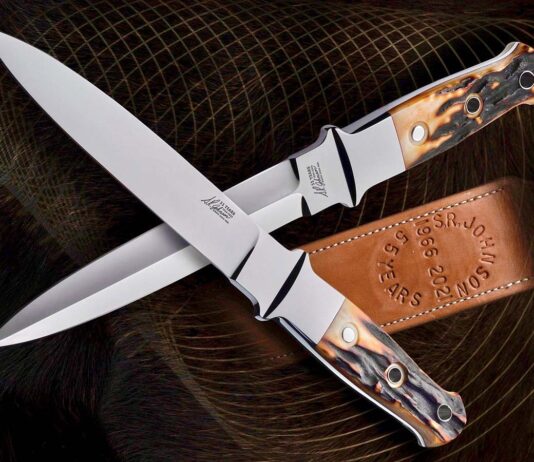
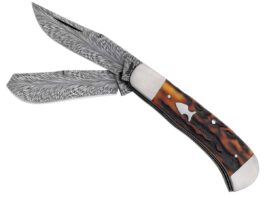
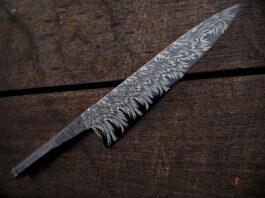
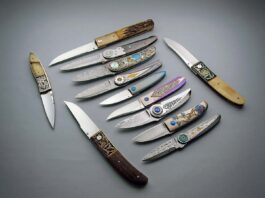
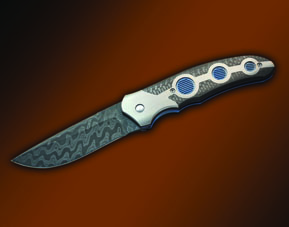
Knifemaking is the building of a knife, which includes the blade, handle and other accouterments. Blades are made by either removing metal from a steel blank via a grinder – known as stock removal – and the forging to shape of hot steel into a blade in the process known as bladesmithing. Other parts, including bolsters, guards, pommels, etc., are needed to complete the finished knife.

Featured Knives – – Knife Collecting – – Tactical Knives – – Survival Knives

Husband and Wife Knifemakers

0

When established knifemaker Lee Williams met Donna, little did he know that he had a future knifemaker on his hands!

hus wifeAs husband and wife, Lee and Donna Williams collaborate on the usual things, like what’s for dinner or where to go on vacation. So why not team up on making knives?

When Lee, already an established knifemaker with a large collector base, met Donna, little did he know that he had a future knifemaker on his hands, or a beautiful and devoted wife!

In a feature article titled “Mr. and Mrs. Sharp” in the June 2015 issue of BLADE®, writer Pat Covert tells Lee and Donna’s story and shows some of the knives Lee has fashioned recently on his own, and collaborative pieces the couple has made together before and after marrying in July of 2014.
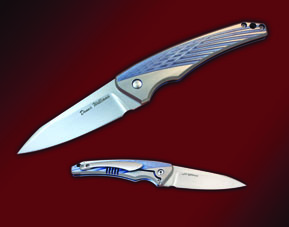
CherubAs Lee notes, “I started making knives in 2001. I had set up a small machine shop in my garage around 1996,” he recalls. “In November of 2001 I decided to make knives for my siblings as Christmas presents. Twenty-something knives later I had managed to finish knives for all of them, plus their spouses, before Christmas that year. I wasn’t completely satisfied with those first few knives and started doing a lot of research on the Internet.”

To read the rest of the story, see the June 2015 issue of BLADE. Or click here to subscribe.

The Cherub (above right) is a result of the first collaboration between Donna and Lee Williams as a married couple. (Steel Addiction Custom Knives image)


Recommended for You:
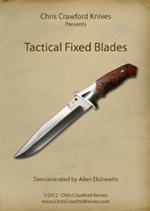
Tactical Knifemaking.Making Tactical Fixed Blades DVD

Learn both basic and advanced knife making techniques with expert instruction from Allen Alishewitz in Tactical Fixed Blades. Allen demonstrates how to craft a double-edged tactical fixed blade knife from start to finish, and creates two knives in order to fully illustrate the knife building process. You’ll learn:

– Profiling and Drilling the Knife
– Tang Tapering on a Grinder
– Tang Tapering on a Mill
– And more!
Order here

Knifemakers Share Techniques

0

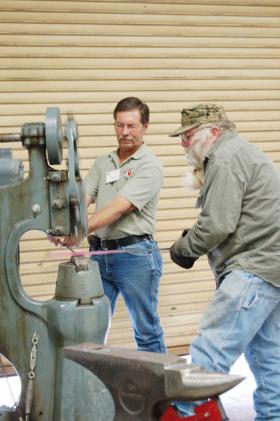
Good for the Topeka Capital-Journal and journalist Carolyn Kaberline for covering the “Heartland Bladesmithing Symposium,” which took place in Kansas this past October and is sponsored by the American Bladesmith Society (ABS) and the Kansas Custom Knifemakers Association.

(Carolyn Kaberline photo)13774301

One of 10 ABS Hammer-Ins and events across the country, the Heartland Bladesmithing Symposium included demonstrations by renowned steel makers and knifemakers like Jerry Rados and Steve Culver, who conducted demonstrations covering such subjects as damascus pattern makng, tomahawk forging, creating wood-lined sheaths, applying metallurgical theory, ABS journeyman smith judging standards, and even a knife photography segment taught by Caleb Royer.

Click here to read the full story.

For more knifemaking how-to, click here.

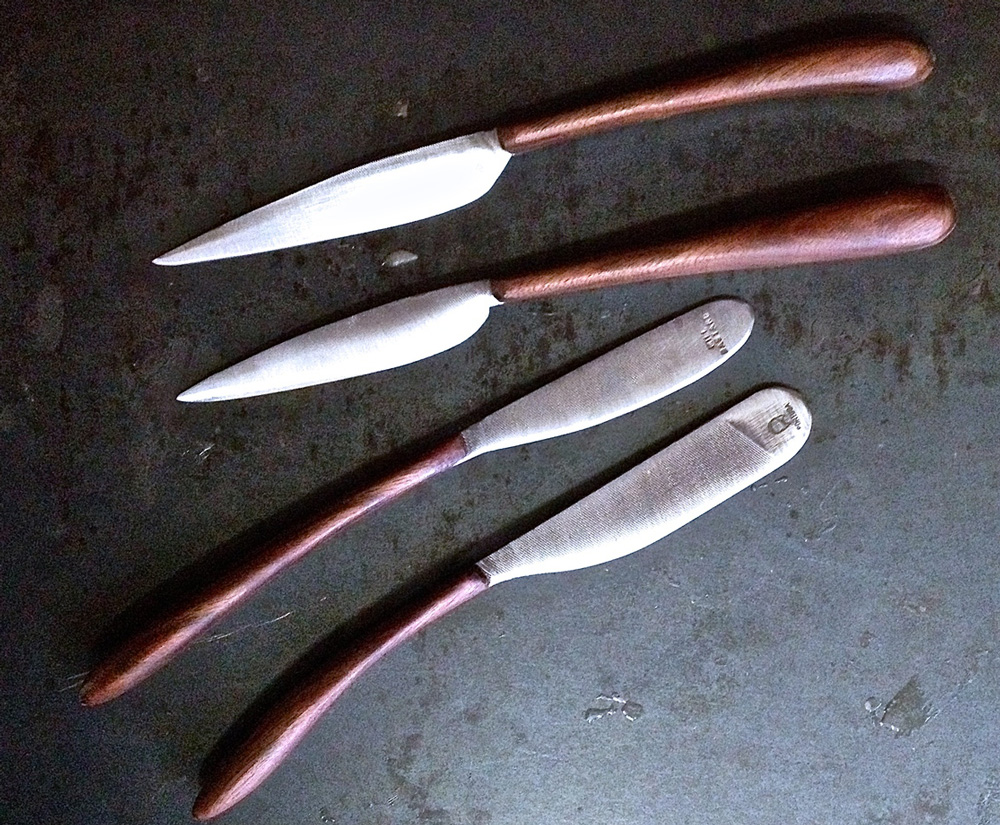
Cheese Knives! Blades You Don’t See Everyday

0
A Chelsea Miller Custom Cheese Knife.
A Chelsea Miller Custom Microplane Cheese Knife.

We’ve all heard it said: “There’s nothing new in knives.” And maybe there’s not. It could be that’s a true statement, although the flipper folder, assisted-opening knives, Mokuti (mokumé and titanium combination), lightning strike carbon fiber and other materials and mechanisms may be considered new. Perhaps innovation could be considered a newness, or progression at least.

Chelsea Miller Rounded Cheese Knives.
Chelsea Miller Rounded Cheese Knives. Click to enlarge.

Cheese Knives!

Here’s a knifemaker, and a female knifemaker at that, which isn’t new, but not common, either, who makes some knives that are just a bit different—those you don’t see every day.

And maybe that in itself is a novelty, though maybe not new. Meet Chelsea Miller, and enjoy!

Click here for Chelsea Miller Knives

Click here for innovative knife resources.

What Are The Best Blade Steels?

Follow the maker's steel recommendations.
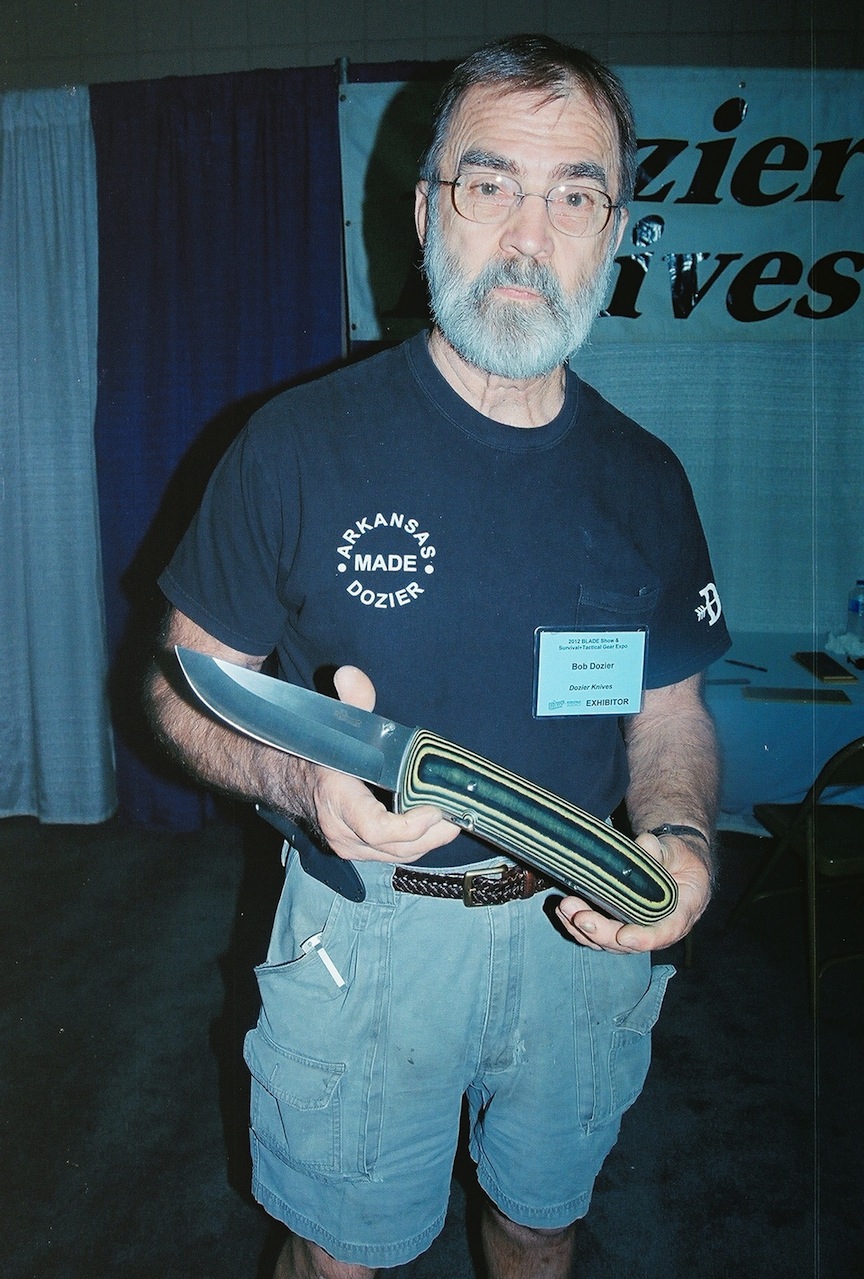
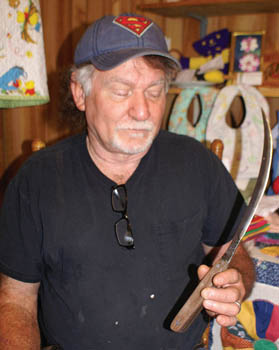
Ask the maker what blade steel he recommends. Bob Dozier holds one of his giant trappers.

A question we often hear is What are the best blade steels? A better way to approach the question is to determine what jobs the knife will be asked to perform.

Do you need a hunting knife or an everyday carry knife? A kitchen knife or a camp knife/chopper? There are others. The type of knife and how it will be used often will dictate the type of steel.

Say you need a hunting knife. Rather than ask what kind of blade steel will be best for it, research the websites of companies or makers who specialize in hunting knives. Such companies and makers will offer hunting knives not only with the steels that they find best for hunting knife purposes, but also with the edge geometries that the companies and makers feel they are most accomplished at making/offering.

Edge geometry refers to the blade’s grind and edge. If the grind and/or edge is too thick or otherwise not formed properly, it doesn’t matter how good the steel is—the knife will not cut well. As for the grind itself, there are many—hollow, flat, convex, chisel, etc., and combinations thereof. Usually the companies or makers employ the grinds they are best at. In cases where you have the option of picking the grind from a custom knifemaker, ask him which grind he’s best at and go with it.

Another important factor is the heat treatment of the steel. In fact, a low-grade steel heat treated properly often will outperform a high-grade steel with a substandard heat treatment.

In addition to the type of steel, ask how it is heat treated. While many makers are adept at heat treating their blades, many simply ship their blades off to professional heat treaters who specialize in the process. Blades heat treated by the pros usually will be heat treated properly and according to industry standards.

High-grade steels such as CPM S35VN, ZDP-189 and others are cutting tigers but can be difficult to sharpen and are more expensive. Lower-grade steels such as 440A, 5160 and others, all things being equal (including proper heat treatment and edge geometry), may not perform as well or hold an edge as long, but are usually easier to sharpen and will do most everyday cutting jobs that most people require. And, knives with such steels should be less expensive. In the case of 5160, while it is not a stainless steel, if you clean it and dry it off after each use, you should not have a problem with corrosion. The same is true with most non-stainless steel knives. Meanwhile, it’s not a bad idea to clean and dry off stainless steel knives after use as well. They can corrode, too—it’s just that they corrode less, as their name indicates.

Bottom line: Tell the company and maker what you plan to do with the knife. They make knives for a living and usually will be able to fit you with the proper knife and suitable blade steel for your needs.


The latest issue of BLADE is on newsstands now!Recommended:

Stay abreast of the latest developments on this and many more knife rights issues with a subscription to BLADE.

Knives Don’t Make the Man

0
DREW24F620
Photo by Alejandro A. Alvarez.

It’s always nice when mainstream media, in this case the Philadelphia Daily News, covers a local knifemaker and the knives he creates. Such was the case recently, July 24, 2014, when philly.com ran a story titled “Brewerytown Knifemaker’s On Point With His BiltSharp Products,” about knifemaker Adam Balkovic of BiltSharp Manufacturing Co.

Drew Lazor, writer for the Philadelphia Daily News, starts out:

KNIVES don’t make the man. But in the case of Adam Balkovic, founder of BiltSharp, a man definitely makes the knives. Emphasis on the singular. In addition to being the creator of the Philly-based bespoke forgery, founded in 2012, Balkovic also serves as its CEO, creative director, marketer, chief fabricator and sales coordinator. He is the steadily growing company’s only employee – and he’s happy to report that he’s got an excellent relationship with his supervisor.

“When I come to work now, I do whatever the hell I want,” he said. “It’s very fulfilling.”

Look at the pieces Balkovic, a native of the small York County town of Dillsburg, produces with his bare hands, and it’s easy to assume he’s been at the craft for years, apprenticing under an experienced blacksmith, or maybe an elderly Japanese blademaker.

But while the work screams veteran craftsman, Balkovic has been at this for only a few years and is entirely self-taught. Right now, in his inventory there’s a nearly foot-long chef’s knife, made from raw, military-grade 52100 carbon steel and mounted on a gorgeous polished handle of rare Southeast Asian amboyna burl. There’s a one-of-a-kind hunter’s blade … Click here to read the rest of the story.            Click here to see more quality cutlery.


Recommended

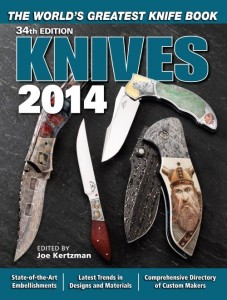
Blade 2014Knives 2014, 34th Edition
By Joe Kertzman, Editor

Knives 2014 provides the types of knives they make, technical information, and embellishments like engraving, scrimshaw, jewel inlay, wire inlay, carving, sculpting and etching.

Learn more
Buy now

Playing Guitar and Making Knives

0

Can you think of two more enjoyable hobbies than making knives and playing guitar? Maybe suntanning or oyster eating, but aside from that … It never ceases to amaze me that, being the Editor of the KNIVES annual book, which includes a Custom Knifemaker Directory of 2,200 makers fashioning knives by hand, I still come across knifemakers in the news who I’ve never heard or known about.KONICA MINOLTA DIGITAL CAMERA

Such is the case with Mike Naylor, a knifemaker, guitar player and all-around interesting guy from Alabama, who, among other edged tools and weapons, makes hog-hunting knives for Alabamans. His full story, including how he has made knives for movie stars Sam Elliott and Tommy Lee Jones, was written by Suzy Lowry Geno, and first ran in the Alabama Farmers Co-Op’s “Cooperative Farming News,” (Alabama Farmers Co-Op photo) www.alafarmnews.com.

From the article:

“I’ve never taken any kind of class in this,” Mike explained. “God has just blessed me with this gift and I work by trial and error. A lot of times I get an idea and just make a knife from that. But many, many, many other times I do custom work. And ‘custom’ covers a lot.”

Click here to read the full story.

Click here for more knives suitable for hog hunting and other outdoors activities.

7 Keys To Top Knife Handles

Know the keys to the best handle design to enhance your knife’s performance and safe use. Following are seven:

1) According to ABS journeyman smith Dan Farr, the size of your hand is a key to arriving at the best handle for you. Longer hands require a larger handle diameter and thicker hands a smaller diameter. Wearing gloves works best with a longer and thinner handle. Remember that an eighth-inch difference in handle diameter means approximately a 3/8-inch difference in circumference.

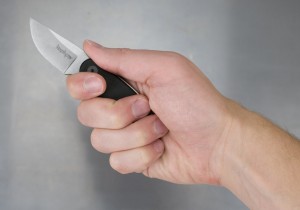
Do you know the keys to top handle design? The knife is the Kershaw Mini Skinner. (Kershaw photo)
Know seven keys to top handle design. The knife is the Kershaw Mini Skinner. (Kershaw photo)

2) As for handle material, most synthetics tend to be stable, durable and often require no protective finish. Wood is strong for its weight, finishes well and adds beauty. Stag is somewhat limited in shape and size, but has good texture and adds traditional looks.

3) Contoured and formed grips are great if they fit your hand, but the more form fit the handle, the fewer people it fits. Finger grooves are an example. They are nice if they fit your fingers, horrible if they do not. Handles with a single finger groove for the index finger will generally be versatile enough to fit many hand sizes.

4) Round handles have no natural indexing for the blade edge (natural indexing refers to the ability to know where the edge is by how the handle feels in your hand rather than having to look at the edge to know where it is). Oval handles are much more useful. They index the edge to the handle and add the ability to use twisting force.

5) Curving the butt of the handle down—also known as the dropped handle—will improve purchase.

6) A palm swell allows a relaxed, comfortable handhold. It keeps your hand in the same place on the handle, provides a natural pivot point and helps with retention.

7) Guards are important safety features. A guard should blend with the contours of the grip and be strong, though in proportion to the rest of the knife.


A Knife Handle That Really Sticks With You

best drop point deer hunting knifeThis Deer & Deer Hunting Drop Point Knife is a great example of a knife that gets its handle right. This hard-working hunting knife was made exclusively by the American Knife Company for BLADE‘s sister brand, Deer & Deer Hunting, and is a great pick for hunters and collectors alike.

Order the Deer & Deer Hunting Drop Point Knife only at ShopBlade.com.

Advertisement

Must Read Articles

Read this before you make a knife

Knifemaking 101 – Read This Before You Make a Knife

  by Wayne Goddard My experience has taught me that there's nothing like digging in and getting started. I've often said the hardest part of the...
how to forge damascus steel

How to Forge Damascus

Advertisement
Advertisement