
Knifemaking

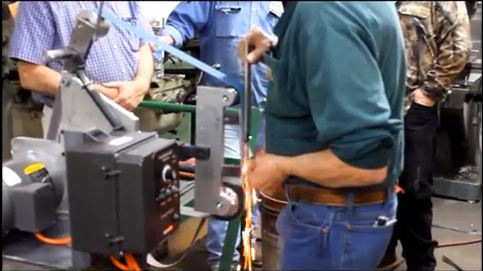
Knifemaking is the building of a knife, which includes the blade, handle and other accouterments. Blades are made by either removing metal from a steel blank via a grinder – known as stock removal – and the forging to shape of hot steel into a blade in the process known as bladesmithing. Other parts, including bolsters, guards, pommels, etc., are needed to complete the finished knife.

Featured Knives – – Knife Collecting – – Tactical Knives – – Survival Knives

Cutlery Hall Of Fame: Buster Warenski

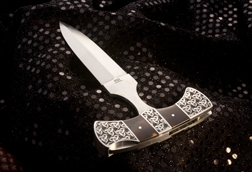
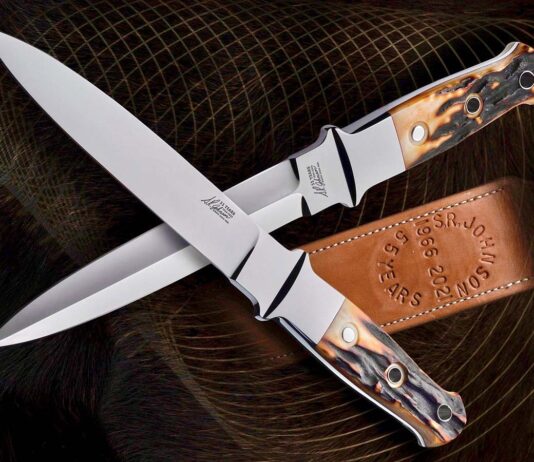
Any discussion of the greatest custom knifemakers of the modern era must include the late Buster Warenski, a member of the BLADE Magazine Cutlery Hall-Of-Fame.

While best known for his reproduction of the King Tut Dagger in the late 1980s, Warenski’s influence on custom knives, knifemakers and the Knifemakers’ Guild was immense and, in many ways, continues to this day. One of the early Guild voting members, he was considered among the best custom makers from the get-go. He excelled not only by the example of his workmanship but also by his leadership, serving on the Guild’s board of directors for a number of terms, including as president (1977-79).

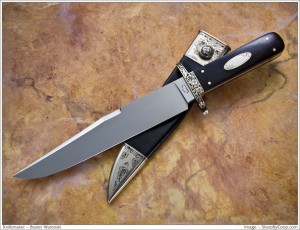
No mention of the greatest knifemakers is complete without mention of Buster Warenski. (SharpByCoop.com photo)
A member of the BLADE Magazine Cutlery Hall Of Fame, Buster Warenski was one of the greatest knifemakers ever. (SharpByCoop.com photo)

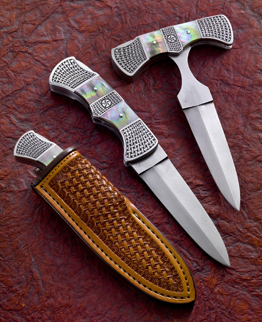
The workmanship of his knives pretty much spoke for itself. He could make just about any fixed blade, folder or sword, and make it extremely well, though it is his art daggers for which he is most remembered. He taught himself how to engrave and although he may not have been the best engraver, the early examples of his engraving held up among other knives of the time.

But then it always seemed that Buster found a way to make his knives the best—and one way was marrying Julie, who learned how to engrave and became one of the best, lending her talents to Buster’s knives and making them even more fabulous. (Julie Warenski-Erickson continues to engrave today and is married to knifemaker Curt Erickson.)

Perhaps the greatest tribute to any knifemaker is one from one of his peers who also happens to be one of the world’s best makers—in this instance, Steve Johnson. As Steve noted, “Putting myself in even the same sentence as a ‘fellow knifemaker’ with Buster makes me uncomfortable. No one will ever attain the skill and ability as a knifemaker as this great man did.”

For the latest knives, knife news and much more, stay tuned to www.blademag.com.


Sharp Knowledge: 3 Knife Steel Basics

How the knife will be used, edge geometry and heat treating are all key to deciding which knife steel to choose.
The knife steel you choose depends a lot on what jobs the knife will perform.

One of the questions knife enthusiasts ask most is What is the best steel for a knife? Before you can answer such a question, you must first know exactly what it is you need in a knife.

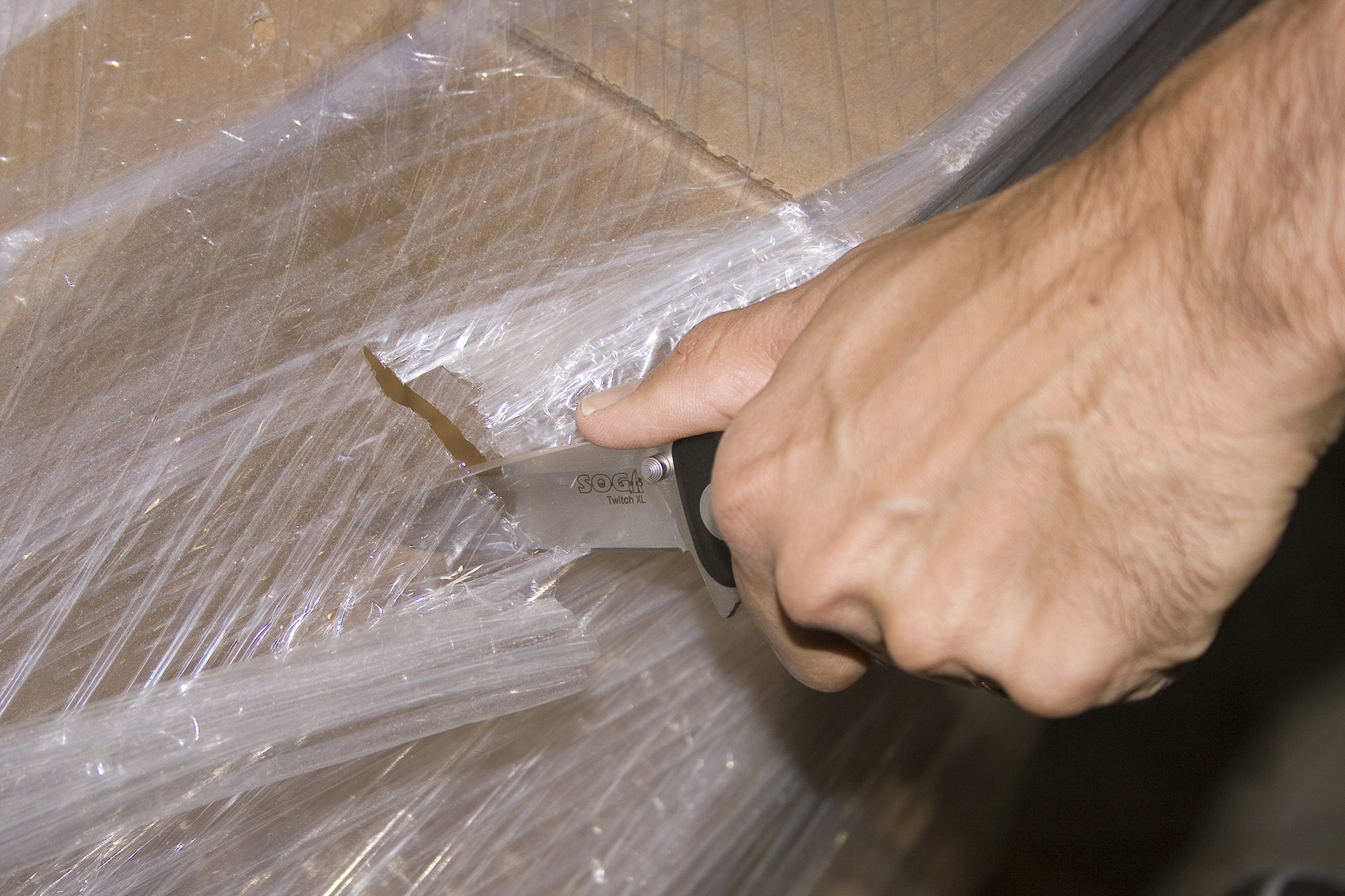
1) Will you use the knife to cut meat, or paper, or rope, or plastic, or a little bit of everything? Much depends on what you will be using the knife for, and just about any knifemaker or knife manufacturer who knows his stuff will know which steel he has on hand will be best for your purposes.

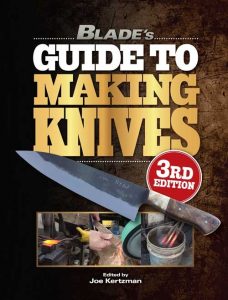
how-to-make-knives-knifemaking-book
Learn more about selecting steel types and how to make knives in the third edition of “BLADE’s Guide to Making Knives.” The classic is back and better than ever!

2) The steel is just part of the equation. The blade’s geometry is also important. By blade geometry is meant how the blade is ground and tapered from the back (spine) to the edge. If too thick, it won’t slice or cut properly; if too thin, it may chip.

3) How is the steel heat treated? As BLADE Magazine Cutlery Hall-Of-Fame© member Wayne Goddard has written, “A knife of the very best steel may not perform any better than one made of an inferior type steel unless it is heat treated to bring out the full potential of the alloy content.” He also writes, “The reasons for a maker to turn out incorrectly heat-treated blades are too many to list. However, the most common is not having the correct heat-treating specifications from the steel maker.” If you find the maker does his own heat treating and does not go by the heat-treating specs provided by the steel maker, that’s an immediate red flag. In fact, many makers simply have professional heat treaters do their heat treating. Goddard is among them.

These are just three basic things to know about knife steels. There are many others.


Art Knife vs. Cutting Tool Debate

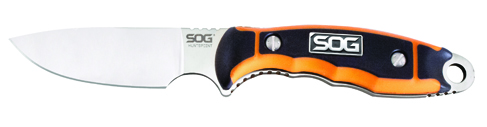
SOG_HT011L

The art knife versus cutting tool debate of whether knives are, or should be, works of art or cutting tools has always intrigued me. There are those who are a bit “put off” by art knives because they prefer utilitarian knives made to be used and employed when needed. That is certainly understandable, and thank goodness there are companies and makers out there fashioning good, sturdy, sharp serviceable fixed blades and folders.

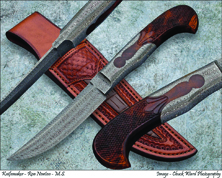
But the notion that art knives are a modern phenomenon ignores the countless officers of world armies who historically carried dress daggers, kings and queens of countries gifted with jewel-encrusted, gold-inlaid, sculpted and carved swords and other edged weaponry, and the “average joe” who saved his pennies in the 1960s and ’70s to buy a Buster Warenski, Bill Moran, Jim Schmidt or even Bob Loveless (many considered him a maker of art knives on occasion) art knife. newton knife

And one other argument I’d make is this—the debate doesn’t need to be debated at all. There is plenty of room in the knife industry for both art knives and more utilitarian hunters, soldiers’ knives, blue-collar fixed blades and folders, and many more. Look at it this way, just because one guy prefers his three-blade stockman for ranch work doesn’t mean he shouldn’t welcome the collector of high-end art knives into the industry and market with open arms. Collectors who appreciate that artistic nature and handcraft of knives help drive the industry forward and ultimately expand its offerings. And that’s just good for knives and knife enthusiasts in general!

To see and read about as many well-crafted custom knives, both utilitarian and artistic, as humanly possible, the Knives 2014 book is a must-have for your library. To keep updated on factory, custom and semi-production knives 13 times a year, subscribe to BLADE now!

New BLADE® Salutes Military On 9/11

The 4th annual military issue of BLADE® salutes the military on the anniversary of 9/11.
New BLADE® salutes our military personnel and their favorite knives on the 12th anniversary of 9/11.

Military heroes past and present and their favorite knives are the focus of the new BLADE® (www.blademag.com) on the 12th anniversary of 9/11—on many newsstands NOW!

Featuring a Bob Dozier Freedom Fighter on the cover that stopped a bullet and likely saved U.S. Marine Lance Corporal Josh Clysdale’s life, the latest issue of BLADE (www.blademag.com) is our 4th annual military issue, and it covers the subject of military knives like no other.

The issue kicks off with a heart-rending story about Lima Company, 3rd Battalion, 25th Marines, all save one of whom—Lance Corporal Travis Williams—were killed by an enemy IED in Iraq. Williams eventually returned home and began making knives part time under the tutelage of knifemaker James Behring Jr. Williams made a knife in honor of Lima Company that was auctioned to raise money to support the work of an artist who was painting life-size portraits of the Lima Company Marines killed by the IED. It’s must reading for military and knife aficionados alike.

There’s much more, including stories on the aforementioned Lance Corporal Clysdale and his “bullet-proof” knife; one on if a soldier had just one knife in a military emergency, what that knife would be; a knife collaboration between Andy Sharpe and Chuck Richards to honor the American GIs who fought off a furious Japanese Banzai attack in a little-known battle on Attu Island in Alaska during World War II; a ground-breaking new program to not only teach returning vets how to make knives but also to help equip them with the tools and equipment they need to do the job; a new “Arkansas Veterans” knife from A.G. Russell Knives, with $10 of the sales of each knife going toward an emergency fund for vets who are students at the University of Arkansas; a one-of-a-kind Bob Loveless Lawndale boot knife made specially for Pat R. Dailey, thought to have been a CIA operative; and much more.

    For your copy, check your newsstands. To subscribe to the digital version of BLADE, click on

www.shopblade.com/blade-1-yr-digital-subscription?lid=ssfbbl091013

What’s Your Favorite Knife Design?

With over 100 knife designs to choose from—101 to be exact—there’s plenty to mull over in coming up with an ultimate favorite blade design or pattern. Renowned knifemaker and heckuva nice guy, Murray Carter, known to stand behind his table at knife shows, including the BLADE Show, honing knife blades and demonstrating to attendees how to sharpen their own edges, reveals his favorite 101 Knife DesignsCarter_001Print


In his book, 101 Knife Designs, Carter displays not only gorgeous knife photography by none other than famed photographer Hiro Soga, but drawings, patterns, scaled designs and supportive text, allow aspiring bladesmiths to create their own knives using Carter’s popular, time-honored designs. Dazzling, full-color images of the completed knives provide inspiration and direction. 101 Knife Designs will show the reader why certain distinct blade designs have stood the test of time and remain popular even to this day. Practical blade patterns follow several rules of thumb. When these rules are applied to new knife designs, there is a greater chance the design will stand the test of time and use.

4.7sun_Honesuki_100percent


Carter_008


About the Author: Murray Carter (cartercutlery.com), one of the most popular custom knifemakers at the annual BLADE Show, regularly conducts wildly popular seminars on shaving with a machete, and is known for standing at his booth sharpening knives while teaching the techniques to interested attendees.


Tracking Knife Trends

dark earthThere aren’t many dull, boring or mundane trends, and for good reason.

Knifemakers embrace the old saying, “change is constant.” The “same old, same old” never catches on with a new generation. Knife craftsmen strive for fascinating and innovative ways of blade building, and collectors seek out the rare and unusual.

Eventually knifemakers find something modern that is not only aesthetic and utilitarian, but it also catches on with other artists. That’s the start of a trendBPK

You get the idea—trends are born out of creative thinking and design capabilities, and not from copying old patterns without any tweaking, improving or thinking outside of the box.

Sure, some trends have staying power. There are many new trends to take in, like dimpled, sculpted, grooved and glass-beaded knives, for example. Britton_121118

It is a trend in knives that presented itself to me while I poured over 1,000s of images from knife photographers for possible inclusion in the Knives 2014 book, now available and a gorgeous book, if I may say so myself, but not because of anything I did. It’s the knives and images thereof that make it a handsome title, and the Trends, State Of The Art, Factory Trends and Feature articles therein.

Enjoy, and keep your eyes peeled for new knife trends in the industry, particularly if you’re a collector, investor or general enthusiast with a habit of accumulating custom or production pieces.

Video: Knifemaker Jay Hendrickson on Bill Moran

In this video from the American Bladesmith Society (ABS), master smith Jay Hendrickson gives some insight on ABS founder Bill Moran. His story offers a fascinating look at important pieces of knifemaking history.

Hendrickson is just one of the many knifemakers influenced by the legendary Bill Moran. Other than his highly-coveted originals, Moran’s work lives on through styles emulated by a number of other makers and companies, including this excellent Spyderco Bill Moran Drop Point Blade at ShopBlade.com.

Advertisement

Must Read Articles

Read this before you make a knife

Knifemaking 101 – Read This Before You Make a Knife

  by Wayne Goddard My experience has taught me that there's nothing like digging in and getting started. I've often said the hardest part of the...
how to forge damascus steel

How to Forge Damascus

Advertisement
Advertisement