
Knifemaking

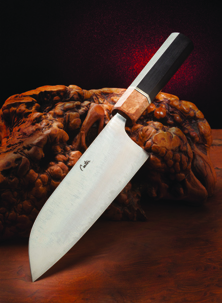
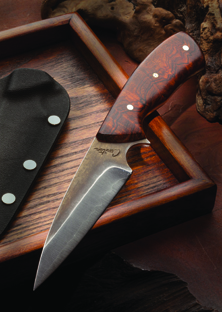
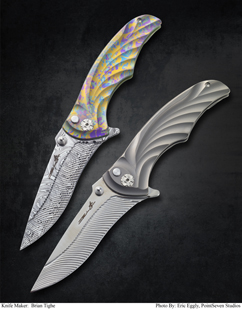
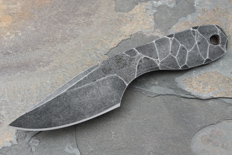
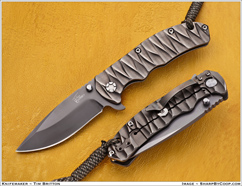
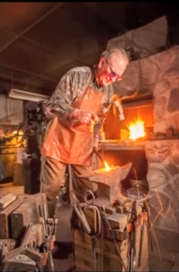
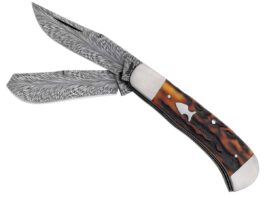
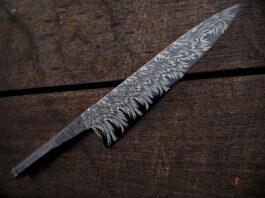
Knifemaking is the building of a knife, which includes the blade, handle and other accouterments. Blades are made by either removing metal from a steel blank via a grinder – known as stock removal – and the forging to shape of hot steel into a blade in the process known as bladesmithing. Other parts, including bolsters, guards, pommels, etc., are needed to complete the finished knife.

Featured Knives – – Knife Collecting – – Tactical Knives – – Survival Knives

Knifemaking Book a True Wonder

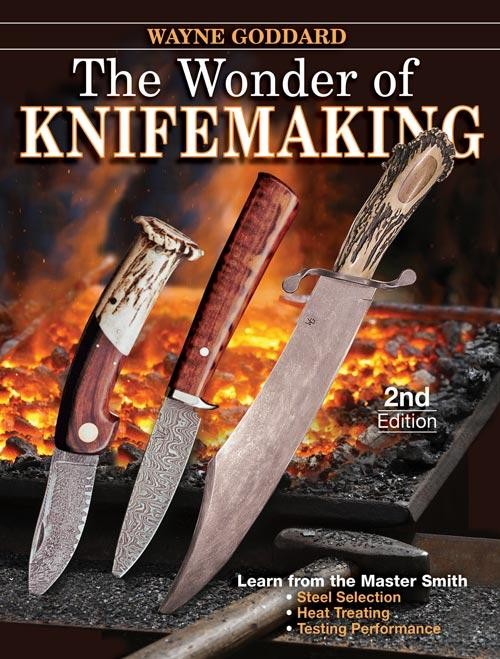
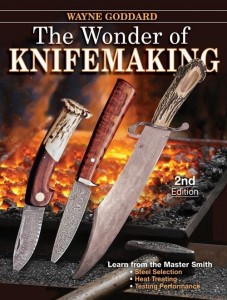
Learning how to make knives from someone who has done it for over 60 years and written about it professionally for about 30 years is exactly what you get with Wayne Goddard’s The Wonder of Knifemaking.


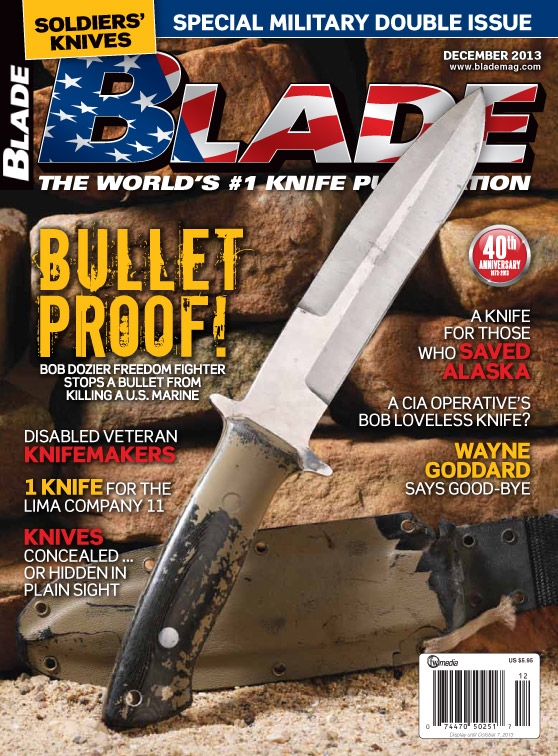
Inducted into the BLADE Magazine Cutlery Hall Of Fame© during the 2013 BLADE Show & Living Ready Expo (www.bladeshow.com), Goddard is an ABS master smith and BLADE® (www.blademag.com) field editor who has taught as many people how to make knives via his columns in BLADE, through the Internet, and his many seminars and demos at venues throughout the country as just about anyone.


In The Wonder of Knifemaking he takes you on a fascinating journey explaining most everything every knife fan wants to know about knives and how they are made. From imparting his wisdom on how you should approach knifemaking in general, to getting started, insider tips, developing your own unique style, the pitfalls each maker must beware of and much more, Goddard guides you through the process in his measured, forthright writing style.


He tells you what steel is and how each of its constituent elements affects it; working with such old-fashioned materials as files, saw steel and horseshoe rasps; what you should know about heat treating, quenching, and selective hardening and tempering techniques; the best hardnesses for blades; clay back hardening; handles, guards and tangs, including narrow tang vs. full tang; grinding and finishing; material for pins; logo etching; tools for the knife shop; and more.


A huge proponent of knife testing, Wayne explains exactly what a testing program should consist of and what it should gauge: slicing cuts vs. pull cuts; the differences in the types of ropes to cut; tests for chopping ability and edge strength; and more. He also covers sharpening comprehensively, including methods and hones. Sharpening is a subject he knows extremely well, having taught it at many seminars over the years at the BLADE Show, BLADE Show West and many other events.


For more on how to get your copy, visit www.shopblade.com/the-wonder-of-knifemaking?lid=ssfbbl072413


Get Wayne Goddard's book and experience the true wonder of knifemaking.
Wayne Goddard’s book makes knifemaking a wonder to behold.

Fairbanks Knifemaker Gets Good, Solid Press!

Fairbanks, Alaska, knifemaker Mark Knapp not only built and reportedly patented a cool .1911 Combat Survivor Knife, but he recently received some well-deserved press on the piece. For more combat and survivor knives, click here.

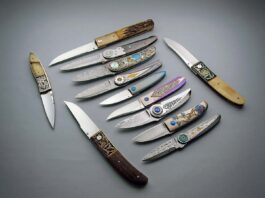
If any of you are familiar with Mark and his work, he fashions some high-art, yet utilitarian fixed blades and folders with “mosaic” handles of exotic natural materials from Alaska and around the world. He forges his own damascus, is a full-time maker and built his first knife in 2000.

The article first ran at www.newsminer.com, a domain of the Fairbanks Daily News – Miner, on Monday, March 18, 2013. Click here to read the feature article. 


Conversation Overheard @ the BLADE Show

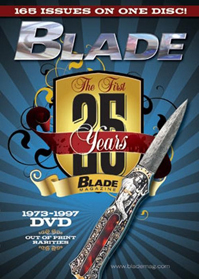
So I was working behind the table at the book booth during the BLADE Show this past weekend in Atlanta, a great show, by the way, best ever. And this gentleman was interested in buying the “First 25 years of BLADE Collection: 1973-1997” DVD. He said he already owned the DVD that came after it, “BLADE 1997-2007.”Y0602

The lady he was with asked, “Why don’t you just subscribe to BLADE®?”

He replied, “I can get 25 years worth of the magazine for $42.99, why would I want to pay $21.98 for one year?”

She said, “The subscription is new magazines, not old magazines, that’s why!”

It got me thinking that neither one of them was wrong. I prefer to get my magazine when it comes out, but to each their own. And I’m just glad they enjoy the magazine well enough to have the conversation.

Why Get Knives Photographed?

376074_387172178064483_645036687_n

Knifemakers have a hard enough time making a living doing what they love without added expenses. So what are the benefits of paying a professional photographer to photograph their knives for them?

The reasons to have knives photographed are many. As managing editor of BLADE Magazine, I can tell you that often when knifemakers send me images of their newest models for possible publication, the self- or friend-taken digital images are low resolution, fuzzy, with busy backgrounds or too low quality for a high-gloss, color magazine. The images might look good on a website, computer screen or printed, but once reproduced on quality magazine paper, in four color, they lose their crispness and look fuzzy.

Here are some other reasons to have your knives photographed by a pro from photographer Jim Cooper of SharpByCoop.com.

The benefit of a professional image will promote you in a number of ways: 

  • Large clear print for your portfolio
  • Crisp website image for email or display 
  • Large digital file for printing
  • Posted and viewed by thousands on Bladeforums, CKCA forum, and our SBC Facebook page
  • All files are sent to USA and International editors of knife magazines
  • Guaranteed: Your knives are always available to view and search on our extensive website
  • A professional image shows you take pride in your work


Knives & Orchids Go Together

Congratulations to knifemaker Jim Elliott, who I saw featured today, April 30th, 2013, in Highlands Today, an Edition of the Tampa Tribune. Jim is featured in the publication’s “Agri Leader” section for growing hundreds of varieties of orchids, and of course, for being a spectacular knifemaker. orig

While Highlands Today focuses on his prize-winning orchids, they do give a shout-out to his knives, including an image of the first knife he ever made. BLADE and blademag.com salute his knifemaking, of course, with honorable mention for his apparent green thumb, the latter of which landed him several awards at the seventh annual Orchid Show in Lake Placid two weeks ago.

For the full story, click here.

To learn more about knifemaking resources, books and videos available at shopblade.com, click here.


Educating the Future Of Knives

The American Knife & Tool Institute (AKTI) recently announced it will present a series of informative articles on its website, www.akti.org, that address various aspects of the knife owner’s experience. The first of the series will relate tips and advice on introducing young people to knives.

2-Customer-son

Among those giving insights in the new AKTI youth knife series will be A.G. Russell. Here a father demonstrates a knife for his son at A.G. Russell Knives retail store in Rogers, Arkansas. (A.G. Russell Knives photo)

“I was always taught that the age of reason was 7, which is also Cub Scout age when I got my first knife,” commented Dan Piergallini, president of the Gator Cutlery Club. “Safety was always stressed, and supervised use of a knife is a must. Also, one must insist that the knife never be taken to school no matter how much you want to show it off.”

Billeb-Jan-2012Along with Piergallini, AKTI Executive Director Jan Billeb, Becky Reid of Shepherd Hills Cutlery, and Blade Magazine Cutlery Hall-Of-Fame© member A.G. Russell will provide insights on their experiences in promoting safety, awareness, respect and proper knife use among young people.

AKTI Executive Director Jan Billeb (left).

Look for the story on kids and knives and subsequent offerings from AKTI to provide timely and relevant perspective on topics of interest to the cutlery community.

“We are excited to bring these informative articles to AKTI members and knife enthusiasts everywhere through our website,” Billeb said. “Introducing knives to the next generation is a key element in promoting their safe use and increasing the understanding of knives as valuable tools that are important in our everyday lives.”

To read the article on kids and knives visit www.akti.org/education/kids-and-knives.

For more information, call 307-587-8296 or visit www.AKTI.org. Follow AKTI at http://www.Facebook.com/SaveOurKnives and http://twitter.com/SaveOurKnives.

Video: Salt Bath Heat Treating

0

This video from the American Bladesmith Society (ABS) explains how to perform salt bath heat treating. It’s part of the Phoenix knife project ABS members created. You can see video about the incredible ABS Phoenix knife here.

Here’s a bit of background from the ABS about the Phoenix knife:

The Phoenix Knife was originally created by several members of the ABS Board, then disaster struck and it was damaged in a house fire. On its second life, several ABS Board Members contributed in the efforts to bring it back to life including Master Smith Kevin Cashen shown in this video heat treating the blade and bringing the knife back to life. Stay tuned for the third video about “Rockwell Testing” the blade.

To follow the Phoenix knife through its stages, be sure to subscribe to the ABS YouTube channel. There are plenty of knife videos online, but the expert insights from ABS are a cut above.

How to make a knifeAlso recommended is BLADE’s Guide to Making Knives, 3rd Edition. It covers heat treating and many other steps in the knifemaking process.

Advertisement

Must Read Articles

Read this before you make a knife

Knifemaking 101 – Read This Before You Make a Knife

  by Wayne Goddard My experience has taught me that there's nothing like digging in and getting started. I've often said the hardest part of the...
how to forge damascus steel

How to Forge Damascus

Advertisement
Advertisement