Knifemaking

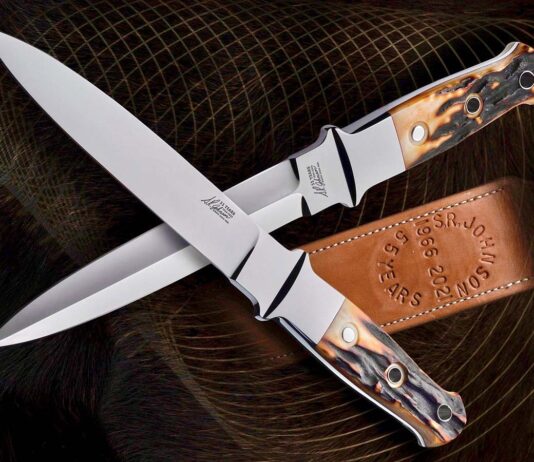
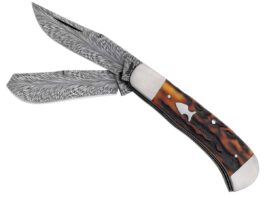
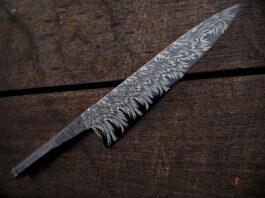
Knifemaking is the building of a knife, which includes the blade, handle and other accouterments. Blades are made by either removing metal from a steel blank via a grinder – known as stock removal – and the forging to shape of hot steel into a blade in the process known as bladesmithing. Other parts, including bolsters, guards, pommels, etc., are needed to complete the finished knife.

Featured Knives – – Knife Collecting – – Tactical Knives – – Survival Knives

Jon P. Moore shows how to stain curly maple wood knife handle

0

This is a “how to stain curly maple wood” tutorial, Jon P. Moore shows what stain to use, how to prepare the wood and what to use for a gloss finish on one of his custom knives. The finished knife is shown at the end of the video.

BLADE did a quick interview with Jon about hand cleanup after rubbing the oil into the wood handles.

Editor Steve Shackleford: “Good video, Jon. Short and to the point. Those are the best kind. Question for you. When you rub the oil into the handle so aggressively with your bare hands, are there any dangers of harmful effects to you from absorbing the oil into your skin? Do you wash your hands with some kind of solvent or some such afterward?”

Jon: “Steve, the ‘Tru-Oil’ is weird stuff, I ran out of time on the video. It dries so fast, I don’t believe much, if any, is absorbed into the skin. I spray WD-40 on my hands, then wipe them with a paper towel, and my hands are completely clean, dry and not tacky. I had to edit that part out for time. I was told, this is a ‘hand rub finish’ done by custom gun builders. As for long term effects, I don’t know.”

Paul Bos Still Active in Heat Treating

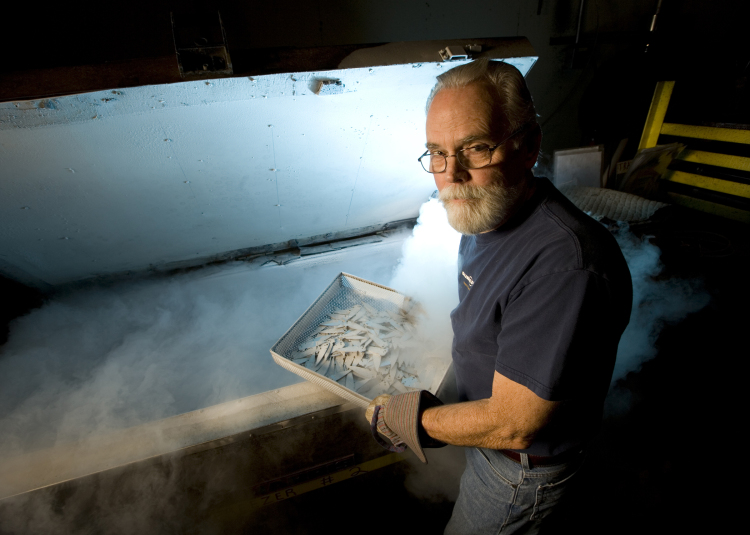
Although formally retired from his full-time role as head of heat treat for Buck Knives, Paul Bos continues to pursue the passion that captivated him as a 9th grader, many years ago.

         The Blade Magazine Cutlery Hall of Fame© member still fills an advisory role for Buck, where his protege Paul Farner now directs the daily heat-treat operation at Buck’s Post Falls, Idaho, plant. In addition, Bos still is taking blades for treating from the many knifemakers he’s known and served for as many as 20 to 30 years, and longer.

         “After all these years of friendship and working relationships, it’s satisfying to know that we can continue to provide the same specialized heat-treat service custom knifemakers have come to expect,” Bos said. “I’ve heard that my ‘retirement’ misled some, but Paul Bos Heat Treating is very much alive and well.”

         For a brochure and price list, call or e-mail Paul Farner: (208) 262-0500, ext. 21; [email protected].

                                                  #       #      #

Photo Attached: Paul Bos

Paul Bos Heat Treating–  Paul Farner, e-mail [email protected] Phone 208-262-0500 Ext.21

                                              Paul Bos e-mail [email protected] Phone 928-237-1656

Mike Searson Interviews Derrick Obatake of SteelFlame

0

Mike Searson interviews Derrick Obatake from SteelFlame. They talk about how Derrick got started, some designs and the USN gathering.

For a full transcript of this interview (the video doesn’t show the whole thing), click here to read more from Mike.

Best method to stabilize wood handles?

0

This helpful conversation is excerpted from a thread on a previous version of blademag.com. It’s posted here for reference.

Bear Goode:

What is your preferd method of stabilizing wood for handle’s & or sheaths?

Dallas Dreger:

2 methods I use,,,After completeing the knife and the handle is sanded to the point that I am stisfied,,,I sink it into a can of mixed boiled linseed oil and turpintine,,,50/50 mix for a few day. Thes after removing,,polish off the till dry,,,wait another day for it to dry and you will find there is a light coat of oil again that is sticky,,polish this off and a light buff wiht a clean rag and it sould be stbilized for a long time. This doesnt make a real shiney finish but it does harden a fair ammount and still has a natural wood feel to it. This is the meathod I like for everyday working knnives.  2 when the knife is allmost finished and rthe handle is sanded to a 220 grit,,sink into a jar or can of minwax wood hardener for a few days. ,,remove and wipe clean.  A day later you can sand to a 400 grit or higher. This will take more of a shine when you polish on a buffing wheel but not as good as a vacume stabilized handles. I like the first method best but this does make a little bit harder handle if thats what you are looking for. I dont care for vacume stablized handle slabs s I have had a few in teh past cack or chip on me but I do realize some folks like that mirror shine to the complete knife. For a hard use working knife use the first method,,,for a lighter duty knife where a light shine is desired,,,use method 2 and for teh high shine,,,send your handle material way to become professionly stabalized. unless you make a proper stabilizing setup

Bear Goode:

My  preferred method is using minwax wood hardner.On plain slabs(this will darken the wood,about as much as putting a bit of spit on the wood)I will put slabs in the wood hardener.A shallow dish works fine. I then use a foodsaver to vacume solution  into the wood. I like to leave the wood under vacume for a couple of hours then, revacume the whole shabang once more & leave overnight. After removing the vacume bag the next day,The wood hardner will dry in about 2 hours. I like to give it 24 hours to dry to be on the safe side.The food saver will not have enough vacume pressure to do wood blocks,only handle slabs. I will on thicker sections (wood blocks)|work the wood to about the almost finished size then run it through the vacume of the foodsaver. then after all is done I will give a last rubbed coat of the hardner before final sanding & buffing. I have also used this process with Watco danish oil with good success.


Knifemaking: How to Get a Mirror Polish?

2

This thread is from a previous version of blademag.com.

Here’s a question from a BLADE reader:

I’ve been having trouble getting a mirror finish on my blades, whether it be carbon or stainless. I can get them mostly polished, but it seems I always have sanding scratches after hand sanding that won’t buff out. I change direction with each grit sanding to 2,000 grit, and everything looks fine but when I finish buffing, the center always seems to be cloudy looking.

PatrickKnives:

Try to buff a couple of times early in the sanding, this will make the scratches not removed by the previous grit easier to see. If your last grit was 400 at a diagonal you would not expect to see any scratches parallel with the blade. You can also mix up your angle so you can determine the grit of the scratches. If I am getting clouds I clean my wheel and apply fresh compound and finish the buff with a lighter touch.

David F Pitt:

Isand my blades wearing a magnafocaser and floresent light.I change directions with each grit.I will finish at 800grit I polish with matchless white,green chromeK&G Green and finish with matchlees pink . You can check out my knives at http://bearpawcustoms.blademakers.com DAVE

Bear Goode:

I use 3 lights,so that I get a little light from different directions. It helps me see the scratches better. At first I will cover the blade with a black felt tip pen. Some times I do this twice,just to make sure that I got all the scratches at that grit. I use the felt tip on say 120 grt,then on 220 grt. It helps with the “big” scratches. I then go to the next grit say 320 & I sand in 2 different directions. Then I slowly move on to the next grits. Buffing will help as per PatrickKnives.I then do what David Pitt reccomends Buffing with white,K&G Green, then finish with noscratch pink.

Jeffery E. Wagner:

I would also recommend you finish with pink. It is available through, Jantz Supply.

Advertisement

Must Read Articles

Read this before you make a knife

Knifemaking 101 – Read This Before You Make a Knife

  by Wayne Goddard My experience has taught me that there's nothing like digging in and getting started. I've often said the hardest part of the...
how to forge damascus steel

How to Forge Damascus

Advertisement
Advertisement