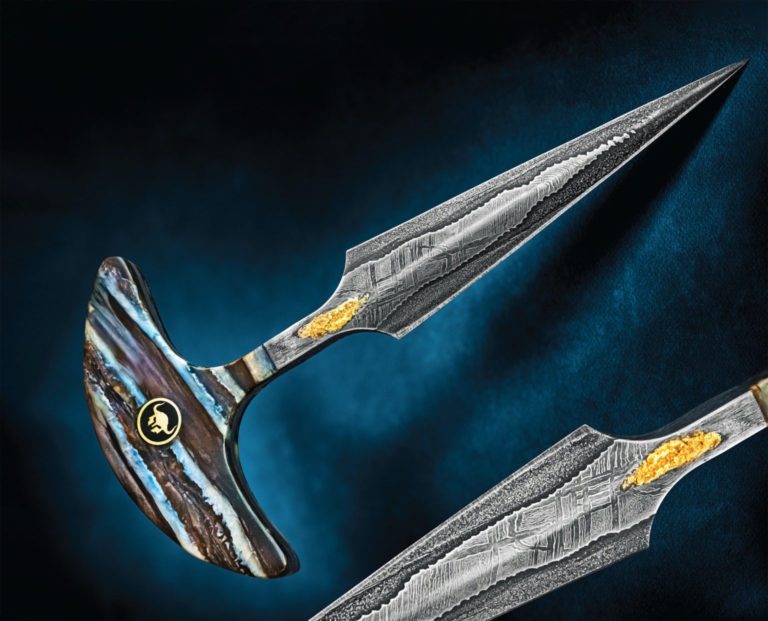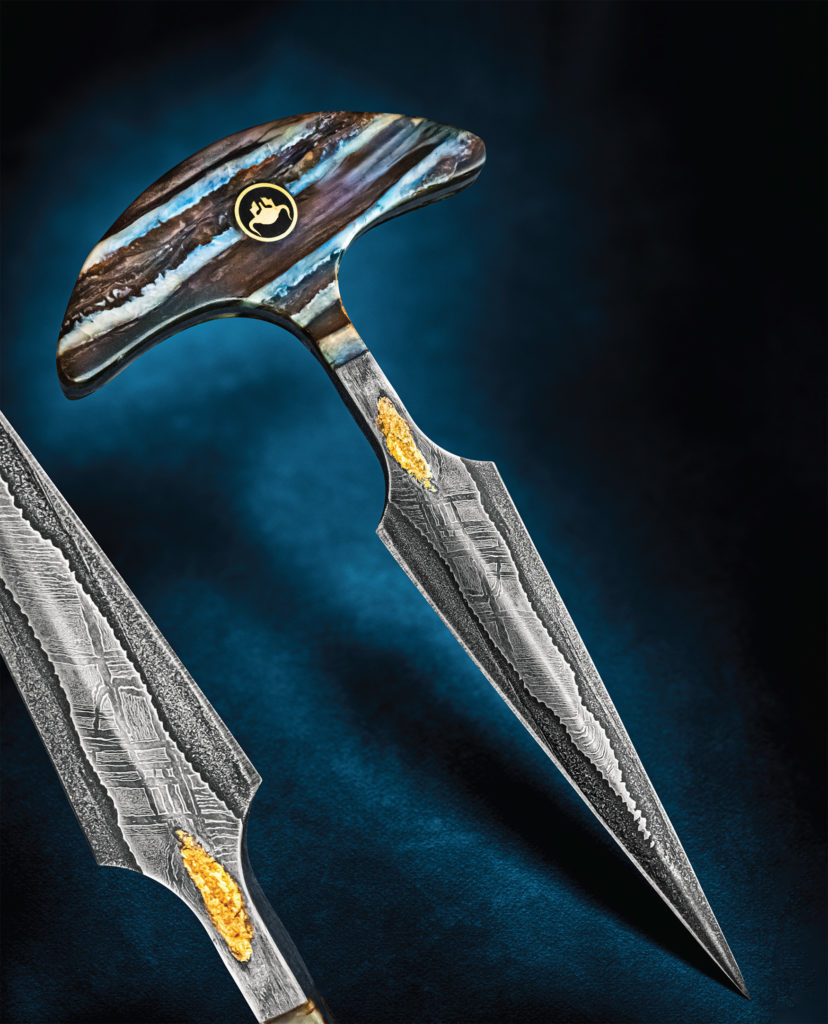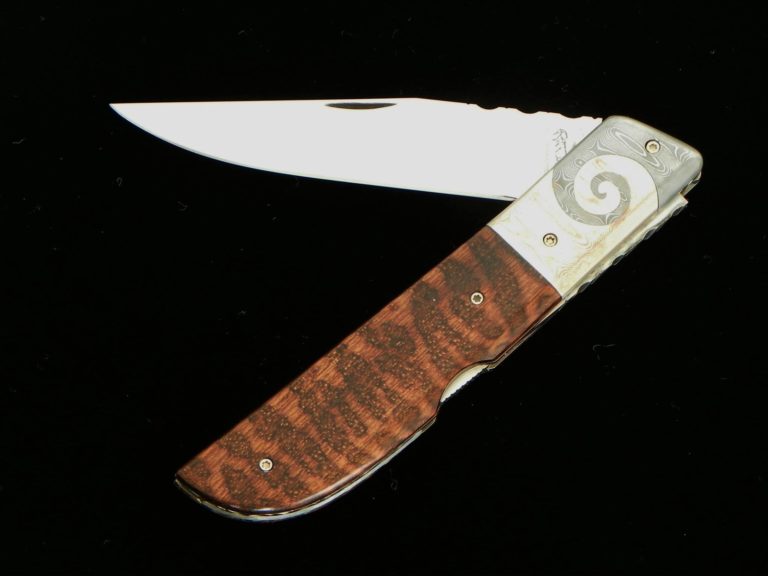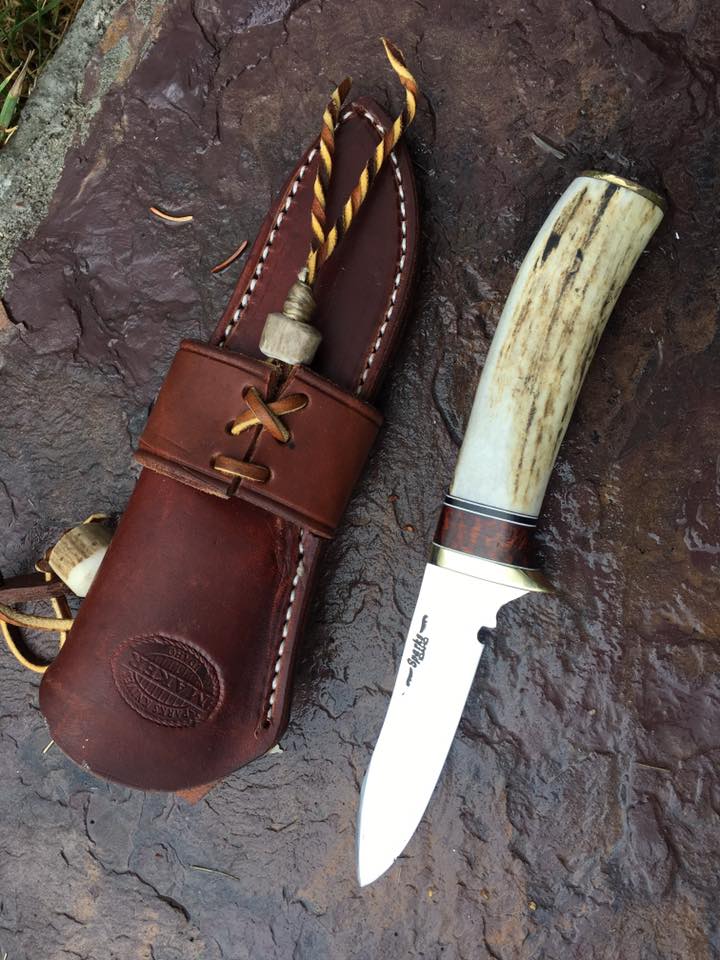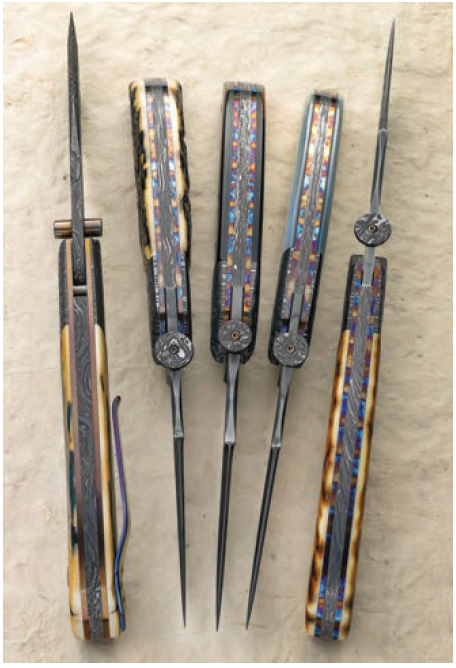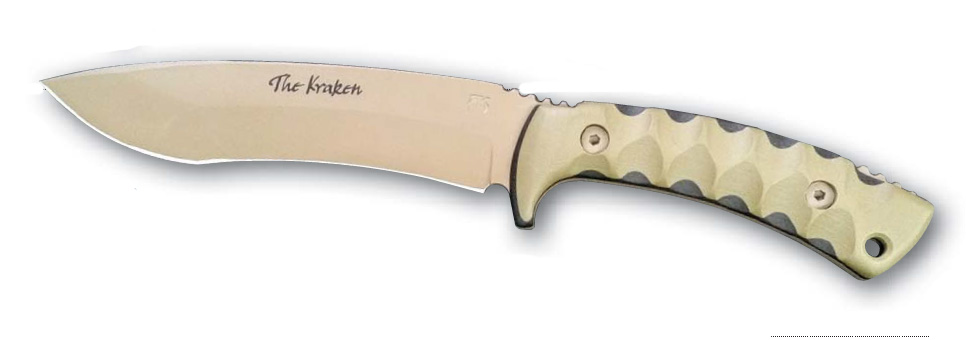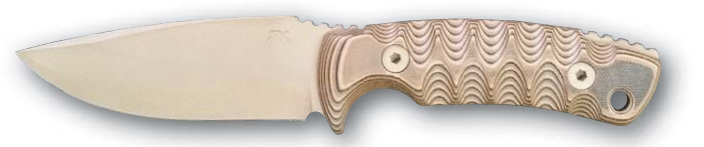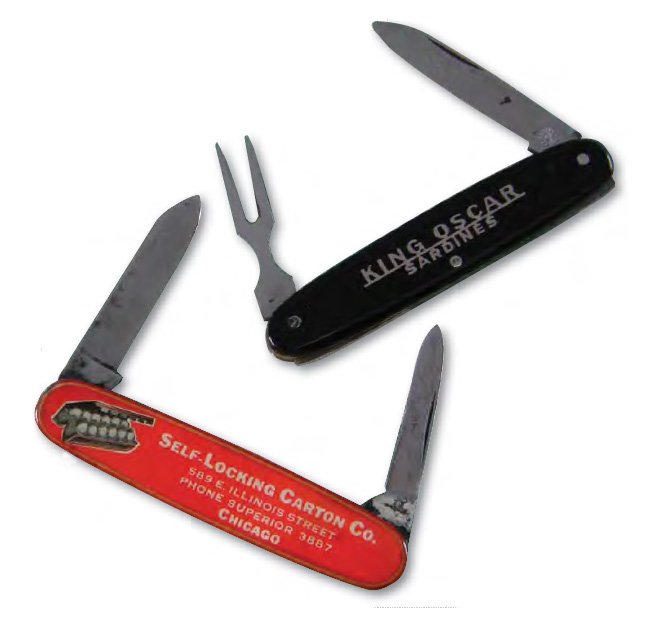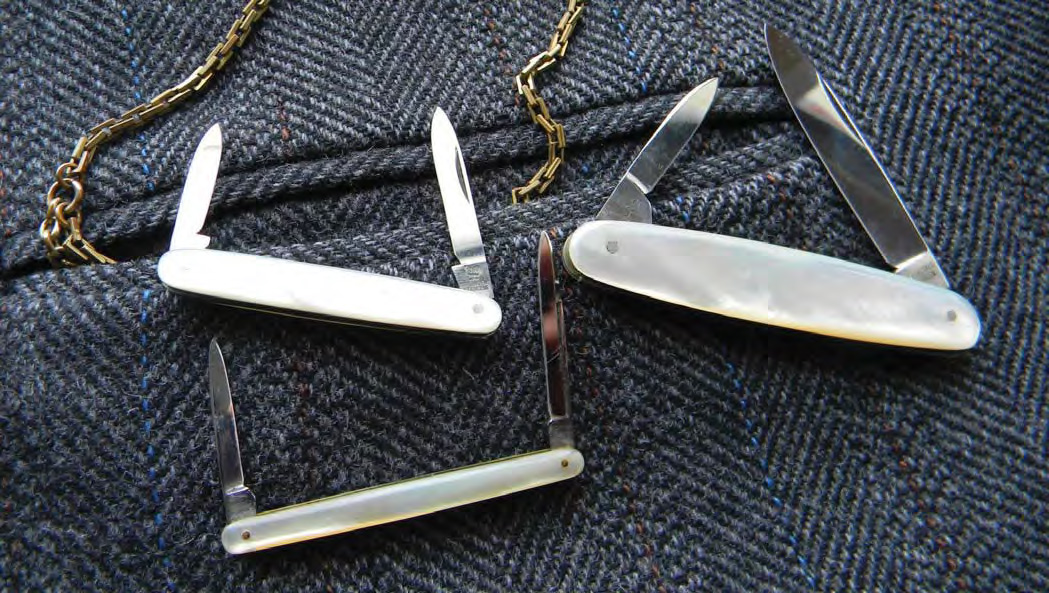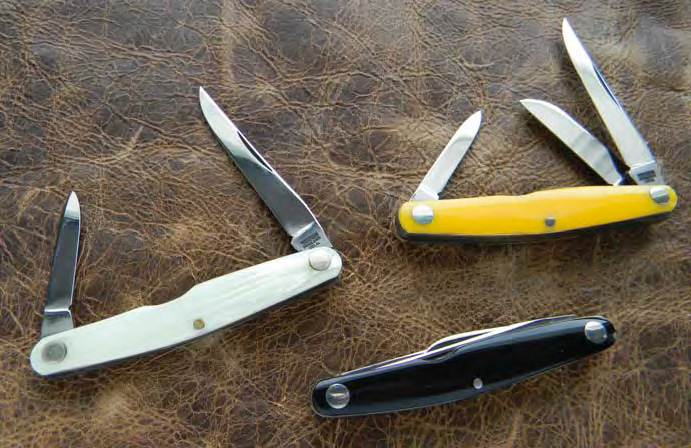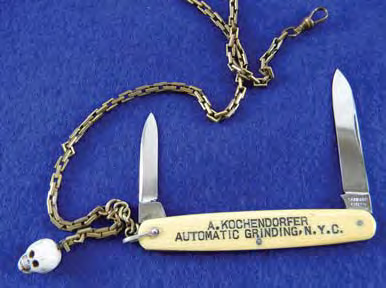
At an inch-long closed, the spectacular 40-blade miniature knife by Japan’s Isao Ohbuchi won the Yvon Vachon Best Miniature Knife Award in the custom knife judging competition of BLADE Show 2019.
Along with all the other knives in the competition except Gabe Mabry’s winner of the Best Kitchen Knife Award judged by Ethan Becker, a select panel of three custom knife authorities judged Ohbuchi’s award winner. Including Becker, all three judges were chosen by the BLADE® staff. Ohbuchi calls his tiny folder a “sportsman’s knife” and stated it is inspired by the legendary Joseph Rodgers & Sons of Sheffield, England, which made fantastic folders and fixed blades in the 19th century. The maker also listed the multi-blade mini as a “horseman’s knife.”
Blade lengths: all in the .8-inch range.
Blade steel: 440C stainless
Blade grinds: flat
Handle material: mother-of-pearl Weight: 1.4 ounces.
The maker’s list price for a similar knife: $15,000.
The image of the cover knife is by SharpByCoop. The inset image of the BLADE Show is by Justin King.
Some Swiss Army knife tools are handy, while some are pocket weights. Here are 10 that are actually worth the purchase (other than the blade itself). How many do you have?
Scissors
I carried a Swiss Army Classic SD on my keys for the better part of three of my teenage years, and that’s when I realized how handy scissors can be. Small things like cutting string, stray hairs, and other items that need a precise cut are much easier done with scissors.
Nail Clippers
Gimmicky? Maybe, but hear me out. You’re out in the wilderness exploring when the sun starts to set into that gorgeous golden hour. You pull out your pocket knife and decide to snap some photos when you realize you’ve neglected your overgrown, dirt-encrusted fingernails. Nobody wants to see a knife-in-hand shot like that.
If the terrifying story above doesn’t ring true, maybe you can think of a time you wish you had nail clippers with you. For a compact tool with a blade, tweezers, toothpick, file, etc., you could do much worse than to have some nail clippers tagging along.
Screwdriver
The handiness of a good screwdriver can’t be overstated. My favorite screwdriver I have is one where the bits flip around and can be swapped between Phillips and flathead.
Victorinox has created a new take on this with models like the Tinker (pictured). It features the Phillips on one side and the flathead on the other.
Corkscrew
The Swiss Army knife corkscrew is a hot button topic these days. Many collectors say it’s useless, and that they’d rather have a Phillips screwdriver in its place. Others have found good use for the corkscrew with things like untying knots.
Some models come with a mini flathead that attaches to the corkscrew, giving a slight sense of the best of both worlds. If you’re a glasses wearer, this can be a great option.
Flat Head/Prybar/Wire Stripper
A big no-no in the knife world is using the tip of a knife as a pry bar. Many a blade has been broken doing this exact thing.
The prybars on these tools are stainless, strong, and come in clutch when you need them most. The small wire stripper cutout is also a nice feature that you’ll love to have around eventually.
Toothpick/Tweezers
These two things are pretty self-explanatory and come in handy in the most random of times. The toothpick is invaluable for post-lunch debriefing. For that annoying sliver, tweezers can be a lifesaver.
They both fit nicely in the handle slots and don’t take up any extra room. Replacement toothpicks can also be had for only a couple of bucks.
Pliers
No matter your occupation or background, you’ll be able to find uses for pliers at some point. Pliers are available on many of the larger Swiss Army models.
Stainless Pin
Not many SAKs come with this pin, but with those that do, it’s a welcome addition. This Compact stashes the pin in a hole of the cutout for the corkscrew.
Whether you’re pushing tiny reset buttons or getting slivers out of your hand, this sharp pin will definitely come in handy. The slot on this knife makes it almost unnoticeable as well.
Pen
Pens are a hot EDC item these days, but I haven’t bought into the hype. I just don’t find myself needing one that often and don’t want to give up my valuable pocket real estate to carry one. That is, until I saw Victorinox has them in some Swiss Army knives.
The pen looks like another gray tweezer slot but comes out as a thin pen that is easily concealed. I wouldn’t plan on using the pen consistently, but it is great for a pinch when you need to jot some things down.
Gravity knives are legal in New York due to New York Gov. Andrew Cuomo signing a bill in late May repealing the state’s gravity knife ban, but the win comes with several label warnings.
For instance, gravity knives—or any knife, for that matter—with blades 4 inches or longer remain illegal in New York City. Also, a recent state case has redefined switchblade to include assisted openers. Meanwhile, New York City Mayor Bill de Blasio, who strongly opposed the repeal of the gravity knife ban, reportedly said he would not stop the arrests and prosecutions of people who carry what are basically common folding knives.
Despite the ban’s repeal and the efforts of such common-sense knife organizations as Knife Rights and AKTI, the current New York state of mind remains as it has been for quite some time: one big anti-knife muddle.
After Nine Years, It’s Still Not Over
“After nine years of fighting, it is a relief to close the book on this extraordinary abuse of authority by a corrupt system that has terrorized over 70,000 honest, law-abiding people, disproportionately minorities, for simply carrying a common tool used daily in their lives,” Knife Rights Chairman Doug Ritter said.
As cited in Cuomo’s signing statement, it didn’t hurt that in another recent case a New York federal judge issued a very narrow ruling saying that NYC’s “wrist flick” test was unconstitutional, though in limited circumstances that did not substantially impact the ability of the city and DA to continue their arrests and prosecutions. Before the federal judge’s ruling, the wrist flick test had been used by the courts to determine whether a knife was a gravity knife.
If You Live In or Travel to New York…
Despite the repeal of the gravity knife ban, New York remains a minefield of knife restrictions. As a result, Knife Rights suggests that you never carry a knife in New York City with a blade 4 inches or longer, nor carry your knife clipped to your pocket.
If you plan to carry a pocket-clip folder there, Knife Rights suggests you remove the clip so you don’t inadvertently attach the knife to your pocket after use. Always ensure your knife is completely concealed at all times, including not “printing” on the outside of your clothing.
In addition, be extremely cautious about using a knife for any purpose in a public setting.
The Latest: “Undetectable Knives” Now Illegal In New York
As Knife Rights reported, Gov. Cuomo recently signed into law a ban on “undetectable knives.” What counts as “undetectable?”
From Knife Rights:
The definition of an “undetectable knife” is: “any knife or other instrument, which does not utilize materials that are detectable by a metal detector…that is capable of ready use as a stabbing or cutting weapon and was commercially manufactured to be used as a weapon” (emphasis ours).
This leaves plenty of room for the same kind of overreach that made the “gravity knife” ban such a disaster:
The new law is unlikely to accomplish anything worthwhile, but rather will give law enforcement and prosecutors another way to harass what will almost always be innocent victims of another poorly conceived and unnecessary knife ban.
A question often asked is, “How in the world do I sharpen seat belt cutters?” It’s not really as difficult as you might think. All you need is the correct sharpener.
The Best Sharpener for Seat Belt Cutters
The DMT FSKC serrated sharpener is a great choice for tuning up seat belt cutters. (DMT image)
Because you’re sharpening a cutting tool that has limited access to the actual cutting edge, I recommend something like the DMT FSKC serrated sharpener. It is a coarse-grit, diamond-coated, tapered rod commonly known as a rattail file.
Sharpening Seat Belt Cutters
Working the cutting edge from the ground side only, carefully work the file with light pressure, ensuring you run it over all of the exposed cutting edge.
On the reverse side of the blade, which is flat, feel very carefully for the burr that will form. Once you feel the burr, you know you have done it right. On the flat side, take the rattail file and, holding it as flat to the blade as you can, lightly “wipe off ” the burr. You might have to return to the ground side to wipe it back to the flat side.
Stropping Seat Belt Cutters
Another thing that helps is stropping the inside of the hook with a leather shoelace. Have someone hold the unsheathed/opened blade by the handle for you, then firmly grasp both ends of the shoelace and lightly “floss” the inside of the cutting hook. Move the leather string only in one direction—down the cutting edge. If you move into the edge, it will cut the shoelace in two.
Repeat the correct motion a few times to strop the ground side. It is basically the same principle as stropping a straight razor.
Sharpening Tips
Provided you don’t use the cutting hook for anything outrageous, such as cardboard, and you use it sparingly, you won’t need to sharpen or strop often. However, in the event you do need to restore the edge, this is how it’s done.
This year marks the 75th anniversary of many major battles that turned the tide for the Allies in World War II. D-Day, Bastogne, Anzio, Monte Cassino, the Leyte Gulf and more are forever etched in the minds of many millions of people. Yes sir, 1944 was a very bad year for the Axis.
For those who fought in those titanic struggles for freedom, 2019 designates the last of the major anniversaries they will see. Most of whom are at least 90 and older today, they obviously won’t be around for the centennial celebrations in 2044. Of course, many of the rest of us won’t as well, but then we didn’t serve in “The Big One,” as Dad liked to call it, either.
In a world that seems bent on forgetting its past, the Greatest Generation members who won that war, both at the front and the loved ones on the home front—including my parents—are unforgettable. No matter race, gender, creed or nationality, the Greatest Generation represents most of what’s good, wise, brave and kind about humanity.
Memories of them are indelible because their deeds are manifest in the subsequent accomplishments and successes apparent everywhere on the globe, including from the bounty of the USA to the remarkable recoveries of two of the Axis powers most devastated by the conflict: Germany and Japan.
Custom Knives & World War II
Bo Randall’s Model 1 journeyed to all theaters of World War II alongside U.S. forces. (Randall Made Knives photo)
The argument can be made that the custom knife industry can trace its roots to World War II. It was during the war that such knifemakers as BLADE Magazine Cutlery Hall-Of-Fame® members Bo Randall, Rudy Ruana, William Scagel, M.H. Cole and Dan Dennehy made knives for the troops. Dennehy, in fact, both made knives for the troops during the war and also served in it, joining the Navy in 1940 and seeing action in the Saipan, Philippines and other campaigns.
Other well-known makers to fashion knives for the troops during the war included Floyd Nichols, Hoyt Buck, David Murphy, John Ek, Donald W. Moore, Frank Richtig, E.W. Stone, John Nelson Cooper and no doubt more. Each played a role in inspiring what today is the modern custom knife industry.
World War II: Special Tasks Required Special Knives
The Case V-42 opened up new possibilities in knife design, proven on the battlefields of World War II. (Case photo)
And then there were those who used knives in the war, people such as U.S. Army Corporal Eugene “Gene” Gutierrez of the First Special Service Force (FSSF). It was the FSSF that carried the legendary Case V-42 dagger and was comprised of specialists in mountain climbing, skiing, demolition and airborne ops.
Gene Gutierrez
Wounded eight times in combat, Gene was with the FSSF when it scaled the 10,000-foot-high Monte la Difensa in the Italian campaign and dislodged the occupying Germans.
The climb was “pretty much straight up,” he said of the monumental effort. It took all night under one of the heaviest artillery barrages of the war, but the Forcemen made it up the mountain and routed the enemy. Later the FSSF was inserted at Anzio, where they pushed the Germans back again.
According to Gene, the Forcemen also were specialists in psychological warfare. While on night patrol they would paint their faces black and, after dispatching Germans, leave notes on the vanquished enemy bodies that read, “The worst is yet to come.” The Germans who found the notes nicknamed the Forcemen the Black Devils, aka the famous Devil’s Brigade.
Ninety-eight now, Gene is one of the last of a rapidly vanishing breed. The surviving Forcemen get together for reunions when possible, and Gene has served as the president of their association twice. They are among the leading members of the only generation that is truly unforgettable.
In the knife world, titanium has been at the forefront of space-age metals for well over two decades, due in great part to the boom in the tactical knife genre borne out of the first Gulf War in the early 1990s. Titanium was originally used in the U.S. space program for its weight savings and toughness, and from there bled into military programs for the very same characteristics.
Titanium is also nonmagnetic, proving useful in certain applications. While tough, titanium is softer than steel, and although some knifemakers have used it as blade material, it never quite caught fire like the new exotic stainless steels that dominate the upper end of the market today.
Aluminum is also nonmagnetic and anodizes quite well, but it gets little respect in the knife industry because as an extremely soft metal it’s considered an inexpensive alternative to titanium.
Titanium is a reactive metal—its characteristics can be changed by outside influences. Heat-treating knife handles or dipping them into an electrolyte solution that has been both positively and negatively charged color enhances the metallic surface. The amount of heat or electric charging can be varied by the amount of direct heat or voltage applied, and this determines the color hue that the metal takes.
Learn More About Knifemaking in the World’s Greatest Knife Book
Nitinol, also referred to as “Ni-Ti-Nol,” was first discovered back in 1959 by scientists William Buehler and Frederic Wang at the Naval Ordnance Laboratory. The Ni-Ti-Nol acronym stands for “Nickel-Titanium-Naval Ordnance Laboratory.”
Beuhler and Wang were searching for a super-elastic alloy for missile nose cones that would be pliable at extreme heat, yet return to its original shape after cooling. Their efforts were a success, but because the incredibly tough alloy was so difficult to process and machine, it wasn’t used until much later.
Knifemaking Discovers Nitinol a Half-Century Later
Duane Dwyer of Strider Knives was the main force behind SM-100 (HIPTiNite), and his signed custom Strider MT2 showcases a brilliantly heat-treated SM-100 blade mated to machined carbon fiber handle scales. (Brady Miller image)
Custom knifemaker Duane Dwyer of Strider Knives became interested in Nitinol back in 2005 while searching for a super hard metal alloy that would not rust. He approached metallurgist and friend Scott Devanna, vice president of technology at SB Specialty Metals, and inquired about the possibility of producing Nitinol using the particle metallurgy process, which had never been done.
Shortly afterwards Devanna introduced Dwyer to Eric Bono, a metallurgist and knifemaker who also had an interest in the alloy, and the three men began to explore the possibilities of incorporating the alloy into knives.
Nitinol Becomes SM-100 (HIPTiNite)
Duane Dwyer of Strider Knives was the main force behind SM-100 (HIPTiNite), and his signed custom Strider MT2 showcases a brilliantly heat-treated SM-100 blade mated to machined carbon fiber handle scales. (Brady Miller image)
With his metallurgical knowledge and experience, Bono developed a working, powdered metal version of the alloy in 2006, which the partners dubbed “SM-100.” It took several more years to refine the alloy and processes, and in 2009, Bono and business partner Fred Yolton formed a company, Summit Metals LLC, to produce SM-100.
Since that time, SM-100 (60 percent nickel and 40 percent titanium), which the company markets under the name “HIPTiNite,” has garnered interest not only in the knife industry, but also by NASA and the Formula 1 racing industry.
Properties of SM-100
The SM-100 brand of Nitinol, like its forerunner, is extremely tough. While a typical sanding belt can be used to grind several typical, mono-steel knife blades, it requires several belts, in many cases six or more, for the same process using the SM-100 alloy.
Made and sold in small quantities, the cost of SM-100 isn’t cheap. Add to that the cost of belts and additional time to shape and grind the material, and the cost per knife skyrockets.
On the positive side, SM-100 is noncorrosive, and while stainless steel will rust, Devanna says you can throw an SM-100 knife into saltwater for 50 years without the material corroding.
An Explosion of Coloring
Bono discovered during his development of SM-100 that it can be heat colored into an exquisite rainbow of colors. Due to the titanium content, SM-100 oxidizes into a blaze of bright hues just like other alloys incorporating titanium, but the process of achieving the color effects is quite different.
Bono confides that the magic happens during the heat-treating process, in which he allows small pockets of air to leak onto the surface of the knife. Prior to heat treating, the blades are wrapped in foil and small holes are punched into the wrapping.
When heat treated, different colors occur depending on the oxygen content of certain areas of the blade material as the surface oxidizes. The end result is the explosion of color on the SM-100 blades.
The price for bright, eye-popping colors doesn’t come cheap, but then new innovations rarely do.