Home Blog Page 53

2024 BLADE University: Classes That Keep You Sharp

Get your bachelor’s of state-of-the-art degree at the 11th Annual BLADE University.

The state-of-the-art in all things knife, including the latest in mosaic damascus steel, knife and handle design, and how to sharpen, make a lockback whittler, run a knife business and more will be the focus of the 11th Annual BLADE University.

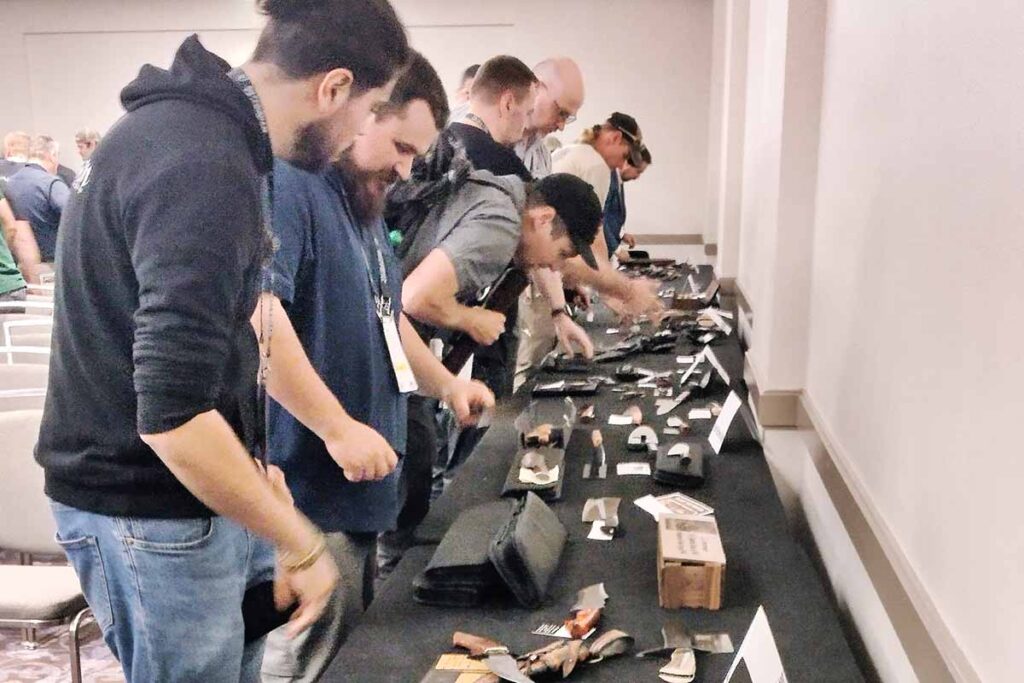
Held in conjunction with the 43rd Annual BLADE Show June 7-9 at the Cobb Galleria Centre in Atlanta, BLADE University will be sponsored by Work Sharp. Classes begin Thursday, June 6, and will run through Friday, June 7, and Saturday, June 8.

While most courses will be taught in the Cobb Galleria, some also will convene under the tent in The Courtyard, aka the parking lot of the show’s host hotel, the Renaissance Atlanta Waverly.

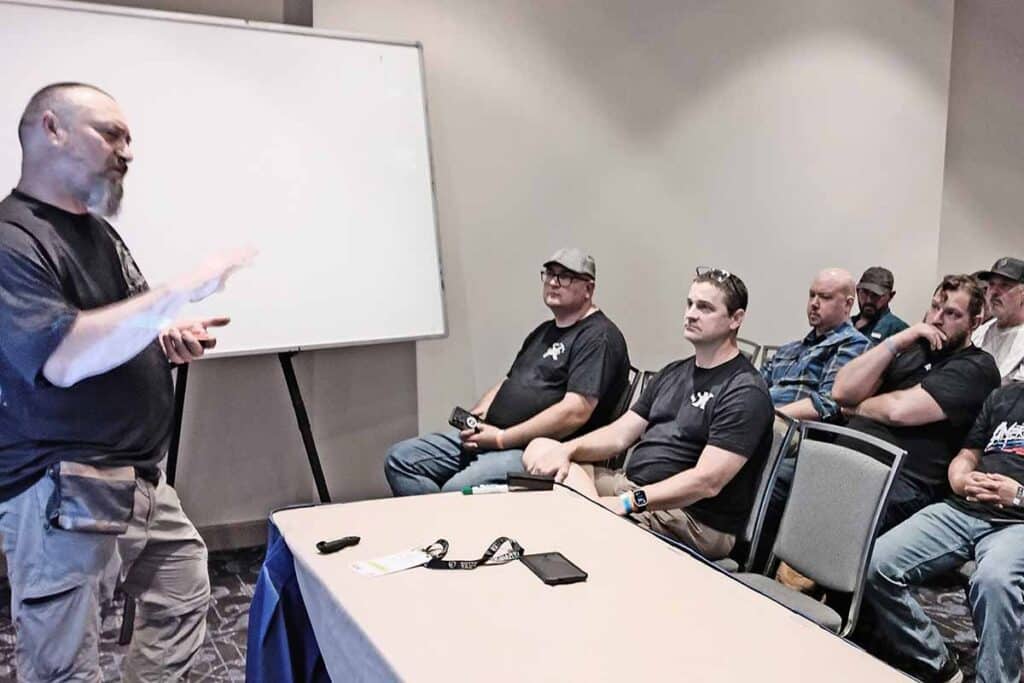
BLADE University gathers some of the world’s best knifemakers, bladesmiths and other cutlery and steel professionals to teach a wide range of subjects for the knife user, knifemaker, knife hobbyist, knife entrepreneur, knife designer, and knife aficionado and novice alike. If you love knives or are just beginning to, BLADE University has a topic for you. The complete course schedule, with subjects, teachers, times and venues:


Buy Knives, Don’t Wait In Ticket Lines! Get Your 2024 BLADE Show Tickets!


THURSDAY, JUNE 6

  • The Art of Selling at a BLADE Show, Tom Krein, 4 to 5 p.m., Room 104—A long-time maker of custom utilitarian fixed blades and folders, Tom Krein will outline exactly what a knifemaker who is serious about selling knives should do and how he/she should behave behind a knife show exhibitor table. Proper table etiquette and sales and customer relations strategies are just some of the subjects Tom will cover. The class will be held the day before the BLADE Show begins so attendees can put some of Tom’s recommendations into practice during the main event Friday through Sunday.

FRIDAY, JUNE 7

Metal and Wood Fitting Techniques
ABS journeyman smith Henning Wilkinson makes impeccable keyhole knife handles like this one. Join him for his class Metal and Wood Fitting Techniques for Keyhole Handles Friday at 2 p.m. (Eric Eggly/PointSeven knife image)
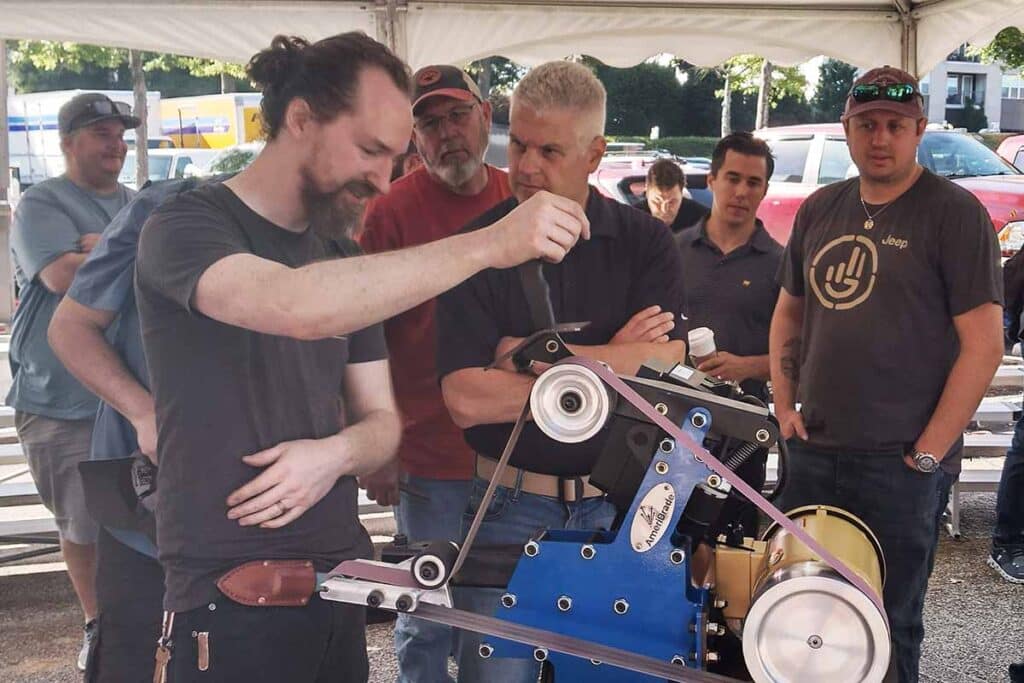
  • Fundamentals of Grinding, AmeriBrade and guest grinders, 8 to 9:30 a.m., The Courtyard—AmeriBrade and guest makers will provide a general overview on grinds, techniques and different equipment. The class will be interactive and the team will answer questions and demonstrate suggestions for common issues.
  • How to Run a Small Successful Knifemaking Business, Bob Kramer, 10 to 11:30 a.m., Room 103—Learn the do’s and don’ts of making the most out of your knifemaking business. ABS master smith Bob Kramer has 30 years of experience and says he’s still learning!
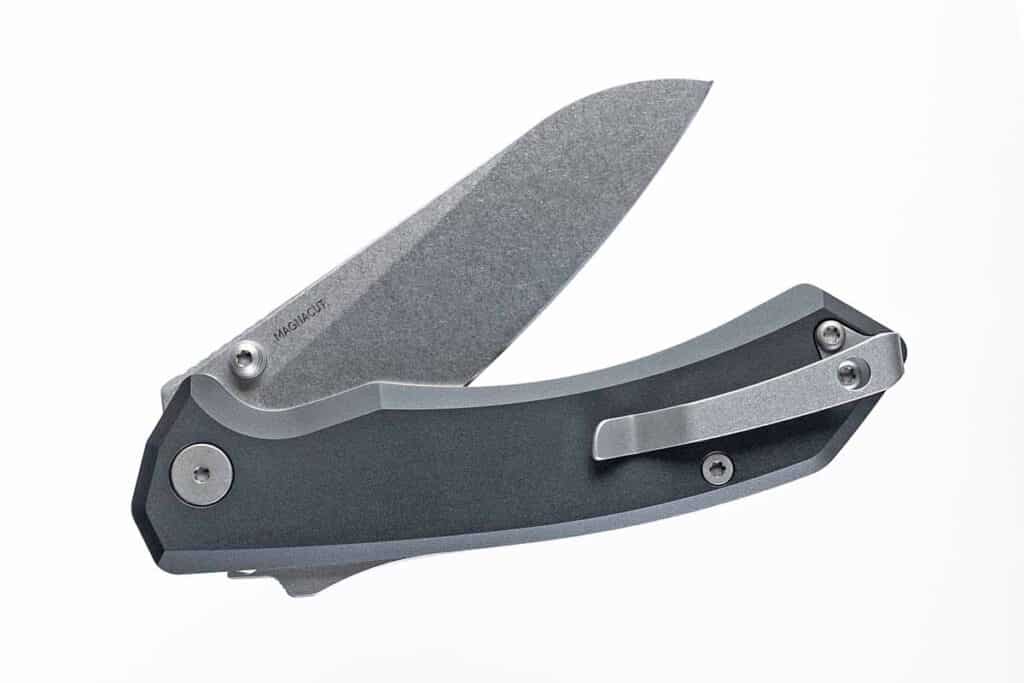
  • Thermal Cycle Steel for High Performance, Larrin Thomas, 10:30 to 11:30 a.m., Room 104—There are many different recommendations for how to heat treat steel after forging, but what is best? Can normalizing and grain-refining cycles really improve properties when compared with steel from the factory? Should stock-removal makers bother with thermal cycling? How do you thermal cycle stainless steels after forging them? Is it thermocycling or thermal cycling? Join Larrin Thomas, designer of CPM MagnaCut stainless steel, creator of the website Knife Steel Nerds, and author of Knife Engineering: Steel, Heat Treating, and Geometry, as he answers these questions and more.
  • Symmetrical Quillon Dagger 101, Neels Van Den Berg, 1 to 2 p.m., Room 107—Join ABS master smith Neels Van Den Berg from Black Dragon Forge for a discussion and walkthrough of making a symmetrical quillon dagger. He will cover design, proportions, aesthetics, materials, fluting and finally the entire manufacturing process, sharing useful tips and tricks to save you time, money and frustration.
  • Intro to Power Forging, panel of forging authorities, 1:30 to 2:30 p.m., Room 103—Bring your forging questions to our group of expert panelists including Logan Gillihan, Will Stelter, Salem Straub, Charlie Ellis and Brian House.
  • Metal and Wood Fitting Techniques for Keyhole Handles, Henning Wilkinson, 2 to 3 p.m., Room 113—An ABS journeyman smith and member of the Knifemakers’ Guild of South Africa, Henning Wilkinson will outline the correct techniques for fitting metal and wood in the construction of the keyhole integral knife handle. Henning will show you how to eliminate the gaps between materials that results in the proper fit and finish collectors and those who judge knife competitions look for in an award-winning keyhole-handle knife.
  • Hands on Sharpening, the team at Work Sharp, 3:30 to 4:30 p.m., Room 113—What happens when a knife gets dull? How do you know when to sharpen it? Bring your own knife or borrow a demo model and learn the progression of shaping a bevel, sharpening and edge maintenance from the team at Work Sharp. You will get hands-on practice and experience sharpening your blade using a variety of sharpeners and abrasives, from whetstones to belts.
  • Originality: Experimentation, Innovation and Ingenuity, Lucas Cao, 4:30 to 5:30 p.m., Room 107—Why are some people more creative than others? Can creativity be learned? Lucas Cao, founder of Squid Industries, explores tools and techniques that anyone can apply to become more original.

Raise Your Knifemaking IQ! Enroll in a BLADE University Class


SATURDAY, JUNE 7

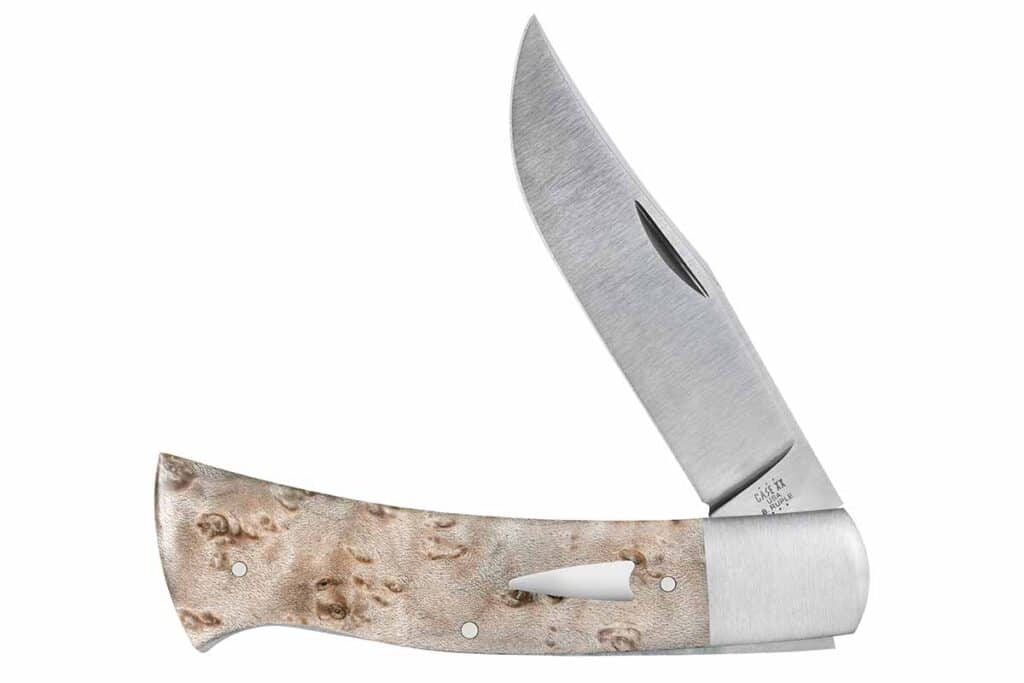
Lockback whittler class at Blade University
Tim Robertson won Best Locking Folder at BLADE Show West ’22 for his lockback whittler and will cover how to make this most difficult pocketknife of all to build in his class Saturday at 9:45 a.m. (SharpByCoop image)
  • Elevating Your Handle Appearance: Spine Filework, Handle Shapes and Pin Placement, Kyle Daily, 8:30 to 9:30 a.m., Room 113—Enhance the appearance of your knife with distinctive features that go far beyond standard production models. Knifemaker Kyle Daily from KHDaily Knives guides you through the intricate art of filework on the spine, while also sharing insights into handle design and the pin placement on your handle. Discover Kyle’s preferred files and specialized equipment for crafting his five most popular filework patterns, ensuring your knife not only looks exceptional but also feels comfortable and functional. From laying out your pattern to a step-by-step tutorial, this class provides the essential knowledge to achieve a professional and eye-catching finish. A Q&A session at the end will ensure you leave with the skills and knowledge to take your knifemaking to the next level.
  • Insert Welding with Bob Kramer, 9:30 to 11 a.m., Room 104—Understand how to forge weld inserts with high precision and control to create realistic depictions of animals and patterns in this BLADE University offering. This will be an exclusive opportunity to experience the technique that Bob Kramer created with fellow ABS master smith Tom Ferry and shared with the masses.
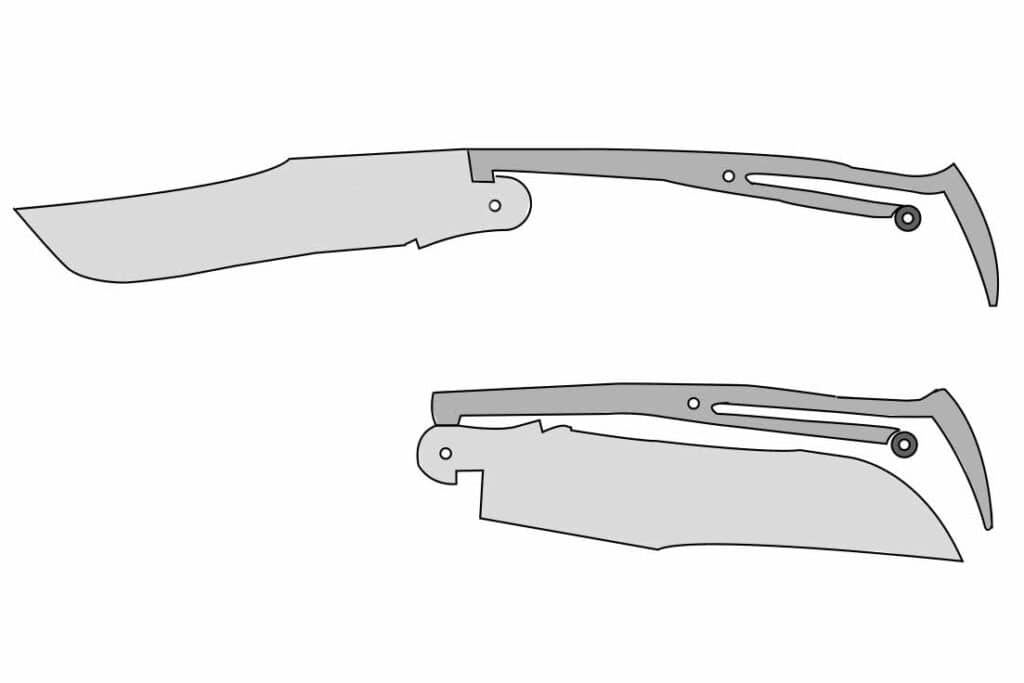
  • How to Make the Most Difficult Pocketknife, Tim Robertson, 9:45 to 10:45 a.m., Room 107—An award-winning maker of slipjoints and a charter member of the South Texas Slipjoint Cartel, Tim Robertson will address perhaps the most difficult pocketknife to build: the lockback whittler. He will outline what makes the classic slipjoint/lockback folder so demanding to make, with a major focus on backspring design and function, the two areas of the knife that work against each other. He also will cover the correct sequence of parts preparation and the proper order of construction steps that reduces mistakes and helps ensure a successfully completed knife.
  • The Process Is the Product, TJ Schwarz, 11 a.m. to 12 p.m., Room 113—TJ Schwarz is the founder of Schwarz Knives, an Idaho-based manufacturer of premium outdoor fixed blades. He has over a decade of freelance knife design experience with many models in circulation, a patent, and two BLADE Show awards to show for it. Schwarz will share his insights on how to create a successful knife business, including the key point of understanding actually what it is that you’re selling.
  • Let the Pros Critique Your Knife, 2:15 to 3:15 p.m., Room 114—Award-winning knifemakers David Carver, Enrique Pena and Luke Swenson and ABS master smiths Bob Kramer and Jim Rodebaugh will share decades of knowledge and experience to critique the knife you made. They will go over every square inch of it and tell you what’s good, what’s not and how to make it better. Bring one knife only. Questions from attendees will be entertained throughout.
  • Hands on Sharpening, the team at Work Sharp, 2:15 to 3:15 p.m., Room 113—What happens when a knife gets dull? How do you know when to sharpen it? Bring your own knife or borrow a demo model and learn the progression of shaping a bevel, sharpening and edge maintenance from the team at Work Sharp at this BLADE University class. You will get hands-on practice and experience sharpening your blade using a variety of sharpeners and abrasives, from whetstones to belts.
  • Making Scissors in a Knife Workshop, Grace Horne, 2:30 to 3:30 p.m., Room 107—Have you ever thought about making scissors but don’t know where to start? If you’re curious about scissors or just want to expand your knowledge, this session is for you. Whether you want to have a go at restoring old scissors or forging your own from scratch, the basic information is the same—and it’s notoriously poorly documented. Dr. Grace Horne will give a whirlwind tour through the early history of scissors, describe methods of producing the blanks, give inside information on the twist and the curve, and highlight critical areas to consider. Most importantly, she will describe her method of scissors making that requires no specialized tools or equipment.
  • Pattern Welding Panel, 4 to 5 p.m., Room 104—Salem Straub, Mareko Maumasi, Charlie Ellis, Josh Prince and Will Stelter will explain how they created their collaborative Consortium billet, including each of the steps that went into creating this wild mosaic billet, and then open up to general questions about damascus forging and pattern development.

Check Out Previous Custom Award Winners:

Game Shears: Affordable Options To Cut Bones And More Down To Size
1

Affordable game shears that offer cut, power, features, size and more…

When you think of processing game, a skinner is typically the first knife that comes to mind—and rightfully so. At the same time, game shears provide a viable role in the processing equation, particularly with small game like squirrels, rabbits, fowl and fish. A good pair of shears made for small game processing can cut through bone, slice hide, remove unwanted viscera and, in the case of fish, remove heads and fins. Many shears have extras thrown in, technically making them multi-tools, though that’s a bit of a stretch.

My team tested four current game shears to see how they perform and what they offer in the way of goodies. Just so we don’t get repetitive, it should be noted that all our candidates have take-apart pivots that allow the main blade/handle sections to separate for easy cleaning.

Gerber Vital Take-A-Part Shears

Gerber Vital Take-A-Part Shears
The Gerber has a humped portion of the serrated blade on the bone notch area that enables the blades to continue cutting the full length of the blade rather than bogging down at the notch. It is the only test shears with the feature.

The simplest and smallest of the test group is the Gerber Vital Take-A-Part Shears. The spear-shaped blades are 2.5 inches of 420J2 stainless steel. Overall length: 8 inches. The handles have a hard thermoplastic frame sporting rubbery Kraton™ overlays with an ovate hole for the fingers and a round one for the thumb. One blade is plain with a bone notch and the opposing one is fully serrated. A two-color nylon sheath matches the handle. Weight: 5 ounces. Country of origin: China. MSRP: $20.

Kershaw Taskmaster Shears

Kershaw Taskmaster Shears
The Kershaw takes the end of a wing at the joint in fine fashion. The blade section did the handiwork, zipping through the cartilage and muscle at the convergence of two main wing sections.

The Kershaw Taskmaster Shears is a straight-blade design with a nice assortment of built-in goodies. The 3.5-inch blades are stainless steel. The spear-point patterns include one plain edge and the other partially serrated with a bone notch. The grips are finger-loop style and overlaid in black Kraton. Additional features include a lid lifter, bottle opener, screwdriver, nutcracker and jar opener. Weight: 5.1 ounces. Overall length: 8.875 inches. Country of origin: China. MSRP: $26.73.

Smith’s Edgesport Bait & Game Shears

Outdoor Edge Game Shears
The Outdoor Edge is the largest of the test group. At 10.5 inches overall, it was the only model that could tackle the larger chicken bones. Note the hefty bone notch just below the serrations.

The Smith’s Edgesport Bait & Game Shears is the most elaborate of the group we tested. The curved blades are 3 inches each of stainless steel. One’s a plain edge and the other is serrated, but what really sets them apart is the curved fish scaler on the underside of the plain blade. The handles have a thumb hole and opposing finger hole with black Kraton over a white thermoplastic main frame. Additional functions include a nutcracker, screwdriver, bone notch and cap lifter. There is no pouch. Weight: 5.25 ounces. Overall length: 8.5 inches. Country of origin: China. MSRP: $28.99.

Outdoor Edge Game Shears

Outdoor Edge's shears are spring loaded
The Outdoor Edge shears is the only one tested that is spring-loaded—that is, no finger holes are required to open and close it. Note the catch at the base for keeping the handles closed while not in use.

The Outdoor Edge Game Shears is the juggernaut of the bunch. What it lacks in features it makes up for in size. Respective blade and overall lengths: 3.75 and 10.5 inches. Another distinguishing feature is it’s spring-loaded with a swing lock at the base. This negates the need for manually opening the blades after making a cut—the spring does it for you. The wharncliffe blades are a plain edge and the other partially serrated with a healthy bone notch. Handles are ribbed Kraton. Weight: 10.5 ounces. A pouch is included. Country of origin: China. MSRP: $49.95.

Testing Shears

I focused on the main job of shearing first. I started with some basic straight cutting exercises of suede leather to simulate animal hide. All the candidates performed the scissor cuts well with the exception of the Outdoor Edge shears, which are just too big for such small detail tasks. As you’ll see later, the Outdoor Edge more than makes up for this deficiency in other areas. The Gerber cut best because it is the only test shears that has a humped serrated blade opposite the bone notch. It just keeps on cutting like a standard scissors whereas the others bog down when they hit the notch.

Smith’s Edgesport Bait & Game Shears
All the blades on the smaller shears were adept at such detail work as cutting suede, and the Smith’s cutter was no exception. Note the pivot piece that rotates to take the two sections apart.

Next I tested each model’s bone notch, a great feature I’ve only seen on game shears that is worth its weight in gold. I used the shears on chicken bones as they were the easiest to get in the 15-to-25°F cold snaps we were experiencing at test time. The humerus and femur are the largest “rounded” bones in a chicken skeleton, offering the best way to gauge cutting power. This is where the Outdoor Edge shears excelled. It munched its way through the larger bones with ease while the smaller shears had a hard time opening up wide enough to be able to grip them. All the review shears performed well on smaller bones, as well as cutting through the cartilage and viscera around the joints.

Hightlighting Features

Kershaw did a nice job of organizing the additional functions on its shears.
Kershaw did a nice job of organizing the additional functions on its shears. Look closely and you’ll see a bottle opener, nutcracker, lid lifter, screwdriver and jar opener built into the design.

The Gerber and Outdoor Edge Shears are sparing in the multi-implement category. The Kershaw and Smith’s, on the other hand, offer a wide range of added features. Most impressive on the Kershaw is the way the lid lifter, bottle opener, screwdriver, nutcracker and jar opener are incorporated into the design. You don’t really notice the various little helpers, but you’ll be darn glad they’re there when you need them. What’s more, the fish scaler on the Smith’s shears could be a real game changer for the outdoorsman who enjoys fishing as much as hunting, or is solely into angling.

Final Cut

The good news for game shears users is choices abound in this small sliver of the overall cutlery industry. For starters, pricewise none of the test shears are going to break the bank. The small Gerber and large Outdoor Edge will please those who could care less about the extras. For them, a sharp shears with a bone notch is all they need. For those who like bonus functions on their shears, the well-organized Kershaw will perform a myriad of chores. Finally, the gamesman who prefers a loaded shears with a little something extra will appreciate the fish scaler on the Smith’s entry. Between the four choices there’s bound to be a game shears ready to work for you.

Check Out More Outdoor Knives:

Nessmuk Knife: Options In The All-American Outdoor Knife
History repeats itself in modern renditions of an all-American classic.

Some patterns stand the test of time and become legendary for a reason, be it a story, movie or book. The Nessmuk-style knife stands out because of its shape.

Nessmuk was the pen name of George Washington Sears, a 19th-century American writer, conservationist and outdoorsman. He wrote about his wilderness adventures, particularly his solo canoe trips in the Adirondacks, a picturesque mountain range in northeastern New York state. He promoted a simple and lightweight approach to camping and woodcraft.

A modern “Nessmuk Trinity” with a Helm Forge hatchet, Victorinox camper, and TOPS Knives Camp Creek.
A modern “Nessmuk Trinity” with a Helm Forge hatchet, Victorinox camper, and TOPS Knives Camp Creek. Nessmuk would be proud of this edged-tool setup.

According to the story, the Nessmuk knife was named after a childhood friend of Sears’s from the American Indian community. The knife was not well documented and very little is known about it except for a diagram in Sears’s book Woodcraft and Camping. The book describes the knife as “thin in the blade, and handy for skinning, cutting meat, or eating with.”

What Is A Nessmuk

The Nessmuk-style knife has a unique shape that sets it apart from other models. The 4-to-5-inch blade has a hump on the spine that is closer to the point. The blade also has a deep belly and an upswept point, which makes it ideal for slicing, skinning and similar tasks. The distinct blade shape is the defining feature of a Nessmuk-style knife.

George Washington Sears, aka Nessmuk, preferred thin knives with keen edges. He paired his knife with a double-bit hatchet and a folding knife, forming his “trinity” of cutting tools.

Nuge Camptoku, TOPS Knives Camp Creek, Bear Forest Knives PuuMuk and KA-BAR/Becker BK-19 Nessmuk knives.
The Nessmuk-type knife is a highly regarded design. The test versions are, from top: Knives By Nuge Camptoku, TOPS Knives Camp Creek, Bear Forest Knives PuuMuk and KA-BAR/Becker BK-19.

Usually, a Nessmuk blade is carbon steel ranging from 3/32 to 1/8 inch at the thickest. The handle comes in a variety of materials, including wood, bone or antler depending on availability and user preference. It is important for the handle to be comfortable and ergonomic, fitting the hand well.

What Makes A Good Nessmuk

A Nessmuk knife is a fixed blade Sears designed and used for his expeditions. It has a distinctive curved blade that resembles a skinner or a butcher knife and a handle that fits comfortably in the hand.

A quality Nessmuk knife should be able to perform various tasks in the woods, such as skinning game, slicing meat, carving wood, making feather sticks, cutting cord—even shaving. It should be sharp, sturdy, well balanced and easy to maintain. A Nessmuk knife should also be lightweight and compact so as not to add much bulk or weight.

TOPS Knives Camp Creek

Camp Creek combines all the features of a superior hunting knife with impeccable fit and finish
The Camp Creek combines all the features of a superior hunting knife with impeccable fit and finish. It sliced camp food and passed the tomato test with flying colors.

The TOPS Knives Camp Creek is a hunting/camping knife designed by Leo Espinoza, company president. The blade is CPM S35VN steel, which boasts superior edge retention and stainless properties. The handle is a three-color camo-style G-10.

The Nessmuk-like design is perfect for hunting, skinning, processing wood and food prep around the campsite. The knife has a contemporary tan Kydex sheath and a brown leather dangler on a swivel.

Camp-style kabobs were my focus with the Camp Creek due to its classic butcher knife shape. I knew it would excel slicing meat and veggies and it didn’t disappoint. It aced the tomato-slicing test and will see more dirt time in the future.

Definitely the most Nessmuk shaped of the review knives, the super-sharp, flat-ground blade has all the right curves and excels at food prep and woodcraft.

Camp Creek Specs
Designer: Leo Espinoza
Blade Length: 4.38”
Blade Steel: CPM S35VN stainless
Blade Grind: Flat
Blade @ Thickest: .13”
Blade Finish: Tumble
Handle Material: Camo G-10
Overall Length: 9”
Sheath: Coyote tan Kydex and leather
Country of origin: USA
MSRP: $305

Bear Forest Knives PuuMuk

Eating off the Nessmuk hump
The author ate off the Nessmuk hump of the PuuMuk, perhaps the way Nessmuk himself did a century-and-a-half ago.

Made by Bear Forest Knives (BFK), the PuuMuk combines the design elements of a puukko and a Nessmuk-style knife. It has a straight handle without a guard and a choice of blade grinds: high saber or Scandi. The knife features full-tang construction. The blade was sharp as can be, especially the Scandi version.

The handle is like all the knives I have used from BFK—comfort is not compromised in any way. The red oak scales are secure and comfortable in any grip.

I used the PuuMuk as I would a general camp knife. I improvised carving a fork out of wood and general woodcraft like making feather sticks for a fire. The PuuMuk prepared food outdoors, slicing bacon, tomatoes, avocados and peppers. I used it as an impromptu spoon to eat off the back of the Nessmuk blade hump; perhaps Sears did the same. I used the PuuMuk for one month straight in the kitchen, doing all a kitchen knife would typically do. It didn’t take much time before the steel took on a respectable patina, adding to the look of the old-timey pattern.

The knife’s standout feature is the thin Scandi-ground blade and sharp 90-degree spine, adding a modern improvement to the classic pattern.

PuuMuk Specs
Blade Length: 3.75”
Blade Material: 80CrV2 carbon steel
Blade Grinds: Scandi and high saber options
Blade @ Thickest: 3/32”
Blade Finish: Acid wash
Knife to know: The blade’s 90-degree spine accommodates ferro rod striking and tinder scraping
Handle Material: Red oak
Overall Length: 8.375”
Sheath: JRE Industries brown leather
Country of origin: USA
MSRP: $179.99

KA-BAR Becker BK-19

BD-19 Trap
In survival Nessmuk mode, the author made a figure-four trap with the BK-19 in a jiffy.

The KA-BAR Becker BK-19 is a solid tool battened down with stainless steel Torx hardware and comes with a MOLLE-compatible, bulletproof Celcon sheath. Designed by Ethan Becker of Becker Knife & Tool, the 9.6-ounce edged tool stands out with the beloved Nessmuk blade shape so highly regarded in the bushcraft community.

The blade has more of a drop-point look than the other three test models. It is a survival Nessmuk if ever there was one. I put the knife into the deep end, splitting wood via a stout baton and crafting a figure-four deadfall trap. The robust blade easily split timber and processed wood for a late winter fire.

The handle was comfortable in several grips, and the exposed tang pommel added another degree of usefulness among the bunch, standing out as the hard-use survival Nessmuk the likes of which Mr. Sears would be proud.

The standout feature of this compact powerhouse is the sheath, which can be worn on a belt or in a scout carry orientation. The belt loop webbing is removable, and the retention is so good that the snap closure at the top is unnecessary. However, the closure can come in handy when in transit. KA-BAR has figured it out for you with two drain holes to help keep the sheathed blade dry in wet conditions.

BK-19 Specs
Designer: Ethan Becker
Blade Length: 4.3125”
Blade Material: 1095 Cro-Van carbon steel
Blade Grind: Flat
Blade @ Thickest: .165”
Blade Finish: Burnt bronze
Handle Material: Ultramid synthetic
Overall Length: 9.125”
Sheath: Celcon
Country of origin: USA
MSRP: $165.38

Camptoku Knives By Nuge

Camptoku Nessmuk
The Camptoku has a sharpened 90-degree section at the front of the spine, allowing the author to ignite some tinder with a ferro rod quickly.

The Camptoku from Knives By Nuge is a versatile general-purpose camp knife blending the esteemed Nessmuk blade with a santoku pattern, resulting in a rugged tool for outdoor and meal tasks. The Nitro-V stainless steel blade offers excellent durability and easy maintenance. The Camptoku comes with G-10 or wood scales and a custom-made slip sheath (no belt loop).

It is the longest of the bunch and a bit of a divergence from the traditional Nessy. However, it pays homage to the revered design and moves it into a new era. The thin blade screams kitchen use and allows for a comfortable chef’s pinch grip with a rounded spine for comfort. Meanwhile, the front 1.5-inch section from the Nessmuk hump to the tip has a sharp 90-degree spine for striking a ferro rod or scraping tinder.

The handle is a generous 4.75 inches, making it suitable for kitchen and woodcraft grips. Incredibly comfortable in a fist handhold, the knife is a chameleon when put into service in a chest-lever or pinch grip. The G-10 liners and pins offer that dash of undeniable modern class.

In the field the Camptoku served as the ordained kitchen knife, slicing tomatoes, meat and vegetables for stew while also starting fires to cook what it had been used to prepare.

Camptoku Specs
Blade Length: 5.5”
Blade Steel: Nitro-V stainless
Blade Grind: Saber
Blade @ Thickest: 3/32”
Blade Finish: Satin
Knife to know: The blade has a 90-degree spine in a 1.5” section from the hump to the tip for ferro rod striking and tinder scraping
Handle Material: Choice of G-10 or maple burl
Overall Length: 10.5”
Sheath: Kydex
Country of origin: USA
MSRP: $425

Dime Novel Knives?

George Washington “Nessmuk” Sears spoke ill of the bowie- and hunting-style knives of his era (mid-to-late 19th century), writing of them, “The ‘bowies’ and ‘hunting knives’ usually kept on sale are thick, clumsy affairs, with a sort of ridge along the middle of the blade, murderous-looking, but of little use; rather fitted to adorn a dime novel or the belt of ‘Billy the Kid’ than the outfit of the hunter.”

Here To Stay

The Nessmuk knife is a versatile and practical tool that can easily handle various outdoor tasks. The pattern has become crucial to American cutlery history and shows no signs of going away. Here’s hoping it never does.

Check Out More Outdoor Knives:

Pocketful Of Miracles: New Pocketknife Drops

Hip pocket feel empty? We got the cure for that…

The pocketknife was once a rare term, most likely because back in the pioneering day fixed blades of all types ruled the roost. With few bears to skin nowadays and more wire to strip and boxes to dismember, a pocketknife practically means knife to a wide swath of people. This ubiquitous class of knives helps make our daily world go round—be they tactical do-alls or slip-joint stunners. And we have gathered a load of new ones—factory and custom—hitting the market.

Barnett Custom Knives 6-Blade Congress

Barnett Custom Knives 6-Blade Congress

Knife pattern: 6-blade congress
Master blade length: 17/8”
Blade steel: Ladder-pattern damascus
Blade grinds: Flat
Scales: Gold-lip mother-of-pearl
Handle frame: .030” 410 stainless steel
Bolsters: 416 stainless
Closed length: 3.5”
Knife to know: Bruce Barnett is an ABS journeyman smith
Maker’s price for a similar knife: $2,750
Maker: Barnett Custom Knives (Rod Hoare image)


Manuele Messori Little Blue

Manuele Messori Little Blue

Knife name: Little Blue
Blade length: 3.5”
Blade material: Björkmans Twist damascus forged by Damasteel w/Fat Carbon White Storm inlay
Pivot: Ceramic bearings
Scales: Titanium GR5 w/Fat Carbon White Storm, zirconium and mother-of-pearl inlays
Backspacer: Zirconium
Hardware: Titanium screws
Closed length: 4”
Maker: Manuele Messori (SharpByCoop image)


Andrew Demko Full-custom AD-20 Stinger Tanto

Andrew Demko Full-custom AD-20 Stinger Tanto

Knife name: Full-custom AD-20 Stinger Tanto
Blade length: 3.5”
Blade steel: CPM MagnaCut stainless
Blade grind: Compound
Scales: Fat Carbon
Liner material: Titanium
Lock: Shark Lock
Closed length: 5”
Maker’s price for a similar knife: $2,000 (standard U.S.-made AD-20 starts at $450)
Maker: Andrew Demko (SharpByCoop image)


Bob Hook Linerlock Folder

Bob Hook Linerlock Folder

Knife type: Linerlock folder
Blade length: 3.75”
Blade steel: Reptilian damascus by Vegas Forge
Blade grind: Flat
Scales: Caramelized musk ox
Bolster: Same material as blade
Closed length: 3 5/8”
Knife to know: Handle has detailed screws and liners; maker’s name in the interior; stud opener; the maker is an ABS journeyman smith
Maker’s price for a similar knife: $1,200
Maker: Bob Hook (Jocelyn Frasier image)


Fallkniven GPbm

Fallkniven GPbm

Knife model: GPbm
Blade length: 3.07”
Blade material: Laminated CoS (cobalt steel) stainless
Rockwell hardness: 60 HRC
Blade grind: Flat
Blade @ thickest: .11”
Lock: Linerlock
Weight: 3.3 ozs.
Closed length: 3.94”
Carry: Suede pouch
Knife to know: GPbm stands for Gentleman’s Pocketknife Black Micarta
Country of origin: Japan
MSRP: $327.95 at press-time exchange rate
Company: Fallkniven


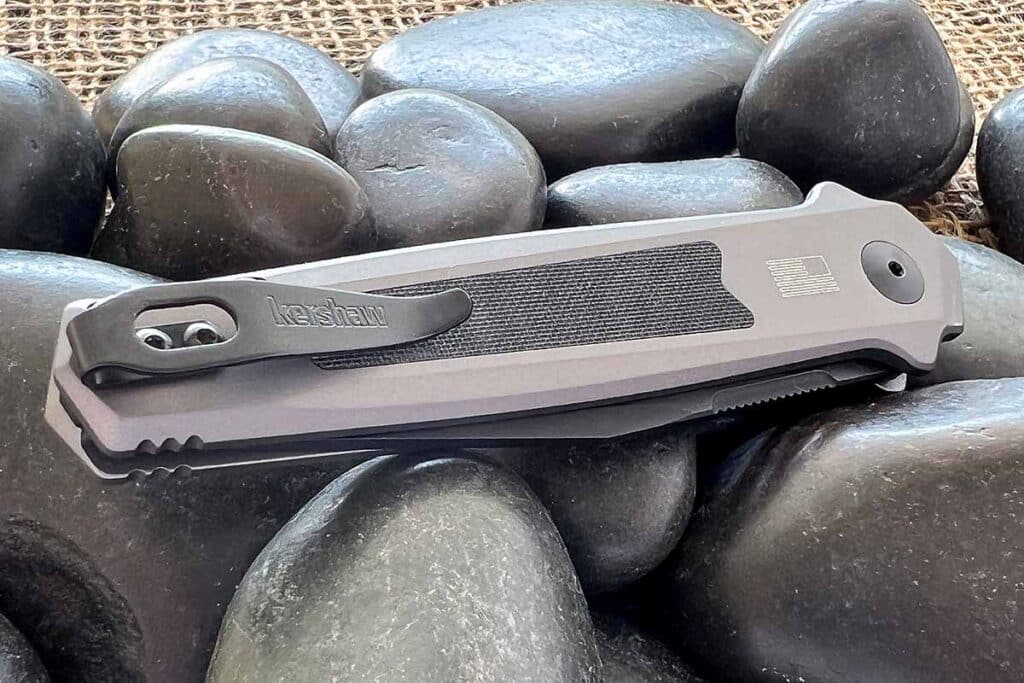
Kershaw Livewire

Kershaw Livewire

Knife name: Livewire – Double Edge
Designers: Kershaw Originals and Matt Diskin
Knife type: Out-the-front automatic
Blade length: 3.45”
Blade steel: CPM MagnaCut stainless
Rockwell hardness: 60-63 HRC
Blade @ thickest: .125”
Handle material: Textured 6061-T6 aluminum
Pocket clip: Deep carry, right/left, blade tip down w/black Cerakote® finish
Hardware: Black-oxide steel screws
Knife to know: Double-action (opens and retracts automatically w/sliding button)
Weight: 3.1 ozs.
Closed length: 4.8”
Country of origin: USA
MSRP: $400
Company: Kershaw


GiantMouse ACE Biblio XL

GiantMouse ACE Biblio XL

Knife name: ACE Biblio XL – Green Canvas
Blade length: 3.2”
Blade steel: Elmax stainless
Blade @ thickest: .138”
Blade finish: Stonewashed
Scales: Green canvas Micarta®
Lock: Linerlock
Pocket clip: Wire, reversible
Backspacers: Brass
Weight: 3.915 ozs.
Closed length: 4.375”
Country of origin: Italy
MSRP: $225
Company: GiantMouse


A Sharp Life with Bob Terzuola

Knife Life

Video series: A Sharp Life with Bob Terzuola
What’s included: 11 episodes start to finish of building one of BLADE Magazine Cutlery Hall-Of-Fame® member Bob Terzuola’s groundbreaking ATCF tactical folders, and also on knifemaking in general.
Knife to know: Buy the entire series alone or bundle it with Bob’s monthly subscription service, Shoptalk, the latter which includes weekly Q&A Zoom calls with Bob and two “deep dive” educational videos per month, “Terzuola Swag” and more.


Halfbreed Blades MILSPEC MILF-02PS

Halfbreed Blades MILSPEC MILF-02PS

Knife name: MILSPEC MILF-02PS
Knife type: Flipper folder
Blade length: 3.54”
Blade steel: CPM S30V stainless
Rockwell hardness: 59-60 HRC
Blade grind: Hollow
Blade @ thickest: .19”
Blade style: Harpoon drop point
Finish: PVD coated throughout
Washers: Phosphor bronze
Handle frame, liner & spacers: 420J2 stainless
Scales: G-10
Pocket clip: Ambidextrous, blade tip up or down
Lock: Framelock
Weight: 7.34 ozs.
Closed length: 4.84”
Country of origin: Comprises Australian and Taiwanese manufacture
MSRP: $185 at press-time exchange rate
Company: Halfbreed Blades


Barking Gecko Forge Eureka Jack

Barking Gecko Forge Eureka Jack

Knife pattern: Eureka jack
Blade lengths: 2.44” (main) and 1.57” (pen)
Blade steel: CPM 154 stainless
Blade grinds: Hollow
Scales: Giraffe bone
Bolster: Fluted 416 stainless steel
Sharp stuff: Domed pins, fileworked liners and center spacer, jeweled liners and stainless steel shield; long-pull nail nick on main blade
Closed length: 3.54”
Maker’s price for a similar knife: $795 at press-time rate of exchange
Maker: Barking Gecko Forge (Rod Hoare image)


Rothman Knives Elephant Toenail

Rothman Knives Elephant Toenail

Knife pattern: Elephant toenail
Blade length: 2”
Blade steel: CPM 154 stainless
Blade grind: 14” hollow
Handle frame: 416 stainless in an integral construction
Scales: Mammoth ivory
Knife to know: Fileworked liners; the elephant toenail is also known as a sunfish; the maker is a probationary member of The Knifemakers’ Guild
Closed length: 3.5”
Maker’s price for a similar knife: $1,200
Maker: Rothman Knives (SharpByCoop image)


Shane Taylor Linerlock Folder

Shane Taylor Linerlock Folder

Knife type: Linerlock folder
Blade length: 3”
Blade steel: Dragon damascus
Blade grind: Flat w/convex edge
Bolster: Same as blade
Scales: Mammoth ivory
Lock type: Linerlock
Backbar: Engraved
Closed length: 3.75”
Maker’s price for a similar knife: $2,800
Knife to know: The maker is an ABS master smith
Maker: Shane Taylor, Miles City, Montana, [email protected], taylorknives.com (Jocelyn Frasier image)


Check Out More Knife Drops:

Keychain Knives: Unlocking The Secrets To The Convenience Blade

Handy keychain knives are pocket pards ready to sever and serve.

As competitive as today’s cutlery market is, it behooves a factory knife company to fill as many categories as it can—including the keychain knife. In fact, keychain knives offer a number of the same utilitarian functions as many contemporary tacticals and EDCs. Whether you need a small knife to handle daily chores or a back-up to your back-up in an emergency, a keychain knife can answer the call.

Keychain Knives
The test bunch, from left with manufacturer’s suggested retail prices in parentheses: Schrade Roadie ($25.99), Smith & Wesson Stonewash ($17.99), Bear & Son 3-inch Keychain Knife ($22.99) and Gerber Keynote ($27). All are made in China.

Bear & Son 3-inch Keychain Knife

Bear & Son 3-inch Keychain Knife
The Bear & Son’s 2-inch drop-point blade of 440 stainless steel in a brushed finish took off slices of 1-inch-diameter smoked sausage with no problem. Note the cap lifter on the rear of the handle spine. Weight: 2.3 ounces. Closed length: 2.8 inches.

The Bear & Son 3-inch Keychain Knife is a study in curves and its all-silver frame and blade add a classy touch. The blade sports a brushed finish and rolls out via a nail nick. Key hauling is handled by a 1-inch flat split ring on the base, very adequate unless you carry a large number of keys. In that case you can always add a larger split ring. A cap lifter is on the lower backside of the handle.

I sliced 1-inch-diameter smoked sausage and the blade performed admirably—not that you’d typically grab your keychain knife to perform such a task but it’s there if you need it. The cap lifter is handy. There is no pocket clip but the Bear & Son is not overburdening for loose pocket carry. This is a stout keychain knife well worth the money.

Schrade Roadie

Schrade Roadie
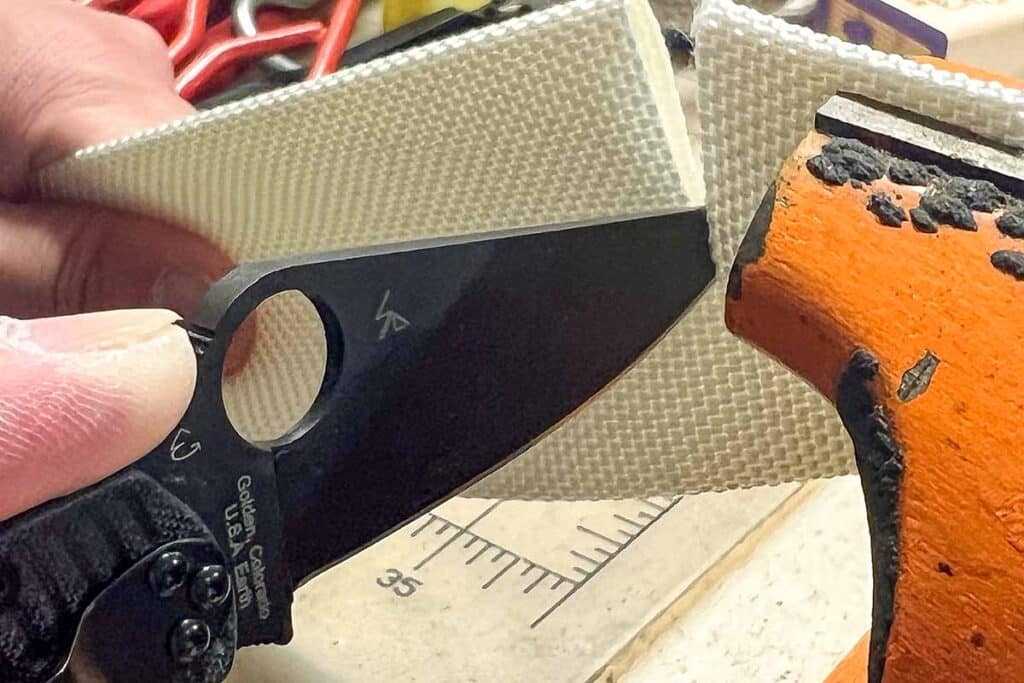
The Schrade Roadie is a little bulldog. The 1.5-inch blade of black-oxide-coated AUS-10 stainless steel bit through round after round of rappelling rope like a walk in the park. It’s a no-frills cutter meant for cutting. Weight: 2 ounces. Closed length: 3 inches.

The Schrade Roadie is a little bulldog of a keychain knife that doesn’t pretend to be anything else—it’s strictly a knife. In fact, it looks like a squeezed tactical folder. The blade opens via a flipper tab. The handle is black G-10 over black-coated stainless liners, with the rear liner serving as an unusual exposed locking leaf. Keys carry via a 4-inch black ball chain that dangles approximately 2 inches off a hole in the base.

I tested the blade on 3/8-inch synthetic rappelling rope to see how the reverse tanto pattern—a cousin to a modified wharncliffe—performed. It had no problem taking 3/8-to-1/2-inch slices in a single pass. The grip is excellent, aided even more by gimping on the upper rear handle close to the blade spine. This is a heck of a small knife and I only had one beef with it—the ball-chain key dangler. With the weight of keys tugging on the chain both sloshing around inside the pocket and while in use, you are asking for it to break. By the nature of ball-chain construction there are simply too many points along the way it can fail. I’ve got a remedy for that I’ll discuss later.

Smith & Wesson Stonewash Keychain

Smith & Wesson keychain knife
The Smith & Wesson’s 2.1-inch drop-point blade of ti-nitride-coated 8Cr13MoV stainless steel sliced its way through 1/8-inch harness leather, something the author indicated the other knives would have more trouble doing. Weight: 2 ounces. Closed length: 3.2 inches.

The Smith & Wesson Stonewash Keychain is the largest of the test bunch and it, too, resembles a scaled-down tactical folder. There’s a cap-lifter cut-out on the back frame slab. Keys mount at the base using a 3-inch ball-chain loop. This is the first of two review knives with a convenient pocket clip. The keys must be removed before using it because the clip is mounted for tip-up carry only, and if you use the keys they will hang out the top of your pocket. If this is acceptable to you, go for it.

I tested the blade on 2-inch-wide harness leather. Looping the leather strip over I did pull-throughs and found the little cutter more than up to the task. The framelock knife is built like a tank with the exception of a ball-chain key carrier which, as stated, I believe will give you issues down the road. That said, if you’re comfortable with it, go for it. I like this otherwise sturdy knife and it’s worth every penny of the price tag.

Gerber Key Note

Key Note cutting leather
The Key Note’s satin-finished 5Cr stainless blade is too short for slicing but the tip scores quite well.

The Gerber Key Note wins the Keychain Outside The Box Award for its sheer imaginative design. With a stubby tanto blade, this offering radically differs from the pack. Both praised and panned on YouTube, the Key Note’s stubby .8-inch double-ground blade is certainly different. The frame has black-anodized aluminum rails with black stainless steel liners, the front which houses a linerlock. A flipper on the back side of the tang gets the blade rolling but only deploys it halfway, after which you pinch it for full deployment. You can also use the nail nick. Two nice touches are a wide tip-down pocket clip and a healthy 1.25-inch-diameter split ring for holding keys.

The blade is limited by its small size but I found it useful in scoring mode taking off strips of suede leather, and it is a heck of a box cutter. It will also push-cut paracord on a flat surface. The beefy tip-down pocket clip can be used with keys attached. The amply sized split ring is the best of the test knives, providing plenty of room for key-a-holics.

Is the Gerber Key Note different? Yes, but it may do just what you need a keychain knife to do.

Keychain Knife Carry Options
keychain knife carriers
Modifying a keychain knife to suit your preferred carry can be done any number of ways. Examples include, from left: lanyard mini-carabiner for neck carry, a belt clip with split ring, the Roadie with ball chain removed, ready to modify, and a quick-release carrier that allows you to easily separate the knife from the keys.

There are other ways to carry these diminutive cutters than in or on the pocket. Accessories and findings (jewelry making parts) can be had by a various number of sources such as hobby stores, online at eBay and Etsy, or by doing an internet jewelry search such as Rio Grande Jewelry Making Supplies. Neck lanyards, belt clips, split rings large and small, breakaway connectors, small carabiners, and more are all available to modify your keychain carry to suit you. Any one of our candidates may suit your tastes as is, but if you want to mod it to suit your needs, there are plenty of options!

Check Out More Buyer’s Guides:

Collaboration Knives That Cut To The Quick

Designers and companies join forces to help consumers win with these knife collaborations.

A collaboration knife is produced when a designer or knifemaker partners up with a knife company to produce a particular knife. And more often times than not, such models offer the best of both worlds. Designers able to focus purely on designing and not confined to the limits of their shop can shoot for the stars. While companies take the reigns of producing the knife to exacting specs and usually at a buyer’s price. In the end, the knife consumer wins. Here is a handful of the latest collaboration drops certain to get knife aficionados juices flowing.

Harlock Mini / Boker Plus

Harlock Mini / Boker Plus
A blade only .11 inch at the thickest helps the Boker Plus Harlock Mini tip the scales at a scant 2.19 ounces. At about 2.87 inches closed and with a lean, sexy pocket clip, the Harlock Mini is made for executive wear. It comes with a nylon pouch.

If you’re looking for an elegant knife present for that special someone, you could do a lot worse than gift him or her the Boker Plus Harlock Mini designed by custom knifemaker Darriel Caston.

Designer: Darriel Caston
Knife type: Push-button automatic
Blade length: 2.05”
Blade steel: Black-coated 154 CM stainless
Blade grind: Convex
Handle material: Black-coated aluminum
Hardware: Brass
Knife to Know: A latching slide lock locks the blade closed and prevents accidental release
Closed length: 2.87”
Carry: Pocket clip and nylon pouch
Country of origin: USA
MSRP: $146


A.P.C. (Always. Pocket. Carry.) / CRKT

A.P.C. (Always. Pocket. Carry.) / CRKT
The A.P.C. is a two-hand opener, with the blade deploying via a traditional nail nick. The Fat Carbon Dark Matter handle material is strong and lightweight.

Unlike traditional slip joints, Steigerwalt’s new slip joint design for CRKT does not have a standard steel backspring. Instead, the slip joint springs from the liners and connects the liner springs with a hardened steel block that contacts the heel of the blade, eliminating the need for the backspring. Among other advantages, this reduces a fair amount of the weight a backspring would add, there is more space inside the handle to hold a wider blade, the position of the blade pivot pin can be changed and more.

Designer: Ken Steigerwalt
Knife type: Slip joint
Blade length: 2.88”
Blade steel: Bohler M390 stainless
Rockwell hardness: 59-61 HRC
Blade grind: Flat
Handle material: Fat Carbon Dark Matter
Weight: 1.7 ozs.
Closed length: 3.72”
Country of origin: Taiwan
MSRP: $175


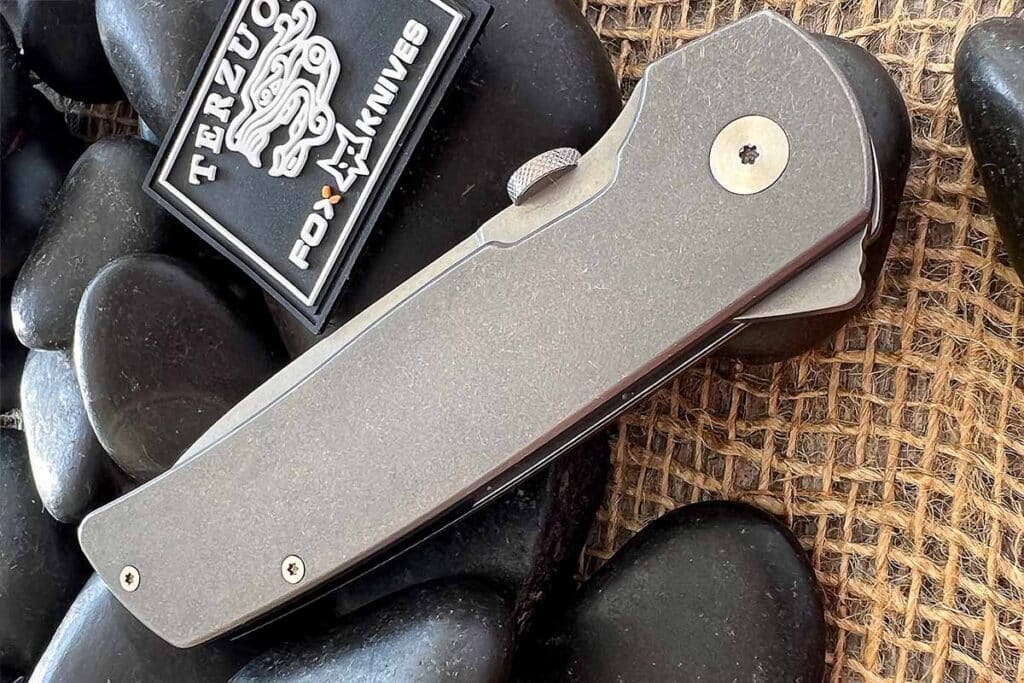
The Sicilian / Fox Knives


The Sicilian / Fox Knives
The Sicilian is a reinterpretation of Fox’s model FX-525, and the name pays homage to the Sicilian roots of Bob Terzuola’s family. Changes from the FX-525 include the BECUT stainless blade steel, the OD green canvas Micarta® handle and the wire pocket clip.

According to Fox’s Athena Greta Barbieri, “Bob Terzuola conceived the Sicilian taking inspiration from traditional knives used by ordinary people for everyday activities such as eating or working in the fields. The idea for this knife evokes images of landscapes warmed by the Sicilian sun and simple meals eaten among olive trees and vineyards.”

Designer: BLADE Magazine Cutlery Hall-Of-Fame® member Bob Terzuola
Knife type: EDC folder
Blade length: 3.35”
Blade steel: BECUT stainless
Rockwell hardness: 58-60 HRC
Blade @ thickest: .12”
Blade finish: Stonewashed
Blade opener: Disc
Handle material: OD green canvas Micarta®
Spacer: Aluminum anodized orange
Pocket clip: Wire
Lock: Linerlock
Weight: 3.53 ozs.
Closed length: 4.52”
Country of origin: Italy
MSRP: $164


Prohen XR / SOG

Prohen XR / SOG
The extremely strong G-10 handle is micro-textured for a secure, comfortable grip in wet or slippery conditions.

Designed by custom knifemaker Mikkel Willumsen for SOG, the beefy Prohen XR flipper folder is a mix of curves and angles that features the XR Lock, a sliding transverse bar that locks the blade in place and promotes ambidextrous one-hand operation.

Designer: Mikkel Willumsen
Knife type: Flipper folder
Blade length: 3.4”
Blade material: Cryo D2 tool steel
Blade @ thickest: .157”
Blade grind: Flat
Blade pattern: Drop point
Blade finish: TiNi
Blade opener: Flipper tab or thumb hole
Handle: G-10
Pocket clip: Reversible, low carry
Lock: XR Lock
Knife to know: The XR Lock can withstand 1,500 lbs. of force
Weight: 5.6 ozs.
Closed length: 4.8”
Country of origin: China
MSRP: $70


Dmitry Sinkevich / Spyderco

Drunken / Spyderco
Drunken / Spyderco

The Spyderco knife’s handle includes a titanium scale on one side and a solid carbon fiber scale and nested stainless steel liner on the other. The titanium scale is “webbed” to reduce weight and forms the basis for the knife’s Reeve Integral Lock (R.I.L.) mechanism, which includes a long-wearing stainless steel interface. Both scales are meticulously machined with the intricate “drunken” texture that gives the knife its name, and are accented by a matching color-anodized backspacer, pivot assembly, and right-side, tip-up pocket clip.

Designer: Dmitry Sinkevich
Blade length: 3.45”
Blade steel: CPM S90V stainless
Blade grind: Full-flat
Blade @ thickest: .138”
Blade finish: Tumbled
Handle: Carbon fiber/ titanium
Pocket clip: Right-handed, blade tip up
Lock: R.I.L. (Reeve Integral Lock)
Weight: 3.8 ozs.
Closed length: 4.61”
Country of origin: Taiwan
MSRP: $770

More On Collaboration Knives:

American Knife Boom: Roundtable With Top Knifemakers

Four U.S. knife manufacturers talk making knives in the USA

Editor’s note: Last time, BLADE® featured four of today’s U.S.-based knife manufacturers ranging from long-time companies to the latest factory operations: Emerson Knives, Inc., White River Knife & Tool, Tactile Knife Co. and Montana Knife Co. (MKC). This time the author asks the respective principals of each company—Ernest Emerson, John Cammenga Sr., Will Hodges and Josh Smith—about their success, the high cost of making knives in America, and the future of the U.S. factory knife industry.

BLADE: What are some of the most difficult things about making knives and staying profitable in today’s market?
CAMMENGA: I’m sure most companies in our industry feel the same. Most challenges are from heavy taxation, excessive regulation, and now, expensive capital.
SMITH: The taxes and regulations we deal with make it difficult to have margins that China-made-knife companies have.
HODGES: Our price points are pretty reasonable compared to other made-in-USA companies, which has been hard.

BLADE: John, you’ve mentioned that finding reliable help is also an issue. Would any of the rest of you like to comment?
HODGES: We’ve been very fortunate to find great employees that are dedicated to the mission.

White River Fillet Knife
White River’s John Cammenga indicated he remains excited about making outdoor knives. Fillet knives are among the company’s specialties, including the Traditional Fillet model, here in a choice of Micarta® and Micarta-with-cork grips. The 6-inch blades are 440C stainless. MSRPs: $140 to $150. (Josh Wayner image)

BLADE: Ernest, you’ve said that the main competition to all USA knife companies is competition from overseas. Please elaborate.
EMERSON: [We are] competing against companies that manufacture or buy their knives for under $20 apiece and then sell them for the same price as we do. As China made considerable inroads in the knife industry, one of their major advantages was labor force, thus being able to produce quality products at reduced prices. This kept the entire industry on its toes and the American companies no doubt started feeling the pinch in a big way.

BLADE: Why is it so much more expensive to make knives in America than overseas?
HODGES: The biggest factor is labor. I’m dedicated to paying my employees well and providing health insurance, paid time off, a 401K and a great working environment. If you want to have good employees, you want to treat them well in hopes that you will retain such help.  Investing in your employees in this way is a bit costly but it’s the price of doing business.
CAMMENGA: It is simply not a level playing field. We are committed to making it work here [in the USA]. We are committed to our employees and customers alike by making our knives in the USA and using USA-sourced materials as well.
SMITH: Employee wages factor into this as well. Our dollar per hour paid is what [Chinese] workers get paid per day. 
EMERSON: [There’s also the] usual regulations and taxes and the cost of setting up shop here in the USA. American wages, American raw materials, American taxes, American restrictions, all of those good things go into it.
Archer framelock
At Tactile Knife Co., Will Hodges said good help is key. “I’m dedicated to paying my employees well and providing health insurance, paid time off, a 401K and a great working environment,” he noted. Tactile’s most recent launch is the Archer framelock folder designed by knifemaker TJ Schwarz.

BLADE: There are some advantages to making knives in the USA that you hold over those who make them overseas.  What are those and how do you try to capitalize on them?
EMERSON: Through the generations my entire family spent time in service to this country, and I never will forget that. I never wanted to do anything but put Americans to work.  I never wanted to be anything except an American-made manufacturer, American-made company.
SMITH: Making knives in the USA has allowed companies like Montana Knife to be more agile as a company. Our knives and materials do not sit in container ships for months. We can ramp up and slow down production in real time, thus allowing us to respond to customer demand.
CAMMENGA: This means not having to be at the mercy of the almighty supply chain. It is very nice not to have supply chain issues, increasingly expensive overseas shipping, and concerns over the geopolitical landscape.

Knife Grinding
Josh Smith said one of the reasons American knives are so expensive to make is differences in employee wages. “Our dollar per hour paid is what [Chinese] workers get paid per day,” he observed. A Montana Knife Co. fixed blade gets an edge touchup.

BLADE: Will, you said that there are advantages to making friends in the knife industry. How so?
HODGES: When we run into an issue, we have plenty of friends to go to for advice. As much as the companies in this industry are in competition with each other, they are also there to help each other out as well.
CAMMENGA: We have benefitted from the current re-shoring trends in our OEM work. [Author’s note: As mentioned last time, White River Knife & Tool also does OEM manufacturing work, making knives for other companies as well as knives under its own brand. So, you may or may not own a White River knife without knowing it!] 

Emerson Knives Kwaiken and Mini Sheepdog
As you might guess and as Ernest Emerson indicated, U.S. regulations and taxes are another cost additive to making knives domestically. Two of the most popular knives in the Emerson line are the Kwaiken (top) and the Mini Sheepdog (bottom), each equipped with the Wave Shaped Feature for fast and easy opening. (Knives from the author’s collection; Marty Stanfield knife image)

BLADE: What can BLADE readers expect in your next big knifemaking project, and when do you expect it to be available for public consumption?
CAMMENGA: We are excited about producing some of the finest outdoor fixed blades and have some folding knives in the works. We hope to have at least one folding model out in 2024 and several more in 2025.
HODGES: We are excited about our most recent launch, the Archer framelock folder designed by knifemaker TJ Schwarz. It’s a heavy-duty design that is a different direction than our current Maverick folder. We do have another fun launch that should happen by the time BLADE readers read this. 
SMITH: Twenty-twenty-four will be the year that Montana Knife Co. will experience more product line diversity. We will shift into the culinary end heavily. Additionally, we are going into the tactical knife space. We estimated that by the mid-third quarter, MKC’s tactical knives will be out on the market. We also have some really cool collaborations coming with well-known people. 

CQC-7 Is25

Sharpening A knife
As John Cammenga observed, another advantage to making knives stateside is not being at the mercy of the supply chain, increasingly expensive overseas shipping, and concerns over the geopolitical landscape. A White River fixed blade gets an edge tune-up.

For Emerson Knives, Inc., 2024 will be the silver anniversary of the CQC-7, so expect some exciting surprises to commemorate the iconic tactical folder. Lucas Emerson, Ernest’s son, has become an accomplished knifemaker and designer in his own right, and the company will debut the first folder designed by the younger Emerson, the MX200. Emerson-made automatic openers will be a reality as Emerson is tooling up to produce the knives in a satellite facility in Colorado. Ernest said he hopes to introduce the prototypes at this year’s BLADE Show. And, finally, a kitchen cutlery line will augment the Emerson tactical knife line, too.

Emerson Knives, Inc., Montana Knife Co., Tactile Knife Co. and White River Knife & Tool—look for these and other outstanding U.S.-based knife companies to expand their knife lines and enlist you in what shapes up to be the Great American Knife Boom.

Check Out More Of Tools Of The Pros:

Advertisement

Must Read Articles

Read this before you make a knife

Knifemaking 101 – Read This Before You Make a Knife

  by Wayne Goddard My experience has taught me that there's nothing like digging in and getting started. I've often said the hardest part of the...
how to forge damascus steel

How to Forge Damascus

Advertisement
Advertisement