Home Blog Page 53

Throwing Axes: Sharp New Airborne Hackers

Consider three hot new throwers for an ancient sport gone international.

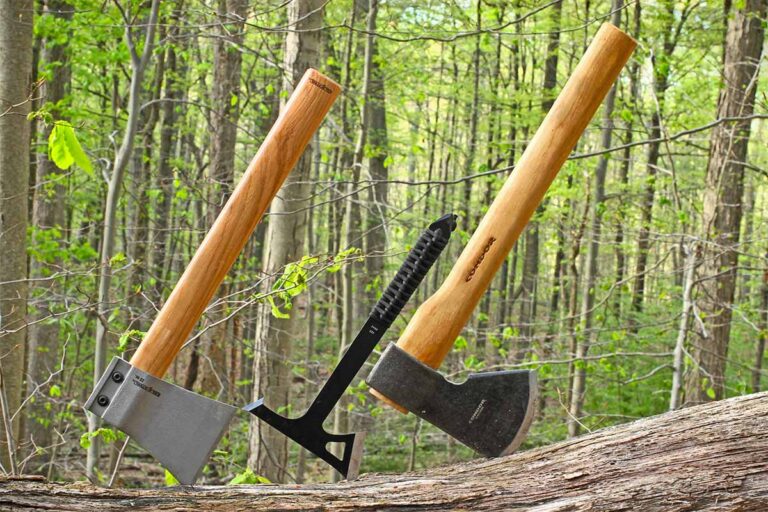
Once considered a lost pastime, axe throwing has grown in popularity worldwide. With the founding of such organizations as the International Axe Throwing Federation (IATF), the World Axe Throwing League (WATL) and others, and the pursuit’s establishment as a pub sport in the USA, Canada, Belgium, Poland and elsewhere, more people are interested in this thrilling activity. It’s no longer just a lumberjack’s hobby but an exciting sport most anyone can enjoy.

Condor Tool & Knife Cantina Axe

The Condor Tool & Knife Cantina penetrated deeply due to its edge geometry and head weight.
To get a perfect toe-first stick, adjust your distance by taking a step forward or back. The Condor Tool & Knife Cantina penetrated deeply due to its edge geometry and head weight.

Accompanying axe throwing’s growth in popularity is the demand for high-quality axes. The Cantina Axe from Condor Tool & Knife is an excellent all-purpose tool with features catering to professional axe throwers and seasoned axe users alike. The Cantina is versatile enough for both competition axe throwing and outdoor tasks, making it a valuable addition to any edged-tool array.

Crafted from 1060 high carbon steel, the axe head features a natural darkened finish that adds to its rugged appeal. The 18-inch burnt American hickory handle provides an excellent grip. The 4-inch blade bit weighs about 35 ounces, making it stout enough for outdoor splitting and chopping chores. The design promotes maximum performance, making it an excellent choice for anyone looking for a reliable multi-purpose axe.

Condor Tool & Knife Cantina Axe Specs
Blade Length: 4”
Blade Grind: Convex
Blade Material: 1060 carbon steel
Handle Material: Burnt American hickory
Weight: 35 ozs.
Overall Length: 18”
Sheath: Rubber blade cover
Country of Origin: El Salvador
MSRP: $87.34
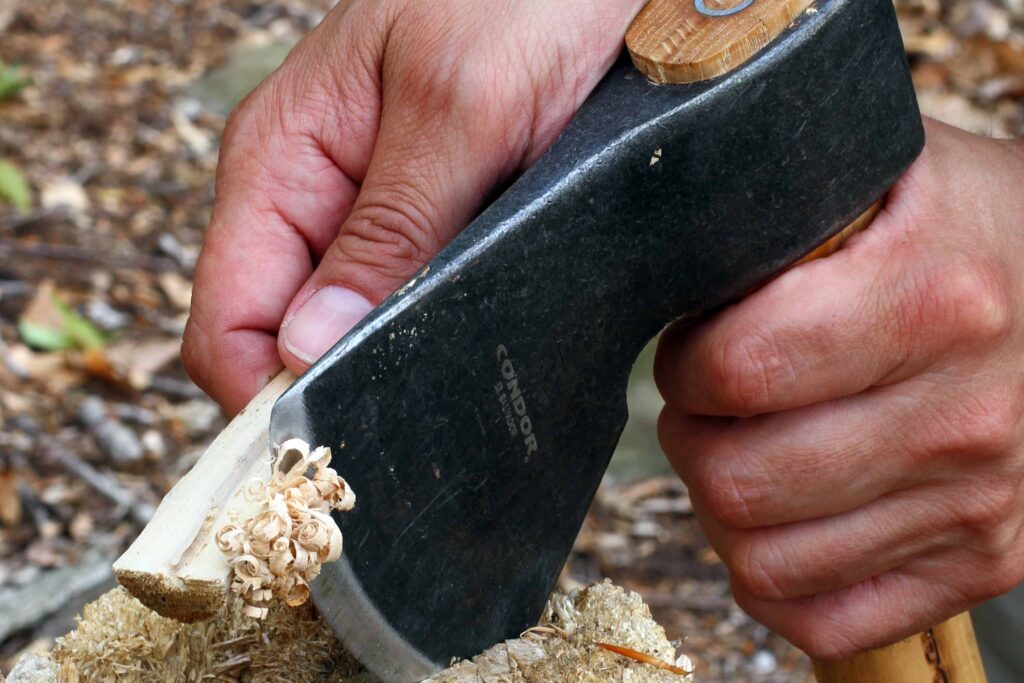
Cantina’s convex edge made thin curlicues with minimal effort
The Cantina’s convex edge made thin curlicues with minimal effort. The edge helps enable the axe to perform as both a throwing and camping tool.

FIELD TEST: The Cantina looks and feels like a small camp axe. The test model came with a good convex edge that stuck in a dead tree target and was camp-use capable out of the box. The head geometry is between a conventional and throwing axe profile. Despite the Cantina being the heaviest of the test bunch, it wasn’t a chore to throw. In fact, the weight helped it stick since the bit isn’t flat like many throwing axes with a pronounced heel and toe.

The handle is straight and burly, with a little more meat at the throat of the axe. It came well-seated and solid. However, after several throws it had a bit of play, though it never came visibly loose. I’m sure a boiled linseed oil bath would remedy this. The straight handle helped propel the axe and elegantly send it into flight.

The Cantina’s distinctive feature is its head shape combined with the convex edge. This makes it a jack of many tasks, easily doubling its duty as a camp axe. I like this aspect the most. The edge shaved fine feathers and chopped and split like a regular axe, with more head weight for its size. If you want to grab one axe and head out covering camp and leisurely axe throwing, the Cantina’s it.

Boker Plus Mohican Throwing Axe
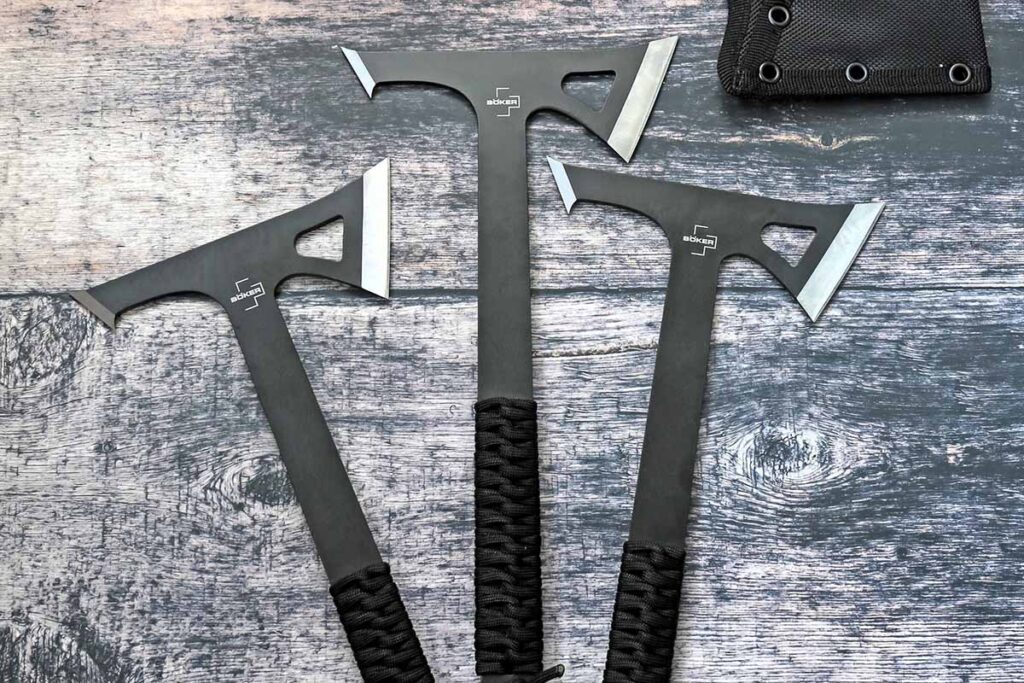
Mohican set features all-3Cr13-stainless-steel construction
The Mohican set features all-3Cr13-stainless-steel construction and a black coating. Each piece is 10.94 inches overall.

If you’re looking for a reliable and stylish throwing axe outfit, the Boker Plus Mohican Throwing Axe 3-Piece set is worth considering. It is designed for both novice and experienced throwers, offering precision and comfort. Each axe features a 10.94-inch overall length and all-3Cr13-stainless-steel construction, with a black coating that makes it durable and visually appealing.

The design is based on the silhouette of traditional tomahawks of North American indigenous people, with an additional, shorter 2.36-inch cutting-edge blade on the axe head. The paracord-wrapped handle ensures a secure and comfortable grip and precision throwing. A blade recess ensures balance with even rotation for better accuracy. The set has a matching black nylon sheath and printed target overlay, making it perfect for home use. Each axe weighs approximately 8 ounces, making it easy to handle.

Boker Plus Mohican Throwing Axe 3-Piece Specs
Blade Length: 2.36”
Blade Grind: Hollow
Blade Steel: 3Cr13 stainless
Handle Material: Black cord
Weight: 8.18 ozs. (each)
Overall Length: 10.94”
Sheath: Nylon
Origin of Make: Asia
MSRP: $84.95
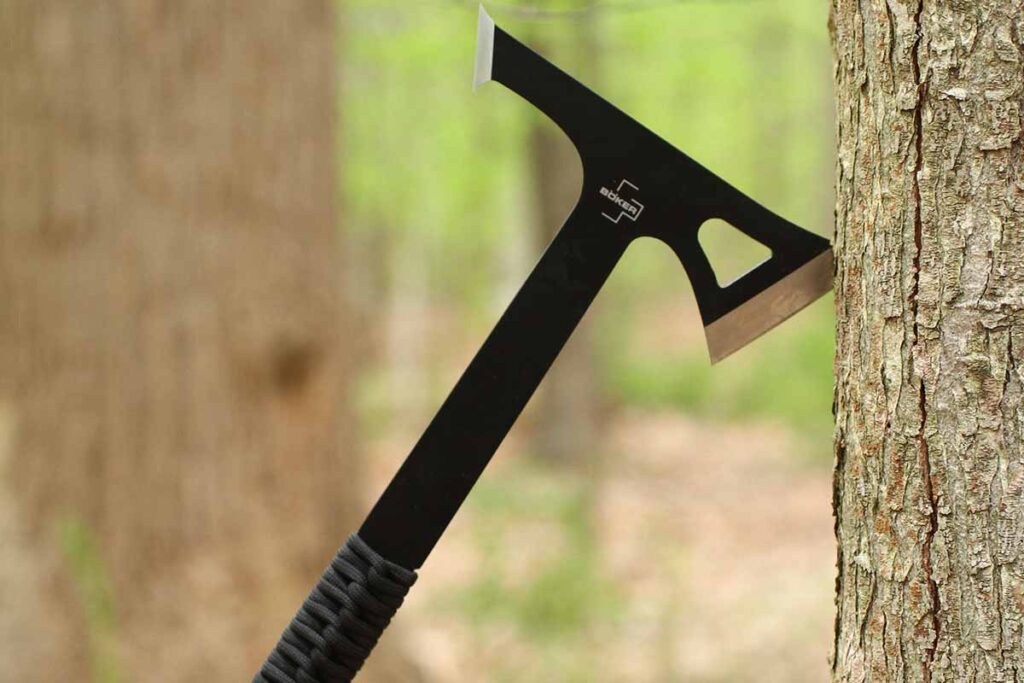
Boker Mohican perfectly perforating the target
This is a perfect stick, with the top of the toe of the Boker Mohican perfectly perforating the target.

FIELD TEST: The Boker Mohican axes look and handle more like tomahawks than axes. The set is designed for fun rather than competition, so you will get more sticks with these bad boys. The feel of throwing a Mohican is not unlike flinging a knife.

There are two places the hawk can stick—the main bit and the spike, the latter which seems to stick during an overthrow. To fix overthrowing, take a step forward or enjoy making it stick regardless. The edges are sharp and flared to enhance sticking ability.

The Mohicans are lightweight, so they require some getting used to if you’re accustomed to larger throwing axes. The handle is straight with cord wrapping, making the hand adhere to it too well for optimum throwing. However, an easy fix is to remove the wrap or open the hand drastically when throwing the hawk.

The Mohican’s notable features are the double options for sticking the target and the forward-protruding sharp toe. The edge looks cool and improves target penetration. Another outstanding feature is the nylon sheath, which adds safety and value to the overall package. It has fabric fasteners, keeping each hawk individually secure.

The three Bokers get my vote for the most fun of the axes/hawks. They combine the feel of tomahawk and knife throwing. The little gems can also handle light utility work for a day camp or cooking near a small wood stove, as they can shave wood and split light kindling.

Cold Steel Professional Throwing Axe
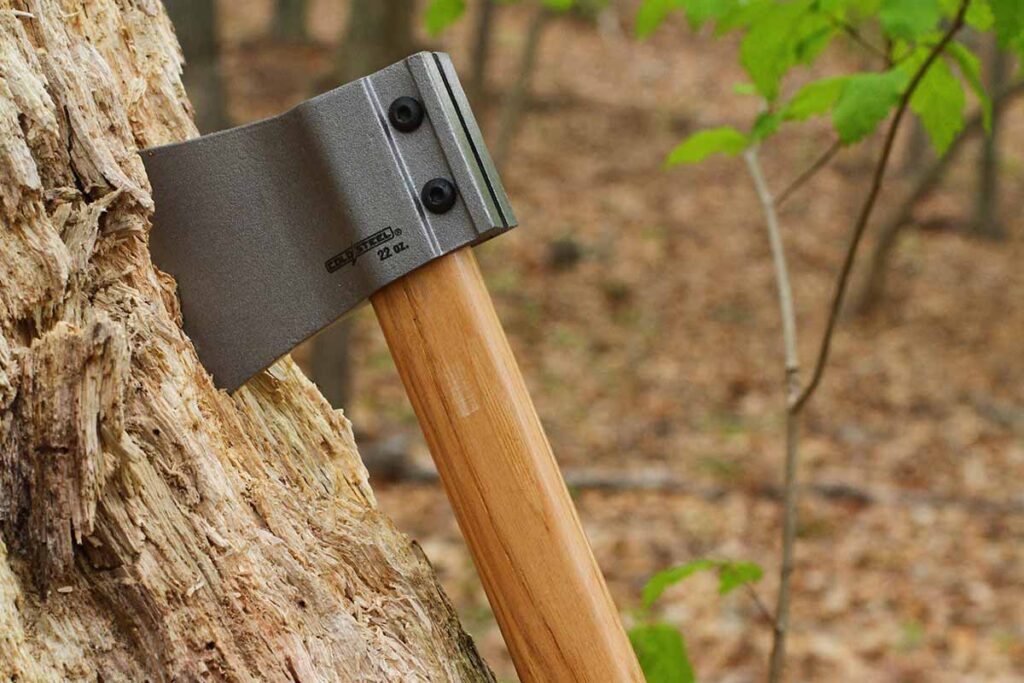
Cold Steel performed flawlessly
The Cold Steel performed flawlessly. It was light and flew like a hawk, eagerly seeking its target.

Experienced axe throwers will appreciate the Cold Steel Professional Throwing Axe, an upgraded version of the company’s Competition Throwing Hatchet. It boasts a 4-inch blade of 1055 carbon steel and meets official axe-throwing tournament requirements. The 16-inch American hickory handle provides excellent balance during target practice or competition, while the axe head weight of 22 ounces and overall axe weight of 31 ounces makes it easy to handle.

What sets this axe apart is its patent-pending locking mechanism that enables you to change a worn or damaged handle in under two minutes. Simply loosen two bolts, remove the handle and replace it with a new one. With this axe you can focus on your aim and technique without worrying about lengthy handle replacements.

Cold Steel Professional Throwing Axe Specs
Blade Length: 4”
Blade Material: 1055 carbon steel
Blade Grind: Chisel
Handle Material: American hickory
Weight: 31 ozs.
Overall Length: 16”
Sheath: Rubber blade cover
Country of Origin: Taiwan
MSRP: $59.99
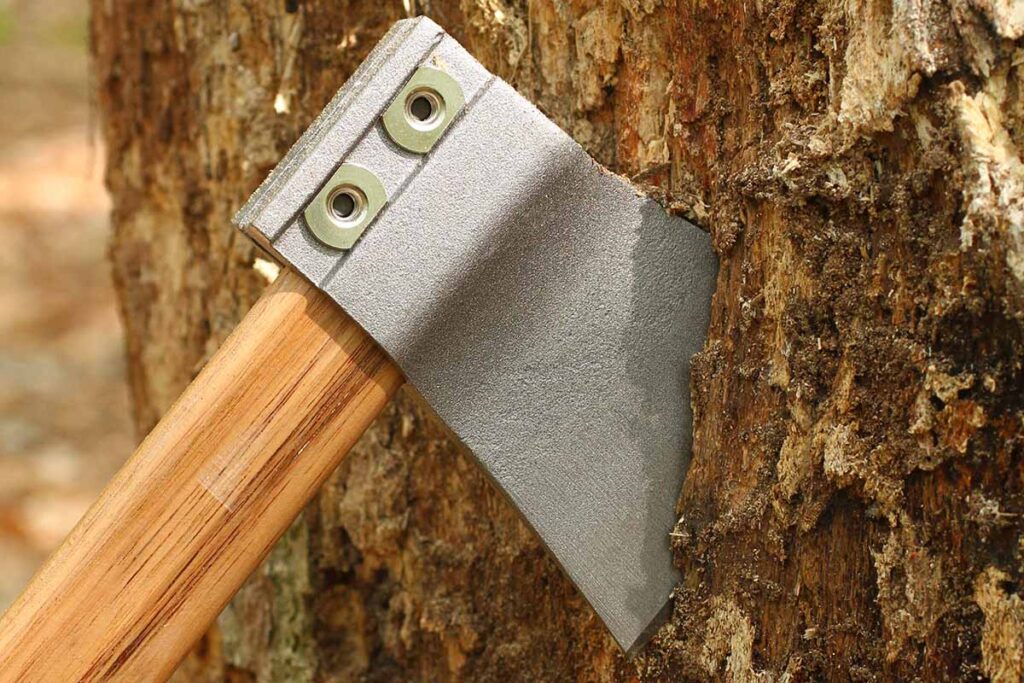
Cold Steel Professional Throwing Axe has a patent-pending locking mechanism
The Cold Steel Professional Throwing Axe has a patent-pending locking mechanism that lets you change a worn handle in under two minutes.

FIELD TEST: The Cold Steel had the best bit of the test bunch for sticking in the target, with a straight edge and slightly flared heel and toe. The blade geometry is thin and narrow as a throwing axe should be. The edge isn’t super sharp for an axe standard but it did well on my target, an old, rotting tree. The overall design definitely presents as a pro thrower.

Weight is a happy medium between a light throwing axe and a heavier one. Unlike conventional axes/hatchets of similar size, the weight is nestled solely in the head, which helps in propulsion.

The hickory handle has a nice grain and stayed robust despite a few blundering throws on my part. The classic straight handle helps the axe release without getting hung up on any design flare in the butt, etc. Besides, it’s not a chopping axe. The ingenious design allows for easy replacement of handles without loosening during testing. In my opinion, this axe is the most unusual of the three.

Instead of a sheath, the axe has a rubber blade guard that feels secure for transport and stays in the included pack while hiking. I like the compact, lightweight Cold Steel, and the MSRP, at $59.99, makes it the best buy of the test group.

More Axes, Hatchets And Tomahawks:

  • Bearded Axe: Best Bashers From Here To Valhalla
  • Best Tomahawks: Our Top Hawks For Backwoods To Battlefields
  • Wicked Breacher: Ben Seward’s SWAT Axe
  • Awesome Axes for Chopping Wood Like a True Lumberjack
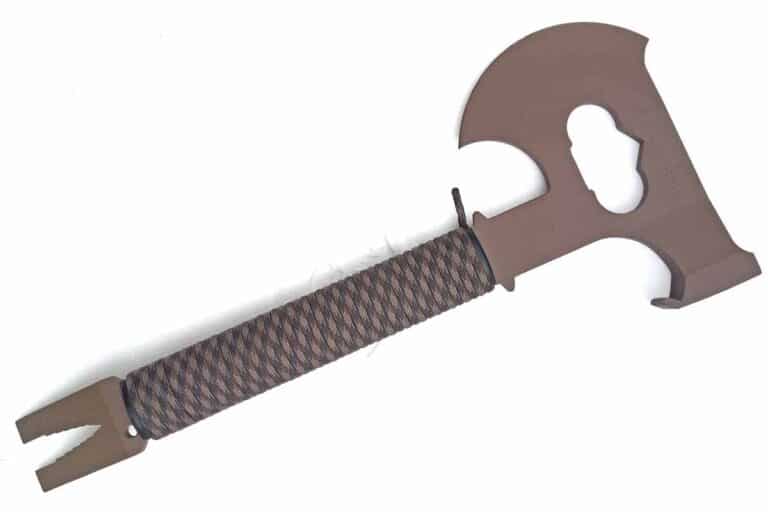
Bear Valley BV-Tac 8 Multitool: Multi-Purpose Whacker

The BV-Tac 8 is a versatile performer and does so comfortably.

The BV-Tac 8 “multitool” from Bear Valley Tactical is designed for firefighters, first responders, hunters, campers and other action seekers. It features plenty of uses for the average person that makes it a handy tool to have.

It features hydrant and spanner wrenches, hammer, axe blade, pry bar, 7/16- and 5/16-inch wrenches, gas turnoff, and 15 feet of paracord in the handle. The axe blade and hammer are very useful.

Bear Valley also offers attachments such as a shovel, pick with a hoe, bow saw and sand anchor (coming soon). The BV-Tac 8 is made in the USA.

Axe Test

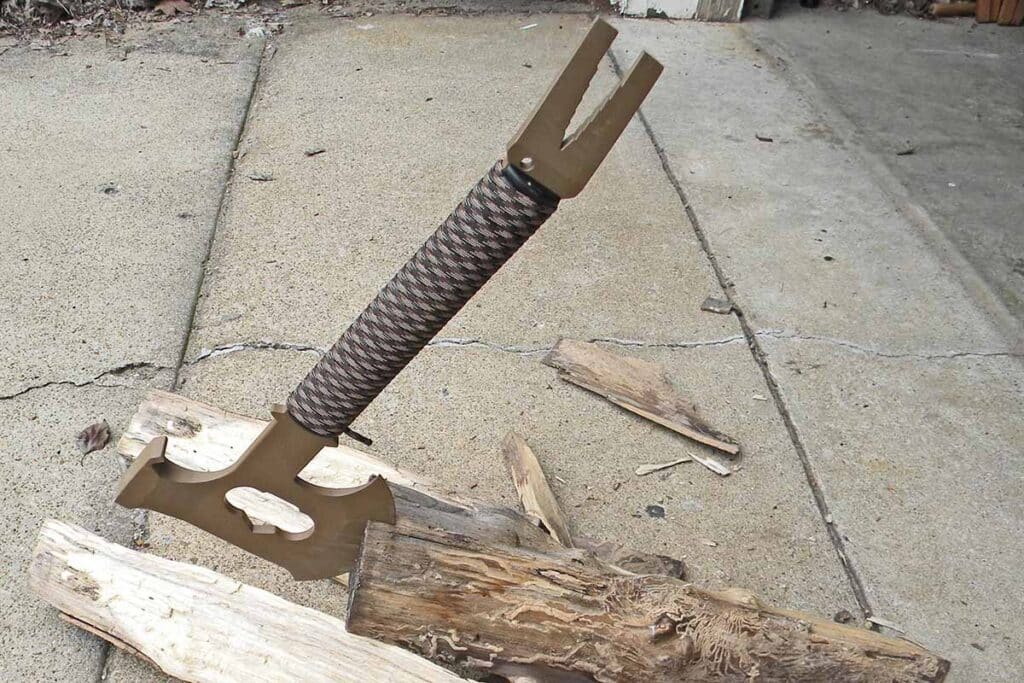
The weight was perfect to split the wood for kindling.
The weight was perfect to split the wood for kindling. The only thing the author worried about was the prybar. As a right-hander and with the prybar angled toward the right, he had to be sure it did not hit his forearm.

To test the axe head, I split some pine. The multitool was very controllable. The weight was perfect to split the wood for kindling. The paracord handle prevented any shock to my hand. The only thing I worried about was the prybar when using the axe. I’m a right-hander and with the prybar angled toward the right, I had to be sure it did not hit my forearm.

I had a seasoned hackberry chunk I needed to split. The BV-Tac 8 was up to the task. It bit deep and within a few whacks the log was quartered. You can really get some power behind your chops with this puppy. Again, the paracord handle absorbed any shock to my arm.

Tool Test

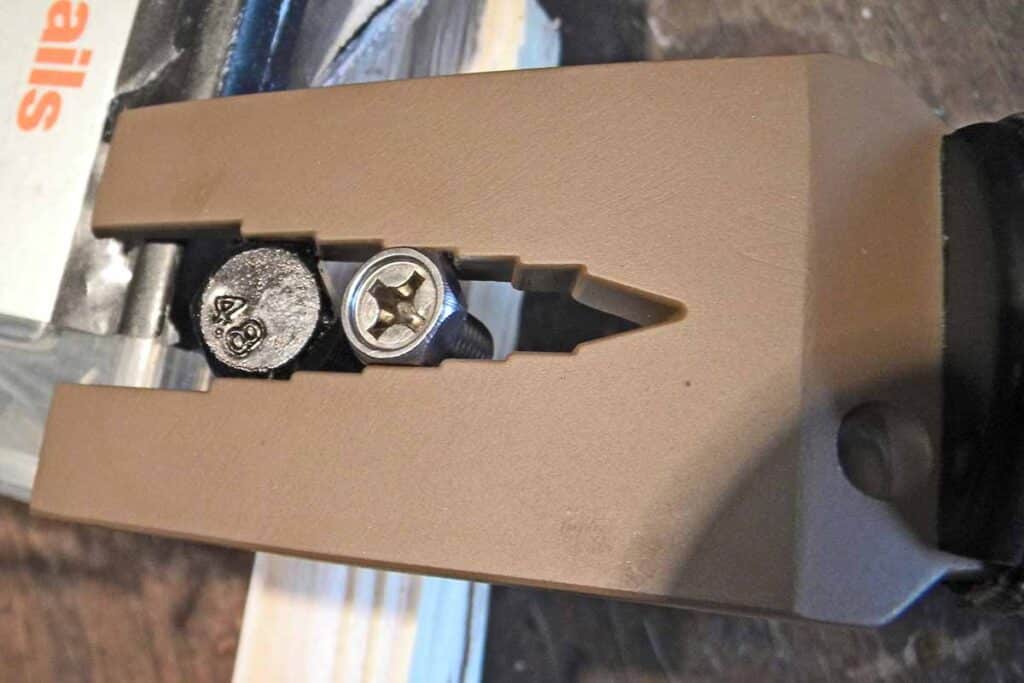
The bolts fit tight into the prybar slots
The bolts fit tight into the prybar slots but you are limited by space around a bolt for use. There’s plenty of leverage if you can get to the bolt.

I found a few bolts that fit into the slot of the pry bar. They fit tight into the respective slots but you are limited by space around a bolt for use. The BV-Tac 8 has plenty of leverage if you can get to the bolt.

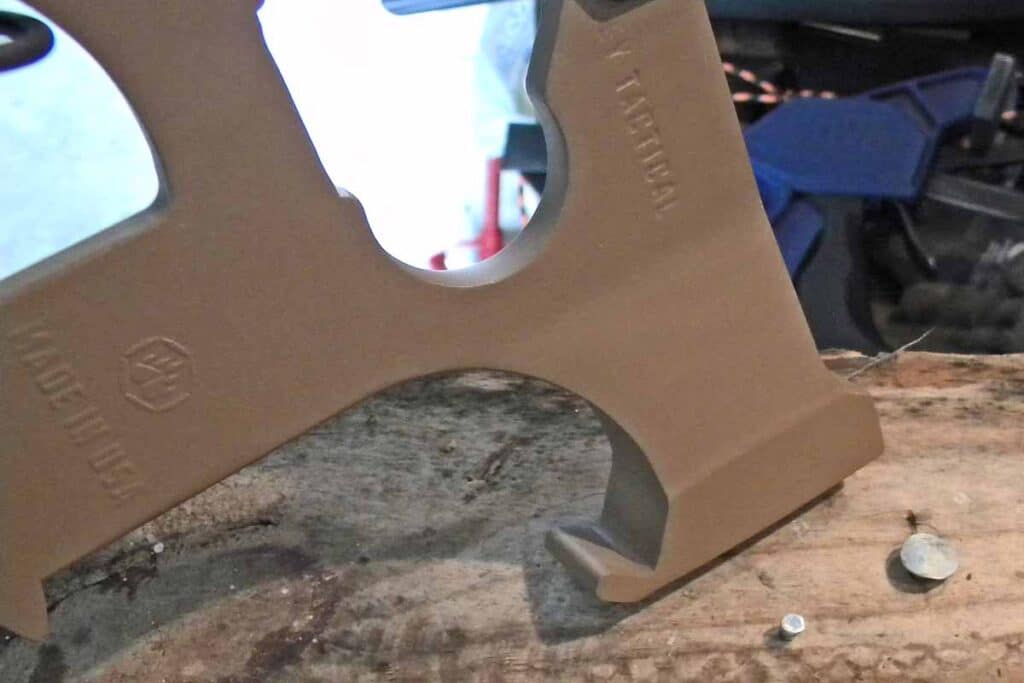
Grasping the hammer, I drove finishing and roofing nails into a 2×4. The hammer has great balance and hits where you aim. There is enough weight to drive the nails deeply on each blow. The handle is extremely comfortable and doesn’t roll during hammering. It is very well done.

I used the pry bar to pull the nails I had hammered into the 2×4. After prying them up about a quarter inch, I was able to slide the nail head into the prybar’s “V.” I lifted the nails out easily. This thing is—you guessed it—handy.

Hard-Use Test

used the hammer to drive finishing and roofing nails
The author used the hammer to drive finishing and roofing nails into a 2×4. There is enough weight to drive the nails deeply on each blow. The handle is extremely comfortable and doesn’t roll during hammering.

I had to push the limits of the hammer and axe. An old steel screen chair had one more use: whack attack! The hammer easily busted the screen out from the welded channel. Seven or eight hard blows and all I did was mark up the Cerakote® finish.

On to the axe head, same drill—seven or eight hard blows to the screen. Most of the blows penetrated around halfway through the screen. The edge maintained its sharpness but I sure can mess up a great Cerakote finish. It’s “seasoned” now.

Final Cut

I might add a tip guard for the prybar. The BV-Tac 8 is an extremely versatile tool to have in your vehicle or strapped to your rucksack.

BV-Tac 8 Specs
Edge Length: 4.75”
Head/Edge Material: S7 tool steel
Head Finish: Coyote brown Cerakote®
Handle: Paracord wrapped
Special Features: Several built-in tools (see copy)
Weight: 3 lbs.
Overall Length: 17”
Blade Cover: Synthetic
Country of Origin: USA
MSRP: $199.99

More Axes, Hatchets And Tomahawks:

  • Bearded Axe: Best Bashers From Here To Valhalla
  • Best Tomahawks: Our Top Hawks For Backwoods To Battlefields
  • Wicked Breacher: Ben Seward’s SWAT Axe
  • Awesome Axes for Chopping Wood Like a True Lumberjack
Cool Customs: Kevin Casey’s Little Feather Knives

Kevin Casey feathers his cap with an outstanding array of custom throwback blades.
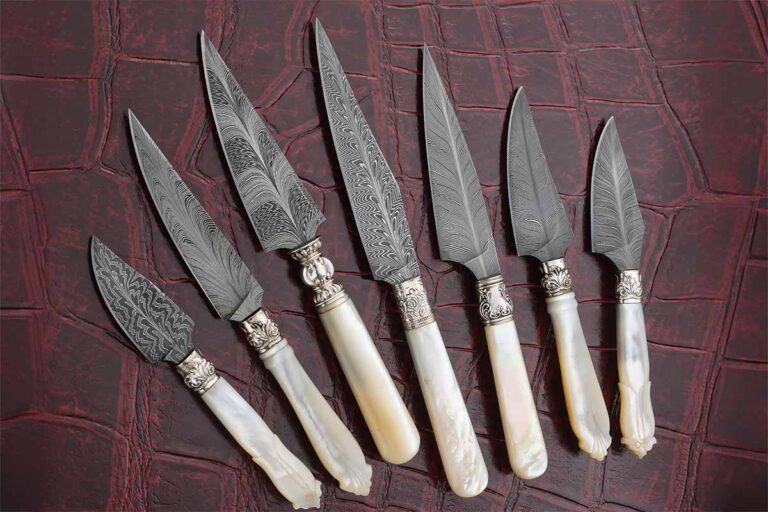
Kevin Casey may have hit on a great idea for knives with both a custom touch and an antique look and feel.

Taking some old yet inexpensive late 19th/early 20th-century dinner knives with mother-of-pearl handles and silver ferrules, he replaced the original blades with those forged of assorted patterns of his feather damascus. The result, the Little Feathers, went fast at the Solvang Show, with two selling individually and five going to one shrewd buyer.

Kevin Casey
Kevin Casey

Kevin said similar versions of the original antique knives are available on eBay, Etsy, at jewelry stores, flea markets and the like. He cleaned the insides of the ferrules with acetone before epoxying his damascus blades into them. He cleaned the ferrules with Flitz and a toothbrush, polished the handles and the knives basically were ready to go. He plans to do more like them in the future.

Little Feathers Specs
Maker: Kevin Casey
Model type: Dinner knives
Blade lengths: 2.5 to 4.25”
Blade material: Assorted patterns of feather damascus in 1080 carbon and 15N20 nickel-alloy steels w/a thin layer of pure nickel; depending on the pattern, the layer count ranges anywhere from 50 to 500
Handle material: Mother-of-pearl
Ferrules: Silver
Overall lengths: 6.5 to 8”
Maker’s list price range for similar knives: $600 to $900 each

Check Out More Cool Custom Knives:

New Knives: Host Of Current Factory And Custom Blades

Folder or fixed blade, EDC or kitchen and more, one of these will fill the bill.

In the wake of BLADE Show 2024 there is a slew of new knives hitting the custom and factory markets. We scoured both to bring you some of the latest and greatest handmade and production gems. Keep your eyes peeled for these fantastic options hitting dealers’ shelves soon.


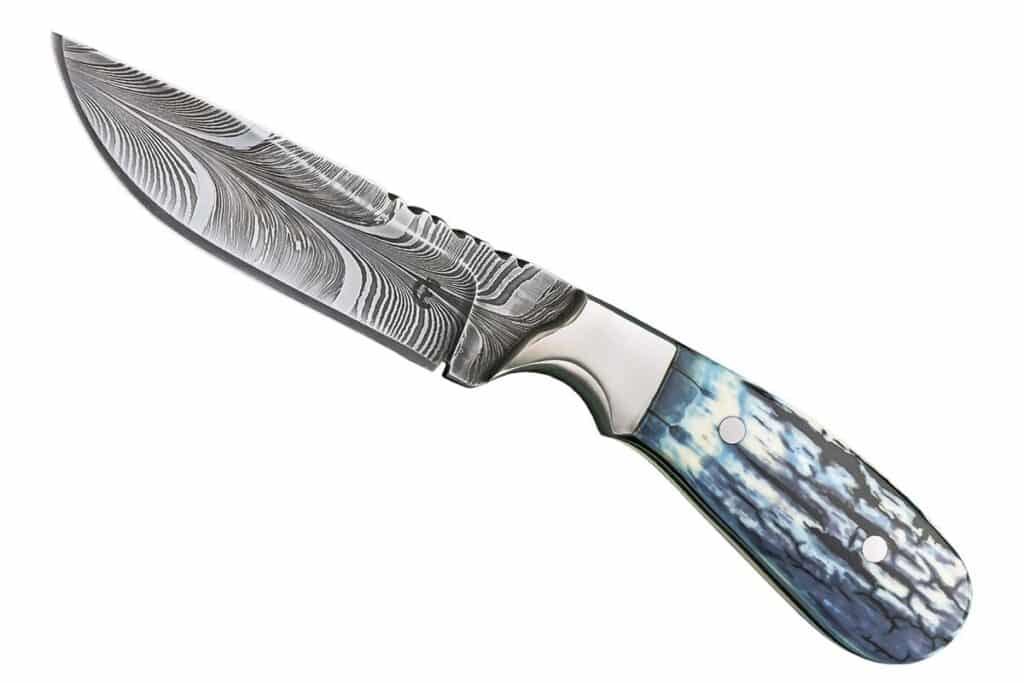
Triple C Knives Model #3

Triple C Knives Model #3

Knife pattern: Fixed-blade hunter
Blade length: 4”
Blade material: Damascus of 5160 carbon and 15N20 nickel-alloy steels
Blade grind: Hollow
Handle: Mammoth ivory
Bolster: Stainless steel
Overall length: 7.75”
Maker’s price for a similar knife: $1,000
Maker: Triple C Knives (SharpByCoop image)


Bubba Crouch Trapper

Bubba Crouch Trapper

Knife type: Slipjoint
Blade length: 3 7/8”
Blade steel: Damascus forged by ABS master smith Rick Dunkerley
Blade grind: Hollow
Handle material: African goat horn
Handle frame: 416 stainless steel in an integral construction
Bolster: 416 stainless
Knife to know: The CPM 154 stainless backspring features filework; the arrowhead shield is damascus
Closed length: 4”
Maker’s price for a similar knife: $2,500
Maker: Bubba Crouch (SharpByCoop image)


Erik Fritz Petty Chef’s Knife

Erik Fritz Petty Chef’s Knife

Blade length: 6.5”
Blade material: Triple-quenched 52100 carbon steel
Blade grind: Flat w/convex edge
Handle: Buckeye burl
Bolster: 416 stainless steel
Overall length: 11”
Maker’s price for a similar knife: $400
Knife to know: Erik Fritz is an ABS journeyman smith
Maker: Erik Fritz (Jocelyn Frasier image edit)


Ben Akin Bowie

Ben Akin Bowie

Blade length: 83/8”
Blade material: W2 tool steel w/hamon
Blade grind: Flat
Handle: Box elder burl w/carbon fiber and red G-10 spacers and a mosaic pin
Guard: Wrought iron
Overall length: 135/8”
Knife to know: Ben Akin is an ABS apprentice smith
Maker’s price for a similar knife: $800
Maker: Ben Akin (Jocelyn Frasier image edit)


Egginton Presentation George Wostenholm I*XL barlow

Egginton Presentation George Wostenholm I*XL barlow

Knife type: Slipjoint
Blade length: 2.16”
Blade steel: 420S45 stainless
Blade pattern: Clip point
Blade finish: Crocus polished
Scales: Stabilized birch burl in Cutlers Company green
Bolster: Nickel silver marked w/400-year anniversary emblem
Knife to know: Commemorates the 400th year of The Company of Cutlers in Hallamshire, UK; The Company of Cutlers was formed by an act of Parliament in 1624 to “protect and promote the cutler and steel products made” in Sheffield, England; made in a limited edition of 2024 in recognition of the company’s 400th anniversary year; each knife is serial numbered
Weight: 2.18 ozs.
Closed length: 3.16”
Country of origin: United Kingdom
MSRP: $185 at press-time exchange rate
Company: Egginton


Boker Plus Gust Copper

Boker Plus Gust Copper

Knife type: Manual one-hand folder
Designer: Serge Panchenko
Blade length: 2.87”
Blade material: D2 tool steel
Blade @ thickest: .14”
Blade pattern: Drop point
Blade finish: Stonewashed
Blade opener: Thumb hole
Handle material: Copper w/hole for a lanyard
Lock: Framelock
Pocket clip: Tip up, right-handed
Weight: 4.44 ozs.
Closed length: 3.7”
Carry: Nylon pouch
Country of origin: China
MSRP: $119.95
Company: Boker Plus


Valhalla Blades Surtr

Valhalla Blades Surtr

Pattern: Bowie
Blade length: 11”
Blade material: 1084 carbon steel
Blade grind: Flat
Handle material: Dyed, stabilized maple burl
Guard: Brass
Overall length: 16”
Maker’s price for a similar knife: $250 at press-time exchange rate
Maker: Valhalla Blades (Rod Hoare image)


TOPS Knives Shadow Hunter

TOPS Knives Shadow Hunter

Knife type: Fixed blade
Blade length: 4.5”
Blade material: 1095 carbon steel
Rockwell hardness: 56-58 HRC
Blade @ thickest: .19”
Blade finish: Tungsten Cerakote®
Handle material: Black canvas and tan canvas Micarta®
Weight: 10.1 ozs.
Overall length: 9.25”
Sheath: Tan Kydex
Weight w/sheath: 12.8 ozs.
Knife to know: While the original was a favorite of company founder Mike Fuller, the new iteration is fine-tuned for enhanced performance, including a more ergonomic handle, slightly extended blade and modernized finishes
Country of origin: USA
MSRP: $250
Company: TOPS Knives


Montana Knife Co. MKC Whitetail

Montana Knife Co. MKC Whitetail

Pattern: Hunting knife
Blade length: 4”
Blade @ thickest: .135”
Blade steel: MagnaCut stainless
Blade pattern: Drop point
Handle material: G-10
Construction: Full tang
Overall weight: 4.3 ozs.
Overall length: 8 5/8”
Sheath: Kydex, open carry, reversible quick-attachment belt clip, vertical handle down or horizontal carry, built-in retention screw to customize blade tension
Knife to know: Also available in buck skin, black, green and black, tan and black, and grey handle colors; integral guard; gimping on blade spine
Country of origin: USA
MSRP: $315
Company: Montana Knife Co.


The Australian Cutlery Fixed-Blade Hunter

The Australian Cutlery Fixed-Blade Hunter

Blade length: 4”
Blade steel: CPM S35VN stainless
Blade grind: Hollow sabre
Blade thickness @ ricasso: 1/8”
Blade @ widest: 1”
Blade finish: Bead blast
Handle material: Hunter orange G-10 w/bead blast finish and custom Australian cutler mosaic pin
Overall length: 8.5”
Sheath: Matching hunter orange Kydex model made by Adam Grosskopf
Maker’s price for a similar knife and sheath: $230 at press-time exchange rate
Maker: The Australian Cutlery (Rod Hoare image)


Spyderco Manix 2 MagnaCut Lightweight Salt Knife Yellow Polymer

Spyderco Manix 2 MagnaCut Lightweight Salt Knife Yellow Polymer

Knife type: Manual one-hand folder
Blade length: 3.375”
Blade steel: MagnaCut stainless
Blade grind: Flat
Blade @ thickest: .13”
Blade pattern: Drop point
Blade finish: Satin
Blade opener: Thumb hole
Handle material: Yellow polymer over stainless steel liners
Lock: Ball-bearing lock
Pocket clip: Reversible, tip up
Weight: 3 ozs.
Closed length: 4.625”
Country of origin: USA
MSRP: $232.99
Company: Spyderco


Cold Steel Espada XL

Cold Steel Espada XL

Knife type: Folder
Blade length: 7.5”
Blade steel: AUS-10A stainless
Blade @ thickest: .137”
Blade grind: Hollow
Blade pattern: Clip point
Blade finish: Black PVD
Handle material: Ruby red G-10
Lock: Tri-Ad Lock
Pocket clip: Blade tip up
Weight: 14.8 ozs.
Closed length: 9.25”
Knife to know: The knife is inspired by the classic Spanish navaja folder and is a collaboration between Lynn Thompson and custom knifemaker Andrew Demko
Country of origin: Taiwan
MSRP: $299.99
Company: Cold Steel


Check Out More Knife Drops:

How To: Dellana Dots Opening System

0

Dellana tells how she created and makes the Dellana Dots opening assist system—without a lathe.

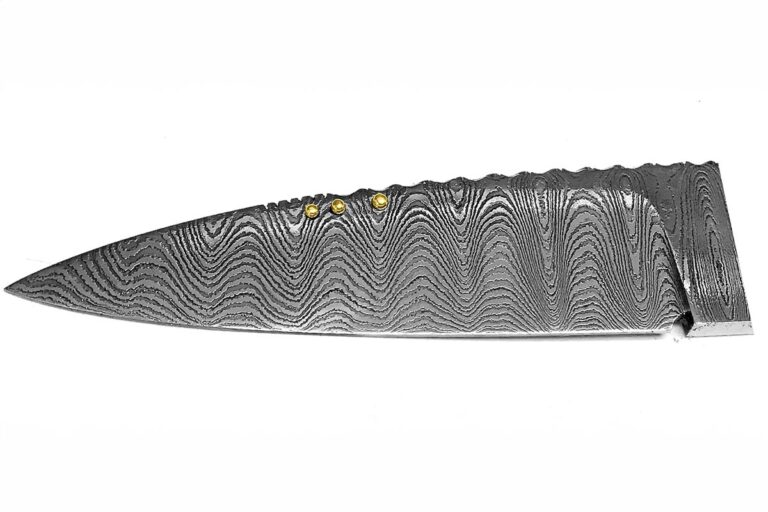
Editor’s note: Full-time knifemaker Dellana created her Dellana Dots blade-opening assist system in 1994. The system consists of one or more elements raised above the surface of the blade to provide a gripping surface when opening a folding knife. Dellana Dots can be made using different techniques depending on your skill set. They can be any shape, from round to geometric to even gem set. There can be any number or shape of the Dots. Dellana most frequently makes them as round beads. In this tutorial, she shows how she does it.

Dellana Dots were invented for the same reason many things have been invented—a desperate need to solve a problem!

In 1994 I was a very new knifemaker studying under the mentorship of the great ABS master smith, Jim Schmidt. I was working on my second lockback folding knife, one of my own design. All was going well until I realized that the blade sat too far into the knife when closed because of the thickness of the handle scales. Due to my inexperience, I had not considered the scales’ thickness. It was evident that it would be very difficult for the knife to be opened without effort and annoyance.

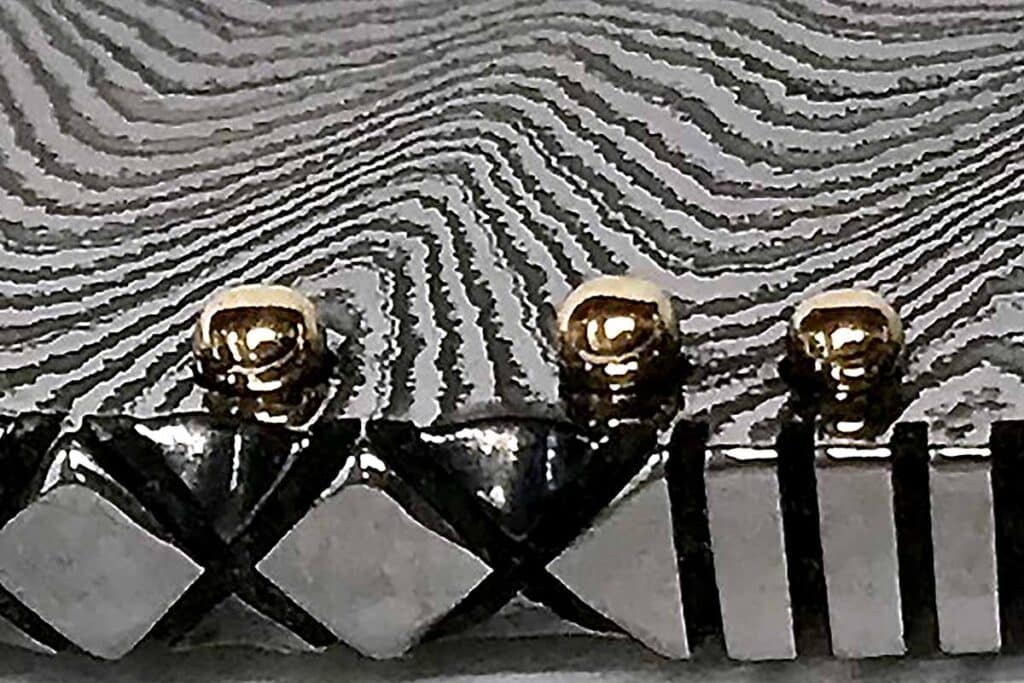
Three Dellana Dots
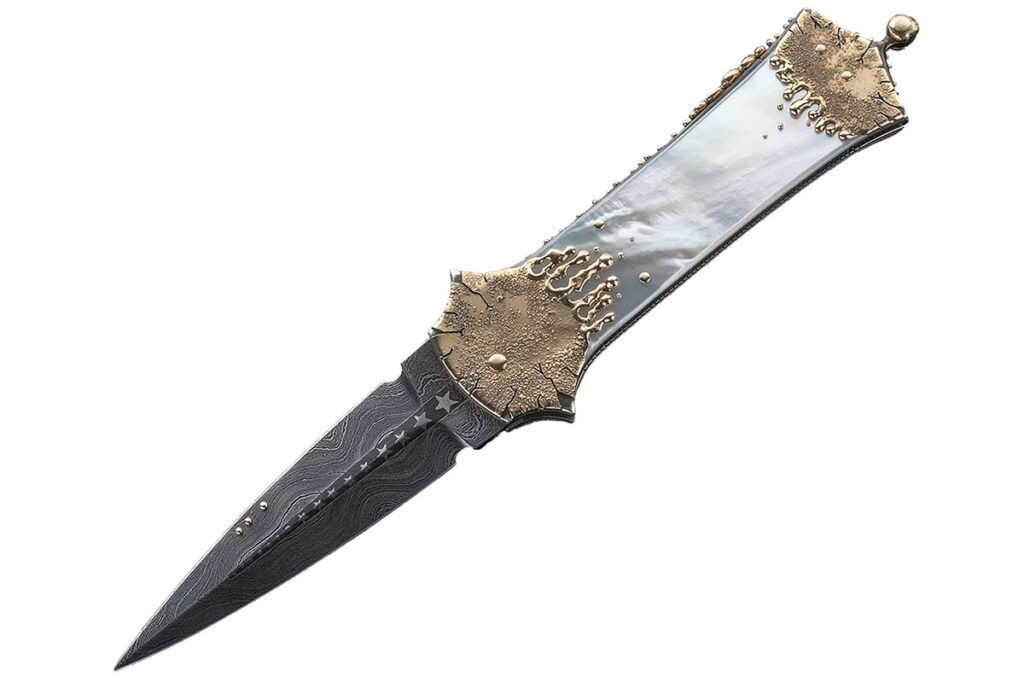
Three Dellana Dots blend in perfectly on the blade of Dellana’s Magick lockback folding dagger in her Meltdown knife series.

What to do?

The obvious solution was the commonly used nail nick, the ditch grooved into the blade for a thumbnail to try to grab ahold of. I have always disliked the functionality—who else has broken or bent back a fingernail when trying to use one?—or the look of nail nicks. One of them would definitely not be visually appealing with the rest of the design of my knife, and that was unacceptable to me. So, I used my 17 years of experience as a goldsmith to figure out an acceptable solution.

I had used raised beads on many of my jewelry designs as decorative elements and thought that a raised bead might give enough surface area for a fingernail to grip—but how was I to attach the bead to the blade’s surface? The soldering that I would normally do would not work in this situation due to the blade needing to be heat treated. I thought that drilling through the blade and riveting might work if I could leave enough of one side of the rivet high enough above the blade surface to get a good grip.

I had never seen anything like it done on a blade before and wondered if there was some unwritten rule against that sort of thing. I decided to take the knife to Jim, explain the problem and my solution, and see what he thought.

Dellana and Jim Schmidt
The author with her mentor, the late, great ABS master smith Jim Schmidt.

Jim was a man of few words and his silence after I explained the issue was a bit nerve wracking for me. After what seemed an interminable amount of time he said, “That’s a great idea and I’m going to steal it. But I’ll call them ‘Dellana Dots.’” And that’s exactly what he did.

And there you have the story of how the Dellana Dots came to be. They have proven to be a popular solution for many makers of folding knives ever since.

Materials & Tools

I most often use an asymmetrical three Dellana Dot system because I find that configuration visually appealing with most of my designs. Here’s how I do it.

First are the materials and tools. You’ll need:

Materials to make the dots
The materials and tools you’ll need.
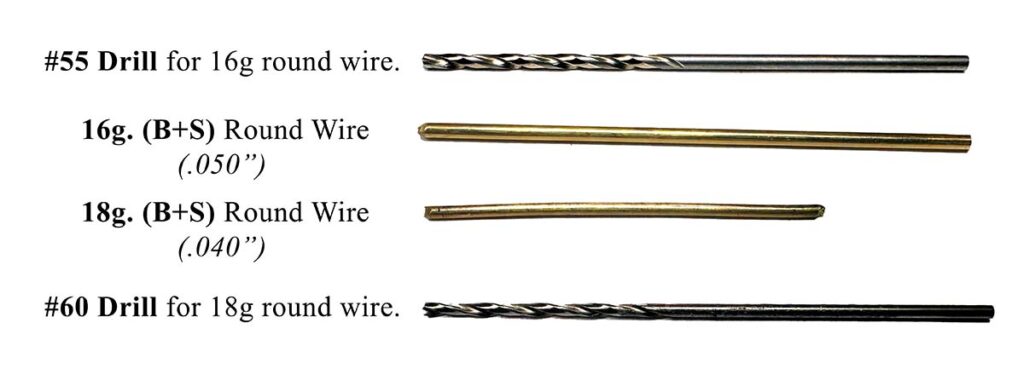
  • Pin stock (B&S Gauge): 16g. (.050”) 14k yellow gold round wire and 18g. (.040”) 14k yellow gold round wire.
  • Drills: #55 (16 gauge) and #60 (18 gauge).

Getting Started

Pro tip: Preparation is the key to creating anything efficiently and well. The more thorough the prep, the easier, faster and better the final process and end result will be.

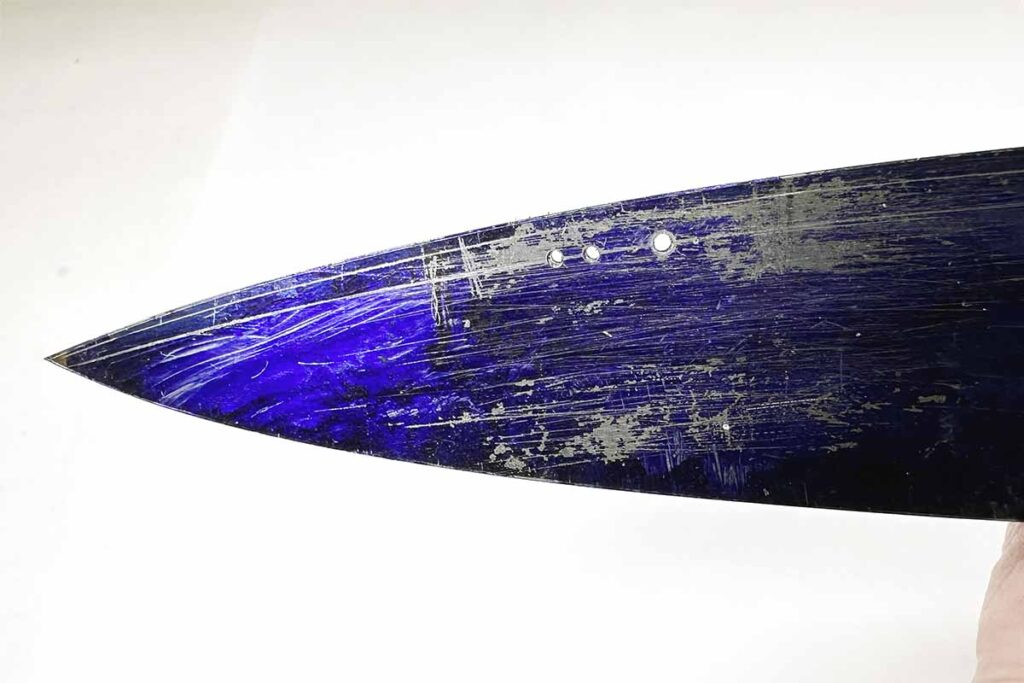
Step 1: Mark and drill the holes for the Dellana Dots’ round wires before grinding the bevels (Images 2 and 3).

Holes drilled into the blade
The holes have been drilled in the blade.

Special Note A: If you grind the blade bevels before heat treatment, countersink the holes so the spheres sit down below the surface of the blade to avoid anything catching on them.

Special Note B: If you grind the blade bevels after heat treatment, drill the holes prior to heat treating and use diamond drills (dental burrs) to countersink the holes after grinding.

I countersink the holes on the front side (where the spheres will be) deeper than on the back (riveting) side. This allows the balled end of the wire to sit below the surface of the blade bevel to keep it from snagging on anything.

Step 2: Finish the blade. Make sure the blade is fileworked, etched (if damascus), blued and polished prior to riveting the Dellana Dots in place.

Step 3: Double check that the wire fits through the drilled holes.

Step 4: Melt the ends of the wires to form spheres. I use a Smith Little Torch with propane and oxygen. This takes a bit of practice to know the correct heat and timing needed to form a smooth, round, symmetrical ball. As always, practicing first can be very helpful.

Step 5: Check the size and fit of the balled ends in the countersunk holes. Make sure that the previously drilled and countersunk holes in the blade allow the balled ends of the wires to sit down into them. This will ensure that nothing can become snagged under the spheres.

Step 6: Polish the balled ends of the wires. Doing this now will result in a better final appearance as well as save time. If you wait until after the Dellana Dots are set, it is difficult to get the dark oxide created during the melting process polished off the balled ends without affecting the blade finish. (Don’t ask me how I know this.)

Prep Blade For Riveting

Cover the back side of the blade
Cover the back side of the blade with the tape locating the holes over the wires.
  • Insert the wires through the blade, ensuring the balled ends protrude on the blade’s front side.
  • Cut off the wires on the back side of the blade not flush with the blade. Leave a little excess to file to the appropriate height for riveting.
  • Make two sections of three layers of masking or painter’s tape big enough to cover the entire blade.
  • Put one section of the tape over the front side of the blade covering the balled ends of the Dellana Dots. This will protect them during riveting and reduce clean up time.
  • Mark the hole locations on the second section of tape (for the back side of the blade). Make holes through the tape with a hole punch for the wires to go through.
  • Cover the back side of the blade with the tape locating the holes over the wires. This will protect the blade when filing and sanding the wires to the correct height.

Prep Dots For Riveting

Peel off the third layer of tape, leaving two layers of tape on the blade.
Peel off the third layer of tape, leaving two layers of tape on the blade. This leaves the perfect height of wire to form the rivet head.

Pro Tip: To get the correct height of wire for a perfect rivet head every time:

  • File the wire down flush with the three layers of tape;
  • Sand to 800 grit;
  • Remove any burr, and;
  • Peel off the third layer of tape, leaving two layers of tape on the blade. This leaves the perfect height of wire to form the rivet head while still protecting the blade during hammering and clean-up.
  • Rivet The Dots

Rivet The Dots

Hammer around the edges of each filed, sanded wire on the back side of the blade to spread, dome and secure the head of the rivet.
  • I use the ball side of a chasing hammer to rivet the wires;
  • Place the balled heads of the tape-covered Dellana Dots (the front side of the blade) on a polished steel anvil. Hammer around the edges of each filed, sanded wire on the back side of the blade to spread, dome and secure the head of the rivet.

Polish The Rivets

Polish the hammered heads of the wires, removing any sharp edges as you do. The author uses a small wheel with White Diamond-type compound and her Foredom hand piece for the task.
  • Leave the tape on the blade to minimize the polishing compound mess and cleanup time and effort;
  • Polish the hammered heads of the wires, removing any sharp edges as you go. I use a small wheel with White Diamond-type compound and my Foredom hand piece to do this.

Polish The Dots

The finished rivet heads as they should appear on the back side of the blade  and a closeup of the finished Dellana Dots.
The finished rivet heads as they should appear on the back side of the blade and a closeup of the finished Dellana Dots.
  • Carefully remove the tape from both sides of the blade. Save the front-side tape until after you’ve ensured that the balled ends on the front haven’t been deformed and don’t need reshaping and re-polishing. If they do need reshaping and re-polishing, use a hole punch to cut away the tape around the balls and reapply the tape. This will minimize any polishing compound mess and save time in the long run.
    Clean the polishing compound from around the rivets and, if necessary, the Dellana Dots as well.Pro Tip: I cut down a welder’s acid brush so the bristles are really short and stiff. This works perfectly for cleaning the small, hard-to-reach areas. Then:
  • Clean the whole blade with lacquer thinner;
  • Wax the blade, and;
  • The riveted side of the Dellana Dots should be very smooth and only slightly domed above the surface, with no sharp edges.
  • And that’s how you make Dellana Dots without a lathe!

More On Knifemaking:

Latin America’s Elite Knife Crafters: Custom Blades and Their Makers

0

The knifemakers of Argentina and Brazil have revolutionized the world of cut.

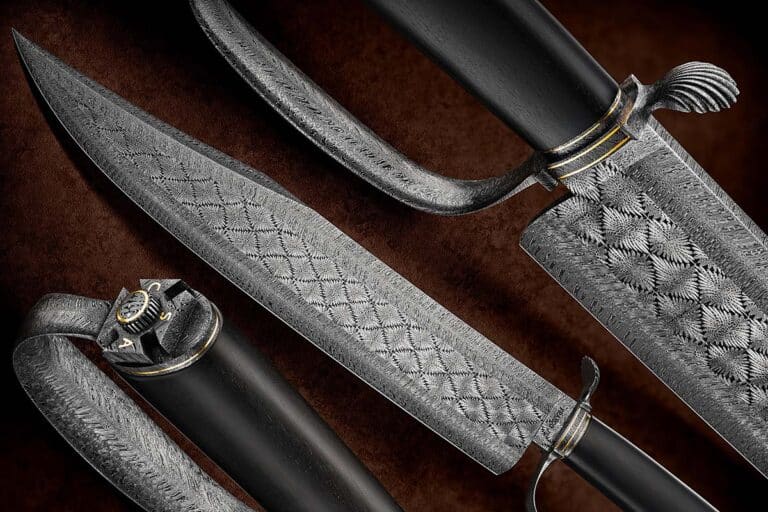
The language of custom knifemaking and bladesmithing is universal, so, logically, the appeal of the industry would have global reach. Through the years, such has been proven in the work of gifted artisans around the world, and those from Latin America have gained increasing attention. The quality of their forged steel, the fine lines of their folders and fixed blades, and the attention to detail in their finished work have created a buzz.

The impact of Brazil and Argentina especially has been noticeable at the BLADE Show and elsewhere in recent years. Argentine winners in the BLADE Show custom knife competition include Claudio, Ariel and Marcelo Sobral, Mauricio Daletzky and Javier Vogt, while Brazilian winners include Fabio Barros, Gustavo “Gus” Cecchini and Franco de Souza, the latter whom recently copped multiple knife judging awards at this year’s BLADE Show Texas. Cecchini, meanwhile, pulled a rare double at last year’s BLADE Show, winning for Most Innovative Design in the custom knife competition and the BLADE Magazine 2023 Knife Collaboration of the Year® with WE Knife for the Solid folder.

Like their European, Asian and North American counterparts, bladesmiths and knifemakers from Latin America are acknowledged by manufacturers, purveyors and the buying public as among the best in the world. Their stories validate their commitment and emerging success.

Ricardo Vilar

Ricardo Vilar hunter
Now living in Arkansas, ABS journeyman smith Ricardo Vilar of Brazil won Best Hunting Knife at this year’s Texas Select Custom Cutlery Event for his hunter in a damascus of 1084 carbon and 15N20 nickel-alloy steels and a stag handle. Overall length: 9.25 inches. His price for a similar knife: $2,500. (SharpByCoop knife image)

One catalyst for the growth and resulting excellence among Latin American artisans is ABS journeyman smith Ricardo Vilar, a native of Brazil who relocated with his family to Arkansas several years ago. Vilar wanted to be the best, and so he sought out the counsel and advice of the best. He was so thoroughly committed to bringing award-winning bladesmith Jerry Fisk to Brazil for some learning and instruction that he was willing to sell his car to make it happen.

“It was in 2000 that I started exchanging messages with Jerry because I had come to the BLADE Show with one of my friends and talked to him about doing a hammer-in in Brazil,” Ricardo remembered. “Jerry came to Brazil in 2001 and had a meeting with 14 knifemakers and bladesmiths at my shop. We had nine dates with Jerry at my shop, and then after that the knowledge began to spread.”

Vilar and Fisk developed a close friendship along the way, and Ricardo has made the most of his innate talent and the skills he has sharpened with help from Jerry. Living within an easy drive of one another, Ricardo and Jerry are regularly in touch. In 2020, Ricardo won first place on an episode of Forged in Fire as a television audience witnessed his prowess. He also became involved with a Latin American version of FIF titled A Challenge Under Fire. In 2021, the two also embarked on a joint venture called FAV (Fisk and Vilar) to produce a limited number of collaborative pieces, up to 25 annually, for the collector market.

“After Jerry came to Brazil, we started sharing information and that sharing is very important,” Ricardo added. “We have had guys from Argentina come to meetings as well, and we like to ‘walk together’ in getting better.”

When Fisk arrived in Brazil for the first time, he informed the gathering that they would be better served using a gas forge. When the attendees were skeptical, still using coal and charcoal, he told them to have open minds.

Fabio Barros of Brazil won Best New Maker at BLADE Show 2022
ABS journeyman smith Fabio Barros of Brazil won Best New Maker at BLADE Show 2022 for this beauty. He also won the show’s award for Best Handle with another knife, and Best Handle at BLADE Show ’23 for one of his integral fighters. (Andre Maino knife image)

“Ricardo and I went down to a junkyard and got what we needed,” Jerry recalled. “We set up the forge and made damascus and opened up everybody’s eyes. I also found out that bladesmiths from the different states in Brazil did not really share information with one another. When they told me that, I started to pack my bag. When they asked what I was doing, I told them that if they didn’t share information I was going home. ‘If you won’t share with each other, then why should I share with you?’”

The message was heard loud and clear. From there, the Brazilian bladesmiths and knifemakers made steady, significant progress, right along with others from neighboring countries in Latin America. “The intent was to show the rest of the world what they were capable of doing,” Jerry said. “I went there for a few years to teach them and show them a few things, but then there has to be a line where you are no longer teaching but cheerleading. I would cheerlead with them when they asked a question and say, ‘Yes! Yes! You’re doing it the right way!’”

Ricardo looks back at the investment of time and money that really helped bladesmithing and custom knifemaking to take off in Latin America. “I was willing to sell my car to buy Jerry’s plane ticket,” he laughed, “and I started telling other knifemakers that he was coming to Brazil and that they should come to my shop to see him work. He is my mentor, and I am still inspired by his work.”

For Fisk, teaching and cheerleading come naturally and fulfill an obligation to help others.

“Some of them call me the father of modern knifemaking down there,” he commented, “but what it amounts to is that my first students have had students, and it has just multiplied, so in a way I have multiple grandchildren and great grandchildren in bladesmithing and knifemaking.

“I remember telling them that if they wanted to show their knives in the U.S., they had to go above and beyond what others might do. I said, ‘Others will assume that your work is not as good as what they have been seeing. So if their knives cut through two 2x4s, make yours cut through 10. Make your knives cut more ropes than theirs. Dig deeper and go further!’”

Rodrigo Sfreddo of Brazil is the first accredited ABS master smith from Latin America
Rodrigo Sfreddo of Brazil is the first accredited ABS master smith from Latin America and forges some of the most spectacular damascus fixed blades of any hemisphere. (SharpByCoop knife image)

Jerry also singles out the work of ABS journeyman bladesmith Facundo Montenegro of Argentina and Brazilian Rodrigo Sfreddo, the latter the first Latin American accredited ABS master smith. Fisk sees an enthusiasm, a drive that helps set the Brazilians apart. “It’s their hustle,” he asserted.

“One of the reasons they hustle so hard goes back to the fact that you can’t get stuff quite as easily down there, and they have had to rely on innovation. When I first went to Brazil, Ricardo asked me what I needed, what kind of anvil or grinder, and I told him it didn’t matter. We would make knives with whatever they had. It’s not always what equipment is in the shop, but what is in the head, eye and hands.

“Still, years back if you wanted to buy an anvil, you had to buy it here in the United States and ship it there. That was true with grinders and other supplies, too. And you would pay heavy taxes as well. Now, we have businesses making supplies there in Brazil, and that has been encouraging.”

Flavio Ikoma

Brazilian Flavio Ikoma helped designed the Ikoma Korth Bearing System (IKBS), a ball-bearing pivot system used by custom and factory knifemakers worldwide.
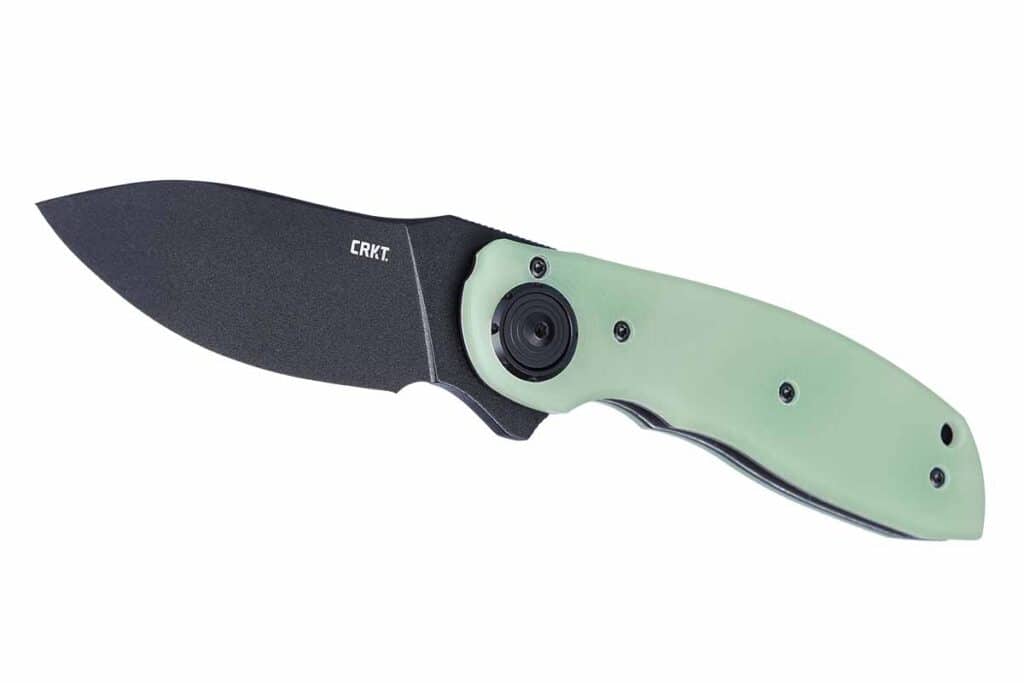
Brazilian Flavio Ikoma helped designed the Ikoma Korth Bearing System (IKBS), a ball-bearing pivot system used by custom and factory knifemakers worldwide. As great a maker and knife designer as Flavio is, it is the IKBS among his contributions that has had the most impact on the folding knife industry. The IKBS as well as Flavio’s Deadbolt lock system help highlight one of the latest CRKT/Flavio collaborations, the Bot.

On the factory side, Brazilian Flavio Ikoma has developed a collaborative relationship with Columbia River Knife and Tool, while his apprentice, Pedro Buzetti (page 24), has also come into his own. The Ikoma Korth Bearing System (IKBS), which Flavio helped design along with Ricardo and Paulo Lala, and his Deadbolt locking system are major contributors to the popularity of his CRKT designs. The IKBS, in fact, has revolutionized both custom and factory folders alike.

“Every design of Flavio’s we have uses the IKBS,” remarked CRKT representative Doug Flagg. “His most famous model is the Fossil, and Walmart has sold it for the last seven or eight years. It is amazing because IKBS allows the knife to be opened super fast and the action is incredibly smooth. [Another Flavio] design, the Attaboy, incorporates IKBS. Fitting the bearings in along with Flavio’s patented Deadbolt lock took a herculean effort!”

Flagg and CRKT began their association with Flavio after a tip from BLADE Magazine Cutlery Hall-Of-Fame® member Ken Onion. When Onion mentioned Flavio’s use of bearings in the pivot, he encouraged Flagg to make a phone call to the Brazilian.

“All Flavio wanted was recognition that we would be using IKBS,” Doug commented, “so we agreed and started using IKBS on [the Ripple, another Onion design for CRKT]. IKBS worked great but was hard to mass produce. The original system was individual ball bearings in a milled-out track, and we eventually evolved to caged bearings. Flavio said he would have used caged bearings if they had been available in Brazil. CRKT and most of the industry credit Flavio with putting bearings in the pivot of knives. Also, the Deadbolt is super easy to use and really, really strong. It’s easy to clean out as well. Just unscrew the button and the Deadbolt comes out. Then use compressed air to blow out the crud and reassemble.”

Mauricio Daletzky won Best Art Knife at BLADE Show 2021 for Creole in ladder pattern damascus
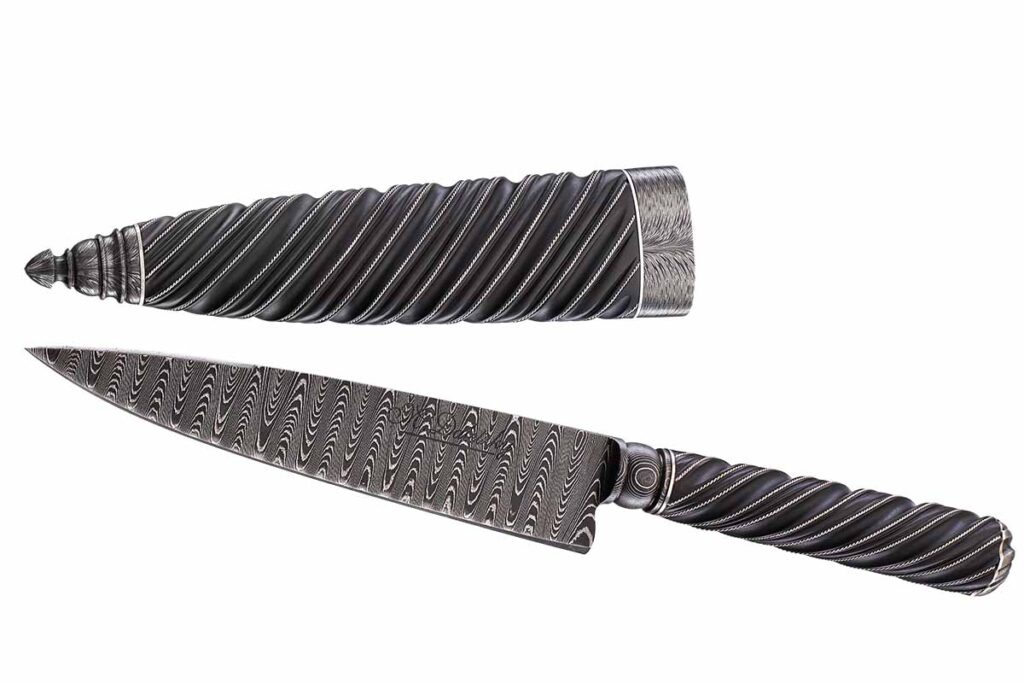
Argentine Mauricio Daletzky won Best Art Knife at BLADE Show 2021 for Creole in ladder pattern damascus and a wire wrapped ebony handle with matching sheath. Overall length: 12.2 inches. He won the same award at BLADE Show ’23 for The Gaucho Knife in damascus and mother-of-pearl. (Whetstone Studio knife image)

Flavio’s contribution is further evidence of the innovation and skill present in knifemakers and designers from Brazil. “I think they are so good because they have to try harder to penetrate the USA custom knife market,” Flagg reasoned. “They don’t really have a market for high-end custom knives in Brazil, although it is starting to become a thing. Therefore, they have to work really hard and make incredible designs to catch the attention of foreign knife collectors.”

CRKT is working with Pedro to produce current and future offerings. “We have a couple of models in the works with Pedro for 2024,” related Flagg. “As Flavio’s apprentice, he has taken up his own love for knives, and Flavio is now helping him to make custom knives. I expect Pedro to be one of the top makers in the coming years. He is young and absorbing all the knowledge that took Flavio years to acquire. Rick Lala has great designs also. I typically look forward to seeing his knives at the custom knife shows.”

Sobral Brothers

Sobral Brothers Ranger Bowie
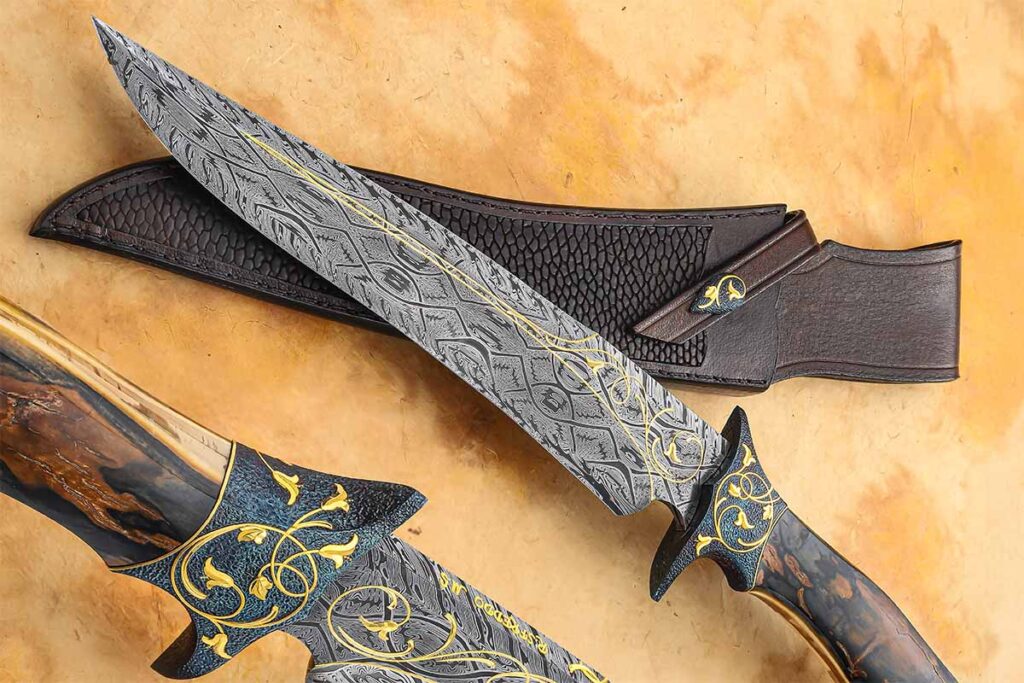
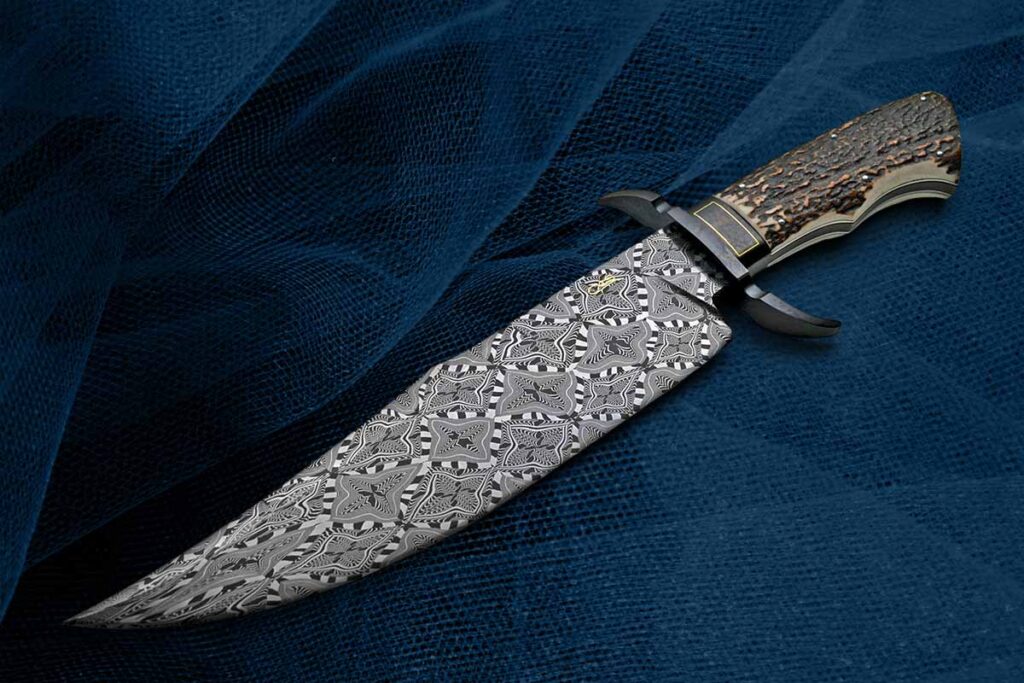
The Sobral Brothers—Argentines Claudio, Ariel and Marcelo—and awards go together like gauchos and knives. Their Ranger Bowie has a 10.5-inch mosaic damascus blade, blued fittings, a frame handle and stag scales with piened pins. Exquisiteknives.com’s price: $6,000. The Sobrals’ most recent BLADE Show winner was last year for Best Damascus. (Exquisiteknives.com knife image)

Through Exquisite Knives, custom knife purveyor and retired ABS master smith Dave Ellis has put high-end custom knives in the hands of collectors for many years. He praises the work of the Sobral Brothers, Claudio, Ariel and Marcelo (CAS), of Buenos Aires, Argentina, for setting a standard in bladesmithing excellence.

“At first it was their san-mai blades that seemed to attract my clientele,” Ellis explained. “Gradually, as their work progressed, their damascus steel, gun-blued fittings and their stunning designs really put them at the front of the pack. Organic materials are typically utilized for their handles, and Marcelo’s leatherwork has really become a complement to their amazing knives. Bold, dark damascus, as well as intricate mosaic damascus steel draws the eye, and once you hold a knife made by CAS it all comes together!
“They seem to work together seamlessly and produce singular works of art. With three of them working together you can sense the symbiosis that exists and once you meet them, their warmth and enthusiasm are refreshing as well as contagious.”

From wherever it emanates, quality work always speaks for itself. The Latin American bladesmiths and knifemakers have continually enhanced their quality work, and in turn to attract the attention of buyers around the globe.

Check Out More Cool Custom Knives:

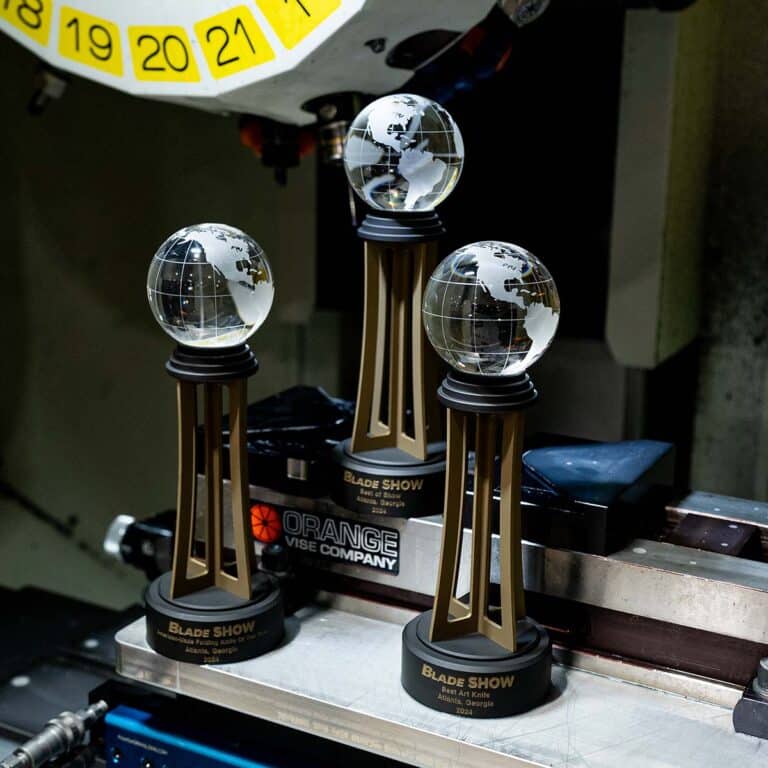
BLADE SHOW 2024 CUSTOM KNIFE AWARD WINNERS

See Who Took Home The Hardware From The 2024 Custom Knife Awards At BLADE Show.

Once again, the Custom Knife Of The Year® Awards at the June 7-9 BLADE Show at the Cobb County Gallery showcased some of the finest bladesmithing in the knife world. The challenge was determining which knives would rise to the top.

In a fiercely competitive field, a panel of expert judges selected the top knives in various categories, highlighting the best of the best. Below are the winners, including the prestigious Hugh Bartrug Best In Show award.

Best of Show & Best Folder: Evan Nicolaides

Winner Folder and Best of Show - Evan Nicolaides
Photo: Jocelyn Frasier

Best of Show Contender: Jean Louis

Winner Best of Show Contendor - Jean Louis
Photo: Jocelyn Frasier

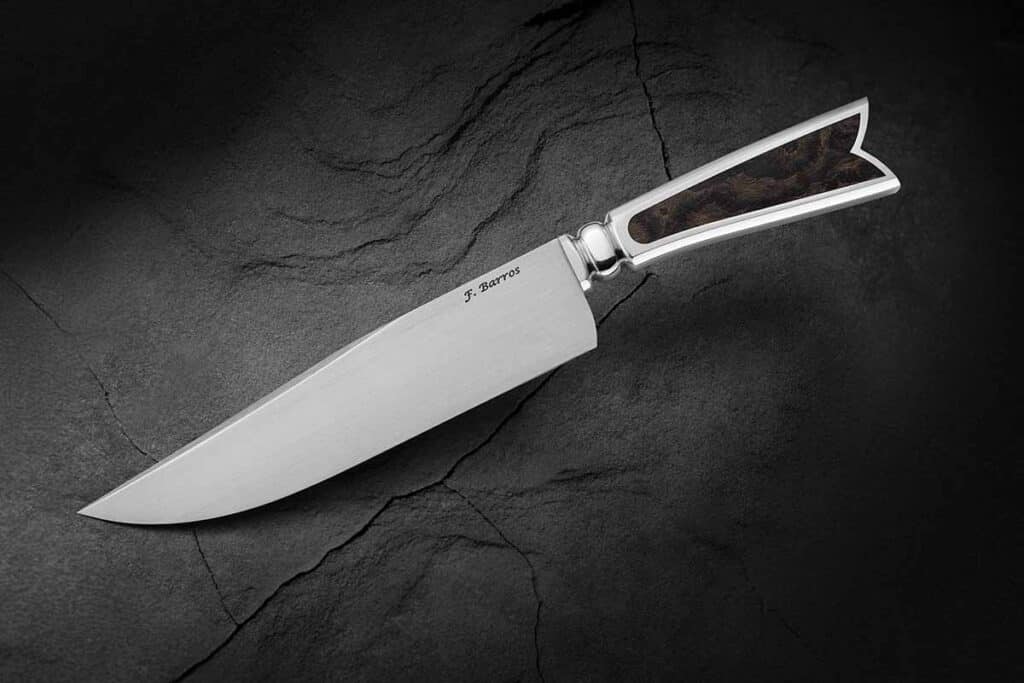
Best Art Knife: Fabio Barros

Winner Art Knife - Barros
Photo: Jocelyn Frasier

Best Kitchen Knife: Jordan LaMothe

Winner Kitchen - Jordan LaMothe
Photo: Jocelyn Frasier

Best Bowie: Samuel Lurquin

Winner Bowie - Samuel Lurquin
Photo: Jocelyn Frasier

Best Collaboration: Javi Garcia, Enrique Pena, Jared Oeser

Winner Collab - Javi Garcia, Enrique Pena, Jared Oeser
Photo: Jocelyn Frasier

Best Damascus: Ronmell Fernandes

Winner Damascus - Ronmell
Photo: Jocelyn Frasier

Best Fighter: Seth Lopez

Winner Fighter - Seth Lopez
Photo: Jocelyn Frasier

Best Fighter Contender: Samuel Lurquin

Winner Fighter Contendor - Samuel Lurquin
Photo: Jocelyn Frasier

Best Fixed Blade: Harvey Dean

Winner Fixed Blade - Harvey Dean
Photo: Jocelyn Frasier

Best M.A.C.K.: Sergey Shirogorov

Winner MACK - Sergey Shirogorov
Photo: Jocelyn Frasier

Best Folder Contender: Vogt Knives

Winner Folder Contendor - Vogt
Photo: Jocelyn Frasier

Best Handle Design: Vogt Knives

Winner Handle Design - Vogt
Photo: Jocelyn Frasier

Best New Maker: Bobby House

Winner New Maker - Bobby House
Photo: Jocelyn Frasier

Best Sword: Vince Evans

Winner Sword - Vince Evans
Photo: Jocelyn Frasier

Best Tactical Folder: Dmitry Sinkevich

Winner Tactical - Dmitry Sinkevich
Photo: Jocelyn Frasier

Best Utility Hunter: Dionatam Franco

Winner Utility Hunter - Franco
Photo: Jocelyn Frasier

Most Innovative Design: Carlos Queiros

Winner Innovative - Queiros
Photo: Jocelyn Frasier

Best Miniature: Rhidian Gatrill

Winner Miniature - Rhidian Gatrill
Photo: Jocelyn Frasier

Best Slip Joint: Rhidian Gatrill

Winner Custom Slipjoint - Rhidian Gatrill
Photo: Jocelyn Frasier

See Past 2023 Factory Knife Of The Year® Awards Winners:

  • 2023 Custom Knife Award Winners From BLADE Show
  • 2022 Factory Knife Of The Year Award Winners
  • 2021 BLADE Show Knife-Of-The-Year® Award Winners & Custom Knife Award Winners
  • 2019 Knife of the Year® Award Winners & Custom Knife Award Winners
  • 2018 Knife of the Year® Award Winners & Custom Knife Award Winners
Advertisement

Must Read Articles

Read this before you make a knife

Knifemaking 101 – Read This Before You Make a Knife

  by Wayne Goddard My experience has taught me that there's nothing like digging in and getting started. I've often said the hardest part of the...
how to forge damascus steel

How to Forge Damascus

Advertisement
Advertisement