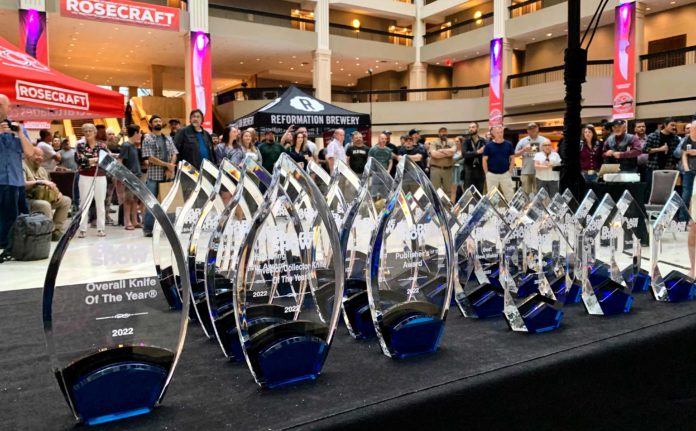
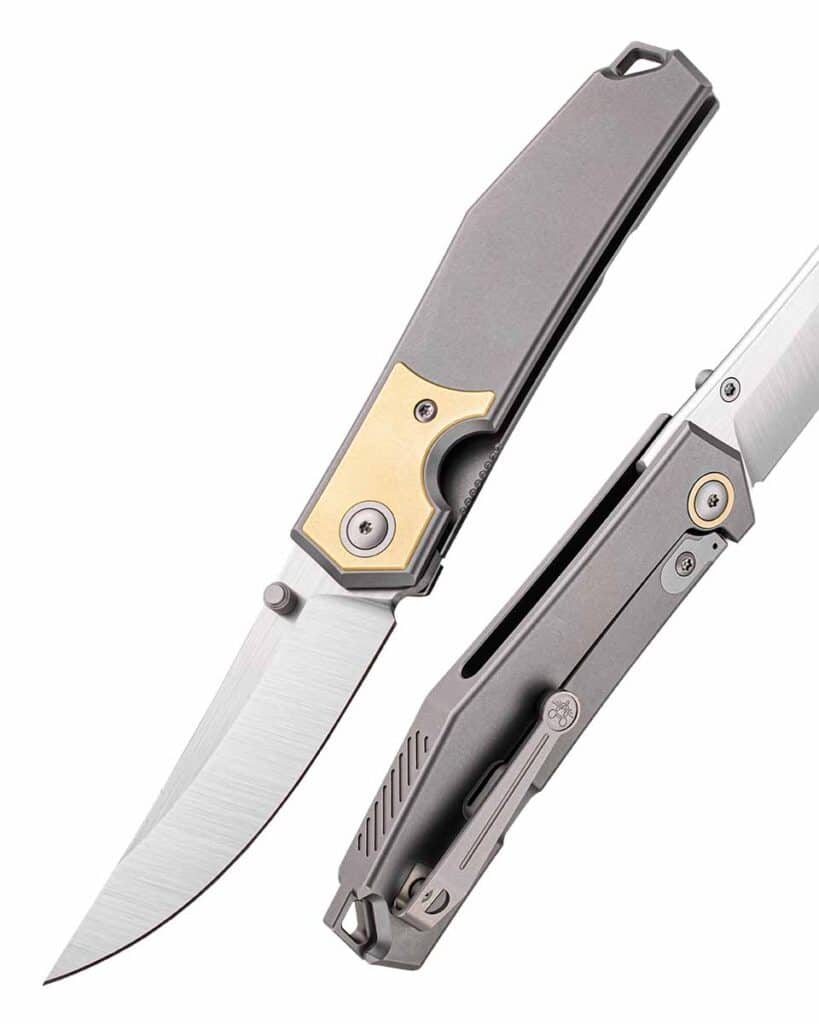
See who took home the hardware from the 2024 BLADE Show.
The BLADE Show held from June 7-9 at the Cobb County Gallery saw one of the most intense Knife Of The Year® Awards competitions in recent memory.
A diverse array of makers entered the contest, filling the display cases outside the main hall to capacity. The sheer number of entries wasn’t the only impressive factor—quality, innovation, and craftsmanship were all at their peak, from knife accessories to the blades vying for the top award.
With such high standards, the 10 judges, including industry experts, knife writers, makers, and Cutlery Hall Of Famers, had a challenging task. Below are the knives that met their rigorous criteria, winning honors in 10 categories and the overall Knife Of The Year award for 2024.
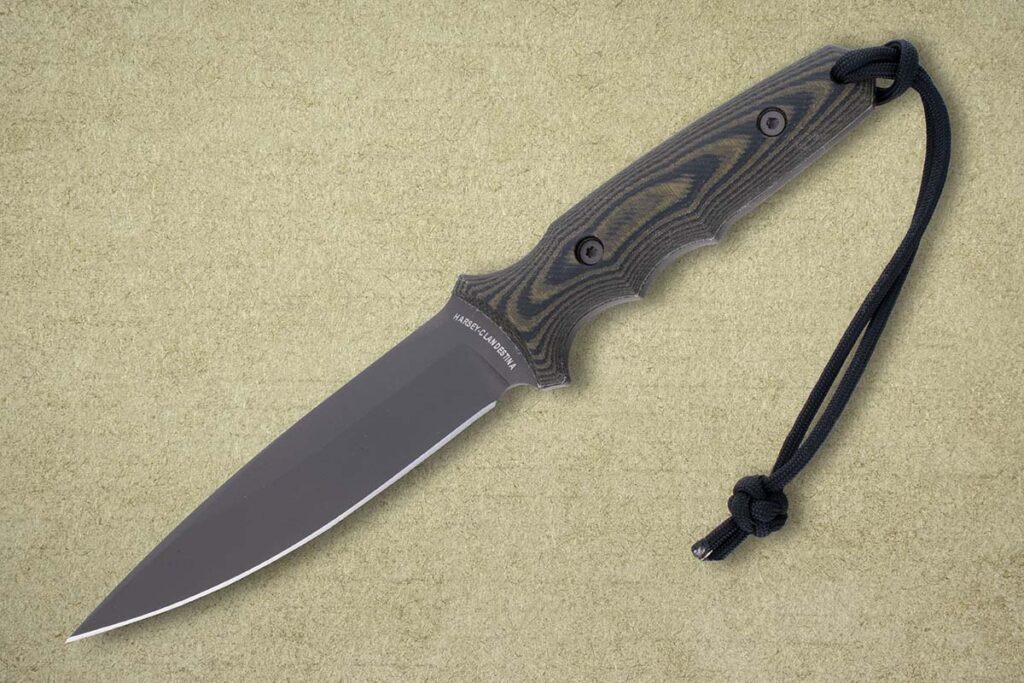
Overall Knife Of The Year®: Spartan Blades Harsey Clandestina
Photo: Jocelyn Frasier
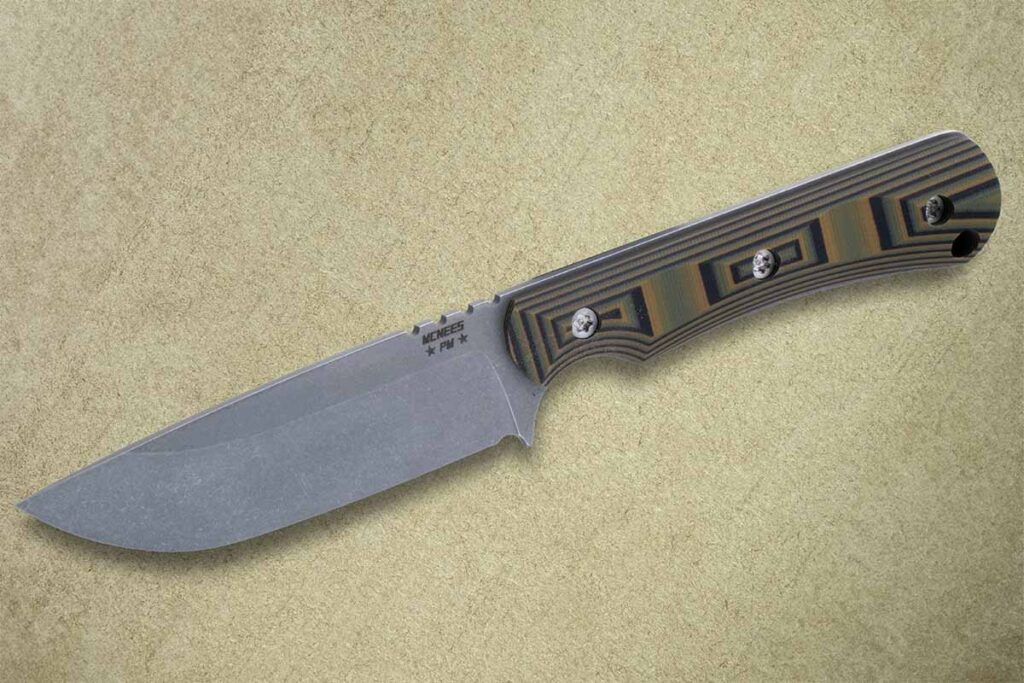
American-Made Fixed Blade Of The Year®: McNees Knives Ridge Runner
Photo: Jocelyn Frasier
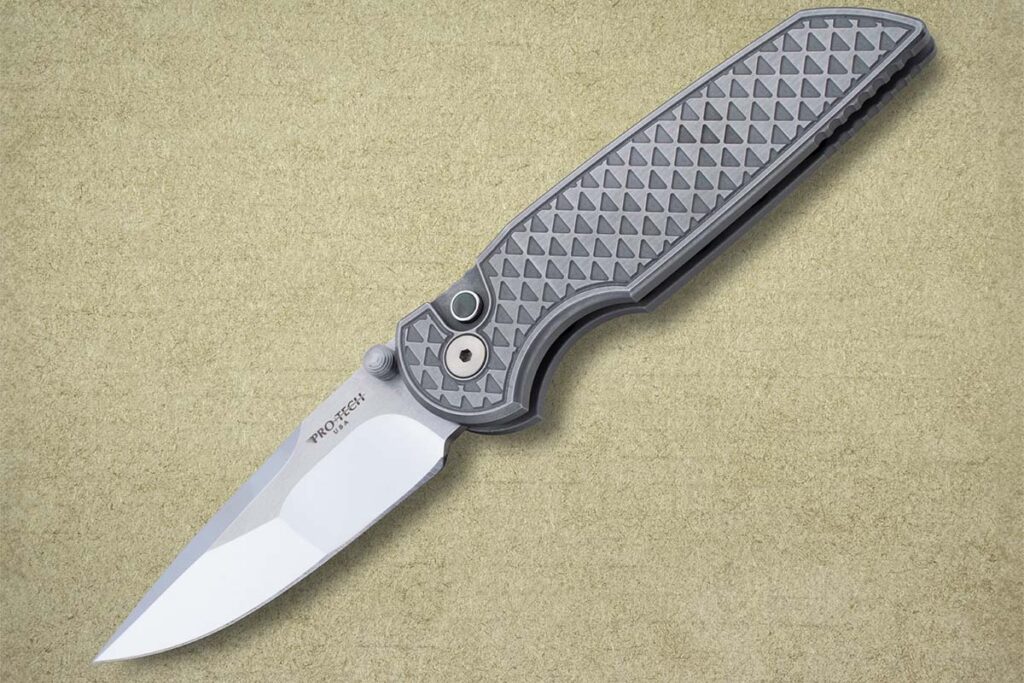
American-Made Folding Knife Of The Year®: Pro-Tech TR-3 Integrity Manual Flipper
Photo: Jocelyn Frasier
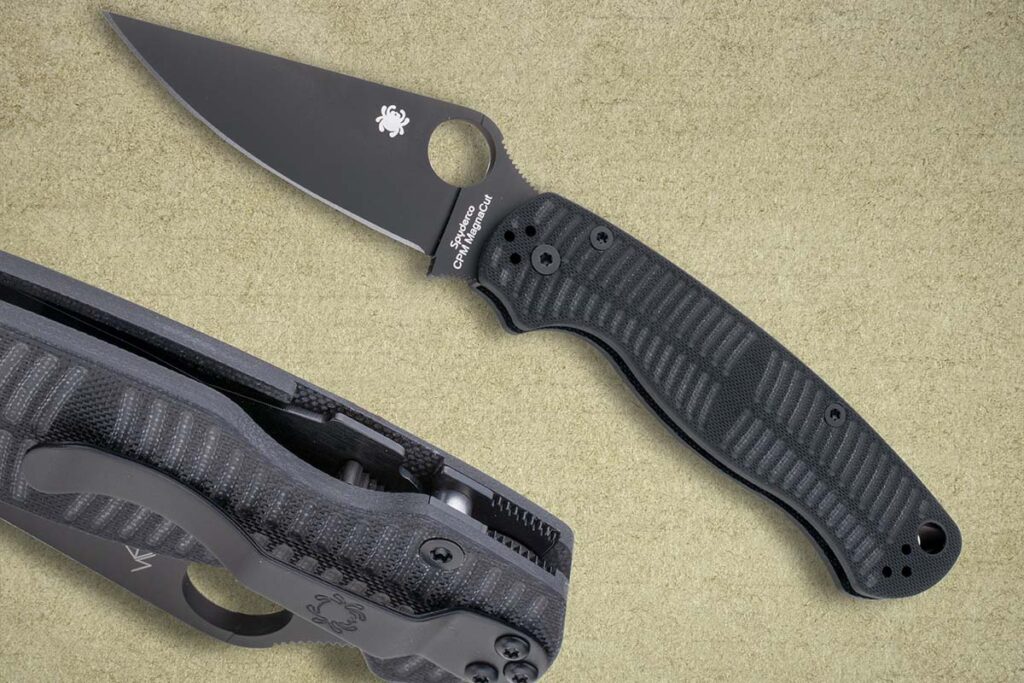
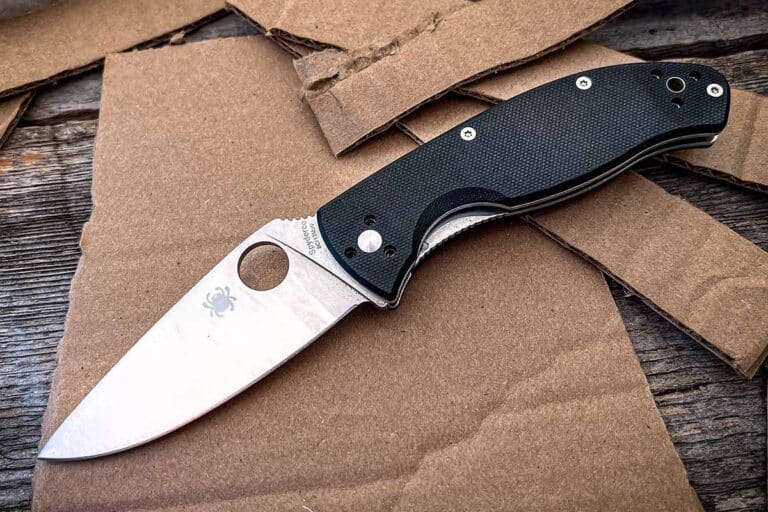
Most Innovative American Design: Spyderco Para Military 2 Salt
Photo: Jocelyn Frasier
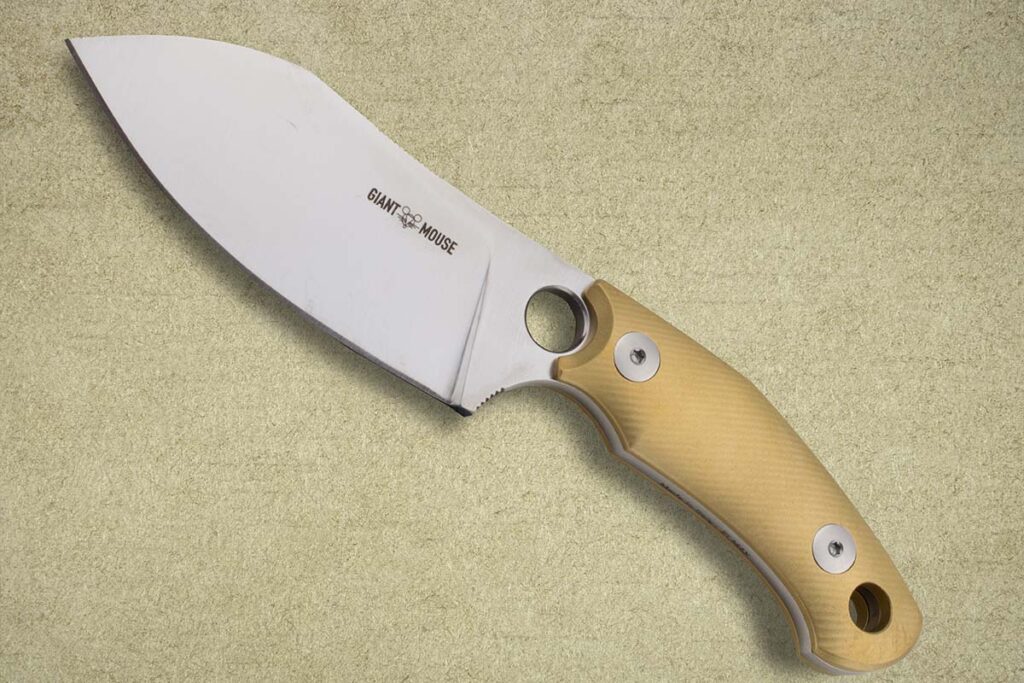
Imported Fixed Blade Of The Year®: Giant Mouse GMF1
Photo: Jocelyn Frasier
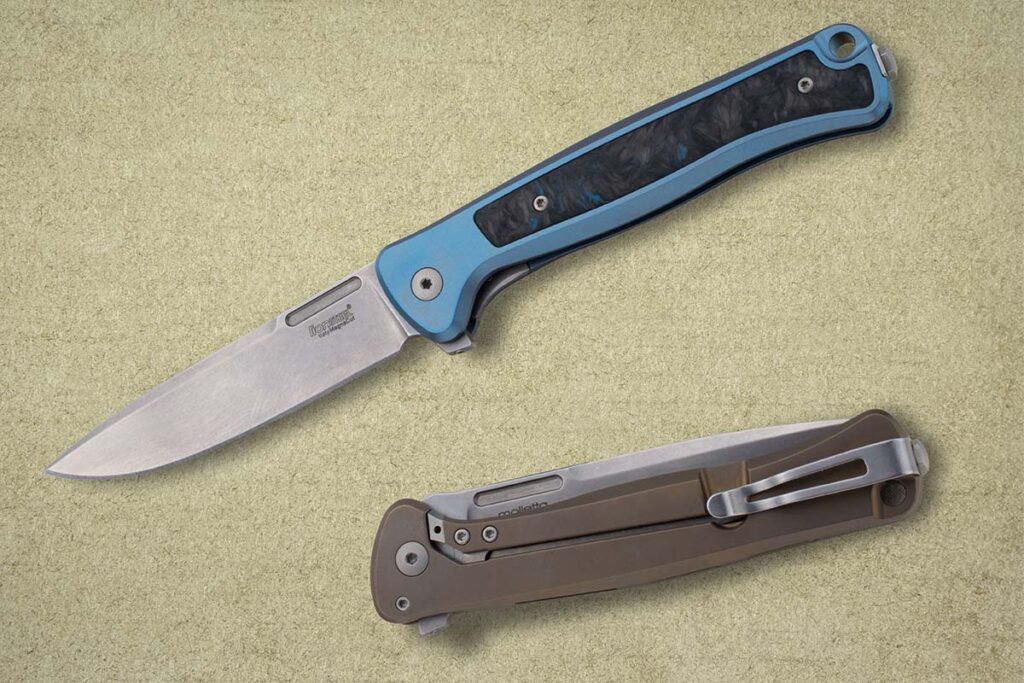
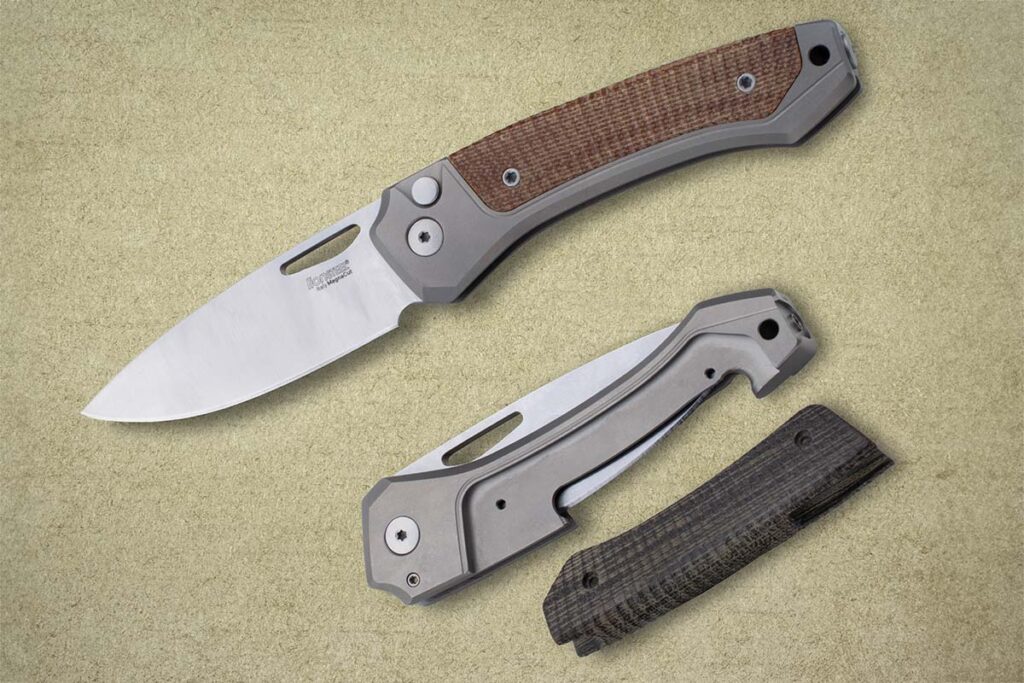
Imported Folding Knife Of The Year®: Lionsteel Skinny
Photo: Jocelyn Frasier
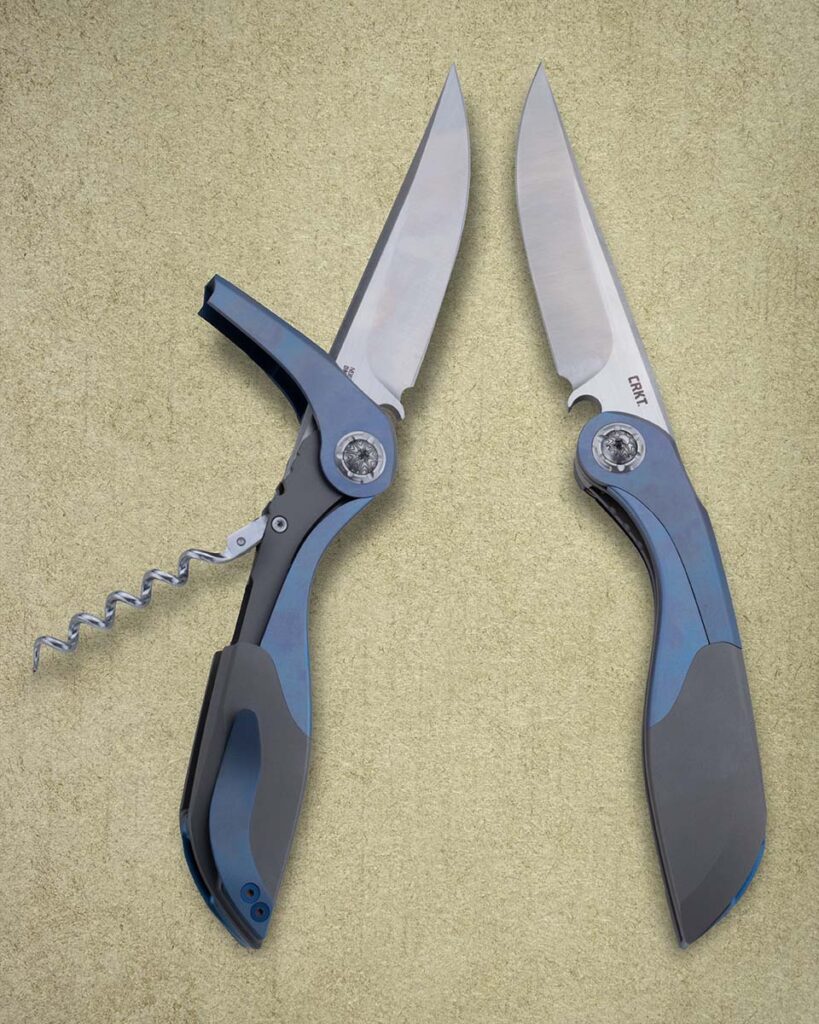
Most Innovative Imported Design: CRKT Fial
Photo: Jocelyn Frasier
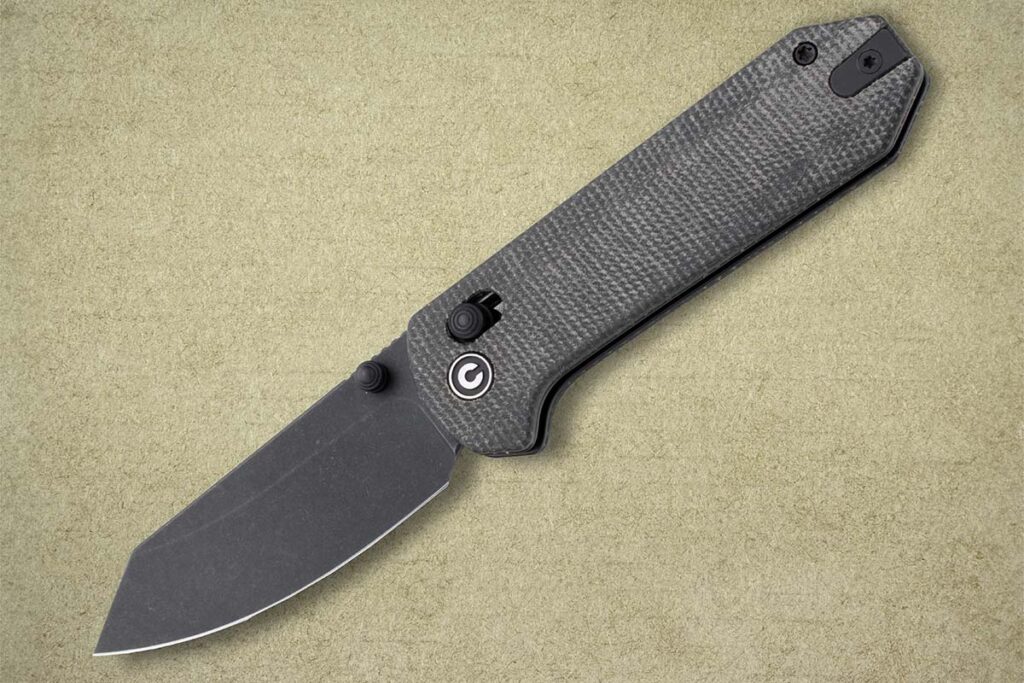
Best Buy Of The Year®: CIVIVI Yonder
Photo: Jocelyn Frasier
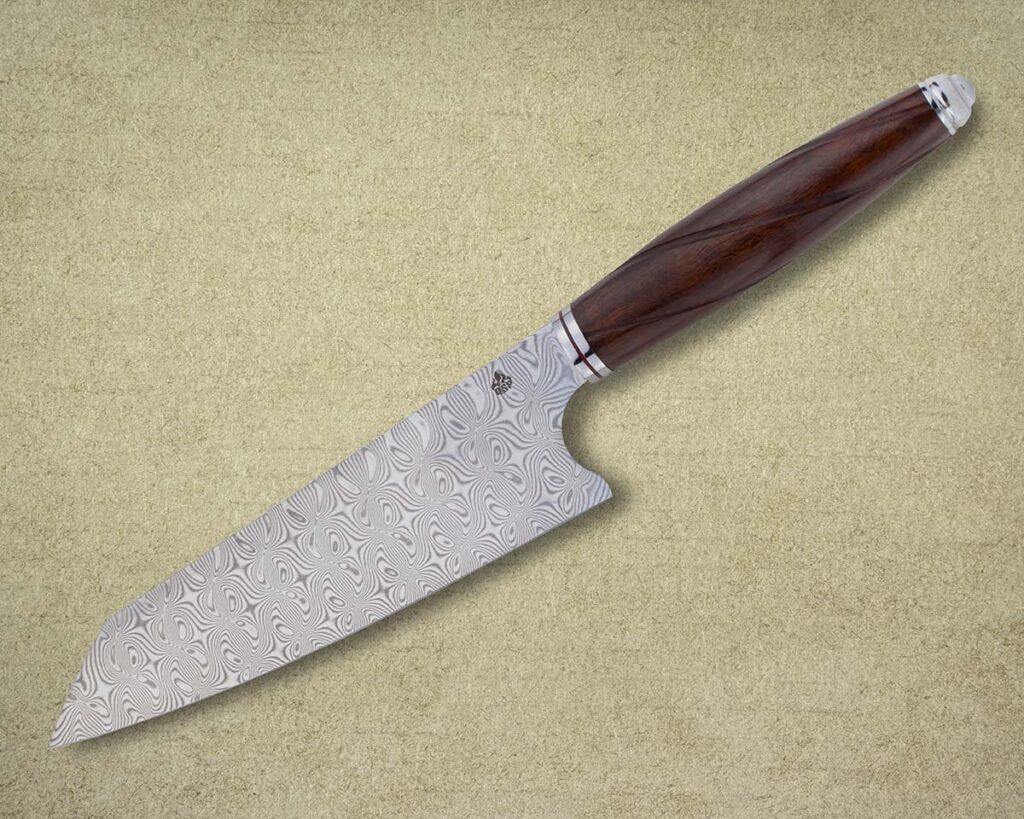
Kitchen Knife Of The Year®: QSP Kiritsuke
Photo: Jocelyn Frasier
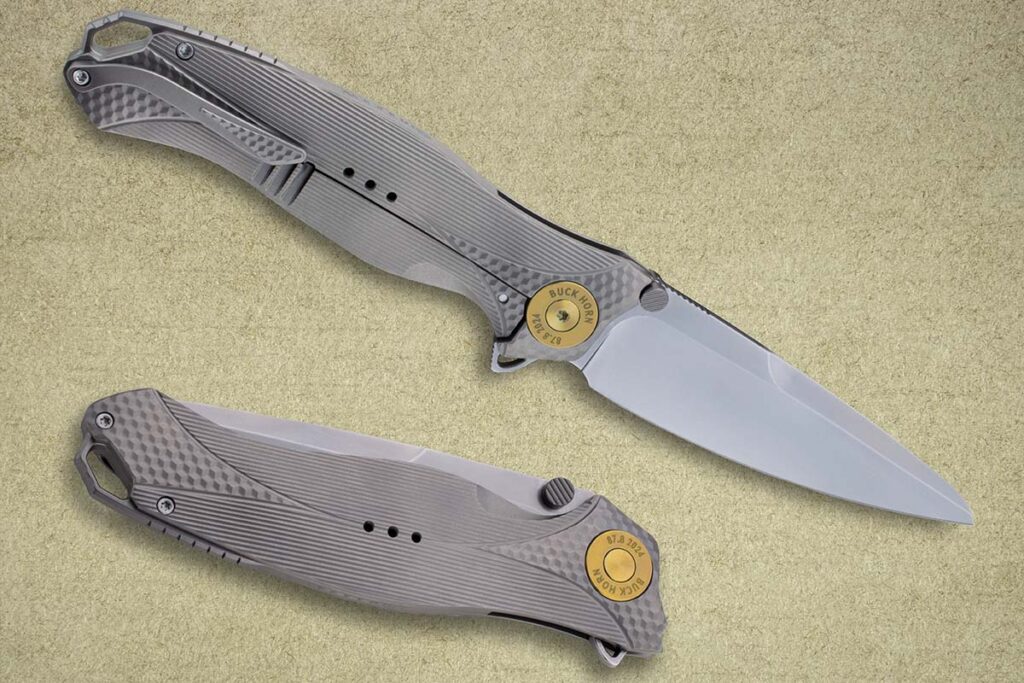
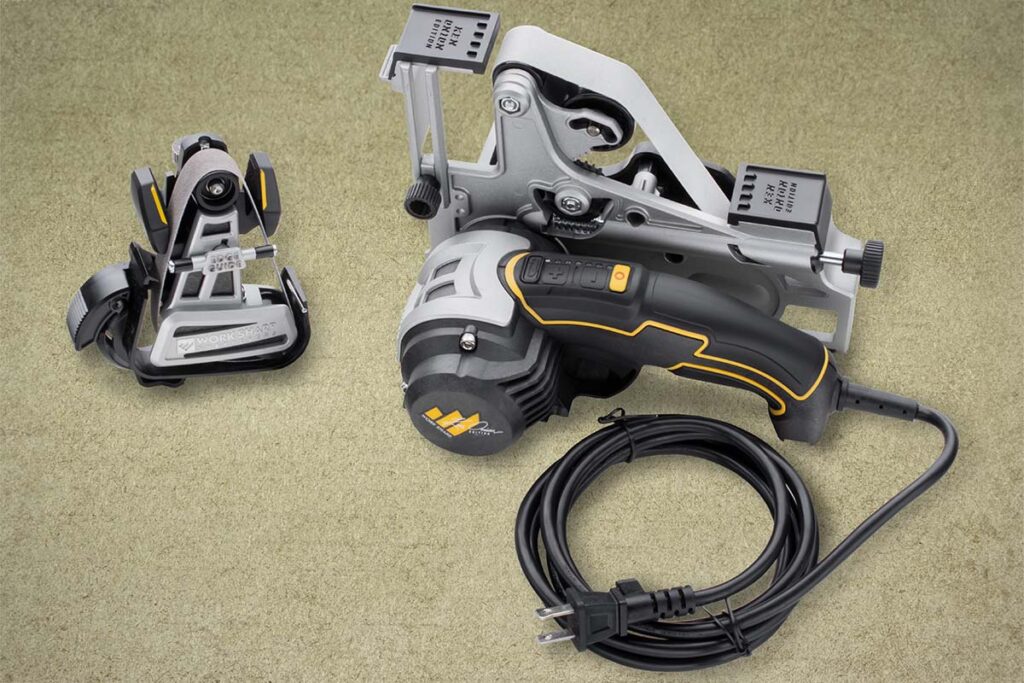
Knife Collaboration Of The Year: Ketuo-Ken Onion Buck Horn
Photo: Jocelyn Frasier
Manufacturing Quality Award: Lionsteel
Photo: Jocelyn Frasier
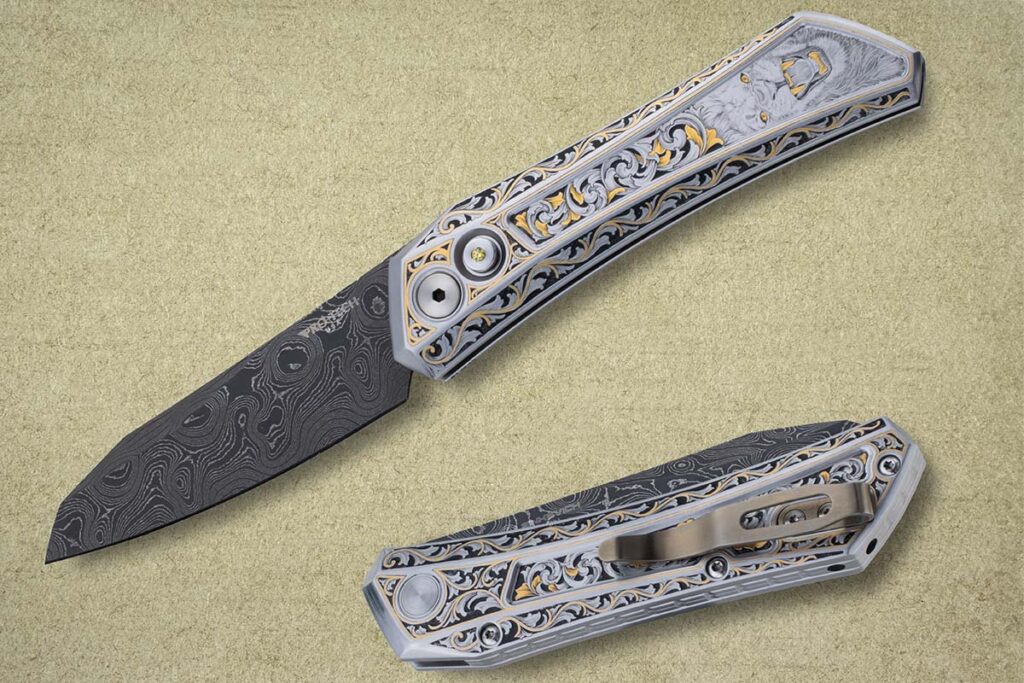
Investor/Collector Knife Of The Year®: Pro-Tech Ultimate Custom
Photo: Jocelyn Frasier
Knife Accessory Of The Year
Photo: Jocelyn Frasier
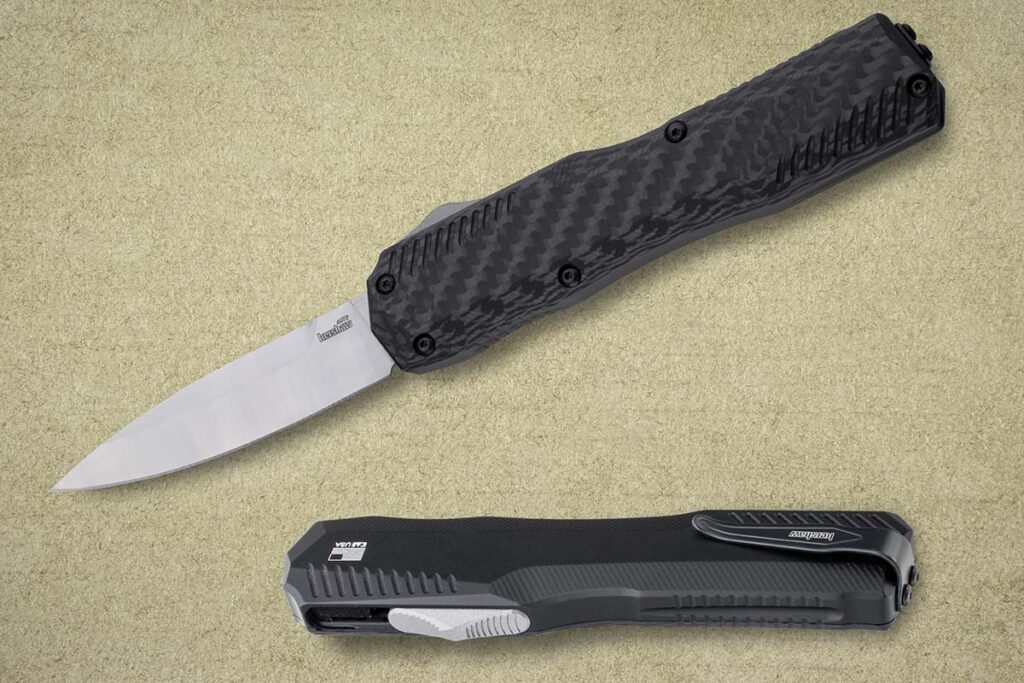
PVK Automatic Knife Of The Year: Kershaw Livewire
Photo: Jocelyn Frasier
See Past 2023 Factory Knife Of The Year® Awards Winners:
Bertram Edmonston IV overhauls his engraving resume on a Bruce Bump hideout bowie.
For the past decade, my career has primarily focused on engraving firearms, mostly Colts, Winchesters and custom 1911’s. A brief tour of my website shows the extent of the commissioned projects over the years. However, the number of significant knife-engraving commissions have been few.
In the summer of 2022, my wife, Jennifer, accepted a position with a Bechtel subsidiary located in the Pittsburgh, Pennsylvania, area. Being no stranger to relocation, I knew it would be the perfect opportunity to make a significant change in my career as an engraver.
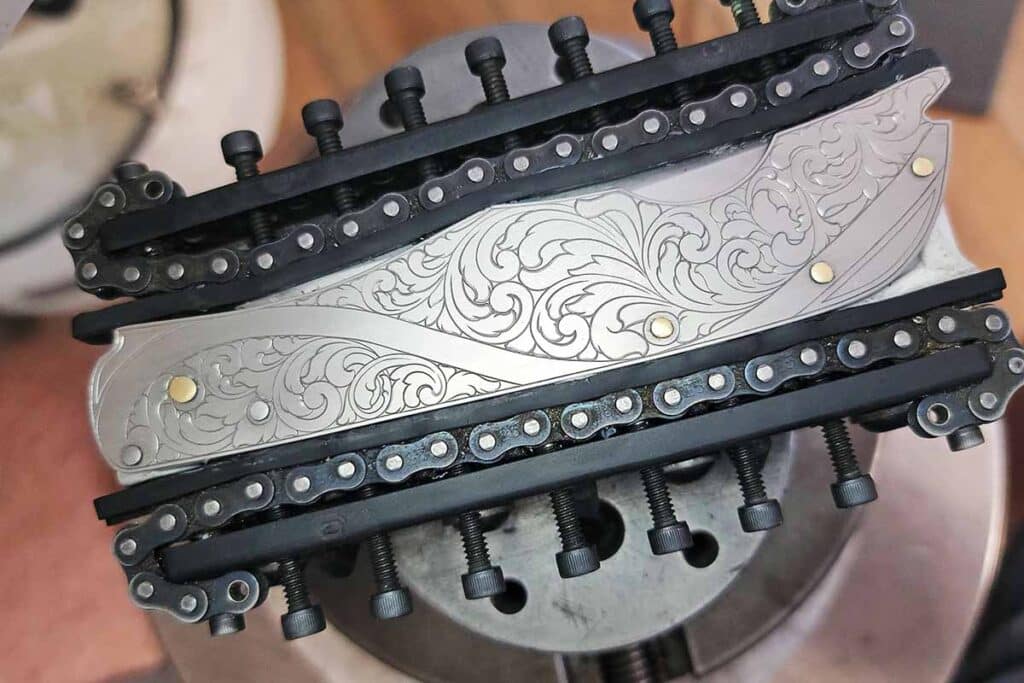
The outline of the engraving takes shape (below left). The jig holding the folder is a knifemakers contour vise from GRS Tools (see sidebar).
While still in Tennessee, ABS master smith Bruce Bump reached out to me to collaborate on one of his black powder percussion pistols. Bruce is a full-time bladesmith and obtained his master smith stamp in 2003.
Known for his bowies, daggers and combination black powder pistol knives—aka cut ’n shoots—he has an impressive list of accolades and award-winning creations spanning his illustrious career. In addition, he’s collaborated with many fine engravers, including his son, Brian. I was truly honored when Bruce reached out to me.
The Project
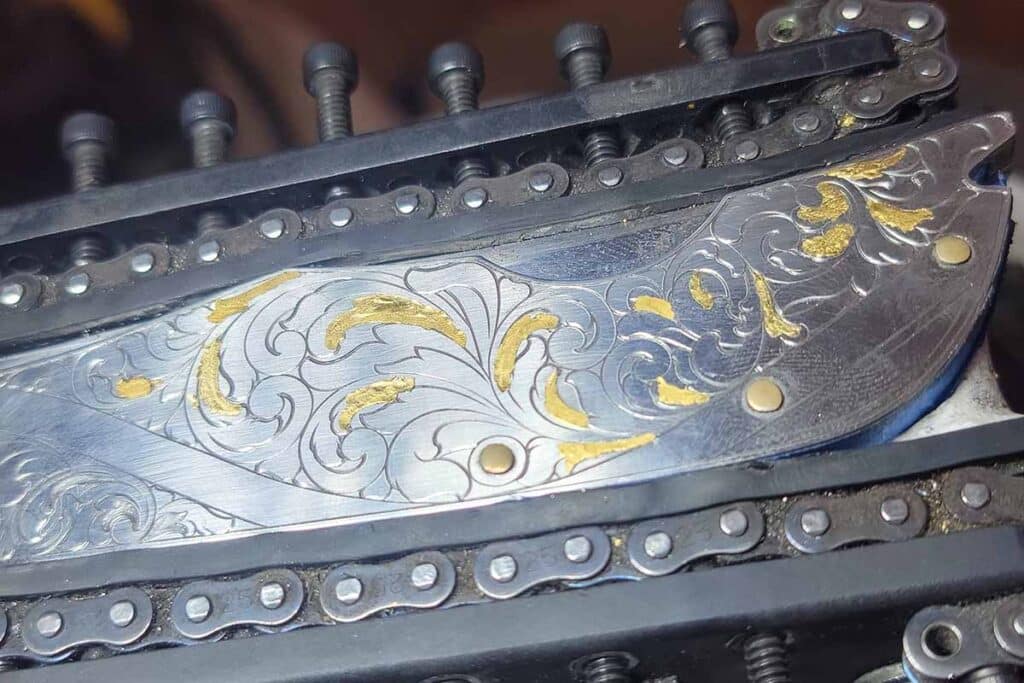
There are 23 inlays of 24k gold on each side of the folder. Sixteen have been set in the lower two-thirds of one side here (below). Polishing them flush came later.
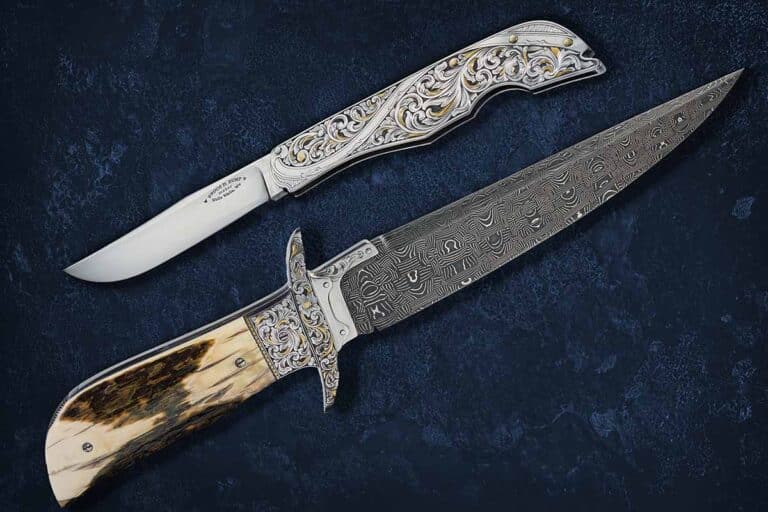
We had not met face to face but were familiar with each other’s work. We agreed to meet in person at a Nashville Arts in Metal knife show. During the meeting, he showed me one of his hideout bowies. The 15-inch knife in basketweave damascus steel immediately inspired me with its blend of high-end materials and fine craftsmanship.
Bruce forged the damascus from 1080 carbon and 15N20 nickel-alloy steels. The guard, bolster and handle frame are 416 stainless steel. The hidden slipjoint folder has a 1080 blade and 416 frame and stunning mammoth bark scales.
The locator pins on the folder presented a challenge, interrupting shading and flow of scroll.
Bruce informed me the customer wanted both knives engraved and would be contacting me to discuss ideas. It took about six months to happen due to my relocation and settling into our new home.
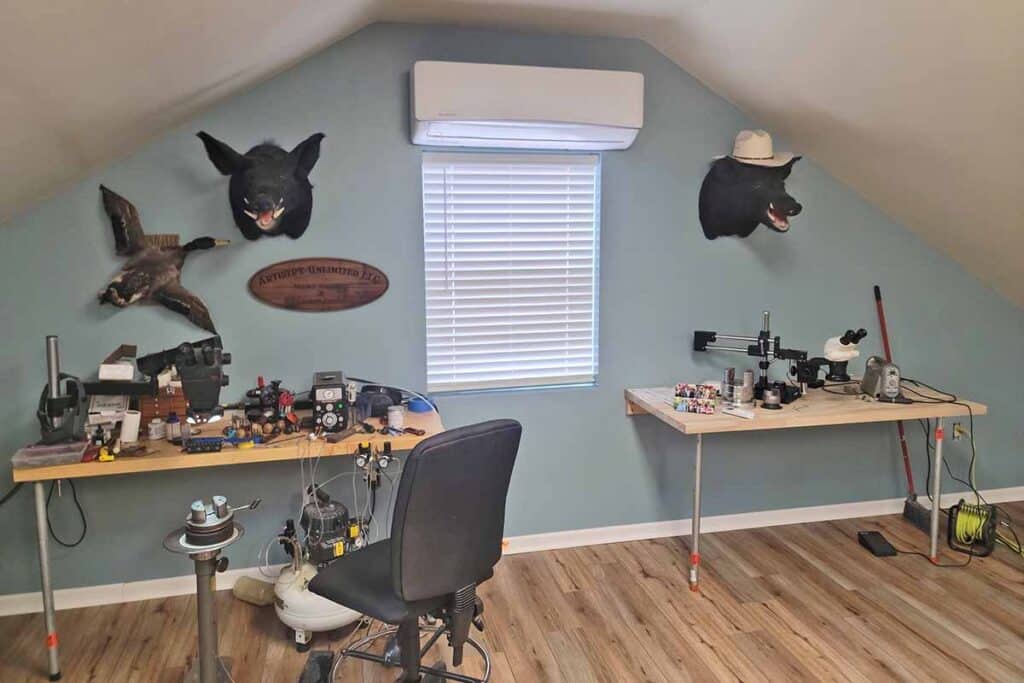
Building a studio was my first priority. It is in a loft space over a detached garage. The space was completely unfinished when we bought the property. Excluding hanging the drywall, I did the renovation. This involved insulation, flooring, painting, trim carpentry, and heating, ventilation and air conditioning. I went from a 140-square-foot shop inside my home to an entire building with about 1,600 square feet of space.
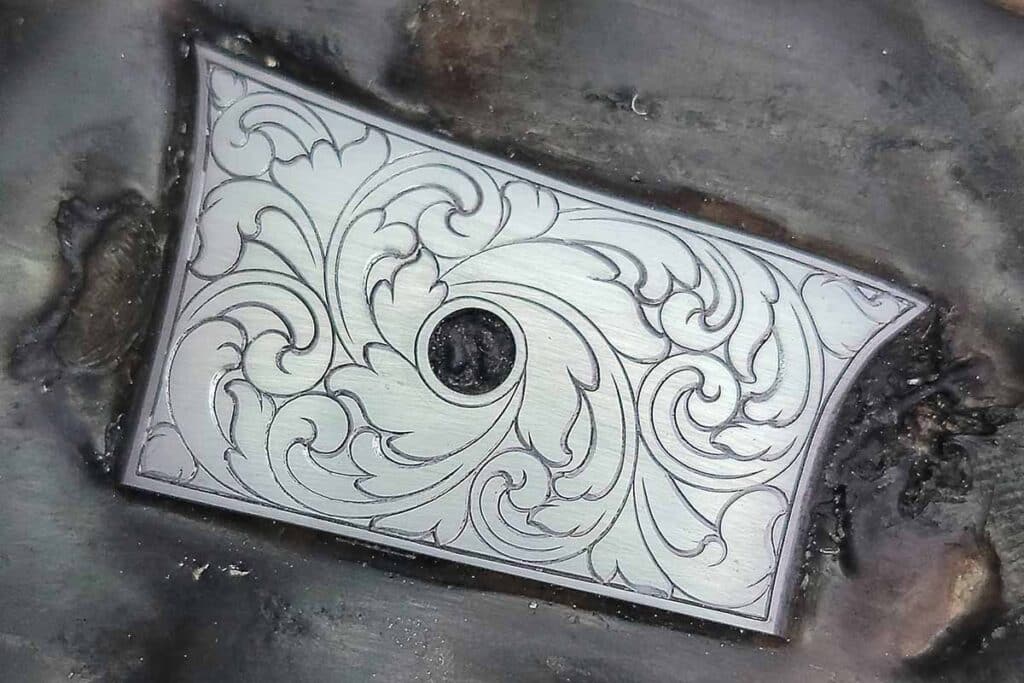
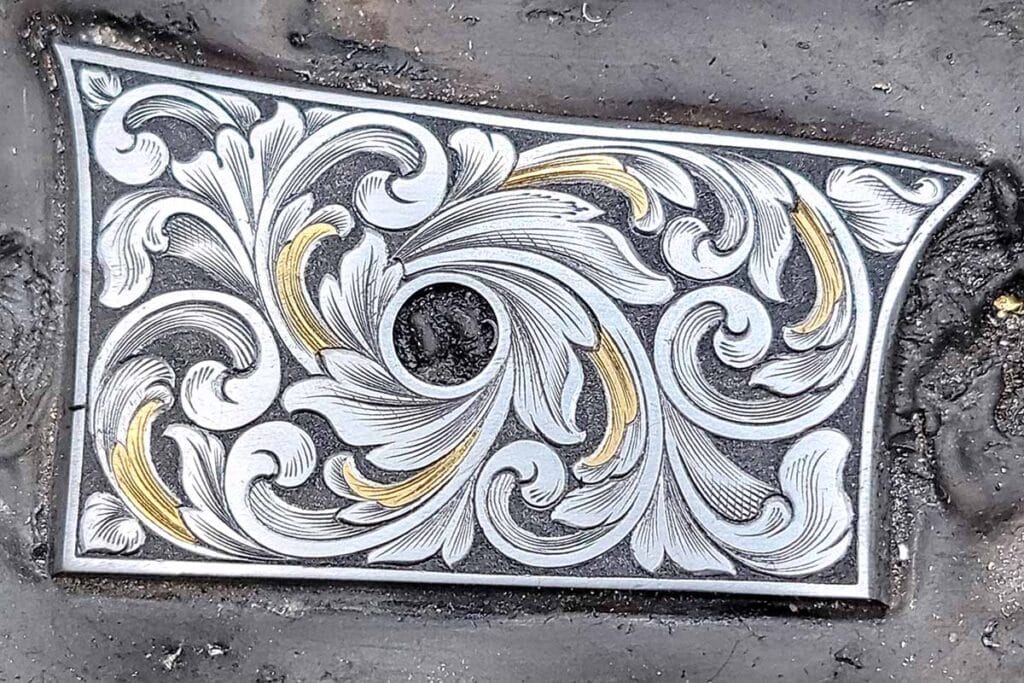
All the scroll is engraved.
Finally—I had the room to really pursue my artistic dreams! The studio is set up with specialized workstations for all the various tasks involved in creating art in metal. After a decade of working professionally as an engraver, I learned exactly what works best for me. The primary bench is set up for the majority of my engraving with everything in arms’ reach, facilitating a comfortable and efficient workflow. In addition, there are dedicated areas for design, assembly/disassembly, welding, jewelry making, stone setting and photography.
The Knife
When the hideout bowie arrived for engraving, I spent some time admiring and studying the knife before doing anything. The damascus blade immediately impressed me. Bruce forged the basketweave pattern blade using the accordion method in which he opens up the forge-welded billet, using a spear-type point in his large hydraulic press, creating an accordion-shaped slab of metal. The process reveals the repeating pattern along the length of the billet.
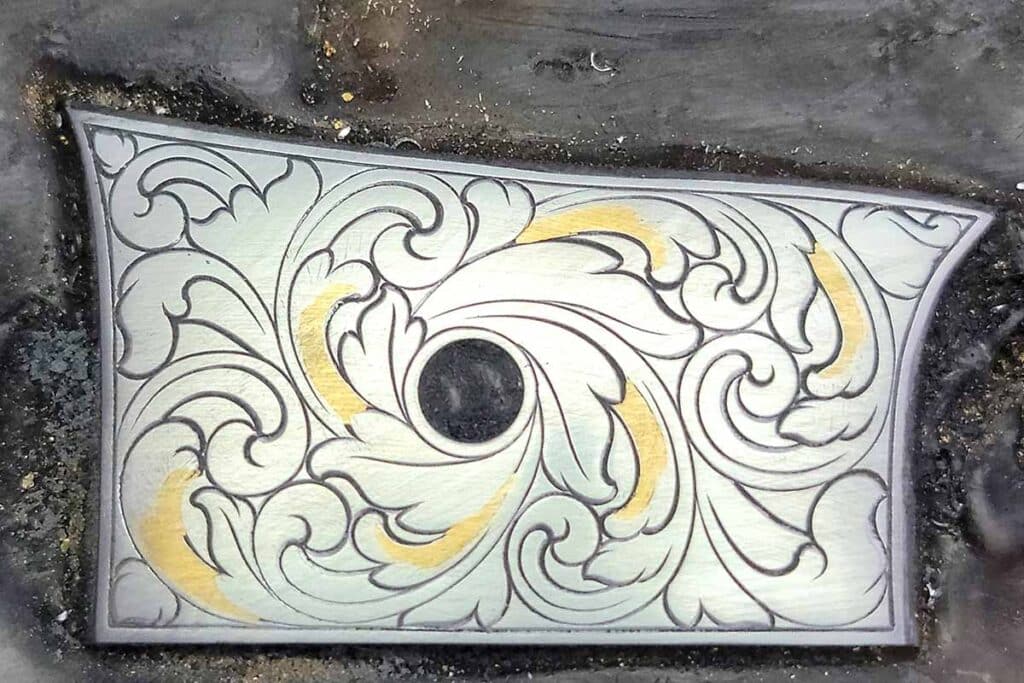
The inlays are prepared and the gold is set in the steel.
The construction of the hideout slipjoint folder is impressive as well. A flawless spring-loaded catch retains the folder inside the bowie handle. The folder has a series of small, raised pins that help locate it within the bowie handle. The pins would pose a unique challenge for me with the design and execution of the engraving.
Engraving
Much of my workflow is very old fashioned, involving traditional methods. I like to use pencil rubbings to create 1:1 outlines of the objects I’m about to engrave. The outlines are copied and duplicated to scale, allowing me to play around with the pencil to develop a pleasing composition.
The inlays are polished flush.
Most of the time I draw the design directly on the metal, including on Bruce’s bowie and folder. I prefer this method because I understand the scale of the item better. Once one side is engraved smoke prints are taken, and a transfer is made to mirror the design precisely.
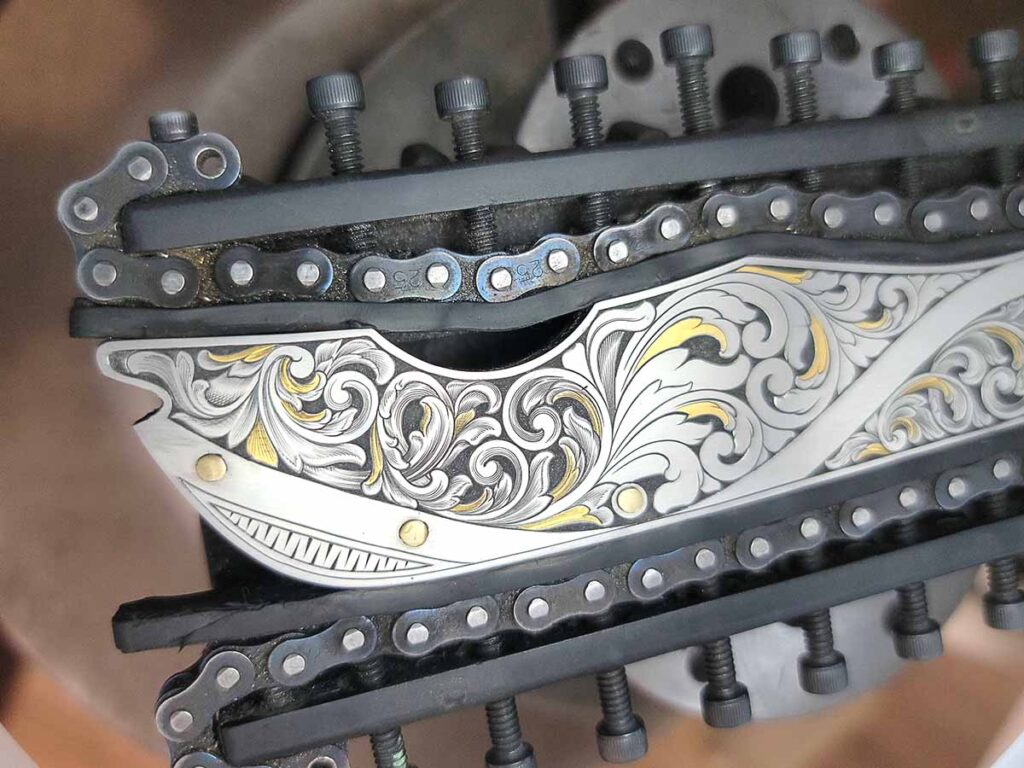
The locator pins on the folder presented a challenge, interrupting shading and flow of scroll. The solution was to embrace the pins, making them part of a simple, flowing ribbon. The ribbon was then framed with larger, relief-engraved scroll. The scroll is accented with 24k-gold inlays in the leaf structure.
Bruce Bump earned his ABS master smith stamp in 2003.
There are 23 inlays on each side of the folder. There’s something magical about prime numbers and they seem to find a way into my artwork regularly. The engraving process for this style has five major stages:
Stage 1: All the scroll is engraved; Stage 2: The inlays are prepared and the gold is set in steel; Stage 3: The inlays are polished flush; Stage 4: The scroll outlines are recut to make every line of the scroll perfectly crisp, and; Stage 5: The background is carved away, textured to black, and the fine shading is engraved.
The author’s primary bench is set up for the majority of his engraving with everything in arms’ reach, facilitating comfortable and efficient workflow. Elsewhere in his 1,600-square-foot studio are dedicated areas for design, assembly/disassembly, welding, jewelry making, stone setting and photography.
This process was repeated for the opposite side of the folder and then on the bowie knife guard and bolster. The bolster and guard also had either a pin or screw to contend with. In these areas I used them as an origin point. I also engraved the small screws to add the finishing touches to the knife.
For me, a brilliant new horizon appeared while collaborating with Bruce Bump.
Handmade knives from the Florida maker see action over the skies of the European Theater of World War II.
Editor’s note: This year marks the 80th anniversary of D-Day, the Battle of the Bulge and other pivotal events of World War II. The Green Bats of the 422nd Night Fighter Squadron flew fighter support for Allied troops after D-Day and played a crucial role doing the same during the Battle of the Bulge. They also loved their Randall knives. This is the story of some of those men and their Randalls.
The Green Bats of the 422nd Night Fighter Squadron carried Randall knives into battle from Normandy through V-E Day, in the process achieving more aerial victories than any other American night fighter squadron during World War II.
Founded by BLADE Magazine Cutlery Hall-of-Fame® member W. D. “Bo” Randall in Orlando, Florida, in 1938, Randall Made Knives gained prominence after the United States entered the Second World War, as many American servicemen carried Randall knives into battle.
A newspaper story from November 1942 highlighted the growing number of Randalls carried by members of the U.S. military, including Frank O. Hunter, who commanded the 23rd Composite Group of the U.S. Army Air Corps at Orlando Air Base in 1941. Many airmen based in Orlando over the following few years also bought Randalls, including the Green Bats of the 422nd Night Fighter Squadron (NFS).
Need For Night Fighters
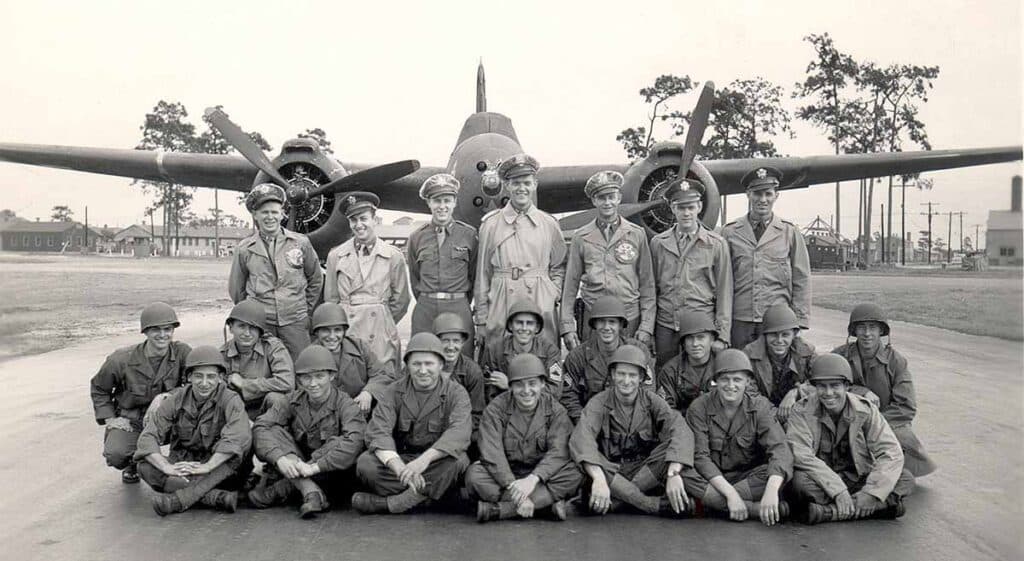
Pilot Al Gordon’s “A” flight at the Orlando Air Base. Behind the crew is a P-61 Black Widow twin-engine aircraft complete with heavy armament and airborne radar.
During the first two years of the conflict, the United States transitioned its economy to a war footing and began to develop the new fighting capabilities it would need to combat the Axis powers. Among many priorities was the pressing need for American airmen to develop a night fighting capability.
From the experience of the Royal Air Force during the Battle of Britain, American observers concluded that effective interception of enemy aircraft in night operations would require an entirely new aircraft that was designed to carry the most advanced airborne radar then available. It was further recognized that night fighter aircrews would require special qualifications and training that emphasized instrument flying, blind landings, night gunnery, and other expertise that was scarce in the Air Corps at the beginning of the war.
The new aircraft was the P-61 Black Widow, a high-performance, stable, twin-engine plane with heavy armament and the SCR-720 airborne radar. The Black Widow’s original design called for a crew of three—pilot, radar operator and gunner—but the planes of the 422nd NFS flew with only a pilot and a radar operator. As the first Black Widows rolled off the assembly line in the autumn of 1943, the rigorously selected NFS aircrews obtained their specialized training at Orlando Air Base and two nearby airfields in Kissimmee and Dunnellon.
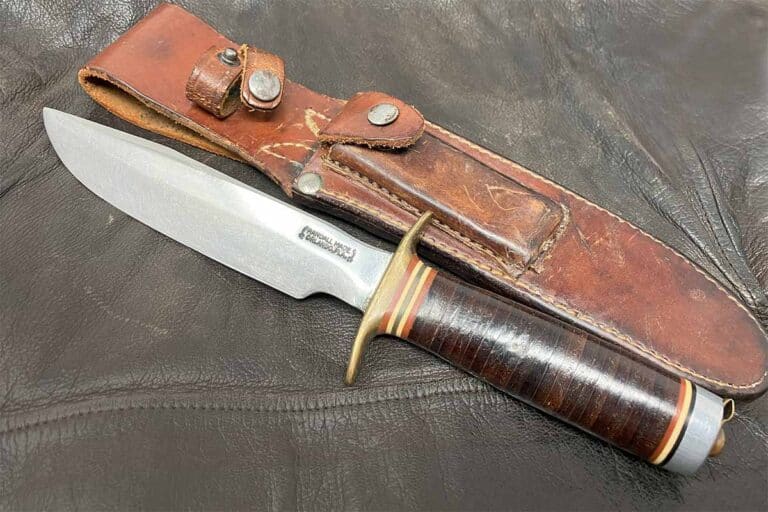
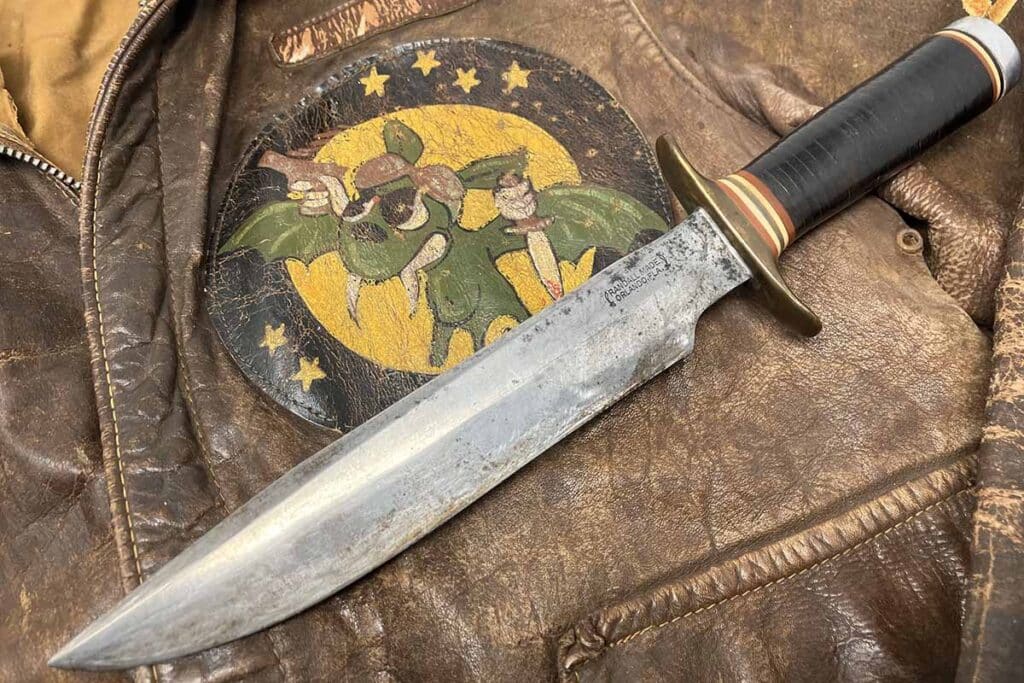
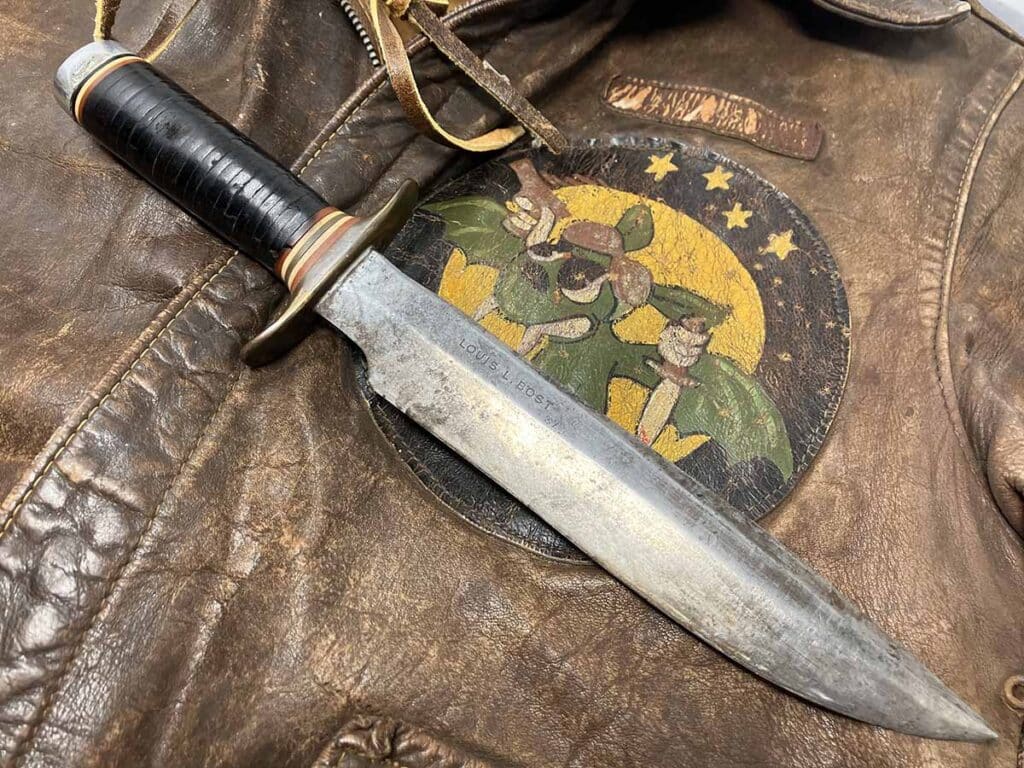
Louis L. Bost’s, a radar operator in the 422nd NFS, Randall Model 1. In the background is his original flight jacket, displaying the Green Bat insignia of the 422nd NFS. His World War II medals include the Distinguished Flying Cross and Air Medal with eight oak leaf clusters.
The first squadron to complete training with the Black Widow and fly it into battle was the 422nd NFS. The 422nd was activated in Orlando on Aug. 1, 1943, but squadron members did not receive their first Black Widows until Nov. 20, 1943. While eagerly awaiting their planes, squadron members devoted considerable time to organizational duties and field training, and many of the officers and men qualified with pistol and carbine.
3 Model 1s
During this time, many pilots and radar operators of the 422nd also obtained Randall knives. Among the known surviving Randalls of the 422nd are three Model 1’s that belonged to radar operators Louis L. Bost and James W. Mogan, and pilot Lewis Albert “Al” Gordon. The knives were ordered in the latter months of 1943, perhaps into early 1944, while the squadron was training in the vicinity of the Randall shop.
Gary Clinton, an authorized dealer for Randall Made Knives and noted Randall collector, stated that “Every Randall is one-of-a-kind, since they are all handmade.” This is especially true for the Randalls of World War II, which was a time of experimentation and development. Randall Made Knives had a hard time acquiring some of the necessary materials to make the knives because of wartime constraints. As a result, there are many variations in Randalls from World War II, and you see can see some of the variations in the NFS group.
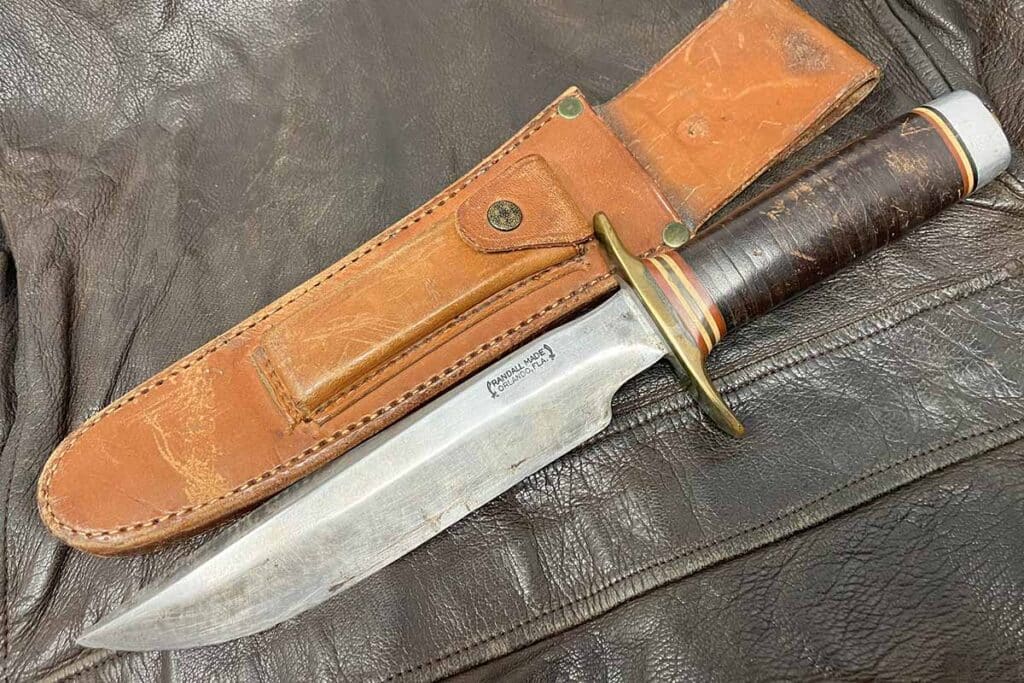
The Randall Model 1 of radar operator James W. Mogan, a radar operator in the 422nd NFS. He was in on two aerial victories during the Battle of the Bulge and the destruction of a V-1 Buzz Bomb in July 1943. Mogan flew 72 combat missions and received the Distinguished Flying Cross and Air Medal with 10 leaf oak clusters.
The monel wrist thong link on James Mogan’s knife is an example. Leather washers of different thickness in the handles, the shapes of the handle, and other variations are also products of material availability and evolution of design.
Chris Stanaback, an authorized dealer for Randall Made Knives and founder of the Randall Knife Collectors Club, agreed that the three Randalls are “prime examples of World War II fighters” and also noted that the left-side carry sheaths are typical of the vintage. Clinton concluded, “World War II Randall knives are rare in their own right, but the provenance associated with these knives is extremely rare. It is almost unheard of to have such a fine collection that can be attributed to a small group of airmen from this era.”
First Victories
With Randall knives in hand, the 422nd NFS departed Orlando in mid-February 1944 and arrived in the United Kingdom in early March 1944. After a frustrating wait for their Black Widows, members of the 422nd entered combat on July 3, 1944, when squadron commanding officer Oris B. Johnson flew the first P-61 combat mission in the European theater.
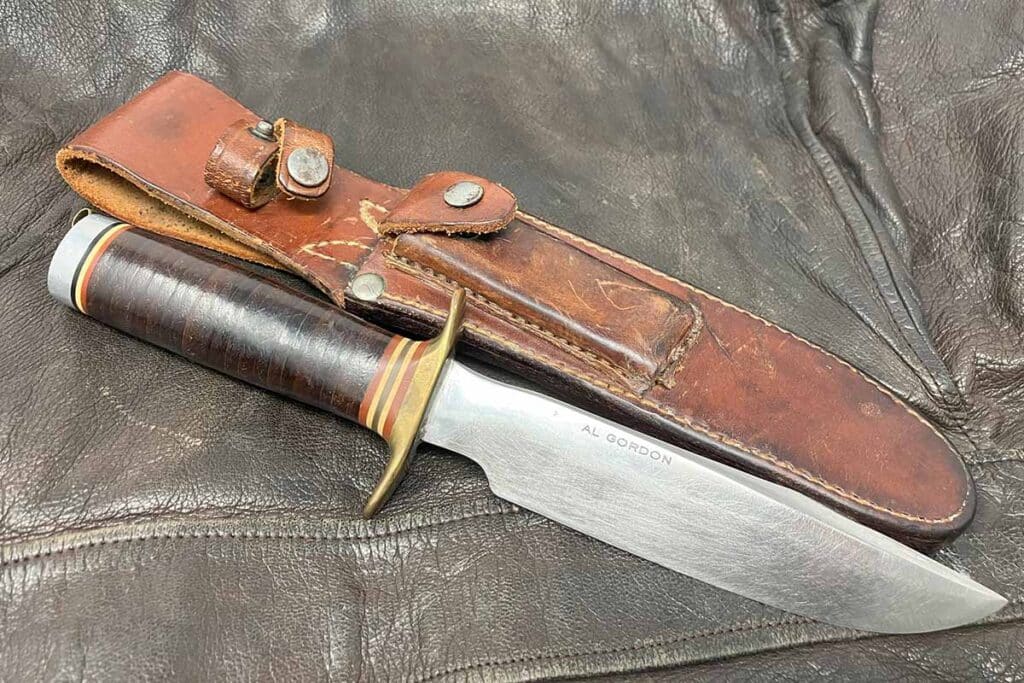
Etched with his name, the blade of Al Gordon’s Randall Model 1 is just under 6 inches. Gordon received the Distinguished Flying Cross and Air Medal with 11 oak leaf clusters during World War II.
The squadron’s first victories came against Germany’s V-1 “Buzz Bomb,” an early jet-powered cruise missile initially used against London in June 1944. Because the Black Widow in level flight could not match the 400-mph speed of the V-1, P-61 pilots on night patrol had to locate the Buzz Bombs and then attack them in a power dive. Though this was no easy initiation to combat, the aircrews of the 422nd were up to the task, destroying five Buzz Bombs in late July, including one by Lt. Mogan and his pilot, Lt. John W. Anderson*. By early August 1944, the squadron had relocated to Cherbourg, France, defending the Allied forces in Normandy fighting to liberate Europe.
Soon after beginning combat against the pilots of the German Luftwaffe in Normandy, the 422nd achieved the first American victory with the Black Widow in Europe. There were three enemy planes confirmed destroyed, four probably destroyed, and one possibly destroyed in August 1944.
These included one confirmed destroyed by Lt. Bost and his pilot, Lt. Leonard F. Koehler, and one probable and one possible by Lt. Gordon and his radar operator, Lt. Creel Morrison. By the end of the war in Europe, the squadron had attained a remarkable combat record, with 1,480 sorties, 78 enemy aircraft sighted and 43 confirmed victories—plus five probables and five possibles—destroying more than half the enemy planes they encountered.
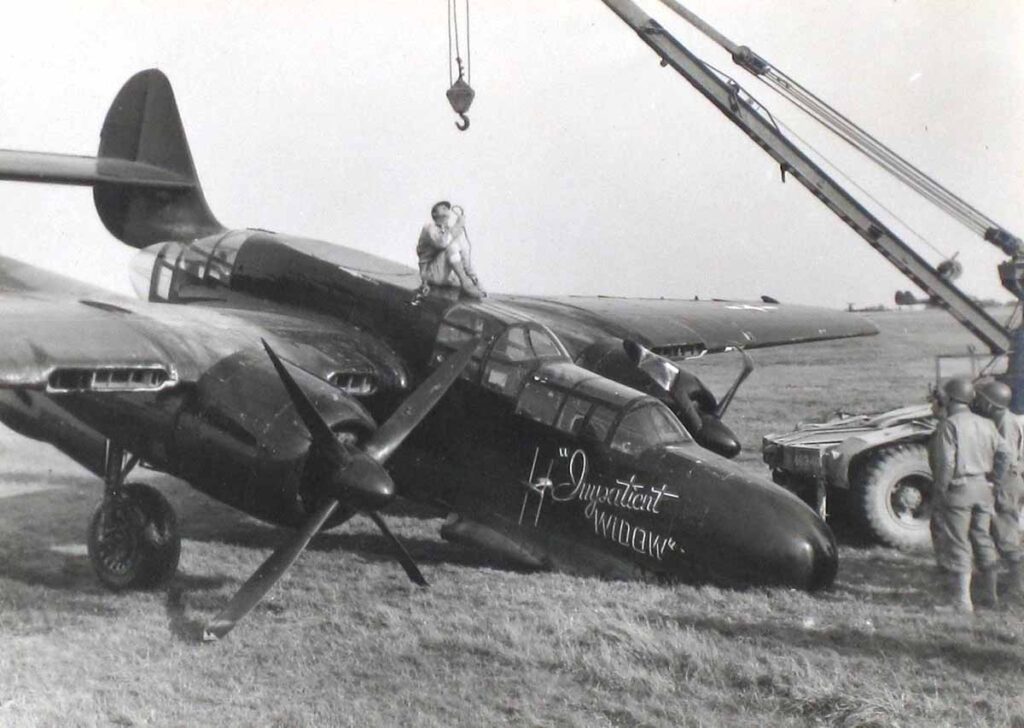
Gordon’s P-61, Impatient Widow, gets attention after some battle damage.
In addition, the squadron excelled in ground attack missions, which were essential to prevent enemy troop and supply movements at night. In the process they destroyed or damaged nearly 1,000 locomotives, railroad cars and motorized transports, along with many factories and storage sites. The 422nd was the first American night fighter squadron to produce an ace pilot, and six of the nine total American night fighter aces were in the 422nd.
The Bulge
Perhaps the squadron’s finest hour was the Battle of the Bulge, when the Germans launched a fierce counter-offensive during the harsh winter of December 1944.
At night and in extremely adverse weather, the Black Widows at times were the only planes able to fly in support of the 101st Airborne during the siege of Bastogne, and their performance was simply magnificent. The 422nd shot down five enemy planes on the night of December 16-17 and again on December 26-27.
The non-stamp side of radar operator Louis L. Bost’s Randall 8-inch Model 1 blade bears his name. The brass wrist thong link and the cigar-shaped leather handle are characteristic of Randalls produced in the latter half of 1943. As a radar operator in the 422nd NFS, he was in on two aerial victories in August 1944 and March 1945. He retired as a major in the Air Force in 1963.
The squadron achieved a total of 18 confirmed victories in December 1944, compared to 10 total in the preceding four months. Stars and Stripes reporter Pat Mitchell accompanied Lt. Mogan and his pilot on a Christmas Eve patrol, and Mitchell’s front-page story described in dramatic detail the Black Widow’s victory over the German plane after a pinwheeling, 20-minute dogfight from 5,000 feet down to 500 feet.
Mogan and Anderson received the Distinguished Flying Cross for their courage, skill and determination during the Ardennes offensive. Bost and Gordon also received Distinguished Flying Crosses for valor and skill in aerial combat over Europe. The commanding general of the 101st Airborne Division gratefully acknowledged the squadron for their air protection during the Battle of the Bulge, noting that they repeatedly broke up German night fighter attacks on his troops and prevented the Germans from moving under cover of darkness.
A subsequent report on the battle showed that the 18 victories of the 422nd nearly matched the combined total of 20 achieved by six squadrons of Royal Air Force night fighters that December—truly remarkable considering that the RAF fielded 10 times as many operational aircraft, and that the 422nd had only four operational planes for much of the battle. In recognition of their heroism and pioneering efforts in night air combat, the 422nd was awarded the Distinguished Unit Citation (later renamed the Presidential Unit Citation) and the Fourragère of the Belgian Croix de Guerre.
The handle butt’s monel alloy wrist thong link, which was used from December 1943 into the first few months of 1944, suggests that Mogan’s Randall Model 1 was produced a month or two later than Bost’s. The reverse side of Mogan’s knife shows original name etching on the 7-inch blade. In the background is Bost’s original flight jacket, with artwork from squadron pilot Robert O. Elmore of two victory flags and a Black Widow.
Bost, Gordon, Mogan and the others in the 422nd Night Fighter Squadron deserve recognition for their essential contributions to the Allied victory in Europe, and the association between Randall knives and American military men such as these is an important part of the enduring legacy of Bo Randall and his finely crafted blades.
Sources:Queen of the Midnight Skies, by Garry B. Pape and Ronald C. Harrison; Conquering the Night, by Stephen Lee McFarland; Into the Night, by John W. Anderson and Martyne Anderson Kostka; 422nd Night Fighter Squadron: A History, by Charles McEwen, Jr.; “Black Widow Prowls Front, Stings JU88 in Sky Duel,” by Pat Mitchell, Stars and Stripes, Dec. 26, 1944; and Randall Made Knives: The History of the Man and the Blades, by Robert L. Gaddis
*Lt. John W. Anderson is the same Lt. John W. Anderson who supplied the vintage World War II images for this story.
The company’s long-time marketing manager retires after nearly 30 years of service.
Spyderco has been one of the most successful factory knife companies of the past half century, and a not-so-secret key to its success over almost 70 percent of that stretch has been Joyce Laituri.
Joyce’s last day at Spyderco, June 1, will be only slightly in the rearview mirror when you read this, but that’s probably the way she likes it. That’s because she’s not into personal glorification and wouldn’t want anyone to make a big fuss over her departure—which is just one of her many admirable traits.
Spyderco makes great knives. However, like all products, if not promoted correctly, the knives would not have sold like gangbusters the way they have over the decades. Such promotion has been Joyce’s bailiwick for most of the nearly 30 years she’s been with the company. From customer service circa 1995 she soon went to marketing, eventually becoming marketing manager in charge of all Spyderco catalogs, most of the ads, public relations, and most of the company’s relationships with writers, editors and many other industry pros.
Joyce Laituri
The Spyderco catalogs and ads under Joyce’s direction are industry standards. Chock full of detailed color images and incisive information about the knives, their backstories, materials, designs, collaborators and more, the catalogs in particular are among the best of any knife company ever.
As super as Joyce is at promoting Spyderco knives, it’s her ability to be friendly, funny, informative and genuine in her dealings with folks that stands out. A former airline stewardess from a time when all airline stewardesses had to be pleasing to the eye, Joyce is very pretty—though there’s much more to her than that. Her sparkling eyes and engaging smile and manner immediately put people at ease and make them enjoy working with her.
She is a master of customer relations and excels at keeping a running tab on everyone’s likes and dislikes. For instance, she and I share a love of dogs, and when we communicate we almost always talk about them. She adores her boxers, emails images of them and always asks about our animals, too.
A highlight of any SHOT Show was visiting the Spyderco booth and having a sit down with BLADE Magazine Cutlery Hall-of-Fame member Sal Glesser to go over the latest Spyderco knives. Running interference for Sal would be Joyce, all smiles and ready to provide the inside scoop on all the new knives, provide quality zippered bags full of samples and, of course, a few pieces of chocolate to satisfy the savage sugar beast in all scribes.
Joyce is a fountain of knowledge not just on Spyderco knives but knives in general, and BLADE® depended on her for conveying that knowledge. A veritable quote machine, she covered everything sharp, from knives for kids, the kitchen, rescue and more. She is a knife person and it shows. “If you live an out-of-doors Colorado lifestyle you own a pocketknife,” she once noted of Spyderco’s location in Golden, Colorado. “Most likely, you own several.”
She provided a much-needed feminine perspective for the male-dominated field of sporting knives, one she indicated wasn’t all that much different from the male viewpoint. “Honestly, my personal opinion is that women don’t vary much from men when choosing a knife,” she said, adding, “Sal has a saying that when you buy a drill you really don’t want the drill. What you want is the hole.”
Good times or bad, Joyce always adapted. The pandemic was no exception. Speaking of the adjustments the industry had to make to cope with the shutdowns, quarantines and the like, she related how Spyderco emerged from the storm as strong as any knife company. “These past months have been a testament to the leadership and health of our business,” she said toward the north end of the crisis. “Whoever could have imagined shifting literally overnight to work systems not used before in knifemaking? I raise my hat to all of us! We’re a feisty bunch, aren’t we?”
Yes—though none are feistier than Joyce. She educated many thousands of people on the utility and value of Spyderco knives, and by extension enhanced the popularity, importance and relevance of the entire cutlery industry. In her field of endeavor, none have done it better.
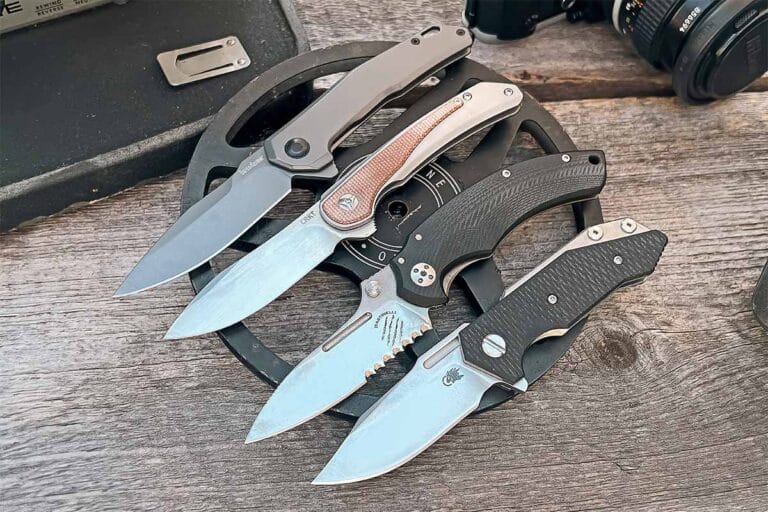
Today’s framelock folders are built tough, stylish and sharp.
Framelocks are popular with folks who put folding knives to rough use. They are built more robust than linerlocks simply because the lockbar is cut out and bent from the steel or titanium frame of the handle. The lockbar is the exact width of the handle scale, whatever thickness that may be. Consequently, compared to the spring of a standard linerlock, there is significantly more material locking the blade open and, thus, greater lock strength.
Hinderer Knives Halftrack
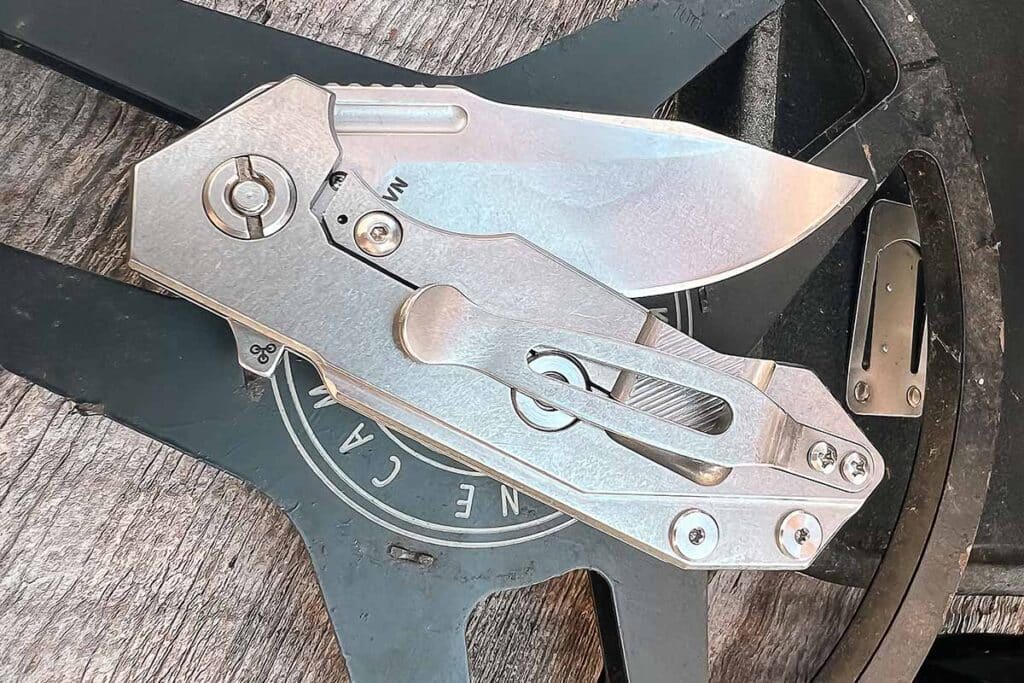
At the end of the titanium lockbar of the Hinderer Halftrack is a bolted-in steel block that contacts the tang and reduces wear on, and thus adds longevity to, the lockbar.
Named for the specialized military vehicle with a tracked propulsion drive system, the Hinderer Knives Halftrack framelock folder is, like its namesake, practically unstoppable. Despite the knife’s compact size, it has the horsepower to muscle through tasks big and small.
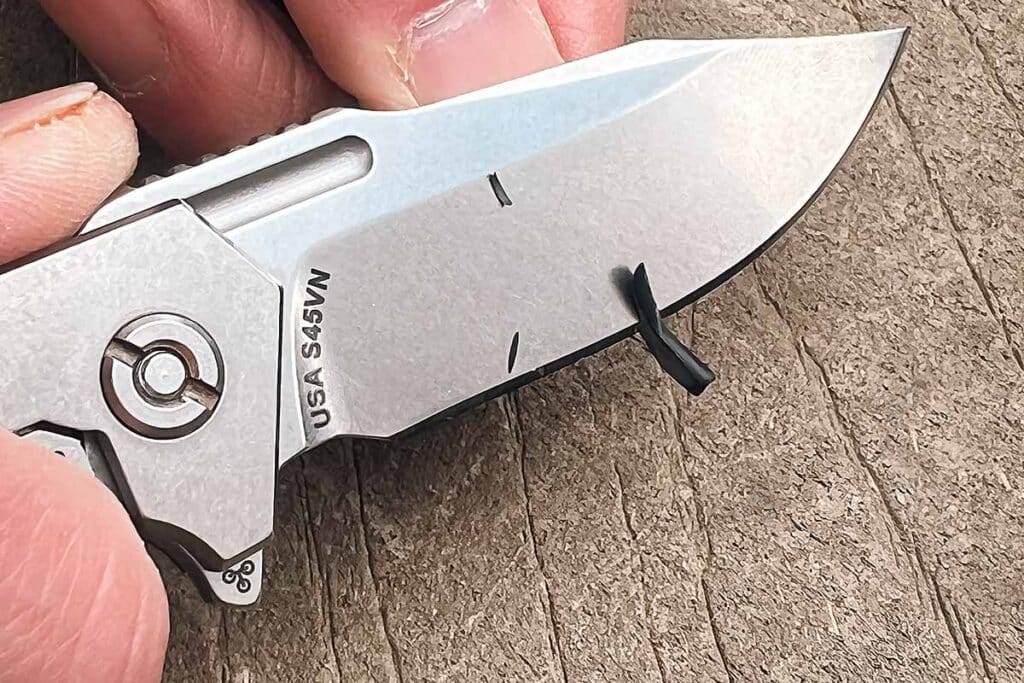
Hinderer Knives is known for high-end folding and fixed-blade knives aimed at the tactical market. The Halftrack is a bulldog of a tactical folder and one of Hinderer’s biggest sellers. A scaled-down tactical folder, it’s easy to carry. One thing’s for sure, the Halftrack is stout, with a handle that’s a little over a half-inch thick. The 2.75-inch blade is high-octane CPM S45VN stainless steel. The classic bowie shape has a defined tip for precise cutting. Other blade pattern options are a Spanto—Hinderer’s in-house design of blade grind that results in a very stout spear point—a tanto, wharncliffe and drop point.
The boxy handle frame is stonewashed titanium and the framelock is one of the strongest on the market. At the end of the titanium lockbar is a bolted-in steel block that contacts the tang and reduces wear on, and thus adds longevity to, the lockbar. Not all knife companies incorporate such a feature on their framelocks. A sturdy titanium pocket clip carries the closed knife blade tip up in the pocket. G-10 inlay in several color options on the presentation side sports a nice 3D milling pattern that aids in traction. At 3.85 inches closed, the Halftrack is robustly built without being too bulky.
The Halftrack blade has an excellent edge out of the box and is ready to work. The CPM S45VN stainless steel has staying power and holds an edge exceptionally well. As the author noted, it’s a material that can go the distance.
The blade has an excellent edge out of the box and is ready to work. The S45VN has staying power and holds an edge exceptionally well. It’s a steel that can go the distance. The handle doesn’t seem that comfortable at first but once you work with it you’ll understand the purpose behind the design. The large finger recess forms an integral lower guard that seats your index finger and prevents forward hand movement, while the angled handle butt fits perfectly in the palm of your hand. The boxy shape helps prevent it from being “lost” in your grip while wearing work gloves, too.
Expect top notch performance all around. The blade sails through just about anything—cardboard, hose, wire, meat and a lot more. It does it all easily. The MSRP of $425 may be somewhat steep but the knife is well worth every dollar. It’s a tough folder that will take abuse and last for years. Country of origin: USA.
Kershaw Helitack
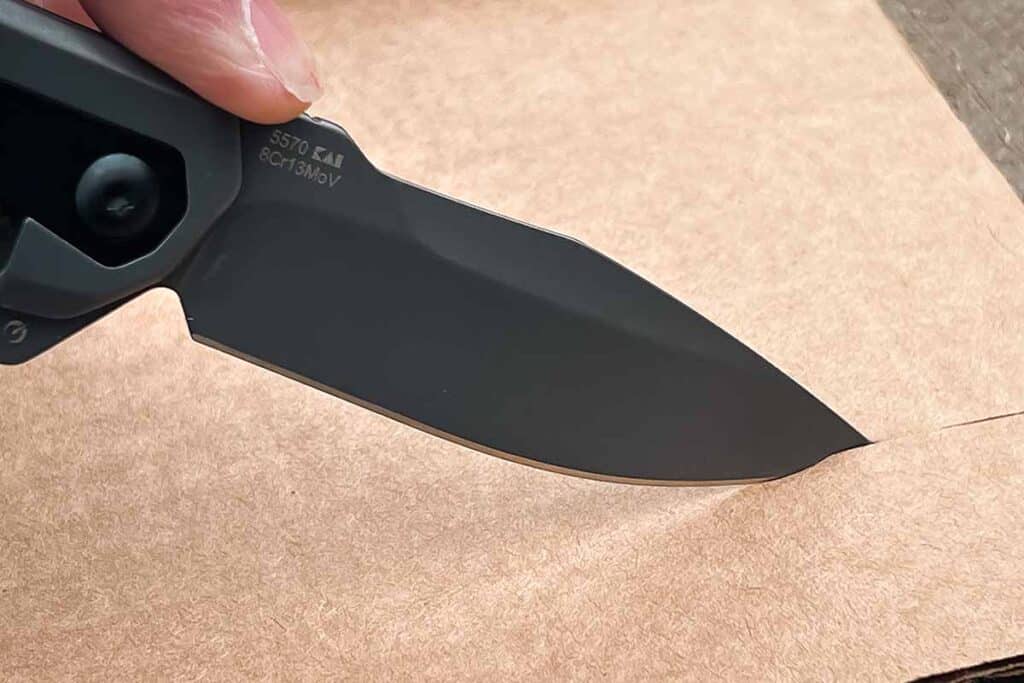
The 3.25-inch clip-point blade of the Helitack is built to excel at utility tasks. Such a pattern not only slices very well but also has a defined tip for precise cutting and scoring.
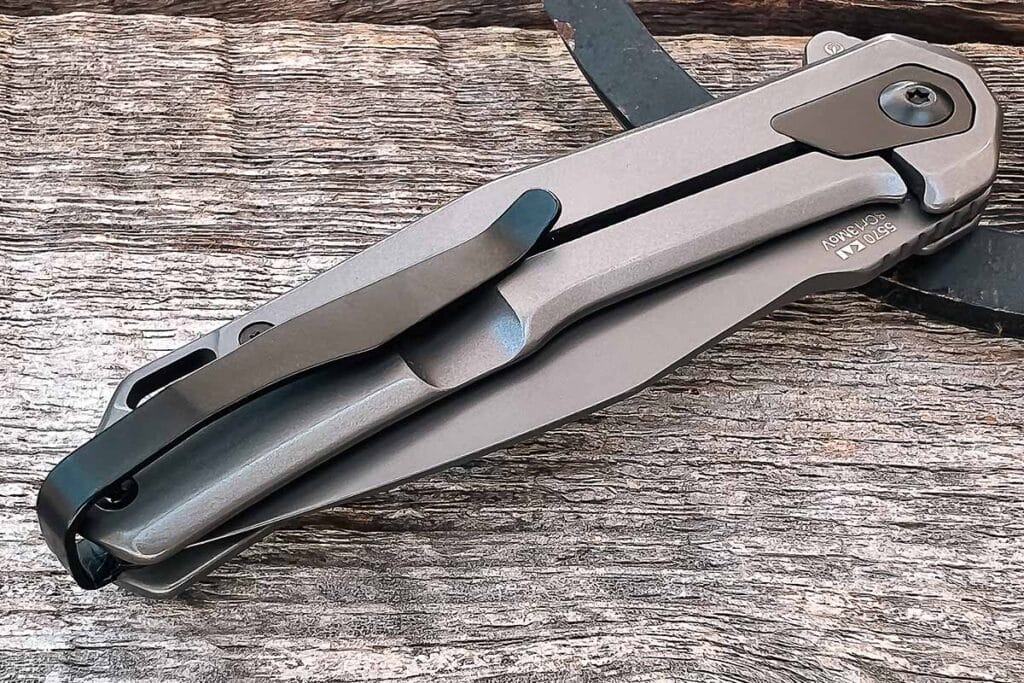
Named for the U.S. Forest Service helicopter borne firefighters who are flown to combat remote wildfires, the Helitack from Kershaw exhibits the same toughness and resolve that the special breed of firefighters possesses. Like firefighter gear, the Helitack is built tough and carries easily. The 3.26-inch modified clip-point blade of 8Cr13MoV stainless is razor sharp out of the box. (The 8Cr13MoV is the Chinese equivalent of Japanese AUS-8.) The blade deploys via a flipper tab and SpeedSafe assisted opener, and rides on a pair of caged bearings for the ultimate smoothness in opening and closing.
The handle is a stainless steel framelock and sports a chamfer around the edges to soften the grip and make it more comfortable. A reversible clip carries the knife deep in the pocket. The clip easily reverses to the opposite side using a standard T6 Torx driver. A steel lockbar stabilizer is integrated into the pivot on the lock side of the handle. It prevents the lockbar from traveling too far and thus losing tension when locking the blade open. The handle’s slender nature adds to the comfortable carry experience. The lock engages securely with zero play. The blade and handle sport a gray titanium nitride coating that’s handsome and low glare. The hardware is a contrasting black for an overall eye-catching look.
The Kershaw Helitack’s stainless steel framelock sports a chamfer around the edges to soften the grip and make it more comfortable. A reversible clip carries the knife deep in the pocket.
The 3.25-inch clip-point blade is built to excel at utility tasks. Such a pattern not only slices very well but also has a defined tip for precise cutting and scoring. The hollow grind allows the blade to be thinned out somewhat, giving the edge great bite without compromising strength. The Helitack tackles tougher materials with ease, something an EDC work knife must do.
The handle seems very comfortable and has no hot spots, though there were times I wished it were a bit wider to help me power through a cut. As slim as the handle is it carries very well. The lock held firmly. At an MSRP of $64.99, the knife is a great value. Country of origin: China.
Bastinelli Knives Bastien Coves
The BBR2’s titanium lock side is anodized a bronze color. The blade spine thumb rest is at the most forward point of the grip and has traction notches. The pocket clip carries the closed knife blade tip up and is non-reversible.
The knife designs of Bastien Coves of Bastinelli Knives are very progressive and geared toward tactical with an emphasis on high utility. Ergonomics are a priority with Bastinelli’s designs and they are some of the most comfortable tacticals around.
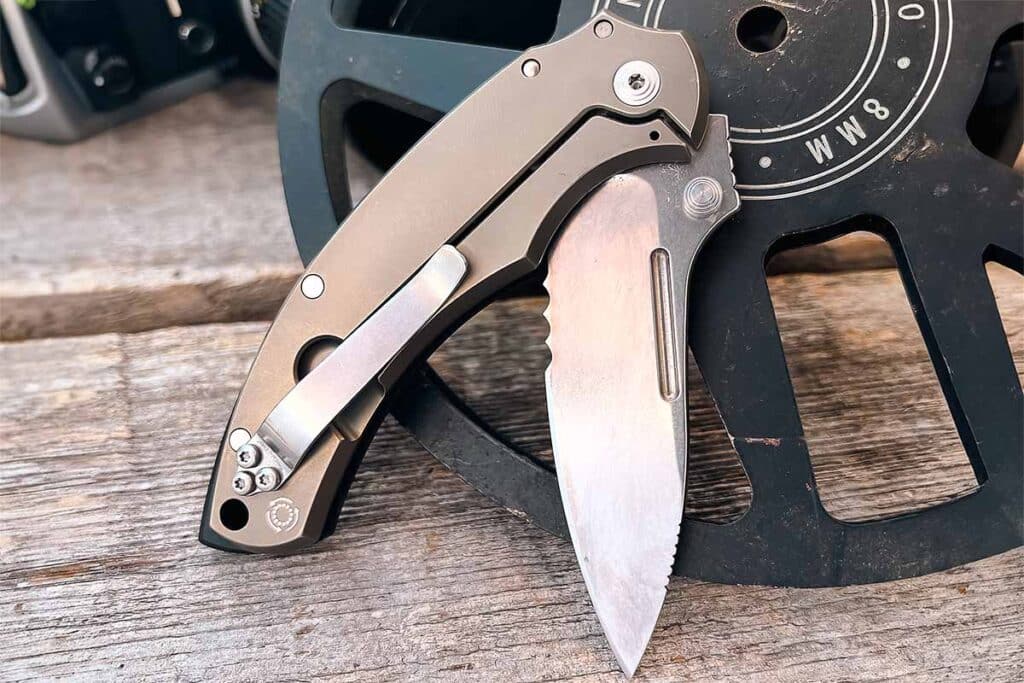
The BBR2 framelock folder showcases Bastien’s fine design talent. Made in Italy by Lionsteel, the knife has a 3.1-inch drop-point blade of D2 tool steel in a stonewash finish for a good visual contrast. The blade is rather interesting as it is a “dropped” design in relation to the handle. This permits Bastinelli to make full use of the ergonomic handle and allows the blade to be used to its full potential by lowering the cutting edge below the handle, reducing interference from the user’s hand and making the blade more useful in various cutting tasks. D2 was chosen for its high performance for the money. Dual thumb studs provide ease of one-hand opening, and the pivot’s Ikoma Korth Bearing System (IKBS) ensures ultra-smooth blade rotation. A fuller milled into the blade reduces weight and provides a nice visual and an aggressive presence.
If you follow Bastinelli’s work, you know the BBR2 is available in a plain edge blade. Starting in 2024, Bastinelli will begin offering the BBR2 in a partly serrated blade as well, and provided an early sample of the semi-serrated iteration to road test for the article.
A partly serrated blade on the Bastinelli BBR2 is new for 2024.
The handle is a half-and-half construction, with a milled G-10 presentation side and a titanium lock side anodized bronze. The curved handle with prominent index finger groove is one of the best things about the BBR2. It is super comfortable. The handle edges are chamfered as is the grip to remove some material to fit your hand better. The blade spine thumb rest is at the most forward point of the grip and has traction notches. An aluminum spacer protrudes stylistically at the handle butt to form a skull cracker point. The pocket clip carries the closed knife blade tip up and is non-reversible. (Sorry, southpaws.) I also like the rounded G-10, which helps the knife sit better in your hand. At first it did feel a bit weird with the rounded G-10 and the flat titanium lock side, but after working with the knife for a while you get used to it. MSRP: $250.
CRKT Padawan
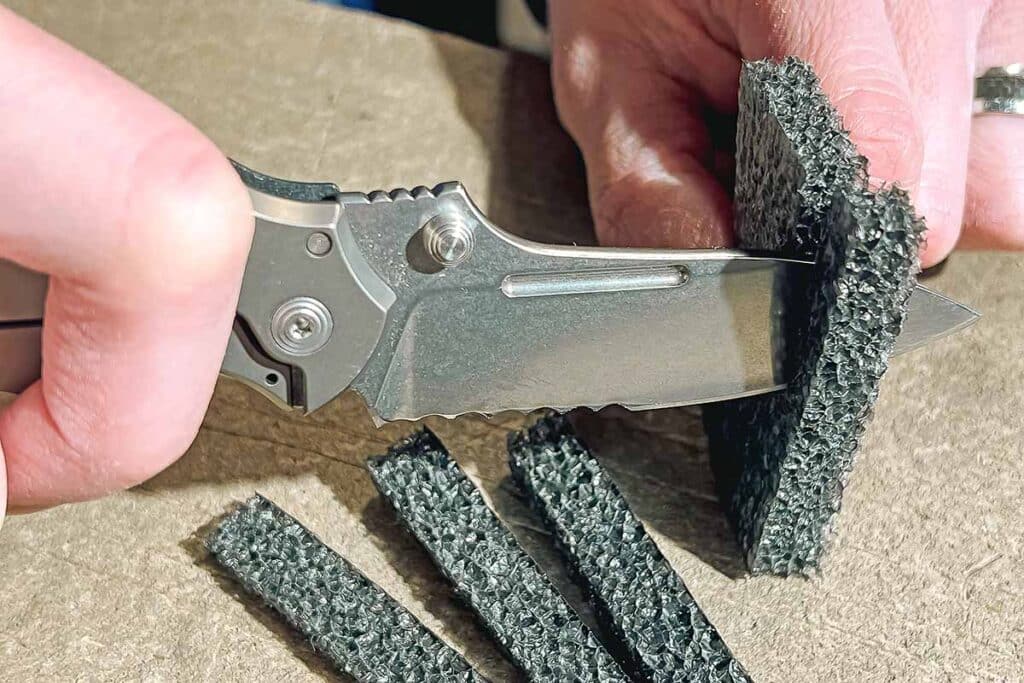
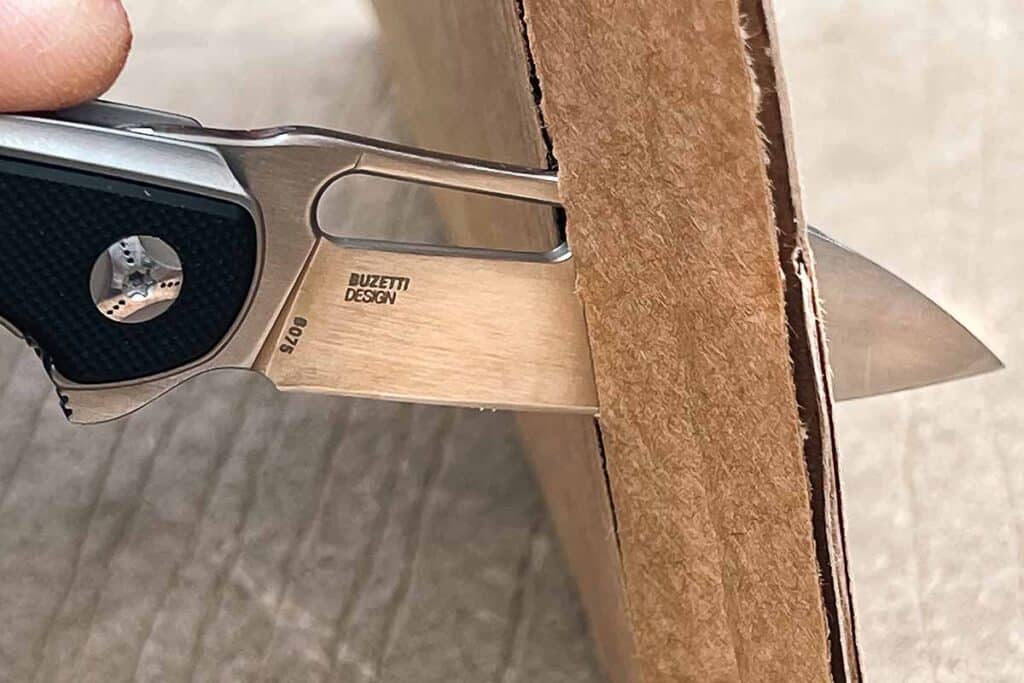
For using, the author’s favorite of the two blade patterns of the CRKT Padawan is the wharncliffe. The full flat grind gradually tapers down to the edge and makes it an absolute slicer.
CRKT’s newest folder design, the Padawan is designed by Brazilian knifemaker Pedro Buzetti of Presidential Prudente, Brazil. Buzetti is the protege of Flavio Ikoma (page 36), the Ikoma of the Ikoma Korth Bearing System (IKBS) and a well-known Brazilian knifemaker who also has several collaborations with CRKT. The Padawan is Buzetti’s first collaboration with the company and is a stylish EDC folder. Pretty much a scaled-down tactical folder, the Padawan features a steel handle and framelock construction. It comes in two blade styles—an upswept semi-skinner and a wharncliffe, both 3 inches long. Blade steel is Sandvik 14C28N stainless, comparable to AUS-8.
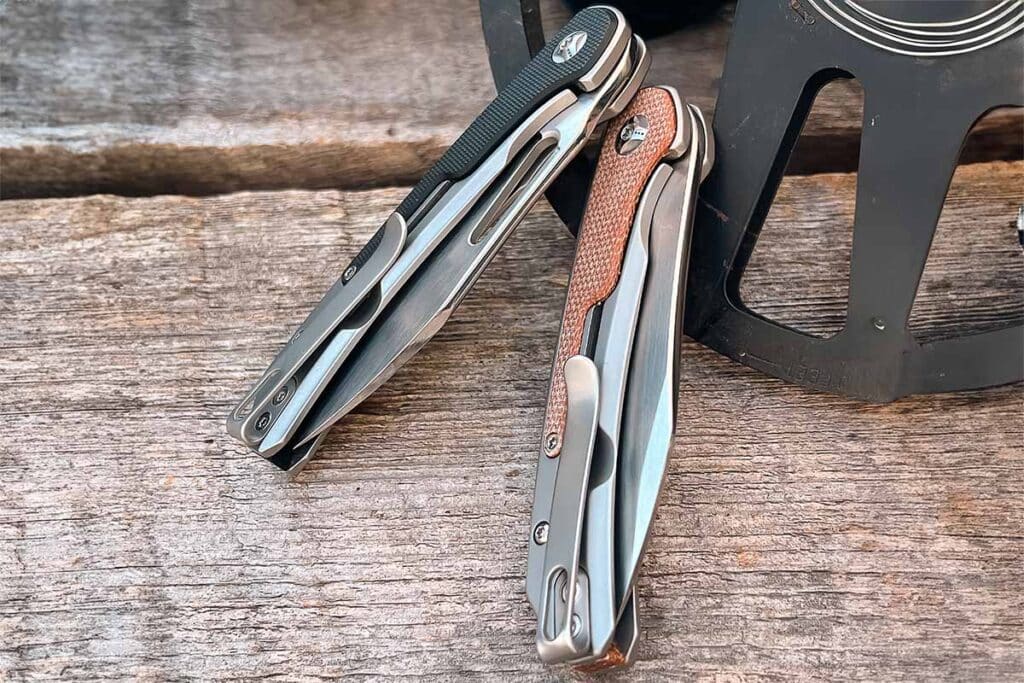
There are two choices of handle overlays: textured black G-10 for the wharncliffe and brown canvas Micarta® for the semi-skinner. The overlays not only provide enhanced grip and visual styling but also act as a lockbar stabilizer. At 4.1 inches closed, the Padawan rides very well in the pocket, thanks in part to a blade-tip-up, deep-carry clip. Unfortunately, the clip is not reversible. Both knives feature flipper opening and the IKBS to provide easy, fast blade deployment.
For using, my favorite of the two blade patterns is the wharncliffe. The full flat grind gradually tapers down to the edge and makes it an absolute slicer. The wharncliffe has a more defined tip than the semi-skinner’s drop point. The Sandvik 14C28N steel holds an edge well for the money and is fairly easy to resharpen.
The CRKT Padawan offers two choices of handle overlays: textured black G-10 for the wharncliffe and brown canvas Micarta® for the semi-skinner. The overlays not only provide enhanced grip and visual styling but also act as a lockbar stabilizer.
The Padawan is a breeze to carry. It just disappears in your pocket. The handle is slender and comfortable, with the primary finger groove helping your index finger seat itself, with the rest of the fingers falling into place naturally. Chamfers in the grip make the handle feel slimmer than it actually is. Attention to detail is not lost at all, from the stylized tri-wing pivot screws to the mirror-polished, crowned blade spine. Such little touches make a good knife even better and add value. The Padawan is a great EDC framelock built stout that carries well without feeling bulky. MSRP for either version is a very reasonable $99.99. Country of origin: China.
Though always open to TSA interpretation, these tools just might pass muster.
It’s the job of Transportation Security Administration (TSA) agents to help ensure the safety of all commercial flights, which includes confiscating anything and everything from passenger carry-on that might jeopardize such safety. With the summer vacation season and the plane travel that accompanies it beckoning, the focus of this story is to avail you of some EDCs that might pass TSA muster.
Before continuing, there is always going to be that one TSA agent who will find something wrong with a carry-on EDC, no matter what it is, so be prepared for that eventuality. For the most part I read through the TSA’s rules and there appears to be some openings for such EDCs—not many, mind you, but some.
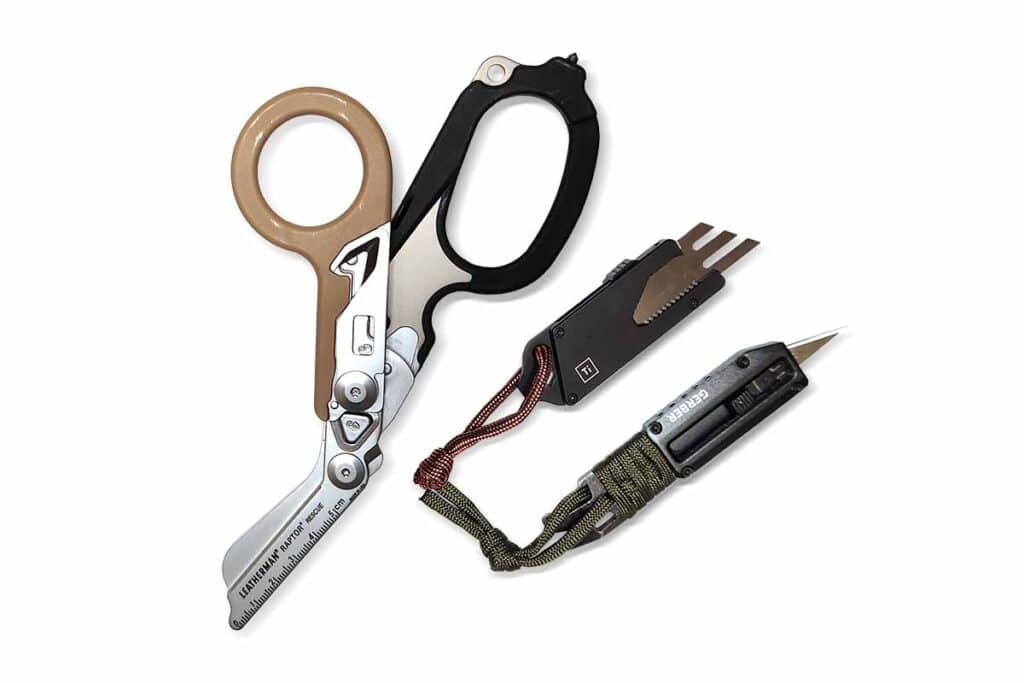
From left: the Leatherman Raptor, Big Idea Design TPT Slide and Gerber Prybrid-X.
One is the TPT Slide from Big Idea Design. Lets dive right in to why I think the TSA would OK the TPT for carry-on. First, simply because, in my experience, the TSA has. Back in my trade show days I carried several knives that were structured like the TPT. It is a utility knife with a removable blade. I would throw the knife in my carry-on minus the blade. Since I was working trade shows, I would simply leave some utility blades in the booth for when I got there. If you don’t have a setup like that it is easy enough to just buy a pack of blades in a store at your destination. When you depart to come home, leave them as an extra tip to the chambermaid.
The TPT takes utility blades, the single trapezoid style. You need no tools to remove the blade. In other knives of this style I have seen many different ways to remove the blade. The TPT’s method isn’t difficult but it isn’t a cakewalk like some others, either. Once you get the hang of it, though, you will have an easier time.
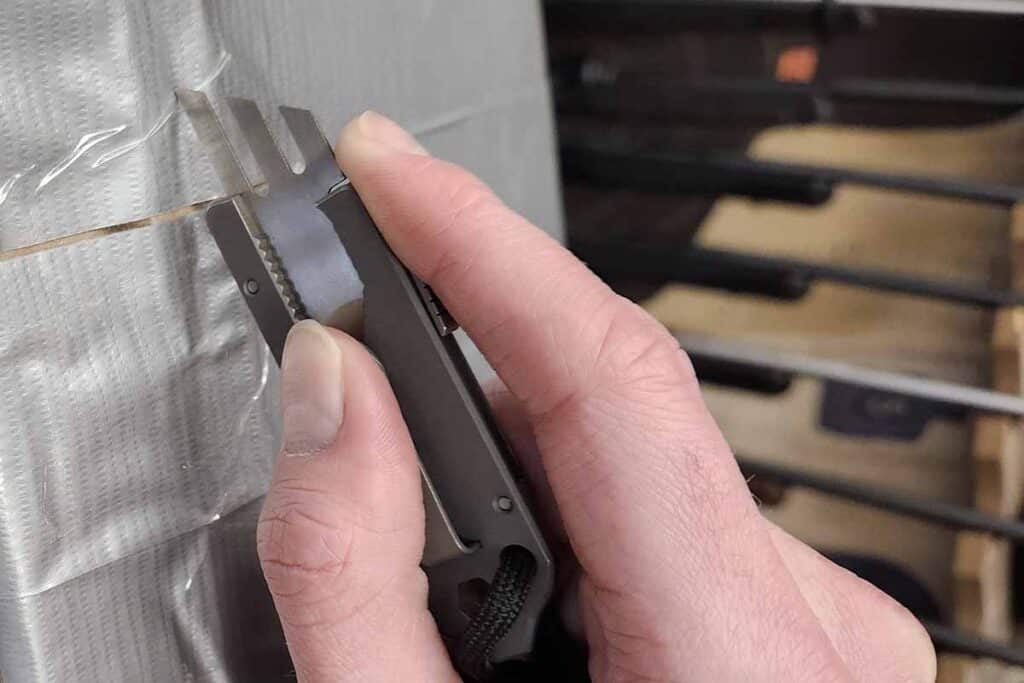
A flat-head screwdriver/pry bar is incorporated into the handle butt. There’s also a socket that takes quarter-inch bits. It is a trim package and has a pocket clip for carry or sleek leather pouch that also holds an extra blade. The pocket clip is tight—tight enough that when you get it, give it a good stretch to open it up. Included are two faux blades. They look exactly like utility blades but have no edge. They would be great for chores like breaking tape on packages, though I would not advise attempting to take them through security. You might be pushing your luck.
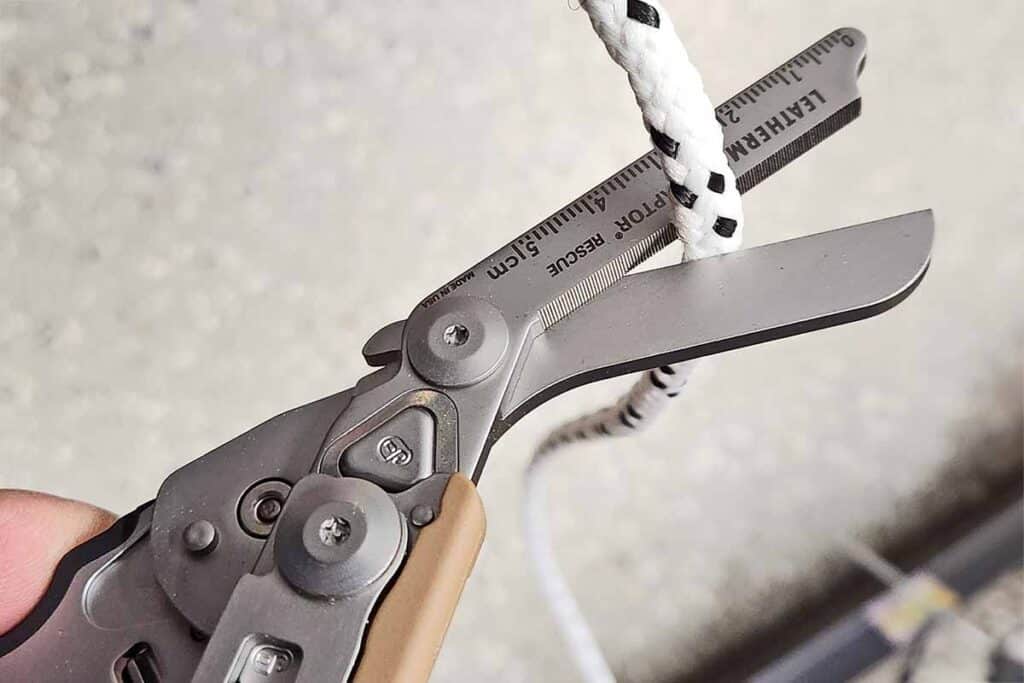
The author found the scissors of the Leatherman Raptor very useful. He carries a pair in his service bag. Good scissors can cut a variety of materials, from paper to cord and zip ties.
The TPT is a nice piece of kit and gives you a compact tool for EDC, though I can’t see why you couldn’t carry on any utility knife without the blades as long as it fits the guidelines. I do like it enough that it will see duty in my EDC rotation. Country of origin: USA. MSRP: $80.
Sound Substitue
The Leatherman Raptor is basically a set of EMT shears with a few tricks up its sleeve. If you read through the TSA guidelines, they exclude any scissors or shears with blades longer than 3 inches from the pivot point. The Raptor’s blades are only 1.9 inches. As well, I would figure the fact the blade tips are not sharp/pointed wouldn’t raise any alarms either. Keep in mind, I have not carried a Raptor on a plane. Unlike utility knives, I have no firsthand experience with shears to fall back on.
To carry the Raptor you have two choices: a plastic molded belt sheath and a belt clip. You can use the belt clip only when the scissors are folded. They fold up for a nice stowaway package. Other scissors features are an oxygen tank wrench, ring cutter, strap-cutter and a glassbreaker. The sheath will accommodate up to a 1.5-inch-wide belt. I know a number of firefighters who carry a Raptor on a belt daily. I carried one for years on my ankle first-aid kit.
Use the tip of the TPT Slide’s faux blade to cut open packages and such. The faux blade is great in areas with knife restrictions.
It is a versatile tool with tons of cutting power. The one blade is shaped like a sheepsfoot and, if you use the point, can be manipulated to score or cut things. The Raptor might not be as quick to use as a knife but it does have uses a knife doesn’t. Best of all, it doesn’t incorporate a bottle opener. (As you may or may not know, I hate having bottle openers on everything. At the current rate, pretty soon humans will be born with bottle-opening appendages.) If I were limited to what I could carry for an EDC, the Raptor would be a good practical alternative to a knife. Country of origin: USA. MSRP: $79.95.
Light L’il Bro
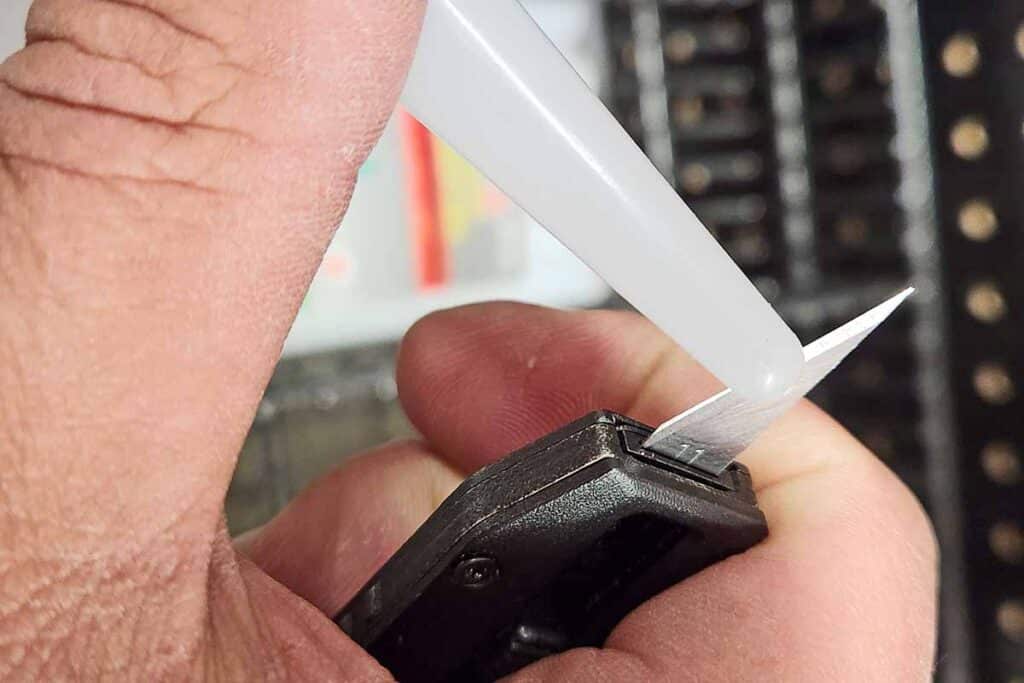
The Gerber Prybrid-X might look familiar as it has a big bro, the Prybrid. The Prybrid-X appears to fall under the TSA’s removal-blade category, but instead of a utility blade it takes a #11 crafting blade. The latter might not be as widely available as a utility blade, though by no means is it like shopping for hen’s teeth, either.
To deploy the blade, depress a button and push the blade out the front. The Prybrid-X comes with a pry bar, wire stripper, bottle opener and two flat-head screwdrivers formed out to the tips of the pry bar. It is a design that takes up very little real estate in your pocket. It does have a clip but the paracord lanyard makes it easy to find at the bottom of a pocket.
Sometimes a blade’s ease of access is more important than its size. You can do a lot of chores with the small, sharp blade of the Prybrid-X.
It is a light-duty tool for opening packages, stripping Romex® wire, digging out splinters, etc. If working in non-knife-friendly places like some retail stores, it is a great tool due to its low profile. For the size and weight, I can see it in, say, a tactical pocket pouch or just as that extra blade crazy knife guys like to carry. Country of origin: USA. MSRP: $28.
The Challenge
Carrying an EDC can be challenging at times for many reasons, including regulations and workplace rules. I have a friend whose workplace banned knives. Hence, he couldn’t carry a Swiss Army knife to work but could carry a multi-tool because it was “not technically a knife.”
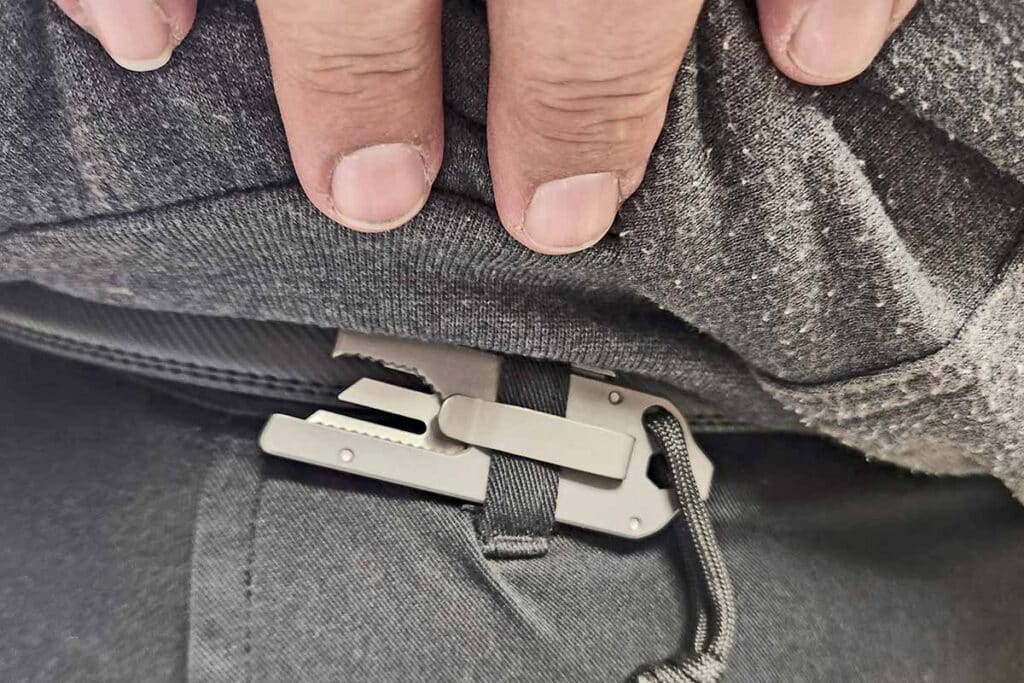
A trim piece such as the TPT is easily carried in the belt line. The author likes carrying it in a belt loop. It saves space in a pocket and promotes easy access.
Fortunately, the knife community is constantly innovating and finding ways to address situations where a “TSA safe” tool is needed, though such tools are few and far between. And that is the challenge. I would like to know if there are more such implements out there. Instead of utility knives, you just remove the blades from, list the more creative stuff in the comments below, the things that make you sit up and take notice.
New Knife-of-the-Year Awards rules, categories and protocol announced!
Other updates include how the awards are determined, where they are presented and more
The 43rd Annual BLADE Show is proud to announce several updates to the BLADE Magazine 2024 Knife-of-the-Year® Awards, including the addition of five new awards and the termination of two old ones.
The Knife-of-the-Year Awards are, of course, for factory knives only and submitted only by eligible exhibitors at BLADE Show ’24.
The new awards for 2024 are:
American-Made Fixed Blade of the Year
Imported Fixed Blade of the Year
American-Made Folding Knife of the Year®
Imported Folding Knife of the Year®, and
Automatic Knife of the Year® presented by PVK.com.
The new awards join the holdovers of Overall Knife of the Year®; Most Innovative American Design; Most Innovative Imported Design; Best Buy of the Year; Investor/Collector Knife of the Year®; Manufacturing Quality Award; Accessory of the Year; Knife Collaboration of the Year; Kitchen Knife of the Year®; Publisher’s Award; and Industry Achievement. (The latter two are picked from individuals in the knife industry by the staff of BLADE Magazine.)
The updates increase the overall number of awards from 13 to 16.
The old awards that have been discontinued are American Made Knife of the Year® and Imported Knife of the Year®, though in actuality they have simply been expanded to include individual awards for fixed blades and folders, both American made and imported.
Procedural Changes
There are also changes in the way certain awards are determined. Those modifications include:
Overall Knife-of-the-Year Award: In the past, the winner of this category was determined by the leading vote getter between the American-Made and Imported Knife-of-the-Year categories, the latter two which have been discontinued in 2024. This year, whichever knife receives the highest number of votes of ALL categories is the Overall Knife of the Year.
Best Buy of the Year Award: Unlike in the past, there will be no specific spot in the display area for entries in this category. Instead, ALL entries in ALL categories must be accompanied by the correct manufacturer’s suggested retail price (MSRP). As a result, ALL knives in ALL knife categories accompanied by the correct MSRP are eligible and considered by the judges for the Best Buy of the Year.
Manufacturing Quality Award: Like Best Buy of the Year, there will be no specific spot in the display area for entries in this award category as in the past. As a result, each entering exhibitor must submit a list of each knife and category he/she enters so the judges can check the lists, view/evaluate the applicable knives, and vote for the exhibitor of his/her choice for the Manufacturing Quality Award.
PVK Auto Award
Presented by PVK.com, the Automatic Knife of the Year goes to the best knife that opens automatically by the push of a button, slide, concealed release (scale, bolster, etc.) and so on. The knife can be conventional or dual action (opens as both a manual and an auto) out the side, single- or double-action (both opens and closes by the operation of a slide, button, etc.) out the front, and so on.
Award Venue Moved
Along with the BLADE Show Custom Knife Judging Awards, the Knife-of-the-Year Awards will be presented Saturday at 8 p.m. in the Garden Court area of the Renaissance Atlanta Waverly Hotel on the floor above The Pit. This is a change from last year’s award venue, which was next to The Pit in the hotel lobby.
Display Area
Entries for the BLADE Magazine 2024 Knife-Of-The-Year® Awards will be on display in the front lobby beginning show Friday. As noted, the awards are for factory knives only and submitted only by eligible exhibitors at BLADE Show ’24.
New Rules For Exhibitors
Complete copies of the new rules for the BLADE Magazine 2024 Knife-of-the-Year Awards were emailed to all eligible exhibitors in packets well before June. All eligible exhibitors are advised to go over those rules with a fine-tooth comb to ensure they do not miss out on any of the new rules and thus possibly miss out on winning one or more awards as a result.
Entry Deadlines
Entries will be accepted at the display area beginning at 9 a.m. June 7. No entries will be accepted after Noon the same day.