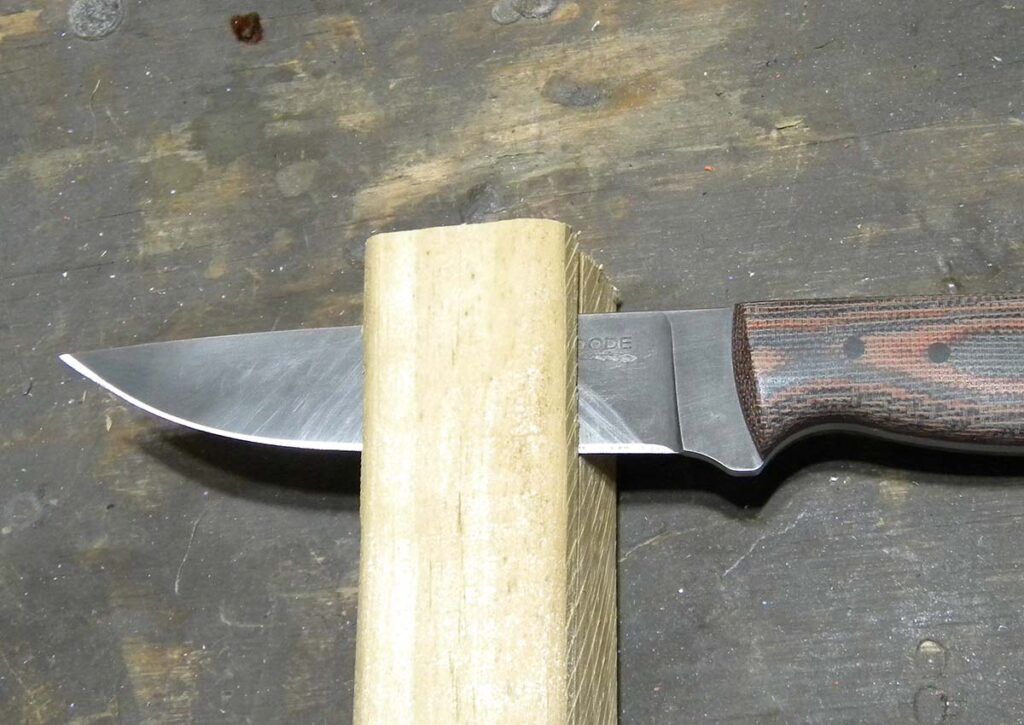
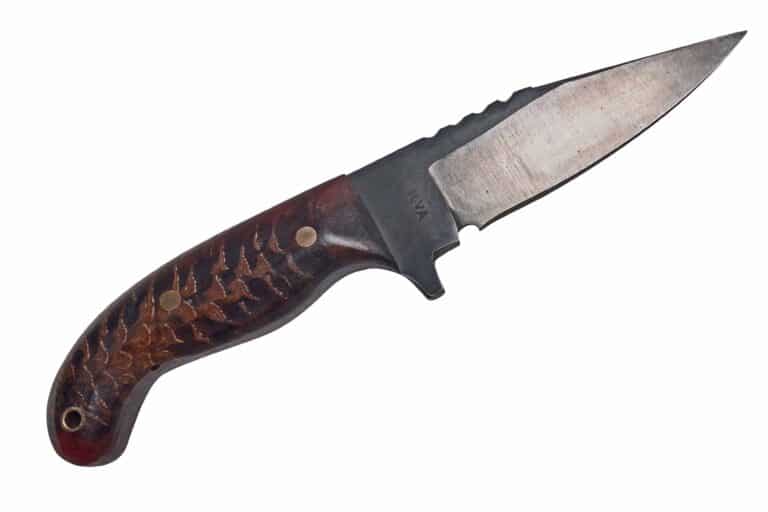
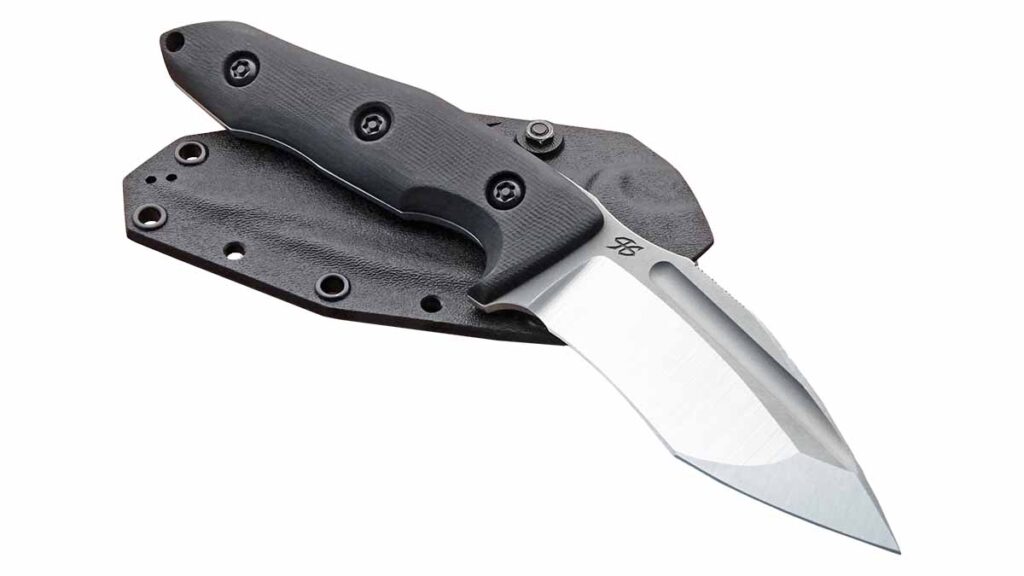
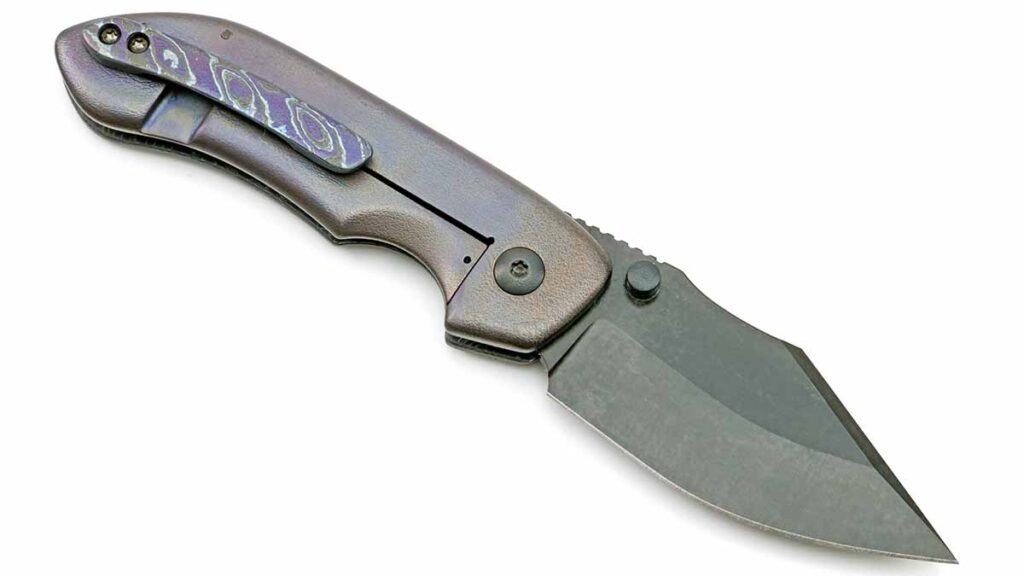
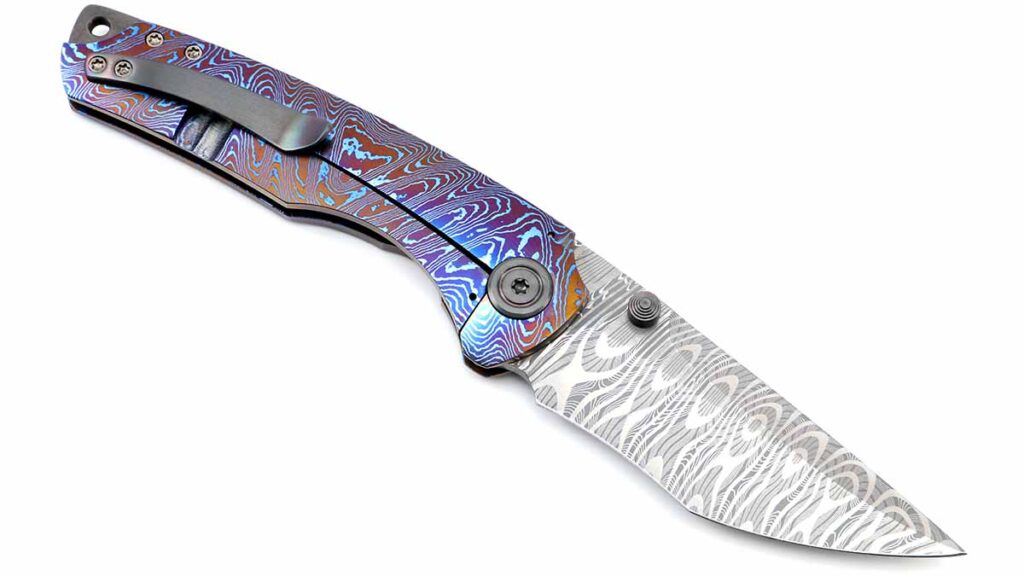
B. Goode H.U.T. 4 high steps its way through the author’s test drills
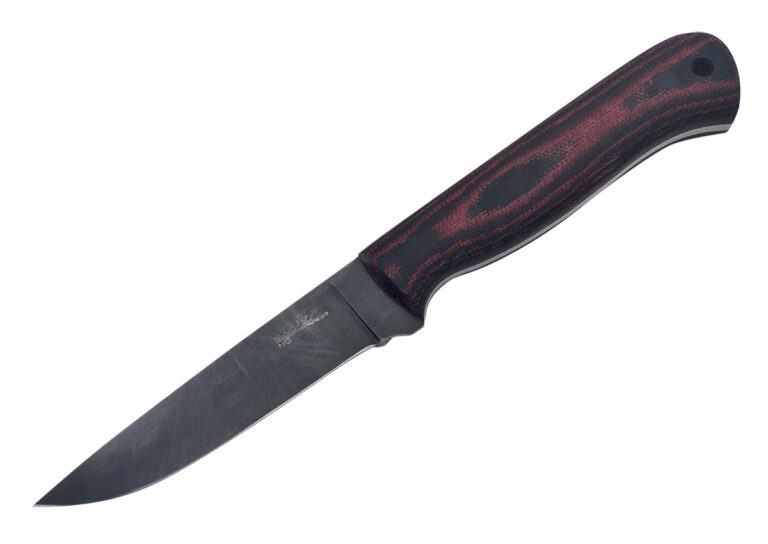
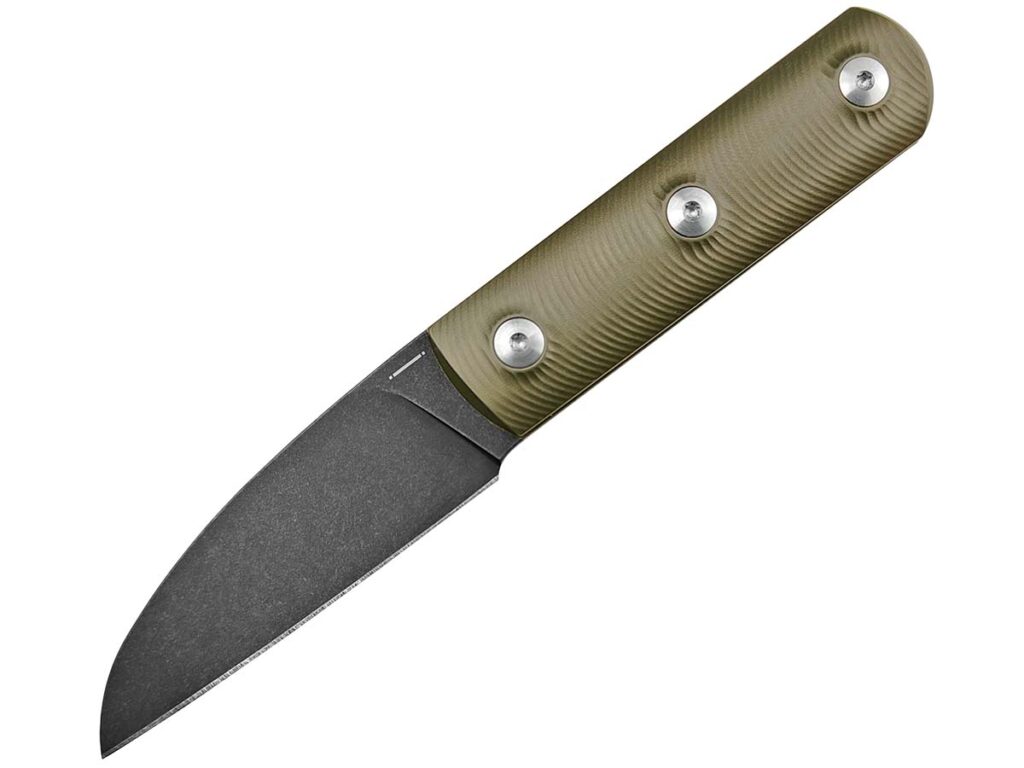
The H.U.T. 4 by Brian Goode of B. Goode Knives reminds me of my military days—it just needs the “2, 3” before the “4.” The acronym and number stand for Hunter, Utility, Trail, 4 inch. An all-around edged tool that can be used for multiple tasks, it’s the one knife you always grab for when cutting needs to be done. How well it cut I’ll let you know.
Light Duty Cutting
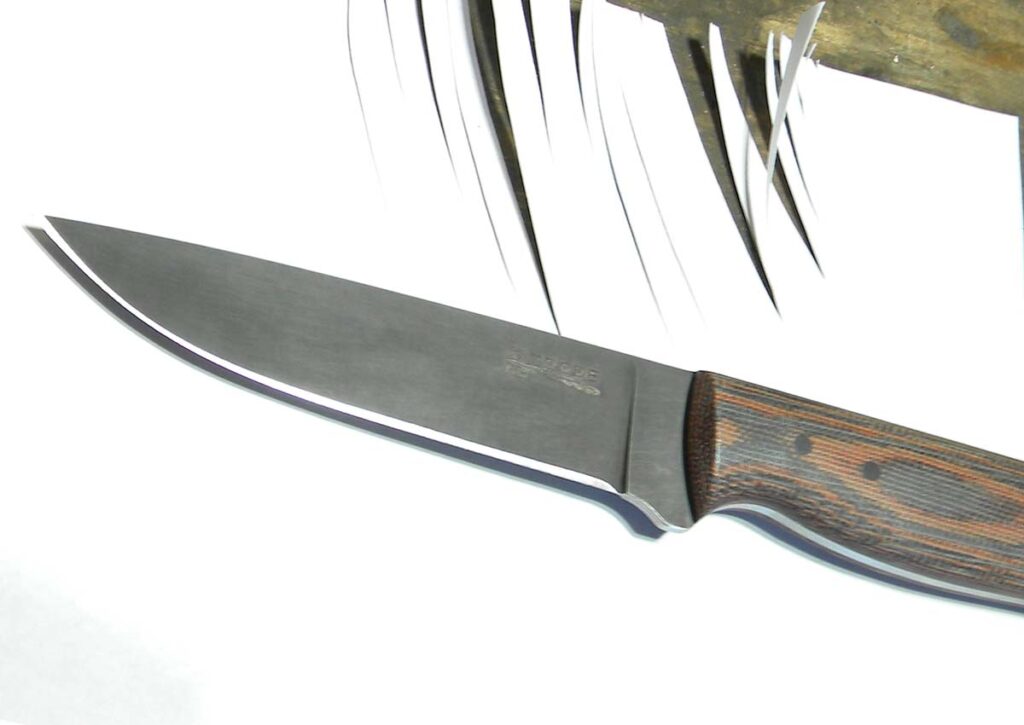
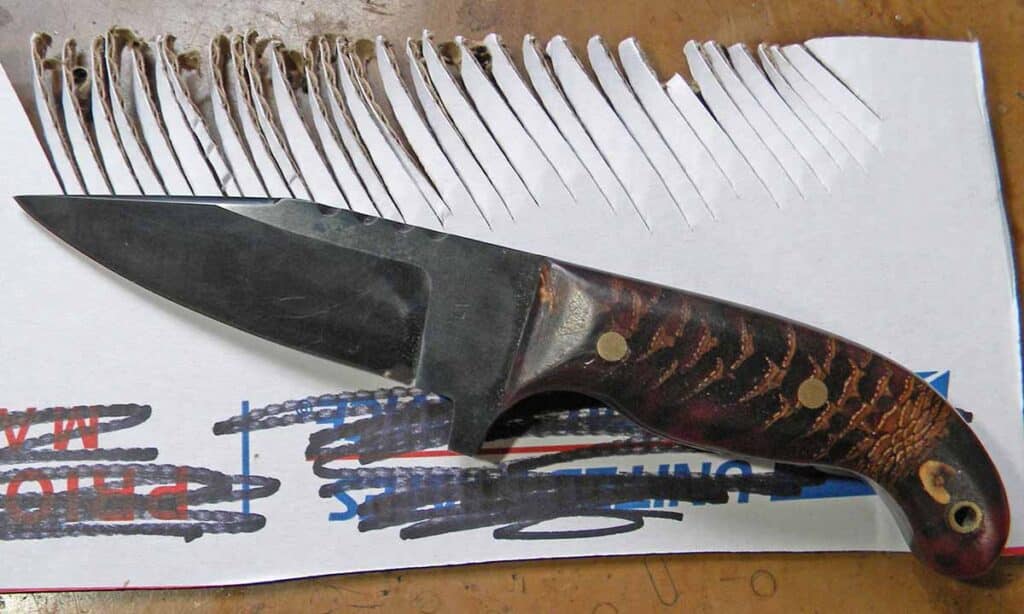
There was no difference between the first paper cut test and the last one. The H.U.T. 4 stayed sharp.
I began with a simple yet effective test—the paper slice. I grabbed the H.U.T. 4 with my thumb and index finger and slid the edge into the paper. It kept slicing for the entire blade length. I could hear each slice, so it’s very aggressive in the 20-pound bond paper. You really have to watch closely so you don’t skin a flap from your finger.
Single-walled cardboard was next. I used a push cut and the knife didn’t fail. I felt no resistance while cutting. The H.U.T. 4 zipped through quickly. The blade did get some wipe marks on the acid finish.
Medium Duty Cutting
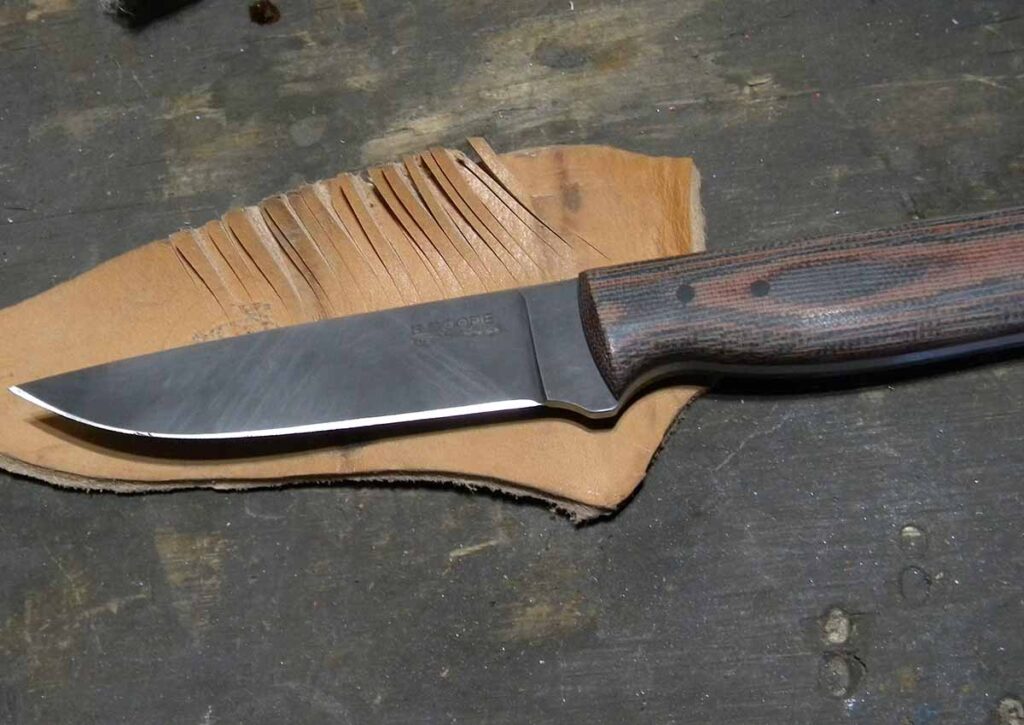
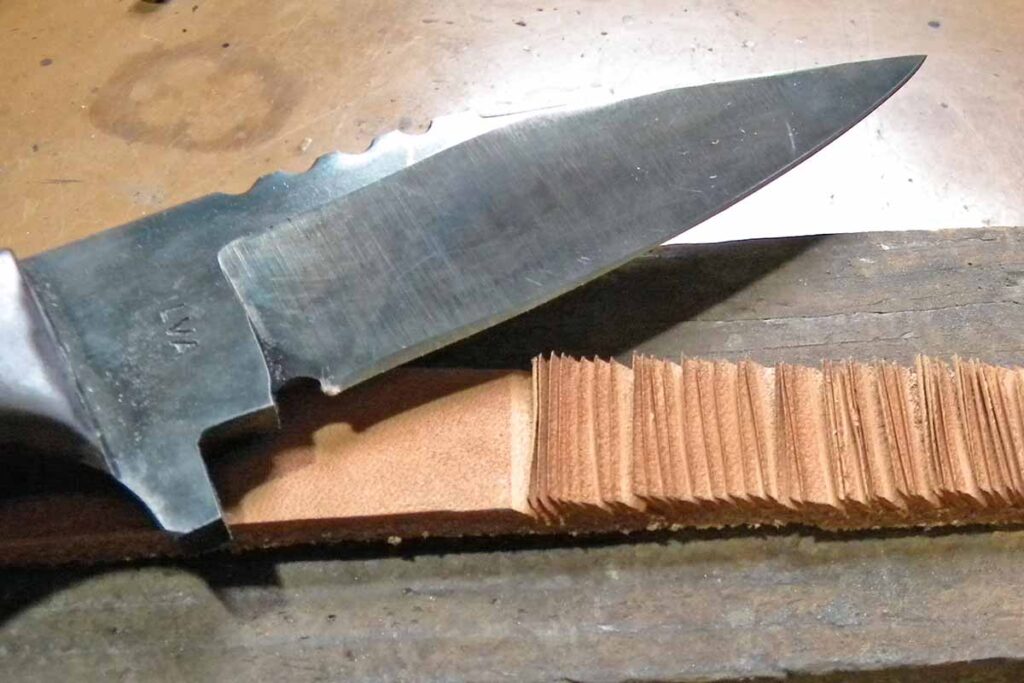
The knife sliced the 8-ounce leather quite forcefully. Each time the edge hit leather, the author heard it slice.
Grabbing some scrap 8-ounce leather, I did some skiving and slicing. The knife sliced quite forcefully once more. Each time the edge hit the leather, you could hear it cut. This is a very cool test to do. Brian’s knife is light and fast, so you must be quick and get your fingers out of harm’s way.
Heavy Duty Cutting
The H.U.T. 4 was a whittling beast on a ¾-inch dowel rod, providing extremely smooth cuts with nice curlicues at the end. The handle is very comfortable with no hot spots. I went from fine cuts to deep cuts with a slight movement of my wrist. The knife is easy to control.
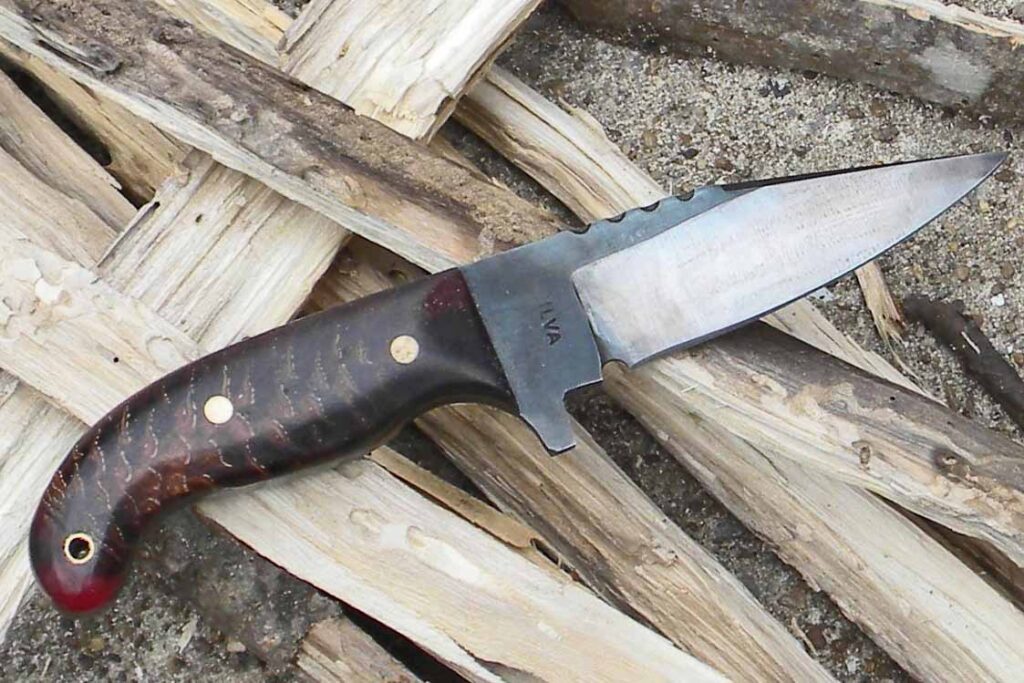
Using a chunk of wood railing as a baton, the author beat the H.U.T. 4 into another piece of railing. The wood split very fast and no shock carried up the author’s arm.
Even though the knife has only a 4-inch blade, it can handle larger trail chores like splitting wood. Using a chunk of wood railing as a baton, I beat the H.U.T. 4 into another piece of railing. The wood split very fast and no shock carried up my arm. I split both with the grain and across the grain with no difference. The edge was still perfect and I gave it some wood smears for character. It is a fun knife to use.
It was on to my favorite medium: sisal rope using push cuts. The H.U.T. 4 didn’t let me down. Two-hundred sweet crunching cuts happened very quickly. This is one smooth slicing, sharp knife. As fast as I could move the knife it was cutting. The handle is contoured for control and comfort.
In what could be construed as abuse, I gave the fixed blade 30 whacks into a deer antler. After scattering antler chips all over the workbench, the knife passed with flying colors—no damage and still very sharp. Excellent heat treat!
It was back to the 20-pound bond paper for the final cut. There was no difference between the first paper cut and the last one. The H.U.T. 4 stayed sharp.
Bottom Line
This is a great knife to have on you all the time—not too big, not too small and extremely sharp. Any changes? Maybe some thumb notches.
H.U.T. 4 Specs Maker: Brian Goode, B. Goode Knives Blade length: 4” Blade material: 8670 carbon steel on the test knife; other steels available Blade grind: Full flat Blade @thickest: .125” Blade finish: Acid dipped Scales: Red and black canvas Micarta® Handle pins: G-10 Weight: 4.5 ozs. Overall length: 8.5” Sheath: Leather pouch/belt model Weight w/sheath: 6 ozs. Maker’s price for a similar knife and sheath: $350
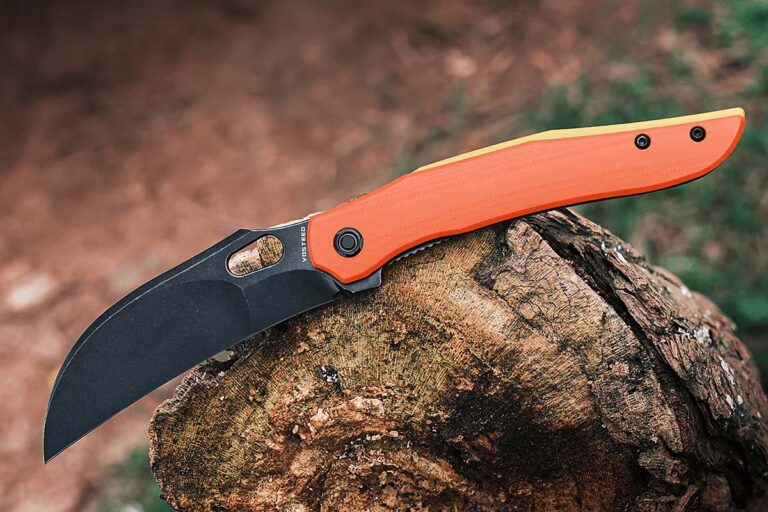
The Hawkbill Is An Excellent Multi-Purpose Blade, Great For Cutting, Carving And More.
Of all the blade styles at the modern aficionado’s disposal, the hawkbill may be one of the most peculiar.
As its name suggests, the blade is reminiscent of a raptor’s appendage, namely it’s beak. The point curves around, in most cases to a nearly 90-degree angle from the back, creating a hook shape. Overall, pretty dang cool. But it raises the question, exactly what the heck is it good for and why does it look this particular way?
In this article, we’ll delve into the origins, usage and modern iteration of this blade and what the heck it’s actually good for. Along the way, we’ll also perhaps help you pick out the best hawkbill blade for your needs.
Origin Of The Hawkbill
Many blade styles are rooted in history or evolved from another type of knife. The hawkbill, however, doesn’t have the clearest provenance.
The blade style is widely believed to have started as a farming and outdoor tool, an evolved version of the pruning hook. Somewhere along the line some industrious maker most likely figured a pocket sickle might prove right handy.
Likely it did for a classy vintner out among the grapes who did not want to slum it by asking for the help’s pruning hook. Heaven forbid. But as the greater part of humanity has broken free from its agrarian roots the utility of the hawksbill has expanded.
Modern Uses Of The Hawkbill Blade
True enough, rose growers and avocado ranchers likely still find the hawksbill handy. But the quirky style of knife has found a place for those not tilling their living from the soil.
Utility
Today, the hawkbill is best known for its utility role, prized by electricians, roofers, floorers and other craftsmen. The hook shape of blade helps it excel at certain tasks a straight blade might struggle. A few of the obvious are cutting carpet or shingles without scoring the unlaying material. Stripping wire is another area it earns an “A”.
Its curved tip also prevents it from being a hazard to its user in precarious positions—say crammed in a crawlspace or dangling on a rafter—where a clip point or the like might prove a bit pokey.
Carving
While not generally the go-to whittling or carving knife, the hawkbill earns its keep in this arena. For those who strictly practice this craft with knives, the style of blade is particularly good a removing large pieces of material at the begining of a project.
Tactical
Well… there are certainly companies out there selling their version of hawkbill knives with this in mind. Though, with healthy supply of DLC anything can be tactical—including a paring knife.
Given the vagaries of the word “tactical,” it’s difficult to claim it doesn’t fill this role. And certainly, there’s probably been more than one farmworker who’s thrown their hawkbill—or pruning hook—in his back pocket as Friday-night-on-the-town insurance. For the average Joe, however, it might not prove a prime choice in this role.
Unless specially trained, the hawkbill—like the karambit—is not the easiest blade to wield as a self-defense option. Funny thing is, many of the tactical “hawkbills” have nearly lost their defining feature—a truly hooked point. Some might argue, they are hawkbills in name only.
On the other hand, in more specialized “tactical” situations this style of blade could have chops. What comes to mind here is perhaps situations involving ropes—maybe nautical or mountaineering. The idea here is cordage could be cut one-handed in a switch, using the hawkbill to both hook and cut. A similar point on this, some law officers have favored a modified hawkbill given it works well to cut a motorist out of their seatbelt in an accident, without causing injury.
Those wed to the idea of a EDC Hawkbill, Spyderco has among the most time-tested renditions. The Byrd’s modified hawkbill blade lends itself to aggressive cutting tasks and its hollow-ground serrated edge makes mincemeat of anything its pulled against. Yet, there is enough of a tip available to puncture or pry, if the situation calls for it.
Like everything that rolls out of the Golden, Colo., concern, the Byrd is ruggedly made—constructed with a chrome-moly steel blade and fiber-reinforced handle. Its tear-drop shaped thumb hole gets the knife into the fray quickly and its four-position clip allows you to keep it at hand.
Of all the hawkbills, the Griffin is among the most EDC-friendly. Vosteed pars back the hook on the blade massively, making something at first blush look like an oversized sheep’s foot. But at closer inspection, the edge has a very slight obliqueness to it, so the tip curves in as you’d expect in a hawkbill. The baby is great at tip cuts, slicing, and stripping—about anything you’d expect out of a curved blade. But, it also can pierce straight on, much like a more conventional blade profile.
The knife is a production version of R.S. Knifeworks’ custom knife. It shows in some of the well-thought-out points of design. Chief among these is the handle that naturally follows the curvature of the palm and features an attractive and durable G10 scale. Another point I like is the compound grind on the blade, with more material at the heel for more rugged cutting tasks. The knife is a liner lock, with a clip (tip-up carry) and multiple deployment options—thumb hole, front flipper and back flipper. The only complaint I have is the clip isn’t reversible, but other than that the knife really hits the mark.
It’s difficult not to love the classic look of this hawkbill—one of the perks of Opinel. While I don’t use the knife mainly for garden chores, the French cutler has aimed the folder at that. The company calls it a pruner, and after testing it on a few wild rose saplings, it more than fills this role. However, with a sharp tip and a good edge, the No. 8 Hawkbill is adept in many other tasks. One of my preferred uses is as a fishing knife and believe it or not it guts your catch in the blink of an eye.
Nice point on this model, Opinel uses stainless steel in the blade (12C27), so if you take it into wet conditions you don’t have to fret about the blade tarnishing. It also keeps a nice edge, albeit one you’ll have to touch up now and again—especially if you use it in its pruning role. The knife’s wooden handle can lose its finish over time and retain moisture. Pro tip, have one this long and use it in wet conditions, you can sand down the handle and oil it to keep it safe. The only real bone I have to pick with the No. 8—away from yard chores—is the handle; it flares back like a traditional pruner, which isn’t always great for other tasks.
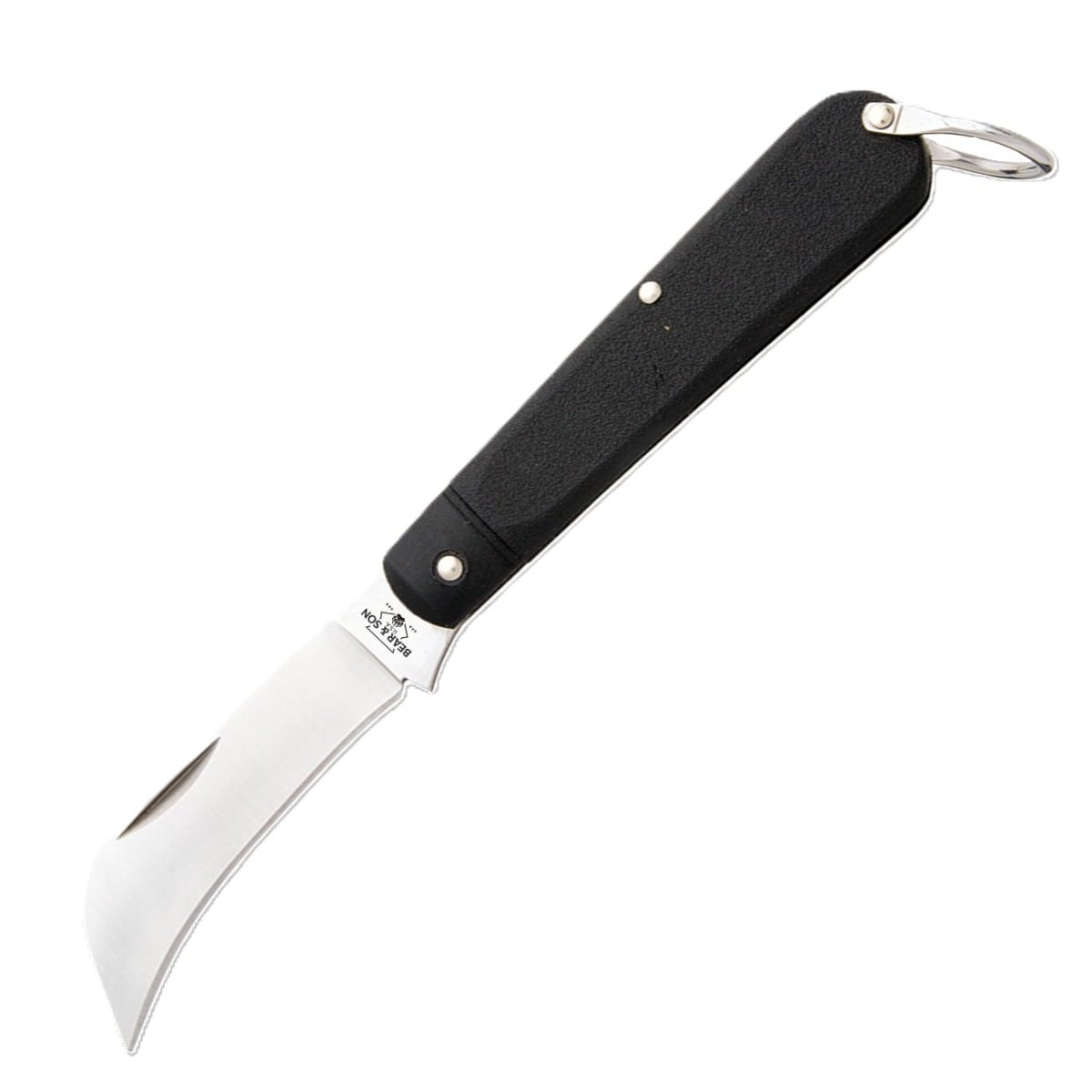
Perhaps the perfect handyman’s helper, this little hawkbill is designed to always be at hand. I think that’s the beauty of what Bear & Sons has created here, a right-sized utility knife. Personally, it’s a little small for my tastes as a primary knife and it’s a folder—which doesn’t make it quite as handy, it works great as a secondary cutting tool. I like the idea of this and plenty of folks who make their living with their hands back me up on the concept.You drop your main knife or leave it in your toolbox at another area of the work site, well, the Bear & Sons knife gives you a backup. Using it to help me rewire some outlets, the high-carbon stainless steel blade made quick work stripping. And while wasn’t reflooring, I did have carpet scraps around, of which the blade made mincemeat.
A big asset in both tasks is the hawkbill’s handle-to-blade ratio. The handle is an inch longer than the 2.75-inch blade, which gave me supreme control over the knife and the ability to choke up on the blade when required. To boot, Bear & Sons includes a large bail loop allowing you to tether it to your person or at the very least retrieve it from your pocket quickly. The only nit I had to pick is it’s a slipjoint with a nail nick opener. Most of the time this won’t prove an issue, but there are jobs where one-handed opening is a godsend.
I like this knife for something different in pocket carry. As Victorinox makes apparent, it again pegs this hawkbill as a pruner and it’s just about perfect for the weekend garden warrior. But this slim, light and small slipjoint makes the cut as an EDC option with a twist. A very straightforward design, the knife is elegant in its simplicity and has a very functional blade. The hook is enough for its designed purpose of pruning limbs, yet it’s angled just right to make it a near-perfect box cutter. At just 4 inches folded, with a 2-inch blade, it could be a warehouse worker’s—or anyone who has to break down cardboard on the regular—best friend.
Blue-collar tasks aside, like all Swiss Army Knives, it’s gentlemanly enough to handle more refined tasks—such as removing the foil from a wine bottle. It also has a nice section of straight edge to it, so it can accomplish pull-through cuts adeptly. Again, a nail nick opener cuts some of the knife’s utility, since it requires two hands to get into the fray.
This lockback knife from Klein Tools shows what the hawkbill is capable of as a utility tool. It easily opens one-handed thanks to a thumb stud and the stainless blade holds a mighty edge. It’s capable of being a do-everything tool on the job site or an excellent utility knife around the house. It’s made with longevity in mind, with Klein utilizing AUS8 stainless steel in the blade, and the impact-resistant nylon resin handle can stand up to the beating of being a work tool. The low-carry pocket/belt clip lets you carry the knife with ease and in a way that best suits you.
Schrade offers excellent knives and the company’s hawkbill folder is no exception. With a rustic, rugged look, the 16 UH, which stands for Uncle Henry, is designed to prune shrubs and cut through wood with ease. Its staglon synthetic handle gives the knife a natural look that you wouldn’t get with G-10, aluminum or other handle materials. The stainless steel blade makes quick work of a variety of woods, and the 3-inch blade is big enough for longer cutting strokes and small enough for precise, finite work. At under $40, it’s well-priced. This is a knife that most any woodworker would want to have.
Get an edge on your cutting needs with the latest production knives.
The 2026 production knives are defined by an impressive range of styles and sizes, spanning from 1.5-inch neck knives to massive 12-inch folders. This year’s buyer’s guide highlights a sophisticated move toward premium materials, with CPM MagnaCut and M390 appearing across diverse price points, alongside traditional touches like India Stag Bone and Damascus. From task-specific hunter sets and tactical folders to “fidget-friendly” button locks and US-made fixed blades, these releases represent the cutting edge of modern manufacturing and designer collaboration.
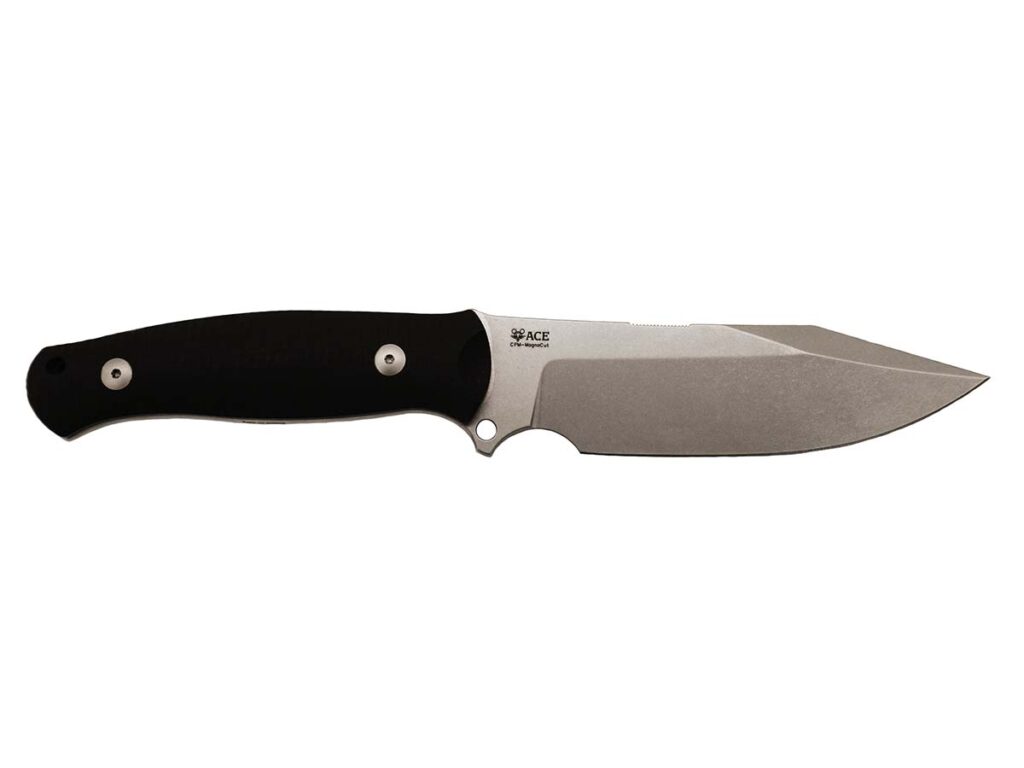
GiantMouse The Redington
Knife Type: Fixed Blade Blade Length: 5.1″ Overall Length: 9.7″ Blade Grind: Stonewash Scale: Double Black Canvas Micarta Blade Material: CPM MagnaCut Sheath: Black Kydex Date Available: Now Inside Edge: Designed with input from the instructors at SERE East. Limited-Run of CPM MagnaCut. MSRP: $425
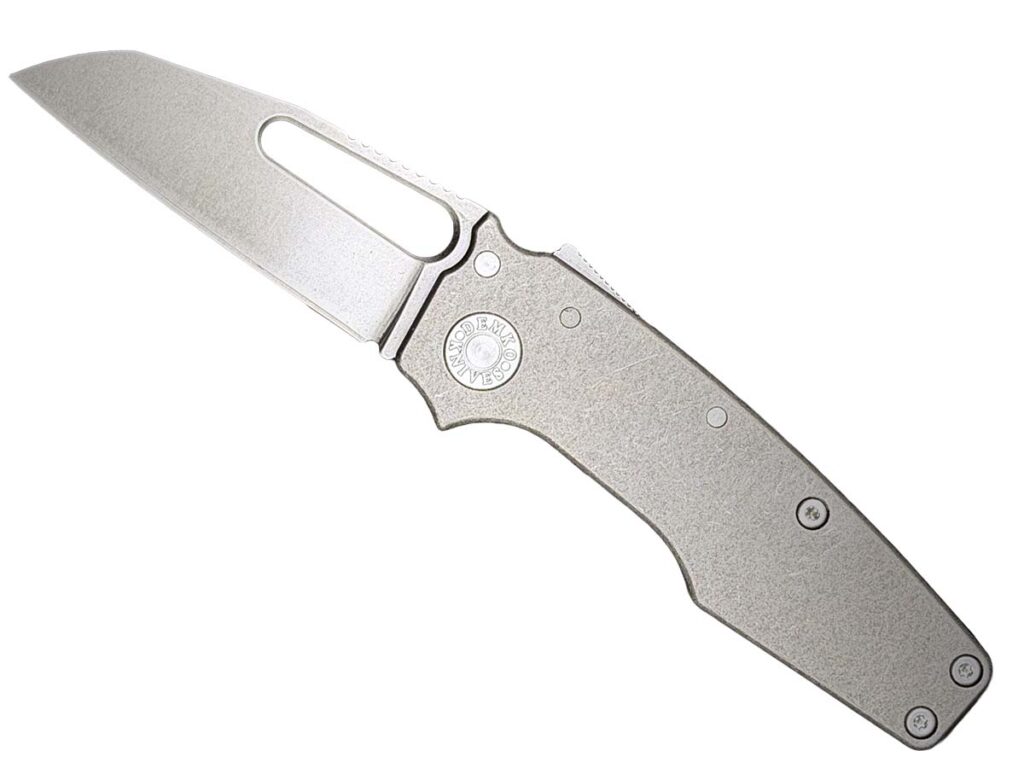
Demko Knives AD22
Knife Type: Folding Blade Length: 3.0″ Blade Shape: Shark Foot Overall Length: 7.5″ Weight: 5.4 oz. Scale: Titanium (Smooth or Milled) Blade Material: CPM MagnaCut Date Available: Currently and throughout 2026 Inside Edge: Made in the USA at Demkp headquarters in New Castle, PA. Also available with G10 scale in multiple colors. MSRP: $700
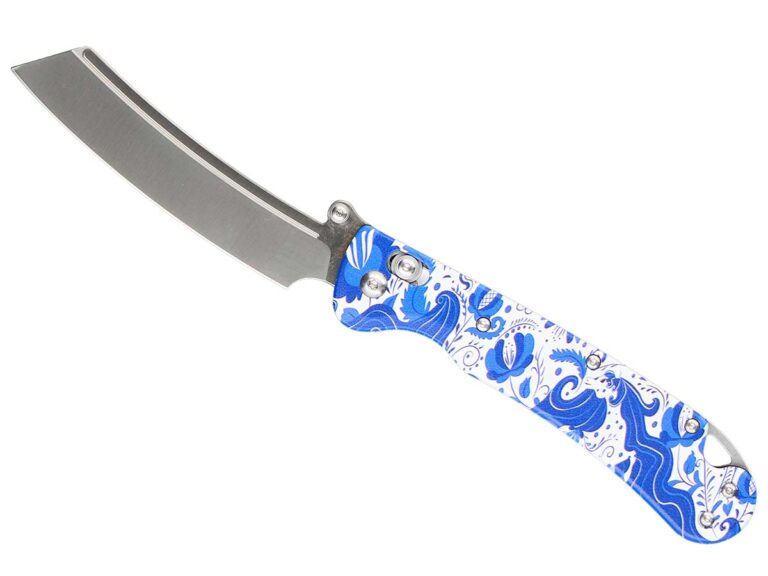
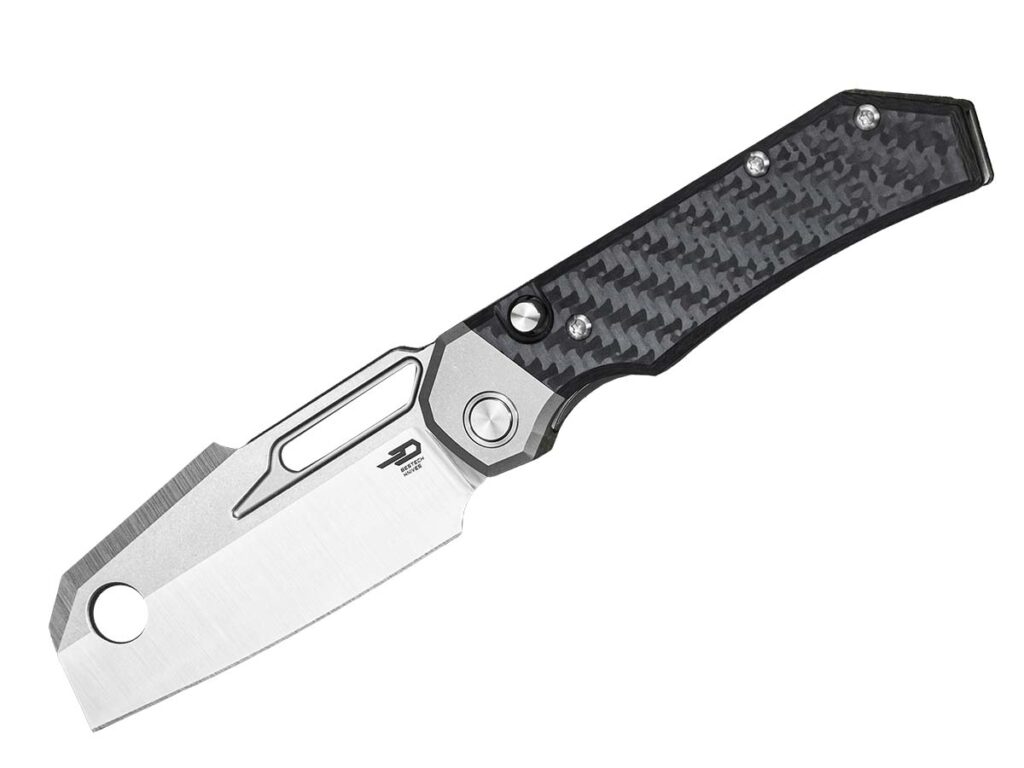
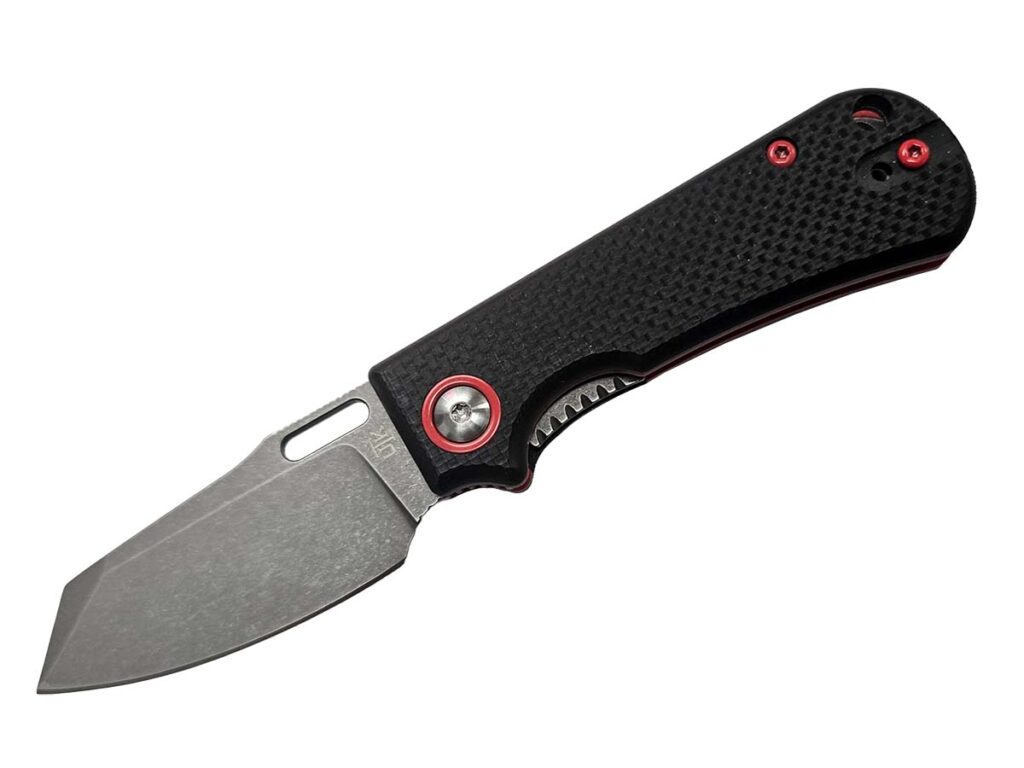
Pattern: Cleaver Designer: Fabian Hobbelen Lock Type: Button‑Operated Frame Lock Blade Length: 3.09” Overall Length: 7.04” Blade Grind: Hollow Scale: Titanium Blade Material: M390 Date Available: August Inside Edge: Designed by Fabian Hobbelen, the Nyrrdreki hides a small surprise in its blade. The hole allows the knife to be flipped open with the pinky finger, turning a traditional opening feature into a playful and highly addictive fidget action. MSRP: Approx. $350
Dagger Trading Begemot
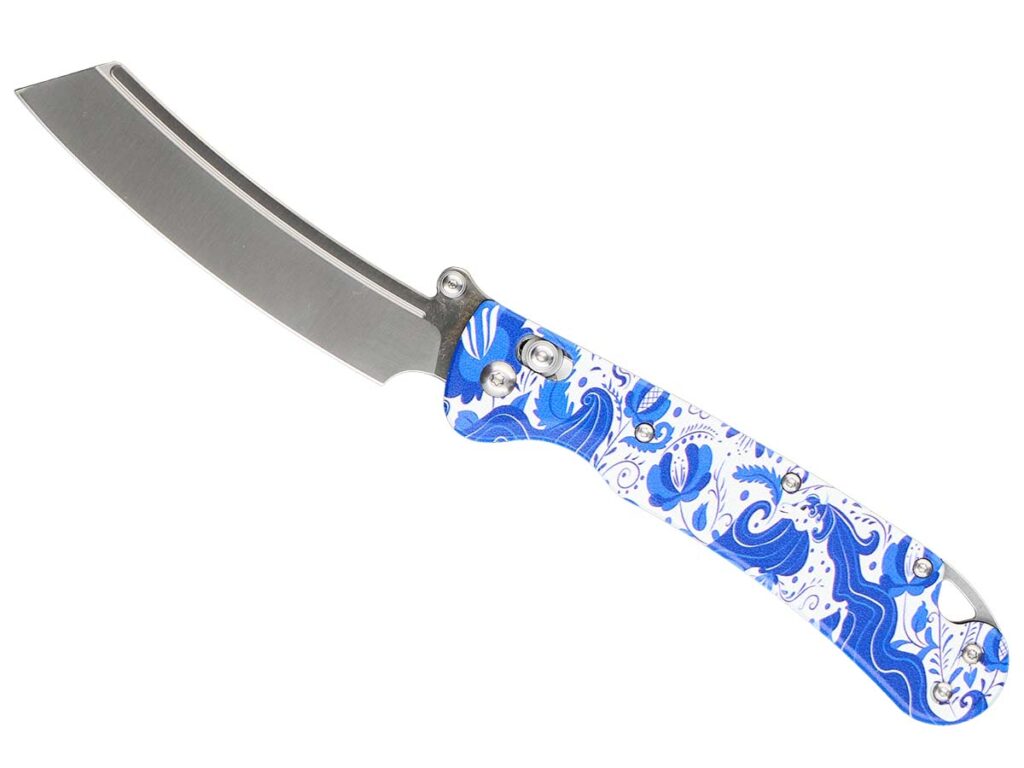
Pattern: Modified Cleaver Knife Type: Folding Blade Length: 3.88″ Overall Length: 8.625″ Liners: Steel Blade Grind: Flat Scale: G10 with 3D print Blade Material: VG10 Date Available: Now MSRP: $71
Vero Engineering Aura
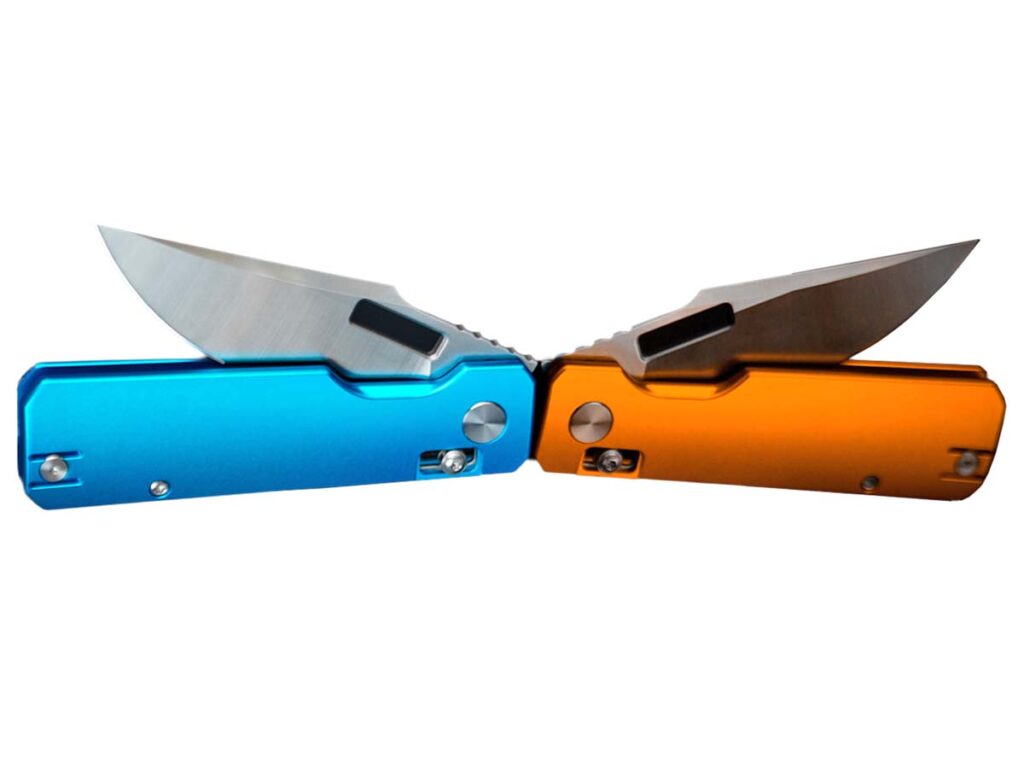
Knife Type: Folding Blade Length: 3.3” Overall Length: 7.7” Liners: Steel Blade Finish: Machine Belt Satin/Stonewash Scale: Aluminum Blade Material: 14C28N Date Available: Summer 2026 Inside Edge: The Aura has a reversible wire pocket clip. MSRP: Approx. $100
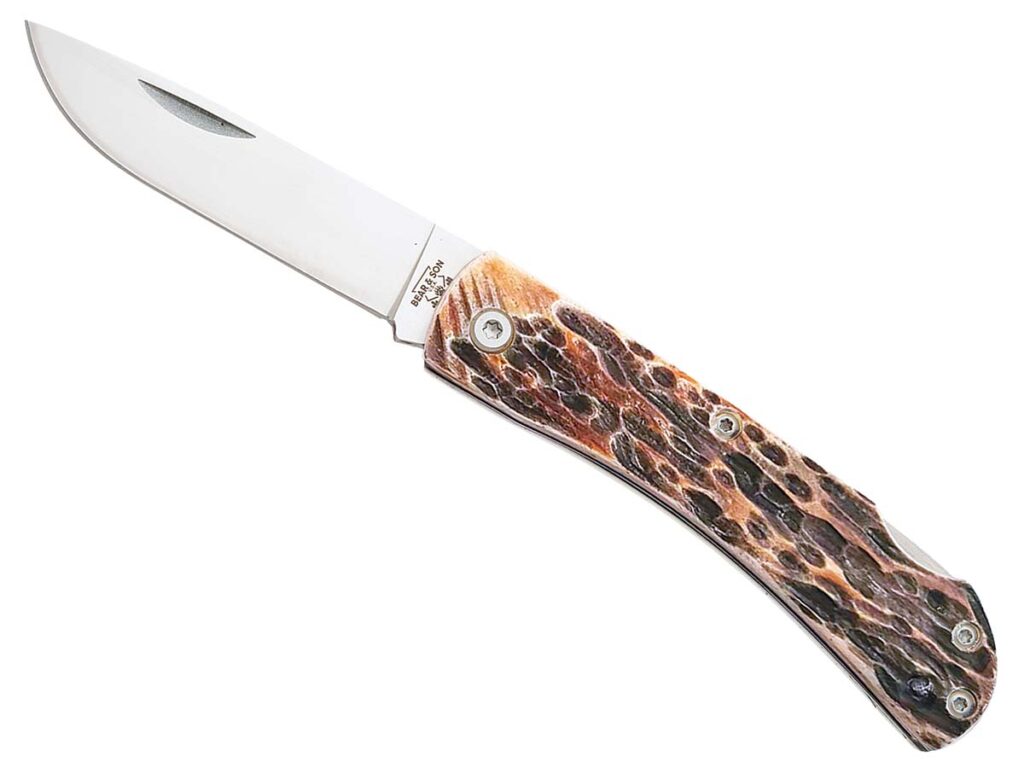
Bear & Son Cutlery Locking Farmhand w/clip
Pattern: Drop Point Knife Type: Pocketknife Blade Length: 2.75” Overall Length: 6.375” Closed Length: 3.625” Locking Mechanism: Lockback Handle: Genuine India Stag Bone Blade Material: High Carbon Stainless Steel Date Available: Now Inside Edge: Made in Alabama MSRP: $56
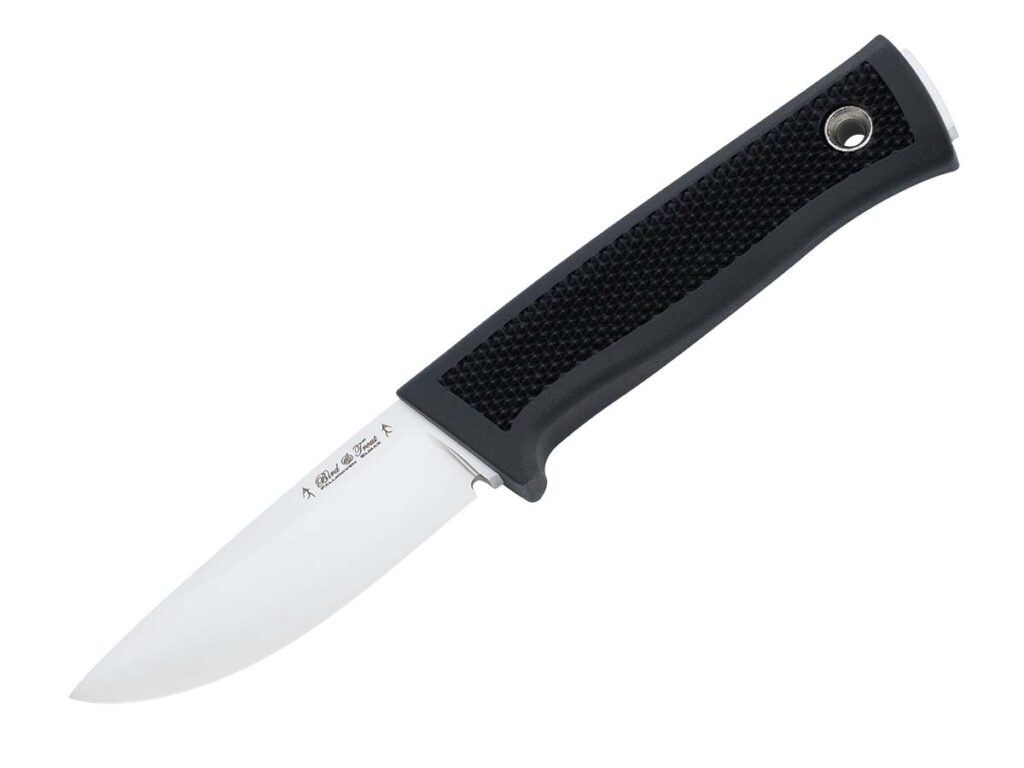
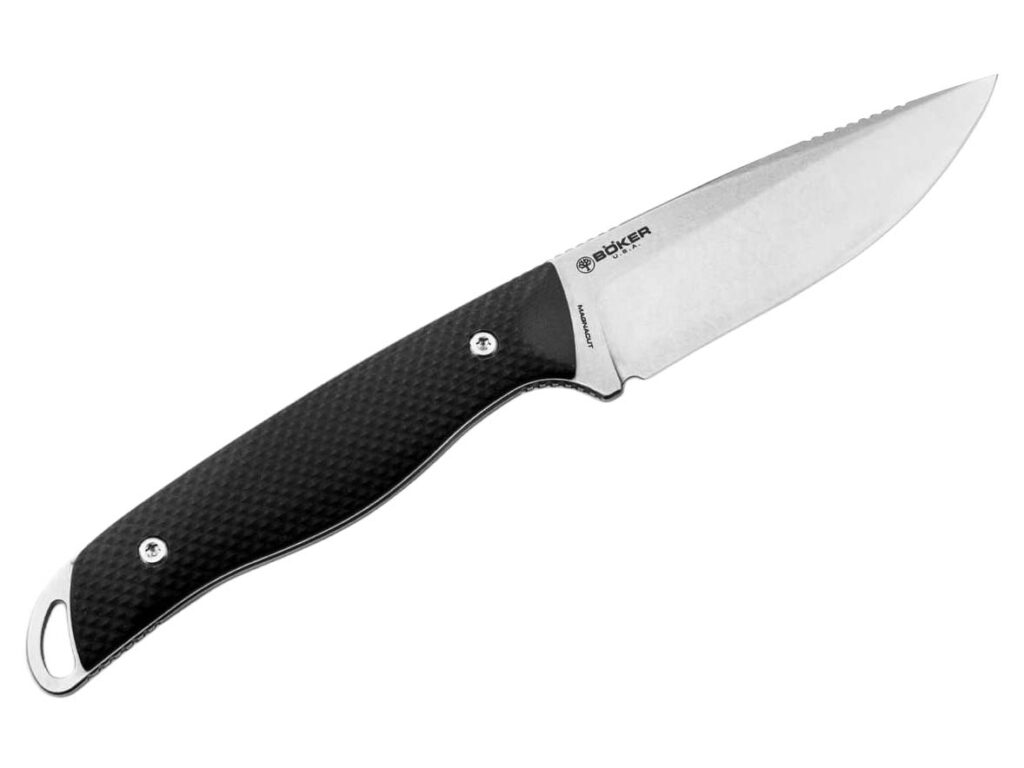
Knife Type: Fixed Blade Blade Length: 3.6″ Overall Length: 7.48″ Pattern: Drop Point Scale: Textured Black G10 Blade Material: 154CM Sheath: Black Custom-Fitted Kydex Date Available: Now Inside Edge: Handcrafted by Boker USA in Denver, Colorado. Perfect for bushcraft, hunting, survival, trekking, camping & EDC. Also available in a high-visibility orange G10, MagnaCut version. MSRP: $200
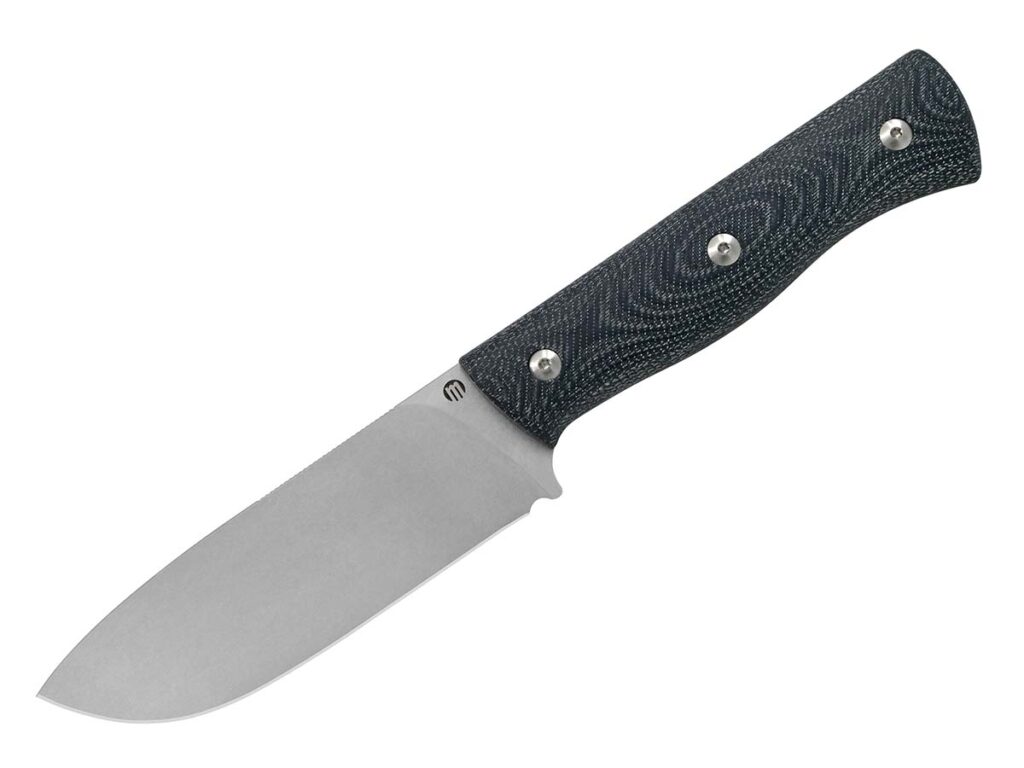
Maserin 917 Woodsman
Pattern: Bushcraft Knife Type: Fixed Blade Blade Length: 4.01” Overall Length: 9.21” Weight: 6.35 oz. Blade Grind: Flat Scale: Brown Paper Stone Micarta (Also Available In Green Jute Micarta and Black Denim Jeans Micarta) Blade Material: Nitro X7 Blade Finish: Stone Washed Sheath: Black Italian leather sheath with removable dual belt loop position and hook. Date Available: Now MSRP: $ 215
CRKT Orochi
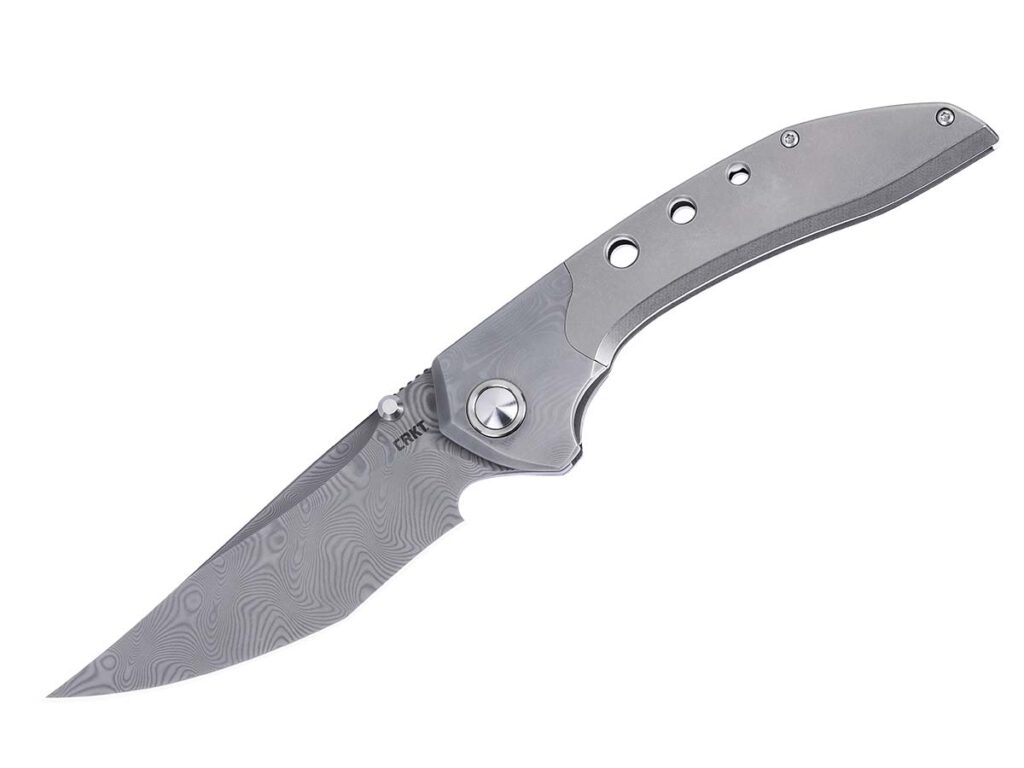
Knife Type: Folding Knife Lock Type: Frame Lock Blade: Clip Point Blade Length: 3.55″ Overall Length: 8.16″ Liners: Titanium Blade Grind: Flat Scale: Titanium With Damascus Bolster Blade Material: Damascus Date Available: Now Inside Edge: Named after the legendary Japanese serpent and its presence in anime, the Orochi features flowing lines, including a clip point, recurve blade, for balance and precise handling. The knife can be deployed either with discreet flipper tab, mirroring the custom knife its inspired by, or by its dual thumbstuds. MSRP: $200
Big Idea Design Ti Manu
Designer: Ken Onion Jr. Overall Length: 7.5” Blade Length: 3.25” Blade Steel: S90V Blade Shape: Modified Drop Point Handles: Grade 5 Titanium Opening: Dual Thumbstuds Date Available: August Inside Edge: All Big Idea Design knives only have 2 screws, The pivot and a screw in the back for the reversible pocket clips. The Ti Manu also was designed to work with both Phosphor bronze washers and bearings. Both options will be included so people can swap them out at will. The lock face is an integrated ceramic ball bearings in lieu of an insert, so it has a super smooth travel and lockup. MSRP: $250
Civivi Knives Kitefin
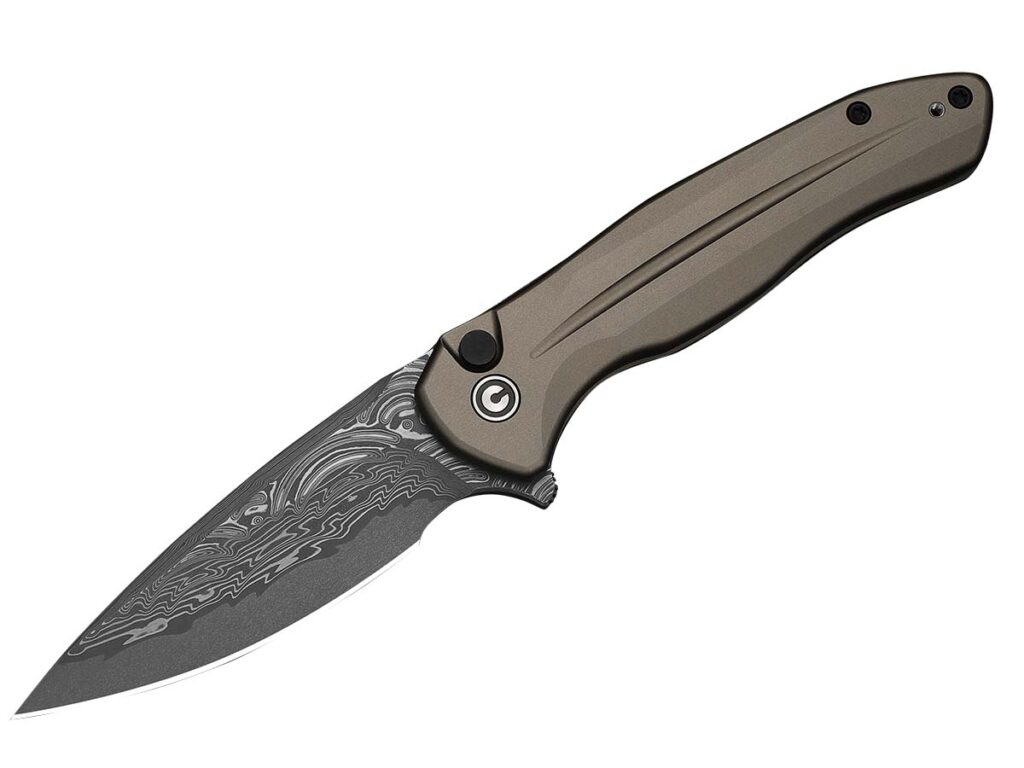
Knife Type: Folding Lock Type: Button Lock Blade Length: 3.22″ Overall Length: 7.52″ Blade Grind: Hollow Scale: Aluminum Blade Material: Damascus (14C28N option also available) Date Available: Now MSRP: $110
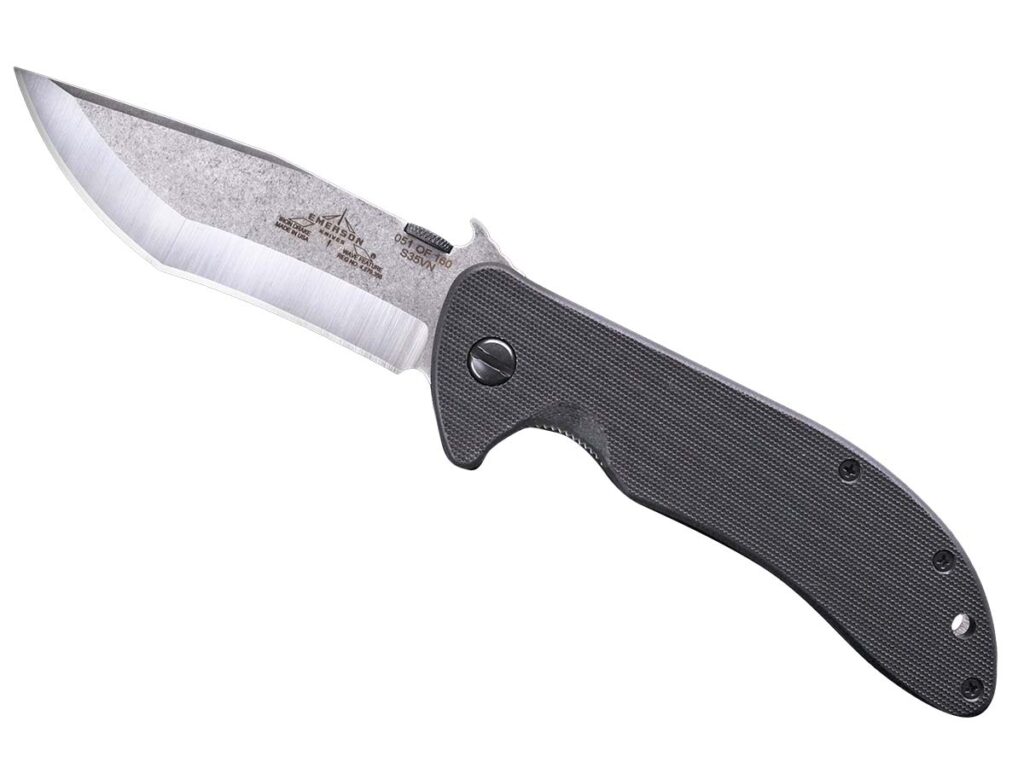
Halfbreed Blades MILF-05
Action: Flipper Folder Carry: Pocket Clip Designer: Jonathan Loftes Lock Type: Frame Lock Blade Steel: CPM S35VN Blade Grind: V Blade Edge: Plain Edge & Partially Serrated options Blade & Handle Finish: PVD Coated Blade Style: Spear Point Blade Length: 3.54″ Handle Material: 420J2 Stainless Steel frame, liner, spacers; G10 scale Washers: Phosphor Bronze Overall Length Open: 8.26″ Date Available: Now Inside Edge: The MILF-05 comes pre-set with a firm action; this can be adjusted for speed via the Torx head pivot point. MSRP: $240
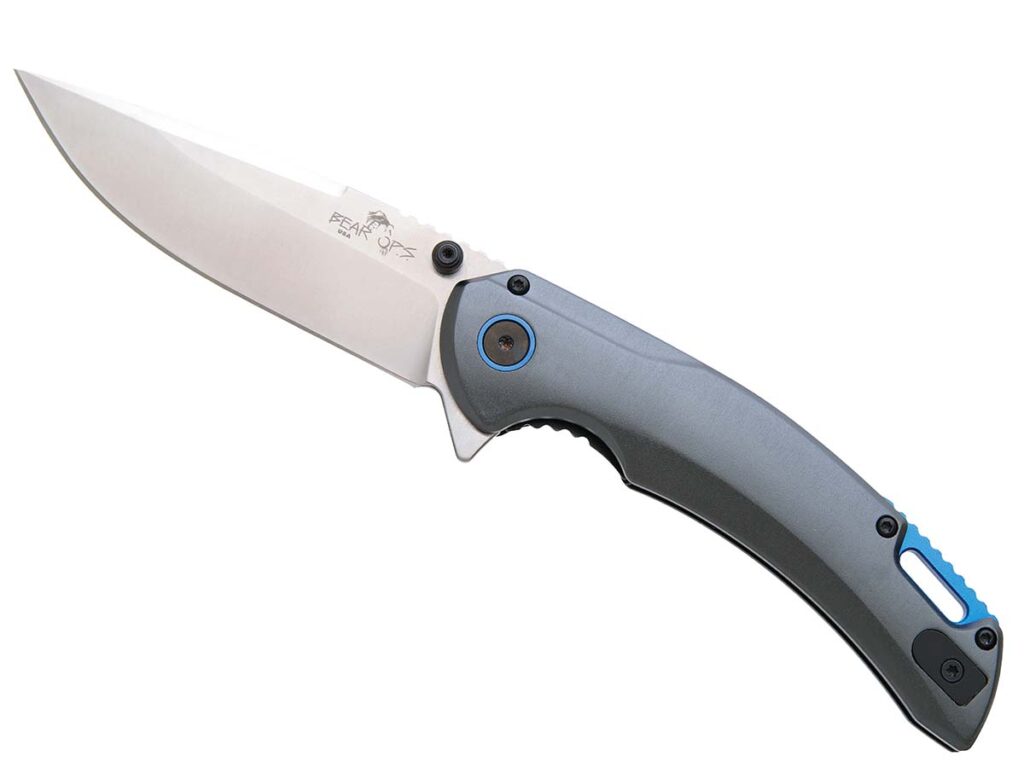
Bear OPS Load Out
Pattern: Drop Point Knife Type: Folder Blade Length: 3.5” Overall Length: 8” Closed Length: 4.5” Lock Type: Liner Lock Handle: Aluminum Blade Material: 14C28N Sandvik Date Available: Now Inside Edge: Made in Alabama with assisted opening, reversible pocket clip and ball bearing washers. MSRP: $110
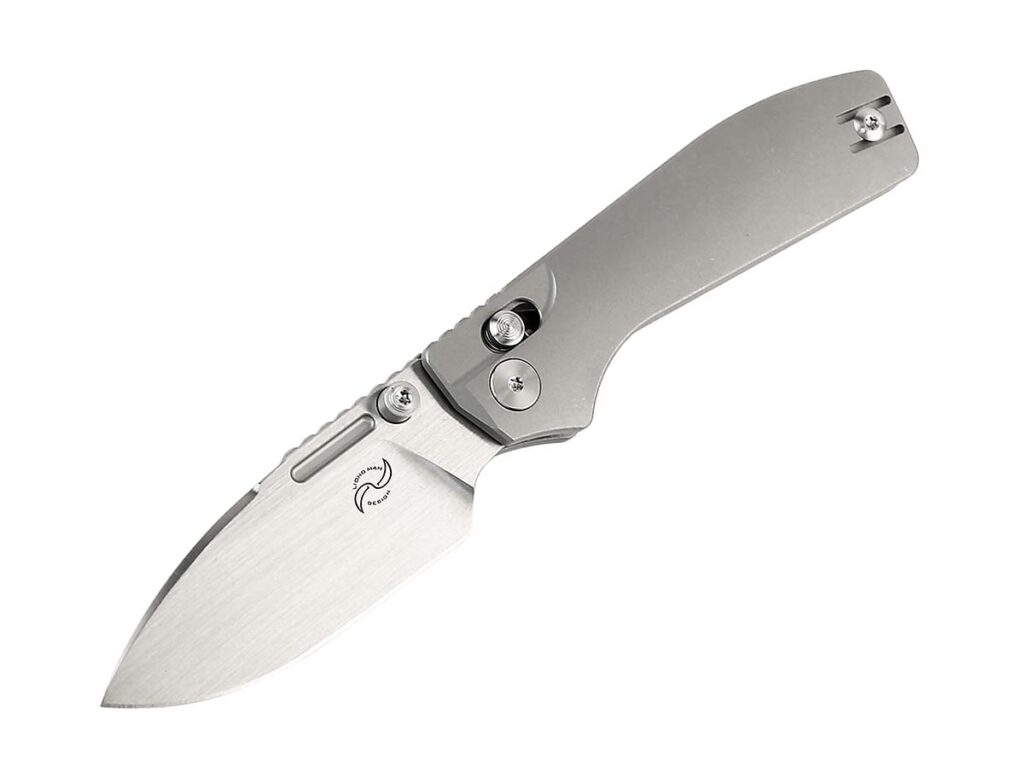
Liong Mah Design SFD-Small Field Duty
Pattern: Drop Point Knife Type: Folder Blade Length: 3” (2.6” cutting edge) Overall Length: 6.75” Liners: Steel Blade Grind: Flat Scale: Titanium Blade Material: CPM MagnaCut Date Available: August Inside Edge: Hand rubbed satin finish on the blade. MSRP: $278
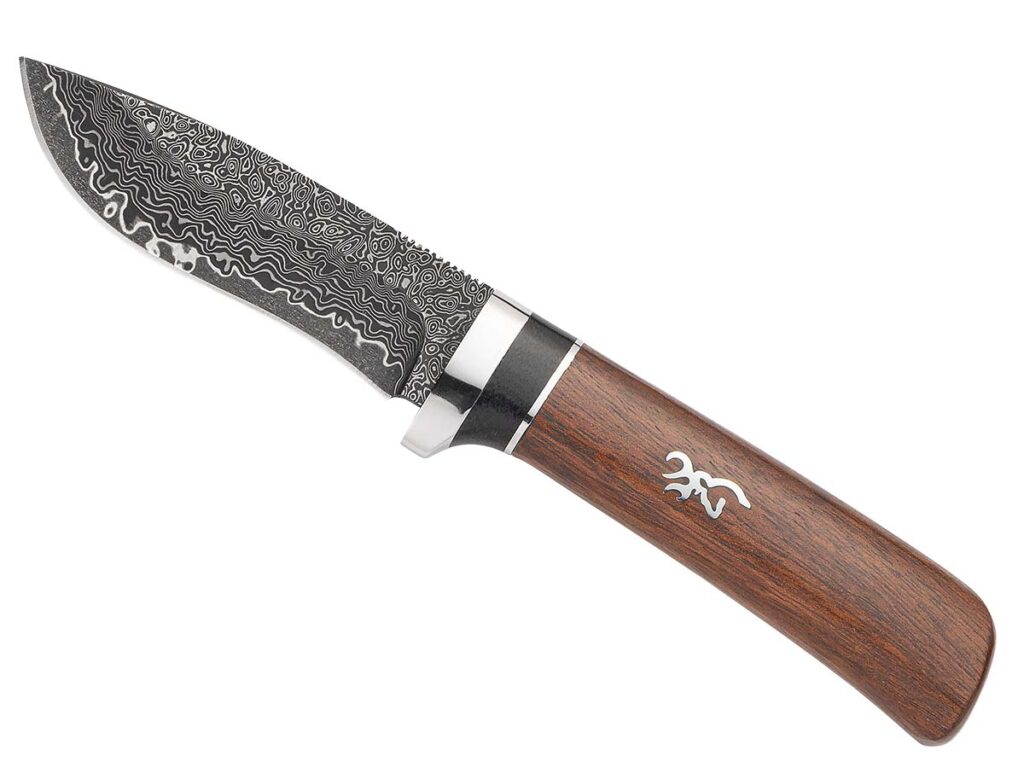
Browning Knives Stormy Pass Fixed Small
Pattern: Drop Point Knife Type: Fixed Blade Blade Length: 3.5” Overall Length: 7.75” Blade Grind: Hollow Scale: Hidden Tang Wood Blade Material: Damascus Sheath: Leather Date Available: Now Knife To Know: Stainless Guard with black Micarta spacer. MSRP: $140
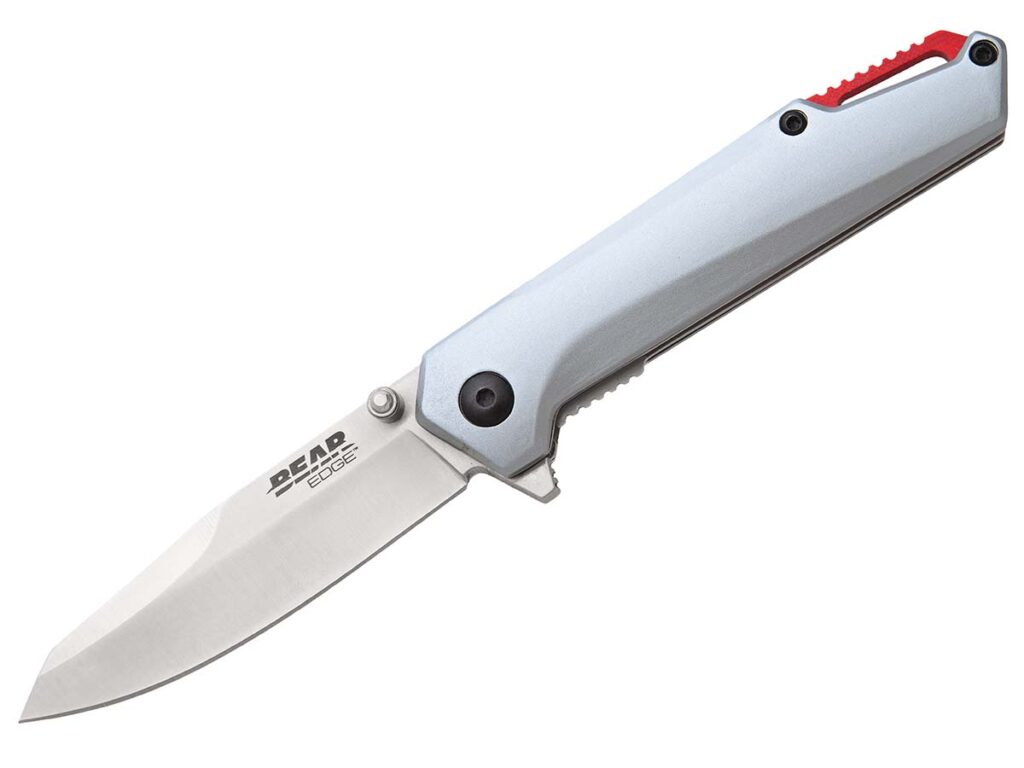
Bear Edge Light Grey Aluminum Folder
Pattern: Drop Point Knife Type: Folder Blade Length: 3” Overall Length: 7” Lock Type: Liner Lock Handle: Aluminum Blade Material: 440 Stainless Steel Weight: 3.2 oz. Date Available: Now MSRP: $43
Straightline EDC Ally
Knife Type: Fixed Blade Blade Length: 2.68” Overall Length: 5.98” Blade Grind: Flat Scale: 3D Milled Bronze Anodized Gr. 5 Titanium Blade Material: M390 Blade Finish: Black PVD + Stonewash Sheath: Black Leather Sheath With Magnets Inside Edge: Igor Bortolussi, founder of the company, named the knife after his daughter Allegra and its design is based on a drawing she made when she was 4 years old. She’s 9 now. Date Available: Now MSRP: $249
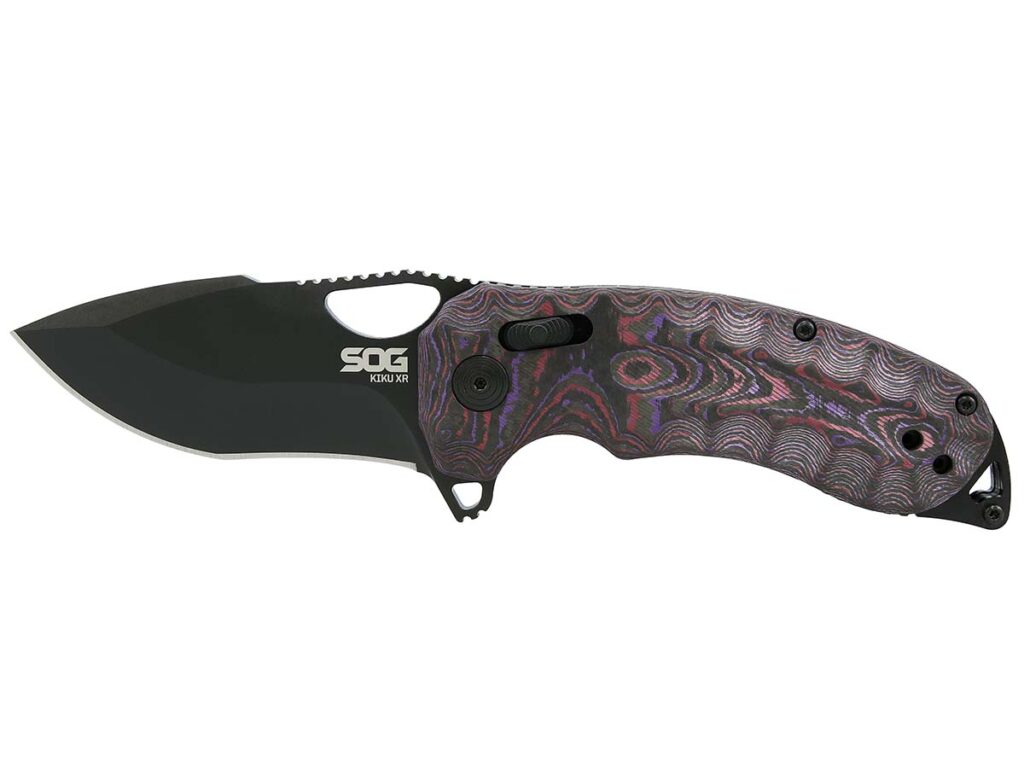
SOG Specialty Knife & Tool Kiku XR
Pattern: Tanto Knife Type: Folder Blade Length: 3.03” Closed Length: 4.30” Lock Type: XR Lock Handle: Fatcarbon Carbon Fiber Blade Material: CTS XHP Date Available: Now Inside Edge: Reversible low-carry belt clip with XR Lock, thumb hole, kick opening mechanism. MSRP: $400
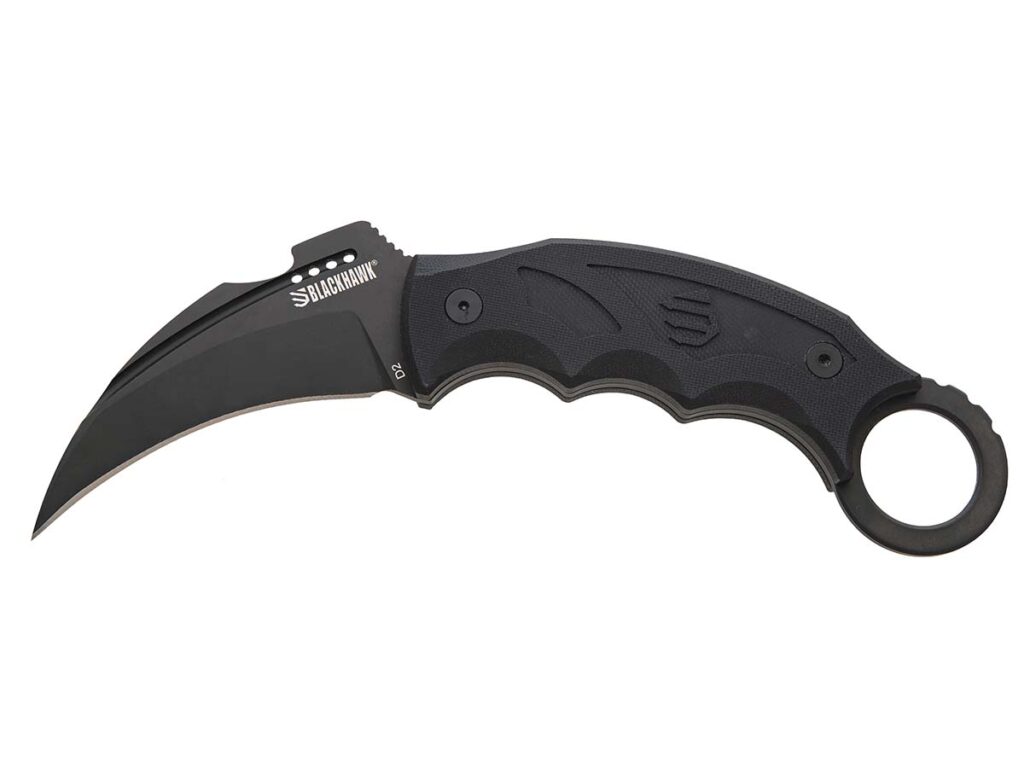
BLACKHAWK Garra Fixed Karambit
Pattern: Karambit Knife Type: Fixed-Blade Blade Length: 3.25” Overall Length: 8” Handle: Black Zytel Blade Material: D2 Tool Sheath: Kydex Date Available: Now Inside Edge: Comes with conceal carry holster, removable Kydex sheath. MSRP: $160
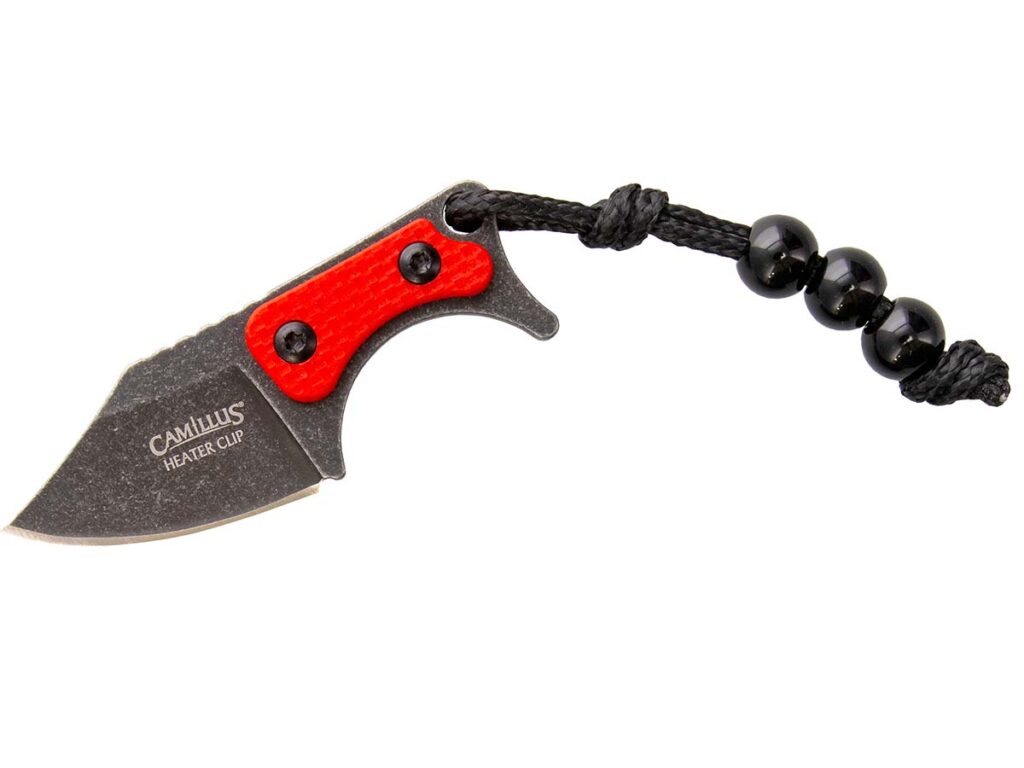
Camillus Knives Heater Mini
Pattern: Drop Point Knife Type: Neck Knife Blade Length: 1.5” Overall Length: 3” Blade Grind: Plain Handle: G10 Blade Material: 3CR13 Sheath: Kydex Date Available: Now MSRP: $19
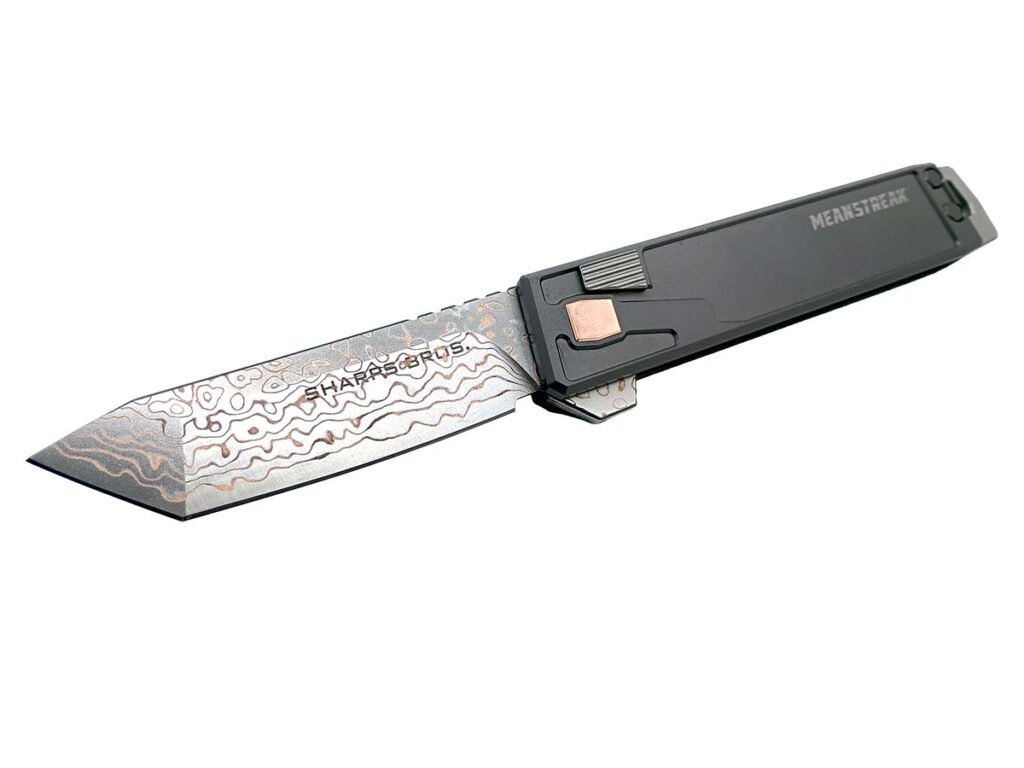
Pattern: American Tanto Lock Type: Button Lock Blade Length: 3.25″ Overall Length: 7.75″ Liners: Brass Bearing With Ceramic Ball Blade Grind: Flat Scale: Titanium Scales & Clip Blade Material: VG10/Copper Damascus, With Copper Pivot Date Available: Now MSRP: $170
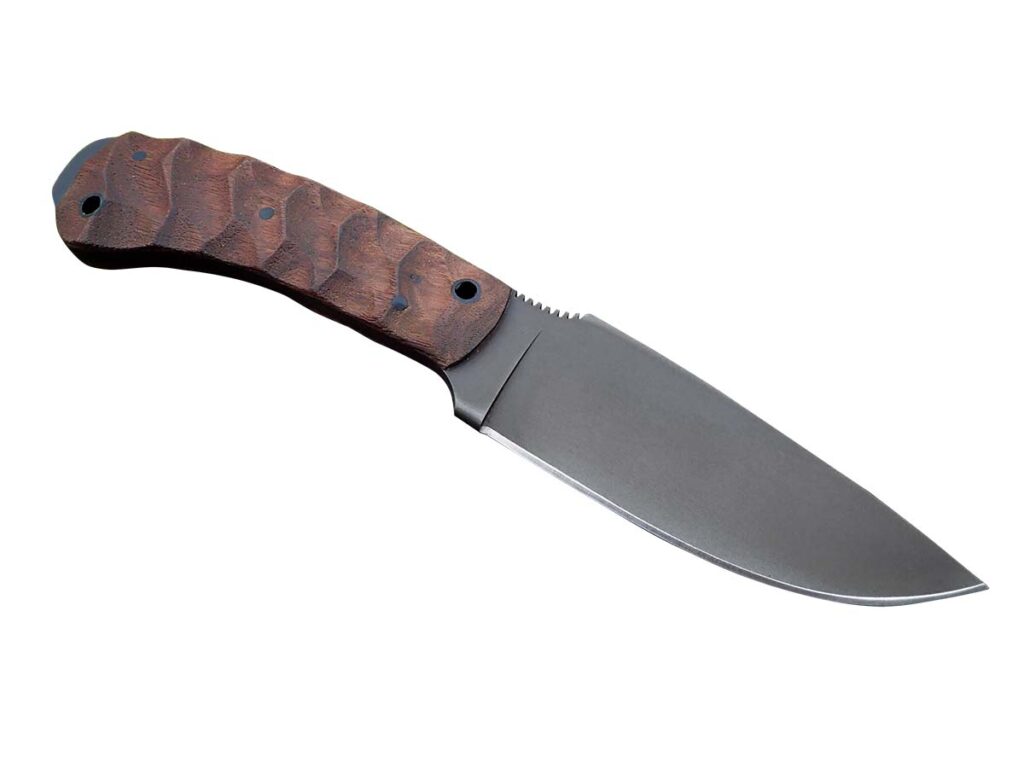
Winkler Knives Drop Point Hunter
Pattern: Drop Point Knife Type: Fixed Blade Blade Length: 4” Overall Length: 8.625” Blade Grind: Flat Scale: Walnut Blade Material: 80CrV2 Sheath: Lined Boltaron with leather cover Date Available: Limited Availability at BLADE Texas 2026 and BLADE Show Atlanta 2026. Publicly Available June. Inside Edge: This knife was designed by combining popular features from several models to create an all-in-one blade tough enough for the hardest tasks yet aesthetically appealing enough for everyday enjoyment. MSRP: $375
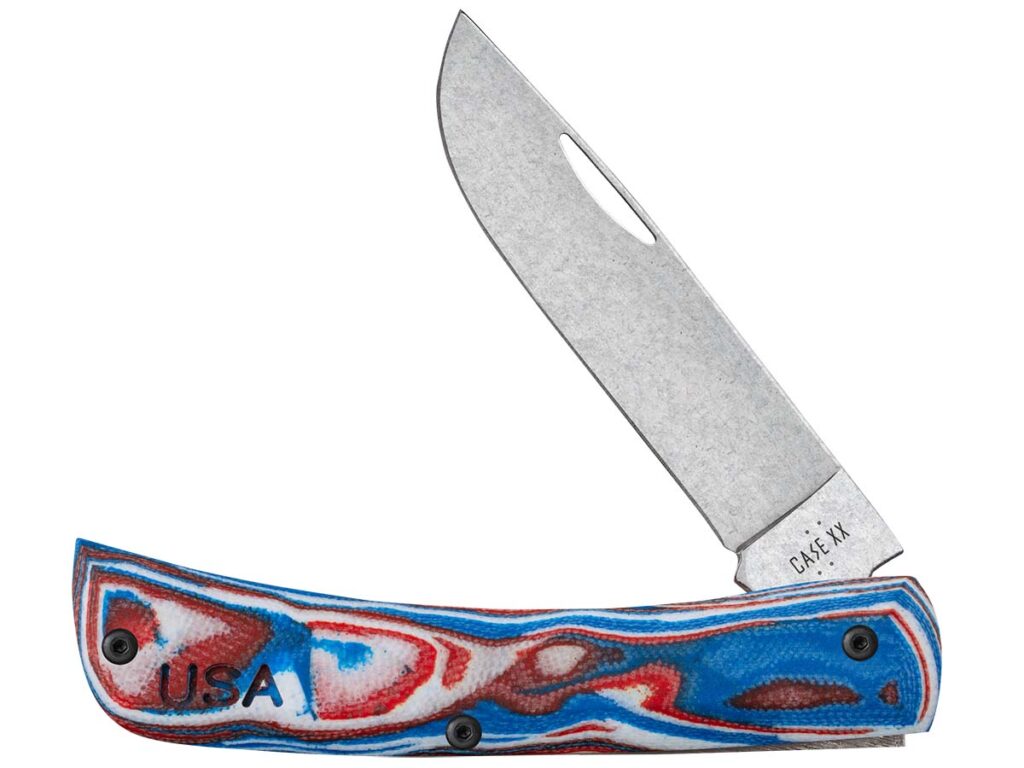
Case Knives XR Sod Buster Jr.
Knife Type: Slip-Joint Folder Blade Length: 2.8” Overall Length: 3.625” Weight: 2.1 oz. Blade Grind: Flat Blade Finish: Stonewash Satin Scale: Red, White & Blue Burl G-10 Blade Material: S35VN (Stainless) Inside Edge: This knife will be made in limited quantities. “USA” is lasered into the G-10 on one end. Date Available: Now MSRP: $125
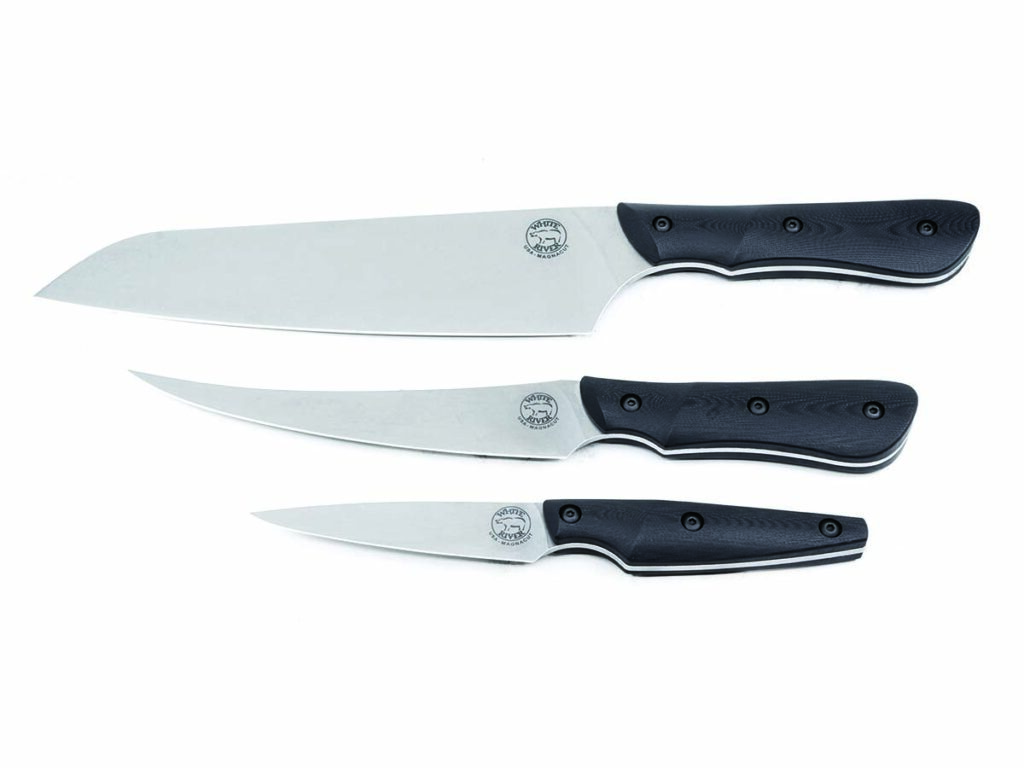
White River Knives S&S 3 Knife Chef Set
Pattern: Chef Set Knife Type: Chef, Boning, Paring set Designer: Smith & Sons Blade Length: 7.5″, 5.8″, 3.4″ Overall Length: 12.5″, 9.9″, 7.25″ Blade Grind: Flat Scale: G10 (Richlite) Blade Material: CMP MagnaCut Available: Now Inside Edge: Designed by Smith & Sons and crafted in the U.S.A. by White River Knives, this premium kitchen set includes three essential blades: a 7.5″ Chef Knife, a 5.8″ Boning Knife, and a 3.4″ Paring Knife. Together, they cover nearly every task in the kitchen—from precision prep work to heavier slicing and trimming. Each knife is built from ultra‑durable, highly corrosion‑resistant MagnaCut steel, heat-treated to a remarkable 63–64 HRC for exceptional edge retention and long‑lasting performance. MSRP: $600
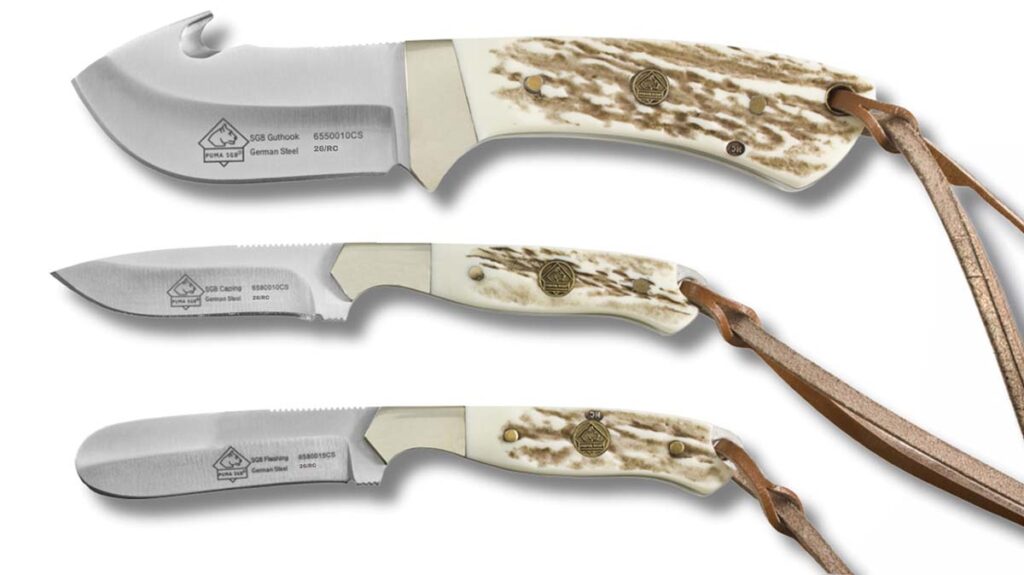
Puma Knife Trophy Car Set
Blade Length: 2.8″ (Gut Hook), 2.5” (Caping, Fleshing) Blade Grind: Hollow Ground, Satin Finished Scale: POM Commando Stag (Synthetic Material) Blade Material: 1.4116 German Cutlery Sheath: Rugged Leather Sheath (Holds All Three Knives) Date Available: Now Inside Edge: Purpose-built trophy care kit for hunters—includes a gut hook skinner, caping knife, and fleshing knife with a premium leather sheath to keep the full set organized. Designed to handle skinning, caping, and hide prep cleanly whether you’re in camp or at home, and ideal for getting a trophy ready for the taxidermist. MSRP: $175
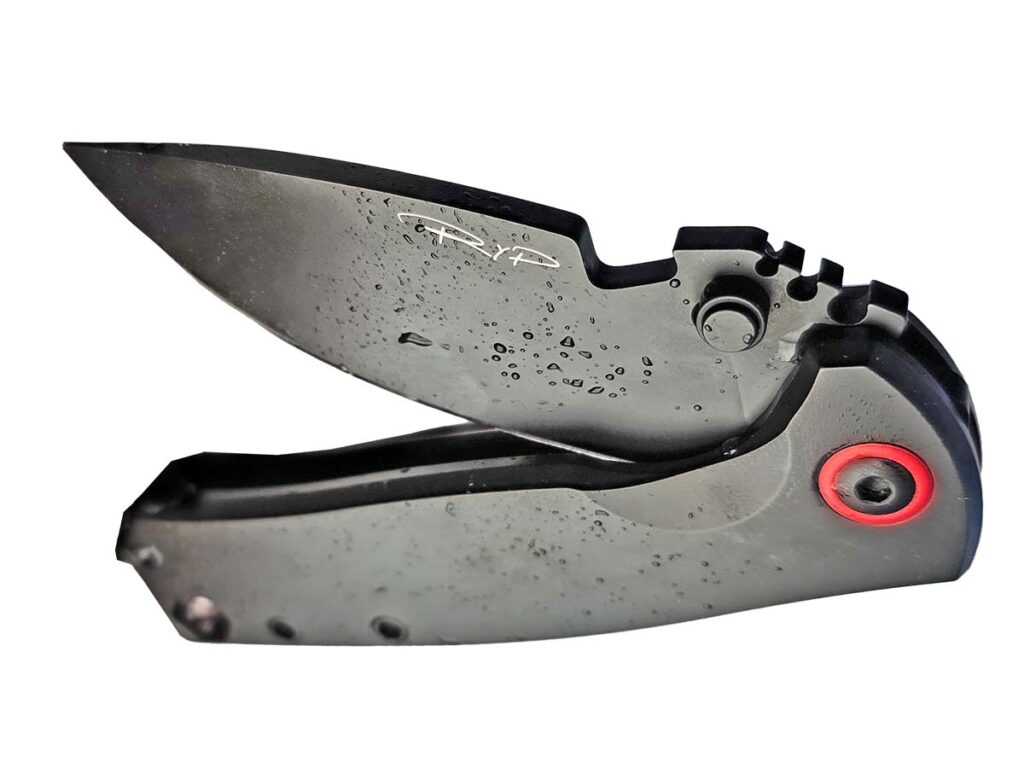
DPx HEST F Urban Ti Redeye
Knife Type: Folding Blade Length: 2.9” Overall Length: 6.7” Blade Grind: High Saber Scale: Titanium Blade Material: M390 Date Available: Now Inside Edge: Flipper with red aluminum pivot ring and red backspacer. MSRP: $425
Vincent Silva’s Carver packs healthy cutting power in a compact package.
After Vincent Silva retired from the military, he came across HealingFlamesForge.org, a Tennessee-based non-profit blacksmith shop for veterans. He took to the hammers and hot steel quickly, which progressed into making knives. Creating a functional tool from a piece of steel became his goal, and the Carver is one result. It begged to be tested and I was only too happy to oblige.
Carver Light-Duty Cutting
For the first edge test, the knife aggressively sliced into graphing paper even though the paper was slightly limp from the humidity. I applied smooth downward pressure and it cut cleanly. This is a well-balanced little blade.
Full-length push cuts went swiftly through the cardboard. The handle aided in blade control while keeping cuts as even as possible.
Single-walled cardboard supplied the next challenge. Full-length push cuts went quickly. It was hard to keep my fingers out of the cutting zone if I went too fast. The handle aided in control of the blade while keeping cuts as even as possible (in the cardboard, not my finger). I could hear a small crunch sound as the edge parted the material.
Carver Medium-Duty Cutting
Next up: 8-ounce leather. The Carver zipped through it swiftly. The blade’s edge geometry is spot on for working leather. I used a push cut while skiving the material.
The Carver zipped through 8-ounce leather very quickly. The blade’s edge geometry is spot on for working leather. The author used a push cut while skiving the material.
I like to be ahead of the game during camping weather, so a good supply of fire sticks is always a must. The Carver produced nice, feathered curlicues in some pine. The handle shape made it easy to control the depth of the feathering. All cuts came out smooth with just enough curl.
Carver Heavy-Duty Cutting
The Carver might be on the small side but it can handle such large jobs as splitting wood. Using a dead-blow hammer, I repeatedly pounded the blade through seasoned hackberry. A nice pile of kindling was the result. The handle was comfortable throughout and the blade was just big enough to beat on the tip to split the wood completely. There was no damage to the blued finish or the edge. Nicely done, Vincent.
It was time for my favorite cutting medium, natural rope—in this case, half-inch sisal on a cutting board. The Carver crunched its way to 192 cuts before the edge started to slide. The handle created no hot spots. The gimping was a tad sharp for my thumb but great for ferro-rod use. This is one cutting little knife!
The knife is small but can handle such larger jobs as splitting wood. Using a dead-blow hammer, the author repeatedly pounded the blade through seasoned hackberry for a nice kindling pile.
It was back to the graphing paper for the final slice test. The blade still cut very well and lost only a bit of its aggressiveness.
To push things over the edge, I conducted a brass rod test to make sure the temper was done correctly. I could see the edge flex and return to true. Verdict: the heat treatment was spot on.
CHANGES To mee, the edges could be softened a bit more, especially on the spine gimping. However, the Carver is a very well-made EDC sheath knife that performs at a higher level. It’s a sweet little blade.
Carver Specs Maker: Vincent Silva of Iron Sapper Forge Blade length: 3.5” Blade material: 1095 carbon steel Blade grind: Flat Heat treatment: Differential Handle: Pinecone resin by @sappercsmwife (Instagram) Weight: 6.5 ozs. Overall length: 75/8” Sheath: Kydex or leather pouch Maker’s list price: $250
Classic and competent, no wonder why the clip-point knife remains among the most popular designs.
Clip-point blades are one of the most common profiles you will see throughout custom and production knives. You likely know the style, the familiar drop-off of the blade spine to a curved or linear transition that terminates at the blade tip.
The earliest noted clip-point blade style dates back to the Macedonian era. Flint-knapped stone blades in a clip-point shape were discovered from this time period. Today, clip points are found across a lot of knife genres from tactical to EDC to pocket knives to fixed blades.
Pros Of Clip Points
Due to its highly streamlined and optimized blade tip, the clip point has excellent puncturing capabilities. There is more of a true point that helps to penetrate thicker materials with ease. It is more aerodynamic than a drop point and even a spear point. Think of an arrowhead and how it penetrates, and you will get the idea. Clip points are also favored among the tactical crowd because of this characteristic.
The defined point also makes great scoring cuts because placing pressure on the blade tip results in the tip cutting through aggressively on the first cut. So, this blade shape is also one that is favored among those who use their knives for the trades, where having a good knife is imperative to the work at hand.
Cons Of The Clip Point
Conversely, the blade tip being tapered also results in a blade design that has a weaker tip. You cannot have everything, I guess! With a smaller clip-point blade like those found on pocket knives, refrain from any sort of prying with the tip because it will bend or break off entirely.
Clip-Point Styles
It’s interesting to note that there are different variants of the clip point blade. Two of the most recognizable are the California clip point and Turkish clip point.
California: Exhibits a long taper, which originates almost to the blade tang and gradually and progressively tapers down to the blade tip.
Turkish: It has a long taper as well (but not as dramatic as the California style) but also incorporates a little bit of a blade belly as well. The Turkish clip looks very stylish and eye-catching when done right.
You’ll see other variants like a saber ground clip point with a pronounced swedge, and even some fixed fighters with sharpened clip sections for added bite and powerful penetration.
Jack-Of-All-Trades
For general-purpose use, nothing beats a clip point for its versatility. You cannot go wrong by selecting a knife with this blade shape. Chances are high that if you are reading this, you already own a few knives that have a clip-point shape. If you don’t have any yet, here’s a rundown of 10 clip point blades knives that you should be on the lookout for and add one (or more) to your collection.
Among The Best Clip-Point Fixed Blade Knives Available Now
Kabar USMC Fighting Knife
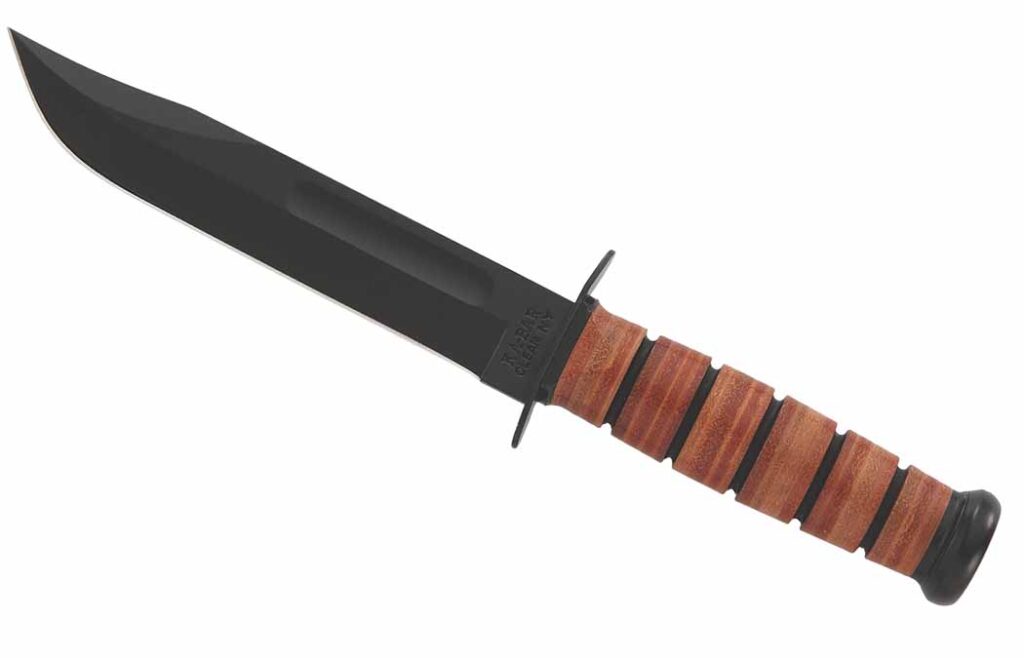
This iconic fixed blade has seen action on battlefields the world over. This knife first saw action during WWII and it still is going to this day.
The 7-inch long blade is made from 1095 carbon steel, making it easy to maintain in the field. It’s fuller adds style and strength to the blade. The iconic stacked leather washer handle is both handsome as well as very practical with its deep grooves that enhance grip and the flat metal pommel which is useful for light hammering and crushing tasks. The double guard prevents your hand from sliding up on the blade. As a bonus, each USMC Fighting Knife comes with a leather sheath.
MSRP: $135 Origin: USA
CRKT Minimalist Bowie
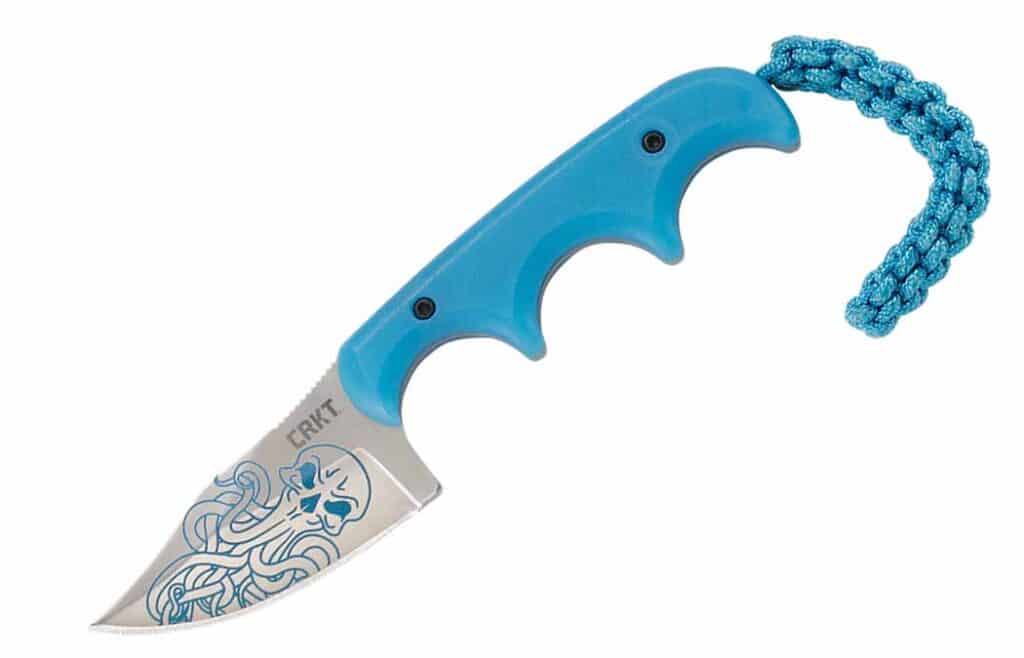
Designed by custom knifemaker Alan Folts, the Minimalist Bowie is one of Folts’ best-selling custom knives. It is available to the masses in the form of the CRKT version which sports a 2.1-inch long Bowie-style clip-point blade, made from 5Cr15MoV stainless steel.
Its prominent swedge adds style with function, permitting the blade easily penetrate most materials. The deep finger grooved handle has resin-infused fiber scales for light weight and strength. The entire knife is super comfortable to hold and it feels like the knife melts in your hand and remains very secure. It’s a small fixed blade without the bulk.
MSRP: $45 Origin: China
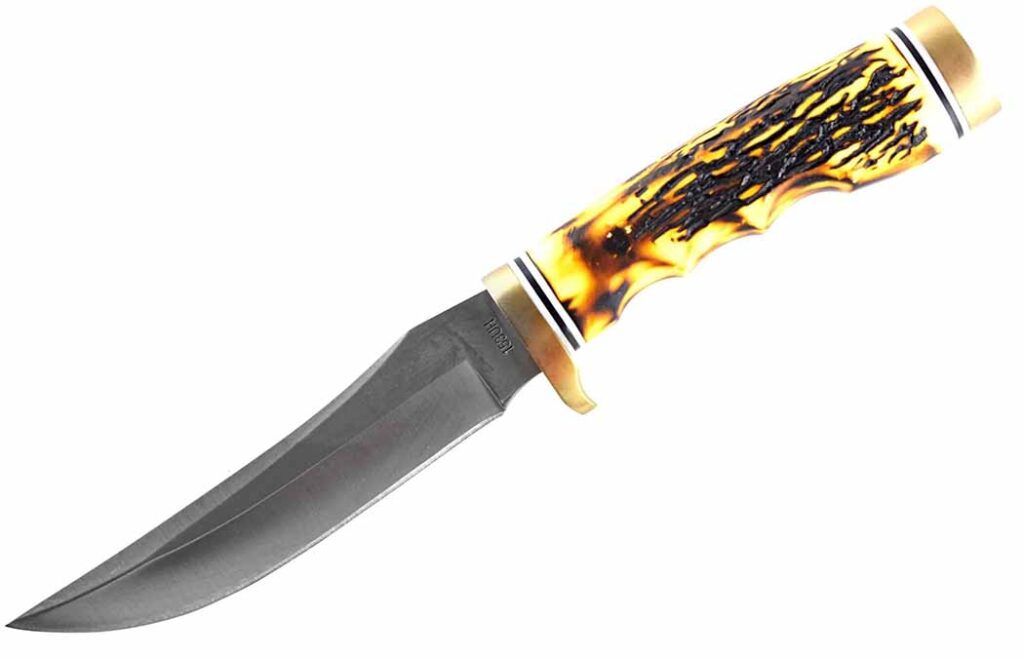
Schrade Uncle Henry Golden Spike
This one is an older design still manufactured today.
Its 5-inch 7Cr17MoV stainless steel clip point blade is a good example of what we call a California clip point, with its long taper to the blade tip. The handle is faux stag in Delrin, with finger grooves for security and control.
It is capped off at both ends with a brass guard and pommel to offset the overall appearance. This knife will fit the fill of an outdoor knife perfectly and not blow the budget. Each Golden Spike comes shipped with a leather sheath for easy portability.
MSRP: $46 Origin: China.
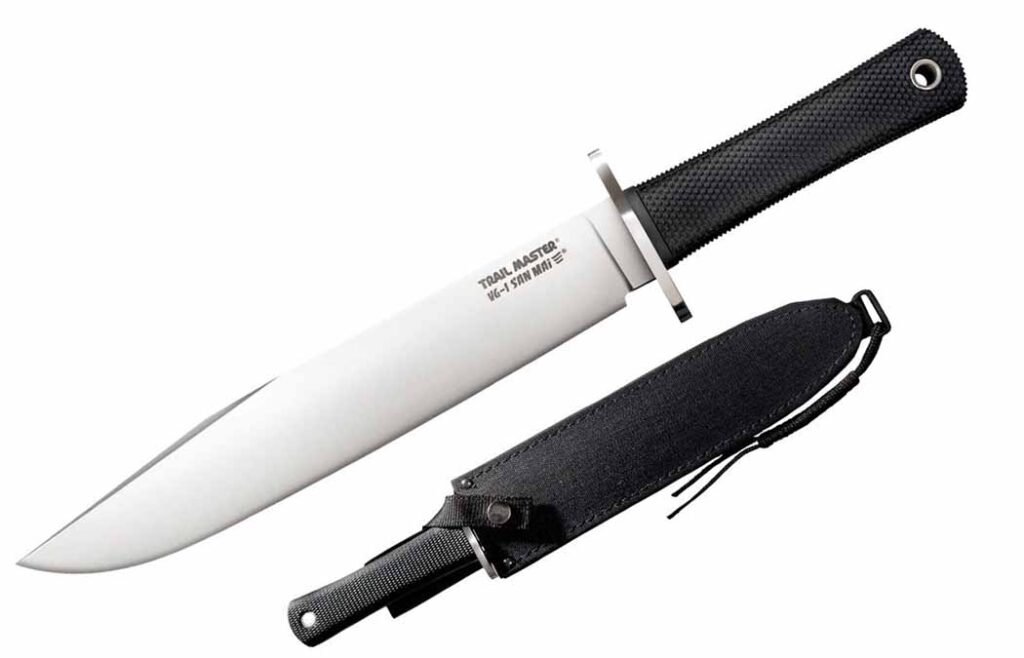
Cold Steel Trailmaster Bowie
This knife commands attention with its sheer size and heavy-duty build.
The Trailmaster Bowie is one of Cold Steel’s most recognizable fixed blades. The impressive 9 ½ inch long clip point blade is made of CPM 3V tool steel for toughness and edge holding. The unsharpened swedge gives the knife its attitude, and a full flat grind allows the Trailmaster to be an effective slicer and chopper as well.
The textured Kray-Ex rubber handle helps the Trailmaster remain in your grip and a double guard up front keeps your hand in place during use. The Trailmaster is adept at chopping and other hard-use outdoor tasks for the campsite.
It is the knife to have with you and instills user confidence when tackling tough cutting and chopping chores.
MSRP: $540 Origin: Taiwan
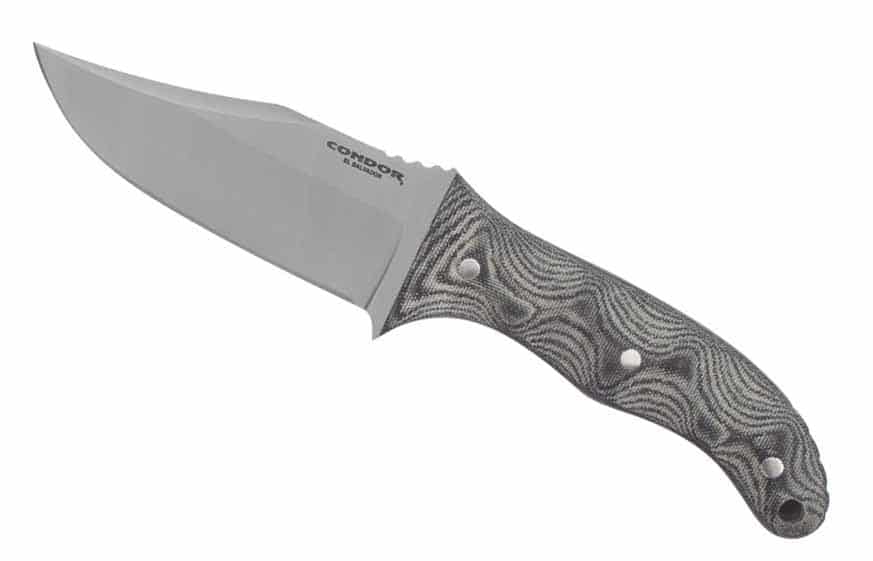
Condor Tool & Knife Little Bowie
Little knife…big attitude! That’s exactly what you get with the Condor Tool & Knife Little Bowie.
The 4.6-inch long blade makes it compact enough to carry comfortably on the belt. Overall length is just over 9.5 inches, making this knife about as long as some of the higher-end tactical folders when open. 1075 carbon steel was selected for the blade, making this knife both tough and easy to maintain. The bead-blasted finish adds a subdued finish for low reflectivity.
The ergonomic-shaped handle has black Micarta scales for a comfortable, all-weather grip. If you like Bowie fixed blades but don’t want to carry a full-size Bowie on the belt, the Condor Little Bowie fits the bill nicely. Each knife is shipped with a sewn leather belt sheath to keep the knife close at hand.
MSRP: $123 Origin: El Salvador.
Among The Best Clip-Point Folders Available Now
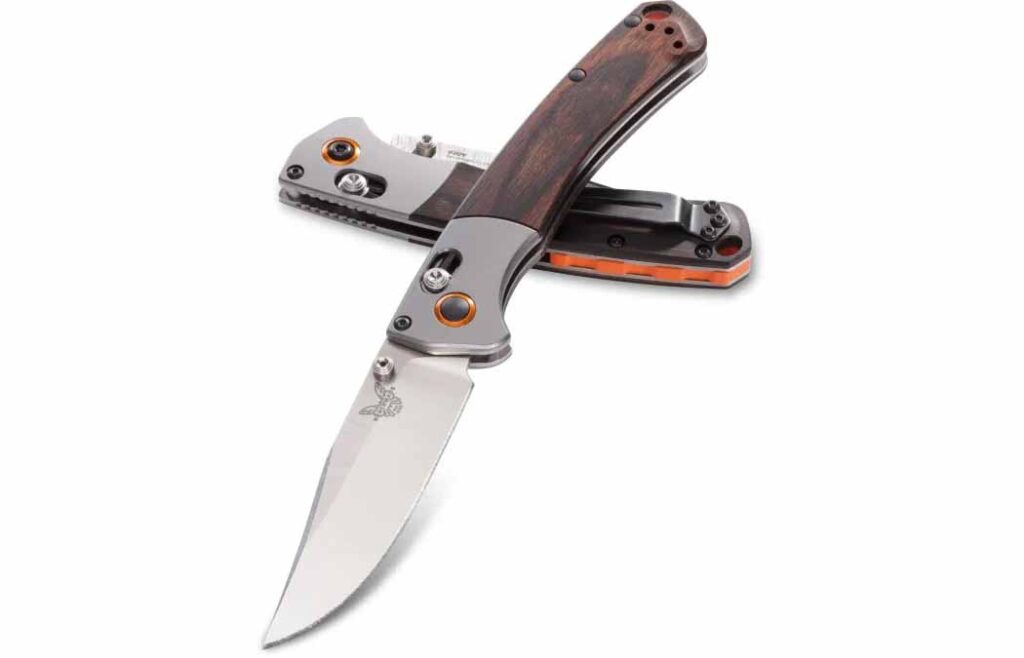
Benchmade Crooked River
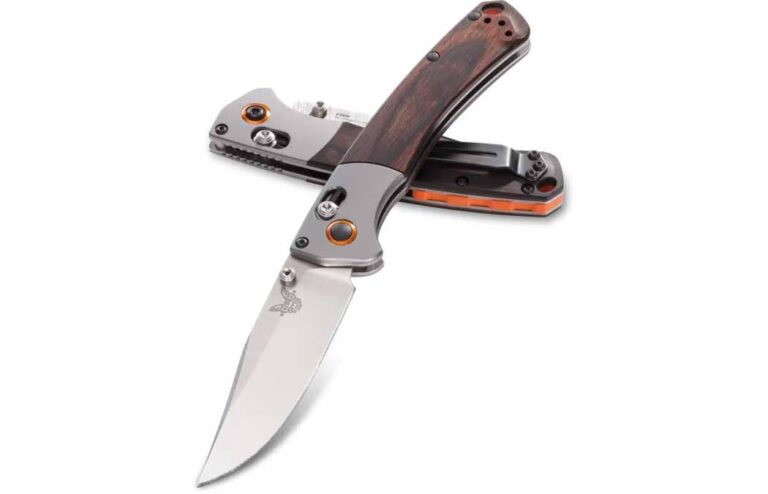
The flagship of their outdoor folding knife line, the Benchmade Crooked River is built tough for the outdoors, with a 4-inch clip point S30V stainless steel blade, anodized aluminum bolsters, and Dymondwood handle scales. The handle has a slight contour to it, making it lay in your grip that much easier.
The knife also features Benchmade’s own Axis Lock crossbar lock system for a safe and secure lockup. The Axis Lock is a Benchmade innovation that allows the blade to rotate smoothly and locks up tight, with very little blade play.
At over 9 inches overall, the Crooked River is a formidable folder that is ready to help tackle your field dressing or camp utility tasks. A steel pocket clip allows for easy carry. A Mini Crooked River is also available, scaling down the Crooked River model to a 3.4-inch blade length, and making it more EDC-friendly.
MSRP: $380 Origin: USA
SOG SEAL XR
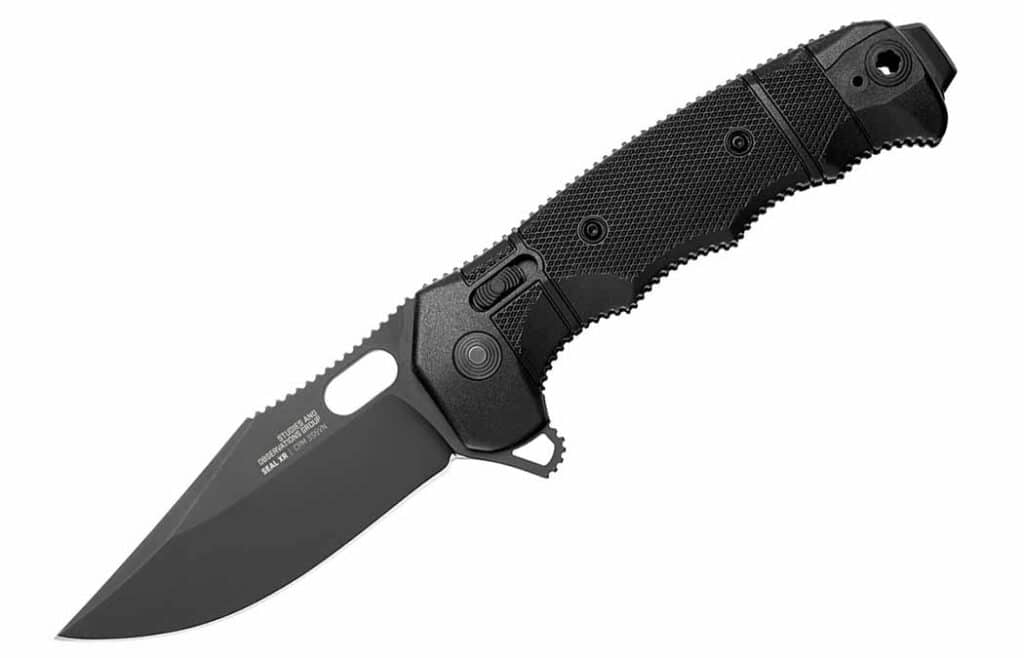
You want big and brawny? You got it with the SOG SEAL XR! Its 3.9-inch long Bowie style clip point blade is flat ground from premium CPM S45VN high-performance stainless steel. A blade hole and a flipper tab are present to offer two distinct methods of one-handed opening. The handle design is very similar to that of the SOG SEAL fixed blade. The build of the handle is definitely robust and heavy-duty, there’s weight to this knife that you notice when you pick it up.
Weighing in at a healthy 8.2 ounces, the handle has two steel liners, a steel handle spacer with an integrated extension that can be used as a blunt strike tool, and grooved, textured, and traction notches all around. The handle design is made to keep your hand in place. There is an integrated lower hand guard that prevents your hand from sliding forward. The blade lock is SOG’s own XR crossbar lock that offers true ambidextrous operation.
A beefy, wide steel pocket clip rounds out the SOG SEAL XR package. The clip won’t be sprung for sure, even with rough carry. This is by far an EDC folder due to the size and weight but if you need a knife for rough use and outdoor use, the SOG SEAL XR is it.
MSRP: $224.95 Origin: USA
Case Large Stockman 10375
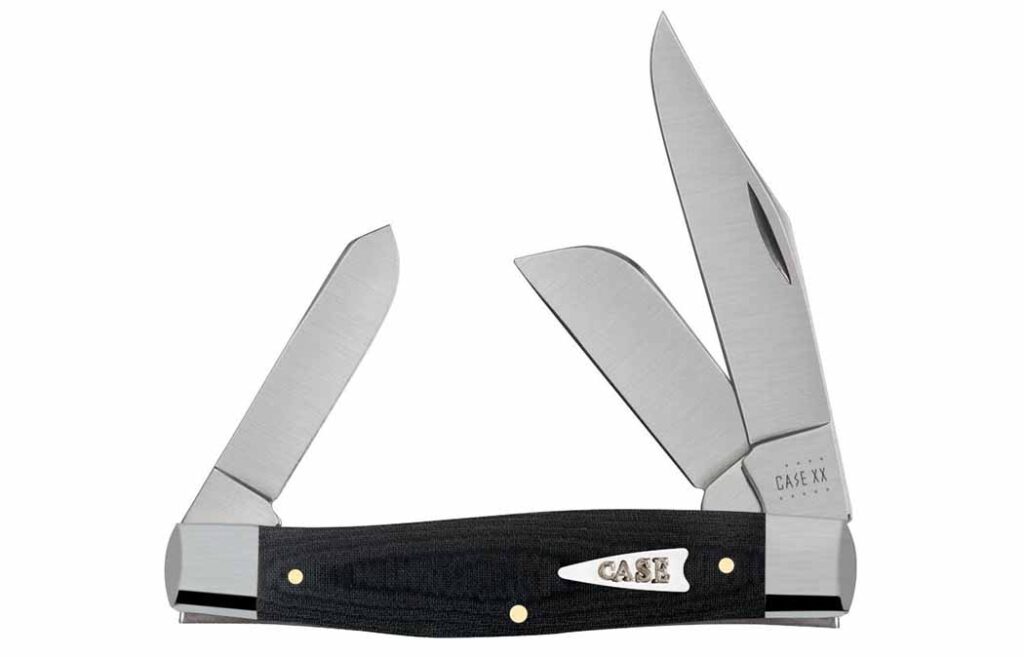
Clip points are found on many different patterns of multi-blade slipjoint knives, such as this Case Large Stockman pattern, model 10375. The main blade is a 3.3-inch long clip point, and two smaller blades – a 2.3-inch long sheepsfoot blade as well as a 2.2-inch spey blade. The blades are ground from Case’s proprietary Tru-Sharp surgical steel, and the handles are of black and green canvas micarta phenolic synthetic for long-lasting durability.
The beauty of knives like these is they are handy to have with you at all times as they sit in the pocket perfectly and they are low profile enough that using them in public won’t raise any eyebrows. These knives are used by everyone from farmers, ranchers, plumbers, electricians, carpenters, warehouse workers, and countless individuals who just want a good solid pocketknife. The main blade does well with opening packages, mail, cutting tape, stripping wire, cutting up cardboard, and any sort of utility or mundane cutting task that tend to pop up in daily life.
The clip point blade is ground fairly thin so it has really good performance characteristics and easily cuts whatever you need to. The Tru Sharp stainless sharpens up quickly and holds an edge fairly well. The stockman pattern is very handy due to the three distinct blade shapes, it’s the perfect pattern to have if you use a pocketknife frequently.
MSRP: $96 (Micarta Handle) Origin: USA
Buck 110 Folding Hunter
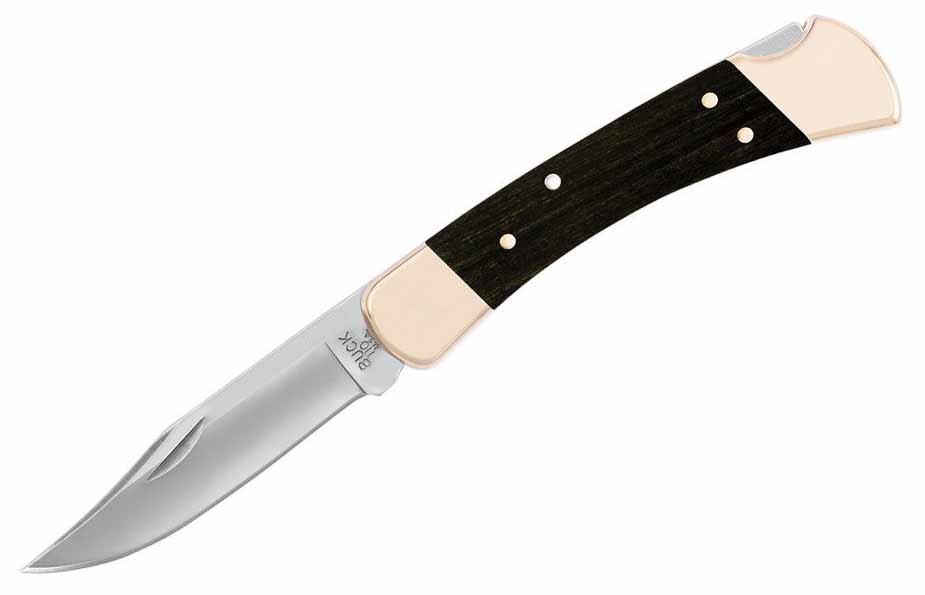
This knife perhaps is the signature clip-point bladed folder. Its design was innovative back in 1963 when it was released, and its quality and build have withstood the test of time.
Even today, the 110 Folding Hunter is still made and enjoyed by many. The 3.75-inch long blade is of a Bowie shape and is hollow ground from 420HC stainless steel. The handle is of a robust build, with double brass bolsters and a Crelicam ebony, stabilized hardwood handle. The handle definitely has weight to it, and it’s this exact heavy-duty build that has allowed the 110 Folding Hunter to withstand hard use over time, and still hold up beautifully. The lockback design secures the blade in the open position with a satisfying audible click.
The clip-point blade is ideal for field dressing as well as general cutting tasks. The 110 Folding Hunter originally was designed for hunters as an alternative to a fixed-blade hunting knife. But the knife also found favor with those who are in agriculture, the military, law enforcement, and countless knife enthusiasts as well. For all intents and purposes, it was the predecessor to what we know now as the modern tactical folder.
Still produced to this day in the Buck Knives product line, the 110 Folding Hunter has a few variants including a lightweight budget version, a pro-grade modern version with high-end blade steel and handle material, an automatic opening version, as well as countless collector variants available through the years from Buck as well as select Buck Knives retailers as exclusives.
MSRP: $88 (original 110) Origin: USA
Spyderco C81GP2 Paramilitary 2
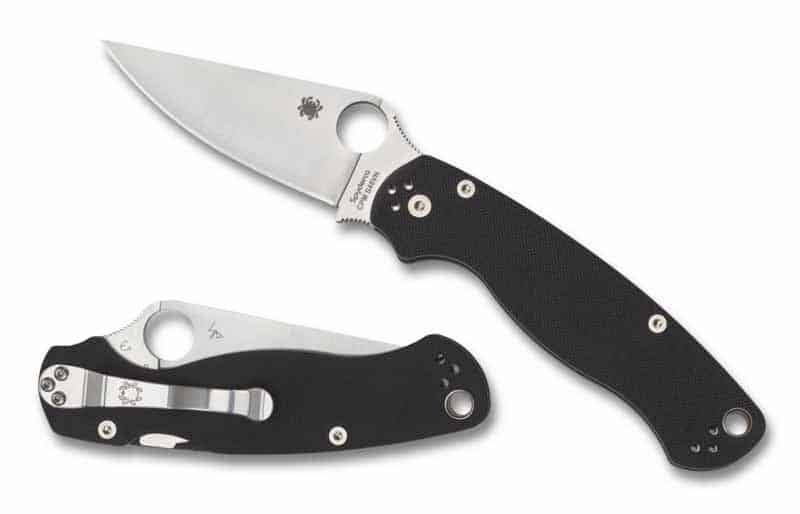
Spyderco’s Paramilitary 2 folder – better known simply as the Para2 – is a downsized version of the company’s popular C36 Military folder.
The Para2 offers the same cutting prowess of the full-size Military model with its full flat grind clip-point blade but in a more compact, pocket-friendlier form factor. The Para2’s blade measures 3.4 inches long and is ground out of premium CPM S45VN blade steel that is known for its enhanced edge-holding capabilities. The handle is textured black G-10 and mimics the ergonomics found on the C36 folder that make this one of the most comfortable and handy midsize folding knives on the market.
With an overall length of 8.2 inches, the Para2 is still large enough to tackle sizable cutting tasks. The blade is secured open by Spyderco’s own Compression Lock system, which permits easy one-hand opening and closing. It also allows the blade to have such smooth, silky-like action. The Para2 is a slender knife and carries well in the pocket.
The large blade hole allows for easy one-hand opening with either hand, even while wearing work gloves.
Performance-wise, this is one of the best in high-end folders as the flat grind clip-point blade sails through thick and tough materials easily. Spyderco engineers its blades to be some of the most efficient cutting tools on that market by paying attention to blade shape and blade grinds and optimizing both to create a cutting tool that is unmatched in both performance and value.
The technological advancements that have redefined the pocketknife as we know it.
When I stumbled onto the knife scene in 1985, the only pocketknives I had carried up to that point were slipjoints and lockbacks. Of course, slipjoints weren’t called slipjoints back then but simply pocketknives. Today, as far as BLADE® is concerned—not that it’s any major newsflash or anything—any knife you can carry in your pocket is a pocketknife.
All of which brings me to the subject at hand: my picks of the five most important pocketknife developments of the modern sporting knife era. In rough chronological order they are:
•The pocket clip:BLADE Magazine Cutlery Hall-of-Fame® member Sal Glesser’s introduction in 1981 of the Spyderco pocketknives with the hole in the blade and the pocket clip would turn the genre on its head. While the hole in the blade was a masterstroke in and of itself, it was the pocket clip that forever changed the way people would carry their pocketknives. Rather than rattling around in the bottom of a pocket with change, car keys and what have you, the closed knife was held on the pocket lip by the clip, free from pocket-bottom scratches and poised at the ready to be deployed to cut whatever needed cutting.
•The linerlock: Cutlery Hall-of-Famer Michael Walker invented the linerlock in 1981, but it would take a few more years before custom knifemakers—and shortly thereafter, factory makers—began readily adopting the lock that made one-hand manual opening and closing of the pocketknife an easy reality rather than an exercise in hand contortions. Today, the argument can be made that the linerlock is used on more sporting folders than any other lock.
•The flipper: While exactly who made the first folder with the flipper tab that manually deploys a folding blade with the tap of a finger may be up for debate, there is no debating that the person who popularized it was Cutlery Hall-of-Fame knifemaker Kit Carson. A simple addition to the pocketknife on its face, the flipper tab opens a blade as fast and easy as any other manual method—probably faster.
•The Ikoma Korth Bearing System (IKBS): Pivot systems that helped open folding blades quickly and smoothly had been around before, but it was the IKBS conceived in 2002 that took blade opening to a new level of quick and smooth. In conjunction with the flipper especially, the IKBS transformed one-hand pocketknife opening from fast to just this side of automatic. Developed by Brazilian custom knifemakers Flavio Ikoma and Ricardo “Rick” and Paulo Lala (the latter two collectively known as Korth), the IKBS is another masterstroke of design and invention.
•Material upgrades: These cover a number of materials and years, from Walker’s switch to titanium for his linerlock spring in 1983, to a wide array of other hi-tech substances in subsequent years for pocketknife handles, including titanium, thermoplastics, Micarta®, G-10, carbon fiber and other state-of-the-art materials that not only were super strong and tough but also were lightweight, reducing the weight of pocketknives to the point that they were basically unnoticeable in a pocket. Meanwhile, the advances in blade steels over that same stretch are too many to mention.
How about you? What are the most important pocketknife developments? Tell us in the comments.
Feel the burn of the hottest makers’ hottest Custom EDC Knives—both folded and fixed.
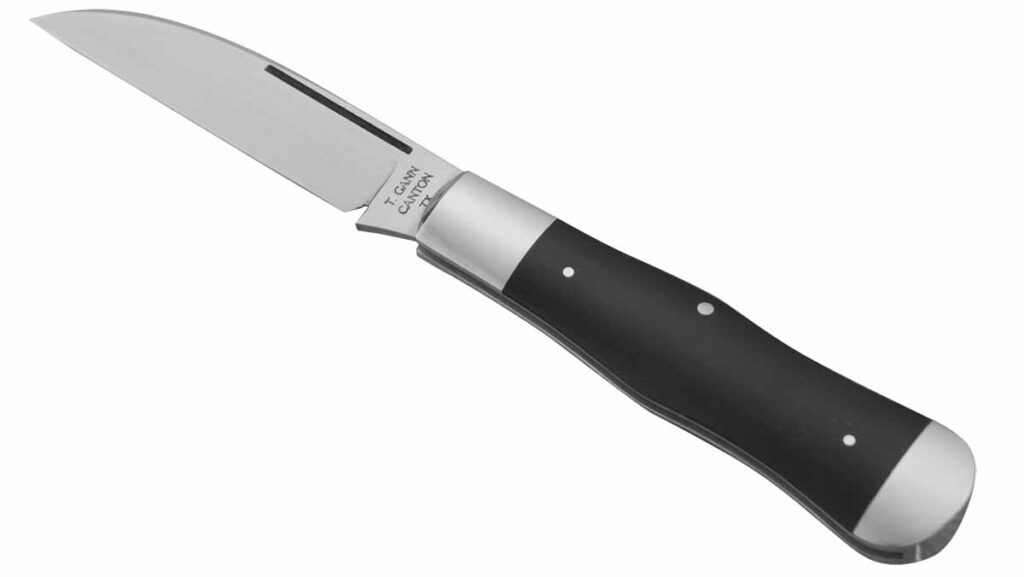
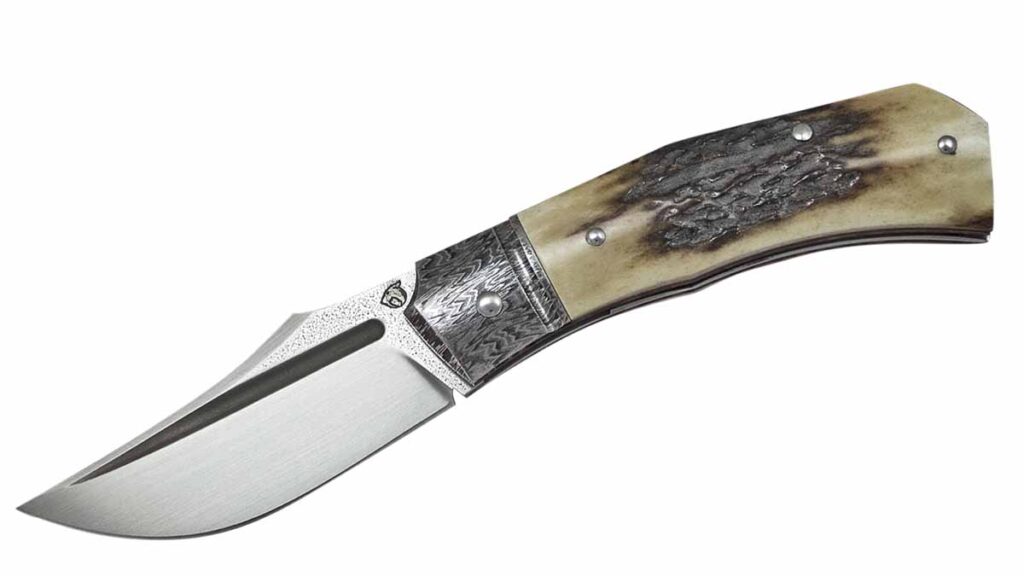
Tommy Gann: Coke Bottle Slip Joint
As Daniel O’Malley of BladeGallery.com noted, “ABS master smith Tommy Gann makes an exceptional knife. The 52100 carbon steel wharncliffe blade of his Coke Bottle Slip Joint has a handrubbed satin finish, smooth, consistent action, a firm half stop and easily opens with a light pull.” Blade and closed lengths: 2.9 and 3.9”. Bolsters: 416 stainless steel. BladeGallery.com’s price: $550. (BladeGallery.com image)
Willem Steenkamp: Raider Flipper Folder
The 3.5-inch blade of hollow-ground CTS XHP stainless steel on Willem Steenkamp’s Raider flipper folder pivots on an Ikoma Korth Bearing System. Handle: Silver-strike carbon fiber. Pivot collar: stainless damascus. Pocket clip: 3D-machined titanium anodized blue, configured for right-side, blade-tip-up carry. Lock: linerlock. Weight: 3.2 ozs. Closed length: 3.83”. BladeGallery.com’s price: $680. (BladeGallery.com image)
David Breniere: Mini Inglorious Slip Joint
“The Mini Inglorious slip joint by David Breniere offers a handrubbed Elmax stainless steel blade with David’s W’s pattern damascus bolster and Sambar stag scales,” stated Dave Stark of Steel Addiction Custom Knives. “The knife just melts into the hand. Truly topper fit and finish.” Blade and closed lengths: 2 7/8 and 3.25”. Weight: 3.2 ozs. Retail price: $2,000. (Steel Addiction Custom Knives image)
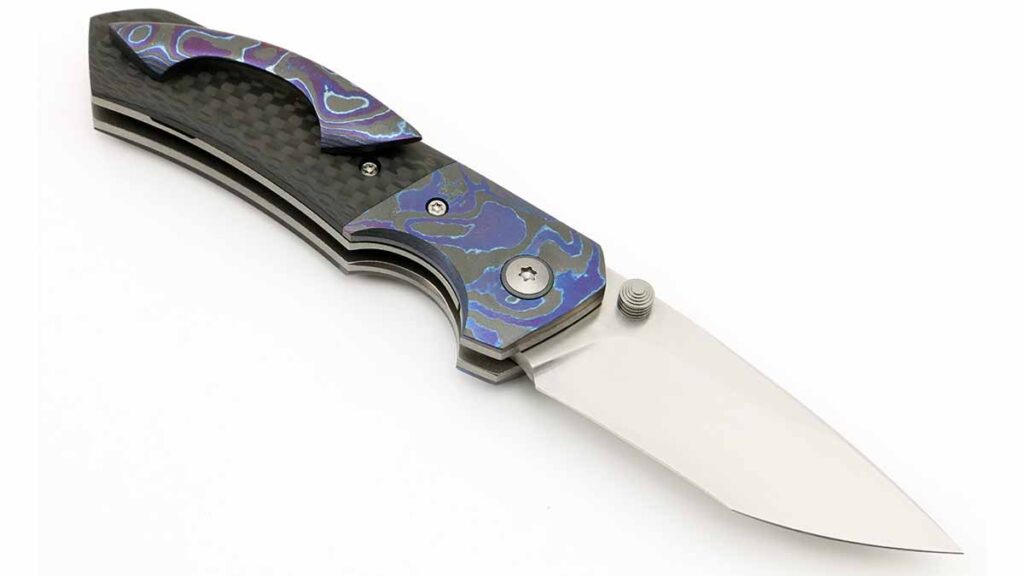
Brian Efros: Elder Tactical Folder
The Elder tactical folder by Brian Efros has a drop-point recurve blade with dual bead-blasted thumb studs. Blade length and steel: 3” and CTS XHP stainless. Handle: carbon fiber with Chad Nichols Dark-Ti damascus bolsters and backspacer, and zirconium pivot collars. The Dark-Ti pocket clip provides blade-tip-up carry. Lock: linerlock. According to Arizona Custom Knives (AZCK), the Elder has “very nice action, detent and blade seating.” Weight: 5.2 ozs. Closed length: 4.25”. AZCK’s price: $3,295. (AZCK image)
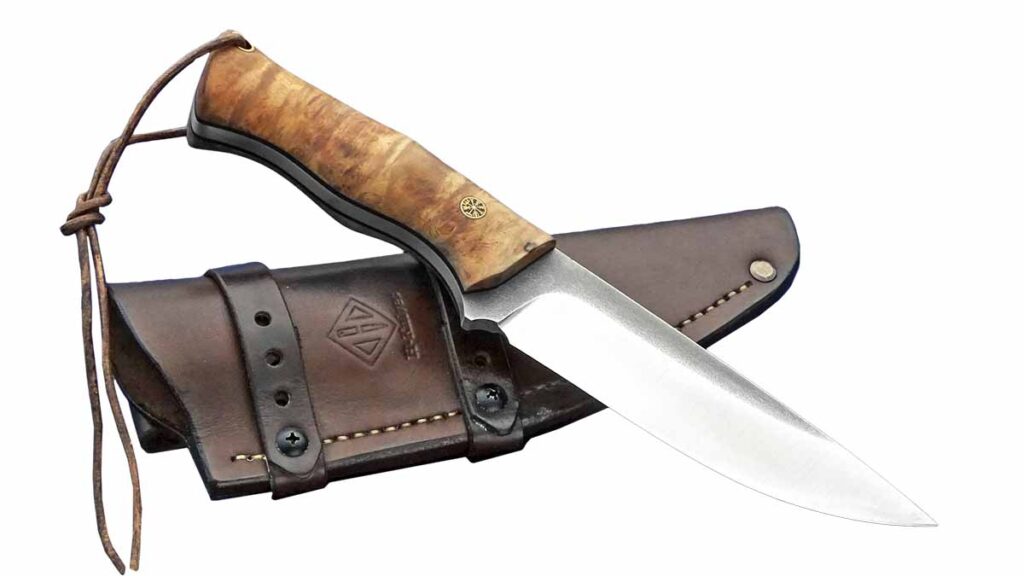
Jacek Hnatow: Bushcraft 1
The Bushcraft 1 by Jacek Hnatow boasts full-tang construction and excellent balance and handle ergonomics. “Though designed for bushcraft, the knife makes an outstanding all-around utility tool,” observed Les Robertson of Robertson’s Custom Cutlery. Blade length, style and steel: 5.5”, drop point and Bohler N690 stainless. Handle width and material: 3.75” and textured black G-10. Overall length: 14.5”. Sheath: custom made of leather by the maker. Maker’s price for a similar knife and sheath: $325. (ImpressByDesign image)
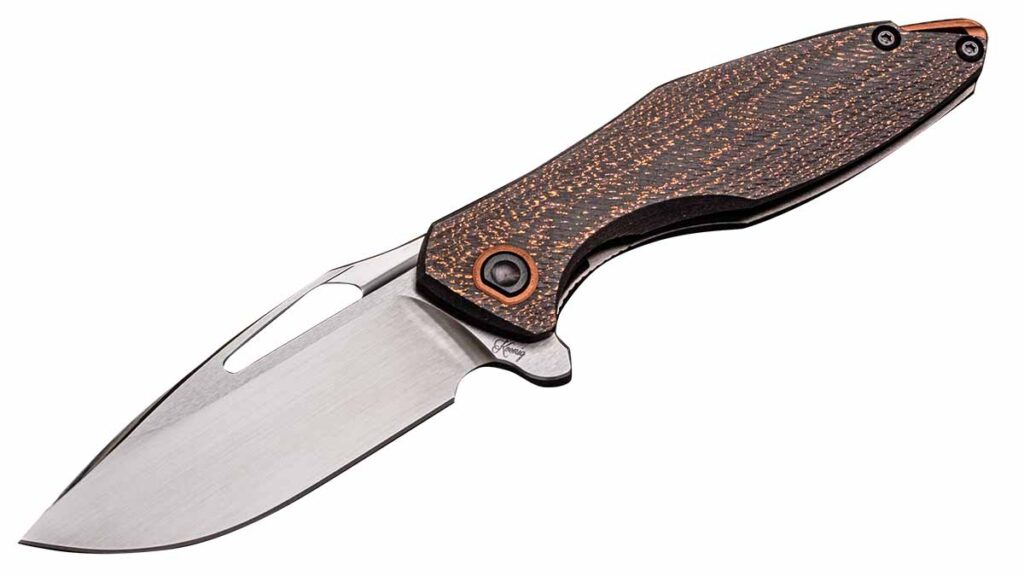
Bill Koenig: Arius Flipper Folder
Bill Koenig’s Custom Arius flipper folder has a 3.5-inch blade of CPM 20CV stainless steel with a handrubbed satin finish and mirror-washed accents. The handle on the custom EDC knife is copper-dust carbon fiber on the front side and titanium with C-pattern milling on the framelock side. Hardware and screws: zirconium. Pocket clip: handrubbed titanium configured to carry the knife blade tip up. Closed length: 5”. Maker’s price for a similar knife: $3,510. Recon 1 sold price: $6,500. (Recon 1 image)
Piotr Gosciniak: Breaker Tanto
Of Piotr Gosciniak’s Breaker Les Robertson writes, “The compound grind provides the penetration of a tanto-style blade and slicing ability of a recurve blade. The texture of the black Micarta® handle gives additional grip, particularly in a wet environment.” Blade length, steel and finish: 4.7”, Elmax stainless and satin. Overall length: 10”. Sheath: custom made of Kydex® by the maker. Maker’s price for a similar knife and sheath: $415. (ImpressByDesign image)
Sean Kendrick: Ruiner Tactical Folder
Sean Kendrick’s Ruiner is a framelock tactical folder with a 3.125-inch black blade of an “unknown material,” zirconium thumb studs and a notched thumb rest. Handle: dark Timascus™ front scale, backspacer and blade-tip-up pocket clip, and an orange-peel-finished and anodized titanium lockside. Pivot: zirconium. Weight: 6.1 ozs. Closed length: 4.5”. Sean names Mike Franklin of Hawg Knives as one of his top mentors. AZCK’s price: $5,995. (AZCK image)
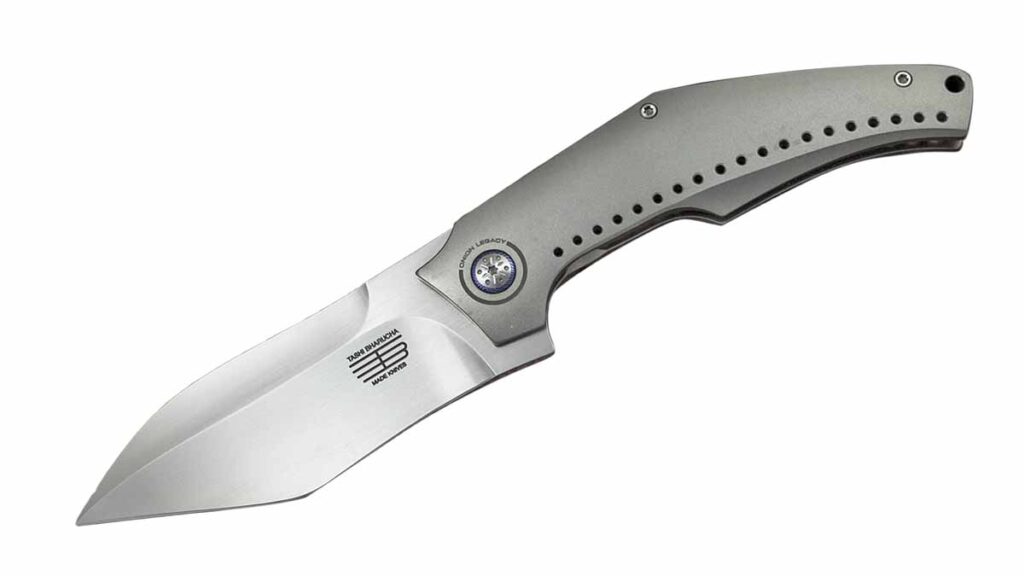
Tashi Bharucha: Onion LegacyFliper Folder
“The Legacy project is Tashi Bharucha’s way of paying homage to the icons of the knife world that have influenced him,” Dave Stark observed. “The Onion Legacy, his tribute to Ken Onion, was limited to nine pieces featuring a handrubbed RWL-34 stainless steel blade running on caged bearings. The frames are stonewashed and bead-blasted titanium with laser etching, accented by a custom-heat-colored Mokuti clip and pivot rings.” Weight and blade and closed lengths: 6.2 ozs., 4 and 4.75”. Retail price: $1,875. (Steel Addiction Custom Knives image)
Matthew Christensen: Full Dress Dreadeye
The Full Dress Dreadeye by Matthew Christensen sports a 3.375-inch high-satin-finished blade of Mike Norris Fire Clone damascus and dual zirconium thumb studs. Handle: Zirblast-finished Ant Farm Mokuti scales, and zirconium pivot collars, backspacer and blade-tip-up pocket clip. Weight: 4.9 ozs. Closed length: 4.625”. One of Matthew’s leading mentors is Dave Curtiss of Curtiss Knives. AZCK’s price: $3,595. (AZCK image)
Riann Manser: H4 Flipper Folder
South African Riann Manser’s H4 custom EDC knife has a 3.7-inch blade of satin-finished M390 stainless steel that runs on caged bearings. “It is perfectly centered, has silky-smooth action” and opens easily via a flipper tab, Daniel O’Malley noted. Handle: black G-10 with gold snakeskin FatCarbon inlaid into each side. Backspacer: black G-10. Liners: bead-blasted Gr6 titanium. Lock: linerlock. Pocket clip: bead-blasted titanium, configured for right-side, blade-tip-up carry. Closed length: 4.8”. BladeGallery.com’s price: $695. (BladeGallery.com image)
Sergey Shirogorov: Mini Quantum Flipper Folder
The Mini Quantum flipper folder by Sergey Shirogorov is highlighted by a rotating titanium pocket clip that carries the knife blade tip up. Blade length and steel: 3.5” and Mike Norris damascus. Handle: titanium. Closed length: 4.5”. Maker’s price: varies depending on what the knife brings at the various auctions where it is sold. Recon 1’s price: $10,000. (Recon 1 image)
RJ Martin: Q36 Flipper Folder
Custom knife purveyor Les Robertson has been buying Q36s since RJ Martin started making them. According to Les, “RJ never ceases to amaze me how he incrementally improves this knife: serrated thumb ramp, extremely lightweight, hypersonic flipper opener and bank-vault lockup.” Blade length and steel: 4” and MagnaCut stainless. Frame: grooved titanium. Closed length: 4 7/8”. RJ’s price for a similar knife: $3,200. (ImpressByDesign image)
Thomas Gony: Speartac Front Flipper
Frenchman Thomas Gony’s Speartac front flipper has a 3 3/8-inch blade of handrubbed RWL-34 stainless steel. The titanium handle features Zircuti inlays, pivot rings and pocket clip (blade tip up). Weight: 4.8 ozs. Closed length: 4.5”. Retail: $2,600. According to Dave Stark, there is such a huge demand for Gony’s work that Thomas can no longer take custom orders. (Steel Addiction Custom Knives image)
Dmitry Sinkevich: Skiving Tanto
A 3.125-inch tanto blade of K110-core san-mai and a titanium handle help complete the Skiving Tanto prototype by Dmitry Sinkevich. The pivot and blade-tip-up pocket clip are zirconium on this custom EDC knife, and the body screws are titanium. Closed length: 4”. Maker’s price: varies depending on what the knife brings at the various auctions where it is sold. Recon 1’s price: $10,000. (Recon 1 image)