
Buyer's Guides

You’re looking for a new knife in a certain style – we’ve got recommendations on the best blades for every price point.

Kershaw Leek Review: Not Your Garden-Variety EDC Knife

A Ken Onion design, the Kershaw Leek has cut a commanding profile.

It’s no wonder why the Kershaw Leek is such a phenomenal EDC folding knife. It has all the right elements that knife users crave—style, sturdy construction, premium materials, an impressive selection and is priced right.

The Leek is essentially the bigger brother of Kershaw’s Chive, answering the call from knife fanatics for a larger option of this Ken Onion design. And the petite option doesn’t disappoint.

We’ll examine why it’s been a popular seller for Kershaw, explore some popular variants and find out why this isn’t your garden-variety EDC knife.

Kershaw Leek Blade

The Leek’s blade measures 3 inches and is made from Sandvik 14C28N stainless steel, making it great at holding an edge. However, it’s the blade’s profile that demands attention. It’s a modified clip point and the profile tapers down to almost a needle tip. This is both a good and bad thing, which I will go into in depth later.
Kershaw Leek cutting
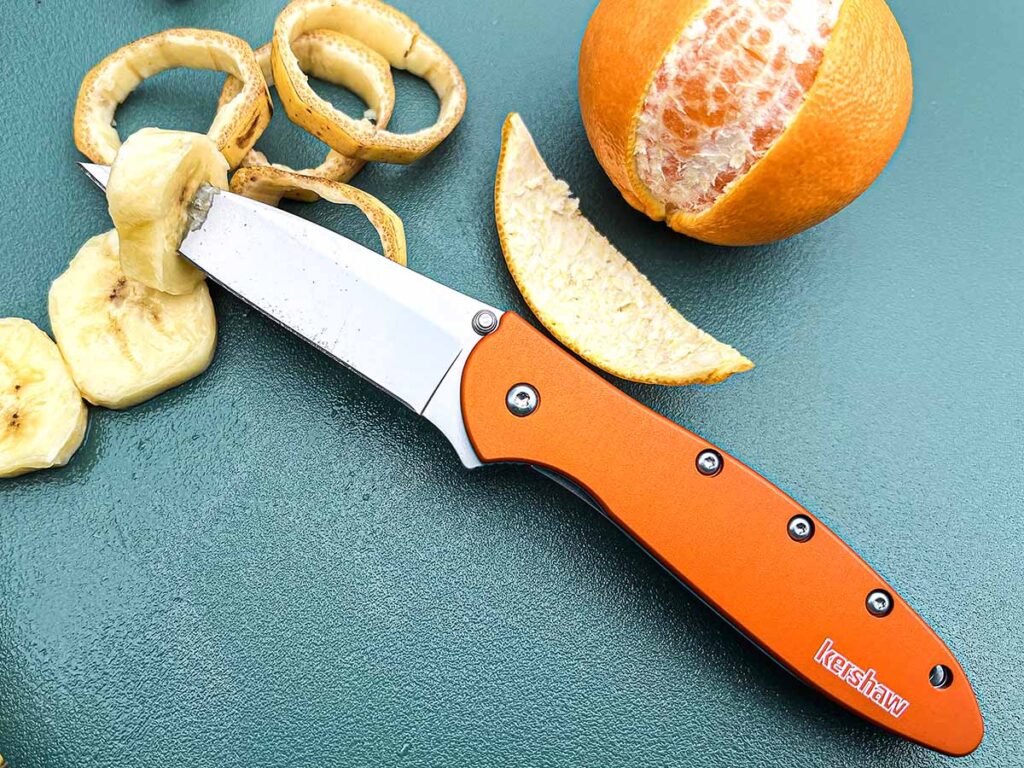
A born cutter, the Leek’s modified clip point blade made quick work of nearly any task set in front of it. Photos by Marty Stanfield, Marty Stanfield Photography

The hollow grind of the blade thins it down nicely to where the blade takes a smart, sharp edge easily. Dual thumb studs are present, but do not function as traditional thumb studs. Instead, they are used only for a positive stop in the open position.

Kershaw Leek Handle

The handle is a slender, elongated shape that favors daily carry due to its thin profile. The handle itself measures 4 inches, bringing the overall length of the Leek to 7 inches when open.

The handle sports a nice, comfortable chamfer all the way around making gripping it easier and presenting fewer hot spots. A large, steel pocket clip can be affixed to the handle to carry the Leek in the tip-up or tip-down position, whatever you wish to do. The clip holds the Leek securely in your pocket, and it can be removed as well should you desire to carry it in the bottom of your pocket.
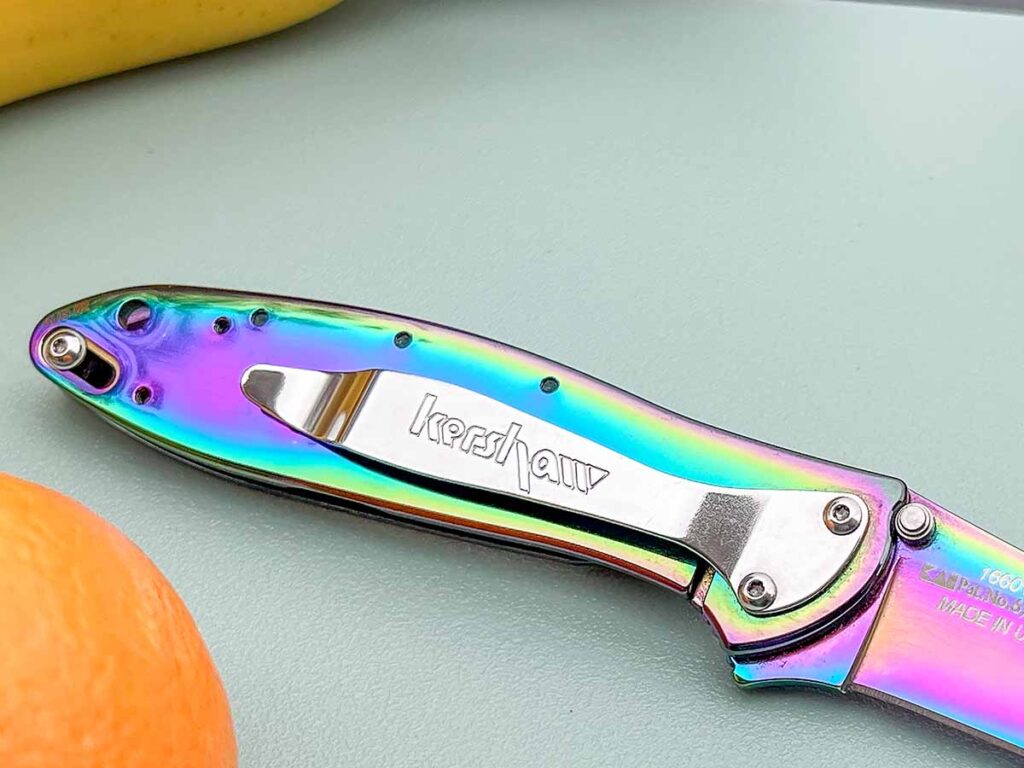
Leek clip
A movable clip allows the Leek to be carried tip-up or tip-down. Photos by Marty Stanfield, Marty Stanfield Photography

The base Leek (model 1660) has a handle of bead-blasted stainless steel with a matching bead-blasted blade. The Leek is available with a variety of handle finishes, from several colors of anodized aluminum to black PVD-coated, Blackwash and carbon fiber, to name a few.

As for the lock, it’s a frame lock that engages the blade tang positively, securing it in the open position. Very solid and easy to operate when you’re ready to stash the blade.

Testing The Leek

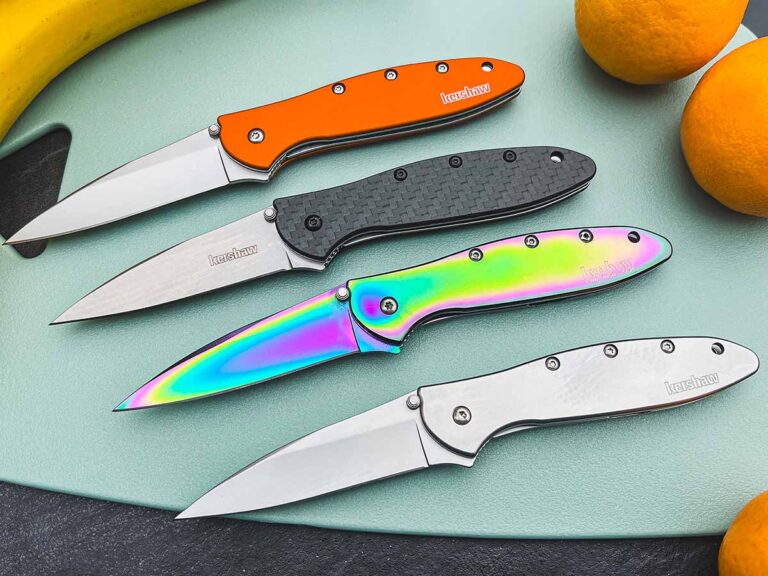
For this review, Kershaw sent me several of their popular selling Leek models for closer examination. I have the 1660 base model Leek with a bead blast finish on the blade and handle. The 1660OR is a liner lock and has orange-anodized aluminum handles. The Leek is available in an array of anodized aluminum colors. Speaking of colors, there’s also the very unique 1660VIB which is a high polish 1660 with the addition of a rainbow titanium coating. And finally, we have the high-tech 1660CF liner lock which features futuristic carbon fiber handles and upgraded blade steel to CPM154 for higher performance cutting and longer edge retention

My pick of this bunch is the 1660CF, given there’s a lot going on with this particular model. You get the benefit of the unique look and the lightweight of the carbon fiber, combined with the high-end blade steel. The 1660CF carries very well due to the reduced mass compared with the regular 1660 Leek framelock.
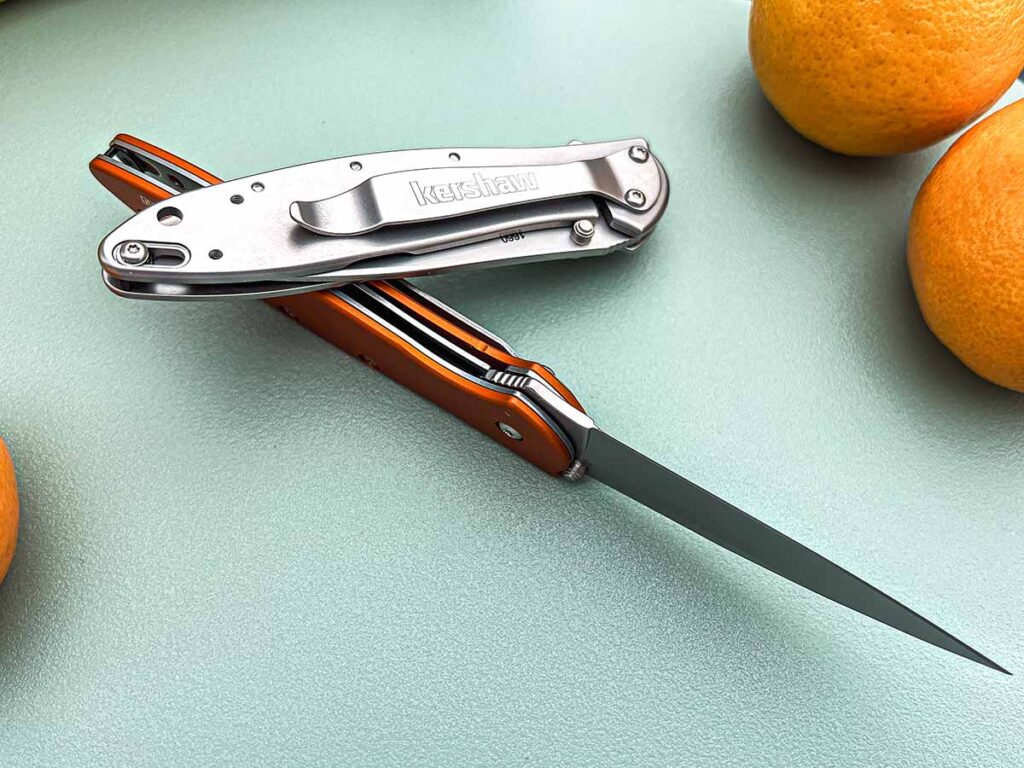
Kershaw Leek frame lock
The Leek’s frame lock is sturdy and easy to manipulate. Photos by Marty Stanfield, Marty Stanfield Photography

Structurally speaking, the base model 1660 Leek frame lock has a very rock-solid lockup. It’s very hard to defeat and only closes when you deliberately command it to. It actually makes a good work knife as long as you use it as a cutting tool and nothing else that it wasn’t designed for (more on this in a bit).

Performance-wise, the Leek—across the board regardless of the blade steel or handle configuration—is definitely a slicer. The blade stock is very thin and when it is ground, it is attenuated even more.

Right out of the box, the leek has a lot of bite. It goes through thicker stuff like cardboard very easily. The tip being acute, makes for an excellent scoring tool as well. The Leek excels at being an all-around EDC cutter.

The blade opens fast, with the press of the exposed flipper tab on the blade spine, Kershaw’s Speed Safe assisted opening technology takes over and powers the blade to the fully open and locked position. It’s easy to see why the Leek remains a popular Kershaw model after all these years, it simply works well and is a good-looking design.

Leek Sticky Points

Two of the most common failures I have seen in the Leek are where folks misuse the knife as well as the sliding safety breaking.
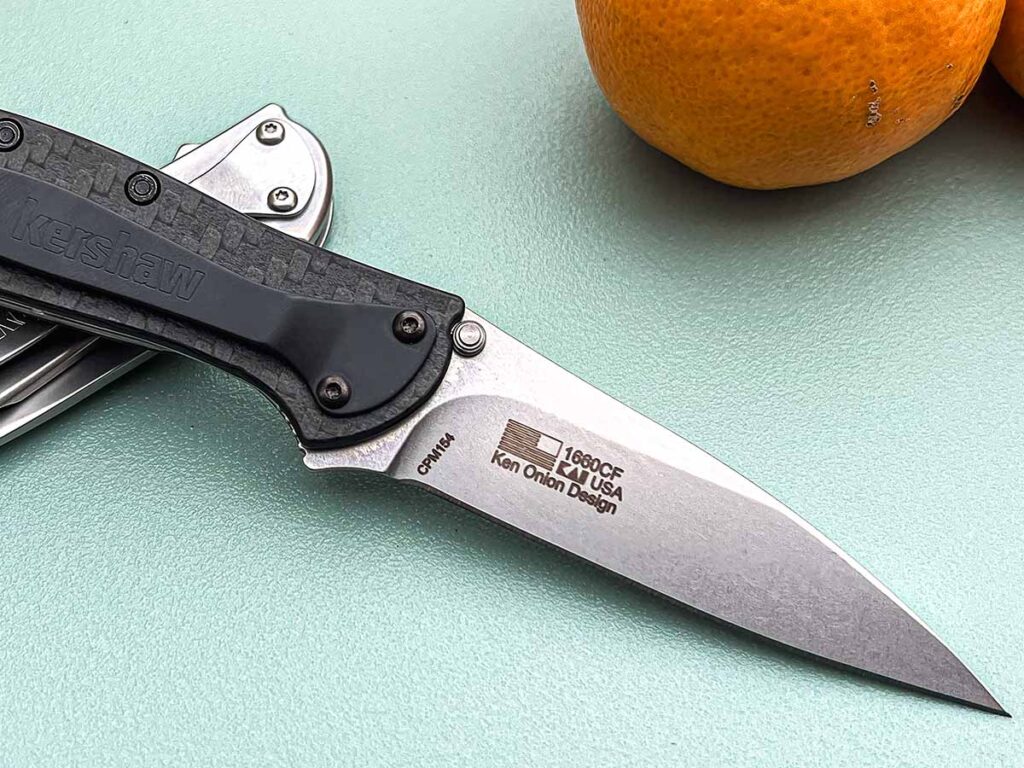
Leek blade
While the blade is an accomplished cutter, it’s thin enough the tip is easily damaged when used to pry. Photos by Marty Stanfield, Marty Stanfield Photography

Because the tip of the blade is pointy, it’s a weak spot with the knife. Where you get into trouble is when you use the tip to pry, even lightly. This either results in a bend or break off entirely. This is a cutting tool, not a pry tool or screwdriver.

Each Leek also comes with a sliding safety that, when the blade is closed, you slide over the tip of the blade to physically block it from coming out of the handle. There is a hex screw on the backside you use your thumb to move and this moves the safety. Sometimes the safety can slide on its own while the blade is open; when you go to close the blade it comes down on the safety tab. If done hard enough this will cause the safety to break, as it is plastic. The nice part, the tab is replaceable.

Final Cut

Other than these points, the Leek is a proven EDC knife. It’s rather compact, slender, and doesn’t garner unwanted attention. It’s worth a look if you’re in the market for a blade that balances looks and performance.

As for price, the MSRP for the base 1660 Leek is $115. The 1660OR orange handle Leek is $105. And the Carbon Fiber 1660 CF runs $190. In the scheme of things, not bad pricing for USA-made EDC folding knife—particularly with an Onion pedigree!

Read More About Kershaw:

Searching For TSA-Safe EDCs

Though always open to TSA interpretation, these tools just might pass muster.

It’s the job of Transportation Security Administration (TSA) agents to help ensure the safety of all commercial flights, which includes confiscating anything and everything from passenger carry-on that might jeopardize such safety. With the summer vacation season and the plane travel that accompanies it beckoning, the focus of this story is to avail you of some EDCs that might pass TSA muster.

Before continuing, there is always going to be that one TSA agent who will find something wrong with a carry-on EDC, no matter what it is, so be prepared for that eventuality. For the most part I read through the TSA’s rules and there appears to be some openings for such EDCs—not many, mind you, but some.

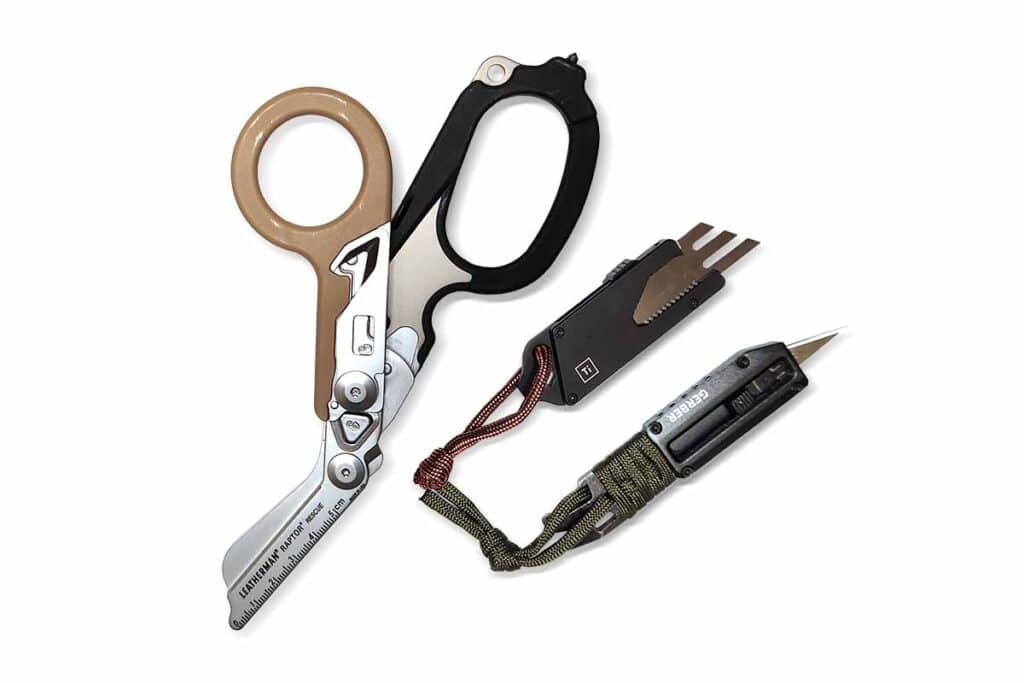
From left: the Leatherman Raptor, Big Idea Design TPT Slide and Gerber Prybrid-X.

One is the TPT Slide from Big Idea Design. Lets dive right in to why I think the TSA would OK the TPT for carry-on. First, simply because, in my experience, the TSA has. Back in my trade show days I carried several knives that were structured like the TPT. It is a utility knife with a removable blade. I would throw the knife in my carry-on minus the blade. Since I was working trade shows, I would simply leave some utility blades in the booth for when I got there. If you don’t have a setup like that it is easy enough to just buy a pack of blades in a store at your destination. When you depart to come home, leave them as an extra tip to the chambermaid.

The TPT takes utility blades, the single trapezoid style. You need no tools to remove the blade. In other knives of this style I have seen many different ways to remove the blade. The TPT’s method isn’t difficult but it isn’t a cakewalk like some others, either. Once you get the hang of it, though, you will have an easier time.

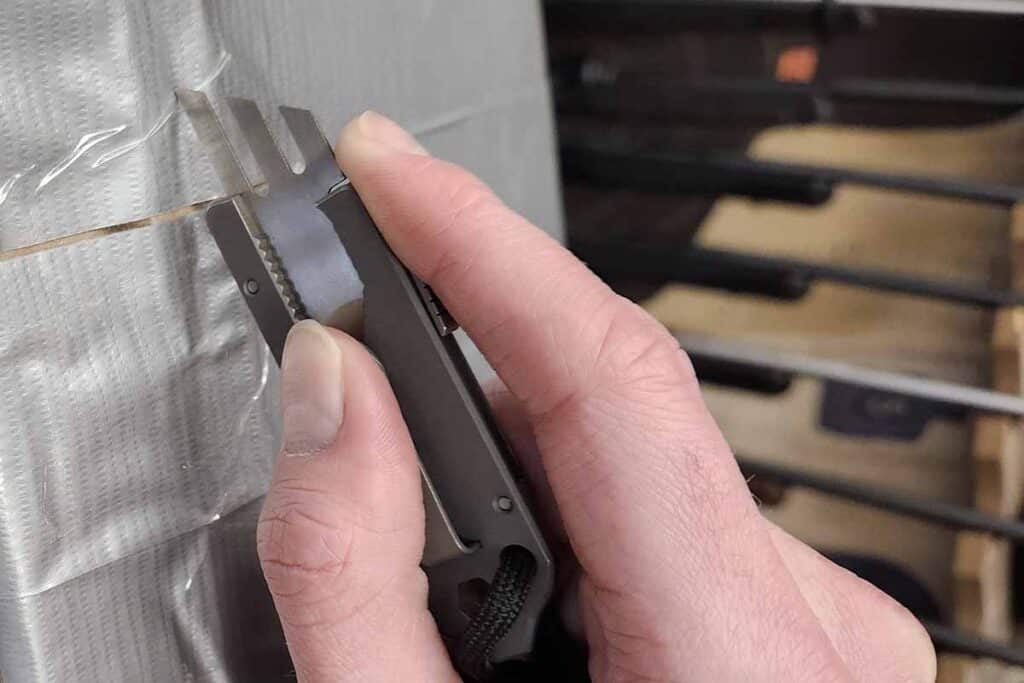
A flat-head screwdriver/pry bar is incorporated into the handle butt. There’s also a socket that takes quarter-inch bits. It is a trim package and has a pocket clip for carry or sleek leather pouch that also holds an extra blade. The pocket clip is tight—tight enough that when you get it, give it a good stretch to open it up. Included are two faux blades. They look exactly like utility blades but have no edge. They would be great for chores like breaking tape on packages, though I would not advise attempting to take them through security. You might be pushing your luck.

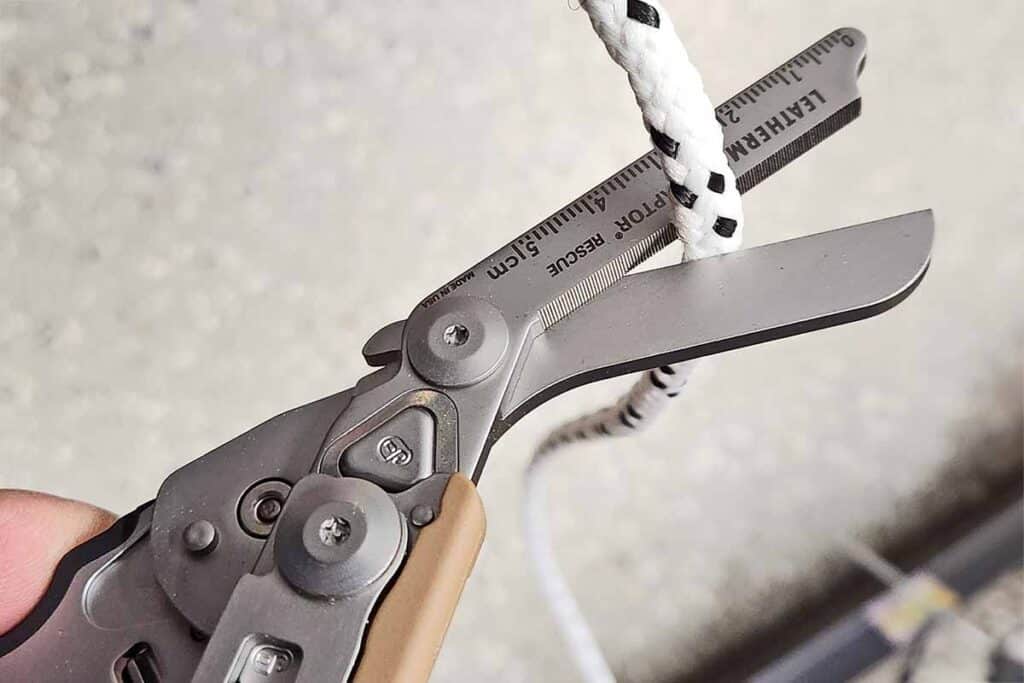
scissors of the Leatherman Raptor
The author found the scissors of the Leatherman Raptor very useful. He carries a pair in his service bag. Good scissors can cut a variety of materials, from paper to cord and zip ties.

The TPT is a nice piece of kit and gives you a compact tool for EDC, though I can’t see why you couldn’t carry on any utility knife without the blades as long as it fits the guidelines. I do like it enough that it will see duty in my EDC rotation. Country of origin: USA. MSRP: $80.

Sound Substitue

The Leatherman Raptor is basically a set of EMT shears with a few tricks up its sleeve. If you read through the TSA guidelines, they exclude any scissors or shears with blades longer than 3 inches from the pivot point. The Raptor’s blades are only 1.9 inches. As well, I would figure the fact the blade tips are not sharp/pointed wouldn’t raise any alarms either. Keep in mind, I have not carried a Raptor on a plane. Unlike utility knives, I have no firsthand experience with shears to fall back on.

To carry the Raptor you have two choices: a plastic molded belt sheath and a belt clip. You can use the belt clip only when the scissors are folded. They fold up for a nice stowaway package. Other scissors features are an oxygen tank wrench, ring cutter, strap-cutter and a glassbreaker. The sheath will accommodate up to a 1.5-inch-wide belt. I know a number of firefighters who carry a Raptor on a belt daily. I carried one for years on my ankle first-aid kit.

TPT Slide’s faux blade cutting open packages
Use the tip of the TPT Slide’s faux blade to cut open packages and such. The faux blade is great in areas with knife restrictions.

It is a versatile tool with tons of cutting power. The one blade is shaped like a sheepsfoot and, if you use the point, can be manipulated to score or cut things. The Raptor might not be as quick to use as a knife but it does have uses a knife doesn’t. Best of all, it doesn’t incorporate a bottle opener. (As you may or may not know, I hate having bottle openers on everything. At the current rate, pretty soon humans will be born with bottle-opening appendages.) If I were limited to what I could carry for an EDC, the Raptor would be a good practical alternative to a knife. Country of origin: USA. MSRP: $79.95.

Light L’il Bro

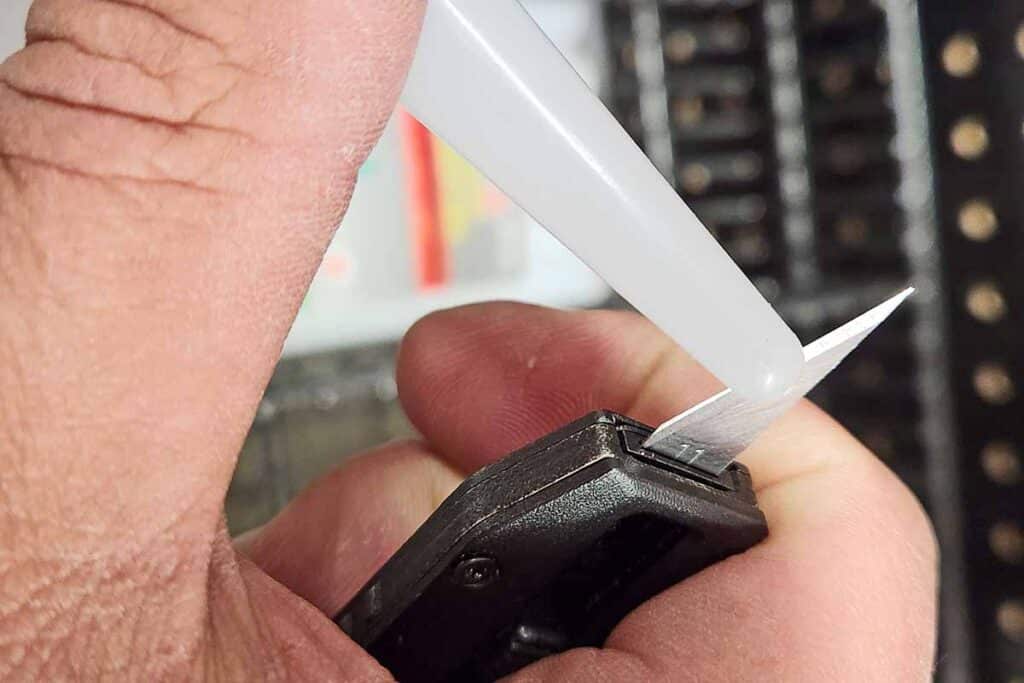
The Gerber Prybrid-X might look familiar as it has a big bro, the Prybrid. The Prybrid-X appears to fall under the TSA’s removal-blade category, but instead of a utility blade it takes a #11 crafting blade. The latter might not be as widely available as a utility blade, though by no means is it like shopping for hen’s teeth, either.

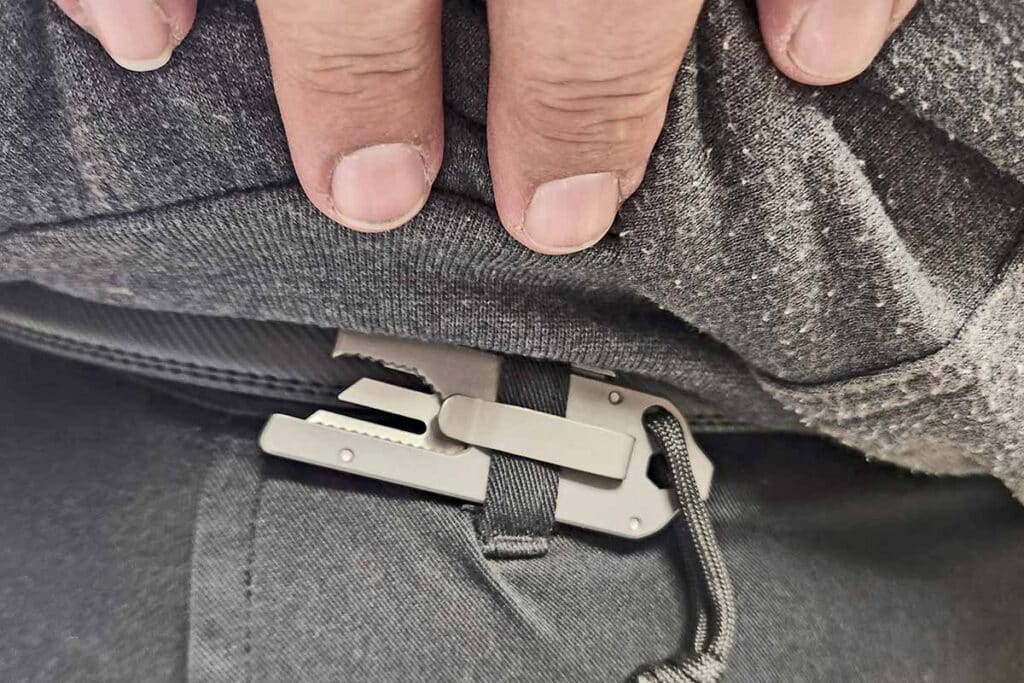
To deploy the blade, depress a button and push the blade out the front. The Prybrid-X comes with a pry bar, wire stripper, bottle opener and two flat-head screwdrivers formed out to the tips of the pry bar. It is a design that takes up very little real estate in your pocket. It does have a clip but the paracord lanyard makes it easy to find at the bottom of a pocket.

small, sharp blade of the Prybrid-X.
Sometimes a blade’s ease of access is more important than its size. You can do a lot of chores with the small, sharp blade of the Prybrid-X.

It is a light-duty tool for opening packages, stripping Romex® wire, digging out splinters, etc. If working in non-knife-friendly places like some retail stores, it is a great tool due to its low profile. For the size and weight, I can see it in, say, a tactical pocket pouch or just as that extra blade crazy knife guys like to carry. Country of origin: USA. MSRP: $28.

The Challenge

Carrying an EDC can be challenging at times for many reasons, including regulations and workplace rules. I have a friend whose workplace banned knives. Hence, he couldn’t carry a Swiss Army knife to work but could carry a multi-tool because it was “not technically a knife.”

TPT is easily carried in the belt line
A trim piece such as the TPT is easily carried in the belt line. The author likes carrying it in a belt loop. It saves space in a pocket and promotes easy access.

Fortunately, the knife community is constantly innovating and finding ways to address situations where a “TSA safe” tool is needed, though such tools are few and far between. And that is the challenge. I would like to know if there are more such implements out there. Instead of utility knives, you just remove the blades from, list the more creative stuff in the comments below, the things that make you sit up and take notice.

Check Out More Knife Drops:

The Joy of Cooking Knife Review

Ethan Becker and Dan Eastland collaborate on a sharp tool for the kitchen.

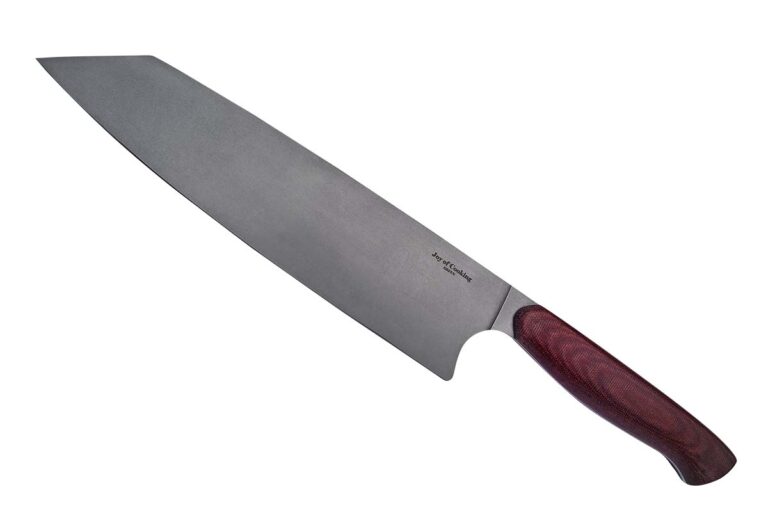
Long-time knife designer Ethan Becker and Dan Eastland of Dogwood Custom Knives have collaborated on a chef’s knife that combines each of the principals’ vision of exactly what such a knife should be.

Introduced at BLADE Show 2024, the Joy of Cooking 8-inch K-tip chef’s knife is a mix of Japanese and Western styles and premium stainless steel and synthetic handle materials.

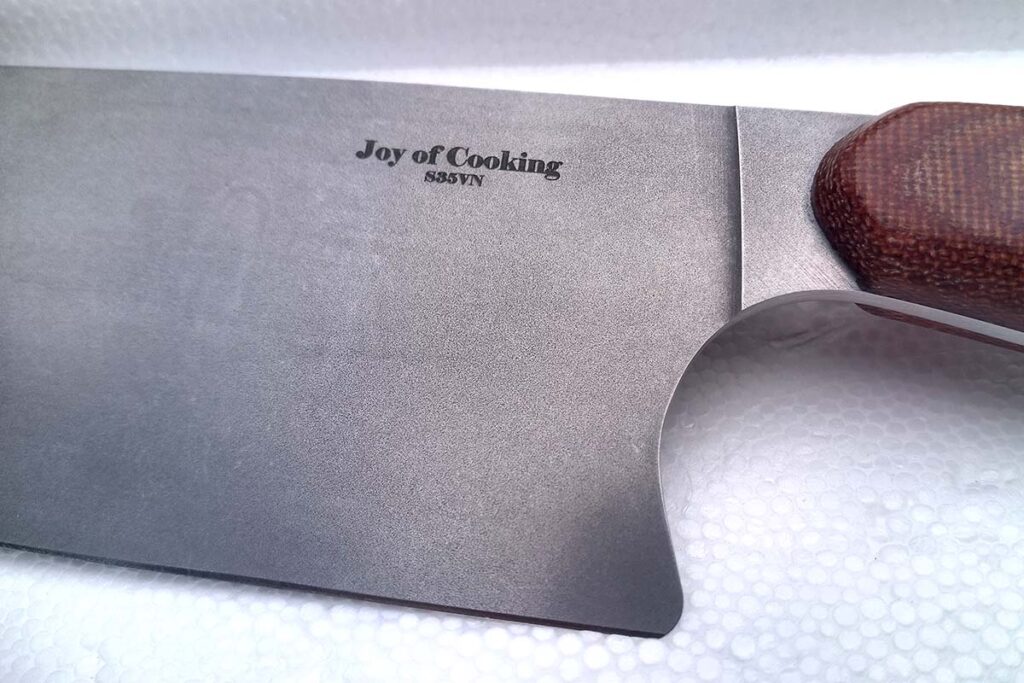
It also has the iconic Joy of Cooking logo on the blade, Joy of Cooking the internationally renowned cookbook originally written by Becker’s mother, Irma Rombauer, and edited in some subsequent editions by Ethan. He handed those duties off and today the book is co-edited most ably by his son, John, and Megan Scott.

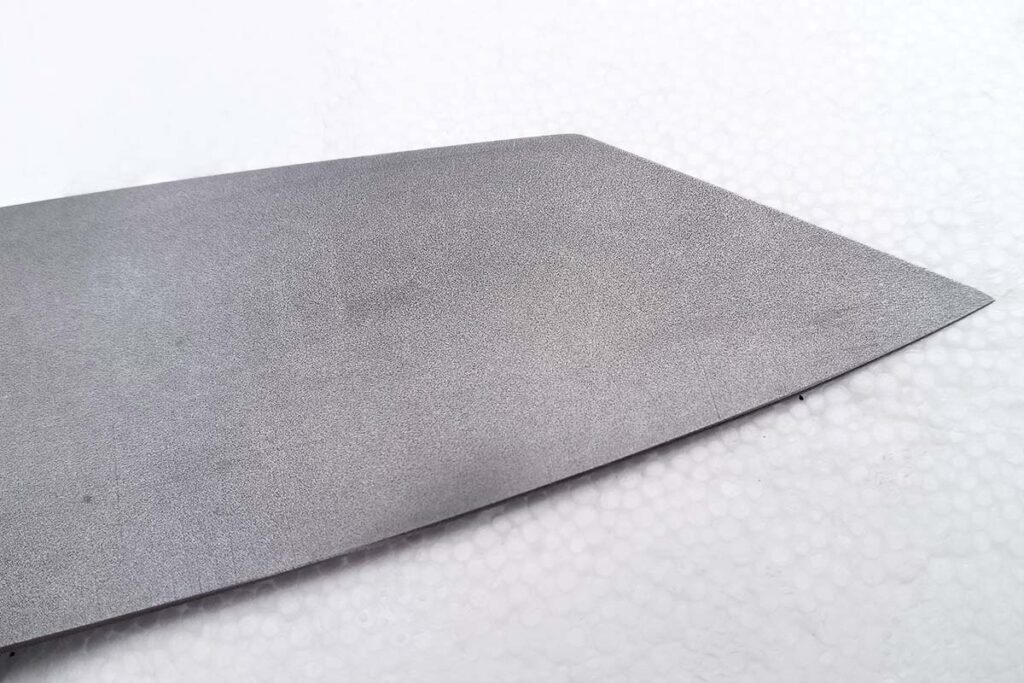
Joy of cooking logo on blade
The heel of the blade curves toward the rear and sits flat on the surface for controlled cutting.

With extensive experience as both a knifemaker and a cook, Eastland brings the kind of know-how to the project that gives it edged gravitas.

“Dan is pretty much the perfect person to do this because he’s been in a commercial kitchen and knows his way around that,” Ethan said.

Dan also spent a number of years as an apprentice maker to Georgia Knife Makers Guild member Andy Roy of Fiddleback Forge in North Georgia, and now builds knives at Dogwood Custom Knives in Greenville, South Carolina.

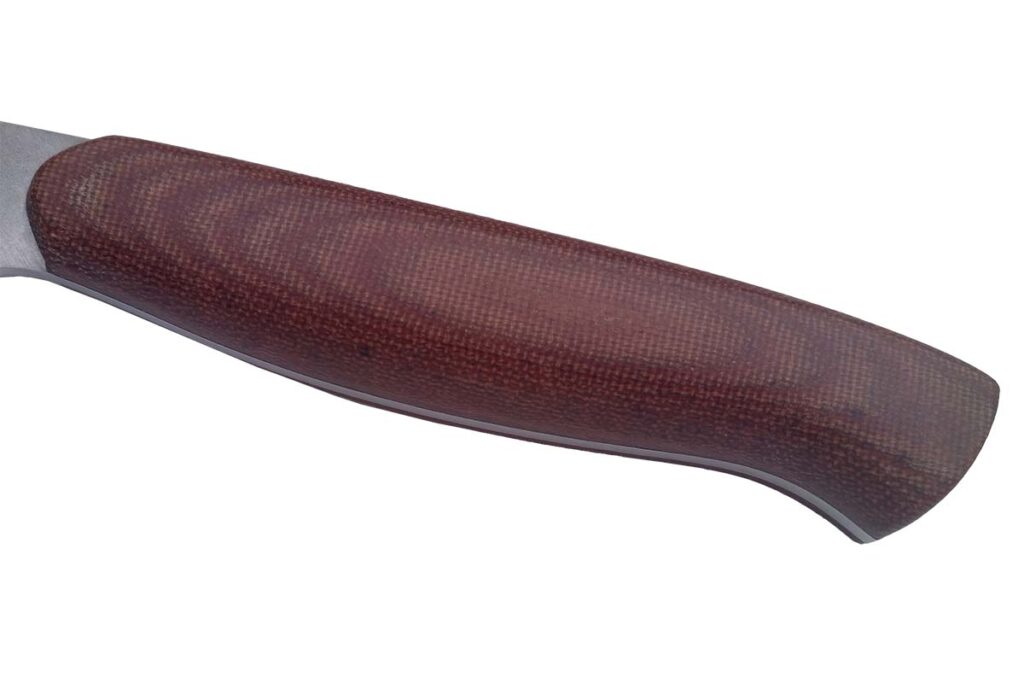
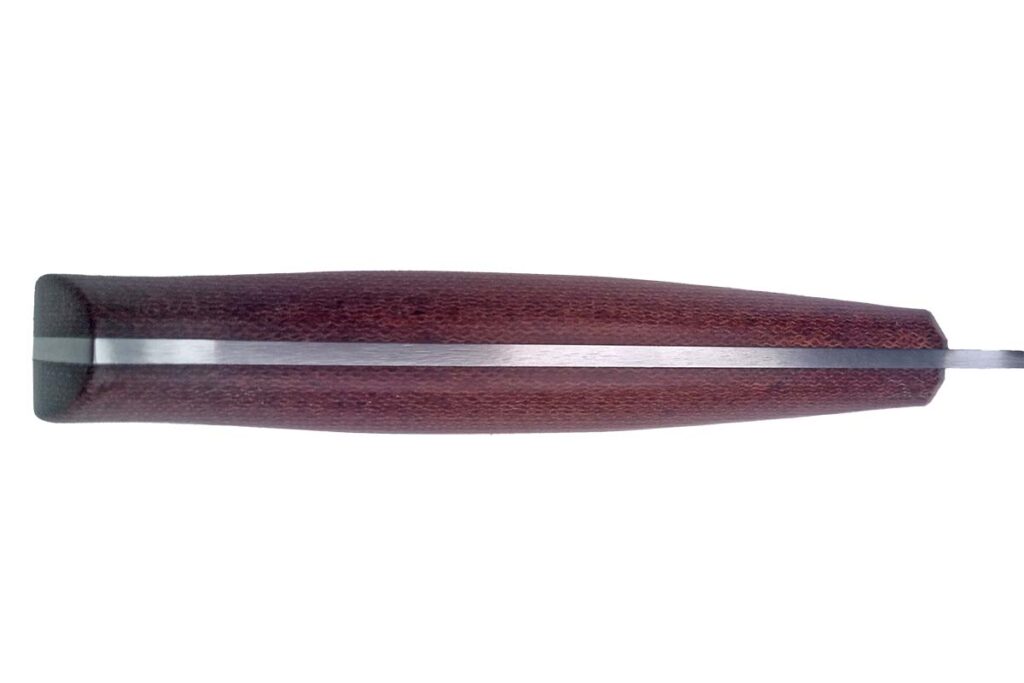
Joy of cooking knife handle
Handle materials come in a choice of natural (shown here; note the texture and grain) and black Micarta® and blue, red or black G-10.

As for the Joy of Cooking knife and its features, Dan approaches it all from the maker/cook perspective.

“The blade has a Japanese influence. I always liked Japanese blade geometry and balance, but I didn’t like their handles. Ethan and I both like a little palm swell,” he noted, “so we wanted more of a Western-style handle.”

In Joy of Cooking, Ethan writes about a grip for home cooks that’s comfortable, Dan said, so the handle has rounded corners to eliminate hot spots and an overall design that helps promote a pinch grip. The blade is weighted toward the front for balance and has the K tip for precise tip work.

Tip of the joy of cooking knife
The K tip gives the knife a piercing feature lacking in such Japanese designs as the santoku.

Ethan said he’s a big fan of the santoku style and has designed santokus and used them in the kitchen almost exclusively for 20 years.

“The one problem with the santoku is it really doesn’t have a good piercer,” he noted. “You can get by without a piercer if you keep the knife really sharp but guess what—most people don’t keep their knives sharp enough. But for such jobs as taking off the top of a tomato, for instance, the K tip works pretty good.”

Dan lauded the utility of the K tip for other tasks as well, adding, “My grandmother opened all the packaging with the tip of a kitchen knife. No matter what knife you gave her, she sliced the top of the package open with the tip and went to work.” The K tip is tailor made for such chores, as well as others.

Joy of cooking knife handle palm swell
The collaborators prefer a Western-style handle and gave the Joy of Cooking Knife grip a palm swell as a result.

The edge has a nice curvature for rock chopping and push cutting meats and vegetables. The heel of the blade also curves toward the rear and sits flat on the surface for controlled cutting.

“The neat thing is when the blade comes down [at the heel during a rocking cut or chop], it stops,” Ethan explained. “It’s also good for a push cut,” Dan added, “so it’s good for both a rock chop and push cut. And having that heel down a little bit it will bottom out, so you cut all the way through something and don’t wind up with little partially cut bits at the end.”

Joy Of Cooking Knife Details

The 8-inch blade is CPM S35VN stainless steel. The Rockwell hardness is 60 HRC and the blade is 3/32-inch thick at the thickest. Along with the contoured handle the knife weighs in at a scant 5.5 ounces.

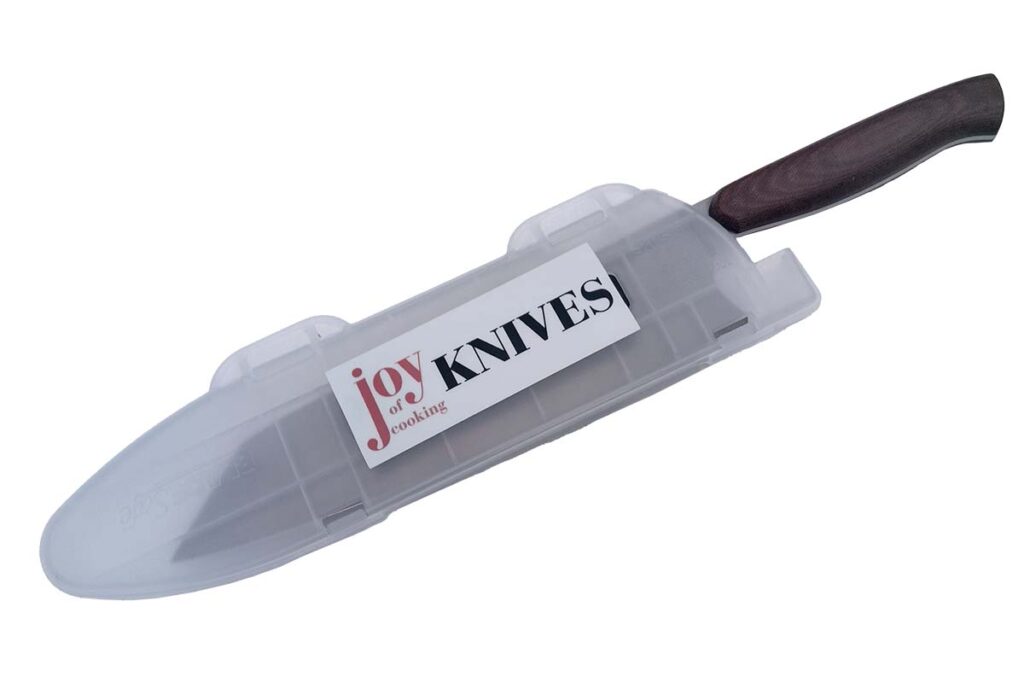
Joy of cooking knife sheath
A hard plastic cover with plastic snaps contains and protects the knife.

“I’m of the opinion the Greeks told us everything we need to know about a double-inclined plane—the longer the plane and the lower the angle, the more efficient it is,” Dan said. “A knife blade is a double-inclined plane, and I wanted to make this knife as light as possible.”

He returned to his grandmother’s experience.

“And again, my grandmother used to complain that Henckels and Wusthof, she loved the knives, but they weighed almost as much as she did. By using the S35VN we’ve been able to thin it out and get a mechanically better cutting blade, but also a lighter blade.”

Ethan agreed that most kitchen knives are too heavy.

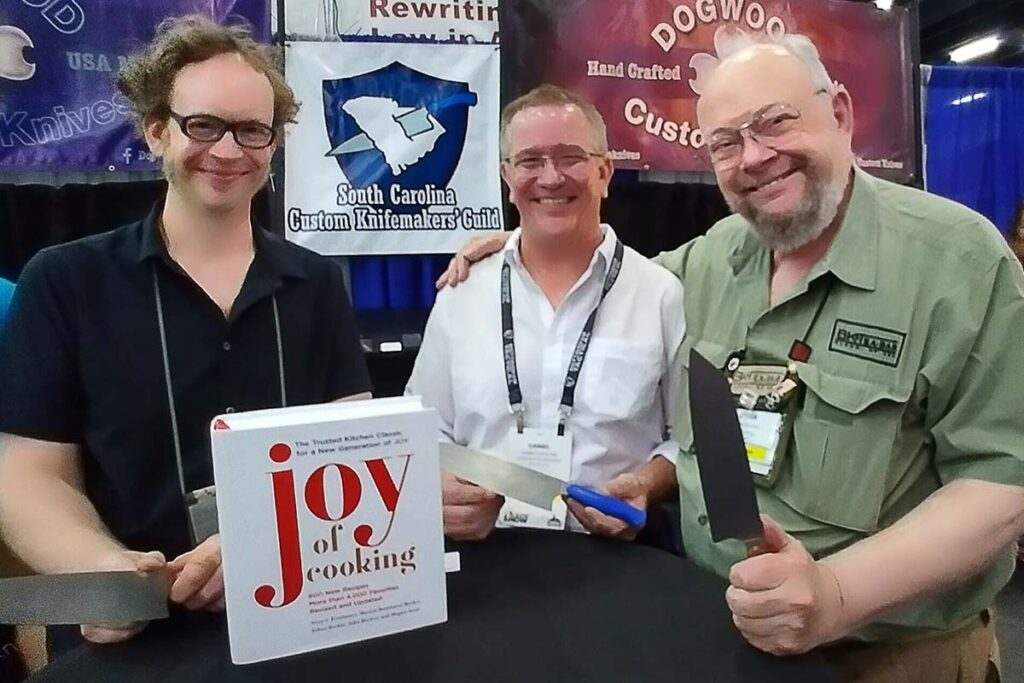
From left at BLADE Show 2024: John Becker, co-editor of Joy of Cooking, Dan Eastland of Dogwood Custom Knives and long-time knife designer Ethan Becker.

“The wrist gets tired easy and to be able to not have very much weight that you’re working with, hey, what’s wrong with that?” he observed. “Most traditional kitchen blades were thick because they were forged before they were ground … The cutlers in Europe were very, very concerned that the housewives would use the blades for things they weren’t supposed to, so they used soft steel so it wouldn’t nick and if they opened bottles with it it wouldn’t hurt it. The result was blades that didn’t hold an edge worth a damn and were not terribly efficient.”

Dan said the S35VN has good corrosion resistance and the edge retention is phenomenal.

“We tested the knife extensively in an industrial kitchen to ensure edge retention and durability, and I like S35VN because it’s a good balance of durability and edge retention. And we can get that 60 Rockwell so it can take a nice, keen edge and we don’t have to worry about it chipping out.”

As noted, Dan and Ethan wanted a Western-style handle with a palm swell and offer it in a choice of G-10 and Micarta®. The Micarta is available in black and natural versions, both with texture and grain for purchase. The G-10 comes in red, black and blue.

“Those colors will always be the same over time as we introduce other knives in the lineup, so you can buy a knife that will match whichever color knife you previously bought,” Dan said. The intent is for there to be a complete set of Joy of Cooking knives, though nothing was set in stone in that regard at press time.

Pros

  • Collaborative Expertise
  • Versatile Blade Design
  • Premium Blade Material

Cons

  • Higher Price Point
  • Plastic Snap Cover

Joy Of Cooking 8” Chef’s Knife Specs
Designers: Ethan Becker and Dan Eastland
Company: Dogwood Custom Knives
Blade Length: 8”
Blade Steel: CPM S35VN stainless
Rockwell Hardness: 60 HRC
Blade @Thickest: 3/32”
Handle: Black and natural Micarta® and blue, red and black G-10 options
Overall Length: 13”
Carry: Plastic snap cover
Knife to Know: K tip blade; lightweight design; hidden handle pins
Country of Origin: USA
MSRP: $200

More Kitchen Knives:

2025 BLADE Show Knife Debuts: What’s Coming Out!

Knife companies will debut their latest at BLADE Show 2025.

Knives and plenty of them, the BLADE Show is the Mecca for anything that cuts, hack or chops. It’s also a launching pad.

Many companies wait for the big dance in Atlanta’s Cobb County Convention center to release their latest and greatest, making the June 6-8 shindig the perfect place to pick up a brand-new, nobody-else-has design. While we’re certain there some makers have some rabbits they’ll pull out of their hats at the show, we’ve got a sneak peek of a few factory blades set to go on sale at the show.

So, without further adieu here are a bevvy of 2025 BLADE Show knife debuts you should keep an eye out for at gathering!

Don’t Wait! Get Your BLADE Show Tickets Now!


Work Sharp RMX

Work Sharp Variant
Work Sharp Variant

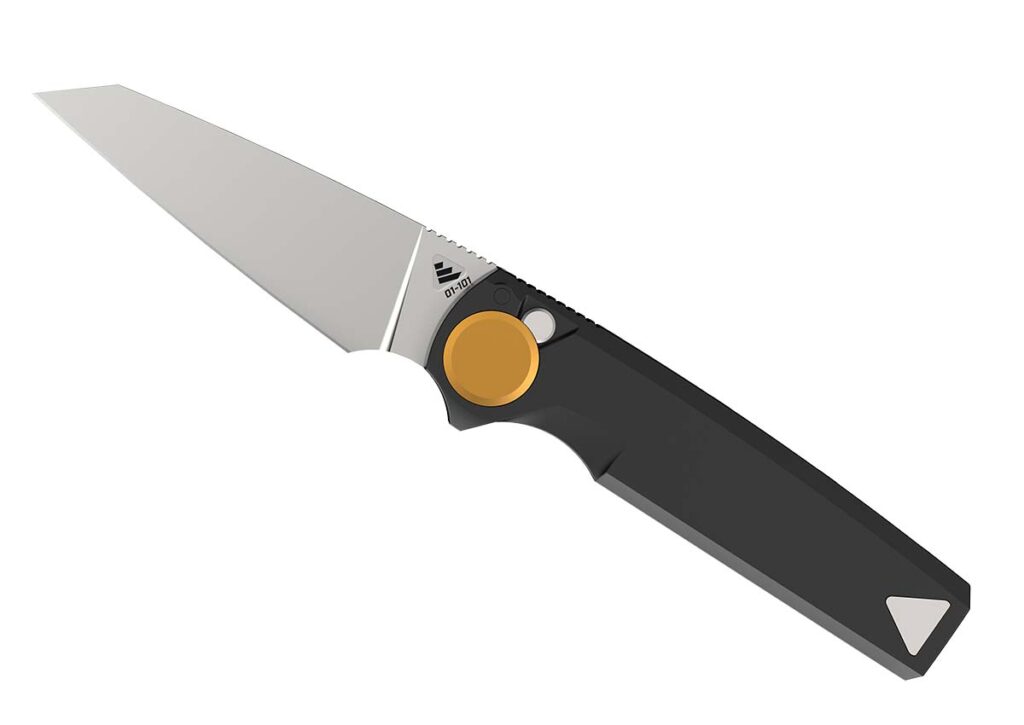
Work Sharp throws its hat into the knife ring with its first-ever knife: the RMX EDC folder. The 3.2-inch reverse tanto blade of full-flat-ground CPM 3V carbon steel button locks both open and closed. Comes with both a manual and auto pivot to allow you to switch between whichever mode of operation suits your needs. The magnesium handle has a reversible, tip-up, deep carry clip.
Weight: 2.4 ounces
Closed length: 4.3 inches
Country of origin: Designed, assembled and quality checked in Ashland, Oregon, using foreign parts
MSRP: $139.95
Available: BLADE Show 2025


McNees Knives MAC2 3.5

McNees Knives MAC2 3.5

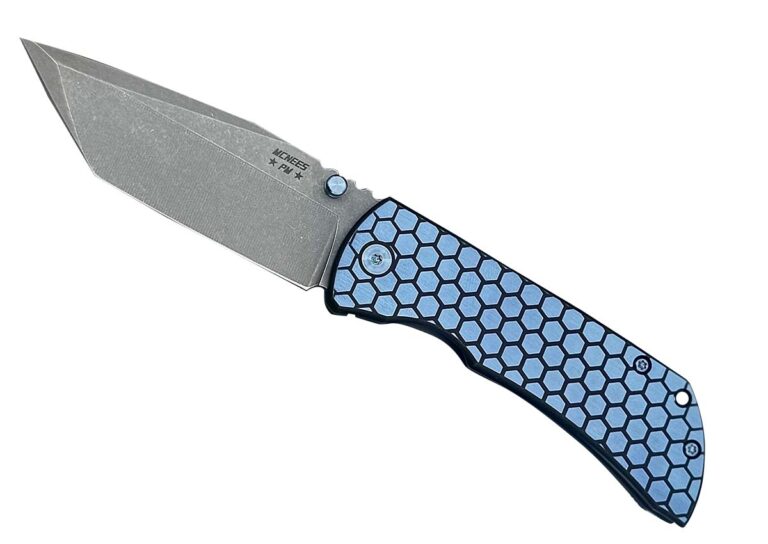
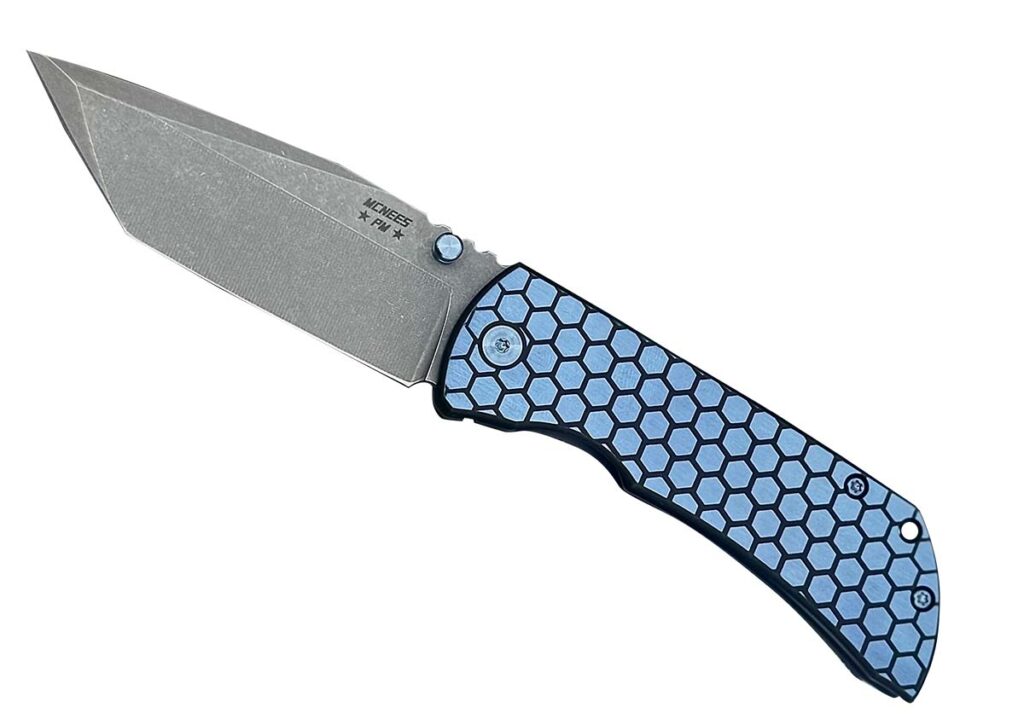
Titanium scales with a honeycomb look and a 3.5-inch tanto blade of hollow-ground CPM MagnaCut stainless distinguish the MAC2 3.5 tactical folder by McNees Knives.
Blade opener: thumb stud.
Lock: Reeve Integral Lock (aka framelock)
Clip: bent titanium
Weight: 26 ounces
Closed length: 4.25 inches
Country of origin: USA
MSRP: $625
Available: BLADE Show 2025


Condor Tool & Knife K-Night Panabas

Condor Tool & Knife K-Night Panabas

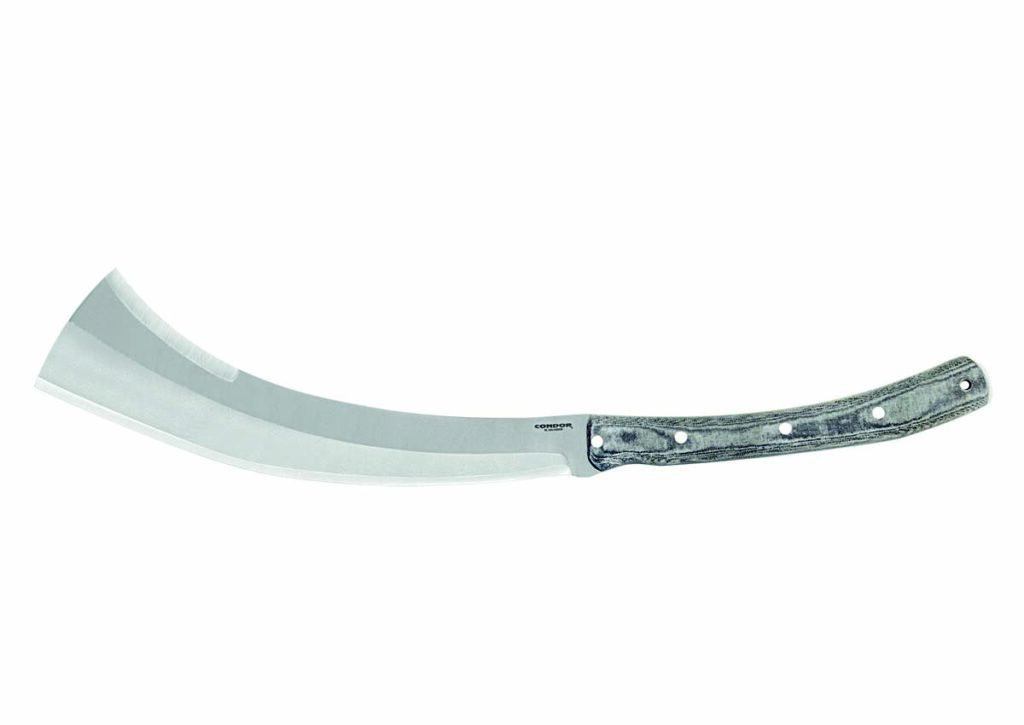
The K-Night Panabas from Condor Tool & Knife boasts a 14.29-inch blade of convex-ground 1075 carbon steel and Micarta® scales.
Weight: 32.98 ounces
Overall length: 25.35 inches
Sheath (not shown): Kydex with leather belt loop
Country of origin: El Salvador
MSRP: $174.98
Available: NOW


Rick Hinderer Knives Bowie

Rick Hinderer Knives Bowie

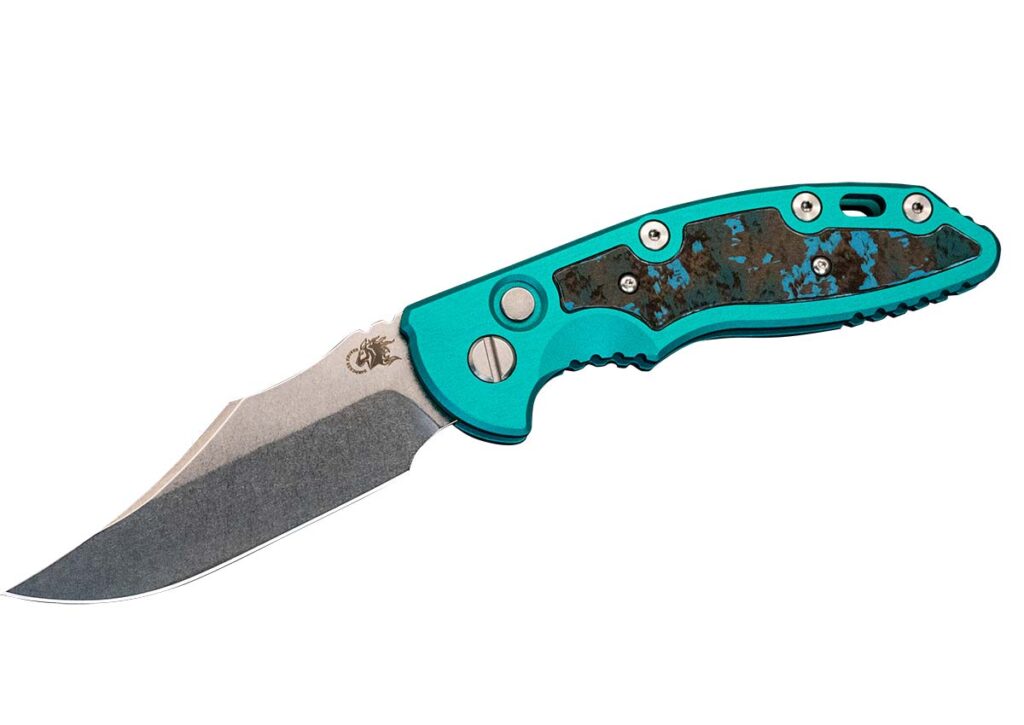
The Aluminum Automatic XM-18 3.5-inch Bowie from Rick Hinderer Knives features a 3.5-inch blade of CPM S45VN stainless steel. The aluminum handle with titanium half liners is anodized turquoise and inlaid in Arctic Storm FCF.
Lock: button lock
Clip: Chaos Horsehead model in stonewashed titanium
Weight: 5.12 ounces
Closed length: 4.75 inches
Country of origin: USA
MSRP: $495
Available: Late 2025


Fox Knives Pacifico EDC

Fox Knives Pacifico EDC

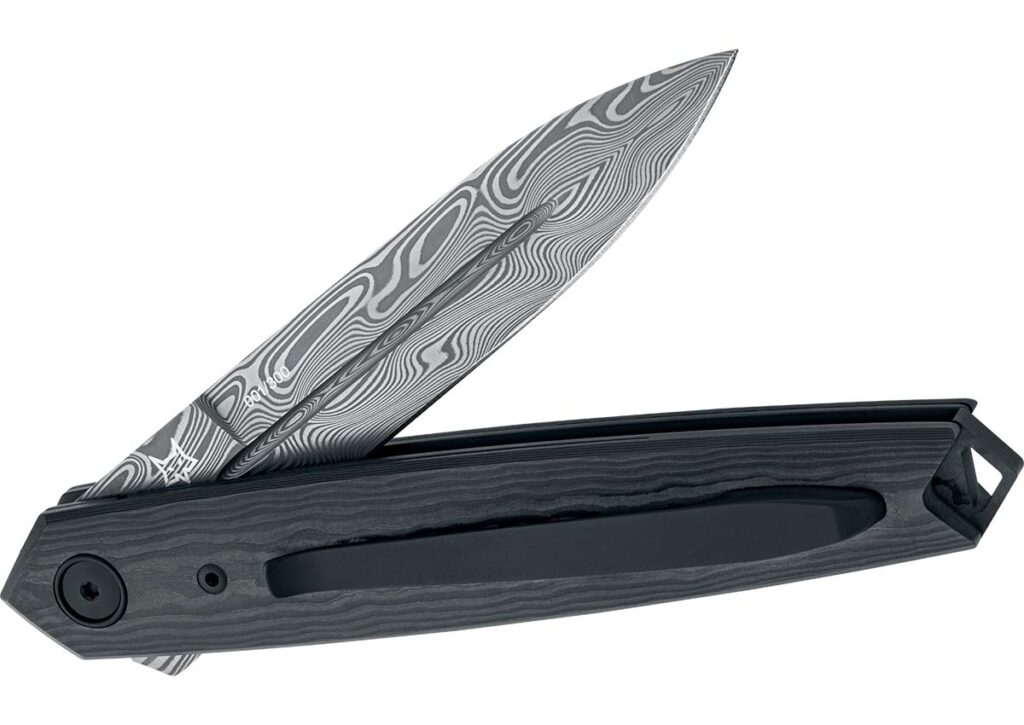
Designed by BLADE Magazine Cutlery Hall-of-Fame® member Bob Terzuola, the Pacifico EDC flipper folder by Fox has a 3.74-inch blade of Thor pattern damascus by Damasteel. The handle is black camo carbon fiber by FatCarbon®.
Clip: titanium PVD-coated black
Lock: linerlock
Weight: 3.88 ounces
Closed length: 5.31 inches
Country of origin: Italy
MSRP: $583
Available: July


Big Idea Design Signal

Big Idea Design Signal

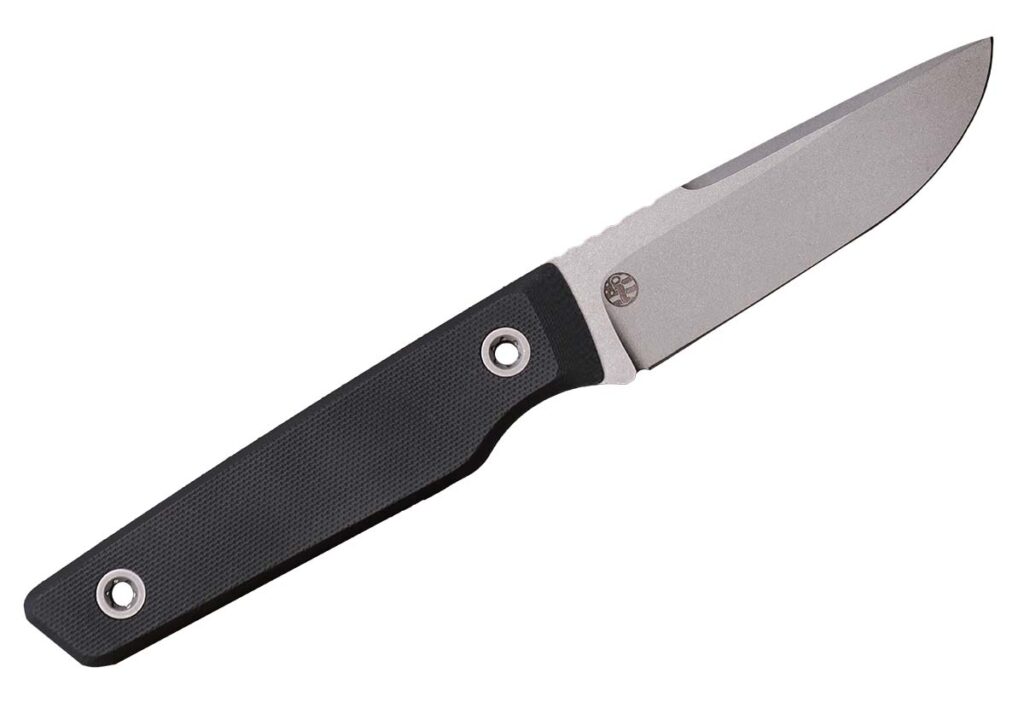
Designed by ABS journeyman smith Mak Kelsay, the Signal utility from Big Idea Design has a 3.5-inch blade of flat-ground Nitro-V stainless steel and G-10 scales with custom pass-through titanium hardware.
Weight: 3.4 ounces
Overall length: 7.67 inches
Sheath (not shown): taco-style Kydex w/titanium pocket clip
Country of origin: USA
MSRP: $275
Available: May/June


Queen/Smoky Mountain Knife Works Mountain Man Trapper

Queen/Smoky Mountain Knife Works Mountain Man Trapper

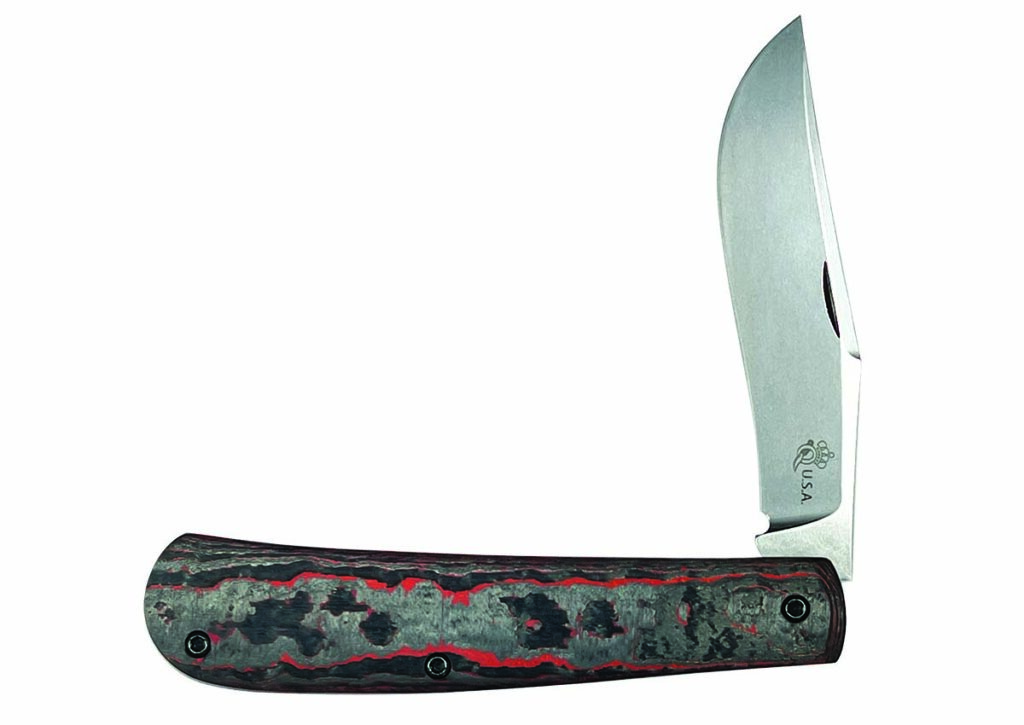
The Mountain Man Trapper from Queen/Smoky Mountain Knife Works sports a 3 3/8-inch blade of CPM MagnaCut stainless steel and Lava Flow FatCarbon® scales.
Blade pattern: Clip
Action: slipjoint
Weight: 2.93 ounces
Closed length: 4 1/8 inches
Country of origin: USA
MSRP: $299.99
Available: July


GiantMouse GMP13

GiantMouse GMP13
GiantMouse GMP13

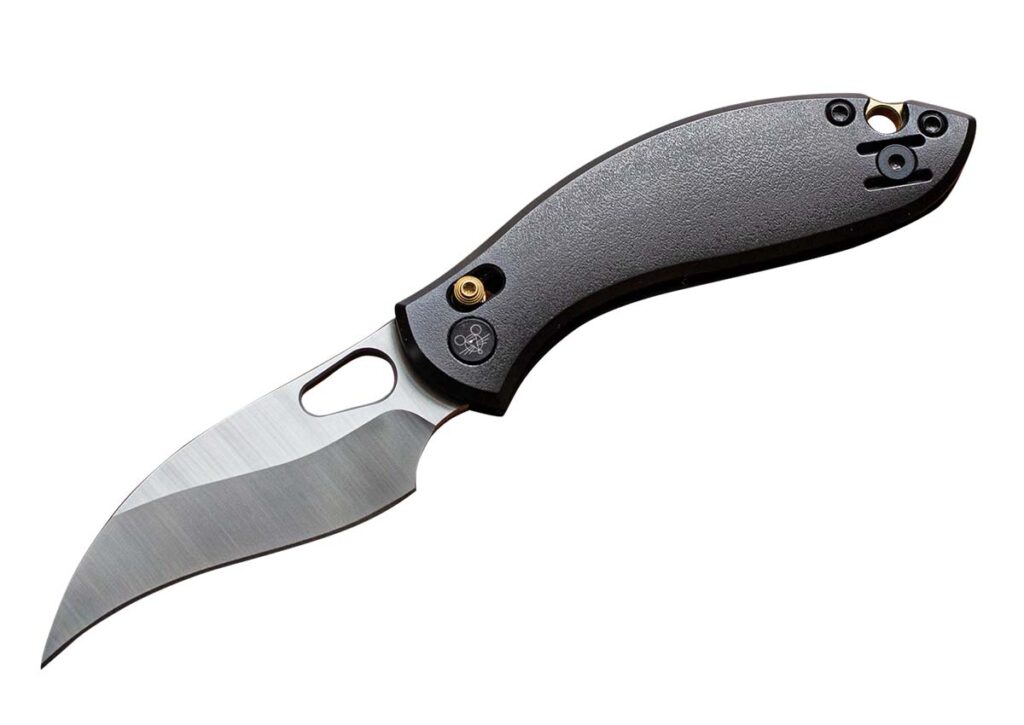
A 2.4-inch blade in a distinctive modified hawkbill pattern of flat-ground CPM S90V stainless and zirconium scales highlight the GiantMouse GMP13 “defense folder.”
Lock: crossbar
Clip: ambidextrous
Weight: 3.7 ounces
Closed length: 3.67 inches
Country of origin: China
MSRP: $435
Available: NOW


Lionsteel ACHA

Lionsteel ACHA
Lionsteel ACHA

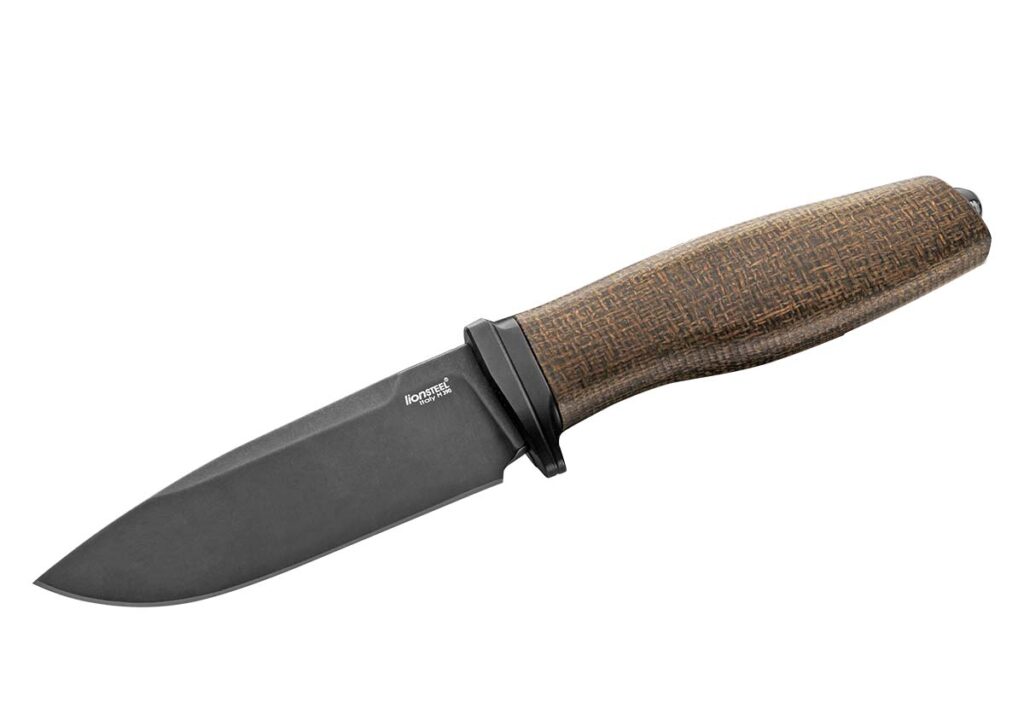
A contrasting combo of a 4.21-inch blade of M390 sintered steel in an “old black” finish and a burlap Micarta® handle in an integral construction set the Lionsteel ACHA outdoor knife apart.
Blade grind: V flat
Guard: titanium
Sheath (not shown): Leather
Weight: 6.24 ounces
Overall length: 9.17 inches
Country of origin: Italy
MSRP: $252 at press-time exchange rate
Available: NOW


Spyderco Chaparral

Spyderco Chaparral
Spyderco Chaparral

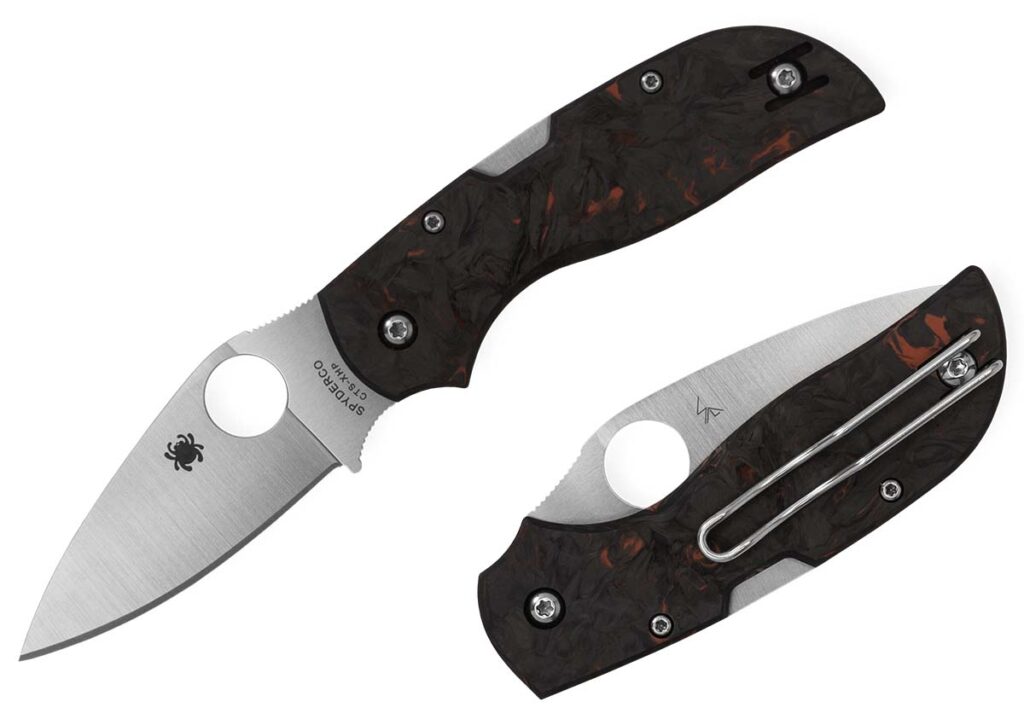
Dark Matter Red FatCarbon® scales and a 2.77-inch blade of full-flat-ground CTS-XHP stainless steel highlight the latest iteration of the Spyderco Chaparral back-lock folder.
Clip: wire
Weight: 2.2 ounces
Closed length: 3.6 inches
Country of origin: Taiwan
MSRP: To be determined
Available: To be determined


Ocaso Lucent Automatic

Ocaso Lucent Automatic

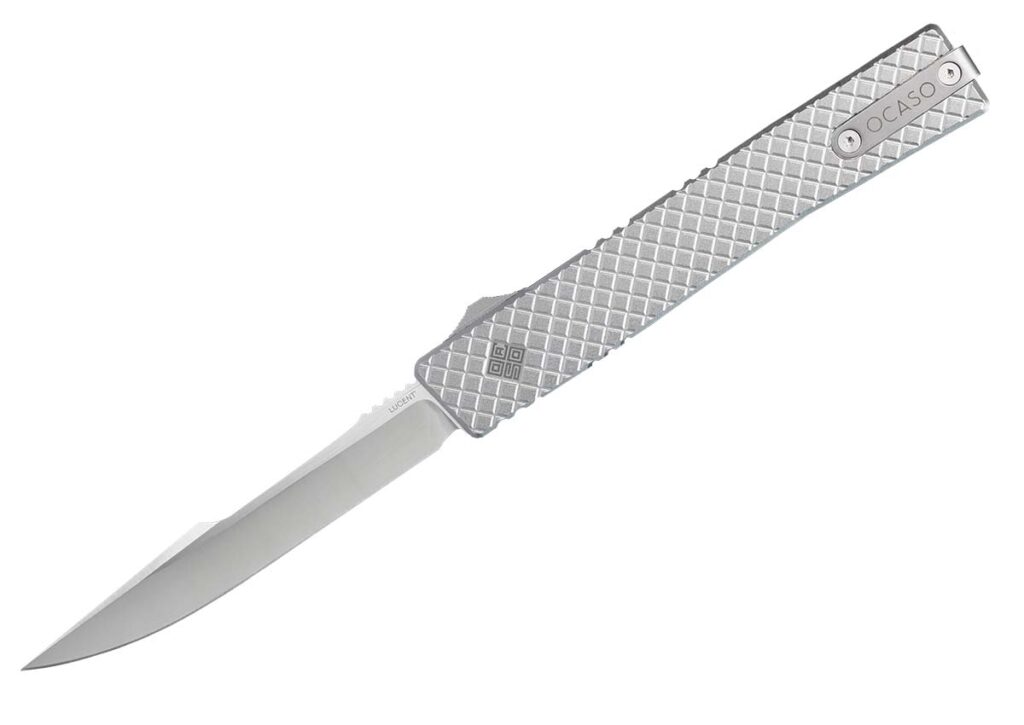
The Ocaso Lucent Automatic is a dual-action out-the-front with a 3.5-inch blade of flat-ground Bohler M390 stainless and a 6061-T6 aluminum handle with an ambidextrous deep-carry pocket clip.
Weight: 2.2 ounces
Closed length: 4.4 ounces
Country of origin: China
MSRP: $274.99
Available: July


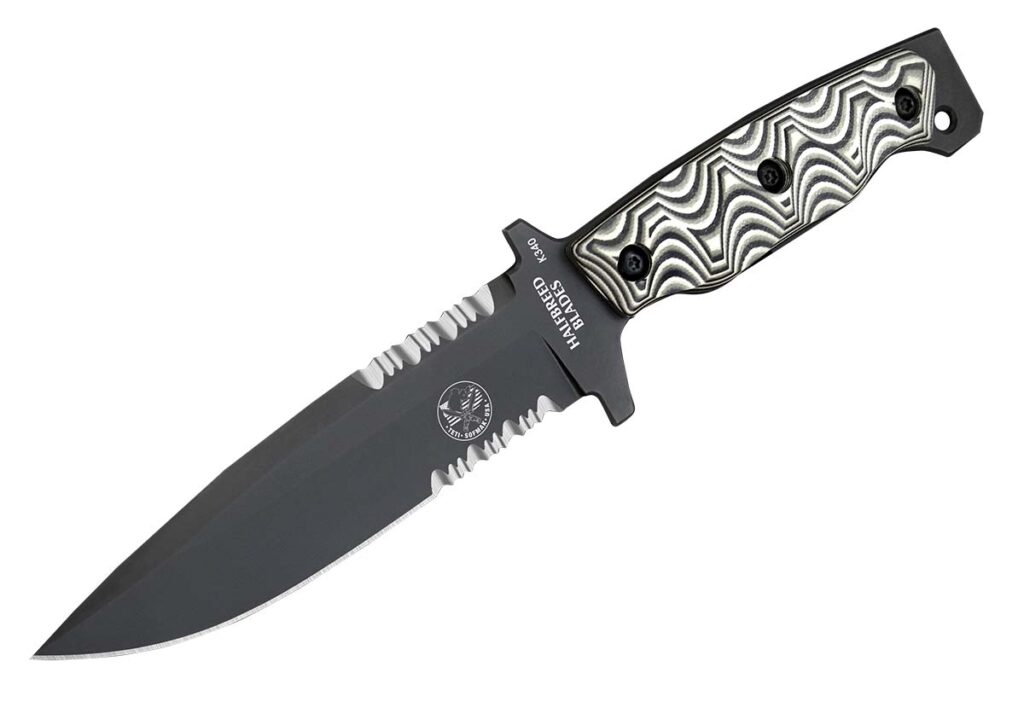
Halfbreed Blades SOFMAK

Halfbreed Blades SOFMAK

Scales of an electric G-10 and partially double-serrated blade of PVD-coated K340 ISODUR tool steel stand out on the MIK-04 SOFMAK from Halfbreed Blades.
Blade length: 5.31 inches
Weight: 11.14 ounces
Overall length: 10.31 inches
Designer: Jonathan Loftes in collaboration with Joseph Teti
Sheath (not shown): Belt and PALS/MOLLE
Country of origin: Comprises Australian and Taiwanese make
MSRP: $275
Available: NOW


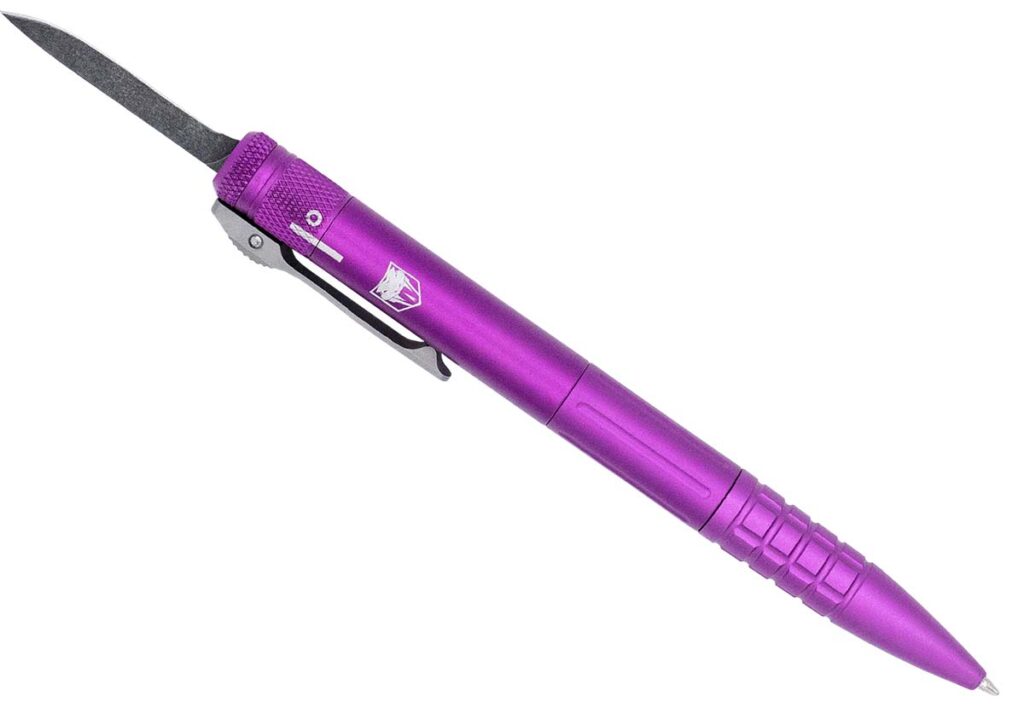
CobraTec CNC OTF Pen Knife Generation 2

CobraTec CNC OTF Pen Knife Generation 2

The CNC OTF Pen Knife Generation 2 from CobraTec sports a 1.75-inch blade of stonewashed stainless steel. The dual-action out-the-front has a handle of 6061 T6 aluminum with a titanium pocket clip/switch and a safety lock. Includes a replaceable black ink cartridge.
Weight: 1.4 ounces
Closed length: 5.875 inches
Country of origin: China
MSRP: $89.99
Available: NOW


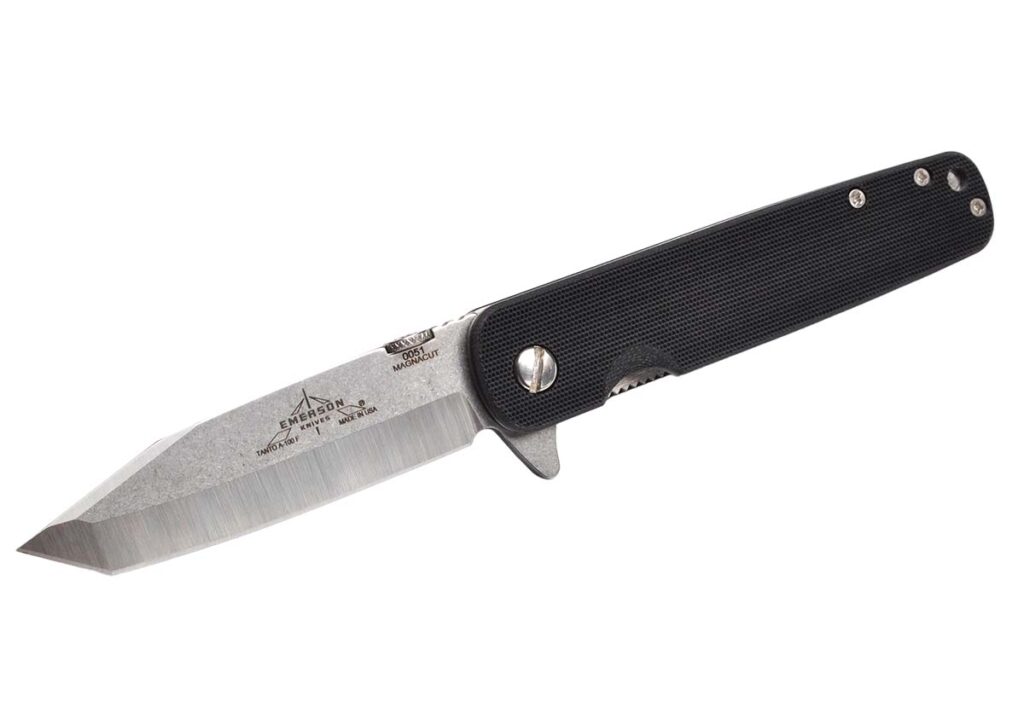
Emerson Knives, Inc. Tanto A-100

Emerson Knives, Inc. Tanto A-100

The Tanto A-100 Flipper by Emerson Knives, Inc., cuts with a 3.6-inch blade of CPM MagnaCut stainless in a conventional “V” grind. Handle: G-10 with a hole for a lanyard.
Lock: linerlock
Closed length: 4.8 inches
Additional blade opening option: thumb disc
Country of origin: USA
MSRP: $295
Available: NOW


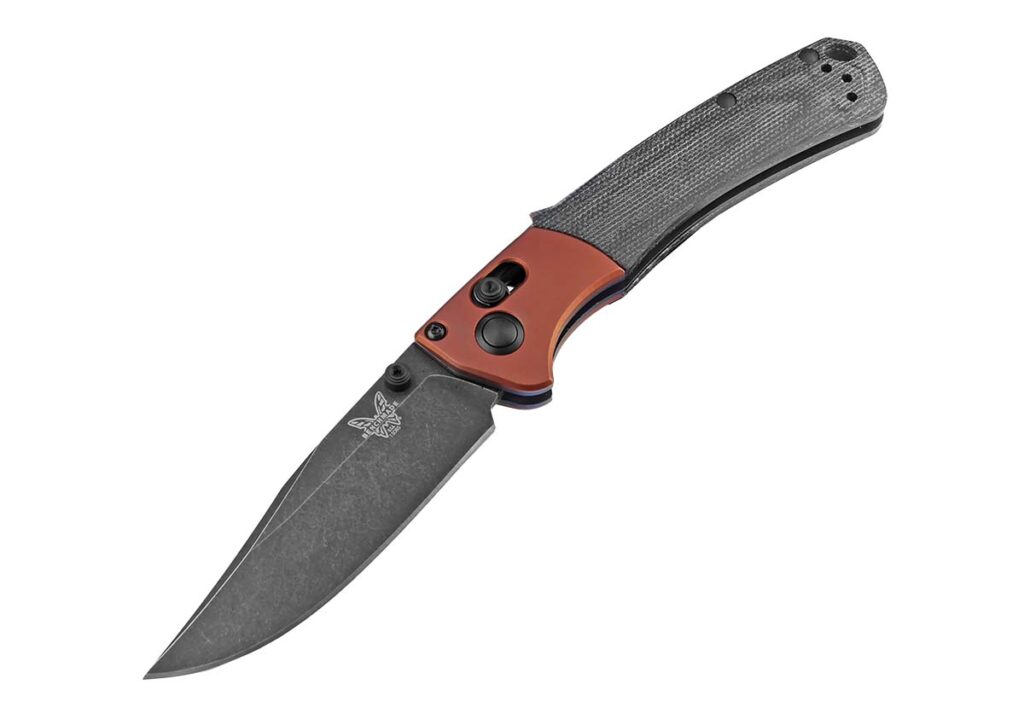
Benchmade Mini Crooked River

Benchmade Mini Crooked River

Benchmade’s Mini Crooked River folder sports a 3.4-inch clip-point blade of CPM MagnaCut stainless in a Battlewash finish. The handle is black canvas Micarta® with aluminum bolsters anodized a burnt copper.
Lock: AXIS
Weight: 3.2 ounces
Closed length: 4.5 inches
Country of origin: USA
MSRP: $320
Available: July


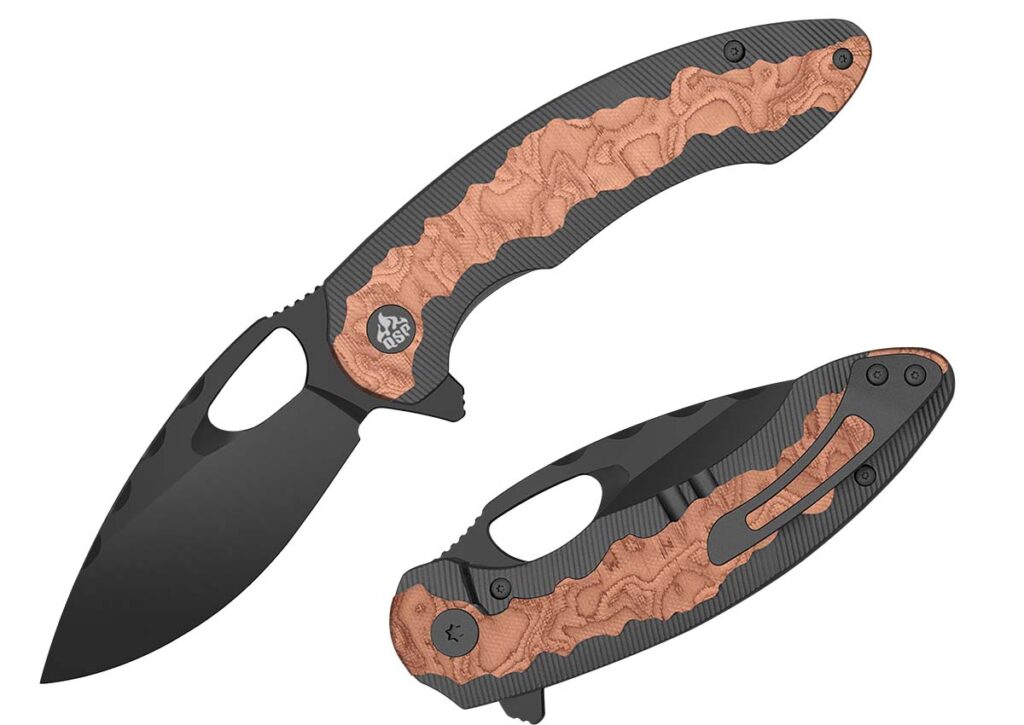
QSP Hyena

QSP Hyena
QSP Hyena

The Hyena flipper folder from QSP has a striking grip of anodized aluminum and copper-foil G-10 inlay and a 3.25-inch blade of flat-ground Bohler N690 stainless that pivots on ceramic ball bearings.
Clip: Titanium, tip up.
Closed length: 4.53 inches.
Country of origin: China.
MSRP: Contact maker for pricing.
Available: September.


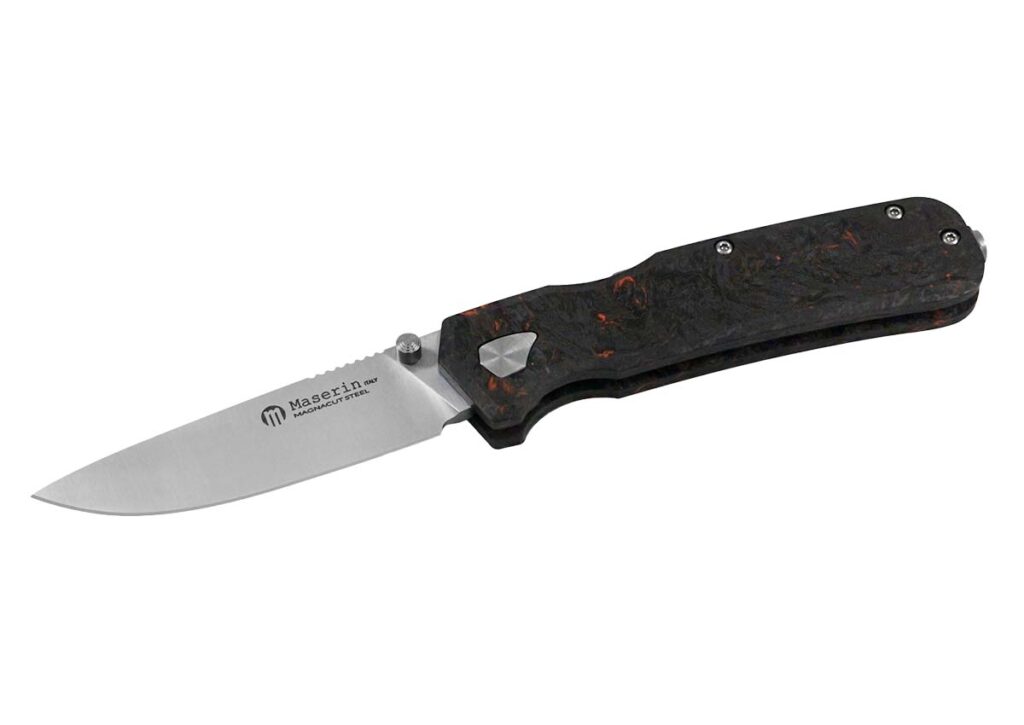
Maserin Pulse

Maserin Pulse
Maserin Pulse

Black/orange FatCarbon® scales serve as the steering wheel for the 3.149-inch blade of flat-ground CPM MagnaCut stainless on the Maserin Pulse.
Blade finish: stonewashed.
Lock: W-Lock
Clip: Stainless, reversible
Weight: 3 ounces
Closed length: 4.5 inches
Country of origin: Italy
MSRP: $219 at press-time exchange rate
Available: NOW


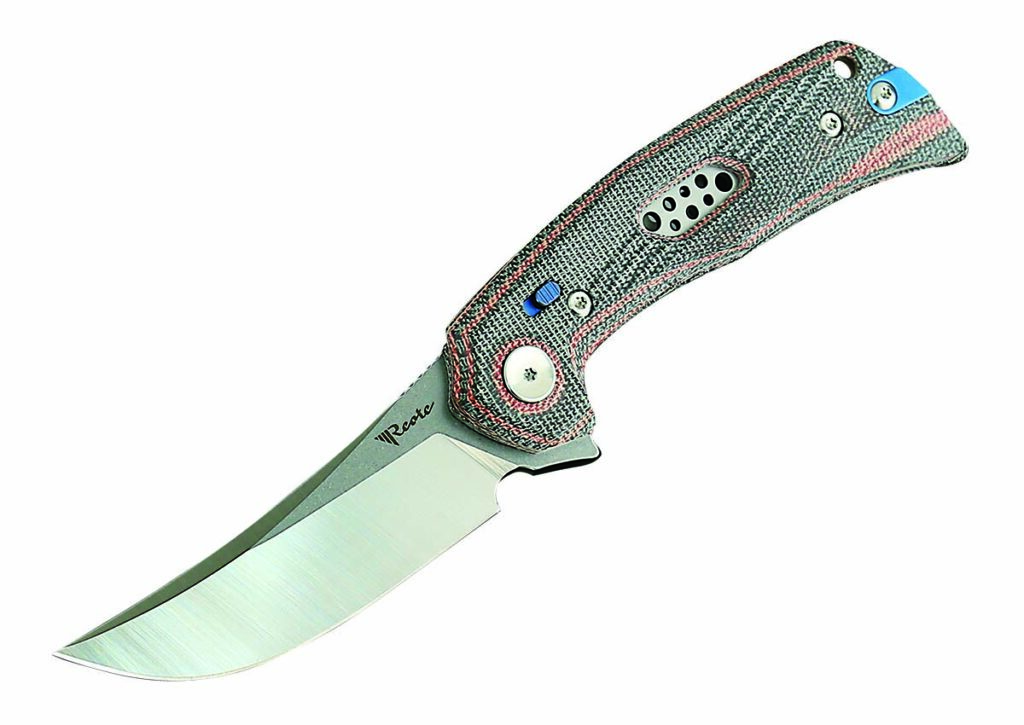
Reate PL-7

Reate PL-7
Reate PL-7

A 3.5-inch upswept blade of Nitro-V stainless in a belt-satin finish and a Micarta® handle top off the PL-7 from Reate.
Weight: 4.5 ounces
Closed length: 4.5 inches
Country of origin: China
Knife to know: The PL stands for Pivot Lock
MSRP: Pending
Available: Pending


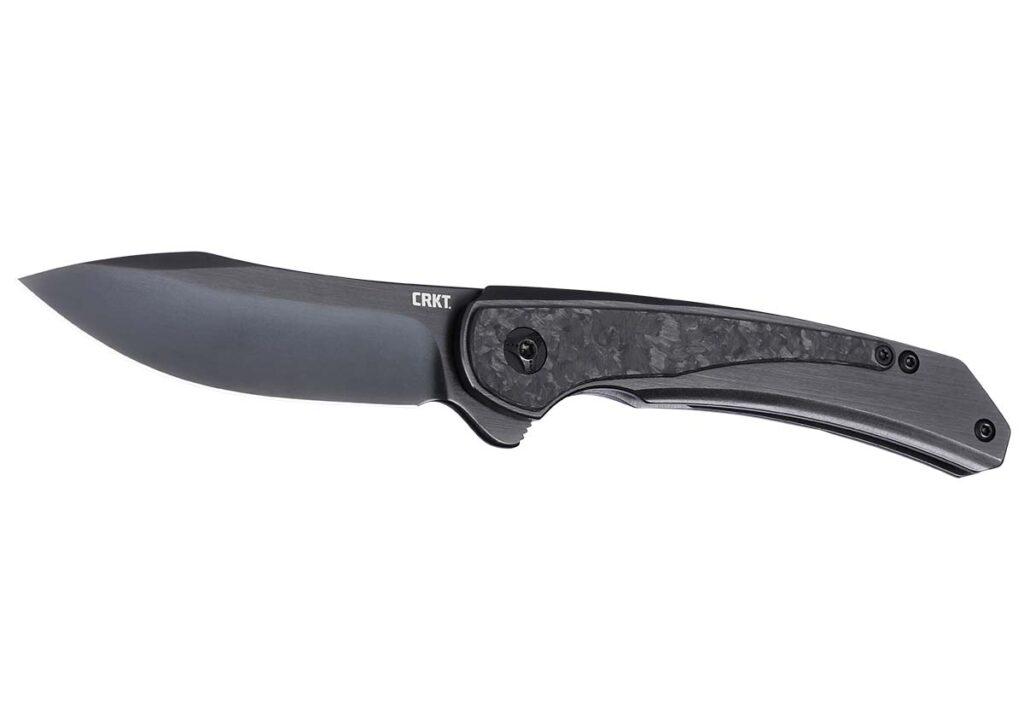
CRKT Padawan

CRKT Padawan
CRKT Padawan

An EDC flipper/framelock folder, the CRKT Padawan has a 3.01-inch drop-point blade of hollow-ground 14C28N stainless.
Blade finish: nitride coated
Pivot: Ikoma Korth Bearing System
Handle: stainless steel with carbon-fiber overlay
Pocket clip: low profile, stainless
Weight: 3.1 ounces
Closed length: 4.14 inches
Country of origin: China
MSRP: $100
Available: NOW


APOC/CAS Iberia Wallace Smatchet

APOC/CAS Iberia Wallace Smatchet

Designed by Mike Wallace, the Wallace Smatchet from APOC/CAS Iberia is a “historically inspired bushcraft” knife based on the classic World War II combat model. The 9 5/8-inch blade is flat-ground D2 tool steel in a titanium coat.
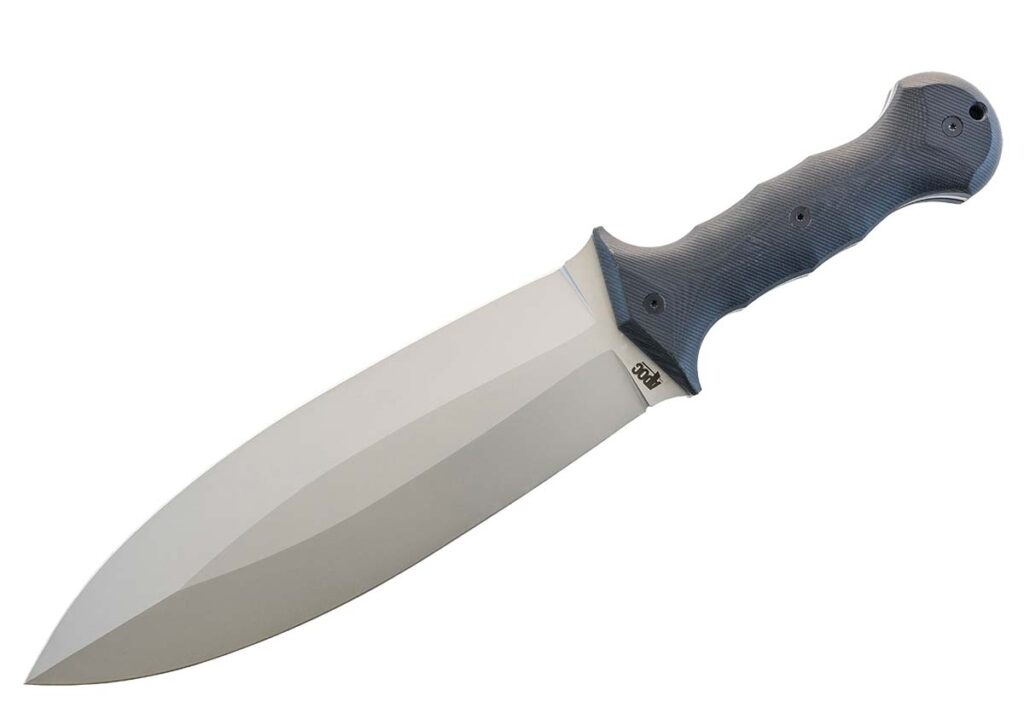
Scales: G-10
Weight: 1 pound, 10 ounces
Overall length: 15.5 inches
Sheath: Kydex with drain hole
Country of origin: China
MSRP: $175. Available: NOW


More On The Blade Shows:

Wa Handle: Japanese Ergonomics Are Revolutionizing Custom Kitchen Knives

User-friendly custom takes on the classic Japanese knife handle abound.
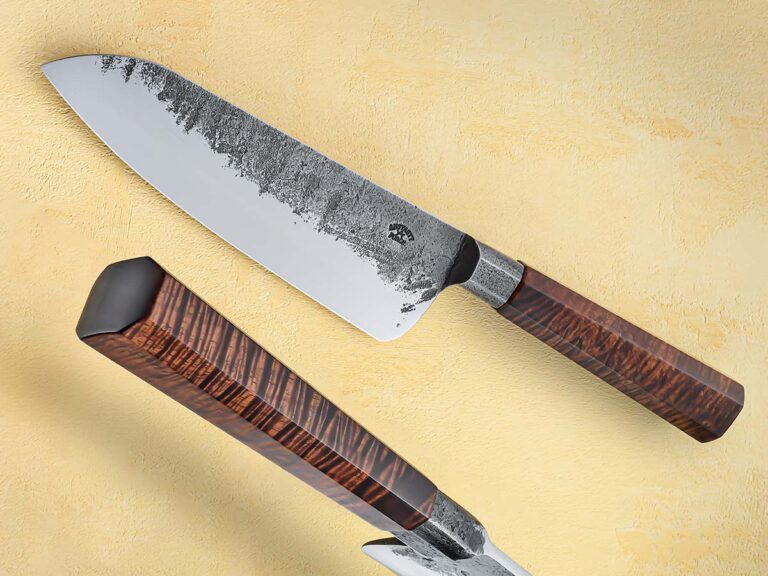
The Japanese influence in kitchen knives is more or less a given. Those who work in food preparation, an art form unto itself, appreciate the style and utilitarian feel that the Japanese culture exerts on their vocation.

The kitchen knife has seen a wave of custom makers taking that context a step further. The knife is an extension of the hand and that extension starts with the handle. So, here again the ergonomics of Japanese influence emerge. The wa handle brings comfort and confidence to the kitchen user while also providing a sense of form, function and artistic expression for the custom maker.

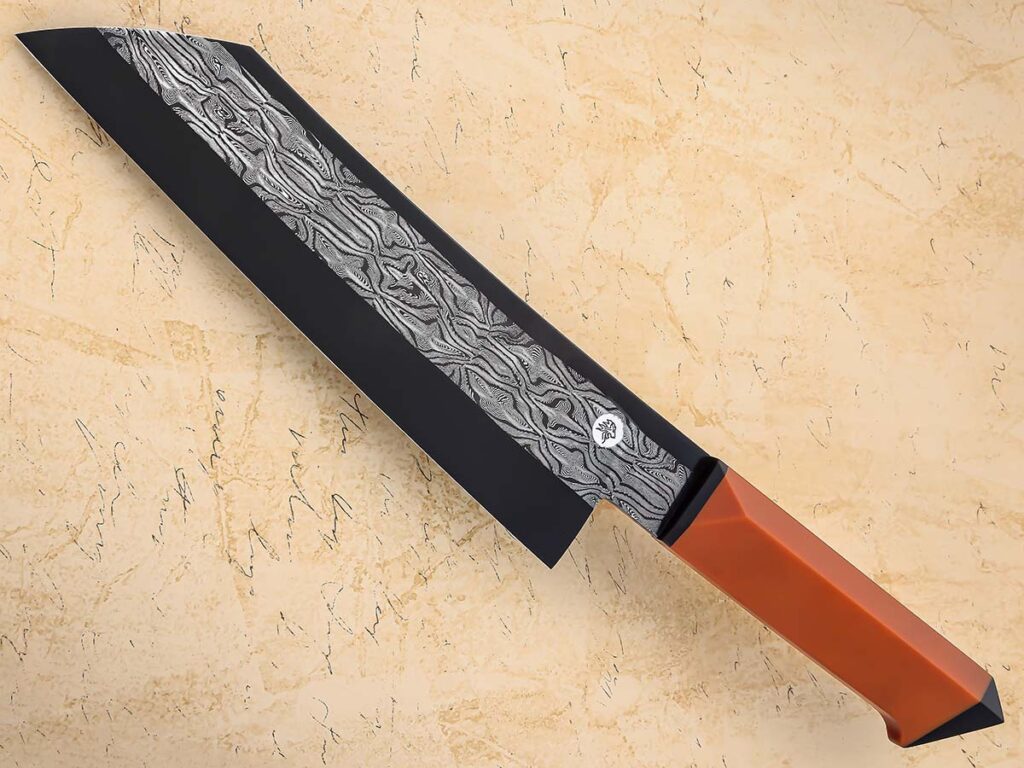
The wa handle of Aidan Garrity’s santoku has largely parallel sides to the width of the ricasso with a small ‘beak’ at the bottom for hand retention and aesthetics. Blade steel: mosaic damascus. Vintage butterscotch Micarta® scales boast flat-shield cross-sections and G-10 spacers. Overall length: 14 inches. His list price for a similar knife: $2,300. Its sister piece is a Garrity nakiri that was featured on the March 2024 BLADE® cover. (SharpByCoop image)

According to maker Jacob Anstaett, the name itself is rooted in the Japanese language.

“Wa comes from the Japanese language and broadly translates as ‘harmony’ or ‘balance,’” he explained. “In knifemaking, it refers to the traditional Japanese handle style, which emphasizes simplicity, lightness and an ergonomic connection between the handle and the blade.”

Anstaett further defines the wa handle as “lightweight with forward-balanced design. Typically, it is either octagonal, oval or D-shaped in cross-section. The handle is crafted as a separate piece that fits onto a hidden tang rather than a full tang. The construction is what gives the blade its distinct balance, where the cutting edge feels alive in your hand instead of weighed down.”

A resident of Plano, Texas and a custom knifemaker for eight years, Jacob says his wa handle is an interpretation of the Japanese style.

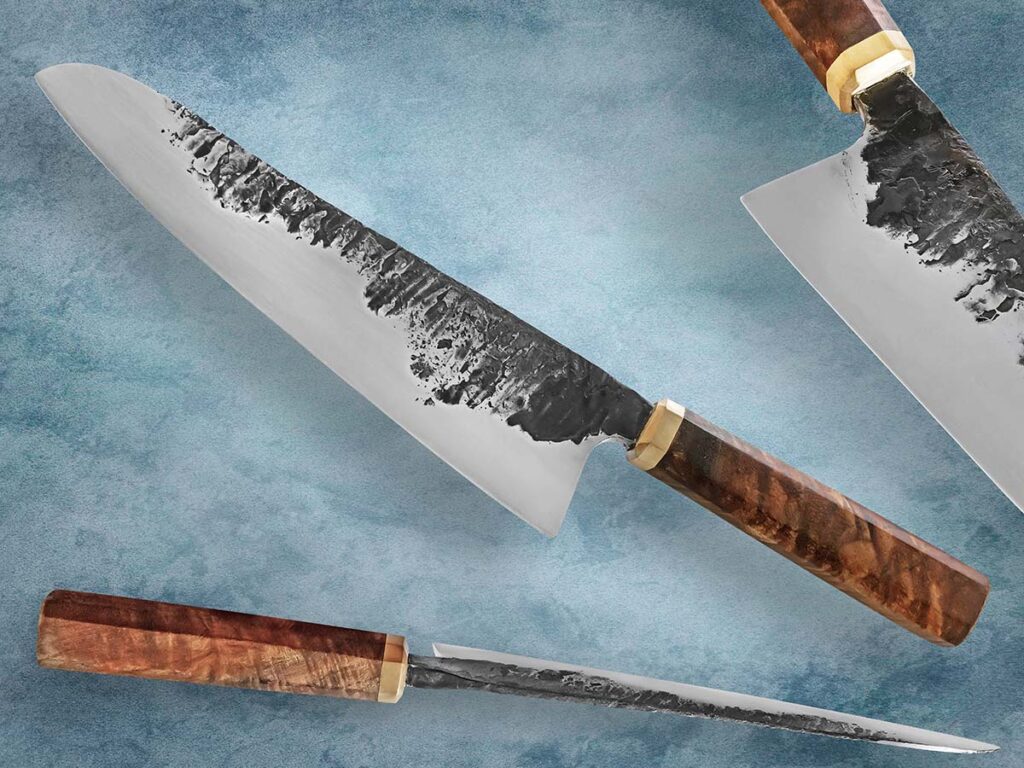
Alex Töpfer described his wa-handled piece as “a general-purpose kitchen knife based on various santoku. The blade is 80CrV2 as it’s a good general steel I can forge and heat treat. The handle is Tasmanian blackwood to add some fanciness, and the same is true for the bronze bolster. It’s functional art you can appreciate as you use it to cook.” His price for a similar knife: $325. (Rod Hoare image)

“It’s best described as a variation of the traditional wa,” he explained. “I keep the core geometry usually as an octagon cross-section, but I adapt the dimensions slightly for comfort. Western chefs often prefer a little more thickness and resilience, so I adjust proportions while preserving the forward balance that makes wa handles so effective.”

Jacob devoted extensive time to the study of traditional Japanese wa handles and then embarked on his road to interpretation.

“Over time I developed my own hybrid approach,” he commented. “My reasoning was simple: I wanted to honor tradition while building something that stands up to modern kitchens. For instance, I blend traditional shapes with stabilized woods or composites, ensuring they can handle daily use in a busy Western kitchen without losing the essence of the Japanese design.”

What Makes A Wa Handle?

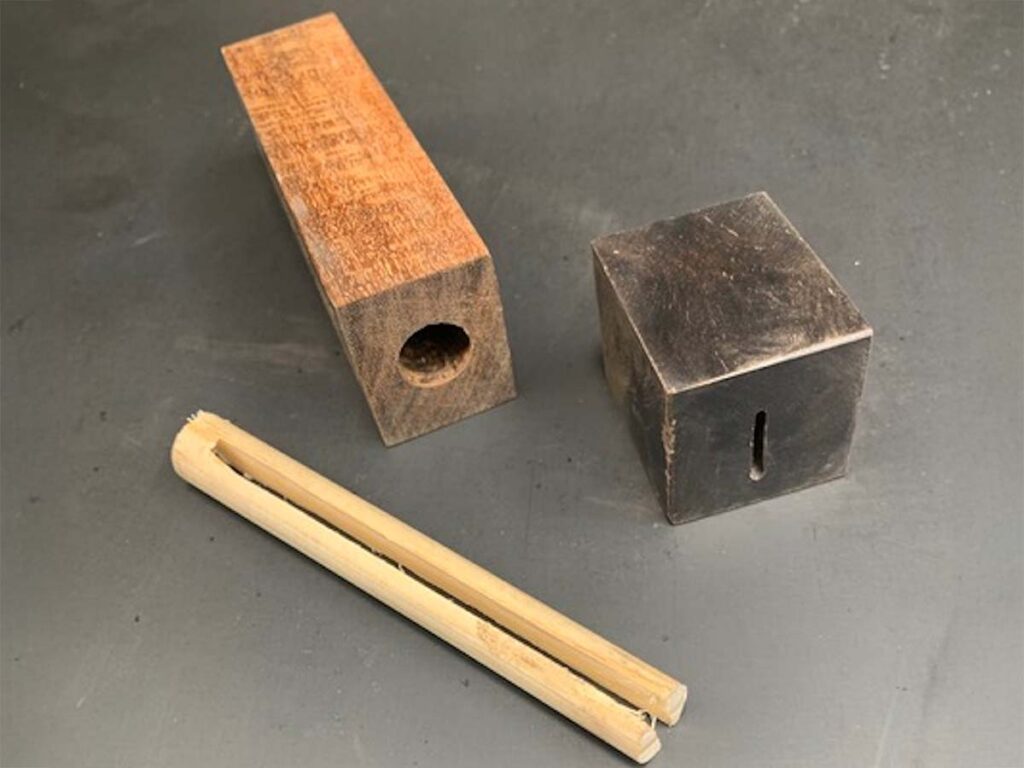
Elaborating on the spirit and style of the wa, Aidan Garrity of Iron Lion Blades in Madison, Connecticut remarked, “There are two schools of thought for what exactly categorizes as a wa handle. One is that the handle’s construction involves a hole the width of the knife’s tang being drilled into the handle, and the tang being enclosed in a slotted dowel to tightly fit into that round cavity. The other is that it is simply the style of the handle, usually slimline and often having angular geometries. For questions like these, I always answer with the understanding that it is just the style of the handle, but I personally consider the true wa handle to be one utilizing the dowel bedding construction.”

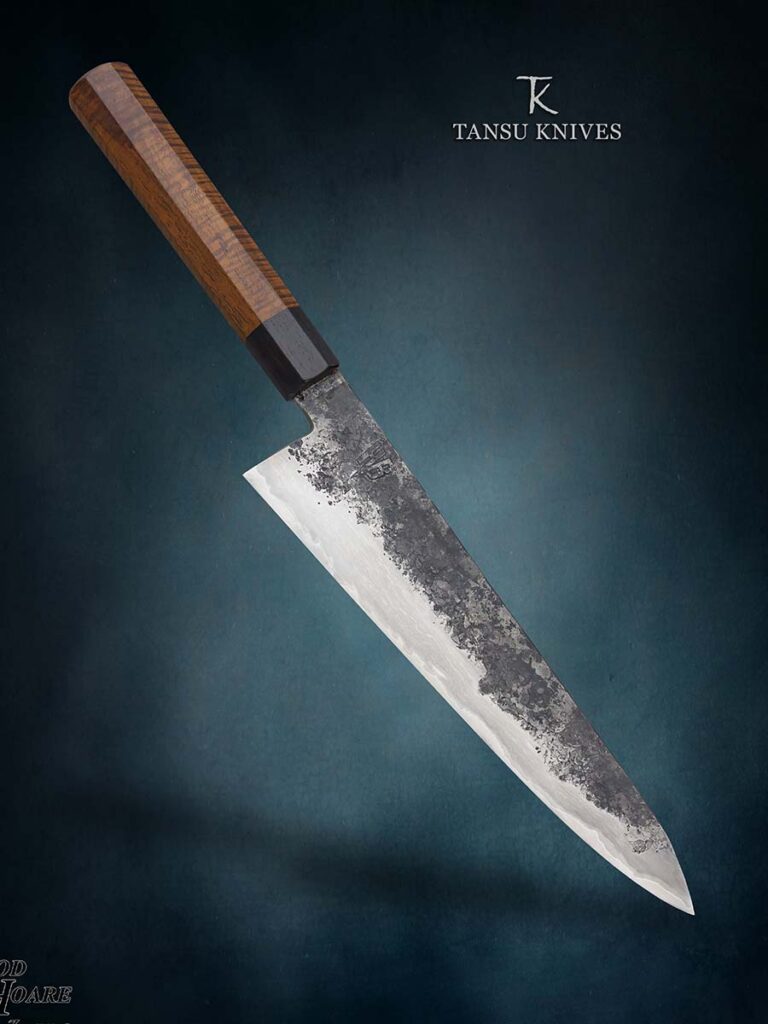
The wa handle of Mert Tansu’s gyuto has a half-inch-wide, 4-inch dowel (above) with a tang slot cut into it. “It is a traditional-shaped wa except for the internal structure,” Mert wrote. “While most Japanese blades are mounted to the handle with burning the tangs in, this is not possible with a hard timber-like ringed gidgee, and I glued mine in.”

Australian custom knifemaker Mert Tansu follows the wa tradition with his own interpretation. His perspective includes a geometric aspect that broadens the possibilities with the style.

“Wa handles come in a few different geometries,” he related, “from round to oval, to semi-octagonal to full octagonal and D-shape. Compared to their Western counterparts they are not sculpted and flat. Most of the traditional wa handles will have a horn ferrule and magnolia wood body.”

The wa handle of Mert Tansu’s gyuto has a half-inch-wide, 4-inch dowel (above) with a tang slot cut into it. “It is a traditional-shaped wa except for the internal structure,” Mert wrote. “While most Japanese blades are mounted to the handle with burning the tangs in, this is not possible with a hard timber-like ringed gidgee, and I glued mine in.”

Mert’s featured knife is a gyuto from his Hunter Valley Blades series of traditional Japanese chef’s knives with forged finishes and usually san-mai construction. He employed a dowel-bedding construction for the wa handle (page 16). He characterizes his chef’s knives as affordable and less time consuming to make than other custom types.

Specific features of the wa handle style translate into precision and control in the kitchen. He says that the flats allow the user to index the knife with ease. Despite the “stop sign” shape, the octagonal handle is quite comfortable and fashioned with precision on his disc grinder. Optimal length is a subjective question, but Mert likes paring knives with wa handles no longer than 4.7 inches, while handles of 5.3 to 5.5 inches work best in larger chef’s knives with overall lengths of 9.5 inches. For long slicing knives of overall lengths of 10.5 inches, he indicated he prefers a handle between 5.7 and 5.9 inches.

Wa Handle Interpretations

A custom knifemaker for seven years at his home near Melbourne, Australia, Alex Töpfer appreciates the employment of the hidden tang in his knife construction, and he says the wa-inspired handle works in both the active and aesthetic aspects of kitchen use.

“Obviously, I’m inspired by various styles of wa handles, specifically octagonal ones,” he commented, “and also the use of brass bolsters and guards in the Western context. The flats here are more to provide context with the organic, curved aspects of the wood grain and forged texture.

“I do think it’s important to have a flat [handle] surface that aligns with the blade, but the upper parts are more for looks. There is also the question of what an individual user likes. Personally, I prefer to use oval hidden-tang handles, but I do the occasional faceted one for practice and a change. I’ve only had problems when the tang is not long enough. So, I tend to go 2.75 to 3.15 inches of tang. That will support the handle during use. I have had issues with burl where the grain didn’t provide any strength, but a longer tang on that knife would have avoided the problem. Also, fancier materials might be easier to sell even if they’re not ideal. I like recycled ironbark but it doesn’t have that bling factor.”

The traditional handle of Dew Hara’s suigetsu has stabilized burl scales and a copper bolster. The 7-inch blade is tamahagane steel with a hamaguri grind. Overall length: 12.4 inches. (SharpByCoop image)

Garrity demonstrates his skill with the wa in his mosaic damascus santoku blade that combines 1095 and 52100 carbon and 15N20 nickel-alloy steels. He used the Ferry Flip method* and then placed the multi-bar construction to be framed by a monosteel edge and spine bars. Aidan’s santoku has a sister blade, a nakiri featured on the cover of the March 2024 BLADE® (page 13). He made the nakiri with the same bar of mosaic damascus as his santoku.

“This handle is of my own design. It has largely parallel sides to the width of the ricasso with a small ‘beak’ at the bottom for hand retention, as well as aesthetics. It wasn’t based on any particular style,” he noted, “but it does categorize as a shield-shaped wa handle. The flats lend themselves to helping the user maintain proper edge alignment while cutting, as an overly round grip doesn’t offer much [user feedback]. In addition, the flats are somewhat easier to bring to a high finish.”

In constructing a wa handle, Aidan leans heavily on the length of the blade.

“Typically, 4½ to 5½ inches is seen as a natural range to balance average length and weighted blades,” he remarked. “Thicker and wider blades like nakiri and bunka will often be more forward weighted compared to the more generalist shapes like santoku. The handle is often too slim with poor retention for any large chopping blades or fighters. It’s best to stick to kitchen knives for this type of handle design.”

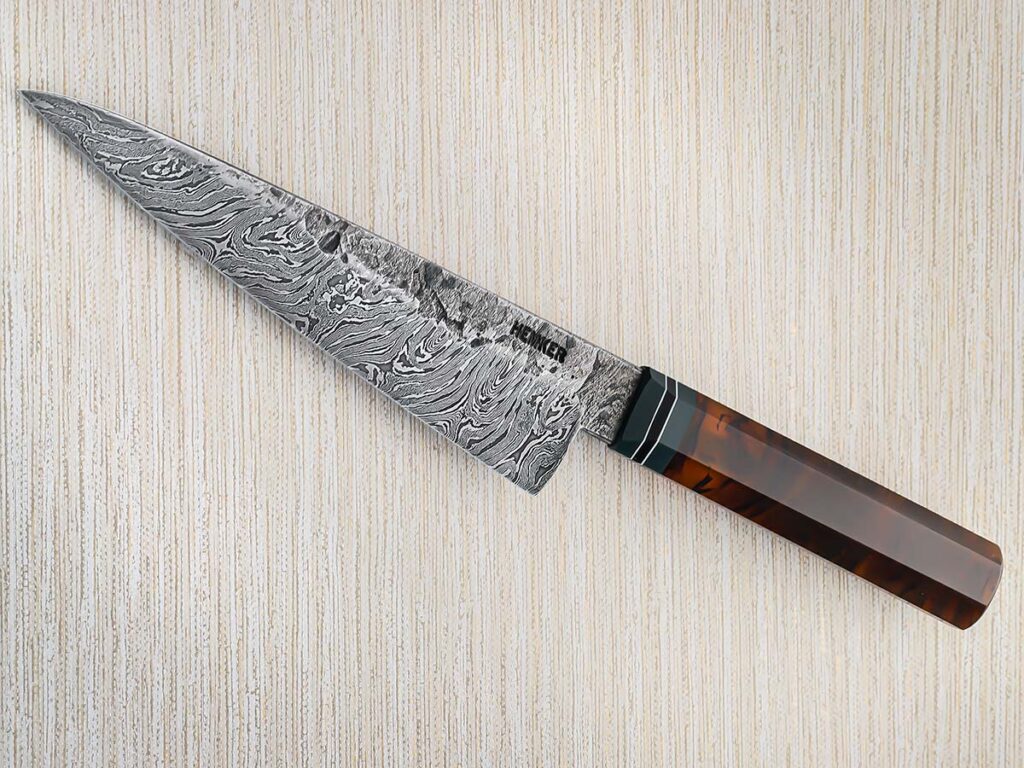
Eric Hemker uses synthetic tortoise shell for the wa handle of his chef’s knife. The flat-ground 7.785-inch blade is a damascus of 1084 carbon and 15N20 nickel-alloy steels. The spacers are green, black and white G-10. Overall length: 14 inches. (SharpByCoop image)

The where, why and how of the wa are revealed in various interpretations, put to work with enthusiasm in the kitchen, and exhibit style and beauty whether in the midst of meal preparation or displayed for all to see. Their aesthetic is timeless, but so is their capacity to make the work of the chef an adventure in creativity.

*Editor’s Note: Named in honor of its creator, award-winning bladesmith Tom Ferry, the Ferry Flip is a variation on the canned steel technique. It basically consists of cutting slices at a 35-degree angle off the end of a damascus billet. The resulting tiles are rotated and forge welded together to form a new billet. As a result, instead of the pattern showing on the end of the new billet, the pattern repeats itself along the new billet’s face.

More Kitchen Knives:

New Knives: April 2026

0

Lightweight Innovation and Pocket-Friendly Precision.

The spring season brings a focused shift toward portability and pocket-ready performance, highlighting a diverse lineup of high-tech folders and streamlined carry options. This month’s selection focuses on the incredible versatility of the modern pocketknife, showcasing the work of veteran masters with nearly four decades of experience alongside award-winning new makers. Whether you are looking for an ultra-premium custom slipjoint to round out a collection or a hard-use MagnaCut automatic for daily carry, our April 2026 roundup proves that the industry’s drive for innovation remains as sharp as ever.


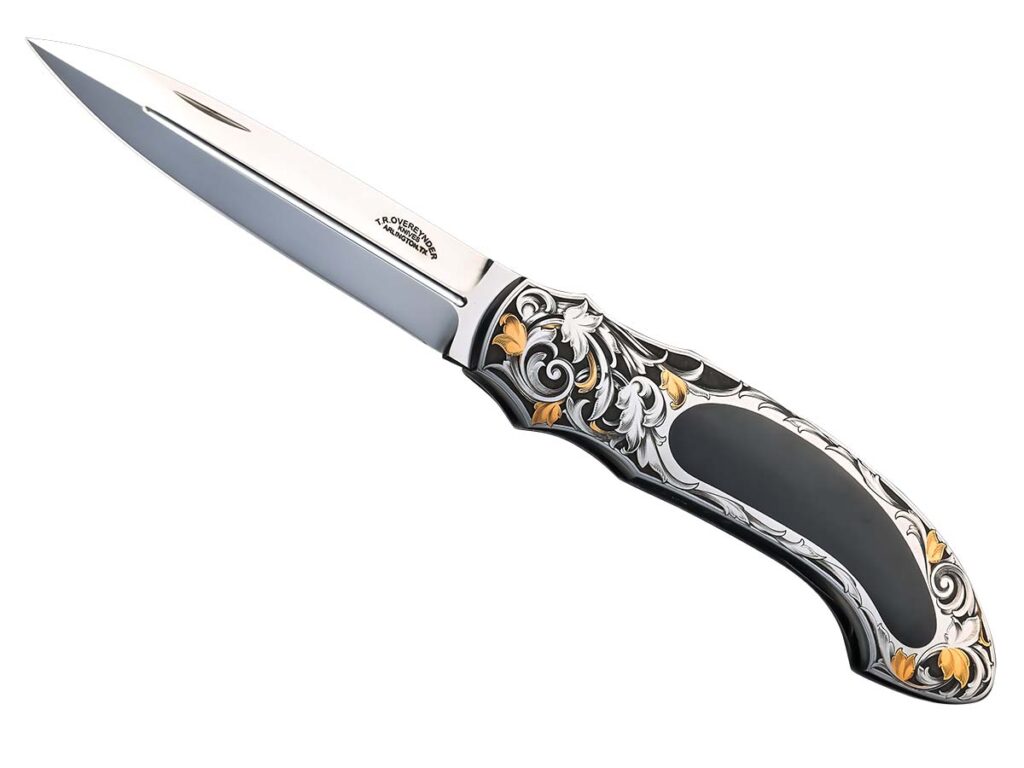
T.R. Overeynder M-30 Dagger

T.R. Overeynder M-30 Dagger

Knife Type: Folding Dagger
Blade Length: 3.625”
Blade Material: PFS-27
Blade Grind: Flat
Blade Finish: Hand-Rubbed Satin
Handle: Edwards Black Jade
Frame Material: 416 Stainless
Overall Length: 8.255”
Knife To Know: Engraving By Richard Quecke
Maker’s Price For A Similar Knife: $6,525
overeynderknives.com (SharpByCoop Image)


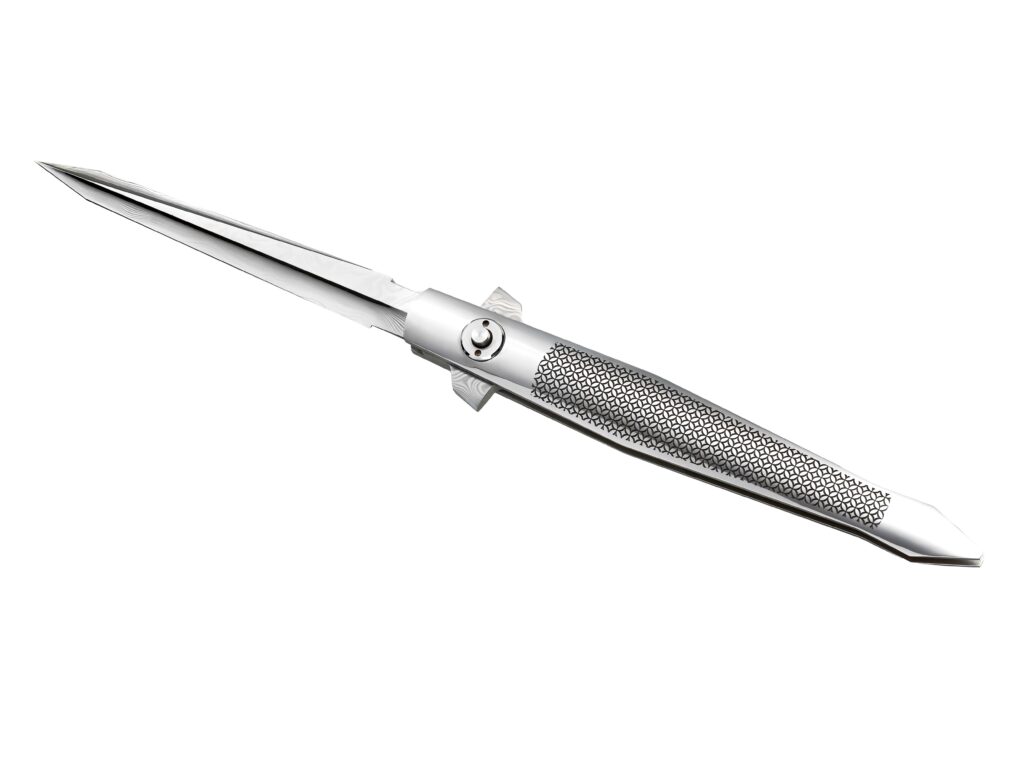
Vincenzo Fiore Florence Folder

Vincenzo Fiore Florence Folder

Blade Length: 4”
Blade Material: Damasteel Damascus
Blade Style: Stilo
Blade Finish: Mirror
Handle: Integral RWL-34
Overall Length: 9.5”
Knife To Know: Custom 17-4 ph Axial Button Lock, SS Micro Ball Bearing System With A Single Race Housing And SSL Washers
Maker’s Price For A Similar Knife: $8,500
fioreknives.com (SharpByCoop Image)


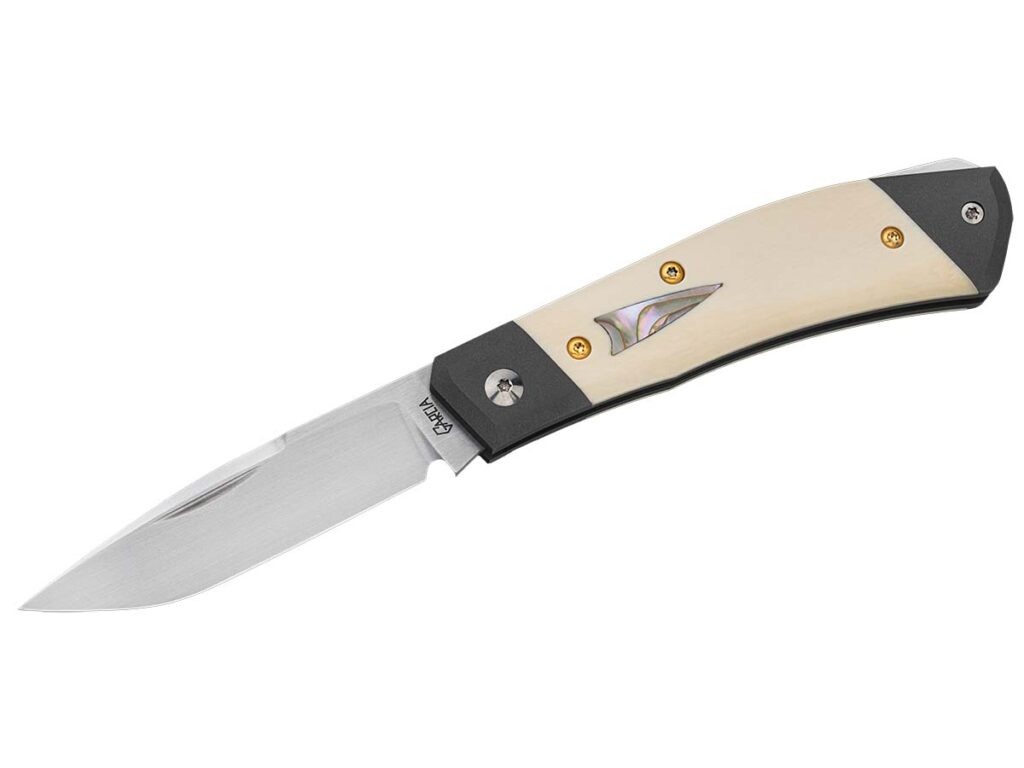
Javi Garcia Phantom Sultan

Javi Garcia Phantom Sultan

Knife Type: Lockback
Blade Length: 2.75”
Blade Material: AEB-L
Handle: Elephant ivory, MOP shield
Liner: G10
Overall Length: 7”
Knife To Know: Knife Features 24k Gold Inlay Screws
Maker’s Price For A Similar Knife: $4,000 (Jocelyn Fraiser image)


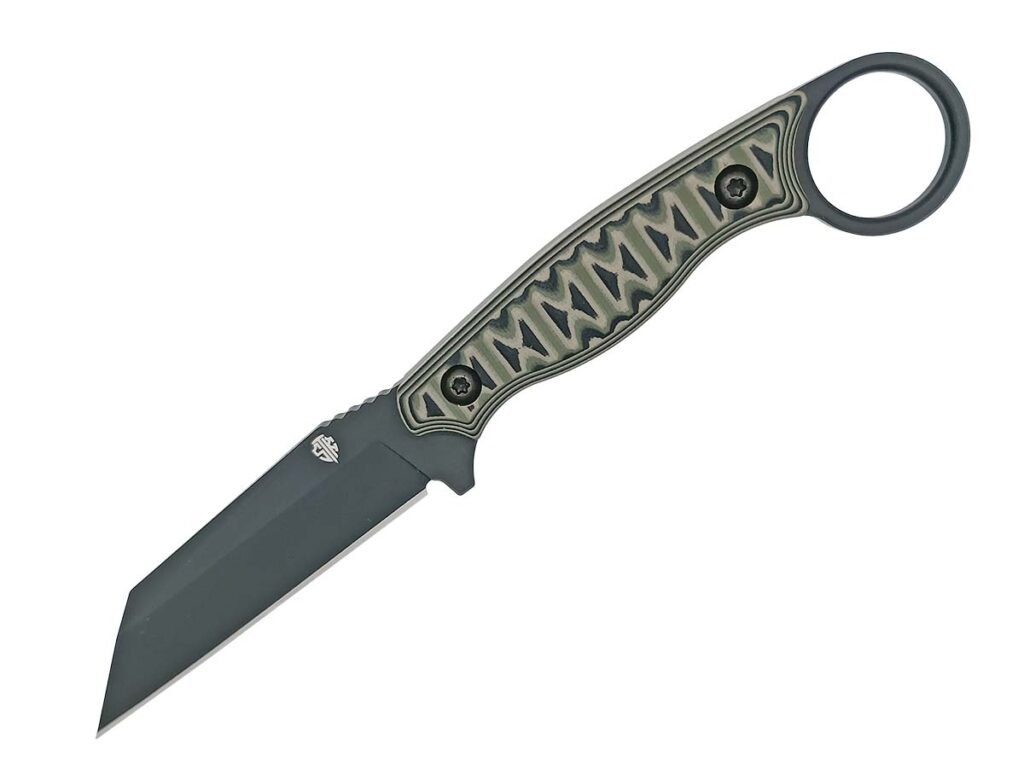
Spycraft Knives Sentinel

Spycraft Knives Sentinel

Blade Length: 4.09”
Blade Material: K340
Blade Finish: PVD
Handle: Multi-Cam G10
Overall Length: 9.01”
Sheath Type: Molded Kydex
Weight: 7.26 oz.
MSRP: $399
spybriefinggear.com


Toor Knives Draper

Toor Knives Draper

Blade Length: 3.5”
Blade Material: CPM Magnacut
Overall Length: 8.3”
Weight: 3.9 oz
Handle Material: G10
Action: Crossbar
Clip: Titanium
Hardware: Stainless Steel
Spacers: G10
MSRP: $325
toorknives.com


Maserin Frontier

Maserin Frontier

Blade Length: 3.23”
Blade Style: Clip point
Blade Material: Nitro X7
Blade Finish: Stonewashed
Grind: Flat
Handle: Off White Micarta
Clip: Reversible
Lock: Axis
Overall length: 7.87”
Weight: 3.88 oz
MSRP: $165
maserin.com/en/


Reate Knives Horizon X

Reate Knives Horizon X

Blade length: 3.2”
Blade steel: 14C28N
Blade finish: Stonewashed
Handle: Fatcarbon Glass
Locking Mechanism: Crossbar Lock
Overall length: 7.3”
Weight: 2.78 oz
MSRP: $97
reateknives.com


Heretic Knives Jinn

Heretic Knives Jinn

Knife Type: Automatic
Blade Length: 2.9”
Blade Style: Sheepsfoot
Blade Steel: Magnacut
Blade Finish: DLC
Blade Grind: Flat grind
Handle: 6061 Aluminum
Overall Length: 6.8”
Weight: 2.3 oz
MSRP: $269
hereticknives.com


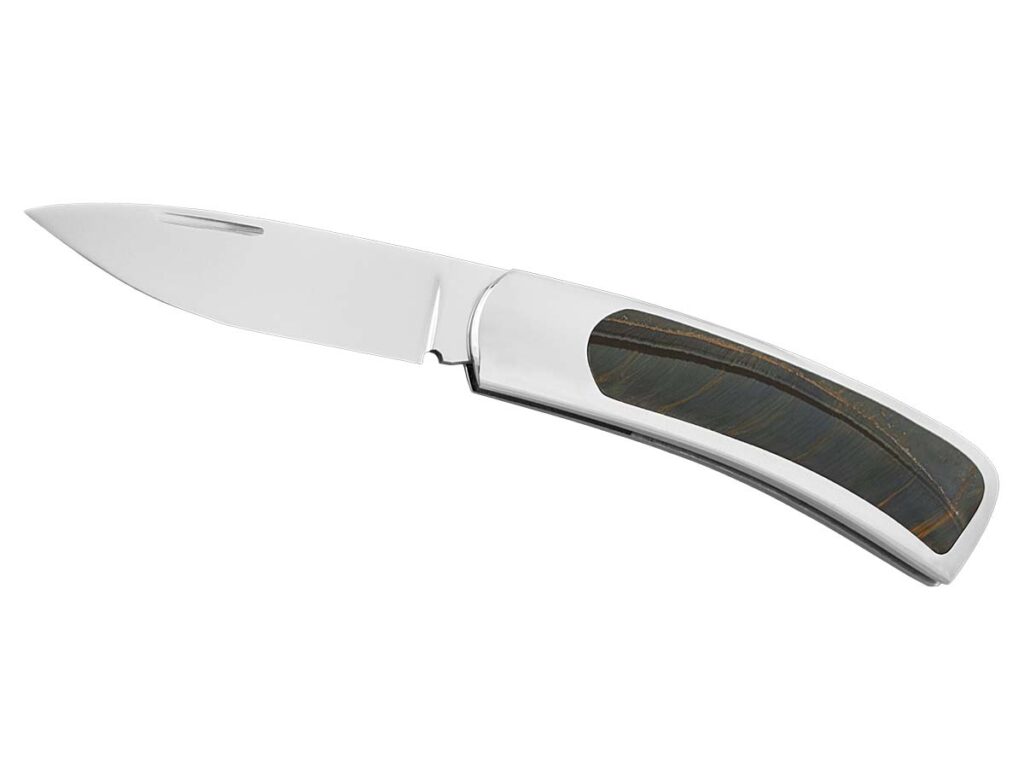
Steve Vanderkolff Hawk’s Eye Slipjoint

Steve Vanderkolff Hawk’s Eye Slipjoint

Knife Type: Slipjoint
Blade Length: 2.375”
Blade Material: CPM154
Blade Grind: Hollow
Handle: 416SS Body With Hawks Eye (blue tigers eye) Inlay
Overall Length: 5.25”
Maker’s Price For A Similar Knife: $500
vanderkolffknives.com (Jocelyn Fraiser image)


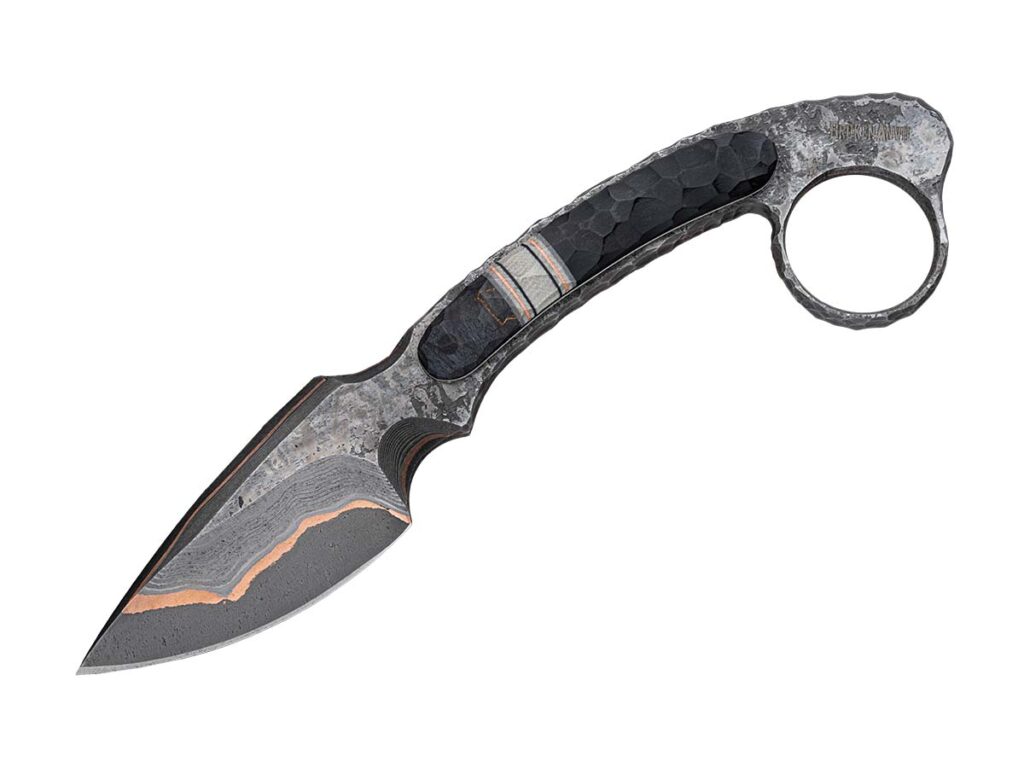
Charlie Bridges Hunter Scalpel

Charlie Bridges Hunter Scalpel

Knife Type: Fixed
Blade Length: 2.25”
Blade Material: WWII Pocket Chang, 1084 Core
Blade Grind: Hollow
Handle: G10
Overall Length: 6.5”
Maker’s Price For A Similar Knife: $450
brokenanvilknifeworks.com (Jocelyn Fraiser Image)


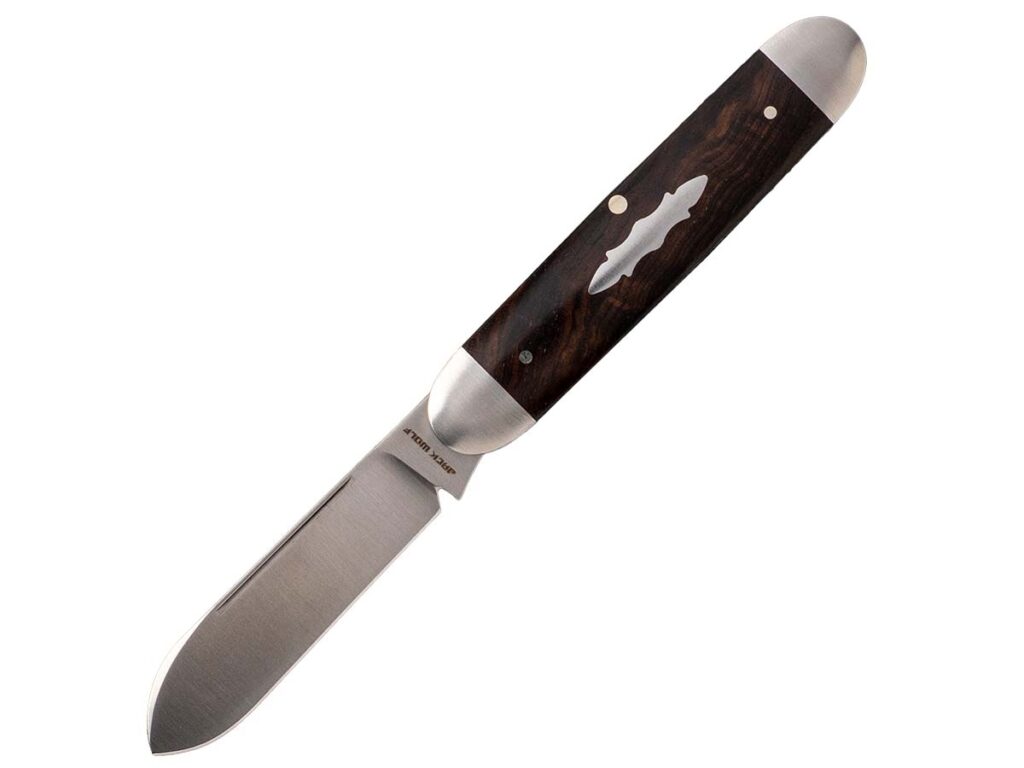
Jack Wolf Knives Equal End

Jack Wolf Knives Equal End

Knife Type: Slip Joint
Blade Length: 3.73”
Blade Style: Drop Point
Blade Material: Sandvik 14C28N
Blade Finish: Satin
Grind: Flat
Overall Length: 6.48”
Bolsters: Stainless Steel
Hardware: Nickel Silver Pins
Weight: 2.7 oz
MSRP: $70
jackwolfknives.com


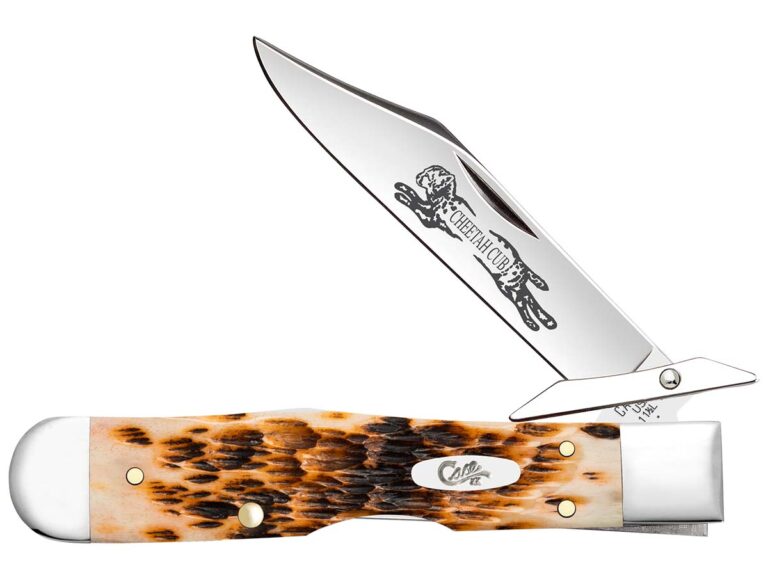
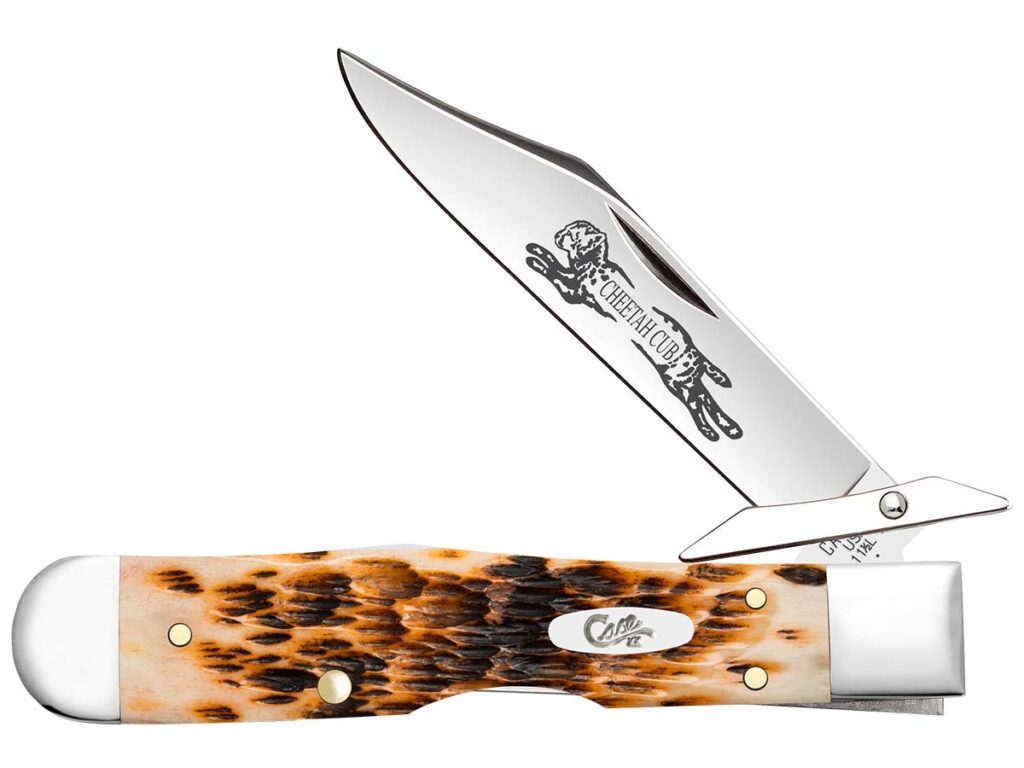
Case Knives Cheetah Cub

Case Knives Cheetah Cub

Knife Type: Lockback Clip Point
Blade Length: 2.58”
Blade Steel: Case Tru-Sharpe Surgical Steel
Blade Style: Locking Clip Blade
Blade Finish: High Polish
Blade Grind: Flat Taper
Handle: Smooth Antique Bone
Overall Length: 6.08”
Weight: 1.9 oz
MSRP: $119
wrcase.com


Check Out Other Months:

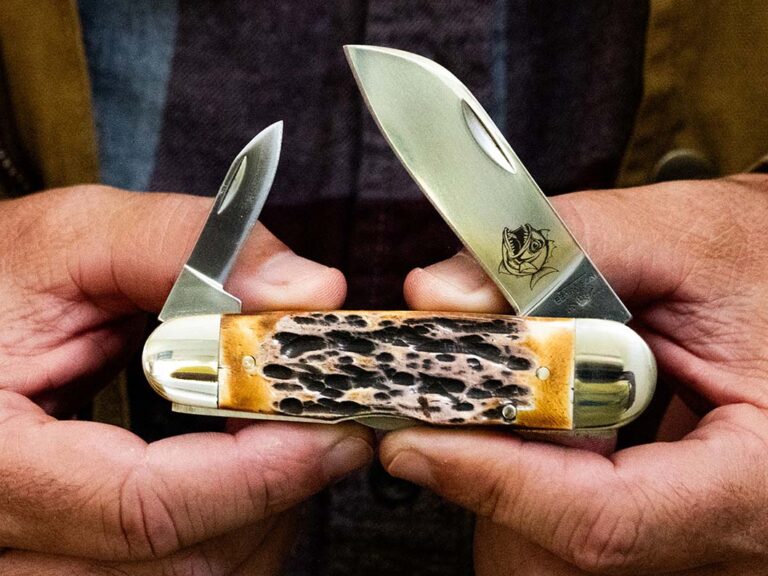
First Look: Modern Traditionalism Of Bear & Son Piranha

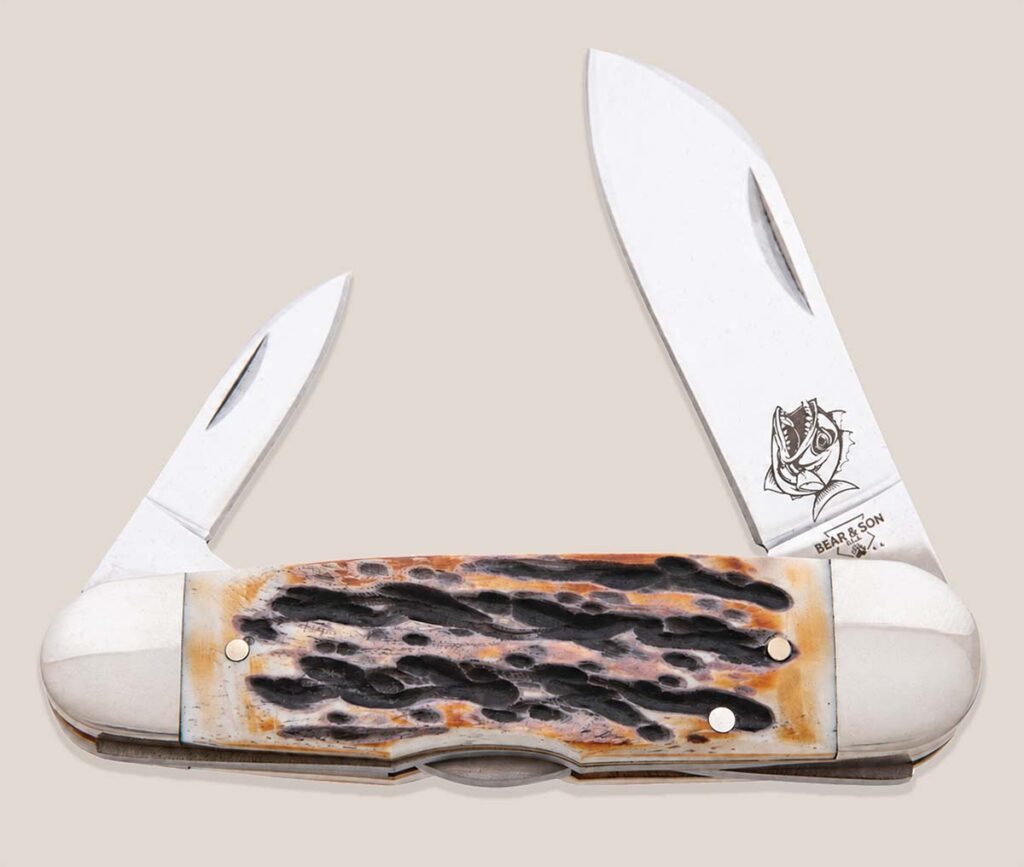
Crafted in Alabama, Bear & Son Cutlery’s Piranha pairs a 440 stainless spear blade and lockback security with classic bone handle options.
Bear & Son Cutlery has introduced a new traditional folder to its lineup with the Piranha series. Manufactured in Jacksonville, Alabama, the two-blade pocketknife combines classic American styling with a lockback mechanism engineered for secure lockup during daily tasks.
Traditional Build, Modern Mechanics

The Piranha centers on a two-blade setup crafted from 440 stainless steel, offering a balance of corrosion resistance, edge retention, and easy field maintenance. The primary cutter is a 2.75-inch spear blade paired with a secondary 1.5-inch pen blade. Measuring 4 inches closed and 6.625 inches overall, the knife delivers a comfortable, familiar in-hand feel designed for general cutting chores.

Unlike many traditional slipjoints, the Piranha incorporates a lockback design to give users extra security when the primary blade is engaged. Hand-finished detailing and polished bolsters complete the traditional pattern.

Piranha Handle Options

Bear & Son Piranha with blades deployed

Bear & Son offers the Piranha in two distinct handle materials: White Smooth Bone (Model WSB59L) and Genuine India Stag Bone™ (Model 559L). Each piece undergoes individual sanding and polishing, giving every handle its own unique texture and visual character while maintaining standard ergonomic grip properties.
Weighing in at 4.6 ounces, the U.S.-made folder is backed by a limited lifetime warranty and carries an MSRP of $125.
Tech Specs

Piranha Specs
Manufacturer: Bear & Son Cutlery
Overall Length: 6.625″
Closed Length: 4″
Primary Blade Length: 2.75″ (Spear Point)
Secondary Blade Length: 1.5″ (Pen Blade)
Blade Steel: 440 Stainless Steel
Handle Material: White Smooth Bone or Genuine India Stag Bone
Locking Mechanism: Lockback
Weight: 4.60 oz.
Country of Origin: USA
MSRP: $125

Read More:

Advertisement

Must Read Articles

Read this before you make a knife

Knifemaking 101 – Read This Before You Make a Knife

  by Wayne Goddard My experience has taught me that there's nothing like digging in and getting started. I've often said the hardest part of the...
how to forge damascus steel

How to Forge Damascus

Advertisement
Advertisement