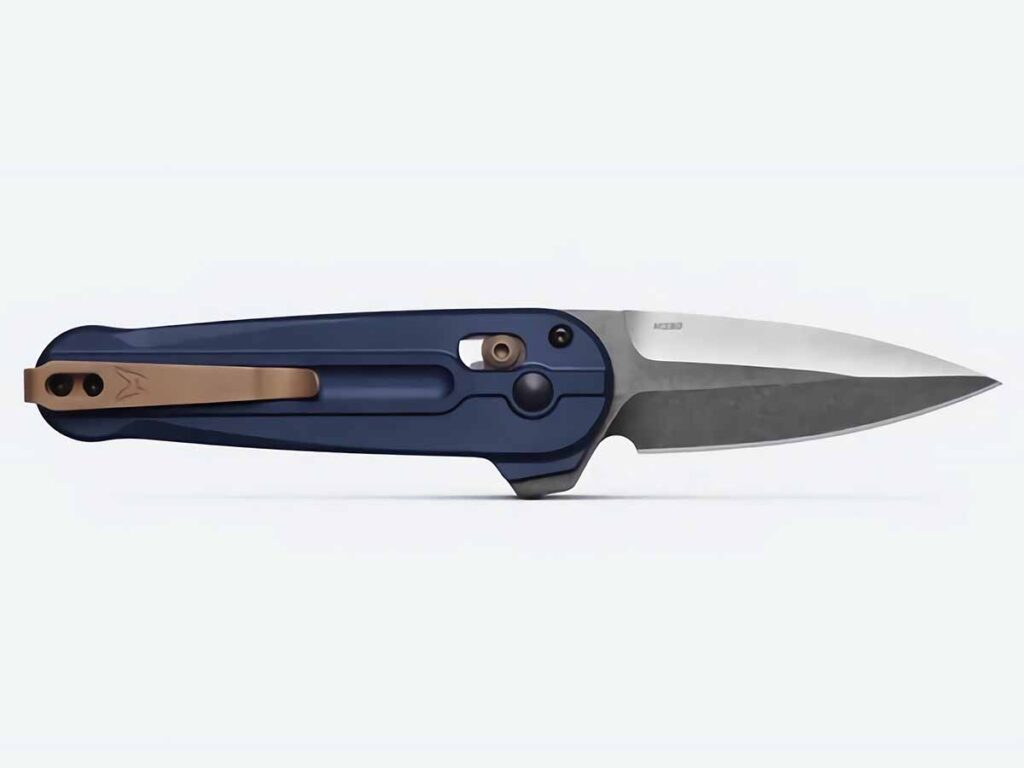
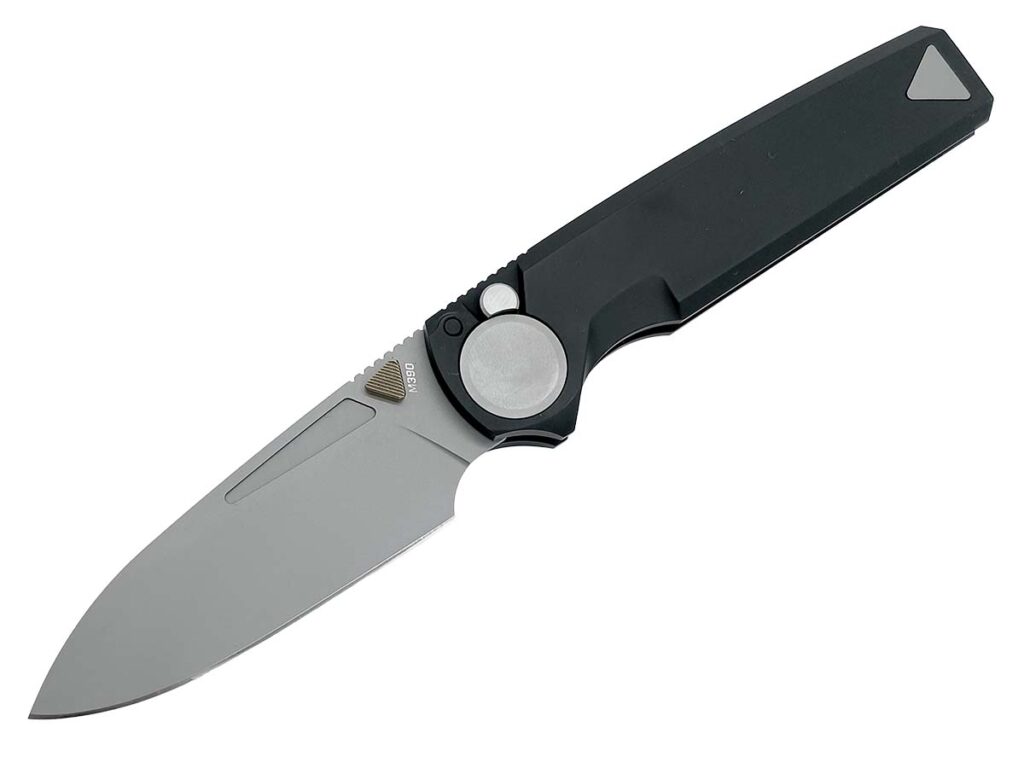
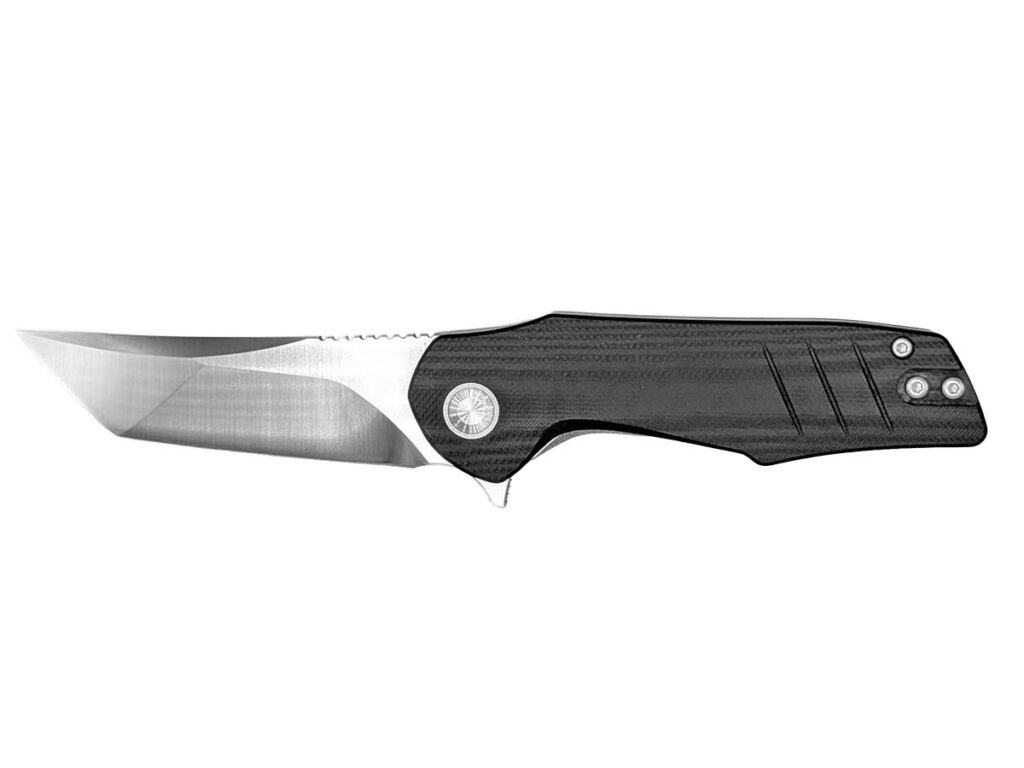
A bold new release from Benchmade, the Lowden blends premium materials, M390 steel, and fidget-worthy deployment in a sleek, spear-point EDC design.
Benchmade just shook things up with the release of the Lowden—and if you’re into flippers, this one’s going to catch your eye.
Known for their rock-solid AXIS lock and high-quality builds, Benchmade isn’t typically the first brand you think of when it comes to rear flippers. But the Lowden changes that.
This sleek little blade flips open like a dream. You’ve got the option of using the flipper tab or sticking with the tried-and-true AXIS lock for one-handed deployment, and both are smooth and snappy. It’s a fun, fidget-friendly knife that doesn’t compromise on function.
The Lowden sports a 2.79-inch spear-point blade made from M390 super steel—translation: this thing holds an edge like a champ, resists corrosion, and is tough enough for serious work.
The handles are lightweight anodized aluminum with a stainless-steel inset frame, giving it that slim, dagger-inspired profile without skimping on strength. Plus, Benchmade matched the color on the AXIS button and deep-carry pocket clip for a clean, cohesive look.
Sure, a spear-point blade might seem like an odd choice for EDC or outdoor use, but in practice, it works. It’s surprisingly versatile, with great piercing power and slicing ability. The ergonomics are solid too—with an ample handle fitting comfortably in a wide range of hand sizes and offers a confident grip.
Are there a couple of nitpicks? Sure.
There’s no lanyard hole, which could be a downside for folks who like a little extra security, and the flipper tab could use some jimping. But overall, the Lowden is a refined, premium knife that’s just plain enjoyable to carry and use—classic Benchmade quality with a fresh twist.
Custom knives came of age as collectables in the ’80s and ’90s.
Custom knives from the 1980s-1990s have become especially collectable, not just because of nostalgia but for specific reasons. To understand why, a trip down memory lane is in order.
The ’80s and ’90s encompass a unique intersection of custom knife history, innovation, craftsmanship and scarcity. In the 1970s, custom knifemaking was mostly hobby-based and regional. The two leading knifemaker organizations were The Knifemakers’ Guild and the American Bladesmith Society (ABS), established in 1970 and 1976, respectively. The latter, in fact, celebrates its 50th anniversary this year. The two organizations helped move knifemaking from a predominantly hobbyist pursuit into the business realm. Custom knifemaking had become a viable full-time option for some custom makers.
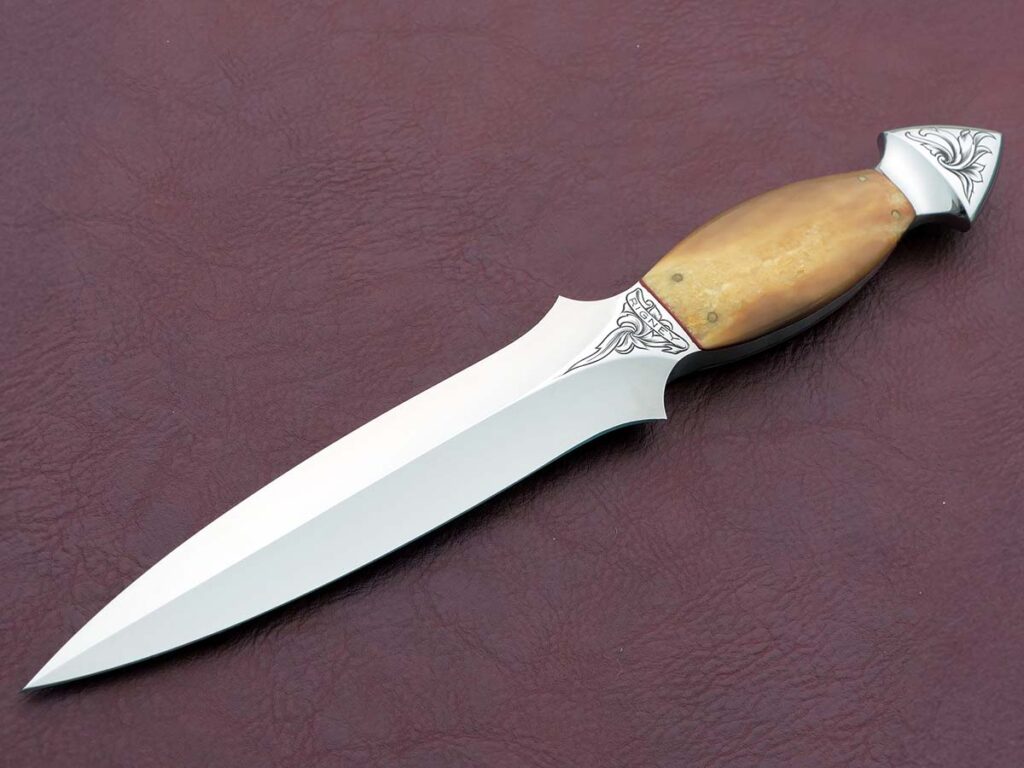
Willie Rigney was known for his fighters and daggers, with the latter usually incorporating engraving by Ron Skaggs.
The Guild and ABS matured in the 1980s, and knife shows had become a separate venue from the previous gun-and-knife-show format. During the ’80s and ’90s, makers started to intentionally design knives with aesthetics, handle ergonomics and originality in mind. The concept of a custom knife being collectable began in earnest. For many, knifemaking became an art form. Knives were being made that looked like they should be behind glass in a museum and were displayed on tables at knife shows for patrons to observe and handle.
Many of the founding members of the knifemaker organizations were in their prime production years, developing signature styles, techniques and ideas that would influence future generations of makers. Almost all the knives were designed and built entirely by makers standing before machines in their shops. Blades, frames and scales were not laser cut or CNC’d as many are today. Blades were ground freehand. Each knife was individually fit, finished and, in the case of folders, “tuned up.” The tolerances, grinds and finishes required extreme skill and precision by the maker. Most custom makers were personally involved with every aspect of making the knife that came out of the shop.
Tech Boom
It is a natural progression in manufacturing to adopt technology to increase precision and create items that previously could not be made affordably. Some custom makers have adopted this technology and can produce exceptional work with precision that a human cannot replicate. This is especially true among custom folder makers.
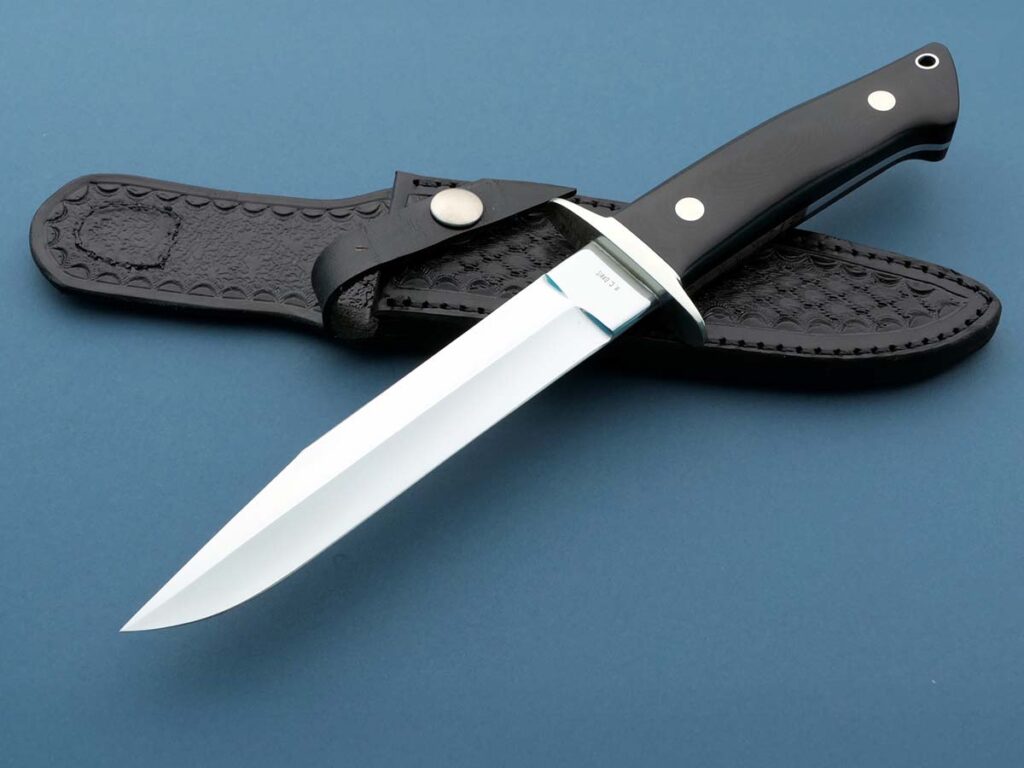
Bob Loveless trained W.C. “Bill” Davis, and it shows in W.C.’s version of the Loveless Wilderness Fighter.
This ever-evolving technology was a double-edged sword. The same technology has helped makers create the custom version of a knife, a semi-production version of the same knife, and, in some cases, to sell the design and program for collaboration with a factory. This has allowed even more makers to go full-time.
However, in the ’90s it caused confusion for some buyers. Dealers/purveyors would list the names of five or six well-known makers only to discover the knives were the factory collaborations. The utilization of the technology also allows the maker to produce more knives. Today you can attend knife shows and see tables with 20 or 30 custom knives on them. In the ’80s and ’90s, it was a rare sight to see makers with that many knives on their tables.
Unlike today, information was harder to come by. You had four main sources of information: print publications such as BLADE®, Knife World (today’s Knife Magazine), Knives Illustrated, Fighting Knives, Tactical Knives and, of course, the KNIVES annual. Other sources were dealers/purveyors, fellow collectors and knife shows. It was the shows that provided the most information. You were able to see and handle the knives, compare knives in person and, equally important, talk with makers. Back then, it was face-to-face communication that really helped me to understand what I was buying and why.
Turning Point
Interframes dominated the custom folder world in the late ’80s, and Jack Busfield was among the pre-eminent makers of the style.
In the ’80s, the fixed-blade market was primarily hunting knives and presentation knives. The go-to stainless blade steels included 440C and the new steel, ATS-34. Their high chromium content allowed for an exceptional mirror finish. Coupled with premium wood, Sambar stag and elephant ivory, the fighters, bowies and daggers became works of art that, as a new buyer, I could not afford. As the ’80s ended, the CITES (Convention on International Trade in Endangered Species) treaty made elephant ivory no longer a desired handle material. Elephant ivory was replaced with the mammoth, mastodon and ancient walrus (the latter my favorite) ivories.
It was in the ’80s and ’90s that custom knives experienced a rapid rise in collectability, and several makers in particular benefited. Rod Chappel was one. His knives often bordered on fantasy. His huge stainless-steel guards and pommels, along with his deep double-hollow grinds, became popular with many makers. Schuyler Lovestrand was another maker whose work never disappointed. He too utilized the deep hollow grinds, while his fit and finish, especially on his sub-hilt fighters, was among the best ever!
Like Rod Chappel, Schuyler Lovestrand was a fan of deep hollow blade grinds.
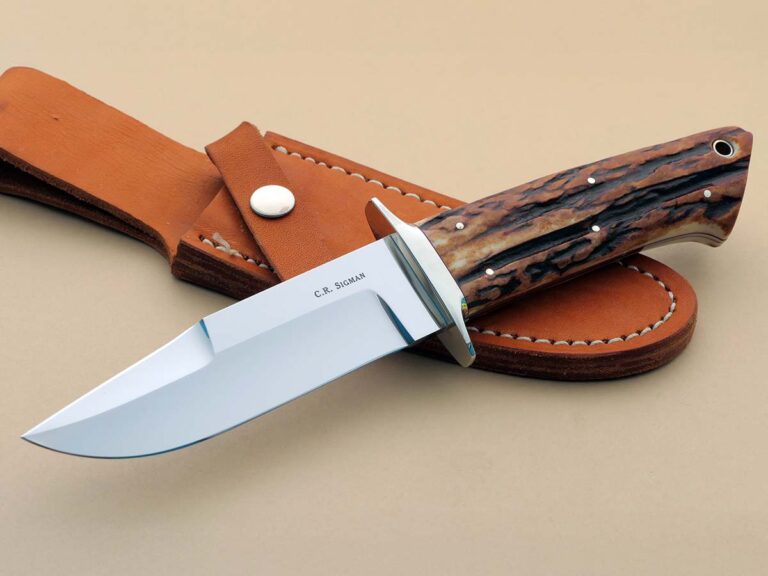
It was also during this time that many of the knife patterns and styles that were to become iconic were developed or refined. The design influence of BLADE Magazine Cutlery Hall-of-Fame® member Bob Loveless was becoming more common. Loveless trained W.C. “Bill” Davis and it shows in W.C.’s version of the Wilderness Fighter. Corbert Sigman was another maker who worked with Loveless designs. His version of the Loveless chute knife is clean and accurate.
Art knives featuring engraving, gold inlay and, on occasion, gemstones were popular among both fixed blades and folders, as was the case with many of the interframe folders from Jack Busfield. Interframes dominated the custom folder world in the late ’80s. Willie Rigney was known for his fighters and daggers, with the latter usually incorporating engraving by Ron Skaggs.
Meanwhile, the bladesmiths were refining the forging processes and developing new damascus patterns. Perhaps in the ’90s, the knife style that had the most significant influence was the tactical folder, different versions of which were turned out by many makers.
They’re Out There
Like many of you, I was fortunate to be involved in custom knives during the time in question. When many of today’s knifemaking legends were in their prime, they attended shows with knives on their tables for sale. Imagine being at a show and buying a knife from Rod Chappel or Cutlery Hall-of-Famers Bob Loveless, Bill Moran, Jimmy Lile, George Herron, Buster Warenski or Kit Carson. This writer was fortunate enough to do that. Back then, custom knives escaped the social media hype cycle. There were no bubble prices brought on by speculative flipping. Many of the knives were historically foundational, mechanically innovative and truly handmade.
Rod Chappel’s huge stainless-steel guards and pommels, along with his deep double-hollow grinds, became popular with many makers.
Unfortunately, too many of the makers from the “magical decades” have passed away or have retired. Fortunately, they left a legacy that is waiting for you to explore and learn about, and knives to obtain. These treasures are out there—enjoy the hunt!
Integral Boot Dagger Specs Maker: Willie Rigney Blade Length: 4.75” Blade Steel: 440C stainless Blade Finish: Mirror polish Handle Material: Ancient walrus ivory Engraving: Ron Skaggs Overall Length: 8.75” Author’s comments: “Willie was an incredibly talented knifemaker with limited output.”
Wilderness Fighter Specs Maker: W.C. “Bill” Davis Blade Length: 6” Blade Steel: 440C stainless Blade Finish: Mirror polish Handle Material: Black Micarta® Guard Material: Stainless steel Overall Length: 11” Author’s comments: “Bill was one of the best at reproducing the Loveless style, as well as making one of the more affordable versions of this type of knife. Great guy, great maker.”
Interframe Folder Specs Maker: Jack Busfield Blade Length: 2.5” Blade Steel: 440C stainless Blade Finish: Mirror polish Frame Material: Stainless steel Scales: Jade Closed Length: 3.5” Author’s comments: “This impressive folder features engraving and gold inlay by Dan Wilkerson. The knife was initially offered by the-then-premier dealer of interframe folders, Barrett-Smythe.”
F-2 Sub-Hilt Fighter Specs Maker: Schuyler Lovestrand Blade Length: 8.5” Blade Steel: ATS-34 stainless Blade Finish: Mirror polish Handle Material: Sambar stag Guard Material: Stainless steel Overall Length: 13.5” Author’s comments: “Schuyler made some of the finest custom knives ever. Clean, crisp lines, the epitome of fit, finish and flow.”
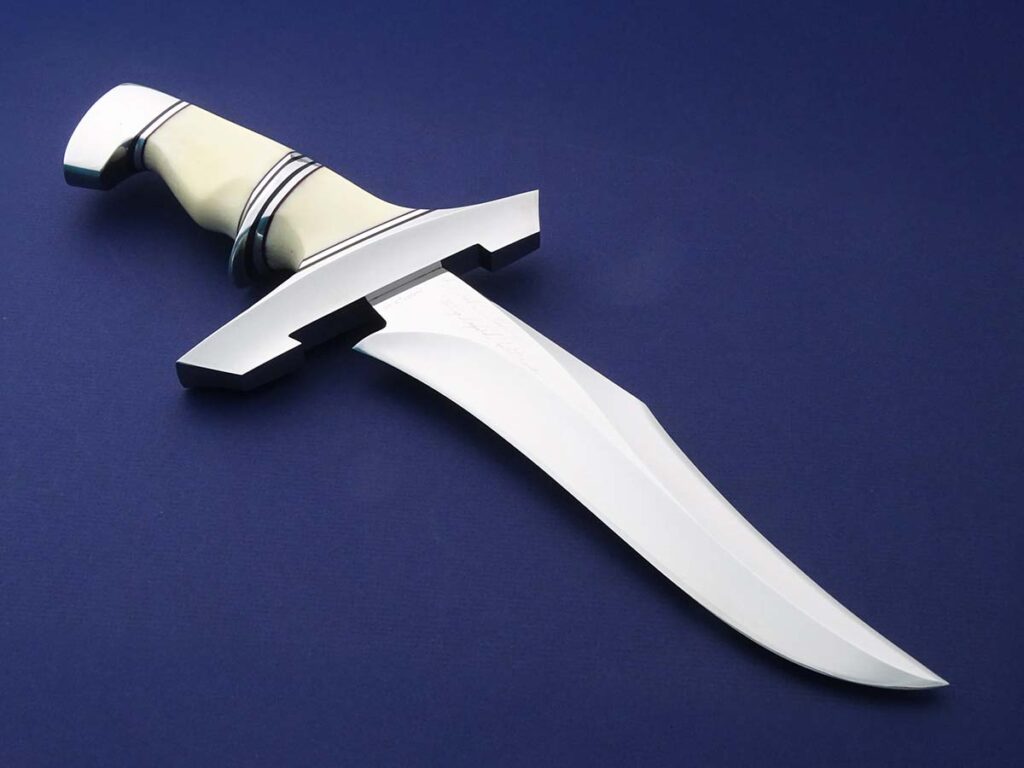
Hunting Leopard Bowie Specs Maker: Rod Chappel Blade Length: 10” Blade Steel: 440C stainless Blade Finish: Mirror polish Handle Material: Walrus ivory Guard Material: Stainless steel Overall Length: 15” Author’s comments: “This is Rod’s signature style and one of my favorite knives.”
Summer brings a focused shift toward portability and pocket-ready performance, highlighting a diverse lineup of high-tech folders and streamlined carry options. This month’s selection focuses on the incredible versatility of the modern knives, showcasing the work of veteran masters with decades of experience alongside award-winning new makers. Whether you are looking for an ultra-premium custom bowie to round out a collection or a hard-use automatic for daily carry, our July 2026 roundup proves that the industry’s drive for innovation remains as sharp as ever.
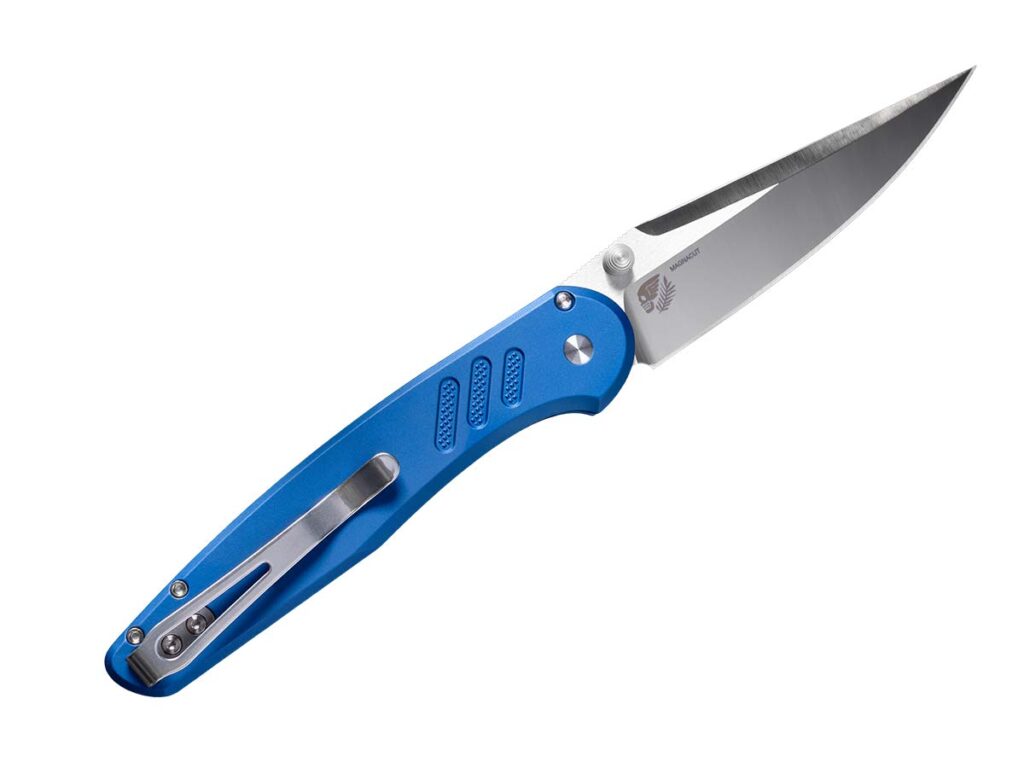
Pro-Tech Knives Avalon
Lock: Button Lock Deployment: Thumb Studs Blade Length: 4.25” Blade Material: MagnaCut Blade Pattern: Drop Point Scales: 6061 Aluminum Overall Length: 9.25” Weight: 3.69 oz. MSRP: $310 Country Of Origin: U.S.A. protechknives.com
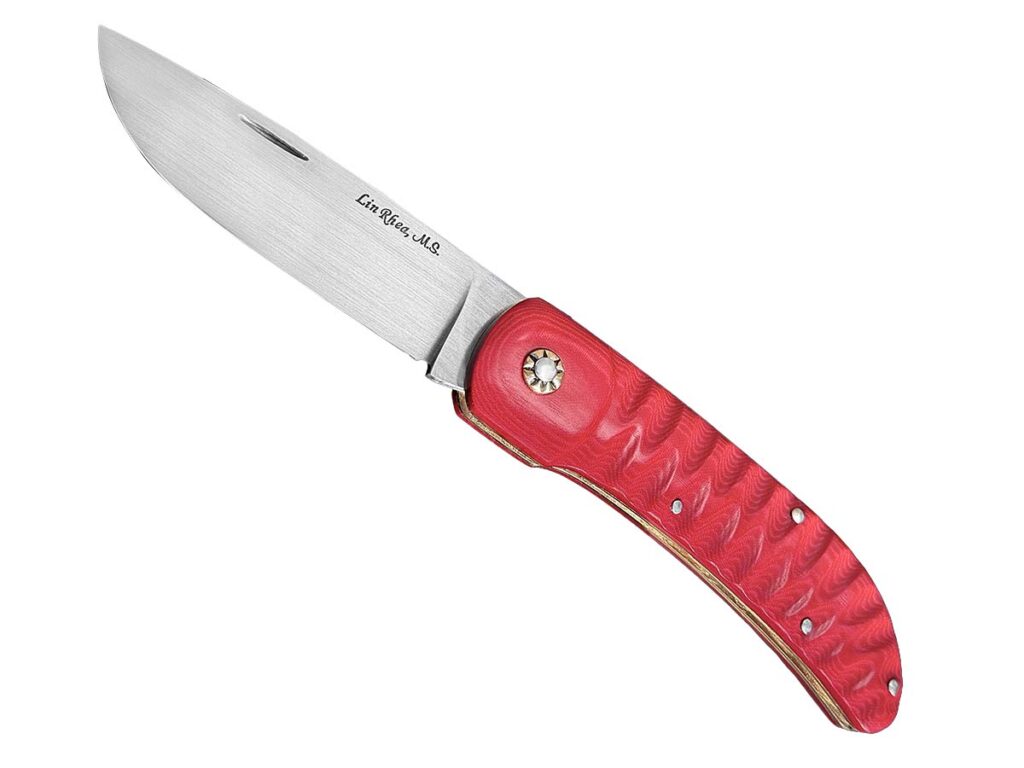
Lin Rhea Slip Joint Folder
Jocelyn Frasier image
Blade Length: 4” Blade Material: 80CrV2 Blade Pattern: Drop Point Scales: Micarta Overall Length: 9” Knife To Know: Includes sheath made by Kay Rhea Maker’s Price: $1,300 Country Of Origin: U.S.A. Maker’s price for a similar knife: $1,300
Work Sharp RMX Thumbstud
Blade Length: 3.2” Lock: Button Lock Blade Material: M390 Blade Pattern: Drop Point Handle: Magnesium Overall Length: 7.5” Weight: 2.6 oz. Knife To Know: Handle is integral, reversable clip MSRP: $140 Country Of Origin: Assembled in U.S.A. from foreign components worksharptools.com
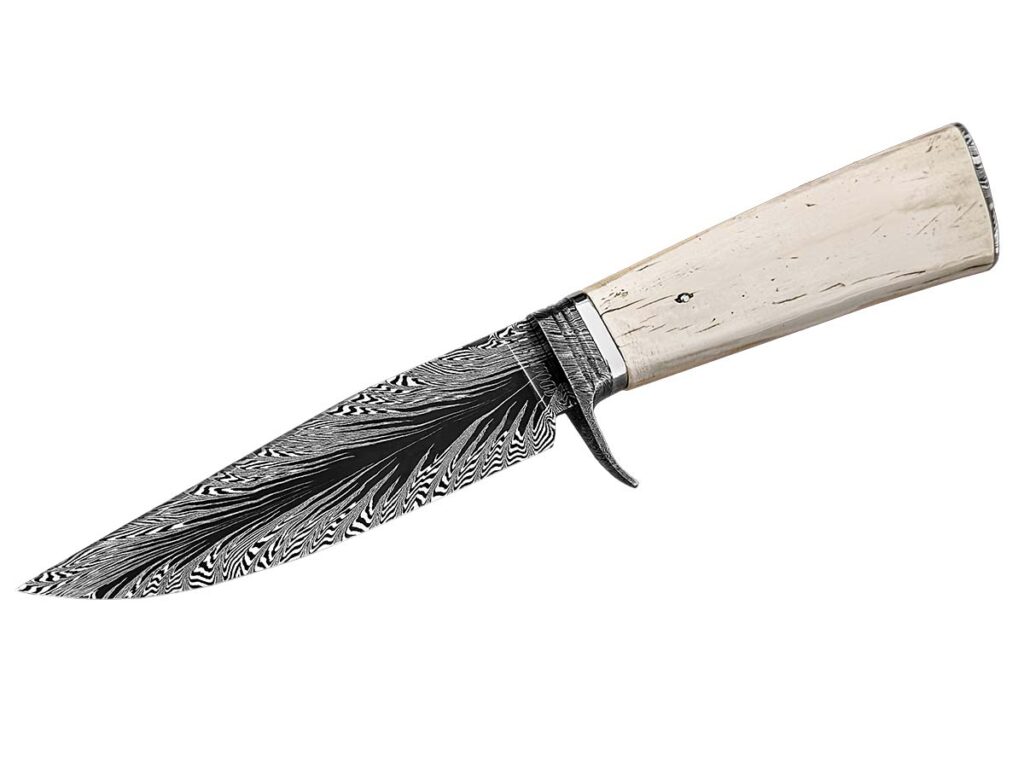
Cody Adolphson Vest Bowie
Jocelyn Frasier image
Knife Type: Vest Bowie Blade Material: 1084/15N20 Damascus Pattern: Dark Core Feathered Damascus Blade Pattern: Drop Point Blade Grind: Flat Handle Material: Ancient Walrus Ivory, Nickel Silber Accents, Damascus Pommel Guard: Twist Damascus Overall Length: 10” Maker’s Price For A Similar Knife: $1,400 Country Of Origin: U.S.A.
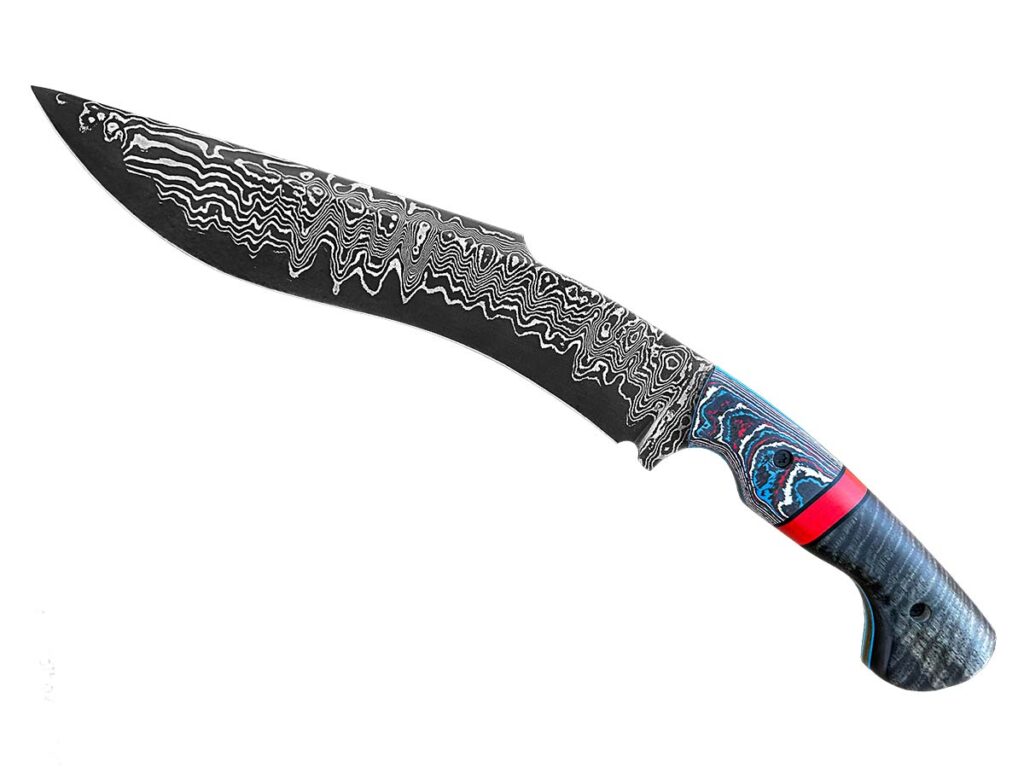
Justin Burton Kukri
Jocelyn Frasier image
Blade Length: 10.5” Blade Material: 80CrV2/15N20 Blade Pattern: Twisted Damascus San Mai Blade Grind: Flat Handle: Black dyed curly mango with red G-10 spacers Guard: Nebular Fat Carbon Knife To Know: Custom bead made with Elforyn Supertusk and Damasteel Maker’s Price For A Similar Knife: $1,500 Country Of Origin: U.S.A.
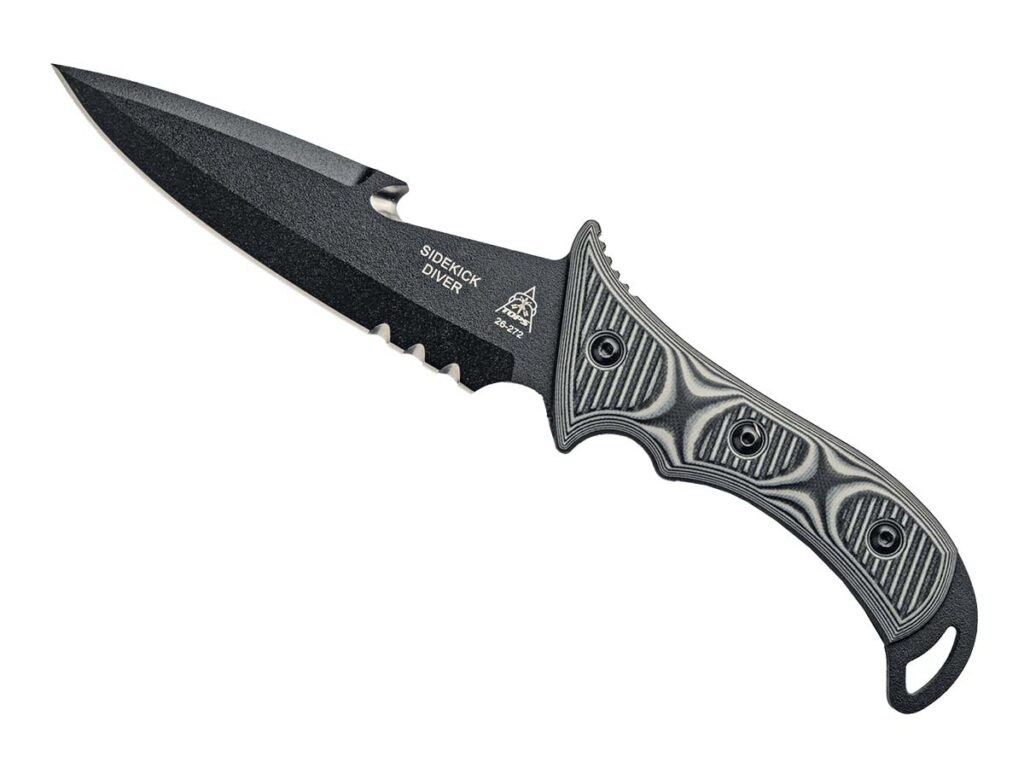
TOPS Knives Sidekick Diver
Designer: Ana Espinoza Blade Length: 5.75” Blade Material: N690 Blade Pattern: Spear Blade Finish: Black Traction Coating Scales: G10 Overall Length: 11.25” Weight: 12.8 oz. Sheath: Black Kydex Knife To Know: Integral line cutter on the spine. Also available with a double edge. MSRP: $395 Country Of Origin: U.S.A. topsknives.com
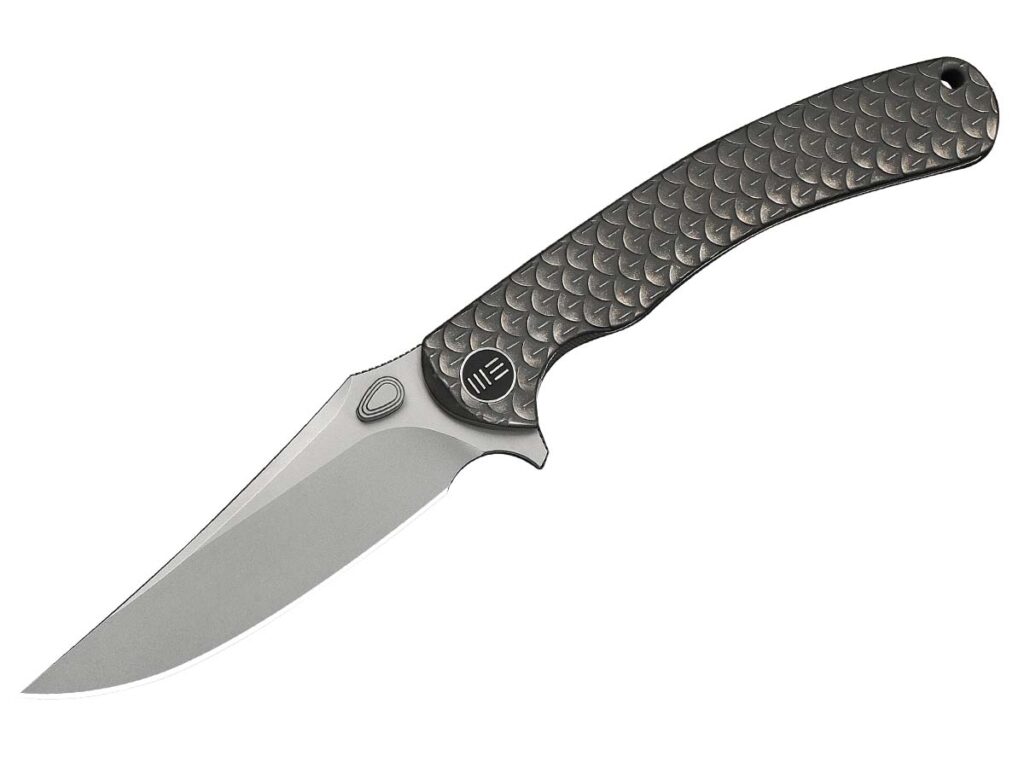
WE Knife Dracarys
Lock: Frame Lock Blade Length: 3.58” Blade Material: Böhler M390 Blade Pattern: Clip Point Blade Grind: Flat Handle Material: 6AL4V Titanium Overall Length: 8.13” Closed Length: 4.55” Weight: 3.66 oz. Knife To Know: Limited to 199 pieces, 6AL4V titanium pocketclip, caged ceramic ball MSRP: $370 Country Of Origin: China weknife.com
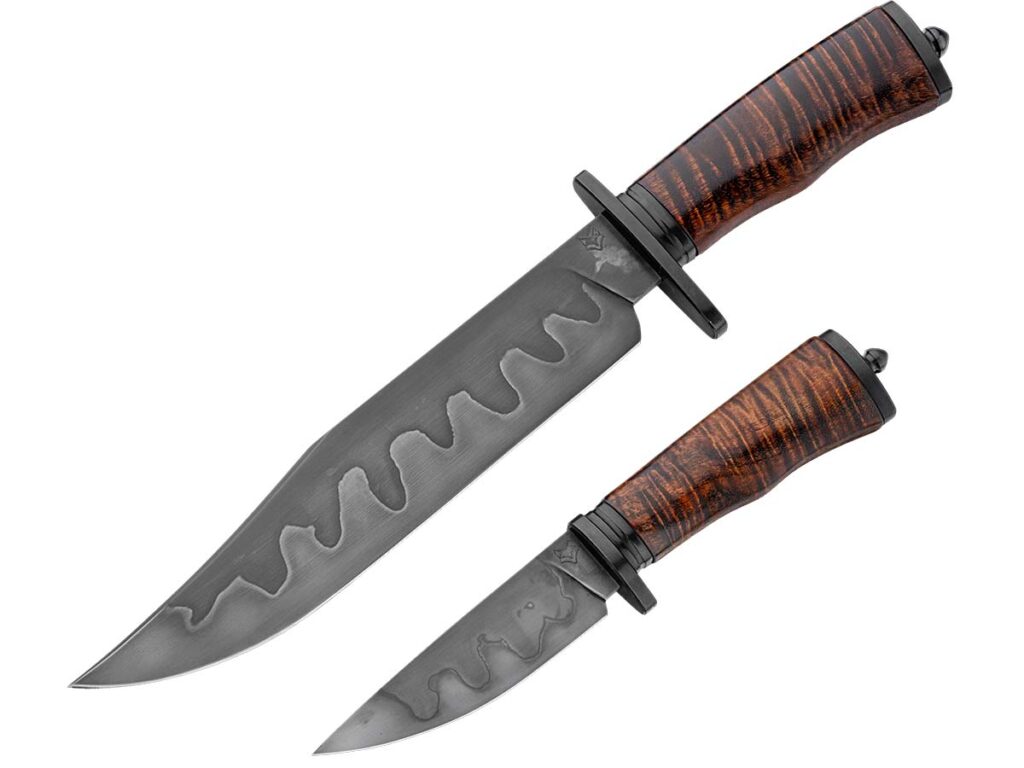
Chad Fox Bowie
Jocelyn Frasier image
Blade Length: 9.25” Blade Material: W2 Blade Pattern: Clip Point Handle: Koa Overall Length: 14.5” Knife To Know: Salt blackened mild steel Maker’s Price For A Similar Knife: $950 Country Of Origin: U.S.A.
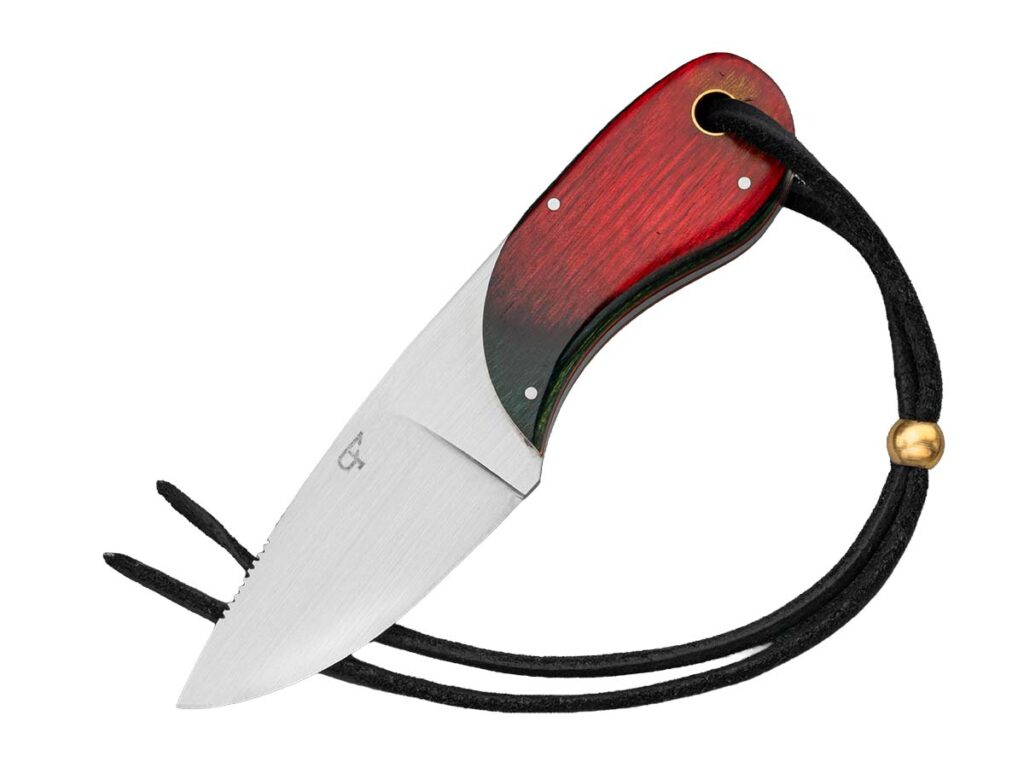
Colten Tippetts Neck Knife
Jocelyn Frasier image
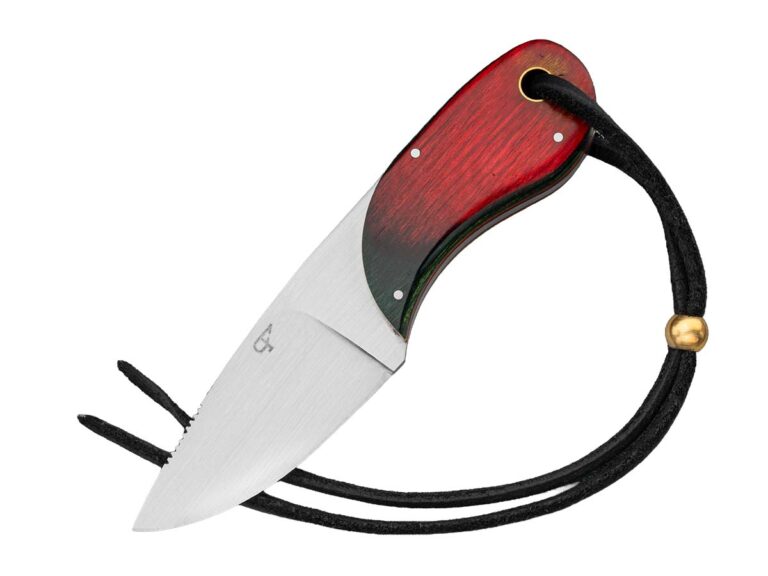
Name: Dinker Blade Length: 2” Blade Material: Ladder Damascus Blade Pattern: Drop Point Handle: Desert Ironwood Overall Length: 3.5” Knife To Know: Also made in 01 Tool Steel with Dymondwood handles. Maker’s Price: $150 Country Of Origin: U.S.A.
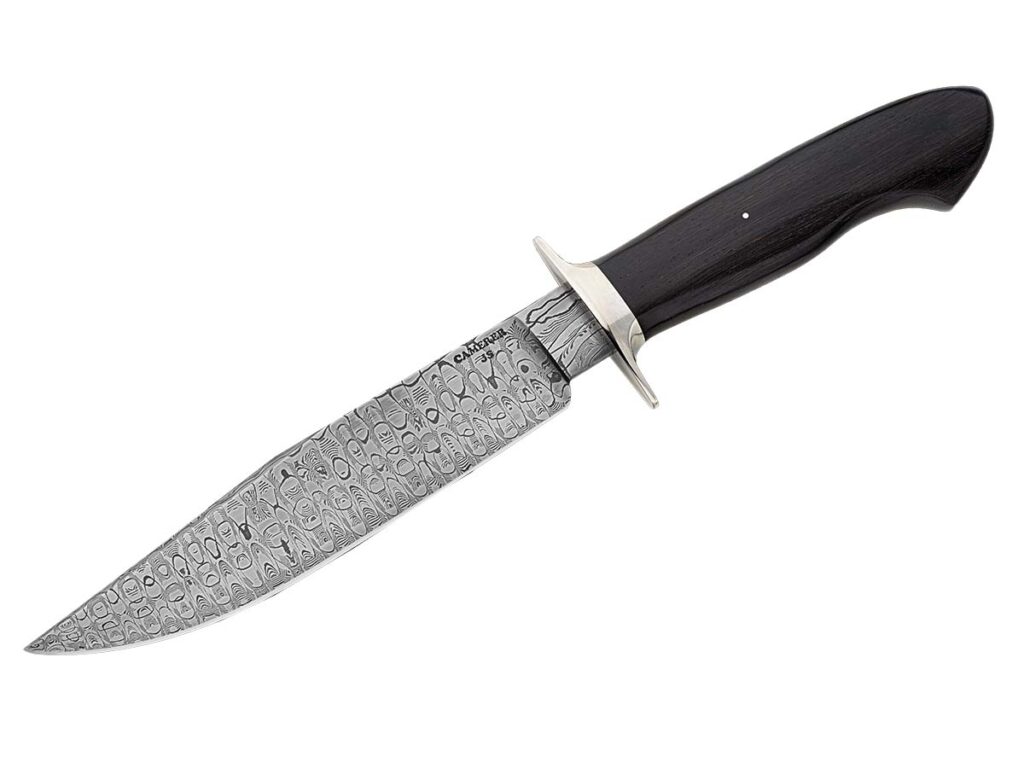
Craig Camerer Slim Pickers Fighter
Jocelyn Frasier image
Knife Type: Fighter Blade Length: 7” Blade Material: 1080/15N20 Blade Pattern: Dancing Martian Damascus Blade Grind: Flat Handle: African Blackwood Guard: Nickel Silver Overall Length: 12.5” Maker’s Price For A Similar Knife: $750 Country Of Origin: U.S.A.
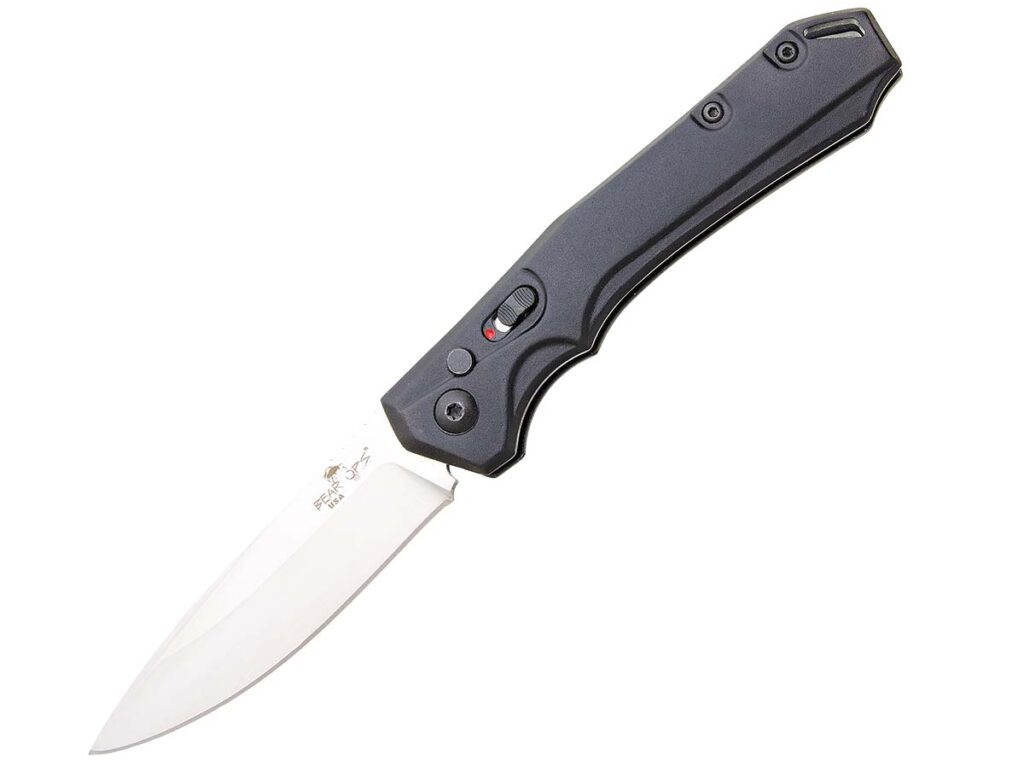
Bear & Son Cutlery Auto Bold Action XIV
Blade Length: 4.5” Blade Material: S35VN Blade Pattern: Drop Point Blade Grind: Hollow Handle: Aluminum Overall Length: 8.75 Weight: 1.5 oz. Knife To Know: OTS Automatic, tip-up carry. MSRP: $230 Country Of Origin: U.S.A. bearandsoncutlery.com
A kitchen do-all, the Santoku is a must-have for foodie pros and novices alike. Here’s what to look for to get the best, plus our top picks.
Santoku knives are becoming increasingly popular in the West, especially among foodies, passionate home chefs, and anyone who brings a knife roll to work in a kitchen. If you’ve been dying to learn more about this great Japanese knife, you’re in luck.
We’re going to go over everything you need to know about the Santoku, from its origins and design, to how to buy and use one in your own kitchen. We’re also going to go over the top Santoku knives on the market right now, in case you’re looking to pick one up for yourself (or as a gift).
Origin of the Santoku
Traditionally, in Japanese cooking, knives have different roles based on what you’re preparing, more than how it’s being prepared. Around 100 years ago, you would commonly see a Gyuto (basically what Westerners call a chef’s knife) used to cut beef, pork, and chicken, a Nakiri to cut vegetables, and a Deba to cut fish.
Each of these is designed for its specific task, and so they are specialized. Of course, they can be used differently, but the idea is to have a knife for every task, rather than a knife for any task.
Around the 1940s, as steel started to come at a bit of a premium due to some noted historical world conflicts, the desire for multi-purpose kitchen cutlery rose, and out of that desire came the Santoku, or “three virtues” knife.
The purpose of the Santoku, also translated as “three uses”, was to be able to handle most food prep duties with just one knife. To that end, it is designed to be able to handle chopping, slicing, and cutting tasks, which is another interpretation of the meaning of the name.
Santoku Design
A Santoku typically uses a sheep’s foot blade and tip, which gives you a long, relatively flat blade edge and a tip that sweeps back up in a large radius towards the spine.
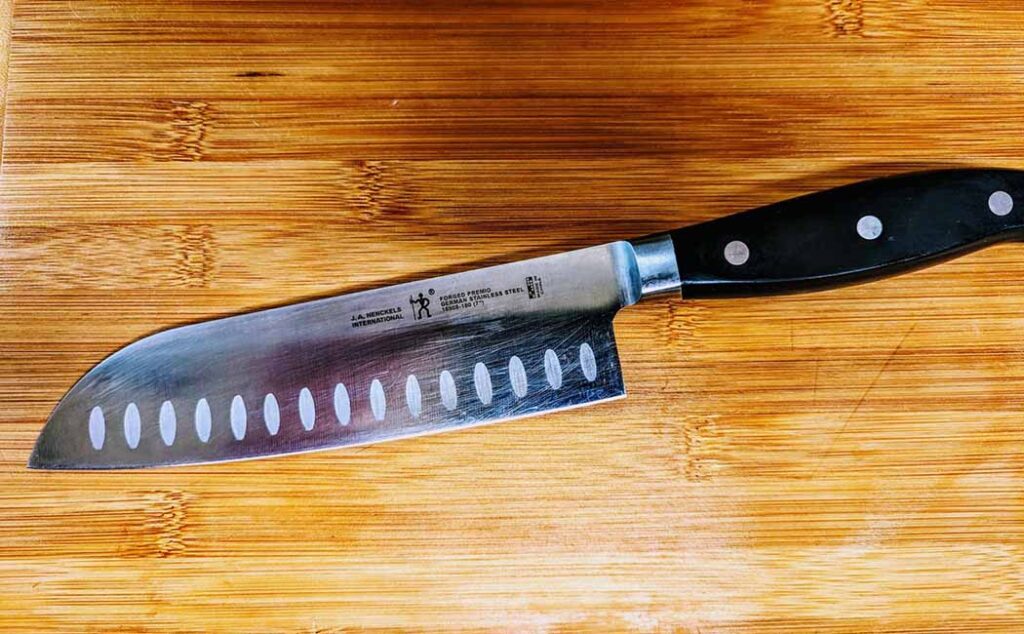
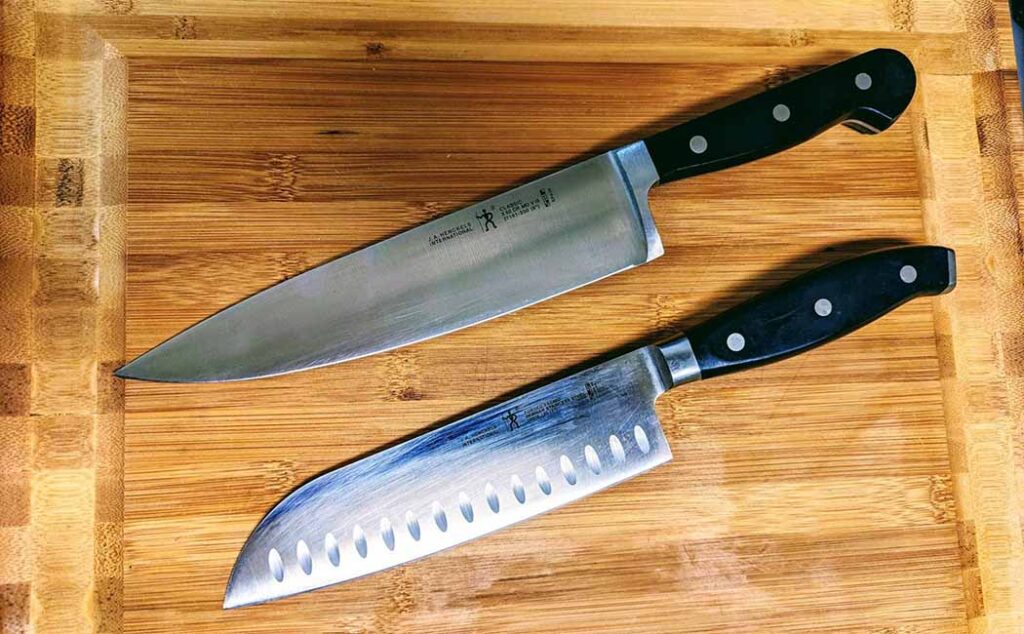
A mid-range Santoku from my personal kitchen.
Edge
Most are between 5 and 7 inches and have an edge with a very Western-style bilaterally cutting edge with a 12 to 15-degree shoulder. Many Japanese knives are ground to a chisel edge, which is only sharpened on one side, but a classic Santoku has a more familiar Western-style edge geometry.
This does mean that, for those of us in the West, sharpening isn’t too much different than with any other kitchen knife, just with a different angle. It also means that Santokus are typically made of very hard steel to prevent damage to that thin wedge.
This makes them an absolute dream for slicing and chopping tasks. If you’ve ever wanted to reliably get those paper-thin tomato slices, you’ll have every advantage with a Santoku.
Handle
Most Santokus have no bolster, which may also take a bit of getting used to depending on your grip. However, many have a handle that tapers down towards the blade, making it very comfortable for the classic pinch grip most of us home cooks are probably used to.
Granton Edge
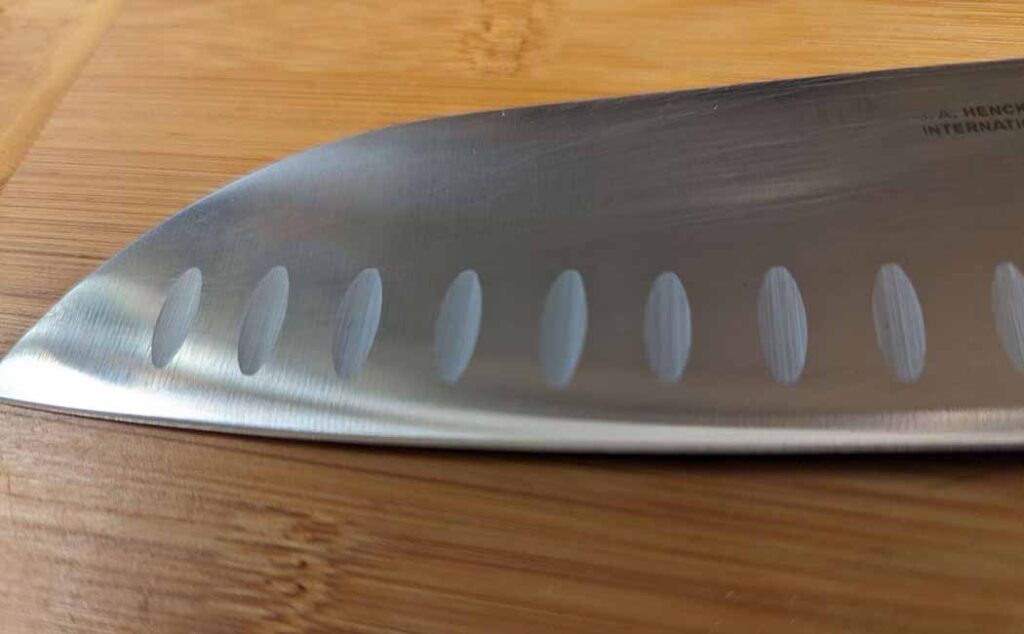
Lastly, many Santokus feature a “Granton edge”, which you can recognize by the slightly scalloped sides of the blade that look like someone took an ice cream scoop to the steel and removed little bits of the blade.
These little scallops help sticky, wet foods like meats and certain vegetables from sticking to the side of the blade as you’re chopping. If you’ve ever tried to slice tomatoes quickly or dice something like a chicken thigh, you’ll know how helpful this feature can be.
What To Look For In A Santoku
Here’s a fun fact I don’t get to bring up in my writing career a lot: I’ve worked as a chef in kitchens all over the South for a good portion of my 30ish years on this planet. In that time I’ve held a lot of knives.
Cooking may not be my main gig anymore, but it is something I’m still passionate about. I cook most meals for my family, and I still help out with the occasional catering gig when my chef friends need an extra hand.
All of which is to say, I’ve got some battle-tested, dinner-rush-proven opinions about what to look for in a kitchen knife, and we’re going to apply those to our Santoku shopping.
Blade Length
While Santokus come in a range of lengths, for your first one I definitely recommend sticking to a 5 to 7-inch blade. This is a good range for all the common tasks you’d likely want a Santoku for and makes for a very handy blade.
This gives you a blade that’s most likely shorter than your standard Western-style chef’s knife (or Gyuto), but still more than sufficient for chopping large, hearty vegetables when needed. It’s also not too big to quickly filet a fish, or other delicate tasks.
Steel
Blade steel is an important consideration with any knife, but especially the Santoku. As we discussed above, a Santoku has a very thin edge and narrow blade geometry.
While the thin edge gives you immense slicing and chopping performance when we’re dealing with vegetables, it’s potentially a liability. Specifically, the edge is more prone to rolling if you’re doing something like hacking through a chicken carcass.
To protect against such occurrences, a typical Santoku—and Japanese knives in general—are treated to a higher hardness than Western-style knives. Japanese knives like the Santoku are also typically high-carbon steel.
Practically, this means that you’ll have to put in more work to sharpen a high-quality Santoku than a Western-style knife. On the flip side, the edge will likely last you a good bit longer. This makes the Santoku a good everyday kitchen knife, especially if you don’t love sharpening.
Stay away from stainless steel, unless you’re really on a budget and want to try the Santoku out on the cheap before committing to a more expensive model. (We’ll have some very good budget-friendly options below if you want to go that route.)
Stick to a high-carbon steel of Japanese or German origin if possible, and look for something with a Rockwell hardness of 57 or higher at a minimum. I like 60 plus but that starts to get expensive quickly.
When in doubt, when it comes to any kitchen knife really, buy from one of the countries that lost WWII and you’ll probably do alright (I have similar opinions about cars).
Blade Height
Blade length and width are familiar decision points when buying a knife, but for something like a Santoku blade height (the distance from the blade edge to the spine) is also important.
Because these knives are designed for slicing and chopping against a cutting board, you want to make sure the blade is tall enough to keep your knuckles comfortably off the cutting board when using the knife.
This tall blade also makes it easier to create nice, even slices. The edge is less likely to wander to the left or right as you slice, and you have a nice large flat surface to index whatever you’re cutting against as you’re slicing.
A Note on Scalloped Edges, or Granton Edge
You will probably notice in your Santoku shopping many of these knives, and Japanese knives in general, tend to have a Granton edge. You’ll see dimples on the side of the blade.
The dimples on my personal general-use Santoku.
The idea behind these dimples is to relieve the suction effect when slicing through thick vegetables or meats and keep things from sticking to the blade. How much does that help? I’ll be honest, I don’t know.
A lot of it depends on the geometry of the dimples, what exactly you’re cutting through, and its moisture content. In other words, you may not see a huge difference, so don’t get too hung up on the dimples.
Done right, they can definitely help though, so don’t completely discount them either.
Using a Santoku
Actually using a Santoku is a bit different from a Western-style chef’s knife, but don’t let that keep you from buying one!
With a Santoku, the chief difference from the knives you’re probably used to for general food prep is the thickness and the angle of the cutting edge.
A Santoku has an edge that is ground to a much more extreme angle than most Western-style knives, and the edge of the blade is fairly linear compared to your average chef’s knife here in the US or Europe.
Why does that matter?
Where a knife with a pronounced belly, like a Western-style chef knife, will slice downward and then you rock the blade forward just a bit to complete your cut. With a Santoku, the motion is more of a flat downward chop, with very little rocking.
I promise, it’s not actually all that different in practice, but you will have to adjust a little bit when you’re first learning to use the knife.
The other thing to keep in mind is that a Santoku is more prone to chipping if you really hammer it into something hard like bone. This is not what you should be using to hack through carcass joints. Use a cleaver for that and leave the Santoku for slicing and cutting meats, fruits, and vegetables.
Santoku vs Western-style Chef’s Knives
The Santoku is a multi-purpose knife with a similar role to the Western-style knives you’re probably familiar with, but with a very different design.
Compared to a Western chef knife, it is typically shorter, thinner, and consequently lighter. The lack of a pronounced “belly” to the edge also means you will have to adjust your technique if you’re used to cutting with a Western-style chef
A Western-style knife, or Gyuto, is going to have an easier time with fine tip work, and will typically have more of a “belly” to the blade to make it easier to rock back and forth on a cutting board.
In my kitchen, I have both and use them regularly. Like most cooks, I find that a Santoku excels in slicing tasks, particularly if you’re trying to get thin, even slices. If you’re caramelizing onions, slicing tomatoes for a BLT, or dicing up chicken into bite-sized pieces, a Santoku is excellent.
If you’re doing something that requires more of a rough chop, such as dealing with a large number of fresh herbs, a Western-style chef’s knife is probably going to be a better option as you can simply rock the knife back and forth through the herbs and be good to go.
A Western-style knife is also much better for preparing heavier proteins, such as breaking down a chicken carcass or carving up a roast. For one, the blade is longer which makes long drag cuts and slices through thick pieces of meat much easier.
The edge profile of the chef’s knife also handles hacking through bones whereas you’re basically asking to chip or roll your edge if you do that with a Santoku.
For things like fish where you’re typically working with much smaller portions, and you have lighter, thinner bones to deal with, a Santoku excels. Its shorter length is a boon instead of a hindrance here, and the thin edge and blade profile keeps those thin slices of fish from sticking.
As a general rule, for something like fish, garlic, or very wet vegetables and fruits that like to stick to your knife, a Santoku is better. For heavier tasks that require a beefier edge, or a longer cutting surface, your Western-style knife is better.
The type of work you’re doing also matters, with a Santoku being much better for a straight up-and-down chop or slice, and a Western-style knife being better for a rocking slice.
Best Santoku Knives for Any Budget
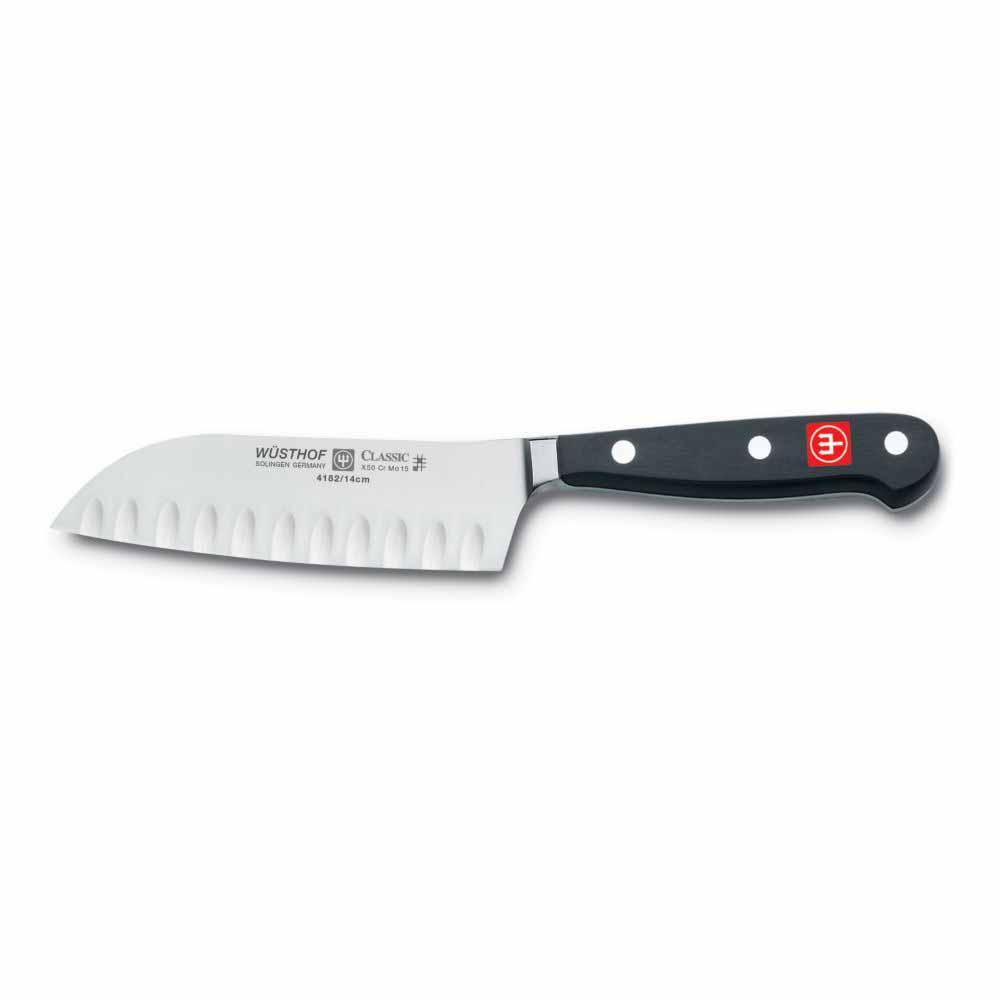
Wusthof Classic Hollow Edge Santoku Knife
First up, we have a favorite of professional kitchens, the Wusthof Classic series Santoku. Wusthof, as you can probably tell from the name, is a German company, and they’re known for making outstanding cutlery. This Santoku is no exception.
This is getting into the upper end of the Santoku market (there will be cheaper options below, never fear) but it is still an excellent value if you’re looking for a durable, well-designed option that’s going to see some heavy use.
I’ve personally used this knife for years, and have one in my personal kitchen at home. In my experience, this is the best-slicing knife out there for vegetables and fish, and I use mine several times a week.
It has a 5-inch hollow-edge blade made of X50CRMOV15 high-carbon stainless steel, making it perfect for home cooks and pros alike.
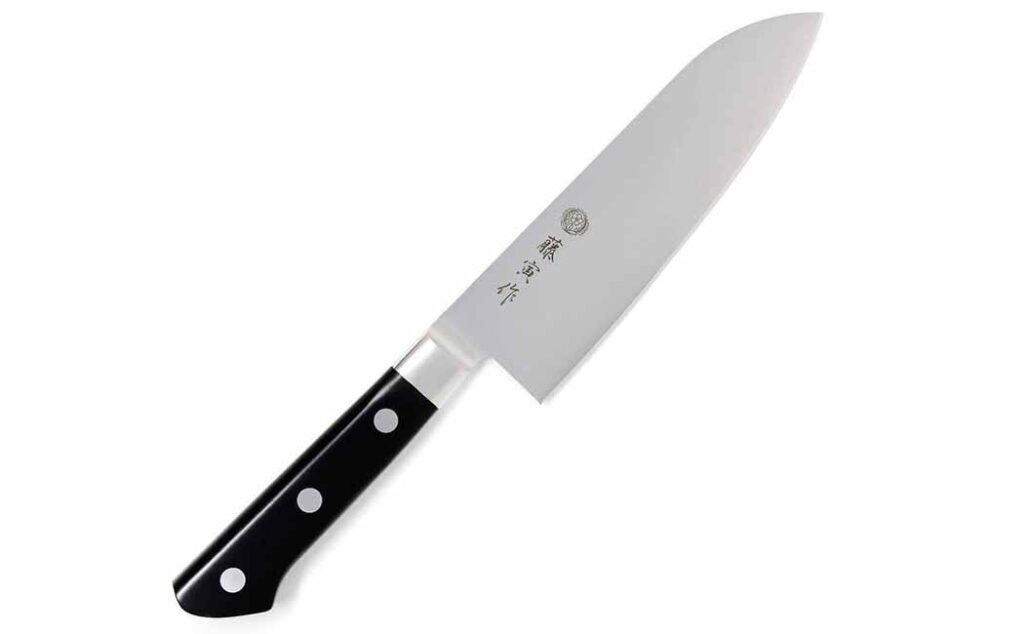
Tojiro 6.7-Inch Santoku
If the thought of paying more than $100 for a kitchen knife makes you a little itchy in the wallet area, don’t worry. Tojiro has you covered.
This Santoku is a bit on the longer side, making it a great choice for almost any kitchen task. I’ve personally used these knives for a number of years now, and I find them to be a bit chunky, but then I’ve got short sausage fingers. Your results may vary.
Even with my diminutive digits though, this knife absolutely sails through fish, chicken, and other light proteins, and slices fruit and veg like a dream. It has a bolster, and an evenly ground edge so it’s perfect for those used to more Western-style knives.
This knife has a 6.7-inch blade made of cobalt alloy steel clad in VG10, which is high-end Japanese steel with high chromium content. This makes it a great budget option for those who don’t want to spend a lot of time sharpening.
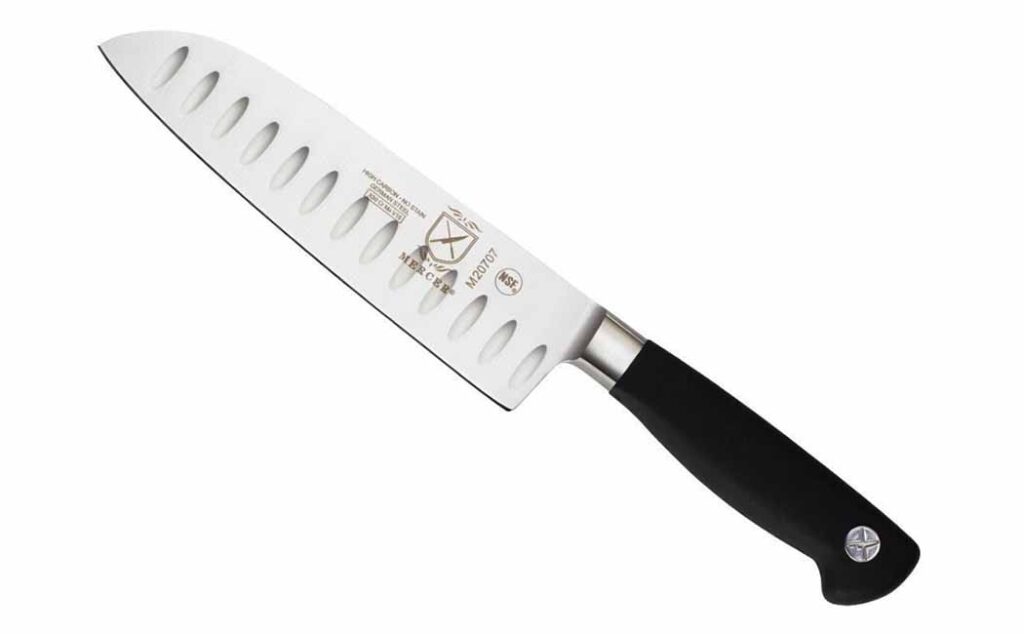
Mercer Culinary Genesis Forged Santoku Knife
For the even more budget conscious, the Mercer Culinary Genesis Forged series is a great place to start. Yes, you can absolutely get an entire knife block for $40, but they’re going to be less than stellar.
You don’t need to spend a fortune on cooking gear, but there are some places where you definitely get what you pay for. With this knife from Mercer Culinary, you’re getting a solid knife that will last for years, without breaking the bank. This is about as cheap as I’d go, personally, but it’s no less effective for that.
The Genesis Forged Santoku has a 7-inch blade made of X50CRMOV15 high-carbon stainless.
MAC Professional Santoku Knife
This is another staple of professional kitchens and a great option for passionate home cooks, as well. MAC’s Professional line is a great option for foodies and pros, and their Santoku is no exception.
I actually think I like the handle on this knife the most of any on this list, but that’s down mostly to personal preference. The blade has a 15-degree edge that slices like a dream. The high-carbon alloy is sub-zero tempered to increase hardness and wear resistance.
The handle is made of a very lightweight wood laminate that is very tough and grippy in the hand. The blade is 6.5 inches long and is made from MAC’s Sub-Zero alloy steel.
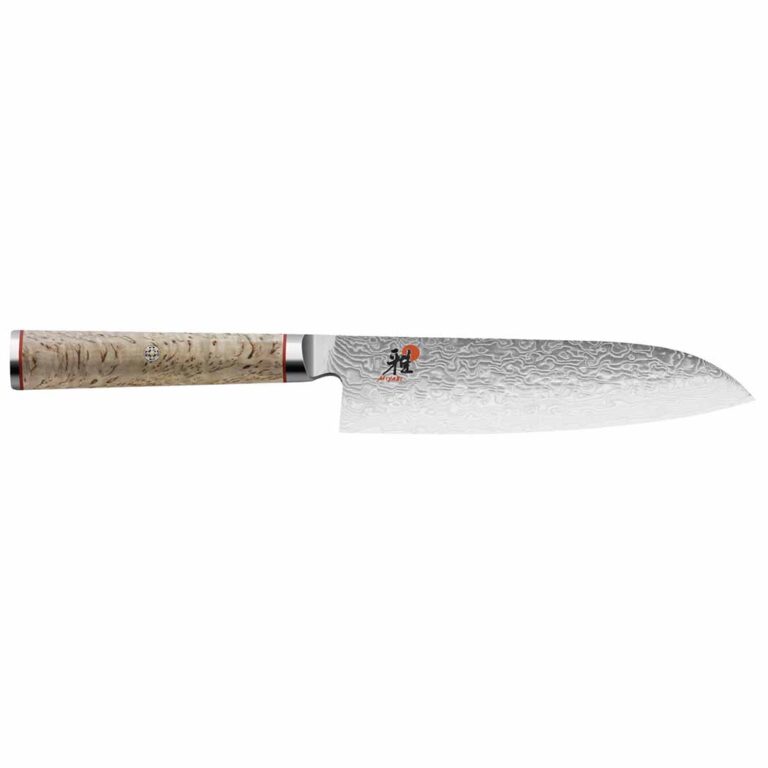
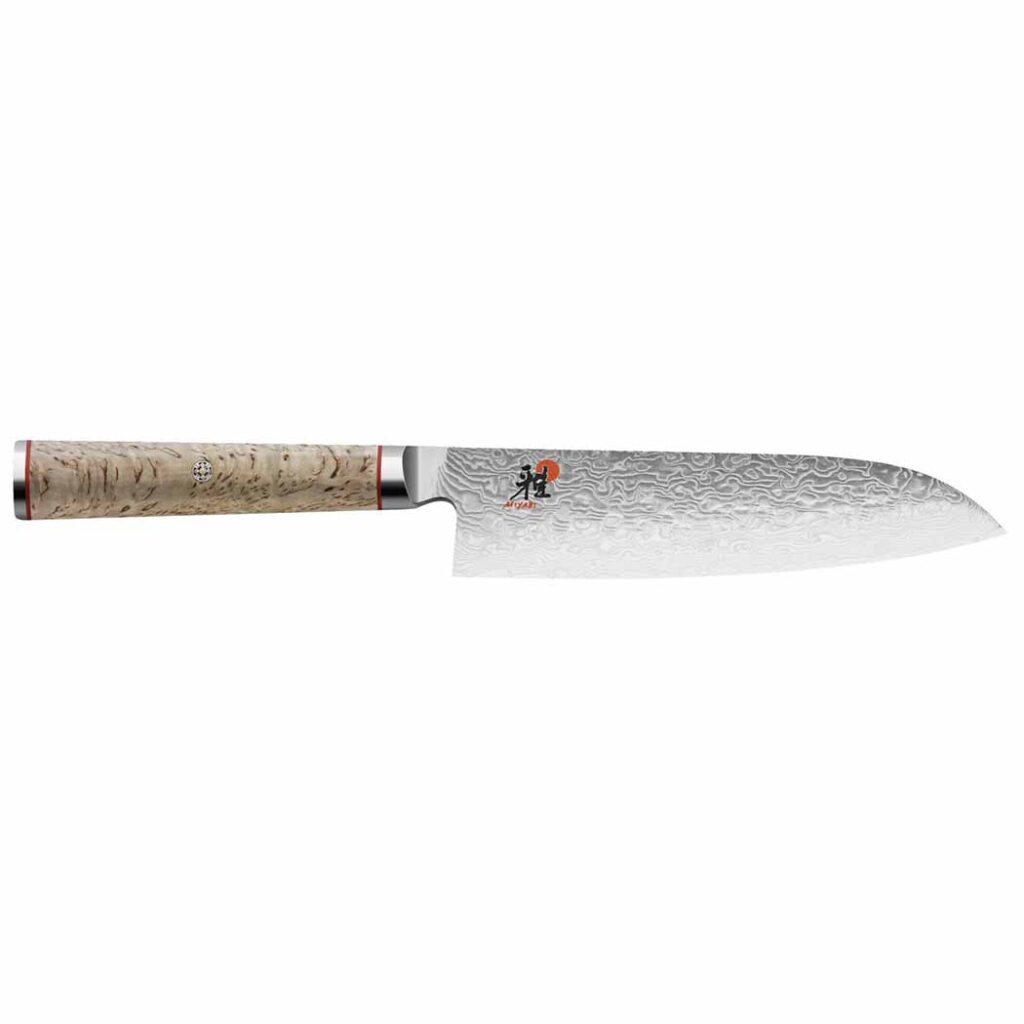
Miyabi Birchwood Santoku
If you’re looking for something that really reflects the Japanese heritage of the Santoku, a knife that has an aesthetic as nice as its cutting performance, this Santoku from Miyabi’s Birchwood line is a great option.
With a blade made from powdered high-carbon steel that’s been folded over a hundred times and a handle made of a beautiful Karelian birch (the only wood to ever be used in a Fabergé egg), this knife is a serious showpiece that you’ll want on display somewhere.
It also cuts like Wolverine’s claws.
Seriously, if you want a beautiful gift to give that special chef in your life, or you just want a super high-end knife that looks great and slices even better, this is a great option.
The Miyabi Birchwood Santoku has a 7-inch hand-honed blade made of G2 micro-carbide powdered steel in a folded, flower pattern Damascus.
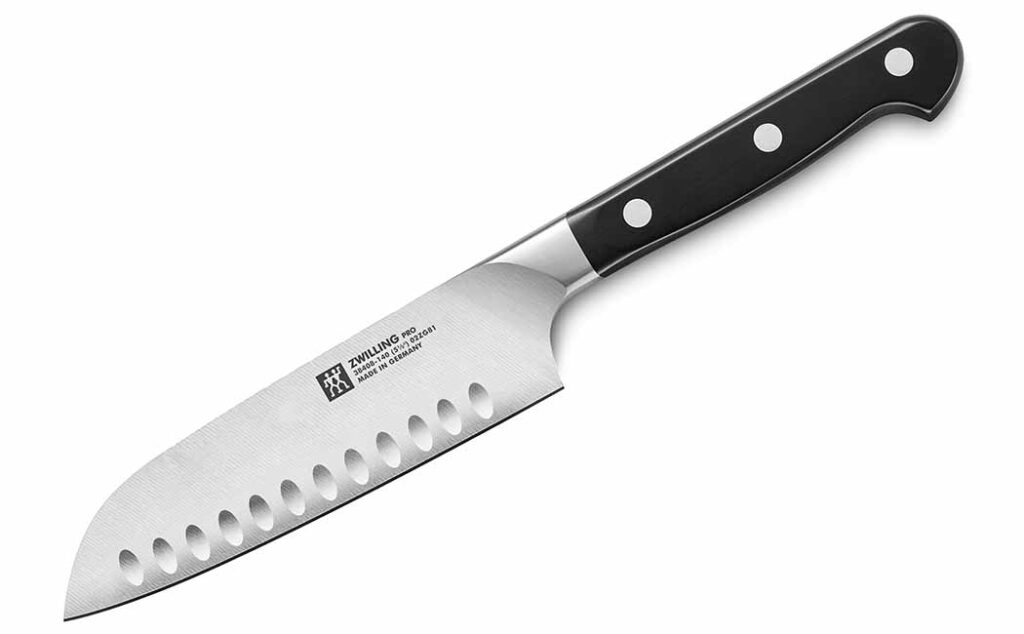
J.A. Henckels Zwilling Hollow Edge Santoku Knife at Amazon
Our last two knives are from the same manufacturer, J.A. Henckels, possibly the biggest name in kitchen knives (with good reason).
The Zwilling Signature series is one of its higher-end options, featuring a hollow-ground edge and a very comfortable handle with a very minimal bolster. This is a good cross between a traditional Santoku handle and a more modern Santoku handle design.
The 7-inch blade is made of an ice-hardened (Friodur) steel that is proprietary to J.A. Henckels that lasts for a very, very long time in between sharpenings. For a bonus, you can get it custom-engraved for basically nothing since J.A. Henckels does everything in-house.
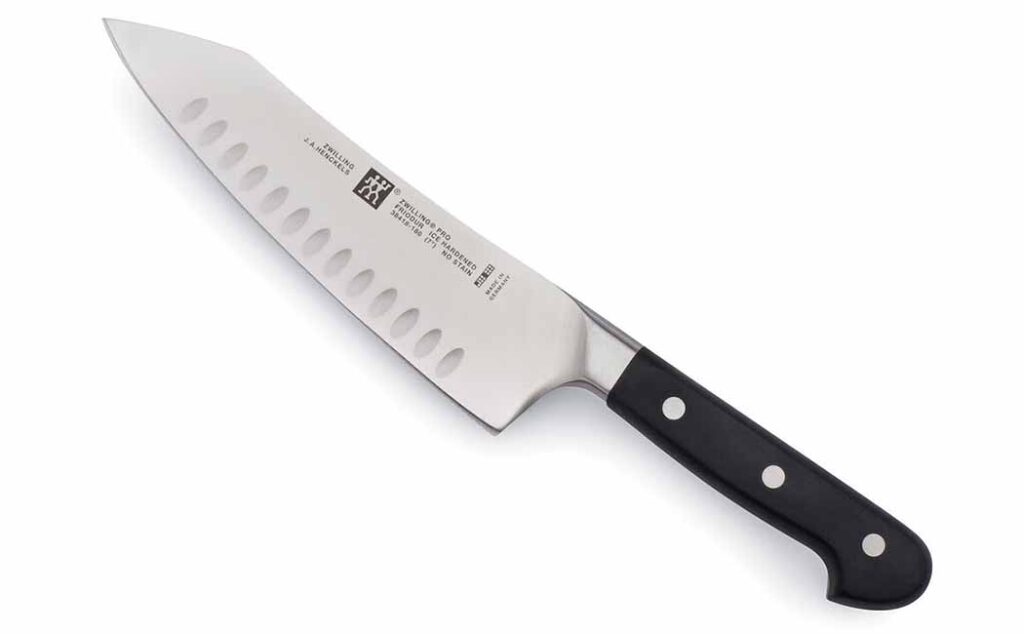
J.A. Henckels Zwilling Pro 7 Hollow Edge Rocking Santoku Knife
Lastly, we have a very similar knife to the one above, but with a more Western-style edge profile geared more towards the familiar rocking motion most of us know already. It still has a relatively flat edge, so you do get all of that Santoku performance, but with a little more versatility when it comes to a rocking chop.
Like the model above, it features a very comfortable handle, but the Pro series features a more pronounced, Western-style bolster, ideal for the pinch grip that we use here in the West.
It has a 7-inch blade made of proprietary high-carbon SIGMAFORGE steel (I don’t know what SIGMAFORGE means either, you’ll have to ask Henckels about it).
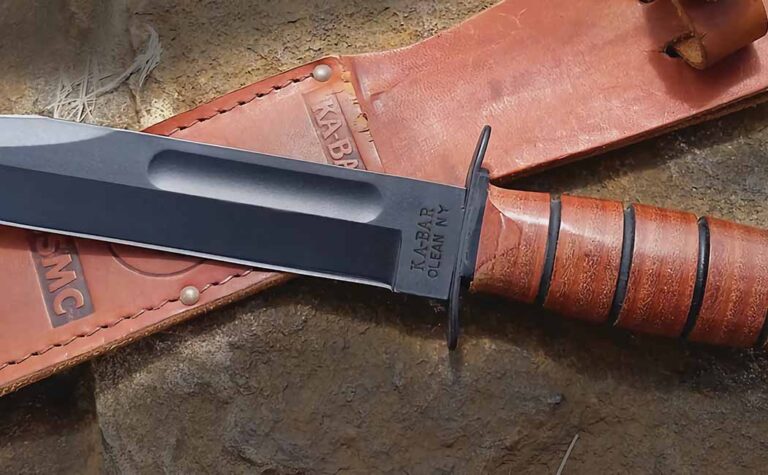
Ka-Bar Makes One Of The Most Legendary American Combat/Utility Knives. First Issued In 1942, The Knife Continues To Impress And Inspire Today.
Few knives are as beloved and inspire more contemporary blades, than the Ka-Bar USMC fighting/utility knife. Ka-Bar Knives’ designation for it is the 1219C2, aka “the Ka-Bar,” and the knife was, and still is, a high-quality combat/utility tool. Ka-Bar Knives makes the contemporary version in its factory in upstate New York.
The History Of The Ka-Bar
As America entered World War 2, the Army and Marines took issue with the old World War 1-era trench knives that were being issued to them. The handles were too bulky, the blades were too brittle, and they were expensive to make.
After trying a few stopgaps, the Army asked arms suppliers to design a new combat/utility knife. Marine officers John Davis and Howard E. America worked with the Union Cutlery Company (now Ka-Bar Knives) to design a model that took elements from an old Navy knife and civilian hunting knives to create the 1219C2. In addition to Ka-Bar, Camillus, PAL, Robeson Shuredge, Case and Ontario were among those who made a USMC fighting/utility knife or a reasonable facsimile.
The knife was first issued to elite Marine units in November, 1942 and became standard issue for all Marines by 1944. Today, the knife is manufactured for military use and marketed to civilians as a utility/hunting knife.
Modern Ka-Bar Knives
Along with the original USMC fighting/utility knife, Ka-Bar makes many different combat/utility knives. This trio is a prime example of what the company produces today.
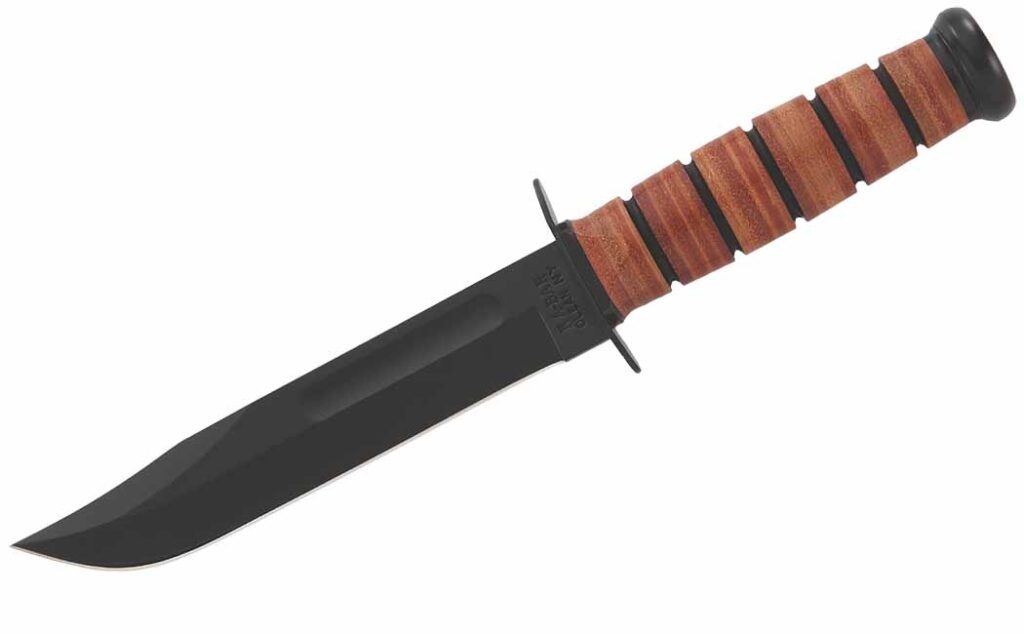
USMC Ka-Bar Plain Edge
The knife that made the Ka-Bar name famous is as popular as ever. There’s also a serrated version, but the plain edge is the original and is a hefty, economical knife.
The 7-inch clip point blade is made from 1095 Cro-Van steel with a 20-degree flat grind and a Rockwell hardness of 56-58 HRC. At just 11.2 ounces, it’s lighter than you might expect from a knife that size, which lets it flow smoothly when slicing, and the leather handle provides a secure grip. The rigid plastic sheath is MOLLE-compatible and can be carried vertically or horizontally.
Classics are classic for a reason, and the USMC fighting/utility knife is everything you could ask from a combat/using piece.
MSRP: $128.53
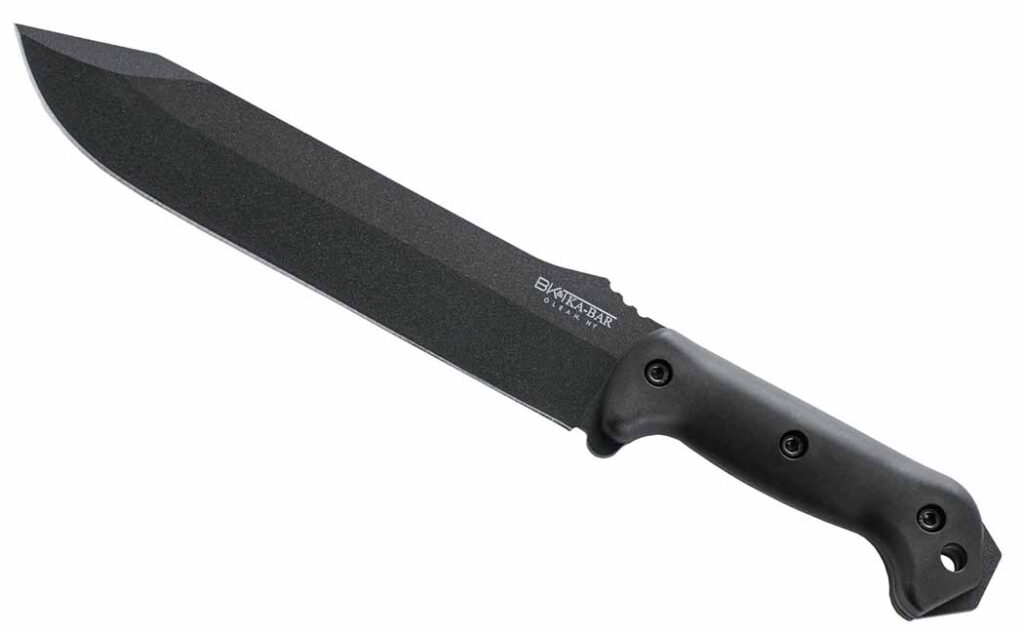
Becker Combat Bowie
Melding an American bowie-style blade with Becker’s trademark ergonomic handle design and you get this sleek, all-black combat knife. It is designed for bushcraft or camping too.
The 9.25-inch blade is married to an Ultramid handle that provides a strong grip. At 17.12 ounces, it’s a bit heftier than the USMC fighting/utility, making it excellent for more heavy-duty work like trimming thicker branches and vines or cutting through medium brush. Similar to the USMC fighting/utility, the Combat Bowie is made from 1095 Cro-Van and has a Rockwell hardness of 56-58 HRC.
A heavy-duty polyester sheath is included and is MOLLE-compatible as well.
MSRP: $178.61
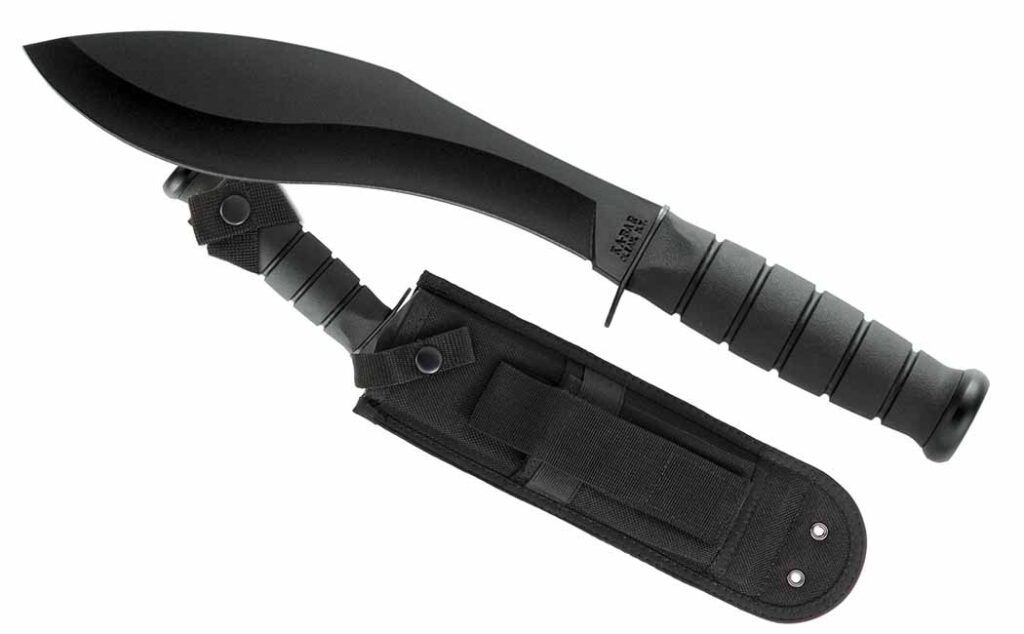
Combat Kukri
This knife may have “combat” in the name, but its bread and butter is decimating small trees and vines. The kukri is smaller than a standard machete and is more finite in its cutting. That doesn’t mean that this blade can’t flex its muscle and chew through almost any brush you put in front of it.
This knife may have “combat” in the name, but its bread and butter is decimating small trees and vines. The kukri is smaller than a standard machete and is more finite in its cutting. That doesn’t mean that this blade can’t flex its muscle and chew through almost any brush you put in front of it.
At just under 16 ounces, it’s relatively lightweight yet robust.
If you’re buying it you’re most likely looking for a high-quality outdoors knife, and this kukri is it. The 1095 Cro-Van will need to be maintained to get the best out of it over time, but that comes with the territory of owning good knives. This knife will make a great companion working through the bush while camping or while cutting through bushes in the backyard.
Battened down the hatches, we’re going full-speed ahead talking about the sailor’s rigging knife!
Rigging knives are a particular type of cutting tool developed in conjunction with sailing ships. There is not a particularly well-documented history on the use of these knives, but by the Age of Exploration, the tool was quite common aboard virtually every vessel.
Bear bones, the rigging knife was designed to cut line. Together with the equally common marlinspike, it could be used to manage lines by cutting, splicing, and freeing knots. The simplicity of these tools has given them long life, and as a result, the knives are available in modern versions suited to our uses today.
The knife has not changed much in hundreds of years, a testament to how it was perfected before it became miniaturized and able to fit in a pocket.
Use And Evolution Of The Rigging Knife
The rigging knife is a similar case. You are almost always better served by a heavy fixed-blade knife than by a small, delicate folder. But, as time has gone on, the need for chopping through lines thicker than your arm has declined for most nautical enthusiasts. In turn, as line material changed from Manila and natural materials to nylon, large-blade rigging knives went the way of the tri mast. In its place, a smaller folding version became the norm.
The rigging knife has, like the penknife, been a multitool of sorts for generations. The earliest examples were of course dedicated to their task. As times changed, it was combined with similar tools that were also at one point their own thing. Let’s take a look at some of the tools likely found on a modern rigging knife.
Sheepsfoot Blade
A sturdy sheepsfoot blade tackles cutting and chopping tasks with easy, while protecting the user from perforating him or herself.
Long before this profile was in fashion for EDC knives, the sheepsfoot profile was used for cutting rigging. The blade shape was perfected over time and was considered the best way to cut heavy lines. The cleaver-like abilities of this profile, when combined with a thick spine, allows it to chop through thick line as well as be pounded through with a mallet if need be. The lack of a defined tip reduced the chances of injury as it couldn’t really be used to stab or otherwise harm by thrusting.
Marlinspike
Need to loosen a mooring line? The marlinspike is your tool.
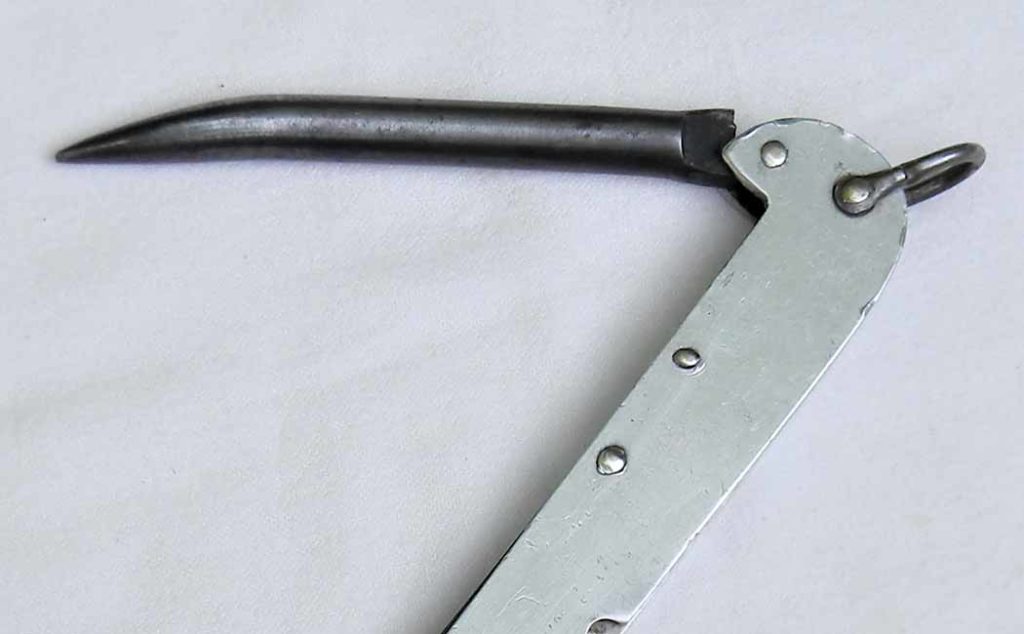
The marlinspike is a linework tool and it is quite simple in terms of how it’s used. It is like a large needle of sorts, meant to work in between tightly tied ropes in order to loosen knots. That is just about all it does. This less-than-glamorous job is of the highest importance on any vessel from canoes to warships and the lack of it can cause serious issues.
Historically these tools were not small, some even exceeding 20-plus inches. Heavy rope, 5 inches or thicker, was common for mooring lines and these massive marlinspikes could move even the largest lines. Today most people use much thinner lines, usually 1-inch or so, on recreational vessels. Half-inch is common for duck boats and other flat-bottom craft. Kayaks and canoes usually work with a 1/4-inch line. Most of the work a modern marlinspike encounters is going to be on a relatively thin nylon line, making huge spikes unnecessary.
Shackle Key
The shackely key is a must to break open a problematic shackel on deck.
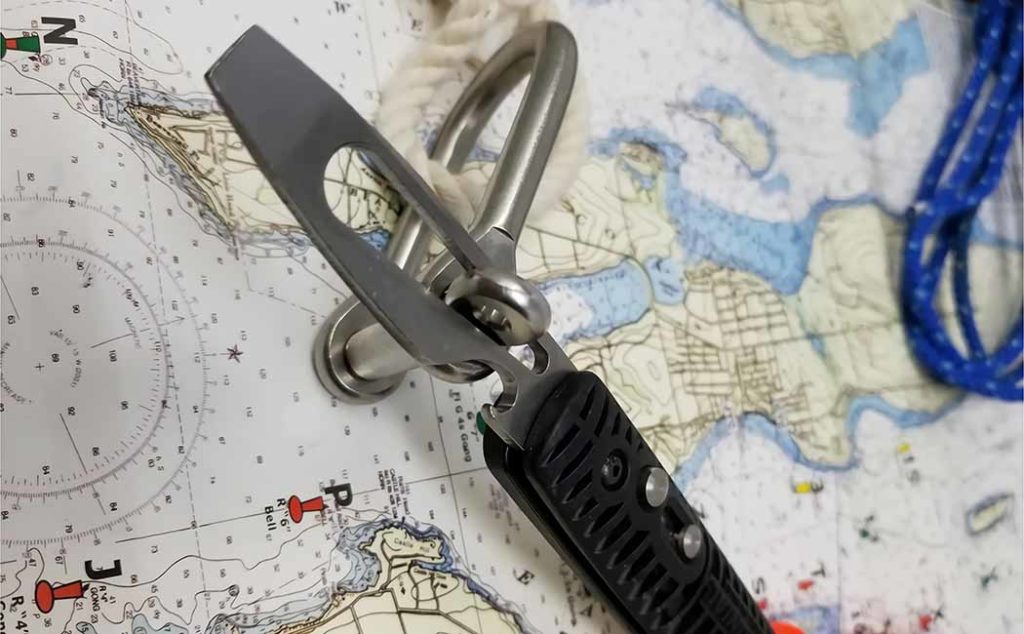
The shackle key is just that, a key for unlocking shackles. Shackles are a D-shaped clip used to attach various parts of the rigging together. These devices are usually tightened down beyond what can be accomplished with bare hands, so the key is applied and used to open it. There isn’t a high degree of utility for this accessory on most small, single-person watercraft. Many people, however, still find the tool useful for other duties. If not, it’s prized for its connection to sailing’s golden age.
Top Rigging Knives Available Today
Davis Instruments Deluxe Rigging Knife
Inexpensive, rugged and handy, Davis’ rigging knife has all based covered.
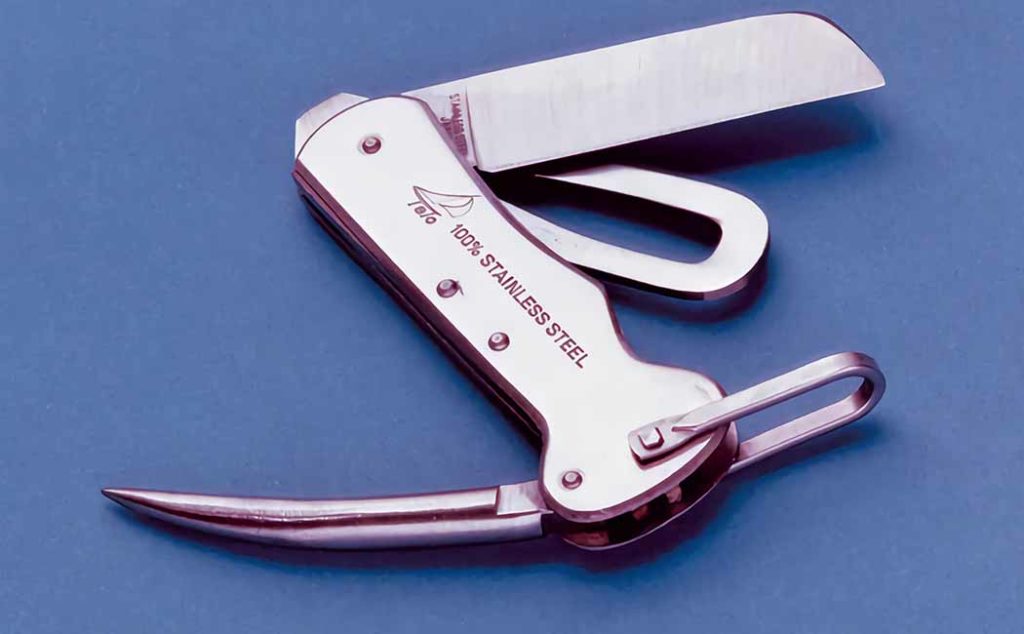
This is among the most baseline functional rigging knives on the market today. Davis‘s knife is inexpensive, under $30 retail, and has every single tool you want in a rigger. Because of salt water’s corrosiveness, the knife is constructed completely out of stainless steel and is easily kept clean and in service. If it ever gets to the point rusting out it won’t break the bank to replace. Functional knives like this lack glamor, but for what it is used for you will have a hard time finding something that truly exceeds it in utility. The folding knife features a marlinspike, shackle key, screwdriver, and blade.
MSRP: $27
Gill Marine Multitool
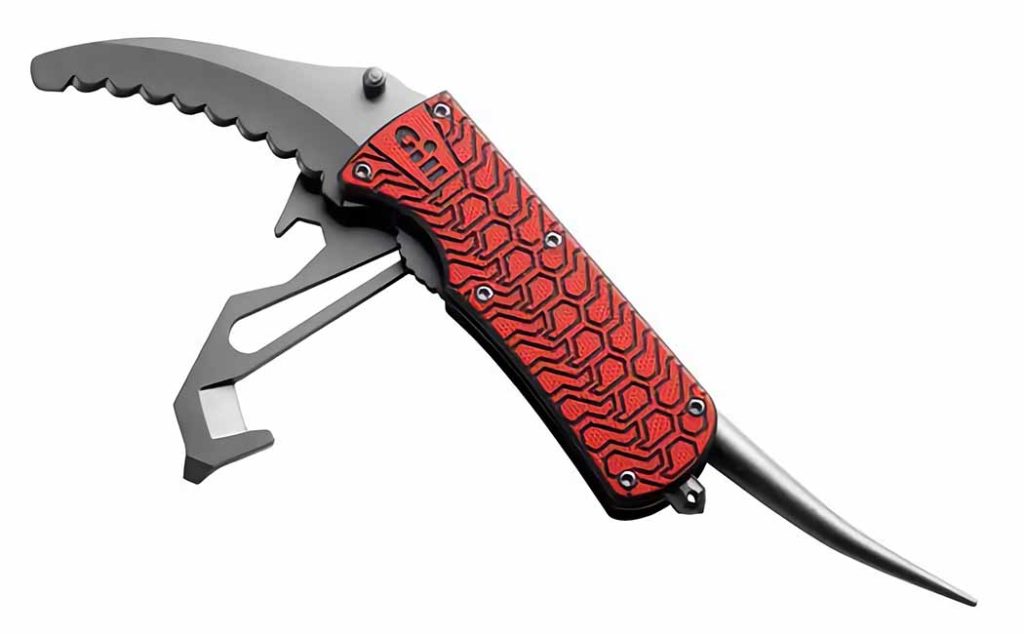
Gills’ option offer a nice update to the design—particularly the G10 handles.” width=”696″ height=”431″> A modern iteration of the classic rigging knife, Gills’ option offer a nice update to the design—particularly the G10 handles.
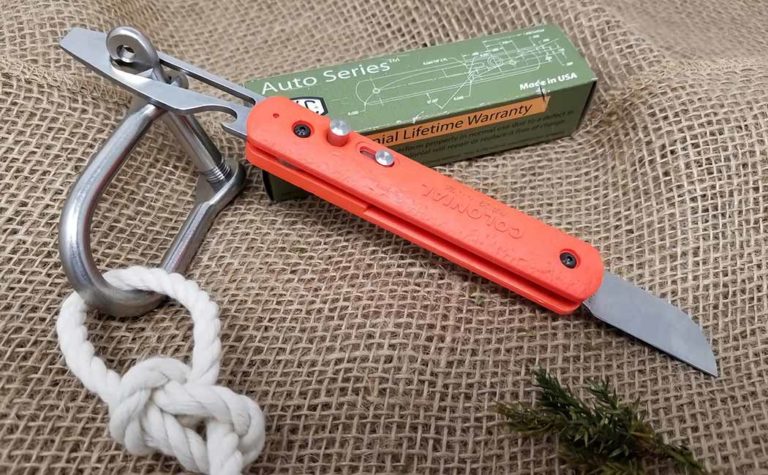
This tool retains many of the necessary, time-honored features common to rigging knives but adds some much-need advancements. Taking a hint from automotive rescue tools, the Gill tool a glass breaker and strap cutter to deal with tie-downs and hard-surface obstacles. The blade locks open, which is more than can be said of most rigging knives. The edge of the blade has deep, scalloped serrations that won’t hang up in nylon rope. To increase grip in wet conditions the knife has a machined G10 handle in bright orange. Lastly, the knife has an integrated screwdriver and shackle key. It does not come with a lanyard but has a pouch that can be worn. Interestingly, the knife has a titanium coating, something not usually found on tools at this price point.
MSRP: $45
Old Timer Mariner
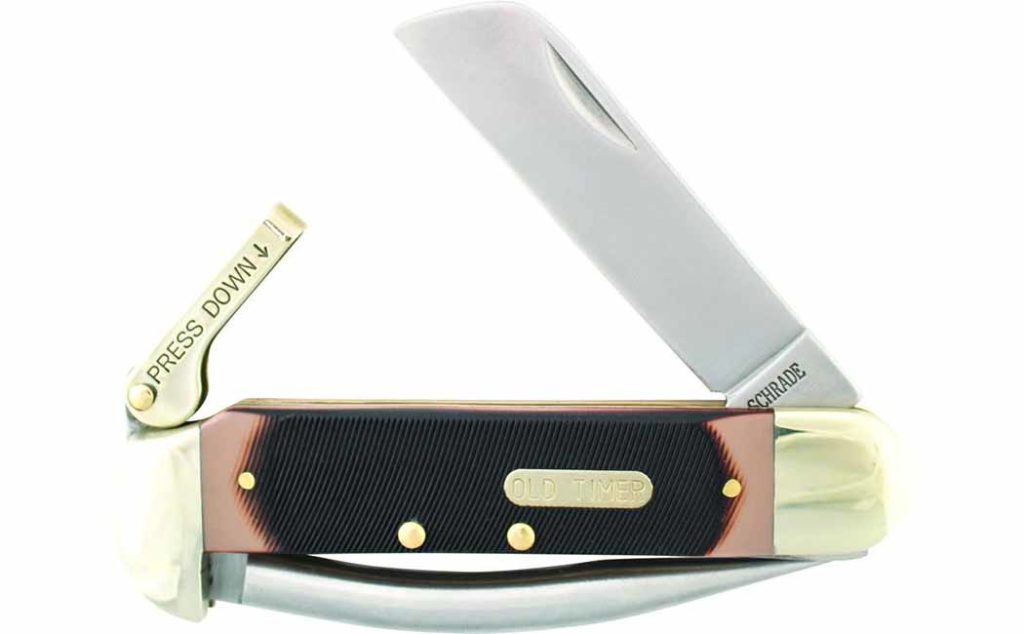
The materials that make up the Old Timer Mariner might not endure hard salt-water usuage. However, the knife more than looks the part and is capable of lighter duty.
In terms of classic appearance at a very low price, the Old Timer Mariner is just the ticket. The knife is relatively simple, it has a classic sheepsfoot blade and a functionally tapered marlinspike. The knife is of traditional construction and isn’t made of materials that are particularly resistant to salt water. That said, this style has been in use for decades and is just about what you think of when you imagine what your granddad or great-granddad may have used in the early part of the 20th century. As is common in traditional designs, the blade is nonlocking. Taking into account that many modern versions of this knife incorporate this safety feature, it is up to you to decide if you want the added liability in wet conditions.
MSRP: $27
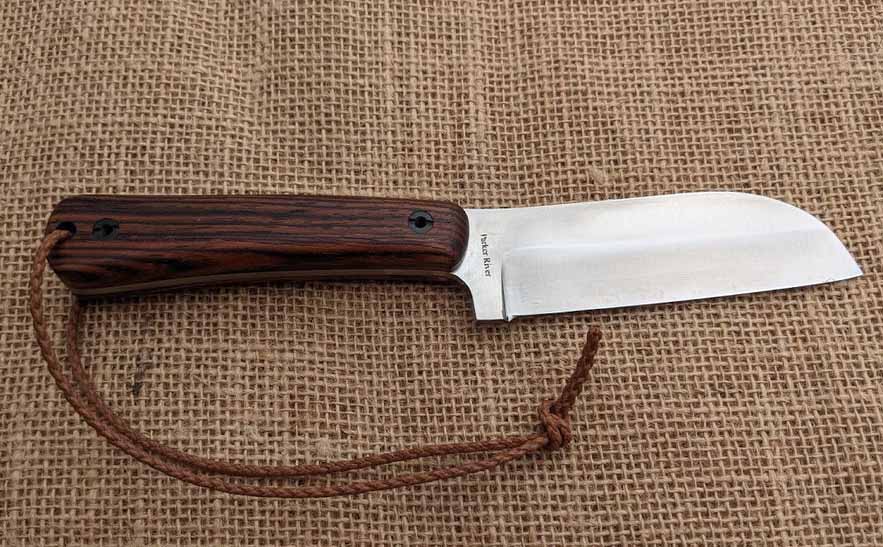
Parker River Bosun Knife
Parker’s River Bosun Knife harkens back to the earliest versions of the rigging knife. Expensive, it more than speaks to your maritime cred.
If you find that you are in the market for the luxe version of a rigging knife, look no further than the Parker River Bosun Knife. This one isn’t at all on the cheap side, you could easily buy every other knife on this list and still have money left over. But, for the discerning mariner, a tool like this is not just a status symbol but a nod to a long-past way of doing things.
This knife is made in the original bosun knife style, fixed blade and all. It lacks any other adornments, including a marlinspike. However, just like in the old days, you can of course buy a separate marlinspike and tie it on with a lanyard. The interesting part of this knife is it really has not lost function over a multi-tool in that the blade aspect. Having a separate knife and marlinspike allows larger models of, thus makes them easier to use and not hinder you with a folding mechanisms. The knife comes with a leather sheath and is available with custom engraving.
MSRP: $315
Perkin Handcrafted Rigging Knife
Traditional in design, Perkin’s rigging knife is built for heavy usage, but offers throwback appeal.
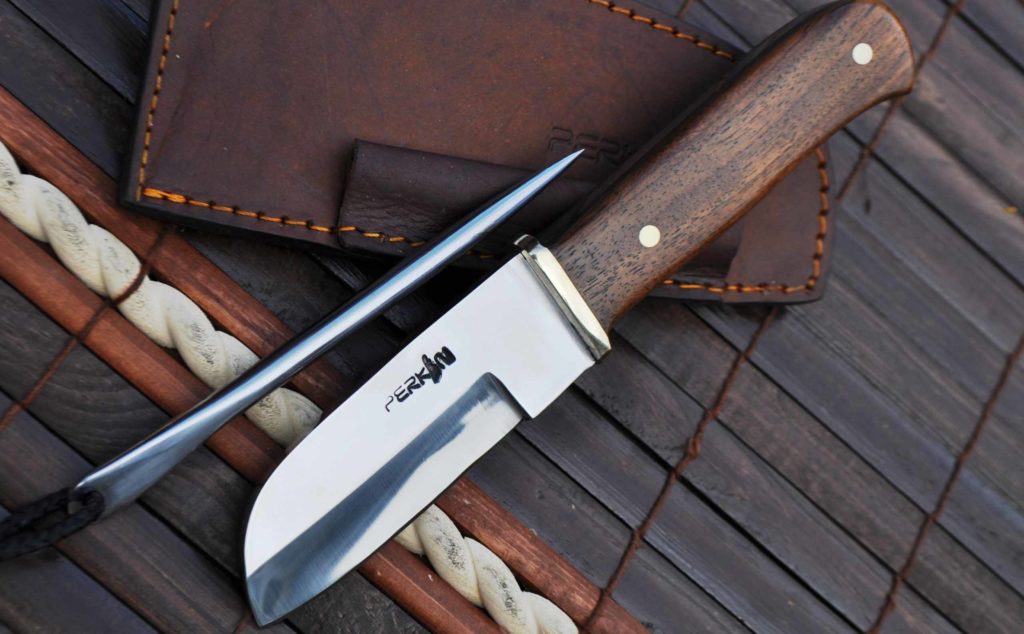
Another traditional fixed-blade design is the Perkin Handcrafted Rigging Knife. It has many of the same features as the Parker River example and even comes with a leather sheath with an integrated marlinspike loop.
The knife is heavily constructed and bears a thick, heavy spine. It is substantial enough it can be pounded through rope much in the way these knives were originally used. The physical construction is simple, a pinned scales and a bolster. Overall this is a good entry-level kit if you want a classic setup for your boating adventures.
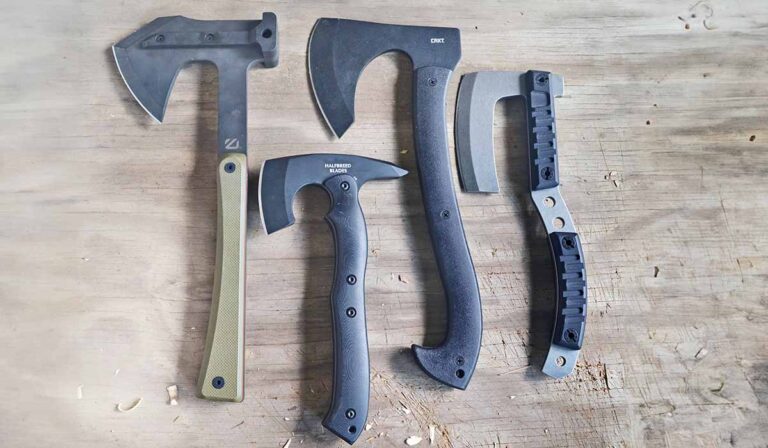
All axe heads have an edge, of course, but did you know some can give you an edge over others? The bearded axe chops just like any axe, but its beard can serve field duty beyond the norm.
The bearded axe was first used by the Scandinavian Norse people (Norsemen) in the Middle Ages and was called a skeggox—skegg for beard and ox for axe. Its distinctive shape allows you to grasp the handle at the base of the head and use the edge for woodworking chores.
It’s sometimes called a carving axe for its propensity for de-barking, shaving and notching wood, and other chores like slicing cord and rope—even serving as an ulu to prepare food. Not all bearded axes are made specifically for carving wood, however, as you’re about to find out.
CRKT James Williams Skeggox
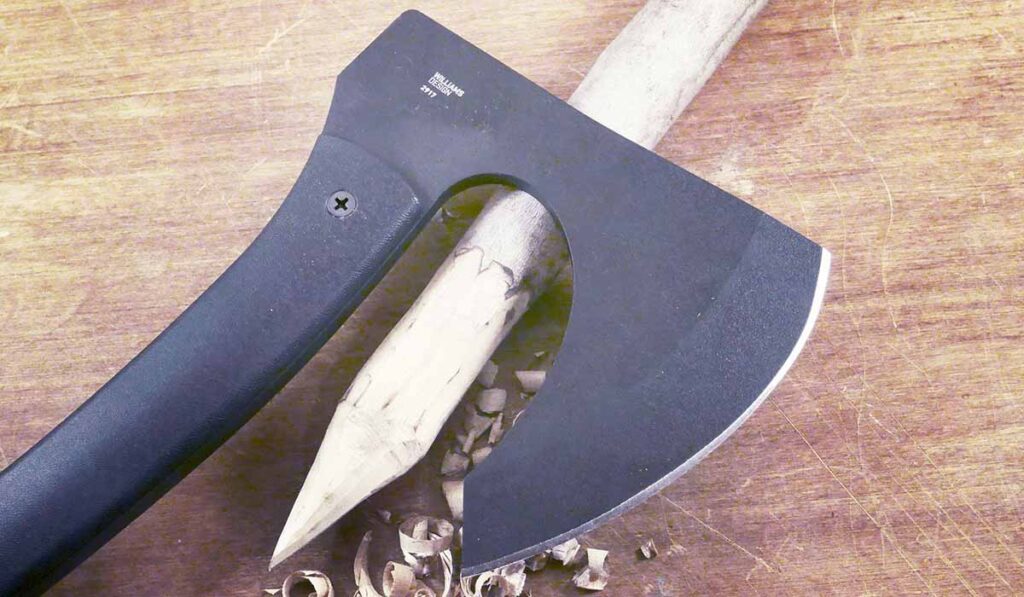
The CRKT Skeggox shaved bark and rendered nice shavings while debarking and pointing the tip of a hardwood stake. The SK5 carbon steel bit into the hardwood quite well and the handle scales offered a comfortable grip.
Columbia River Knife & Tool and martial artist/Japanese sword guru James Williams dipped back in time and chose the original Norse namesake for his design. The CRKT Skeggox is one of the larger two test axes.
The drop in the beard from the top of the inner curve to the bottom edge is 3.25 inches. The 11-inch handle has a lanyard loop at the base. The sheath features a black nylon keeper strap with a thermoplastic buckle to prevent slippage from the sheath. CRKT includes additional hardware for belt or MOLLE carry.
The SK5 carbon steel of the axe head has been compared to U.S.-produced 1084 and 1095 carbon steels, which typically fare well-working wood in the wild. I tested it for carving and immediately liked the deep drop and the “50 miles of elbow room” between the handle and the rear of the beard. I de-barked and pointed a fat hardwood tent peg, and the more I used the bearded blade the better my control got for taking off long shavings. This was in part due to the low profile of the quarter-inch steel and the nice bite of the high carbon alloy.
The Skeggox is also a good all-around chopper for firewood and clearing small trees. The sheath is economical and the option of belt or MOLLE carry is welcome. Better yet, it is the most affordable of the review axes and money well spent.
James Williams Skeggox Specs Head Width: 4.874” Blade Edge: 5” Blade Material: SK-5 carbon steel (Japan) Blade Thickness: .25” Blade Finish: Black powder coat Handle Material: Black FRN polymer Weight: 26 ozs. Overall Length: 13” Sheath: Black thermoplastic Country of Origin: Taiwan MSRP: $113
Doublestar/Outlier Kodiak Camp Axe
The author removed the splitter attachment from the Outlier Kodiak Camp Axe to clear the way for using the blade for debarking and shaving wood. He used the longer, lower portion of the double-edged blade and was impressed with the performance of the 52100 carbon steel.
The Outlier (formerly Doublestar) Kodiak Camp Axe is the second of the larger test axes and comes with a twist. The axe head has a removable steel splitter attachment installed, specifically made for cleaving wood. It is also notable in that the blade edge has two grinds.
The beard drop is 2.5 inches. The handle scales are sumptuous at a half-inch thick each. The sheath covers the axe head and splitter until it reaches the widened rear of the splitter used for hammering. The front has a nylon belly strap with a thermoplastic buckle to secure the axe head.
The splitter increases weight, blocks access to the beard for slicing and shaving, and is too unwieldy for my tastes for finesse work. I removed it, reducing axe weight by 8 ounces and making the Kodiak much easier to manipulate. I thought the two angles of edge might make a difference in cutting surface—and I’m sure they would—but the longer, lower edge turned out to be all I needed for de-barking and shaving long slivers. The 52100 carbon steel cut like a house afire, slicing wood and ¾-inch rappelling rope with ease.
It was a different axe altogether without the splitter and more in line with the other text axes. The only recommendation I’d have is that Outlier offer the same axe with a full, single-edged head to increase the coverage of the edge. Other than that, it’s a beast.
Kodiak Camp Axe Specs Head Width: 5.25” Blade Edge: Varied Blade Material: 52100 carbon steel Blade Thickness: .25” Blade Finish: Parkerized black Handle Material: Green G-10 composite w/orange liners Special Features: Splitter attachment Weight: 40 ozs. (including splitter) Overall Length: 13.125” Sheath: Black thermoplastic Country of Origin: U.S.A. MSRP: $319
Halfbreed Compact Rescue Axe
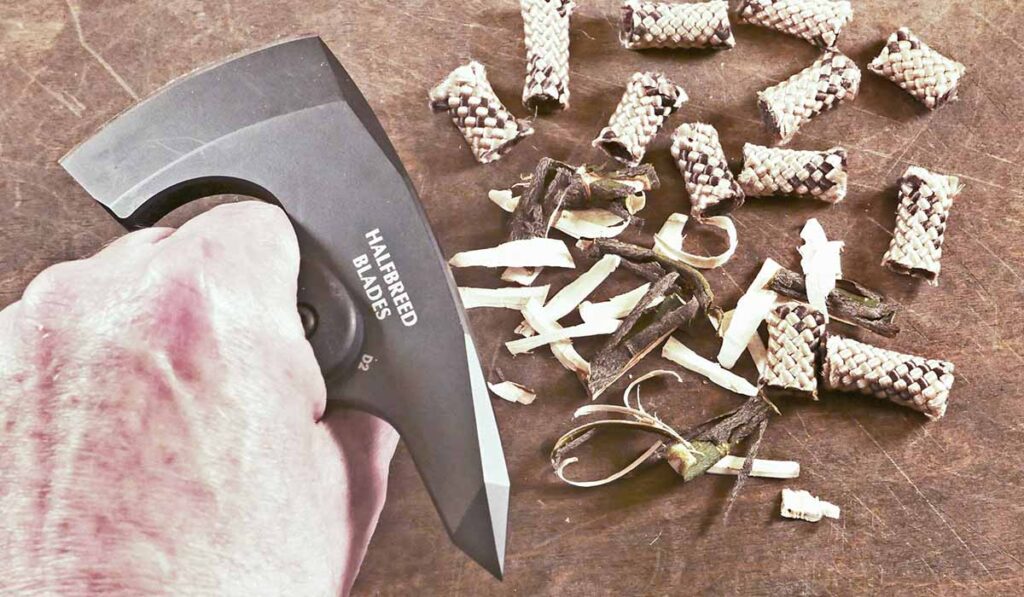
The Halfbreed Compact Rescue Axe shaved wood and sliced rappelling rope with flying colors. The axe head steel is the thickest of the test group.
The Halfbreed Compact Rescue Axe is the smallest of our bearded array yet is also the most overbuilt. It makes up for its smaller size with the thick axe head steel. There’s a nice palm swell at the lower grip area and a big finger groove at the top of the handle.
It has a beard drop of 1.5 inches. Out back is a 2-inch spike. The rear spine has gimping to enhance grip. The sheath offers full coverage and a keeper loop rolls under the bit to further secure the axe head. It has a mounted MOLLE-compatible plate, or you can swap it out with an optional DOTS Tek-Lok style attachment for belt carry.
While testing the Halfbreed I had to remind myself it is indeed a compact rescue axe. While all the other review subjects are geared for outdoor use, this small overbuilt wonder is more for city work. That said, the large finger groove at the top of the handle is custom-made for carving and slicing just as bearded axes were intended. I tested the little axe and it shaved bark, took off shavings, and sliced rappelling rope just fine, but its thick steel and superior weight-for-size ratio really shine when hacking and bashing. I have no doubt it would earn its stars as a close-quarters hawk.
I gave the spike a run on a pane of 3/16-inch door glass and it obliged, shattering it with gusto. The ample grip, with its added gimping, makes for excellent purchase, and the sheath—overbuilt like the axe—is the most comprehensive of the lot. In a nutshell, the Halfbreed is a handy axe—and a bulldog at that!
Compact Rescue Axe Specs Head Width: 4.5” Blade Edge: 2.55” Blade Material: Bohler K110 (D2) tool steel Blade Thickness: .31” Blade Finish: Black Teflon coating Handle Material: Black G-10 composite Special Features: Faceted spike, gimping Weight: 25.07 ozs. Overall Length: 9.52” Sheath: Black Kydex, MOLLE compatible Country of Origin: Australia MSRP: $310
Maserin Knives Mantis
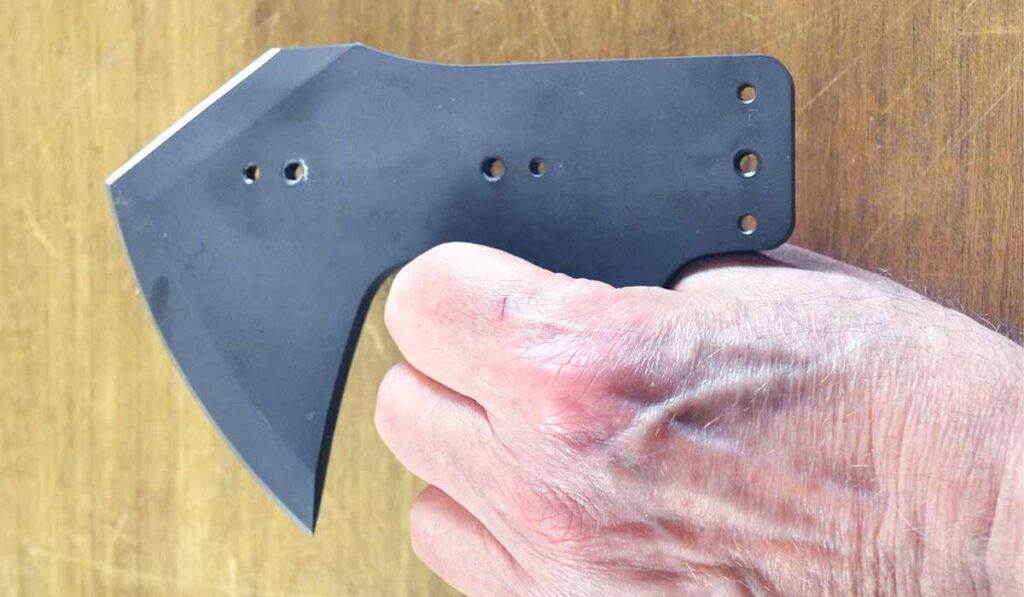
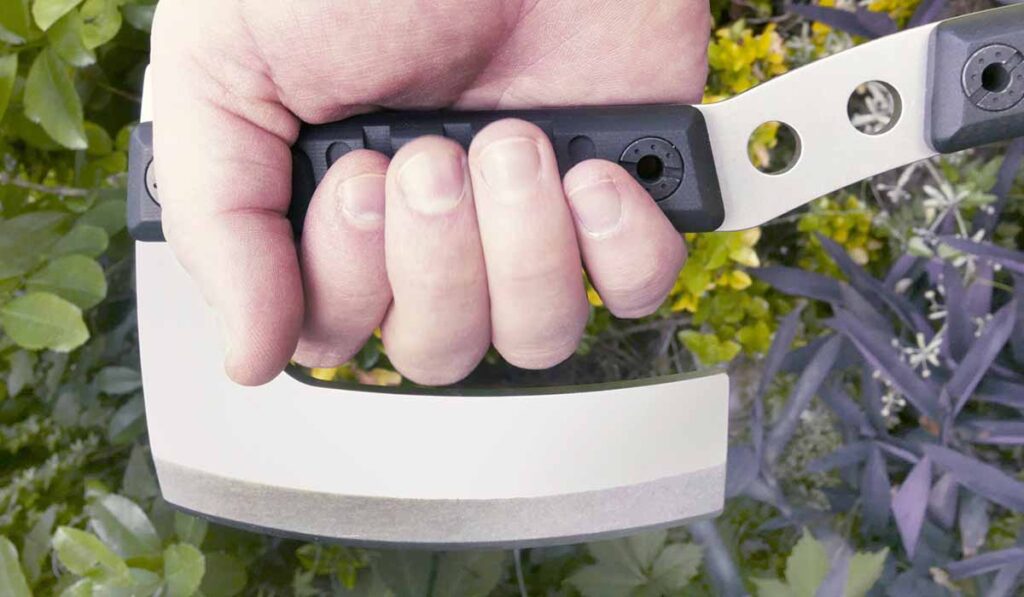
The unusual axe head of the Maserin Mantis offers full knuckle protection and then some. Note that the Mantis has a pair of upper scales just for the purpose of using the axe for shaving and slicing.
Maserin Knives may be giving us a glimpse into the future with its new, strikingly stylish Mantis. It is a small axe and you’ll notice the steep tool steel blade is quite lengthy for its size. In fact, the blade exceeds the width of the axe head—a bit unusual in a working axe.
“But wait, there’s more!” as the TV guy says. The Mantis has four (two sets) of scales: one at the top for carving comfort and the other on the lower portion of the handle for grip. At the base of the straight top scale the direction of the handle switches to an outward curve, and the exposed part on the handle has three lightening holes—plus there’s a lanyard hole and a spike on the base. The sheath fits the axe head only and butts against the top scale, and there’s a belt loop stitched to the back. It’s minimalism at its finest.
The Mantis has the longest beard drop of all the test axes at 3.75 inches and is the only one that offers full hand protection. The blade curve stands apart in that it is virtually symmetrical from end to end. It’s shape and full knuckle protection begged me to try it as an ulu for slicing, so I laid down some 3/8-inch rappelling rope and went at it. The Mantis sliced just like an ulu, taking off clean sections of rope. It performed even better when I reversed the grip with the handle facing away from me so it didn’t hit me in the belly. Voila! Instant ulu.
The Mantis shaved bark and carved off curls quite well and the full finger protection was welcome. It’s the lightest of the axes reviewed, which could put it at a disadvantage to the others when weight is a factor. You won’t be batonning this axe either because the top scales would block it from going past the front portion of the head. That said, there’s plenty to like about the Mantis’s utility value and its forward-thinking styling!
Mantis Specs Head Width: 3.75” Blade Edge: 4.527” Blade Material: D2 tool steel Blade Finish: Stonewashed Blade Thickness: .326” Handle Material: Black G-10 composite Special Feature: Futuristic design Weight: 20.23 ozs. Overall Length: 11.02” Sheath: Black Kydex Country of Origin: Italy MSRP: $216