
Buyer's Guides

You’re looking for a new knife in a certain style – we’ve got recommendations on the best blades for every price point.

BLADE Show Factory Knife Debuts 2023

Eyeball a few factory knives that will debut at the BLADE Show.

For the knife event where more cutlery companies introduce more of their new knives, the BLADE Show takes a backseat to none—which figures since the BLADE Show is the sharpest shindig of them all.

On this and the accompanying pages are samples of some of the factory knives that either debuted at the BLADE Show or had their consumer show introductions there.*

We didn’t have room for all the debut knives of every exhibiting company, so do some legwork and you’ll probably find new/debut knives you like even better than these.

STRIDER PT+ AUTO/PRO-TECH
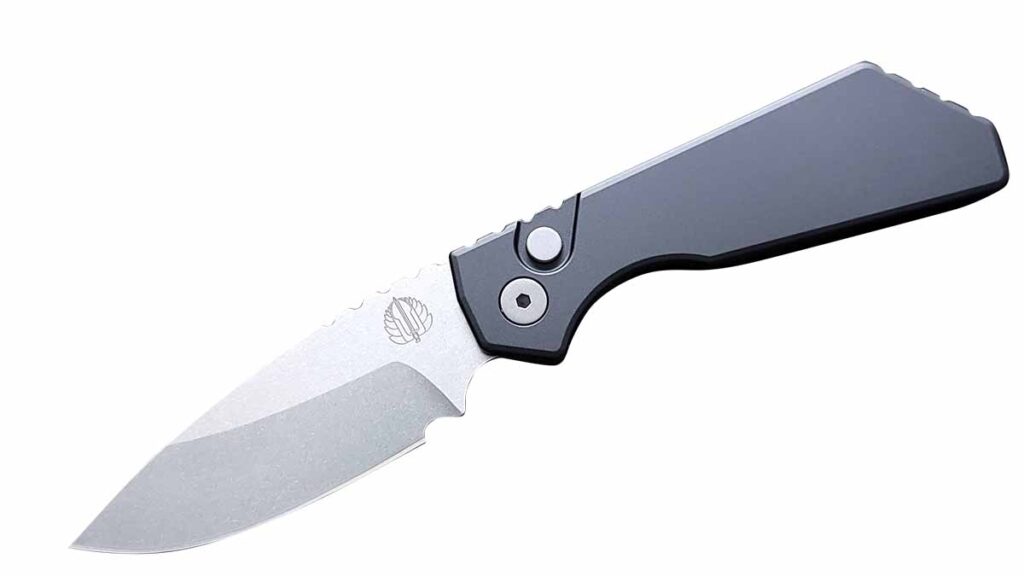
Strider

Knife type: EDC folder/automatic 
Blade length: 3.14”
Blade material: MAGNACUT stainless steel
Blade grind: Flat
Handle material: Lightweight anodized aluminum
Lock/opening mechanism: Push-button auto 
Pocket clip: DLC-coated mini deep carry
Special Features: Strider’s signature design and compact form have been updated to a slightly larger size; the spring has been upgraded to snap the blade open with authority
Weight: 3.21 ozs.
Closed length: 3.96”
Country of origin: USA
MSRP: $300
AVAILABLE FOR SALE TO THE PUBLIC: NOW; through the year additional colors and variations will be available (image by Derek Lawrence)

SHADOW/KETUO
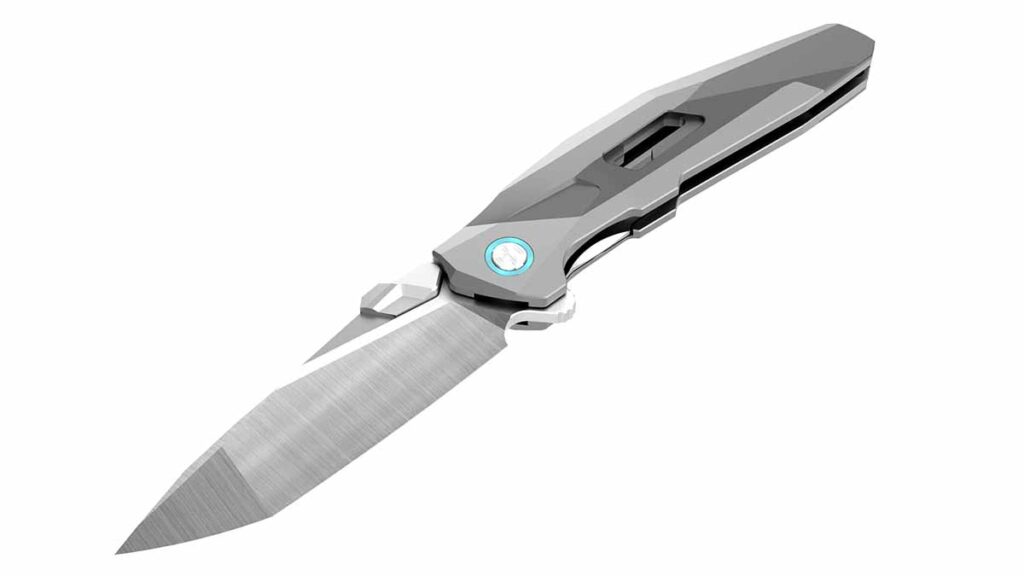
Ketug

Knife type: Flipper folder
Blade length: 3.78”
Blade material: Bohler M390 stainless steel
Blade grind: Flat
Handle material: 6Al4V titanium
Lock mechanism: Flipper Lock
Pocket clip: 6Al4V titanium
Weight: 5.29 ozs.
Closed length: 4.96’”
Country of origin: China
MSRP: $380-$420
AVAILABLE FOR SALE TO THE PUBLIC: June

GENTLEMAN’S FOLDER/OCASO
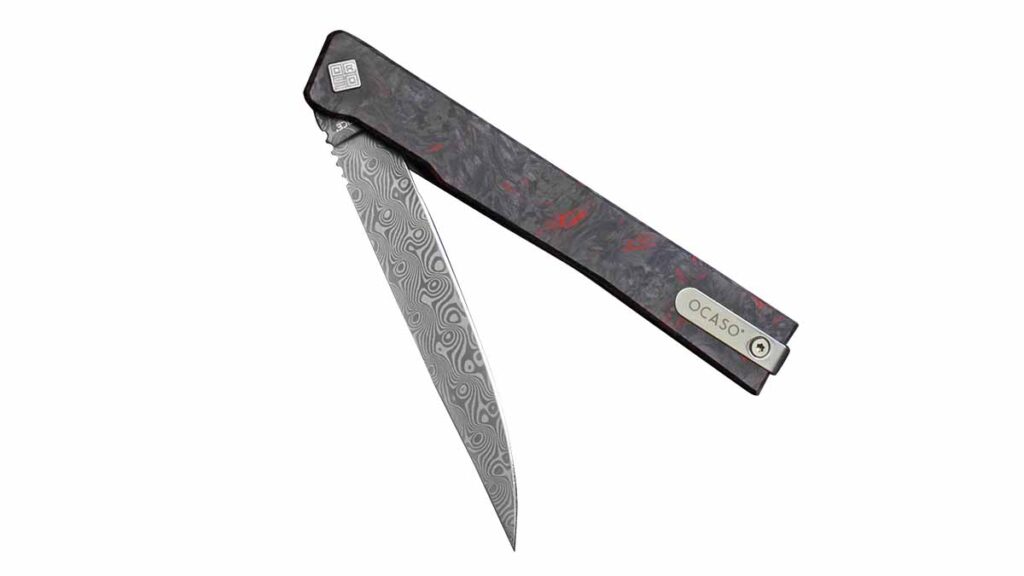
Ocaso

Knife pattern: Gentleman’s folder
Designer: Andrew Demko
Blade length: 3.5”
Blade material: Choice of CPM S35VN stainless steel or German damascus
Blade grind: Full flat
Handle material: Carbon fiber, titanium or fat carbon
Lock/opening mechanism: Flipper w/linerlock or framelock
Pocket clip: Ambidextrous stainless steel in a Demko signature fold-over deep-carry design
Action: Stainless-steel caged bearings
Weight: 1.7 ozs. (carbon fiber) or 2.5 ozs. (titanium)
Closed length: 4.26”
Country of origin: Taiwan or Italy
MSRP: $209.99-$399.99
AVAILABLE FOR SALE TO THE PUBLIC: NOW

TERRACHETTE/CONDOR TOOL & KNIFE
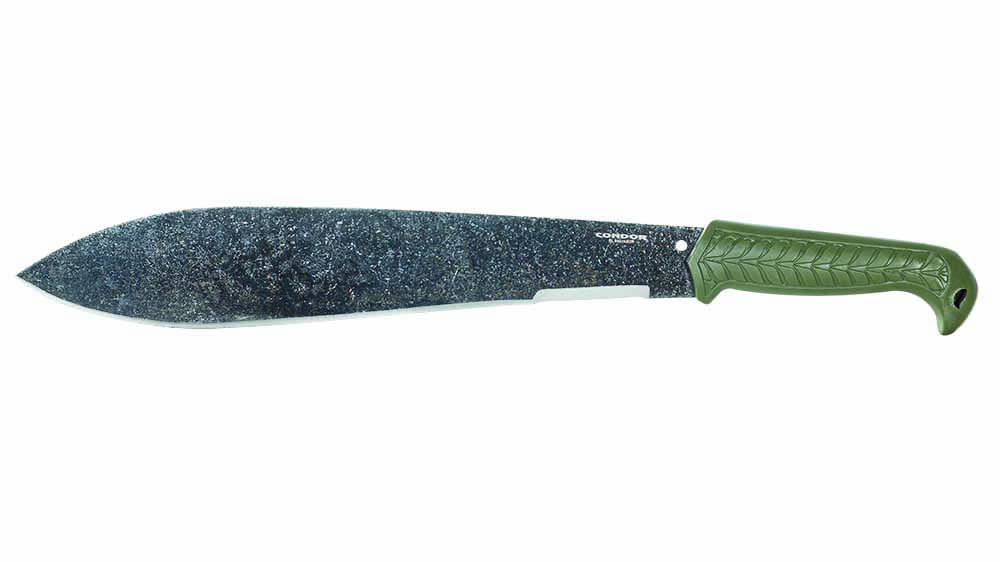
Condor

Knife type: Bushcraft machete
Blade length: 14.6”
Blade material: 1075 carbon steel
Blade grind: Convex
Handle material: High/impact polypropylene
Special features: Near the handle the edge is designed for more controlled carving; extended pommel
Weight: 25.4 ozs.
Overall length: 20.72”
Country of origin: El Salvador
MSRP: $69.69
AVAILABLE FOR SALE TO THE PUBLIC: Most everywhere by BLADE Show

RIE COLLABORATION SPORT 100/MCUSTA
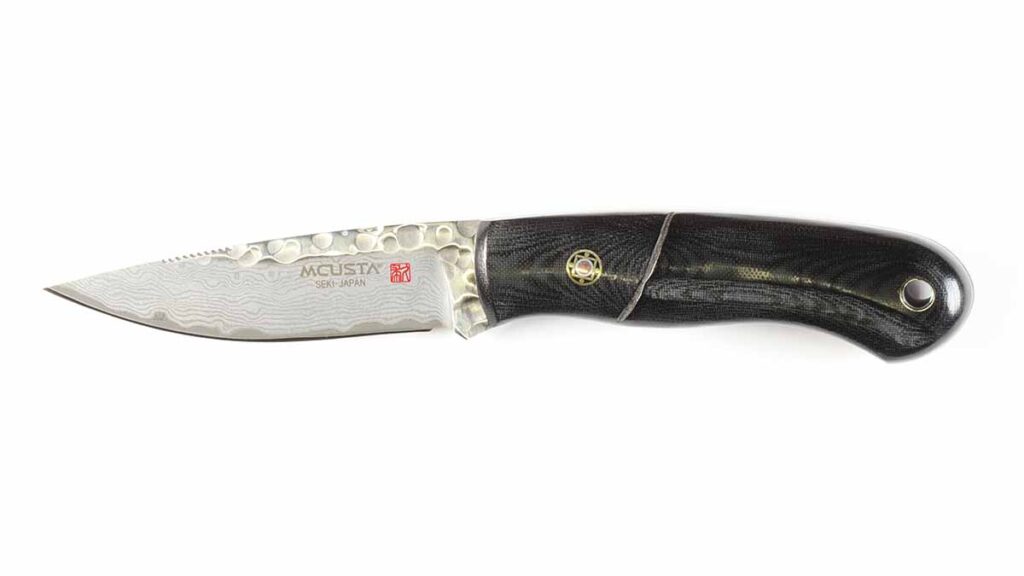
Mcusta

Designer: Mike Irie
Knife pattern: Hunter
Blade length: 3”
Blade material: VG-10-core damascus
Blade grind: Hollow
Handle material: Micarta®
Special features: Tsuchime-finished blade
Weight: 3.4 ozs.
Overall length: 6.5”
Country of origin: Japan
MSRP: $300
Available for sale to the public: Summer ’23

WILLY/LIONSTEEL
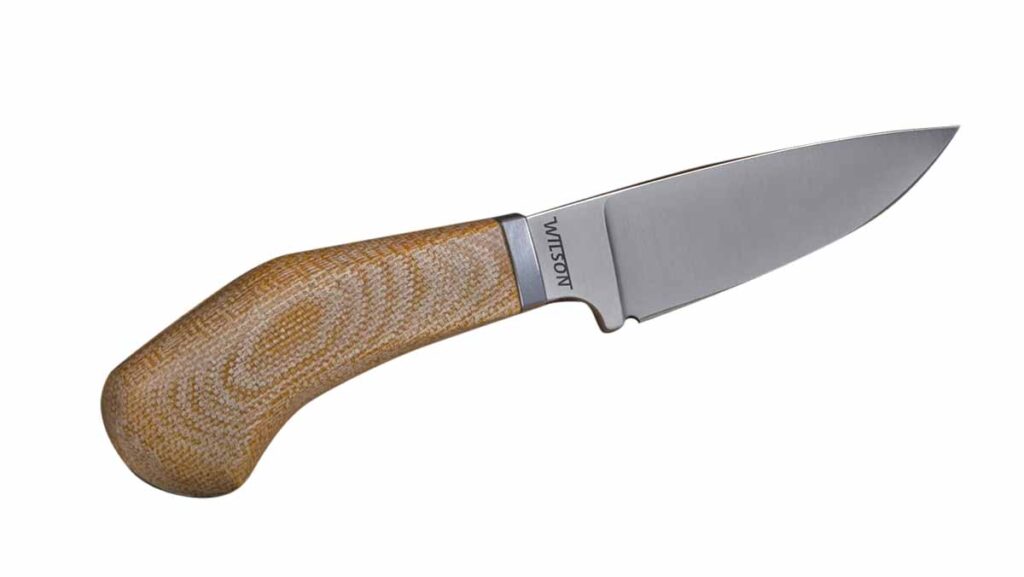
Willy

Model type: Fixed-blade EDC
Blade length: 2.55”
Blade material: M390 stainless steel
Blade grind: V flat
Handle material: Choice of canvas Micarta®, woods, carbon fiber
Special features: Titanium guard
Weight: 2.04 ozs.
Country of origin: Italy
MSRP: $201.70 (at press time rate of exchange)
Available for sale to the public: June

VICEROY/MEDFORD KNIFE & TOOL
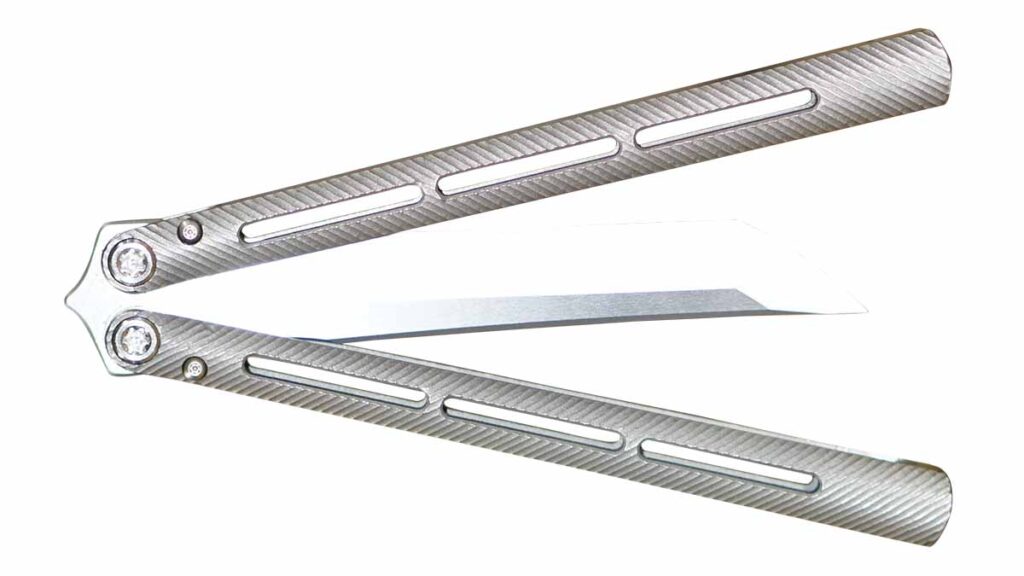
Viceroy

Knife pattern: Balisong          
Blade length: 4.5”
Blade material: CPM S45VN stainless steel
Blade patterns:  Choice of drop point, tanto, dagger, seax and wharncliffe
Handle material: Titanium
Handle lock: Latchless
Pocket clip: None
Special features: Integral solid channel, zen pin, custom bushings, rounded handles, Chaplin groove, machined handle texture, hand-ground blades
Weight: 4.3 ozs.
Closed length: 5.7”
Country of origin: USA
MSRP: $750
AVAILABLE FOR SALE TO THE PUBLIC: At BLADE Show ’23

VULPIS/FOX
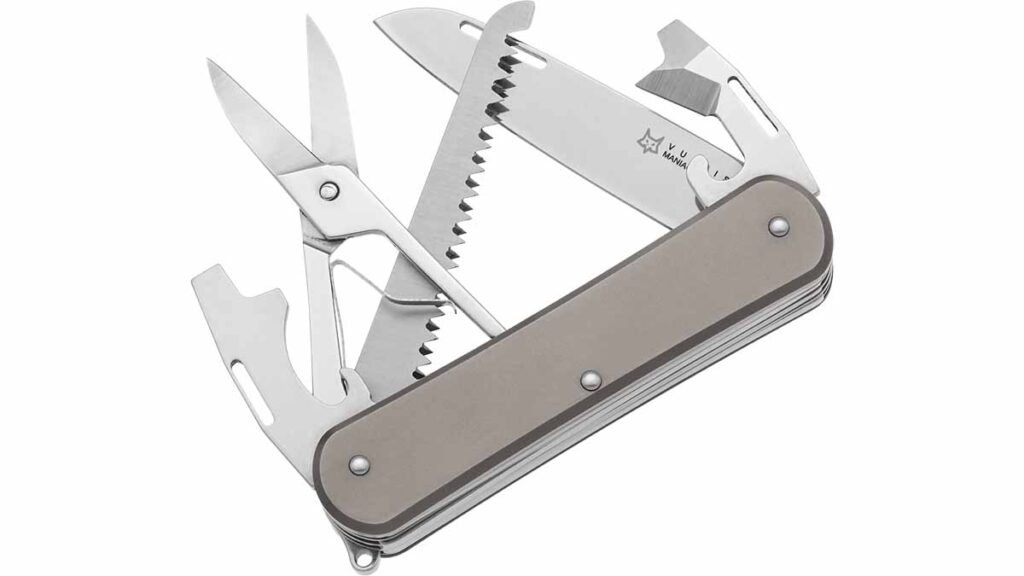
Fox

Model type: Multi-purpose multi-blade
Main blade length: 5.31”
Blade material: M390 stainless steel
Blade grind: Flat
Handle material: Bead-blasted titanium w/lanyard hole
Lock/opening mechanism: Slip joint
Special features: Bottle opener, can opener, flat-head screwdriver, hacksaw and scissors
Weight: 2.25 ozs.
Closed length: 2.94”
Country of origin: Italy
MSRP: $119
AVAILABLE FOR SALE TO THE PUBLIC: May

STOK BOWIE/SPYDERCO
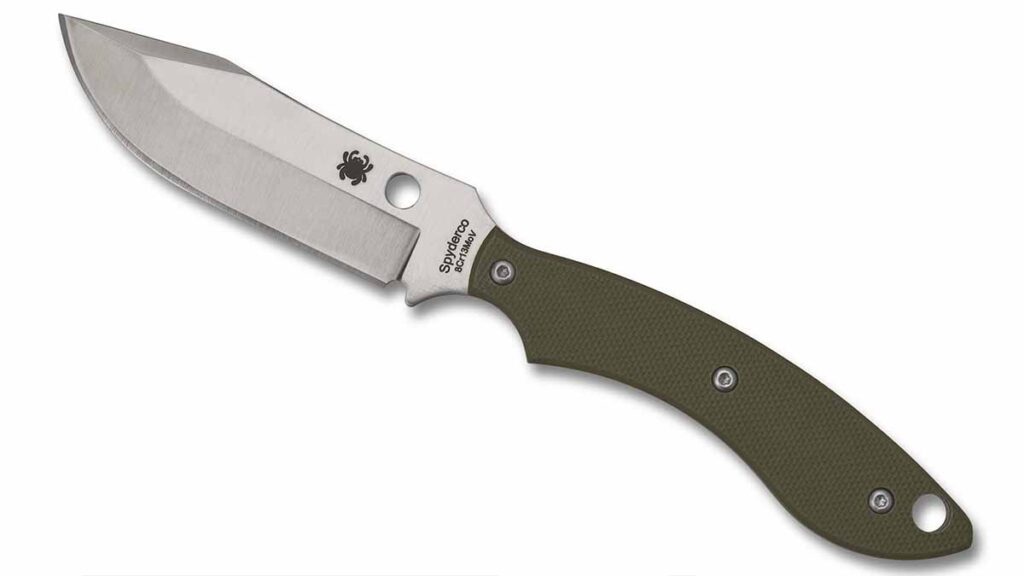
Spyderco

Model type: Fixed blade
Blade length: 2.95”
Blade material: 8Cr13MoV stainless steel
Blade grind: Saber
Handle material: OD green G-10
Knife to know: Designed as an urban EDC fixed blade
Weight: 2.1 ozs.
Overall length: 6.45”
Sheath: Boltaron® w/G-Clip™ attachment for adjustable belt and inside-the-waistband carry
Country of origin: China
MSRP: $100.
AVAILABLE FOR SALE TO THE PUBLIC: NOW

SPARTAN-KA-BAR/SPARTAN BLADES
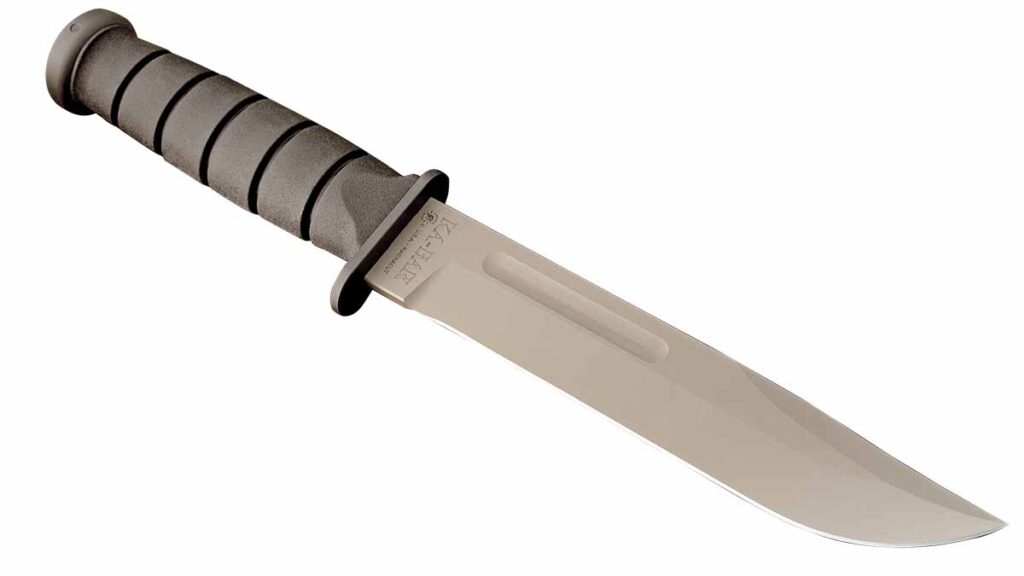
Kabar

Designer: KA-BAR Knives
Overall length: 12”
Blade length: 7”
Blade at thickest: .165”
Blade material: CPM MagnaCut stainless
Rockwell hardness: 60-62 HRC
Blade pattern: Clip point
Blade grind: Flat saber
Blade finish: Choice of PVD-tungsten DLC (flat black) or ZrN (flat dark earth)
Handle Material: Kraton G®
Buttcap/guard: 301 stainless steel w/PVD-tungsten DLC (flat black) coat
Weight: 10.78 ozs.
Sheath: Leather
Country of origin: USA
MSRP: Starts at $325
Available for sale to the public: NOW

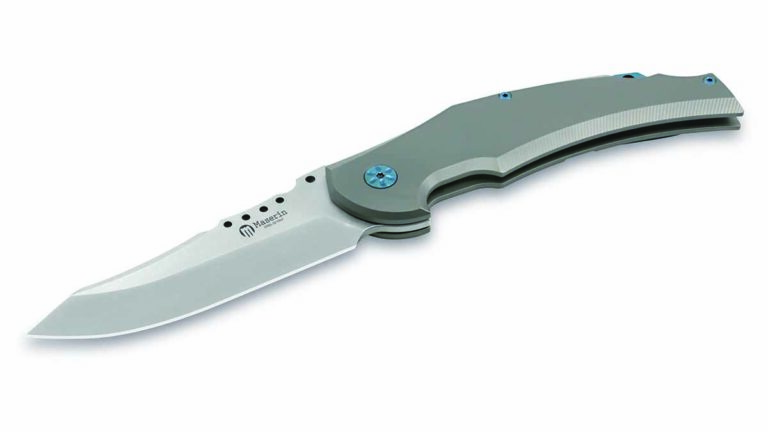
ENERGY/MASERIN
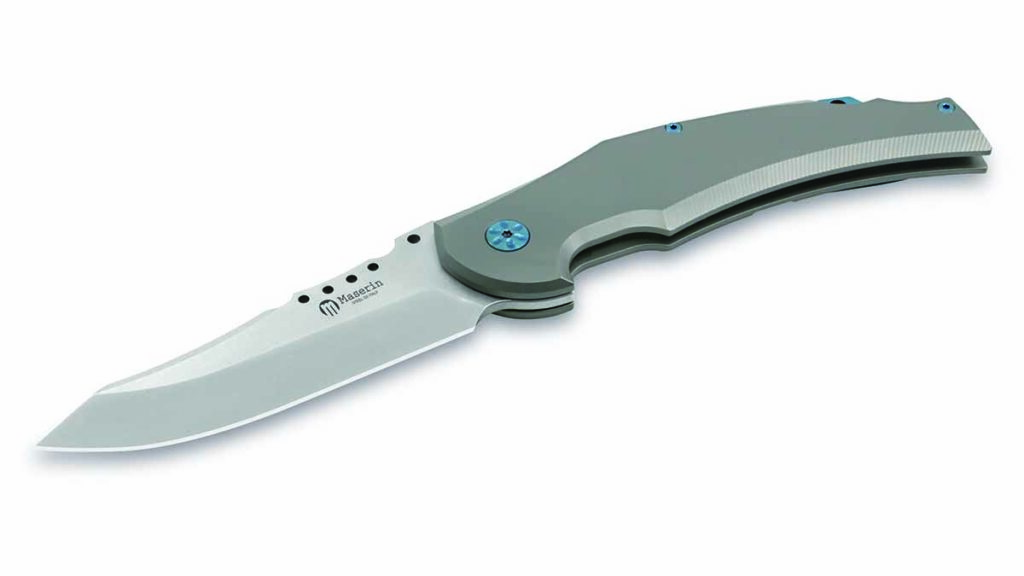
Masrin

Model type: EDC flipper folder
Blade length: 4.133”
Blade material: D2 tool steel
Blade grind: Flat
Handle material: Titanium
Pocket clip: Titanium
Weight: 5.926 ozs.
Closed length: 5.23”
Country of origin: Italy
MSRP: $328
Available for sale to the public: May

LIVEWIRE/KERSHAW
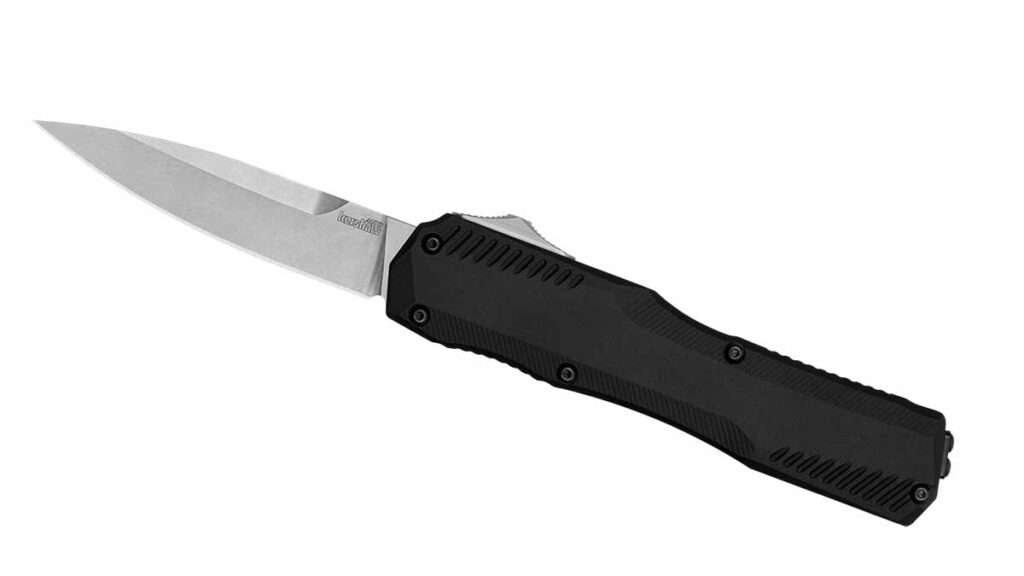
Kershaw

Model type: Out-the-front auto
Blade length: 3.3”
Blade material: CPM 20CV stainless steel
Blade grind: Flat
Handle material: Aluminum
Pocket clip: Reversible deep-carry, steel
Special features: Lightweight button
Weight: 3 ozs.
Closed length: 4.8”
Country of origin: USA
MSRP: $380
AVAILABLE FOR SALE TO THE PUBLIC: NOW

GHOSTFISH/ROUGH RYDER RESERVE
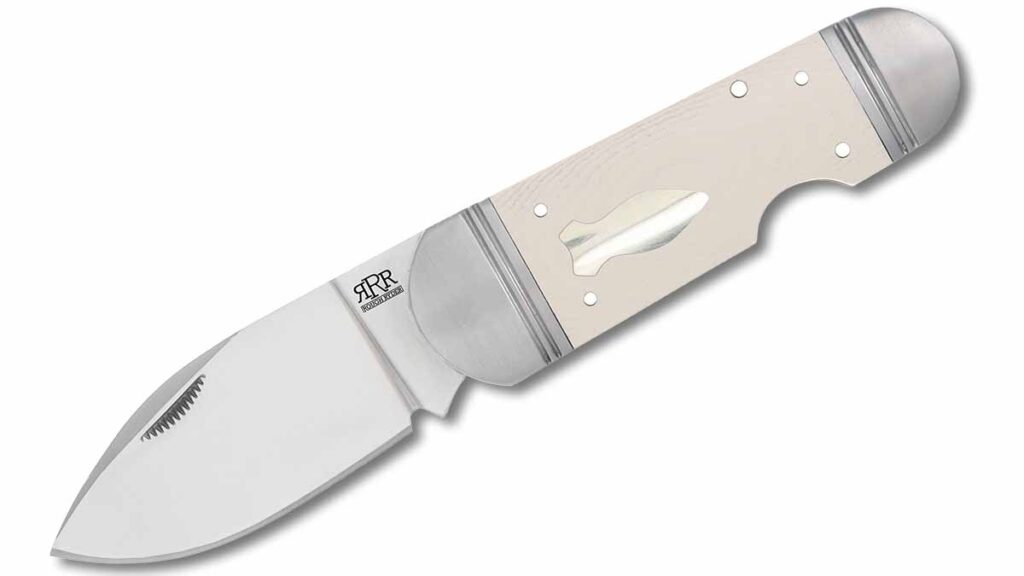
Rough Ryder

Designer: Brian Wilhoite
Model type: EZ-Open sunfish
Blade length: 2 7/8”
Blade material: D2 tool steel
Handle material: White Micarta®
Lock/opening mechanism: Slip joint w/half stop
Weight: 5.5 ozs.
Closed length: 3 7/8”
Country of origin: China
MSRP: $84.95
AVAILABLE FOR SALE TO THE PUBLIC: Late fall

GMX/GIANTMOUSE
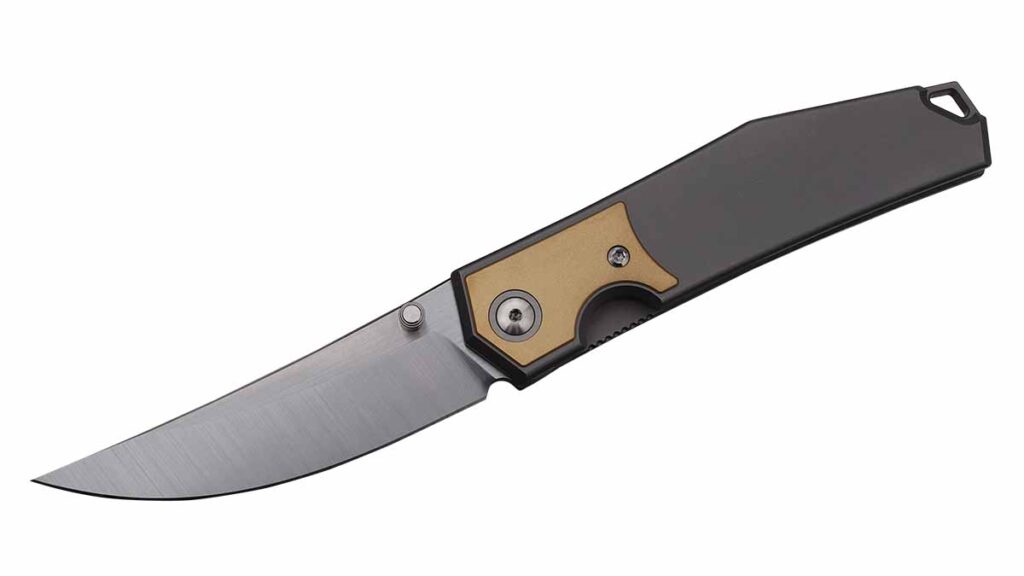
GiantMouse

Model type: EDC /outdoor folder
Blade length: 3.25”
Blade material: CPM S90V stainless steel
Blade grind: High flat saber
Handle material: Titanium w/brass inlaid bolster
Lock: Framelock
Pocket clip: 3D-machined titanium
Special features: Integral titanium handle
Weight: 3.8 ozs.
Closed length: 4.3”
Country of origin: China; manufactured by Reate
MSRP: $445
AVAILABLE FOR SALE TO THE PUBLIC: NOW

5” GALAXY BUTTERFLY/BEAR & SON
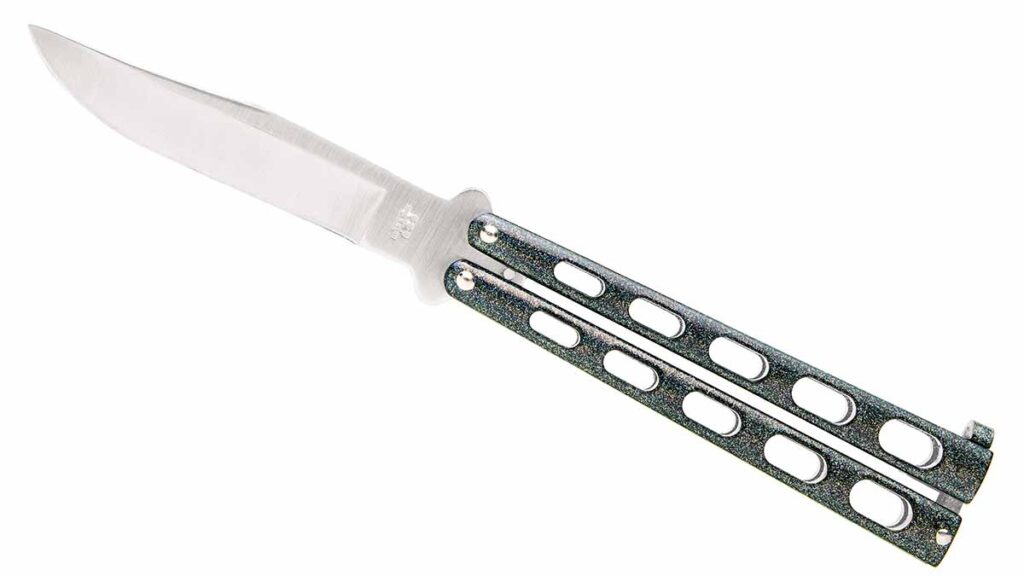
Bear and Sons

Model type: EDC balisong
Blade length: 3 5/8”
Blade material: 440 stainless steel
Blade grind: Hollow
Handle material: Zinc w/Galaxy finish
Lock: Latch
Weight: 5 ozs.
Closed length: 5”
Country of origin: USA
MSRP: $68.99
AVAILABLE FOR SALE TO THE PUBLIC: NOW

MODERN GLADIUS/TOPS KNIVES
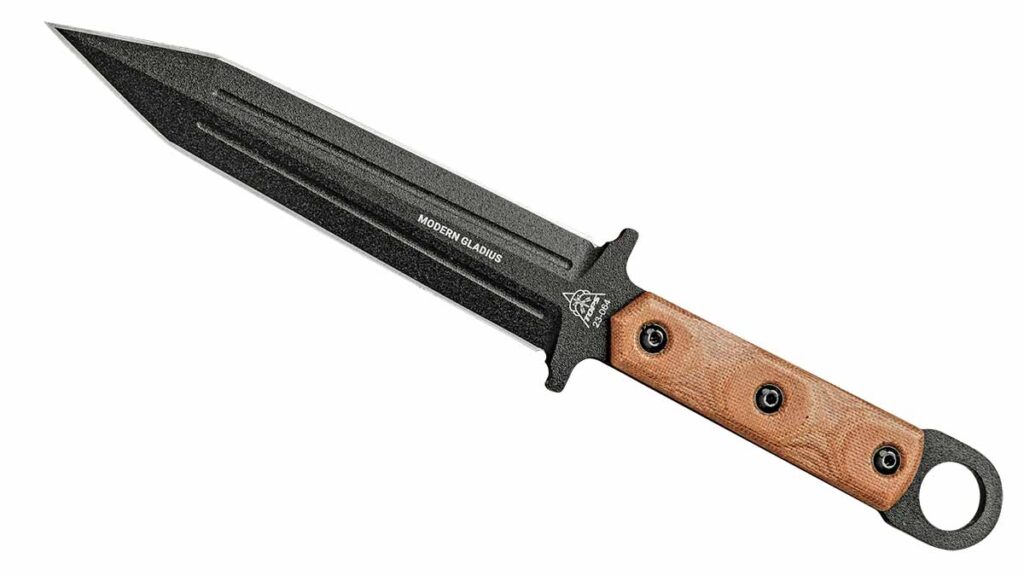
Tops Gladus

Knife type: Tactical  
Blade length: 6.5”
Blade material: 1095 high carbon steel
Blade grind: Dagger/flat
Handle material: Tan canvas Micarta®
Knife to know: Blade has a double edge
Weight: 8.3 ozs.
Overall length: 11.5”
Country of origin: USA
MSRP: TBD
AVAILABLE FOR SALE TO THE PUBLIC: TBD

YUUKI/LATAMA x VICTORIAM
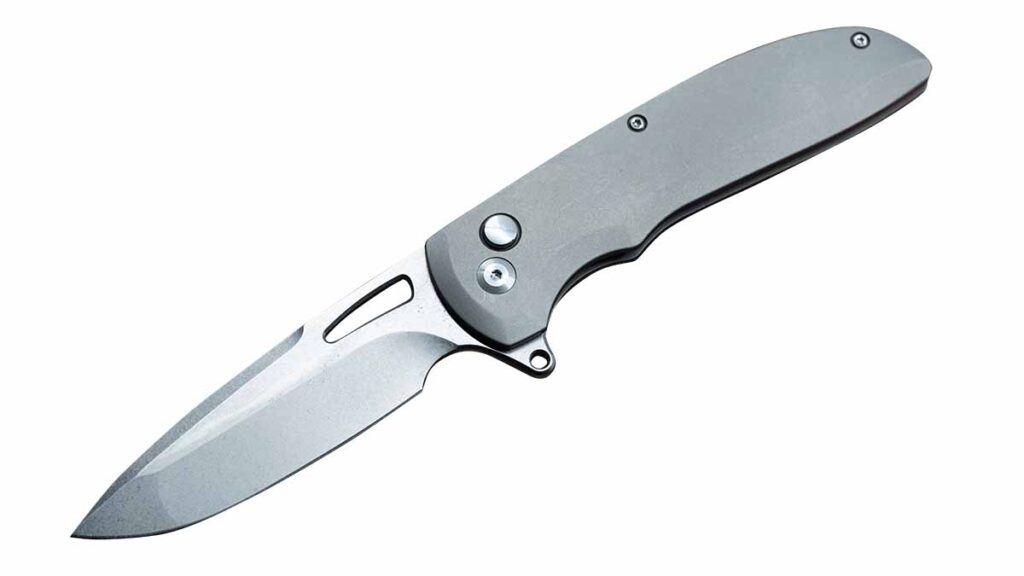
Yuuki

Model type: EDC flipper folder
Blade length: 3.5”
Blade material: CPM 20CV stainless steel
Blade grind: Kissaki-unokubi-zukuri compound; hollow belly and convex tip
Handle material: Grade 5 titanium
Lock: Button lock
Pocket clip: Titanium
Weight: 4.59 ozs.
Closed length: 4 5/8”
Country of origin: China
MSRP: $200 (estimated)
Available for sale to the public: May

BUCKMARK SLIM/BROWNING
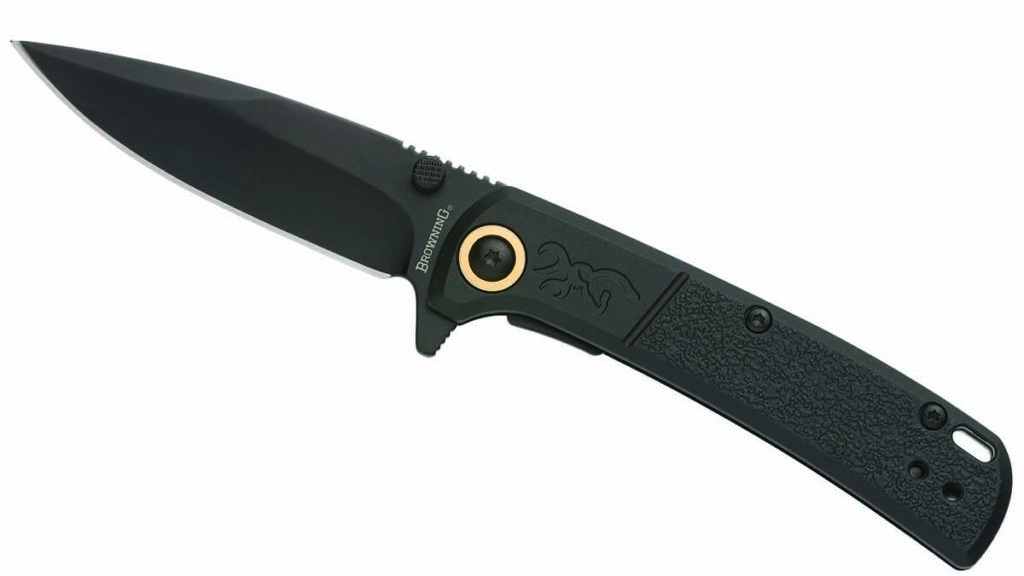
Buckmaster

Knife type: Flipper folder
Blade length: 2.75”
Blade material: D2 tool steel
Rockwell hardness: 56-60 HRC
Blade pattern: Drop point
Opening mechanism: Assisted
Pivot action: Ball bearings
Handle: Polymer
Bolster: Stainless steel
Pocket clip: Adjustable
Lock: Linerlock
Closed length: 3.75”
Country of origin: China
MSRP: $29.99
Available for sale to the public: NOW

LULBEGRUD/OUTLIER
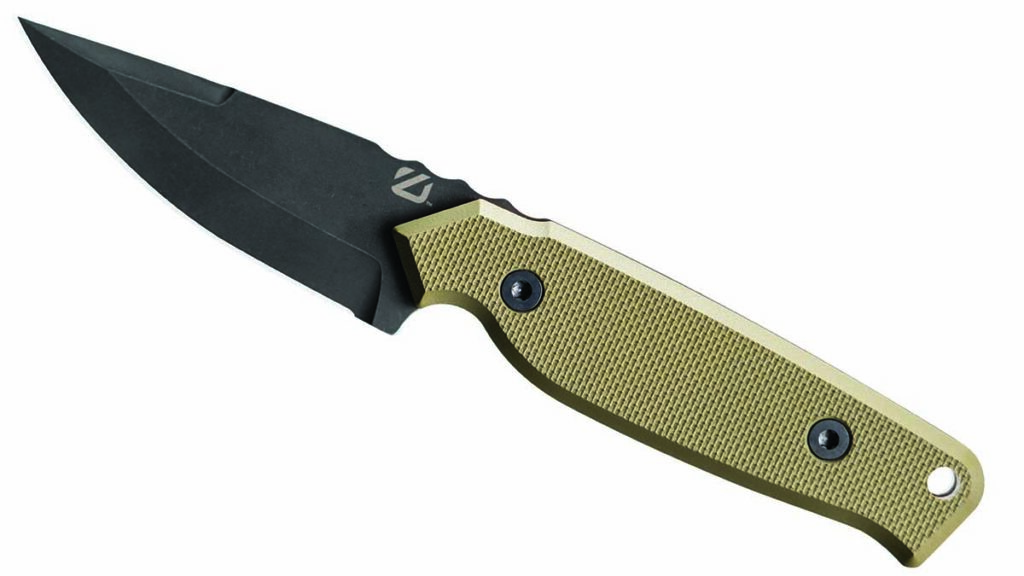
Outlier

Designer: Craig Caudill 
Category: EDC/outdoors/self-defense
Blade Length: 3.68”
Blade material: 52100 carbon steel
Blade at thickest: 1/8”
Blade finish: Parkerized and tumbled
Blade pattern: Drop point
Blade grind: Flat
Edge sharpening angle: 18 degrees
Handle: Coarse-textured, layered G-10
Weight: 6.84 ozs.
Sheath: .08”-thick thermoplastic 
Overall length: 8.62”
Sheathed weight: 8.26 ozs.
Country of origin: USA
MSRP: Approximately $200
AVAILABLE FOR SALE TO THE PUBLIC: At BLADE Show ’23

*Some of the knives shown for the first time at the show won’t be available for sale to the general public until later in the year. Check each individual knife’s spec box for details.

Check Out More Buyer’s Guides:

Throwing Knives: Ready For A Serious Fling?

0

Ready for a serious fling? We have the throwing knives–some of which are on target–to get you flying right off the bat.

While you’ll never nail an enemy sentry from 87 feet like Skeeter Vaughan reportedly did with a throwing knife during World War II, you can score a number of bull’s-eyes with today’s throwers.

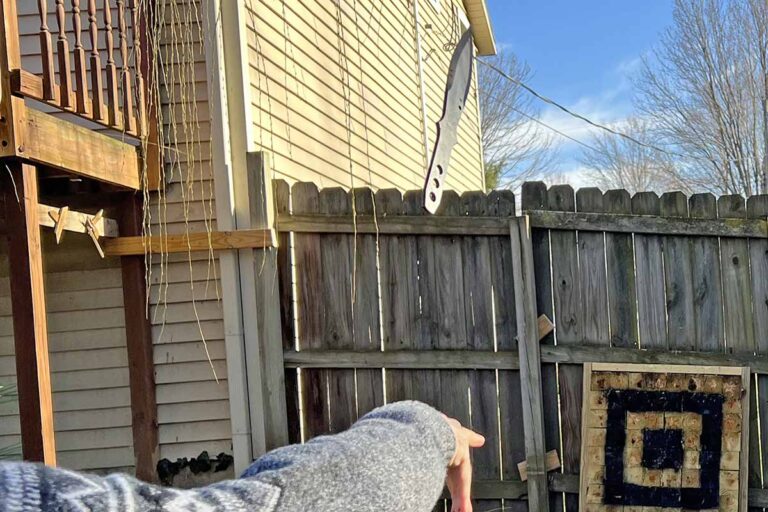
To test some of the latest airborne blades, I visited my buddy’s house. Together with a few friends, we had a good ol’ time flinging the throwers at a wood target.

Unlike many of my other BLADE® articles, I went into this with very little experience or prior knowledge, except that which I learned from previous backyard throwing sessions. None of my friends had additional experience, except for a buddy’s wife who was probably the best among us as far as results went. I feel that this was probably the best-case scenario.

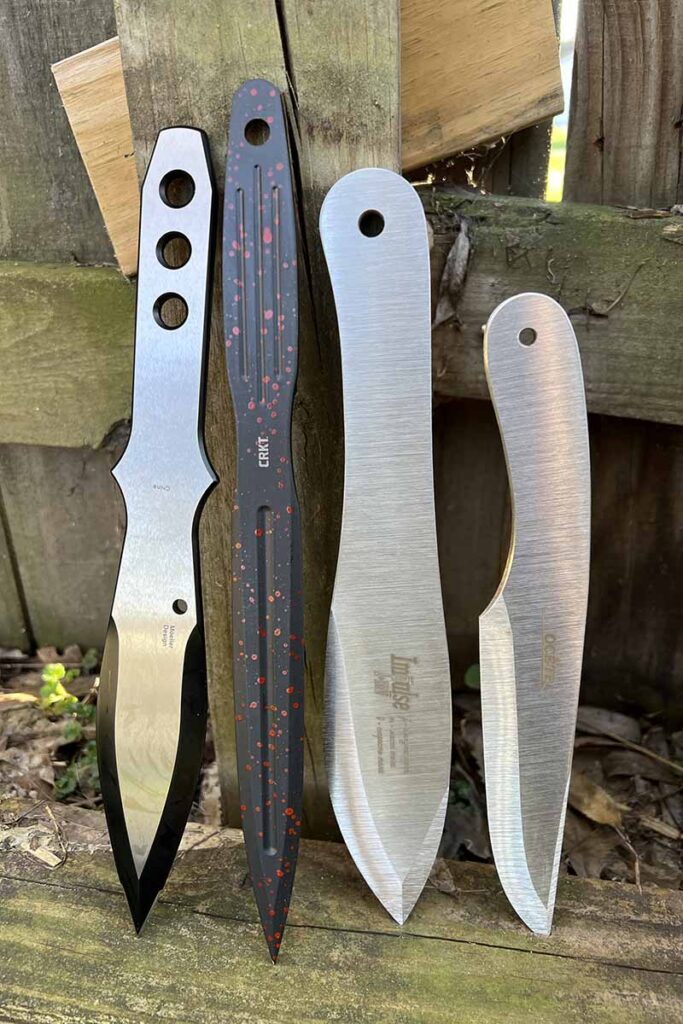
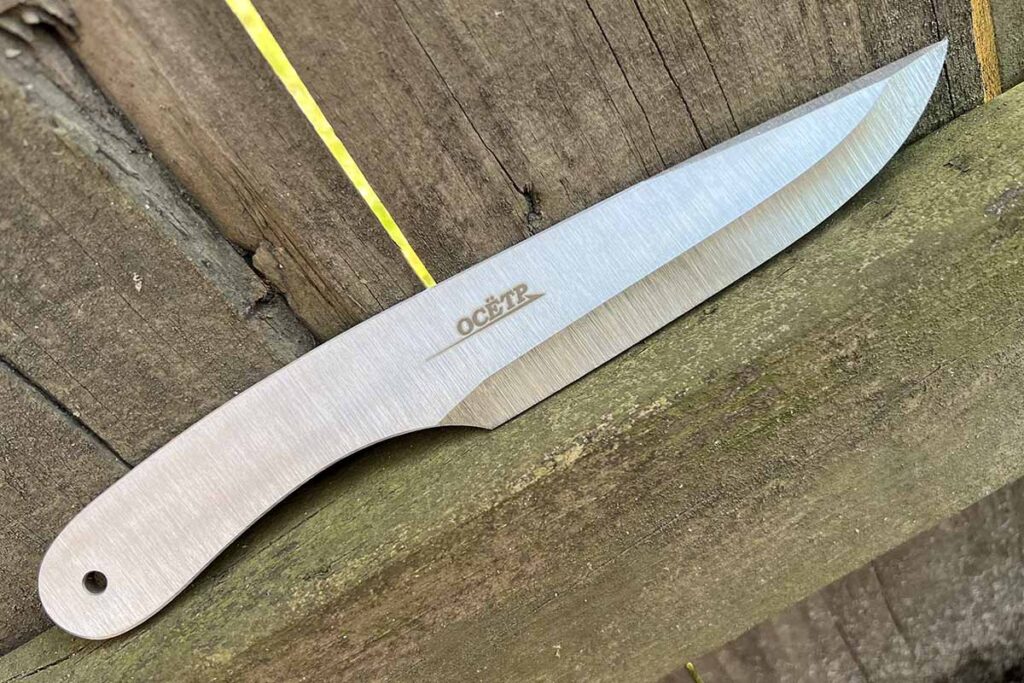
From left: Spyderco Thrower, CRKT Onion Throwing Knife, and Kizlyar Impulse and Kizlyar Ocetp.

In testing knives other times I went in with tons of previous experience from hunting, bushcrafting, skinning, fishing and other outdoor activities. The playing field was thus level and I was going to get the purest experience from these knives, as I had no prior notions of what success looked like—other than having fun.

As with most knives, there’s a science that goes into making throwers. I am in no way an expert. I approached the story with the distinct impression this would be more difficult than I thought. Most who are into throwing knives buy for either pure recreation or actual skill-building for competition. While I have no statistical way to prove it, I feel that 99.9 percent of people who buy throwers do so for recreation in the backyard, during cookouts with friends and family, etc.

Throwing Knives Tested

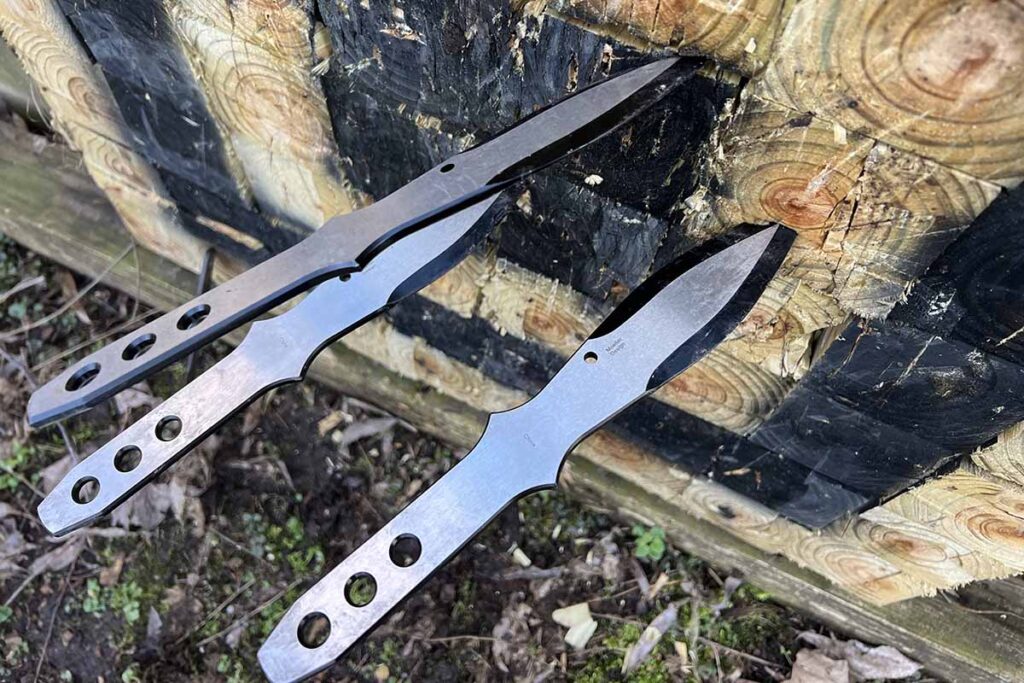
The featured knives are all factory made. The Spydercos are shaped like leaf-blade daggers with a slight crossguard and sharp, diamond-shaped tip. They come in a set of three with a handsome but tight-fitting leather sheath that will require a bit of break-in. While the knives all fit, the overall package is a bit heavy. The Spydercos were easily the favorite of the testing. They can be thrown with good accuracy using a variety of techniques. Out of the reviewed group they are a good starting set and offer the most feature-wise for the thrower looking to gain skill.

Onion Throwing Knives
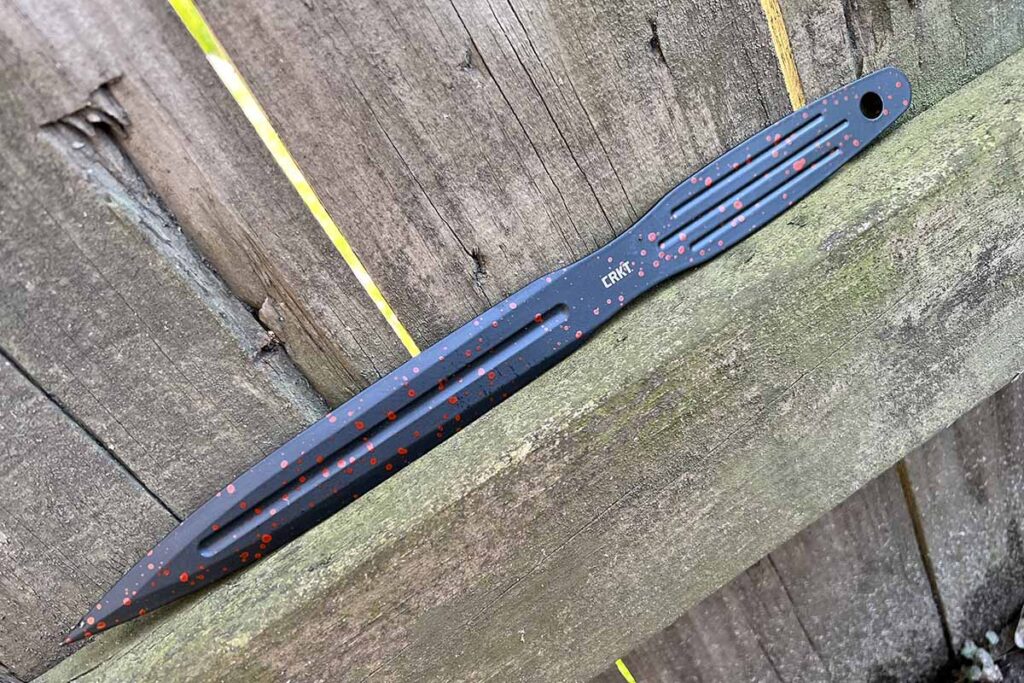
Minimalist in design, the Onion Throwing Knives are long and thin, with a red-and-black-splatter-finish scheme. They are Ken Onion’s first-ever throwing knife design for CRKT. (CRKT image)

Designed by BLADE Magazine Cutlery Hall-Of-Fame® member Ken Onion, the CRKT entries likewise come in a set of three, though are far more minimalist in design. They are long and thin, with a red-and-black-splatter-finish scheme. The knives come in a black nylon sheath. The profile of the knives is quite thin with a slender cross section. They are well balanced but have little meat mid-knife, making them have an iffy rotation in flight. The knives did perform well but were more or less hard to index in the hand.

The two Russian-made knives from Kizylar Supreme vary in appearance, one reminiscent of a drop-point field knife and the other a large leaf-blade profile. The knives are roughly finished and have some issues when in use, which I’ll detail more below. The knives are somewhat hard to get these days with the various trade situations with Russia, but I wanted to put them through their paces anyway. They are solidly built and very rugged but are not for everyone. Neither knife came with a sheath or storage case.

Results

Factory-made throwers are, at least in my years of backyard trials, inconsistent at best and largely made to look cool. Most of these knives, including the ones used in this review, were only loosely able to give consistent results. The Spydercos were probably the most consistent among the people I roped into testing them. This was in large part due to the fact that one of my friends employed an underhand throw, using the holes in the handle as pendulum points to help get a consistent rotation.

Spyderco knives
The author stated the Spyderco knives were easily the favorite of the testing, in large part because they could be thrown by the testers with good accuracy using a variety of techniques.

Weight distribution among the review knives was all over the place. The Spydercos were a bit heavy across their entire length, but they did fly true for the most part. The CRKT knives ran into a bit of trouble with their relatively thin profiles. They seemed to easily spin out and rotate along the tip-to-pommel axis if they caught the air wrong. They were also significantly lighter than the rest, which made it just a bit difficult to gauge their feel in the hand when throwing. Most of the reviewers felt the Spydercos were the best, though perhaps a bit too heavy. The CRKT knives certainly look the coolest but were a bit too light and thin overall for true consistency.

The two Russian knives were the poorest performing in the test, mostly because they were just so large and heavy that they seemed to have no point of balance at all. Out of five people, myself included, none made consistent throws with either of the knives. The weight factor was a main issue. The knives are heavy, like throwing a piece of raw bar stock. We tried just about every possible style of throwing: overhand, underhand, tip hold, handle hold, etc. None of us could make them stick with certainty. This toyed with me because, in theory, a heavier knife should be easier to develop muscle memory with and should maintain more energy on impact to drive the tip home.

Ocetp designed by V.S. Kovrov
Along with the Impulse, the Ocetp is designed by V.S. Kovrov, a Russian “Grand Master” throwing knife instructor.

The tip profiles on both Kizlyar knives were wanting. Where the others were actually sharp and very pointy, these knives had a very thick, squared tip that resulted in a good number of bounce-off hits even if we got them to land straight-on. My only thought about this is that some provinces have restrictions on shipping sharp edged swords or specialty cutlery, with some places in Europe requiring a 1-millimeter edge so it’s not too dangerous to exist in their nanny states. If the intent is to sharpen the knives at home, it makes these the only throwing knives I’ve ever encountered that are not ready to go out of the box. My only other idea as to why these knives are shaped this way is they may have been intended to strike softer targets, such as hard foam. When used against wood, which I feel is safe to say is the most prevalent knife target material, they seem tremendously unsuited.

Why Fling Flyers?

Throwing knives is a lot of fun, and you should exercise a reasonable amount of caution when using them. If you want to get into the sport, these knives are a good place to start, and you’ll have a great time learning. You really can’t go wrong with any of these. I would hesitate a bit on the Russian knives, but if you have the time and patience, I’m sure that you would enjoy them as much as I enjoyed the struggle and laughs in trying to use them.

SPYDERCO THROWERS SPECS
DESIGNER: Harald Moeller
MODEL TYPE: Large
KNIVES IN SET: Three
BLADE LENGTHS: 6.63”
BLADE STEEL: 8Cr13MoV stainless
HEAT TREATMENT: Tough spring hardness
BLADE TIP: Sharpened diamond profile
BLADE EDGE: Non-sharp
HANDLE MATERIAL: Steel
WEIGHT: 10.2 ozs. each
OVERALL LENGTHS: 11.13”
SHEATH: Leather three-knife piggyback model w/belt loop
KNIFE TO KNOW: The knives are available in small- and medium-sized sets, too. Each set comes with a copy of Harald Moeller’s book, Knife Throwing: The Knives and Throwing Technique of Harald Moeller.
COUNTRY OF ORIGIN: China
MSRP: $166

CRKT ONION THROWING KNIVES SPECS
DESIGNER: Ken Onion
KNIVES IN SET: Three
BLADE LENGTHS: 6.25”
BLADE MATERIAL: 1050 carbon steel
BLADE EDGE: Non-sharp
BLADE FINISH: Corrosion-resistant powder coating
HANDLE MATERIAL: None
WEIGHT: 5.1 ozs. each
OVERALL LENGTHS: 11.66”
SHEATH: Black nylon w/belt-loop carry
COUNTRY OF ORIGIN: USA
MSRP: $75

KIZLYAR SUPREME THROWERS SPECS
DESIGNER: V.S. Kovrov, Russian throwing knife instructor
BLADE LENGTHS: 5.25” (Ocetp), 6.5” (Impulse)
BLADE STEEL: 420HC stainless
ROCKWELL HARDNESS: 42 HRC (edge) and 45 HRC (spine)
BLADE EDGE: Non-sharp
HANDLE MATERIAL: Steel
WEIGHT: 8.4 ozs. (Ocetp), 12.5 ozs. (Impulse)
OVERALL LENGTHS: 9.4” (Ocetp), 10.5” (Impulse)
SHEATH: None
COUNTRY OF ORIGIN: Russian Federation
MSRPs: $49 each

Check Out More Outdoor Knives And Tools:

Folding Knives: New Sleek, Lanky And Able Options

Sleek new factory folders fuel consumer demand.

There’s a lanky breed of factory folder fueling consumer demand, and several notable entries in the genre are turning heads. Accomplished designers have teamed with knife companies to meld form and function with select materials to accomplish a sleek, majestic look exhibiting comfortable carry and easy deployment.

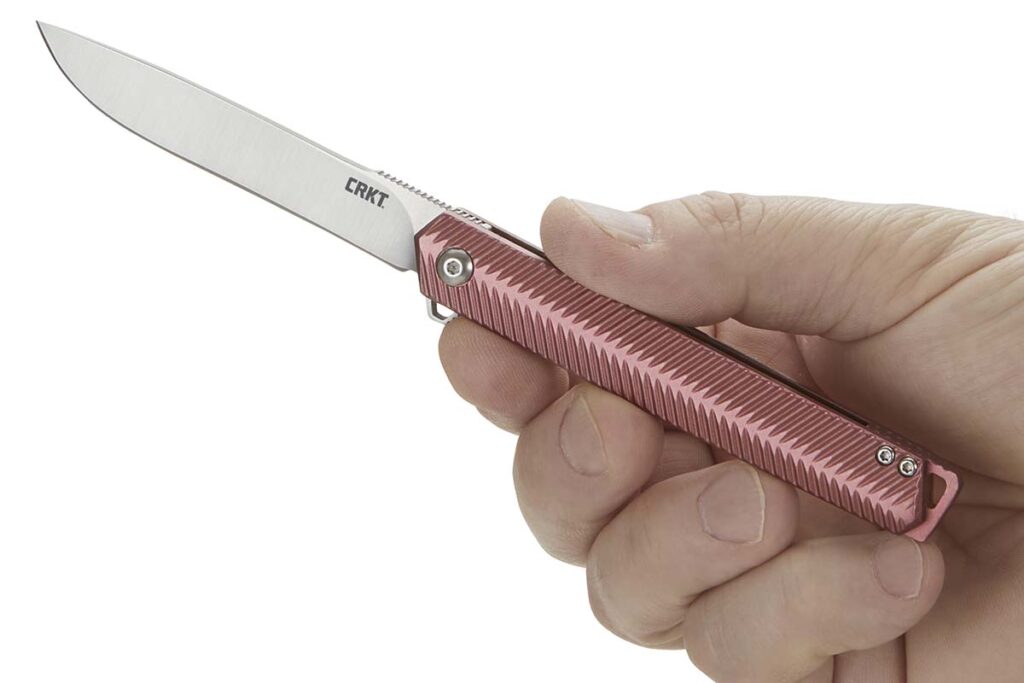
CRKT Stylus

CRKT Stylus
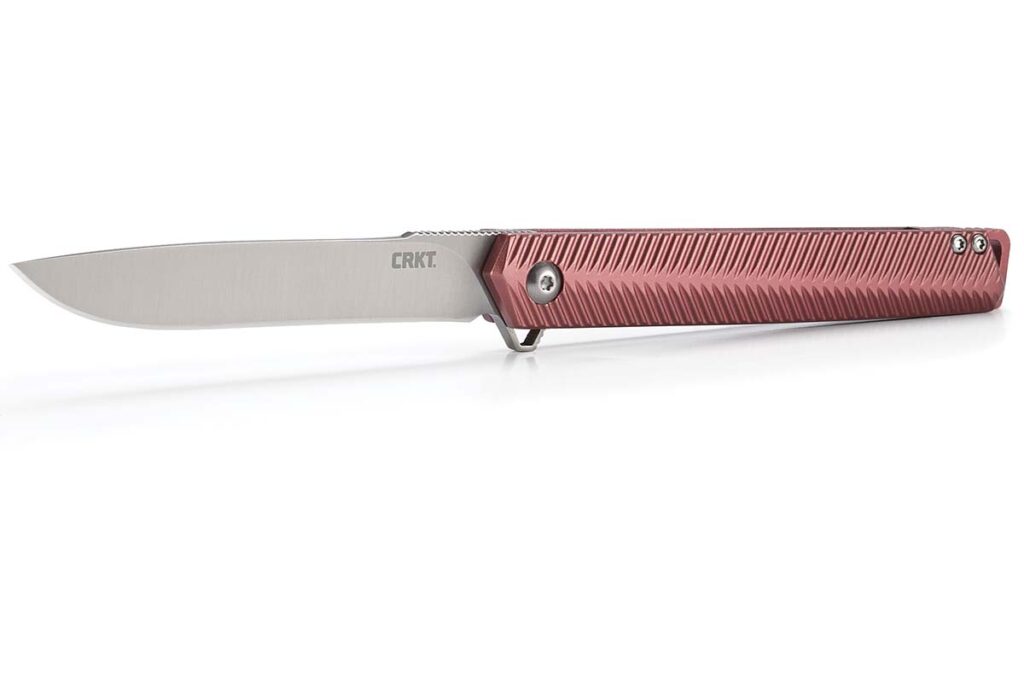
The lightweight aluminum handle of the CRKT Stylus features a ridge line that brings a dimension of safety, preventing the knife from twisting in your hand. The 3.18-inch blade is 12C27 stainless steel. Country of origin: USA. MSRP: $75.

The high-powered combination of BLADE Magazine Cutlery Hall-Of-Fame® member Ken Onion and Columbia River Knife & Tool has resulted in the Stylus, tailor made for a man or woman on the move who appreciates quality attributes in an EDC knife with great aesthetics.

“The Stylus is made to tackle just about any EDC task you can throw at it,” related Doug Flagg, CRKT vice president of marketing and innovation. “Boxes and letters are, of course, no match, but the blade has some paring knife characteristics so that it excels at peeling and even piercing tasks as well.”

Flagg has carried a Stylus for months and attests to its ability to make short work of straps, clam packaging and even a steak. “We went lean with the Stylus to balance form and function, really,” he added. “It’s lightweight, so it’s easy to carry, but it also has a certain panache that makes a statement any time you pull it out of your pocket.”

The lightweight handle combines strength with minimal weight. Texture adds purchase and control with a ridge line that brings a dimension of safety, preventing the knife from twisting in your hand. Fine 12C27 stainless blade steel and assisted opening with the Ikoma Korth Bearing System (IKBS) add to user enjoyment.

CRKT Stylus features an assisted opening blade
Designed by BLADE Magazine Cutlery Hall-Of-Fame® member Ken Onion, the CRKT Stylus features an assisted opening blade and a linerlock, and opens and closes via the Ikoma Korth Bearing System (IKBS). Pocket clip: stainless steel. Closed length: 4.15 inches.

According to Flagg, Onion wanted to create a simple, streamlined pocketknife that could act as sort of an office EDC to be carried in a shirt pocket, fifth pocket or standard pants pocket. “Across the knife world, Ken noticed a movement toward cleaner, leaner, more simplified designs that were a different approach compared to his typically large and more flowing knives,” Flagg concluded. “With the Stylus he was really trying to emulate that and have some fun with something new and unique.”

Coast Products Founder Series

Coast LX500
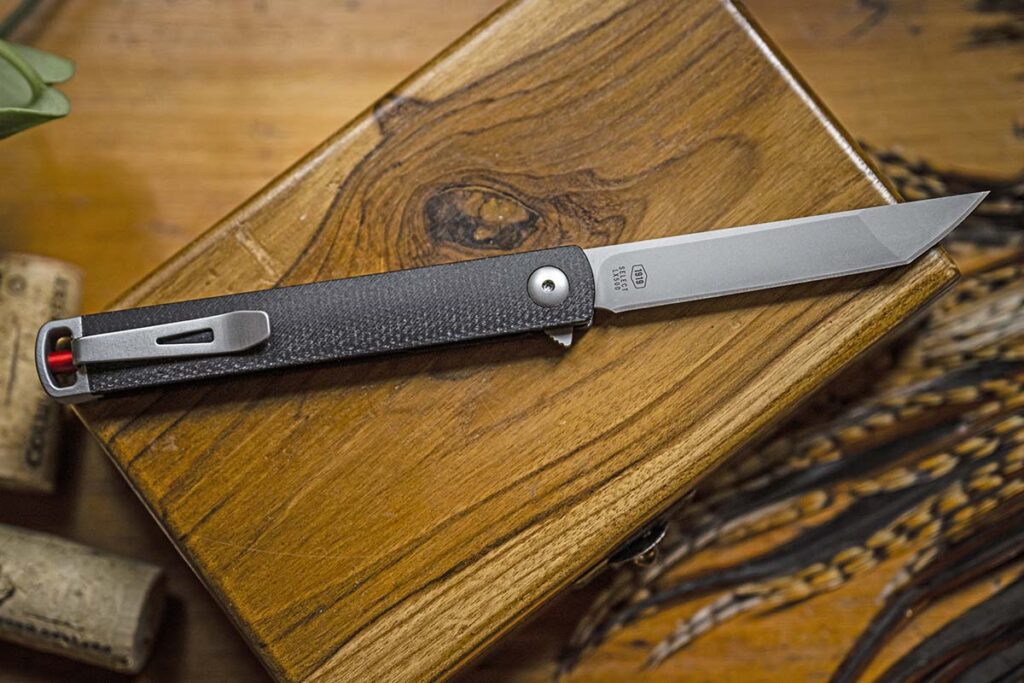
The LX500 in the Coast Founder’s Series is a design by Todd Ernst and David Goldman. The 2.85-inch tanto blade is flat-ground 9Cr18MoV stainless steel and the handle comes in a choice of black (shown here) or green canvas Micarta®, aluminum and titanium. The deep-carry, rollover-style pocket clip is reversible.

The Founder’s Series from Coast Products is a design collaboration between Todd Ernst and David Goldman, and it hit the mark with the intent to produce an elegant executive knife. “Based on feedback from customers and when looking at our offering, we wanted to design something that would not necessarily look like a knife when in a shirt or pocket,” explained Doug Hutchens, Coast sales operations manager.

“A knife designed to flip open must have a combination of correct geometry, minimal weight in the blade, and ball bearings at the pivot to create minimal friction to facilitate easy flipping,” Hutchens noted. “The tanto blade style is also popular and provides good looks. Then, without sacrificing strength in the frame, we designed the Micarta®, aluminum and titanium handle choices to keep weight at a minimum.”

The variety of handle materials makes buyers checking out the Founder’s Series feel like kids in a candy store. Hutchens noted that each material is attractive, strong and designed to give the customer variety in aesthetics. “That’s so they can choose the style that they like best,” he said. “Another customization was the pin color in the end of the knife handle, which was designed to be visible when carried in a pocket. At purchase, we provide two pin color options for the customer to further choose their own styling. The red pin is a nod to the red Coast ring trademark, which you’ll find on most every Coast product.”

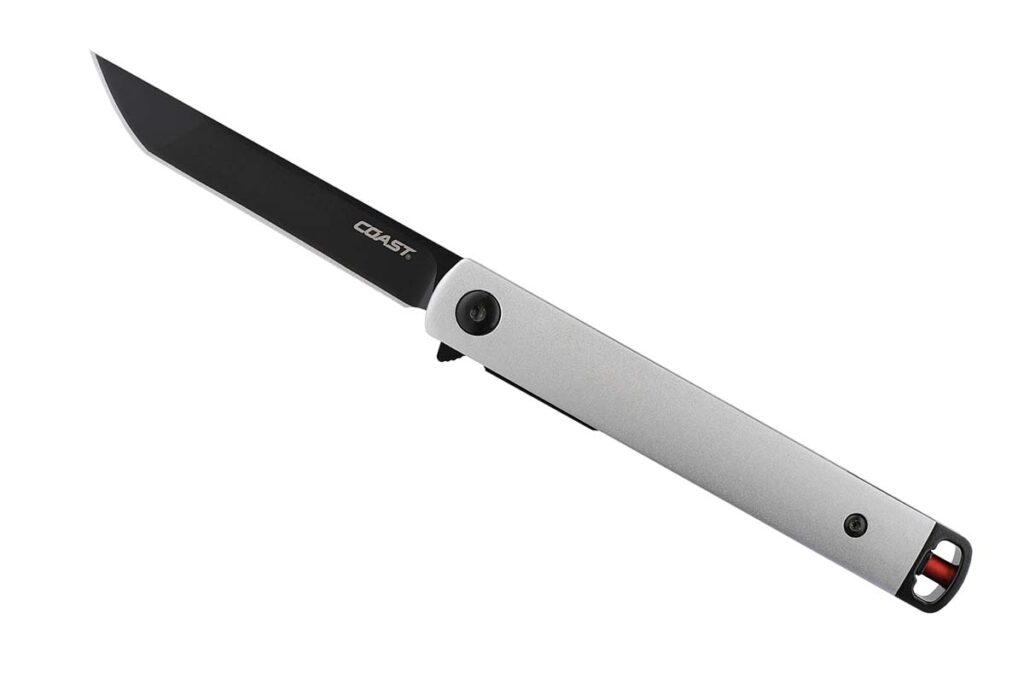
Coast Founder’s Series LX502
The LX502 iteration in the Coast Founder’s Series sports a blackened blade that secures via a linerlock and a stonewashed titanium handle. The red pin in the handle butt is a nod to the red Coast ring trademark found on most every company product. Closed length: 4.25 inches. Country of origin: China. MSRP: $49.99.

Thin but mighty, the Founder’s Series is up to the rigor of daily use. Hutchens commented, “All knife design is a compromise with purpose. The length of the handle allows the butt of the knife to be captured by the user’s palm easily and quickly. Because of this there is no need for large finger grooves or guard projections. Lock it into your palm and it is very secure in your hand.”

Spyderco Ikuchi

Spyderco Ikuchi
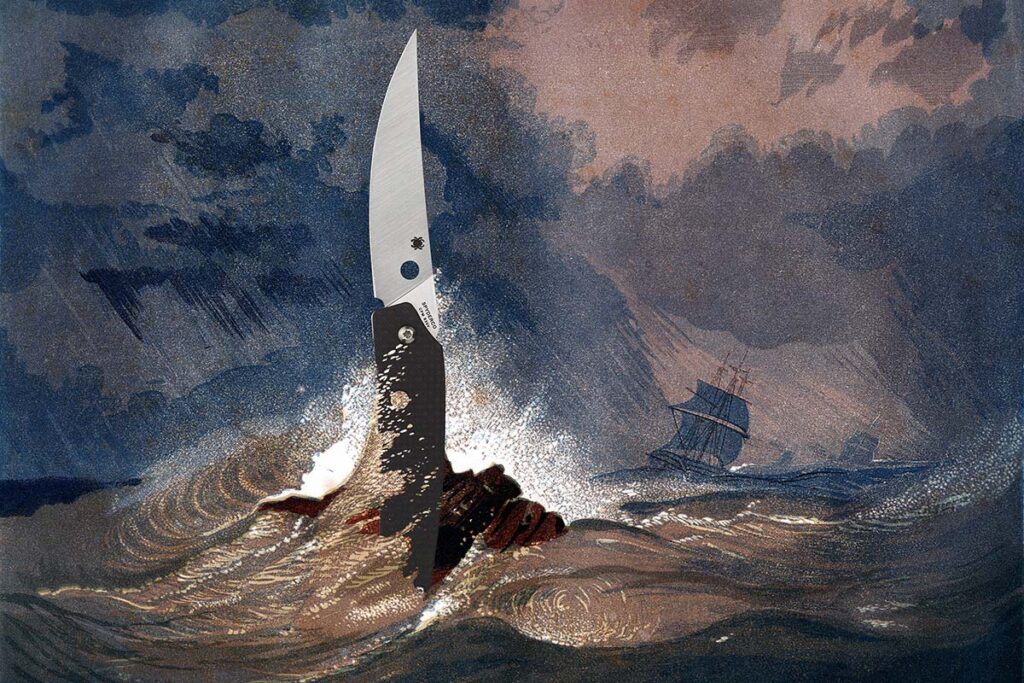
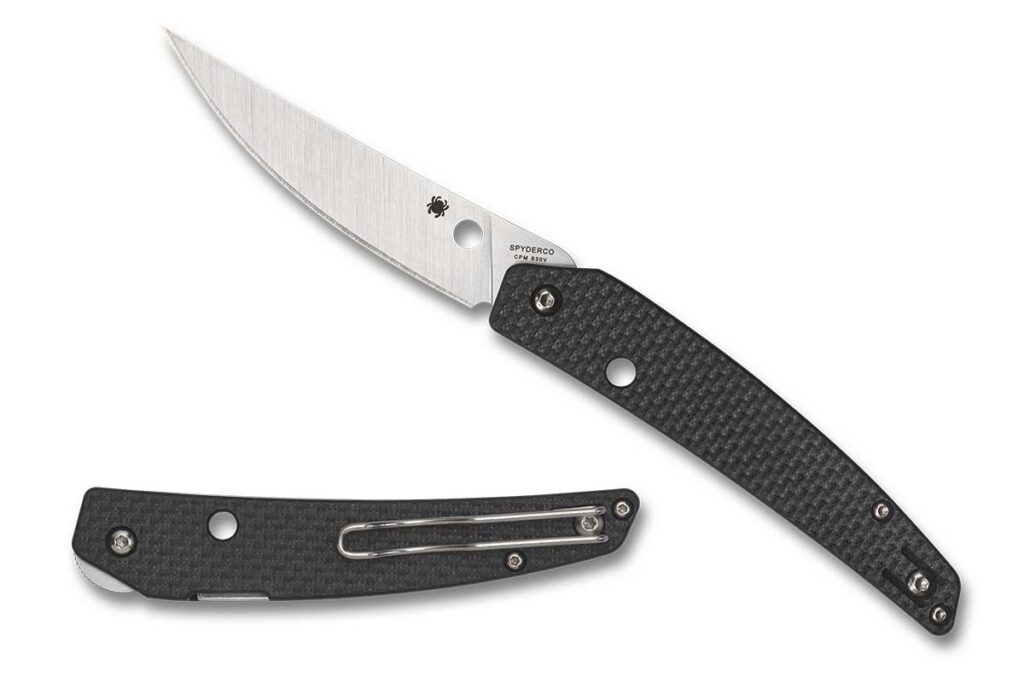
The Ikuchi is a mythical Japanese sea monster, and the Spyderco knife of the same name and its flat-ground blade of CPM S30V stainless steel is built to weather whatever your everyday cutting needs may be. Blade and closed lengths: 3.26 and 4.35 inches.

Paul Alexander and the Spyderco design team have created a long, lean gem in the Ikuchi, distinctive with its scalpel-like blade boasting the company’s trademark hole. Alexander looked at a number of traditional knife patterns while scheming the Ikuchi, including the Texas toothpick and French laguiole.

“The Ikuchi design came from two distinct drivers,” Paul remarked. “First, I wanted to explore some designs based on more traditional patterns, but evolving and modernizing. Second, I wanted to create a piece with decidedly different blade geometry than the other collaboration pieces I’ve done with Spyderco. On the latter front, I was looking to design a pocketknife with a much narrower/shorter blade and width/height.

“I decided to take the narrow blade concept to the extreme, working to conceal the entire blade width within the handle scales when closed. The idea was that a knife this size would inherently take up a minimal amount of pocket space, strongly feature the handle shape, and create designs unique among Spyderco offerings.”

The thin nature of the Ikuchi handle makes the knife responsive in your hand while maximizing a user-friendly experience. Alexander explained, “The thin handle, without any features to lock any fingers into a set location, makes the knife more grip agnostic and easily repositionable in the hand. But thin handles can cause some difficulty for folks that may have limited hand dexterity, or lost some of it.

Spyderco Ikuchi profile
In addition to its Japanese name, the Spyderco Ikuchi combines elements of the Texas toothpick and French laguiole for a truly international design. Handle: carbon fiber/G-10 laminate. Lock: Compression. Country of origin: Taiwan. MSRP: $244.

Both are true of the Ikuchi, but seeing as it’s meant for EDC and light-duty tasks, I don’t find myself overly concerned when using the knife appropriately and responsibly. The handle material was Spyderco’s call but I admit I’m a sucker for carbon fiber scales, and the textured, peel-ply carbon fiber [Spyderco uses] is a great blend of aesthetics and grip without adding much mass.”

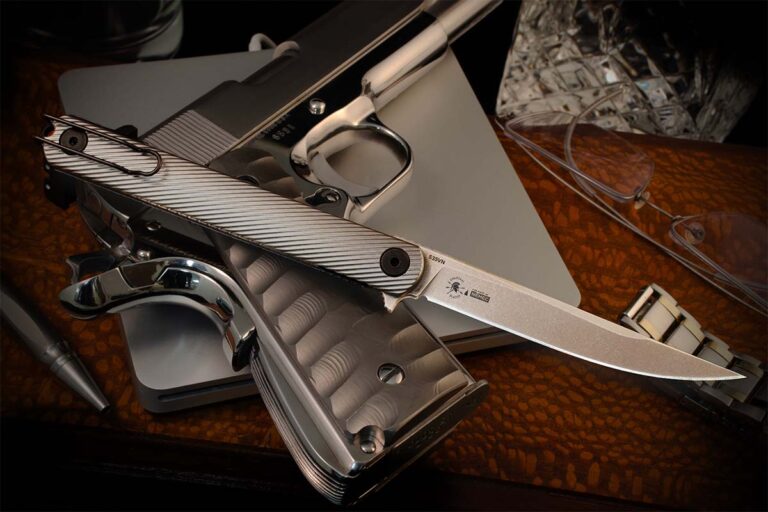
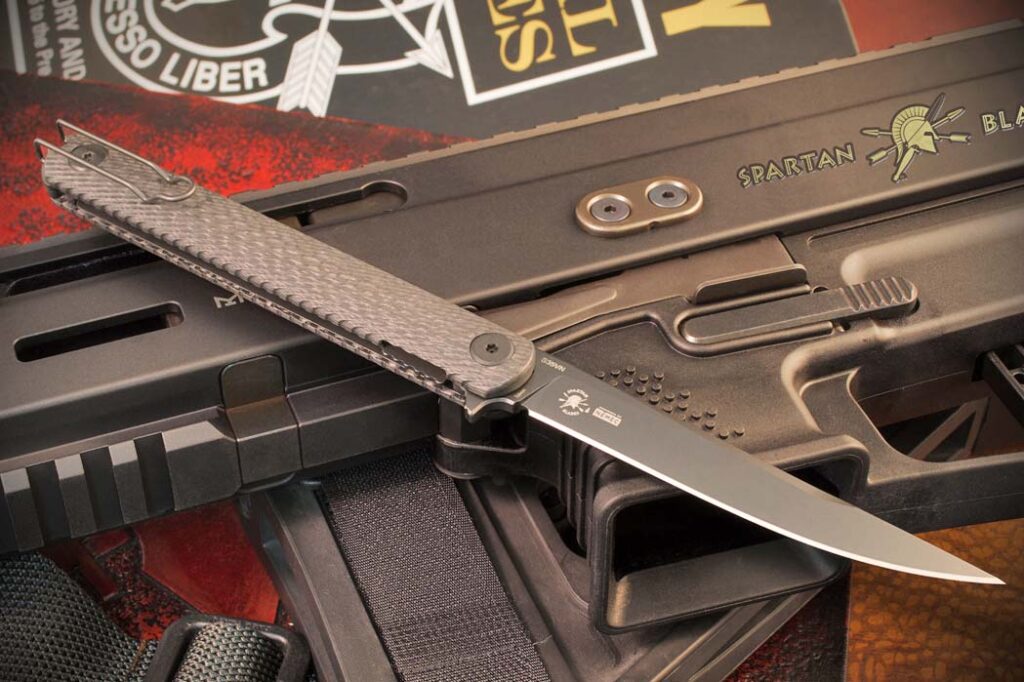
Spartan Blades Spartan-Nemec

Spartan-Nemec carbon fiber
Also available in sculpted carbon fiber and a blackened blade, the Spartan-Nemec has a stainless steel pocket clip that’s deep carry and ambidextrous. Lock: linerlock. Closed length: 4.5 inches.

Czech designer Ondrej Nemec joined Spartan Blades to produce the Spartan-Nemec folder, intended to be practical and versatile in the EDC role, a tool for any common job. Compact and easy to carry in a pocket, the Spartan-Nemec is a snap to deploy and makes light work of cutting boxes, envelopes or tape.

Nemec grew up in his father’s workshop, and Ondrej’s steady commitment to quality knives led to the founding of his Acta Non Verba knife company over 10 years ago. “The knives he designed in the past are similar to the quality and size of Spartan models, making him a good fit for Spartan while bringing a new flair to what we do,” related Curtis Iovito, company president.

Looking good always helps says Iovito of the smart, lean lines of the Spartan-Nemec. He adds that the knife incorporates features such as a secure locking mechanism, comfortable grip, and ambidextrous design for easy use by both southpaws and right-handers. “The biggest advantage of the design is that it stays out of your way when in the pocket,” Curtis smiled.

User ergonomics guided the Nemec design, making it ideal for quick and precise handling. The length of the handle contributes to stability and ease of control. In combination, the design elements produce an efficient everyday tool that can act as a backup in special circumstances, too.

“Although made with everyday tasks in mind, the knife boasts sufficient length to serve as a viable defensive tool in emergency situations,” Iovito indicated. “This contributed to our decision to incorporate a flipper mechanism facilitated by caged bearings and a strategically positioned flipper tab, ensuring readiness for such scenarios.”

Iovito also notes that the Spartan-Nemec’s inspiration was a “larger counterpart,” the KA-BAR Ek Models 4 and 5. “Originating from KA-BAR, this larger knife has been scaled down to create our folding version tailored for everyday carry,” he said. “While the concept of a penknife is not groundbreaking, we are confident that our rendition stands out as a well-crafted and reliable tool.”

Check Out More Knife Drops:

Custom Hunting Knives: Hunting For The Best Value

Understand how and why custom hunting knives cost what they do.

When I attend shows, one of my main goals is to talk with knifemakers and check the prices of various custom knives. One of the best shows to do that is the BLADE Show. This past June my goal in the Cobb Galleria Centre in Atlanta was to talk with 50 custom makers to get their takes on trends, material prices, overall demand, etc., regarding the knives they make and sell.

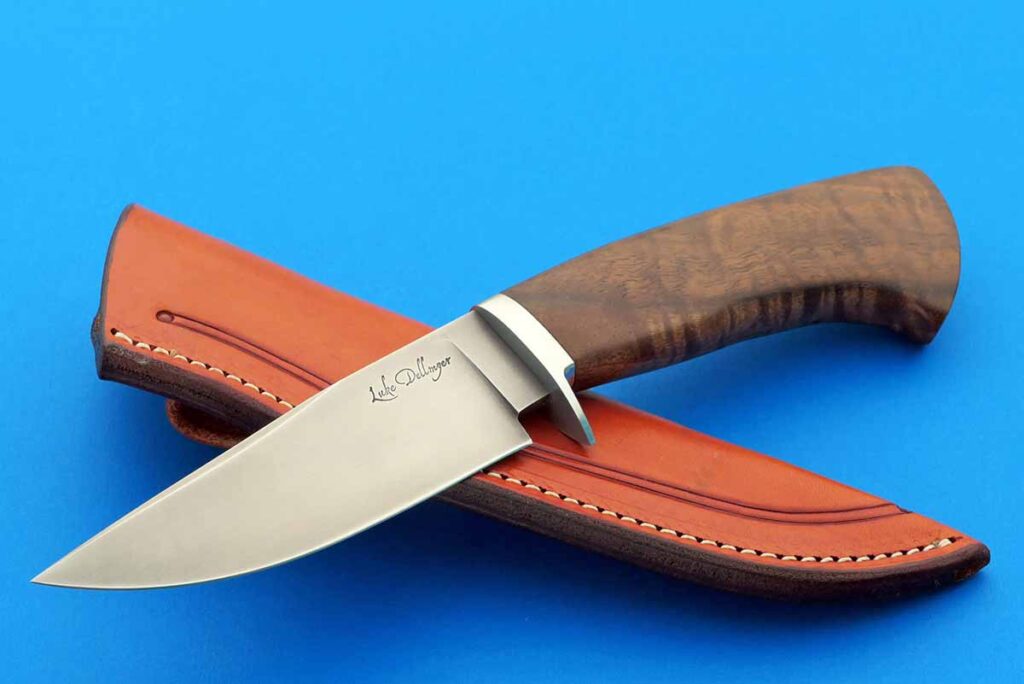
Luke Dellmyer custom hunting knife.

The custom knife that dominates the fixed-blade market is the hunter. This is due primarily to the fact that there seems to be an endless variety of hunting knives that can be made, and they usually have a lower price point than many other custom knives. Unlike other customs, hunting knives are often bought for use. Consequently, they are frequently tested by many users, from the casual outdoorsman to the professional hunting guide. The firearm may dispatch the game, but the knife provides the meat and potentially the trophy the taxidermist creates.

Over the years, thousands of articles have been written on and about hunting knives, including a few by this writer. In this article, I want to discuss not types or designs but pricing on knives in the hunter category.

Custom Hunting Knives Cost

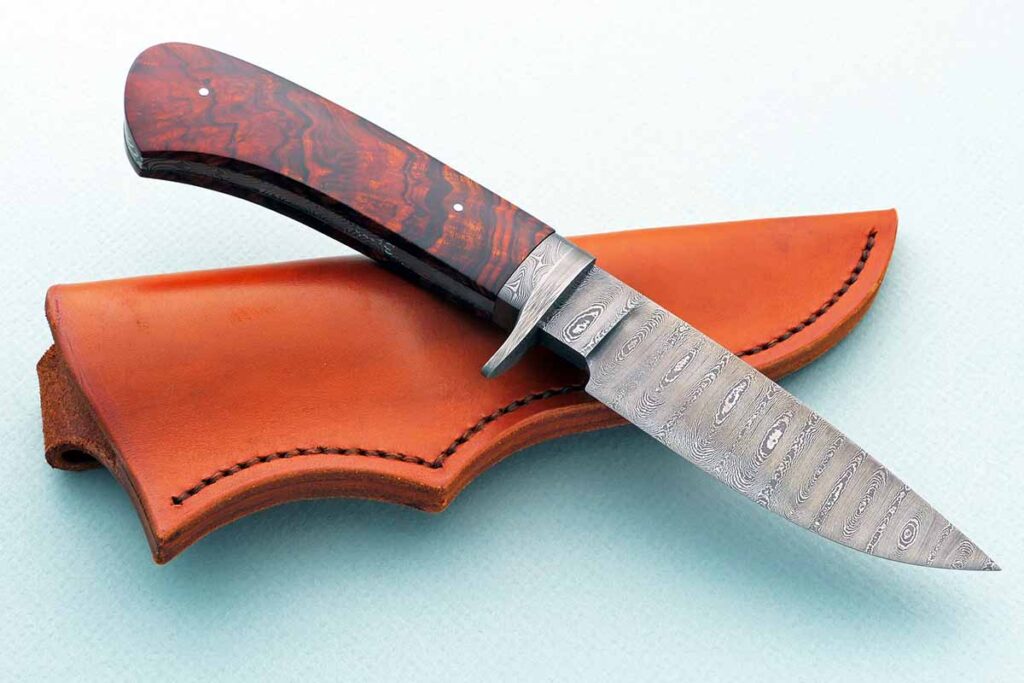
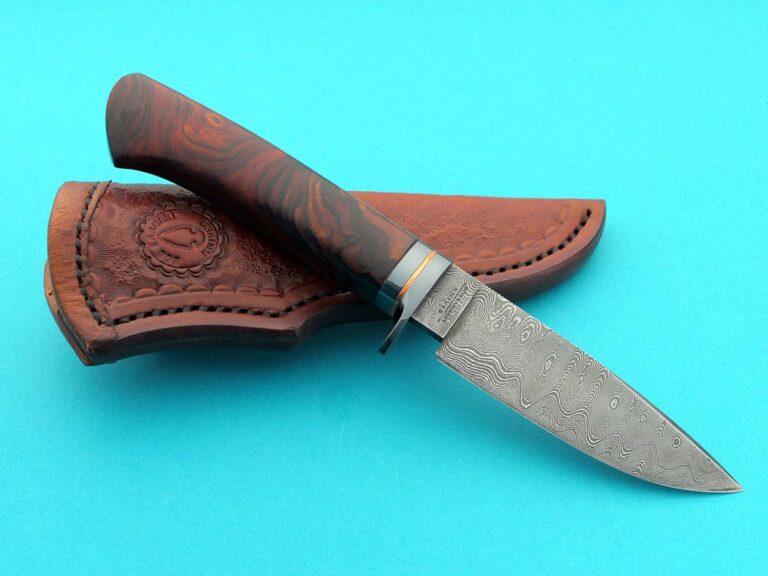
Wess Barnhill ladder-pattern damascus hunter.

Several factors go into the cost of building or making anything. Most makers need a place to make the knives, usually a garage or a shop. Next comes the equipment, which varies from maker to maker. Belts for grinding, polishing and putting an edge on the blade can be one of the more costly items a maker utilizes. Electricity, propane or wood provide the energy to work the materials that become the knife. No matter how the knife is built, these are typical costs shared by most makers. The costs vary depending on the prices of the materials to make the knife. Steel, guard/bolster material, handle material and leather if a sheath is required all impact the finished knife’s price, as will the maker’s skill at using these materials.

Custom Hunting Knives Blade Steel

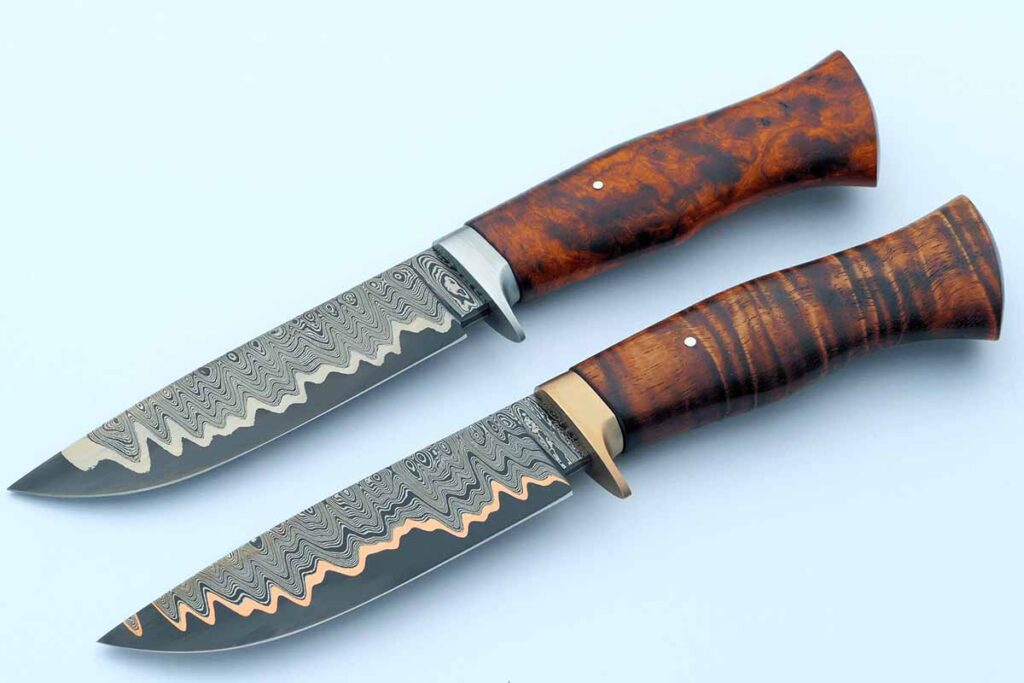
Dan Lewis' dmascus and copper san-mai hunters, both striking outdoor options.
Dan Lewis’ dmascus and copper san-mai hunters, both striking outdoor options.

The majority of makers use either stainless or carbon steel. Each offers advantages and disadvantages. Because of the diversity of steel, hunters can select a knife with the steel that best suits their needs.

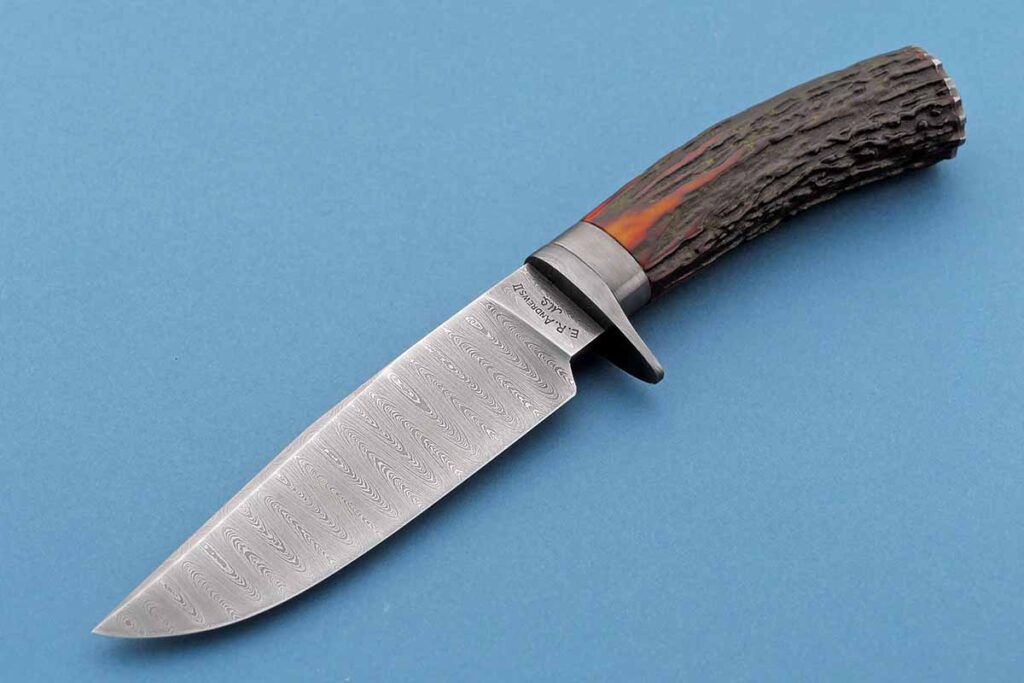
Some hunters prefer patterned damascus steel, such as the ladder pattern of the damascus hunter by ABS master smith Russ Andrews (see accompanying image). Some hunters indicate the damascus blade’s distal tapering and differential heat treatment give the knife a better edge-holding capability. Others prefer steel of a san-mai construction as in the knife of ABS journeyman smith Dan Lewis. By forge welding more malleable steel onto either side of a harder steel, san-mai provides the blade with more structural integrity without sacrificing its ability to hold an edge.

As you can imagine, creating these steels takes additional time and is an added expense. The steels can add anywhere from $150 to $400 to the knife’s cost.

Custom Hunting Knives Handle

Russ Andrews amber stag hunter is a looker.

The handle material varies from natural to such synthetic(s) as G-10, carbon fiber and Micarta®. Natural handle materials are even more diverse, including ivory, antler/horn, wood, mother-of-pearl and bone. The advantage of synthetics is they are not subject to the effects of weather and temperature and so do not shrink and/or expand. Also, Micarta and G-10 are less expensive than some natural handle materials.

Natural handle materials can give your knife a unique look, making it stand out from other knives. Ivory, predominantly mammoth or ancient walrus ivory, is among the most distinctive and expensive handle materials used on hunting knives. Mammoth ivory comes in the form of scales and can cost anywhere from $100 to $250. Ancient walrus ivory costs are largely determined by the color(s) and condition. Prices generally range from $200 to $400.

Antlers and horns of all types have been used as knife handles from the onset of knives being built. The most commonly used antler on custom hunting knives is Sambar stag. In addition to its classic look, the natural lands* and grooves of the antler will contour to your hand, giving you a better grip when using the knife. Stag’s demand and lack of supply over the past 15 years have driven the price up considerably. You can expect to add $125 to $175 to the cost of the knife for an excellent piece of stag.

Mike Malosh's hunters are outfitted with either an elk and black Micarta or stacked leather washers.
Mike Malosh’s hunters are outfitted with either an elk and black Micarta or stacked leather washers.

Watching the price of stag increase encouraged me to look at other members of the deer family. One such member is the elk. It has many of the same characteristics as the stag antler, such as the natural lands, grooves and coloring. However, the price is considerably less than stag—around $50. The Elk Hunter (see accompanying image) by Mike Malosh gives you an idea of what an elk antler looks like on a custom hunting knife.

Wood is also a favorite handle material for both makers and collectors. Talk about diversity—wood offers just about any color you could want. Now, with the wood stabilization process commonplace, you eliminate most of the adverse effects of weather on the natural handle material. The price point for wood ranges from $5 to $50 to $75 for scales or a block of desert ironwood or koa. The damascus hunter by ABS journeyman smith Wess Barnhill features a beautiful set of desert ironwood scales. Its range of colors helps ironwood find its way to many knife handles.

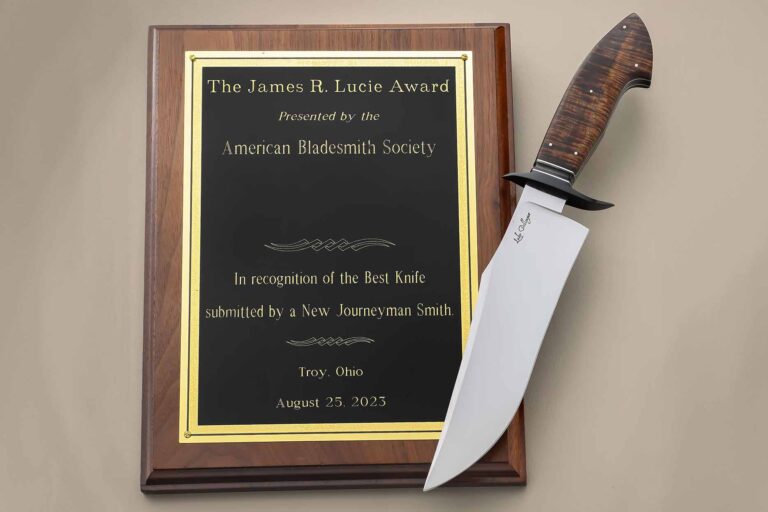
Walnut is a hardwood favored by makers such as ABS journeyman smith Luke Dellmyer. It is a very stable, attractive wood that costs $30 a block. Another natural handle material I like, but you don’t see much, is stacked leather washers, as on the Mike Malosh Bear Hunter. One advantage I found with stacked leather is that, over time, the handle material will conform to your hand, providing you with a custom grip. You can expect stacked leather to add about $30 to the knife’s cost.

What Makes A True Value

As a professional custom knife purveyor, I offer prices based on my conversations with suppliers and makers and the materials I have bought over the years. As you know, everything gets more expensive, so prices may vary. The makers’ ability to combine the materials to create functional and aesthetically pleasing knives comes from years of honing their skills in their shops. Once you understand material pricing and can differentiate the skill levels of the different makers, you will realize that this is where the true value lies.

*Like on the inside of the barrel of a firearm, lands are the raised part of the antler and the grooves are the recessed part.

Check Out More Outdoor Knives:

Catchy Names On Great Knives

Recognition, catchiness and marketability are but three keys to knife names.

What’s in a name? A knife by any other name will still cut, hopefully. Many people don’t realize what hangs on a name. Is it good enough to be memorable, catchy as it were? A catchy name will make a knife more or less marketable.

If you’ve read my stories long enough, you’ve seen me comment on a knife’s name, especially if it is a long, drawn-out one. To me, it is important for the name to have a short form. For example, salespeople can’t sell a knife by word of mouth if they have to say the company name followed by Omega Kilroy Uber Cutter, Men In Black Forever Ever Sharp Cutting Commando, etc. When I was having knives licensed, the licensing companies would check to see if there were other knives on the market with the same name to avoid any copyright or other legal problems. They no doubt still do that.

I think now more than ever naming a knife would be even more difficult than designing one. After all, you can have numerous drop points but when you go to name your knife you don’t want it drowning in a sea of cutlery. With so many new knife companies out there, knife production is at an all-time high. How on earth do they make their knives stand out from the rest? One way is with the name. Following are some lighthearted ones.

RMJ Tactical Stabby Guy

The large finger loop in the handle butt of the Stabby Guy provides a great platform to support the knife in your hand and keep it from slipping during thrusting motions. The fuller helps maintain blade strength and reduces weight.

Stabby Guy Specs
Overall Length: 7.25″
Handle length: 3.5″
Blade Length: 3.75″
Blade Steel: CPM 3V carbon
Handle material: Black G-10, Dirty Olive Hyena Brown
Sheath: Kydex
MSRP: $240
Country Of Origin: U.S.A.

RMJ Tactical chose a name short and sweet for its Stabby Guy. I prefer—no, actually love—names like this. If you find yourself wandering off into multi-syllable diatribes for a name, you’ve lost me. Not only is Stabby Guy brief, it’s to the point, pun totally intended. It is what it says it is. I would call it a self-defense blade. It is slender in design and has an American-style-tanto tip. It is built solid, with the body of the knife having no primary edge.

A fuller runs full length on one side of the blade. The fuller allows the knife to keep its strength and still not weigh a ton. After all, this knife technically is equivalent to a tactical sewing needle. Save the fancy moves for Hollywood and put the machine on surge with the Stabby Guy. It has a simple, ergonomic, basically straight handle. A finger loop at the butt serves to anchor your grip and substitutes for the lack of a guard. A guard stops your hand from slipping forward while thrusting with the knife; the finger loop serves the same purpose.

Though there’s not a lot of edge, the knife need not be dead weight all day while you’re waiting for a prison riot to break out. The small but sharp edge can do a ton of minor chores. However, don’t expect to carve a chess set with it. It has a Kydex sheath equipped with a belt loop. I carried mine in my back pocket and forgot it was there. It’s a cool concept of a knife with a name that doesn’t leave you guessing.

Condor Tool & Knife Rude Boy Machete

The overall profile of the Rude Boy shows the sweet spot of the blade is a few inches back from the tip. The farther out the sweet spot, the more force it has during a swing.

Stabby Guy Specs
Overall Length: 7.25″
Handle length: 3.5″
Blade Length: 3.75″
Blade Steel: CPM 3V carbon
Handle material: Black G-10, Dirty Olive Hyena Brown
Sheath: Kydex
MSRP: $240
Country Of Origin: U.S.A.

Condor Tool & Knife’s aptly named Rude Boy Machete is made for light vegetation like that in a rain forest. Some machetes, on the other hand, are geared toward North American vegetation, such as hardwood or softer trees.

People often view a machete as a survival or bushcraft tool. Actually, it is more of a hiking tool with such primary uses as clearing walking trails through the jungle. For these endeavors the knives are often not razor sharp like many in North America believe. Maintaining a high level of sharpness would be next to impossible in such conditions and at best too time consuming. For that reason, a powerful swing with a thin, dull machete works well in dispatching vegetation. The Rude Boy is not only thin but lightweight, making it possible to swing for long periods. The well-constructed leather sheath has a pivoting belt loop to help avoid hanging up easily on vegetation.

The only thing I take issue with is the blade profile. The blade’s lengthy defined tip leaves the belly swell farther back from the end. My preference would be to have the widest part of the blade farthest out to get the most out of the swing. Don’t get me wrong, the Rude Boy worked well, but a long day of swinging makes you want to optimize a blade’s performance. Then again, you do want some variety in appearance.

The best feature is the handle. In profile it is pretty much the American military style, though there are some excellent ergonomics added to the design. The plastic handle is overmolded to create a hidden tang. Instead of being blocky the contours are smoothed out for a comfortable grip you can use for long periods. I like the Rude Boy and I can see me beating the snot out of it once yardwork season arrives.

Toor Knives Jank Shank S

The sharp point and clean grind lines of the Jank Shank S make it easy to see how the author was able to use it to clean 50 muskrats with minimal effort.

Jank Shank S Specs
Overall Length: 7″
Handle length: 3″
Blade Length: 4″
Blade Steel: CPM M4 carbon
Handle material: G-10
Sheath: Kydex
MSRP: $250
Country Of Origin: U.S.A.

Out of the creatively named test models, I probably gave the Jank Shank S from Toor Knives the longest going over. I used it as an EDC but the bigger workout was when I took it to my sportsman’s club. Many in the tactical crowd promote rings in the handle butt for changing positions during combat, but I like them for the advantage they give while cleaning game. That’s right, cleaning game.

When cleaning animals I often find I want to free my hands to work with the carcass. Instead of putting the knife down, I let it dangle from my pinky. I do what needs to be done and then just move the knife into my grip. There’s no fiddling around; it’s quick, simple and no searching for where I put it down.

My club has an annual muskrat dinner, and depending on ticket sales we clean up to 400 muskrats. I cleaned 50 of the varmints with the Jank Shank S, including splitting open the chest and neckbone. Not once did I sharpen it. When done I cleaned it off, gave it a touch up and bam!—it was crazy sharp again. The textured G-10 scales made it easy to grip despite my hands being covered in blood. It worked so well the muskrats didn’t even complain. I liked it so much you won’t hear me grumble about the blade’s fur-catcher choil. Oh, and did those muskrats ever look good with fries and a side of deluxe baked beans! The sheath fits well with no break-in, period. I will add an UltiClip to the sheath and it will be an instant EDC. The Jank Shank S will make it into my game kit any time. Muskrats beware!

Name-Gamers

A name can add to the appeal of a knife by being entertaining. It is also important to have a good name to make the design stand out and be memorable. In the end you don’t want the name associated with a piece of junk, so it is always best to put the most effort into a great design. Our three name-gamers fill that bill.

Catchy Cutlery Call Signs

  • Catchy Cutlery Call Signs
  • Altered Beast (V Nives)
  • American Lawman (Cold Steel)
  • Bot (CRKT)
  • Dreadeye (Tactile Knife Co.)
  • Juma Blue Snake (Fallkniven)
  • June Bug (Emerson Knives, Inc.)
  • Laid Back Jack (Jack Wolf Knives)
  • Little Bugger (TOPS Knives)
  • Monkey Thumper (Fox)
  • Separateur (Bastinelli)
  • Smooth Criminal (Medford)
  • Waning Moon Yataghan (APOC/CAS Iberia)
  • Warhead Auto (BRS)
  • Zilch Baltic Haze (Gerber)

Pocketknife Info:

Custom Forged Hunting Knives: Full Spectrum Of Options

Discover the craftsmanship behind unique designs, from carbon steel to mosaic damascus, and learn what makes a perfect hunting knife.

The primary trend that has emerged in custom forged blades over the past 18 months is the growing popularity of the hunting and utility knife. The options seem limitless, from forged carbon steel and Micarta® to mosaic damascus and ivory.

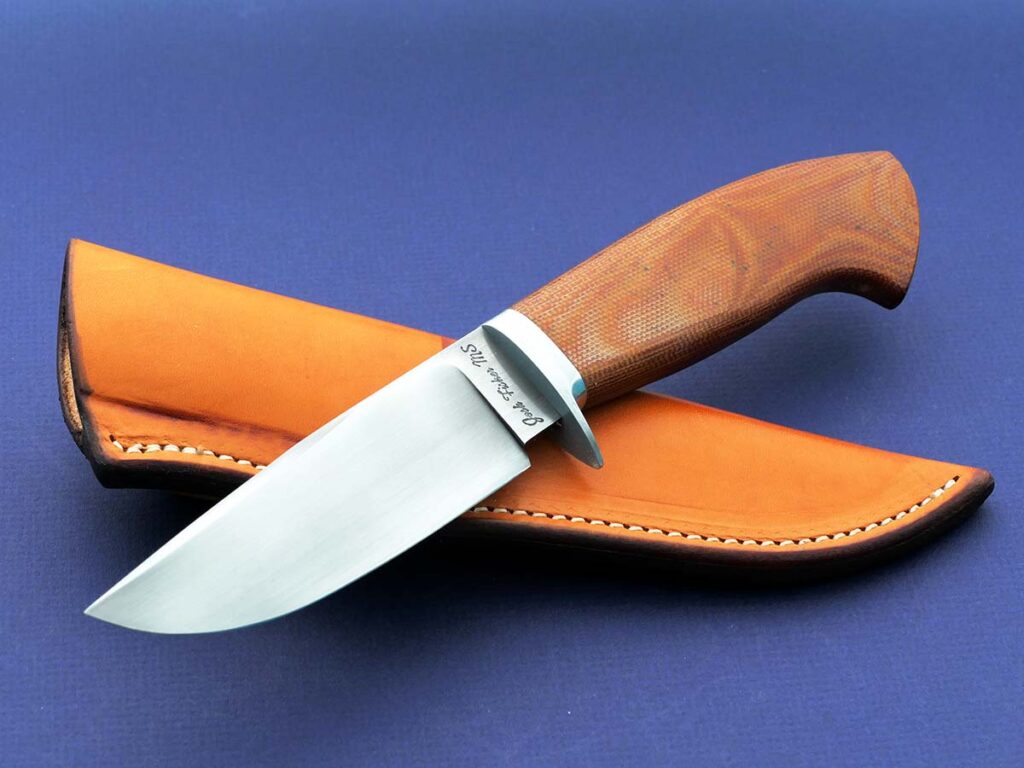
The best seller among the group is the carbon steel hunter featuring a Micarta handle. An excellent example is from award-winning ABS master smith Josh Fisher—world-class craftsmanship at an affordable price. Designed for serious work, this knife will last, if properly maintained, for the owner’s lifetime and beyond.

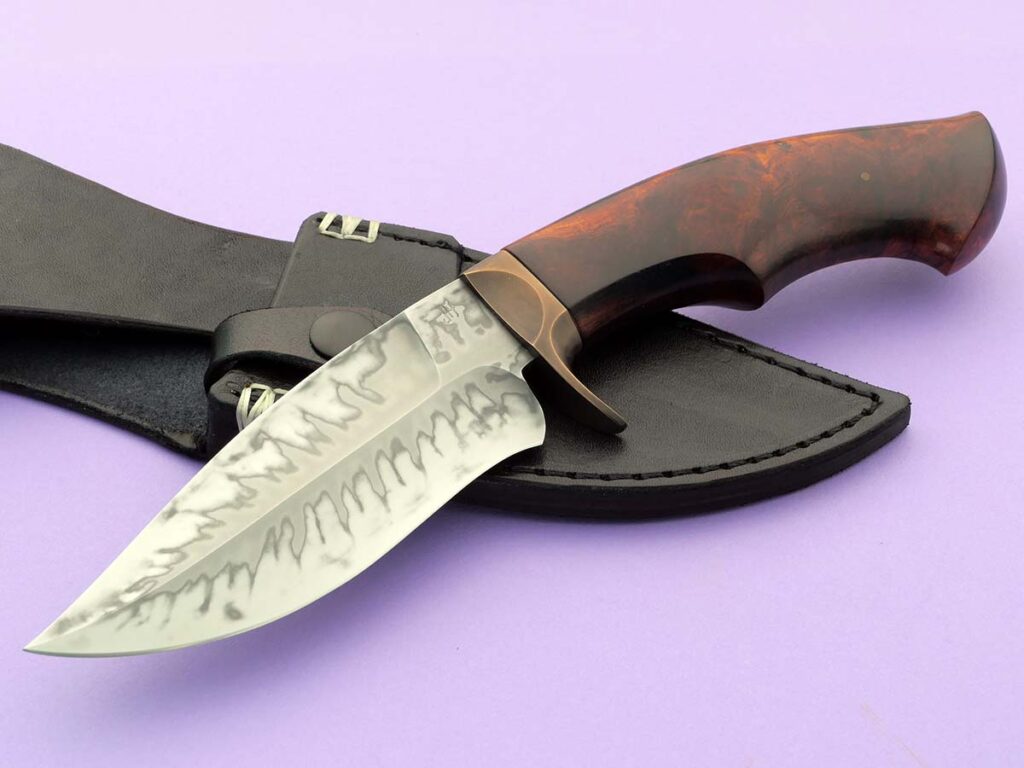
One of my favorites is a hunter from Slovenian knifemaker Jan Hafinec featuring the unique hamon of his Bonfire Hunter. Jan’s hamon looks like flames streaking across the blade. He achieves the distinctive look by cleaning the grind and normalizing the blade. He then applies Satanite* clay to the blade in the desired shape for the hamon. After drying the clay, he puts the blade in his electric kiln. Upon removing it from the kiln, he plunges the blade into fast-quenching oil to give the hamon its fiery look.

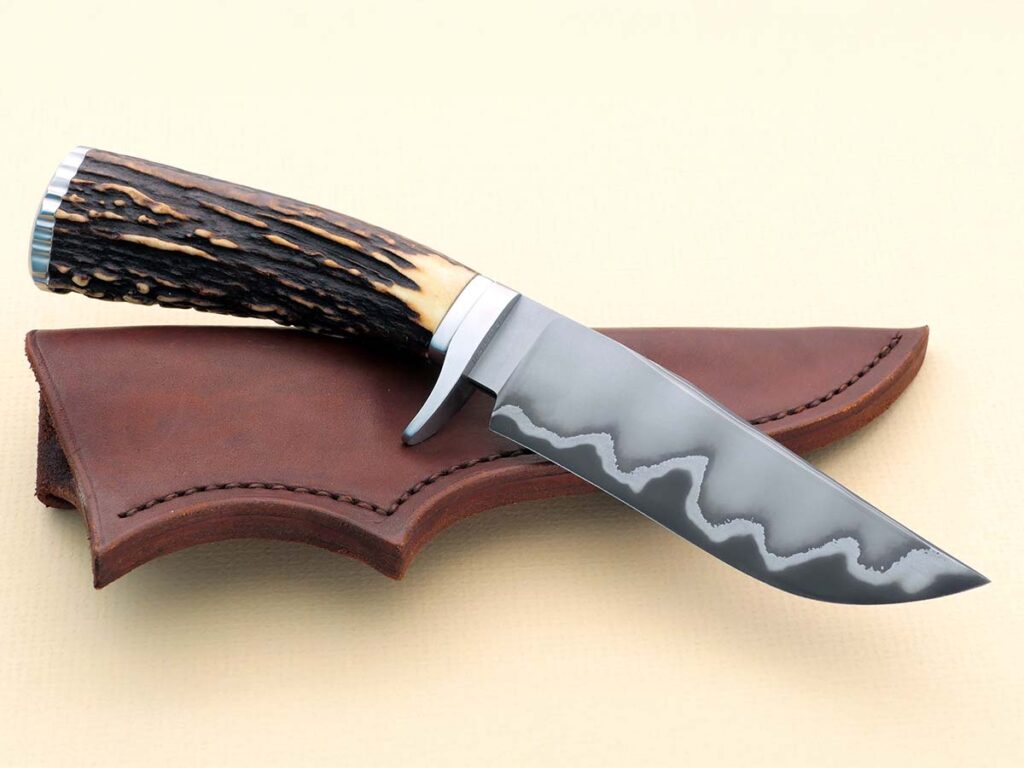
Maker: Wess Barnhill
Model: Drop-point hunter
Blade Length: 5”
Blade Material: San-mai of 1075 carbon and 410 stainless steels
Guard and Buttcap: Stainless steel 
Handle Material: Sambar stag 
Overall Length: 9.75”
Sheath: Leather model custom made by Wess Barnhill
Knife to know: Wess is an ABS journeyman smith 
His price for a similar knife: $825
(Robertson’s Custom Cutlery image)

A steel construction that has been a favorite of collectors for several years now is san-mai. A hunter by ABS journeyman smith Wess Barnhill has a great example of a san-mai blade, featuring a carbon steel core sandwiched between outer layers of stainless steel. One of my favorite aspects of this type of laminated blade is that each one is unique, encouraging collectors to have more than one in their collection, if they so choose, as no two are the same. Barnhill’s blade material of choice is a 1075 carbon steel core sandwiched between two pieces of 410 stainless steel. He likes to zip-weld all the edges together, as this keeps out the oxygen while forge welding. He sets the temperature to 2,350 F° for 10 minutes to produce his san-mai blades.

Copper San-Mai

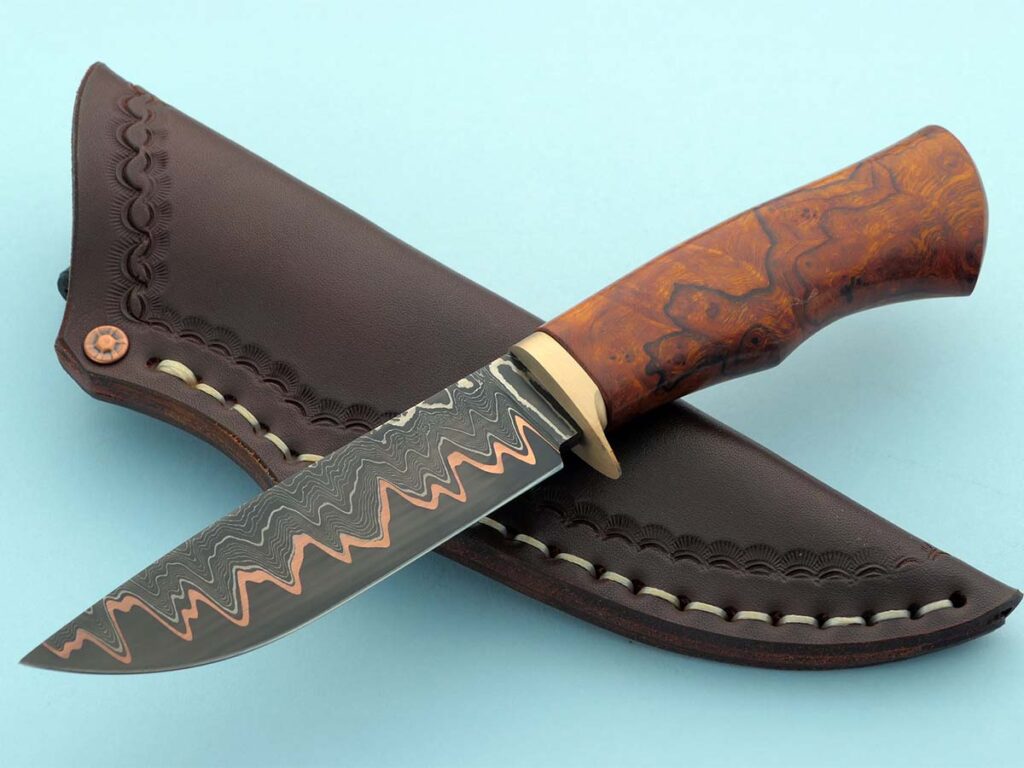
Maker: Dan Lewis
Model: Drop-point hunter
Blade Length: 4.5”
Blade Material: Forged san-mai w/a core of W-2 tool steel, an outer layer of damascus and a middle layer of copper
Guard Material: Bronze
Handle Material: Desert ironwood
Overall Length: 9”
Sheath: Leather model custom made by Dan Lewis
Knife to know: Dan is an ABS journeyman smith
His price for a similar knife: $550
(Robertson’s Custom Cutlery knife image)

Seeing the work of ABS journeyman smith Dan Lewis at the 2024 BLADE Show, I was immediately drawn to it. His unique copper damascus san-mai features carbon steel, damascus and copper. He also offers the same style of blade with nickel if you prefer. He explained that monosteel and damascus blades are forged to shape and taken through a precise heat treatment. Copper san-mai blades are a different story.

“Once I create the billet—layering high-carbon steel with pure nickel damascus and copper—I do very little forging beyond drawing out the tang. The rest is done through careful grinding,” he explained. “Precision is everything. The billet must be measured exactly to keep a consistent core of high-carbon steel, with even layers of damascus and copper on each side. Copper looks great but it doesn’t belong on the cutting edge. I always use a high-carbon core for strength and sharpness. When it comes to etching, combining pure nickel and copper allows me to use a stronger, proprietary acid. The result is a deep, dark etch in just seconds, creating a bold finish that highlights every layer.”

Dan combines the copper damascus san-mai with blued fittings and desert ironwood to create an eye-catching work of art at an affordable price.

Maker: Josh Fisher
Model: Drop-point hunter
Blade Length: 4.5”
Blade Material: 1084 carbon steel
Blade Finish: Satin 
Guard Material: Stainless steel 
Handle Material: Vintage Westinghouse Micarta®
Overall Length: 8.75”
Knife to know: Josh Fisher is an ABS master smith
Sheath: Leather model custom made by Josh
His price for a similar knife: $550
(Robertson’s Custom Cutlery image)

I saw ABS journeyman smith Bob Earhart’s knives on the internet while working on my checklist for the BLADE Show. I contacted him several months before the show to discuss his knives. In addition to his excellent knifemaking skills, the use of a blued guard and bronze spacer in conjunction with presentation-grade desert ironwood gives his hunter a stunning look. Instead of using a forge press die, Bob grinds a ladder pattern into his steel billet. Grinding toward the edge, he cuts deeper and then hammers out the grooves, creating a complete ladder pattern throughout the blade.

Additionally, Bob has the one skill that many knifemakers lack: effective communication. He encouraged me to provide my input and kept me informed about the knife build every step of the way. When I buy my first knife from a knifemaker, I really appreciate that.

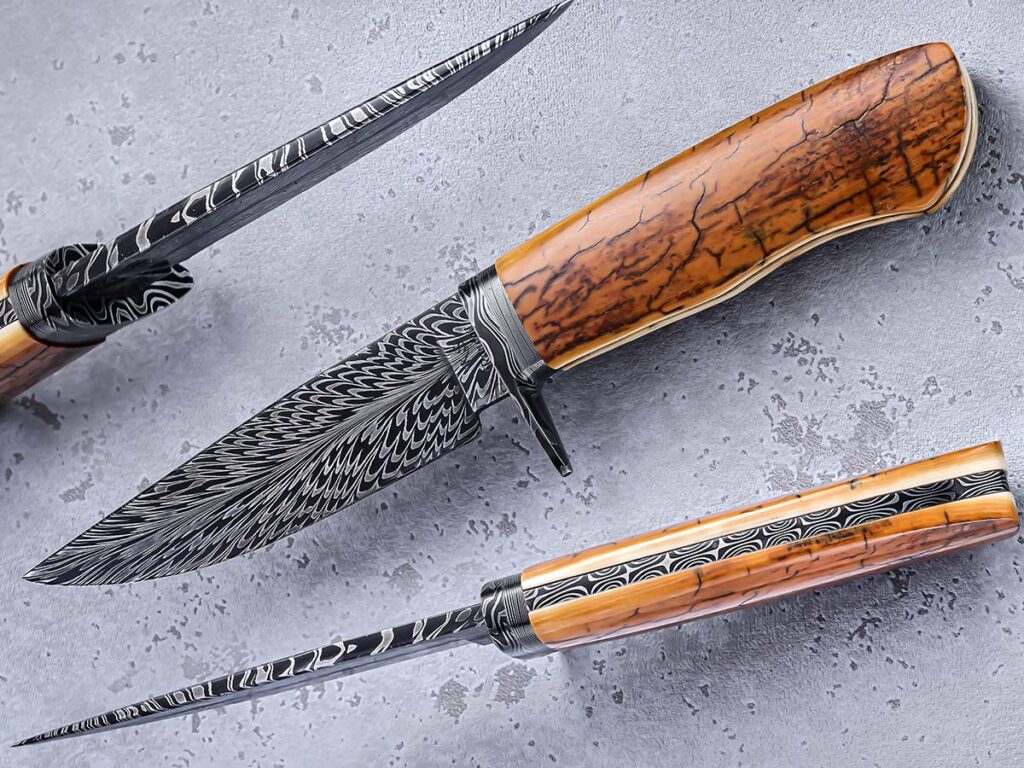
Frame-Handle Jewel

Maker: Steve Randall 
Model: Frame-Handle Hunter
Blade Length: 4.75”
Blade Material: Feather-pattern damascus 
Guard and Frame: Feather-pattern damascus  
Handle Material: Mastodon ivory
Overall Length: 9.5”
Sheath: Leather model custom made by Steve Randall
Knife to know: Steve is an ABS master smith
His price for a similar knife: $1,400
(SharpByCoop image)

The frame-handle hunter is arguably one of the more difficult knives to build. Add mosaic damascus and ivory to the equation and it becomes even more challenging. Given the complex nature of ABS master smith Steve Randall’s frame-handle hunter, I asked him to explain his process for building the knife.

He starts by making a billet of a W’s-pattern damascus. The layer count and stack are personal preferences. The lower the count, the wider the pattern. Once the billet is formed to the preferred layer count, Steve cuts it into pieces, restacks the pieces, and forge welds them back together. He splits the resulting stack in half using a dull wedge and welds the two halves back together to create a feather damascus billet. The splitting process with the dull wedge is what drags the hot steel to make the feather design.


Steve pointed out that increasing the layers also increases the potential for flaws. Often, the flaws don’t reveal themselves until the blade is being ground. If flaws are discovered, the blade must be thrown away and all those work hours are lost. (Author’s note: Please understand that due to the increased degree of difficulty and risk of blade failure, any mosaic-type of damascus used in the knife’s construction will increase the price. All damascus is not equal!)

Steve said the most challenging part of a frame-handle knife is connecting the frame to the guard or ferrule so there are no gaps and the fit appears seamless. Also, how the handle is attached to the blade is key. There are various ways to attach that can add to the complicated nature of a frame, for example, hidden pins, hidden finial, external finial, etc.

Changing Conditions

Maker: Jan Hafinec 
Model: Bonfire Hunter
Blade Length: 5”
Blade Material: Forged C105 carbon steel w/double hamon
Guard Material: Bronze
Handle Material: Desert ironwood
Overall Length: 10 1/8”
Sheath: Leather model custom made by Jan Hafinec
His price for a similar knife: $600
(Robertson’s Custom Cutlery image)

In the March BLADE®, I wrote about the matrix I use to determine which knives to buy. Before that story was published, BLADE Editor Steve Shackleford asked me what conditions would cause me to adjust my matrix. One condition would be a change in the popularity of a market sector, such as custom fighters, gut hooks, stilettos, etc. With a current slowdown in damascus bowie sales, primarily due to the bowies’ price point, an alternative emerged, offering many of the same options at a more affordable price: the forged hunting knife.

One of the best aspects of attending a knife show is the ability to compare knives, apples to apples if you will. This year’s BLADE Show resulted in me updating my matrix with regard to custom hunting knives.

Before the show I provided a set of parameters to 10 ABS journeyman and master smiths, both domestic and international, to build a damascus hunting knife to my specifications Those parameters were: a 4.75-inch ladder-pattern damascus blade, damascus guard (no pattern specified), and a wood handle (no wood specified). The smiths’ quotes ranged in prices from $600 to $1,250 per knife.

Still think you don’t need your own matrix?

*CAUTION: When using Satanite hamon clay, “wear protective gloves, outfit, and face and eye protection. If on skin, wash with soap and eater. If on eyes, rinse with water for several minutes. If eye irritation persists, get medical attention.”

More Custom Knives:

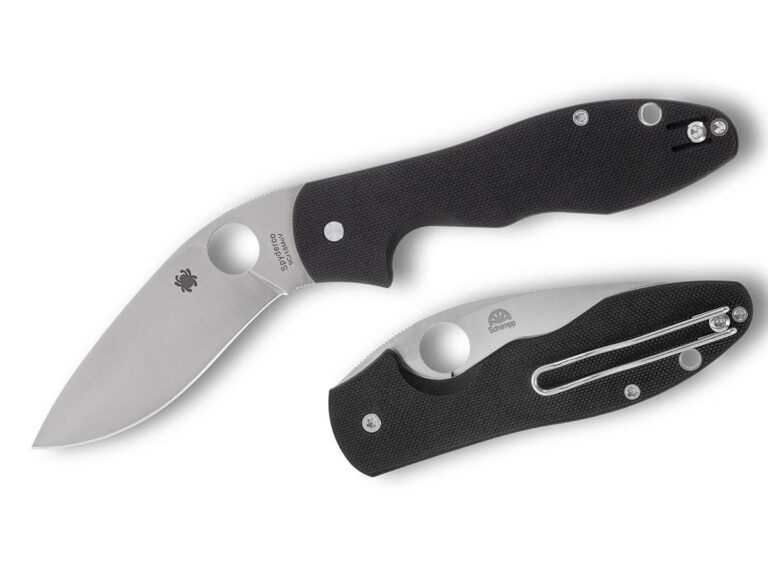
First Look: Spyderco Retract Angles At EDC Kukri

Ed Schempp Reimagines the Classic Kukri Silhouette for Accessible Everyday Carry.

As Spyderco kicks off its 50th-anniversary celebrations, the brand has unleashed a wave of high-end releases featuring exotic steels and carbon fiber scales. However, among the titanium and super-steels, a more under-the-radar model is capturing the attention of enthusiasts who value historical design and practical ergonomics: the Spyderco Retract.

Designed by the renowned custom knifemaker and bladesmith Ed Schempp, the Retract is a study in leverage. Schempp is well-known for his ability to translate ancient blade shapes into modern folding platforms, and with this model, he has turned his focus toward the legendary Nepalese kukri.

Spyderco Retract Angle

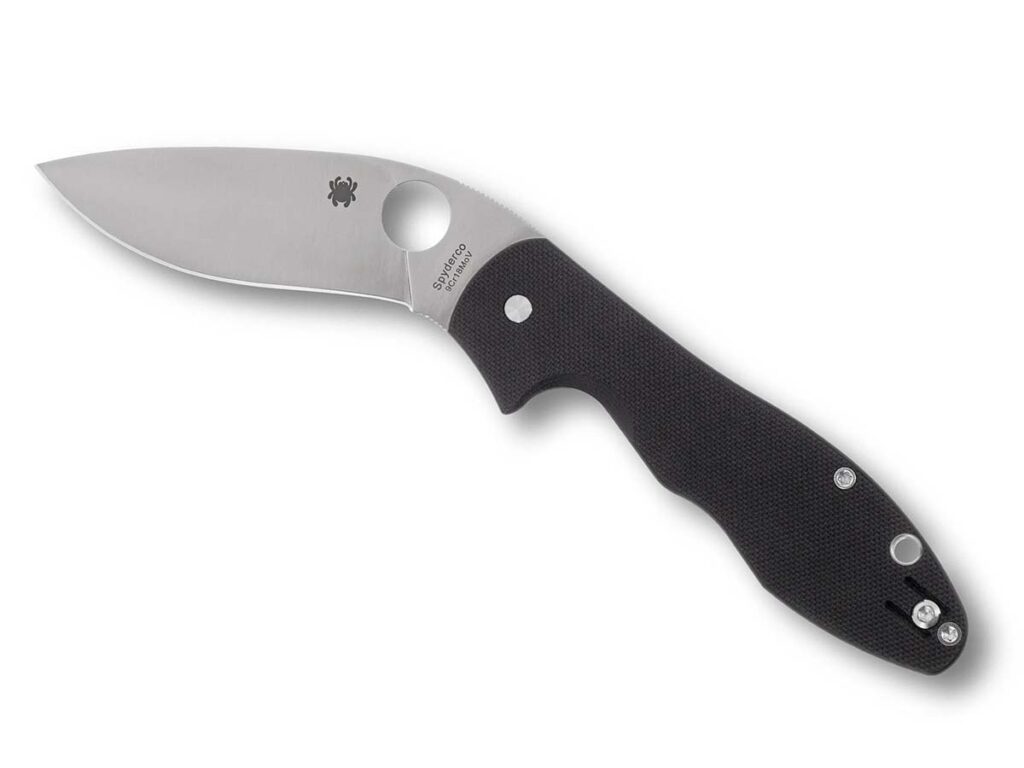
The most striking feature of the Retract is its dramatically curved, recurve blade. By utilizing a negative angle—where the blade cants forward relative to the handle—the design naturally enhances cutting leverage. This is particularly noticeable during draw cuts, where the geometry of the 3.4-inch blade does much of the work for you.

Spyderco Retract Profile

To keep the knife high-performing yet accessible, Spyderco opted for 9Cr18MoV stainless steel. While it sits on the more budget-friendly side of the spectrum, it is a capable steel that is famously easy to maintain and sharpen in the field. The blade features a full-flat grind and the iconic Trademark Round Hole for easy, ambidextrous deployment.

Retract Ergonomics

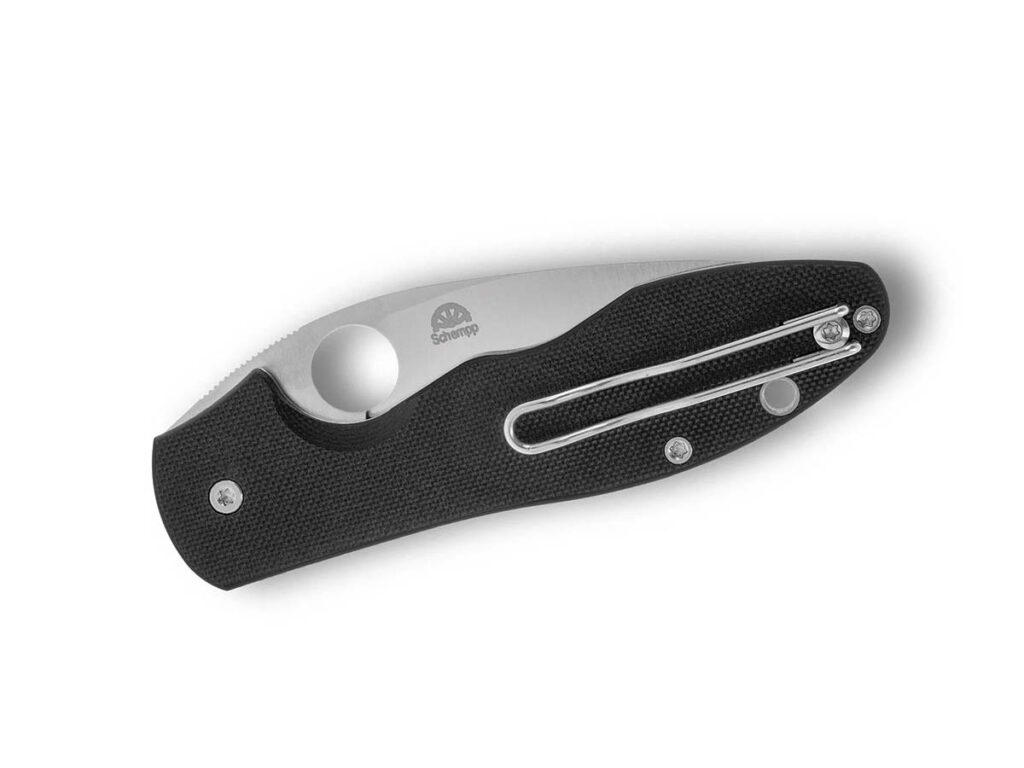
Despite its unusual silhouette, the Retract is surprisingly pocket-friendly. The handle is built on a foundation of skeletonized stainless steel liners, providing a rigid and reliable LinerLock mechanism. The lock is machined nearly flush to the scales, a thoughtful touch that prevents unintentional closure during heavy use.

Spyderco Retract Closed

The handle scales are crafted from peel-ply-textured G-10, offering a secure, non-slip grip that holds up in wet conditions. Combined with the jimping on the blade’s spine, the knife allows for a high degree of control and stability when exerting downward pressure.


Cost

Perhaps the biggest story surrounding the Retract is its price. In a market where high-end folders are climbing toward the mid-hundreds, Spyderco has positioned the Retract as a formidable entry-level tool. With an MSRP of $95—and street prices often dipping even lower—it offers a chance to own a Schempp-designed integral-style worker without a massive financial commitment.

To round out the package, the Retract includes a deep-pocket reversible wire clip for tip-up carry and a lined lanyard hole, ensuring it remains as discreet as it is capable.

Retract Specs
Overall Length: 7.79″
Closed Length: 4.49″
Blade Thickness: .116″
Tip Carry Position: Tip-Up
Blade Length: 3.4″
Edge Length: 3″
Handle Material: G-10
Lock Type: LinerLock
Origin: China
Steel: 9Cr18MoV
Knife Weight: 4.2 oz
Clip Position: Ambi
Grind: Full-Flat
MSRP: $95

Spyderco Retract Kukri Blade Knife

Spyderco Retract Kukri Blade Knife

$71.25
Prices accurate at time of publishing. Affiliate disclosure.

See More New Releases:

Advertisement

Must Read Articles

Read this before you make a knife

Knifemaking 101 – Read This Before You Make a Knife

  by Wayne Goddard My experience has taught me that there's nothing like digging in and getting started. I've often said the hardest part of the...
how to forge damascus steel

How to Forge Damascus

Advertisement
Advertisement