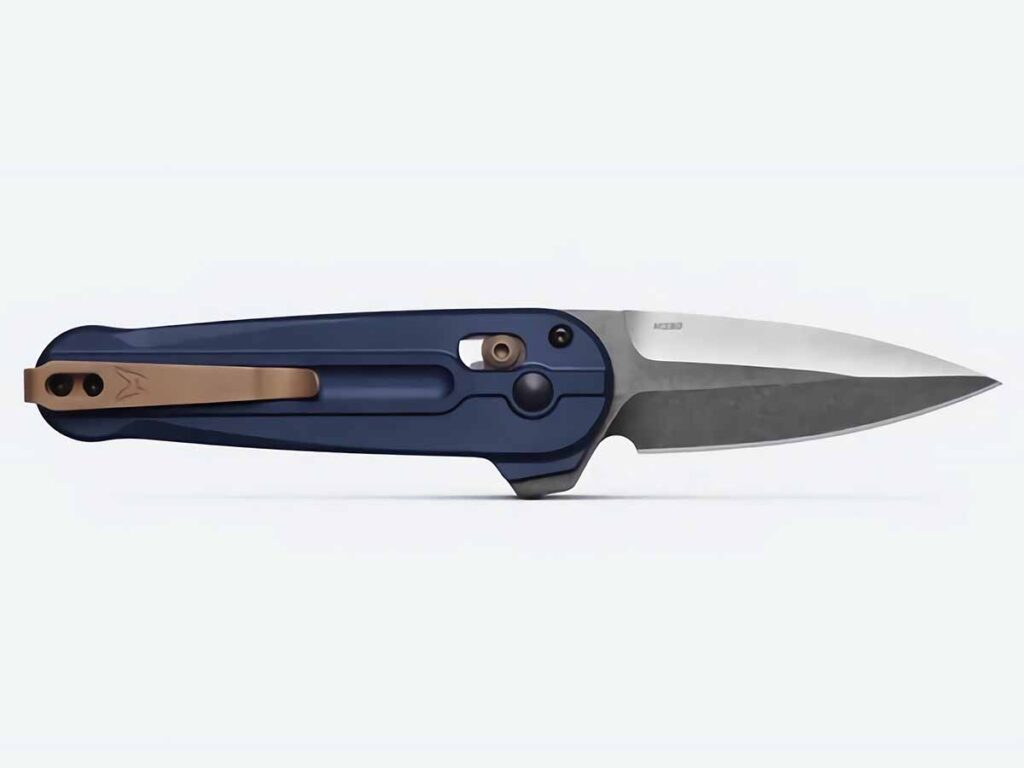
A bold new release from Benchmade, the Lowden blends premium materials, M390 steel, and fidget-worthy deployment in a sleek, spear-point EDC design.
Benchmade just shook things up with the release of the Lowden—and if you’re into flippers, this one’s going to catch your eye.
Known for their rock-solid AXIS lock and high-quality builds, Benchmade isn’t typically the first brand you think of when it comes to rear flippers. But the Lowden changes that.
This sleek little blade flips open like a dream. You’ve got the option of using the flipper tab or sticking with the tried-and-true AXIS lock for one-handed deployment, and both are smooth and snappy. It’s a fun, fidget-friendly knife that doesn’t compromise on function.
The Lowden sports a 2.79-inch spear-point blade made from M390 super steel—translation: this thing holds an edge like a champ, resists corrosion, and is tough enough for serious work.
The handles are lightweight anodized aluminum with a stainless-steel inset frame, giving it that slim, dagger-inspired profile without skimping on strength. Plus, Benchmade matched the color on the AXIS button and deep-carry pocket clip for a clean, cohesive look.
Sure, a spear-point blade might seem like an odd choice for EDC or outdoor use, but in practice, it works. It’s surprisingly versatile, with great piercing power and slicing ability. The ergonomics are solid too—with an ample handle fitting comfortably in a wide range of hand sizes and offers a confident grip.
Are there a couple of nitpicks? Sure.
There’s no lanyard hole, which could be a downside for folks who like a little extra security, and the flipper tab could use some jimping. But overall, the Lowden is a refined, premium knife that’s just plain enjoyable to carry and use—classic Benchmade quality with a fresh twist.
Bear Edge unveils a trio of American-made EDC options at SHOT Show.
Now that the dust has settled on SHOT Show 2026, we’re taking a closer look at the new releases from Bear Edge. The Alabama-based maker unveiled a trio of everyday carry folders that lean into modern ergonomics and practical materials without breaking the bank. As a brand under the Bear & Son Cutlery umbrella, Bear Edge continues to leverage decades of American manufacturing expertise to produce knives that are as reliable as they are accessible.
The Light Gray Aluminum Folder
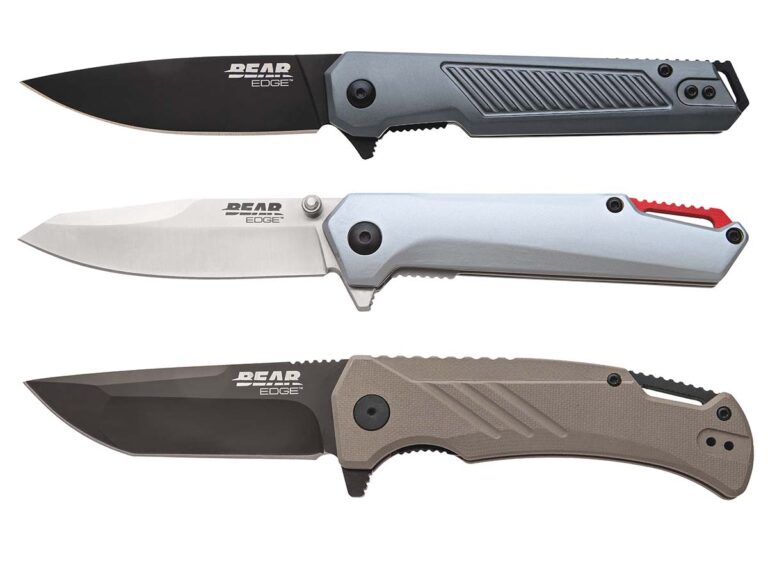
If you’re looking for a sleek, no-nonsense worker, Model 71140 is the pick of the litter. Built entirely in their Alabama factory, this 4-inch folder features a modified drop point blade made from 440 stainless steel. What catches the eye is the red spacer with integrated jimping—it adds a nice pop of color and serves as a functional lanyard attachment point. The aluminum handle keeps the weight balanced, and the dual deployment (thumb studs or flipper) makes it a versatile companion for any task.
The Dark Gray Assisted Opener
For those who prefer a more tactical, “stealth” aesthetic, Bear Edge introduced Model 71141. This is a narrow, modern profile featuring a 3 5/8-inch drop point blade with a black finish. The assisted opening is snappy, and the textured grooves on the gray aluminum handle provide a noticeably secure grip. It’s a narrow carry that fits comfortably in the pocket, especially with the reversible tip-up clip.
The Tan G10 Tanto
Demanding jobs usually require a bit more “meat” on the bone, and Model 71139 delivers. This full-sized folder swaps out aluminum for Tan G10 scales, providing a high-strength, lightweight handle that won’t slip. The business end is a modified tanto blade with a black finish, optimized for piercing and heavy-duty slicing. Like its siblings, it features a rapid-deployment flipper and a deep-carry pocket clip that’s sturdy enough for a duty belt.
Final Cut
Bear Edge continues to prove that “American-made” and “affordable” don’t have to be mutually exclusive. These SHOT Show debuts show Bear Edge is cutting into the modern EDC movement, providing users a tool that looks good on the desk but performs even better in the field.
Recognition, catchiness and marketability are but three keys to knife names.
What’s in a name? A knife by any other name will still cut, hopefully. Many people don’t realize what hangs on a name. Is it good enough to be memorable, catchy as it were? A catchy name will make a knife more or less marketable.
If you’ve read my stories long enough, you’ve seen me comment on a knife’s name, especially if it is a long, drawn-out one. To me, it is important for the name to have a short form. For example, salespeople can’t sell a knife by word of mouth if they have to say the company name followed by Omega Kilroy Uber Cutter, Men In Black Forever Ever Sharp Cutting Commando, etc. When I was having knives licensed, the licensing companies would check to see if there were other knives on the market with the same name to avoid any copyright or other legal problems. They no doubt still do that.
I think now more than ever naming a knife would be even more difficult than designing one. After all, you can have numerous drop points but when you go to name your knife you don’t want it drowning in a sea of cutlery. With so many new knife companies out there, knife production is at an all-time high. How on earth do they make their knives stand out from the rest? One way is with the name. Following are some lighthearted ones.
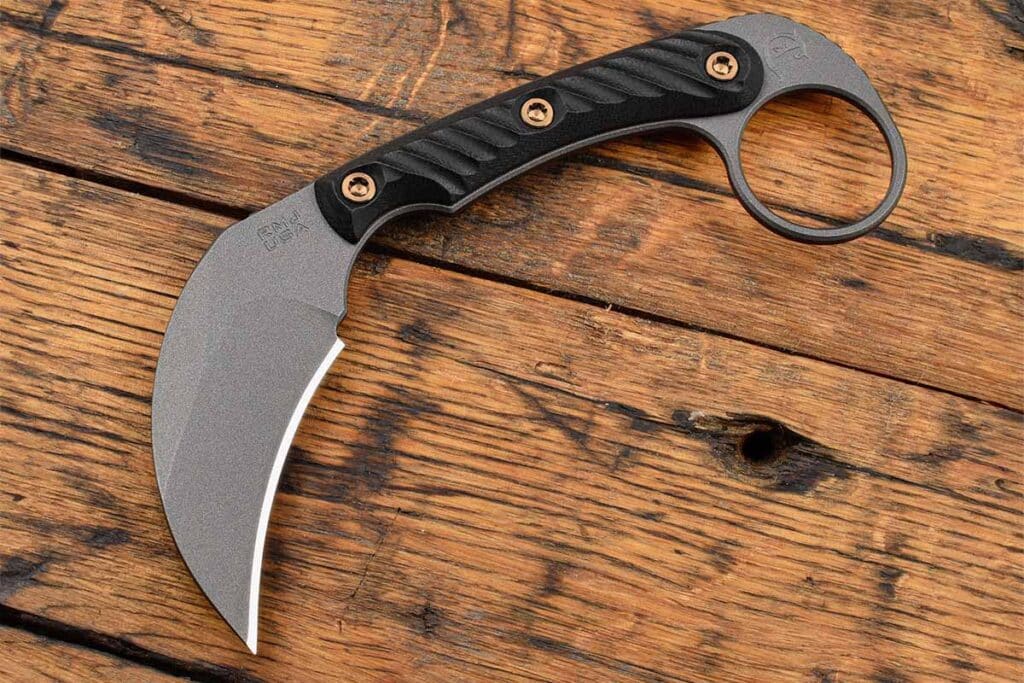
RMJ Tactical Stabby Guy
The large finger loop in the handle butt of the Stabby Guy provides a great platform to support the knife in your hand and keep it from slipping during thrusting motions. The fuller helps maintain blade strength and reduces weight.
Stabby Guy Specs Overall Length: 7.25″ Handle length: 3.5″ Blade Length: 3.75″ Blade Steel: CPM 3V carbon Handle material: Black G-10, Dirty Olive Hyena Brown Sheath: Kydex MSRP: $240 Country Of Origin: U.S.A.
RMJ Tactical chose a name short and sweet for its Stabby Guy. I prefer—no, actually love—names like this. If you find yourself wandering off into multi-syllable diatribes for a name, you’ve lost me. Not only is Stabby Guy brief, it’s to the point, pun totally intended. It is what it says it is. I would call it a self-defense blade. It is slender in design and has an American-style-tanto tip. It is built solid, with the body of the knife having no primary edge.
A fuller runs full length on one side of the blade. The fuller allows the knife to keep its strength and still not weigh a ton. After all, this knife technically is equivalent to a tactical sewing needle. Save the fancy moves for Hollywood and put the machine on surge with the Stabby Guy. It has a simple, ergonomic, basically straight handle. A finger loop at the butt serves to anchor your grip and substitutes for the lack of a guard. A guard stops your hand from slipping forward while thrusting with the knife; the finger loop serves the same purpose.
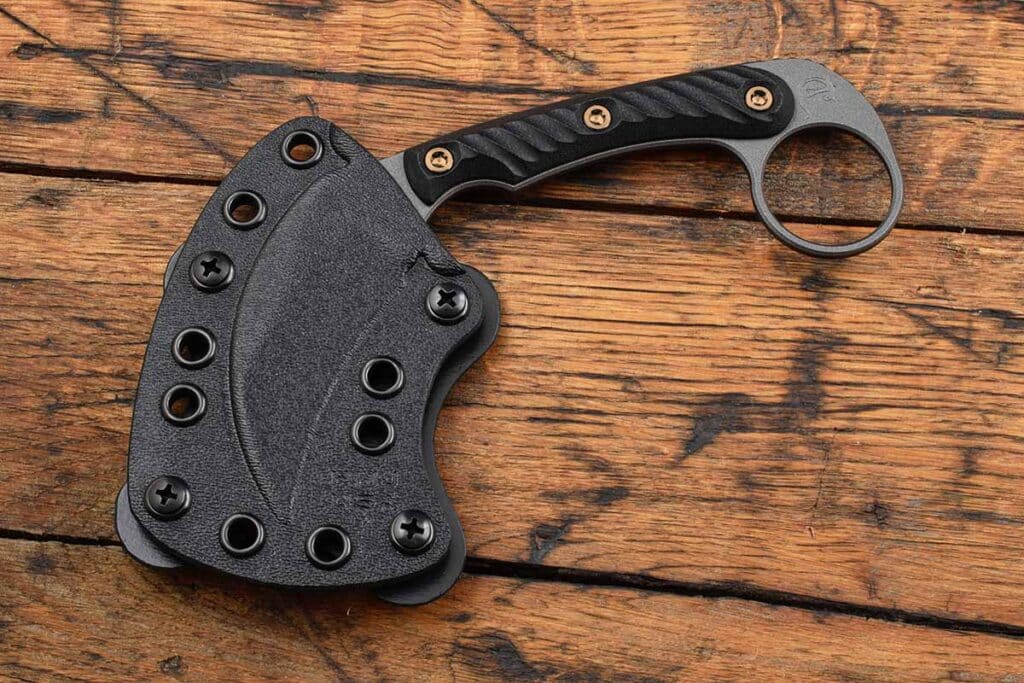
Though there’s not a lot of edge, the knife need not be dead weight all day while you’re waiting for a prison riot to break out. The small but sharp edge can do a ton of minor chores. However, don’t expect to carve a chess set with it. It has a Kydex sheath equipped with a belt loop. I carried mine in my back pocket and forgot it was there. It’s a cool concept of a knife with a name that doesn’t leave you guessing.
Condor Tool & Knife Rude Boy Machete
The overall profile of the Rude Boy shows the sweet spot of the blade is a few inches back from the tip. The farther out the sweet spot, the more force it has during a swing.
Stabby Guy Specs Overall Length: 7.25″ Handle length: 3.5″ Blade Length: 3.75″ Blade Steel: CPM 3V carbon Handle material: Black G-10, Dirty Olive Hyena Brown Sheath: Kydex MSRP: $240 Country Of Origin: U.S.A.
Condor Tool & Knife’s aptly named Rude Boy Machete is made for light vegetation like that in a rain forest. Some machetes, on the other hand, are geared toward North American vegetation, such as hardwood or softer trees.
People often view a machete as a survival or bushcraft tool. Actually, it is more of a hiking tool with such primary uses as clearing walking trails through the jungle. For these endeavors the knives are often not razor sharp like many in North America believe. Maintaining a high level of sharpness would be next to impossible in such conditions and at best too time consuming. For that reason, a powerful swing with a thin, dull machete works well in dispatching vegetation. The Rude Boy is not only thin but lightweight, making it possible to swing for long periods. The well-constructed leather sheath has a pivoting belt loop to help avoid hanging up easily on vegetation.
The only thing I take issue with is the blade profile. The blade’s lengthy defined tip leaves the belly swell farther back from the end. My preference would be to have the widest part of the blade farthest out to get the most out of the swing. Don’t get me wrong, the Rude Boy worked well, but a long day of swinging makes you want to optimize a blade’s performance. Then again, you do want some variety in appearance.
The best feature is the handle. In profile it is pretty much the American military style, though there are some excellent ergonomics added to the design. The plastic handle is overmolded to create a hidden tang. Instead of being blocky the contours are smoothed out for a comfortable grip you can use for long periods. I like the Rude Boy and I can see me beating the snot out of it once yardwork season arrives.
Toor Knives Jank Shank S
The sharp point and clean grind lines of the Jank Shank S make it easy to see how the author was able to use it to clean 50 muskrats with minimal effort.
Jank Shank S Specs Overall Length: 7″ Handle length: 3″ Blade Length: 4″ Blade Steel: CPM M4 carbon Handle material: G-10 Sheath: Kydex MSRP: $250 Country Of Origin: U.S.A.
Out of the creatively named test models, I probably gave the Jank Shank S from Toor Knives the longest going over. I used it as an EDC but the bigger workout was when I took it to my sportsman’s club. Many in the tactical crowd promote rings in the handle butt for changing positions during combat, but I like them for the advantage they give while cleaning game. That’s right, cleaning game.
When cleaning animals I often find I want to free my hands to work with the carcass. Instead of putting the knife down, I let it dangle from my pinky. I do what needs to be done and then just move the knife into my grip. There’s no fiddling around; it’s quick, simple and no searching for where I put it down.
My club has an annual muskrat dinner, and depending on ticket sales we clean up to 400 muskrats. I cleaned 50 of the varmints with the Jank Shank S, including splitting open the chest and neckbone. Not once did I sharpen it. When done I cleaned it off, gave it a touch up and bam!—it was crazy sharp again. The textured G-10 scales made it easy to grip despite my hands being covered in blood. It worked so well the muskrats didn’t even complain. I liked it so much you won’t hear me grumble about the blade’s fur-catcher choil. Oh, and did those muskrats ever look good with fries and a side of deluxe baked beans! The sheath fits well with no break-in, period. I will add an UltiClip to the sheath and it will be an instant EDC. The Jank Shank S will make it into my game kit any time. Muskrats beware!
Name-Gamers
A name can add to the appeal of a knife by being entertaining. It is also important to have a good name to make the design stand out and be memorable. In the end you don’t want the name associated with a piece of junk, so it is always best to put the most effort into a great design. Our three name-gamers fill that bill.
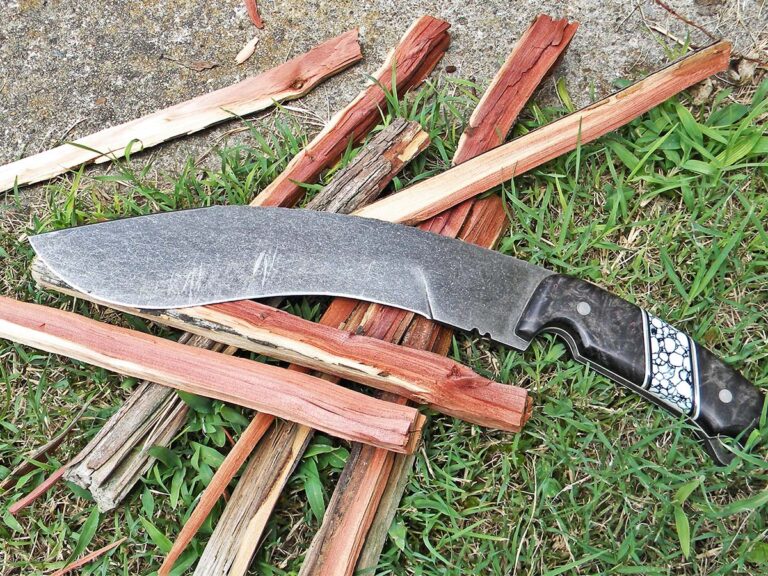
Blades and Bands Kukri is a forward-cutting knife design.
In the search for knives to test for “Spec Sheet,” I get referrals. Tracy Price is one. He’s a fairly new knifemaker but does quality work. The Kukri is a knife he made for himself to push his skills, something most makers do.
It’s always good to learn a different way to do things or a new shape. The more skills, the wider variety of knives the maker can build. No matter how pretty they look, form and function must be there. Let’s see how the Kukri functions.
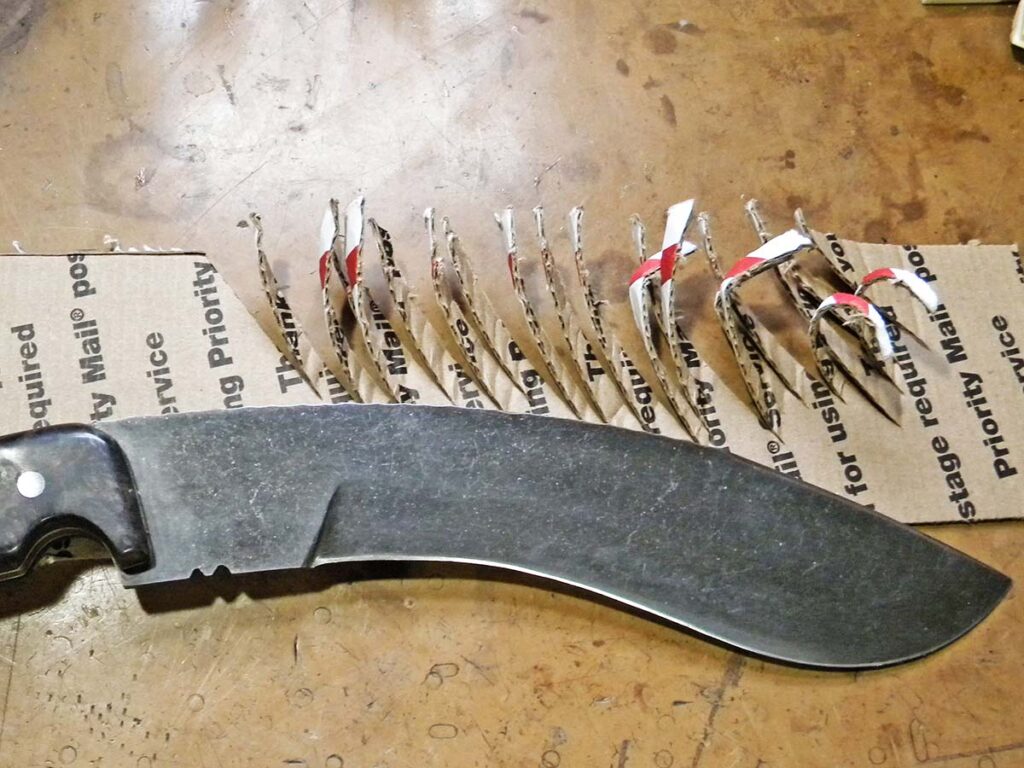
The cardboard slices curled from the edge geometry but resulted in no slowing down of the edge.
For a quick edge check, I use the paper slice. The knife cut smoothly and fast. The blade shape pulled the edge through the paper. I had to control the knife’s forward weight, but after a few slices, it was no issue. It’s a sharp blade for sure.
I cut up an old postage box and used a side of it for a single-walled cardboard cut. The knife sliced aggressively and was easy to control. The slices curled from the edge geometry but resulted in no slowing down of the edge.
Kukri Medium-Duty Cutting
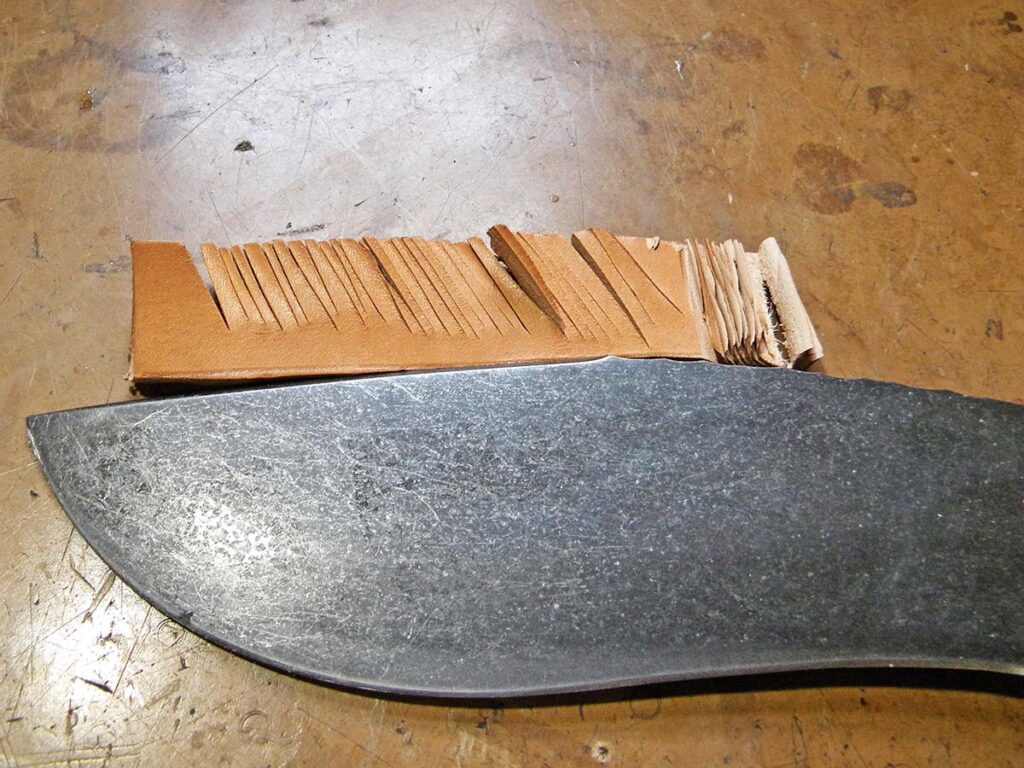
The Kukri smoked the leather cut.
Next up: 8-ounce leather for skiving. I shaved a thin slice of leather to remove the squared-off cut during sheath construction to get the leather to flow together. It was fairly easy to skive the leather; I just had to be careful of the excess part of the blade I was not using. In other words, I was both skiving leather and shaving wood off my workbench at the same time.
Cutting leather was one push and the edge hit bottom. The Kukri smoked the leather cut. I moved up and down the blade and couldn’t find a dull spot. The blade belly was the smoothest. Again, I forgot to check the clearance on the first cut and carved into my benchtop. I’m blaming it on the heat.
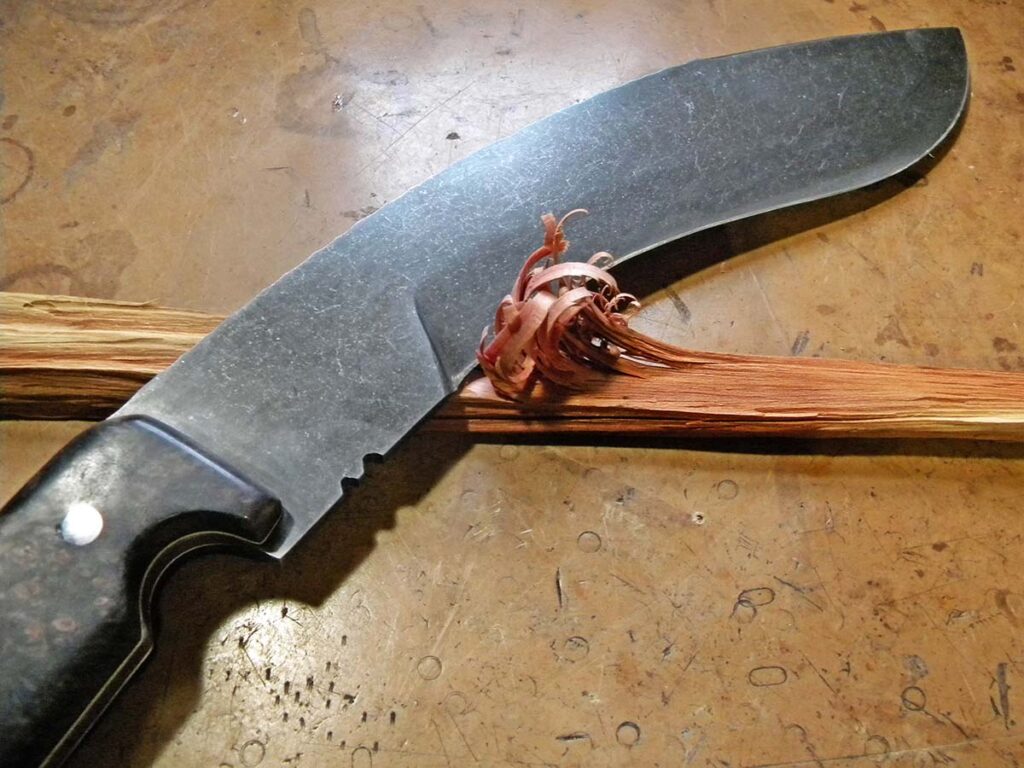
It was time to whittle some fire sticks. I easily controlled the depth of the curlicues by choking up on the handle. The knife curlicued the cedar very quickly. Yes, the Kukri can be used for finer chores, too.
Kukri Heavy-Duty Cutting
The author easily controlled the depth of the curlicues by choking up on the handle.
Chopping was next on the test menu. Finally, I got to use the Kukri and put some whacking into it. Using some red cedar firewood as a base, I started chopping kindling. One whack and I was halfway through the piece. The forward balance worked perfectly for splitting—and man, does it whack! The choil does have a sharp spot but that was easily fixed.
I went back to slicing the original piece of paper to check for dulling and/or chips. The Kukri sliced the now-damp paper very well (97° F and 90 percent humidity make paper kind of soggy). It was simply too hot to stay in the shop—test over!
Final Cut
The Kukri is an excellent field/camp knife. It’s made to chop and whack in the outdoors. However, I soften the edge of the steel at the choil.
Karambits continue to emerge as a viable EDC alternative.
The engineering is superb as the latest in karambits leverage the ever-popular “curve” appeal of the blade style. Materials, aesthetics and utilitarian aspects of this handy tool are getting noticed like crazy in the most recent offerings to hit the market. The karambit continues to emerge as a real, viable choice for everyday carry, and manufacturers are tuned into the possibilities.
According to knife designer Alessandra DeSantis, “Karambits are highly appreciated for cutting rope, cardboard and other utility tasks.” For more than a decade, Alessandra’s designs and perspective have influenced the marketplace, and the karambit is gaining momentum.
“Alessandra is the face of Hydra Design [hydra-design.it],” said Boker USA sales director Mike Gugliociello. “Her creations are characterized by a distinctive design that combines unique details with uncompromising functionality and high utility.”
Boker Plus HEL Karambit
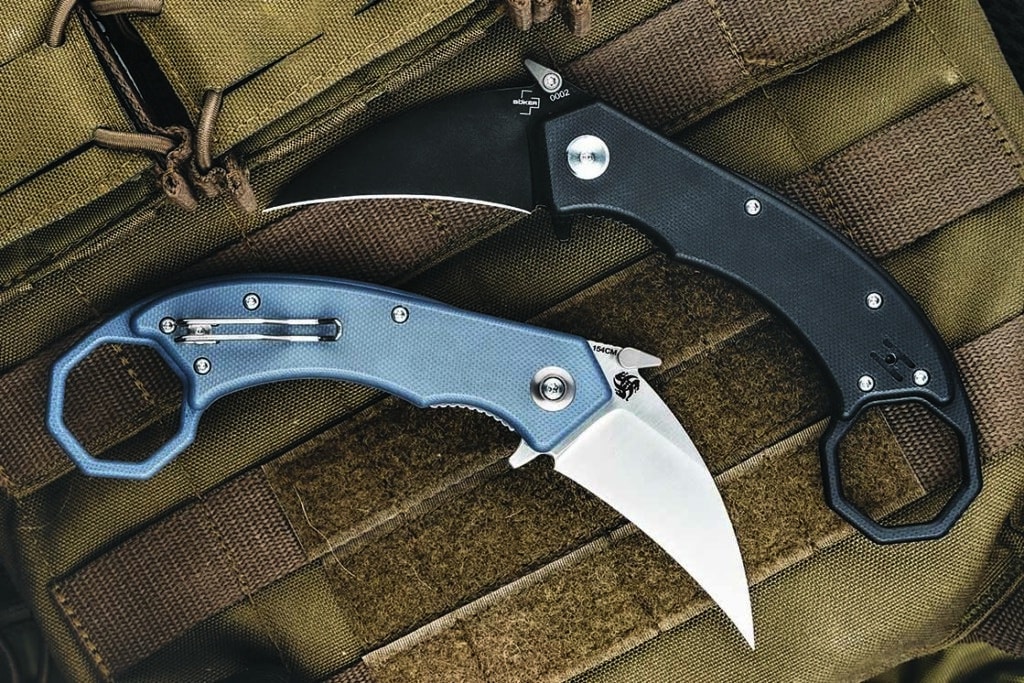
A notable feature of the Boker Plus HEL Karambit is the octagonal ring as opposed to the conventional round one. Thanks to the ring’s properly rounded corners and edges, users report no discomfort. Designer: Alessandra DeSantis.
The collaboration of Boker USA and DeSantis has produced the Boker Plus HEL Karambit. “The octagonal ring is a distinctive feature of Alessandra’s style,” Gugliociello noted. “Though some people may think that an octagonal ring can be annoying during the various knife [manipulation] tricks, actually the difference between an octagon and a circle is minimal, and with properly rounded corners and edges no discomfort is perceived.”
The striking HEL Karambit also features a screw-off feature and flipper tab to enhance everyday carry and ease of deployment. Alessandra commented, “As an alternative to smooth flipper opening, the HEL Karambit offers the screw-off thumb stud on the back of the blade. It can be removed by unscrewing the T6 Torx screw. The flipper tab also performs as a guard. Also, despite its compact size, the HEL Karambit can be gripped by either using the handle ring or not. Each karambit grip has optimal use, and each offers different maneuverability and effectiveness in various applications, so the grip depends on the intended uses.”
Hel Karambit Specs Knife Type: Folder Blade Length: 2.4” Blade Steel: 154CM stainless Handle Material: G-10 scales, liner and ring Weight: 3.28 ozs. Closed Length: 4.29” Country of Origin: China MSRP: $137.95
Halfbreed Blades CQC-02
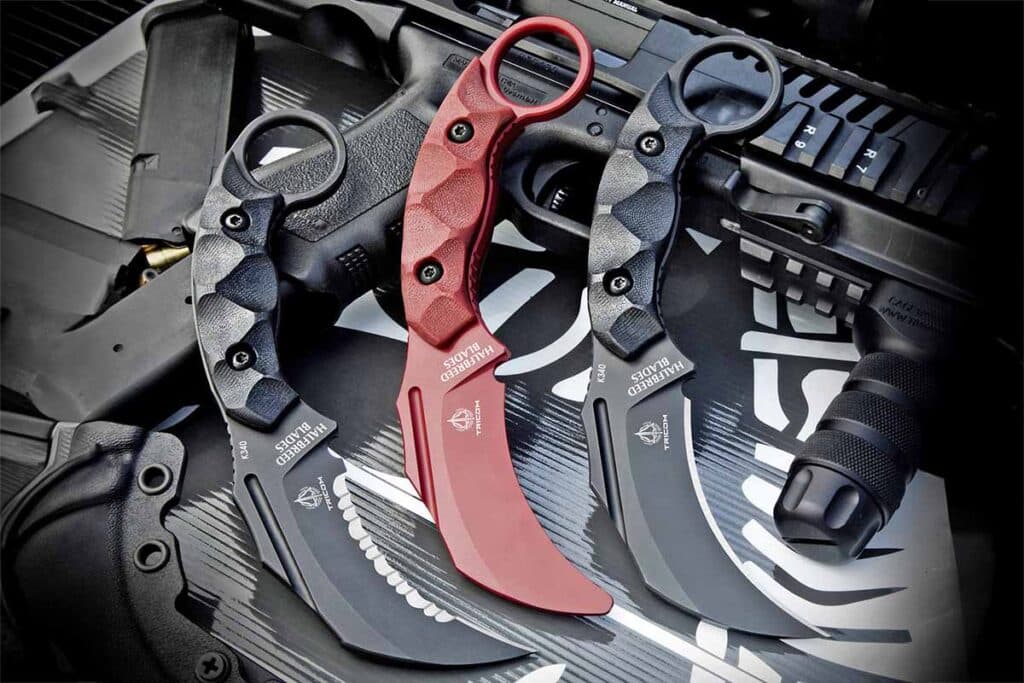
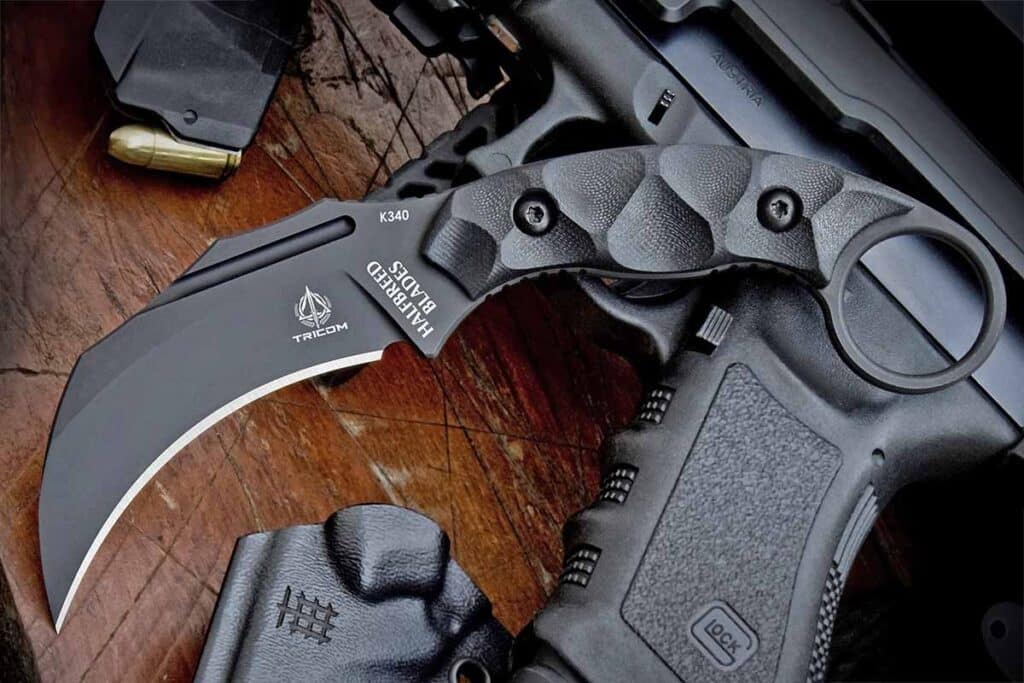
Designed by famed special operations and close quarters combat instructor Jared Wihongi in collaboration with TRICOM Training, the CQC-02 Close Quarters Combat comes in plain and serrated edge models and also a trainer.
At Halfbreed Blades, the CQC-02 Series Close Quarters Combat line is the latest partnership with famed special operations and close quarters combat instructor Jared Wihongi in collaboration with TRICOM Training, a leading global provider of premium close quarters combatives and defensive tactics training.
“In many regions worldwide, individuals carry blades for their practical use as tools,” explained Lili Ma, a director at Halfbreed. “Beyond their utilitarian purposes, knives are also carried by many for self-defense or as secondary weapons for those working with firearms or licensed to carry them. The CQC Talon series, developed with Filipino martial arts practitioners in mind, is a meticulously crafted design tailored to meet the needs of military and law enforcement professionals who rely on edged weapons in the line of duty, for example.”
Lili indicated the handle of the CQC-02 Close Quarters Combat series is designed to facilitate all popular grip styles and does not rely on the ring for carry or deployment. The ring aids retention in a high-stress clinch and the draw when the tool is concealed behind gear on a plate carrier.
“All of our tools are designed to form fit the hand. The ring, grip texture and carry system all work in unison to aid a quick deployment. We use USA-made Kydex for the fabrication of the sheath, while the retention is a molded friction lock design and mounting is via customizable DOTS attachments.”
The blade serrations appeal to a consumer segment and reflect the awareness of the Halfbreed design focus. “We like to cater to user preferences where possible,” Lili observed. “The market is divided into two groups: those that prefer a full plain edge and those that appreciate the added cutting power of serrations. In our opinion, serrations, when CNC-ground correctly, have unrivalled cutting power. They excel at cutting through clothing and other hard materials that would typically make a plain edge dull. This being said, they are not for everyone. Some believe serrations can snag or drag when cutting, and they take more effort to resharpen. These are subjective arguments, so there are pros and cons to both serration and plain edge designs.”
Like the Boker Plus HEL Karambit and RMJ Tactical Korbin, the handle of the Halfbreed CQC-02 Close Quarters Combat series is designed to facilitate all popular grip styles and does not rely on the ring for carry or deployment. Designer: Jared Wihongi.
Just below the blade spine, the CQC-02 Close Quarters Combat series is designed with a slot or fuller to reduce weight. It also allows control of the balance point of the blade while adding an aesthetic appeal in a fusion of “tactical function art” that drives the creativity of Halfbreed’s designers.
CQC-02 Close Quarters Combat Karambit Specs Knife Type: Fixed blade Blade Length: 3.54” Blade Material: Bohler K340 carbon steel Handle Material: G-10 Weight: 7.65 ozs. Overall Length: 7.48” Country of Origin: Comprises Australian and Taiwanese make MSRP: $220
CobraTec Karambit Double Action
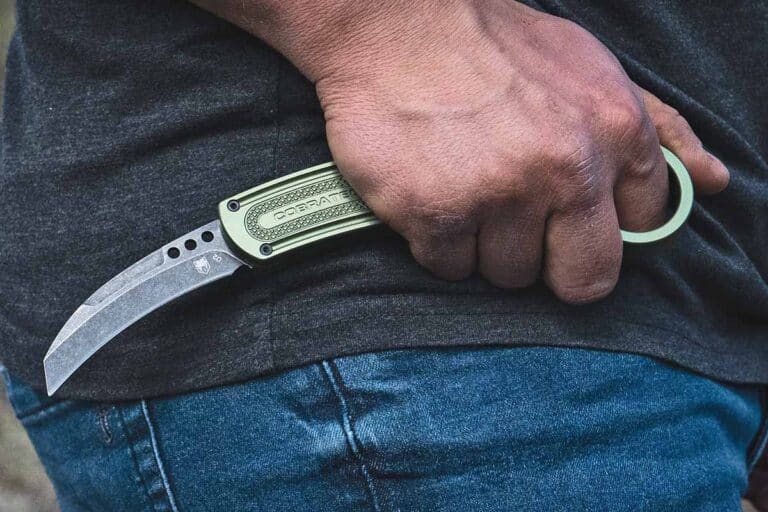
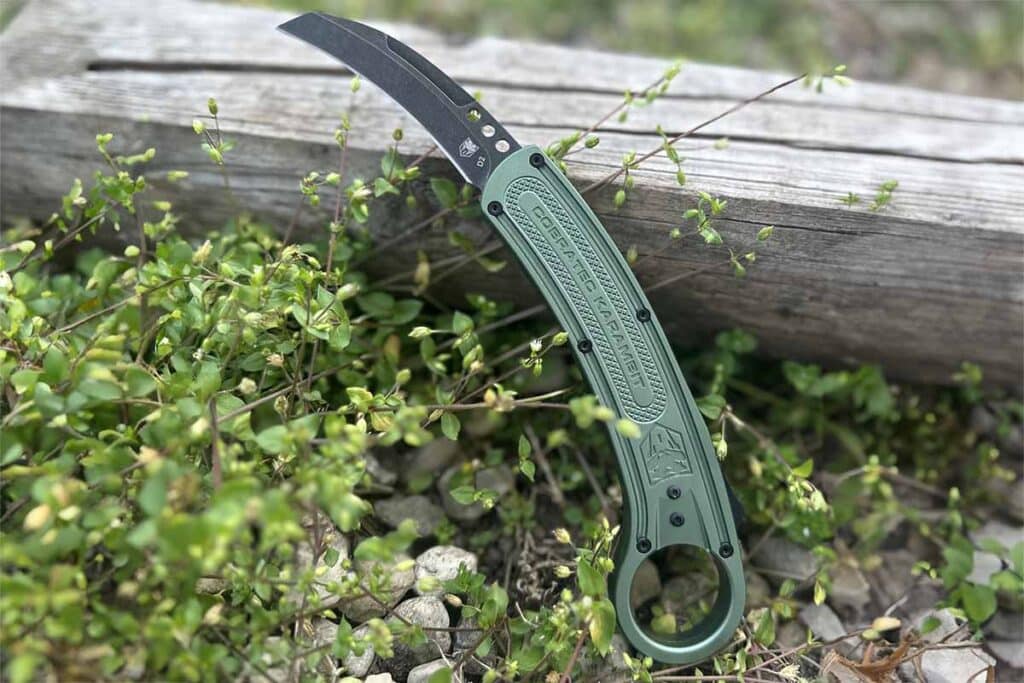
The CobraTec karambit carries in the pocket via a pocket clip with the retention ring exposed to ease deployment. Using an index finger in the retention ring, the knife easily extracts with one hand and falls into the palm ready to cut and complete chores as needed.
CobraTec is breaking new ground with its automatic entry, the Karambit in OD Green Double Action. “There were several considerations in designing the automatic karambit,” remarked company representative Eddie Johnson, “from aesthetics, function and ability to be used as a karambit, the fit and grip in the hand, along with the design of the retention ring to be used by various-sized individuals. The knife comes with two curved clips to hug the shape, and the clips are shaped to match the side of the knife you wish to carry it on.”
The automatic feature is, at the least, a conversation starter, and at best a feature that complements quick deployment and assurance of a secure lock-up. “The activation switch is located near the retention ring,” Johnson related. “As the knife is drawn for use, the index finger is through the retention ring, allowing the body of the handle to comfortably fit in the palm of your hand. The thumb naturally aligns with the activation switch, and the secure grip of the knife gives the perfect angles for activation of the blade.”
The Cobratec boasts two curved clips to hug the handle shape, and the clips are shaped to match the side of the knife you wish to carry it on. The activation switch for the double-action auto is located near the retention ring.
The CobraTec design allows the karambit to be carried in the pocket with the retention ring exposed to ease the knife’s deployment. With the index finger in the retention ring, the knife is easily extracted from the pocket and falls into the palm ready to cut and complete chores with one hand as necessary.
OD Green Karambit Spes Knife Type: Automatic Blade Length: 2.75” Blade Material: D2 tool steel Handle Material: 6061 T6 aluminum anodized green Weight: 4 ozs. Closed Length: 5.625” Country of Origin: China MSRP: $179.99
RMJ Tactical Korbin Karambit
Rob Orlando of RMJ Tactical said the Korbin “can be held in the standard grip or reverse grip, either using the finger hole or not. Either way, there is a sure grip, and there is nothing protruding from the ring to prevent good purchase.”
“It’s a defensive blade with no other purpose,” related Rob Orlando of RMJ Tactical in describing the company’s Korbin karambit. “It can be held in the standard grip or reverse grip, either using the finger hole or not. Either way there is a sure grip, and there is nothing protruding from the ring to prevent good purchase.”
The Korbin has a Kydex sheath that includes a two-way belt adapter and allows ambidextrous vertical or horizontal carry options on a belt up to 1.5 inches wide. The sheath is also compatible with the RMJ-optional MAD straps to allow easy carry. The finger hole is 1.125 inches across and large enough to fit most finger sizes. Contoured G-10 scales allow strong grip characteristics in wet or dry conditions. Gimping on the spine both adds some traction and provides a bit of aesthetic flair.
The Korbin’s Kydex sheath includes a two-way belt adapter and provides ambidextrous vertical or horizontal carry on a belt up to 1.5 inches wide.
“The Korbin is easy to conceal,” Orlando added. “If a knife is large and heavy it will likely get left at home, but most of our everyday carry knives are deceptively light and easy to carry and conceal.”
Korbin Specs Knife Type: Fixed blade Blade Length: 3” Blade Steel: Nitro-V stainless Handle Material: G-10 Weight: 2 ozs. Overall Length: 6” Country of Origin: USA MSRP: $215
Hunting and outdoor endeavors, these blades are a cut above the rest.
Looking to kit up for the next hunting season? Need to start thinking about filleting this summer’s catch? Or maybe you just require a little summer to make camp life a little easier. We’ve got you covered! From stunning custom creations to workhorse production models, we’ve gathered up top-not hunting knives, camp knives and about every other blade to tackle your outdoor adventures.
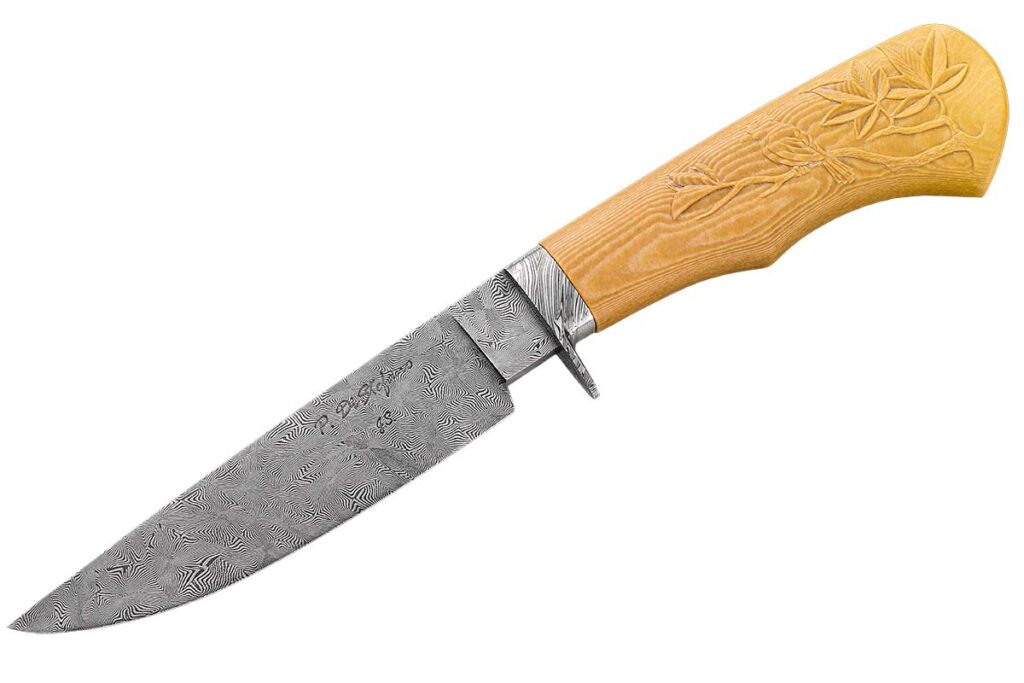
Paul DiStefano: Hunter
BLADE LENGTH: 5” BLADE STEEL: Mosaic damascus BLADE GRIND: Flat HANDLE: Ivory Micarta® carved w/Japanese maple leaves and birds native to Japan; bird’s-beak butt design HANDLE CARVED BY: Paul DiStefano GUARD: Mosaic damascus OVERALL LENGTH: 9.5” MAKER’S PRICE FOR A SIMILAR KNIFE: $2,200 KNIFE TO KNOW: Paul DiStefano is an American Bladesmith Society journeyman smith MAKER: Paul DiStefano
Jacob Gaetz: Hunter
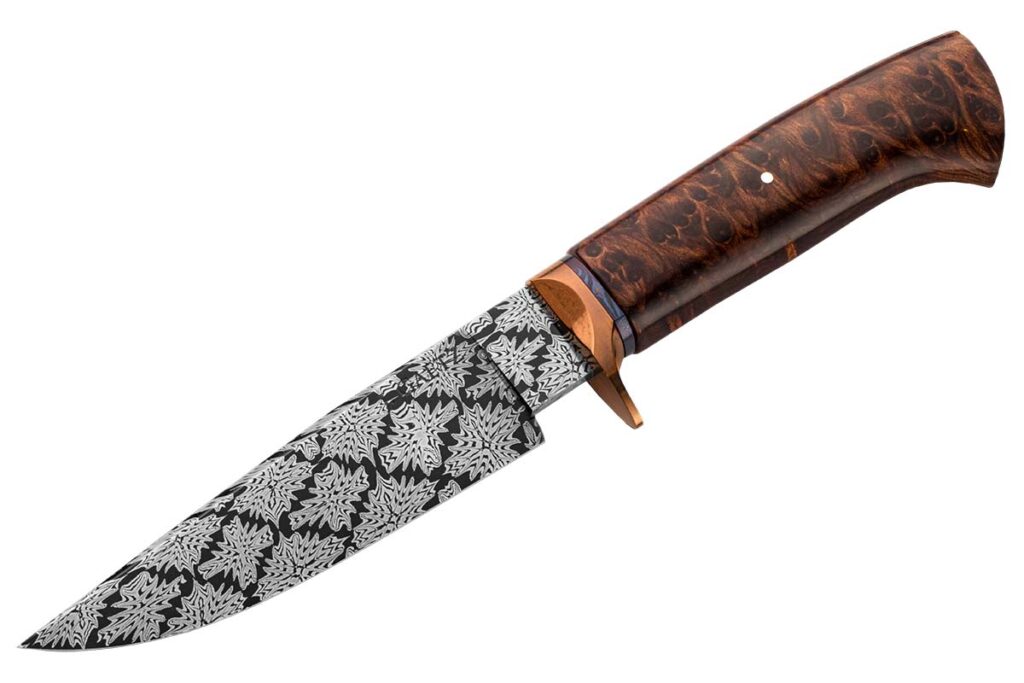
BLADE LENGTH: 4.5” BLADE MATERIAL: Mosaic damascus of 1084 carbon and 15N20 nickel-alloy steels ROCKWELL HARDNESS: 61 HRC BLADE GRIND: Full flat, .01”-thick BTE (behind the edge) HANDLE: Stabilized redwood burl HANDLE PIN: Argentium silver SPACER: Heat-colored damascus GUARD STEEL: Heat-colored 416 stainless OVERALL LENGTH: 9 5/8” MAKER’S PRICE FOR A SIMILAR KNIFE: $2,000 KNIFE TO KNOW: Jacob Gaetz is an American Bladesmith Society journeyman smith MAKER: Jacob Gaetz (Jocelyn Frasier image)
Tanner Couch: Rabbit Skinner
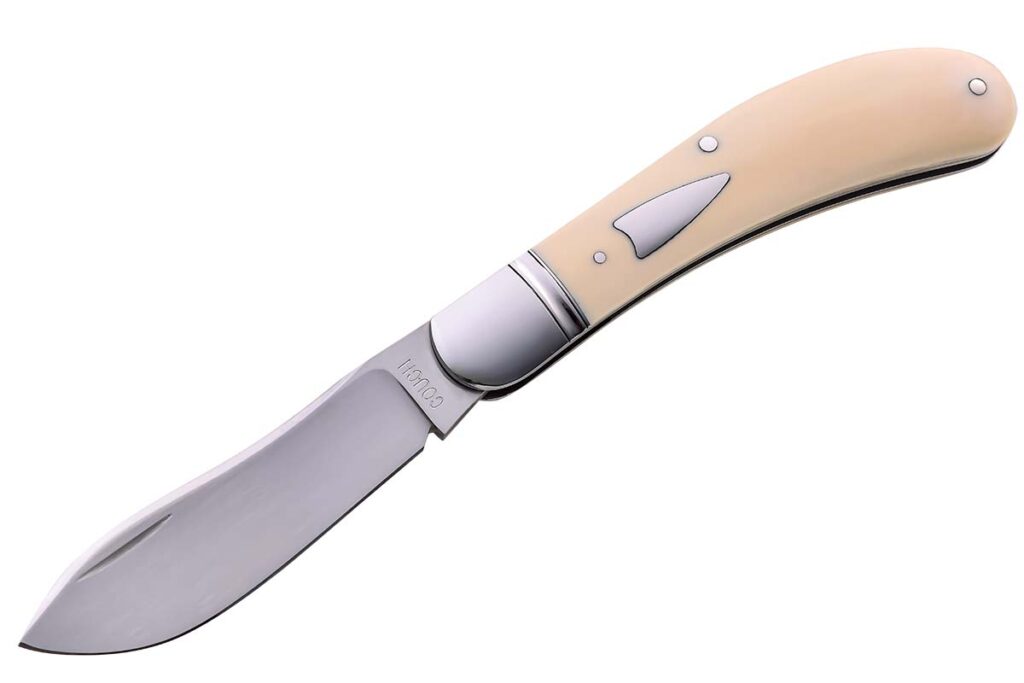
BLADE LENGTH: 3” BLADE STEEL: CPM 154 stainless BLADE GRIND: Hollow HANDLE FRAME: 410 stainless steel HANDLE MATERIAL: Ivory BOLSTER: 416 stainless CLOSED LENGTH: 37/8” MAKER’S PRICE FOR A SIMILAR KNIFE: $1,600 KNIFE TO KNOW: Tanner Couch is a card-carrying member of the South Texas Slipjoint Cartel MAKER: Tanner Couch (SharpByCoop image)
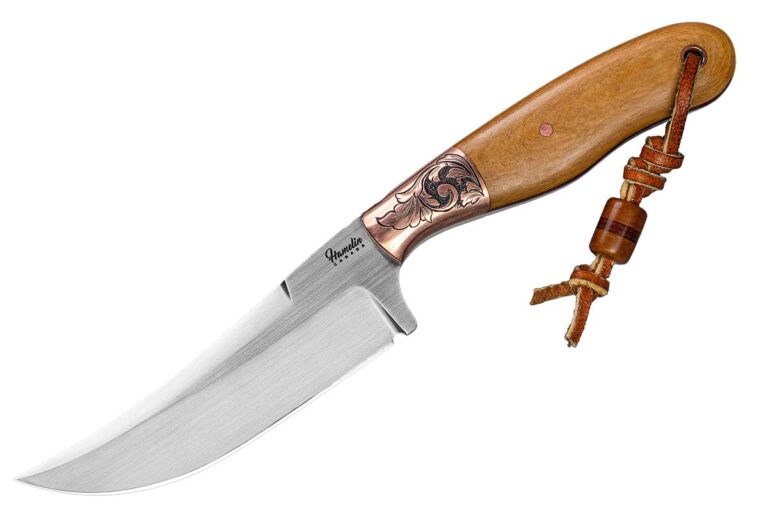
Chris Hamelin: Saratoga Hunter
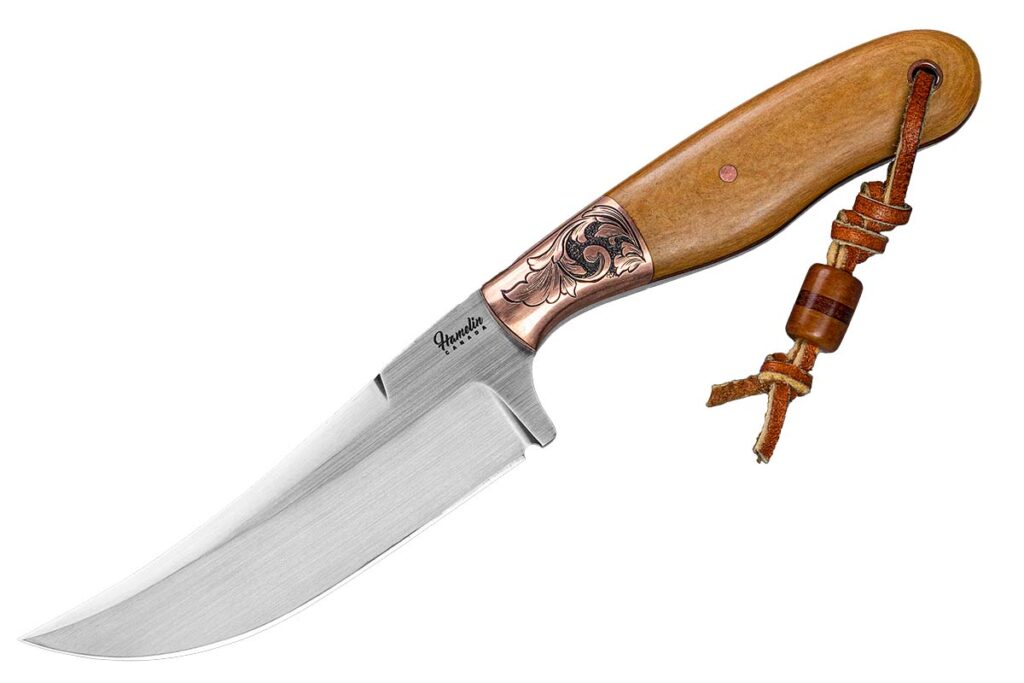
BLADE LENGTH: 4” BLADE STEEL: 440C stainless BLADE GRIND: Flat HANDLE: Maple Valley Richlite w/copper pin and lanyard tube, natural Micarta® BOLSTER: Copper; engraved by Wolfgang Loerchner OVERALL LENGTH: 8.5” SHEATH (not shown): Belt model w/snap closure of leather and alligator skin inlay by Buffalo Bones MAKER’S PRICE FOR A SIMILAR KNIFE: $1,300 MAKER: Chris Hamelin (Jocelyn Frasier image edit)
Charlie Lloyd: Crushed W’s hunter
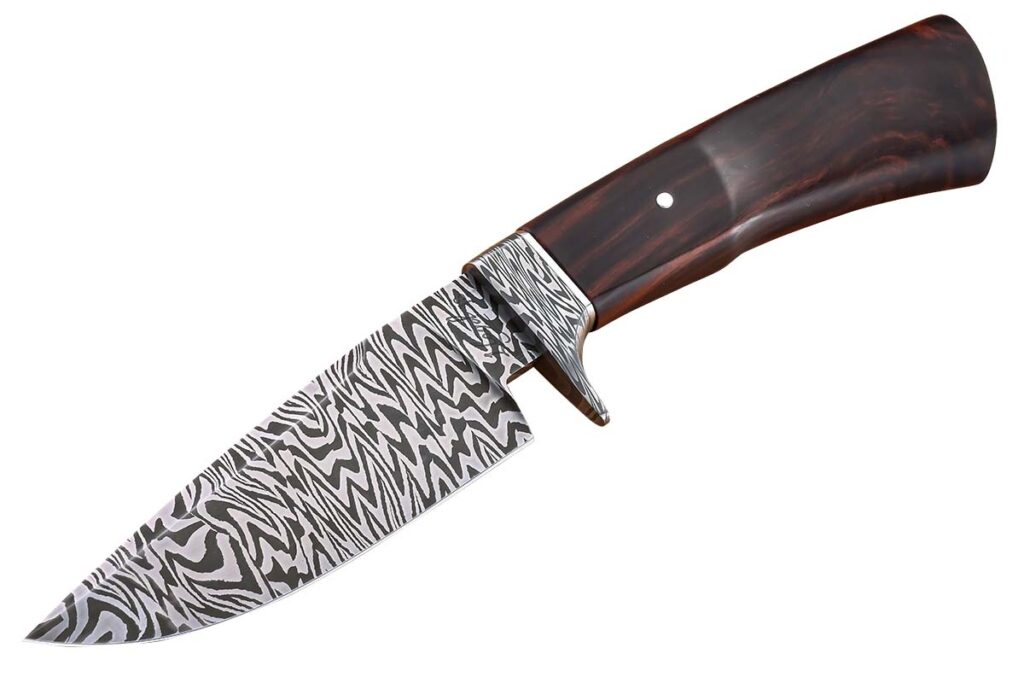
BLADE LENGTH: 5” BLADE MATERIAL: Crushed W’s damascus of 1080 carbon and 15N20 nickel-alloy steels BLADE GRIND: Flat GUARD: Damascus OVERALL LENGTH: 10” MAKER’S PRICE FOR A SIMILAR KNIFE: $1,200 KNIFE TO KNOW: Charlie Lloyd is a journeyman smith in the American Bladesmith Society MAKER: Charlie Lloyd (SharpByCoop image)
CAS Iberia: Modern Tanto
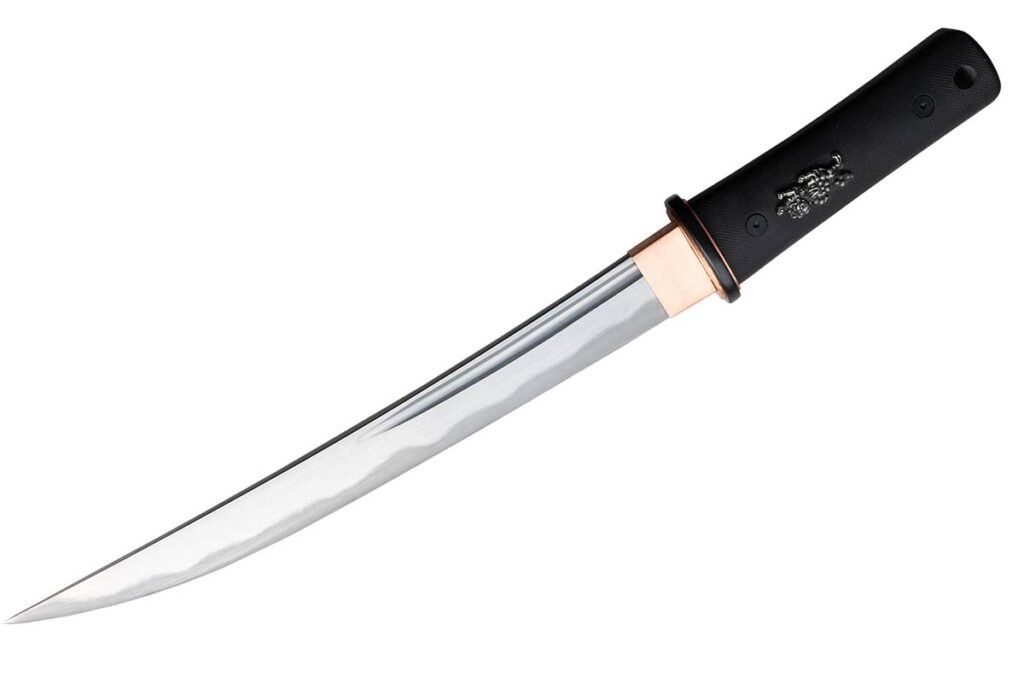
BLADE LENGTH: 10.5” BLADE MATERIAL: 1566 carbon steel w/hamon BLADE THICKNESS @ GUARD: .21” BLADE THICKNESS @ TIP: .157” TSUKA (handle): G-10 HABAKI (collar): Copper MENUKI (handle ornaments): Silver shi shi (lion dogs) SAYA (scabbard; not shown): Textured black WEIGHT: 15 ozs. OVERALL LENGTH: 16” MSRP: $259 COUNTRY OF ORIGIN: China COMPANY: CAS Iberia
Russell Roosevelt: Hunter
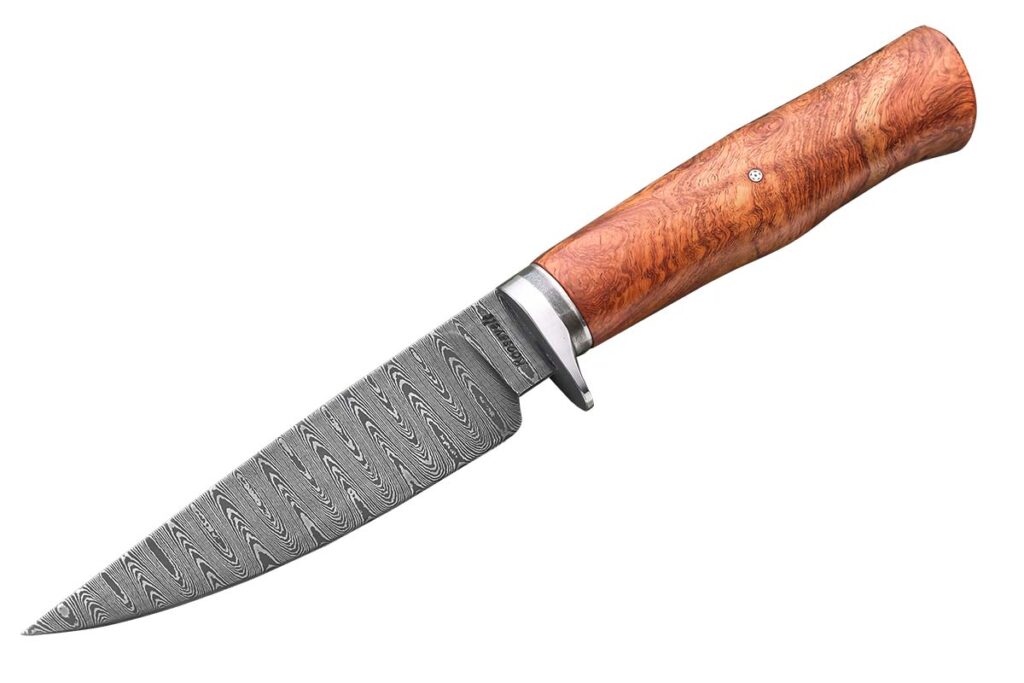
BLADE LENGTH: 5.5” BLADE MATERIAL: Ladder-pattern damascus of 1084 carbon and 15N20 nickel-alloy steels BLADE GRIND: Flat HANDLE: Amboyna burl GUARD: 416 stainless steel w/spacers OVERALL LENGTH: 10.75” KNIFE TO KNOW: Russell Roosevelt is a journeyman smith in the American Bladesmith Society MAKER: Russell Roosevelt (SharpByCoop image)
Josh Hults: Skinner/camp knife
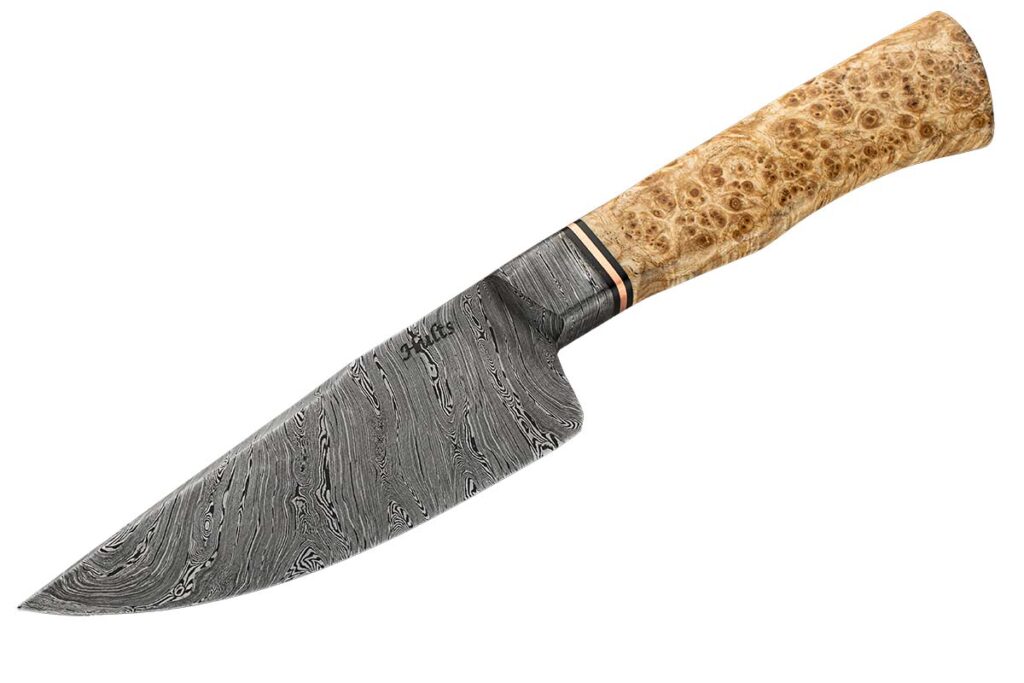
BLADE LENGTH: 3.5” BLADE MATERIAL: Twisted ‘W’s’ damascus of 1084 carbon and 15N20 nickel-alloy steels BLADE GRIND: Flat HANDLE: Stabilized black ash HANDLE SPACERS: Copper and G-10 OVERALL LENGTH: 9.5” MAKER’S PRICE FOR A SIMILAR KNIFE: $800 KNIFE TO KNOW: Josh Hults is a journeyman smith in the American Bladesmith Society MAKER: Josh Hults (Jocelyn Frasier image edit)
Outdoor Edge: Razor VX 4
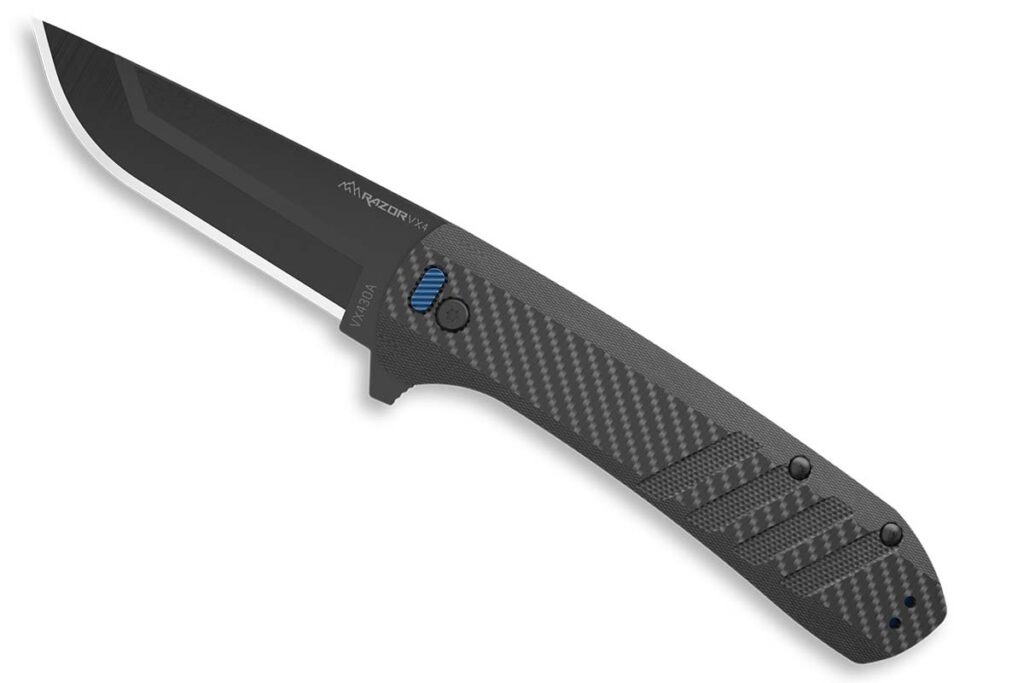
BLADE LENGTH: 3” BLADE STEEL: 420J2 stainless BLADE FINISH: Black oxide coated HANDLE MATERIAL: Forged carbon fiber LOCK: Linerlock LINERS: Vented stainless steel PIVOT: Ceramic ball bearing CLOSED LENGTH: 4.25” KNIFE TO KNOW: The Razor VX 4 is a replaceable-blade model; also available in handle materials of green Micarta® ($54.99) and Black G-10 w/spring assist $44.95) COUNTRY OF ORIGIN: China MSRP: $69.99 COMPANY: Outdoor Edge
Spyderco: Spyder Thrower, Small
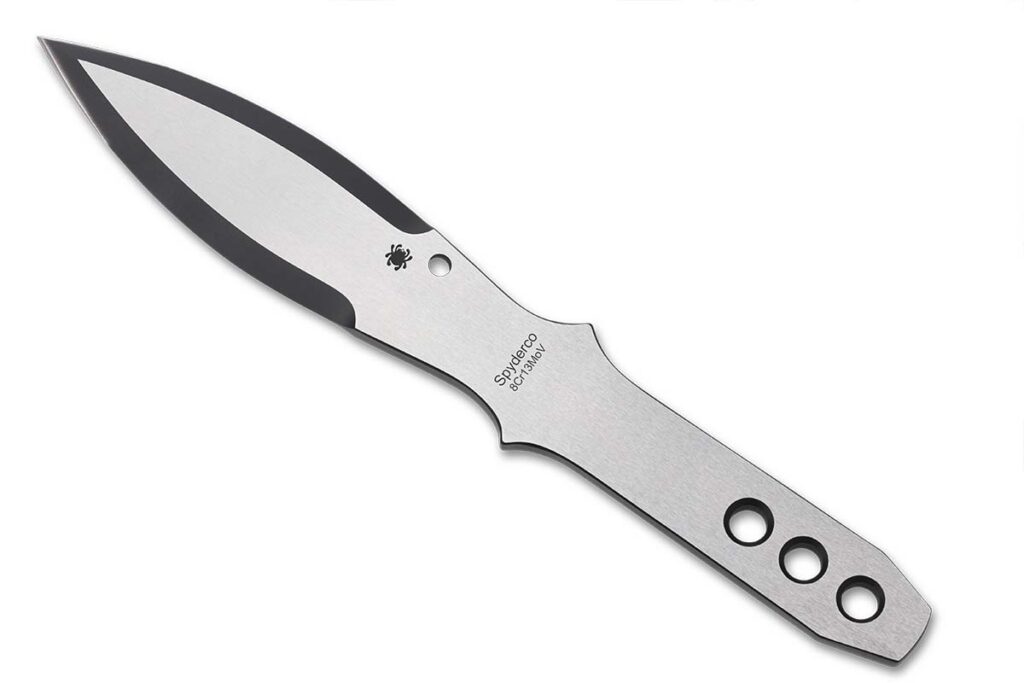
DESIGNER: Harald Moeller BLADE LENGTH: 5.3” BLADE STEEL: 8Cr13MoV stainless BLADE GRIND: Dagger BLADE @ THICKEST: .217” BLADE FINISH: Two-tone black oxide and satin finish WEIGHT: 7 ozs. OVERALL LENGTH: 9” SHEATH: Leather KNIFE TO KNOW: Comes in a set of three w/three-tiered leather sheath and a copy of the instructional booklet, Knife Throwing: The Knives and Throwing Technique of Harald Moeller; designed to be thrown by either the blade tip or handle butt COUNTRY OF ORIGIN: China MSRP: $144 for the set Company: Spyderco
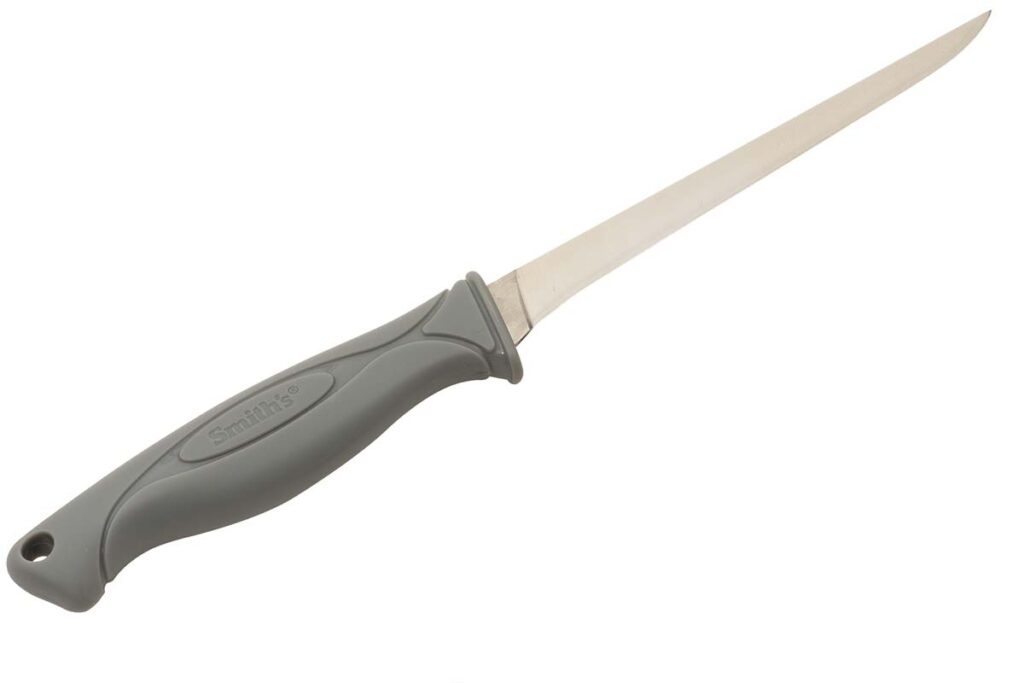
BLADE LENGTH: 7” BLADE STEEL: 400 series stainless BLADE FINISH: Corrosion-resistant coating HANDLE: Thermoplastic elastomer (TPE) w/non-slip soft grips and hole for a lanyard SHEATH (not shown): Breathable TPE KNIFE TO KNOW: Designed for cleaning small-to-medium-size fish like speckled trout or yellowtail snapper COUNTRY OF ORIGIN: China MSRP: $12.99 COMPANY: Smith’s Consumer Products Inc.
GiantMouse: ACE Iona V2
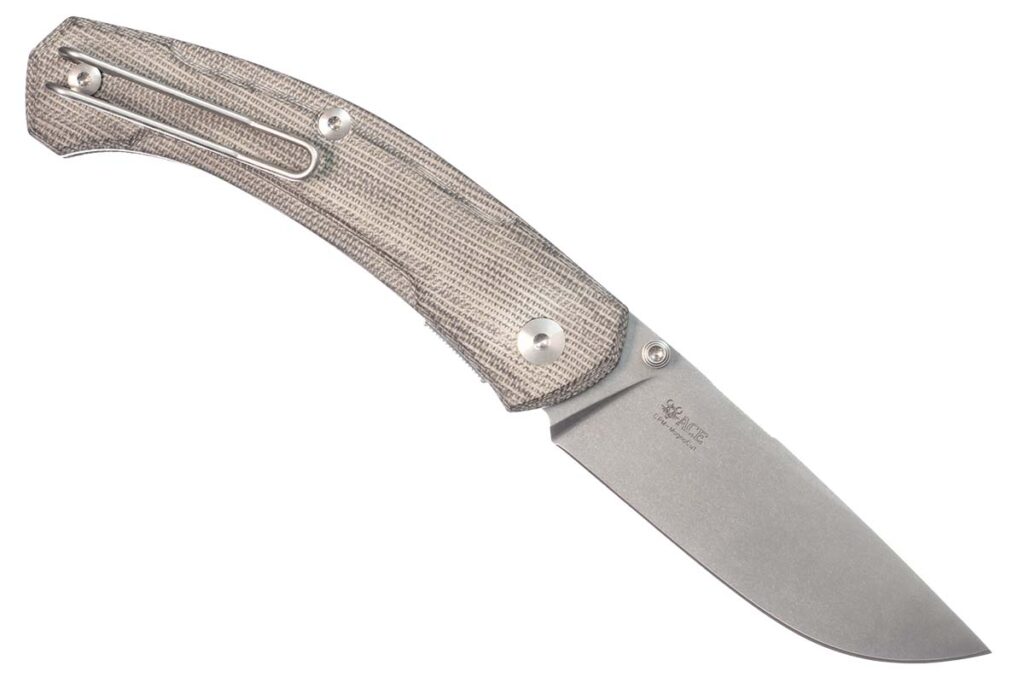
BLADE LENGTH: 3” BLADE STEEL: CPM MagnaCut stainless BLADE @ THICKEST: .115” BLADE FINISH: Stonewash HANDLE MATERIAL: Green canvas Micarta® POCKET CLIP: Wire, reversible PIVOT: Washer LOCK: Linerlock WEIGHT: 3.4 ozs. CLOSED LENGTH: 4.34” COUNTRY OF ORIGIN: Italy MSRP: $195 KNIFE TO KNOW: The knife is named after the Iona Bar, “a beloved establishment” in the Williamsburg neighborhood of Brooklyn, New York COMPANY: GiantMouse
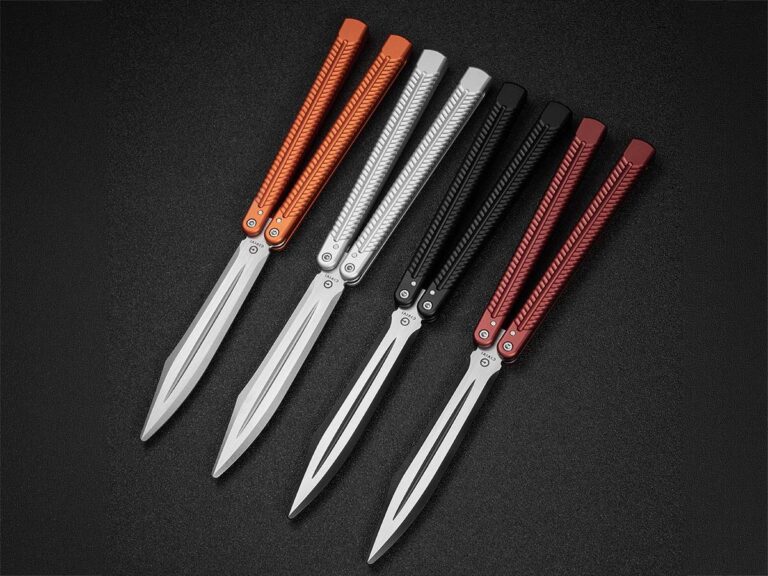
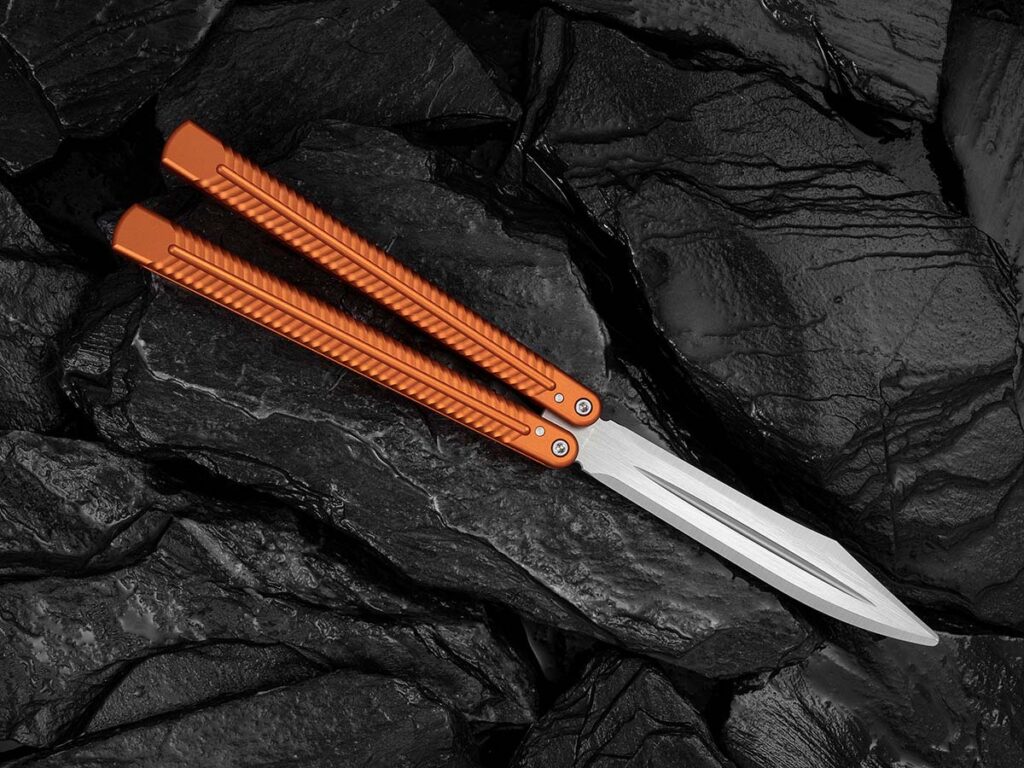
CIVIVI Dracolisk aims to help you master the balisong flip without the sting.
Balisong flipping has evolved from a niche martial art into a high-speed skill sport, where the fluid motion of the handles is just as important as the steel between them. For those looking to enter the world of butterfly knives, the barrier to entry is often the steep learning curve—and the inevitable nicks that come with it. CIVIVI is addressing this head-on with the Dracolisk, a dedicated trainer designed to offer a authentic flipping experience without the risk of a live edge.
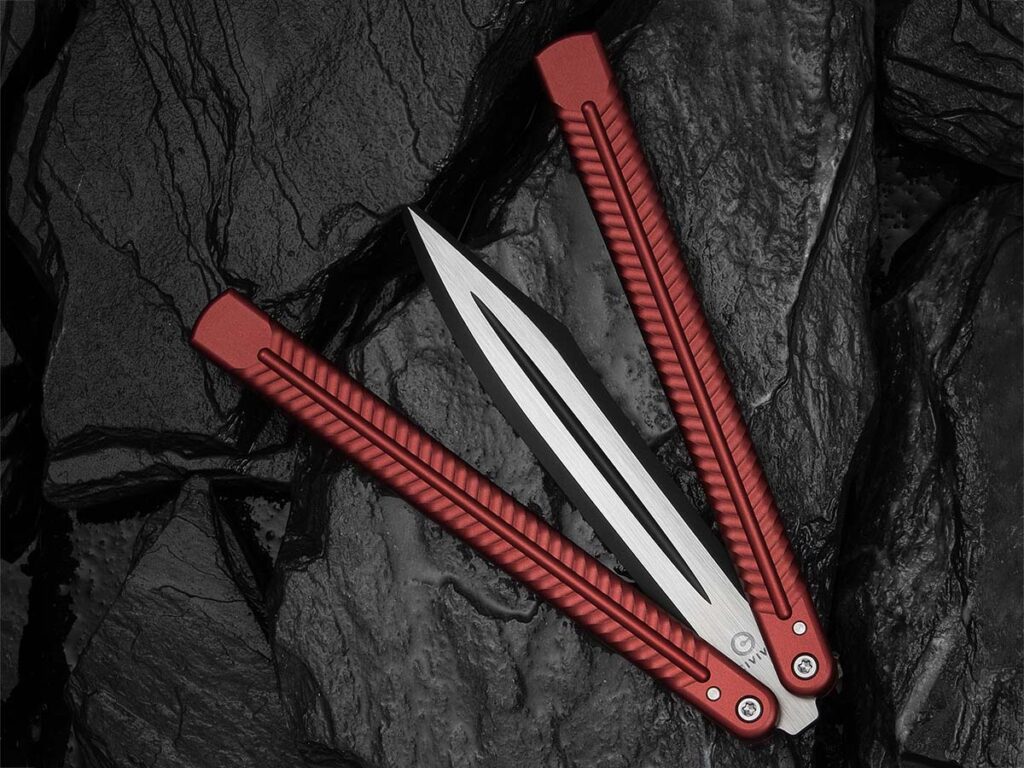
The Dracolisk represents CIVIVI’s first foray into the balisong market, and they have chosen to focus exclusively on the practice-friendly format. The 4.57-inch blade is crafted from 9Cr18MoV stainless steel, featuring a stonewashed finish and a dramatic clip point profile. While the “edge” is completely dull, the blade is ground and weighted to mimic the physics of a live blade, ensuring that the muscle memory developed during practice translates accurately to a real knife later on.
Mechanical simplicity is a hallmark of a good trainer, and the Dracolisk delivers with a latch-less construction. This design choice provides clean lines and eliminates the common annoyance of a latch interfering with handles during complex aerials or rollovers. The handles themselves are machined from lightweight aluminum with a 3D anti-slip texture, providing a secure grip even during high-intensity sessions.
Under the hood, CIVIVI opted for bronze washers at the pivots. While many modern folders utilize ball bearings, washers are often preferred in the balisong community for their predictable, smooth drag and long-term durability under the constant impact of flipping. At 4.18 ounces, the Dracolisk sits in the “sweet spot” for many flippers—heavy enough to carry momentum through transitions, but light enough to avoid fatigue.
Whether you are a seasoned flipper looking for a safe way to test new combos or a beginner starting from scratch, the Dracolisk provides a professional-grade platform to hone your skills.