
Buyer's Guides

You’re looking for a new knife in a certain style – we’ve got recommendations on the best blades for every price point.

Tomahawks: Wicked Hacking Options That Have An Edge

0

We put a bevvy of today’s tomahawks through the wringer to see which of these choppers has bite.

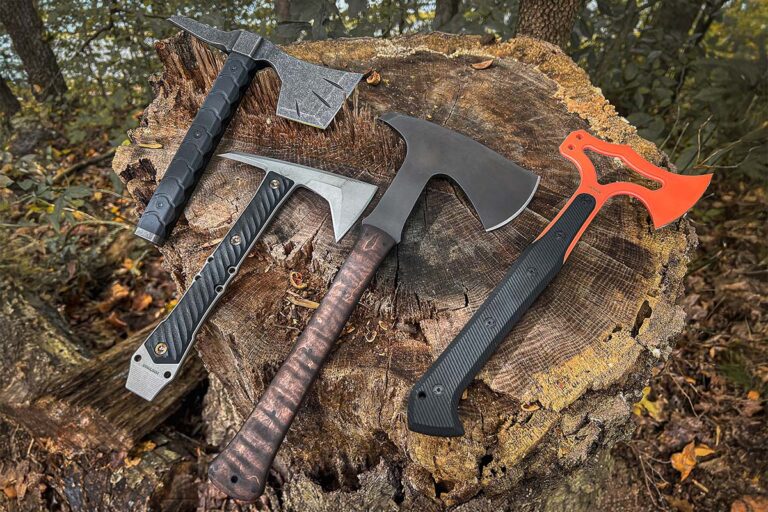
Tomahawks are interesting tools. They’re not knives but can cut like them. Though not full-blown axes, they can chop like them. Similar to knives, hawks are both tools and weapons. Like knives, they come in all price points, materials and features, as well as sheath styles/materials. Finally, they find wide acceptance in both the tactical and outdoor/hunting communities. Let’s take a deep dive into a quad of top factory examples of the genre.

Winkler Knives Ridge Line

The Ridge Line’s shortened scales leave half of the tang exposed to prevent handle material damage in the event of a missed strike.

The Ridge Line from Winkler Knives is a hatchet that embodies elements from years of hatchet and hawk making, incorporating some of the more notable improvements made along the way into one piece. The head is 80CrV2 carbon steel for toughness and edge-holding ability. Stock thickness is ⅜ inch, giving the Ridge Line good balance while remaining somewhat lightweight and more agile in-hand. Cutting edge: 3 inches. Overall length: 13 ⅞ inches.

The shortened scales leave half of the tang exposed to prevent handle damage in the event of a missed strike. The scales come in several choices of Micarta® and maple. The material is attached to the tang using Micarta pins. The maple of the review sample is contoured well, has no hot spots and is quite comfortable.

The sheath is Boltaron® done in a way few do it. Winkler goes the extra step by lining the inside with felt so the hawks don’t get scratched up on insertion/removal. The biggest advantage of the felt lining is it’s not noisy during sheathing/unsheathing like standard Boltaron. A pair of nylon webbing belt loops with Pull-the-DOT® button snaps attach to a belt. A strand of 3/16-inch shock cord wraps around the head to secure it to the sheath. The sheath complements the high-quality construction of the hatchet itself.
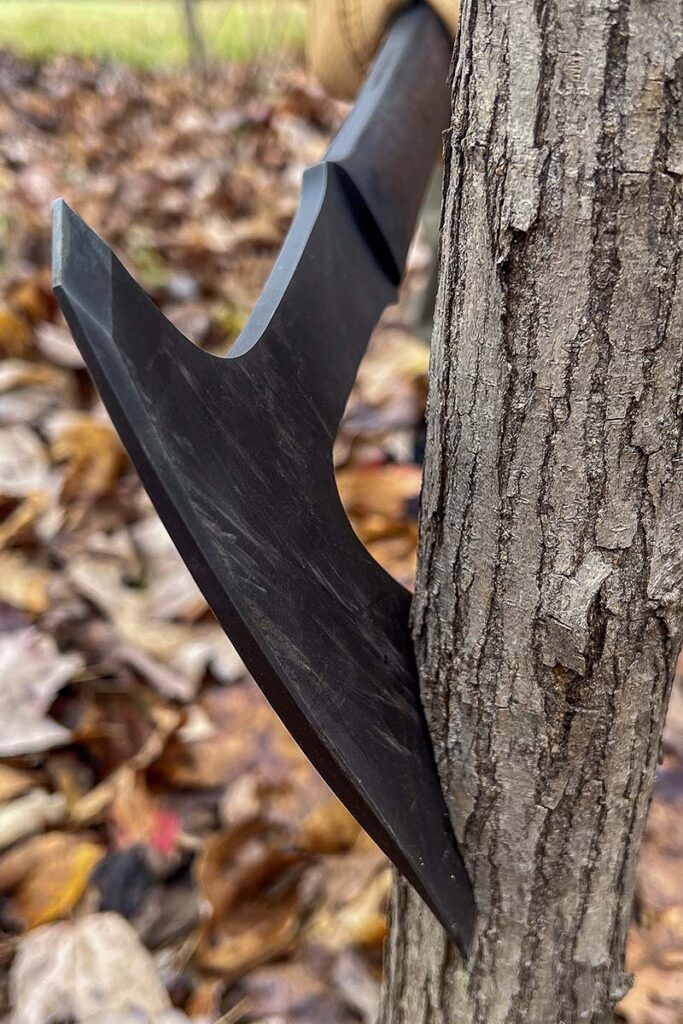
The curve of the head of the Winkler Ridge Line attacks wood at a slight radius, amplifying chopping power.

The Ridge Line is an absolute beast for chopping. The curve of the head attacks wood at a slight radius, amplifying chopping power. The forward weight means you can easily deliver powerful blows with minimal effort by letting gravity do its thing. The 80CrV2 takes an edge easily, so sharpening is not an issue. It also holds an edge respectably well, so performance wise it’s very reliable. I like how the handle flares toward the butt, acting as a stop to prevent the hawk from flying out of your grip during use.

Unlike a couple of the test hawks, the Ridge Line is strictly a chopping tool. Hence, using it for other tasks can be a bit awkward given the handle configuration and the exposed tang. If you’re looking for a pure chopping tool well designed and executed, this is it. Simply put, Winkler’s hawks are among the best in the business.

Multiple handle material options include camo G-10, black and tan laminate, black canvas laminate, brown canvas laminate, green canvas laminate, maple and walnut. The laminate material is similar to Micarta. There are also sculpting options on the camo G-10 and black/tan laminate handles. No matter the material, the Ridge Line has an MSRP of $635 and is made in the USA. At press time there was about a two-to-four-month lead time for delivery. 

RMJ Tactical Dvalinn
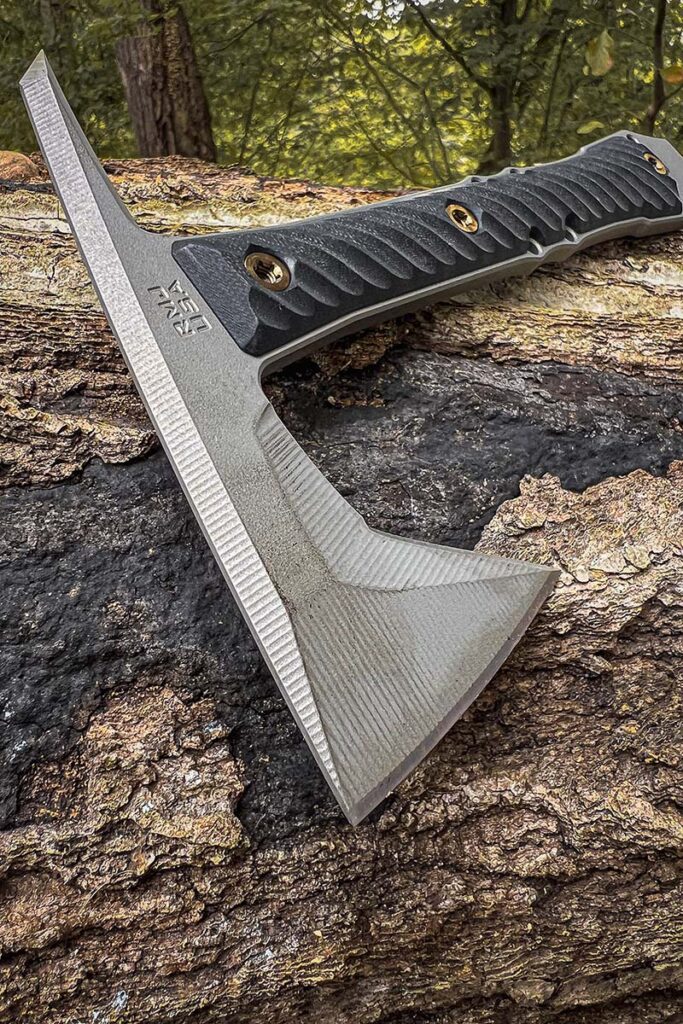
The specially designed cutting head of the RMJ Tactical Dvalinn is sharpened on each side, increasing both utility and effectiveness as a CQB tool. A spike at the opposite end punctures effectively.

The RMJ Tactical Dvalinn is a collaboration with Andrew Bawidamann of Bawidamann Knives. It is equal parts defense/CQB (close-quarters battle/close-quarters combat) and cutting/chopping tool, all in a compact size for trouble-free portability. At 10.25 inches overall, the Dvalinn is easily carried on the belt or stashed in a backpack and can substitute for a fixed blade in some scenarios.

Starting with 0.270-inch-thick Nitro-V stainless steel, the Dvalinn is built equally tough as RMJ’s larger hawks. The specially designed cutting head is sharpened on both sides, increasing both utility and effectiveness as a CQB tool. A spike at the opposite end punctures effectively.

A single-beveled, exposed tang on the handle butt acts as a pry tool. The black G-10 grip sports a spiral-type machining pattern that enhances purchase with or without gloves. There are three Cerakote® finishes and handle colors: OD green coating with Dirty Olive G-10, tan coating with Hyena Brown G-10 and Savage Stainless with solid black G-10.

Each Dvalinn rides in a molded Kydex sheath with belt loops. Remove the retention strap and the hawk can be accessed and deployed quickly and effortlessly with one swift tug on the handle without having to worry about unbuttoning the strap first. The strap is a bit redundant as the sheath is very well designed and has more than enough tension to retain the hawk. However, the strap also is easily removable, which alleviates one step in freeing the tool.

If you choke up against the Dvalinn’s head—though be mindful of the inside edge and the spike—you have plenty of control for whittling. According to the author, the hawk is surprisingly agile in such a grip.

Though the Dvalinn is not designed for field use and is more for self-defense/CQB purposes, it still can be used for outdoor and general cutting tasks. Chopping is very limited due to the tool’s short length. It can handle common knife chores like cutting cardboard or plastic and any other applicable task. If you choke up against the head—though be mindful of the inside edge and the spike—you have plenty of control for whittling. It is surprisingly agile in such a grip.

The flat-ground head and excellent factory edge enable the Dvalinn to excel at general cutting. The top edge corner penetrates similarly to the tip of a knife blade. The spike is deadly, plain and simple. It’s ground and sharpened just right so it penetrates with surprisingly good results for such a compact hawk. The steel seems to hold an edge well. RMJ has built a solid reputation designing and building some of the industry’s best production hawks, and the Dvalinn is a great example. Country of origin: USA. MSRP in your choice of handle materials: $495.

SOG War Fighter

The handle of the SOG War Fighter is solid steel encased in black G-10 featuring multi-faceted machining for a superior grip. A raised diamond-type texturing accommodates your thumb and fingers.

The SOG Knives War Fighter is even shorter than the Dvalinn yet still packs a punch. At 8.75 inches overall, it is about as long as some larger field-grade fixed blades. The 4-inch head and spike are 3Cr13MoV stainless steel in a black stonewash finish. Like the Dvalinn, the head’s underside is sharpened for more cutting versatility. A beveled spike is on the opposite end.

The handle is solid steel encased in black G-10 featuring multi-faceted machining for a superior grip. A raised diamond-type texturing accommodates your thumb and fingers. A bolted-on steel buttcap serves as an improvised hammer if needed. The hammer function is something the other test hawks don’t have. If you need a hammer get one, but that’s not possible in some scenarios and having a tool that can provide such a function is valuable.

The War Fighter has a molded plastic sheath that fully encases the head and spike. A single webbing retention strap holds the hawk securely. A molded plastic belt loop attaches to your belt and is reversible for ambidextrous use. The sheath snaps on securely. Insert the spike end first then push in the rest of the head until you hear an audible snap. The sheath is on a par with most molded knife sheaths—nothing fancy but it does the job well.
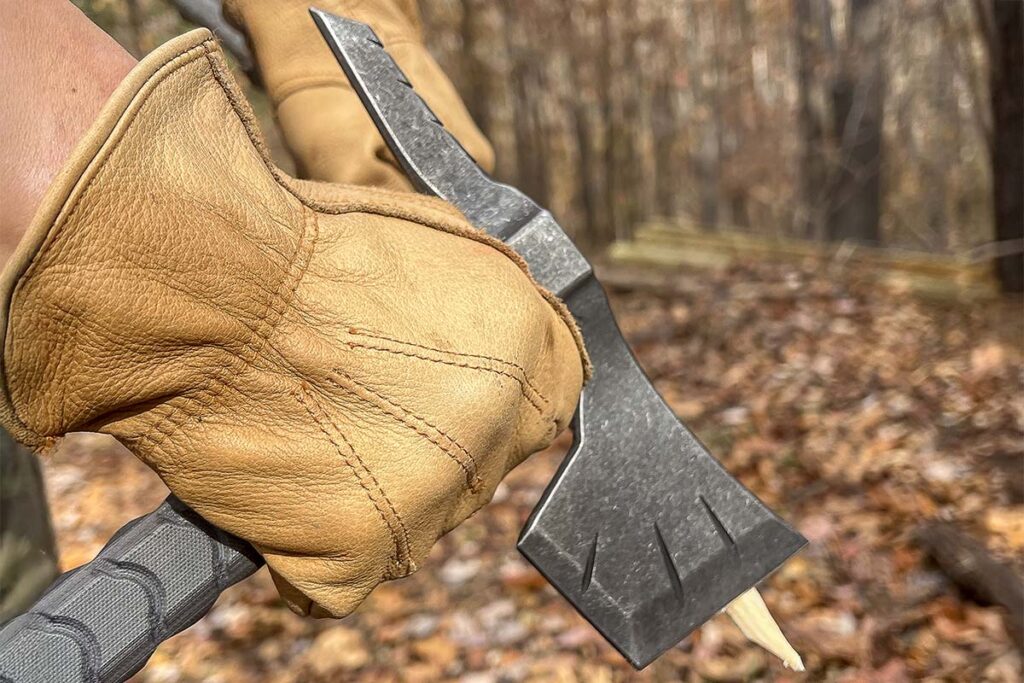
The War Fighter’s 4-inch head and spike are 3Cr13MoV stainless steel in a black stonewash finish. The head’s underside is sharpened for more cutting versatility. The spike is beveled.

Out of the box the War Fighter seemed an OK chopper. It’s short like the Dvalinn but has more head weight. I found the edge a tad thick so I used my belt grinder to reprofile it thinner, doing the final resharpening at 22 degrees convex. The bite and chopping noticeably improved as a result.  

Another issue is the spike. It needs to be pointier and more aggressive. Out of the box it was blunt. To be a viable self-defense/CQB tool, the spike needs to have a sharp point to maximize penetration. As is it penetrates wood only so far. Additionally, the four notches cut into the spike are useless. Each one is very sharp and catches kind of like a fishhook. My recommendation is to remove those. I’d rather see the spike pointier than have the notches.

The handle with its various surface features does a great job at keeping your hand in place. I wore leather work gloves during testing and never felt the War Fighter was going to get away from me. G-10 is an excellent choice for handle material, given its dimensional stability and being impervious to most fluids. Country of origin: China. MSRP: $94.99.  

Hogue EX-T01
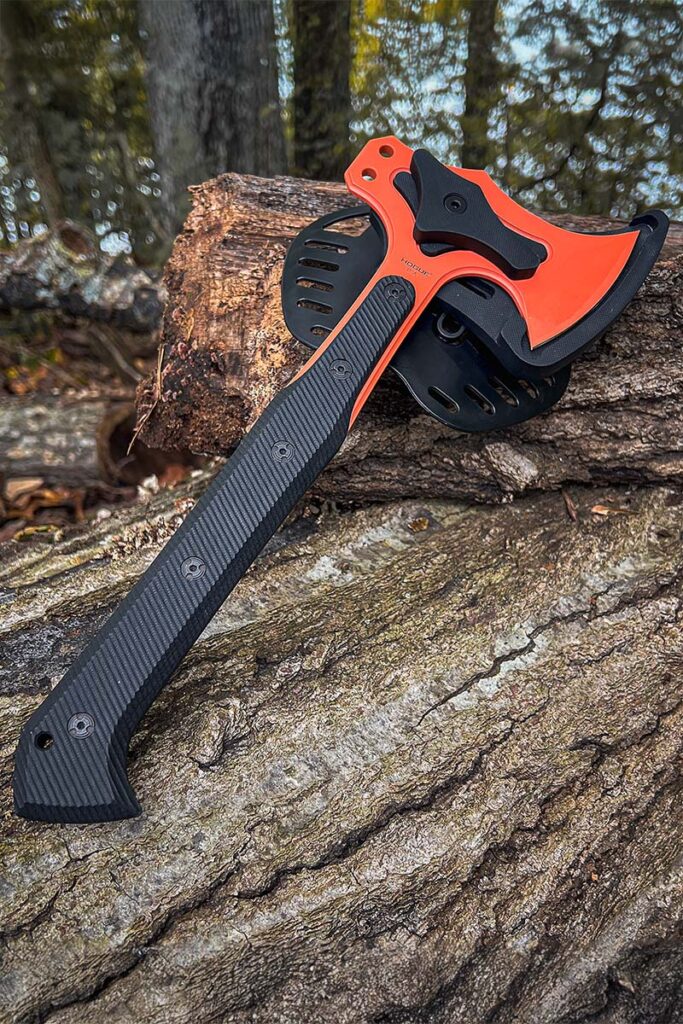
The Hogue sheath is intriguing. It integrates into the EX-T01’s head via a specially designed cutout that both reduces weight and provides an interface to secure the hawk to the sheath itself. 

Designed by custom knifemaker Allen Elishewitz, the Hogue EX-T01 is designed to be an easily carried chopping tool and sports a distinctive carry system. The 3-inch head is S7 tool steel. The full-tang construction yields to a machined G-10 handle for superior grip with or without gloves in all weather conditions.

A smart design feature is a partially exposed tang about 2 inches below the head—from there the G-10 transitions to a fully encased design. The partially exposed tang would appear to protect the handle material against overstrikes. And the orange Cerakote finish appeals to hunters, being easier to spot if you drop the hawk in the field.
S7 is easy to resharpen, a plus for field carry. The downside is it is not stainless, which partially explains the rust-resistant Cerakote finish. S7 is an excellent candidate for chopping due to its resistance to deformation or dulling from hard-use applications. It is the type of steel you want for a chopper.  

The G-10 is chamfered nicely to eliminate hot spots, and the texturing helps provide a nonslip grip in all weather conditions. I like the bird’s-beak pommel forming a hook to capture the user’s hand. Five sets of bolts along the handle’s entire length hold the G-10 onto the full tang. 
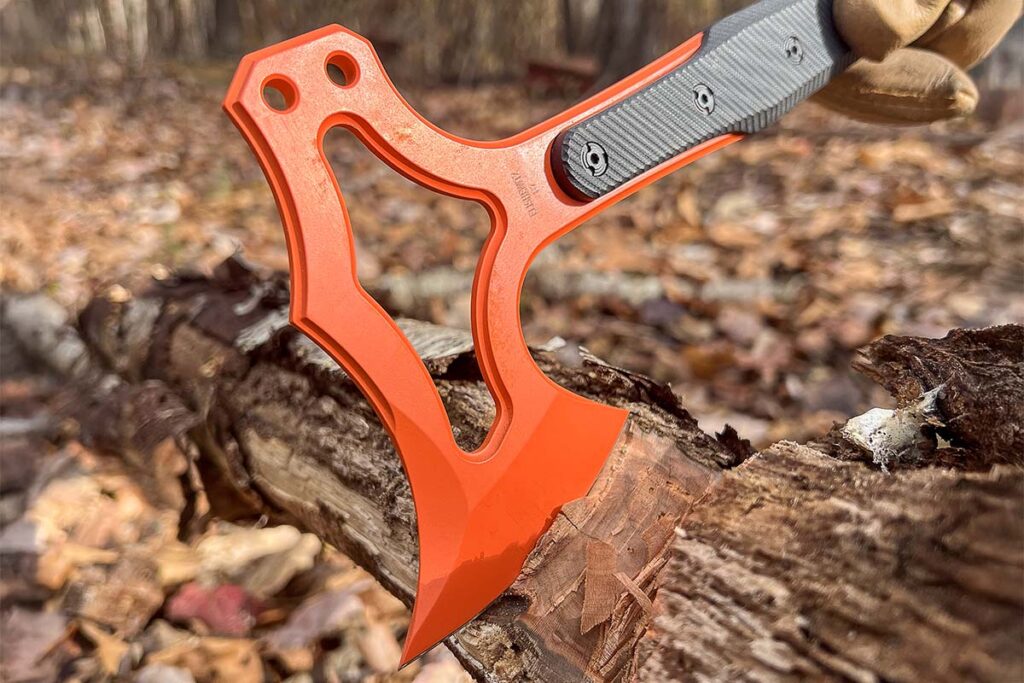
A smart design feature of the Hogue EX-T01 is a partially exposed tang about 2 inches below the head—from there the G-10 transitions to a fully encased grip.

The sheath system is rather intriguing. It integrates into the cutting head via a specially designed cutout that both reduces weight and provides an interface to secure the hawk to it. The main part is machined black G-10. The centerpiece is of the same shape as the head cutout, as well as a ridge section that protects the edge from inadvertent contact when sheathed. 

Three rare earth magnets inlaid into the sheath plate in three different locations grab and hold the EX-T01 securely. Moreover, an integrated latch that turns and detents into place prevents the hawk from detaching. A flexible, contoured plastic-belt-loop attachment affixed to the sheath plate slides over and affixes to a belt. You need not loosen your belt to attach or remove it, so it’s quick, too. It’s a really neat way of carrying a tomahawk, very secure, safe and easy to use, and different from standard sheath systems.

Last but certainly not least, the EX-T01 is a blast to use. This is one dynamic setup, providing a lot for the money. Overall length: 14 1/8 inches. Country of origin: USA. MSRP: $329.95. 

Check Out Outdoor Knife Reviews:

First Look: GiantMouse Ace Pontius Collaboration Knife

Jackass star and knife fanatic teams up with GiantMouse on tactical-style folder.

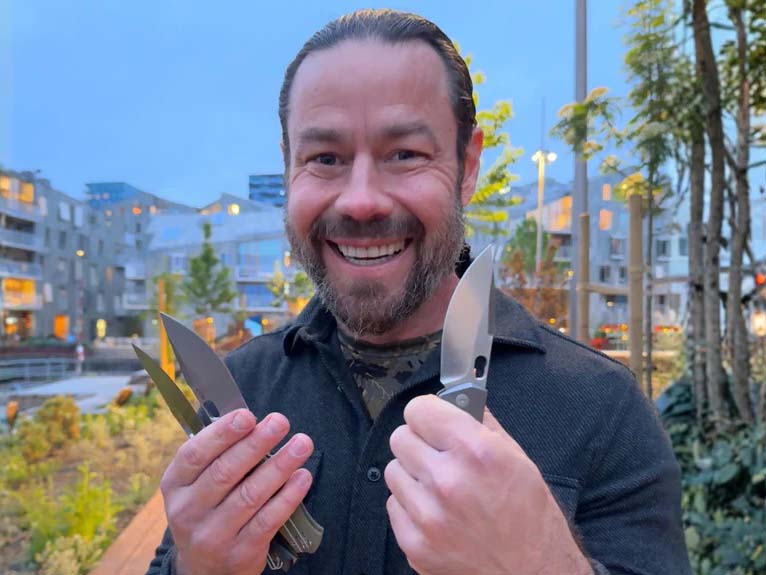
Chris Pontius is known for many things—his stunt work, crazy pranks, often appearing in little more than his underwear. With a collaboration with GiantMouse, it’s likely the former Jackass and Wildboyz star will be known for more. A life-long knife fanatic—he does a ton of knife content on his social media channels—Pontius teamed up with GiantMouse co-founder Jesper Voxnaes to create a fairly unique knife—the ACE Pontius. The project was two years in the making, as the Pontius and Voxnaes worked out the details of the knife. And the pair put some high design bars up for themselves.

In a blog post at GiantMouse, Pontius said rather than leaning into standard production aesthetics, he wanted a tool that mirrored the functional art of a musical instrument. He drew design cues from a vast array of historical and functional blade styles, weaving subtle elements of upswept hunters, classic skinners, Scandinavian puukkos, Nessmuks and harpoon-style blades into a single cohesive outline.

The result is a highly distinct silhouette that Voxnaes notes looks like something a futuristic space marine would carry into a culture that hasn’t happened yet. Built for everything from tactical applications to bushcraft, the blade features a strong piercing point matched with a generous, sweeping curved belly to maximize the usable cutting edge.

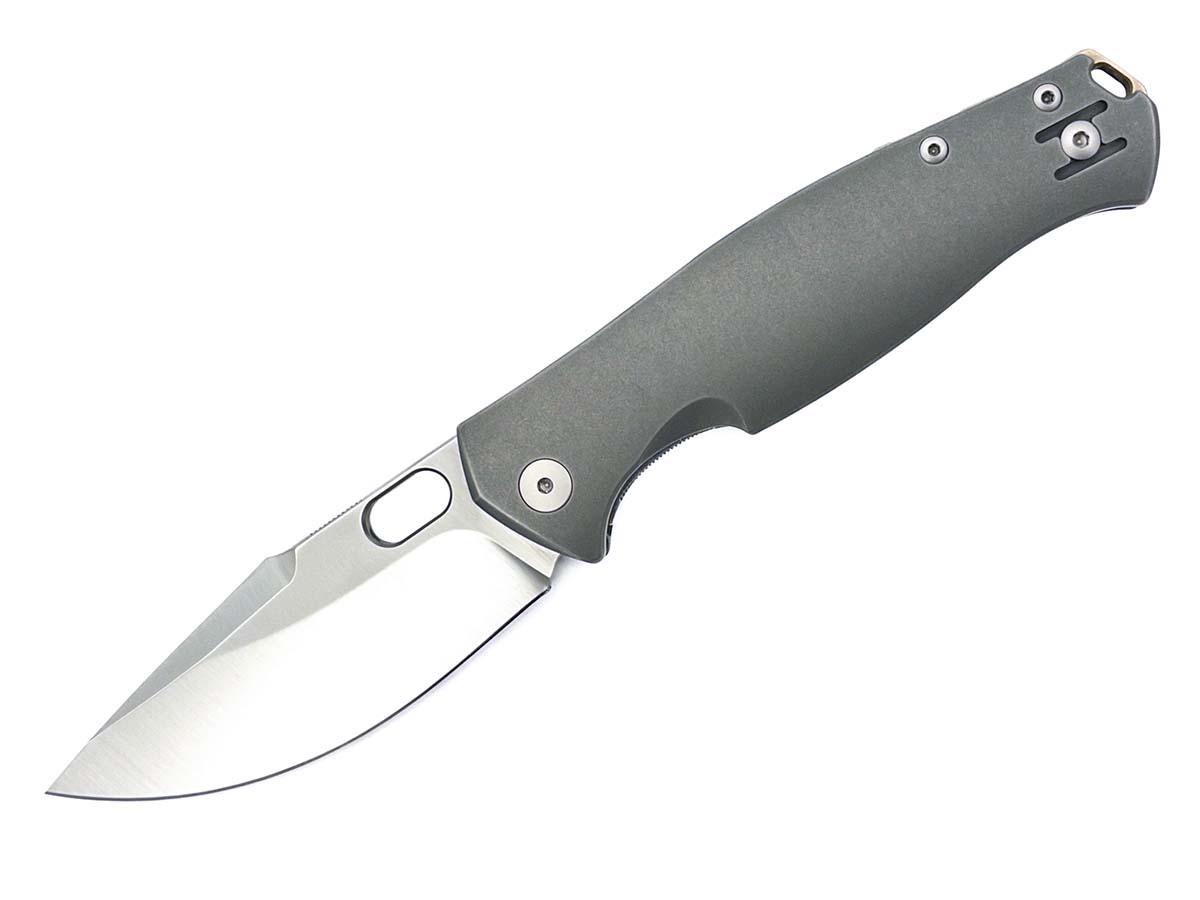
Giant Mouse Pontius - Titanium

Mechanically, the folder is balanced for reliable utility, intentionally keeping the choil small to ensure the lines remain fluid when closed. The 3.2-inch Elmax steel blade is housed in an ergonomic 4.5-inch handle, making it highly pocketable for daily carry. It features a secure liner lock mechanism for solid lockup during heavy use, an ambidextrous reversible steel wire pocket clip and distinctive brass backspacers that add a splash of ornamentation to the build.

The knife is debuting in three specific material configurations to match different preferences. The premium titanium model (MSRP $335) pairs a sleek satin blade finish with full titanium handle scales, coming in at a solid 4.7 ounces. For those tracking a lighter pocket presence, the Green G10 version ($285) features OD green G10 scales, a rugged stonewash blade finish and weighs 4 ounces flat. Rounding out the trio is the Black Micarta model ($285), which matches a satin blade finish with black canvas Micarta scales for a classic tactile feel, tipping the scales at a nimble 3.7 ounces.

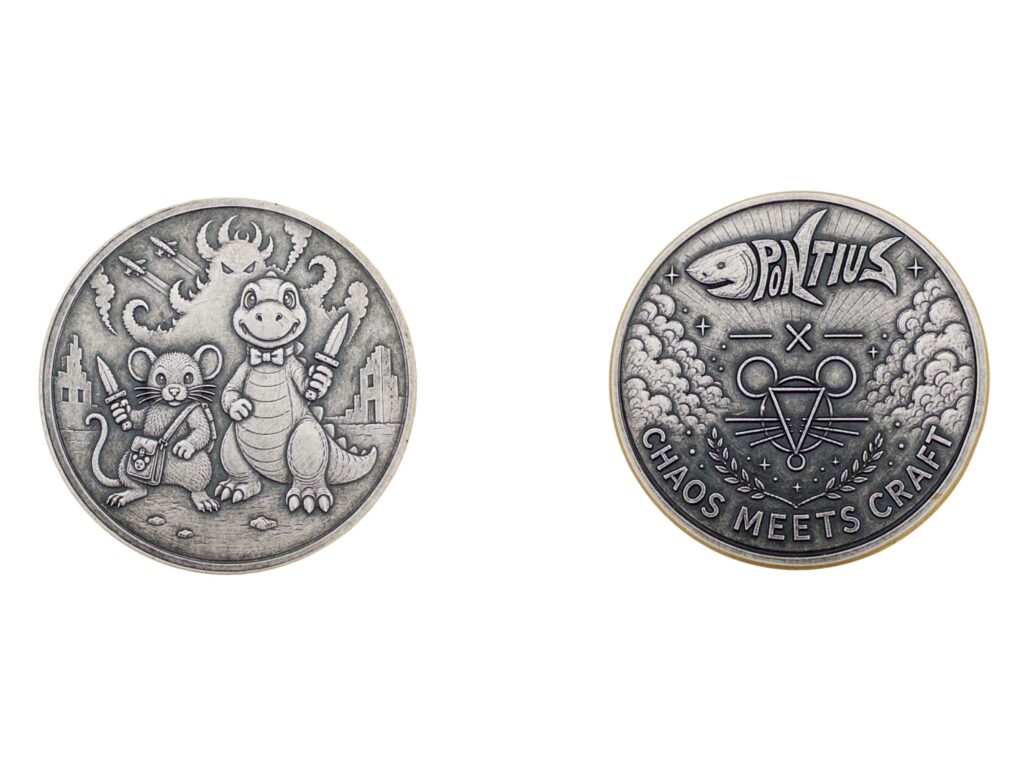
Giant Mouse Pontius Challenge Coin

The ACE Pontius marks a significant operational shift for the company, launching exclusively through a Kickstarter campaign that coincided with the opening day of BLADE Show Atlanta. Fans who back the project early gain access to exclusive launch-day add-ons that ship alongside their orders later this year, plus a discount on final pricing. At time of writing, the campaign had 185 backers and had $57,729 of pledges.

Knife Reviews:

Utility Knives: A Worker’s Best Friend

Utility Knives Are The Great All-Rounder For The Home. These Small Blades Are Popular With Contractors And Homeowners Alike To Solve All Sorts Of Problems.

Yes, there is a kitchen knife called a utility knife, but if use the phrase “utility knife” in conversation it’s almost a certainty that you’re talking about the diminutive yet mighty knives that are ubiquitous on job sites and in homes around the country. Even if you call it a box cutter, the person you’re talking to will absolutely know what you mean.

Also called a Stanley knife, because of the company that helped to pioneer them, utility knives are compact blades meant to breeze through the small and mundane tasks that can slow down your flow. 

Cutting through some rope? Utility knife. Need to score a piece of glass? Utility knife? Looking for the best tool to quickly open a box? The utility knife has your back there. 

Whether folding, fixed-blade, or even retractable, these are five of the best, most dynamic utility knives on the market today.

Milwaukee Fastback Flip Utility Knife

Milwaukee Fastback Flip Utility Knife

First on our list is this bright red folder from Milwaukee. Traditionally, folding utility knives have needed two hands just to open, but Milwaukee engineered a deployment system that not only drastically cuts down on time but is also a ton of fun to use.

By pressing the button on the handle you’re able to quickly flick the blade out and into a locked position. Sticking with the convenience theme, you can store a second blade in the handle and can change blades without tools. 

The fact that there is also a built-in gut hook and wire stripper that cuts up to 10 gauge is just ridiculous on top of all the other tech in the knife. The ergonomic handle in the famous Milwaukee red sits well in the hand. This knife really does do it all.

MSRP: $15.59

Workpro Retractable Utility Knife

Workpro Retractable Utility Knife

Retractable utility knives allow you to slide the blade in and out of a fixed handle. This model from Workpro is an excellent example of that with the added bonus of having a huge amount of storage.

The multi-color handle is made from a zinc alloy and rubberized, ergonomic grip. The knife features a four-stage deployment system so you can use just the tip of the blade for finite tasks or send out the whole thing to slice through something beefier.

Inside the handle there’s enough room to store five blades so you’ll never be without a fresh razor to switch to at a moment’s notice.

MSRP: $9.99

Gerber EAB Lite

Gerber EAB Lite
Gerber EAB Lite

This tight little folder from Gerber is great for your pocket or your purse. When folded, it can tuck away easily thanks to a beefy pocket clip, and when deployed it secures via a liner lock to provide a sturdy hold and cutting edge. 

The stainless steel body looks good and will serve you well when in use. At just 2.5 ounces it’s incredibly lightweight and easy to maneuver. The only knock on this knife is that there is no built-in storage compartment like the knives above. Even without the storage, this is a great utility knife to have with you for daily use. You could even make this your EDC.

MSRP: $18

Stanley 6 In Swivel-Lock Fixed Blade

Stanley 6 In Swivel-Lock Fixed Blade

From the company which innovated the utility knife, this multi-dimensional tool from Stanley is robust enough to be a handy companion on a job site. The contoured handle sits well in the handle and won’t slip even when sweaty on a hot day.

The handle swivels open to hold multiple replacement blades and is compatible with most Stanley replacement blades so you won’t need to stress about finding the right ones. It also comes with three replacement blades in the package to get you off on the right foot.

For a knife this inexpensive, it swings well above its weight. Whether a professional contractor or just a home DIYer, this knife would be perfect for you.

MSRP: $7.99

Olfa LA-X

Olfa LA-X
Olfa LA-X

Our list wraps up with the longest blade of the bunch from Olfa. This retractable knife has a massive, by the standard of a utility knife, 3.25-inch blade which is great for long cuts and can be retracted for more precise slices. The blade is also scored so the top section can be broken off to reveal a sharper tip section.

The handle is made from reinforced fiberglass with an ergonomic rubberized grip which gives you a secure hold of the knife when in use. 

The blade does have a few drawbacks at expense of the longer blade. The locking mechanism is a little wiggly and not as robust as some of the other knives on this list, and the flathead screwdriver tip at the end of the handle isn’t as strong as you might want it to be.

The LA-X is great for less intense cutting tasks, especially those when more extra blade length is needed.

MSRP: $12.50

Read More

Manzano: Appealing Look And Performance

Visually Appealing Thanks To A Distinctive Rasp Pattern On The Blade And Attractive Handle, The Manzano Proves A Sharp Operator.

Old-school knives often have a classic look, and it’s even better when you can tell what the original material or tool was before it was transformed into a blade. When using recycled steel, more time is involved to prep the material for its new life. Can it be hardened, will it forge, will the steel take a polish?

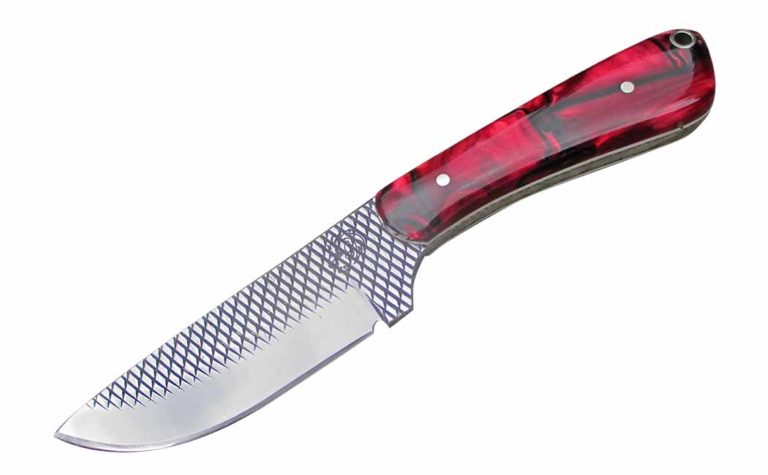
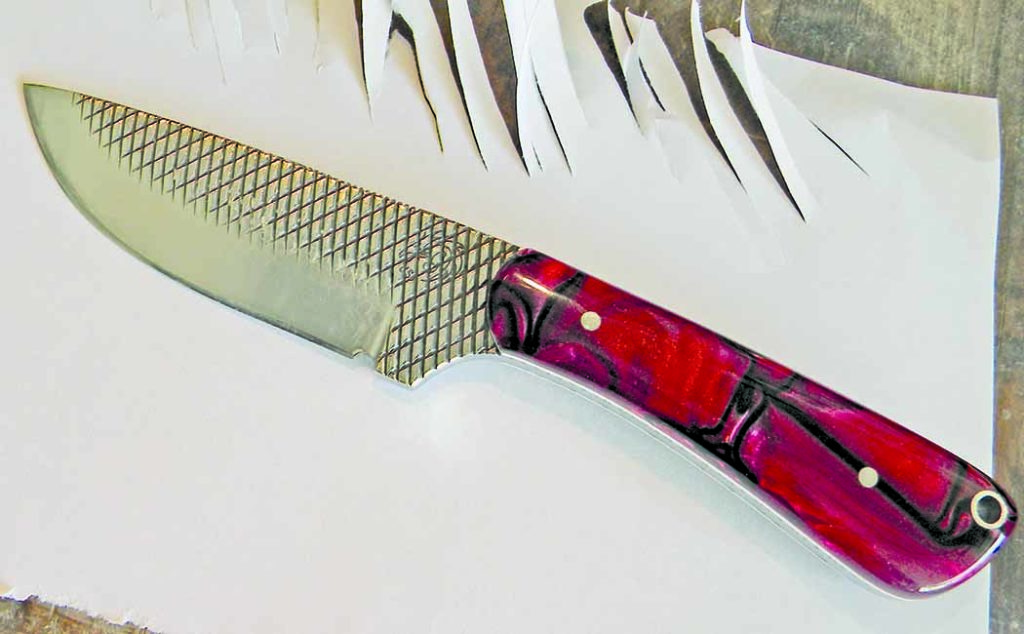
Paul Gonzales did his homework in producing the Manzano Farrier Rasp Blade. There’s no doubt as to what the blade was before it became a knife.

Manzano Farrier Rasp Blade Edge Assessment

To assess the original edge, I sliced 20-pound-bond copy paper. The Manzano performed smoothly, making a zipping noise as it went through the paper. The knife’s weight made the push cuts easy to control.

As a final test, the author checked the edge once again on the copy paper. The Manzano didn’t skip a beat, slicing smoothly.

Heavy Cutting With The Manzano Farrier Rasp Blade

Next up, single-walled cardboard. At the start of the slice, the cardboard parted smoothly. The sliced strips crinkled from the grind bevels as the cut went deeper, maybe due a little bit to the rasp pattern in the steel. The Manzano’s sharp edge cut smoothly.

I used some dense foam left over from my Kydex press for the next test medium. I had great control over the slices using push cuts. The edge easily passed through the foam.

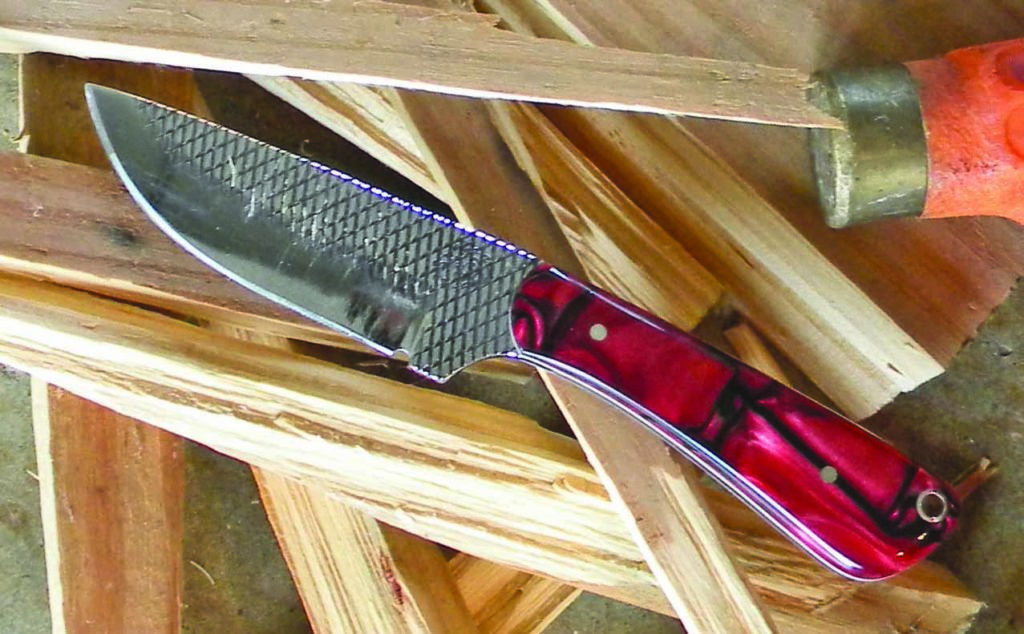
The author used the dead-blow hammer to baton the Manzano through a chunk of 2x10. The knife split the wood in two smacks with no excess shock transferred to the author’s hand, and then produced some nice kindling, too.
The author used the dead-blow hammer to baton the Manzano through a chunk of 2×10. The knife split the wood in two smacks with no excess shock transferred to the author’s hand, and then produced some nice kindling, too.

From there, on to 8-ounce leather. The Manzano was very aggressive skiving the material, producing nice crunching noises on each cut. The mirror-polished blade slid through the leather with ease. Paul did a nice job abrading the steel by the choil so there were no sharp edges where there shouldn’t be.

Firesticks were next. It was very simple to make smooth, fine curly-cues, as well as larger coarse ones. The handle is contoured perfectly for my hand for deeper cuts. The edge performed great while whittling wood.

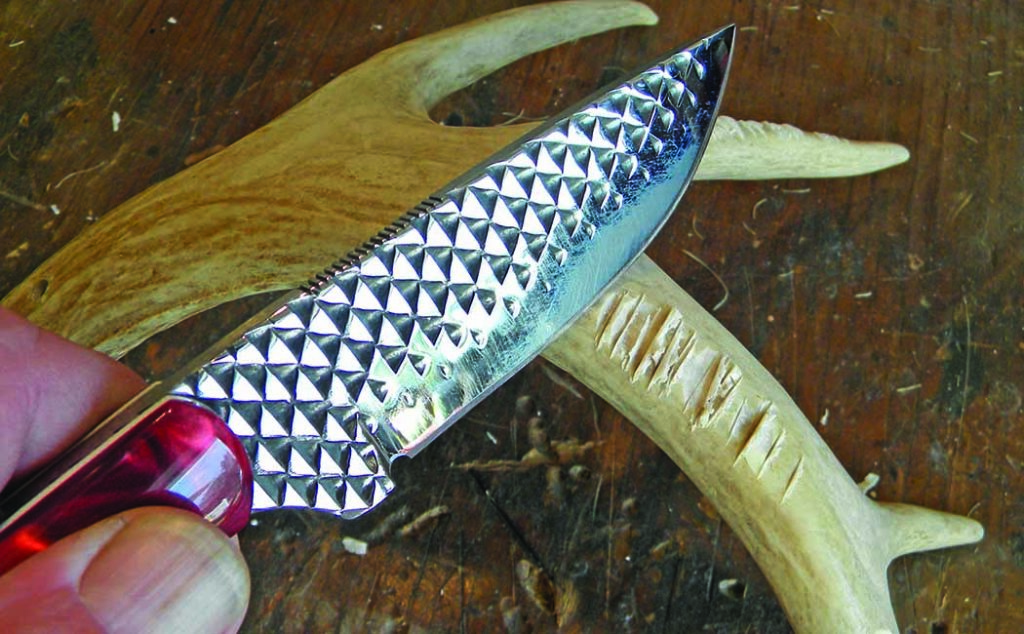
The author checked the edge for toughness with the antler chop. Twenty hard whacks later and the edge and, therefore, the blade’s heat treatment, passed with flying colors.

For splitting larger wood I used a chunk of 2×10 and the dead-blow hammer. The Manzano parted the wood in two smacks with no excess shock transferred to my hand. The knife was very comfortable to use in this manner.

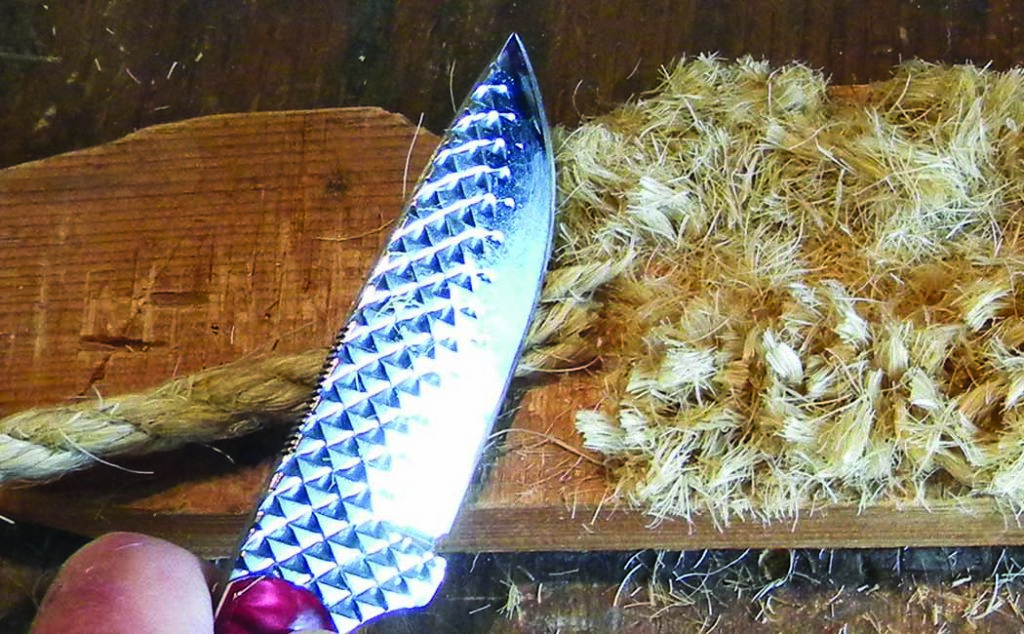
It was time for my favorite test material, sisal rope. Positioning half-inch sisal on my cutting board, I started with push cuts. The Manzano crunched its way to 200 cuts with no signs of stopping. That was plenty for my hand. There were no hot spots with the handle and the thumb notches were grippy but not sharp. This is a very comfortable knife to use—or did I already say that?

The Manzano crunched its way to 200 cuts in the half-inch rope with no signs of stopping. There were zero hot spots with the handle and the thumb notches were grippy but not sharp.

Time to stress the edge and check its toughness with the antler chop. I gave the medium 20 hard whacks, flinging chips all over my work bench. The results? The antler was chopped up and there was no damage to the edge. Kudos on the heat treatment.

Manzano Farrier Rasp Blade Edge Retention

Finally, it was time to return to the 20-pound bond paper. The Manzano didn’t skip a beat, slicing smoothly. I caught the paper with the choil/sharpening notch a few times, tearing it a bit. That was on me.

I Would

Bring the grind up closer to the spine for smoother slicing.

Final Cut

The Manzano is a great performer—classic looking all around and a very comfortable daily user. It’s made to cut.

Paul Gonzales warrants his knives against defects in materials and workmanship as long as the knives have not been abused. For more information contact Gonzales Blades 505-480-7982.

Manzano / Paul Gonzales
Blade Length: 3.25 inches
Blade Material: Farrier’s rasp
Blade Temper: Differential
Handle: Kirinite synthetic
Handle Liners: White G-10
Handle Pins: Nickel silver
Weight: 6 ounces
Overall Length: 7.5 inches
Sheath: Belt pouch design in 8-ounces leather
Weight of Sheathed Knife: 8.5 ounces
Maker’s Price: $200

Read More About Pocketknives

Fire Starter Knife: Blades Designed To Spark A Flame

Fire-starter knives make sparks when you need them most.

Bushcraft skills have grown immensely in popularity in the past few years. It could be the slew of TV shows promoting survival situations or just perhaps an interest in self-sufficiency. What is true is that the knife industry is playing catch-up to the bushcrafting market, and many new products pop up that have features dedicated to keeping you alive and warm in the woods.

Fire Starting Knives

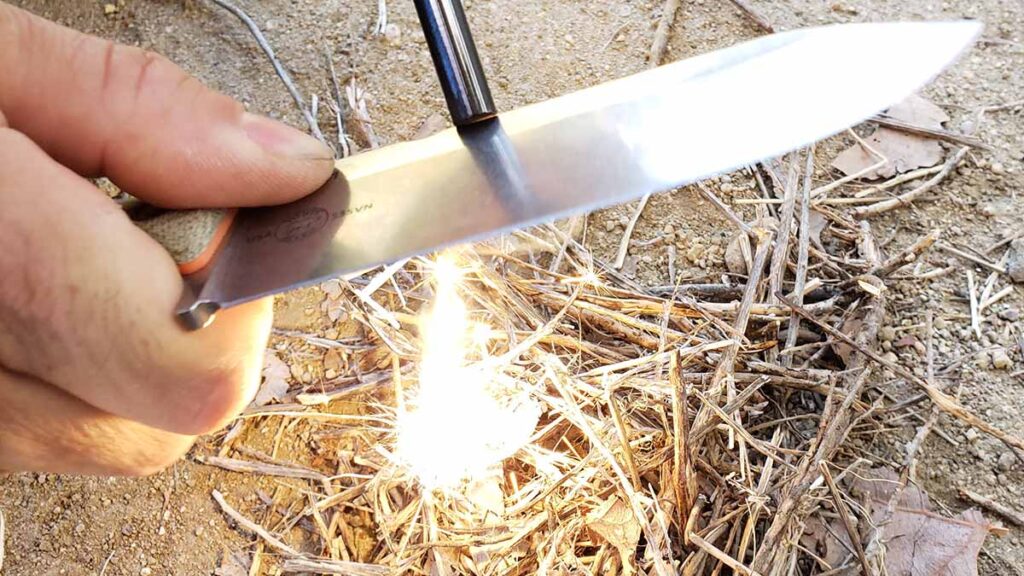
Recent years have seen an influx of knife features deemed ideal for use with another essential tool—the ferro rod striker. Ferro rods are made of ferrocerium, an alloy consisting of several base metals and magnesium. Magnesium is highly reactive and generates showers of sparks as it is scraped against steel. Think of it as a more modern version of flint. Ideally, the ferro rod is struck against a sharp, acute surface. Many people use the blade’s edge for this, though this is not recommended as dull spots can emerge quickly.

As time passed, people began sharpening the blade spines to 90 degrees, making a hard, sharp angle that is not on the cutting edge. Still, others find this feature annoying, as it is fully possible to injure your hand on a squared spine. I know because I’ve done it.

As a remedy, people started cutting in little semi-circular cutouts into the spine that still retain a square shoulder, thus allowing for safer handling when striking. Both a fully sharpened spine and the sharpened cutout are valid features; it depends on what style you prefer.

Striking the rod
Strike the rod against the sharp corner of the blade spine to create sparks and ignite the tinder. (Mary Lou Ayres image)

The smaller cutout is really just a striking feature but the fully sharpened spine can be used for a number of other ends, most notably an easy and effective means of peeling carrots, potatoes and other root vegetables for the camp kitchen. Many top fire-making knives have sharp-angled spines and cutouts ideal for striking.

Bowdrill Divits

Some bushcraft knives have bow drill divots in the grips. No less than 10 knives I’ve tested in the past year have the feature and I’ve yet to master its use.

A bow drill is a very primitive means of starting a fire with friction. It takes about forever and even then is not a guaranteed success. In terms of time management and the amount of calories used in a survival situation, I really don’t think it is worthwhile, though it’s nice that the feature is there.

The bow drill is basically a stick you press down on while at the same time you spin it with a bow (a stick with string wrapped around it) to create an ember. The idea behind a knife with a divot on the handle is it allows you to make kindling and all the tools you need to make a basic fire. You can use the knife to make the string (plant fiber), the drilling board (piece of dry wood) and bow/drill (stick).

Knives with fires started
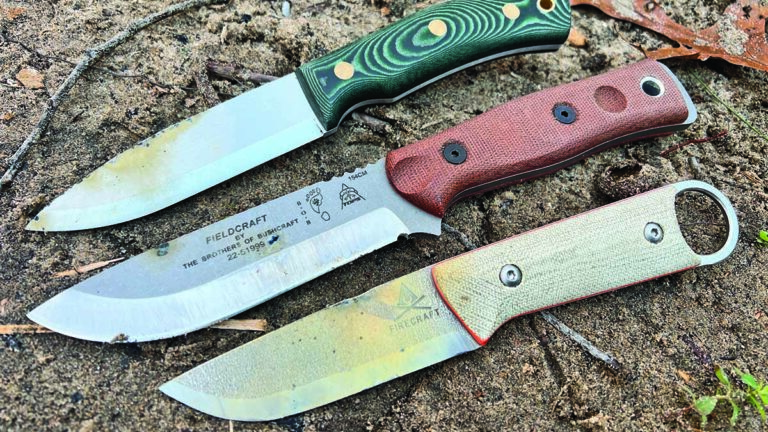
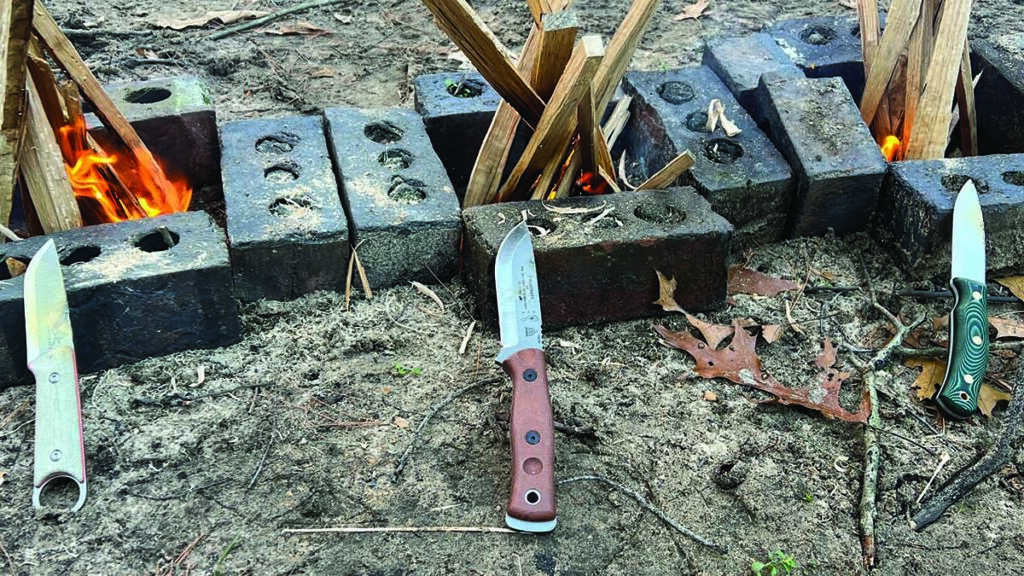
All three knives were tested side-by-side in equal conditions to see how well they performed in making a fire. All succeeded.

BLADE® Editor Steve Shackleford asked me to test the knives in this capacity as long as it didn’t detract from the other standard knife testing. “Skip it if it’s too much,” he stated. “I don’t want to wear you out.” However, in the spirit of making the story as detailed as possible inside the 1,500-word limit, I tried the TOPS and White River knives with the handle divots to see if I could, in fact, start a fire using the bow drill.
I was unsuccessful with both but did end up getting a fire going with a cheap bow drill kit from Amazon. No matter how you slice it, using a bow drill is just a huge pain in the keister and I’d rather stick a standard lighter in every pocket of my gear and an extra one in my boot than have to resign myself to using a bow drill.

A large reason why I really didn’t like using the divot features was that they really require you to keep the knife in the sheath. Otherwise, you’re just sitting there putting pressure on a knife with the edge floating out in space. It is easy to get into a trance while using a bow drill, and I found myself not paying attention at several points—not a safe situation.

Holding the knives in their sheaths is not very comfortable as they are hard Kydex. There was no real comfortable way to put pressure on the drill while gripping the sheath. Eventually, I gave up and decided if I ever did have to use a bow drill, I’d just find another piece of wood and carve a divot with the knife instead.

White River Knife & Tool FC-PKO

White River FC-PKO
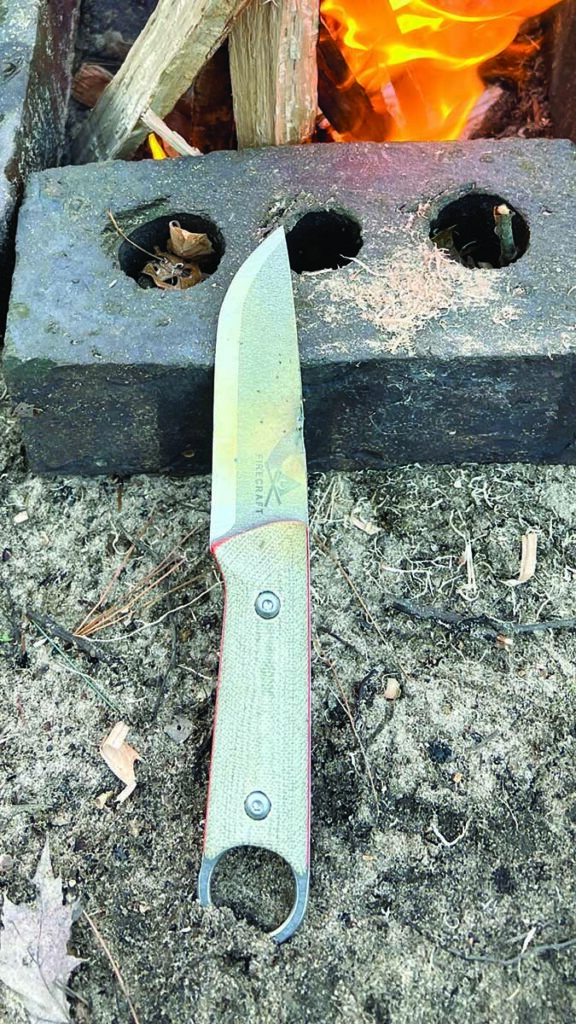
The White River FC-PKO is an end-stage tool in that it can readily start fires, the author noted, but lacks the strength and blade thickness to take down anything more than sticks.

White River Knife & Tool makes excellent knives. In fact, they are some of the most well-laid out and functional I’ve tested in my time with BLADE®. I have used the company’s larger FC7 as my main deer hunting knife in camp and have, between myself and my friends, packed out no less than 50 deer with it. I was happy to review the smaller FC-PKO, sort of a little brother to the FC7.

The FC-PKO is a modified puukko style with a Scandi grind and a ring pommel. The Kydex sheath is low profile. My initial impressions were that the knife is small, thin and razor sharp. I immediately thought it would be a perfect knife for pheasant or duck. I found it a champion at cutting tinder and kindling, but not up to larger work. The knife is an end-stage tool in that it can readily start fires, but lacks the strength and blade thickness to take down anything more than sticks. You’ll need a larger tool to actually prepare the wood prior to using the FC-PKO.

As far as fire-making ability, it is a solid performer. The knife has a small notch on the spine that ignites the ferro rod easily. The edge can trim extremely fine curls of tinder. Where I ran into problems was the ring pommel. I have large hands and long fingers, so this may not be an issue to everyone, but I found my pinky largely just floating in space. I couldn’t get comfortable with the ring. That said, it is overall a great knife that will ultimately see years of service on my belt.

White River Knife & Tool FC-PKO Specs
Knife Type: Modified puukko
Blade Length: 3.7”
Blade Steel: CPM S35VN stainless
Blade Grind: Scandi
Blade at Thickest: .125”
Handle Material: Micarta® w/orange liners and bow-drill divot
Weight: 4.6 ozs.
Overall Length: 8.1”
Sheath: Black Kydex w/striker loop
Striker: Included, basic rubber grip
Country of Origin: U.S.A.
MSRP: $200

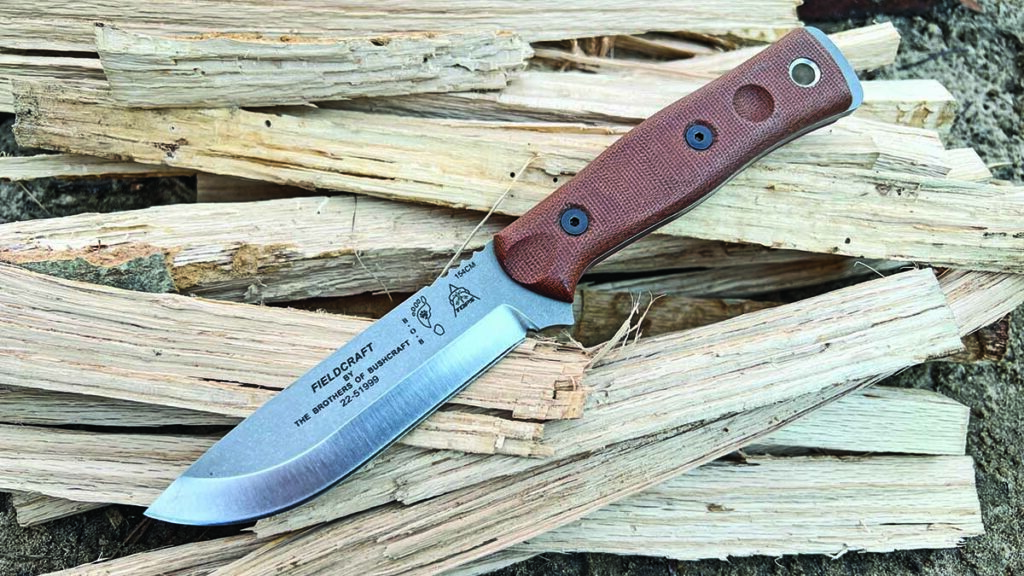
TOPS Knives Fieldcraft

TOPS Fieldcraft
The author described the Fieldcraft as “a beast of a knife that weighs nearly a pound and is built like a tank.”

The TOPS Knives Fieldcraft by Brothers of Bushcraft is a beast of a knife that weighs nearly a pound and is built like a tank. The edge is razor sharp despite the steep grind and can split medium-size firewood easily. The handle is thick and robust and you can really get a grip on it. I find large knives like this almost too much for regular use, but this one fits into the niche of being large enough for constant use and not too big to be a burden.

The knife has a striker cut in the pommel as opposed to the blade spine. That said, you can order it with a sharpened spine if you wish. I wanted to test the base model to get an idea of what the average owner would experience. If I want to add a sharp spine, I can do so on my grinder or have TOPS do it. The pommel striker is not easy to get used to—you have to find a safe direction to point the blade, which can be difficult. That said, you can leave it in the sheath for this part—just be careful not to launch it out while striking. The cutout is effective once you get used to it.

TOPS Knives Fieldcraft Specs
Knife Type: Full-size bushcrafter
Blade Length: 4.75”
Blade Steel: 154CM stainless
Blade Grind: Modified Scandi
Blade at Thickest: .19”
Handle Material: Tan canvas Micarta® w/red liners and bow-drill divot
Weight: 14 ozs.
Overall Length: 10”
Sheath: Black Kydex w/striker loop
Striker: Included, basic aluminum grip
Knife to Know: There are numerous other Fieldcraft models available in different materials and colors
Country of Origin: U.S.A.
MSRP: $295

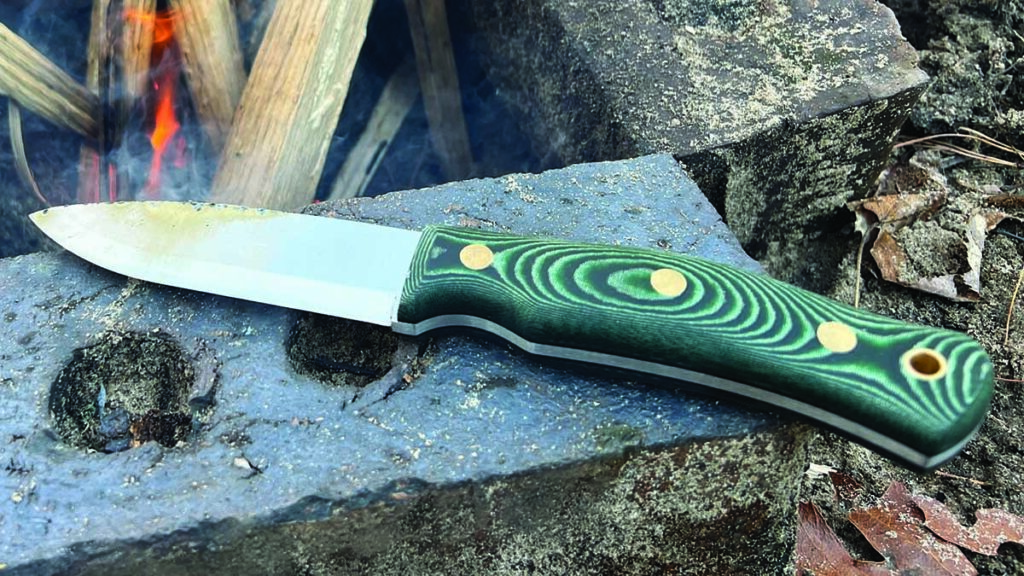
Casström No. 10 Swedish Forest Knife

Casstrom fire starter knife
According to the author, the Casström “has everything I like and nothing I didn’t—not too big, not too small and pleasant to look at.”

The classic-looking Casström No. 10 Swedish Forest Knife is reminiscent of such Scandinavian knives as the puukko. It is not a traditional puukko but rather a somewhat modern take on the longstanding Nordic tradition of general-use fixed blades. Many American knives in the bushcraft world have a somewhat gritty, tactical feel and a somewhat industrial appearance. The No. 10 is not terribly exciting in looks but hides its function under a gentle exterior. It was my favorite knife in the review, which may surprise you. It has everything I like and nothing I didn’t—not too big, not too small and pleasant to look at.

The knife has a smooth grip—be careful if you’re not wearing gloves, it can get a tad slippery—and a plain, graceful blade. The angle of the spine is sharpened but not so aggressively that it would risk injury. It is not a particularly thick blade but can handle some medium-to-small splitting work if you’re careful, and makes kindling and scrapes tinder well. The knife strikes easily anywhere on the spine and offers a great deal of control. Of note, the sheath is leather and has a ferro rod with a matching green/black Micarta® grip. As a set the knife and rod look very nice together. The rod was also the easiest to hold onto thanks to it having the largest grip area.

Casström No. 10 Swedish Forest Knife Specs
Knife Type: General-purpose Scandi
Blade Length: 3.75”
Blade Steel: Sandvik 14C28N stainless
Blade Grind: Full flat
Blade at Thickest: .13”
Handle Material: Green/black Micarta® w/black liners
Weight: 5.75 ozs.
Overall Length: 8.6”
Sheath: Black leather w/striker loop
Striker: Included, matching green/black Micarta handle
Knife to Know: According to the author, the knife has the most user-friendly sheath of the test bunch
Country of Origin: Sweden
MSRP: Approximately $200

Fire Starter Knife Final Cut

Starting a fire can be a challenge, especially in adverse conditions. Considering just how cheap common lighters and survival matches are, knives like the ones in this article should probably not be your primary means of starting a fire in an emergency. These knives are capable tools that provide a level of redundancy to your kit in some very good, non-obtrusive ways. The base-level skills needed to start a fire can be obtained with each of these knives with relative ease, but you will still need to make sure to have the skills necessary to maintain a fire in the wilderness.

Always be sure that you are not making a bad situation worse with fire, and make sure you’re not using a knife under less-than-ideal conditions. If you have a lighter or matches, use them first, especially in the dark.

More Wilderness Knives:

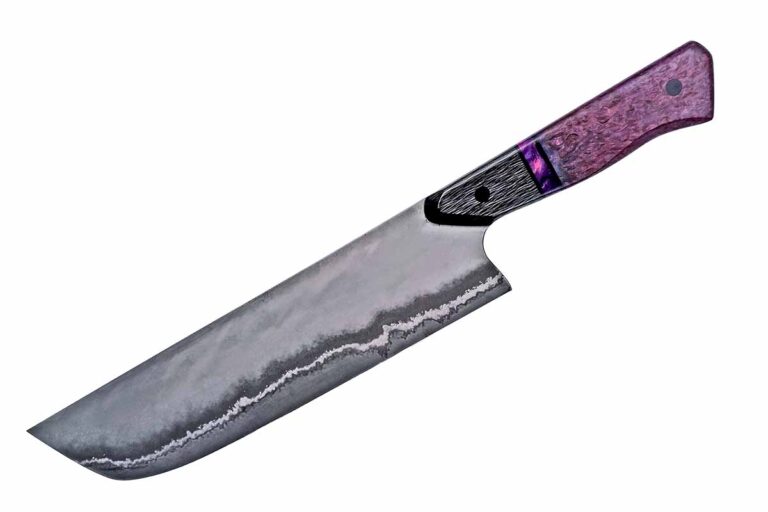
Delight Valley Veggie Slicer Review: Roughing Up Roughage

Specially formulated to knock vegetables down to size, the Veggie Slicer has an edge in the kitchen.

Never judge a book by its cover. That holds true for knives, too.

When I opened the box containing the Veggie Slicer from Delight Valley Blades, I noticed it did not have a tip like most knives. Well, at least I wouldn’t stab myself. The knife has a full flat grind to sharp, with a very fine edge. It’s made for slicing and dicing, though you know I will do more with it than that.

Veggie Slicer In The Kitchen

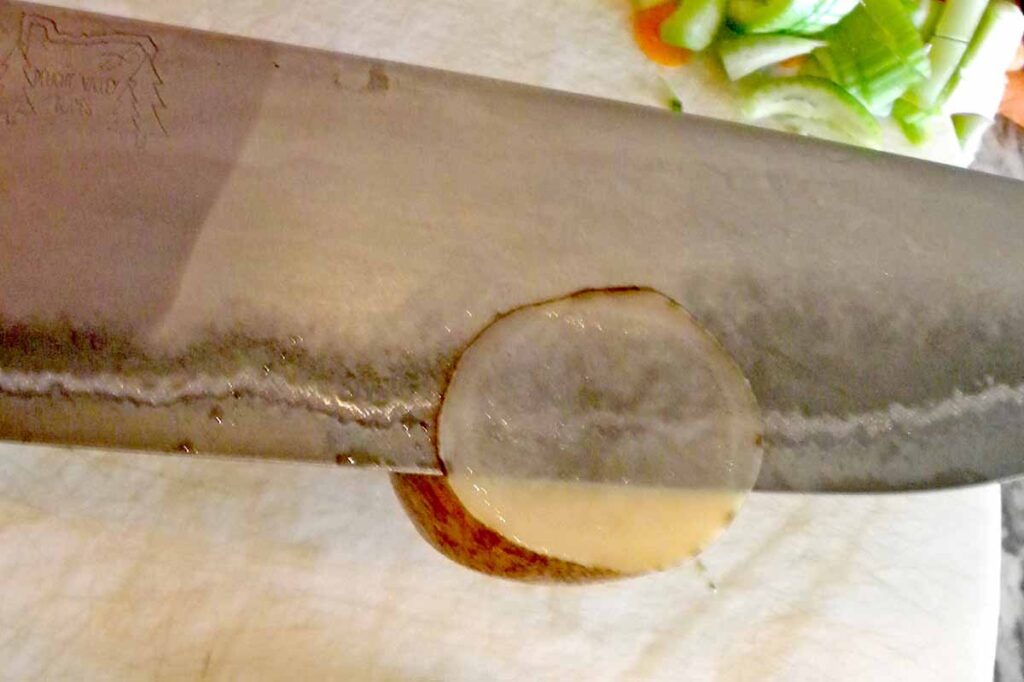
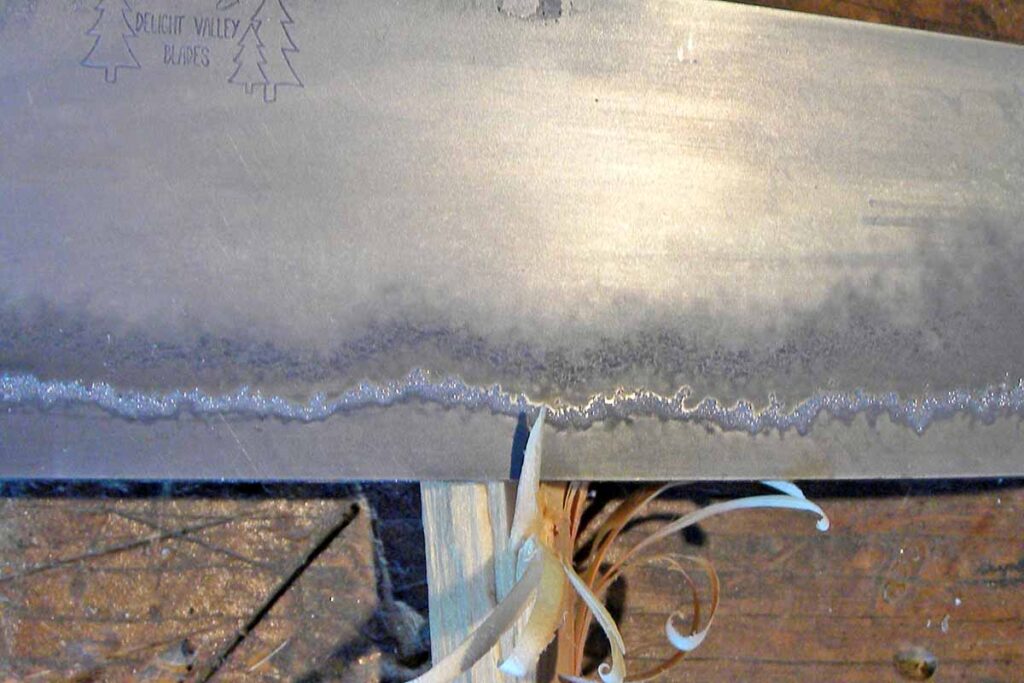
Since hunting season was starting, I made a big pot of vegetable beef soup before heading to the woods. I used the Veggie Slicer to slice and dice the veggies. It powered through the carrots very quickly and diced up the celery cleanly. I did my thinnest slice of onion ever. I could easily see the layers of the san-mai through the wafer-thin onion. I chopped the rest of the onion in a flash. On to the potatoes!

Veggie Slicer through a potato
The author sliced the potato so thin with the Veggie Slicer you can see the layers of san-mai through it.

I was expecting more resistance from the spuds. Light pressure was all it took. The knife being so sharp, I had to take care to keep all finger parts away from the edge. The Veggie Slicer will peel the skin from your finger before you can say Veg-O-Matic—and I had a few close calls.

Veggie Slicer Light Cutting Duty

With everything in the pot cooking, I headed out to the garage to slice up the non-edibles. I grabbed a sheet of 20-pound bond copy paper for slicing. I managed to suffer only one nail nick in making the paper fall apart. The knife is nasty sharp for sure. The slices were smooth and I used only the weight of the blade on the pull cuts.

I jumped up to double-walled cardboard to try and slow the edge down. That didn’t work, either. The Veggie Slicer ate through the cardboard as fast as I could get my fingers out of the way. I used both push and pull cuts to see if there was a difference. There was none.

Delight Valley Veggie Slicer vs pine
Thin pine curlicues were the order of the day for the Veggie Slicer.

Heavy-Duty Cutting

It was on to whittling pine. The Veggie Slicer made very thin curlicues. I couldn’t choke up on the blade as the spine was cut at a 90-degree angle—too sharp for the insides of my fingers. As a result, control was a tad more difficult. The blade still cut deep and shallow without a challenge. It zipped into the pine quickly, still scary sharp.

It was time for some half-inch sisal rope. After the first 100 crunching cuts I let my guard down enough to take a nick out of my rope-holding finger. Thanks to all my callouses no blood was shed, but it was close. The second 100 went off without any dulling of the edge (or my finger).

I had to go one step further to see if the fine edge would hold up. I grabbed a whitetail deer antler and gave it 30 chops. The result: no edge damage whatsoever, a sign of perfect heat treatment.

Final Cut

The Veggie Slicer can slice, dice and a lot more if needed. It has one long-lasting edge.

Soup prep with Veggie Slicer by Delight Valley Blades.
The kitchen knife sliced and diced the veggies, powered through the carrots very quickly and diced up the celery cleanly. It’s soup!

I would soften the blade spine and choil and ricasso area so a wider selection of hand grips can be used.

Delight Valley Blades Veggie Slicer Specs
Blade length: 7.5”
Blade steels: 26C3 carbon core and 416 stainless cladding in a san-mai construction
Blade grind: Full flat
Blade width: 1.78”
Handle: Masur birch and carbon fiber
Pins and liners: G-10
Weight: 10.5 ozs.
Overall length: 12.25”
Maker’s price: $600

Read More Knife Reviews:

New Knives: See What’s Hot On The New Factory Drops

0

Sate your cutting needs with the world’s latest factory knives and sharpeners.

Have an itch that only a new knife will scratch? Look no further as we’ve gathered up a slew of new factory blades fresh on the market and ready to please. There is a load of pocket and EDC options in this haul, but there are a few outdoor-angled knives and knife accessories thrown in for good measure.


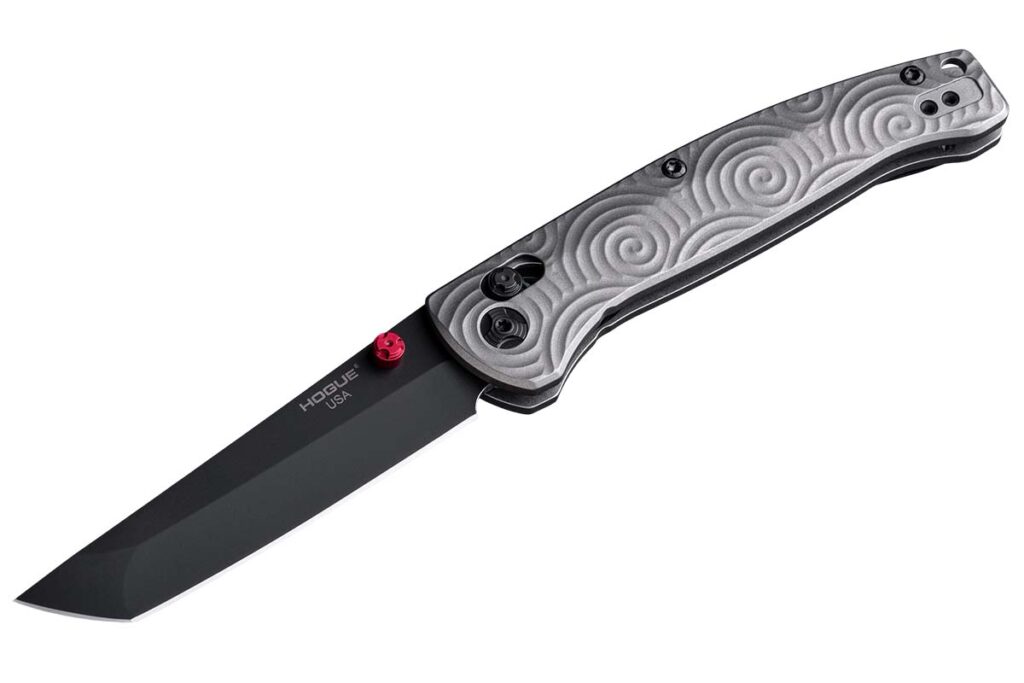
Hogue Knives Mysto

Kellam Knives Worldwide Jouni 80

KNIFE PATTERN: EDC
DESIGNER: Jim Bruhns
BLADE LENGTH: 3.4”
BLADE STEEL: CPM MagnaCut stainless
BLADE GRIND: Compound hollow
BLADE OPENER: Thumb studs
HANDLE MATERIAL: 6Al-4V titanium
LOCK: ABLE Lock®
POCKET CLIP: Ambidextrous, blade tip up
WEIGHT: 3.5 ozs.
CLOSED LENGTH: 4.4”
SPECIAL FEATURES: Thumb studs and backspacers anodized red
COUNTRY OF ORIGIN: USA
MSRP: $329.95-$349.95
AVAILABLE: Now
hogueinc.com/knives


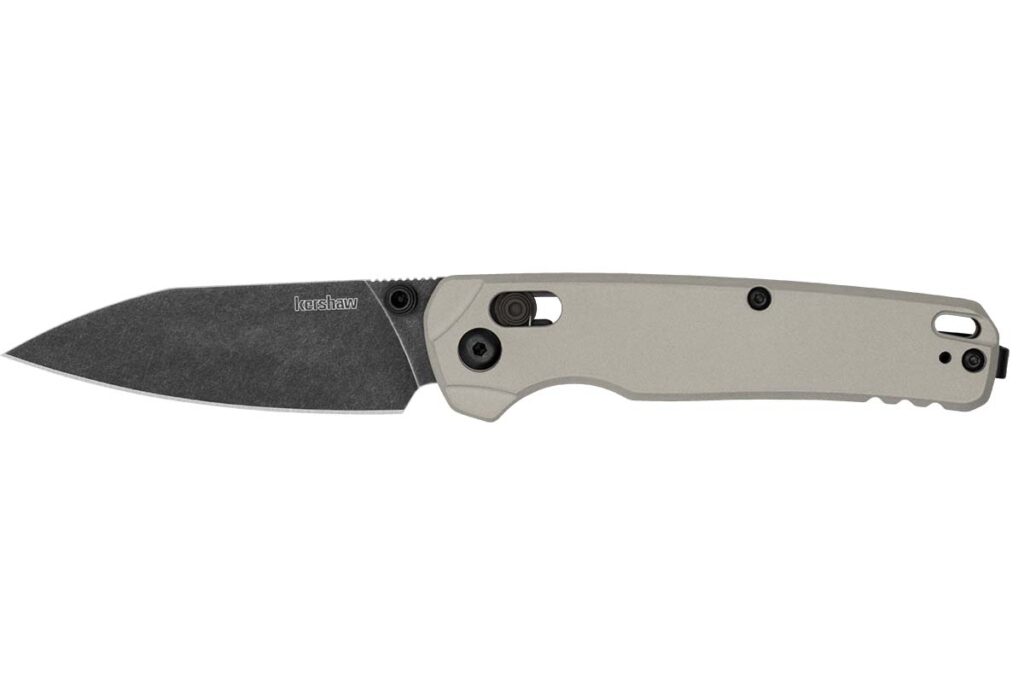
Kershaw Bel Air

Kershaw Bel Air

KNIFE PATTERN: EDC
BLADE LENGTH: 3”
BLADE STEEL: CPM MagnaCut stainless
ROCKWELL HARDNESS: 62-64 HRC
BLADE GRIND: Flat
HANDLE MATERIAL: 6061-T6 aluminum
BLADE OPENER: Thumb stud
LOCK: DuraLock
POCKET CLIP: Right/left deep carry, blade tip up
WEIGHT: 2.9 ozs.
CLOSED LENGTH: 4.2”
COUNTRY OF ORIGIN: USA
MSRP: $249.99
AVAILABLE: Now
kershaw.kaiusa.com


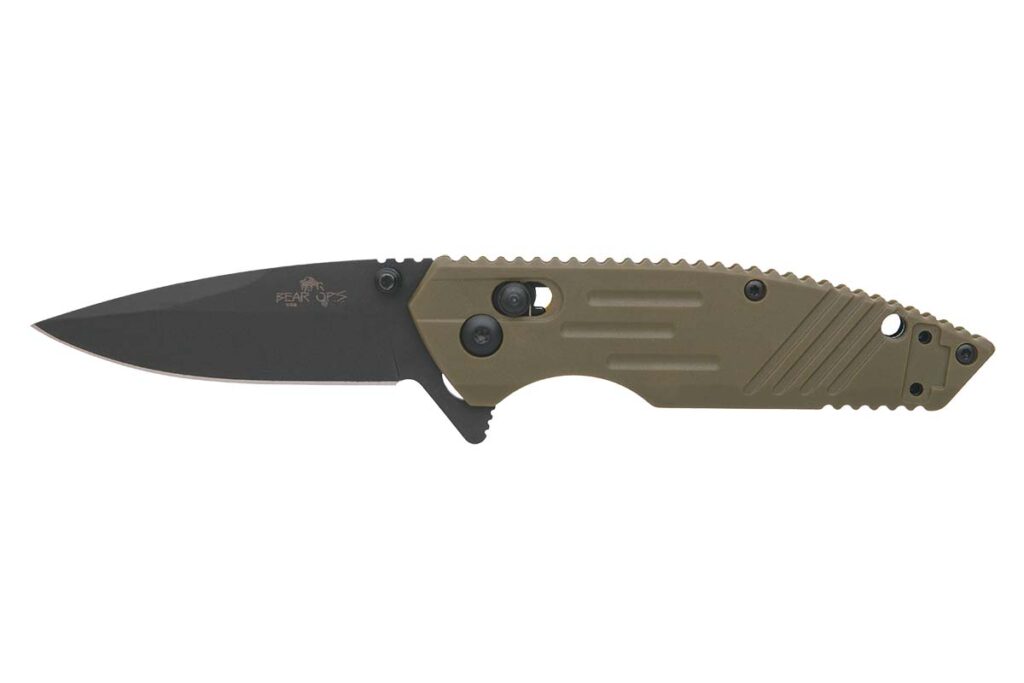
Bear OPS Rancor IX

Bear OPS Rancor IX

KNIFE PATTERN: EDC
BLADE LENGTH: 2.75”
BLADE MATERIAL: D2 tool steel
BLADE GRIND: Taper
HANDLE MATERIAL: Zytel
BLADE OPENER: Flipper and/or thumb studs
LOCK: Slidelock
POCKET CLIP: Reversible, blade tip-up carry
WEIGHT: 2.6 ozs.
CLOSED LENGTH: 4 3/8”
COUNTRY OF ORIGIN: USA
MSRP: $100.99
AVAILABLE FOR SALE: Now
bearandsoncutlery.com


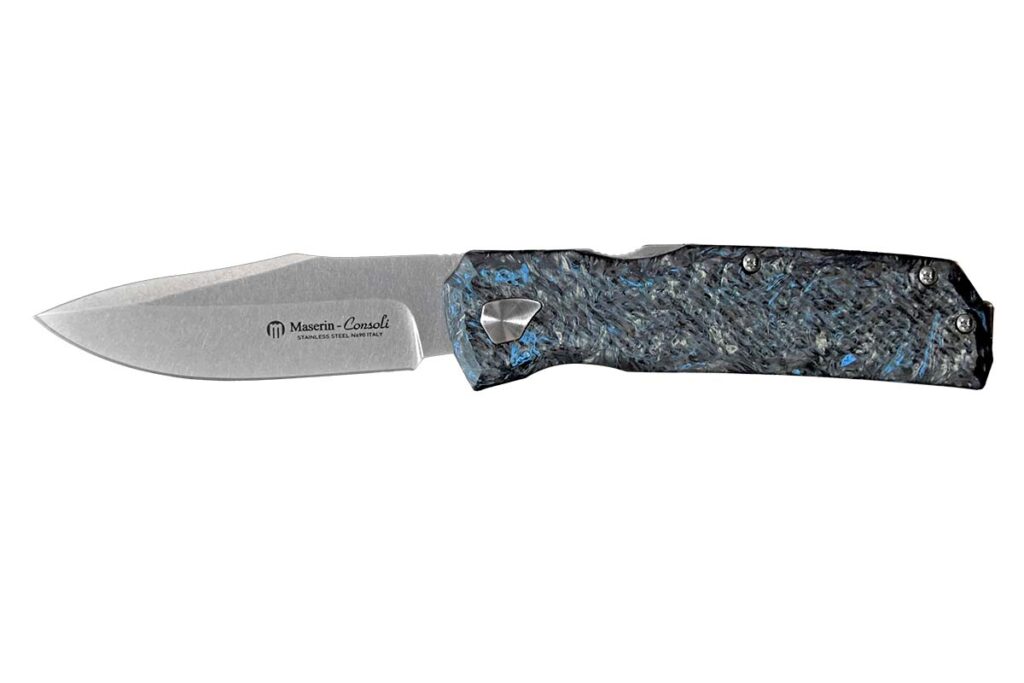
Maserin Power

Maserin Power

KNIFE PATTERN: EDC
DESIGNER: Sergio Consoli
BLADE LENGTH: 3.149”
BLADE STEEL: N690 stainless
BLADE GRIND: Flat
HANDLE MATERIAL: Fat Carbon
LOCK: W-Lock
POCKET CLIP: Yes
WEIGHT: 3.174 ozs.
CLOSED LENGTH: 4.33”
COUNTRY OF ORIGIN: Italy
MSRP: $197
AVAILABLE: April
maserin.com


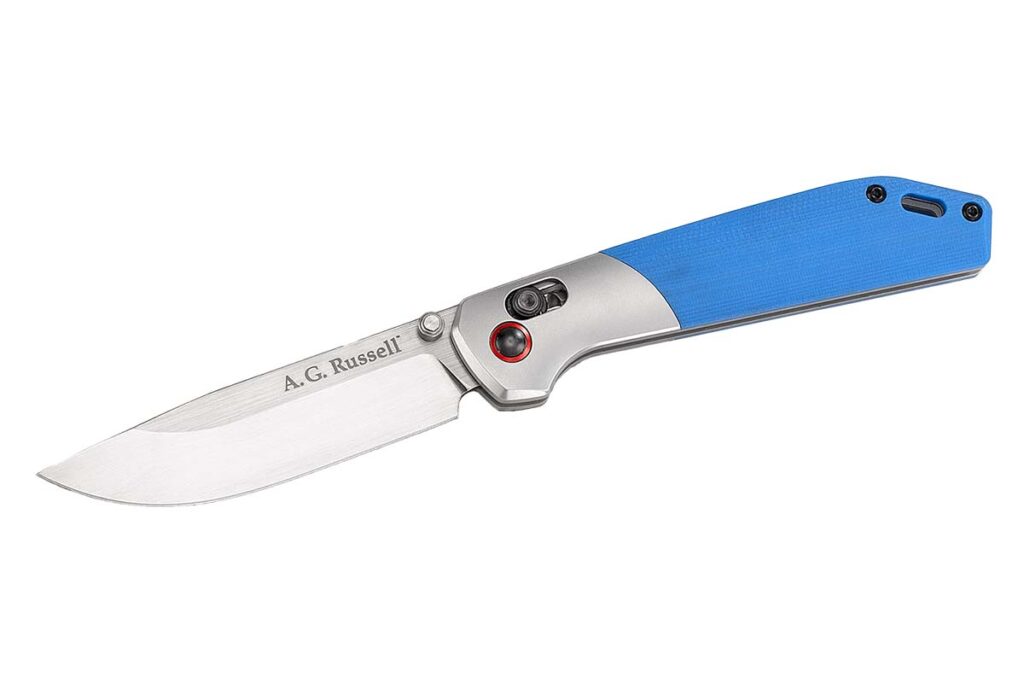
A.G. Russell Knives Power Ball 4

A.G. Russell Knives Power Ball 4

KNIFE PATTERN: EDC
DESIGNER: BLADE Magazine Cutlery Hall-Of-Fame® member A.G. Russell
BLADE LENGTH: 3.25”
BLADE MATERIAL: D2 tool steel
ROCKWELL HARDNESS: 60-61 HRC
BLADE GRIND: Flat sabre
HANDLE MATERIAL: Blue (shown) or green G-10
BLADE OPENER: Thumb stud
BLADE FINISH: Handrubbed
LOCK: Design inspired by Cutlery Hall-Of-Famer Blackie Collins
POCKET CLIP: Deep pocket left or right hand, blade tip up
WEIGHT: 3.7 ozs.
CLOSED LENGTH: 4.25”
SPECIAL FEATURES: Bold G-10 colors
COUNTRY OF ORIGIN: China
MSRP: $135
AVAILABLE: Now
agrussell.com


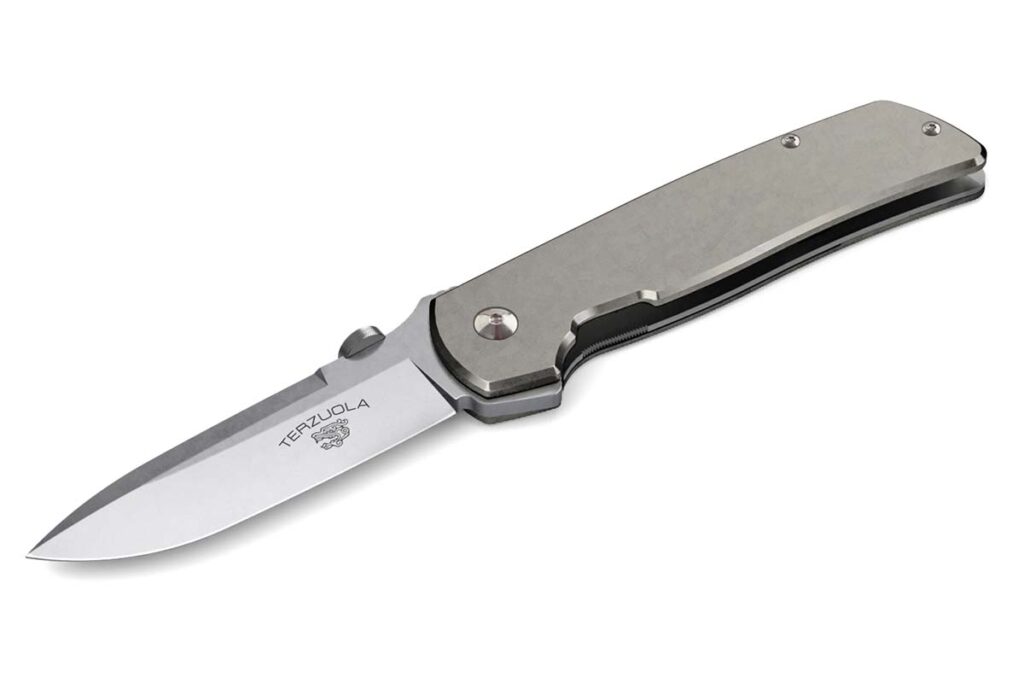
Fox Cutlery ATCF Original Gangster

Fox Cutlery ATCF Original Gangster

KNIFE PATTERN: EDC
DESIGNER: BLADE Magazine Cutlery Hall-Of-Fame® member Bob Terzuola
BLADE LENGTH: 3.54”
BLADE STEEL: CPM MagnaCut stainless
BLADE GRIND: Flat
BLADE FINISH: Stonewashed
HANDLE MATERIAL: Coarse stonewashed titanium
BLADE OPENER: Thumb disc
LOCK: Linerlock
POCKET CLIP: One-side titanium
WEIGHT: 6.34 ozs.
CLOSED LENGTH: 5.04”
SHEATH: Nylon pouch
COUNTRY OF ORIGIN: Italy
AVAILABLE: May
foxknives.com


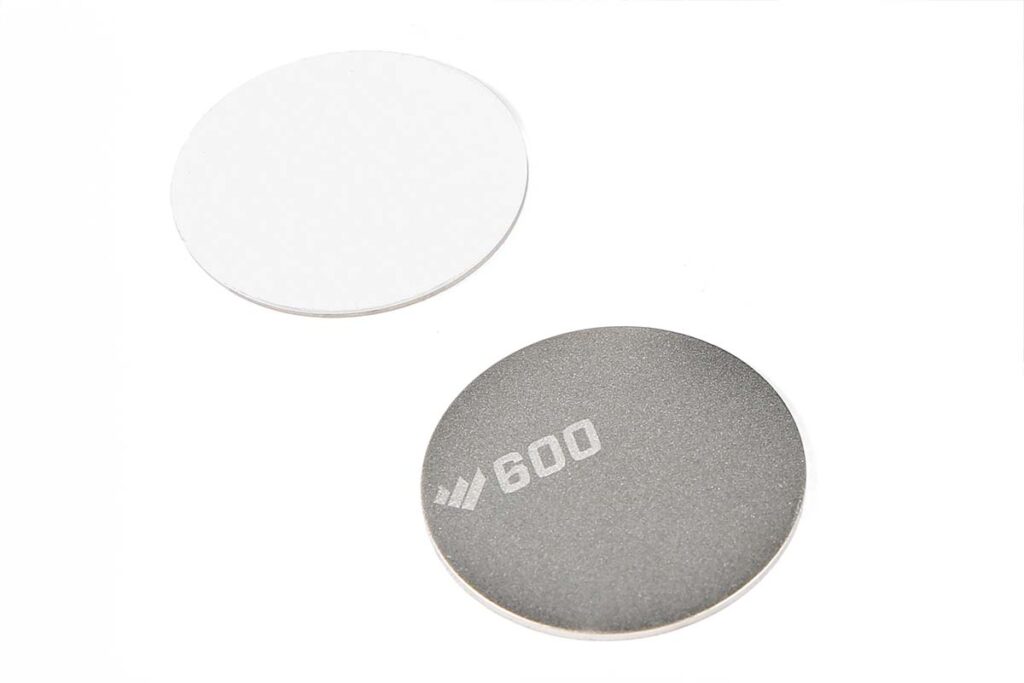
Work Sharp Rolling Knife Sharpener

ABRASIVES: Discs in coarse diamond, fine diamond and ceramic
GRITS: 320, 600, ceramic
ANGLE GUIDE: Magnetic angle block provides four options: 15, 17, 20 and 25 degrees
DIMENSIONS: 3.75” L x 2.6” W x 2.6” H
BODY MATERIAL: Metal, soft touch rubber, plastic
WEIGHT: 1.9 lbs.
KNIFE TYPES SHARPENED: Large, small and kitchen knives and pocketknives
EDGE TYPES SHARPENED: Plain
SPECIAL FEATURES: Tri-axle drive system follows blade length smoothly, and Soft Touch grip adds comfort and safety
COUNTRY OF ORIGIN: Designed, calibrated and quality checked in Ashland, Oregon, using foreign components
MSRP: $150
AVAILABLE: Now
worksharptools.com


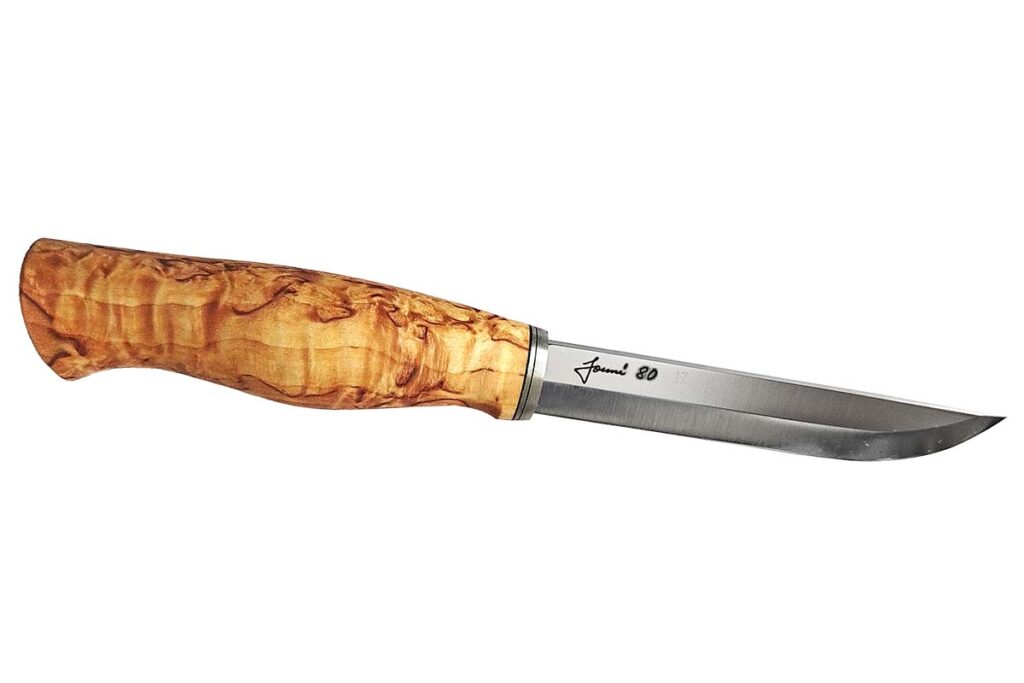
Kellam Knives Worldwide Jouni 80

Kellam Knives Worldwide Jouni 80

KNIFE PATTERN: Puukko
DESIGNER: Jouni Kellokoski
BLADE LENGTH: 4 7/8”
BLADE STEEL: Stainless
BLADE GRIND: Scandi
HANDLE MATERIAL: Arctic curly birch
WEIGHT: 3.8 ozs.
OVERALL LENGTH: 9.5”
SPECIAL FEATURES: First 100 are numbered
SHEATH: Leather dangler
COUNTRY OF ORIGIN: Finland
MSRP: $169.98
AVAILABLE: Now
KNIFE TO KNOW: The knife commemorates the 80th birthday of its designer and company headman, Jouni Kellokoski.
kellamknives.com


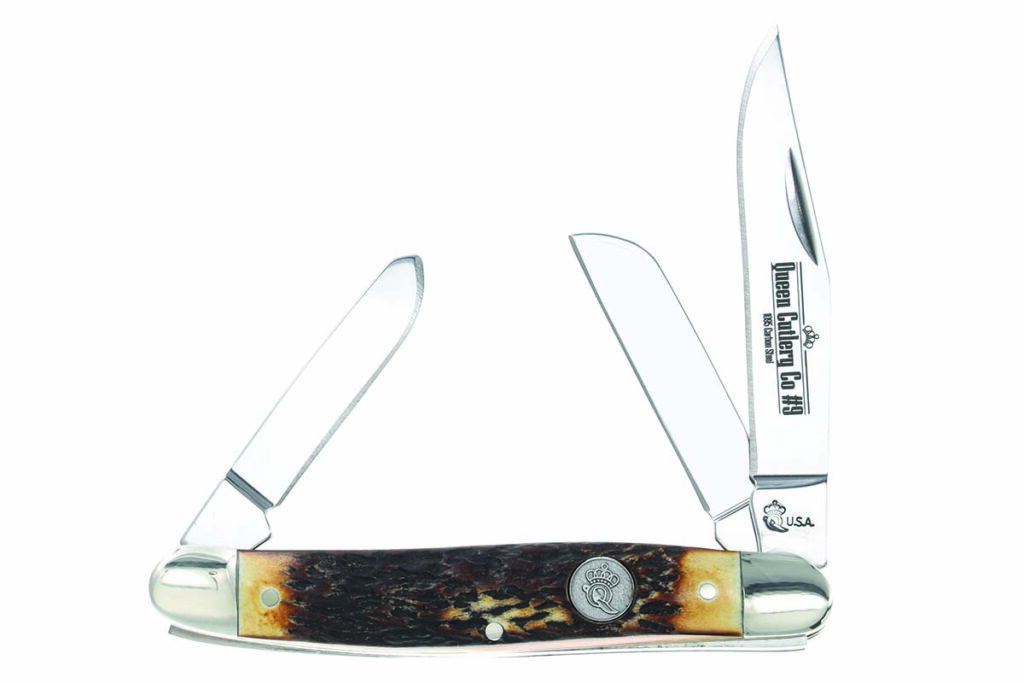
Queen Cutlery Slipjoint Pocketknife

Queen Cutlery Slipjoint Pocketknife

BLADE LENGTHS: Clip 2 5/16”, spey 2 5/64” and sheepsfoot 2”
BLADE MATERIAL: 1095 carbon steel
BLADE GRIND: Flat
HANDLE MATERIAL: Stag
PINS, SHIELD & BOLSTER: Nickel silver
WEIGHT: 2.8 ozs.
COUNTRY OF ORIGIN: USA
MSRP: $93.99
AVAILABLE: Now
queencutleryhistory.com


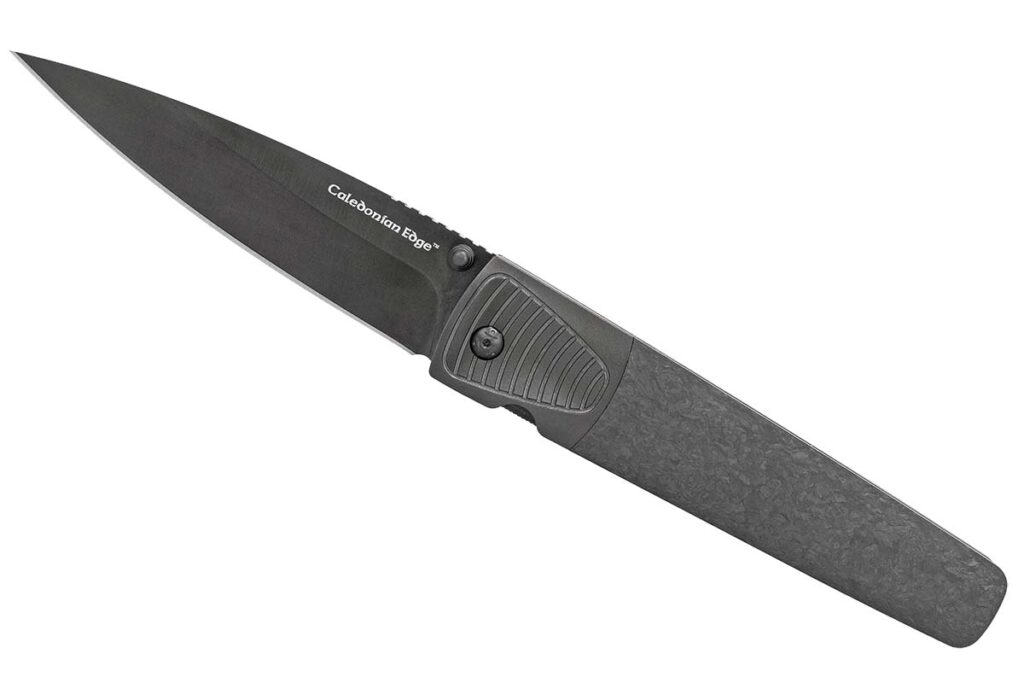
Cold Steel Caledonian

Cold Steel Caledonian

KNIFE PATTERN: EDC
BLADE LENGTH: 4.25”
BLADE STEEL: CPM 20CV stainless
BLADE GRIND: Hollow
HANDLE MATERIAL: Forged carbon fiber
BLADE OPENER: Stud
LOCK: Linerlock
POCKET CLIP: Deep carry, blade tip up
WEIGHT: 5.4 ozs.
CLOSED LENGTH: 5 1/8”
SPECIAL FEATURES: All titanium frame and liners
COUNTRY OF ORIGIN: Taiwan
MSRP: $499.99
AVAILABLE: May
coldsteel.com


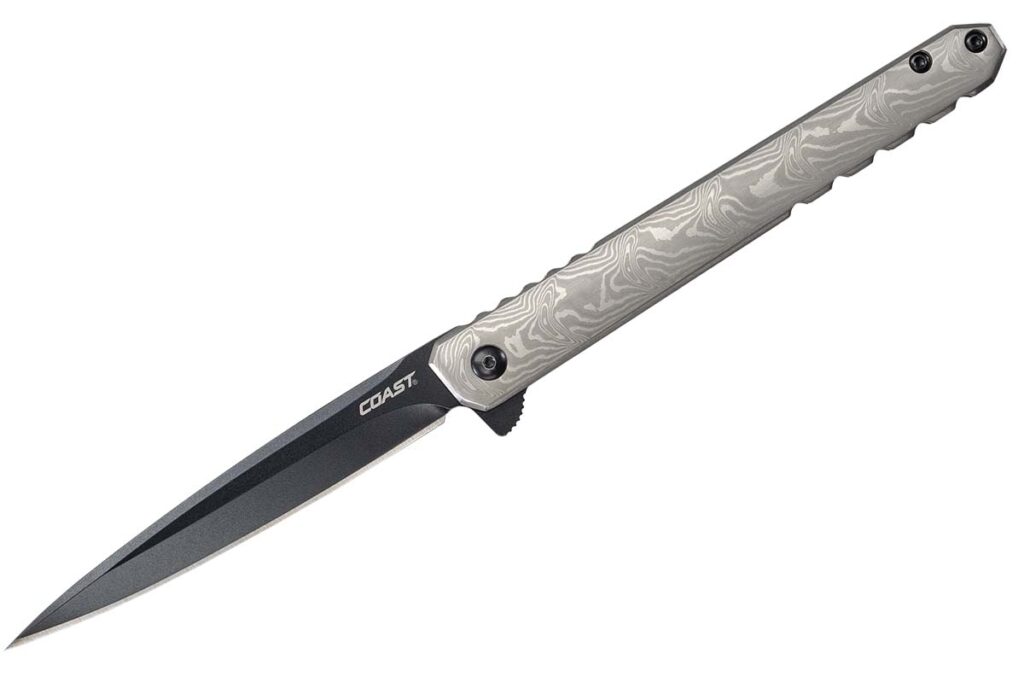
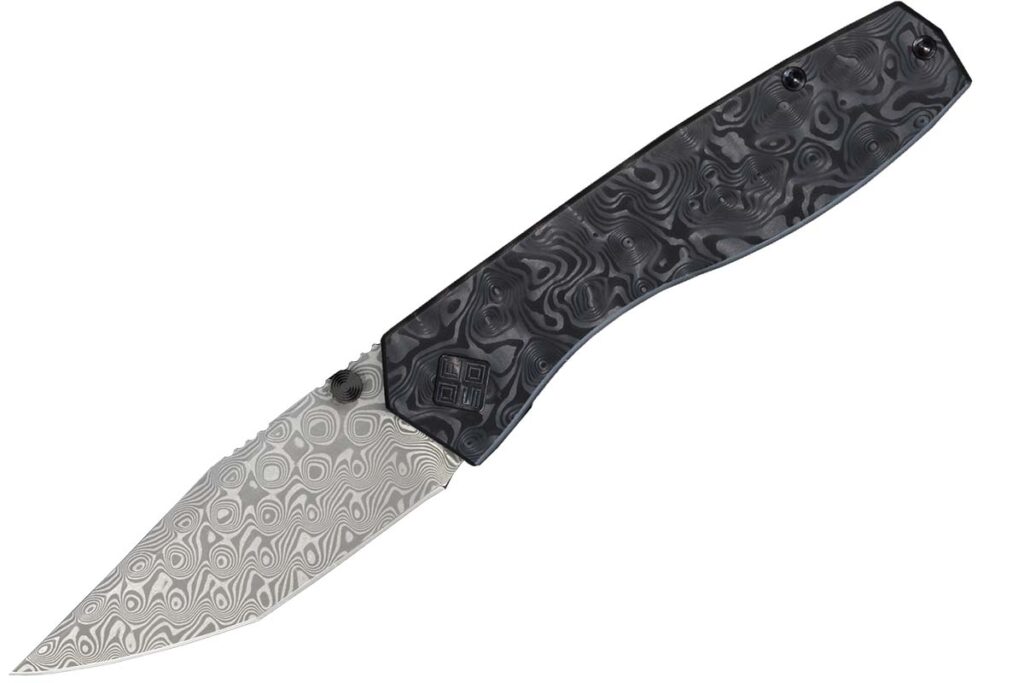
Coast Founder’s Series Origin

Coast Founder’s Series Origin

KNIFE PATTERN: EDC
DESIGNER: Doug Hutchens
BLADE LENGTH: 3.35”
BLADE STEEL: 9Cr18MoV stainless
BLADE GRIND: Flat
BLADE FINISH: Black titanium nitride
BLADE OPENER: Flipper tab
HANDLE MATERIAL: Stainless steel damascus
LOCK: Framelock
POCKET CLIP: Stainless steel, blade tip down
WEIGHT: 2.4 ozs.
CLOSED LENGTH: 4.5”
COUNTRY OF ORIGIN: China
MSRP: $99.99
AVAILABLE: Now
coastportland.com


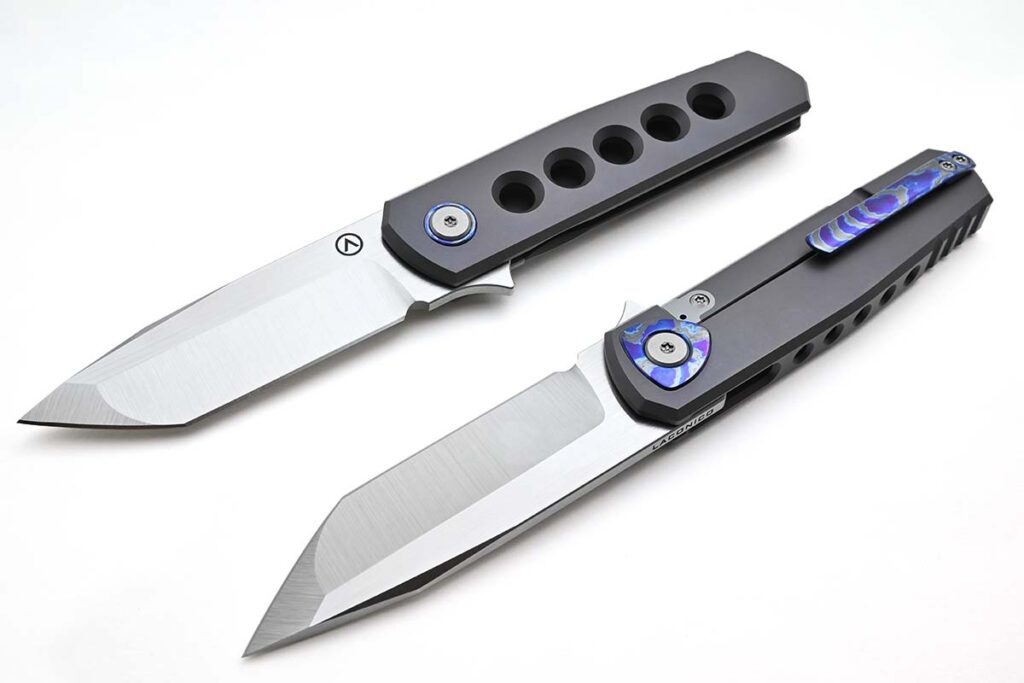
Alliance Designs EZE 2.0

Alliance Designs EZE 2.0

KNIFE PATTERN: EDC flipper folder
DESIGNER: Ray Laconico
BLADE LENGTH: 3.15”
BLADE STEEL: Elmax stainless
BLADE GEOMETRY: Laconico’s “Angry Grind”
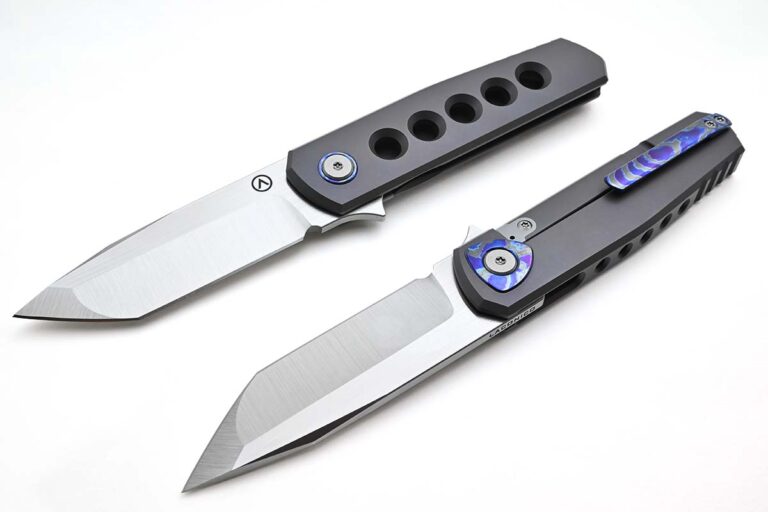
BLADE PATTERN: Tanto
HANDLE MATERIAL: Titanium integral
BLADE OPENER: Flipper tab
LOCK: Framelock
POCKET CLIP: Blade tip up
WEIGHT: 4.69 ozs.
CLOSED LENGTH: 4.5”
SPECIAL FEATURES: Chad Nichols Dark Ti accents
COUNTRY OF ORIGIN: China
MSRP: $495
AVAILABLE: Now
KNIFE TO KNOW: Clever grooves at the base of the handle provide a secure grip; the integral handle design is milled from a solid block of titanium; re-engineered flipper tab with gimping.
alliance-designs.com


Blackbird Products Dominator

Blackbird Products Dominator

KNIFE PATTERN: EDC
DESIGNER: David McHan
BLADE LENGTH: 4”
BLADE MATERIAL: D2 tool steel
BLADE GRIND: Hollow
HANDLE MATERIAL: G-10
PIVOT: Ball bearings
LOCK: PLX Bar Lock
CLOSED LENGTH: 4.5”
COUNTRY OF ORIGIN: Assembled in USA, globally sourced components
MSRP: $74.99
AVAILABLE: June
blackbirdproducts.com


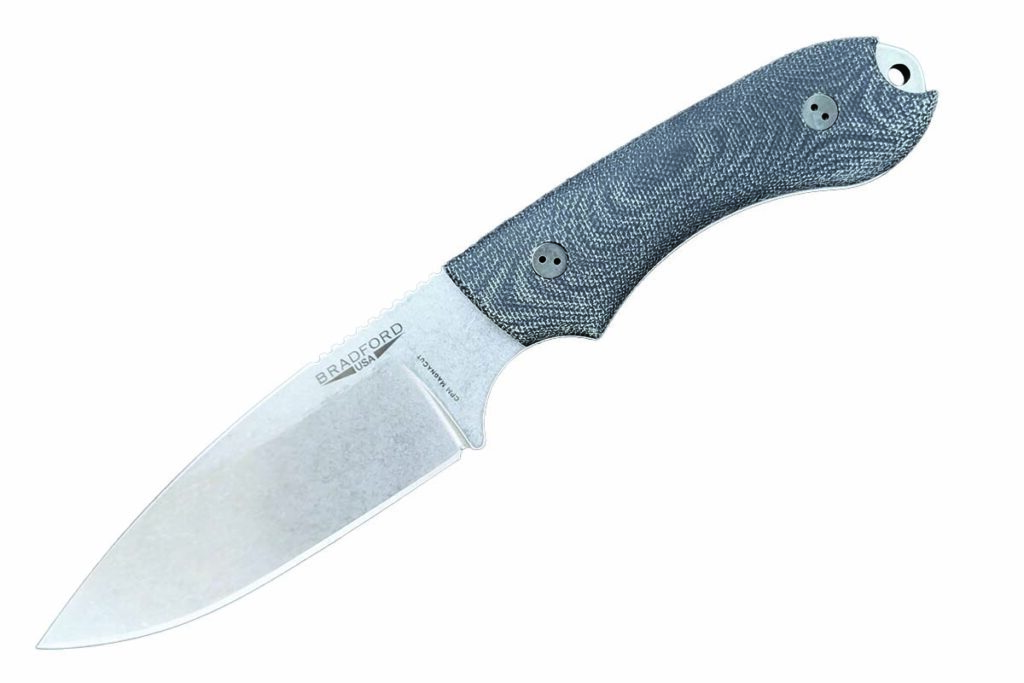
Bradford USA Guardian 4.2

Bradford USA Guardian 4.2

KNIFE TYPE: Fixed blade 
BLADE LENGTH: 4.825” 
BLADE STEEL: CPM MagnaCut stainless
BLADE GEOMETRY: Sabre and full-height grinds 
HANDLE MATERIAL: G-10, Micarta® or carbon fiber 
WEIGHT: 6.7 ozs. 
OVERALL LENGTH: 9.375” 
SHEATH TYPE/MATERIAL: Vertical bridle; leather
COUNTRY OF ORIGIN: USA 
MSRP: $269 
AVAILABLE: Now 
bradfordknives.com


Reate PL-XT

Reate PL-XT

KNIFE PATTERN: EDC
BLADE LENGTH: 3”
BLADE STEEL: Nitro-V stainless
BLADE FINISH: Stonewashed or black PVD
HANDLE MATERIAL: Micarta® or G-10
BLADE OPENER: Thumb studs
LOCK:  Pivot Lock
WEIGHT: 4.4 ozs.
CLOSED LENGTH: 3.9”
COUNTRY OF ORIGIN: China
MSRPs: $112 (stonewashed) and $117 (black PVD)
AVAILABLE: Now
reateknives.com


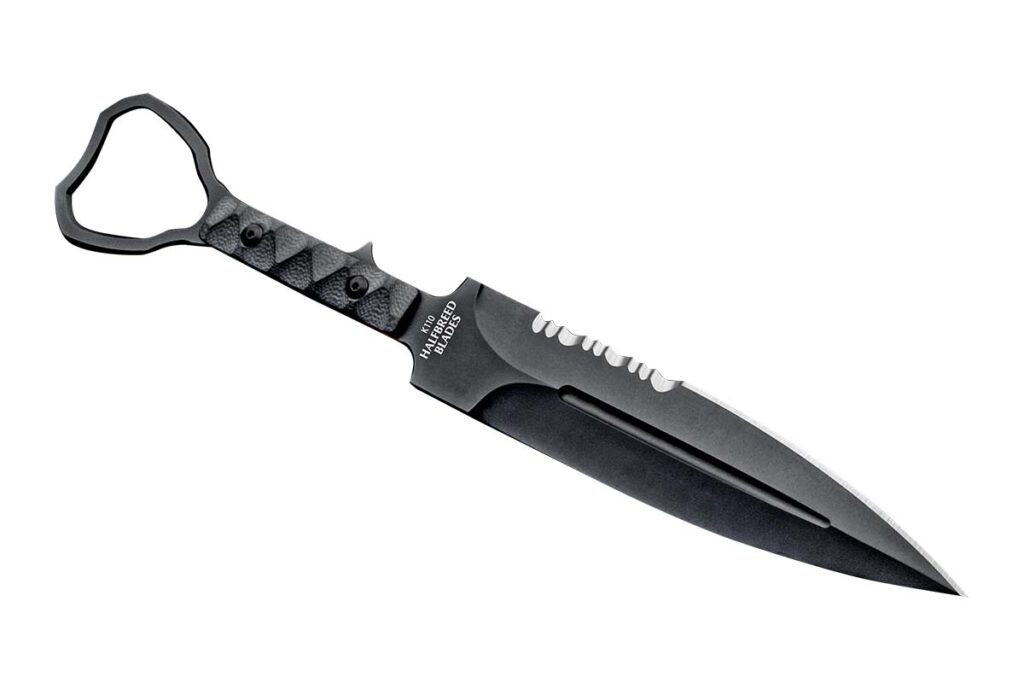
Halfbreed Blades Compact Clearance Knife XL

Halfbreed Blades Compact Clearance Knife XL

KNIFE PATTERN: Fixed blade
BLADE LENGTH: 5.11”
BLADE MATERIAL: Bohler K110 D2 tool steel
ROCKWELL HARDNESS: 59-60 HRC
BLADE PATTERN: Spear point
BLADE FINISH: Teflon coated
HANDLE MATERIAL: G-10
WEIGHT: 2.32 ozs.
OVERALL LENGTH: 9.29”
SHEATH: Injection-molded plastic
COUNTRY OF ORIGIN: Comprises Australian and Taiwanese make
MSRP: $245
AVAILABLE: Now
halfbreedblades.com


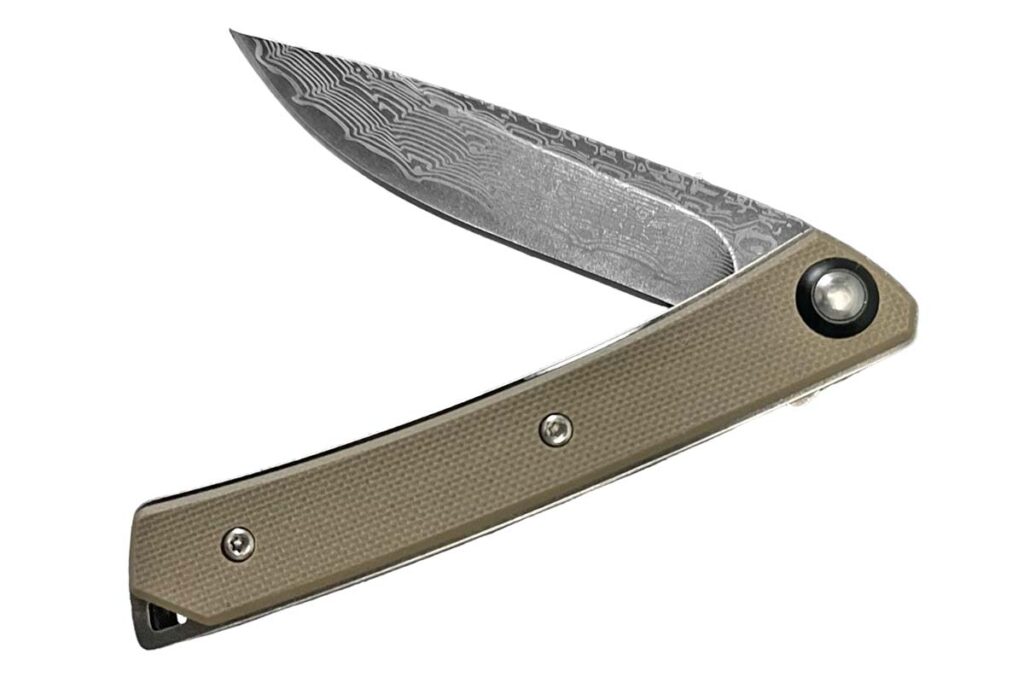
Smith’s Eclesis Model 51394

Smith’s Eclesis Model 51394

KNIFE PATTERN: EDC flipper folder
BLADE LENGTH: 3”
BLADE STEEL: 3Cr13 stainless faux damascus
ROCKWELL HARDNESS: 59-60 HRC
BLADE PATTERN: Drop point
HANDLE MATERIAL: G-10
LOCK: Framelock
POCKET CLIP: Blade tip up
COUNTRY OF ORIGIN: Offshore
MSRP: $32.99
AVAILABLE: Now
smithsproducts.com


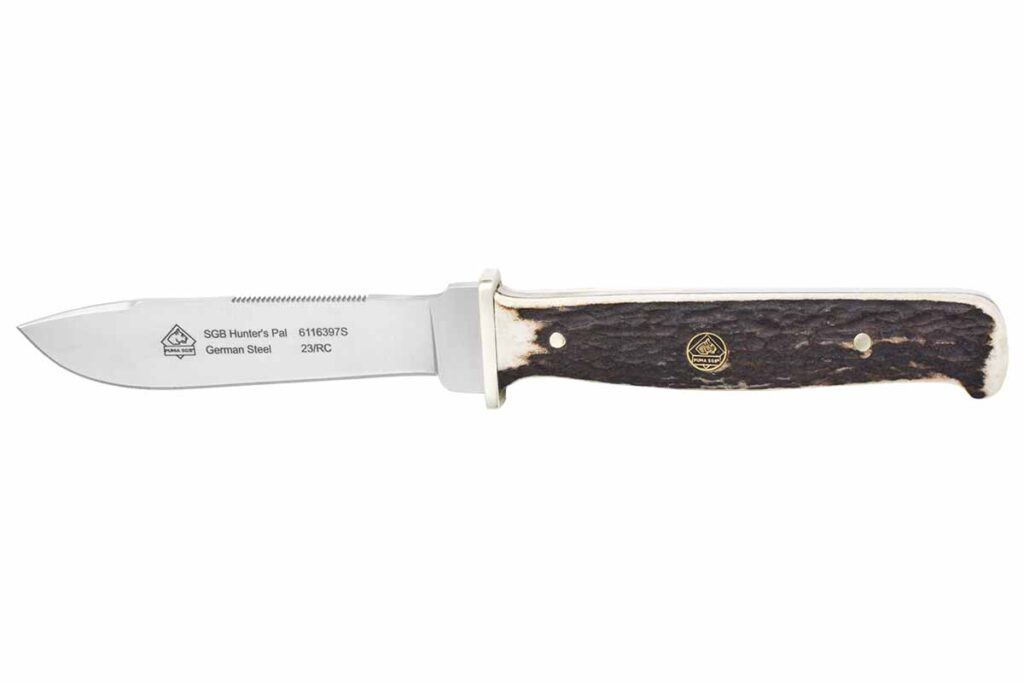
Puma SGB Hunter’s Pal

Hunter's Pal Stag

KNIFE PATTERN: Fixed-blade hunter
BLADE LENGTH: 4”  
BLADE STEEL: 1.4116 German cutlery stainless
ROCKWELL HARDNESS: 55-57 HRC, proofmarked
BLADE GRIND: Flat
HANDLE MATERIAL: Choice of black or white G-10, jacaranda wood, olive wood, Commando Stag, stag
WEIGHT: 4.69 ozs.
OVERALL LENGTH: 8”
SHEATH: .1” vegetable tanned leather
COUNTRY OF ORIGIN: China
MSRP:  $197.99 (stag)
AVAILABLE: Now
KNIFE TO KNOW: The knife is the Puma SGB version of, and a tribute to, the decades-old Puma GmbH Hunter’s Pal 116397.
pumaknifecompanyusa.com


Ocaso The Delos

Ocaso The Delos

KNIFE TYPE: Gentleman’s folder
DESIGNER: Kurt Merriken
BLADE LENGTH: 3”
BLADE STEEL: 120-layer German damascus
ROCKWELL HARDNESS: HRC 60-61
BLADE GRIND: Hollow
BLADE @ THICKEST: .12”
BLADE PATTERN: Modified tanto
BLADE FINISH: Rose pattern damascus
HANDLE MATERIAL: Titanium and Fat Carbon Black Dunes or Dark Matter Blue
LOCK: Framelock
BLADE OPENER: Thumb stud
PIVOT MATERIALS: Stainless steel caged bearings
POCKET CLIP: Contoured titanium
WEIGHT: 3 ozs.
CLOSED LENGTH: 4”
COUNTRY OF ORIGIN: Italy
MSRP: $524.99-$549.99
AVAILABLE: Spring
ocasoknives.com


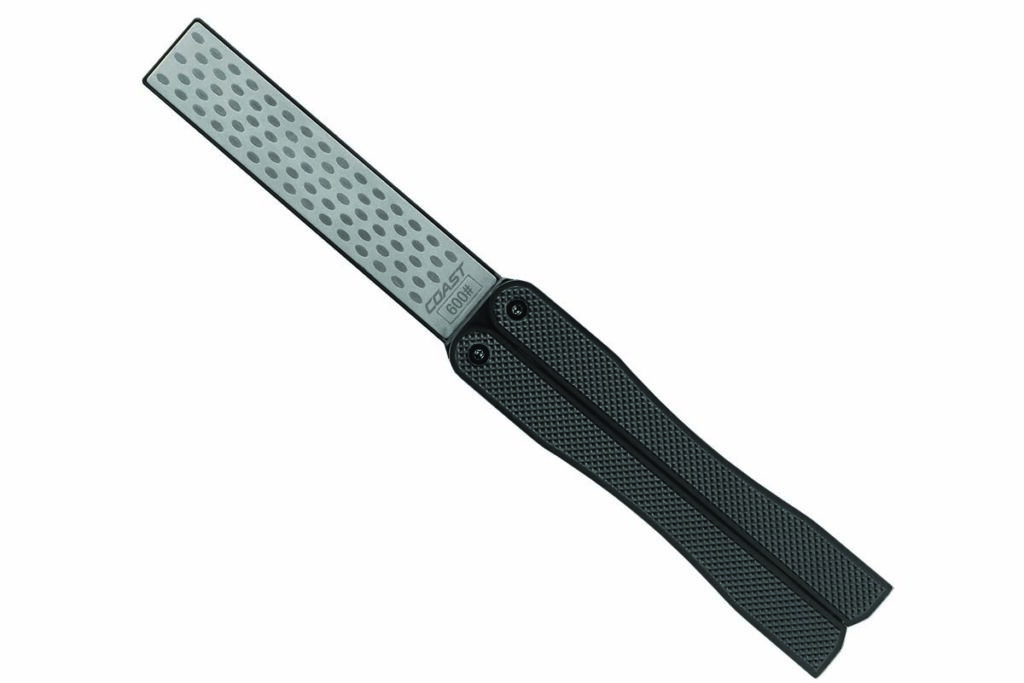
Coast SP425

Coast SP425

SHARPENER TYPE: Diamond whetstone
DESIGNER: Doug Hutchens
ABRASIVE: Diamond plated onto fiberglass/nylon substrate
GRITS: 400 and 600
DIMENSIONS: 9” long
BODY MATERIAL: Nylon w/fiberglass fill
WEIGHT: 2.1 ozs.
KNIFE TYPES SHARPENED: All plain-edge models
SPECIAL FEATURE: Folding sharpener
COUNTRY OF ORIGIN: China
MSRP: $19.99
AVAILABLE: Now
coastportland.com


Check Out More Knife Drops:

Advertisement

Must Read Articles

Read this before you make a knife

Knifemaking 101 – Read This Before You Make a Knife

  by Wayne Goddard My experience has taught me that there's nothing like digging in and getting started. I've often said the hardest part of the...
how to forge damascus steel

How to Forge Damascus

Advertisement
Advertisement