Buyer's Guides

You’re looking for a new knife in a certain style – we’ve got recommendations on the best blades for every price point.

Best Assisted-Opening Knives For The Money

The Assisted-Opening Knife Is A Powerful Type Of Pocketknife Beloved By Blade Lovers Around The World. These 12 Stand Out From The Pack.

There are quite a few minor differences that separate various types of knives that are otherwise visually or externally indistinguishable. In the same vein as a sword is a sword or an axe is an axe, many people treat knives simply as a variation on a basic theme. In the case of assisted-opening knives, this has led to a great deal of confusion, and for the most part, a large amount of legal misunderstanding. 

ORIGINS OF THE ASSISTED-OPENING KNIFE

The foundational designers of the assisted-opening knife modeled their mechanisms along very similar lines—mostly based on motorcycle kickstands. BLADE Magazine Cutlery Hall-Of-Fame® member Ken Onion is a well-known knife designer and was among the first to arrive at a mass-produced design. 

While Onion was not the first, his basic design set the stage for what we have today. Before him, Cutlery Hall-Of-Famer Blackie Collins arrived at a design that was successful. There is a distinction at this point. Some assisted openers are described as “gravity knives” or “flick knives” and this is both true and false. 

Some of the first successful gravity knife designs required the user to open the mechanism and the blade would slide down without spring assistance. Flick knives are generally undefined, but in general, require a flick of the wrist to deploy the blade either out the front or from the frame. 

One of the most widely issued versions of this is from the Nazi German Air Force, where most aircrews in the Luftwaffe were given a type of out-the-front gravity knife. These became popular bring-back trophies and were oftentimes miscategorized as automatic or switchblade-style knives, and as flick knives. 

The original German models never had a spring inside the mechanism. If they had, they would have qualified under modern law as an out-the-front automatic. This knife does deploy extremely quickly, often as fast as a spring-loaded variant. 

These incorrect terms are bundled and grouped into the broad ‘bad knife’ generalization. The mechanical function of the assisted-opening knife is to finish opening the blade, not to deploy the blade on its own. This may seem like a minor thing but it is very important legally. 

IS AN ASSISTED-OPENING KNIFE REALLY A SWITCHBLADE?

A relatively confusing aspect of this topic is what exactly constitutes a knife that falls into the dubious “switchblade” category, and what is an assisted-opening mechanism. The casual observer may not notice any difference in terms of function. In most cases, it appears that the blade simply pops out on its own from the handle. 

The primary difference in this is that an automatic knife is self-actuated, usually with the push of a button. A knife that operates via an assisted-opening mechanism requires a person to start the opening process before the blade actuates and finishes opening itself.

This may seem like a trivial difference, but when it comes to skirting or working around restrictive laws, there is a great deal of importance that is occupied in that slight separation. We tend to see this in many cases where even cosmetic details can determine legality. 

In 2009, there was a federal effort to clearly define and limit the number of restrictions that could be placed on knives that were determined to be of the open-assist and one-hand-opening variety, as opposed to those categorized directly as switchblades. 15 US Code 1224 Exemption 5 states that:

“A knife that contains a spring, detent, or other mechanism designed to create a bias toward closure of the blade and that requires exertion applied to the blade by hand, wrist, or arm to overcome the bias toward closure to assist in opening the knife.”

In other words, this defines an assisted opener as a knife that is designed to remain closed until acted upon, whereas a switchblade could thus be assumed to be a knife that is biased to remain open unless retained. These small variations in legalese are all we have that draw a line between what constitutes a legal assisted-opening knife and something reputedly “more inherently dangerous.” 

HOW DO ASSISTED-OPENING KNIVES WORK?

As mentioned above in the legal definition of an assisted opener, the preeminent design feature is that the blade remains closed under a given mechanism until a force is applied to it. The mechanism necessary for a knife to accomplish this is quite complicated. 

Not only must the blade be able to interact with an internal spring, but that spring also needs to generate enough pressure on a very small rotational axis to extend it to its final position and provide the energy to bypass the locking feature. This could be a linerlock or any number of locking mechanisms.

Because there are a tremendous number of functions being asked of this mechanism, they tend to become quite intricate, and for the most part, should not be disassembled by the owner. If something goes wrong with any type of assisted-opening knife, the owner should contact the manufacturer and get it repaired at the factory. Many of these mechanisms share more in common with watches and other fine pieces of machinery than they do with other knives.

There is a wide range of variation in terms of design from company to company. As a result, you will tend to see that, while assisted-opening knives are a general category, most manufacturers prefer to put their own spin on the terminology used to describe their product. 

There isn’t a functional difference between what a company calls its design and what it accomplishes. What matters at the end of the day with assisted-opening knives is that they produce the same end result preceded by meeting the legal requirement of being an assisted opener. It doesn’t really matter if the mechanism is actuated by a thumb peg, flipper tab or wrist flick, the end result is the activation of the spring override forcing the blade to lock into the open position.

The basic design of most assisted-opening knives requires the blade to be manually opened at least 1/4-1/3 of its total travel before the spring takes over and opens it the rest of the way. This can be accomplished through numerous designs. The most common relies on an internal spring in the mechanism that resides on a cam, the latter interacting with the geometry of the rear of the blade surrounding the hinge pin. 

Past a certain point, the shape of the parts allows the spring-loaded cam to interact with the gradual, declining angle of the back of the blade, thus forcing it open against the tension. Of course, this is just one way to describe how this works, and individual designers and companies will work around existing patents and models to create new ways to get the job done. 

The short answer to this is, yes, and no. In some states, it matters more how you carry the knife than what type of knife you were actually carrying. Michigan, for instance, allows the open carry of most knife types, regardless of features. 

When it comes to carrying concealed, there are some murky definitions. In general, if a knife is visible, at least partially, such as in a front pocket, it is considered open carry. The vast majority of states allow everyday carry for assisted-opening knives. In fact, many states also allow the carrying of automatic knives as well. 

Best Assisted-Opening Knives For The Money

While assisted-opening knives may not be for everyone, they are incredibly popular and made by manufacturers around the world. These dozen show off the breadth of models available on the market today.

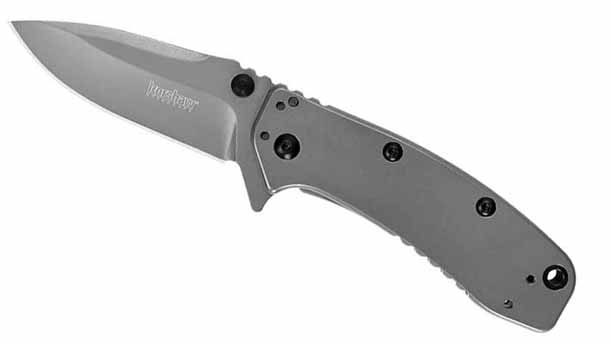
Kershaw Cryo II
Kershaw Cryo II

The Cryo II is a very clean, basic carry knife that features a smooth, curved edge without separation. The knife is slab-sided without texture; it can be slippery in the hands if wet or sweaty. The framelock mechanism is very strong and should provide years of reliable service for a very modest price.

BLADE LENGTH: 3.25”
BLADE MATERIAL: 8Cr13MoV stainless steel
OVERALL LENGTH: 7.75”
HANDLE MATERIAL: Stainless Steel
LOCKING MECHANISM: Framelock with lockbar stabilizer
WEIGHT: 5.5 ozs.
MSRP: $63.19

Kershaw Barstow
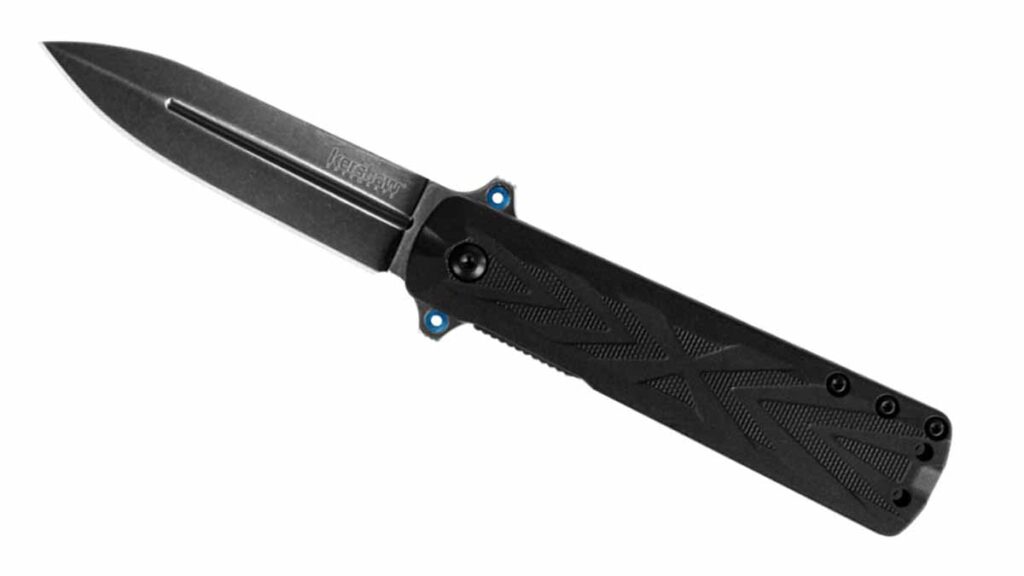
Kershaw Barstow assisted-open knife

The Kershaw Barstow is a very affordable knife at a suggested retail price of under $40. It features a spearpoint blade and a black-washed finish. For being as inexpensive as it is, it is a true assisted-opening knife and affords the owner a great deal of function at a very low price. While not the highest-end model out there, this low-profile knife will be sure to please.

BLADE LENGTH: 3”
BLADE MATERIAL: 8Cr13MoV stainless steel
OVERALL LENGTH: 7”
HANDLE MATERIAL: glass filled nylon
LOCKING MECHANISM: linerlock
WEIGHT: 3.4 ozs.
MSRP: $39.99

Smith & Wesson M&P SEAR
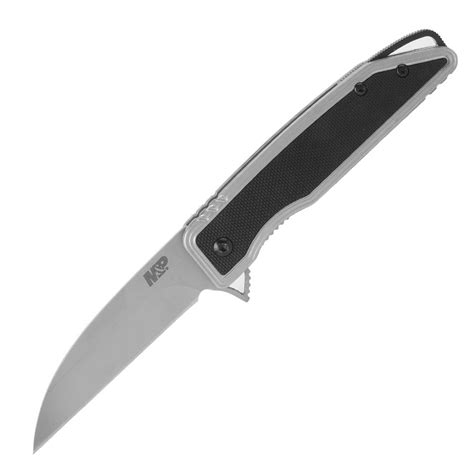
Smith & Wesson M&P SEAR

This attractive and very affordable knife bears the Smith & Wesson logo. Its sheepsfoot blade has a clean, straight edge. Despite its low price, this knife has a great degree of utility and is a welcome companion in the pocket or work bag. The blade profile lends itself to general work, and it shouldn’t draw attention when out in public.

BLADE LENGTH: 2.88”
BLADE MATERIAL: 8Cr13MoV stainless steel
OVERALL LENGTH: 6.89”
HANDLE MATERIAL: Stainless Steel with G10 inserts
LOCKING MECHANISM: Framelock 
WEIGHT: 3.8 ozs
MSRP: $39.99

Qygmgs Tactical Folding Knife
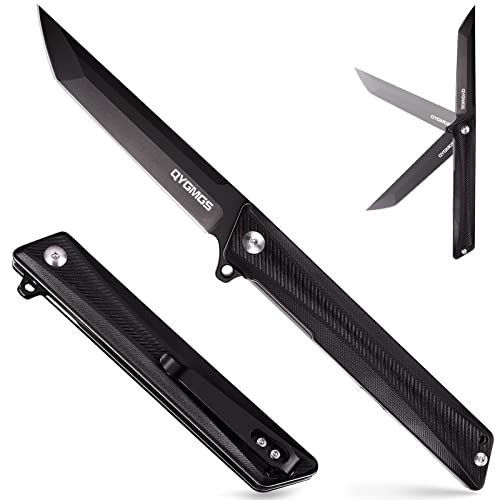
Qygmgs Tactical Folding Knife

The ‘Amazon Special’ is fashionable and quite affordable. The tanto-style blade comes in serrated and plain-edged varieties. For being as inexpensive as it is, it has an impressive number of features that are extremely well thought out. The handle has an anti-slip texture and is machined from durable G10. The blade pivots on ceramic ball bearings. For being a Chinese import, it punches above its class.

BLADE LENGTH: 3.5”
BLADE MATERIAL: D2 tool steel
OVERALL LENGTH: 8.5”
HANDLE MATERIAL: G10 
LOCKING MECHANISM: Linerlock
WEIGHT: 4.2 ozs.
MSRP: $32.67

Benchmade 495 Vector
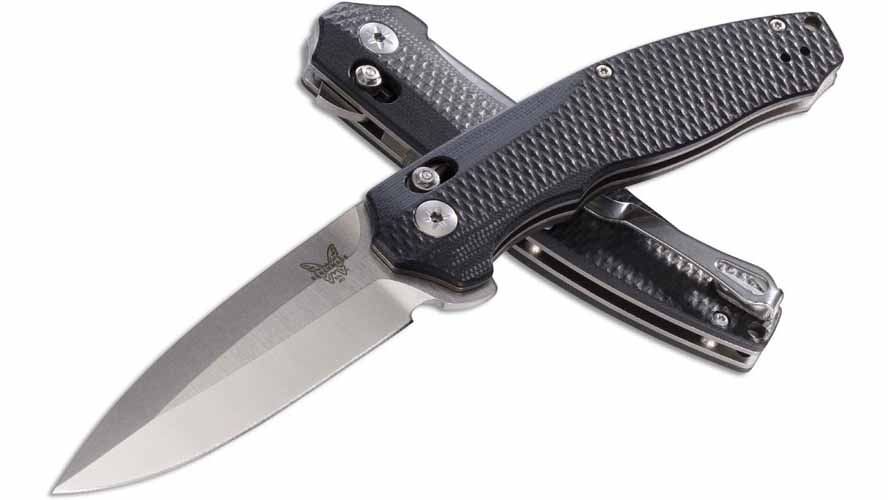
Benchmade 495 Vector

Moving up quite substantially in price is Benchmade’s 495 Vector. This is a symmetrical pocketknife that simply bleeds quality while being fairly low profile at the same time. If you prefer to carry a top-of-the-line design without drawing unwanted attention to yourself, this is going to be a top choice.

BLADE LENGTH: 3.6”
BLADE MATERIAL: CPM S30V stainless steel
OVERALL LENGTH: 8.42”
HANDLE MATERIAL: Contoured G10
LOCKING MECHANISM: AXIS Assist Flipper
WEIGHT: 4.11 ozs.
MSRP: $310

Benchmade Barrage
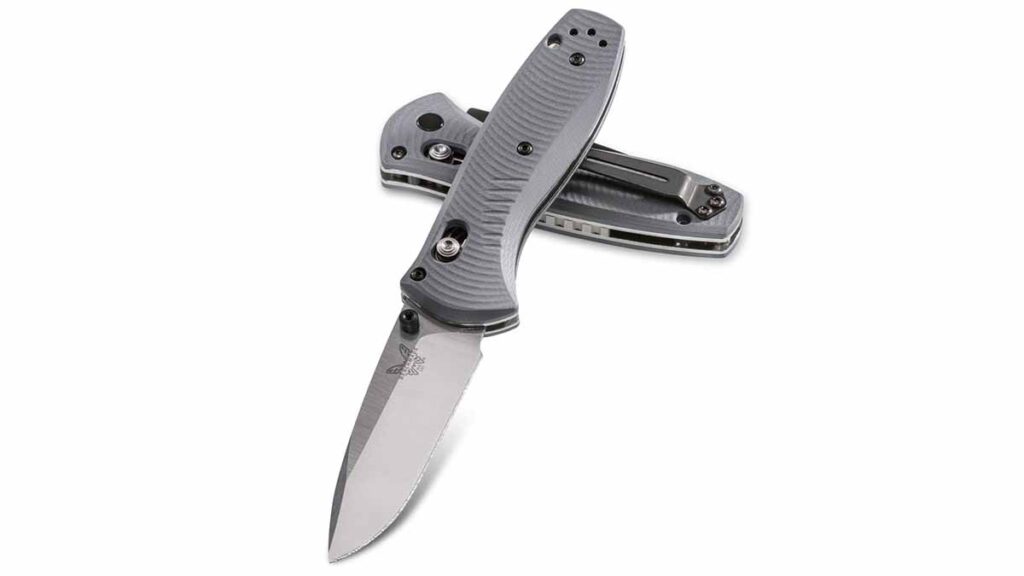
Benchmade Barrage

Another top-shelf choice from Benchmade, the Barrage has an aggressive, tactical look that features a plain-edge blade. While it certainly has that bad boy look, it is quite functional in terms of features and utility for cutting tasks at a relatively high cost compared to other assisted-opening folders. If you want top quality and want to look good doing it, this one is hard to beat.

BLADE LENGTH: 3.6”
BLADE MATERIAL: 154CM stainless steel
OVERALL LENGTH: 8.35”
HANDLE MATERIAL: Valox
LOCKING MECHANISM: AXIS Assist Flipper
WEIGHT: 4.51 ozs.
MSRP: $220

CRKT PSD
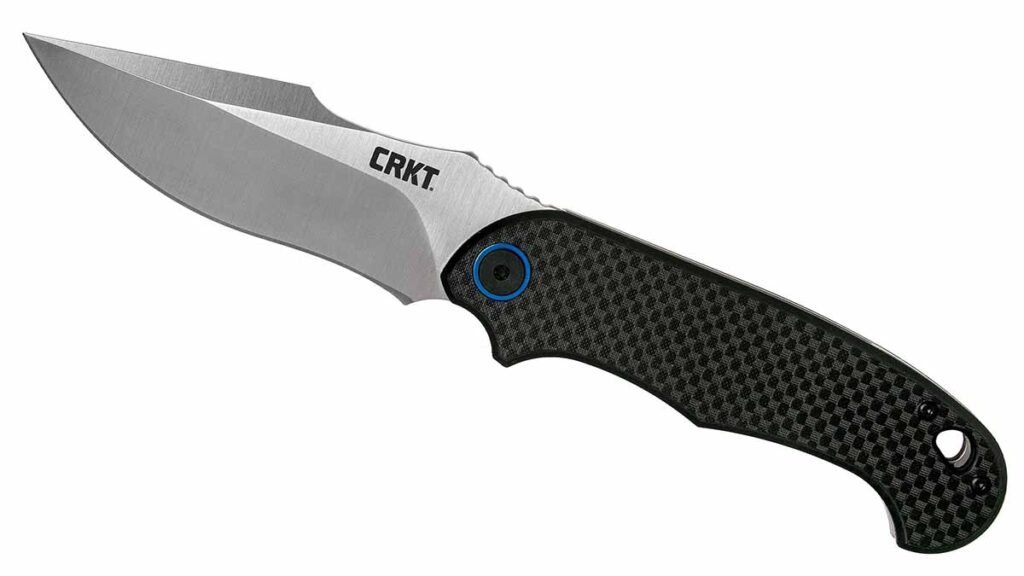
CRKT PSD

P.S.D. stands for Particle Separation Device, and CRKT’s folder certainly lives up to the futuristic nomenclature. While the materials used in the construction of this knife are becoming more commonplace, it is hard to find them for this price point, and the PSD delivers a very nice, clean appearance for a relatively low cost. CRKT is well known for the quality and affordability of its edged tools, and the PSD is sure to be a favorite come the holidays.

BLADE LENGTH: 3.63”
BLADE MATERIAL: 1.4116 stainless steel
OVERALL LENGTH: 8.19”
HANDLE MATERIAL: Carbon fiber and G10
LOCKING MECHANISM: Linerlock
WEIGHT: 4.6 ozs.
MSRP: $83

Gerber Highbrow
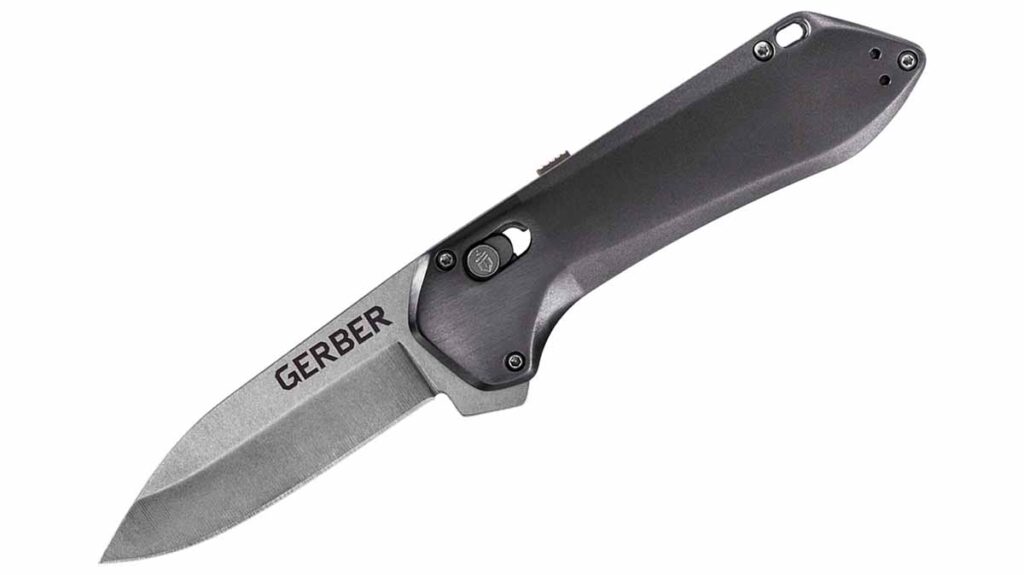
Gerber Highbrow Assisted Open

The Gerber Highbrow is ambidextrous and features an easy-to-use sliding lock just under the spine next to the pivot. The edge is plain with a distinct, drop-point profile. At a price of around $50, it is affordable and makes for a good gift for that someone who is worth the extra few dollars around the holidays. 

BLADE LENGTH: 3.6”
BLADE MATERIAL: 7Cr17MoV stainless steel
OVERALL LENGTH: 7.9”
HANDLE MATERIAL: Aluminum 
LOCKING MECHANISM: sliding blade lock
WEIGHT: 5.97 ozs.
MSRP: $49.60

Boker Plus Kihon
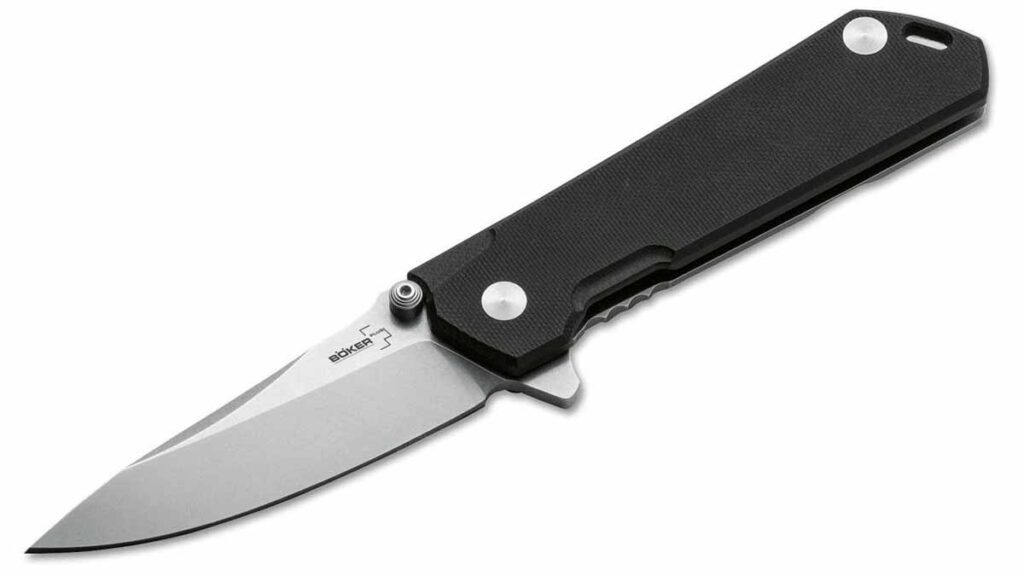
Boker Plus Kihon

Boker Plus offers the Kihon designed in conjunction with custom knifemaker Lucas Burnley. Lucas is a hot tactical maker whose Japanese-inspired designs have garnered him worldwide acclaim.

The Kihon’s modified clip-point blade is a little over 3 inches long and made from D2 tool steel, long known for toughness and impact resistance. The blade is flat ground for exceptional cutting through a variety of media. A machined recess on the spine serves as a thumb rest to apply pressure and more control. Ambidextrous thumb studs double as the blade’s positive stop when open. A flipper tab offers quick, easy one-hand opening. Caged bearings in the pivot ensure smooth blade rotation.

The handle is a hybrid construction of a stainless steel framelock side mated with a textured OD green G-10 scale for weight reduction and grip enhancement. Gold-colored collars provide a classy visual touch to the pivot and handle screws. A large standoff is also anodized gold to match the other accents. 

The lock side features a lockbar stabilizer disc to prevent blade overtravel. A neat wire pocket clip carries the closed knife blade tip up. The blade and steel lock side have a black stonewash finish for low glare and added corrosion resistance. However, the clip is not reversible for lefties. Milled-out oblong cavities in the handle’s lock side reduce weight.

The Kihon is a great EDC. The thumb rest relief helps control the blade, which provides enough length and belly to do most cutting chores. The action is smooth and predictable. Press the flipper, feel the tension load up and the blade propels to the open and locked position. 

The assist mechanism performs like the Kershaw SpeedSafe originally designed by BLADE Magazine Cutlery Hall-Of-Fame® member Ken Onion. If you own any SpeedSafe knives then you know how the action is, and the Kihon is very similar in feel. There are no problems with handle comfort, either. The knife is easy to hold and there are no hot spots. 

MSRP: $119.95

CRKT Oxcart
CRKT Oxcart

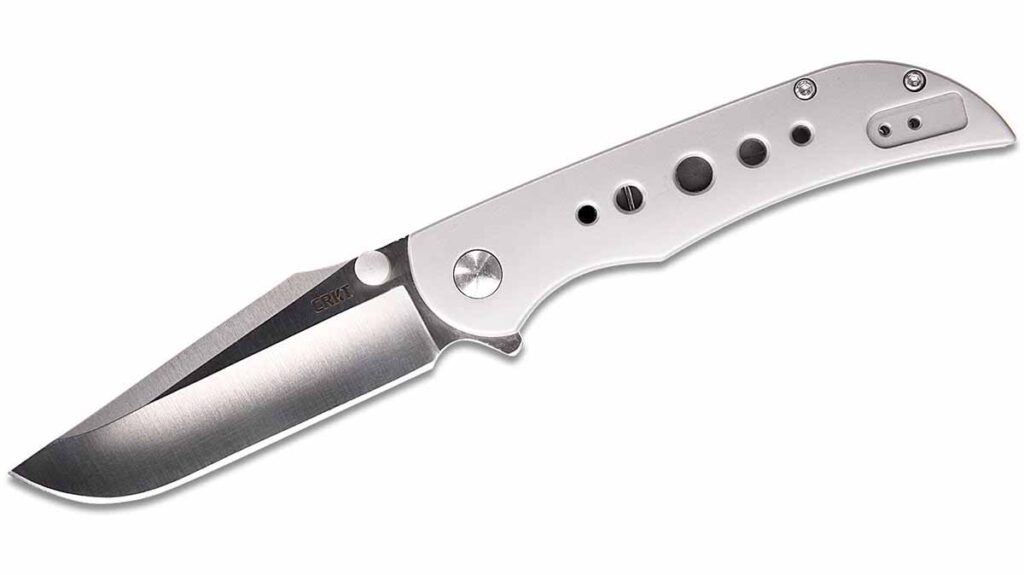
You may snicker at the Oxcart moniker but once you see the knife, you will clearly understand the name. The new entry from CRKT is somewhat of a dichotomy—the handle slab and blade stock thicknesses are what you would normally find on a large, heavy-duty folder, while the Oxcart is compact and slender. 

Knifemaker Robert Carter is the designer. He is the son of maker Joe Pardue and grandson of Cutlery Hall-Of-Famer Mel Pardue, so the pedigree is impeccable. The modified clip-point blade is hollow ground from .16-inch-thick AUS-8 stainless steel. The blade is 3 inches, ideal for an EDC work knife. Large dual thumb studs provide purchase for rapid opening, and an extended flipper tab quickly deploys the blade. The blade rides on the Ikoma Korth Bearing System (IKBS) for ultra-smooth action.

The stainless-steel handle is .15 inches thick—about as thick as the blade. Drilled holes reduce weight and enhance aesthetics. A sturdy framelock secures the blade open with bank-vault lockup and zero play. A stabilizer prevents blade overtravel. 

A large finger recess enables you to index your grip. The butt tapers to fit the heel of your palm. All handle edges are rounded for further comfort. The deep carry pocket clip positions the closed Oxcart blade tip up and is reversible for lefties. While the heavy-duty build gives the knife impressive heft at 4.7 ounces, it doesn’t weigh you down in the pocket.

As a work knife, the Oxcart shines. The hollow-ground blade bites hard and deep. It is a very efficient cutter. It’s so sharp we had to guard against nicking the wires inside the casing when stripping electrical wire. Due to the extra width of blade and handle, the Oxcart can be used hard without worry that the blade will break or the tip will snap.

One minor complaint with the compact grip: I found myself wanting a bit more to grasp when bearing down to cut through tough materials. However, it being a “compact big knife,” that would ruin the design philosophy. The assist mechanism is CRKT’s multi-wave torsion bar design that provides firm, fast action, with excellent detent closure. A semi-solid push on the flipper overcomes the detent, sending the blade to the locked position in one swift motion.

AUS-8 steel is well known in more moderately-priced knives as having a good balance of edge holding and ease of maintenance. No problems with the steel—it’s a solid performer. I also like how positive the framelock engages, so there are no worries about accidental unlocking. It’s very tight but easy to unlock when needed.

MSRP: $99.99. 

Camillus Arvo
Camillus Arvo Assisted Open

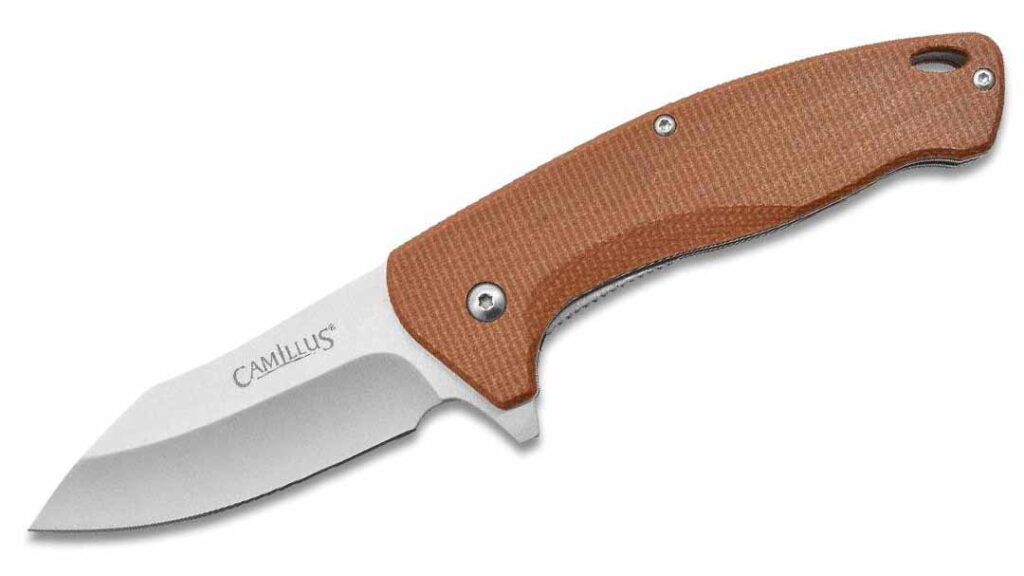
The Camillus Arvo is the most value-conscious of the test group. The 3-inch drop-point blade is made from 420 stainless in a nice satin finish. The blade is utility friendly, with a defined tip for scoring tasks and a belly for most general cutting chores.

The flipper tab extends far enough to function equally as well as a single guard. The sole method of deployment is the flipper; the blade is devoid of thumb studs or discs for a streamlined appearance.

The handle features a typical construction method for tactical folders with dual stainless liners and scales of brown linen Micarta® for strength, high rigidity and dimensional stability, regardless of the elements. The linerlock release has a series of notches for purchase with your thumb when the blade is unlocked. A heavy-duty steel clip provides deep pocket carry of the closed knife in the blade-tip-up position.

The Arvo’s price point is very affordable, which appears to have resulted in a few “oversights.” First, the scales were not finished as smooth as I would have liked. The surface had a texture like peach fuzz from the linen in the Micarta. Don’t get me wrong—having a rougher finish on Micarta isn’t necessarily a bad thing, as the rougher texture aids in grip traction. Nonetheless, the surface finish could be improved.

Second, the edges of the blade spine and flipper tab are crisp. If you are into bushcraft knives, you know that a 90-degree spine is good for striking with a ferro rod to make sparks for fire. However, a 90-degree spine in an EDC folder creates unnecessary sharp corners. Luckily, these can be easily remedied with a metal file and gently rubbing the corners to soften them.

Finally, most flipper folders have the tab with traction notches on it for purchase. The Arvo has no such notches. Otherwise, the knife is a great size for EDC and the handle design is good and comfortable. I love the integral guard formed by the front of the handle at the pivot.

The assist mechanism works very well. Again, judging by the action, I’d say it’s similar to the SpeedSafe torsion-bar type. Deploying the blade is fast and easy. The action is smooth and swift, with the blade riding on Teflon washers. There are no bearings.

The low-end 420 stainless blade steel doesn’t hold an edge nearly as long as even the mid-grade stainless steels such as AUS-8, 8Cr13MoV and VG-10. However, the tradeoff is it’s easier to resharpen. Out-of-the-box sharpness is just OK. I’ve seen better on budget knives and I’ve seen worse. When I put my own edge on it, that’s when performance improved.

At its price point, the Arvo serves well as a work knife. It’s a great alternative to Zytel-handle locking folders and you get upgraded handle material with the Micarta. The hollow grind allows the blade to slice effectively and bite into materials easier. The edge dulls quickly depending on what you’re cutting, so you might benefit from carrying some sort of compact sharpener.  And if you end up losing the Arvo, you can buy another one without breaking the bank.

The only thing I found as a slight issue with this particular sample is the blade was off-center a bit when closed. Given the low price, I am more forgiving of such things. However, it has no bearing on the action or cutting performance. The lockup is firm and sure.  

There’s a lot of features going for this knife for the price: Micarta handle, deep carry pocket clip, flipper tab, assisted opening and open handle spine. Many of these features are found in knives priced way higher.

MSRP: $27.99

Pro-Tech TR-5 SA
Pro-Tech TR-5 SA Assisted Open Knife

Known widely for autos, Pro-Tech offers an assisted opener with the TR-5 SA. Essentially a scaled-down version of the company’s TR-4, it has tactical styling, superior materials and a distinctive spring-assist mechanism.

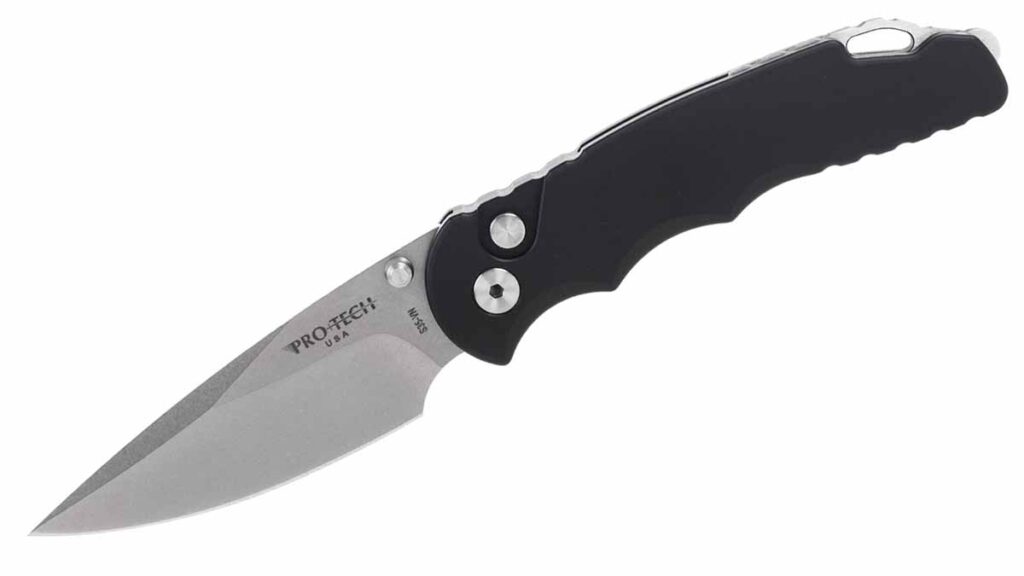
The 3.25-inch blade is CPM S35VN high-performance stainless. The modified drop-point pattern has flat-ground main bevels with a swedge added for a bit of attitude. A single thumb stud helps open the knife. The blade comes in a nice stonewash finish that hides scratches and helps resist corrosion. 

The handle features rounded ends and a tapered design from pivot to butt. Several large finger grooves help seat your hand securely, along with a series of traction notches following the three finger grooves.

On the handle spine, traction notches are milled into the thumb rest for a non-slip grip. The handle spacer is milled from 416 stainless and also has traction notches to enhance grip. The end of the spacer protrudes a bit at the butt, forming a skull crusher pommel. 

The handle slabs are T6-6061 aluminum given a Type III hard anodized black coat for scratch resistance and aesthetics. A deep carry pocket clip presents the closed knife blade tip up. When clipped in the pocket, none of the knife protrudes above the seam.

The handle feels very comfortable and instills user confidence, with no hot spots. Pro-Tech’s high standards for manufacturing excellence carry over into its base models with plain aluminum handles such as this one. The pivot screw and lock button sport spun finishes that reflect light in a refined manner. It’s such nice little touches that set Pro-Tech apart.

The assist mechanism is different from other assisted openers. For starters, it uses the same coil-spring design that drives the company’s automatics. If you’ve handled a Pro-Tech auto, you know it has a strong spring and a nice recoil. The same goes for the TR-5 SA. 

There’s an additional component to the mechanism designed by award-winning maker Matthew Lerch: an unusual spring-loaded detent that holds the blade closed. The result is a strong detent that requires a firm push of the thumb stud to overcome; from there the coil spring takes over and drives the blade open. As a result, you get the legendary Pro-Tech action for those who cannot legally buy autos. The action is indeed the fastest of the featured assisted openers and, I believe, the fastest on the market.

MSRP: $300

Dexter Ewing contributed to this piece.

Read More

First Look: CIVIVI Dracolisk—Company’s First Foray Into Balisongs

CIVIVI Dracolisk aims to help you master the balisong flip without the sting.

Balisong flipping has evolved from a niche martial art into a high-speed skill sport, where the fluid motion of the handles is just as important as the steel between them. For those looking to enter the world of butterfly knives, the barrier to entry is often the steep learning curve—and the inevitable nicks that come with it. CIVIVI is addressing this head-on with the Dracolisk, a dedicated trainer designed to offer a authentic flipping experience without the risk of a live edge.

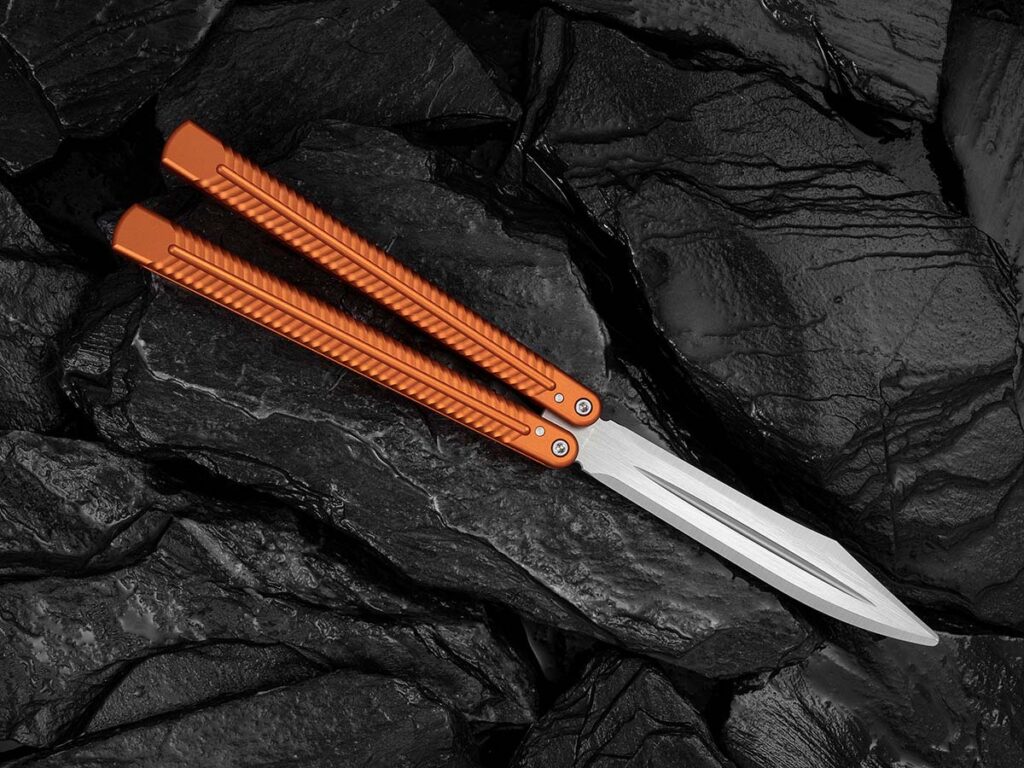
Orange handle Dracolisk open

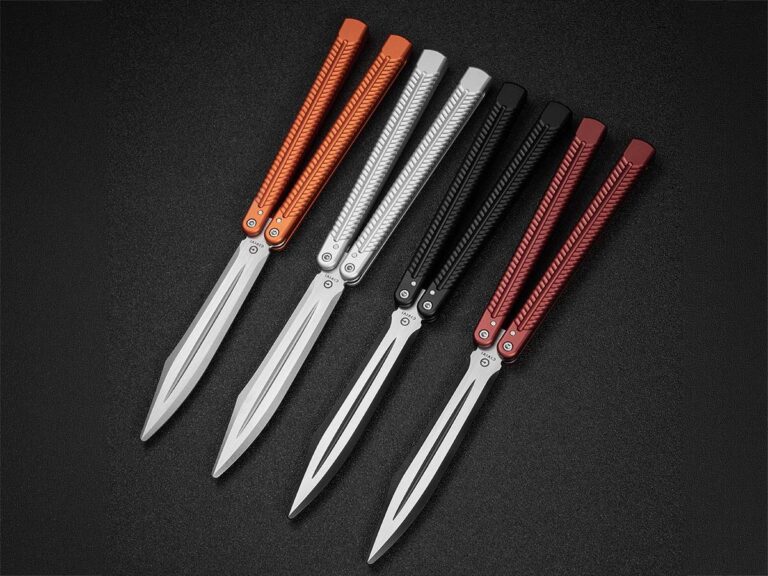
The Dracolisk represents CIVIVI’s first foray into the balisong market, and they have chosen to focus exclusively on the practice-friendly format. The 4.57-inch blade is crafted from 9Cr18MoV stainless steel, featuring a stonewashed finish and a dramatic clip point profile. While the “edge” is completely dull, the blade is ground and weighted to mimic the physics of a live blade, ensuring that the muscle memory developed during practice translates accurately to a real knife later on.

Mechanical simplicity is a hallmark of a good trainer, and the Dracolisk delivers with a latch-less construction. This design choice provides clean lines and eliminates the common annoyance of a latch interfering with handles during complex aerials or rollovers. The handles themselves are machined from lightweight aluminum with a 3D anti-slip texture, providing a secure grip even during high-intensity sessions.

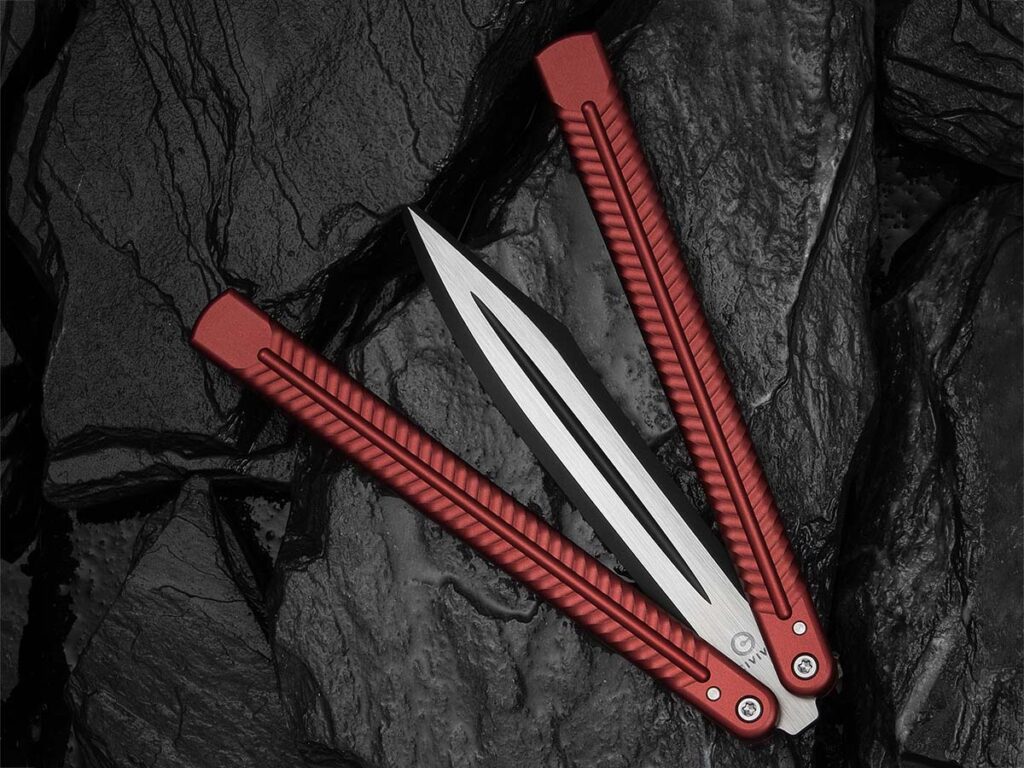
Civivi Dracolisk semi-open

Under the hood, CIVIVI opted for bronze washers at the pivots. While many modern folders utilize ball bearings, washers are often preferred in the balisong community for their predictable, smooth drag and long-term durability under the constant impact of flipping. At 4.18 ounces, the Dracolisk sits in the “sweet spot” for many flippers—heavy enough to carry momentum through transitions, but light enough to avoid fatigue.

Whether you are a seasoned flipper looking for a safe way to test new combos or a beginner starting from scratch, the Dracolisk provides a professional-grade platform to hone your skills.

Dracolisk Specs
Blade Steel: 9Cr18MoV (58-60 HRC)
Blade Length: 4.57″
Overall Length: 10.04″
Closed Length: 5.63″
Blade Style: Clip Point
Handle Material: Aluminum
Available Colors: Orange, Burgundy, Silver, Black
Pivot: Bronze Washers
MSRP: $118

More New Releases:

Tactical P.A.S.S. Com: Condor Knows When To Fold ‘Em

0

Fixed-blade focused Condor continues to branch out Tactical P.A.S.S. Com folder.

Condor Knife & Tool came heavy into SHOT Show 2024 with a bevy of new blades and variations. The company’s fans should be excited about the coming year. That said, one particular knife jumped — the Tactical P.A.S.S. Com.

Those who follow Condor know its bread and butter are fixed blades, usually the type fit to slice through the El Salvadorian jungle—home base for the company. But the manufacturer continued to branch out with the Tactical P.A.S.S. Com, a folder (not its first, mind you) that makes for an interesting break in Condor’s same old, same old. Trust me, you might be able to tuck it away in your pocket, but it’s every bit up to the company’s rugged standards.

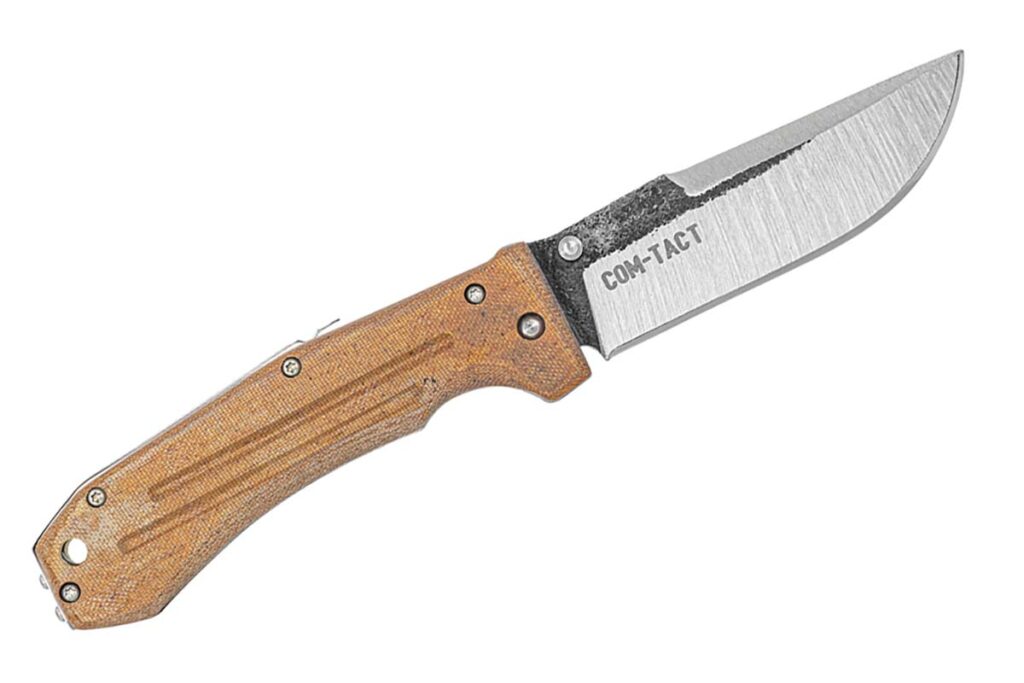
Tactical P.A.S.S. Com open

Designed by Jason Breeden, who has conjured up a bevy of designs for Condor, the Tactical P.A.S.S. Com is modeled after an icon—Bob Loveless’ Chute knife. As an aside, Mike Haskew did a phenomenal piece on the development of this classic in his article on the original Chute knife. Breeden appears to have an affinity for the design, having created a more true-to-form fixed-blade rendition of it previously. The folder marks the continued expansion of Condor’s popular Mountain P.A.S.S. (Plain And Simple Survival) line, which has grown significantly in the past year.

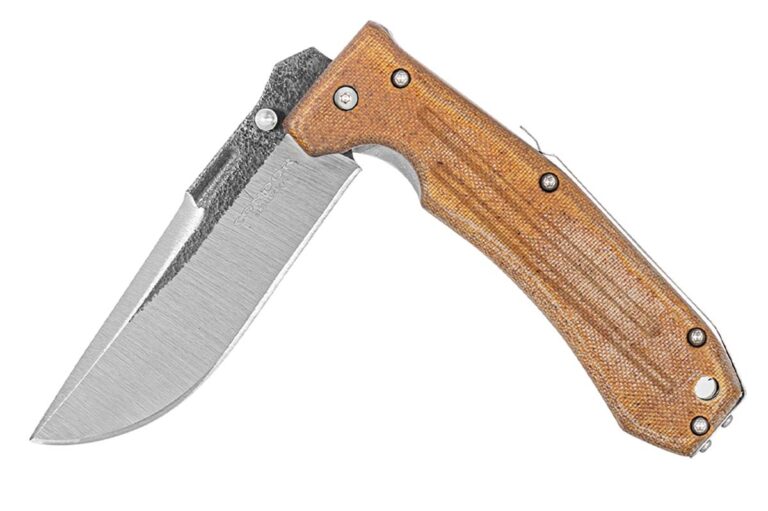
In brief, the knife looks to have the chops for tough outdoor use, as is the typical theme at Condor. Tactical P.A.S.S. Com boasts a 4.96-inch, drop-point blade constructed from 14C28N stainless steel. This is a budget stainless, but one not without its charms, particularly its respectable edge retention and toughness. And at .12 inches in thickness, Condor gives you plenty of material to work with on the flat-ground blade, particularly if called into play on more demanding tasks, such as batoning. I’ll say, the false edge is a nice touch, giving the blade an overall clean, yet rugged look tapering back into the hammer finish around the thumb studs.

As for the handle, it’s a tan Micarta with some milling down the midline and a single-finger groove to provide a comfortable yet firm grip. The liner lock’s stainless screws give the handle strong, if understated aesthetics, not to mention easy access if you need to crack baby open to clean.

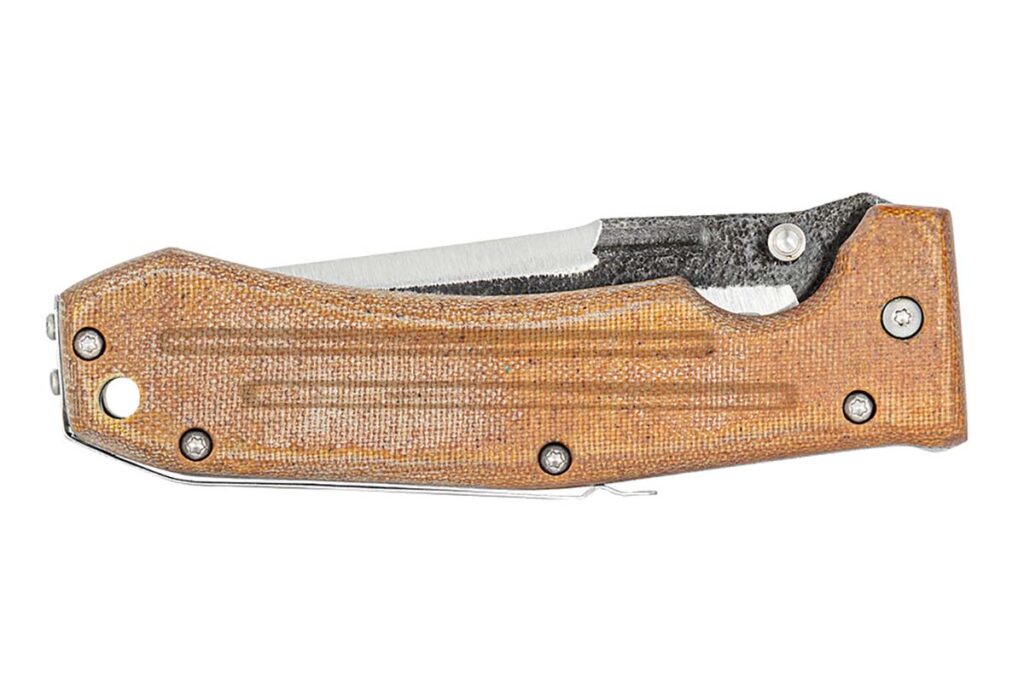
Tactical P.A.S.S. Com closed

While Condor pulls off a strong showing with the Tactical P.A.S.S. Com, I do have one nit to pick. The company opted for a spine-side, extended clip, which from my standpoint isn’t the most practical configuration. But with everything else the knife brings to the table, it’s far from a deal breaker for those who prefer a more traditional clip arrangement.

As for costs, Condor as usual keeps its edge but puts the Tactical P.A.S.S. Com within reach of most knife consumers. The company lists its MSPR at $150 at its site and has it on sale for less. Overall, the folder is a nice addition to a catalog of fixed blades and certainly seems on par with Condor’s ready-and-rugged standards.

Tactical P.A.S.S. Com Specs
BLADE LENGTH: 4.96 in
OAL: 9.66 in
BLADE THICKNESS: 0.12 in
WEIGHT: 7.27 oz
BLADE MATERIAL: 14C28N Stainless Steel
FINISH: Condor® Classic
GRIND: Flat Grind w/ Second Bevel
TYPE: Folding Knife
HANDLE MATERIAL: Micarta®
MSRP: $150

Check Out Our Knife Reviews:

Case Knives: Bevy Of New Knife Drops For The New Year

Case Knives is celebrating its 135th year with some top-notch new knives.

Creeping up on a century and a half of knifemaking, Case seems to feel its oats still. Or, that’s the way it seemed from the prolific 135-year-old Pennsylvania manufacturer’s recent releases at the 2024 SHOT Show, held in January in Las Vegas. The company had a full-court press of drops at the gun and outdoor gear hoedown, with a bevy of new lines, releases, collabs and model iterations. This should prove sweet music to the army of the brand’s collectors.

There isn’t space enough to cover every whipstitch of what Case is bringing to the table in 2024, but we’ll take a gander at some of the company’s weightier introductions for the coming year. There’s a little bit of everything for case fans out there, from classic patterns with new twists to brand-new knives that strike original ground.

Bridgeline Series

Not wandering too far off the beaten path, Case’s newest series of knives offers some nice updates for users seeking a modern knife. At the vanguard of the line are the Highbanks and Longhouse, both of which should prove excellent everyday carry options with the chops to handle most tasks thrown in front of them. Each features aluminum frames and bolsters, screw construction, ball bearing pivots, deep-carry pocket clips and CPM-20CV steel blades.

Case isn’t shying from the use of powdered steel for its blades, and the choice in these knives offers up a premium option used in a number of higher-end production knives. It’s similar to D2 and other tool steels—respectable toughnesss and edge retention—but with the added benefit of improved corrosion resistance.

Highbanks

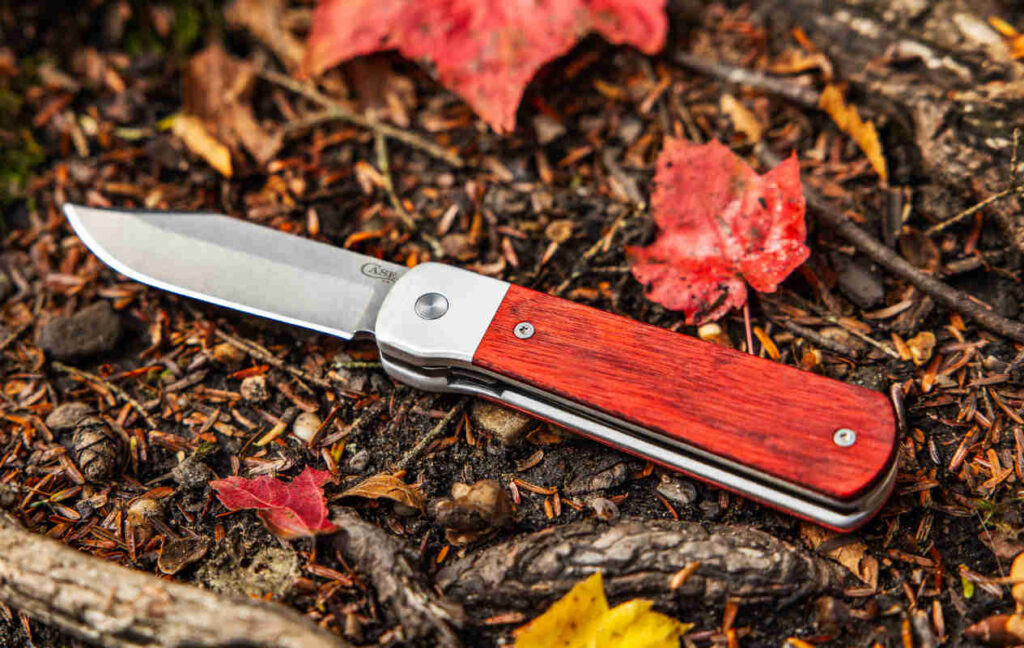
Case Highbanks

Certainly a break from the tried and true, the Highbanks veers to the more traditional in the Bridgeline Series. Namely, because the knife is a non-locking folder bosting a nail nick and a Wharncliffe blade. Still, with the high-performance blade steel and the choice of Micartia or hardwood grips, this certainly isn’t your granddad’s jackknife. I particularly like the handle ergonomics of the Highbanks, tapering nicely to the blade and fitting the hand just right. Spoiler… so does the Longhouse.

Longhouse

Case Longhouse 2

Here we see Case move its design a bit more forward with the flipper Longhouse. The liner lock boasts plenty of blade, a clip-point profile with a beef spine that should help the knife stand up to any job put in front of it. However, the hand mimics the Highbanks, giving the knife a timeless look I’d wager many Case fans will appreciate.

Chris Taylor Hunters

Teaming up with renowned custom knifemaker Chris Taylor, Case has cooked up an intriguing hunting-knife collection. This year, the partnership unveils three unique fixed blades, each a fairly unique take on the must-have outdoor implement.

CT1

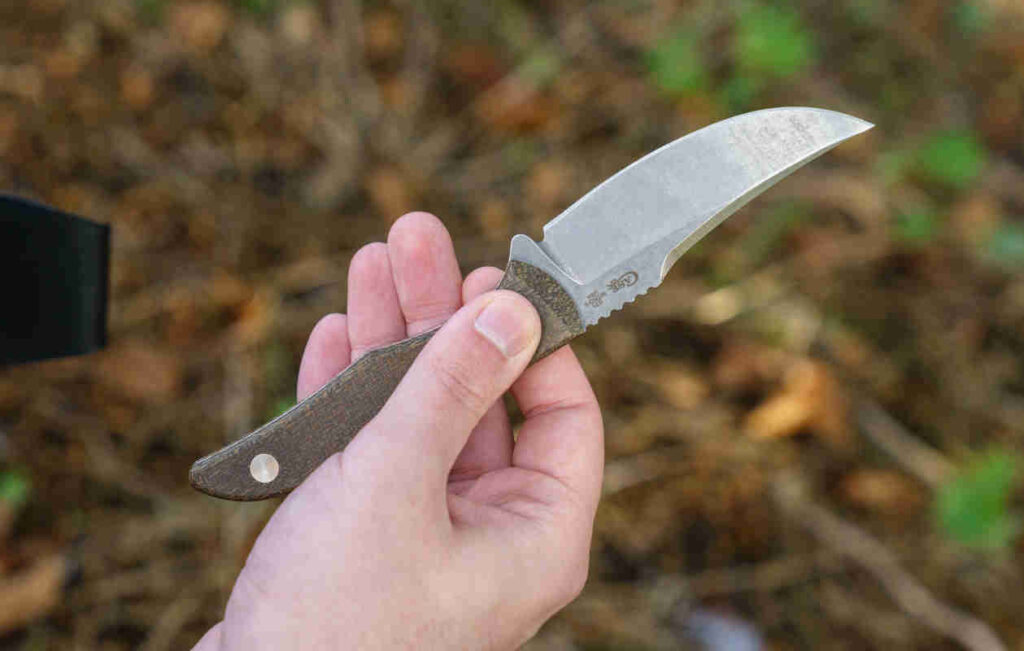
Case CT1

Crafted to exude rugged dependability, the CT1 showcases a top-tier Nitro V steel Clip-point blade. Known for its outstanding edge retention, corrosion resistance, and easy maintenance, Nitro V steel ensures that your knife remains ready and reliable whenever and wherever you require it. Case gives the knife an OD green burlap Micara handle, a plus for a hard-use knife that will likely be used in inclement weather. The CT1 also boasts aggressive jimping on its spine, so you have a solid contact point on more forceful cuts.

CT2

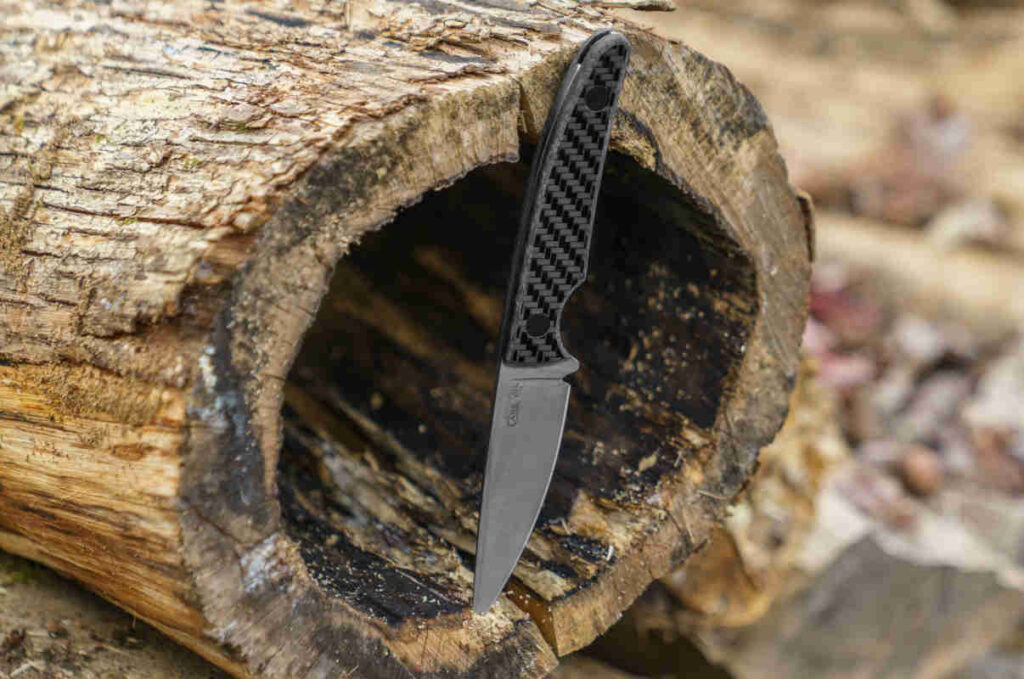
Case CT2

Cutting a much sleeker profile, the CT2 has the most modern feel among the CT hunters. Built around a resilient S35VN steel drop point blade, the knife doesn’t offer as much belly as the others in the line. But with a defined point, should prove at pro at perforation. The carbon-fiber handle is a nice touch, adding to the CT2’s modern looks, and proves very ergonomic and nimble in the hand.

CT3

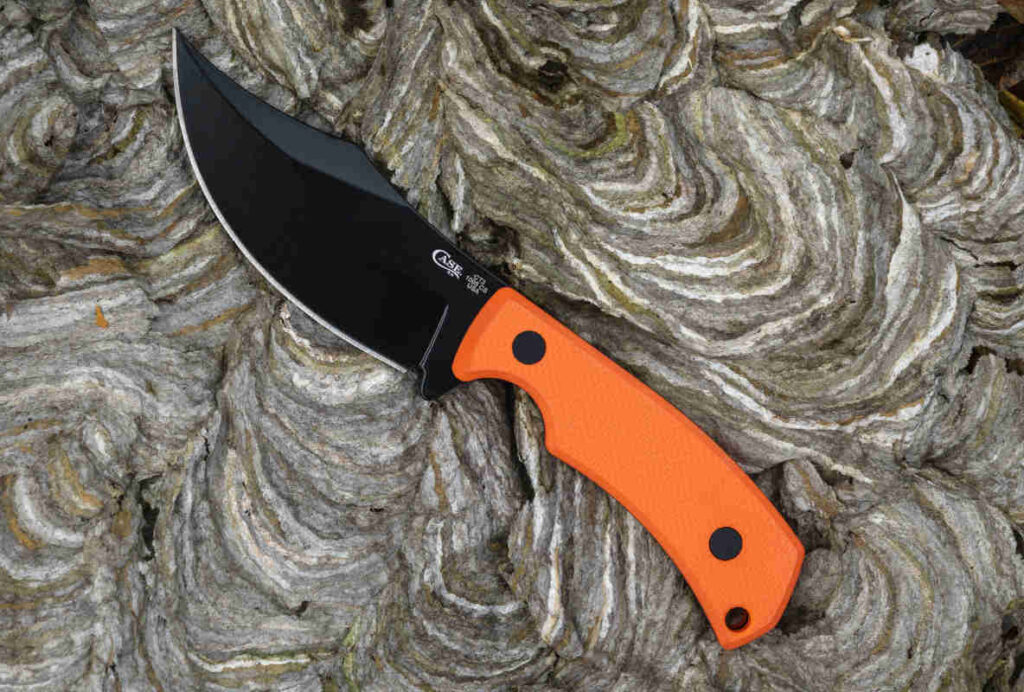
Case CT3

Tailored for the wilderness, the CT3 has more of a traditional hunter profile. Constructed from premium 1095 carbon steel, its specialized coated skinner blade boasts razor-sharpness, facilitating precision cuts and providing a sharpening advantage compared to many other steels. Outfitted with a hunter orange handle, the nice part about the CT3 is it will be difficult to lose in the woods.

Razor

Case Razor

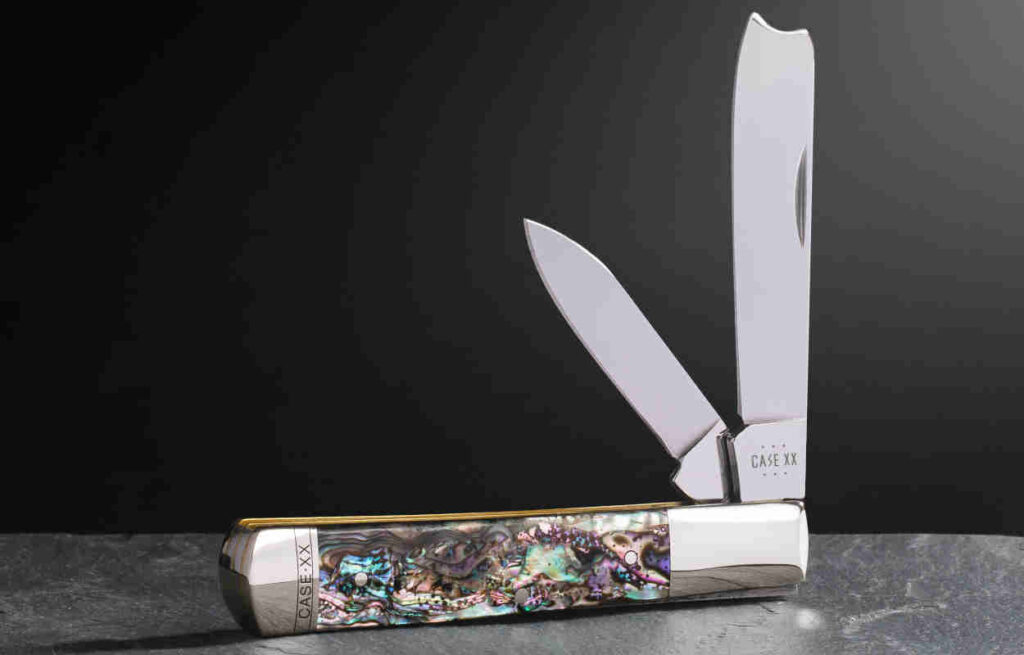
Case is commemorating its 135-year legacy by dusting off a real classic eye-catcher—the Razor. Reintroduced from the Case XX Vault, the knife is available in two patterns: a single-bladed version featuring a broad Clip blade with a distinctively curved tip, and a two-bladed variant with an additional Pen blade. Available in over a dozen handle styles, such as Smooth Abalone, Micarta, Smooth Brown Maple Burl Wood, and Sawcut Jig Caribbean Blue Bone, the Razor is a great Case throwback and a fantastic knife for the company to pay homage to its rich history.

Check Out Our Knife Reviews:

5 Best Pocket Knife Sharpener Options [2022]

Sometimes You Need A Sharpener On The Go. These Five Pocket Knife Sharpeners Are Everything You Could Want In A Mobile Sharpener.

Many knife sharpeners are designed exclusively for the kitchen. Whether handheld or electric, they’re made to be used on a countertop in the kitchen or in the home. But what about when you’re out and about and need to sharpen a knife.

Maybe your EDC took a beating while you were cutting up boxes as you cleaned your job site. Maybe your rough-and-tumble Bowie knife needs a little love after hacking through some brush while hiking. 

That’s where pocket knife sharpeners come in.

Small and easy to use, the best pocket knife sharpeners can fit anywhere and go anywhere. These are five that we’ve found can handle the tough task of sharpening your knives while also easily hiding away when not in use.

Lansky Quadsharp Knife Sharpener

Lansky Quadsharp
Lansky Quadsharp

What’s better than a knife sharpener with one sharpening option? How about a sharpener with five ways to sharpen. You read that right — five. 

The Lansky Quadsharp is a quintessential pocket knife sharpener. It is easily held in the palm of your hand, and its bright blue color helps it stand out if its buried in your work bag or in your hunting equipment.

The Quadsharp features four angled carbide slots to pull your knife through and a ceramic benchstone for more routine maintenance and honing. The slots each have a different angle (17, 20, 25, and 30 degrees) so you’ll be able to get the right angle for each of your knives. 

The carbide slots are meant to revive dull and damaged blades. The 800-grit ceramic benchstone is meant for more regular use and can sharpen both straight edge and serrated knives. The slots are only good for straight-edged blades. The ceramic is harder than steel so it will never wear out and can keep your knives sharp for decades to come. 

With an MSRP of $23.99, the Quadsharp swings way above its weight thanks to its small size, durability, and versatility.

Smith’s Pocket Pal X2 Sharpener & Outdoors Tool

Smith’s Pocket Pal X2 Sharpener & Outdoors Tool

Smith’s has made a product that not only sharpens but does a whole bunch more. The Pocket Pal X2 features a coarse carbide angled sharpening slot and a fine 1000-grit ceramic sharpening slot. It also features a fold-out diamond honing rod that is perfect for sharpening serrated knives, single-bevel knives, and gut hooks. 

The Pocket Pal X2 is so much more than just a sharpener. It comes with a compass and a built-in LED flashlight. There’s also a high-pitched signal whistle so you can call for help if in distress. And, what I think is the coolest part of the Pocket Pal X2, is the built-in fire starter. Use it by pulling it through the coarse sharpener to make a spark.

You can see all of the tool’s features in action in this video below.

Coming it at an MSRP of $17.99, the Pocket Pal X2 is a great pocket knife sharpener and all-around tool if you’re planning to do anything outdoors or to just keep in the car in case of an emergency.

AccuSharp Knife And Tool Sharpener

AccuSharp Knife And Tool Sharpener

AccuSharp takes the concept of “grab and go” to a whole new level with their Knife and Tool Sharpener. Rather than pulling the knife through or across the sharpener, you pull the sharpener across the knife.

By using tungsten carbide blades, and a finger guard so you don’t slice your hand, AccuSharp has made a tool that subverts what you think a knife sharpener should look like. You can see how the tool works in AccuSharp’s own video below.

The most affordable sharpener on this list, with an MSRP of $10.99, AccuSharp’s Knife and Tool Sharpener can sharpen your kitchen knives, your EDC, and even the axe you keep in the shed.

Victorinox Dual Knife Sharpener

Victorinox Dual Knife Sharpener

Shaped like a pen, the Victorinox Dual Knife Sharpener can sharpen and hone knives in a sleek, elegant package that can easily tuck away in a pocket or clip onto your belt line.

Opening one end reveals an angled pair of ceramic discs to pull across your blade to sharpen it. On the other end, there is a honing stone so you can polish and maintain the edge of your knives.

You can see how nimble and easy to use the sharpener is by watching this quick video below.

The sharpener is so compact and light, coming in at just 1.4 ounces in weight, that there’s no place it can’t go. From the same company that makes the iconic Swiss Army Knife, you can trust that the Dual Knife Sharpener, with an MSRP of $19, will be sharpening your knives for years to come.

WorkSharp Guided Field Sharpener

WorkSharp Guided Field Sharpener

From one of the top companies for all things knives, comes a sharpener that is made for you to take into the field, keep in the shop, or use at home. This sharpener from WorkSharp can sharpen straight-edge knives, serrated knives, and fish hooks. 

Utilizing five stages of sharpening and honing, the Guided Field Sharpener is as dynamic as they come. Features include 20-degree angle guides of 320 and 600-grit diamond to sharpen your knives and the pair of a fine ceramic rod and leather strop to polish and hone your edges. 

You can even remove the diamond sharpening plates to get access to the storage cavity and broadhead wrench inside of the device. There’s also a small hole in the casing so you can attach the sharpener to a lanyard or strap.

WorkSharp made this in-depth video showing off all the sharpener’s features and how to sharpen different blades with it. 

With an MSRP of $34.95, you are getting an absolute steal of a sharpener. Packed with features, and tough enough to last for years, WorkSharp once again has made a sharpener that stands out from the pack.

Editor’s Note: This article was written by Mike Ableson.

Read More

GIVING ’EM THE SLIP: Top Production Slip Joints For EDC

These factory slip joint folders prove the design is alive and well.

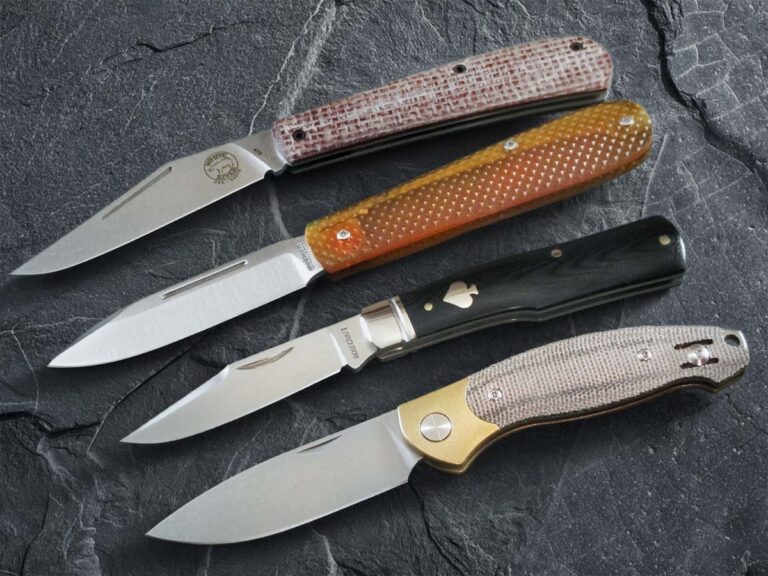
Those of us who were around long before just about every folding knife had a lock of some sort have fond memories of slip joints. These non-locking folders are still around, but you need to make Google your friend and look—not just in the U.S., but overseas—to root them out. Surprisingly, there are good ones to be had; you just have to do a little digging to find the gems. We’ve done the homework on a nice selection of fresh slip joints for BLADE® readers and present them to you now in these glossy pages.

RoseCraft Savage Creek

The gunstock folder pattern has been around for well over a century and seems to be a rite of passage for most slip joint manufacturers. Up-and-coming RoseCraft Blades has done a nice job of producing many traditional folders, and its Savage Creek Gunstock slip joint is a solid addition to its catalog. This company’s version has a 3.625-inch black Micarta handle with polished steel bolsters and a nickel silver spade escutcheon. The blade is a 2.8-inch swedge-ground D2 steel clip point with a nail nick. The gunstock handle is nicely done with a tastefully curved rise on the inside curve of the handle. MSRP on the RoseCraft Gunstock is $60.

Rosecraft Blades makes an impressive knife for the price. Its gunstock is just a tad over the 3.5-inch standard of the industry and can easily fit in the pocket to handle everyday chores. I tested its blade by cutting some paracord and found its D2 very much to my liking. I also tested it by slicing some thin-skinned leather and was also impressed. This steel has been around for many years; though it’s not true stainless, it has enough chromium content that it rarely rusts. D2 steel is a reliable steel that still finds its way on a lot of custom knives.’

Savage Creek Specs
Design: Gunstock Folder
Overall Length: 6.4”
Blade Style: Clip Point
Blade Steel: D2
Blade Length: 2.8”
Handle Material: Black Micarta
Handle Length: 3.625”
Special Features: Spade Shield
Weight: 2.7 oz.
Country of Manufacture: China
Retail Price: $60

GiantMouse Ace Farley V2

The GiantMouse Ace Farley V2 Slip Joint is everything you’d expect in a finely made pocketknife and more. I tested the colorful green canvas Micarta version with a brass bolster, which added a little color to my carry. This version is 6.375 inches fully opened and closes to 3.625 inches—very much in the standard pocketknife realm. The main body of the dark green Micarta is topped by an elliptical-base, flat-finished guard and a simple, reversible pocket clip resides at the base. The 2.75-inch Elmax stainless steel blade is a fully ground drop point with a common curved nail nick. The total weight of the knife is a svelte 2.6 ounces. MSRP is on the knife is $156.

This is a less expensive version of the Ace Farley V2 I tested in an earlier issue of BLADE, but I like the brass and green Micarta combination versus the somewhat staid titanium/carbon-fiber version. And this one is less expensive. This folder is similar in length to the previous RoseCraft, but the handle has much more girth, which offers a plusher grip and a wider blade. I tested this version on a much thicker, quarter-inch synthetic cord and it cut through nicely. It’s amazing the difference a fuller, more comfortable handle makes when slicing through tough material.

Ace Farley V2 Green Micarta Specs
Design: EDC Pocketknife
Overall Length: 6.375”
Blade Style: Drop Point
Blade Steel: Elmax
Blade Length: 2.75”
Handle Material: Green Micarta, Brass bolster
Handle Length: 3.625”
Special Features: Slip joint action w/half stops
Weight: 2.6 oz.
Country of Manufacture: China
Retail Price: $156

Giantmouse ACE Farley V2 Pocket Knife Drop Point ELMAX Stonewashed Blad

Giantmouse ACE Farley V2 Pocket Knife Drop Point ELMAX Stonewashed Blad

$195.00 $165.75
Prices accurate at time of publishing. Affiliate disclosure.

White River Knife & Tool Trailhead Trapper

White River Knife & Tool entered the market in 2011 and has been a popular choice among fixed-blade users ever since. Finally, the company released its first folding knife—the Trailhead Trapper—and it was worth the wait.  My first impression of the knife was that its ample 3.1-inch S35VN stainless steel blade is all business. The knife, designed for White River by Smith & Sons Knife Company, looks like it wants to cut! The brown 4.2-inch natural burlap Micarta handle features an excellent grip, with the burlap variety offering a slightly more substantial grip than the standard smooth Micarta. The weight is 2.5 ounces, and the $258 price tag is worth every penny.

An extra inch or more of handle and blade make huge difference on a folder. There’s more blade to cut with and more handle to grip and manipulate the knife. The White River Trailhead Trapper allowed me to extend the knife’s grip much better, and the longer blade was able to separate and remove whatever I cut more easily—in this case, sausage. With more room added to the equation, every task you tackle with a longer knife is easier.

Trailhead Trapper Specs
Design: Classic Trapper
Overall Length: 7.5”
Blade Style: Clip Point
Blade Length: 3.1”
Blade Steel: S35VN
Handle Material: Natural Burlap Micarta
Handle Length: 4.2”
Special Features: Half Stop
Weight: 2.5 oz.
Country of Manufacture: U.S.A.
Retail Price: $259

White River Knives Trailhead Trapper Pocket Knife Clip Point CPM S35VN Blade Ri

White River Knives Trailhead Trapper Pocket Knife Clip Point CPM S35VN Blade Ri

$250.00
Prices accurate at time of publishing. Affiliate disclosure.

Böker Coffin Ultem

We don’t get a lot of folding knives designed primarily for self-defense, so it’s good to see one enter the fray. The Böker Coffin Ultem is as purposeful as it is good-looking. The Coffin’s handle is a manageable 4.15 inches long, and you can clip it to the pocket or carry it loose in a pants pocket. The blade is 3.15 inches of premium MagnaCut stainless steel, so between that and the Ultem handle, there is no scrimping on Böker’s part. The Coffin opens the old-fashioned way, via a nail nick and a nice diagonal square texture. The length of the handle enhances the grip. This is a simple, well-made slip joint, especially for its MSRP of $285.

The designers at Böker wisely opted for a long, straight clip point blade for the Coffin to give the user more versatility outside of a pure defensive role. This adds to its usefulness in utility when cord or rope needs cutting and other roles such as meal prep in the field or on the go.  

Coffin Ultem Specs
Design: Self Defense
Overall Length: 7.3”
Blade Style: Spear Point
Blade Length: 3.15”
Blade Steel: MagnaCut
Handle Material: Ultem Thermoplastic
Handle Length: 4.15”
Special Features: See-through Ultem Handle w/ Pocketclip
Weight: 1.94 oz.
Country of Manufacture: Solingen, Germany
Retail Price: $230

Still Alive And Slippin’

Judging from our crop of slip joints, these simpler folders seem to be doing quite well in today’s cutlery market. Just the sheer variety of types and styles is impressive. Want traditional and hard-nosed? The White River Knife & Tool Trailhead Trapper and RoseCraft Blades Savage Creek Gunstock should whet your whistle. For outside the box and downright fancy, the Böker Coffin Ultem and GiantMouse V2 Green Micarta will whet it some more.

These are fat times for slip joint aficionados in the aftermarket as well. If your folder doesn’t come equipped with a pocket clip, there are plenty to be found in all sizes and types from aftermarket suppliers. Similarly, you can find leather and nylon belt sheaths for carrying your folder at the ready outside the pocket as well.

If for no other reason than simpler is better, with less to break and gum up your plans, I’ll leave you with this. A noted old-time knifemaker once left me with a piece of advice as to why he chooses to use a slip joint over any of the multitude of locks available for folding knives today. He simply said, “I know which side of the blade cuts.”

Knife Reviews:

Bearded Axe: Best Bashers From Here To Valhalla (2023)

0

Hot bearded axes go beyond just chopping.

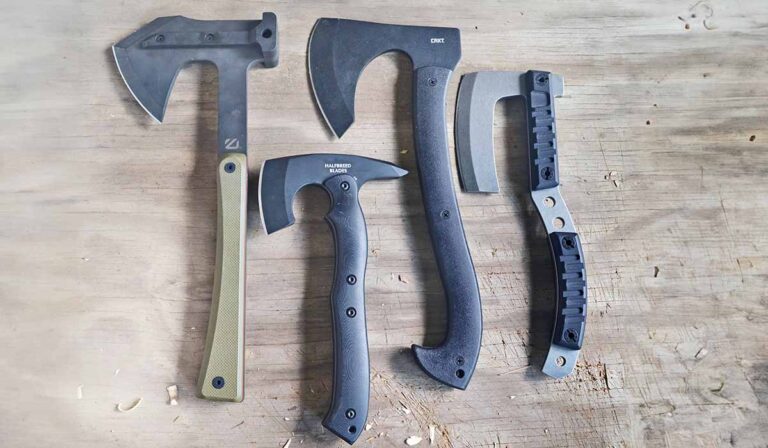
All axe heads have an edge, of course, but did you know some can give you an edge over others? The bearded axe chops just like any axe, but its beard can serve field duty beyond the norm.

The bearded axe was first used by the Scandinavian Norse people (Norsemen) in the Middle Ages and was called a skeggox—skegg for beard and ox for axe. Its distinctive shape allows you to grasp the handle at the base of the head and use the edge for woodworking chores.

It’s sometimes called a carving axe for its propensity for de-barking, shaving and notching wood, and other chores like slicing cord and rope—even serving as an ulu to prepare food. Not all bearded axes are made specifically for carving wood, however, as you’re about to find out.

CRKT James Williams Skeggox

Bearded Axe CRKT
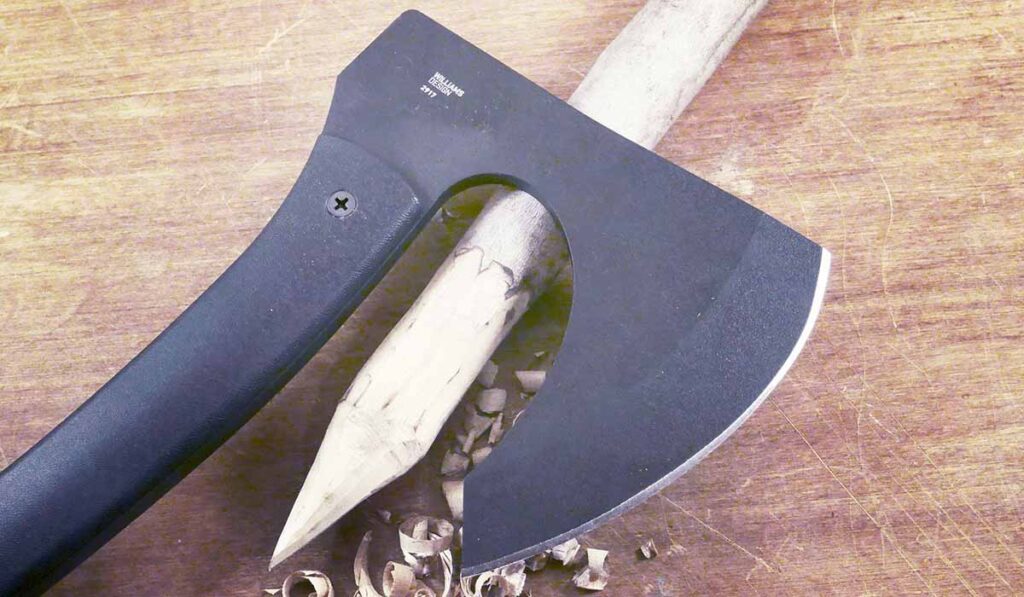
The CRKT Skeggox shaved bark and rendered nice shavings while debarking and pointing the tip of a hardwood stake. The SK5 carbon steel bit into the hardwood quite well and the handle scales offered a comfortable grip.

Columbia River Knife & Tool and martial artist/Japanese sword guru James Williams dipped back in time and chose the original Norse namesake for his design. The CRKT Skeggox is one of the larger two test axes.

The drop in the beard from the top of the inner curve to the bottom edge is 3.25 inches. The 11-inch handle has a lanyard loop at the base. The sheath features a black nylon keeper strap with a thermoplastic buckle to prevent slippage from the sheath. CRKT includes additional hardware for belt or MOLLE carry.

The SK5 carbon steel of the axe head has been compared to U.S.-produced 1084 and 1095 carbon steels, which typically fare well-working wood in the wild. I tested it for carving and immediately liked the deep drop and the “50 miles of elbow room” between the handle and the rear of the beard. I de-barked and pointed a fat hardwood tent peg, and the more I used the bearded blade the better my control got for taking off long shavings. This was in part due to the low profile of the quarter-inch steel and the nice bite of the high carbon alloy.

The Skeggox is also a good all-around chopper for firewood and clearing small trees. The sheath is economical and the option of belt or MOLLE carry is welcome. Better yet, it is the most affordable of the review axes and money well spent.

James Williams Skeggox Specs
Head Width: 4.874”
Blade Edge: 5”
Blade Material: SK-5 carbon steel (Japan)
Blade Thickness: .25”
Blade Finish: Black powder coat
Handle Material: Black FRN polymer
Weight: 26 ozs.
Overall Length: 13”
Sheath: Black thermoplastic
Country of Origin: Taiwan
MSRP: $113

Doublestar/Outlier Kodiak Camp Axe

Bearded Axe Kodiak
The author removed the splitter attachment from the Outlier Kodiak Camp Axe to clear the way for using the blade for debarking and shaving wood. He used the longer, lower portion of the double-edged blade and was impressed with the performance of the 52100 carbon steel.

The Outlier (formerly Doublestar) Kodiak Camp Axe is the second of the larger test axes and comes with a twist. The axe head has a removable steel splitter attachment installed, specifically made for cleaving wood. It is also notable in that the blade edge has two grinds.

The beard drop is 2.5 inches. The handle scales are sumptuous at a half-inch thick each. The sheath covers the axe head and splitter until it reaches the widened rear of the splitter used for hammering. The front has a nylon belly strap with a thermoplastic buckle to secure the axe head.

The splitter increases weight, blocks access to the beard for slicing and shaving, and is too unwieldy for my tastes for finesse work. I removed it, reducing axe weight by 8 ounces and making the Kodiak much easier to manipulate. I thought the two angles of edge might make a difference in cutting surface—and I’m sure they would—but the longer, lower edge turned out to be all I needed for de-barking and shaving long slivers. The 52100 carbon steel cut like a house afire, slicing wood and ¾-inch rappelling rope with ease.

It was a different axe altogether without the splitter and more in line with the other text axes. The only recommendation I’d have is that Outlier offer the same axe with a full, single-edged head to increase the coverage of the edge. Other than that, it’s a beast.

Kodiak Camp Axe Specs
Head Width: 5.25”
Blade Edge: Varied
Blade Material: 52100 carbon steel
Blade Thickness: .25”
Blade Finish: Parkerized black
Handle Material: Green G-10 composite w/orange liners
Special Features: Splitter attachment
Weight: 40 ozs. (including splitter)
Overall Length: 13.125”
Sheath: Black thermoplastic
Country of Origin: U.S.A.
MSRP: $319

Halfbreed Compact Rescue Axe

Bearded Axe Halfbreed
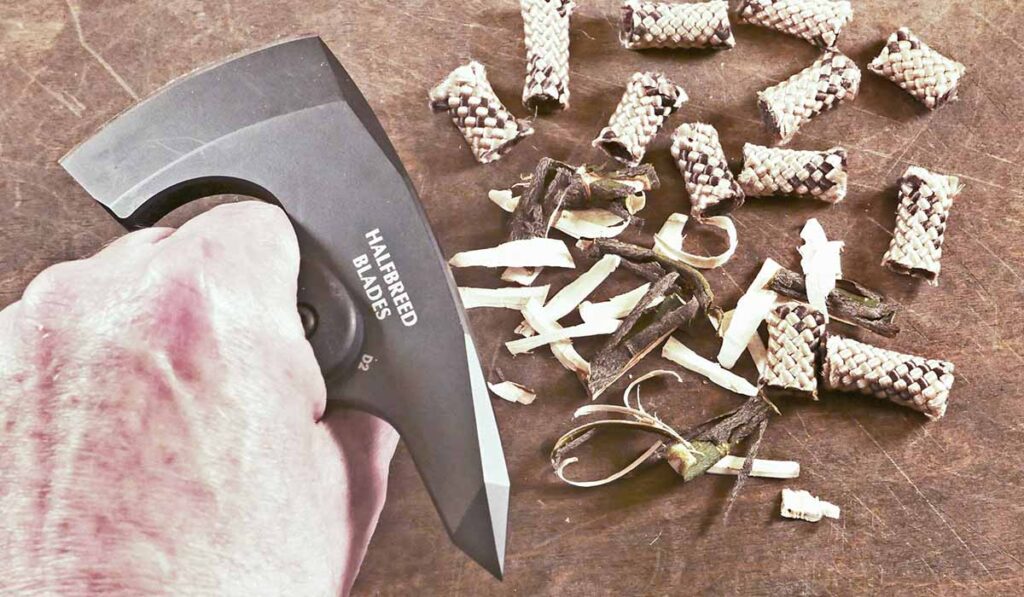
The Halfbreed Compact Rescue Axe shaved wood and sliced rappelling rope with flying colors. The axe head steel is the thickest of the test group.

The Halfbreed Compact Rescue Axe is the smallest of our bearded array yet is also the most overbuilt. It makes up for its smaller size with the thick axe head steel. There’s a nice palm swell at the lower grip area and a big finger groove at the top of the handle.

It has a beard drop of 1.5 inches. Out back is a 2-inch spike. The rear spine has gimping to enhance grip. The sheath offers full coverage and a keeper loop rolls under the bit to further secure the axe head. It has a mounted MOLLE-compatible plate, or you can swap it out with an optional DOTS Tek-Lok style attachment for belt carry.

While testing the Halfbreed I had to remind myself it is indeed a compact rescue axe. While all the other review subjects are geared for outdoor use, this small overbuilt wonder is more for city work. That said, the large finger groove at the top of the handle is custom-made for carving and slicing just as bearded axes were intended. I tested the little axe and it shaved bark, took off shavings, and sliced rappelling rope just fine, but its thick steel and superior weight-for-size ratio really shine when hacking and bashing. I have no doubt it would earn its stars as a close-quarters hawk.

I gave the spike a run on a pane of 3/16-inch door glass and it obliged, shattering it with gusto. The ample grip, with its added gimping, makes for excellent purchase, and the sheath—overbuilt like the axe—is the most comprehensive of the lot. In a nutshell, the Halfbreed is a handy axe—and a bulldog at that!

Compact Rescue Axe Specs
Head Width: 4.5”
Blade Edge: 2.55”
Blade Material: Bohler K110 (D2) tool steel
Blade Thickness: .31”
Blade Finish: Black Teflon coating
Handle Material: Black G-10 composite
Special Features: Faceted spike, gimping
Weight: 25.07 ozs.
Overall Length: 9.52”
Sheath: Black Kydex, MOLLE compatible
Country of Origin: Australia
MSRP: $310

Maserin Knives Mantis

Bearded Axe Mantis
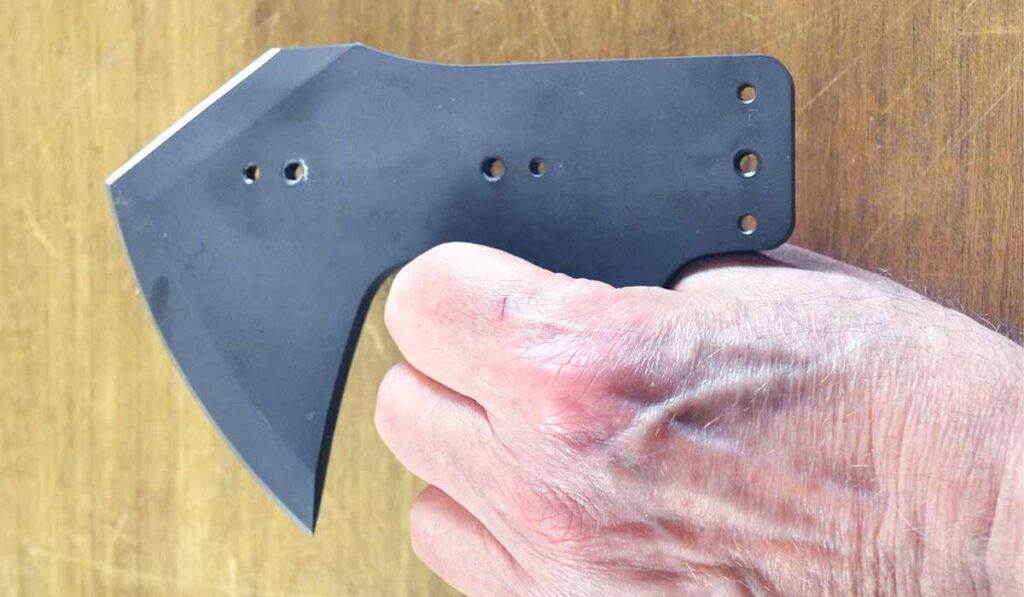
The unusual axe head of the Maserin Mantis offers full knuckle protection and then some. Note that the Mantis has a pair of upper scales just for the purpose of using the axe for shaving and slicing.

Maserin Knives may be giving us a glimpse into the future with its new, strikingly stylish Mantis. It is a small axe and you’ll notice the steep tool steel blade is quite lengthy for its size. In fact, the blade exceeds the width of the axe head—a bit unusual in a working axe.

“But wait, there’s more!” as the TV guy says. The Mantis has four (two sets) of scales: one at the top for carving comfort and the other on the lower portion of the handle for grip. At the base of the straight top scale the direction of the handle switches to an outward curve, and the exposed part on the handle has three lightening holes—plus there’s a lanyard hole and a spike on the base. The sheath fits the axe head only and butts against the top scale, and there’s a belt loop stitched to the back. It’s minimalism at its finest.

The Mantis has the longest beard drop of all the test axes at 3.75 inches and is the only one that offers full hand protection. The blade curve stands apart in that it is virtually symmetrical from end to end. It’s shape and full knuckle protection begged me to try it as an ulu for slicing, so I laid down some 3/8-inch rappelling rope and went at it. The Mantis sliced just like an ulu, taking off clean sections of rope. It performed even better when I reversed the grip with the handle facing away from me so it didn’t hit me in the belly. Voila! Instant ulu.

The Mantis shaved bark and carved off curls quite well and the full finger protection was welcome. It’s the lightest of the axes reviewed, which could put it at a disadvantage to the others when weight is a factor. You won’t be batonning this axe either because the top scales would block it from going past the front portion of the head. That said, there’s plenty to like about the Mantis’s utility value and its forward-thinking styling!

Mantis Specs
Head Width: 3.75”
Blade Edge: 4.527”
Blade Material: D2 tool steel
Blade Finish: Stonewashed
Blade Thickness: .326”
Handle Material: Black G-10 composite
Special Feature: Futuristic design
Weight: 20.23 ozs.
Overall Length: 11.02”
Sheath: Black Kydex
Country of Origin: Italy
MSRP: $216

More Axes, Hatchets And Tomahawks:

  • Best Hatchets For Survival And Camping
  • Best Tomahawks: Our Top Hawks For Backwoods To Battlefields
  • Wicked Breacher: Ben Seward’s SWAT Axe
  • Awesome Axes for Chopping Wood Like a True Lumberjack
Advertisement

Must Read Articles

Read this before you make a knife

Knifemaking 101 – Read This Before You Make a Knife

  by Wayne Goddard My experience has taught me that there's nothing like digging in and getting started. I've often said the hardest part of the...
how to forge damascus steel

How to Forge Damascus

Advertisement
Advertisement