
Buyer's Guides

You’re looking for a new knife in a certain style – we’ve got recommendations on the best blades for every price point.

Six Fixed Blades Ready To Go To Work

A Good Work Knife Is Worth Its Weight In Gold. These Half-Dozen Blades All Excel At Something Outdoors From Gardening To Felling Trees.

Serious work knives are going to be fixed blades. Strength is something that can’t be sacrificed, and while many folders are incredibly rigid, they have mechanisms and moving parts that can and do become worn or damaged with hard use.

Modern folders are great knives. However, once mud, grit, sand, and the unexpected rock an inch underground comes into play, they tend to fail. Few folders are strong enough long-term for use as a trowel—fewer still can be safely batonned through wood. On the merit of ergonomics alone, the folder is usually slab-sided in profile and isn’t comfortable to hold for long periods, nor does it allow for easy cleaning. As such, the fixed blade is superior when the woodchips or dirt need to fly.

Defining work knives is merited by the individual task at hand. Some of the knives featured herein are not suitable to assume the role of another. Specialization is the name of the game and the knife you need for splitting wood is far different than one for working the ground. The main characteristic, across the board, is that these knives simply must hold up for their intended role and be at least serviceable in others should the need arise.

The test knives were all put to heavy use during an exterior cleanup, pulling up rotten posts, planting vegetables and bulbs, cutting down saplings and small trees, starting fires, making kindling, opening fertilizer and feed bags, and all sorts of things you would use a knife for in routine outdoor chores. They were exposed to rain, soil and, on occasion, cleaning supplies. I evaluated the edges and finishes for how well they cut and the handles for how well they felt in the hand after extended use.

Case Winkler Recurve Utility No. 6

The Case No. 6 was perfect for slicing straps on hay bales, removing small limbs and cutting various hoses and line.

A collaboration between Case and Winkler Knives, the Case Winkler Recurve Utility No. 6 is large, beefy, well-made, and very, very sharp. It arrived with a much finer edge than most Winkler designs, which made it all the more interesting when compared to the other Winkler knife in this article. 

One of this issue’s cover knives, the No. 6 is not machete size but is big and heavily built. The deep belly and recurve result in a wide, rounded curve up to the tip, with about an inch-and-a-half of front-facing edge to the point. It is excellent at digging but not great at penetrating materials.

Where the knife really excels is in deep, long cuts. The recurve shape and handle angle make it want to sink right in. It can be batonned through wood around 2.5 inches in diameter with ease, can make tinder and is great at striking. The knife comes with a leather sheath that includes a polymer clip for a Zippo mini lighter. This is probably the only downside to this overall fantastic knife—the polymer clip isn’t strong enough to keep the lighter firmly in place and it can and does fall out.

In terms of general utility, I used the No. 6 hard and heavily for just about every task I could think of in the yard/garden. It chops well for a standard-sized knife and takes down medium branches as well as a small saw. It wants to work and, due to its shape, is simply useful and never got into a place where it was too much or too little. Overall, it is a fantastic work knife that should last you a lifetime.

MSRP: $430.99

Winkler Knives Drop Point Crusher

As a medium chore cutter, the Winkler Drop Point Crusher was great and easy to carry. The glass breaker/striker pommel is wickedly effective.

A classically styled working knife, the Winkler Knives Drop Point Crusher is a rugged gentleman’s knife with an appearance that doesn’t immediately give away its abilities. It was the only test knife with a wood grip but this never became an issue despite it being the most organic in composition. It was, like the others, exposed to rain, sap, dirt and dried wood. In addition, and thanks to the glass breaker/striker pommel, it was also used to bust down rotten posts and break glass out of a damaged windowpane.

It is a lightweight knife and easy to carry all day long. While Winkler makes knives for some of the most tactical dudes in the world, this one doesn’t draw that sort of attention in the slightest. It looks old, like something your granddad may have carried while hunting, and most people just look past it. 

As an heirloom-quality knife it is hard to want to use it, but like all the Winkler blades I have looked at over the years, it wears nicely and simply gains character. For basic work the knife is great at everything but is just a bit thin for heavy batonning, though it can be used to split smaller pieces. 

As a work tool, it is firmly in the everyday use category but like the Earth Skills knife is best set aside for heavy work. This is the knife I ended up wearing the most and using for the greatest number of tasks as it was so effortless to carry.

MSRP: $375

Condor Tool & Knife Woodbuster

The Woodbuster split firewood easily.

The Condor Tool & Knife Woodbuster is the biggest knife I’ve tested for BLADE®. Because of the knife’s name, I decided it best to use it on as much wood as possible, from taking down branches to dropping small trees. Designed by Joe Flowers, it sailed through things like they were hardly there. It approaches machete size, though it is heavy and the energy you need to get it moving is wasted on small brush.

I chopped firewood and reduced sections of trunk 12 inches wide into firewood with the Woodbuster. It can be batonned with surety and is great in that it has no real tip, so you don’t risk catching your hand or fingers if the blade sticks in the wood. It chops as well or better than a camp axe and with less physical effort in preparing firewood. 

In taking down trees care is needed, but it is as good as an axe on anything under a foot across, which isn’t small by any stretch. The Woodbuster is 100 percent a working knife and is easy to become proficient with.

The only downside is the grip, which is rather round in profile. Smaller hands may have a hard time with it. The grip is also a bit smooth, though not all that noticeable if you wear work gloves. It becomes a bit hard to hold when wet and can roll in the hand after repeated strikes. This isn’t a serious problem, just something to be aware of.

MSRP: $171.58

KA-BAR Jarosz Camp Turok

The Camp Turok is a large knife that can handle branches, cutting chores, and light chopping.

The KA-BAR Jarosz Camp Turok is large but not as beefy as the Woodbuster, and much lighter. With the exception of heavy wood cutting and batonning, it performs most outdoor tasks. The blade is thick but draws to a relatively fine point.

Designed by Jesse Jarosz, the Turok is a great general-purpose outdoor tool in that it’s easily maintained and stays sharp when handling chores. It’s a bit too large for EDC and is, like the Woodbuster, something you will want to carry until you don’t; it’s an overt item. 

It is, however, the test tool that has the most utility for the price and the broadest range of uses. The only thing I don’t like is the grip—too smooth for my taste and slippery when wet. However, the scales are removable, making the knife easy to clean and maintain.

MSRP: $129.69

Benchmade 162 Bushcrafter

The handy Benchmade 162 Bushcrafter is eminently useful for most outdoor work, and easy to carry and maintain. Designed by Shane Sibert, it arrived with a very sharp edge, though more notable was the grip profile. It’s a relatively small knife and the handle is unusually shaped, almost like a dog bone in geometry, and is very easy to get a firm, solid grip on. It can’t really be used for chopping large materials but is exceptional for fine work. It’s great at making fire and excellent in the garden and for pruning.

While billed as a bushcraft blade, it’s really a fine everyday knife and graciously civilian in appearance. It doesn’t look tactical at all and won’t draw attention anywhere from the farmer’s market to the barnyard. It held up exceptionally well and maintained a sharp edge in use. 

It was used like the others to open feed and fertilizer bags and to cut cord and roots. The only downside is the sheath. While aesthetically pleasing, it has a suede feel and once wet tends to stay wet for a long time.

MSRP: $260

TOPS Knives Earth Skills Knife

The Earth Skills knife was at home in the garden and far more effective than a trowel at getting though tough roots.

The Earth Skills Knife from TOPS Knives is large and has a very atypical profile. Matt Graham designed it as a type of survival knife, though not necessarily a heavy-duty one. It is quite thin and has a generous Scandi grind, making it absolutely wonderful for working the earth, cutting through rooted soil to plant new bulbs or vegetables, and light work like cutting branches and digging up old wire netting. It’s great as a close work tool and for preparing food but has little value for hard-use tasks.

The edge geometry and thin spine are not suitable for batonning, though the blade is great scraping tinder and striking on a rod. Because of these special features, the knife is at home in the garden or camp in that it likely won’t be used for initial setup, but rather for cutting food, root vegetables, harvesting forage and as a light machete. The grip is very comfortable but quite large. The blade stayed very sharp through testing and accomplished tasks easily with minimal wear.

MSRP: $260

Read More

KSW Custom Knives Bushcrafter Review: Upcycled Edge

The author baptizes the Bushcrafter BLADE® style.

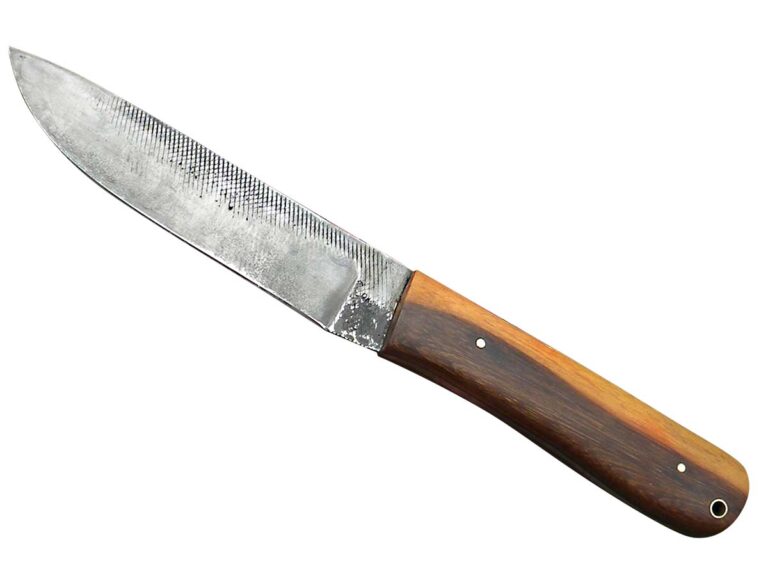
The Bushcrafter by Kris Waddington of KSW Custom Knives is a great example of what bladesmiths can do with recycled carbon steel. Got a worn-out file? No problem. They can convert it into another useful tool—a knife.

With a hot-enough fire, a smith can manipulate the steel into a wide variety of shapes and sizes. High carbon steels are made into cutting instruments, mild steels into ornamental fittings. It’s a great skill to possess and practice. Kris has the skill.

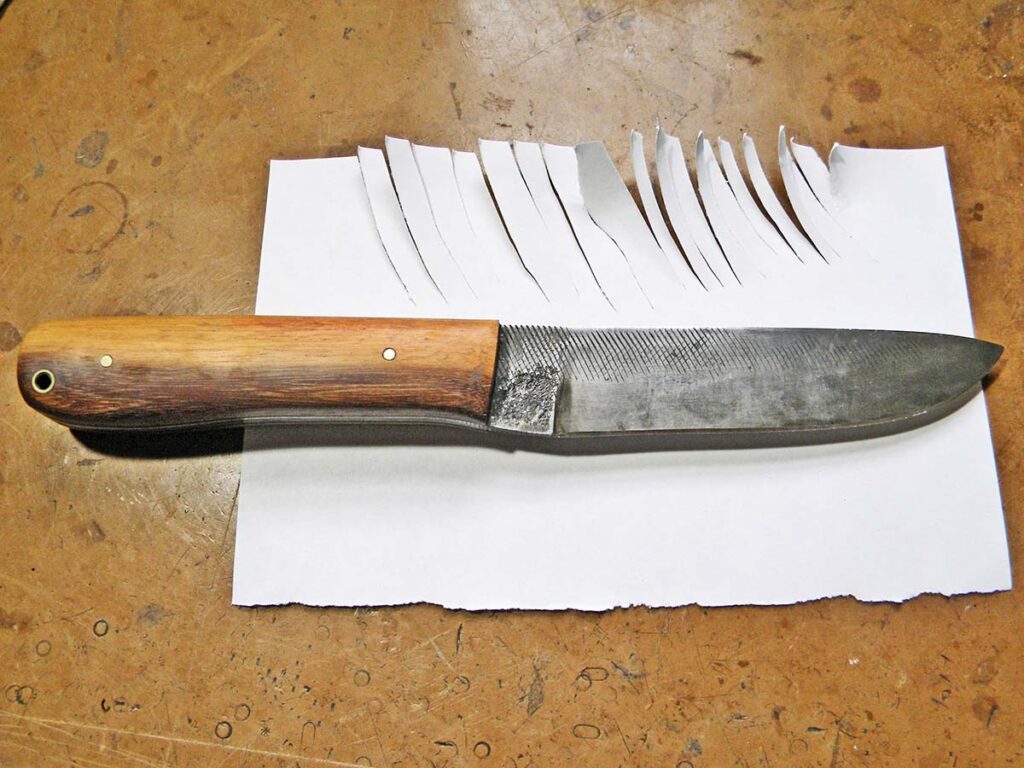
At the end of testing, the author returned to slicing the copy paper to check for edge snags or chips. The Bushcrafter sliced for the win. There was no edge damage. Heat treatment: spot on.

Enough talk about the cool stuff he can make. Let’s get into how well he performed the conversion.

Light-Duty Cutting

I always slice 20-pound bond copy paper at the start to see how fine the knife’s edge is. The Bushcrafter did not disappoint. The upcycled Nicholson file slid through the paper with ease. It made clean, crisp slices again and again. The knife is very sharp indeed.

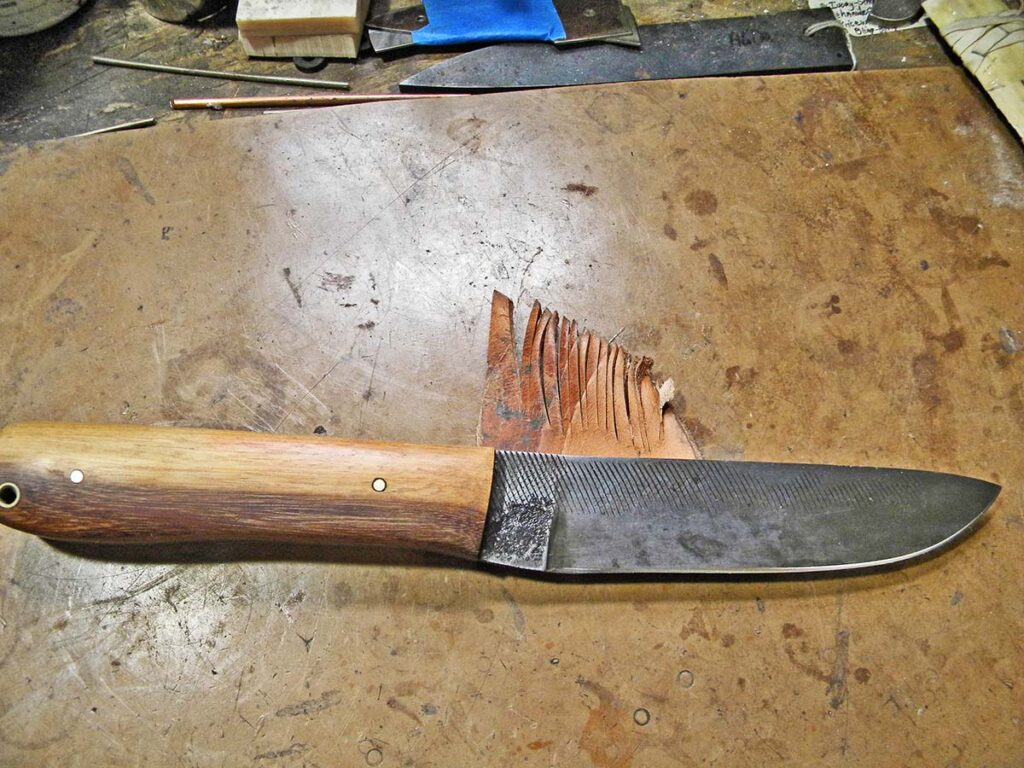
The Bushcrafter cruised through the 8-ounce leather very quickly with straight cuts.

From there it was on to severing single-walled cardboard. The Bushcrafter sliced through the medium quickly and aggressively. I could hear every slice. It was easy to control the spacing of the cuts with the larger handle.

Cutting 8-ounce leather to represent the skin of a harvested big game animal was next. The Bushcrafter crunched through it very quickly with straight cuts. Skiving the material was even louder as the knife aggressively sliced it into thin layers. The leather was no challenge whatsoever.

Heavy-Duty Cutting

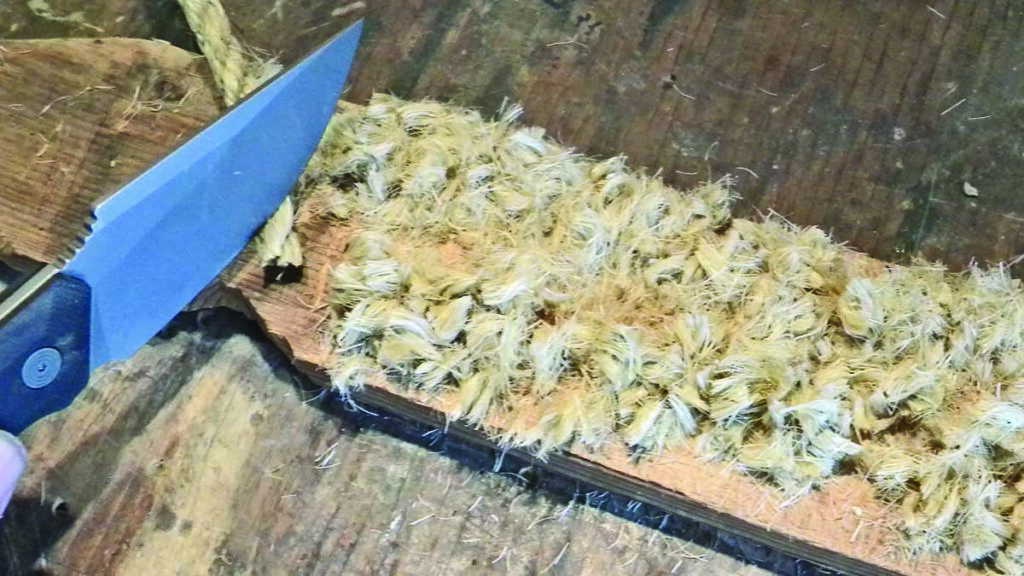
Cutting sisal rope always tells if the edge will hold up. The Bushcrafter crunched through 200 cuts very quickly and wanted more. There was a small hot spot where the handle meets the blade. A quick hit with 220-grit sandpaper removed the spot. The blade held an edge while slicing and cutting. It was time for a tougher medium.

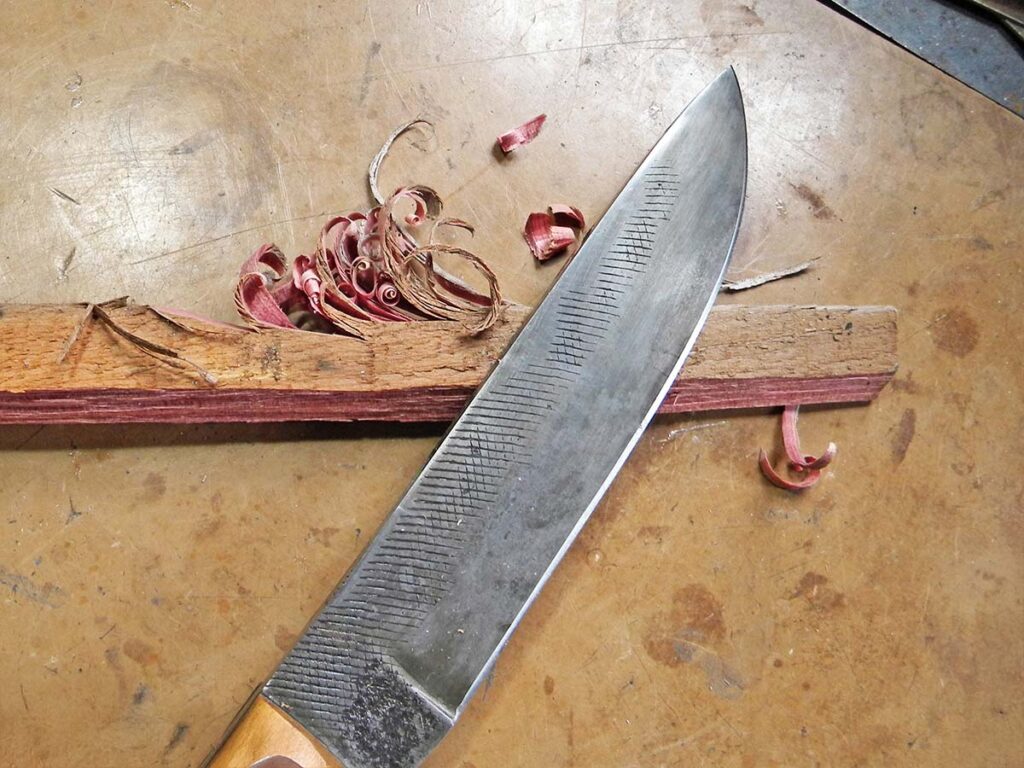
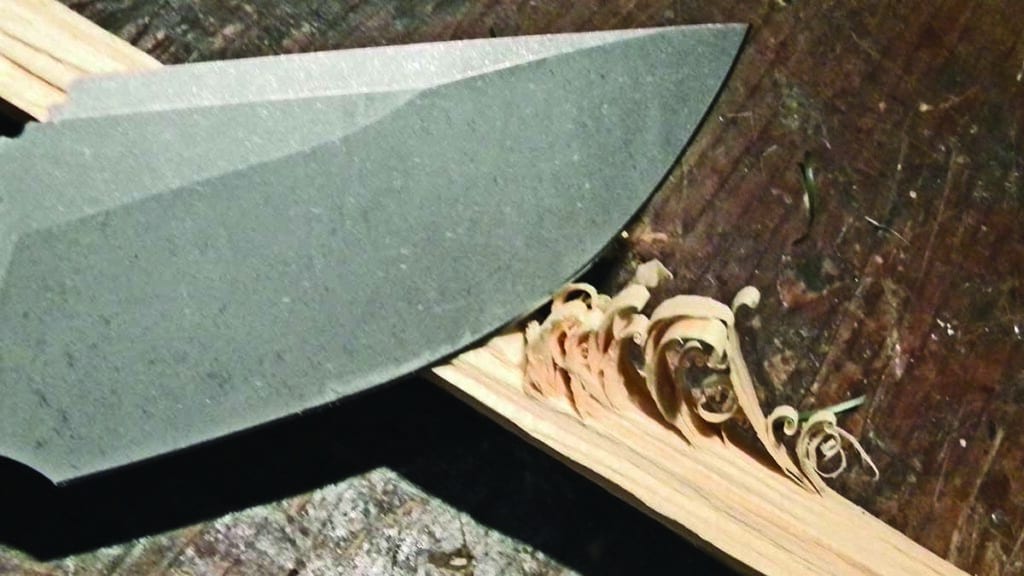
The Bushcrafter turned out some excellent red-cedar curlicues ready for the fire.

For bushcrafting, I chopped a slab of red cedar. The blade buried deeper than expected and cracked the slab. It was comfortable using the knife.

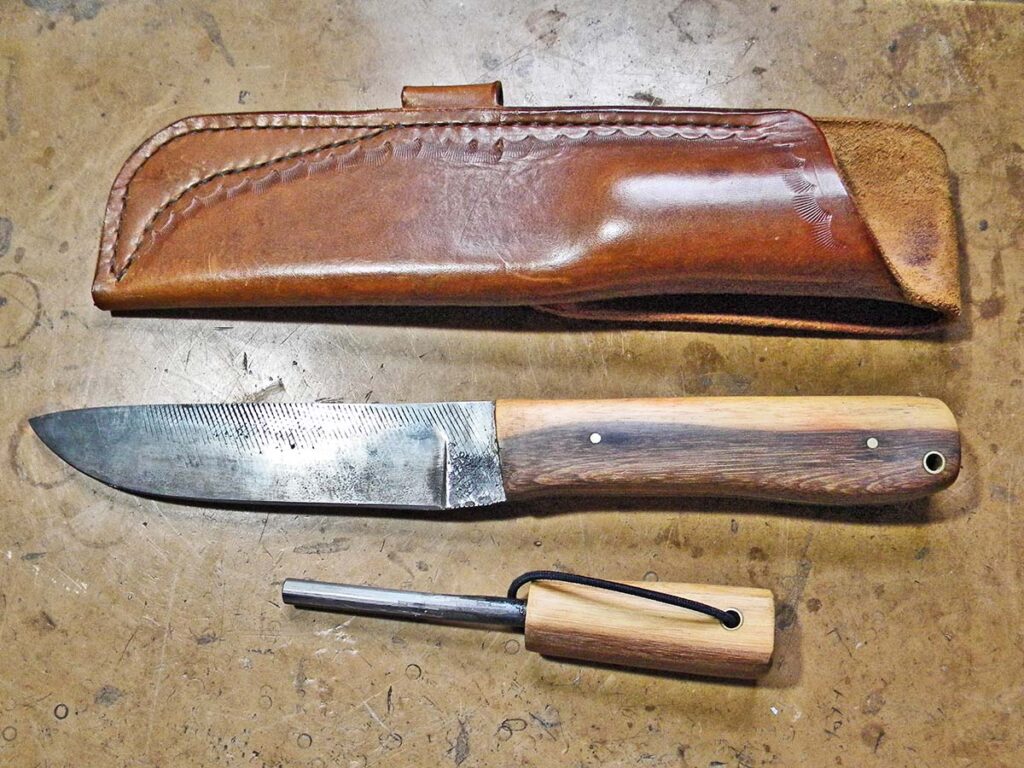
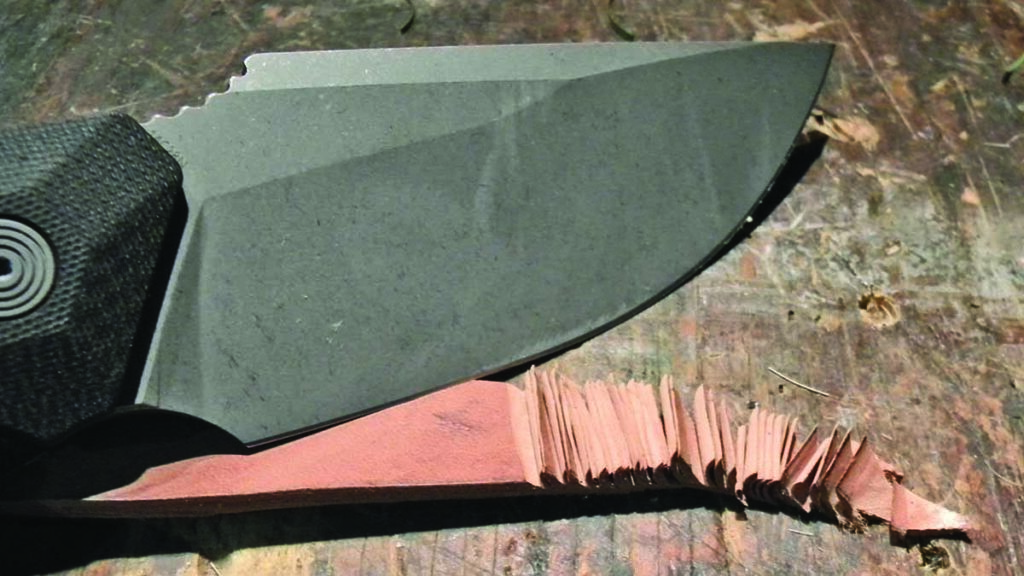
I worked the cedar to make a fire stick. The Bushcrafter turned out some excellent curlicues ready for the fire. Batonning was next in line. The knife averaged 3 1/2 baton hits to split the slab into small kindling. That was some short slab work! To raise the bar, Kris added a ferrocerium rod with a matching handle. The result is a complete outdoor package.

A leather sheath and a ferrocerium rod with a matching handle complete the outdoor package.

I returned to slicing the copy paper to test for edge snags or chips. The Bushcrafter sliced for the win. There was no edge damage. Heat treatment is spot on. Great
job, Kris.

Final Cut

I would prefer more of a finger notch and maybe some thumb notches for added control. The Bushcrafter lives up to its name. Made to perform in the woods, it is the total package for your backpack outing.

Bushcrafter Specs
Maker: Kris Waddington
Blade length: 5.25”
Blade steel: A forged Nicholson file
Blade grind: Flat
Scales: Ironwood w/black liner
Hardware: Brass
Overall length: 11”
Extras: Ferrocerium rod w/ironwood handle
Sheath: Leather by @wesleys_american_made_leather
Maker’s price: $325.98 at press-time exchange rate

More Knife Reviews:

Breed’s Battle Blade Review: Author Puts His Knife To The Test

The author takes his Battle Blade to the next test level and up.

Ever since I started writing for BLADE® in 1990, I generally stick to similar cutting media to check the performance of the knives I test in “Spec Sheet.” That way it gives me a baseline as to how the different blades and their steels should perform. However, as a writer, I find it sometimes gets old doing the same testing. So why not beat the heck out of one of the test knives?

Well, first off, the knives are owned by someone else. They might be scheduled to be sold. You can see why I only push Spec Sheet test knives to a certain point. Unfortunately, the craving to give a test knife a brutal workout keeps coming, only to be done during my own testing using my knives.

Here’s a crazy idea—I’ll test one of the knives I make! So, after pleading my case to the BLADE management, it was OK’d. Now it’s time to get down and dirty with my Battle Blade that has been my truck knife for the past year.
Let the whacking begin.

Battle Blade Vs Normal Media

Serious whacking aside, I still executed a 20-pound-bond paper slice to show initial edge sharpness. The Battle Blade zipped quickly through the paper even with rust spots on the blade and edge. It was very smooth and aggressive during slicing.

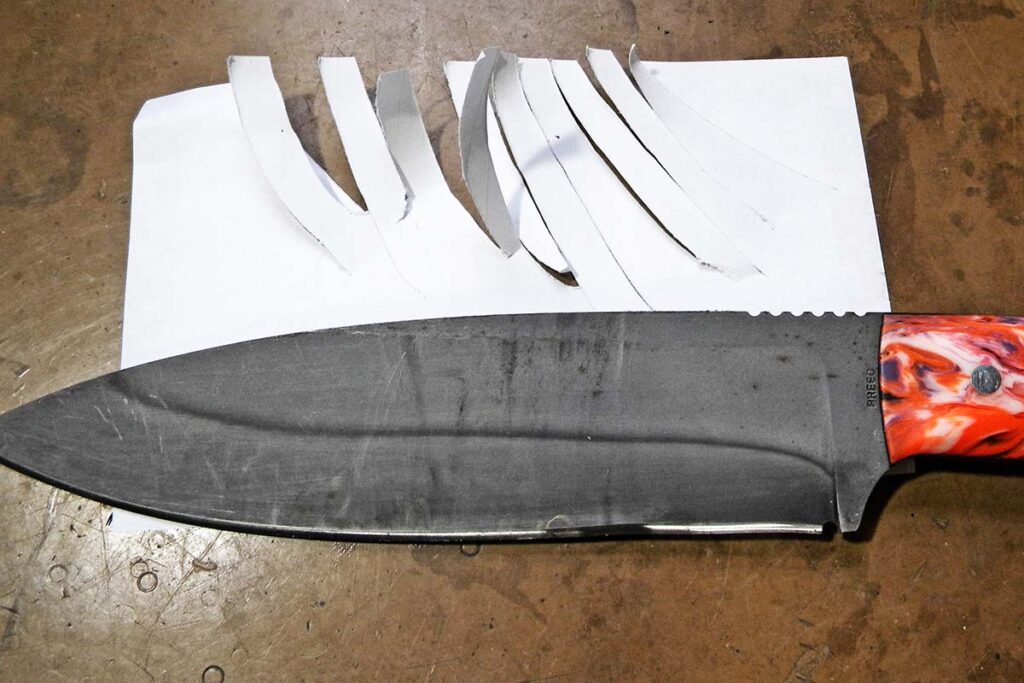
Battle blade cuts paper
To test initial sharpness, the author executed a 20-pound-bond paper slice. The Battle Blade zipped quickly through the paper even with rust spots on the blade and edge.

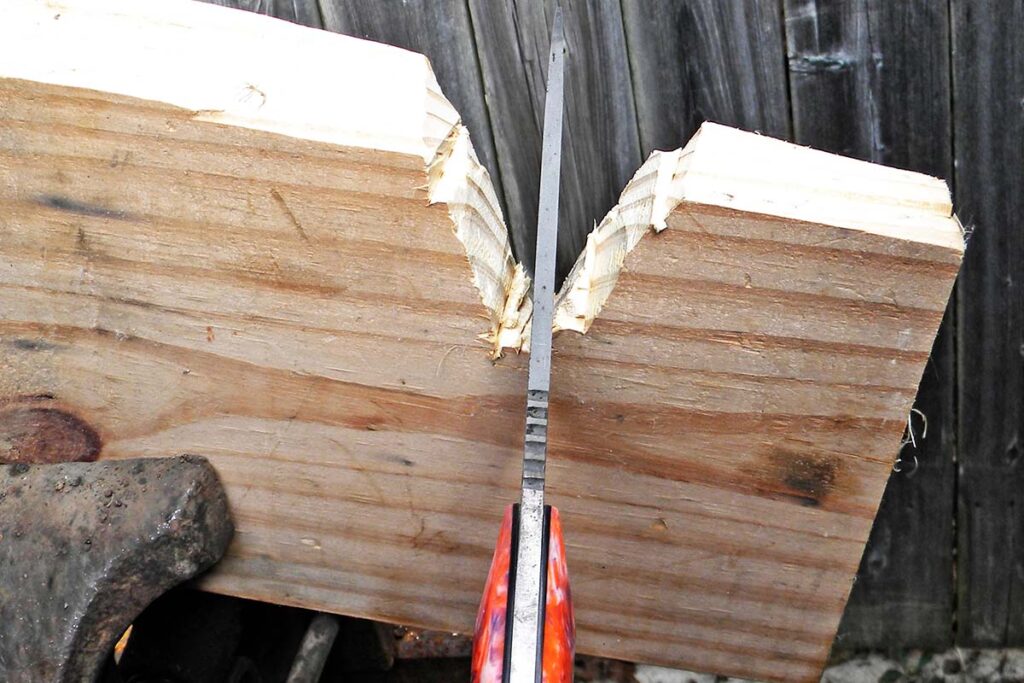
On to a nice 2×8 pine board locked in my shop leg vise. After 20 whacks I had a deep “V” chopped into the wood. The exercise didn’t bother the edge at all; it took a three-quarter-to-1 inch bite on each chop. The handle was comfortable but slightly smooth. (I should have put a thong cord on it.)

Since the whitetail antler I normally use in stories for edge whacking was all whacked up, it was time to replace it. As a result, I chopped it up into 1-inch pieces. The Battle Blade removed all the tines with nice, clean chops. The edge was still very sharp with no damage. Now I have chunks of deer antler all around my forge!

Battle Blade Vs Abnormal Media

For the first “abnormal medium” I went with 3/8-inch-diameter twisted copper wire. I used the Battle Blade as a draw knife to flatten the 2×8 for a surface on which to chop the copper braid. Six hard whacks and the edge still didn’t make it through all eight wires. It seems the Battle Blade drove the last two wires into the 2×8. Note to self: use a hardwood next time. The copper braid only put a few streaks on the blade. There was no damage to the edge.

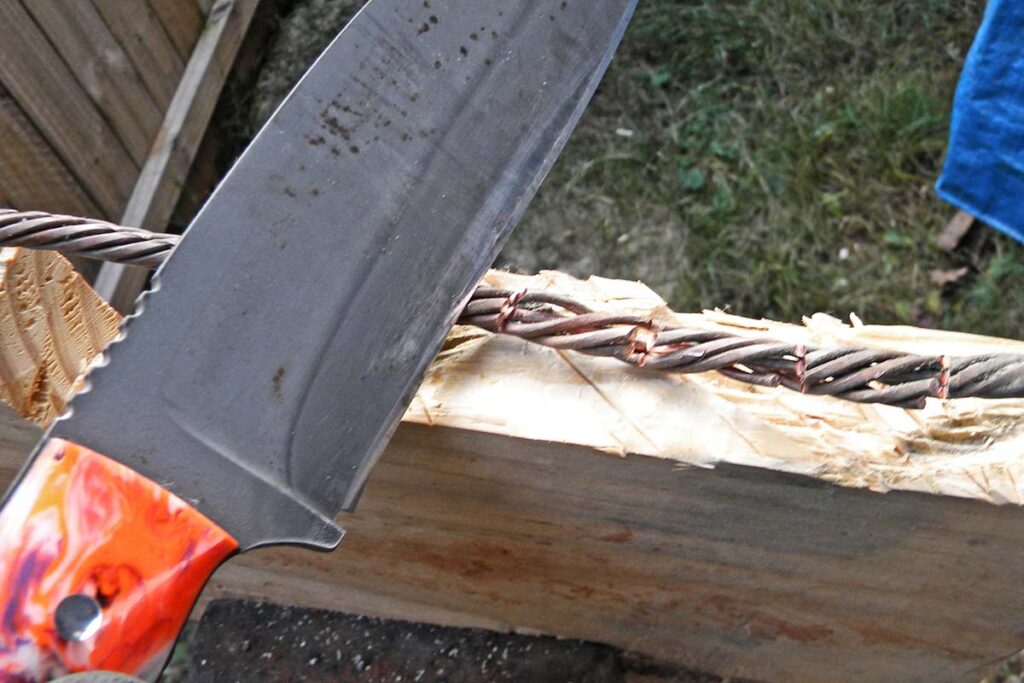
Battle Blade cuts copper wire
For the first “abnormal medium” the author used 3/8-inch-diameter twisted copper wire. Six hard whacks and the edge still didn’t make it through all eight wires. The copper braid only put a few streaks on the blade. There was no damage to the edge.

Next up: the acetone can stab. The Battle Blade fully penetrated both sides of the can repeatedly. I was worried about stabbing the leg vise more than any damage to the blade from the can. There were some nice scratches on the finish but the edge held up perfectly, as well as the tip.

It was time to get some steel involved: an older patio chair headed to the scrapyard, and its steel tubing. Bingo! So I dragged the chair into my forging area and prepared to trash my Battle Blade. Swinging as hard as I could, I chopped down into the arm of the chair. A loud clang let me know it was a solid hit. The Battle Blade bit a half-inch deep, through the top and bottom corners of the chair, along with the sidewall. I saw a little glint from the blade’s edge. Oh well! I gave the chair arm seven more very hard whacks. The edge had two little glints of rolls and three very small nicks.

Knife chops board
After 20 whacks the Battle Blade had a deep “V” chopped into the 2×8 pine board. The edge took a three-quarter-to-1 inch bite on each chop and emerged unscathed.

The edge still felt sharp, so I returned to the 20-pound-bond paper slice. The edge sliced the paper, though not as smooth as at the start. I’ll take that anytime.

Final Cut

I’m very happy with the performance and feel of the Battle Blade. Normally I use a better gripping handle material for this model but this one’s mine. It had to be bold. The only change I’ll make, thread some cord through the thong hole for a more secure grip.

Battle Blade Specs
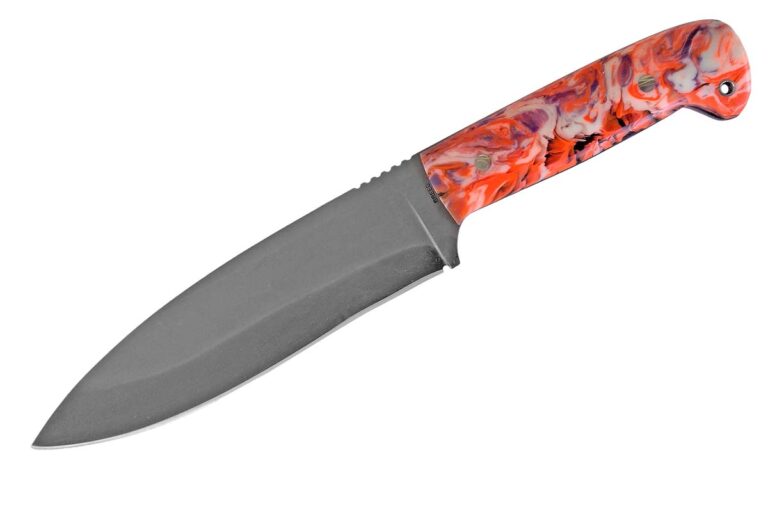
Maker: Breed Custom Knives
Blade length: 75/8”
Blade material: 80CrV2 carbon steel
Blade grind: Full flat
Blade @ thickest: 3/16”
Blade finish: Bead blasted
Heat treatment: Differential
Handle material: Swirl by J. Hue Customs
Weight: 15 ozs.
Overall length: 13 1/8”
Sheath: Kydex w/Ulticlip
Weight w/sheath: 1.25 lbs.
Maker’s price for a similar knife & sheath: $450

Read More Knife Reviews:

Damned Designs Basilisk Review: Wide And Wicked

The Basilisk is a lightweight fixed blade that cuts well above its weight class.

I’m really liking the wider blade of the Basilisk* by Damned Designs. The full flat grind combined with the blade’s ample width makes for almost perfect edge geometry—a thin edge for slicing with enough meat behind it for added strength. The thinner blade stops any binding while slicing thicker material like cardboard.

Basilisk in sheath
The fold-over Kydex sheath is first class.

The G-10 slabs have enough texture for a good grip. The Basilisk is a solid EDC knife. It uses Sandvik 14C28N stainless for blade material, a great using steel.

But how well does it cut?

Basilisk Sharpness Test

A baseline edge check using 20-pound bond copy paper went fast. The blade was very sharp from the factory. I’m glad I have calluses on my fingers as the Basilisk nicked them twice because I was slow getting them out of the way.

Light Cutting Duty

Single-walled cardboard was the second test medium. The blade sliced very smoothly and was aggressive its entire length. The cut strips laid straight due to the flat grind, so no binding on this one. I slowed the slicing down to save my fingers and all went well.

Damned Design Basilisk cutting leather
The thin edge and flat grind produced excellent curlicues for a firestick.

Eight-ounce leather was next. The Basilisk was very aggressive cutting animal skin. I could hear it slice its way through. The handle shape made it easy to control each cut’s width while also being comfortable. I also did some skiving. The Basilisk skived very quickly and evenly. Man, this knife is sharp!

Heavy Duty Cutting

Time for making some firesticks by whittling curlicues. The thin flat grind produced excellent wood curls. The thickness of the curlicues was eminently controllable. However, when I went in for deep cuts the edges of the G-10 handle were a bit hard on my hand.

Damned Design Basilisk vs rope
A total of 225 crunching cuts made mincemeat of the half-inch sisal rope.

Next up: half-inch sisal rope. The Basilisk made 100 crunching cuts before I had to don a glove to cover a hot spot. The knife dished out another 125 crunching cuts before I stopped. The edge showed no signs of slowing down. Total: 225 crunching cuts.

Toughness Tests

I batonned the Basilisk through some aged hackberry, a tough wood when dried. I whacked the rear, middle and tip of the blade spine for four complete splits. It worked excellent, with no damage to the edge or knife overall other than some wood smears on the stonewashed finish.

Basilisk vs wood
The thin edge and flat grind produced excellent curlicues for a firestick.

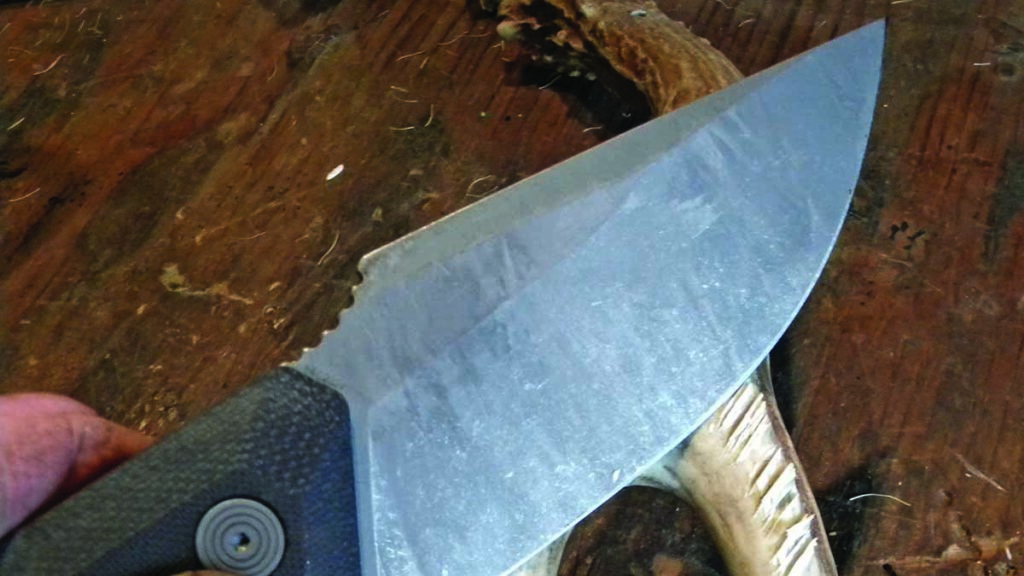
To really push the edge/heat treatment, I grabbed an old whitetail deer antler. After 30 hard whacks on it I checked the edge for chipping. There was none to be found. Heat treat is on the money for sure. Excellent job.

Edge Retention

Time to check the final edge with the 20-pound bond paper. The Basilisk still sliced smoothly even though the paper was getting damp from it raining all day. There were a few tears in the paper from the dampness.

Suggest Changes To The Basilisk

I would soften the handle edges a bit more.

Basilisk chopping antlers
After 30 hard whacks on the deer antler, the author checked the edge for any chipping. There was none to be found. The heat treat is on the money.

Final Cut

The Basilisk is a very nice knife, excellent for EDC or camp. It’s definitely a top pick on my list.

Damned Designs Basilisk Specs

Knife Type: Fixed blade
Blade Length: 4.25”
Blade Steel: Sandvik 14C28N stainless
Blade Width at Widest: 1.75”
Blade Finish: Stonewashed
Handle: G-10
Handle at Thickest: .5”
Weight: 7.25 ozs.
Overall Length: 8.75”
Sheath: Kydex fold-over
Weight w/Sheath: 11 ozs.
MSRP: $75

*The basilisk is a legendary serpent king that killed those who looked into its eyes.

Read More Knife Reviews:

Benchmade Bugout Review: Getting A Handle On The EDC Icon

Is there a perfect EDC knife? If not, the Benchmade Bugout will do until perfect shows up.

When it comes to EDC folders, without a doubt the Benchmade Bugout is the king of the hill.

Its compact profile and just-right length make this model a popular hit with knife guys. It is all made in the USA with excellent fit, finish, and—perhaps key to EDC—Benchmade has cut its weight to the bone. Furthermore, the blade steel is premium level. In short, the Bugout is geared to go the distance.

So, if you haven’t yet checked out this icon, it’s high time you did. Because, if you take your everyday carry seriously, you owe it to yourself. We’ll lay a foundation for the knife in this article.

Bugout Blade

The Bugout is offered in two sizes—the Model 535, the company’s standard-sized version boasting a 3.2-inch blade, and 533 Mini, which pars the blade down to a very manageable 2.8 inches.

Benchmade Bugout Open
Standard-model Bugouts sport CPM S30V steel blades, however, S90V and M390 are available on higher-grade models. Photo: Marty Stanfield

The base models Bugouts use premium CPM S30V steel, a steel that is used widely for high-end factory knives. This is mainly due to its ability to hold an edge for an extended period, longer than most blade steels. Additionally, it is highly resistant to stains and corrosion.

As for the blade profile, the Bugout is a modified drop point and is highly adaptable to many tasks. Nicely, Benchmade outfits the knives with thumbstuds on either side of the blade, permitting ease of opening with either hand.  

Getting A Handle On The Bugout

The handle of the base Bugout is made from molded Grivory, making the Bugout a very lightweight folder. The standard size tips the scales at 1.85 ounces and the Mini at 1.5 ounces. Benchmade offers other handle material options, including anodized aluminum, carbon fiber, and CF Elite (a glass-reinforced nylon synthetic material that is lightweight and stiff).

Benchmade Bugout Spines
Given there is a thriving aftermarket for Bugout scales, the sky is the limit on the knife’s handle. Photo: Marty Stanfield

And if you have to have custom, there are aftermarket scales for the knife in a host of materials—titanium, copper, brass, bronze, G-10, and Micarta. In turn, you can truly have a one-of-a-kind feel and look to your Bugout.

Bugout Action

The Bugout uses Benchmade’s critically acclaimed Axis Lock crossbar lock, hailed by many as ultra-strong yet extremely safe because you don’t put any fingers in the path of blade travel. Add on to this, it’s easy to unlock with either hand, and you have a naturally ambidextrous across the board. The lock is simple, just pull back on one of the exposed lock bar ends at the back of the handle and then rotate your blade closed. Internally, two Omega-shaped springs provide constant tension for the lock bar on the blade tang to ensure positive lock engagement.

Benchmade Bugout Axis Lock
The Bugout is outfitted with Benchmade’s rock-solid Axis Lock crossbar lock, which has the added benefit of being ambidextrous. Photo: Marty Stanfield

As for other odds and ends, the handle’s checkering does a great job of preventing your hand from slipping. A deep carry, fold-over pocket clip carries the Bugout deep in your pocket and can also be switched to provide easy carry for left-handers. Integrated lanyard hole permits the use of Paracord for a lanyard if you are into that sort of thing.  

Using The Bugout

In use, the Bugout hits hard in spite of its ultra-lightweight stature. The flat ground blade bites in and is very effective. Opening mail, opening packages, peeling an apple, cutting up hose, cutting cardboard, or stripping wire—the Bugout won’t break a sweat. Perhaps the best way of thinking about the knife is as a minimalist working folder.

The higher grades of the Bugout have carbon fiber handles and milled aluminum handles, paired with S90V and M390 blades respectively. These upgraded blade steels offer high-performance cutting with excellent edge holding. The higher-grade handle materials give a bit more heft to the Bugout as well as an enhanced, high-tech appearance. It only makes sense to have upgraded blade steel with upgraded handle material. 

Benchmade Bugout Closed
Overall, the knife is lightweight, rugged and more than capable of tackling most task. In short, it’s dang near the perfect EDC option. Photo: Marty Stanfield

Even with the base model’s S30V, you still pack plenty of muscle for those long-cutting jobs. I like how thin the Bugout’s blade stock is combined with the flat ground blade bevel giving it plenty of bite to it. 

Some knife folks favor not a high performance without the bulk. I get it, it all makes for a comfortable everyday carry folder. For those of you who favor these kinds of knives, the Benchmade Bugout is for you. You have a high-end blade steel with a proven and popular blade lock, with a no-frills handle design. 

MSRP for the full-size Bugout starts at $180 and varies up from there depending on handle material and blade steel. There is also a Mini Bugout which scales the size down some to an even more pocket-friendly size.

Go here for more information on the Benchmade Bugout.

Bugout Model 535 Specs
Blade length: 3.2″
Blade thickness: 0.090″
Overall length: 7.4″
Weight: 1.85oz
Blade material: S30V
Handle material: Grivory

Mini Bugout Model 533 Specs
Blade length: 2.8″
Blade thickness: 0.090″
Overall length: 6.5″
Weight: 1.5oz
Blade material: S30V
Handle material: Grivory

More Knife Reviews:

4 Best Dirks: Modern Versions Of The Historic Knife

The Dirk Has A Long, Exciting History And Has Been Used For Everything From Farming To War All Around The World.

The general definition of a dirk is that of a one-handed thrusting knife. Depending on region and style, it may be single-edged or double-edged. It also may or may not have a defined cross guard and pommel. 

Dirk as a term is loosely associated with several Scottish and English regions. It is most commonly credited to the former, though no one really knows for sure, and it also has a long history of use across medieval Europe. It was a very important object to people in the Highlands of Scotland at an individual level and had significant ceremonial and practical uses.

Weapons Before The Dirk

As is common in the era of gunpowder in Europe, many types of knives and daggers owed their roots to the bollocks dagger and other stabbing weapons that originated hundreds of years prior when soldiers wore heavy armor. Contrary to popular belief, most swords are not like how you see in the movies. These stabbing and thrusting weapons seldom had what we’d expect as edges, rather they were made to parry and bludgeon. Maces, picks, and hammers were very common in this time, prized for their ability to bash and smash, where swords, while deadly, were not always the first choice. 

These long, thin daggers were sometimes the choice when things got up close and personal, though even then the textile layers of armor were hard to penetrate. All that changed with gunpowder weapons causing a wide decline in armor use, and the dirk as we know it today was the product of that evolution. The dirk became something quite different than other edged weapons of the time and developed in its own way, largely apart from other European designs. 

The Scottish were some of the first to begin independent development of swords and daggers alongside guns in the post-armor age along with strategies to fight against firearm-equipped soldiers. The heavily tribal Scottish Highlands were not especially invested in standardized firearm technology. 

Guns did figure heavily into the culture, but the Scottish never developed a well-oiled machine akin to what the British developed when it came to battles. The Scottish had two primary tools for the battlefield, the broadsword and the targe (buckler), itself a small shield held in the weak hand. The combination of buckler and broadsword allowed the Highlander to easily kill British soldiers, usually armed with nothing more than a musket and bayonet. 

They specialized in fast ambushes, often called a ‘Highland Charge’ where they wore virtually no protection of any kind and ran headlong at their enemy. If the enemy didn’t flee on sight, they would only have one shot at most before they had to fight hand-to-hand. 

How The Dirk Developed

windlass dirk
The dirk traces its lineage to the Scottish Highlands.

The dirks developed in the post-armor era became focused on all-purpose use, not just stabbing or bludgeoning. As a result, sharp, light-bladed swords and short-sword like knives and daggers became the norm. 

Slashing through clothing wasn’t difficult and the Highlanders found themselves at a distinct advantage using these tactics. That is, until the Battle of Culloden in 1746. 

Here the entirety of the Highlander army was soundly defeated by the British in a battle that lasted an hour. The British faced them on an open field and modified their tactics to anticipate the Highland Charge, resulting in a complete defeat of the Scottish Jacobite movement that had made an invasion into England a year earlier.

Dirks were common even after Culloden. The carrying of knives wasn’t necessarily seen as carrying arms in most cases, and dirks were something of a common, everyday tool for most people. They would be not only used for self-defense but also for regular tasks like eating, splitting kindling, and standard daily chores.

Dirks vs Daggers

Is the dirk a dagger? The short answer is yes and no, and that is because there is a great degree of ambiguity in the definition. A dirk is classically a large, single-bladed knife with a blade anywhere from 12 inches all the way up to 20 inches.

Naval dirks were commonly used for ship-to-ship fighting as they were short enough to be used in tight confines yet large enough to still be effective. Daggers at this time would have been primarily understood to be stabbing weapons, whereas the dirk was large enough and stout enough to be used in a primary slashing role. 

Daggers are, by type, geared mostly for stabbing. Rarely do companies refer to any large, single-edged knives as ‘daggers’, but the dirk is often classified right alongside them by name in many laws.

The American dirk which evolved in the early 1700s, was almost always single-edged and was primarily used as a support knife alongside the tomahawk and rifle. It could be said that a significant and wide-ranging number of knife styles, including the Bowie, evolved directly from the Scottish dirk on the American frontier.

Daggers as stabbing knives were somewhat uncommon in America because they lacked general utility in the field at a time when larger camp knives and multi-purpose tools saved weight. 

Is It Legal To Own A Dirk?

Unfortunately, Dirks have a wide legal definition across the board that often describes them as daggers or stabbing weapons. In many municipalities, this type of weapon is not legal to carry. There is a blurred line in this definition, as many places considered double-edge, stabbing weapons as the verboten item. As many historical dirks are single-edged, there could be room in these laws that skirts one definition or another.

4 Best Dirks Available Today

COLD STEEL SCOTTISH DIRK- $119.99

cold steel dirk

Cold Steel is well known for making some very durable and interesting products. They pay great attention to detail and their Scottish Dirk is no different. While it is not the most costly, it is a step above the rest, and it is affordable and backed by Cold Steel’s legendary standard of excellence. The Cold Steel Scottish Dirk is a working tool that does everything the historical versions did and then some. If you’re looking for a hard-use dirk, look no further.

Knife Specs

Overall Length: 18.38 inches

Blade Length: 13 inches

Weight: 1 pound

Blade Steel: 1055 Carbon

Handle Material: Rosewood

WINDLASS BONNIE SCOTTISH DIRK- $149.00

windlass scottish dirk

If you’re looking for a prettier dirk than the rest, Windlass makes some excellent historical replicas that reflect various periods of Scottish history. The Bonnie Scottish Dirk is reminiscent of the late stage of refinement on these weapons. It is ornate yet functional and is sure to be a conversation starter. While other companies tend to take some liberties, this is a very accurate replica of what may have been on the belts of Highland Warriors at the Battle of Culloden.

Knife Specs

Overall Length: 17.5 inches

Blade Length: 11.75 inches

Weight: 18 ounces

Blade Steel: 1055 Carbon Steel

Handle Material: Wood

WINDLASS EARLY SCOTTISH DIRK- $139.95

early dirk

This product is a replica of some early dirks as they would have looked descending from the bullock dagger. A functional reproduction, this early replica features a more basic feature set as would’ve been seen a few hundred years prior to the Battle of Culloden. Although it has unrefined features, it is still not out of place for costuming or period reenacting.

Knife Specs

Overall Length: 21.25 inches

Blade Length: 15 inches

Weight: 16.2 ounces

Blade Steel: 1055 Carbon Steel

Handle Material: Hardwood

CAS IBERIA (LEGACY ARMS) SCOTTISH DIRK- $159.00

CAS Iberia dirk

This dirk has some classic lines, but is all about function. It will not look odd at a cultural event, although it is made with a slight skew to the modern. The handle design is reminiscent not of the bullock dagger, but the earlier Rondel form characteristic of the late medieval era prior to the renaissance. While it is the most expensive so far on the list, it is right in the same price range as most common dirks. If you prefer this look over the more classic Scottish design, this is the one for you.

Knife Specs

Overall Length: 18.25 inches

Blade Length: 12 inches

Weight: 1 pound, 8.5 ounces

Blade Steel: 5160

Handle Material: Synthetic Material

Read More

Swiss Army Knife: One Folder To Rule Them All

From the author’s experience, one folding knife has it all.

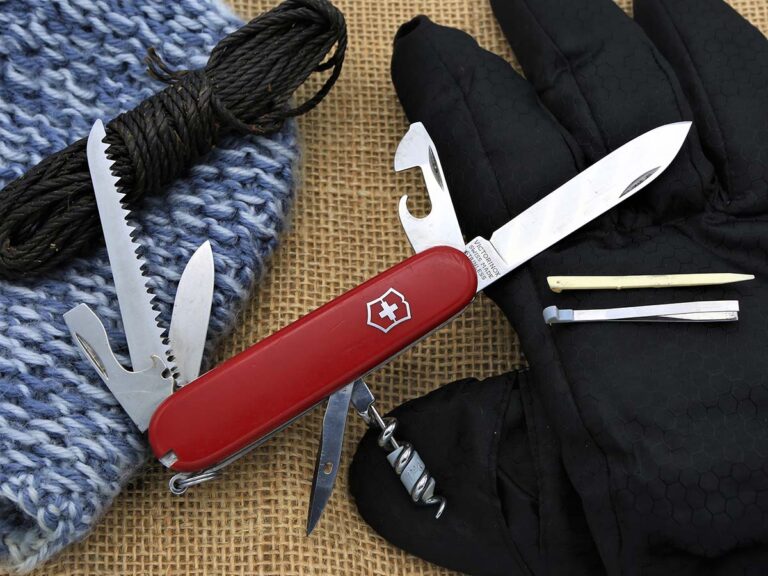
Most folks pick a folding knife the same way they pick a favorite coffee mug. They grab the one that feels right and doesn’t complicate life. I’ve handled everything from titanium frame-locks to flippers tuned like race cars, yet one knife keeps drifting back into my pocket. A Victorinox Swiss Army Knife (SAK) Camper.

It carries the friendliest profile in the knife world. TSA agents used to relax when they saw it. Camp kids and parents borrow it without hesitation. Neighbors assume you plan to fix something, not start trouble. That kind of energy matters when you choose a knife for real life. So, while hype is infinite, for me the best folding knife is the one that moves through life without causing friction—and that’s where the SAK shines.

Simplicity Succeeds

The Swiss Army Knife survived more trends than any other pocket tool. Bearings exploded onto the scene. Super steels rose and fell. Pocket clips multiplied. Through all of that noise, the SAK kept its shape, its purpose and its quiet confidence. It solves real problems without drama. It tightens screws, trims campfire sticks, opens packages and handles small woodworking tasks with steady control. It never alarms anyone. It never begs for maintenance. It shrugs off grit, pocket lint, and weather. It stays relevant because it never chases trends, delivering honest function through simple mechanics. That kind of timeless design sets up the story of its enduring legacy.

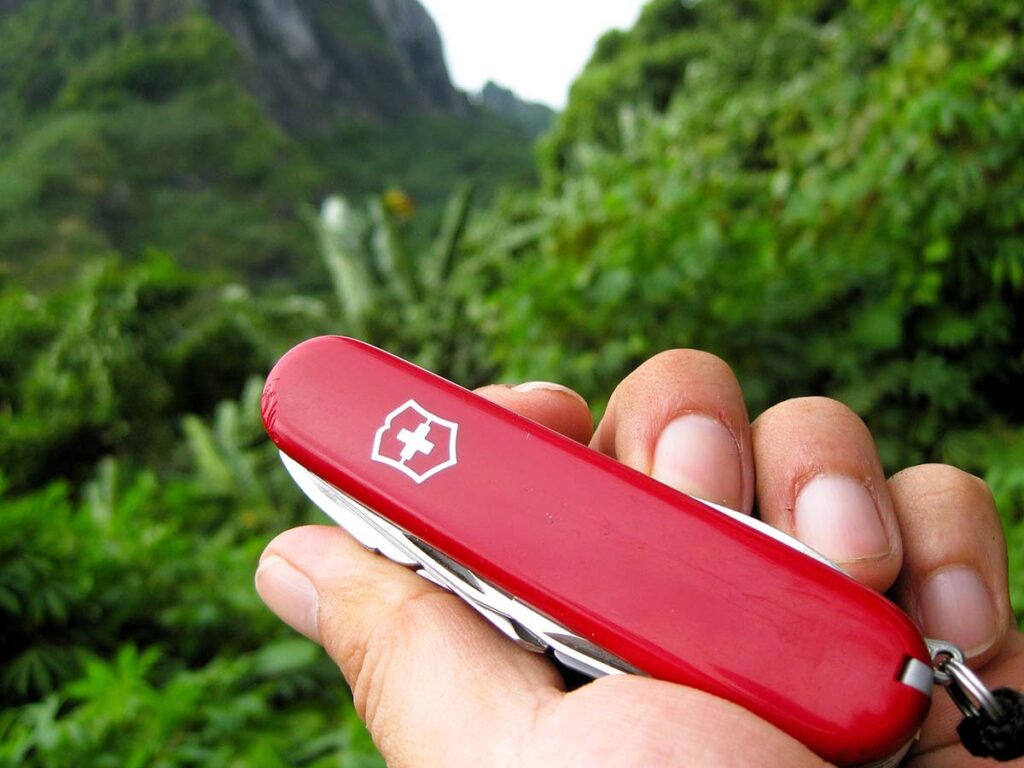
In Bora Bora's jungle, the author navigated with a sturdy Swiss Camper, ideal for both hotels and outdoor adventures.
In Bora Bora’s jungle, the author navigated with a sturdy Swiss Camper, ideal for both hotels and outdoor adventures.

The history of the Swiss Army Knife and company can fill the entire pages of this issue. So, I’ll save it, as BLADE® Magazine has put out a wealth of useful SAK information over the years.

Always Prepared

It’s true, the Swiss Camp was my first love of the Victorinox collection. It served me well for three decades and was my consummate companion throughout the world in all environments.

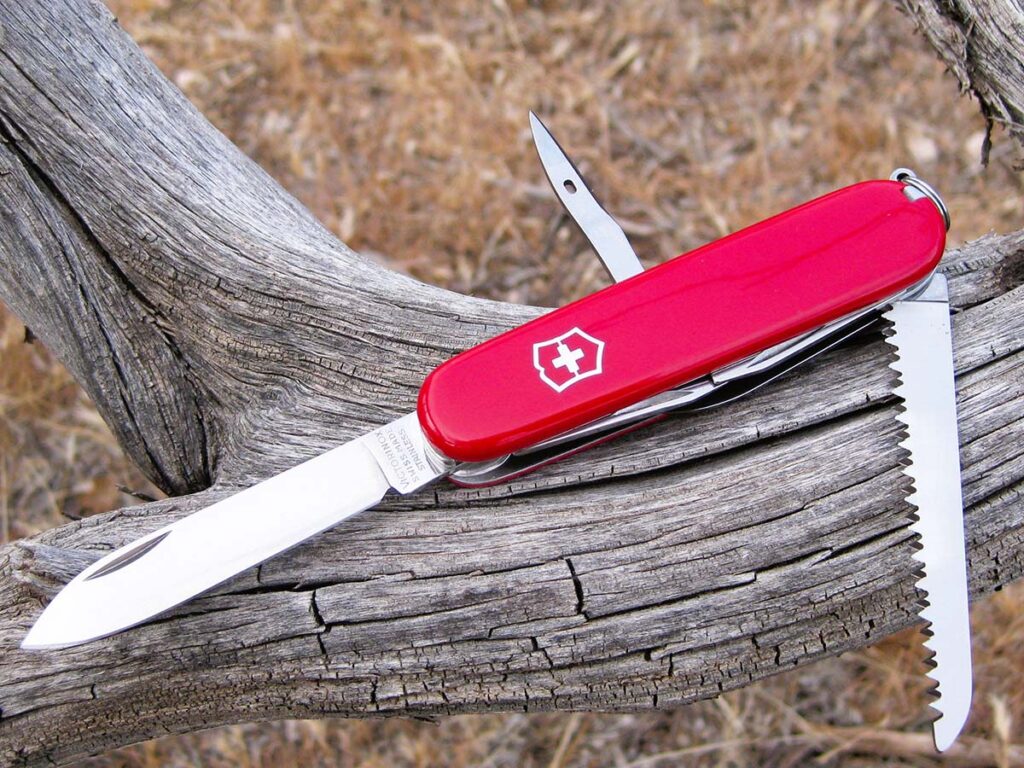
The Victorinox Camper packs a tight set of working parts into a pocket-friendly 3.5-inch frame. The large (2.75-inch) and small (1.398-inch) blades handle most cutting tasks with steady control. Meanwhile, the wood saw chews through branches far bigger than the knife’s size suggests. The can opener, bottle opener and built-in screwdrivers tackle camp, urban chores and quick fixes without hesitation. The reamer punches clean holes in leather and wood, and the corkscrew earns its keep on knots and party saving. The tweezers, toothpick and key ring round out the toolset, keeping the knife welcoming of everyday surprises!

The author relied solely on a Swiss Army Camper during his trip above 9,000 feet in the Eastern Sierra Mountains.

Knife For All Season

Consider how many knives you can take to a wedding, an office meeting or a fishing trip? How many might you present to overseas officials, use in a restaurant, take camping and fix the odds and ends in our lives? Maybe all. However, they wouldn’t be appropriately accepted. The SAK teeters on multi-tool territory. It is a knife-based multitool, yet a knife at heart.

The question, “Do I need something more tactical or bushcrafty for the woods?” is often raised in my head. Woodsy is the answer. When I need more grip, cutting power, and blade length, along with faster deployment, the One-Handed Trekker (known as the Trailfinder in Europe) is the answer.

Hidden Talents

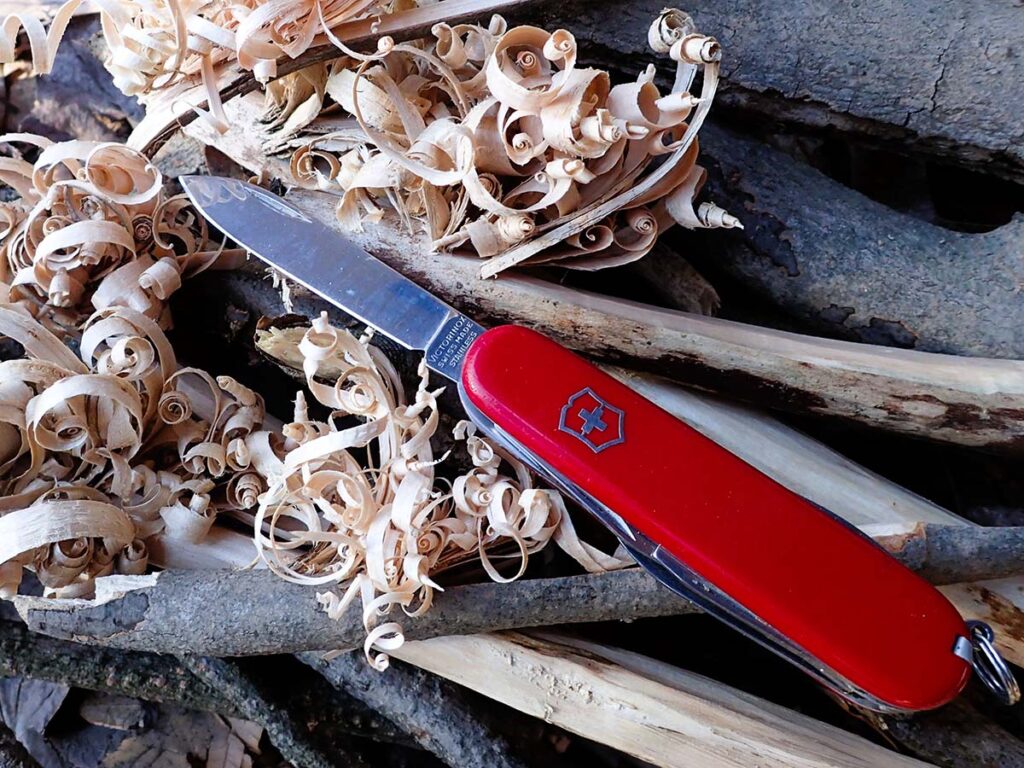
The Camper model's main blade excels in crafting feather sticks for tinder and kindling, thanks to its thin V-grind edge.
The Camper model’s main blade excels in crafting feather sticks for tinder and kindling, thanks to its thin V-grind edge.

I hate sticky blades, yet I get a lot of packages in the mail. Some have an alternative surface to slice through, but most use tape. The can opener opens boxes, as does the awl. Even the combo tool on other models that open cans and lift bottle lids will do an excellent job on packages. However, when it’s time to slice and slash through heavy nylon strapping, twine and cardboard, it’s hard to beat the sharp main blade.

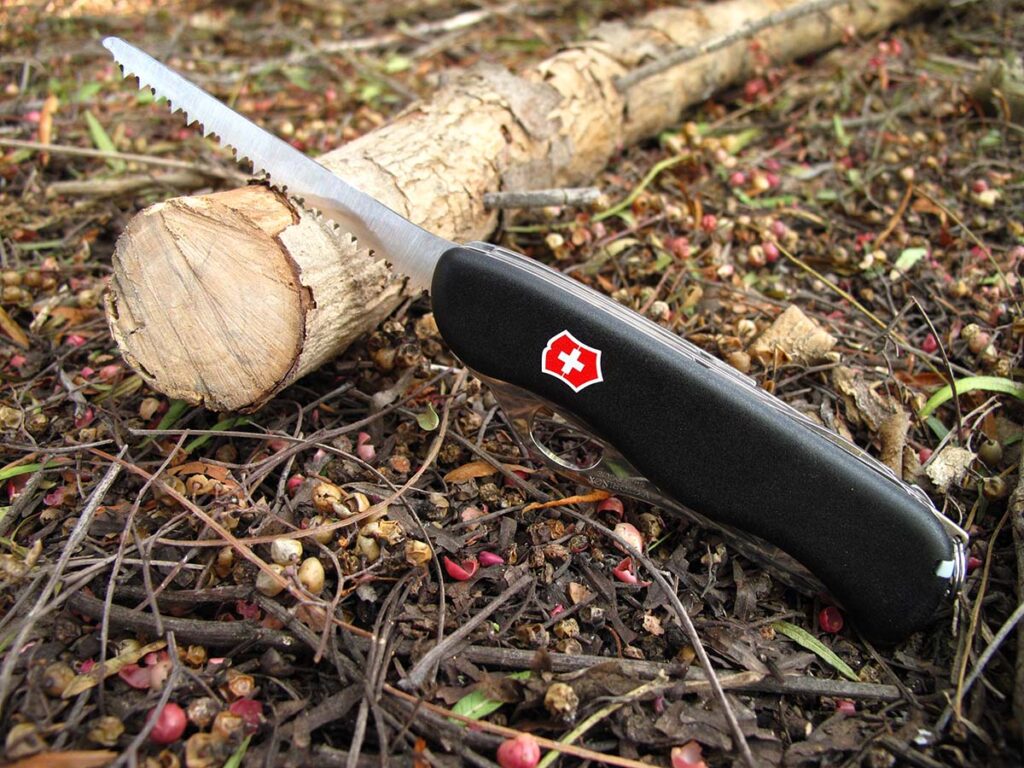
I always need a saw on a SAK that’s going into the woods for a day hike, bushcraft or any camping trip. It’s one of the best saws in business—sharp and tough. It does an excellent job on the obvious—sawing. I learned about 20 years ago that it excels at a ferro rod striker. The spine is a true 90-degree angle and shaves thin curls on fatwood, bamboo, rivercane and softer woods like poplar easily.

Slow But Steady

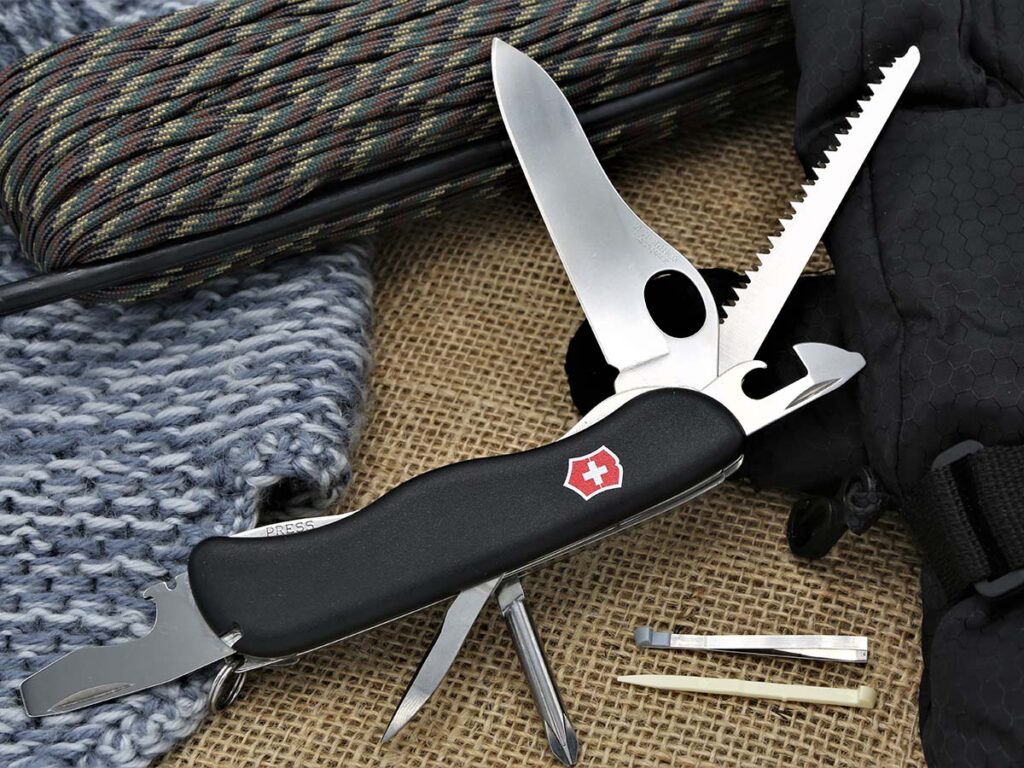
The One-Handed Trekker, utilized by the author on various Amazon Jungle and backpacking excursions, includes a locking screwdriver and blade.

I love me a good flipper. Fast, safer than a thumb stud and simpler. Let’s not forget the cool snap factor. That’s my opinion solely. However, the near maintenance-free action of the standard slip joint wins in my book. I understand it may not be a crowd favorite in the current high-tech, super-trendy EDC culture. But it suits me fine.

The deployment speed is slow—I’m not in a rush to slice much. I don’t work in an environment where I need super-slick deployment for attackers or emergencies. If so, I have a Trekker that has a smooth one-handed opening system. Although I like to sit and fondle a SAK like most do their high-speed folders, others may not think it has that cool factor. I do!

Metal Winner

The One-Handed Trekker SAK boasts an exceptional 3½-inch wood saw that serves as a fire steel striker on its spine.

I like simple steels. I’ve used enough teaching and working with various types. For me, it comes down to what’s easy to sharpen and to show students in a learning situation. Especially when there’s not a lot of time on a break to grind away on something too hard. Or better yet, when it’s time to build swamp beds in the jungle as the sun is setting fast. This is the reason why inexpensive tools from Moraskniv, Tramaontina and Victorinox are excellent performers.

MagnaCut won’t save you here. Getting the work done, sharpening it and going on with camp life is serious business on an extended expedition. Nothing against the super steel, it’s just better suited for a completely different situation. It makes sense to buy a MagnaCut steel knife if all you do is break down boxes or cut mundane materials. However, it’s overkill when something like a SAK has been doing that for decades without the hefty price tag. I’m a fan of what works!

Washers Vs. Bearings

In the desert, a hiker or camper needs just a blade, saw and awl for essential utility and crafting.

Knife people love pivot debates, but the truth stays simple enough for any reader. Bearings feel fast and slick. They open with a little thrill and shine in clean environments. They hate dirt, though. Sand and pocket debris grind them down and slow them.

Washers handle the rough stuff better. They tolerate grit, mud and long days outdoors. They deliver smooth, controlled movement under pressure and keep working after hard use. They win when conditions turn unpredictable. That’s why so many outdoor knives still rely on phosphor-bronze washers. It’s the same reason why the Swiss Army Knife’s friction-based slip joint still holds its own. Fewer moving parts mean fewer failure points and more consistency when I need it.

Conclusion

Readers don’t need a metallurgy seminar to pick a good folder. They need clarity. Blade shape guides the job. Lock type guides confidence. Steel choice guides edge life and ease of sharpening. Ergonomics guides comfort. Maintenance guides longevity. The rest comes from real use, not spec sheets. The Victorinox SAK Camper is a gentlemanly woods and EDC folder more in line with my everyday chores!

Camper Specs
Main Blade Length: 2.75”
Secondary Blade Length: 1.4”
Blade Material: Stainless steel
Blade Grind: Flat
Blade @ Thickest: 0.70″
Blade Finish: Satin
Functions: 13
Handle Material: Celidor & Cellulose Acetate Butyrate
Closed Length: 3.58″
Country of Origin: Switzerland
MSRP: $39

Trekker Specs
Blade Length: 3.4″
Blade Material: Stainless wteel
Blade Grind: Flat
Blade @ Thickest: .07″
Blade Finish: Satin
Functions: 12
Handle Material: Polyamide (Nylon)
Closed Length: 4.37″
Country of Origin: Switzerland
MSRP: $64

More On Swiss Army Knives:

Advertisement

Must Read Articles

Read this before you make a knife

Knifemaking 101 – Read This Before You Make a Knife

  by Wayne Goddard My experience has taught me that there's nothing like digging in and getting started. I've often said the hardest part of the...
how to forge damascus steel

How to Forge Damascus

Advertisement
Advertisement