No need to go big to make a large impact, as these small fixed blades more than prove.
Few knives capture the spirit of cut as well as small fixed blades. The ideal size for makers of all skill levels to recreate, they never cease to amaze in their various blade and handle shapes, materials and other differences in design features so slight as to be almost imperceptible to all but the most discerning eye.
Neal Green and Christopher Adelhardt: Kwaiken
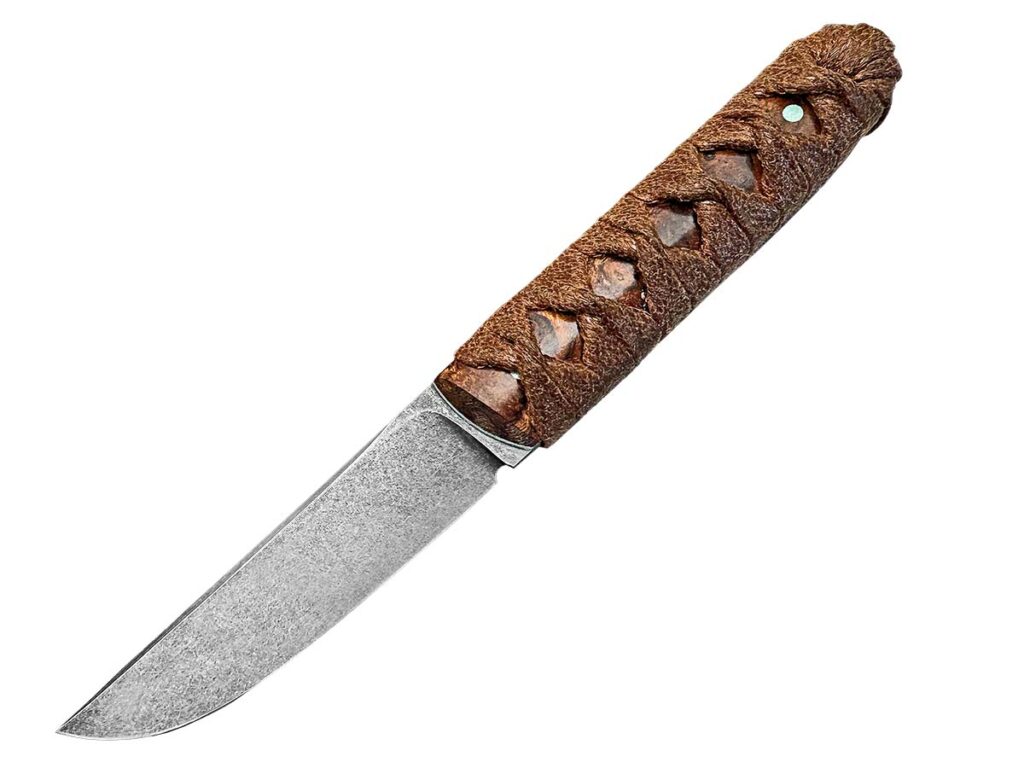
The Kwaiken by Neal Green and Christopher Adelhardt comes in a 3.5-inch blade of CPM 154 stainless, and an ironwood handle with G-10 liners and a brown tsukamaki (handle wrap). Overall length: 7.25 inches. It comes with a leather sheath (not shown) by Adelhardt. (Jocelyn Frasier image)
Peter Cocks: Hunter
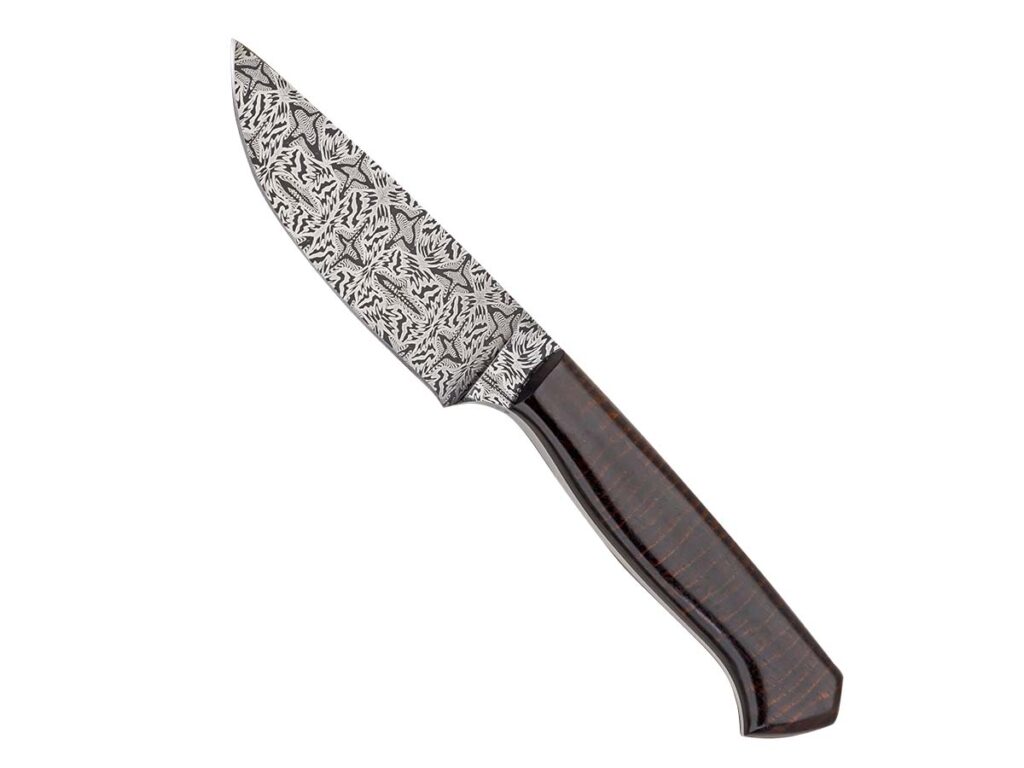
Australian Knifemakers Guild member Peter Cocks won Best Hunter at the 2025 Perth Knife Show for Slug Life in a 3.55-inch blade of a flat-ground mosaic damascus of 1084 carbon and 15N20 nickel alloy steels. Scales: ringed gidgee. (Rod Hoare image)
Tracy Jones: Cowgirl
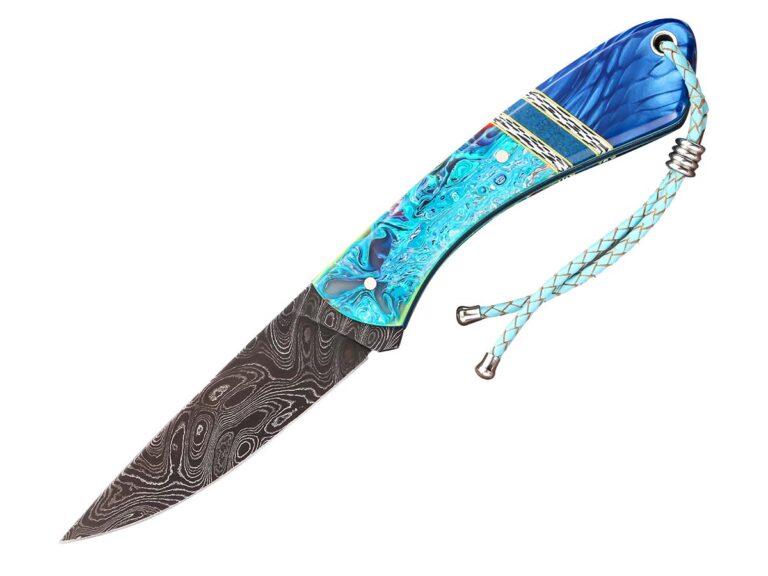
Cowgirl by Tracy Jones earned the maker the Best General Member award at the 2025 Texas Select Custom Cutlery Event. The 4-inch blade is flat-ground damascus and the scales are by Sara. Overall length: 8 inches. (SharpByCoop image)
Daniel M. Gutierrez: Utility Fixed Blade
Daniel M. Gutierrez: Utility Fixed Blade
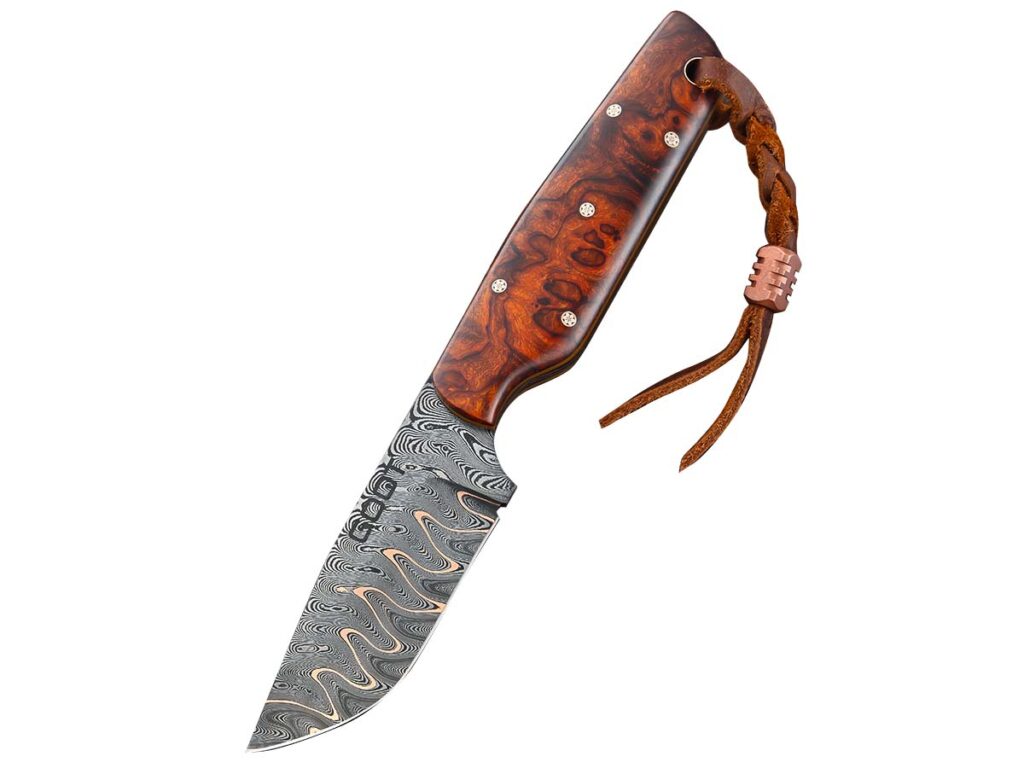
A 3-inch blade of a damascus of 1084 carbon and 15N20 nickel alloy steels and copper shim forged by Baker Forge & Tool, and a handle of ironwood burl help complete a utility fixed blade by Daniel M. Gutierrez. Blade grind: flat. Overall length: 7 inches. (SharpByCoop image)
Chad Jones: Panther Fixed Blade
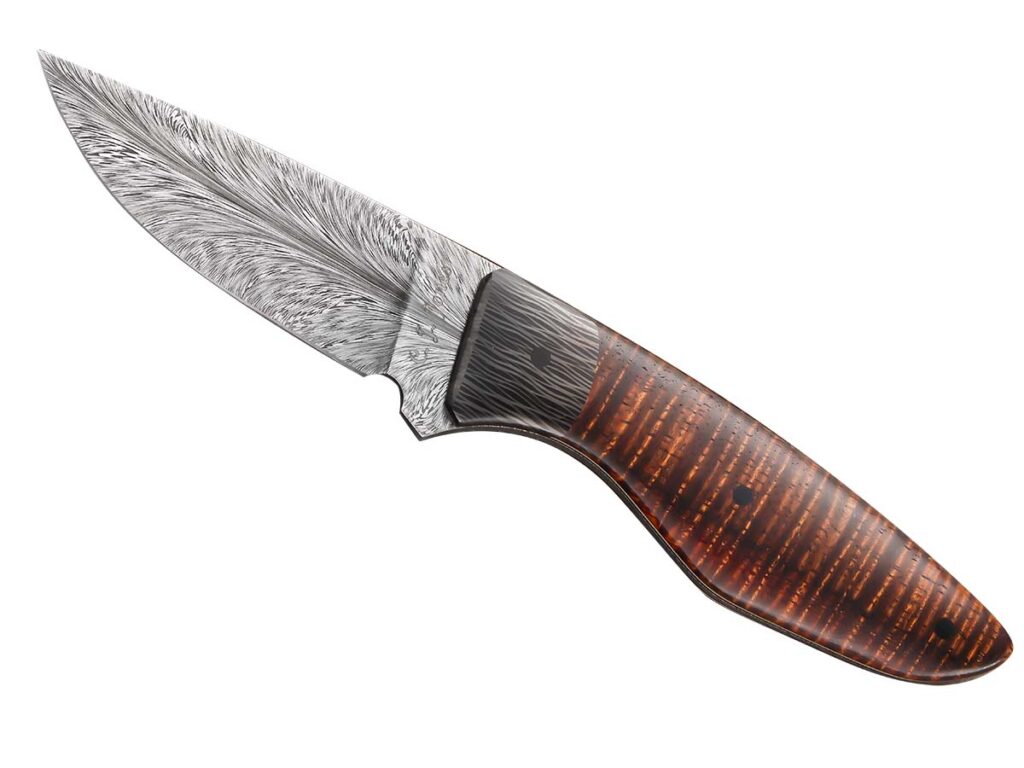
Chad Jones captured the title of Best Ranger Member at the 2025 Texas Select Custom Cutlery Event for his Panther fixed blade. The 3.25-inch blade is feather damascus and the scales are zebra carbon fiber and curly koa. Overall length: 7.25 inches. (SharpByCoop image)
Jason Howell: EDC Fixed Blade
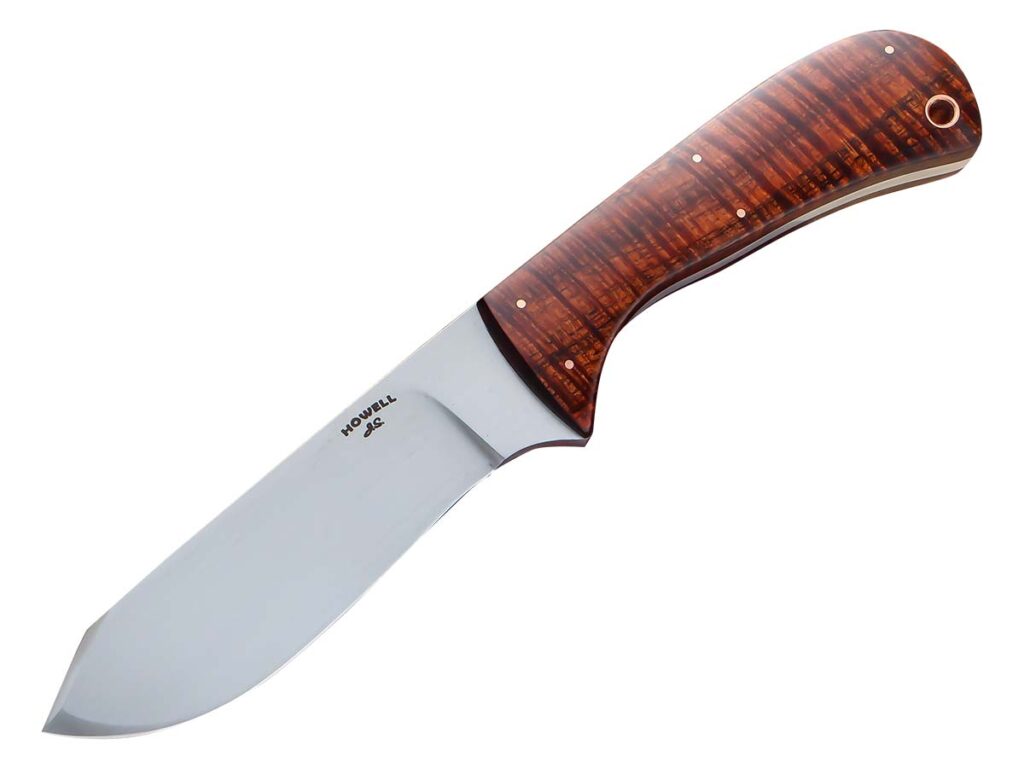
Jason Howell won the award for Troop 36 Scout Favorite at the 2025 Texas Select Custom Cutlery Event for his EDC fixed blade. The 3.75-inch spey blade is flat-ground 52100 carbon steel and the scales are French walnut. Overall length: 8.75 inches. The pouch sheath (not shown) is by Richard Epting. (SharpByCoop image)
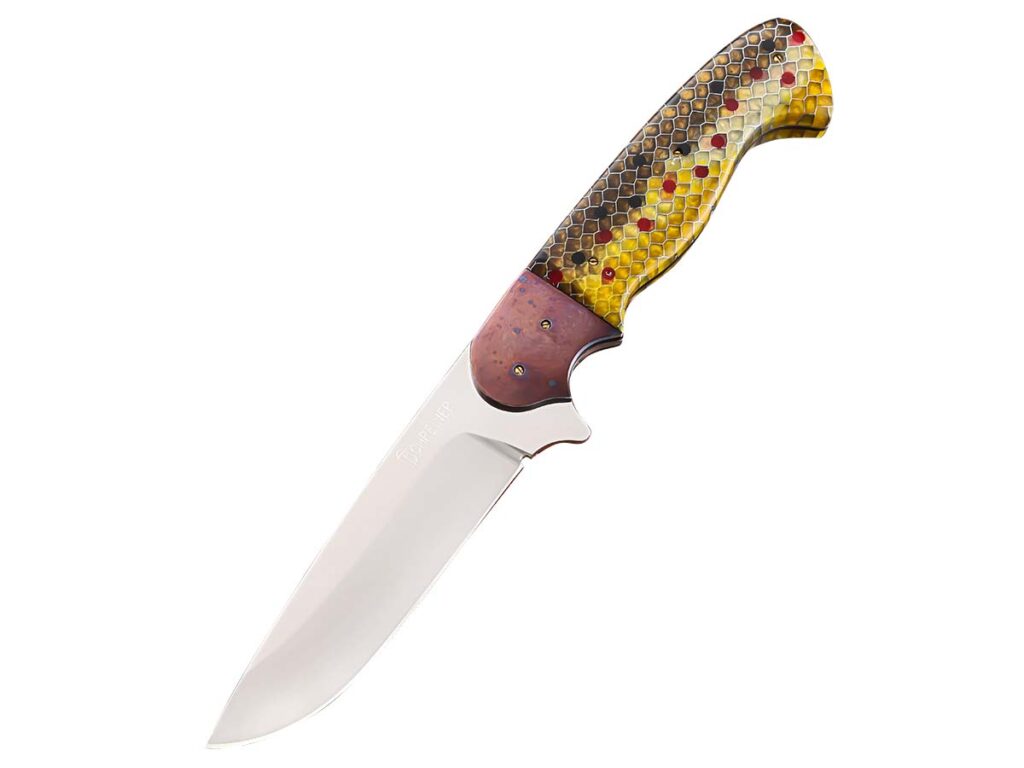
Dr. Terry Schreiner: Brown Trout Bird & Trout Knife
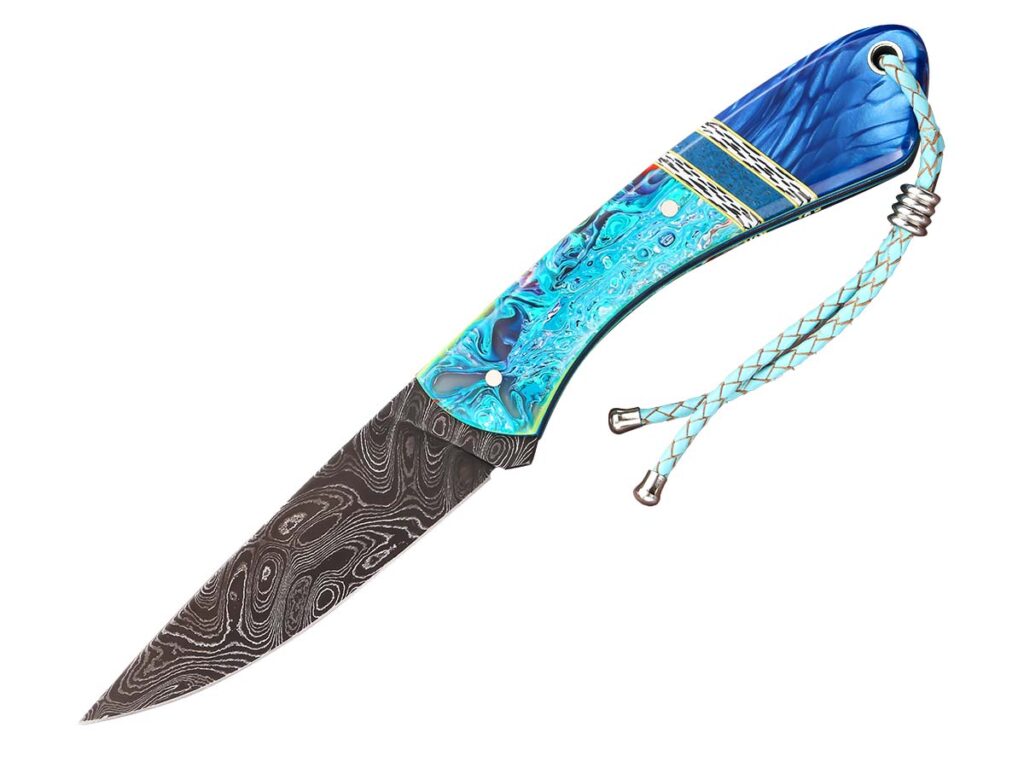
The brown trout/bird & trout knife by Dr. Terry Schreiner has a 4 1/16-inch blade of flat-ground CPM 154 stainless. The scales are a brown trout acrylic and the bolster is O1 tool steel. Overall length: 8 7/8 inches. (SharpByCoop image)
This summer’s crop of custom knives brings damascus front and center. From twisted and ladder patterns to stainless blends and copper-clad creations, each blade in this collection highlights not just the maker’s skill, but their artistry with steel. Whether forged for daily carry, culinary precision, or collector prestige, these knives turn heads with standout materials—think crystallized titanium, crosscut mammoth, and ringed Western Myall—paired with performance-driven designs. Featured makers range from journeyman smiths to Guild members, each offering a unique take on the timeless beauty and cutting power of damascus steel.
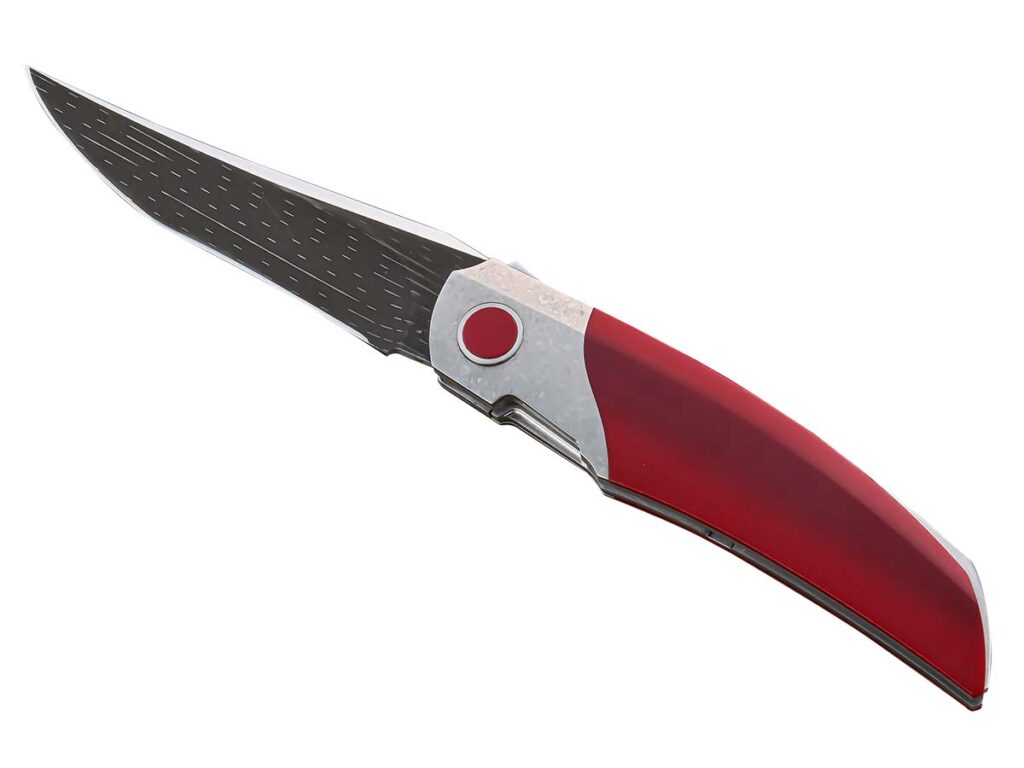
Carlos Queiros Thorn Persian TRS
Knife type: Folder Blade length: 3.35” Blade material: Chad Nichols Starfire stainless damascus Blade grind: Flat Scales: Vintage bright red linen Micarta® Bolsters: Crystalized titanium Pocket clip: Yes Closed length: 4.53” Maker’s price for a similar knife: $4,700-$4,800 at press-time exchange rate Maker: Carlos Queiros (SharpByCoop image)
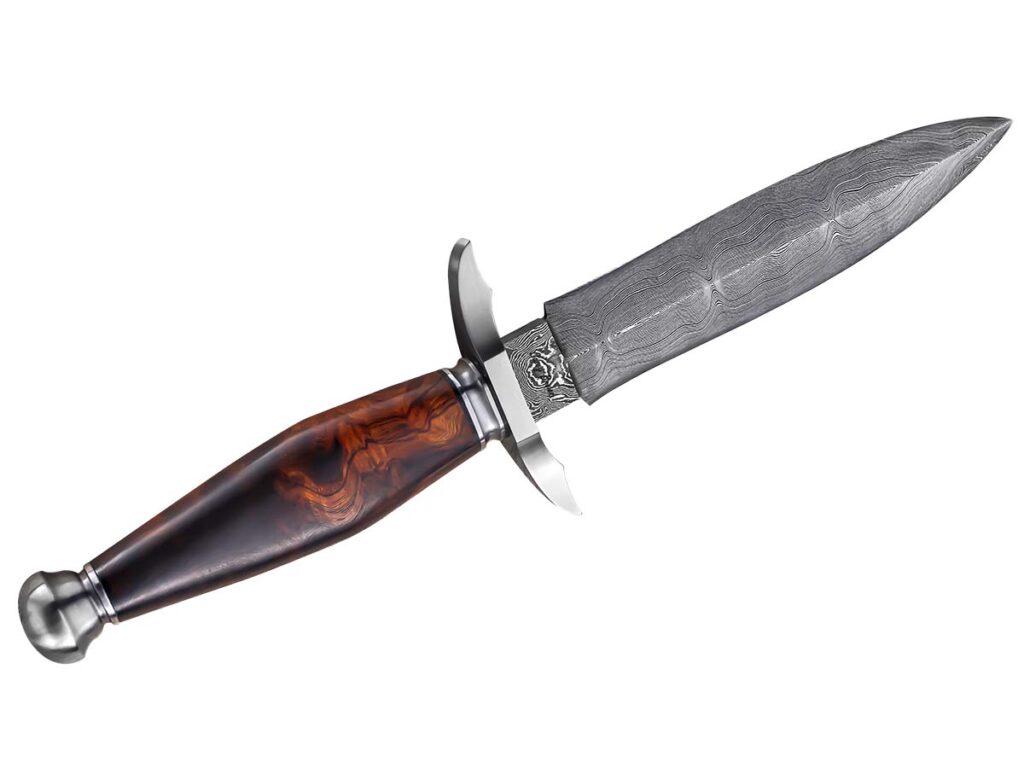
Casey Brown Dagger
Blade length: 5.5” Blade material: Ladder-pattern damascus Blade grind: Flat Scales: Desert ironwood Guard/fittings: 416 stainless steel Overall length: 10.25” Maker’s price for a similar knife: $900 Knife to know: The maker is an ABS journeyman smith Maker: Casey Brown (SharpByCoop image)
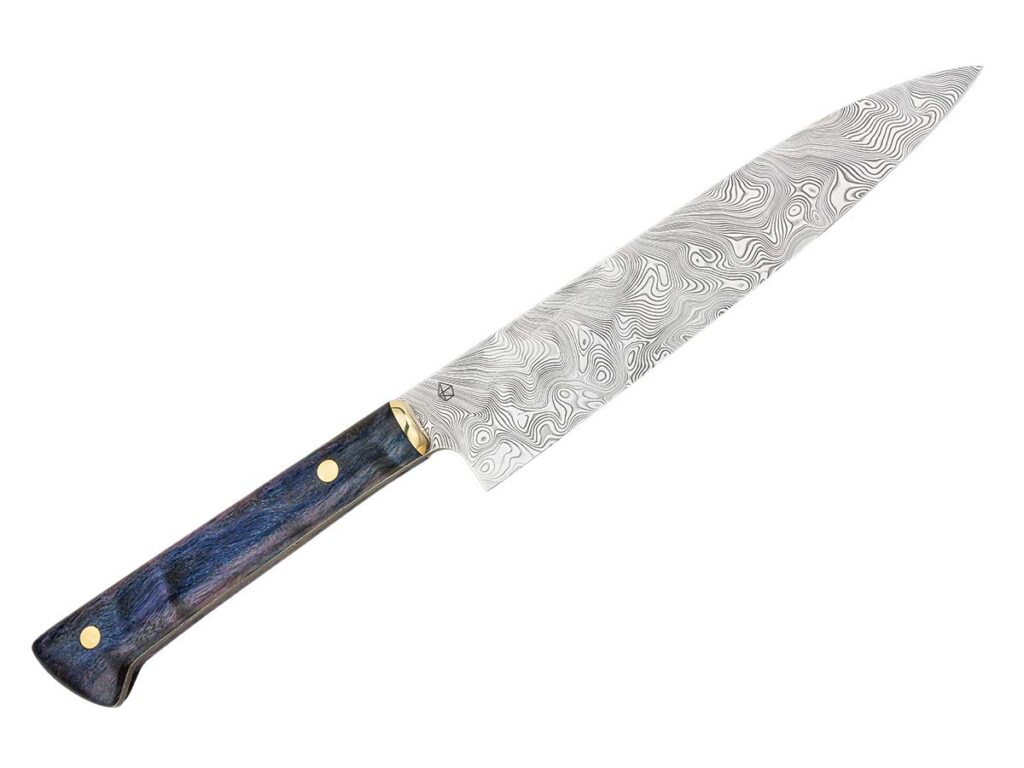
Luka Allen Petty Knife
Blade length: 5 5/8” Blade material: Bjorkman’s twist damascus by Damasteel Blade grind: Flat Scales: Cottonwood Fittings: Brass Overall length: 9.75” Maker’s price for a similar knife: $450 Maker: Luka Allen, lukaallen.com (Jocelyn Frasier image)
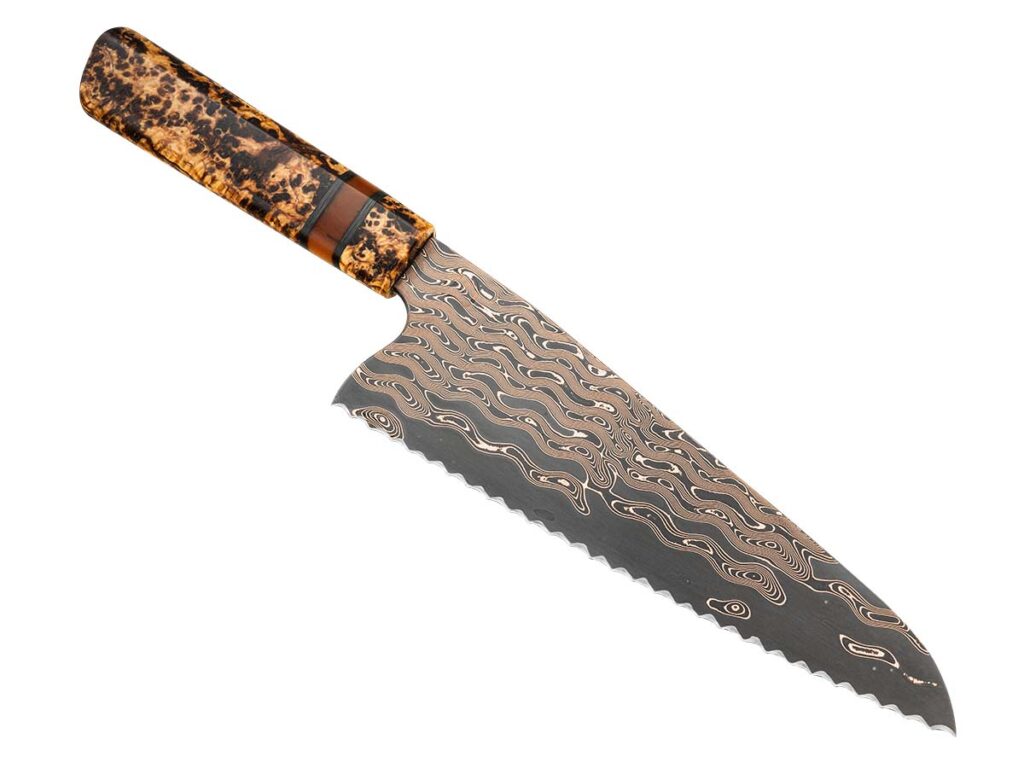
Micah Dunn Chef Bread Knife
Blade length:7.5” Blade material: Baker Forge & Tool copper-mai Surge pattern Blade grind: Flat Scales: Spalted chestnut burl and vintage Micarta® Overall length: 12.25” Maker’s price for a similar knife: $1,200 Maker: Micah Dunn, mdedgeworks.com (Jocelyn Frasier image)
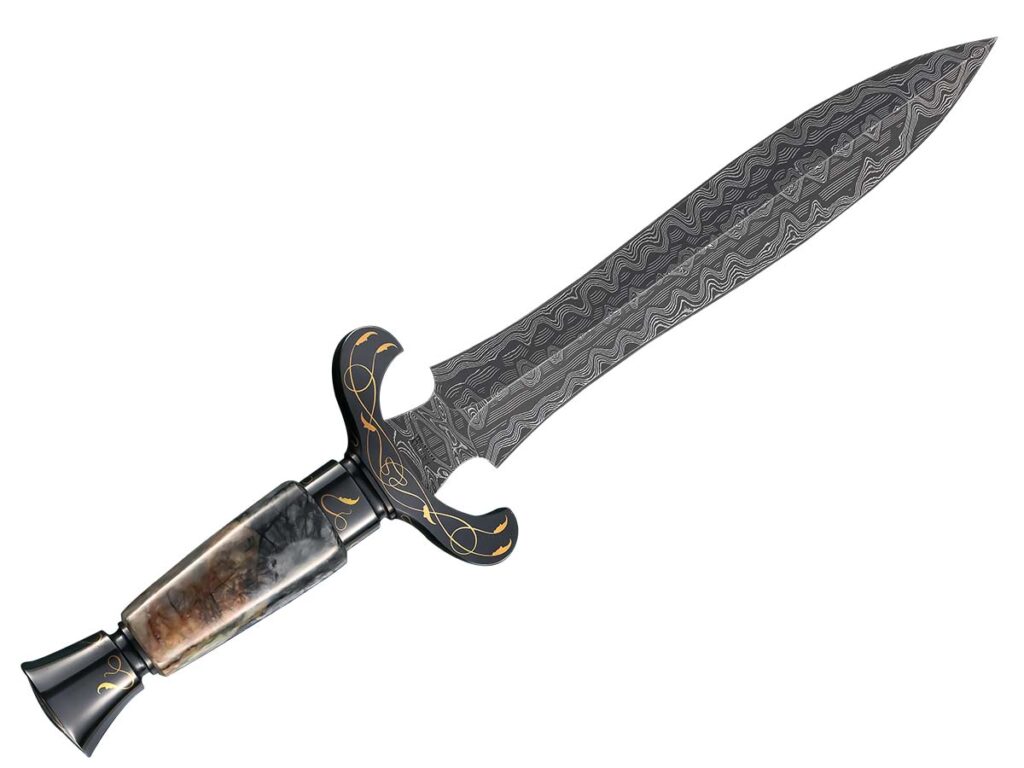
Dennis Friedly Art dagger
Blade length: 9” Blade material: Mike Norris damascus Blade grind: Hollow Scales: Picasso marble Fittings: Blued steel Embellishment: 24k-gold inlay by Ray Cover Jr. Maker’s price for a similar knife: $7,200 Knife to know: The maker is a voting member of The Knifemakers’ Guild Maker: Dennis Friedly, friedlyknives.com (SharpByCoop image)
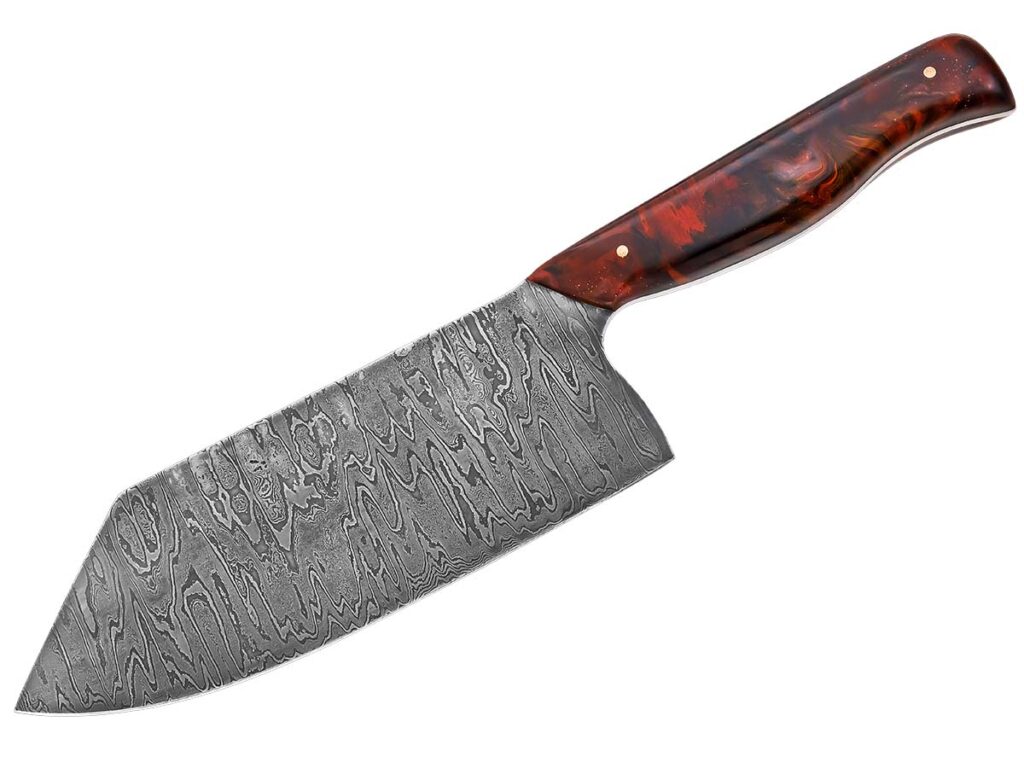
Dane Standen Cleaver
Blade length: 7.3” Blade material: 243-layer textured damascus of 1084 carbon- and 15N20 nickel-alloy steels Blade grind: Flat Scales: Colored resin Pins: Copper Overall length: 12.2” Maker’s price for a similar knife: Contact maker for info Knife to know: The maker is a probationary member of the Australian Knifemakers Guild Maker: Dane Standen (Rod Hoare image)
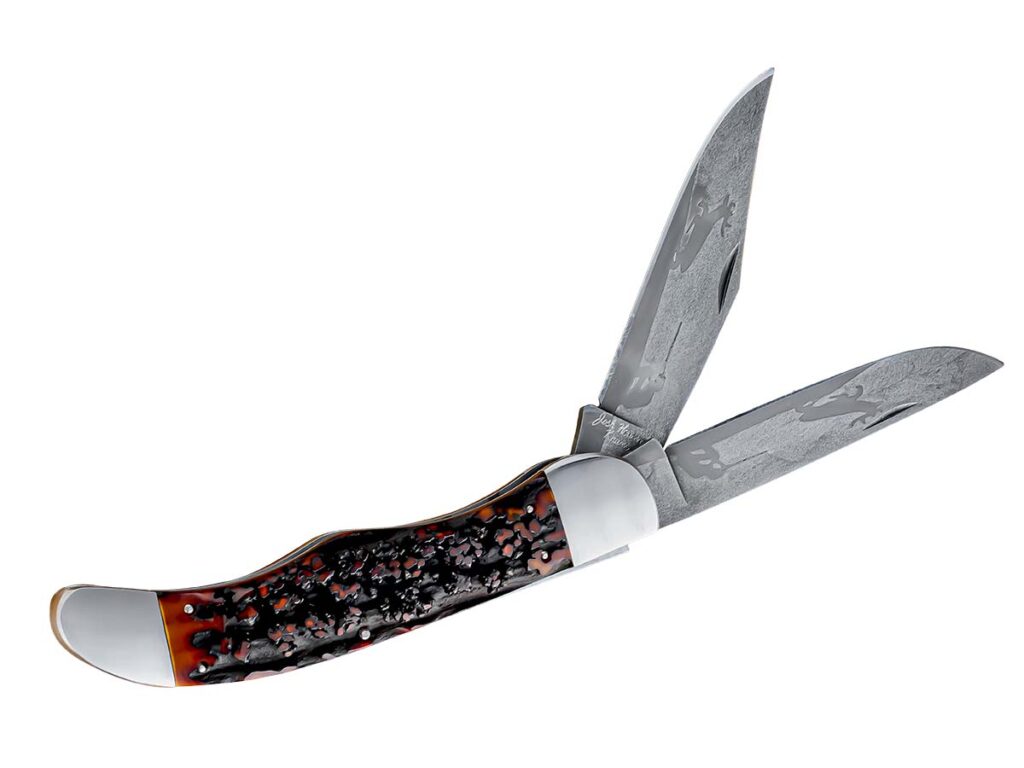
Josh Howard Folding Hunter
Action: Slipjoint Blade length: 3.5” Blade material: Pattern-welded deer hunting scene Blade grind: Hollow Scales: Amber stag Handle frame & bolsters: Stainless steel Closed length: 5.25” Maker’s price for a similar knife: Contact the maker for info Maker: Josh Howard, deerlickridgeforge.com (SharpByCoop image)
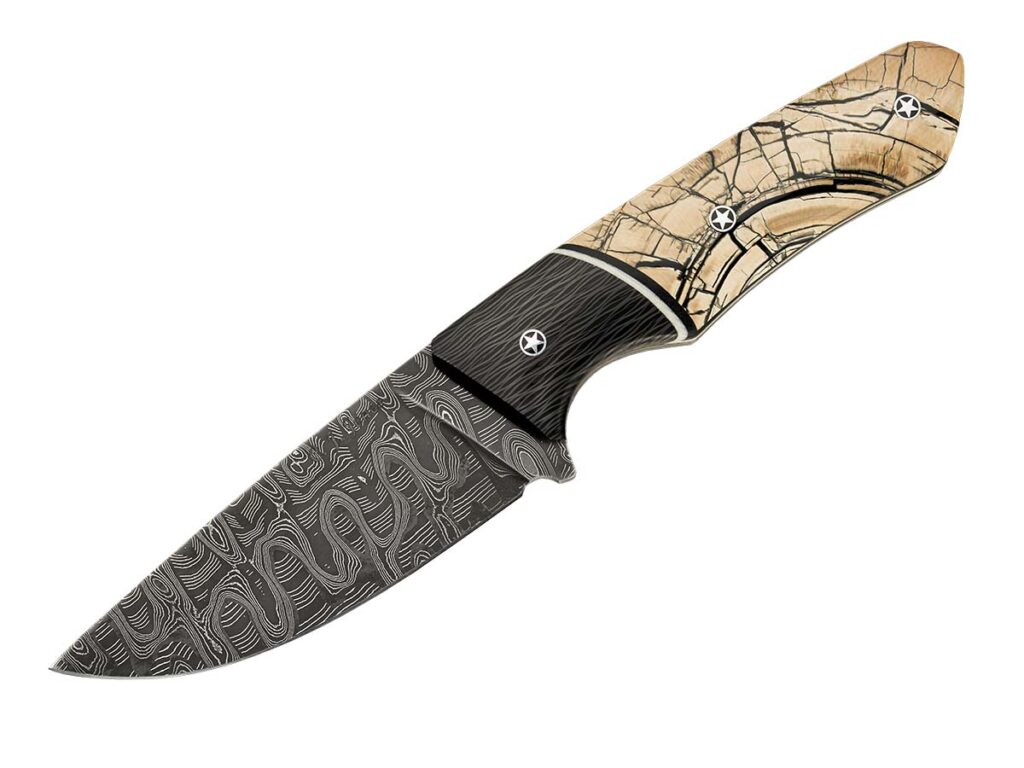
Chad J. Jones Hunter
Blade length: 3.75” Blade material: Mike Norris Hornet’s Nest stainless damascus Blade grind: Flat Scales: Crosscut mammoth tusk Liners: Black and white G-10 Bolster: Zebra carbon fiber Overall length: 8” Maker’s price for a similar knife: $1,250 Maker: Chad J. Jones (Jocelyn Frasier image)
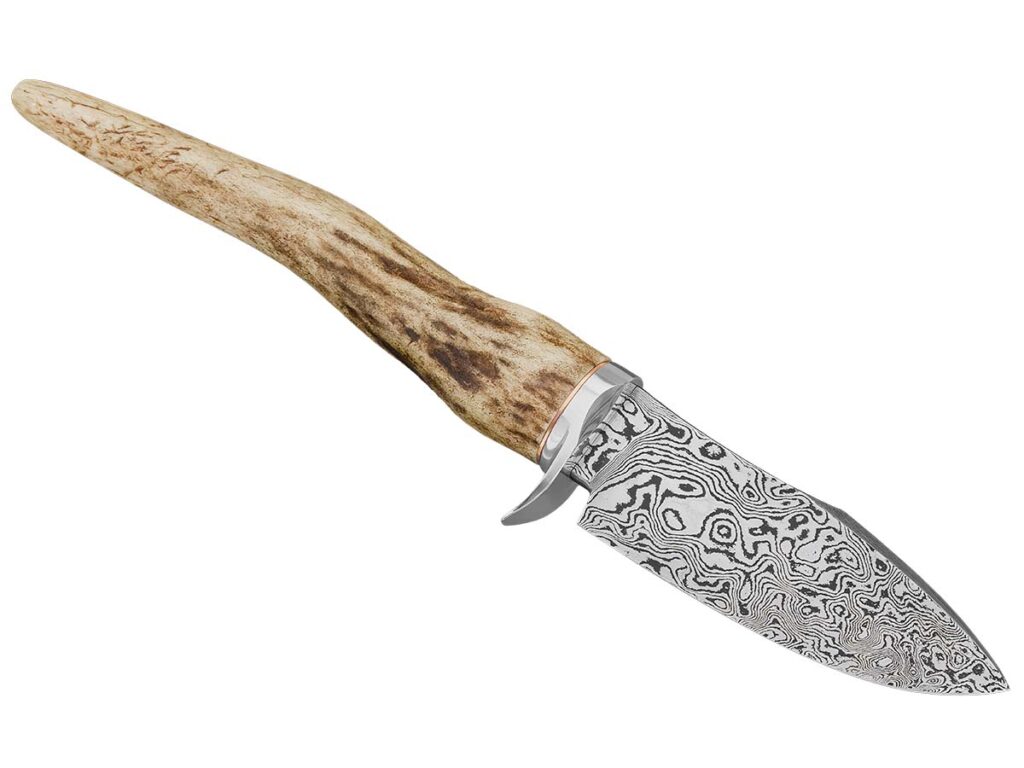
William Manning Hunter
Blade length: 3.35” Blade material: Random-pattern damascus of 1084 carbon-and 15N20 nickel-alloy steels Blade grind: Flat Scales: Antler w/copper spacer Guard: 416 stainless steel Overall length: 8.27” Maker’s price for a similar knife: Contact maker for info Knife to know: The maker is a probationary member of the Australian Knifemakers Guild Maker: William Manning, manningblades.com (Rod Hoare image)
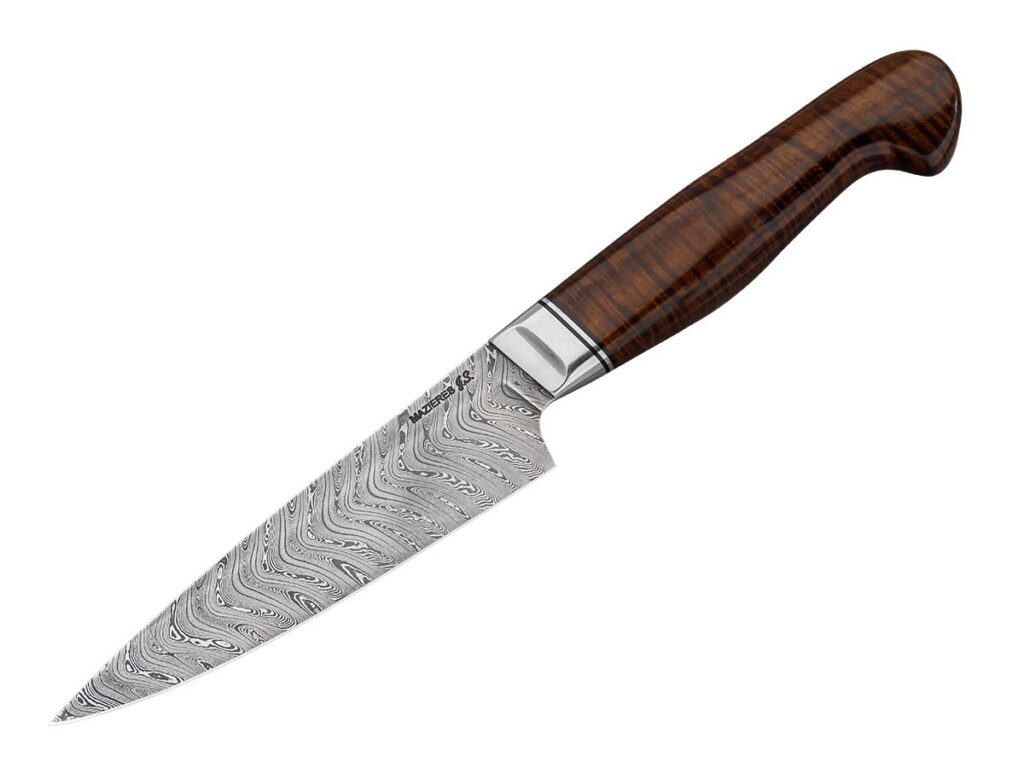
Francois MazieresMedium Paring Knife
Blade length: 5” Blade material: Pattern-welded damascus in 150 layers of 1084 and 1075 carbon- and 15N20 nickel-alloy steels embossed using chevron dies for the final pattern Blade grind: Flat Scales: Stabilized South-Australian ringed Western Myall wood shaped in a composite Western/cowboy style Spacers: G-10 and stainless steel Bolsters: Scalloped, pinned and soldered 416 stainless steel Construction: Hidden tang Overall length: 10” Maker’s price for a similar knife: $320.62 at press-time exchange rate Knife to know: The maker is a member of the Australian Knifemakers Guild and a journeyman smith in the American Bladesmith Society Maker: Francois Mazieres, Yandiwa.com.au (Rod Hoare image)
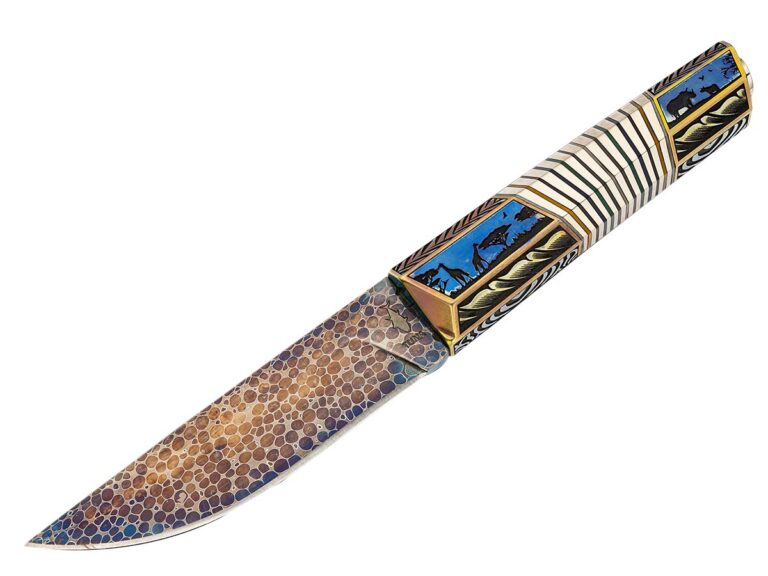
Nate “Tuna” Grant Utility Fixed Blade
Blade length: 4” Blade material: Rietveld Dragonskin damascus by Bertie Rietveld Blade grind: Flat Handle: Titanium, nickel silver, fiber liners, laser engraved Overall length: 8” Sheath: Guster leather; inlaid w/exotic animal skin; belt model with snap Maker’s price for a similar knife: $5,000 Knife to know: The maker’s utility fixed blade won Best Utility at the 2024 Lost Pines Knife Show Maker: Nate “Tuna” Grant, madebytuna.com (Jocelyn Frasier image)
Bryan Montalvo Basset
Knife type: Folder Blade length: 3.25” Blade material: Grabak damascus by Damasteel Blade grind: Hollow Blade pivot: Skiff caged ceramic bearings Handle: Same material as blade Lock: Linerlock Pocket clip: Same material as handle Closed length: 3.5” Maker’s price for a similar knife: $3,000 at press-time material costs Maker: Bryan Montalvo, keanisonknives.com (Jocelyn Frasier image)
Knife companies will debut their latest at BLADE Show 2025.
Knives and plenty of them, the BLADE Show is the Mecca for anything that cuts, hack or chops. It’s also a launching pad.
Many companies wait for the big dance in Atlanta’s Cobb County Convention center to release their latest and greatest, making the June 6-8 shindig the perfect place to pick up a brand-new, nobody-else-has design. While we’re certain there some makers have some rabbits they’ll pull out of their hats at the show, we’ve got a sneak peek of a few factory blades set to go on sale at the show.
So, without further adieu here are a bevvy of 2025 BLADE Show knife debuts you should keep an eye out for at gathering!
Work Sharp throws its hat into the knife ring with its first-ever knife: the RMX EDC folder. The 3.2-inch reverse tanto blade of full-flat-ground CPM 3V carbon steel button locks both open and closed. Comes with both a manual and auto pivot to allow you to switch between whichever mode of operation suits your needs. The magnesium handle has a reversible, tip-up, deep carry clip. Weight: 2.4 ounces Closed length: 4.3 inches Country of origin: Designed, assembled and quality checked in Ashland, Oregon, using foreign parts MSRP: $139.95 Available: BLADE Show 2025
McNees Knives MAC2 3.5
McNees Knives MAC2 3.5
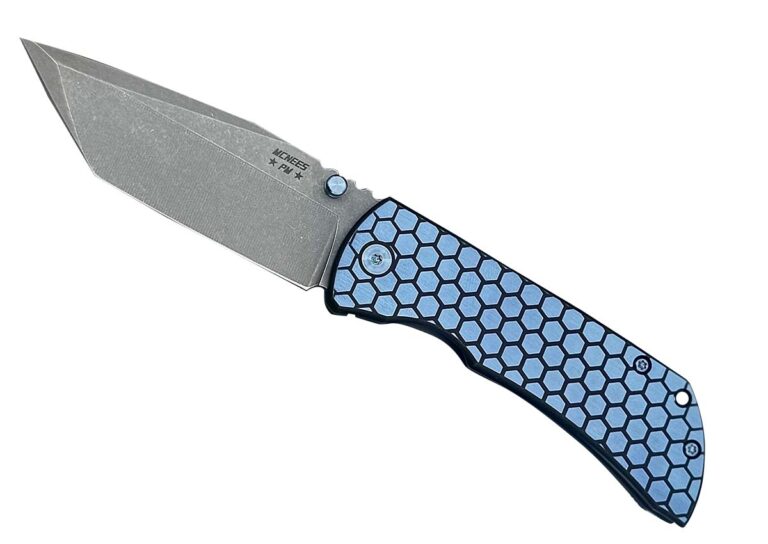
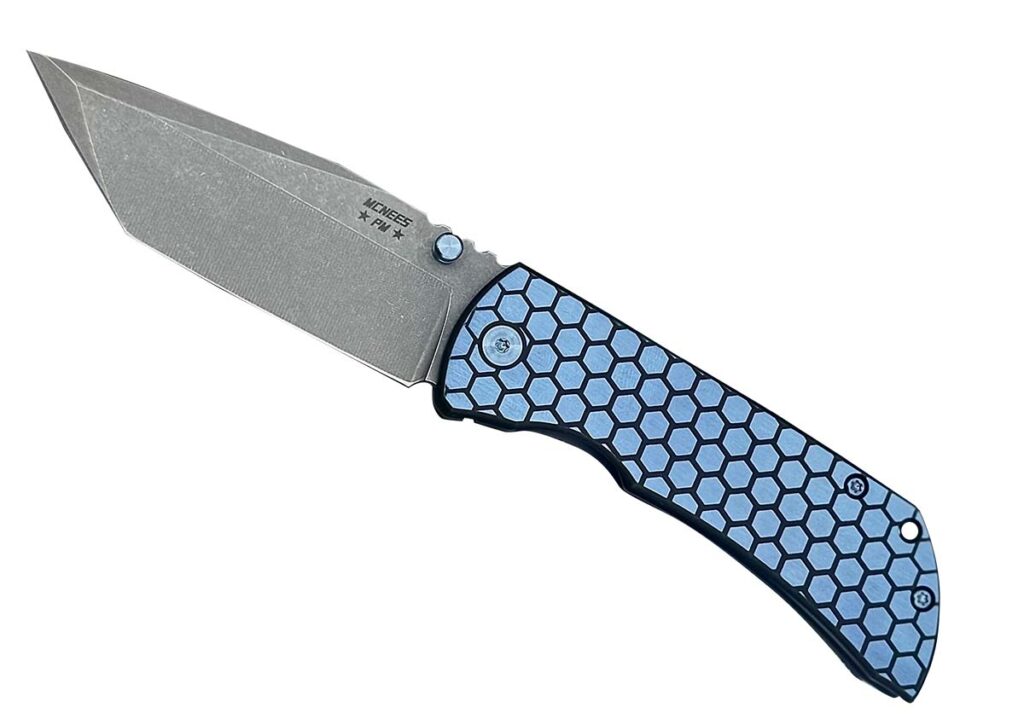
Titanium scales with a honeycomb look and a 3.5-inch tanto blade of hollow-ground CPM MagnaCut stainless distinguish the MAC2 3.5 tactical folder by McNees Knives. Blade opener: thumb stud. Lock: Reeve Integral Lock (aka framelock) Clip: bent titanium Weight: 26 ounces Closed length: 4.25 inches Country of origin: USA MSRP: $625 Available: BLADE Show 2025
Condor Tool & Knife K-Night Panabas
Condor Tool & Knife K-Night Panabas
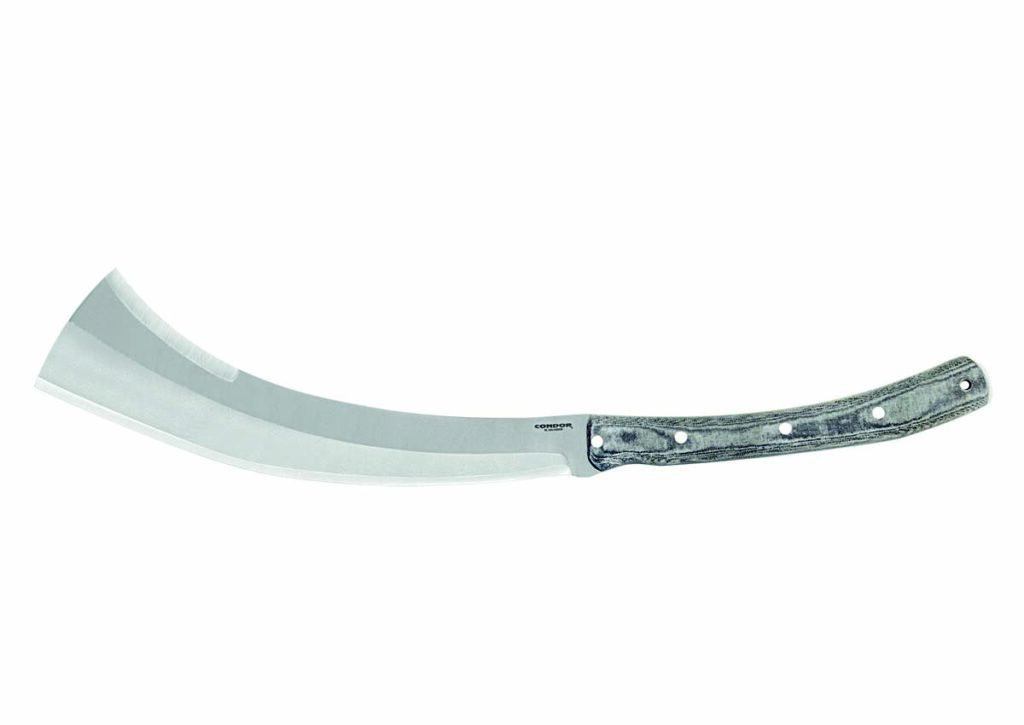
The K-Night Panabas from Condor Tool & Knife boasts a 14.29-inch blade of convex-ground 1075 carbon steel and Micarta® scales. Weight: 32.98 ounces Overall length: 25.35 inches Sheath (not shown): Kydex with leather belt loop Country of origin: El Salvador MSRP: $174.98 Available: NOW
Rick Hinderer Knives Bowie
Rick Hinderer Knives Bowie
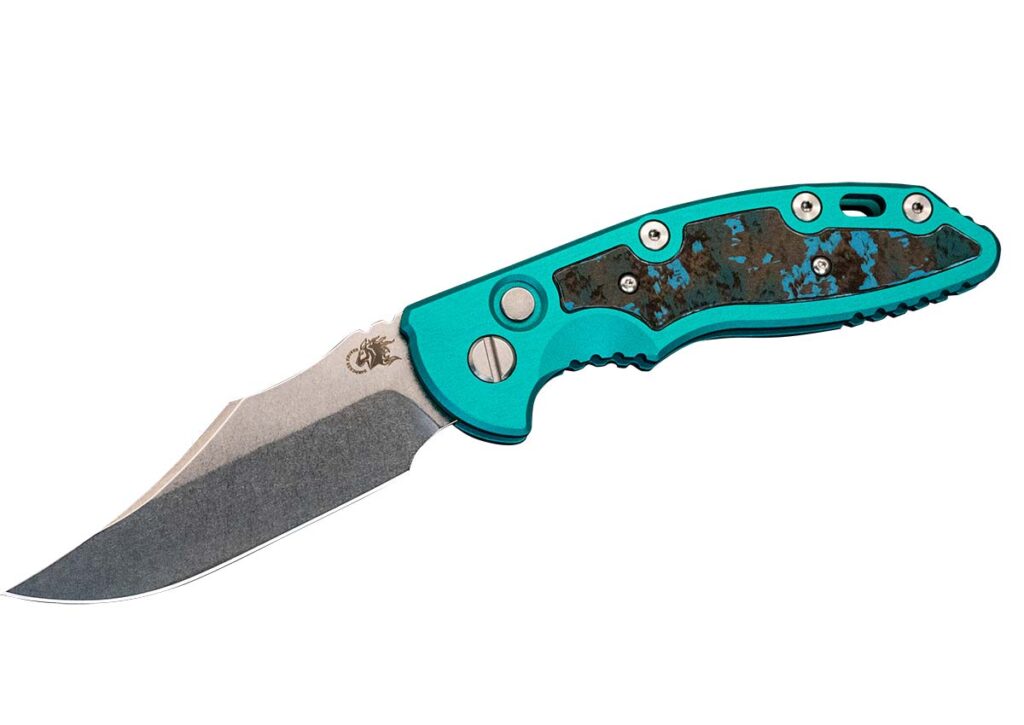
The Aluminum Automatic XM-18 3.5-inch Bowie from Rick Hinderer Knives features a 3.5-inch blade of CPM S45VN stainless steel. The aluminum handle with titanium half liners is anodized turquoise and inlaid in Arctic Storm FCF. Lock: button lock Clip: Chaos Horsehead model in stonewashed titanium Weight: 5.12 ounces Closed length: 4.75 inches Country of origin: USA MSRP: $495 Available: Late 2025
Fox Knives Pacifico EDC
Fox Knives Pacifico EDC
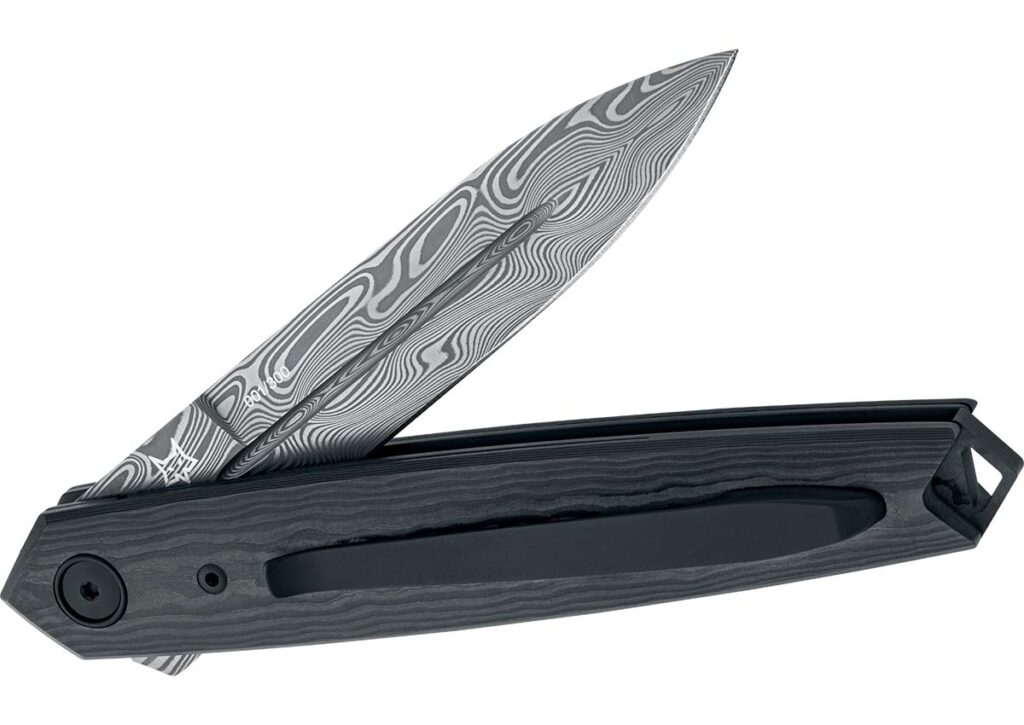
Designed by BLADE Magazine Cutlery Hall-of-Fame® member Bob Terzuola, the Pacifico EDC flipper folder by Fox has a 3.74-inch blade of Thor pattern damascus by Damasteel. The handle is black camo carbon fiber by FatCarbon®. Clip: titanium PVD-coated black Lock: linerlock Weight: 3.88 ounces Closed length: 5.31 inches Country of origin: Italy MSRP: $583 Available: July
Big Idea Design Signal
Big Idea Design Signal
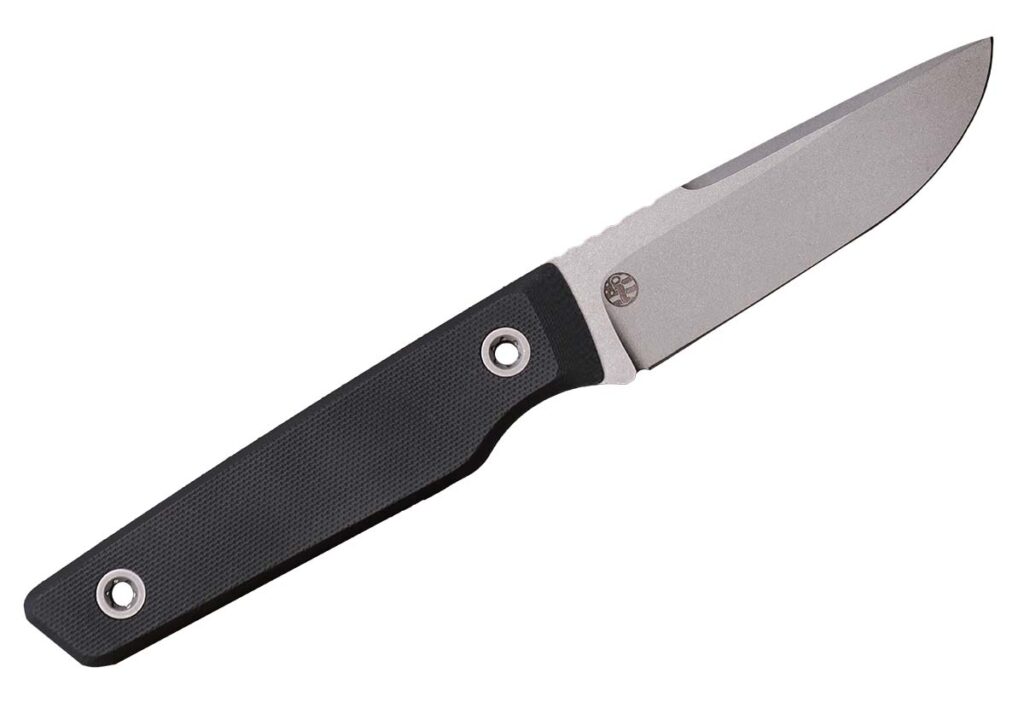
Designed by ABS journeyman smith Mak Kelsay, the Signal utility from Big Idea Design has a 3.5-inch blade of flat-ground Nitro-V stainless steel and G-10 scales with custom pass-through titanium hardware. Weight: 3.4 ounces Overall length: 7.67 inches Sheath (not shown): taco-style Kydex w/titanium pocket clip Country of origin: USA MSRP: $275 Available: May/June
Queen/Smoky Mountain Knife Works Mountain Man Trapper
Queen/Smoky Mountain Knife Works Mountain Man Trapper
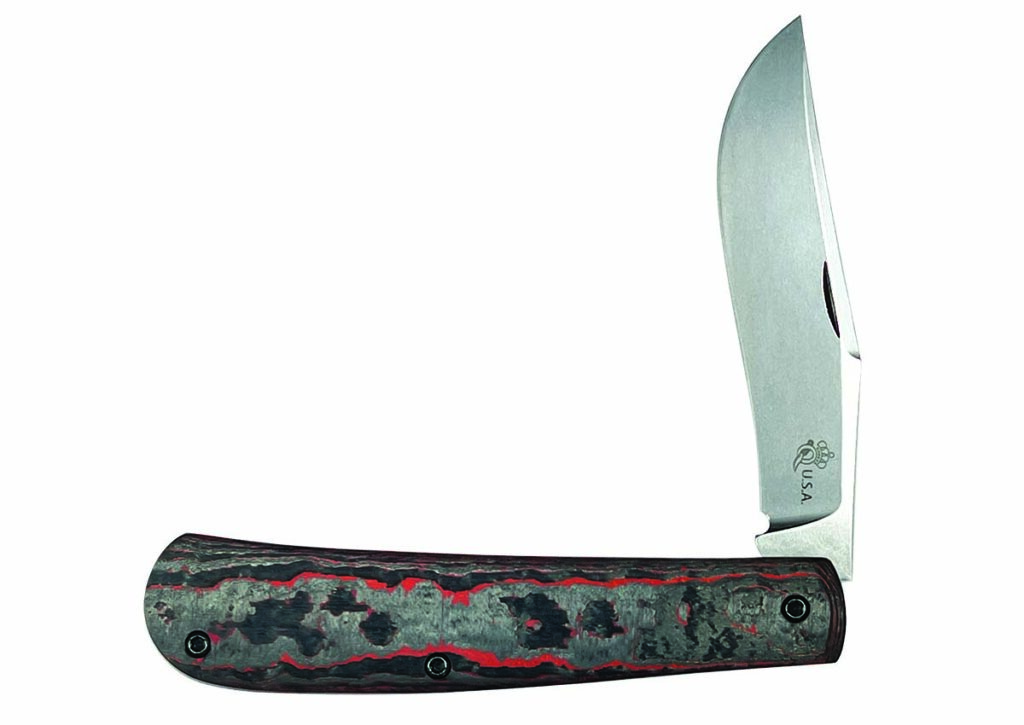
The Mountain Man Trapper from Queen/Smoky Mountain Knife Works sports a 3 3/8-inch blade of CPM MagnaCut stainless steel and Lava Flow FatCarbon® scales. Blade pattern: Clip Action: slipjoint Weight: 2.93 ounces Closed length: 4 1/8 inches Country of origin: USA MSRP: $299.99 Available: July
GiantMouse GMP13
GiantMouse GMP13
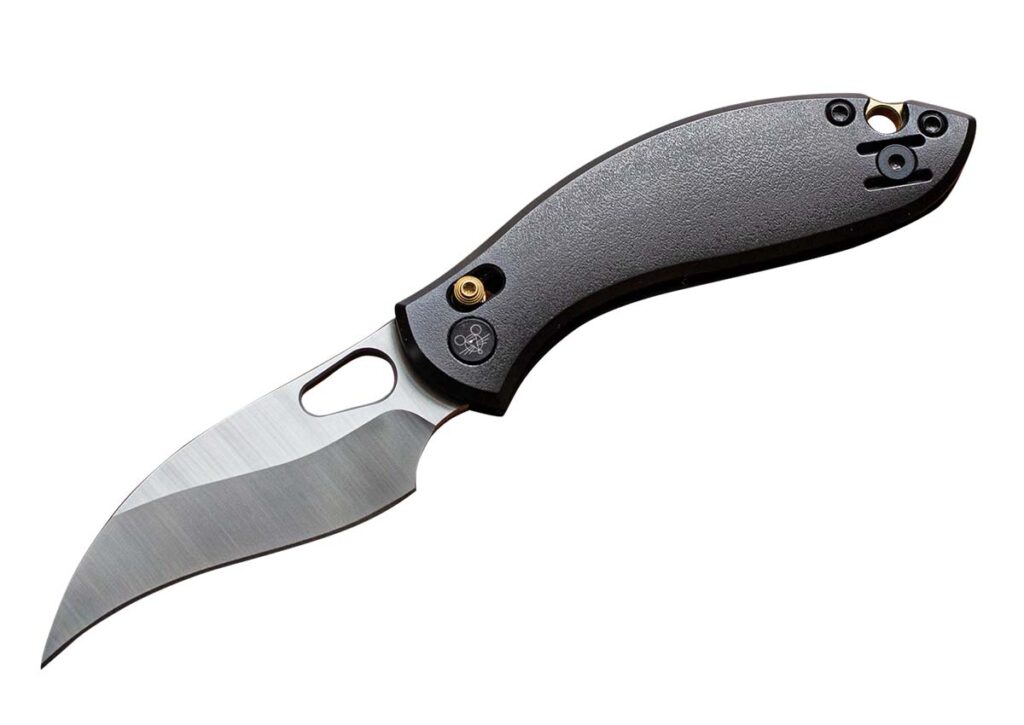
A 2.4-inch blade in a distinctive modified hawkbill pattern of flat-ground CPM S90V stainless and zirconium scales highlight the GiantMouse GMP13 “defense folder.” Lock: crossbar Clip: ambidextrous Weight: 3.7 ounces Closed length: 3.67 inches Country of origin: China MSRP: $435 Available: NOW
Lionsteel ACHA
Lionsteel ACHA
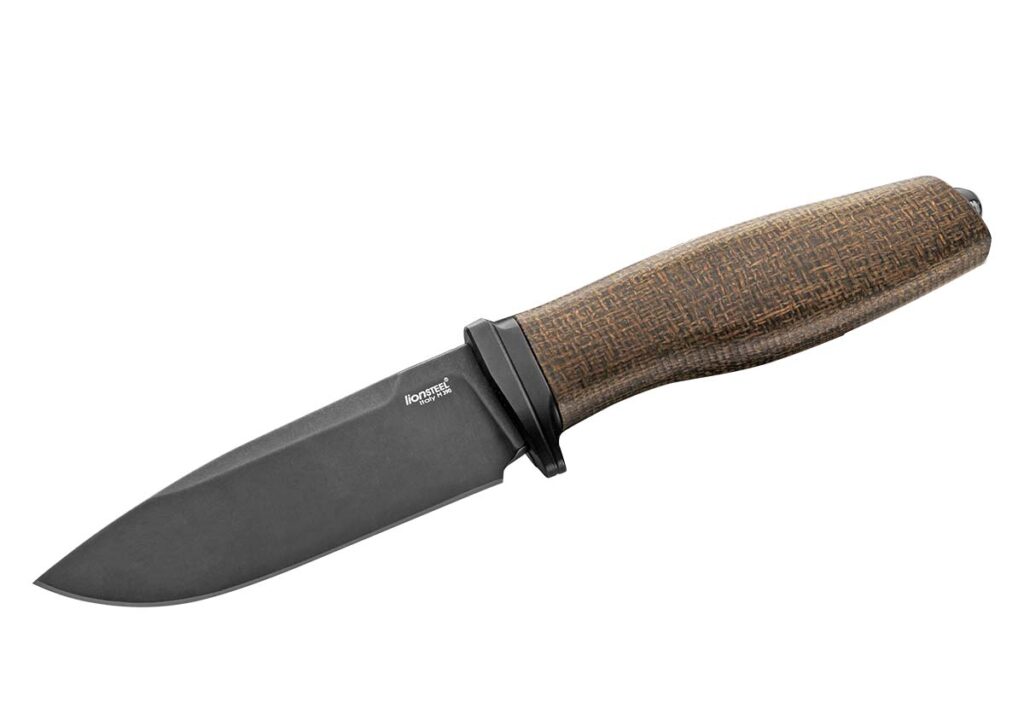
A contrasting combo of a 4.21-inch blade of M390 sintered steel in an “old black” finish and a burlap Micarta® handle in an integral construction set the Lionsteel ACHA outdoor knife apart. Blade grind: V flat Guard: titanium Sheath (not shown): Leather Weight: 6.24 ounces Overall length: 9.17 inches Country of origin: Italy MSRP: $252 at press-time exchange rate Available: NOW
Spyderco Chaparral
Spyderco Chaparral
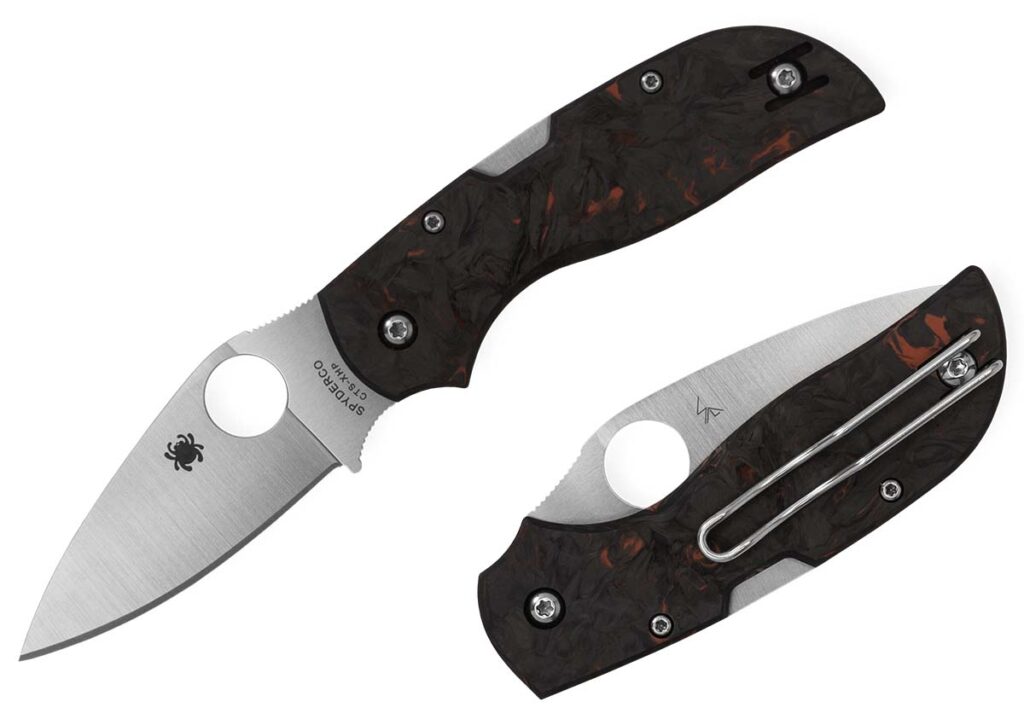
Dark Matter Red FatCarbon® scales and a 2.77-inch blade of full-flat-ground CTS-XHP stainless steel highlight the latest iteration of the Spyderco Chaparral back-lock folder. Clip: wire Weight: 2.2 ounces Closed length: 3.6 inches Country of origin: Taiwan MSRP: To be determined Available: To be determined
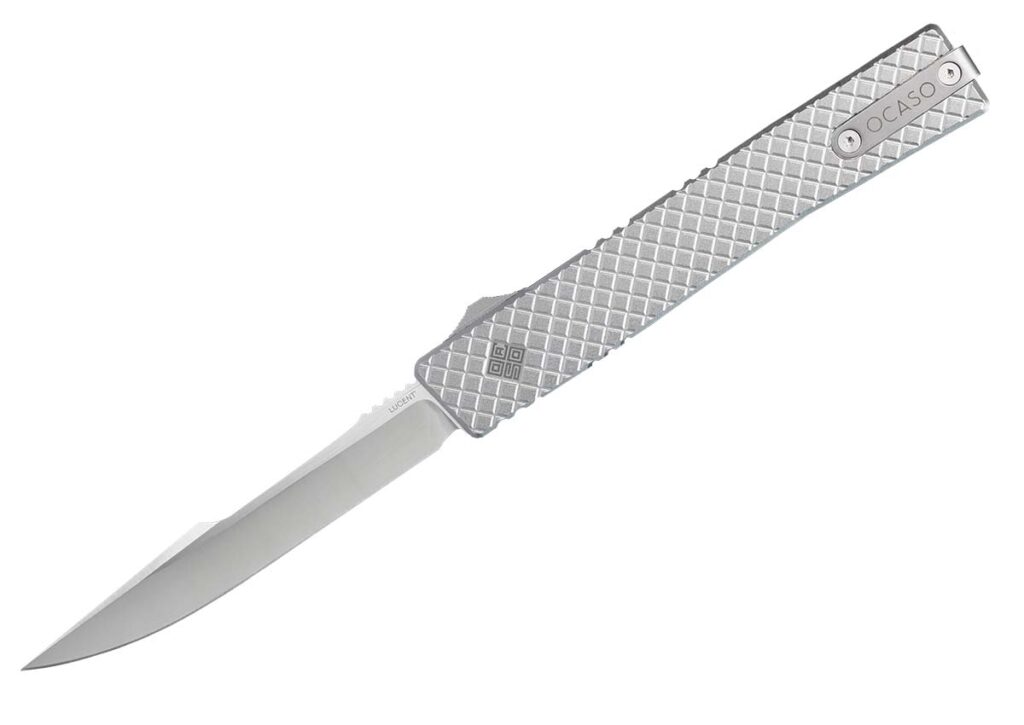
Ocaso Lucent Automatic
Ocaso Lucent Automatic
The Ocaso Lucent Automatic is a dual-action out-the-front with a 3.5-inch blade of flat-ground Bohler M390 stainless and a 6061-T6 aluminum handle with an ambidextrous deep-carry pocket clip. Weight: 2.2 ounces Closed length: 4.4 ounces Country of origin: China MSRP: $274.99 Available: July
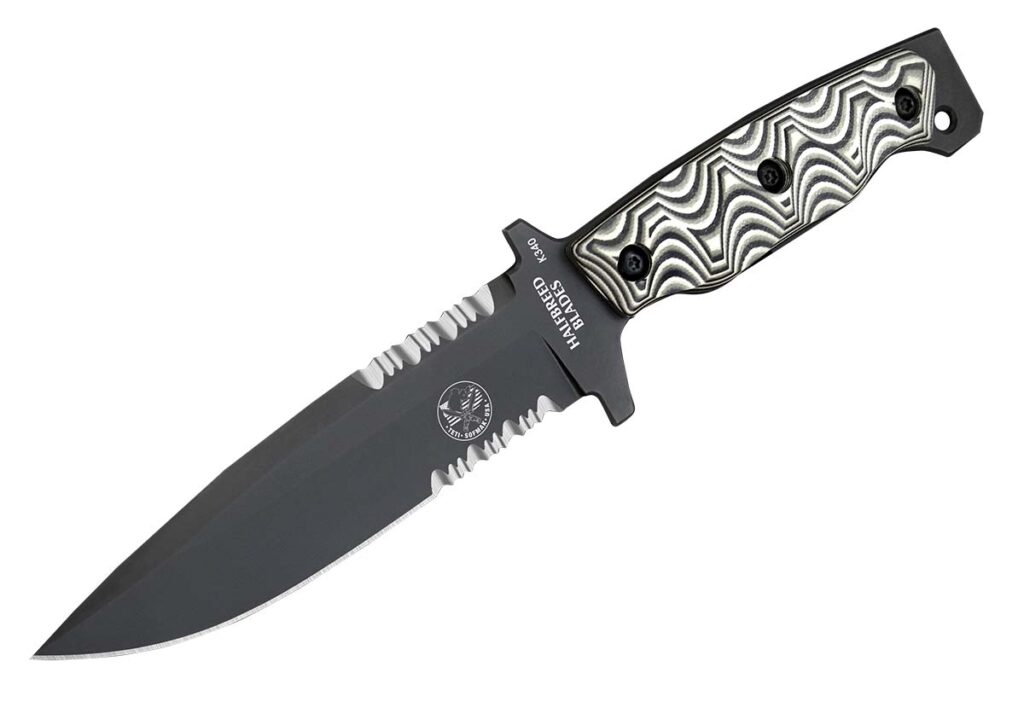
Halfbreed Blades SOFMAK
Halfbreed Blades SOFMAK
Scales of an electric G-10 and partially double-serrated blade of PVD-coated K340 ISODUR tool steel stand out on the MIK-04 SOFMAK from Halfbreed Blades. Blade length: 5.31 inches Weight: 11.14 ounces Overall length: 10.31 inches Designer: Jonathan Loftes in collaboration with Joseph Teti Sheath (not shown): Belt and PALS/MOLLE Country of origin: Comprises Australian and Taiwanese make MSRP: $275 Available: NOW
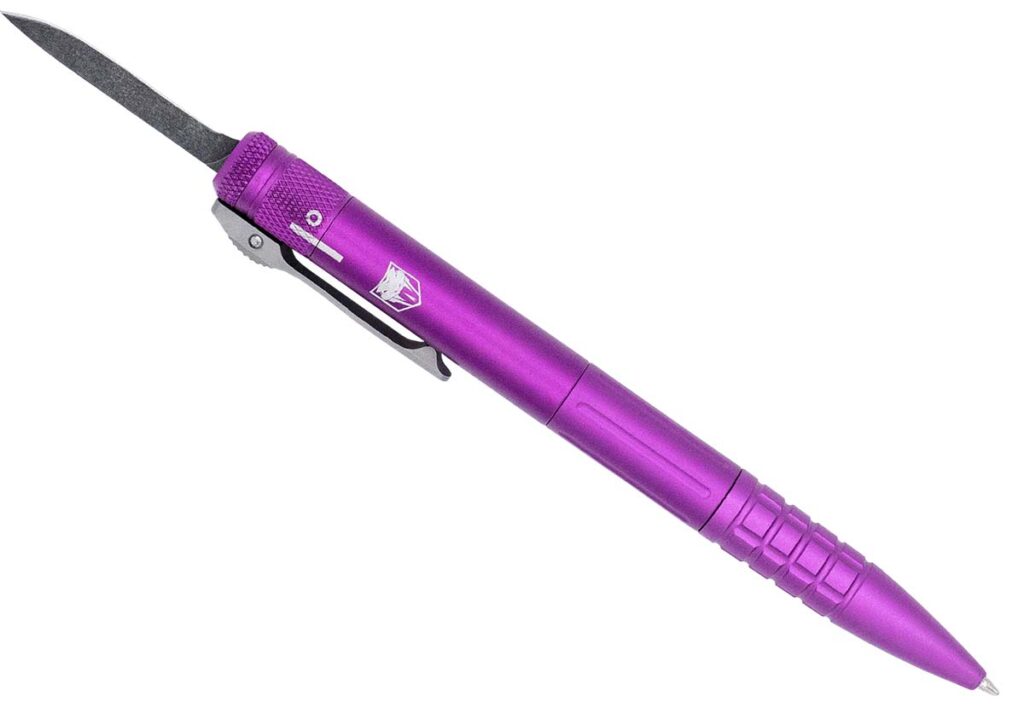
CobraTec CNC OTF Pen Knife Generation 2
CobraTec CNC OTF Pen Knife Generation 2
The CNC OTF Pen Knife Generation 2 from CobraTec sports a 1.75-inch blade of stonewashed stainless steel. The dual-action out-the-front has a handle of 6061 T6 aluminum with a titanium pocket clip/switch and a safety lock. Includes a replaceable black ink cartridge. Weight: 1.4 ounces Closed length: 5.875 inches Country of origin: China MSRP: $89.99 Available: NOW
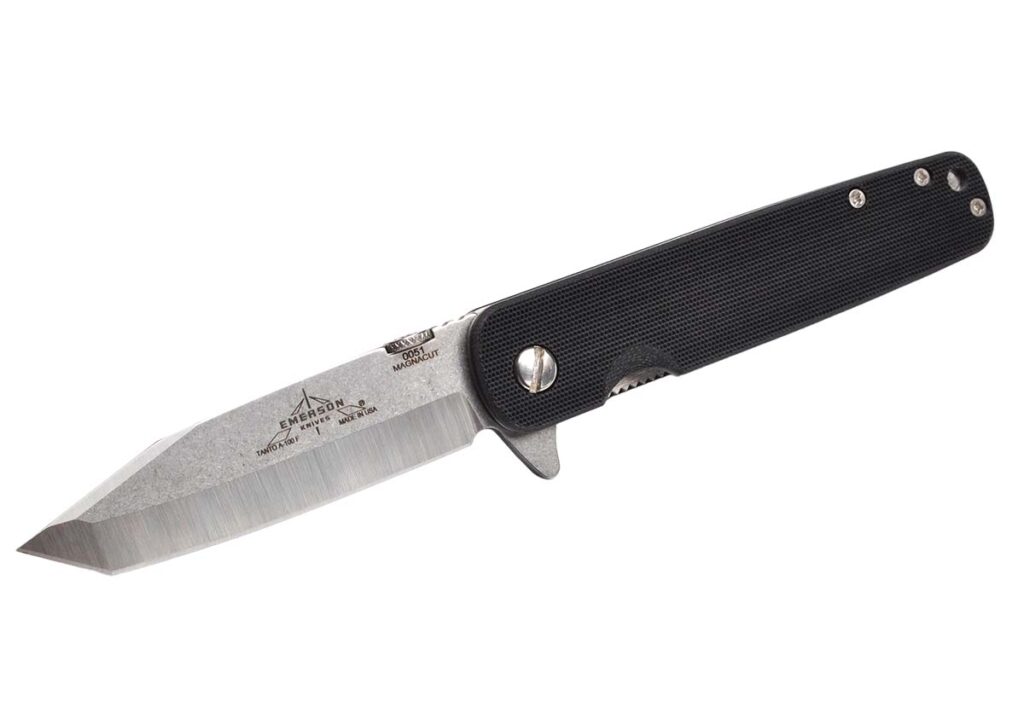
Emerson Knives, Inc. Tanto A-100
Emerson Knives, Inc. Tanto A-100
The Tanto A-100 Flipper by Emerson Knives, Inc., cuts with a 3.6-inch blade of CPM MagnaCut stainless in a conventional “V” grind. Handle: G-10 with a hole for a lanyard. Lock: linerlock Closed length: 4.8 inches Additional blade opening option: thumb disc Country of origin: USA MSRP: $295 Available: NOW
Benchmade Mini Crooked River
Benchmade Mini Crooked River
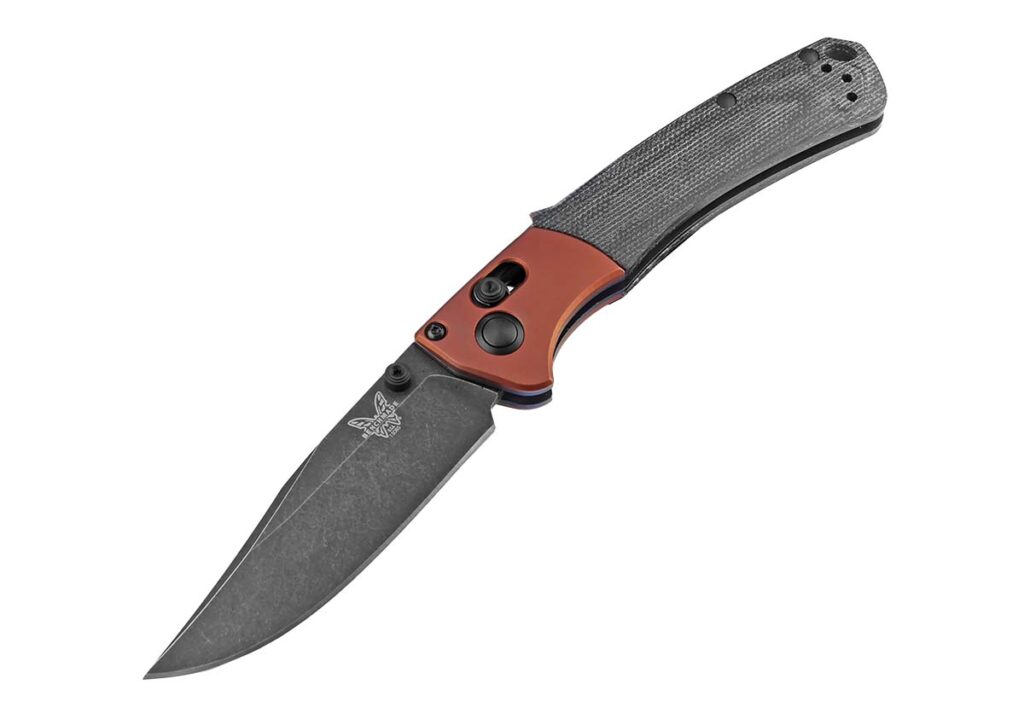
Benchmade’s Mini Crooked River folder sports a 3.4-inch clip-point blade of CPM MagnaCut stainless in a Battlewash finish. The handle is black canvas Micarta® with aluminum bolsters anodized a burnt copper. Lock: AXIS Weight: 3.2 ounces Closed length: 4.5 inches Country of origin: USA MSRP: $320 Available: July
QSP Hyena
QSP Hyena
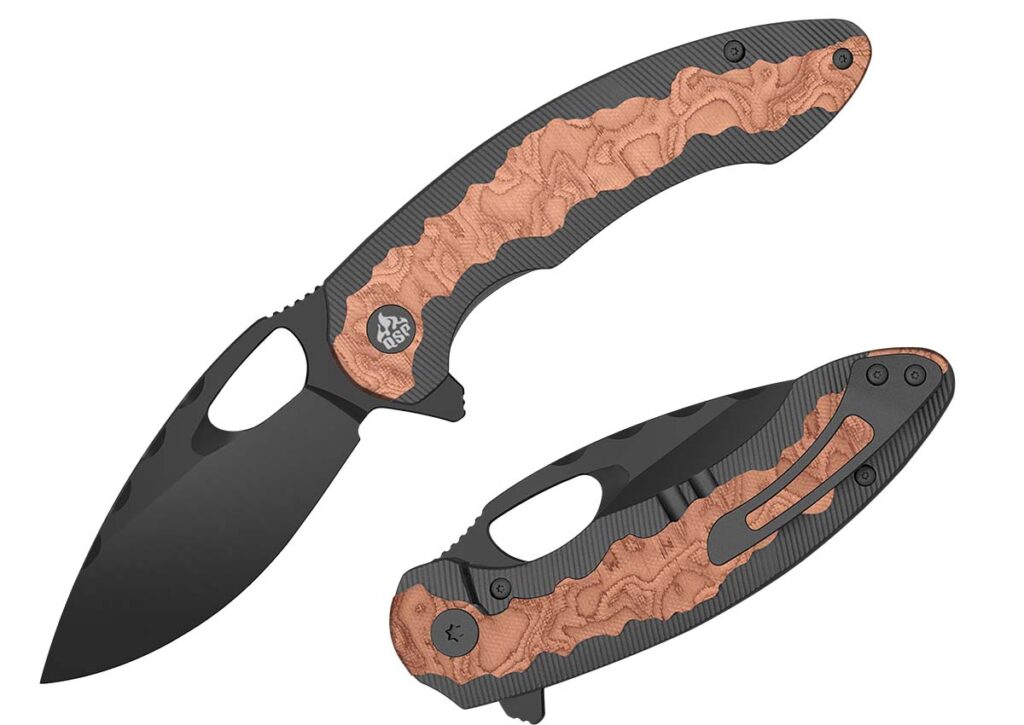
The Hyena flipper folder from QSP has a striking grip of anodized aluminum and copper-foil G-10 inlay and a 3.25-inch blade of flat-ground Bohler N690 stainless that pivots on ceramic ball bearings. Clip: Titanium, tip up. Closed length: 4.53 inches. Country of origin: China. MSRP: Contact maker for pricing. Available: September.
Maserin Pulse
Maserin Pulse
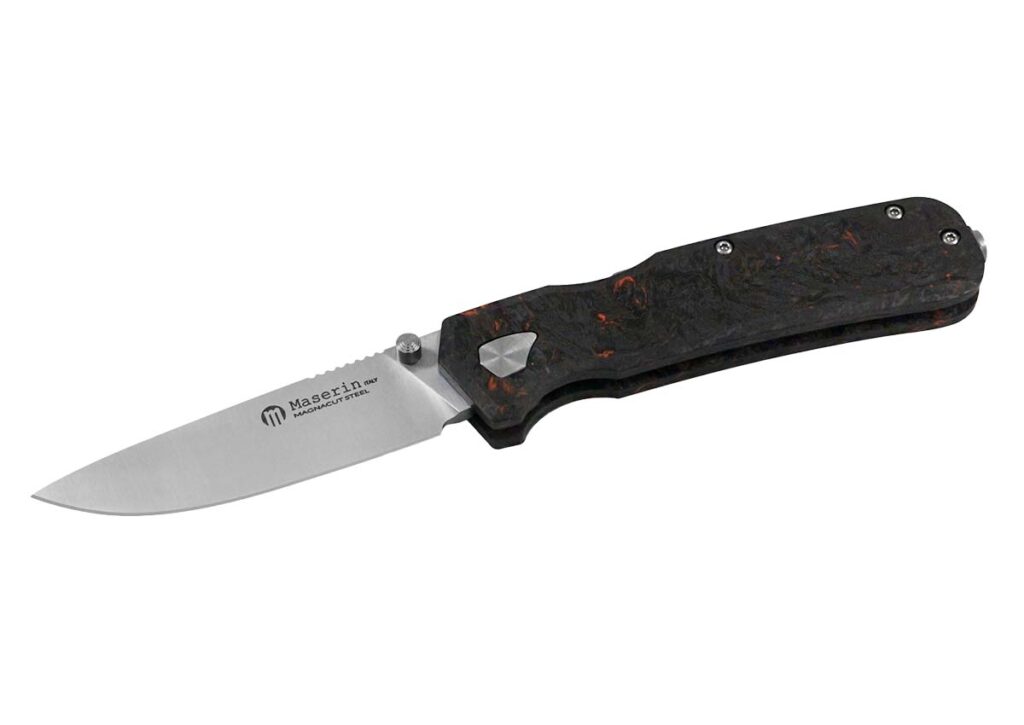
Black/orange FatCarbon® scales serve as the steering wheel for the 3.149-inch blade of flat-ground CPM MagnaCut stainless on the Maserin Pulse. Blade finish: stonewashed. Lock: W-Lock Clip: Stainless, reversible Weight: 3 ounces Closed length: 4.5 inches Country of origin: Italy MSRP: $219 at press-time exchange rate Available: NOW
Reate PL-7
Reate PL-7
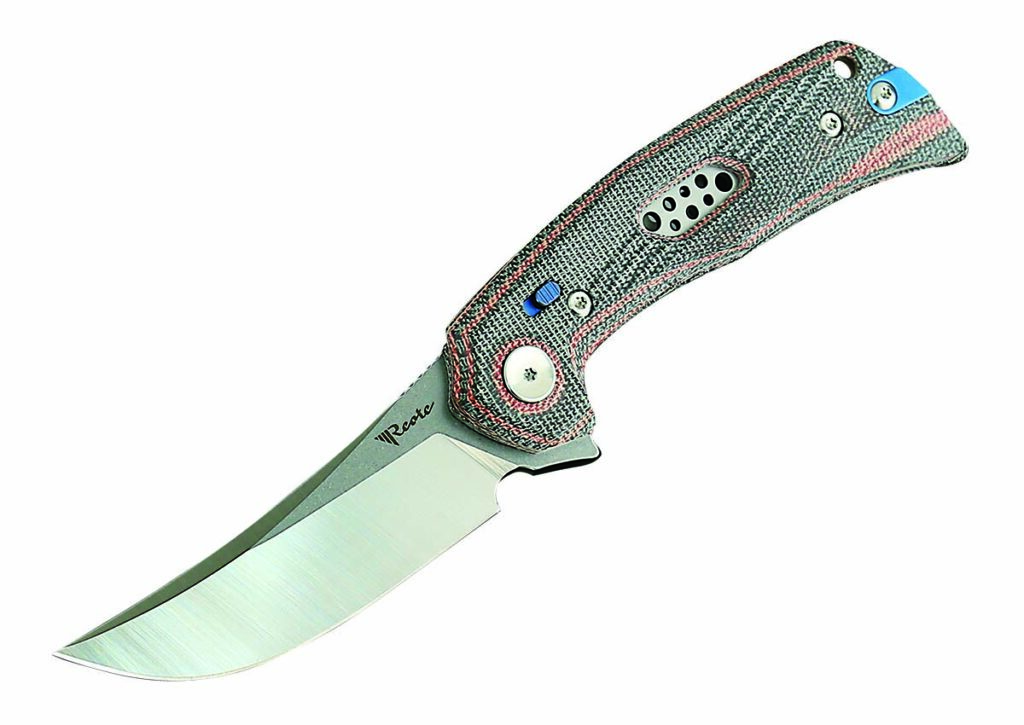
A 3.5-inch upswept blade of Nitro-V stainless in a belt-satin finish and a Micarta® handle top off the PL-7 from Reate. Weight: 4.5 ounces Closed length: 4.5 inches Country of origin: China Knife to know: The PL stands for Pivot Lock MSRP: Pending Available: Pending
CRKT Padawan
CRKT Padawan
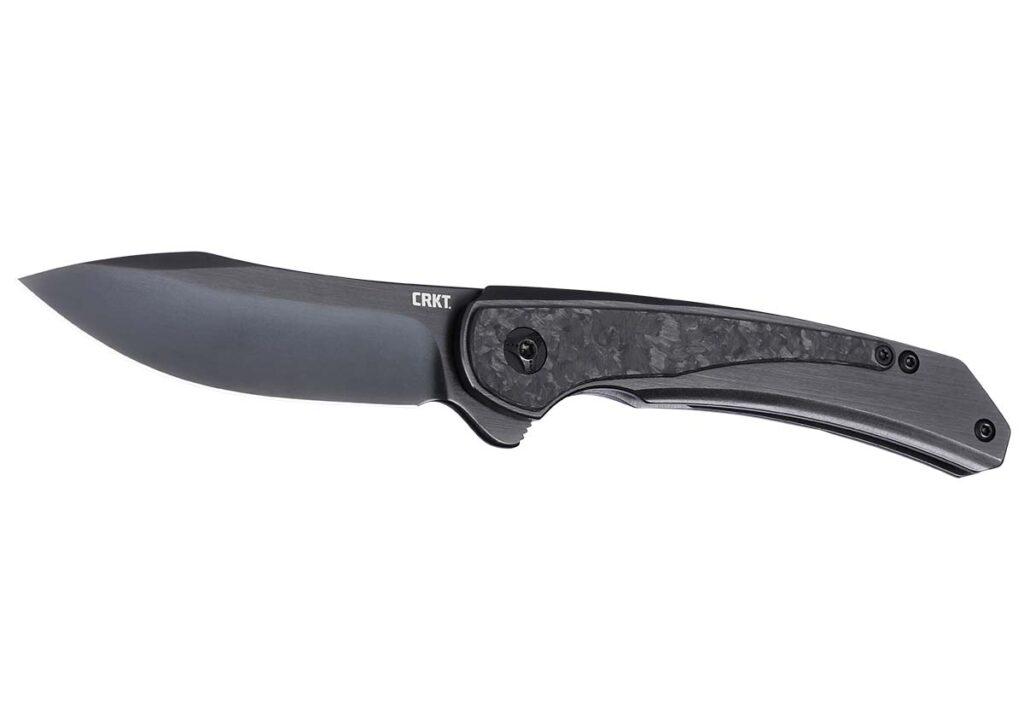
An EDC flipper/framelock folder, the CRKT Padawan has a 3.01-inch drop-point blade of hollow-ground 14C28N stainless. Blade finish: nitride coated Pivot: Ikoma Korth Bearing System Handle: stainless steel with carbon-fiber overlay Pocket clip: low profile, stainless Weight: 3.1 ounces Closed length: 4.14 inches Country of origin: China MSRP: $100 Available: NOW
APOC/CAS Iberia Wallace Smatchet
APOC/CAS Iberia Wallace Smatchet
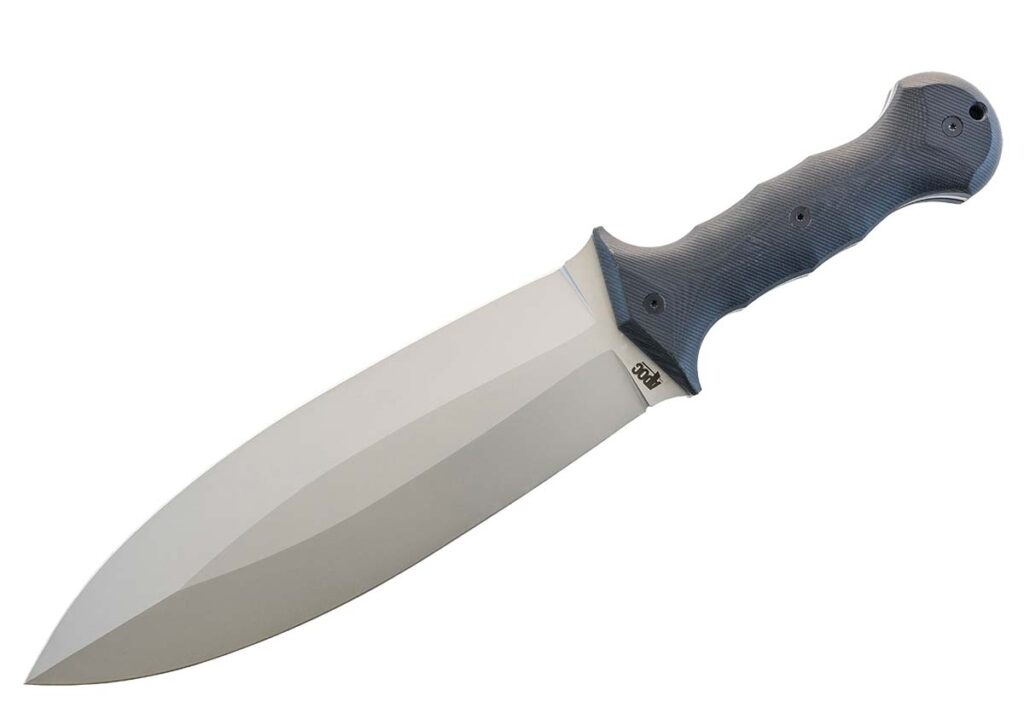
Designed by Mike Wallace, the Wallace Smatchet from APOC/CAS Iberia is a “historically inspired bushcraft” knife based on the classic World War II combat model. The 9 5/8-inch blade is flat-ground D2 tool steel in a titanium coat. Scales: G-10 Weight: 1 pound, 10 ounces Overall length: 15.5 inches Sheath: Kydex with drain hole Country of origin: China MSRP: $175. Available: NOW
A Good Work Knife Is Worth Its Weight In Gold. These Half-Dozen Blades All Excel At Something Outdoors From Gardening To Felling Trees.
Serious work knives are going to be fixed blades. Strength is something that can’t be sacrificed, and while many folders are incredibly rigid, they have mechanisms and moving parts that can and do become worn or damaged with hard use.
Modern folders are great knives. However, once mud, grit, sand, and the unexpected rock an inch underground comes into play, they tend to fail. Few folders are strong enough long-term for use as a trowel—fewer still can be safely batonned through wood. On the merit of ergonomics alone, the folder is usually slab-sided in profile and isn’t comfortable to hold for long periods, nor does it allow for easy cleaning. As such, the fixed blade is superior when the woodchips or dirt need to fly.
Defining work knives is merited by the individual task at hand. Some of the knives featured herein are not suitable to assume the role of another. Specialization is the name of the game and the knife you need for splitting wood is far different than one for working the ground. The main characteristic, across the board, is that these knives simply must hold up for their intended role and be at least serviceable in others should the need arise.
The test knives were all put to heavy use during an exterior cleanup, pulling up rotten posts, planting vegetables and bulbs, cutting down saplings and small trees, starting fires, making kindling, opening fertilizer and feed bags, and all sorts of things you would use a knife for in routine outdoor chores. They were exposed to rain, soil and, on occasion, cleaning supplies. I evaluated the edges and finishes for how well they cut and the handles for how well they felt in the hand after extended use.
Case Winkler Recurve Utility No. 6
The Case No. 6 was perfect for slicing straps on hay bales, removing small limbs and cutting various hoses and line.
A collaboration between Case and Winkler Knives, the Case Winkler Recurve Utility No. 6 is large, beefy, well-made, and very, very sharp. It arrived with a much finer edge than most Winkler designs, which made it all the more interesting when compared to the other Winkler knife in this article.
One of this issue’s cover knives, the No. 6 is not machete size but is big and heavily built. The deep belly and recurve result in a wide, rounded curve up to the tip, with about an inch-and-a-half of front-facing edge to the point. It is excellent at digging but not great at penetrating materials.
Where the knife really excels is in deep, long cuts. The recurve shape and handle angle make it want to sink right in. It can be batonned through wood around 2.5 inches in diameter with ease, can make tinder and is great at striking. The knife comes with a leather sheath that includes a polymer clip for a Zippo mini lighter. This is probably the only downside to this overall fantastic knife—the polymer clip isn’t strong enough to keep the lighter firmly in place and it can and does fall out.
In terms of general utility, I used the No. 6 hard and heavily for just about every task I could think of in the yard/garden. It chops well for a standard-sized knife and takes down medium branches as well as a small saw. It wants to work and, due to its shape, is simply useful and never got into a place where it was too much or too little. Overall, it is a fantastic work knife that should last you a lifetime.
MSRP: $430.99
Winkler Knives Drop Point Crusher
As a medium chore cutter, the Winkler Drop Point Crusher was great and easy to carry. The glass breaker/striker pommel is wickedly effective.
A classically styled working knife, the Winkler Knives Drop Point Crusher is a rugged gentleman’s knife with an appearance that doesn’t immediately give away its abilities. It was the only test knife with a wood grip but this never became an issue despite it being the most organic in composition. It was, like the others, exposed to rain, sap, dirt and dried wood. In addition, and thanks to the glass breaker/striker pommel, it was also used to bust down rotten posts and break glass out of a damaged windowpane.
It is a lightweight knife and easy to carry all day long. While Winkler makes knives for some of the most tactical dudes in the world, this one doesn’t draw that sort of attention in the slightest. It looks old, like something your granddad may have carried while hunting, and most people just look past it.
As an heirloom-quality knife it is hard to want to use it, but like all the Winkler blades I have looked at over the years, it wears nicely and simply gains character. For basic work the knife is great at everything but is just a bit thin for heavy batonning, though it can be used to split smaller pieces.
As a work tool, it is firmly in the everyday use category but like the Earth Skills knife is best set aside for heavy work. This is the knife I ended up wearing the most and using for the greatest number of tasks as it was so effortless to carry.
MSRP: $375
Condor Tool & Knife Woodbuster
The Woodbuster split firewood easily.
The Condor Tool & Knife Woodbuster is the biggest knife I’ve tested for BLADE®. Because of the knife’s name, I decided it best to use it on as much wood as possible, from taking down branches to dropping small trees. Designed by Joe Flowers, it sailed through things like they were hardly there. It approaches machete size, though it is heavy and the energy you need to get it moving is wasted on small brush.
I chopped firewood and reduced sections of trunk 12 inches wide into firewood with the Woodbuster. It can be batonned with surety and is great in that it has no real tip, so you don’t risk catching your hand or fingers if the blade sticks in the wood. It chops as well or better than a camp axe and with less physical effort in preparing firewood.
In taking down trees care is needed, but it is as good as an axe on anything under a foot across, which isn’t small by any stretch. The Woodbuster is 100 percent a working knife and is easy to become proficient with.
The only downside is the grip, which is rather round in profile. Smaller hands may have a hard time with it. The grip is also a bit smooth, though not all that noticeable if you wear work gloves. It becomes a bit hard to hold when wet and can roll in the hand after repeated strikes. This isn’t a serious problem, just something to be aware of.
MSRP: $171.58
KA-BAR Jarosz Camp Turok
The Camp Turok is a large knife that can handle branches, cutting chores, and light chopping.
The KA-BAR Jarosz Camp Turok is large but not as beefy as the Woodbuster, and much lighter. With the exception of heavy wood cutting and batonning, it performs most outdoor tasks. The blade is thick but draws to a relatively fine point.
Designed by Jesse Jarosz, the Turok is a great general-purpose outdoor tool in that it’s easily maintained and stays sharp when handling chores. It’s a bit too large for EDC and is, like the Woodbuster, something you will want to carry until you don’t; it’s an overt item.
It is, however, the test tool that has the most utility for the price and the broadest range of uses. The only thing I don’t like is the grip—too smooth for my taste and slippery when wet. However, the scales are removable, making the knife easy to clean and maintain.
MSRP: $129.69
Benchmade 162 Bushcrafter
The handy Benchmade 162 Bushcrafter is eminently useful for most outdoor work, and easy to carry and maintain. Designed by Shane Sibert, it arrived with a very sharp edge, though more notable was the grip profile. It’s a relatively small knife and the handle is unusually shaped, almost like a dog bone in geometry, and is very easy to get a firm, solid grip on. It can’t really be used for chopping large materials but is exceptional for fine work. It’s great at making fire and excellent in the garden and for pruning.
While billed as a bushcraft blade, it’s really a fine everyday knife and graciously civilian in appearance. It doesn’t look tactical at all and won’t draw attention anywhere from the farmer’s market to the barnyard. It held up exceptionally well and maintained a sharp edge in use.
It was used like the others to open feed and fertilizer bags and to cut cord and roots. The only downside is the sheath. While aesthetically pleasing, it has a suede feel and once wet tends to stay wet for a long time.
MSRP: $260
TOPS Knives Earth Skills Knife
The Earth Skills knife was at home in the garden and far more effective than a trowel at getting though tough roots.
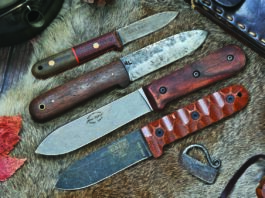
The Earth Skills Knife from TOPS Knives is large and has a very atypical profile. Matt Graham designed it as a type of survival knife, though not necessarily a heavy-duty one. It is quite thin and has a generous Scandi grind, making it absolutely wonderful for working the earth, cutting through rooted soil to plant new bulbs or vegetables, and light work like cutting branches and digging up old wire netting. It’s great as a close work tool and for preparing food but has little value for hard-use tasks.
The edge geometry and thin spine are not suitable for batonning, though the blade is great scraping tinder and striking on a rod. Because of these special features, the knife is at home in the garden or camp in that it likely won’t be used for initial setup, but rather for cutting food, root vegetables, harvesting forage and as a light machete. The grip is very comfortable but quite large. The blade stayed very sharp through testing and accomplished tasks easily with minimal wear.
Engineered for upland hunting and fine-detail game prep, Civivi’s latest fixed blade puts precision first.
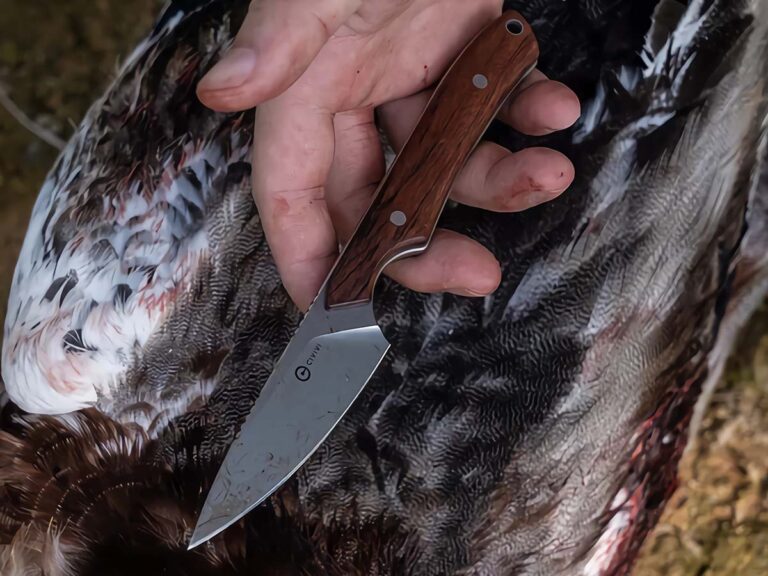
Civivi is expanding its lineup of dedicated field tools with the High Grass Field Knife, a compact fixed-blade built specifically for upland hunters and small-game processing. Designed by Michigan custom knifemaker Matt Gentry, the production model translates years of hands-on experience in Michigan’s Upper Peninsula into an accessible, purpose-built knife where fine control takes priority over raw size.
The inspiration for the High Grass stems directly from Gentry’s time spent pursuing small game with his son across Michigan’s northern terrain. Rather than modifying a general-purpose camp knife, Gentry set out to build a nimble tool optimized for delicate field-dressing tasks of fowl and small game.
To achieve that level of precision, the knife features a 2.93-inch drop-point blade with a flat grind and an ultra-fine tip, making detail work around joints and skinning far more manageable. Dual sections of jimping along the spine provide tactile indexing points, allowing users to safely choke up on the blade for tight, controlled cuts.
Field-Ready Materials
Civivi opted for Sandvik 14C28N stainless steel for the blade stock, heat-treated to 58–60 HRC. The steel offers a solid balance of edge retention, corrosion resistance and ease of resharpening in the field. A stonewashed finish helps mask the inevitable scuffs and scratches that come with regular use.
For the handle, natural Guibourtia wood scales offer a classic look that honors traditional hunting gear while maintaining a comfortable, ergonomic fill in the hand. Stainless steel hardware keeps the construction secure, and at an overall length of 7 inches with a weight of 2.26 ounces, the knife carries light on a belt or in a pack.
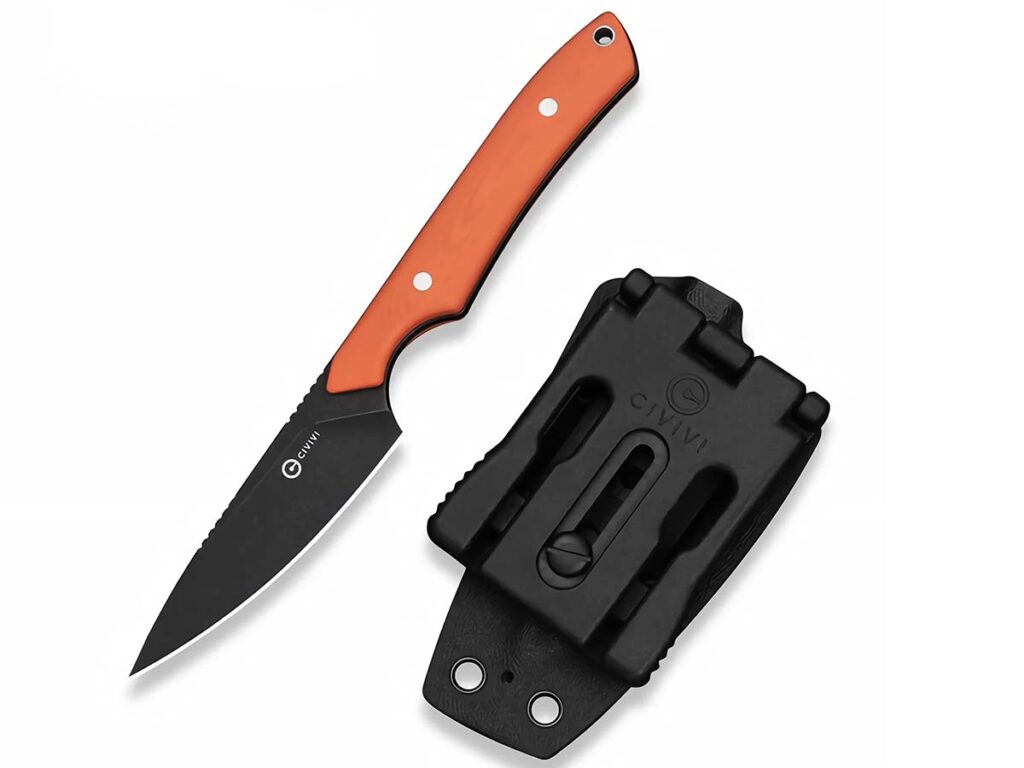
The High Grass Field Knife ships ready for the field with a molded black Kydex sheath. The setup features a T-Clip mounting system designed by knife industry veteran and BLADE Magazine Cutlery Hall of Fame® member Bob Terzuola, providing versatile attachment options for belts or pack webbing. A pre-tied black paracord lanyard comes installed from the factory for added draw leverage.
High Grass Field Knife Specs Designer: Matt Gentry Overall Length: 7” Blade Length: 2” Cutting Edge: 3.09” Blade Thickness: .12” Blade Steel: Sandvik 14C28N (58–60 HRC) Blade Grind/Finish: Flat grind, stonewashed Handle Material: Guibourtia wood Handle Thickness: .56” Knife Weight: 2.26 oz. Sheath: Black Kydex with Terzuola T-Clip Extras: Tied black paracord lanyard MSRP: Starting at $59
The technological advancements that have redefined the pocketknife as we know it.
When I stumbled onto the knife scene in 1985, the only pocketknives I had carried up to that point were slipjoints and lockbacks. Of course, slipjoints weren’t called slipjoints back then but simply pocketknives. Today, as far as BLADE® is concerned—not that it’s any major newsflash or anything—any knife you can carry in your pocket is a pocketknife.
All of which brings me to the subject at hand: my picks of the five most important pocketknife developments of the modern sporting knife era. In rough chronological order they are:
•The pocket clip:BLADE Magazine Cutlery Hall-of-Fame® member Sal Glesser’s introduction in 1981 of the Spyderco pocketknives with the hole in the blade and the pocket clip would turn the genre on its head. While the hole in the blade was a masterstroke in and of itself, it was the pocket clip that forever changed the way people would carry their pocketknives. Rather than rattling around in the bottom of a pocket with change, car keys and what have you, the closed knife was held on the pocket lip by the clip, free from pocket-bottom scratches and poised at the ready to be deployed to cut whatever needed cutting.
•The linerlock: Cutlery Hall-of-Famer Michael Walker invented the linerlock in 1981, but it would take a few more years before custom knifemakers—and shortly thereafter, factory makers—began readily adopting the lock that made one-hand manual opening and closing of the pocketknife an easy reality rather than an exercise in hand contortions. Today, the argument can be made that the linerlock is used on more sporting folders than any other lock.
•The flipper: While exactly who made the first folder with the flipper tab that manually deploys a folding blade with the tap of a finger may be up for debate, there is no debating that the person who popularized it was Cutlery Hall-of-Fame knifemaker Kit Carson. A simple addition to the pocketknife on its face, the flipper tab opens a blade as fast and easy as any other manual method—probably faster.
•The Ikoma Korth Bearing System (IKBS): Pivot systems that helped open folding blades quickly and smoothly had been around before, but it was the IKBS conceived in 2002 that took blade opening to a new level of quick and smooth. In conjunction with the flipper especially, the IKBS transformed one-hand pocketknife opening from fast to just this side of automatic. Developed by Brazilian custom knifemakers Flavio Ikoma and Ricardo “Rick” and Paulo Lala (the latter two collectively known as Korth), the IKBS is another masterstroke of design and invention.
•Material upgrades: These cover a number of materials and years, from Walker’s switch to titanium for his linerlock spring in 1983, to a wide array of other hi-tech substances in subsequent years for pocketknife handles, including titanium, thermoplastics, Micarta®, G-10, carbon fiber and other state-of-the-art materials that not only were super strong and tough but also were lightweight, reducing the weight of pocketknives to the point that they were basically unnoticeable in a pocket. Meanwhile, the advances in blade steels over that same stretch are too many to mention.
How about you? What are the most important pocketknife developments? Tell us in the comments.
A mainstay in the company’s catalog, the Ken Onion-designed, USA-Made Kershaw Blur remains a clear EDC choice.
Kershaw’s Blur has been in the company’s line for several years and it continues to be a good seller for the company. You get it all with the Blur—a handsome look, useful blade shape, and made-in-the-USA toughness.
Devised by custom knifemaker Ken Onion, the Blur exhibits the hallmarks of Onion’s design with its recurve drop point blade and optimized handle shape promoting user comfort, as well as safety. Plus, you get a choice of several variations with the Blur. Each differs by blade steel and handle color, adding some style and flair to your daily carry arsenal.
Kershaw Blur Blade
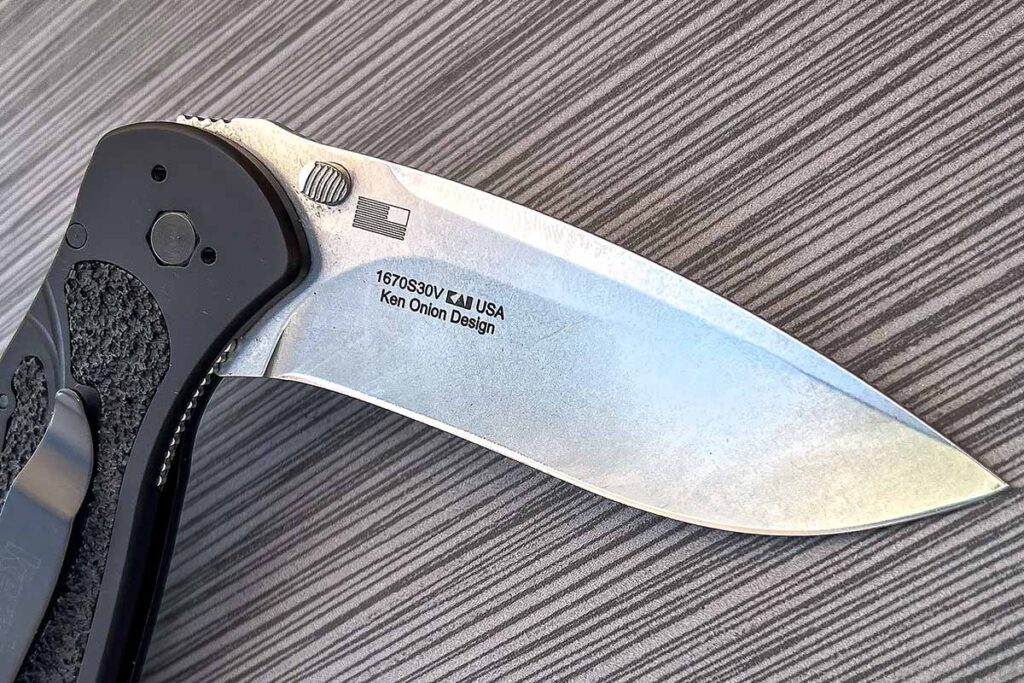
The Blur’s blade measures 3.4-inches long and is made of Sandvik 14C28N stainless steel. For those seeking a higher-performance steel, Kershaw offers an upgraded S30V version. Though the base-model steel is no slouch, as 14C28N holds an edge well, yet resharpens fairly easily. The Blur’s blade has plenty of bite right out of the box, thanks to its hollow grind.
The Blur’s blade has plenty of bite right out of the box, thanks to its hollow grind. Photos Marty Stanfield
For deployment, the Blur uses ambidextrous thumb studs. These are custom-designed studs, with a unique slanted portion. This rake allows you to bump with your thumb and then back off immediately, so they won’t be in the way of opening.
Speed Safe System
Deployment speed doesn’t disappoint, thanks to Kershaw’s Speed Safe assisted opening technology. The Speed Safe system was developed by Ken Onion and serves as a way to quickly and effectively open a folding knife blade quickly with minimal user effort. Essentially, a torsion bar propels the blade open after the user initiates blade movement by pushing out on the thumb stud.
Kershaw Blur Handle
For those who appreciate a solid and comfortable grip (who doesn’t?) the Blur incorporates some interesting design elements.
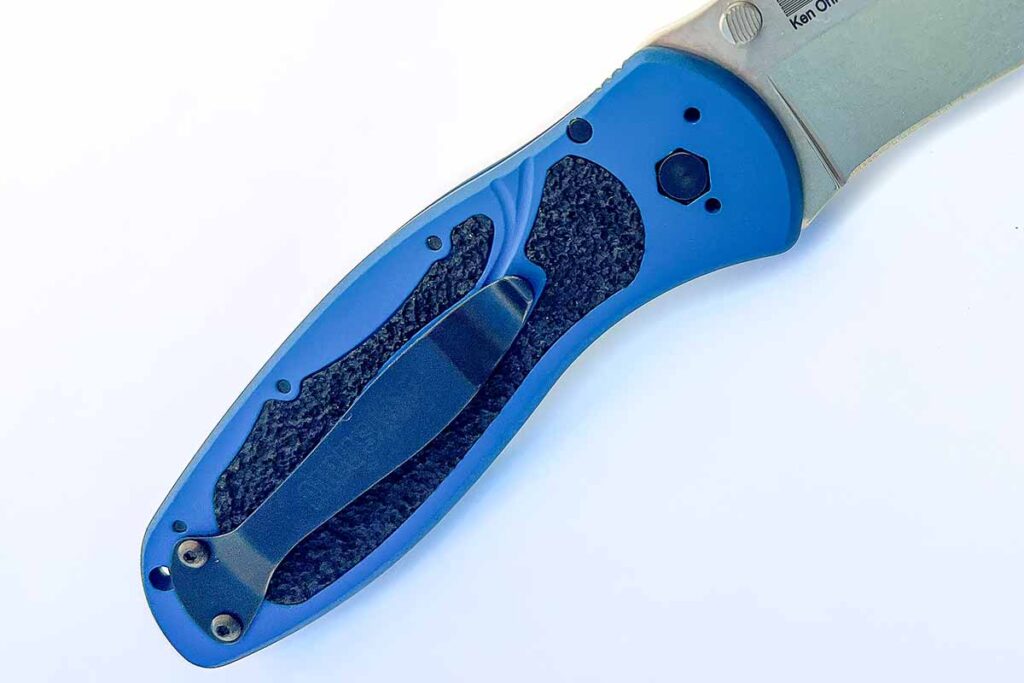
Starting with the construction, Kershaw has opted for aluminum alloy, making the handle both lightweight and strong. The shape is also well thought out, offering an intriguing and aesthetically pleasing shape, that doesn’t compromise on comfort. It’s a good example of Onion’s profound understanding of knife ergonomics.
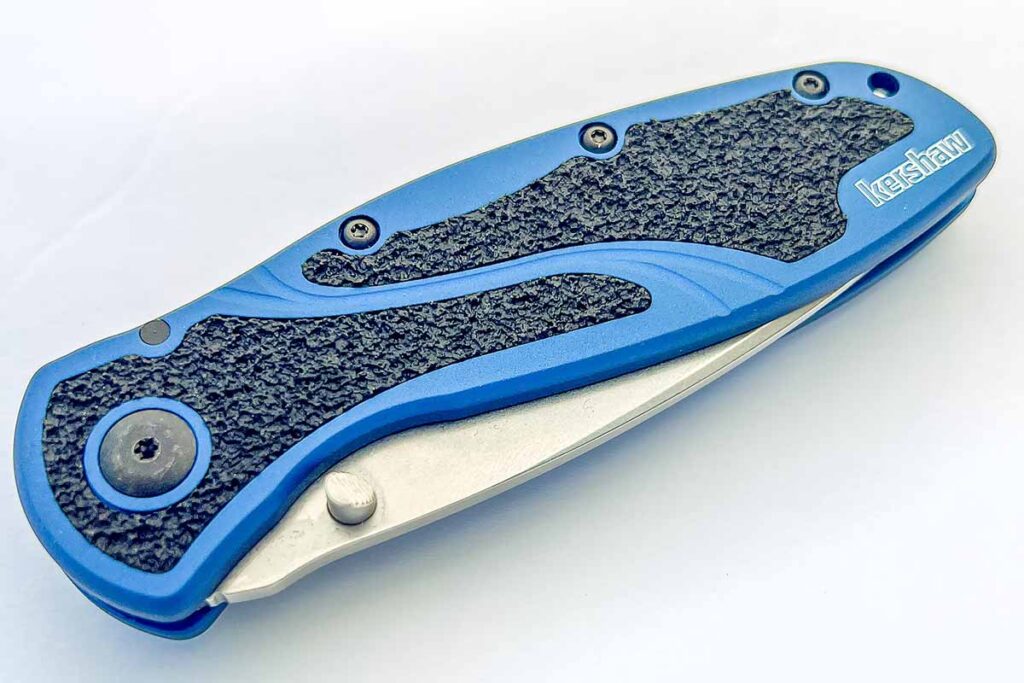
A fluid shape, the Blur looks nice and fits the palm well. Photos Marty Stanfield
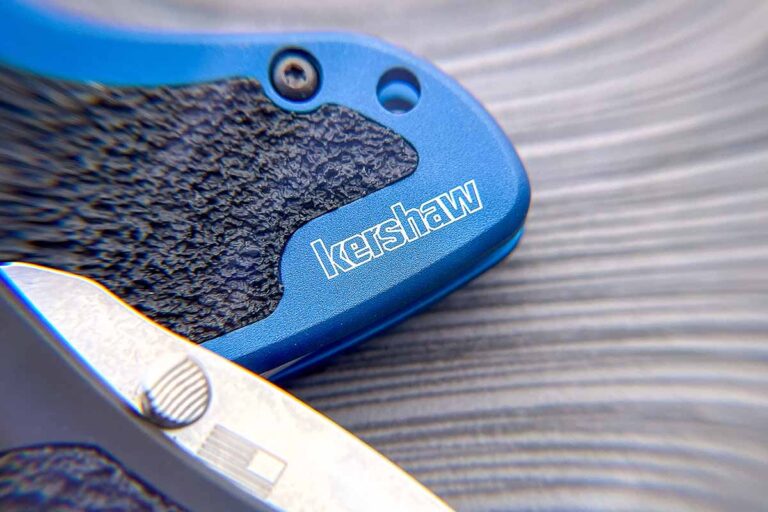
Furthering the usability, the Kershaw chamfers all the edges, ensuring there are no hotspots on the knife and textured rubber inlay inserts are a practical bonus, increasing grip traction tenfold with either wet or dry hands. Kershaw calls this material Trac Tech and it’s very similar to the self-adhesive grip tape you might find indoors in wet locations such as a swimming pool deck.
Interestingly, Trac Tech also helps with holding the knife to the pocket, making it a bit difficult to slide in and out. Depending on who you are and your particular activities, this can be a good thing or an annoyance. It is insurance from the knife falling out of your pocket, but it does slow retrieval time.
I like the use of Trac Tech on the blur simply because it gives the handle a more tactile feel to it.
Looking for more grip, Trac Tech inserts gives the Blur more bite. Photos Marty Stanfield
The general open build of the handle makes cleaning easy, especially when using compressed air or rinsing out under tap water. There is a pocket clip that helps to carry the Blur in the pocket and Kershaw gives you the option of either tip-up or tip-down carry but for right-hand carry only. Sorry lefties!
Final Cut
The Blur is a stylish EDC folding knife that doesn’t back down when there is tough work ahead. The recurve blade cuts very well, and its ample belly makes it an efficient slicer.
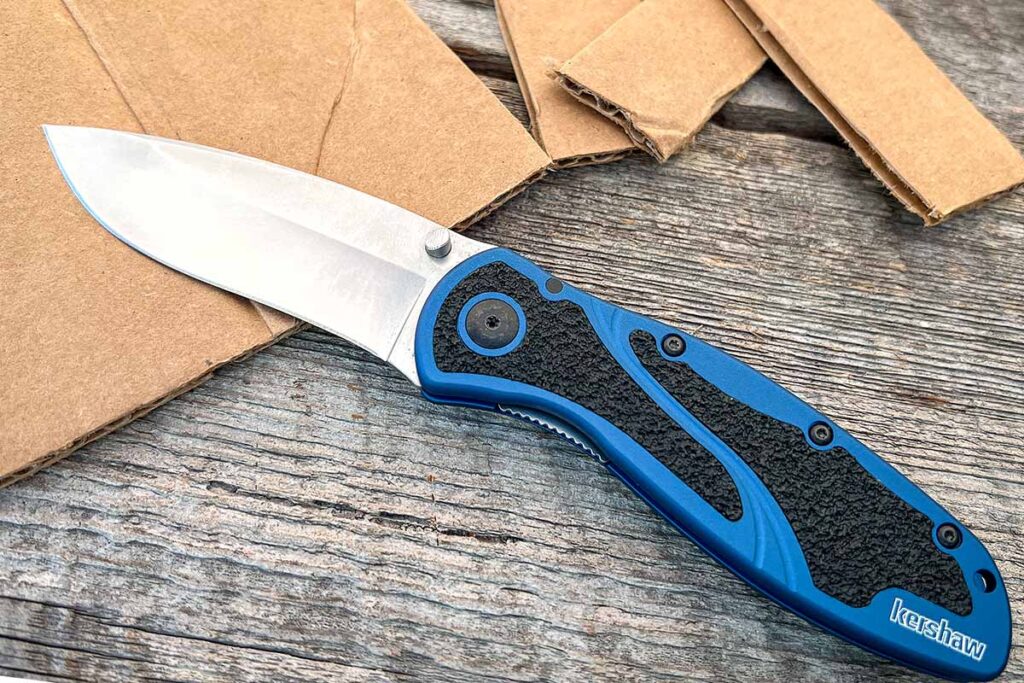
The hollow grind really thins the blade out nicely without making it too slender, and therefore it will cut through tougher materials with greater ease. It really excels at cardboard. I like this material for testing as it is a good standard because of its thickness and slight abrasiveness. Both aspects test the edge’s geometry.
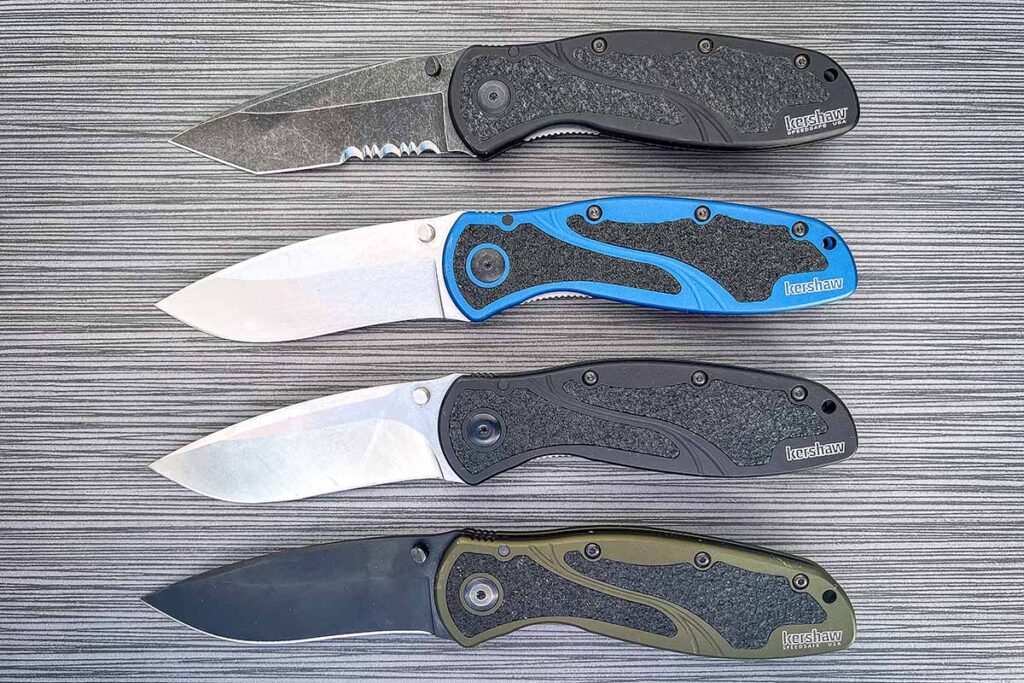
Kershaw offers several colors and blade options, helping the Blur fit most folks style. Photos Marty Stanfield
The liner lock of the Blur is dialed in nicely, it hits the tang on the lower third of the width of the blade and allows for some wear as the lock breaks in. Yet, the lockup is very secure. The exposed portion of the lock bar that you contact to release the lock has traction notches on it so you can get a good grip on it. I thought was a nice extra touch on Kershaw’s part.
Overall, the only nit to pick is I wish the clip was designed to carry the Blur deeper in the pocket. Other than this, no real issues to speak of with the knife
When it comes time to purchase a Blue, this might be the hardest decision because of the variety of models. There are a ton of colorways for the handle—black, navy blue, and olive green. Additionally, Kershaw offers several blade options, including plain edge and partly serrated as well as stonewashed, blackwash and Cerakote black finishes. If that weren’t enough, you also have a choice of a tanto blade as well, if that’s more your speed. Heck, there’s even an option with a carbide glass breaker at the end of the handle.
Still a classic after all these years, the Kershaw remains a solid EDC option. Photos Marty Stanfield
The Blur’s MSRP starts at $135 and goes up from there to as much as $185 depending on blade finishes. Overall, the knife presents an overall package—Onion design, high function, nice styling and plenty of options choices. What this adds up to, is an EDC option that should be welcome in anyone’s collection.