The Best Pocketknives For Women Are Knives That Are Easy To Maintain And Can Be Deployed In A Flash. These Pieces Stand Out From The Pack.
A pocketknife in and of itself isn’t gendered. It’s a piece of steel and aluminum, maybe Micarta®, that’s shaped to be a cutting tool.
However, certain knives are better for women due to the convenience, the fact that they are a bit smaller, or that they are excellent knives that are great at protection as well as standard EDC tasks. Below are a quartet that stand out from a crowded field of knives, any of which would be a great gift for your wife, sister, or yourself.
Kershaw Leek
Kershaw makes excellent knives at excellent prices, and the Leek is no exception. With a 3-inch blade and coming in at just three ounces, the Leek would be a perfect carry in a bag or a clutch as it doesn’t take up too much space.
The drop-point blade of 14C28N stainless steel is shaped to be a great EDC cutting tool as well as a puncturing implement if called upon. The bead-blasted blade and steel handle give the knife a clean, monochrome look. Made in the USA, the Leek opens easily with a flipper, and will serve you well for a very long time.
MSRP: $79.99
Benchmade Mini Griptilian
Benchmade makes high-quality knives with exceptional craftsmanship. The Mini Griptilian is small, nimble, and rugged knife that will be your loyal sidekick. It starts with the glass-filled nylon handle that provides a great grip and can take a beating.
The 2.91-inch plain-edge drop-point blade is CPM S30V stainless steel, opens with a thumb stud, and has a flat grind designed for slicing through pretty much anything within reason. The AXIS lock is fun to use and secures the blade safely and solidly in the open position. At just 2.81 ounces it’s incredibly light and perfect for life on the go.
MSRP: $150
Brighten Blades Green Day
Brighten Blades is a small, women-run factory knife outfit based in Utah. The Green Day knife is part of the company’s “Not So Heavy Metal Series.”
The knife is a small, minimalist blade with a 2.5-inch 8Cr13MoV stainless steel blade and an aluminum handle in a rich green. The blade also comes with a suede carrying case to store in a purse or pocket. This also keeps the knife in one secure place and doesn’t allow for accidental deployment.
The knives are fun to use and come in many different colors and designs.
MSRP: $29.99
Victorinox Swiss Army Knife
The unstoppable Alpine Swiss Army knife (SAK) from Victorinox is a great pocketknife for women. Even this small version features numerous tools that will help every day, from a spear-point blade to tweezers, scissors, nail file, and screwdriver.
All of the tools are made from stainless steel and are designed to last for life. The Swiss Army knife isn’t just for the intense outdoor enthusiast or craftsperson; the tool is excellent for busy parents looking to have a small toolbox at hand for whatever the kids can throw at them. The SAK is utilitarian and has endured for a reason.
You can also customize this version in 10 different colors, ranging from teal and pink to black and lime green.
Nothing cuts as wicked a profile as a tanto knife.
The tanto is one of the most iconic and recognizable knife designs to ever forged, and today you can find it being made all over the world. From pocket folders to heavy fixed blades, there are a lot of Tantos to choose from.
Today, we’re going to go over everything you need to know about the tanto, from its history and modern usage to the best modern examples you can add to your collection.
Let’s dive right in.
Tanto Knives: Rich, Battlefield-Proven History
Japan has gifted the world with some excellent things: sushi, Godzilla, anime, the Honda Civic… list goes on. Perhaps some of the most iconic pieces of Japanese culture to spread around the world though are its blade designs.
The katana is probably the most famous in terms of combat-focused designs, but a close second is the beloved tanto. A very core idea of many sword-based Japanese martial arts is the idea of daishō, which translates to “big-little”.
Daishō essentially just means having one long sword, and one short sword or long knife to accompany it. Traditionally, the larger sword would often be left outside when entering a palace or other government building, or a temple, and the shorter weapon would be carried inside, tucked through a sash.
The Sidearm of Choice Before Pistols
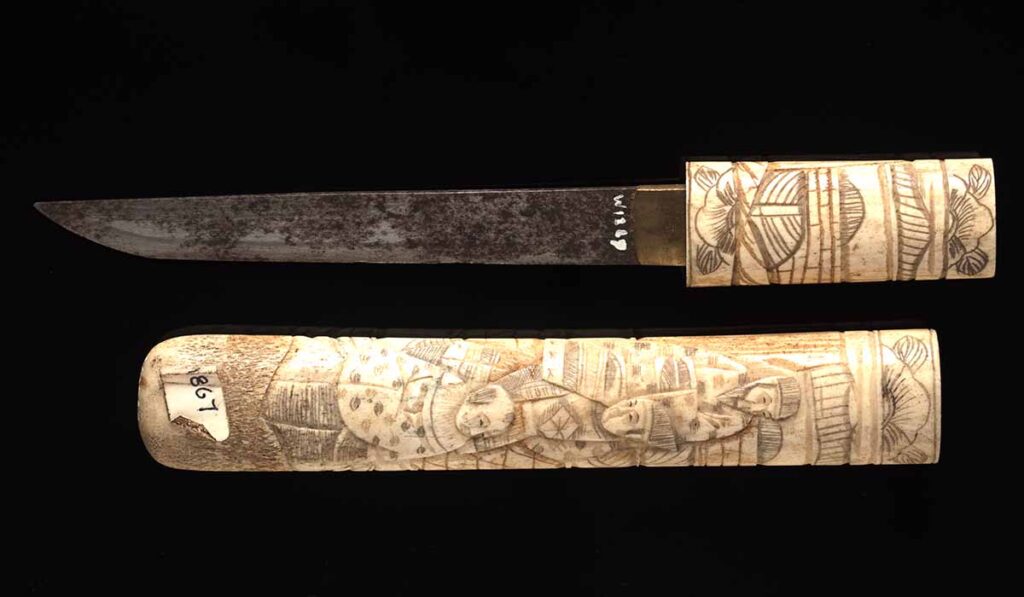
Originally conceived as a sidearm to be paired with a long sword, the tanto was first carried primarily by Samurai alongside a tachi, the precursor to the katana most of us are familiar with from modern popular culture.
Over time, the tanto become more widespread, and a smaller version known as a kaikenbecame popular as a self-defense tool for women. Over several hundred years, the tanto became shorter and thicker, and closer to the blade we know today.
Photo: Wikipedia
Though eventually replaced in serious warfare by the wakizashi (functionally just a shorter katana, though with some design differences) the tanto remained popular for ceremonial usage and became a matter of pride and expression to wear or own in later years.
The tanto then saw a resurgence in the years leading up to WWII, as they were viewed as more traditional by the Imperial Court. Following Japan’s defeat, limits on sword forging caused a decline in all traditional Japanese sword-making.
In the 1960s, American and European obsession with Japanese martial arts (spurred on by excellent films such as 7 Samurai, Yojimbo, and others) lead to a resurgence of the tanto, particularly as a combat-focused knife shape.
Today, the iconic tanto tip is found on traditional full-length fixed blades, as well as more modern folding pocket knives designed for tactical/defensive use. Plenty of manufacturers make tanto-tipped knives, as well as smiths making excellent traditional tantos. (We’re going to cover both in our reviews, don’t worry).
What makes a Tanto, a Tanto?
Today, the definition of a tanto has shifted far beyond the traditional knife of 10th-century Japan, but we’re going to start there and then we’ll talk about the more modern incarnation where we see tanto tips added to a variety of EDC and tactical knives.
Traditional Tanto Blades
Originally, the tanto was more what we would call a short sword, or perhaps a long dagger, and was worn by samurai. It was very much a weapon to begin with, but become a more ornate and ceremonial piece over the years as weapon designs evolved.
The traditional tanto was a single or double-edged dagger with a length of around 6-12 inches and was designed primarily for stabbing. It was forged with very flat sides, and some were left short with an extra thick cross-section to aid in piercing armor.
Modern Tanto Blades
The more modern interpretation of the tanto is heavily influenced by American tactical knife designs and proves more common outside of Japan. Traditional blades are still made (and beautiful) but less practical for the modern world.
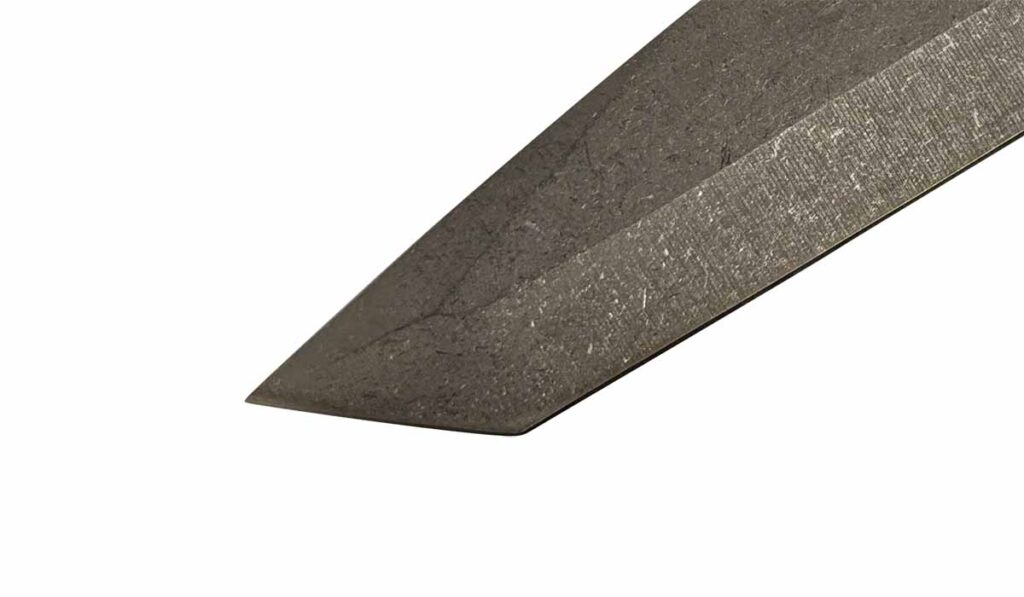
A variety of American and European knife makers now produce tanto-inspired knives with a very angular tip with the iconic sharply-upswept blade tip, essentially leaving you with two cutting planes—one parallel to the spine of the knife, and one at a 45-degree(ish) angle to the spine angling up towards the tip.
Most of these modern “American tanto” designs are folding knives, and while many are for “tactical” or defensive use, the tanto blade shape has become increasingly popular for EDC knives as well.
Pros of the Tanto Design
Piercing: Piercing, piercing, piercing. The shape of the tanto is optimized for stabbing and piercing, and it excels in those contexts.
Whether you’re a pre-Edo period Samurai trying to slip a blade between (or through) segments of your opponent’s armor, or a frustrated office worker attempting to poke your way into some plastic clamshell packaging, the tanto is ideal for putting a hole in something.
We see similar knives used for leather work around the world, and with good reason. The tanto is great for putting a hole in tough material.
Draw Cuts: Modern American tantos are also great for draw cuts and slices, particularly when you’re working with something on a flat surface like a cutting board. The dual edge geometry makes short work of many slicing tasks.
You can also (carefully) use that second point where the two edges meet like a chisel for shaving wood, scraping a sticker, etc. This makes for a very handy EDC.
Defense: Lastly, as a defensive tool, tantos excel because of their narrow, piercing point. This point easily defeats heavy clothing and makes for an effective means of defense in skilled hands.
Many knife-based martial arts focus on stabbing strikes as the most effective fight-enders, and the tanto fits that training paradigm very well, while still being perfectly capable of slashing.
Cons of the Tanto Design
Cutting Edge: The tanto’s main drawback, besides additional time and care needed when sharpening, is the fact that you lose some usable blade edge by having essentially two edges, one parallel to the spine and one swept forward and upwards.
In practical use, this means you have less effective blade length for certain tasks, around 20% less than you’d have with an equivalent-length drop or clip-point blade. To compensate, tanto blades intended for EDC are usually a bit longer than a similar knife with a different point.
All of this can be adjusted for, and as long as you aren’t doing something like spoon carving, you probably won’t notice a difference in real-world use.
At the end of the day, “real-world use” for most of us is opening boxes and packaging, and slicing apart those god-awful packing straps used to hold children’s toys in display boxes. And the tanto excels at all those tasks.
How The Hell Do You Sharpen a Tanto?
Sharpening a tanto may look a bit scary, but once you break the process down, it’s quite simple. All you’re doing is sharpening two edges that meet at a point. The only real pitfall is that it’s easy to round over the point where the forward edge and the edge parallel to the spine meet.
To avoid this, be mindful of that meeting point, and stop your sharpening stroke on or before it. Then, when sharpening the forward edge, rotate the blade and sharpen it in much the same way you would a chisel.
Just be careful not to pull through the point where the two edges meet so you don’t round over that point and you’ll be good to go. Beyond that, it’s just like sharpening any other knife.
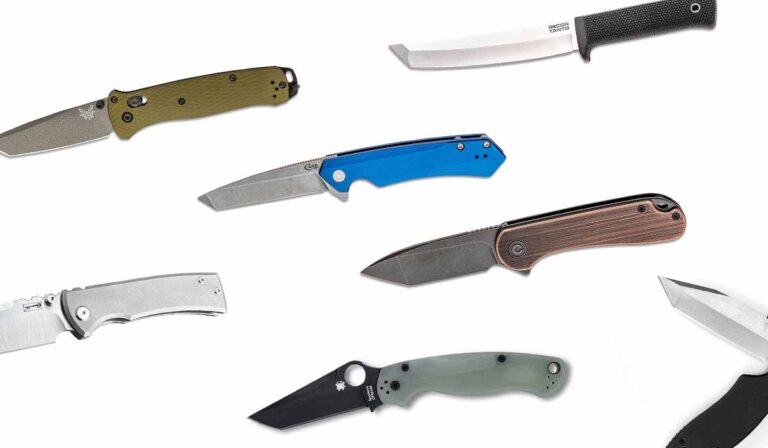
10 Ten Knives with Tanto Blades: EDC, Fixed Blades, and Folders
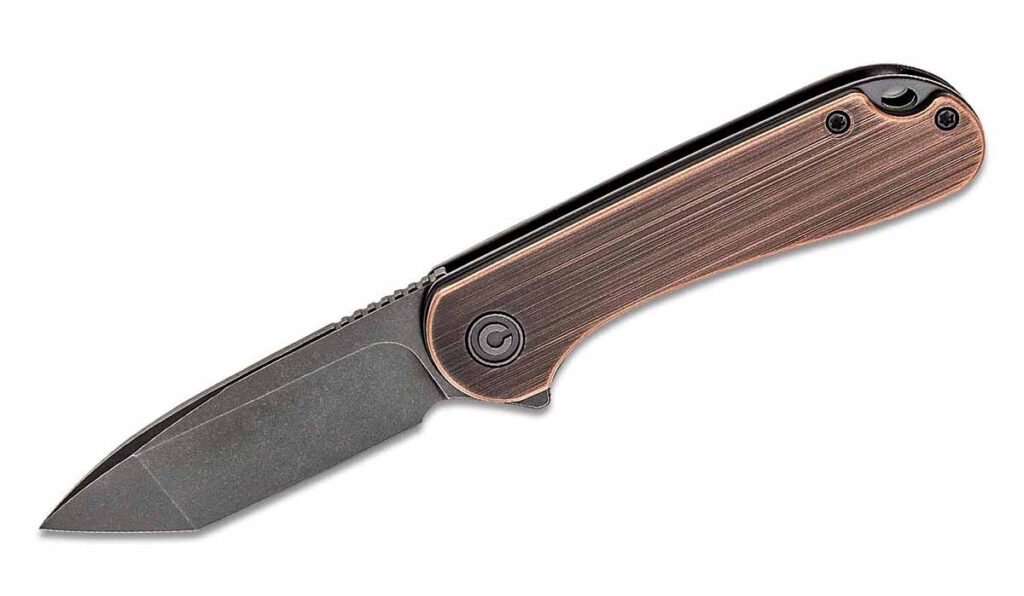
CIVIVI Elementum Tanto
The CIVIVI Elementum has become something of a modern classic in the EDC knife world. Since its release a few years ago has gone on to become one of the most popular pocket knives around.
There is a nearly limitless amount of blade and handle combinations out there now, but we’re going to focus on this excellent tanto blade with a copper handle.
At its core, this is still the same Elementum knife aficionados are already familiar with (a simple, dependable liner-lock flipper folder) but outfitted with a tanto blade that makes piercing tasks a cinch, without compromising on slicing performance.
Basically, it’s everything you need in an EDC knife for regular daily tasks, and it comes with a gussied-up stonewashed tanto blade and a lovely hand-polished copper handle that adds a touch of class and elegance to this very affordable knife.
The Elementum tanto is also available in a button lock version and features a 2.96-inch blade made of D2 steel.
MSRP: $80
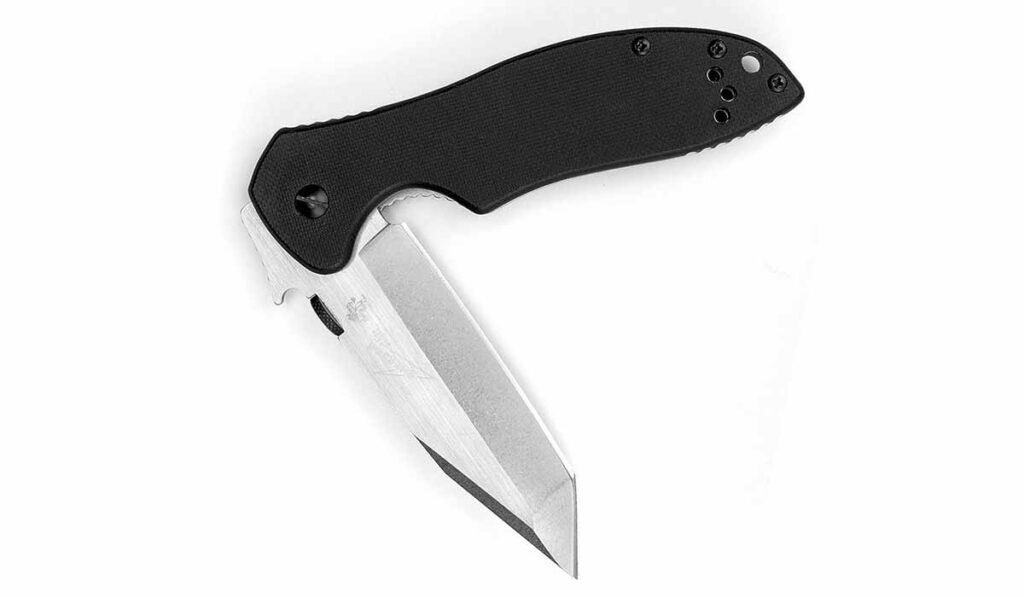
Kershaw Emerson CQC-7K
Ernest Emerson has brought much success to Kershaw with his designs. Back in 2014 he hit it out of the park again with the Emerson CQC-7k, which won that year’s Best Buy award at BLADE Show for sheer value. In the almost ten years since it’s held its own as one of the best EDC options out there.
It features the iconic Emerson Wave that facilitates blade deployment by simply pulling it from the pocket and hooking the “Wave-Shaped Feature” on the pocket on the way out (sort of an inverted kicker).
It also features an ambidextrous thumb disk that doubles as a comfortable place to press your thumb when doing fiddly work. The scales are nicely-textured G10, and the handle features a stainless frame lock that is one of the more secure we’ve tested (read: beat the hell out of).
The one thing to look out for is the blade steel. I would suggest spending an extra few bucks on the D2 stainless version and avoiding the 8cr14Mov version. There’s no reason to spend more than $40 on a knife with bottom-tier blade steel like that in this day and age.
You can get five gas station knives for that price and be better off.
The Emerson CQC-7K has a D2 blade that is 3.25-inches long.
MSRP: Starting at $74
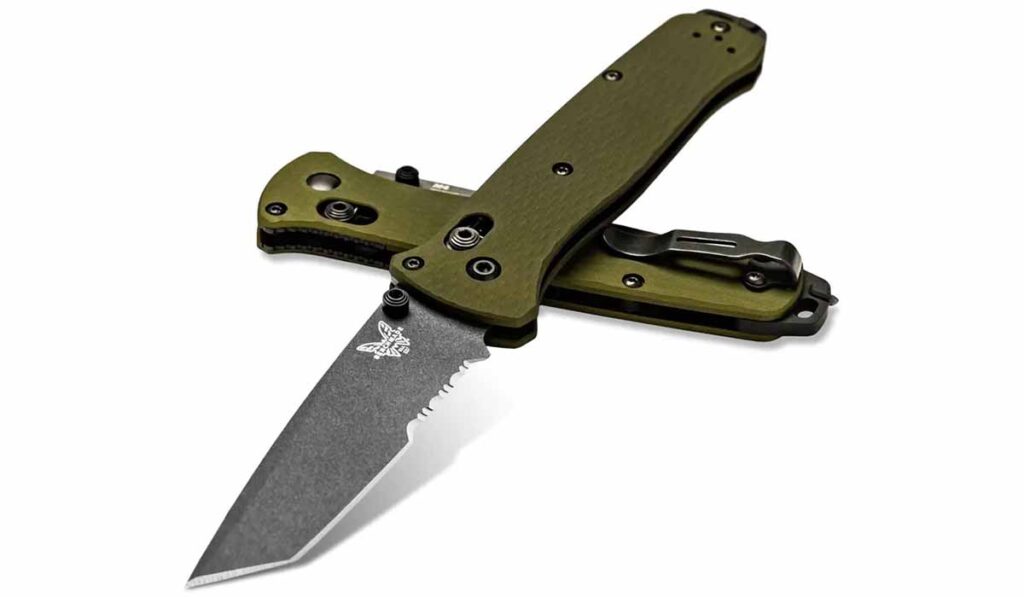
Benchmade Bailout
You’ve heard of the Bugout, surely. Now meet its newer, slightly-tacticooler cousin, the Bailout (one of my favorite knives of the past several years).
As you can surely imagine, the Bailout is a bit of a riff on the Bugout most of us knife fans know and love, but with some notable changes. Our favorite version is the CPM-M4 model which features woodland green anodized aluminum handles.
CPM-M4 is a great steel, which you would expect from Benchmade, and the knife itself is the perfect length to straddle the line between EDC knife and tactical folder. It also features a lanyard loop if you’re one of those people who like lanyard loops, and more interestingly a micro glass breaker.
How often do you need to break a car window in an emergency? Probably not very often, but it is nice to have it if you’re leaning toward a more tactical-style knife. You can also get a version that doesn’t have the glass breaker or the aluminum handles if you want to save a bit.
The Bailout features a 3.4-inches, CPM-M4 blade.
MSRP: $129
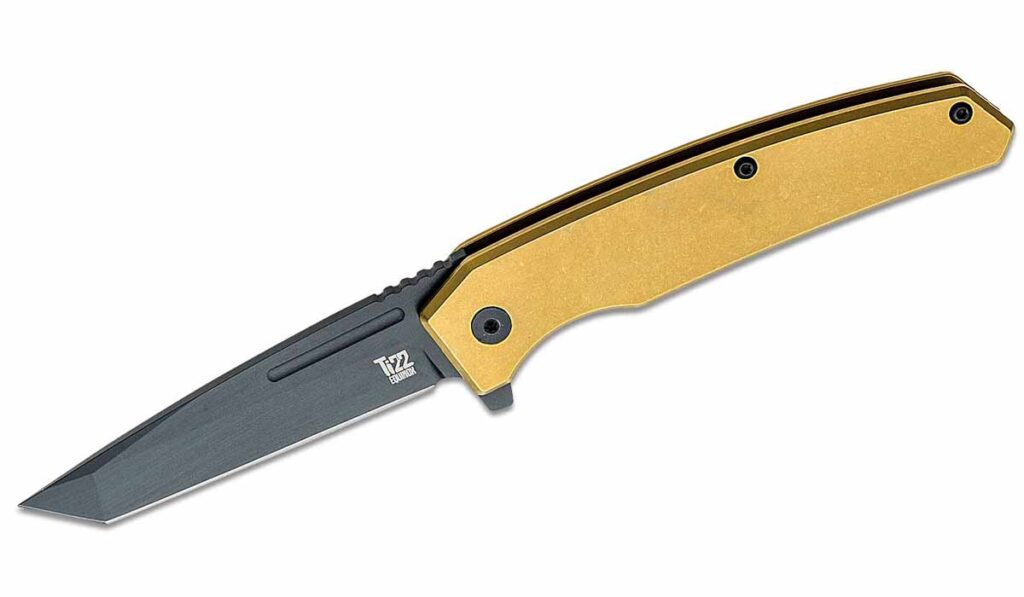
Ontario Ti-22 Equinox
Ontario Knife Co. is one of the most criminally underrated makers out there. Everything in its catalog is smartly designed and intended to excel in real-world conditions. That includes the Ti-22 Equinox.
It features, as the name suggests, a full titanium handle and an S35VN blade coated black to inhibit rust and corrosion in difficult environments. S35VN is a premium steel that holds an edge incredibly well, and the lightweight titanium handle is as robust as you could ever want.
The action is flippy and fidget-friendly, and the handle feels comfortable during extended use. The blade slices paper right out of the box, and comes to a sharp angle where the forward edge meets the primary cutting edge, giving you plenty of piercing power.
Draw cuts, slicing, and even some camp kitchen prep were easy and straightforward, and the knife handled being carried on a sailboat for a week without showing any signs of rust. All in all, a great EDC that again toes the line towards the more tactical/defensive side of things.
The Ti-22 has an S35VN blade that is 3.03-inches long.
MSRP: $138
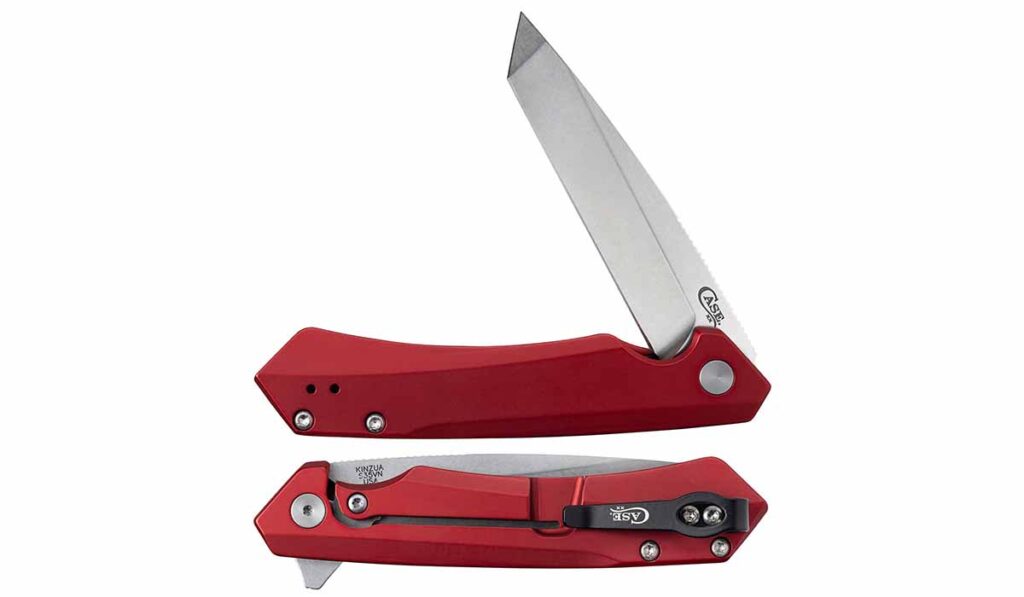
Case Kinzua
Case Knives made a flipper! Several actually, with the Kinzua being part of the first line of Modern Everyday Carry Knives to come from this iconic brand.
This isn’t your grandad’s Case knife, though we love some of those old three-blade traditional babies as much as anyone. These are incredibly modern designs for a modern audience that expects things like one-handed opening, a frame lock, and a deep-carry pocket clip.
In addition to all that, the Kinzua (named for a scenic forestry area in Allegheny County, PA) features an S35VN blade and faceted anodized aluminum handles that are a joy to hold. The flipper tab is nicely contoured, and the knife opens and closes smoothly.
The tip is a now-familiar American tanto and is great for piercing pesky packages, or anything else you might need to poke a hole into during your daily life.
MSRP: $179
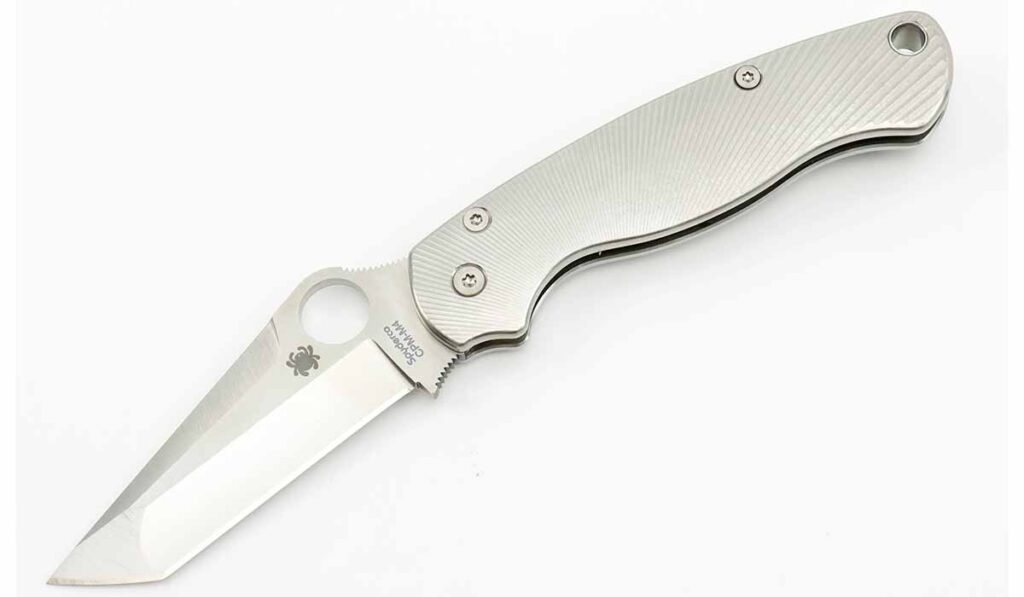
Spyderco Paramilitary 2 Tanto
The Spyderco Paramilitary 2 (or PM2) is beloved in the EDC community, and it’s not hard to figure out why.
It features a polished washer pivot system that is very smooth to open and close, features Spyderco’s iconic compression lock, and now, for the first time, comes with a tanto blade.
That blade is made of CPM-S30V steel, one of the best you can get in a pocket knife at this price range. Sharpening isn’t too difficult, and the edge will last you a very long time, even with aggressive daily use battering away as you slice open Amazon boxes (or whatever).
The PM2 has fine-textured G-10 handle scales out of the box, but you and your trusty screwdriver can pop those off and replace them with any one of roughly ten bazillion aftermarket options. Companies like Flytanium keep PM2 owners well-supplied with choices.
MSRP: $246
The Spyderco PM2 Tanto features a 3.44-inch blade made of CPM-S30V steel.
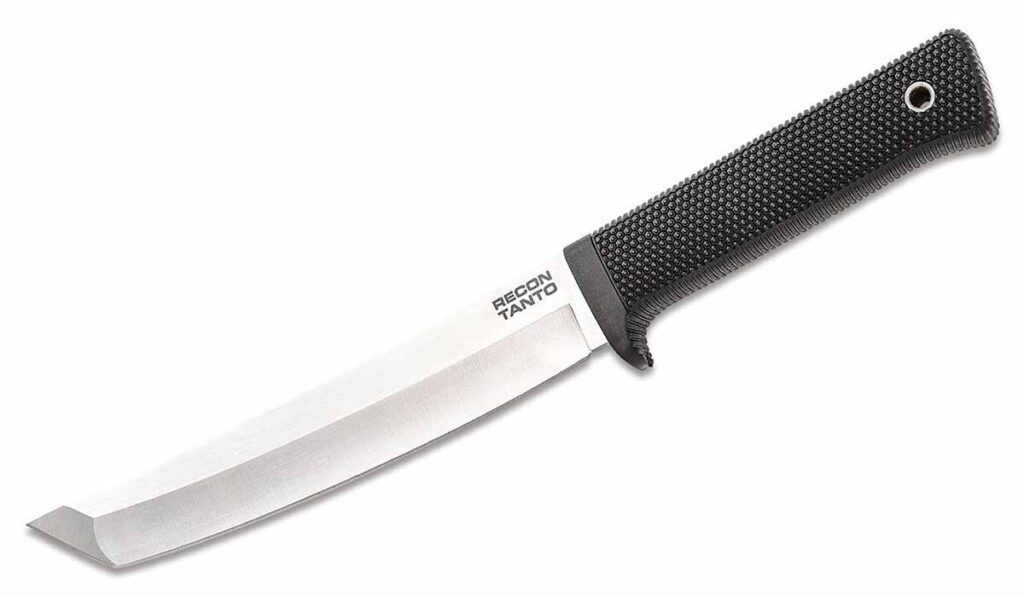
Cold Steel Recon Tanto
Of course, we can’t have a list of modern tanto knives without bringing out something from Cold Steel, the progenitors of the modern “American tanto” that is the most accurate description of most of the knives on this list.
Their Recon Tanto is our first fixed blade on this list and is positioned as a tactical/rescue blade. The incredibly robust SK5 steel used in the blade is a common for hard-use tools like machetes and survival knives, particularly military ones.
The grip is made with Kray-Ex, which is designed to maintain good friction in the hand at all times, even if your hands are wet or you’re wearing gloves. It also doesn’t shred your paws like some rougher materials.
If you’re looking for a more tactical tanto that can handle everything from camp tasks to self-defense, this is a great option that is a bit heavy, but bomb-proof and reliable.
The Recon Tanto has a 7-inch SK5 high-carbon steel blade.
MSRP: Starting at $70
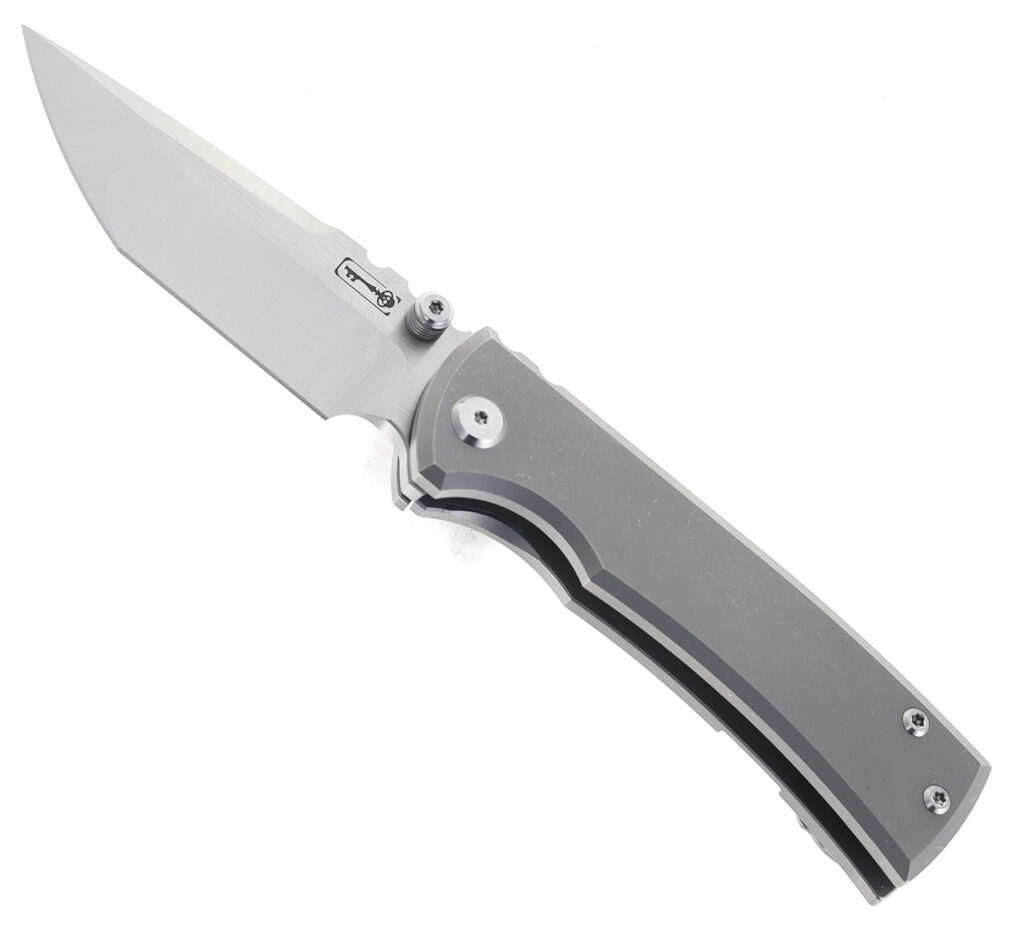
Chaves Redención Street Tanto
Ramon Chaves is a custom knife maker that has made a name for himself as one of the premier designers of tough, hard-wearing, but still stylish blades. His Redención tanto is…very expensive, and worth every penny, exactly the way a custom knife should be.
If you’ve got the cash and you like the look of it, especially if you enjoy the artisan nature of a custom knife, go buy that.
For those of us with slightly less to spend, Reate has put out a production version of the Redención that comes with a slightly more obtainable street price and is considerably easier to find in stock.
Ramon works hard, but it’s always going to take longer to produce a custom knife than a production knife coming from a factory with purpose-built tooling. The Redención Street is a great way to get your hands on the design, without waiting months for the custom version.
The Street Tanto is an incredibly well-built framelock folder with an aggressive piercing tip. Despite a 3.63-inch blade length, the whole thing weighs in at just over 6oz thanks to the titanium handle design (which you can get in about two dozen different colors).
The blade is made from the fabulous Bohler M390 steel, one of the best you’ll find in a pocket knife.
MSRP: $300
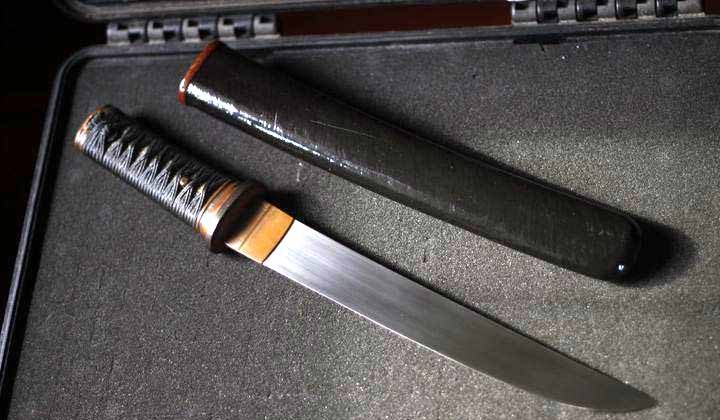
Siam Blades Traditional Black Copper Hira Tanto
Lastly, I’m throwing in a little treat for the two or three of you reading this who came here looking for traditional, no-fooling, tantos made the old way. Siam Blades is a traditional blacksmith shop located in Thailand, but they have Japanese-trained smiths that create blades using traditional methods.
For most people, this is going to be a good balance of value and authenticity. A traditional tanto made in Japan will probably run you about three times what this one does. The Black Copper Hira tanto is made to a similar standard, in the same traditional way, and is as beautiful as it is functional.
Best of all, they have stock ready to ship, so you don’t have to wait 18 months for your tanto to be finished and shipped. I’ve chosen the Black Copper version here, but there is a large variety available depending on what aesthetic you’re going after.
The blade itself is made of extremely durable high-carbon SK5 steel (very common in machetes, and battle-ready sword reproductions) and is 9.5-inches long.
MSRP: $820
Final Thoughts on Tanto Knives
The tanto is an iconic design, whether we’re talking about the traditional Japanese original or the modern American remix. This knife shape has stuck around for a thousand years for a reason.
Today, most production tantos are more in the American style at least as far as the tip goes, but this battle-tested design has its roots going back much farther. I hope you’ve enjoyed this brief look into that long history, and you’ve got a better idea of what your options are for picking up a tanto of your very own.
More than mere knife sharpeners, these options are complete honing systems that keep your blades razor-sharp.
Many of you probably learned to sharpen knives freestyle on a carbide, ceramic or diamond stone that required setting the proper angle by guesswork. The problem with sharpening a knife freehand is that no matter how good you are, the angle can vary with each stroke.
Fortunately, knife sharpening systems these days are so advanced they can virtually eliminate human error. Among other features, the systems allow the user to preset the blade angle and lock it in so it never varies throughout the sharpening process. Of course, systems that “lock in” sharpening angles are nothing new. However, the ways today’s angle-guide models do it not only are especially creative and user friendly, the best of them offer many other highly useful functions as well.
Before reviewing four of the latest examples, a word of advice when sharpening a knife: stop and gauge your progress as you go. It will help ensure you don’t miss a dull spot and also keep you from over sharpening/abrading, thus preserving the life of your blade.
Smith’s Edge Pro Electric Sharpener
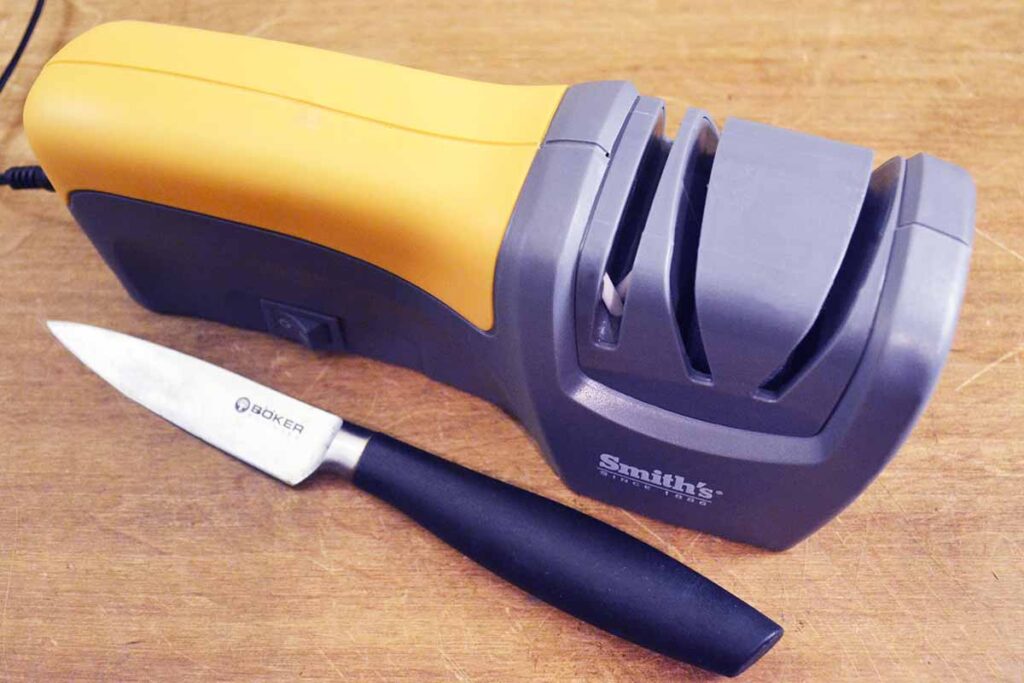
The Smith’s Edge Pro Electric Sharpener provides a competent edge in a minimum amount of time. It has angled, electric-powered left- and right-side coarse grinding slots (right), and a vertical manual ceramic rod slot (left) for fine honing. The knife is a Boker paring model.
Smith’s has gotten more into electric sharpeners lately and the Edge Pro Electric Sharpener is one of the company’s latest. It is a countertop unit with a 3-foot-tall main housing rounded at the top for gripping. It is a three-stage pull-through sharpener—right side blade, left side blade and vertical hone. The right and left side pull-through slots access coarse diamond wheels that sharpen each side of the blade via a motor turning the wheels, the end result being an angle of approximately 22 degrees. The non-electric third slot houses two crossed ceramic rods to hone and de-burr the edge. A detachable electrical cord with adapter plug is included and a rocker switch on the base cuts the unit on and off.
Sharpening with the Edge Pro is simple but some tips will make its use more efficient and hazard free. First, this is a pull-through sharpener, so do not try to push the blade through. Second, for the best edge keep the blade as close to level as possible. Last, don’t apply too much downward force—you can bog down the motor. Steady, moderate pressure works best. The hone slot removes any rough burrs and sharpens the edge. I finished the blade with a leather strop and the edge was shaving sharp.
Smith’s Edge Pro Electric Sharpener Specs Type: Benchtop electric, slotted Dimensions: 8.5” long, 3” wide, 3.5” tall Main body material: Plastic Sharpening slots: Two coarse, one fine Grit types: Diamond coarse and ceramic fine Carry: None; tabletop design Weight: 1 lb., 4 ozs. Country of origin: U.S.A. MSRP: $32.99
Cold Steel Benchtop Knife Sharpener
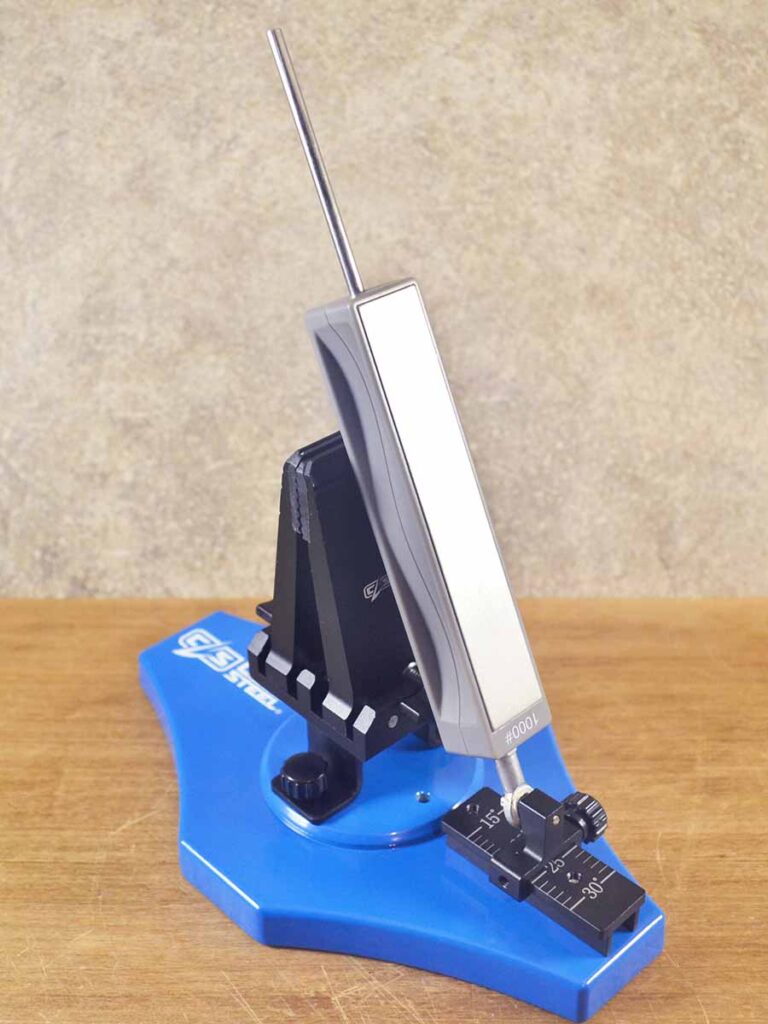
The rod angle of the Cold Steel Benchtop Knife Sharpener is adjustable from 15 to 30 degrees and is locked in by a thumbscrew on a sliding mount. To reverse the blade for sharpening the opposite edge, remove a thumbscrew from the base and rotate the tower 180 degrees.
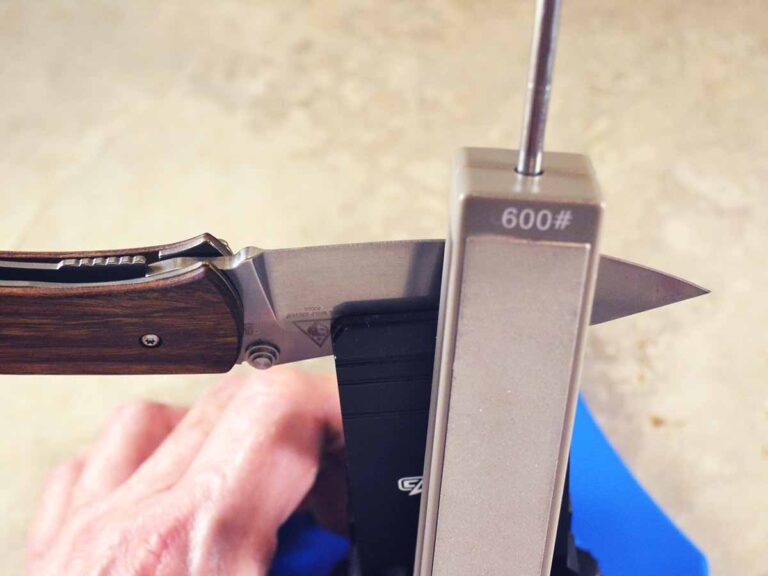
The Cold Steel Benchtop Knife Sharpener is an affordable version of the variable fixed-angle sharpeners folks like to demonstrate on Instagram and Facebook. The knife is mounted blade-up* in the jaws of a clamp and the grit block sweeps across the edge horizontally. The blade is mounted at the top of the unit upside down, and the rod that holds the grit block is mounted on one long end of the base. The rod angle is adjustable from 15 to 30 degrees and is locked in by a thumbscrew on a sliding mount. To reverse the blade for sharpening the opposite edge you must remove a thumbscrew from the base and rotate the “tower” 180 degrees. There are two grit blocks, each with different diamond-coated surfaces: 300 and 600 on the coarse block, 800 and 1,000 on the fine one.
There’s a good reason for watching videos on complicated sharpeners such as these. I noticed the tower (my jargon for the sharpener’s tall main component) where it mates to the base had slack in it, allowing it to rock when sharpening. I watched two videos and saw why. When sharpening the edge with a grit block, the loose base allows you to follow the edge of the blade as the block traverses from base to tip. To hold the tower stable, use your free hand to keep the tower from tipping backward while your other hand sweeps the blade edge with the grit block. This is a bit awkward until you get the hang of it. When you finish one side of the blade, undo a thumb screw and rotate the knife 180 degrees to do the other side. Then start over again with the next finest grit until you finish with the 1,000 grit.
It seems time consuming but remember, this is a budget fixed-angle sharpener that costs less than many diamond bench stones. If you want to learn the basics, this compact sharpener is a good one. (Author’s note: The clamp jaws are wider than on the other fixed-angle sharpeners, which means it will not work with as narrow of a blade width as the others reviewed.)
Cold Steel Benchtop Knife Sharpener Specs Type: Fixed angle, horizontal swing Dimensions: 8” long, 5” wide, 9.75” tall Main body material: Steel Grit types: 300, 600, 800 and 1,000, diamond coated Carry: Hard-shell thermoplastic case Weight: 2 lbs. Country of origin: China MSRP: $129.99
Work Sharp Precision Adjust Knife Sharpener Elite
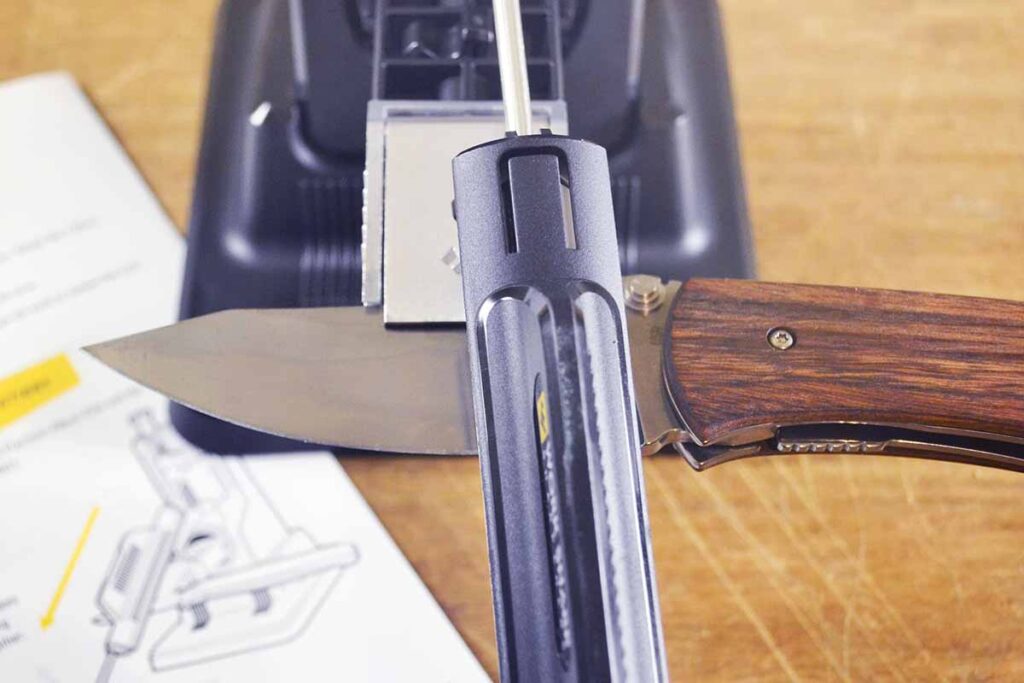
The Work Sharp Elite with the guide rod and a Tri-Brasive block is ready for action. According to the author, he snuck the Elite’s instruction pamphlet into the photo because Work Sharp does an outstanding job of providing set-up and use instructions, which is not always the case with some sharpeners.
The Work Sharp Precision Adjust Knife Sharpener Elite is an affordable, sophisticated sharpening system. It is a fixed-angle unit that operates using rods with an array of grit blocks that would make the pickiest sharpening aficionado drool: 220, 320, 400, 600 and 800, a ceramic rod for serrations, and a leather strop. That’s right, you can even strop with it. The tower clamps the blade, sets the angle of the edge you prefer, and holds the rod and grit block. It is the only sideways/horizontal blade mount of the test bunch. The Tri-Brasive grits are held in a special housing with a finger grip, three to a block—two total except for the ceramic rod and strop, which have their own smaller housings. Each housing has its own rod, making it easy to install and use. The clamp holds the knife with the blade edge facing the user. (Author’s note: This is the budget version of the Work Sharp Professional Precision Adjust Knife Sharpener, the BLADE Magazine 2023 Accessory Of The Year [page 16, September BLADE®], which has grit widths of approximately 3/4 inch like the other fixed-angle sharpeners reviewed. The Elite model has 3/8-inch-wide grit slabs that may wear out faster.)
Assembly is shockingly easy—no tools required. Once the blade is mounted in the clamp, the grit housing/rod locks into place with a magnet located under the degree-setting brace on the tower, and that sets your blade angle. The edge faces you horizontally, making it easy to gauge your progress. Simply work your way up the consecutively finer diamond grits until it’s fine ceramic and strop time, which gives the razor-sharp edge a blazing shine. The ceramic rod for serrations is a nice addition. The only thing that might give you trouble is the base can tip forward if you put too much pressure on the blade. Easy does it is the byword here. All in all, the Work Sharp Precision Knife Sharpener Elite is a breeze to set up, easy to use for blisteringly sharp results, and packs up nicely when it comes time to stow. It is a tremendous value.
Work Sharp Precision Adjust Knife Sharpener Elite Specs Type: Fixed angle, horizontal swing Dimensions: 5” long, 4.5” wide, 7.25” tall Main body material: Steel Grit types: 220, 320, 400, 600, 800 diamond coated, ceramic and leather Carry: Soft case Weight: 1 lb., 8 ozs. Country of origin: Assembled in the U.S.A. using foreign-made parts MSRP: $139.93
Wicked Edge WE66 Obsidian
The Wicked Edge WE66 Obsidian is the only test model that sharpened both sides of the blade in one session without flipping the knife. The blade mounts atop the tower and the swing rods and grit blocks are used in alternating right- and left-hand sweeps. Note how the guide rods are held in mounts that also set the angle.
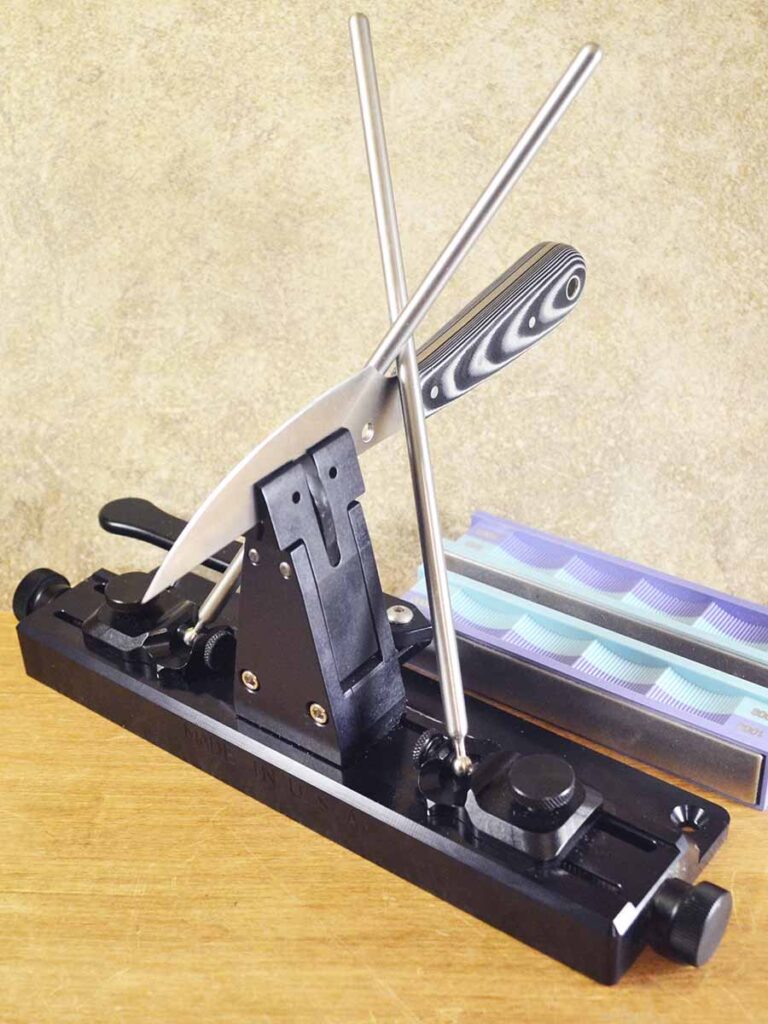
The Wicked Edge WE66 Obsidian is another upscale, state-of-the-art fixed-angle sharpener capable of delivering mind-blowing results. What sets it apart from the others is that you sharpen both blade sides in the same session—no flipping of the knife is required. The Obsidian is the largest of the sharpening systems reviewed and has an 8×11-inch base that weighs more than the system itself.
The Obsidian uses diamond blocks with two different consecutive grits on opposing sides. There are four blocks total, two each identical because you sharpen both sides of the blade at the same time. There are two sanding-block rods with orb-shaped bases that act like ball bearings in the mounts. The bases slide on a rail to set the sharpening angle. Despite sounding complicated, it’s actually quite simple. The angle settings are very easy to read on the side of the base. The blade mounts upside down in the jaws atop the center tower and locks in place via a lever.
To use the Obsidian, mount the knife so the edge points straight up, and operate the rods and blocks with opposing hands. Once you sweep the blade with one hand you switch to the other and repeat until that grit has done its business. Sharpen with the low grit and when done rotate to the higher grit on the other side. When you’re finished with that block, replace it with the other block of a higher grit. You’ll have to provide your own strop.
Wicked Edge WE66 Obsidian Specs Type: Fixed angle, horizontal swing Dimensions: 11” long, 3” wide, 4” tall Main body material: Steel Grit types: 200, 600, 800 and 1,000, diamond coated Weight: 2 lbs. 13 ozs. Country of origin: U.S.A. MSRP: $799
Due Diligence
Much of what is written here will make a lot more sense when you watch a video of the sharpener that strikes your fancy. It will make assembly easier as well.
There’s something for everyone here. If you don’t care to labor over sharpening but still want a very competent cutter, the Smith’s Edge Pro should suit you just fine. The Cold Steel Benchtop Sharpener offers fixed-angle sharpening at a budget price and is a perfect steppingstone for getting your feet wet in hi-tech sharpening. Finally, the Work Sharp Elite and Wicked Edge Obsidian are both lights-out sharpeners if you want outstanding performance. Both are truly state-of-the-art.
Editor’s note: Always practice extreme caution when working on a knife held in a clamp, vise, jig, etc., with the edge pointing up and/or toward you. When finished sharpening, remove the knife from the fixture immediately so the danger of accidental cutting is eliminated.
In ancient Greek myth, Kronos (or Cronos) was king of the Titans—the first generation of gods who ruled the cosmos. It’s a pretty weighty title to hang on a knife company, but one the new(ish) upstart affiliated with gunmaker Palmetto State Armory has done a solid job of filling. Since its founding in 2024, Kronos Knives has left its mark on the industry and recently developed a line likely to further solidify its position.
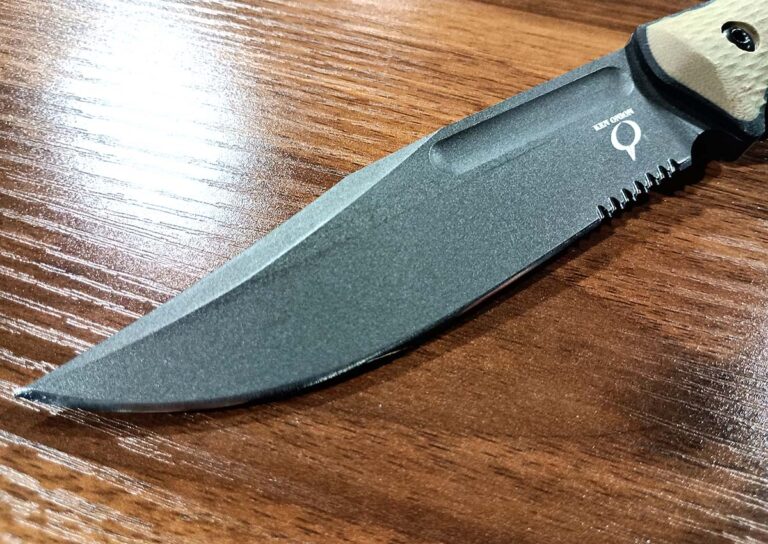
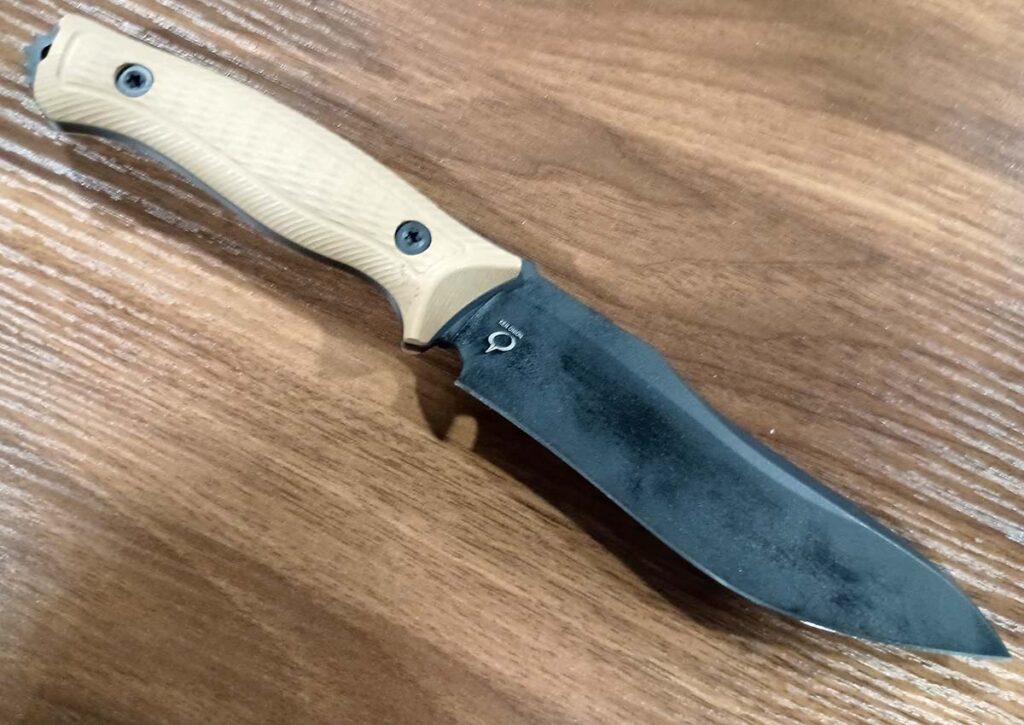
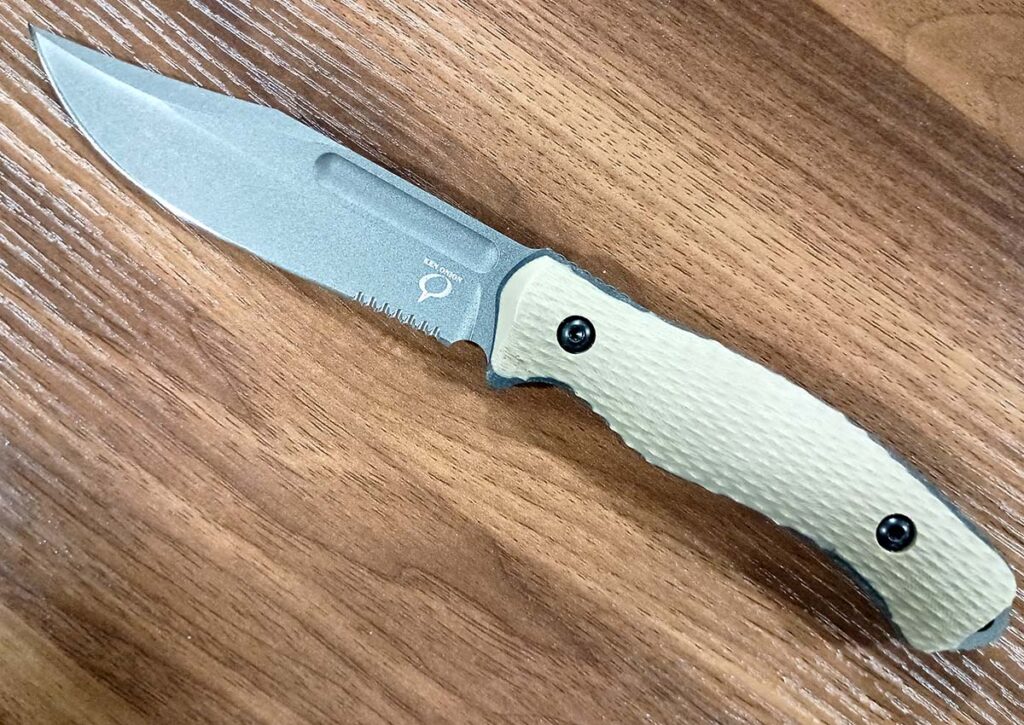
Shake hands with the Gung Ho! line designed by Ken Onion.
Always a head-turner among knife buyers in the know, Onion designs have proved sought after. However, the Kronos knives are a far cry from many of the BLADE Cutlery Hall of Fame member’s recent entries. The four knives comprising the collection are big, brutish and ready for backwoods or tactical action. Honestly, it was more than what Mike Probyn expected when he initially talked with Onion about creating the line.
“I told Ken he had free reign to do whatever he wanted,” the President of Kronos said. “When I saw what he came up with, I told him there wasn’t a thing that needed to be changed.
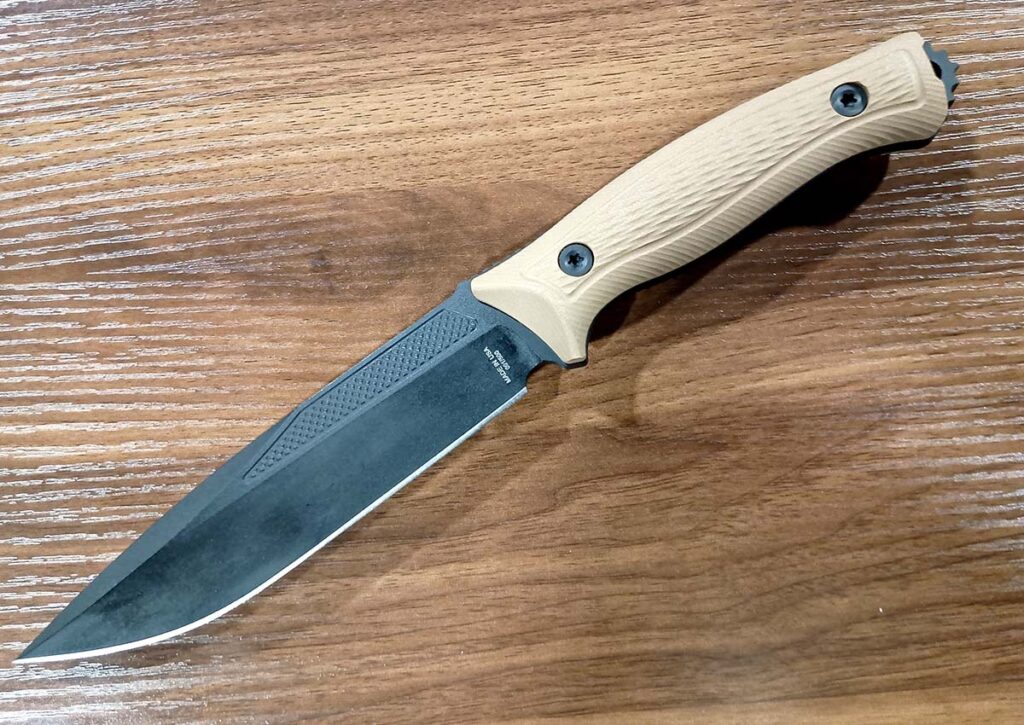
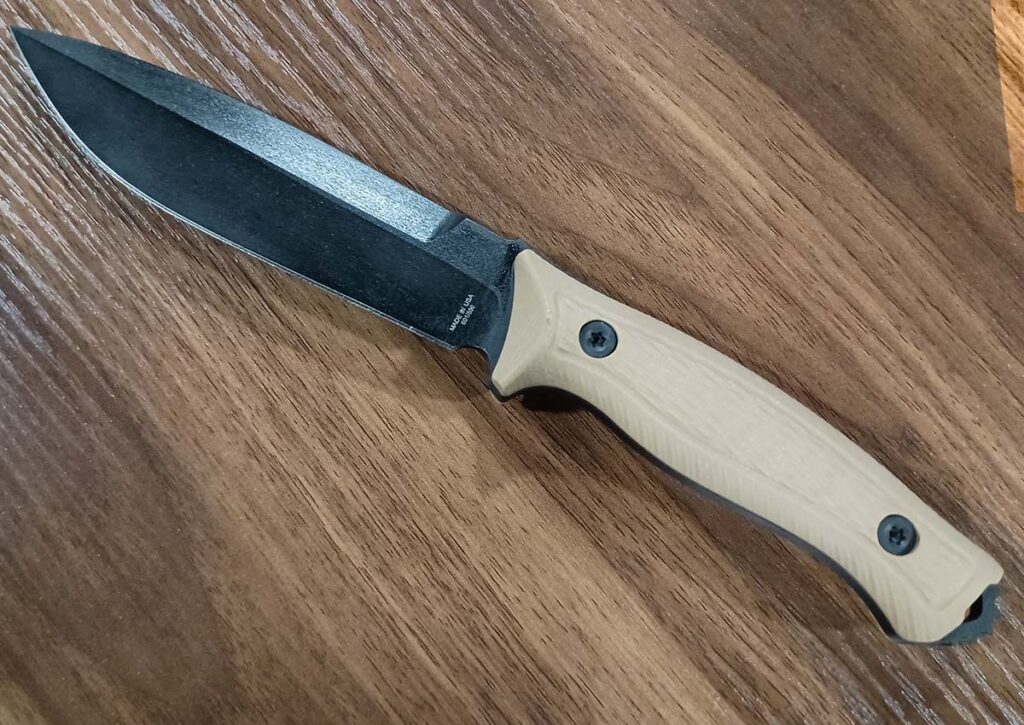
We’ll look a little closer at each model of the Gung Ho! line in a second, but for the sake of expediency, let’s cover the knives’ commonalities first. Each of the knives is a full-tang fixed blade constructed out of 1095 steel and boasts G10 handles. The scale is held in place by oversized torx screws and the butt of the knife has a lanyard hole. Finally, all the Gung Ho! knives are American-made.
Kronos Truedefender
The knife has perhaps the most unique lines of the collection, boasting a wide belly on the blade and a modified drop-point profile. The knife has a sight rake at the grip, giving the blade an aggressive edge-forward posture when in the hand. While not pegged to any one particular role, the Truedefender certainly would excel as a bushcrafter or fall into any tactical task with ease. MSRP: $228
Kronos Maxhunter
Living up to its name, the Maxhunter is a traditional hunting knife profile, with a long clip-point blade. The knife has somewhat of a dual personality. A thick spine towards the rear ensures it’s stout enough for tough chores, such as chopping or battoning. The tip comes to a sender finish, making it deft at more delicate tasks, like skinning. MSRP: $228
Kronos Elitesurvival
Aimed at bushcrafting, the Elitesurvival provides a very rugged design for those who thrive in the backwoods looking for. The drop-point blade is meaty and hardy enough to take the abuse commonly doled out in camp and survival tasks. A nice touch, the tapered grind on the spine—near the tip—provides a good striking surface for firecraft. MSRP: $256
Kronos Stiffneck
Maybe the wickedest looking one of the bunch, the Stiffneck offers up a dagger profile with a single edge. The false edge on the blade, however, comes down thin enough that it would likely be no issue to grind an actual one onto it—if it’s legal in your neck of the woods. Though, it doesn’t hold like a dagger as the handle is not asymmetrical, with an aggressive rake similar to the Truedefender. MSRP: $220
Hunting and outdoor endeavors, these blades are a cut above the rest.
Looking to kit up for the next hunting season? Need to start thinking about filleting this summer’s catch? Or maybe you just require a little summer to make camp life a little easier. We’ve got you covered! From stunning custom creations to workhorse production models, we’ve gathered up top-not hunting knives, camp knives and about every other blade to tackle your outdoor adventures.
Paul DiStefano: Hunter
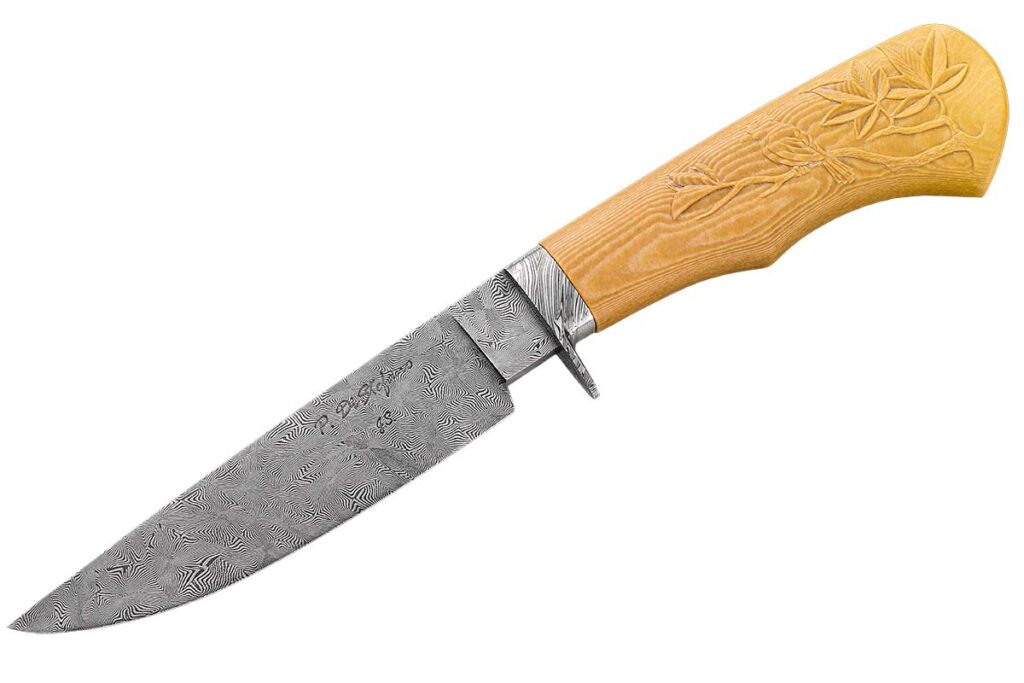
BLADE LENGTH: 5” BLADE STEEL: Mosaic damascus BLADE GRIND: Flat HANDLE: Ivory Micarta® carved w/Japanese maple leaves and birds native to Japan; bird’s-beak butt design HANDLE CARVED BY: Paul DiStefano GUARD: Mosaic damascus OVERALL LENGTH: 9.5” MAKER’S PRICE FOR A SIMILAR KNIFE: $2,200 KNIFE TO KNOW: Paul DiStefano is an American Bladesmith Society journeyman smith MAKER: Paul DiStefano
Jacob Gaetz: Hunter
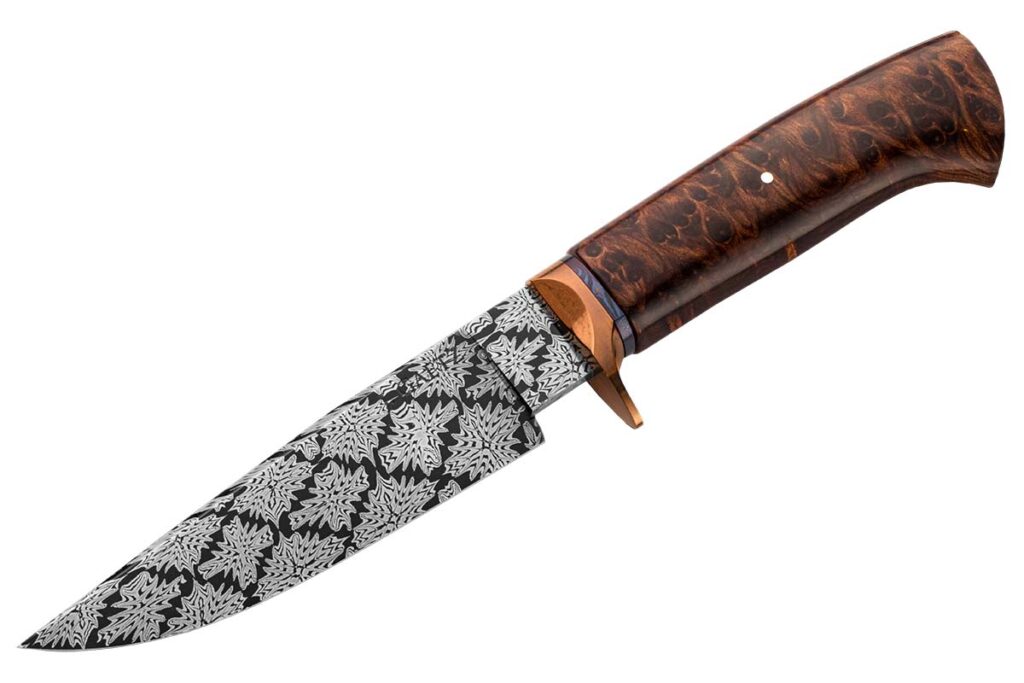
BLADE LENGTH: 4.5” BLADE MATERIAL: Mosaic damascus of 1084 carbon and 15N20 nickel-alloy steels ROCKWELL HARDNESS: 61 HRC BLADE GRIND: Full flat, .01”-thick BTE (behind the edge) HANDLE: Stabilized redwood burl HANDLE PIN: Argentium silver SPACER: Heat-colored damascus GUARD STEEL: Heat-colored 416 stainless OVERALL LENGTH: 9 5/8” MAKER’S PRICE FOR A SIMILAR KNIFE: $2,000 KNIFE TO KNOW: Jacob Gaetz is an American Bladesmith Society journeyman smith MAKER: Jacob Gaetz (Jocelyn Frasier image)
Tanner Couch: Rabbit Skinner
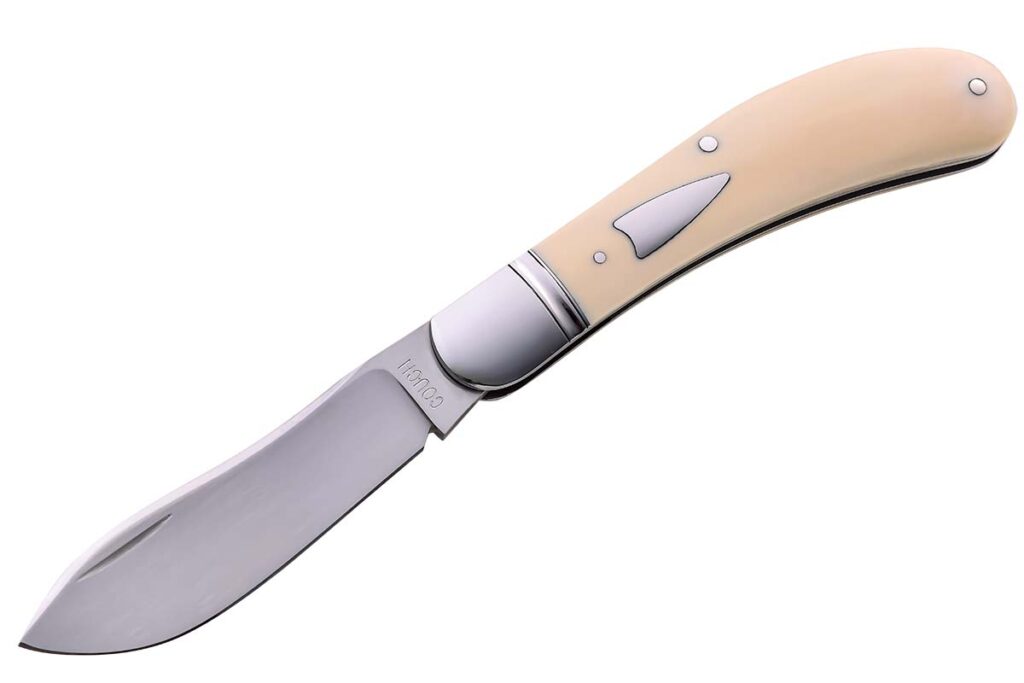
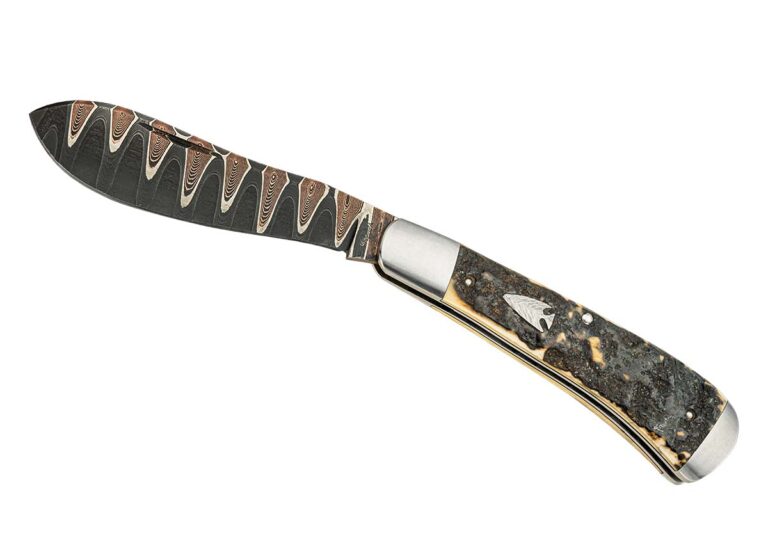
BLADE LENGTH: 3” BLADE STEEL: CPM 154 stainless BLADE GRIND: Hollow HANDLE FRAME: 410 stainless steel HANDLE MATERIAL: Ivory BOLSTER: 416 stainless CLOSED LENGTH: 37/8” MAKER’S PRICE FOR A SIMILAR KNIFE: $1,600 KNIFE TO KNOW: Tanner Couch is a card-carrying member of the South Texas Slipjoint Cartel MAKER: Tanner Couch (SharpByCoop image)
Chris Hamelin: Saratoga Hunter
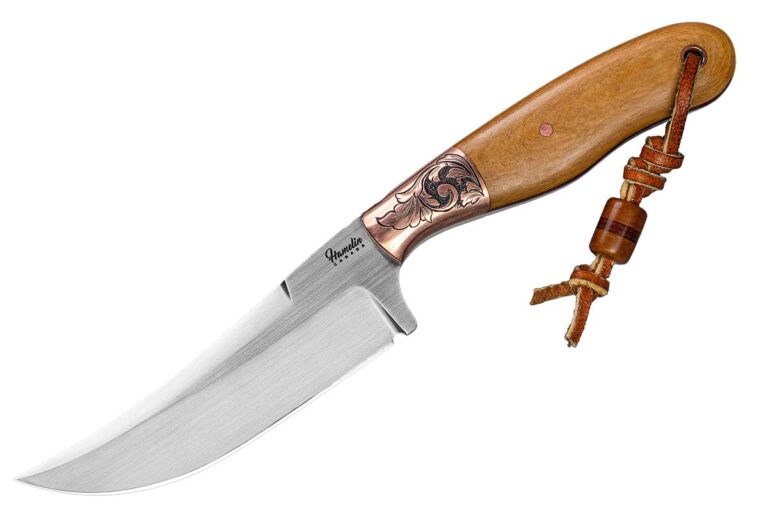
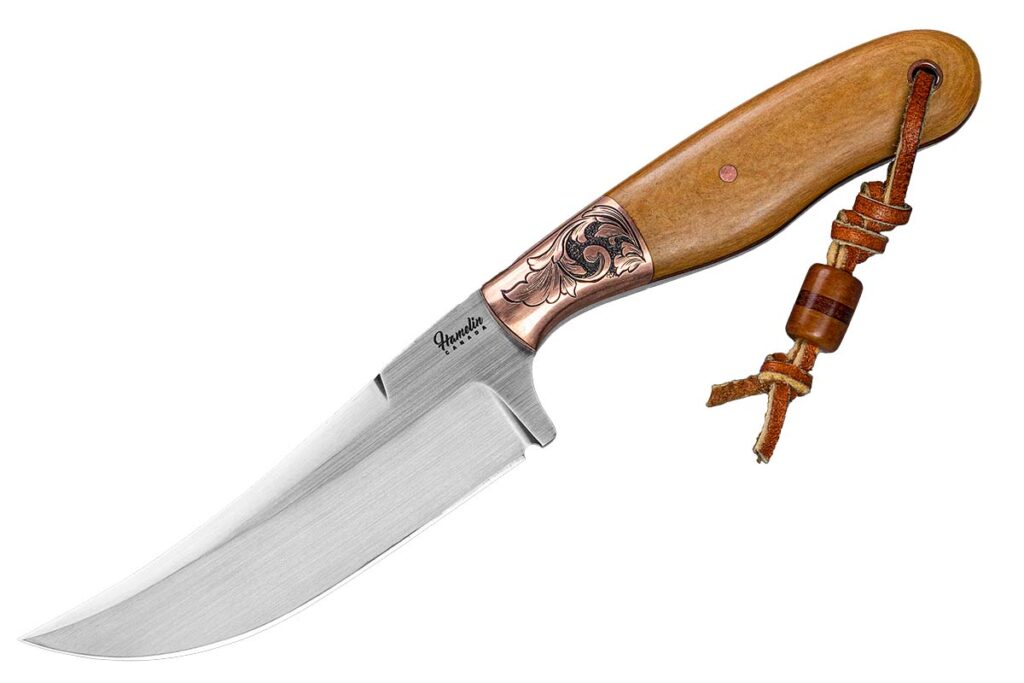
BLADE LENGTH: 4” BLADE STEEL: 440C stainless BLADE GRIND: Flat HANDLE: Maple Valley Richlite w/copper pin and lanyard tube, natural Micarta® BOLSTER: Copper; engraved by Wolfgang Loerchner OVERALL LENGTH: 8.5” SHEATH (not shown): Belt model w/snap closure of leather and alligator skin inlay by Buffalo Bones MAKER’S PRICE FOR A SIMILAR KNIFE: $1,300 MAKER: Chris Hamelin (Jocelyn Frasier image edit)
Charlie Lloyd: Crushed W’s hunter
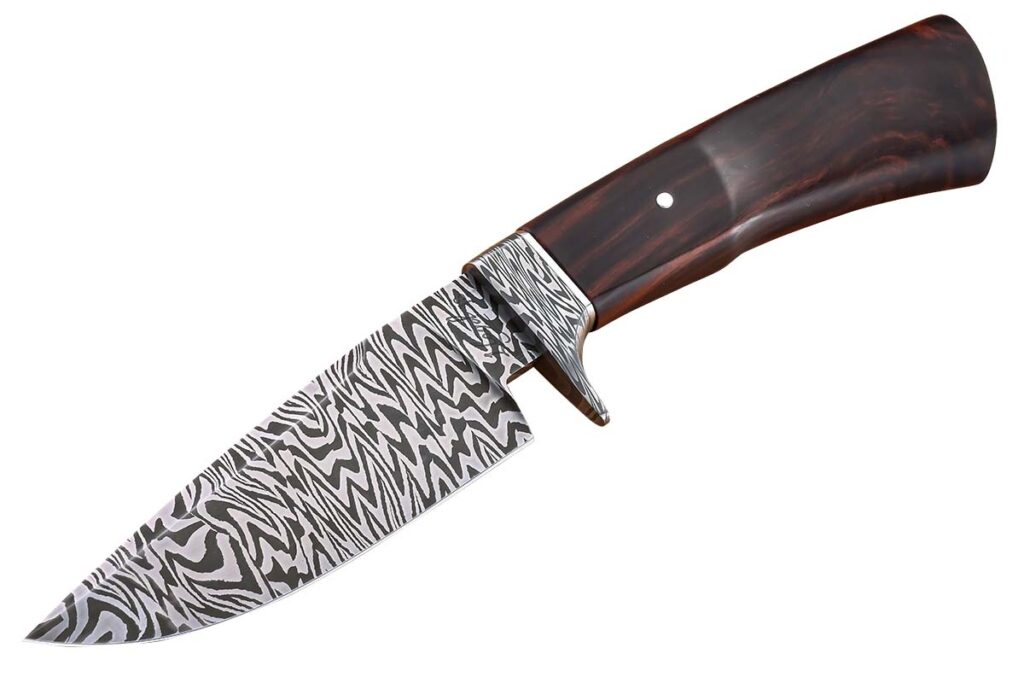
BLADE LENGTH: 5” BLADE MATERIAL: Crushed W’s damascus of 1080 carbon and 15N20 nickel-alloy steels BLADE GRIND: Flat GUARD: Damascus OVERALL LENGTH: 10” MAKER’S PRICE FOR A SIMILAR KNIFE: $1,200 KNIFE TO KNOW: Charlie Lloyd is a journeyman smith in the American Bladesmith Society MAKER: Charlie Lloyd (SharpByCoop image)
CAS Iberia: Modern Tanto
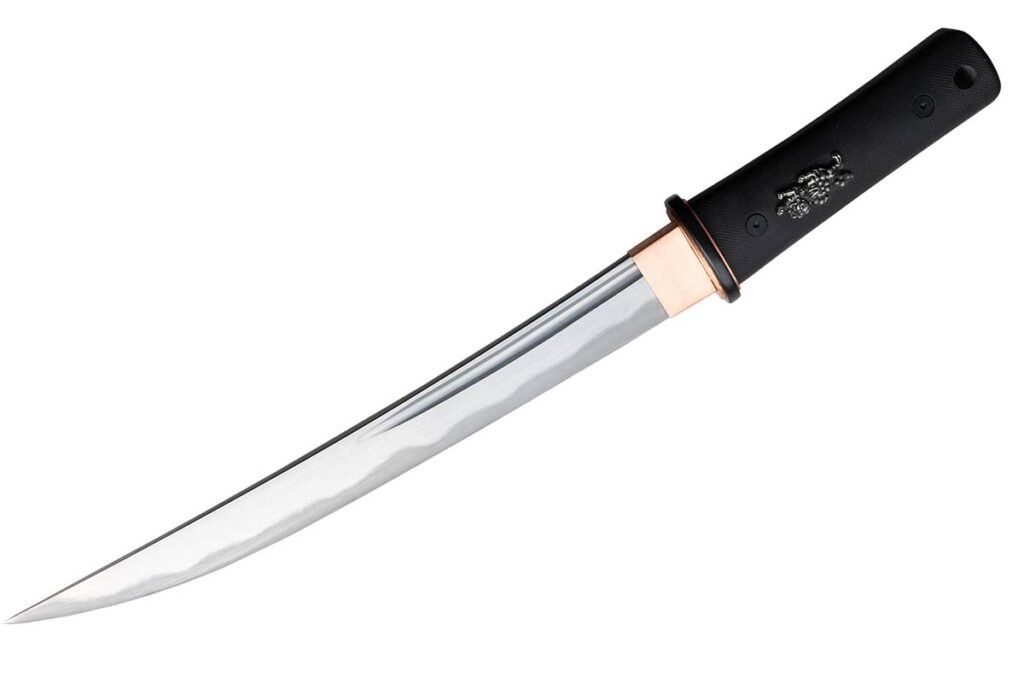
BLADE LENGTH: 10.5” BLADE MATERIAL: 1566 carbon steel w/hamon BLADE THICKNESS @ GUARD: .21” BLADE THICKNESS @ TIP: .157” TSUKA (handle): G-10 HABAKI (collar): Copper MENUKI (handle ornaments): Silver shi shi (lion dogs) SAYA (scabbard; not shown): Textured black WEIGHT: 15 ozs. OVERALL LENGTH: 16” MSRP: $259 COUNTRY OF ORIGIN: China COMPANY: CAS Iberia
Russell Roosevelt: Hunter
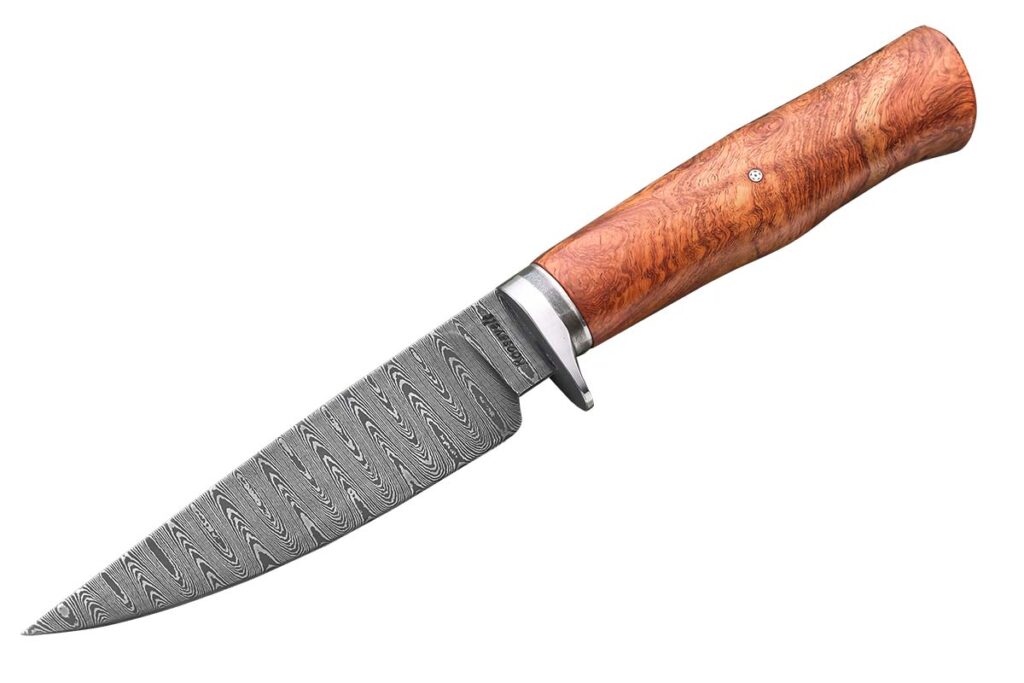
BLADE LENGTH: 5.5” BLADE MATERIAL: Ladder-pattern damascus of 1084 carbon and 15N20 nickel-alloy steels BLADE GRIND: Flat HANDLE: Amboyna burl GUARD: 416 stainless steel w/spacers OVERALL LENGTH: 10.75” KNIFE TO KNOW: Russell Roosevelt is a journeyman smith in the American Bladesmith Society MAKER: Russell Roosevelt (SharpByCoop image)
Josh Hults: Skinner/camp knife
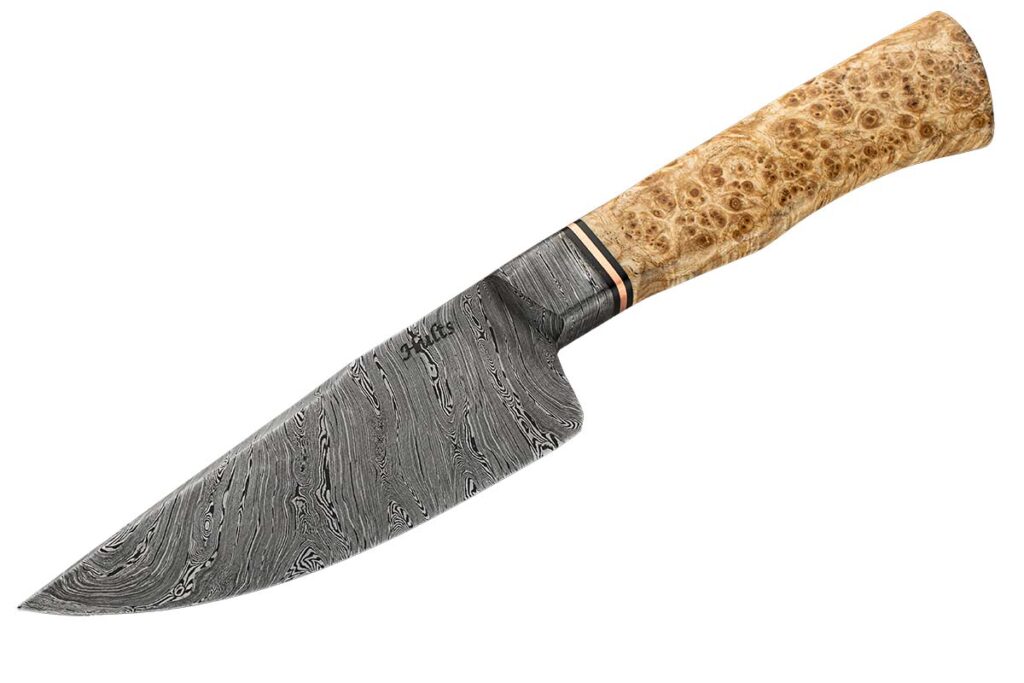
BLADE LENGTH: 3.5” BLADE MATERIAL: Twisted ‘W’s’ damascus of 1084 carbon and 15N20 nickel-alloy steels BLADE GRIND: Flat HANDLE: Stabilized black ash HANDLE SPACERS: Copper and G-10 OVERALL LENGTH: 9.5” MAKER’S PRICE FOR A SIMILAR KNIFE: $800 KNIFE TO KNOW: Josh Hults is a journeyman smith in the American Bladesmith Society MAKER: Josh Hults (Jocelyn Frasier image edit)
Outdoor Edge: Razor VX 4
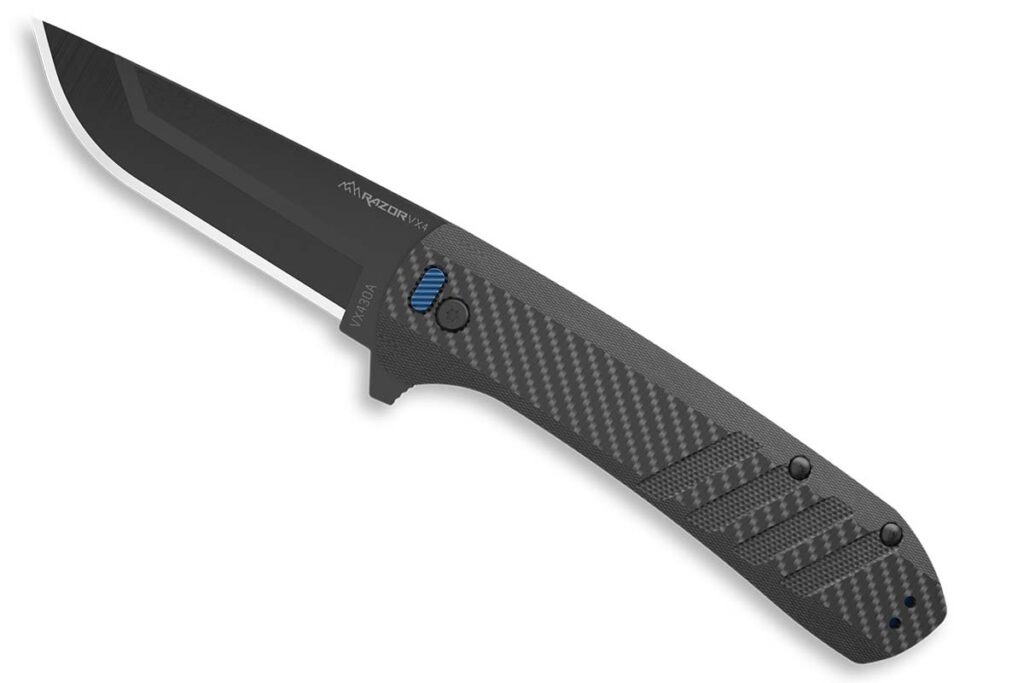
BLADE LENGTH: 3” BLADE STEEL: 420J2 stainless BLADE FINISH: Black oxide coated HANDLE MATERIAL: Forged carbon fiber LOCK: Linerlock LINERS: Vented stainless steel PIVOT: Ceramic ball bearing CLOSED LENGTH: 4.25” KNIFE TO KNOW: The Razor VX 4 is a replaceable-blade model; also available in handle materials of green Micarta® ($54.99) and Black G-10 w/spring assist $44.95) COUNTRY OF ORIGIN: China MSRP: $69.99 COMPANY: Outdoor Edge
Spyderco: Spyder Thrower, Small
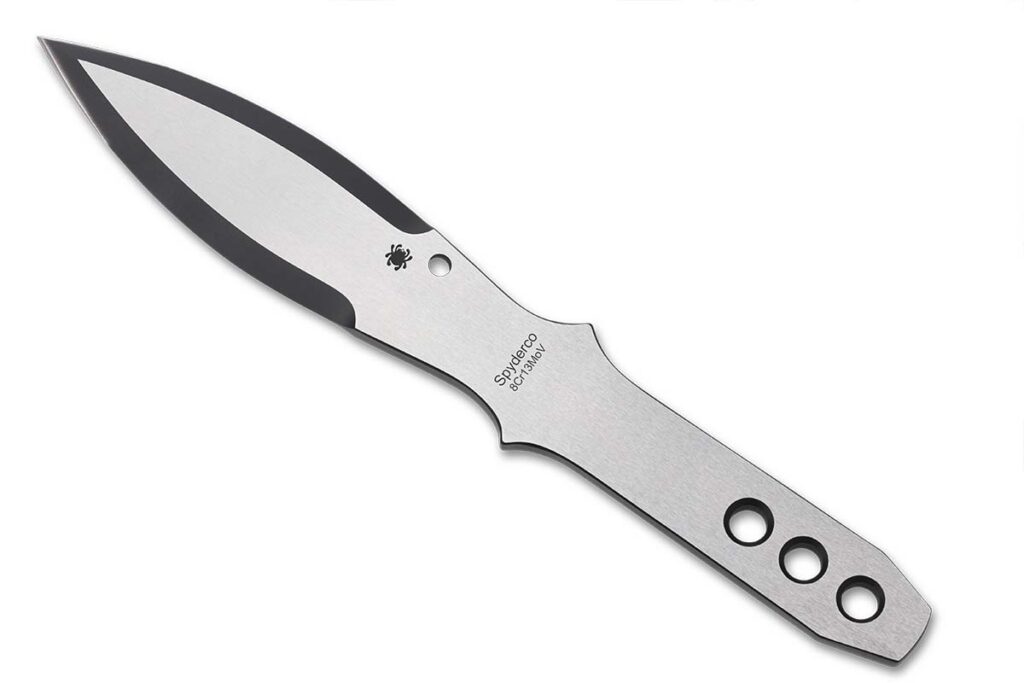
DESIGNER: Harald Moeller BLADE LENGTH: 5.3” BLADE STEEL: 8Cr13MoV stainless BLADE GRIND: Dagger BLADE @ THICKEST: .217” BLADE FINISH: Two-tone black oxide and satin finish WEIGHT: 7 ozs. OVERALL LENGTH: 9” SHEATH: Leather KNIFE TO KNOW: Comes in a set of three w/three-tiered leather sheath and a copy of the instructional booklet, Knife Throwing: The Knives and Throwing Technique of Harald Moeller; designed to be thrown by either the blade tip or handle butt COUNTRY OF ORIGIN: China MSRP: $144 for the set Company: Spyderco
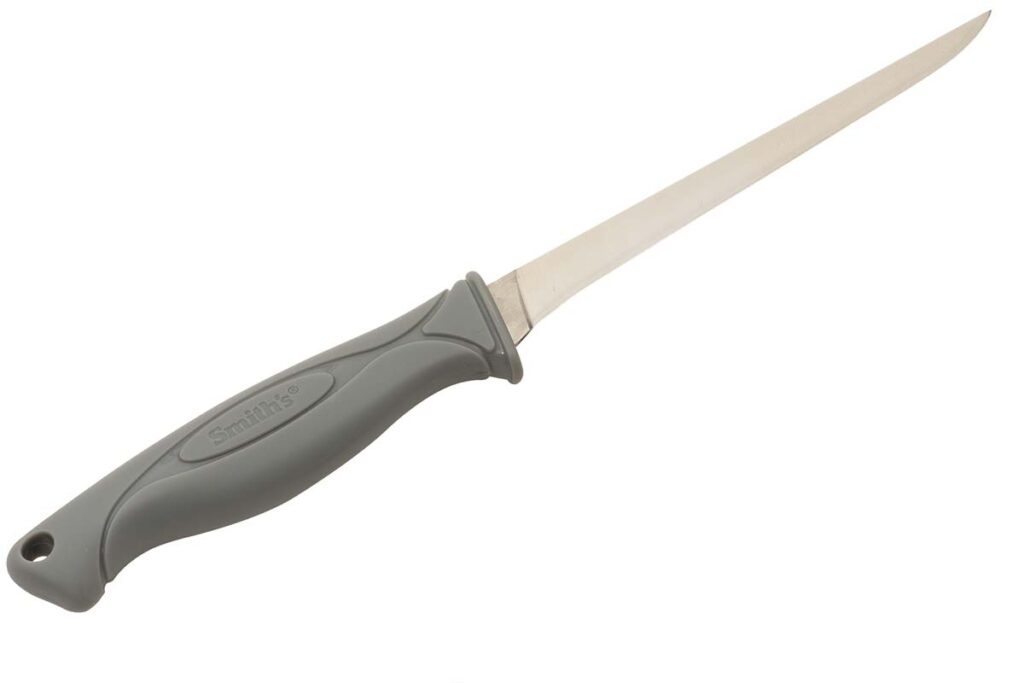
BLADE LENGTH: 7” BLADE STEEL: 400 series stainless BLADE FINISH: Corrosion-resistant coating HANDLE: Thermoplastic elastomer (TPE) w/non-slip soft grips and hole for a lanyard SHEATH (not shown): Breathable TPE KNIFE TO KNOW: Designed for cleaning small-to-medium-size fish like speckled trout or yellowtail snapper COUNTRY OF ORIGIN: China MSRP: $12.99 COMPANY: Smith’s Consumer Products Inc.
GiantMouse: ACE Iona V2
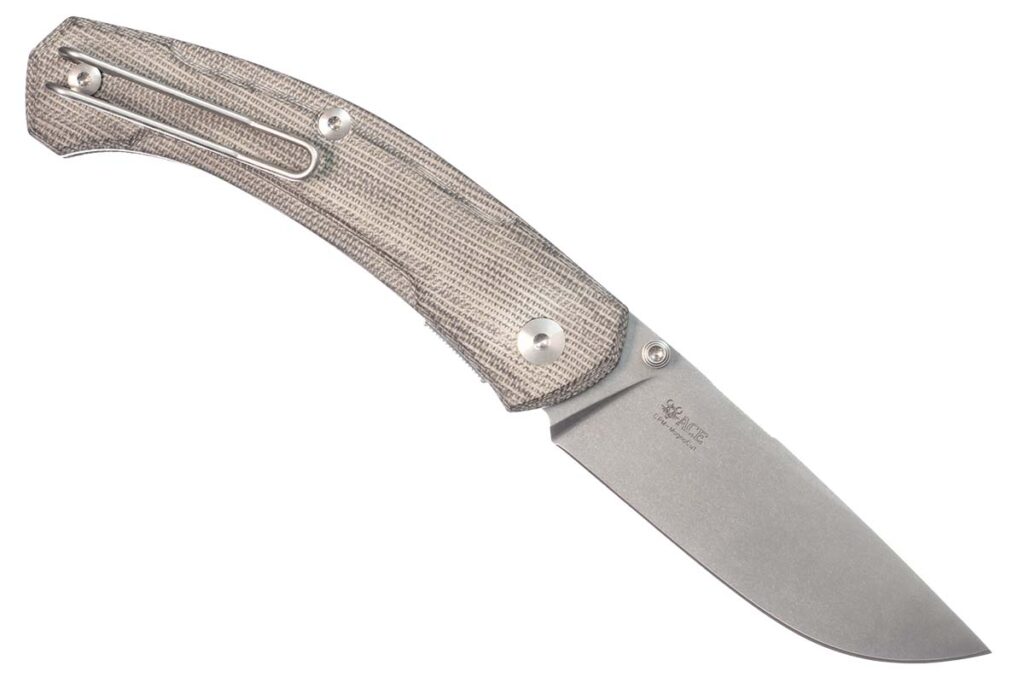
BLADE LENGTH: 3” BLADE STEEL: CPM MagnaCut stainless BLADE @ THICKEST: .115” BLADE FINISH: Stonewash HANDLE MATERIAL: Green canvas Micarta® POCKET CLIP: Wire, reversible PIVOT: Washer LOCK: Linerlock WEIGHT: 3.4 ozs. CLOSED LENGTH: 4.34” COUNTRY OF ORIGIN: Italy MSRP: $195 KNIFE TO KNOW: The knife is named after the Iona Bar, “a beloved establishment” in the Williamsburg neighborhood of Brooklyn, New York COMPANY: GiantMouse
A Good Multi-Tool Can Help You In A Pinch In Numerous Ways. This Quartet Of Tools Are Up To The Task Of Getting You Out Of A Bind.
Right off the bat, anyone who needs a multi-tool on a daily basis will face one huge question when making a purchase: How much multi-tool do I need? Options abound on the multi-faceted workhorses. Blades, pliers, shears, screwdrivers, wrenches, wire strippers/snips, files, cap lifters, can openers and the like are great to have when you need them.
The dilemma is weeding out what you do and don’t need, plus what size multi-tool you’re willing to carry. Alternatively, if you just need a multi-tool for the tool or glove box, the world is your oyster. Let’s test four diverse multi-tools that offer a wide variety of talents to help make your choice easier.
Boker Plus Specialist II
Boker Plus Specialist II
The Boker Plus Specialist II is a full-blown multi-tool with a load of tools. Like many of its type, it centers the workload around a beefy set of pliers. At the pliers’ base are a wire stripper and cutter. Tucked in the butterfly handles are a host of other tools including a knife, hex wrenches, bit driver with storage, glass breaker, file, ruler, wood saw, can opener, and bottle opener. At 10.13 ounces it’s the heaviest of the review multis, but then it also has the most extensive tool kit.
The Specialist II has a full-size pair of spring-loaded pliers with special cutting blades built into the base of the jaws—a sign that it’s serious about cutting wire and cord. I honed in on this feature by giving the cutters a go on some multi-strand computer cable, snipping off half-inch lengths.
The blades handled cutting the cable with ease as if it were an afterthought. The assortment of tools is admirable, especially the knife and saw blades that are large enough to do some serious work, a trait not always found on multis. The nylon belt sheath is a must-have on a multi-tool of the Specialist II’s weight. Kudos to Boker for including it.
MSRP: $89.95
Paul Chen Professional Multi-Tool
Paul Chen Professional Multi-Tool
The Paul Chen Professional Multi-Tool from CAS Iberia is a large multi that, unlike many, centers around a stout pair of spring-loaded carbon steel shears that slide out on rails by pressing locking buttons on each side of the handle.
Once the shears are out the handles separate, giving easy access to the Professional’s other tools: knife and saw blades, fold-out pliers, small flat-head screwdriver/can opener combo, Phillips head screwdriver, and removable sharpening file. There’s a pocket clip on the back side.
The Professional surprised me with how stout it is considering its low price tag. The main feature is shears that have 1.5-inch blades of carbon steel. I gave these a run through various materials such as canvas and cardboard and they cut like a walk in the park, so I upped the ante with some quarter-inch lasso rope.
This is a very stiff, wax-impregnated rope that some blades aren’t particularly fond of. The hungry shears took off nice, clean lengths with little effort. This multi-tool is limited in scope with its tool selection—not surprising at its cost—but there are enough implements to get you by. The knife blade opens via a thumb stud and a linerlock secures it open. At 15 bucks you could buy several of these and sprinkle them in such places as the glovebox, tool drawer, and/or backpack.
MSRP: $15
CRKT Septimo
CRKT Septimo
CRKT has never followed the pack with its multi-tool designs and the Septimo is no different. Based on a flat, compact 4.84 x 1.25 x .4-inch somewhat rectangular platform and at 4.4 ounces, the black-oxide-coated Septimo is roughly half the load of the larger test multis.
Notable is an adjustable wrench for tightening and loosening nuts and bolts. The tanto blade has a deep Veff serration at the base and secures open via a linerlock. Other tools include Phillips and flat-head screwdrivers, a glass breaker, and a bottle opener. It has a pocket clip for easy carry.
The Septimo is a very pocketable multi-tool with an inch of its total length dedicated to the adjustable wrench/glass breaker on one end. Though the Septimo’s handle is not as comfortable as that of a typical knife, the multi’s blade did the trick slicing two-layer corrugated cardboard, paracord, and even 3/8-inch rappelling rope.
I would have chosen a more utilitarian blade pattern like a sheepsfoot or drop point, but that’s me, and the tanto did more than enough to impress. The adjustable wrench can accept up to a half-inch bolt head. I gave it a twirl tightening and loosening a 3/8-inch bolt on a rock clamp I use doing lapidary work. The wrench did an excellent job. All in all, you’ll like the unorthodox yet effective Septimo.
MSRP: $56
SOG Flash MT
SOG Flash MT
The SOG Flash MT multi-tool is a great companion to your SOG Flash AT folder, but don’t let that stop you should you prefer a different knife.
The Flash MT is a barebones seven-tool multi with an assisted-opening clip-point blade, full-size pliers, a wire cutter and stripper, a large combo flat-head screwdriver/bottle opener, and a small double-ended Phillips/flat-head screwdriver with a bit drive in the base. It is the only test multi-tool in which the main body is designed specifically as a conventional knife handle.
The Flash MT has an asymmetrical handle design in that one half of the butterfly grip is slim, holding only the small bits in a foldout cyan holder, while the other grip is packed with tools. The blade did a good job cutting paracord and rappelling rope.
The wire cutter/stripper handled its chores well—not a surprise as SOG is well known for making some serious multi-tools. Using the main body of the handle with just the blade for cutting was very comfortable, with only the pocket clip feeling a tad out of place if you’re right-handed like me.
That said, the back-side clip is right at home; in fact, it’s no different from carrying a mid-sized EDC folder. This is a well-designed multi that deserves your consideration.
MSRP: $69.95
The review multi-tools provide many choices in size and tool selection. You can go big with the Boker Plus and Paul Chen multis or lighten the load with the CRKT and SOG models. Pick prudently and you’ll have a workmate worthy of your daily workload.
Have the yen to build our your collection? Just need a sharp new blade? Check out these new knives for May and build out your wish list.
Eyes always peeled, we’re on the look out for the latest and the greatest. We think we’ve found a bevvy of them this May. So, with out further adieu, here’s our latest round of new knives to add to your wish list.
Pearce Richardson Silver Swan
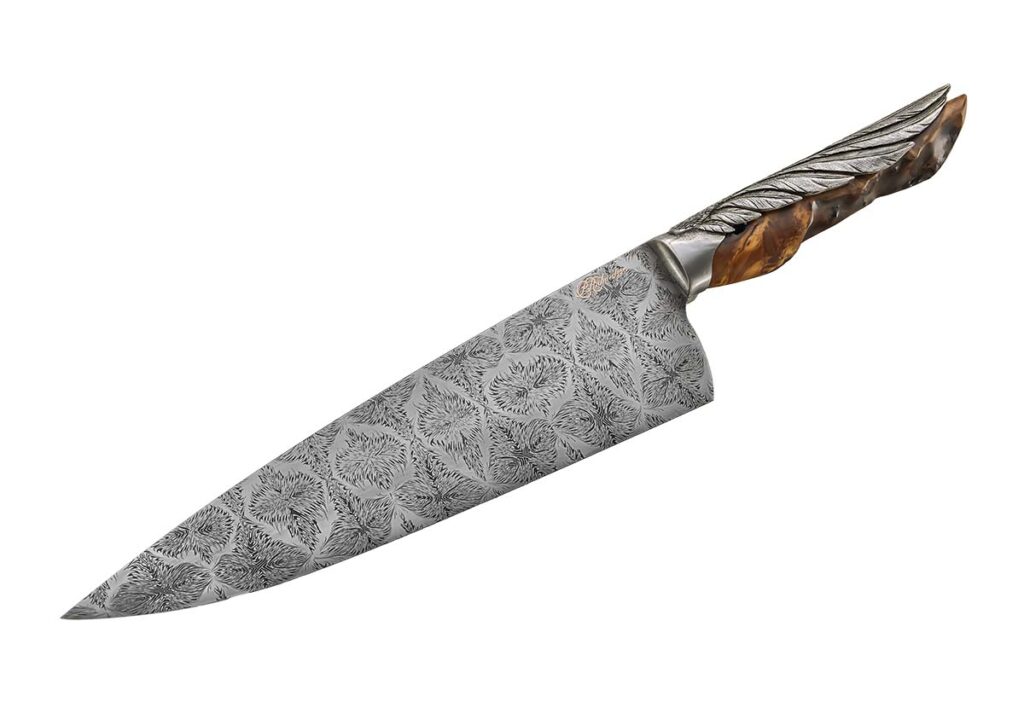
Model type: Chef’s knife Blade length: 8” Blade material: Mosaic damascus of 1084 carbon and 15N20 nickel alloy steels Blade grind: Flat Scales: Turkish olive wood root burl Bolster: Mild steel Overall length: 13.25” Maker’s price for a similar knife: $6,500 Knife to know: The maker’s mark on the blade is brass inlaid; Pearce Richardson is an apprentice smith in the American Bladesmith Society Maker: Pearce Richardson, icarusforge.com (SharpByCoop image)
Daniel Keown Big City Fighter
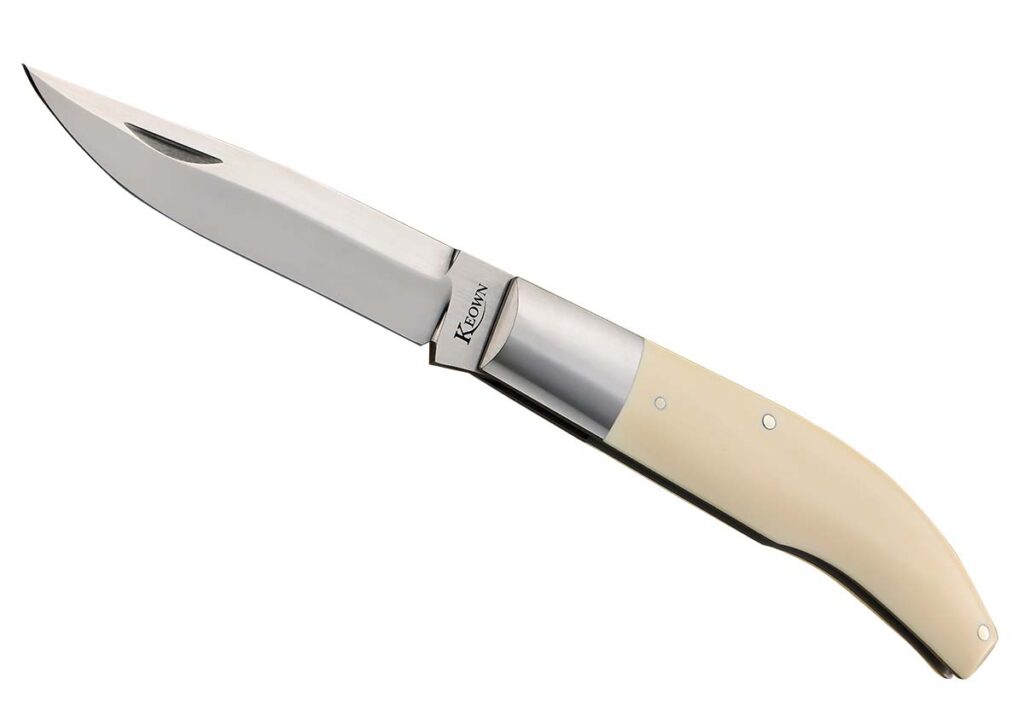
Knife type: Slipjoint Blade length: 3.5” Blade steel: AEB-L stainless Blade grind: Hollow dagger Handle frame: 416 stainless Scales: Mammoth ivory Bolsters: 416 stainless Liners: Integral Closed length: 3.5” Maker’s price for a similar knife: $1,800 Maker: Daniel Keown, (SharpByCoop image)
Josh Hults Camp Knife
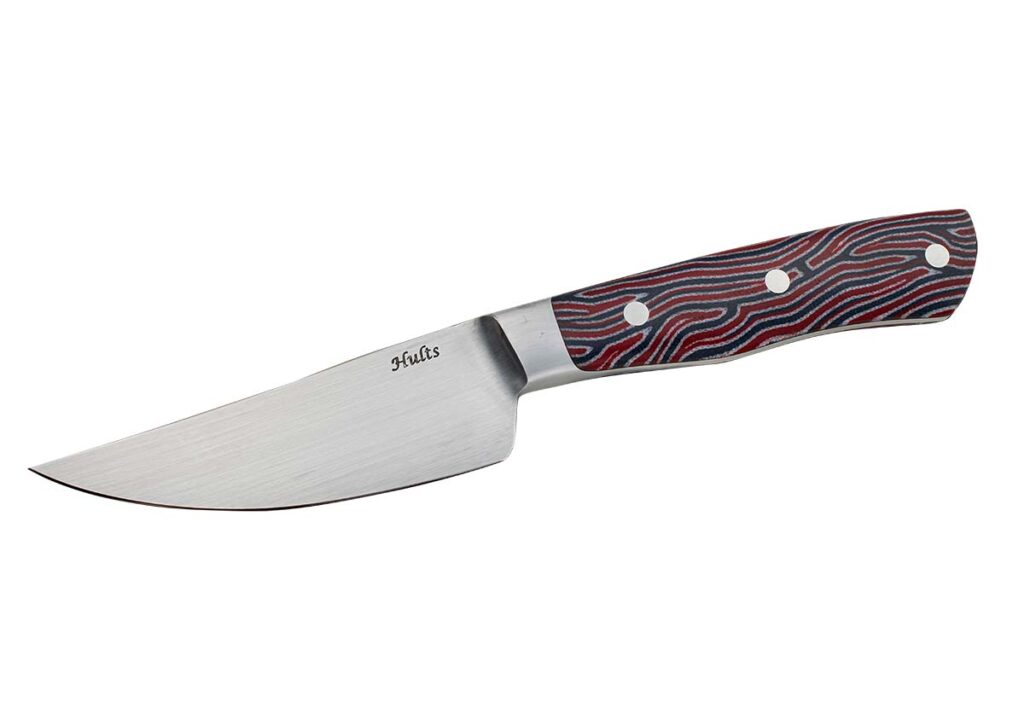
Blade length: 4.5” Blade material: 1085H carbon steel Blade grind: Flat-ground integral Scales: G-carta Bolster: Forged integral Overall length: 9.5” Maker’s price for a similar knife: $500 Knife to know: Josh Hults is a journeyman smith in the American Bladesmith Society Maker: Josh Hults, southern-forge.com (Jocelyn Frasier image)
Josh Wisor Dress Slipjoint
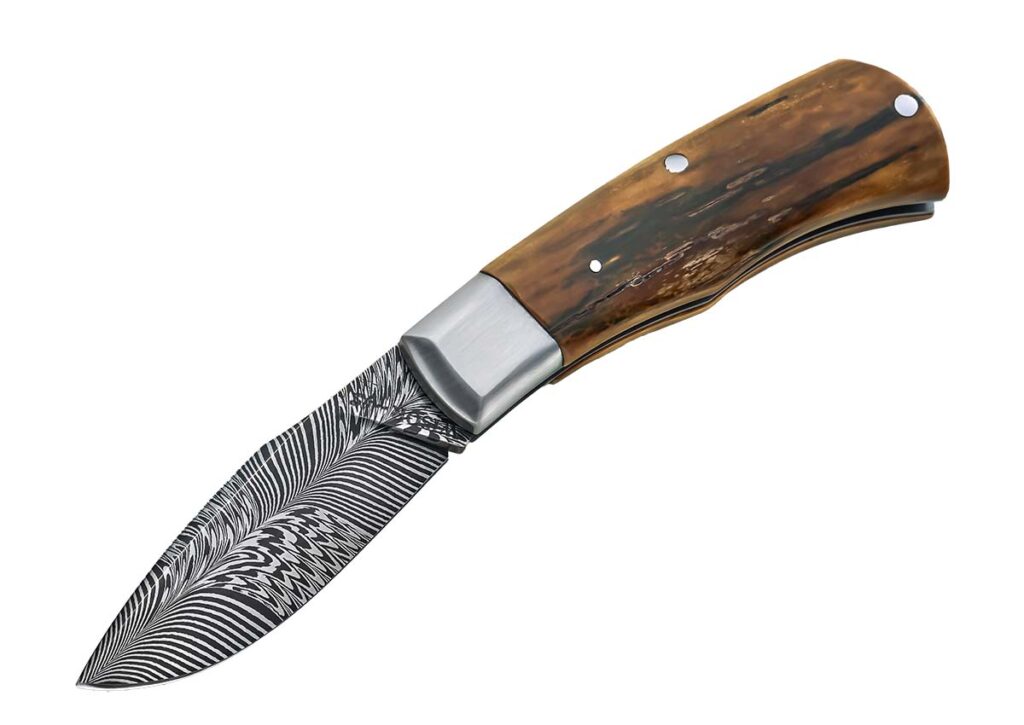
Blade length: 3” Blade material: Feather damascus Blade grind: Flat Handle frame: Stainless steel Scales: Mammoth ivory Maker’s price for a similar knife: $1,300 Knife to know: Josh Wisor is a journeyman smith in the American Bladesmith Society Maker: Josh Wisor, wisorforge.com (SharpByCoop image)
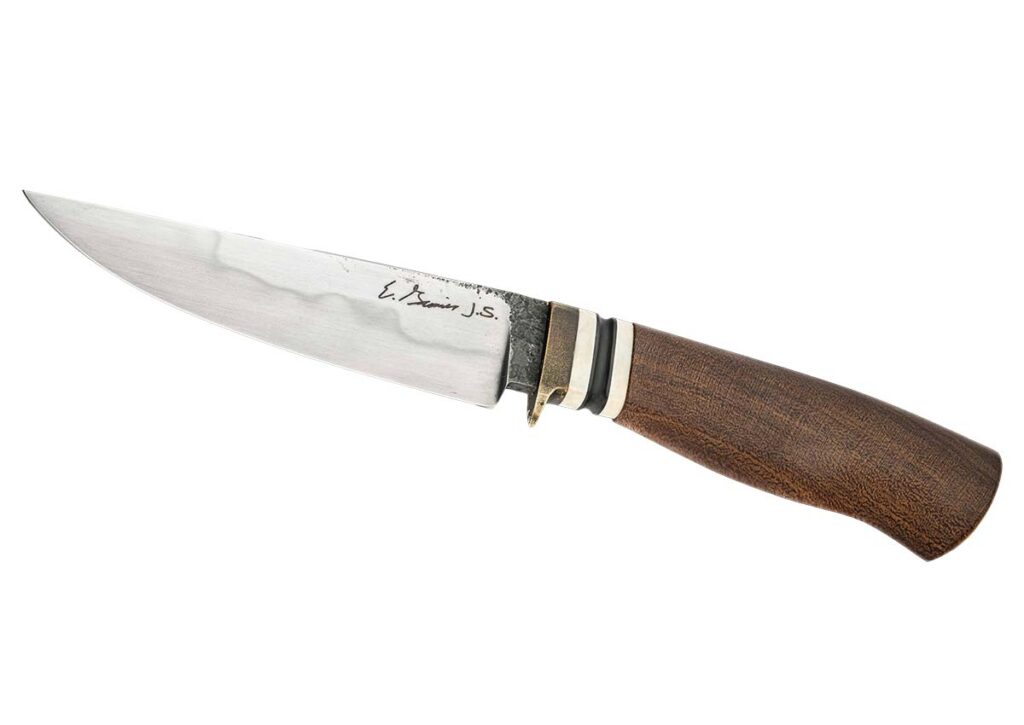
Erik Greiner Hunter
Blade length: 4.25” Blade material: 80CrV2 carbon steel w/hamon Blade grind: Flat w/secondary edge bevel Scales: Dolf wood Spacers: Oryx horn and warthog tusk liners Guard: Antiqued brass Overall length: 8.5” Maker’s price for a similar knife: $450 Knife to know: Erik Greiner is a journeyman smith in the American Bladesmith Society Maker: Erik Greiner, greinerblades.com (Jocelyn Frasier image)
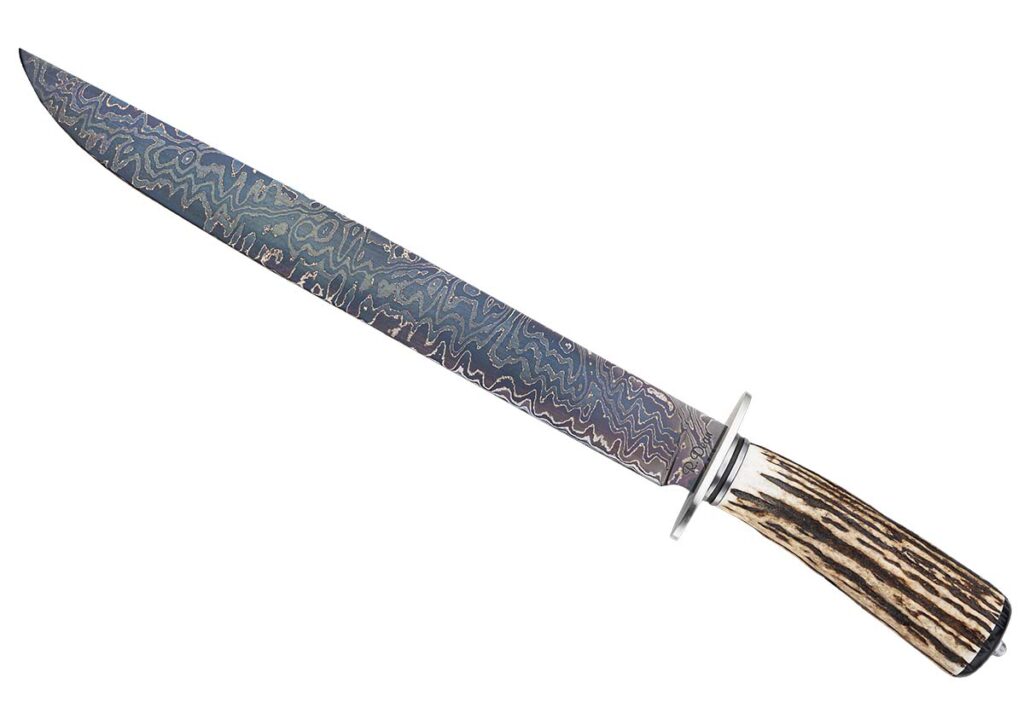
Rudy Dean Fighter
Blade length: 11.75” Blade material: 136 layers of colored damascus Blade grind: Full flat Scales: Stag Guard material: Nickel silver Spacer: Nickel silver Overall length: 17” Maker’s price for a similar knife: $1,750 Knife to know: Rudy Dean is a journeyman smith in the American Bladesmith Society Maker: Rudy Dean, rudydeancustomknives.com (Jocelyn Frasier image)
Honoré Vilain No. 7 Slipjoint
Blade length: 3” Blade steel: RWL-34 stainless by Damasteel Blade pattern: Clip point Handle frame: Z40 stainless Scales: Vintage rag Micarta® Liners: G-10 Bolsters: Integral Closed length: 4.5” Maker’s price for a similar knife: Contact maker for pricing Maker: Honoré Vilain (SharpByCoop image)
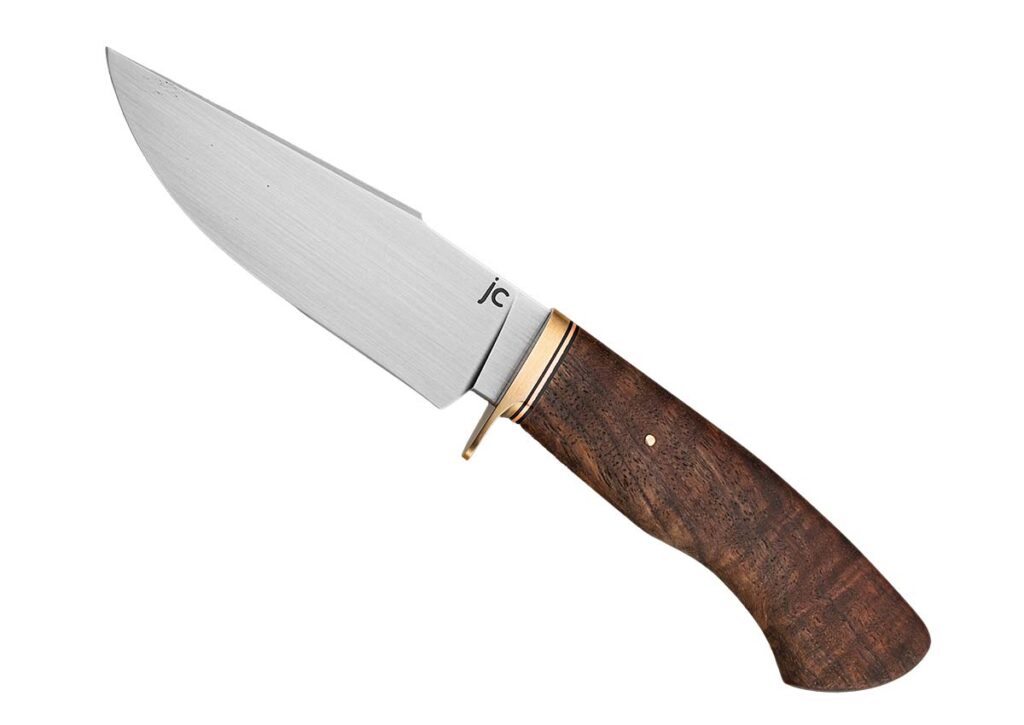
Jason Coy Clip-Point Hunter
Blade length: 4.5” Blade material: 80CrV2 carbon steel Blade grind: Flat Scales: Walnut Handle pin: Bronze, domed Guard material: Bronze Spacers: Black fiber and copper Overall length: 9.25” Maker’s price for a similar knife: $500 Maker: Jason Coy, jasoncoyknives.com (Jocelyn Frasier image)
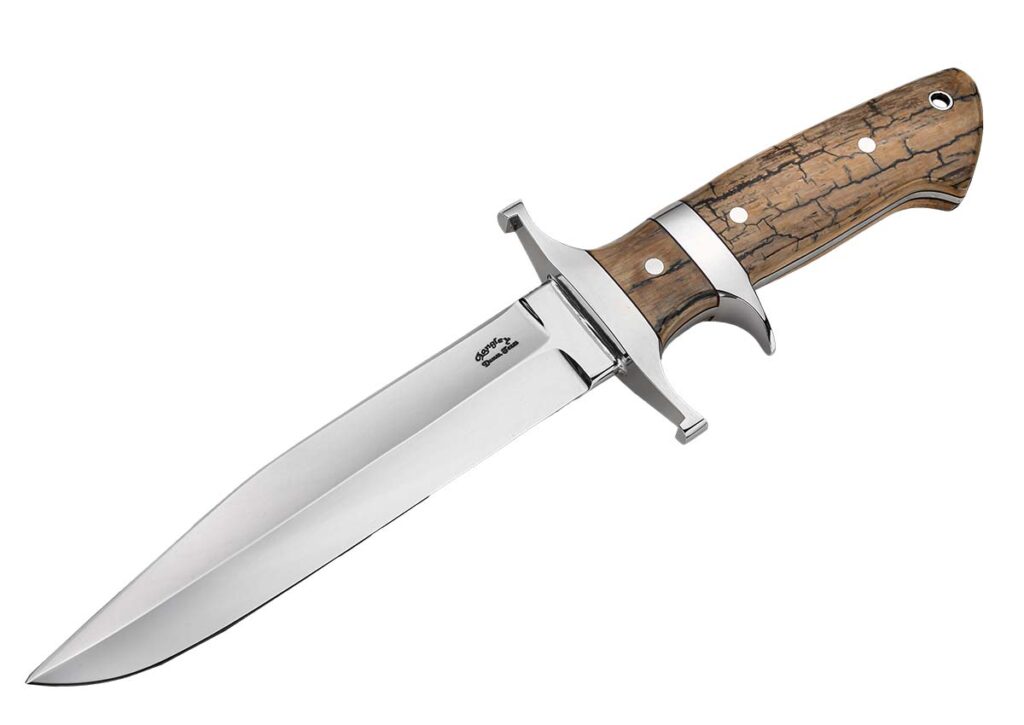
Gary Langley Subhilt Fighter
Blade length: 6.25” Blade steel: CPM 154 stainless Scales: Mammoth ivory Guard & subhilt: 416 stainless Overall length: 11.5” Maker’s price for a similar knife: Contact maker for pricing Knife to know: Gary Langley is a voting member of The Knifemakers’ Guild Maker: Gary Langley, gllangley.com (Jocelyn Frasier image)
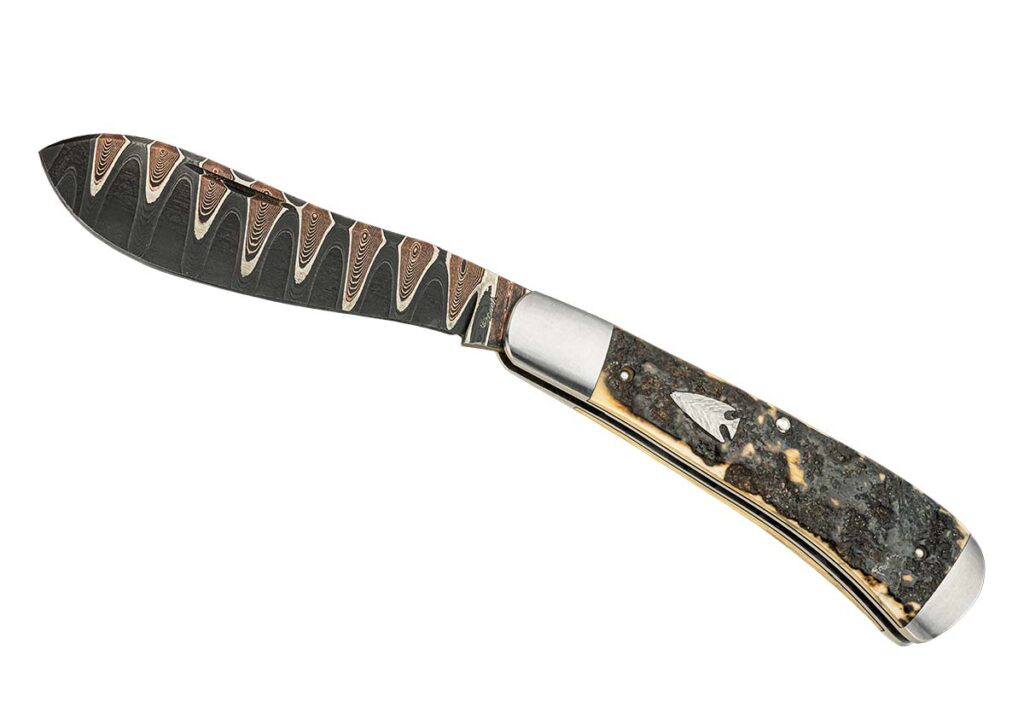
Bubba Crouch Trapper Skinner
Knife pattern: Trapper skinner Blade length: 3.5” Blade material: Copper san-mai by Baker Forge Blade grind: Hollow Scales: Barky mammoth ivory Bolster: Integral Liners: 416 stainless steel Backspring: Heat-colored CPM 154 stainless Closed length: 4.25” Maker’s price for a similar knife: $2,200 Maker: Bubba Crouch (Jocelyn Frasier image)
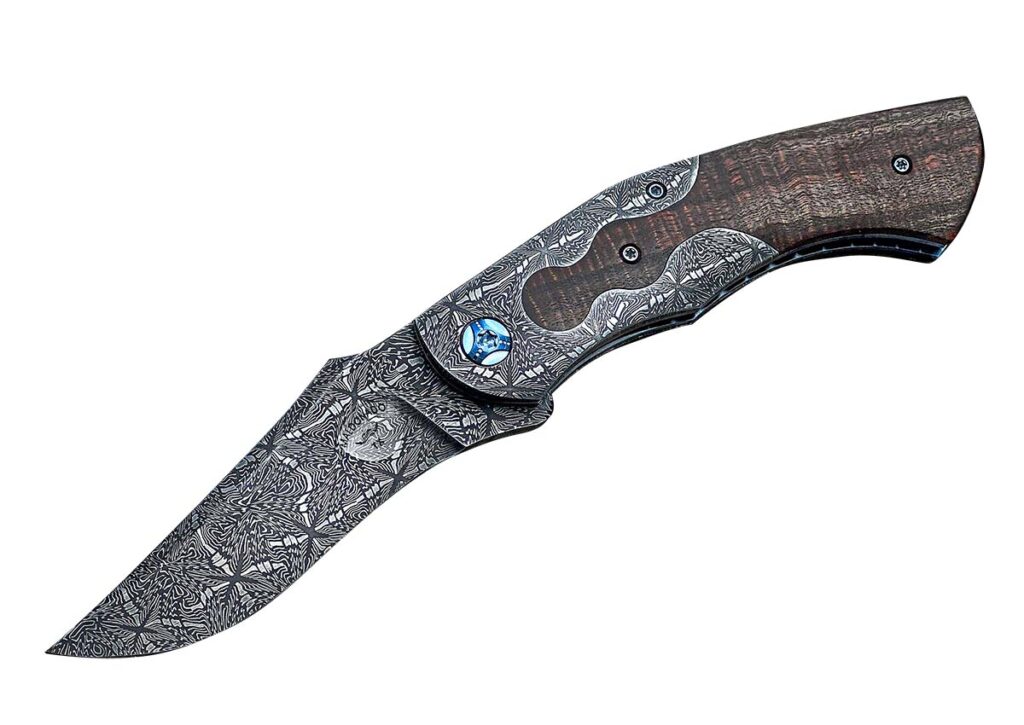
Eliot Maldonado Folding Fighter
Blade length: 3” Blade material: Mosaic damascus by Curt Zimmerman and Kelly Vermeer Vella Blade grind: Hollow Blade pattern: Clip point Blade opener: Flipper Bolster material: Same as blade Bolster design: Double keyhole Scales: Koa Handle hardware: Titanium Lock: Linerlock Closed length: 4” Maker’s price for a similar knife: $2,200 Maker: Eliot Maldonado (Jocelyn Frasier image)
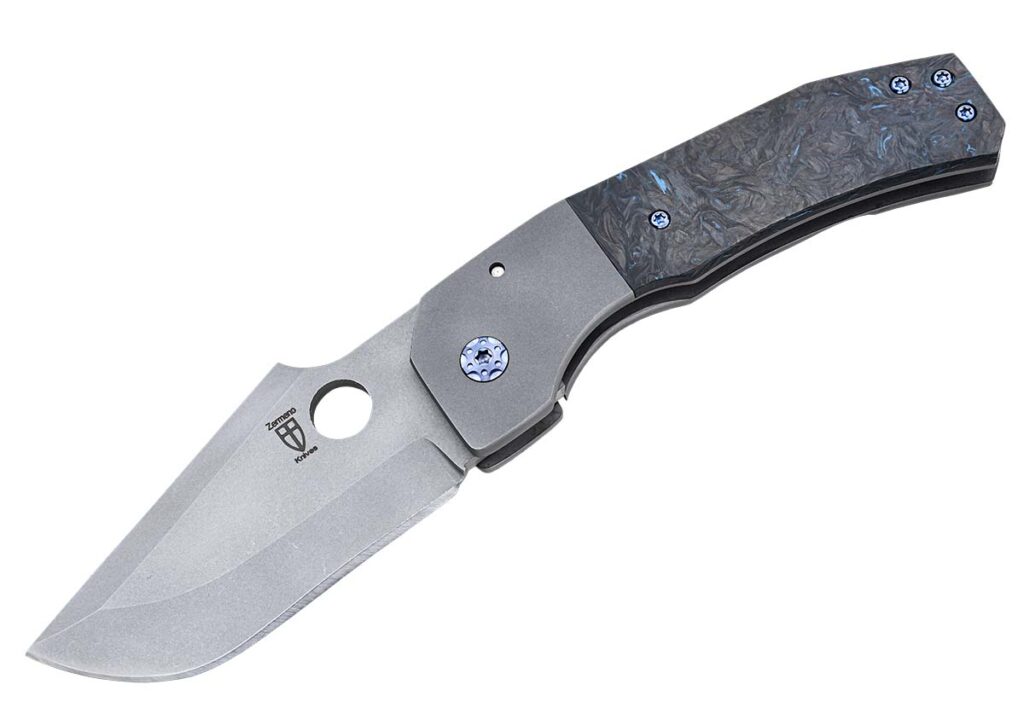
William Zermeno Folder
Blade length: 3.5” Blade steel: CPM 154 stainless Blade @thickest: 3/16” Blade grind: Hollow Handle frame: 160 titanium milled out Scales: FatCarbon® Handle screws: Titanium Lock: Framelock Lock stabilizer: Titanium Pocket clip: Titanium Closed length: 5.25” Maker’s price for a similar knife: $550 Maker: William Zermeno, wdzknives.com (Jocelyn Frasier image)