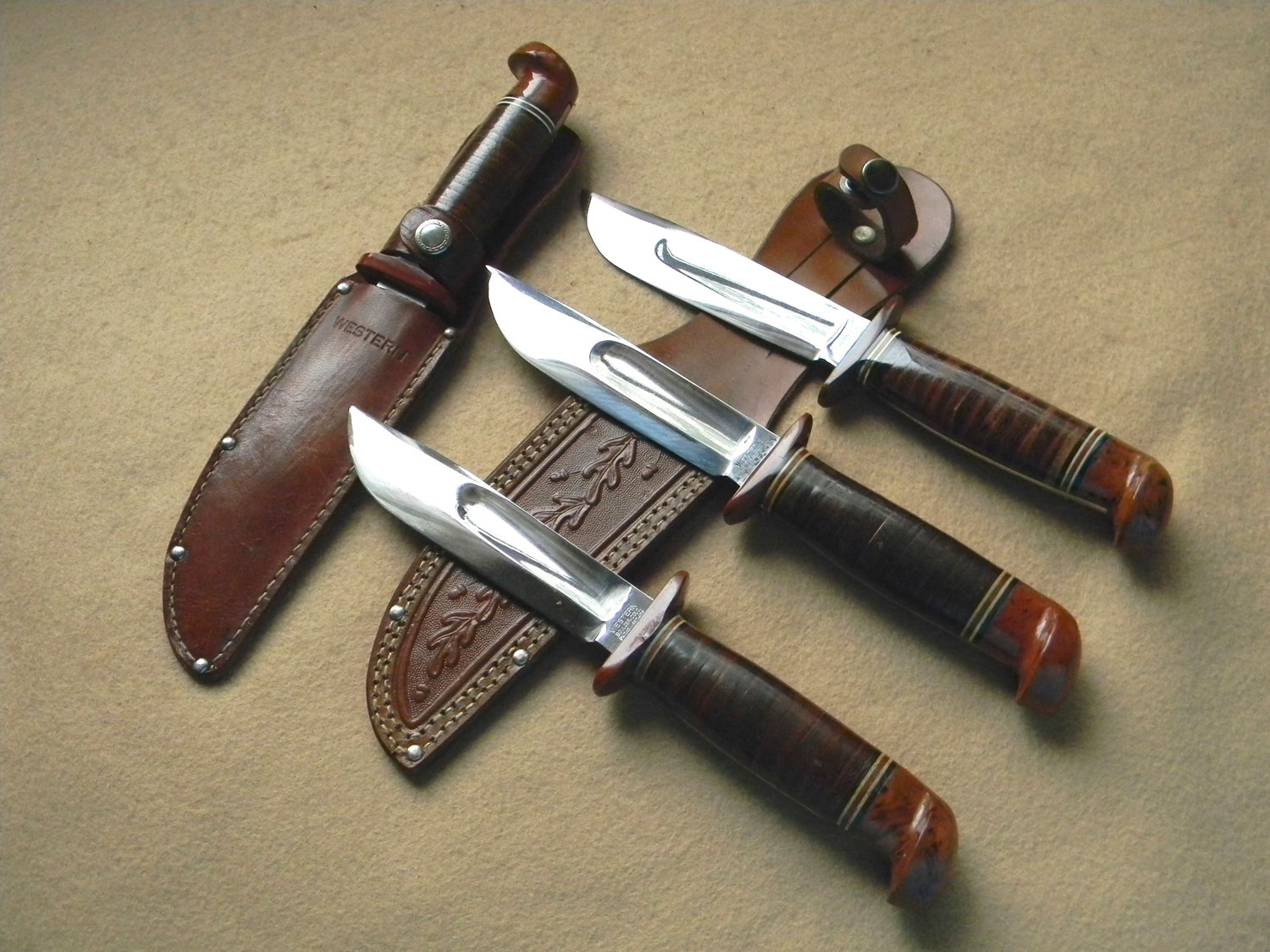
Who Did Movie Knives Better? “First Blood” vs. “The Hunted”

Here’s a look at a movie knife classic, First Blood, and a movie that tried to rip off Rambo. Spoiler alert: ripping off Rambo is never a good idea.

Knife Use in First Blood: Rambo-esque, but Not Ridiculous

After I saw First Blood, the first Rambo movie, some buddies and I started to look at it with a critical, knife-centric eye.

Nothing that Rambo does in the movie is impossible. Some of the feats require a very well-trained man who’s in excellent physical condition, not to mention one who’s stubborn as hell. The feats also require a great deal of luck.

I’ve always been critical of fight sequences where the hero beats up 10-15 opponents all at one time. You can see the bad guys hanging back, each waiting his turn. That doesn’t happen in real life.

However, in First Blood, each person Rambo fights is physically isolated, so Rambo can take each one on one-on-one. It could work that way. The movie was very well thought out choreographically.

At one point Rambo leaps from a cliff and falls through a pine tree, breaking tree limbs on the way down, and survives. Tricky and tough—and yet possible. I once fell out of a pine tree, breaking pine limbs on the way down, and wasn’t hurt at all except for my 18-year-old ego. It was about a 20-foot drop, not anywhere near what Rambo fell, but long enough to convince me that it was possible to survive it.

Rambo’s use of the knife in First Blood is excellent. He knows what he’s doing. One of the first things he does is use the knife to make a spear, which is a good idea because a spear is a better hunting tool and a much better weapon than a knife. For one thing, a spear has reach and speed over a knife alone.

First Blood is an exciting movie. If you haven’t seen it, rent it. It’s worth it.

Knife Use in The Hunted: Ridiculous

Several of my friends saw The Hunted and told me that it was the MOAB (Mother Of All Bombs). However, having seen The Musketeer, I didn’t believe them. While The Hunted isn’t the MOAB, I would put it in the 2,000-pound category.

The Hunted isn’t a remake of First Blood but copies it—and does a lousy job at that.

The movie opens with a hellish scene in Kosovo, with Serbs killing Albanians right and left, especially women and children. I think the viewer is supposed to get the impression that all the Kosovo violence has driven the villain, Aaron Hallam— played by Benicio Del Toro—crazy.

I realized that I was in a fantasy movie very quickly. Tommy Lee Jones, who portrays L.T. Bonham, is running through a forest that’s deep in snow when he sees a wolf caught in a snare. He catches the injured animal, frees it from the snare and then dresses its paw. The animal doesn’t bite Bonham or, for that matter, make any threatening moves whatsoever. Heck, my wife rescued a four-week-old puppy a few months ago and was bitten!

the hunted movie knife
(image via imdb.com)

The plot is that Hallam is a real killing machine whom Bonham has trained. The main action takes place in the dense rain forest of Oregon—sound familiar?—and starts with a scene of two deer hunters. The hunters are equipped with bolt-action rifles sporting monstrous telescopic sights. Stupid is such a harsh word, so let me just say that it makes no sense to use telescopic sights in underbrush so thick you can’t see 10 yards in front of you!

Anyway, Hallam threatens the hunters, telling them they have no reverence for life, and they have to match their guns against his knife. Needless to say, he kills the hunters, and subsequent photos show that he chopped them up like butchered deer. Meanwhile, it turns out that he also has killed a couple more hunters. Since the movie never offers any other reason for Hallam’s behavior, I guess he must have joined a radical arm of PETA (People for the Ethical Treatment of Animals).

Bonham is an amazing tracker and expert knife fighter who’s called in to capture the killer. He starts out after Hallam and, of course, doesn’t take a weapon. Hallam immediately finds Bonham, they have a brief fight and the chase begins.

I can’t begin to tell you how incredibly stupid this movie is. For one, in one scene a thrown knife goes all the way through a tree trunk that looks to be about 3 inches in diameter! Bonham knaps a flint blade to use as a weapon, never thinking to simply buy a knife instead.

One of the most startling scenes is when Hallam breaks off chunks of leaf spring. He starts a small fire and then forges a knife using the chunks of leaf spring for steel, and another chunk as a hammer. After he rough forges the blade, he hardens it and then files it! I have no idea where he gets the file, let alone how an open fire that size develops the heat necessary to forge steel.

In certain segments, The Hunted is a direct steal of First Blood, right down to Bonham repeating a quote from the Stallone movie about how many body bags will be filled in the quest to nab Hallam.

The knife fighting and the scenes showing the training aren’t so much stupid as just silly. Some guy stands still as someone pretends to cut his throat, chest, stomach, brachial artery, and then moves down to cut both femoral arteries! I mean, what’s the point? How many times does your opponent need to bleed out? It’s like blowing up a rabbit with a stick of dynamite—the furry little critter can only die so much!

The final fight sequence between the two principals is very poorly choreographed. It bears no resemblance to a real fight. For those who have read my reviews about movie knives before, you know that I feel a fight must follow the flow of the film. In other words, it need not necessarily be a “real” fight but one that must be consistent with the plot. In that respect, the final fight does follow the plot—both are total and complete nonsense.

Don’t waste your time or your money on The Hunted. This time I did the suffering for you.
 

Knifemaking: “Tricking Out” the Wilton Square Wheel Grinder

best knife grinder for the money
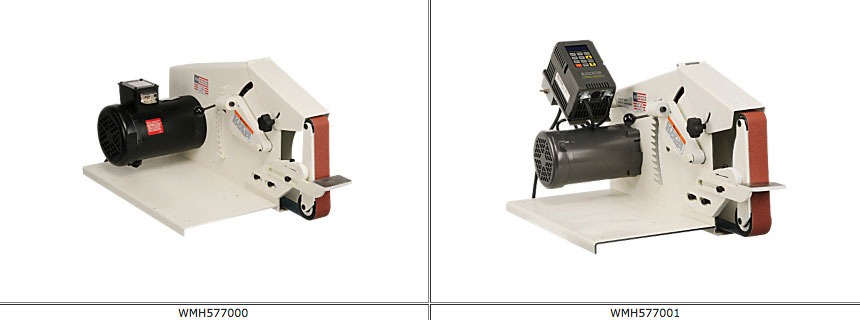
Two variations of the Wilton Square Wheel Grinder. (Images courtesy of Southern-Tool.com)

The variety and types of belt grinders available today is tremendous. Without a doubt each individual has his/her favorite machine. Although all are very good, we always wish that we could make them do more, or modify them to better fit how we each do things in our shop(s).

I have used every grinder out there at one time or another, and have chosen the Wilton Square Wheel as my favorite. The most attractive feature for me is the ease and speed of changing attachments.

As it comes from the factory or dealer, there are a few draw backs that can be irritating to a knifemaker. Below are a few modifications I have made to increase versatility and production in my shop.

Specs

The machine is set up to run either 110VAC or 220VAC. As delivered it is set up to run at 110VAC, I highly recommend setting it up to run on 220VAC. There is a world of difference in the power and smoothness of the machine from 110 to 220. (My machine had change over instructions located inside the switch housing.)

Slow Down

belt grinder for knifemaking
(All images by the author unless otherwise noted.)

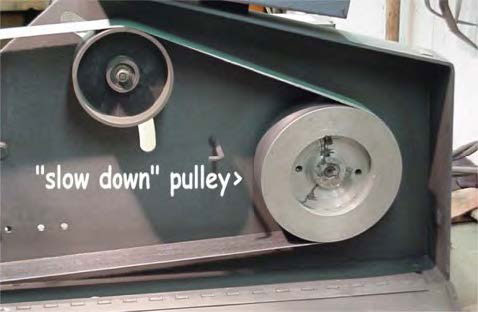
If you did not purchase a variable speed machine, get a “slow down” drive pulley. As it comes from the factory, the Wilton Square Wheel has a 10″ drive pulley that runs the machine at 4600 SFPM (surface feet per minute) Before they were offered commercially, I had one made at a local machine shop. Mine is 7″ dia, and slowed the belt speed down to 2950 SFPM.

By slowing the machine down, it may seem at first that your progress is very slow, but your grinds will come out much nicer, and you’ll get a lot more mileage out of your belts.

Flat Platen Attachment

knifemaking belt grinder

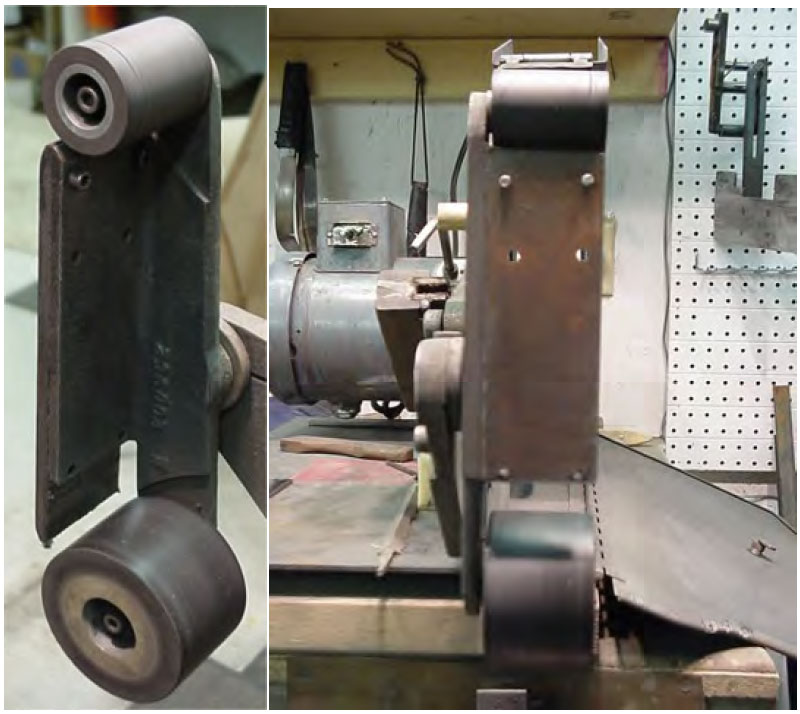
Next we turn to modification of the flat platen attachment. As it come from the factory, and with the way the platen attachment is cast, there is simply not enough room or tracking adjustment to allow one to create plunge cuts on the left side of the platen (as you are facing the machine).

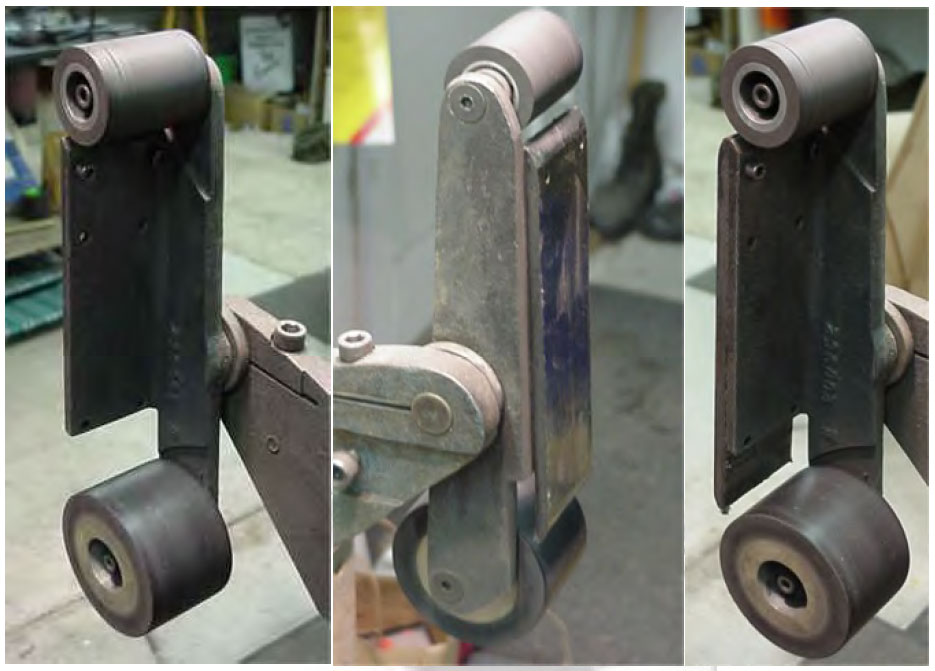
It took me a while to work this one out, but the solution is a simple fix. I created a platen that bolts onto the existing platen. These “add on” platens are nothing more than a piece of 1/4″x 2″x whatever length you want (up to the original 8″) that the belt “rides” over. This will give you plenty of room for plunge cuts. In the photos below you can see how I drilled two holes in the casting, and use two socket head bolts (10-24 thread) to secure the “add on” platen.

The easy way to do this is to remove the contact wheels and use a set of vise grips to drill the holes for threading, and then enlarge the holes in the casting to accept the socket head bolts.

Modify Platen Lengths

best belt grinders for grinding knives

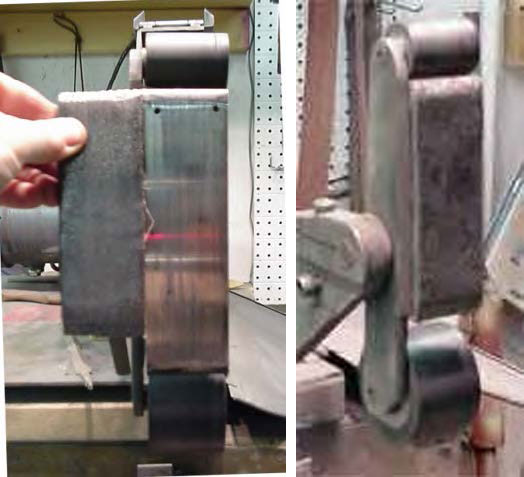
For those who were paying close attention to the photos above, the platen may have seemed shorter than it should be. This brings us to one of the best improvements. Remove 2″ at the bottom of the factory platen casting. This gives an area that is ideal for convex grinding.

knifemaking tips

Platens can be made in different lengths, for various applications. The above photo on the left shows two different platen sizes, the large for flat grinding, and in the right photo, the shorter platen is in place for convex grinding. Below is a close up view of the setup I use for convex grinding. It’s easy to get carried away and use too much pressure, so nice and easy is the key. You can control the amount of convex with a combination of belt tension, and the amount of pressure you apply to your work piece.

Using the Short Platen

I seldom use the 8″ wheel, with the exception of profiling blades. The long flat platen, I use for flattening, and tapering, the shorter platen is used for convex grinding.

If you have made modifications, and are willing to share your ideas, let me know in the comments.

NOTE: Since first writing this article, I have trashed the idea of using Graphite canvas for a platen backing. This material wears too quickly, causing uneven grinds and just general mayhem. I now use “pyro-ceram” or tempered glass on all my platens. The platen MUST be flat, and the glue used to attach the glass able to withstand heat (I use AccraGlass) but it will improve you grinding 10 fold.

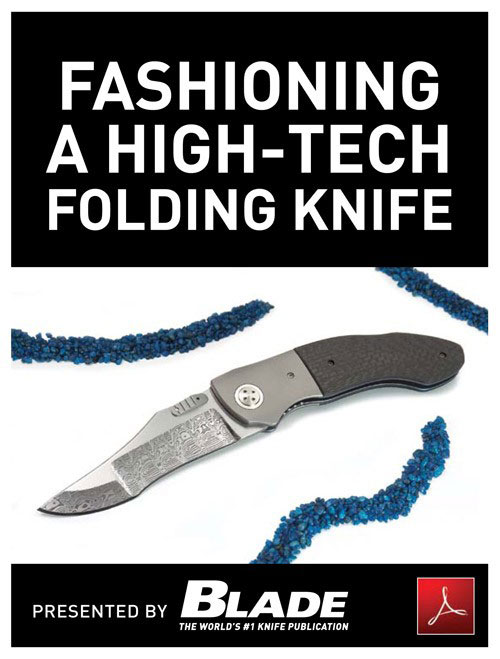
Keep Learning About Knife Grinding with This Download

knife grinding tips

Folding Knives: 4 Unusual Opening Mechanisms

weird knives
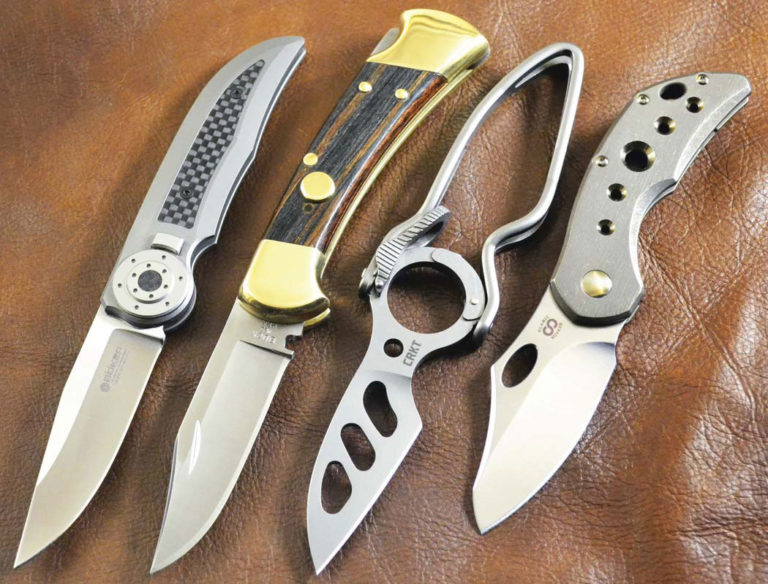
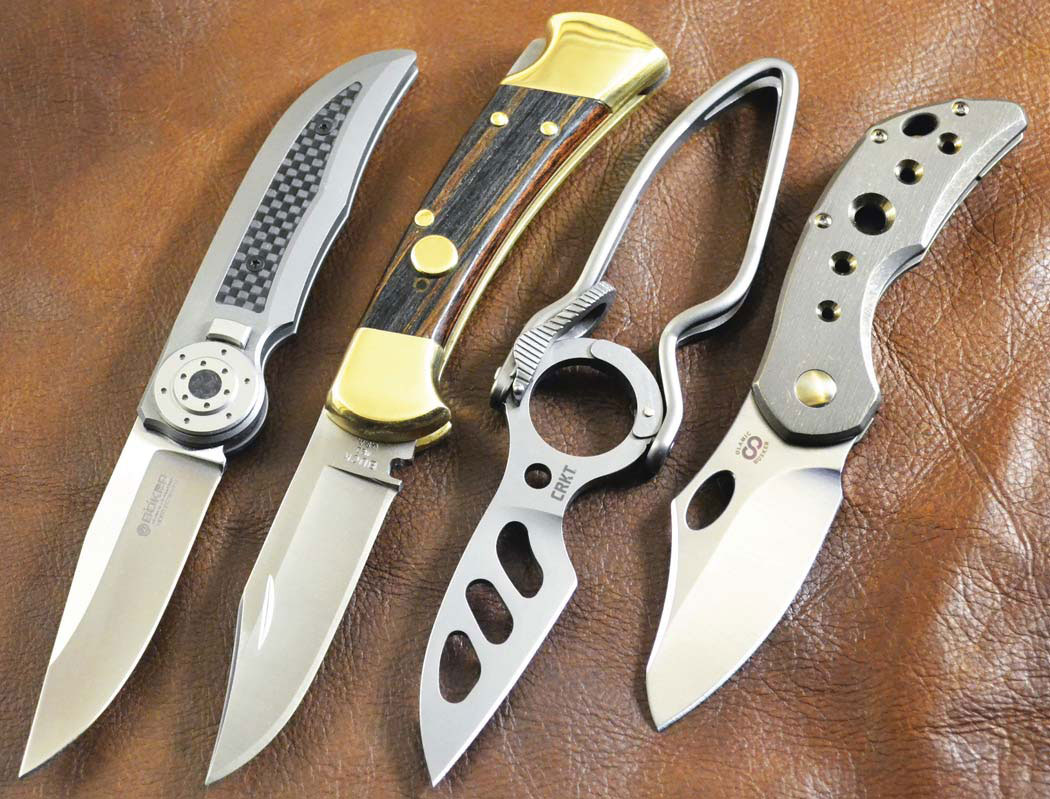
Here are four folding knives that employ unusual opening mechanisms.

“Cool Factor”

Some knives have a “cool factor” that makes your eyes pop out. Whether sporting creative designs, spine-tingling handles and blade shapes or—in this case—ingenious mechanisms, such knives always have that special something which sets them apart.

odd knives
Cool can be anything from a notable mechanism to a standout design. From left: Boker Tucan, AIK Buck 112 Ranger Double-Action Auto, CRKT Daktyl and Olamic Busker Semper.

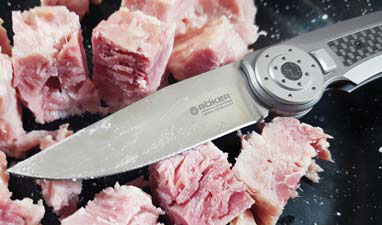
Boker Tucan


boker tucan knife review
The Boker Tucan is a stately looking folder, but its 3-inch blade of Bohler N690 stainless
steel is all business.

Boker’s sleek Tucan would be cool on its design alone, but designer Wilfried Gorski’s innovative blade-release mechanism puts the folder over the edge. A slide release just below the oversized pivot pops the blade out of the frame so it can be opened manually, and the release also serves to deploy the blade. Simply thumb it down and the blade is ready to fold into the frame.

Everything about the Tucan is upscale, from its stealthy 3-inch Bohler N690 stainless steel clip-point blade to its beautifully sculpted 3.875-inch titanium frame with carbon-fiber inlays.

There is no pocket clip but no matter—the Tucan is meant for loose pocket carry. At a weight of 2.82 ounces that is not a problem.

MSRP: $339.


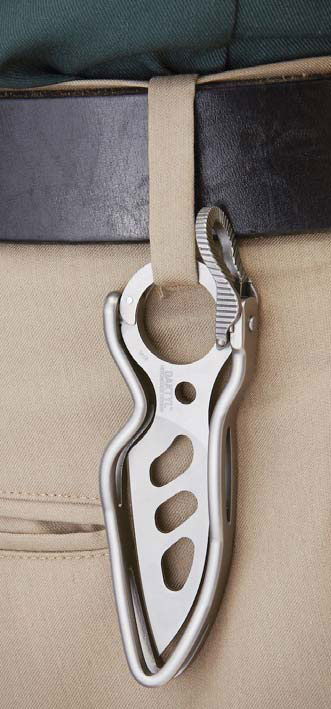
CRKT Daktyl

CRKT Daktyl folding knife
(CRKT image)

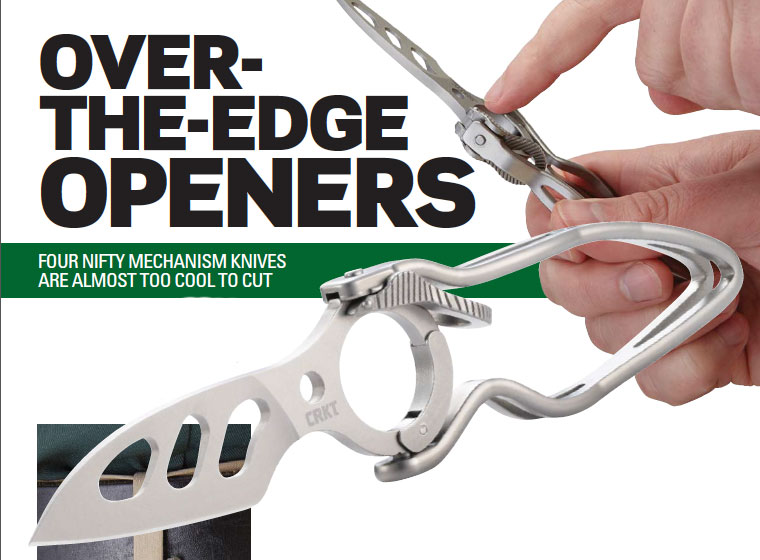
The CRKT Daktyl is a revised version of the Tom Hitchcock “Hole In One” design.

Every bit as enigmatic as the original, if not more, the Daktyl has a 3.05-inch 420J2 stainless steel blade that rotates out of a 4.42-inch wire-frame handle.

The fun begins trying to figure out how to release the blade via Hitchcock’s Slide Lock mechanism, which requires sliding and tipping back the thumb lever.

Once you get the hang of it the Daktyl is pure fun and will amaze your friends. The modified wharncliffe blade has cutouts for lightening and a round carabiner at the base allows you to clip it to a belt loop, keychain or pack and—get this—pop a beer cap.

The Daktyl has a pleasant beadblast finish overall and weighs in at 2.4 ounces.

MSRP: $59.99.


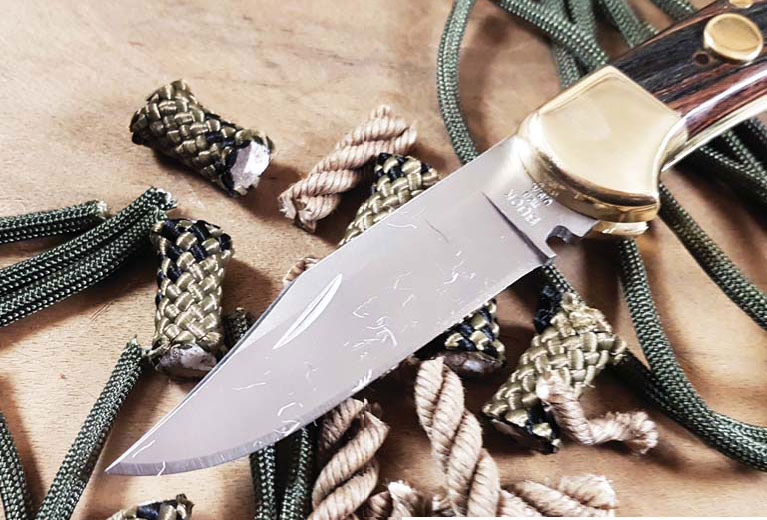
Buck 112 Ranger DA Auto (Adams International Knifeworks conversion)

Buck 112 double action auto
Adams International Knifeworks Buck Ranger 112 DA Auto has all the traits of the original. The 3-inch 420HC stainless steel blade whipped and sliced through paracord, 3/8-inch rappelling rope and tough waxed lasso rope with ease.

Adams International Knifeworks (AIK) has been specializing in automatics and distinctive knives since 1987, and conversions have been one of its fortes. The Buck 112 Ranger DA Auto is one such conversion and it’s a little beast.

Unlike the new Buck 110 Auto, the AIK version of the smaller 112 Ranger differs in that it is a double action—opens both manually and automatically—and uses a leaf spring on the spine as opposed to a coil. The blade is employed via a flush brass button on the front, which matches the bolsters nicely.
Blade deployment is via the standard lockback on the rear base.

Everything else is Buck 112 Ranger, from the Dymondwood lockback grip to the 3-inch 420HC stainless steel clip-point blade and black leather belt sheath.

MSRP: $160.


Olamic Cutlery Busker Semper

Olamic Cutlery is known for making fashionable knives and the Busker Semper model, designed in-house, exudes coolness on every level. The folder sports curvaceous lines from stem to stern, including its ability to open 10 different ways (see above video), including a top-mounted flipper.

It is a small knife—6 inches open—featuring a 2.375-inch Bohler M390 modified wharncliffe blade and a 6Al4V titanium framelock handle. Other features include a machined pocket clip, caged bearing pivot system, stainless steel lockbar insert with an over-travel stop, ceramic detent ball, and ceramic pocket clip retention ball. In a nutshell, this is the good stuff!

The test model was delivered with a deep-brushed surface texture and gold anodized accents.

MSRP: starts at $365.


See More Innovations at BLADE Show

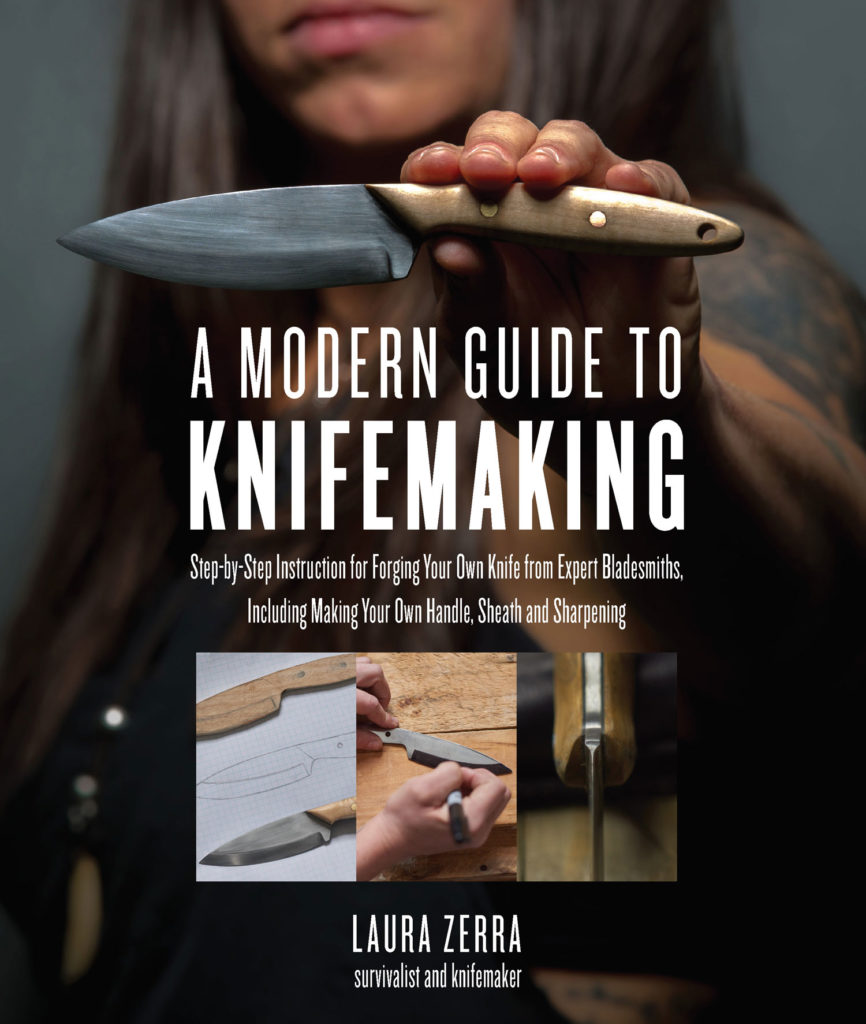
10 Knifemaking Questions with Naked & Afraid’s Laura Zerra

You may know Laura Zerra from her appearances on the Discovery Channel program, Naked & Afraid, or at BLADE Show. What you might not know is that she’s also an accomplished knifemaker with a book coming out July 3, 2018, titled, A Modern Guide to KnifemakingNo less than BLADE Magazine Cutlery-Hall-of-Fame® member Ken Onion, Kaila Cumings, and Mike Jones contributed to the tome.

Fresh from an extended stay in the wilderness, Zerra talked with BLADE about knifemaking, survival knives and the biggest mistake people new to knifemaking make.


BLADE: Most people know of you through Naked & Afraid. Did you get into knifemaking after appearing on that show or was this something you were always practicing?

LZ: I used to be a farrier, so I got my first introduction to knifemaking through blacksmithing. I used to mess around with steel in the forge, and that led to trying my hand at making knives. As a survivalist and outdoors person, I’ve always had a love for knives, and starting to make my own was a natural progression.

What spurred you to write your new book, A Modern Guide to Knifemaking?

I was working on outlining a survival book, and my editor saw that I’d just been at BLADE Show. We talked about the possibility of me writing a book on knifemaking. I’ve always loved knives, and have been in numerous situations where my life literally depended on my blade. I’ve also been humbled by all the legendary knifemakers I know, and I don’t have the expansive years of experience and talent that a lot of them do.

The thought of writing a book on knifemaking was really intimidating at first, but I realized that my perspective would allow to me to write a book that could really break it down for a beginner, and that my relationship with knives as a survivalist could offer some unique insight. Knifemaking is one of those skills that everyone does a little bit differently, so I wanted to interview some experts in the field and have them offer their two cents, as well.

How to make survival knives

Can someone with little knifemaking experience pick this up and go at it?

I wrote the book that I wish I’d had when I first started knifemaking. I wanted someone with absolutely no experience to be able to pick up my book and be able to make their first knife, from start to finish. While I do talk about what has worked for me in my experience, I think knifemaking is personal. I really wanted to encourage the reader to experiment with different processes as well as designs to develop their own style and find what works for them.

What’s your philosophy when it comes to knifemaking?

As a survivalist, first and foremost, my knives have to be functional and durable. A knife has to be able to complete the tasks I need it to, and I don’t want to have to worry about it breaking or losing an edge quickly when I’m depending on it for my survival. That being said, I don’t think that means it has to be unattractive; I think a functional knife can still be beautiful, and a skilled knifemaker can complete both these objectives.

Laura Zerra knives
Zerra says she prefers working with 1095.

What are your favorite steels to work with?

I like working with 1095 steel. I find it easy to move with a hammer, and it holds a great edge with a good heat treat. But I have to admit, I’m a sucker for damascus carbon steel. Well-made damascus really does well with that balance of function and beauty. I just love the moment of pulling it out of the etch and seeing how the pattern has played out on the steel.

What’s the biggest mistake people make when first starting out making knives?

I think the biggest mistake people make is not getting started at all. I’ve talked to so many people who have told me, “I’ve always wanted to make a knife!” but have never actually done it. Getting started can be intimidating for people, and that can be enough to prevent them from ever getting out there and doing it.

If I could tell people one thing, it would be to commit to doing it; not in a year, not when you have time, but right now. And don’t be scared of making mistakes. Mistakes are a natural part of getting into any new skill, and are an important part of the learning process; but you have to actually get out in the shop to start making them!

Laura Zerra knifemaker
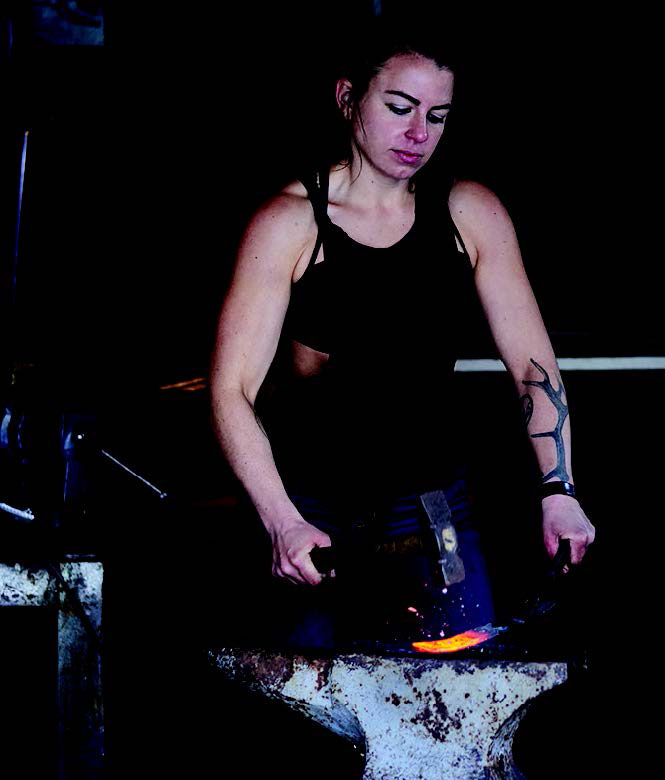
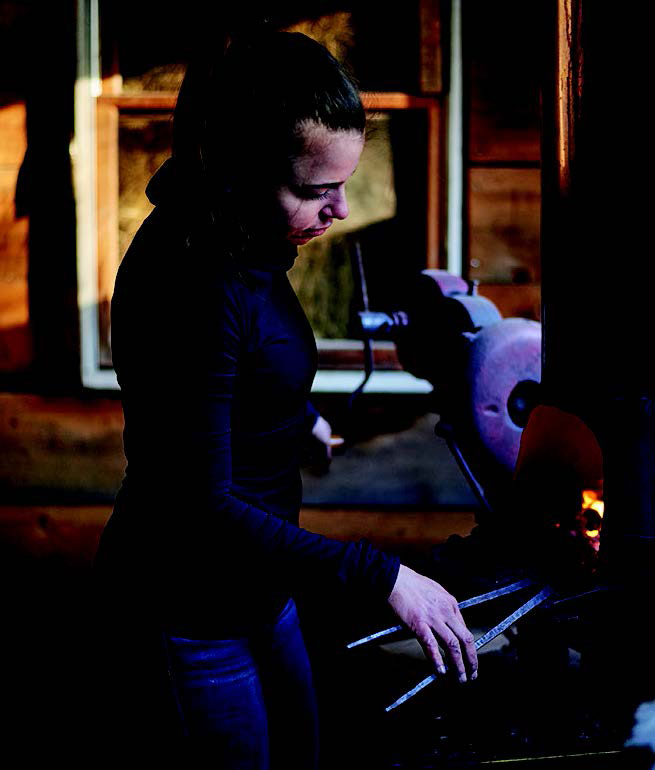
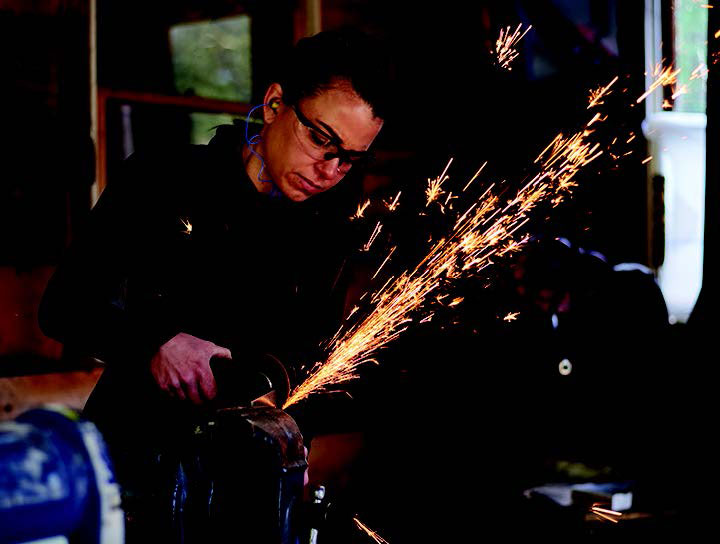
Laura Zerra, star of TV’s “Naked & Afraid,” at work in her shop. (all shop images provided by Laura Zerra)

Is there such a thing as a “survival knife” or are there only knives used for survival purposes?

I think the term “survival” is too broad to describe a specific type of knife. Where am I surviving? What’s the environment like? What tasks will I need my knife to perform?

Different circumstances will be best met with different qualities in a knife, from overall size and shape to steel choice to blade geometry. To try to make a “One Size Fits All” blade that will be the best tool for every survival situation seems like an impossible task.

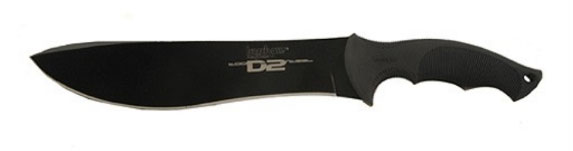
In seasons 1 and 2 of Naked & Afraid, you brought with you a Kershaw Outcast and a Diving Sparrow Mako Shark, respectively. Both of those sport big blades (10 inches and 11.25 inches). Is it safe to say that machetes are better than knives with smaller blades for survival purposes?


Kershaw Outcast
Kershaw Outcast
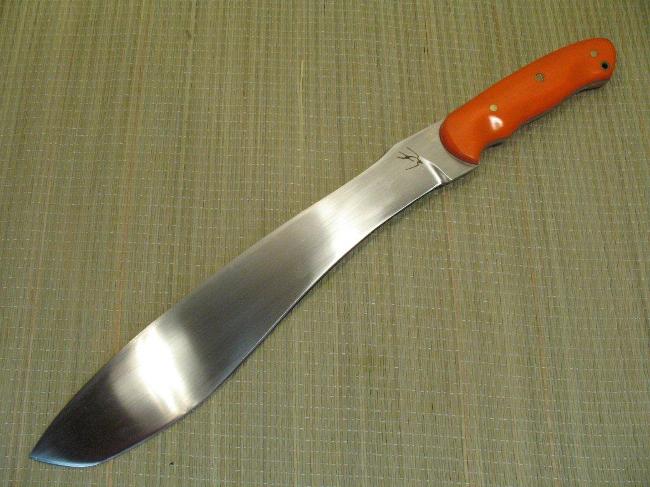
Mako Shark knife
Mako Shark

I brought those knives based on my location in the tropics. Both of those knives made easy work of cutting through a massive amount of palm leaves and opening coconuts. It’s a bit more difficult to carve trap parts or butcher meat, but it can still be done.

A machete can be used to complete more delicate tasks by changing the way you use the cutting edge; for example, when gutting small game, I hold the machete between my feet and move the animal across the blade instead of trying to move the big knife across the much smaller animal.

For jungle survival, I absolutely recommend a big blade because the of amount of material you’ll be chopping though. Put me in a desert or a deciduous forest, however, and I’m likely to bring a smaller blade; it just depends.

What’s your take on survival knives versus survival multi-tools (those 31-in-1 sorts of things)? Are those multi-tools any better than a knife that’s just a knife?

I prefer a simple knife. A multi-tool has its place in urban survival and everyday use, but I find all those extra tools and edges can limit the use of your blade and get in the way. As a primitive survivalist, I’m used to improvising with what I have so maybe that’s part of it. I know people who love multi-tools, so I guess it’s personal preference.

Laura Zerra knifemaker
Careful around the grinder, warns Zerra.

In the name of safety, we run a series on blademag.com about knifemakers’ worst accidents in the shop (so that no one else repeats the same mistakes). Have you ever had an accident in the shop? What did you do differently the next time around?

Yup! When I first started using the grinder, I ground a big notch out of one of my fingers. It took a minute to start bleeding, but then it gushed for quite awhile. I had to quit for the day, because my hands were so slippery from my own blood that I couldn’t hold the blade anymore.

It definitely gave me respect for the grinder, and I was more aware of the fact that the belt removes flesh much faster than steel. I also had a shirt catch on fire from hot steel dust gathering in a fold. I’d love to tell you that I wear a leather apron now but I’d be lying.

Keep up with Laura Zerra on Twitter, Instagram, Facebook and her website.


You Never Know Who You’ll Meet at BLADE Show

Laura Zerra is just one of the celebrities who have attended BLADE Show. The 2018 version takes place June 1 to 3 in Atlanta. Buy tickets and find information here.

Video: The Truth About Edwin Forrest’s “Gift” Knife from Jim Bowie

edwin forrest bowie knife
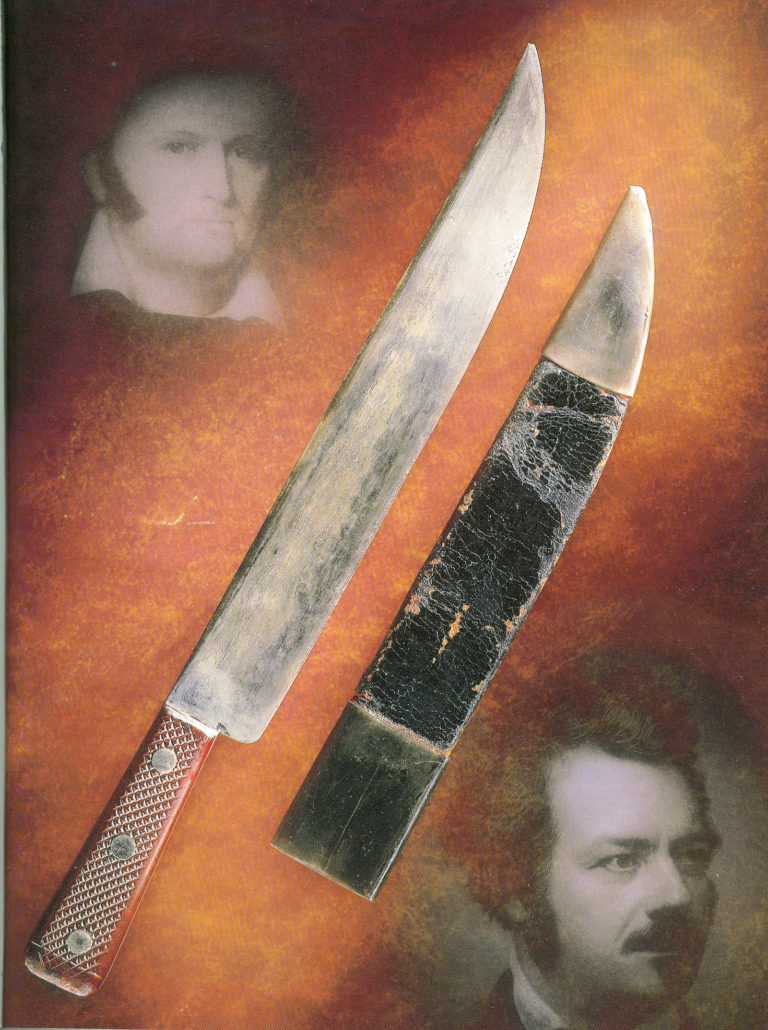
Some say that Jim Bowie (upper left) personally gifted a bowie knife (above) to Edwin Forrest (lower right). Jim Batson, one of the world’s leading bowie knife authorities, shares his findings on the subject.
james batson
Jim Batson

BLADE recently sat down for an extensive interview with Jim Batson, one of the leading bowie knife researchers in the world. The interview was recorded on video, which can be seen below, and consists of two parts.

Most significantly, Batson reveals what he discovered about the controversial Edwin Forrest bowie knife, claimed to be gifted to the 19th Century actor by James Bowie himself. That can be seen at 25:06 in the video.

Look below the video for further timestamps and summaries.

Batson Looks Back on 30

ABS master smith Jim Batson has been conducting his Batson Bladesmithing Symposium for three decades and just completed the 30th one April 8 at the Tannehill Ironworks near Bessemer, Alabama.

Join us for an exclusive interview with Batson as he talks about those 30 symposiums, the major industry changes he’s seen in his bladesmithing career, his induction into the BLADE Magazine Cutlery Hall of Fame in 2017 and what the future holds for this icon of the forge.

Use these timestamps to help you navigate the video.

0:00 Changes in knifemaking looking back
1:34 Forged in Fire
2:34 Changes in knifemaking looking forward
4:10 Batson’s contributions to the world of knives
5:55 Impact of Batson’s symposium
6:41 Batson’s “double-decker” shop
7:32 Including non-bladesmiths at the symposium
10:22 Batson reflects on his induction into the BLADE Magazine Cutlery Hall Of Fame©
11:51 Batson’s future

Bowie Knives According to Batson

edwin forrest actor
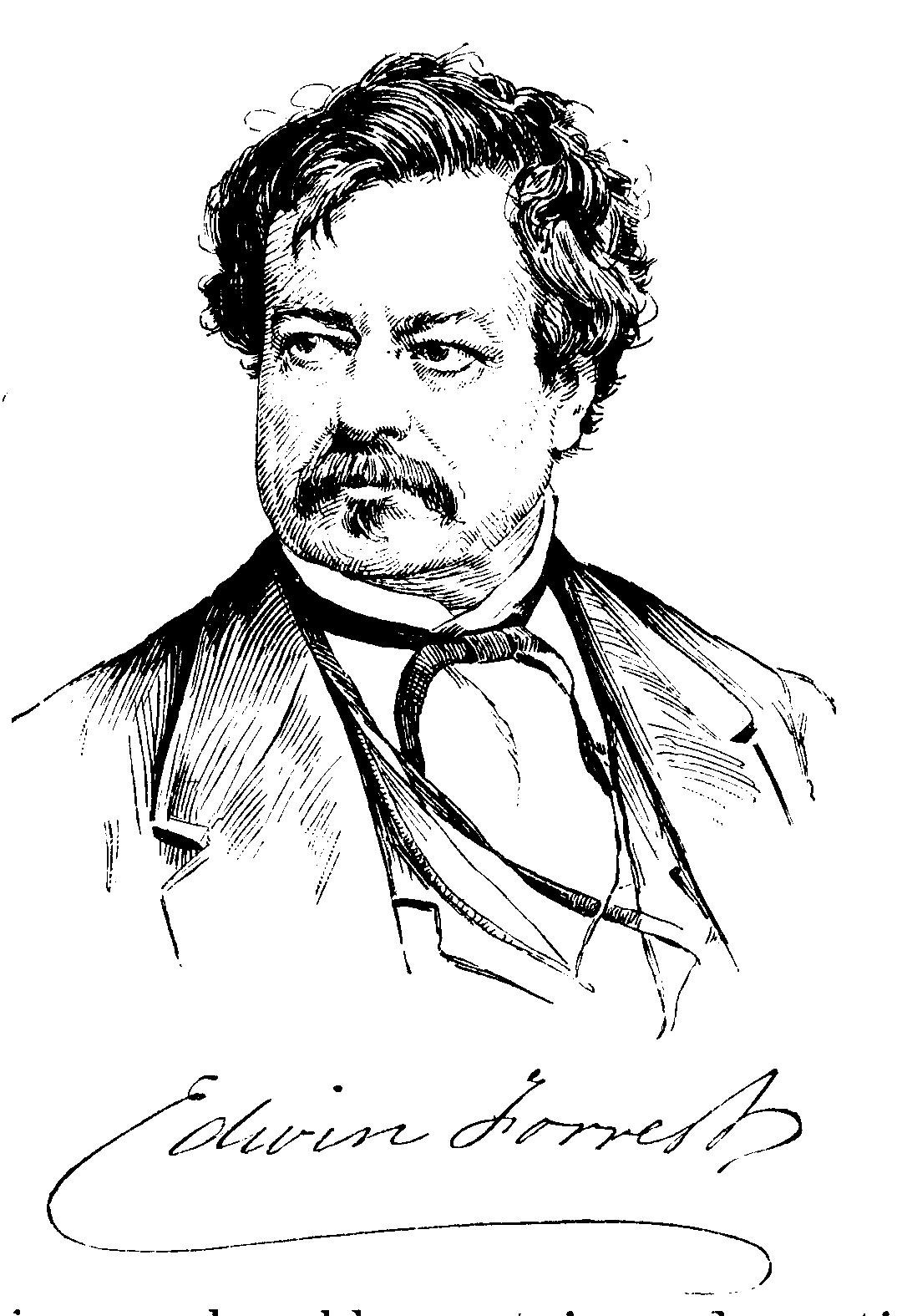
Edwin Forrest

ABS master smith Jim Batson has scoured the Bowie Trail from the Southeast USA to Texas for decades, researching anything and everything about James Bowie and bowie knives.

Watch the video above to see Jim recount the highlights of his research, including his book about the Sandbar Fight where the bowie knife legend was born, whether James Black really made bowie knives—including those in the Carrigan style—whether the Edwin Forrest bowie actually belonged to James Bowie and more in this exclusive BLADE® interview.

12:27 Contributions to bowie knife history research
15:01 Surprising finds
15:53 New facts about the 1827 Sandbar Fight
17:57 James Black controversy
23:14 The Carrigan knives
25:06 The Edwin Forrest “Gift” bowie knife
27:22 Where did the Forrest knife come from?
30:47 End


Make a Bowling Ball Vise in 6 Steps

Bowling ball vise for knifemaking
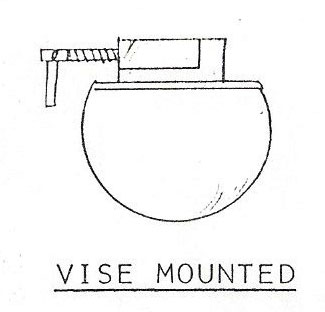
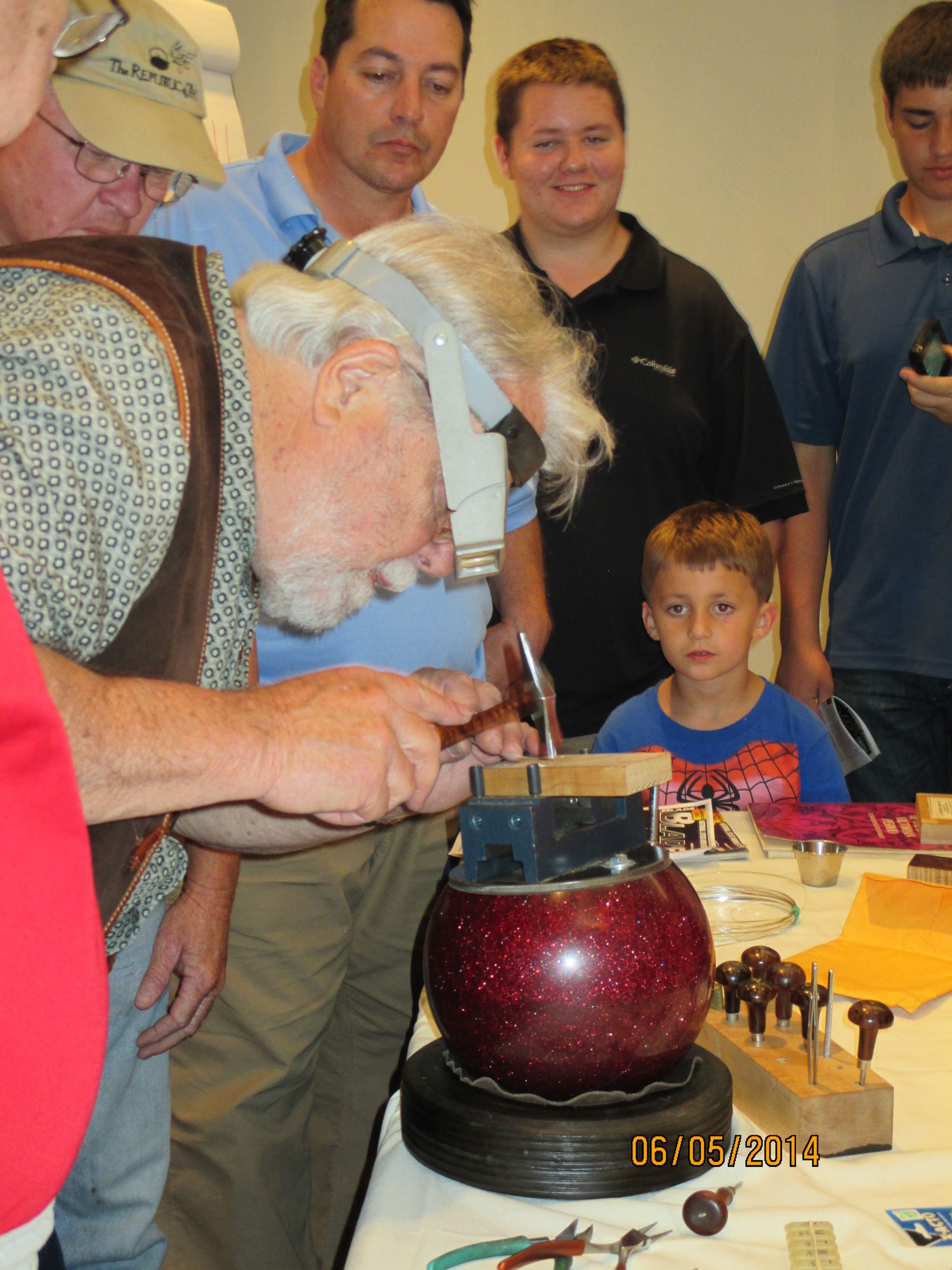
Joe Keeslar’s bowling ball vise uses a lawn mower tire for a base. A machinist’s drill press vise typically used for drilling and milling is mounted on top.
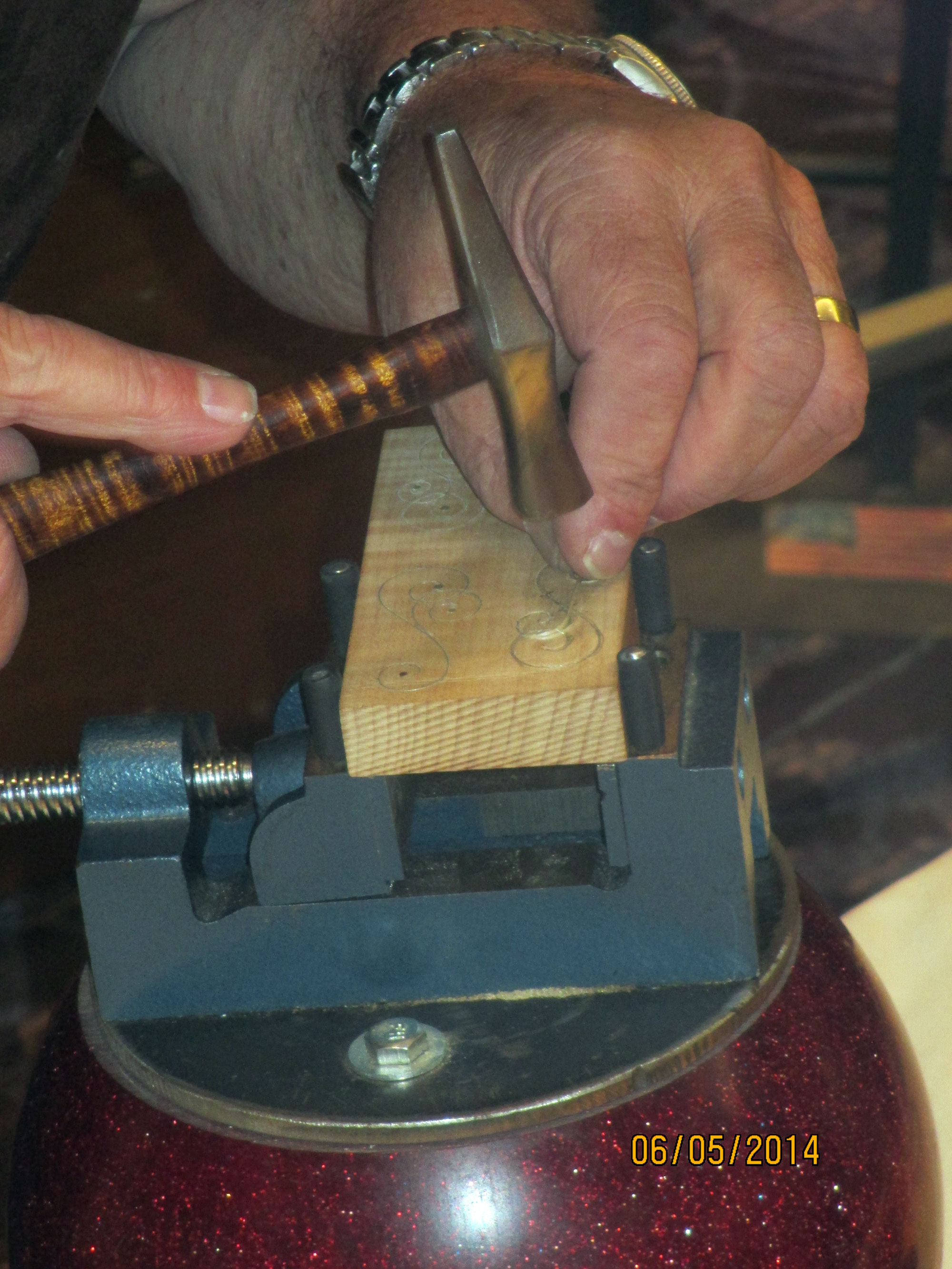
Using a bowling ball vise
The bowling ball vise holds the wood securely as Keeslar lightly hammers the silver wire during his BLADE University class at BLADE Show 2014.

According to ABS master smith Don Hethcoat, “Bowling balls make the perfect vise for knifemakers doing inlays and similar close work where you need both stability and flexibility. You can buy an old bowling ball at a flea market or thrift store for two or three dollars.”

In his own words, here are Don’s six steps.

1) Saw

Make a vise out of a bowling ball

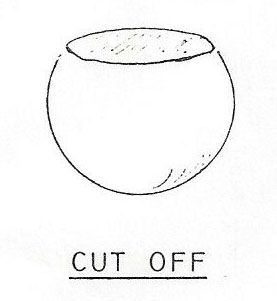
“Saw off about one-third of the bowling ball, getting rid of the old finger holes. I used a metal band saw but you may have other means.”

2) Drill

Bowling ball vise

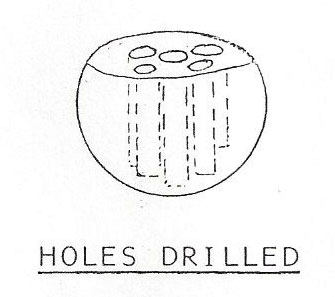
“Drill five holes in the flat top of the ball, one at each corner of a square with one in the middle using a half-inch drill bit, then chisel out a cavity in the center of the ball.”

3) Fill

“Fill the opened cavity almost to the top with lead shot to add weight, then seal the shot to the top of the hole with automotive Bondo® filler.”

4) Mount

Mounted vise on bowling ball

“Make a round cover for the flat top of the ball using metal, wood or Formica®. Mount your vise on top of this. Mine is a machinist’s vise using its mounting system.”

5) Base

Bowling ball vise

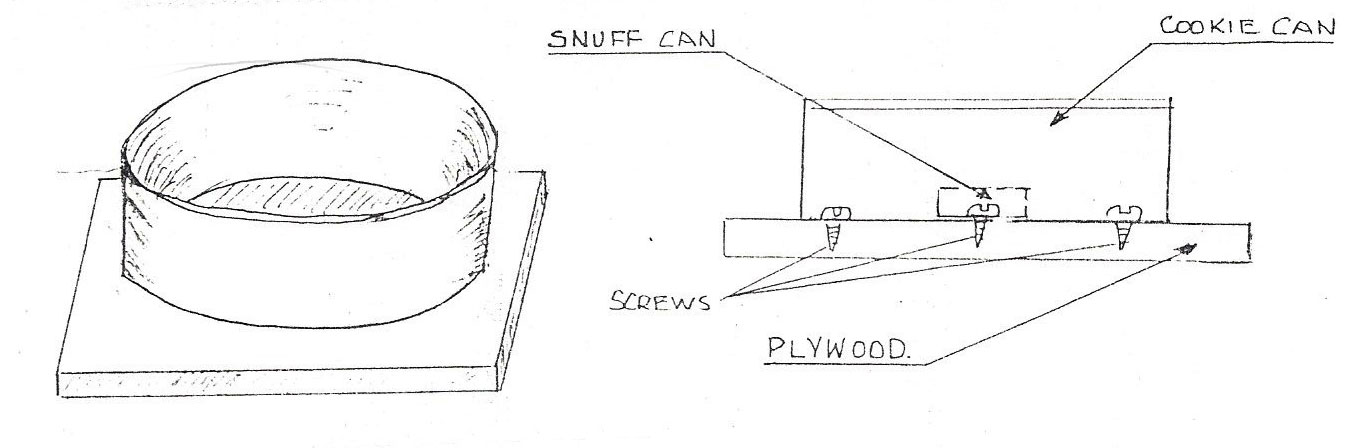
“Make a base and you’re almost done. I used a round piece of 8-inch pipe cut to 2.5 inches in depth. Fill the pipe with Bondo, cover it with Saran™ Wrap and push the bottom part of the ball into it to make an impression. Clean up the excess Bondo.

6) Fit

“Cut a round piece of suede to fit inside the round cavity so the ball can rotate freely. That’s basically it! Feel free to modify the vise to fit your own scenario.”

Learn More Knifemaking Tricks

How to make a folding knife

Review: 4 Diamond-Coated Knife Sharpeners for Premium Steels

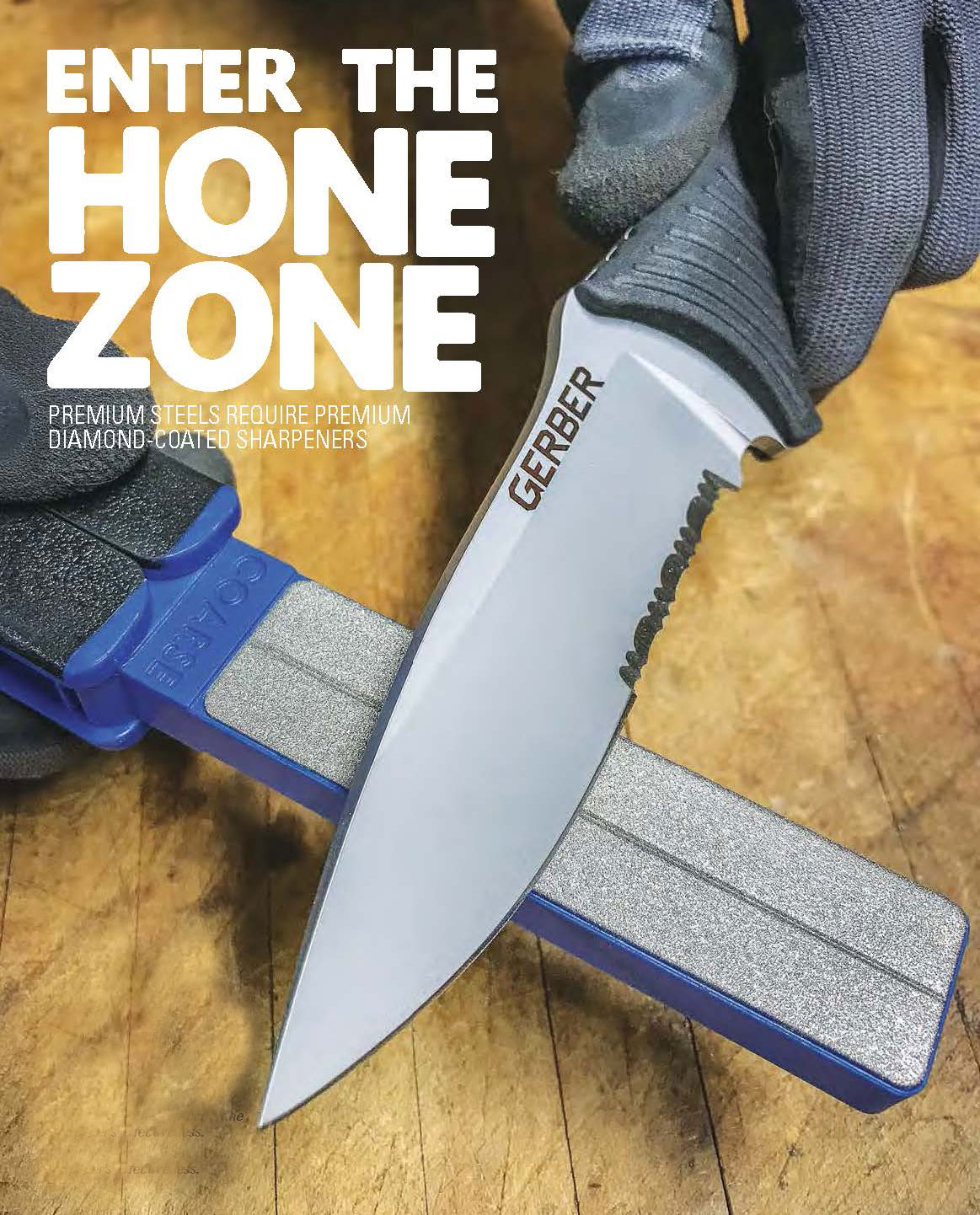
reviews of knife sharpeners
With the AccuSharp Diamond Paddle model, use light pressure and let the abrasives do the work. Too much pressure and you can dislodge the diamond particles, reducing the sharpener’s effectiveness. (All images by David M. Stanfield, DMS Captures)

Premium Steels Require Premium Diamond-Coated Sharpeners

Many knife users/collectors opt for high-performance blade steels such as CPM S30V, CPM 154, 154CM, CPM S35VN, BG-42, CTS 204P, CTS XHP and others. These high grades of stainless offer maximum edge holding, though at a price—and that price comes due when you resharpen the blades. Since these steels excel at wear resistance and can hold an edge for a long time, it also makes them difficult to resharpen. It’s a tradeoff you must consider when buying knives with premium blade steels.

Ergo, especially if you’re going to sharpen the knives yourself, it’s imperative you buy a sharpener that can address such steels effectively. If you’re new to the super steels, not only is selection of the proper sharpener critical but the necessary investment of time is also required.

With the proper sharpener, that time can be kept to a minimum.

Enter Diamond-Coated Sharpeners

Historically, diamond-coated sharpeners are at the upper echelon for sharpening knives. They are the most durable and longest lasting. The tradeoff is price. They are generally more expensive but you must bear in mind that unlike other sharpeners that can break or eventually wear out, there is almost nothing to break or wear out with a diamond sharpener.

Once you buy it, if you can keep from losing it, it should last your lifetime.

AccuSharp Diamond Paddle Sharpener

Accusharp review
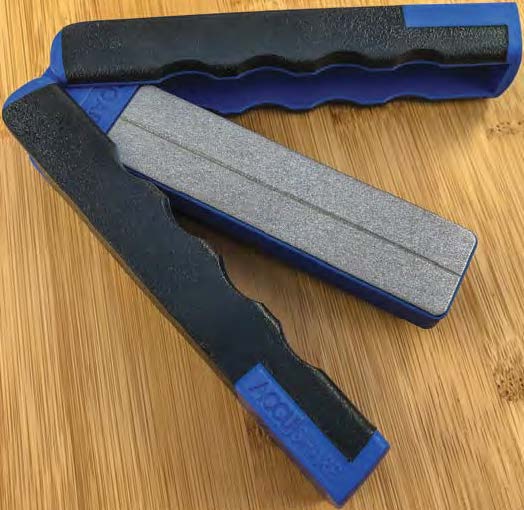
The handles of the AccuSharp Diamond Paddle Sharpener fold up to encase the sharpening surfaces and protect them during storage and transport. The rubber overmold gripping areas are a nice touch and make the sharpener easy to hold securely.

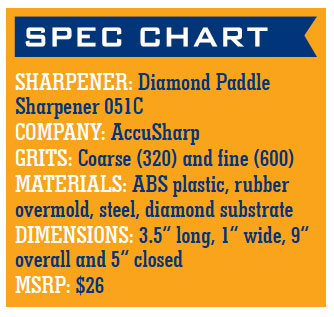
AccuSharp’s Diamond Paddle Sharpener model 051C is a double-sided model featuring both coarse (320) and fine (600) grits. At a healthy .75 by 3.75 inches, it has a large diamond-coated sharpening surface.

The big surface enables the 051C to address all types of knives, from multi-blade slip joints to large fixed-blade hunters. It includes a sharpening groove for use with all kinds of hooks, darts and other pointed items. It features handles similar to a butterfly knife’s that fold up around the sharpening surface, protecting it from damage during transport or storage. The handles feature a secure gripping surface as well.

Accusharp knife sharpenerThe 051C works very well. With a diamond sharpener, use light pressure and let the abrasives do the work.

Too much pressure and you can dislodge the diamond particles, reducing the sharpener’s effectiveness. I like the sharpener’s two sides, which eliminate the need to carry a separate finer-grit sharpener to fine tune the edge. When done re-profiling the edge with the coarse side, just flip the 051C over and continue your work to refine the edge.

Another thing I like about the 051C is the rubber overmold gripping area. With or without gloves or wet hands, the sharpener is comfortable to hold. It never felt unsecure in my grip. Along with the rubber overmold, the thickness of the handles adds to comfort by filling my grip easier.

However, I can see where the girth can also be a downside, making the 051C difficult to stow in tight quarters like a zippered pouch or glove box.

Diamond Machining Technology Diafold

DMT knife sharpener
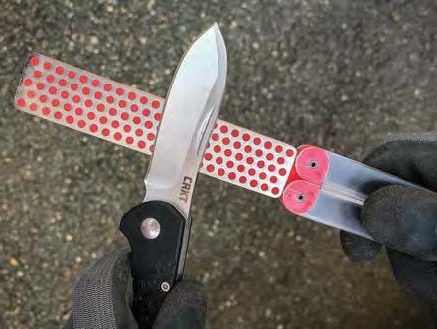
The DMT Diafold easily sharpens high-performance stainless steels with ease. The fine grit carefully constructs the final edge keenly, and is for use only after re-profiling the edge employing a coarse-grit sharpener.

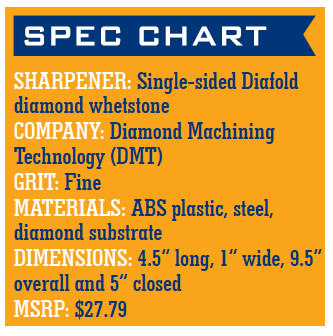
In my opinion the most iconic product made by Diamond Machining Technology (DMT) is the single-sided Diafold diamond whetstone sharpener. DMT’s sharpeners are easily recognizable by their trademark round polka-dot sharpening surface. They offer near-perfect grit-size consistency across the sharpening surface.

The Diafold is a compact sharpener with a flat form factor, allowing it to be carried in a large pocket, toolbox, glovebox, tackle box or carry bag. The handles double as a carrying case, folding up to conceal the sharpening surface and protect it from damage during transport.

dmt knife sharpenersEach DMT sharpener is color-coded according to grit, so, once you learn the codes, it’s easy to identify each grit by its color. The clear handles make identification easy and are a nice touch, so there’s no mistake which grit you have.

The Diafold works exceptionally well. It has been on the market many years and in my opinion is pretty much the gold standard when it comes to compact handheld sharpeners. It easily addresses all types of high performance stainless steels with ease. The fine grit carefully constructs the final edge keenly, and is for use only after re-profiling the edge employing a coarse-grit sharpener.

An improvement I recommend would be to make the sharpener a bit thicker to give the handles some width, which in turn would make it easier to hold—especially for an extended period of time sharpening several knives in one sitting.

Still, as is it functions well and, when the handles are folded, the thin profile makes it easy to pack.

Spyderco Tri-Angle Sharpmaker 204MF

Spyderco knife sharpener
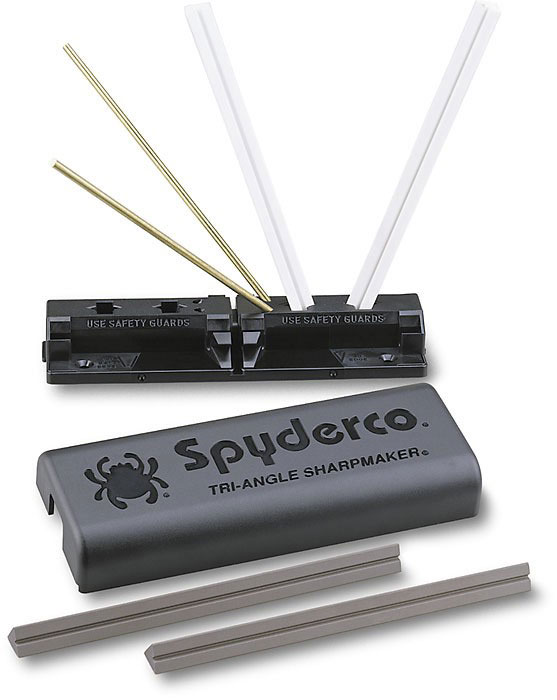
The Spyderco Tri-Angle Sharpmaker’s triangular-shaped rods enable you to address both plain edges on the rods’ flats and serrations using the “points” of the triangle.

Spyderco’s Tri-Angle Sharpmaker 204MF has been an industry leader for many years.

“In the 1970s when [Mrs. Gail Glesser] and I started selling knife sharpeners at local fairs, we were buying and selling other people’s sharpeners,” begins BLADE Magazine Cutlery Hall-Of-Fame® member Sal Glesser, CEO and founder of Spyderco. One of the sharpeners the Glessers sold was a V-stick type that they liked, though they identified some of its shortcomings. “We invented the Tri-Angle Sharpmaker because, while similar to the [V-stick] sharpener, it solved many sharpening challenges/problems the [V-stick] couldn’t perform,” he says.

One of those problems is the V-stick model could not sharpen serrated blades. Enter the Sharpmaker’s triangular-shaped rods, which allow it to address both plain edges on the rods’ flats and serrations using the “points” of the triangle.

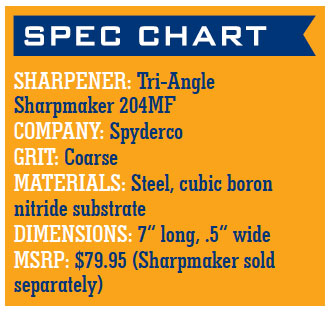
With the advent of higher-performance steels, the Sharpmaker’s ceramic rods were underpowered, so the company devised the 204CBN (Cubic Boron Nitride) Tri-Angle hones. The CBN hones work exceptionally well addressing dull or damaged blades. They can reprofile edges efficiently, handling not only the super stainless steels but all steel types. Like the ceramic Tri-Angle hones, the CBN easily addresses both plain and serrated edges.

As with the ceramic rods, a groove running the length of the CBN rod’s length allows for sharpening pointed objects and tools. The CBN material is what Spyderco calls a “super abrasive” second in hardness to diamond.

Best knife sharpenersThe CBN hones cost extra. The 204CBN complements the included medium- and fine-grit ceramic hones well. Once you re-establish the new cutting edge, switch to the medium and fine ceramic hones to further fine-tune it to razor sharpness. The CBN hones work on any blade length, fixed or folding.

Once you set the sharpener up, start your blade from where the edge starts closest to the tang and run it down the hone, at the same time pulling the blade back toward you, ensuring the hone contacts the entire length of the cutting edge all the way to the tip. Hence, you’re doing two simultaneous motions—moving down the hone and pulling the blade back toward you. Do it all with light pressure.
An improvement I would recommend would be to include a set of CBN hones as standard with the Sharpmaker. The CBN hones speed up the process of edge recreation. Granted, the addition would increase the Sharpmaker’s cost but the increase would be justified.

DMD Double-Sided Bench Stone

DMD knife sharpener
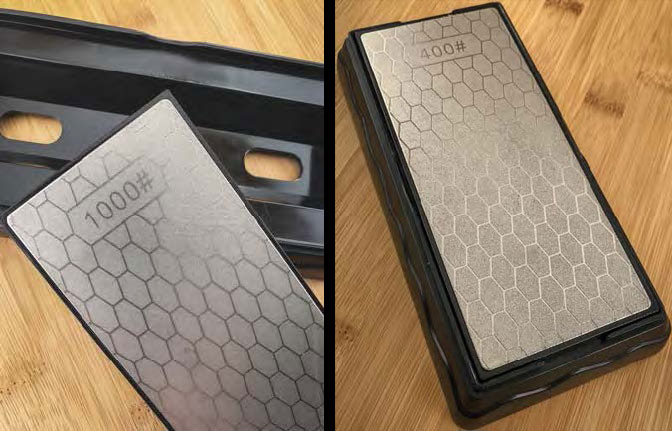
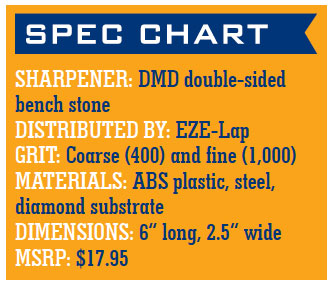
The DMD Double Sided Bench Stone features two grits on one stone. Coarse (400) and fine (1,000) grits address high-performance steel blades. The metal plate is double sided and lies on the base just so to provide sharpening convenience.

The DMD double-sided bench stone sports two different grits: a coarse 400 and fine 1,000. The base is molded ABS plastic and features wide, anti-skid rubber feet to keep the sharpener in place while working on a flat table, counter or bench. The sharpening surface sits in a cavity of the base. To change grits, flip the hone over and return it to the base.

DMD knife sharpener reviewA hex-like pattern on both sharpening surfaces removes the tiny metal particles so they won’t collect and clog the surfaces as you sharpen the blade.

Work with the DMD and discover the convenience of a double-sided diamond bench stone, a rarity among such stones. The coarse side easily and quickly re-establishes worn edges to sharp. After you establish the primary edge, flip the sharpening surface over to the fine side and fine-tune the blade.

The DMD did a great job on CPM S30V and CPM 154. Keep in mind that since this isn’t an angle guide-type sharpener where the angle is held consistent for you, extra care/consideration is required to get a nice edge.

Try using a permanent marker to color in the entire cutting edge on both sides of the blade. As you sharpen, note where the ink is removed and where it remains on the cutting edge. By doing so you can adjust your angle accordingly to capture the entire cutting edge and, therefore, keep the angle consistent for a sharp blade.


Keep Learning About Knife Maintenance

knife sharpening tips

Advertisement

Must Read Articles

Read this before you make a knife

Knifemaking 101 – Read This Before You Make a Knife

  by Wayne Goddard My experience has taught me that there's nothing like digging in and getting started. I've often said the hardest part of the...
how to forge damascus steel

How to Forge Damascus

Advertisement
Advertisement