Tips for Maintaining Custom Knives

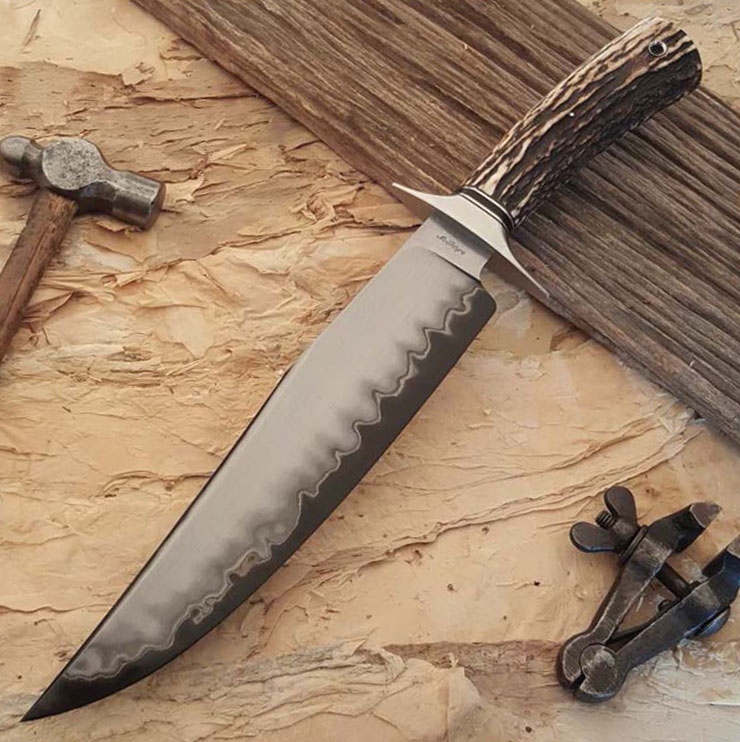
custom art knife
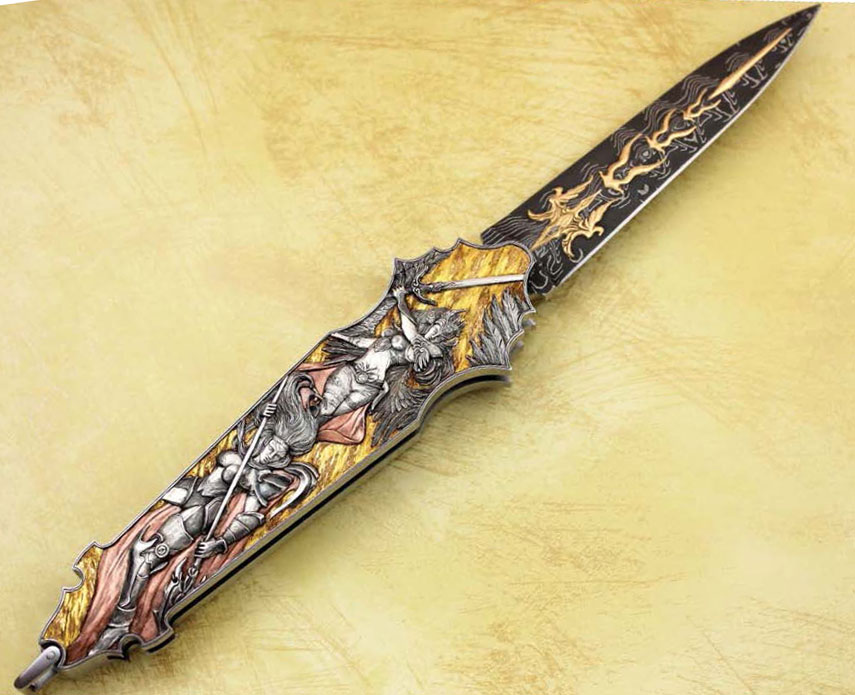
Instead of turning to cotton cloths for wiping down his knives, Carlos Lopez uses microfiber cloths. This beauty made and engraved with a fantasy warrior theme by Bulgaria’s Alex Gev has a special place in the Lopez collection, and is one of Carlos’s favorites.

Custom Knives Require a Special Kind of Tender Loving Maintenance

Most everyone knows what’s needed to care for a utility knife, including maintaining a working edge and wiping it down after use. However, keeping your custom knife as stunning as the day you first laid eyes on it is another matter. BLADE® polled four veteran knife collectors for their input on the subject. After years of collecting, they have more than a few ideas on how to keep knives presentation ready.

It may not be apparent when buying just one knife, but tallied up and considered together, knife collections can add up to a serious investment.

“It’s imperative that you preserve it as a group,” said U.S. Army veteran and long-time knife collector Louis Chow of San Francisco. “And even more so for the people that prefer a certain maker, you can say Loveless collectors or Moran collectors or what not, because it becomes a collection that is actually known to others.”

Chow has searched for custom combat/military type knives from those by BLADE Magazine Cutlery Hall-Of-Fame© member Bo Randall to sub-hilt fighters by Cutlery Hall-Of-Famer Bob Loveless.
how to care for a knife
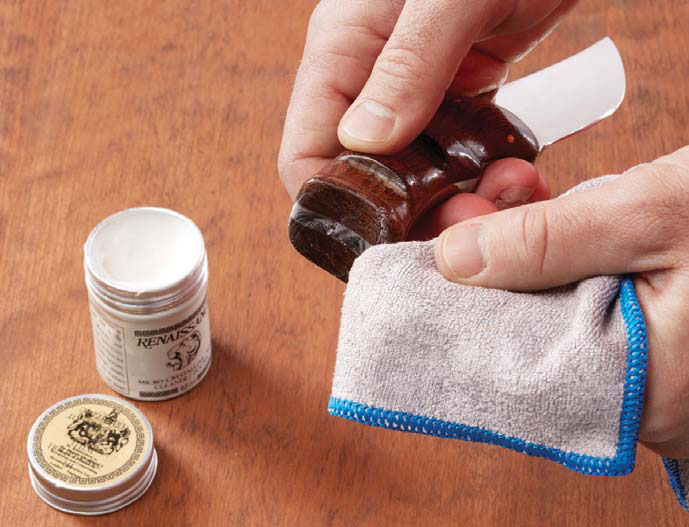
One knife care product Louis Chow has reached for over the past three decades to keep everything pristine is Renaissance Wax. Chow began using the wax after knifemaker Clay Gault recommended it to him. Gault was known for his natural handle materials. The knife is by Don Lozier. (Kris Kandler image)

For the diverse kinds of knives in his collection, some with stainless steel blades and others with leather grips, Chow has reached for one product over the past three decades to keep things pristine: Renaissance Wax. Chow began using it after maker Clay Gault recommended it. Gault was known for his natural handle materials.

“If it’s good enough for the British Museum, I think it’s good enough for me,” Louis said of Renaissance Wax.

Researchers at the British Museum learned that natural waxes went acidic over time, which was not good for the museum’s relics. In the late 1950s, Dr. A.E.A. Werner reportedly developed Renaissance Wax in the museum’s research laboratory.

With Renaissance Wax, Chow doesn’t have to distinguish between blade and handle. It works equally well protecting carbon blades, stacked leather handles and the sheaths that encompass them.

When knives sit in padded, acid-free cases, the wax doesn’t soak into the fabric of the cases as oils do. After returning from knife shows and to remove the traces of soda, coffee and fingerprints, Chow wipes down his blades with cotton buffing cloths from auto centers or specialty shops. He uses the cotton buffing cloths instead of microfleece because the latter tends to leave fibers everywhere.
knife maintenance tips
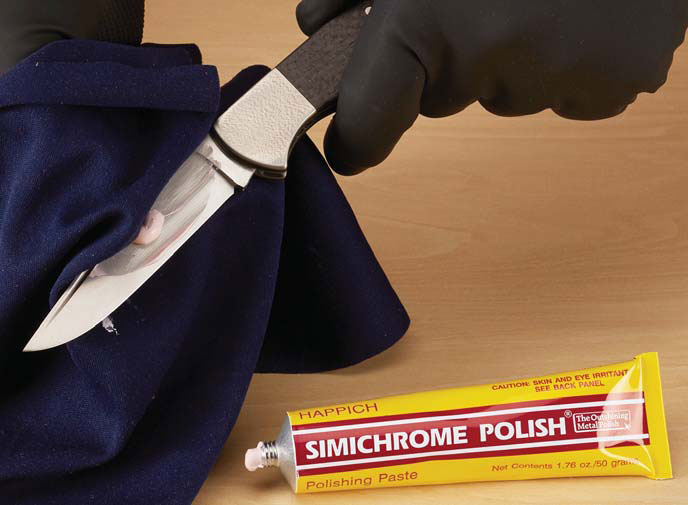
Louis Chow uses a polish paste on his carbon steel knives if he notices rust forming. He’s careful to use a mild polish without a lot of grit, such as Simichrome or 3M. Other polishes have a fine grit that, with a mirror polish blade, might change the condition of the finish. (Kris Kandler image)

Chow also uses a polish paste on his carbon steel knives if he notices rust beginning to form. He’s careful to use a mild polish without a lot of grit, such as Simichrome or 3M. Other polishes have a fine grit that, “if you have a mirror polish blade, that might change the condition of the finish.”

See the Light

lubricant for knife
Folder pivots by top makers don’t need a lot of lubrication because they are often made with tight tolerances. “Bob Terzuola once humorously mentioned to me how often people ‘over oil’ their knives, telling me how he would sometimes get knives back for a refurb that were literally dripping oil,” Chris Schluter recalled. If lint collects in a folder’s hard-to-reach crevices, a blast of compressed air does the trick. The folder is by Tom Ferry and the lube is by Quick Release. (Kris Kandler image)

Paul Kessler not only preserves the finely fitted and oft en engraved knives he collects, but he displays them as well. Of maintaining knives, he said, “It’s like taking care of your eyeglasses.”

The mortgage advisor’s maintenance routine begins when a new knife joins his collection. He cleans the fresh blade with WD-40. Kessler uses WD-40 only to clean blades. It tends to migrate, he says.

To lubricate folder pivots he uses Tuf-Oil or Breakfree.

“It’s a recommendation that I received from knifemaker Tom Overeynder, and they both work extremely well,” Paul noted. “They’re Teflon-bearing oils that won’t coagulate.”

Moisture and light are Kessler’s biggest concern when storing his knives. Just as sunlight changes the cabinetry of a kitchen, it can affect knives, he said.

“What happens with mammoth ivory, sunlight fades the color,” he observed. “When exposed to light, cocobolo gets darker. Elephant ivory, on the other hand, darkens and ‘patinas,’ and actually looks nicer.”

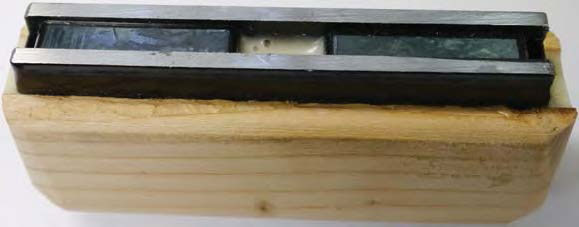
The first line of defense against light is museum glass that deflects the harmful rays. Kessler’s cases are lined with a Ph-neutral cloth and he turns to industrial magnets that hold the knives in place with 100 pounds of force.

He has used cigar boxes and antique picture frames to display his knives. They are French fitted, dustproof and airtight.

He stores fixed blades out of their sheaths and automatic knives with their springs not under pressure.

“I’ll use mineral oil with the 0000-steel wool on something that’s been exposed to the sun to bring the color back a little bit,” he said.

Every three months, Kessler moves his knives’ actions and oils the pivots with Tuf-Coat lubricant. He does not use Renaissance Wax. He finds that it leaves a film, giving the knife less of a luster.

Instead, he turns to RustFree, a product sold by A.G. Russell Knives. Kessler works a little on a cloth, wipes the knives and stores the cloth in a bag.

No Knife Wash Blues
knife cleaning tips
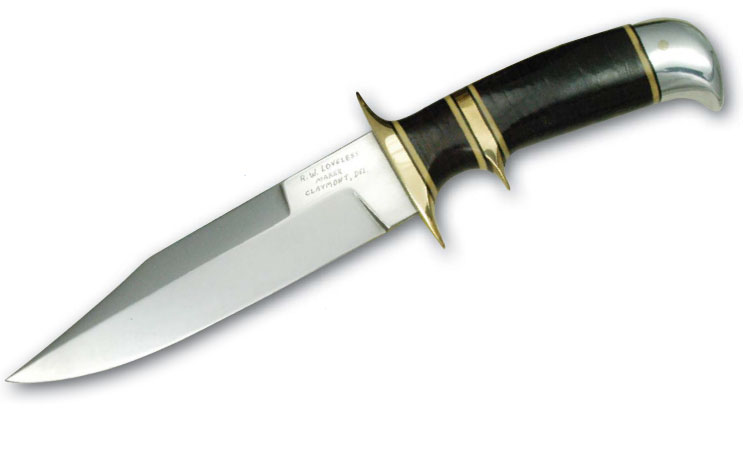
After returning from knife shows and in order to remove the traces of soda, coffee and fingerprints from his knives—such as this vintage Delaware Maid sub-hilt fighter by Bob Loveless—U.S. Army Major veteran Louis Chow wipes down the blades with cotton buffing cloths that he picks up at auto centers or specialty shops. He uses the cotton buffing cloths instead of microfleece because the latter tends to leave fibers everywhere. (Louis Chow image)

Carlos Lopez is a residential builder in Florida. Being a purveyor of high-end custom knives and running the website knifetreasures.com is his “fun job.” He compares the care of a high-end custom knife to that of a car.

“It’s like you drive a car, it gets dirty, you wash it. You gotta maintain it,” he said.

Showtime is maintenance time for Lopez, who will wipe down and open and close each blade. He uses light oil and Renaissance Wax. The cleaning continues throughout the show.

“At a show, anytime anybody picks up a knife, after they see it, you wipe it clean,” Lopez said. “Fingerprints and oils from the fingers can eventually damage and rust a blade or handle.”

However, instead of turning to a cotton cloth, Lopez uses microfiber. When a microfiber cloth gets dirty, he throws it away. The key, he says, is to keep the cloth clean so it doesn’t pick up a piece of dirt that will scratch the blade. He gets multipacks of the microfiber cloths because he has to throw away the many that get dirty.

Living in Florida, Lopez keeps his house air-conditioned. This maintains his home—and the knives within—in a low-humidity environment.

If one of his knives develops rust, Lopez usually sends it to the knife’s maker for a fix up. If the original maker is deceased, he sends the knife to a maker who does similar work. When it comes to specialty materials such as ivory, Lopez recommends two treatments. Applying Renaissance Wax—letting it dry and then buffing it off —or baby oil helps seal the material.

“If you go to dry-weather places with ivory pieces they can crack within a day,” he advised, “so yeah, you need to maintain them and seal them.”

Don’t Over Oil!
chris schluter custom knives
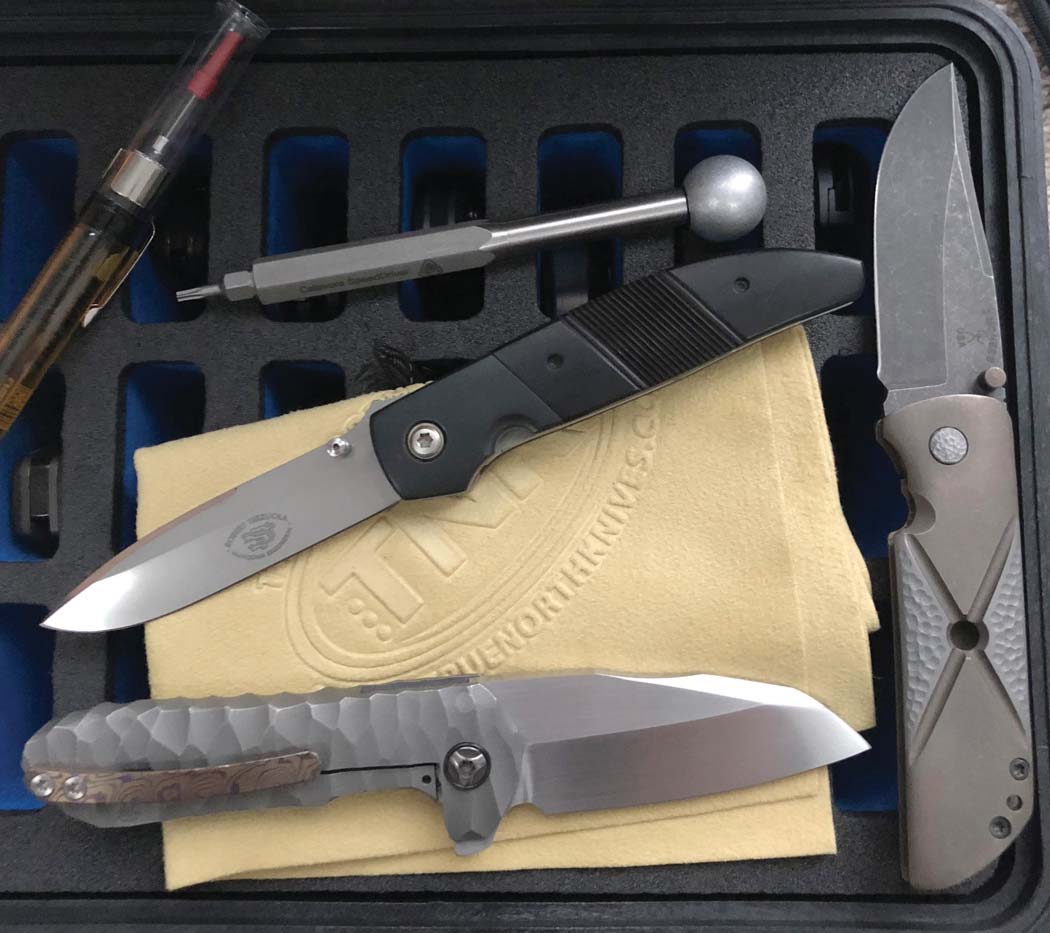
A peak inside the knife case of Chris Schluter (inset) reveals, clockwise from top left: a tube applicator of Breakfree pivot lube, a Torx driver from Prometheus Design Werx, the Tanjun by Jonathan Mcnees, Peter Rassenti’s Pebble and a Model 7 by Bob Terzuola, the latter two resting on a True North Knives chamois. (Chris Schluter image)

Unlike bone handles or carbon steel blades, maintenance for tactical knives is a bit easier—or so says Chris Schluter, a stay-at-home dad in Chicago who formerly worked at the German-American Chamber of Commerce.

“I love the utilitarian designs which a maker can dress up or down as desires,” he observed.

“Part of the beauty of tactical folders is that, normally at least, not a lot of care is needed,” Schluter said. “This can depend on materials, of course. However, many materials commonly used on tactical folders are by design robust and maintenance free. G-10, titanium, carbon fiber, zirconium, etc., really don’t need care. That leaves one with the blade to care for. Even then, it’s usually a high-performance”—and thus low-maintenance—“stainless steel.”

When it comes to the care of tactical folders’ pivots, they don’t need a lot of lubrication, Schluter noted, because they are often made with tight tolerances.

“Bob Terzuola once humorously mentioned to me how often people ‘over oil’ their knives, telling me how he would sometimes get knives back for a refurb that were literally dripping oil,” Schluter recalled. If lint collects in a folder’s hard-to-reach crevices, a blast of compressed air does the trick.

“Pivots which become loose over time should be tightened with the proper screwdriver or Torx wrench and a drop of Loctite® added,” Schluter said.

He stores most of his 300 custom folders in a large gun safe in padded pouches, and dozens adorn the walls of his office in display cases. As for care, he tries to wipe down each knife with a high-quality oil like Tuf-Glide a few times a year, or after he handles one.

“Unfortunately—or fortunately, depending on how you look at it—I just have too many knives now to do this all at once,” he writes. “These days I do this in batches or when I happen to be handling a piece.”

The key for him is to avoid the ever-creeping rust. For the knives in his safe, he throws in a few moisture-absorbing desiccant packs and moisture removers.

“As with any treasured belongings, protecting them is a priority,” he stressed. “I would hate to open my safe and find a bunch of rusty knives.”

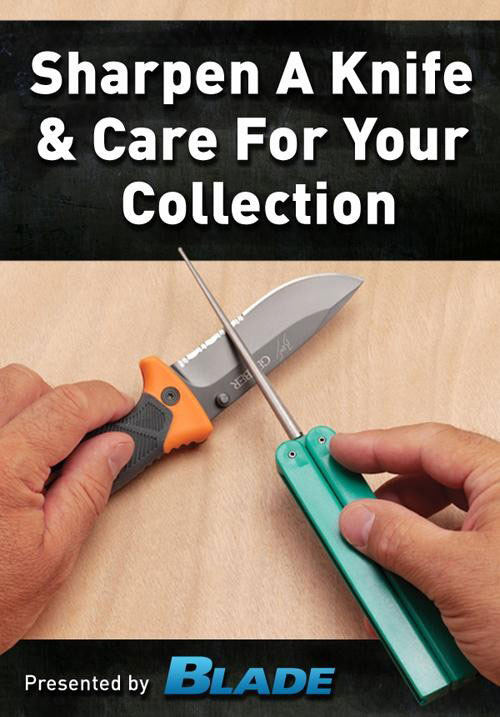
Find More Knife Maintenance Tips in This Download
how to clean a knife

The Sea of Mud Knife: James Bowie’s Knife Found? Pt. 2

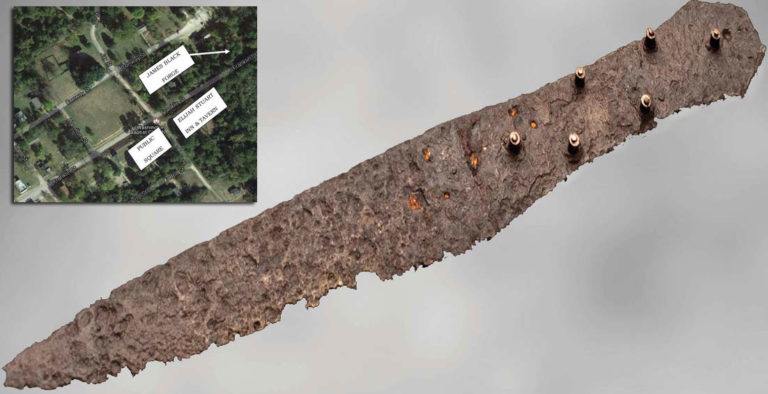
Sea of Mud knife

James Black’s original blacksmith shop was located on Franklin Street, one block northeast of the town square in Washington, Hempstead County of the Arkansas Territory. According to the author, Black made the Sea of Mud Knife. Click image for a larger view. (relic image courtesy of the Cushing Memorial Library and Archives, Texas A&M University Libraries)

Editor’s note: Read the first part of this series about the “Sea of Mud Knife” here.

“Only Men of Means Could Own One”

To acquire a James Black silver-mounted coffin-handle knife similar to how the Sea of Mud Knife originally appeared, you would have had to visit Black’s shop circa 1830 or so. The price would have been high—more than $20, which would be at least 500 in today’s dollars. Only men of means could own one.

There are indications Black made knives that were less ostentatious for the common man. These were tools and as tools were worn out and discarded. Few have survived.

James Black blacksmithing shop

The Pioneer Washington Restoration Foundation built a recreation of James Black’s blacksmithing shop in Washington, Arkansas, in 1960.

Black’s shop was located on Franklin Street, one block northeast of the town square in Washington, Hempstead County of the Arkansas Territory. Black had apprenticed for Stephen Henderson in Philadelphia, Pennsylvania, for at least nine years. Henderson learned the art and craft of making Sheffield silver plate in Sheffield, the cutlery center of England.

He could clad silver sheet to the ricasso area of the blade.

Black had set up his blacksmith shop on his town lot in 1829 after he married Anne Shaw. Black had worked in William Shaw’s shop doing general blacksmithing for five to six years. Black made knives of cast steel, the best steel known at the time from Sheffield. He knew how to heat treat to get the best cutting edge. Back then, most crossroads blacksmiths made knives of inferior steel with hardly any heat-treating expertise. Some were even made of wrought iron. Black’s knives became known for their edge holding, craftsmanship and beauty.

Plaque James Black blacksmithing shop

A cat keeps vigil on the rock pedestal that marks the original 1829-1832 location of Black’s shop (right). The iron plaque on the pedestal gives one version of how the original bowie knife was made. There are other versions, too.

The Southwest Trail

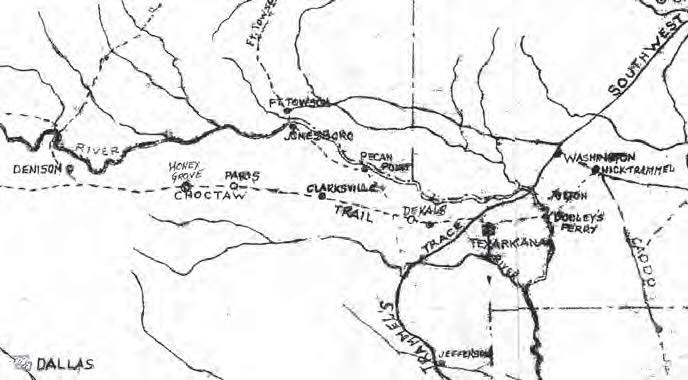
The frontier town of Washington is located on a sand hill in southwest Arkansas on the Southwest Trail. The Southwest Trail, or the Military Road, led from St. Louis, Missouri, diagonally across Arkansas through Washington to Fulton on the Red River. It was only 12 miles from Washington to Fulton. Across the Red River is Texas. In Texas, Trammel’s Trace led to Nacogdoches and to El Camino Royal—and to San Antonio de Bexar and the Alamo.

The Southwest Trail was the major land route from the Northern United States to Texas. You left Washington, D.C., by the National Road to Parkersburg, West Virginia, and boarded a steamboat to the Falls of the Ohio River at Louisville, Kentucky. You crossed the river to New Albany, Indiana, and took a stagecoach to East St. Louis, and crossed the Mississippi River to the Southwest Trail. You could also go by steamboat down the Mississippi River and up the Arkansas River to Little Rock and down the Southwest Trail.

Three other roads intersected at Washington. The road due west led to Fort Towson in the Indian Territory above the Red River and the ferry crossing into Jonesboro, Texas. A road led due east past Nick Trammel’s Tavern through Camden to Gaines Landing on the Mississippi River in Chicot County, Arkansas. Trammel’s Trace, the route in Texas to Nacogdoches, originated at Trammel’s Place and crossed the Red River at Dooley’s Ferry below Fulton. The other trail led south to Natchitoches, Louisiana, and to Texas.

From 1832 to 1834 most of the Choctaw Nation was removed from Mississippi and Alabama down the Southwest Trail from Little Rock, or from Gaines Landing across the Mississippi River from the Choctaw Trail, which intersected the Natchez Trace in Mississippi. From Washington they proceeded down the Fort Towson Road to Doaksville, Oklahoma, one mile west of Fort Towson.

Black’s Shop Visitors

Two struggling young lawyers from Logan County Kentucky who died at the Alamo, Daniel William Cloud, 21, and Peter James Bailey III, 26, passed by Black’s Shop in the fall of 1835 on their way to Texas. Could they have bought the Sea of Mud knife from Black? They had headed to Illinois where they heard there were more clients.

However, they found the weather too cold, the fees too low, and the “Yankee Lawyers” too active. They went down the Southwest Trail in Missouri and found the same thing. So they went further south through Arkansas to the Red River. From there they took the road to Natchitoches, Louisiana.

James Black blacksmithing shop

The sign outside the recreation of James Black’s blacksmith shop carries the year 1961. According to at least one other source, the recreation was built in 1960.

On Dec. 29, 1835, near Natchitoches, Cloud wrote his brother a letter describing his trip to Texas:

“We found Arkansas Territory in some places rich, well watered and healthy and society tolerably good, but the great body of the country is stony, sandy, and mountainous, in passing through, we traveled ten days constantly in crossing the mountains.

“On Red River the lands were immensely rich, and planters also, many of them worth two and three hundred thousand dollars. Had we chosen to locate in Arkansas, we could have made money rapidly if blessed with health and life; dockets and fees being large.

“The reason for our pushing still further on must now be told, and as it is a master one, it will suffice without the mention of any other one. Ever since Texas has unfurled the Banner of Freedom, and commenced warfare of liberty or death, our hearts have been enlisted in her behalf. The progress of her cause has increased the ardor of our feeling until we have resolved to embark in the vessel which contains the Flag of Liberty and sink or swim in its defense.”

An Englishman, George William Featherstonhaugh (pronounced “Fenshawe”) came down the Southwest Trail through Washington in late November or early December 1834.

He writes in his journal, Excursions Through the Slave States of North America:

“And we made an agreeable excursion in the neighborhood, calling for a short time at the little insignificant wooden village of Washington, where the government land sales were holding.

“I was not desirous of remaining long at this place. General Houston was here, leading a mysterious sort of life, shut up in a small tavern, seeing nobody by day and sitting up all night … There were many persons at this time in the village from the states lying adjacent to the Mississippi, under the pretense of purchasing government land, but whose real object was to encourage the settlers in Texas to throw off their allegiance to the Mexican government.”

Sam Houston was back from his peacemaking journey among the Texas Indians. He was staying at Elijah Stuart’s Tavern that was next to Black’s shop on one side and the town square on the other.

Plantation Bound

“It was a charming sunny day, the thermometer (Dec 11) stood at 74 degrees out of doors, and not a cloud in the sky,” Featherstonhaugh wrote.

The Englishman crossed the Red River at Dooley’s Ferry into what the ferryman called “Spain.” After three or four miles, Featherstonhaugh came upon a dry and black land called Lost Prairie, “a tract of about 2,000 acres of incredible beauty and fertility, bearing extraordinary crops of cotton, and gracefully surrounded by picturesque woods.”

James Black Judge Buzzard bowie knife history

After James Black (believed to be at left in the above vintage daguerreotype) lost his eyesight, Dr. Isaac Newton Jones tried to restore it circa 1840. Around the same time, Black went to live with Judge Jacob Buzzard (believed to be at right) on Buzzard Bluff southeast of Dr. Jones’ plantation.

He rode to Dr. Isaac Newton Jones’ plantation and spent the night. After a short stay exploring this area of Texas, Featherstonhaugh returned to Little Rock upon his steed, Missouri, loaded down with bundles of Texas treasures. He then went to New Orleans by steamboat.

The Jones plantation is located about 3.5 miles south of Fulton in Miller County, Arkansas. In 1835, Lost Prairie was in the Texas province of Mexico but was also claimed as part of the Arkansas Territory. Arkansas Gov. Daniel Webster Jones was born on the plantation on Dec. 15, 1839.
Southeast of the Jones plantation is Buzzard Bluff, home of Judge Jacob Buzzard. In about 1840 after James Black had lost his eyesight, Black lived with Jacob Buzzard on Buzzard Bluff. Buzzard died in 1842.

Meanwhile, try as he might, Dr. Isaac Newton Jones could not restore Black’s eyesight. However, he took Black into his home and cared for him.

After Jones died in 1858, his wife and the Jones’s son, Daniel Webster Jones, cared for Black until Black’s death in 1872. Daniel penned the definitive story of Black’s life in 1902. In that story he wrote: “About 1833 or 1834, perhaps earlier, James Bowie came to Washington and gave Black an order for a knife …”

Read part three of this series here.

Keep Learning About Knife History

BLADE magazine back issues

The Sea of Mud Knife: James Bowie’s Knife Found? Pt. 3

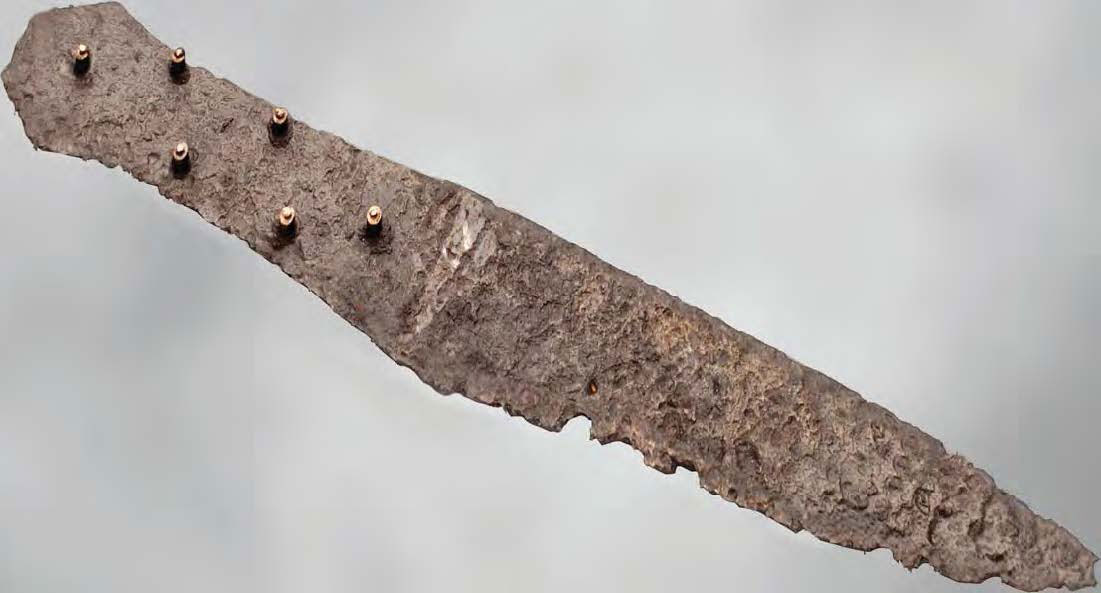
James Bowie knife
(relic image courtesy of the Cushing Memorial Library and Archives, Texas A&M University Libraries)

Editor’s note: Read part one and two of this series first.

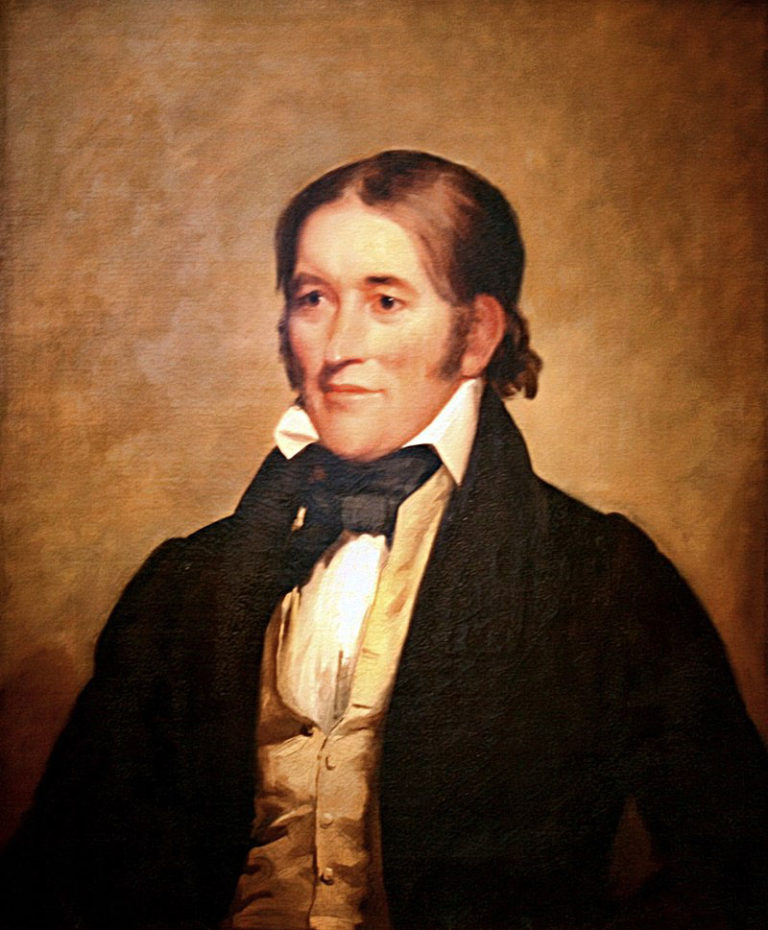
Did the Sea of Mud Knife Belong to Davy Crockett?

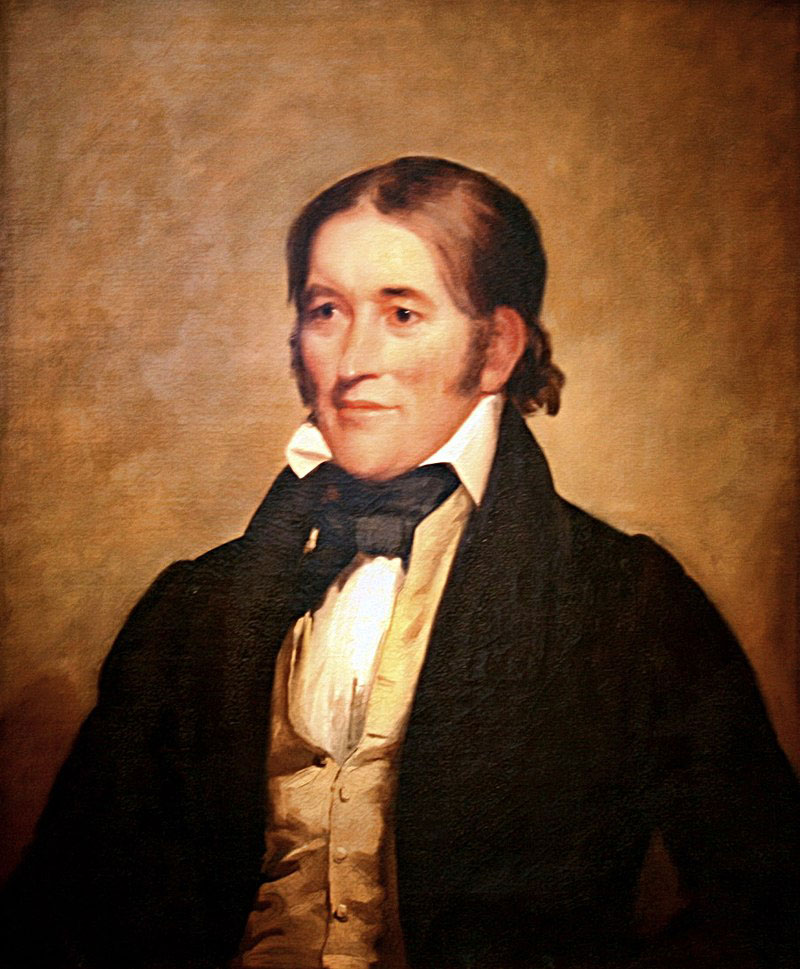
Davy Crockett picture
Davy Crockett passed by James Black’s Shop in 1835 on his way to the Alamo. Could he have bought the Sea of Mud knife (above) from Black or received it as a gift?

On about Nov. 18, 1835, the most famous fallen hero of the Alamo and his entourage crossed Town Creek on the Southwest Trail that led up the hill past James Black’s Shop to the Elijah Stuart’s tavern in Washington, Arkansas. Did former Tennessee congressman, Col. David “Davy” Crockett, or one of his companions buy the Sea of Mud knife from Black? Did Black give the knife to the famous folk hero?

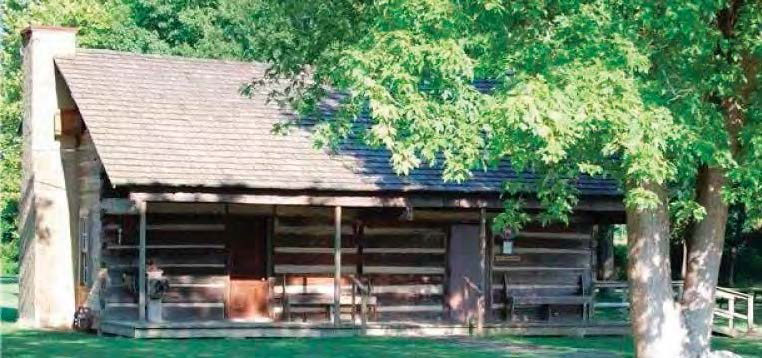
On Nov. 1, 1835, Crockett, along with three others—William Patton, Abner Burgin and Lindsey K. Tinkle—left Crockett’s log cabin home near Rutherford, Tennessee, on a journey of adventure, exploration and fortune hunting.

Having recently lost his U.S. House of Representatives seat to Adam Huntsman, “a one-legged Jacksonian,” Crockett told his constituents, “Since you have chosen to elect a man with a timber toe to succeed me, you may all go to the devil and I will go to Texas.” Most certainly he told this tale over and over, all the way to Texas, always to the delight of his audience. He traveled to Jackson, Tennessee, arriving there with 30 well-armed men, where he gave a speech from the steps of the Madison County courthouse.

Davy Crockett history
Crockett left his log cabin home in Rutherford, Tennessee, on Nov. 1, 1835, on a journey of “adventure, exploration and fortune hunting.”

From there he rode southwest to Bolivar, where he spent the night at the residence of Dr. Calvin Jones, once again drawing crowds—including one that sent Crockett off the next morning.
He arrived in Memphis with a much-diminished company on Nov. 10. There that night much time was spent enjoying horns of drink with citizens and comrades at the Union Hotel, Hart’s Saloon and Neil McCool’s establishment.

At 7:30 a.m. on Nov. 11, Crockett and his entourage of six to eight men left Memphis on a packet steamboat. He obviously was recovering from a night of carousing. The steamboat traveled 311 miles down the Mississippi River and up the Arkansas River, arriving at Little Rock at 4:30 p.m. on Nov. 12. The local newspapers reported that hundreds of people swarmed into town to get a look at Crockett, and a group of leading citizens put on a dinner in his honor that night at the Jeffries Hotel. He spoke “mainly to the subject of Texan independence,” as well as federal politics.

Washington, Arkansas

Crockett had traveled 150 miles in nine days on his large chestnut horse with the star on its forehead. He had at least three more traveling companions with him when he left Little Rock that morning. It was only 125 miles down the Southwest Trail to Washington, Arkansas, and just a few more miles to Texas. It is not known how long he stayed in Washington, maybe just overnight, because he was so close to that wonderful land called Texas.

Hugh Armstead Blevins history
On the way to Washington, Arkansas, Crockett stayed at the home (above) of Hugh Armstead Blevins in present-day Blevins, Arkansas.

He had stayed with an old and dear friend from Rutherford County Tennessee, Hugh Armstead Blevins, in present-day Blevins, Arkansas, before riding into Washington. Blevins family tradition maintains that Crockett went on a weeklong deer-hunting trip with Hugh. Crockett stayed at Elijah Stuart’s tavern next to James Black’s shop in Washington. The people came in from all around to hear Crockett speak from the courthouse steps. After some celebrating, Davy and a half-dozen mounted companions could have ridden to the Red River and crossed into Texas at Dooley’s ferry.
Some historians say he went down the Fort Towson road 115 miles and crossed the Red River into Texas at Jonesboro, just north of present-day Davenport, Texas. He may have crossed the Red River at Dooley’s Ferry just as W.G. Featherstonhaugh did.

Davy Crockett travels
Crockett stayed at Elijah Stuart’s tavern next to James Black’s shop in Washington. He may have crossed the Red River at Dooley’s Ferry as did W.G. Featherstonhaugh. Some say Crockett went down the Fort Towson road 115 miles and crossed the Red River into Texas.

Several weeks after the fall of the Alamo Crockett’s widow, Elizabeth, received a small package from Isaac Newton Jones. The package contained a watch with Crockett’s name engraved inside. In an accompanying letter, Jones wrote:

“Last winter, Colonel Crockett … passed through Lost Prairie, on the Red River, where I live … the Colonel visited me the next day, and spent the day with me. He observed, whilst here, that his funds were getting short, and proposed to me to exchange watches. He priced his at thirty dollars more than mine, which sum I paid to him, and we accordingly exchanged … I was gratified at the exchange, as it gave me a keepsake which would remind me of an honest man, a good citizen, and a pioneer in the cause of liberty … the object of this letter is to beg that you will accept the watch which accompanies it … please accept, dear madam, for yourself and your family …”

Crockett’s Letter

Davy Crockett De Kalb
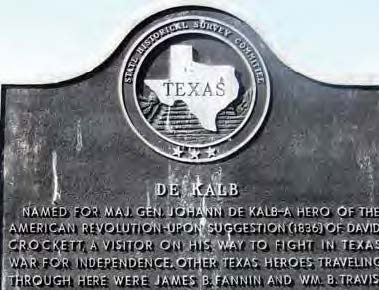
Crockett reportedly suggested the name for De Kalb, Texas and traveled through the area on his way to the Alamo.

The distance from Lost Prairie to Nacogdoches down Trammel’s Trace was 165 to 170 miles. At the rate of 25 miles per day Crockett should have arrived at Nacogdoches, Texas before the end of November. Crockett and his entourage were welcomed in Nacogdoches on Jan. 5, 1836.

Here is what Crockett stated in a letter written to his son and daughter from St. Augustine, Texas, dated Jan. 9, 1836:

“This is the first time I have had the opportunity to write to you with convenience. I am now blessed with excellent health and am in high spirits. Although I have had many difficulties to encounter, I have got through safe, and have been received by everybody with the open arm of friendship. I am hailed with a hardy welcome to this country. A dinner and a party of Ladys have honored me with an invitation to participate with them, both in Nacogdoches and this place. The cannon was fired here on my arrival, and I must say, as to what I have seen of Texas, it is the garden spot of the world. The best land and the best prospect for health I ever saw is here, and I do believe it is a fortune to any man to come here. There is a world of country to settle. It is not required here to pay down for your League of Land; every man is entitled to his head right of 4,000 & 428 acres. They may make the money to pay for it off the Land.

“I expect in all probability to settle on the Bodark or Choctaw Bayou of Red River. That, I have no doubt, is the richest country in the world. Good Land and plenty of timber, and the best springs and good mill streams. Good range, clear water and every appearance of good health, and game plenty. It is in the pass where the Buffalo passes from the north to south and back twice a year, and bees and honey plenty.

“I have a great hope of getting the agency to settle that country, and I would be glad to see every friend I have settle there. It would be a fortune to them all.

“I have taken the oath of the Government, and have enrolled my name as a volunteer for six months, and will set out for the Rio Grand in a few days with the volunteers from the United States. All volunteers is entitled to a vote for a member of the convention, or to be voted for, and I have but little doubt of being elected a member to form a constitution for this Province.

“I am rejoiced at my fate. I had rather be in my present situation than to be elected to a seat in Congress for life. I am in hopes of making a fortune for myself and family, bad as has been my prospects.

“I have not wrote to William, but have requested John to direct him what to do. I hope you show him this letter, and also your brother John, as it is not convenient at this time for me to write to them.

“I hope you will do the best you can, and I will do the same. Do not be uneasy about me, for I am with my friends.

“I must close, with great respects, your affectionate Father, Farewell David Crockett”

Crockett spent December roaming the north Texas countryside along the Red River visiting friends and looking for a prosperous place to settle down where there was good bear and buffalo hunting. He was also dodging Comanche Indians. He headed west along Ridge Trail or Choctaw Trail 175 miles along the Red River as far as Choctaw Bayou. Choctaw Bayou runs from Grayson County northeast into the Red River at the northwest corner of Fannin County above Sherman and Denison, Texas.

Davy Crockett Texas
Crockett stayed at Elijah Stuart’s tavern next to James Black’s shop in Washington. He may have crossed the Red River at Dooley’s Ferry as did W.G. Featherstonhaugh. Some say Crockett went down the Fort Towson road 115 miles and crossed the Red River into Texas.

It is said that the morale of the defenders of the Alamo in San Antonio enjoyed a boost on Feb. 8, 1836, when the former U.S. congressman from Tennessee, bear hunter and Indian fighter rode in with a contingent of Tennessee Mounted Volunteers.

Next time: The fortifications by the defenders and the probing of them by the Mexican Army during the Alamo siege.


Read part three of this series here.

Keep Learning About Knife History

BLADE magazine back issues

5 Pieces of Critical Knifemaking Safety Gear

Making knives can be gratifying, but it can also be dangerous, dirty labor that requires proper precautions. Here is a selection of gear that can make the knifemaking experience safe and more enjoyable.

If you need a reminder of what can happen if you don’t take safety seriously, read these knife shop horror stories here and here.

Reusable Respirator

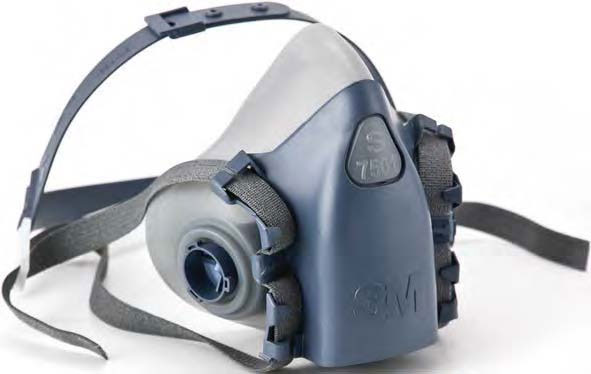
Safety mask for making knives

Breathing in fine metal particles and wood dust can do serious damage to your lungs over time. While disposable respirators are good products, anyone who grinds and sands frequently needs a higher level of protection. As result, Jantz offers the 3M 7500 series Reusable Respirator.

“The biggest complaint we hear about respirator use is comfort and heat,” Jantz’s Shanna Kemp noted. “3M’s 7500 series solves these problems with a combination of comfort and durability.”

MSRP for both medium and large sizes: $33.95 each. The MSRP for a combination cartridge to complement the unit is $14.95.

Belt Safety Guard

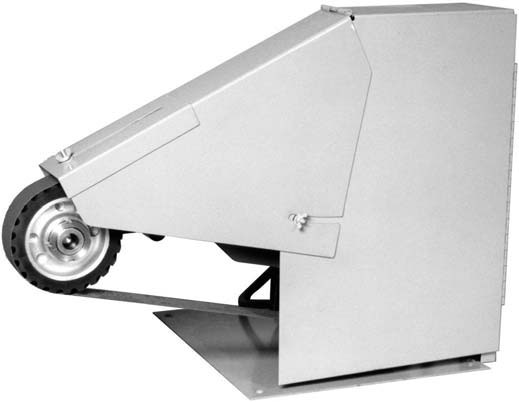
Belt guard for making knives

Hawkins Knife Making Supplies offers the Bader B3 Belt Guard, which features an adjustable front hood that minimizes the risk of injury if an abrasive belt should break while in use. Order by phone only. MSRP: $170 (plus shipping and handling).

Forge-Welder Safety Glasses

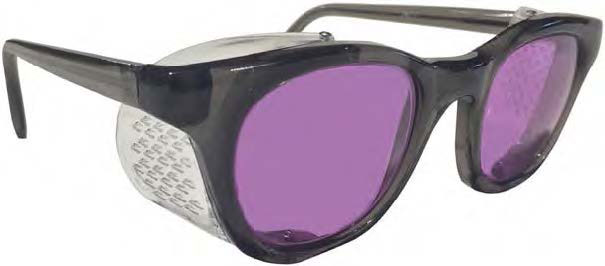
safety glasses for making knives

David Kayne of Blacksmiths Depot says the Didymium Glasses are the company’s best-selling safety item.

“They will save the eyes of anyone who regularly works at temperatures above 2,000°F,” he noted, “forge welding of billets for damascus in particular.” MSRP: $75.

Super Magnet

magnet for knifemaking

According to Shannon Edgington of Knife & Gun Finishing Supplies, K&G’s model no. WT12 magnet comes in a 5-inch size and is more than strong enough to hold small pieces of steel against a disc or belt sander.

“The magnets are great ‘finger savers’ for removing the bark or just flattening the surface of steel,” she wrote. MSRP: $19.95.

Heat-Resistant Work Apron

apron for making knives

Texas Knifemaker Supply’s heat-treat technician wears the company’s heat-resistant denim work apron to shield himself from the oven’s radiant heat, as well as from the red-hot blades as he checks them for straightness before air quenching.

The heavy-duty denim is nice and thick and has a waistband cord to tie behind the back. One size fits all. The apron also protects clothes from dirt and grime. A handy pen pocket is ideal for telescopic magnets, safety glasses, etc. MSRP: $12.95.


Learn More About Making Knives

how to make a knife

Why Would a Company Make Knives in the USA?

Knives made in the USA
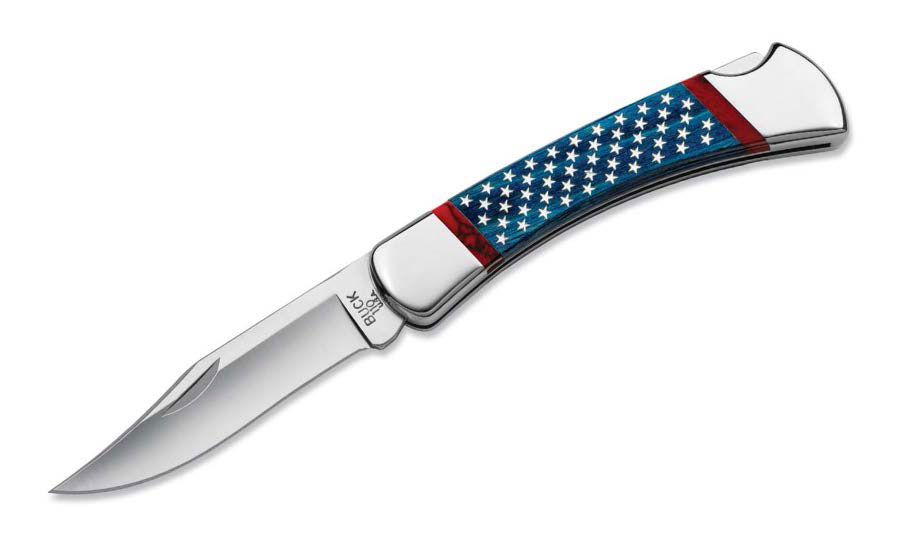
No knife says American made quite like the Stars and Stripes 50th anniversary
edition of the Buck 110.

Editor’s note: All images are courtesy of their respective manufacturers.

Today’s sporting cutlery market is flooded with some very good foreign-made knives, and it may seem USA-made models are threatened in terms of quality, but nothing could be further from the truth. The American knife industry is still the leader of the pack.

USA all the Way, Even When It Gets Tough

Emerson Knives, Inc., and president/founder/custom knifemaker Ernest Emerson are unabashedly pro-American made. Emerson founded the company in 1997 on the principle of designing and building the best USA-made production tactical knives anywhere.

Along with his wife Mary, Ernest has consistently grown the company by listening to what consumers want. Emerson knives are 100 percent made in the USA, right down to the screws. Emerson is an ardent supporter of the military, law enforcement and other first responders, another good reason why it’s so important that the company’s knives be made entirely in the USA.

Ernest Emerson knives
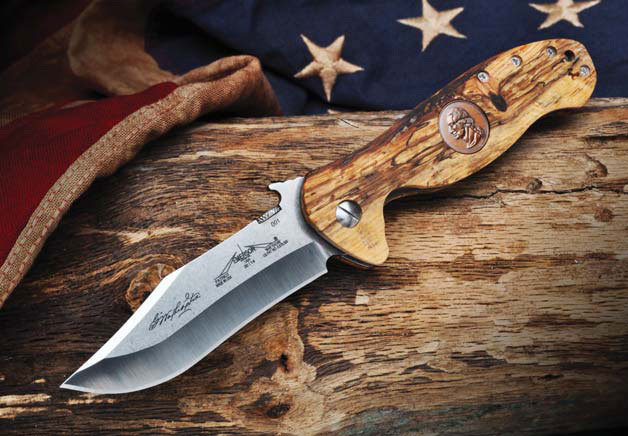
Sporting handle wood of an old oak tree from Mount Vernon inlaid with a die-struck coin of Washington’s likeness, the Patriot from Emerson Knives, Inc., is an example of the many great knives made in America.

Nonetheless, there are downsides.

“There are very few advantages in building a manufacturing operation in America,” Emerson says, citing state and federal taxes and ever-increasing regulations. It’s actually tough for a business to remain competitive here. However, I believe it’s worth the effort, restrictions and extra burden because I will do anything for America. I know my business is putting Americans to work with American wages who can earn a living in this country.”

He adds that the taxes he and his employees pay go directly to supporting the country and the U.S. military and its infrastructure.

“We have to manage our business smarter, more efficiently and more strategically to ensure a profitable and viable existence,” he stresses.

Emerson knives made in USA
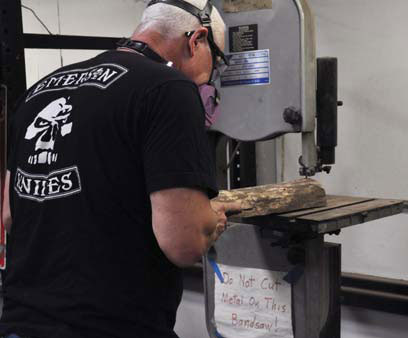
Ernest Emerson cuts a piece of historic wood at the company shop.

It’s the same attitude that makes the Commander and CQC7 models the company’s best sellers. The CQC7 is durable and comes in three sizes and two distinct blade shapes. A sexy piece with its ergonomic handle paired with a recurved clip-point blade, the Commander is a formidable cutting tool that comes in five iterations, each varying in size. Maintaining the popularity of these knives down the road is important to Emerson.

â”In order to stay viable,” he notes, “I believe the future lies in the industry’s ability to design and build knives that the consumer really wants.”

Consistency Counts

CJ Buck, president of Buck Knives, says a major advantage to having knives made in the USA is owning the integrity of the manufacturing processes.

“Consistent processes create consistently performing products,” he begins. “It also ensures product quality improvements are held as processes evolve.”

Another advantage is heightened flexibility and responsiveness.

“We can fix a design or quality issue quickly or adjust to spikes in our forecast since the partnerships between our factory and our USA vendors can be aligned immediately,” he explains.

Knives made in America
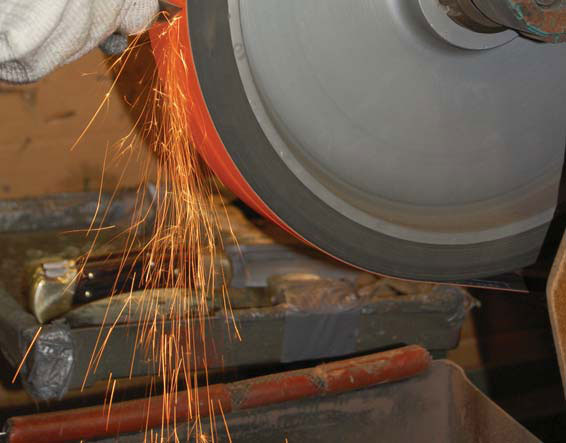
A Buck 110 has the final edge applied at the Buck Knives plant in Post Falls, Idaho.

On the other hand, domestic production carries its own set of challenges.

“When importing, if you need to add capacity you simply contract with another factory or, on the other side, cut a factory off,” he explains. Stateside you have to invest in more equipment, people and buildings. Consequently, as Buck laments, “If you are forced to reduce your output, the pain and loss of investment is in laying workers off.”

As for the future of American knife manufacturing, Buck is optimistic.

“The United States continues to lead in innovation,” he states. “Our culture and national character give us a substantial, sustainable advantage in that area.”

“Made in the USA” Means Better Quality Control

Microtech knives made in America
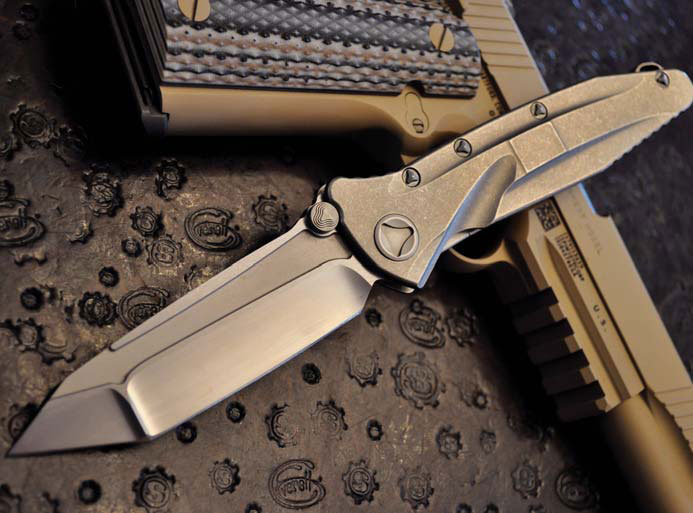
The Socom Delta is the flagship knife for Microtech’s USA-made folders and remains one of, if not the, signature model for the company. The 3.75-inch blade is Bohler ELMAX stainless steel.

Microtech Knives built a solid reputation in the 1990s on designing and making some of the market’s most progressive production tactical folders, and continues to push the envelope. Why manufacture in the USA?

“So we are able to keep flaws to a minimum and catch mistakes early on,” reasons Hank Greenberg, the company’s custom shop manager, adding that if a company offers a solid made-in-the-USA knife with quality materials, then consumers will have no problem paying a fair price for it.

Americans build Microtech’s knives, such as the Ultratech out-the-front (OTF) auto and Socom Delta tactical folder.

Taking Care of Fellow Americans

HTM Knives is based in Forney, Texas. An acronym for Hand Tech Made, HTM was founded by knifemaker Darrel Ralph as a result of an ever-growing demand for his custom models. HTM allowed him to offer his designs to more people at a lower price and accelerated delivery times.

According to Ralph, HTM makes its knives in the USA “to take care of Americans and to take care of the people who take care of us. By having our knives made in the USA, we have total control on quality.”

HTM knives made in America
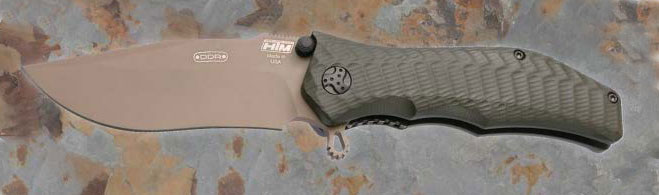
The HTM Gun Hammer includes an OD green handle of Cerakote™-coated aluminum and a “flat natural earth” blade of CPM S30V stainless. The folder comes in either an assisted opening version or with the Maxx Glide pivot bearing system.

Ralph says the Gun Hammer and Mad Maxx are HTM’s best-selling knives. Both began as full customs, so it made sense to produce them under the HTM banner. For the Gun Hammer alone, HTM offers several iterations in varying blade shapes, finishes, steels and coats.

“The military likes both knives and guns made in the USA,” Ralph notes. He says his Gun Hammer and 18 X-Ray automatic are among HTM’s best sellers with military customers. The company also offers designs by such makers as Kirby Lambert and Greg Lightfoot.

Ralph indicates there is a 23 percent scrap rate for knives made overseas.

“You have to figure in for that rate,” he says of foreign-made knives. By having their knives made in the USA, he reasoned, the HTM brain trust has total control over the processes, and can rectify any production issues that might arise before they become a problem.

When it comes to the advantages of knives made in America, Ralph says U.S. companies have access to the best steel and high-end materials.

It should come as no surprise then that Ralph says there is a huge upswing in companies manufacturing knives stateside. He specifically cited Buck Knives, who has been returning some models to “made-in-USA” status after previously being off shore produced. He also noted a growing trend of custom makers offering mid-tech/semi-production knives.

“They are growing the American market instead of stealing from it,” he observes. “That’s what we need in the knife industry.”

Celebrate American Craftsmanship with This Essential Book

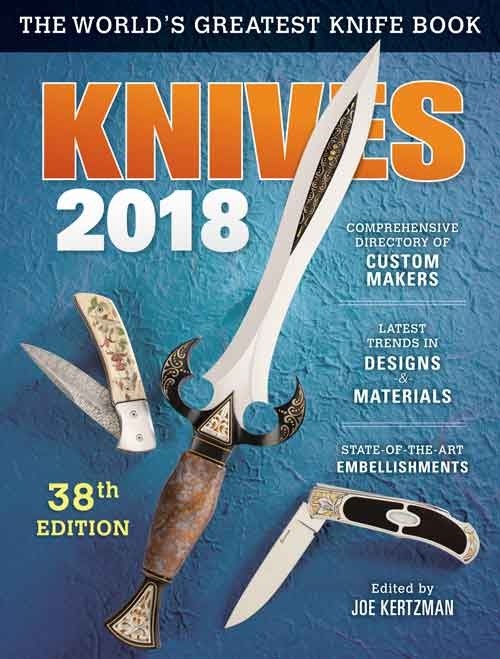
knives 2018

Tsuba Time: Make a Guard for a Japanese Sword

Wally Hayes Japanese style sword
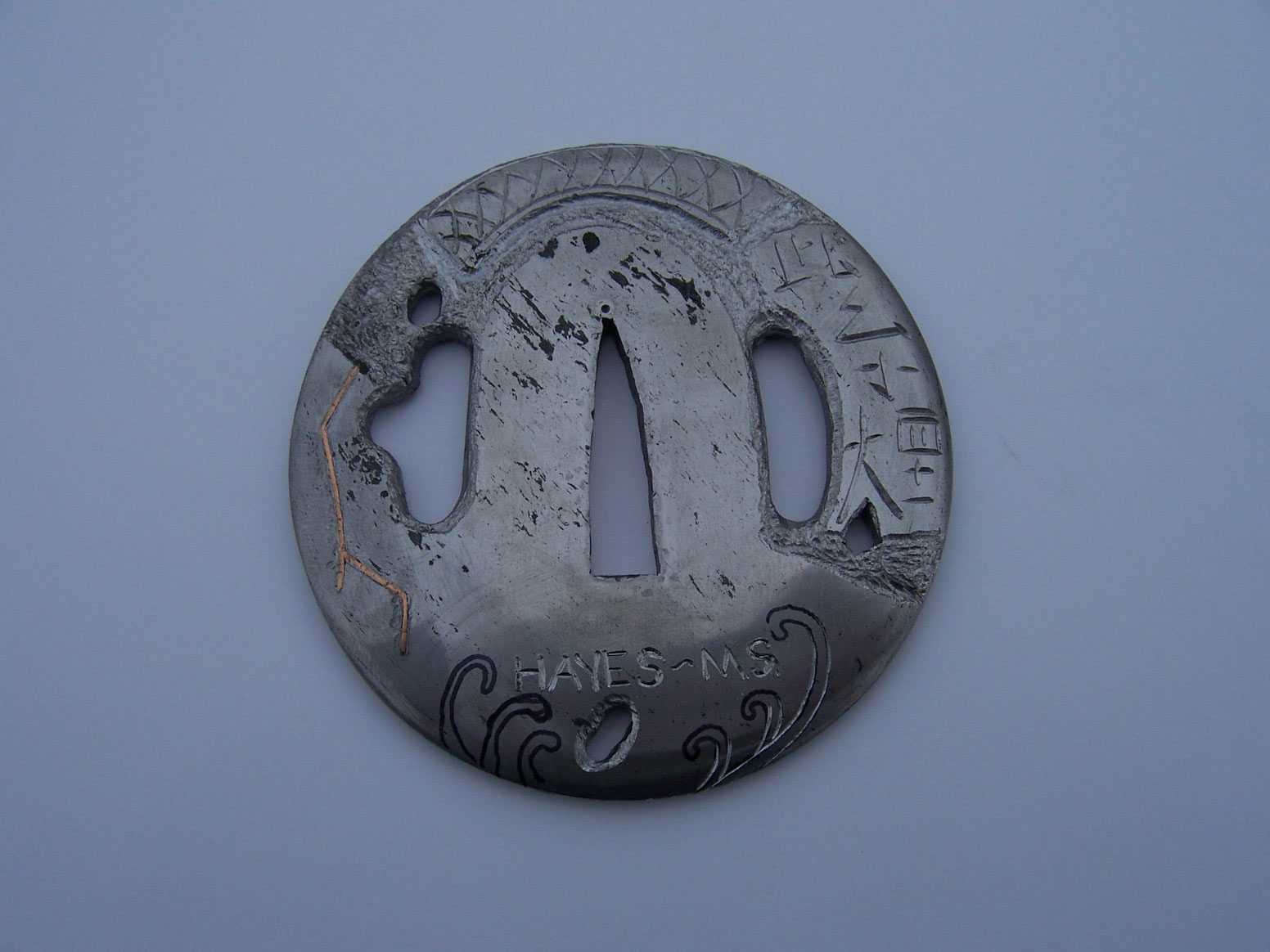
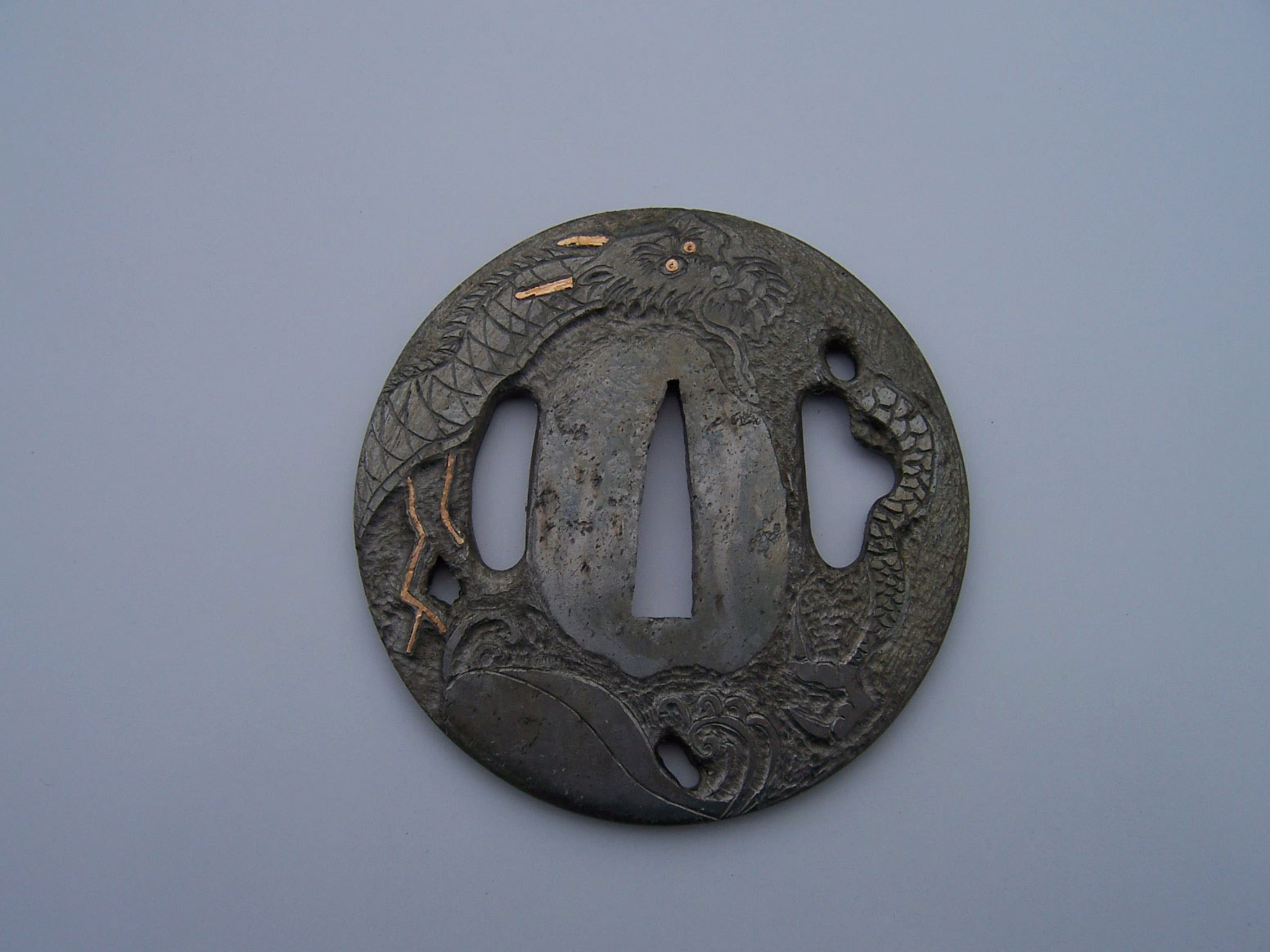
The tsuba the author made for this story appears on a katana he said he made for Axl Rose of Guns ‘N Roses fame. All photos via the author.

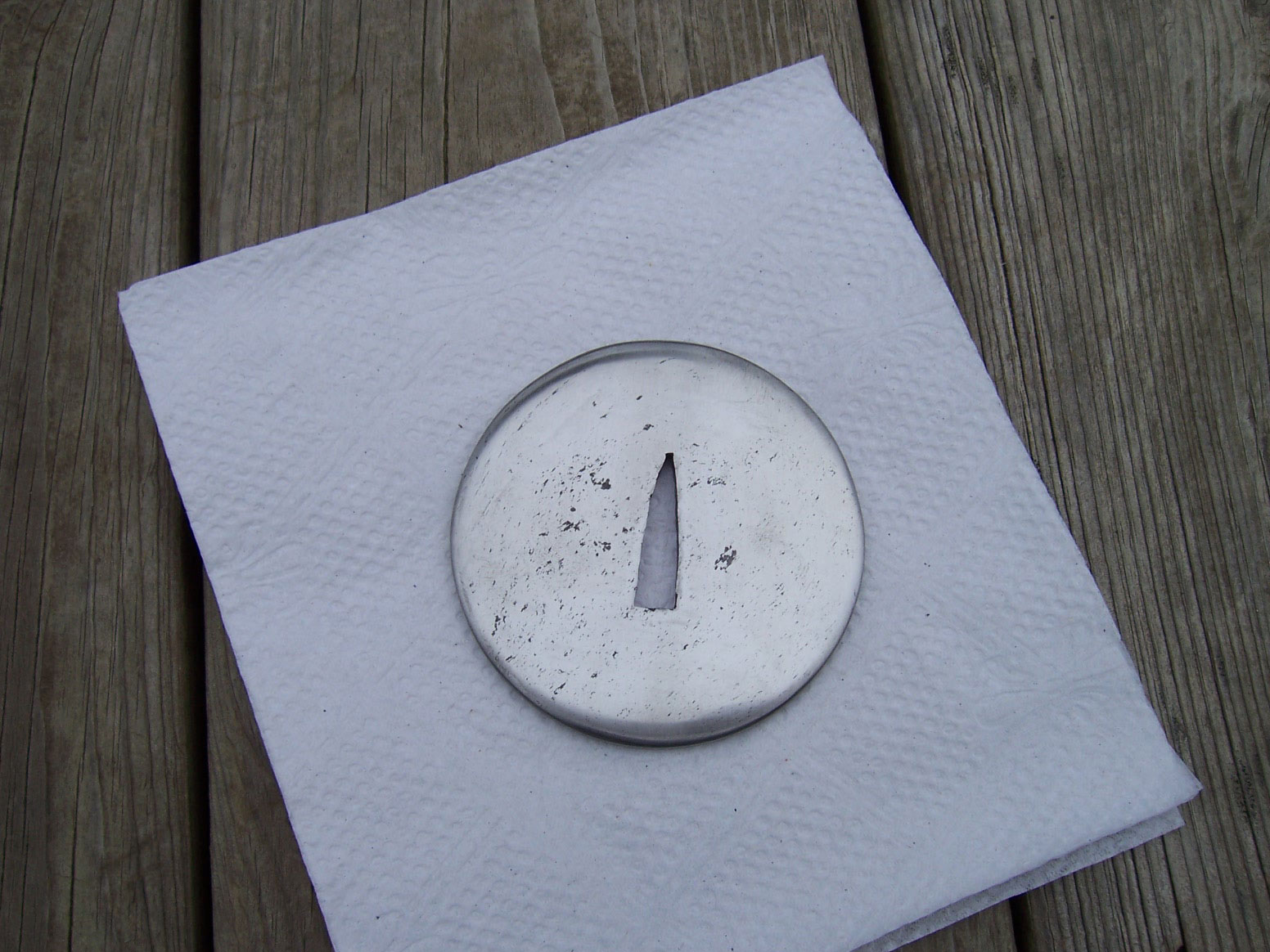
Making a “tsuba,” Japanese for “guard,” is one of my favorite steps in sword making. You have a chance to build something as simple or as complicated and artistic as you like.

I first started making the tsuba (pronounced SUE-ba) way too thick and heavy, and learned over the years how to refine all of my sword parts. I hope this overview helps shed some light on the subject and gives you some ideas.

I have made tsuba from damascus, mild steel, high-carbon steel and antique wrought iron. Many traditional tsuba were made from folded Japanese steel called “tamahagane.” I used wrought iron for this demonstration.

Step One: Thin it Out

Wally Hayes
Photo 1: Wrought iron forged out and rough cut round for the tsuba.

To begin, cut 3.5 inches of steel from an old wagon wheel. Forge it thinner and wider, and taper the edges thinner all the way around (Photo 1). If you leave the center a little thicker and taper the edges, it looks more balanced and is lighter. Wrought iron is soft and forges out easily and is simple to cut, sand, file and drill. Using the spray from a can of WD-40™, trace around your steel. Cut it out on a band saw and grind the shape round. Sand the tapers even, gradually progressing to finer-grit belts.

Wally Hayes tsuba
Photo 2: Sand the tsuba and start cutting the holes.

Before polishing, I drill the holes (Photo 2). I use a Dremel cut-off wheel to cut out the webbing between the holes. You can also try a jeweler’s saw. I use both.

Employing needle files, make the tang hole big enough to slide up to the “sepa” (washer) on the sword. At this point I polish the tsuba to an 800-grit finish.

Wally Hayes tsuba
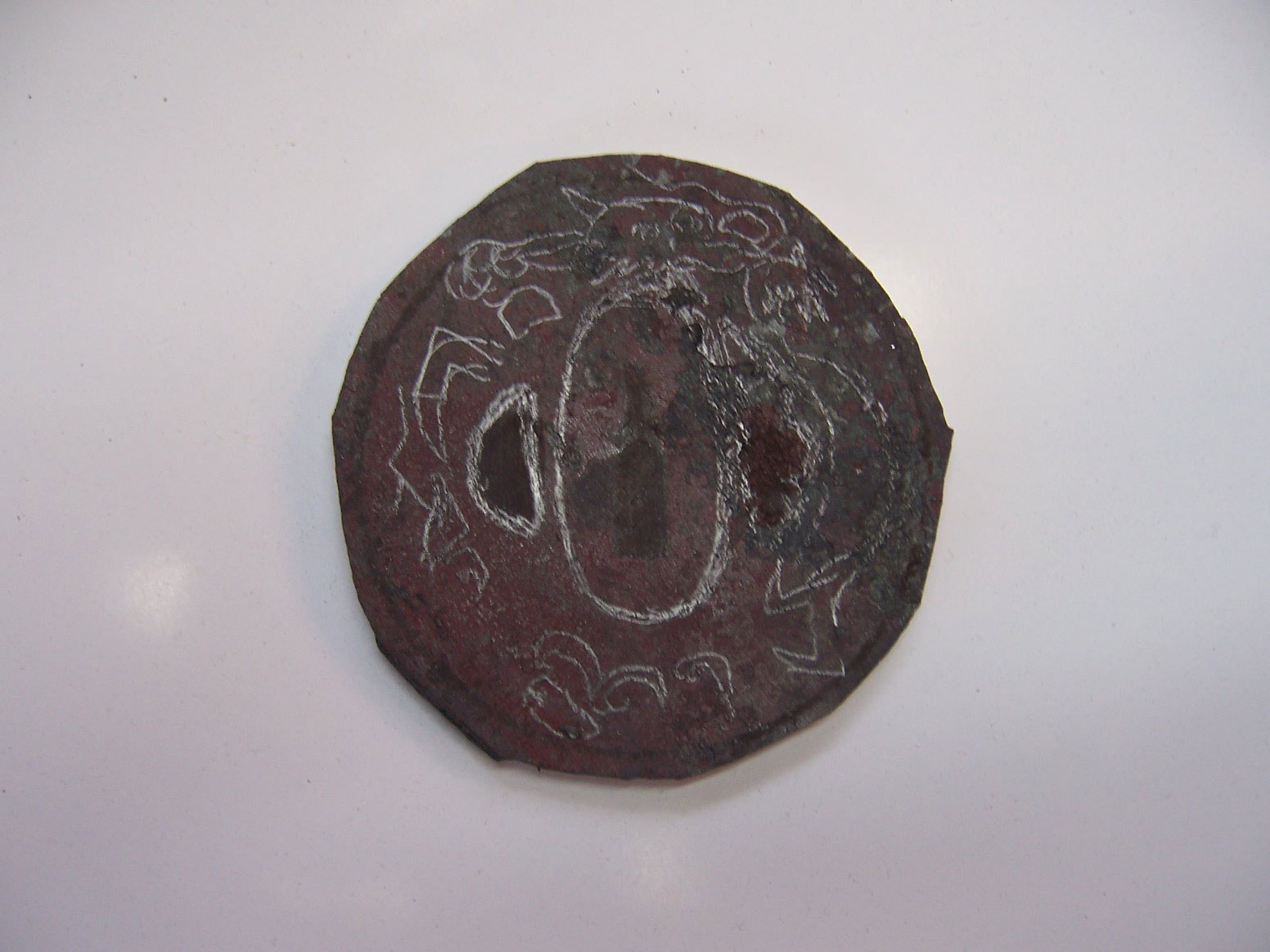
Photo 3: Draw the design with a Sharpie® and start engraving.

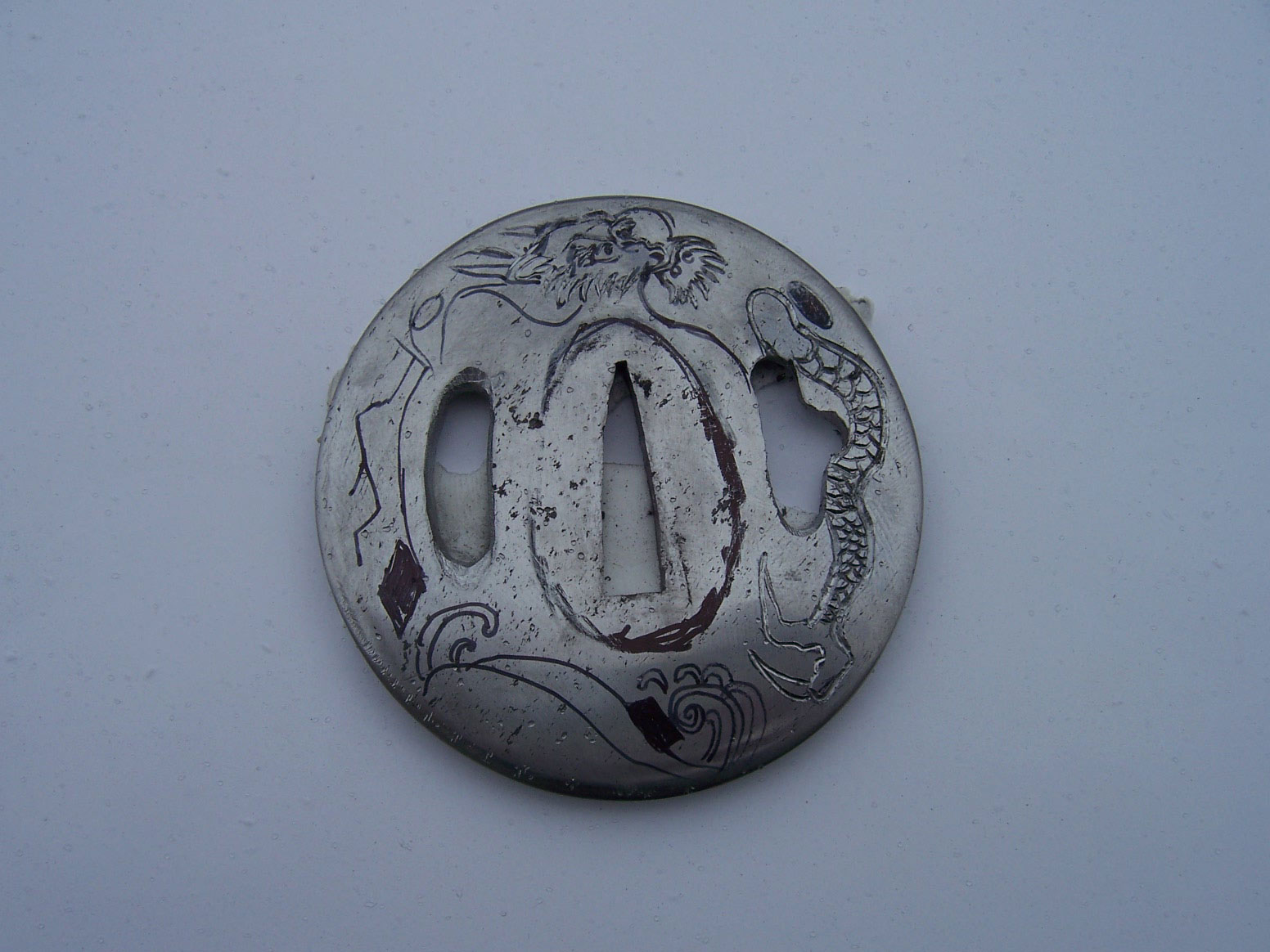
Depending on how detailed the engraving is, I draw my design on or transfer the design onto the tsuba (Photo 3). This one I drew the design on with a Sharpie® marker. I printed out some of my favorite design pictures to use as a reference.

Engraving and Etching

Wally Hayes tsuba
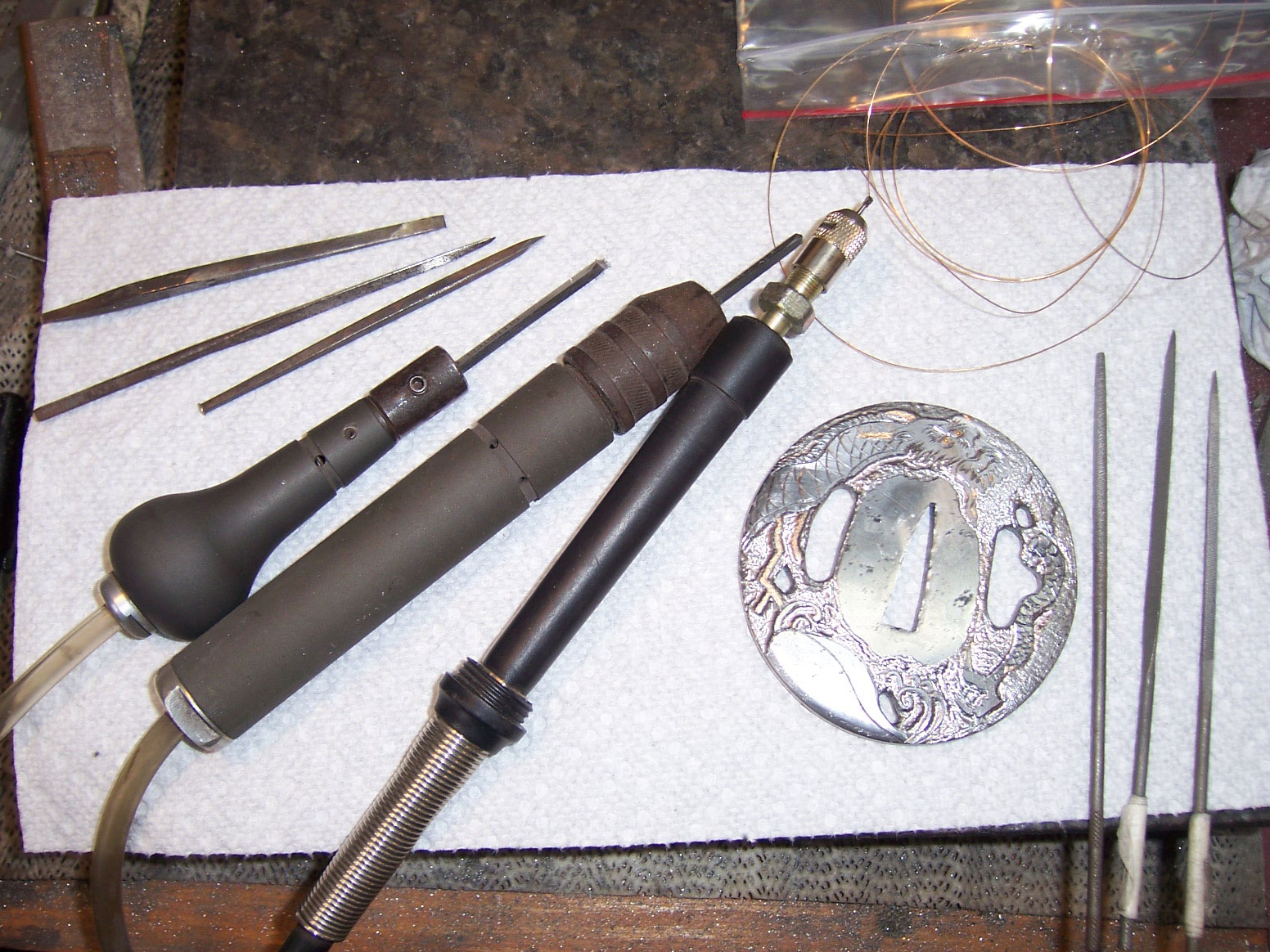
Photo 4: Tools of the trade: gravers, chisels, and high-speed air and Dremel® tools.

Now the fun begins: engraving the lines. I use square gravers from GRS and from engraver Steve Lindsey. The new gravers both work great and Steve’s Carbalt gravers got me back into engraving. The tips of standard high-carbon gravers break too often. The new gravers last a long time and take a real beating. I use a Dremel Tool and a high-speed air hand grinder to texture the background (Photo 4).

Wally Hayes tsuba
Photo 5: Inlay the gold into the tsuba.

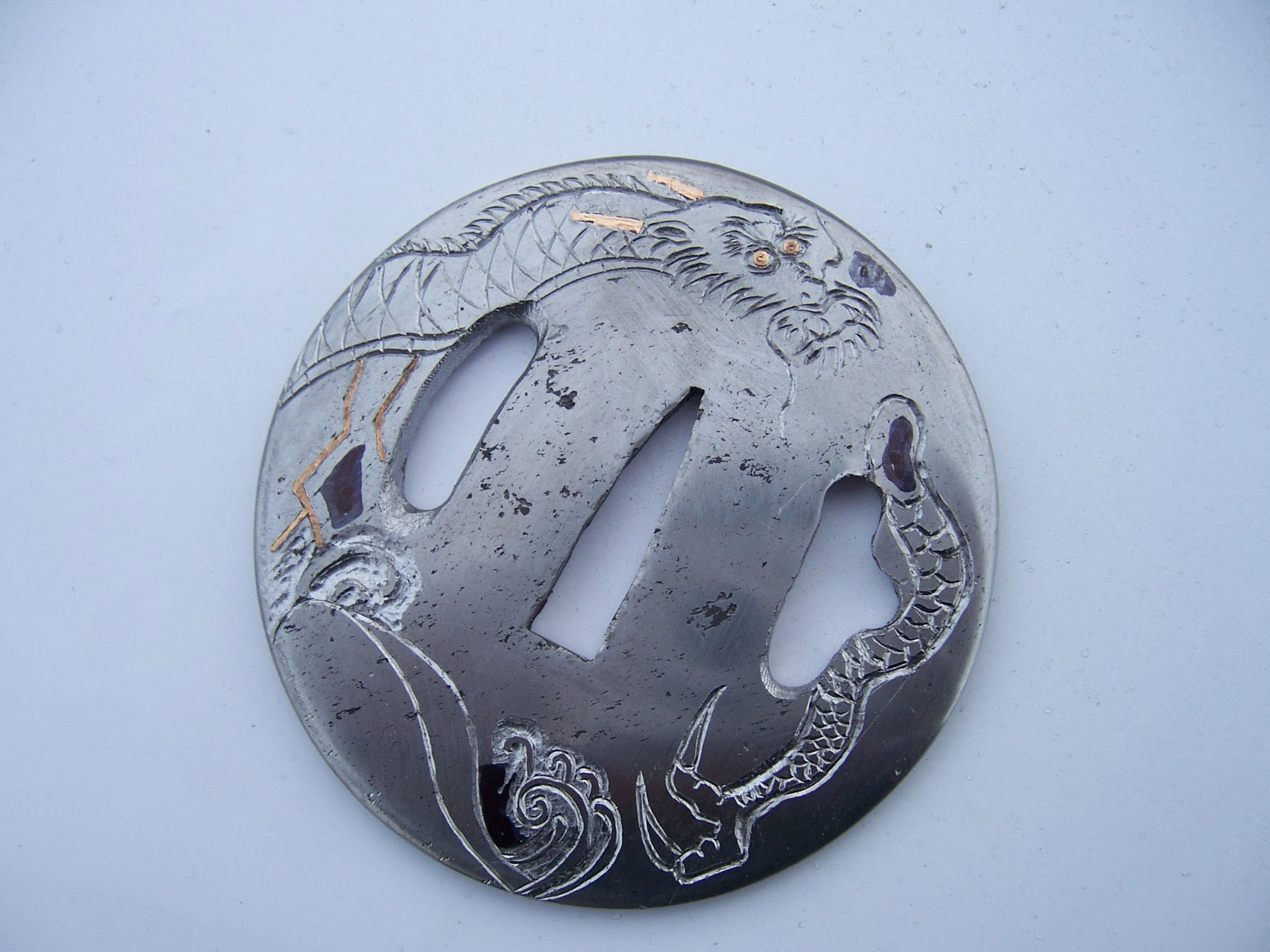
If you practice it a lot, gold inlay is easy (Photo 5). First, cut your line with a square graver, then take a small flat chisel and tap it perpendicular along the line to undercut the groove. Raise some burrs along the bottom of the groove, then tap in the 24k-gold wire.

Wally Hayes tsuba
Photo 6: Texture and carve the background.

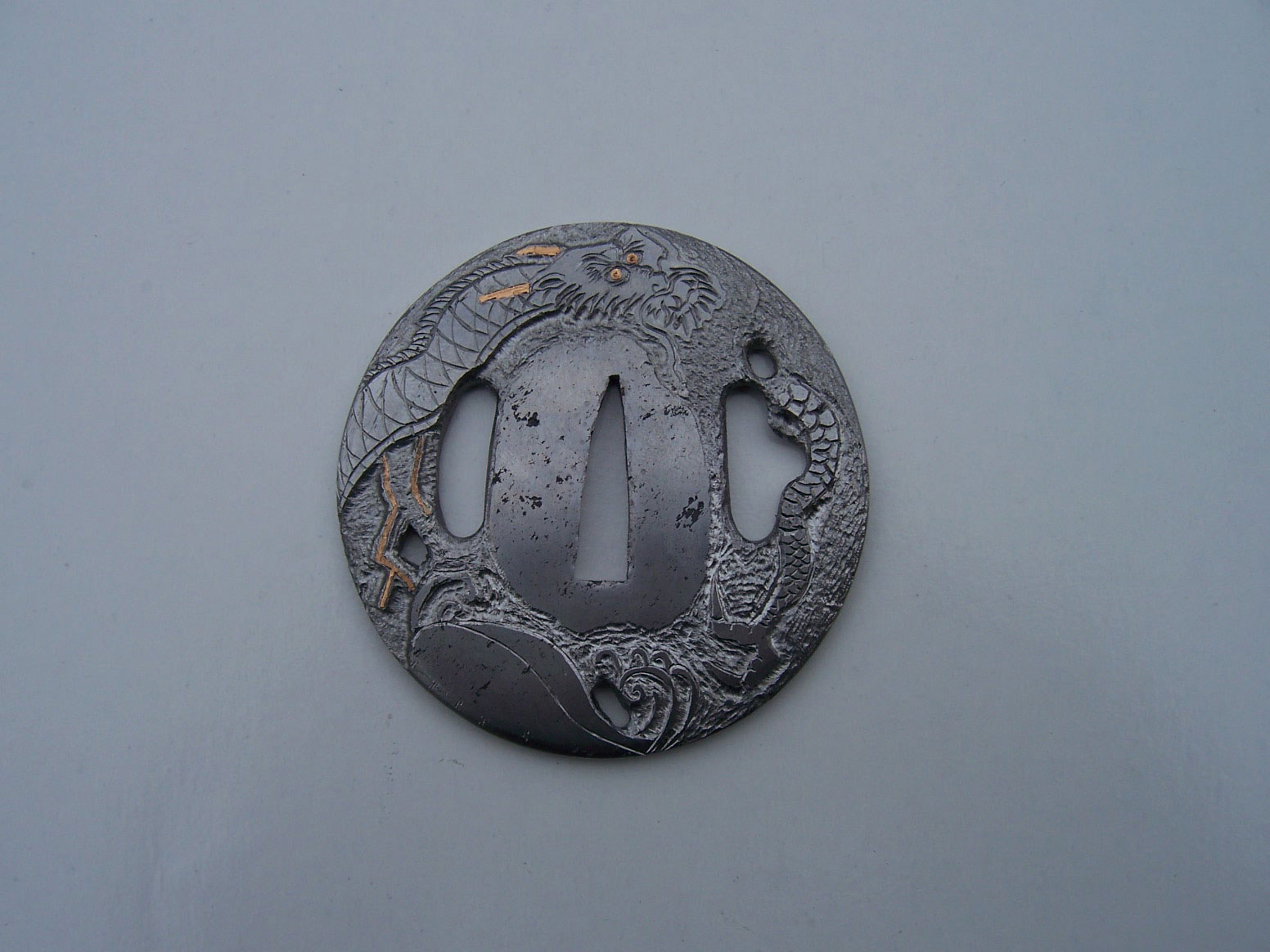
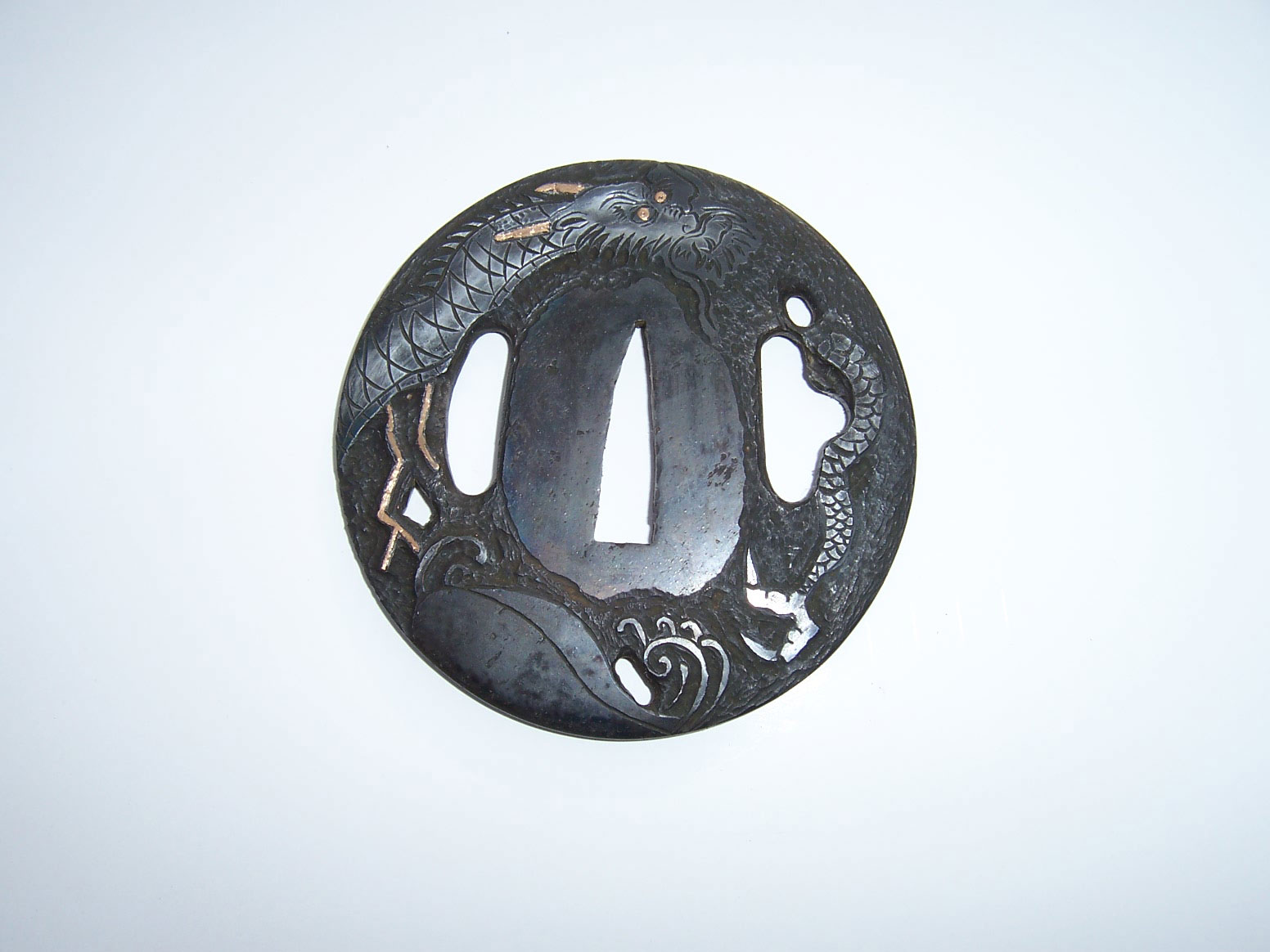
After engraving, I etch the tsuba in acid. This brings out the pattern in the wrought iron and resembles damascus somewhat. It gives an old look and feel to the piece. I mix four parts distilled water to one part muriatic acid or ferric chloride. I neutralize the etched steel with Windex® and then lube with WD-40. To bring out the highlights on the engraving, I use a small Cratex® rubber wheel and polish the surface by hand.

When done, I apply Renaissance Wax to keep the tsuba from rusting.

Wally Hayes tsuba
Photo 7: Carve the other side of the tsuba.
Wally Hayes tsuba
Photo 8: Blue the tsuba with cold gun blue.
Wally Hayes tsuba
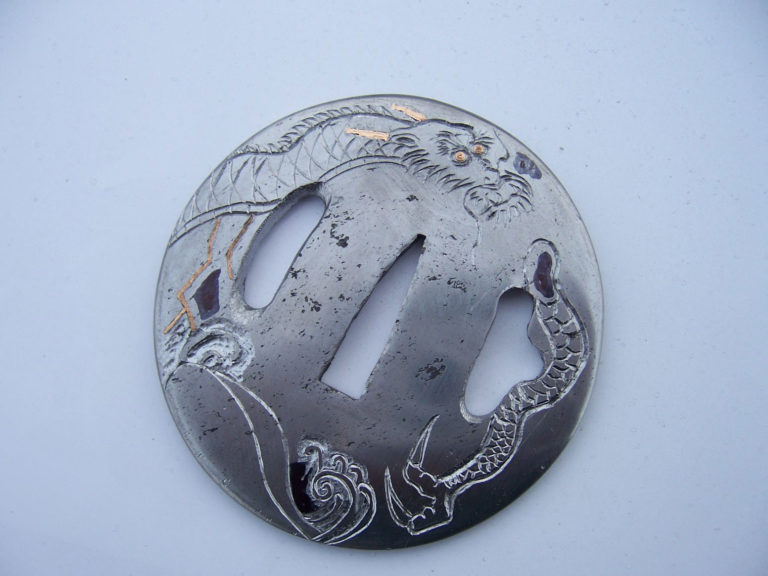
Photo 9: Polished, waxed and finished, the tsuba is ready for mounting.

Keep Learning About Making Swords 

Learn swordmaking

“Rambo V” Movie Announced for Fall 2019 Release

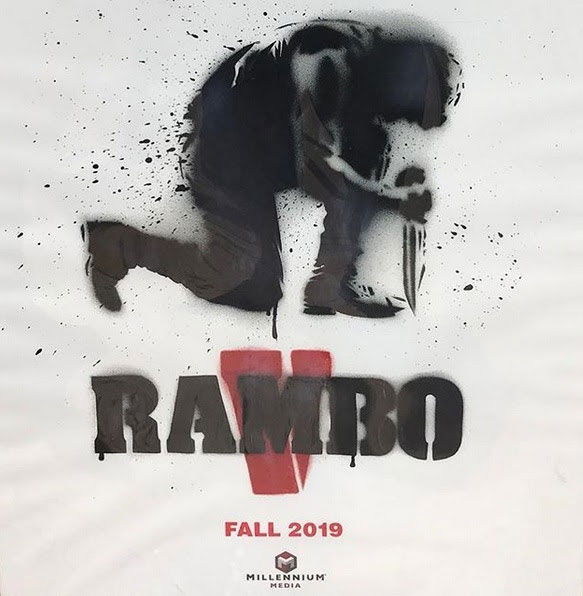
rambo v movie poster


After years of being as mythical as its title character, the fifth movie in the Rambo franchise, Rambo V, is slated for a fall 2019 release, according to Deadline:

In the fifth episode of the franchise, when the daughter of one of his friends is kidnapped, Rambo, who has been working on a ranch, crosses the U.S.-Mexican border and quickly finds himself up against the full might of one of Mexico’s most violent cartels.

Sylvester Stallone confirmed the announcement on his Instagram account:


… Something wicked is coming this way!

A post shared by Sly Stallone (@officialslystallone) on

Upon release, it will mark 11 years since the previous installation, 2008’s Rambo. It will also be the second in the franchise with a title that mercifully follows the logical sequence of releases (First Blood [1982], First Blood: Part 2 [1985], Rambo III [1988], Rambo [2008], Rambo V).

Another False Start?

That’s if it releases. The only proof of life is the movie poster and some press. Stallone was non-committal when BLADE pressed him about it last year, saying only, “Never say never” (read the full interview here).

Even Rambo’s creator, First Blood author David Morrell, expressed his doubts when the news broke today.

Time will tell. That the announcement comes during the Cannes Film Festival could mean this is only a play to see whether investors will bite. A little hype from the fan base, by way of a poster release, couldn’t hurt those prospects.

Who Will Make the Knife?

Cutlery-Hall-of-Fame® member Gil Hibben made the knives for Rambo III and Rambo, but it’s not clear whether he will be back for a third time. Regardless of who makes the knife, it’s encouraging to see the poster feature a blade. Sourcing the knife won’t be an afterthought.

Even if the movie is financed and starts production, it may be a while before the knifemaker is selected. Not only would the commission need to be negotiated, but Stallone himself will have to sign off on the design. 

Cutlery-Hall-of-Fame® member James Lile created the iconic knives for First Blood and its sequel, First Blood: Part 2.

Stay Tuned

BLADE will report on developments as they occur. Keep an eye on the movie’s IMDB page, too.

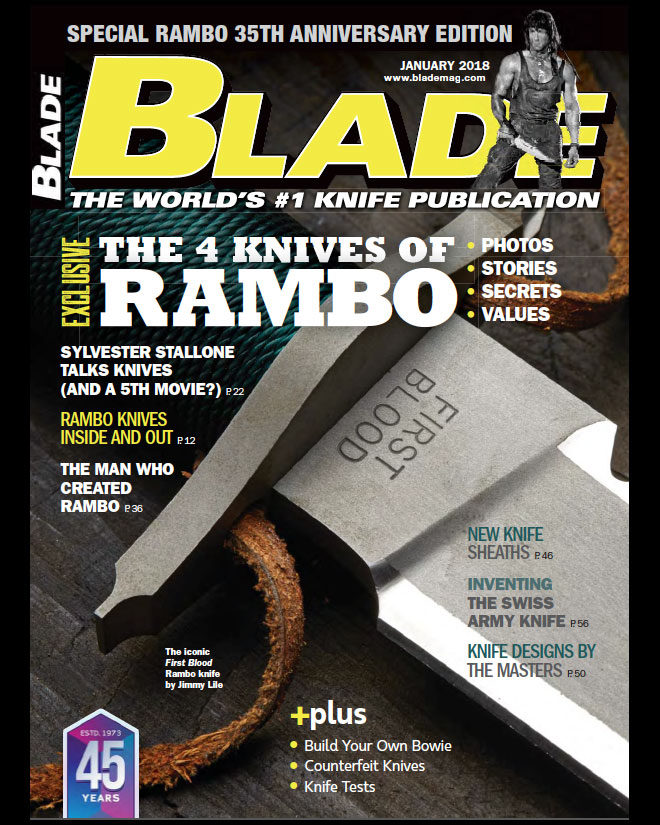
Can’t Get Enough Rambo? Download BLADE‘s Rambo Issue
BLADE magazine Rambo issue

Advertisement

Must Read Articles
Read this before you make a knife
Knifemaking 101 – Read This Before You Make a Knife

  by Wayne Goddard My experience has taught me that there's nothing like digging in and getting started. I've often said the hardest part of the...
how to forge damascus steel

How to Forge Damascus

Advertisement
Advertisement