Honor 250 years of Marine Corps history! Discover the legendary KA-BAR/MK2 fighting knife and new anniversary blades from makers like Medford and Defiant 7.
The day before Veterans Day, November 10 is the 250th anniversary of some of the most storied combat fighters in world history—the United States Marines.
The Marines have a special aura that almost transcends their many exploits. And when it comes to American military exploits, the Battle of Iwo Jima is in the top two or three all time. The raising of the flag on Mount Suribachi is America personified, and the United States Marine Corps War Memorial across the Potomac River from Washington, D.C., celebrating the event is about the most awesome monument anywhere.
As for those in the knifemaking community, Marine veterans are well-represented and include two BLADE Magazine Cutlery Hall-of-Fame® members, Don Fogg and Joe Keeslar. Other Marine vets who make knives are Tim Britton; Matt Chase; Allen Elishewitz; Doug Esposito; Les George; Brad Jennings; Tim Kell; Jonathan McNees; Greg Medford; Jeff Moore; ABS Master Smith James Rodebaugh; Kevin Stack; and Connor Toor. There are no doubt many more, both present and past.
Then there’s the iconic Marine knife, variously known as the Mark 2/MK2, USMC fighting/utility, the Model 1219 or simply the generic kabar. Associated by many with having been made by KA-BAR Knives, the knife also was made by a number of other companies during World War II, including Camillus, Case, Colonial, Ontario, Pal, Queen, Robeson, etc., and is made by several of the foregoing that remain active today, as well as others. The 200th KA-BAR commemorative of the knife graced the cover of the November-December 1975 issue of The American Blade 50 years go in what may be the best BLADE® cover ever.
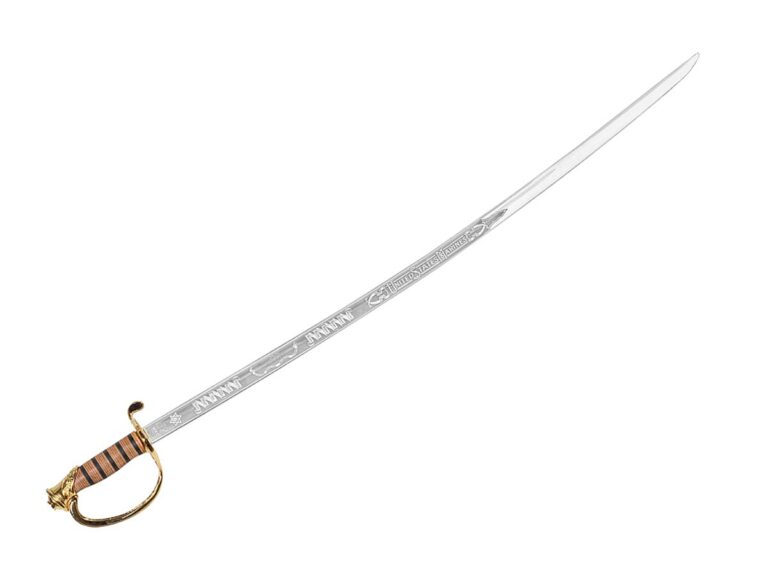
As for blades observing the 2025 anniversary, the 250th USMC Trench Knife by Medford Knife & Tool is available now. KA-BAR is making a dress sword in a limited edition of 250 pieces that at press time was slated to be out in early October. At Defiant 7, Allen Elishewitz and Les George are “reworking” the USMC MK2 in what will be called the M320. Among other features, it will include a 3V carbon steel blade and a stacked handle construction not unlike the original MK2 grip but in a polymer material and a more ergonomic shape. Ontario was reportedly working on a new kabar-inspired piece at press time, too.
Look for these and other anniversary-focused knives in future issues of BLADE. Choose one or more of them if you want a blade inspired by our incomparable Marines.
To America-loving Marines everywhere, Semper Fi! And to all U.S. military vets, Happy Veterans Day!
Legislation expunges any related convictions under the old switchblade law.
As a result of Vermont Gov. Phil Scott signing the state’s switchblade ban repeal bill in June, Vermont not only becomes the latest state to legalize automatics but also expunges prior ban-related convictions, the Knife Rights website reported.
At press time, the effective date of the repeal was July 2.
Known as S.109, the bill removes “switchblade knives” from the existing Vermont statute that had banned a “switchblade knife, the blade of which is three inches or more in length.” The new bill also requires that “the Court” order the expungement of any related convictions handed down prior to July 1, 2025.
“This is the first time one of our bills has incorporated an expungement clause,” the site reported.
The American Knife & Tool Institute (AKTI), along with Knife Rights comprising the two major pro-knife legislative organizations serving the cutlery industry, credited the passage of the bill to “the longtime bipartisan work of two Vermont lawmakers—Patrick Brennan, a Vermont state senator, and Dan Noyes, a Vermont state representative.” According to the AKTI website, the Republican Brennan and the Democrat Noyes teamed up about five years ago to provide a unified approach that “eventually came to fruition.”
As the Knife Rights site indicated, Vermont has Constitutional (Permitless) Carry, so prior to S.109 you could carry any legal firearm open or concealed there, and you could carry any knife open or concealed except an automatic with a blade 3 inches or longer. Until the new bill, that was the only knife you were not allowed to possess in the state.
With the signing of S.109, Vermont becomes the 21st state to repeal switchblade bans or restrictions, the Knife Rights site stated. Beginning with New Hampshire in 2010, those states also include Alaska; Colorado; Hawaii; Illinois; Indiana; Kansas; Louisiana; Maine; Michigan; Missouri; Montana; Nevada; Ohio; Oklahoma; Pennsylvania; Tennessee; Texas; Virginia; and Wisconsin.
UltiClip’s sales and marketing specialist provided a friendly face to the cutting-edge brand.
Ryan Allen Thompson of UltiClip passed away suddenly from a heart attack on July 7. He was 46.
Thompson’s specialty was sales and marketing at UltiClip, a maker, distributor and retailer of an award-winning range of assorted synthetic clips and accessories for sheaths and holsters based in Chicago. UltiClip makes items in the USA that focus “on providing ease of carry, concealment, retention and versatility in one product.”
In June the company’s APH spring steel clip was named the BLADE Magazine 2025 Accessory of the Year. UltiClip also won the Accessory of the Year in 2021 for the UltiLink rapid-attachment, modular linking system.
Ryan made many friends in the knife industry, and his death came as a shock to those who knew him. He is survived by Chastity, his wife of 21 years, and their three children: Isaiah River, Anna Rose and Joshua Rainn.
Remembering Others The Knife Industry Has Lost:
Betty Dowell, Driving Force Behind Knifemaker Ted Dowell, Passes
B. R. Hughes, Pioneering Writer And Bladesmithing Teacher, Passes Away
Selling knives takes more than a sharp edge—professionalism, fair pricing and trust are key to long-term success on the show floor.
How you conduct yourself and your knifemaking business when you’re on the selling floor of a knife show is critical. If word comes down the aisle there is a well-known collector in the room, don’t go over and interrupt the business between the collector and crafter by waving your work in front of them, or stepping into the customer’s space.
I’ve seen this too many times over the years. Such crafters are an embarrassment to all who draw from the same collector pool. Stay in your space, behave in a professional manner and wait for the customer to come to you.
The last thing any craft needs is for a crafter to double his prices when a particular collector approaches. As a result, the collector immediately assumes all crafters are a pack of thieves, taking advantage of him. Those who are at the top of their trade will tell you what a bad move this is for any crafter. Such things travel through the collector network worldwide in hours.
Pricing Custom Knives
Sales are the toughest part of the business. Pricing their work is difficult for all crafters. To take some of the mystery out of trying to maintain control of my cash-poor studio, I’ve always gone by the following simple formula.
Work out the minimum amount per month you must earn to eat and pay your bills. Whether you’re paying all or a portion of your bills, it’s the same. How much is the total amount? You can’t drop below netting the figure from your studio. If you spend more than you make, your approach is not working and you need to change something.
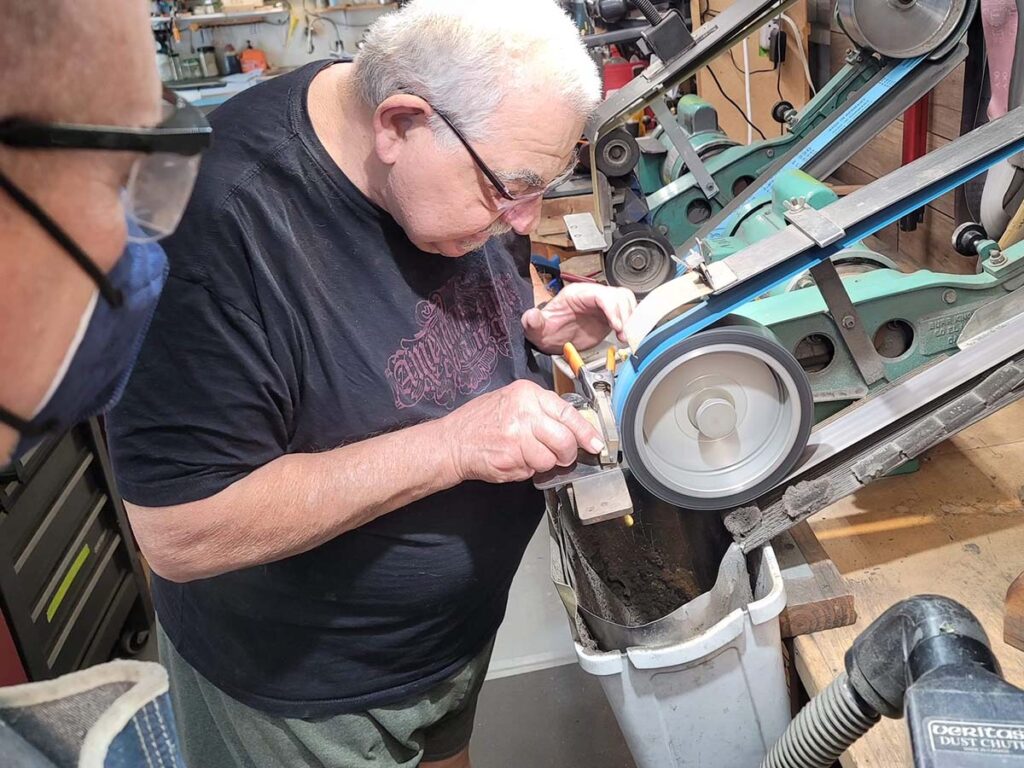
Doing things by hand takes time, especially when you start trying to extend your boundaries. BLADE Magazine Cutlery Hall-of-Fame® member Bob Terzuola has been extending his boundaries a long time, including at the belt grinder. Collector Chris Schluter watches at left.
I triple my base material and labor figures. This must cover everything and very often doesn’t work out as hoped. Throw in costly materials and things soon get out of balance, not to mention foundry fees and shipping.
Paying Yourself
Pay yourself. It doesn’t matter if it’s only a little bit, there is still the psychological impact of being paid something for your efforts. Don’t work for free. No one likes not being rewarded for his efforts.
I’ve been on a schedule of seven 10-hour days a week for most of my career. If I don’t work those kinds of hours the pieces won’t get done, and the bills won’t get paid. There has never been a lot of time for doing Alaska kinds of things, be it hiking or fishing, or just sitting and doing nothing. If I’m home, I had better be in my studio working. Welcome to the world of the full-time crafter. Your family is in the wings, waiting for you to finish up so everyone can go out for pizza.
Most of the time, workers in fast food restaurants make more per hour than crafters. That’s a basic fact. Doing things by hand takes time, especially when you start trying to extend your boundaries.
Developing Your Talent As A Smith
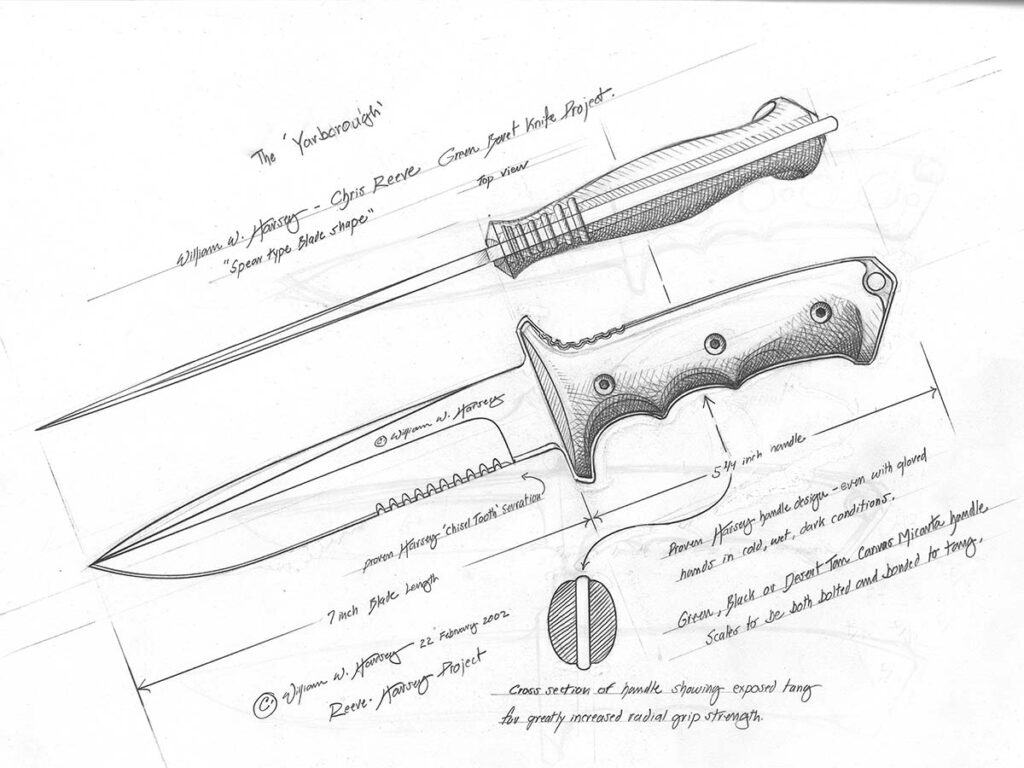
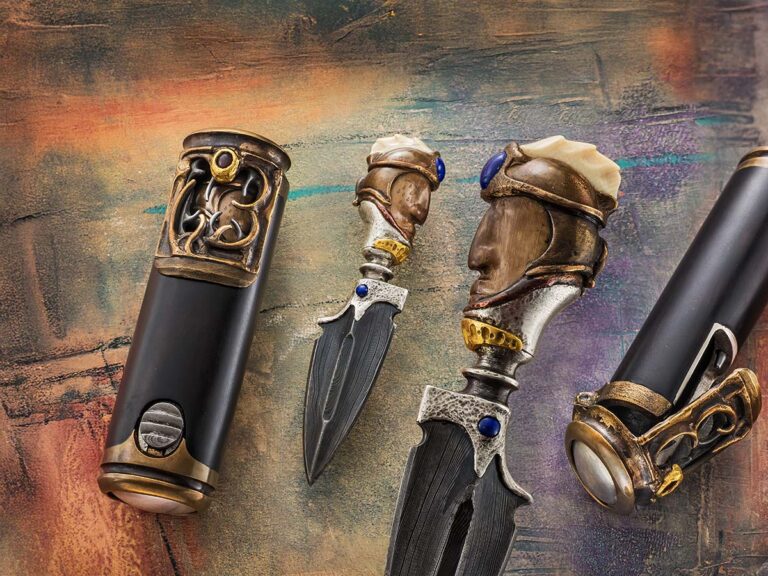
There are very talented people who can’t freehand a drawing of something in their imagination, but give them a clear idea and they can do it with a dedication to detail few ever achieve. Cutlery Hall-of-Famer Bill Harsey’s drawing in 2002 of the “Yarborough” for the Reeve-Harsey Green Beret Knife Project reflects his prodigious artistic talent. (image courtesy of Bill Harsey)
The artisan/crafter who drops the Saturday mall hobby artist status to get into the shows of a size to make the dream of becoming a full-time working artisan/crafter possible must make some adjustments. You will encounter a couple of stumbling blocks along the way. They are big ones and never really go away completely, no matter how much experience you might have.
One is talent—you can’t have enough of it. But the strings attached to it require endless dedication to sometimes crazy rules. There are very talented people who can’t freehand a drawing of something in their imagination, but give them a clear idea and they can do it with a dedication to detail few ever achieve.
Most people with raw talent show it early in life, from the 10-year-old piano protégé and 11-year-old symphonic composer to the ones who talk of space as something tangible to them, to the hands of a 12-year-old who carves hardwoods like the elders around him. They say the spirits of a great carver have moved into his hands. (That’s what I need.)
What do you do if you don’t come loaded down with the skills necessary to get your ideas on paper where you can see them? You don’t have the ability yet to create new and innovative ideas but really like crafting.
Get a pack of white paper, some pink erasers and a pencil sharpener that attaches to your table or bench. Have sufficient light; don’t work in the dark. Try and get the bulk of your idea down the first time, then let it sit and simmer while you look at the rough and try to come up with a direction to take your drawing to next.
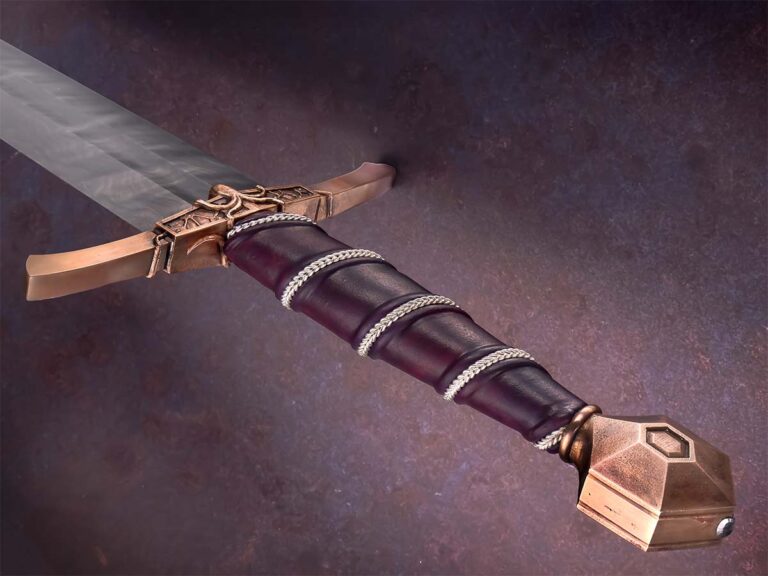
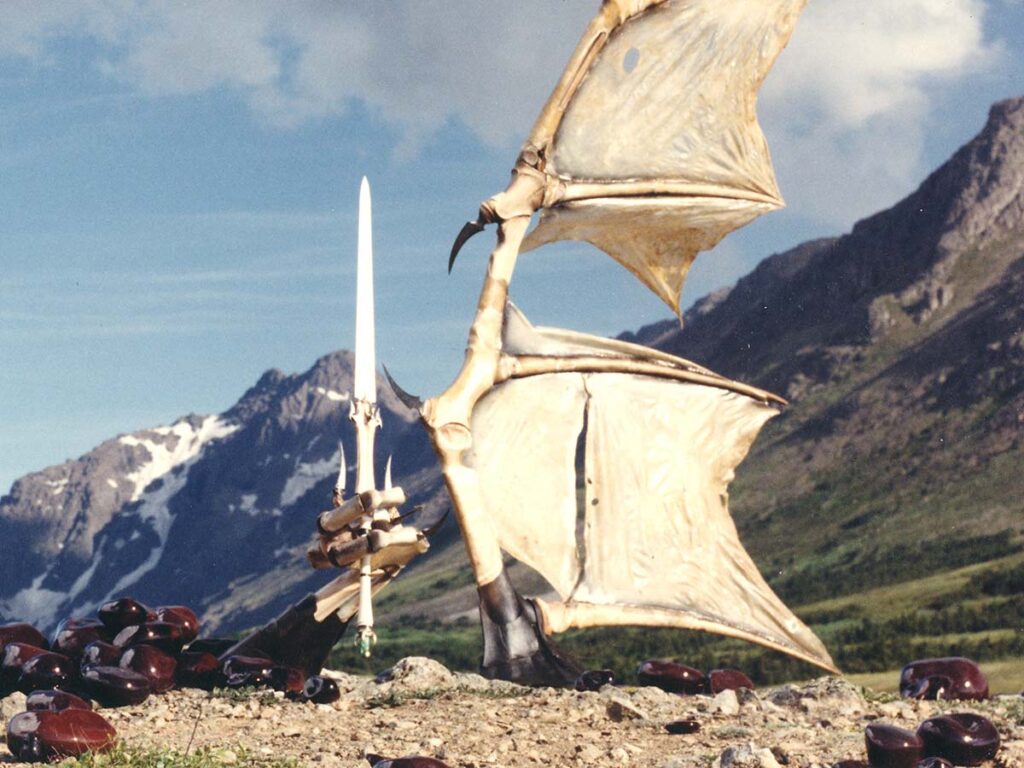
For a project that may take months or years to complete, be sure you cover the bases as much as you think is possible. One of the author’s longer-term projects is his famed Chugach Dragon. Commissioned to make a sword “capable of slaying a dragon,” he not only built the sword, he also made a “dragon” from whalebones and caribou hides. (Weyer International image)
Work with small thumbnail-size sketches. They can be quick and you can do a number till you find something that appeals to you in a short time. Scan it and blow it up to the size it needs to be when finished. Instant gratification art!
Don’t design far beyond your skill sets; keep them in mind when you begin drawing.
I look on my sketches as my guidelines for the final finished piece. I work out the design issues on paper until I’m satisfied. I don’t begin anything until I have a possible route to take to achieve the end product I want. I’m not locked into it but I know there is at least one way that my chances are good, or there’s a reasonable risk, of me pulling something off. When you’re working on something that may take months or years to complete, make sure you have covered the bases as much as you think is possible.
Skills come from continual practice. You don’t have to be Picasso to make a raku* tea bowl. It may not be your original idea but the joy available just in doing the more mundane tasks is tangible. Being able to do raku means you have acquired a new skill set that will tweak your craft view a bit, that will give you the view from another craft’s perspective.
The more skills you can master, the broader your creative strokes can be. It’s not necessary that you learn every technique to the level of a master, only that you can do it without issue the few times it is required.
Ray Appleton’s IQ folders are famous for being difficult to figure out how to open and close, but one (though not one of those shown below) he put on the author’s table at a Solvang Knife Show may have been the most difficult ever.
Sales Presentation
A good idea poorly presented has no positive aspects. Keep it under the table until you work out the kinks at some later date.
Twenty years ago, celebrated knifemaker Ray Appleton came to the Solvang Knife Show. He is well known for his IQ folders, so named because it takes some thinking to work out how they open and close.
He didn’t have an exhibitor table, so he didn’t have anything to sell. He laid a small, leather-slip-covered folder on my table and stepped away. Ray was very tall, so he walked over by the show entrance and stood there to watch what happened. Someone had spotted him putting the knife down and was at my table immediately. The person asked for permission to look at it, which I gave, as Ray had asked.
The man fiddled with the folder for five minutes, then handed it off to someone else. It went through the hands of at least 20 people in an hour. Then Ray came back over to my table. He picked the knife up and slipped it in his denim shirt pocket.
“Did anyone open it?”
“Not as far as I could tell,” I said.
“Neither can I,” he said with the usual twinkle of the jokester in his eye, a man who saw enough humor in life to drive from central Colorado to Solvang on the California coast just to play a 20-minute joke. Ray was someone who knew the joys available in life for an eternal prankster.
The point here is don’t send customers photos of unfinished projects. Their imaginations aren’t usually up to your level, so it is easy for them to misinterpret something by a large margin. When you show up with the final, they will be expecting something different.
*Editor’s Note: Raku is a low-fire process of making pottery.
Get a look at everything that went down at the world’s largest knife show.
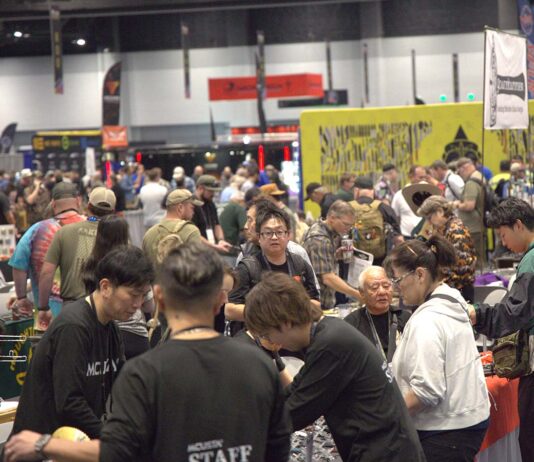
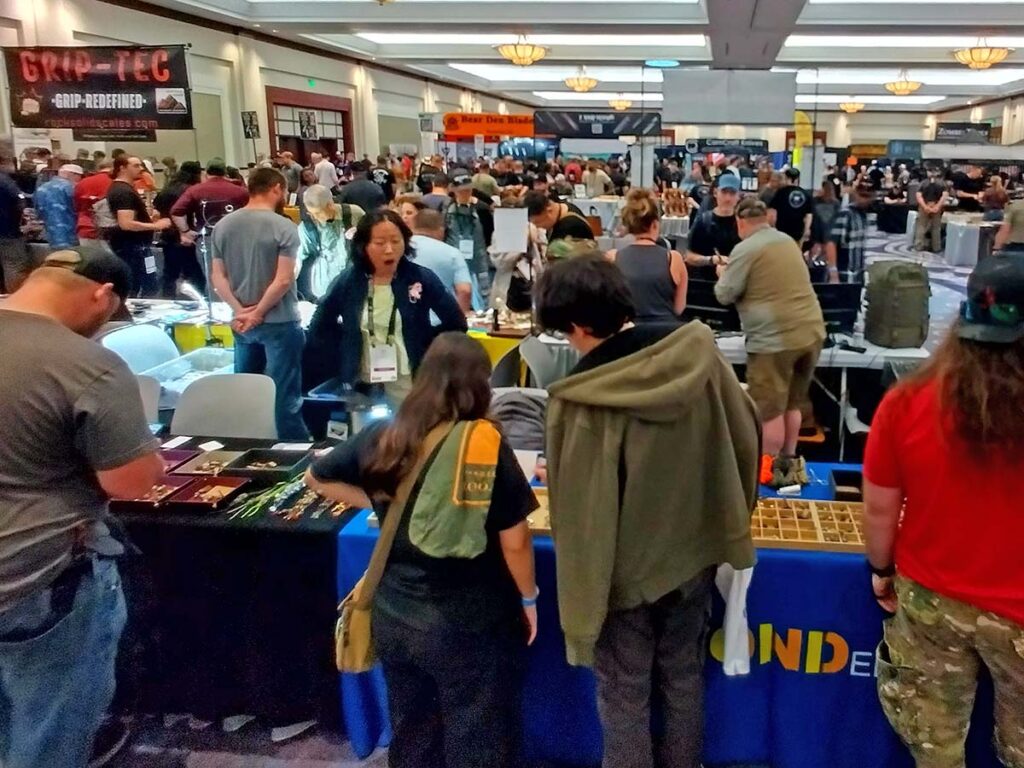
The 44th Annual BLADE Show in Atlanta was yet another in a historic line of three-day edge-stravaganzas of the present, past and future of an international knife industry that seems to advance daily by leaps and bounds.
The latest and best knives, knifemakers and related accessories the planet has to offer, the pioneers that laid the groundwork for what the knife community is today, the new, up-and-coming knifemakers and knife companies that hold such great promise for tomorrow, and so much more all showed their sharpest stuff June 6-8 in the Cobb Galleria Centre.
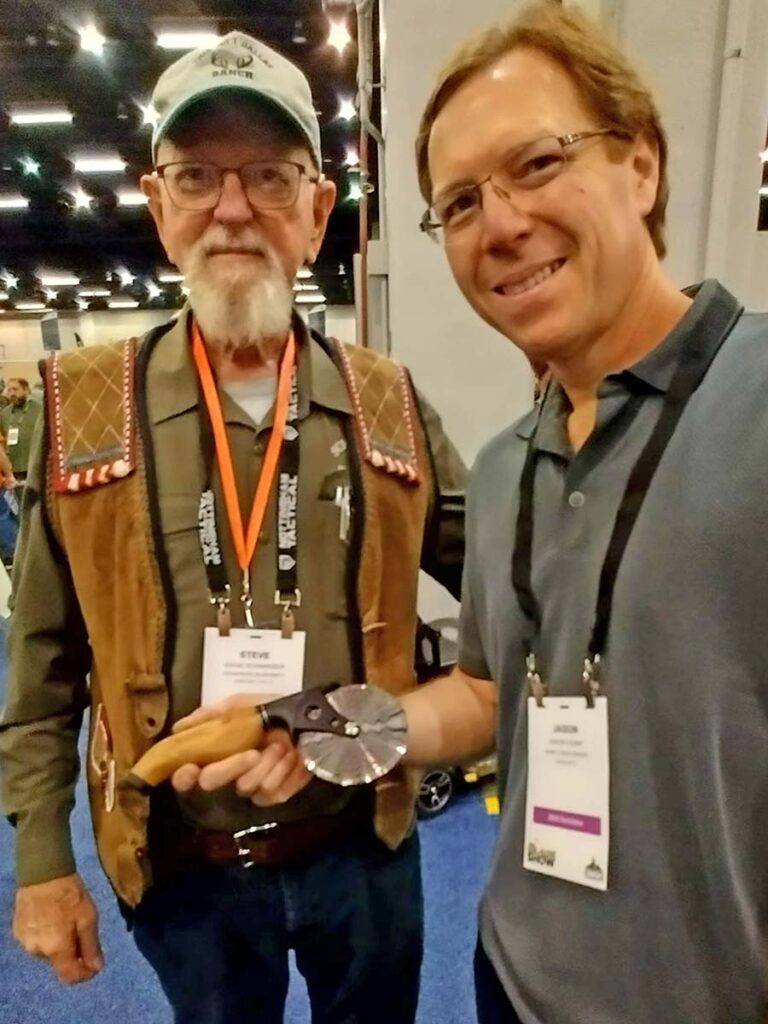
Jason Yount displays his damascus pizza cutter under the watchful eye of BLADE Magazine Cutlery Hall-of-Fame® member Steve Schwarzer. Steve called it the best BLADE Show in a few years.
It was about what you would expect from the world’s largest, most important international knife event.
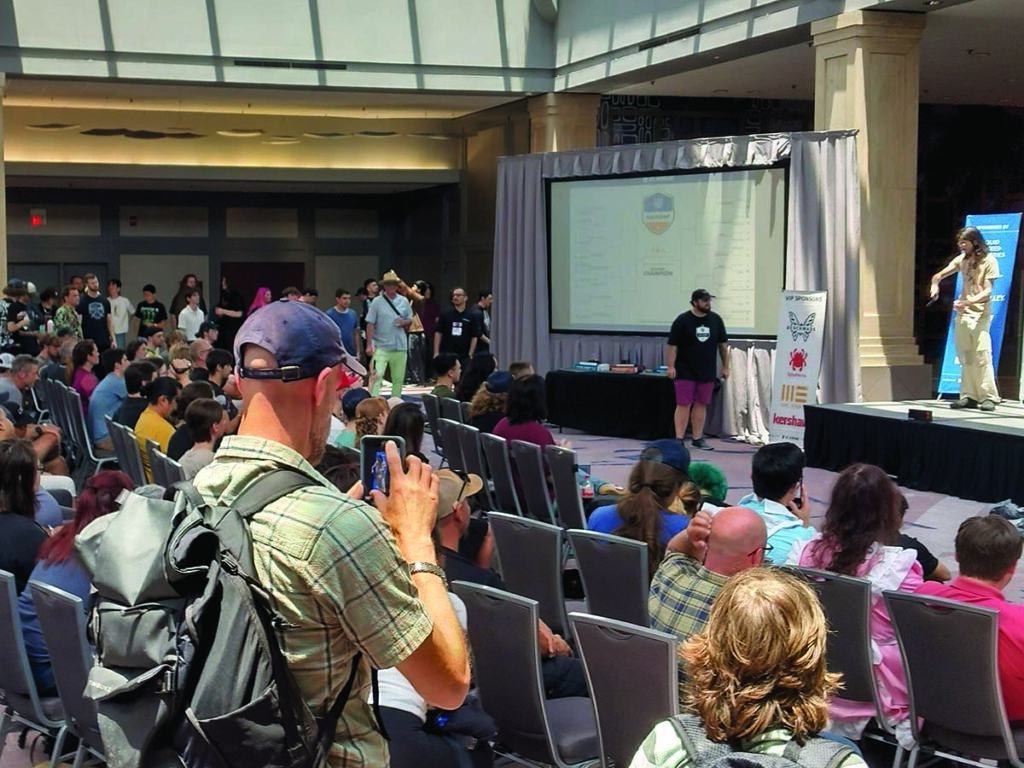
BLADE University provided a full slate of topics, including knife and sheath making, how to sharpen, fundamentals of blade grinding, how to etch damascus and many more. BladeSports International conducted the annual BLADE Show World Championship Cutting Competition and Blade HQ held Balicomp 2025.
Custom knifemakers and bladesmiths from around the globe displayed their wares, including members of the American Bladesmith Society, Knifemakers’ Guild and unaffiliated makers from everywhere. Meanwhile, various knife collector groups, knife rights organizations and other outfits met and discussed their favorite topic as only they can each year during the BLADE Show.
Through it all, knife enthusiasts of all stripes renewed old acquaintances, made new ones, and otherwise immersed themselves in the world’s keenest three-day weekend, capped off each night with food and beverages in The Pit, the legendary sunken lobby lounge of the host hotel, the Renaissance Atlanta Waverly.
It was knife heaven on steroids.
BLADE Show Sales
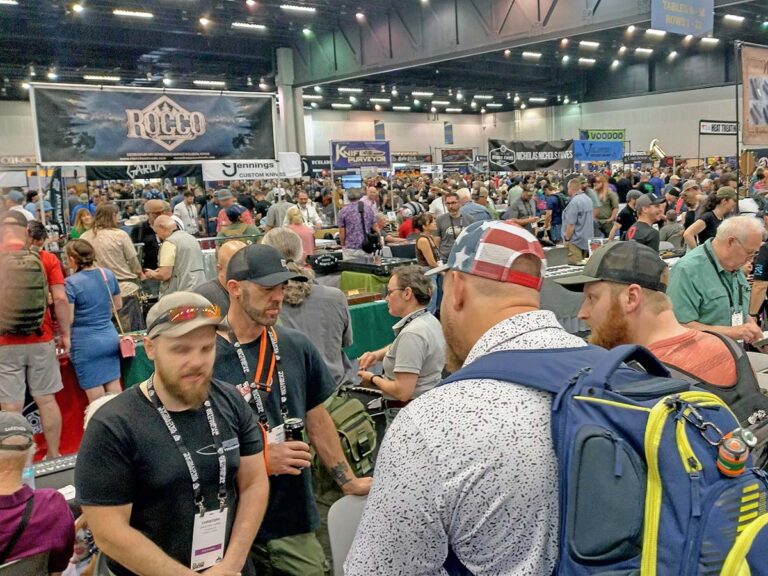
The BLADE Show has always been unlike any other knife event and this year’s rendition was no exception. Attendance ebbed and flowed Friday and Saturday, and Sunday was its usual slow-to-middling self. While some exhibitors raved about the attendance and sales, some said both seemed off from last year.
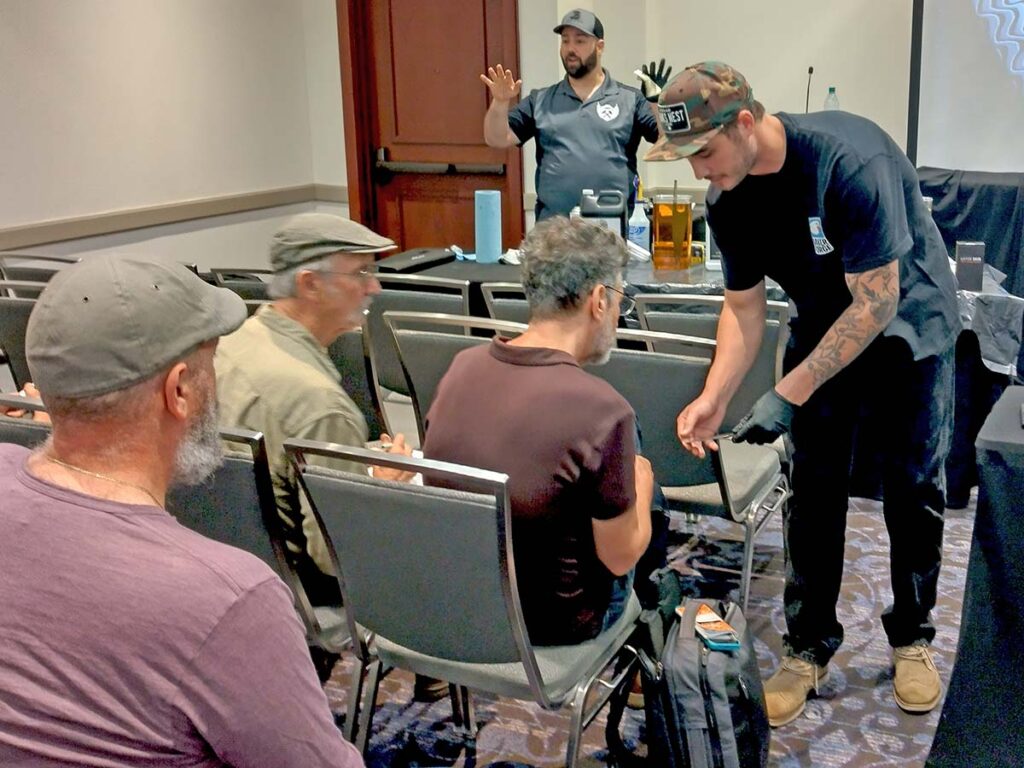
Jordan Berthelot discusses next-level damascus etching while Greyson Weltyk shows a student a result of the process during one of many BLADE University classes.
One reason for the differences in observations may have to do with the sheer size of the show hall as opposed to the smaller size of the adjoining Baller Room. The show hall is so large that waves of attendees seemed to gravitate like flocks of birds from one side to the other, constantly in search of the latest, coolest knives. As a result, one area that was flooded with patrons for a while might be somewhat devoid of them minutes later. By contrast, the smaller Baller Room seemed to have fairly steady traffic throughout.
Another factor has to do with the exhibitors themselves. As with any business, those who are constantly on the go, looking to make deals or offering giveaways are usually the ones who experience the most success. Smiling faces and engaging, upbeat demeanors sell knives. Those who stand or, worse yet, sit behind their tables with their arms folded waiting for something to happen usually have a long if not endless wait.
Custom knife purveyor Michael Donato was constantly on the move, talking and probing for those who wanted to buy and/or sell knives. He said his company, KnifePurveyor.com, had its best show ever in 24 years of BLADE Shows.
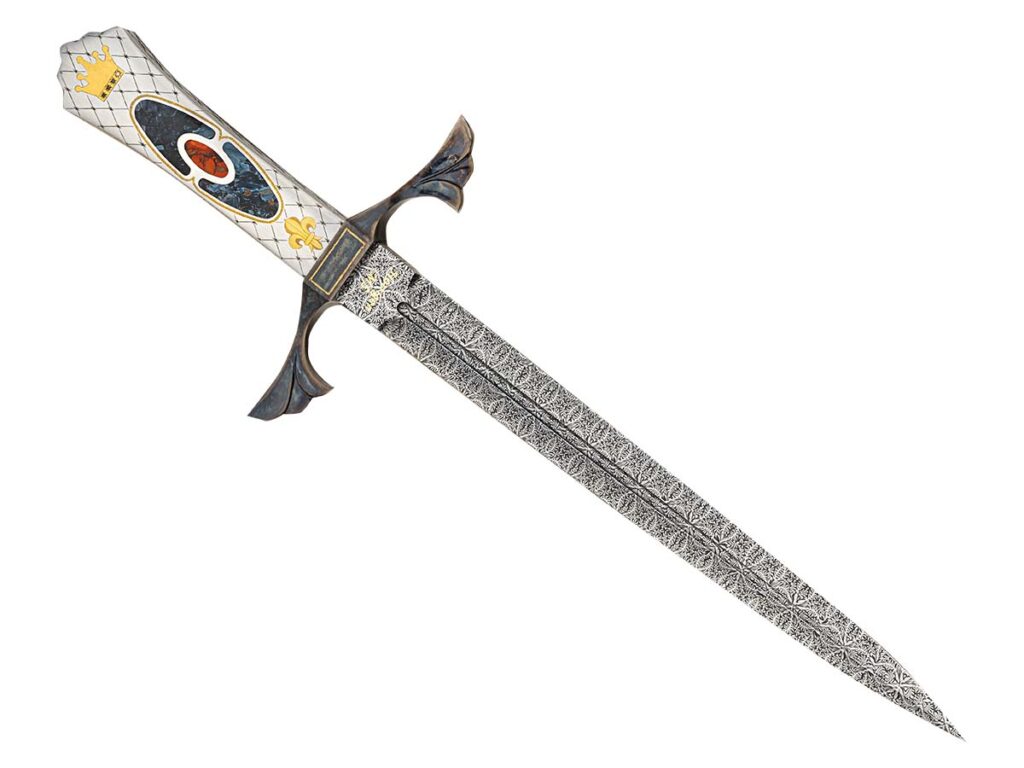
John Horrigan’s 16.5-inch Kings Dagger features Gorgon flower damascus, petersite, a red agate, and 24k-gold engraving with a ruby, diamond, sapphire and emerald inset in the crown. John’s price for a similar knife: $14,500. (Jocelyn Frasier image)
“Many of my colleagues shared with me how well they had done at the show as well,” he noted.
Matt Bando of Demko Knives was stoked about Demko’s performance.
“We brought the largest number of knives we have ever brought to a show and sold out faster than any other,” he noted. “All of our USA models were sold by 2 p.m. Friday. There seemed to be a lot of people at the show and every year it seems to grow.”
Demko is one of those exhibitors who employs giveaways to drive sales and create enthusiasm.
“We had a large turnout for our giveaway on Saturday. We gave away five different packages. For the main giveaway, we gave a USA-made titanium AD20 in 3V. A young man entered his younger brother into the raffle and ended up winning his first Demko knife. Great story. “We were blown away and pumped.”
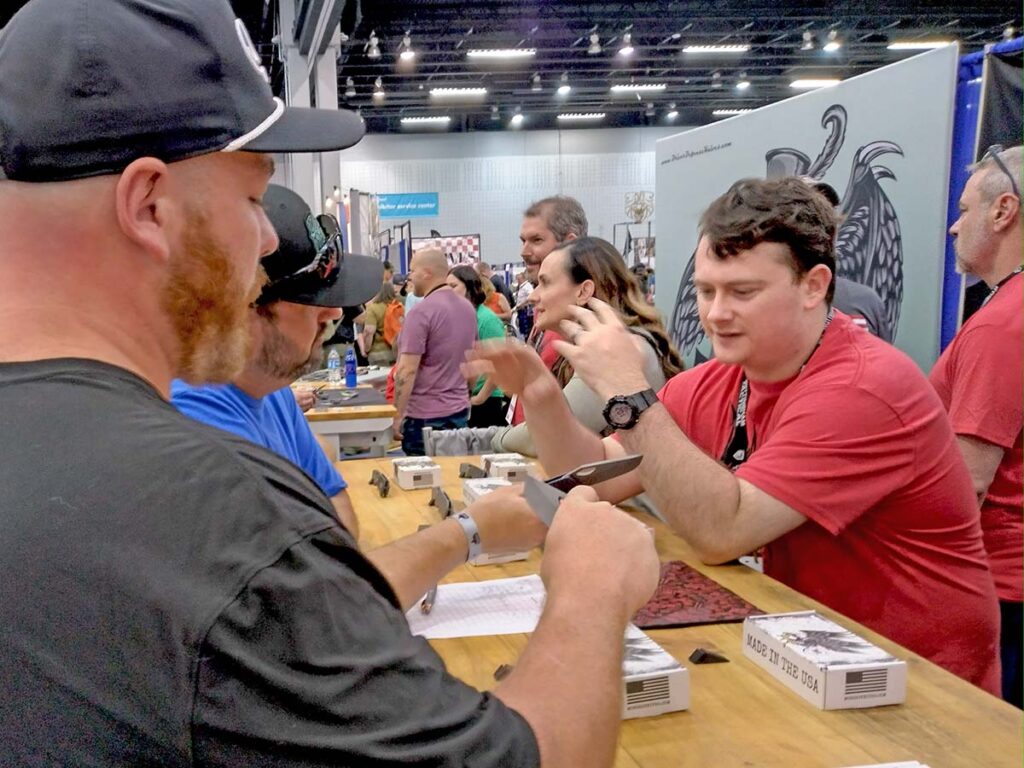
Two blade enthusiasts try out/talk knives at the McNees Knives booth.
Custom knifemaker Rhidian Gatrill not only won for Best Miniature in the custom knife judging competition but, along with Jeremy Yelle, also captured Best Collaboration. “Rhid” exhibited 13 knives, two of which were miniatures, and sold all but one.
“Most sold within the first few hours on Friday but the others sold slowly through Saturday and my minis within the last hours of the show Sunday,” he wrote. Still, he said he thought the buying was slower than last year, which was his first year exhibiting at the BLADE Show.
Vince Evans specializes in high-end historical swords and knives. He brought four swords and sold two, both on Friday.
“Most of my clientele are interested in historical pieces,” he stated. “Swords are a more limited field as some collectors don’t have the room to collect and/or display larger pieces.” Vince indicated the show seemed slower than last year and that a few regular local attendees did not come. “Friday and Saturday seemed fairly busy,” he wrote, adding that on a scale of 1 to 10, Friday and Saturday were “about a 7” and Sunday “about a 2.”
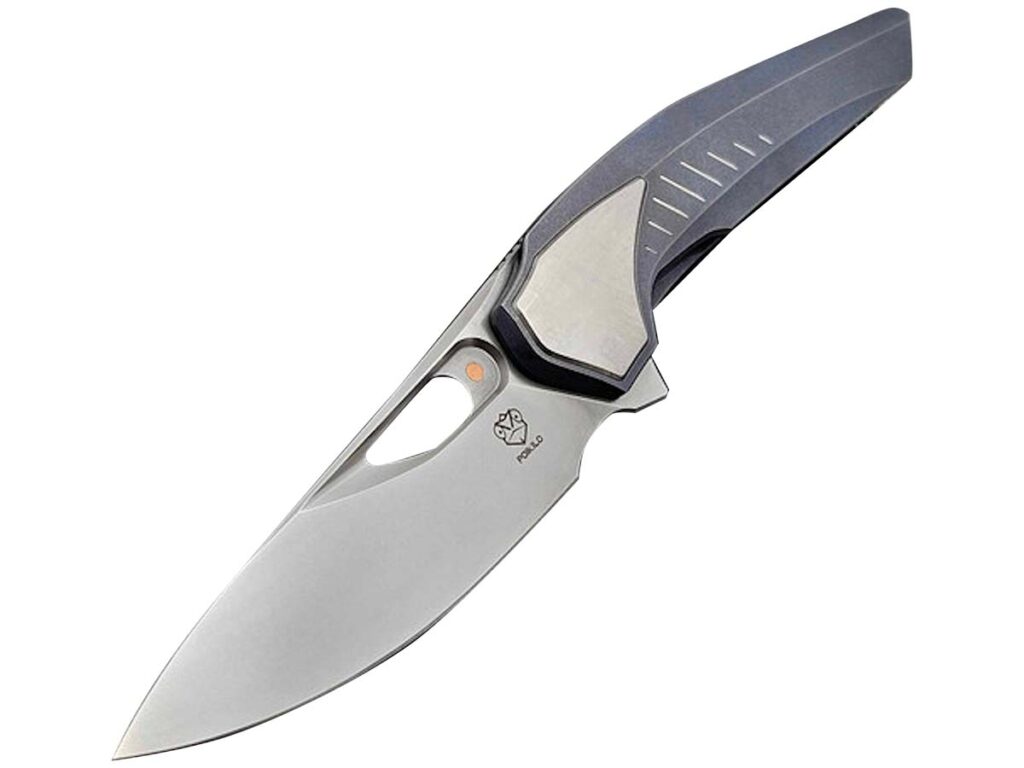
The VK-Zame—aka Shark—in M398 stainless steel and titanium was among the knives Poikilo Blade debuted at the BLADE Show. MSRP: $580-$600. Available to the public: August/September. (Poikilo Blade image)
Gregarious Cutlery Hall-of-Famer Steve Schwarzer was pleased. “I had a great show, sold most of my carved pieces and took several orders,” he commented. “It was the best show in a few years. It was very busy.”
As usual, the South Texas Slipjoint Cartel boys all seemed to do well, including sellouts by Tanner Couch and Toby Hill, the latter who sold all 11 of the knives he displayed. Bobby House only brought three knives but sold them all by early Friday afternoon. He indicated his most-sought-after knife was a high-end Cutlery Hall-of-Famer Bill-Ruple-design Ax Handle with wasp nest damascus bolsters and shield that went for $2,800 to a French buyer. The other two buyers were Americans, the latter being Arizona Custom Knives.
The Baller Room buzzed all three days.
“I thought attendance was up on Friday and Saturday,” he wrote, giving Friday a 7 rating. “Friday attendance was the people wanting to buy custom knives. They are there to get the first shot at our custom builds. Saturday attendance is more for entertainment purposes. They want to look and see all types of knives, but they have funds to buy also.”
He gave the Saturday attendance an 8, concluding, “Overall, it was one of the best shows that I have been involved in. Great job by the BLADE Show crew!”
BLADE Show Treasures
A highlight of all BLADE Shows is you never know what unusual old knife or sword, new knife introduction, mechanism or material, or other notable hidden treasure may turn up.
“I always enjoy seeing what the antique dealers bring to the show,” Evans wrote. “I purchased an antique quillon dagger for research and a future replication project.”
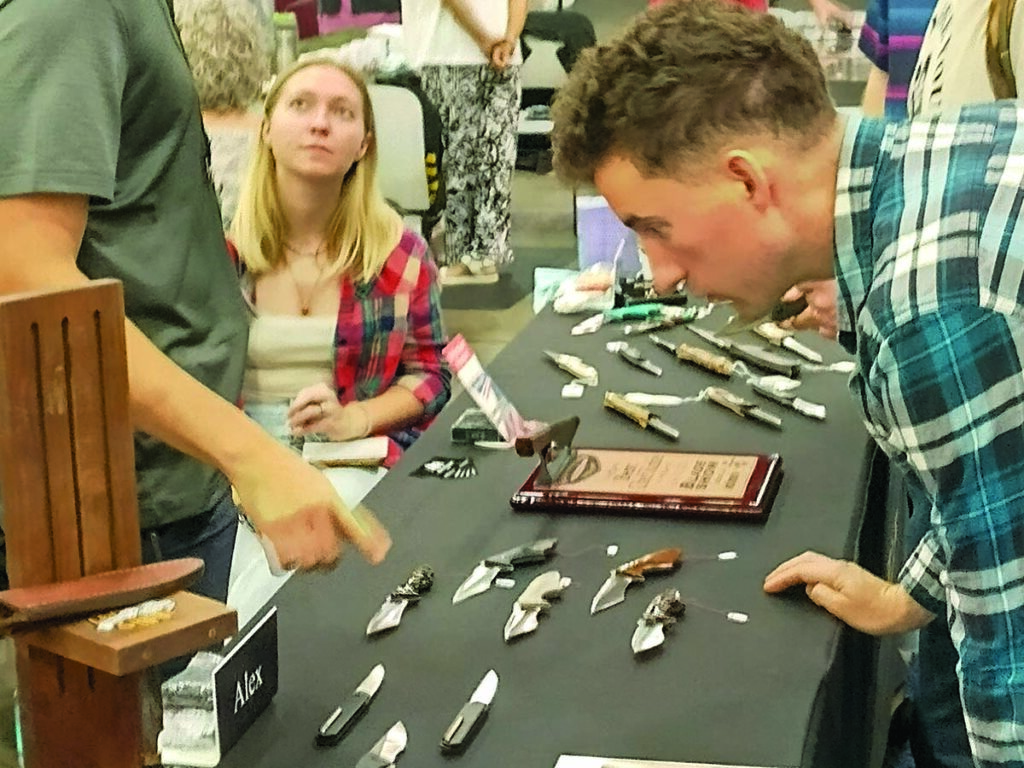
It’s easy to get mesmerized by knives at the BLADE Show, here at the table of Alex Hossom (left).
An antique also caught the eye of knifemaker David Kramp, who sold 10 of 12 knives and won Best New Maker in the custom knife judging.
“There was a French knife from the 1830s that was very intriguing,” he wrote. “I’m very much looking forward to that potential build with a fellow maker.”
Winner of Best Damascus in the custom knife judging, Gabe Fletcher came across a product that piqued his interest. “The Gator Skin Blade Coating from Baker Forge seems very interesting,” he wrote. “I picked some up to try on my damascus.”
Both Kramp and knifemaker Jared Oeser were gobsmacked by Gatrill’s lockback whittler automatic that won Best Collaboration in the show’s custom knife judging competition.
Conducted by Blade HQ, Balicomp 2025 drew a packed house on show Saturday.
“I’m not ready to make something like it yet but that auto slipjoint was impressive,” Kramp observed. Oeser, who brought 14 knives and sold out by Saturday afternoon, chimed in, “One thing that stood out to me was Rhidian’s automatic lockback whittler. I’m gonna have to try [making one like] that.”
Next Up: BLADE Show West
It was indeed another BLADE Show for the ages. Speaking of which, next year’s show will return to the Cobb Galleria June 5-7. For more information, visit bladeshow.com. Meanwhile, it’s not too late to make plans to attend BLADE Show West Oct. 10-11 at the Salt Palace Convention Center in Salt Lake City, Utah (bladeshowwest.com). See you there!
Knife companies offer their own brands of hot Joe and perk up consumers in the process.
For Ernest Emerson, it’s as strong as… well, a cup of dark roast. He’s a firm believer in the expansion of his marquis knife manufacturing company into other lines of business. The idea behind that expansion is the diversity of different sources of revenue while complementing the Emerson core business.
“We’ve owned our own coffee company since 2019,” Ernest related. “I’m friends with Evan Hafer, the founder of Black Rifle Coffee, and our conversations probably go back to 2016 when we were first to co-brand with Black Rifle. Evan carried our CQC-7 on his military deployments, and he knew who we were. We worked it out with him to package coffee and do labeling. That worked for a while, and then my wife [Mary] and I talked it over and decided we wanted to have our own brand of coffee.”
For Emerson, taking the coffee plunge complemented the other activities that go hand in hand with offering top quality knives. Barriers to entry were few.
“I talked to Evan, and he said there was plenty of room,” Ernest explained. “We started Emerson Coffee Roasters Company, and I know we were first and started that trend, just like the trend in knife company whiskeys that is going on now.
“We get coffee from a source in South America and have it roasted and package everything under our own ownership,” he added. “Some other companies do collaborations and have their coffee packaged up, but we do everything from start to finish. The way I look at it, everything is a backup for a backup for a backup. What if somebody in Washington can make knives illegal with the stroke of a pen? All our other companies are there as a family-run group of businesses from coffee to apparel, whiskey, fighting systems and others. We’ve built those companies so the family will have support, and then we are at the helm and decide what roasts we want and everything.”
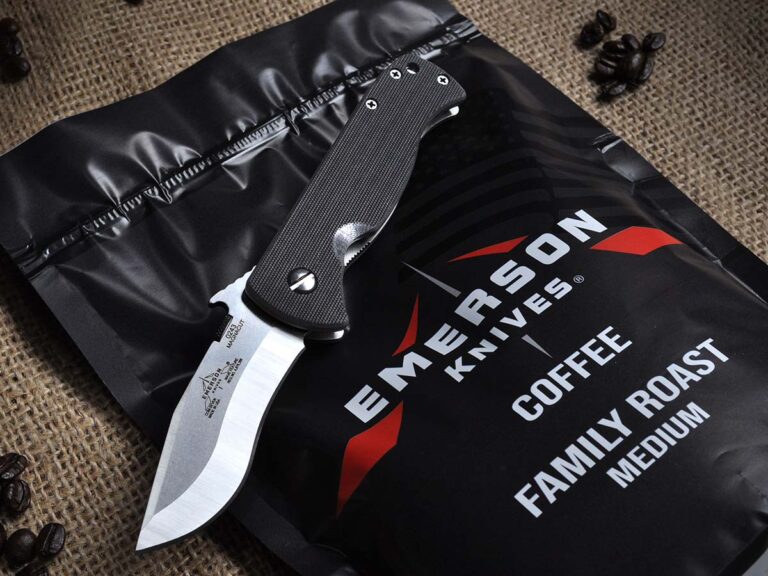
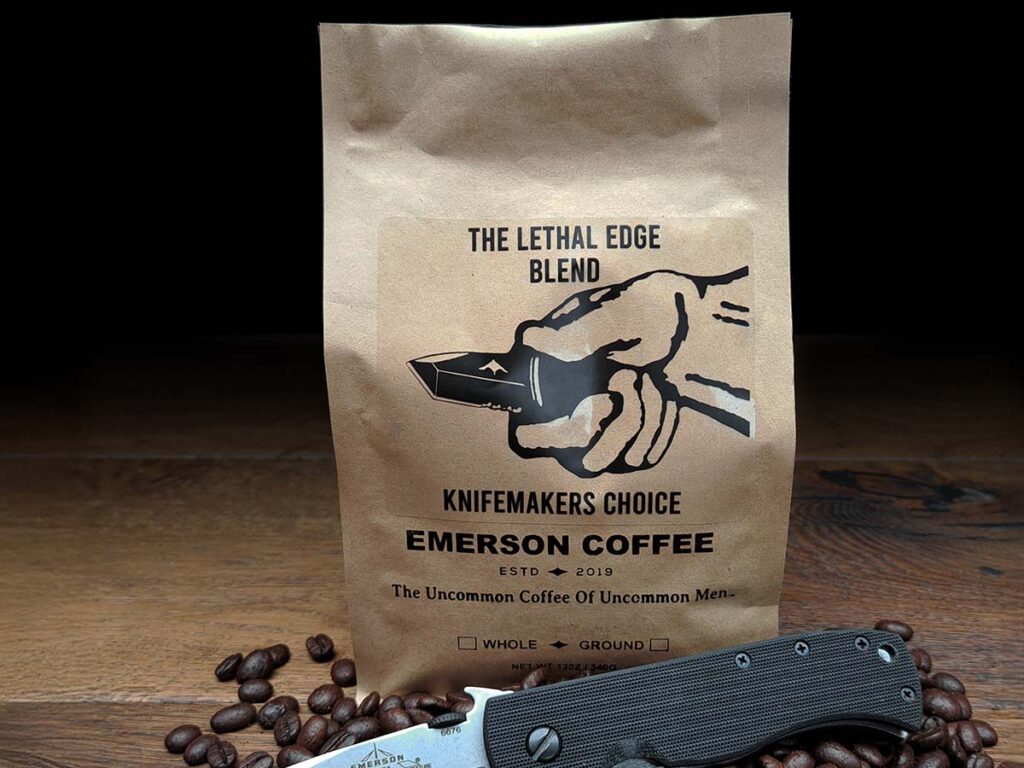
Emerson Coffee has three blends: Renegade Roast, which is the Emerson family’s favorite. Family Roast is the medium blend and Lethal Edge is the dark offering. The knife is the Emerson CQC-7BL-SF.
The future for Emerson and coffee may include some bundles of brew and whiskey or special flavorings for the coffee itself. Ernest sees flexibility and responsiveness always in the mix—a bourbon-flavored coffee when the time is right or a Christmas blend for the holiday season. Right now, the idea is simplicity with three blends: Renegade Roast is the Emerson family’s choice, Farmer’s Roast is the medium and Lethal Edge is the dark offering.
“It’s been a great thing to expand into coffee,” Ernest observed. “Our coffee is delicious, and people say they can’t drink any other coffee after trying it. Besides, we are a lifestyle brand and other than water more coffee is consumed around the world than any other beverage. I would bet that everybody who has ever bought a knife from us drinks coffee. So, if you buy or use knives, chances are you would drink our coffee and whiskey and wear our clothing.”
So, Ernest Emerson, the savvy businessman, finds another niche with coffee, one that complements the tried-and-true knife business and broadens the appeal of his entire spectrum of products. Seeing the big picture is expected to pay big dividends. Ernest points to recent history to back up his market perspective.
“No other knife entity on earth had a show in Las Vegas that revolved 100 percent around its brand like Emerson Knives,” Ernest concluded. “And the Usual Suspects Network was started for Emerson Knives. People tattoo our name on their body, and we say, ‘Show us your ink!’
Forbes Magazine said that there is only one other brand that loyal people tattoo on their bodies, and that is Harley-Davidson. The Forbes people actually told me that. We don’t know all the reasons for it, but again it is partly because people identify with who we are—American made by American workers with American grit and self-reliance. If people buy a $300 or $400 knife from us, then they buy other stuff that the company represents. Emerson truly is a lifestyle brand.”
And what says lifestyle better than a fine cup of brew?
Spartan Blades Tactical Beans
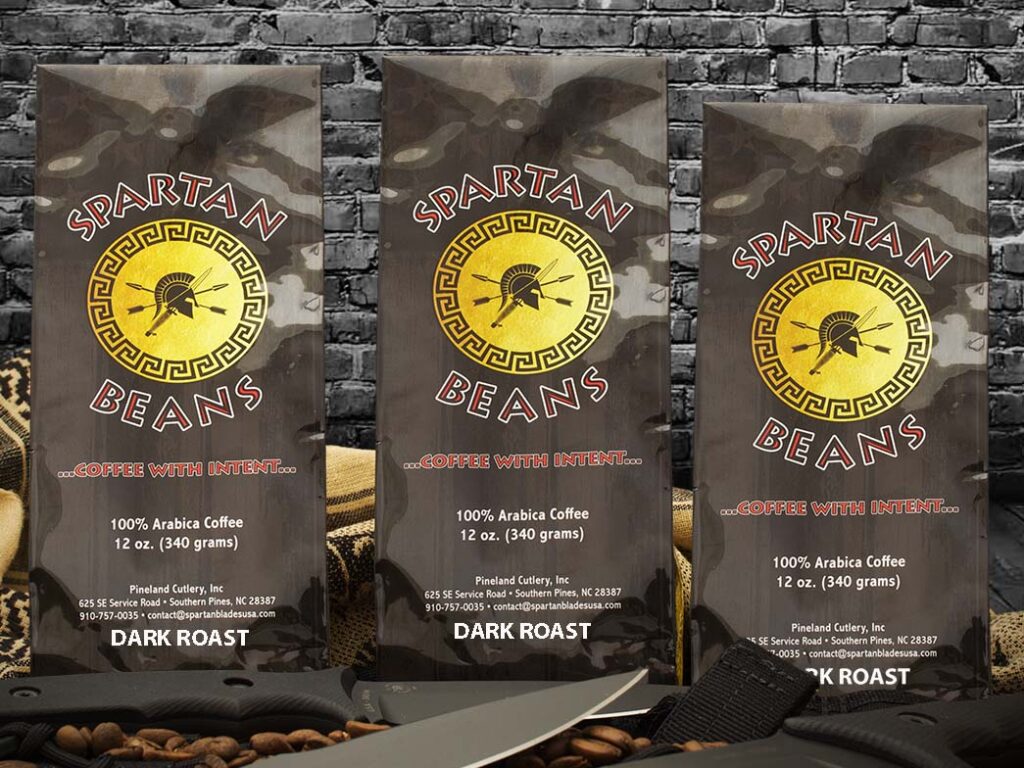
Spartan Beans is sold in 100 percent Arabica regular roast and dark roast, single or three pack. There is also a sturdy mug available to top off the experience.
At Spartan Blades, company co-founder Curtis Iovito says offering a special coffee collaboration with Black Rifle is just fun. Fresh-roasted Spartan Beans fuels the consumption of a couple of gallons of brew per day around the office. The concept started when Curtis was chatting with a good friend who owns a roaster and has evolved into offerings consisting of 100 percent Arabica beans.
“Spartan Beans has been around for about three years now,” Curtis remarked, “and it has gone surprisingly well. Sometimes we will throw in some of our coffee when we ship a knife order to a dealer. The roaster is right up the street, so the coffee is about as fresh as you can get. We may look at doing an auto-ship program as demand increases, too!”
Spartan Beans is offered in 100 percent Arabica regular roast and dark roast, single or three pack, and there is also a sturdy mug available to top off the entire experience.
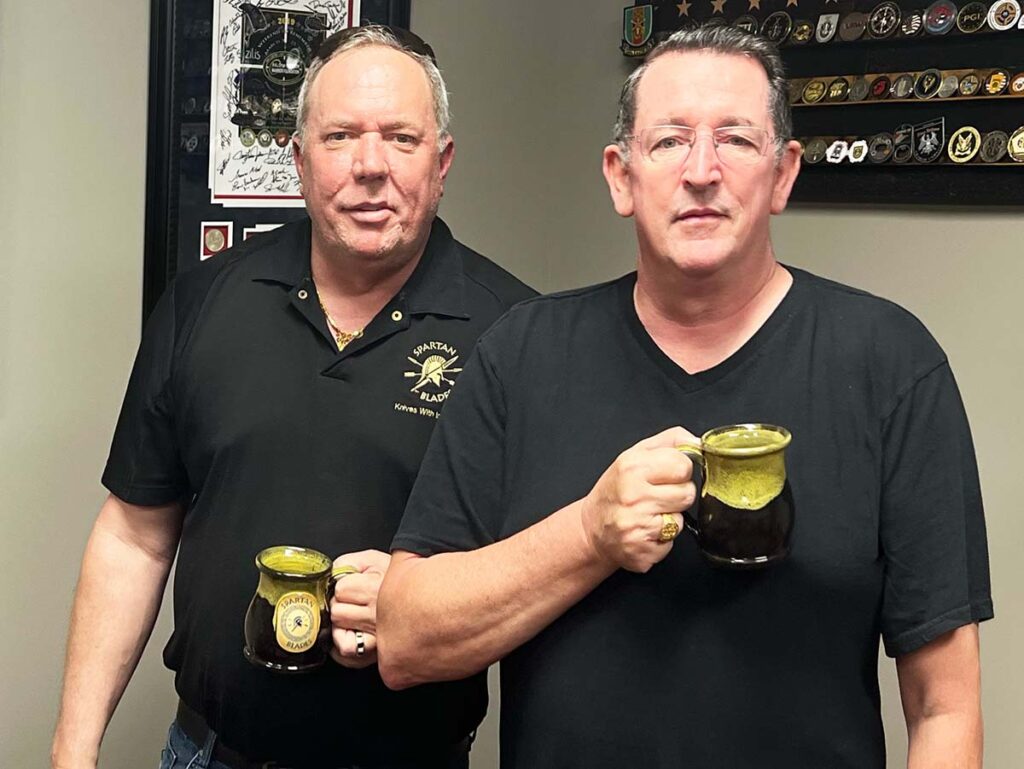
Spartan Blades co-founders Mark Carey (left) and Curtis Iovito (right) have traveled the globe for years, teaching counterterrorism and assisting with operations related to the use of knives in the field. When time permits, they search for the finest coffee from exotic locations for their Spartan Beans blends.
Through the years Curtis and fellow company co-founder Mark Carey have spent years traveling around the globe, teaching counter-terrorism and assisting with operations related to the use of knives in the field. And when time has permitted, they have searched for the finest cup of java available, whether in Malaysia or some other exotic location. The Spartan Beans blend includes the best from Colombia, Costa Rica, Africa and Sumatra.
“It’s like the United Nations of coffee, just more fun,” laughed Curtis.
Montana Knife Co. Backcountry Brew
Noted Josh Smith of Montana Knife Co., “Hot, steaming coffee while freezing on a hunt tastes so good!” Montana offers its MKC X Black Rifle Coffee Signature Dark Roast in whole bean and ground 12-ounce bags.
A more recent entry into the coffee arena, Montana Knife Co. (MKC) entered into a partnership with Black Rifle in the fall of 2024. The packaging tells customers, “Fresh from the forge, this dark roast offers notes of dark chocolate with an aroma of spice topped off with a smoky finish. American brewed and crafted to perfection.”
Josh Smith, founder, president and ABS master smith at MKC, has found the kinship between knives and coffee to be compelling.
“Over the years, I became friendly with the owners of Black Rifle Coffee Co.,” he said. “We share many of the same beliefs around love of our country and support of our active-duty soldiers and veterans. For the past few years, we have worked with them on some marketing-related promotions, but this was our first launch of coffee with Black Rifle.
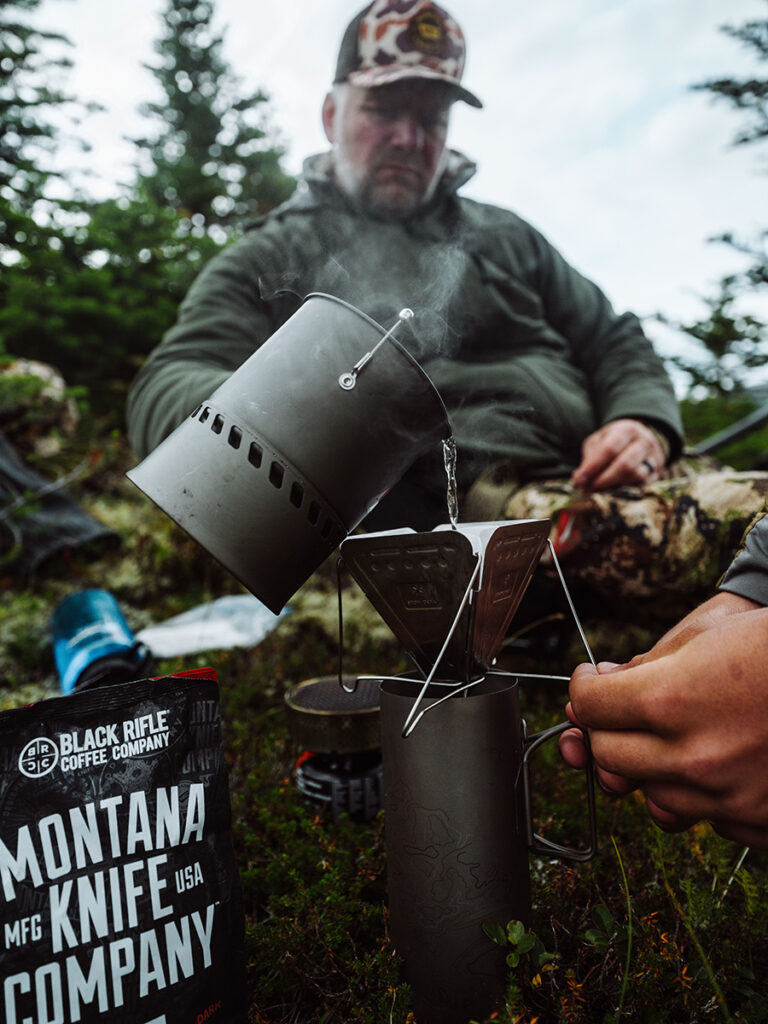
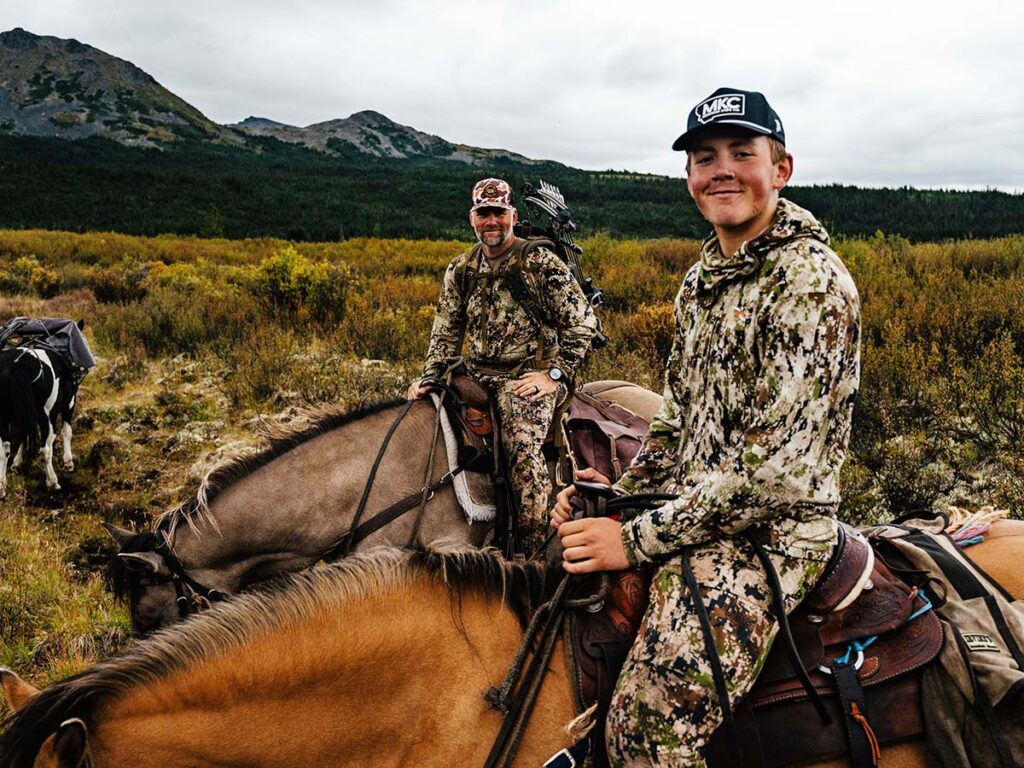
“Personally, I love coffee,” Josh emphasized. “For me, coffee and knives seem to be loved by so many blue-collar workers. Clearly, white-collar people drink coffee too. But I think back to my grandpa or my dad, and they always started the day with a cup of coffee before going off to work the ranch or in a backhoe. That same guy always had a knife in his pocket. The best place I’ve had Montana Knife Co. coffee is in northern British Columbia on a horseback moose hunt with my son [Hank]. For 10 days, it was rainy and cold. But each time we sat down to rest we made coffee with our jet boil. Hot, steaming coffee while freezing on a hunt tastes so good!”
Josh Smith (left) said the best place he’s had MKC coffee is in northern British Columbia on a horseback moose hunt with his son Hank (right). “For 10 days, it was rainy and cold,” he recalled. “But each time we sat down to rest we made coffee with our jet boil.”
Montana Knife Company offers its MKC X Black Rifle Coffee Signature Dark Roast in whole bean and ground 12-ounce bags.
For many consumers, the blend of the knife and the good cup of coffee just comes natural. Now, it’s easier than ever. Exploring the best in cutlery and coffee simply enriches the experience with both.
Get the ins and out of custom knife marketing and learn how to improve profits from a maker with years of experience slinging blades.
The most difficult part for crafters is turning themselves into efficient sales and marketing people when they’d rather be throwing pots, building furniture, making knives, blowing glass, sewing moccasins and parkas and the myriads of other craft items people make. Marketing and sales present two different issues; both are necessary for the business to succeed.
Yes, it is a business.
The minute you start working for yourself, full or part time, you no longer have the umbrella of the company you’ve worked for. Now all the financial decisions are on you. Steel or groceries? Both require you to show a profit to draw money from to maintain your materials supply, pay the electric and gas bills, and get your kid’s braces. Paying these expenses is up to your fledgling business. If you have other money coming in from your spouse working, etc., stay out of it. The business needs to support itself. Don’t cut back on the family dog’s food because you need some paint brushes. So, it’s up to you to make it work.
Custom Knife Marketing
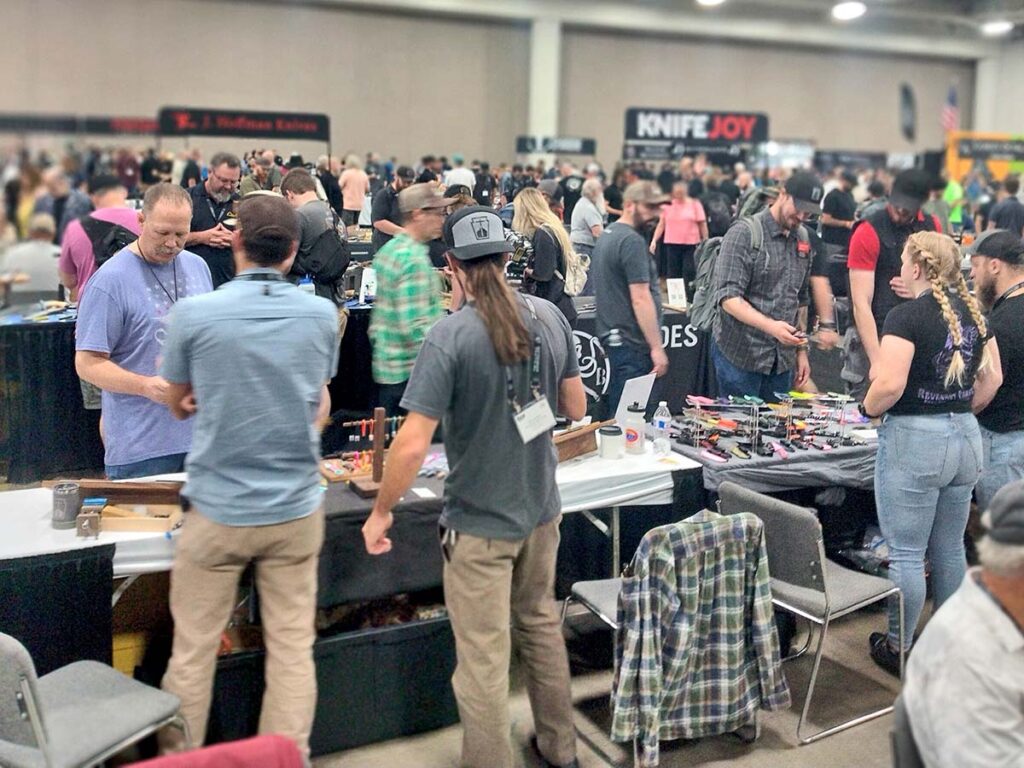
Shows are crucial to a knifemaker’s success but involve an investment of money. Table fees can easily be over a thousand dollars each. Add another table as the author often does for his huge pieces and things get expensive quick. Add a plane ticket to that, the cost of the hotel and food, and you’re close to $5,000 per show.
Marketing is about getting your name and your work out there for people to see. This is not an overnight happening. It is something you will need to pay attention to throughout your whole career if you want to maintain a public image that helps you sell.
The best venue for your work is shows, books and magazines specific to your genre.
Show promoters take out large ads in magazines. These usually list the names of the crafters participating. Name recognition is important, especially if you wish to draw collectors.
Advertising
For a show I did at the Hyatt Regency in Beverly Hills, the gallery that was representing four of us took out a full-page ad in the magazine that was putting on the show. Those magazines are kept and float around doctor and dental office waiting rooms for years. I had a small ad in Alaska Magazine that I was still getting inquiries from 10 years after the ad was pulled. I worked out the ad wasn’t bringing in enough money to pay for itself, even after 10 years.
Be aware of how much advertising costs you against how much real return you get from it. Maybe it’s better to save those monthly charges and put them toward doing actual shows where people have a face to put with a name.
Photos
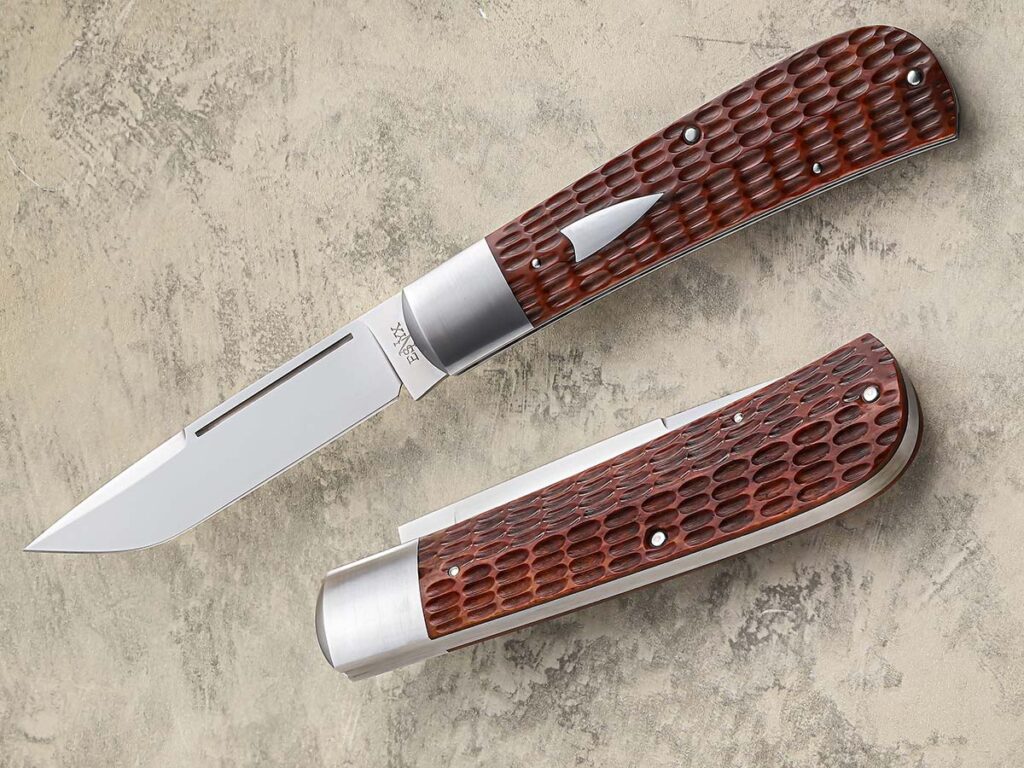
The rules for good photos are simple: it’s about your work, not the killer props it’s set up with. A top example of an uncluttered image is this one by Mitchell Cohen of an Evan Nicolaides slipjoint. (Cohen image)
Magazines don’t usually send out letters asking you to send them photos of your knives. You need to send them on your own. Don’t inundate them with dozens of photos. Make your choices very carefully. Check with the publication to see what form or format photos need to be in. These need to be high quality and/or high resolution for the magazines to print them or put them on electronic media.
If you’re not a photographer find someone who is, because these photos are the only way the public can see your work, other than shows. So be sure to have them taken or take them yourself. I have taken my own photos for the past 35 years. The rules for good photos are simple. Remember, it’s about your work, not the killer props it’s set up with.
Beware the dangers of Photoshop. The item has to look as good in real time as it does in the photo the magazine prints. If there are flaws, don’t let the customer be the one to point them out. (There is nothing wrong with selling something that isn’t up to your usual standard as long as you’re up front with the customer, and the selling price reflects these issues.)
Knife Shows
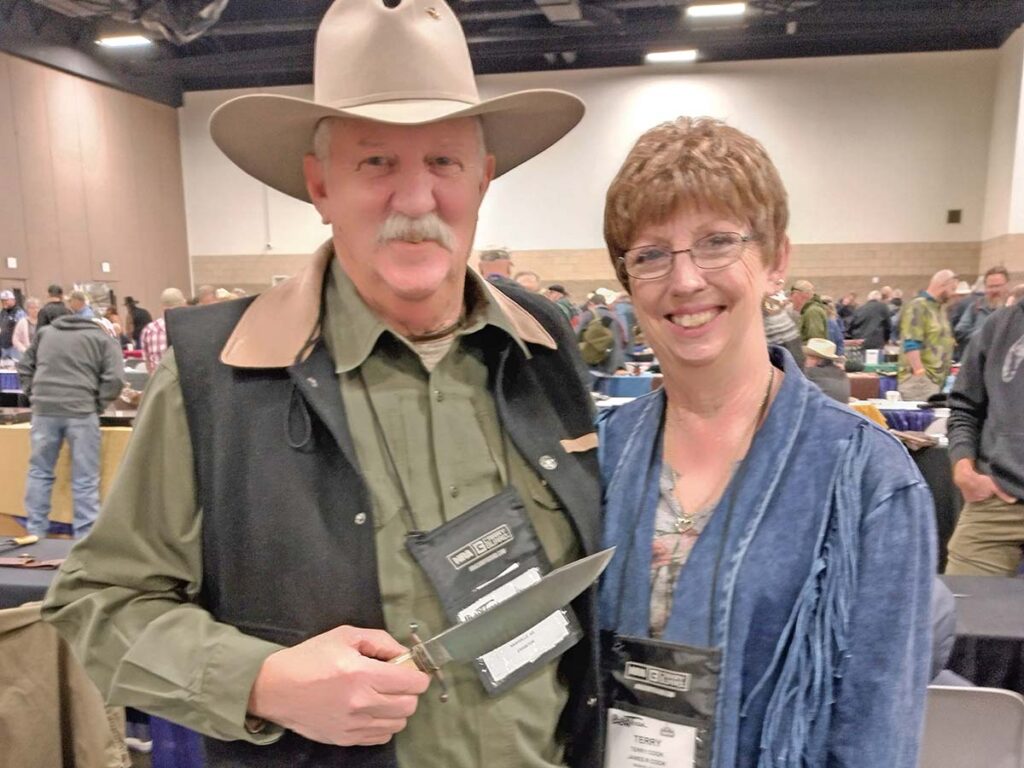
Your spouse is good to have with you at shows for both physical and emotional support. ABS master smith James Cook enjoyed the support of his wife Terry at a past BLADE Show Texas.
Shows can be good, just pick them wisely. If you can sell everything you need to sell by doing only local venues, that’s good. In Alaska I’d be fortunate to sell one piece a year after my prices went up to cover my costs in the late 1980s. I had to do shows to meet the people who would form my future collector base.
On average a well-known show is expensive for most people. Table fees can easily be over a thousand dollars each. Due to the sizes of some of my pieces, I always must have at least two tables because some of the bigger ones are too long to fit on one table. Add a plane ticket to that, the cost of the hotel and food, and you’re close to $5,000. If you’re doing a show in Manhattan, more if you plan on marketing in Europe or Asia.
I have done a lot of shows. I have never done one I could drive to. There’s always a plane ticket involved, the shortest flight being Anchorage, Alaska to Seattle. After that, things can get expensive. Overweight, oversize, extra, etc., those all have costs attached to them. I have traveled with as many as five large aluminum boxes (with snap-off wheels). It does no good if I reach my destination but don’t have anything to sell, so keeping my work safe in transit is very important.
This is a partial list of where I have attended shows, some annually for many years: Manhattan; Meadowlands; Atlanta; Las Vegas; Jersey City; Miami; Orlando; Dallas; St. Louis; Dallas; Denver; Nashville; Scottsdale; San Diego; Anaheim; Santa Barbara; Solvang; San Francisco; Seattle; Tokyo; Milan; Paris; Munich; Solingen; Helsinki; Belgium; and Memphis.
Every year I have attended four or five shows globally traveling from Anchorage. Now I need $20,000 just to cover basic show costs. Multiply that by three and that is where your profit starts. From the beginning I know I have to do at least $60,000 to cover the basic costs of being in business. It is closer to $7,500 in months when my materials are drawing a lot of money from my account.
The one common denominator in all shows is how tired you are when you arrive, and how tired you are when you finally get back home. There is a lot of stress in doing this. A mistake you shouldn’t make is thinking it can be used as a family holiday. This usually ends up with the kids up in your room with a movie menu for the TV, and your spouse right next to you waiting for the sales to show up. It’s better to leave the children at home.
Rolling With The Market
Ron Lake once said, “Some people keep making the same weak design every year, they just make it better. In the end it will always be a weak design.” Avoid this pitfall by looking at your work realistically. Just because it is bright and shiny doesn’t make it craft or art.
Your spouse is good to have with you for both physical and emotional support. When things aren’t selling because someone just plugged the Suez Canal for the umpteenth time, and that’s 10,000 miles away from you, there is no snappy comeback. When 9/11 took place it killed the New York Show, which was the most profitable show I attended annually. You could roll bowling balls down the aisles the following year. You have just been had by chance and circumstance, two things you have no control over as a speculation-oriented crafter. (A speculation crafter—that’s me—is one who builds something hoping to find a customer when it is finished.)
Moving Forward
If it isn’t selling, make it better next time. The customer is out there, you just need to get this little beauty in front of them. Long-time knife artisan and BLADE Magazine Cutlery Hall-of-Fame® member Ron Lake once said, “Some people keep making the same weak design every year, they just make it better. In the end it will always be a weak design.” Avoid this pitfall by looking at your work realistically. Just because it is bright and shiny doesn’t make it craft or art. The quality of the work and the attendant aesthetics are what customers look to before digging in their pockets.