

Hunting Knife Sets: Hands-On And Tested

The latest hunting knife combos will exalt your outdoor experience.

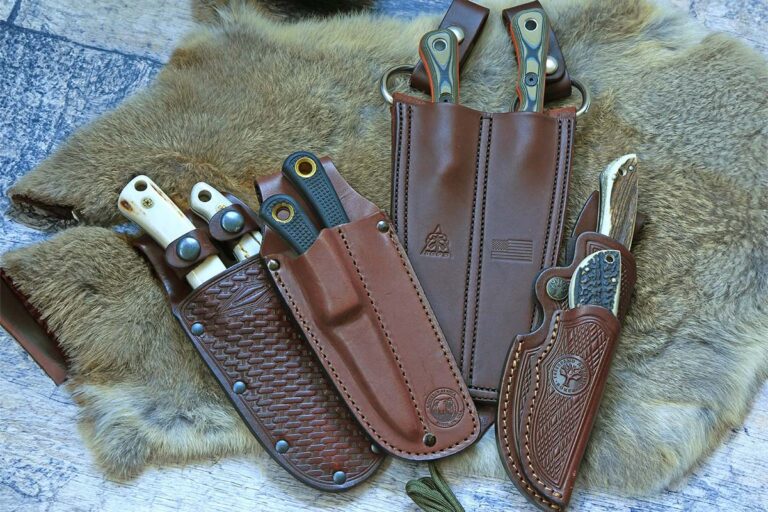
When choosing a hunting set of cutting tools, consider the quality of the tools and how they complement each other. Before you do that, though, be sure the set is properly outfitted.

A good set should include a gut hook, knife, saw and small hatchet for field dressing and processing game. Each tool serves a specific purpose:

  • Gut hook: makes opening the animal’s abdomen easier,
  • Sharp knife: essential for skinning and butchering
  • Saw: helps cut through bone or branches
  • Small hatchet: helps split bone or cut wood.

Consider durability and ease of use, as well as how the tools can be packed for transport.

Gut Hook Knives

A gut hook hunting knife serves multiple purposes in the field. Its primary function is to assist in the field dressing process by opening the animal’s abdomen with minimal damage to the internal organs. The hook feature helps prevent puncturing the organs while skinning and reduces the risk of cutting into the stomach or intestines. A gut hook can be used for cutting through tough connective tissues, tendons and cartilage, too. Its precision and specialized design make it an essential tool for hunters, allowing for efficient and safe processing of game in the field. It also works great for hooking under a bail and lifting hot pots and other items off a camp stove, etc.

Caping Knives

A caping knife in a hunting set serves various purposes, making it an essential tool for hunters. Its precision and maneuverability render it ideal for delicate tasks such as skinning around trophy areas, making intricate cuts, and separating hide from the meat. Also known as a caper, it is great for creating shoulder mounts or European mounts of game animals, preserving the hide for taxidermy purposes. The fine point and sharp blade allow for detailed, careful work without damaging the hide or underlying tissue. A caper is a versatile tool that adds value to any hunting tool set, especially for hunters looking to preserve trophies.

Boker Arbolito Guides Combo

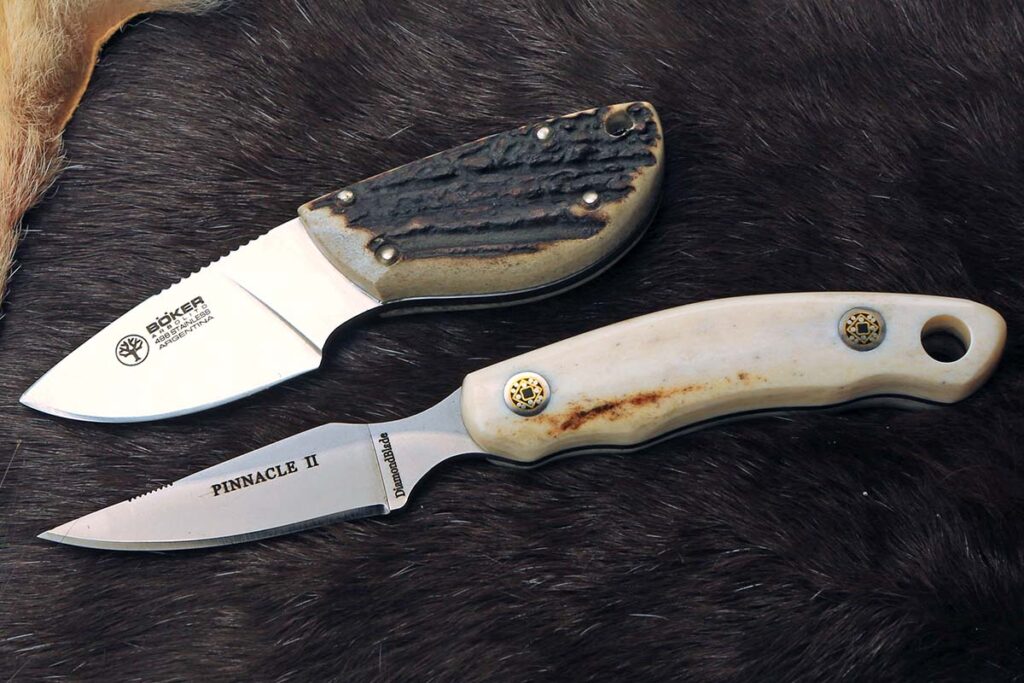
Boker 2.25-inch drop point and Diamond Blade Knives Pinnacle
The Boker 2.25-inch drop point and Diamond Blade Knives Pinnacle II are both classic caper/utility tools featuring handsome stag scales.
The Boker Arbolito Manufactory in Buenos Aires, Argentina, is known for crafting high-quality knives using premium materials, with an emphasis on hunting and outdoor models featuring handles of wood and stag. These traditional knives are designed to cater to a variety of needs and tasks, whether for professional use, sports, everyday carry or collectors with a keen interest.

A notable offering is the Arbolito Guides Combo set in satin blades and stag handles. It includes a 4.25-inch gut hook skinning blade and a 2.25-inch drop point hunter. The gut hook prevents accidental punctures during skinning and is designed with a large forward finger choil for enhanced control. The little drop point is suitable for small, detailed cutting tasks, providing precision cuts. It is an excellent utility blade for cutting cord, fishing line and packaging, and it can act as a small skinner. Both knives sport stag handles for a secure grip and a rustic appearance.

The set includes a brown leather piggyback belt sheath for easy carry. The gut hook pouch boasts a solid snap to ensure retention. The small drop point comes with a simple drop-in friction-fit pouch, which is easy to access and is held on the main sheath via a rivet. This set presents function and style for processing your next trophy animal or other outdoor tasks.

Arbolito Guides Combo Set Specs
Blade Lengths: Gut hook skinner 4.25”, drop point 2.25”
Blade Steel: Bohler N695 stainless
Blade Grinds: Skinner hollow, drop point flat
Blades @ Thickest: .125”
Blade Finish: Satin
Handle Material: White/brown stag
Overall Lengths: Skinner 8.6”, drop point 4.8”
Sheath: Leather piggyback
Country of Origin: Argentina
MSRP: $291 at press-time exchange rate

Knives of Alaska Caribou Combo

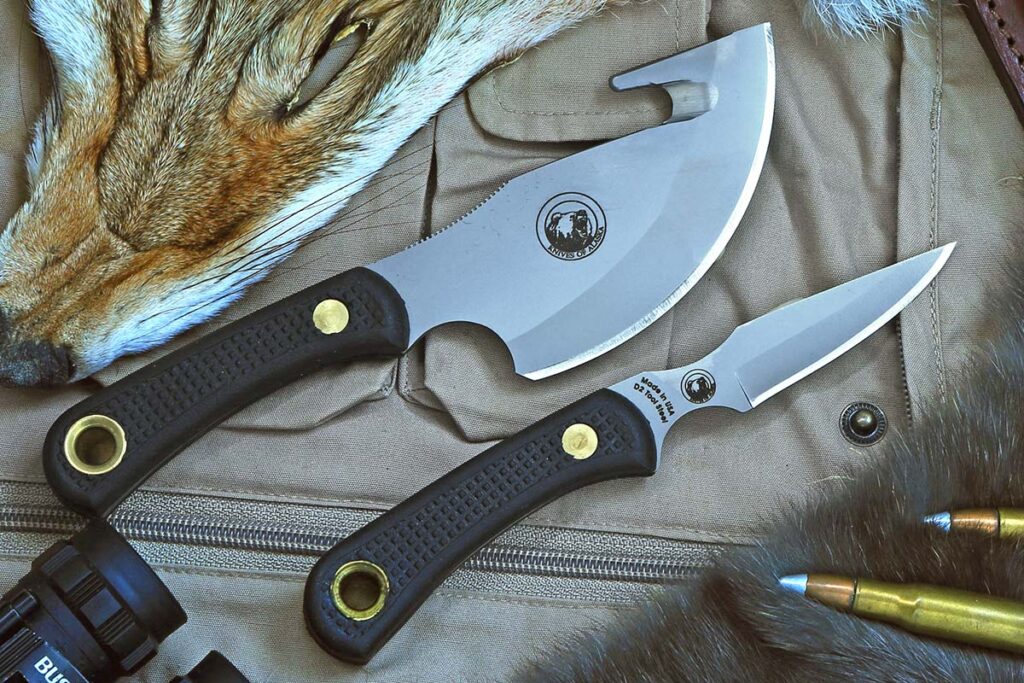
KOA Caribou Combo work well together
The two knives of the KOA Caribou Combo work well together. The skinner has a deep belly for slicing and enough weight to be a light cleaver. The Cub Bear is a tremendous caper that pulls triple duty as a fine carver and paring knife.

The Knives of Alaska Caribou Combo offers a slimmer alternative to the company’s Light Hunter Combo. The Caribou Combo features the same gut hook skinner design as the Light Hunter Combo but with a thinner blade for a sharper, longer-lasting cutting edge. The Caribou is ideal for those seeking a complete field dressing kit for whitetail deer and other medium-sized game.

The Caribou Combo includes two knives—a gut hook skinner and Cub Bear—in a side-by-side sheath. The skinner is a full-tang knife 7.5 inches overall. It has a .1-inch-thick D2 tool steel blade and a 4.25-inch cutting edge. It features thumb notches and a large-capacity gut hook.

The Cub Bear is a fine-detail-work knife of D2 with a blade 3/32 inch thick at the thickest. Both models feature black SureGrip handles with large, lined lanyard holes. For hunting deer, sheep and mountain goats, the Caribou Combo is an excellent choice.

The two knives work perfectly together. The skinner has a deep belly for slicing and enough weight to be a light cleaver. Besides the obvious skinning qualities and gut hook that opens the abdomen safely, it’s an excellent butcher knife. Using it to slice and chop up meat chunks for a rustic, slow-cooked meal was a breeze. The Cub Bear, meanwhile, is a tremendous caper that pulls triple duty as a fine carver and paring knife.

In my humble opinion, of the test group this set was by far the best buy for the money.

Caribou Combo Specs
Blade Lengths: Gut hook skinner 3.5”, Cub Bear 2.75”
Blade Material: D2 tool steel
Blade Grind: Saber
Blades @ Thickest: Skinner .1”, Cub Bear .09”
Blade Finish: Bead blast
Handle Material: Black SureGrip
Overall Lengths: Skinner 7.5”, Cub Bear 6.75”
Sheath: Brown leather double pouch
Country of Origin: USA
MSRP: $189.99

Diamond Blade Knives Summit Combo
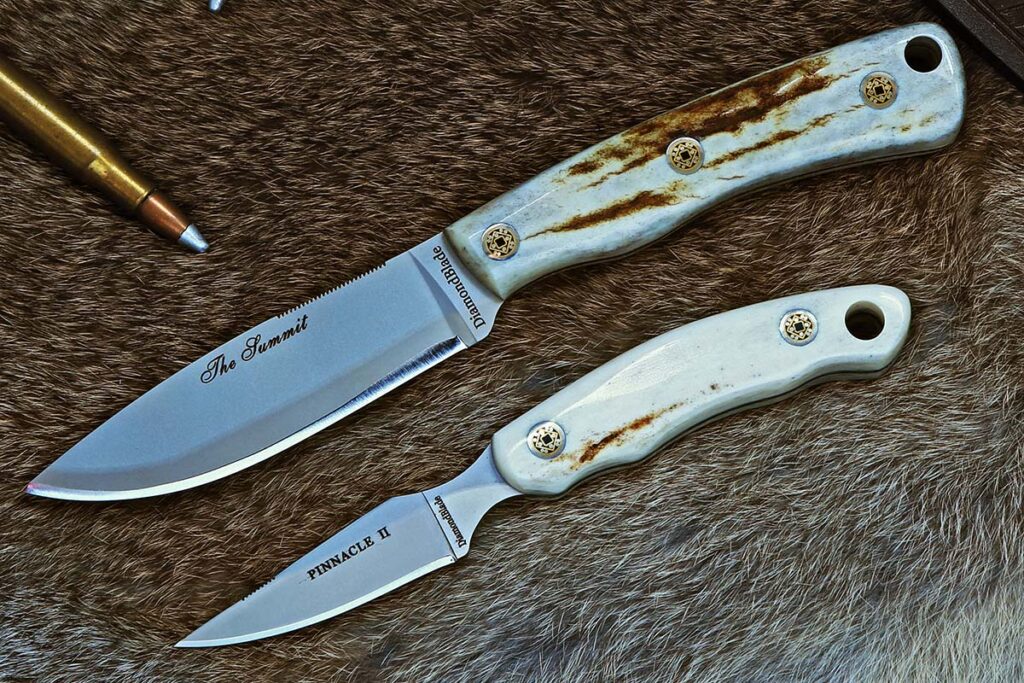
Summit has a long skinning radius, making it proficient at swiftly and effectively breaking down game. A scalpel-like knife, the Pinnacle II is ideal for caping and initial incisions
The Summit has a long skinning radius, making it proficient at swiftly and effectively breaking down game. A scalpel-like knife, the Pinnacle II is ideal for caping and initial incisions, boasting finger gimping and cutouts for optimal leverage.

The Summit Combo from Diamond Blade Knives is a pro hunter’s set meticulously crafted with the benefit of decades of hunting and field dressing expertise. It includes the Summit drop point and the Pinnacle II, both highly efficient field tools.
The Summit has a long skinning radius, making it the perfect tool for swiftly and effectively breaking down game. A scalpel-like knife, the Pinnacle II is ideal for caping and initial incisions, sporting finger gimping and cutouts for optimal leverage.

Designed for professional hunters, this versatile kit provides reliable and efficient tools for most aspects of field dressing. The set includes an American-made dual leather sheath with a Kydex insert for secure retention and easy access while preventing damage to the knives.

The substantial Summit proved ideal for effortlessly carving meat for a hearty stew or canning. The large handle gave ample space for various grips or when wearing gloves. The Pinnacle II did an excellent job on small detailed work, especially slicing herbs and peeling garlic.

The double sheath was my favorite of the test bunch because it held the knives perfectly in place, even with the snaps open, due to the Kydex insert. The attractive outer leather provides the best of both worlds.

Knives Summit Combo Specs
Blade Lengths: Pinnacle II Scalpel 2.55”, Summit Drop Point 3.75”
Blade Material: Friction Forged® D2 tool steel
Blade Grind: Flat
Blades @ Thickest: Pinnacle II Scalpel .09”, Summit Drop Point .125”
Blade Finish: Satin
Handle Material: Stag
Overall Lengths: Pinnacle II Scalpel 7”, Summit Drop Point 8.75”
Sheath: Leather double model w/Kydex insert
Country of Origin: USA
MSRP: $799

TOPS Knives Muley Skinner/Saw Combo

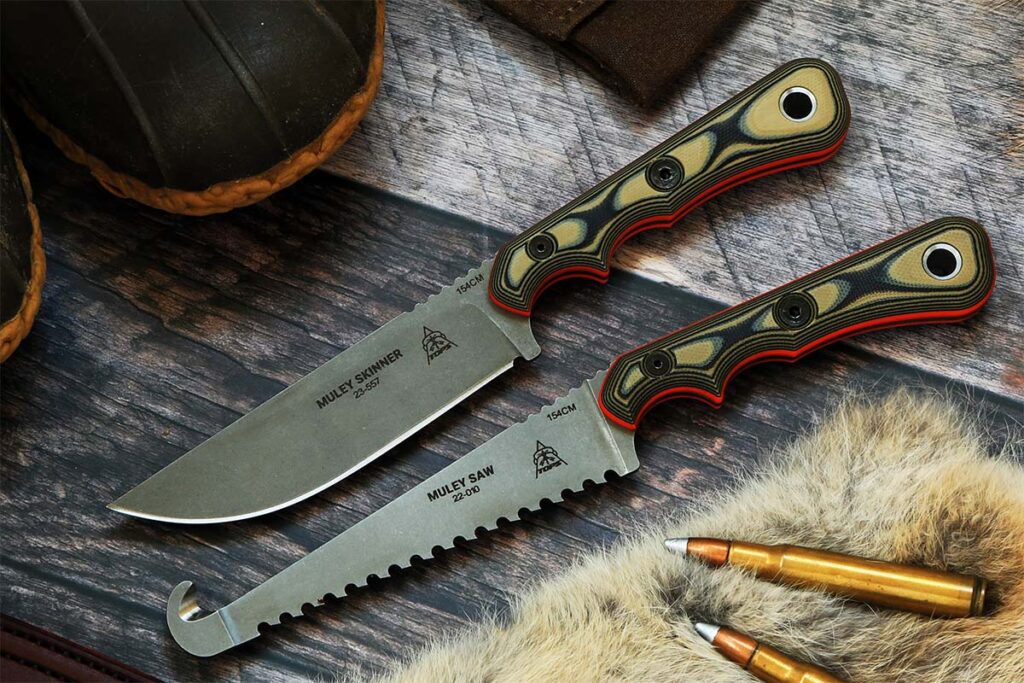
TOPS Knives Muley Skinner
The long, deep-bellied blade of the TOPS Knives Muley Skinner is well-suited for skinning game and performing campsite tasks such as prepping, kindling and food processing. The Muley Saw is a bone saw tailored for efficient game processing and can saw wood in emergencies.

Winner of Best Hunting Knife at BLADE Show West 2023, the TOPS Knives Muley Skinner/Saw Combo is a game changer. The Muley Skinner is a solid fixed blade for outdoor jobs. The long, deep-bellied blade is well-suited for skinning game and performing campsite tasks such as prepping, kindling and food processing. The Muley Saw is a bone saw tailored for efficient game processing and can serve as a wood saw in emergencies. The saw blade sports a razor-sharp gut hook for added function.

Due to in no small part to its flat grind, the skinner excelled at slicing meat. It also deboned chicken thighs, as the belly fit nicely between the joints while roll cutting. The robust build instills confidence for using the knife for baton cuts. The saw was aggressive and did equally well on bone as on branches. It was the most diverse tool of all those in the test sets.

Muley Combo Specs
Designer: Leo Espinoza
Blade Lengths: Skinner 4.5”, Saw 4.25”
Blade Steel: 154CM stainless
Rockwell Hardness: 58-60 HRC, cryo-treated
Blade Grind: Flat
Blades @ Thickest: .13”
Blade Finish: Tumble
Handle Material: Tan/Black G-10 w/orange G-10 liners
Overall Lengths: Skinner 8.75”, Saw 9”
Sheath: Brown leather double model
Knife to know: Winner of Best Hunting Knife at BLADE Show West 2023
Country of Origin: USA
MSRP: $550

Final Cut

The reviewed sets ensure you have everything you need for field dressing and processing game efficiently. A good hunting knife set can make the process quicker and more manageable, especially when dealing with larger game. Lastly, having a set of dedicated hunting tools helps preserve the sharpness and integrity of your everyday carry knife, as it won’t be subjected to the same level of wear and tear that field dressing often involves.

Check Out More Outdoor Knives And Tools:

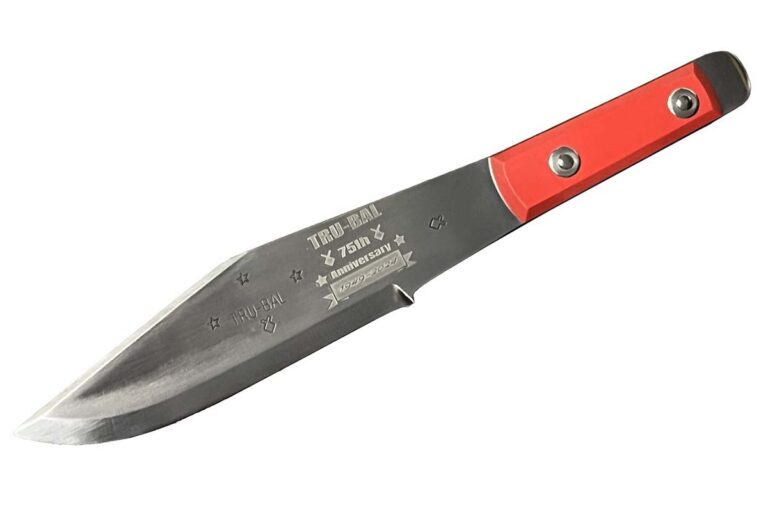
Tru Balance Knife Co.: 75 Years And Still On Target

Born as a side hustle, the legendary throwing knife company continues to hit the mark.

Small businesses that have operated continuously for 75 years are a testament to the quality of their products and the dedication of their founders and owners. Such businesses have stood the test of time and have been able to adapt to changing market conditions and consumer preferences. Knifemaking is no different.

In 1949, Harry K. McEvoy, who would soon be considered the father of modern-day knife throwing and one day be inducted into the BLADE Magazine Cutlery Hall of Fame®, was a long-time resident of Grand Rapids, Michigan. He worked for the Meyercord Co. as a traveling district salesman selling decals to wallpaper and decorating stores. In his spare time, Harry spent hours in his shop designing and crafting knives. His passion for knifemaking was fueled by his ongoing search for the perfect throwing knife.

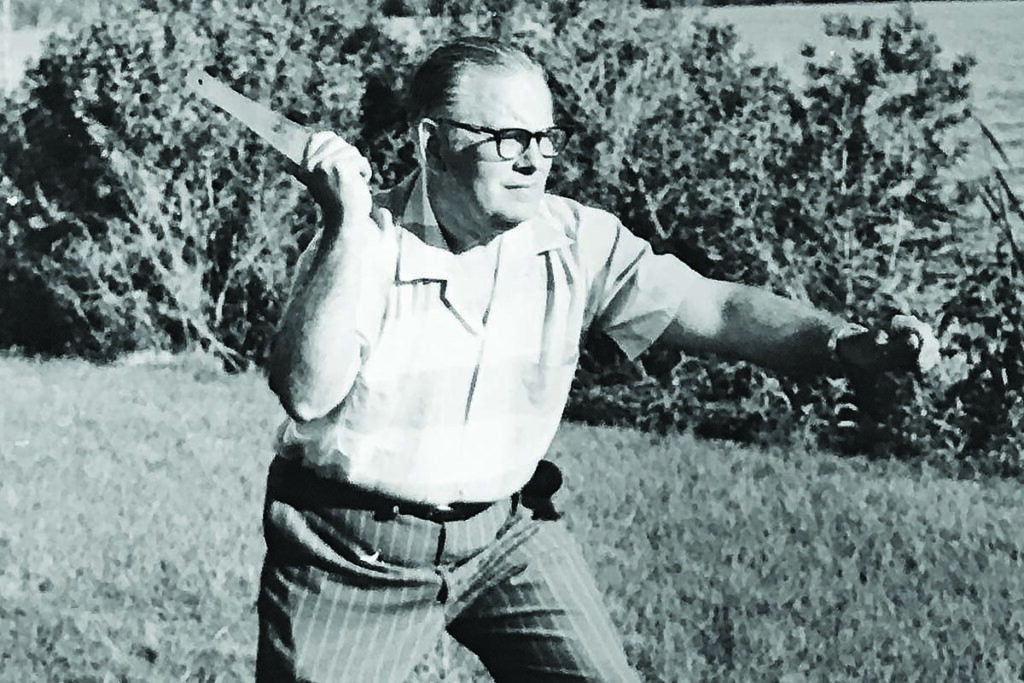
Harry McEvoy shows the form and throws one of the Tru Balance knives
BLADE Magazine Cutlery Hall-of-Fame® member Harry McEvoy shows the form and throws one of the Tru Balance knives that helped revolutionize knife throwing.

Knife throwing as a modern sport began shortly after World War II and centered around a few individuals who threw knives at stumps or targets in their backyards. The knives they used consisted of very primitive homemade throwers that were often much smaller than the ones you see today. Harry began making his own knives around this time because he was unable to find any commercial knives suitable for throwing.

While he practiced throwing knives in his backyard, neighbors would gather to watch. Intrigued by how well his throwers performed, the onlookers were compelled to discover the source of his knives. When he responded that he, in fact, had made them himself, they asked him to make knives for them and others who were interested, and thus was born the Tru Balance Knife Co.

Randall & Scagel’s Influence

Bobby Branton and Stephen McEvoy
The author (left) bought Tru Balance Knife Co. from Stephen McEvoy (right) in 2017. The business continued to grow but the author had to sell in 2021 due to physical issues.

Around 1951, Harry learned of a knifemaker from Orlando, Florida, and another future Cutlery Hall-of-Famer by the name of W. D. “Bo” Randall. As a fledgling hobby knifemaker, Harry decided to write to Bo about his knives and the two became fast friends, exchanging letters regularly.

McEvoy soon found out that Bo had an interest in throwing knives and was surprised to learn that a throwing knife could even be found in Bo’s catalog. As a father with young children, money was scarce for Harry, so he convinced Bo to trade a Randall thrower for a couple of McEvoy throwers. Generous and willing to help a fellow knifemaker, Bo was happy to oblige.

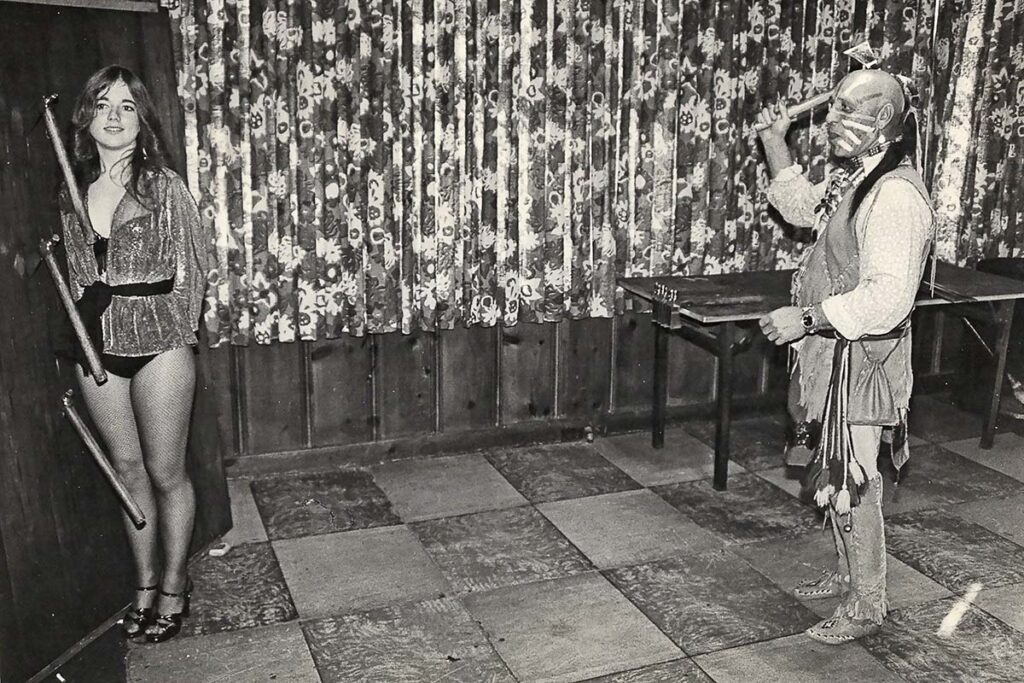
George E. “Skeeter” Vaughan
George E. “Skeeter” Vaughan made the most fantastic knife throw in recorded history, taking out a German sentry with a modified bayonet from 87 feet during World War II. Skeeter was also an outstanding tomahawk thrower, showing his skills here with the help of a “target girl.”

Around 1952, Bo asked Harry if he would visit yet another future Cutlery Hall-of-Famer, William Scagel, who lived very close to McEvoy in Fruitport, Michigan, and buy some of Scagel’s knives for his collection. McEvoy was more than happy to do his friend a favor. Harry would eventually befriend the reclusive Scagel, too, and on his visits watched him make knives and bought knives for himself and Bo. 

As their friendship grew, Harry would visit Bo at the Randall summer home in Michigan and would even travel to the Randall home in Orlando, Florida. The two became quite close and eventually, Bo decided to feature two Tru Balance Models in the Randall catalog. The Model #1 Professional Thrower and the now world-famous Bowie-Axe Throwing Knife made their catalog debut in early 1960, which resulted in a spike in sales for Harry.

Harry McEvoy grinding a knife
In his spare time, Harry McEvoy spent hours in his shop designing and crafting knives.

Bo thought so much of Harry’s work that he gifted one of Harry’s Tru Balance Bowie Axe throwers to astronaut Gordon Cooper. He also took Harry’s popular Bowie Axe design and modified it into a large machete-style knife and submitted it to NASA in the 1960s when NASA was looking for a machete for astronauts to carry on the Gemini missions. Unfortunately for Harry, NASA required a much thinner design and eventually chose another manufacturer, Case Knives, to make the machete.

AKTA 

Meanwhile, Tru Balance soon became the go-to company for anyone who wanted a high-quality professional throwing knife. Tru Balance throwing knives became highly sought after by soldiers heading to Vietnam, professional knife throwers and knife collectors around the world.

In 1971, Harry started the American Knife Throwers Alliance (AKTA) to aid and offer guidelines to individuals and groups who wished to organize competitively in their local areas. Harry became very close friends with professional knife throwers like Kenneth Pierce, aka Che Che Whitecloud, Paul LaCross and George E. “Skeeter” Vaughan, who holds the distinction of making the most fantastic knife throw in recorded history. Considering the circumstances surrounding his legendary feat of taking out a German sentry during World War II with a modified bayonet from 87 feet, he most likely will maintain his grasp on that honor for a long time to come. “The Saga of Skeeter Vaughan” is told by McEvoy in the April 1982 BLADE®.

Harry went on to author such books as Scagel: The Man and His Knives; Archery Today; Crusader in the Wilderness; Knife Throwing: A Practical Guide; Knife and Tomahawk Throwing: The Art Of The Experts; For Knives Lovers Only; and co-authored Knife Throwing a Modern Sport, with Charles Gruzanski. McEvoy also held two design patents and trademarks for his knife designs. He also authored other articles for BLADE, as well as for Knife World (today’s KNIFE), Muzzleloading Magazine, Fighting Knives Magazine and many more.

McEvoy Legacy

In 1991, McEvoy was inducted into the Cutlery Hall of Fame for his exceptional contributions to the world of knives. It was around this time McEvoy’s son Stephen had taken an interest in his father’s knives and had begun learning more about the business. Stephen eventually took over the company in 1993 following Harry’s passing from an illness.

Harry McEvoy surrounded by thrown knives
When McEvoy—here mugging during a lighter moment—practiced throwing knives in his yard, neighbors would gather to watch. The onlookers showed interest in the knives, and Tru Balance Knife Co. was born.

This writer, a friend of Harry’s and a fellow knifemaker, reached out to Stephen via telephone to offer condolences and advice. We chatted regularly and, over time, as we shared stories, we developed a friendship. Our phone conversations led to Stephen’s yearly visits to my home. During one of those visits, I asked him if I could take over the defunct American Knife Throwers Alliance (AKTA) and Stephen agreed.

Stephen would continue to run Tru Balance Knife Co. the same way his father ran it for many years. In 2015, after retiring from his job as an executive at a major insurance company, Stephen began speaking to me about slowing down and retiring from making knives. Already a full-time knifemaker with my own line of throwing knives, I envisioned bringing Tru Balance Knife Co. into the 21st century by selling Tru Balance knives on its own website and promoting the business via social media.

Skeeter Vaughan’s Cherokee Indian name is Grey Otter.
Skeeter Vaughan’s Cherokee Indian name is Grey Otter. He served as a chief of the Federated Indian Tribes for a number of years.

With the newfound success spearheaded by the new business plan, Stephen finally decided to fully retire from the business. A deal was brokered and I bought Tru Balance Knife Company in 2017, moving it to my hometown of Awendaw, South Carolina. The business would continue to grow but, not long thereafter, I developed some knee issues and struggled to keep up with the company’s new customer demands. Unable to find a qualified apprentice to help me fill orders, I decided to sell the business in 2021.

Tru Balance Heads Home

Though several companies made offers to buy the company, I decided I wanted to hand-pick my successor to ensure the legacy of the Tru Balance Knife Co. and that the knives would continue to be made in the USA. As the search for the right successor was underway, a mutual friend brokered a connection between me and two brothers from Michigan who had an interest in the business and the revitalization of the AKTA. The brothers made knives as a hobby and also happened to be skilled knife throwers.

Bill and James Bednarick turned out to be the perfect choice to preserve the company’s legacy and bring it back to its original home in Michigan. With their keen eye for detail, quality and passion for knife throwing, their dedication has ensured that the Tru Balance Knife Co. has lived on to see its 75th anniversary in 2024.

Iron Sapper Forge Carver Review: Small But Mighty

Vincent Silva’s Carver packs healthy cutting power in a compact package.

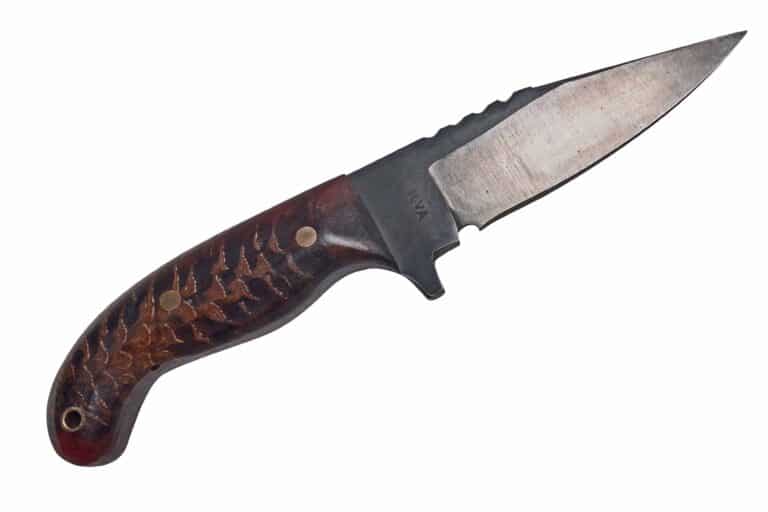
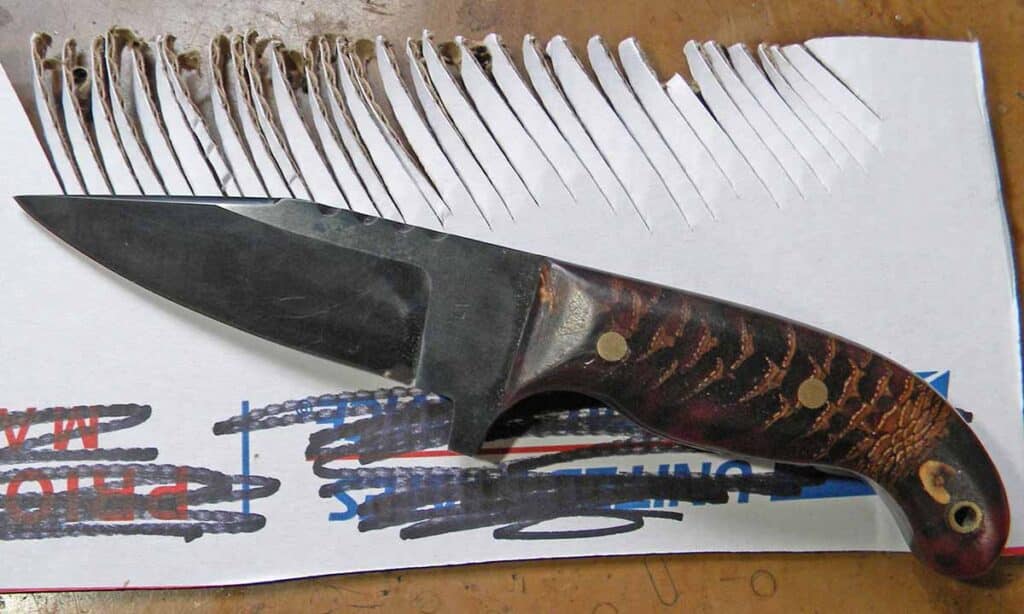
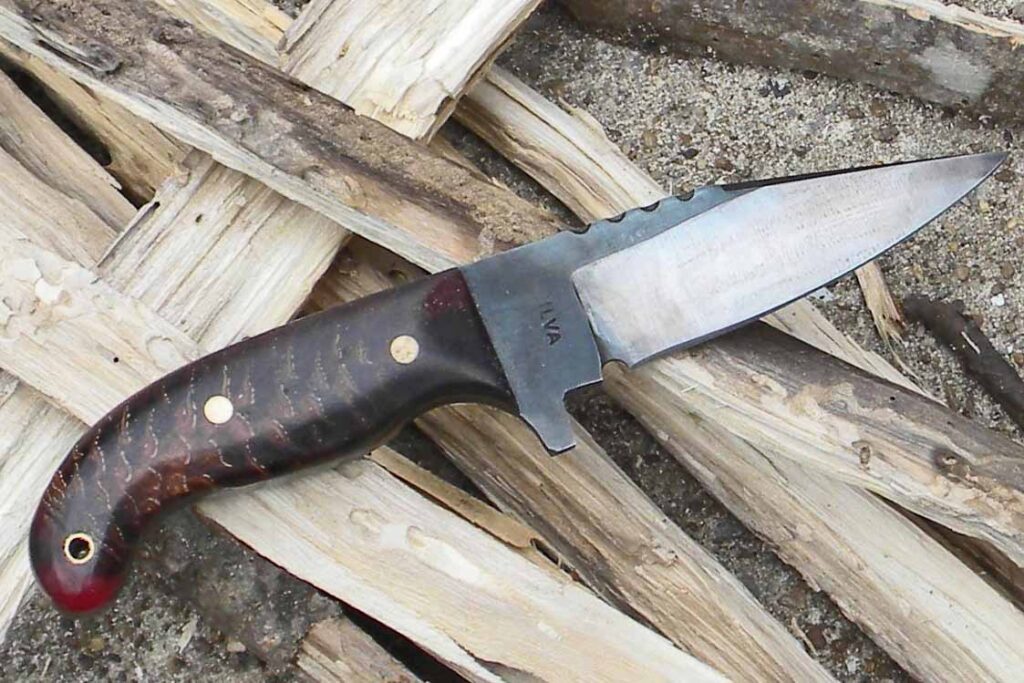
After Vincent Silva retired from the military, he came across HealingFlamesForge.org, a Tennessee-based non-profit blacksmith shop for veterans. He took to the hammers and hot steel quickly, which progressed into making knives. Creating a functional tool from a piece of steel became his goal, and the Carver is one result. It begged to be tested and I was only too happy to oblige.

Carver Light-Duty Cutting

For the first edge test, the knife aggressively sliced into graphing paper even though the paper was slightly limp from the humidity. I applied smooth downward pressure and it cut cleanly. This is a well-balanced little blade.

Full-length push cuts went swiftly through the cardboard. The handle aided in blade control while keeping cuts as even as possible.

Single-walled cardboard supplied the next challenge. Full-length push cuts went quickly. It was hard to keep my fingers out of the cutting zone if I went too fast. The handle aided in control of the blade while keeping cuts as even as possible (in the cardboard, not my finger). I could hear a small crunch sound as the edge parted the material.

Carver Medium-Duty Cutting

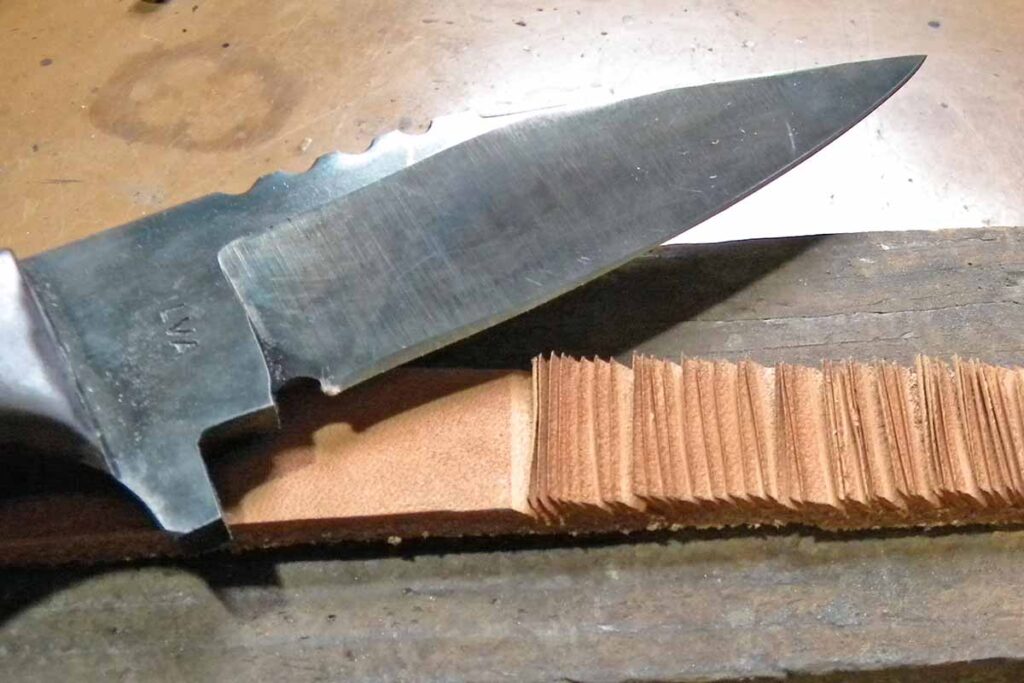
Next up: 8-ounce leather. The Carver zipped through it swiftly. The blade’s edge geometry is spot on for working leather. I used a push cut while skiving the material.

The Carver cuts leather
The Carver zipped through 8-ounce leather very quickly. The blade’s edge geometry is spot on for working leather. The author used a push cut while skiving the material.

I like to be ahead of the game during camping weather, so a good supply of fire sticks is always a must. The Carver produced nice, feathered curlicues in some pine. The handle shape made it easy to control the depth of the feathering. All cuts came out smooth with just enough curl.

Carver Heavy-Duty Cutting

The Carver might be on the small side but it can handle such large jobs as splitting wood. Using a dead-blow hammer, I repeatedly pounded the blade through seasoned hackberry. A nice pile of kindling was the result. The handle was comfortable throughout and the blade was just big enough to beat on the tip to split the wood completely. There was no damage to the blued finish or the edge. Nicely done, Vincent.

It was time for my favorite cutting medium, natural rope—in this case, half-inch sisal on a cutting board. The Carver crunched its way to 192 cuts before the edge started to slide. The handle created no hot spots. The gimping was a tad sharp for my thumb but great for ferro-rod use. This is one cutting little knife!

The Iron Sapper Forge Carver splits wood
The knife is small but can handle such larger jobs as splitting wood. Using a dead-blow hammer, the author repeatedly pounded the blade through seasoned hackberry for a nice kindling pile.

It was back to the graphing paper for the final slice test. The blade still cut very well and lost only a bit of its aggressiveness.

To push things over the edge, I conducted a brass rod test to make sure the temper was done correctly. I could see the edge flex and return to true. Verdict: the heat treatment was spot on.

CHANGES
To mee, the edges could be softened a bit more, especially on the spine gimping. However, the Carver is a very well-made EDC sheath knife that performs at a higher level. It’s a sweet little blade.

Carver Specs
Maker: Vincent Silva of Iron Sapper Forge
Blade length: 3.5”
Blade material: 1095 carbon steel
Blade grind: Flat
Heat treatment: Differential
Handle: Pinecone resin by @sappercsmwife (Instagram)
Weight: 6.5 ozs.
Overall length: 75/8”
Sheath: Kydex or leather pouch
Maker’s list price: $250

Read More Knife Reviews:

New Fixed Blades That Set The Heart Aflutter

Fantastic custom and factory fixed blades just hitting the market.

There’s just something about a solid fixed blade knife. At once, these knives are simple yet elegant—especially when crafted by a master. We’ve scoured the globe—or at least three continents—to bring you a dozen excellent fixed specimens. They range from fillet knives to fighters and everything in between, and each is certain to induce the expansion of wish lists.


Jeremy Yelle Fighter

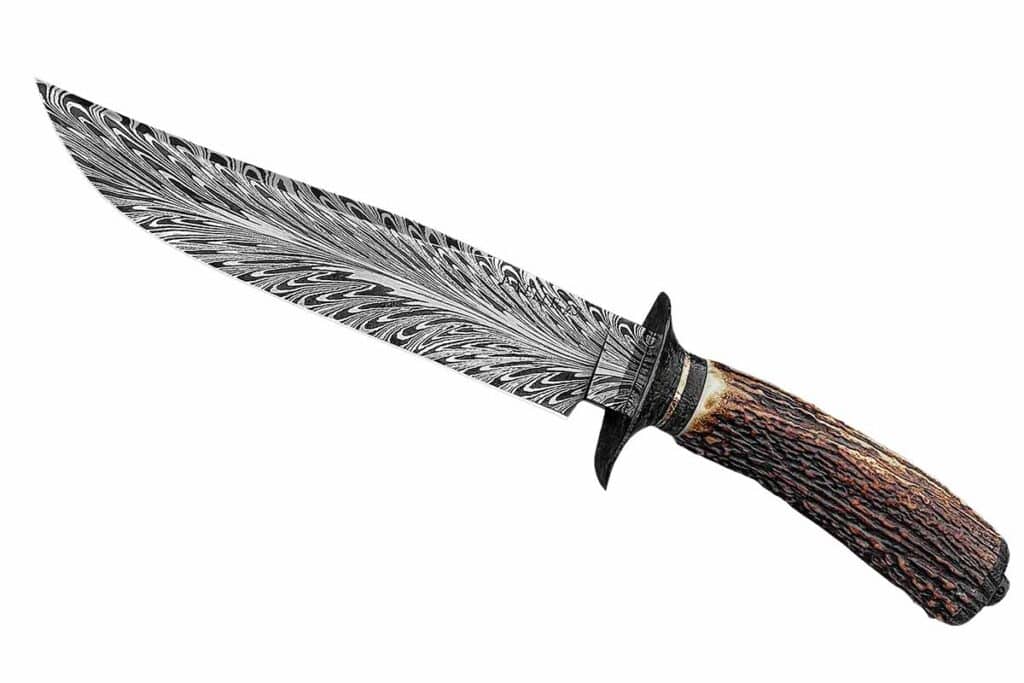
Jeremy Yelle Fighter

Blade length: 7.5”
Blade material: Feather damascus forged of 1084 carbon and 15N20 nickel alloy steels
Blade grind: Convex w/an unsharpened clip
Handle material: Stag
Furniture: Blackened 416 stainless steel
Knife to know: Jeremy Yelle is a journeyman smith in the American Bladesmith Society
Maker’s price for a similar knife: $1,700
Maker: Jeremy Yelle (Jocelyn Frasier image)


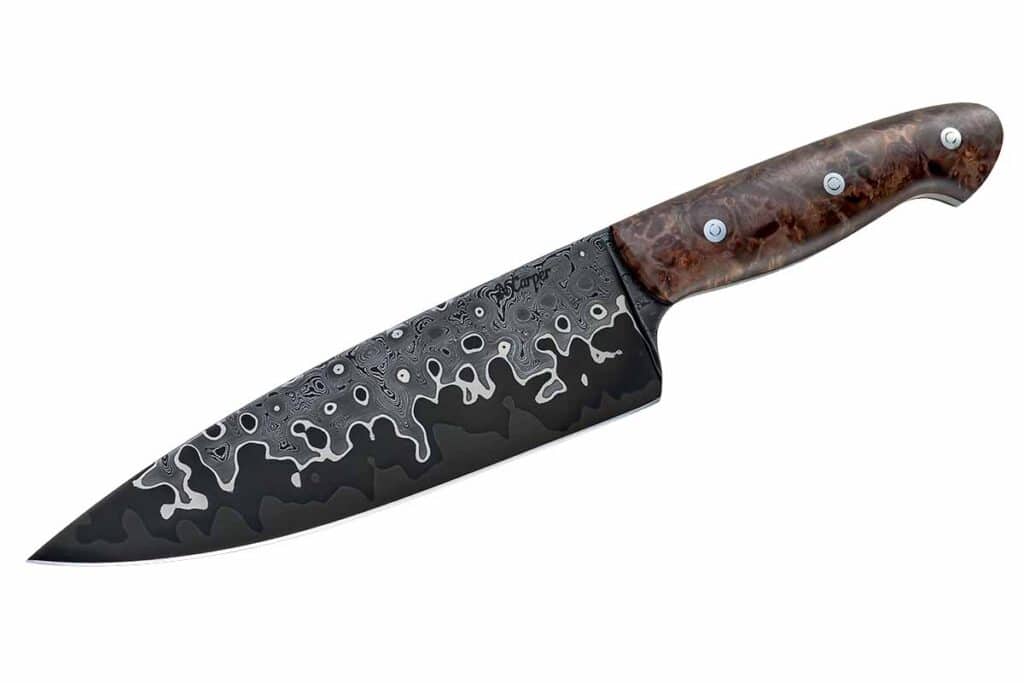
Nate Carper Custom Knives Acid Rain

Nate Carper Custom Knives Acid Rain

Blade length: 7.25”
Blade material: “I call this my Acid Rain pattern. I made a seven-layered billet using an 80CrV2 carbon steel core, 1084 carbon steel for the next two layers, nickel shim for two layers and followed up with 300 layers of a Raindrop pattern on the outside.”
Blade grind: Full flat w/a tapered tang and distal taper
Handle material: Dyed and stabilized maple secured w/Loveless bolts
Overall length: 12”
Maker’s price for a similar knife: Contact Nate Carper for more information
Maker: Nate Carper Custom Knives (SharpByCoop image)


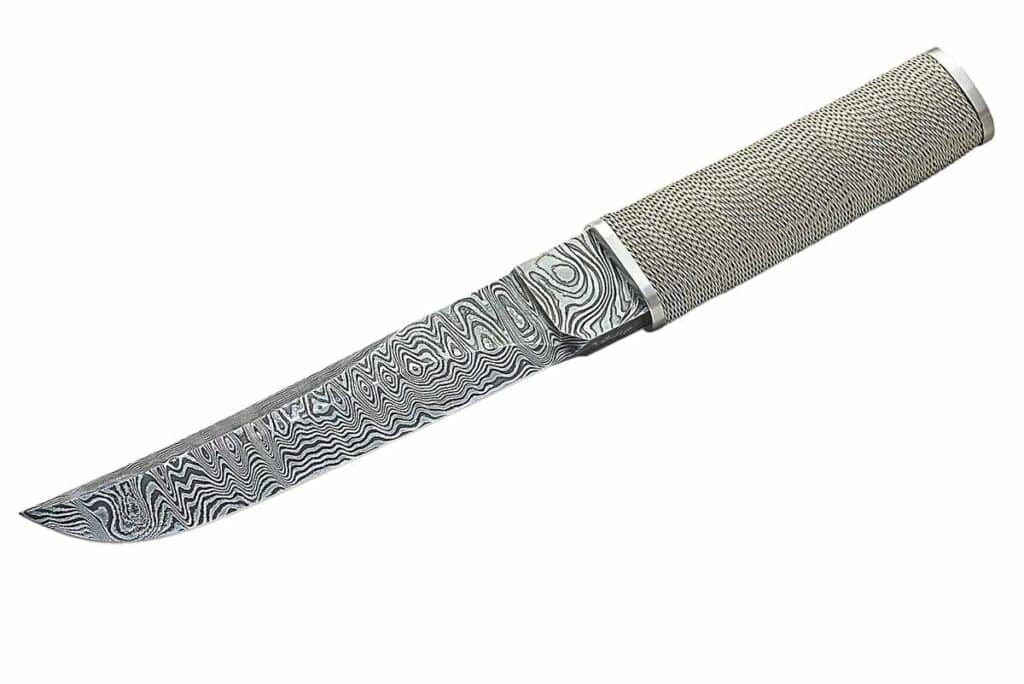
Tom Haslinger Damascus Kissaki-Moroha Tanto

Tom Haslinger Damascus Kissaki-Moroha Tanto

Blade length: 6.7”
Blade material: HCK damascus forged in 320 layers of 1080 carbon and 15N20 nickel alloy steels
Rockwell hardness: 58 HRC
Handle: Stainless steel wire wrap
Tsuba (guard) material: Stainless steel
Kashira (buttcap) material: Textured stainless steel
Overall length: 12.65”
Weight: 13 ozs.
Saya (sheath): Lined cowhide w/koi leather overlay
Maker’s price for a similar knife and sheath: $1,490
Maker: Tom Haslinger


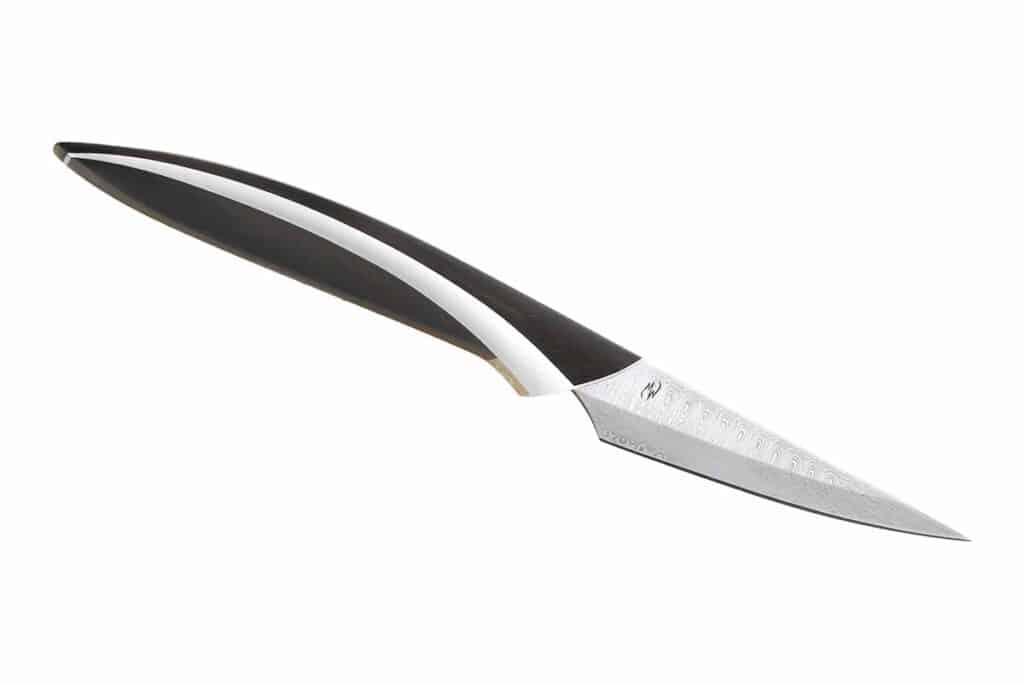
Michael West Silver Lining

Michael West Silver Lining

Knife type: Fixed blade
Blade length: 3.93”
Blade material: Damasteel twist damascus
Blade grind: Freehand hollow
Furniture: Argentium silver
Handle material: Ebony and argentium silver
Overall length: 9.6”
Sheath materials: Leather and argentium silver
Maker’s price for a similar knife: $3,100
Maker: Michael West (SharpByCoop image)


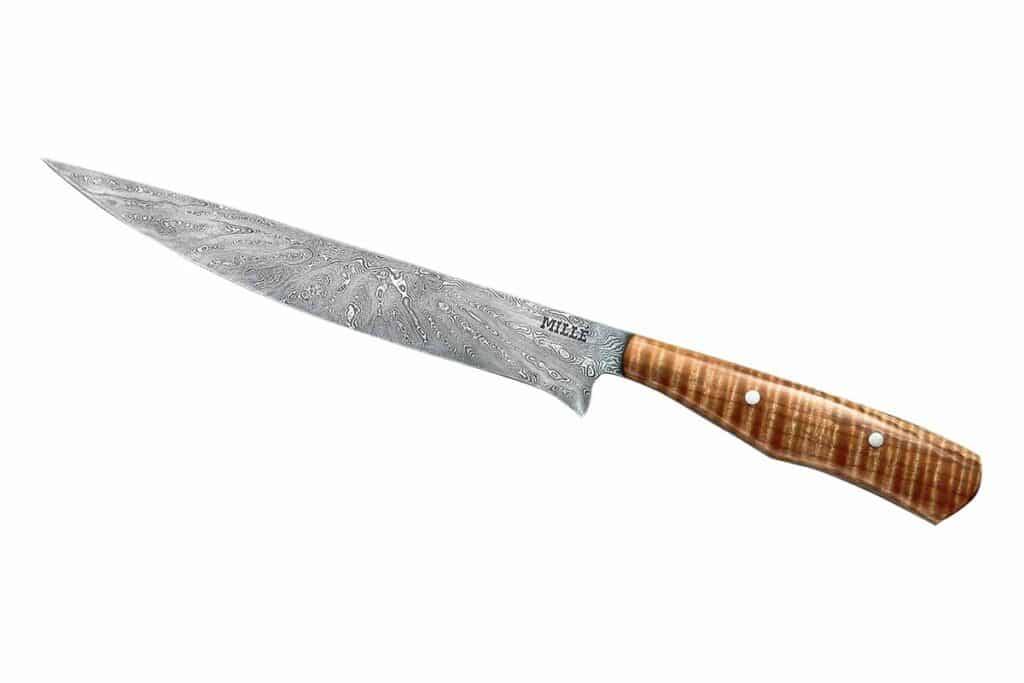
Mille Blades Fillet Knife

Mille Blades Fillet Knife

Blade length: 8”
Blade material: Damascus forged of 1084 carbon and 15N20 nickel alloy steels
Handle material: Stabilized tiger maple
Overall length: 13”
Maker’s price for a similar knife: Contact Adam Mille for more information
Knife to know: Adam Mille is an apprentice smith in the American Bladesmith Society
Maker: Mille Blades (SharpByCoop image)


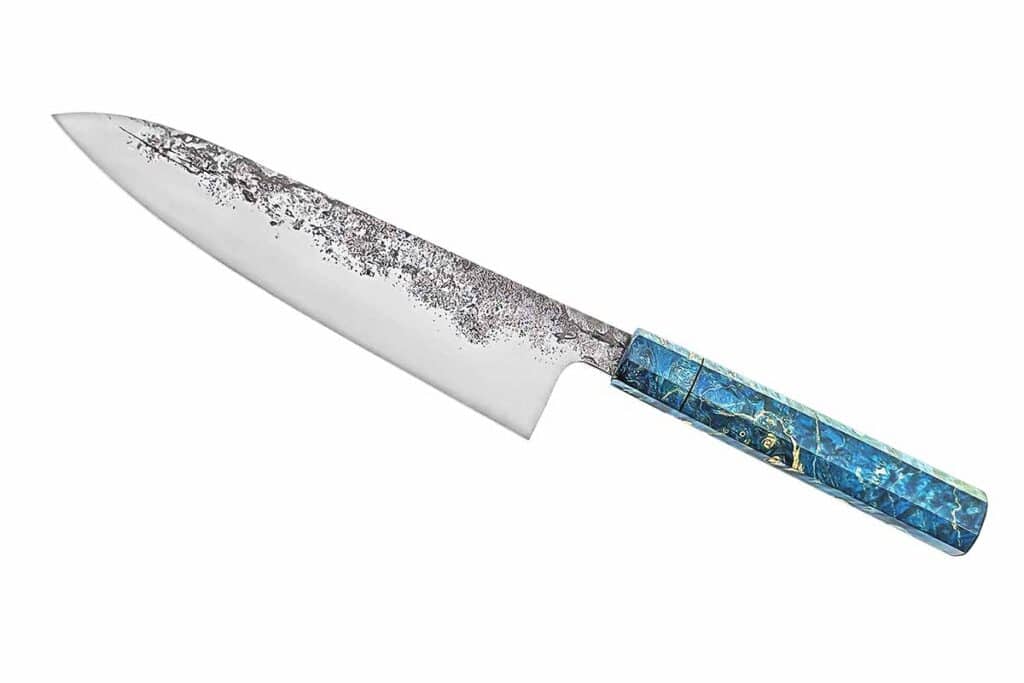
Andrew Bonavia Gyuto

Andrew Bonavia Gyuto

Blade length: 8.5”
Blade material: Forged 1084 carbon steel
Blade grind: Full flat
Blade @ widest: 2”
Handle material: Dyed spalted maple
Overall length: 14”
Maker’s price for a similar knife: $531 at press-time exchange rate
Knife to know: Andrew Bonavia is a member of the Australian Knifemakers Guild
Maker: Andrew Bonavia (Rod Hoare image)


Brad Millman O-Tanto

Brad Millman O-Tanto

Blade length: 11.75”
Blade material: 120-layer 1095 carbon and 15N20 nickel alloy steels w/nickel cladding and an 80CrV2 carbon steel core
Blade grind: Flat to convex near the edge
Handle: Raffir poplar burl
Bolster: Forged-finished stainless and copper
Overall length: 16.25”
Maker’s price for a similar knife: $1,200
Maker: Brad Millman (Jocelyn Frasier image)


Blacks Blades Mosaic Damascus Bowie

Blacks Blades Mosaic Damascus Bowie

Blade length: 13.5”
Blade material: Mosaic damascus
Blade grind: Flat
Blade thickness @ ricasso: .236”
Handle material: Tassie blackwood
Furniture: Hot blued mild steel
Overall length: 19.5”
Maker’s price for a similar knife and sheath: Contact Shane Partridge for more information
Maker: Blacks Blades (Rod Hoare image)


Aimee’s Forge Boot Dagger

Aimee’s Forge Boot Dagger

Blade length: 4”
Blade steel: Nitro-V stainless
Blade grind: Flat
Construction: Full tang
Handle material: Black and red G-10
Handle pins: Black G-10
Overall length: 8.75”
Sheath: Leather w/belt clip
Maker’s price for a similar knife: $431 at press-time exchange rate
Knife to know: Aimee Conte is a member of the Australian Knifemakers Guild and an apprentice smith in the American Bladesmith Society
Maker: Aimee’s Forge (Rod Hoare image)


Zane Dvorak Integral Hunter

Zane Dvorak Integral Hunter

Blade length: 4.25”
Blade material: Black Edge mosaic damascus forged from 1084 carbon and 15N20 nickel-alloy steels
Blade grind: Flat to convex
Blade pattern: Clip point
Handle material: African blackwood
Overall length: 9.25”
Sharp stuff: Forged integral single guard; carved handle groove matches the one in the bolster
Maker’s price for a similar knife: $1,400
Maker: Zane Dvorak (Jocelyn Frasier image)


Jeroen Knippenberg Integral Chef’s Knife

Jeroen Knippenberg Integral Chef’s Knife

Blade length: 6.7”
Blade material: A multi-color Feather damascus pattern forged from 15N20 nickel alloy and O2, O1 and 115W2 tool steels
Blade grind: Convex
Handle material: Desert ironwood
Overall length: 11”
Knife to know: Jeroen Knippenberg’s Integral chef’s knife won Best Chef’s Knife at the Dutch Knife Exhibition
Maker’s price for a similar knife: $1,600-$2,140 at press-time exchange rate
Maker: Jeroen Knippenberg (Jocelyn Frasier image)


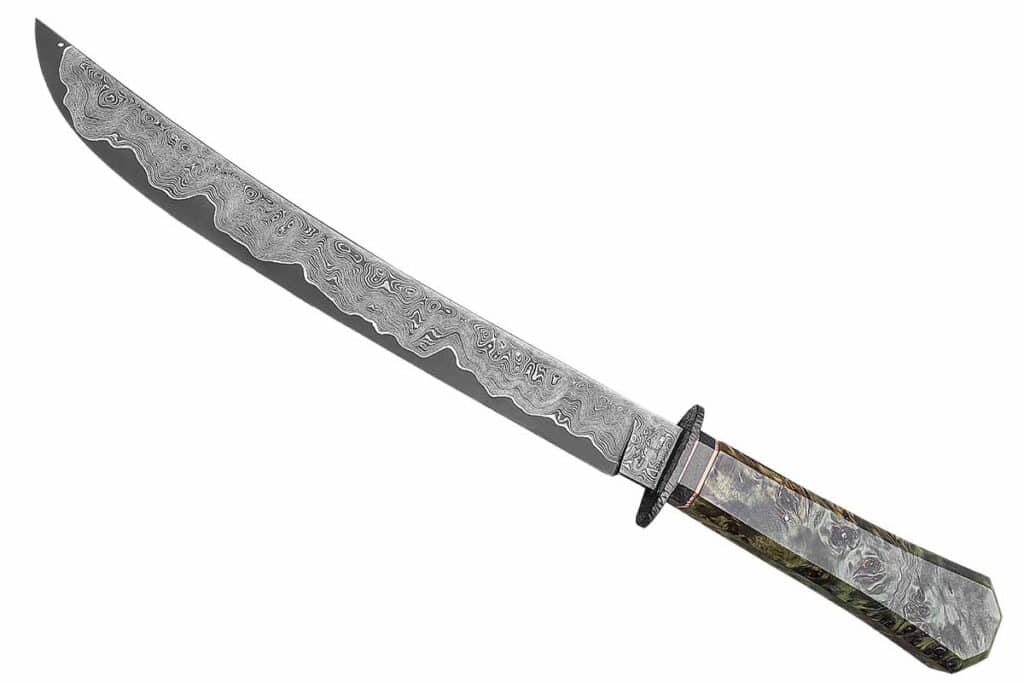
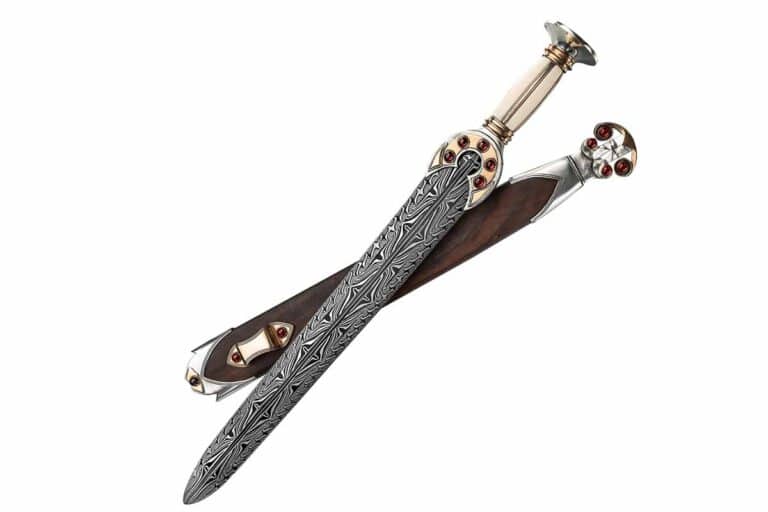
Dragon’s Breath Forge Period Piece

Dragon’s Breath Forge Period Piece

Blade length: 18”
Blade material: 1080 carbon and 15N20 nickel alloy steels
Handle material: Bronze and Elforen
Bolster: Silver, bronze and garnet
Overall length: 24”
Maker’s price for a similar knife and scabbard: Contact Jamie Lundell for more information
Maker: Dragon’s Breath Forge (SharpByCoop image)


Check Out More Knife Drops:

Peltonen M07 Ranger Review: The Perfect Puukko?

Peltonen M07 Ranger Puukko makes the author’s all-time-best test list.

When I received the M07 Ranger Puukko from Peltonen Knives, I was really surprised to find that the Finnish company was using my favorite carbon steel, 80CRV2, my go-to blade material for the knives I make. It has suburb edge retention and a toughness equal to 5160 carbon steel. The TPV handle is firm but provides a great non-slip grip. However, the knife still has to come together as a comfortable cutter. Let’s get to the fun stuff.

M07 Ranger Sharpness

As I do with my blades to check for sharpness, the hair on my arm has to pop off. The M07 did not disappoint. It was hair popping from the start. For those who prefer the paper-slice sharpness test, using the weight of the knife only, I found the M07 very aggressive slicing the medium. You could hear every slice. The handle gave me great control.

Medium-Duty Cutting Tests

M07 slices leather
The author really had to control the cut of the 8-ounce leather with just a quick touch; any pushing and the knife was clear through the material.

I grabbed some heavy double-walled cardboard and continued slicing. The M07 parted the material quickly with no snagging. I could feel it biting into the cardboard. I had to be careful not to nick my finger. The knife is that scary sharp.

When I started skiving 8-ounce leather, the M07 sliced all the way through as soon as I laid the edge on the medium. I really had to control the cut with just a quick touch; any pushing and the knife was clear through the leather.

M07 cutting rope
Seventy crunching cuts of the 1-inch manila rope and there was no sign of slowing down. The knife is perfectly formed for heavy cutting chores.

I had enough half-inch sisal rope for the M07 to crunch to 200 cuts with no problem. So, I grabbed my last piece of 1-inch manila rope. It was no challenge for the M07. Seventy crunching cuts later and there was no sign of slowing down. The knife is perfectly formed for heavy cutting chores.

Heavy-Duty Cutting Tests

M07 produced nice curlicues
It did not matter if it took a small bite or a deeper one, the M07 produced nice curlicues.

It did not matter if it took a small bite or a deeper one, the M07 produced nice curlicues. I could hear the knife cut the wood. The soft handle made controlling the sharp blade easy. Again, the cutting was quite aggressive.

It was time to hack some seasoned hackberry. Using a dead blow hammer, I pounded the M07 through the log. The handle absorbed all the shock from the blows, making the baton job a comfortable experience. The blade bit deep with each blow. In less than 30 seconds I had the log quartered. There were wood smears on the blade and some of the coating at the top of the grind showed a little wear. The edge was still extremely sharp. Great job, Peltonen.

The M07 made short baton work of the hackberry log.

It was back to the paper slice for the final test. There were two snags due to catching my thumbnail with the edge. The knife zipped through the rest of it.

Final Cut

The only change I’d make is to bring the grind line up closer to the blade spine. Otherwise, the M07 has to be in the top 1 percent of the sharpest knives I’ve tested in the past 30 years, and also the most comfortable handle. You could use this knife all day long and not get a sore spot. And the heat treating is excellent.

Peltonen Knives M07 Specs
Blade length: 4.68”
Blade material: 80CrV2 carbon steel
Rockwell hardness: 59 HRC
Blade grind: Saber
Blade @ thickest: .167”
Blade pattern: Drop point
Blade finish: PTFE Teflon (uncoated and Cerakote® finish also available)
Handle: TPV plastic blend
Weight: 3.75 ozs.
Overall length: 9.56”
Sheath: Plastic composite w/EasyLock locking mechanism; ambidextrous; MOLLE/PALS-webbing compatible (leather and Kydex versions also available)
Sheath weight: 1.75 ozs. (plastic composite)
MSRP: $68.43 at press-time exchange rate

Read More Knife Reviews:

Puukko Perfection: Hot Scandi-Ground Options For Sportsmen

See how well four hot Scandi-ground puukkos cut and handle.

A multifunction knife, the puukko is integral to Nordic life, revered by scouts and symbolizing adulthood in Finland. The design—a palm-sized blade with a single edge and flat back—facilitates various tasks. It is ideal for carving and cleaning but lacks a guard because it’s crafted for slicing, not stabbing, with some models featuring finger grooves for wet conditions.

While men’s and women’s puukkos differ slightly in size and are ornately sheathed, both are equally esteemed. The puukko’s deep-carry sheath, easily attached to a belt or around the neck, makes it a practical tool for everyday use.

Puukko Grinds

Assorted grinds
Assorted grinds, from left: flat, convex, Scandi and hollow. (from the BLADE® files)

Scandinavian knives are renowned for the unique grind that sets them apart from other knives with flat, hollow, saber and other grinds. Most knives have primary and secondary bevels that meet at the cutting edge. However, Scandinavian or Scandi grinds feature just one bevel that starts near the blade center and tapers to the edge. The design creates an acute angle that produces a razor-sharp edge, making it incredibly easy to slice through even the most rigid materials. Additionally, sharpening Scandi knives is a breeze, as you don’t have to worry about getting the correct angle. Simply lay the blade on the stone with the edge against the honing surface, and voila!—you automatically get the perfect angle.

Marttiini Arctic Bush Knife

Fine-tuning a wooden wedge using the chest-lever grip with the Marttiini Arctic Bush Knife.
Fine-tuning a wooden wedge using the chest-lever grip with the Marttiini Arctic Bush Knife (ABK) is effortless for precise and challenging cutting tasks.

Marttiini knives are Nordic puukkos crafted in the Arctic Circle using generations of craftsmanship and modern technology. Founded in 1928 by blacksmith Janne Marttiini, the company produces high-quality utility knives made of natural materials like leather, curly birch and reindeer antlers, along with ultra-sharp blades of carbon steel. The knives are designed for use in harsh conditions.

Also known as Kiehinen in Finland, the Marttiini Arctic Bush Knife (ABK) is a beautiful, traditional stick-tang-style knife with a 3.5-inch blade. Made of stunningly grained curly birch, the handle is handsome and incredibly comfortable, a characteristic common to all top puukkos.

The ABK is an excellent choice for those who prefer a blade under 4 inches and have other tools for chopping or sawing. It is easy to use in winter conditions, even when wearing wool mittens or leather work gloves. The deep pocket carry sheath ensures the knife is easy to grip and deploy. Overall, it is an excellent choice for anyone looking for a traditional yet functional knife that offers both comfort and aesthetics.

Puukko Marttiini and Wood Jewel.
Finland is known for crafting high-quality puukkos that can withstand harsh conditions. It is the world’s largest producer of puukkos. Two of the most popular brands are Marttiini (top) and Wood Jewel (bottom).

This past winter I had to carve hardwood wedges for splitting logs in camp. While axes (page 48) are the traditional tools for the task, I decided to use the ABK instead. It features an oval, tapered grip designed to provide a secure hold during challenging cutting tasks. The Scandi edge sliced through the dry maple with ease, even when encountering knots.

I was pleasantly surprised at how comfortable the knife was in a chest-lever grip for fine carving. I wanted to tackle the task while the knife was still sharp before moving to more knife-suitable camp craft such as making stakes out of beech and maple. In addition to carving wedges, I usually try to turn out about six good fuzz sticks before leaving camp for the next fire—sort of an early set-up. The ABK excels at the task as much as any Scandi blade would, making it a valuable addition to my gear.

Morakniv Classic

Classic No. 1/0
The Classic No. 1/0 has a 3-inch blade designed for carving feather sticks and whittling, making it great for fire preparation.

Morakniv knives are made exclusively in Mora, Sweden, where the company has been for centuries. Combining the benefits of handforged blades with industrial manufacturing, Morakniv is known for quality, consistent, sharp knives. They are recognized as a national symbol of Sweden and have been granted a Royal Warrant of Appointment by the King*.

The Morakniv Classic knives are a popular choice among outdoor enthusiasts and professionals alike. The blades are carbon steel and the distinct barrel-shaped handles are red-stained birch. The Classic knives have been around for nearly a century, and while some changes have been made over the years, the basic design has remained essentially unchanged.

In 2020, Morakniv updated the Classic series. The edge angles and blade shapes remain the same but all the knives have rattail tangs. The new polymer sheath is sleek and polished and features the Swedish Coat of Arms. The belt strap is Swedish vegetable-tanned leather designed to last generations.

The Morakniv Classic No. 1/0 has been renamed and upgraded from the Classic No. 2/0, with slight differences in handle width and blade thickness. The blade is .078 inch at the thickest. I like the trim blade. It is a hair longer than the 2/0 at 3 inches.

The Morakniv Classic No. 1/0 has a thin .078-inch blade useful for slicing onions, peppers, mushrooms and tomatoes.

I carried the bite-sized knife on a small carabiner hooked to my belt loop. I used it on dry poplar, hickory and maple to make feather sticks. It performed precisely as a Morakniv Classic should, slicing and curling wood with every stroke. Sitting by the fire, whittling and filling up my tinder/kindling coffee can with shavings was my nighttime routine with the 1/0.

The small, very able cutter regularly sliced peppers, onions and mushrooms for camp kabobs or morning omelets. Due to its kitchen knife-like thinness, the blade sliced food exceptionally well for a Scandi grind.

Bear Forest Knives Simple 3

Bear Forest Knives Simple 3
The author used the Bear Forest Knives Simple 3 to carve a seven-notch try stick from semi-dry wood. The sharp zero grind excels on green and dry wood.

Based in the USA, Bear Forest Knives is keeping the puukko knife alive and thriving. The company recently released its latest addition to the Simple series, the Simple 3.

The full-tang Finnish puukko-style knife packs a compact and convenient 3-inch blade of 8670 carbon steel. Its straight-back 90-degree spine and zero Scandi grind ensure remarkable control and precision, making it ideal for intricate tasks. The Simple 3 features an exposed pommel perfect for light hammering tasks, which wasn’t an option on previous knives in the series. The 8670 is typically found in large circular saw blades, much like old-timey puukkos made in Scandinavia. The Simple 3’s compact size makes it highly versatile for various woods tasks.

Simple 3 Puukko
The Simple 3 is a versatile puukko for camping, bushcrafting or hunting. The 3-inch 8670 carbon steel blade has a straight back, 90-degree spine and zero Scandi grind for control and precision.

Using the knife, I created a mini try stick and enjoyed some woodcarving. The handle was comfortable and filling, while the zero Scandi was perfect for removing a lot of material. I used semi-dry wood, which the Scandi grind works better on than a flat or saber grind. I continued crafting tent stakes and making fuzz sticks, which a puukko excels at most. Additionally, the super sharp spine was exceptionally helpful, as it helped me to ignite the nicely feathered shavings for fire using my ferro rod.

Reiff Knives F4 Scandi Bushcraft

Reiff F4 Scandi Bushcraft
The Reiff F4 Scandi Bushcraft made feathering wood a breeze. The large handle helped ease the blade through hard oak to make thin, curly feathers.

The F4 Scandi Bushcraft is the latest homage to the puukko from Reiff Knives. The company keeps the contemporary rendition of the famed knife alive with modern craftsmanship and materials in a full-tang construction.

A knife with a Scandi-ground blade is a must-have for bushcraft enthusiasts. The F4 blade is CPM 3V carbon steel 5/32 inch thick at the thickest with a steep grind angle of 12.5 degrees per side. Its ability to effortlessly slice through wood, animal hides and food is remarkable. The textured canvas Micarta® scales are available in four colors.

F4 Scandi
The F4 Scandi is a new breed of knife that, thanks to the tough CPM 3V carbon blade steel, had no problem batonning through frozen wood in the winter.

The robust F4 Scandi helped split several chunks of maple, oak and poplar with a baton for my winter cookouts. It also kept an Uberleben wood stove and one cold hiker well-fed. The Scandi edge was not damaged when used on frozen wood in freezing weather. After heavy splitting—not usually recommended for a Scandi blade—it was time for tinder shavings. I made several fuzz sticks and marveled at how comfortably the 5-inch handle navigated the edge, elegantly feathering the wood. Reiff has it going on!

*Royal warrants of appointment have been issued for centuries by royal families of assorted European countries to tradespeople who supply goods or services to a royal court or certain royal personages. The royal warrant enables the suppliers to advertise the fact that they supply to the issuer of the royal warrant, thus lending prestige to the suppliers.

Check Out More Outdoor Knives:

Recurve Knives: Top Options In These Curvy Carvers

The sexy shape of three U.S.-made recurve blades addresses both performance and aesthetics.

As blade patterns go, the recurve is right up there in the “flair department.”

Just as the curves of a Ferrari add irresistible styling to the classic sports car’s appearance*, so does the curvature of a blade’s edge add to that of the look of the knife. It also changes the geometry of a blade—sometimes radically—in some ways better and other ways not so much. That’s the beauty of blade design and why there are so many different styles from which to choose.

How much length does a recurve add to the edge of a blade? This chart compares the length of the ’Squatch blade to the length of the actual sharpened edge. The curved top edge blade of a straight blade might add 2-to-3 inches to the edge. The Sasquatch’s recurved edge stretches the increase to 4.75 inches.

The waisted recurve design shifts the weight of the blade toward the tip, which while excellent for chopping also reduces the blade’s effective chopping length. The recessed area on the lower part of the recurved blade adds the benefit of being able to trap or gather in its subject when performing chores like debarking and taking slivers from wood, but it also makes sharpening more difficult with flat-surfaced media such as whetstones.

Sharpening A Recurve

Like any blade design, there are trade-offs. To get an idea of how radically the recurve lengthens the edge of a blade, see the accompanying chart of the Case Sasquatch bowie. The height of the sharpened portion of the blade is 7.5 inches, but when the length of the curvature is factored in the number swells to 12.25 inches!

Recurve blades require a rounded or ovate sharpening medium to properly hone the curvaceous edge. Hand-held sharpeners similar to those used by chefs or the common V-sharpeners work well on curved edges, as do stones with curved edges such as the Spyderco Golden Stone ceramic.

When sharpening these blades the concave lower curve does not conform to a flat plane, so an ovate or rounded surface grit is required for sharpening. Fortunately, there are plenty of these to choose from, such as handheld sharpeners similar to those used by chefs or the common V-sharpeners that use alternating rods set at opposing angles in a base. The Spyderco Golden Stone and/or Webfoot works as well. Now, on to the recurves!

Bear Forest Knives Custom Recurve

The Bear Forest Knives Custom Recurve is a small fixed blade built like a tank, owing much to the 3/16-inch thickness of its acid-dipped 52100 carbon steel blade. At 7.75 inches overall, the knife is geared toward light-to-medium camp chores and could conceivably be used as an EDC. The full-tang handle boasts colorful scales of a wavy sandwich of black, orange and natural cross-cut canvas Micarta®. Weight is a hefty-for-its-size 5 ounces. Bear Forest provides a black Kydex sheath with a nifty black coated 2.25-inch spring steel belt clip.

Bear Forest Knives Custom Recurve Specs
Blade length: 3.25”
Blade material: 52100 carbon steel
Handle material: Crosscut canvas Micarta®
Gripping feature: Tri-color Micarta handle material
Sheath: Black Kydex w/belt clip
Weight: 5 ozs.
Overall length: 7.75”
Country of origin: USA
MSRP: $249

Recurves shine when performing shaving tasks. Both the TOPS (left) and Case (right) did a nice job rendering cedar curls for fire starter.

Case Laramy Miller Sasquatch Bowie

The Case Laramy Miller Sasquatch Bowie is a study in understated good taste. The large 13-inch Jim Bowie namesake flows from stem to stern, from the break in its flat-ground 1095 carbon steel blade to its rounded combo lanyard hole and pommel. The matte-black Caswell finish gives the bowie a rustic look. The bag-style handle is topped with natural canvas Micarta scales affixed with 5/16-inch brass pins. Case provides a double-stitched natural leather belt sheath that matches the knife in clean styling.

Case Laramy Miller Sasquatch Bowie Specs
Blade length: 7.75”
Blade material: 1095 carbon steel
Handle material: Natural canvas Micarta®
Cutter keys: Clip-point blade, Caswell finish
Sheath: Natural leather belt model
Weight: 14.5 ozs.
Overall length: 13”
Country of origin: USA
MSRP: $219.99

TOPS Longhorn Bowie

The TOPS Longhorn Bowie is a thoroughly modern recurve with such classic touches as its upswept clip-point blade—always welcome on a bowie. The flat-ground 1095 blade is coated in dark sniper gray Cerakote®, matching the gray/black layered linen Micarta scales nicely. The black nylon MOLLE-compatible sheath carries on a belt or a pack and other gear. It includes a front pouch for stowing a sharpener or fire-starting accessories.

TOPS Longhorn Bowie/Sniper Gray Specs
Blade length: 6.75”
Blade material: 1095 carbon steel
Handle material: Canvas Micarta®
Cutter keys: Trailing-point blade, sniper gray Cerakote® finish
Sheath: Black nylon, MOLLE compatible w/pouch
Weight: 18.1 ozs.
Overall length: 13”
Country of origin: USA
MSRP: $305

Testing The Recurve Knives
The TOPS Longhorn and Case Sasquatch bowies begged to be reviewed together because they are exactly the same length and share the same 1095 blade steel, yet are two very different knives. The TOPS blade has a more casual recurve while the Case is full tilt. The handles couldn’t be more different as well, with the Case opting for a clean, traditional bag-style grip while TOPS chose a modern tactical design a full inch longer than its counterpart, resulting in a slightly shorter blade. Let the fun begin!

The Bear Forest Custom Recurve is small compared to the two larger test knives, though the same blade geometry applies. Note how the upper curve of the edge ensnares the rappelling rope as it slices through it.

I started with some basic chopping on a 5-inch diameter oak log. The Sasquatch brought the hammer down with its weighted fore-end but the Longhorn had the advantage of more working area on the blade for chopping. Both manufacturers chose 1095 and have loads of experience at maximizing the steel’s benefits. I found both knives excelled in the pure blade bite and performed well chopping. The Sasquatch weighted front end is an advantage for sheer power but the Longhorn is 3.6 ounces heavier, so it closes the gap significantly.

I did some shaving doing push cuts on 1×3 cedar planks. As expected, the concave edge of the Case excelled at trapping the wood through the straight cuts. Advantage Sasquatch. However, the TOPS has a grip a full 1-inch longer than the ’Squatch and is textured as well, offering superb purchase. Advantage TOPS. Bottom line, both recurve bowies performed very well. The choice is yours.

It's a trap! The lower concave area of the Case blade traps the rappelling rope during a pull-through. The deeper the concave curve, the better it performs this function.
It’s a trap! The lower concave area of the Case blade traps the rappelling rope during a pull-through. The deeper the concave curve, the better it performs this function.

The sheaths for both are well done. The Case belt model is natural leather designed in a simple, tasteful manner. The TOPS is unabashedly rock ’em, sock ’em tactical all the way.

The Bear Forest Custom Recurve punches up in its size class thanks to thick 3/16-inch blade steel and a healthy handle length, a trait often missing on smaller fixed blades. I tested the blade for its ability to capture 3/8-inch rappelling rope in its concave maw. Thanks to its overbuilt steel, the blade never wavered while producing slice after slice. It also took off nice, healthy curls of cedar just like the big boys. The curves of the cross-cut canvas Micarta scales made for excellent purchase and are attractive to boot. I also did some bark skinning on seasoned oak, took slices off other kinds of rope, and batonned fatwood pine fire starter.

Bear Forest provides a nifty Kydex sheath. It has a 1.5-inch spring clip on the back that not only mounts on the belt for vertical and cross-draw carry/deployment, but doubles as a pocket clip on either side, something seen more and more from the fixed-blade EDC crowd lately. All in all, I was impressed with the whole package.

Final Cut

The recurve isn’t just for whacking stuff. It requires a little more finesse and is typical of blades that don’t walk the straight and narrow. However, the benefits of recurves will reward you dearly when kept in their lane. All three of the test candidates performed admirably and are well worth your consideration.

*Editor’s note: Long-time custom knife purveyor J. W. Denton, who was a champion racecar driver in his younger days, was fond of comparing the knives of Steve Johnson, BLADE Magazine Cutlery Hall-of-Fame member Bob Loveless and others to curvaceous sports cars. J. W.’s comparison, however, was largely between the handle butts of the knives and the rear ends of the cars. However, both comparisons are accurate.

  1. Bear Forest Knives Custom Recurve
    Blade length: 3.25”
    Blade material: 52100 carbon steel
    Handle material: Crosscut canvas Micarta®
    Gripping feature: Tri-color Micarta handle material
    Sheath: Black Kydex w/belt clip
    Weight: 5 ozs.
    Overall length: 7.75”
    Country of origin: USA
    MSRP: $249

Check Out More Outdoor Knives:

Advertisement

Must Read Articles
Read this before you make a knife
Knifemaking 101 – Read This Before You Make a Knife

  by Wayne Goddard My experience has taught me that there's nothing like digging in and getting started. I've often said the hardest part of the...
how to forge damascus steel

How to Forge Damascus

Advertisement
Advertisement