Knife collecting is an extremely rewarding experience for knife enthusiasts. There truly is a knife for everyone. Many increase or hold their value throughout the years, making collecting knives something to pass on to the next generation of knife collectors.
The best sharpening angle depends on the use of the knife, the thickness of the blade, the type of blade steel, the sharpening materials used and more.
What is the Best Sharpening Angle?
What determines the best sharpening angle? The answer is one that plagues knife neophytes and old hands alike.
“The best angle of sharpening is one of those very intriguing topics that many have explored but most have come up with different answers,” states Jake Broce, online marketing coordinator for A.G. Russell Knives.
Agrees Kyle Crawford, brand manager for Work Sharp, “The answer is often different for everyone.”
He says the two keys are knife type/use and edge retention/maintenance. In fact, all of our story sources cited the intended use of the knife as a deciding factor. For tough chores such as chopping or batonning, a wider angle is best.
“Generally, the wider the angle of edge, the more steel is behind it, which increases the edge’s toughness,” Broce observes.
“For kitchen knives that see light duty cutting food on cutting boards, or a task-specific hunting knife like a camping knife, a low angle is ideal,” counters Crawford.
By “low” he means an edge angle between 15 and 20 degrees.
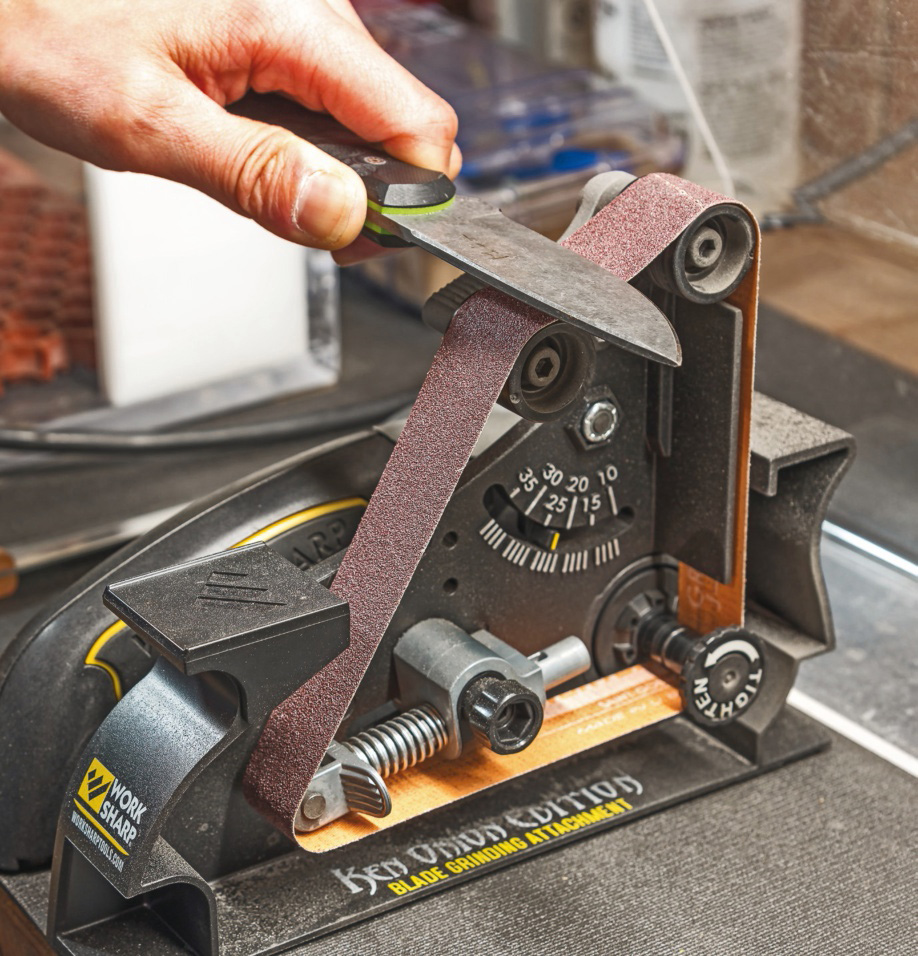
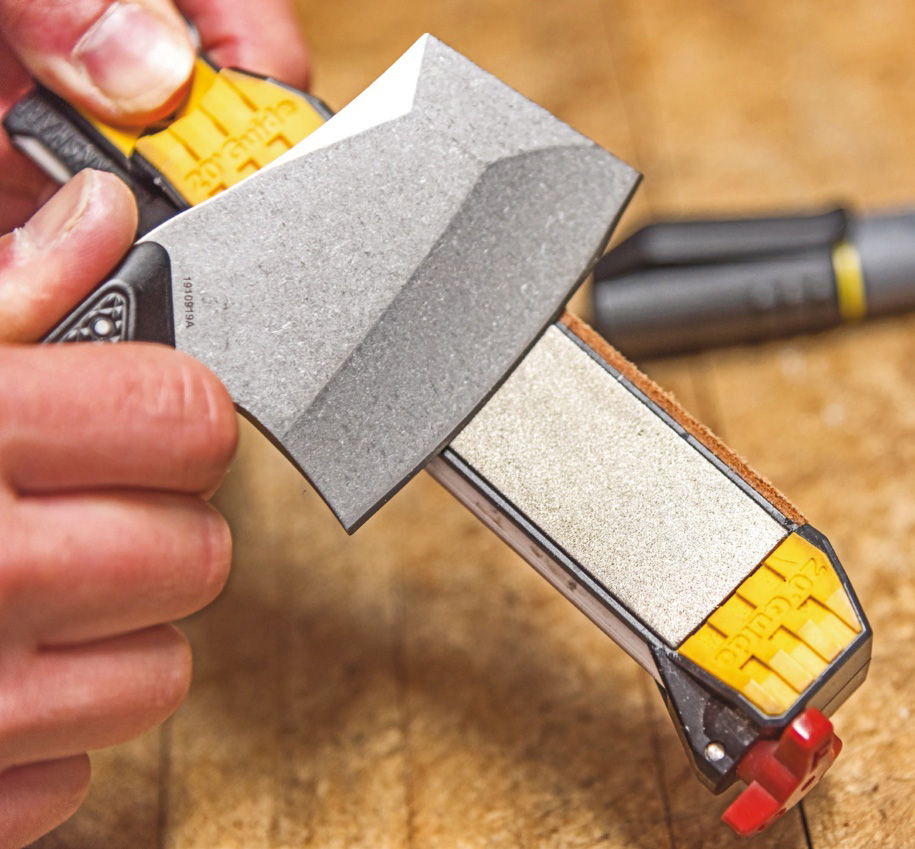
Knives come with a standard edge from the factory, around 22 degrees inclusive. The edge is sharp and durable, and a good middle-of-the-road angle that is a good balance between durability and cutting ease. The Work Sharp Ken Onion Elite sharpener is set here to sharpen at 22 degrees. (Marty Stanfield Photography)
Edge angle also affects edge retention.
“If you sharpen your heavy-use EDC knife to a low angle such as 15 degrees, it will be incredibly sharp,” Crawford says, “but the trade-off you are making is edge retention and durability.”
Conversely, he adds, if you sharpen at a wider angle, such as 25 degrees, the edge will still be very sharp but you gain improved edge retention and, thus, eliminate the need for more frequent maintenance.
However, Kendra Tobler, marketing communications manager for Benchmade Knife Co., indicates grades of blade steel also factor in as well.
“A harder steel with higher yield strength can be ground to a small included angle with less worry about rolling or deforming the edge,” she says. “Conventionally cast steels with large carbides are better suited to larger included angles.”
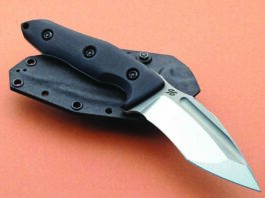
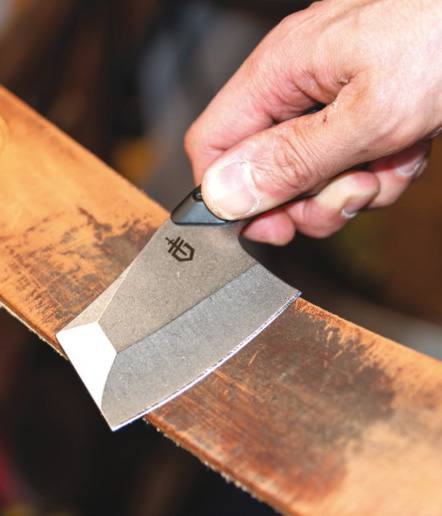
Lesser grades of steel such as the 7Cr17MoV stainless of the Gerber Tri-Tip should not be taken down to an acute angle. (Marty Stanfield Photography)
This is done so for edge durability. A prime example of Tobler’s point is Benchmade’s 15017-1 Hidden Canyon Hunter, a compact drop-point fixed blade in premium CPM S90V stainless steel well known for its extreme edge-holding ability.
Benchmade uses its SelectEdge 14-degree included edge on the knife. It is ground thinner because S90V is a high-yield-strength steel that can retain its strength with a thinner edge without deforming or chipping.
With task-specific knives of high-yield-strength steels for hunting/field dressing, you may opt for a more acute edge angle, anywhere between 15 and 20 degrees. (Marty Stanfield Photography)
Blade thickness is a factor as well.
“Thin blades are much easier to sharpen to low edge angles than thick knives,” Crawford states. “The thicker the blade, the more material you will have to remove to create a low edge angle.”
And it usually takes time to thin down a thick blade.
As he warns, “If you choose to sharpen a low edge angle onto a thick blade, be prepared to be patient.”
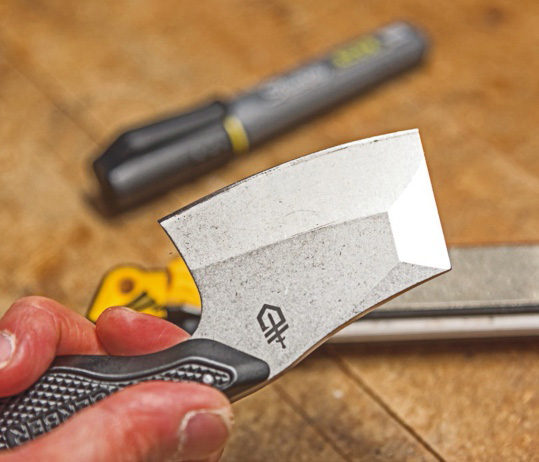
Blade thickness is a factor as well. “Thin blades are much easier to sharpen to low edge angles than thick knives,” Crawford states. “The thicker the blade, the more material you will have to remove to create a low edge angle.” (Marty Stanfield Photography)
Establishing Angles
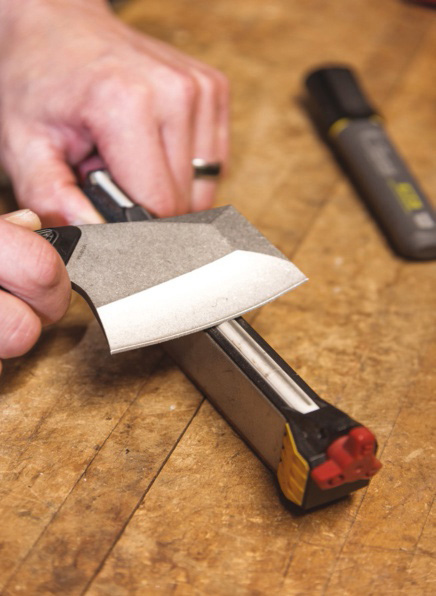
How should you go about establishing the edge angle when you sharpen? A safe bet is to invest in a sharpener that sets and maintains the edge angle for you—all you have to do is set the sharpener to the desired angle.
“Angle guides are tried and true and solve one of the biggest sharpening challenges—establish the angle and be consistent,” Crawford says.
Cautions Broce, “The first time you use [a guide kit] on your knife will usually take the longest, as your edge angle adjusts to the way you use the sharpener.”
The angle guide kits subtract the science of maintaining a consistent angle, so all you need do is concentrate on getting the edge sharp. The kits have been a game changer for consumers who struggle with freehand sharpening on a bench stone.
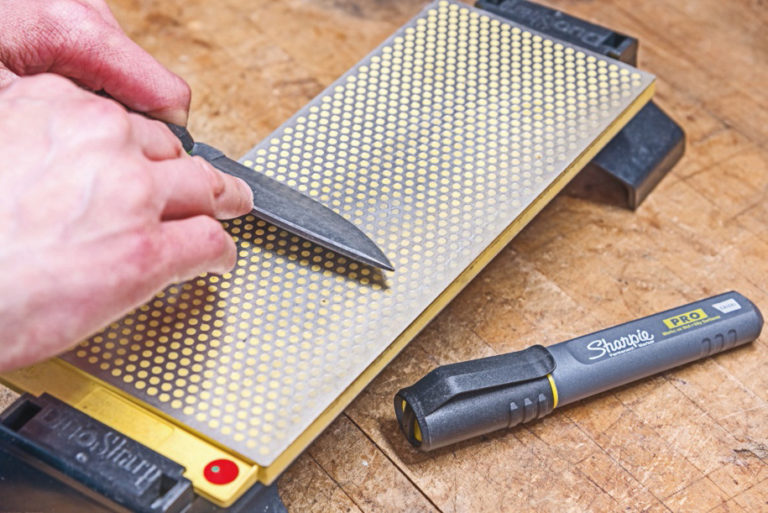
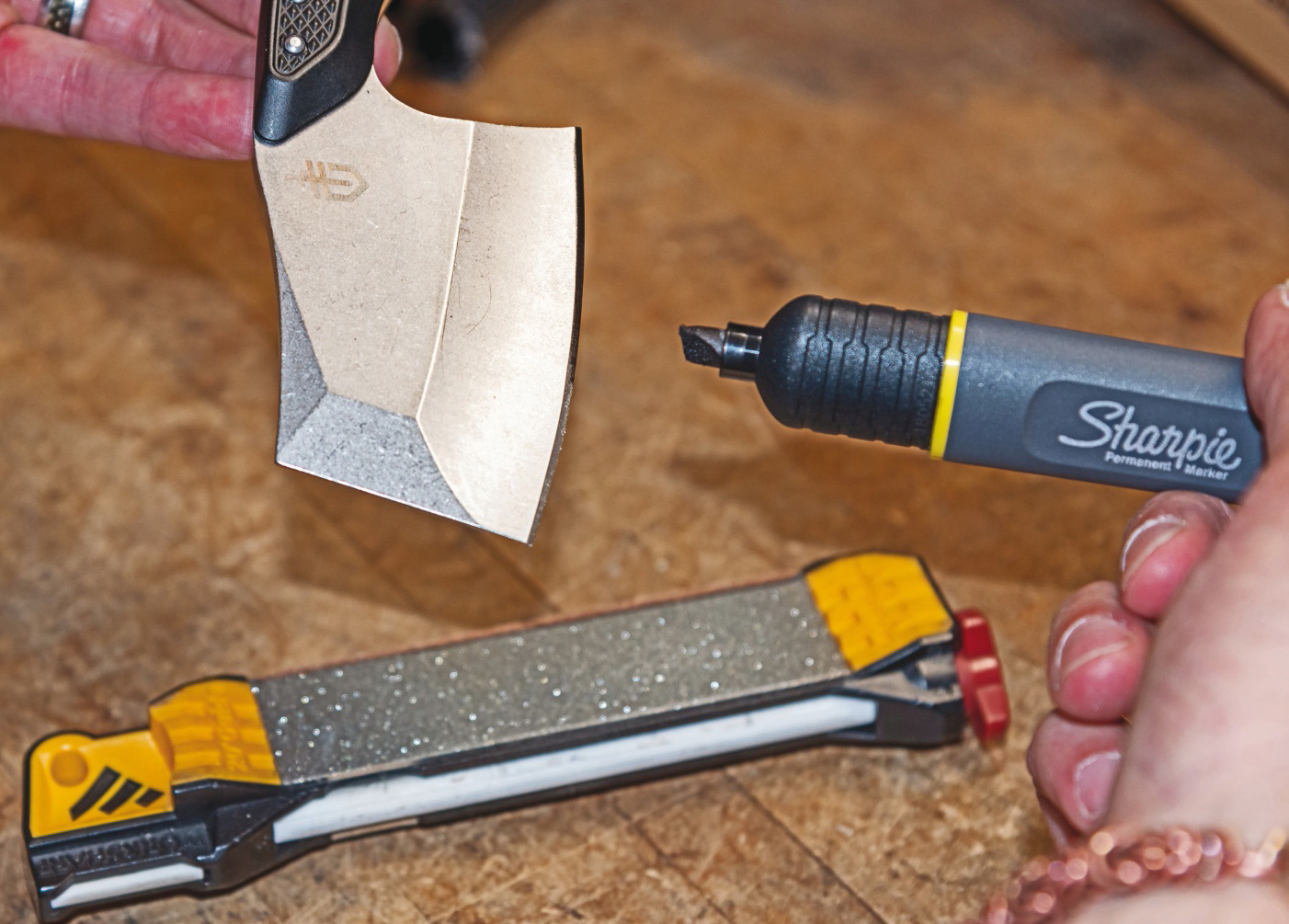
A good tip is the black marker trick. Using a permanent black marker with a wider chisel tip, color the edge bevel on both sides of the blade. The goal is to sharpen the blade—here on the Gerber Tri-Tip—removing the black marker ink from both sides. (Marty Stanfield Photography)
Another good tip, regardless of which sharpener you use, is the tried-and-true black marker trick. Using a permanent black marker with a wider chisel tip, color the edge bevel on both sides of the blade. The goal is to sharpen the blade, removing the black marker ink from both sides. When you accomplish this, your edge angle is correct and you should have a sharp blade.
“The goal is to remove all of the ink in one swipe,” Crawford says. “If you are removing the marker at the cutting edge, your edge angle is too high and you are micro-beveling.”
From there adjust your edge angle to a lower degree and take a few more passes to see how the ink is being removed.
“It is a process of trial and error,” Crawford notes.
Tobler is another proponent of the marker method. “It helps for matching the edge angle already on the blade when resharpening,” she observes.
According to Jason Broce of A.G. Russell Knives, “The blade grind determines how much steel is behind the edge. More steel behind the edge improves edge stability, whereas less material behind the edge can improve the pass-through.” (Marty Stanfield Photography)
You can use the method in conjunction with one of the guide kits even if the kit holds the angle constant for you. The method enables you to see how much more you must sharpen off in order for the edge bevel to be reestablished.
In this regard, you’re using it to determine how much more you have to go as opposed to if you’re holding the angle correctly.
Another tip is sharpen in a well-lighted area. Good visibility is very important and key to doing a thorough, well-executed sharpening job. And if you use the marker method a lot, abundant lighting helps you see clearer without eye strain.
Finally is sharpener selection. You can use any quality sharpener as long as it fits the steel type. The key here is to select a sharpener you feel very comfortable in using.
Another tip is sharpen in a well-lighted area. Good visibility is very important and key to doing a thorough, well-executed sharpening job. And if you use the marker method a lot, abundant lighting helps you see clearer without eye strain. (Marty Stanfield Photography)
Knife Sharpening Safety
Sharpening can be dangerous, so be sure you are in the right frame of mind when you do it—not mentally or physically tired, nor pre-occupied. Focus on sharpening with little to no distractions.
Not only is your own personal safety at stake, but the more focused you are, the better job you can do. This is especially true if you’re learning a new sharpening technique, such as re-establishing edge angles.
Most of all, be safe, have fun and take satisfaction in the knowledge that, once you master establishing edge angles, you have become self-sufficient at sharpening.
Focus on sharpening with little to no distractions. Not only is your own personal safety at stake, but the more focused you are, the better job you can do. (Marty Stanfield Photography)
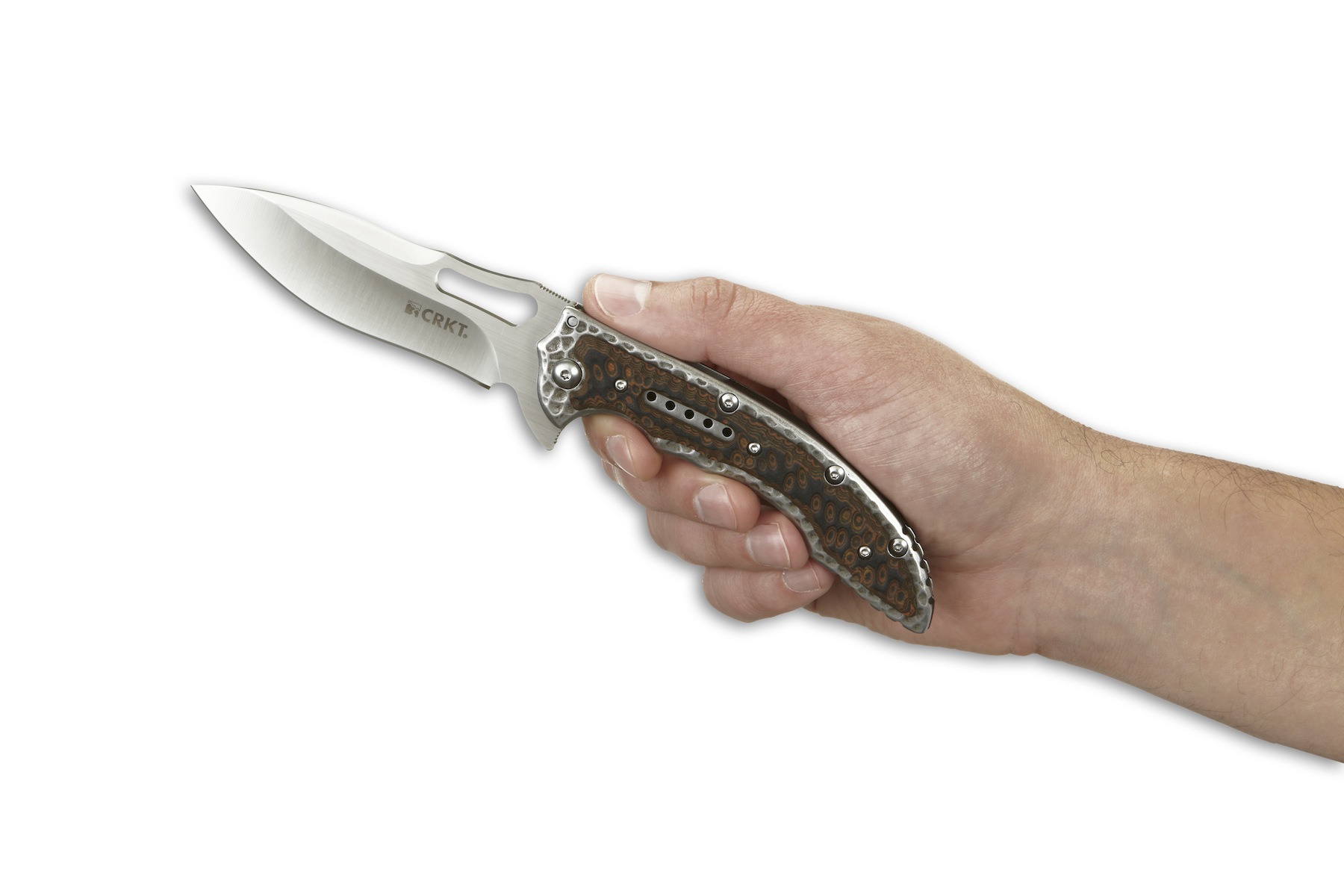
The knife handle should fit your hand snugly. The knife is the CRKT Fossil.
What to look for in a knife handle is a question whose answer—as with most things knife—depends on many factors.
For one thing, no one knife handle fits everyone. Hands come in all shapes and sizes, so a knife handle that will fit a large hand probably will not fit a small one—and vice versa. As a result, no matter how much a knife handle is touted as being “user friendly,” you can’t know if it will suit your needs unless you pick the knife up and use it. Of course, that’s hard to do when you can’t use the knife unless you buy it. Then, if you don’t like the knife, you’re stuck with it.
One way around that is to find a friend who has the knife in question and borrow it. Of course, you will need to take good care of the knife and give it back when you’re through.
Barring the above, look for a knife handle with gentle curves, contours and palm swells that fit the shape of your palm snugly. This will help prevent the knife from sliding around in your hand or cause you to have to constantly regrip the knife handle with your hand. Avoid finger grooves as they are too restrictive in terms of the way you can hold a knife handle. Besides, you may find over time that grooves you thought fit your fingers/hand really don’t.
Avoid a knife handle that has sharp corners at the butt or any place that tend to dig into your hand. Those can cause hot spots or even cut you. Avoid a knife handle that is too soft. It may feel good at first but it, too, can cause hot spots/friction on your palm and/or fingers over extended periods of use.
Single, integral guards are good as they keep your hand from sliding onto the blade. That’s one of the good things about flipper folders—not only do the flippers ease the job of opening the knife but they also serve as single guards.
For more on the best knife handle for you, see your local knife retailer and ask him to show you the many different options you have when it comes to a knife handle.
Recommended:
Stay abreast of the latest developments on this and many more knife rights issues with a subscription to BLADE.
Is the assortment of knives in your house as appropriate as it should be?
At one time I thought I wasn’t a knife collector. I am a knife enthusiast, knife user, knifemaker, knife writer, maybe even a reluctant knife expert, but not a knife collector.
Back when I thought that way, I looked around and noticed I had a dozen knives within arm’s reach, plus the tools in the kitchen, plus the customs of my own and a few from others, plus all the factory knives. Turns out I had nearly 100 knives, which means I’m definitely a knife collector, or at least an accumulator.
In my usual ADHD stream-of-consciousness fashion, my next thought was, “I wonder if I have a knife in every room of the house?” followed immediately by thoughts of which kind of knife would go in each room. Come along on my imaginative journey as we explore the idea of a knife for every room.
Kitchen
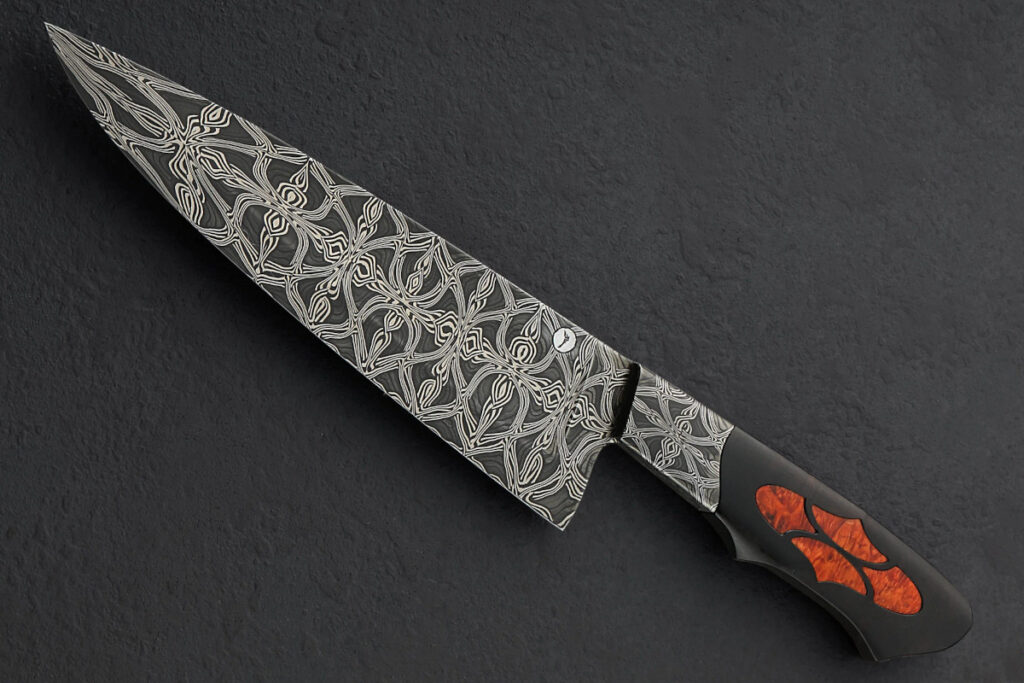
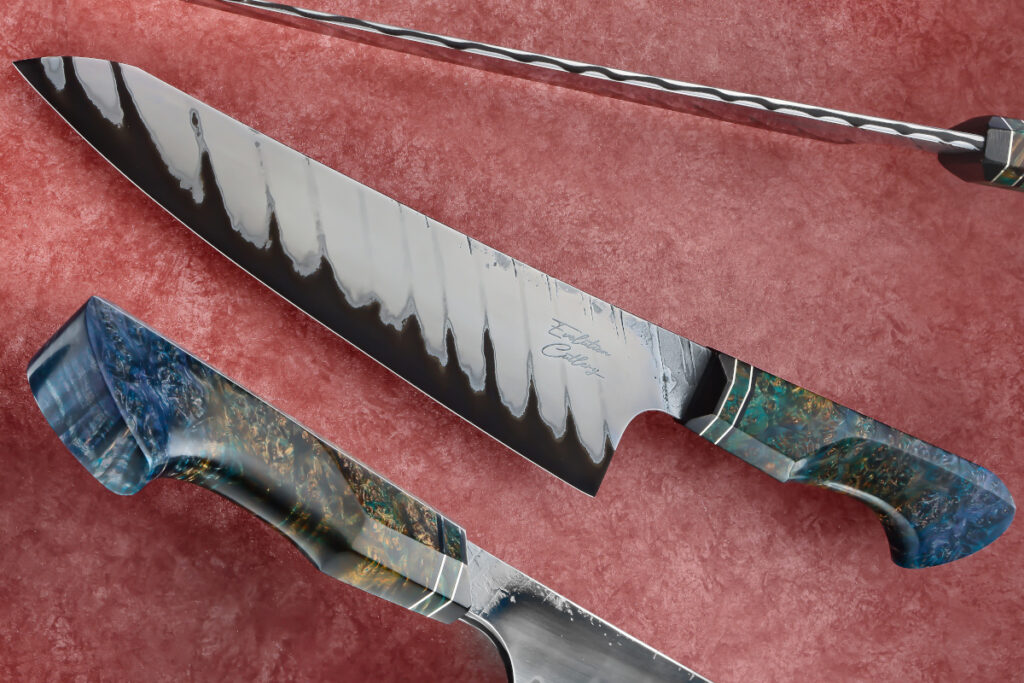
Knives in the kitchen are a given but including one by bladesmith Salem Straub is not. In the author’s perfect household cutlery world, one would be. An example: Salem’s Guimard chef’s knife in mosaic damascus. (EatingTools.com image)
The kitchen is intuitive. Most people have knives there, whether the knives are economy store cheapies, a mishmash random drawerful accumulated over years, a matching production set, or even dedicated custom household cutlery. On my imaginary journey, I can afford the good stuff, like a damascus chef’s knife from bladesmith Salem Straub. But that’s too easy. Why not a whole knife-fork-and-spoon-damascus set, like one from Nate “Tuna” Grant?
Garage
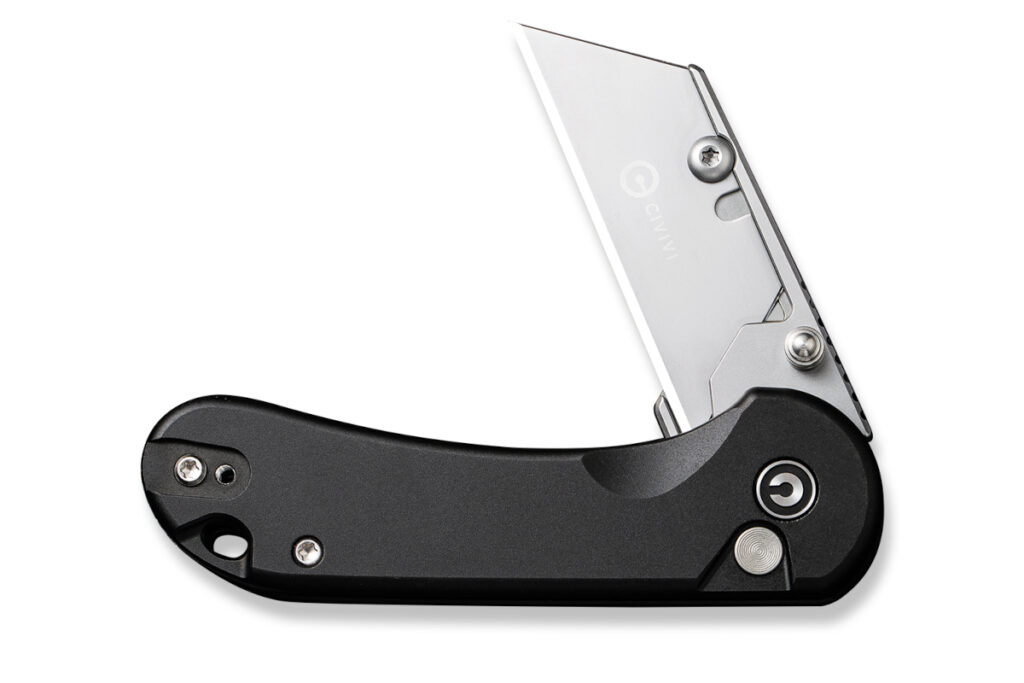
For the garage, the author suggests a factory utility knife of the replaceable-blade variety such as the Civivi Elementum.
The garage isn’t too tough either. My first thought was a utility knife of the replaceable-blade variety. In the past few years there’s been innovation in the custom knife world when it comes to replaceable blade knives, but for utilitarian and “I can use this and not be sad if I scratch it,” I think I’ll go with the Civivi Elementum that uses standard box cutter blades.
Living Room
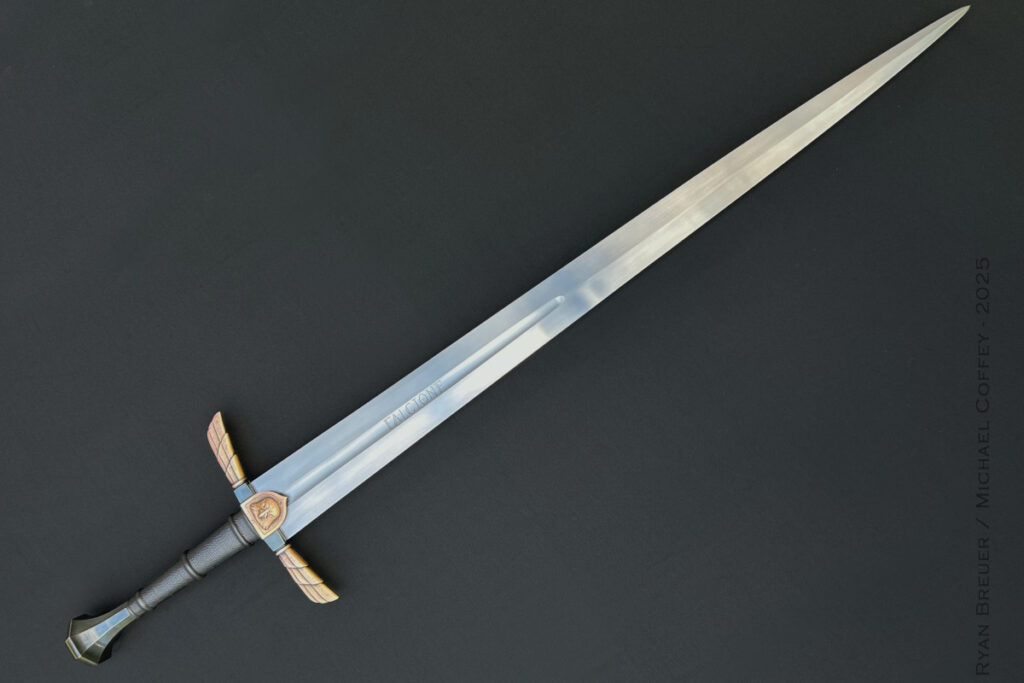
If the living room has a fireplace mantle, it’s a great place to display a custom sword. If you’re feeling medieval, the author recommends something like a hand-and-a-half piece by Ryan Breuer. (Ryan Breuer image)
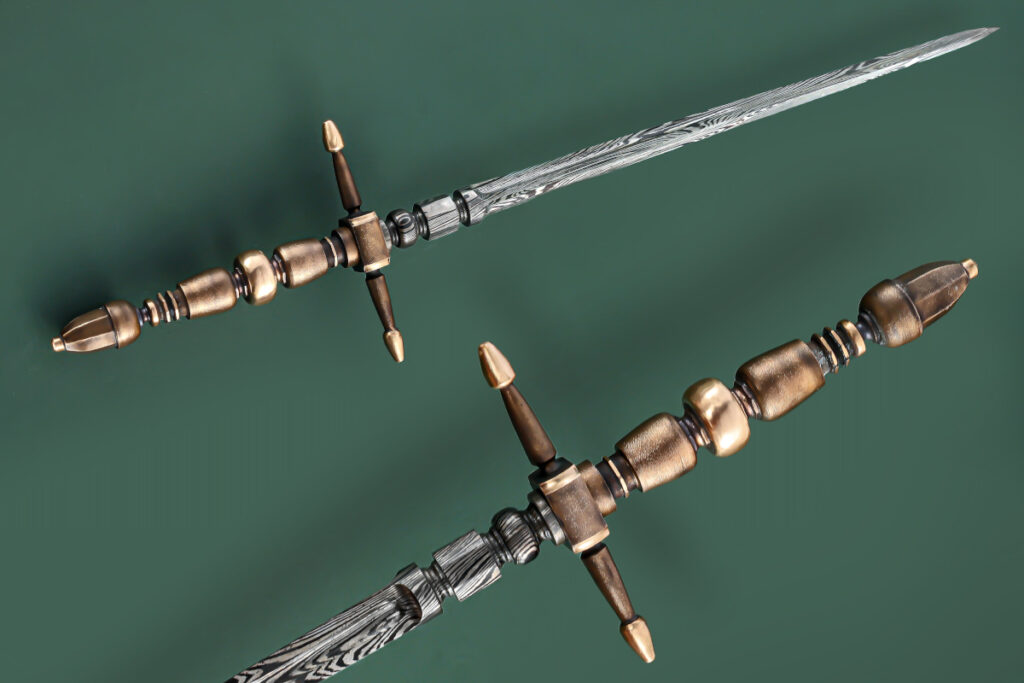
The living room has the fireplace mantle, which is a great place to display a custom sword. If I were feeling medieval, I’d choose something like a hand-and-a-half piece from Ryan Breuer. Conversely, if I were feeling loud and Japanese, I might choose a fine bright katana like one from David Goldberg with an epic hamon.
Study
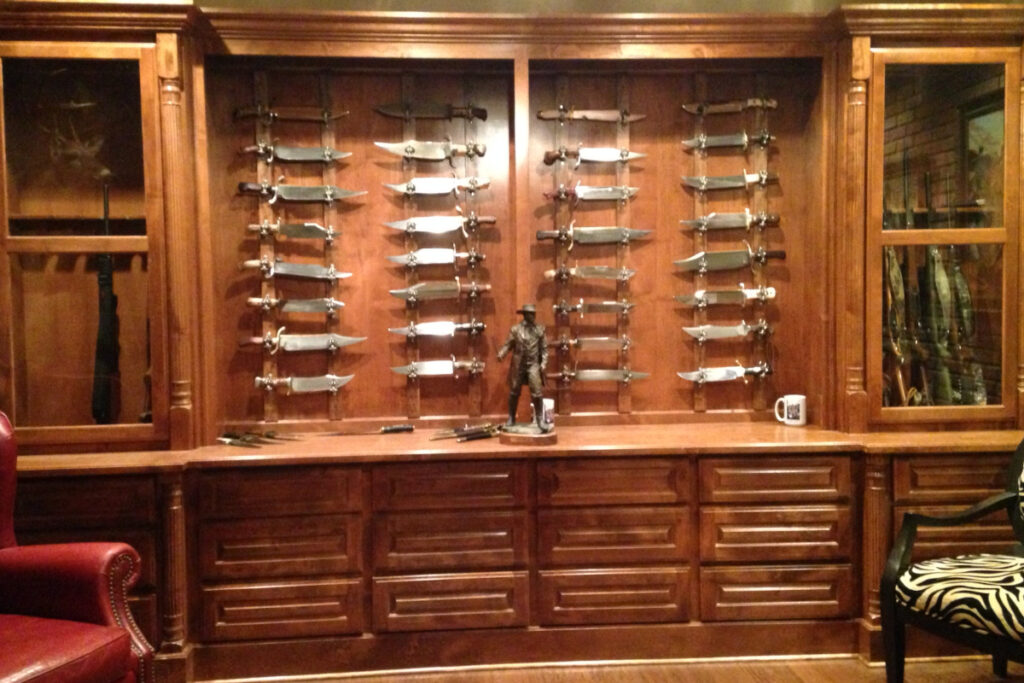
Along with studies, game rooms are also great for storing knife collections. Avid bowie collector Chris Nolen keeps his collectibles in a game room display designed by his son-in-law, replete with a statue of Jim Bowie and slide-out drawers that hold around 10 bowies each. (Chris Nolen image)
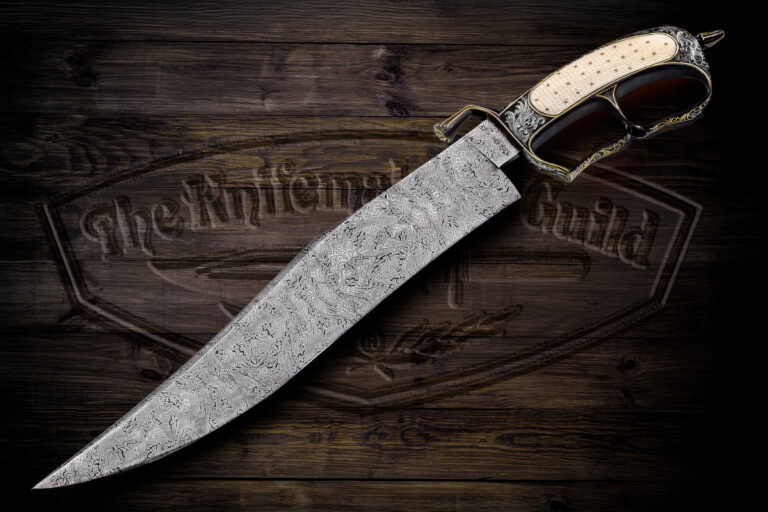
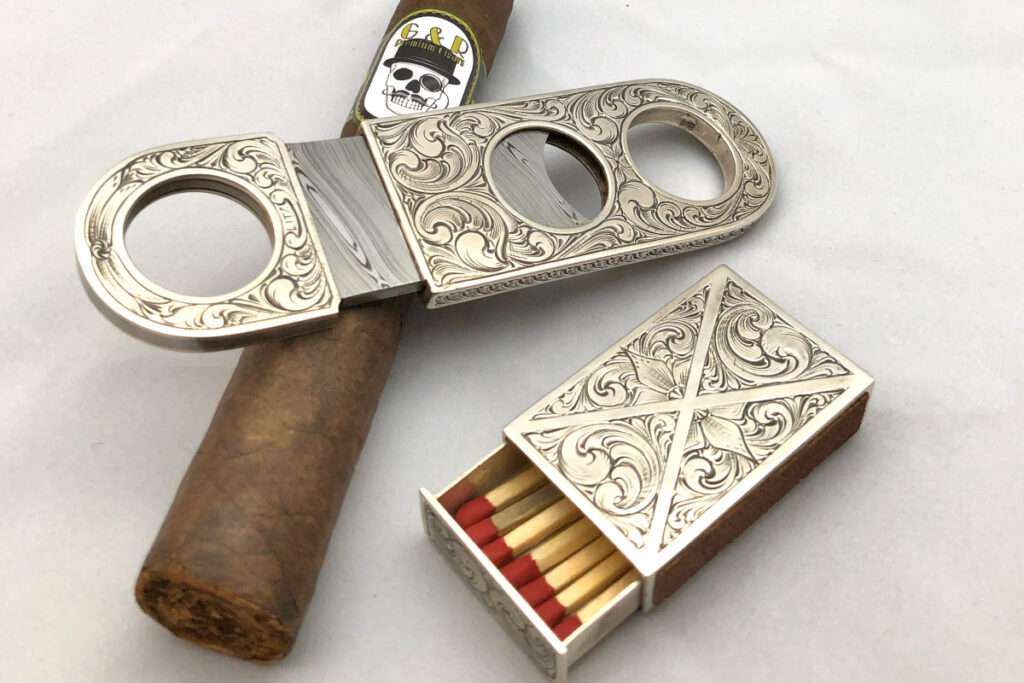
The gentleman’s study is dark, filled with books and memorabilia—the perfect place to store and display the “real” knife collection. Personally, I’d like a collection of custom bowies. I’d include pieces like a fully forged integral mosaic model from ABS master smith Mike Quesenberry, or an exquisite collaboration like The Knifemakers’ Guild award-winning piece by Nick Orr and Bailey Bradshaw. Or maybe I’d go rustic like ABS master smith Lin Rhea’s Preacher Bowie named after a mountain man. I’d round out the room with an engraved silver cigar-cutter-and-match-box set by Travis Payne engraved by Matt Litz for when the guys and I want to relax with a puff.
An engraved silver cigar-cutter-and-match-box set by Travis Payne engraved by Matt Litz for relaxing with a puff among friends would round out the author’s dream study. (Matt Litz image)
These days most tend not to receive letters, only junk mail and bills, and most of the junk mail goes straight to the trash unopened. But if I had a home office and I received good mail, I’d have to open it with a custom letter opener like one in a set from Deon Nel. He made a matching set of 16, so I bet he could spare one.
Outdoors
The backyard isn’t exactly part of the house, but that doesn’t exempt it from being a part of the author’s imaginary knife journey. If you have a standard grill, consider something like a san-mai brisket slicer from Dan Tompkins. (SharpByCoop image)
The backyard isn’t exactly part of the house, but that doesn’t exempt it from being a part of my imaginary knife journey. For those with a standard grill, you might consider something like a san-mai brisket slicer from Dan Tompkins. Or if you’ve got a fire pit, don’t forget Will Stelter’s damascus and mammoth ivory marshmallow fork. Or if you live in the woods, you might want a forged axe like a laminated wrought iron one from Nick Bachtel.
Bedroom
The author’s dream bedroom pillow dagger would be like Buttercup’s in The Princess Bride. If he were Buttercup’s beau, Dread Pirate Roberts, the author stated he might give his lady something like a poignard by Jamie Bishop. (SharpByCoop image)
Bedroom knives are a bit of a stretch. Personally, I have my hunting knives in my bedroom closet. If I were rich and fancy, though, I’d have to have a pillow dagger—you know, the dagger you keep under your pillow just in case. I’m reminded of the scene in The Princess Bride when Buttercup pulls out a fine stiletto in the bedroom, and the great Dread Pirate Roberts line that goes with it: “There is a shortage of perfect breasts in this world. It would be a pity to damage yours.” If I were Dread Pirate Roberts, I might give my lady friend something like a poignard by Jamie Bishop, or even something dainty and feminine like a fine small piece from ABS master smith Veronique Laurent. For under my personal pillow, I’d go with something extravagant like an art dagger from the Sobral Brothers.
Bathroom
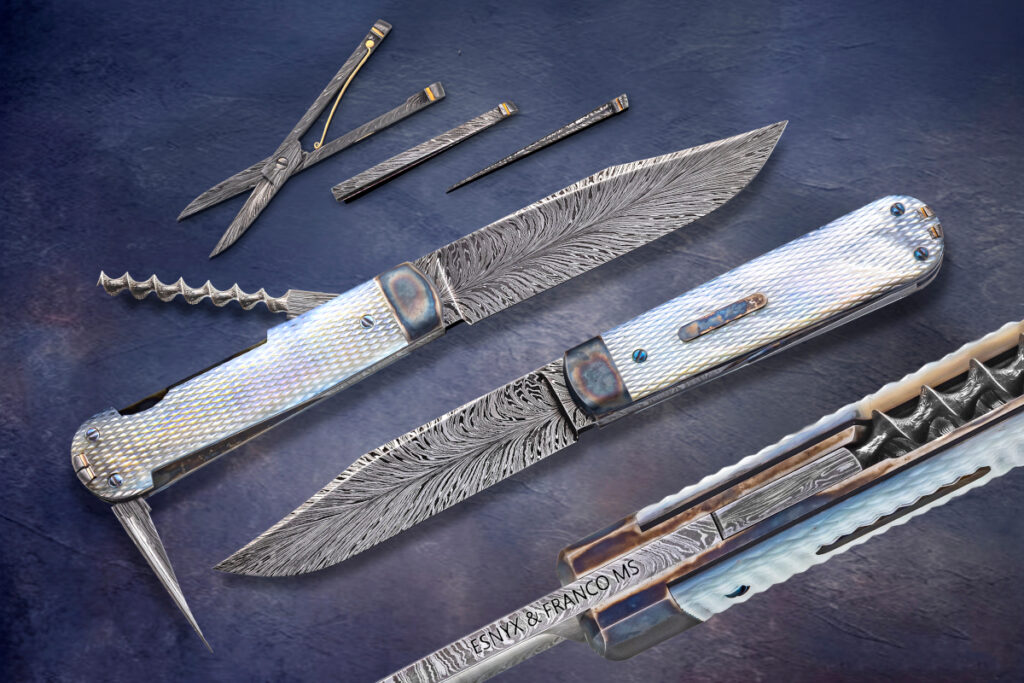
Bathrooms are for hygiene and sometimes that takes a knife. To clean your fingernails or pull a splinter in style, the author recommends something like the fine Dourado collaboration between ABS master smith Dionatam Franco and Evan Nicolaides. (Mitchel Cohen image)
Bathrooms are for hygiene and sometimes that takes a knife. If you want to clean your fingernails or pull a splinter in style, I recommend something like a fine collaboration between ABS master smith Dionatam Franco and Evan Nicolaides. The pearl scales will shimmer in the vanity lights, and there are enough tools included to take care of many different tasks. Or if you want to play “Mack the Knife” in a dark alley then come home and comb your hair, Rick Lala can hook you up with his two-tool blade/comb folder.
How Close Are You?
You may not have a knife for every room, but I suspect that many BLADE® readers come very close. Here’s to improving the quality of your knife collection—even the bedroom knives!
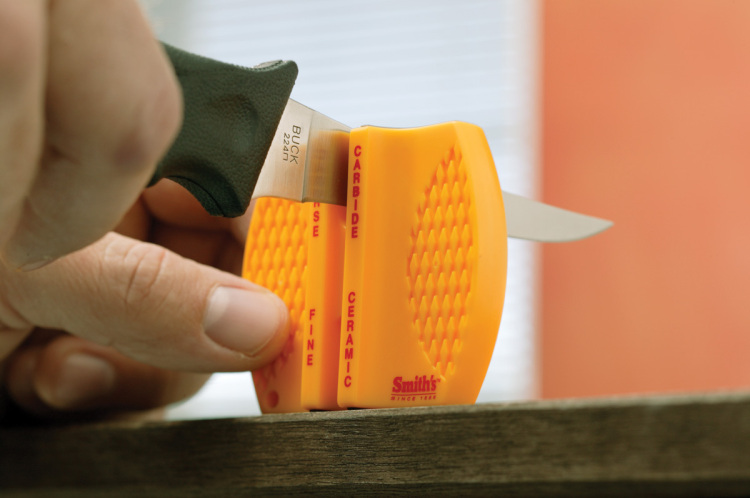
The CCKS 2-Step Knife Sharpener from Smith’s offers coarse tungsten carbide rods on top and extra-fine (1,000 grit) ceramic rods on bottom—both at pre-set angles for easy pull-through use—for sharpening and edge touch-ups/refinement, respectively. MSRP: $3.99. (Smith’s photo)
If sharpening stumps you, try one or more of these simple yet effective sharpeners
By Dave Rhea
A good working edge on a blade is one of the knife owner’s most important considerations, but sharpening is not always as easy as it seems. How do you hold the knife to the sharpener/which angle should you use? Do you use ceramic, stone or diamonds? How much sharpening is too much? How much is too little?
Here is a better question: Since even thinking about sharpening can get complicated, why not idiot proof the subject?
Quick and Easy
Chris Fire is a sharpening expert. As the marketing manager for Lansky Sharpeners, Fire lives and breathes by the sharpening industry. His suggestion for the quickest and easiest sharpener is Lansky’s Quick Fix Pocket Sharpener.
The Quick Fix has all the elements of an easy sharpener: Low price (MSRP: $5.99), small—about the size of a money clip—and fast results. A half-dozen or less strokes through one of the two slots clears up a problem blade edge in a hurry. One side holds a slight segment of tungsten carbide rod to return the edge to a proper geometry, and the other side holds a like-sized span of ceramic rod to deburr it.
Fire drew a distinction between the quick-and-easy and something less expedient but perhaps wiser.
“Tungsten-carbide sharpeners sharpen by tearing steel off the blade rather than slowly honing,” he warned. “They remove a lot of metal. Use them in a pinch, but for everyday edge maintenance you probably want to use something less aggressive like Lansky’s Turn Box Ceramic Sharpener.”
The 4 Rod Ceramic Turn Box (MSRP: $21.99) offers a higher-grade sharpening experience but is also uncomplicated. It uses two pair of 5-inch alumina ceramic rods that are set at pre-determined angles: 20 and 25 degrees. Holding the knife upright vertically, you draw the blade down along the rods of the V-shaped sharpener. With internal rod storage, it also breaks down into a compact kit for stowing in a drawer or tool/tackle box.
Fire added that perhaps as important as having a good sharpener is the knowledge that different tasks call for different knives. In other words, a chopping knife is not going to make a great slicing knife no matter what kind of edge it has.
“Chopping knives have a more durable edge, but they’re not as sharp,” he professed. “Chopping potatoes with such knives is great. Achieving paper-thin tomatoes slices? Not so much. So keep a knife for slicing, a knife for chopping, a multi-purpose knife and maybe a fillet knife, and use each to its strengths.”
Hassle Free
Marketing manager for Smith’s, Russ Cowen adds that a seemingly insurmountable task is convincing the consumer on-going edge maintenance is the key to keeping a perpetually useful edged tool.
“The best way to keep a knife sharp is to never let it get dull,” he explained. “If the consumer would just take a few minutes either before or after using a knife, and especially during use if doing lots of cuts for a longer time period, to touch up or freshen the cutting edge, he or she would see that not only would the knife cut better, but it would also take them half the time to accomplish the task.”
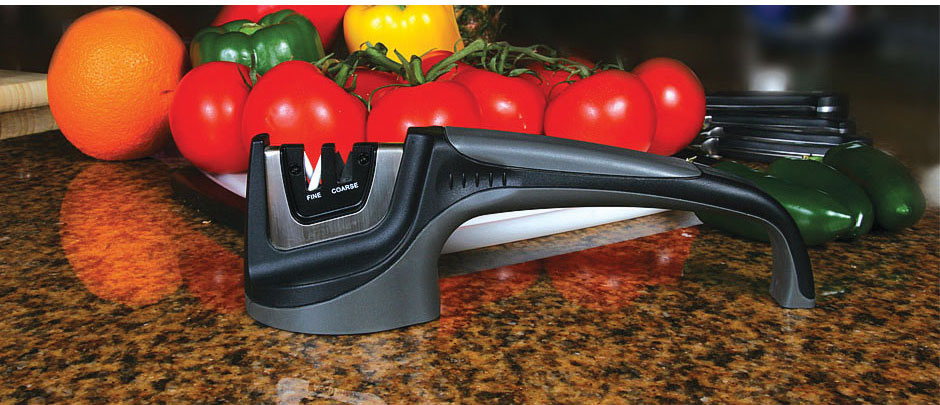
For such hassle-free edge maintenance, he recommends Smith’s 2-Step Knife Sharpener, a small plastic-framed sharpener with an insanely low MSRP of $3.99. The two sharpening slots—in carbide and ceramic—offer two stages of edge work: 1) coarse “for re-setting the edge on very dull or damaged blades,” and 2) fine for finishing work that will bring a blade closer to the hair-popping sharpness so many knife users crave.
“The 2-Step Knife Sharpener will sharpen any blade style with a flat grind on both sides of the blade as long as the blade will fit inside the sharpening slots. It works well on Euro/American style kitchen knives, everyday pocketknives, folding or fixed-blade hunting knives, fillet knives, outdoor sport knives, custom knives, and tactical/LE knives with little to no maintenance,” he said. “At most, the user may have to rinse it off or clean the ceramic rods after extended use.”
For knives that suffer from the usual treatment—letting them go pretty much dull—Cowen offers this advice: “The best way to put a new, sharp cutting edge on a very dull or damaged knife blade is to use an abrasive surface that is aggressive enough to remove large amounts of metal from the blade quickly.”
He suggests a sharpener with carbide blades or a low-grit diamond-coated surface. Such abrasive components are quite aggressive and remove metal from the blade very quickly—sometimes so fast you can see the metal shavings falling off the blade, he added.
Simplest Is Best
Pre-set angles and guides are all designed to make the obligatory task of sharpening a knife easier. However, according to Mark Brandon, president of Diamond Machining Technology (DMT), it does not get any simpler than the old-fashioned bench stone.
“There’s a myth out there that sharpening is difficult,” Brandon began. “I don’t think the sharpening industry has done itself any favors—we’ve done our part to help convince people that it’s difficult by coming out with all these ‘we’ll-hold-your-edge-for-you’ kind of products.”
He said the reality is that via its training videos available at www.dmtsharp.com, DMT has taught scores of folks to sharpen on a stone in less than five minutes.
“We think it’s kind of idiot proof to begin with,” he stated. “Sometimes the simplest approach can be the best, and there is really nothing simpler than a 6-inch-by-2-inch stone.”
Brandon’s two bench-stone suggestions start with the DMT Diamond Whetstone, which comes in 6- and 8-inch models. They have MSRPs of between $47.16 and $95.26, depending on the length and choice of either plastic or hardwood case. A diamond abrasive is the best and simplest material to put a great edge on a blade, he said.
His other suggestion is the DuoSharp 8-inch model, another diamond stone that is double sided in fine and extra-fine grits to address both sharpening and refining the edge. The 8-inch DuoSharp has an MSRP of $105.03 for the stone alone and $114.58 with the stabilizing base accessory.
“It’s all a matter of how much time are you willing to spend on it,” Brandon said. “If you have a fine stone, depending on how much time you want to take, you can get a dull knife sharp. But if you don’t have that much time, you may want to have a coarse stone available to get it to a certain level and a fine stone to get a good working edge, and if you really want to make it hair-popping sharp, go to an extra fine.”
Rule Of Thumb
No matter your preference, there are plenty of choices available. The key is to find your comfort zone and touch up the edge at least once for every three or four times you use a knife. The basic rule of thumb is do not let your knife go dull and it will be easier to keep a crisp, high-performing edge.
For more on the latest knives, knife legislation, knifemaking instruction, knife trends, knifemakers, what knives to buy and where and much more, subscribe to BLADE Magazine, the World’s No. 1 Knife Publication.
It’s challenging to know which knife sharpeners are junk and which are worth the money. To help, BLADE staff and contributors assembled this list. These are the knife sharpeners that those “in the know” use, but they won’t break the bank.
How BLADE Chose These Knife Sharpeners
BLADE received no compensation for the items that appear on this list. BLADE does not benefit financially from affiliate programs on any of the links. These picks are based on experience, knife sharpener reviews from the magazine, and what’s hot in the marketplace. There are more excellent options beyond this list.
Remember: a sharpener can’t help you if it never leaves the drawer! Buy a knife sharpener you’ll enjoy using.
Top Pick: Electric/Manual Combo Knife Sharpener
Work Sharp Combo Knife Sharpener
PROS
For all types of knives
Simple to use for beginners, but yields advanced results
Offers electric sharpening (removing metal) and manual honing (straightening metal) in one unit
Easy maintenance with compressed air
CONS
Produces metal dust (store it away from food)
Only offers 25-degree angle for edges
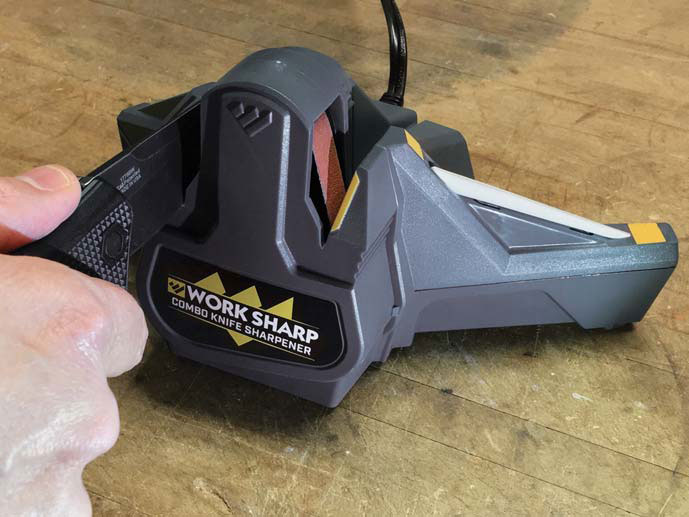
The Work Sharp Combo Sharpener is designed for those who want simplicity along with the results that abrasive belt sharpening offers. One speed, one belt, one angle—everything is fixed. (DMS Captures image)
Winner: 2016 BLADE Magazine Accessory of the Year!
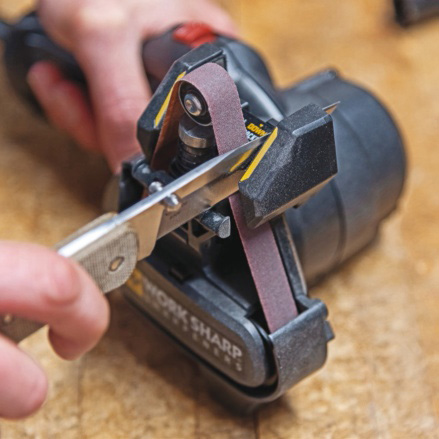
Featuring a flexible abrasive belt, the motorized Work Sharp Combo Sharpener (WSCS) from Work Sharp is simple and effective. It uses long lasting abrasive-belt-sharpening technology and puts a convex edge on any blade.
It has one sharpening angle, one motor speed and one grit of belt only. Simply plug it in and turn it on. Configured in a nice, compact form, the built-in angle guides eliminate the guesswork of holding a consistent 25-degree angle.
Pull the blade through each slot to sharpen both sides. After achieving a sharp edge using the belt, switch to the tapered ceramic rod to further hone the edge to hair-popping sharpness. Rest the blade flat against the yellow pads and move it from tang to tip in one sweeping motion using light pressure.
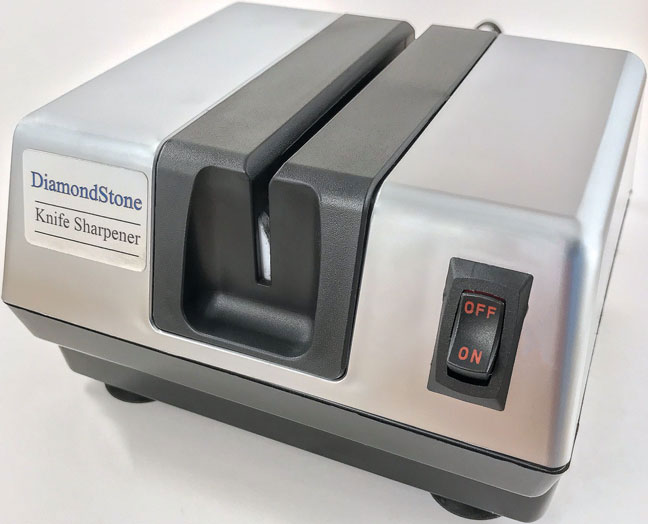
The McGowan DiamondStone electric sharpener is a singlestage unit with counter-rotating abrasive wheels that produce a keen edge quickly on any blade, though it does so especially well with kitchen knives.
PROS
Quick and easy to use
Works especially well on kitchen knives
Chrome finish doesn’t look out of place on the countertop
Design keeps metal dust to a minimum
Less noisy than other models
CONS
Boxy design may not be visually appealing to everyone
Housed in a combination metal/plastic housing, the DiamondStone is available in brushed chrome or black. The brushed chrome blends in nicely on a kitchen countertop with other kitchen appliances.
Out of the box, the sharpener looks well built with top-notch fit and finish. It is quite boxy in appearance, with a pronounced slot running down the middle. Inside the slot sits multiple diamond-infused ceramic wheels that interlock and rotate counterclockwise in relation to each other in order to sharpen both sides of the edge simultaneously. The unit runs smoothly with minimal noise.
Place the blade in the slot starting with the tang end and pull straight toward you, using a minimal amount of pressure on the wheels and drawing back at a moderate pace to allow the ceramic wheels to do the work. As you approach the blade tip, lift the handle slightly so you can sharpen the blade’s belly evenly as well. Once you reach the tip, lift the knife out of the slot and repeat. Usually, a few strokes through the DiamondStone yield a very sharp edge.
This is an ideal type of sharpener for novices because there’s only one motion involved—pulling the blade through the machine.
The best pull-through, manual knife sharpeners feature a secure grip, a sturdy design, and solid construction for durability. A $20 investment ought to last you several years. (AccuSharp image)
PROS
Rubber grip for secure sharpening
Sharpening and honing options
Heavy duty design
Compatible with most plain-edge knives
Could not be simpler to use
CONS
Sharpener/honer may become loose after years of use (as with most manual pull-through knife sharpeners
Lacks the “cool factor” of more advanced knife sharpeners
Yes, there are plenty of pull-through, manual knife sharpeners out there. Some of them even resemble the design of the AccuSharp Pull-Through Knife Sharpener. So why did this one make the list?
To put it simply, this is a well-built manual knife sharpener with a sturdy design. That’s really all you need to worry about, because the sharpening technique will be the same. Draw the blade through the sharpening or the honing V with gentle pressure. Let the tool do the work. So long as you can safely move the blade through the V, this manual sharpener will tackle any type of knife (except for serrations).
This is a knife sharpener to keep in the kitchen drawer, the work bench in the garage, at the cabin, or even in a backpack.
See Also: Just about any other manual, pull-through knife sharpener. Look for solid grips, a sturdy design, and solid construction. It’s OK to pay a few dollars extra for durability’s sake.
Knife Honing Rod Tips
What’s the difference between honing and sharpening knives?
Honing rods refresh an edge, but they do not sharpen. That’s an important distinction. Honing is something that’s done regularly to tune up a blade, such as before preparing a meal, or immediately after sharpening. That’s because honing straightensthe existing edge. Sharpening removes metal from the edge, which is why it shouldn’t be done as often as honing.
Confusing this entire category is how some honing rods are called sharpening rods, and vice versa. The key is to look at the material.
Three Types of Honing Rods
Generally speaking, there are three types of honing rods: steel, ceramic and diamond. While each has different characteristics, there are some things to watch for:
A secure, ergonomic grip
A sturdy guard that protects your hand
A ring on the handle for slipping a pinky through in case you drop it
The rod should be longer than the blade of the knife/knives you intend to sharpen
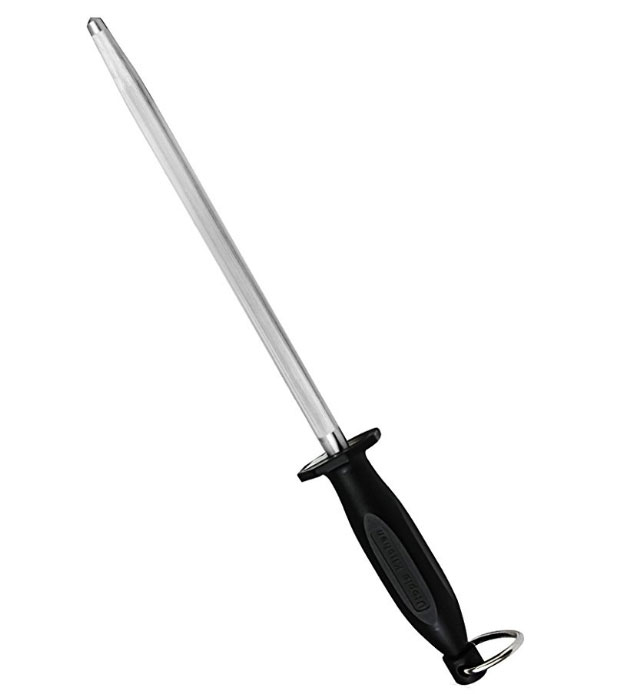
There’s no need to overspend on steel honing rods. This 12-inch rod from Utopia Kitchen goes for $15.99.
Steel honing rods are the most common type, and the least expensive. Because they’re made from metal that’s softer than what’s typically found on knives, they’re excellent honing tools. Don’t pay more than $20 for one.
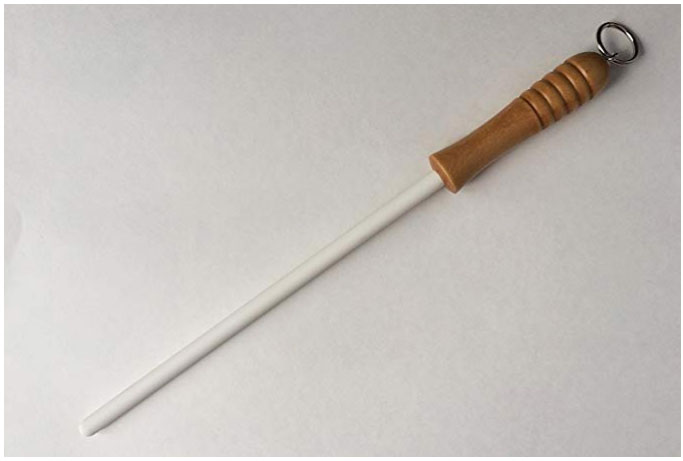
The Idahone Fine Ceramic Sharpening Rod sells for $34.99 at most retailers.
Ceramic honing rods are a bit more aggressive than steel versions. They’ll remove some steel in the process of honing. Isn’t that technically sharpening? Yes! However, if you’re someone who doesn’t sharpen as often as you should, a ceramic honing rod is a way to delay the inevitable. Expect to pay between $30 to $40 for the best value.
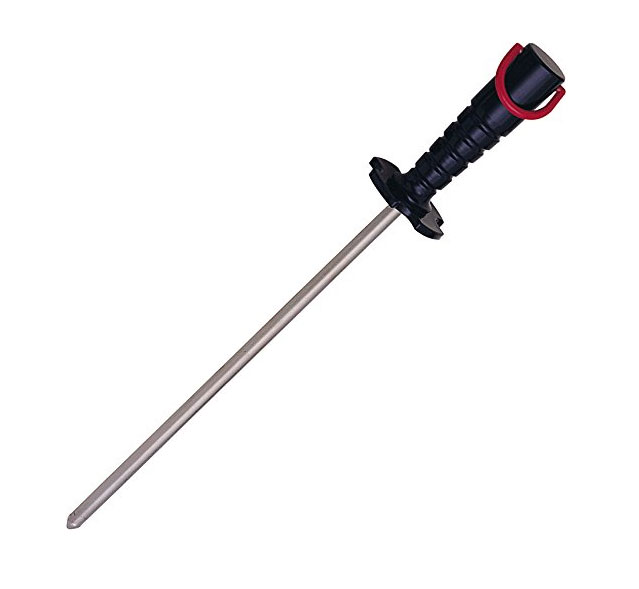
The 12-inch Diamond Steel Sharpening Rod has an MSRP of $39.68.
Diamond honing rods remove the most amount of steel during the honing process, which is why they’re basically sharpeners. If you go down the diamond rod route, pick up a steel or ceramic honing rod, too. On the plus side, diamond rods will last a lifetime. Pay $35 to $45 for a nice ROI.
Portable Keychain Knife Sharpener
CRKT Knife Maintenance Tool (KMT)
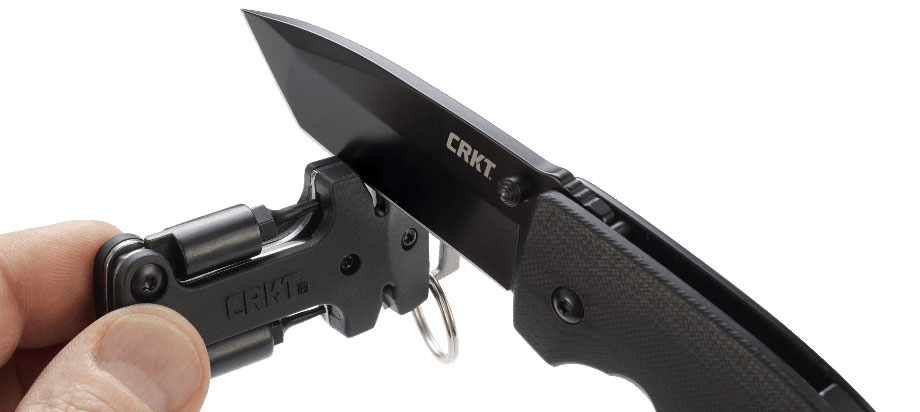
The CRKT Knife Maintenance Tool is an excellent portable knife sharpener. (CRKT image)
PROS
Compatible with most folding knives
Tungsten manual sharpener on one side
Ceramic honing edge on the other
Attaches to keychain
Bonus: T6 & T8 Torx screwdrivers
CONS
Too small for larger fixed blade knives
Maybe you prefer a different screwdriver?
Winner: 2018 BLADE Magazine Accessory of the Year!
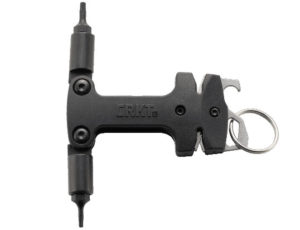
The KMT weighs in at only 2.2 ounces. It sports a glass reinforced nylon handle. (CRKT image)
Too many keychain knife sharpeners are garbage. They fall apart, don’t get the job done, or are challenging to hold safely. The CRKT KMT, however, is an exception.
Place the KMT horizontally on a surface, then pull a blade through the tungsten carbide sharpener or the ceramic honing edge. Use gentle pressure, because the classic V will automatically bite into the edge’s preset angle.
The T6 and T8 screwdrivers may seem like filler for a keychain knife sharpener, but they actually offer a nice grip while working the blade.
An MSRP of $29.99 may seem high for a keychain knife sharpener, but consider the abuse you put your keys through on a daily basis, and it’s worth the price.
Here’s how to sharpen serrated knives. (Bear & Son photo)
PROS
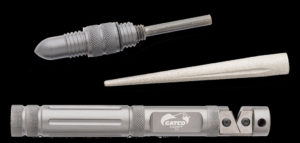
Tapered diamond rod makes sharpening knife serrations a breeze
Built-in carbide sharpener tunes up plain edges, too
Bonus: Magnesium fire starting rod
Compact design: Both rods fit inside the body
Rugged body keeps components safe
CONS
Best used in tandem with a separate, dedicated sharpener for plain (non-serrated) edges
May not want to pay extra for the fire starting rod
A view of the Scepter 2.0 fully assembled, with both rods inside the body. (Bear & Son photo)
The two rods screw apart and back into the knife sharpener’s body. This is a serrated knife sharpener that should last you a lifetime. (Bear & Son photo)
The GATCO Scepter 2.0 leans toward the survival category, but don’t let that turn you away from it. This is an overbuilt tool that should take care of sharpening your knife serrations for the rest of your life. Diamonds are forever.
The tapered diamond rod easily sharpens all types and sizes of serrations on tactical, sporting and kitchen knives. Simply lock the rod into the groove of a serration and lightly run it toward the blade’s edge. The classic V of the tungsten carbide sharpener will handle plain edges, too.
But the real gem in this design is the way the components can all be screwed into the rugged, 6061-T6 aluminum carbide body for secure storage.
Do you really need the magnesium fire starting rod? Maybe, maybe not, but that’s just gravy.
“We invented the Tri-Angle Sharpmaker because, while similar to the [V-stick] sharpener, it solved many sharpening challenges/problems the [V-stick] couldn’t perform,” he says.
One of those problems is the V-stick model could not sharpen serrated blades. Enter the Sharpmaker’s triangular-shaped rods, which allow it to address both plain edges on the rods’ flats and serrations using the “points” of the triangle.
Once you set the sharpener up, start your blade from where the edge starts closest to the tang and run it down the hone, at the same time pulling the blade back toward you, ensuring the hone contacts the entire length of the cutting edge all the way to the tip. Hence, you’re doing two simultaneous motions—moving down the hone and pulling the blade back toward you. Do it all with light pressure.
Don’t think you can learn how to sharpen a ceramic knife? Think again. (Dexter Ewing image)
PROS
Handles ceramic or steel blades
Don’t need to mail ceramic knives in for sharpening
Works with most types of knives
Simple to use
CONS
Only offers a convex edge
Pricier than other sharpening options
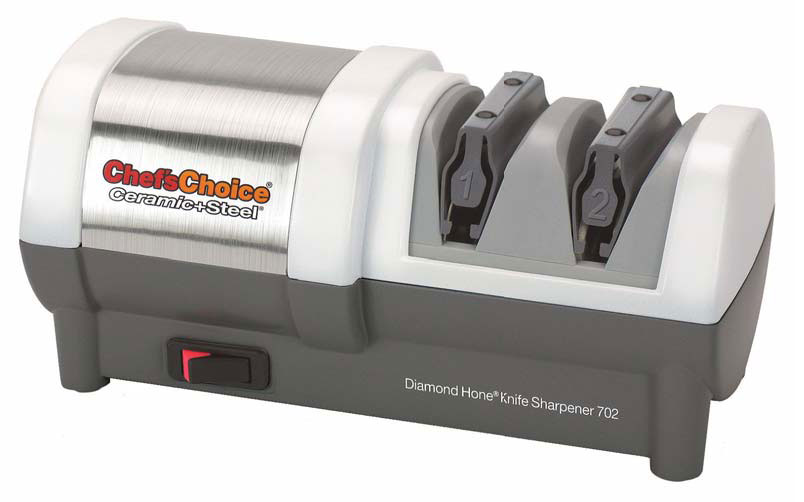
As with all motorized Chef ’s Choice sharpeners, the 702 will handle steel kitchen knives. However, it also will put the same quality edge on any ceramic kitchen blade. Employing advanced diamond abrasive technology, the 702 features two sharpening slots that hold the knives at pre-set angles, optimized for the best edge on both ceramic and steel blades. Turn the motor on and, using a steady drawing motion, pull the blade through each slot.
The 702 applies a convex edge, or what the Chef ’s Choice literature calls a “gothic arch,” to either steel or ceramic blades. The resulting grind leaves behind more “body,” which gives the edge added strength and resists chipping, while still remaining very sharp. This translates into a longer lasting edge.
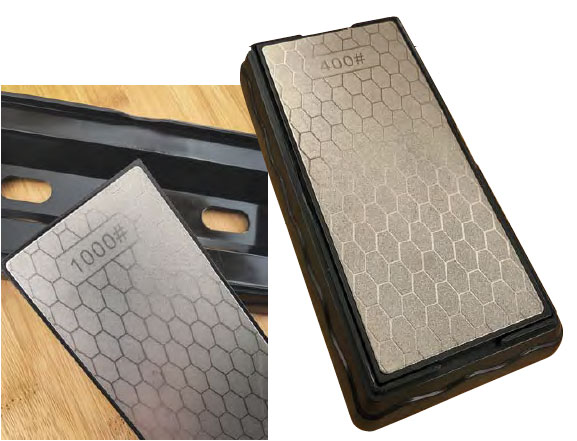
The DMD Double Sided Bench Stone features two grits on one stone. Coarse (400) and fine (1,000) grits address high-performance steel blades. The metal plate is double sided and lies on the base just so to provide sharpening convenience. (DMS Captures image)
DMD Double-Sided Bench Stone
PROS
As with all knife sharpening stones, total control over edge angle
Two sides offer two grits
You look like a pro
Sharpens knives and edged tools
CONS
May be too advanced for knife novices
Some prefer a larger stone
The DMD double-sided bench stone sports two different grits: a coarse 400 and fine 1,000. The base is molded ABS plastic and features wide, anti-skid rubber feet to keep the sharpener in place while working on a flat table, counter or bench. The sharpening surface sits in a cavity of the base. To change grits, flip the hone over and return it to the base.
A hex-like pattern on both sharpening surfaces removes the tiny metal particles so they won’t collect and clog the surfaces as you sharpen the blade.
Work with the DMD and discover the convenience of a double-sided diamond bench stone, a rarity among such stones. The coarse side easily and quickly re-establishes worn edges to sharp. After you establish the primary edge, flip the sharpening surface over to the fine side and fine-tune the blade.
Pro Tip: Try using a permanent marker to color in the entire cutting edge on both sides of the blade. As you sharpen, note where the ink is removed and where it remains on the cutting edge. By doing so you can adjust your angle accordingly to capture the entire cutting edge and, therefore, keep the angle consistent for a sharp blade.
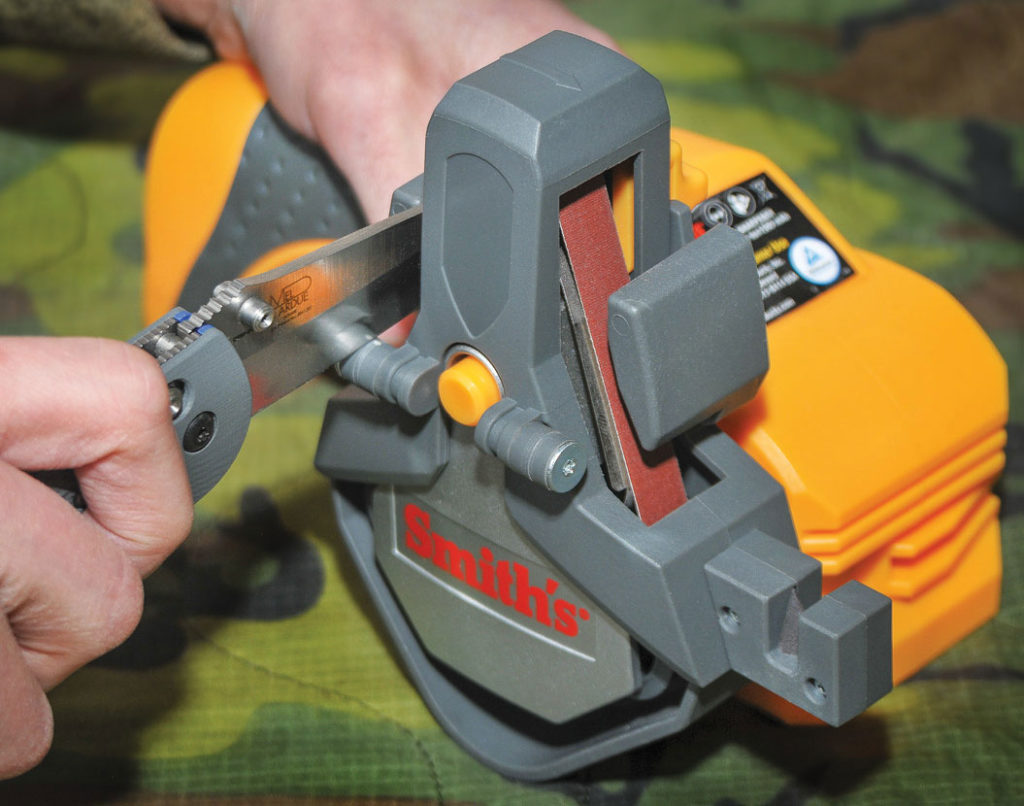
The Cordless Knife & Tool Sharpener from Smith’s Products features easily adjustable angle guides that hold the knife at the proper set angle for a consistent edge. (DMS Captures image)
PROS
Take an electric knife sharpener anywhere
No need to replace batteries
Sharpens knives and tools
Interchangeable belts for different grits
Backer plates offer extra safety
CONS
Belts can wear out
“Grabby” belts can apply an uneven edge if you’re not careful
Battery life limits use time
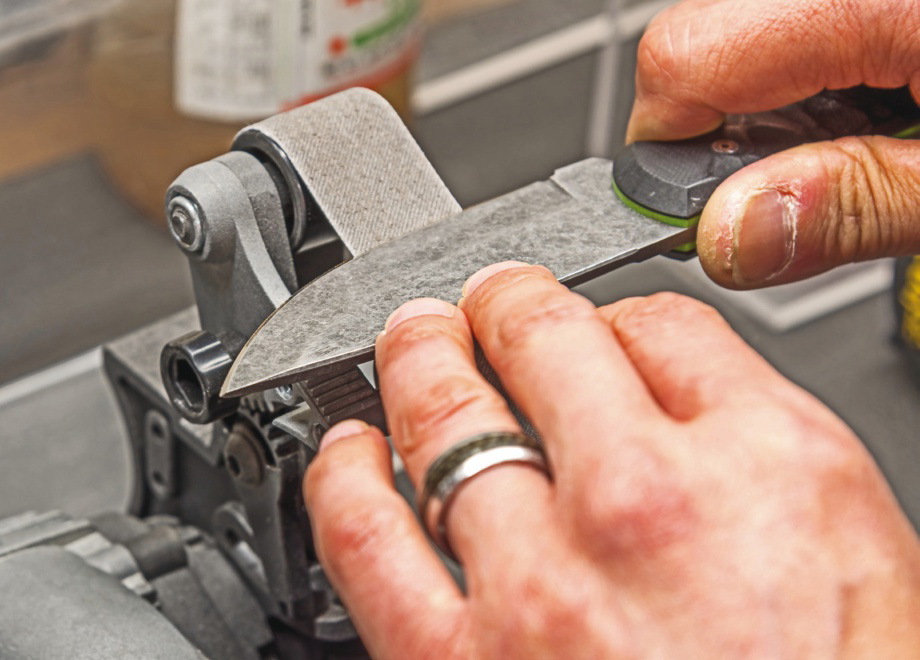
The Cordless Knife & Tool Sharpener represents a new step for Smith’s Products. While the company has sold and continues to sell electric sharpeners, this is the first time it has offered a powered abrasive-belt unit. Moreover, Smith’s added an extra twist by making it cordless and rechargeable. A pivoting head enables the unit not only to sharpen knives, but other cutting and digging tools such as axes, hedge clippers, bypass pruners, shovels and more. It comes with three interchangeable belts in coarse (80), medium (220) and fine (600) grits.
The belts are simple to change and color-coded for easy recognition. In addition to the multiple grits of belts, an adjustable guide maintains a consistent angle throughout the sharpening process. Another cool feature consists of “backer plates” behind the flexible sharpening belts.
“The backer plates prevent the belt from wrapping around the tip of your blade when you pull it through the sharpening slot,” says Ricky Dukes, Smith’s vice president of marketing.
Pull the blade through the slots to easily achieve a very sharp cutting edge. An ergonomic, soft-grip molded handle makes holding the sharpener very comfortable as well as non-slip.
In order to operate the sharpener, depress the rocker switch with your finger. Release the switch and the motor shuts off. There is no trigger lock to enable the sharpener to run continuously. Hence, if you need to stop the unit to regain control, simply release the switch.
One of the unit’s advantages—being cordless and rechargeable—is also a downside. BLADE’s tester operated it non-stop for 8 minutes and 20 seconds before it ran out of charge with no warning. Around the 8-minute mark the motor slowed slightly and 20 seconds later it shut off . There was no gradual tapering off —it simply shut down.
If you talk about Greatest Loveless Knife Designs, a Bob Loveless chute knife has to be included in the list. Originally designed for a Spec Ops parachutist working in jungle climates, the “chute” knife was fashioned to cut the lines of a parachute should the operative become entangled in them, a tree or other obstruction.
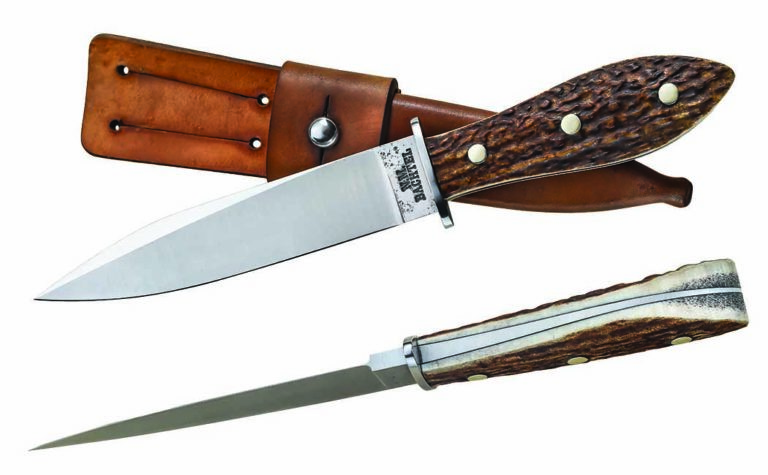
A study of Michael Price’s work, Nick Bachtel’s reproduction gentleman bowie has the looks to wow.
Bladesmith Nick Bachtel has parlayed his fascination with the knives of 19th-century great Michael Price into a faithful reproduction of a Price-style gentleman’s bowie.
Nick studied every Price knife and other like ones of the genre he could find online and elsewhere to help arrive at the way the 19th-century cutler constructed the gentleman’s bowie. However, it was when he saw a picture of a Price knife in BLADE Magazine Cutlery Hall-Of-Fame® member Bernard Levine’s book, Knifemakers Of Old San Francisco, that “a light went off.”
Nick noticed that the handle had three pins so the knife had to have a full tang, not a hidden tang as he had previously thought, so he forged the knife, heat treated it, fit up the guard and forged the tang wider.
“I call it a captured-guard full tang,” the 24-year-old said of the method that apparently originated among bladesmiths in Ireland, Price’s native country. “It’s such a weird, unique, almost comical way of making a knife—and difficult to do as well,” Nick observed, “but boy, did Price make it!”
Nick Bachtel (inset) calls the construction he used to make his reproduction of a Michael Price Gentleman’s Bowie “captured-guard full tang.” For the style to work, it must be forged, Nick stressed. He said another way to do it would be in a frame handle construction and a tapered tang, though a Price aficionado would be able to tell the difference. (SharpByCoop knife images)
The icing on the cake for Nick was ABS journeyman smith Jordan LaMothe’s story, “How to Make the Price Guard” in the December 2019 BLADE®. As Nick noted, “The Price style is the pinnacle of the traditional forged blade.” What better style is there for a young, up-and-coming bladesmith to explore?
Gentleman Bowie Spec Check Knife name: Michael Price Style: Gentleman’s Bowie Maker: Nick Bachtel Blade length: 5 7/8 inch Blade material: 52100 carbon steel Handle: Elk antler and nickel silver Overall length: 10¾ inch Sheath: Traditional center-seam vegetable-tanned cowhide w/frog stud Maker’s List Price For A Similar Knife: $1,100(includes sheath)