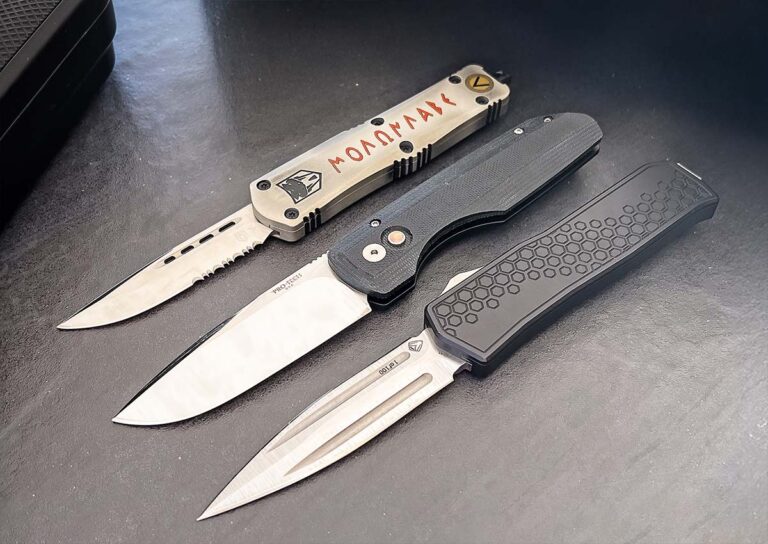
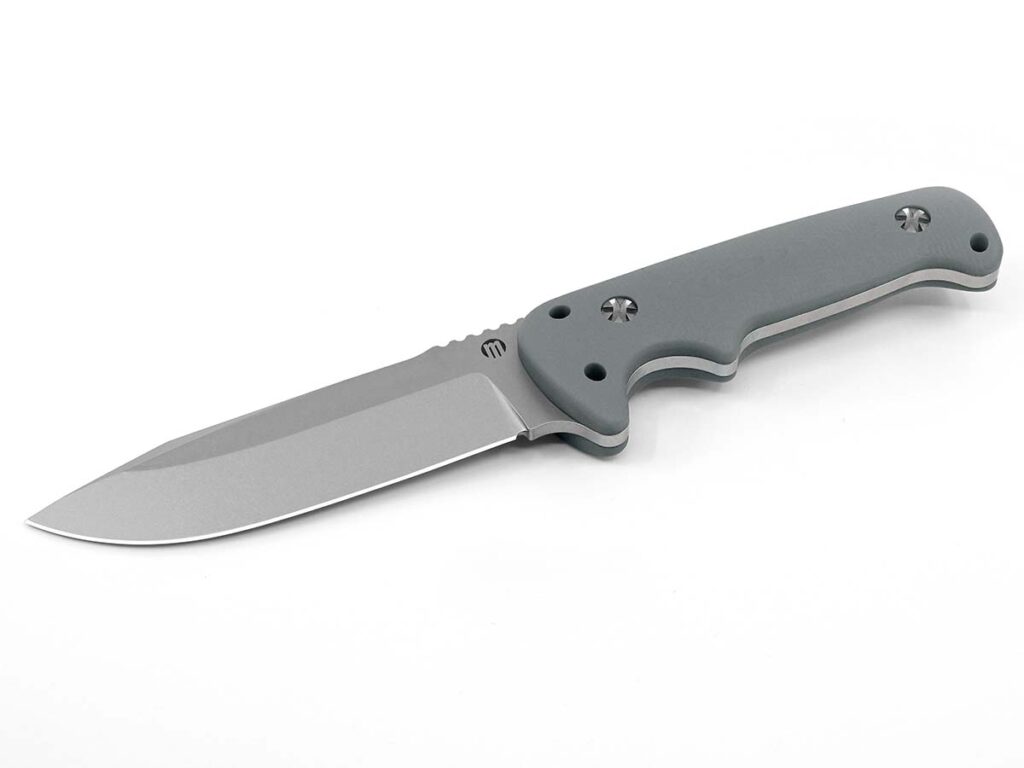
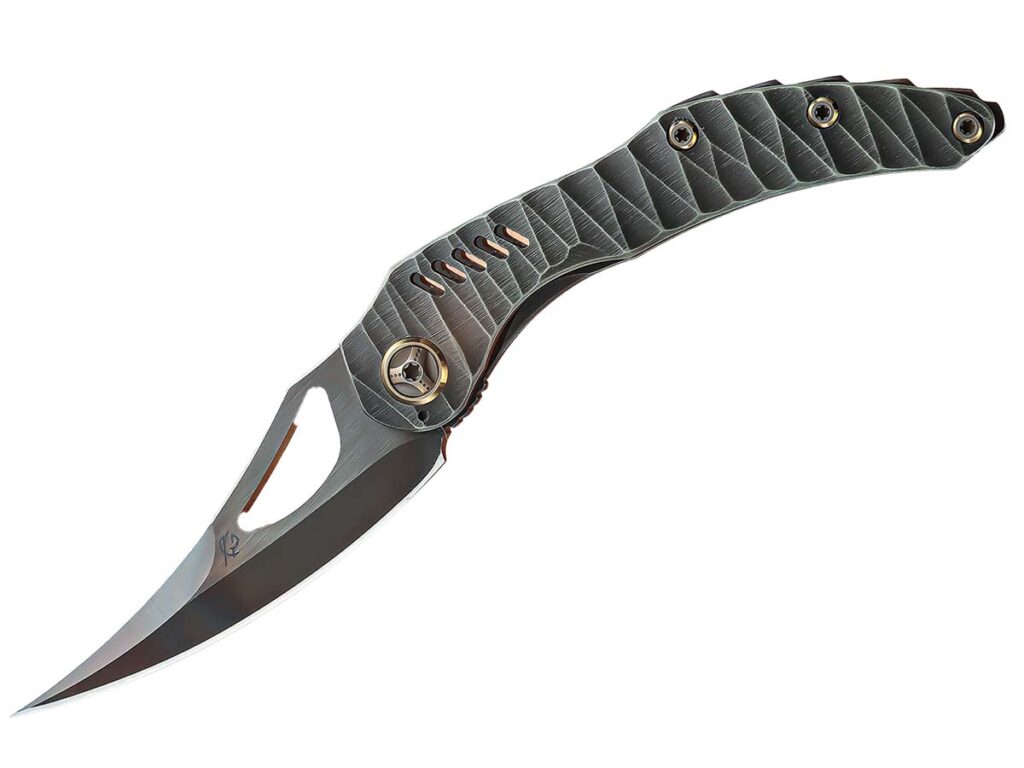
Three new models are but a smattering of the boom in factory-made automatics.
When it comes to a truly original American knife, it’s hard to top the auto.
Unfairly maligned over the decades as the “weapon of street gangs” and other inaccurate smears, the knife still known to many as the switchblade is enjoying a renaissance in popularity due to the reversals of many statewide auto bans spearheaded in large part by the two leading pro-knife legislative action groups: Knife Rights and the American Knife & Tool Institute.
With autos now legal to many thousands of enthusiasts in dozens of states, one of the results has been a boom in factory-made autos by a growing number of knife companies.
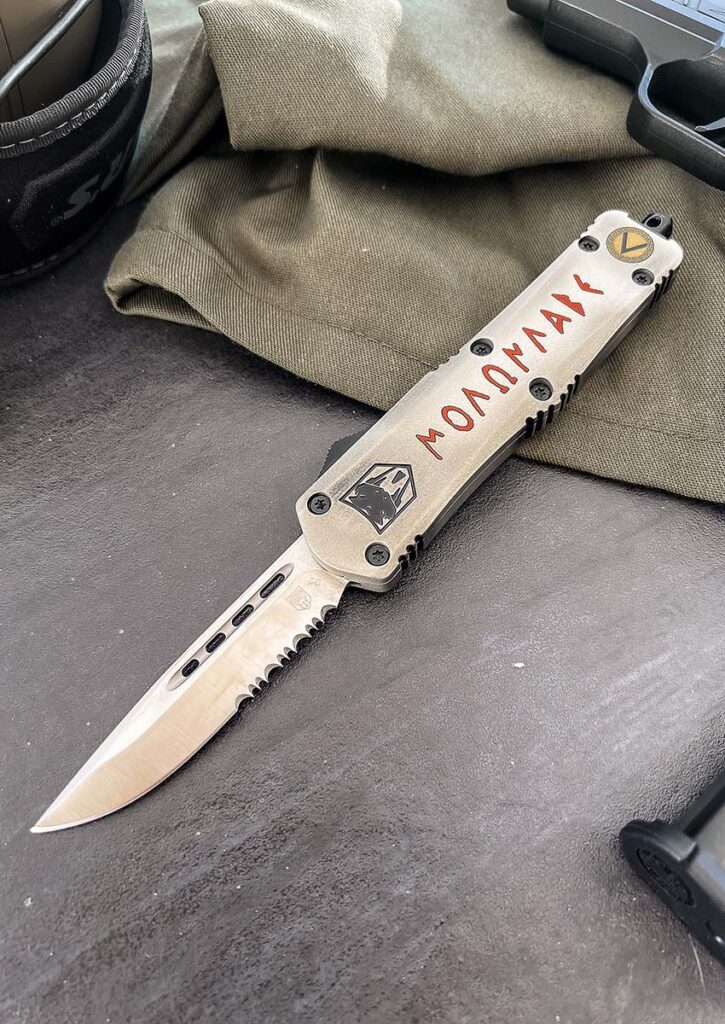
CobraTec FS-3 Molon Labe
The handle of the CobraTec OTF has a Cerakote® finish and graphics with the Molon Labe—Latin for “come and take it”—text. A ramped thumb slide switch actuates the blade, which deploys and retracts with quick, crisp action.
If you’re into OTF (Out The Front) autos, Texas-based CobraTec Knives should be of interest. The small, family-owned operation offers entry-level, midgrade and high-end automatic and manual opening knives, as well as fixed blades.
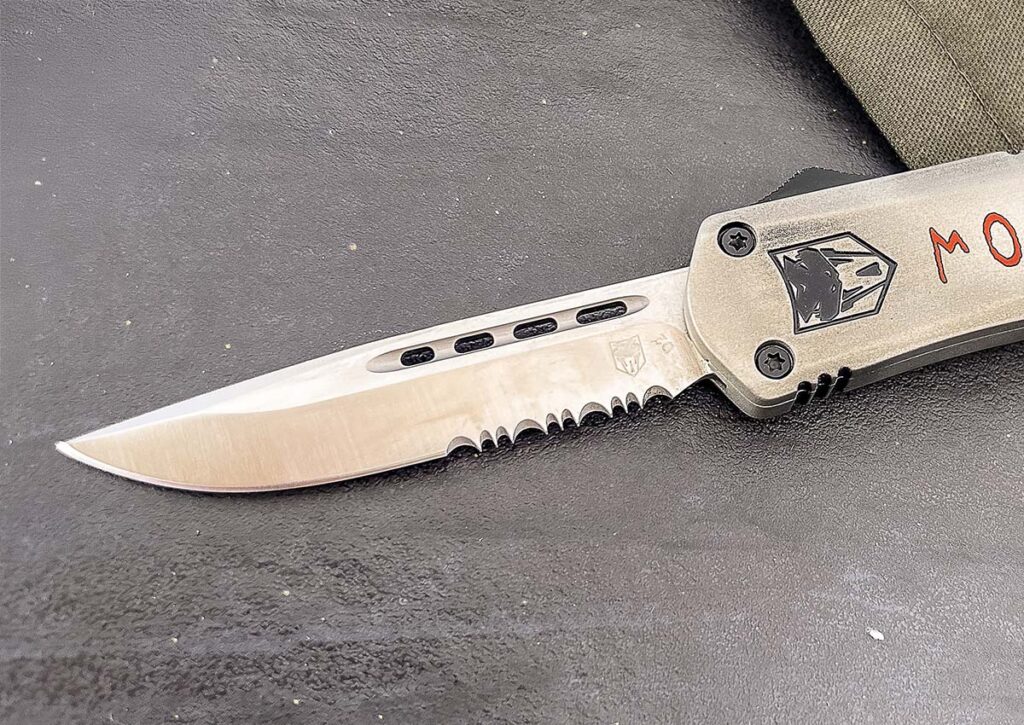
Its OTFs* are a great bang for the buck. The medium FS-3 Molon Labe edition features a 3-inch clip-point blade of satin-finished D2 tool steel paired with a 4.5-inch aluminum handle. Available in either a plain or partially serrated edge, the test model is the latter. The serrations give extra cutting power through thick or fibrous materials.
The knife is sized just right to handle most cutting tasks and still be compact enough for comfortable carry. The handle has a Cerakote® finish and graphics with the Molon Labe—Ancient Greek for “come and take it”—text. A deep carry, reversible/ambidextrous pocket clip held by a large screw doubles as a glass breaker. A ramped thumb slide switch actuates the blade, which deploys and retracts with quick, crisp action.
A ramped thumb slide switch actuates the blade, which deploys and retracts with quick, crisp action.
D2 is known for toughness, edge holding and ease of resharpening. It’s been a popular choice for custom knifemakers for years and has become widely adopted in the production industry as an alternative to low-grade stainless steel, offering the enhanced edge retention at a nominal price increase, if any. The belly of the modified clip point blade has excellent slicing abilities.
Medford Knife & Tool MERC-1
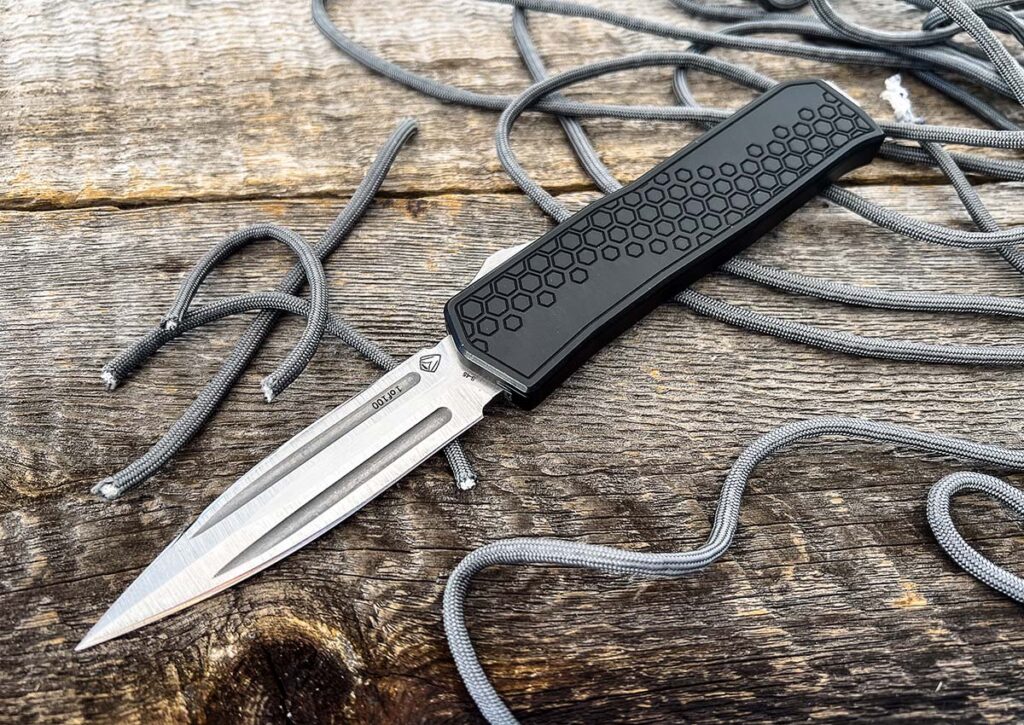
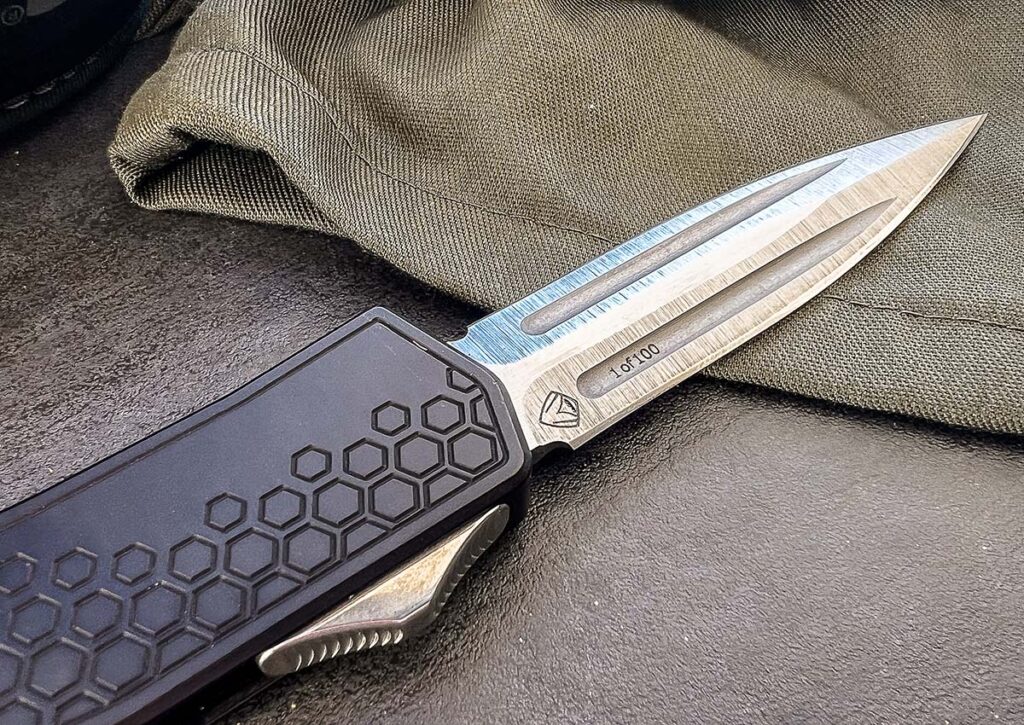
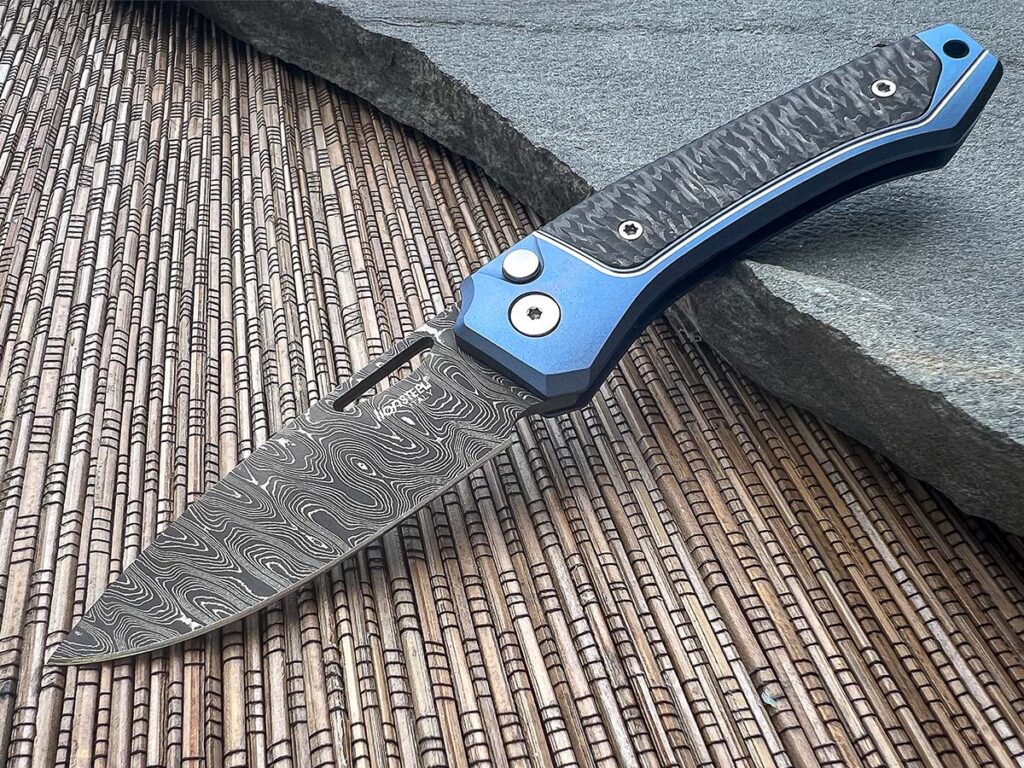
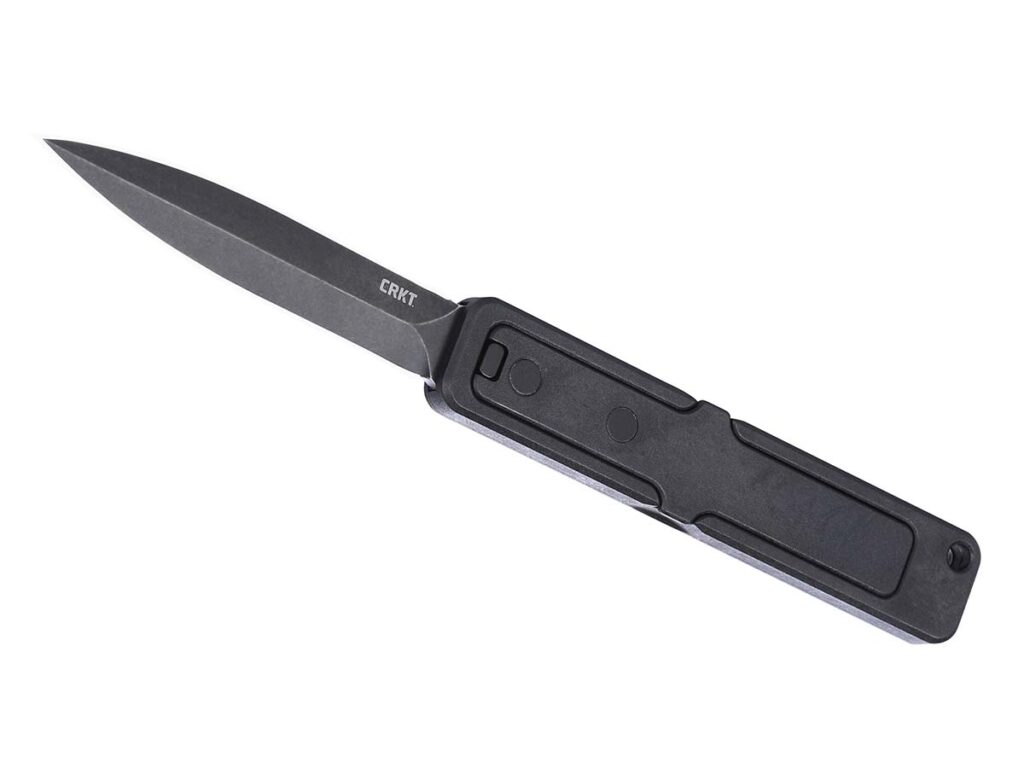
The MERC-1 has a symmetrical dagger-style blade of CPM S45VN stainless for enhanced edge holding.
If you think the Medford Knife & Tool MERC-1 is like all the other OTFs on the market, you’re wrong. The 3.75-inch blade comes in either a double-edge dagger style or Medford’s single-edge Praetorian-style drop point, each in CPM S45VN stainless.
Sporting two sets of fullers, the dagger test blade is loaded with attitude. The 5-inch handle is hard anodized aluminum. A sturdy, wide, deep-carry pocket clip is affixed to the end of the handle by a large screw and has a glassbreaker point.
One of the more interesting facts about the MERC-1 is there are no handle assembly screws. How is this done? The top handle cover slides onto the body via a tongue and channel system. The large clip screw fastens the two together, preventing unwanted movement of the top cover. The no-screws approach provides a visually streamlined, cleaner look than most.
Note the MERC-1 blade’s dual fullers (page 44), reducing weight as well as giving the knife a double dose of attitude.
The MERC-1 is a solid performer. Blade deployment and retraction are quick with a solid feel. The sliding button requires some force to push and pull but once you get used to it, it’s no problem. This is done by design to prevent inadvertent blade movement.
The knife does well at general cutting but needs a bit of pushing to get through some tasks. Dagger blades are more for thrusting and penetration. One thing is certain, the MERC-1’s is definitely cool looking! (Author’s note: the knife for this review is an earlier version with a hex-bolt machining pattern on the handle. The pattern has been changed to a series of chevron lines and an engraving of a crossbow.) The MERC-1 is Medford’s first attempt at an OTF and an excellent one at that.
Vero Engineering/Pro-Tech Synapse
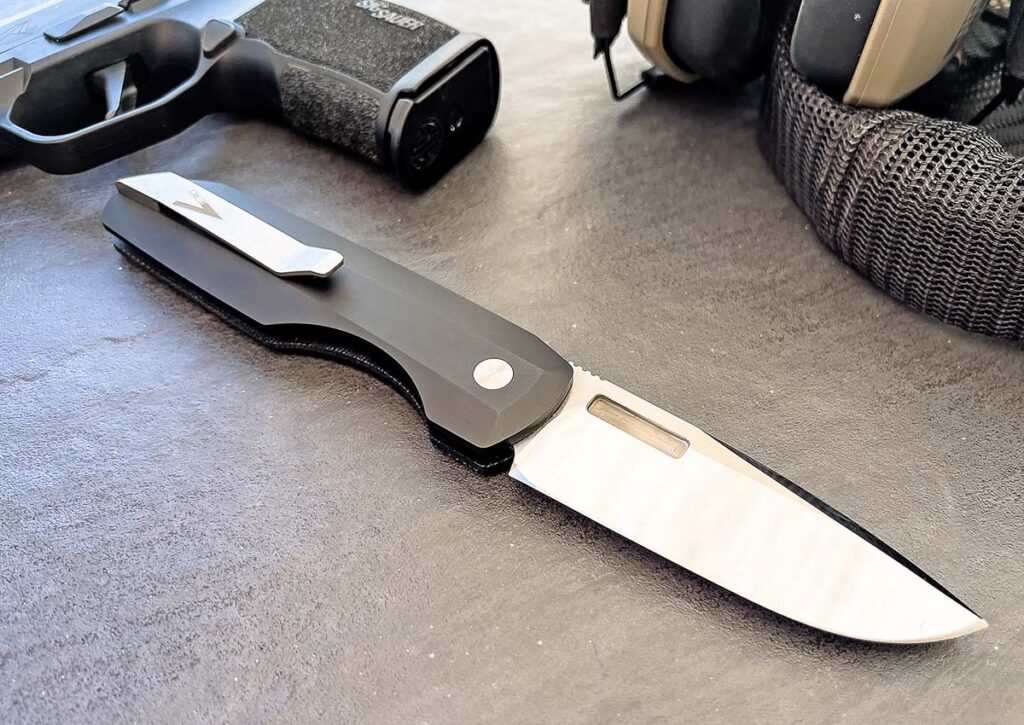
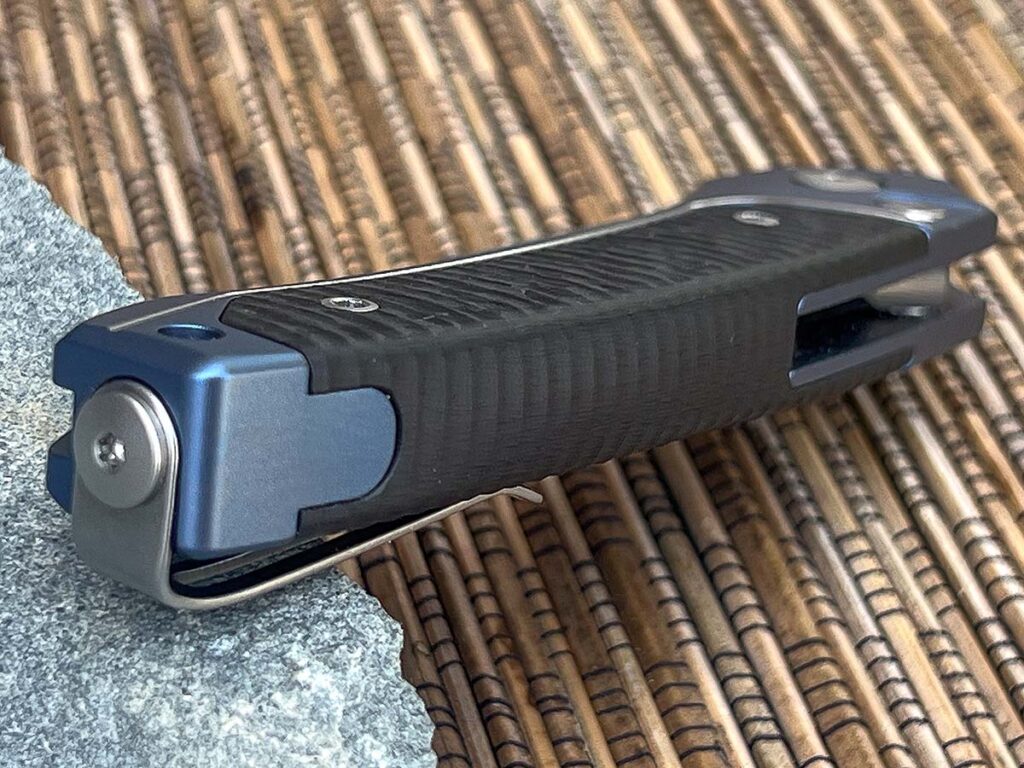
The Synapse handle is a half-and-half hybrid construction style, with a black Micarta® presentation side and the opposite side (right) hard-coat-anodized T6-6061 aluminum alloy for strength, light weight and minimal mass. A stylish milled titanium pocket clip carries the closed knife blade tip up in the pocket.
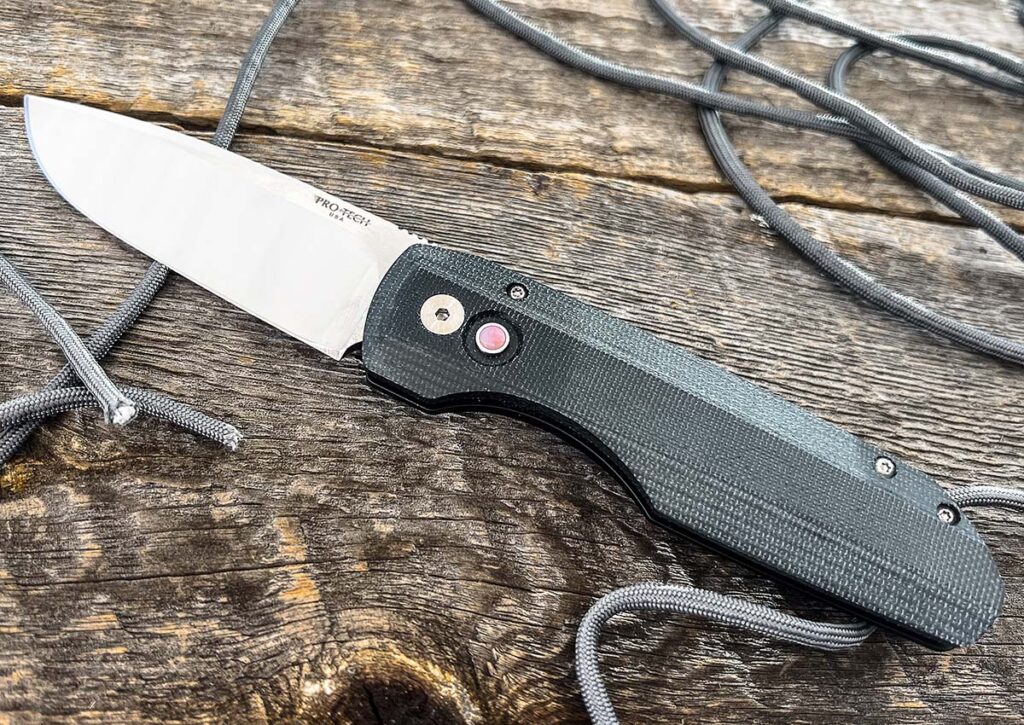
Pro-Tech Knives has teamed with Vero Engineering to produce a collaborative auto: the Pro-Tech Synapse. The framelock design features all advanced materials in a no-nonsense folder ideal for EDC. It’s especially notable for the infusion of Pro-Tech’s trademark ultra-snappy automatic opening action.
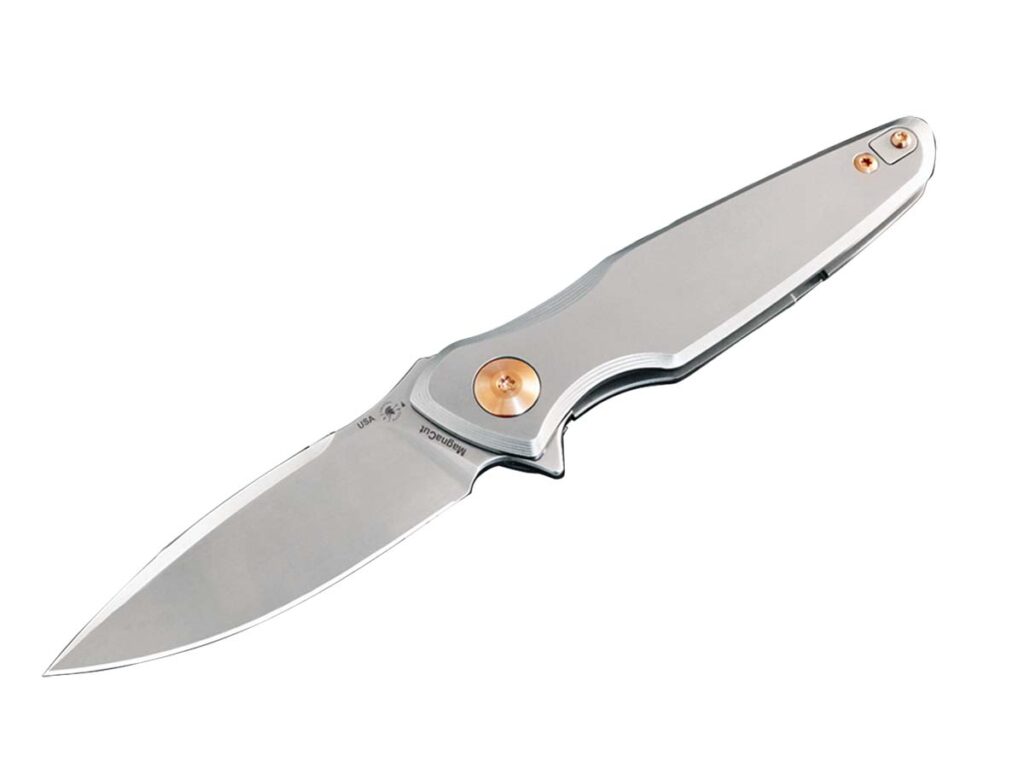
The 3.2-inch drop-point blade is flat-ground CPM MagnaCut stainless steel, which is known for its edge holding and corrosion resistance. The drop point shape provides plenty of blade belly.
The handle is a half-and-half hybrid construction style, with a black Micarta presentation side and the opposite side hard-coat-anodized T6-6061 aluminum alloy for strength, light weight and minimal mass. A stylish milled titanium pocket clip carries the closed knife tip up in the pocket. Another nice touch is the firing button, which sits inside a milled cavity to help prevent accidental blade deployment.
The Synapse’s drop-point blade of CPM MagnaCut stainless is conducive to a wide range of tasks. The blade action is quick and snappy as with all Pro-Tech autos.
With a closed length of 4.1 inches, the Synapse is neither too big nor too small. The large finger groove helps lock your grip onto the handle effectively, allowing a more secure grip with or without gloves.
The blade has an aggressive bite to it and the curve of the belly makes slicing almost effortless. The Synapse is a great working folder.
*Editor’s Note: According to CobraTec, its OTFs have a built-in safety feature that prevents the blade from fully deploying if anything is obstructing its path. Once in “safety mode” the blade must be reset by pulling it all the way into its locked position, making it fully functional again.
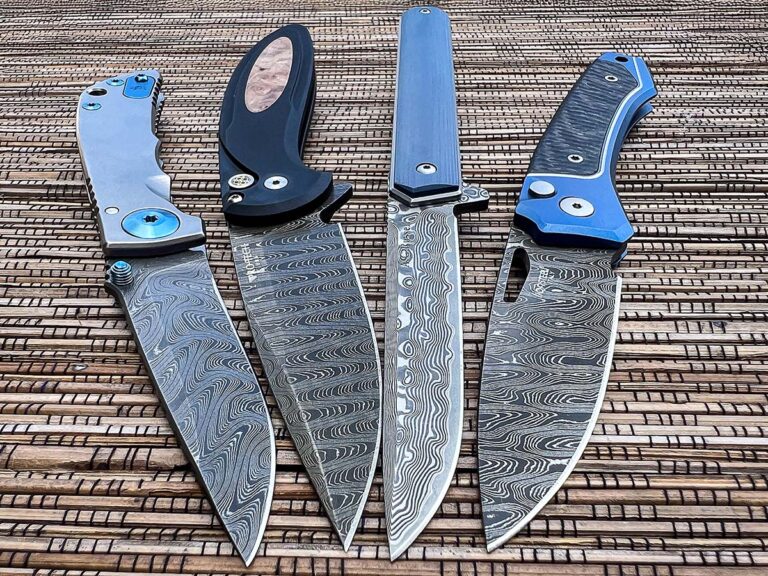
We review four exquisite factory-made damascus folders that deliver the elegant look of custom work at a more affordable price.
Quality damascus knives have always been elegant. The steel, known for its unique surface appearance, defines “upscale” when it comes to high-end factory or custom knives. An increasing number of factory brands seem to be offering select models in damascus, bringing the knives to the masses at less than custom prices. For a nominal fee over the cost of a premium factory model—sometimes even less—you can have an exquisite damascus piece for your collection or daily carry rotation.
The A.G. Russell Knives Slim Damascus Folder
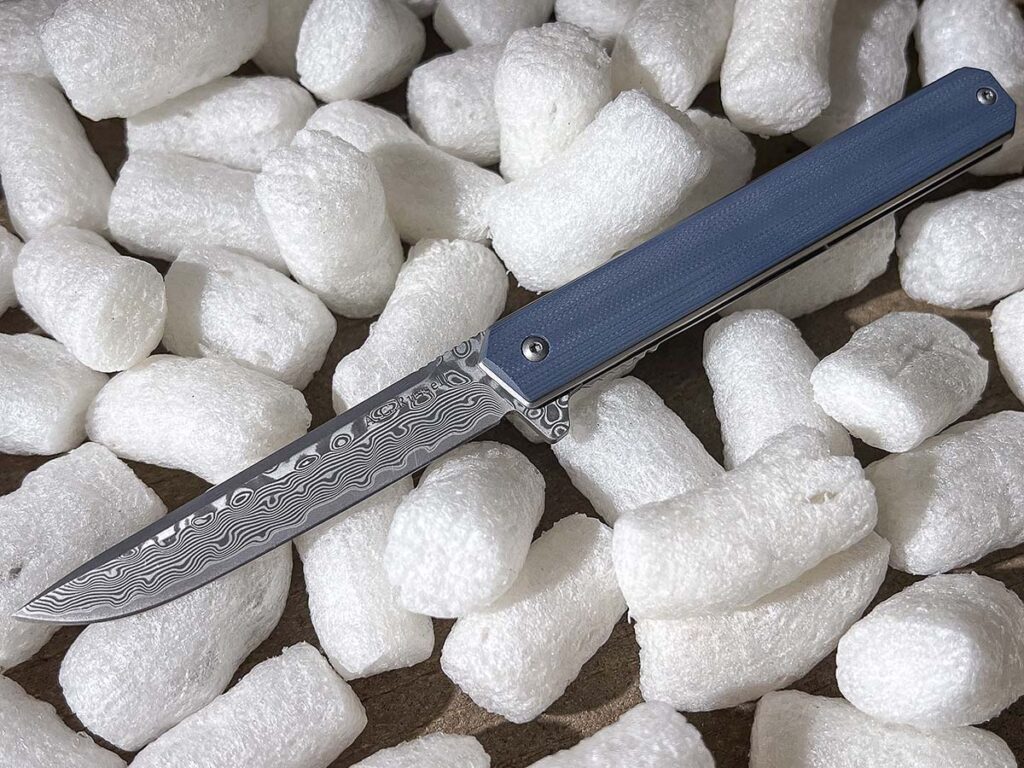
The A.G. Russell Knives Slim Damascus Folder is one of the better bangs for the buck in the genre. The 3⅝-inch drop-point blade is a damascus san-mai hybrid of sorts, featuring a core of 9Cr13MoV stainless steel clad with stainless damascus on either side. The construction allows the blade to be made for a more affordable price while also offering a distinctive appearance with the center core showing through near the cutting edge.
The A.G. Russell’s 3-inch drop point blade is a damascus san-mai hybrid of sorts, featuring a core of 9Cr13MoV stainless steel clad with stainless damascus on either side.
The top of the thumb rest is notched for a non-slip grip, and the blade opens easily by a flipper tab. With the blade riding on a pair of caged bearings, the opening action is very smooth and sure. The 9Cr13MoV is a Chinese-made stainless that exhibits performance characteristics similar to the more familiar Japanese-made AUS-8 stainless.
The handle has stainless steel liners with beautiful chambray blue G-10 scales. The color is akin to a blueish gray that is less common for G-10. The double stainless liners are slightly oversized and chamfered for a refined appearance. A steel pocket clip carries the knife tip up. Overall construction is somewhat basic but executed extremely well.
Its overall slim form enables the folder to be carried comfortably in a variety of scenarios, from casual to full dress wear. As slender as it is, the handle remains a width that’s easy to grip and use. The smooth scales are slightly contoured to better fit the hand. The linerlock secures tight and safe, with zero blade play in any direction.
At about an eighth of an inch, the blade is moderately thick for such a slender folder. Add a shallow main grind bevel and there is a slight wedging effect when cutting cardboard, plastic foam and other materials, so you will have to apply a bit more force to get the blade through such media.
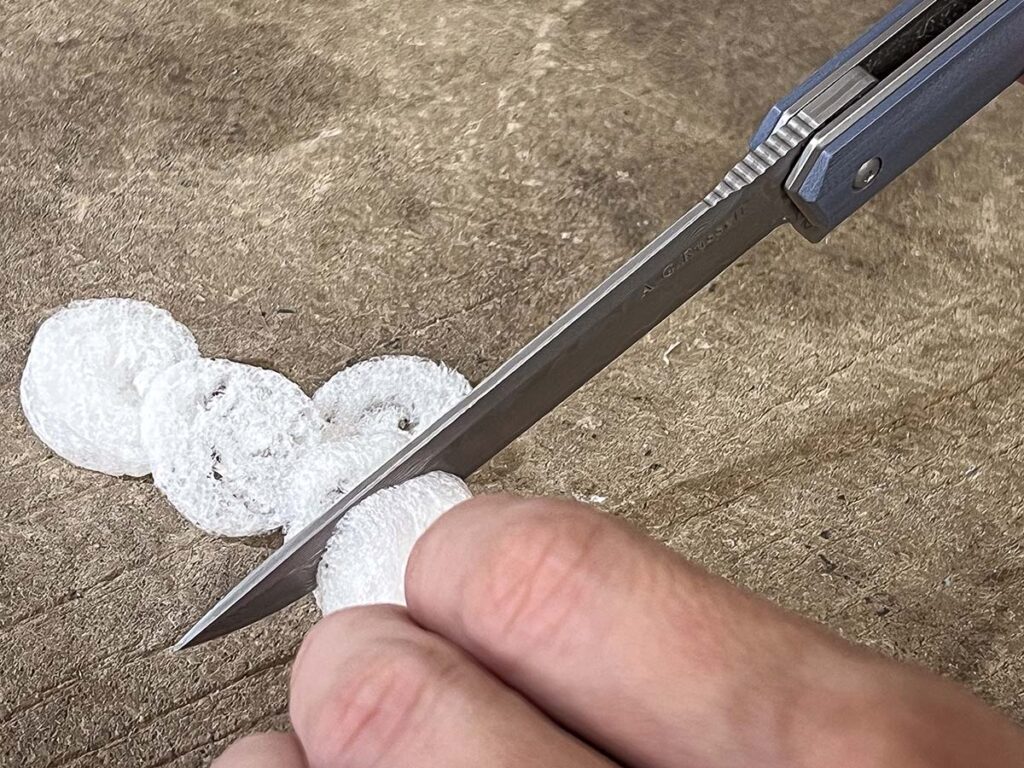
Cutting plastic foam into thin slices was a favorite edge tester of BLADE Magazine Cutlery Hall-of-Fame® member A.G. Russell, and the A.G. Russell Knives Slim Damascus Folder tackled the task with aplomb.
The handle is very straight, devoid of any features that prevent your hand from sliding forward or rearward. Combined with the blade grind, this doesn’t make the knife a good candidate for heavy/extended use. However, for casual and dress carry it’s perfect. It also makes a great folding steak knife. It’s low profile enough as not to catch unwanted attention in public. At a remarkably low manufacturer’s suggested retail price (MSRP) of $125, the knife represents a great value in a factory damascus folder. Made in China with the typical excellent manufacturing quality that is expected of such knives, the folder represents an excellent value.
Lionsteel’s Twain
Lionsteel’s Twain damascus folder stands out in a crowd. Lionsteel calls it a double integral folder for its one-piece handle and one-piece scale. The handle is a solid piece of machined titanium—nothing new, though not too common, either.
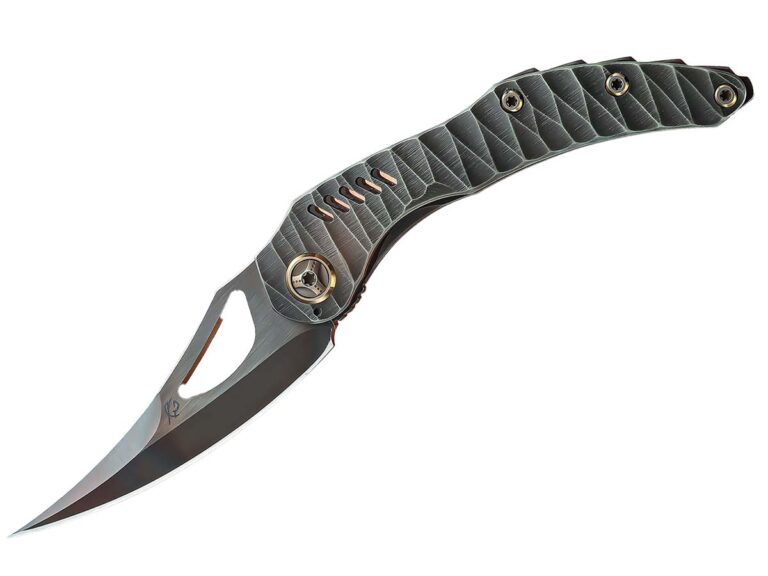
Lionsteel calls the Twain a double integral folder for its one-piece machined titanium handle and one-piece carbon-fiber scale.
It isn’t exactly the easiest nor most cost-effective manner of making a knife handle, but it has loads of “wow factor.” It incorporates considerable CNC machining to arrive at the one-piece handle and one-piece scale. The resulting construction explains the knife’s high cost. It is an extremely strong design since the handle is a true integral as opposed to being composed of multiple parts. It is shaped so that it seats your hand comfortably, especially for prolonged use. The integral scale is 3D-machined carbon fiber and incorporates an integral spacer as well. The scale flows continuously around the spine for an appearance unseen on few if any other production folders.
The knife carries very deep in a pocket, with the clip fastened to the handle butt. When the knife is in your pocket, all that’s visible is the clip. You practically do not feel a thing when carrying it. The weight of titanium and carbon fiber are at a minimum and do not bog you down at all.
The versatile, user-friendly drop-point blade is 3.15 inches of Chad Nichols stainless damascus. Called Scrambled, the pattern gets its name from its eye-catching radial shapes. The flat-ground blade features an oblong hole for easy opening with either hand. The blade spine is crowned, meaning there is a slight radius to it. This is a very nice touch that not all manufacturers offer. It also creates a comfortable surface for a finger rest.
The scale flows continuously around the spine of the Twain for an appearance unseen on few if any other production folders.
The Twain’s high-tech approach to design and manufacturing yields a folder that is both very stylish and functional. The blade has a sweeping belly that makes it easy to tackle mundane daily cutting tasks with ease, such as opening mail and packages, and even cutting food in a restaurant. It’s also not shy about tackling heavier cutting jobs like breaking down cardboard boxes. It is a lighter weight folder but feels very solid in-hand because of the integral titanium frame and super-secure button lock.
The MSRP of $542 gets you a high-end folder with top-flight materials made of the finest craftsmanship in Maniago, Italy.
Pro-Tech Knives Cambria
Known widely for superior-quality automatics, Pro-Tech Knives also makes equally exceptional manual folders such as the Cambria 2 button-lock flipper. The company released the updated version of the Cambria flipper this year, tweaking the design a bit for aesthetics and ergonomics—thus the Cambria 2. It’s designed primarily as an upscale EDC folder that combines style and function into one easy-to-carry package that comes in either a base, working knife format or a highly impressive full-dress model sure to please the most discriminating knife enthusiast.
The Cambria 2’s 3.5-inch drop-point blade of a ladder-pattern stainless damascus forged by Chad Nichols is slender and opens fast via the flipper tab.
The 3.5-inch drop-point blade of ladder-pattern stainless damascus forged by Chad Nichols is slender and opens fast via the flipper tab. The ergonomic aluminum handle is anodized black and has an integral lower guard to help keep your grip in place. The back end is oval shaped to conform to your hand. The maple burl inlay adds an organic touch to a high-tech knife. Each Cambria 2 comes with a deep carry pocket clip that totes the closed folder tip up. To add an ever-so-slight dash of panache, the lock button is inlaid with a mosaic pin.
Deploying the blade is a pure pleasure as it rides on a pair of caged bearings for super smooth action. Out of the box, the edge is super sharp and ready for work. In the pocket, the Cambria 2 rides comfortably. Due to its overall slender form, it practically disappears in your pocket. There is absolutely no bulk associated with this knife. You almost forget you have it! I really like how it slices. The flat grind thins the blade out nicely and gives the edge plenty of bite. Overall fit and finish is what you expect from Pro-Tech—flawless in every way. Country of origin: USA. MSRP: $570. Pro-Tech turns out each damascus piece in low quantities, so if you want one, you’d better act quickly.
Spartan Blades Harsey
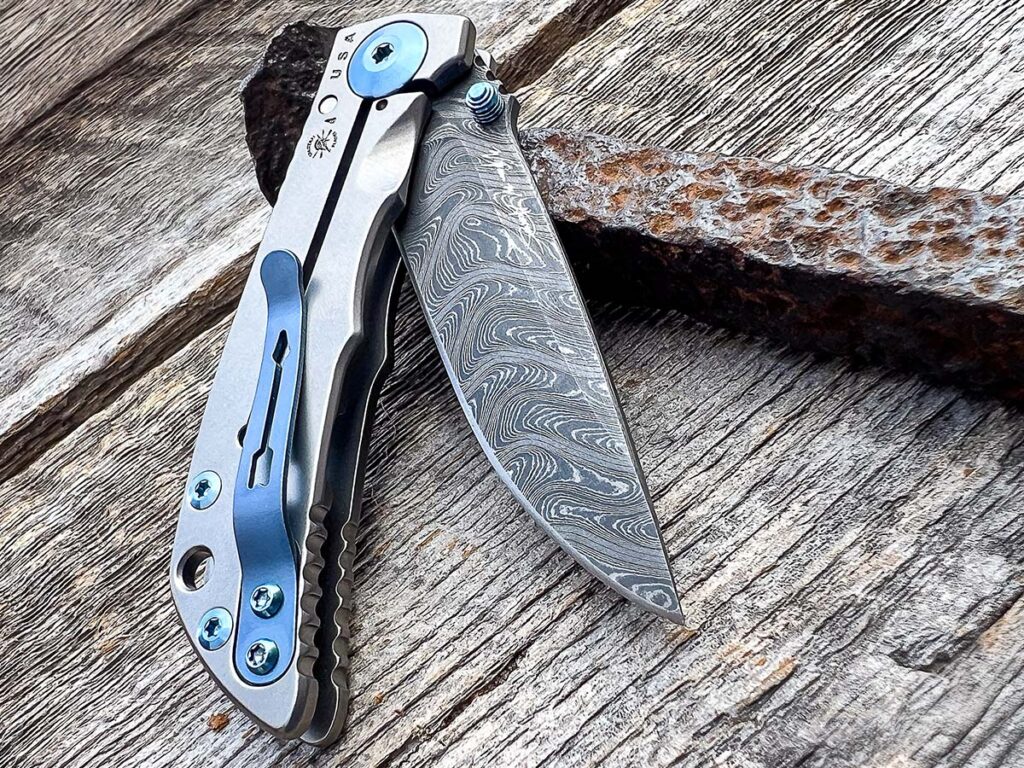
The Spartan Blades Harsey 3.25 folder is a scaled-down, EDC-size version of the Spartan Harsey Folder. The company had been receiving requests for a smaller size that’s easier to carry and less bulky while still retaining the heavy-duty build of the original. Enter the 3.25—and just like the larger Harsey Folder, Spartan also offers the 3.25 in a more-dressed-up version sporting a damascus blade paired with a handle of your choice of plain or a decorative machined titanium. The test knife is the former, a damascus blade with a bead-blasted titanium handle, simply stated but elegantly executed.
The bead-blast titanium handle of the 3.25 boasts titanium hardware anodized a light blue for an interesting pop of color.
The drop-point blade is 3.25 (hence the name) inches of Chad Nichols stainless steel damascus in a raindrop pattern. Dual-machined titanium thumb studs provide ease of one-handed opening with either paw. The thumb rest on the spine has some traction notches for a nonslip grip and to apply more pressure to the blade. The bead-blast titanium handle boasts titanium hardware anodized a light blue for an interesting pop of color. The blade secures by a framelock, and a titanium pocket clip also anodized a light blue carries the closed knife tip up. It is a very handsome folder incorporating some heavy-duty elements that make it a great candidate for a user piece.
The 3.25 is a compact workhorse built to go the distance. The flat-ground blade can readily tackle most any daily cutting task: opening packages, breaking down cardboard boxes, slicing steak, or anything else that needs cutting, trimming or stripping. The blade opens smoothly with no play in any direction. It is very solid all around. Multiple finger grooves help seat your hand, providing no-slip control. All handle edges are chamfered to soften the grip and allow the knife to ride in your pocket comfortably. The blade is plenty sharp out of the box and ready for work. Country of origin: USA. MSRP: $545.
Don’t overlook small tactical fixed blades for everyday carry.
When most blade fans talk everyday carry (EDC) knives, they usually mean folders. The two main EDC advantages of folding knives are they are convenient to carry and, except for that pesky pocket clip, easy to conceal. Of course, while many overlook the clip, others know it indicates you are carrying a knife.
Folders are designed primarily for smaller everyday chores—opening a box, peeling fruit and so on. This is especially true of slipjoints, which rely on you cutting away from yourself—which you should always do with all knives—and a half-stop as a safety device. Granted, when slipjoints were popularized long ago, lockback, linerlock and framelock folders were unavailable. The problem with both slipjoints and lockbacks is most take two hands to open and close, which, if you are trying to cut something you simultaneously must hold, can be inconvenient at the very least.
The late 20th and early 21st centuries saw a boom in the commercial availability of manual folders that could be opened and closed with one hand. Utilizing the flipper opener and the roller bearing system made the blade deploy quickly and smoothly, often even quicker than an automatic. With the perfection of linerlocks and framelocks, unlocking and closing the manual folder with one hand was no longer a problem.
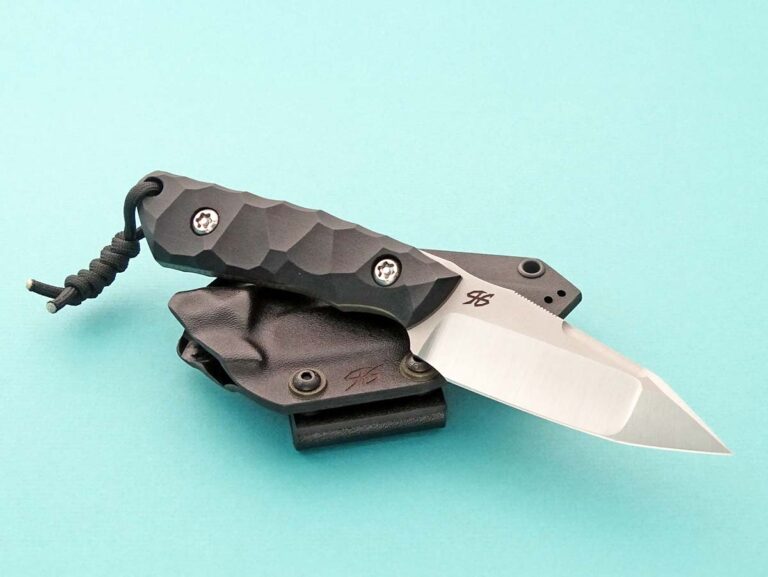
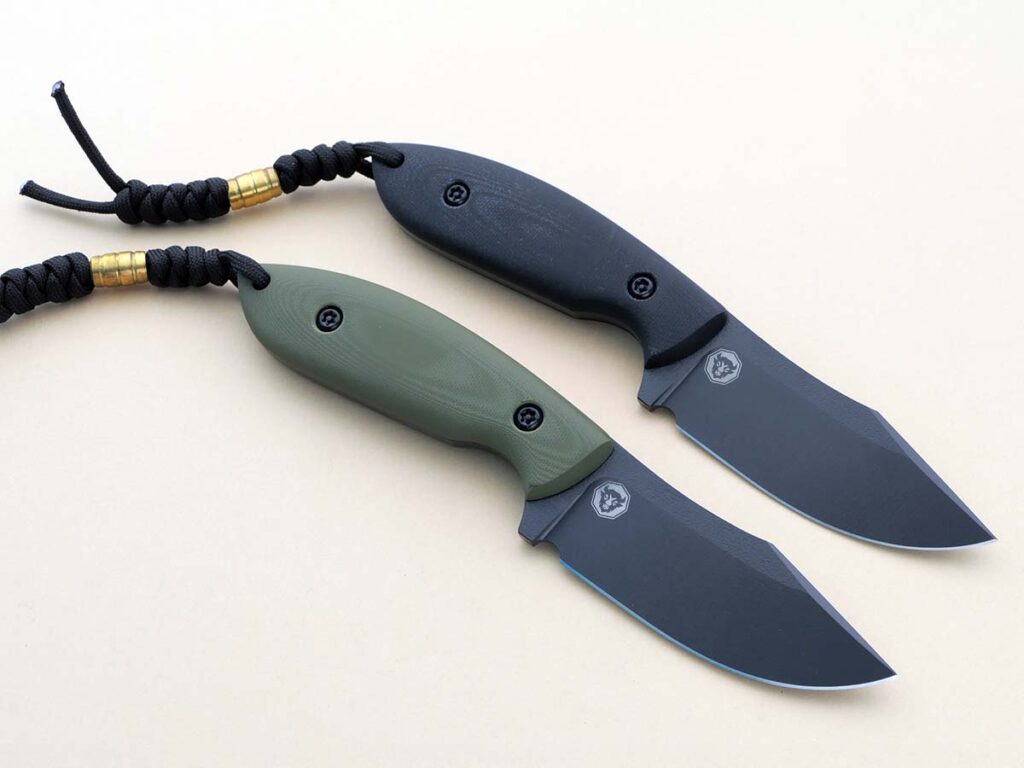
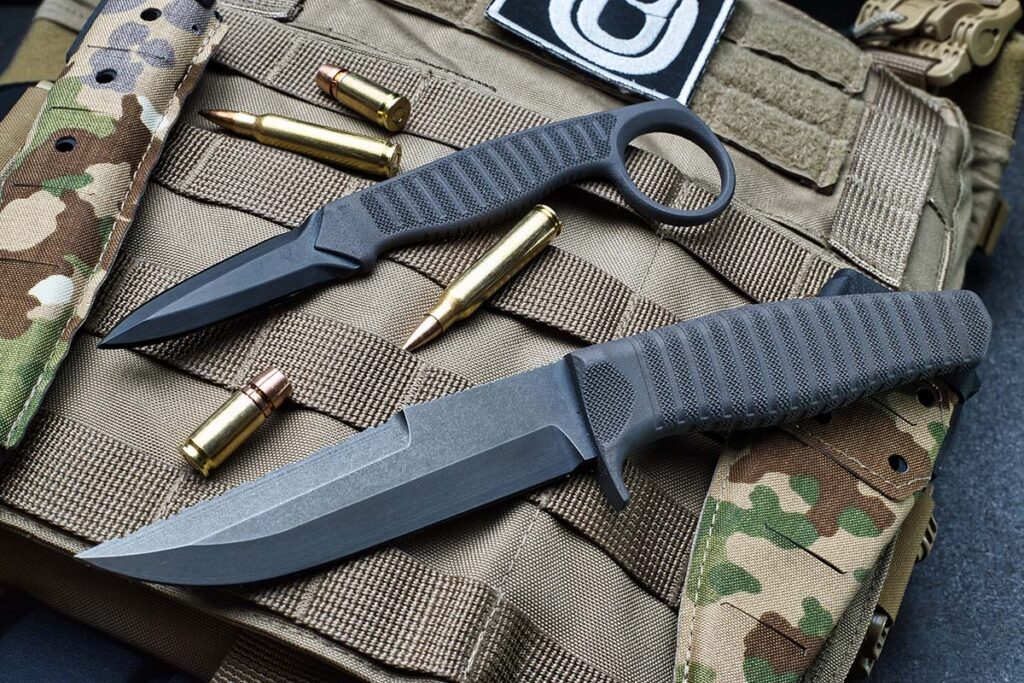
Kydex sheaths can be molded to fit the blade and, over time, will not deform, providing a safer carry option. Rafal Kolakowski uses Kydex® for the sheaths of his Ridgeline set of small tactical EDC fixed blades.
Even with these technical improvements, the folding knife still has its limitations. A small blade can do only so much before it bends or, in some cases, breaks. Some tactical folder makers tried to address this issue by making folders with 5-inch blades of 1/4-inch stock. This was done primarily for cosmetic reasons without addressing the folder’s primary weakness—the pivot. The very nature of the pivot means it must allow some side-to-side movement of the blade, no matter how slight. If the folder is used for an unintended purpose or put under undue force, the blade can be moved off-center.
On top of that, folding knives require more regular maintenance than fixed blades. Locking folders with back straps and slipjoints with backsprings collect dirt, lint, etc., during daily use and must be cleaned. What’s more, using a folding knife beyond its capabilities and failing to perform regular maintenance can affect its opening and closing ability. Lastly, a folder cannot do anything until you first deploy the blade.
Fixed-Blade Pros
Fixed blades, on the other hand, offer several advantages. As already suggested, larger fixed blades can do tasks that smaller blades either can’t perform or do so with difficulty.
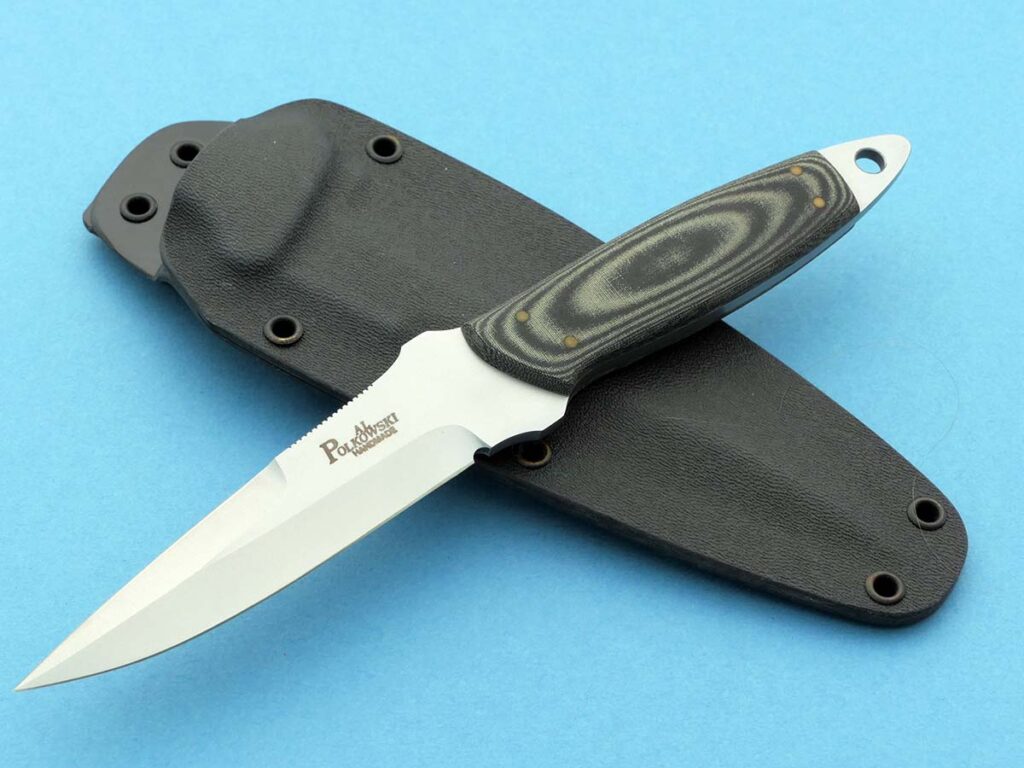
Finger/thumb serrations on the blade spine of Al Polkowski’s Boot Fighter help with controlling the knife in use.
One of the fixed blade’s most significant advantages is full-tang construction, providing added strength and durability. A full-tang fixed blade especially is better suited for heavy cutting and repeated hard use, and safer for use with a heavy load.
A fixed blade also has a superior mechanical advantage. Unlike the folding knife, there is zero chance of mechanical failure under stress. Locks and pivots can fail, especially when using the knife for tasks for which it is not intended.
Another advantage is the style and size of the blade. Fixed blades can feature longer and thicker blades that will perform better under the rigors of hard use.
Full-tang fixed blades such as the Trailhead set by Tomasz Dziubinski are better suited for heavy cutting and repeated hard use, and safer for use with a heavy load.
A fixed blade typically will have better handle ergonomics. Its handle is usually designed for prolonged use, featuring a more comfortable grip that also aids in balance and is ready for immediate deployment. While many folders can be opened with one hand, not so slipjoints. If your hands are cold, wet, injured or gloved it can present a problem as many, if not all, slipjoints require two hands to deploy the blade or blades. On the other hand, with the correct sheath combination, a fixed blade can be rapidly deployed under almost any circumstance.
Sheath Concerns
Top material options for EDC fixed-blade sheaths are leather and Kydex®. Kydex gained popularity because it provides two main advantages over leather.
First, most makers can build at least a rudimentary kydex sheath. Leather sheaths are more of a challenge. Second, Kydex does not hold moisture and does not require tannic acid, which is used in the processing of leather. This is very important for EDC. Tannic acid in the leather can cause carbon steel to discolor. Leather, once wet, can shrink and/or deform, allowing the blade to accidentally cut or poke through it.
Conversely, Kydex does not hold moisture and does not require tannic acid. Kydex can be molded to fit the blade and, over time, will not deform, providing a safer carry option. Finally, the clip attachment on most Kydex sheaths can be adjusted to wear in either a vertical or horizontal position.
They Have The Edge
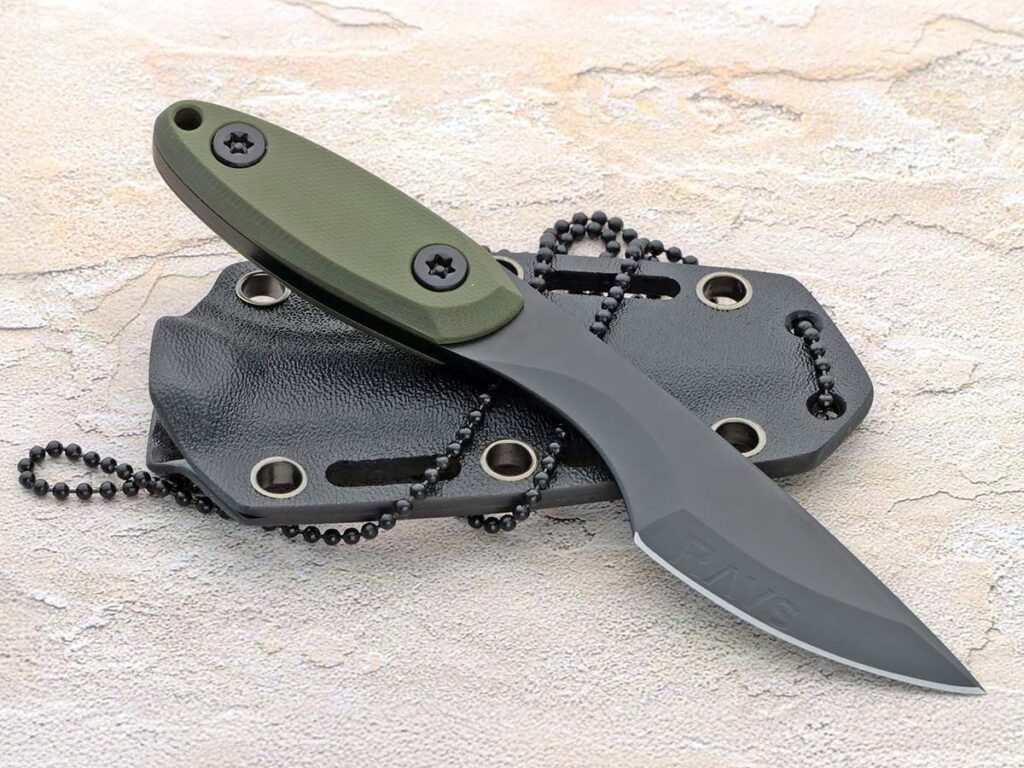
With the right sheath combination, a fixed blade can be rapidly deployed under almost any circumstance. The Street Scalpel by Rafal Kolakowski with Kydex® sheath and breakaway chain is a classic example.
I’m not suggesting that folders do not have advantages as EDC knives; they do. They are usually more comfortable and concealable to carry than fixed blades. They are more socially acceptable and usually have limited legal restrictions. They can provide versatility for light tasks such as opening letters, boxes, cutting cord, etc.
It is in fact the EDC folders’ size that is its biggest disadvantage. The smaller blades and less ergonomic handles limit the number of tasks folding knives can perform. Also, their moving parts provide a mechanical disadvantage when compared to EDC fixed blades.
The majority of this story’s featured tactical fixed EDCs have a 4-inch or shorter blade. Many tactical EDC folders also have 3.75-to-4-inch blades. When open, they are about the same length as the featured fixed blades.
With perhaps the exceptions of concealability and some legal restrictions, fixed blades have the edge. Depending on what you are using it for, you may want to consider a knife that has the mechanical advantage, requires less maintenance, can be easier to deploy in difficult situations or environments, and is more comfortable in the hand: fixed blades, the other EDC!
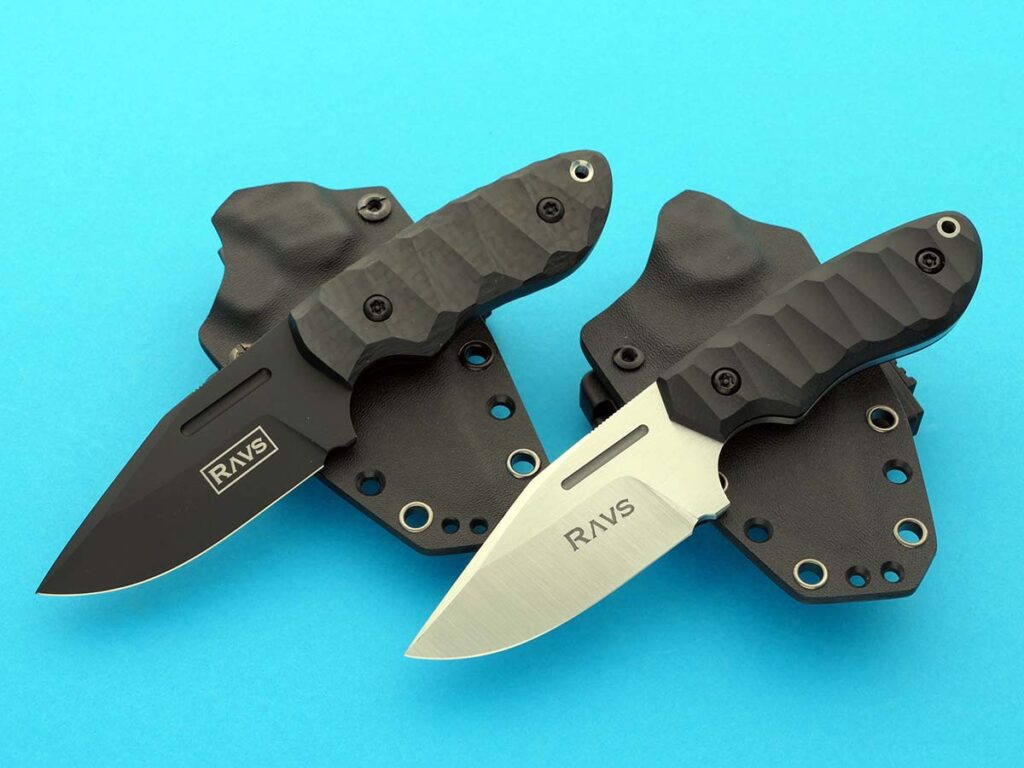
Rebel Specs Knife type: Small tactical EDC fixed blade Blade Length: 4.25” Blade Steel: Elmax stainless Blade Finish: Two-tone satin and bead blast Handle Material: Textured black Micarta® w/OD green Micarta liners Overall Length: 9” Sheath: Custom-built by the maker; Kydex® Author’s Comments: “Excellent all-around knife … the tip is ground to give the knife extra penetration … the texture of the black Micarta on the handle gives the user additional traction … primarily designed for belt wear, the clip can be configured for additional carry options … serrations along the top of the blade enhance the knife’s ability to handle small chores … a great knife that provides lots of user options.” Maker’s price: $430
Ridgeline Specs Knife type: Small tactical EDC fixed blade Blade Length: 4” Overall Length: 8.75” Blade Steel: Becut stainless Blade Finish: Satin Handle Material: Black G-10 Sheath: Custom-built by the maker; Kydex® Author’s Comments: “Double-hollow-ground blade with a fuller for added strength … full-tang construction … sculpted handle material for enhanced ergonomics … stainless-steel-tube-lined thong hole.” Maker’s Price: $350 each
Boot Fighter Specs Knife type: Small tactical EDC fixed blade Blade Length: 4” Blade Steel: 154CM stainless Blade Finish: Bead blast Handle Material: Black and green G-10 Overall Length: 8.25” Sheath: Custom-built by the maker; Kydex® Author’s Comments: “Great little back-up knife … it features a double-hollow-ground double edge with an extended tang that features a thong hole … quick and light in the hand.”
Trailhead Specs Knife type: Small tactical EDC fixed blade Blade Length: 3.5” Blade Steel: Sleipner stainless Blade Finish: Black Cerakote® Handle Material: OD green G-10 Overall Length: 8.25” Sheath: Custom-built by the maker; Kydex® Author’s Comments: “Flat-ground, upswept utility-style blade … full-tang construction, excellent handle ergonomics … small knife built for hard work … stainless-steel-tube-lined thong hole … perfect knife for camping, a hike and everyday carry.” Maker’s Price: $280 each
Street Scalpel Specs Pattern: Tactical fixed-blade neck knife Blade Length: 2” Blade Material: 80CrV2 carbon steel Blade Finish: Black Cerakote® Handle Material: OD green G-10 Overall Length: 5.9” Sheath: Custom-made, multi-position in Kydex® by the maker w/ball-bearing breakaway chain Author’s Comments: “Perfect for utility or self-defense … the attachment holes on the sheath allow the knife to be carried however you like.” Maker’s Price: $280
Get a look at the new knives released at BLADE Show, the world’s largest knife show.
More than simply the foremost industry event and knife axis mundi, BLADE Show is also the preferred venue to launch knives. Makes sense, when for three days straight, Atlanta’s Cobb Convention Center sees a steady stream of thousands of knife fanatics. We’ll have more down the road, but here is some of what was dropped at the world’s largest knife show.
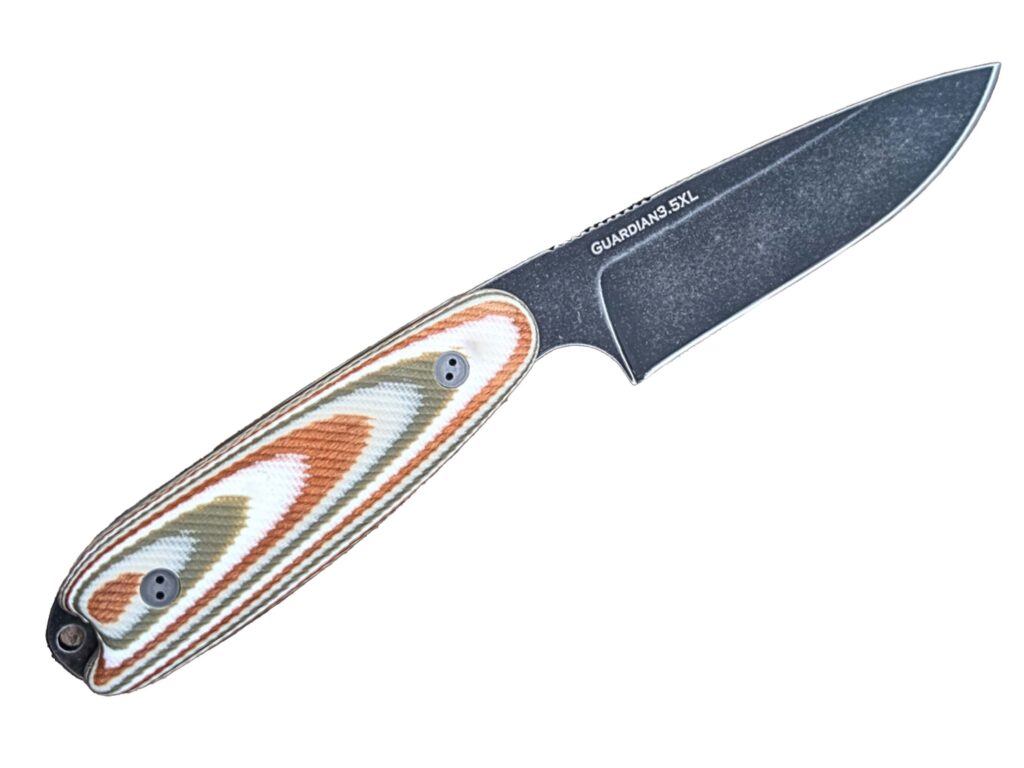
Bradford Knives Guardian 3.5XL
RARE BREED GUARDIAN—Bradford Knives’ fan asked for it and at BLADE Show they’ll get the shot to own the Guardian 3.5XL with a 4-inch MagnaCut blade. This limited run comes with a new sheath design, offering both vertical and horizontal carry options. Overall Length: 8.25 inches. Blade Profile: Sabre. Weight: 4.7 ounces. MSRP: TBD. Available: June
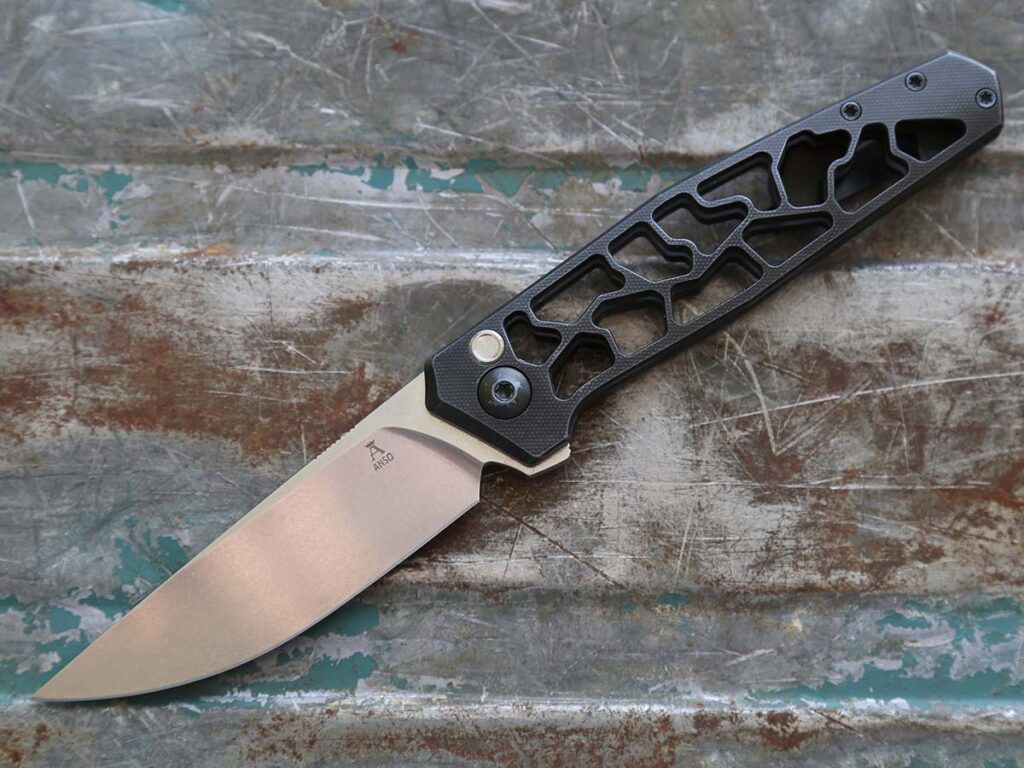
Ansø of Denmark Mudtrack Exoframe
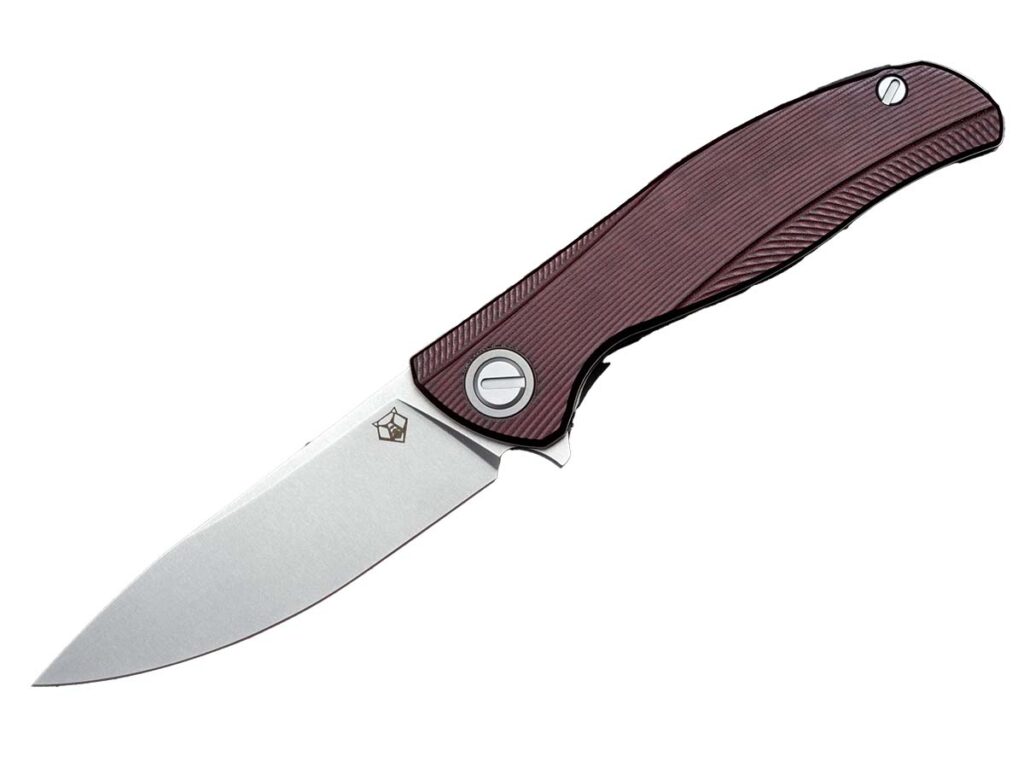
FRAME JOB—Stripped down in material, the Toko features Ansø of Denmark’s skeletonized black titanium Mudtrack Exoframe, stripping the flipper’s weight to a scant 2.86 ounces. Outfitted with a do-all drop-point blade of RWL34 steel, the build had versatile built in. Lock: Button. Blade Length: 3.35 inches. MSRP: $995. Available: June
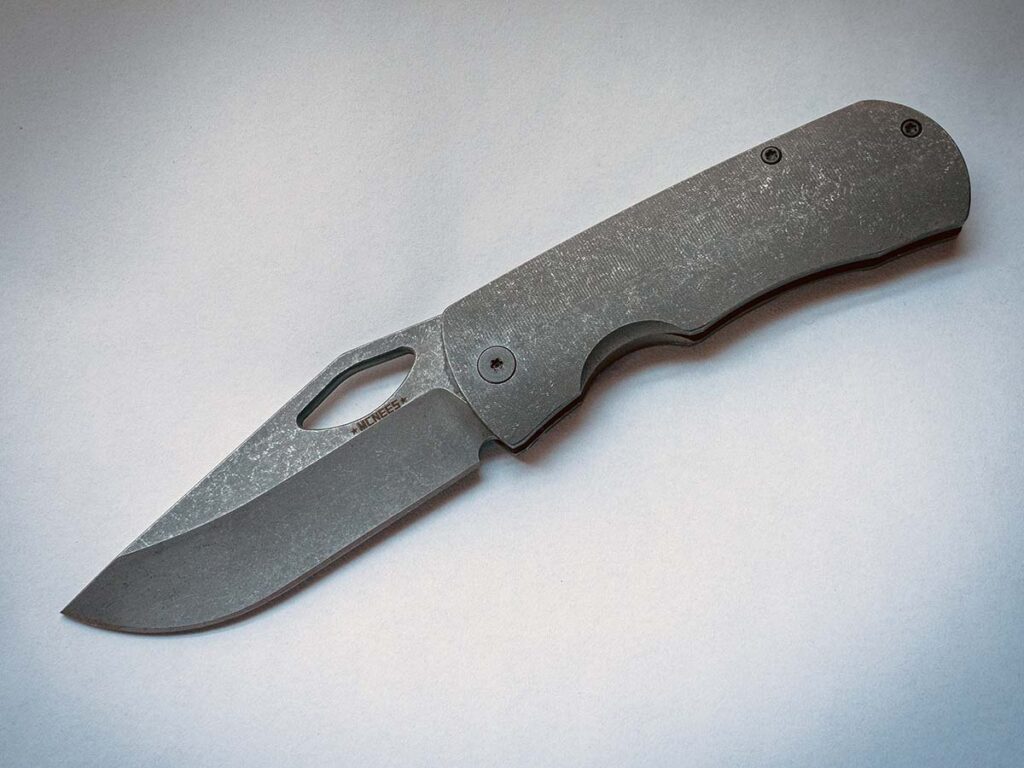
McNees Knives Mini Dixon
MIGHTY MITE—A scaled-down version of a McNees classic, the Mini Dixon boasts a compact 3.35-inch MagnaCut blade matted to a Grade 5 titanium handle. The modified clip point has a hollow grind and comes in a very svelte 4.5 ounces. Lock: Framelock. Overall Length: 7.75 inches. MSRP: $549. Available: June
UG Tools EKM Fighting Knife Set
DOUBLE TROUBLE—The UG Tools EKM Fighting Knife Set was developed Special Mission Units and is already being supplied to a German Tier 1 unit. The set comes with a 2.4-inch blade dagger and 4.7-inch blade drop point, highly modular sheath, attachment system and full contact training knives. Blade Material: CPM MagnaCut. Weight: Dagger 1.6 ounces, Drop Point 4.6 ounces. Country of Origin: German. MSRP: ~$1,000 Available: Autumn 2026
Spartan Blades Pandia
MOONLIT PRECISION—Named for the Greek goddess of the full moon, the Spartan Blades Pandia features a 3.25-inch CPM MagnaCut spear-point blade optimized via a proprietary double deep cryogenic treatment. The 8.25-inch Curtis Iovito design utilizes an IKBS bearing system for fluid flipper deployment. Handle Material: Titanium. Clip: Titanium. Weight: 4 ounces. Country of Origin: USA. MSRP: $495. Available: Now
Maserin Outback
BUILT FOR THE BUSH—Featuring a Böhler N690 steel blade and paired with an ergonomic G10 handle, the Maserin Outback is available in three colours: black, gray, and orange. It comes with a black Italian cordura sheath, and a sharpener and a survival saw. Blade Length: 5.51 inches. Overall Length: 10.9 inches. Country of Origin: Italy. MSRP: $239. Available: Now
Scorpion 6 Jörmungandr
SHARP LEVIATHAN—Named for a sea serpent of Norse mythology, the Jörmungandr from Scorpion 6 is made completely without any CNC machining and features 5.3-inch a double hollow grind freehanded by Shane Magnussen. Blade Steel: CPM S90V. Overall Length: 8.82 inches. Clip: Titanium. Internals: Delrin Caged Ceramic Bearings. MSRP: Starts at $1,500. Available: Now
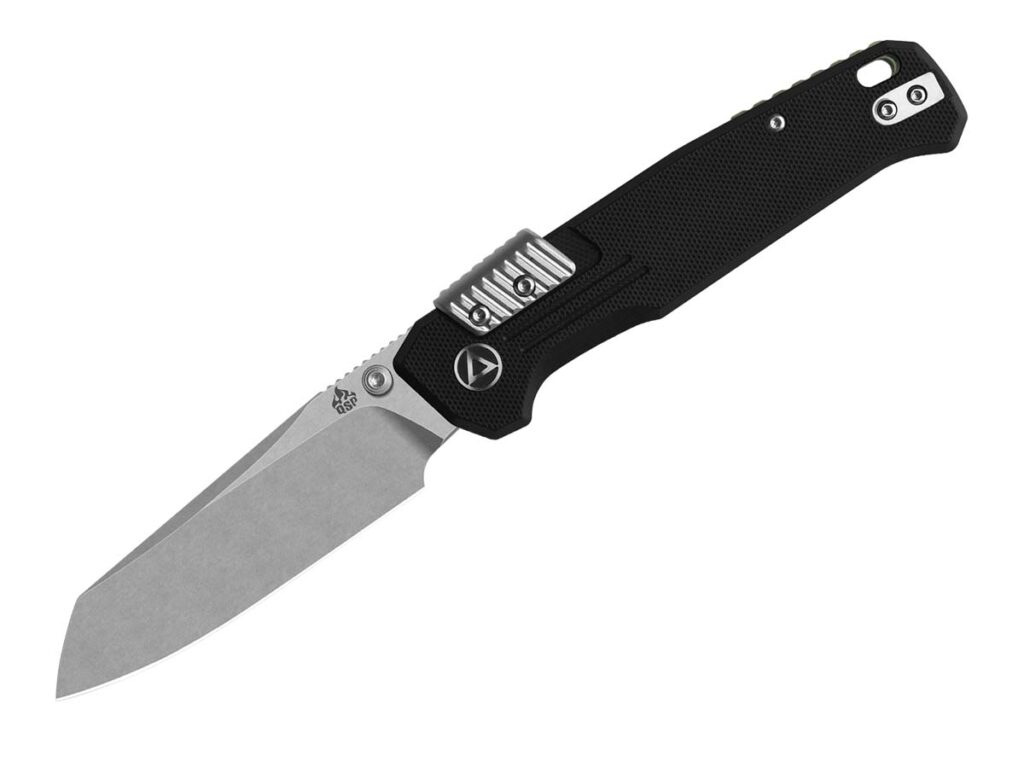
QSP Badger
BRIDGING OVER—The QSP Badger gives a reason for righties and lefties to cheer with the company’s Bridgelock. Essentially a crossbar lock, it features a saddle that runs on the back of the handle for an oversized and ambidextrous release. Blade Pattern: Wharncliff. Blade Steel: Nitro V. Handle Material: G10. Blade Length: 3.35 inches. MSRP: TBD. Available: September
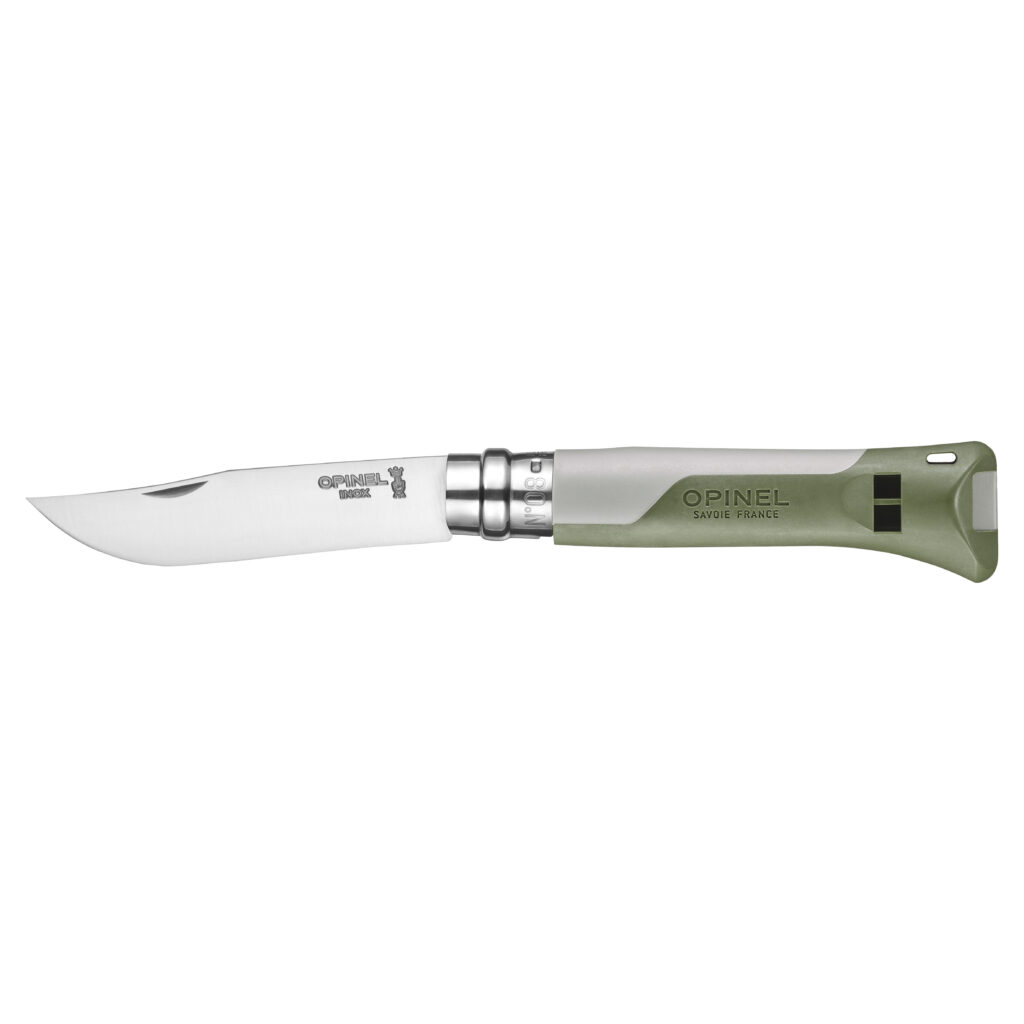
Opinel No. 8 Horizon
MODERNIZED CLASSIC—Designed to brave the outdoors, Opinel’s No. 8 Horizon features several element-resistant features, including a stainless steel Yatagan blade, fiberglass-reinforced polymer handle and a light 2.2-ounce weight. Blade Length: 3.15 inches. Lock: Friction, Virobloc Safety Ring. Grind: Convex. MSRP: $40. Available: June.
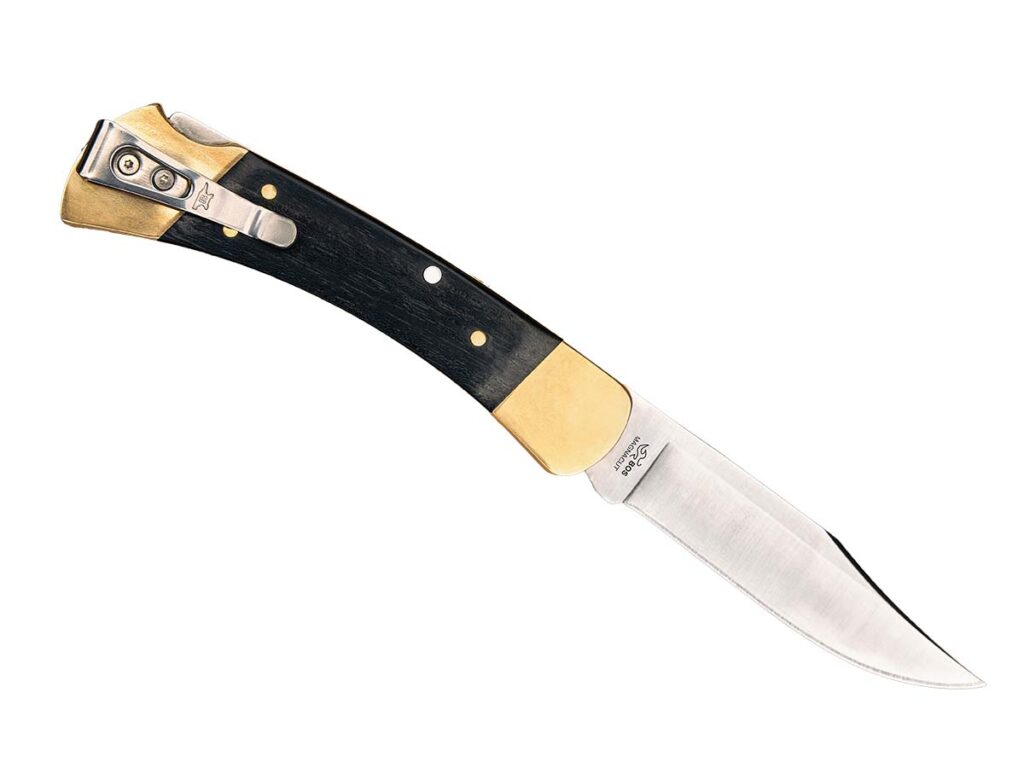
Buck Knives Heritage Slim Elite 110
CLIPPING CALL—A refined evolution of Buck Knives’ classic 110 Folding Hunter, the Heritage Slim Elite is nearly .25-inch slimmer, 3-ounces lighter and featuring a deep carry pocket clip and BOS heat-treated MagnaCut steel blade. Blade Pattern: Clip Point. Blade Length: 3.75 inches. Scale: Ebony. MSRP: $250. Available: May
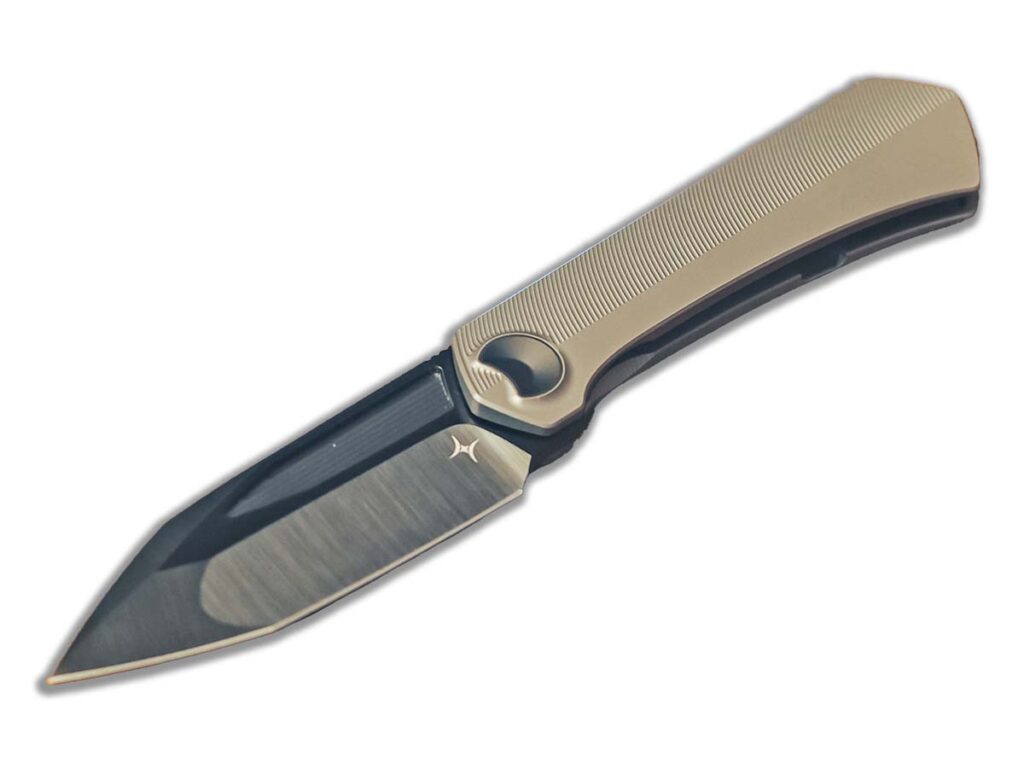
Crescent Edges Celestial Entity
STAR STRUCK—A 3.5-inch tanto blade of MagnaCut steel, milled titanium scale, satin DLC blade finish and a solid frame lock, the Crescent Edges Celestial Entity is an otherworldly EDC option. Overall Length: 8.23 inches. Weight: 4.5 ounces. Country of Origin: China. MSRP: $375 Available: Now
CRKT Grvitic Flip
FIDGET FACTOR—Not your typical OTF, the CRKT Garvitic Flip utilizes a vintage-inspired flip-insert mechanism to deploy its 3.18-inch blade. Once out, tabs on the blade insert into recesses to keep the blade in place. Blade Steel: 5Cr13MoV. Blade Pattern: Spearpoint. Overall Length: 7.5 inches. MSRP: $50. Available: Now
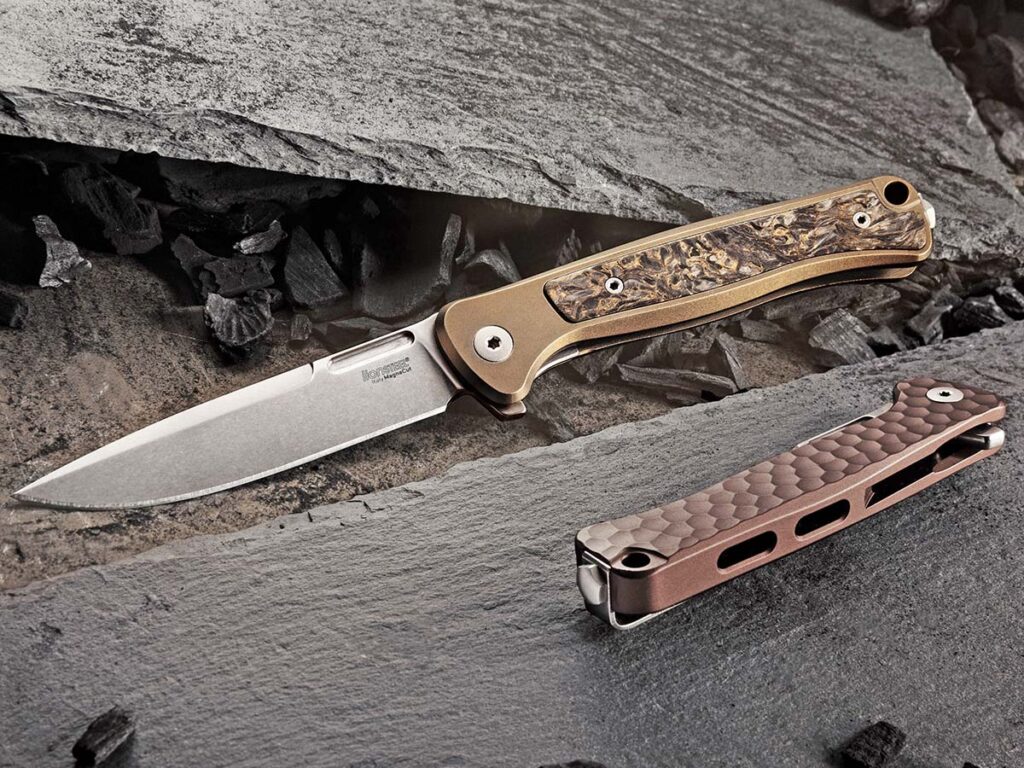
Lionsteel Emmet
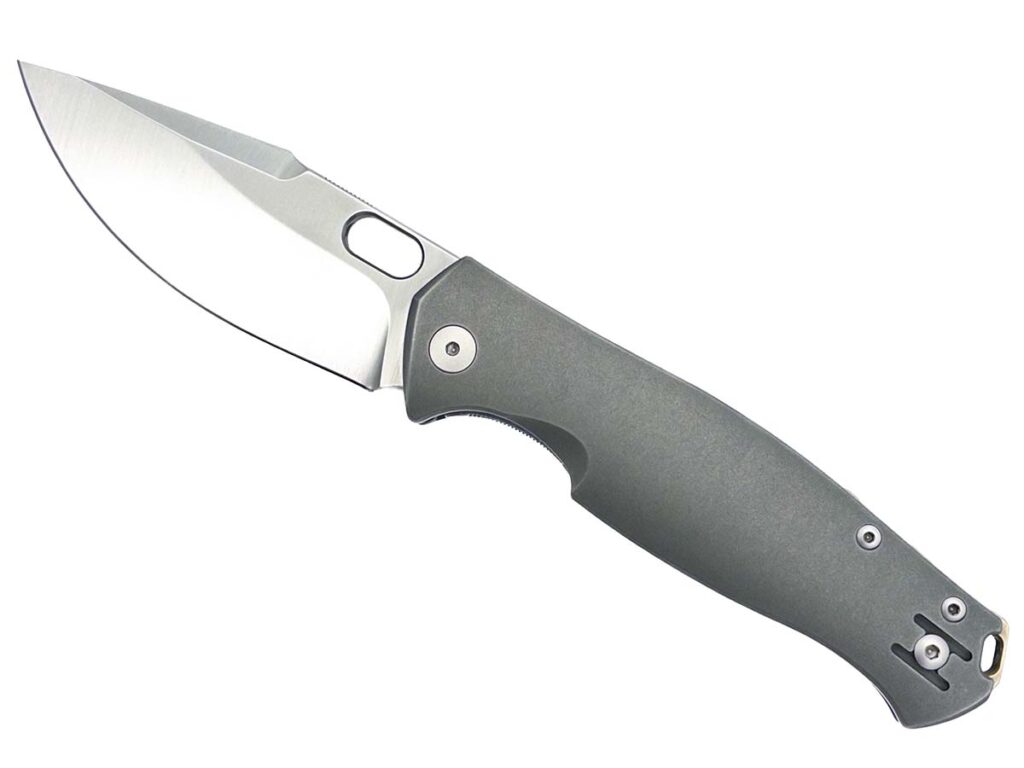
INTREPID INTEGRAL—Gentlemanly in appearance, the 2.83-inch LionSteel Emmet features a solid integral handle in either titanium or aluminum. The titanium model comes with carbon fiber inlayed scale, the aluminum with a hammertone texture. Blade Material: MagnaCut. Blade Pattern: Drop Point. Overall Length: 6.73 inches. Country of Origin: Italy. MSRP: Ti $225; Al: $130. Available: Now
NortoriousEDC Dirty Deed Pry Bar
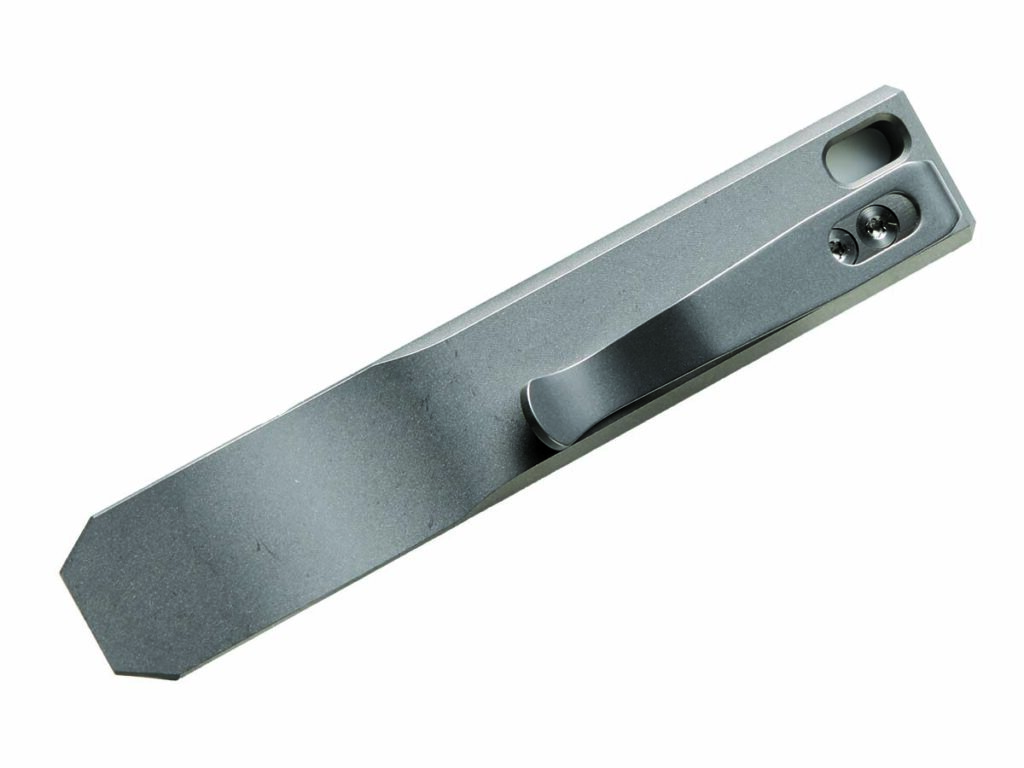
DOWN AND DIRTY—Constructed from Grade 5 titanium and a solid 3.5 inches in length, the NotoriousEDC Dirty Deed Pry Bar is ready every day for jimmying chores. The tool ships with a deep carry clip installed and includes an optional filler tab. Thickness: 3/16 inch. Width: 5/8 inch. Finish: Stonewashed. MSRP: $75. Available: Now
Vero Engineering Slip Joint
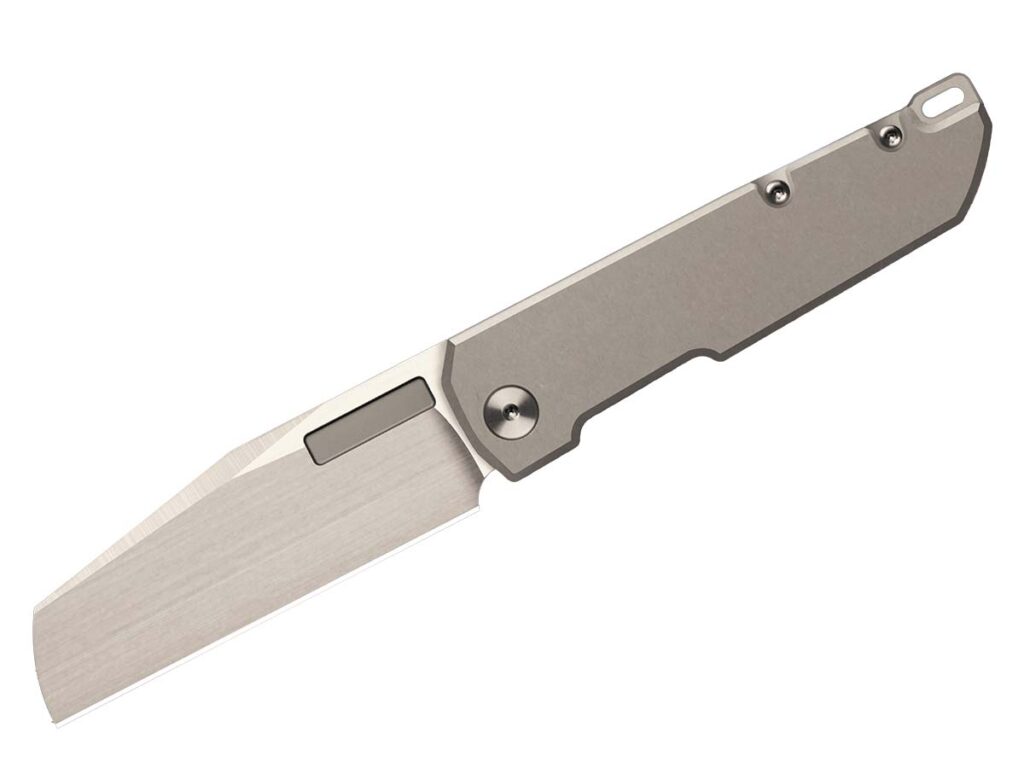
UNKNOWN SOLIDER—Vero Engineering’s new Wharncliffe is so recent that at writing it was yet have a name. What is known is that the slip joint will have a 2.75-inch MagnaMax blade, with the Vero trademark rectangular milling serving as the nail nick. Overall Length: 6 inches. Weight: 2.6 ounces. Handle Material: Titanium. Country of Origin: U.S.A. MSRP: $198. Available: June
GiantMouse ACE Pontius
HARPOONS AWAY—Designed with input from Chris Pontius, the GiantMouse ACE Pontius features a 3.2-inch harpoon-inspired clip point blade and titanium scale. The linerlock will also be available in Green G10 or Black Canvas Micarta. Blade Steel: Elmax. Overall Length: 7.7 inches. Liners: Hardened 420 Stainless Steel. MSRP: $325. Available: June
Shirogorov F95 Ursus
BEAR OF THE NORTH—The Shirogorov F95 Ursus offers a rugged, work-oriented take on the refined F95 pattern, featuring a 3.74-inch Elmax stainless steel blade with a 5/6ths grind. This iteration utilizes a Multi-Row Bearing System (MRBS) for smooth deployment and a dependable liner lock. Scale: Micarta. Overall Length: 8.66 inches. Weight: 4.69 ounces. MSRP: $650–$700. Available: June
StraightLine EDC Bigger Digger
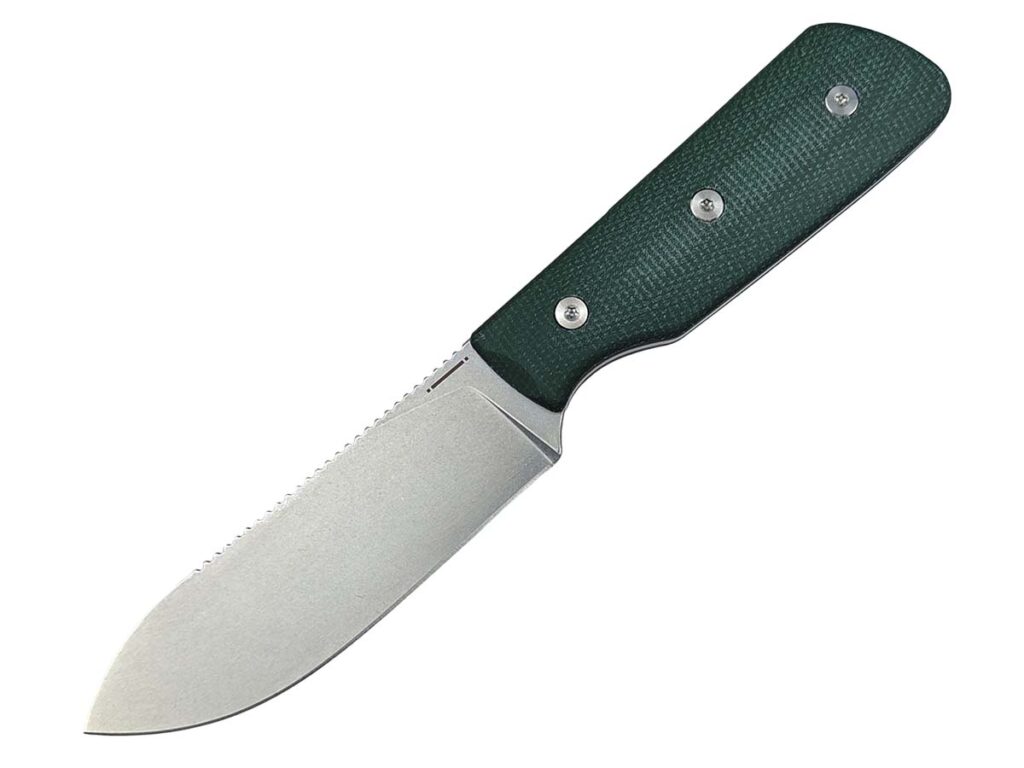
GOLDEN DIGGER—The StraightLine EDC Bigger Digger is a purpose-built fixed blade designed for daily carry, featuring a 3.74-inch drop-point blade of 14C28N stainless steel. Ensuring a secure grip in all conditions, the 7.52-inch profile is outfitted with green canvas Micarta scales and a flat grind for efficient slicing. Weight: 3.17 ounces. Grind: Flat. Sheath: Kydex. MSRP: $80. Available: June.
Rothman Knives Fabricator Series Gentlemen’s Trapper
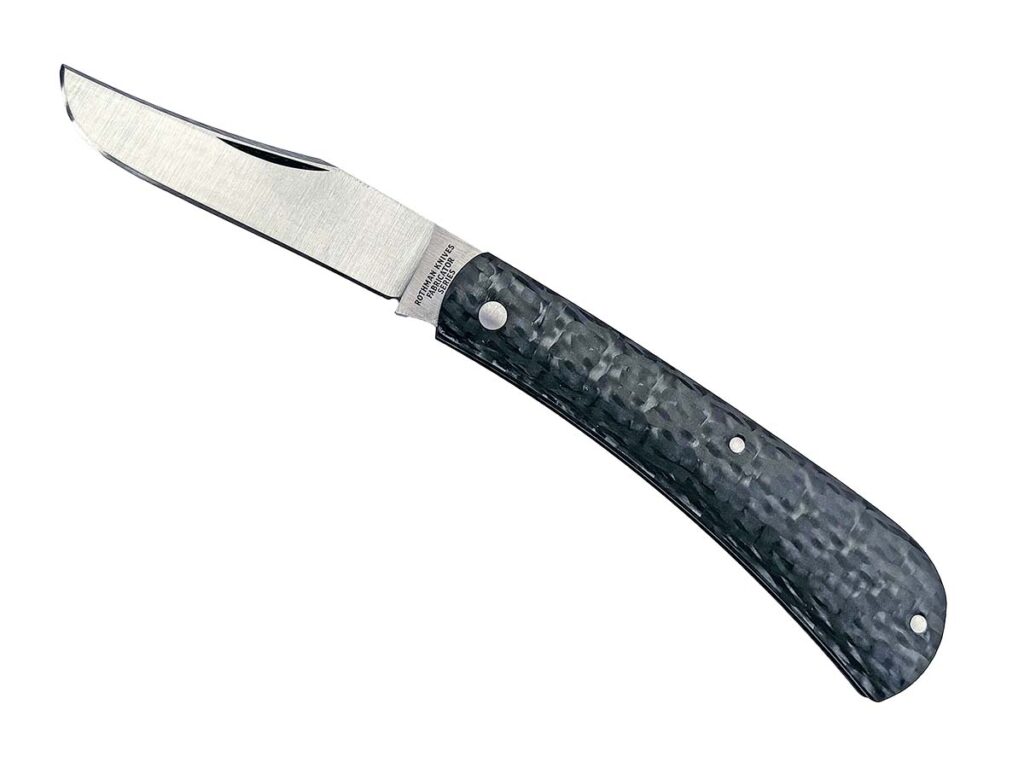
BLUE-COLLAR GENTLEMAN—The Rothman Knives Fabricator Series Gentlemen’s Trapper is a modern, lightweight take on the classic slip joint, weighing in at just 1.6 ounces. The 2 7/8-inch Nitro-V stainless steel blade features a deep 14-inch hollow grind for exceptional slicing geometry. Overall Length: 7 inches. Scale: Carbon Fiber. MSRP: $400. Available: June
Browning Stormy Pass Trapper
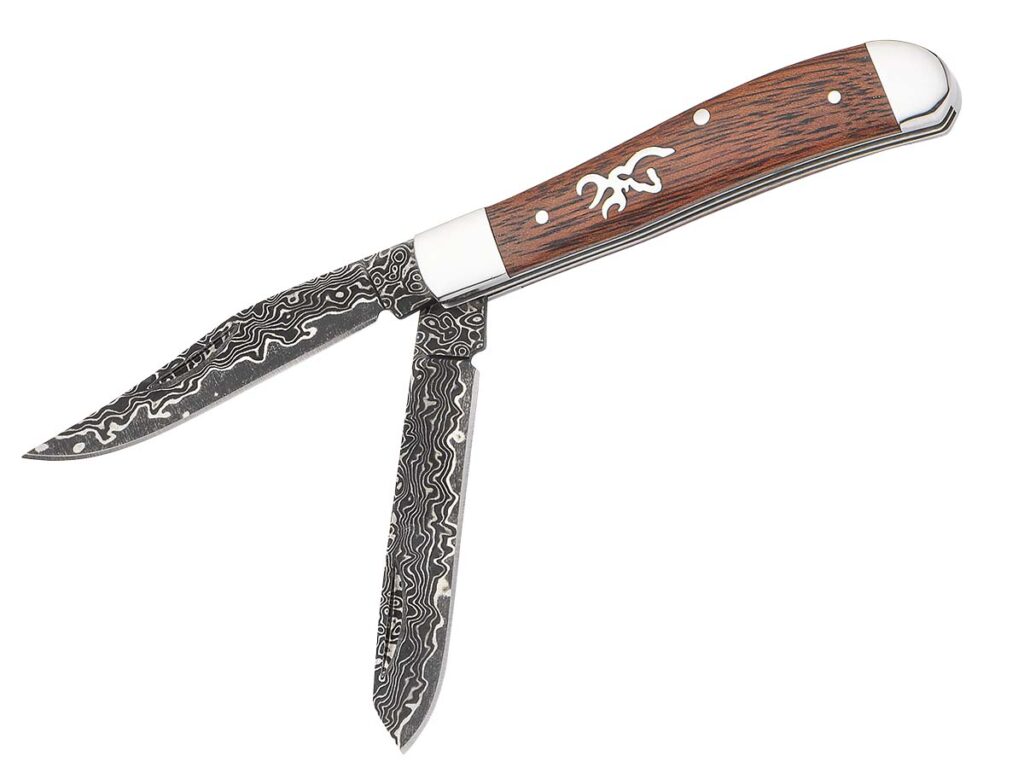
STORM A BREWIN’—The Browning Stormy Pass Trapper is a traditional slip joint built with an emphasis on longevity and classic aesthetics. It features a 3-inch damascus steel blade with a hollow grind, paired with stainless steel liners and wood scales. Overall Length: 6.25 inches. Weight: 2.4 ounces. Blade Pattern: Trapper. MSRP: $100. Available: September
Bestech IKA Dagger
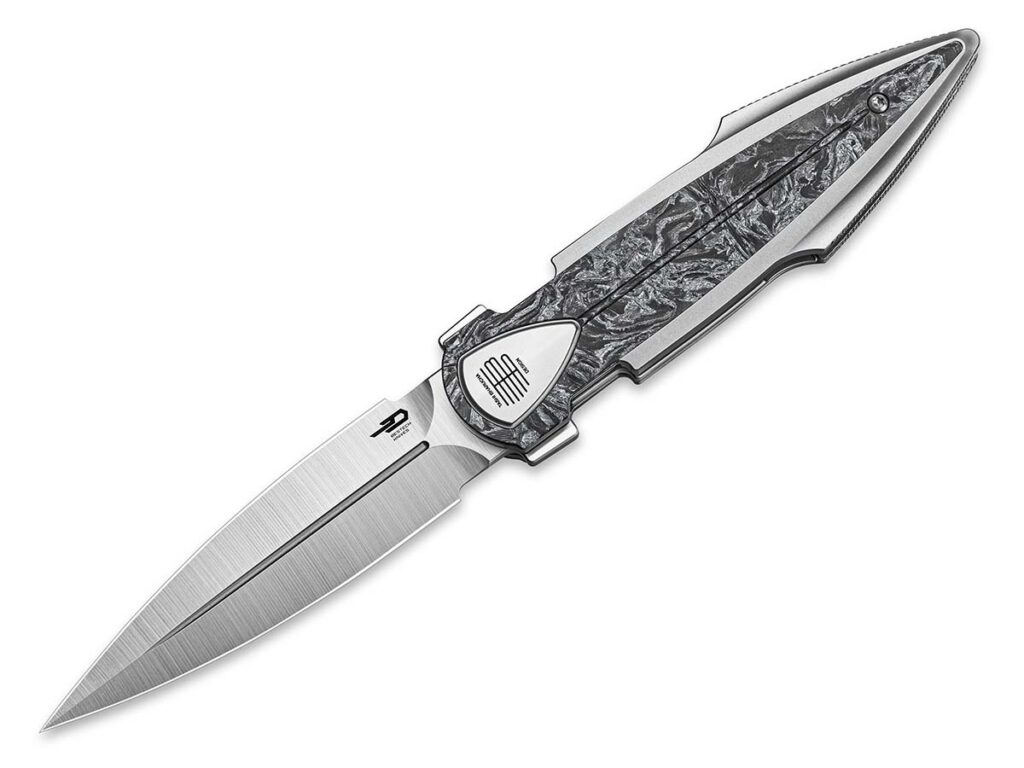
FRANKISH FLARE—Bestech’s IKA Dagger is the first integral handle design from French designer Tashi Bharucha. This folder features a 3.9-inch M390 stainless steel blade and ceramic ball bearings for fluid deployment. Overall Length: 8.85. Frame Material: Titanium. Blade Pattern: Dagger. Blade Thickness: 0.16 inch. Closed Length: 4.95 inches. MSRP: $580. Available: June
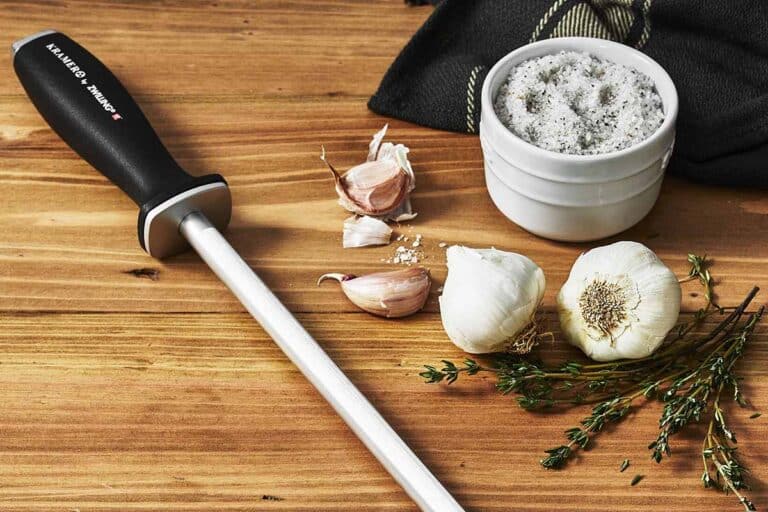
Honing Rods. Honing Steel. Sharpening Steel. Here are our top picks.
Whether it’s in your knife block or you saw Gordon Ramsay using it on TV, you’ve probably seen a honing rod. While it’s a ubiquitous piece of kit in the kitchen, it’s a bit of an enigma. Many think that this long steel rod is meant to sharpen your knives, but that’s not the case. Beyond that, contemporary rods are made from materials other than stainless steel like ceramic and diamond-coated steel.
It isn’t known when honing steels were first invented, but there are records from the Company of Cutlers in Hallamshire making honing steels in Sheffield, UK as far back as the early 1600’s.
With such a long history of use by knife owners, it’s important to know what a honing rod is, how to use it, and how to find the right one for you.
What Is A Honing Rod?
While many people call it a sharpening rod, a honing rod or steel hones your blade rather than sharpens it. With regular use, your knives will start to lose their edge. Standard wear and tear such as cutting through fibrous meats or knicking the cutting board will eventually bend your knife’s edge at the microscopic level.
By using your honing rod, you fix those small deformations to keep your knife’s edge like new. It’s important to note that you’re not removing material like you do when sharpening on a stone. A honing rod won’t help you if a knife has a totally blunt edge.
The best way to think about it is that your honing steel should be used a few times a week, or even daily, while a proper sharpening of your knives should be done once or twice a year.
Honing Rod Vs. Kitchen Sharpener
Traditional honing steel will help keep your knives sharper longer. Newer honing rods made from ceramic and diamond-coated steel do remove a minimal amount of steel when honing, usually tiny bits hanging onto your blade by a thread. No matter what material rod you use, it is healthier for your knives to use them regularly to maintain the edge for as long as possible.
Popular YouTuber Ethan Chlebowski goes in-depth on honing and how to hone to keep your knives fit for daily use.
Best Honing Rods
Whether they’re made from steel, ceramic, or even coated in diamond, honing rods come in all sizes, materials, and even shapes. These stand out from the rest.
Best Honing Rods Comparison
Rod
Weight (Ounces)
Rod Material
Handle Material
Country of Origin
MSRP
Wusthof 9-Inch Classic Ikon Honing Steel
11.6
Stainless Steel
Polyoxymethylene
Germany
$200
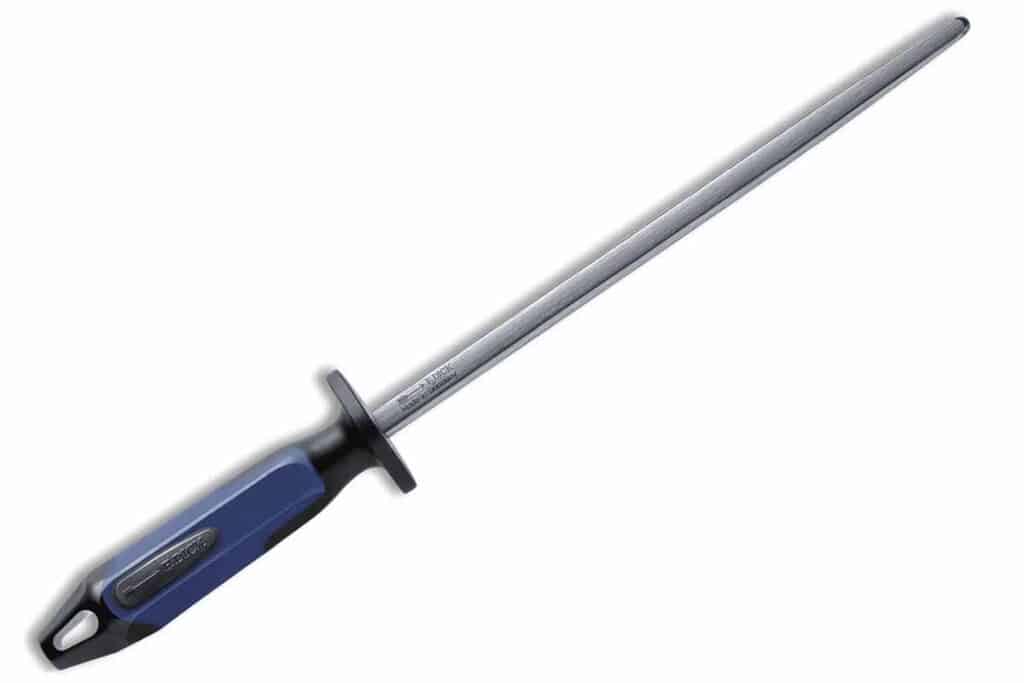
Zwilling 12-Inch Professional Oval Sharpening Steel
14.4
Stainless Steel
Polyoxymethylene
Germany
$60
JB Prince Mac Black Ceramic Honing Rod With Grooves 10.5-Inch
13.4
Ceramic, Steel Core
Polypropylene
Taiwan
$64
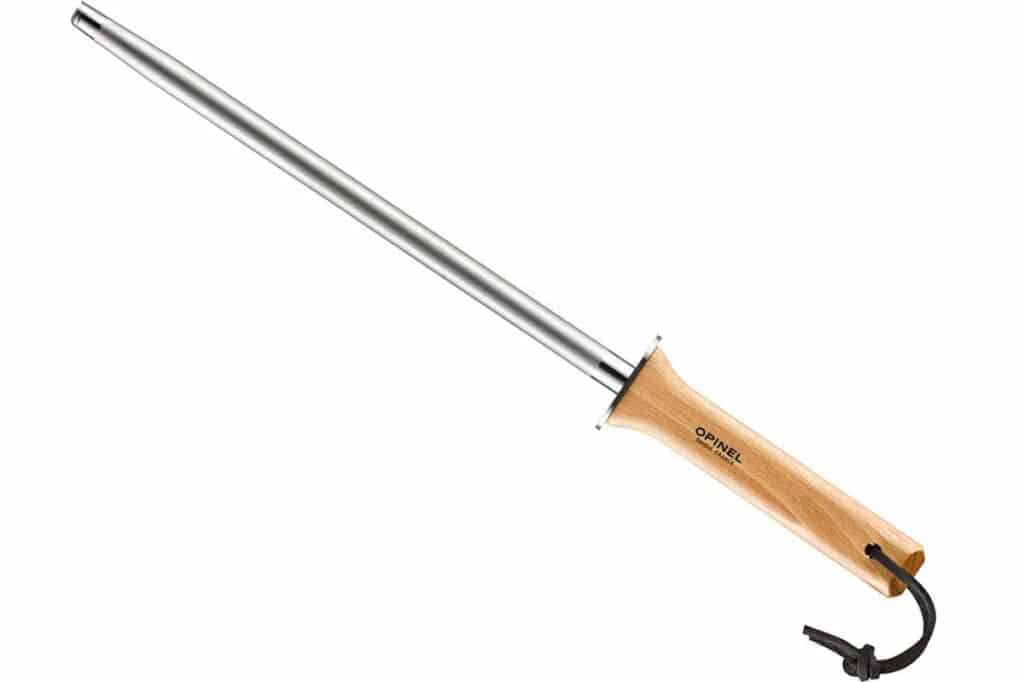
Opinel 10-Inch Diamond Steel Sharpening Rod
24
Diamond-Coated Stainless Steel
Wood
China
$60
Green Elephant Ceramic Sharpening Rod
7.2
White Ceramic
Polypropylene
Taiwan
$30
Friedr Dick 10-Inch Honing/Polishing Rod
4.9
Stainless Steel
Plastic
Germany
$83
Kuma Kitchen Knife Sharpener
8.6
Stainless Steel
Polyoxymethylene
Japan
$48
Friedr Dick Multicut Steel
15
Stainless Steel
Plastic
Germany
$150
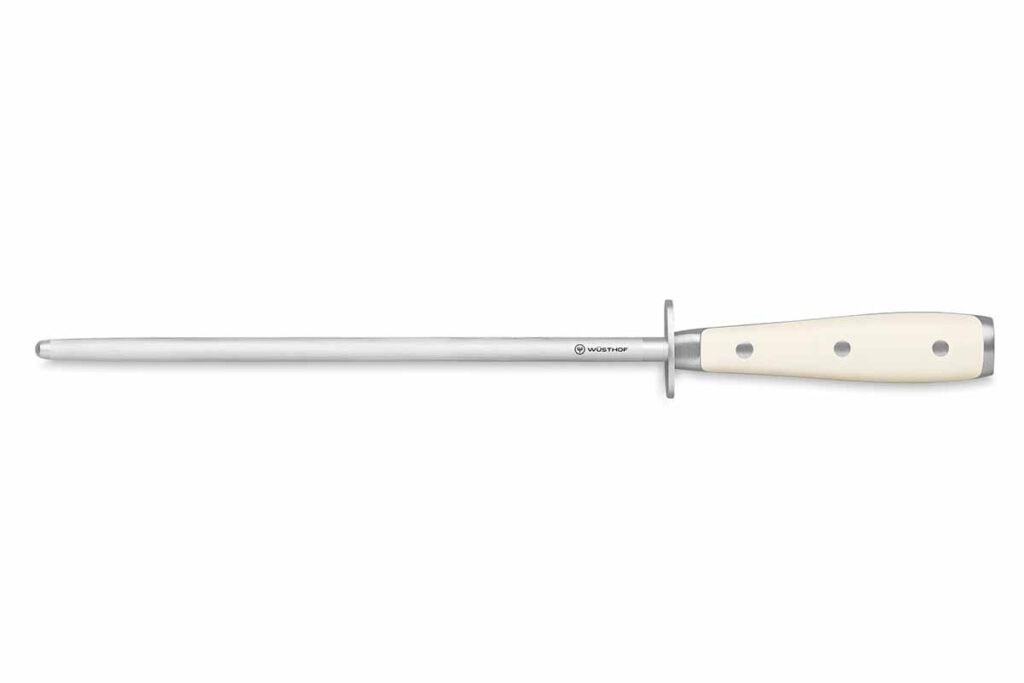
Wusthof 9-Inch Classic Ikon Honing Steel
Wusthof 9-Inch Honing Steel
A classic honing steel by any measure, the Wusthof 9-inch steel is a great honing rod to have in your kitchen. Made of stainless steel, this is everything you want from a honing rod. It’s light and tough and made by a company with more than two centuries of history making knives.
A strong, robust honing rod is what every knife owner should be looking for, and this one checks the boxes.
Classic Ikon Honing Steel Specs Weight: 11.6 ounces Rod Material: Stainless Steel Handle Material: Polyoxymethylene Country of Origin: Germany MSRP: $200
Zwilling 12-Inch Professional Oval Sharpening Steel
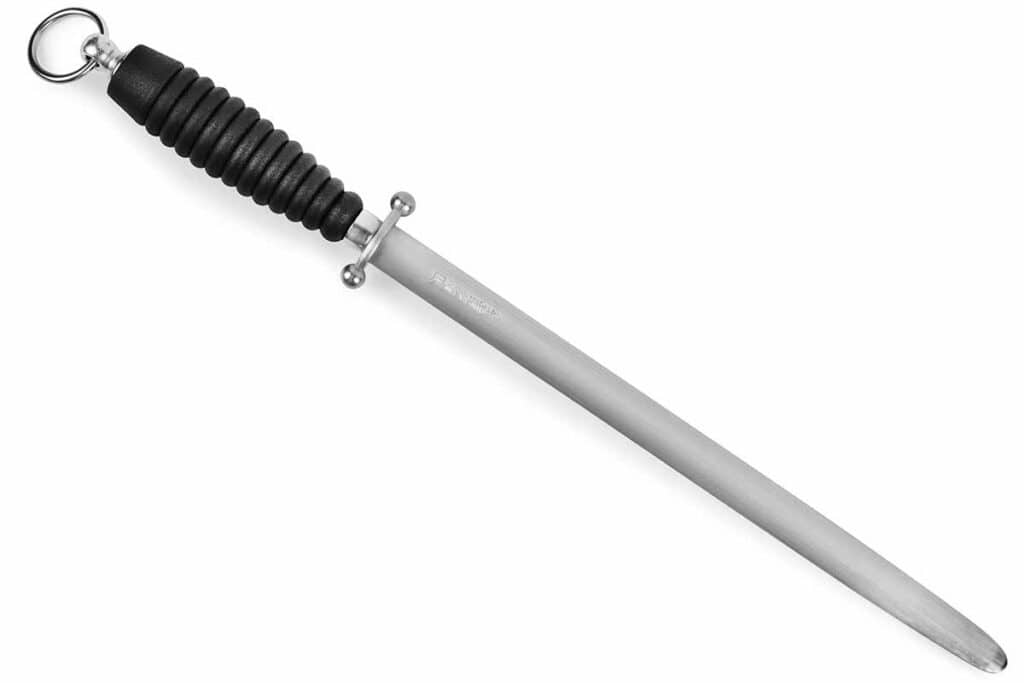
Zwilling 12-Inch Professional Oval Sharpening Steel
Sometimes you just need something a little bigger and heartier. This steel from Zwilling is up to the task. Its oval shape and longer length make it great for bigger knives. The chrome-plated steel is hard enough to hone most types of steel with ease and is easy to clean.
The loop at the end lets you hang it up easily too. Weighing in at just under a pound, don’t let that fool you. This is a heavyweight rod that will withstand years of use in your kitchen.
Professional Oval Sharpening Steel Specs Weight: 14.4 ounces Rod Material: Stainless Steel Handle Material: Polyoxymethylene Country of Origin: Germany MSRP: $60
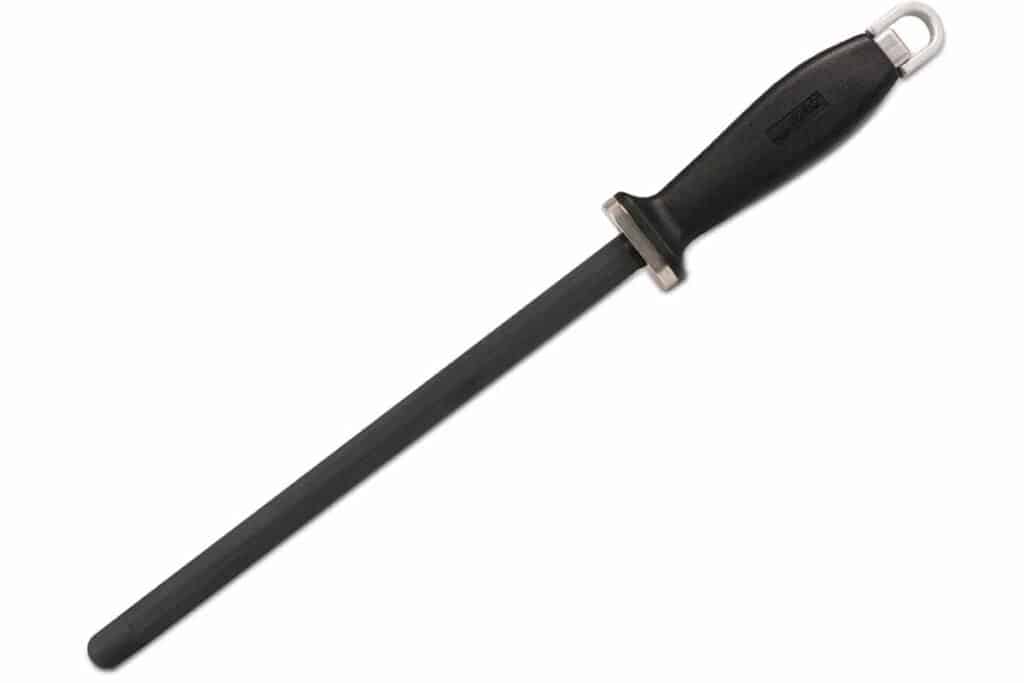
JB Prince Mac Black Ceramic Honing Rod With Grooves 10.5-Inch
With a fine 1200 grit, this ceramic rod from JB Prince is incredibly hard and durable. Its black ceramic coating is harder than both white ceramic and steel, and it’s also resistant to breaking so it can handle whatever you throw at it. Since it’s ceramic, it has the benefit of being completely rust-resistant, unlike traditional steel rods.
Most knife blocks that come with a honing rod will have a steel varietal, but looking beyond the block can lead you to quality rods like this one that can last a lifetime.
Mac Black Ceramic Honing Rod With Grooves 10.5-Inch Specs Weight: 13.4 ounces Rod Material: Ceramic, steel core Handle Material: Polypropylene Country of Origin: Taiwan MSRP: $64
Opinel 10-Inch Diamond Steel Sharpening Rod
Opinel 10-Inch Diamond Steel Sharpening Rod
When it comes to rods that also sharpen, you can’t go better than diamond steel. This Opinel rod has a coating embedded with diamonds that sharpens as it hones. It’s good for both kitchen and pocket knives so you sharpen your EDC with it as well.
With a beechwood handle, and weighing 21 ounces, this rod feels good in the hand and will leave a pristine edge on your knives. Worth the price in every way for the discerning knife owner.
10-Inch Diamond Steel Sharpening Rod Specs Weight: 24 ounces Rod Material: Diamond-coated stainless steel Handle Material: Wood Country of Origin: China MSRP: $60
Green Elephant Ceramic Sharpening Rod
Yes, there are many ceramic rods on the market today, but you’d have a hard time finding one as robust and durable as this one from Green Elephant. With a grit of 1500, the rod is fine enough to lightly sharpen along with honing and realigning your blade. It’s also suitable for Japanese knives which may come with only one cutting edge instead of a Western, or German, style double-edged knife.
The silicone seal between the rod and the handle is designed to absorb vibrations and the whole construction is built to withstand being dropped without cracking. Lightweight and fairly-priced, this 11-inch rod is worth a look.
Ceramic Sharpening Rod Specs Weight: 7.2 ounces Rod Material: White ceramic Handle Material: Polypropylene Country of Origin: Taiwan MSRP: $30
Friedr Dick 10-Inch Honing/Polishing Rod
It is almost impossible to chip this rod thanks to being coated in diamond dust. From German maker Friedr Dick, this 10-inch rod is diamond-coated steel is designed for the heavy knife user in mind.
An oval shape allows more of the blade to contact the rod with each pass which means each knife takes less passes to hone. The ergonomic, dual-density polymer grip keeps everything safe and secure when passing the blade down the rod.
The catch-22 is the diamond itself. Yes, it will return your knife’s edge quicker, but use the rod too often and it’ll scrape off material far faster than other types of rods.
10-Inch Honing/Polishing Rod Specs Weight: 4.9 Rod Material: Stainless Steel Handle Material: Plastic Country of Origin: Germany MSRP: $83
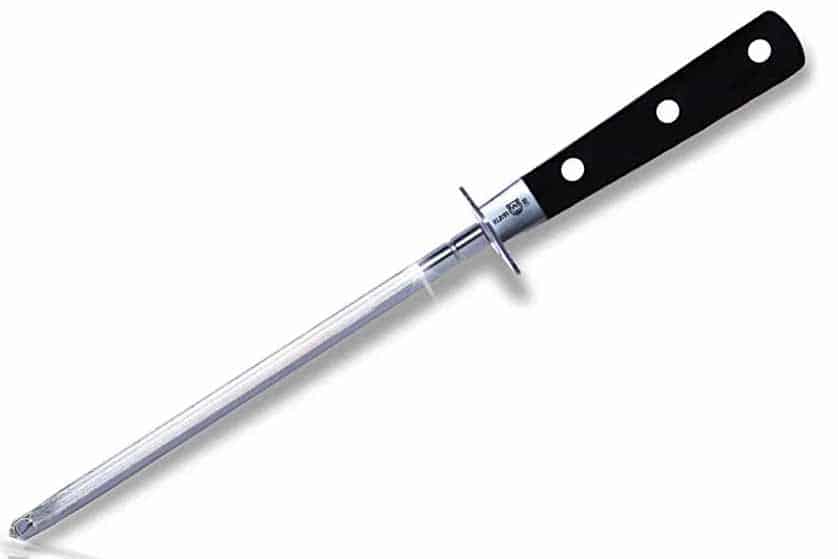
Kuma Kitchen Knife Sharpener
Some rods are designed for only one type or knife or are too short to properly hone long chef’s or slicing knives. This honing steel from Kuma is the consummate all-arounder. The steel reliably restores your knife’s edge thanks to its carbon steel construction. The triple-riveted ergonomic handle is slip resistant so even honing wet knives (although you shouldn’t do that on a honing rod) can be done safely.
Unlike most of the other rods on this list, this steel will need more hands-on maintenance due to its carbon steel construction otherwise it will rust.
Kitchen Knife Sharpener Specs Item Weight: 8.6 ounces Rod Material: Carbon Steel Handle Material: Polyoxymethylene Country of Origin: Japan MSRP: $48
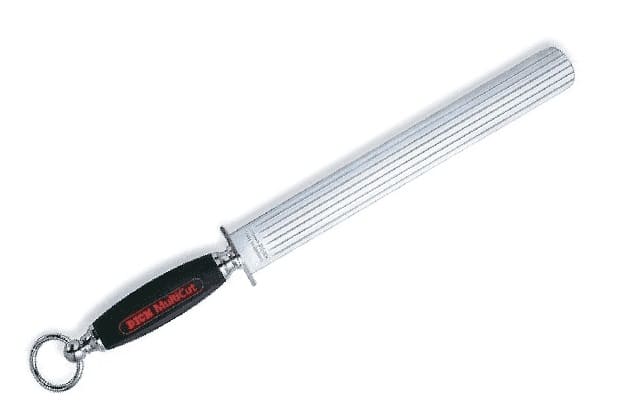
Friedr Dick Multicut Steel
Another entry on this list from the German maker, this honing steel looks unlike anything else out there today. At first glance it’s easy to think this is a misplaced paddle, but in reality it’s a multi-dimensional honing steel.
The flat 11-inch blade has six parallel grooves running through it. Slide your knife down the main body of the steel and it’ll hone like any other rod. However, slide down one of the grooves and you can more precisely remove burrs and imperfections from the blade.
This is far and away the priciest honing steel on the list so you’ll need to determine if it’s worth the investment or if you would be better served using one of the other rods to hone your knives.
Multicut Steel Specs Weight: 15 ounces Rod Material: Stainless Steel Handle Material: Plastic Country of Origin: Germany MSRP: $150
Editor’s Note: This article was written by Mike Ableson.
The M7 Bayonet Has Been Used By The United States Military For Almost 60 Years. The Dynamic, Multi-Purpose Tool Is Just As Useful Now As When It First Went Into Service.
When you first think of a bayonet your mind probably goes to the battlefields of the Revolutionary and Civil Wars. But no, bayonets aren’t some relic from a bygone era. While the days of bayonet charges are long long, the knives are still in use by the military today and have evolved into a multi-faceted tool.
The M7 Bayonet stands out due to its longevity. Built on the back of the M4 bayonet, which was issued toward the tail end of World War 2, the M7 is designed to be used with the M16 or the M4 carbine, although it can fit on numerous other rifles.
The History Of The M7 Bayonet
The M7 was first introduced in 1964 during the Vietnam War. The knife was initially made by Bauer Ord Company, but numerous companies did eventually manufacture the M7. Today, the lone remaining maker of combat-deployed M7 bayonets is Ontario Knife, though the knife is still available from at least one other company (Smith & Wesson).
Despite being issued by the United States military, the M7 was also made in Canada, West Germany, Australia, and in several countries in Asia.
How Does The M7 Work?
The M7 connects to the M16 via a lug thanks to a dual-lever locking mechanism. This secures the blade to the barrel while keeping the muzzle unblocked. A release mechanism on the pommel of the knife allows it to detach from the firearm easily.
Ontario Knife Company M7 Bayonet
Ontario Knife Company M7 Bayonet
Ontario Knife Co. was one of many makers to manufacture the M7, and it is the last to make the military issue variety of the blade. There is also a commercial version as well, which will be reviewed here.
It starts with a 1080 carbon steel blade with a zinc phosphate finish married to a modified Kraton handle. The blade is 6.7 inches long, and the whole construction is just shy of a foot in length. It tips the scales at 1.15 pounds. It looks beefy and feels hefty in the hand, as you would expect from a such a knife.
The included molded plastic sheath is a pistol belt clip. The lightweight sheath allows for safe, easy transport of the knife. While this knife is designed for combat, it’s burly design allows for multiple different uses. This would be a an excellent all-rounder when camping.
A vital safety tool for underwater adventure, a solid dive knife is a must-have for your dive kit. Here’s what you need to know to get the best one.
Dive knives are specialized edged tool that is made for people who spend time in the water. This seems like a wide definition, but water sports are a huge series of pastimes as well as a profession for millions of people across the world.
Diving, be it scuba or free diving, is inherently dangerous and rife with hazards, including the gear you may have on your person. The dive knife varies in profile and material, but in the end, it is a tool that can be relied on to remove yourself or another from a tangle of floating netting, a strap caught on an underwater branch, or to evacuate a struggling diver from their tank.
The dive knife is more than a rescue tool, though. In the alien environment that exists underwater it is a lifeline to the surface and a last resort in the worst situations.
Dive Knife Construction
In the course of use, most real-world knives are going to get wet, however, but are not meant to stay wet for extended periods. Getting caught in a rainstorm or left outside by the fire are things that happen, but being submerged in saltwater for weeks on end would destroy most knives as well as erode and damage handles and sheaths. Leather is not found on serious dive knives, nor is wood or carbon steel. These materials are simply eaten away by salt water and are also easily damaged in fresh water.
Dive knives are typically constructed using corrosion-resistant materials and have handles molded directly to them. The idea is to reduce the number of areas where water can enter, making the knives last longer. Very few materials are absolutely corrosion-proof, but they can be made resistant to the point where they won’t degrade for years or decades, sometimes even the lifetime of the owner.
Dive knives are also less rugged for on-land work. Most of the blades of dive knives are thin, sitting in the .12- to .16-inch range, making them unsuitable for heavy use on wood or for camp work. In the water, you’re likely not going to baton logs, so the thickness of the stock is unimportant except for its ability to cut through materials.
Nylon and plastic are the main prey of dive knives, it is the main material for everything from rope to fishing nets and is the basis of most straps on a diver’s gear. It is not that there is only one used in this sense, rather it is that the vast majority of materials a dive knife needs to cut are man-made and are of a relatively normative quality.
Dive Knife Features
When looking at the must-have features on dive knives, one finds that there is no specific answer.
As noted above, the general concept of a dive knife is to cut through maritime-related cordage. The secondary functions are almost irrelevant to this, self-defense isn’t even a tertiary topic considering that shark attacks are exceedingly rare. Natural obstacles like kelp can hang a diver up, and this is perhaps the only naturally occurring material dive knives are commonly used on.
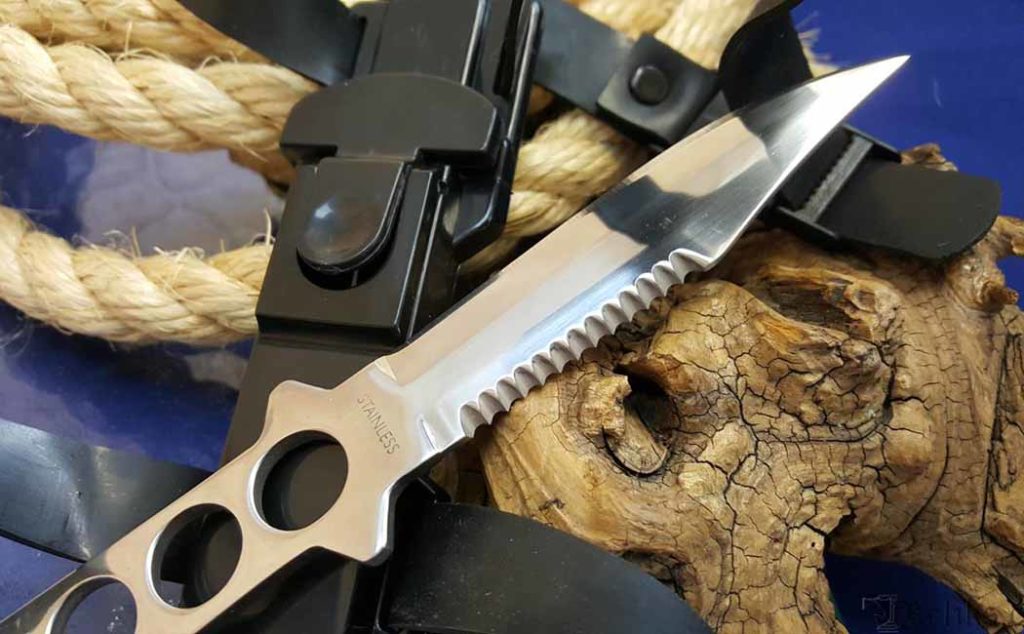
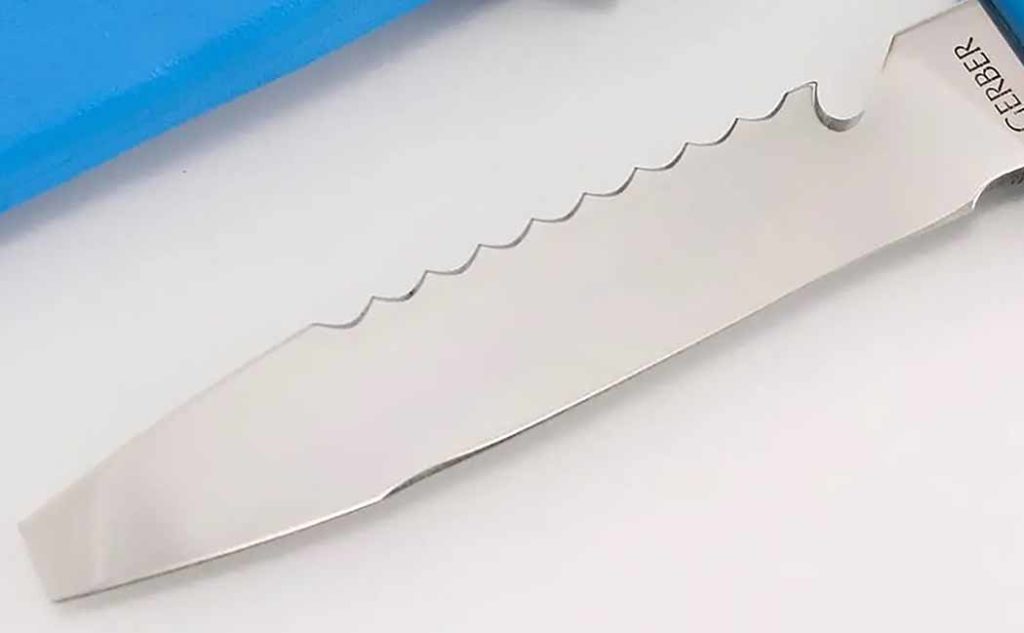
A Sharp edge is the knife’s the main feature and is simply a must—no questions asked. Serration is very ideal on a whole edge and is truly better for cutting rope or nets over a plain edge. A plain edge is great as well, but for cuts that don’t necessitate a sawing motion. Glass breakers in the pommel, paracord wraps, and other features aren’t necessary and may even get in the way. Simplicity is paramount in a dive knife, you should never have to guess where your edges are when working in poor lighting conditions with limited oxygen.
Dive Knife Designs
Popular profiles vary, usually by tip profile. Some divers prefer a Bowie style with a sharp, aggressive tip. This is nice for fine work, especially on primary knives that may be used for harvesting oysters and other such tasks.
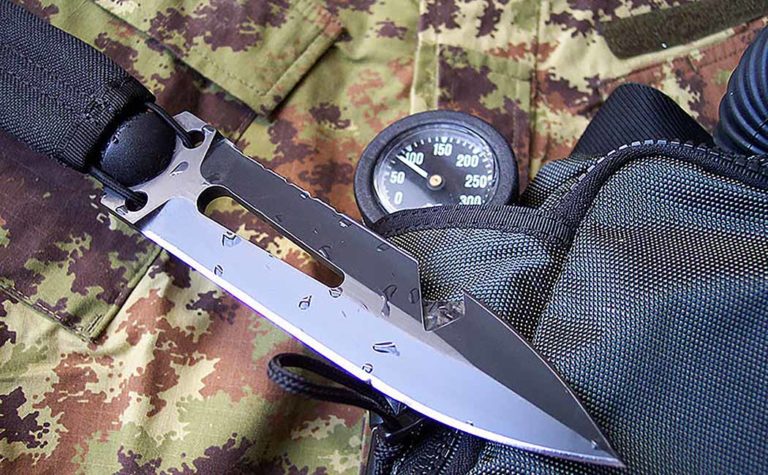
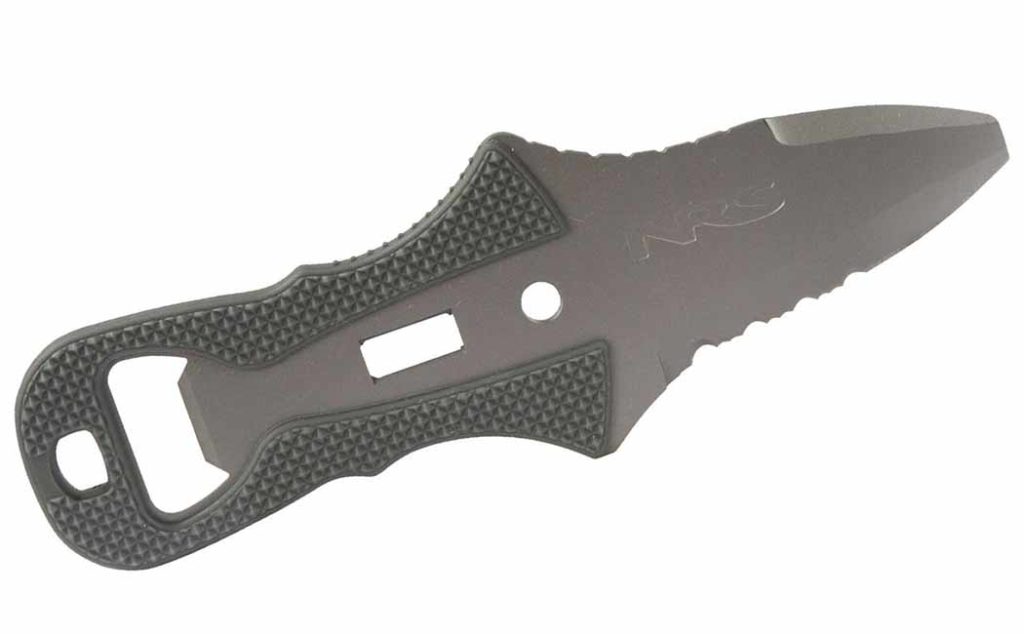
A flat tip can prove a safety feature for some on dive knives.
The other main category is blunted or flat-tip knives. These have a tip similar to pry knives in that they have an abbreviated, square-edged tip. They can also be used for various purposes, but their main advantage is that they can be slipped under straps on a diver’s body safely without risking stabbing or lacerating them. Injuries can still occur, but the serious risk is reduced.
Best Dive Knife Size
There is a general limit to the effectiveness of a knife used underwater. Thrusts and slashes are slowed down by the resistance of the water itself, and you tire much easier than on land. As a result, there is certainly too big of a knife, with the lower limit being around 3 inches, or just enough to get under most straps and tie-downs.
The handle should not be too small, however. Many of these designs have a dagger-like overall profile, though, a good scuba or dive knife should not have a dagger handle. You need to know where the edge is by indexing the handle. As a result, a beefy handle and 3- to 5-inch blade are what you want to look for a dive knife.
Steel Vs Titanium Dive Knives
Titanium is hands-down the better material for use on dive knives from a corrosion perspective. Titanium, however, doesn’t hold an edge as well as steel, but when sharp it cuts maritime materials just as well. Sharpness is a main benefit of steel, though even the best steel can experience corrosion over extended saltwater exposure.
Steel or titanium (such as the one pictured), is an eternal debate over dive knife blade material.
Some divers swear by steel, others by titanium, and this seems to be an ongoing debate. Steel coatings are better and better these days, and some steel knives are available with a titanium coating. Again, the benefits are largely subjective, most users won’t notice a difference with regular maintenance. Like all hobbies, the vast majority of conjecture takes place in the 1-percent of professional or constant participants.
Best Dive Knives At All Price Points
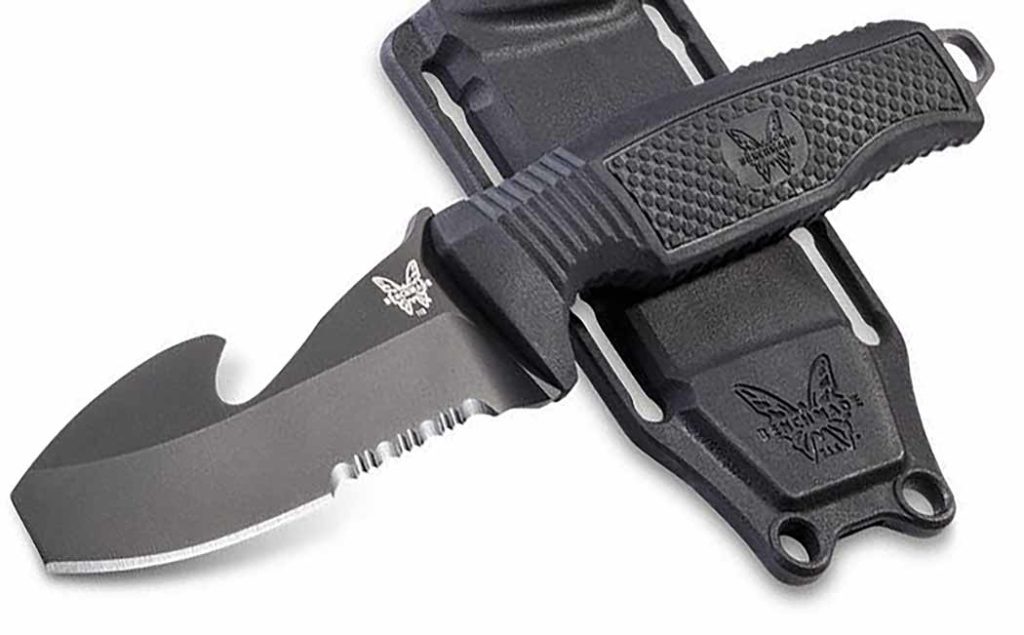
Benchmade H20 Fixed Dive Knife
Benchmade H20 Fixed Dive Knife
Benchmade is well known for some incredible and durable products. The H2O fixed dive knife is an example of this.
Designed for military use, the knife carries a national stocking number (NSN) and is exceptionally well laid out for its purpose. Interestingly, this knife has features that are not necessarily in line with what many of the experts say are best.
For starters, it has a relatively simple grip that lacks the excessive texturing found on many other dive knives. The blade is also made of steel, which stands in the face of those that say titanium is a must-have for saltwater exposure. This is not to say that it is the end-all, be-all knife for use in the water.
While the military has picked some good products in the past, it can’t be said that they are correct every time. This knife is a great starting point at a medium price, you get a blunted tip, strap cutter and serration, as well as a generous lanyard loop. The sheath, while relatively basic, can be adapted to many types of carry depending on what you’re doing in the water.
MSRP: $170
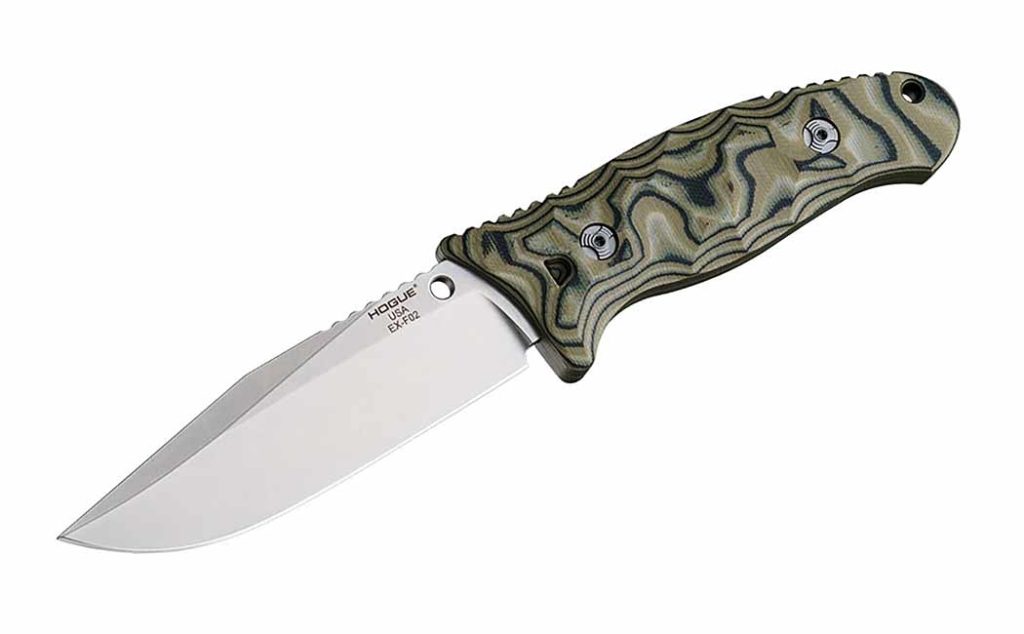
Hogue Knives EX-FO2 Dive Knife
Hogue Knives EX-FO2 Dive Knife
As a general purpose outdoor knife, Hogue has a winner in the EX-FO2. This knife is right in the “perfect size” range for a dive knife, however, it has some features that make it both spot-on and a bit questionable at the same time.
Looking at the positive angle first, this knife is very well laid out and has a nicely shaped handle that has positive reviews for water use. The sheath setup is also excellent, it comes ready for attachment to your arm or leg with a padded backer. This is a knife that has multiple end uses. It is sort of a hybrid of a fishing knife and bushcrafter in that it has a stout blade that can be great for filleting but strong enough for general use.
This knife is available as listed with only a tanto point or clip point. For general use this is fine, however, it can be a liability diving. A completely sharp tip is a negative to some, the risk of puncture or personal injury is potentially much higher as opposed to a blunted point.
MSRP: $159
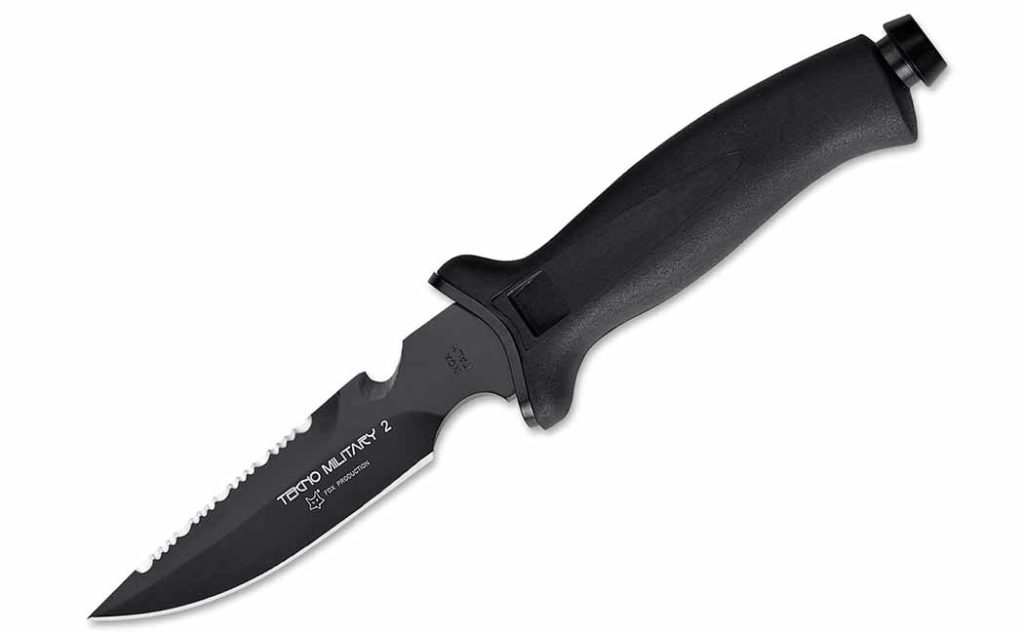
Fox Knives Tenko Military II Dive Knife
Fox Knives Tenko Military II Dive Knife
Fox Knives is an Italian company that makes high-quality products at reasonable prices. The author has used Fox products for quite some time, and all of them have held up very well.
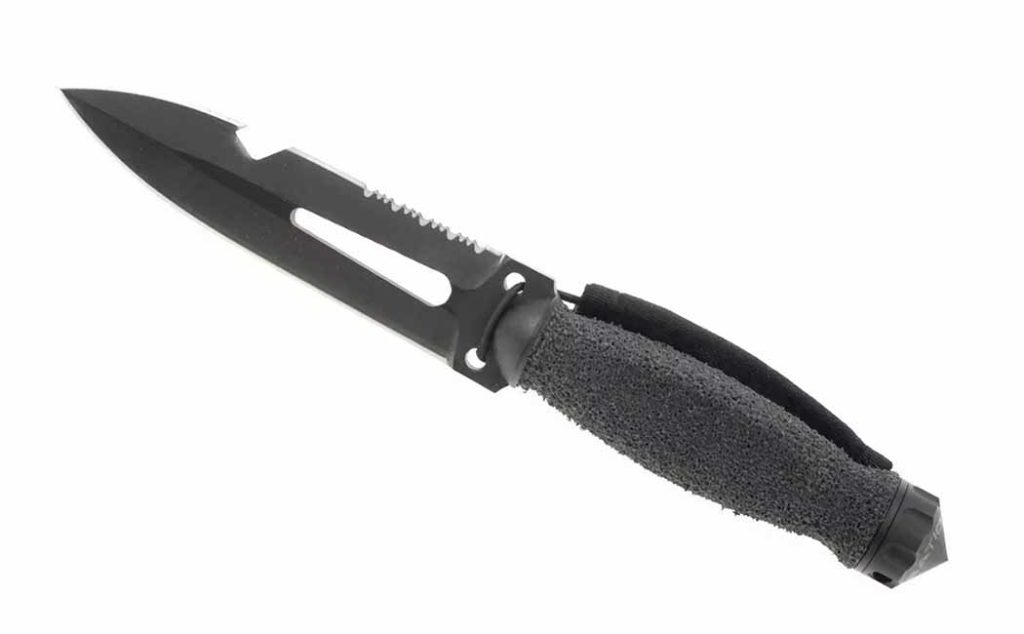
Their dive knife is feature-rich, almost to a fault. The knife is double-edged, one serrated and the other clean. The rear part of the spine has a cord hook directly behind the separation. Unlike the others on this list, the Fox knife has a full cross guard that allows you to choke up on the blade for high-impact puncturing or slashing. This knife has a very fine tip, and while it is military-themed, this tip is a bit too aggressive for rescue work or freeing even yourself from a tangle. A bonus of this knife is that it has a full rubber handle as opposed to textured plastic.
MSRP: $117
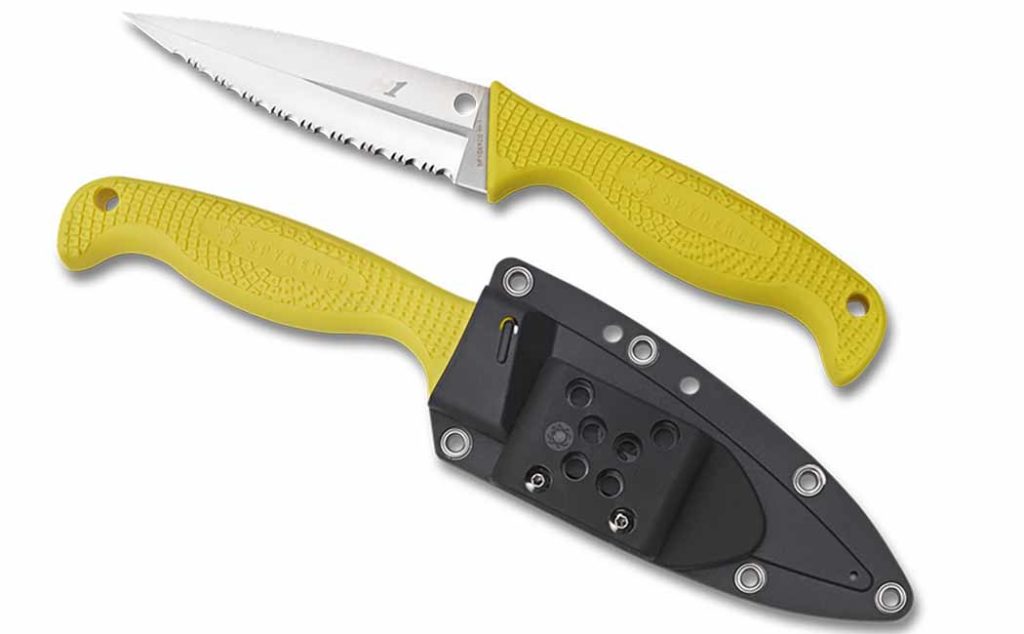
Spyderco Salt Fish Hunter
Spyderco Salt Fish Hunter
Unlike the rest of the names on this list, the Fish Hunter is exactly that, a hunting knife. While many of these knives can be used for fishing in general, Spyderco’s product here is expressly made with the intent to be used as a companion for spearfishing and adventurous free divers. This is a specially designed product, and shouldn’t be confused with other dive knives or dedicated scuba knives.
The blade is hollow ground and comes to a very aggressive tip. Serration starts just after the tip and continues to the handle. Many fish are surprisingly thick-skinned and are quite difficult to kill, this knife makes it relatively effortless and the serration allows for quick cuts through even the thickest scales.
While this knife of course can be used to aid in an emergency, it would likely be best to bring a dedicated, blunted rescue tool as well. Spyderco designed their Salt line to fit this bill, and you can find products that are geared towards rescue and escape as well in their lineup.
MSRP: $196
Extrema Ratio Ultramarine
Extrema Ratio Ultramarine
By far the most expensive dive knife on this list, and perhaps the production market, the Italian-made Extrema Ratio Ultramarine is a purpose-built, do-all dive knife. Curiously, for being so costly, it is not made of titanium or another material less subject to corrosion.
Much like the Benchmade H2O, it is a steel knife. The Ultramarine is double-edged, one clean, and one serrated, and it includes a strap cutter and wrapped handle for a very sure grip underwater. The covering is removable. The knife comes with a functional sheath and case.
You may ask yourself just what you get in terms of the extra hundreds of dollars and, well, that is something only you can know. The possibility of losing such an investment in the deep is not something many people want to stomach considering that many dedicated dive knives are less than $100. This is one serious knife for perhaps the most serious users.
MSRP: $792
Aqua Lung Argonaut Blunt-Tip Titanium
Aqua Lung Argonaut Blunt-Tip Titanium
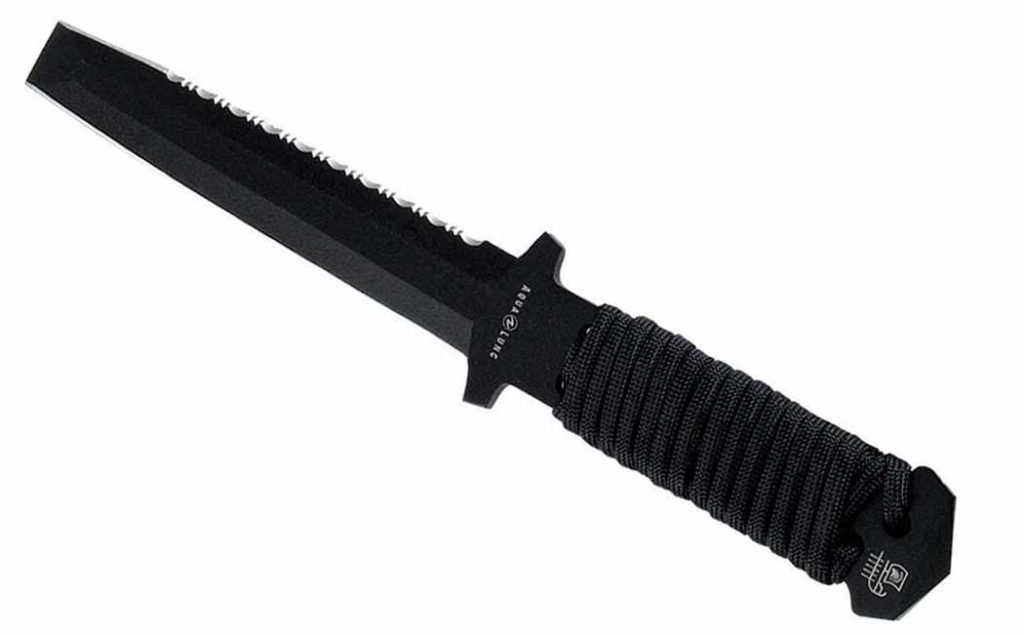
Aqua Lung has a real winner here with the Argonaut. This knife is available as a blunt tip, as well as what they call a Spartan tip, which has a leaf-shaped, pointed profile. For our purposes, here, the blunt-tip version is the knife that we are going to be looking at.
As a scuba knife, it is perfectly suited for the task. The squared, blunt tip profile allows it to easily get underneath any strap, and, depending on what you need to cut, it has a sharp plain edge and a serrated edge. The knife is made of titanium, which is a choice for many people that spend time in the water. This material is far less vulnerable to corrosion and is also quite light. It is relatively thin for its end use at .15 inch, so prying is not on the menu.
This knife comes with a dedicated leg or arm sheath and is moderately affordable at around $200 retail. The handle is simply wrapped in cord, which somebody finds to be a detriment over a high texture Nylon handle.
MSRP: $195
Promate Snorkel SCUBA Knife Titanium
Promate Snorkel SCUBA Knife Titanium
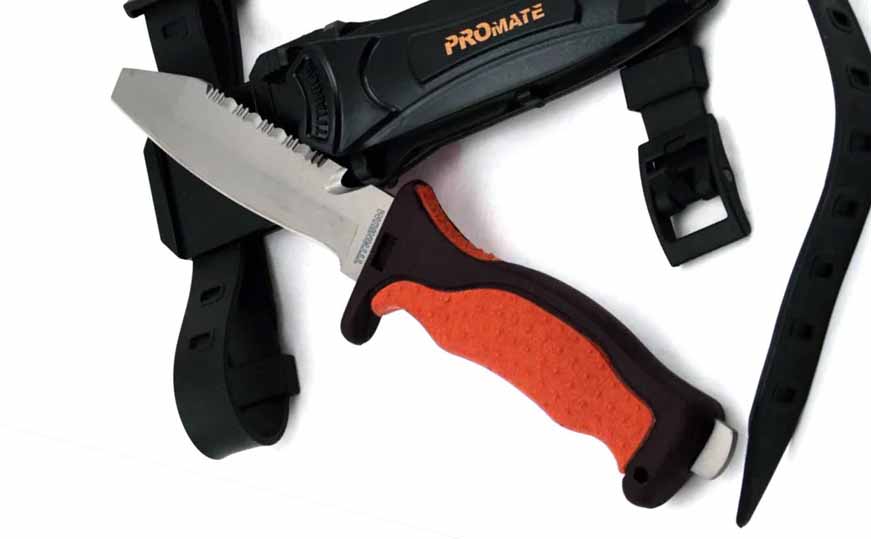
The Snorkel is an affordable, multi-function, titanium knife that is very well thought out. It has a plain main edge and a serrated spine with a cord cutter. While it is substantially less expensive than the others on this list, it boasts very high reviews across the board and is by all accounts the standard, by which all scuba knives are judged. If it does not perform as well as this affordable model, it probably is not going to perform at all.
The Snorkel is available as a blunt tip, as well as a very aggressive Bowie profile. Depending on what you’re going to do with it, the former is more functional for general use, while the latter is going to give you an advantage if you are spearfishing or free diving. Because they are half the price or less than almost everything on this list, you can get one of each and still have cash in hand. These knives are available in different colors to suit your interest and come with a functional sheath setup for use in the water.