
Buyer's Guides

You’re looking for a new knife in a certain style – we’ve got recommendations on the best blades for every price point.

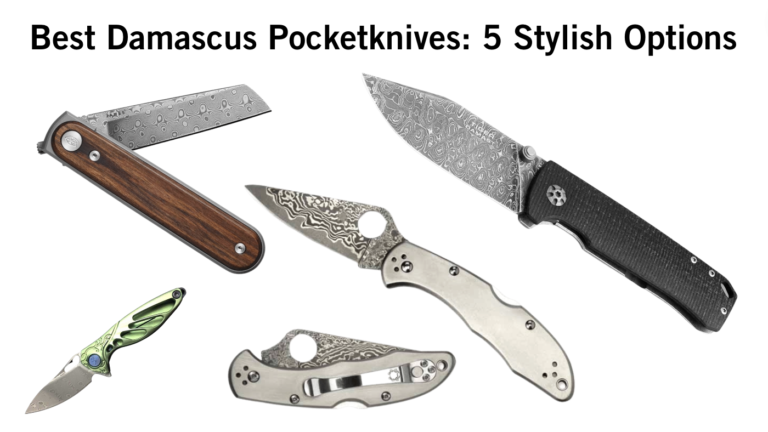
Best Damascus Pocketknives: 5 Stylish Factory Options

Damascus Pocketknives That Wow From Around The World.

Yes, some steels are of higher quality than others, but nothing is as eye-catching as a well-made damascus knife. And now, thanks to contemporary forging techniques, there are just as many high-quality damascus pocketknives as there are kitchen knives, daggers, and swords.

What Is Damascus Steel

Also called pattern-welded steel, damascus steel is made from forging multiple types of steel together. This can create different kinds of patterns in the finished product once the construction is complete.

Traditionally, damascus steel was created to imbue a sword with a desired blend of toughness and hardness. While cutlery is still forged this way for that purpose, today many damascus blades are made for the cosmetic look that comes from the acid etching or polishing done when the blade is complete.

You’ll see many damascus knives today constructed from the core of one type of steel and multiple layers of different steels on either side of it.

While the actual origin of the term “damascus steel” is unknown, many have connected it to the Syrian capital of Damascus and swords made or sold in the city in ancient times. Another theory is that the term is derived from the Arabic word “damas” which means watered, which describes the wave-like pattern that many blades can have. 

Best Damascus Pocketknives

Boker Tiger-Damast

You know what you’re getting when you purchase a knife from Boker. Its legendary maker for a reason, and the Tiger lives up to its lofty standard. An elite collector’s knife, the Tiger is made from German tank parts from a tank destroyed in a battle in Latvia in 1944. 

The non-stainless blade is made in the intrepid pattern by maker Chad Nichols. The handle scales are a burlap micarta design to echo the look of German armored vehicles of the era. This is the dream of any knife lover interested in military history.

MSRP: $719

Spyderco Delica 4

A damascus version of one of Spyderco’s most famous blades, the Delica 4 is a beauty. The damascus blade/titanium handle combo gives the piece a futuristic look and feel.

The blade itself is made from a VG-10 stainless core with 15 layers of forged-welded damascus on either side. The machined titanium handle gives the whole piece a ridiculous amount of strength and durability. Spyderco is a beloved brand for a reason, and this version of the Delica 4 keeps the good times rolling.

MSRP: $304.50

The James Brand Duval

The Duval is the first front-flipped knife from The James Brand, an Oregon-based company founded in 2012. The frame lock makes for easy opening and sturdy use of the Damasteel Rose DS93X blade.

The material is made of 100 total layers of a pair of different types of steel. It becomes stainless once heat treated and has excellent corrosion resistance and edge retention.

This modified sheepsfoot blade is married to a handle made from Rosewood, and the whole thing weighs just 2 ounces. The hardware is all stainless and the ball bearings are ceramic. This piece is built to last and last a long time.

For a company’s first foray into front-flipping knives, James Brand has knocked it out of the park.

MSRP: $399

Kansept Knives Convict

This knife from Kansept Knives, a Chinese maker, stands out in numerous ways. For starters, it features a sheepsfoot blade, a less common blade types. Designed by Chris Conaway and Sheepdog Knives, the Convict is a light, nimble knife that can easily handle the job of an EDC.

The titanium handle is as light and strong as you would expect, and the stonewashed finish lets the damascus pattern shine through. While it may not be sexy, the ceramic ball bearings not only let the knife flip open smoothly and will never rust so it’ll open smoothly for decades.

MSRP: $203

Rike Knife Humminging Mini Flipper

The smallest knife on our list is from Rike, but it packs a wallop of a punch. 

The Hummingbird Mini is just 3.75 inches in total length and has a 1.5-inch blade. The Damasteel drop point flips open easily, and the titanium handle helps keep the whole construction to just .6 ounces.

This is an excellent keychain or neck knife. It even comes with a Kydex sheath designed to be worn on a lanyard for this purpose. Sure, it’s the smallest and least-expensive knife on our list, but it does everything you would want from an EDC. The fact that it won’t break the bank is another feather in the cap for this knife from the Chinese maker.

MSRP: $129.95

Read More

Knife Review: CRKT Skeggox

The CRKT Skeggox Is A Fun Little Hatchet That Swings A Big Game And Can Handle The Daily Tasks Around Your Property

A good hatchet is worth its weight in gold, and in the case of the CRKT Skeggox it weighs just 1.63 pounds. 

This fun, tactical hatchet is one of the newest offerings from CRKT. I had the chance to try it out on my property as winter descended. I had never used a hatchet before. I don’t think I’ll be needing to get another one for quite a long time.

What Is The Skeggox Made Of?

CRKT Skeggox

Let’s start with the particulars. The Skeggox is 12.94 inches long with a 4.83-inch blade made from SK-5 carbon steel for good edge retention. The glass-reinforced nylon handle is lightweight, cool, and feels excellent in the hand when swung. The blade is powder coated for extra corrosion resistance and gives the Skeggox an all-black look.

The hatchet includes a thermoplastic sheath that I loved. It has a clip to fasten it securely shut, but it fit so snug that you could easily travel with it and not clasp the clip (although you absolutely should). 

Testing the Skeggox

vines
The vines I first went at with the Skeggox

When I went to test the Skeggox I had the perfect patient: this nightmare of vines and saplings in my backyard. Before the arborist came to remove it all I took the hatchet out there to see what it could do.

With the vines it was a thumbs down. The thin, almost grassy material was not easy to chop through. The fact that the blade would slide off of the vines instead of slicing through made me uncomfortable because I didn’t know where the blade was going to go. I quickly moved onto the saplings, which were entwined with the vines in their upper reaches.

But as you can see, these saplings were the perfect size to really see what the Skeggox could do. And boy howdy, could it do a lot!

saplings
The saplings before meeting the Skeggox.

I went to work swinging the hatchet with a smile on my face. The Skeggox is weighted so well that each swing made me want to swing it again. I was wearing my outdoor gloves and the handle never once slipped as I chopped at the tree. 

It took a touch over two minutes, and it wasn’t the cleanest cut, but in the end, the sapling stood no chance.

cut sapling
The sapling after meeting the Skeggox.

I’m also getting my fence replaced in a few weeks so I took the Skeggox and began laying blows into the tops of the fence posts. I went as hard as I could to beat up the hatchet as much as possible. 

Final Cut

And finally, I returned to my kitchen, put a fresh Campari tomato on a plate, and drew the Skeggox down toward it. It went through like a hot knife through butter. Then, for good measure, I even quartered the tomato just as easily.

This is an excellent piece of kit. I can’t recommend it more highly. If you own a home and are looking for an affordable hatchet to use in the yard, this is the piece to get.

Knife Specs

MSRP: $158

Blade Material: SK-5 carbon steel

Blade Length: 4.83 inches

Blade Edge: Axe with beard

Full Length: 12.94 inches

Handle Material: Glass-reinforced nylon

Weight: 1.63 pounds

Sheath Material: Thermoplastic

Sheath Weight: 5.5 ounces 

Read More

Flexcut Whittlin’ Jack Review: Taking Wood Down To Size

When it comes to wood cutting, the Flexcut Whittlin’ Jack takes no prisoners.

The Whittlin’ Jack by Flexcut Carving Tools is the knife I wish I had when I was growing up. It would have made my outdoor life so much easier, not to mention much less painful. Granted, the blade edges are very fine and made for wood, so they tend to chip if you cut hard stuff.

Growing up a commercial fisherman on the Great Lakes, I was always cutting twine. The Whittlin’ Jack’s sharp blades would have saved me plenty of time resharpening and in doing such outdoor chores as marking sticks on a trapline. However, the best things about the knife are the sharpness of the edges during whittling, including for super fine cuts, and a very comfortable handle shape. The backspring holds the blade open tightly enough to stop accidental foldup while cutting, yet slowly closes the blade.

Flexcut Whittlin’ Jack Edge Test

Cutting paper
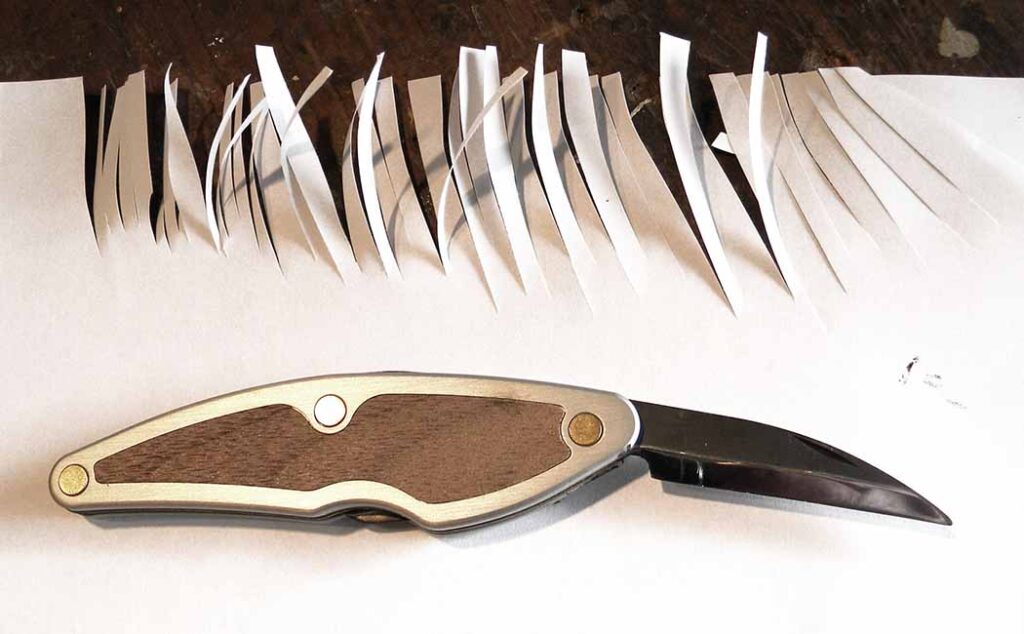
For the first edge-check medium, the author used his standard 20-pound bond copy paper. Both the roughing and detail blades zipped through the stationery way too fast. He just used the weight of the blade and pushed down.

For the first edge-check medium I used my standard 20-pound bond copy paper. Both the roughing and detail blades zipped through the stationery way too fast. I just used the weight of the blade and pushed down. I’m glad I had fingernails! Now I have four nicks in one. The knife was scary sharp from the get-go.

Whittlin’ Jack Vs Light-Duty Material

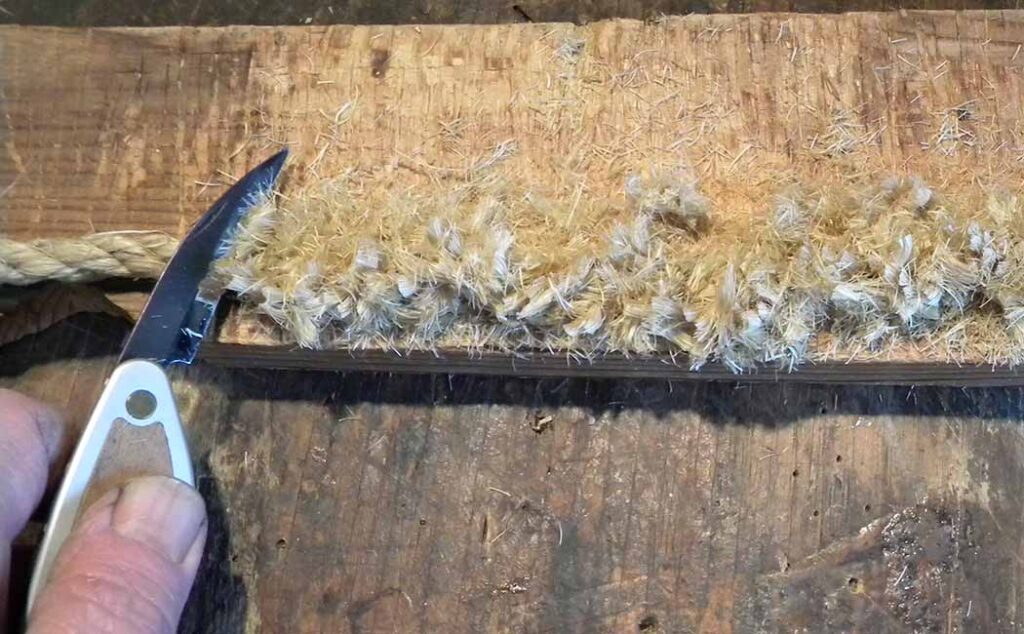
Next up was single-walled cardboard. The Whittlin’ Jack did not slow down one bit, though I did learn to move my finger faster. I could feel the blades cutting through the pockets in the cardboard. I made the longer cuts with the roughing blade.

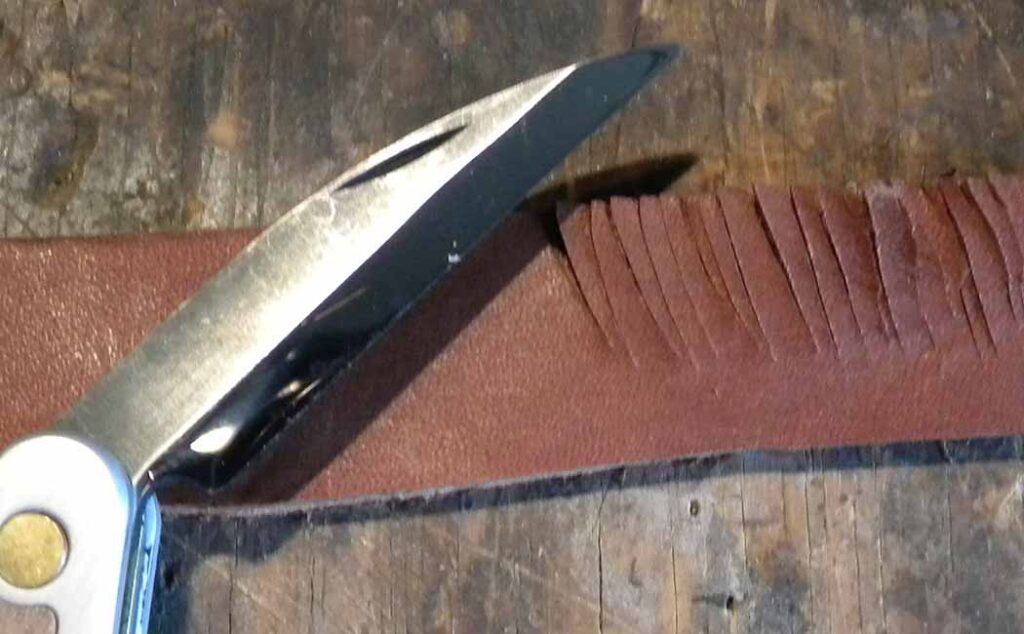
I made some straight cuts in 8-ounce leather to see how thin I could get the slices without the leather folding over. These blades are so scary sharp that I really had to watch how much pressure I was using so I didn’t cut the leather in half. Both blades were very controllable.

Cutting the end of the leftover leather at an angle, I did some skiving. I could hear a very aggressive crunching sound as the Whittlin’ Jack bit into the material. The slices were so thin I could actually see the polished bevel cutting through. Very sharp indeed!

Whittlin’ Jack Whittling

Flexcut Whittlin’ Jack whittling
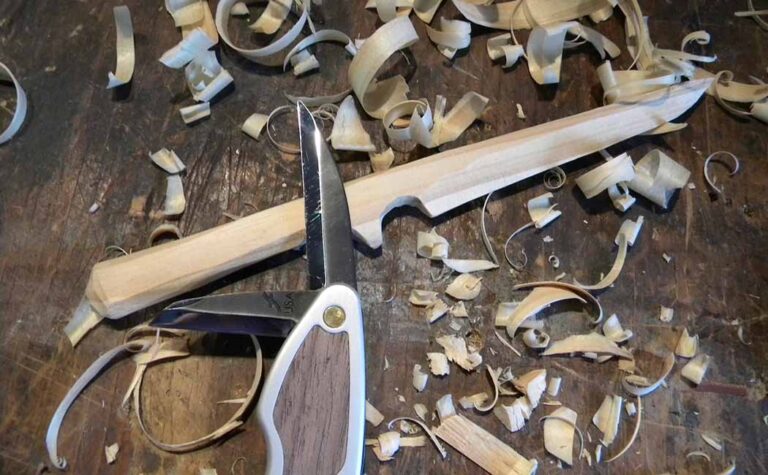
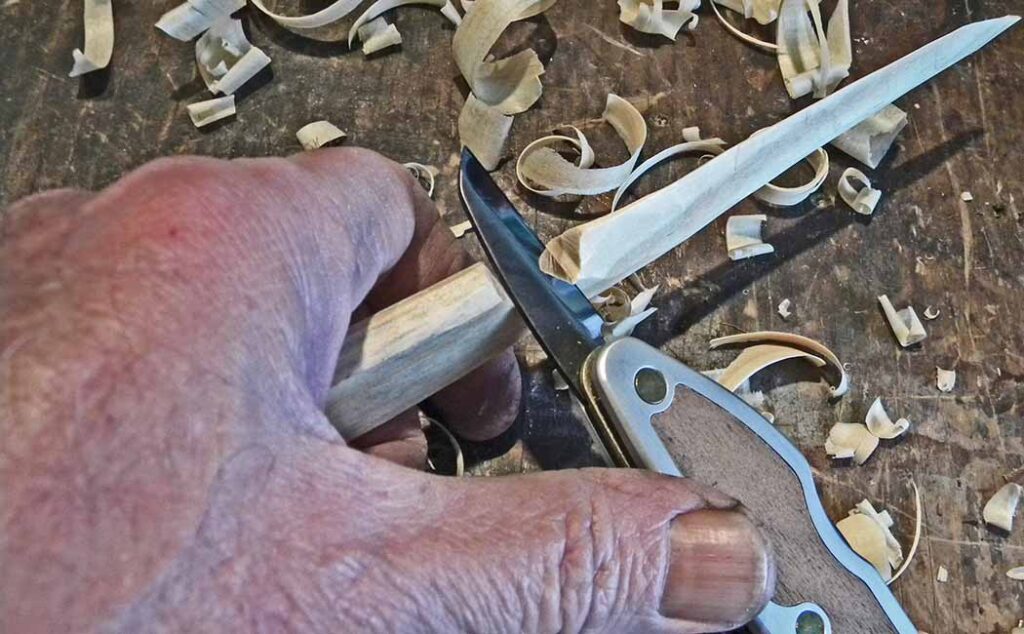
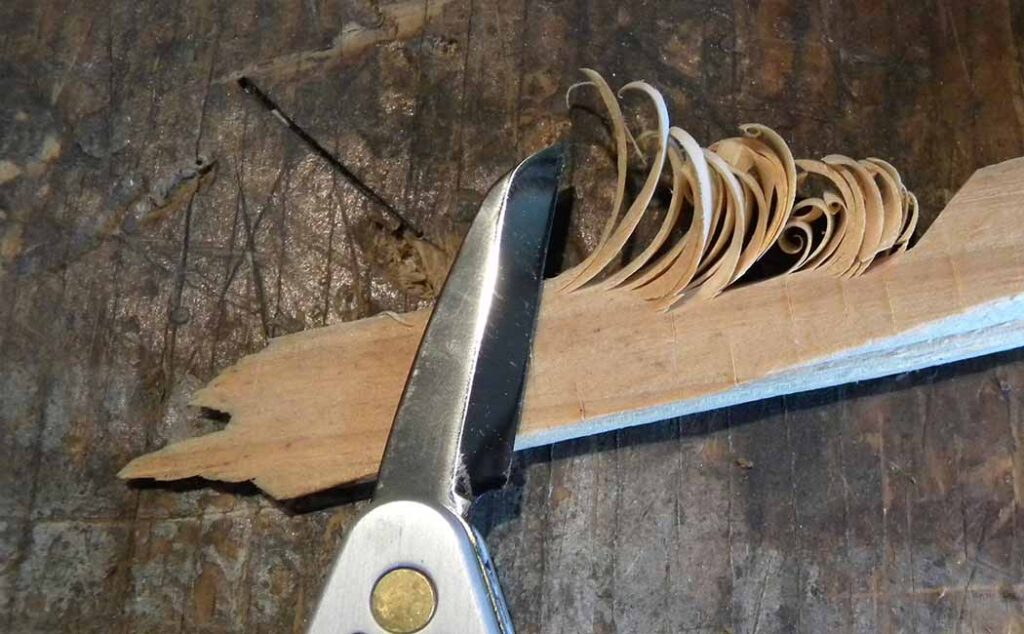
The curls were curlin’ as the author whittled a wooden tanto with the Whittlin’ Jack. Here he cuts the tanto’s choil with the detail blade.

The Whittlin’ Jack is the first knife to ever give me curly curly-cues. It was amazingly simple and easy to do. Fine cuts or deeper cuts, it didn’t matter. The whittling was so smooth the blades just slid through the wood. I liked the detail blade better for making curly curly-cues. The handle shape really excels as it fills your palm, making the blades an extension of your hand. This is an outstanding design to say the least.

For some extra whittling fun, I carved a thin tanto-style knife in less than 5 minutes. The roughing blade did its job very quickly, thinning the wood and getting the overall shape. The detail blade made short work of cutting in the bevels and choil. It was amazing how smooth every cut was. Controlling the blades was easy with the handle design. The Whittlin’ Jack is the perfect knife for the job.

Whittlin’ Jack Vs Sisal Rope

Cut Rope with the Flexcut Whittlin’ Jack
The knife crunched to 150 cuts in half-inch sisal rope in record time without any sliding. According to the author, it is the best overall Spec Sheet sisal rope cutter to date—that includes for both edge sharpness and handle comfort.

I used the roughing blade so my knuckles would clear the workbench. The knife crunched to 150 cuts in record time without any sliding. Since it would be a waste of sisal rope, I stopped cutting. The blade was still nasty sharp. This is the best overall Spec Sheet sisal rope cutter to date—that includes for both edge sharpness and handle comfort. Wow!

Recomendations

I might put a finer finish on the walnut handle inserts.

Bottom Line

Cutting leather with Flexcut Whittlin’ Jack
The author indicated the Whittlin’ Jack was the first knife to ever give him curly-cues that were actually curly. He preferred the smaller detail blade for the purpose.

The Whittlin’ Jack really impressed me in both sharpness and handle comfort. I’ll place it in the top
1 percent of knives I’ve tested. I will be carrying one.
Flexcut Carving Tools warrants its knives against defects as long as the knife is not abused. Remember, this knife is made for wood use only and the blades do not lock in place.
Flexcut Carving Tools Whittlin’ Jack Specs
Blade Patterns: Roughing and detail
Blade Lengths: Roughing 2” and detail 1.5”
Blade Material: In-house tool steel
Blade Grinds: Flat
Handle: Aluminum frame, walnut insert
Non-Lock Mechanism: Slip joint
Weight: 3 ozs.
Closed Length: 4.125”
Country Of Origin: USA
MSRP: $63.95
Flexcut Tools

Read More Knife Reviews:

Benchmade 940 Review: EDC Knife By The Numbers

0

Does it deserve its reputation as a definitive EDC knife?

What makes a great EDC folder?

Well, the obvious would be a highly useful blade shape paired with an ergonomically shaped handle. Then, make both out of high-grade materials for durability and longevity. It wouldn’t hurt to have a popular knifemaker scratch up the design and make certain the QA is in line.

Put together this amalgamation and the result might just be the Benchmade 940.

Designed by the late Warren Osborne, the production knife is some somewhat an outlier in his portfolio. The Texas maker is perhaps best known for his high-dollar art knives favored by discriminating collectors around the world.  Osborne’s 940 design was refreshingly non-tactical, especially for a company who a large presence in this niche.
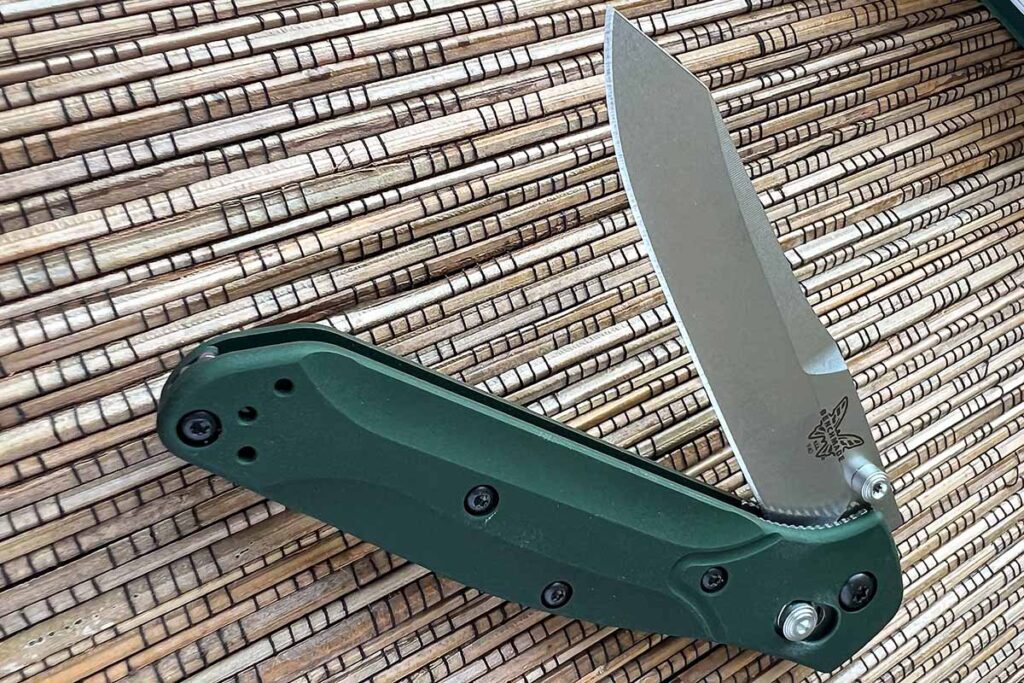
Benchmade 940 half open
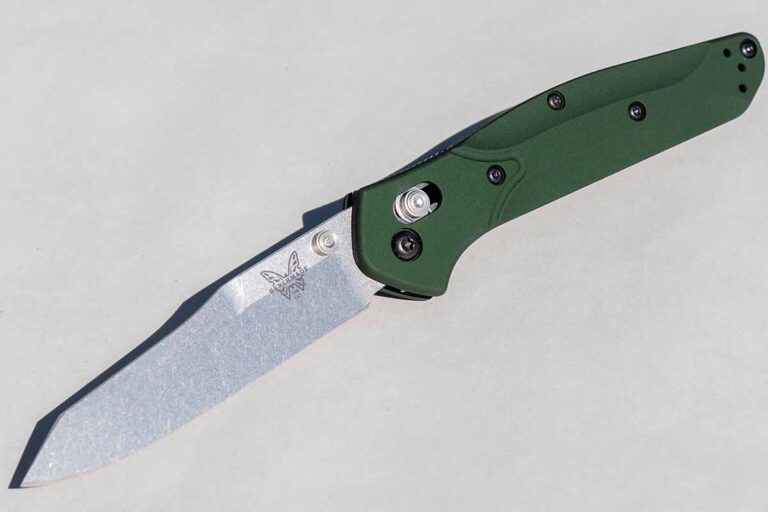
A top seller for Benchmade, the 940 has come to help define EDC knives. Photo: Marty Stanfield

Furthermore, it has a broad appeal for those who are serious about their daily carry knife checking all the boxes. It’s no stretch to call the 940 a workhorse of a folding knife.

Since its introduction in the early 2000s, the Benchmade knife’s popularity has skyrocketed to the point it has a sort of cult following. We’re going to take an in-depth look at why this is so. It is why the 940 might even be worth adding to your collection.  

Benchmade 940 Blade

The blade profile of the 940 is a reverse tanto, in which the edge and spine of the classic tanto design are flipped. However, it does somewhat look like a clip-point blade, albeit one with an extremely abbreviated downward-sloping tip.

Measuring 3.4 inches long, the blade uses CPM S30V premium stainless steel for the ultimate edge-holding capabilities. The alloy provides the muscle required for most daily cutting chores inside and outside of your house as well as offering excellent corrosion resistance.

Benchmade 940 blade half open
The 940 boasts thumb studs and Benchmade’s ambidextrous axis-lock. Photo: Marty Stanfield

Dual thumb studs provide an ambidextrous opening with either hand. Satin is the standard finish, though a black-coated blade is available at a minimal cost increase. The blade’s slender form factor allows the 940 to get in and out of a variety of cutting tasks with great efficiency. Not to mention, this svelteness doesn’t raise eyebrows in public like some bigger, more brawny tactical folder designs.  

940 Handle

In the handle department, the 940 uses aircraft grade T6 6061 aluminum, offering excellent weight savings while not compromising strength. The handle is given a very nice dark green hard anodized coating, which is both scratch-resistant and aesthetically pleasing. Milled channels in the handle provide a slim-feeling knife in hand.

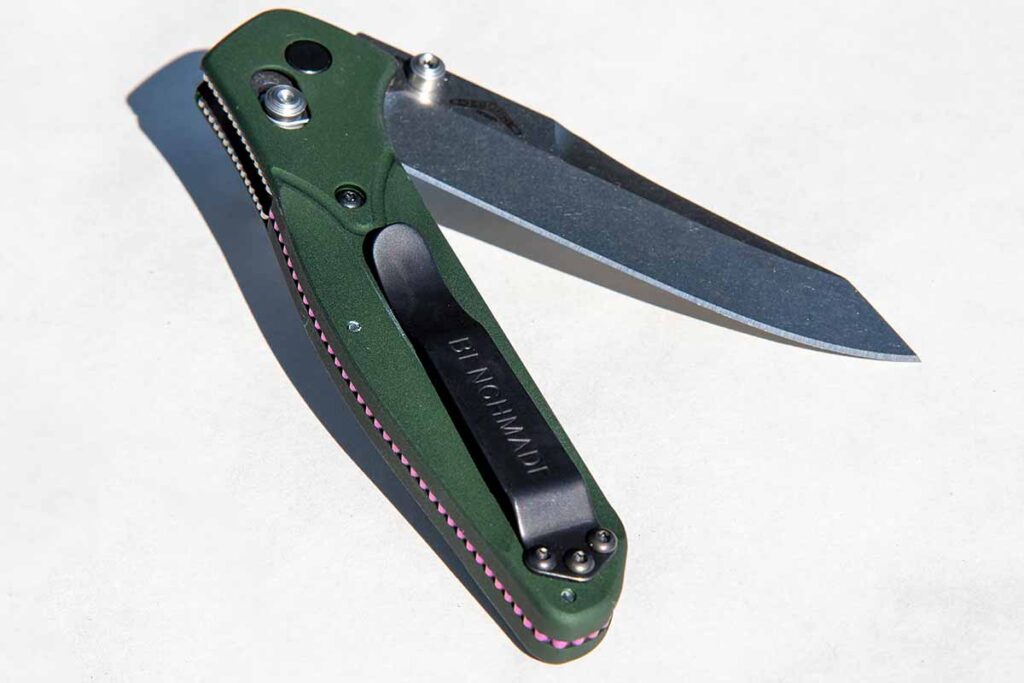
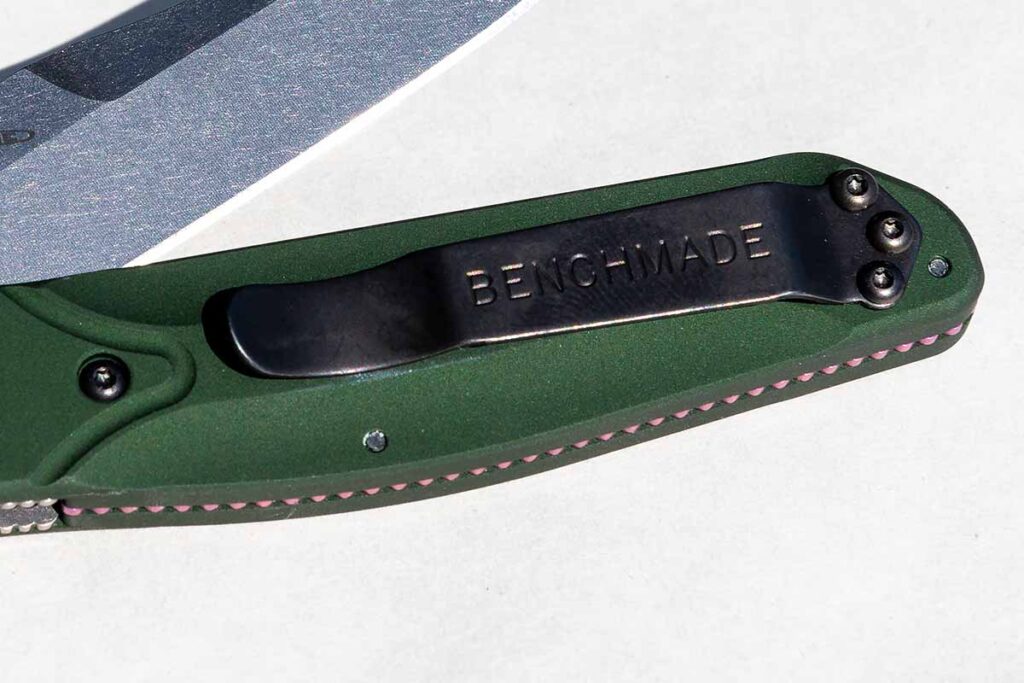
A tip-up-only pocket clip mounting is available on both sides of the handle to accommodate both left-handed and right-handed users alike.

Benchmade 940 clip
The clip is situated at the butt of the handle for tip-up carry. Photo: Marty Stanfield

The blade is secured in the open position by Benchmade’s own Axis Lock—regarded as the original crossbar lock. It promotes a smooth opening and closing action as well as very positive blade engagement, securely holding the blade open until you release it. Ambidextrous thumb buttons on either side of the handle allow one to release the lock with either hand. The Axis Lock is truly righty and lefty friendly, unlike liner locks that are specifically for right-handers.  

940 Performance

Not only does the 940 perform very well, but the knife also carries like a dream. It’s lightweight and compact, allowing it to disappear while clipped to jeans, casual pants, or dress slacks. It doesn’t weigh you down by any means. The handle sits deep enough in the pocket, away from prying eyes but there still is enough to grab onto when you want to retrieve the knife and put it to use.

In use, I appreciate the way the handle drops down a bit, forming a finger guard of sorts to keep your hand in place. It also helps to index your grip, as well. The purple anodized titanium handle spacer provides a neat pop of contrasting color against the green. Traction notches above the pivot give enough friction to hold your thumb or index finger in place during tough cutting tasks.

Final Cut

A great testament to Benchmade’s manufacturing quality, every single 940 I have seen out of the box, the blade is centered in the handle, and the action is very smooth. These knives are really dialed in when they come from the factory.  

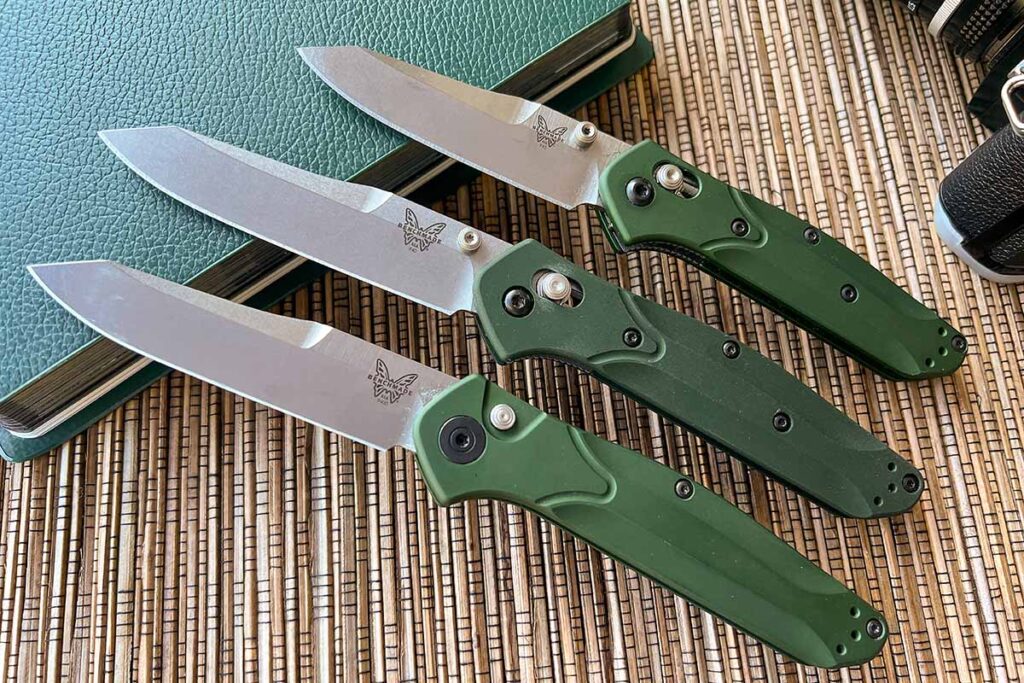
Benchmade 940 three models
Aside from the standard 940 (middle), Benchmade offers the automatic 9400 (bottom) and compact 945 Mini Osborne (top). Photo: Marty Stanfield

Benchmade also expanded the selection of 940 to include variants that have carbon fiber handles, G-10 handles, and even an automatic opening version with the model 9400, which utilizes a coil spring-fired blade and a button plunge lock as opposed to the Axis Lock. There’s also the model 945 Mini Osborne which scales the 940 down some, creating a nice, ultra-compact folding knife with a 2.9-inch long blade. It still opens quickly, and cuts efficiently.
MSRPs understandably vary with size and handle materials. However, the MSRP for the standard 940 is $240, which puts it on par with other USA-made folders on the market.

Get one and it became fairly clear why the 940 resides at the top of Benchmade’s catalog. Even better yet, you will not be disappointed with the knife as your everyday companion.

Benchmade 940 Osborne Axis Lock Specs
Blade length: 3.4″
Blade thickness: 0.115″
Overall length: 7.8″
Weight: 2.9oz
Blade material: S30V
Handle material: T6 6061 aluminum
MSRP: $240

For more information on the 940, please visit Benchmade.

More Knife Reviews:

Nothing Foul Or Fishy About These Bird And Trout Knives

Know what they are, how to use them and how well they perform.

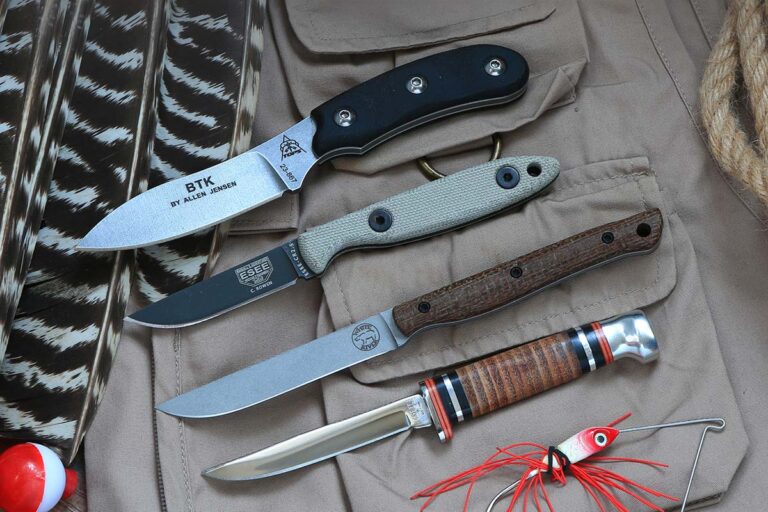
A bird and trout knife is a compact, fixed blade designed for hunters and anglers to process small game and fish, such as squirrels, rabbits, birds and trout. The knives are known for their portability and convenience, as they can easily fit into a backpack or pocket. The name is derived from the knife’s popularity among outdoor enthusiasts who require a reliable tool to assist them in their hunting or fishing activities.

When choosing a hunting or fishing knife, there are a few key factors to consider. First and foremost, the blade material is essential. To ensure optimal performance and longevity, your blade should be crafted from high-quality stainless or carbon steels. Equally important is the blade design; a thin, flexible drop- or trailing-point shape will allow for easy filleting and deboning, and precise cuts and slices. The handle should also be comfortable and ergonomic, with a good grip and balance.

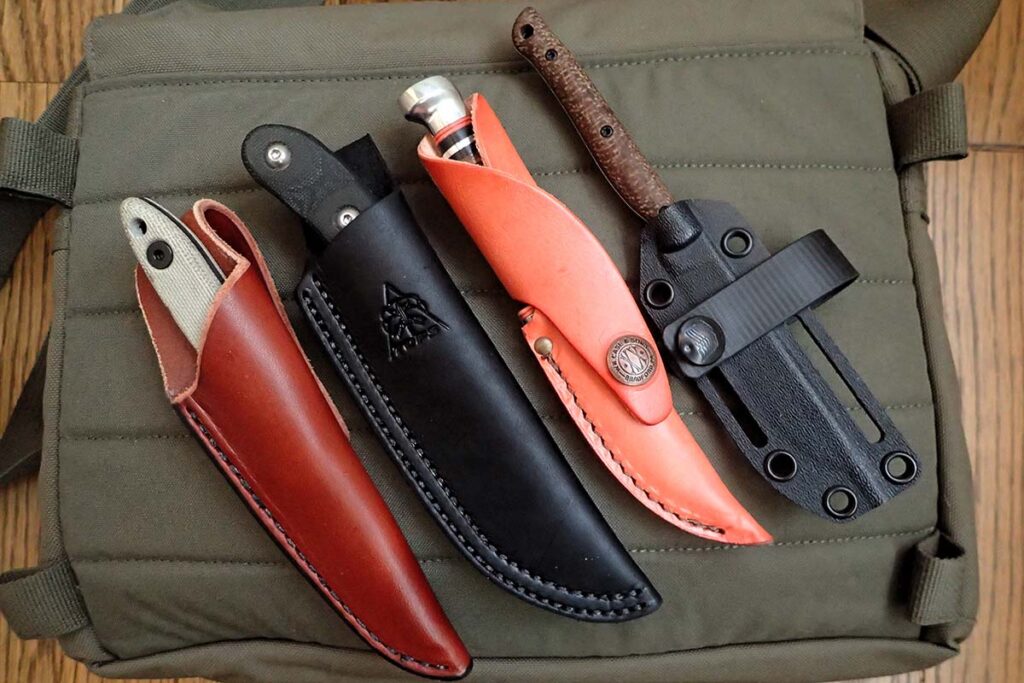
Bird and Trout Knife and Sheaths
The sheaths are simple affairs, usually made from leather with a belt loop. The Exodus 3 has a Kydex sheath (right) made for scout carry.

A secure and durable sheath is a must-have. Some even feature a thumb lock to prevent accidental slips. Remember these factors for a trusty tool that you will keep by your side for years to come.

Case Mini Finn

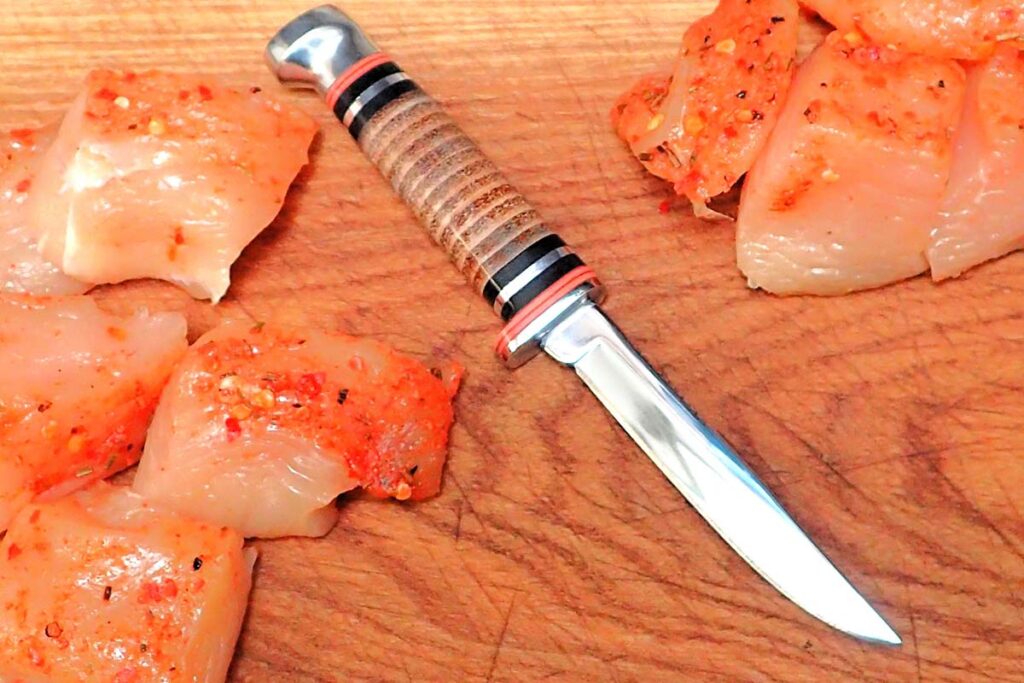
Case Mini Finn cuts chicken
A bird always in season is the chicken. The Case Mini Finn sliced through dense breast and also onions and peppers for chicken kabobs, one of the author’s favorites.

The small knife in the Case leather hunter two-knife hunting set is the Mini Finn, sold separately. It’s a durable, reliable fixed blade for outdoors, hunting and hiking. The rugged knife features a 3.13-inch clip-point blade and polished leather handle for a secure grip. Blade steel is Tru-Sharp™ stainless, Case’s version of 420HC. The knife is ideal for small game.

EVALUATION: The blade was sharp from the get-go. Small and agile, the knife and its concave-ground blade proved perfect for the tasks it was dealt. A section about 1 inch long on the spine has subtle ridges for purchase if that’s how you like to grip a knife.

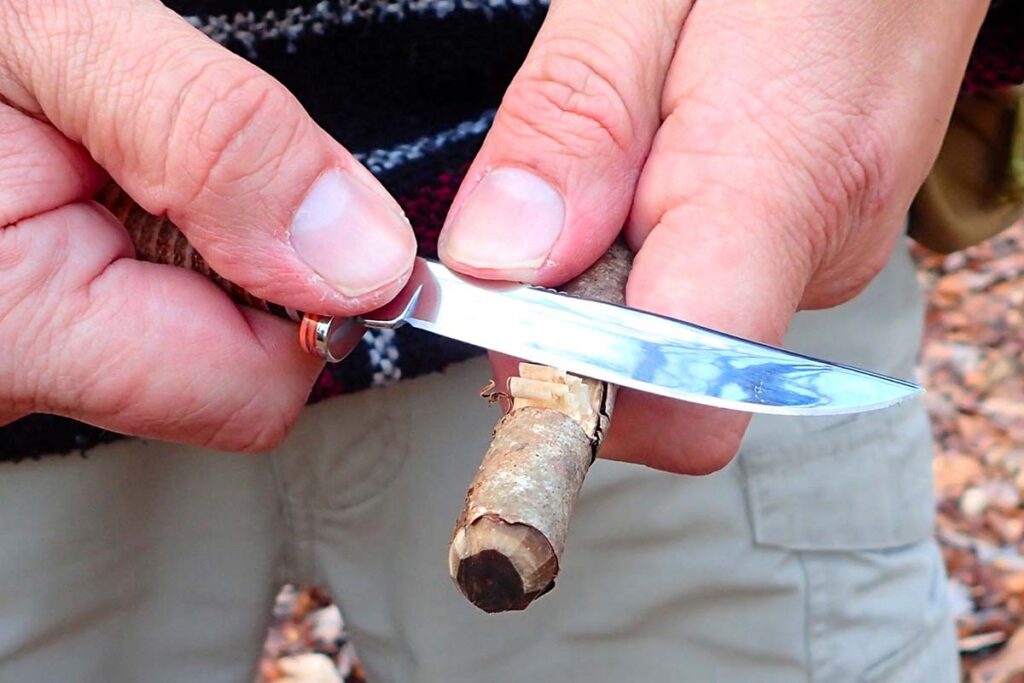
Mini Finn making feather stick
Making a feather stick was a snap with the Mini Finn.

The blade quickly sliced the only bird in season—chicken—for kabobs in the cabin. When making tent stakes the blade sliced through green witch hazel with authority. The handle is a hidden gem, paying homage to the traditional stacked-leather grip. Holding it feels like a throwback to the early 1900s Finnish style. The knife has a decent finger guard and a grip for three fingers. However, when the Mini Finn is held in a sideways or chest-lever grip, the buttcap feels a bit awkward.

A simple leather sheath completes the package. It sports a drain hole and can be worn on a thin belt or as a neck knife. The sheath is basic—nothing new under the sun—but why change a good thing? The Mini Finn is easily the best buy of the test quartet.

Case Mini Finn Specs
Blade Length: 3.13”
Blade Steel: Tru-Sharp™ Stainless
Blade @ Thickest: .062”
Blade Finish: Mirror polished
Scales: Leather
Weight: 2.5 ozs.
Overall Length: 6.5”
Sheath: Leather
Country of Origin: USA
MSRP: $82.99

ESEE CR2.5

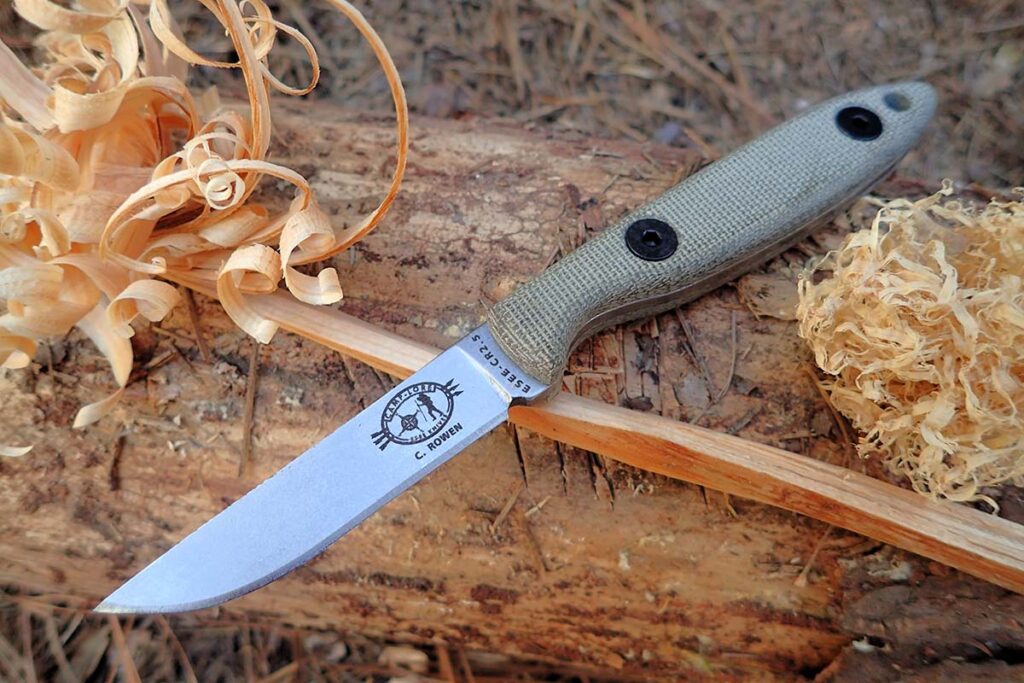
ESEE CR2.5 excels at woodcraft
Designed for small game, birds and fish, the ESEE CR2.5 excels at woodcraft, too. The 90-degree spine scrapes tinder and a ferro rod, while the sharp edge effortlessly shaves feather sticks.

The ESEE CR2.5 is a little bird-and-trout-style knife designed by Cody Rowen of Rowen Manufacturing. It features a sturdy 1095 carbon steel blade with a black-oxide-stonewashed finish and ESEE logo. It is lightweight and easy to carry. The handle is available in Micarta® or G-10, providing a comfortable and secure grip.

Evaluation: This slick little cutter is an excellent tool for fishing, small game hunting and general woodcraft. The blade is flat ground and has a sharp 90-degree spine that can be used to scrape tinder with a ferro rod. During a survival class in Alabama, it was used to carve feather sticks and scrape fine wood shavings for a fire. Additionally, it proved handy for skinning squirrels.

Butchering with the CR2.5
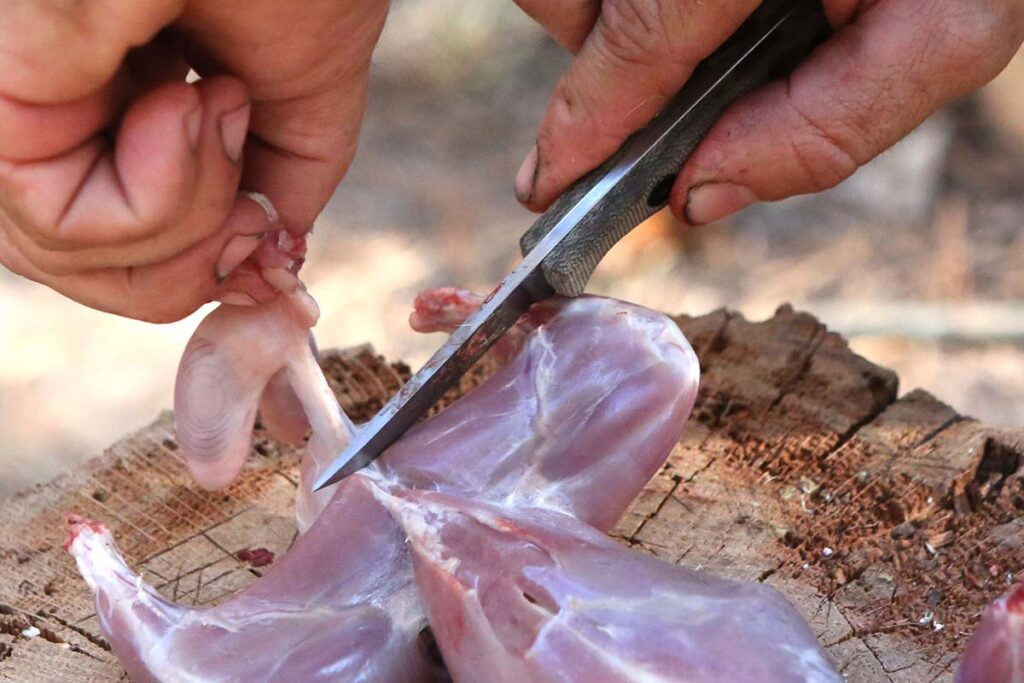
The CR2.5 makes butchering effortless, especially for small, delicate game like birds and trout—and squirrels.

The handle has a comfortable grip for three to four fingers. With use, it will develop a patina similar to the blade. ESEE offers the grip in orange G-10 and Micarta. A leather pouch-style sheath, which can be used as a necker due to its light weight, keeps the knife secure and safe. There’s no drain hole on this one but it has a generously sized belt loop.

Paired with a chopper, the CR2.5 will definitely get it done. It takes third place among the test bunch as the best buy for the money.

ESEE CR2.5 Specs
Designer: Cody Rowen
Blade Length: 2.5”
Blade Material: 1095 carbon steel
Rockwell Hardness: 55-57 HRC
Blade @ Thickest: .125”
Blade Finish: Black oxide stonewashed
Scales: Micarta® or G-10
Weight: 2.5 ozs.
Overall Length: 6.25”
Sheath: Leather pouch
Country of Origin: USA
MSRP: $143.50

TOPS Knives Bird and Trout Knife (BTK)

TOPS BTK bird and trout knife
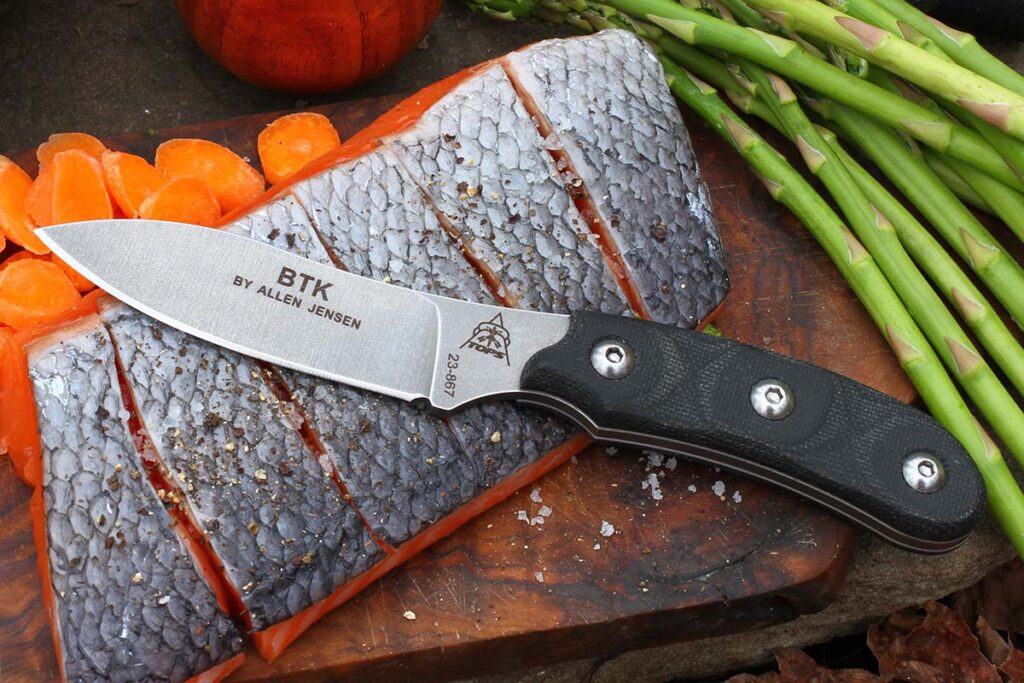
The TOPS BTK excels at delicate work like scoring salmon skin and scaling. The slight upsweep helps ensure the tip doesn’t penetrate anything it shouldn’t.

Allen Jensen, also known as the Axeman, designed the TOPS Knives Bird and Trout Knife (BTK). With a stainless steel blade, a stonewash finish and a black canvas Micarta handle, the knife is perfect for camping, kitchen chores and other outdoor activities. The handle design allows multiple grip options, making it a great skinning tool for tough hides like bear and beaver.

Evaluation: Of the test bunch, the BTK is closest to a regular-size fixed blade. The blade shape’s slight upsweep lends itself well to food preparation, especially from a standing position. The blade came extremely sharp and performed flawlessly, especially processing food. I used the BTK to section a piece of fresh salmon and as a fish scaler. The upsweep didn’t tear any of the fillet in the process. The sharp edge scored the skin quickly, aiding in rendering super-crunchy-skin salmon.

Battoning with the BTK
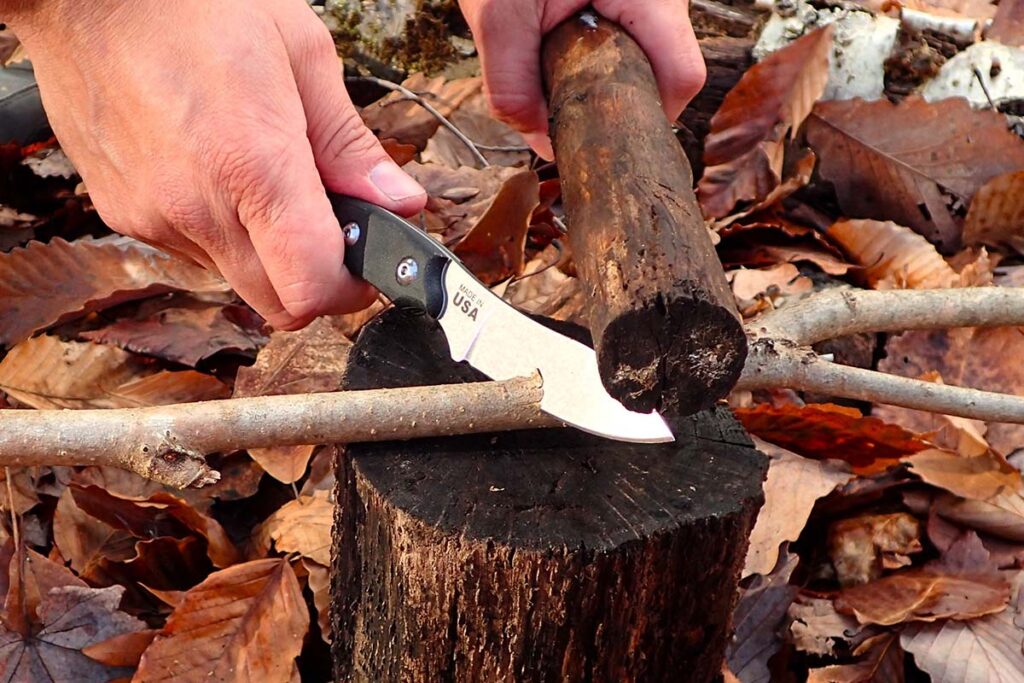
The TOPS BTK is a superb EDC knife for the woods. Due in no small part to the blade’s healthy .13-inch thickness, it easily baton cut through green witch hazel

The handle features an ergonomic design, providing a secure grip when it’s gooey. The scales don’t extend to the blade, allowing greater versatility when choking up for skinning.

The choice of black leather for the sheath was wise, as it hides stains from food and game. The sheath is heavy duty and comes with an average belt loop, but no drain hole. The BTK is the priciest of the bunch but well worth it.

TOPS Knives BTK Specs
Designer: Allen Jensen
Blade Length: 3”
Blade Steel: 440C stainless
Rockwell Hardness: Cryo-treated to 58-60 HRC
Blade @ Thickest: .13”
Blade Finish: Stonewash
Scales: Black canvas Micarta®
Weight: 3.5 ozs.
Overall Length: 6.75”
Sheath: Black leather
Country of Origin: USA
MSRP: $175

White River Knife & Tool Exodus 3

Exodus 3 bird and trout knife
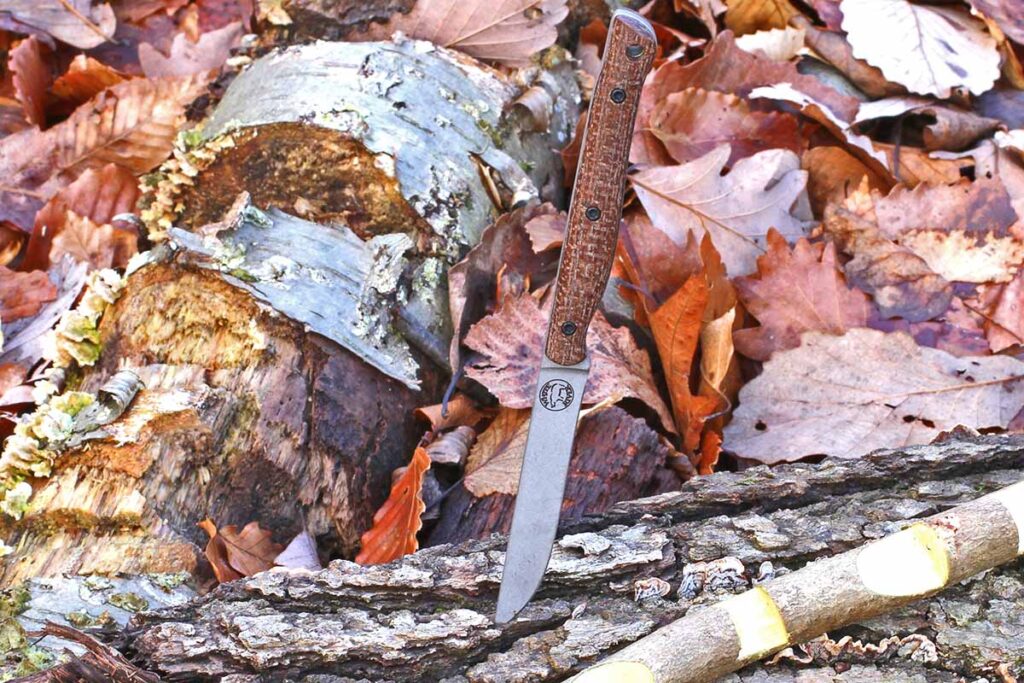
Using the Exodus 3, the author created an eight-notch try stick. He tested the knife’s ability to slice through green wood and found the narrow blade allowed easy maneuvering in small spaces.

The lightweight White River Knife & Tool Exodus 3, also known as Adventurecraft, is a small but robust survival knife. It’s the perfect size for bird and trout tasks, game dressing, food preparation and everyday carry.

Evaluation: Rather than the regular use as before, I put this one through a special gauntlet. The blade is tough. The thick spine culminates in a thin, flat grind—it’s a slicer. I wasted no time making an eight-notch try stick*. The blade’s geometry sliced through green wood like butter. I moved onto a survival fishing spear made from dry maple and the edge had no issues muscling through the seasoned wood. As a final coup de gras, I pounded the blade into an ammo canister. The blade remained unscathed and I was not surprised.

Exodus 3 to make a spear for fish
The author employed the Exodus 3 to make a spear for fish and frog gigging. The knife effectively balances between being a bird and trout knife and woods companion.

The handle is long enough for a four-finger grip yet is the narrowest of the test knives. Narrow handles can lead to fatigue by overcompensating when gripping. The scales are a “10” on the cool factor scale and provide a secure grip to back it up.

The Exodus 3 was the only test knife I could scout carry, keeping it out of the way when on the trail or in camp. Blade retention also was outstanding in the sheath and on the belt. The knife is the second best buy of the gang.

White River Exodus 3 Specs
Blade Length: 3.15”
Blade Steel: CPM S35VN stainless
Blade @ Thickest: .13”
Blade Finish: Stonewash
Scales: Canvas Micarta®
Weight: 2.3 ozs.
Overall Length: 7.2”
Sheath: Black Kydex
Country of Origin: USA
MSRP: $140

*In bushcraft, a try stick is a wooden stick carved with notches for use as a teaching aid.

More Outdoor Knives:

New Custom Knives Dripping With Damascus

We gathered up a bevy of new custom damascus blades that are sure to knock your socks off.

Our latest knife roundup features a stunning collection of new custom Damascus blades that are sure to impress. These meticulously crafted knives showcase the intricate patterns and superior craftsmanship that Damascus steel is known for, making each piece a work of art. Whether you’re a collector or simply appreciate high-quality blades, this selection is bound to knock your socks off with its blend of beauty, durability, and cutting-edge performance.


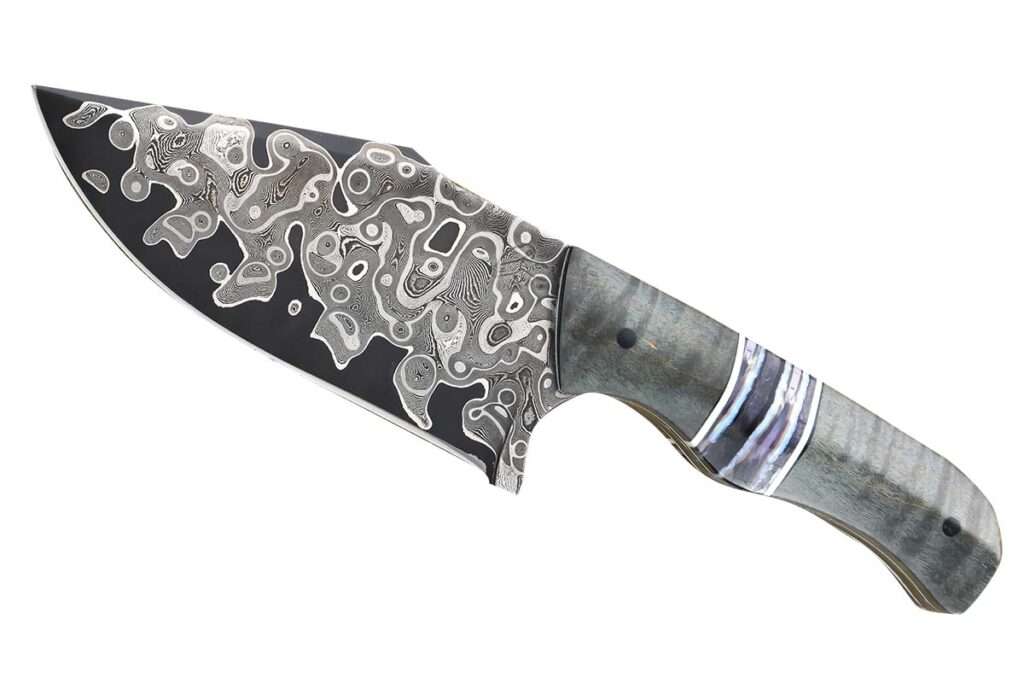
Brent Dignam Hunter

Brent Dignam Hunter

BLADE LENGTH: 5”
BLADE MATERIAL: San-mai damascus w/1084 carbon steel core forged by Robert Corey Scott of Bulldog Damascus
BLADE GRIND: Flat
HANDLE MATERIAL: Curly maple
LINER MATERIAL: G-10
SPACER MATERIAL: Mammoth molar
OVERALL LENGTH: 9”
MAKER’S PRICE FOR A SIMILAR KNIFE: $800
MAKER: Brent Dignam (SharpByCoop image)


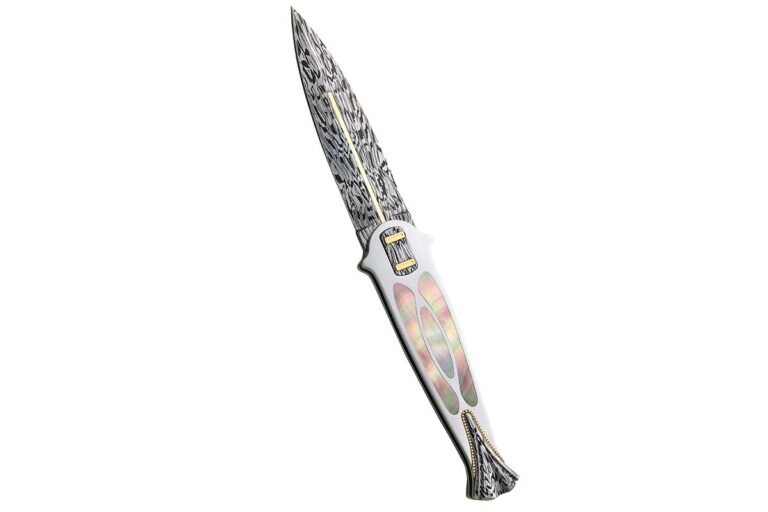
Rick Dunkerley Persian Folder

Rick Dunkerley Persian Folder

BLADE LENGTH: 4.25”
BLADE MATERIAL: Feather pattern damascus of 1080 carbon and 15N20 nickel alloy steels; Dellana Dots in 18k gold
BLADE GRIND: Double fighter
HANDLE MATERIAL: Antique shell
BOLSTERS: Milled steel
EMBELLISHMENT: 24k-gold inlay in blade and bolsters
CLOSED LENGTH: 5.25”
MAKER’S PRICE FOR A SIMILAR KNIFE: $15,000
KNIFE TO KNOW: Rick Dunkerley is a master smith in the American Bladesmith Society
MAKER: Rick Dunkerley (Mitchell Cohen image)


Mark Lambert Hunter

Mark Lambert Hunter

BLADE LENGTH: 4.75”
BLADE MATERIAL: 320-layer ladder-pattern damascus of 1084 carbon and 15N20 nickel-alloy steels
HANDLE MATERIAL: Bog oak
GUARD MATERIAL: 413 stainless steel
OVERALL LENGTH: 9 3/8”
KNIFE TO KNOW: Contoured grip includes flats on either side starting around midway and extending to the bird’s-beak butt; Mark Lambert is an apprentice smith in the American Bladesmith Society
MAKER’S PRICE FOR A SIMILAR KNIFE: Contact maker for more information
MAKER: Mark Lambert (Jocelyn Frasier image)


John Horrigan Automatic

John Horrigan Automatic

BLADE LENGTH: 3.75”
BLADE MATERIAL: 6-bar Turkish twist damascus w/Dellana Dots
BLADE GRIND: Hollow
BLADE OPENER: Push button
HANDLE FRAME: 416 stainless steel
HANDLE INLAY: Edwards black jade
MAKER’S PRICE FOR A SIMILAR KNIFE: $5,200
KNIFE TO KNOW: John Horrigan is a master smith in the American Bladesmith Society and sole authors all of his knives
MAKER: John Horrigan (Mitchell Cohen image)


Q Hardtner Blades Fixed Blade

Q Hardtner Blades Fixed Blade

KNIFE TYPE: Fixed blade
BLADE LENGTH: 8.5”
BLADE GRIND: Flat
BLADE MATERIAL: Feather damascus of 1084 carbon and 15N20 nickel-alloy steels
FURNITURE: 416 stainless steel
HANDLE MATERIAL: Ancient walrus tusk
CONSTRUCTION: Takedown
OVERALL LENGTH: 13.5”
SHEATH: Made and handcarved by Bob Bobbitt
MAKER’S PRICE FOR A SIMILAR KNIFE: $2,200
KNIFE TO KNOW: Quintin Hardtner has been making knives for about two years and mentored under veteran maker Dan Graves
MAKER: Q Hardtner Blades (SharpByCoop image)


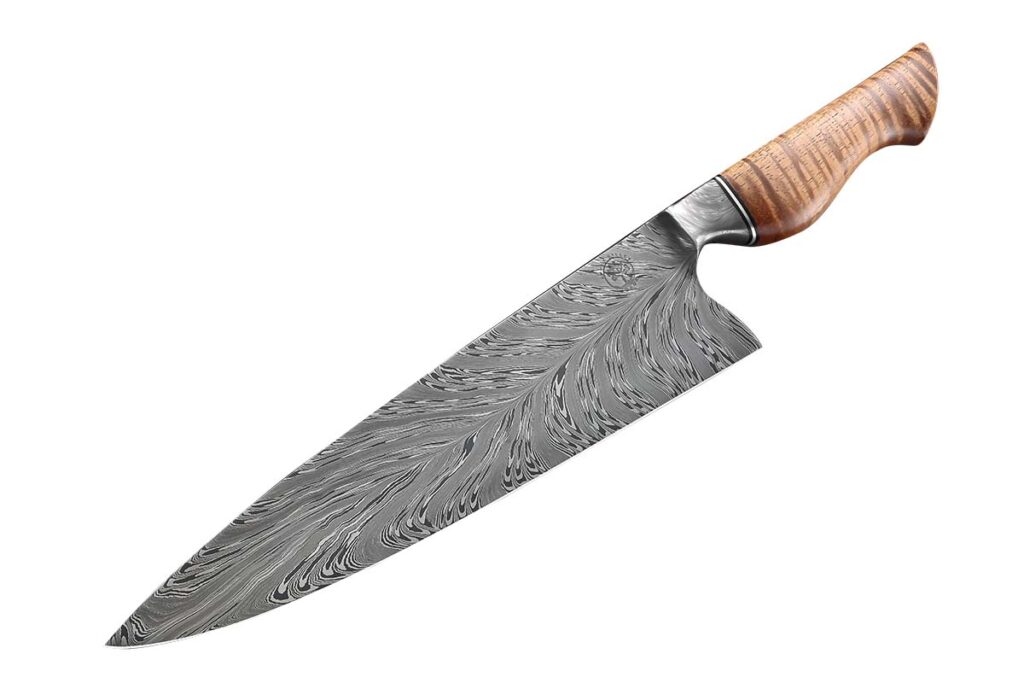
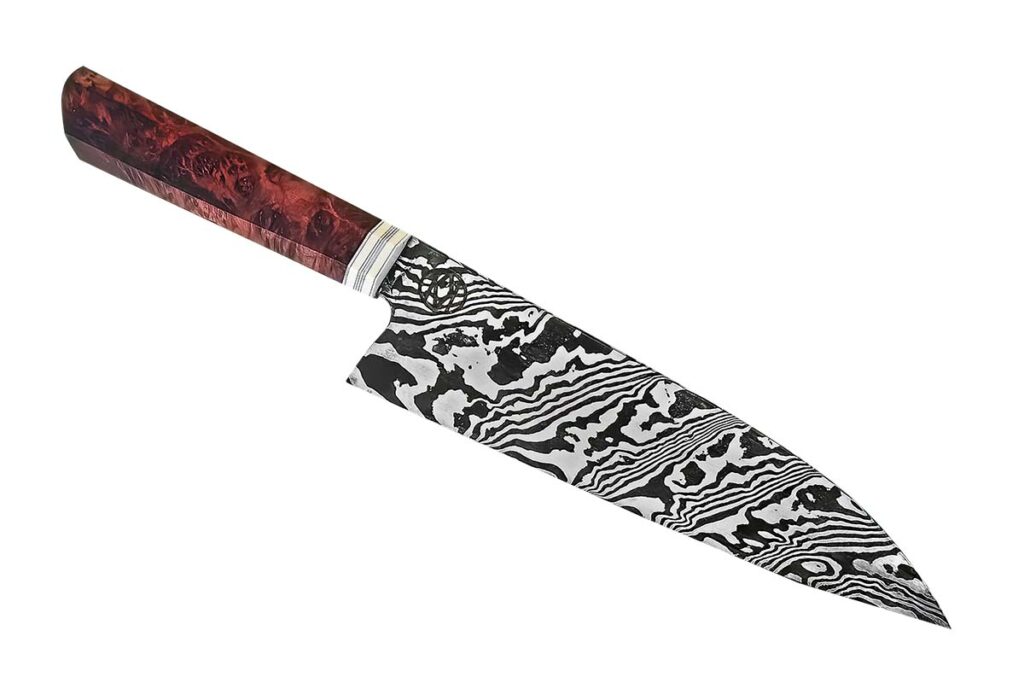
Trevor Morgan Jr. Chef’s Knife

Trevor Morgan Jr. Chef’s Knife

BLADE LENGTH: 9”
BLADE MATERIAL: Feather-pattern damascus of 1084 carbon and 15N20 nickel-alloy steels
BLADE GRIND: Slightly convex flat
HANDLE MATERIAL: Curly koa
BOLSTER: Integral
OVERALL LENGTH: 14”
MAKER’S PRICE FOR A SIMILAR KNIFE: $1,750
MAKER: Trevor Morgan Jr. (SharpByCoop image)


David Longworth Emergence

David Longworth Emergence

KNIFE TYPE: Folder
BLADE LENGTH: 3.8”
BLADE MATERIAL: Mosaic damascus of 1084 carbon and 15N20 nickel-alloy steels
BLADE GRIND: Flat
HANDLE FRAME: 416 stainless steel
HANDLE MATERIAL: Black-lip mother-of-pearl
LOCK: Rocker Lock
CLOSED LENGTH: 4.9”
KNIFE TO KNOW: The Rocker Lock locks the blade in the open and closed positions; when the knife is closed, push the lower side of the button to unlock the blade; when the knife is open, push the upper side of the button to unlock it; the knife is a California or assisted opener, so the blade pops out a little when the button is pushed; all steel on the knife is hardened
MAKER’S PRICE FOR A SIMILAR KNIFE: $8,000
MAKER: David Longworth (SharpByCoop image)


Koen Knives Chef’s Knife

Koen Knives Chef’s Knife

KNIFE PATTERN: Chef’s knife
BLADE LENGTH: 7.87”
BLADE MATERIAL: Damascus of 1084 carbon and 15N20 nickel alloy steels
BLADE THICKNESS @RICASSO: .157”
BLADE @ WIDEST: 2.165”
BLADE GRIND: Full flat
HANDLE MATERIAL: Stabilized red mallee burl
FERRULE: Brass and G-10
OVERALL LENGTH: 13.38”
MAKER’S PRICE FOR A SIMILAR KNIFE: $600 at press-time exchange rate
MAKER: Koen Knives (Rod Hoare image)


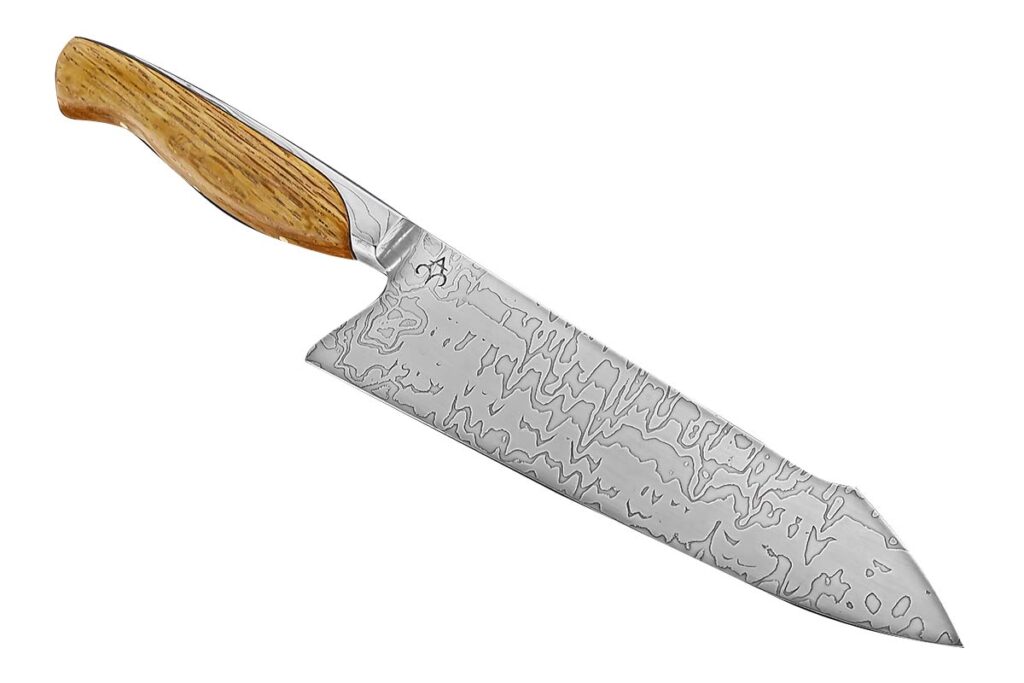
Adamas Forge Integral Horizontal-Tang Damascus Chef’s Knife

Adamas Forge Integral Horizontal-Tang Damascus Chef’s Knife

MODEL NAME: Horizontal Tang
BLADE LENGTH: 7.87”
BLADE MATERIAL: Damascus of 1084 carbon and 15N20 nickel-alloy steels
BLADE @ THICKEST: .102”
BLADE @ WIDEST: 2.04”
BLADE GRIND: Full flat
HANDLE MATERIAL: Stabilized white American oak
OVERALL LENGTH: 12.59”
MAKER’S PRICE FOR A SIMILAR KNIFE: Contact maker for more information
MAKER: Adamas Forge (Rod Hoare image)


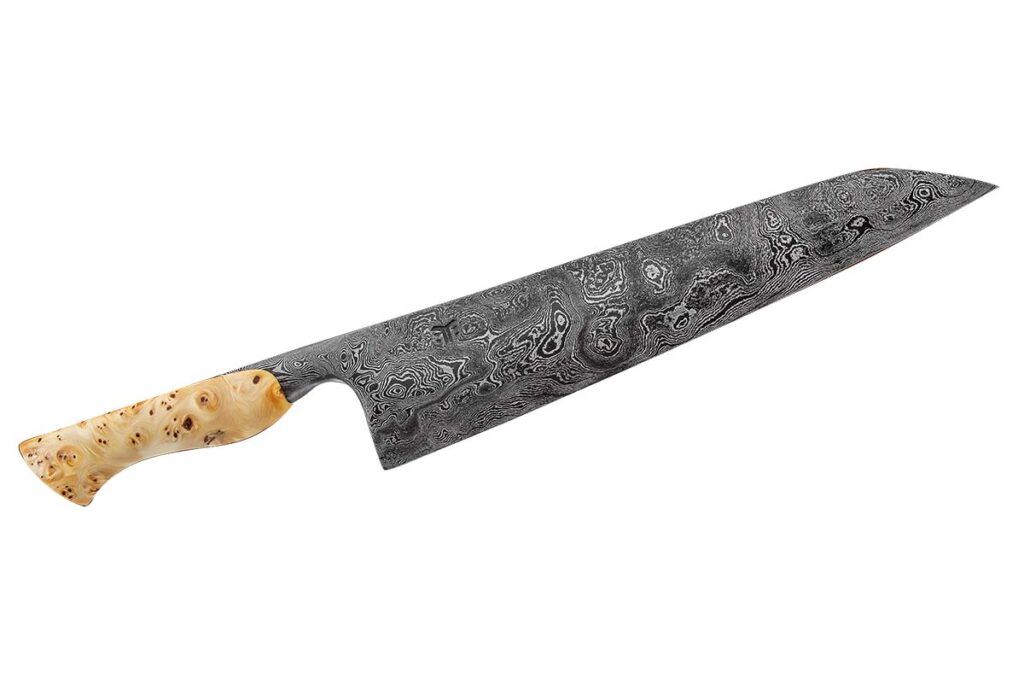
Brook Turner Integral Gyuto

Brook Turner Integral Gyuto

KNIFE PATTERN: Integral gyuto
BLADE LENGTH: 9.05”
BLADE MATERIAL: 280-layer random-pattern damascus of 1084 carbon and 15N20 nickel-alloy steels
BLADE THICKNESS @RICASSO: .216”
BLADE @ WIDEST: 2.04”
BLADE GRIND: Convex
HANDLE MATERIAL: Stabilized huon pine burl
OVERALL LENGTH: 14.17”
MAKER’S PRICE FOR A SIMILAR KNIFE: $1,500
KNIFE TO KNOW: Brook Turner is a member of the Australian Knifemakers Guild
MAKER: Brook Turner Blades (Rod Hoare image)


Bob Ohlemann Freelancer XL Model 2

Bob Ohlemann Freelancer XL Model 2

KNIFE TYPE: Folder
BLADE LENGTH: 3.5”
BLADE MATERIAL: Chad Nichols stainless Boomerang damascus
BLADE GRIND: Full flat
BLADE PATTERN: Recurve w/harpoon swedge
BLADE FINISH: Hand rubbed/etched
BLADE OPENER: Thumb stud
HANDLE MATERIAL: Double black Micarta®
LOCK: Linerlock
POCKET CLIP: Timascus; right-handed, blade tip up
LINERS: Titanium, jeweled and anodized
BOLSTER & PIVOT SCREWS: Zirconium
PIVOT COLLARS: Timascus™
BACKSPACER: Titanium in black Cerakote® finish
CLOSED LENGTH: 4.5”
MAKER’S PRICE FOR A SIMILAR KNIFE: $2,060
MAKER: Bob Ohlemann (Jocelyn Frasier image)


Check Out More Buyer’s Guides:

Kronos Knives Gung Ho! Line Designed By Ken Onion

Big, Brutish and ready for action.

In ancient Greek myth, Kronos (or Cronos) was king of the Titans—the first generation of gods who ruled the cosmos. It’s a pretty weighty title to hang on a knife company, but one the new(ish) upstart affiliated with gunmaker Palmetto State Armory has done a solid job of filling. Since its founding in 2024, Kronos Knives has left its mark on the industry and recently developed a line likely to further solidify its position.

Shake hands with the Gung Ho! line designed by Ken Onion.

Always a head-turner among knife buyers in the know, Onion designs have proved sought after. However, the Kronos knives are a far cry from many of the BLADE Cutlery Hall of Fame member’s recent entries. The four knives comprising the collection are big, brutish and ready for backwoods or tactical action. Honestly, it was more than what Mike Probyn expected when he initially talked with Onion about creating the line.

“I told Ken he had free reign to do whatever he wanted,” the President of Kronos said. “When I saw what he came up with, I told him there wasn’t a thing that needed to be changed.

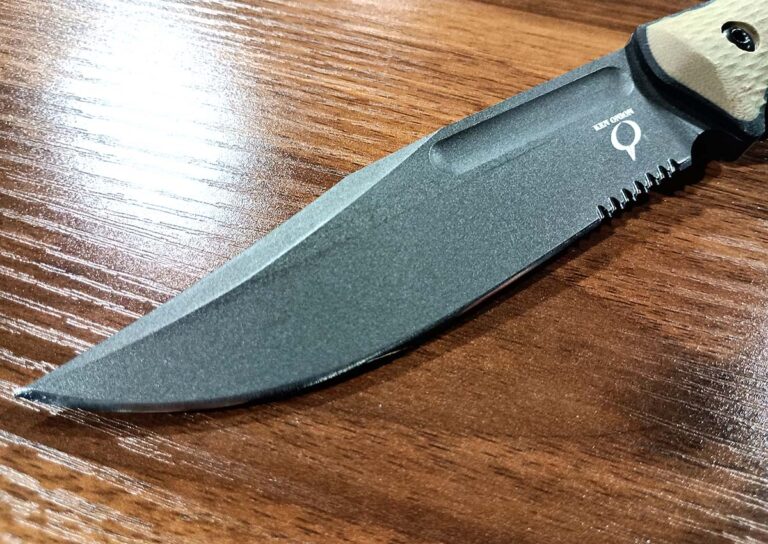
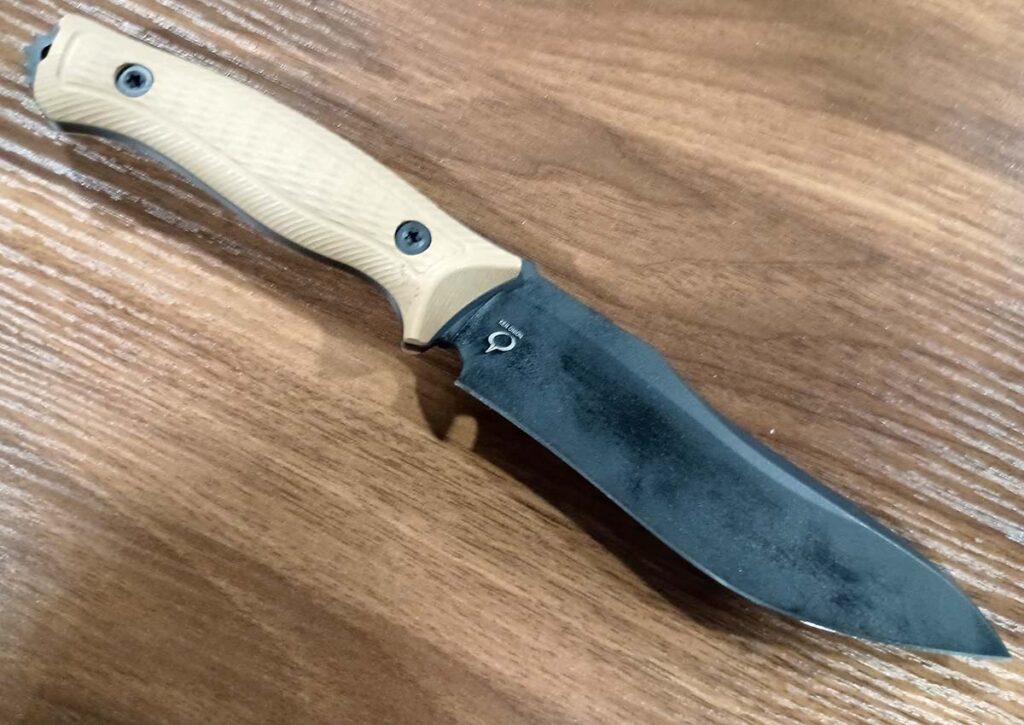
We’ll look a little closer at each model of the Gung Ho! line in a second, but for the sake of expediency, let’s cover the knives’ commonalities first. Each of the knives is a full-tang fixed blade constructed out of 1095 steel and boasts G10 handles. The scale is held in place by oversized torx screws and the butt of the knife has a lanyard hole. Finally, all the Gung Ho! knives are American-made.

Kronos Truedefender

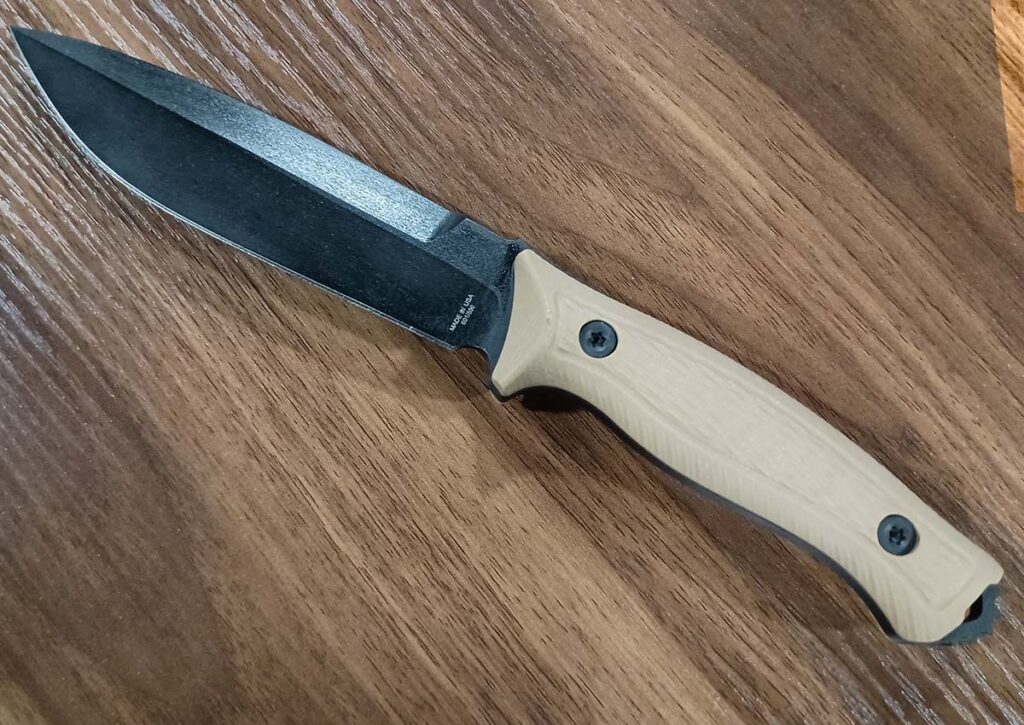
Truedefender

The knife has perhaps the most unique lines of the collection, boasting a wide belly on the blade and a modified drop-point profile. The knife has a sight rake at the grip, giving the blade an aggressive edge-forward posture when in the hand. While not pegged to any one particular role, the Truedefender certainly would excel as a bushcrafter or fall into any tactical task with ease. MSRP: $228

Kronos Maxhunter

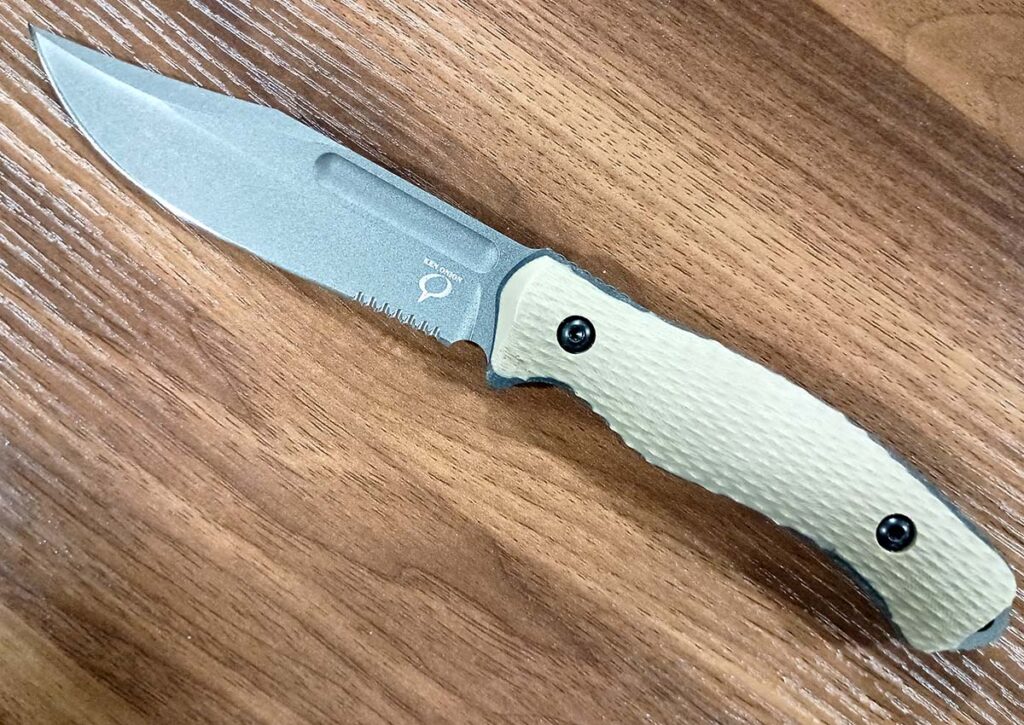
Kronos Maxhunter

Living up to its name, the Maxhunter is a traditional hunting knife profile, with a long clip-point blade. The knife has somewhat of a dual personality. A thick spine towards the rear ensures it’s stout enough for tough chores, such as chopping or battoning. The tip comes to a sender finish, making it deft at more delicate tasks, like skinning. MSRP: $228

Kronos Elitesurvival

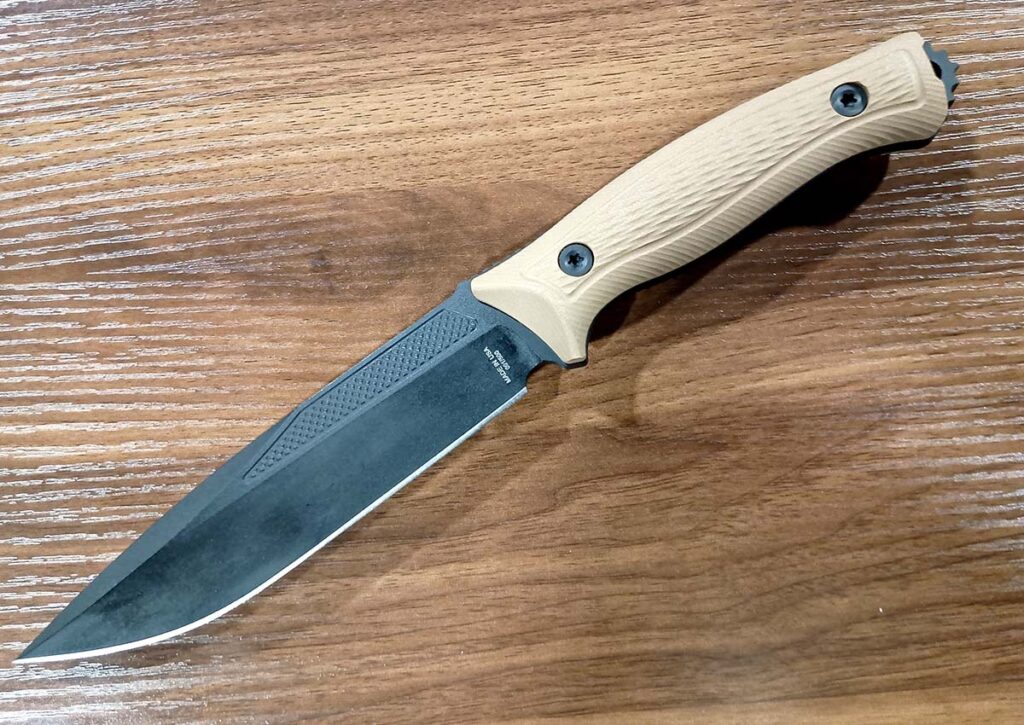
Elitesurvival

Aimed at bushcrafting, the Elitesurvival provides a very rugged design for those who thrive in the backwoods looking for. The drop-point blade is meaty and hardy enough to take the abuse commonly doled out in camp and survival tasks. A nice touch, the tapered grind on the spine—near the tip—provides a good striking surface for firecraft. MSRP: $256

Kronos Stiffneck

Kronos Stiffneck

Maybe the wickedest looking one of the bunch, the Stiffneck offers up a dagger profile with a single edge. The false edge on the blade, however, comes down thin enough that it would likely be no issue to grind an actual one onto it—if it’s legal in your neck of the woods. Though, it doesn’t hold like a dagger as the handle is not asymmetrical, with an aggressive rake similar to the Truedefender. MSRP: $220

Check Out More Buyer’s Guides:

Advertisement

Must Read Articles

Read this before you make a knife

Knifemaking 101 – Read This Before You Make a Knife

  by Wayne Goddard My experience has taught me that there's nothing like digging in and getting started. I've often said the hardest part of the...
how to forge damascus steel

How to Forge Damascus

Advertisement
Advertisement