2025 BLADE Show Recap: What Happened At The Edge-Stravaganza

Get a look at everything that went down at the world’s largest knife show.

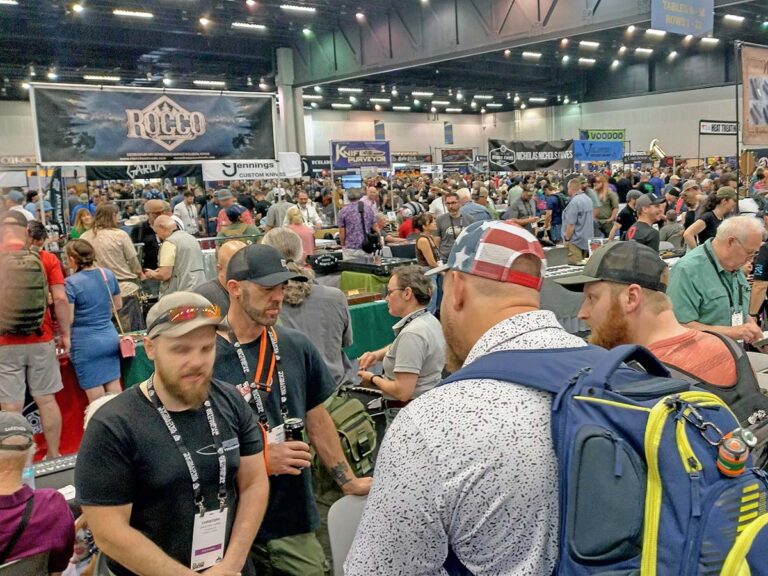
The 44th Annual BLADE Show in Atlanta was yet another in a historic line of three-day edge-stravaganzas of the present, past and future of an international knife industry that seems to advance daily by leaps and bounds.

The latest and best knives, knifemakers and related accessories the planet has to offer, the pioneers that laid the groundwork for what the knife community is today, the new, up-and-coming knifemakers and knife companies that hold such great promise for tomorrow, and so much more all showed their sharpest stuff June 6-8 in the Cobb Galleria Centre.
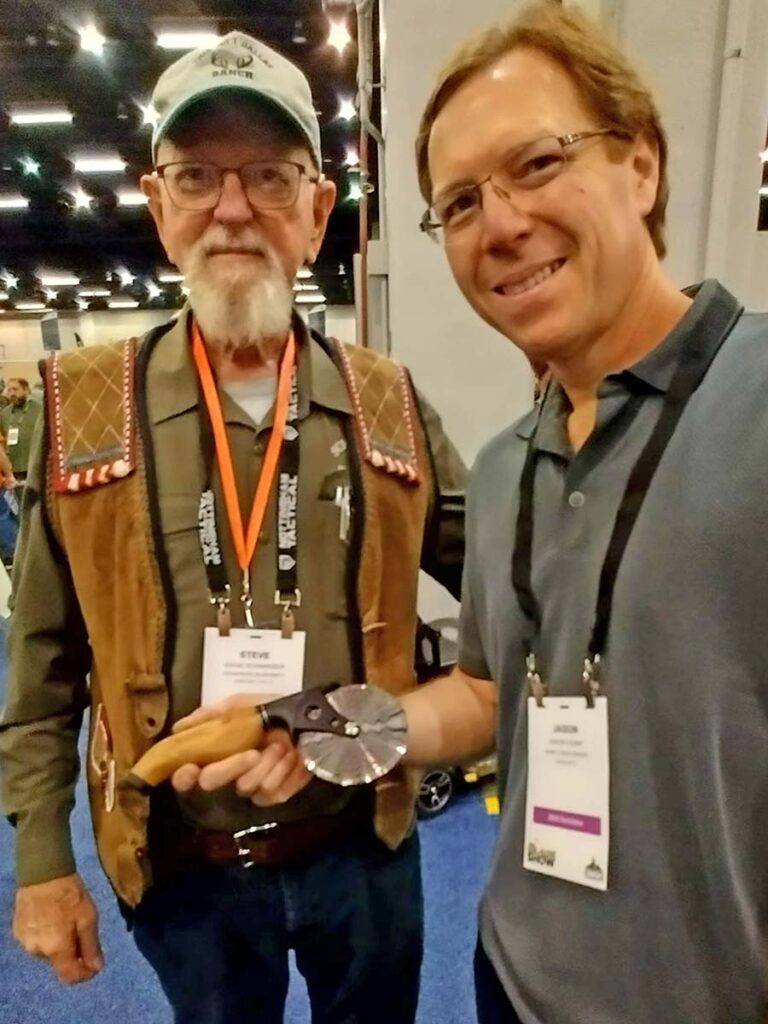
Jason Yount displays his damascus pizza cutter under the watchful eye of BLADE Magazine Cutlery Hall-of-Fame® member Steve Schwarzer. Steve called it the best BLADE Show in a few years.

It was about what you would expect from the world’s largest, most important international knife event.

While the BLADE Magazine Knife-of-the-Year® and BLADE Show Custom Knife Judging awards recognized the best of factory and custom knives, respectively, the BLADE Magazine Cutlery Hall-of-Fame® inducted eight new members, the most ever in one year.

BLADE University provided a full slate of topics, including knife and sheath making, how to sharpen, fundamentals of blade grinding, how to etch damascus and many more. BladeSports International conducted the annual BLADE Show World Championship Cutting Competition and Blade HQ held Balicomp 2025.

Custom knifemakers and bladesmiths from around the globe displayed their wares, including members of the American Bladesmith Society, Knifemakers’ Guild and unaffiliated makers from everywhere. Meanwhile, various knife collector groups, knife rights organizations and other outfits met and discussed their favorite topic as only they can each year during the BLADE Show.

Through it all, knife enthusiasts of all stripes renewed old acquaintances, made new ones, and otherwise immersed themselves in the world’s keenest three-day weekend, capped off each night with food and beverages in The Pit, the legendary sunken lobby lounge of the host hotel, the Renaissance Atlanta Waverly.

It was knife heaven on steroids.

BLADE Show Sales

The BLADE Show has always been unlike any other knife event and this year’s rendition was no exception. Attendance ebbed and flowed Friday and Saturday, and Sunday was its usual slow-to-middling self. While some exhibitors raved about the attendance and sales, some said both seemed off from last year.
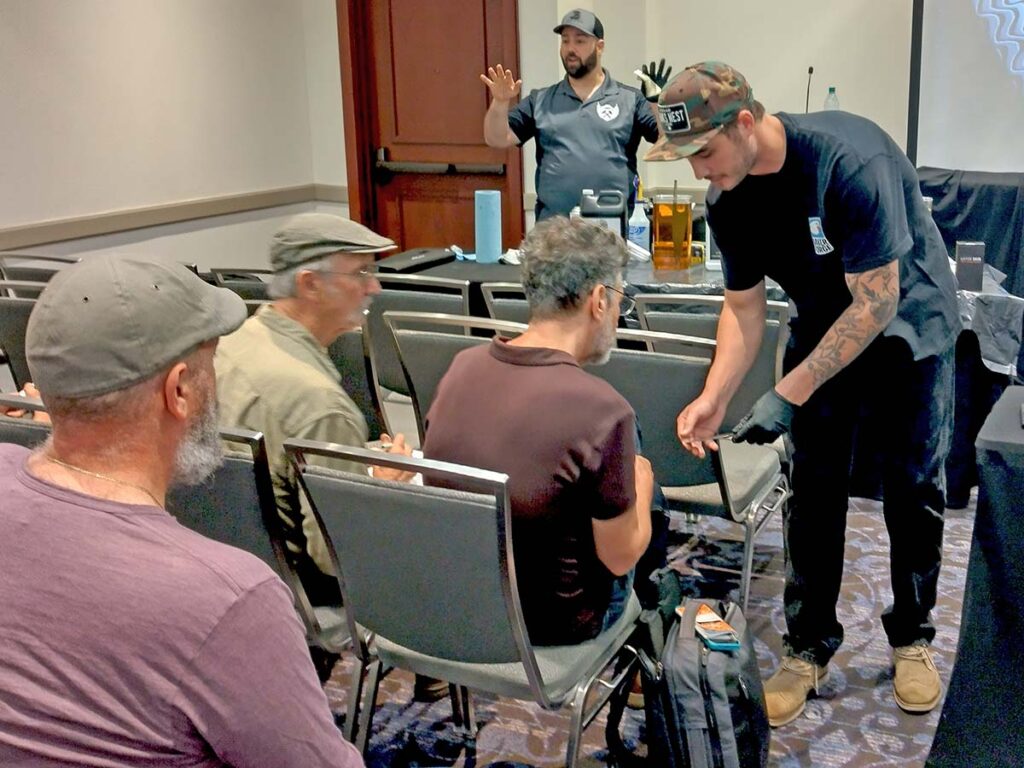
Jordan Berthelot discusses next-level damascus etching while Greyson Weltyk shows a student a result of the process during one of many BLADE University classes.

One reason for the differences in observations may have to do with the sheer size of the show hall as opposed to the smaller size of the adjoining Baller Room. The show hall is so large that waves of attendees seemed to gravitate like flocks of birds from one side to the other, constantly in search of the latest, coolest knives. As a result, one area that was flooded with patrons for a while might be somewhat devoid of them minutes later. By contrast, the smaller Baller Room seemed to have fairly steady traffic throughout.

Another factor has to do with the exhibitors themselves. As with any business, those who are constantly on the go, looking to make deals or offering giveaways are usually the ones who experience the most success. Smiling faces and engaging, upbeat demeanors sell knives. Those who stand or, worse yet, sit behind their tables with their arms folded waiting for something to happen usually have a long if not endless wait.

Custom knife purveyor Michael Donato was constantly on the move, talking and probing for those who wanted to buy and/or sell knives. He said his company, KnifePurveyor.com, had its best show ever in 24 years of BLADE Shows.
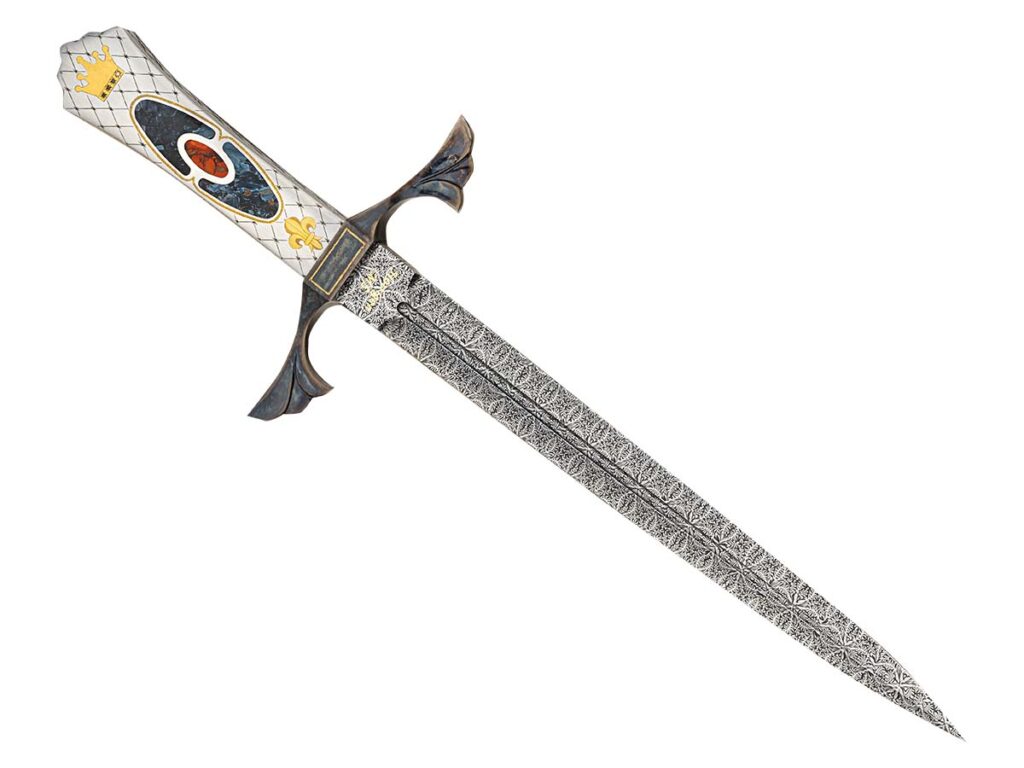
John Horrigan’s 16.5-inch Kings Dagger features Gorgon flower damascus, petersite, a red agate, and 24k-gold engraving with a ruby, diamond, sapphire and emerald inset in the crown. John’s price for a similar knife: $14,500. (Jocelyn Frasier image)

“Many of my colleagues shared with me how well they had done at the show as well,” he noted.

Matt Bando of Demko Knives was stoked about Demko’s performance.

“We brought the largest number of knives we have ever brought to a show and sold out faster than any other,” he noted. “All of our USA models were sold by 2 p.m. Friday. There seemed to be a lot of people at the show and every year it seems to grow.”

Demko is one of those exhibitors who employs giveaways to drive sales and create enthusiasm.

“We had a large turnout for our giveaway on Saturday. We gave away five different packages. For the main giveaway, we gave a USA-made titanium AD20 in 3V. A young man entered his younger brother into the raffle and ended up winning his first Demko knife. Great story. “We were blown away and pumped.”
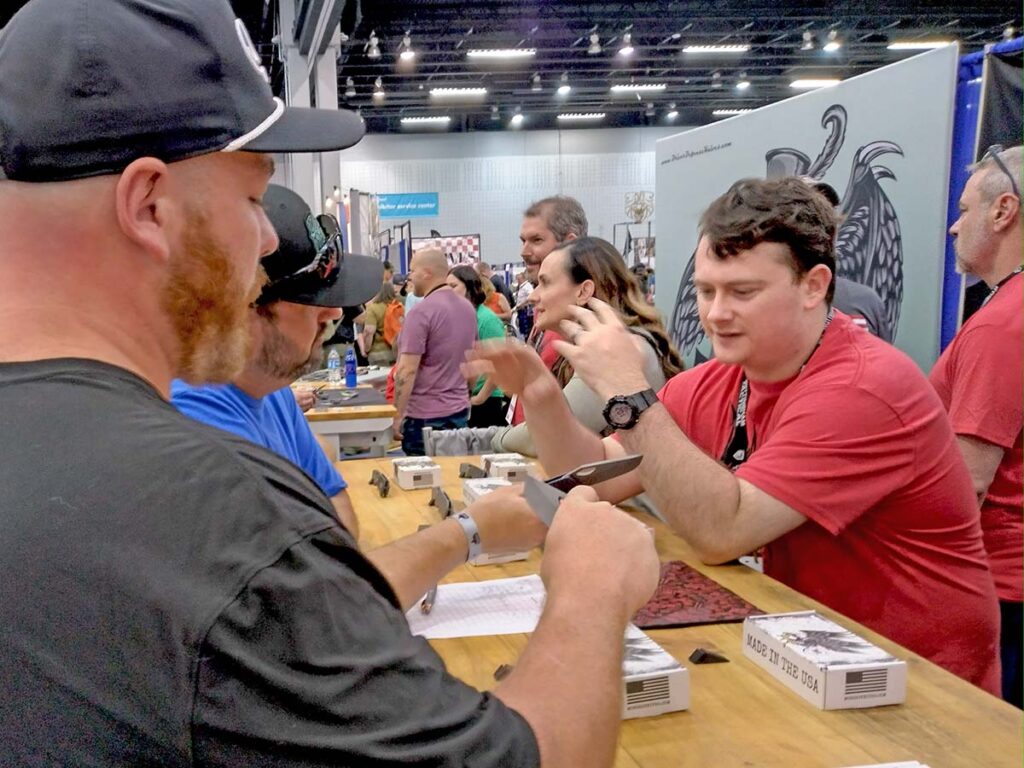
Two blade enthusiasts try out/talk knives at the McNees Knives booth.

Custom knifemaker Rhidian Gatrill not only won for Best Miniature in the custom knife judging competition but, along with Jeremy Yelle, also captured Best Collaboration. “Rhid” exhibited 13 knives, two of which were miniatures, and sold all but one.

“Most sold within the first few hours on Friday but the others sold slowly through Saturday and my minis within the last hours of the show Sunday,” he wrote. Still, he said he thought the buying was slower than last year, which was his first year exhibiting at the BLADE Show.

Vince Evans specializes in high-end historical swords and knives. He brought four swords and sold two, both on Friday.

“Most of my clientele are interested in historical pieces,” he stated. “Swords are a more limited field as some collectors don’t have the room to collect and/or display larger pieces.” Vince indicated the show seemed slower than last year and that a few regular local attendees did not come. “Friday and Saturday seemed fairly busy,” he wrote, adding that on a scale of 1 to 10, Friday and Saturday were “about a 7” and Sunday “about a 2.”
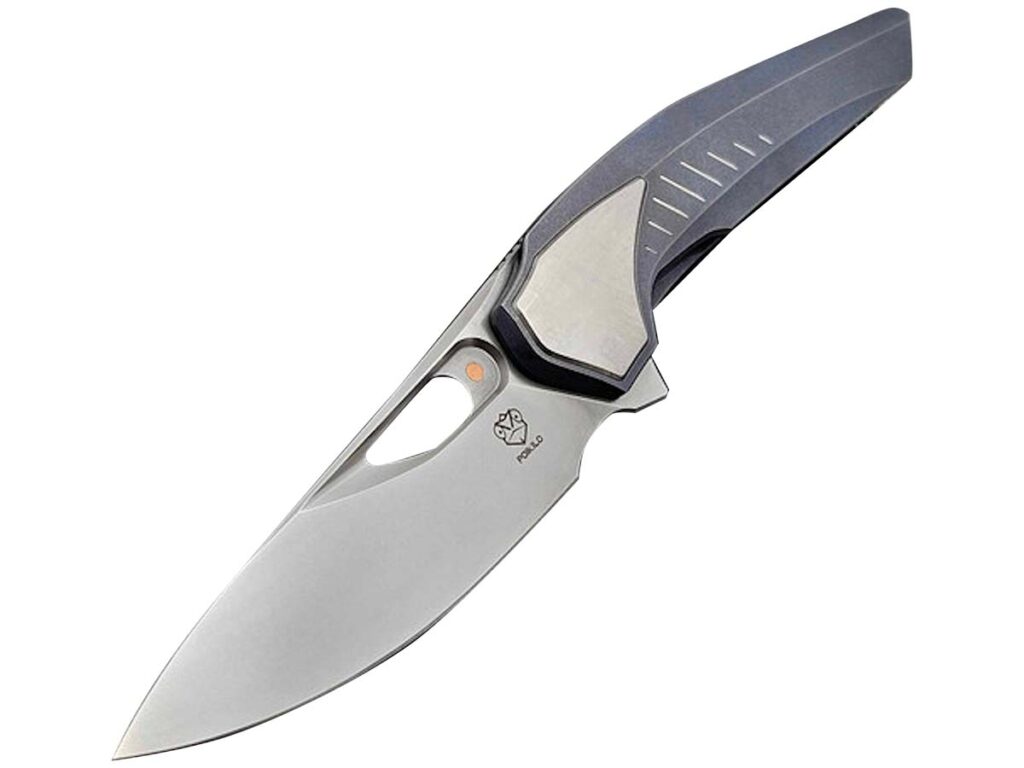
The VK-Zame—aka Shark—in M398 stainless steel and titanium was among the knives Poikilo Blade debuted at the BLADE Show. MSRP: $580-$600. Available to the public: August/September. (Poikilo Blade image)

Gregarious Cutlery Hall-of-Famer Steve Schwarzer was pleased. “I had a great show, sold most of my carved pieces and took several orders,” he commented. “It was the best show in a few years. It was very busy.”

As usual, the South Texas Slipjoint Cartel boys all seemed to do well, including sellouts by Tanner Couch and Toby Hill, the latter who sold all 11 of the knives he displayed. Bobby House only brought three knives but sold them all by early Friday afternoon. He indicated his most-sought-after knife was a high-end Cutlery Hall-of-Famer Bill-Ruple-design Ax Handle with wasp nest damascus bolsters and shield that went for $2,800 to a French buyer. The other two buyers were Americans, the latter being Arizona Custom Knives.
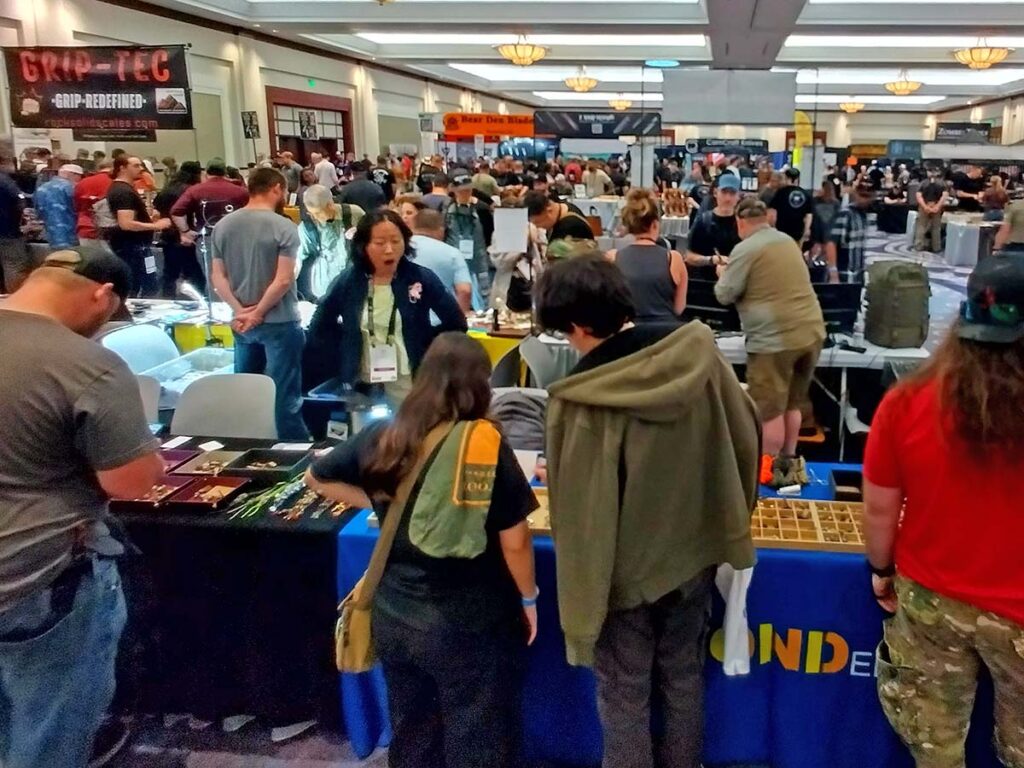
The Baller Room buzzed all three days.

“I thought attendance was up on Friday and Saturday,” he wrote, giving Friday a 7 rating. “Friday attendance was the people wanting to buy custom knives. They are there to get the first shot at our custom builds. Saturday attendance is more for entertainment purposes. They want to look and see all types of knives, but they have funds to buy also.”

He gave the Saturday attendance an 8, concluding, “Overall, it was one of the best shows that I have been involved in. Great job by the BLADE Show crew!”

BLADE Show Treasures

A highlight of all BLADE Shows is you never know what unusual old knife or sword, new knife introduction, mechanism or material, or other notable hidden treasure may turn up.

“I always enjoy seeing what the antique dealers bring to the show,” Evans wrote. “I purchased an antique quillon dagger for research and a future replication project.”
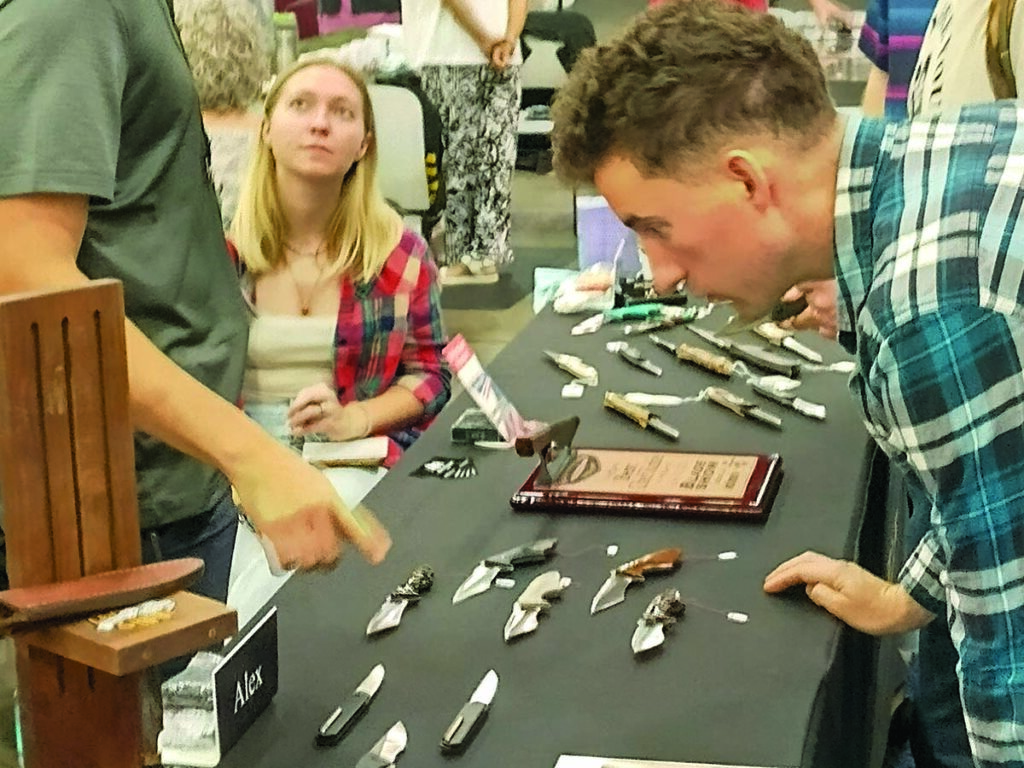
It’s easy to get mesmerized by knives at the BLADE Show, here at the table of Alex Hossom (left).

An antique also caught the eye of knifemaker David Kramp, who sold 10 of 12 knives and won Best New Maker in the custom knife judging.

“There was a French knife from the 1830s that was very intriguing,” he wrote. “I’m very much looking forward to that potential build with a fellow maker.”

Winner of Best Damascus in the custom knife judging, Gabe Fletcher came across a product that piqued his interest. “The Gator Skin Blade Coating from Baker Forge seems very interesting,” he wrote. “I picked some up to try on my damascus.”

Both Kramp and knifemaker Jared Oeser were gobsmacked by Gatrill’s lockback whittler automatic that won Best Collaboration in the show’s custom knife judging competition.
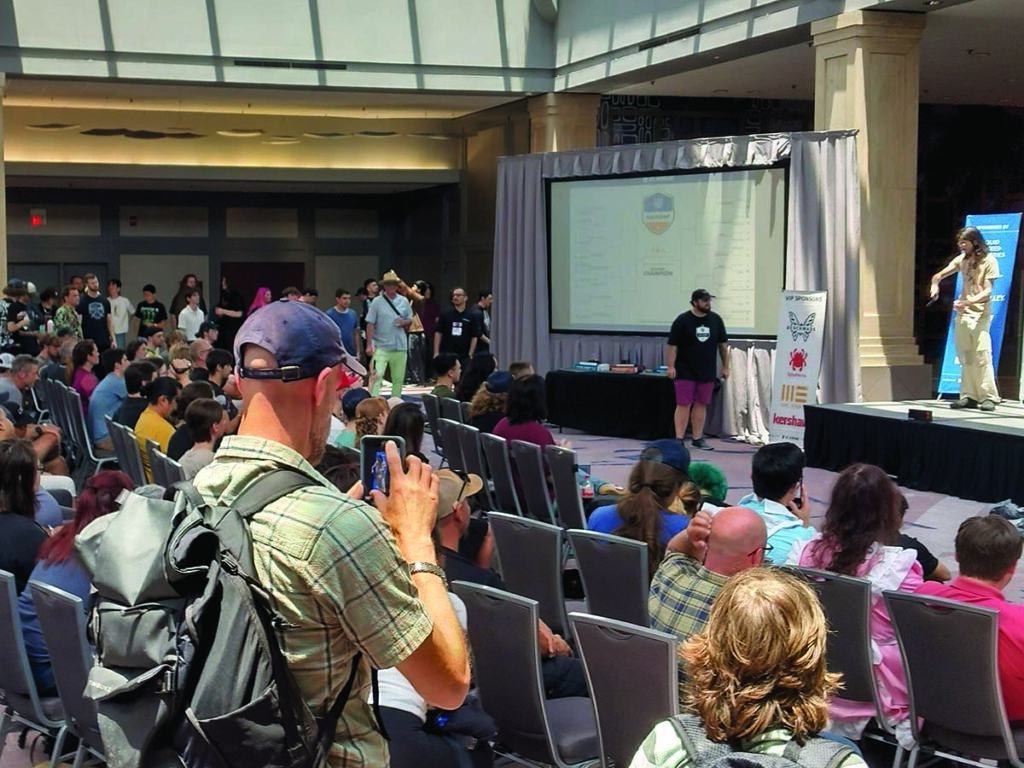
Conducted by Blade HQ, Balicomp 2025 drew a packed house on show Saturday.

“I’m not ready to make something like it yet but that auto slipjoint was impressive,” Kramp observed. Oeser, who brought 14 knives and sold out by Saturday afternoon, chimed in, “One thing that stood out to me was Rhidian’s automatic lockback whittler. I’m gonna have to try [making one like] that.”

Next Up: BLADE Show West

It was indeed another BLADE Show for the ages. Speaking of which, next year’s show will return to the Cobb Galleria June 5-7. For more information, visit bladeshow.com. Meanwhile, it’s not too late to make plans to attend BLADE Show West Oct. 10-11 at the Salt Palace Convention Center in Salt Lake City, Utah (bladeshowwest.com). See you there!
See BLADE Show Award Winners:

First Look: Drop-Forged KA-BAR Elishewitz Pocket Tool

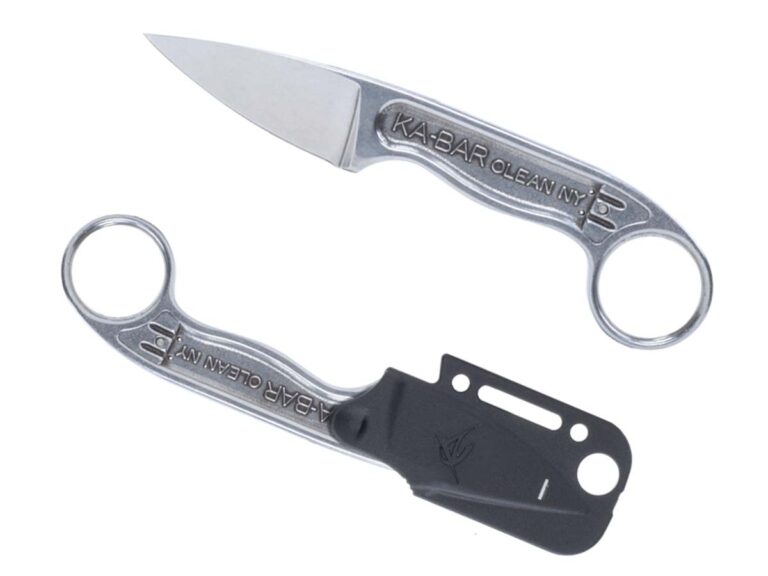
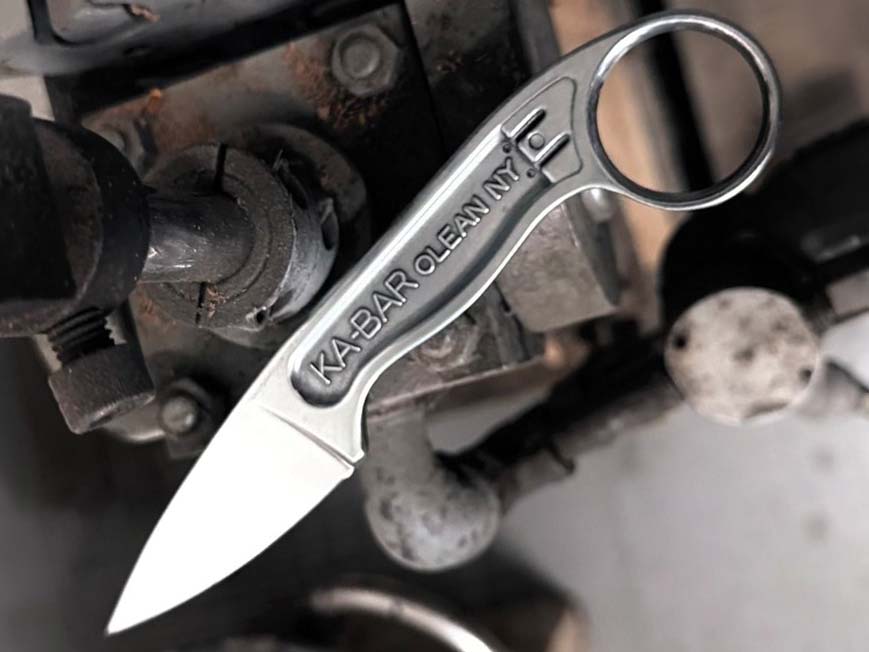
Designed by Allen Elishewitz, KA-BAR’s USA-made drop-forged EPT pairs a 2.5-inch blade with a clip-equipped sheath for easy pocket carry.

KA-BAR has expanded its line of drop-forged steel tools with the Elishewitz Pocket Tool, or EPT. Designed by veteran maker and former Force Recon Marine Allen Elishewitz, the compact fixed blade targets the growing daily carry market with a format tailored specifically for pocket carry rather than belt wear.

Built for Daily Duty

The EPT centers around a short, broad 2.5-inch drop-point blade ground flat to a 20-degree edge per side. KA-BAR crafts the knife from 0.1875-inch thick 425 high-carbon stainless steel, hardened to 56–58 HRC. The stout blade geometry offers plenty of strength for routine cutting tasks while keeping the overall footprint manageable.

Because the knife utilizes a one-piece drop-forged construction, the skeletonized handle is integral to the blade. A finger ring integrated into the butt end assists with control during use while serving as a quick-draw indexing point when pulling the knife from a pocket.

Pocket-Friendly Carry

Elishewitz Pocket Tool at work in profile.

Rather than relying on a traditional belt sheath, the EPT comes equipped with a custom USA-made sheath featuring a reversible, loop-over wire pocket clip. This setup allows the fixed blade to ride deep inside a pocket in much the same manner as a standard folding knife.

At 6.75 inches in overall length and weighing 3.2 ounces (0.2 lbs for the knife alone), the U.S.-manufactured piece delivers the structural integrity of a fixed blade without adding unnecessary bulk to a daily kit.

Elishewitz Pocket Tool (EPT) Specs
Designer: Allen Elishewitz
Overall Length: 6.75 in.
Blade Length: 2.50 in.
Blade Width: 1.70 in.
Blade Thickness: 0.1875 in.
Blade Steel: 425 High Carbon Stainless (56–58 HRC)
Blade Type/Grind: Drop Point, Flat Grind
Edge Angle: 20 degrees per side
Construction: Integral drop-forged 425 stainless steel
Weight: 3.2 oz. total (2.24 oz. knife weight)
Sheath: USA-made sheath with reversible wire pocket clip
MSRP: $78

Read More:

Manzano: Appealing Look And Performance

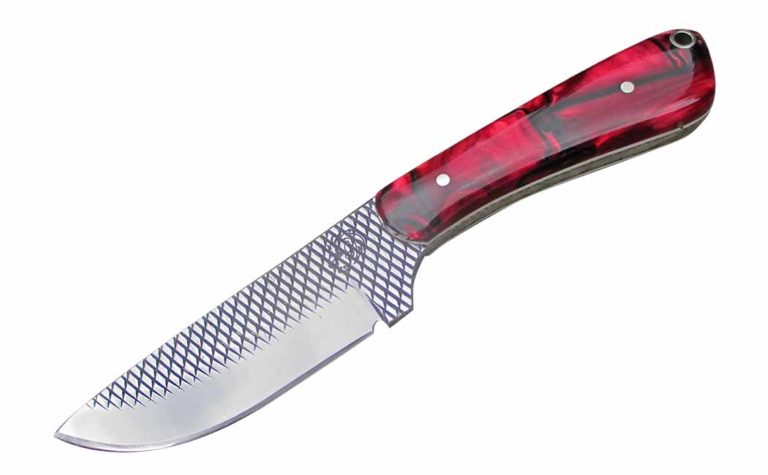
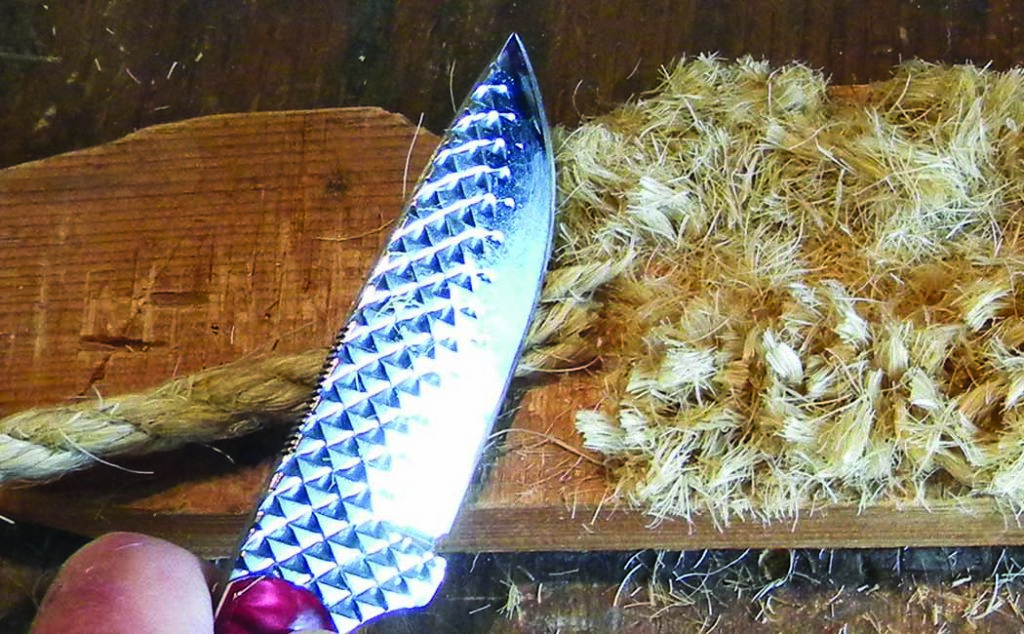
Visually Appealing Thanks To A Distinctive Rasp Pattern On The Blade And Attractive Handle, The Manzano Proves A Sharp Operator.

Old-school knives often have a classic look, and it’s even better when you can tell what the original material or tool was before it was transformed into a blade. When using recycled steel, more time is involved to prep the material for its new life. Can it be hardened, will it forge, will the steel take a polish?

Paul Gonzales did his homework in producing the Manzano Farrier Rasp Blade. There’s no doubt as to what the blade was before it became a knife.

Manzano Farrier Rasp Blade Edge Assessment

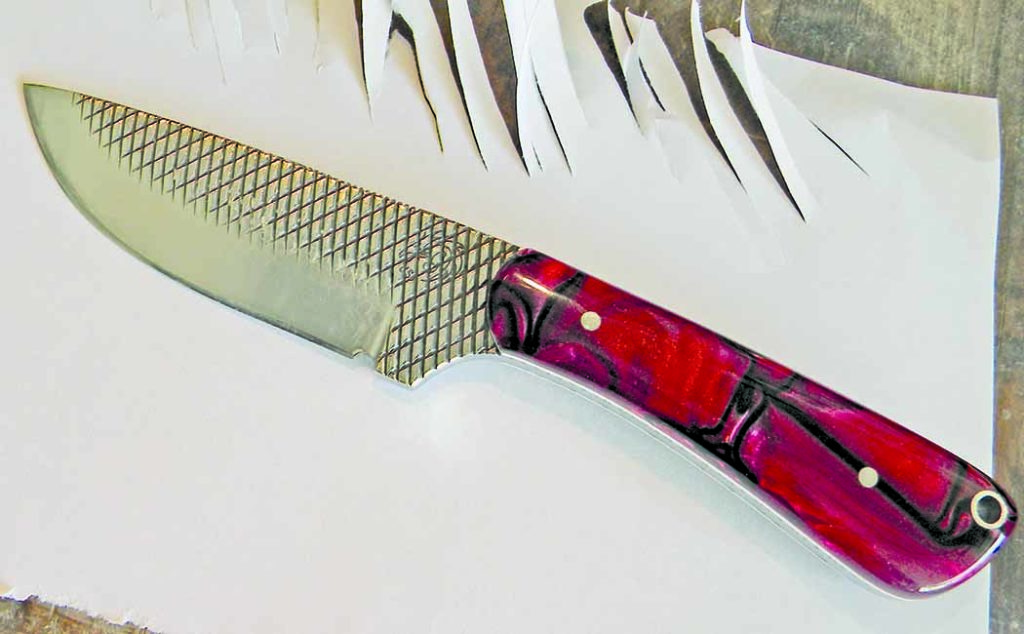
To assess the original edge, I sliced 20-pound-bond copy paper. The Manzano performed smoothly, making a zipping noise as it went through the paper. The knife’s weight made the push cuts easy to control.

As a final test, the author checked the edge once again on the copy paper. The Manzano didn’t skip a beat, slicing smoothly.

Heavy Cutting With The Manzano Farrier Rasp Blade

Next up, single-walled cardboard. At the start of the slice, the cardboard parted smoothly. The sliced strips crinkled from the grind bevels as the cut went deeper, maybe due a little bit to the rasp pattern in the steel. The Manzano’s sharp edge cut smoothly.

I used some dense foam left over from my Kydex press for the next test medium. I had great control over the slices using push cuts. The edge easily passed through the foam.

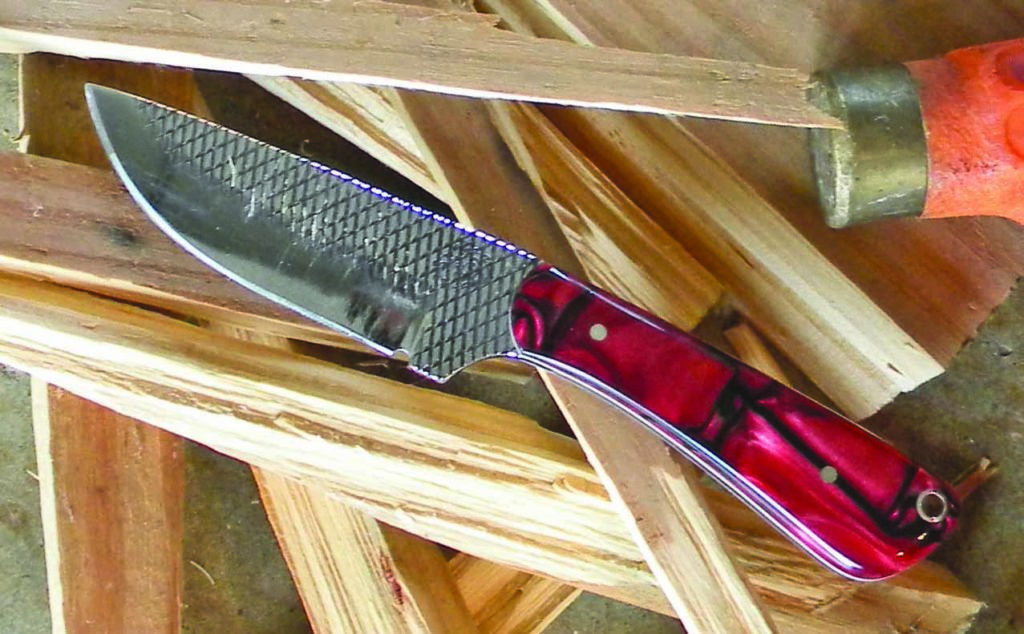
The author used the dead-blow hammer to baton the Manzano through a chunk of 2x10. The knife split the wood in two smacks with no excess shock transferred to the author’s hand, and then produced some nice kindling, too.
The author used the dead-blow hammer to baton the Manzano through a chunk of 2×10. The knife split the wood in two smacks with no excess shock transferred to the author’s hand, and then produced some nice kindling, too.

From there, on to 8-ounce leather. The Manzano was very aggressive skiving the material, producing nice crunching noises on each cut. The mirror-polished blade slid through the leather with ease. Paul did a nice job abrading the steel by the choil so there were no sharp edges where there shouldn’t be.

Firesticks were next. It was very simple to make smooth, fine curly-cues, as well as larger coarse ones. The handle is contoured perfectly for my hand for deeper cuts. The edge performed great while whittling wood.

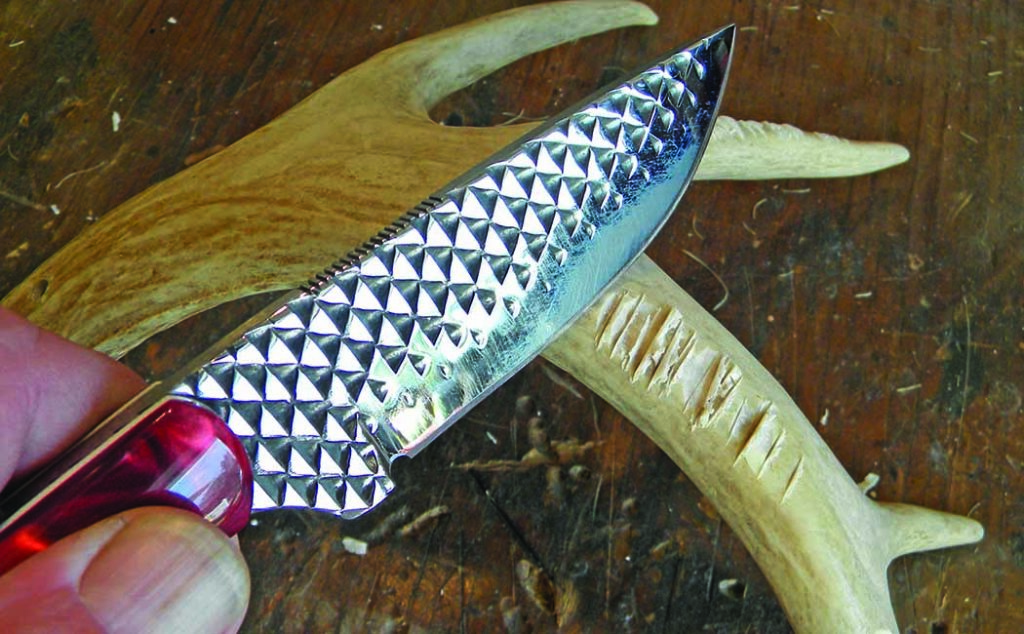
The author checked the edge for toughness with the antler chop. Twenty hard whacks later and the edge and, therefore, the blade’s heat treatment, passed with flying colors.

For splitting larger wood I used a chunk of 2×10 and the dead-blow hammer. The Manzano parted the wood in two smacks with no excess shock transferred to my hand. The knife was very comfortable to use in this manner.

It was time for my favorite test material, sisal rope. Positioning half-inch sisal on my cutting board, I started with push cuts. The Manzano crunched its way to 200 cuts with no signs of stopping. That was plenty for my hand. There were no hot spots with the handle and the thumb notches were grippy but not sharp. This is a very comfortable knife to use—or did I already say that?

The Manzano crunched its way to 200 cuts in the half-inch rope with no signs of stopping. There were zero hot spots with the handle and the thumb notches were grippy but not sharp.

Time to stress the edge and check its toughness with the antler chop. I gave the medium 20 hard whacks, flinging chips all over my work bench. The results? The antler was chopped up and there was no damage to the edge. Kudos on the heat treatment.

Manzano Farrier Rasp Blade Edge Retention

Finally, it was time to return to the 20-pound bond paper. The Manzano didn’t skip a beat, slicing smoothly. I caught the paper with the choil/sharpening notch a few times, tearing it a bit. That was on me.

I Would

Bring the grind up closer to the spine for smoother slicing.

Final Cut

The Manzano is a great performer—classic looking all around and a very comfortable daily user. It’s made to cut.

Paul Gonzales warrants his knives against defects in materials and workmanship as long as the knives have not been abused. For more information contact Gonzales Blades 505-480-7982.

Manzano / Paul Gonzales
Blade Length: 3.25 inches
Blade Material: Farrier’s rasp
Blade Temper: Differential
Handle: Kirinite synthetic
Handle Liners: White G-10
Handle Pins: Nickel silver
Weight: 6 ounces
Overall Length: 7.5 inches
Sheath: Belt pouch design in 8-ounces leather
Weight of Sheathed Knife: 8.5 ounces
Maker’s Price: $200

Read More About Pocketknives

CANCON Carolinas Hurricane Helene Relief: FREE Tickets For CANCON!

0

We at CANCON are deeply saddened by the devastation and loss of life caused by Hurricane Helene.

In partnership with Silencer Central, we are making a limited amount of Friday, November 8th tickets to the areas hit hardest by Helene completely free for a limited amount of eligible attendees.

People with a government-issued ID card showing they live in the following zipcodes are eligible:

  • 27830
  • 28801
  • 28720
  • 28735
  • 28778

A government-issued identification card that states that you live in one of the following zipcodes. Bring your ID to the festival, as it will be checked at the gate to confirm your residence. Note: CANCON is only accepting ID cards, and will not accept utility bills or other proof of residence.

Eligible people can unlock their free ticket by going to the CANCON CAROLINAS tickets page or visit Universe.com, clicking on the ‘Have an access key’ link, and entering HELENERELIEF into the box.

If you’re on Universe, you will have to click the GET TICKETS button.

Click the link and enter the code HELENERELIEF into the box that appears. Click the UNLOCK button. A free Hurricane Helene ticket for Friday, November 8th should now be available to you.

Change the dropdown next to the Hurricane Helene ticket from 0 to 1.

Check out. You will receive an email with your ticket. REMEMBER, every free ticket holder will need to bring a Government-issued ID showing that you live in one of the Zipcodes above in order to gain entry with a Helene relief Ticket.

Only one free ticket is allowed per visitor. Once they check out on the site, they will need to bring their digital free ticket, along with their ID card showing their residence to CANCON in Clinton, South Carolina.

Sniper Bladeworks And Mossy Oak Team Up

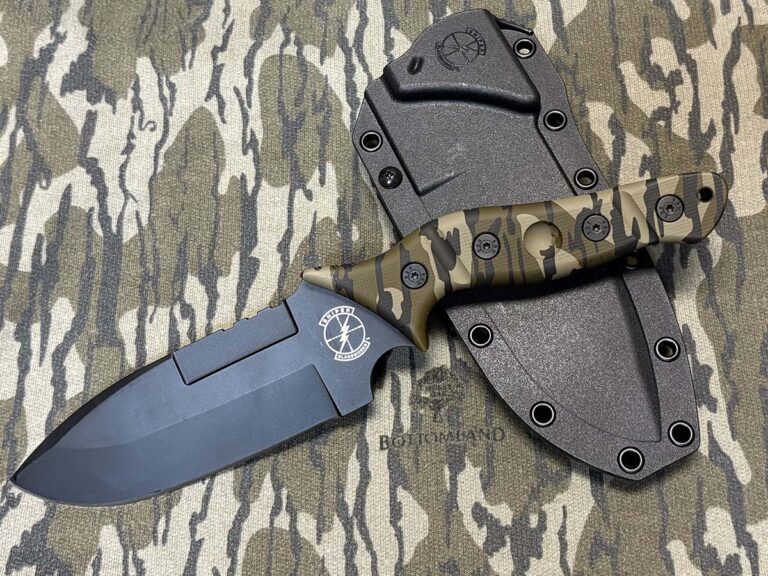
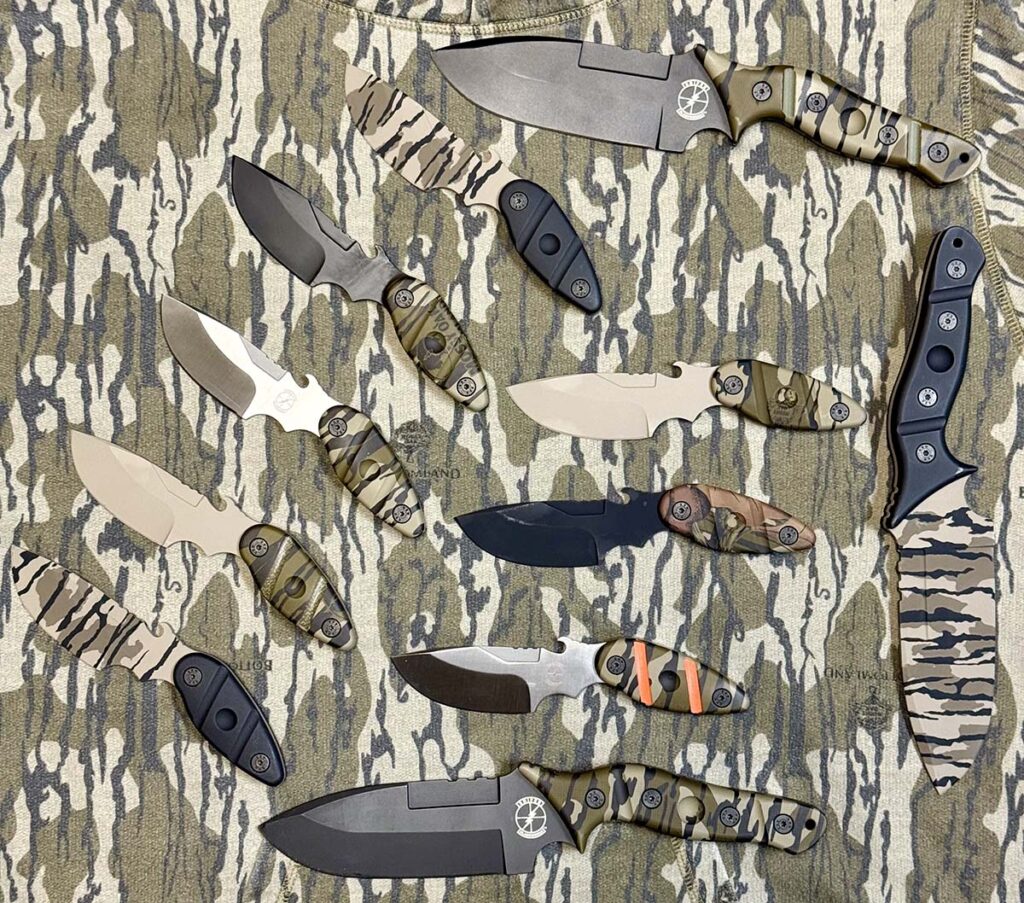
Sniper Bladeworks announces a new collaboration, a collection featuring Mossy Oak camouflage patterns on its hard-use knives.

A new partnership between Mossy Oak and Sniper Bladeworks is set to bring a classic camouflage aesthetic to a line of purpose-built cutlery. The collaboration will see select Sniper Bladeworks models finished in Mossy Oak patterns, merging the well-known camouflage brand with Lance Abernathy’s reputation for hard-use knife design.

Based in West Point, Mississippi, Mossy Oak has long been a staple in the hunting and outdoor world. Its original Bottomlands camouflage pattern is ubiquitous and, to many, is synonymous with hunting season. This move represents a continued effort to integrate the company’s patterns into the EDC and custom knife markets. Sniper Bladeworks, founded by Abernathy in 2009, is recognized for its focus on ergonomics and field performance—traits often attributed to Abernathy’s background in law enforcement and security. Aside from their rugged engineering, the company’s knives are perhaps best known for their pistol-grip style handles, a signature design feature.

Full suite of Sniper Bladeworks knives dressed in Mossy Oak.

Abernathy, who remains the chief designer of Sniper Bladeworks’ knives, noted that incorporating Mossy Oak patterns into his designs has been a long-term goal. He views the collaboration as a way to bring a sense of outdoor heritage to his functional, often overbuilt tools. Adam Pener, CEO of Sniper Bladeworks, echoed this sentiment, suggesting the partnership is a natural fit given both companies’ focus on the hunting and outdoor communities.

While specific model names and exact release dates have yet to be finalized, the collection is expected to cater to hunters, outdoorsmen, and those who prefer a more tactical, camouflaged look for their daily carry. The upcoming releases will likely feature the signature pistol-grip ergonomics that helped establish Sniper Bladeworks in the custom market, now adapted for a wider audience through this brand alignment.

See More Knife News:

Modern Period Knife: A Link To The Past And Present

Blending old and new, the modern period knife brings history alive in masterpieces.

Historical perspective is a relevant component in just about any undertaking. In the realm of cut, incorporating an appreciation of the past into the work of today brings another dimension to the custom knifemaker’s statement.

Interest in the knifemaking of a bygone era offers a window into the true artistry required to reproduce the knives of yesteryear, particularly with the absence of modern conveniences in the shop. Along with the interest in the historical knife, several custom makers bring famous designs, styles and patterns to life once again in tribute to those who have gone before.

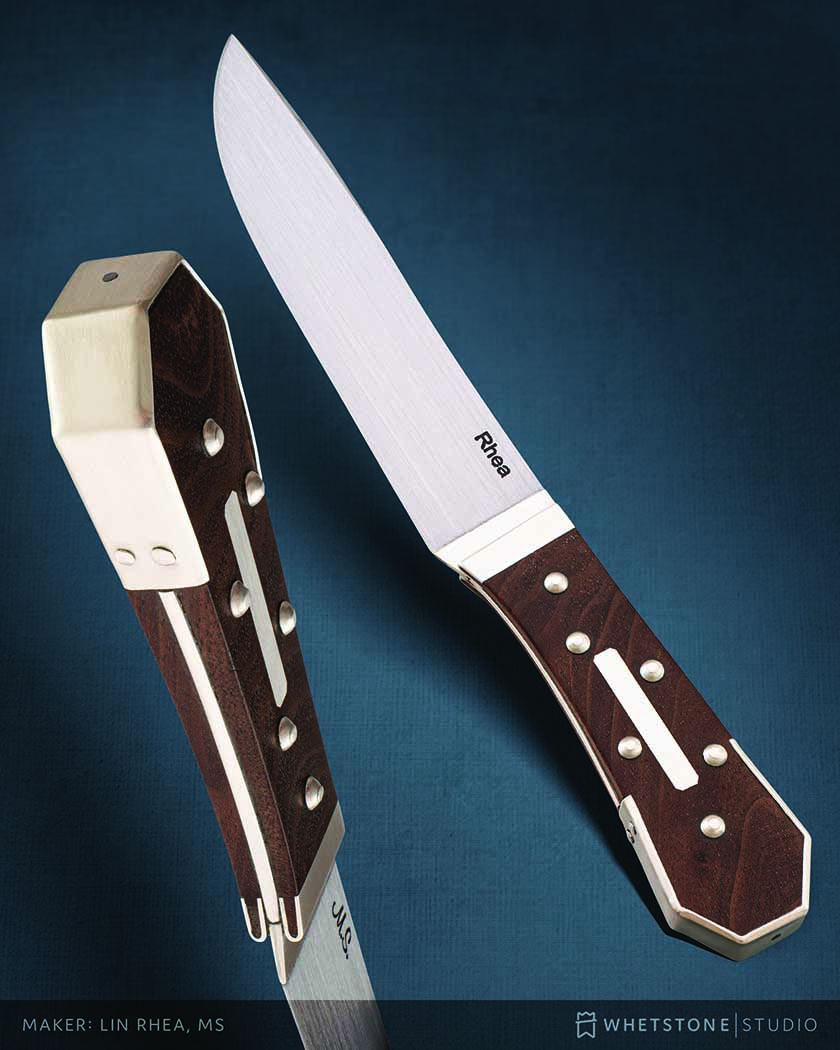
The idea of the period knife blends old and new. “I’ve been making knives seriously since about 2002 when I took a class with the American Bladesmith Society in Washington, Arkansas,” related ABS master smith Lin Rhea. “Joe Keeslar and Greg Neely lit a fire under me and got me on my way. Since then the town of Washington has been like a second home, and I’ve even added to the personal connection between me and the area by interest in one of the town’s historical residents who was also a knifemaker. His name was James Black.”

A resident of Prattsville, Arkansas, Lin gained an appreciation for Black’s distinctive body of work*, using contrasting materials and techniques to create a bold, attractive look. “I’m grateful to get to know Mr. Black by studying his work,” Lin continued. “This intense study led me to try to recreate one of his knives, the Carrigan Knife. The original knife, a guardless coffin-handled bowie, was made by Mr. Black in the early 1830s in Washington, Arkansas. I chose the Carrigan as my first attempt because of its less intimidating size; however, as is often the case I found it to be just as intimidating once I started into the project.”

Lin Rhea’s period knife, a reproduction of the Carrigan Knife is based on a dress bowie James Black is thought to have made in the early 1830s in Washington, Arkansas. The original Carrigan includes a black walnut handle with coin silver pins and trim. The blade is about 6 inches long and the overall length is approximately 10.25 inches. (Whetstone Studio image)

The original Carrigan includes a black walnut handle providing a nice contrasting background to the coin silver pins and trim. The blade is about 6 inches long, and the overall length is approximately 10.25 inches. The full tang is virtually covered entirely by the walnut scales and the silver wrap.

When Rhea undertook his homage to Black and the Carrigan, he chose stabilized walnut, which he harvested himself several years ago, and trim in sterling silver. He forged the blade from 80CrV2 carbon steel and included at least 30 separate parts while attempting the same techniques used by Black nearly two centuries ago in fastening and assembling the finished knife.

“There is so much to be said about not only this knife but also Black’s work,” Lin concluded. “He was able to create a knife design utilizing only three materials yet impacting the knife world as few others could. His ability to arrange these materials into a functional, long lasting, beautiful tool is only enhanced by the knowledge that he also built in other qualities like moisture resistance, logical assemblage and ergonomics. All of this was done in a historic setting without modern equipment and epoxies. In my opinion, his design is ingenious.”

The Gold Rush Period Knife

Recently inducted into the BLADE Magazine Cutlery Hall of Fame® (September BLADE®, page 52), knifemaker Jim Sornberger has assimilated his gold and silversmith skill sets into custom knifemaking while helping introduce the modern world to the classic design, luster and embellishment of the Gold Rush era and boomtown San Francisco of the mid-19th century.

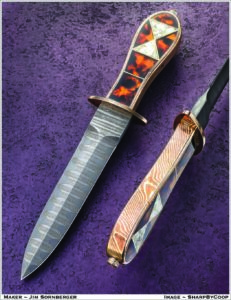
BLADE Magazine Cutlery Hall-Of-Fame® member Jim Sornberger’s interpretations of the Michael Price San Francisco/small dress bowie have won awards at various venues, including Best of Show at the 2019 International Custom Cutlery Exhibition in Fort Worth, Texas. This period knife features a blade in Vegas Forge stainless barstock AEBL and 412 stainless steels and san-mai damascus with a solid core. The guard and wrap handle are in Mike Sakmar mokumé barstock. Jim’s price for a similar knife: $3,500. (SharpByCoop image)

“I’ve been making knives since 1975 with the help of the late Les Berryman, an early Guild member, and with some guidance from Bob Loveless, Herman Schneider and Barry Wood,” Jim recalled. “The last three signed for me to join The Knifemakers’ Guild.”

For Sornberger, the style, embellishment and decoration of the canes, jewelry and knives of the Gold Rush era are most appealing. “San Francisco from 1850 to 1904, the Gold Rush period, was one of the wealthiest cities in the world, attracting some of the greatest artists, jewelers, carvers and engravers to ply their trade to a wealthy clientele. The work done in that period,” he opined, “rivals the best ever done.”

In the knifemaking genre, Michael Price and Will & Finck were among the most successful and prolific of the Gold Rush. Their work remains emblematic of the great migration to settle the American West, and the riches and ruin that were found with the experience.

“Price was Irish, and both cutlery firms hired workers who were English, German and possibly Scottish,” Sornberger explained. “Their dress knives are probably the most embellished American knives made in the 1800s-1900s. The dress knives had two common handles: an interesting, modified coffin shape and a more rounded, subtle taper shape. The blade shapes are spear-point dagger and San Francisco clip spear point.”

Sornberger is recognized as an authority on original San Francisco knives, as well as the magnificent gold quartz that was used so well by Gold Rush artisans. His modern interpretations of the Michael Price San Francisco/small dress bowie have won awards at various venues, including Best of Show at the 2019 International Custom Cutlery Exhibition in Fort Worth, Texas.

Jim’s dress fixed-blade bowie in the accompanying picture was made with Vegas Forge stainless barstock AEBL and 412 stainless steels, and san-mai damascus steel with a solid core. The guard and wrap handle are in Mike Sakmar mokumé barstock. Jim’s made such handles in gold and silver and nickel silver, also. The inlays are tortoise celluloid and California native gold/gold quartz.

According to Sornberger, the biggest challenge in his stunning creation was grinding the blade to show the distinctive pattern of the shell and the hardened core. The san-mai laminated blade was etched with ferric chloride, rinsed and color set with WD-40®.

Frog Knife

“The style of Michael Price’s work is a really good canvas with flowing lines, and there is a lot you can do with it,” observed ABS master smith Jon Christensen, who is in his 22nd year of making knives. “I wouldn’t call my San Francisco-style knives replicas. I do like to keep to the original form and honor the style of the maker, though.”

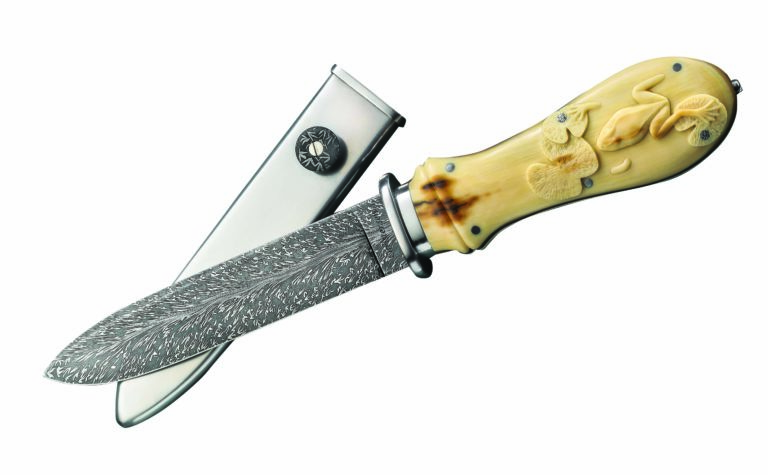
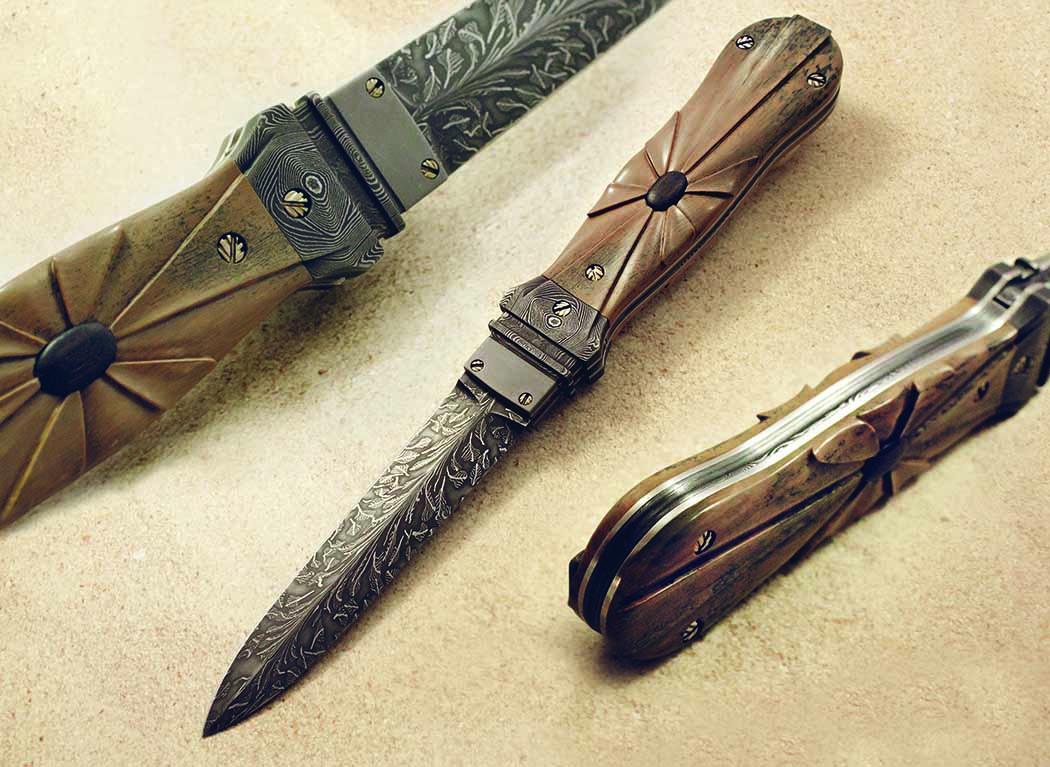
Jon Christensen’s San Francisco-style folder includes a blade of feathered leaf damascus steel and a handle of carved mammoth ivory with inlay of 4,500-year-old bog oak. Quite a period knife. (ChantryLeePhotography.com image)

One of Christensen’s most evocative pieces to date is referred to simply as the Frog Knife. However, the piece is far from simple, and Jon manages to convey the spirit of the Michael Price style while also imprinting some of his own personality.
“I built the feathered damascus for the blade with 1080 and 15N20,” he advised. “It’s a canister damascus. I forged the bamboo leaves and placed them in the can, welded it up, reduced it, and feather cut it so it would produce feather-cutting smears and leaves, and form branches to look like a little grove of bamboo leaves.”

The 10-inch knife has a 5.5-inch blade and a frame and sheath incorporating 410 stainless steel. Christensen utilized the “canvas” of the handle to the fullest, carving the mammoth ivory into a pleasing vignette of frogs and lily pads.

“The handle has something of a back story,” he smiled. “I had seen the Poppy Knife that Michael Price made and thought I would do my version. I took the knife to the BLADE Show and it didn’t find its owner. Then, the handle got ruined, and I just took the opportunity to rehandle it with the frogs and lily pads.”

Christensen got his start making stock removal knives after a career as a horticulturist. He learned to forge while working with ABS master smith Ed Caffrey and visited with knifemaker Rick Eaton and ABS master smiths Shane Taylor and Wade Colter. Jon also makes San Francisco folding knives and enjoys swordmaking. Plans for the future include more period knife examples.

Kimbll Style

ABS master smith Josh Smith owes his little league baseball coach, ABS master smith Rick Dunkerley, credit with getting him started making knives about 30 years ago. From the beginning, Josh has appreciated the thought process and craftsmanship of custom makers from a bygone era.

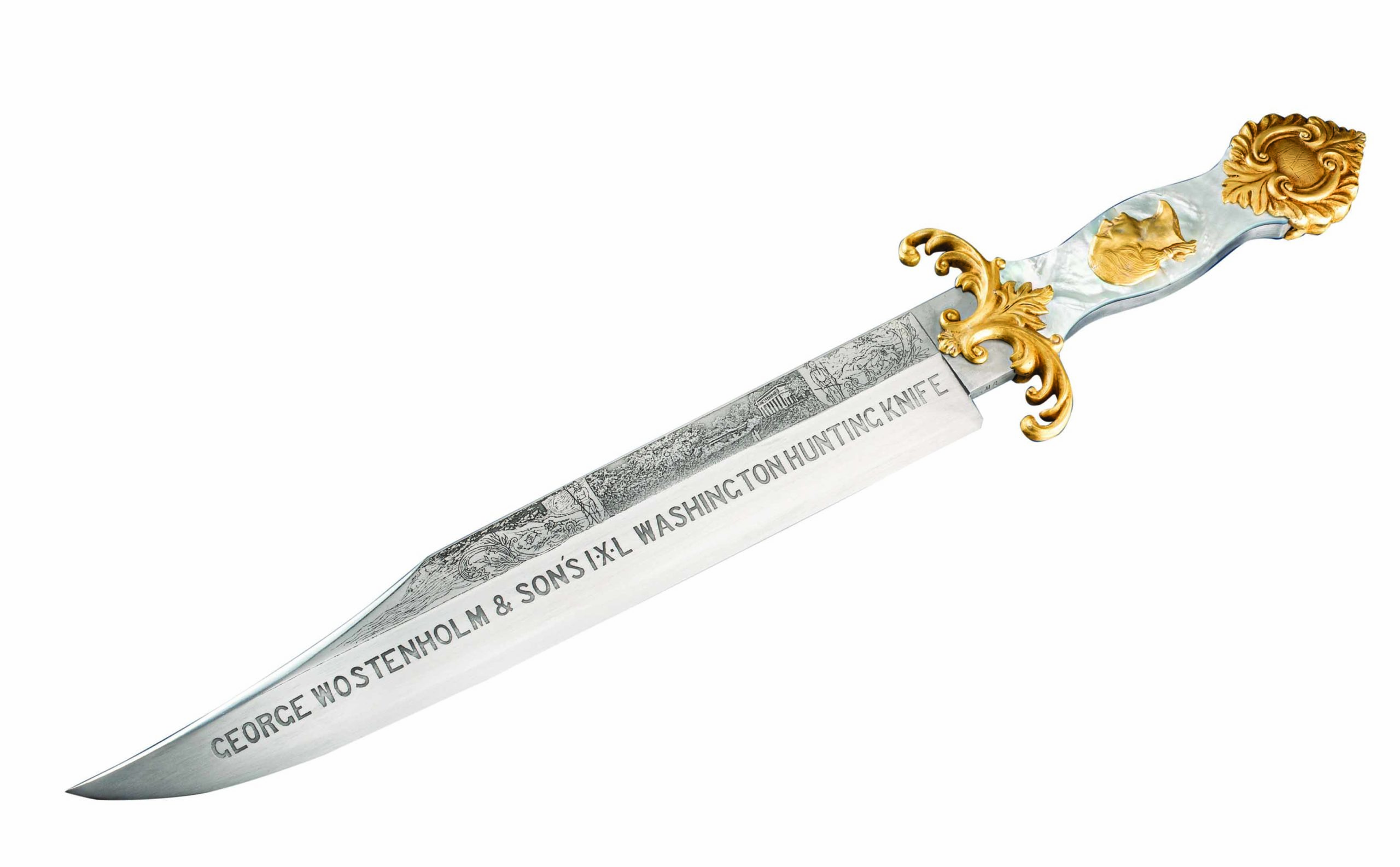
A period knife reproduction of the I*XL George Washington Hunting Knife by Doug Noren gets the full treatment in a 13.5-inch blade of 5160 carbon steel, a mother-of-pearl handle and 18k plated nickel silver. Overall length: 21.5 inches. (Whetstone Studio image)

“There’s something special about reproducing something that was built nearly 200 years ago,” he reasoned. “It’s easy to get lost in your thoughts while working on these knives, wondering what the makers were thinking about at the time. Was the knife going into battle? Was a rich man just wanting something unique? Was the maker just trying to be different and impress people? Were function and effectiveness of use the only factors that mattered? It’s really cool to think about.”

Josh has found the opportunity to consider historical context with a dagger in the distinctive dog-bone handle, recalling the mid-1800s when a gentleman named Loring Kimball of Vicksburg, Mississippi, owned several similar original pieces that were probably made by at least two different knifemakers in the New Orleans area. Knives in what many refer to as the Kimball style have been reproduced by a number of modern makers, mostly bladesmiths.

“The distinctive characteristic of the dog bone is clearly the shape of the handle,” Smith said, “but to me it’s more than that. The large domed pins and the flat facets on the handle provide such a neat look. One of the original Kimball daggers from the 1830s had silver wrapped around the butt of the handle and a small, thin silver guard. I never pretend to exactly reproduce these knives. I always put my own spin on the knife, trying to bring some of my style into it.”

Smith’s dog-bone dagger is fashioned from his own ladder pattern “W’s” damascus blade, African blackwood handle and 18k-gold pins and liners. The 9.5-inch blade is forged from 1080 carbon and 15N20 nickel-alloy steels, while a gold collar stretches over the back of the blade and bears the engraved name of the maker. Overall length: 14.25 inches.

“This particular knife was heavily influenced by Tim Hancock,” Josh said. “I feel Tim, Harvey Dean and James Batson are the three men who led the way in bringing these knives back to prominence, and Tim had the most influence on my construction of these knives. I love period knives and definitely plan on doing more. There are so many incredible weapons from the past that would be fun to recreate.”

*While a number of top industry authorities attribute such original 19th-century pieces as the Carrigan Knife, Bowie No. 1 and others to Black, no knives with Black’s mark are known to exist.

How To Make An Atlatl

1

We’ll take a momentary break from knives to talk about how to make this ancient and useful hunting tool—the atlatl.

Over 20 years ago I attended a primitive skills event in Michigan where the Michigan Atlatl Association was having its annual competition. I was amazed at how accurate the people could be using an atlatl, not to mention how much energy they could generate throwing one. However, I don’t want to get too far ahead of myself. For starters I want to explain why I’m discussing atlatls in the first place.

One of the key points to remember during a survival situation is efficiency, because efficiency saves calories and resources. I know, many have heard of making a survival bow, but the time and resources used to make an atlatl are way less. An atlatl is simple: a throwing stick that allows you to increase your power when throwing a dart.

Imagine you were a pitcher in the major leagues and you could increase the length of your arm by half. The advantage you would create would be amazing. Similarly, not only is an atlatl easy and fast to make, it also increases your ability to throw a projectile farther and faster. Don’t get me wrong; I am not against bows by any means, but in the time it takes just to make a string for a bow, you can make an atlatl and a fist full of darts. In the end, if I were in a survival situation and needed something to hunt with, I would start with an atlatl.

How To Make An Atlatl

Handcrafted atlatls
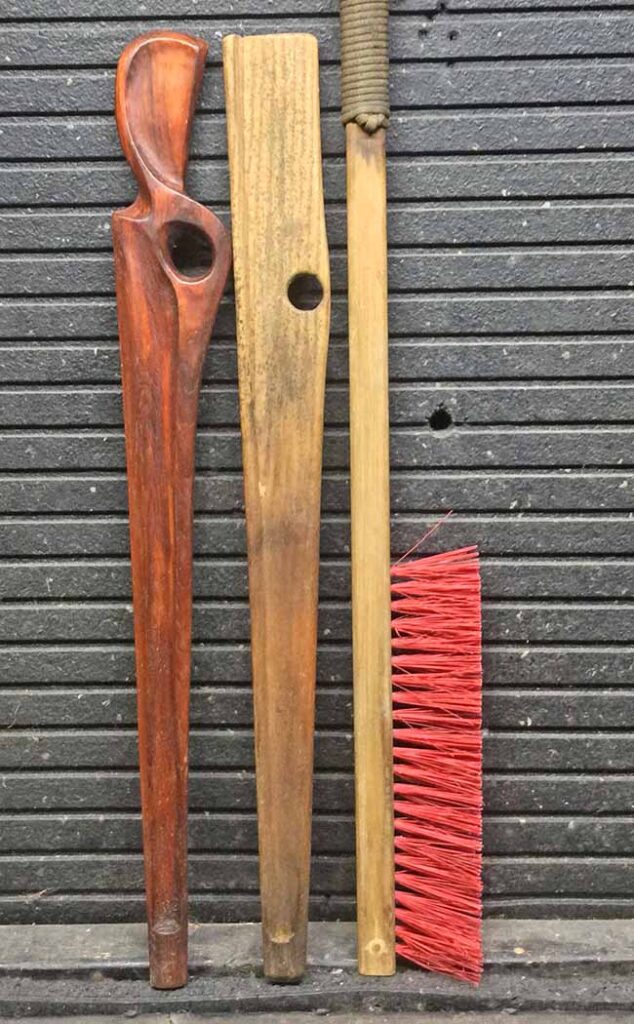
At left are two single-finger throwers. At right is a snowbrush Chris Oberg used as a thrower to win the Michigan Atlatl Association championship. A hammer-style grip works well with the snowbrush thrower as the scraper end acts as a stop.

As mentioned, the atlatl is simply a stick used to increase your throwing advantage. To start, the simplest version is a branch with a secondary branch sprouting off the main shaft.

Take a branch and cut it to the length of you forearm, being sure to leave the secondary branch near the end. Now all you need do is cut the secondary branch to a small point, or leave a pocket. Which method you use will affect how you make your darts. With the point configuration, you must put a bit of a dimple in the end of the dart so it can rest on the point of the thrower arm. Another method is to form a pocket by attaching other materials. These days most survival kits and a lot of EDC kits include duct tape. Simply cut yourself a stick, again the length of you forearm. At one end of the stick form a pocket with a piece of duct tape to cradle the back end of your dart.

There are a couple of methods to hold the atlatl. The first and easiest without having to do any more work on the atlatl itself is the hammer grip. To apply a hammer grip, grab the end of the thrower with the bottom three fingers of your throwing hand. Take your other hand and place the dart on the holder. Then rest the thrower in the palm of your hand and, with your thumb and index finger, grab the shaft of the dart, suspending it off the thrower.

A second method makes your thrower in the basketmaker’s* style. To do this you will need a bit of cord (a shoelace will work) or anything you can use to form two loops on the side of the atlatl shaft. At the end of your thrower, tie a knot that creates two loops on the handle. Insert your index finger in one loop and your middle finger in the other. Having the two loops makes it easier for you to retain the thrower throughout as it is now attached to your throwing hand. A thrower is that easy to make.

Making Spears And Darts

variety of darts
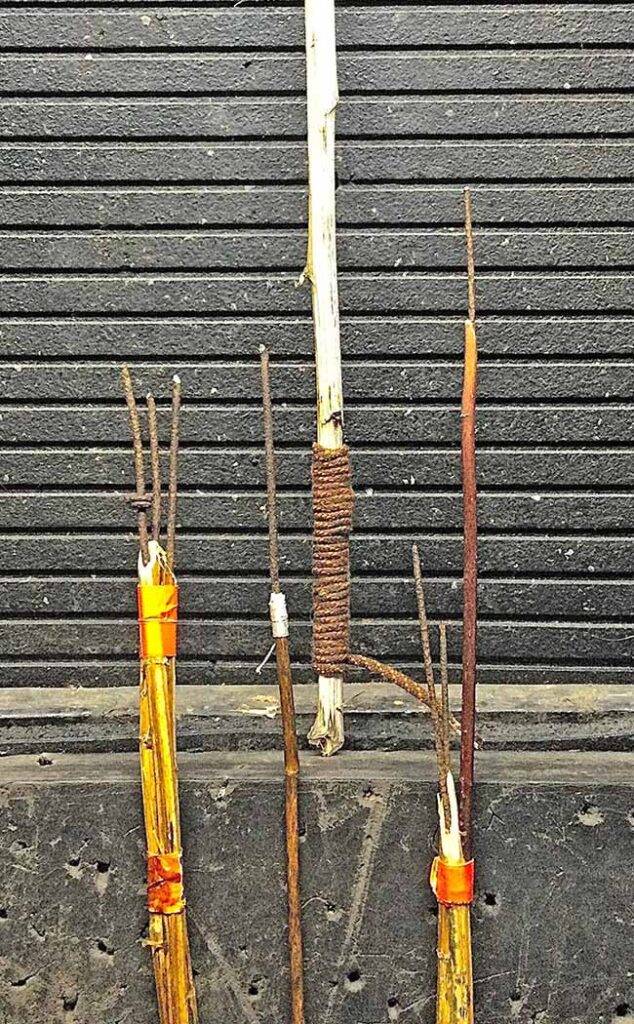
A thrower and a variety of darts illustrate the basic concepts of harvesting and utilizing various materials, including lashing smaller pieces together to make a dart.

An atlatl dart is simply a large arrow. If you can wrap your head around that, you start to see potential dart material everywhere—perhaps a piece of a broken fishing rod, the extra pole in your tent bag, a leg from a folding chair—the possibilities are pretty much endless. The mark of humanity is that there is plenty of garbage most everywhere, so remember to capitalize on any resource you run across.

For natural resources you can turn to plants and bushes that grow almost straight shaft shoots. Some examples in North America are those from mullein, rosewood cane, ragweed and dogwood. In places like Asia, bamboo is a natural selection. Since plant shafts grow in a tapered fashion, be sure to put the heavier end of your dart at the tip. Having the heavier end at the rear will cause the momentum of the heavier back to lift the tip, as the heavier end will want to pass the front.

For length, look for the dart to be at least twice that of the thrower or longer. The longer and lighter the dart, the more energy you can produce. Note: The heavier the dart, the strong the thrower must be.
Start by stripping the shafts and straightening them. During the initial straightening you can bend the shafts or create friction on the concaved side, which will release the tension in the material. As time passes you might do the occasional straightening over a campfire, as the heat helps.

Now that you have the shafts straight you need to carve a small dimple in the back of each one to rest on the point of the thrower. If you are using materials that have nodes along the shaft like bamboo and mullein, be sure to carve the pocket just before a node to avoid splitting the shaft of the dart.

Now for creating drag. Just like with an arrow, to keep a dart flying straight it helps to have drag. Consequently, fletch the dart by splitting leaves and lashing them to the shaft. A more expedient way is to make fletching out of duct tape. You don’t necessarily need fletching but for throwing longer distances it helps.

For making the tip, simply sharpen the point or as mentioned earlier get creative and find something to use that has been left behind—a soda can cut and folded to form tips, for example. How does the saying go? Recycle, reduce and reuse.

What’s An Atlatl Good For?

Thrower's take aim with atlatl and dart
Carter Gammill takes aim. In terms of accurate throwing, the hardest part is getting your timing down as to when to release the dart. Setting up a target for practice provides an added element of challenge.

Atlatls have been in use for thousands of years as hunting tools. There are still Inuit tribes that use them to hunt narwhal to this day. It is expedient, uses little resources and best of all you can carve one with your favorite knife in no time. You will want to try making one first to get the idea. After that you will be surprised how you start to see so many things that can be made into an atlatl. The hardest part is getting your timing down as to when to release the dart when you throw it. Most importantly, knowing how to make and use an atlatl puts yet another worthwhile tool in your kit.

*The Basketmaker culture of the pre-Ancestral Puebloans began about 1500 BC and continued until about 750 AD with the dawn of the Pueblo Era in what is now the American Southwest. They used the atlatl for hunting and as a combat weapon. The culture was named Basketmaker for the large numbers of baskets found at local archaeological sites dated circa 800 BC to 200 AD.

Read More About Wilderness Tools:

Advertisement

Must Read Articles

Read this before you make a knife

Knifemaking 101 – Read This Before You Make a Knife

  by Wayne Goddard My experience has taught me that there's nothing like digging in and getting started. I've often said the hardest part of the...
how to forge damascus steel

How to Forge Damascus

Advertisement
Advertisement