Who knows when the first argument over the best blade grind started? Most likely it was a conversation between two flintknappers sitting around a cave—and the battle of which grind is the best rages on to this day. The modern tactical and bushcraft movements have brought heated debates on which grind is the best. The grind of a blade is where a key battle is won, and blade geometry varies widely. But is there a so-called best blade grind and, if so, which one is it?
Curved or Flat?
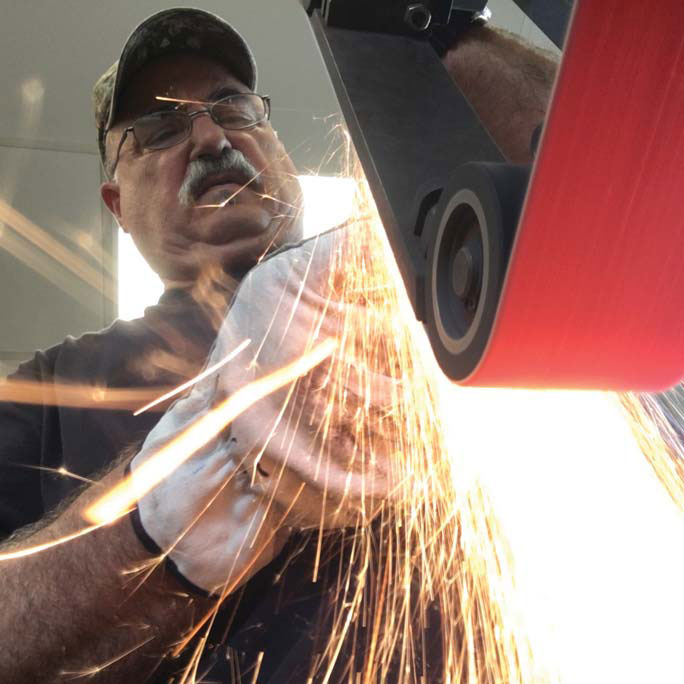
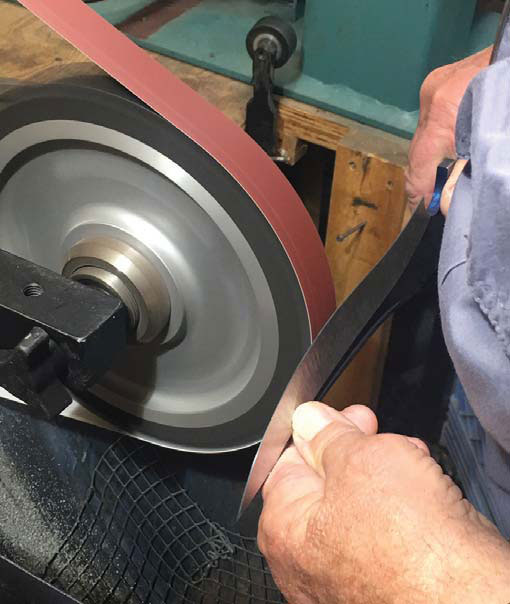
Before becoming a renowned custom knifemaker, Walter Brend was a meat cutter, the skills of which gave him keen insight into the art of the slice. The man some call the best grinder ever shows his stuff here. (Rodney Hiers image)
According to Wikipedia, blade geometry refers to the “physical properties of a sword blade: cross-section (or grind) and taper.”
You can forget the “sword” qualifier—blade geometry applies to any blade. The three most common blade grinds in use today are hollow, flat and convex, with other grinds of note are the chisel, asymmetrical, Scandi and compound. There are others.
Before becoming a renowned custom knifemaker, Walter Brend was a meat cutter, the skills of which gave him keen insight into the art of the slice.
“What works for me is the hollow grind,” Brend says. “The hollow-ground blade is not a flat surface, it is concaved, so as you cut an object it immediately starts a separation. The bottom edge should flow from the point to the back of the blade with a recurved blade edge.”
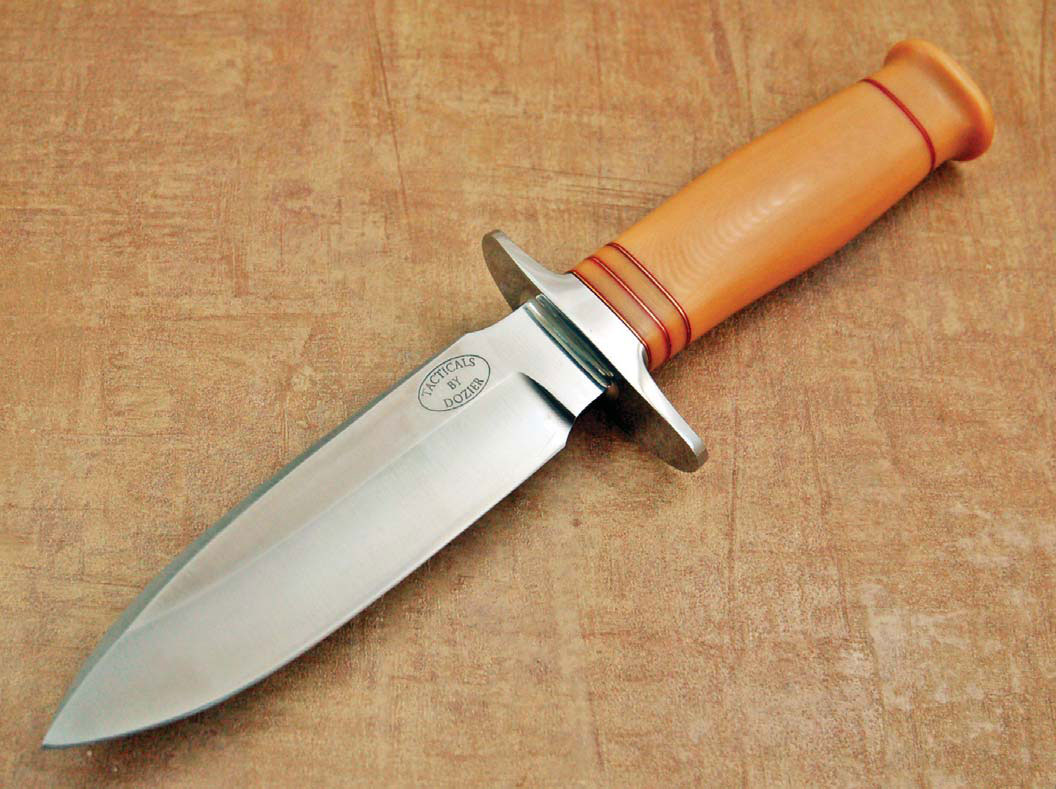
Knifemaker Bob Dozier, well known for making hard-use knives, prefers the hollow grind as well.
“Since I make mostly hunting knives, I prefer the drop-point blade style. Since Bob Loveless popularized the drop point, it’s been the most popular shape for hunting knives for many decades now. Also, for a hunting knife, the hollow grind is the best as it stays thin at the edge much longer.”
Like Walter Brend, Bob Dozier prefers the hollow grind. “For a hunting knife, the hollow grind is the best as it stays thin at the edge much longer,” Dozier opines. Bob’s fixed blade features a nice, clean hollow grind. (Kerry Peal images)
However, that’s not to say Dozier is adverse to other grinds.
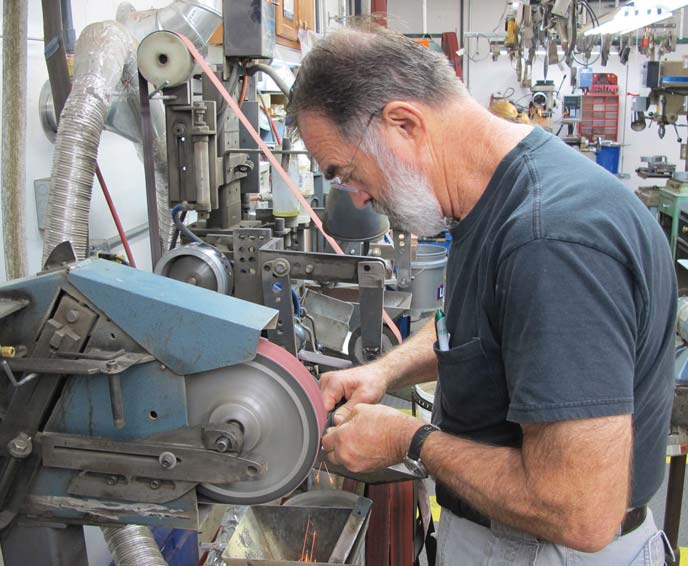
“The flat grind is the best for the kitchen as it does not wander when making thin slices,” he opines. “A convex grind is great for splitting firewood.”
Award-winning American Bladesmith Society master smith Jim Crowell won the 1st Annual BLADE Show World Championship Cutting Competition in 2003 and was inducted into the ABS Hall of Fame in 2016.
“My opinion for the best blade geometry is a full flat grind with a convex edge,” Crowell begins. “This grind will give the smoothest transition from the full thickness of the spine to the cutting edge—anything else is something less.”
Crowell is also very familiar with the Bill Moran appleseed or convex grind, which is based on the Japanese hamaguri or “clamshell” grind.
“Bill Moran did like full convex blade geometry,” Crowell notes. “He ground on a round wheel and meticulously shaped the whole blade to have a convex cross section. I have cut with several of Bill’s knives and they were very sharp and had great geometry.
“The full convex grind performs in an exemplary manner, but I cannot discern any advantage in performance over a full flat grind with a convex edge. You do not just slap a convex edge on a blade. There are a myriad of variables: how thick was the edge when you started the roll? How high or low did you roll it? A short and abrupt roll may shave but will not cut well at all.”
“The flat grind is the best for the kitchen as it does not wander when making thin slices,” opines Bob Dozier, here busy at his shop grinder. (Pat Covert image)
Degrees of Difficulty
Curious as to the degree of difficulty of applying the various grinds, BLADE® asked Brend, Dozier and Crowell which they thought are the most difficult to execute. They provided varied opinions.
“I think whichever one you do the most is easiest, and the one you do the least is hardest,” Crowell notes. “Once upon a time I used to hollow grind a lot, but then I started to cut a lot and it became apparent to me a flat grind would cut better overall for my use. I gradually phased out hollow grinding and now find it difficult as compared to flat grinding.”
Dozier adds pointedly, “I don’t find any of them hard. I think it depends on how you learn to grind at first. A lot of the makers today learned from someone else and stick with the grind they learned.”
Brend ranked the grinds in order of difficulty.
“Hollow-ground knives, in my opinion, are the hardest to grind,” he begins. “You have to control the blade on a wheel to form a perfect symmetrical line. In my opinion you should keep the point thick, and, at the same time, make your edges sharp and thin.
“Flat ground is next after hollow. In my opinion a true flat-ground blade should be finished by hand because the grinding belt will not allow a true flat surface. Convex is the easiest because you have no set lines or pattern when grinding.”
Order of Importance
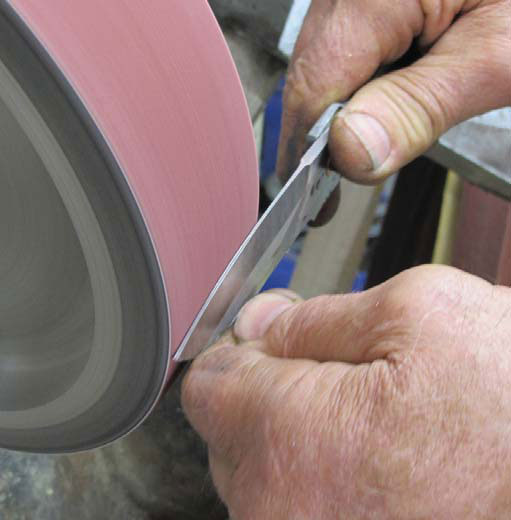
At the grinder here, Bob Dozier says blade geometry is more crucial in terms of a blade’s cutting performance than the type of steel or how it is heat treated. “The most important is blade geometry,” he notes. “The type of steel and how it is heat treated has nothing to do with how it cuts, only how long it cuts.” (Pat Covert image)
Is blade geometry the most important aspect of a blade’s cutting effectiveness, or is the type of steel or proper heat treating most crucial?
“The most important is blade geometry,” Dozier says. “The type of steel and how it is heat treated has nothing to do with how it cuts, only how long it cuts.”
Crowell differs.
“Heat treat, geometry and steel, in that order,” he opines. “If the heat treat is wrong, the rest will be of little consequence. Proper geometry is next in importance. The steel, although important, is not the determining factor. Of course, you need to have a ‘good’ steel, but it is not the steel that makes the difference. Just because you may have the latest, greatest steel does not mean you will have a superior knife. You have to do it all correctly and in the right order.”
Brend ranks the three differently.
“I think the type of steel is the most important. With proper heat treating you can vary from two-to-four points [on the Rockwell hardness scale] and still cut with the knife because of the type of steel,” he says. “Heat treating is second. With most steels you can be within two points and still cut with the blade. All heat treaters are not the same because of the equipment or their method. Geometry would be the last because if you use the proper steel, you should be able to make any blade work well.”
Flunking Geometry
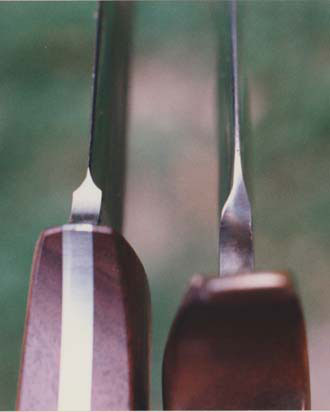
Uneven grind/plunge lines (right) as seen from the bottom of the blade are one of the more obvious and common things to look for in a bad grind. By contrast, the plunge lines at left are nice and even.
Finally, what makes a bad blade grind?
“What I look for are the grind lines,” Brend explains. “Are the sharp edges of lines rolled? Also, at the back of the blade—where the [grind] line starts—is the steel uneven? I see some hollow grinds where the edges are too thin. If you hit a hard object the blade will chip.”
Opines Dozier: “A poor grind is shown with uneven grind lines, crooked cutting edges or a non-uniform cutting edge.”
“Poor grinding is evidenced by several telltale signs,” Crowell interjects. “Uneven grind/plunge lines as one would look from the bottom of the blade. This is one of the more obvious and common things to look for. Also, the finish on the bottom of the ricasso and choil area is often neglected. You can hold a blade horizontal and look down the flat of the bevel and it should be smooth as glass with no ripples or distortions.”
Jim also notes that on symmetrical patterns such as daggers, look for mirrored-image grinds on both sides of the blade.
One interesting takeaway: The perfect grind may just be determined by how you plan to use your knife—or perhaps you may need two or more knives to cover all the bases.
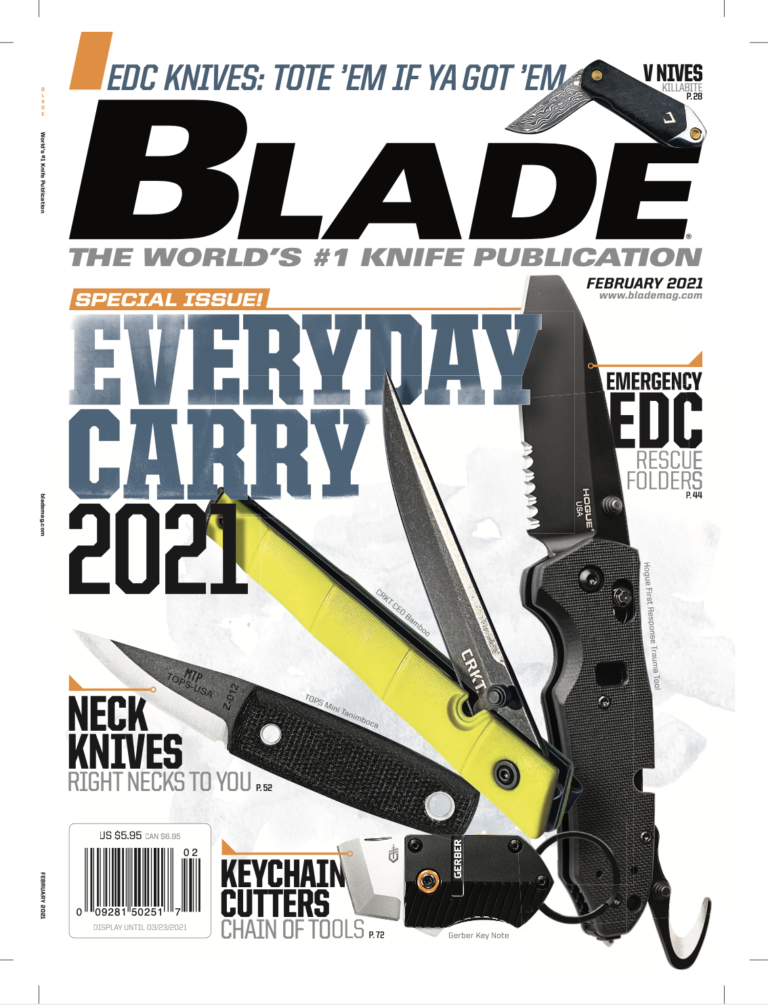
A bevy of EDC knives graces the cover of our special EDC issue: the CRKT CEO, V Nives Killabite, Hogue Knives First Response Trauma Tool, TOPS Knives Mini Tanimboca Puukko and Gerber Knife Key Note.
CRKT’s CEO is a slender Richard Rogers design with the go-to lock of many EDC folders: a linerlock. For a small EDC in damascus blade steel with a miniature tactical feel, the V Nives Killabite fills the bill. The Mini Tanimboca Puukko is a neck knife that doubles as a small bushcraft model thanks in part to its flat-back Scandi-ground blade. The Hogue Knives First Response Trauma Tool is perhaps the most utilitarian in terms of EDC: a rescue knife. And finally, the Outdoor Edge MiniBlaze is a keychain knife—the type of EDC you don’t usually need to worry about remembering to take along with you because it’s with your keys.
Three blades with an Eastern design flair are zesty cutters
For many decades Asian knives, tools and swords languished in the cutlery industry, remembered most for blades brought back by U.S. service personnel who fought in the Pacific during World War II. Times have certainly changed, thanks in no small part to a highly accomplished custom knifemaker named Bob Lum.
Of Asian descent, Lum introduced the custom knife world to his “American” version of the Japanese tanto and leaf-shaped blades circa 1980. Through the balance of the ’80s, and later in the ’90s, Lum’s tanto design was rabidly embraced by a budding modern tactical knife crowd. The tanto has been a mainstay ever since. Other Asian blade styles, such as the bolo and kukri, have been embraced as well. My team and I look at three modern takes on the “Asian Equation” here and put these intriguing cutters through the paces.
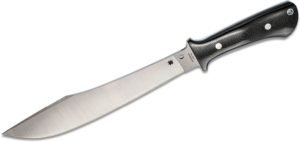
CHAMP CHOPPER: Spyderco Lum Darn Dao
source: knifecenter.com
Designed by Lum before he passed away way too early in 2007, the Spyderco Lum Darn Dao is a full-tang Chinese dao-style knife. Overall length: 16.27 inches. The 10.63-inch blade is CPM 154 stainless steel with a flared tip and a swedge grind terminating at the clip on the spine. The 5.64-inch handle has a flared base and the black G-10 scales are ample, fully sculpted and highly polished. A handcrafted dark brown leather sheath with a thumb-break retention loop comes standard. Weight (minus the sheath): 17.89 ounces. MSRP: $649.95. This is a limited edition of one production run only.
The first thing we noticed about the Lum Darn Dao is that it’s not as cumbersome as it initially looks, and then we realized it’s just shy of 18 ounces, which is not that unwieldy as large knives go. The handle is an exercise in comfort—well sculpted all the way around.
The Lum Darn Dao has a deep V-grind, making it an excellent slicer. Sisal rope was a piece of cake. Full grinds like that of the Darn Dao slice and chop well, as the edge doesn’t encounter the hump of a ricasso when it goes about its work.
One inch seemed to be the Darn Dao’s magic number. Employing a basic hammer grip, we used the blade to cut through 1-inch sisal rope like it was butter. When we challenged it on an old phone book (remember those?) with diagonal full-force chops, it repeatedly sunk in an inch deep. For long-term use we’d opt for a rougher finish or texture on the G-10 grip, but all in all the Darn Dao chopped like a champ.
Specs: SPYDERCO LUM DARN DAO Blade length: 10.63 inches Blade steel: CPM 154 stainless Handle length: 5.64 inches Handle material: Sculpted G-10 Sheath: Leather belt carry Weight: 17.89 ounces Overall length: 16.27 inches Country of origin: Taiwan MSRP: $649.95
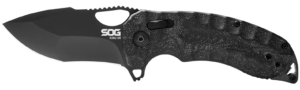
SHORT, WIDE HYBRID: SOG’s Kiku XR Blackout
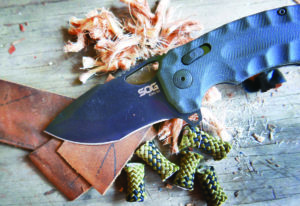
SOG’s Kiku XR Blackout is a mid-size folder 7.375 inches open and 4.3 inches closed. Designed by custom knifemaker Kiku Matsuda of Japan, the 3-inch black-coated blade of CTS-XHP stainless steel is a hybrid of the tanto style with some interesting twists. The main grind is recurved and there is a swedge grind on the spine that ends in a harpoon dip. The blade opens via a kidney-shaped hole in the blade or by an optional gimped flipper. The black handle has sculpted G-10 scales over black stainless steel liners, and SOG’s XR pull-down slide release unlocks the blade. On the rear is a blade-tip-up pocket clip. Weight: 5.19 ounces. MSRP: $189.95.
SOG’s Kiku XR Blackout has a hybrid version of the American tanto blade. The recurved portion of the main grind does a great job trapping leather and rope, and the tip finishes the job as it is pulled through.
The Kiku XR Blackout’s blade is shorter and wider than the traditional tanto pattern. We tested it first on 1.5-inch-wide harness leather, executing straight cuts and pull-throughs. The modified edge cut very well, though we almost ran out of blade while pulling upward through the leather strip.
Rope was much easier. The recurve of the blade trapped the rope, and the secondary grind from the dividing line—or yokoke—to the tip finished the job. It should be noted not all tantos have a yokoke; some simply sweep through upward to the tip. The cuts on 3/8-inch rappelling rope were clean as a whistle, while the edge tended to shred thicker 1-inch sisal. The handle was plenty comfortable and added to our cutting pleasure.
SPECS: SOG KIKU XR BLACKOUT Blade length: 3 inches Blade steel: CTS XHP stainless Blade type: Hybrid American tanto Handle material: Sculpted G-10 Special features: Multiple blade grinds Carry: Pocket clip, blade tip upWeight: 5.19 ounces Closed length: 4.375 inches Country of origin: Taiwan MSRP: $210.95
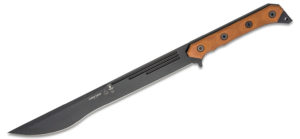
2-HAND HOSS: The TOPS CUMA Kage
photo source: knifecenter.com
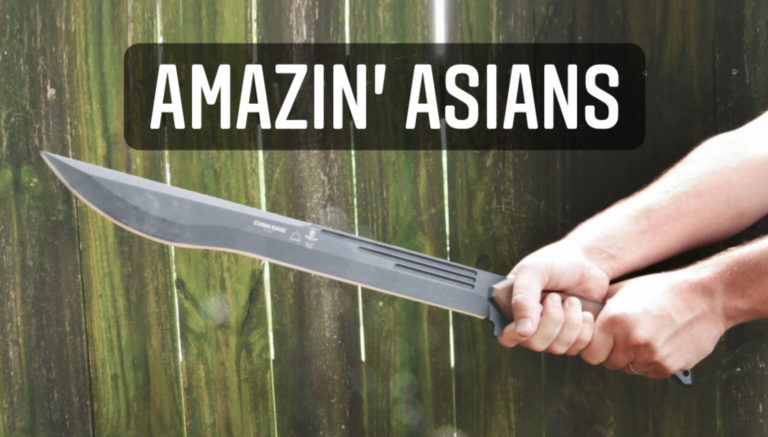
The TOPS CUMA Kage is a tour de force by martial arts guru Sijo Wayson Johnny Tsai. Overall length: 23.75 inches. The 15.5-inch blade of 1095 high carbon steel sports TOPS’ Black Traction Coating. The lengthy handle is 8.25 inches with Micarta scales sized for two-handed delivery. The blade is a hybrid straight sword pattern blended with 7 inches of kukri bulge at the tip to give it a bit of utility to go with its, ahem, badassery. It includes a full-length black Kydex sheath with a dangler/attachment ring. Weight: 31.5 ounces. MSRP: $360.
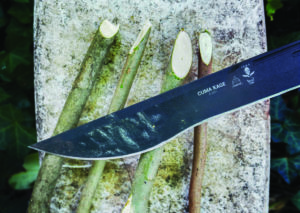
Using one hand or two, the author found the CUMA Kage cut brush equally well. However, as you might expect, you can take on much heavier tasks with it by using both hands.
To test the CUMA Kage for its utility billing, we took it outside for brush-clearing duty. We’ve always admired the kukri and have cleared an acre or two over the years with one, so this long send-up of the chopper intrigued me. We found out quickly we could use the CUMA Kage with one hand or two, which gives it a big leg up on its smaller cousin. The Micarta handle is well filled out and plenty grippy. One-handed we were able to easily whack through half-inch-thick green hardwood stalks and branches. Two-handed we sliced through stalks three-quarter of an inch with ease, and 1 inch as long as we had clearance to pull back for a full stroke. Though not the CUMA Kage’s original intent, it does have formidable utility.
Specs: TOPS CUMA KAGE Blade length: 15.5 inches Blade material: 1095 carbon steel Blade finish: Black Traction Coating Handle length: 8.25 inches Handle material: Micarta Special features: Kukri blade tip Sheath: Kydex w/leather dangler Weight: 31.5 ounces Overall length: 23.75 inches Country of origin: USA MSRP: $360
MELONIOUS ASSAULT
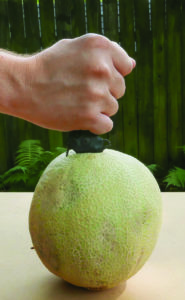
After testing the blades on a variety of fare, just for fun we took to the backyard to let them each have a go at a cantaloupe. Leading off with a reverse grip on the SOG Kiku XR, we stabbed the forlorn melon to the hilt. As stubby a version of the tanto as the Kiku XR’s blade may be, the cantaloupe’s pithy skin gave into the knife’s wishes quite easily.
The Kiku XR Blackout may have a shortened version of the American tanto blade style but it still likes to stab. Here it sinks to the hilt in the cantaloupe. The handle is chubby and comfortable, making the whole package work in harmony.
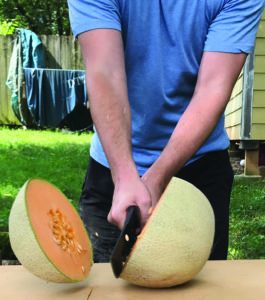
The author’s neighbor lowers the boom with the CUMA Kage. Short swords this size often are primarily geared toward combat, but the kukri-style tip gives the TOPS tool a welcome amount of utility.
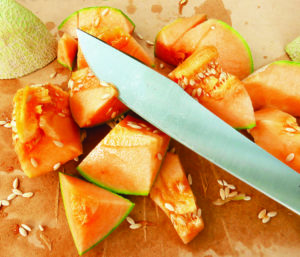
Next up the TOPS CUMA Kage tried the task of halving the cantaloupe in one fell swoop, which we captured in burst mode on my neighbor’s IPhone. Mission accomplished. Finally, we used the Lum Darn Dao to “prepare the meal” by using the blade in quick, rapid-fire chops. The sword’s deep V-grind—not unlike that of a chef’s knife—performed admirably.
Like an oversized chef’s knife, the Lum Darn Dao deftly whacked the cantaloupe into chunks with speed and style.
BEASTS of the EAST
While we often think of knives and swords of an Asian design in the context of combat and martial arts, it’s easy to forget that many Eastern blades were used for everyday utility as well. The tanto was an everyday carry by the Samurai class in Japan, and men and women alike carried a smaller version, the kaiken, aka kwaiken. The chisel grind was not typical on tantos as we see on some of them today, but on knives for culinary purposes. The Japanese kiridashi, which is rapidly gaining a toehold in the cutlery world, was also chisel ground and used for wood carving and marking.
The wicked Indian/Nepalese Kukri was employed in combat, but is primarily a tool for clearing land and is used widely for bush whacking today. Even the Indonesian karambit was considered a working knife by its users. If nothing else, the distinctiveness of Asian cutlery design has added richly to our knowledge base of cutlery and given us a plethora of modern-day knives to explore.
THE AWARD-WINNING FACTORY KNIFE COMPANY UNDERGOES A BRAND REFRESH IN 2020
The year was 1986. The Soviet Union hosted its first Goodwill Games. Halley’s Comet was visible from Earth for the first time in 76 years. Up to 6.5 million people participated in a charity event called Hands Across America. Phantom of the Opera premiered in London’s West End. And SOG Specialty Knives—aka SOG—made its debut.
The first SOG-brand knife was a reproduction of the original SOG Bowie in tribute to the Studies and Observations Group* of Vietnam War fame. Eventually, the SOG Specialty Knives line grew to include knives mass produced with attention to detail and quality. Today, the company has grown into an innovative, major player whose products are among the leading choices of Navy SEALs and other military, law enforcement, fire and rescue, tradesmen and everyday knife users the world over. Folders, fixed blades, flashlights, multi-tools and gear— SOG has you covered.
Over the years, it’s only natural that a knife company keeps growing in size and product offerings, constantly evolving itself and its knives. SOG has kept moving forward, and 2020 marks a significant milestone in the company’s evolution: a prominent revamp of sales and marketing strategies, a refresh of existing models and an engineering of new ones to further meet the demands of those who serve and keep us safe, as well as the needs of everyday knife consumers.
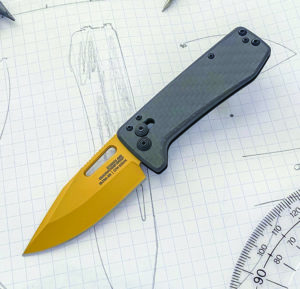
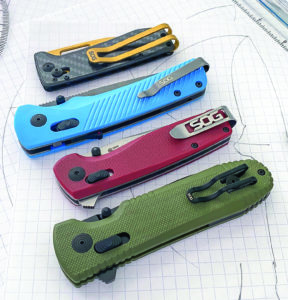
With its slender form factor, XR lock, carbon fiber handle and CTS XHP stainless blade, the Ultra XR defines classy high tech. The super-slim folder carries well and also doubles as a money clip. The gold-titanium-nitride coating adds a bit of bling. The blade also is available in a more subdued black-titanium-nitride coat.
The architect for the brand refresh is Jonathan Wegner, company brand vice president. “We’ve taken the best things from the last three decades, and doubled down on the things that we feel are most relevant to our end users today and into the future,” he explains, “and are focused on delivering solutions that are authentic to the brand.”
Why the transformation? According to Wegner, consumers reported that the company’s more recent focus and quality were not there. Many stated their idea of SOG was from an era that is now past, when the company brought some innovative ideas to market and was driven to produce the best knives and tools for tactical and other consumers. “So, by first studying and observing ourselves, we were able to determine that a significant change was needed,” Wegner notes. “Most of this led to our reposition and future focus.”
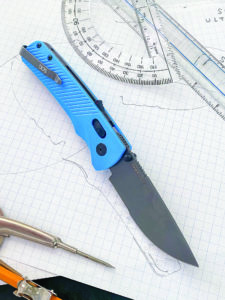
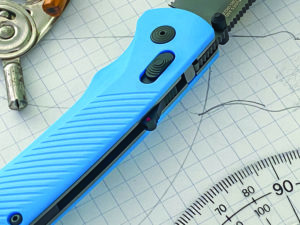
The Flash AT is designed for daily carry with a drop-point blade of D2 tool steel and a handle of molded glass-reinforced nylon in multiple color options.
SOG founder and president Spencer Frazer was the primary driving force behind the company and many of its product designs, from its inception until a couple of years ago when Joe McSwiney was hired to lead the outfit.
Spencer Frazer, SOG founder
Instead of the old SOG mark, the company refresh will include blades marked STUDIES AND OBSERVATIONS GROUP.
“Spencer was involved throughout the brand refresh process, and a lot of what we have done with the brand hearkens back to his original vision,” Wegner states. “Therefore, it was vital that he was involved throughout every aspect of it.” Even back then, Frazer was seriously considering stepping down from overseeing daily operations and returning to his passion of developing innovative products. “So, once the brand refresh and new products strategy were in place,” Wegner says, “he felt comfortable stepping back.”
SOG has been Spencer’s baby since day one, so stepping back at any time or putting just anyone in charge isn’t what he wanted. “SOG’s future is pushing into an even greater extension of the original intent when it was founded,” Spencer notes. “I cannot be prouder of what the company has grown into.”
RELENTLESS by DESIGN
The new company slogan is “Relentless by Design.” This encompasses SOG’s past while embracing the future. Being a major player in the tactical market for many years has pushed the company to continuously innovate and bring new models to market. Starting this fall, SOG will double down on the pushing and debut some intriguing models.
With Frazer retired and the right people in place, the company is poised to embark on a fresh, new and exciting chapter where its knives and other products will be more focused and specifically aimed at three target groups: Professional, Outdoor and Daily. More on them later. Meanwhile, by the time the new vision was in place, many of SOG’s lower-end knives and other products already had been discontinued. “We felt those items didn’t truly represent the types of items we want to be [offering],” Wegner says.
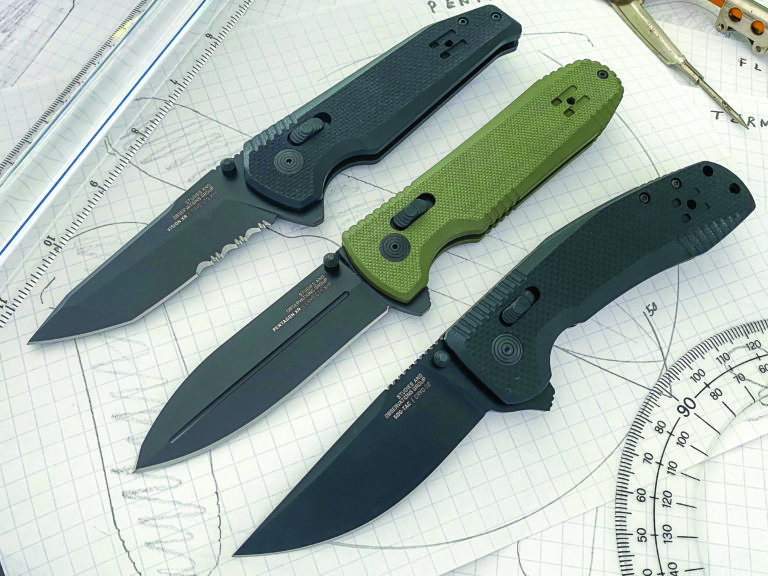
SOG has gone to some stylish pocket clips this year, model examples from top: the Ultra XR and its extra-wide/long clip (it doubles as a money clip), Flash AT, Terminus XR and Pentagon XR.
Along with this, Walmart, which previously sold some of the now- discontinued, lower-end SOG items, was removed as a retailer. Most everyone else who had sold SOG knives will remain, including many knife-specific retailers on the Internet and elsewhere.
Beginning in the fall, the first phase of the brand refresh will officially go live, and, as of press time, some of the new knives already had been released. All of the new product classes are designed to function at peak levels, engineered with intent and built with the best materials for each specific price point.
As part of the new SOG’s knives fall into the three aforementioned categories: Professional (law enforcement, EMT, fire and military); Outdoor (hunters, hikers, campers, fishermen, etc.); and Daily (trades, office workers, warehouse workers and such). All three incorporate what the SOG brain trust calls a visual brand language. This means each category incorporates a specific geometric shape that is a motif for the designs that populate it.
For example, the knives in the Professional category have trapezoidal design elements. Outdoor employs a circular design motif. Finally, Daily employs triangular design elements. The purpose of the visual brand language is so you can readily identify each knife’s purpose.
In addition to the visual brand language, SOG is using new “naming conventions” as well. The standardized approach allows you to easily identify the primary technologies the knives use. For example, XR denotes the knife uses SOG’s XR lock (SEAL XR), AT denotes Assisted Technology (Flash AT), and FX indicates the knife is a fixed blade (SEAL FX). There are a few other designations but these are the most commonly used.
With the assisted- opening AT-XR lock, the Flash AT combines rapid deployment with lock security. Pulling back on the ambidextrous release disengages the lock. Note the lock safety on the handle spine. The red dot indicates the blade is ready to open.
Also new is a color-coded accent stripe on the packaging. Yellow is for Daily, light blue for Professional and gray for Outdoor. Topping it off is new packaging in which you can actually see the product inside and read about its key highlights on the partial flap of the box. The packaging is bold, forward looking and helps usher in the new SOG era.
The blade mark also has changed. The previous SOG logo is now STUDIES AND OBSERVATIONS GROUP—a nod to the past while looking to the future.
FALL KNIFE DEBUTS
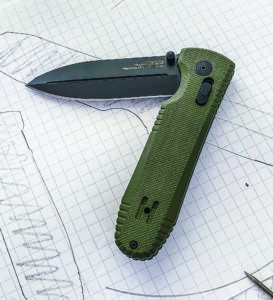
First up for the new fall line is the SOG- TAC XR, a Professional class tactical folder using the XR lock, a 3.5-inch drop-point blade of D2 tool steel, flipper opening and a textured G-10 handle. The ergonomic handle integrates a guard, dual nested steel liners, and a deep-carry pocket clip. Handle colors come in black or OD green. Another Professional class piece is the Pentagon XR. Building on the legacy of the Pentagon series of folders and fixed blades, it takes the dagger-ish styling and adds the XR lock, textured G-10 handle, dual nested steel liners, flipper opening and a 3.5-inch spearpoint blade of CTS XHP stainless steel. Handle colors are black, FDE and OD green. The Vision XR flipper folder brings some aggressiveness to the Professional series, with bold styling and a 3.5-inch double- ground tanto blade of CTS XHP, and a textured black G-10 handle with dual nested liners.
The revamped Pentagon XR tactical folder has multiple choices of G-10 handle colors, and a fullered spear- point blade of CTS XHP stainless steel. The knife features flipper-tab and ambidextrous thumb-stud opening options.
In the Daily category is the Ultra XR, an ultra-thin, ultra-lightweight gentleman’s folder with a linerless carbon fiber handle and a 3-inch clip-point blade of CPM S35VN stainless. An extra-large, fold-over pocket clip doubles as a money clip. The blade is available in gold titanium nitride or black coating options. Another Daily category entry, the Flash AT features a 3.5- inch drop-point blade in D2 powered by SOG’s Assisted Opening Technology. The molded Zytel handle is available in a choice of red, cyan, yellow and black. The new folders use pivot bearings for ultra- smooth blade action.
SOG long has been a viable player in the production knife market and the new refresh elevates the company even further. Expect more good things to come.
THREE FACTORY AXES TAKE THE CHOP, LIMB, TRIM, SHAVE AND STRIP TEST
BY JAMES MORGAN AYRES
We got snowed in one New Year’s in a rented cabin in the mountains. When I expressed concern about relying on electric heat in a remote cabin, the rental agent assured me that the electricity never went out. In any event, she said, “There was plenty of firewood for the fireplace and an axe. You’re an experienced outdoorsman. I’m sure you can cope.”
Of course, the electricity went out. I found about a cord of unsplit logs, each log 6-to-8 inches in diameter and 3 feet long. No split wood. No kindling. No axe. I batonned my ever-present Randall Model 1 around the edges of the logs to make kindling, and split enough wood to keep the fire going until the electricity came back on. Three days. I coped but every time I went to the wood pile, I wished I had an axe. Any of the axes in this field review would have been welcome.
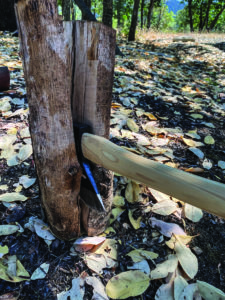
Almost anything will chop softwood such as pine. For a proper challenge, we spent a day clearing madrone and oak at a friend’s property. Oak is a hardwood. Madrone is more fibrous and even tougher. We also split seasoned oak logs for our friend’s fireplace.
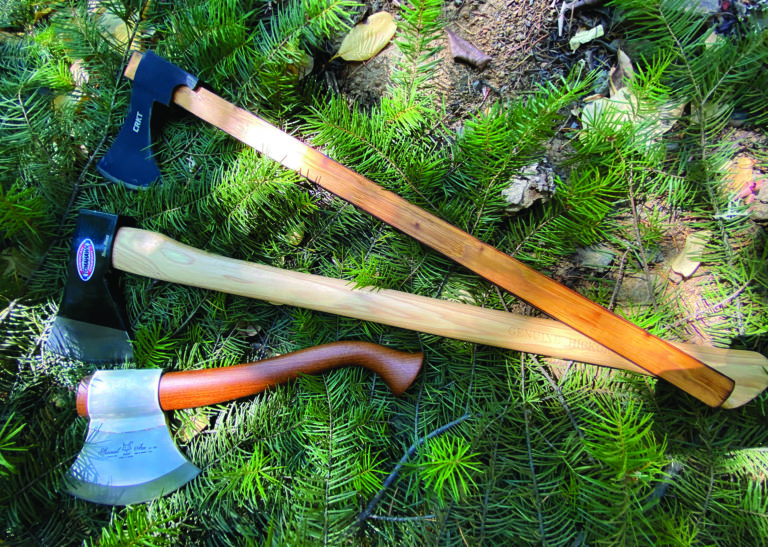
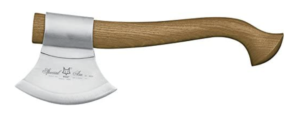
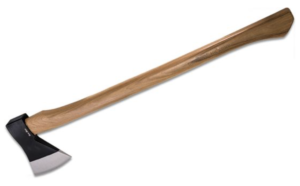
HIKING HACKER: The Fox Trekking Axe
The Fox Trekking Axe is a terrific chopper for the backpacker, hunter or woods wanderer. Reminiscent of a medieval design, it’s light enough to keep in a rucksack and very well made.
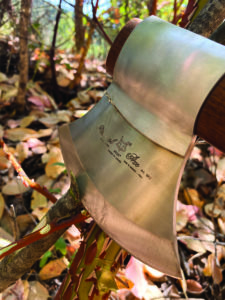
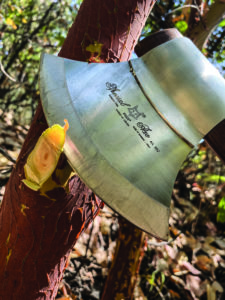
The thin blade came sharp enough to cut paper and kept its edge during a day’s work. Its good edge geometry and balance, comfortable and ergonomic handle—well, really, its overall efficient configuration, which I suspect was inspired by an old, well-proven design—enabled painless hours of chopping, limbing and trimming. The long edge worked well for stripping and shaving bark to make bare poles. I have no doubt that the Trekking Axe would serve to quickly erect a shelter against an incoming mountain snowstorm, or dress out and break down an elk carcass. With its long, almost knife-like edge, it could also skin out the elk.
The author opined that the Fox Trekking Axe would serve to dress out and break down an elk carcass, and, with its long, almost knife-like edge, it could also skin out the elk.
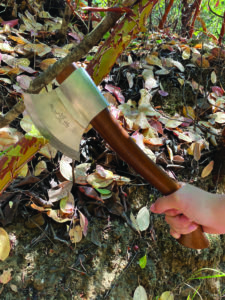
The author wrote that the Fox Trekking Axe is a well-designed, well- made tool he wouldn’t hesitate taking to the deep woods.
The thin blade, so efficient at taking down saplings and other work, tended to bind when chopped into the center of the seasoned oak logs. That’s a matter of geometry—the blade is not wedge shaped and won’t serve as a splitting maul, which is outside of its design envelope. A change in method overcame that limitation. By working around the edges and splitting off sections an inch or 3 thick, we were able to reduce logs to kindling.
Overall it’s a well-designed, well-made tool that I wouldn’t hesitate to take to the deep woods.
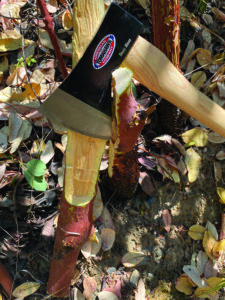
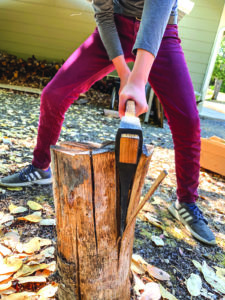
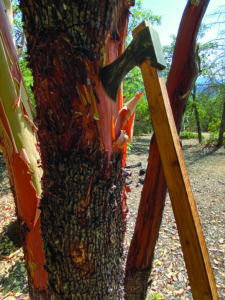
Good edge geometry and balance and a comfortable, ergonomic handle enabled painless hours of chopping, limbing and trimming with the Fox Trekking Axe. Here it chops the Ma- drone sapling with aplomb.
SPECS: FOX TREKKING AXE
CUTTING EDGE: 5.625” BLADE STEEL: 12C27 Swedish stainless HEAD WIDTH: 4.7” HEAD THICKNESS: .22” HEAD FINISH: Satin HANDLE MATERIAL: Sassafras (wood) WEIGHT: 13.8 ozs. OVERALL LENGTH: 13.8” COUNTRY OF ORIGIN: Italy MSRP: $104.95
THAT’S AN AXE: Cold Steel Trail Boss
Photo from KnifeCenter.com
I hefted the Cold Steel Trail Boss, chopped through a 3-inch madrone sapling with one swing and paraphrased Crocodile Dundee’s line: “That’s an axe.”
About the size of a traditional cruiser axe, the Trail Boss has a smooth, comfortable haft/handle in-between axe and tomahawk length. The long edge came sharp and stayed sharp. The head has good wedge-shaped geometry that made splitting the seasoned oak logs a breeze. Unlike a splitting axe, it was not too thick for general work. One whack to the center of the log and there were two split sections on the ground. It’s not a splitting maul or splitting axe but almost as efficient. While it has enough heft to split oak, it’s also light enough and balanced so that downing saplings could be done with full control and no danger of cutting through and swinging too far.
According to the author, the head’s well-designed geometry, the smooth, comfortable handle and overall good balance enabled the Cold Steel Trail Boss to perform almost as well as a full-sized axe.
Using the Cold Steel Trail Boss, the author chopped through a 3-inch madrone sapling with one swing. Paraphrasing the famed Crocodile Dundee line, he quipped, “That’s an axe.”
When limbing, it was easy to control for precise cuts, even when limbing with one hand. The haft is not as long as that of a full-sized axe, nor is the head as heavy. However, the head’s well-designed geometry, the smooth, comfortable handle and overall good balance enabled it to perform almost as well as one.
Thisisagood,all-aroundchopping tool—actually, an excellent all-around chopping tool.
SPECS: COLD STEEL TRAIL BOSS
CUTTING EDGE: 4.5” BLADE MATERIAL: 1055 spring steel HEAD WIDTH: 6.5” FINISH: Black HANDLE MATERIAL: Hickory WEIGHT: 2 lbs., 9.5 ozs. OVERALL LENGTH: 27” SHEATH: Not Included COUNTRY OF ORIGIN: Taiwan MSRP: $49.99
FRANKISHLY SPEAKING: CRKT Cimbri
Photo from CRKTknives.com
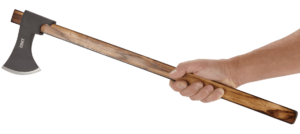
The CRKT Cimbri is an interesting design that, in my opinion, needs a bit of work to fulfill its potential. Modeled on a classic Frankish axe, with a nicely shaped head and a long handle, it is well balanced.
With a nicely shaped head and a long handle, the CRKT Cimbri is well balanced for such tasks as splitting oak logs.
Unfortunately, the edge wasn’t sharp out of the box and we test all knives, axes, tomahawks, swords, etc., as they come, so there’s a level playing field for all. The lack of a truly sharp edge required more force to chop through the saplings and impeded its penetration when splitting. Also, the thick coating on the carbon steel head caused it to drag in a cut. Even more unfortunate, and for some reason I do not understand, the haft is squared rather than oval or round. The acute edges of the haft/ handle not only were uncomfortable, they dug into our hands, producing blisters—in one instance breaking the skin of one of our testers’ palms.
The author stated he would round off the edges of the CRKT Cimbri’s squared-off haft.
Tuning up the edge would be a simple job, a matter of 20 or 30 minutes with a good stone. Reprofiling the haft wouldn’t be difficult, but I cannot understand why anyone would put a squared handle on an axe. Historical authenticity, perhaps?
SPECS: CRKT CIMBRI
BLADE LENGTH: 4.09” BLADE MATERIAL: 1055 spring steel HEAD THICKNESS: 1.26” FINISH: Manganese phosphate coating HANDLE MATERIAL: Tennessee hickory WEIGHT: 2 lbs., .8 oz. OVERALL LENGTH: 25.75” DESIGNER: Elmer Roush COUNTRY OF ORIGIN: Taiwan MSRP: $69.99
AUTHOR’S CHOICES
Which of the three would I choose if I were again snowed in and had only a stack of logs to burn? If I hiked in, the Trekking Axe would be my choice, no question. I’m too old to hump anything heavier in a rucksack filled with camping gear, food and ammunition. If I arrived by car or truck, the Trail Boss would be it. If I had only the Cimbri, I would use my belt knife as a draw knife to take off the corners of the handle and smooth it. That done, 20 minutes with a sharpening stone and I’d head for the wood pile.
It’s challenging to know which knife sharpeners are junk and which are worth the money. To help, BLADE staff and contributors assembled this list. These are the knife sharpeners that those “in the know” use, but they won’t break the bank.
How BLADE Chose These Knife Sharpeners
BLADE received no compensation for the items that appear on this list. BLADE does not benefit financially from affiliate programs on any of the links. These picks are based on experience, knife sharpener reviews from the magazine, and what’s hot in the marketplace. There are more excellent options beyond this list.
Remember: a sharpener can’t help you if it never leaves the drawer! Buy a knife sharpener you’ll enjoy using.
Top Pick: Electric/Manual Combo Knife Sharpener
Work Sharp Combo Knife Sharpener
PROS
For all types of knives
Simple to use for beginners, but yields advanced results
Offers electric sharpening (removing metal) and manual honing (straightening metal) in one unit
Easy maintenance with compressed air
CONS
Produces metal dust (store it away from food)
Only offers 25-degree angle for edges
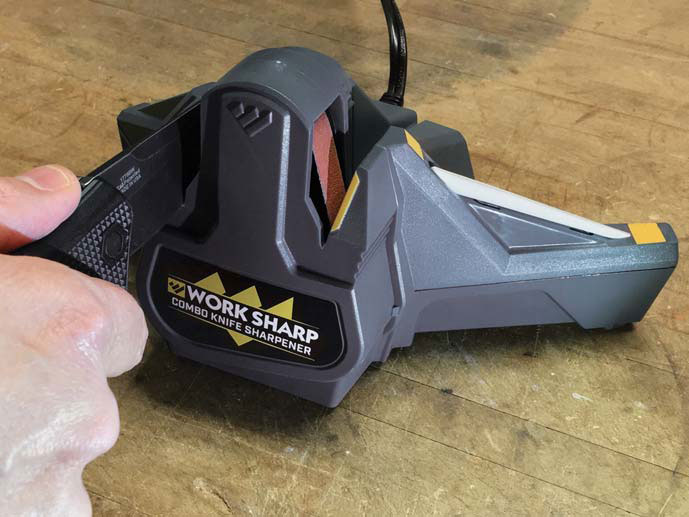
The Work Sharp Combo Sharpener is designed for those who want simplicity along with the results that abrasive belt sharpening offers. One speed, one belt, one angle—everything is fixed. (DMS Captures image)
Winner: 2016 BLADE Magazine Accessory of the Year!
Featuring a flexible abrasive belt, the motorized Work Sharp Combo Sharpener (WSCS) from Work Sharp is simple and effective. It uses long lasting abrasive-belt-sharpening technology and puts a convex edge on any blade.
It has one sharpening angle, one motor speed and one grit of belt only. Simply plug it in and turn it on. Configured in a nice, compact form, the built-in angle guides eliminate the guesswork of holding a consistent 25-degree angle.
Pull the blade through each slot to sharpen both sides. After achieving a sharp edge using the belt, switch to the tapered ceramic rod to further hone the edge to hair-popping sharpness. Rest the blade flat against the yellow pads and move it from tang to tip in one sweeping motion using light pressure.
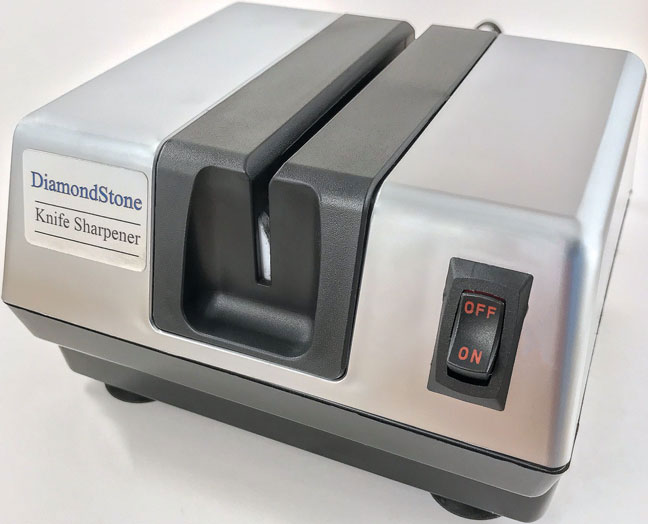
The McGowan DiamondStone electric sharpener is a singlestage unit with counter-rotating abrasive wheels that produce a keen edge quickly on any blade, though it does so especially well with kitchen knives.
PROS
Quick and easy to use
Works especially well on kitchen knives
Chrome finish doesn’t look out of place on the countertop
Design keeps metal dust to a minimum
Less noisy than other models
CONS
Boxy design may not be visually appealing to everyone
Housed in a combination metal/plastic housing, the DiamondStone is available in brushed chrome or black. The brushed chrome blends in nicely on a kitchen countertop with other kitchen appliances.
Out of the box, the sharpener looks well built with top-notch fit and finish. It is quite boxy in appearance, with a pronounced slot running down the middle. Inside the slot sits multiple diamond-infused ceramic wheels that interlock and rotate counterclockwise in relation to each other in order to sharpen both sides of the edge simultaneously. The unit runs smoothly with minimal noise.
Place the blade in the slot starting with the tang end and pull straight toward you, using a minimal amount of pressure on the wheels and drawing back at a moderate pace to allow the ceramic wheels to do the work. As you approach the blade tip, lift the handle slightly so you can sharpen the blade’s belly evenly as well. Once you reach the tip, lift the knife out of the slot and repeat. Usually, a few strokes through the DiamondStone yield a very sharp edge.
This is an ideal type of sharpener for novices because there’s only one motion involved—pulling the blade through the machine.
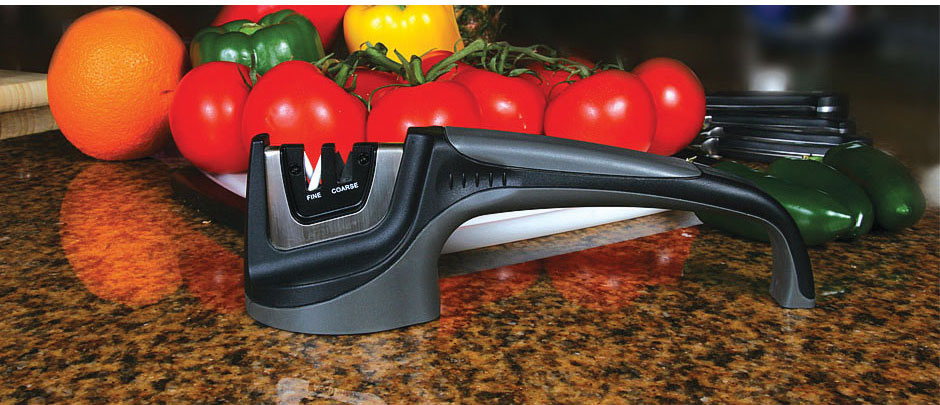
The best pull-through, manual knife sharpeners feature a secure grip, a sturdy design, and solid construction for durability. A $20 investment ought to last you several years. (AccuSharp image)
PROS
Rubber grip for secure sharpening
Sharpening and honing options
Heavy duty design
Compatible with most plain-edge knives
Could not be simpler to use
CONS
Sharpener/honer may become loose after years of use (as with most manual pull-through knife sharpeners
Lacks the “cool factor” of more advanced knife sharpeners
Yes, there are plenty of pull-through, manual knife sharpeners out there. Some of them even resemble the design of the AccuSharp Pull-Through Knife Sharpener. So why did this one make the list?
To put it simply, this is a well-built manual knife sharpener with a sturdy design. That’s really all you need to worry about, because the sharpening technique will be the same. Draw the blade through the sharpening or the honing V with gentle pressure. Let the tool do the work. So long as you can safely move the blade through the V, this manual sharpener will tackle any type of knife (except for serrations).
This is a knife sharpener to keep in the kitchen drawer, the work bench in the garage, at the cabin, or even in a backpack.
See Also: Just about any other manual, pull-through knife sharpener. Look for solid grips, a sturdy design, and solid construction. It’s OK to pay a few dollars extra for durability’s sake.
Knife Honing Rod Tips
What’s the difference between honing and sharpening knives?
Honing rods refresh an edge, but they do not sharpen. That’s an important distinction. Honing is something that’s done regularly to tune up a blade, such as before preparing a meal, or immediately after sharpening. That’s because honing straightensthe existing edge. Sharpening removes metal from the edge, which is why it shouldn’t be done as often as honing.
Confusing this entire category is how some honing rods are called sharpening rods, and vice versa. The key is to look at the material.
Three Types of Honing Rods
Generally speaking, there are three types of honing rods: steel, ceramic and diamond. While each has different characteristics, there are some things to watch for:
A secure, ergonomic grip
A sturdy guard that protects your hand
A ring on the handle for slipping a pinky through in case you drop it
The rod should be longer than the blade of the knife/knives you intend to sharpen
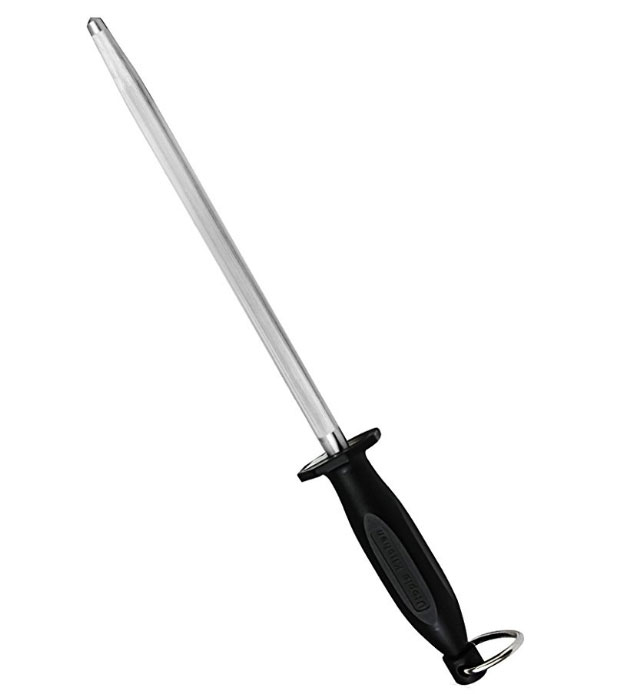
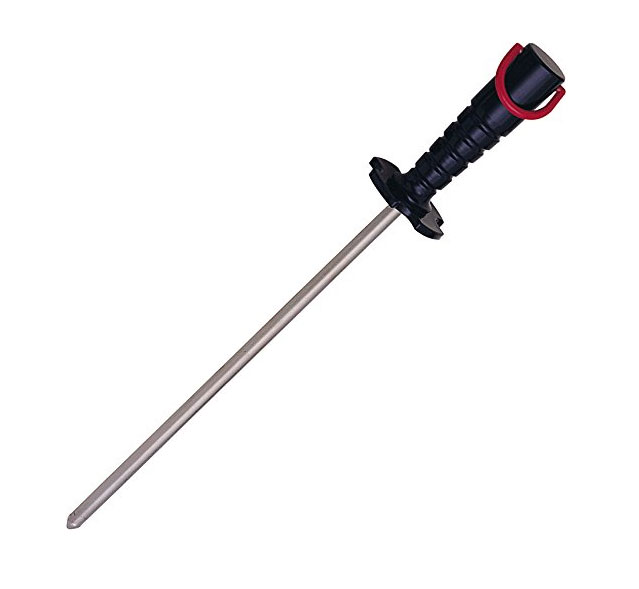
There’s no need to overspend on steel honing rods. This 12-inch rod from Utopia Kitchen goes for $15.99.
Steel honing rods are the most common type, and the least expensive. Because they’re made from metal that’s softer than what’s typically found on knives, they’re excellent honing tools. Don’t pay more than $20 for one.
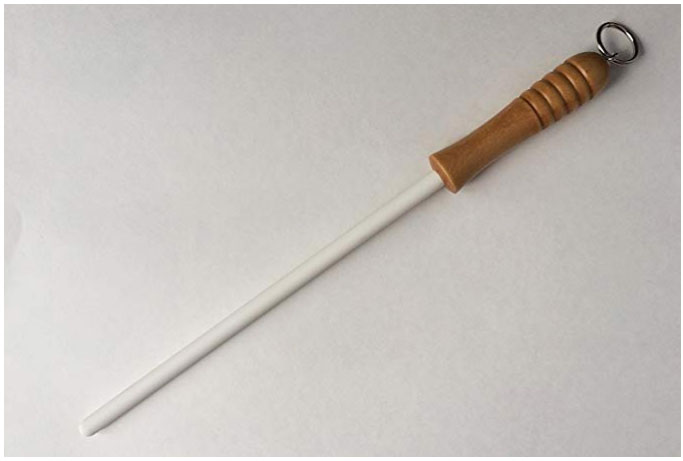
The Idahone Fine Ceramic Sharpening Rod sells for $34.99 at most retailers.
Ceramic honing rods are a bit more aggressive than steel versions. They’ll remove some steel in the process of honing. Isn’t that technically sharpening? Yes! However, if you’re someone who doesn’t sharpen as often as you should, a ceramic honing rod is a way to delay the inevitable. Expect to pay between $30 to $40 for the best value.
The 12-inch Diamond Steel Sharpening Rod has an MSRP of $39.68.
Diamond honing rods remove the most amount of steel during the honing process, which is why they’re basically sharpeners. If you go down the diamond rod route, pick up a steel or ceramic honing rod, too. On the plus side, diamond rods will last a lifetime. Pay $35 to $45 for a nice ROI.
Portable Keychain Knife Sharpener
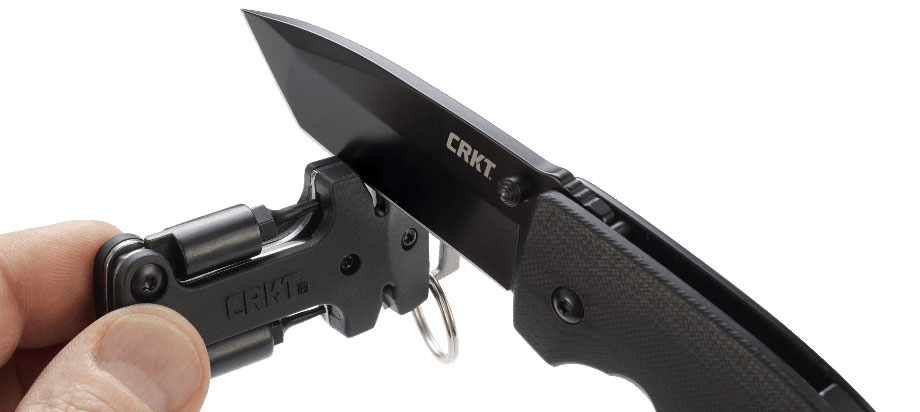
CRKT Knife Maintenance Tool (KMT)
The CRKT Knife Maintenance Tool is an excellent portable knife sharpener. (CRKT image)
PROS
Compatible with most folding knives
Tungsten manual sharpener on one side
Ceramic honing edge on the other
Attaches to keychain
Bonus: T6 & T8 Torx screwdrivers
CONS
Too small for larger fixed blade knives
Maybe you prefer a different screwdriver?
Winner: 2018 BLADE Magazine Accessory of the Year!
The KMT weighs in at only 2.2 ounces. It sports a glass reinforced nylon handle. (CRKT image)
Too many keychain knife sharpeners are garbage. They fall apart, don’t get the job done, or are challenging to hold safely. The CRKT KMT, however, is an exception.
Place the KMT horizontally on a surface, then pull a blade through the tungsten carbide sharpener or the ceramic honing edge. Use gentle pressure, because the classic V will automatically bite into the edge’s preset angle.
The T6 and T8 screwdrivers may seem like filler for a keychain knife sharpener, but they actually offer a nice grip while working the blade.
An MSRP of $29.99 may seem high for a keychain knife sharpener, but consider the abuse you put your keys through on a daily basis, and it’s worth the price.
Here’s how to sharpen serrated knives. (Bear & Son photo)
PROS
Tapered diamond rod makes sharpening knife serrations a breeze
Built-in carbide sharpener tunes up plain edges, too
Bonus: Magnesium fire starting rod
Compact design: Both rods fit inside the body
Rugged body keeps components safe
CONS
Best used in tandem with a separate, dedicated sharpener for plain (non-serrated) edges
May not want to pay extra for the fire starting rod
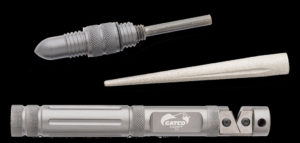
A view of the Scepter 2.0 fully assembled, with both rods inside the body. (Bear & Son photo)The two rods screw apart and back into the knife sharpener’s body. This is a serrated knife sharpener that should last you a lifetime. (Bear & Son photo)
The GATCO Scepter 2.0 leans toward the survival category, but don’t let that turn you away from it. This is an overbuilt tool that should take care of sharpening your knife serrations for the rest of your life. Diamonds are forever.
The tapered diamond rod easily sharpens all types and sizes of serrations on tactical, sporting and kitchen knives. Simply lock the rod into the groove of a serration and lightly run it toward the blade’s edge. The classic V of the tungsten carbide sharpener will handle plain edges, too.
But the real gem in this design is the way the components can all be screwed into the rugged, 6061-T6 aluminum carbide body for secure storage.
Do you really need the magnesium fire starting rod? Maybe, maybe not, but that’s just gravy.
“We invented the Tri-Angle Sharpmaker because, while similar to the [V-stick] sharpener, it solved many sharpening challenges/problems the [V-stick] couldn’t perform,” he says.
One of those problems is the V-stick model could not sharpen serrated blades. Enter the Sharpmaker’s triangular-shaped rods, which allow it to address both plain edges on the rods’ flats and serrations using the “points” of the triangle.
Once you set the sharpener up, start your blade from where the edge starts closest to the tang and run it down the hone, at the same time pulling the blade back toward you, ensuring the hone contacts the entire length of the cutting edge all the way to the tip. Hence, you’re doing two simultaneous motions—moving down the hone and pulling the blade back toward you. Do it all with light pressure.
Don’t think you can learn how to sharpen a ceramic knife? Think again. (Dexter Ewing image)
PROS
Handles ceramic or steel blades
Don’t need to mail ceramic knives in for sharpening
Works with most types of knives
Simple to use
CONS
Only offers a convex edge
Pricier than other sharpening options
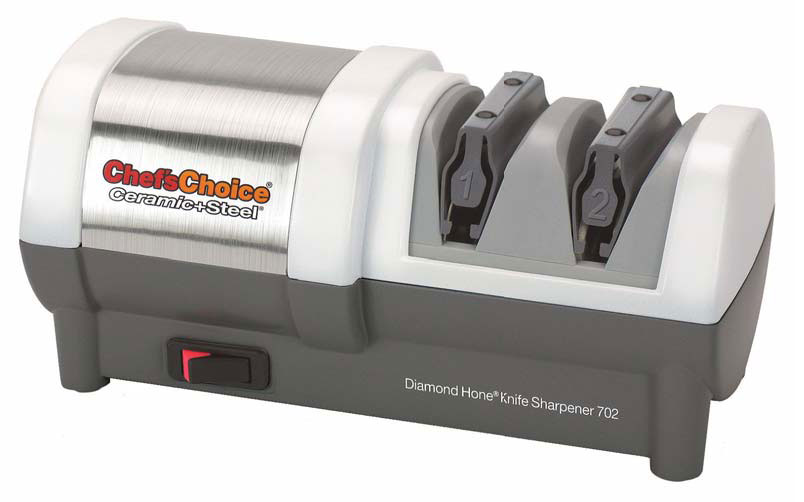
As with all motorized Chef ’s Choice sharpeners, the 702 will handle steel kitchen knives. However, it also will put the same quality edge on any ceramic kitchen blade. Employing advanced diamond abrasive technology, the 702 features two sharpening slots that hold the knives at pre-set angles, optimized for the best edge on both ceramic and steel blades. Turn the motor on and, using a steady drawing motion, pull the blade through each slot.
The 702 applies a convex edge, or what the Chef ’s Choice literature calls a “gothic arch,” to either steel or ceramic blades. The resulting grind leaves behind more “body,” which gives the edge added strength and resists chipping, while still remaining very sharp. This translates into a longer lasting edge.
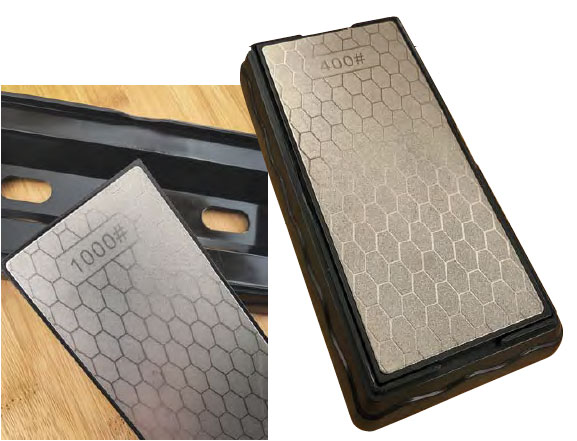
The DMD Double Sided Bench Stone features two grits on one stone. Coarse (400) and fine (1,000) grits address high-performance steel blades. The metal plate is double sided and lies on the base just so to provide sharpening convenience. (DMS Captures image)
DMD Double-Sided Bench Stone
PROS
As with all knife sharpening stones, total control over edge angle
Two sides offer two grits
You look like a pro
Sharpens knives and edged tools
CONS
May be too advanced for knife novices
Some prefer a larger stone
The DMD double-sided bench stone sports two different grits: a coarse 400 and fine 1,000. The base is molded ABS plastic and features wide, anti-skid rubber feet to keep the sharpener in place while working on a flat table, counter or bench. The sharpening surface sits in a cavity of the base. To change grits, flip the hone over and return it to the base.
A hex-like pattern on both sharpening surfaces removes the tiny metal particles so they won’t collect and clog the surfaces as you sharpen the blade.
Work with the DMD and discover the convenience of a double-sided diamond bench stone, a rarity among such stones. The coarse side easily and quickly re-establishes worn edges to sharp. After you establish the primary edge, flip the sharpening surface over to the fine side and fine-tune the blade.
Pro Tip: Try using a permanent marker to color in the entire cutting edge on both sides of the blade. As you sharpen, note where the ink is removed and where it remains on the cutting edge. By doing so you can adjust your angle accordingly to capture the entire cutting edge and, therefore, keep the angle consistent for a sharp blade.
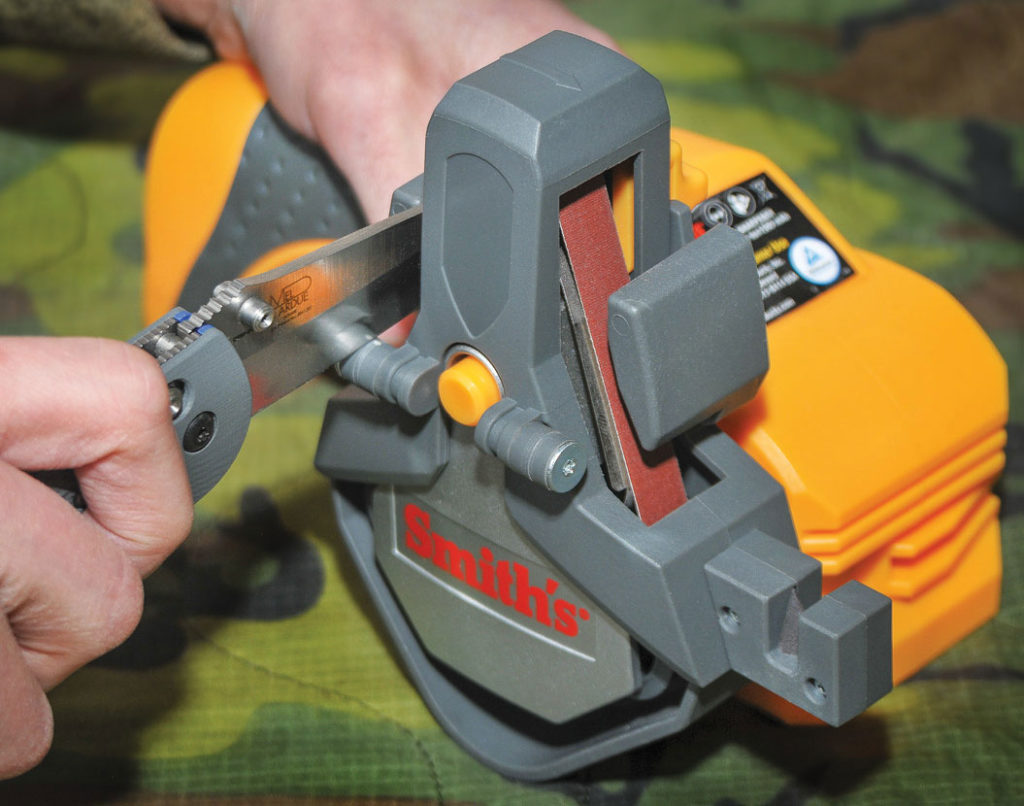
The Cordless Knife & Tool Sharpener from Smith’s Products features easily adjustable angle guides that hold the knife at the proper set angle for a consistent edge. (DMS Captures image)
PROS
Take an electric knife sharpener anywhere
No need to replace batteries
Sharpens knives and tools
Interchangeable belts for different grits
Backer plates offer extra safety
CONS
Belts can wear out
“Grabby” belts can apply an uneven edge if you’re not careful
Battery life limits use time
The Cordless Knife & Tool Sharpener represents a new step for Smith’s Products. While the company has sold and continues to sell electric sharpeners, this is the first time it has offered a powered abrasive-belt unit. Moreover, Smith’s added an extra twist by making it cordless and rechargeable. A pivoting head enables the unit not only to sharpen knives, but other cutting and digging tools such as axes, hedge clippers, bypass pruners, shovels and more. It comes with three interchangeable belts in coarse (80), medium (220) and fine (600) grits.
The belts are simple to change and color-coded for easy recognition. In addition to the multiple grits of belts, an adjustable guide maintains a consistent angle throughout the sharpening process. Another cool feature consists of “backer plates” behind the flexible sharpening belts.
“The backer plates prevent the belt from wrapping around the tip of your blade when you pull it through the sharpening slot,” says Ricky Dukes, Smith’s vice president of marketing.
Pull the blade through the slots to easily achieve a very sharp cutting edge. An ergonomic, soft-grip molded handle makes holding the sharpener very comfortable as well as non-slip.
In order to operate the sharpener, depress the rocker switch with your finger. Release the switch and the motor shuts off. There is no trigger lock to enable the sharpener to run continuously. Hence, if you need to stop the unit to regain control, simply release the switch.
One of the unit’s advantages—being cordless and rechargeable—is also a downside. BLADE’s tester operated it non-stop for 8 minutes and 20 seconds before it ran out of charge with no warning. Around the 8-minute mark the motor slowed slightly and 20 seconds later it shut off . There was no gradual tapering off —it simply shut down.
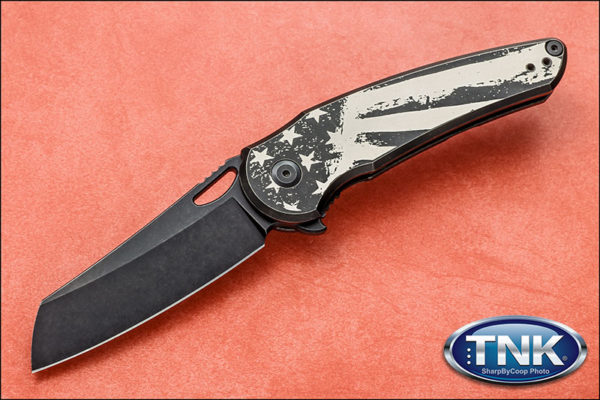
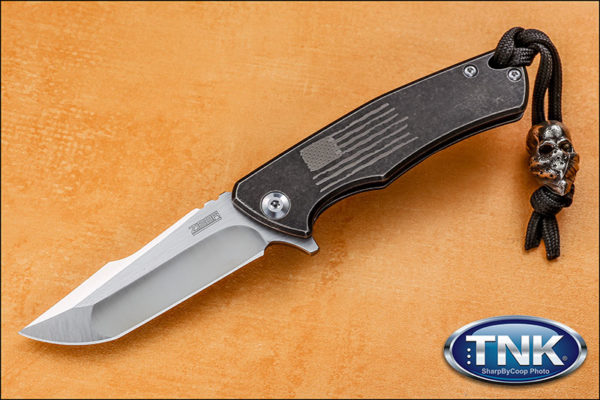
You need a knife. Everyone needs a knife. You know those plastic zip ties that you can’t get the scissor blade under that are lashing down the new grill spatula? Yeah, those. You need a knife for that. You know how it aggravates your sense of order when you’re forced to tear into the plastic shrink-wrapped to your case of water bottles? A nice slit down the center keeps the bottles upright without any unsightly stretches or ragged openings. You know how you try to open impossible-to-open snack bags with your teeth, because who carries scissors, and the seem causes a vertical tear? Yeah, that. You need a knife for that. But what we all need right now are some star-spangled, flag-waving knives that cut great!
6 Selections From True North Knives’ Freedom Collection
We’ll start with six selections from the Freedom Collection assembled by True North Knives. Often these models are available with different options, and of course they’re made right here in the USA. Maker warranties cover defects, but not abuse, so remember, it’s a knife, not a hammer or a pry bar.
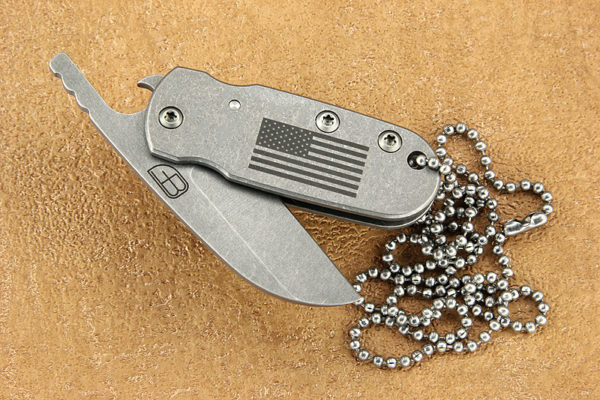
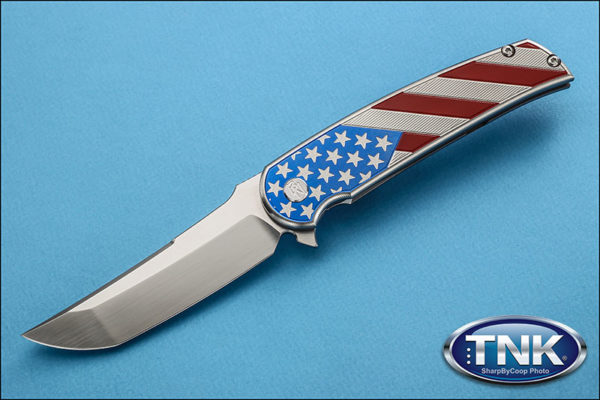
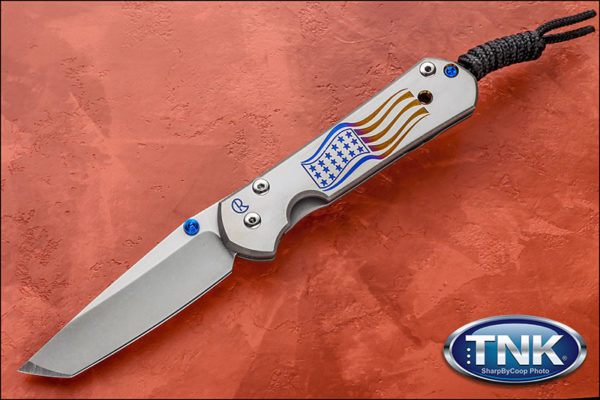
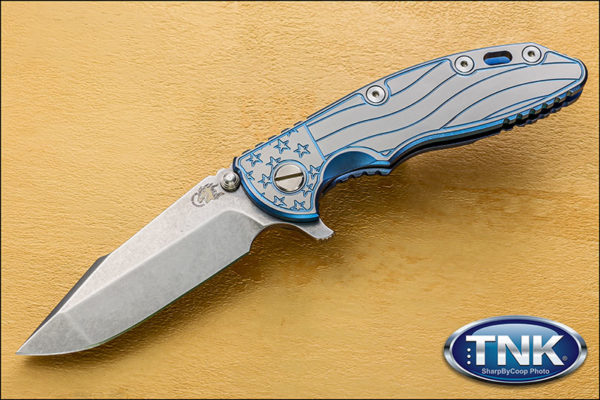
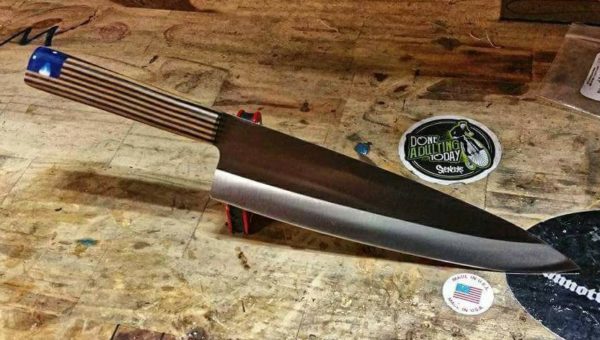
Brian Fellhoelter’s Freedom Frikkie has a 1 3/4-inch blade of stone-washed CPM 154 steel. The frame is stone-washed titanium. Overall length is 4 1/8-inch, overall weight, 1.27 ounces. Maker’s list price: $180. Contact: www.truenorthknives.com.Three-time recipient of the BLADE Show Knife of the Year Custom Best Folder, Brain Nadeau adds the Freedom Hurricane Flipper to True North Knives’ Freedom Collection. 9 1/8 inches overall, it has a 4-inch blade made of hand-rubbed CPM S35VN. The handle is titanium. Maker’s list price: $1250. Contact: True North Knives.Chris Reeve’s contribution to the True North Knives Freedom Collection is the Flag 21 version of the Sebenza 21. The 3-inch blade is made with CPM S35VN stainless steel in a tanto design. The polished titanium frame sports an anodized flag pattern. Makers list price: $425. Contact: True North Knives.Rich Hinderer’s XM-18 Flipper is another knife in the True North Knives’ Freedom Collection. The CPM 20CV blade is done in Hinderer’s Harpoon Spanto design and measures 3.5 inches. The frame is titanium and measures 8.25 inches. Maker’s list price: $650. Contact: True North Knives.True North Knives’ Freedom Collection includes Jake Hoback’s Freedom OSF (Open Source Folder). The 3.5-inch blade is made out of CPM S35VN stainless steel in a modified sheepfoot design. Overall length is 8.75 inches, overall weight, 6.4 ounces. Frame is titanium. Maker’s list price: $550. Contact: True North Knives.We round out the True North Knive’s Freedom Collection with Michael Zieba’s S1 Mini. The 2 5/8-inch blade is made with M390 super stainless steel. Overall it measures 6 inches and weights 2.288 ounces. The frame is titanium. Maker’s list price: $395. Contact: True North Knives.
21 Patriotic Cutters From Custom Makers Across The USA
These custom cutters may take longer to receive, but that’s because they’re all made one at a time in the shops of hard-grinding knifemakers who sometimes have day jobs. They’re worth the wait and will have you hitting every note of “The Star Spangled Banner” when you see how they cut.
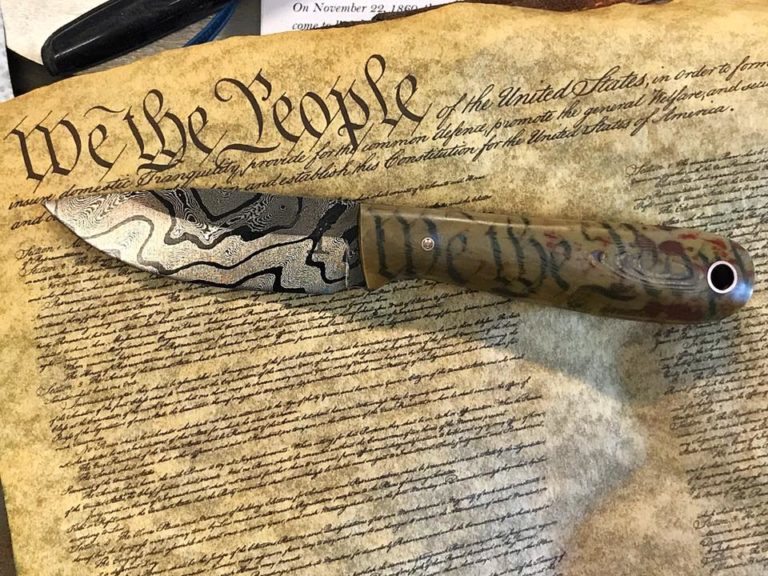
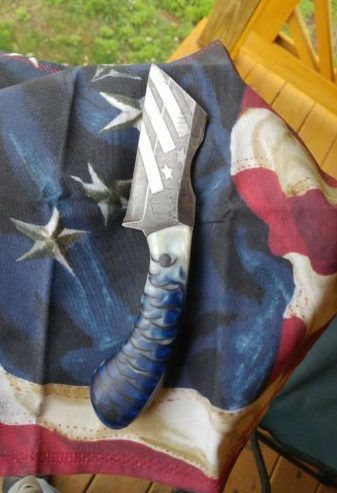
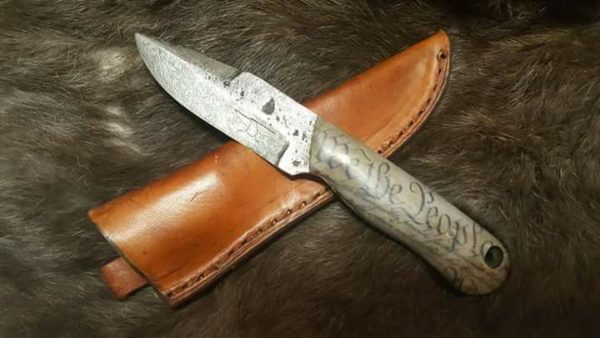
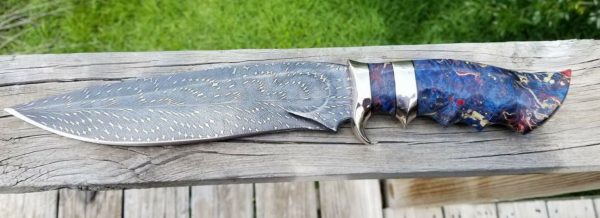
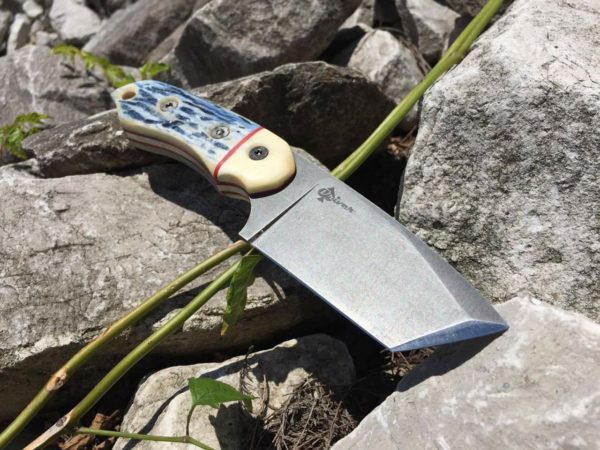
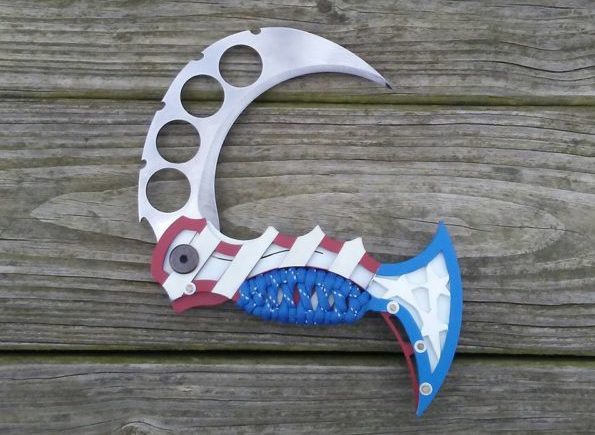
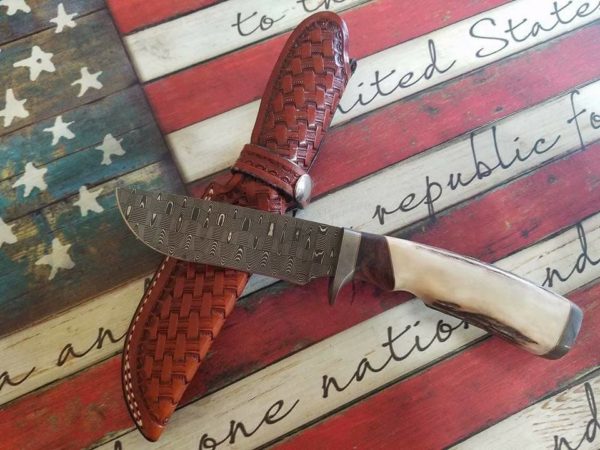
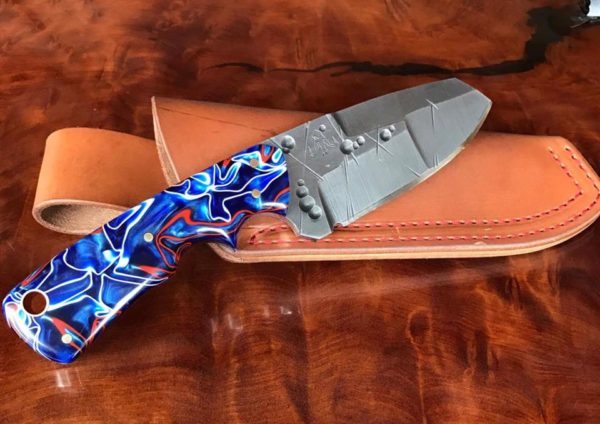
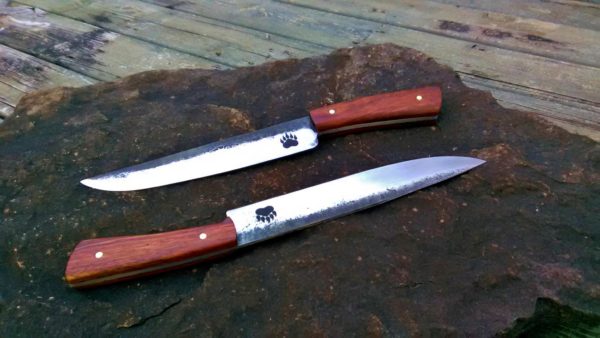
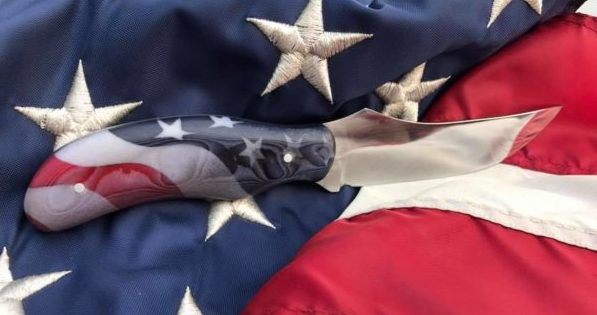
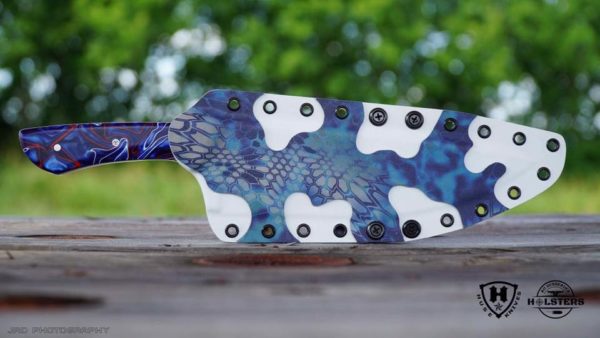
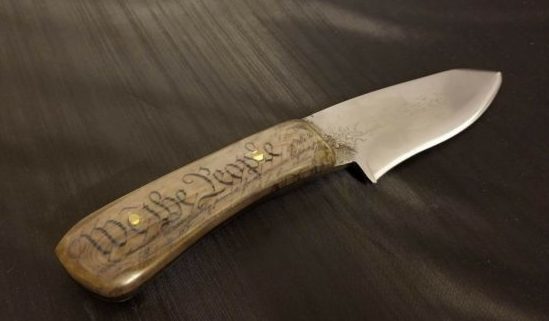
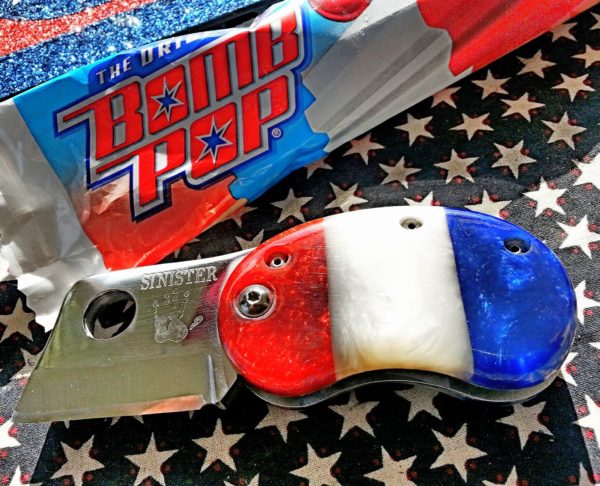
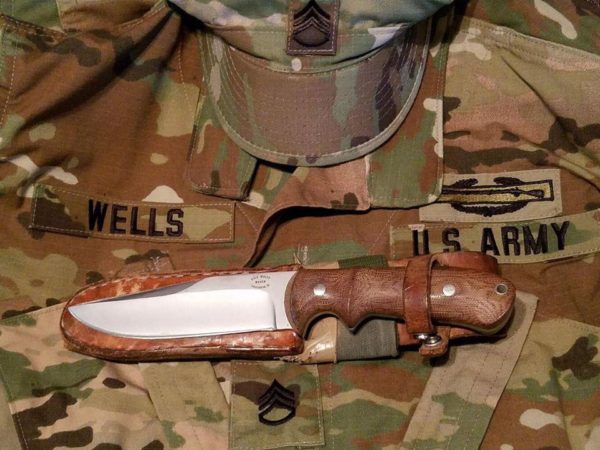
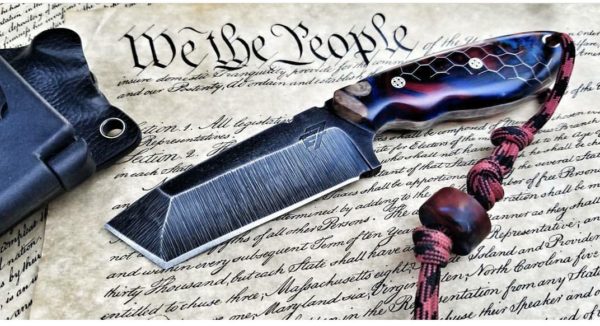
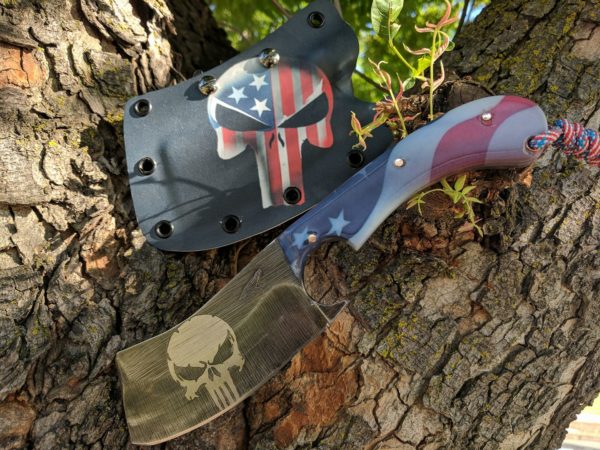
The Warnaught by Eric Luther has a S35VN blade, full titanium frames, clip and backspacer, and ceramic detent and bearings. The custom Cerakote is by Warlock Custom. Maker’s list price: $700. Contact: [email protected] or join Eric Luther Knives on Facebook.Brent Chumbley of Triple Deuces Knives made this Regulator with a 3-inch blade made of Bohler N690 steel. The titantium framelock handle’s custom Cerakote job is by Chad Waldow. Overall length is 7 1/4 inches. Maker’s list price: $510. Contact Brent Chumbley on Facebook at Triple Deuces Knives and on Instagram at triple_deuces_knives.The Beaver Tooth by Matthew Nolan of Angry Beaver Knives, has a Scandi V-ground 3 1/2-inch blade made out of W2 steel and acid etched with a flag design. The handle is a Rob Carper Innovations patriot red pine cone in white and blue resin. Maker’s list price: $275 with Kydex sheath, $325 with leather. Contact: Matthew A. Nolan, [email protected], 518-791-2551 or on Facebook at Angry Beaver Knives.Cody Wheeler of Mill Creek Knives calls this his Steel Bridge Camp model. The steel is a Nicholson American file with CARVex “We the people” scales by VP5. The 3-inch blade has a flat grind. Maker’s list price: $225. Contact Cody Wheeler at [email protected], on Facebook at Mill Creek Knives and on Instgram @millcreek_knives.Spencer Aplin of STA Custom Knives made the 9-inch blade for this American Glory out of star feather-pattern steel from HHH Damascus and Knives. The fittings are nickel silver and the handle material is stabilized and double-dyed California buckeye burl. Maker’s list price: $2000. Contact Spencer Aplin at www.stacustomknives.com.The Driver Defense Toxin has a 3.5-inch tanto blade made out of S35VN. The knife is 7.5 inches overall with jigged and dyed blue bone scales with bone bolster and red G10 liner and spacer. Maker’s list price: $250. Contact Dustin Driver at Driver Defense on Facebook.This 13-inch chef knife by Jack Keith of Dunnottar Forge Knifeworks has an partially flat-ground 8-inch blade made out of CPM 154 that is finished with a hollow grind and satin finish. The handle is stacked maple and walnut veneer with a cast blue acrylic with white stars. Maker’s list price: $350. Contact Jack Keith at www.dunnottarforge.com.The Karma by Jase White at Kastaway Custom Living was inspired by a real-world self-defense situation. The knuckles are in the CPM S30V blade rather than the handle, which is made of 1095 carbon steel. Maker’s list price: $50. Contact: Jase White at 423-453-9793, [email protected] or message at Kastaway Custom Living on Facebook.Rich Richardson made this for a retired navy commander. The blade is a mix of Devin Thomas Damascus steel in basket weave pattern and steel from the battleship USS Texas. (Authentication was provided.) Overall length is 9 inches. Handle is stag with a mesquite spacer. Maker’s list price: $800. Contact Rich Richardson at [email protected] or message him on Facebook.Jason Karl Glover of Mammoth Creek Knives made this 5 1/2-inch cleaver with triple grinds out of 1095 steel. The handle is Kirinite Patriot scales. Overall length is 11 inches. Maker’s list price: $375. Contact Jason Karl Glover at [email protected], call 801-540-7023 or message him on Facebook at Mammoth Creek Knives.JD Edwards hand-forged and hammer-finished this pair of fighters in 1095 carbon steel. The knives are 16 inches overall with an 11-inch cutting edge. The handle is made of bubinga wood and fitted with brass pins. The knives were commissioned by a family member of two brothers who are combat veterans of Iraq and Afghanistan. Maker’s list price: $250 each. Contact: JD Edwards at [email protected] or message him on Facebook at JD Edwards.Bobby Toerck made this trailing-point skinner with a 4.5-inch 1095 carbon steel blade, polished to a mirror finish. The overall length is 9 1/2 inches. The scales are fashioned with Wavy American Flag by Robert Belcher of Mental Co. Maker’s list price: $350. Contact Bobby Toerck at 903-812-1173 or message him on Facebook at T4 Custom Knives.Tom, short for Thomas, Jefferson of No Surrender Holsters made this sheath with a slide-out beverage opener on the backside to accompany “Forged In Fire” winner James Huse’s BBQ knife below. Contact Tom Jefferson on Facebook at No Surrender Holsters.James Huse, “Forged In Fire” champion made this knife using patterned steel from Alabama Damascus Steel. The blade is 9.5 inches, 14.5 overall. The handle is made from Patriot Kirinite. Maker’s list price: $700. Contact James Huse on Facebook at Huse Knives.Adam Rose of The Bearded Blade made this 4-inch blade from 1075 steel for a veteran who recently returned from Afghanistan. The handle is made from We the People CARVex scales. Overall length is 9 inches. Maker’s list price: $150. Contact Adam at [email protected], on Facebook at The Bearded Blade or on Instagram @thebeardedblade.Clay Smith of Sinister Knives calls this model the Battle Bean. The everyday carry is a friction folder knife/ bottle opener, perfect as a BBQ buddy! The 2-inch hollow-ground blade is made with W2 steel. The hardware and pivot pin are stainless and the liner and backspacer are aluminum. The handle scales are by Voodoo Resins. Maker’s list price: $150. Contact: Clay Smith at Sinister Knives on Facebook @bud809 on Instagram or email him at [email protected].Dale White of White Made Knives in Sweetwater, Texas, made this 10-inch knife for a soldier. Both the staff sergeant and the knife did two tours in Iraq. The blade is hollow-ground made out of 440C steel. The handle is sand-blasted canvas Micarta. Maker’s list price: $350. Contact Dale White at [email protected] or on Facebook at White Made Knives.John Waltz of Edge7 Custom Knives made this everyday carry tanto out of CPM3V. The hollow-ground blade is 3 inches and the knife is 7 inches overall. The scales are from J Hue Customs. Maker’s list price: $275. Contact John Waltz through www.edge7customknives.com.Jr. Madan of Patriot Horde Knives calls this model DaCleava. The 4-inch blade is made out of 1095 steel with a flat grind. Overall length is 9 inches. The handle is fashioned with CARVex Wavy Flag scales, fitted with brass pins and lanyard tube. Maker’s list price: $250 with Kydex sheath. Contact Jr Maden or Patriot Horde Knives on Facebook.Denny Furey of Furey’s Urban Combat Knives Unlimited uses high carbon 1095 steel to make the Americana. The knife is 7.5 inches overall with a 3.25-inch blade with mild hamon. There is file work on the spine, and the bolster and pommels are 410 stainless steel. The handle is fashioned from Patriot Kirinite scales. Maker’s list price: $300 shipped with Kydex sheath with hardware and embossed makers mark. Contact Denny Fury at [email protected], 405-642-2198 or at Furey’s Urban Combat Knives – Unlimited on Facebook.Tim Lambkin of Chops Knives hand makes everything on The Patriot Folding Lockback. The overall length is 8 1/8 inches. The 3 1/4-inch blade is made with pattern-welded stainless steel by Chad Nichols. The handle scales are mammoth tooth with anodized titanium bolsters and pommels. Filework everywhere, inside and out, is done by Tim. Maker’s list price: $1950. Contact Tim Lambkin at [email protected] or on Facebook at Tim Lambkin (Chops Knives).Shane Barefoot of Barefoot Custom Knives offers the Competition Chopper model in 3/4 size. Overall length is 13 inches. The flat-ground blade is made with 52100 steel. The handle is made with blue-and-red-dyed maple burl. Barefoot Custom Knives big-vine filework is filled with red resin. Maker’s list price: $450. Contact Shane Barefoot at 864-444-7410 or visit www.barefootcustomknives.com.