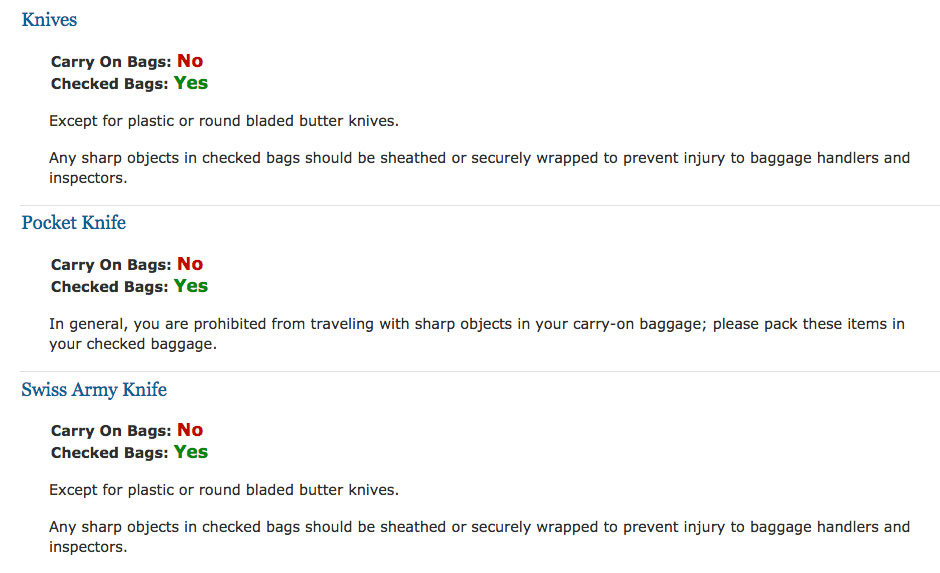
What knives does the TSA allow on airplanes? Here’s the list. Keep in mind that checked luggage is still subject to search, so don’t pack anything you’d miss if you lost it.
That said, there are still other considerations even if you decide to bring knives in your luggage.
Put Inexpensive Knives in Your Checked Baggage
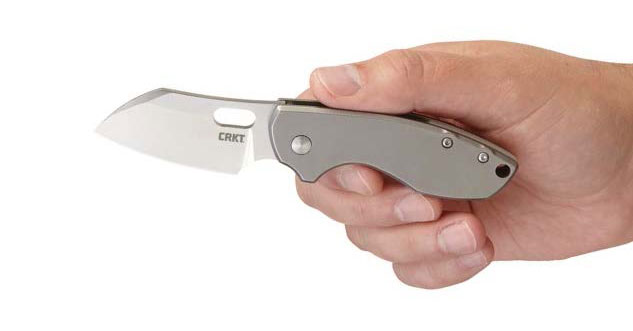
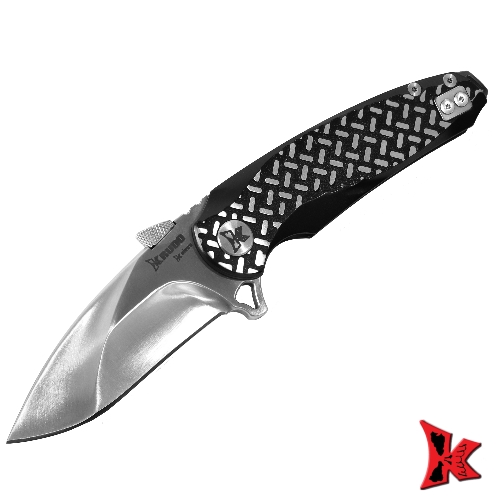
For vacationing knife enthusiasts, Plaza Cutlery’s Dan Delavan suggests a Spyderco, Kershaw or CRKT knife in the $30 to $70 range. An example of the latter is the CRKT Pilar with a 2.4-inch blade of 8Cr13MoV stainless and a closed length of 3.5 inches. MSRP: $39.99.
The kinds of people who walk into Dan and Pam Delavan’s Plaza Cutlery retail knife store in Costa Mesa, California, go for all kinds of knives, from classic folders to KA-BARs. But when they walk through Plaza Cutlery’s doors to buy a knife for vacation, most buy inexpensive models to slip into their checked baggage—inexpensive in case the knives get lost, stolen or confiscated.
“When they fly, that’s when the knife changes,” Delavan said.
He shows them budget models by Spyderco, CRKT and Kershaw, knives ranging from about $30 to $75. If customers are into Spyderco knives they might buy one from the Byrd line, folders from Spyderco with cost-friendly materials. If the customers like higher-end models, they might buy a Benchmade.
“It’s all relative to what you can afford,” Delavan said.
Plaza Cutlery is in South Coast Plaza, a mall that bills itself as “a luxury shopping experience”—a vacation destination in and of itself. Nearby Disneyland is an international draw. Hollywood and its attractions are close, too.
When Delavan heads to Disneyland with Pam and the grandchildren, he often carries the Victorinox Swiss Army Classic, which can slip on a keychain. He said it’s small enough that the park allows him to carry it. Of course, always research the knife laws of the areas you will be visiting. For most places in the USA, a small, non-locking knife should be OK, “but you’ve got to check” to be sure, Delavan noted.
What Knife is Legal Everywhere? Best Bet: Small, Non-Locking Knife that Opens with Two Hands
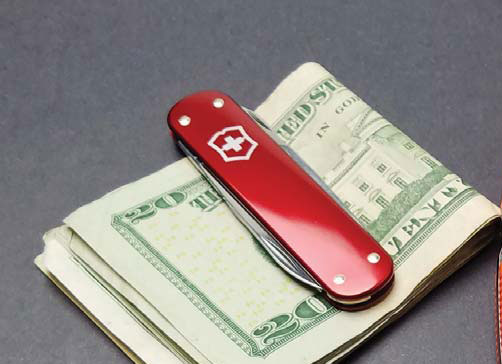
While there are no guarantees that a knife will be legal everywhere, your best bet is with a small, non-locking knife that opens with two hands. This Victorinox Money Clip is a great example.
Joe Tarbell’s retail store, JT’s Knife Shop, sits in a small building in Port Jervis, New York. The family-owned business began as an army surplus store near the Delaware River, which, during the summer, fills with kayakers and rafters.
“People ask me about knife laws quite often and it’s a pretty complicated subject,” he said. “Knife laws can be very vague and misunderstood. I have even had police tell me a lot of it is up to the discretion of the officer. I tell people to research the best they can and check out AKTI [American Knife & Tool Institute]. I can’t tell you how many people think that the law states that a blade can’t be larger than the palm of your hand, which is ridiculous.”
If a customer is traveling overseas, he suggests a small, non-locking knife such as a multi-tool or an Opinel.
What Happens If TSA Confiscates Your Knife?
You’ll likely have to buy it back, if you can find it. Start with GovDeals.com, where government-seized property is often sold.
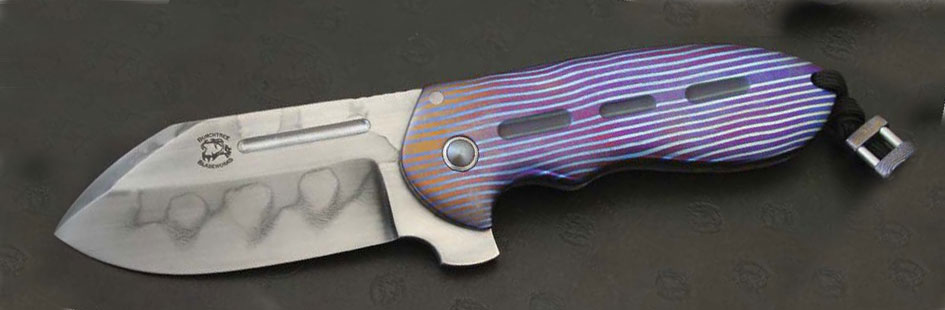
Michael Burch employed Chad Nichols’ “Stripes” MokuTi for his integral folder. The blade is 1095 carbon steel with hamon and a nail nick. Burch said the Stripes MokuTi works well on larger knives. (photos courtesy of Michael Burch)
In the northern Mississippi town of Blue Springs, in a rural area between Tupelo and the Tennessee border, a company called Chad Nichols Damascus is forging steel that is taking knives to a new level. The company’s owner and namesake, Chad is an easygoing Southerner who created a damascus product called MokuTi that boasts a stunning combination of shapes and colors.
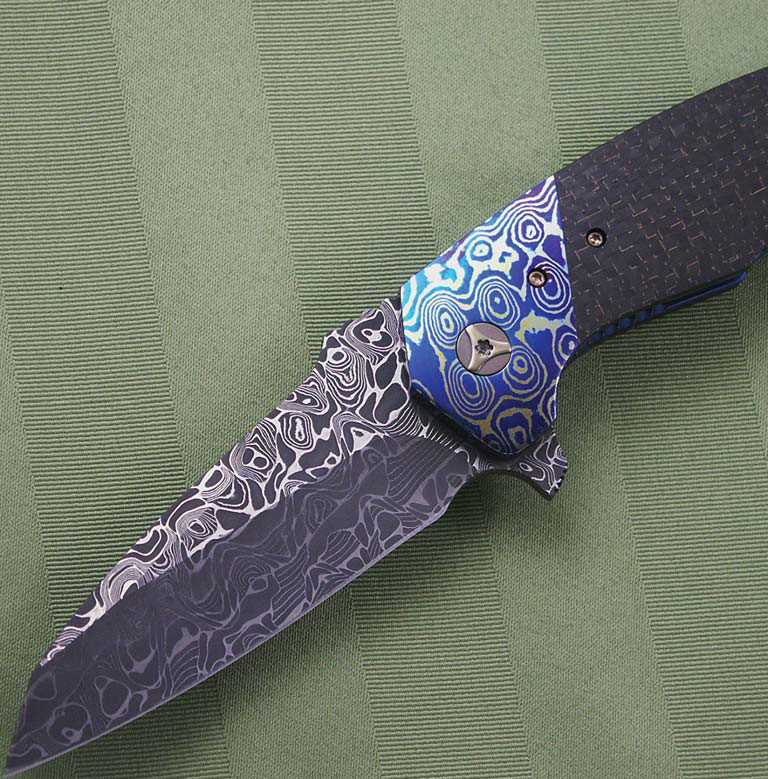
The name explains it perfectly. It is mokume that includes titanium laminates. MokuTi adds an exceptional visual boost to a knife, with swirled or mosaic tones of blue, gold, orange, silver and pink, depending on the composition of the materials used.
In his affable manner, Chad assured that Chad Nichols Damascus did not invent the colorful titanium laminate; the company just came up with a new way to achieve it—which, he noted, was not an easy task.
“We haven’t invented the wheel or anything,” Nichols said of MokuTi. “I don’t have to be the first one doing anything. I just want to be the last one doing it. We run this like a business, not an ego trip.”
Years in the Making
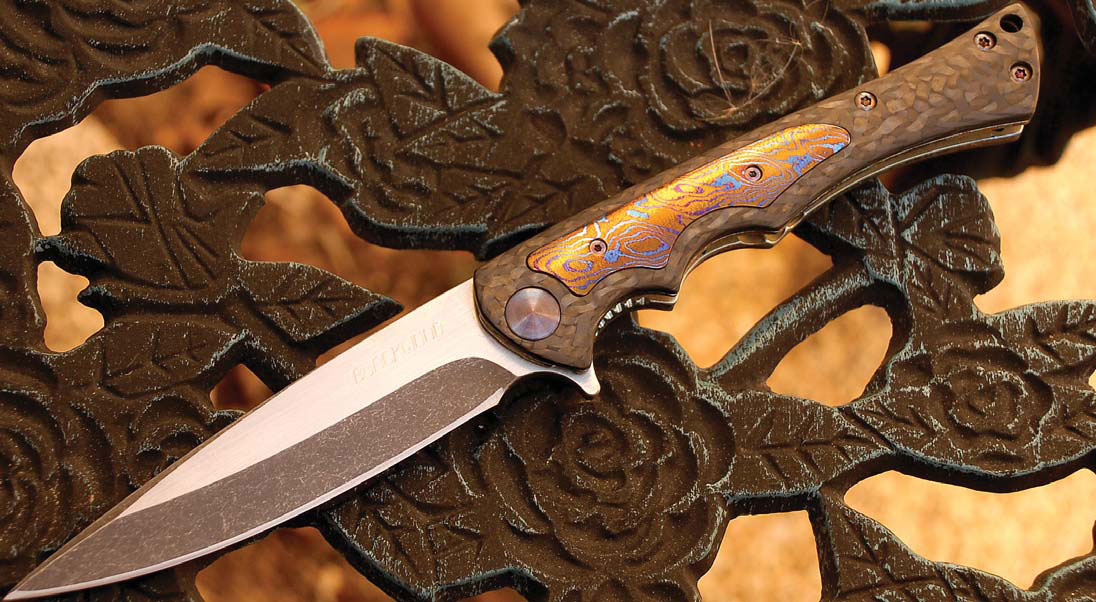
MokuTi is a great way to accent a knife with color. Neil Blackwood does it here for the handle inlay and clip of his Henchman flipper folder. The 4-inch blade is CPM S30V with a two-tone finish. His list price for a similar knife: $1,200. (photo courtesy of Neil Blackwood)
It would figure that something that looks as good as MokuTi would be difficult to produce. Nichols said it took several years to figure out.
“That’s not blowing it out of proportion,” he laughed. “I messed with it for a while, then I just put it away because I kept failing.”
He remembered getting tunnel vision trying to figure out why it was not working.
“You keep doing it and it’s insane,” he said, “because if it didn’t work the first three times and you didn’t do anything different, it’s not going to work the fourth time.”
Through trial and error he was finally able to figure out how to bond titanium with the other metals, but he is understandably tight-lipped about his proprietary secrets.
“I’m not going to tell you how we do it,” he admitted, “but there’s things we do that might seem minute to some people. However, we found those things to be critical.”
He explained a myriad of variables when bonding the layers in presses and rolling mills, including oxygen, heat and surface texture.
“Without getting into too much detail as far as bonding the layers, I’ll just say it’s tricky and it doesn’t always work,” Nichols allowed. “If I don’t make MokuTi for a month or two, I kind of count on the first two tries being crap.”
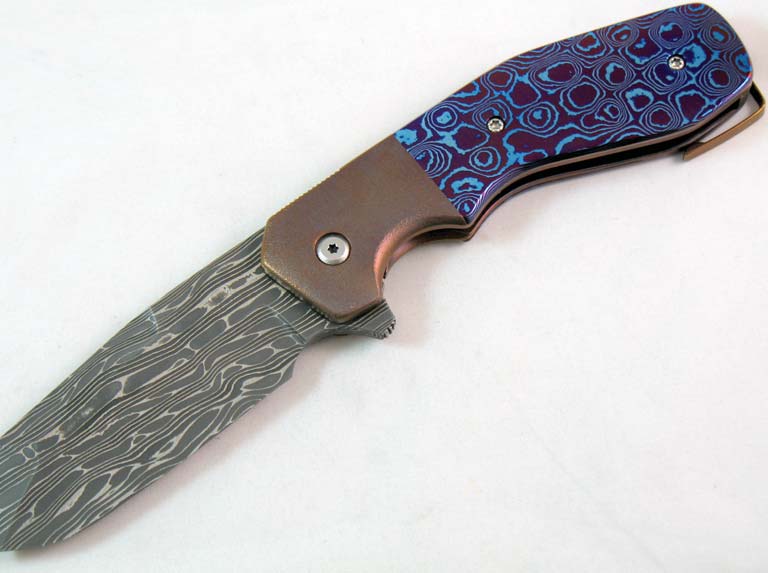
Peter Carey outfitted his Tension flipper folder with “Crosswalk” MokuTi bolsters and a blade and clip of Nichols’ “Whiplash” stainless damascus. The handle is lightning-strike carbon fiber. Carey’s list price for a similar model: $1,200. (photo courtesy of Peter Carey)
The experimental journey to fruition brought Nichols’ shop down some rocky roads.
“We recently made some MokuTi and threw zirconium in there,” he noted. “We love bonding titanium to other metals, but you just can’t do anything with [titanium and zirconium]. They just won’t bond because I guess the ductility is too different and the metals move at different rates during forging. It was a disaster, so we quit trying.”
It is all part of the ride, he said, and you cannot be scared to “just throw something in there” and see what happens.
Meteorology Matters
Another variable that affects producing MokuTi successfully is the atmosphere. While forging carbon damascus is fairly predictable, Nichols said forging MokuTi is much more complex.
“When you get into stainless and even Mokume, with the copper and brass with the nickel silver in it, and especially with the MokuTi, it gets complicated,” he continued. “What people don’t understand about forging, especially down where I live, is that with humidity of 100 percent is going to get hotter than if it’s 50 percent the next day.”
A Sixth Sense for MokuTi Damascus
Nichols searched for the words to explain his approach. Maybe it is a feeling, maybe it is a sixth sense, and maybe it is just exposure and experience.
“I hate saying this but you just get in tune with what’s going on. It’s like using the word ‘organic.’ I hate it when I have to use that word, but sometimes there’s no other word to describe it,” he lamented. “We made a new pattern a couple weeks ago called ‘Boomerang’ and some guy goes, ‘What’s it like?’ and, between groans, I said, ‘It’s very organic looking.’”
Put a Tie on that Knife
The MokuTi handle of Jon Graham’s GL Razel SS3 Bolsterlock is joined by a blade of Chad Nichols’ Iguana stainless damascus and Graham’s “Tailclip” pocket clip. Closed length: 5 inches. Graham’s list price for a similar piece: $1,400. (photo courtesy of Jon Graham)
“I’ve used MokuTi on a variety of styles,” said Michael Burch, Missouri knifemaker and owner of Burchtree Blades. “It’s like putting a tie on a knife—it just adds some class.”
Adding MokuTi as an accent is a common way to integrate the material into a knife without breaking the bank. Still, it is not cheap. The more of it the maker adds to the knife, the more it adds to the sale price.
“I charge twice as much for MokuTi bolsters as I would titanium bolsters due to the extra finishing time with polishing and heat coloring,” explained knifemaker Peter Carey. “I use MokuTi on all my folders because it’s strong and has an exotic look.”
Carey said he also uses it as an accent material on his knives, such as for bolsters, pocket clips, back spacers, thumb studs and pivot rings. He said accenting with MokuTi injects some color and flash without overwhelming the knife. A good example of employing MokuTi is as a pivot collar on a stonewashed framelock, Burch added.
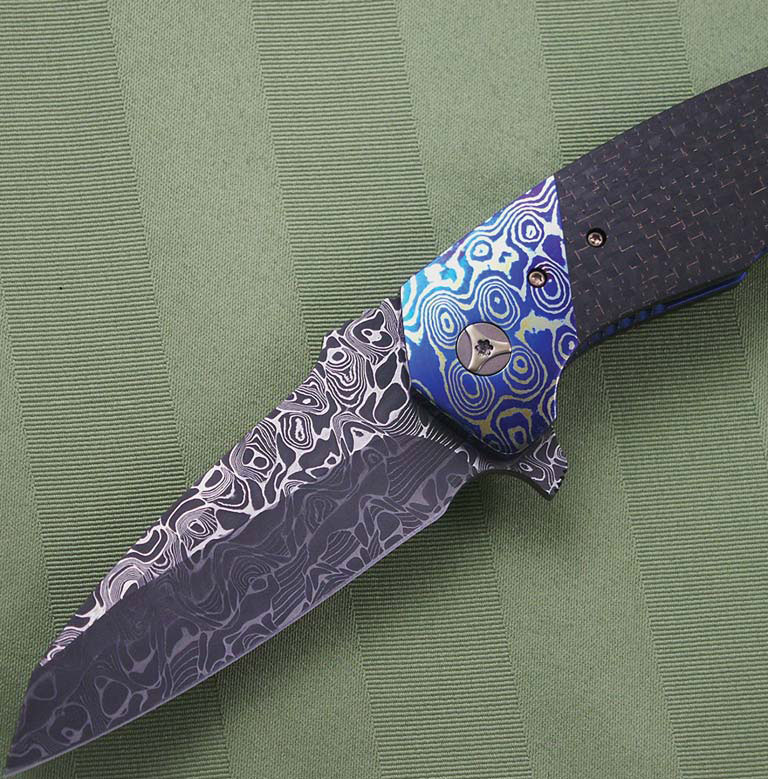
The Mini Tank flipper by Allen Elishewitz has MokuTi bolsters and carbon fiber scales. The blade is Takefu Special Steel’s laminated stainless with a VG-10 core. (photo courtesy of Allen Elishewitz)
“It makes for great contrast and can really dress up a user folder,” he observed. “It’s costly but if customers saw what went into making it, it would seem cheap.”
“It appears that everyone likes the material and it usually ends up on my higher-end knives,” Carey said. “Some of my customers ask for it as full scales or for a framelock, so I use it that way also.”
As Carey noted, MokuTi comes from Nichols Damascus as a billet that must be worked to shape and then colored.
“[Chad] usually colors it so you can see the pattern, but that gets ground off when you work it,” Carey said, explaining that it is a surface color that does not go all the way though the material. “When you get it to final shape and finish, you have to heat color or anodize it to the colors you want.”
“The other cool thing about MokuTi is dealing with Chad,” he maintained. “He’s a great guy, a friend, hard working and you can’t beat his customer service.”
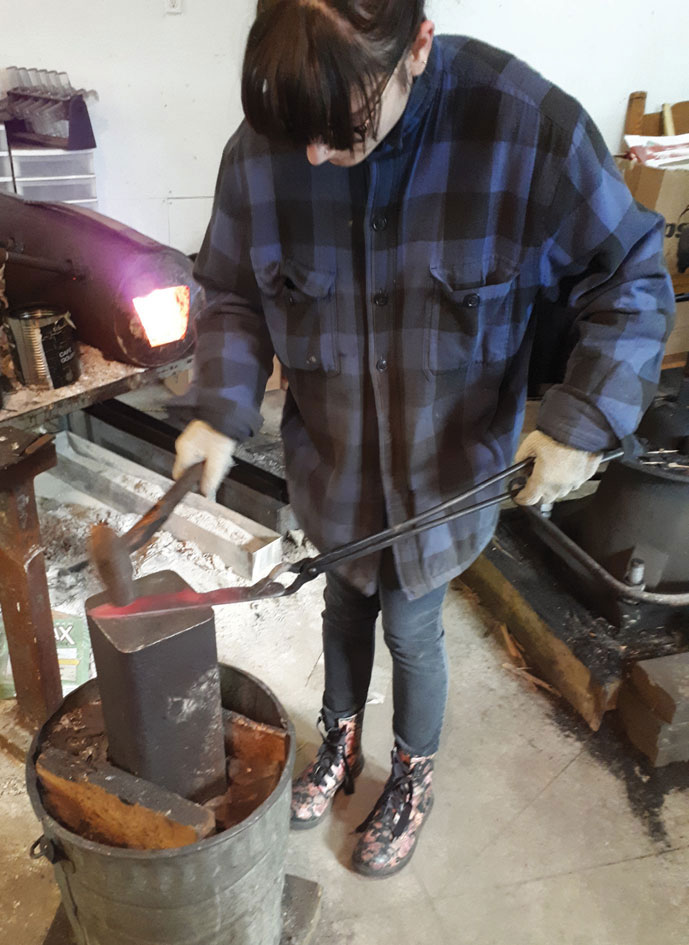
When she was 15, Charlotte asked Wally if she could make a knife. He likes teaching her so he said, “Sure, let’s do it!” (Morgan Graham image)
Making “Ruby’s Knife” from Supernatural
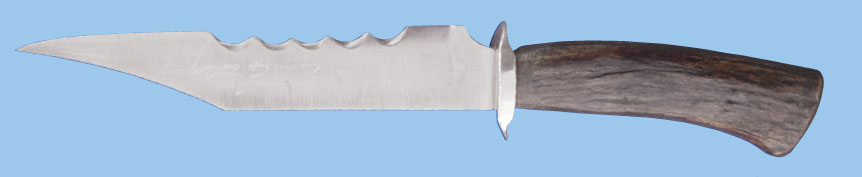
My daughters Savannah and Charlotte had always been craftsy and artistic, but they rarely spent time in my shop. One day in 2016, Charlotte, who was 15 at the time, asked me if she could make a knife. It was to be based on a knife from a TV show she was watching called Supernatural. A character on the show named Ruby used the knife to kill “demons.” It is a very unusual design.
I like teaching so I told her, “Sure, let’s do it!”
A Daughter’s First Knifemaking Project
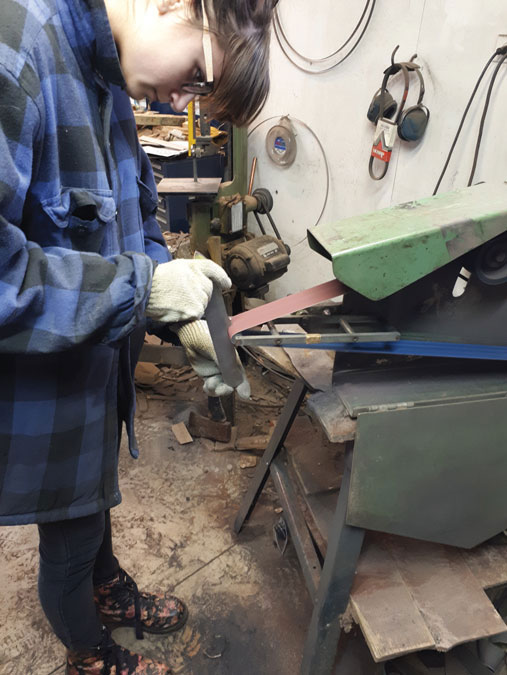
To get Charlotte started, Wally had her practice grinding. Note her safety glasses and gloves.
For her first knife I thought grinding it out would be easier than forging it. To get started I had her practice grinding wood to learn how to use the 2×72 belt sander. Grinding the bevels of the blade in wood to practice gives you very fast feedback and speeds up the learning process. I don’t use jigs, so it can be tricky to get hollow grinds the same height up the blade on both sides. Flat grinding is an easier technique to start with compared to hollow grinding, so we began with that.
Charlotte cut out and ground the blade, getting it ready for heat treating. We heated the blade until it reached critical temperature (when a magnet will not stick to the steel), then took the blade out of the fire and quickly quenched it in oil. Next we tempered the blade and sanded it to a high polish.
Charlotte carved the markings on the blade, and we found a piece of deer antler very similar to the TV knife to use as the handle.
Safety First
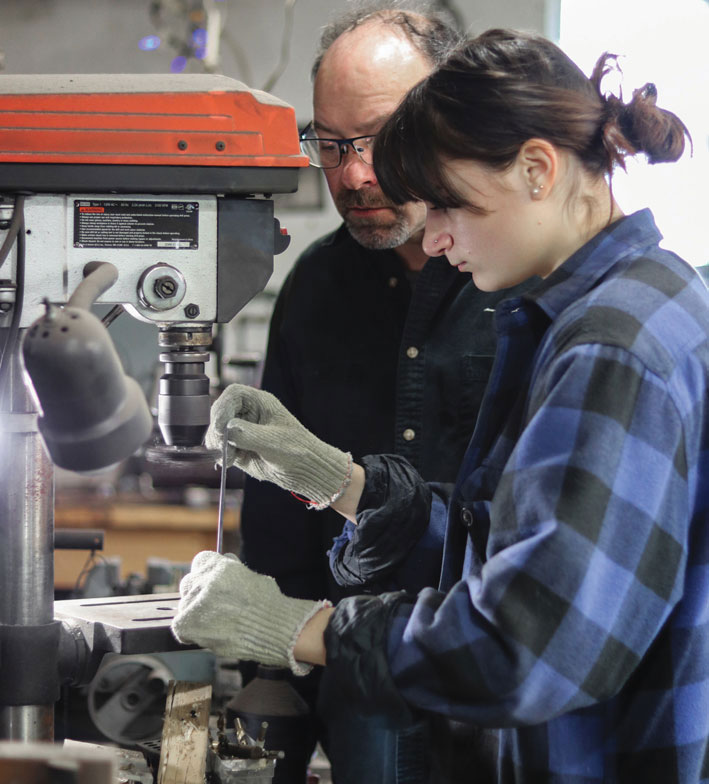
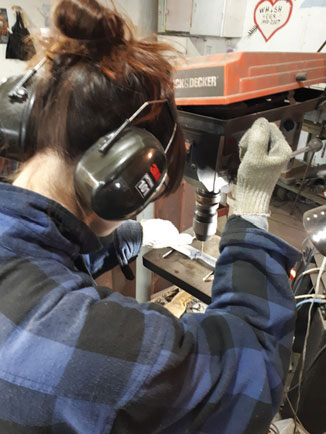
Charlotte drills a hole while in her dad’s shop. Note the gloves and ear protection.
As I taught each step I also taught her about knife shop safety, as so many of the tools and machines can be dangerous.
For instance, it’s important to know how to safely clamp a blade on a table for sanding and how to hold a blade against a buffer—the latter which I think is the most dangerous machine in the shop.
I showed her how to drill holes and gave her a safety tip on how to make sure a blade does not get away from you and spin around and cut you. She had her hair tied back and wore safety glasses, as well as Kevlar® gloves and hearing protection.
A Fantastic Finish
That first knife is always special. Charlotte’s initial piece not only is special but also unusual—based on a model used by a character in the TV show Supernatural to kill “demons.”
Charlotte’s first knife turned out great and it was so cool to see how fast she learned and progressed. It also surprised me that she did not experience all the challenges I had when I started.
The knife’s fit and finish was great, and the blade was straight. She decided to keep her first knife for herself. Each subsequent knife she made was different and she had to learn new skills for each new model.
Making the Game of Thrones Obsidian Dagger
The next knife Charlotte made was a copy of the obsidian dagger from the TV series Game of Thrones. In the show the dagger was made from “dragon glass” and was used to kill “night walkers.”
Charlotte employed O1 tool steel for the blade so she could gun blue it black like the TV dagger. She ground the blade and then textured it with the small half-inch-wheel attachment to look like obsidian. She polished it with a Dremel® tool. My brother Ted loved the knife so much he bought it.
Next Up: Sting from The Hobbit
Next up was a mini letter opener modeled after Bilbo’s sword “Sting” from The Hobbit. The new model required her to grind a dagger blade with a straight line down the center. She used a flat grind and, after heat treating, polished the blade by hand. She also learned how to carve with my high-speed/hand-held grinding tool.
She made the mini sword as a gift for her best friend, Morgan.
Hooked on Knifemaking
Charlotte wants to make knives for fun and as a part-time job, so she decided to make a kitchen knife to sell. It was a Japanese-style model and when it was done, I posted it on Facebook. It sold in no time.
With this new model she learned about Japanese kitchen knives and how thin they are. She also was introduced to forging by texturing the blade, which was later ground off to make the knife thinner.
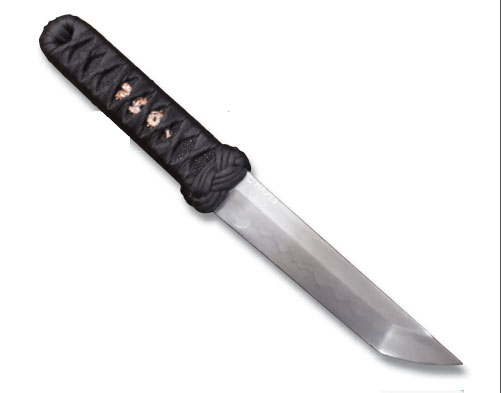
Moreover, she learned a new skill making a multi-part octagon handle for the knife. Excited by her new part-time job, she decided to make a tanto. Again, the new style required learning many new skills. Her tactical-style tanto has a hollow grind, so we started with wood again to teach her how to hollow grind, ensuring the grind was even on both sides. She learned how to grind in a tanto tip and how to make the angle the same on both sides.
Charlotte learned how to tie a Japanese handle wrap and etch the blade to make the temper line or hamon really stand out on her tanto. She also learned how to make the mune (the blade spine).
To make Japanese-style tantos, she had to learn how to create temper lines and put a high polish on the blade. She learned how to tie a Japanese wrap and etch the blades to make the temper line really stand out. She also learned how to make the mune (the blade spine). I posted a picture of the knife on social media and she quickly sold it and received another tanto order.
This past March break she forged out a bushcraft-style knife and will continue to work on it in my shop. She is not taking orders as she has a heavy school year finishing the 12th grade. She has been accepted to the University of Windsor in the forensic science program next fall.
She does have a waiting list and loves working with her hands. Knifemaking fills her need for creativity, just like it did for me. Charlotte intends to make one order at a time and she is getting comfortable using all the equipment. Making leather sheaths is the next skill she wants to learn.
This past March break, Charlotte forged out a bushcraft-style knife and was working on it in her dad’s shop at press time.
What Better Way to Spend Quality Time with Family?
There are so many branches to the tree of knifemaking and I look forward to seeing where she takes her knifemaking in the future Charlotte is a unique 17-year-old who wants to make knives and can do so just as well as boys. Her favorite part of knifemaking is watching the progress of polishing the blade. She takes her time with each step and really is a perfectionist. I am so proud of both my girls and it has been so much fun to show Charlotte what I have been doing for 32 years.
Go, Charlotte!
* All images by Wally Hayes unless otherwise noted.
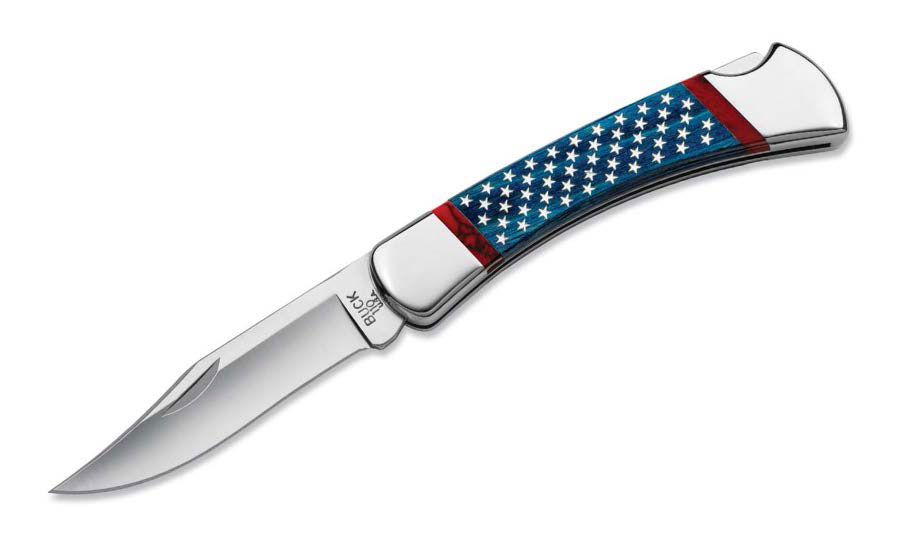
No knife says American made quite like the Stars and Stripes 50th anniversary edition of the Buck 110.
Editor’s note: All images are courtesy of their respective manufacturers.
Today’s sporting cutlery market is flooded with some very good foreign-made knives, and it may seem USA-made models are threatened in terms of quality, but nothing could be further from the truth. The American knife industry is still the leader of the pack.
USA all the Way, Even When It Gets Tough
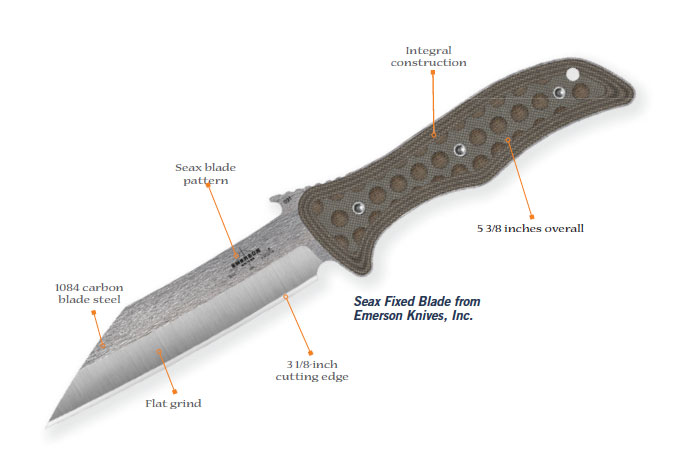
Emerson Knives, Inc., and president/founder/custom knifemaker Ernest Emerson are unabashedly pro-American made. Emerson founded the company in 1997 on the principle of designing and building the best USA-made production tactical knives anywhere.
Along with his wife Mary, Ernest has consistently grown the company by listening to what consumers want. Emerson knives are 100 percent made in the USA, right down to the screws. Emerson is an ardent supporter of the military, law enforcement and other first responders, another good reason why it’s so important that the company’s knives be made entirely in the USA.
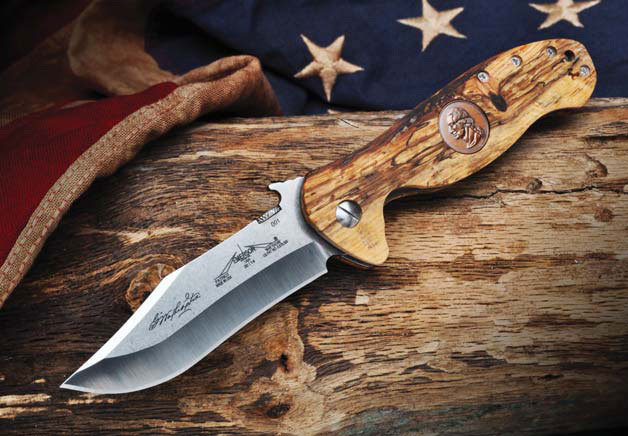
Sporting handle wood of an old oak tree from Mount Vernon inlaid with a die-struck coin of Washington’s likeness, the Patriot from Emerson Knives, Inc., is an example of the many great knives made in America.
Nonetheless, there are downsides.
“There are very few advantages in building a manufacturing operation in America,” Emerson says, citing state and federal taxes and ever-increasing regulations. It’s actually tough for a business to remain competitive here. However, I believe it’s worth the effort, restrictions and extra burden because I will do anything for America. I know my business is putting Americans to work with American wages who can earn a living in this country.”
He adds that the taxes he and his employees pay go directly to supporting the country and the U.S. military and its infrastructure.
“We have to manage our business smarter, more efficiently and more strategically to ensure a profitable and viable existence,” he stresses.
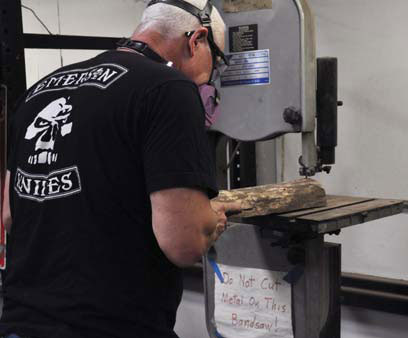
Ernest Emerson cuts a piece of historic wood at the company shop.
It’s the same attitude that makes the Commander and CQC7 models the company’s best sellers. The CQC7 is durable and comes in three sizes and two distinct blade shapes. A sexy piece with its ergonomic handle paired with a recurved clip-point blade, the Commander is a formidable cutting tool that comes in five iterations, each varying in size. Maintaining the popularity of these knives down the road is important to Emerson.
â”In order to stay viable,” he notes, “I believe the future lies in the industry’s ability to design and build knives that the consumer really wants.”
Consistency Counts
CJ Buck, president of Buck Knives, says a major advantage to having knives made in the USA is owning the integrity of the manufacturing processes.
“Consistent processes create consistently performing products,” he begins. “It also ensures product quality improvements are held as processes evolve.”
Another advantage is heightened flexibility and responsiveness.
“We can fix a design or quality issue quickly or adjust to spikes in our forecast since the partnerships between our factory and our USA vendors can be aligned immediately,” he explains.
A Buck 110 has the final edge applied at the Buck Knives plant in Post Falls, Idaho.
On the other hand, domestic production carries its own set of challenges.
“When importing, if you need to add capacity you simply contract with another factory or, on the other side, cut a factory off,” he explains. Stateside you have to invest in more equipment, people and buildings. Consequently, as Buck laments, “If you are forced to reduce your output, the pain and loss of investment is in laying workers off.”
As for the future of American knife manufacturing, Buck is optimistic.
“The United States continues to lead in innovation,” he states. “Our culture and national character give us a substantial, sustainable advantage in that area.”
“Made in the USA” Means Better Quality Control
The Socom Delta is the flagship knife for Microtech’s USA-made folders and remains one of, if not the, signature model for the company. The 3.75-inch blade is Bohler ELMAX stainless steel.
Microtech Knives built a solid reputation in the 1990s on designing and making some of the market’s most progressive production tactical folders, and continues to push the envelope. Why manufacture in the USA?
“So we are able to keep flaws to a minimum and catch mistakes early on,” reasons Hank Greenberg, the company’s custom shop manager, adding that if a company offers a solid made-in-the-USA knife with quality materials, then consumers will have no problem paying a fair price for it.
Americans build Microtech’s knives, such as the Ultratech out-the-front (OTF) auto and Socom Delta tactical folder.
Taking Care of Fellow Americans
HTM Knives is based in Forney, Texas. An acronym for Hand Tech Made, HTM was founded by knifemaker Darrel Ralph as a result of an ever-growing demand for his custom models. HTM allowed him to offer his designs to more people at a lower price and accelerated delivery times.
According to Ralph, HTM makes its knives in the USA “to take care of Americans and to take care of the people who take care of us. By having our knives made in the USA, we have total control on quality.”
The HTM Gun Hammer includes an OD green handle of Cerakote™-coated aluminum and a “flat natural earth” blade of CPM S30V stainless. The folder comes in either an assisted opening version or with the Maxx Glide pivot bearing system.
Ralph says the Gun Hammer and Mad Maxx are HTM’s best-selling knives. Both began as full customs, so it made sense to produce them under the HTM banner. For the Gun Hammer alone, HTM offers several iterations in varying blade shapes, finishes, steels and coats.
“The military likes both knives and guns made in the USA,” Ralph notes. He says his Gun Hammer and 18 X-Ray automatic are among HTM’s best sellers with military customers. The company also offers designs by such makers as Kirby Lambert and Greg Lightfoot.
Ralph indicates there is a 23 percent scrap rate for knives made overseas.
“You have to figure in for that rate,” he says of foreign-made knives. By having their knives made in the USA, he reasoned, the HTM brain trust has total control over the processes, and can rectify any production issues that might arise before they become a problem.
When it comes to the advantages of knives made in America, Ralph says U.S. companies have access to the best steel and high-end materials.
It should come as no surprise then that Ralph says there is a huge upswing in companies manufacturing knives stateside. He specifically cited Buck Knives, who has been returning some models to “made-in-USA” status after previously being off shore produced. He also noted a growing trend of custom makers offering mid-tech/semi-production knives.
“They are growing the American market instead of stealing from it,” he observes. “That’s what we need in the knife industry.”
Celebrate American Craftsmanship with This Essential Book
Atlanta, Georgia (June 2, 2018) – Awards recognizing the highest achievement in the custom and factory knife industries were bestowed the evening of Saturday, June 2, 2018, at the BLADE Show in the Cobb Galleria.
2018 BLADE Show Knife of the Year® Award Winners
Representatives from BLADE (www.blademag.com) distributed BLADE Magazine Knife of the Year® awards in 13 categories. Two of the awards—Industry Achievement and Publisher’s—went to a retail knife store and a knife-related organization, respectively, for their contributions to the world of knives.
All entrants in the Knife of the Year® competition were judged on a number of factors, including utility, design, creativity, materials, aesthetics, feel and other traits.
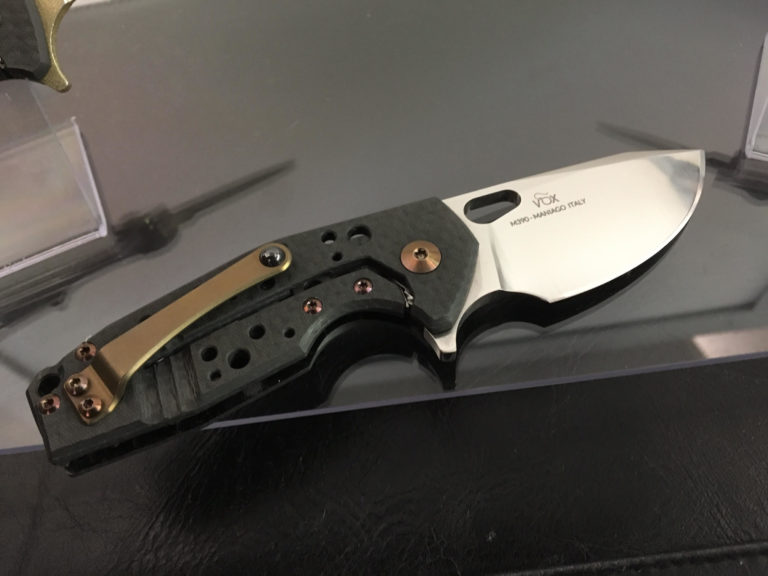
2018 Overall Knife of the Year® – FOX Knives SURU
BLADE editor Steve Shackleford and Cutlery-Hall-of-Fame® member Ron Lake checked out this knife before the official show start. Here is a quick video of that chance encounter.
2018 American Made Knife of the Year® – Chris Reeve Impinda
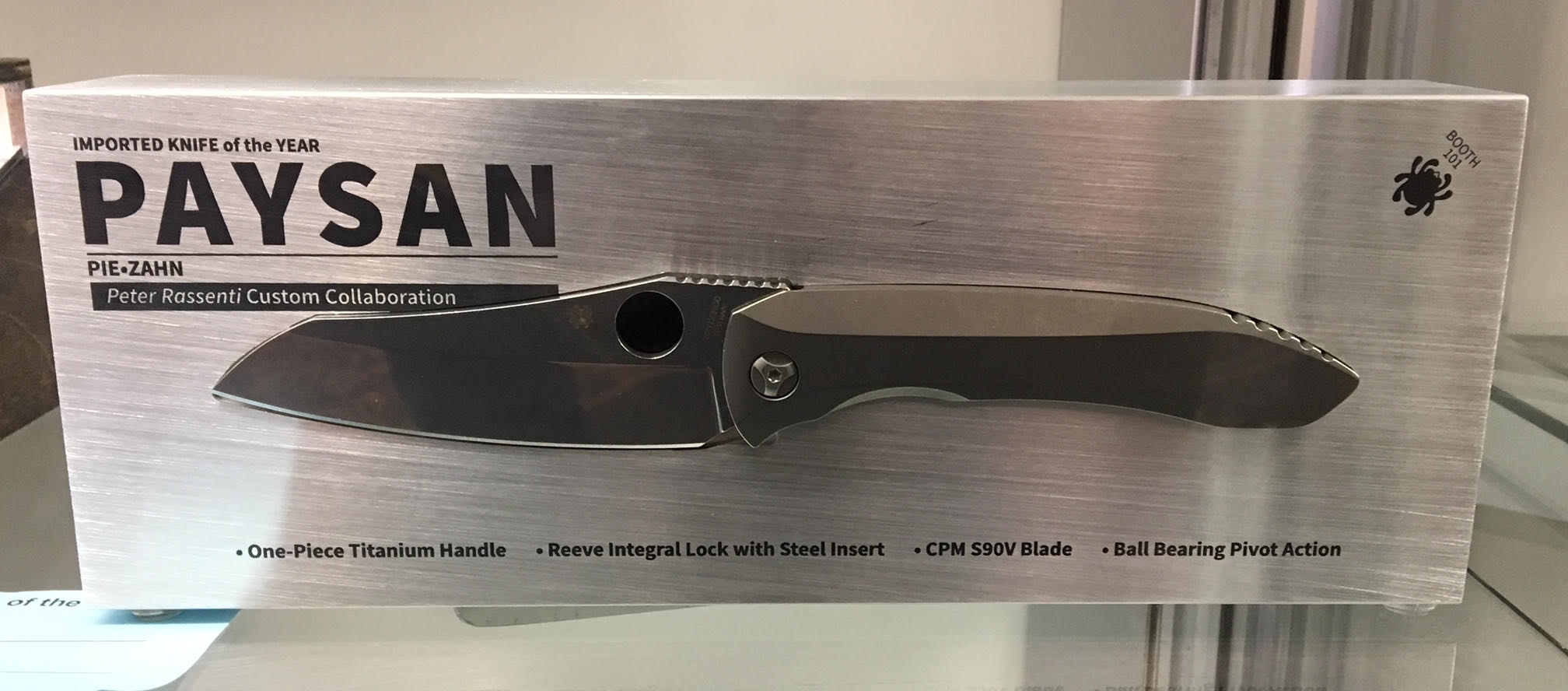
2018 Imported Knife of the Year® – Spyderco Paysan
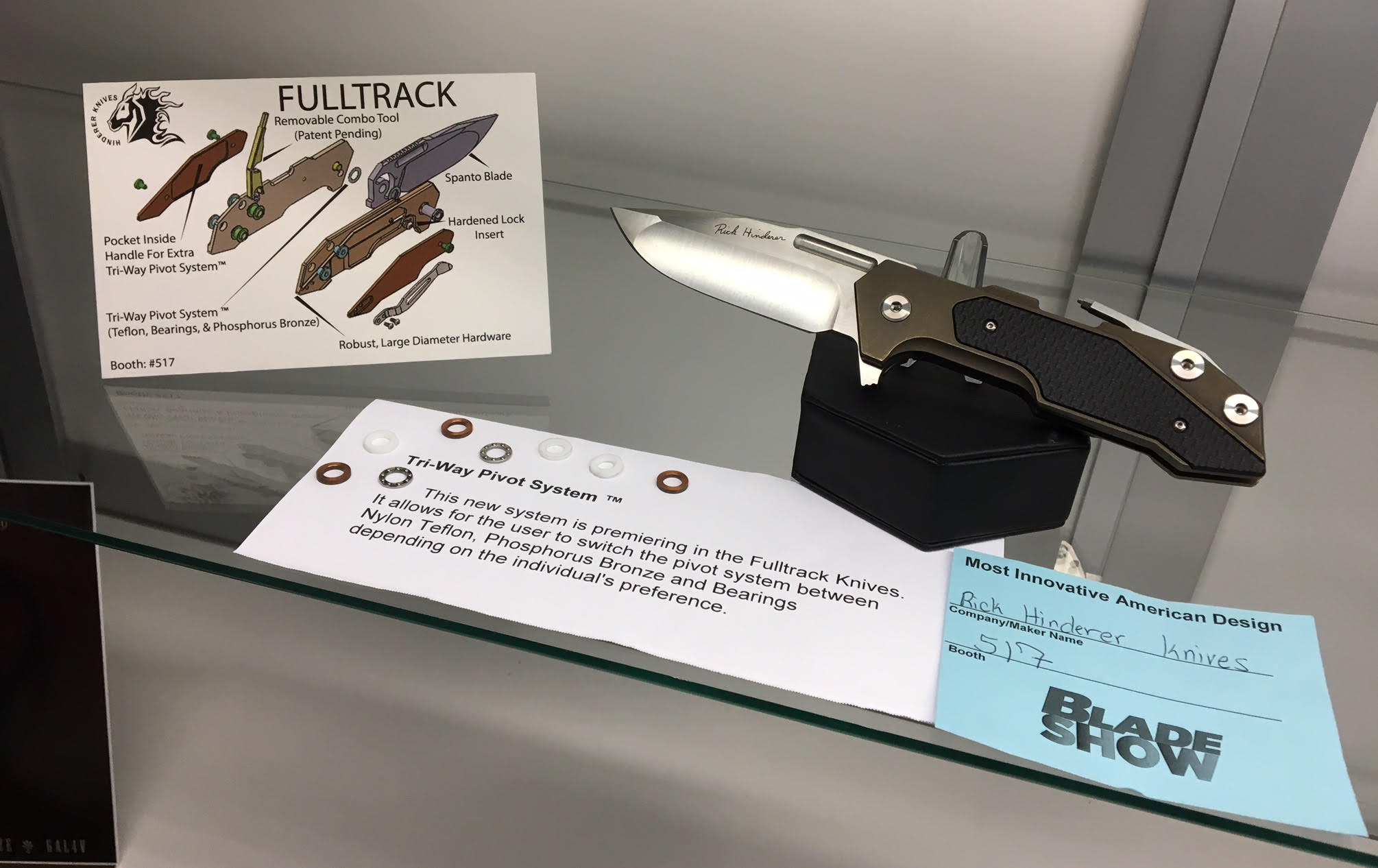
2018 Most Innovative American Design – Rick Hinderer Tri-Way Pivot System
2018 Most Innovative Imported Design – V Nives C.R.A.B.
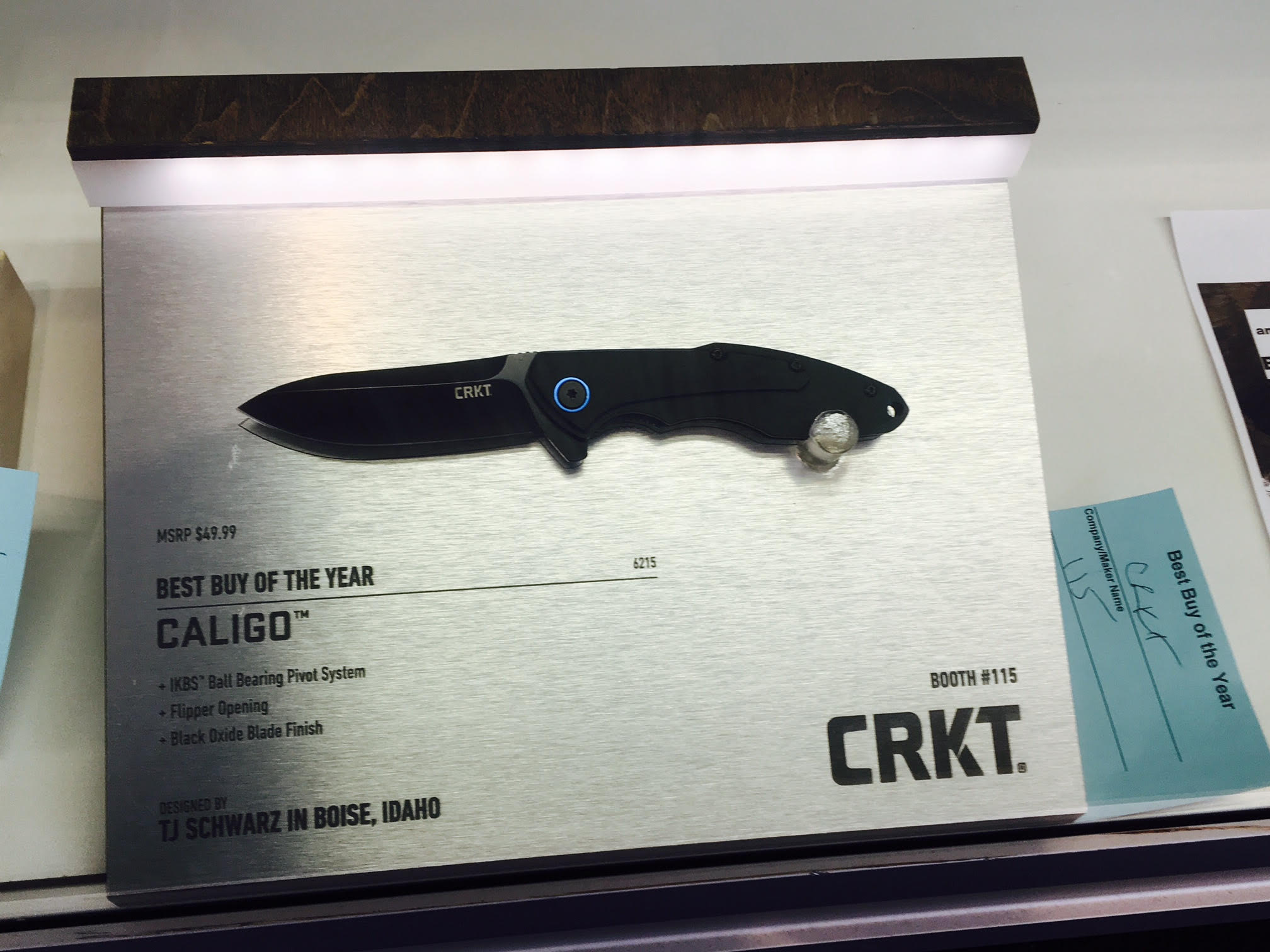
2018 Best Buy of the Year – CRKT Caligo
Note: the Caligo is also the official knife of BLADE Show 2018, and is available as a commemorative through BLADE‘s online store. That designation is separate from this award. BLADE does not vote in the Knife of the Year awards.
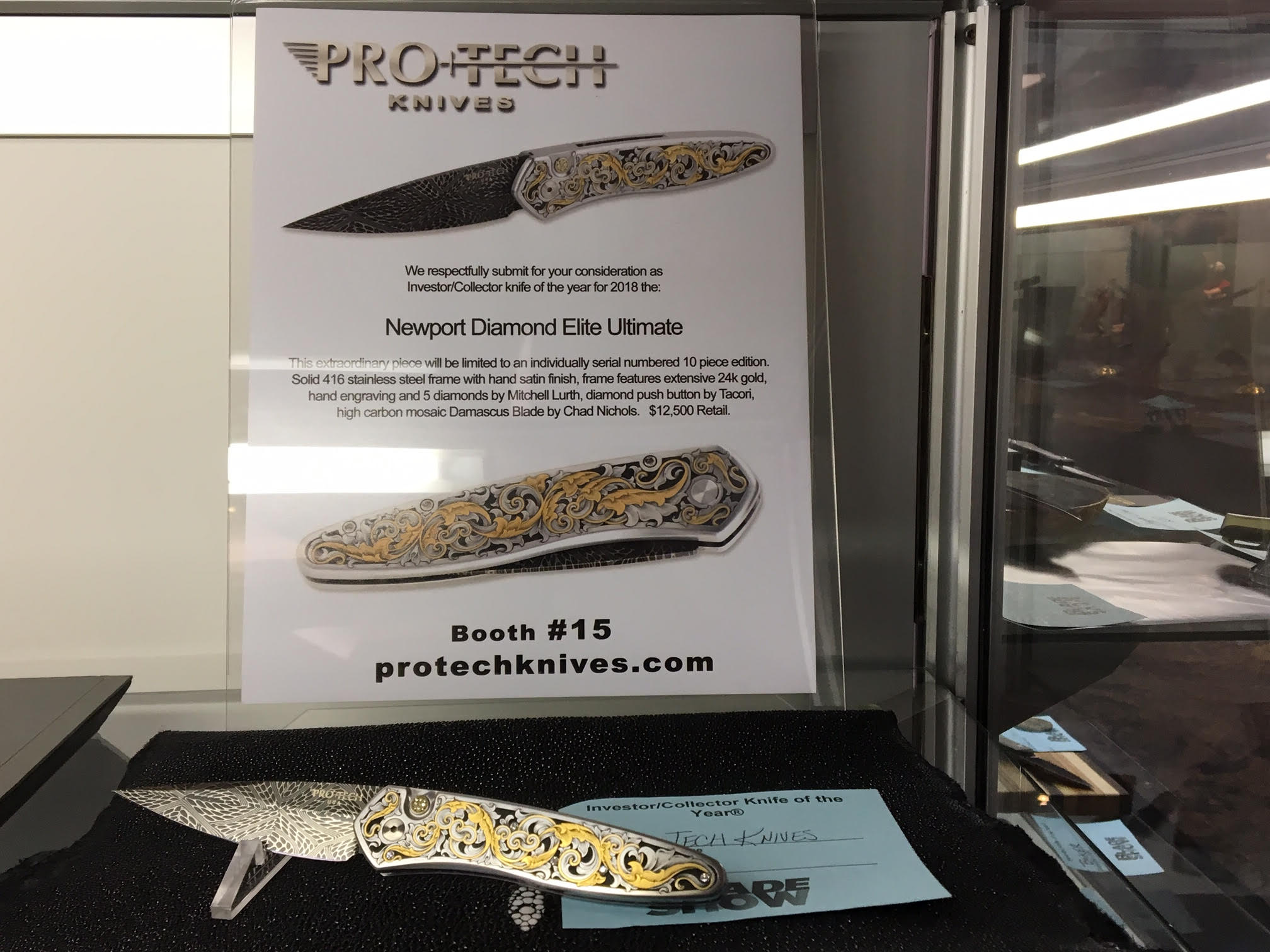
2018 Investor/Collector Knife of the Year® – Protech Newport Diamond Elite Ultimate
2018 Manufacturing Quality Award – Lionsteel
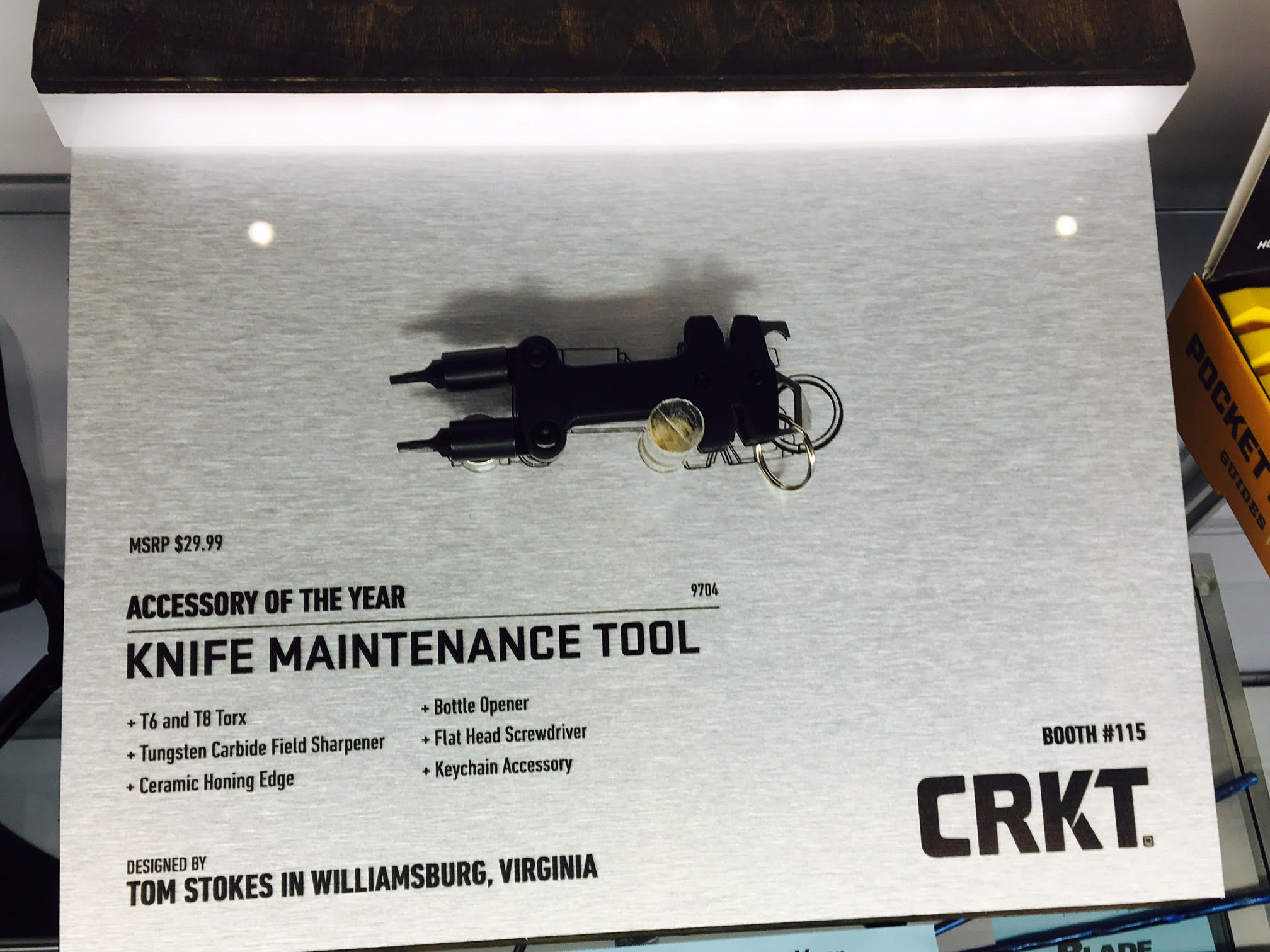
2018 Accessory of the Year – CRKT KMT
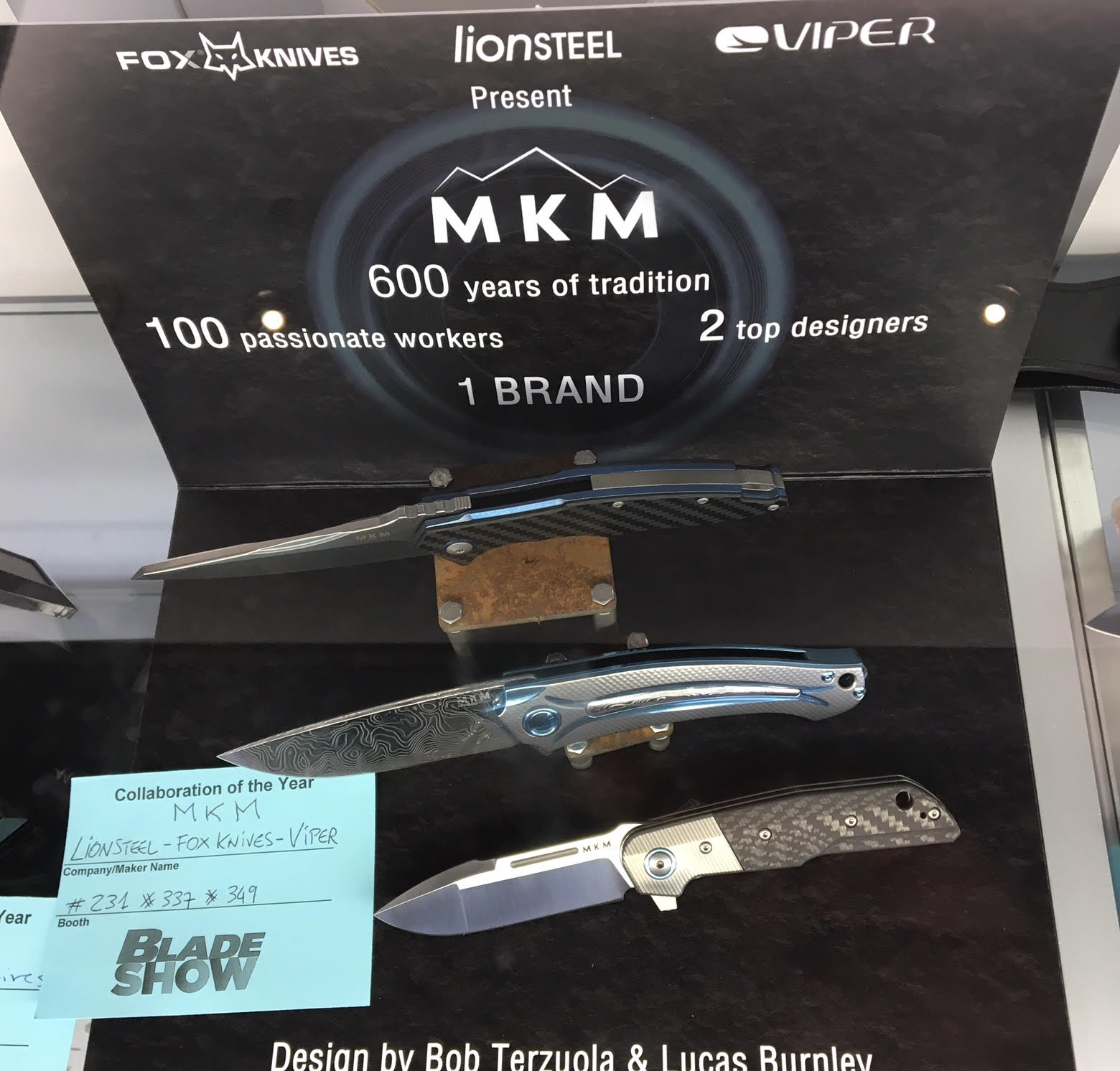
2018 Knife Collaboration of the Year – MKM by Bob Terzuola and Lucas Burnley for FOX, Lionsteel and Viper
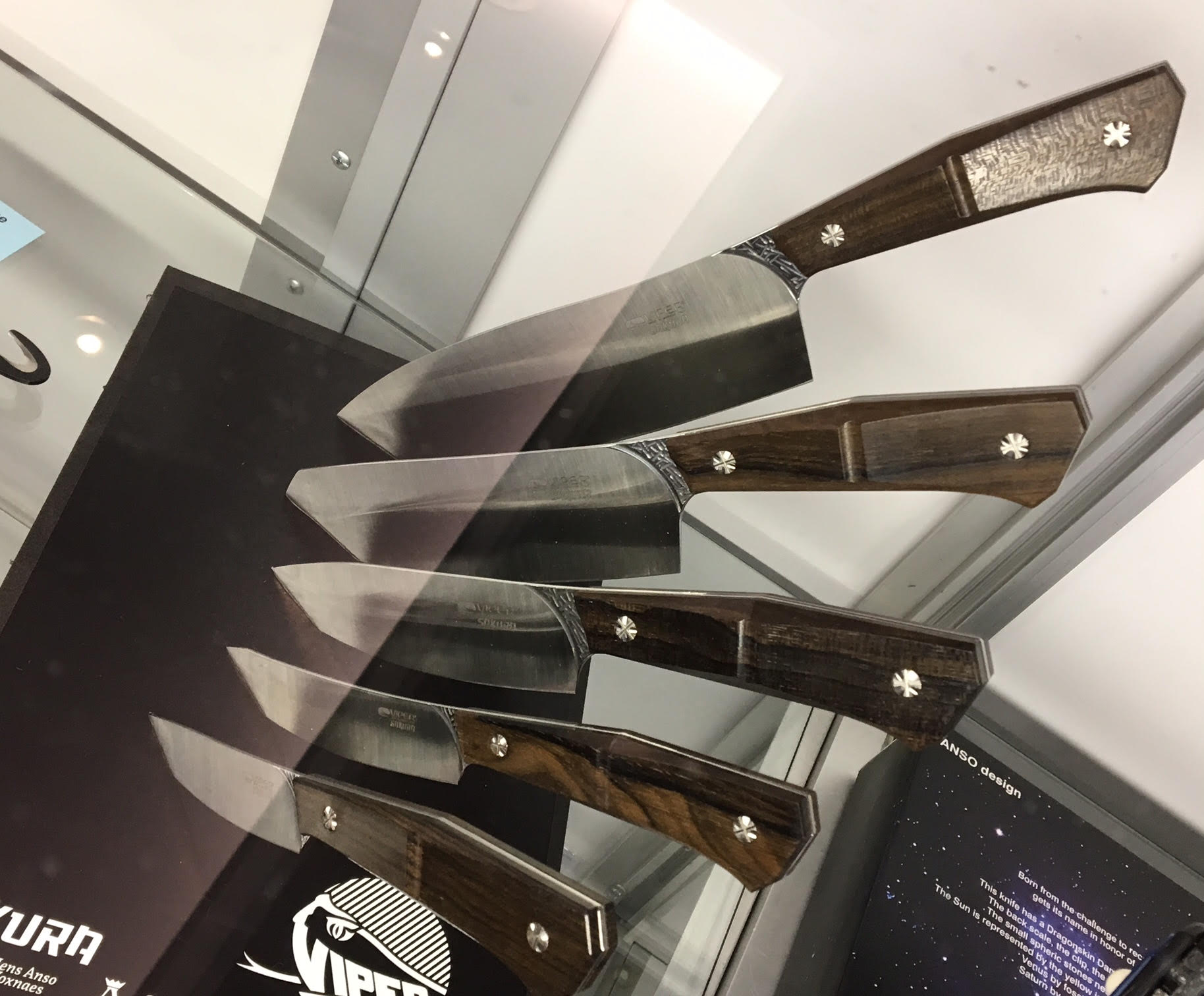
2018 Kitchen Knife of the Year® – Viper Sakura
Personal/Professional Achievement Awards
The Knife of the Year Awards recognized achievements in knives at the personal and professional levels in the following categories:
The 2018 BLADE Show Custom Knife Award Winners were also announced on Saturday, June 2, 2018, at the Cobb Galleria in Atlanta.
Best Fixed and Best in Show: Anders Hogstrom
Best Sword: Matthew Parkinson
Best Damascus: Jimmy Chin
Best New Maker: Ed Cope
Best Art Knife: Jean Louis Regent
Best Knife Collaboration: Ben Breda & Ben Seward
Best Folder: Gusatvo Cecchini
Best Utility Hunter: Haley Desrosiers
Most Innovative Design: Corrado Miro
Best Fighter: Josh Fisher
Best Handle Design: Steve Rapp
Best Bowie: Jean Louis Regel
Best of the Rest: Thomas Ward
Best Miniature: Toshiaki Michinaka
Best Tactical Folder: Svarn II by Cultrotech
About BLADE Show
The BLADE Show is the world’s largest, most important knife show, and has taken place every year since 1982 and in Atlanta since 1992. Upwards of 1,000 exhibitors from more than 20 countries display their knives and knife-related items over a three-day cutlery celebration that also features BLADE University knife seminars, knife auctions, custom knife awards, celebrity appearances and much more.
About BLADE
BLADE® Magazine (www.blademag.com) is the world’s No.1 knife publication. It is also the world’s oldest knife magazine, publishing its first issue in 1973. In conjunction with the BLADE Show, it has sponsored the Knife of the Year® Awards annually since 1982. The awards are the most coveted honors in the factory knife industry and are voted on by the booth exhibitors at the BLADE Show, who this year number more than 200. Only BLADE Show booth exhibitors are eligible to enter.
The BLADE Show and BLADE Magazine are the properties of Caribou Media LLC.
See 40 Years of Knives that Changed the World
BLADE collected the very best factory and custom knives into two digital collections to showcase the blades that changed the edged world forever. Click a cover to grab yours today.