
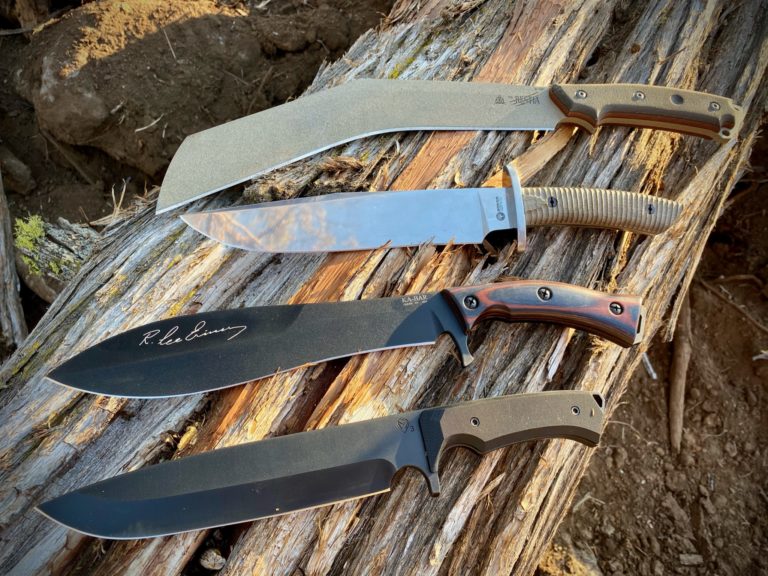
BIG Blades: 4 Monster Choppers for the Bush

BY JAMES MORGAN AYRES

Wherever folks live close to the earth, they use big knives

Little knives are convenient to carry but, if you have a lot of work to do, big knives are it. I’ve lived and worked with indigenous peoples in Latin America and Southeast Asia and found that wherever folks live close to the earth, they use big knives—machetes, parangs, goloks, bolos and the like. They use them for everything from rough work such as cutting poles and opening coconuts, to dressing out pigs and game, to delicate work such as slicing mangoes.

The advantage of the big blade was illustrated to me one day when I was working alongside a villager who, with his bolo and its 14-inch blade, cut wood for a fire, bamboo poles for a cooking rack, lopped off a banana leaf on which he filleted two large fish and sliced them thin as a sushi chef—all in the time it took me to bring down a few stalks of bamboo with my hair-shaving-sharp Randall Model 1.

We reviewed the test knives with that standard in mind. We chopped and split wood and sliced meat and tomatoes. We also, just because, cut hanging rubber hose and slashed through water-filled plastic bottles.


LONG, TALL & HANDSOME: Boker Arbolito El Gigante


The Boker Arbolito El Gigante is a handsome classic bowie with a stonewashed blade, comfortable handle and nice leather sheath. Balance is excellent, all very much in the bowie tradition. Construction is top quality; so is performance. It cleaved 2-inch pine saplings with one stroke. The quarter-inch-thick spine was brought down to a well-supported edge fine enough to slice tomatoes, and slice meat thin enough to see light through the slices. We slashed rubber hose and the water bottles with ease.

Like all well-designed and crafted bowies, this is a versatile all-around knife.
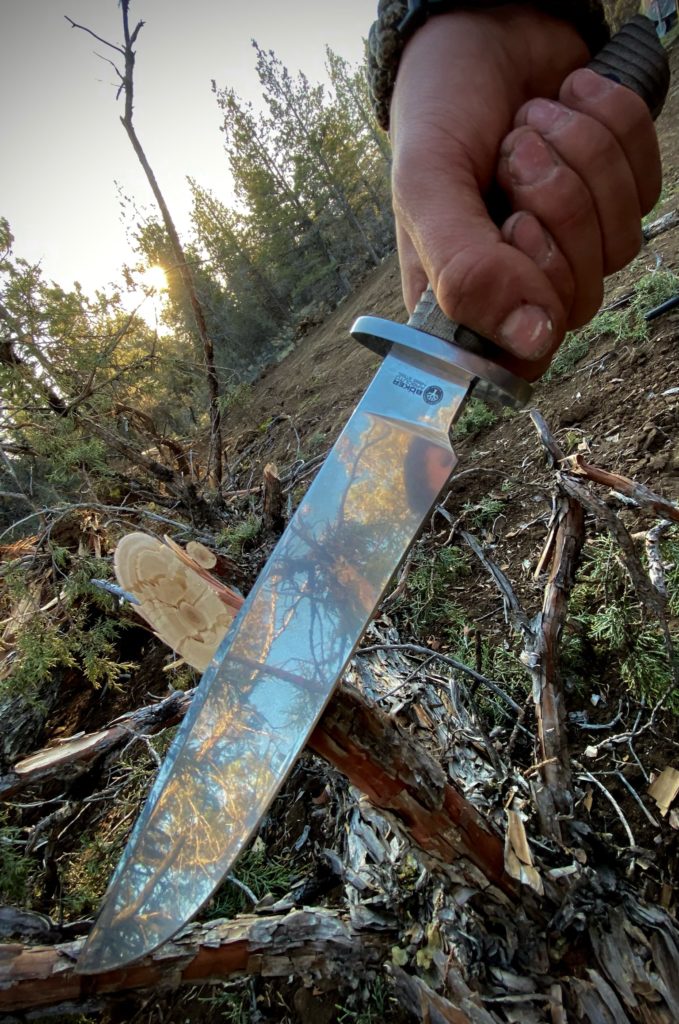
A tree branch succumbs to the reflective blade of the Boker Arbolito El Gigante. It cleaved 2-inch pine saplings in one stroke.

BOKER ARBOLITO EL GIGANTE
Blade Length: 9.25”
Blade Steel: Bohler N695 stainless
Blade Thickness: .24”
Blade Grind: Flat
Blade Finish: Stonewash
Handle Thickness: .94”
Handle Material: Green Micarta®
Weight: 15.75 ozs.|
Overall Length: 14.75”
Sheath: Leather
Country of Origin: Argentina
MSRP: $229
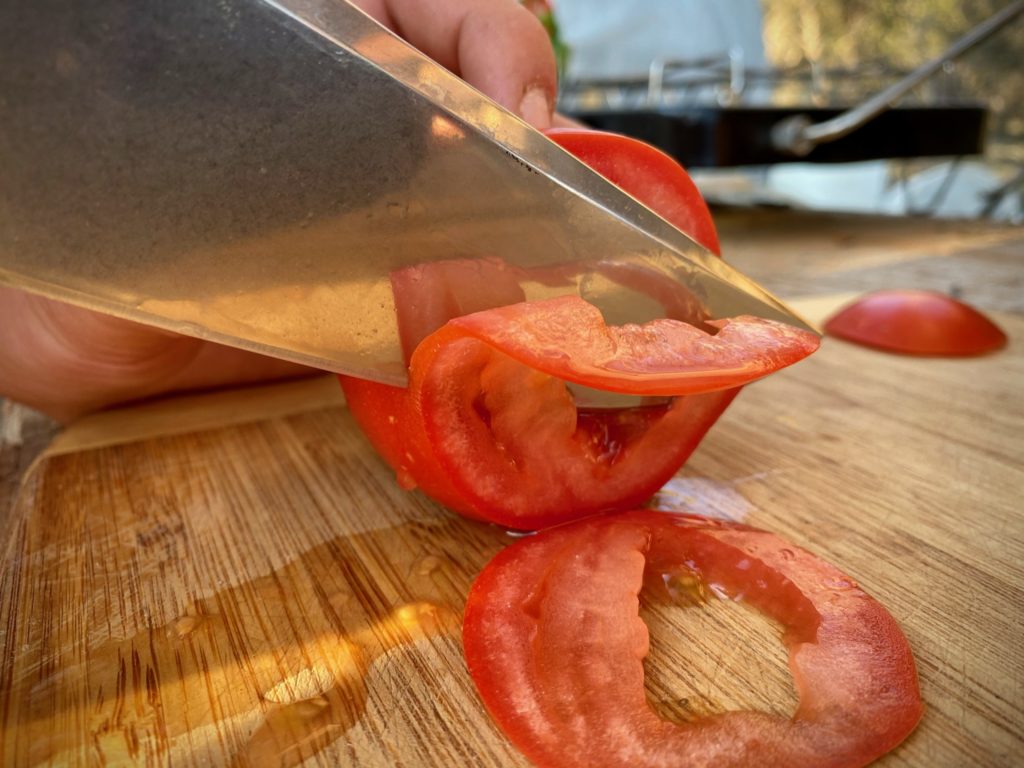
The El Gigante also proved its mettle after chopping wood by slicing a tomato nice and thin.


SEMPER FI! The KA-BAR Gunny


The KA-BAR Gunny is a hybrid design that resembles a bolo. I suspect R. Lee Ermey, the unforgettable Gunny who serves as the knife’s namesake, spent some time in jungles because this combination chopper/slicer’s performance is on par with village-forged bolos I’ve used in Southeast Asia, and that’s a high compliment. Its forward weight and terrific blade design promote efficient chopping.
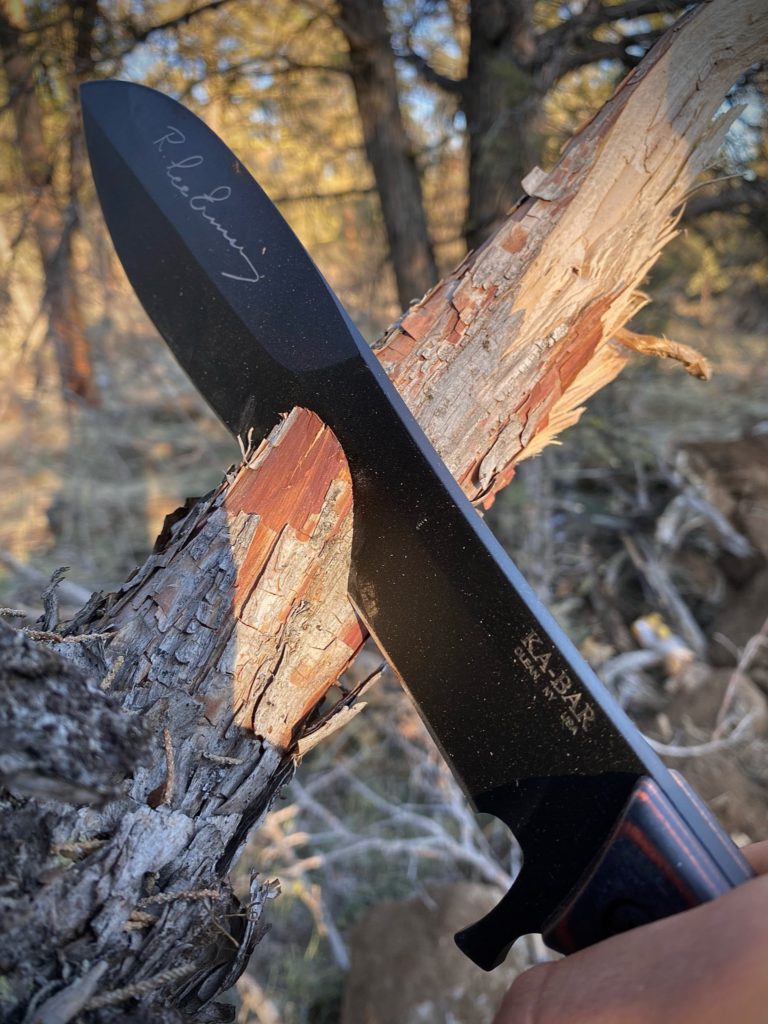
The KA-BAR Gunny chomps into dry pine. Its forward weight and blade design promote efficient chopping.

We cut through 3-to-4-inch-thick saplings with two strokes. We took down a tree with a 6-inch-thick truck just because we could. After the chopping the blade was still sharp enough for camp kitchen work. The belly, good balance and fine edge combined to make slicing meat and vegetables a pleasure. Slashing hanging rubber hose and the water bottle were a piece of cake. The comfortable handle lends itself both to heavy chopping and fine meat cutting, which is unusual.

The Gunny is an excellent all-around bush knife. The sheath has a pocket for a sharpening stone, which was not included with the review model.
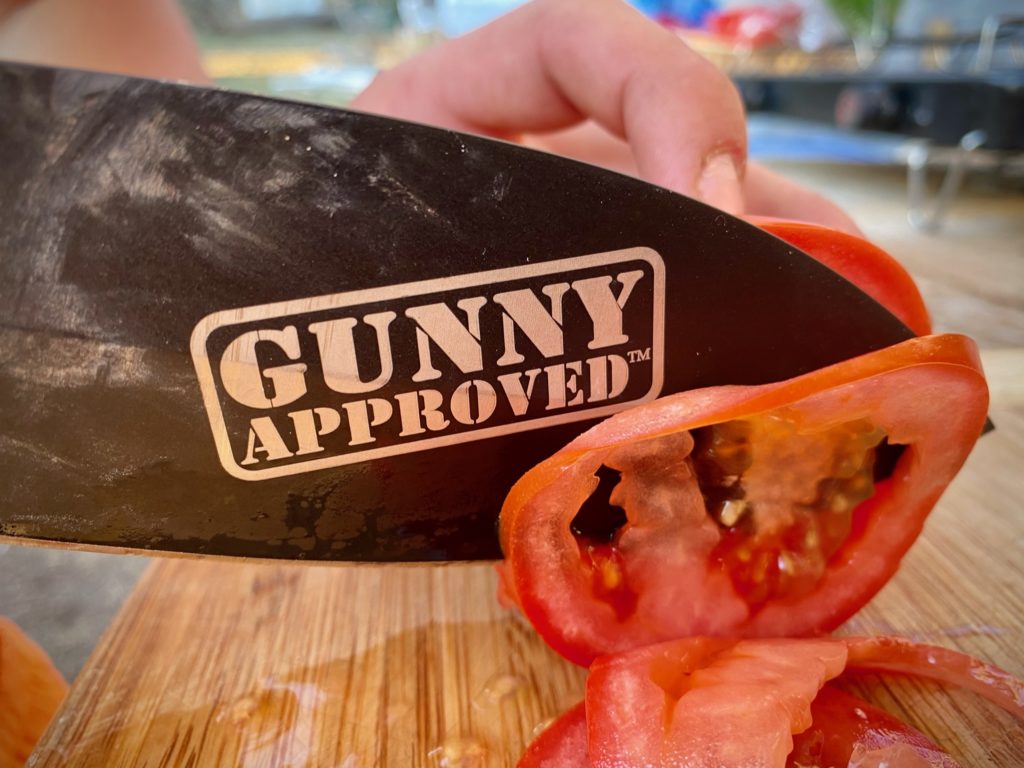
After chopping wood, the Gunny sliced tomatoes like a chef’s knife.

KA-BAR GUNNY
Designer: R. Lee “Gunny” Ermey
Blade Length: 9.75”
Blade Material: 1095 Cro-Van carbon steel
Blade Width: 2”
Blade Thickness: .2”
Blade Grind: Flat
Handle Width: 1.5”
Handle Thickness: .94”
Handle Material: Wood
Weight: 15.29 ozs.
Overall Length: 15.5”
Sheath: Leather
Country of Origin: USA
MSRP: $292


RAZOR SHARP: Medford Knife & Tool Bonfire


The Medford Knife & Tool Bonfire came from the maker absolutely razor sharp! The blade design is interesting in that we do not often see a contemporary styled drop point and hollow grind on such a big blade. I don’t know the Rockwell, but the steel is hard and tough. It was just as razor sharp after we put it through its paces as when we started.
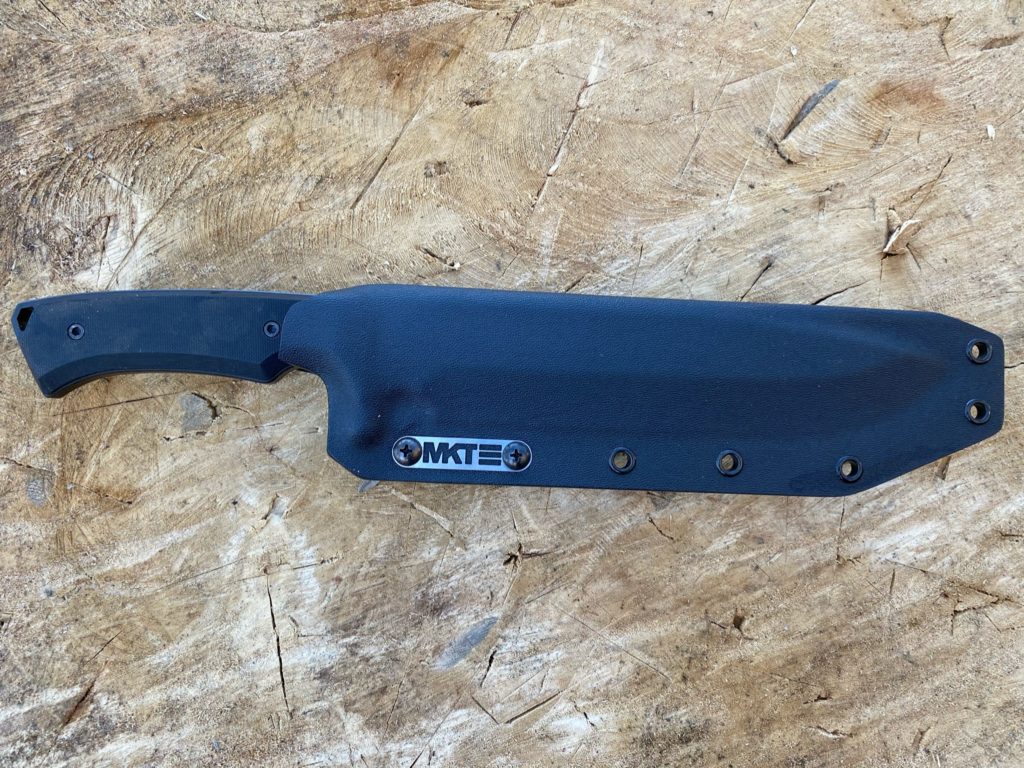
The Bonfire comes with a well-fitted Kydex sheath.

The fine edge made for a very good slicer and slasher and lopped off thin branches with one cut. The hollow grind tended to bind when chopping wood, though that’s to be expected—hollow grinds aren’t chopping designs. It’s better to think of this knife as a well-designed and crafted big knife rather than a bush tool such as a panga or kukri. It sliced rubber hose with a snap of the wrist and slashed through water bottles with more consistency than the other review blades and cut meat just fine. You probably could dress out a bear with it.

Use it as a big knife on soft materials and you won’t be disappointed. It comes with a well-fitted Kydex sheath.
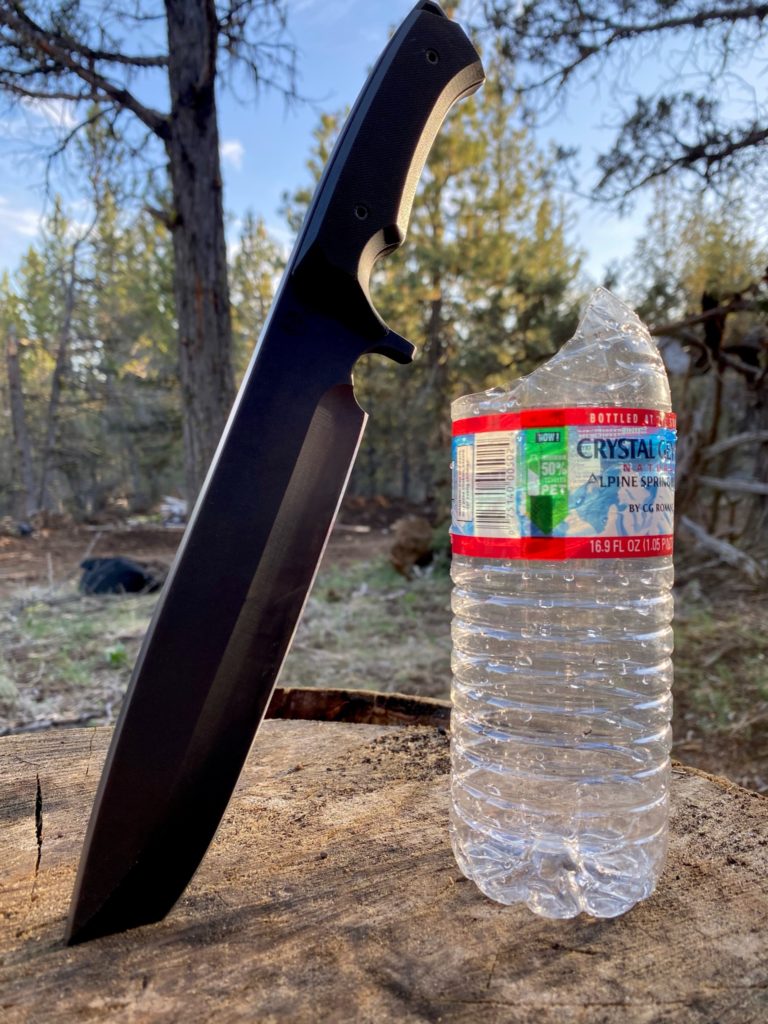

The Medford Knife & Tool Bonfire slashed through water-filled plastic bottles with more consistency than the other review blades.

MEDFORD KNIFE & TOOL BONFIRE
Blade Length: 8.25”
Blade Material: CPM 3V carbon steel
Blade Thickness: .24”
Blade Grind: Hollow
Handle Thickness: .64”
Handle Material: G-10
Weight: 19.16 ozs.
Overall Length: 13”
Sheath: Nylon
Country of Origin: USA
MSRP: $450


CHEF’S CHOPPER: The TOPS Bestia


The TOPS Bestia is just a beast. A kukri-styled 13-inch blade and hefty weight make it the blade of choice for serious chopping or zombie cleaving. We hacked though a 3-inch sapling with one stroke, and used it to clear a stand of saplings and brush. The handle remained comfortable during an hour or so of work. Heavy as a small hatchet, it is more versatile and safer in use, especially in thick brush. During many survival classes, I’ve seen more injuries from hatchets than from big blades with their longer cutting edges.
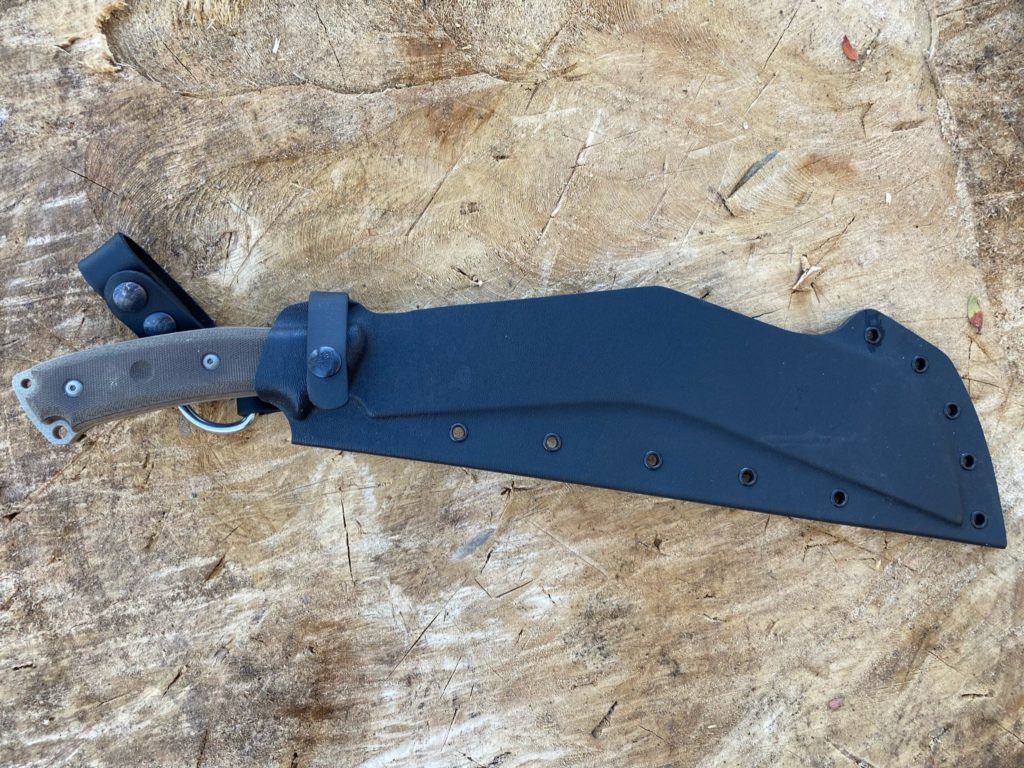
The Kydex sheath is formed to fit the unmistakable kukri-style blade of the Bestia.

Given its heft, blade design and chopping ability, the Bestia is surprisingly usable in the camp kitchen. We found it could slice meat quite well, allowing for adjustments in maneuverability due to its blade length.
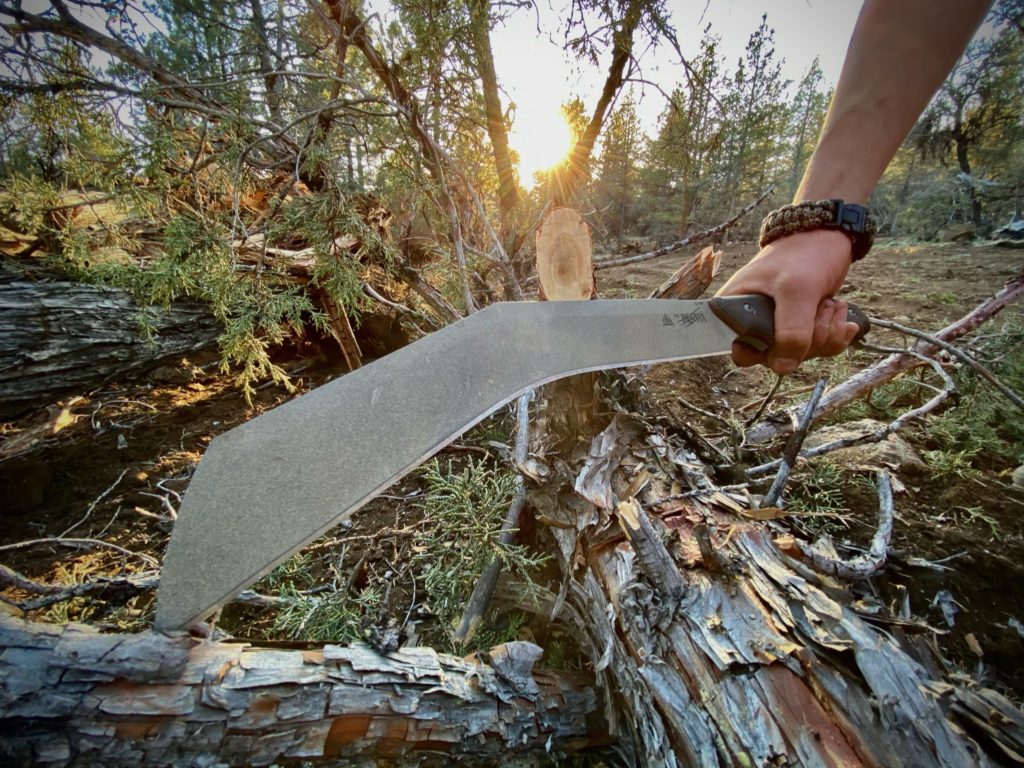
The TOPS Knives Bestia’s kukri-styled 13-inch blade and hefty weight made it the blade of choice for serious chopping or, as the author puts it, “zombie cleaving.”

TOPS KNIVES BESTIA
Designer: Leo Espinoza
Blade Length: 13”
Blade Material: 1095 carbon steel
Rockwell Hardness: 56-58 HRC
Blade Width: 2.25”
Blade Thickness: .25”
Blade Grind: Flat
Handle Width: 2.125”
Handle Thickness: .97”
Handle Material: Green Micarta®
Frame/Liner: Micarta
Weight: 1 lb., 13.18 ozs.
Overall Length: 19.5”
Sheath: Kydex
Country of Origin: USA
MSRP: $300


VERSATILE BUSH TOOLS
If you haven’t spent much time with a big blade, try one. Work with it for a while. Direct close attention to your work and you’ll find a good big blade to be a terrific, versatile bush tool.

Knifemaker to Watch: Phil Jacob

knifemaking phil jacob
Phil Jacob

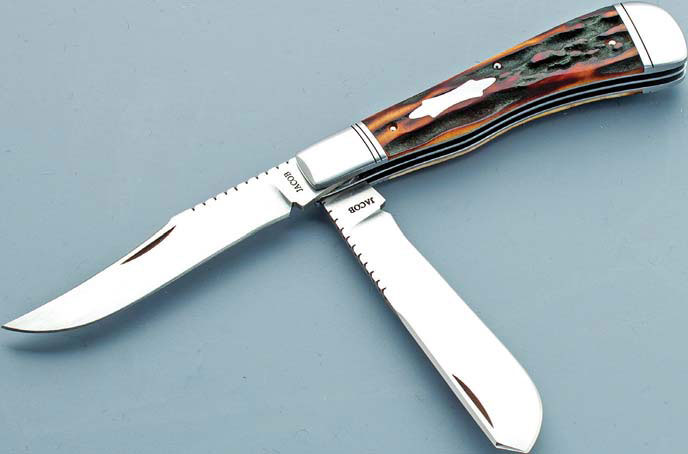
Phil Jacob took home the Best New Maker award from BLADE Show 2017, which is as good as it gets for someone getting started in knifemaking. The achievement is also good news for knife collectors looking for a guiding light for their collections. “Best New Maker” translates to “best new opportunity” for ROIs on investment.

Jacob, who calls Kansas home, specializes in slip joint folders. The addition of exotic handle materials and attention to detail offset any cliches about this traditional style. Just take a look at the double-bladed trapper that made waves at BLADE Show.

best new maker blade show 2017

Specs:

  • Blade lengths: 3.125”
  • Blade steel: CPM 154 stainless
  • Handle: Stag dyed amber
  • Folding mechanism: Slip joint
  • Weight: 5.1 oz
  • Closed length: 4.5”
  • Maker’s list price for a similar knife: $875 to $1,100

Jacob maintains a healthy social media presence, which is another benefit to collectors interested in a commission or a resale. His Facebook page is full of status updates and photos. 

He’s not big on the video front yet, but here’s a sample:

And here are some photos of his recent work.

Best of all, you can meet him at this year’s BLADE Show. Get tickets here.

How to Make a Flipper Folding Knife

make a folder knife
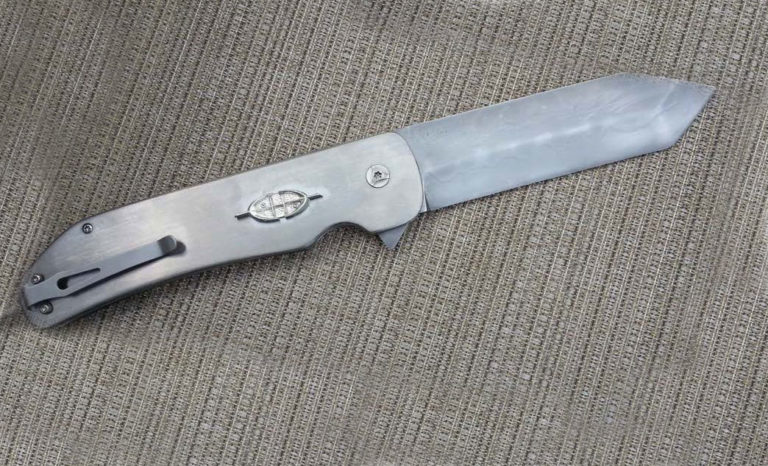
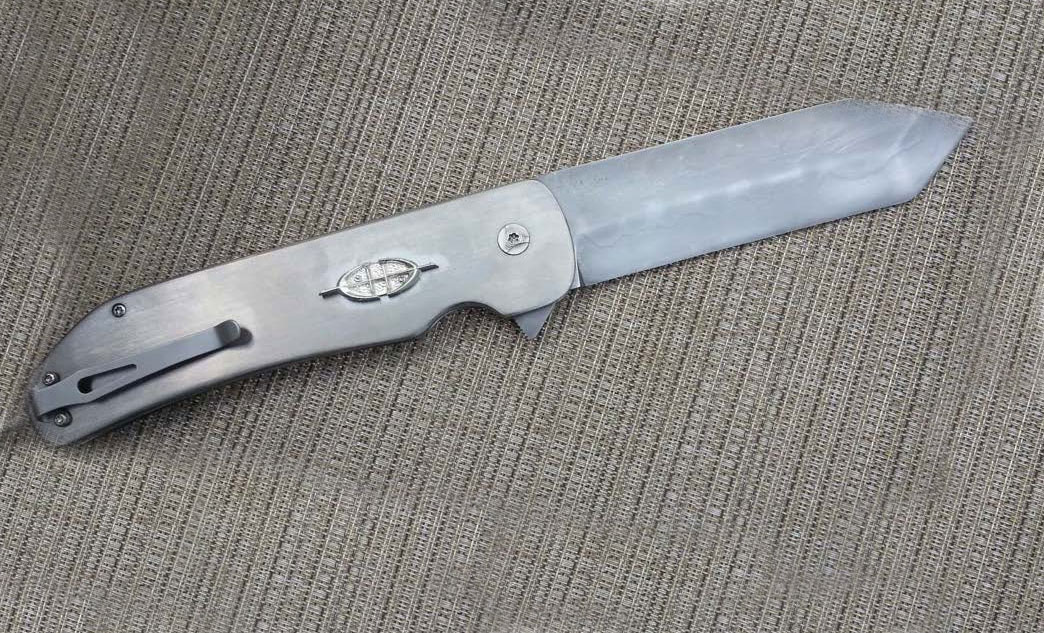
The author’s finished flipper folder—sanded, polished and ready to go!

Folder making has advanced so much in the past few years. Now, flipper folders are the hot new ticket.

Following is an overview of the steps in making a modern flipper by hand.

Draw It Up

how to design a knife
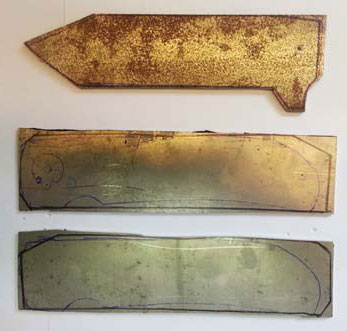
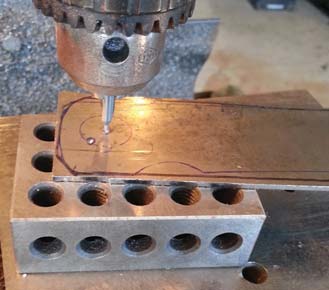
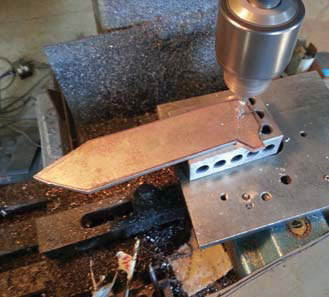
The parts are all cut out. The holes in one handle side (center) are center punched and ready to drill.
knifemaking tips
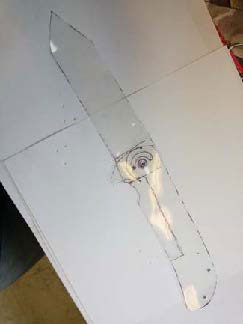
Design the knife parts on clear plastic so you can see where to locate everything.

To begin, draw designs on paper and transfer them to clear plastic. Cut out the designs of the blade and handle from the clear plastic. Overlap the tang of the blade on the handle and insert a needle through both pieces where the pivot pin will be.

From there, fold the blade onto the handle and adjust the design as needed.

Next, trace around the plastic handle on a titanium sheet. I use titanium in a 1/8-inch size for the top part of the handle and .070 inch for the two bottom pieces. Trace the blade and cut it out.

Know the Drill

drill knife blade
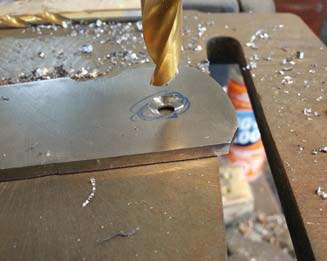
Counter sink all the holes a small amount before drilling them with the 1/16-inch drill bit.

Making folders is mostly about drilling holes. Drill out one plate of titanium with 1/16-inch holes. Place another plate of titanium underneath the drilled-out plate and clamp the two together. Turn it over and drill through the second plate.

Starting with the pivot hole, place a ½x1/16-inch hardened dowel pin in it so the two plates won’t move. Next, drill the end of the handle and put a pin in it.

Continue drilling, clamping and adding pins where your stand-offs go. Each time you drill a hole, take the plates apart and de-burr. A hand drill with a four-flute counter-sink is handy for de-burring.

drill knives
Start drilling all the holes with a 1/16-inch drill bit.

This flipper will have an internal stop pin, so don’t drill all the way through the top plate. However, do drill through the bottom plate—the .070-inch one. From here, affix the plates with 1/16-inch dowel pins. Clamp, remove the pivot pin, and drill and ream to 3/16 inch for the pivot pin. De-burr and reassemble. Drill and ream a 1/8-inch stop pin.

CAUTION: Do not go all the way through the top 1/8-inch plate! Countersink the outside plates for the 2-56 screw heads. I use a #20 drill bit for this.

Pivot, Washers & Pins

make a flipper knife
Mill the slot for the stop pin.

Now it’s time to countersink the two pivot screws. Different types of spacers and stand-offs can be used on a folder. For this flipper I used ones with shoulders from Knifekits.com. Normally I use custom-made stand-offs from Sheffield Knifemakers Supply. The shouldered step-down stand-offs prevent any unwanted movement in the blade.

I open up the holes for the stand-offs to fit in with a 1/8-inch reamer. Actually, I use a reamer .001 inch larger, so it is .126 inch.

The cool new thing with folders is pivot washers with ball bearings. There are many different types from which to choose. Michael Burch recommended washers from Jantz Supply to me at BLADE Show.

bladesmithing tips
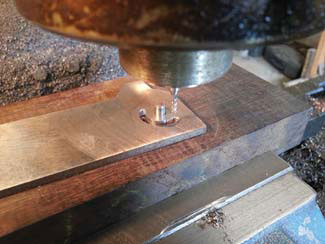
Countersink the pivot screws.

You have to sink the washers down into the scales a bit. I use a 3/8-inch, four-fluted end mill to do this step. First, I index a 3/16-inch end mill into a hole on a plate of steel held in a mill vise. I lock down my table and take out the 3/16-inch end mill and put in the 3/8-inch one using a dial indicator to show how far down I am drilling.

Most tactical folders are going pretty thick with washers .020-to-.040-inch on each side of the blade. I sink the washers down so they and the blade are the same thickness as the stand-offs. You want the space between the blade and washer to be equal to the space between the stand-off s or spacer material. Drill and ream a 3/16-inch pivot hole in the blade. Mill a half-moon slot for the 1/8-inch stop pin.

Many makers put the pin in the handle at about the 7 o’clock position when open. Grind the pivot and stop pins down to the proper length. (Author’s note: Grind the pivot pin so it is not exposed past the top of the countersunk hole of the pivot screw. Grind the stop pin so it floats between the two scales.) Grind the 2-56 screws down so they don’t touch each other when they’re screwed into the stand-offs.

Profile the blade and grind the tang at a 7-degree angle. I use a 7-degree block of Micarta® held up against my disc grinder for a guide.

Lock & Detent

knife grinding tips
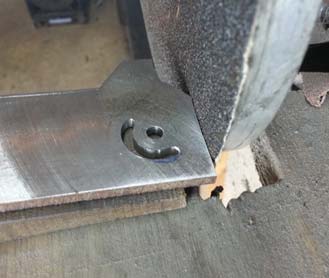
Grind the tang to fit the lock.

Now it’s time to cut the lock. Place the blade on the bottom liner with the pivot and stop pins in place. Open the blade and scribe a line with an X-acto™ Knife behind the tang onto the liner. Draw a line 3 inches long with a marker down the scale. Clamp in the mill, and, using a slitting saw, cut the 3-inch length. Use a band saw to cut the short face, which will be the lock. Using a cut-off -wheel attachment in a Dremel® Tool, clean up the end of the lock.

On a locking-liner or flipper folder, the lock is made by bending a tab of the titanium liner over so it engages with the end of the tang of the blade. The end of this tab must be coated with carbide. The machine that does this is a little hand-held micro welder and is called a carburizer. Simply run the rod onto the end of the titanium lock and it welds a coating of carbide onto the titanium. This produces a smoother action on the folder.

You can also flame harden the lock by heating it until it turns orange. In order to let the lockbar bend, grind in a .020-inch dent with a ¾-inch wheel at the other end of the lock.

It’s time to drill holes in the lock and blade for the 1/16-inch detent ball. Center punch a hole in the middle of the lock. Drill through with a #54 drill bit.

Close the folder and clamp it closed. Drill through the same hole as the liner into the blade about .060-inch deep. The #54 drill bit is .053 inch. You can also use a .054- or .055-inch drill bit depending on how you want to tune your folder. Grind, heat treat and polish the blade. Press the 1/16-inch ball bearing into the lock. The height left remaining of the ball bearing should equal the thickness of the washer.

Bend the lock over to about the middle of the folder. Now grind the tang at 7 degrees on a disc grinder until the lock starts to grab. You can assemble the folder, hold it up to the light and push the lock away from the knife to see how much more you have to grind the tang. Go slow and grind just a little before checking the lock. Drill and tap the scale for the pocket clip.

Sand & Polish

Finally, sand and polish everything. I also polish the ends of the screws. After assembling the folder, tighten the bottom pivot screw and adjust the tightness of the folder action with the top screw. Use Loctite© glue on all the screws.

Now Make Another Knife with These Books

tips for making knives

Pros’ Secrets To Sharpening Knives

0

Four knife industry pros share the secrets of how they keep their edge when sharpening.

A knife is made to perform its function as a tool, and job number one is to cut.

It follows that the development and maintenance of the edge is the most important aspect of knife ownership and use. When users are in the shop, around the house, at the office or in the field, keeping the edge in top form and working order makes the task at hand easier and often saves time and effort.

Custom Knifemaker: Chris Berry

Chris Berry sharpens freehand
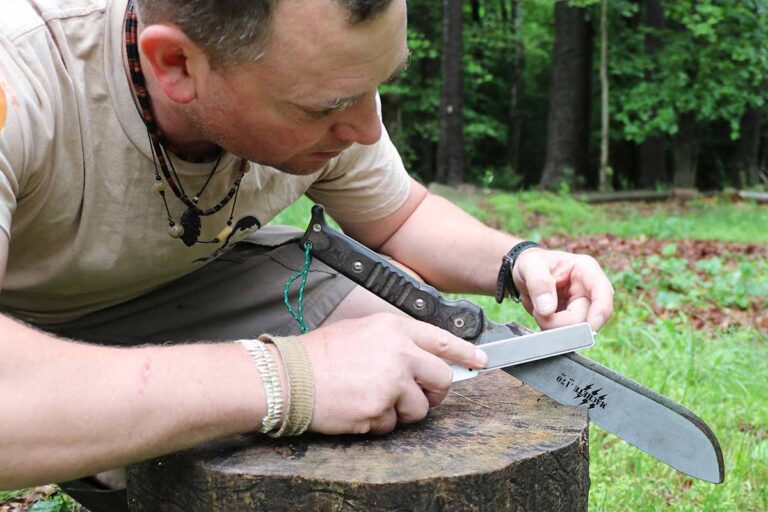
Chris Berry sharpens freehand, holding the DMT bench stone in one hand and his modified cleaver in the other. (Chris Berry image)

A custom knifemaker for 15 years, Chris Berry has made a name for himself in heavy-use choppers with blades of high-wear-resistant steel.

“When I finish a knife and get ready to sharpen it, I break the edges on the grinder to start the process and then work freehand after that,” he explained. “I’ll start with an extra-coarse DMT diamond stone and then go from extra coarse black to red medium and then green extra fine.”

In the field Berry carries a Spyderco cubic boron nitride (CBN) sharpening stone along with a Spyderco Double Stuff pocket stone.

“It has medium and fine ceramic for the edge,” Berry continued, “and then I’ll have some piece of leather to strop the blade and remove the burr.”

Chris knows it’s time to touch up an edge when it starts to drag through the cut.

“A blade is dull when it won’t cut printer paper,” he said, “so I’ll sharpen it before it reaches that point. I’m not obsessively sharpening a knife blade, but I’m just hitting the medium edge of the Double Stuff and going to the strop to bring back that popping edge. I usually only go back to the grinder if the edge is damaged, but, if the blade is really dull, starting with the extra coarse diamond and going through the grits will make it like a new knife.”

As Berry noted, the burr is the little, fine piece of steel that rolls up to the edge of the blade and is rough on one side and smooth on the other.

“If the burr isn’t gone after sharpening [the edge is] not sharp,” he advised. “In my opinion, it is the key to whether a knife is sharp or not. I tell people on social media that sharpening a blade is broken down to apexing the edge to raise the burr, refining the edge with progressively finer grits, and then removing the burr by stropping. If you progress through the grits and have the burr removed, you should be able to cut newsprint, phone book paper and even paper towels. That is as sharp as you are going to get.”

Knob Creek Forge: James Gibson

James Gibson of Knob Creek Forge designs knives for ESEE and teaches classes on bushcraft and survival.

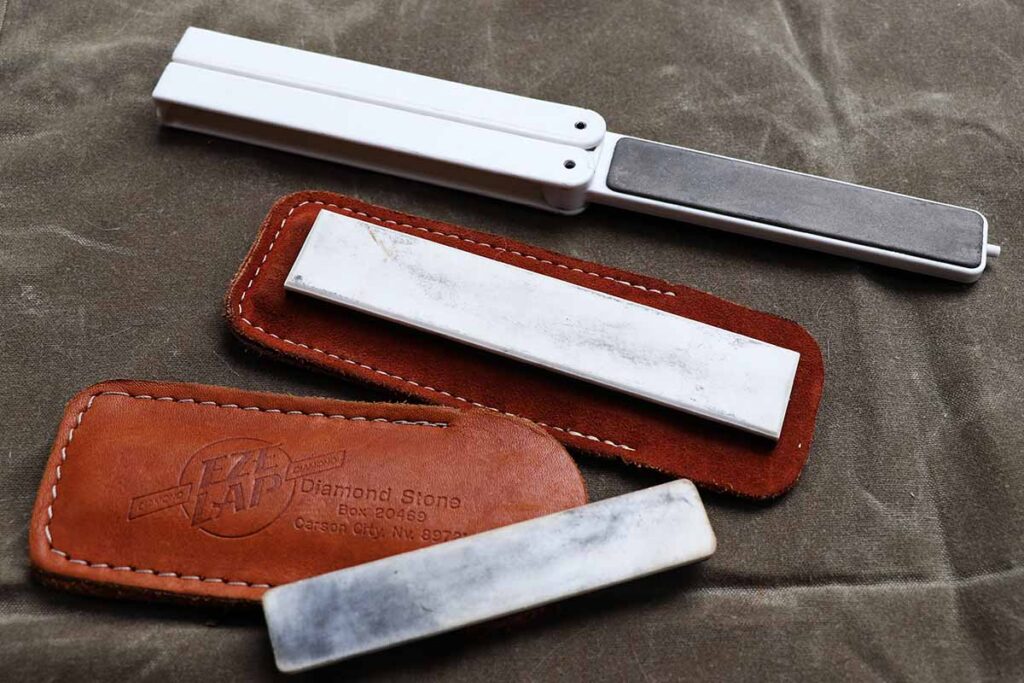
Some of the favorite field sharpeners of Joe Flowers include the EZE-Lap 530 Super Fine Diamond/Ceramic Folding Sharpener
Some of the favorite field sharpeners of Joe Flowers include the EZE-Lap 530 Super Fine Diamond/Ceramic Folding Sharpener (top) with a folding handle. “The Spyderco Double Stuff [middle] is a fantastic field sharpener,” Joe wrote. “It and the EZE-Lap Double Sided Sharpening Stone [bottom] both have a leather sleeve which can work as a strop.” (Joe Flowers image)

“I like a full flat grind with a convex edge,” he remarked. “They say the convex edge is the best, and when I have an extremely dull blade I use these little diamond files and then a ceramic rod or stone that will stand the edge up.”

An ABS journeyman smith, Gibson cautioned, “A dull knife will hurt you quicker than a sharp knife because you tend to lose control when you apply more pressure to get a job done. Most of the time I will sharpen a knife at the end of the day, but if it is not performing I will touch it up right then and there. If you ever watch a carver, they will carve for 15 minutes or so and then strop the blade to bring the edge back right quick. After a few days of stropping, they will have to do a bit of sharpening.”

Gibson sometimes uses a marker to spot the blade about a quarter inch up from the edge and then “floats” the edge up and down the diamond sharpener. He then moves to the leather strop and notes that if a compound has been used to keep the leather in shape the process will turn the leather black.

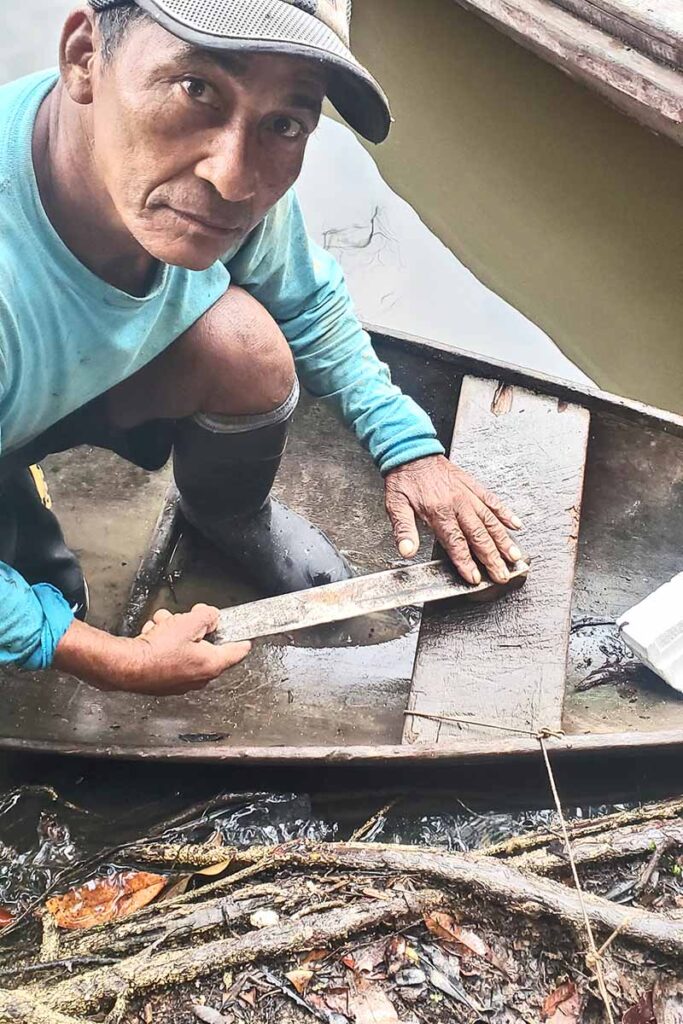
A Brazilian bushman files his machete on a stone
A Brazilian bushman files his machete on a stone, taking out the burrs and nicks in the edge. (Joe Flowers image)

“That means you are pulling steel off the edge,” he commented, “and where the two polished edges meet that will give you the sharpest blade you can get.”

Safety is a constant concern for Gibson and he stresses this aspect of knife use in his classes.

“We train people on the knife, and one of the first things we tell them is never to cut toward yourself. Keep everything out in front of you, or use a bench, log or stump so that everything is out of the way.”

CRKT: Russ Kommer

As a knife designer for Columbia River Knife & Tool (CRKT) and a hunting guide, Russ Kommer keeps blades sharp on a regular basis.

“When I finish up a custom knife, I run the blade on a brand new 400 grit slack belt with a real slight radius,” he remarked. “Then I will take it over a used 400 grit belt so that when the edge is curled and there is a little white line, I can use a leather strop or a 10-inch wheel and break off the burrs.”

Kommer carries a diamond sharpener in the field to touch up an edge.

“That will stand that line back up and remove some steel to get the edge back to infinity,” he said. “The only way to get a blade sharp is to remove enough steel. In the field you can use a leather strop or even the leather heel of your boot or something to help. When guiding, I have done two moose and a caribou in one day, and working on big animals is a big job. Sometimes I will carry two knives and touch both up to be ready for the next week, and I carry a pocketknife for cutting rope or other camp chores. It’s not good to use your hunting knife to cut burlap and dull it up on something like that.”

Testing for sharpness is a varied exercise, and Russ likes the simple standard.

“Guys like to shave their arms and that is all cool and dandy,” he smiled. “I just rake it across the back of my head, and when I feel it grab that hair I know the blade is sharp. There is also the fingernail task—if you feel the blade grab right there on the fingernail, then it is sharp. If you have practiced sharpening a blade enough, then you know quickly just how sharp a knife blade is.”

Condor Tool & Knife: Joe Flowers

As a knife designer for Condor Tool & Knife, Joe Flowers has sharpened thousands of blades through the years. The sharpening process is dependent largely on the work at hand.

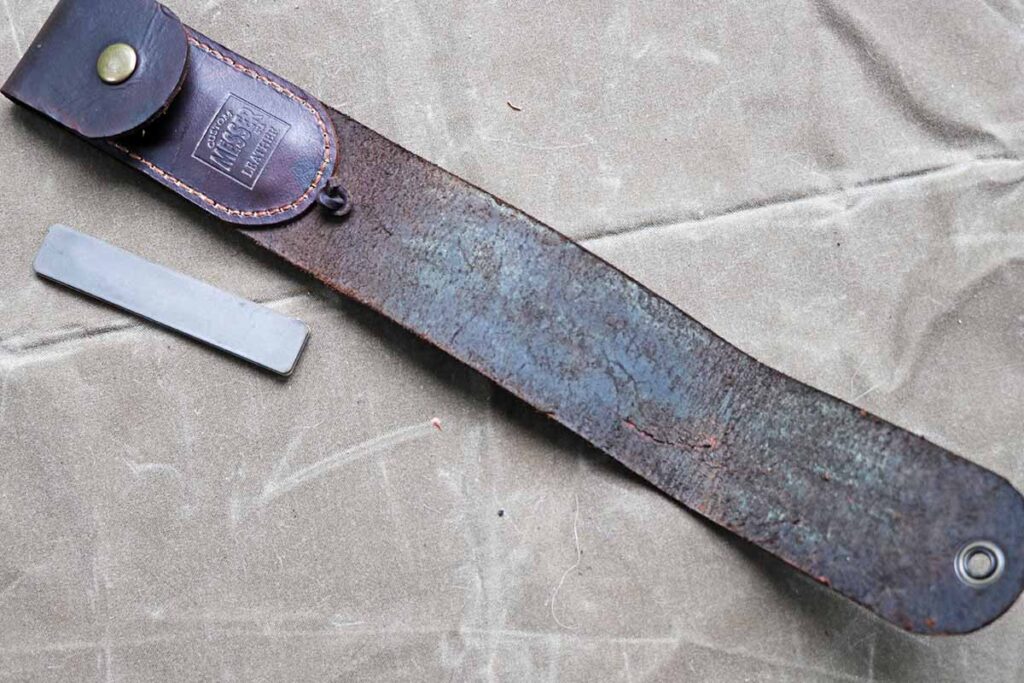
This combination of an EZE-Lap ceramic and diamond stone tucks into the JC Messer strop
This combination of an EZE-Lap ceramic and diamond stone tucks into the JC Messer strop, providing Joe Flowers with a large range of media in a small package. The large strop helps balance out the smaller stone. (Joe Flowers image)

“It can vary between jobs,” he explained. “I just have a 2×42 grinder that I do edge modification on—with every belt imaginable—but by far I use the leather belt the most because I am always using the blades and getting a fast strop. Most of the time, I try and use my field sharpeners and also complement them with the finer stones like my King stones or Spyderco ceramics.”

When Flowers ventures into the field, he is prepared for the occasional sharpening task.

“I really like EZE-Lap’s double sharpener,” he advised. “The files really bite down on carbon steel, and the ceramic on the other side keeps a finer edge. I’ve even used the sheath as a strop. That and the Spyderco Double Stuff are my two favorite compact sharpeners, although Work Sharp’s setup is great, too.”

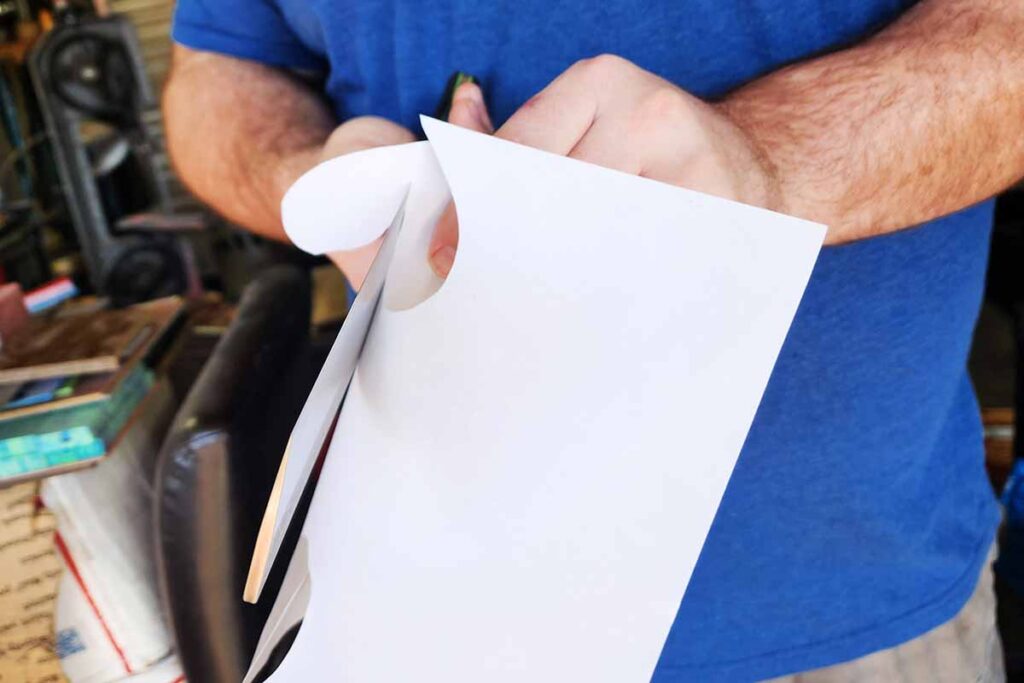
Chris Berry cuts a figure 6 in a sheet of paper
Chris Berry cuts a figure 6 in a sheet of paper. “A blade is dull when it won’t cut printer paper,” he said, “so I’ll sharpen it before it reaches that point.” (Chris Berry images)

When in the field, Flowers likes to settle down before taking on the sharpening of his knives.

“Normally, in camp situations, unless I’m working hours on a game animal or on a bushcraft project, I leave my sharpening to nighttime around the campfire. I also have my field sharpeners around my desk at work to use to understand how they work on different steels more. I like using EZE-Lap and diamond stones with harder-use bushcraft [carbon] steels like 1095. It can get an edge fast and you can go about your day.

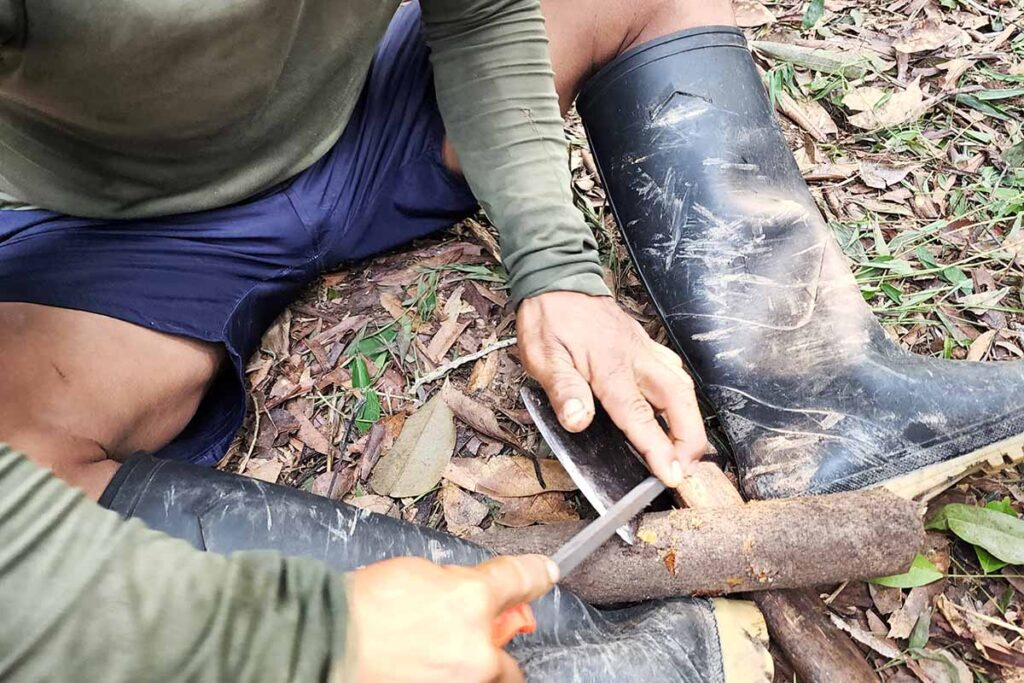
“For machetes,” Joe continued, “I stick with what the locals use, and that’s a file. Generally, I’m working with softer steels for machetes so a triangular single cut bastard or double cut bastard file about 6 inches long is a nice addition to my sheath. I’m finding better results in super steels on diamond stones until I move into these new crazy preloaded diamond powder strops. Those look incredible to try.”

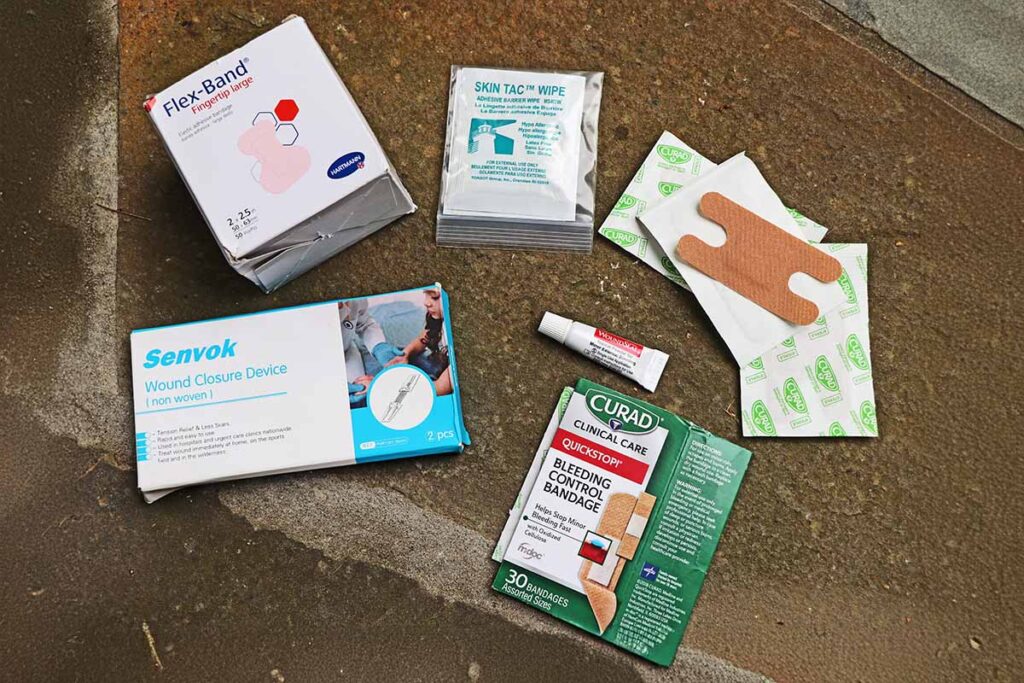
These items are extremely handy if you do anything with knives. The fingertip bandages are good anywhere on the bop
These items are extremely handy if you do anything with knives. The fingertip bandages are good anywhere on the bop, aka a survival experience, and bleed control Band-Aids® can also be handy. They have a coagulant. Besides a tourniquet, noninvasive wound closure devices coupled with a tape adherent like Skin Tac™ can save a trip to the emergency room for those annoying cuts. (Joe Flowers image)

When sharpening a dull blade, Flowers is known to use 60- to 80-grit belts to re-form edges when large chunks have been taken out of a machete, for example. He maintains that it can take the steel off the blade fast but there must be a bucket of water or a spray bottle handy to keep the grinding surface cool.
Bringing a knife back from dead dull involves a proven process.

“At home I would reprofile gently on a 1×30 Harbor Freight special I’ve had from the old days,” Joe commented. “Depending on the steel and use and the comfort of the hardness, I’ve reprofiled knives from dead dull with homemade sandpaper and mouse pad backing and keep heavier grits there as well. You can definitely over sharpen a knife by stropping so much you roll the edge. In the technique, you need to be able to tell when you have just the right amount of pressure.”
tribesman from Colombia, uses a common triangular file on the axes and machetes
Hari, a Huitoto tribesman from Colombia, uses a common triangular file on the axes and machetes on Bushcraft Global (bushcraftglobal.com) trips. For the final edge, the file is drawn from the edge to the poll. (Joe Flowers image)

Sometimes the type of sharpening medium used depends on the blade steel, the style of blade and the common utility of the knife.

“On many higher-end-steel kitchen knives, I stick with King stones because they are tried and true,” Joe related. “However, I like many different media for various steels, going for the extra-fine edges or a strop loaded with compounds for the final edge. For things like serrations, I use thinner round diamond rods for getting the radius, but I don’t deal with them much. I really like the flattest surface possible when I sharpen Scandi as it helps keep the angle straight.”

Retaining a sharp edge makes life easier wherever and whenever a knife is needed. A few minutes to shape up a blade is always time well spent.

More Sharpening Articles:

Video: The Truth About Edwin Forrest’s “Gift” Knife from Jim Bowie

edwin forrest bowie knife
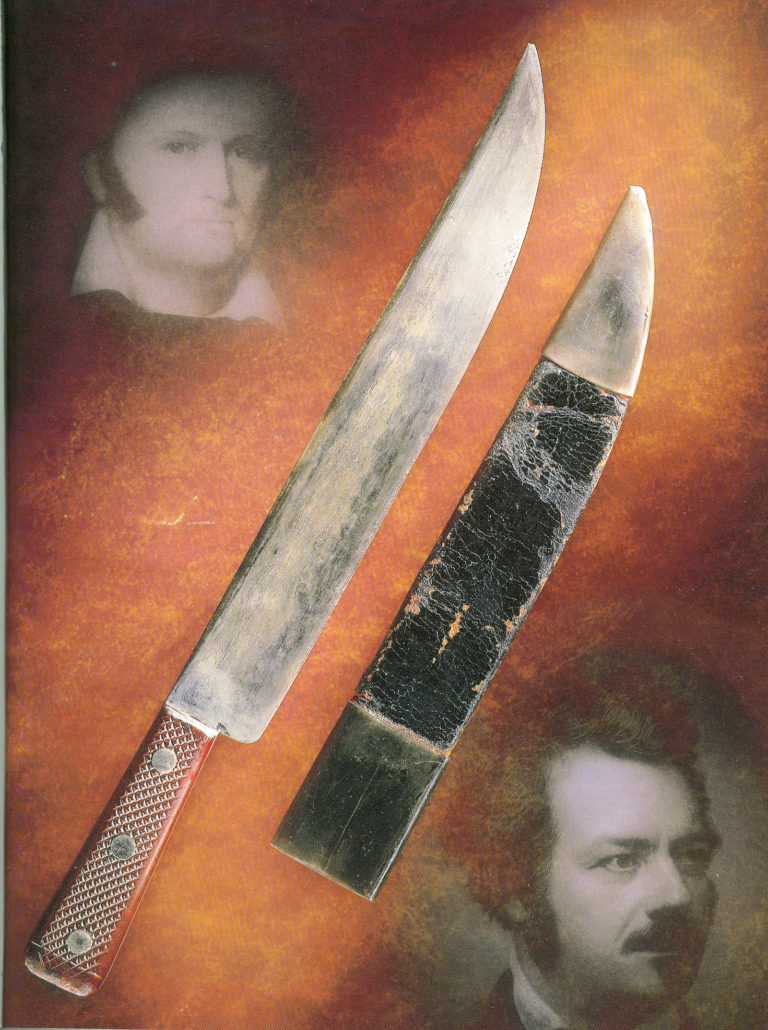
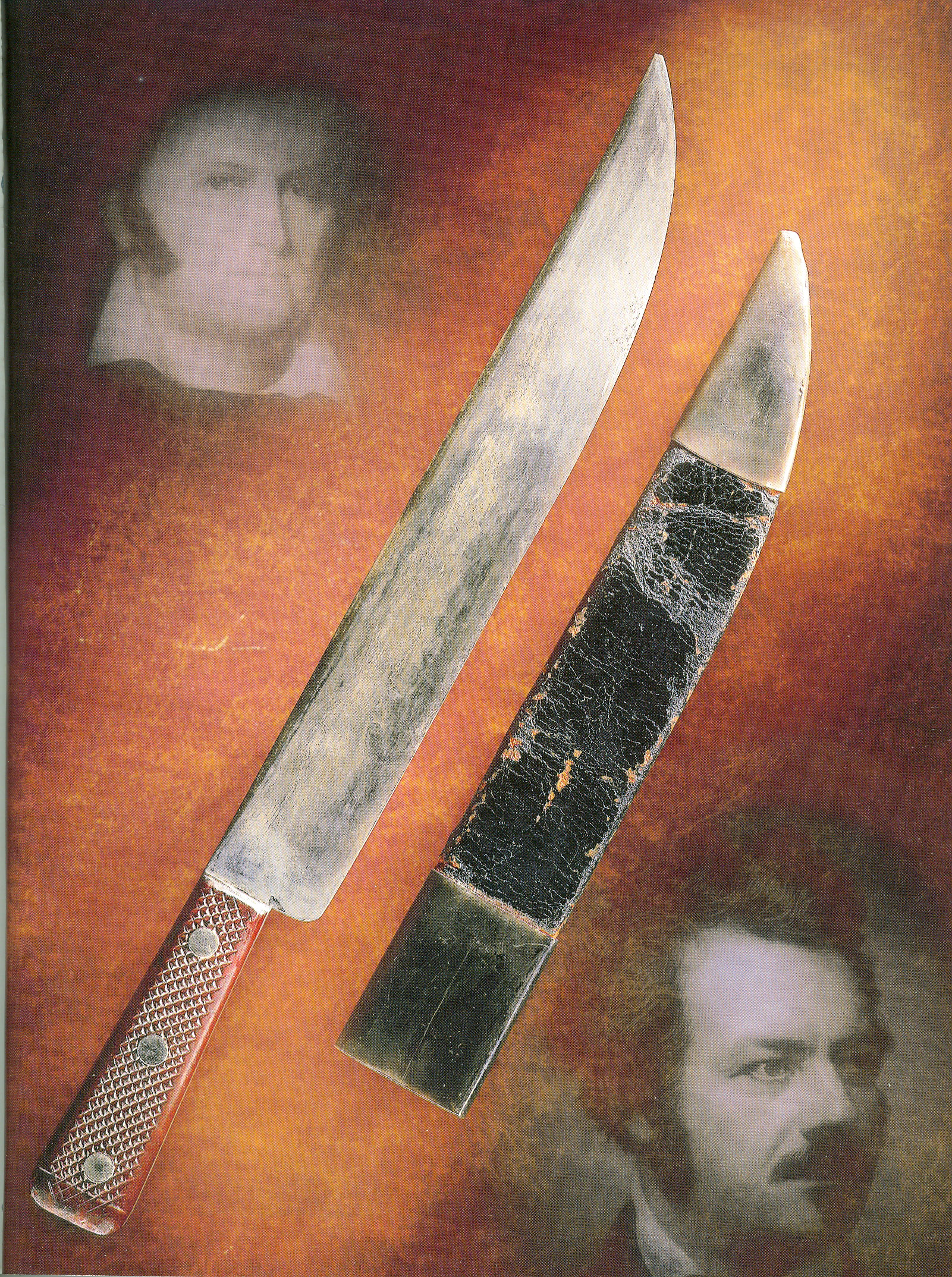
Some say that Jim Bowie (upper left) personally gifted a bowie knife (above) to Edwin Forrest (lower right). Jim Batson, one of the world’s leading bowie knife authorities, shares his findings on the subject.

james batson
Jim Batson

BLADE recently sat down for an extensive interview with Jim Batson, one of the leading bowie knife researchers in the world. The interview was recorded on video, which can be seen below, and consists of two parts.

Most significantly, Batson reveals what he discovered about the controversial Edwin Forrest bowie knife, claimed to be gifted to the 19th Century actor by James Bowie himself. That can be seen at 25:06 in the video.

Look below the video for further timestamps and summaries.

Batson Looks Back on 30

ABS master smith Jim Batson has been conducting his Batson Bladesmithing Symposium for three decades and just completed the 30th one April 8 at the Tannehill Ironworks near Bessemer, Alabama.

Join us for an exclusive interview with Batson as he talks about those 30 symposiums, the major industry changes he’s seen in his bladesmithing career, his induction into the BLADE Magazine Cutlery Hall of Fame in 2017 and what the future holds for this icon of the forge.

Use these timestamps to help you navigate the video.

0:00 Changes in knifemaking looking back
1:34 Forged in Fire
2:34 Changes in knifemaking looking forward
4:10 Batson’s contributions to the world of knives
5:55 Impact of Batson’s symposium
6:41 Batson’s “double-decker” shop
7:32 Including non-bladesmiths at the symposium
10:22 Batson reflects on his induction into the BLADE Magazine Cutlery Hall Of Fame©
11:51 Batson’s future

Bowie Knives According to Batson

edwin forrest actor
Edwin Forrest

ABS master smith Jim Batson has scoured the Bowie Trail from the Southeast USA to Texas for decades, researching anything and everything about James Bowie and bowie knives.

Watch the video above to see Jim recount the highlights of his research, including his book about the Sandbar Fight where the bowie knife legend was born, whether James Black really made bowie knives—including those in the Carrigan style—whether the Edwin Forrest bowie actually belonged to James Bowie and more in this exclusive BLADE® interview.

12:27 Contributions to bowie knife history research
15:01 Surprising finds
15:53 New facts about the 1827 Sandbar Fight
17:57 James Black controversy
23:14 The Carrigan knives
25:06 The Edwin Forrest “Gift” bowie knife
27:22 Where did the Forrest knife come from?
30:47 End


Rare Bob Loveless Customized Guns Up For Auction

Three highly coveted firearms modified by the Cutlery Hall of Fame® legend—including his “de-fanged” Colt Commanders—head to Rock Island Auction.

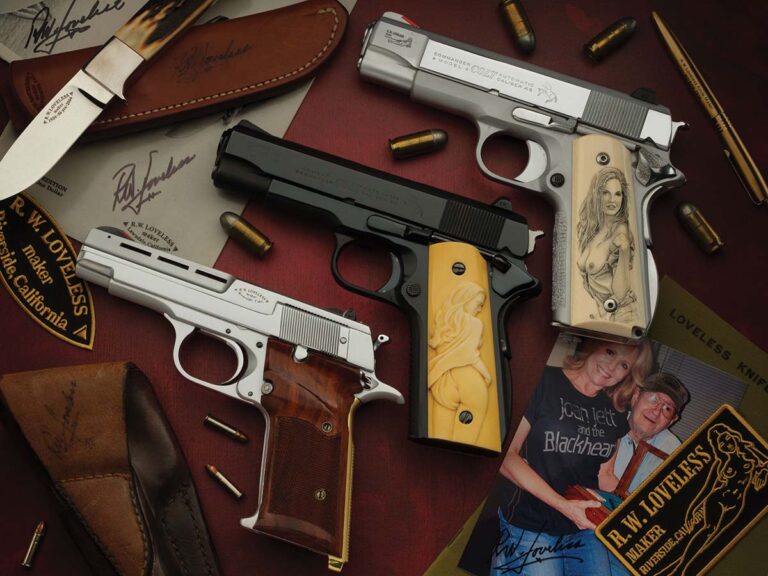
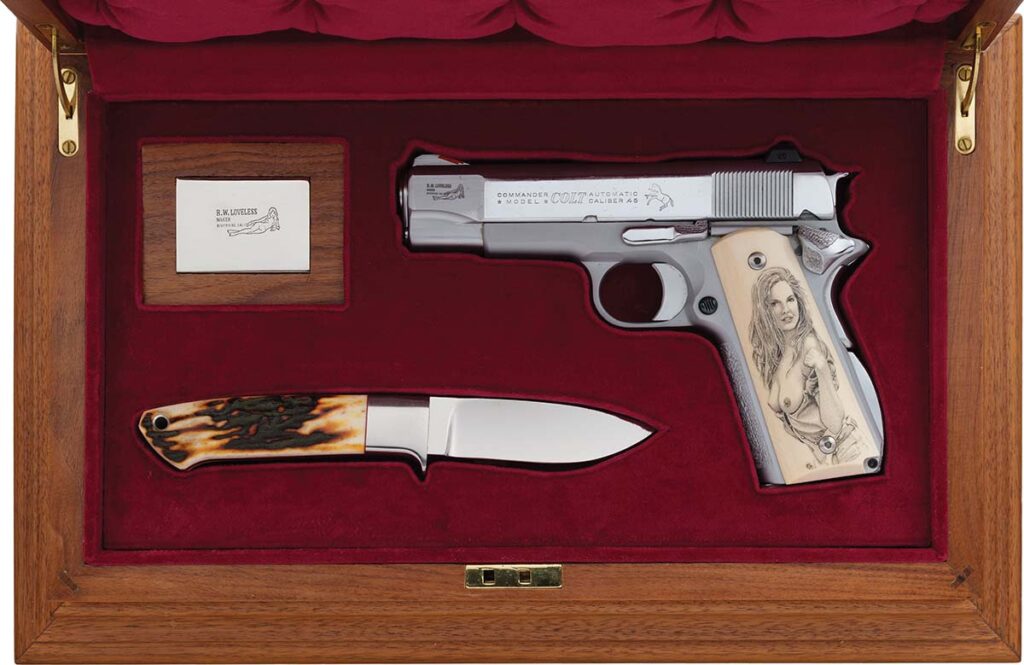
Bob Loveless Colt "Old Smoothie" Lightweight Commander semi-automatic pistol with scrimshawed ivory grips, drop-point Loveless Knife and sheath.
Bob Loveless Colt “Old Smoothie” Lightweight Commander semi-automatic pistol with scrimshawed ivory grips, drop-point Loveless Knife and sheath. Rock Island Auction image

While the late Bob Loveless secured his legacy as a titan of the cutlery world, the BLADE Magazine Cutlery Hall of Fame® member also brought his legendary eye for utility to the firearms world. His knives remain some of the most desirable, coveted custom creations on the planet, but a rare trio of his personal, customized handguns are now heading to the auction block at Rock Island Auction in the company’s June 27 American Sale (now live online). The selection highlights how the master craftsman applied his famous Bauhaus-inspired design ethos to custom gunsmithing.

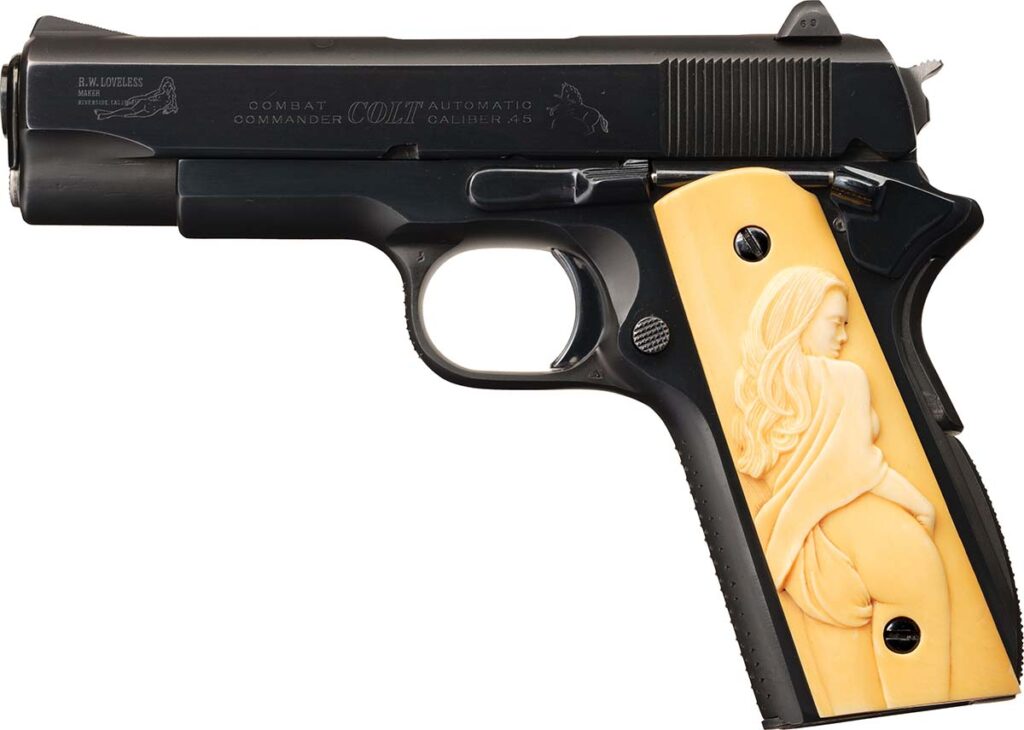
Bob Loveless Colt "Old Smoothie" Combat Commander semi-automatic pistol with relief carved ivory grips.
Bob Loveless Colt “Old Smoothie” Combat Commander semi-automatic pistol with relief carved ivory grips. Rock Island Auction image

The lineup features two Colt Commander pistols that Loveless thoroughly “de-fanged,” a signature modification process where he systematically bobbed the hammers, radiused the frames and smoothed away every sharp edge that could gouge a shooter’s hand. The first is a c. 1980 Lightweight Commander, featuring his electro-penciled initials, custom Browning cuts on the slide, and smooth ivory grips scrimshawed with nude artistry. This rare piece is housed in a custom hardwood case alongside a matching 2004 Loveless drop-point hunting knife. It is joined by a scarcer steel-framed Combat Commander variant, a platform Loveless rarely altered because he felt the extra weight defeated the purpose of a carry gun, making this particular build exceptionally rare.

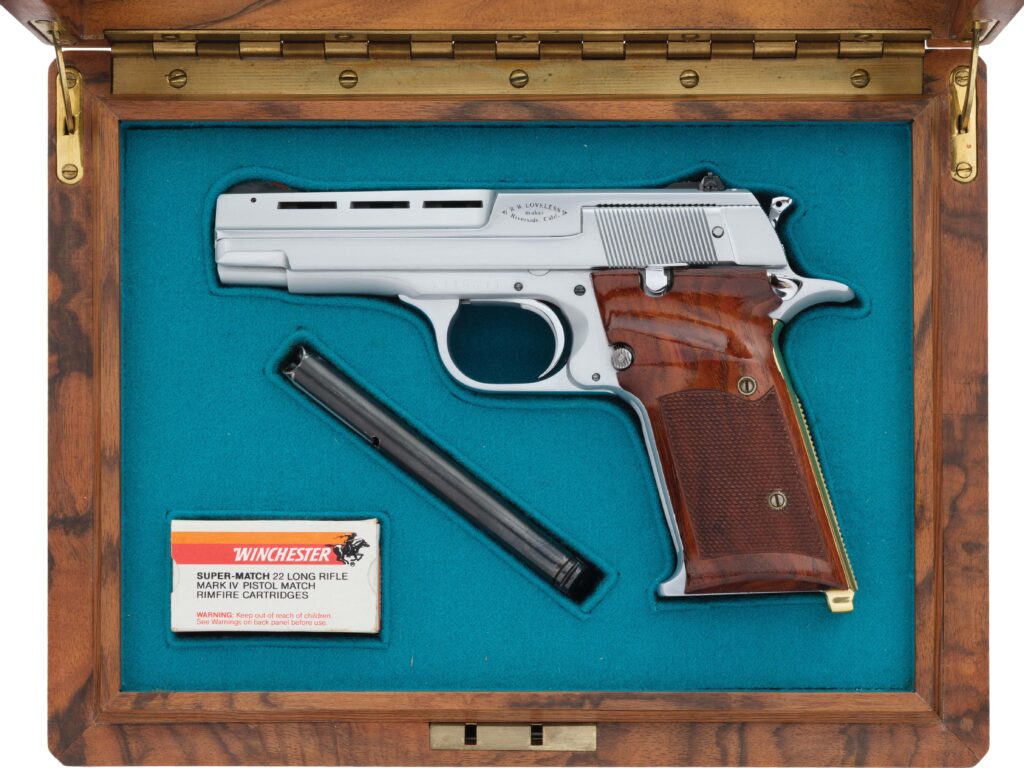
Bob Loveless Smith & Wesson Model 41 semi-automatic pistol with case and signed photographs.
Bob Loveless Smith & Wesson Model 41 semi-automatic pistol with case and signed photographs. Rock Island Auction image

Rounding out the trio is an extensively reworked Smith & Wesson Model 41 target pistol, believed to be one of only 70 ever built by Loveless. This highly modified rimfire pistol features a shortened barrel with a custom vented rib, an exposed hammer conversion, a checked gold-washed backstrap with a lanyard loop, and his personal initials electro-penciled on the slide. Complete with signed photographs of Loveless, a custom leather holster and a glass-topped display case, the group offers collectors a rare look at how one of the greatest knifemakers of all time refined factory firearms into high art.

Read More On Bob Loveless:

2018 Knife of the Year® Award Winners & Custom Knife Award Winners – BLADE Show

Atlanta, Georgia (June 2, 2018) – Awards recognizing the highest achievement in the custom and factory knife industries were bestowed the evening of Saturday, June 2, 2018, at the BLADE Show in the Cobb Galleria.

2018 BLADE Show Knife of the Year® Award Winners

Representatives from BLADE (www.blademag.com) distributed BLADE Magazine Knife of the Year® awards in 13 categories. Two of the awards—Industry Achievement and Publisher’s—went to a retail knife store and a knife-related organization, respectively, for their contributions to the world of knives.

All entrants in the Knife of the Year® competition were judged on a number of factors, including utility, design, creativity, materials, aesthetics, feel and other traits.

2018 Overall Knife of the Year® – FOX Knives SURU

Overall Knife of the Year 2018 BLADE Show

BLADE editor Steve Shackleford and Cutlery-Hall-of-Fame® member Ron Lake checked out this knife before the official show start. Here is a quick video of that chance encounter.

2018 American Made Knife of the Year® – Chris Reeve Impinda

Knife of the Year awards 2018 BLADE Show

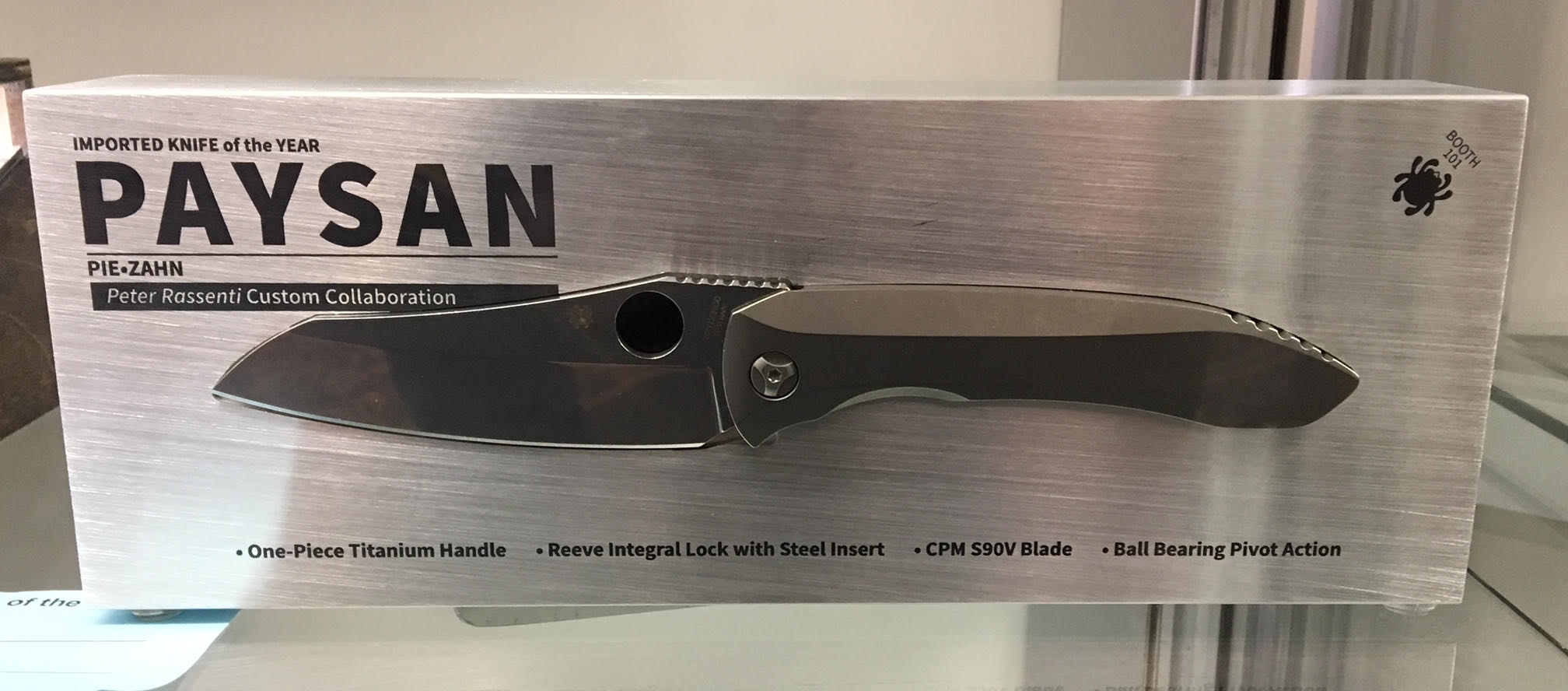
2018 Imported Knife of the Year® – Spyderco Paysan

2018 BLADE Show Knife of the Year Awards

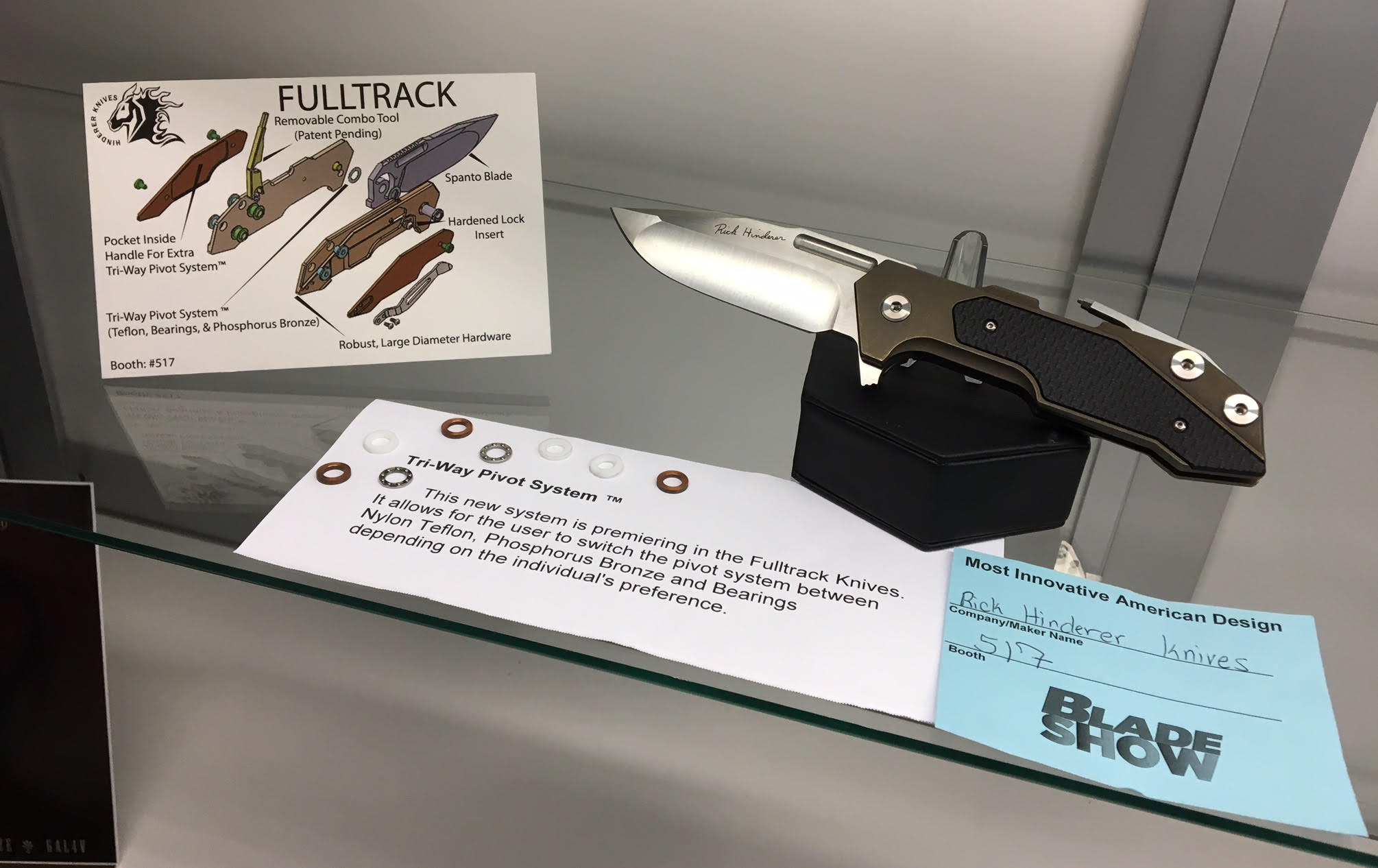
2018 Most Innovative American Design – Rick Hinderer Tri-Way Pivot System

Knife of the Year Award winners 2018

2018 Most Innovative Imported Design – V Nives C.R.A.B.

Knife of the Year Award winners 2018 BLADE Show

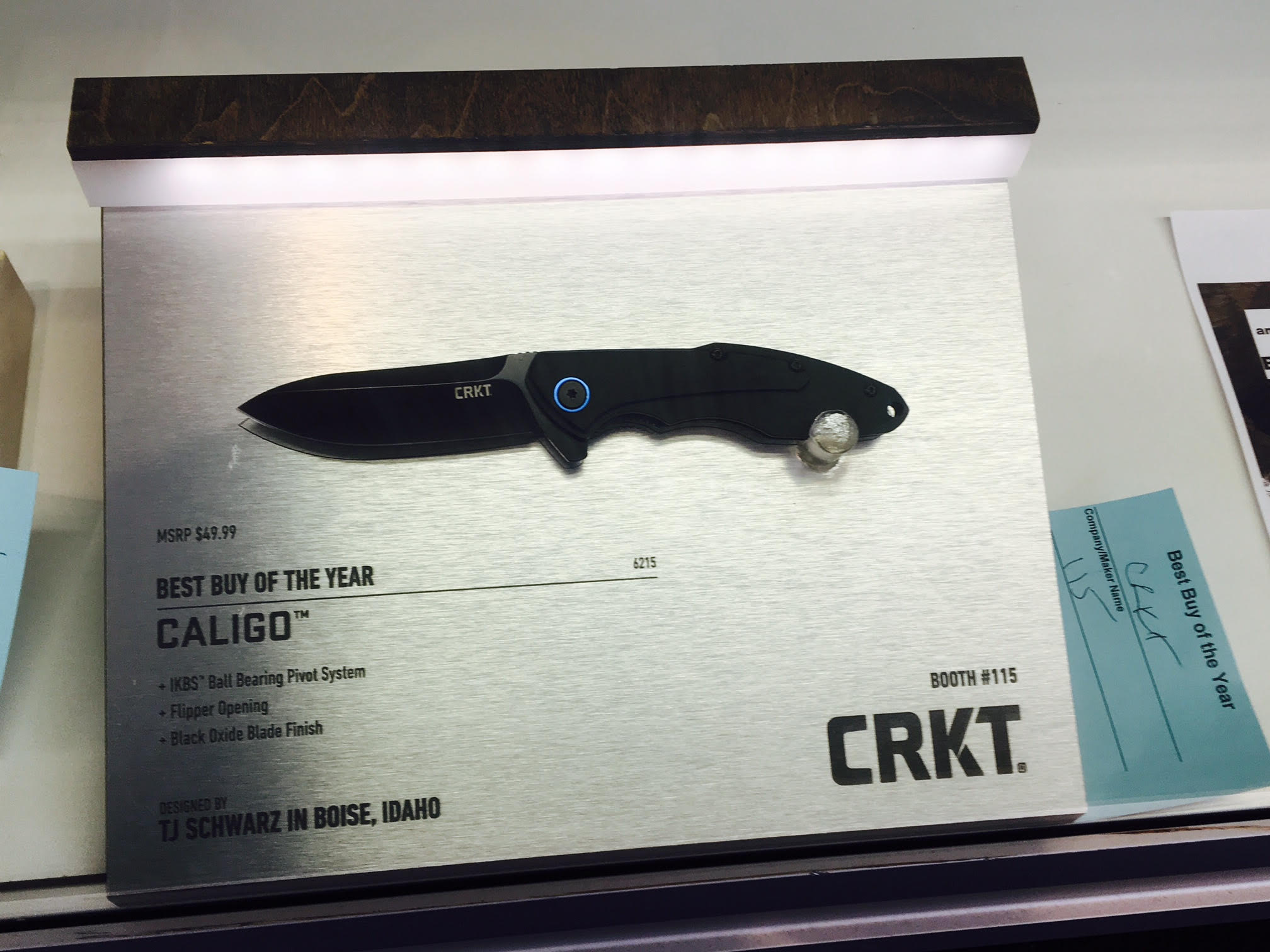
2018 Best Buy of the Year – CRKT Caligo

Knife of the Year Award winners 2018 BLADE Show Atlanta

Note: the Caligo is also the official knife of BLADE Show 2018, and is available as a commemorative through BLADE‘s online store. That designation is separate from this award. BLADE does not vote in the Knife of the Year awards.

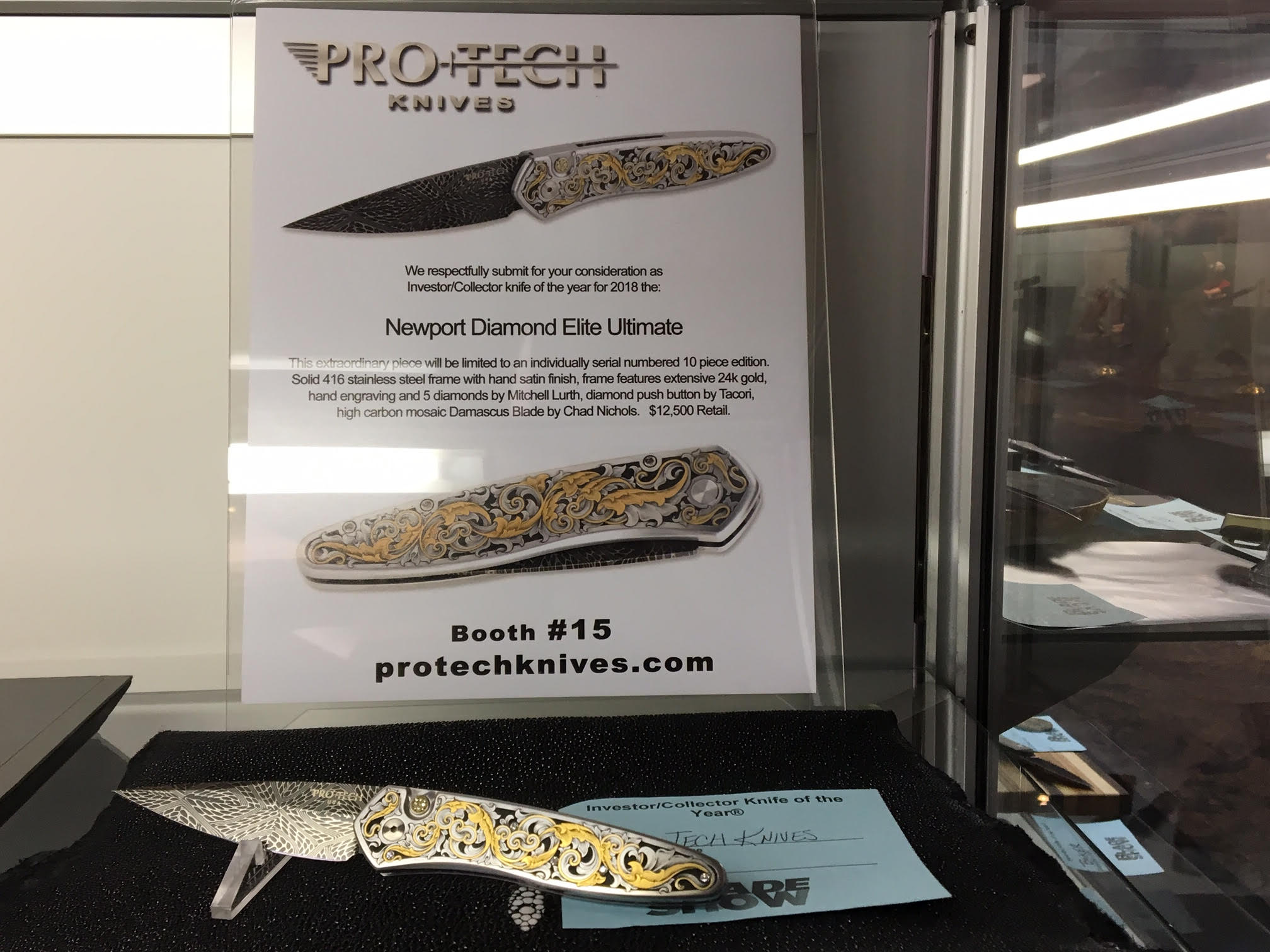
2018 Investor/Collector Knife of the Year® – Protech Newport Diamond Elite Ultimate

2018 Manufacturing Quality Award – Lionsteel

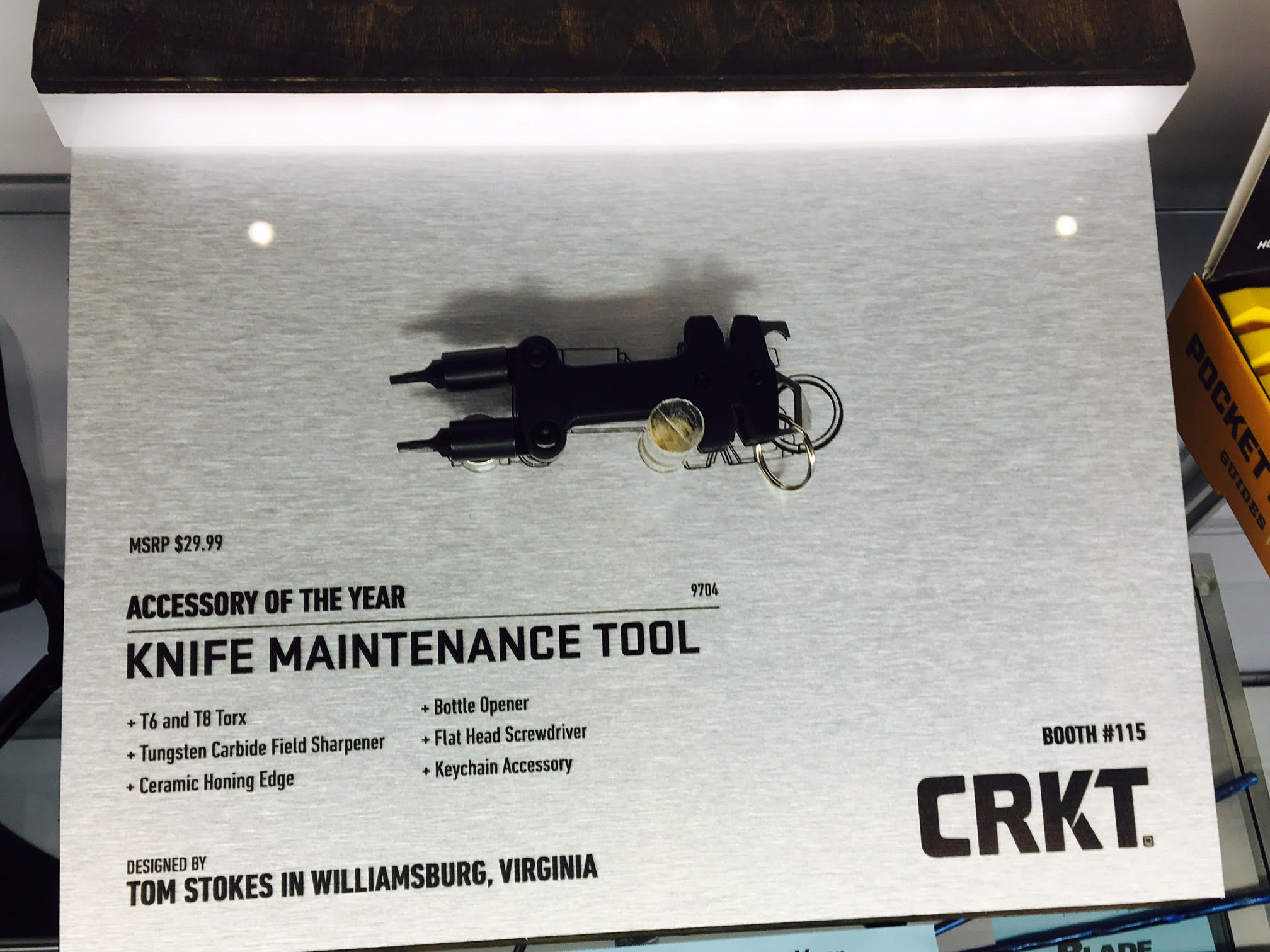
2018 Accessory of the Year – CRKT KMT

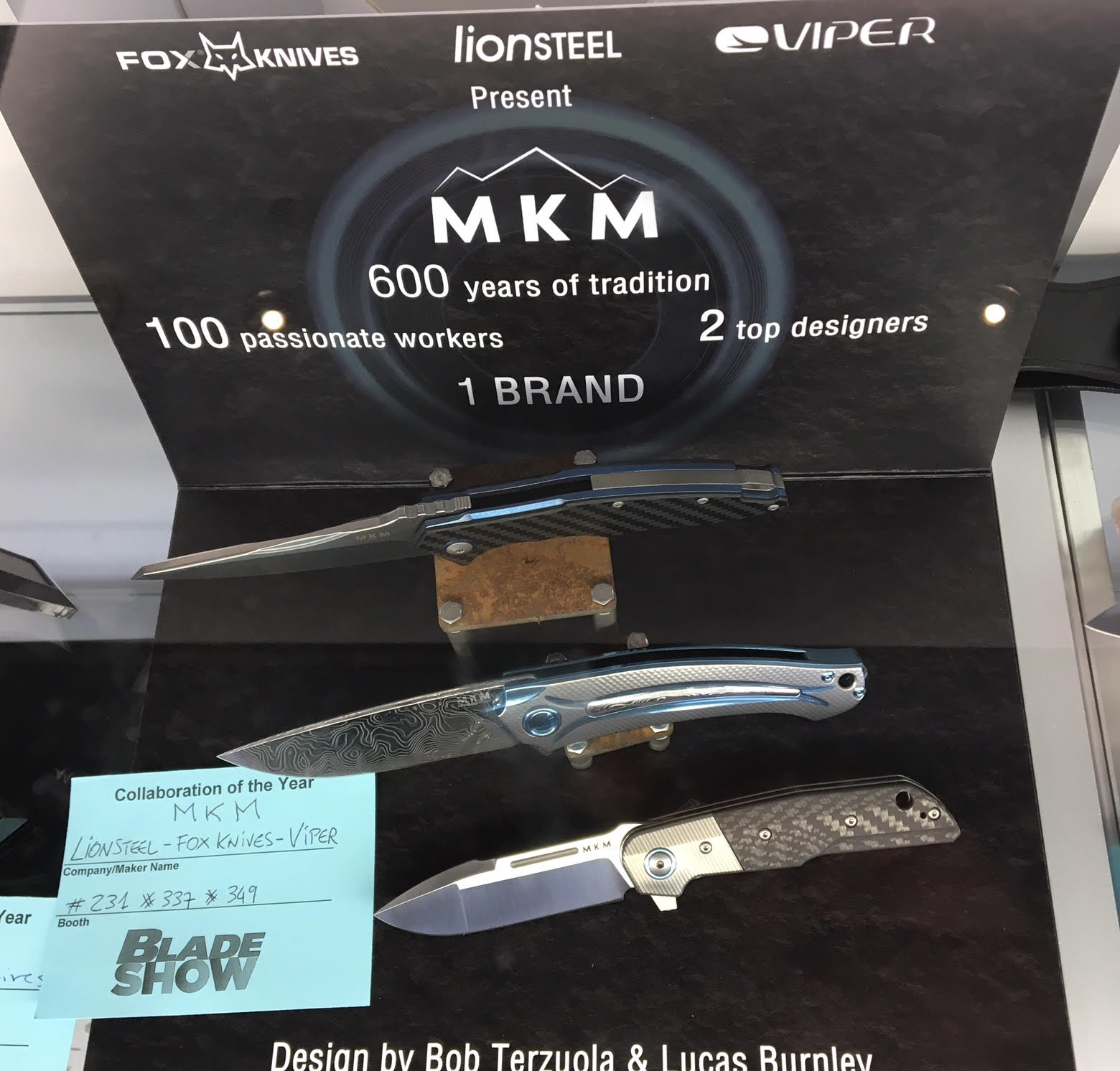
2018 Knife Collaboration of the Year – MKM by Bob Terzuola and Lucas Burnley for FOX, Lionsteel and Viper

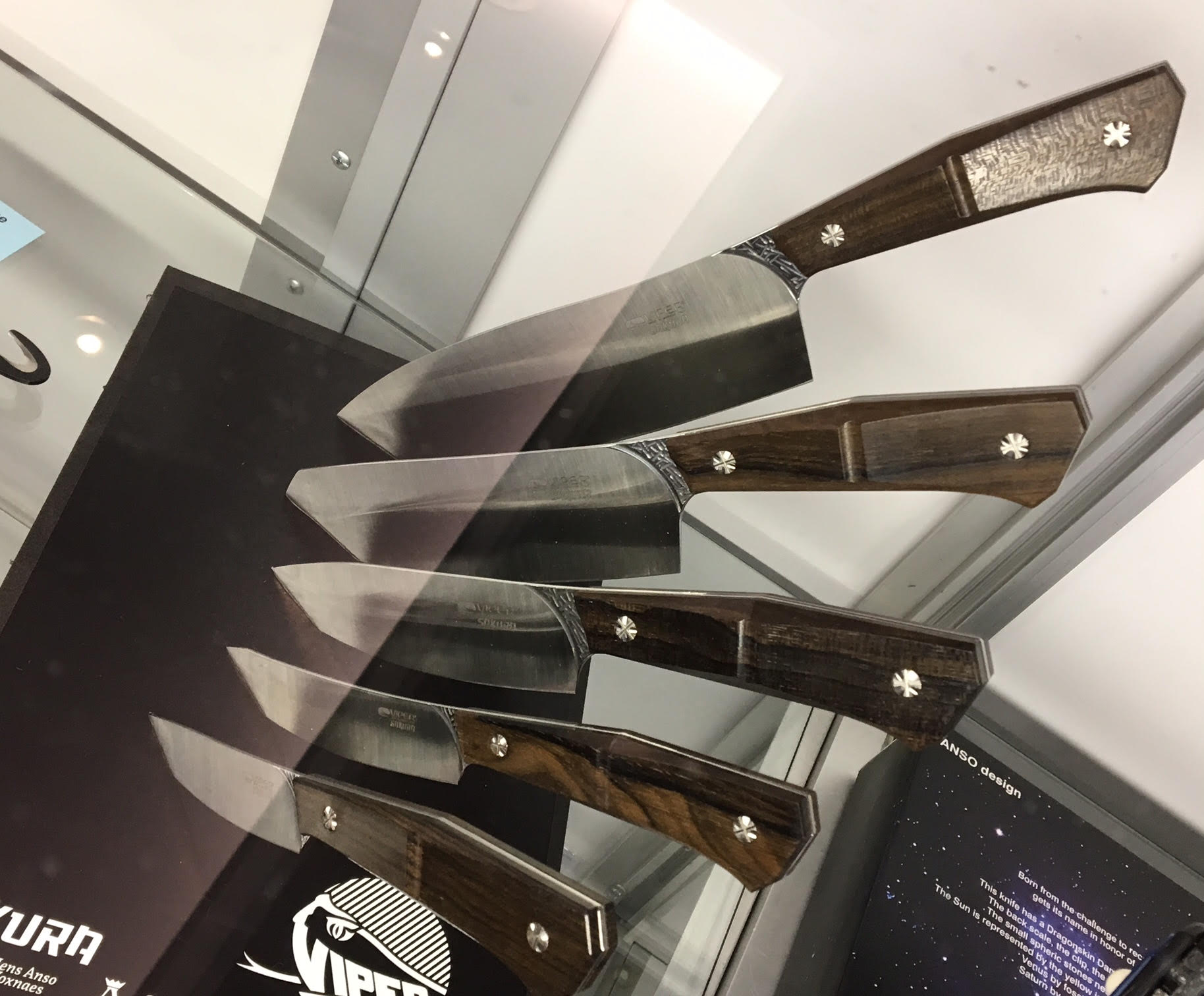
2018 Kitchen Knife of the Year® – Viper Sakura

Personal/Professional Achievement Awards

The Knife of the Year Awards recognized achievements in knives at the personal and professional levels in the following categories:

  • Publisher’s Award – Randy Rousseau
  • Industry Achievement Award – Buck Collectors Club
  • Cutlery Hall-Of-Fame© Inductees – Phil Lobred & Dan Delavan (read article here)

2018 BLADE Show Custom Knife Winners

The 2018 BLADE Show Custom Knife Award Winners were also announced on Saturday, June 2, 2018, at the Cobb Galleria in Atlanta.

Best Fixed and Best in Show: Anders Hogstrom

Best Sword: Matthew Parkinson

Best Damascus: Jimmy Chin

Best New Maker: Ed Cope

Best Art Knife: Jean Louis Regent

Best Knife Collaboration: Ben Breda & Ben Seward

Best Folder: Gusatvo Cecchini

Best Utility Hunter: Haley Desrosiers

Most Innovative Design: Corrado Miro

Best Fighter: Josh Fisher

Best Handle Design: Steve Rapp

Best Bowie: Jean Louis Regel

Best of the Rest: Thomas Ward

Best Miniature: Toshiaki Michinaka

Best Tactical Folder: Svarn II by Cultrotech


About BLADE Show

The BLADE Show is the world’s largest, most important knife show, and has taken place every year since 1982 and in Atlanta since 1992. Upwards of 1,000 exhibitors from more than 20 countries display their knives and knife-related items over a three-day cutlery celebration that also features BLADE University knife seminars, knife auctions, custom knife awards, celebrity appearances and much more.

About BLADE

BLADE® Magazine (www.blademag.com) is the world’s No.1 knife publication. It is also the world’s oldest knife magazine, publishing its first issue in 1973. In conjunction with the BLADE Show, it has sponsored the Knife of the Year® Awards annually since 1982. The awards are the most coveted honors in the factory knife industry and are voted on by the booth exhibitors at the BLADE Show, who this year number more than 200. Only BLADE Show booth exhibitors are eligible to enter.

The BLADE Show and BLADE Magazine are the properties of Caribou Media LLC.


See 40 Years of Knives that Changed the World

BLADE collected the very best factory and custom knives into two digital collections to showcase the blades that changed the edged world forever. Click a cover to grab yours today.

Best Factory Knives BLADE Magazine Best Custom Knives BLADE Magazine
Advertisement

Must Read Articles

Read this before you make a knife

Knifemaking 101 – Read This Before You Make a Knife

  by Wayne Goddard My experience has taught me that there's nothing like digging in and getting started. I've often said the hardest part of the...
how to forge damascus steel

How to Forge Damascus

Advertisement
Advertisement