
Knife Collecting

Knife collecting is an extremely rewarding experience for knife enthusiasts. There truly is a knife for everyone. Many increase or hold their value throughout the years, making collecting knives something to pass on to the next generation of knife collectors.

First Family of Knives?

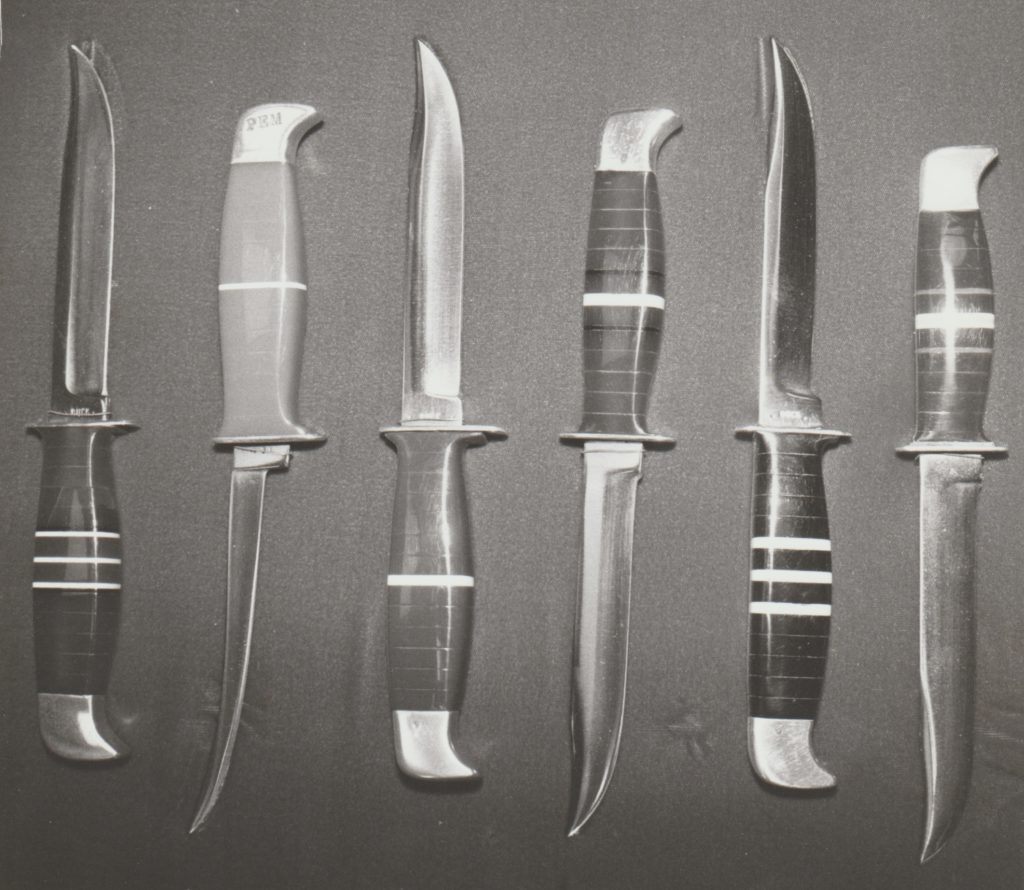
Hoyt Buck knives
These pre-1950 Buck knives handmade by Buck patriarch Hoyt Buck are classic examples of the Buck legacy.
CJ First Family of Knives
CJ Buck was the most recent member of the First Family of Knives to be inducted into the BLADE Magazine Cutlery Hall Of Fame, entering the hall in 2016.
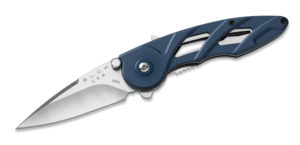
Buck Knives Rush
One of several of Buck’s assisted-opening folding knives is the Rush.
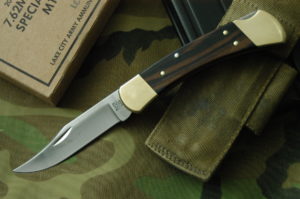
Buck 110
First produced in 1964, the Buck 110 remains one of the most famous modern production knives ever.

If there’s such a thing as the First Family of Knives, the Buck family is it.

Buck Knives has been run by a member of the Buck family—Hoyt, Al, Chuck or CJ—since “H.H. Buck and Son” set up shop in 1945. Since that time, the name Buck has become synonymous with fine hunting, sporting and other knives, and Al, Chuck and CJ help comprise the only family with three members to be inducted into the BLADE Magazine Cutlery Hall Of Fame*.

According to The Story of Buck Knives … A Family Business by Tom Ables, in 1946 “Buck’s knives were all created from used metal files that had been discarded by Consolidated Vultee, the huge aircraft manufacturing plant that later became Convair. These worn-out files, with their heavy carbon content, were perfect for the toughness and edge-holding qualities that Hoyt Buck required in his knives.”

Al joined his father full time in 1947. “[Al] learned how to laminate the thin strips of Lucite plastic used on the handles,” The Story of Buck Knives noted. “He learned how to separate and drill the handles themselves. Later, he learned how to temper the blades so painstakingly sharpened by his dad.”

Sadly, Hoyt learned he had cancer in 1948 and the dreaded disease claimed his life a short year later. He was only 59. Al assumed the company reins and guided it successfully through the 1950s and into the “modern age” of the 1960s. Buck incorporated in 1961, with a young Chuck Buck on the board of directors. The company began making the iconic Buck 110 Folding Hunter on a full production basis in September 1964. The knife’s sales jumped in 1965, increased 63 percent in 1966 and vaulted another 60 percent in 1967.

The knife industry would never be the same again.

Buck flourished under the direction of Al in the 1970s and ’80s, offering the latest in knife designs, materials and more. Along with the legendary Jimmy Lile, Howard Cole and William R. Williamson, Al was inducted into the Cutlery Hall Of Fame at the 1984 BLADE Show.

First Family of Knives Al
In 1984, Al Buck became the initial member of the First Family of Knives to join the Cutlery Hall Of Fame.

As the September/October 1984 issue of BLADE® noted in reference to Al and the 110. “Buck didn’t invent the lockback, but he certainly popularized it, and despite a flood of other lockbacks, the Buck knife still leads the way. If you are carrying a lockback today, you can thank Al Buck for his enduring promotional efforts. You have a safer knife for it.”

Chuck was next in line to be inducted into the Cutlery Hall Of Fame, being inducted along with Blackie Collins in 1996. Chuck was a part of the Buck family business from childhood. By 1970 he was corporate vice president for manufacturing, involved in all aspects of the process, from purchasing to personnel to packaging. In 1979 he became company president. Through Chuck’s leadership, the company completed a modern new plant and corporate headquarters in 1980 with 4.5 acres under one roof.

Under his direction the company grew and prospered, winning several BLADE Magazine Knife-Of-The-Year® Awards. By 2004 he was Buck Knives chairman and helped oversee the company’s historic move to Post Falls, Idaho, from El Cajon, California, in 2005.

First Family of Knives Chuck
Chuck Buck was the second Cutlery Hall Of Fame inductee from the First Family of Knives in 1996.

CJ was inducted into the Hall in 2016 following a career that saw him begin by working on the Buck production line in 1978. For 21 years he handled numerous company promotions and responsibilities. In 1999 he was named president of Buck Knives and, in 2001, CEO. In 2015 he was named Buck chairman of the board. He is a co-founder of the American Knife & Tool Institute (AKTI), serving multiple terms as AKTI president, and is the AKTI’s current CEO. He played a pivotal role in the AKTI’s historic defeat of an attempt by U.S. Customs to classify all one-hand-opening knives as switchblades in 2009. Ironically, today, thanks to the efforts of such organizations as AKTI and Knife Rights, switchblades—better known now as automatics—are being legalized in more and more states, and there’s even an effort under way to repeal the archaic Federal Switchblade Act of 1958. In addition, under CJ’s leadership, Buck has an entire line of automatics, including one of its latest—a version of the iconic 110 in full auto mode, no less.

The only family with three members in the Cutlery Hall Of Fame, the Bucks can legitimately lay claim to being the First Family of Knives. Their contributions speak for themselves.

•Uncle Henry and Al Baer of the original Imperial Schrade and A.G. and Goldie Russell are the only brothers and husband and wife, respectively, to be inducted into the Cutlery Hall Of Fame.
 

Dive Knives: Knife Collecting’s Sleeper Blades

Editor’s note: The below is an excerpt from an article originally published in the KNIVES 2018 book, but it still rings true today. Hardly anyone is talking about dive knives, but they come with the kind of history and innovation that is ripe for collectors. They truly are the sleepers of knife collecting.


Buying dive knives
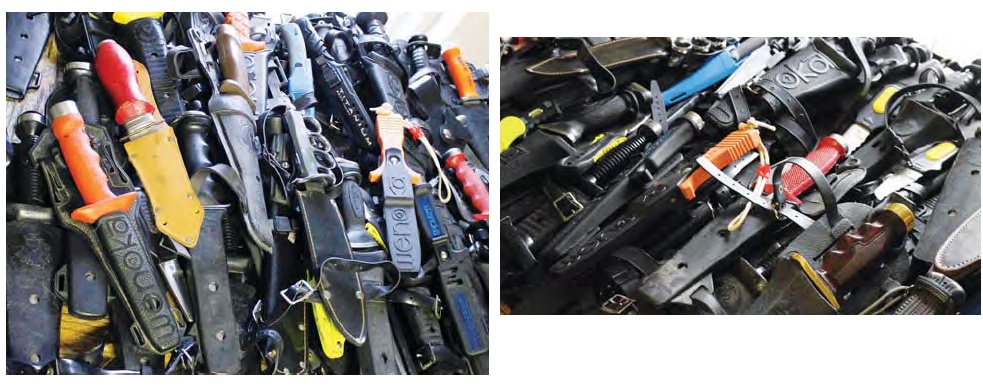
Shown here are the author’s piles of dive knives purchased for bargain prices at gun shows and flea markets.

Dive knives present an opportunity for collectors to get in on the “ocean floor” of an industry segment. Other than modern, imported low-end knives, vintage dive knives are often the lowest priced blades at a gun show or flea market. The overwhelming majority of dive knives are easily acquired for between $5 and $40 apiece, similar to how U.S. military knives and theater-made knives were priced years ago, before folks woke up and recognized their true value.

They say the sea, not space, is the last true final frontier. Dive knives have been the personal tools of undersea explorers for as long as there have been divers. What the bowie knife was to the West, the dive knife is to the sea.

Before You Buy, Know the Pricing Ceiling

Dive knives are currently the “sleepers” of the knife world, and investment opportunities abound for the collector who has an interest in such pieces. Before we look at inexpensive dive knives, one should be aware of the pricey ones available today.

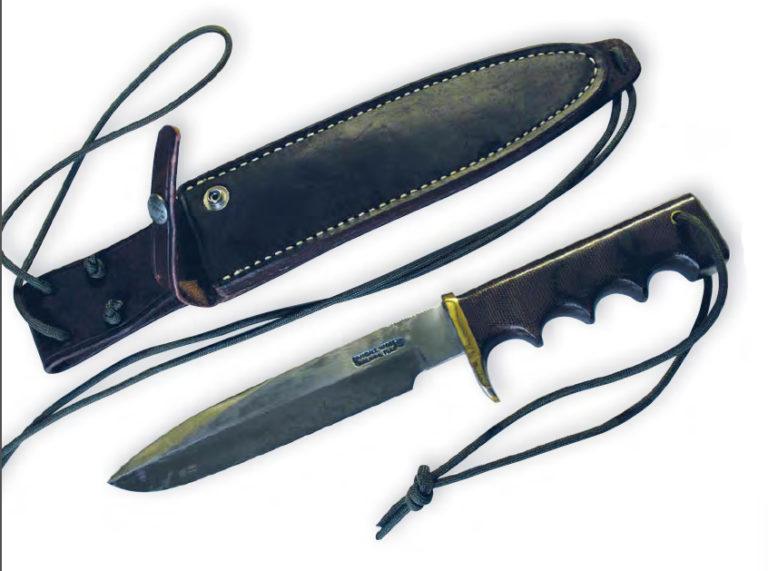
There are some expensive, desirable dive knives out there now, many coming from high-end makers. The expensive pieces are often associated with military and sporting uses, and include, but aren’t limited to, Randall, Gerber, Puma, Benchmade and Mission Knives & Tools, or those made specifically for the military.

Becoming familiar with expensive dive knives may help one find a bargain and to recognize certain qualities that make a dive knife valuable. Additionally, the expensive dive knives lay the foundation for price appreciation of the vintage sleepers waiting out there for savvy collectors to scoop them up.

Bargain Buys

When it comes to bargain dive knives, one sees names such as U.S. Divers, Healthways, Wenoka, AMF Swim Master, AMF Voit, Sportways, Dacor, Scubapro, Scubaskin, P.I.C., Eternal, etc.

The general pattern of the knife is a stainless steel blade with a plastic or rubber handle and sheath. There are models that can be picked up for incredibly low prices, and for what one is paying, “it’s worth it just as a knife.” It’s those kinds of investments that seem to be can’t-lose propositions, although nothing is ever guaranteed in life.

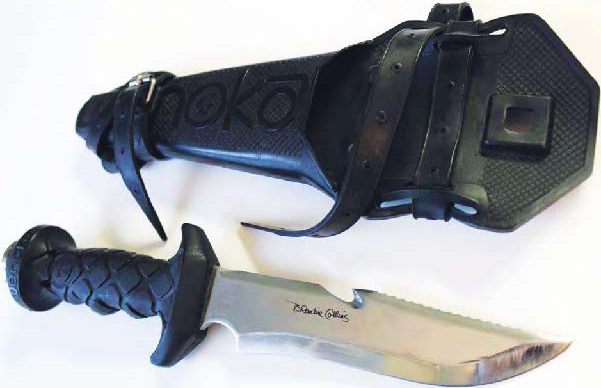
Wenoka dive knives
The sturdy Wenoka dive knife was designed by Blackie Collins.

Wenoka knives are some of my favorites. They were very well made in Japan. There is a wide variety of models. The larger Wenoka dive knives have a great, sturdy feel and are nicely designed for the task at hand.

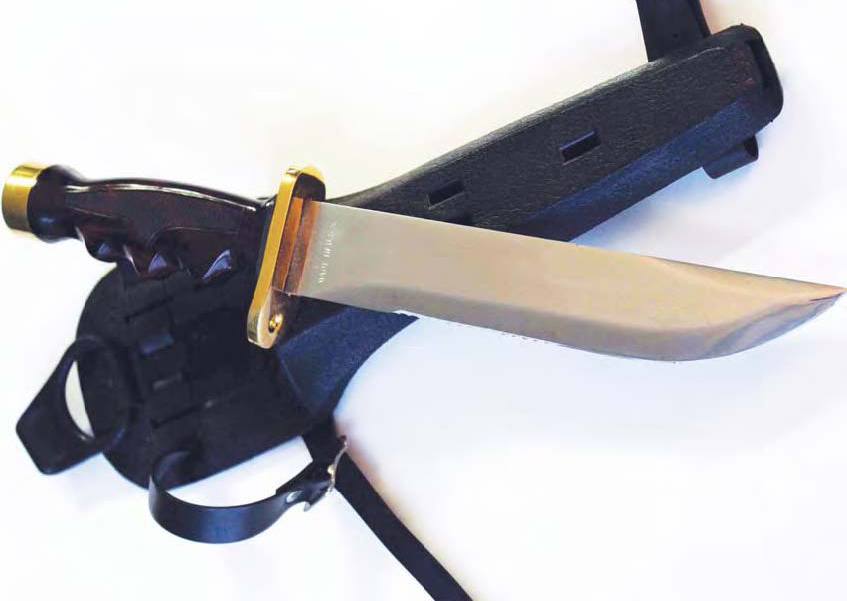
Vintage dive knives
Note the heavy brass guard and butt of the high-quality, U.S.-made AMF Swimaster dive knife.

The AMF Swimaster is a beautiful, well-made knife, very high quality, serial numbered, with a heavy brass butt and guard, and made in the U.S.A.

Healthways offered the “Skin Diver,” a double-edged blade made in Solingen, Germany, with a large, red cork handle.

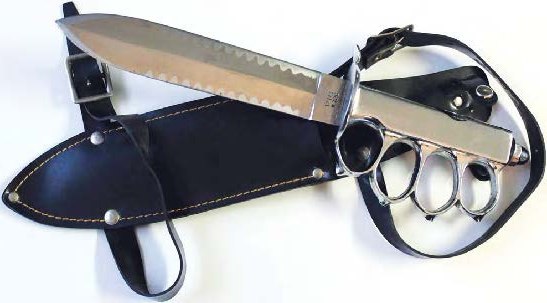
Dive knives with knuckle guards
The nickel-plated P.I.C. dive knife boasts a 1918 trench knife-style handle that protects the user’s knuckles underwater.

The P.I.C. Model 728 “Sea Hunter,” made in Japan, is also of high quality. It is easily recognized by its handle, which is a nickel-plated replica of the 1918 World War I trench knuckle knife. Many such dive knives were made in Japan, and even a dive hatchet, which was a hatchet, pry bar and hammer combination set that came in a vinyl sheath was available.

Buy Low Now, Sell High Later

There are so many variations of dive knives, and they appear to be limited only by the imaginations of various makers. The collector now has a chance to reasonably acquire these fascinating knives that were once strapped to divers exploring the underworld of the earth.

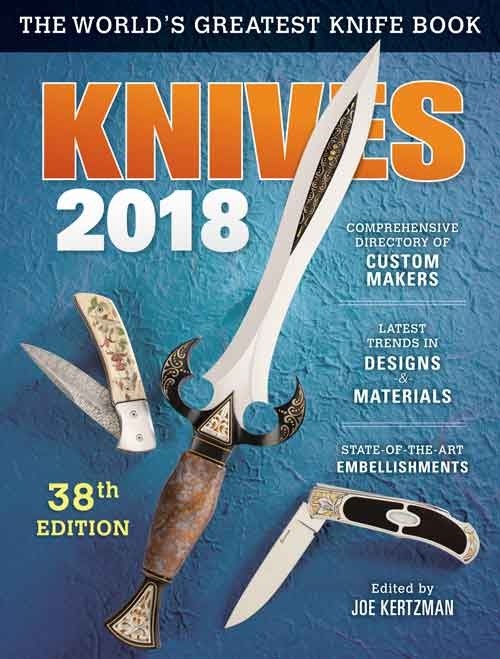
knives 2018
This article was excerpted from KNIVES 2018. Click the cover to order the book directly from the publisher at a great price.

Russian Spetsnaz Knives

0

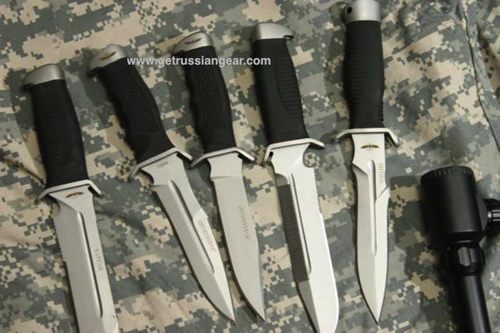
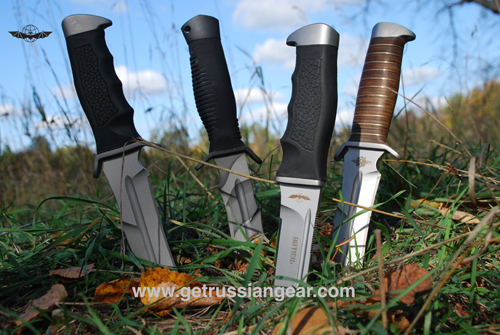
For the first time, original Russian Spetsnaz knives are offered on American market. All these knives were handmade in Russia and passed rigorous tests by military Spetsnaz. Each knife has a unique identification number. Tough construction, great balance, and ability to stay sharp are just a few attributes of these special knives. The design and reliability make them very attractive to military personnel, hunters, and collectors.

3 Great A.G. Russell Knives

0

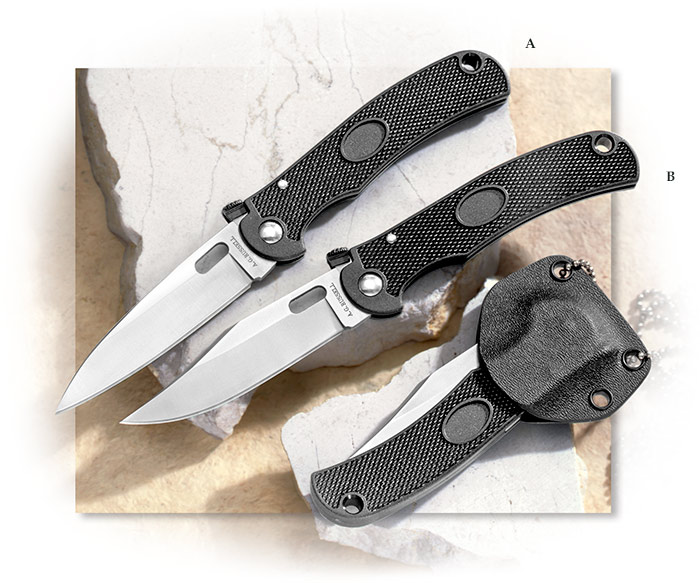
While the passing of BLADE Magazine Cutlery Hall Of Fame member A.G. Russell is unfortunate, the enormous footprint left behind by “Mr. Knife” is sure to keep knife enthusiasts at full attention for generations to come. Here are three A.G. Russell knives that will likely only become more popular.

A.G. Russell Sting

Best AG Russell knives
A third generation Sting. (AG Russell photo)

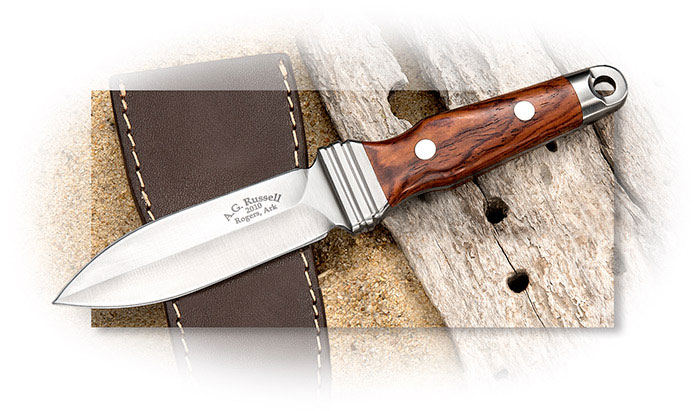
It’s hard to overstate the significance of the Sting. It’s everything that a boot knife should be, from the dual hollow grinds to the handle swell. Previous iterations of boot knives more or less stuck to formulaic dagger designs. Russell defined the category by injecting better ergonomics, craftsmanship and a deceivingly simple presentation.

Even if they didn’t actually stick the Sting in their boots, knife enthusiasts ate this model up after the debut in 1975.


A.G. Russell One Hand Knife

Best AG Russell knives
A.G. Russell One Hand Opening Knife (A.G. Russell photo)

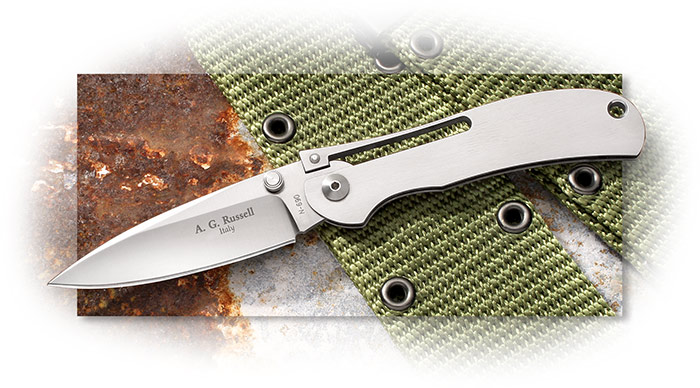
Second only to the Sting as far as sales figures go, the One Hand Opening Knife puts its lock front and center for all to see. Or, rather, front and forward. Russell re-introduced the knife in 2008, 20 years after it hit his shelves. The funky design makes it a favorite among collectors.


A.G. Russell FeatherLite K-93 One Hand Knife

Best A.G. Russell Knives
(A.G. Russell photo)

A.G. Russell went with simplicity and an appealing price point when the FeatherLite debuted in 1993. It worked. The knife went on to sell more than 50,000 units. As Russell himself points out in the video, that doesn’t include the 11,000 units sent off to U.S. military members deployed to Iraq and Afghanistan in 2004. For enthusiasts, it’s the designer’s signature EDC knife.


Honorable Mention: Wharncliffe Lockback

As one of the last designs Russell released, the Wharncliffe Lockback stands out for its innovative approach to a time-tested favorite. Here’s a look at the knife as introduced by Phil Gibbs at BLADE Show 2018.

Distinguishing Elephant from Ancient Ivory

Elephant vs. ancient ivories
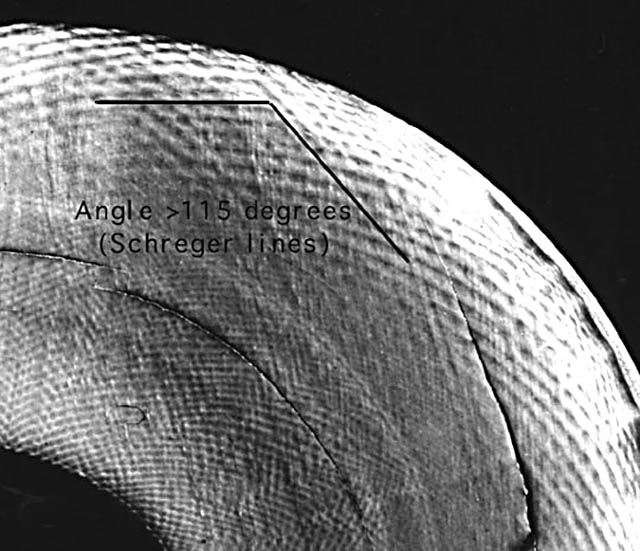
Distinguishing elephant from ancient ivory can be done by the correct reading of the Schreger lines on the surface of the ivory.

Distinguishing elephant from ancient ivory is challenging and becoming more and more important for the owners of knives with handles of ancient ivory. However, there are two reliable keys to make the determination easier.

Polished cross sections of elephant and mastodon/mammoth ivories display stacked chevrons of cross-hatched lines called Schreger lines or Lines of Retzius—incremental lines of rhythmic deposition of successive layers of enamel/dentine matrix during development. The Schreger lines closest to the outer bark of the tusks are the most visible—and the ones to measure—though there are also inner Schreger lines that are less discernible around the nerve cavity. The intersection of Schreger lines form angles, and this is the key—if the average angle is greater than 115 degrees, then it’s elephant ivory; if the average angle is less than 90 degrees, it’s mastodon or mammoth. Variations in the angles can occur in individual tusks, particularly as the patterns tighten more toward the center. Plus, the visible cross section must be cut square to the axis of the tusk—otherwise the chevrons’ angles will be distorted.

Specimens from both extinct and existing animals can show angles between 90 and 115 degrees in the outer Schreger lines, so the differentiation should never be based solely on a single angle measurement when the angles fall in this range. When averages are used, a clear separation between the ivory of existing elephants and extinct mammoths/mastodons exists. Elephant ivory averages above 100 degrees and mammoth/mastodon ivory averages below 100 degrees.

Another I.D. key, though more involved, can also distinguish mammoth or mastodon ivory from elephant. These ancient ivories can often have blue-green or brownish blemishes on the surface produced by an oxidized iron phosphate called vivianite. Even if the discoloration is barely visible, ultra-violet light will make it stand out with a dramatic velvety-purple appearance. Even if elephant ivory were similarly discolored—though in its natural state, elephant ivory will not display the same discoloration—it would not exhibit the characteristic fluoresence of vivianite.

With recent ivory laws handed down by Fish and Wildlife greying the lines between elephant and ancient ivories, it is possible the laws may give federal agents the right to seize knives and materials that cannot be proven as outright ivory but simply have the ivory look. As a result, if you own knives with ancient ivory handles, having an at least a general knowledge of how to differentiate elephant from ancient ivory could save you from having your knives confiscated, from being fined or both.

Hot Knife Deals at ShopBlade.com

Black Friday knife deals

What is the Best Knife for Small Game?

0

The short answer: bird and trout knives.

Small game can be even more challenging to dress out than large game. Consequently, makers build what are called bird and trout knives, which generally feature thin, slender blades 3 to 3.5 inches long. You can find such knives with both drop-point and skinner-style blades.

The blade is primarily designed for the tasks of dressing out birds and fish, hence the name. Birds are generally dressed out to harvest the breast meat. Fish are dressed to get the fillets. (Most hunters and fishermen discard the remainder of the bird and fish.)

While a fillet knife may be the better choice for dressing out fish, you then must carry two knives.

The other choice is a folder with a 2.5-to-3-inch blade. Some feature a blade and a gut hook. As this implies, the idea is to insert the hook into the bird or other small game to pull out the intestines and the rest of the intestinal tract.

Generally, the ideal bird-and-trout folder has either a 2.75-inch drop-point blade or is a multi-blade with 2.25- or 2.75-inch blades featuring a combination of a skinner and a drop point.

While most don’t think of a folding knife when it comes to dressing out game, there is a place for such a knife in your hunting gear.

7 Tips for Buying Custom Knives

1

1) Know the Trends

“This has got to be through the old way of human contact,” Bob Loveless knife specialist John Denton observed, “sort of like the lunchroom in school. You hang out, listen, see what is moving, what dealers are buying and, of course, now with the ‘inter-web,’ we have so much more information within seconds, while in the ’70s or ’80s we had to wait for BLADE® Magazine or the gun magazines to run stories on Loveless.

“Shows are still important to attend, but nowhere like they were years ago. Face to face is still part of the knife world.”

2) Maker Charisma

A lot depends on whether the maker has the kind of personality that appeals to the knife enthusiast. At BladeGallery, Daniel O’Malley specializes in one-of-a-kind custom knives. The answer includes multiple factors.

“There are a lot of things that go into making a knifemaker’s knives ‘hot,’” he reasoned. “Part of it is the personality of the maker. When a collector meets a maker for the first time, the collector often has a picture in his head of what the maker will be like. If the maker falls short [of the collector’s expectations], it can be quite disillusioning.”

3) Customer Service

“[The maker] being willing to repair knives when there is a problem is also very important,” O’Malley continued. “It can easily make the difference in a collector continuing to purchase a maker’s work. It can even be the difference in whether a person continues to collect the maker’s knives over time.

“After all, if a collector has spent a large sum of money on their collection, it can be very nerve wracking to find that it’s hard to get a damaged knife repaired. Similarly, it can be comforting if a problem can be relatively painlessly solved.”

4) Do Your Homework

Les Robertson of Robertson’s Custom Cutlery offers custom fixed blade and folding knives, including tacticals and presentation pieces, as well as some exclusives. His take on the delicate topic of a maker’s reliability and the quality of the maker’s work is sage advice for knife enthusiasts in any price range or level of experience.

“I give my client the very best information I have at the time,” Robertson asserted. “This includes issues with a maker or the quality of their work. Often, a maker’s skill level, quality, customer service, and/or delivery issues are overlooked because the knife can be sold immediately for a profit.

“Given the prices of many of the custom knives today, I highly recommend that collectors do their homework before purchasing a knife.

“I realize this takes away from the thrill of instant gratification and removes some of the fun out of the hobby. Long term, though, you will feel great about every knife you have bought, and your wallet will thank you.”

Custom Knives
Purveyor John Denton said he turned down $60,000 at the 2014 BLADE Show for this Big Bear in sheep horn and Dan Wilkerson engraving. (PointSeven knife image)

5) Set An Allowance

Everyone, it seems, has spending limits. The role of the dealer often involves assisting clients in determining how much to spend. Recognition of the amount of disposable income available keeps a buyer/collector in the game.

6) Collect With A Purpose

Denton advises customers to acquire some knowledge on prices and to assess their real purpose for buying custom knives in the first place.

“First of all, you want collectors to be educated,” he commented, “and not to be buying just to make money. That is the most risky way to approach collecting. But then if they buy what they like and in three years can’t get 10 cents on the dollar, it will cut their knife buying down and drive them out of the market.”

Dealer Dave Ellis of Exquisiteknives.com notes that the investment perspective differs greatly from that of the collector who wants to enjoy, build and retain knives for years to come.

“When I chat with newbies,” he remarked, “a lot of them get into knives from an investment standpoint. They have read in the Wall Street Journal that investing in knives is a good idea, or heard about a knife that was purchased for $800 and then sold for $8,000. I tell them to buy what they like first and to worry about resale later because if it doesn’t pan out, then they won’t have to hold onto something they don’t like.”

Taking a measured approach is key to successful, price-sensitive acquisitions.

“I tell the collector to pace themselves,” Denton said. “Get into a knife that will be easy to turn if you get tired of it down the road. I’ve had several people ask me to build them a $300,000 collection, and I tell them I don’t do that because they will get mad if they don’t make 14 percent growth per year—and they don’t know why they’re buying the knife.

“The true collector has studied the knives and the market, and he will realize what knives are worth and what he can resell them for.”

Those who are new to the custom knife market can tap a great resource in a top dealer. Advice on the market, prevailing prices and hot makers is only part of the relationship. High-end folders by BLADE Magazine Cutlery Hall-Of-Fame® member Ron Lake, Warren Osborne and Jim Martin, along with Loveless fixed blades, are among Ellis’s offerings.

When Dave talks with a new buyer/collector, he asks a few basic questions.

“There are more heavy hitters getting in the game with lots of money,” he said, “but that doesn’t mean they are buying the right things. What have their interests been up to now? Did they grow up with knives? Do they carry and use a knife? What is their reason for buying now? Use it? Collect it? Give it to a nephew for college graduation? I don’t want to offer a $7,000 Loveless hunter when a $150 skinner by any smith will do.”

7) Attend Shows That Fit

Though knife shows may be one of many ways to gain information and see what is out there, the individual contact with dealers, makers and other knife enthusiasts is invaluable. Attending shows that mean the most to the individual buyer’s needs and wants helps in the education process and in finding the people and knives that enhance the experience.

Robertson attends the BLADE Show due directly to its diversity of custom knives for sale. He says that the Arkansas Custom Knife Show is also one of the premier forged blade shows and features apprentice, journeyman and master smiths in the American Bladesmith Society.

“The New York Custom Knife Show offers a variety of knives from very well-known custom knifemakers,” Robertson added. “This show in recent years has had more of a tactical knife flavor. The USN Show offers the widest variety of tactical folders you will see at any show in the world.”

These are just a few of Robertson’s picks. Other shows are out there, and many of them are quite beneficial to knife enthusiasts looking for certain styles of knives and/or makers.

Advertisement

Must Read Articles

Read this before you make a knife

Knifemaking 101 – Read This Before You Make a Knife

  by Wayne Goddard My experience has taught me that there's nothing like digging in and getting started. I've often said the hardest part of the...
how to forge damascus steel

How to Forge Damascus

Advertisement
Advertisement